Jsaux has announced a new accessory for Nintendo Switch 2 users who prefer handheld gaming. The company has launched a dedicated clip-on cooling fan designed to reduce the heat buildup that many users have reported during graphically intensive sessions.
Jsaux Cooling Fans for Switch 2 Specifications
The new cooling fan, model number GP0201A, attaches directly to the back of the Switch 2 using the bottom USB-C port. It is compatible with slim protective cases and is designed to work seamlessly in handheld mode without affecting grip comfort. The fan features a stepless knob-based control that allows users to adjust fan speed with precision, depending on the thermal load and gameplay intensity.
Jsaux claims the fan can lower the device’s temperature by 2 to 8 degrees Celsius within 4 to 8 minutes, helping the console maintain stable performance and reduce the chances of frame drops or crashes. During operation, it keeps the temperature in the range of 30 to 32°C, compared to reports of the Switch 2 reaching up to 40°C without cooling support.
The fan also includes a USB-C PD-in port rated at 18W, allowing users to charge the console while using the cooling module. Jsaux states that the charging speed through the fan is comparable to direct charging, so users will not need to compromise between thermal performance and battery life.
In terms of noise, the fan stays relatively quiet at low to medium speeds. However, it becomes more audible at higher settings, which the company notes is normal for the increased airflow. The lightweight design ensures the accessory doesn’t add much bulk, making it suitable for long handheld gaming sessions.
Pricing and Availability
The Jsaux Cooling Fan for Nintendo Switch 2 is priced at $39.99. It will be available at a 25% discount during Amazon Prime Day (July 8-11) and at a 10% discount afterward. The accessory aims to solve one of the most discussed early issues of the new Switch 2, heat management during demanding gameplay.
In related news, check out our recent review of the Jsaux FlipGo Horizon, a modular triple-screen setup built for portable productivity.
For more daily updates, please visit our News Section.
Casio has released a new G-Shock watch collection in collaboration with Marvel Studios to mark the upcoming film The Fantastic Four: First Steps, which will be in UK cinemas from July 24. The limited edition set includes four models inspired by the Fantastic Four characters: Mister Fantastic, Invisible Woman, Human Torch, and The Thing.
The watches follow a white-and-blue theme and include G-Shock’s standard features like shock resistance, 200-meter water resistance, and durability against heat and cold. Each model reflects the traits of a specific character, combining functionality with a superhero-inspired design.
G-Shock GA-2100HDS-7AER-F4G-Shock GA-110HDS-7AER
The GA-110HDS is designed for exploration. It has a multi-layered dial, magnetic resistance, and a 1/100th second stopwatch. It is made for those who need precision and toughness in one package.
The DW-6900HDS offers a clean, rounded bezel and a minimal layout. It keeps things simple but solid, with shockproof and temperature-resistant features. This model is suitable for users who want a reliable watch with minimal bulk.
The GA-2100HDS is slim and lightweight. It uses a Carbon Core Guard for strength and includes glow-in-the-dark elements. It is built for users who prefer a sharp, modern look with strong resistance to impact and pressure.
The GA-700HDS has a bold front-button design and a large case structure. It includes a glow-in-the-dark dial and is built to handle heavy use in rough environments. This model is aimed at those who want a standout watch with high durability. All watches come in retro-style packaging with glow-in-the-dark details and include a collectible Fantastic Four pin badge.
Pricing & availability
The GA-110HDS-7AER-F4 is priced at £119.00, while the DW-6900HDS-7ER-F4, GA-2100HDS-7AER-F4, and GA-700HDS-7AER-F4 are each priced at £99.90. Global availability has not been confirmed.
For more daily updates, please visit our News Section.
TECNO has received international acclaim for its latest POVA 7 Series, securing two major global design awards in 2025. The series won the Golden Award at the New York Product Design Awards and the Platinum Award at the London Design Awards, highlighting its standout design and innovation. These honors place TECNO among the top smartphone brands recognized not just for performance but also for aesthetic excellence.
Prestigious Awards with High Standards
The New York Product Design Awards, organized by the International Awards Associate (IAA), received over 2,000 submissions from around the world in 2025. The awards focus on products that enhance daily life through design that is both beautiful and functional. Meanwhile, the London Design Awards aim to recognize innovation in digital and electronic product design, celebrating creativity, elegance, and user-friendly technology. Winning both awards places TECNO in an elite group of brands that excel in both form and function.
Striking Design with Youth Appeal
At the heart of the POVA 7 Series’ success is its fresh and bold design language. The phone follows a “Line & Lighting” theme, which takes shape in a sharp triangular emblem inspired by the POVA logo. Bright orange accents and a semi-transparent battery cover add a futuristic and youthful touch. The layered 3D frame creates visual depth, making the phone stand out in both look and feel.
One of the standout features is the Status Window, a ring of 104 Mini-LEDs around the camera module. These LEDs support customizable lighting patterns, offering both functional notifications and visual style. This design element brings personality and dynamic feedback directly to the phone’s body, an approach rarely seen in mid-range smartphones.
UI and User Experience
Beyond hardware design, the POVA 7 Series also impresses with its modern and clean software aesthetics. The user interface features metallic and glass-themed wallpapers, sleek icons, and modern fonts, creating a polished and visually appealing experience. These thoughtful details reflect TECNO’s attention to how users interact with their devices daily.
Performance and Creativity
The POVA 7 Series is not just about looks. It brings powerful AI features that enhance real-world usage. Real-time translation, AI call summaries, and AI-enhanced camera tools boost productivity and content creation. It also features AIGC Studio, which offers tools for professional-level creative work.
Gamers and multimedia users will enjoy the 144Hz refresh rate display, ensuring ultra-smooth visuals. The massive 6000mAh battery supports 70W wired and 30W wireless charging, offering long-lasting use and fast top-ups.
Industry Recognition
According to Thomas Brandt, a spokesperson for IAA, “TECNO POVA 7 Series shows us how expansive and essential great design has become, revealing a commitment to problem-solving, beauty, and innovation.”
The TECNO POVA 7 Series proves that smartphones can be both powerful and beautifully crafted. With its global recognition, TECNO is setting a new standard for combining youthful style, smart design, and advanced performance.
Samsung has launched its updated Smart Monitor series in India. The lineup includes the new M9 (M90SF) and refreshed versions of the M8 (M80SF) and M7 (M70F). All models are now available for purchase, following their global release in June 2025.
The M9 features a 32-inch 4K UHD OLED display with a 165Hz refresh rate, 0.03ms response time, HDR10+, and DisplayHDR True Black 400 certification. It covers 99 percent sRGB color space. The monitor comes in Carbon Silver with a pivot stand that tilts from minus 2 to 25 degrees and rotates from minus 92 to 92 degrees. It supports a 100 by 100 wall mount.
It includes FreeSync Premium Pro, G-SYNC compatibility, Game Bar, Ultrawide Game View, and Virtual Aim Point. It has 10W speakers, Adaptive Sound Pro, and a built-in 12MP camera with a mic. Smart features include Tizen OS, Alexa, Bixby, Samsung TV Plus, SmartThings, Multi View, Smart Calibration, and Knox Vault.
The monitor includes 1 HDMI 2.1 port, 1 DisplayPort 1.4, 1 USB-C port (90W), 2 USB-A ports, Wi-Fi 5, and Bluetooth 5.2. It also features AI Picture Optimizer, 4K AI Upscaling Pro, Active Voice Amplifier Pro, a Glare-Free screen, and ScreenVitals. It is Pantone Validated, UL Glare Free, and Windows 11 Certified. Power is delivered through a 240W external adapter. It weighs 8.4 kg with stand, and 5.3 kg without the stand. Accessories include an HDMI cable, remote, and 1.5m power cable.
2. Samsung Smart Monitor M8 (M80SF)
The M8 has a 32-inch 4K UHD VA panel with HDR10+, 400 nits brightness, 4ms response time, 60Hz refresh rate, and 3000:1 static contrast ratio. It supports 99 percent sRGB. It comes in Warm White with a pivot stand that tilts from minus 2 to 15 degrees and rotates from minus 92 to 92 degrees. VESA mount is 100 by 100.
It includes 10W speakers, Adaptive Sound Pro, a built-in camera, and a far-field mic. Smart features include Tizen OS, Alexa, Bixby, Samsung TV Plus, SmartThings Hub, Multi View, Smart Calibration, Knox Vault, and Remote Access. Gaming features include Gaming Hub, Game Bar, Ultrawide Game View, and Virtual Aim Point.
Ports include 1 HDMI 2.0, 1 USB-C (65W), 2 USB-A (v2.0), Wi-Fi 5, and Bluetooth 5.2. It is Windows 11 and HDR10+ certified. It uses a 140W external adapter. It weighs 7.0 kg with stand, and 4.0 kg without. Accessories include HDMI cable, USB-C cable, remote, power cable (1.5m), and pogo gender.
3. Samsung Smart Monitor M7 (M70F)
The M7 is available in 32-inch and 43-inch 4K UHD VA panel sizes with HDR10, 300 nits brightness, 4ms response time, and 60Hz refresh rate. The 32-inch version has a 3000:1 contrast ratio, and the 43-inch has 5000:1. Both support 72 percent NTSC color gamut.
Smart features include Tizen OS, Alexa, Bixby, Samsung TV Plus, SmartThings Hub, Multi View, Smart Calibration, and Remote Access. It supports Tap View, Screen Mirroring, Wireless On, and more. Gaming tools include Gaming Hub, Game Bar, Ultrawide Game View, and Virtual Aim Point.
The 32-inch version has 10W speakers and the 43-inch has 20W speakers. Both have Adaptive Sound+. Connectivity includes 2 HDMI 2.0 ports, 1 USB-C (65W), 3 USB-A (v2.0), Wi-Fi 5, and Bluetooth 5.2. The monitor is Windows 11 certified.
The 32-inch version comes with a black stand and VESA 100 by 100 support. The 43-inch version uses VESA 200 by 200. Power draw is 150W max for 32-inch and 210W max for 43-inch. The 32-inch weighs 6.5 kg with stand and 5.4 kg without. The 43-inch weighs 10.6 kg with stand and 8.5 kg without. Accessories include HDMI cable, USB-C cable, remote controller, and 1.5m power cable.
4. Pricing and Availability
The monitors are available from July 7, 2025, with launch offers valid till July 20, 2025.
M9 (M90SF) 32 inch at Rs 1,25,999 with Rs 3,000 discount
M8 (M80SF) 32 inch at Rs 49,299 with Rs 3,000 discount
M7 (M70F) 32 inch Black at Rs 30,699 with Rs 1,500 discount
M7 (M70F) 32 inch White at Rs 31,199 with Rs 1,500 discount
M7 (M70F) 43 inch at Rs 34,299 with Rs 1,500 discount
All models are available on Samsung India’s website and partner platforms.
For more daily updates, please visit our News Section.
The foldable smartphone market is heating up, and two of the latest contenders are from China that bring cutting-edge tech and design. Honor and Vivo have already announced their latest flagship foldable (1,2) in their home market. With the global release for both the Honor Magic V5 and Vivo X Fold 5 being right around the corner, here’s a quick comparison between these two models.
Foldable smartphones are known for their heft and bulk, but Chinese brands have made great progress in this regard. The Honor Magic V5 is the best example of this since it is the world’s thinnest foldable phone yet, measuring just 8.8mm thick (4.1mm unfolded). Despite having a bigger battery and two screens, it is also lighter than the iPhone 16 Pro Max, weighing around 217 grams.
While this is all quite impressive, Vivo isn’t too far behind either. The Vivo X Fold 5 also launched with a thin 9.2mm body (4.3mm unfolded) and weighs around 217 grams for the titanium version. In the past, foldable phones didn’t offer robust Ingress protection, but this has been changed in the latest flagships. Both devices offer up to an IP59 rating for water and dust protection. So the Magic V5 is the winner here by a hair’s margin, literally.
2. Performance
These are ultra premium smartphones, and you can expect top-tier performance from the duo. However, the Honor Magic V5 is equipped with Qualcomm’s latest and greatest Snapdragon 8 Elite SoC, which has a notable bump in performance compared to last year’s Snapdragon 8 Gen 3 that powers the Vivo X Fold 5. The X Fold 5 Pro would likely offer the latest chip, but the base variant here falls behind in terms of raw horsepower.
3. Camera
Vivo X Fold 5
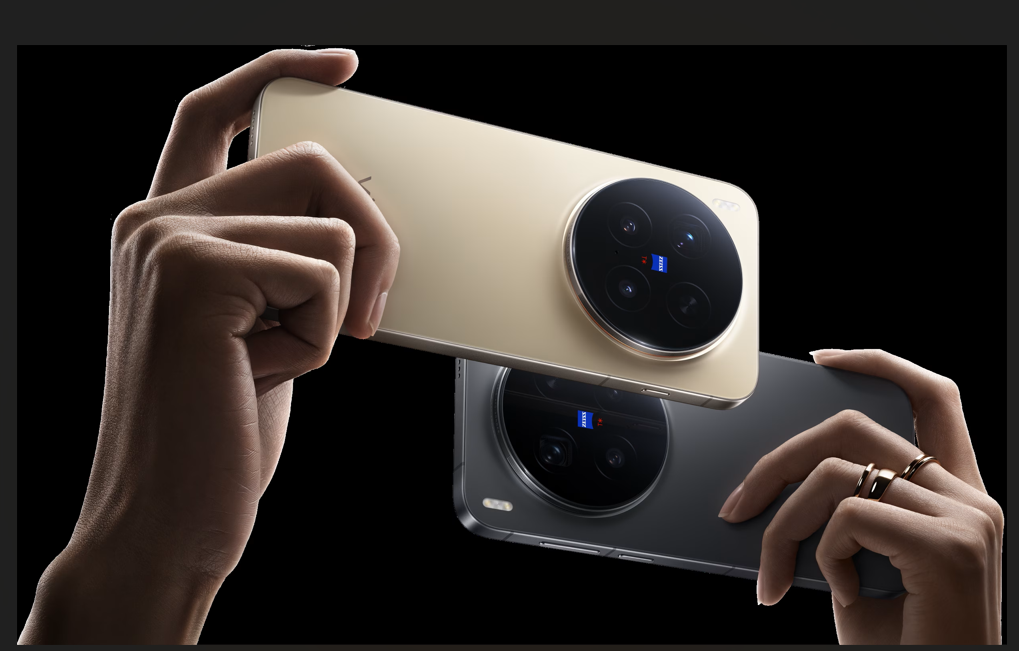
Photography is another area where foldable phones haven’t been the best when compared to typical flagship devices. However, the Vivo X Fold 5 offers a solid selection of cameras that are tuned by Zeiss. All three rear sensors are 50MP shooters with a 20MP selfie shooter on both the primary and secondary screens. The cameras are basically the same as the ones found on the Vivo X200 and offer top notch photography experience.
Honor’s Magic V5 is no slouch in this regard either, with a 50MP (Main) + 50MP (Ultra Wide) + 50MP (Periscope Telephoto) setup on the back and a 20MP selfie shooter on both screens. But Vivo has established itself as a consistent performer in the photography department with the Zeiss collaboration offering additional customizability when taking pictures. So, Vivo has an edge in the overall photography experience.
4. Battery & Charging
The Vivo X Fold 5 and Honor Magic V5 are nearly evenly matched in the battery and charging side as well. The former has a 6000mAh battery pack, which supports 80W wired fast charging, 40W wireless fast charging, and reverse wireless charging support.
On the other hand, the latter has a 6,100mAh battery on the 1TB variant and a 5,820mAh cell on the other configurations that supports 66W wired fast charging, 50W wireless charging, wireless reverse charging. On paper, the Vivo has a better package, but the more efficient Snapdragon 8 Elite could offer a longer battery life.
5. Pricing
Honor Magic V5 starts from 8,999 yuan (roughly 1,255 US Dollars) for the base 12GB + 256GB variant, which makes it nearly 300 US Dollars more expensive than the Vivo X Fold 5. For the same storage option, Vivo’s flagship foldable costs just 6,999 yuan (roughly 975 US Dollars). In other words, the Vivo X Fold 5 could be a better deal if you can forego the latest chipset and slightly slimmer design. The Magic V5 is a top tier offering for its price, but it will likely compete with the upcoming Samsung Galaxy Z Fold 7 at this price range.
For more daily updates, please visit our News Section.
Xiaomi has launched a new Mijia desktop water purifier, the Liangbaikai Edition, in the Chinese market. ‘Liangbaikai’ refers to boiled water that has been cooled to room temperature, a traditional Chinese drinking habit believed to be safer and easier on the stomach than raw tap or even refrigerated water. The product is now available for pre-order on JD.com at 2,699 yuan (approximately $376) and will officially go on sale at midnight on July 15.
Xiaomi Mijia Liangbaikai Water Purifier Specifications
This water purifier offers a range of advanced features focusing on safety, water quality, and user preferences. It uses Xiaomi’s intelligent boiling pressure system, heating water to a full 100°C before rapidly cooling it with an internal heat exchanger. You can customize your water temperature from 40°C to 95°C, suitable for anything from warm drinking water to hot tea.
The purifier features a six-stage filtration system using a PPC composite filter and a 100G RO membrane with 0.0001-micron precision, effectively removing bacteria, viruses, heavy metals, and other contaminants. It includes a dynamic rinsing system that tracks water usage to automatically clean the RO membrane, helping it last up to three years. There is also a manual flush option for long periods of inactivity.
Designed with families in mind, the purifier features BPA-free and silicone-free water pathways, meeting mother-and-baby-grade safety standards. It uses a UV-sterilized 1.2-liter purified water tank that is physically separated from the 4-liter raw water tank and 1.8-liter wastewater tank to prevent contamination or backflow.
On the front, a 5-inch full-color display shows temperature, water volume, TDS levels, and filter status. The purifier supports NFC functionality and comes with three preset tags, allowing users to program specific cups with volume and temperature settings for one-tap dispensing.
The purifier can be remotely controlled through the Mijia app, offering real-time monitoring, filter management, and temperature adjustments in 1°C increments. It maintains a low noise level of 51.1 dB(A) due to dual-layer noise reduction and operates at a daily cost of just 0.2 yuan ($0.028).
In related news, Xiaomi recently launched a new 20,000mAh compact power bank in India featuring a built-in cable, and also introduced an 8000W modular track socket equipped with child-safe design and smart functionality.
For more daily updates, please visit our News Section.
The Dimensity 9400 Plus is currently the most powerful offering from MediaTek, featuring an all-big-core CPU design. It also has a powerful 12-core GPU that excels at graphics rendering. It’s a powerful chipset that’s designed to handle the most demanding smartphone workloads and rivals the very best chipsets on the market.
In this article, we’ll compare it with the Snapdragon 8 Gen 3 — Qualcomm’s slightly older, yet immensely popular flagship processor. While it’s already clear that MediaTek’s chip holds the performance crown, we’re diving deeper to see just how wide the gap really is. We’ll evaluate benchmark scores and examine the key differences to give you the complete picture.
Dimensity 9400+
Snapdragon 8 Gen 3
Announced
April 2025
October 2023
Process node
3nm (TSMC)
4nm (TSMC)
CPU
1 x Cortex-X925 — 3.73GHz 3 x Cortex-X4 — 3.3GHz 4 x Cortex-A720 — 2.4GHz
1 x 3.3GHz — Cortex-X4 3 x 3.15GHz — Cortex-A720 2 x 2.96GHz — Cortex-A720 2 x 2.27GHz — Cortex-A520
GPU
Arm Immortalis-G925 MC12 MediaTek HyperEngine Gaming Ray tracing support
Adreno 750 GPU Snapdragon Elite Gaming features Ray tracing support
NPU
MediaTek NPU 890
Qualcomm Hexagon NPU
Camera
MediaTek Imagiq 1090 ISP Up to 320MP single camera Up to 8K video recording Real-time semantic segmentation
Qualcomm Spectra Cognitive Triple ISP (18-bit) Up to 200MP camera resolution Up to 8K video recording Real-time semantic segmentation
Dimensity 9400 Plus vs Snapdragon 8 Gen 3 – Benchmark score
Note: The following benchmark tests were conducted on the Vivo X200s (Dimensity 9400+) and Xiaomi 14 Ultra (Snapdragon 8 Gen 3).
AnTuTu performance
The Dimensity 9400 Plus absolutely crushes the AnTuTu benchmark with a staggering 2,907,358 points, marking a massive leap in performance. It breaks down into 625,811 in CPU, 1,312,632 in GPU, 509,570 in memory, and 459,344 in UX. The GPU score, in particular, stands out, showing just how serious MediaTek is about pushing graphics performance into next-gen territory.
In contrast, the Snapdragon 8 Gen 3 puts up a solid but clearly lower 1,937,417 AnTuTu points overall. Its breakdown — 419,604 in CPU, 829,698 in GPU, 382,043 in memory, and 306,072 in UX — shows that while Qualcomm’s chip is still a powerhouse, it can’t match Dimensity 9400 Plus. The difference in GPU alone is nearly half a million points, which means significantly better gaming and rendering for the Dimensity 9400 Plus.
Dimensity 9400+
Snapdragon 8 Gen 3
AnTuTu score
2,907,358
1,937,417
CPU
625,811
419,604
GPU
1,312,632
829,698
Memory
509,570
382,043
UX
459,344
306,072
Geekbench performance
On Geekbench, the Dimensity 9400 Plus delivers great numbers — 2,945 in single-core and 9,184 in multi-core — making it one of the most powerful smartphone chips.
In comparison, the Snapdragon 8 Gen 3 posts 2,185 in single-core and 6,735 in multi-core, which are strong results on their own, but fall notably short of what the Dimensity 9400 Plus brings to the table. That’s around a 35% jump in both single-core and multi-core performance for MediaTek’s flagship.
Dimensity 9400+
Snapdragon 8 Gen 3
Single core
2,945
2,185
Multi core
9,184
6,735
Dimensity 9400 Plus vs Snapdragon 8 Gen 3 – Key differences that matter
Performance
Both octa-core chipsets use the ARMv9.2-A architecture but feature different core layouts and manufacturing processes. For instance, the Dimensity 9400 Plus’s CPU has one Cortex-X925 core, three Cortex-X4 cores, and four Cortex-A720 cores.
In contrast, the Snapdragon 8 Gen 3 features one Cortex-X4 core, five Cortex-A720 cores, and two Cortex-A520 cores. Clearly, the MediaTek chip has more powerful cores. Plus, they also run at higher speeds, giving further performance boost.
For graphics rendering, there’s the Mali-G925 Immortalis MP12 GPU on the Dimensity 9400 Plus, and it’s more powerful than the Adreno 750 on the Snapdragon 8 Gen 3. The former has higher FLOPS and peak frequency, too.
Furthermore, the Dimensity 9400 Plus utilizes TSMC’s advanced 3nm process technology, whereas the Snapdragon 8 Gen 3 is fabricated using a 4nm process. This results in improved power efficiency on the Dimensity chip.
Connectivity
The Dimensity 9400 Plus features a 3GPP Release-17 5G modem with up to 7Gbps of download speed. Over a Wi-Fi 7 connection, the maximum speed can reach up to 7.3Gbps. Additionally, the chip features various enhancements, including MediaTek UltraSave 4.0 and MediaTek Xtra Range 3.0, for improved power efficiency and extended coverage.
On the other hand, the Snapdragon 8 Gen 3 features a Snapdragon X75 5G modem that offers up to 10Gbps peak download speed and 3.5Gbps upload speed. It also supports Wi-Fi 7, with a maximum speed of up to 5.8 Gbps. This chip also brings a range of features to enhance the connection, including the Qualcomm 5G Ultra-Low Latency Suite, Qualcomm Smart Transmit Gen 4 technology, and Qualcomm 5G PowerSave Gen 4.
Camera
The Dimensity 9400 Plus features the Imagiq 1090 ISP, which supports up to 320MP camera resolution and up to 8K video recording. It enables full-range HDR zoom with smooth zoom switching and supports real-time AI segmentation in videos for better optimizations.
The Snapdragon 8 Gen 3 features an 18-bit Spectra triple ISP with support for up to 200MP camera. It also allows up to 8K video recording and supports real-time semantic segmentation. Additionally, the chip brings a range of camera features, including Mega Low light photography, Truepic photo capture, and AI-based auto-focus and auto-exposure.
Dimensity 9400 Plus vs Snapdragon 8 Gen 3 – which is better?
There’s no doubt that the Dimensity 9400 Plus outperforms the Snapdragon 8 Gen 3 across the board. It delivers nearly 50% higher AnTuTu scores and over 35% higher Geekbench scores, thanks to its all-big-core CPU setup, next-gen GPU, and advanced 3nm process.
The Snapdragon 8 Gen 3 still remains a flagship-grade performer with solid efficiency, excellent connectivity, and great camera support, but it simply can’t match the raw power and innovation packed into the Dimensity 9400 Plus.
Xiaomi has officially responded to recent rumors suggesting an end to its collaboration with Leica, firmly denying any plans to break ties. The speculation originated from a leak posted by tipster Digital Chat Station, which claimed that Xiaomi’s partnership with Leica was coming to a close. The rumor quickly gained traction across social media and news outlets. We covered it too.
Wang Hua, Xiaomi’s General Manager of Public Relations, publicly addressed the claim and dismissed it as baseless. Referring to a similar rumor from June 2023, Wang reiterated his earlier stance with added emphasis. “Last time, a blogger said the Xiaomi 14 would be the last in the Leica series. I called it nonsense then. This time, there’s even a named author, so my reply needs an upgrade: it’s still nonsense,” he said.
Xiaomi emphasized that its partnership with Leica remains strong and is actively expanding. The company has made several moves over the past year that demonstrate its commitment to the collaboration. In May, Xiaomi’s camera team updated its watermark design to align with Leica’s global visual identity. In June, the company shared a detailed explanation of Leica’s “Authentic” and “Vibrant” image profiles, along with plans to bring Leica’s shutter sounds to older models.
The Xiaomi 15 Ultra continues to serve as a flagship example of the co-branded effort. The device features Leica-tuned optics, signature Leica color modes, and a red-accented user interface inspired by Leica’s branding. It also includes six Leica-style tone presets and custom image processing algorithms developed in partnership with Leica’s imaging experts.
Adding to the official rebuttal, Xiaomi India reached out directly to us to confirm what Wang hinted at with sarcasm: the Leica alliance is very much intact. “Together, Xiaomi and Leica have collaborated closely to integrate advanced optics and imaging technologies into Xiaomi devices,” a spokesperson told us. “This partnership continues to thrive, grounded in a shared vision of pushing the boundaries of mobile imaging. Recent rumors suggesting the end of our collaboration are entirely unfounded.”
In short: if you were hoping for a Xiaomi-Leica divorce, don’t hold your breath. The two companies remain creatively aligned and strategically committed. Whatever’s next, it’s clear the story of Xiaomi and Leica is still being written together.
In related news, Xiaomi recently launched a new 20,000mAh compact power bank in India featuring a built-in cable, and also introduced an 8000W modular track socket equipped with child-safe design and smart functionality.
For more daily updates, please visit our News Section.
The Poco F7 and Poco F7 Ultra target performance enthusiasts at different price points, making this comparison crucial for buyers deciding between flagship-tier features and value-driven performance. With both models boasting powerful specs, advanced displays, and premium builds, the key differences lie in their cameras, processors, and charging technologies. Understanding how these two phones stack up helps users choose between affordability and high-end features without compromising on the core experience.
Design and Display
POCO F7
Build and Feel: Both phones feature a premium glass and aluminum construction with IP68 dust and water resistance. However, the F7 Ultra uses Poco’s Shield Glass, which offers better drop resistance than Gorilla Glass 7i on the regular F7. While both are durable, the Ultra adds improved water resistance (up to 2.5m) and a sleeker feel with more refined edges. The design of the Ultra feels more flagship-class, whereas the F7, although sturdy, leans toward upper mid-range quality.
Verdict: Poco F7 Ultra offers a more premium feel and tougher materials.
Display Quality: The F7 comes with a larger 6.83-inch AMOLED panel with 1280p resolution and Dolby Vision, while the F7 Ultra opts for a smaller 6.67-inch screen but bumps the resolution to 1440p, offering crisper visuals with a higher 526ppi density. Both support 120Hz refresh rate and 3200 nits peak brightness. However, the Ultra’s sharper resolution and higher pixel density give it an edge for media consumption and detail clarity.
Verdict: Poco F7 Ultra delivers superior display sharpness and viewing experience.
Verdict: While both devices offer flagship-grade design and visuals, the Poco F7 Ultra stands out with its better drop protection, higher resolution screen, and more refined build. It justifies its premium price with a noticeable upgrade in display quality and materials.
Specifications
POCO F7 Ultra
Performance: The F7 runs on the Snapdragon 8s Gen 4, which is excellent for gaming and day-to-day tasks, but the F7 Ultra is equipped with the more powerful Snapdragon 8 Elite with custom Oryon V2 cores and a newer Adreno 830 GPU. The Ultra’s chipset is built on a more efficient 3nm process and delivers significant gains in raw performance and thermal efficiency. The Ultra also supports faster RAM (up to 16GB), which further enhances multitasking and future-proofing.
Verdict: Poco F7 Ultra clearly wins in terms of performance, power, and efficiency.
Battery and Charging: The regular F7 offers a massive 6500–7550 mAh battery, depending on the region, along with 90W wired and 22.5W reverse wired charging. In contrast, the Ultra has a smaller 5300 mAh battery but compensates with 120W wired and 50W wireless charging support. While the F7 lasts longer on a single charge, the Ultra recharges significantly faster and supports wireless charging, which is missing on the F7.
Verdict: Poco F7 wins on endurance, but the F7 Ultra leads with faster and more versatile charging.
Verdict: The Poco F7 Ultra is a powerhouse built for performance enthusiasts, while the F7 appeals to users who prioritize battery life. Overall, the Ultra takes the edge for its next-gen chipset and charging options, despite a smaller battery.
Camera
POCO F7 Ultra
Main and Secondary Lenses: The Poco F7 sports a dual camera setup with a 50MP wide and 8MP ultrawide lens, capable but basic. The Ultra significantly upgrades to a triple setup: 50MP wide with a larger sensor, 50MP telephoto with 2.5x optical zoom, and a 32MP ultrawide sensor. The Ultra also includes a color spectrum sensor for better color accuracy and offers advanced features like 8K recording. These additions provide more flexibility for professional and creative photography.
Verdict: Poco F7 Ultra delivers a dramatically superior and versatile camera system.
Selfie Camera: The F7 features a 20MP selfie camera, while the Ultra improves this to a 32MP sensor with a wider field of view and gyro-EIS for better stabilization during video recording. Image clarity and skin tone rendering are better on the Ultra, especially in low-light conditions. Verdict: The Ultra offers a more capable and refined front camera for selfies and video calls.
Verdict: Poco F7 Ultra easily outpaces the F7 with its triple-lens rear setup, zoom capabilities, and a better selfie shooter. It’s the clear choice for those who value camera flexibility and imaging performance.
Pricing
The Poco F7 is priced around $450, offering strong value with a flagship-grade chipset, excellent display, and long battery life. The Poco F7 Ultra, at approximately $750, brings top-tier performance, a better display, a significantly upgraded camera setup, and faster charging. For users looking for premium features without compromise, the extra $300 is well justified. However, budget-conscious buyers may find the regular F7 more than sufficient for most needs.
Verdict: F7 is better for value, but the F7 Ultra is worth the premium for flagship extras.
Conclusion
POCO F7
The Poco F7 Ultra includes several standout upgrades: Snapdragon 8 Elite chip, 2.5x optical zoom, 50W wireless charging, ultrasonic fingerprint scanner, and a sharper QHD+ display. It also has Snapdragon Sound and advanced positioning features. The regular F7, while lacking in some high-end features, still offers an amazing display, huge battery, and solid performance for its price.
Verdict: Choose the Poco F7 Ultra if you want the best Poco experience, perfect for gamers, creators, and power users. But if budget matters and you can compromise on cameras and wireless charging, the Poco F7 delivers excellent flagship-grade value at a lower price point.
The Realme 15 and Realme 15 Pro were just teased in India earlier this month, showcasing the brand’s focus on AI for photography on the upcoming mid range devices. Now, the company has shared new info that reveals some nifty hands-free photo editing features on the upcoming Realme 15 series. So let’s check it out.
Realme 15 Series AI Edit Genie with Voice Controls
The Chinese company’s new Realme 15 and Realme 15 Pro are bringing the industry’s first voice activated photo editing feature with the new AI Edit Genie. In other words, users can play around with the brand’s AI integration for deeper customization of their pictures using their voice. This offers a one-of-a-kind hands free experience using voice commands like “Smoothen my skin,” “Add a cinematic filter,” or “Remove the photobomber”, among other functionalities.
Realme 15 series with AI Edit Genie
So Realme clearly plans on offering real time AI editing tools so that the users can get the best photograph. The company bringing this feature showcases its commitment to expanding and being AI inclusive moving forward. Realme is also pushing the AI Edit Genie to young content creators, influencers, and regular users. This was all the information shared by the company in the latest teaser.
Based on what we know so far, the Realme 15 and Realme 15 Pro are the successors to the Realme 14 lineup.It is set to debut with upgrades in the camera system. The Realme 15 Pro is expected to arrive with either 8GB of 12Gb of RAM and up to 512GB of internal storage. Meanwhile, the base Realme 15 could launch in similar storage configurations and arrive in silk pink and velvet green color variants.
For more daily updates, please visit our News Section.
A new leak has revealed HMD’s next budget smartphone, which will be arriving in the Indian market for under Rs 10,000. This would make it affordable for those looking for a cheap device that offers the essential features without breaking the bank. So here’s everything that was revealed in the new leak.
HMD Bold leak: What we know so far?
The news arrives from a tweet shared by @smashx_60, who claims that the HMD Bold will be a low end in the Indian market. This model will reportedly sport a tall 6.74-inch HD+ display with a 90Hz refresh rate. Since it targets the budget segment, we can expect it to be an LCD panel. Under the hood, the HMD Bold might be equipped with the UNISOC T7200 SopC, which will be paired with either 4GB of RAM and 128GB or 256GB of internal storage.
HMD Bold
A large 5,000mAh battery pack is expected to power this device, which may support 20W wired fast charging. The leak further adds that the rear has a 50MP + 0.8MP dual camera setup, while the front houses an 8MP shooter for selfies and video calls. Additionally, the HMD Bold will launch in India in Blue and Brown color variants.
We even got the pricing details for its two storage configurations, which include 4GB + 128GB and 6GB + 256GB variants. The leak states that the HMD Bold will have a 7,999 INR starting price tag, with the higher end variant costing 9,999 INR. In other words, it is the most affordable smartphone from HMD yet in India. This leak also arrives as the brand is rumored to be working on the HMD Skyline 2 GT/ Skyline 2.
For more daily updates, please visit our News Section.
Xiaomi’s much-anticipated SU7 Ultra electric vehicle has just been registered in Germany, marking a major step towards its European debut. The brand’s first electric vehicle has already made headlines in China, and now, a company executive has shared an image posing with the SU7 Ultra with a German license plate. So let’s check it out.
Xiaomi SU7 Ultra Arriving in Europe Soon
Lu Weibing, the president of the Chinese tech giant, shared a photo on Weibo, posing in front of the SU7 Ultra. He showcased the German license plate and confirmed that Xiaomi’s first EV has completed an experimental car registration in the European country. Based on what we know so far, the Xiaomi SU7 Ultra is set to launch sometime in 2027.
Xiaomi SU7 Ultra Registered in Germany
The social media post further adds that the senior official also test drove the Xiaomi SU7 Ultra electric in Munich. Looking at the image, the license plate carries the “M SU7088E” that clearly showcases its model. Just last month, the brand’s Xiaomi SU7 Ultra was confirmed to drop in Gran Turismo 7. Xiaomi has had ambitious plans for the wider release of its electric vehicles.
To recall, the SU7 Ultra is a high-performance electric sedan that debuted in China for around 73,000 US Dollars. It features an impressive acceleration of 0-100km/h in just 1.98 seconds. The flagship EV can achieve a top speed of 350km/h, m,making it the fastest four door production car. But for those looking for a more reliable experience, the SU7 Ultra can charge from 10 to 80 percent in just 11 minutes and offers a 620 km CLTC range.
For more daily updates, please visit our News Section.
HKC has launched a new gaming monitor in China under the model name Falcon II G27H4Plus. The monitor features a 27-inch 2K display with a 300Hz refresh rate and is priced at 1199 yuan (approximately $165). It targets competitive gamers who are looking for high-speed visuals without paying a premium.
HKC G27H4Plus Specifications
The G27H4Plus features a 2560 x 1440 Fast IPS panel with a refresh rate of up to 300Hz (overclocked) and a 1ms response time. HKC has included its in-house Dynamic Image Clarity (DIC) technology to reduce motion blur during high-speed gameplay. These specifications target players of fast-paced titles such as CS2, Valorant, and Overwatch 2, where high frame rates and clarity can provide a competitive edge.
The panel covers 95% of the DCI-P3 color gamut and 125% of sRGB. It supports 10-bit color (8-bit + FRC) and comes factory calibrated with a Delta E value of ≤ 2. The monitor is DisplayHDR 400 certified, which allows it to deliver higher contrast and brighter highlights in supported games and content.
The G27H4Plus also includes gamer-oriented features such as customizable crosshairs, a black equalizer, and game-specific picture modes like FPS, RPG, and Racing. It supports AMD FreeSync Premium to eliminate screen tearing, ensuring a smoother gaming experience.
The monitor also supports hardware-level low blue light filtering to reduce eye strain during prolonged use, without distorting colors. It’s paired with an ergonomic stand that allows for height adjustment (up to 100mm), tilt (-5° to 20°), and pivot (+90° rotation), providing flexibility for different desk setups including compact dormitories. It also supports a standard 75x75mm VESA mount for wall or arm mounting.
In terms of connectivity, the G27H4Plus sports two HDMI 2.1 ports, one DisplayPort 1.4, and a 3.5mm audio out jack. These offer wide compatibility with gaming PCs, laptops, and consoles. It comes finished in a sleek black color with a compact hexagonal base, designed to save desk space while offering stable support.
In other news, Philips recently launched a new 32-inch curved gaming monitor with a 180Hz refresh rate, priced at $220. Meanwhile, Hisense has introduced a 34-inch 1440p curved monitor featuring a 240Hz refresh rate and dual speakers.
For more daily updates, please visit ourNews Section.
Xiaomi has just launched a new portable power bank in India for charging gadgets on the go. The new Xiaomi Compact Power Bank 20000 has just dropped with a massive battery capacity, sleek design, and fast charging support. So here’s everything you need to know.
Xiaomi Compact Power Bank 20,000mAh: What does it offer?
The Chinese tech giant’s latest power bank was designed with portability and convenience in mind. Despite packing a large battery, the gadget weighs just 342 grams and even houses a built-in USB-C cable. The body has a matte design with a PC+ABS finish. Under the hood, it packs a 20,000mAh lithium-ion cell and offers 22.5W fast charging from its USB-C cable. There is also an additional USB-C port that supports PD and QC 3.0 charging, and a USB-A port as well.
Xiaomi Compact Power Bank 20,000mAh
So users can simultaneously charge up to three devices. Xiaomi’s new power bank can even charge smartwatches and other accessories that require low power delivery. The brand has ensured safety with multiple layers of protection against high temperatures, overcharge, and other issues. Other notable features include two way fast charging support, 12 layer safety protection, and air travel compliance.
The new Xiaomi Compact Power Bank 20,000 has just been announced in the Indian market in Dark Gray and Ivory Green. It is available for purchase for 1,999 INR via the brand’s official website, Amazon, Flipkart, and other Xiaomi retail outlets. The first sale is set to kick off on 10th July 2025. This release also arrives after the brand unveiled the 8000W modular track socket with smart features in China.
For more daily updates, please visit our News Section.
Honor has officially launched the Honor X9c 5G in India today. This new phone is the successor to the Honor X9b, which was previously introduced with a price tag of Rs 25,999. Notably, the Honor X9c arrives in the Indian market with a more competitive, reduced price.
Honor X9c 5G specifications and features
Honor X9c 5G
The Honor X9c 5G features a 6.78-inch curved AMOLED display with a resolution of 2700 x 1224 pixels. It also supports a 120Hz refresh rate and 3840Hz PWM dimming.
Under the hood, the phone is powered by the Qualcomm Snapdragon 6 Gen 1 chipset, paired with 8GB of RAM and 256GB of storage. The phone runs on MagicOS 9.0 based on Android 15 and comes with a 6,600mAh silicon-carbon battery, which supports 66W wired charging
On the rear, the X9c 5G sports a 108-megapixel main camera with OIS and a 5-megapixel ultra-wide lens. It supports up to 4K video recording and up to 10x digital zoom. For selfies, it offers a 16-megapixel front-facing camera with support for 1080p video recording.
The Honor X9c 5G also supports dual SIM, Wi-Fi 802.11ac, Bluetooth 5.1, NFC, and USB-C. For security, it features an in-screen fingerprint sensor. It is an IP65M-rated device with a thickness of 7.98mm and a weight of 189 grams.
Honor X9c 5G price and availability
The Honor X9c 5G is priced at Rs 21,999 for the lone 8GB + 256GB variant. It comes in Titanium Black and Jade Cyan color options and will be available exclusively on Amazon.in starting July 12, 2025, as part of the Prime Day sale.
Buyers can avail a limited-time launch offer, bringing the effective price down to Rs 19,999 after a Rs 1,250 instant discount and Rs 750 bank offer, valid until July 14. Additional perks include a free 1-year extended warranty worth Rs 1,099, an exchange offer of up to Rs 7,500, and no-cost EMI for up to 9 months.
For more daily updates, please visit our News Section.
A new leak from reliable tipster Digital Chat Station suggests that Oppo is developing its next-generation foldable smartphone — the Oppo Find N6 — sometime in the first quarter of 2026. While official details are still under wraps, expectations are already high, given the strong reputation built by its predecessor, the Find N5.
Oppo Find N6: What to expect?
Oppo Find N6’s Q1 2026 launch tipped by DCS
Although specific hardware specifications of the Oppo Find N6 remain unknown, the upcoming foldable is expected to carry forward Oppo’s focus on slim design, display quality, improved photography experience, and rugged durability.
When it debuted in February this year with a price tag of 8,999 Yuan (~$1,255), it was advertised as the world’s thinnest foldable phone, which has been overtaken by the Honor Magic V5, launched recently in China. It has a thickness of 8.93mm, setting new standards in foldable phone design.
The Find N5 features an 8.12-inch inner foldable display and was the world’s first foldable to run on the Snapdragon 8 Elite chip. It packed a 5,600mAh battery, supported 80W wired and 50W wireless charging, and was the first foldable phone to receive IPX6, IPX8, and IPX9 water resistance certifications.
OPPO Find N5
With the Find N6 expected to arrive in early 2026, consumers are looking forward to advancements in display technology, battery life, improved cameras, and durability. According to DCS’ previous post, the N6 will be thinner, lighter, and more versatile than its previous generation. Most likely, it is expected to debut as the world’s first Snapdragon 8 Elite 2 foldable phone. Oppo is likely to enhance key areas while preserving the design elegance that defined the N5. While there is news about Oppo working on a book-style foldable phone, there is no information on whether it plans to launch a flip phone in 2026.
For more daily updates, please visit our News Section.
Lumio has announced the launch of two new smart projectors, the Arc 5 and Arc 7, as part of its entry into India’s growing but underdeveloped home projector segment. The company aims to address a clear gap in the market, where most options are either low-end devices under Rs. 12,000 ($140) or expensive models priced above Rs. 50,000 ($584).
Lumio Arc 5 and Arc 7 Specifications
The Arc series targets the midrange segment between Rs. 20,000 ($234) and Rs. 50,000 ($584), which remains largely unserved in India. Lumio has built these projectors to solve common consumer frustrations, including poor app compatibility, weak audio performance, clunky setup processes, and lack of reliable service support.
Both models run Google TV and come with Netflix certification, providing users access to over 10,000 apps and 400,000+ movies and shows. Lumio has backed the launch with a service network of over 200 centers across India and includes a 1-year warranty.
The Arc 5 is a compact projector designed for bedrooms, dorm rooms, or travel. It features 200 ANSI lumens of brightness, supports Full HD 1080p resolution with HDR10, and projects up to a 100-inch screen. The Arc 5 weighs just 1.33 kg and includes 5W speakers with Dolby Audio and dual passive radiators for improved bass.
The more powerful Arc 7 targets larger living rooms. It offers 400 ANSI lumens of brightness and includes 2x8W stereo speakers with Dolby Audio and a larger passive radiator. It also supports a 100-inch screen and uses the same sealed ArcLight Engine as the Arc 5 to prevent dust buildup and maintain long-term image quality.
Both projectors feature auto-keystone correction, obstacle avoidance, and instant autofocus using a built-in Time-of-Flight (ToF) sensor. Lumio calls this system STR8 (Smooth Trapezoidal Recalibration), which simplifies the setup experience for users. Internally, they run on the MediaTek 9630 chip with 2GB RAM and 16GB storage.
Lumio also introduced the new Minion Noir remote, which includes dedicated buttons for Google Assistant, Netflix, YouTube, and TLDR, Lumio’s proprietary dashboard for live sports updates and curated music content.
Please Note: When you buy something using the links in our articles, we may earn a small commission at no cost to you.
Pricing and Availability
The Arc 7 will be available on Amazon.in starting July 12 for Rs. 34,999 ($409), with an early bird price of Rs. 29,999 ($350) during the Amazon Prime Day sale (July 12–14). The Arc 5 will go on sale in the last week of July for Rs. 19,999 ($234).
For more daily updates, please visit ourNews Section.
The Honor GT 2 series is generating a buzz in the tech space ahead of its official announcement. Well-known Chinese tipster Digital Chat Station has shared new insights about what appear to be the second-generation GT phones, revealing chipset, display, and battery capacity details.
Honor GT 2 series chipset and display details
Honor GT 2 series leak by DCS
The leaks suggest that the Honor GT 2 series will be split into two models: a standard version and a Pro edition. The standard variant is reportedly undergoing A/B testing on two Qualcomm chipsets — the Snapdragon 8 Elite (SM8750) and a new Snapdragon chip with model number SM8845.
In a previous Weibo post, DCS described the upcoming SM8845 as the latest TSMC N3P (3nm process) chipset featuring a self-developed Oryon CPU with a full-core configuration of 2+6 (2 prime cores and 6 performance cores). Some of its components are shared with the SM8850 chipset. Its overall performance is said to be slightly lower than the Snapdragon 8 Elite. Rumors suggest that the Redmi K90 may also feature the SM8845 chip.
The Honor GT 2 Pro model, on the other hand, is said to be confirmed with the next-gen Snapdragon 8 Elite 2 (SM8850), which is expected to launch in September this year.
In terms of design, both the Honor GT 2 and GT 2 Pro are tipped to sport a 6.7-inch 1.5K LTPS OLED flat screen with a 2.5D profile and a durable metal frame. The Pro model may introduce a 3D ultrasonic fingerprint scanner — a first for the series — nudging it further into flagship territory.
Honor GT Pro
Honor is expected to continue its large-battery strategy with the GT 2 series. Last year’s GT Pro model featured a 7,200mAh battery, and this year’s Pro variant may match or exceed that, promising excellent endurance, especially with the use of power-efficient chips.
For more daily updates, please visit our News Section.
Honor has officially confirmed that its new foldable phone, the Honor Magic V5, will debut in Malaysia on July 15th. Earlier this month, the Magic V5 was unveiled in China, distinguished as the world’s slimmest and lightest foldable phone. This upcoming launch marks its global debut, with Honor Malaysia releasing an official confirmation.
Honor Magic V5 global launch date
As can be seen above, Honor has officially confirmed that the Honor Magic V5 will launch on July 15 in Malaysia. The post claims that the V5 will arrive with no compromise in departments like battery, camera, and durability.
Honor Magic V5 specifications
In China, the Magic V5 comes in two battery variants, such as 5,820mAh and 6,100mAh. It is likely only the 5820mAh variant could be released in markets outside of China.
The Magic V5 has a 7.95-inch foldable LTPO AMOLED panel and it has a 6.43-inch LTPO OLED cover screen. Under the hood, the device is equipped with the Snapdragon 8 Elite chipset, up to 16GB of RAM, and up to 1TB of storage.
The Magic V5 has a 20-megapixel cover display camera and a 20-megapixel camera on the internal screen. On the back, the device is fitted with a 50-megapixel main camera with OIS support, a 50-megapixel ultra-wide lens with autofocus, and a 64-megapixel periscope telephoto camera with OIS support.
The Magic V5 has other features like a side-facing fingerprint scanner, dual speakers, 66W wired charging, 50W wireless charging, a USB-C (Gen 3.1), and an IR blaster. It has a thickness of 8.8mm and weighs 217 grams.
The Honor Magic V5 is set to compete with the likes of the Oppo Find N5, Vivo X Fold 5, and Galaxy Z Fold 7 in Malaysia. While the Oppo offering has already launched, the Vivo and Samsung devices are also expected to debut in Malaysia soon.
For more daily updates, please visit our News Section.
Redmi unveiled the Redmi K80 and K80 Pro in November last year in China. The rebranded versions of these phones, with monikers Poco F8 Pro and F8 Ultra, were released globally in February this year. Redmi and Poco are expected to use the same strategy for the Redmi K90 series and Poco F8 lineup. This has become all the more evident through the IMEI database listings of these devices.
Redmi K90 / Poco F8 series model numbers (rumored)
Redmi K80 Pro
Two Redmi phones with model numbers 2510DRK44C and 25102RKBEC have emerged in the IMEI database. The internal codes of these devices are P11 and P11U, and their codenames are Annibale and Myron. The IMEI database listings have not revealed the final marketing names of these devices. However, they are expected to be called the Redmi K90 and K90 Pro, respectively, when they hit the Chinese market in October this year.
At the same time, two Poco smartphones with model numbers 2510DPC44G and 25102PCBEG have also surfaced in the IMEI database. These devices are said to be called the Poco F8 Pro and Poco F8 Ultra when they launch globally next year. Their internal codes and codenames are the same as the K90 and K90 Pro. It should be noted that the exact names of the F8 models have not surfaced in the IMEI database.
The Redmi K90 and Poco F8 Pro are expected to feature last year’s Snapdragon 8 Elite (first generation). On the other hand, the K90 Pro and F8 Ultra are expected to feature the Snapdragon 8 Elite 2, which is likely to debut in September this year.
The Poco F8 Pro and F8 Ultra may launch in the first quarter of 2026. The lineup may also include the standard Poco F8. It is likely that the F8 could be a rebranded version of the Redmi Turbo 5 Pro, which is expected to debut in Q2 2026.
For more daily updates, please visit our News Section.
We use cookies on our website to give you the most relevant experience by remembering your preferences and repeat visits. By clicking “Accept”, you consent to the use of ALL the cookies.
This website uses cookies to improve your experience while you navigate through the website. Out of these, the cookies that are categorized as necessary are stored on your browser as they are essential for the working of basic functionalities of the website. We also use third-party cookies that help us analyze and understand how you use this website. These cookies will be stored in your browser only with your consent. You also have the option to opt-out of these cookies. But opting out of some of these cookies may affect your browsing experience.
Necessary cookies are absolutely essential for the website to function properly. This category only includes cookies that ensures basic functionalities and security features of the website. These cookies do not store any personal information.
Any cookies that may not be particularly necessary for the website to function and is used specifically to collect user personal data via analytics, ads, other embedded contents are termed as non-necessary cookies. It is mandatory to procure user consent prior to running these cookies on your website.