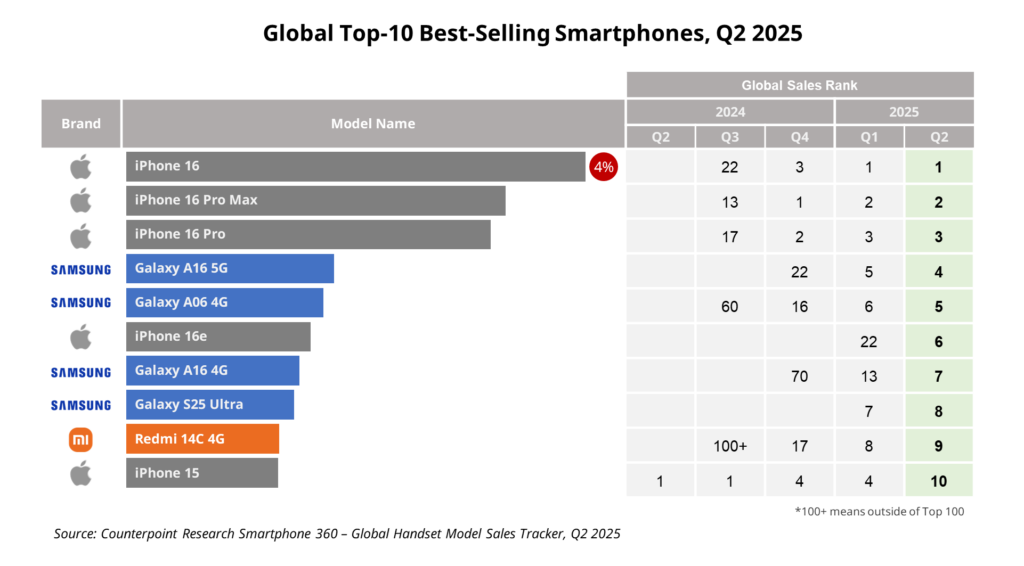
The global smartphone market in Q2 2025 shows little change at the top, with Apple once again taking the lead. According to Counterpoint Research, the iPhone 16 was the best-selling phone worldwide between April and June, followed closely by the iPhone 16 Pro Max and iPhone 16 Pro.
Samsung, however, managed to secure its own victory. The Galaxy A16 5G was the highest-selling Android device of the quarter, ranking fourth overall. Its appeal comes from a mix of practical features and a competitive price tag. The phone ships with Samsung’s Exynos 1330 or Mediatek Dimensity 6300 processor (depending on the region), and up to six years of Android updates, making it a long-term choice for budget buyers.
The Galaxy A06 4G also performed well, landing in fifth place. On Apple’s side, the newly launched iPhone 16e slotted in at number six. It cuts back on premium extras like the ultra-wide camera and MagSafe but still runs the A18 chip, which seems to have helped adoption in cost-sensitive markets.
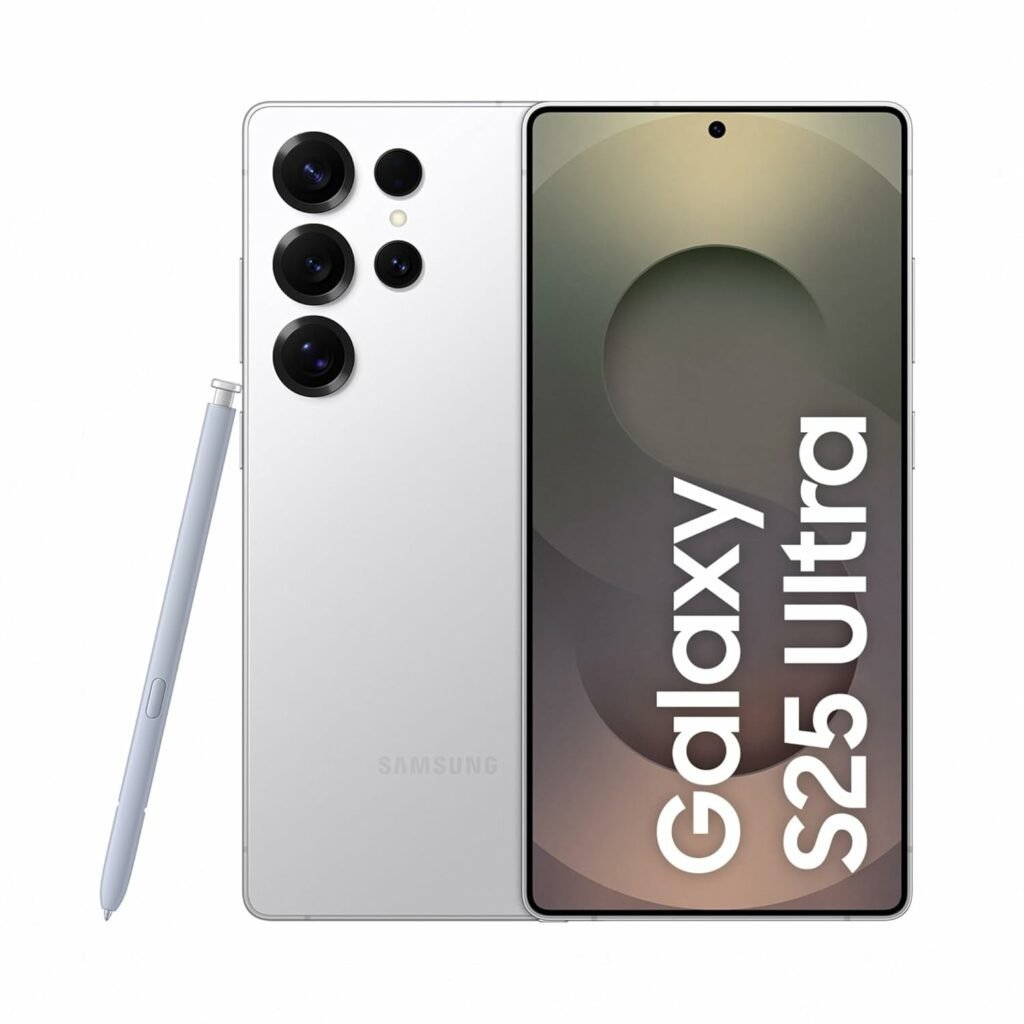
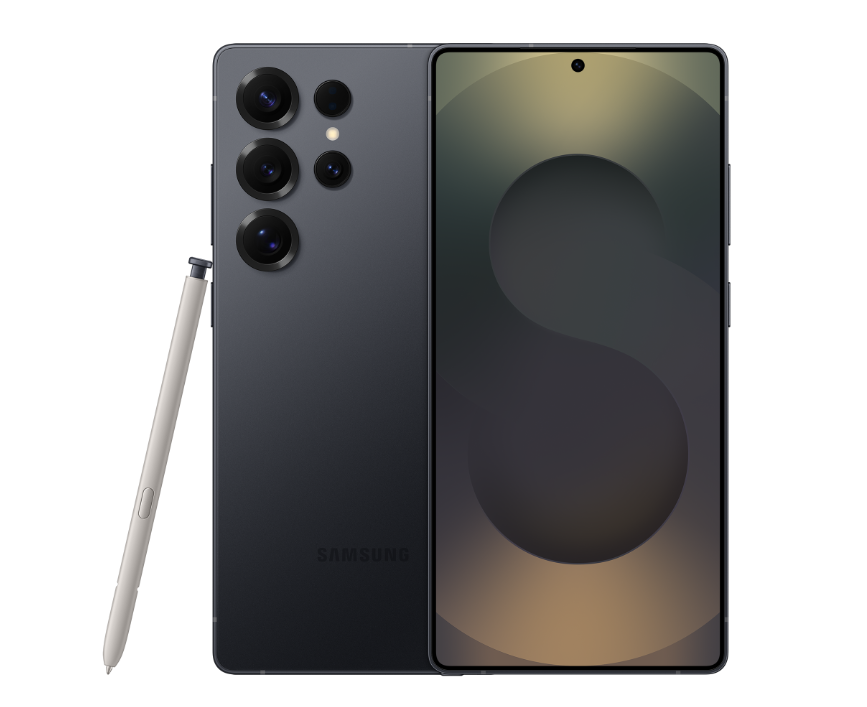
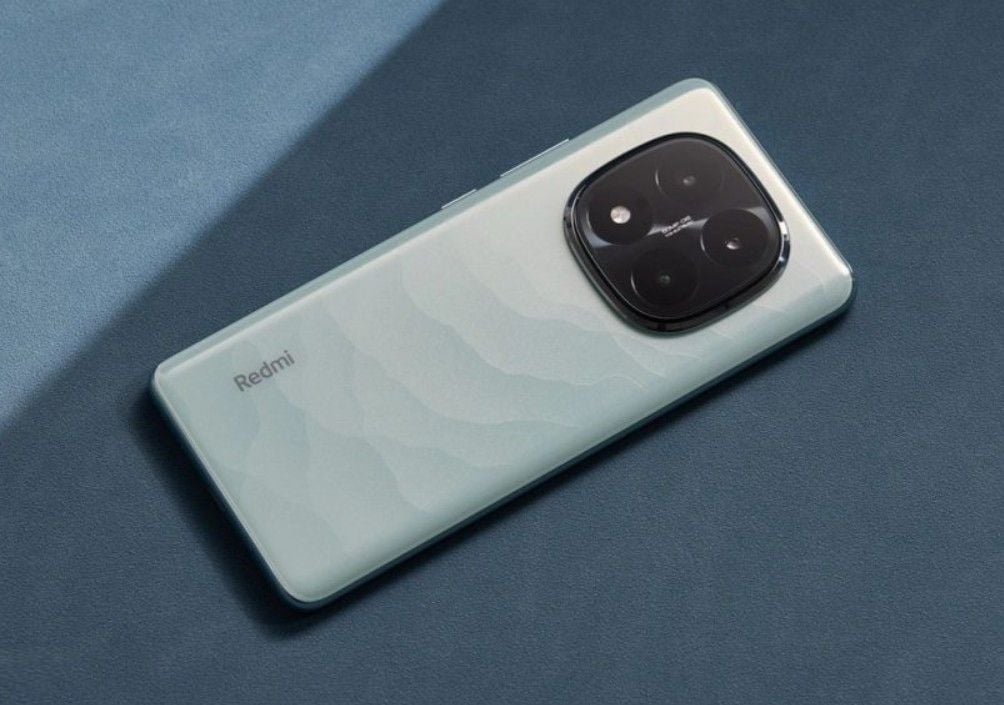
Higher-end Android devices were less visible. The Galaxy S25 Ultra was the only flagship to break into the top ten, while Xiaomi’s Redmi 14C 4G claimed a spot thanks to strong sales in Latin America, the Middle East, and Africa. It was also the only brand outside of Apple and Samsung to appear in the rankings.
The latest numbers underline how the market remains split: Apple dominates the premium end, while Samsung and Xiaomi are competing hard in the entry-level and mid-range globally. With Apple holding steady and Samsung scoring wins through affordability, the divide between price tiers continues to define the smartphone race.
Rogbid has introduced its latest smartwatch, the Rowatch D2, aiming to blur the line between fitness tracker and medical device. Priced at $129.99 through the company’s online store, the D2 builds on the brand’s first-generation blood pressure watch with a more sophisticated design and stronger health features.
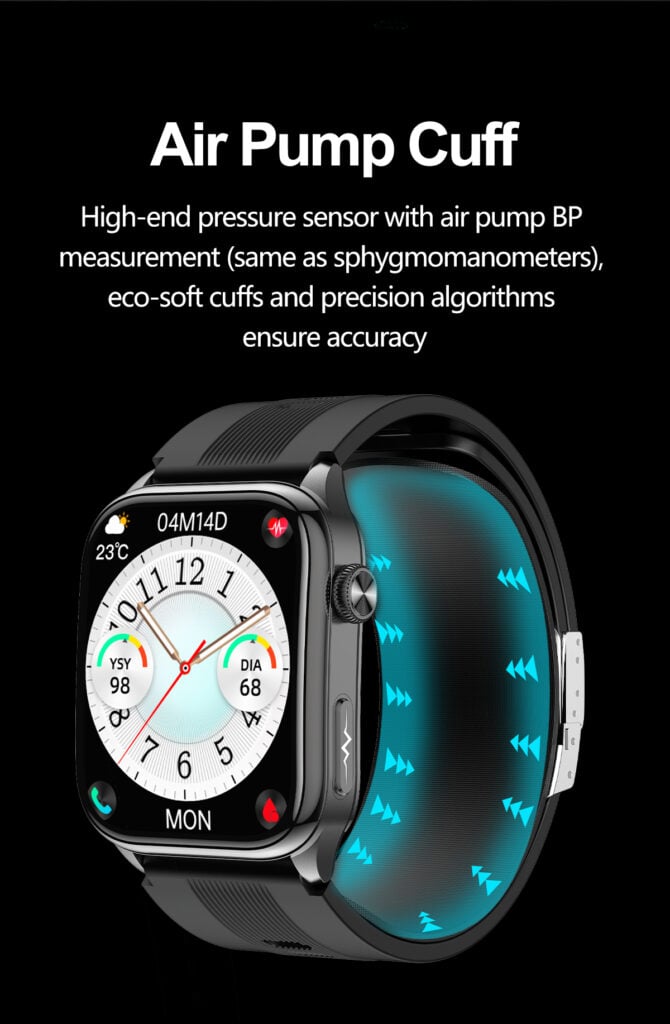
The headline addition is a miniature air pump and cuff system built directly into the watch, designed to replicate the way a traditional monitor works. Rogbid says this setup, paired with a high-end pressure sensor and low-interference chip, delivers clinically accurate readings with just a single tap. There’s also voice feedback to guide users through measurements, a detail that could be particularly useful for older users.
Alongside blood pressure, the Rowatch D2 can perform ECG readings using a dedicated medical-grade chip and Rogbid’s own analysis software. Other health tools include tracking for body fat, oxygen levels, sleep, heart rate, and even body temperature. A “micro health check” feature condenses these metrics into a 30-second scan. For emergencies, the watch also supports one-touch SOS calling and family data sharing.
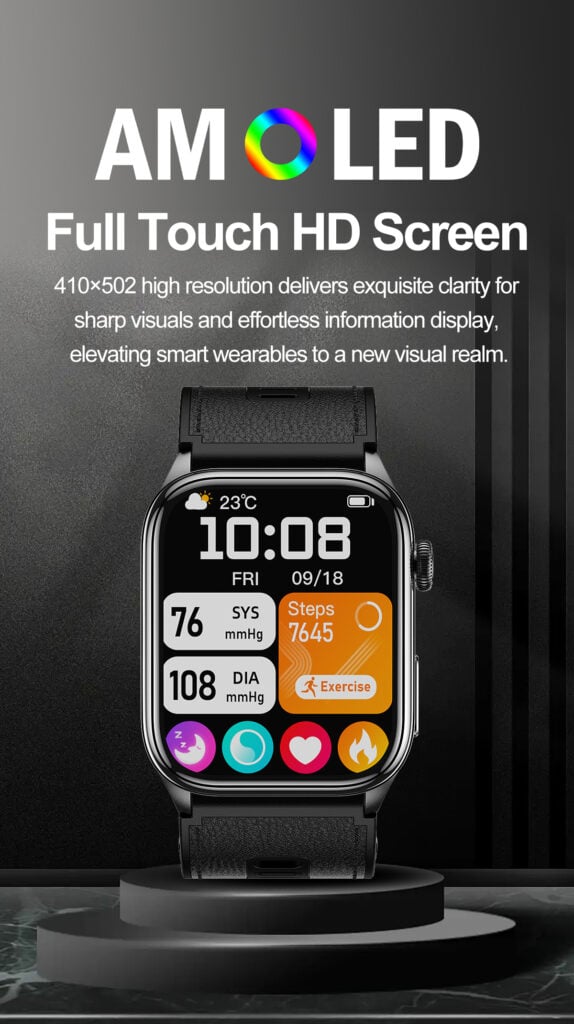
On the hardware side, the D2 carries a 2.06-inch curved HD display (410×502 pixels), a 380mAh battery with up to 20 days of standby, and support for multiple sport modes. Buyers can pick from silicone or leather straps in a range of colors.
With its broad health toolkit and sub-$130 price tag, the Rowatch D2 positions Rogbid as a challenger in the increasingly crowded smartwatch space. While not as cheap as entry-level models like the Amazfit Bip 6, its clinical-style blood pressure system could make it a standout for health-conscious buyers.
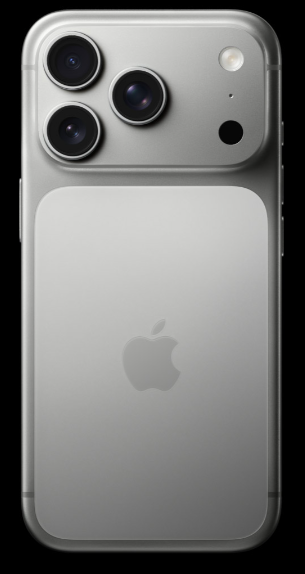
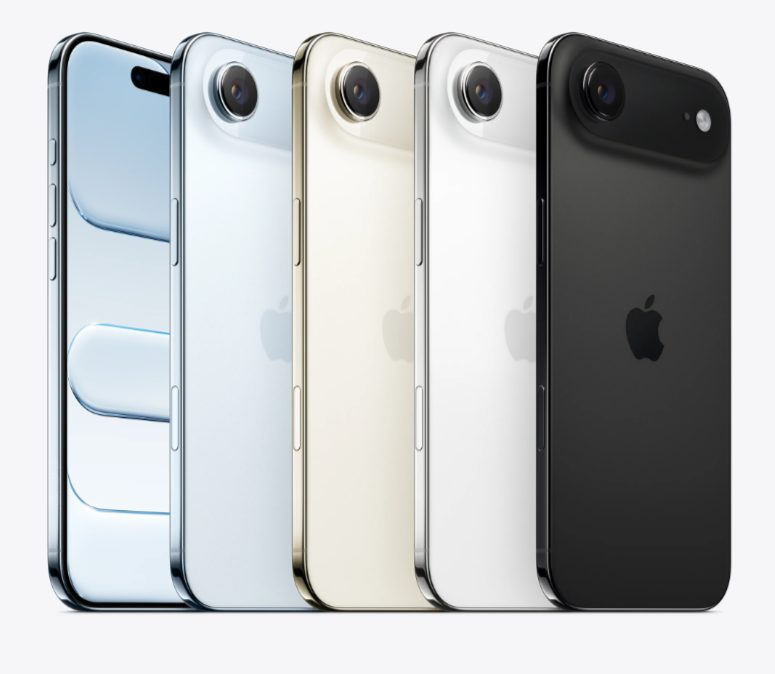
iPhone 17 Pro Max and iPhone Air highlight Apple’s contrasting design philosophies; one is a powerhouse built for professionals, while the other is the thinnest and lightest iPhone ever, focusing on portability and elegance. This comparison matters because both deliver flagship performance, yet appeal to completely different user needs.
Design and display
iPhone 17 Pro Max
Build and Feel: The iPhone 17 Pro Max uses an aluminum alloy frame with a Ceramic Shield 2 back, balancing durability and elegance. The iPhone Air, however, opts for a grade 5 titanium frame while maintaining Ceramic Shield glass. Titanium makes the Air lighter and more premium to hold, offering a sleeker and thinner profile compared to the bulkier Pro Max. For those who prioritize portability and comfort, the iPhone Air is clearly the better choice in terms of build.
Display Quality: Both devices feature LTPO Super Retina XDR OLED panels with 120Hz refresh rates, HDR10, Dolby Vision, and peak brightness of 3000 nits. The Pro Max offers a larger 6.9-inch display with slightly higher resolution, while the Air has a smaller 6.5-inch screen but still retains excellent sharpness at ~460ppi. The Pro Max’s larger canvas is better suited for media and gaming, while the Air provides a more compact experience without sacrificing clarity.
Verdict: For immersive viewing and content creation, the iPhone 17 Pro Max is the superior option. However, those who prefer a thinner, lighter device with a premium titanium feel will find the iPhone Air more appealing.
Specifications
iPhone Air
Performance: Both phones are powered by the Apple A19 Pro 3nm chipset with a hexa-core CPU, ensuring identical raw performance. The difference lies in the GPU: the Pro Max gets a 6-core GPU while the Air settles for a 5-core version. This makes the Pro Max slightly better for gaming, video editing, and intensive tasks. For everyday use, both offer fluid performance, but professionals and creators will benefit from the extra GPU power in the Pro Max.
Battery and Charging: The iPhone 17 Pro Max carries a significantly larger battery, ranging from 4832mAh to 5088mAh, depending on the SIM model. In contrast, the iPhone Air houses a 3149mAh cell. Charging is faster on the Pro Max with 50% in 20 minutes versus the Air’s 30 minutes. Wireless speeds also favor the Pro Max with 25W compared to the Air’s 20W. This makes the Pro Max a better option for long usage and power users.
Verdict: Performance is nearly identical, but the iPhone 17 Pro Max wins due to its stronger GPU and far superior battery life, making it a more reliable daily driver for heavy users.
Camera
iPhone 17 Pro Max
Main and Secondary Lenses: The iPhone 17 Pro Max features a triple-camera setup: a 48MP wide lens, 48MP periscope telephoto with 4x optical zoom, and a 48MP ultrawide lens, supported by a LiDAR scanner. This makes it versatile for photography and professional video recording. The iPhone Air uses only a single 48MP wide lens with OIS, delivering good results but lacking versatility. For users who rely on Zoom or ultrawide, the Air falls short.
Selfie Camera: Both devices share the same 18MP front camera with PDAF and OIS, along with SL 3D sensors. They support Dolby Vision HDR and 4K video recording, making them excellent for selfies, FaceTime, and vlogging. Since there’s no difference here, both are equally strong in this category.
Verdict: The iPhone 17 Pro Max dominates with its multi-lens versatility and advanced video recording capabilities, ideal for photography enthusiasts. The iPhone Air, while solid, is more suited for casual shooters.
Pricing
iPhone Air
The iPhone 17 Pro Max is priced around $1200, while the iPhone Air comes in at $1000. The $200 gap reflects the Pro Max’s additional cameras, larger display, stronger GPU, and bigger battery. For buyers who value portability and premium titanium design, the Air offers excellent value. However, for professionals or heavy users seeking advanced features, the Pro Max justifies the higher cost.
Conclusion
iPhone Air
The iPhone 17 Pro Max stands out with its triple-camera system, periscope zoom, stronger GPU, and bigger battery, making it a powerhouse for creators and power users. The iPhone Air is unique in its ultra-slim design, titanium build, and lightweight form factor, which is rare in the iPhone lineup.
Verdict: Choose the iPhone 17 Pro Max if camera versatility, battery endurance, and a larger display are priorities. Pick the iPhone Air if a thinner, lighter, and premium titanium design is more important, and you are fine with fewer camera options. Both cater to different audiences, with the Pro Max aimed at professionals and the Air designed for portability enthusiasts.
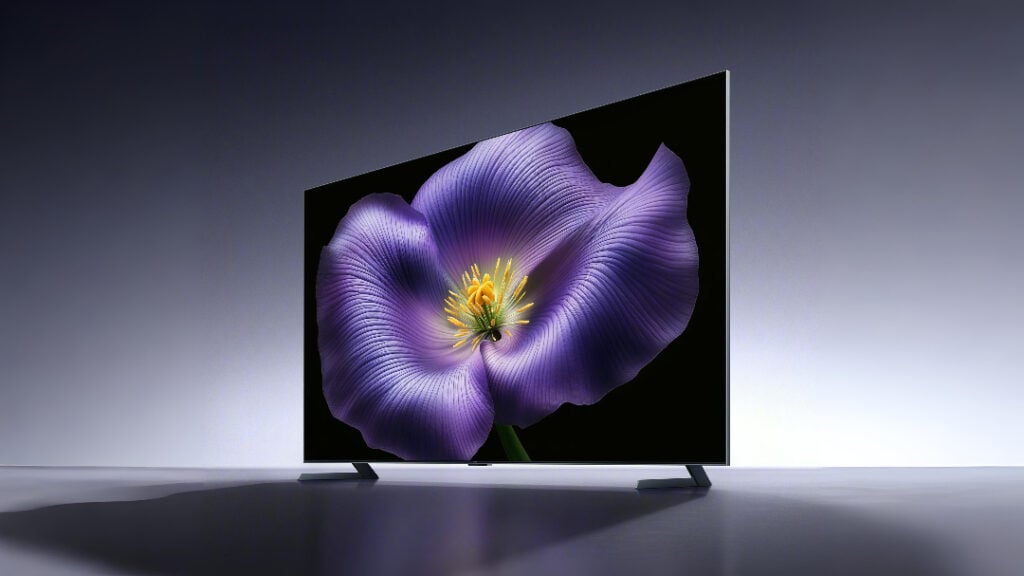
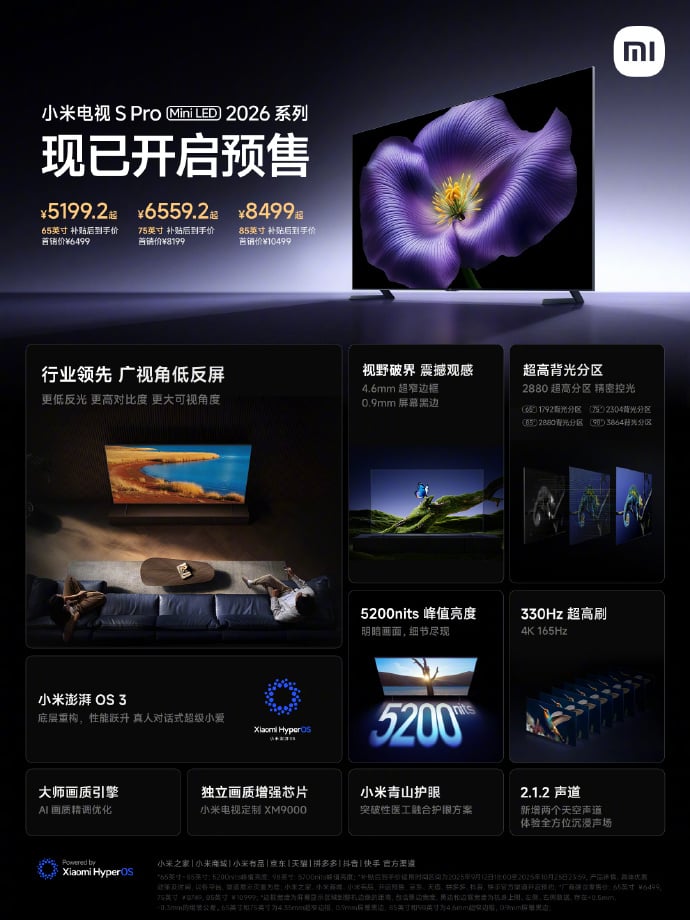
Xiaomi has officially opened pre-sales for its new TV S Pro Mini LED 2026 series in China. The lineup includes 65, 75, and 85-inch models, with launch prices set at 6,499 yuan ($909), 8,199 yuan ($1,147), and 10,499 yuan ($1,469), respectively. Xiaomi’s official website also lists a 98-inch version priced at 19,999 yuan ($2,799), although it is unclear whether that pricing is final.
Xiaomi TV S Pro Mini LED 2026 Specifications
The 2026 series builds on last year’s Mini LED platform and introduces key upgrades in brightness, display performance, and smart features. Xiaomi confirmed that all models support 4K resolution at 165Hz with an optional 330Hz refresh rate mode for gaming.
The panels reach 5,200 nits peak brightness, while local dimming zones range from 1,792 on the 65-inch model to 3,864 on the 98-inch variant. Each display supports 95% DCI-P3 color gamut, 10.7 billion colors, and a professional-grade ΔE≈1 color accuracy rating.
The TVs use a low-reflection wide-angle panel with a WHVA base and a specialized anti-glare coating that reduces surface reflectivity to just 0.5%. According to Xiaomi, this improves visibility in bright rooms and delivers better off-angle contrast than conventional displays. The chassis features a 4.35mm ultra-slim bezel and a 0.9mm black border, aiming for an immersive viewing experience.
Each model runs on Xiaomi’s latest HyperOS 3, powered by a MediaTek 9655 chipset with a quad-core Cortex-A73 CPU, 4GB RAM, and 64GB storage. The operating system supports a 4K UI, Xiaomi’s Super XiaoAi voice assistant, and dynamic scene adjustments using ambient light sensors.
Xiaomi includes its custom XM9000 image processor and Master Image Engine, which handle motion compensation, AI-based upscaling, and real-time color tuning. The TVs also support Dolby Vision, HDR10+, Filmmaker Mode, VRR, MEMC, and FreeSync Premium Pro.
Audio is powered by a 2.1.2-channel speaker system with 61W output, tuned by Harman, and includes two upward-firing units for Dolby Atmos surround effects. Xiaomi ships the TVs with a dual-height metal stand and a new ultra-slim silver remote, although it has not confirmed if the remote is metal.
For connectivity, the TVs include three HDMI 2.1 ports (one with eARC), USB 3.0, USB 2.0, optical out, AV in, LAN, and antenna input. The TVs support Wi-Fi 6 and Bluetooth 5.2.
Xiaomi also added a millimeter-wave radar system that detects viewer proximity and activates eye-care alerts in Kids Mode. The TVs integrate into Xiaomi’s Mi Home ecosystem and support multi-screen sports streaming features.
In related news, TCL has introduced the QM9K QD-Mini LED TV with Google Gemini and 6,500 nits brightness, while AKAI has launched its PowerView Series TVs in India starting at ₹13,990.
For more daily updates, please visit our News Section.
Samsung’s budget tablet line is about to get an update. Leaks have started pointing to the Galaxy Tab A11 and Tab A11 Plus, two models that will replace the Tab A9 series released in late 2023.
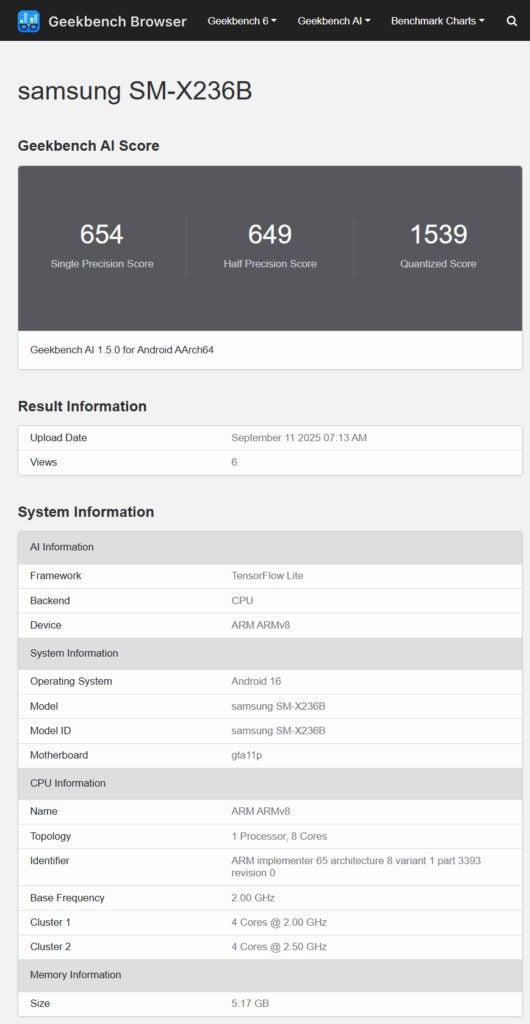
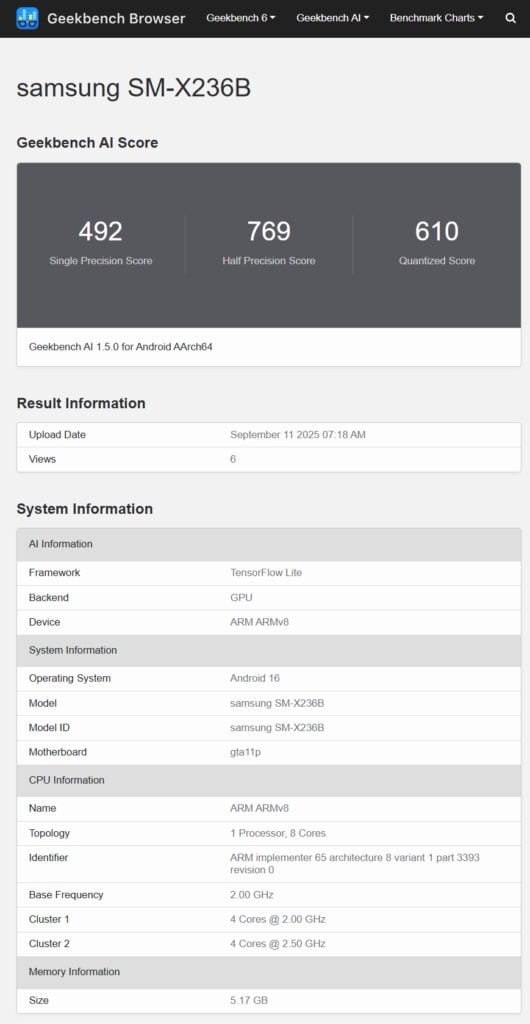
A Geekbench listing has already given away some of the hardware. The Galaxy Tab A11 Plus (model SM-X236B) is shown running MediaTek’s Dimensity 7300 or 7300X chipset. That’s the same processor found in phones like the Motorola Razr 50 and Poco X7, and it’s paired with 6 GB of RAM. The benchmark also confirms Android 16 with Samsung’s One UI 8 on top.
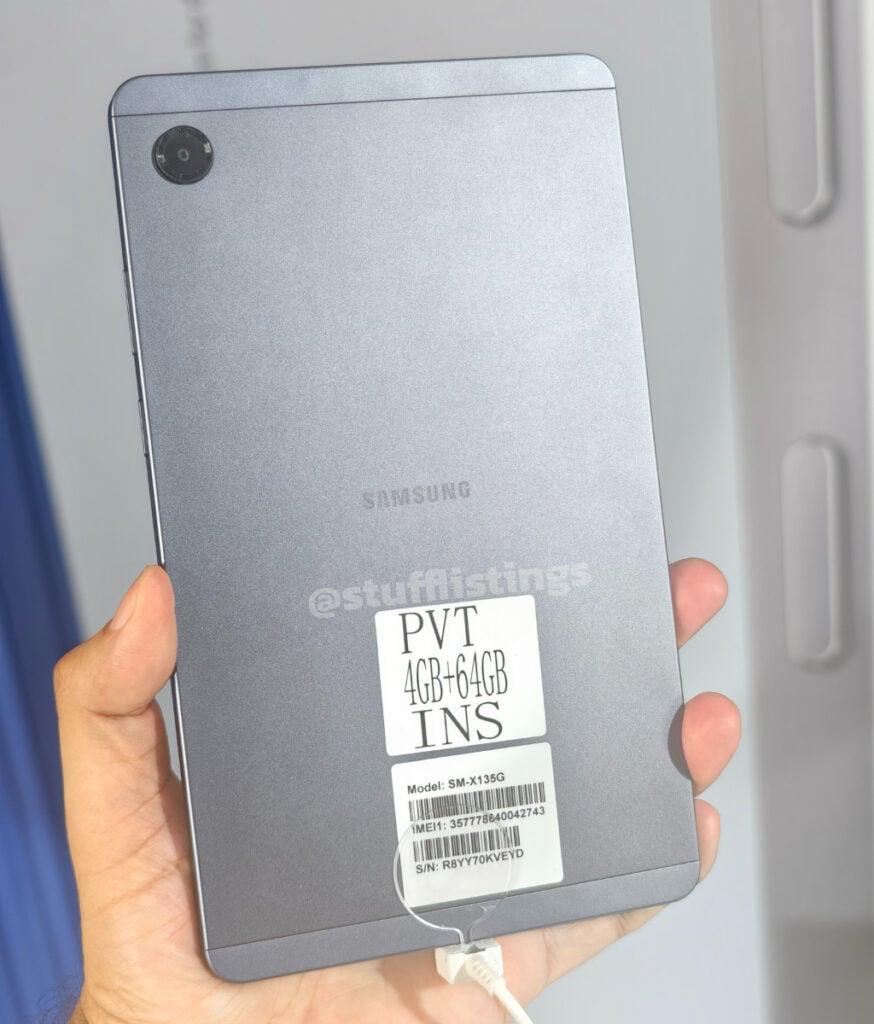
On the other hand, the regular Tab A11 (model SM-X135) looks set to stay firmly in the entry-level camp. One leak shows 4 GB of RAM and 64 GB of storage, along with a simple, no-frills design. Images posted on X give the impression that Samsung isn’t trying anything flashy here, which makes sense given the budget positioning.
Galaxy Tab A11
The A11 Plus should offer more performance headroom, but both tablets are expected to share the same basic look. While there’s no word on pricing yet, the current Tab A9 starts at around $209, so the new series should land in a similar range.
There’s no official launch date either, but speculation suggests a release before the end of 2025. With the budget tablet space heating up thanks to TCL and Xiaomi, Samsung’s refresh could help it hold onto users who want reliability and decent specs without spending too much.
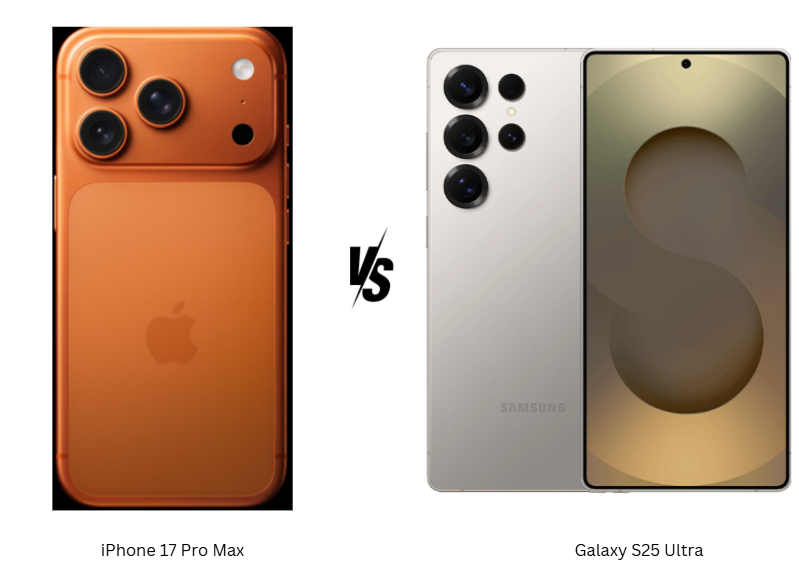
iPhone 17 Pro Max and Samsung Galaxy S25 Ultra represent the peak of flagship smartphones in 2025. Both devices pack advanced hardware, refined designs, and professional-grade cameras. For users deciding between Apple’s iOS ecosystem and Samsung’s feature-rich Android experience, comparing these two devices highlights how each brand pushes innovation in different ways.
Build and Feel: The iPhone 17 Pro Max uses an aluminum alloy frame with Ceramic Shield 2 protection, giving it strong durability and premium aesthetics. Meanwhile, the Galaxy S25 Ultra upgrades to a titanium frame with Gorilla Armor 2, making it tougher against scratches (Mohs 6 vs iPhone’s Mohs 5) and drops. Apple’s design feels more classic and minimal, while Samsung’s titanium edge makes it more rugged and futuristic.
Verdict: The Galaxy S25 Ultra feels more premium with titanium and better scratch resistance.
Display Quality: Both feature 6.9-inch LTPO OLED panels, but Samsung’s Dynamic AMOLED 2X supports 1440p resolution and HDR10+ at up to 2600 nits, while Apple’s Super Retina XDR peaks at 3000 nits with Dolby Vision. Apple has the brightness advantage, which benefits outdoor use, while Samsung provides higher resolution and sharper detail for gaming and streaming.
Verdict: Samsung is sharper, Apple is brighter; the choice depends on whether clarity or visibility matters more.
Verdict: Overall, the Galaxy S25 Ultra takes the edge in build and scratch protection, while the iPhone 17 Pro Max delivers unmatched brightness. Samsung is slightly ahead for its premium titanium construction, though display preferences may vary by use case.
Please Note: When you buy something using the links in our articles, we may earn a small commission at no cost to you.
2. Specifications
Galaxy S25 Ultra
Performance: Apple’s A19 Pro chip, built on 3nm architecture, emphasizes raw efficiency with hexa-core power, while Samsung’s Snapdragon 8 Elite brings octa-core performance and the powerful Adreno 830 GPU. For gaming and multitasking, Samsung’s higher GPU clock speed makes it more capable, whereas Apple’s ecosystem and software optimization deliver smoother long-term performance.
Verdict: Samsung is stronger in raw power, but Apple remains more efficient and consistent across iOS.
Battery and Charging: The iPhone offers 4832–5088 mAh batteries depending on model type, with 50% charge in 20 minutes (wired) and advanced MagSafe/Qi2 wireless charging. The Galaxy S25 Ultra includes a 5000 mAh cell with 45W wired charging, reaching 65% in 30 minutes, plus faster wireless reverse charging. Samsung is more versatile for fast top-ups and reverse wireless use, while Apple’s satellite SOS and ecosystem integration give it unique practicality.
Verdict: Samsung is better for speed and flexibility, Apple wins in ecosystem reliability.
Verdict: The Galaxy S25 Ultra leads in raw performance and charging speeds, while the iPhone 17 Pro Max prioritizes efficiency and integrated ecosystem features. Samsung edges out slightly for power users who prioritize multitasking and charging versatility.
3. Camera
Samsung Galaxy S25 Ultra
Main and Secondary Lenses: Apple equips three 48MP lenses with a LiDAR scanner, focusing on consistency and computational photography. Samsung pushes boundaries with a 200MP primary sensor, dual telephotos (3x and 5x optical), and a 50MP ultrawide. For zoom versatility and sheer resolution, Samsung dominates, while Apple’s strength lies in accurate color science, ProRes RAW, and spatial video.
Verdict: Samsung offers a superior hardware range, while Apple delivers refined professional workflows.
Selfie Camera: The iPhone 17 Pro Max brings an 18MP sensor with OIS and depth-enhancing SL 3D sensors, supporting 4K recording and Dolby Vision. Samsung’s 12MP shooter delivers HDR10+ but lacks the same depth technology. Apple’s selfie camera is better suited for content creators and immersive AR, while Samsung remains more than capable for standard photography.
Verdict: Apple wins in selfies due to higher resolution, OIS, and 3D sensor integration.
Verdict: Samsung’s camera system is more versatile and powerful in hardware, but Apple retains an edge in selfie quality and professional-grade video recording tools. For creators, Apple offers more polished outputs, while Samsung provides unmatched zoom and flexibility.
4. Pricing
Both phones start around $1200, making them direct competitors in cost. The iPhone 17 Pro Max extends to 2TB storage, while Samsung maxes at 1TB but offers higher RAM options at 16GB. Apple gives more storage headroom, while Samsung provides more memory for heavy multitasking.
At the same base price, the better value depends on whether storage expansion (Apple) or RAM (Samsung) is more important to the user.
Disclaimer: Prices are approximate and may vary based on country, region, and applicable taxes.
5. Conclusion
iPhone 17 Pro max
iPhone 17 Pro Max stands out with advanced satellite SOS features, Face ID, and ProRes workflows tailored for creators. The Galaxy S25 Ultra brings titanium durability, the S Pen stylus, and Samsung DeX for a desktop-like experience. Each device offers ecosystem-exclusive tools that set them apart.
Verdict: Galaxy S25 Ultra is ideal for users wanting maximum versatility, zoom photography, and desktop productivity. The iPhone 17 Pro Max suits creators, Apple ecosystem users, and those prioritizing long-term software efficiency. Both are equally premium, but the better choice depends on whether a user values Samsung’s versatility or Apple’s ecosystem polish.
Samsung has already confirmed that the stable One UI 8.0 rollout will begin in September, starting with the Galaxy S25 series. The brand mentioned the stable release multiple times, and thankfully, it remained the same each time. It didn’t push the release further like it did with One UI 7. Now, it appears Samsung is preparing Galaxy devices for the stable release.
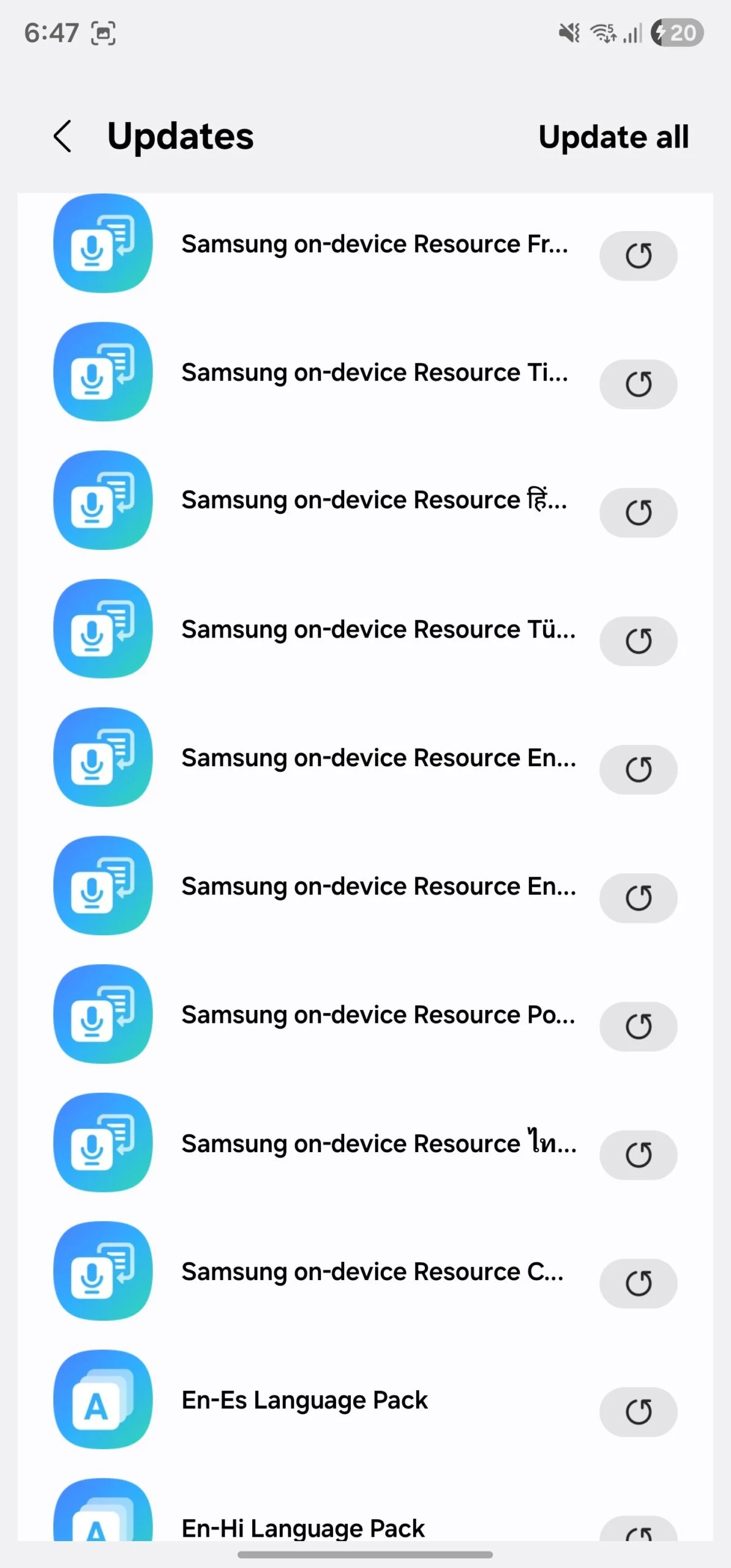
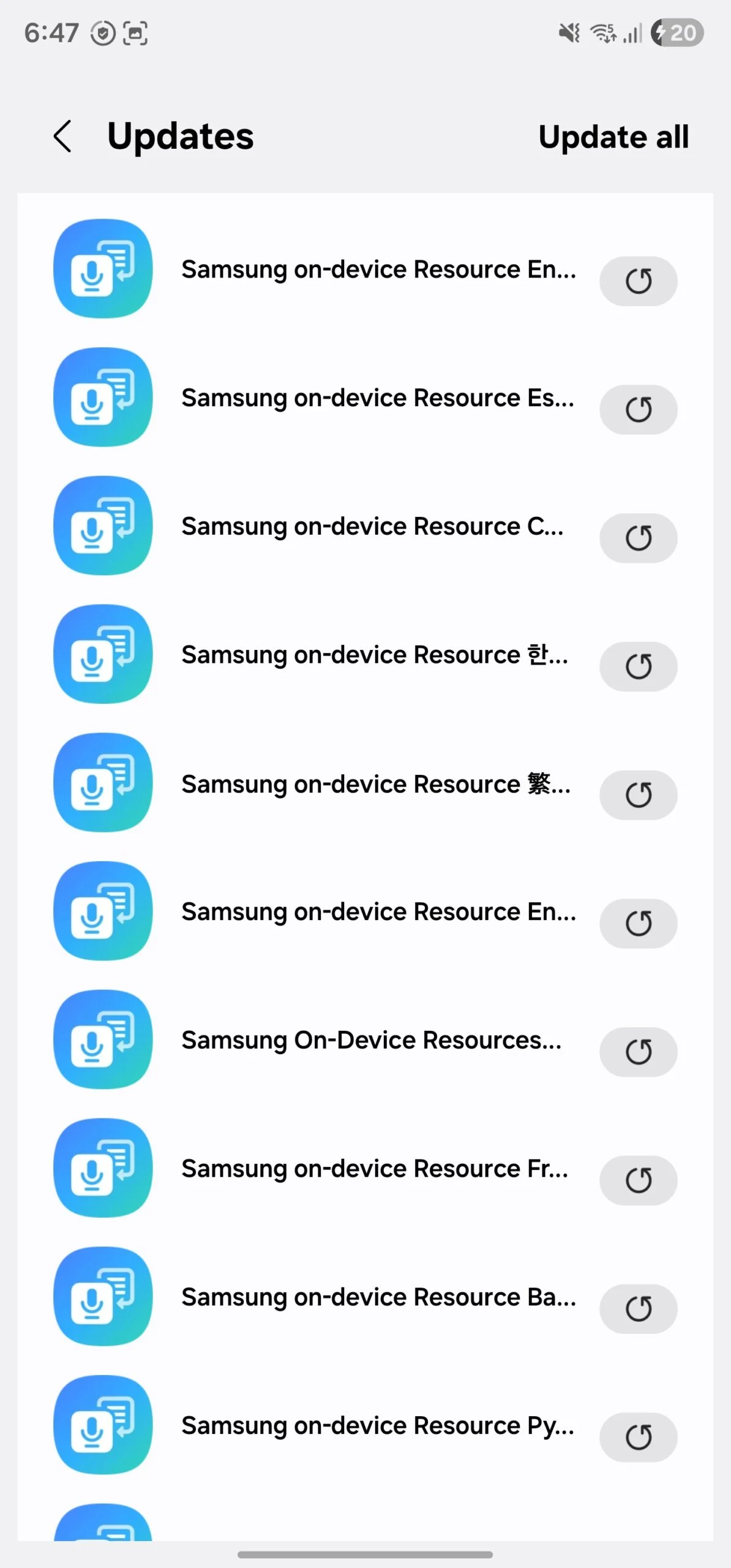
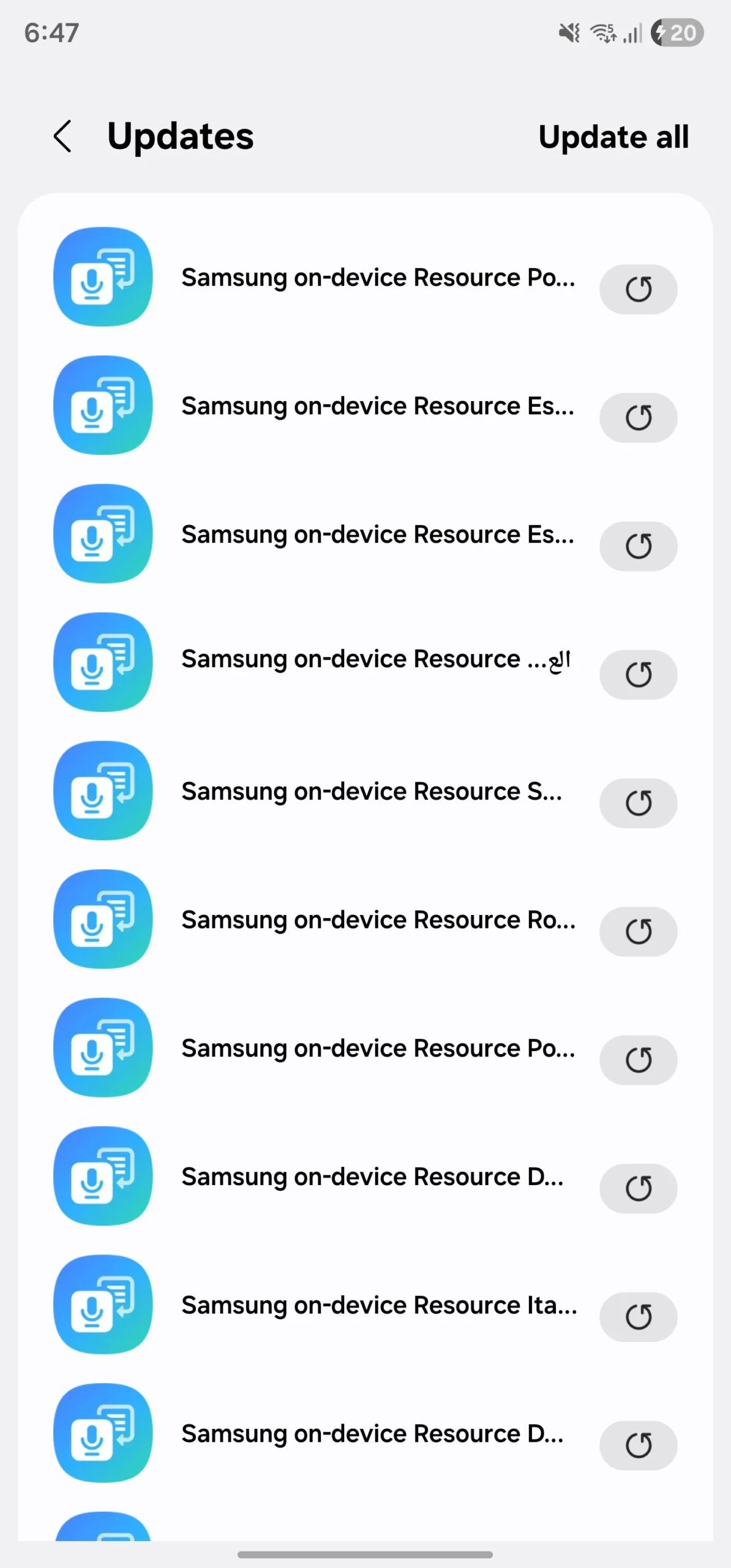
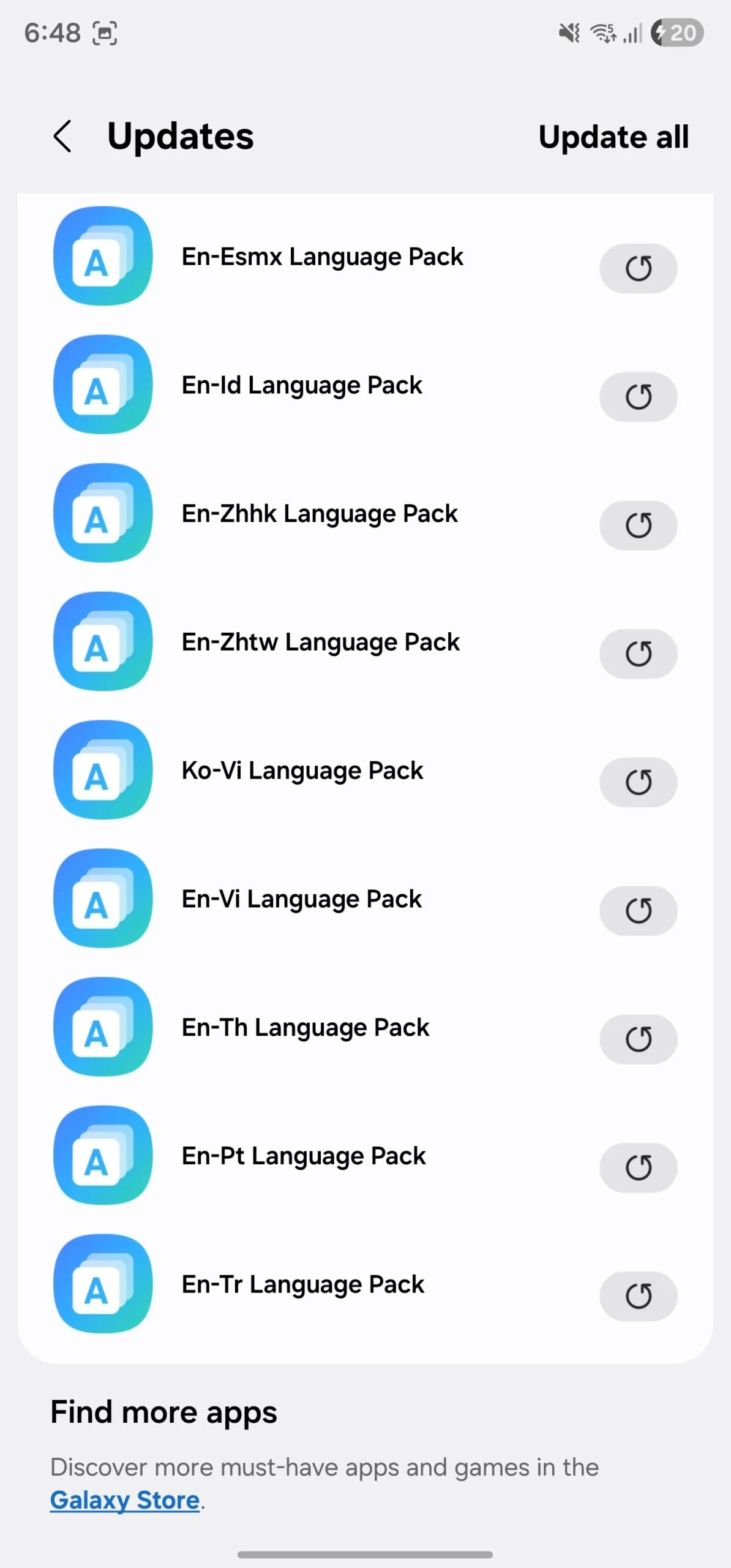
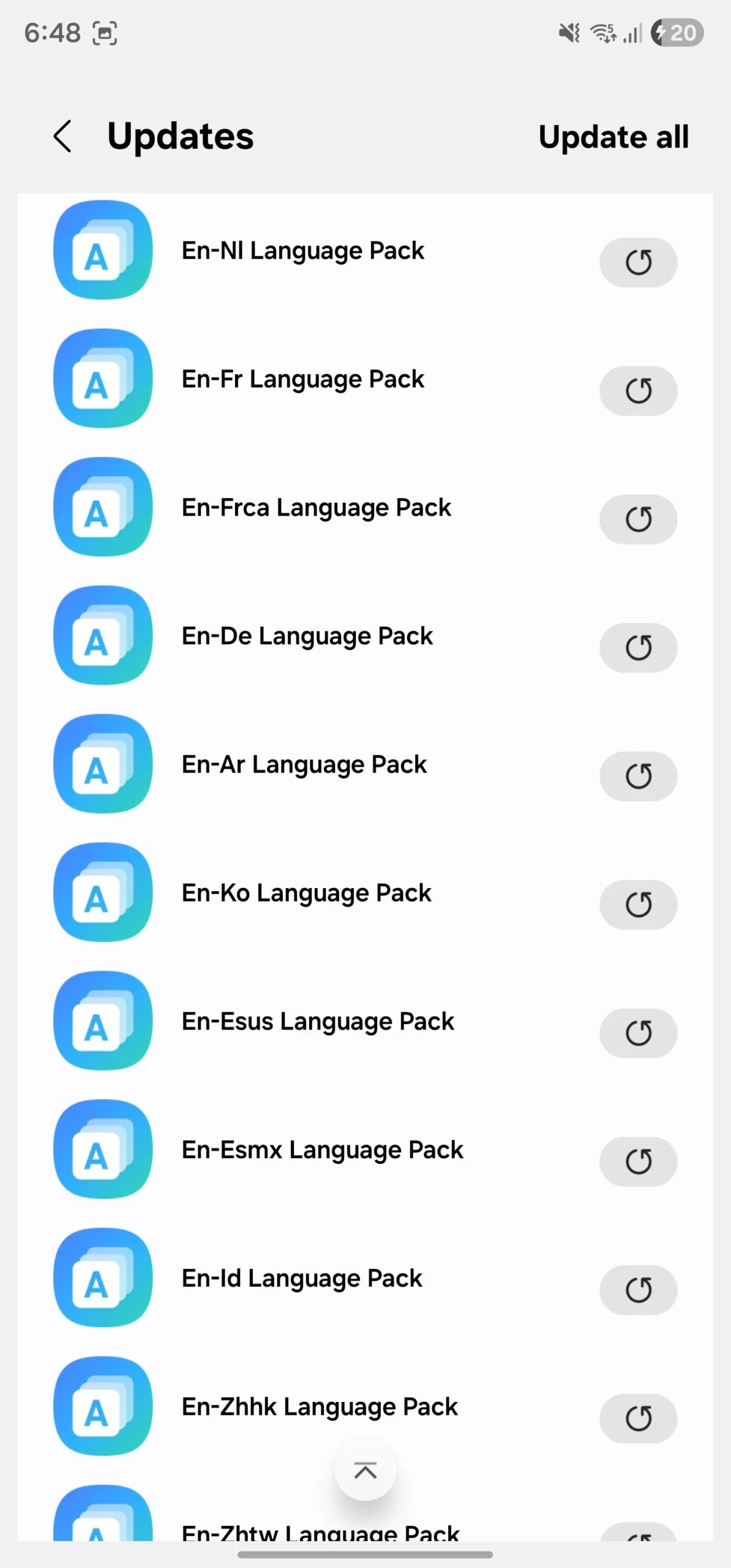
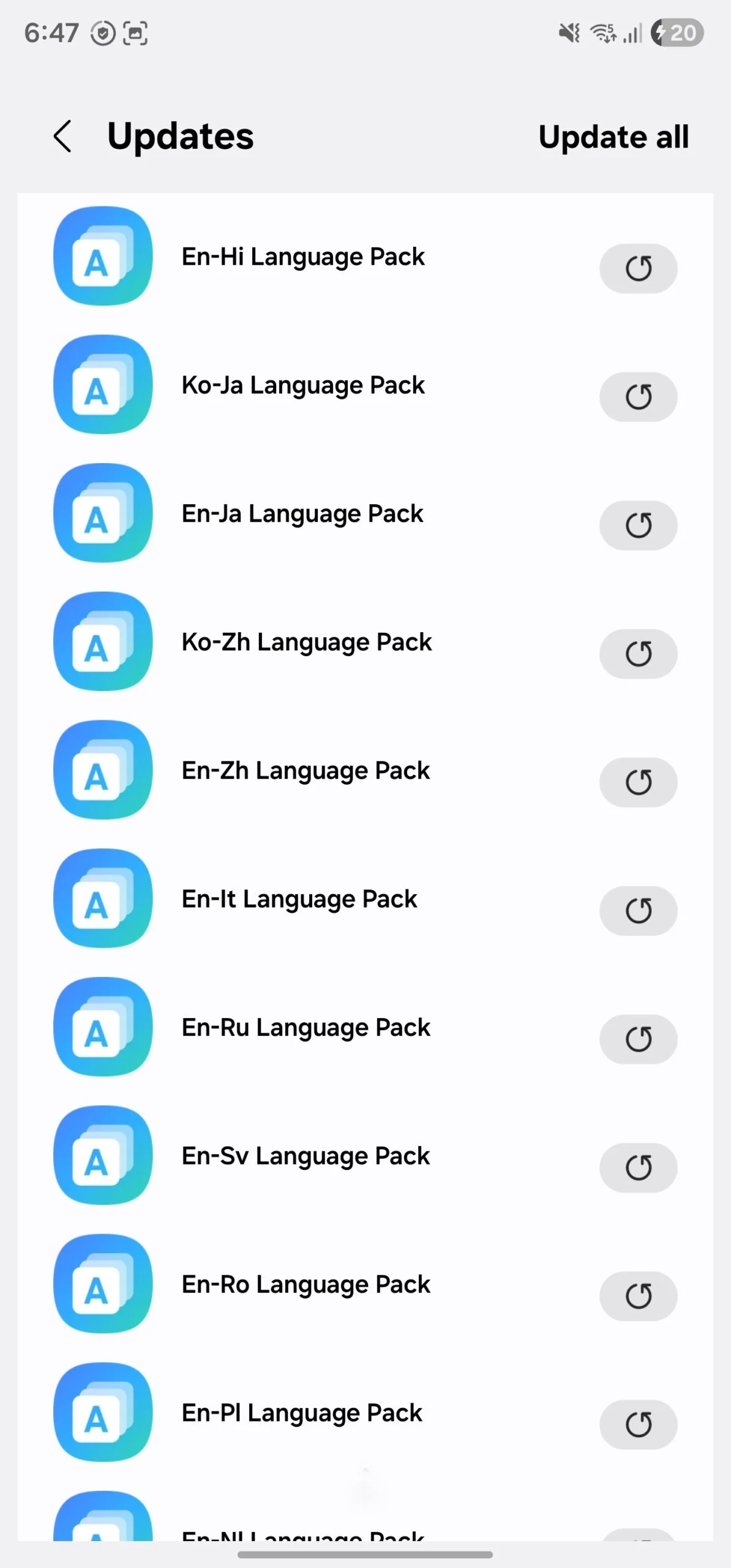
This week, Samsung released a series of updates in the Galaxy Store, which strongly indicates an imminent rollout of the stable One UI 8.0 update. As spotted by Sammobile, updates are available for dozens of on-device language resource packs for Galaxy smartphones and tablets. These are used in language translation and transcription across various Galaxy AI features.
Such updates are generally released before a major software update, which means Samsung may be preparing older Galaxy devices for the One UI 8.0 upgrade. You can install them even after upgrading to One UI 8.0, but it’s recommended to install them prior to that, so the device can allocate more resources to apply the latest optimizations and changes.
You can install available updates on your Samsung Galaxy by navigating to Galaxy Store > Menu > Update and tapping the Update all button. Additionally, you can check the Google Play Store for available updates.
While the One UI 8 stable update is confirmed to arrive this month, there’s no concrete timeline or roadmap. However, according to a recent leak, the Galaxy S25 models will get the update on September 18th, and a week later, the Galaxy S24 series and several A-series phones may join the party.
The high-end Galaxy tablets may receive a stable One UI 8.0 update in early October. Other mid-range and budget Galaxy devices may also receive the update in the same month. Please note that this is based on a recent leak, which primarily focuses on Asia, so even if it’s true, the dates may vary for other regions.
We’ll closely monitor the One UI 8.0 rollout and update on the same on this blog. So, remember to visit our One UI 8 section regularly for the latest updates. You can also follow us on Gizmochina for the latest happenings in tech.
Every September, Apple does its thing and launches new iPhones. And with this comes the usual question, “Is this the year I upgrade?” This year, Apple’s lineup includes the iPhone 17, the slimmer iPhone Air, and the company’s flagship duo: the iPhone 17 Pro and iPhone 17 Pro Max.
If you’re trying to figure out whether either of the Pro models is worth it for you, the answer depends on what you want out of a phone. These aren’t radical redesigns, but Apple has focused on practical upgrades that will appeal to certain types of users. Let’s break down who should be considering the iPhone 17 Pro and who might be better off with the bigger Pro Max.
1. For people who want better performance without the bulk
Apple’s experiment with titanium is over. After two years, the company is back to aluminum for the Pro series. Titanium may have been stronger, but aluminum comes with its own set of benefits. It’s lighter, it disperses heat better, and it allows for bolder colors.
The iPhone 17 Pro and Pro Max also gain a new vapor chamber cooling system. That’s Apple’s way of saying the phones should run cooler under heavy workloads like gaming or video recording. Heat has been a persistent issue with recent iPhones as the SoCs keep getting upgrades every year, so this change should help the new models stay cooler during demanding tasks.
Please Note: When you buy something using the links in our articles, we may earn a small commission at no cost to you.
2. For People Who Want Better Battery Life
The new iPhones also have better battery life. Both the Pro and Pro Max have bigger batteries:
The iPhone 17 Pro now has a 3,988 mAh battery on the SIM version, and an even larger 4,252 mAh battery on the eSIM-only model.
The iPhone 17 Pro Max goes bigger still, topping out at 5,088 mAh on the eSIM version.
That’s not just numbers on a spec sheet. Apple claims the eSIM Pro can deliver up to 39 hours of video playback. That’s two full hours longer than last year’s already impressive 16 Pro Max.
3. For Photography and Video Enthusiasts
This is where the Pro phones really earn their name. The 48MP triple camera setup hasn’t been radically redesigned, but the upgrade that matters is the new 48MP telephoto lens with 4x optical zoom.
That might not sound like much if you’ve seen phones boasting 10x zoom, but Apple’s approach is about consistency. Now, all three rear cameras — wide, ultrawide, and telephoto — are 48MP. That means when you switch lenses while shooting video or snapping photos, you get the same resolution and color science across the board. No weird drop-offs in quality.
There’s also ProRes RAW video recording at up to 120fps and support for Apple Log 2. In fact, Apple even recorded its keynote event on the Pro this year. Sure, they had rigs and expensive equipment attached, but the point is that it’s a dependable camera setup.
And let’s not forget the new 18MP multi-aspect selfie camera. It’s designed to capture different aspect ratios without you needing to awkwardly rotate your phone.
4. For People Who Want Personality in Their Phone
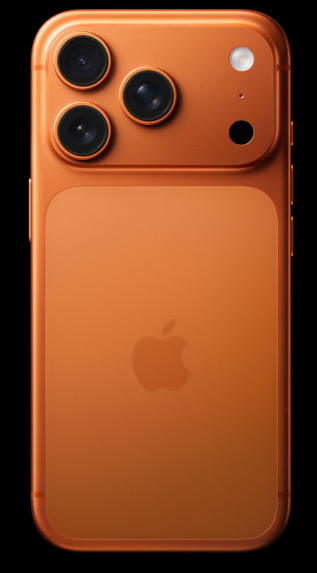
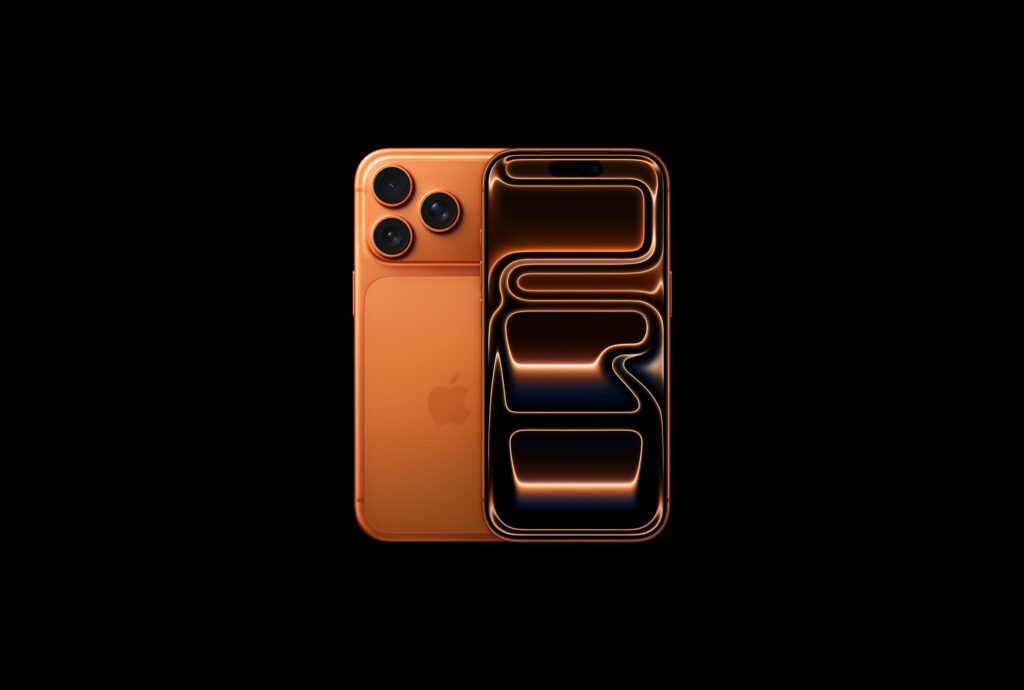
Apple isn’t exactly known for bold colors in its Pro lineup. Usually, it’s silver, black, maybe a muted blue or green. This year, though, the company is shaking things up with Cosmic Orange.
Yes, you can still play it safe with Silver or Deep Blue, but Cosmic Orange is the standout. If you’ve ever looked at your iPhone and thought, “This feels a little boring,” the new colors could be a reason to upgrade. The Pro models don’t just perform better this year; they look more expressive, too.
5. For People Who Want the Best iPhone, Period
There’s a certain group of buyers who don’t really care about the individual features. They just want the best iPhone Apple makes, and right now, that’s either the iPhone 17 Pro or 17 Pro Max.
If you prefer something more manageable in size, go with the Pro. Its 6.3-inch display is big enough for content but still fits in one hand.
If you want the largest screen, the longest battery life, and don’t mind the extra bulk, the Pro Max is the clear winner.
Both share the same cameras, chip, display tech, and design philosophy. The choice mainly comes down to how many phones you want to carry around every day.
6. Who Should Skip the Pro Models?
Not everyone needs an iPhone 17 Pro. If you mostly use your phone for texting, social media, and streaming, the regular iPhone 17 is already powerful enough. It even borrows some Pro features like the A19 chip and upgraded display.
And if thinness and portability are your thing, the iPhone Air is worth a serious look. At just 5.64mm thick, it’s one of the thinnest smartphones ever, and it feels like the spiritual successor to the iPod touch. So don’t feel pressured to go “Pro” if your lifestyle doesn’t demand it.
Oppo is doubling down on mobile photography with its upcoming Find X9 Pro, and the big news is a magnetic camera kit developed in partnership with Hasselblad. The feature was confirmed by Oppo Find series product manager Zhou Yibao on Weibo, and it marks the first time this accessory will be available on a Pro model rather than being reserved for the future Find X9 Ultra.
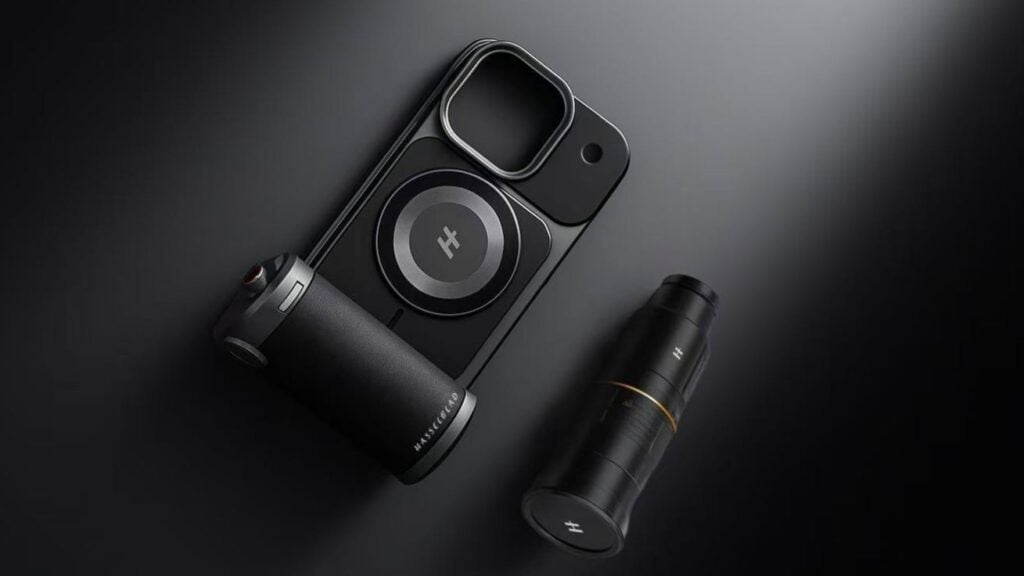
A concept image of the Oppo Find X9 Pro’s magnetic Hasselblad camera kit
Unlike snap-on kits, Oppo’s system uses magnets for quick attachment, making it easier to swap between standard shooting and enhanced setups. A concept image shared by a Weibo user shows a Hasselblad camera grip with add-on optics, though Zhou noted the retail design will differ from the prototype.
Early details suggest the kit includes a teleconverter lens designed to extend the Find X9 Pro’s 200MP telephoto camera. With its native 3x zoom, the add-on could push focal lengths into the same territory as Vivo’s X200 Ultra, which offers a 200mm equivalent. This is also a shift in Oppo’s strategy: the Find X9 Pro drops the dual telephoto setup seen on the Find X8 Pro in favor of one high-end sensor with support from external optics.
Oppo’s long-running partnership with Hasselblad means users can also expect refined color science and pro-grade tuning, while Oppo’s AI enhancements handle image processing. Video-focused accessories are rumored for the standard Find X9 as well, though it’s not yet clear whether these will involve external lenses.
The Find X9 series is expected to debut later this year, but Oppo hasn’t confirmed whether the Hasselblad kit will see a global release. If it does, the X9 Pro could emerge as one of 2025’s most ambitious camera phones, aimed squarely at enthusiasts who want more than just software tricks.
Xiaomi’s dominance in India’s smartphone market is fading fast. Once the country’s best-selling brand, the company is now dealing with sliding shipments, frozen funds, and growing pressure from regulators — a mix that’s making it harder for the Chinese tech giant to hold on to what was once its second-biggest market.
Industry tracker IDC says Xiaomi’s shipments in India fell 23.5% year-on-year in the second quarter of 2025, pushing it out of the top five vendors. Rival brands Vivo and Oppo have taken advantage, particularly in the mid-to-premium range, where Xiaomi has struggled to compete.
The problems run deeper than just weak sales. Investigations from the Directorate of Revenue Intelligence, Customs, Income Tax, and the Enforcement Directorate have tied up more than ₹4,700 crore of company funds. That has fueled a “high-risk” image in the eyes of investors and made the outlook for the business even tougher.
Executives and analysts also point to Xiaomi’s reduced marketing push since 2022 and the departure of key leadership figures. Unlike its competitors, the company has leaned heavily on global models with little customization for India, a strategy that hasn’t clicked with buyers who now have more choices. Delays in bringing foldable phones to the market and the halt of India-specific R&D have only added to the slowdown.
Back in 2018, India accounted for about 45% of Xiaomi’s global revenue. Today, that’s down to a single-digit share. Unless the company finds a way to resolve its regulatory battles and reconnect with local consumers, its decline in India may only accelerate.
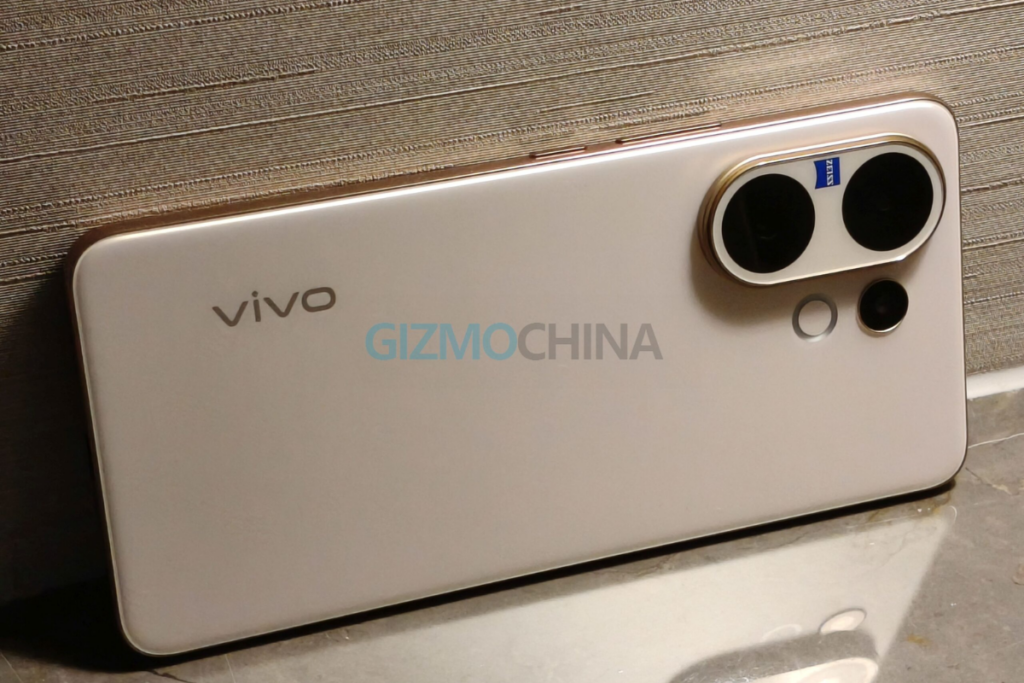
Vivo V60 (full review) arrived last month as a mid-range smartphone packed with impressive features like a bright AMOLED panel, Snapdragon 7 Gen 4 processor, powerful cameras, and a huge 6,500mAh battery — all for a starting price of INR 37,000. It’s an excellent choice for the price, but not the only showstopper in this price segment.
There are several great alternatives to the Vivo V60 from its rivals, including OnePlus, Realme, Samsung, Google, and others. Here are six excellent alternatives that give the Vivo V60 some serious competition.
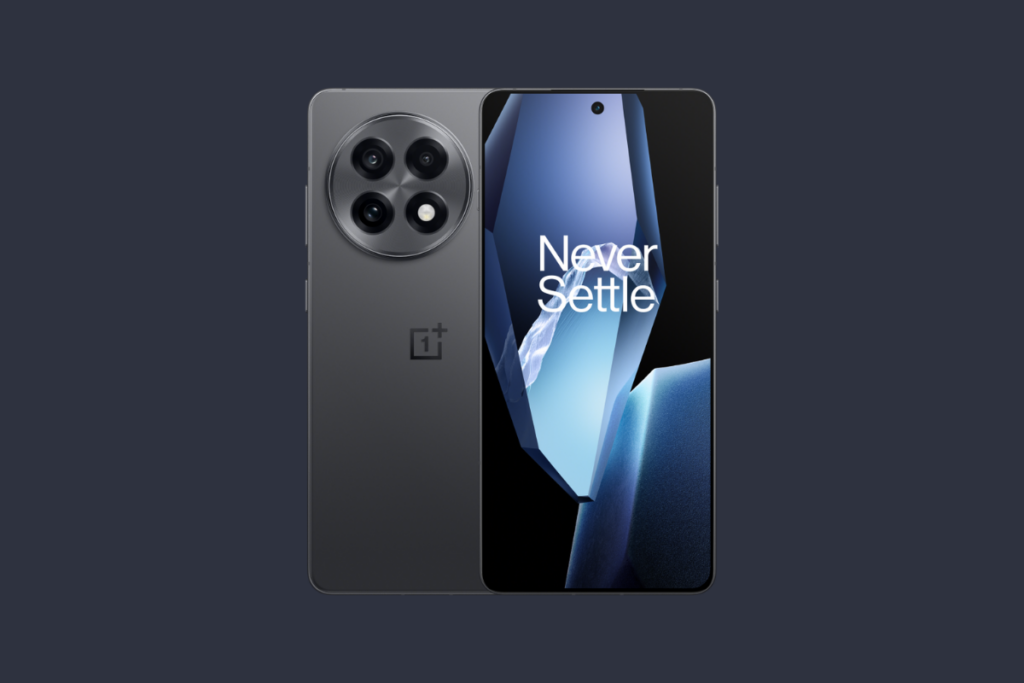
The OnePlus 13R is a strong contender in the premium mid-range segment for many reasons. The primary one is solid performance, thanks to Snapdragon 8 Gen 3. It’s faster and more power-efficient than the Snapdragon 7 Gen 4 inside the Vivo V60, making it better for gaming and multitasking. Both phones have AMOLED screens, but the 13R adds LTPO, Dolby Vision, and HDR Vivid for richer visuals and improved efficiency.
On the back, it features a circular rear camera setup comprising a 50MP main shooter, a 50MP telephoto lens, and an 8MP ultrawide lens. It can record up to 4K videos, while the 16MP selfie camera is limited to 1080p, which can feel a bit underwhelming. The 6,000mAh battery and 80W charging are generous, though Vivo’s bigger 6,500mAh cell and 90W charging still hold the edge.
On the plus side, the OnePlus 13R offers Wi-Fi 7 connectivity, higher peak download and upload speeds, and even Wi-Fi 6e in select markets. A clean and bloat-free software is another reason to pick OnePlus over Vivo.
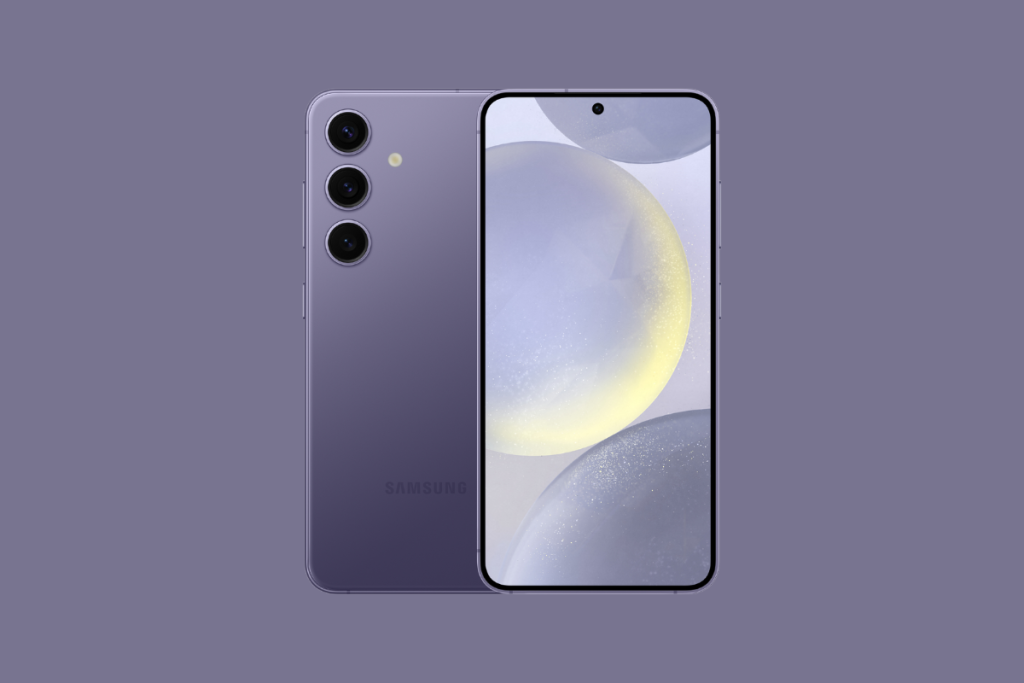
Launched at a starting price of INR 79,999, the flagship-grade Galaxy S24 is now available at a much lower price. It comes in two chip options: Exynos 2400 and Snapdragon 8 Gen 3. The latter offers better gaming performance, but both of them easily outperform the Vivo V60’s 7 Gen 4.
The 6.2-inch LTPO AMOLED display may be smaller, but it delivers excellent colors and smoothness. For cameras, the S24 features a 50MP primary camera, a 10MP telephoto unit, and a 12MP ultrawide shooter, with support for 8K video recording. The 12MP selfie camera can shoot up to 4K videos.
The battery capacity and charging speed are somewhat disappointing, but Samsung compensates for this by offering wireless and reverse wireless charging. The Galaxy S24 also offers solid connectivity features, a more durable body, and an ultrasonic fingerprint sensor for better accuracy.
Please Note: When you buy something using the links in our articles, we may earn a small commission at no cost to you.
3. Google Pixel 8 Pro
The Pixel 8 Pro delivers big on camera and software. It features a horizontal camera bar that holds a 50MP primary sensor, a 48MP periscope telephoto unit, and a 48MP ultrawide camera, all capable of 4K recording. In addition to high-resolution sensors, there’s software magic from Google that further enhances images and videos. There’s a 10.5MP selfie camera, which also supports 4K recording.
Software is another great aspect of Pixel phones. You get a clean UI, the fastest OS updates, and up to seven years of software updates and security patches. In comparison, the Vivo V60 has some bloatware and only promises four major OS updates.
The main trade-off is the 5,050mAh battery with 30W wired charging, which doesn’t quite match Vivo’s. However, it does offer 23W wireless and reverse wireless charging, along with a tougher build and the latest connectivity standards.
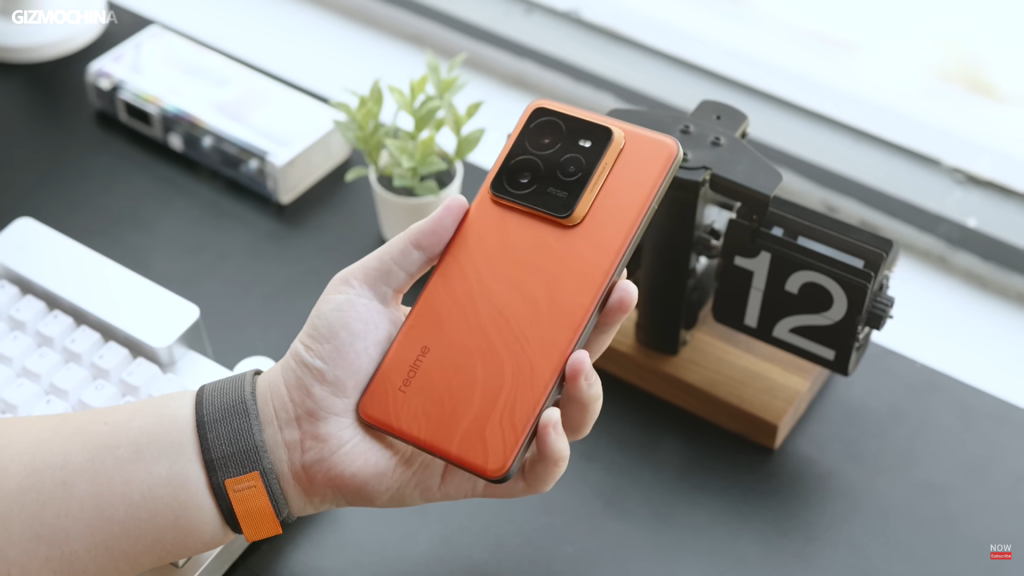
If raw performance is your priority, the Realme GT 7 Pro (full review) is tough to beat. It rocks the Snapdragon 8 Elite, which easily outclasses the Snapdragon 7 Gen 4 in the V60. The display is nearly the same size but features higher resolution, LTPO technology, and an incredible 6,500 nits peak brightness.
The rear setup includes a 50MP primary camera, a 50MP telephoto camera, and an 8MP ultrawide lens, with support for 8K recording. The 16MP selfie camera, limited to 1080p video, is the only weak spot here.
The global model matches the Vivo V60 in battery size, while the Indian version comes with a slightly smaller battery but superior 120W wired charging. The GT 7 Pro also benefits from Wi-Fi 7, an ultrasonic fingerprint sensor, and better durability.
Please Note: When you buy something using the links in our articles, we may earn a small commission at no cost to you.
5. Oppo Reno 14 Pro
It’s another excellent addition to the list, featuring triple 50MP rear cameras — wide, periscope telephoto, and ultrawide — with support for 4K video recording. The selfie camera is also 50MP and supports 4K recording.
The Reno 14 Pro has the Dimensity 8450 chip under the hood, which is faster and more power-efficient than the Vivo V60’s Snapdragon 7 Gen 4. It features a slightly larger AMOLED screen with a higher pixel density.
Where it falls is the battery size, but at 6,200mAh and 80W, it’s still ahead of most rivals in this price segment. But the Reno 14 Pro supports 50W wireless charging and Wi-Fi 6e, both of which are lacking on the Vivo V60.
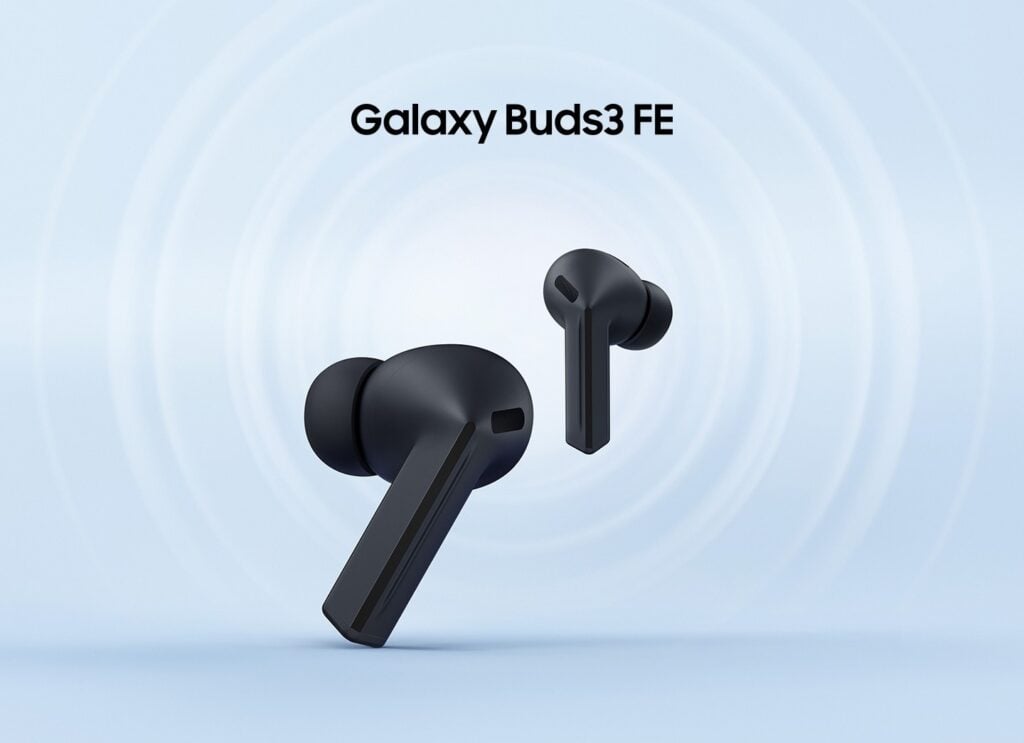
Samsung has launched the Galaxy Buds 3 FE in India after its global unveiling last month. The earbuds introduce a new Blade design, Galaxy AI support, and an upgraded sound system.
The audio setup uses a 1-way dynamic driver tuned for deeper bass and crisp treble. Active Noise Cancellation reduces outside sounds, while Ambient Sound mode allows background awareness. Call quality is handled by Crystal Clear Call technology, which applies a machine learning model to capture the speaker’s voice in noisy conditions.
With Galaxy AI integration, the Buds 3 FE can work with the Interpreter app on a connected phone for real-time translations during lectures or conversations. Voice assistants are supported, with hands-free control enabled through commands such as “Hey Google.”
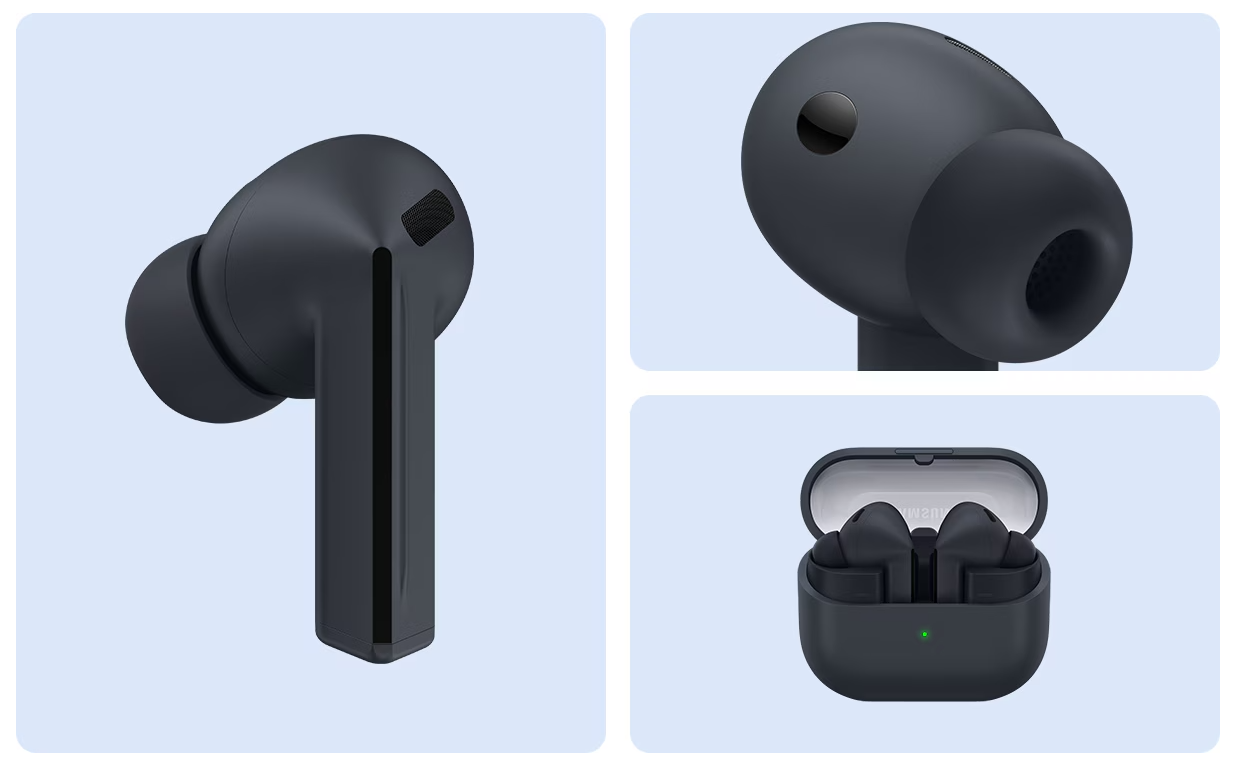
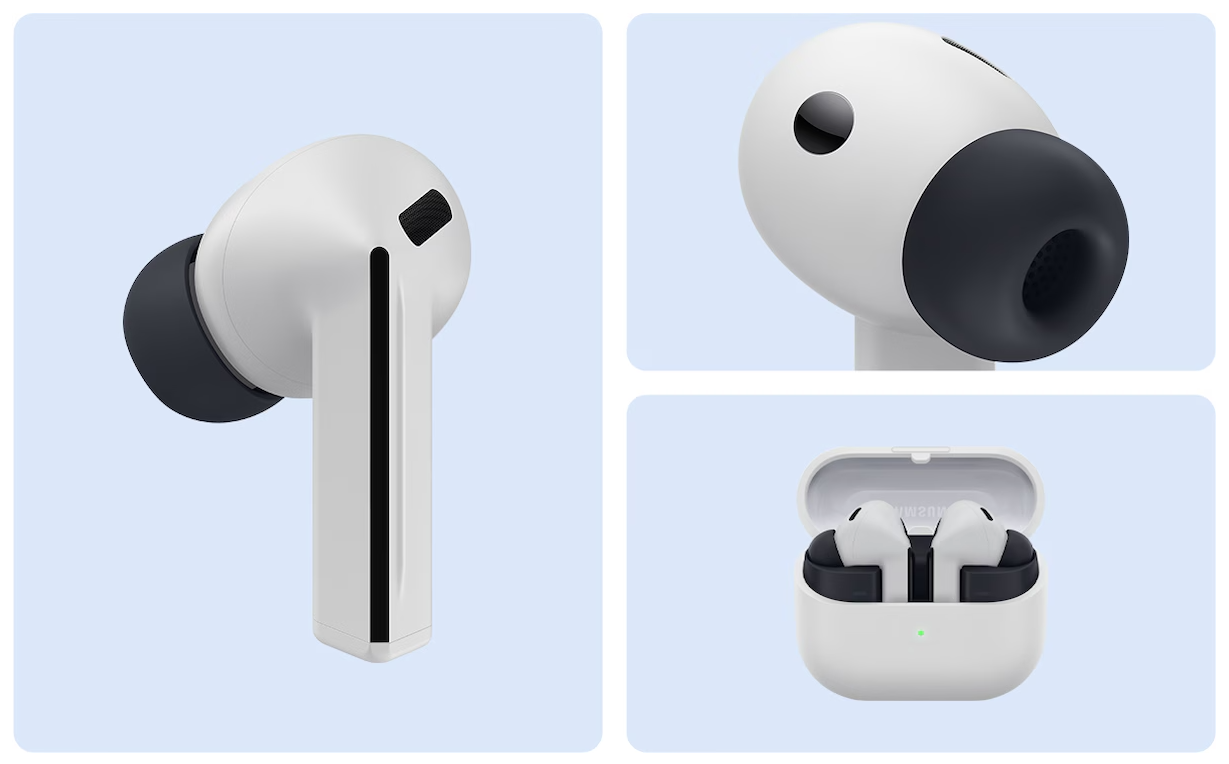
The design features a matte dual-tone finish with semi-transparent accents. Controls are managed with pinch and swipe gestures on the blade. The earbuds are built to work smoothly with Galaxy devices. Auto Switch changes connections automatically between active devices, and the cradle includes a pairing button for quick setup. Controls can also be accessed directly through system settings on supported devices.
Key specifications include three microphones, Bluetooth 5.4, and codec compatibility with SSC, AAC, and SBC. Sensors provided are proximity, hall, touch, and pressure. The earbuds run on Android 11 or later with at least 1.5 GB RAM. They are IP54 rated for dust and water resistance.
Each earbud measures 18 × 21.1 × 33.8 mm and weighs 5 g, while the charging case measures 58.9 × 48.7 × 24.4 mm and weighs 41.8 g. Battery capacity is 53 mAh per earbud and 515 mAh for the case. Playback time reaches 6 hours with ANC on and 8.5 hours with ANC off, extending to 24 and 30 hours with the case. Talk time is up to 4 hours on a charge and 18 hours with the case.
Pricing & availably
The Galaxy Buds 3 FE is priced at Rs. 12,999 and will be available in India next week. Launch offers include benefits of Rs. 4,000 with select Galaxy smartphones, Rs. 3,000 cashback or an upgrade bonus, and no-cost EMI plans of up to 12 months.
For more daily updates, please visit our News Section.
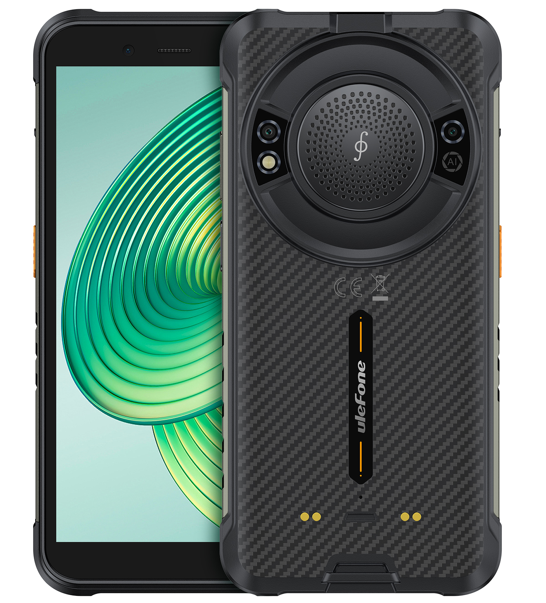
Ulefone has announced its new RugKing series, a fresh lineup of budget-friendly rugged smartphones designed for outdoor users and professionals. The first model, called simply the Ulefone RugKing, will officially launch on September 15, 2025. It will be available worldwide through AliExpress, the official Ulefone store, and other global online platforms.
The phone comes with a starting price of $219.99, but buyers can grab it during the first week on AliExpress at a discounted launch price of $149.99, saving $70.
Built to Survive Harsh Conditions
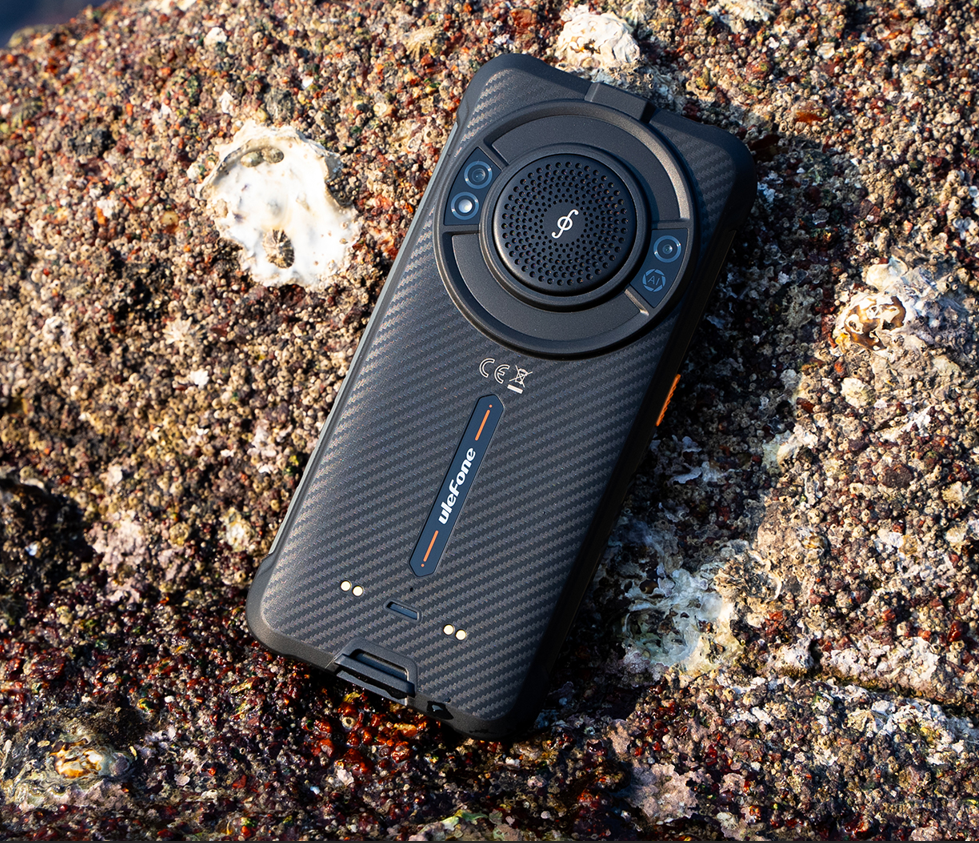
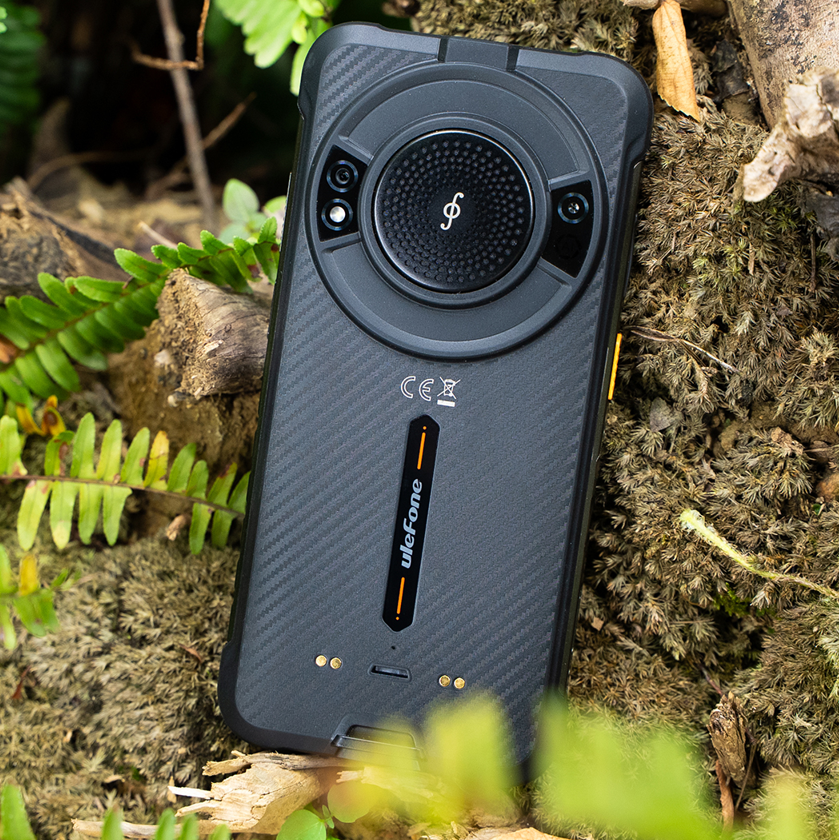
The RugKing is designed for people who need their phones to survive in tough environments. It carries MIL-STD-810H, IP68, and IP69K certifications, making it resistant to water, dust, and extreme conditions. The device can survive drops from up to 2 meters and is fully waterproof for submersion up to 2 meters for 30 minutes. This makes it a reliable companion for workers in construction, adventure travelers, and anyone exposed to rugged conditions daily.
Another standout feature is the uSmart 2.0 connector, which allows the phone to connect with Ulefone’s range of professional accessories, adding more flexibility for fieldwork and outdoor activities.
Loud and Clear Audio
One of the biggest highlights of the RugKing is its powerful 126dB loudspeaker. The speaker, with a 36mm diameter and 11.5 CC sound cavity, delivers sound that is louder than busy traffic. With 3.5W rated power, it is designed to withstand rough use while being both waterproof and drop-resistant. This extra-loud audio means users don’t need to carry an additional outdoor speaker, making it ideal for camping trips, outdoor parties, or job sites where loud sound is necessary.
Display and Performance
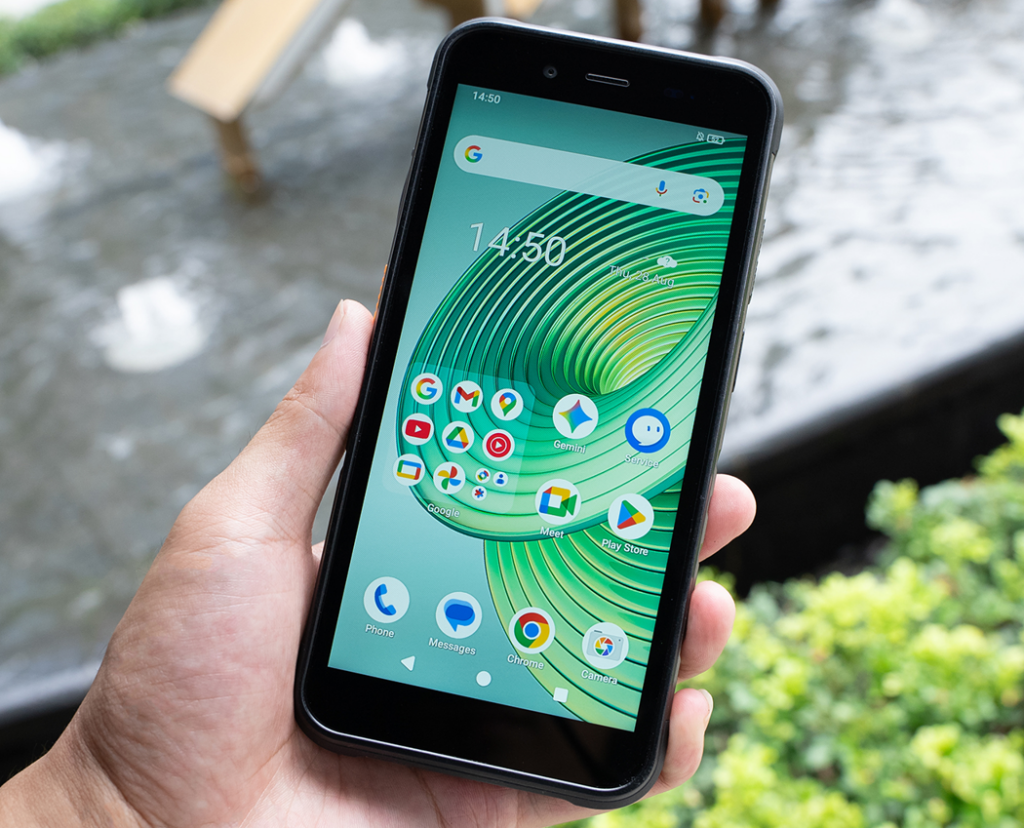
The RugKing comes with a 5.99-inch display that offers 910 nits of brightness, ensuring good visibility even under strong sunlight. It is powered by the Unisoc T7255 octa-core chipset, paired with 8GB RAM and 256GB of storage. This setup provides smooth performance for browsing, gaming, and streaming media. For a rugged phone in the budget range, this level of storage and processing power makes it quite attractive.
Camera and Flashlight
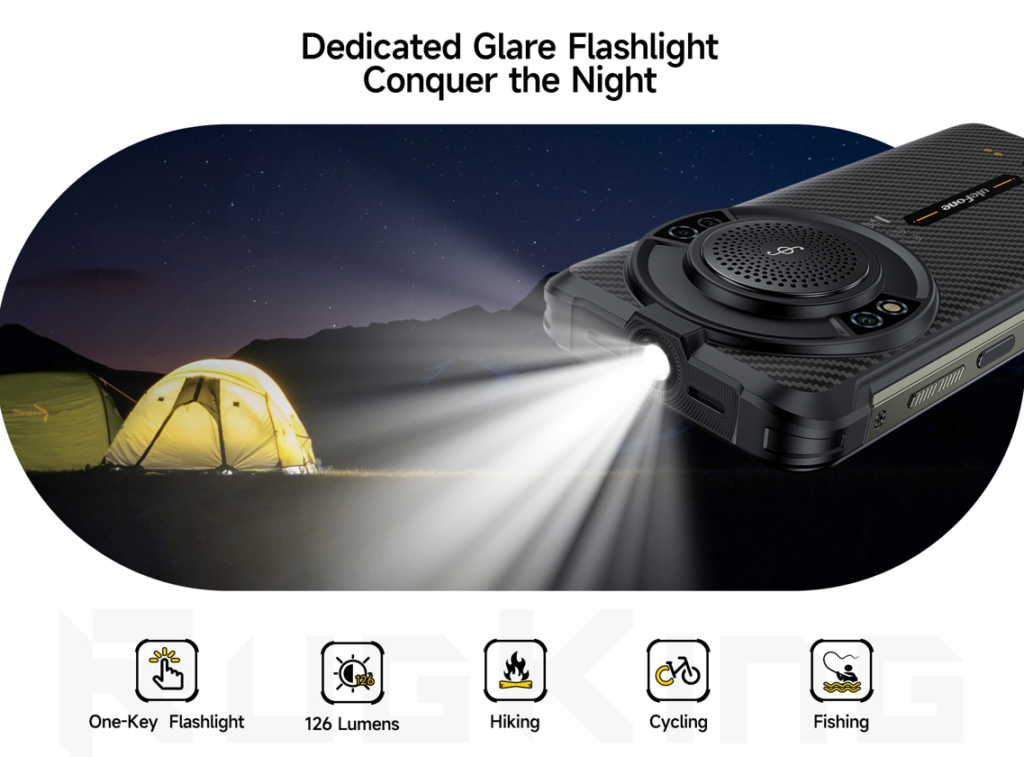
The phone features a 50MP main camera and a 2MP macro camera for close-up shots. While it is not aimed at professional photography, it ensures decent outdoor and work-related photography. In addition, the RugKing includes a 126-lumen glare flashlight, offering powerful brightness similar to a torch. This makes it useful for camping, night work, or emergencies.
Massive Battery for Long Use
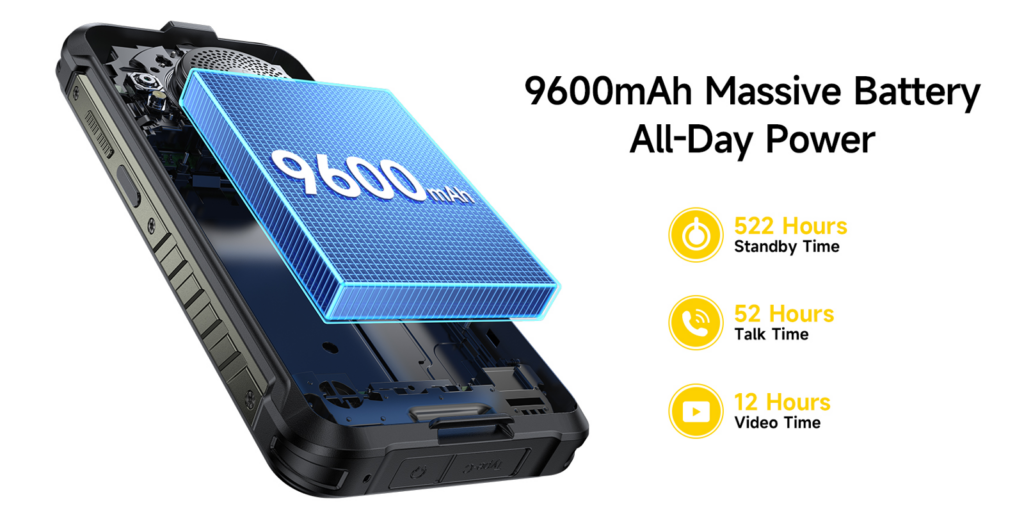
Battery life is another strong point. With a 9600mAh capacity, the RugKing ensures long-lasting endurance, which is essential for outdoor users who cannot charge their devices frequently. This makes it well-suited for extended trips or professional tasks in remote areas.
Launch Promotions and Giveaway
To celebrate the launch, Ulefone is hosting a promotional event with exciting giveaways. The grand prize is the Ulefone Armor 29 Pro Thermal, one of the brand’s flagship rugged devices. More details about the event and participation are available on Ulefone’s official website and social media channels.
With its tough design, extremely loud speaker, huge battery, and attractive launch price, the Ulefone RugKing positions itself as one of the most affordable yet durable rugged phones in the market. It is aimed at outdoor workers, travelers, and anyone needing a phone that can survive where regular smartphones cannot.
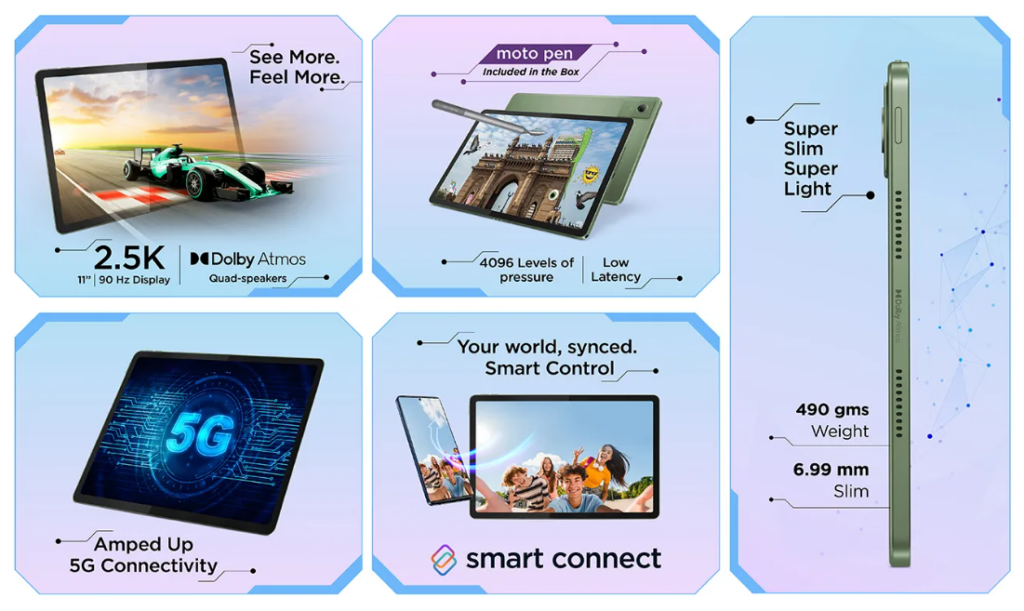
Motorola has launched the Moto Pad 60 NEO in India, adding a new option to the mid-range tablet market. The tablet is being promoted as the slimmest and lightest 5G tablet in its segment. It measures 6.99mm in thickness, weighs 480 grams, and includes the Moto Pen in the box.
Moto Pad 60 Neo
The tablet features an 11-inch 2.5K LCD display with a resolution of 2560 × 1600 pixels and a 90Hz refresh rate. The screen offers up to 500 nits of brightness and comes with TÜV Rheinland Flicker Free and Low Blue Light certifications. Audio is handled by quad speakers with Dolby Atmos support, while a 3.5mm headphone jack is also present.
Powering the device is the MediaTek Dimensity 6300 chipset built on a 6nm process, paired with Arm Mali-G57 MC2 GPU. It comes with 8GB of LPDDR4x RAM and 128GB of UFS 2.2 internal storage, expandable up to 2TB via microSD. The Moto Pad 60 NEO runs Android 15 out of the box.
For imaging, the tablet has an 8MP rear camera with autofocus and a 5MP front camera with fixed focus. Connectivity options include 5G SA/NSA, 4G LTE, dual-band Wi-Fi, Bluetooth 5.2, GPS, GLONASS, Galileo, A-GPS, and USB Type-C (USB 2.0). The tablet is also rated IP52 for dust and splash resistance. The device is backed by a 7040mAh battery supporting 20W fast charging. Motorola is bundling a 68W charger in the box.
Pricing & availability
The Moto Pad 60 NEO is available in Pantone Bronze Green and will be on sale from September 22 via Flipkart, motorola.in, and offline retailers. It is priced at Rs. 17,999 for the single 8GB + 128GB 5G variant. With bank offers, the effective price comes down to Rs. 12,999.
In related news, Motorola has also launched the Moto Pad 60 Pro in India with a 12.7-inch 3K LTPS LCD display offering a 144Hz refresh rate, powered by the MediaTek Dimensity 8300 chipset paired with up to 12GB LPDDR5X RAM and 256GB storage. It has a starting price of Rs. 26,999 for the 8GB+128GB model.
For more daily updates, please visit our News Section.
Nothing has officially teased its upcoming flagship earbuds, the Ear (3), just days before their full debut on September 18. The preview gives us a closer look at the design, which introduces a fresh mix of premium materials and some intriguing new features.
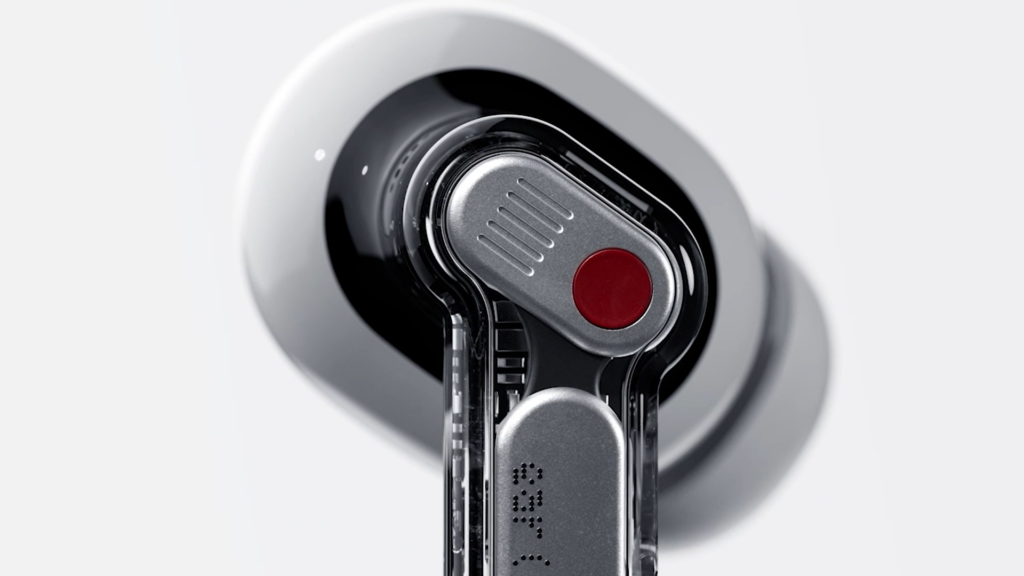
For the first time in its lineup, Nothing is incorporating metal into the build of its true wireless earbuds. Both the charging case and the earbuds themselves feature recycled anodized aluminum alongside the brand’s signature transparent aesthetic. The addition not only improves durability but also gives the Ear (3) a more premium look and feel. That said, the use of metal on the underside of the case raises questions about whether wireless charging will still be supported.
The earbuds themselves have been slightly reshaped for better comfort and feature a slimmer 0.35mm metal antenna, which should improve connectivity. The gaps in the design have also been reduced, giving the Ear (3) a more refined finish compared to previous models.
Perhaps the most intriguing part of this teaser is the “Talk” button built into the charging case. Nothing hasn’t explained what it does yet, but speculation points to quick access for voice assistants—or possibly deeper AI integration, given the company’s recent experiments in that area. Another teased feature is a so-called “Super Mic,” likely aimed at delivering clearer call quality and smoother voice assistant interactions. Unfortunately, Nothing is holding back details on audio quality and battery life until the launch.
With the official launch set for September 18, Nothing is clearly positioning the Ear (3) as a premium option alongside its more affordable Ear (a). Between the new metal design and the mysterious Talk button, these earbuds are shaping up to be one of the brand’s most ambitious products yet.
Global Sources Hong Kong Shows 2025 will take place at AsiaWorld-Expo, Hong Kong, from October 11 to 30, 2025, bringing together thousands of suppliers, buyers, and innovators under one roof. With three dedicated phases, the event will highlight fast-growing industries such as esports, AI-powered applications, and sports gear linked to the upcoming 2026 World Cup.
A Mega Trade Event on a Global Scale
The show is expected to attract over 100,000 professional buyers, offering access to more than 340,000 trending products from 9,000 booths and nearly 5,000 trusted Asian suppliers. According to John Kao, VP of Global Sources Hong Kong & Overseas Shows, the event is designed to create an end-to-end sourcing journey, from gaining trend insights and exploring product showcases to building supplier connections. Kao also emphasized that the shows are powered by 30 years of expertise, AI-driven big data, and enhanced O2O services such as the Virtual Show, Show Genie, and online exposure.
The first phase, held from October 11–14, 2025, will focus on the theme “Where Cutting-Edge Technology Meets Digital Entertainment.” It will feature the Consumer Electronics, Electronic Components, and Gaming Shows, with over 150,000 products and 10,000+ new releases on display.
The Gaming Show will highlight a full esports ecosystem. Exhibits include gaming PCs, keyboards, high-refresh monitors, mice, headsets, and ergonomic chairs, as well as audiovisual systems, esports room solutions, live-streaming gear, and licensed merchandise. More than 200 brands such as Mchose, AULA, TITAN, Golden Field, and darkFlash will be present.
Adding excitement, the KOLs & Buyers’ Favorite Gaming Gear Awards will recognize products in categories like gaming mice, keyboards, chairs, and headsets. Judged by KOL experts and buyers, the awards will measure innovation, performance, material quality, and user experience, serving as a guide for market trends.
AI+ products take center stage at the show
Phase 2: AI Applications & Ecosystem
Running from October 18–21, 2025, Phase 2 carries the theme “AI-Powered Ecosystem: Igniting Future Manufacturing Intelligence.” This stage covers Mobile Electronics, Home & Kitchen, Lifestyle, and Smart Home & Security Appliances, with over 2,000 global exporters participating.
The highlight will be the AI+ Products Hall, housing 1,200+ booths dedicated to AI-powered applications. Products will include smart terminals, wearables, AI glasses, health monitoring devices, pet tech, and AI toys. A dedicated AI Conference & Awards will feature more than 40 industry pioneers, discussing AI’s role in retail, automation, and R&D. The newly launched AI Innovation Award will honor exhibitors with outstanding AI advancements.
Phase 3: Sports & Outdoor with World Cup Fever
The final phase, held from October 27–30, 2025, will emphasize sports and outdoor products, with over 600 exhibitors from across Asia. The World Cup Fever Zone will showcase football-related gear, collectibles, and fan merchandise, offering an interactive football experience for visitors.
This phase also returns with the Pickleball Masterclass and introduces the Pickleball Expo Cup 2025, organized in partnership with Po Leung Kuk, Hong Kong. Fitness enthusiasts will see collaborations with the Sports Performance and Functional Fitness Federation of Hong Kong, China (SPF3), including an indoor triathlon challenge using ski ergometers, cycling, and rowing equipment. Live demonstrations of core training and Pilates yoga products will also take place.
The Global Sources Hong Kong Shows 2025 will act as a powerful platform for businesses to discover, connect, and innovate across three booming industries: esports, AI, and sports & outdoor gear. With thousands of exhibitors, interactive programs, and specialized awards, the event is set to drive global sourcing and shape future market trends.
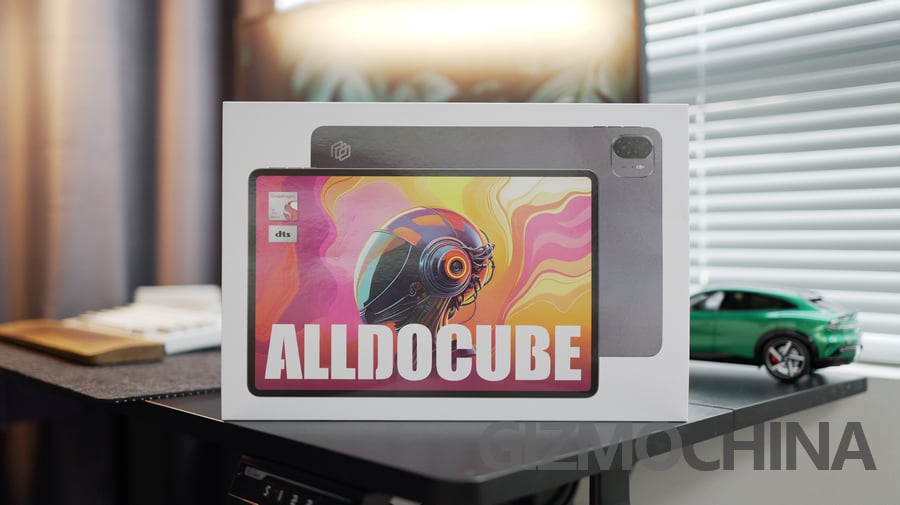
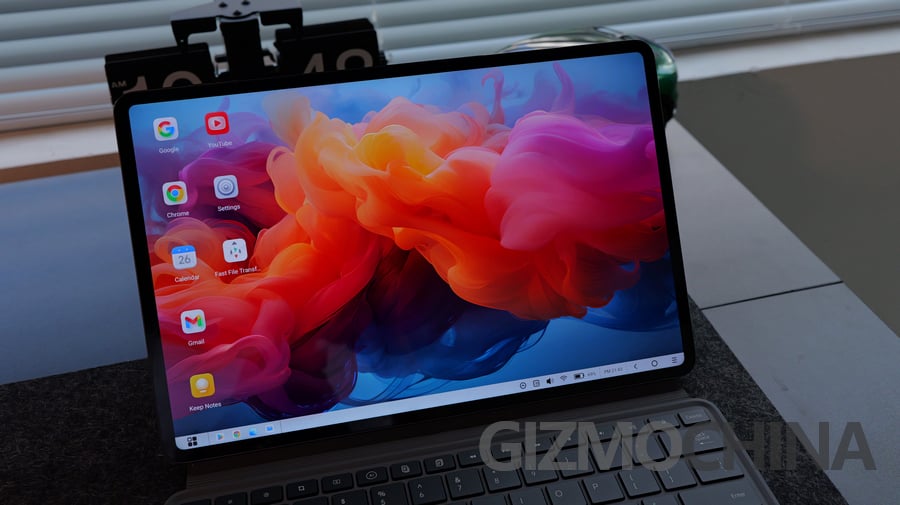
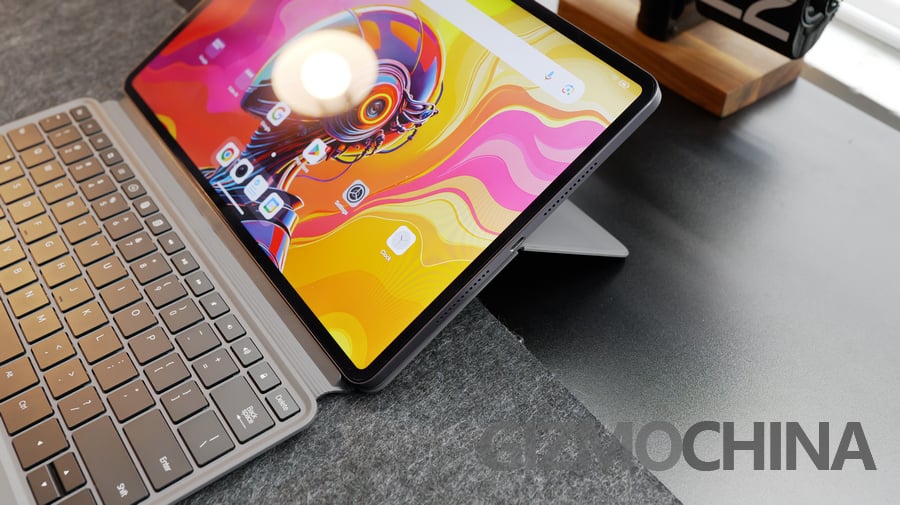
In this review, we will be taking a look at the Alldocube Ultra Pad, the first giant 13-inch tablet that also has powerful performance. We also got the keyboard, so pair it up with the tablet, and the experience is complete and just like a PC.
Where to buy
Buy Alldocube Ultra Pad on AliExpress globally for $299.99 (with promo code CUBEU1380) For Japanese consumers, check it out on Rakutenat ¥44,999 (tax included)
Design
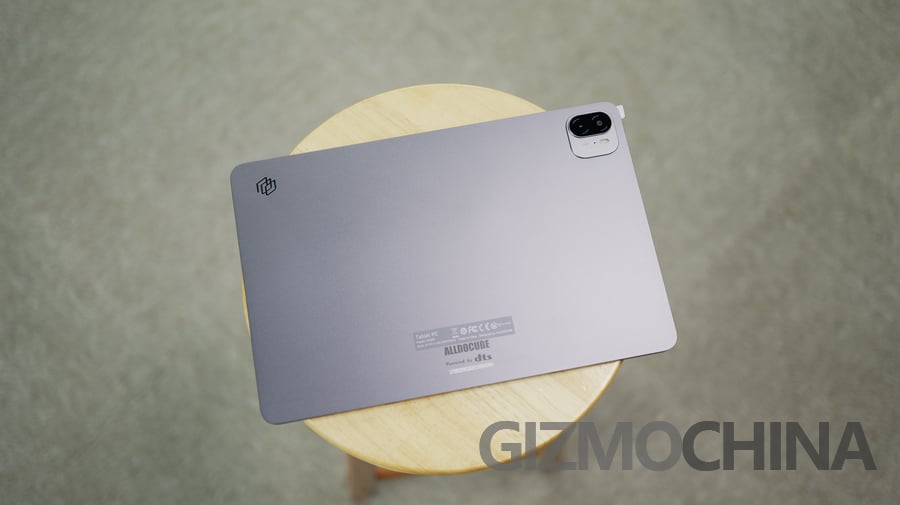
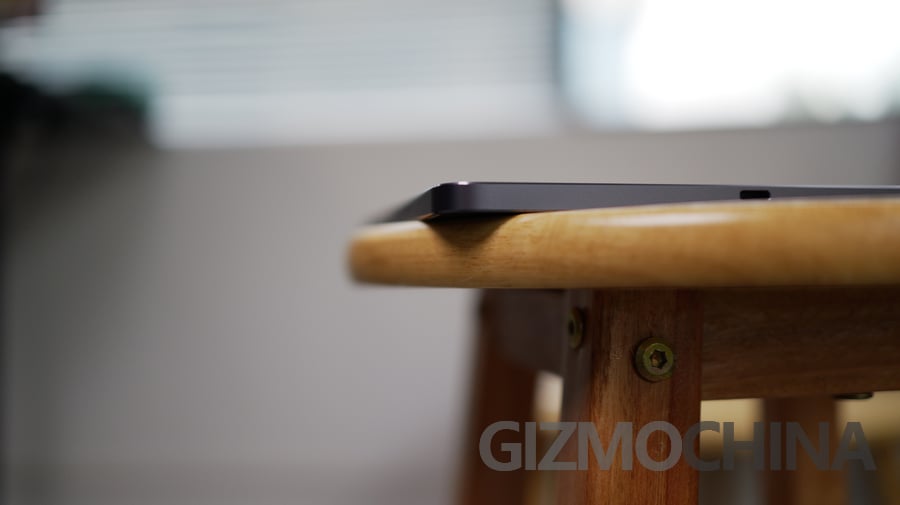
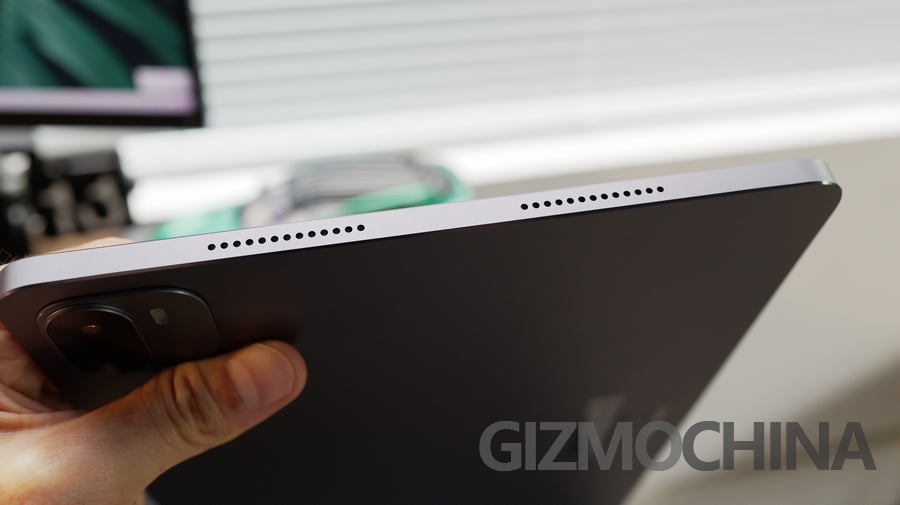
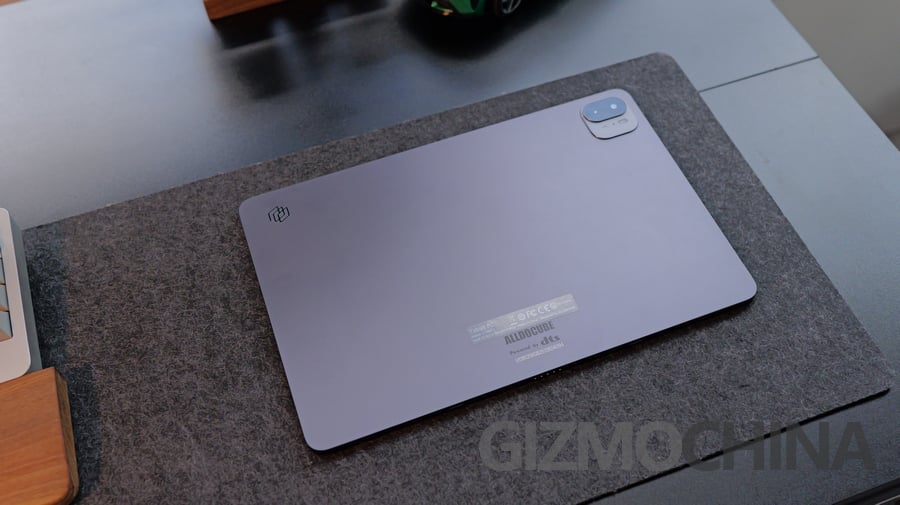
Unlike the previous tablets from Alldocube, which use a metal and plastic combination on the back. This Ultra Pad is made of a whole piece of aluminum, with processed edges on the frame. Although it’s a nice touch to round the edges a little bit, I personally still would like the edges to be more refined, so it does not feel sharp in the hand. Then the camera module is also nicely designed, with a camera and dual flash beside it.
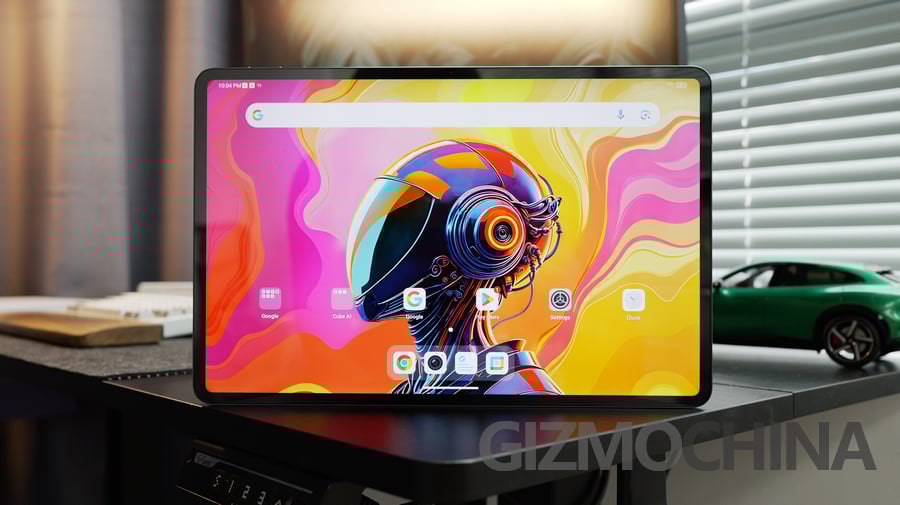
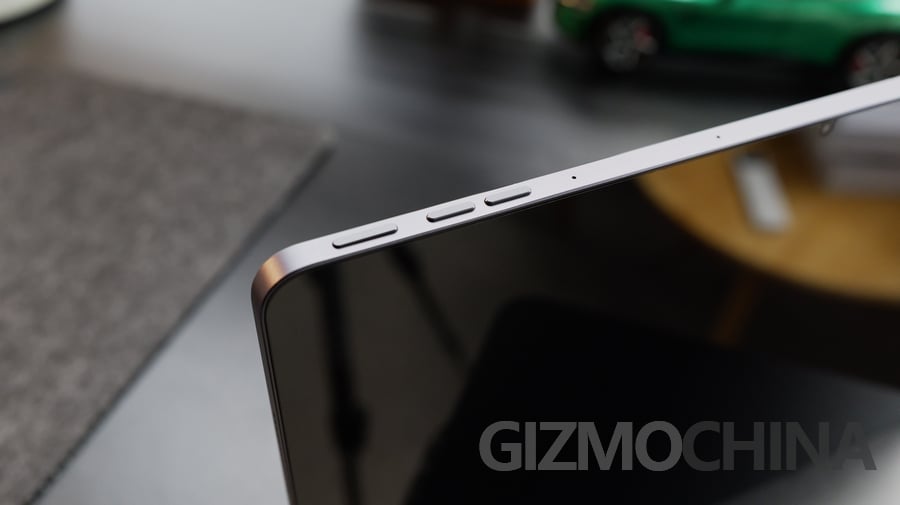
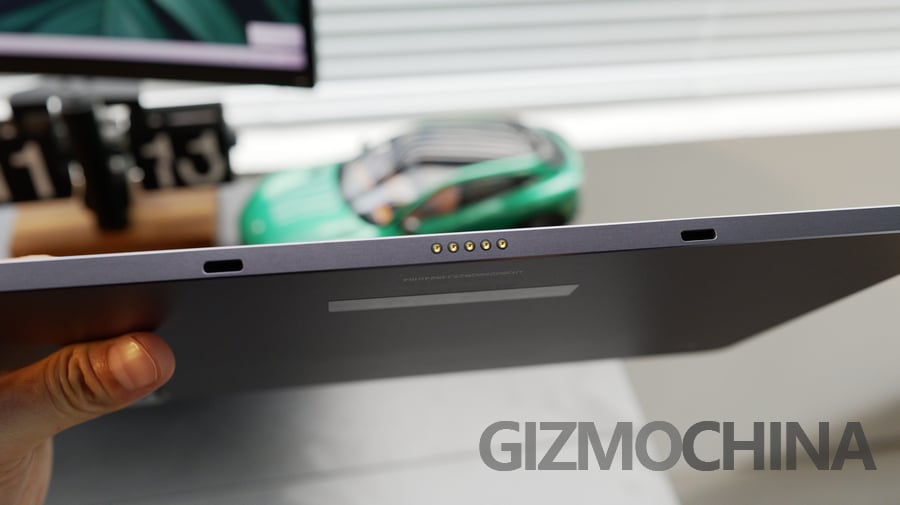
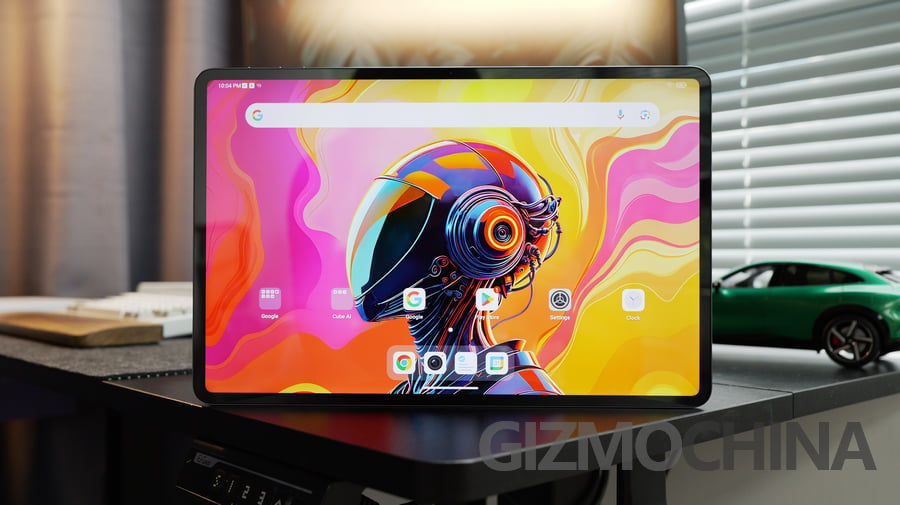
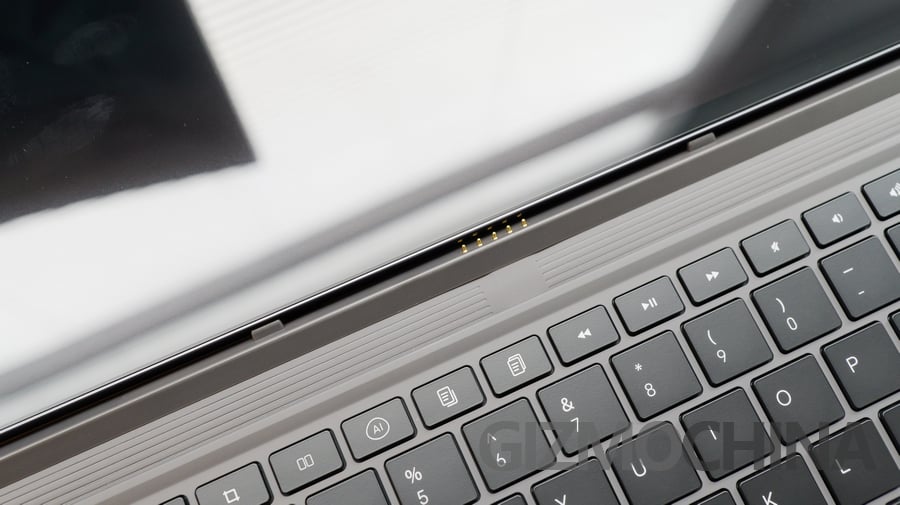
At the front, there is a 13-inch IPS display panel, and equal bezels around it. We will talk about more specs later in this review. On one side of the frame, there are the buttons, microphones, and the SD card slot. Four speakers on the other sides, DTS audio effect supported. Then at the bottom, there are the pins and a lock for connecting the keyboard.
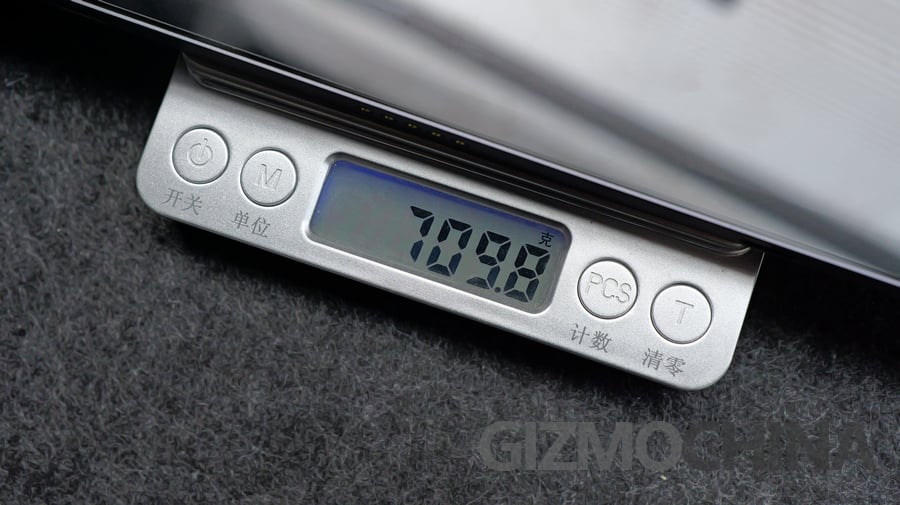
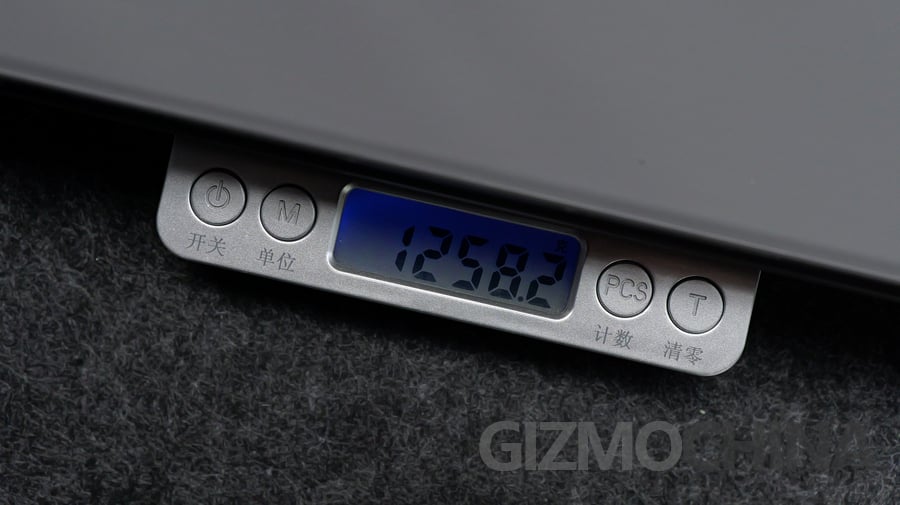
The Pad alone weighs 709g, 1258g with the keyboard case. The MacBook Air, the ultimate productivity machine, weighs 956g. So I would say it is slightly heavy in the hand, you’d better be prepared.
So overall, the Ultra Pad is well designed, and with that size, it indeed deserves the Ultra name.
Features
Performance
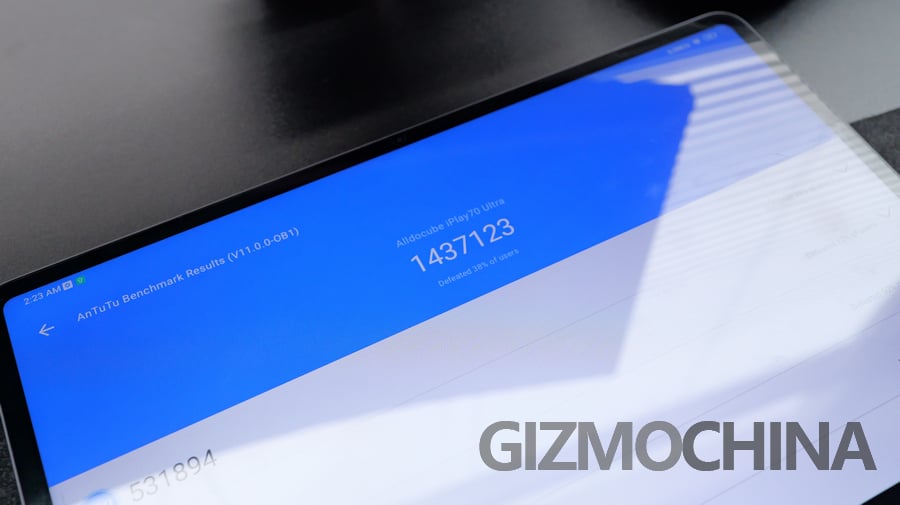
When it comes to performance, it is exciting to see Snapdragon 7+ Gen 3 on board. This means the performance has reached a peak among all the Alldocube lineup. It scored 1.4 million on the Antutu benchmark, which tells us that it is a very powerful tablet. This chip can support many things like running day-to-day tasks, gaming, or the AI features. In this review, we won’t try the gaming, it is too big for that, so not many people would do that.
Display
As mentioned earlier, it is a 13-inch IPS panel on the top, the resolution is 2.8K, the refresh rate is up to 144Hz, and the brightness is up to 700nits. When watching videos, the image is sharp, details are rich. Using it for some daily tasks, the operation is very smooth. There is a pre-applied film on the screen to protect it from any scratches. And it also supports Widevine L1. If you like watching content on a Pad, the experience will be very good.
Productivity
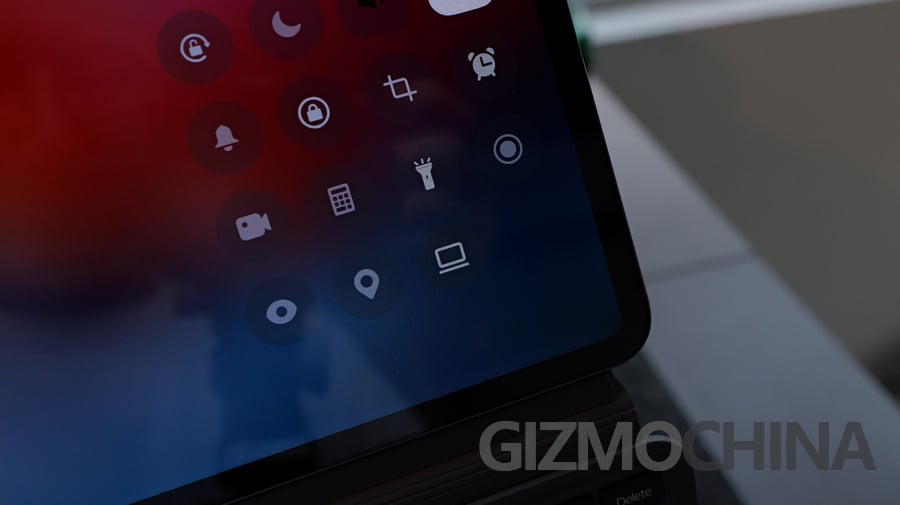
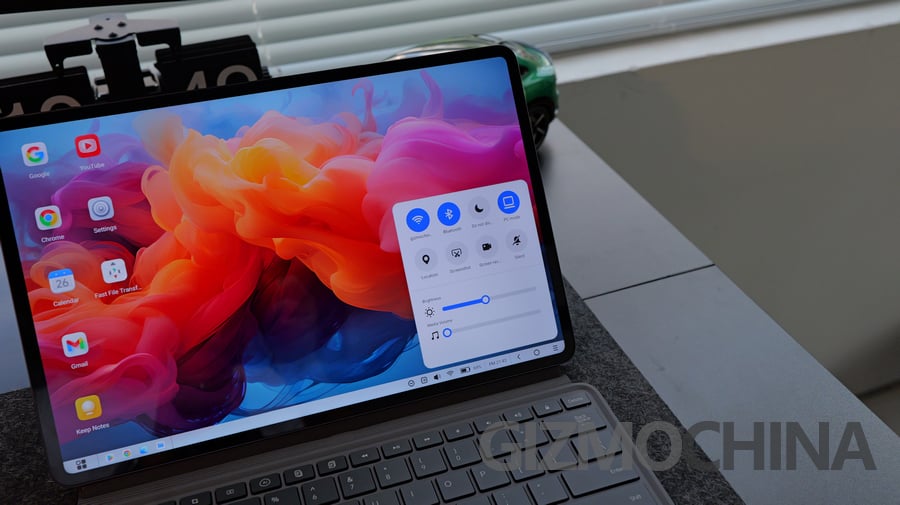
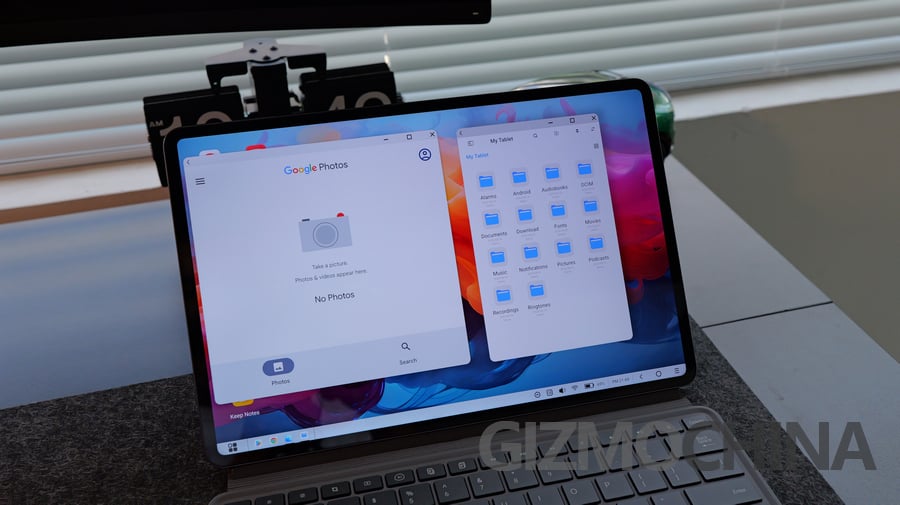
This Ultra Pad is also meant for some productivity work, mainly for the PC mode and with the keyboard. There is a dedicated PC mode built into the system, the portal is in the status bar, it is among other settings. The PC mode is just like a Windows PC home screen. With icons lined up on the left side, and a status bar at the bottom. The best thing about the PC mode is that, the size of the App can be adjusted freely. The other thing is that, with a touch screen, you can get to every App and setting quicker, with a single tap.
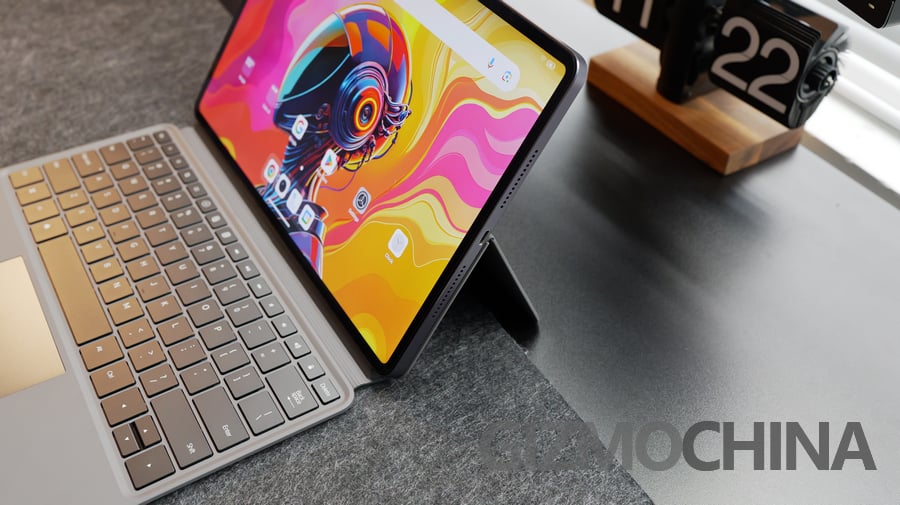
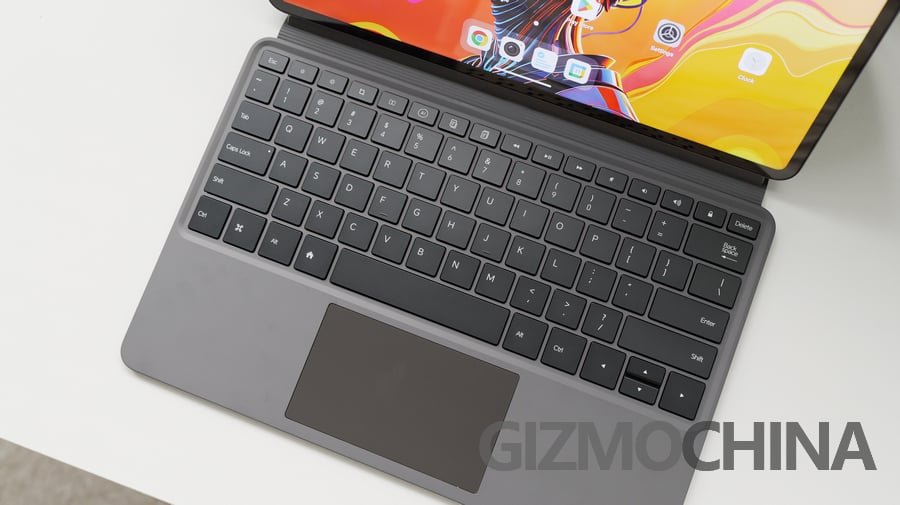
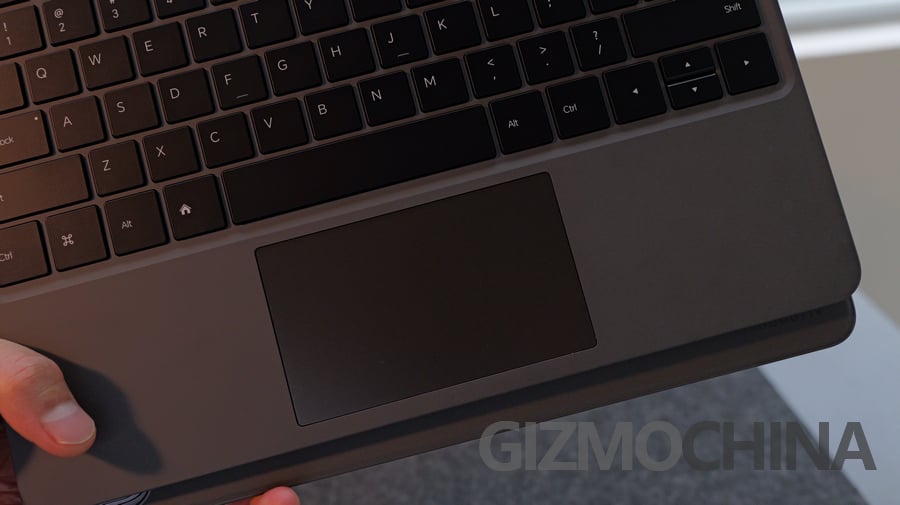
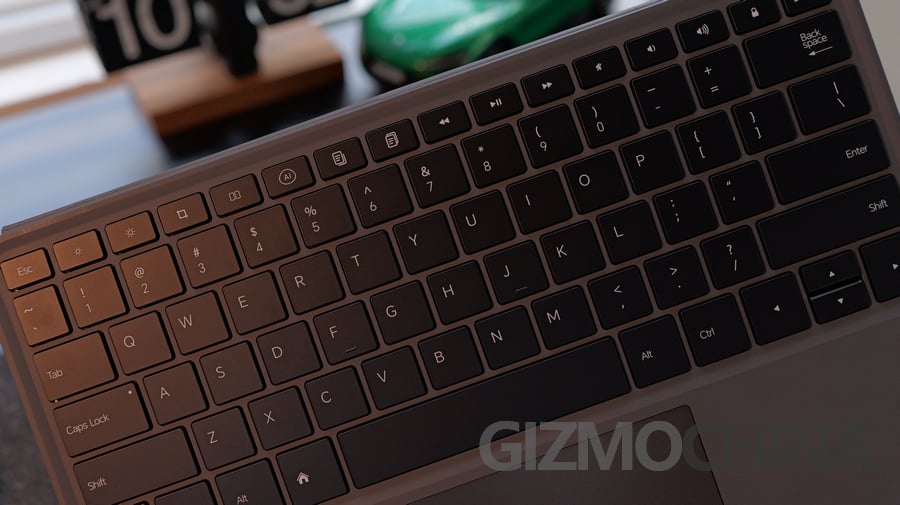
The other very good implement is the keyboard. It is a one-piece accessory, with the piece attached to the pad by magnets and pins. The other piece is the keyboard. This solution makes sure they are connected very strongly, the pad won’t come off easily. If you want to do some work, the upper half can fold back, to form a stand, then type on the keyboard. It even comes with a touchpad, so basically you don’t need to bring a mouse anymore. The overall experience of the keyboard is very good, the key travel is decent. And there are more function keys on the top, two being the copy and paste keys, the other one being the dedicated AI key, to call up Gemini AI.
One thing to note though, it also supports DP output, so you can connect it to a monitor, cast things to a bigger screen for even more productivity, or immersive visuals.
Cube AI
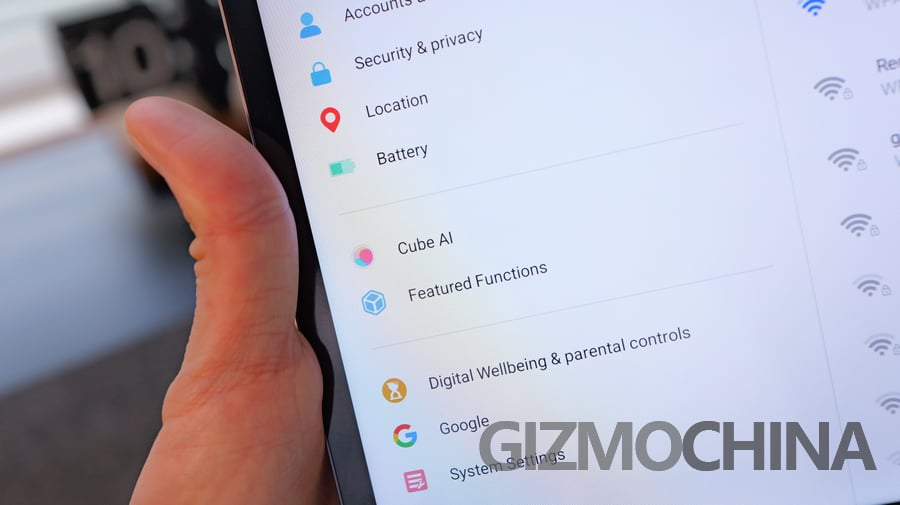
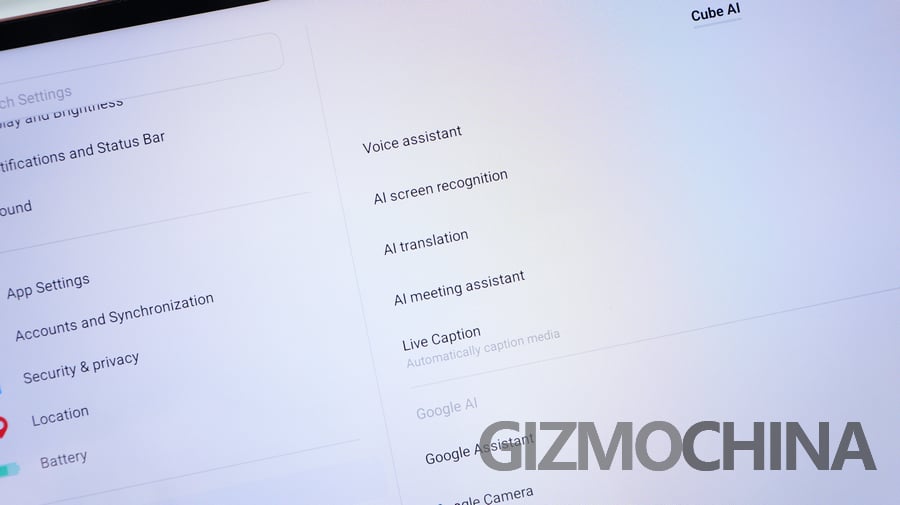
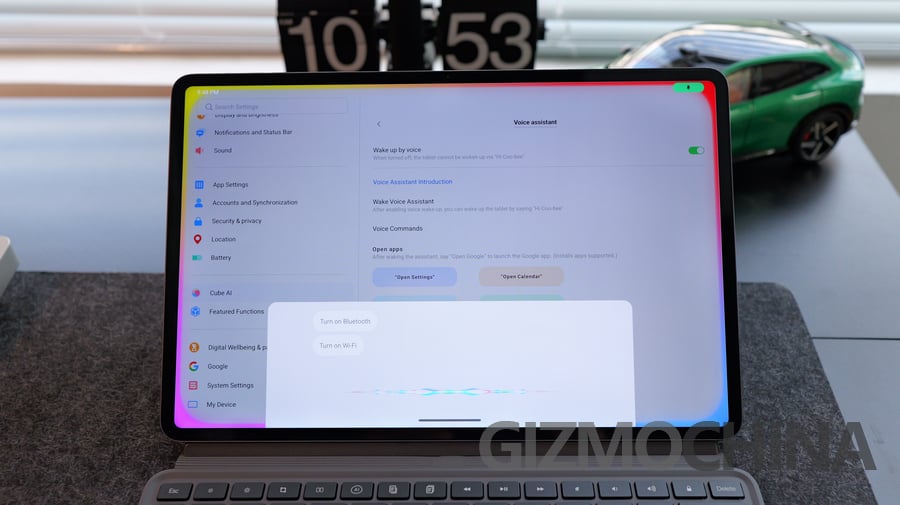
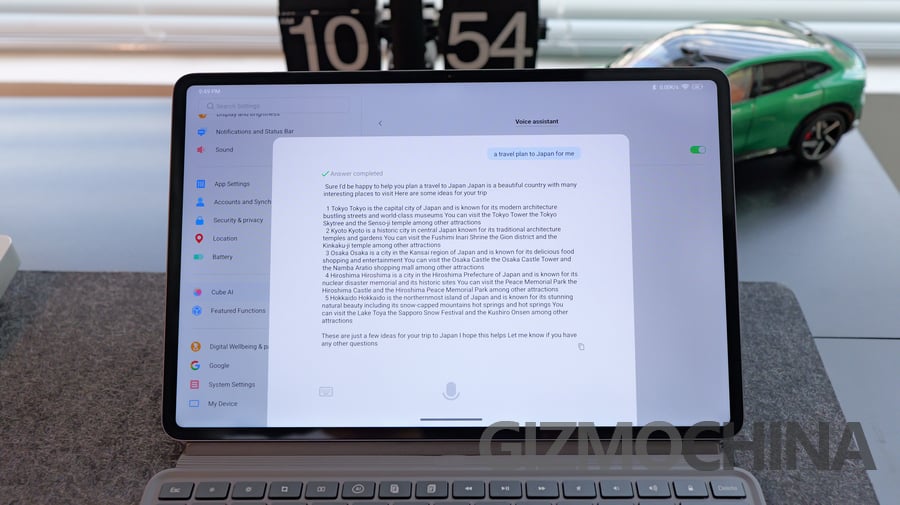
You probably can’t live without AI now, as it is everywhere on every device, except Apple devices. So on this pad, you can find the Cube AI in the settings, in the note App also. In any interface, you can use your voice to call it up, by saying”Hi Coo Bee”, I found that it is very sensitive, and it can do many things. Like if you ask him to make a travel plan for you, it can give you either a basic one, or a very detailed one if you feed him enough information.
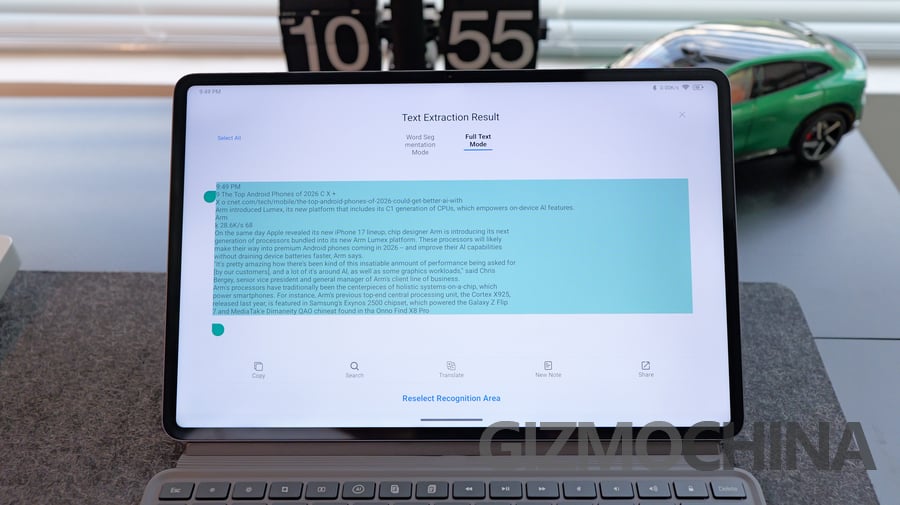
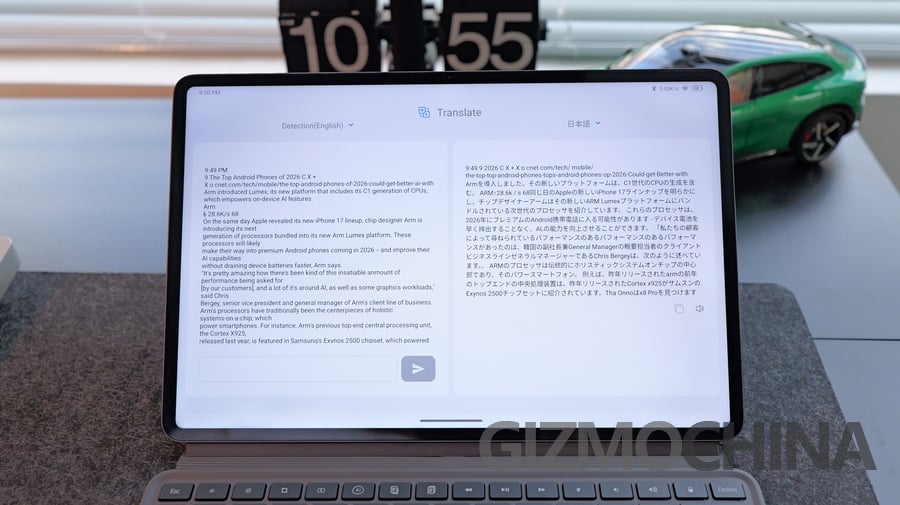
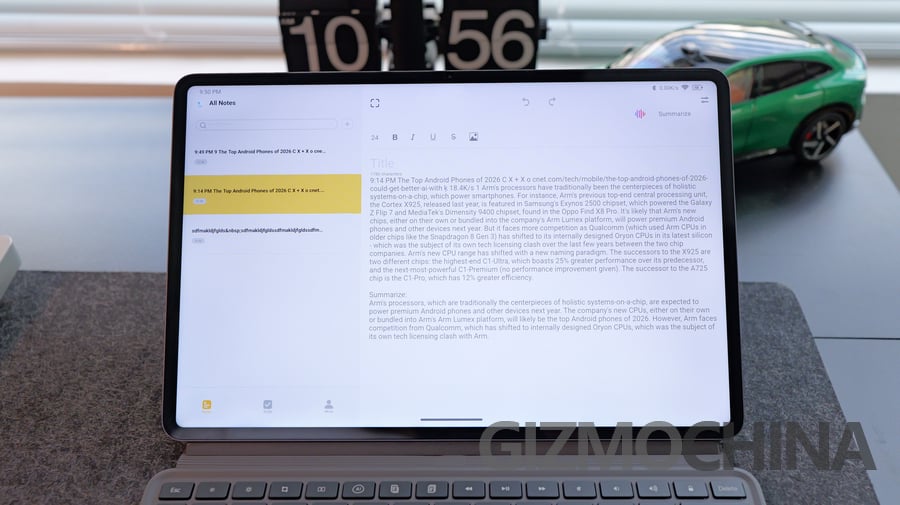
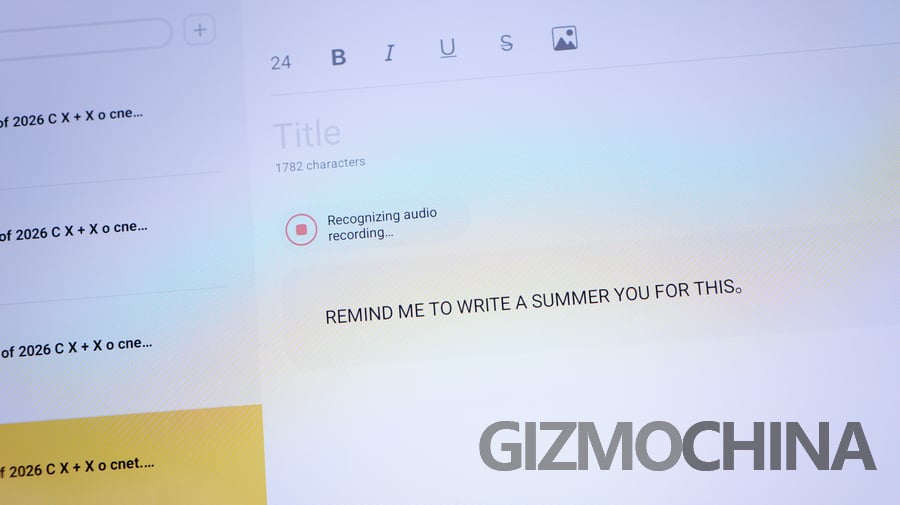
On a website, it can capture what’s on the screen, then copy the content for further processing, like translation or creating a note. While in the Note App, it can automatically summarize the content, then place it under the text. Also in the Note App, if you record some voices from a meeting, then a summary can also be generated.
Cameras
There is a dual camera setup here, 13MP at the rear and 5MP at the front. They can meet daily use of course, such as meeting and stuff.
Battery
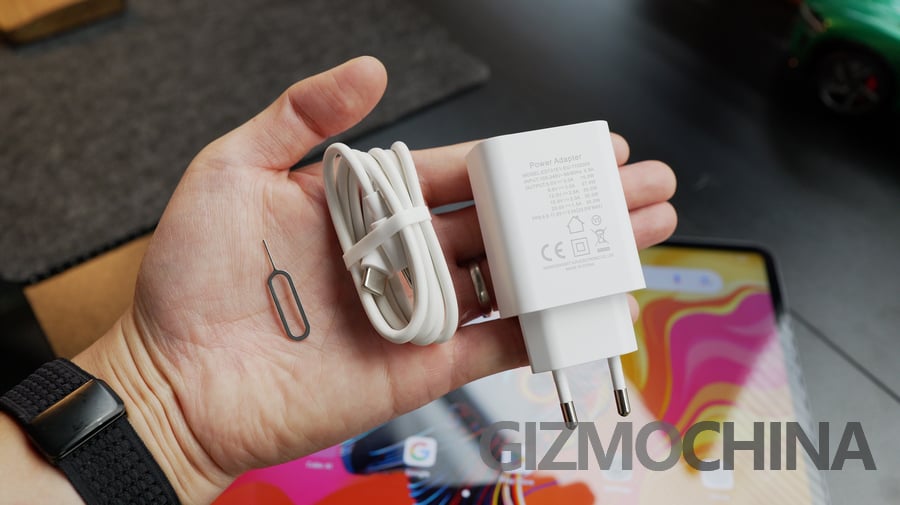
It has a 15000mAh battery, which is massive, you really don’t need to worry about battery life much. And it also comes with a 33W charger, which can top it up very fast.
Summary
The Alldocube Ultra Pad, as the first ultra model from Alldocube, has the performance you want, and a big 13-inch display. The design is very much refined, with a unibody chassis and a good camera combo. The upgrade in the processor is quite notable, I would say, Snapdragon 7+ Gen 3 elevates the experience quite a lot. The AI features and keyboard really boost productivity for you. So if you are in for a tablet like this, you can’t go wrong with this one.
Last year, Oppo unveiled the Oppo Pad 3 and Pad 3 Pro tablets in China. Earlier this year, the brand unveiled the Oppo Pad 4 Pro with the Snapdragon 8 Elite chip onboard in China. A new leak reveals that the company is now gearing up to launch the Oppo Pad 5, indirectly hinting that there won’t be any Oppo Pad 4 named device. The leak, courtesy of reliable tipster Digital Chat Station, has revealed almost everything about the Pad 5. He also revealed that OnePlus will launch a rebranded version of this device with the OnePlus Pad 2 moniker.
Oppo Pad 5 specifications (rumored)
OPPO Pad 4 Pro
As per the leak, the Oppo Pad 5 will arrive with a 12.1-inch LCD panel that supports a 3K resolution and a 144Hz refresh rate. On the back, it will feature a single 8-megapixel camera. At present, there is no information about the device’s front camera.
The Oppo Pad 5 will be powered by the Dimensity 9400 Plus chipset and a 10,300mAh battery with 67W fast charging support. The device will have support for 67W fast charging. While there is no information about the thickness of the device, it is said to weigh around 579 grams.
The Pad 5 will be available in multiple configurations, such as 8GB+128GB, 8GB+256GB, 12GB+256GB, and 16GB+512GB. It will be sold in shades like Purple, Silver, and Gray. The leak claims that the tablet may debut alongside the Find X9 series, which is expected to break cover in October.
He added that the upcoming OnePlus Pad 2 for the Chinese market has the same specs as the Oppo Pad 5. However, it will be sold in different colors, such as Blue and Gray.
For more daily updates, please visit our News Section.
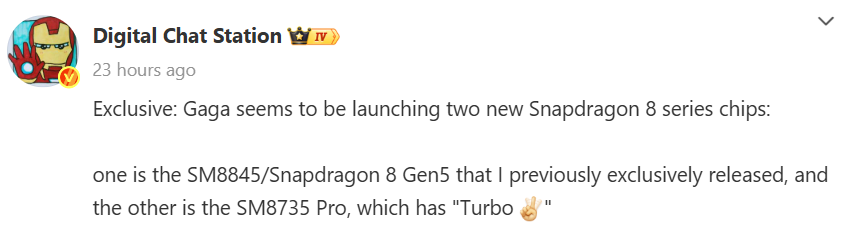
OnePlus is reportedly gearing up to launch the OnePlus Ace 6 and OnePlus 15 next month (October) in China. After unveiling these phones, the company may launch the OnePlus Turbo-branded phone. All three phones are said to be equipped with yet-to-be-unveiled Snapdragon 8 series chipsets.
OnePlus phones to feature Snapdragon 8 Gen 5, 8s Gen 4 Pro/Plus
OnePlus’s upcoming phones to feature new Snapdragon 8-series chips
The upcoming OnePlus 15 will feature the Snapdragon 8 Elite Gen 5 (aka Snapdragon 8 Elite 2), which is said to have the model number SM8850. The above leak reveals that OnePlus will launch two phones powered by the new Snapdragon 8-series chipsets. These chipsets have model numbers SM8845 and SM8735 Pro.
OnePlus Ace 6 said to feature Snapdragon 8 Gen 5 (SM8845)
For those who don’t know, the SM8845 is expected to carry the Snapdragon 8 Gen 5 final marketing name. This chip, according to a previous Weibo post by tipster Digital Chat Station, is expected to power the OnePlus Ace 6. The same chip is expected to power the likes of the Redmi K90, Honor GT 2, and a Realme Neo series phone.
The Snapdragon 8s Gen 4, which debuted earlier this year, has the SM8735 model number. The new leak states that OnePlus will also launch a phone powered by the SM8735 Pro chip. It appears that the SM8735 Pro could be an overclocked version of the Snapdragon 8s Gen 4. Likely, it will be called the Snapdragon 8s Gen 4 Plus or Pro when it hits the market.
OnePlus is reportedly working on a Turbo-branded smartphone, which may debut before the end of this year. Probably, this phone could be powered by the Snapdragon 8s Gen 4 Plus/Pro chipset.
For more daily updates, please visit our News Section.
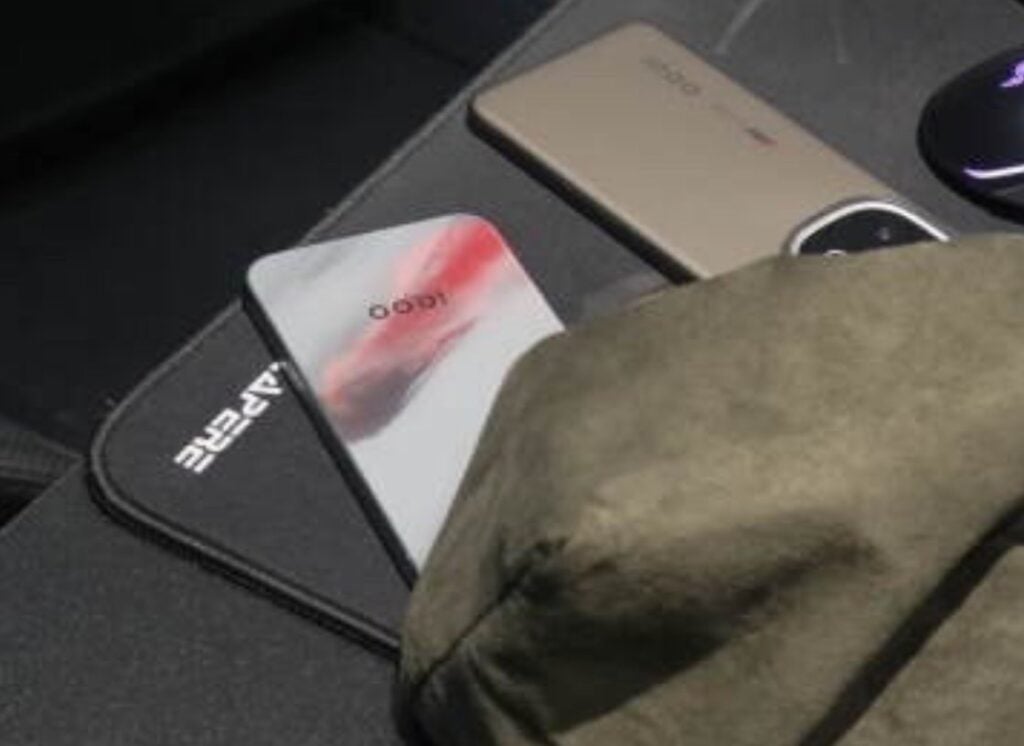
While Vivo has started teasing the arrival of the Vivo X300 series, which is expected to debut on Oct. 13 in China, its sub-brand iQOO has also begun building hype for the iQOO 15. According to recent Weibo posts by iQOO Product Manager Galant V, the upcoming flagship will feature significant upgrades in display technology. Alongside these teasers, an image showing part of the device’s rear panel has also surfaced online.
iQOO 15 display details officially confirmed
Alleged iQOO 15 leaked shot
The key highlight of the iQOO 15 is its use of Samsung’s 2K Everest screen, also referred to as the NB Plus panel. According to reports, the screen will measure around 6.85 inches.
Galant V revealed that the iQOO 15’s display is said to deliver improved transparency by combining high brightness, color accuracy, contrast, light transmission efficiency and reduced reflectivity. It is designed to provide better viewing clarity than most current flagships.
The Samsung OLED panel also introduces advanced emission materials, enabling brightness levels ranging between 1 nit and 6,000 nits. This flexibility allows the screen to adapt from soft lighting to intense brightness as required.
Another important feature of the screen is the integration of AR anti-reflection coating, which Apple only introduced recently on the iPhone 17 Pro Max. Beyond the display, the device is also set to debut the industry’s largest 8K vapor chamber cooling system, designed to complement the Snapdragon chipset’s performance. For those who don’t know, the phone is expected to feature the Snapdragon 8 Elite Gen 5 SoC.
iQOO positions the 15 as a performance-oriented big-screen flagship that aims to directly compete with Apple’s Pro Max line-up in terms of both power and display quality. Shown above is a leaked image of the alleged iQOO 15 doing the rounds on Chinese social media platforms. It gives a partial view of the phone’s back panel that has a white-red gradient finish and rounded corners.
For more daily updates, please visit our News Section.
We use cookies on our website to give you the most relevant experience by remembering your preferences and repeat visits. By clicking “Accept”, you consent to the use of ALL the cookies.
This website uses cookies to improve your experience while you navigate through the website. Out of these, the cookies that are categorized as necessary are stored on your browser as they are essential for the working of basic functionalities of the website. We also use third-party cookies that help us analyze and understand how you use this website. These cookies will be stored in your browser only with your consent. You also have the option to opt-out of these cookies. But opting out of some of these cookies may affect your browsing experience.
Necessary cookies are absolutely essential for the website to function properly. This category only includes cookies that ensures basic functionalities and security features of the website. These cookies do not store any personal information.
Any cookies that may not be particularly necessary for the website to function and is used specifically to collect user personal data via analytics, ads, other embedded contents are termed as non-necessary cookies. It is mandatory to procure user consent prior to running these cookies on your website.