Advertisement

Motorola Edge 60 Fusion vs OnePlus Nord CE 4: Which Mid-Ranger is Better?

In a market flooded with mid-range smartphones, the Motorola Edge 60 Fusion and OnePlus Nord CE 4 stand out as two of the most talked-about releases of 2025. Both brands promise flagship-like features at competitive prices, but they take very different approaches. 

This comparison matters because choosing between them isn’t just about specs, it’s about what kind of experience you value more: design, performance, cameras, or long-term reliability.

1. Design and Display

Motorola Edge 60 Fusion

The Motorola Edge 60 Fusion feels slightly more premium with its eco-leather back (in some variants), Gorilla Glass 7i protection, and full IP68/IP69 certification, making it resistant to dust, high-pressure water, and drops. Meanwhile, the OnePlus Nord CE 4 offers an IP54 rating, which is decent for splash resistance but less rugged overall. Motorola’s design also includes MIL-STD-810H compliance, adding to its durability credentials.

In terms of display, Motorola takes a step ahead again. It offers a brighter P-OLED panel with peak brightness up to 4500 nits and a sharper 1220p resolution, while OnePlus uses a 1080p Fluid AMOLED with a lower peak brightness of 1100 nits. Both have 120Hz refresh rates and support HDR10+, but Motorola’s clarity and brightness edge it out for outdoor visibility and color richness.

Motorola gets the nod here for offering a better visual experience and more robust build quality, especially if you value premium materials and durability in daily use.

2. Specifications 

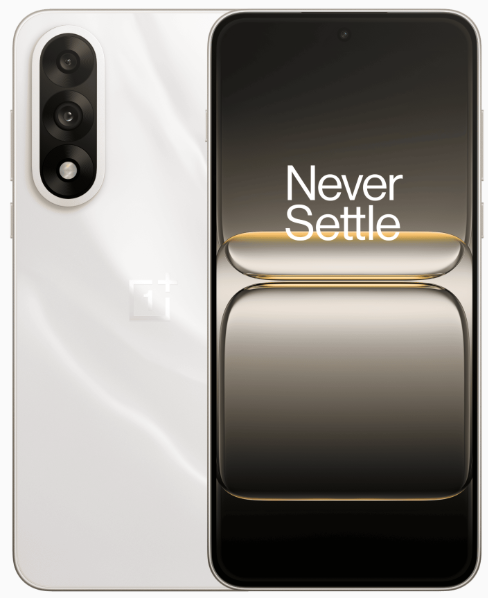
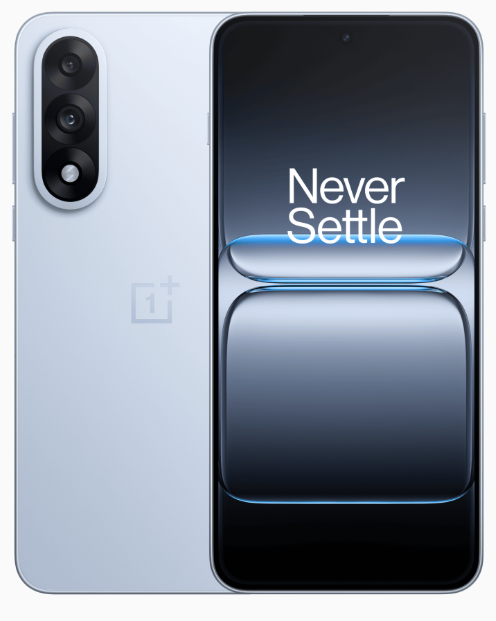
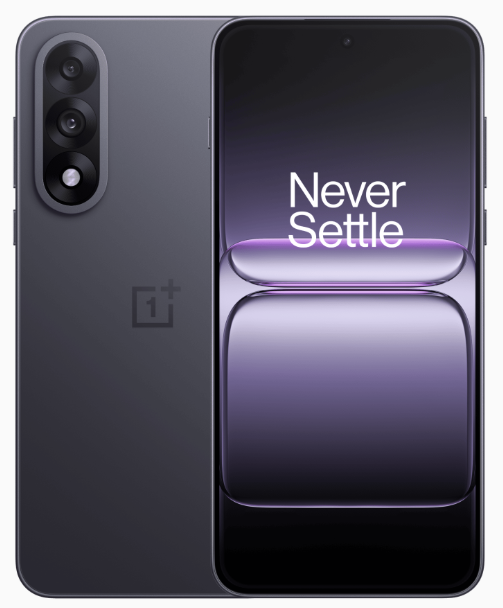
OnePlus Norde CE 4
OnePlus Nord CE 4

Under the hood, OnePlus Nord CE 4 is powered by the Snapdragon 7 Gen 3, a very efficient and powerful mid-range chipset, which should provide better sustained performance and graphics capabilities compared to Motorola’s Dimensity 7300/7400. While both are 4nm chips, Snapdragon holds a slight lead in raw performance and gaming optimization.

Battery capacity is nearly even, with both phones packing a 5500 mAh unit in the Indian variant of the Motorola and OnePlus offering the same. However, OnePlus steals the show in charging speeds—100W wired charging that fully tops up the phone in under 30 minutes, compared to Motorola’s 68W. Also, Motorola includes the latest Android 15 out of the box with three major OS upgrades, while OnePlus ships with Android 14 and ColorOS.

If performance and fast charging are key, OnePlus is the better bet. But Motorola’s cleaner Android 15 and solid battery life make it a close second.

3. Camera

Motorola Edge 60 Fusion

Both phones sport dual camera setups with a 50MP primary sensor and a secondary ultrawide. Motorola’s main sensor is slightly larger (1/1.56″ vs 1/1.95″) and benefits from optical image stabilization (OIS) and multi-directional PDAF, which should help in low light and fast focus scenarios. The ultrawide on Motorola is 13MP compared to OnePlus’s 8MP, giving it a bit more detail capture.

Where Motorola really pushes ahead is in the selfie department, offering a 32MP front camera capable of 4K video. OnePlus uses a 16MP shooter limited to 1080p, which is fine for basic use but not ideal for content creators or video calls in higher resolution.

Motorola offers a better overall camera setup, especially if you’re into selfies or vlogging. The higher resolution and more flexible camera options make it more appealing for photography.

4. Pricing

The Motorola Edge 60 Fusion is priced around $355. On the other hand, the OnePlus Nord CE 4 comes for about $265. That’s nearly a $90 price gap, making the OnePlus significantly more affordable.

Considering what you get at that price, Snapdragon 7 Gen 3, fast 100W charging, and decent cameras, the OnePlus is a solid value proposition. Motorola offers a more premium build and display, but for the price, you are paying a bit extra for those upgrades.

If budget is the main factor, OnePlus wins for being competitively priced while still delivering strong specs. But Motorola justifies its cost with extra polish in materials and display quality.

5. Conclusion

OnePlus Norde CE 4
OnePlus Nord CE 4

Motorola brings a few standout features rarely found at this price point, including IP69-rated water resistance, MIL-STD-810H durability, and the brightest display in its class. It also features Smart Connect (Ready For) which allows desktop-style connectivity, something power users or professionals may appreciate.

OnePlus, meanwhile, offers 100W charging, one of the fastest in this range, and 24-bit/192kHz Hi-Res audio support including wireless codecs like aptX HD and LHDC, which is a big win for audiophiles. It also includes an IR blaster for remote control functionality, a subtle but practical touch for some users.

Motorola focuses on durability and media/display excellence, while OnePlus leans into audio, speed, and efficiency. Your preference depends on whether you value rugged polish or a fast, efficient experience with thoughtful extras.

Read More:
Limited to 10: $6,700 Darth Vader Wooden Headphones by Audio-Technica Drop Next Week at Star Wars Event

Audio-Technica will launch a special edition headphone, the ATH-AWSW DV, at Star Wars Celebration Japan 2025 from April 18 to 20. Only 10 units will be made, and they’ll be available at the Audio-Technica booth (No. 28–32) at Makuhari Messe.

Audio-Technica ATH-AWSW DV

This is a wooden headphone featuring traditional Echizen lacquer and maki-e artwork showing Darth Vader. Each side of the headphone has a different design, created using official Lucasfilm assets made specifically for this product. The artwork was done by Japanese craftsmen using brush techniques, making each unit slightly unique.

The headphone has been tuned to bring out the depth in Star Wars music. Audio-Technica, known for over 20 years of wood headphone design, handled all production in Japan—from part sourcing to final assembly in their Tokyo factory. Each unit has a serial number.

Audio-Technica ATH-AWSW DV

These headphones weigh 415 grams and are equipped with large 53 mm drivers. They support Hi-Res Audio and offer a wide frequency range from 5 Hz to 45,000 Hz. With a sensitivity of 102 dB/mW and an impedance of 48 ohms, they can handle up to 2,000 mW of input power, making them suitable for high-performance audio setups.

All accessories match the Star Wars theme. The headphone stand is also made for display use. Sales will end once all 10 units are sold. If any remain after the event, there may be a second sale later. As for pricing, the headphones will cost 990,000 yen (~$6,700).

Unfortunately, tickets to the Star Wars Celebration Japan 2025 event have already sold out. That said, you can still get your hands on some cool Star Wars-themed earbuds which Audio-Technica launched last month.

For more daily updates, please visit our News Section.

Don’t miss a thing! Join our Telegram community for instant updates and grab our free daily newsletter for the best tech stories!

(Source, via: Notebookcheck)

Oppo launches its sleek magnetic power bank compatible with iPhone for just $20

Oppo had a busy day yesterday. Alongside its latest flagship phones, a high-end tablet, and a new wearable, the company also introduced a less flashy but still pretty useful gadget: the Oppo Magnetic Energy Card Air. It’s essentially a slim wireless power bank compatible with iPhones as well. 

OPPO Magnetic Energy Card Air 5000mAh launch specs price

The Magnetic Energy Card Air is part of Oppo’s new “Mag” series of magnetic accessories, which also includes the Magnetic Protective Case and Magnetic Dual Type-C Cable. 

All of them are designed to work within a growing ecosystem built around magnetic attachment. Think of it like MagSafe but for Oppo devices.

Oppo Magnetic Energy Card Air Overview

The power bank has a capacity of 5000mAh and can magnetically latch onto Oppo’s latest phones including the Find X8s, X8s+, and X8 Ultra. The idea here is simple, wireless charging without the usual bulk, cables, or overheating issues.

To tackle the heat, Oppo is using a new shell material paired it with active temperature control via an NTC resistor. Oppo says this helps “alleviate” heating during use.

Oppo Magnetic Energy Card Air 5000mAh

Interestingly, the Energy Card isn’t locked into Oppo’s ecosystem either. Since it uses magnetic wireless charging, it’s also compatible with iPhones. That makes it one of those cross-platform accessories that doesn’t force users into a single brand’s ecosystem.

There’s a small four-dot LED indicator at the bottom to show battery status, along with a USB-C port that supports both charging the bank (at 12W) and charging other devices (up to 10W output). That means you can plug in a pair of earbuds or a smartwatch when you’re not magnetically juicing up your phone.

The Oppo Magnetic Energy Card Air will go on sale in China from April 16 carrying a price tag of 149 yuan (around $20). It’s a compact, pocketable, cross-platform accessory for anyone who’s on the go and doesn’t want to juggle cords or bulky battery packs.

Tech enthusiast? Get the latest news first! Follow our Telegram channel and subscribe to our free newsletter for your daily tech fix!

For more daily updates, please visit our News Section.

Motorola Edge 60 Stylus Debuts April 15 with Built-In Stylus and Snapdragon 7s Gen 2 SoC

Motorola is expanding its Edge series in India with the launch of the Motorola Edge 60 Stylus, officially confirmed for April 15 at 12PM. The Flipkart microsite is now live, revealing full specifications and key features of the upcoming device.

Motorola edge 60 STYLUS

The Edge 60 Stylus sports a 6.7-inch pOLED display with a 1.5K resolution. It is powered by the Snapdragon 7s Gen 2 chipset and paired with 8GB RAM and 256GB of internal storage. A built-in stylus enables AI-powered features such as sketch-to-image transformation, note annotation on photos, and object removal using the Magic Eraser tool.

Motorola edge 60 STYLUS

On the camera front, the phone includes a 50MP Sony LYTIA 700C primary sensor, a 13MP ultra-wide lens, and a 3-in-1 rear sensor. The front-facing camera is 32MP. For durability, the phone comes with IP68 water resistance and MIL-STD-810 military-grade certification.

The device is backed by a 5000mAh battery supporting 65W TurboPower fast charging and 15W wireless charging. Additional features include Moto AI capabilities, Smart Connect, stereo speakers with Dolby Atmos, 12 5G bands, and WiFi 6 support. The Motorola Edge 60 Stylus will be available in two finishes—Vegan Leather Surf the Web and Gibraitar Sea. As per rumors, the phone will cost Rs. 22,999 in India.

In other news, Motorola is set to launch the Motobook 60 laptop in India, likely a rebranded Lenovo IdeaPad Slim 5. It has been certified by BIS and TUV Rheinland, with a 14-inch display expected. The device also appears on the Lenovo Support List.

For more daily updates, please visit our News Section.

Stay ahead in tech! Join our Telegram community and sign up for our daily newsletter of top stories!

(Source)

Xiaomi Launches X Pro QLED TVs with 4K Display and Dolby Vision at ₹31,999

Xiaomi has launched the X Pro QLED TV series in India, available in 43-inch, 55-inch, and 65-inch sizes. Each model features a 4K (3840 x 2160 pixels) bezel-less QLED display with a 60Hz refresh rate and 178-degree viewing angles. The panels support HDR10+, Dolby Vision, and Filmmaker Mode.

Xiaomi X Pro QLED TV 2025 Edition

The TVs are powered by a quad-core A55 processor and Mali-G52 MC1 GPU, with 2GB of RAM and 32GB of internal storage. The 55-inch and 65-inch models have 34W built-in speakers, while the 43-inch variant has a 30W speaker system. All models support Dolby Audio, DTS:X, DTS Virtual:X, and Xiaomi Sound.

Connectivity options include three HDMI ports (one with eARC support), two USB 2.0 ports, Ethernet, AV input, a 3.5mm headphone jack, and an optical port. The TVs support dual-band Wi-Fi, Bluetooth, Google Cast, Miracast, and Apple AirPlay 2. ​

Xiaomi X Pro QLED TV 2025 Edition

Running on Google TV with Xiaomi’s PatchWall interface, the X Pro series provides access to streaming apps like Amazon Prime Video, HBO, Spotify, and Netflix. PatchWall offers content discovery across over 30 platforms, 300+ live channels, and a dedicated sports section. Additional features include a 120Hz game booster, Google Assistant integration, and a kids mode with parental lock. ​The 65-inch model measures 1445 x 75 x 833 mm and weighs approximately 12.7 kg. All variants are available in black.

Pricing & availability

Pricing starts at ₹31,999 for the 43-inch model, ₹44,999 for the 55-inch, and ₹64,999 for the 65-inch. Sales begin on April 16, 2025, through Xiaomi’s official website.

For more daily updates, please visit our News Section.

Stay ahead in tech! Join our Telegram community and sign up for our daily newsletter of top stories!

(Source)

MediaTek Unveils Dimensity 9400+ with All Big Core CPU, HDR video at all zoom levels, and Advanced AI Support

MediaTek has launched its new flagship chip, the Dimensity 9400+, aimed at improving AI, gaming, and connectivity on smartphones. It features an All Big Core CPU setup with one Cortex-X925 core at 3.73GHz, three Cortex-X4 cores, and four Cortex-A720 cores. This design boosts both single-core and multi-core performance for Android flagship devices.

MediaTek Dimensity 9400+ SoC

The chip includes the upgraded MediaTek NPU 890, which supports on-device large language models using Mixture-of-Experts (MoE), Multi-Head Latent Attention (MLA), and FP8 inferencing. Speculative Decoding+ speeds up AI tasks by 20%, while the Dimensity Agentic AI Engine helps developers build advanced AI systems.

For gaming, the 12-core Arm Immortalis-G925 GPU brings better visuals with PC-level features like opacity micromap for detailed textures. MediaTek’s Frame Rate Converter 2.0+ doubles the frame rate and cuts power use by 40%.

MediaTek Dimensity 9400+ SoC

Connectivity also sees major upgrades. The chip extends Bluetooth range up to 10km (line-of-sight), supports BeiDou for 33% faster GPS-like location fixes even without mobile networks, and includes Wi-Fi 7 with tri-band support. The 5G modem reaches 7Gbps download speeds and supports Dual SIM Dual Active use.

On the camera side, the Imagiq 1090 image processor enables HDR video at all zoom levels and adds Smooth Zoom for steady subject tracking. For audio, it supports 24-bit recording through six built-in microphones with AI enhancement.

According to MediaTek, the Dimensity 9400+ is built to handle heavy workloads efficiently while giving developers more tools to build better AI apps. OPPO has already launched the flagship Find X8s and Find X8s+ smartphones featuring this new chip in China.

For more daily updates, please visit our News Section.

Stay ahead in tech! Join our Telegram community and sign up for our daily newsletter of top stories!

(Source)

Motorola Motobook 60 Laptop Certified for India: Could be a 14″ Notebook with These Specifications

Motorola is entering India’s laptop market soon with the Motobook 60. The laptop recently appeared on India’s BIS and TUV Rheinland certification websites, indicating an upcoming launch.

Motobook 60 BIS certification (spotted by TheTechOutlook)

According to the BIS database (spotted by TheTechOutlook), Motorola’s Motobook 60 carries the model number ’14IRH10R 1′ and received certification on February 24, 2025. On the TUV Rheinland database, it was certified under the notebook computer category with model numbers ’14IRH10R’ and ’14IRH10R1′. It earned a flicker-free certification marked as ‘1111298225’.

The Lenovo Support List also includes the Motobook 60, confirming two model numbers: ’14IAH10′ (code ’83NY’) and ’14IRH10R’ (code ’83J7′). These model numbers closely match Lenovo’s IdeaPad Slim 5 laptop, suggesting Motorola’s Motobook 60 will likely be a rebranded version of that device. The Motobook 60 will probably have a 14-inch screen. To give you a better idea of what to expect from the Motobook 60, we have included the details of the Lenovo IdeaPad Slim 5 model 14IAH10 and 14IRH10R.

Lenovo IdeaPad Slim 5 (model 14IRH10R and 14IAH10) features

The Lenovo IdeaPad Slim 5 14IRH10R features Intel Core i5 or i7 H-series processors, integrated Intel graphics, and up to 32GB DDR5 RAM with dual SO-DIMM slots for upgrades. It supports up to 1TB SSD storage via two M.2 PCIe 4.0 slots. Display options include a 14-inch WUXGA IPS panel or an OLED panel with higher color accuracy. Battery options are 50Wh or 60Wh, offering up to 17.2 hours of usage with fast charging support. It includes a 5MP or FHD camera with IR and ToF options. Ports include USB-C, USB-A, HDMI 1.4b, microSD, and a 3.5mm jack. Connectivity features Wi-Fi 6 or 7 and Bluetooth 5.2 or 5.4. The aluminum body weighs between 1.34–1.47 kg and includes Dolby Audio speakers and TPM 2.0 for security.

The Lenovo IdeaPad Pro 5 14IAH10 offers Intel Core Ultra processors with integrated Intel Arc graphics and built-in AI acceleration. It comes with 24GB or 32GB LPDDR5x RAM (non-upgradeable) and supports up to 1TB SSD storage. The 14-inch OLED display has a 2.8K resolution, 120Hz refresh rate, and is factory-calibrated. It includes an 84Wh battery with up to 23.8 hours of life and fast charging. The laptop features a 1080p IR camera, Thunderbolt 4, USB-A, HDMI 2.1, SD card reader, and audio jack. It supports Wi-Fi 6 or 7 and Bluetooth 5.2 or 5.4. The aluminum chassis weighs about 1.39 kg, and it includes Dolby Atmos audio, TPM 2.0, and various durability and safety certifications.

These features are currently speculative, and the final product may differ in terms of specifications. We recommend treating this information with caution and staying tuned for further updates.

(Source 1, 2 via: TheTechOutlook)

Oppo Find X8 Ultra launches with Snapdragon 8 Elite, five rear cameras including 1″ main sensor, and 6100mAh battery

Oppo launched the Dimensity 9400-powered Find X8 and X8 Pro towards the end of last year in China, and the Snapdragon 8 Elite-powered Find X8 Ultra finally joins the lineup in China. Of course, the naming suggests this is their best offering at present, but some of the specs (especially the camera hardware) are worth mentioning, even for a top-of-the-line 2025 flagship.

Oppo-FInd-X8-Ultra

But first things first, this phone looks and feels totally different from its predecessor, as Oppo has shifted to a completely flat design. This phone also houses two new buttons: a “shortcut button” in the top left corner (replacing the OG alert slider) and a “Quick Button” on the bottom left, which also happens to function very similarly to the iPhone 16 series’ “Capture Button”. The phone packs a total of five cameras on its back, most of which feature significantly larger sensors than those on its competitors.

The rear camera setup looks like this:

  • 50MP 1″ type main sensor with 1G7P lens on top that supports two-axis OIS
  • 50MP 3X periscope telephoto with 1/1.56″ sensor
  • 50MP 6x periscope telephoto with a 1/1/.95″ sensor
  • 50MP ultra-wide-angle camera with 120° wide viewing angle
  • 2MP True Chroma camera

Just for context, the 10MP 3x telephoto on the Galaxy S25 Ultra is tiny in comparison: 1/3.52″ as compared to 1/1.56″ of this flagship from Oppo. In fact, 1/1.56″ is the size of the main sensor on the Find X8. The 6x periscope telephoto is also noticeably larger than the 50MP 5X telephoto on the Galaxy S25 Ultra.

Now, you might be thinking, smartphone imaging is also largely dependent on image processing, so what about that? Generative AI has also found one use case here, and it turns out the Oppo Find X8 Ultra is also using it wisely.

The rest of the specs are equally impressive: a 6.82″ 2K LTPO AMOLED display that reaches 1600 nits of full-screen brightness and 2500 nits of local peak brightness. It sits on top of an under-display ultrasonic fingerprint scanner.

Under the hood, the phone packs a 6100 mAh (vs 5910 mAh of the Find X8 Pro) high density Si/C battery, which supports 100W wired, and 50W wireless charging. All of it is protected under the IP69 dust and water resistant body. Even with the massive battery, this phone measures 8.78 mm in thickness and weighs 226 grams.

Pricing and availability:

As mentioned above, the phone is currently exclusive to China and will go on sale on April 16 in the home market. The prices for different variants are listed below:

  • 12GB + 256GB: CNY 6,499 (€795, £685, INR 76,000)
  • 16GB + 512GB: CNY 6,999 (€860, £740, INR 82,000)
  • 16GB + 1TB: CNY 7,999 (€980, £840, INR 94,000)

According to speculations, the Find X8 Ultra may remain exclusive to the home country.

Tech enthusiast? Get the latest news first! Follow our Telegram channel and subscribe to our free newsletter for your daily tech fix!

For more daily updates, please visit our News Section.

Oppo Watch X2 Mini debuts with 1.32″ AMOLED display, Snapdragon W5, eSIM & health tracking

Oppo has launched the Watch X2 Mini in the Chinese market alongside the Find X8s, X8s+, and X8 Ultra smartphones. Let’s check out its key specs.

Oppo Watch X2 Mini

Oppo Watch X2 Mini Specifications

The Watch X2 Mini features a compact 1.32-inch AMOLED display with a 466 × 466 resolution and a pixel density of 352 PPI, protected by smooth 2.5D glass. It reaches a peak brightness of 1,000 nits, ensuring excellent visibility even under direct sunlight.

The watch comes equipped with Qualcomm’s Snapdragon W5 Gen 1 platform, paired with a BES2800BP co-processor for balanced performance and energy efficiency. The device includes 2GB of RAM, 32GB of storage, and an additional 4GB EMMC dedicated to RTOS functions, delivering a smooth, responsive experience with smart power management.

Talking about battery life, it reaches up to 2.5 days in smart mode and up to 7 days in power-saving mode. It also supports fast charging — just 10 minutes provides enough power for a full day, while a complete charge takes about an hour.

For health monitoring, the Watch X2 Mini equips an 8-channel heart rate sensor and a 16-channel SpO₂ sensor to enable all-day tracking. It monitors stress, sleep cycles (including REM stages) and even detects snoring risks through bio-signal analysis. Women’s health features such as menstrual cycle tracking and ovulation prediction are integrated, and it supports real-time blood sugar monitoring when connected to compatible CGM devices.

The Watch X2 Mini supports over 100 workout modes, with auto-start for six activities and advanced tracking for sports like running, swimming, and skiing. Runners get detailed metrics, a Fat Burn Run mode with voice guidance, and smart post-run feedback powered by the DeepSeek-R1 AI engine.

The watch also features an industry-first Travel Guardian system, offering real-time location sharing, automatic health alerts, and a one-tap emergency contact option for critical situations.

Connectivity-wise, the Watch X2 Mini features independent eSIM support for calls and WeChat replies without a phone. It also includes NFC for payments, smart door access, and digital car keys for select BYD, Li Auto, and Leapmotor vehicles. For positioning, it supports five satellite systems, and it carries 5ATM and IP68 ratings for water and dust resistance.

The Watch X2 Mini also offers smart features like remote camera previews, auto-pausing music during sleep, and seamless notification syncing via Fluid Cloud. It runs on ColorOS Watch 7.0 and supports Android 10.0+ and iOS 14.0+, though some functions are exclusive to Oppo’s ecosystem.

Pricing and Availability

Oppo Watch X2 Mini is available in three color options: Black and Silver are both priced at 1,799 yuan (approx. $250), while the premium Gold version — featuring an 18K gold-coated stainless steel case — comes in at 2,099 yuan (approx. $290).

Sales officially begin on April 16, 2025, in China. As a launch offer, buyers will receive a complimentary fluoroelastomer strap, adding extra value to the package.

In related news, Garmin recently launched the Instinct 3 Series in India, offering rugged smartwatches with solar charging and AMOLED displays designed for adventurers. Meanwhile, boAt has introduced the Storm Infinity smartwatch, featuring Bluetooth calling, over 100 sports modes, and a battery life of up to 20 days.

For more daily updates, please visit our News Section.

Stay ahead in tech! Join our Telegram community and sign up for our daily newsletter of top stories! 💡

Xiaomi opens up Android 16 Developer Preview testing for Xiaomi 15 and 14T Pro

Android 16 is rolling out faster than usual this year, and Xiaomi isn’t wasting time getting developers in the loop. 

Google rolled out Android 16 Beta 3 last month, which means the OS has hit the Platform Stability stage. Now, Xiaomi has announced that it’s launching internal testing for global HyperOS 2 builds based on Android 16 Beta 2. 

Xiaomi-15

And If you’re rocking a Xiaomi 15 (review) or Xiaomi 14T Pro, you’re in luck: you can try it right now. The builds are:

  • Xiaomi 15: OS2.0.250327.1.WOCMIXM.PRE-DPP
  • Xiaomi 14T Pro: OS2.0.250327.1.WNNMIXM.PRE-DPP

Note that this early taste of Android 16 is strictly for developers and not for regular users. If you’re an app developer, you can jump into Xiaomi’s developer preview program and flash the preview builds yourself. 

How to install Android 16 Developer Preview on Xiaomi phones?

Before jumping in, you’ll need to be on specific versions of HyperOS 2 first. The Xiaomi 15 should already be running at least OS2.0.109.0.VOCMIXM, and the 14T Pro needs to run OS2.0.103.0.VNNMIXM or later. Assuming that’s the case, you now have two ways to install the beta. 

First is the local update method, which is less technical. Here you need to download the ROM and install it through the Settings app. 

If you’re more technically inclined, then you can go the Fastboot route which requires an unlocked bootloader. But remember, you will lose your data while doing so. Make sure to take a backup.

Xiaomi is hosting the ROMs on its official site, and yes, you can also grab Android 15-based builds in case you want to bail and downgrade later.

The preview is totally free for developers to access, and the company is expecting feedback through the Android Beta Feedback app that’s bundled within the build. After all, this is a beta software; so expect bugs, hiccups, and maybe a crash or two.

For more daily updates, please visit our News Section.

Stay ahead in tech! Join our Telegram community and sign up for our daily newsletter of top stories! 💡

Meet the OPPO Pad 4 Pro: Large 2K 144Hz Display, Massive 12,140mAh Battery & Snapdragon 8 Elite Processor

OPPO has officially launched its new tablet, the OPPO Pad 4 Pro, in China. It features a large 13.2-inch LCD display with a 2K resolution, 144Hz adaptive refresh rate, and support for Dolby Vision. The screen offers a high brightness of up to 900 nits and a 98% DCI-P3 color gamut, which should make it suitable for both work and media use.

Oppo Pad 4 Pro
Oppo Pad 4 Pro

Inside, the tablet runs on the Snapdragon 8 Elite, paired with up to 16GB of LPDDR5X RAM and 512GB of UFS 4.0 storage. It’s optimized for games like Genshin Impact and Honkai Impact 3rd, offering up to 2.1K image quality and 120 frames per second simultaneously.

The Pad 4 Pro is powered by a 12,140mAh battery with 67W SuperVOOC fast charging. Despite its size, the device is just 5.97mm thick and weighs around 675 grams. It has a single 13MP rear camera with EIS and 4K video support and an 8MP front camera. The device runs on Android 15-based ColorOS 15.

Audio is handled by an eight-speaker setup (four mid-bass and four tweeters), with Dolby Atmos support. It includes Wi-Fi 7, Bluetooth 5.4, and 5G sharing from nearby phones. The tablet also supports facial recognition for unlocking and NFC functionality.

Additional accessories include a Smart Touch Keyboard (699 yuan), OPPO Pencil 2 Pro (499 yuan), and a protective case (199 yuan). The tablet is available in Morning Glow, Galaxy Silver, and Space Gray.

Pricing & availability

Prices range from 3,299 yuan (~$451) for the 8GB + 256GB model to 4,099 yuan (~$560) for the 16GB+512GB version. Sales begin on April 16 in China. Alongside the tablet, Oppo has also launched the Find X8s, Find X8s+, and the Find X8 Ultra flagship smartphones in China.

Tech enthusiast? Get the latest news first! Follow our Telegram channel and subscribe to our free newsletter for your daily tech fix!

For more daily updates, please visit our News Section.

(Source)

Xiaomi launches a sleek 10-in-1 Type-C hub with USB 3.0, 4K HDMI, 100W charging & more

Xiaomi has unveiled a new 10-in-1 all-in-one Type-C expansion dock, designed for users seeking extra ports in a compact form. It will launch via crowdfunding on April 16 on Xiaomi Mall and Youpin, priced at 199 yuan ($27), with an early bird offer of 179 yuan ($24).

Xiaomi 10-in-1 Type-C Hub

Xiaomi 10-in-1 Type-C Hub Specifications

The Xiaomi 10-in-1 Type-C Hub combines a compact, travel-friendly design with durable aluminum construction and braided cables. It weighs just 144 grams, making it ideal for both travel and everyday use.

On the connectivity front, it offers a solid lineup: three USB-A 3.0 ports, one USB-C 3.0 port, a 4K@60Hz HDMI 2.0 port, a Gigabit Ethernet port, SD and TF card slots (note: these can’t be used at the same time), a 3.5mm audio jack, and a PD-compatible Type-C input. That means you can connect multiple peripherals, enjoy high-speed wired internet, output to an external display, and even plug in your camera’s SD card—all through one cable.

Data transfer speeds go up to 5Gbps on the USB 3.0 ports, and the USB-C PD input supports up to 100W of fast charging. In real use, up to 90W is delivered to your laptop while 10W is reserved for powering peripherals.

For audio, the 3.5mm jack supports both headphone output and microphone input, along with in-line controls—handy for video calls or casual listening. Compatibility is broad too: it works across Windows, macOS, Linux, and Android, and supports plug-and-play plus hot-swapping.

Just one thing to keep in mind—your device needs to have a full-featured USB-C port that supports DisplayPort 1.4 and PD 3.0 to take advantage of all the hub’s features. If your port doesn’t support those standards, some functions might be limited.

In related news, Xiaomi has recently introduced two new home appliances: a high-efficiency central air conditioner featuring AI-powered controls and built-in air purification and a budget-friendly compact refrigerator designed to offer solid performance without stretching your wallet.

For more daily updates, please visit our News Section.

Stay ahead in tech! Join our Telegram community and sign up for our daily newsletter of top stories! 💡

(Source)

Oppo launches Find X8s and X8s+ in China as first Dimensity 9400+ phones

Oppo today launched three smartphones in China. The star of the show is, of course, the Find X8 Ultra with dual telephoto cameras and Snapdragon 8 Elite chip. Alongside it, the company unveiled another pair of flagship phones with MediaTek counterparts—the Find X8s and X8s+.

The Find X8s is the more compact offering with a 6.3-inch AMOLED display, while the X8s+ bumps things up to a 6.59-inch panel. Both screens deliver FHD+ resolution and a smooth 120Hz refresh rate.

Find X8s

The design language across the duo is largely consistent—until you flip them over. The Find X8s has a symmetrical sensor arrangement inside its camera module, whereas the X8s+ opts for an irregular triangular sensor layout. 

Under the hood, both models are powered by the MediaTek Dimensity 9400+, a slightly boosted version of the standard 9400 with a 100MHz bump to the Cortex-X925 prime core. The rest of the CPU configuration remains unchanged: three Cortex-X4 cores clocked at 3.3GHz and four Cortex-A720 cores at 2.4GHz.

Find X8s+

They are paired with up to 16GB of RAM and 1TB of storage. A portion of that storage is used for the OS; ColorOS 15 based on Android 15, in this case. Both phones also feature IP68/IP69 dust and water resistance, Oppo’s Mag Magnetic Ecosystem, Wi-Fi 7, Bluetooth 5.4 connectivity, and an X-axis linear motor for haptics.

Oppo Find X8s vs Find X8s+: The differences

While they may look similar, there are a few notable differences between the Find X8s and the X8s+. Most obviously, the battery. The X8s+ crams in a hefty 6000mAh cell, while the standard X8s settles for a still-generous 5700mAh battery. Charging speeds are identical across the board—80W wired and 50W wireless.

Oppo Find X8s and X8s Plus launch specs price

Another notable difference is the camera setup. Both phones feature the same 50MP Sony LYT700 main sensor and 50MP Samsung JN5 ultrawide but differ when it comes to zoom.

The Find X8s sports an 85mm equivalent 50MP telephoto with an f/2.6 aperture and dual-axis OIS. The X8s+ swaps in a 73mm equivalent telephoto, also 50MP, with an f/2.8 aperture and the same stabilization tech.

Color options include Hoshino Black, Moonlight White, Island Blue, and Cherry Blossom Pink for the X8s. The X8s+ ships in Hoshino Black, Moonlight White, and a new Hyacinth Purple finish.

Surprisingly, despite the differences, both phone costs the same. The Find X8s and X8s+ start at CNY 4,199 (~$571) for the base 12GB + 256GB configuration and max out at CNY 5,499 (~$748) for the top-tier 16GB + 1TB variant.

For more daily updates, please visit our News Section.

Stay ahead in tech! Join our Telegram community and sign up for our daily newsletter of top stories! 💡

TCL launches Thunderbird Crane 7 Pro QD-Mini LED TV (2025) with 4200 nits, 144Hz, and no ads

TCL‘s Thunderbird has unveiled its 2025 Crane 7 Pro QD-Mini LED TVs — and they’re massive, ambitious, and packed with features. Coming in 65, 75, 85, and a giant 98-inch option, the lineup hits the Chinese market on April 16. Prices start at 4,999 yuan (around $680), with the top-tier 98-inch model going for 12,999 yuan (roughly $1,800). For what these TVs offer, that’s seriously competitive.

TCL Thunderbird Crane 7 Pro

TCL Thunderbird Crane 7 Pro Specifications

The TV features an HVA QD-Mini LED panel and offers varying numbers of local dimming zones, depending on the model. For instance, the 85-inch version includes 2,448 dimming zones. The series also offers a 7000:1 contrast ratio and a low-reflection coating that reduces glare to just 1.8%, ensuring deep blacks and sharp contrast even in daylight.

The Crane 7 Pro delivers impressive color performance with 98% DCI-P3 coverage via its quantum dot layer. It also supports a native 144Hz refresh rate and full-path 288Hz, making it well-suited for smooth, responsive gaming.

Thunderbird isn’t cutting corners on the audio-visual experience. The Crane 7 Pro supports all the big names — Dolby Vision IQ, Dolby Atmos, Dolby Cinema, and IMAX Enhanced — and includes a 2.1.2-channel speaker system with upward-firing drivers to deliver truly immersive sound.

Performance-wise, it’s powered by a new quad-core Cortex-A73 processor, delivering a 60% boost over the previous model. Paired with up to 4GB RAM and 128GB storage, it keeps everything responsive. The custom TSR picture engine handles AI-powered upscaling and real-time image tuning, making even older content look sharp and polished.

The Crane 7 Pro runs Thunderbird’s Lingkong OS 3.0, offering a fast one-second boot and a fully ad-free interface. It also allows home screen customization and personalized wallpapers, which is increasingly rare in smart TVs.

It’s also got some brainpower behind the scenes. Thunderbird’s own AI model, “Fuxi” comes built-in with over 20 smart agents and Deepseek integration for better search and content suggestions.

On the hardware side, it’s fully loaded. You get four HDMI 2.1 ports (all full-bandwidth), USB 3.0, Wi-Fi 6, and Bluetooth 5.4. It even supports NAS protocols right out of the box, making it easy to set up as a home media hub.

Despite everything it’s packing, the TV stays impressively slim — just 57.9mm thick. It hugs the wall like a piece of art, with a minimal, modern design that doesn’t scream for attention.

Alongside the 7 Pro, the company has also introduced the Crane 6 Ultra and 6 Pro 2025 MiniLED TVs.

For more daily updates, please visit our News Section.

Stay ahead in tech! Join our Telegram community and sign up for our daily newsletter of top stories! 💡

Amazon Red Rush Days: Get up to ₹5000 discount on OnePlus Devices

If you’re looking to buy a smartphone for yourself, then here we have pulled some good discounts on OnePlus smartphones. On Amazon India, the OnePlus Red Rush Days are going on from 8th to 13th April, where you can get up to ₹5000 discounts on OnePlus smartphones. The discount is available on the below-listed OnePlus smartphones.

OnePlus 13

It is a flagship smartphone from the company with Qualcomm Snapdragon 8 Elite SoC. It comes in three storage options with the starting price of ₹69,998, If you make payment via an ICICI bank credit card, then you will get ₹5000 instant discount. So, you can grab it at the effective retail price of ₹64,998.

Please Note: When you buy something using the links in our articles, we may earn a small commission at no cost to you.

OnePlus 13R

It is powered by a Qualcomm Snapdragon 8 Gen 3 SoC, which is 30% faster than the SoC in the OnePlus 12R. OnePlus 13R has a huge 6000mAh battery with 100W wired charging support. The list price of the OnePlus 13R on Amazon is ₹42,998. Now, if you pay via ICICI credit card, then you will get ₹3000 instant discount, which brings down the effective price to just ₹39,998.

Please Note: When you buy something using the links in our articles, we may earn a small commission at no cost to you.

OnePlus Nord CE4

The smartphone is a mid-range Android phone that is powered by a Qualcomm Snapdragon 7 Gen 3. The list price of OnePlus Nord CE4 on Amazon is ₹21,998. Now, if you pay via ICICI bank credit card, then you will get ₹2000 instant discount, making it available for just ₹19,998.

Please Note: When you buy something using the links in our articles, we may earn a small commission at no cost to you.

OnePlus Nord 4

It’s also a mid-range smartphone with Qualcomm Snapdragon 7+ Gen 3 SoC. It has a 5500 mAh battery with 100W SUPERVOOC Fast Charging, which charges your phone 100% in just 29 minutes. The list price of the OnePlus Nord 4 is ₹29,498. To get a discount, you can make a payment via an ICICI Bank credit card and grab a ₹4500 discount. Now, the effective price of the OnePlus Nord 4 is ₹24,998.

Please Note: When you buy something using the links in our articles, we may earn a small commission at no cost to you.

For more discounts on various gadgets, check out our deals section.

TCL Launches Thunderbird Crane 6 Ultra and 6 Pro 2025 MiniLED TVs

TCL’s sub-brand Thunderbird is expanding its premium TV lineup by introducing the Crane 6 Ultra and Crane 6 Pro 2025 series, built around MiniLED backlighting, high refresh rates, and AI-enhanced visuals. These models aim to offer top-tier performance without drifting into flagship pricing territory.

Thunderbird Crane 6 Ultra 2025

Thunderbird Crane 6 Ultra 2025

The Crane 6 Ultra is the top-tier option here, coming in five sizes—from a living room-friendly 55 inches all the way to a massive 98 inches. It uses an HVA panel with a MiniLED backlight and supports up to 1,152 local dimming zones, delivering serious punch with up to 2,000 nits of brightness. The contrast ratio sits at 7000:1, it covers 95% of the DCI-P3 color gamut, and it’s treated with a 0.5% anti-reflective coating—so it holds up well whether you’re watching in a dark room or during the day.

Performance-wise, it’s no slouch. The Ultra supports a native 144Hz refresh rate and can handle up to 288Hz input, making it ideal for gaming or high-speed content. It runs on a quad-core A73 CPU and is paired with 4GB of RAM and 64GB of internal storage. AI upscaling has been boosted too, promising a 60% jump in processing power. On the audio side, it sports a 2.1-channel Hi-Fi setup and supports Dolby Vision IQ, Dolby Atmos, and IMAX Enhanced.

In terms of connectivity, it checks all the right boxes: Wi-Fi 6, Bluetooth 5.4, USB 3.0 support, and more. It also runs Thunderbird’s Lingkong OS 3.0, which offers a clean, 4K UI with customizable home screens and personalized smart modes. And best of all? No startup ads—a rare thing these days, especially in this price range.

Thunderbird Crane 6 Pro 2025

Thunderbird Crane 6 Pro 2025

The Crane 6 Pro shares a lot of the same DNA as the Ultra but makes a few smart cuts to keep the price down. It’s available in 65″, 75″, and 85″ sizes and retains key features like the 144Hz panel, 288Hz input support, 2,000-nit peak brightness, and 95% DCI-P3 color coverage.

It’s also powered by the same quad-core A73 CPU with 4GB of RAM and 64GB of storage and supports Wi-Fi 6, Bluetooth 5.4, and USB 3.0. The 2.1.2 Hi-Fi audio setup with sky sound field design adds solid presence, especially for the price. Software-wise, you get the same Lingkong OS 3.0 with a 4K interface, personalized smart modes, and no boot-time ads. For AI, both TVs are powered by DeepSeek.

Pricing

The Ultra series starts at 3,499 yuan ($476) for the 55-inch model and goes up to 10,999 yuan ($1,496) for the 98-inch variant.

The Pro series, meanwhile, ranges from 3,499 yuan ($476) for the 65-inch version to 6,199 yuan (~$843) for the 85-inch model.

In related news, TCL also introduced its Q9L Pro QD-Mini LED TVs recently, featuring impressive specs and surprisingly affordable pricing.

For more daily updates, please visit our News Section.

Stay ahead in tech! Join our Telegram community and sign up for our daily newsletter of top stories! 💡

Honor Power roundup: Everything we know about it

Honor is launching a brand-new smartphone lineup in China called Power, and unsurprisingly, the first device in the series is simply named the Honor Power. The phone is set to debut on April 15th.

Honor X60

True to its name, the Honor Power is expected to pack a massive battery — one of the largest we’ve seen in a mainstream mid-range phone. And while battery life is clearly the headline feature here, the rest of the specs we’ve heard so far suggest there’s more to this phone than just raw endurance. Here’s what we know so far.

1. A nearly bezel-less display

Honor teased the Power’s design with an official image showing off its front, and the bezels look impressively slim. The teaser also hints at a pill-shaped camera cutout, which might suggest a dual selfie setup — though it’s more likely a single camera paired with a pill-style UI design.

As of now, we don’t have confirmed details about the display’s specs, like resolution or refresh rate.

2. Snapdragon 7 Gen 3 under the hood

While Honor hasn’t officially confirmed the processor, a fresh leak points to the Snapdragon 7 Gen 3 (SM7550). This is the same chip found in devices like the Vivo V30 and OnePlus Nord CE 4.

It is built on a 4nm process and features an octa-core CPU with one Cortex-A715 core clocked at 2.63GHz, three additional A715s at 2.4GHz, and four efficiency-focused A510 cores running at 1.8GHz. Graphics are handled by the Adreno 720 GPU.

3. An 8000mAh battery — yes, really

Now, the real headline. The Honor Power is rumored to come with a huge 8000mAh battery. That would make it one of the largest battery packs in any mainstream smartphone. For context, most phones today hover around the 5000mAh to 6000mAh mark. 

The massive battery will reportedly support 80W fast charging, which should help offset the long charge times usually associated with such a large cell. While rugged phones have gone beyond this capacity before, it’s rare to see a number this big in a more conventional form factor.

4. Satellite messaging and more?

There’s also talk that the Honor Power might support satellite messaging. This feature has mostly been reserved for premium devices so far, so it would be a nice value-add. Especially for users in areas with unreliable connectivity.

That’s about all we know for now. But with the launch just around the corner, we won’t have to wait long to see what else the Honor Power is packing.

For more daily updates, please visit our News Section.

Stay ahead in tech! Join our Telegram community and sign up for our daily newsletter of top stories!

Here’s the revised security update rollout plan for Samsung devices

Samsung Galaxy S25 series

Samsung has updated its security update plan for April 2025 that reveals which Galaxy devices will get monthly, quarterly, or biannually security updates. The list is updated every month to include new Galaxy devices, remove outdated ones, and to highlight changes in security patch rollout for existing devices.

According to the official website, the April 2025 plan includes 36 devices for monthly security updates, 87 devices for quarterly security updates, and 21 devices for biannual security updates. Samsung has revealed how often its Galaxy watches and personal computers will receive security updates.

Samsung’s April 2025 security update plan

Samsung devices for monthly security updates

  • Galaxy Z Fold3 5G, Galaxy Z Flip3 5G, Galaxy Z Fold4, Galaxy Z Flip4, Galaxy Z Fold5, Galaxy Z Flip5, Galaxy Z Fold6, Galaxy Z Flip6, W23, W23 flip, W24, W24 Flip, W25, W25 Flip, Galaxy Z Fold Special Edition
  • Galaxy S21 FE 5G, Galaxy S22, Galaxy S22+, Galaxy S22 Ultra, Galaxy S23, Galaxy S23+, Galaxy S23 Ultra, Galaxy S23 FE, Galaxy S24, Galaxy S24+, Galaxy S24 Ultra, Galaxy S24 FE, Galaxy S25, Galaxy S25 Plus, Galaxy S25 Ultra
  • Galaxy A56 5G
  • Enterprise Models: Galaxy A53 5G, Galaxy A54 5G, Galaxy A55 5G, Galaxy Xcover6 Pro, Galaxy Xcover7

Samsung devices for quarterly security updates

  • Galaxy S20 FE, Galaxy S20 FE 5G, Galaxy S21 5G, Galaxy S21+ 5G, Galaxy S21 Ultra 5G
  • Galaxy Note20, Galaxy Note20 5G, Galaxy Note20 Ultra, Galaxy Note20 Ultra 5G
  • Galaxy A13, Galaxy A13 5G, Galaxy A23, Galaxy A23 5G, Galaxy A33 5G, Galaxy A73 5G
  • Galaxy A04, Galaxy A04s, Galaxy A04e, Galaxy A14, Galaxy A14 5G, Galaxy A24, Galaxy A34 5G
  • Galaxy A05, Galaxy A05s, Galaxy A15, Galaxy A15 5G, Galaxy A25 5G, Galaxy A35 5G
  • Galaxy A06, Galaxy A06 5G, Galaxy A16, Galaxy A16 5G, Galaxy A26 5G, Galaxy A36 5G
  • Galaxy C55 5G
  • Galaxy M13, Galaxy M13 5G, Galaxy M23 5G, Galaxy M33 5G, Galaxy M53 5G, Galaxy M04, Galaxy M14, Galaxy M14 5G, Galaxy M34 5G, Galaxy M44 5G, Galaxy M54 5G, Galaxy M05, Galaxy M15 5G, Galaxy M35 5G, Galaxy M55 5G, Galaxy M55s 5G, Galaxy M06 5G, Galaxy M16 5G
  • Galaxy F13, Galaxy F04, Galaxy F14, Galaxy F14 5G, Galaxy F34 5G, Galaxy F54 5G, Galaxy F05, Galaxy F15 5G, Galaxy F55 5G, Galaxy F06 5G, Galaxy F16 5G
  • Galaxy Tab S6 Lite (2024), Galaxy Tab S8, Galaxy Tab S8+, Galaxy Tab S8 Ultra, Galaxy Tab S9, Galaxy Tab S9+, Galaxy Tab S9 Ultra, Galaxy Tab S9 FE, Galaxy Tab S9 FE+, Galaxy Tab S10+, Galaxy Tab S10 Ultra
  • Galaxy Tab A9, Galaxy Tab A9+
  • Enterprise Models: Galaxy A52, Galaxy A52s 5G, Galaxy Tab Active3, Galaxy Tab Active4 Pro, Galaxy Tab Active5, Galaxy XCover5

Samsung devices for biannual security updates

  • Galaxy A22, Galaxy A22 5G, Galaxy A82 5G
  • Galaxy A03, Galaxy A03s, Galaxy A03 core
  • Galaxy M21 2021
  • Galaxy M22, Galaxy M32, Galaxy M32 5G, Galaxy M42 5G, Galaxy M52 5G
  • Galaxy F22, Galaxy F42 5G, Galaxy F52 5G
  • Galaxy Tab A7 Lite, Galaxy Tab A8
  • Galaxy Tab S6 Lite, Galaxy Tab S7 FE
  • W22 5G

Samsung watches for quarterly security updates

  • Galaxy Watch4 40mm, Galaxy Watch4 44mm, Galaxy Watch4 Classic 42mm, Galaxy Watch4 Classic 46mm
  • Galaxy Watch5 40mm, Galaxy Watch5 44mm, Galaxy Watch5 Pro
  • Galaxy Watch6 40mm, Galaxy Watch6 44mm, Galaxy Watch6 Classic 43mm, Galaxy Watch6 Classic 47mm
  • Galaxy Watch FE
  • Galaxy Watch7 40mm, Galaxy Watch7 44mm
  • Galaxy Watch Ultra

Samsung personal computers for security updates

  • Galaxy Book4 Ultra, Galaxy Book4 Pro, Galaxy Book4 Pro 360, Galaxy Book4 360, Galaxy Book4

Related:
1. Samsung devices that will get One UI 7 (Android 15) update
2. One UI 7 initial rollout is limited to these countries

Samsung’s April 2025 security patch details

Samsung has also detailed the vulnerabilities that get patched with the April 2025 security patch. It addresses over 60 vulnerabilities that were found in the previous software version. Of those, 45 come from Google, while the rest are Samsung-specific vulnerabilities that are only found in Samsung phones.

Google has marked 4 vulnerabilities as “critica” and 36 as “high” level. The remaining 5 that comes from Google doesn’t apply to Samsung devices. Additionally, the security patch includes one high-level Samsung semiconductor patch. The security patch also addresses 14 Samsung-specific vulnerabilities related to  Sticker Center, Clipboard Service, HDCP, Samsung Contacts, Galaxy watches, Samsung Device Health Manager Service, and more.

Still waiting for the April security patch? See the list of Galaxy devices that are getting it already.

Don’t forget to visit our Samsung section for the latest news and updates. Also, follow our Telegram channel and subscribe to our free newsletter for your daily tech fix!

Also read:
1. Latest One UI 7 rollout timeline leaves mid-range Galaxy users disappointed
2. 5 One UI 7 features that are making me impatient for this major upgrade

Sony launches BRAVIA BZ30L series 98″ 4K professional display in India

Sony is expanding its professional display portfolio in India with the launch of BRAVIA FW-98BZ30L. It’s a massive 98-inch 4K HDR display that is aimed at professional settings and commercial environments rather than your home entertainment setup. 

Sony does offer smaller options in the BZ30L line as well. These include 43-inch, 50-inch, 55-inch, 65-inch, 75-inch, and 85-inch models. In this article though, let’s focus on the top-of-the-line 98-inch model.

Sony BRAVIA 98″ (BZ30L) Specs

The FW-98BZ30L boasts a 4K HDR panel with 440 nits peak brightness and an impressive 5000:1 contrast ratio. The panel supports HDR 10, HLG, and Dolby Vision HDR standards. 

The display is powered by Sony’s Cognitive Processor XR, paired with XR Triluminos Pro-tech for more accurate and natural color reproduction (up to 95% DCI-P3 coverage). It also supports XR Motion Clarity and XR 4K upscaling for smoother motion and enhanced detail.

The panel features portrait and tilt mounting support, a wide 178° viewing angle, and a robust build that’s about 22% lighter and 28% slimmer-bezels than previous-gen displays. 

The FW-98BZ30L runs on Android TV and includes 32GB of onboard storage with support for both Apple AirPlay and Google Chromecast. It can also run HTML5 content natively, removing the need for external signage players.

Professionals can take also advantage of “Pro Mode,” which disables remote access, hides labels, and locks settings — useful for public displays or secure environments.

As for I/O, the display comes with four HDMI ports, one Digital Audio output, one Analog Audio output two USB, one ethernet, and one composite video input port.

Security and tamper-resistance are covered too, with the ability to lock buttons, disable remote functions, and even save & copy display settings via USB for fleet deployments.

Sony’s sustainability efforts show up here as well. The display uses SORPLAS recycled plastic, features a compact package design for easier transport (with ergonomic handles), and reduces packaging ink. It’s also EPEAT Bronze certified in 23 countries and offers an ECO Dashboard to track energy usage.

Price and Availability in India

Sony has priced the FW-98BZ30L at Rs 15,00,000, and it’s scheduled to hit the Indian market starting April 15, 2025, via Sony’s authorized distributors. It comes with a 3-year standard warranty while buyers can extend it based on their business needs.

Sure, it’s not cheap—but if you’re building a high-impact commercial environment, this is the kind of display that you might want to check.

Stay ahead in tech! Join our Telegram community and sign up for our daily newsletter of top stories!

For more daily updates, please visit our News Section.

Infinix GT 30 Pro Geekbench listing reveals underwhelming performance

Infinix launched the GT 20 Pro (review) as a performance-centric mid-range offering with “flagship-level” specifications in April last year. And the alleged Infinix GT 30 Pro (model number X6873) has appeared on a Geekbench CPU test listing. The phone was previously spotted on the IMEI database with the same identifier.

Infinix GT 20 Pro
Infinix GT 20 Pro

Infinix GT 30 Pro on Geekbench

While the GT 30 Pro was previously expected to boast a noticeable improvement in performance, the Geekbench listing, unfortunately, suggests otherwise. The phone scores 1204 and 4057 on the single and multi core scores of the test, respectively. For context, the predecessor scored 1248 and 3672 on the same test. While the successor scores a bit higher on the multi-core test, the single-core score is lower than that of the GT 20 Pro.

Nonetheless, it’s worth noting that the phone may still be in development, with the manufacturer likely experimenting with various performance optimizations—which could explain the underwhelming scores. According to a previous leak, the phone could use the Dimensity 8350 chip, and the clock speeds—1×3.35GHz + 3×3.2GHz + 4×2.20=GHz also reaffirms that leak.

To recall, the GT 20 Pro is powered by the Dimensity 8200 Ultimate (1×3.1 GHz Cortex-A78 & 3×3.0 GHz Cortex-A78 & 4×2.0 GHz Cortex-A55) chip, paired with 8/12GB RAM and 256GB storage.

In other aspects, the GT 30 Pro is expected to pack a 1.5K display, an upgrade over the 1080p panel of its predecessor. The new chip could also be paired with UFS 4.0 storage, an upgrade over the UFS 3.1 storage of the GT 20 Pro. The successor could finally pack an 8MP ultrawide, which does not sound impressive until you notice the GT 20 Pro only had 2MP macro and depth cameras to accompany the 108MP main camera.

Finally, the Geekbench listing confirms that the GT 30 Pro will launch with Android 15 out of the box.

Stay ahead in tech! Join our Telegram community and sign up for our daily newsletter of top stories!

For more daily updates, please visit our News Section.

(Via)