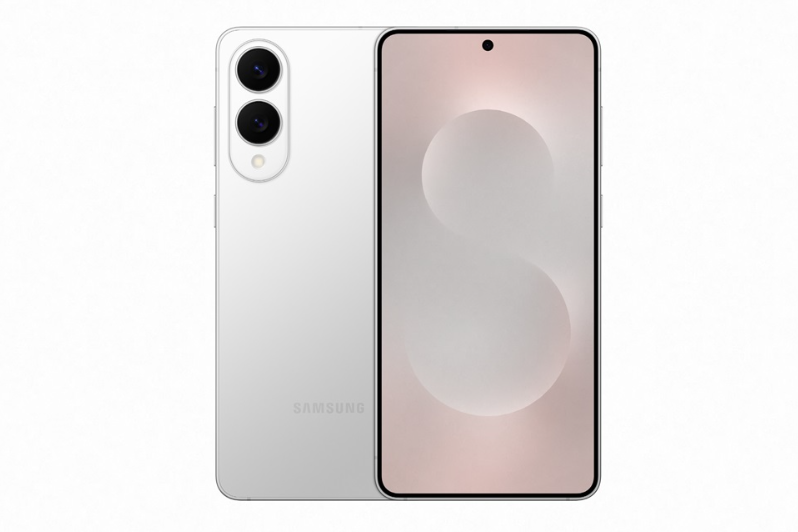
Samsung’s Galaxy S22 Ultra has been spotted on Geekbench running One UI 8, based on Android 16, signaling rapid development for the next major OS update. With a beta program launching this month and a stable release expected by September 2025, it’s the final big update for the S22 series.
Samsung is pushing One UI 8, built on Android 16, to its Galaxy lineup with a surprising pace, as confirmed by a Geekbench listing of the Galaxy S22 Ultra running the new firmware, per @tarunvats33 on X. The 2022 flagship, launched with Android 12, is nearing the end of its four-year major update cycle, making One UI 8 its last significant OS refresh. Early firmware tests on newer devices like the Galaxy S25 and Z Fold 6 show One UI 8 is currently a lightweight update, focusing on minor UI tweaks like smoother animations and an updated Quick Share.
The One UI 8 beta, set to kick off in May 2025, will likely include the S22, S22+, and S22 Ultra, alongside flagships like the S23 and S24 series. Google’s timeline points to a stable release between June and September, with the Galaxy Z Fold 7 and Flip 7 debuting it in July. However, the feature list remains short—includes a refined DeX mode and Secure Folder enhancements, leaving some fans hoping Samsung adds more during the beta.
For the S22 series, One UI 8 brings Android 16’s private space API for that Secure Folder enhancement and minor Galaxy AI updates. The S22 Ultra’s 108MP camera still shines, but its 4-year-old 5,000mAh battery may lean on Android 16’s efficiency. Will Samsung beef up One UI 8’s sparse offerings, or is this a quiet farewell for the S22? The beta will reveal more.
Here’s a list of devices that have received or will receive One UI 7 update but won’t be upgraded to One UI 8.
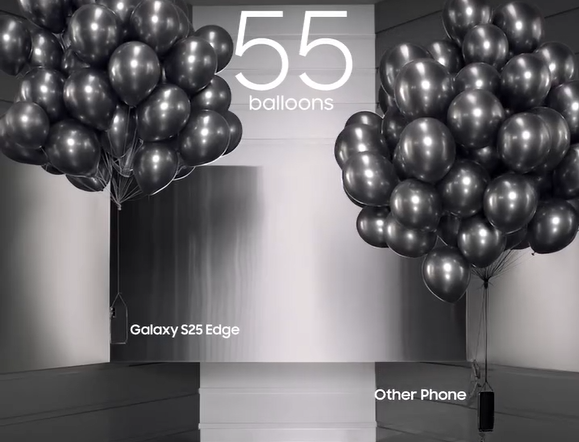
Samsung’s Galaxy S25 Edge was promoted via an Instagram ad that subtly mocked the heavier iPhone 16 Pro. Showcasing the Edge’s featherlight 163g design, Samsung’s playful jab hints at a thinness race, with Apple’s rumored iPhone 17 Air looming.
Samsung is no stranger to poking fun at Apple, from its “On the Fence” foldable ads to jabs at missing chargers. The latest Galaxy S25 Edge ad, posted on Instagram (@samsungmobile), pits the 5.8mm-thin Edge against an unnamed “Other Phone”—clearly an iPhone 16 Pro. In the video, both phones dangle from helium balloons; as balloons pop, the 163g S25 Edge floats while the 199g iPhone 16 Pro crashes, highlighting the Edge’s size-to-weight edge over the iPhone 16 Pro’s. Despite both using titanium frames, the S25 Edge’s 36g lighter build and slim profile—only 1g heavier than the 6.2-inch S25—set it apart.
Launched with a Snapdragon 8 Elite and 200MP camera for $1,099, Samsung claims the Edge will “accelerate innovation” toward thinner phones. Galaxy fans note its IP68 rating and Gorilla Armor 2, though some, like @TheGalox_, question its 3,900mAh battery versus the iPhone’s 4,000mAh.
Apple’s response may come with the iPhone 17 Air, rumored for a sub-6mm profile in September 2025. With iOS 19’s AI-powered battery optimizations and the new A19 chip, it could challenge the Edge’s crown for slimness and battery life.
Samsung’s ad, while fun, risks a comeback if Apple’s Air lands lighter. For now, the S25 Edge’s May 23 Korea/China and May 30 global rollout aims to set a slimness standard. Will Samsung’s jab spark a thin-phone revolution among other Android OEMs, or will Apple flip the script? The rivalry is heating up.
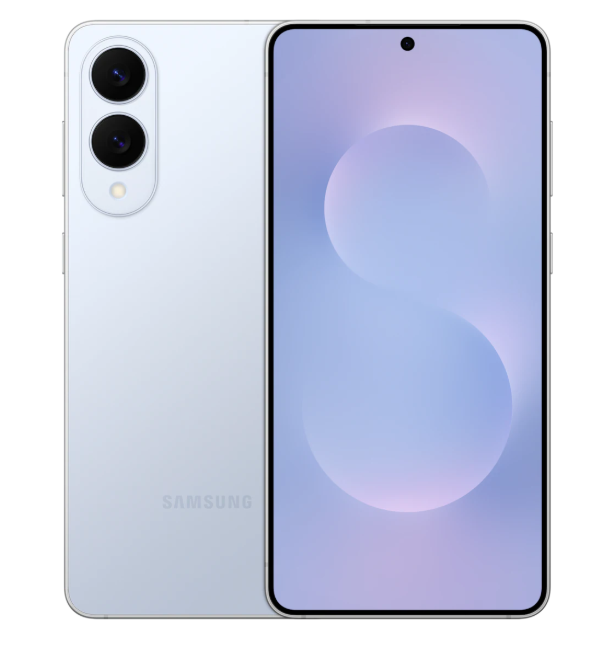
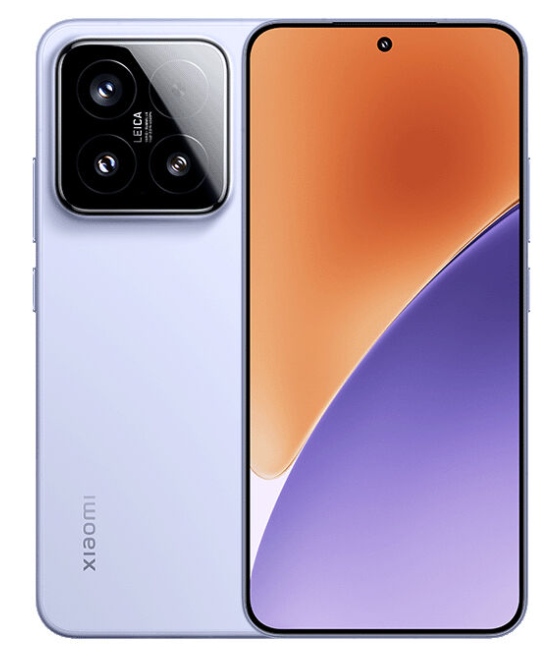
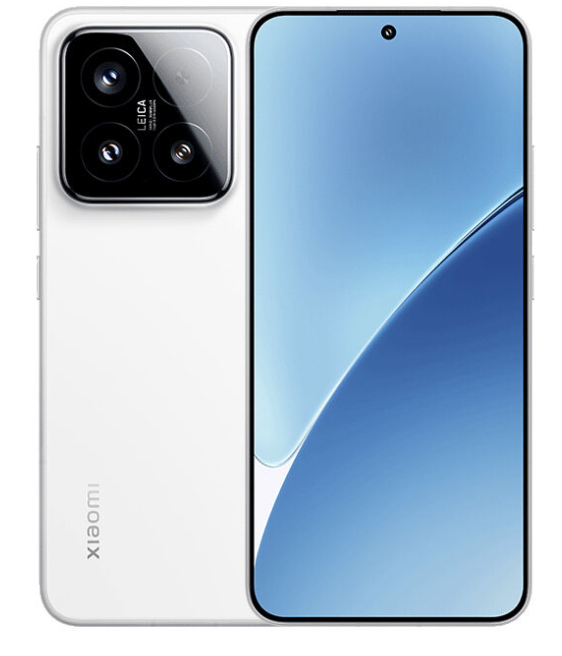
Galaxy S25 Edge and Xiaomi 15 represent two flagship phones from major rivals, each pushing boundaries in design, performance, and camera technology. As users increasingly demand more from their smartphones, whether in power efficiency, imaging, or multimedia, the comparison between these two becomes essential. Understanding their differences helps identify which device better aligns with modern user expectations.
Build and Feel: Galaxy S25 Edge uses a premium titanium frame with Gorilla Glass Ceramic 2 on the front, offering a more durable yet lightweight body. The Xiaomi 15, while well-built with an aluminum alloy frame and Shield Glass, feels slightly bulkier and heavier. The S25 Edge’s ultra-slim profile and minimalist approach make it stand out for users who prefer sleek, modern devices. Both are IP68-rated, but the S25 Edge’s build feels more refined due to its ultra-thin design and premium materials.
Display Quality: Samsung offers a larger 6.7-inch LTPO AMOLED 2X panel with QHD+ resolution (1440p), resulting in sharper visuals at ~513 ppi. Xiaomi counters with a smaller 6.36-inch LTPO AMOLED, peaking at 3200 nits brightness and Dolby Vision support. While Xiaomi’s screen offers excellent HDR brightness and Dolby Vision, the Galaxy S25 Edge edges ahead in resolution and immersive display size.
Verdict: Galaxy S25 Edge has a more premium feel due to its slim titanium body and sharper QHD+ display. While the Xiaomi 15 excels in brightness and color depth, the S25 Edge provides a better overall combination of ergonomics and screen quality.
2. Specifications
Xiaomi 15
Performance: Both phones feature the Snapdragon 8 Elite (3 nm) chipset, but the Xiaomi 15 uses an octa-core setup with more balanced high-performance cores (2x Phoenix L + 6x Phoenix M), potentially leading to slightly better sustained performance. Samsung’s 7-core design focuses more on peak performance but may throttle under long loads. Both use the Adreno 830 GPU and UFS 4.0 storage, ensuring high-end gaming and multitasking. Xiaomi also offers configurations of up to 1TB and 16GB RAM, providing more flexibility for power users.
Battery and Charging: Xiaomi 15 takes a clear lead here. It features a much larger 5240–5400 mAh battery depending on region, compared to the Galaxy S25 Edge’s 3900 mAh. Charging is also faster on Xiaomi with 90W wired, 50W wireless, and 10W reverse wireless, versus Samsung’s modest 25W wired charging. Xiaomi clearly targets power users who want longer battery life and quicker top-ups.
Verdict: Xiaomi 15 wins in battery life, charging speed, and RAM/storage versatility. While both phones perform similarly in raw power, Xiaomi’s efficiency and faster charging give it the edge for long-term usability.
3. Camera
Xiaomi 15
Main and Secondary Lenses: Galaxy S25 Edge features a 200 MP wide sensor and 12 MP ultrawide, delivering sharp images with good dynamic range. However, Xiaomi 15 offers a more versatile triple setup: a 50 MP wide sensor with a large 1/1.31″ sensor, a 50 MP telephoto with 2.6x optical zoom, and a 50 MP ultrawide with 115° field of view. The Leica optics, color spectrum sensor, and advanced HDR/Dolby Vision video capabilities enhance Xiaomi’s imaging potential significantly. Xiaomi is better suited for creative users who need flexibility across different photography modes.
Selfie Camera: Samsung uses a 12 MP selfie shooter, which performs decently for casual use. Xiaomi, however, integrates a 32 MP front camera capable of 4K at 60fps with HDR10+, making it ideal for vloggers or video calls in high quality. The edge goes to Xiaomi for both resolution and video quality on the front camera.
Verdict: Xiaomi 15 has a superior camera system overall, with triple rear sensors offering more photographic versatility and a better front camera for high-res content creation. The Galaxy S25 Edge relies heavily on its 200 MP main sensor but lacks optical zoom and variety.
4. Pricing
Galaxy S25 Edge
Galaxy S25 Edge is priced at approximately $1000, while the Xiaomi 15 starts at $1200 for higher RAM/storage configurations. Samsung provides better value for users focused on design, software, and QHD+ display at a lower price. Xiaomi, though more expensive, offers better cameras, longer battery life, and faster charging.
The price difference is justified by Xiaomi’s extra features, but the S25 Edge is a more cost-effective premium option.
5. Conclusion
Galaxy S25 Edge
Galaxy S25 Edge stands out with its ultra-slim titanium design, high-resolution display, and One UI 7 integration with Samsung DeX and UWB support. It is ideal for professionals and users who prioritize elegance, portability, and software stability. On the other hand, Xiaomi 15 includes unique features like Leica-enhanced cameras, DisplayPort output, IR blaster, Dolby Vision video recording, and high-end charging capabilities, targeting power users and content creators.
Verdict: Choose the Galaxy S25 Edge if you want a sleek, premium phone with a sharper display at a lower price. Go for the Xiaomi 15 if you value battery life, camera versatility, and multimedia performance and are willing to pay more for those extras. Both are excellent but tailored for different types of users.
Sennheiser Momentum Sport earbuds are now on sale with a 43% discount via Amazon. It is now retailing for the exciting price of $190, plugined from $330. Sennheiser’s quality, and comfort for the audio products alike headphones and earphones is world renowned. Sennheisher Momentum Sports follows the same design and performance metric, and brings in premium listening experience.
Thanks to the splendid Amazon deal, that these are now reailing with discount of $140 via Amazon. It’s quite difficult to remember in the past whether we received such a great deal on the headphones ever or not.
Sennheiser Momentum Sport Earbuds Features and Specifications
It is designed to keep you listening to your favourite track or podcast on the go, whether you’re running, cycling or doing any other physical activity. The grip, while ensuring comfort is extraordinary, and helps to enjoy anything you listening worry free. The Sennhesiser Momentum Sport wireless earbuds can actively track your heart rate and body temperature apart from providing some excellent music.
Sennhesier offers enriched premium sound that offers excellent mids, and lows while maintaining the right high ends. At the price of $190 it is worth every dim spent. It is the best earbuds out there for the sport enthusiasts and audiophiles at the given discount price. Sennheiser Momentum Sport Earbuds can offers listening experience for up to a couple of hours, and while the case can charge the pair for total four times.
Further, the earbuds come with a charging cradle, and a gray fabric with a weave.
It could be a time-limited discount and the interested folks should hurry to grab the best deal. Otherwise, it may go out of stock or the discount may fade away.
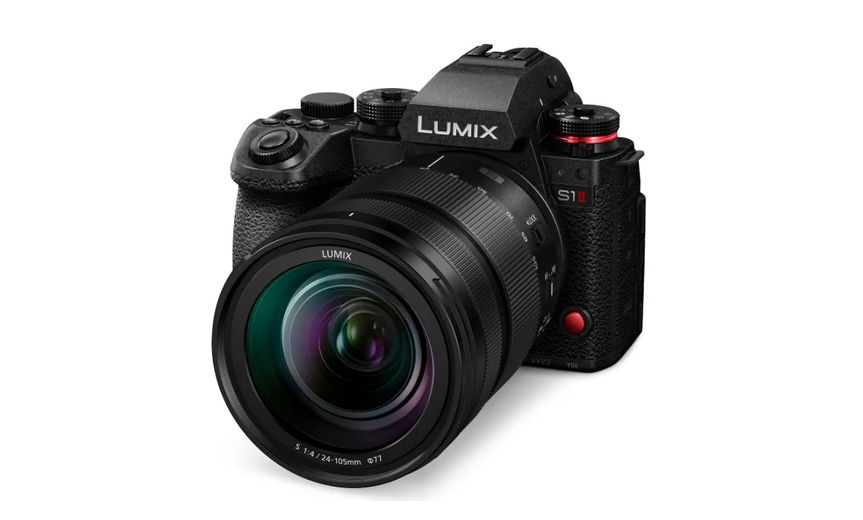
Panasonic has added two new full-frame cameras to its LUMIX S Series: the LUMIX S1II and S1IIE. Alongside the cameras, it has also introduced a new standard zoom lens, the LUMIX S 24–60mm F2.8. All three products will be available from late June at official retail partners.
LUMIX S1II: New Sensor, High-Speed Video, and Wide Dynamic Range
Panasonic LUMIX S1II
The LUMIX S1II features a 24.1MP full-frame partially stacked CMOS sensor combined with the latest Venus Engine. This setup enables fast data processing and supports video formats like 4K 120p, 5.8K 60p, and 5.1K 60p. It also delivers up to 15 stops of dynamic range in V-Log at frame rates below 30p.
For still photography, the camera offers burst shooting at up to 70 frames per second using SH and SH PRE modes. It also supports 10 fps with a mechanical shutter in High-Speed Plus mode. The Open Gate function adds more flexibility, now including 5.1K 60p.
LUMIX S1IIE: Same Build, New Sensor, Cinemascope Format
The LUMIX S1IIE uses a 24.2MP sensor based on the one in the LUMIX S5II. It supports 6K 30p in 3:2 Open Gate format and records 14+ stops of dynamic range in V-Log. It introduces a new 2.4:1 Cinemascope format that records up to 60p with no crop. It keeps the same ergonomic design and layout as the S1II and S1RII.
Shared Features: Autofocus, Stabilization, and Workflow Tools
Both cameras feature Phase Hybrid autofocus with improved subject tracking and face, eye, and body detection. A new Urban Sports mode improves tracking for fast movements like skateboarding or breakdancing. In-body image stabilization offers up to 8 stops of correction and includes cropless video stabilization. Both support internal ProRes RAW HQ and Apple ProRes recording on CFexpress Type B cards. ARRI LogC3 is available with a software upgrade.
They also come with a 5.76 million-dot EVF, a 1.84 million-dot tilt and free-angle touchscreen, dual card slots (SD and CFexpress Type B), and are rated to work at temperatures down to -10°C. Software support includes Capture One, Frame.io, LUMIX Lab, and LUMIX Flow for editing and project management. Future updates will add HEIF format support, waveform monitor, vectorscope, wireless mirroring, and other tools.
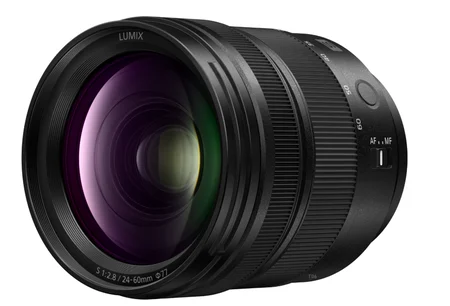
LUMIX S 24–60mm F2.8 Lens: Bright, Lightweight, and Video-Ready
Panasonic LUMIX S 24 60mm F2 8 lens
The new LUMIX S 24–60mm F2.8 lens offers a constant wide aperture across its zoom range. It is compact and lightweight, weighing only 544 grams. The lens supports a minimum focusing distance of 19 cm and a maximum magnification of 0.3x, making it suitable for both close-ups and portraits.
It features a Dual Phase Linear Motor and a new optical encoder for fast and accurate autofocus. It also includes a focus button on the lens barrel and, for the first time in the S series, lets users reassign the focus ring to control aperture or exposure compensation.
For video, it reduces focus breathing and enables smooth aperture transitions with micro-step control. Manual focus adjustments while zooming are also supported.
All three products will be available starting late June.
For more daily updates, please visit our News Section.
It’s easy to overlook Vivo in a global smartphone conversation still dominated by Apple, Samsung, and Google. But if you’ve been paying attention to the market this year, it’s hard not to notice the momentum building behind the Chinese brand.
The company now has a streamlined smartphone portfolio designed to compete at every tier. And it seems to be paying off.
In China, Vivo led the smartphone market with a 17% share in 2024. In India, Vivo’s share in the premium smartphone segment (above ₹30,000) increased from 2% in 2018 to 19% in 2024, thanks to the V and X series. At this pace, it might just be the smartphone brand to beat in 2025. Let’s see what we think might have worked for Vivo.
Vivo has made its brand architecture easily distinguishable to users. The Y-series is the company’s budget territory, the V-series serves the mid-range, while the X-series is home to the brand’s flagship phones.
Then there’s also the sub-brand iQOO. It initially debuted as a brand for gaming and performance enthusiasts. But in 2025, iQOO has evolved into a performance-first alternative to the main Vivo lineup.
The brand offers phones like the iQOO 13 with the Snapdragon 8 Elite at noticeably lower prices than comparably specced models from Samsung or OnePlus. While the iQOO branding still feels slightly redundant (especially outside of China and India), it no longer seems like a marketing afterthought.
The simplification of Vivo’s lineup hasn’t been perfect, but it’s noticeably better. And in a smartphone market where brand identity gets diluted fast, that kind of streamlining matters.
2. Camera Hardware That’s Not Just About Numbers
The smartphone camera war is no longer just about megapixels. In 2025, it’s about sensor size, optical image stabilization, periscope telephoto capabilities, and computational tuning.
And Vivo is one of the few companies doubling down on custom sensors and solutions in a meaningful way. The Vivo X200 Ultra, for example, includes a 200MP telephoto lens, which is the first APO-grade telephoto setup in a mobile. It has a six-element design with improved clarity and 5.0-level OIS, which delivers 38% better light performance and 41% more stable results.
Vivo has also been one of the few brands that’s actively collaborating with a camera brand, Zeiss, in a way that goes beyond branding. Vivo’s X-series phones offer Zeiss T* coating, portrait lens simulations, and optical calibration tools that make a visible difference in their camera outputs.
3. Performance and Silicon Gambits
Another point worth paying attention to is Vivo’s ongoing commitment to performance tuning. iQOO devices in particular, have been among the earliest to adopt Snapdragon’s latest silicon. The iQOO 13 series was among the first to ship with the Snapdragon 8 Elite and rumors says the iQOO 14 might also be among the firsts to get 8 Elite 2.
Meanwhile, Vivo’s X200 and X200 Pro models have gone all-in on MediaTek’s Dimensity 9400, and they’ve delivered respectable thermal and battery performance. This makes Vivo one of the few companies executing dual-chip strategies without sacrificing optimization.
The bigger story is Vivo’s in-house V-series chips. The most recent V3+ ISP handles post-processing tasks like offloading imaging work, speeds up processing times, and enables better thermal control when using complex camera features.
The company also unveiled the new VS1 chip in the X200 Ultra. This is Vivo’s first AI ISP (image signal processor) with 80 TOPS of computing power and industry-leading energy efficiency (16 TOPS/W). It’s built to handle everything from real-time bokeh rendering to HDR processing and complex multi-frame image stacking.
4. Pricing and Market Strategy
Vivo isn’t undercutting the competition the way Xiaomi did in the mid-2010s, but it’s pricing phones more aggressively than Samsung, especially in Asia and Eastern Europe. The iQOO 13 launched in India at a lower price than any Galaxy S24 variant and still offered better RAM, charging speed, and display refresh rate.
More interesting is how Vivo is treating regions like Indonesia, the Middle East, and parts of South America. Rather than flooding the market with rebranded low-end models, Vivo is launching consistent devices that don’t stray too far from the mainline spec sheet. That’s earned the brand a more stable retail reputation in areas where other Chinese manufacturers fluctuate wildly.
5. Ecosystem Play Without Overpromising
Vivo hasn’t gone all-in on ecosystem lock-in. There’s no Vivo Watch that you need to pair to get full functionality. Vivo tablets like the Pad 3 and the newly launched Pad 3 Pro are focused on media and productivity without pretending to be lifestyle anchors.
This lack of ecosystem pressure might be an advantage for users. While Apple and Samsung continue to tie smartwatches, earbuds, and tablets into walled gardens, Vivo seems content to offer accessory support without making it a core part of the smartphone proposition. It’s an approach that keeps the entry barrier low and doesn’t force users into product decisions based on compatibility.
6. The Quiet Climb
None of Vivo’s 2025 success is built on radical change. The company hasn’t reinvented the smartphone. It hasn’t introduced foldables that actually matter in global markets, and it hasn’t tried to make a big play in AI-generated content the way Google has. But it’s winning in areas that matter more to real-world users—performance, cameras, pricing, and consistency.
For more daily updates, please visit our News Section.
Stay ahead in tech! Join our Telegram community and sign up for our daily newsletter of top stories!
MediaTek has launched the Dimensity 9400e, a new flagship chipset powering upcoming smartphones like the OnePlus Ace5 Racing Edition and Realme GT 7, set to debut in May 2025. As a refined version of the 9300+, it boasts enhanced Wi-Fi, Bluetooth 6.0, and AI capabilities, targeting gamers and power users.
Announced today (May 14, 2025), the MediaTek Dimensity 9400e joins the flagship Dimensity family, sitting below the 9400 and 9400+ but offering near-identical power with slight tweaks. Built on TSMC’s third-generation 4nm process, it retains the All Big Core CPU setup: one 3.4GHz Cortex-X4, three 2.85GHz Cortex-X4, and four 2.0GHz Cortex-A720 cores, paired with 8MB L3 and 10MB SLC cache. The 12-core Immortalis-G720 MC12 GPU supports hardware ray-tracing, ideal for immersive gaming.
While memory support drops to 8533MHz LPDDR5X from 9300+’s 9600MHz, the 9400e shines in connectivity, offering 7.3Gbps Wi-Fi (up from 6.5Gbps) and Bluetooth 6.0 with a 5km range within line of sight. It also supports UFS 4.0 storage and the NeuroPilot SDK, enabling on-device AI for large language and vision models like DeepSeek-R1-Distill.
Gaming gets a boost with MediaTek’s HyperEngine and Adaptive Gaming Technology, plus a new Frame Rate Converter slashing power use by 40%. Scoring over 2.45 million on AnTuTu, the 9400e powers the Realme GT 7 (launching May 27 globally) and OnePlus Ace5 Racing Edition, both touting 120FPS gaming.
Will the 9400e’s AI and gaming features challenge Snapdragon’s dominance, or is it just an incremental step from the 9300+? While the numbers are big and impressive, they sometimes overpromise. We’re looking forward to testing the phone ourselves to see how much of the hype translates into real-world performance. And for those intrigued by the numbers, here’s more information about the OnePlus Ace5 Racing Edition and the Realme GT 7.
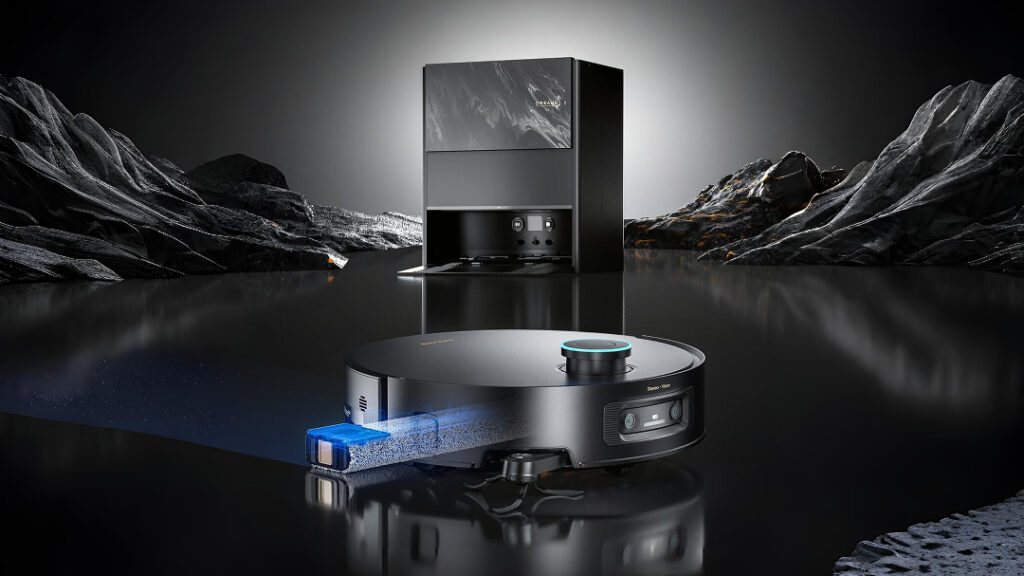
Dreame has launched the X50 Pro Tracked Edition robot vacuum cleaner in China, introducing a bold new cleaning system that replaces the standard roller brush with a tread-based mechanism. Now listed on JD.com, the X50 Pro starts at 5,999 yuan (approximately $830) for the water tank version, while the fully automated variant with water supply and drainage is priced at 6,599 yuan (approximately $916).
Dreame X50 Pro Specifications
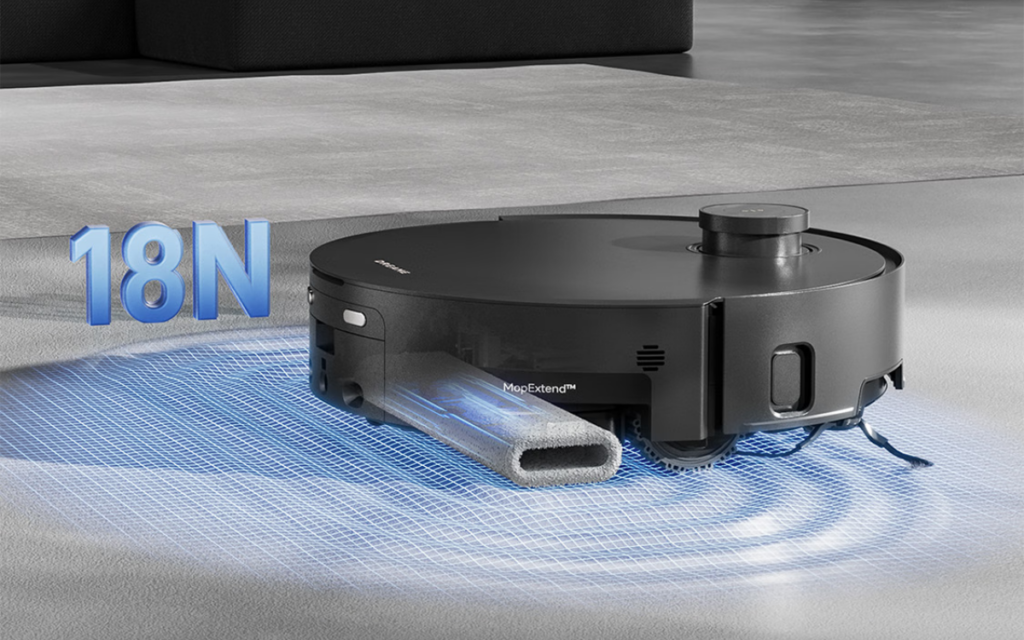
The X50 Pro features a unique tread system that delivers significantly higher cleaning performance compared to traditional rollers. It offers a 13,150mm² ground contact area and applies 18N of downward pressure, enabling it to scrub off stubborn dirt with greater force.
Dreame claims this setup improves cleaning power by up to 30 times. It also supports what the company calls “tracked hot water mopping,” combining constant 45°C water circulation with detergent and real-time mop cleaning via 24 precision nozzles.
The vacuum comes with a dual-tank design, equipping a 1.5L clean water tank and a 2.35L dirty water tank for uninterrupted mopping sessions. The mop is continuously cleaned and reused throughout the cycle, keeping floors streak-free. The system also supports a 32-level adjustable water flow and claims a 99% removal rate for greasy stains.
Dreame’s latest robot introduces its first high-temperature self-cleaning dock, capable of using 100°C water to sterilize the mop and kill up to 99.99% of bacteria and viruses. Post-cleaning, the system activates a 50°C drying cycle to fully dry both the mop and the 3.2L dust bag, preventing odors and mildew.
Object recognition is handled by a dual RGB camera system powered by AI, which can identify over 280 types of items, including cables, socks, pet waste, and even transparent objects. For navigation, a panoramic LiDAR module is mounted on a retractable arm, enabling the robot to lower its height and move smoothly under low furniture while maintaining accurate mapping of the environment.
The robot also supports a pet-specific cleaning mode that boosts suction and water output in areas frequented by animals. Additionally, it features an active anti-tangle comb, corner cleaning, post-shower water absorption, and the ability to differentiate between wet and dry waste. The robot runs on a 6,400mAh battery with 30% faster charging and supports voice control, multi-floor mapping, zone cleaning, and integration with Apple Watch and smart home platforms.
In related news, we reviewed the Eureka J15 Pro Ultra robot vacuum, highlighting its powerful suction, intelligent controls, and smooth home integration. Meanwhile, Xiaomi recently introduced the Mijia M40S robot vacuum-mop, featuring 23,000Pa suction, a liftable LiDAR system, and HyperOS support.
For more daily updates, please visit ourNews Section.
Apple is developing an AI-driven battery-saving feature for iOS 19, set to launch in 2025, that optimizes power usage based on individual habits. Trained on iPhone user data, it aims to extend battery life, especially for the ultra-thin iPhone 17 Air, tackling its rumored smaller battery.
Apple iPhone 17 Air
As Apple gears up for iOS 19, expected in September 2025 alongside the iPhone 17 series, a new AI-powered battery optimization feature is in the works, per Bloomberg. Unlike Android’s battery-saving tools, which rely on static rules, Apple’s new system uses AI to learn from a vast pool of iPhone usage data, adapting to individual patterns like app usage and time of day. The AI dynamically manages background apps to cut power consumption, offering a personalized approach.
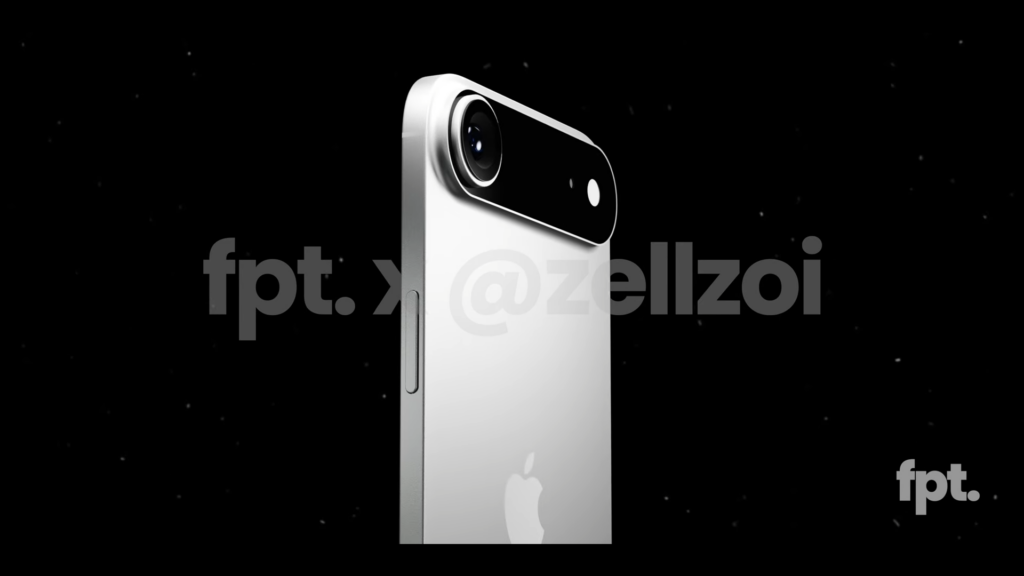
The feature’s timing aligns with rumors of the iPhone 17 Air, a 6.6-inch ultra-slim model potentially replacing the Plus variant, something Samsung might also be planning for its S26 lineup. At under 6mm thickness, the iPhone 17 Air’s battery could be even smaller than the iPhone 16’s 3,561mAh unit. Apple reportedly aims to offset this with AI-powered smarter resource management.
If everything goes right, Apple could still ensure all-day battery life with the upcoming Air model despite the compact cell. Apple’s AI for battery optimization is reportedly being trained on real-world data, giving it a head start. For those interested, here’s our roundup of the iPhone 17 Air.
This new concept of smarter resource management appears promising. While Samsung hasn’t explicitly mentioned using AI for this purpose, the Galaxy S25 Ultra performs impressively in battery drain tests—holding its own against Chinese flagships with 6,000mAh+ batteries—without any noticeable performance drop throughout the test.
This battery optimization feature in iOS 19, likely powered by Apple Intelligence, could set a new standard, especially for the A19 chip’s efficiency in the iPhone 17 lineup. Fans on X speculate it’ll debut with watchOS 12 and macOS 16 too. Will this AI-driven approach keep the iPhone 17 Air powered up, or is Apple banking too much on software to fix hardware limits? We’re excited to find out.
Hot on the heels of the Galaxy S25 Edge launch on May 13, a rumor from South Korea suggests Samsung might axe the Galaxy S26+ in favor of a Galaxy S26 Edge for its 2026 lineup. With the Plus model underperforming, the “razor-thin” Edge could take its place alongside the S26 and S26 Ultra, mirroring Apple’s strategy with the iPhone 17 series.
Sources cited by The Elec claim Samsung’s Galaxy S26 series, codenamed “NPA,” is in early development with three models: S26, S26 Edge, and S26 Ultra. Notably absent is the S26+, which has been the weakest seller in Samsung’s flagship lineup, with only 6.7 million of the 37.7 million targeted S25 series units, compared to 13.6 million for the S25 and 17.4 million for the S25 Ultra.
The S26 Edge, expected to retain the ultra-slim design, could replace the S26+ to capitalize on the trend toward thinner phones, a strategy echoed by Apple’s rumored iPhone 17 Air (roundup). However, the decision hinges on the S25 Edge’s sales, which carry a $1,099 price tag but compromise on battery (3,900mAh) and telephoto cameras. More details about the Galaxy S25 Edge here. Confusion over the S25+ and Edge coexistence suggests a refined S26 Edge with better battery tech, like silicon-carbon, could address critiques.
Samsung is developing four OLED panels for the S26 series, leaving room for a last-minute S26+ revival if the Edge underperforms. Set for a January 2026 launch, the S26 Edge might feature a 6.7-inch AMOLED and a Snapdragon 8 Elite 2.
The S25 Edge packs a 200MP main camera alongside a 12MP ultrawide, but lacks a telephoto lens. The S25 Plus, at least, includes a 10MP 3x telephoto—albeit with a tiny 1/3.94″ sensor that’s been there since the Galaxy S22 series—adding a bit more versatility to its camera system. Will the next Edge model include something similar to bridge the gap and replace the Plus model? Let’s keep an eye out as we get closer to the launch.
Xiaomi has started rolling out its new TV F Pro 2026 series in select European countries, including the Netherlands, Spain, and France. The lineup is available in six sizes—32″, 43″, 50″, 55″, 65″, and 75″—and brings key upgrades over the standard TV F 2026, while retaining a bezel-less metal design and Fire TV integration.
The TV F Pro models feature 4K QLED displays with 94% DCI-P3 color gamut coverage and support for HDR10+, HLG, and Filmmaker Mode. MEMC motion smoothing is standard across all units. A Game Boost mode boosts refresh rate to 120Hz at 1080p via HDMI for smoother gameplay. The panel runs natively at 60Hz with 4K resolution (3840 × 2160).
Built-in Fire TV gives users access to streaming apps like Netflix, Disney+, Prime Video, and live TV channels. Voice control is supported via Alexa through the 360° Bluetooth remote. Users can also control smart home devices directly from the TV.
The TVs come equipped with dual 10W speakers and support Dolby Audio, DTS:X, and DTS Virtual:X for immersive audio. Additional features include Apple AirPlay and Miracast compatibility, low blue light mode, DC dimming, and a quad-core A55 CPU with 2GB RAM and 32GB internal storage.
The 55-inch variant, for example, measures 1226×76×711 mm without the base and weighs 9.1 kg. It includes 3 HDMI ports (with eARC and ALLM), one USB 2.0 port, Ethernet, optical audio out, and CI+ slot support (market-dependent).
Prices in Europe are currently discounted:
43” – €299 (RRP €379)
50” – €399 (RRP €469)
55” – €449 (RRP €569)
65” – €599 (RRP €769)
75” – €799 (RRP €999)
Xiaomi has not yet confirmed availability for the 32-inch model or a UK release date.
Samsung Galaxy S25 and Galaxy S25 Edge target different segments of the flagship market. One is focused on practicality and value, the other on premium aesthetics and design innovation. With both sharing powerful internals and launching in the same generation, choosing between them isn’t just about specs, it’s about prioritizing the features that matter most. This comparison highlights where the real differences lie.
Build and Feel: Galaxy S25 Edge features a premium titanium frame and Gorilla Glass Ceramic 2 protection, offering a tougher and more luxurious feel than the aluminum-framed Galaxy S25, which uses Victus 2 glass. The Edge’s curved design also gives it a more futuristic and sleek profile compared to the flatter, more traditional Galaxy S25. Titanium also adds a touch of durability and status, better aligning the S25 Edge with ultra-premium devices. The S25, while slightly more compact and comfortable for one-handed use, doesn’t match the Edge’s high-end materials.
Verdict: Galaxy S25 Edge wins for its use of titanium and ceramic glass, giving it a more flagship-worthy design and feel.
Display Quality: Galaxy S25 Edge uses a 6.7-inch LTPO AMOLED 2X panel with a higher resolution (1440p) and a slightly better screen-to-body ratio than the 6.2-inch 1080p display on the S25. While both panels offer 120Hz refresh rates and HDR10+, the S25 boasts a peak brightness of 2600 nits, brighter than the Edge. However, the Edge delivers superior sharpness with 513 PPI versus the S25’s 416 PPI. The curved edges also enhance the immersive experience, although some may find them more prone to accidental touches.
Verdict: Galaxy S25 Edge takes the edge here with its sharper QHD+ display and immersive design, despite the S25 offering higher brightness.
Please Note: When you buy something using the links in our articles, we may earn a small commission at no cost to you.
2. Specifications
Galaxy S25 Edge
Performance: Both phones share the Snapdragon 8 Elite chipset and the Adreno 830 GPU, but the S25 Edge has a 7-core CPU setup (2+5) while the S25 uses a more traditional 8-core layout (2+6). In real-world performance, differences will be negligible, though the Edge might offer slightly better thermal efficiency due to its unique configuration. RAM and storage are the same across both (up to 512GB and 12GB RAM), but the S25 uses faster UFS 4.0 storage on all models, whereas the Edge’s UFS type is not specified.
Verdict: Galaxy S25 offers marginally better storage tech and a more balanced core setup, making it more optimized for long-term usage.
Battery and Charging: The S25 includes a slightly larger 4000 mAh battery compared to the Edge’s 3900 mAh, and also supports wireless charging and reverse wireless charging, features notably absent on the Edge. Both support 25W wired charging, but the Edge charges faster to 55% in 30 minutes versus 50% on the S25. Still, the presence of wireless and reverse wireless charging makes the S25 far more versatile in day-to-day convenience.
Verdict: Galaxy S25 is the more practical choice for battery and charging, offering wireless capabilities and a slightly larger battery.
3. Camera
Galaxy S25
Main and Secondary Lenses: Galaxy S25 Edge has a dual-camera system led by a massive 200MP wide sensor, delivering extreme detail. The S25 uses a more versatile triple-camera setup with a 50MP wide, 10MP 3x telephoto, and a 12MP ultrawide. The Edge trades zoom capabilities for resolution, while the S25 offers optical zoom and a wider ultrawide field of view. The S25 also supports 10-bit HDR video and Super Steady modes, which enhance its versatility in both photography and videography.
Verdict: Galaxy S25 offers a better-rounded and more functional camera system despite the Edge’s higher megapixel count.
Selfie Camera: Both phones feature 12MP selfie cameras with similar f/2.2 apertures, but the S25 supports dual-pixel PDAF and HDR10+ for better focus and dynamic range. Video capabilities also differ: the S25 records up to 4K at 60fps, while the Edge’s selfie video specs are unspecified but assumed to be more basic. The S25 delivers more reliable and detailed results for video calls and vlogs.
Verdict: Galaxy S25 delivers superior front camera quality due to PDAF, better dynamic range, and higher video recording capabilities
4. Pricing
Galaxy S25
Galaxy S25 is priced at approximately $799, while the Galaxy S25 Edge comes in at a premium of $1000. The $200 price gap reflects the Edge model’s advanced display, sleeker design with a thinner profile, and higher-resolution main camera. However, the standard S25 still offers powerful performance with the same Snapdragon 8 Elite chipset, solid build quality, and additional camera versatility with a telephoto lens and 3x optical zoom.
Verdict: For most users, the Galaxy S25 offers better overall value by delivering a flagship experience without the high-end luxury markup. The Edge model caters more to those wanting a cutting-edge visual design and multimedia experience, while the S25 balances performance, features, and affordability.
Disclaimer: Prices are approximate and may vary based on country, region, and applicable taxes.
5. Conclusion
Galaxy S25
The Galaxy S25 Edge stands out for its ultra-slim 5.8mm profile, QHD+ curved AMOLED panel with Gorilla Glass Ceramic 2, and a cleaner, minimalist dual-camera setup built for high-resolution imagery. On the other hand, the Galaxy S25 brings practical strengths, wireless charging, reverse wireless support, a more versatile triple camera with telephoto zoom, and a slightly larger battery capacity.
Verdict: For users prioritizing elegance, screen quality, and a futuristic form factor, the Edge justifies its higher price. But for those wanting the best mix of value, versatility, and long-term utility, the standard Galaxy S25 is the more balanced and sensible choice.
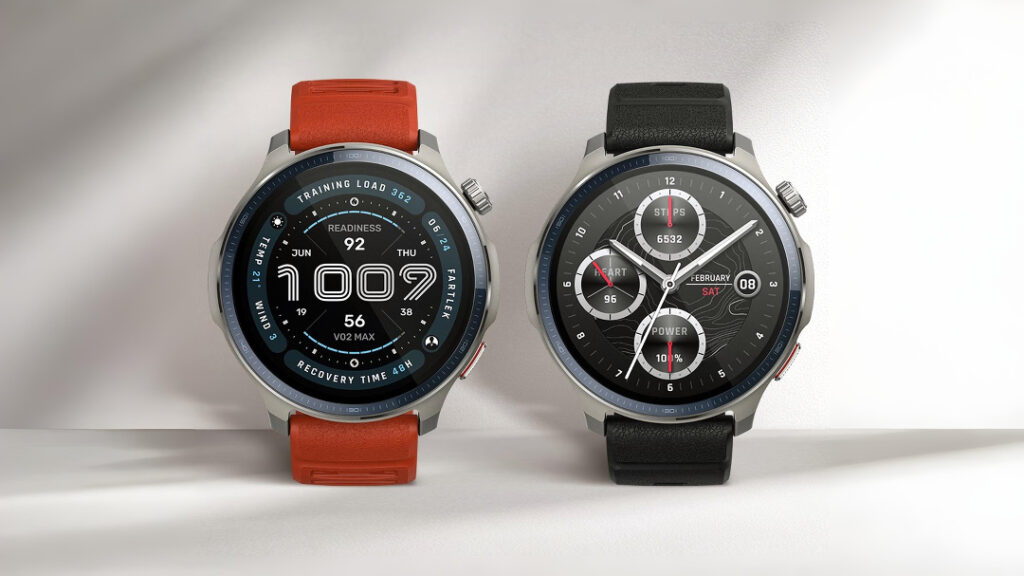
Huami has officially launched the Amazfit Balance 2 in China, targeting both fitness enthusiasts and everyday users. The smartwatch is priced at 1,969 yuan (approximately $272) and is currently available for pre-order on JD.com. It features comprehensive health tracking, a durable build, and support for advanced sport modes, including golf and diving. Sales will begin on May 20.
Amazfit Balance 2 Specifications
The smartwatch features a 1.5-inch AMOLED display with a crisp 480 × 480 resolution, housed under a sapphire crystal cover for added scratch resistance. The circular watch face measures 47mm, and the body weighs only 42 grams, keeping the device light and comfortable for all-day wear. It comes with a silicone strap and a magnetic charging base in the box.
The watch runs on Zepp OS 5, Huami’s latest operating system, which supports third-party app installations and delivers a smoother interface. It equips 32GB of internal storage, allowing users to store music and apps directly on the watch for offline use. It sports Bluetooth 5.2 and Wi-Fi (2.4GHz) for seamless connectivity, along with built-in NFC for transit and door access functionality.
The Amazfit Balance 2 supports real-time heart rate and blood oxygen monitoring using an advanced optical sensor. It also comes with sleep tracking, stress analysis, and fitness metrics like VO₂ Max, recovery time, and training load. It supports automatic recognition of several activities, including outdoor running, swimming, and cycling. It’s rated 10ATM for water resistance, making it suitable for diving.
For accurate location tracking, it features support for five satellite systems: GPS, GLONASS, Galileo, BeiDou, and QZSS. It also includes a built-in microphone and speaker for Bluetooth calling, enabling hands-free communication directly from the wrist.
The Amazfit watch is powered by a 658mAh battery, which promises up to 21 days of usage on a single charge or up to 67 hours in continuous GPS mode.
In related news, Casio has teamed up with Mumbai-based artist Mooze to release a special edition of the G-Shock GA-2100, while Oppo has recently unveiled the Watch X2 Mini featuring a 1.32-inch AMOLED display, Snapdragon W5 chipset, eSIM support, and comprehensive health tracking features.
For more daily updates, please visit ourNews Section.
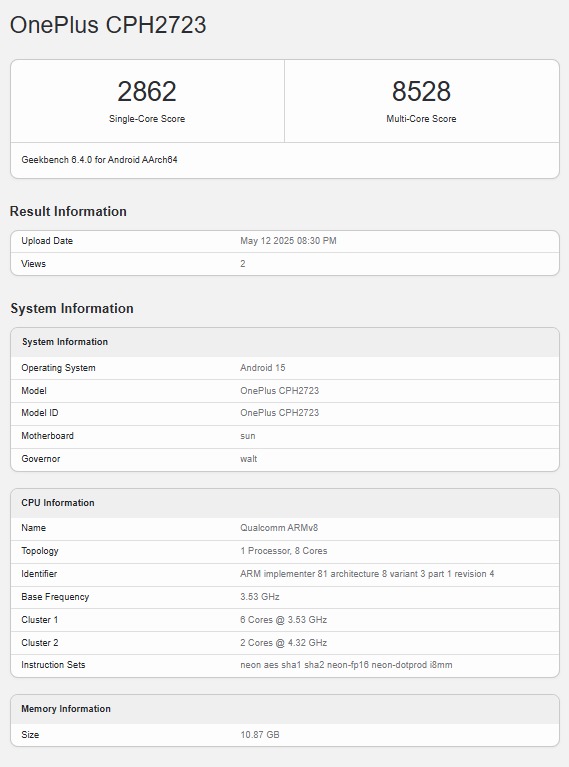
The OnePlus 13s has been spotted on the Geekbench database, confirming key performance specs ahead of its launch in India. Listed under model number CPH2723, the phone scored 2862 in single-core and 8528 in multi-core tests.
The listing confirms that the phone runs on Android 15, likely with OxygenOS 15 on top. It will come with 12GB of RAM and is powered by an octa-core processor clocked at 4.32GHz, paired with the Adreno 830 GPU. As OnePlus has confirmed, the device will feature the new Snapdragon 8 Elite chipset.
OnePlus 13s
OnePlus has also revealed that the 13s will be the first phone outside China to include the new “Plus Key,” replacing the usual Alert Slider. The phone is expected to have a compact design with improved performance. The display is rumored to measure 6.32 inches.
Another highlight is the lifetime display warranty that OnePlus is offering on the 13s. This will cover green line issues on the display, a problem some users have faced in previous models. The phone will be available in two color options—Black and Pink.
The official launch date for India is still not announced, but the “Coming Soon” teaser suggests it will arrive shortly. The OnePlus 13s is expected to launch in India as a rebranded version of the OnePlus 13T, which was released in China in April 2025.
For more daily updates, please visit our News Section.
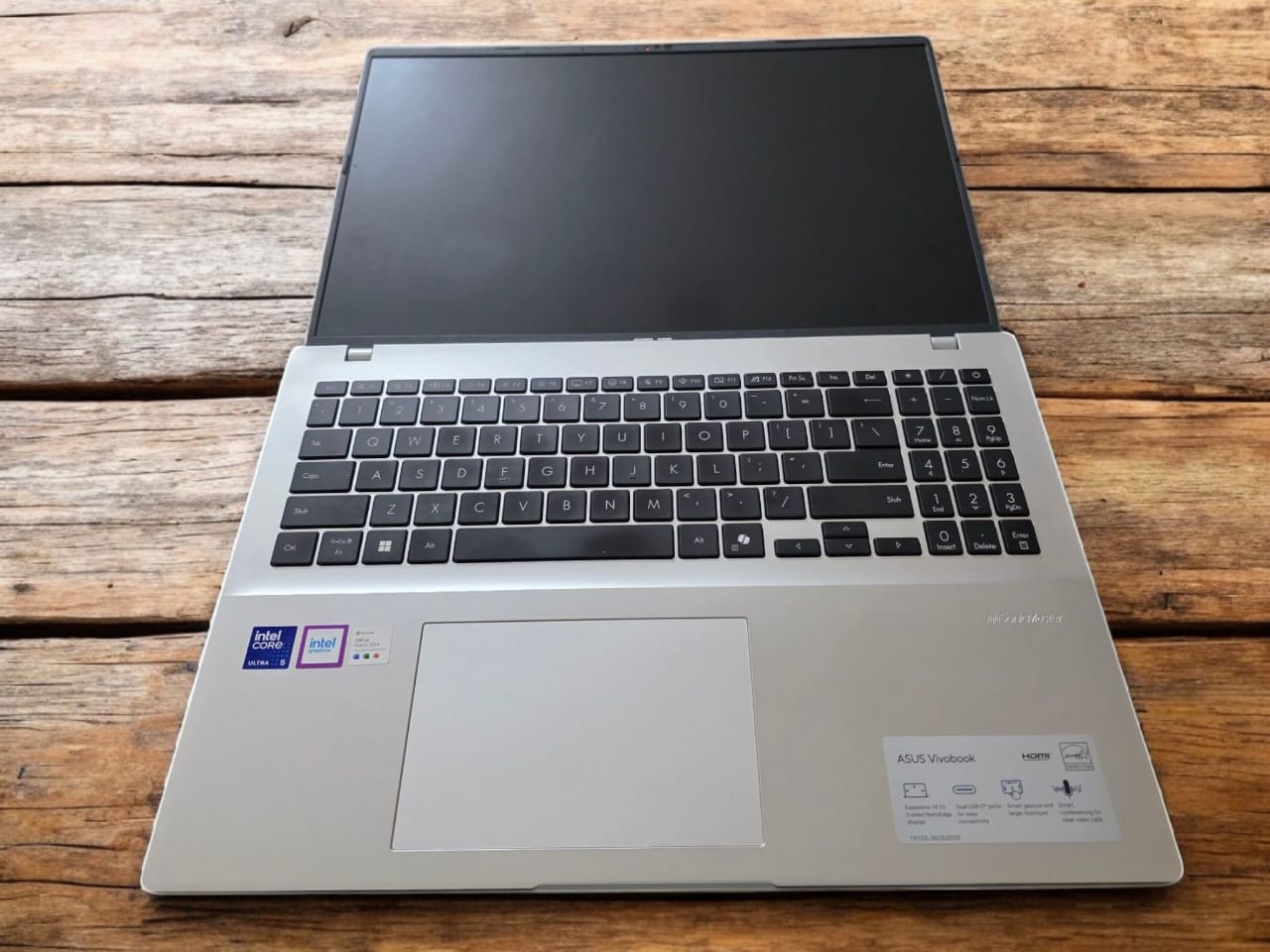
The Asus Vivobook 16 is designed to cater to productivity-focused users, offering a large 16-inch screen, a modern Intel Core Ultra 5 processor, and a sleek, practical design. With its 16:10 aspect ratio, USB-C charging, and solid build quality, it strikes a balance between performance and portability. While it’s not perfect, it aims to provide a reliable and versatile option for everyday tasks. Let’s dive into its performance and features in more detail.
5Verdict
Asus Vivobook 16 (2025)
The Asus Vivobook 16 is a solid option for those seeking a productivity-oriented laptop with a large screen, robust performance, and a well-built design. While its display falls short in terms of color accuracy and brightness, and the battery life isn’t extraordinary, it still delivers good all-round performance for daily tasks. The full-size keyboard with good key travel adds to the comfortable typing experience, making it a great choice for users who need a reliable device for office work and casual multitasking. Overall, it offers a good balance of features at its price point.
Asus Vivobook 16 (2025) price in India
The Asus Vivobook 16 (2025) is currently priced at Rs 75,990 (~$890) on Asus India’s website. It comes in two shades: Cool Silver and Quiet Blue.
For more daily updates, please visit our News Section.
Infinix will unveil the Infinix GT 30 Pro gaming phone later this month for the global market. To offer an enhanced gaming experience, the device will arrive with major design and control-focused upgrades. Continue reading ahead to learn new details about the Infinix GT 30 Pro.
Infinix GT 30 Pro: Built-in shoulder triggers with cyber lighting
Infinix GT 30 Pro: All-Day Full FPS System
A highlight of the GT 30 Pro is its new shoulder trigger system. Instead of relying on third-party accessories, Infinix has reportedly embedded capacitive touch triggers directly into the phone’s frame. These controls are designed to offer fast and accurate response times during gameplay, ideal for competitive scenarios like FPS or MOBA titles.
GT 30 Pro: Mechanical Light Waves and GT Trigger
Users will be able to remap in-game actions such as aiming, firing, or jumping to these triggers for more advanced control setups. Some sources also mention macro functionality, allowing players to perform complex in-game combos with a single press. Interestingly, these triggers may serve dual functions outside gaming—like launching specific apps, changing music tracks, or snapping photos.
On the design front, the GT 30 Pro is said to carry a cyber-mechanical rear with a refined finish and a smarter lighting system. Known as the Mechanical Light Waves, this lighting feature is expected to support over 20 effects and respond to 14 different real-world interactions—such as incoming calls, game victories, charging status, and music playback.
GT 30 Pro: Mechanical Light Waves and GT Trigger
Infinix could offer three distinct colour themes, ranging from understated designs with soft tones to full-blown RGB layouts aimed at dedicated gamers. These elements point to a refreshed GT experience that blends form with function, tailored especially for gaming enthusiasts.
As far as launch is concerned, the Infinix GT 30 Pro will debut this month globally. Alongside it, the brand will also unveil a slew of GT Verse products, such as the Infinix XPad GT tablet, GT Buds earbuds, ZClip earbuds, and GT power bank.
For more daily updates, please visit our News Section.
After a significantly delayed start to the One UI 7 rollout, Samsung has been able to speed things up. As a result, the update has already reached dozens of Galaxy devices within a month. The rollout should be completed by next month, but the brand is already into the development of its next iteration — One UI 8. Several recent reports indicate that Samsung might begin the One UI 8 beta program as early as this month.
Samsung will obviously not bring the One UI 8 update, based on Android 16, to every Galaxy phone and tablet. We’ve prepared a list of devices below that are not eligible for this major upgrade. Review it to find out if you’re in for the One UI 8 party or if you’ll need a smartphone upgrade to continue enjoying the latest features and enhancements.
Samsung One UI 8 ineligible devices list
Samsung hasn’t announced which devices will or will not get the One UI 8 update, so we had to rely on the existing software update policy and a bit of guesswork in preparing this list.
[Note: we have only included those Galaxy devices on the list that have received or will receive One UI 7 update but won’t be upgraded to One UI 8.]
Galaxy S series
Galaxy S21
Galaxy S21+
Galaxy S21 Ultra
Galaxy Z series
Galaxy Z Fold 3
Galaxy Z Flip 3
Galaxy Tab series
Galaxy Tab S6 Lite (2022)
Galaxy Tab Active 4 Pro
Galaxy A series
Galaxy A14
Galaxy A14 5G
Galaxy M series
Galaxy M33
Galaxy M14
Galaxy M14 5G
Galaxy F series
Galaxy F14 5G
Please note that this list is based on the existing software update policy. These Galaxy phones and tablets are unlikely to get One UI 8 update unless Samsung wants to surprise any of these with an extra OS release.
Samsung hasn’t spilled out anything about One UI 8 yet. However, we already have a good idea of what to expect. As always, there’ll be a beta program for a few Galaxy devices, which could begin later this month, as claimed by Sammobile. Samsung, however, isn’t leading the charge this time. Several other brands, including Xiaomi, OnePlus, Oppo, Vivo, and Realme, have already released Android 16 beta builds for their devices (see the complete list here). So Samsung might be slightly late to the party when it comes to beta availability.
As for the stable version of One UI 8, it’s expected to debut with the Galaxy Z Fold 7 and Galaxy Z Flip 7 in the second half of 2025. Google is planning to release the stable version of Android 16 by June, so it’s likely that One UI 8 will follow shortly after — possibly in July or August.
Samsung seems to be moving faster this year. One UI 8 could arrive much earlier than One UI 7 did, and all this because of two main reasons: Google’s earlier-than-usual Android 16 release, and Samsung’s ongoing effort to speed up its software rollout.
It’s 2025, and the way we think about smartphone batteries is changing fast. Between the rising demand for AI-powered apps, always-on displays, and power-hungry silicon, even the most efficient devices can burn through a full charge before dinner. But battery tech is also evolving. We’re seeing early adoption of silicon-carbon batteries, smarter power management software, and faster charging systems that are gentler on longevity. Still, if you’re not paying attention to how you use your phone, all of that innovation won’t save you from a midday battery panic.
So how do you actually get the most out of your phone’s battery today, whether you’re using a flagship Galaxy or a mid-tier Redmi? Turns out, a few tweaks can go a long way.
Kill the Culprits: Background Apps & Rogue Syncing
Your phone’s worst enemies are often the apps you don’t even see. Social media, fitness trackers, and even your keyboard can be silently draining your battery in the background. Dig into your battery usage stats (found under Settings > Battery) and identify what’s hogging the most juice. Disable background activity for anything non-essential.
Also, take a hard look at auto-syncing services like Gmail, calendar apps, and cloud storage. If your phone buzzes every five minutes with a new update, chances are it’s also sipping power in the background. Reduce sync frequency or turn it off entirely for less critical apps.
Take Control of Your Screen
Your phone’s display is almost always the biggest battery drain. In fact, for devices with AMOLED panels, screen usage can account for more than 50% of total battery consumption. Use adaptive brightness, not manual, so the system can optimize based on real-time lighting conditions. And while 120Hz refresh rates look great, locking it at 60Hz when you’re not gaming or scrolling through high-frame content can extend your usage by hours.
Dark mode is more than an aesthetic. On OLED screens, it actually saves energy by turning off individual pixels. Using a true black wallpaper and enabling system-wide dark themes can squeeze out that extra bit of efficiency.
Embrace Smarter Charging Habits
Most smartphones now feature some sort of battery health protection, whether it’s “Optimized Charging” on iPhones or “Battery Protection” on Samsung and Pixel devices. These systems delay charging past 80–85% until you actually need a full battery, which helps preserve long-term battery health. Make sure it’s turned on.
If your phone supports it, wireless charging or reverse wireless power sharing is convenient, but slightly less efficient. Stick with wired when you’re home or at your desk. And unless you’re in a rush, avoid constant fast charging. It’s great for emergencies, but slower charging generates less heat and causes less wear over time.
AI Features vs. Power Efficiency
With more AI features running locally, like voice assistants, real-time transcription, or object recognition, phones today juggle between performance and endurance. Many new Android skins now include “AI battery” or “adaptive battery” modes that learn how you use apps and limit power to those you rarely touch. Don’t ignore those toggles. They’re working behind the scenes to stretch your battery without you lifting a finger.
What the Future Holds
The shift toward silicon-carbon battery chemistry promises 10–15% higher energy density and better tolerance for fast charging cycles. Since 2024, brands like Xiaomi, Honor, and Vivo have already implemented these batteries in their flagship devices, and in 2025, they’re beginning to show up in mid-range phones too. This isn’t a far-off upgrade anymore, it’s rapidly becoming the standard across key Android segments.
Until then, thoughtful habits are still your best weapon. Being intentional with settings, managing what runs in the background, and charging smartly will do more for your battery life than any spec sheet ever will.
In a significant step towards building a smarter wearable ecosystem, Samsung is preparing to integrate Google’s Gemini AI into its Galaxy Watch and Galaxy Buds 3 lineup. The announcement highlights Samsung’s aim to unify AI features across its devices, offering more intelligent and context-aware experiences.
Hands-free help now comes to your wrist
With Gemini, the Galaxy Watch users can stay productive without breaking stride
The Gemini update will bring natural voice command support to Galaxy Watches, helping users stay productive while on the go. For instance, while at the gym, you can tell Gemini to remember a locker number or ask it to summarize an email even when your hands are busy.
The assistant is designed to work across apps, delivering quick, relevant responses directly on your watch. This hands-free approach could make routine tasks like note-taking or reading emails faster and more convenient without breaking your rhythm. Samsung is yet to declare the exact Galaxy Watch models that will be treated with the Gemini AI upgrade.
The experience becomes even more streamlined when the Galaxy Watch is paired with the Buds 3. A simple voice prompt or a pinch-and-hold gesture on the earbuds is enough to activate Gemini, which can then interact with your smartphone.
This proves helpful for situations like checking the weather before a run or responding to messages without reaching for your phone. The combination of AI and gesture support points to a future where wearables can handle more of your daily tasks intuitively, making the Galaxy ecosystem more connected and intelligent.
For more daily updates, please visit our News Section.
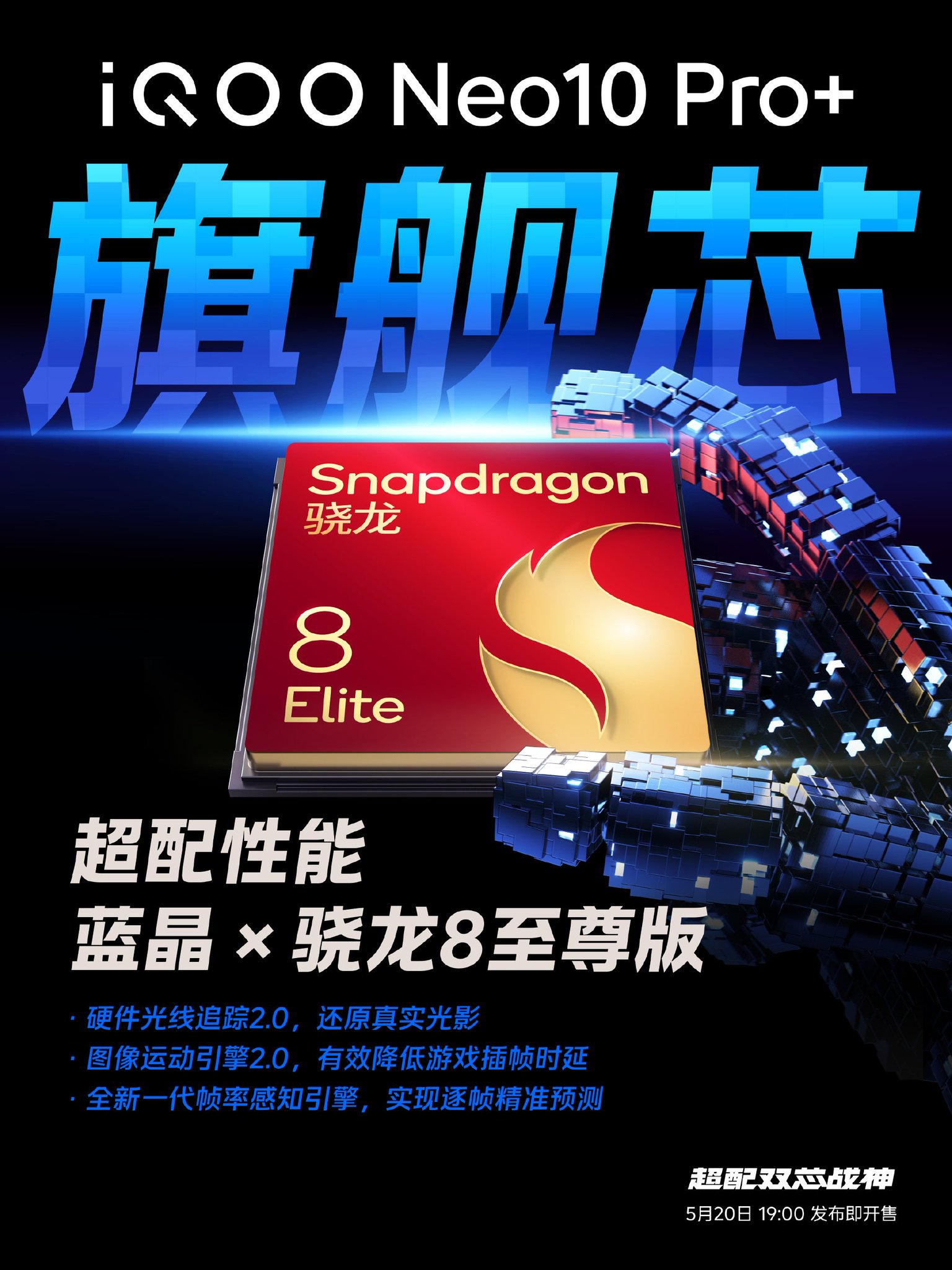
On May 20, iQOO will hold a major launch event in China to unveil the iQOO Neo 10 Pro+. The same event will also see the unveiling of a slew of other products, including the iQOO Pad 5 series and iQOO Watch 5. So far, recent teasers of the Neo 10 Pro+ have confirmed that it will feature a flat OLED panel offering a 2K resolution and will be powered by the Snapdragon 8 Elite chip. Today, the brand released the following posters to confirm more details about the upcoming flagship phone.
iQOO Neo 10 Pro+ key details confirmed
The above posters confirm that the Neo 10 Pro+ is powered by a custom-tuned version of the Snapdragon 8 Elite chip, enhanced through iQOO’s Blue Crystal calibration. The chip is paired with LPDDR5X Ultra RAM (9600 Mbps) and UFS 4.1 storage, setting the stage for high-speed performance.
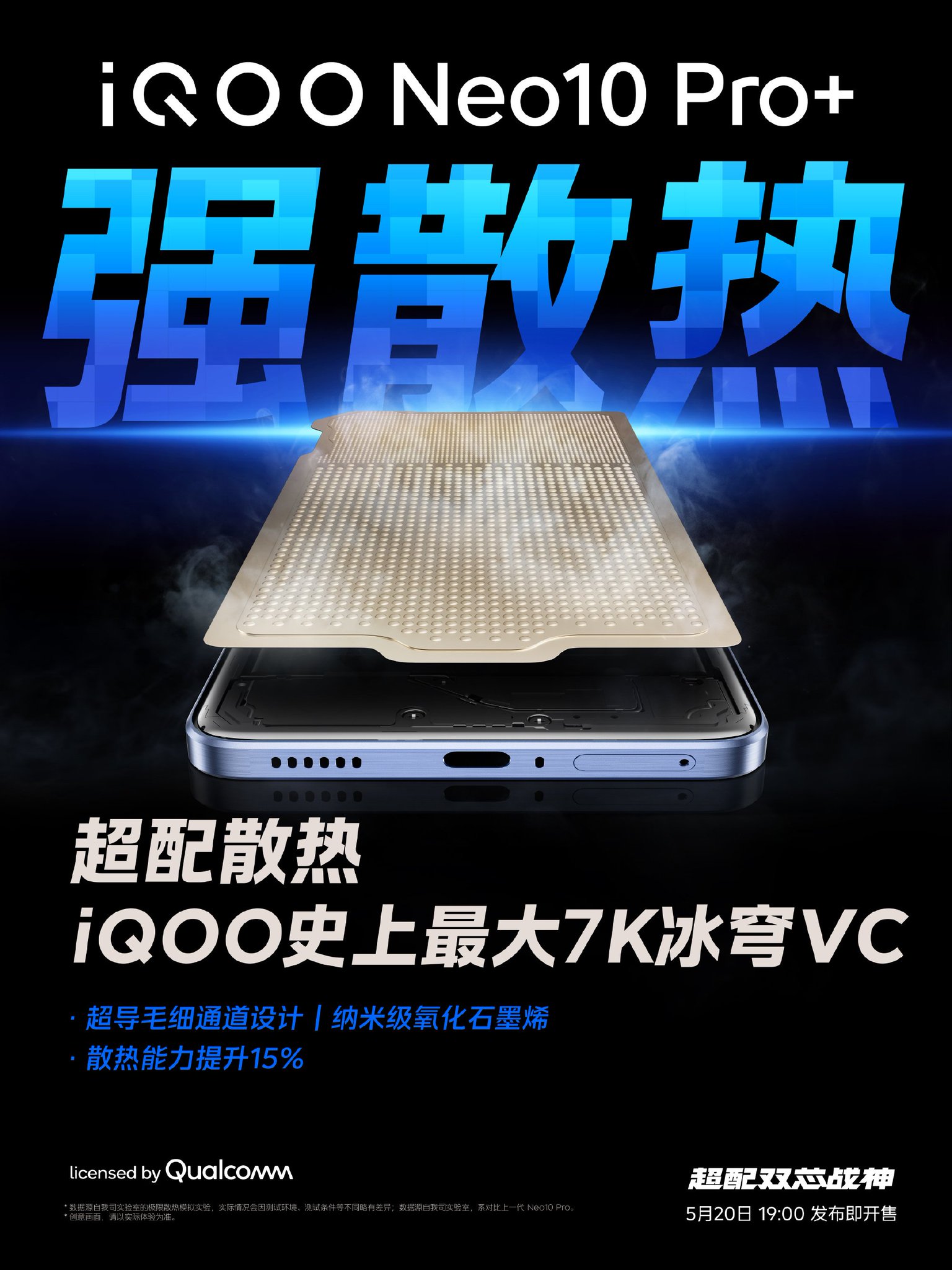
A recent report revealed that the iQOO Neo 10 Pro+ scored 3.31 million points on AnTuTu benchmarks. Today, the brand officially confirmed the device’s AnTuTu score as 3,311,557. The Neo 10 Pro+ also features iQOO’s largest 7K “Ice Vault” vapor chamber to date, which reportedly improves cooling efficiency by 15%.
iQOO Neo 10 Pro+ specifications (rumored)
iQOO Neo 10 Pro+
According to reports, the iQOO Neo 10 Pro+ will house a 6.82-inch flat LTPO screen with ultra-thin 1.5mm bezels for an immersive visual experience. The screen is expected to support a 2K resolution, a 120Hz refresh rate, and an ultrasonic in-screen fingerprint sensor.
iQOO has reportedly integrated a new frame rate perception engine, optimized for low-frame stutter scenarios, and partnered with Douyin to enhance gaming livestreams. Other highlights include a new energy-saving technology, a smart capture feature that records the last 30 seconds of gameplay, and support for advanced gaming enhancements like super-resolution and super-frame in titles such as PUBG Mobile.
The Neo 10 Pro+ will be equipped with a 7000mAh battery supporting 120W wired fast charging and bypass charging. On the rear, the phone includes a 50-megapixel main sensor with OIS alongside a 50-megapixel ultra-wide lens. It also supports ultrasonic fingerprint scanning.
In terms of design, the iQOO Neo 10 Pro+ is confirmed to arrive in white, black, and Super Pixel (BMW M Motorsport custom edition). Its back is made of glass for a premium in-hand feel, while the frame uses plastic to maintain a balance between weight and durability. The device is expected to cost around 3,500 Yuan (~$485) in China.
For more daily updates, please visit our News Section.
We use cookies on our website to give you the most relevant experience by remembering your preferences and repeat visits. By clicking “Accept”, you consent to the use of ALL the cookies.
This website uses cookies to improve your experience while you navigate through the website. Out of these, the cookies that are categorized as necessary are stored on your browser as they are essential for the working of basic functionalities of the website. We also use third-party cookies that help us analyze and understand how you use this website. These cookies will be stored in your browser only with your consent. You also have the option to opt-out of these cookies. But opting out of some of these cookies may affect your browsing experience.
Necessary cookies are absolutely essential for the website to function properly. This category only includes cookies that ensures basic functionalities and security features of the website. These cookies do not store any personal information.
Any cookies that may not be particularly necessary for the website to function and is used specifically to collect user personal data via analytics, ads, other embedded contents are termed as non-necessary cookies. It is mandatory to procure user consent prior to running these cookies on your website.