Casio has released the LTP-B150D-7B in the US, bringing a square-faced, stainless steel analog watch stateside after its initial launch in Japan earlier this month. It is available now on Casio’s US website for $89.95.
There are no smart features, fitness trackers, or Bluetooth connections here. The LTP-B150D-7B is a basic analog watch that focuses entirely on a traditional hardware design. It features a rectangular stainless steel case that measures 31 by 22 millimeters and is just 7.5mm thick.
At that size, it is a relatively compact watch that should sit flat against the wrist without getting caught on long sleeves. It weighs 58 grams, which is standard for a smaller watch paired with a metal bracelet.
The dial is straightforward, using Roman numerals for the hour markers and a standard three-hand setup for the hours, minutes, and seconds. Casio is using mineral glass for the crystal, which is typical for watches in this price range and offers standard scratch resistance. The watch comes with a stainless steel band that uses a basic triple-fold clasp, and Casio says it will fit wrist sizes ranging from 125 to 185 mm.
Inside, the watch runs on a standard quartz movement. It will get about three years of battery life from a single SR626SW coin-cell battery. The timekeeping accuracy is rated at plus or minus 20 seconds per month, which is exactly what you expect from an entry-level quartz mechanism.
Casio also lists the watch as having basic water resistance. It does not have a specific depth rating like 50 or 100 meters, meaning it is fine for washing your hands or getting caught in light rain, but you should not wear it in the shower or take it swimming.
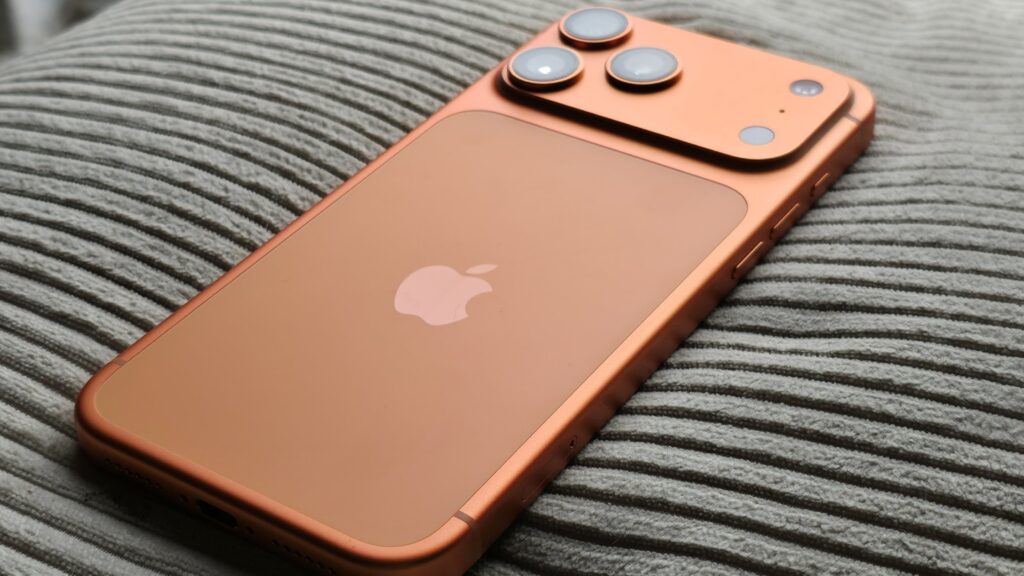
The iPhone 17 series has been the odd one out so far, except for the Japanese market. While Apple quietly raised prices on MacBooks, iPads, and even the Apple TV 4K in late June because memory and storage costs went crazy (thanks, AI data centers), the iPhones somehow kept their original launch prices from September 2025. That might change in just a few hours.
Chinese leaker Fixed Focus Digital, who usually has decent supply-chain intel, is saying Apple could announce a price hike for the iPhone 17 lineup as early as Monday, August 10. They’re also talking about cutting production of the current models by 15–30%. The leaker wasn’t 100% sure on the exact timing or how big the changes would be, but the report is getting attention because it lines up with the broader mess Apple is dealing with right now.
Apple is apparently having a hard time locking down enough RAM for the upcoming iPhone 18 Pro, 18 Pro Max, and that rumored foldable iPhone Ultra expected in September. Scaling back production on the still-popular iPhone 17s would free up some of those scarce parts for the next generation. We’ve already seen similar production cuts earlier this year, first around 15%, then bigger in some cases.
There’s also a strategic angle. Analysts are already floating the idea that the base iPhone 18 Pro could start at $1,399 or higher, a big jump from the 17 Pro’s $1,099. Apple is expected to only launch the pricier Pro models and the Ultra this fall, with a cheaper iPhone 18 pushed to spring 2027. Raising the list prices on the current 17, iPhone Air, and 17 Pro/Max now would help protect margins and maybe make the next jump feel a little less brutal.
As of writing, official Apple Store pricing is still the same as launch day, and you can still find the base iPhone 17 in the $725–$799 range depending on the retailer and config. If Apple does pull the trigger on a mid-cycle increase, it would be pretty unusual for the iPhone line. These kinds of rumors should always be taken with a grain of salt until something official happens, but the combination of known memory shortages and earlier production tweaks makes it feel plausible.
Samsung’s next budget phone is turning out to be a bit of a time machine. Early Geekbench numbers for the Galaxy A18 have popped up, and the mix of parts is pretty wild.
The listing (spotted by Alfaturk) shows the LTE version scoring 744 in single-core and 2,064 in multi-core. It’s running a MediaTek Helio G99, the same chip MediaTek launched back in 2022, with 4GB of RAM and, surprisingly, Android 17 with One UI 9 already on board. It’s also the chip used in the 4G variants of the Galaxy A15, A16, and last year’s A17.
That Helio G99 is a 6nm chip with two Cortex-A76 cores at 2.2 GHz, six Cortex-A55s at 2.0 GHz, and a Mali-G57 MC2 GPU. It’s the bare minimum for a smartphone in 2026. The 4GB of RAM feels even older; phones first started shipping with that amount around 2015. It’s still hanging around though, mostly because memory prices have gone crazy thanks to the AI boom.
The real head-turner is the software. Samsung is testing the A18 with One UI 9, which is still only in beta on the flagship Galaxy S26 series. If the brand follows its usual launch schedule, the device should arrive in late Q3 or Q4. A 5G variant is also expected around the same time and, according to a previous leak, could use a Snapdragon chipset instead of the Exynos 1330 found in the A17 (5G).
Basic stuff like calling, messaging, and a little bit of social media should still be fine, but don’t expect the A18 4G to handle modern apps with a ton of features or heavy graphics without noticeable slowdowns or issues. It will also be interesting to see how much of the
Design, cameras, and exact pricing still aren’t public, but this early benchmark already gives a pretty clear picture of what’s under the hood.
A few days ago, Motorola‘s own beta forum let it slip that an Edge 70 Neo was coming. Now that leak has some visual backup. Mac Observer has published a set of renders showing what the phone looks like.
You get four color options: pink, dark green, light green, and light blue. Each one has a matte finish on the frame. The pink model has a different pattern on the back compared to the other three. Across all four colors, the display curves at the edges, something Motorola has used across the rest of the Edge 70 lineup.
On the back, there’s a triple-camera system, with one sensor marked at 200 megapixels. How it performs is still unknown until Motorola shares more details.
This follows an earlier leak we covered, when a Lenovo forum user identified as a Senior Moto Agent named Kevin posted a call for testers to join the Android 17 beta program for the device. That post confirmed a phone Motorola hadn’t announced yet, since Motorola had not listed the Edge 70 Neo publicly before then.
The Edge 70 Neo would join a lineup that already includes the Edge 70, Edge 70 Fusion, Edge 70 Pro, Edge 70 Pro+, and Edge 70 Max. Neo models in this series have usually been the smaller option. The Edge 60 Neo has a 6.36-inch display, and the Edge 50 Neo before it came with a 6.4-inch screen. If Motorola follows the same pattern, the Edge 70 Neo could land in a similar size range.
Motorola hasn’t given a launch date. Since the beta program is already open and specifically tied to this device, a release could come within the next few weeks. The beta sign-up page pointed to India, so that market may see the phone first, though Motorola hasn’t confirmed a release region.
For more daily updates, please visit ourNews Section.
Citizen has added two new models to its Dress Classic watch lineup in the US: the BJ6572-54X and the BJ6574-59E. These two releases follow the BJ6570-50E, which the company put out last month.
Design Details
Instead of the bulky, oversized designs often seen on modern smartwatches or sports watches, Citizen is sticking to a smaller, rectangular form factor for these releases.
Both of the new watches share the exact same hardware and dimensions. The cases measure 36mm tall by 26.5mm wide, resulting in a slim profile that sits relatively flat against the wrist. They both use a standard three-hand layout with applied Roman numerals on the dial, and they attach to the wrist using a 7-link stainless steel bracelet secured by a push-button fold-over clasp.
The differences between the two models are strictly visual. The BJ6572-54X features a yellow gold-tone finish across the case and bracelet, paired with a dark red sunray dial. Meanwhile, the BJ6574-59E has a two-tone stainless steel finish and a black sunray dial. Neither watch includes a date window or any extra complications, keeping the dial layout minimal.
Inside, both watches are powered by Citizen’s Eco-Drive technology. Eco-Drive is essentially a solar-powered quartz movement. There is a light-catching panel hidden under the dial that absorbs both natural sunlight and indoor artificial light, converting it into energy to charge an internal cell.
For durability, Citizen uses sapphire crystal, which is more scratch-resistant than the mineral glass typically found on entry-level dress watches. They also have a water resistance rating of 50 meters (5 Bar). While a metal dress watch isn’t designed for diving, the 50-meter rating means the internal movement is protected enough to handle rain, hand-washing, or light surface swimming without taking water damage.
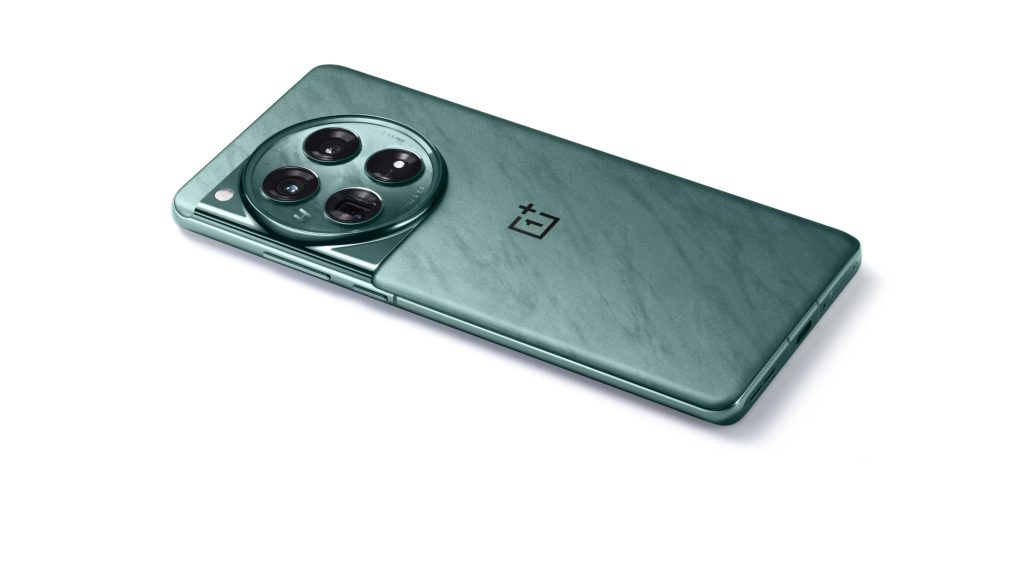
If you picked up a OnePlus 12 back in early 2024, you got a genuinely good phone for the money. Fast charging, a sharp display, solid performance – all without the price tag of a Samsung or an Apple flagship. That was the whole pitch, and for a while, it worked. But two years is a long time in the phone world, and the brand you bought into has changed a lot since then.
OnePlus 12
OnePlus has confirmed it will no longer launch new products in Europe, the US, and Canada, folding its ambitions back into parent company Oppo. Your OnePlus 12 will keep getting software updates and warranty support for now, so nothing will break overnight. But staying loyal to the brand for your next upgrade isn’t really practical anymore, especially if you live outside China.
So where do you go instead? You’ve got good options, and each one solves a different thing your OnePlus 12 didn’t quite nail.
For a wider comparison beyond OnePlus successors, our list of top flagship phones this year rounds up the strongest options.
This is the phone to get if you want everything your OnePlus 12 offered, and then some, without giving up anything along the way. You get a massive, gorgeous display that makes streaming and scrolling feel noticeably more premium, a camera system that covers every focal length you’d realistically want from ultra-wide to long zoom, and a chip built specifically for this phone rather than shared across a dozen brands the way OnePlus’s Snapdragon chips were.
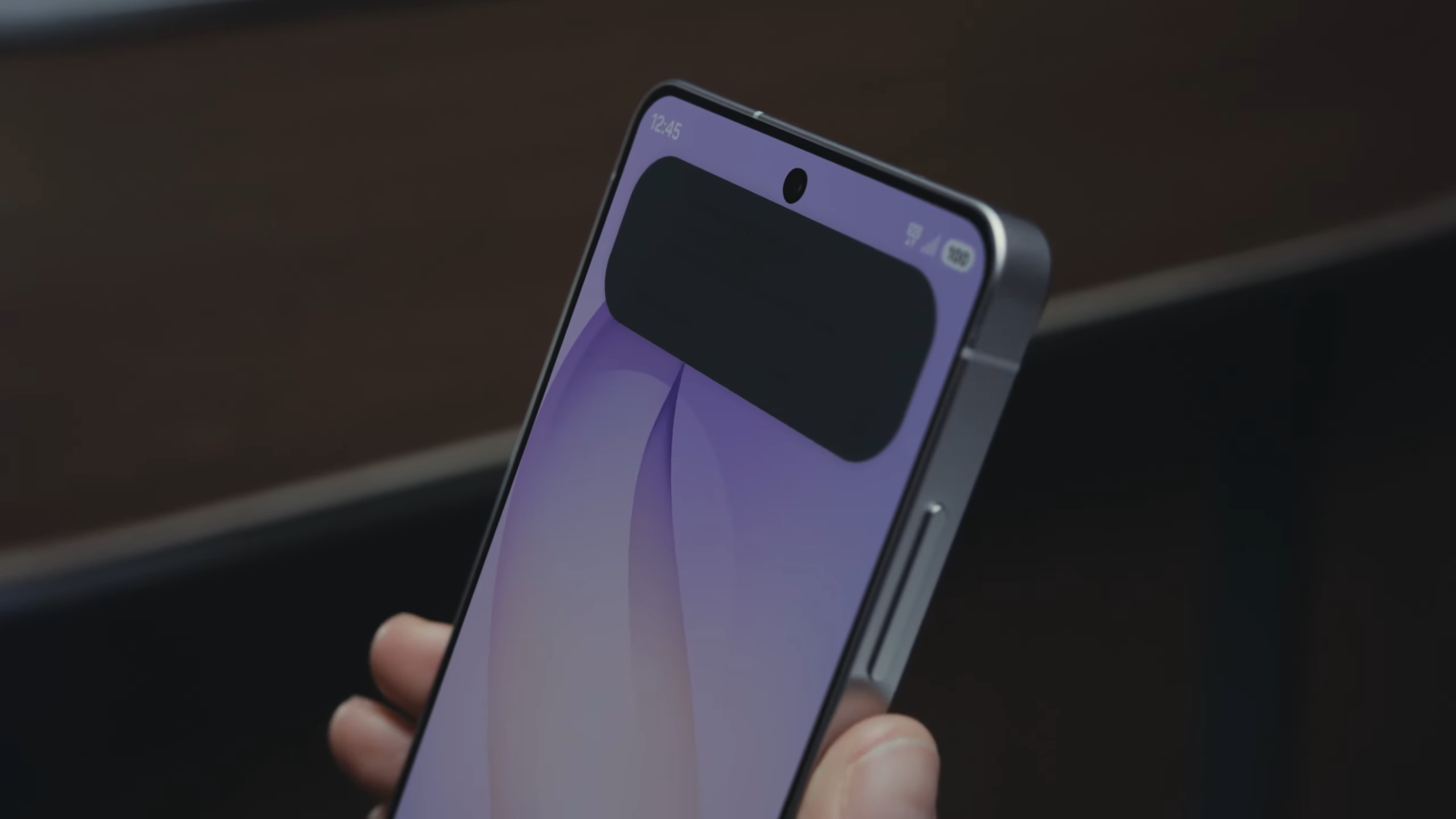
Samsung also added a new Privacy Display feature this generation that can black out your screen from anyone glancing over your shoulder on the train. However, for everything it offers, the asking price is definitely high. If you’re the kind of person who upgrades every few years and wants a phone that won’t leave you wanting more halfway through, this is where that money goes.
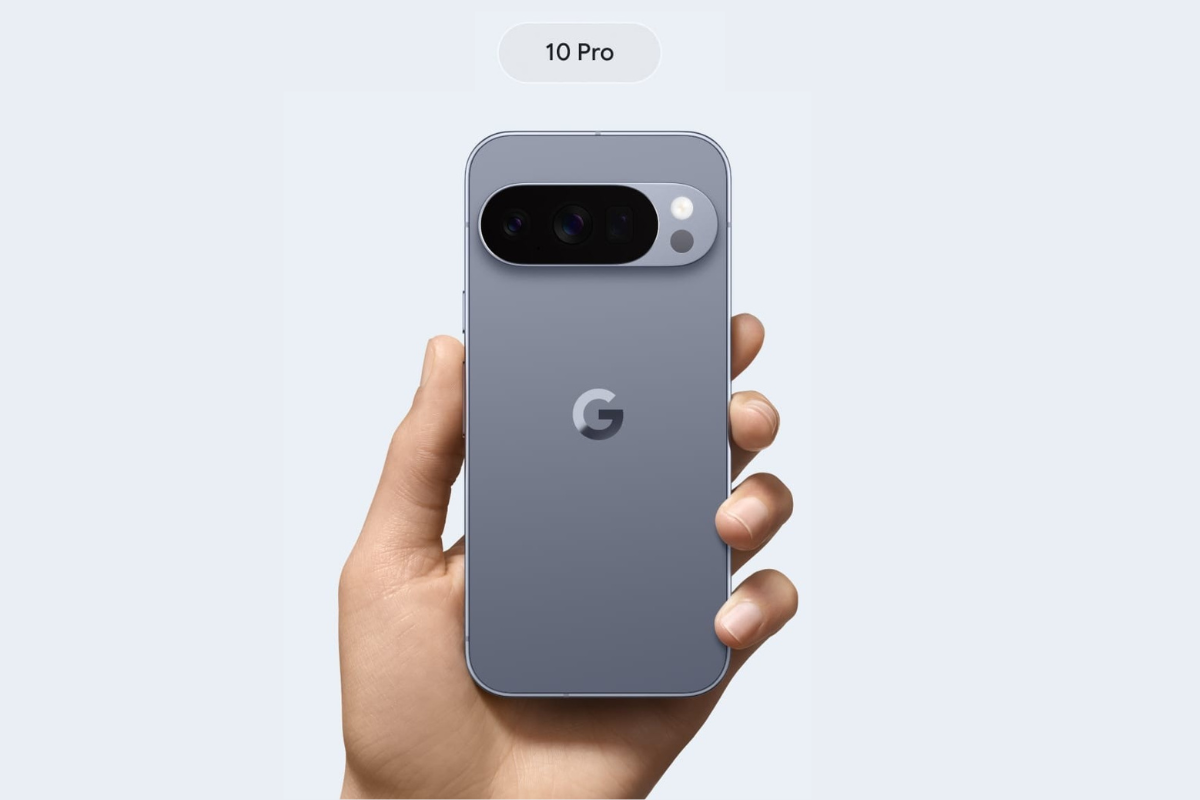
Coming from OnePlus’s OxygenOS, the jump to Google’s own take on Android will feel like a different kind of phone entirely. The Pixel 10 Pro offers more AI than every other Android, including features like call screening, real-time translation, and a camera that adjusts itself based on what you’re pointing at. It’s also the most affordable of the true flagships this year, and Google promises seven years of updates, so you won’t be back here shopping again anytime soon. It’s a compact, comfortable size too, which is a nice change if the OnePlus 12 always felt a little big in the hand.
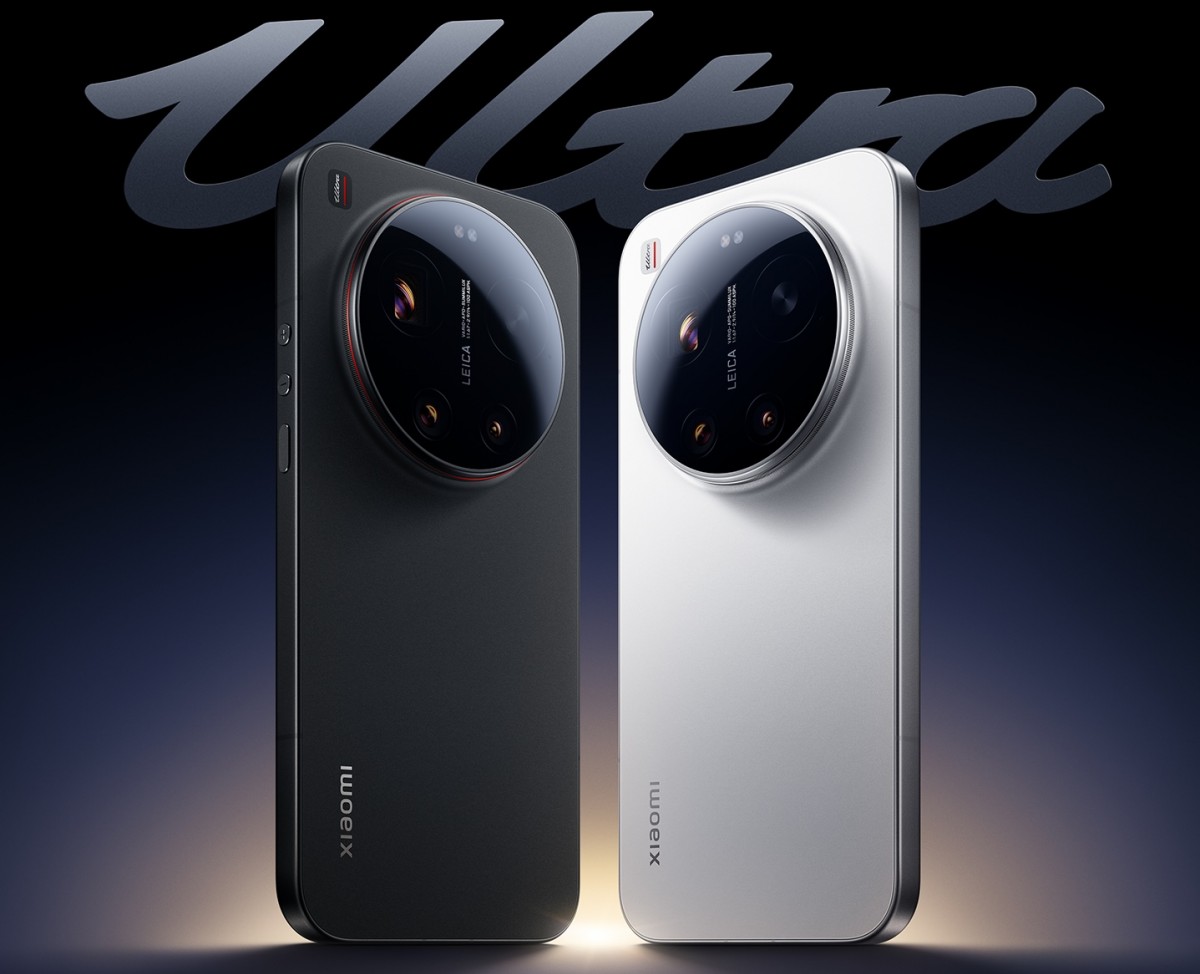
The OnePlus 12’s camera was solid but never class-leading, and if that bugged you, the Xiaomi 17 Ultra fixes it outright. It runs the Leica-tuned system built around a large one-inch main sensor, paired with a 200-megapixel periscope telephoto that handles both close zoom and genuinely long-range shots without falling apart.
It also carries a 6,800mAh battery, the biggest in any Xiaomi flagship yet. However, the device isn’t as widely available as OnePlus used to be, so it’s worth checking import options before you commit.
Now, if you want to switch the entire ecosystem, iPhone 17 is your best bet. Apple’s base iPhone finally has a 120Hz display that used to be locked to the Pro models, along with a faster chip and a better main camera. If you’ve ever been curious about iMessage, AirDrop, or just want a phone that gets predictable, long-term software support without needing to think about it, this is the least painful year to make that switch. You’ll give up some of the customization Android users take for granted, but you’ll gain a level of polish that’s hard to argue with.
Sad to say, the OnePlus era of “flagship specs, budget price” is officially over, at least for buyers outside China and India. If you want to stay in the same lane OnePlus used to occupy, the Pixel 10 Pro gets you closest.
If money isn’t the main concern, the Galaxy S26 Ultra is the safest all-around pick. And if your OnePlus 12 mainly let you down on photos, the Xiaomi 17 Ultra is worth the extra effort to track down.
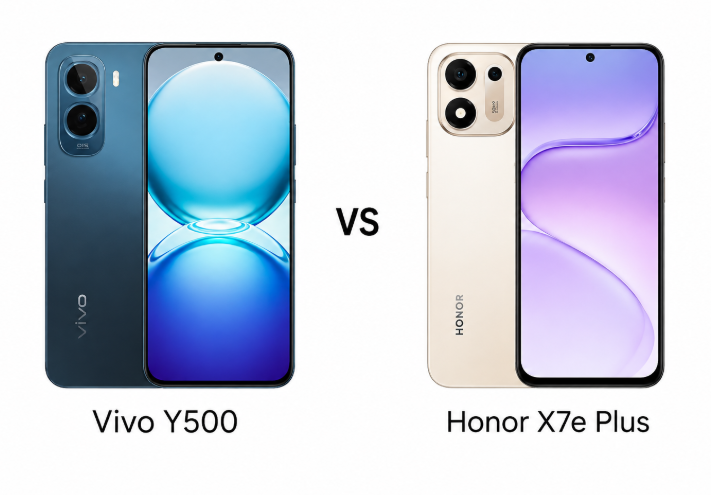
Vivo Y500 and Honor X7e Plus target buyers looking for long battery life, durable designs, and modern Android software without entering the premium price segment. While both devices share an 8,100mAh battery, stereo speakers, and Android 16, they take different approaches in display technology, performance, cameras, and overall user experience. Here’s a detailed comparison to help you decide which smartphone is the better buy.
Major Features:
Category
Vivo Y500
Honor X7e Plus
Winner
Design & Durability
IP68/IP69, MIL-STD-810H
IP68/IP69K, 2.5m drop resistance
Vivo – Better overall durability certification
Display
6.83-inch AMOLED, 120Hz, 1260×2800, HDR
6.87-inch TFT LCD, 120Hz, 720×1592
Vivo – AMOLED with much higher resolution
Performance
Unisoc T7300, UFS 2.2
Snapdragon 4 Gen 4
Honor – Stronger GPU performance
Memory
8GB RAM standard
Starts with 6GB RAM
Vivo – Better base configuration
Rear Camera
50MP + auxiliary
50MP AF + auxiliary
Honor – Autofocus advantage
Selfie Camera
32MP
5MP
Vivo – Far superior selfie quality
Battery
8,100mAh, 44W, bypass charging
8,100mAh, 45W
Vivo – Better charging features
Software
Android 16, OriginOS 6
Android 16, MagicOS 10
Tie – Both offer latest Android
Price / Value
Around $250 / ₹22,000
Around $275 / ₹23,000
Vivo – More features for less money
Disclaimer: Specs are based on available data. Actual performance may vary. Verify details from official sources before buying.
Both smartphones feature a glass front with a plastic frame and back, while offering IP68/IP69-rated dust and water resistance, making them suitable for everyday outdoor use. The Vivo Y500 also carries MIL-STD-810H certification, adding an extra layer of durability for accidental drops and harsh environments. Meanwhile, the Honor X7e Plus stands out with its advertised 2.5-meter drop resistance, which should appeal to users prioritizing physical toughness. Both feel well protected, but Vivo’s military-grade certification provides greater confidence for long-term durability.
Display Quality
Display quality is where the Vivo Y500 creates a significant gap. It features a 6.83-inch AMOLED panel with a sharp 1260 × 2800 resolution, HDR support, a smooth 120Hz refresh rate, and an impressive peak brightness of 5,000 nits. The Honor X7e Plus uses a larger 6.87-inch TFT LCD with a 120Hz refresh rate but only HD+ resolution and substantially lower brightness. The AMOLED panel delivers richer colors, deeper blacks, and noticeably sharper visuals, making media consumption and gaming far more enjoyable.
Verdict
The Vivo Y500 clearly leads in design and display. Both phones are highly durable, but Vivo combines rugged protection with a vastly superior AMOLED display that feels more premium in daily use. Honor remains practical, yet its LCD panel is difficult to justify against Vivo’s impressive screen quality.
The Vivo Y500 is powered by the Unisoc T7300, while the Honor X7e Plus runs on Qualcomm’s Snapdragon 4 Gen 4. On paper, the Snapdragon chip benefits from a stronger Adreno GPU and slightly higher CPU clocks, making it the better choice for casual gaming and graphics-intensive tasks. Vivo counters with faster UFS 2.2 storage across all variants and a higher starting RAM configuration of 8GB, which helps improve multitasking. In everyday use, both should feel responsive, although Honor holds a small advantage in graphics performance.
Battery and Charging
Battery endurance is a major highlight on both devices, thanks to their enormous 8,100mAh batteries, easily capable of lasting two days for most users. The Honor X7e Plus supports slightly faster 45W charging, while the Vivo Y500 offers 44W charging alongside reverse wired charging and bypass charging. The bypass charging feature is particularly useful during extended gaming sessions because it reduces battery stress while plugged in, making Vivo feel more thoughtfully equipped.
Performance is closely matched, with Honor edging ahead in chipset efficiency and GPU capability. However, Vivo’s higher RAM options, faster storage, and useful battery features make it the more balanced package. Battery life is essentially equal, but Vivo delivers a slightly more refined overall experience.
3. Camera
Main and Secondary Lenses
Both smartphones feature a 50MP primary camera supported by an auxiliary sensor and can record videos at 1080p 30fps. The Honor X7e Plus includes autofocus, which should improve focusing consistency during everyday photography. However, Vivo compensates with HDR support and image processing that should pair well with its higher-quality display when reviewing photos. Neither device targets photography enthusiasts, but both are capable of producing reliable daylight images for social media and casual use.
Selfie Camera
The front camera is one of the biggest differences between these phones. The Vivo Y500 includes a 32MP selfie camera capable of capturing significantly more detailed portraits and sharper video calls. The Honor X7e Plus relies on a basic 5MP sensor, which is adequate for occasional video calls but falls behind for selfies and content creation. Users who frequently use the front camera will immediately notice Vivo’s advantage.
Verdict
While the rear cameras remain competitive, the Vivo Y500 wins this category comfortably thanks to its excellent 32MP selfie camera. Honor’s autofocus-equipped rear camera is a welcome addition, but the limited front camera significantly reduces its appeal for modern smartphone users.
4. Pricing
Vivo Y500 is priced around $250 (approximately ₹22,000), while the Honor X7e Plus is priced around $275 (approximately ₹23,000). Vivo offers a premium AMOLED display, higher-resolution screen, larger selfie camera, optical in-display fingerprint scanner, and practical features such as bypass charging at a lower price. Honor justifies its higher price with the Snapdragon platform, NFC support in select markets, and stronger drop resistance, but those upgrades may not outweigh the display compromise.
For buyers focused on multimedia, photography, and everyday usability, Vivo delivers stronger overall value. Honor remains attractive for users who prioritize Qualcomm hardware and NFC functionality, but its pricing feels slightly ambitious considering the display limitations.
Verdict
The Vivo Y500 offers better value for money. Despite costing less, it delivers several premium features that noticeably improve daily use. Honor has its strengths, but Vivo provides a more complete package for the price.
Disclaimer: Prices are approximate and may vary based on country, region, launch timing, and applicable taxes. Always check whether the listed price is for a China unit or a global/international variant when purchasing.
5. Conclusion
The Vivo Y500 distinguishes itself with a brilliant AMOLED display, HDR support, 5,000-nit peak brightness, a 32MP selfie camera, bypass charging, UFS 2.2 storage, and an optical in-display fingerprint sensor. The Honor X7e Plus counters with the Snapdragon 4 Gen 4 chipset, optional NFC support, autofocus on the main camera, aptX HD Bluetooth, and impressive drop resistance. Both deliver exceptional battery life, but they prioritize different user experiences.
Vivo Y500 is the stronger all-around smartphone. Its outstanding display, better selfie camera, richer feature set, and lower price make it the easier recommendation for most buyers. The Honor X7e Plus is worth considering only for users who specifically prefer Qualcomm hardware, NFC support, and enhanced drop protection.
6. FAQs
1. Which phone is better for gaming? The Honor X7e Plus offers slightly better gaming performance thanks to its Snapdragon 4 Gen 4 chipset and Adreno GPU.
2. Which phone has the better selfie camera? The Vivo Y500 wins with its 32MP front camera, delivering sharper selfies and better-quality video calls.
3. Do both phones offer long battery life? Yes. Both feature an 8,100mAh battery that can comfortably last up to two days with typical use.
4. Which phone offers better value for money? The Vivo Y500 delivers stronger overall value by combining a premium display, better selfie camera, and competitive pricing.
5. Which smartphone should most buyers choose? Most buyers will prefer the Vivo Y500 for its balanced features, premium display, and excellent everyday experience.
Disclaimer: Prices, specifications, and availability may vary by region and retailer. Recommendations in this article are based on editorial opinion, feature-based value, and market positioning at the time of writing. Readers are advised to do their own research before making a purchase.
Every now and then, unannounced Pixel devices start popping up in weird places before Google officially says a word. This time it’s the next big-screen Pixel that’s allegedly already floating around in limited numbers.
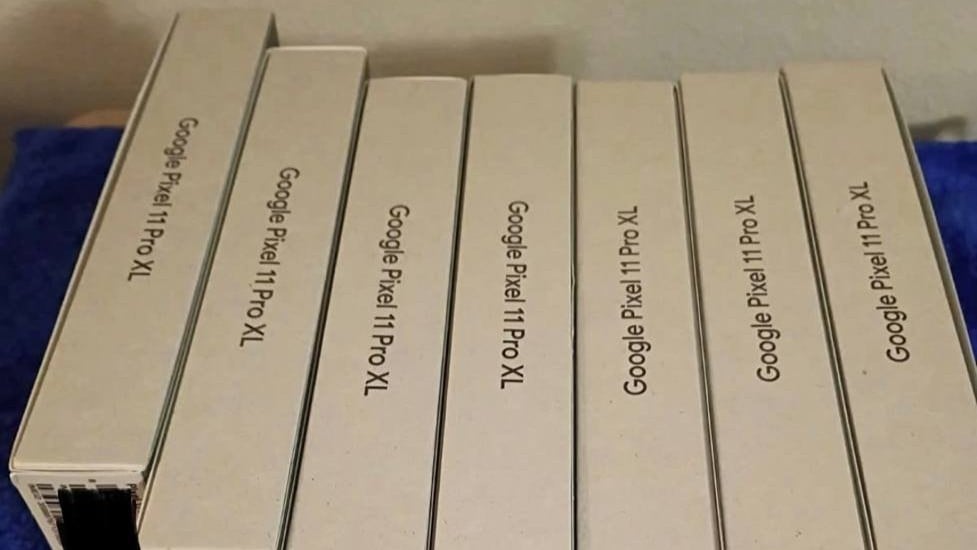
X user @erenylmaz075 posted a photo of seven sealed retail boxes clearly labeled “Google Pixel 11 Pro XL.” You can see the sides of the boxes, though the serial numbers, IMEIs, and tracking barcodes are all heavily blacked out. According to the post, these are already up for preorder on the Turkish grey market… for a painful $1,700 each.
Pixel hardware leaks aren’t exactly rare, but seeing what look like actual retail units listed in bulk this early raises a lot of eyebrows. Early “pre-orders” like this sometimes turn out to be stolen pre-production units or region-locked test devices. Authenticity is basically impossible to verify at this stage.
The Pixel 11 series, as covered in our roundup of the leaks, is expected to show up around mid-August 2026, right on Google’s usual schedule. Until we get an official announcement, any early preorder claims should be treated with a heavy dose of skepticism. You could end up with a non-working unit, a phone locked to another region, or something that simply never arrives.
If the rumors are accurate, the Pixel 11 Pro XL keeps the same 6.8-inch LTPO display as last year’s model, but with a brighter peak (around 3,600 nits). The big internal jump is the new Tensor G6 chip, built on a 2nm (TSMC’s N2) process, which should deliver better efficiency and slightly snappier performance. Battery capacity looks to be a touch smaller (around 5,115 mAh versus 5,200 mAh of the predecessor), but the more efficient chip and modem should still improve real-world endurance.
Other notable shifts include a lighter body (about 226g) and a new interactive RGB LED notification system that replaces the temperature sensor. Camera hardware is largely carried over, though digital zoom may stretch to 120x.
If you’re actually interested in the next Pixel, you’re probably better off waiting for Google to announce it properly, with real pricing and authorized retailers.
Motorola has released a new mid-range Android tablet in India, the Moto Pad 70. The device is positioned as an option for everyday productivity and media consumption, and it includes a stylus in the box.
Moto Pad 70 Specifications
The tablet is built around a 12.1-inch LCD screen with a 2.5K resolution (2560 x 1600). Motorola went with a 90Hz refresh rate here. While that is a step down from the 120Hz panels often found on competing tablets, it is still adequate for standard scrolling and video playback. The display reaches a peak brightness of 800 nits and covers the DCI-P3 color gamut. For audio, the device has a four-speaker setup that supports Dolby Atmos.
Physically, the Moto Pad 70 measures 6.29mm thick and weighs 530 grams. It has an IP52 rating, which means it can handle light splashes but shouldn’t be submerged in water. It is available in a single color option called Pantone Sea Angel.
Inside, the tablet is powered by a MediaTek Dimensity 6400 processor and 8GB LPDDR4X RAM. You can choose between 128GB and 256GB of UFS 2.2 storage, and there is a microSD card slot that supports up to 2TB of additional space.
On the software side, the Moto Pad 70 ships with Android 16. Motorola is promising two major operating system updates, which will take it to Android 18, along with security patches through 2030.
The software includes Motorola’s Smart Connect feature, which allows you to share files and mirror your screens across Windows PCs and Motorola phones.
The tablet runs on a 10,200mAh battery, and Motorola includes a 68W charger in the packaging. As for connectivity, it supports 5G networks, Wi-Fi 5, and Bluetooth 5.4.
For input, the included Moto Pen supports 4,096 levels of pressure sensitivity, tilt detection, and palm rejection. Motorola is also selling an optional magnetic keyboard cover that connects via pogo pins for users who want a physical typing setup.
The Moto Pad 70 will be available starting August 15th through Flipkart, Motorola’s website, and retail stores. The 128GB model is priced at Rs. 33,999, and the 256GB version costs Rs. 36,999.
A compact feature phone that channels classic Nokia Lumia design cues is getting ready to expand beyond its initial market. After launching in China earlier this year, the HMD Touch AI is now being tipped for a broader international rollout that could bring its mix of nostalgia and modern practicality to more users.
The HMD Touch AI features a 3.2-inch touchscreen, a 1,950mAh battery charged via USB Type-C, dual-SIM 4G support, and Wi-Fi connectivity. In China, it’s priced at CNY 469 (around $69). According to tipster @smashx_60 on X, the device is set to reach markets outside China soon, including Malaysia, the Philippines, Indonesia, Thailand, and others. Bundles are expected to include a free 8GB microSD card, a protective case, and a screen protector.
The global version is said to offer more capabilities than the HMD Touch 4G, which launched in India in October 2025. The tipster mentions free access to “Taobao AI”, along with Alipay support for mobile payments and a QR code reader. The Chinese model, by comparison, ships with ByteDance’s Doubao AI, which is reportedly subscription-based but comes with a 180-day free trial.
Color options for the international version may expand beyond the Cyan and Dark Blue of the related Touch 4G to include white and gold. Pricing details for markets outside China haven’t been confirmed yet.
These additions position the HMD Touch AI as a simple yet selectively smart device aimed at people looking for a digital detox without losing basic connectivity. It adds light AI assistance on top of that. Its closed system and modest hardware also make it a good fit for older users, or anyone who wants a secondary phone.
The combination of retro-inspired design and select modern features could help the model find an audience in Southeast Asia and beyond once it arrives.
One UI 9 Watch, based on Wear OS 7, debuted in July with the launch of Galaxy Watch 9 and Galaxy Watch Ultra 2. In the coming weeks, the update will start rolling out to older Galaxy smartwatches as the internal testing has been underway for quite a while now.
Samsung will release the latest One UI 9 Watch update to Galaxy smartwatches up to the last four generations. Based on the official update policy, we’ve prepared a list of eligible devices. Review it below to find if yours is in for the next big upgrade.
Galaxy smartwatches that are eligible for One UI 9 Watch update
Galaxy Watch 8
Galaxy Watch 8 Classic
Galaxy Watch Ultra
Galaxy Watch 7
Galaxy Watch FE
Galaxy Watch 6
Galaxy Watch 6 Classic
Galaxy Watch 5
Galaxy Watch 5 Pro
Samsung could begin the One UI 9 Watch beta program later this month. The company typically restricts the beta program to select newer models in two regions: Korea and the US.
The One UI 9 Watch emphasizes advanced Galaxy AI integration to deliver contextualized, tailored guidance. The Vitals Dashboard compares sleep-related signals with your personal baseline to alert you to any meaningful changes from your usual patterns. Heart Rate Health Score offers a simplified view of your cardiovascular wellness and provides personalized guidance.
The new Daily Cardio Load feature uses Galaxy AI to analyze recent activity and estimated recovery times to guide you on when to train harder or take a rest day, while Fitness Index evaluates overall physical capability and performance metrics to offer clear fitness progress reports.
With the latest One UI 9 Watch, you can activate Gemini simply by lifting your wrist to your mouth and speaking. The Wear OS widgets also receive upgrades to surface glanceable information quickly. One UI 9 Watch further optimizes app launch speed and background workout tracking.
We’ll keep our eyes open for new information and update you on the same in our Samsung section and on our Telegram channel. Stay tuned with us for more updates.
Timex has released three new iterations of its Waterbury Classic watch in the US market. The updated models introduce a textured dial and a sub-second display, moving away from a standard sweeping second hand. The new lineup includes two leather strap options priced at $189 and a stainless steel bracelet variant for $239.
All three watches share the exact same physical dimensions and core hardware. They feature a 39mm polished silver-tone stainless steel case. The lug-to-lug distance measures 46mm, and the case height sits at 10mm, making it a mid-sized watch designed to fit wrist circumferences between 150mm and 205mm. The dial is covered by a slightly domed mineral glass crystal.
The watches feature a textured dial with a dedicated seconds sub-dial at 6 o’clock. They use a battery-powered quartz movement with an SR626SW battery and offer 50-meter water resistance, suitable for splashes and light swimming but not snorkeling or diving.
The three models differ primarily in their colorways and strap materials. The first model (TW2Y92100) features a black dial with gold-tone hands and hour markers, paired with a brown leather strap. The second model (TW2Y92000) has a white dial with silver-tone hardware and comes with a black leather strap. Both leather straps are 20mm wide, feature a crocodile grain pattern, and are sourced from the Leather Working Group. They secure with a standard buckle.
The third model (TW2Y91900) shares the black dial and gold-tone accents of the first model but replaces the leather strap with a two-tone stainless steel bracelet. This metal version uses a deployant clasp rather than a standard buckle, which accounts for the higher $239 price tag.
All three of the new Waterbury Classic watches are currently available for purchase directly through the Timex US website.
ALLDOCUBE is preparing to launch its new iPlay 80 mini Turbo, an 8.8-inch gaming-focused tablet designed to offer a balance of performance, portability, and price. The tablet will make its first appearance in Japan on August 13, 2026, with Japan becoming the first market to receive the new model. Global sales, including availability through AliExpress, are expected to begin on August 16.
ALLDOCUBE Expands Its Small-Screen Tablet Lineup
The iPlay 80 mini Turbo is the third small-screen tablet launched by ALLDOCUBE this year. With this new model, the company is expanding its compact tablet lineup and giving users more choices across different price and performance levels. ALLDOCUBE is expected to reveal the full specifications, official pricing, and launch offers soon. Special launch promotions will also run between August 13 and August 16.
A Complete Small-Screen Tablet Lineup
ALLDOCUBE has been investing heavily in the small-screen Android tablet market in recent years. The company has introduced different models for users with different budgets and needs, covering everything from basic everyday use to gaming and high-performance applications.
The iPlay 80 mini Turbo now joins the iPlay 80 mini Pro and iPlay 80 mini Ultra. The iPlay 80 mini Pro is designed as an affordable and portable 4G tablet for everyday tasks such as reading, watching videos, studying, navigation, and mobile work. It is mainly aimed at users who want a compact tablet at a reasonable price.
The new iPlay 80 mini Turbo sits higher in the lineup and focuses more on gaming and entertainment. It is designed for users who want better performance and a smoother experience without moving all the way up to a flagship tablet. This makes the Turbo model an important addition to the mainstream high-performance compact tablet segment.
At the top of the lineup is the iPlay 80 mini Ultra, which is positioned as a flagship 5G gaming tablet. It is aimed at users who want stronger performance, faster connectivity, and a more advanced mobile gaming experience.
With these three models, ALLDOCUBE is creating a clearer range of small tablets for different users. The company is focusing on portability while giving customers the option to choose between everyday use, stronger performance, and flagship-level features.
Designed for Gaming and Everyday Entertainment
Small tablets are no longer used only for reading, watching videos, or basic productivity. Their compact size makes them increasingly popular for gaming and entertainment, especially among users who want a larger screen than a smartphone without carrying a full-size tablet.
The iPlay 80 mini Turbo is designed around this idea. Instead of competing directly with expensive flagship gaming tablets, it aims to provide a balanced experience at a more accessible price. The tablet is expected to offer enough performance for light gaming and everyday entertainment while remaining easy to carry.
Compared with entry-level models, the new tablet is designed to provide a noticeable improvement in overall performance and display quality. At the same time, it is expected to remain more affordable than flagship compact tablets, giving users another option between budget and premium models.
8.8-Inch 2.5K Display and 120Hz Refresh Rate
One of the main highlights of the iPlay 80 mini Turbo is its display. The tablet comes with an 8.8-inch 2.5K screen and supports a 120Hz refresh rate. The higher resolution should provide sharper images and clearer text, while the 120Hz refresh rate can make scrolling, animations, and supported games feel smoother.
The small 8.8-inch screen also makes the tablet easier to hold during gaming compared with larger tablets. This combination of a compact body, high resolution, and fast refresh rate makes the display one of the key features of the new Turbo model.
MediaTek Dimensity 7400 and RGB Design
The iPlay 80 mini Turbo will be powered by the MediaTek Dimensity 7400 processor. The chip is intended to provide a stronger performance level than basic entry-level tablet platforms, making the new model better suited for gaming and demanding everyday tasks.
ALLDOCUBE is also giving the tablet a more distinctive appearance. The rear panel includes RGB lighting, adding a gaming-inspired design element to the compact tablet. This gives the iPlay 80 mini Turbo a different look from more traditional tablets and helps separate it from the iPlay 80 mini Pro.
ALLDOCUBE has not yet revealed all of the hardware details. More information about battery life, the complete processor configuration, and other specifications is expected to be announced closer to the launch.
Launch Date and Availability
The ALLDOCUBE iPlay 80 mini Turbo will officially launch in Japan on August 13, 2026. The Japanese launch event will continue through August 16, with the tablet expected to be available through platforms including Amazon Japan and Rakuten.
Global availability is expected to begin around August 16, including an introductory promotion on AliExpress. The expected promotional price is around $199.99, although the final price and launch offer may vary depending on the market.
More information about the official price, complete specifications, and launch promotions will be announced by ALLDOCUBE through its official channels.
With the iPlay 80 mini Pro, iPlay 80 mini Turbo, and iPlay 80 mini Ultra, ALLDOCUBE now has a more complete range of compact tablets covering everyday use, mainstream performance, and flagship gaming. The company is expected to reveal more details about the iPlay 80 mini Turbo soon, including its full specifications and official pricing.
A mysterious Vivo phone with model number V2603A has been gradually receiving the necessary certifications in China. At the end of July, it was approved by the country’s CMIIT authority, and a couple of days ago, it was certified by the 3C authority. Now, in a new development, it has surfaced on Geekbench, revealing its chipset, RAM, and OS version.
Vivo V2603A appears on Geekbench, 3C certification
As can be seen in the Geekbench listing, the Vivo V2603A phone is powered by a MediaTek MT6881 chip, which includes a Mali-G625 MC2 GPU, four CPU cores operating at 2.0GHz, and the remaining four cores clocking at 2.60GHz.
These details suggest that the device is powered by the MediaTek Dimensity 7500 chipset. It has 12GB of RAM and runs on Android 16, which is most likely to have the OriginOS 6 skin on top.
The 3C certification of the device revealed that it may ship with 44W charging. At present, there is no telling whether it will be a Vivo or iQOO-branded phone.
Speaking of the Dimensity 7500, the Vivo camp currently has two phones powered by the said chip. This includes the Vivo S60 Vitality Edition (or Vivo S60e), which debuted a couple of months ago in China. The other one is the iQOO Z11, which is also set to launch on Aug. 20 in India.
The S60e supports 90W charging, whereas there is no information about the fast charging capabilities of the Z11. Hence, it remains to be seen whether the V2603A is a rebranded version of India’s Z11 or a completely different phone.
For more daily updates, please visit our News Section.
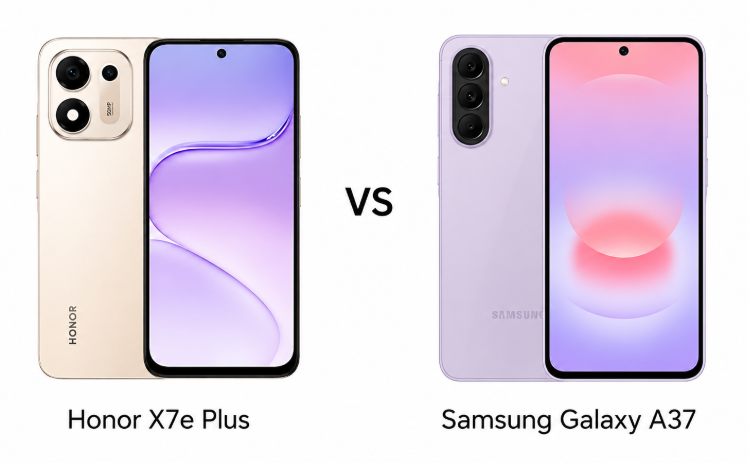
Honor X7e Plus and Samsung Galaxy A37 take different approaches to the mid-range segment. Honor prioritizes battery life and durability, while Samsung focuses on display quality, performance, cameras, and long-term software support. Here’s how they compare across every major category.
The Honor X7e Plus focuses on durability with an IP68/IP69K rating and 2.5-meter drop resistance, making it well-suited for users who prioritize ruggedness. Its plastic construction helps absorb impacts, while the overall design targets practicality over premium styling. The side-mounted fingerprint scanner is fast and familiar for everyday use.
The Samsung Galaxy A37 takes a more premium approach with Gorilla Glass Victus+ on both the front and back, along with an IP68 rating. The optical in-display fingerprint scanner and cleaner finish give it a more flagship-like appearance. It feels better suited for users who value refinement as much as durability.
Display Quality
Honor equips the X7e Plus with a 120Hz TFT LCD panel that delivers smooth scrolling and adequate outdoor visibility. However, the HD+ resolution limits sharpness, and LCD technology cannot match the deeper blacks and vibrant colors of AMOLED.
Samsung clearly pulls ahead with a 120Hz Super AMOLED display featuring Full HD+ resolution, higher peak brightness, richer contrast, and stronger protection. Daily media consumption simply feels more immersive and polished on the Galaxy A37.
Verdict
The Honor X7e Plus emphasizes toughness, while the Samsung Galaxy A37 delivers a noticeably superior viewing experience and more premium materials. For overall design, display quality, and everyday usability, Samsung offers a stronger package.
2. Specifications Including Battery
Performance
The Honor X7e Plus runs on Qualcomm’s Snapdragon 4 Gen 4 paired with Android 16 and MagicOS 10. It comfortably handles everyday applications, streaming, messaging, and casual gaming, although demanding games require lower graphics settings. Its hardware is designed more for efficiency than outright speed.
Samsung’s Galaxy A37 features the 4nm Exynos 1480 chipset with the Xclipse 530 GPU and faster UFS 3.1 storage. Multitasking is smoother, app launches are quicker, and gaming performance is noticeably stronger. Samsung also promises six major Android updates, giving it a significant long-term advantage.
Battery and Charging
Battery life is where Honor stands out. The enormous 8,100mAh battery can easily last multiple days for moderate users, while 45W charging and reverse wired charging add extra convenience.
Samsung pairs its 5,000mAh battery with the same 45W charging speed. Although endurance is shorter, it remains sufficient for a full day of heavy use while maintaining a slimmer overall profile.
Verdict
Performance, software support, and storage speed clearly favor the Galaxy A37. However, battery endurance belongs comfortably to the Honor X7e Plus. Users wanting maximum longevity should choose Honor, while Samsung remains the better all-around performer.
3. Camera
Main and Secondary Lenses
Honor keeps things simple with a 50MP primary camera supported by an auxiliary sensor. Photos in daylight are respectable, with pleasing colors and decent dynamic range. The camera performs reliably for everyday photography, although the lack of an ultrawide lens limits creative flexibility. Video recording is restricted to 1080p.
Samsung delivers a more versatile setup featuring a 50MP main camera with OIS, an 8MP ultrawide camera, and a dedicated macro sensor. Optical image stabilization improves low-light photography, while 4K recording and gyro-EIS produce steadier videos. The extra lenses make the camera system far more adaptable.
Selfie Camera
The Honor X7e Plus includes a basic 5MP front camera suitable for video calls and casual selfies, but detail and dynamic range remain limited.
Samsung’s 12MP selfie camera captures sharper images and supports 4K recording with 10-bit HDR, making it a much stronger choice for creators and social media users.
Verdict
Samsung comfortably wins the camera comparison with better stabilization, additional lenses, stronger video capabilities, and a much higher-quality selfie camera. Honor performs adequately for casual photography, but the Galaxy A37 offers a far more complete imaging experience.
4. Pricing
The Honor X7e Plus is priced around $275 (₹23,000), positioning it as an affordable mid-range smartphone with standout battery capacity, excellent durability, stereo speakers, and reliable everyday performance. Considering its rugged construction and exceptional battery life, it delivers strong value for buyers focused on practicality rather than premium multimedia features.
The Samsung Galaxy A37 is priced around $375 (₹42,000), placing it in a more premium segment. The higher price brings meaningful upgrades, including a Super AMOLED display, a faster processor, Gorilla Glass Victus+ protection, superior cameras, UFS 3.1 storage, Wi-Fi 6 support, and six years of Android upgrades. The price increase is substantial, but the improvements extend well beyond raw specifications.
The Honor X7e Plus offers outstanding value for buyers seeking battery life and durability on a tighter budget. The Samsung Galaxy A37 justifies its higher price with a far more premium overall experience, making it the better long-term investment.
5. Conclusion
The Honor X7e Plus distinguishes itself with its massive 8,100mAh battery, IP68/IP69K certification, drop resistance, and reverse wired charging. It is designed for users who prioritize endurance, outdoor reliability, and extended battery life above everything else.
The Samsung Galaxy A37 counters with a premium Super AMOLED display, Gorilla Glass Victus+ protection, Exynos 1480 performance, optical image stabilization, 4K video recording, faster storage, Wi-Fi 6 connectivity, eSIM support, and six major Android updates. The combination creates a more refined smartphone that should remain competitive for years.
Choose the Honor X7e Plus if exceptional battery life, rugged durability, and value are the highest priorities. Choose the Samsung Galaxy A37 for a better display, stronger performance, superior cameras, longer software support, and a significantly more polished everyday smartphone experience.
6. FAQs:
1. Which phone is better for gaming? The Samsung Galaxy A37 delivers smoother gaming thanks to its Exynos 1480 chipset, faster GPU, and UFS 3.1 storage.
2. Does Honor X7e Plus have better battery life? Yes. Its massive 8,100mAh battery can comfortably outlast the Galaxy A37 in everyday usage.
3. Which phone takes better photos? The Samsung Galaxy A37 offers better photography with OIS, an ultrawide camera, and improved video recording capabilities.
4. Which phone offers better value for money? The Honor X7e Plus provides excellent value for users prioritizing battery life, durability, and affordability.
5. Which phone is worth buying in 2026? It depends on your priorities. Choose Samsung for a premium experience or Honor for exceptional battery endurance and ruggedness.
Disclaimer: Prices, specifications, and availability may vary by region and retailer. Recommendations in this article are based on editorial opinion, feature-based value, and market positioning at the time of writing. Readers are advised to do their own research before making a purchase.
iQOO is all set to launch the iQOO Z11 on Aug. 20 in India. Ahead of the launch, the brand is gradually confirming its key specifications. After revealing its chipset recently, iQOO has now published a new post on X highlighting the phone’s display and front design.
iQOO Z11 display details confirmed
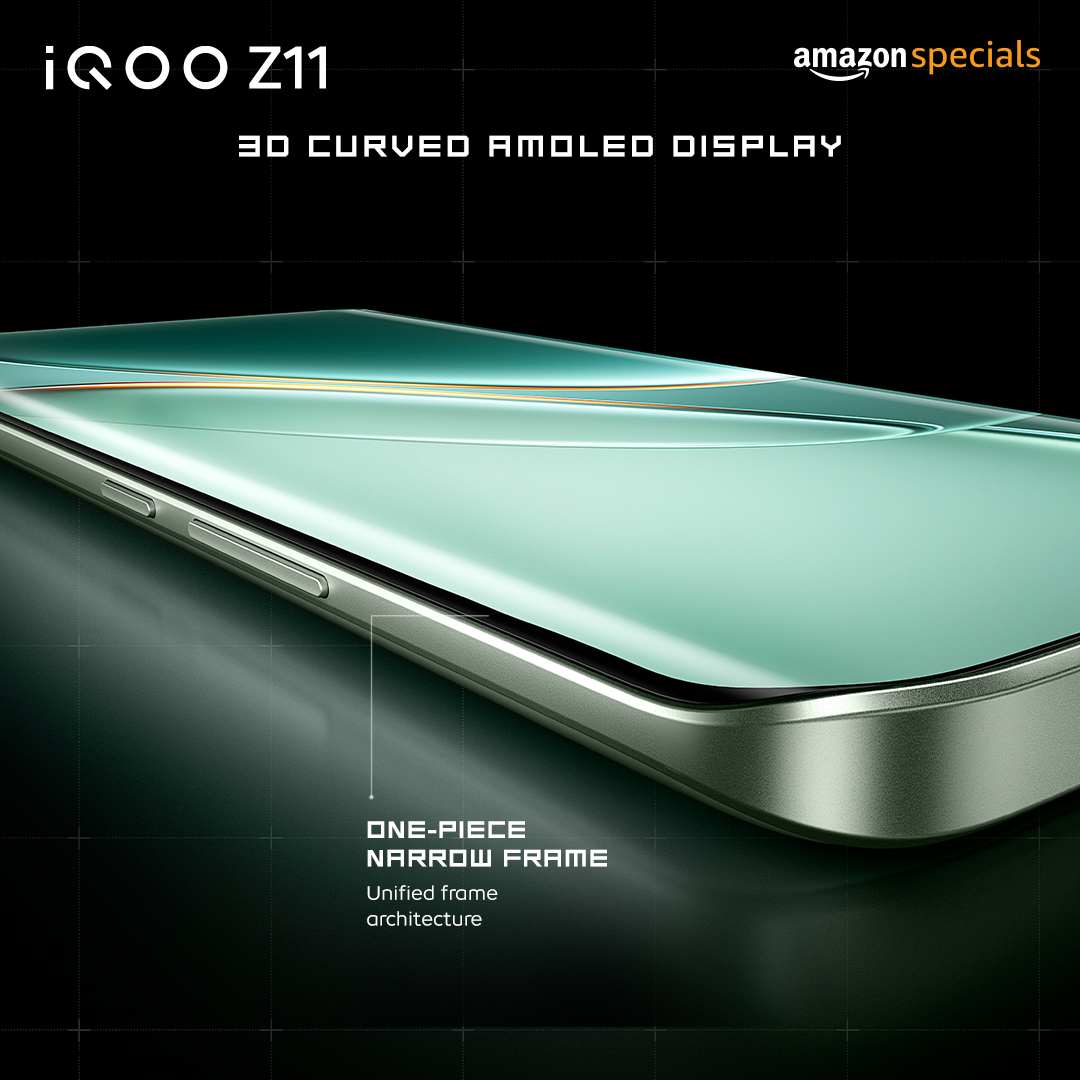
The iQOO Z11 will feature a 6.83-inch 3D curved AMOLED display with a 93.82% screen-to-body ratio. The new images show the panel extending towards the edges with slim bezels, while a centered punch-hole cutout houses the selfie camera. iQOO is also using a one-piece narrow frame design, which helps keep the display area visually expansive while maintaining a relatively compact profile.
The second image shared by the company gives a closer look at the curved edges and frame. It also shows the phone with a narrow metal-looking side frame and curved glass around the display. The combination of the 3D curved panel and one-piece frame is expected to give the Z11 a more premium appearance when held.
The iQOO Z11 will be powered by the Dimensity 7500 Turbo chipset, making it the first smartphone in India to feature the processor. The D7500 platform is built on a 4nm process and supports features including high-refresh-rate displays, on-device AI processing and 5G connectivity.
iQOO has claimed that the chipset can achieve around 1.2 million points on AnTuTu. Earlier Geekbench AI details also pointed to 12GB of RAM and Android 16. The phone is expected to have a 7.99mm slim profile and will be available in multiple finishes. The Celestial Blue version weighs 199 grams, while the Aurora Green model uses a monochrome liquid crystal finish. A white color option is also expected.
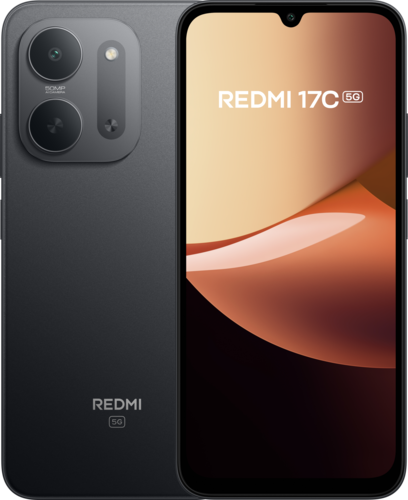
Redmi has just launched the Redmi 17 5G and Redmi 17 4G globally, and now it appears that it will soon add another device called the Redmi 17C 5G. The unannounced device has been prematurely listed on a Luxembourg-based retailer’s website, revealing its images and full specifications.
Redmi 17C 5G images, specifications revealed
As per the retailer listing, the Redmi 17C 5G houses a 6.9-inch IPS LCD panel that offers an HD+ resolution and a 120Hz refresh rate. The handset measures 171.56 x 79.47 x 8.05mm and weighs around 211 grams.
It is powered by the MediaTek Dimensity 6300 chipset paired with 4GB of RAM and 128GB of internal storage, with support for microSD cards up to 1TB. The device packs a 6,000mAh battery with fast charging and runs Xiaomi HyperOS 3. The fast charging capabilities of the device are not mentioned in the listing.
On the back, the Redmi 17C 5G has a dual rear camera setup led by a 50-megapixel primary sensor with autofocus and an f/1.8 aperture, along with an 8-megapixel front camera with an f/2.0 aperture.
Connectivity options include 5G, dual SIM support, Wi-Fi 5, Bluetooth 5.4, NFC, USB-C, and a 3.5mm headphone jack. Other features include a side-mounted fingerprint sensor, facial recognition, AI face unlock, an accelerometer, proximity sensor, compass, and light sensor.
The Redmi 17C 5G will be available in Brown, Purple, and Black options, but there is no information about its price.
The Redmi 17C 5G does not offer anything new in terms of specifications, as these are identical to the previous-generation Redmi 15C. However, it does offer slight changes in the design and color options and runs on a newer version of HyperOS.
For more daily updates, please visit our News Section.
Xiaomi appears to be preparing its next-generation tablet lineup in China, with the Xiaomi Pad 9 and Pad 9 Pro already making their way through domestic certification. Basic hardware details for both models have now surfaced, offering an early look at their displays, processors, batteries, and charging capabilities.
Xiaomi Pad 9 series hardware details revealed
Xiaomi Pad 9 3C certified
As per a Weibo post by tipster Digital Chat Station, the Xiaomi Pad 9 and Pad 9 Pro are expected to feature an 11.16-inch LCD panel with a 3.2K resolution and a high refresh rate. The display is reportedly expected to be marketed as an 11.2-inch panel, with both tablets likely sharing the same screen.
The new models are also tipped to pack 9,720mAh batteries, with the standard Pad 9 supporting 45W wired charging and the Pad 9 Pro upgrading to 67W. The Pro variant, which seems to have already appeared in 3C certification’s database with model number 2612CRPFFC, whereas the standard version appears to have the model number M656BA.
Apart from this, Xiaomi is also said to be working on another tablet called the Xiaomi Pad 8s Pro. This device is expected to feature a 12.5-inch 3.2K LCD screen, a 12,000mAh battery with 120W fast charging, a 32-megapixel front camera, and a 50-megapixel main camera paired with a 2-megapixel secondary sensor. It is expected to feature the company’s in-house Xring O3 chip. Speculations are rife that the Xiaomi Pad 8s Pro may debut alongside the Xiaomi 18 Fold, which is also expected to feature Xring O3 chip, later this month.
As far as the Pad 9 series is concerned, it may debut alongside the Xiaomi 18 lineup in September in China.
For more daily updates, please visit our News Section.
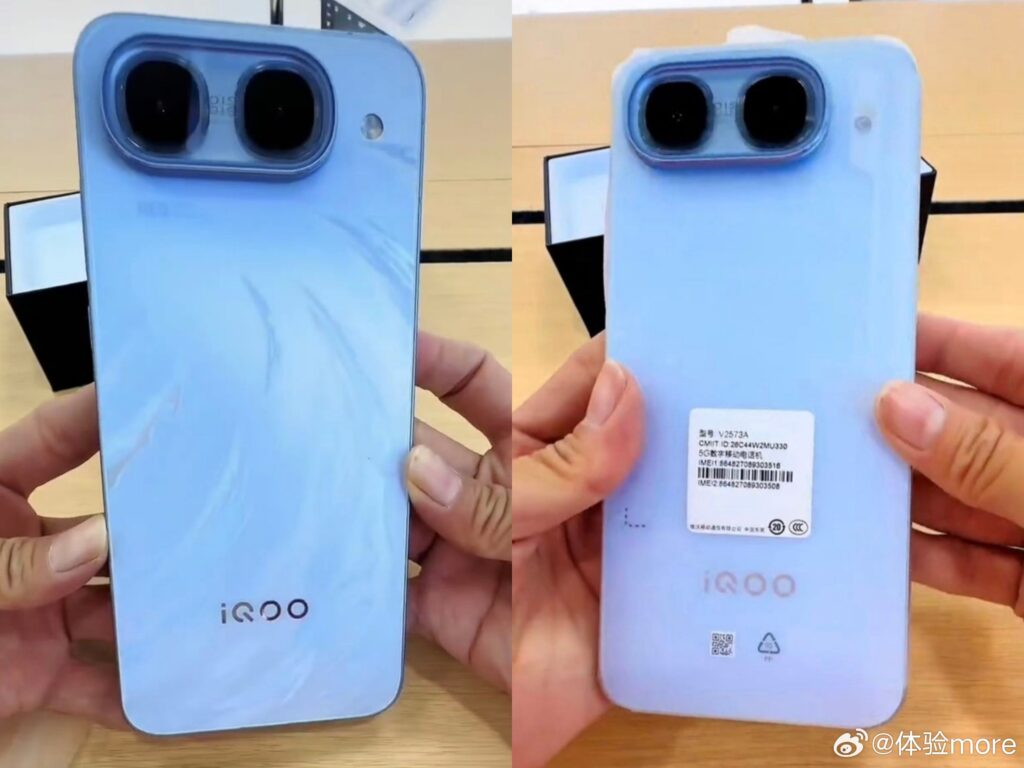
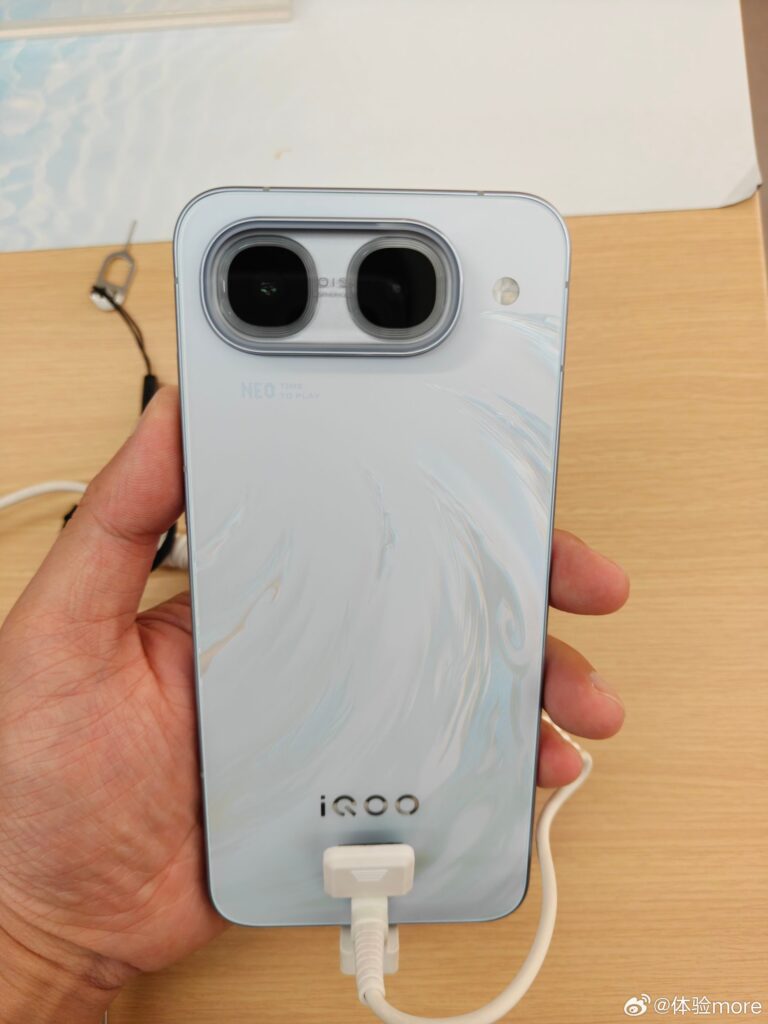
iQOO recently confirmed that it will showcase the iQOO Neo 11 Ultra on Aug. 10. However, the rumor mill has already started sharing real-life images of the device on Chinese social media platforms. One such Weibo post by tipster Experience More gives the first look at the iQOO Neo 11 Ultra.
The images shared by the tipster showcase the iQOO Neo 11 Ultra in Wind Chaser (above) and Light White (below) shades. As can be seen, the device sports a horizontal camera module along with an LED flash on the back. The design of the camera module looks the same as the Neo 11, which had it in a vertical orientation.
iQOO Neo 11 Ultra leaked images1
One of the images shows a label with the model number V2573A mentioned on it. This device was previously spotted with a 100W charger at 3C certification. It is also said to be powered by the Dimensity 9500 chip.
The Neo 11 Ultra is expected to arrive in multiple configurations, such as 12GB+256GB, 12GB+512GB, 16GB+256GB, and 16GB+512GB. While the images don’t reveal the phone’s front, it is expected to arrive with a 6.83-inch flat OLED panel offering a 2K resolution and an ultrasonic in-screen fingerprint sensor. It will come preloaded with OriginOS 6-based Android 16.
The camera details of the iQOO Neo 11 Ultra are under wraps, but there is a possibility that it could be equipped with a 50-megapixel + 8-megapixel dual-camera setup and a 16-megapixel front camera like the Neo 11. It is expected to house a huge 9,000mAh battery but lack support for wireless charging. Its other features include a metal middle frame and an IP68/69 rating for dust and water resistance.
For more daily updates, please visit our News Section.
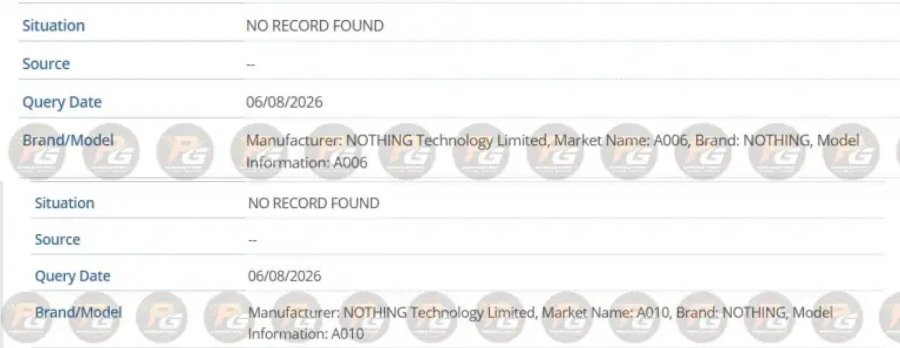
Nothing recently confirmed it plans to double its smartphone lineup in 2027, and if you needed more proof that this is already in motion, two new phones have just turned up on the IMEI database.
PassionateGeekz spotted the listings first, and they carry the model numbers A006 and A010. There’s no word yet on what these phones will actually be called or what they’ll pack inside, but the report says the two phones might launch in early 2027.
Nothing launched three phones in 2026 — the Phone 4a, the 4a Pro, and the Phone 4b. Nearly doubling that number in 2027 could mean you see at least six new phones from the brand next year, spread across different price ranges.
Nothing hasn’t been shy about growing fast. Carl Pei started the company in 2020 with a single pair of earbuds, and in just a few years it’s gone from a scrappy London startup to a brand that ships phones, buds, watches, and now runs its own stores. Doubling the smartphone lineup in a single year is a big jump even by Nothing’s standards, and it says a lot about how confident the company feels right now.
Nothing Phone (4b)
There’s a real reason for that confidence. Nothing has leaned hard into India, and it’s paying off. The brand has climbed into the list of fastest-growing smartphone players in the country, going up against much bigger, more established names. Six or more phones in one year isn’t just about volume, either. It’s Nothing trying to cover more price brackets at once.
Regulatory filings happen months before any teaser or press event, so seeing two unnamed model numbers this early lines up with a 2027 launch window and backs up Nothing’s own comments about the year ahead.
We use cookies on our website to give you the most relevant experience by remembering your preferences and repeat visits. By clicking “Accept”, you consent to the use of ALL the cookies.
This website uses cookies to improve your experience while you navigate through the website. Out of these, the cookies that are categorized as necessary are stored on your browser as they are essential for the working of basic functionalities of the website. We also use third-party cookies that help us analyze and understand how you use this website. These cookies will be stored in your browser only with your consent. You also have the option to opt-out of these cookies. But opting out of some of these cookies may affect your browsing experience.
Necessary cookies are absolutely essential for the website to function properly. This category only includes cookies that ensures basic functionalities and security features of the website. These cookies do not store any personal information.
Any cookies that may not be particularly necessary for the website to function and is used specifically to collect user personal data via analytics, ads, other embedded contents are termed as non-necessary cookies. It is mandatory to procure user consent prior to running these cookies on your website.