Advertisement

Motorola could be working on a Rollable phone with Full-screen Fingerprint sensing

Motorola has filed a new patent revealing its achievements in rollable displays and fingerprint technology. Following the Moto Rizr rollable concept phone from last year, Motorola now appears to be working on a similar device but with a significant upgrade in fingerprint sensing capabilities.

According to a recent discovery by MySmartPrice, a patent listed on the United States Patent and Trademark Office (USPTO) website suggests that Motorola’s next rollable display device could feature full-screen fingerprint sensors, enabling users to unlock the device from any part of the screen.

Patent details: full-screen fingerprint sensing

The patent, titled “Managing consistent fingerprint-on-display (fod) location on a rollable device having multiple fod sensors,” describes a Motorola device with an advanced fingerprint authentication system across the entire display. By spreading multiple sensors across the screen, Motorola’s new device would offer flexibility in unlocking the phone from any part of the display.

Motorola’s new idea could be an evolution of the Moto Rizr, integrating full-screen fingerprint sensing as a standout feature. While this technology is still in the patent stage, the possibility of a rollable phone with all-screen unlocking capability represents a major step forward in user-friendly design.

Revisiting the Motorola Rizr concept phone

Motorola’s latest patent builds on the innovation showcased with the Motorola Rizr, a rollable concept phone that garnered attention at MWC 2023. This device featured a flexible display capable of extending from 5 inches to 6.5 inches at the tap of a button. When compact, the display wraps around the back of the phone, functioning as a secondary screen for quick updates and notifications.

Motorola Rizr
Motorola-Rizr

This adaptive screen provides users with both a smaller, pocket-sized display and a larger, immersive experience, depending on their needs.

The Rizr’s design and rollable functionality could be the basis for Motorola’s new patented concept. With a device that expands, wraps around, and now, potentially, unlocks from anywhere on the screen, Motorola aims to offer unique, user-centered innovations in this increasingly competitive smartphone market.

Is Motorola’s rollable concept coming soon?

It’s important to remember that patents don’t always result in commercial products. Companies frequently patent ideas to explore new technologies, but not all concepts make it to the market. For now, Motorola has yet to confirm whether it plans to release this rollable device with full-screen fingerprint sensing.

Nonetheless, the development suggests that Motorola is keen to make rollable devices more user-friendly and versatile. If Motorola decides to bring this device to market, it could redefine how users interact with their phones.

(Via)

Huawei Unveils the MatePad 11.5 (2024): A Tablet Built for Productivity and Entertainment

Huawei has recently unveiled its latest tablet offering, the MatePad 11.5 (2024). This sleek device is designed to provide a premium tablet experience with a focus on productivity and entertainment.

Huawei MatePad 11.5 (2024)

The MatePad 11.5 sports an 11.5-inch TFT LCD display with a 2200×1440 resolution and a 120Hz refresh rate. This high-resolution display, coupled with the 120Hz refresh rate, ensures smooth scrolling and vibrant visuals. The tablet also features PaperMatte technology, which reduces glare and provides a comfortable viewing experience, especially during extended usage.

Huawei MatePad 11.5 (2024)

Under the hood, the MatePad 11.5 is powered by HarmonyOS 4.2, Huawei’s latest operating system. This OS brings a host of features, including SuperHub file transfer, floating multiple windows, multi-screen collaboration, and an upgraded Notes app. The Education Center feature is also included, offering tools for learning and productivity.

For capturing photos and videos, the tablet is equipped with a 13MP rear camera and an 8MP front camera. Powering the device is a 7700mAh battery that supports 30W fast charging, ensuring quick top-ups.

The MatePad 11.5 is available in three stylish color options: Island Blue, Frost Silver, and Space Gray. Pricing starts at 1699 Yuan for the base model and goes up to 2099 Yuan for the high-end PaperMatte Edition.

In other news, the Huawei Mate 70 series is expected to launch soon, with leaks revealing key details about the standard Mate 70’s specs. It may feature a 50MP main camera with a variable aperture, a 12MP periscope telephoto lens with 5x optical zoom, and a triple-lens setup. The display is rumored to be a flat 6.69-inch screen with a side-mounted fingerprint sensor.

(Source)

AOC launches new 34″ 240Hz ultrawide gaming monitor with 1500R curvature, HDR400 & more

AOC has launched the CU34G4Z 34-inch ultrawide gaming monitor, now available for pre-order on JD.com at a discounted price of 1,999 Yuan ($280), down from its usual 2,999 Yuan ($420). Let’s check out its key specs.

AOC CU34G4Z monitor

AOC CU34G4Z Specifications

The AOC CU34G4Z monitor features a 34-inch Fast HVA panel with a WQHD resolution of 3440×1440. It comes with a rapid 240Hz refresh rate and sports a 1ms GTG (gray-to-gray) response time, making it ideal for fast-paced gaming where smooth motion and quick response times are essential.

The monitor features a 1500R curvature and a 21:9 aspect ratio, providing a wide, immersive viewing experience suited for gaming and media. It comes with HDR400 support for rich color reproduction and sports a peak brightness of 400cd/m².

The monitor also includes 91% DCI-P3 and 99% sRGB color coverage with a ΔE<2 rating for enhanced color accuracy. Additionally, it equips 10-bit color depth, producing up to 1.07 billion colors for vivid visuals in both gaming and creative tasks.

The monitor is equipped with Adaptive-Sync technology to reduce screen tearing, stuttering, and ghosting, ensuring smooth visuals during fast-paced action. It also comes with specialized gaming features like Dark Boost for improved visibility in dark scenes, FPS sniper scope magnification, and a dynamic crosshair for precise targeting.

For multitaskers, the CU34G4Z supports Picture-in-Picture (PIP) and Picture-by-Picture (PBP) modes, allowing two different signal sources to be displayed simultaneously on the screen, a useful feature for gamers and professionals alike.

In terms of connectivity, the monitor has two HDMI 2.1 ports, a DisplayPort 1.4, a USB-B port, two USB 3.2 ports (with fast-charging capabilities), and an audio port, offering versatile options for connecting multiple devices.

The monitor comes with an ergonomic stand that supports height adjustments up to 130mm, tilt adjustments from -5° to 23°, and ±20° swivel.

AOC also recently launched a new 27-inch 2K QD-Mini LED monitor featuring a 180Hz refresh rate, HDR 1000, and a peak brightness of 1200 nits.

iPhone 15 Series Tops Global Sales, Followed by Samsung’s Galaxy S24 – Counterpoint Research

Apple’s iPhone 15 led global smartphone sales in the third quarter of 2024, with the iPhone 15 Pro Max and iPhone 15 Pro close behind, based on data from Counterpoint Research. This quarter is notable as it’s the first time the Pro models made up half of all iPhone sales during a third quarter.

Apple iPhone 15 Pro

Samsung’s Galaxy S24 stayed in the top 10 for the third quarter in a row, and it’s the first time a Galaxy S model has been in the top 10 since 2018. Altogether, the top 10 models made up 19% of all smartphone sales worldwide in Q3 2024.

Apple held four of the top 10 spots, while Samsung had five, and Xiaomi held one. This lineup hasn’t changed much since last year, showing that consumer preferences are fairly steady.

One clear trend is the growing interest in high-end smartphones, as seen by the smaller gap between the base and Pro iPhone models. Apple’s marketing, payment options, and trade-in deals have helped make the latest iPhones more available to a wider range of buyers, especially in growing markets.

Samsung’s Galaxy S24 also saw good results, partly due to a focus on GenAI features that appealed to buyers. The Galaxy A series, known for its affordable pricing and long software support, took four spots in the top 10, mainly due to its popularity in growing markets and focus on affordable models.

Xiaomi’s Redmi 13C stayed in the top 10 because of its low price and better features compared to the earlier Redmi 12C model.

Overall, the iPhone 15 series led the global smartphone market in Q3 2024, driven by strong demand and new features. Samsung’s Galaxy S24 and Galaxy A series also performed well, helped by their brand reputation and range of products.

Please Note: When you buy something using the links in our articles, we may earn a small commission at no cost to you.

Please Note: When you buy something using the links in our articles, we may earn a small commission at no cost to you.

(Source)

Here’s a First Look at the Motorola Razr 50s Ultra; Charging specs revealed

Motorola launched the Razr 50 and Razr 50 Ultra in June this year, marketed as the Motorola Razr 50 and Motorola Razr 50 Ultra. Now Motorola is rumored to be expanding the Razr 50 lineup with two additional models: the Motorola Razr 50s and Motorola Razr 50s Ultra.

Motorola Razr 50s Ultra offers a design similar to the Razr 50 Ultra

Recently, the Razr 50s Ultra was spotted on two certification platforms—Wireless Power Consortium and SGS Fimko Testing & Certification Services.

As identified by 91mobiles, the Razr 50s Ultra, with model number XT2451-6, has a design very similar to the Razr 50 Ultra. It features a rounded middle frame, a large external display, and two separate cutouts for the rear camera setup.

Credit: 91mobiles

The inner display sports a center-positioned punch-hole for the selfie camera, with slim bezels consistent with other Razr 50 series models. The volume rocker and power button are on the right side, while the SIM tray is on the left.

At the bottom are USB Type-C charging, speaker vents, and a microphone. Additionally, the lower portion of the phone has a leather finish, along with the iconic Motorola logo and Razr branding.

The listing on the Wireless Power Consortium suggests 15W wireless charging support for the Razr 50s Ultra. For context, the Razr 50 Ultra supports 45W wired charging along with 15W wireless charging, while the standard Razr 50 has slightly lower 30W wired charging with 15W wireless support.

Six variants in total

The SGS Fimko Testing & Certification Services listing reveals six variants of the Razr 50s Ultra—XT2451-1 through XT2451-6. Notably, the “Technical data” of the SGS Fimko listing mentions ’11V 4A’ indicating support for 44W fast wired charging.

Credit: 91mobiles

The Razr 50s has already been spotted on Geekbench with a single and multi-core score of over 1000 and 3000 respectively. This could be the MediaTek Dimensity 7300X chipset, which powers the standard Razr 50.

(Via)

Xiaomi most-affordable Redmi phone gets a launch date in India

Following its unveiling at the India Mobile Congress (IMC) 2024, Xiaomi has locked in a launch date for the budget-focused Redmi A4 5G. The phone is now confirmed to launch in India on November 20th.

The confirmation comes alongside details on availability, key specifications, and a price point that reinforces the phone’s budget positioning. The Redmi A4 5G will be available for purchase via Xiaomi’s official site and Amazon.

Redmi A4 Specifications

As for the specs, the Redmi A4 5G is set to run on the Snapdragon 4s Gen 2 SoC. In fact, its the world’s first phone to feature this chip. It also supports 5G connectivity, making it the first in the Redmi A series to support 5G.

On the front, it features a large 6.88-inch display with a smooth 120Hz refresh rate, while the back will be home to a dual-camera setup led by a 50-megapixel sensor.

All this will be powered by a hefty 5,160mAh battery with support for fast charging. Leaks suggest 18W wired charging might be on the table. The phone is expected to run Android 14 with Xiaomi’s custom HyperOS 1.0 skin on top.

An 8-megapixel front camera is also a possibility, along with a side-mounted fingerprint sensor and a USB Type-C port for charging and data transfer.  

The main draw of the Redmi A4 will be its affordable price. Xiaomi has confirmed it will be priced under Rs. 10,000 in India, and reports suggest a possible starting price of Rs. 8,499 for the base variant (4GB RAM and 128GB storage), including bank and launch offers among other discounts.

The Redmi A4 5G offers major upgrades over the A3 4G, including 5G connectivity, a faster refresh rate, and a more powerful processor. While the A3 4G was limited to a 60Hz refresh rate and an entry-level chipset with 4G support, the A4 5G sets a new benchmark in the affordable 5G market. It delivers improved performance and modern features without a significant price increase.

Xiaomi launches Mijia Electric Steamer N1 with 13L capacity, 1500W power, eight presets & more

Xiaomi has launched the Mijia Multi-Functional Electric Steamer N1, a compact, versatile appliance for various cooking needs, including steaming, boiling, stewing, and hot pot. It is priced at 199 Yuan ($28) and is now available for pre-order on JD.com, with sales starting at 8 PM (CST) on November 10.

Xiaomi Mijia Electric Steamer N1

Mijia Electric Steamer N1 Specifications

The electric steamer boasts an impressive 13L capacity divided into two primary sections: a 3L pot for boiling and a 10L steamer. This three-layer configuration allows users to cook multiple dishes simultaneously, catering well to family meals or small gatherings.

Xiaomi has equipped this steamer with a powerful 1500W heating element, promising rapid boiling times – specifically, it can bring 2L of water to a boil in under 10 minutes. For added convenience, the appliance offers five adjustable heat levels and precise temperature control, managed by NTC sensors that ensure the correct temperature for different foods.

The steamer is highly adaptable, featuring eight preset menu options tailored for specific foods, including noodles, grains, seafood, meat, fish, eggs, and more. These presets enable users to achieve ideal textures and flavors effortlessly, making it easier to prepare various dishes without manual adjustments.

The Mijia steamer also features food-grade construction, including a 304 stainless steel steam rack and PC trays from German manufacturer Covestro for safe food preparation. It sports a non-stick pot interior for easy cleaning and residue prevention.

It comes with a detachable power cord for convenient storage and operates quietly at around 45dB. Additionally, it equips a dual anti-dry protection system, which automatically shuts off if water levels drop too low, ensuring user safety and appliance protection.

The Electric Steamer N1 is designed for user convenience, featuring a 24-hour reservation function for pre-set cooking and an 8-hour keep-warm mode to maintain food temperature. Its spacious square cooking area accommodates larger plates, like an 11.8-inch fish plate, making it ideal for larger portions. Additionally, it includes a memory function that recalls previous settings, streamlining the cooking process for frequently made dishes.

Xiaomi also recently launched a soap dispenser with a 180-day battery life and a 99.9% antibacterial rate, as well as the Mijia Fresh Air Pro air conditioner, which cools in 30 seconds and heats at temperatures as low as -35°C.

OnePlus 13 Unboxing & Quick Review: Going head-to-head with Xiaomi 15?

OnePlus 13

This might be the most un-iPhone-like Android flagship this year, It’s also the most well-rounded flagship of the year. Now let’s take a look and see what it’s all about.

Unboxing

This is the packaging box for the OnePlus 13. Let’s remove the plastic wrap and gently open it. First, we see the “NEVER SETTLE” slogan as always. After removing it, there is the phone.

Let’s power it on and put it aside for now, and see what else is inside the package. Along with the “NEVER SETTLE” slogan, there’s a warranty card and a frosted semi-transparent silicone case.


Compared to regular transparent silicone cases, it feels much better in hand and doesn’t collect fingerprints and oil easily.

Getting back to the phone itself, compared to other brands’ white frosted glass, we can see that the white frosted glass at the back has a slightly rougher texture. Other than that, the camera module is traversed by a line.

Design

This year’s blue variant features a leather-like material, it is named “Blue Hour”. The white and black versions use frosted glass, but with different texture and details. The black looks like wood grain, while the white is more ordinary.

My colleague really likes this kind of frosted, leather-like texture, because the Xiaomi 15 Pro’s shiny silver back panel usually gets ruined by his hands in just a second.

After getting the OnePlus 13, I found that the white has a sand gold effect under certain angles. In terms of the frame, both the blue and white versions are silver polished, which is more prone to fingerprints compared to the black version’s brushed texture.

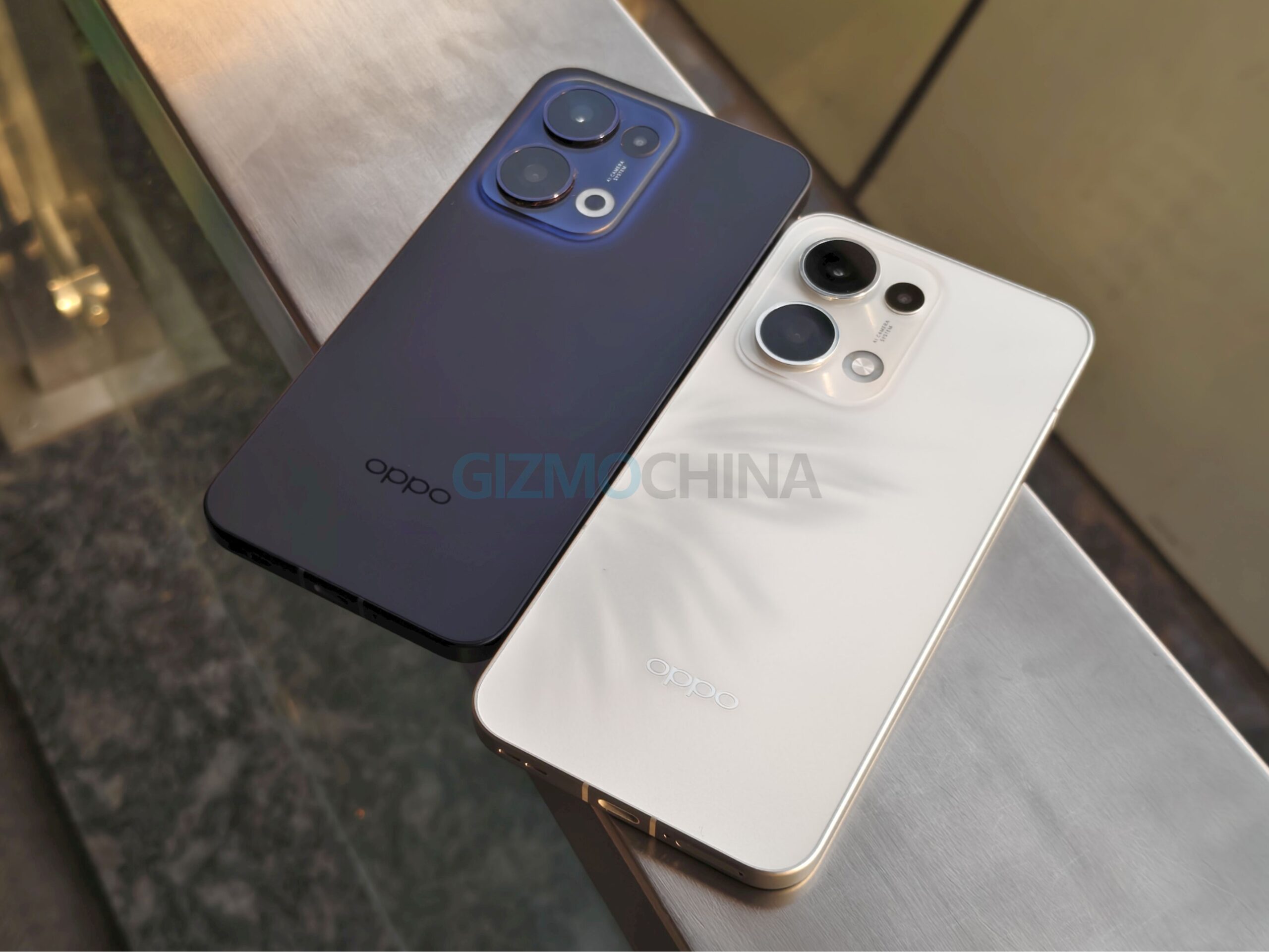
The traditional three-stage switch is still here, and it still feels great. Sliding it up and down is very satisfying. I also took the OPPO Find X8 for comparison, to see how they feel in hand.

The waterproof rating has been greatly improved, from IP65 to IP69. Compared to the IP68 rating, IP69 can even prevent water impact in some cases. I believe this will be very suitable for gamers, they can run the phone through the tap water when the phone gets too hot. Just joking, I wouldn’t suggest that.This is because the equipment is not covered by the after-sales guarantee if it is damaged by water ingress.

Cameras

The sensor changes in the camera are not very significant. The front camera is 32MP with a Sony IMX615.

For the rear camera, both have the same 50MP main camera, Sony LYT-808, but the ultra-wide and telephoto lenses have changed. The sensors have been replaced with ones from Samsung and Sony, and the pixel count has also increased to 50M.

However, compared to the hardware upgrades, OnePlus has added many interesting software features. For example,

glass glare elimination,

AI removal,

and Live Photos .

Display

Judging from the release event, they are very confident in the screen. It has a 6.82-inch display, QHD+ resolution, 510 PPI, 120Hz adaptive refresh rate, very high peak brightness, 10-bit color, and covers 100% of the DCI-P3 color gamut, along with many other features.

There are also some great details in terms of eye protection. There are three levels of eye protection modes in the settings, that allow you to choose between eye protection and smoothness.

Performance and Battery Life

In terms of performance, there’s the Snapdragon 8 Elite, 8533Mbps memory, UFS 4.0 flash storage, nearly 10,000 square millimeters of cooling system,

a 6000mAh battery, and 100W wired and 50W wireless charging.

The hardware specs are as high as ever. In the limited time, we tested the performance of “Honkai: Star Rail” in a Divergent universe. During the test, we found that in most scenes, the frame rate was at 60 FPS.

Most of the frame drop occurred during transitions between game scenes. If I turn off the FPS counter, I might not even notice the lag actually. But what surprised me more was its power efficiency.

In this gaming mode, the power consumption was only an average of 4.44W, and a 21 minutes of gameplay only consumes 7% of the battery, with very little heating. If you lower some of the graphics and turn on the balanced mode, its power efficiency will be even better.

Charging speed has always been a strong point of Chinese phones. So, I tested the OnePlus 13’s compatibility with PD/PPS chargers. In the end, we found that it can charge at a maximum speed of 30W. So, what do you think of this speed?

Conclusion

Finally, let’s talk about its price. When we see the specs, OnePlus seems to focus more on performance and display. The starting price is 4499 RMB, about 631 USD, and the top configuration, the 24G+1T is 5999 RMB, about 842 USD.

This is basically close to the price of the Xiaomi 15 standard version. But considering the bootloader unlock being the easiest one, perhaps the OnePlus 13 is also worth buying. What do you think?

Why Rugged Cases for Smartphones Don’t Make Sense

While rugged cases once served a clear purpose, they may no longer be the best choice for most users. Smartphones are becoming more durable with each passing year as manufacturers invest in better designs and stronger materials. So here’s why rugged cases don’t make sense anymore.

Rugged Cases for Smartphones

1. Modern Smartphones Are Built to Last

Smartphone makers are using tougher and premium materials on their new smartphones, especially the higher end models. Buyers typically buy rugged cases for smartphones that they’ve spent a lot on. However, these devices feature Corning’s Gorilla Glass technology, ceramic shield, and metallic frames like aluminum or even titanium.

There are even waterproof covers being sold, but most flagships arrive with an IP68 rating that confirms a dust tight design, serving being submerged under up to 1.5 meters of water for 30 minutes. So adding a bulky rugged case is just overkill and takes the appeal away from a well-designed smartphone.

2. Bulky Cases Are Inconvenient

Putting on a rugged case can lead to the smartphone becoming almost twice as thick. It also makes the device heftier as well. Premium phones can weigh over 200 grams, so these extra durable cases just make them as heavy as a brick (not literally). Flagship smartphones are built with sleek bodies and extreme precision, and a bulky case just ruins all of its appeal. People go for these cases to keep their smartphones as good as new, but what’s the point of owning such a device if you never get to enjoy it. Some would argue that it helps retain the resale value, although not a lot of people avail such deals.

3. When Rugged Case Actually Make Sense

While rugged cases don’t make sense for everyone, they are ideal for people who work in rough environments or those who frequently take their phones on rugged outdoor adventures. In these situations, the added protection may be worth the trade-offs. But for most users, a standard case with basic drop protection offers more than enough safety for everyday use. We can even consider people with butter fingers to be fair. If you’re one of those who constantly drop their phones, you might as well get the extra protection.

4. Conclusion

Unless you work in tough environments or are struggling with large phones, a rugged case might not be necessary for you. Modern smartphones are built to last and a simple slimmer case might help you save on those annoying dents and scratches. You can save yourself from a bulky armored phone and just choose a simple lighter case that doesn’t take away from the phone’s sleek design. If you want to read more hot takes, click here to check out why flip phones are better than iPhones.

Huawei Mate 70 render leaks along with camera and display specifications

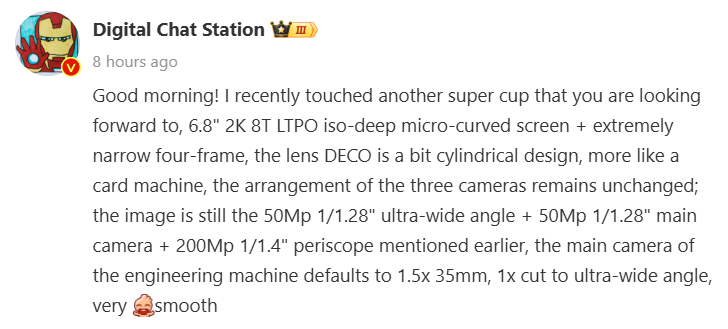
Huawei’s Mate 70 series is expected to launch later this month, and leaks are revealing the specs of the new phones. A recent leak from industry insider Digital Chat Station (DCS) has revealed display and camera specifications for the standard Mate 70, hinting at key upgrades while retaining some features from its predecessor.

According to the tipster, the standard Mate 70 might stick with a similar camera setup to its predecessor. The main attraction seems to be a large 50MP 1/1.5-inch sensor with variable aperture. 

The latter tech allows users to control the amount of light entering the sensor, leading to more creative control over blur and overall image quality.

Another familiar element appears to be the 12MP periscope telephoto lens, likely offering 5x optical zoom. All in all, the leak suggests a triple-lens camera system for the standard Mate 70.

Moving on to the display, the standard Mate 70 might ditch the curved edges for a more traditional flat 6.69-inch screen. This could be accompanied by a side-mounted fingerprint sensor.

Huawei Mate 70 render surfaces

Renders of the Mate 70 have also surfaced on Weibo, suggesting that the phone might draw design inspiration from the Mate 50, featuring a centered circular camera bump. However, this comes from an unconfirmed source, so take this with a pinch of salt.

Beyond the leaks on the display and camera, rumors suggest wireless charging support and dust and water resistance for the Mate 70 series.

One detail remains up in the air: 3D face recognition. While some fans might have hoped for its inclusion across all models, the leak suggests Huawei might reserve it for the higher-end variants, similar to their previous strategy.

It’s important to remember that these are just leaks, and official confirmation from Huawei is still pending. We’ll have to wait for the official launch to get the complete picture of the Mate 70 series’ specifications.

(Source)

Samsung prepares Galaxy S25 Slim with 200MP camera and ultra-thin design

Following the release of the Galaxy Z Fold Special Edition in its home country, Samsung is now reportedly working on the Galaxy S25 Slim, a new flagship device that combines cutting-edge hardware with a focus on a sleeker, slimmer profile.

Samsung Galaxy Z Fold 6 Special Edition

This addition marks Samsung’s return to the “thin and light” approach it experimented with nearly a decade ago, with devices like the Galaxy Alpha. The Galaxy Alpha was just 6.7 mm thick, a stark contrast to the Galaxy S5’s 8.1 mm body. By bringing back a thin model within its flagship lineup, Samsung aims to cater to a segment of users who prioritize a lighter, more compact device without sacrificing flagship-level features.

Galaxy S25 Slim: what to expect?

The Galaxy S25 Slim may come equipped with a powerful camera system. The well-known tipster Ice Universe recently suggested on Weibo that the Galaxy S25 Slim will feature a 200-megapixel main camera. This camera is reportedly similar to the Ultra-level sensor Samsung already uses in its Ultra flagships, making the upcoming ‘Slim’ model a significant upgrade over standard configurations typically offered with thin smartphone models.

Significant in context, Samsung is already using a 200MP sensor in the Galaxy Z Fold Special Edition, recently launched in South Korea.

With model number SM-S937, the Galaxy S25 Slim has already been spotted in various regulatory filings, including the IMEI database. This appearance in regulatory databases is often an indication that a device is in the final stages of testing and approval before hitting the markets.

In terms of size and build, the S25 Slim is expected to fit seamlessly within the S25 lineup, joining the Galaxy S25 (SM-S931), Galaxy S25+ (SM-S936), and Galaxy S25 Ultra (SM-S938). As of now, the precise dimensions and thickness of the Galaxy S25 Slim remain speculative, though it’s expected to significantly differ from the standard S25 models.

Apple is reportedly taking a similar approach

Samsung is not the only major brand exploring ultra-thin designs in their flagship lineup. Apple, one of Samsung’s main competitors, is reportedly developing a “Slim” or “Air” version of the upcoming iPhone 17 series. This device is expected to replace the current iPhone Plus model, offering Apple’s user base a lightweight alternative in the 2025 flagship lineup.

(Source)

OnePlus 12 Android 15 x OxygenOS 15 Stable Update Released Globally

OnePlus has announced an early global rollout of OxygenOS 15, a week ahead of schedule. The update is now being deployed across India, North America, Europe, and Global regions to the OnePlus 12 smartphone, with a phased rollout planned for the remainder of the week.

OnePlus 12 OxygenOS 15 update

The build versions for different regions are as follows:

  • India: CPH2573_15.0.0.206(EX01)
  • North America: CPH2583_15.0.0.205(EX01)
  • Europe/Global: CPH2581_15.0.0.204(EX01)

OxygenOS 15 changelog

Animations

  • A state-of-the-art system graphics engine now powers superior rendering and animation performance, driven by advanced parallel processing that ensures smooth, uninterrupted visuals, even when multitasking or running resource-intensive applications.
  • Parallel processing extends to elements like widgets, components, and folders, providing seamless transitions and smooth animations, even during frequent interruptions.

Visual effects

  • The Home screen features a refreshed design with newly crafted icons, achieving a balanced look with enhanced proportions and vibrant colors for sharper, fuller visuals.
  • Numerous system function icons have been updated to improve visual uniformity, creating a cohesive aesthetic throughout the system.
  • The rounded corner design has also been refined to ensure uniformity, with smooth, continuous curvature applied across all elements.

Themes

  • The new flux themes offer a broad selection of high-quality options, enabling customization with system wallpapers and personal photos for a uniquely personalized experience.
  • Extensive customization features are available for the Always-On Display, Lock screen, and Home screen. Both flux and classic modes are supported for Always-On Display. The Lock screen supports clock color blending, glass textures, blurred wallpapers, AI depth effects, AI auto-fills, and more. Glass patterns, blurred wallpapers, and additional elements are available for the Home screen.
  • Flux themes provide fluid and seamless transition animations across Always-On Display, Lock screen, and Home screen for enhanced visual consistency.

Fluid Cloud

  • The updated Fluid Cloud enhances app compatibility, now supporting a wider range of overseas applications like Spotify, Swiggy, and Zomato. This enables real-time synchronization of information in various scenarios such as food ordering and music listening.
  • The design focuses on efficient information visualization, positioned centrally for a balanced and streamlined display.
  • Interaction with alerts allows capsules to expand into detailed cards with a tap, providing efficient access to multiple live activities by swiping in the status bar.
  • The new animation system brings a fluid, elastic design with dynamic blurring effects in real-time, making card visuals smoother and more refined.

Photo Editing

  • The new globally reversible photo editing capability saves previous edit settings for seamless subsequent edits, ensuring uninterrupted creative flow.

Floating Window and Split View

  • New Floating Window gestures: swipe down on a notification banner to open a floating window, swipe down again to enlarge it, swipe up to close it, and swipe sideways to hide it.
  • Resizable Split View windows allow dragging the divider or tapping to expand the display area as needed.

Notifications & Quick Settings

  • The new Split mode allows separate access to the notification drawer (top-left swipe) and Quick Settings (top-right swipe), with swipe left or right to switch.
  • Quick Settings has been revamped for a more visually appealing layout, with smoother and refined animations.

Battery & charging

  • The new “Charging limit” feature halts charging at 80%, helping to extend battery life and minimize degradation.
  • The new battery protection reminder activates the Charging limit feature if the device remains charging for too long, enhancing battery protection.

Sounds & vibration

  • Holo Audio is enhanced for online calls and meetings, delivering a richer and more immersive sound quality.

More

  • Exclusive OxygenOS Always-On Displays and Lock screen clock styles are added for a unique visual experience.
  • The new Home screen clock widget offers customizable resizing for added flexibility.
  • The classic easter egg is added in the Calculator and will pop up when you input “1+=”, embodying OnePlus’s enduring “Never Settle” philosophy.
  • New wallpapers are added to infuse your device with the signature OnePlus style. 
  • Exclusive app icon designed for OxygenOS are added, offering a fresh visual experience.
  • A new Two-Tone theme color allows Quick Settings and the Settings app icon to be displayed in “Black,” highlighting OxygenOS’s iconic design.
  • Enhanced Notes widgets offer improved aesthetics and functionality.
  • The multitasking experience is optimized, automatically directing you to the last used app in the recent tasks view for smoother app switching.
  • Drawer mode has also been refined to preserve your Home screen app layout upon first use.

Safety

  • A unified hub for personal safety features brings together emergency calls, disaster alerts, security checks, and quick access to first aid information.

Privacy

  • Private Safe now features categorized views for images, videos, and documents, simplifying data organization.
  • A new Home screen shortcut for hidden apps provides quick access by tapping the folder and verifying your privacy password.

Wi-Fi

  • The multi-network experience is optimized for seamless, efficient, and accurate transitions between networks.

Please note:

To provide the signature fast and smooth OnePlus experience, AI-related features are still being tested and will be gradually integrated in future versions by the end of this month.

OnePlus has provided detailed rollback instructions for users who wish to revert to a previous OxygenOS version. The process involves downloading a specific rollback package and following the outlined steps. Note that the rollback process will erase all data on the device, so it’s crucial to back up important data beforehand. You can learn more about it by visiting the OnePlus Community forum.

The Global Sources Hong Kong Shows – Consumer Electronics and Electronic Components Recap

Exhibition Tour at Global Sources Hong Kong Show 2024 October

Recently, Gizmochina team visited the Hong Kong Global Sources exhibition again. So two times a year, in the spring and autumn, we visit this event, try to show you what are the new things out there. As some of the holidays are coming in the next few months, you may want to pick up some gifts for your loved ones, and some of the buyers and merchandisers from your country are here, then bring those things to you. For now, you can get a little sneak peek of those awesome products, check out the video here to see all of them!
As you can see, there was quite a lot of effort put into this exhibition by Global Sources, not only just about getting buyers and suppliers together, but also making them feel at home, you see the Prayer room for Muslims. Every time, we talk to some buyers, they all believe in buying from China, and a platform like this serves that purpose perfectly. And if you are an individual, you can also pay a visit, and see those products yourself, it would be fun!

Samsung W25 Flip Debuts in China with Gold Armor Frame & Snapdragon 8 Gen 3 for Galaxy

The Samsung W25 Flip was just announced alongside the Samsung W25 foldable phone. As the name suggests, the brand’s latest foldable phone is a clamshell flip model that features a premium design, top notch specs, and much more. So let’s check it out.

Samsung W25 Flip: Galaxy Z Fold 6 Goes Gold?

Just like the Samsung W25, the W25 Flip was announced in ceramic black along with a “Heart to the World” logo with a delicate matte touch, and a gold armored aluminum frame. Similar to how the W25 is based on the Galaxy Z Fold Special Edition, the W25 Flip is based on the Galaxy Z Flip 6. It sports a tall 6.7-inch FHD+ Dynamic AMOLED 2X Infinity Flex primary display with a 120Hz adaptive refresh rate. Meanwhile, the cover panel is a 3.4-inch HD Super AMOLED secondary screen with a 60Hz refresh rate and Corning Gorilla Glass Victus 2.

Samsung-W25-Flip
Samsung W25 Flip

Under the hood, the Samsung W25 Flip is also equipped with the Snapdragon 8 Gen 3 for Galaxy chipset, which is paired with 12GB of RAM and 512GB of internal storage. A 4,000mAh battery pack powers this model that supports 25W wired fast charging and 15W wireless charging. For optics, the rear has a 50MP main camera and a 50MP ultra wide angle lens, while the front has a 10MP selfie shooter. Other notable features include an IP48 rating for water and dust resistance, stereo speakers with Dolby Atmos, Android 14 OS based One UI 6.1.1 custom skin out of the box, dual SIM support, and NFC.

Pricing

The Samsung W25 Flip was finally announced in China for a 9,999 Yuan price tag (roughly 1,393 US Dollars). This model is available for pre-order starting from today, with first sales starting in China from 15th November 2024.

Samsung W25 Foldable Phone Launched in China with Gold Armor Aluminum Frame

Samsung recently introduced its latest W series of foldable smartphones in China. But now, it has finally launched these foldable phones, confirming their specs, pricing, and availability. These models are the brand’s exclusive China only foldable models, so here’s everything you need to know about the Samsung W25.

Samsung W25: What makes it special?

To recall, the South Korean tech giant’s new W25 model is quite similar to the Galaxy Z Fold 6 but with some upgrades. Although, it gets a unique flair with a ceramic black, “Heart to the World” logo, a delicate matte touch, and a gold armor aluminum frame. That’s not all, this model is even 1.5mm thinner than the Galaxy Z Fold 6, measuring just 10.6mm when folded.

Samsung W25
Samsung W25

It sports a tall 8-inch QXGA+ (2184 x 1968 pixels) resolution, 20:18 Dynamic AMOLED 2X Display, 120Hz adaptive refresh rate, HDR10+, and up to 2600 nits peak brightness. The cover screen is a 6.5-inch 21:9 HD+ Dynamic AMOLED 2X Cover Display, 120Hz adaptive refresh rate, up to 2600 nits peak brightness, and Corning Gorilla Glass Victus 2 protection. Under the hood, it is equipped with the Snapdragon 8 Gen 3 for Galaxy, which is paired with 16GB of RAM and up to 1TB of internal storage.

The rear has a 200MP main camera, instead of the 50MP primary sensor on the Z Fold 6. This is paired with a 12MP ultra wide angle lens and a 10MP telephoto shooter. For selfies and video calls, there is a 10MP shooter on the external screen and a 4MP under display camera on the main display. A 4,400mAh battery pack powers the Samsung S25, which supports 25W wired fast charging and 15W wireless charging. Other notable features include a side mounted fingerprint scanner, IP48 water and dust resistance, stereo speakers with Dolby Atmos, and Android 14 OS based One UI 6.1.1 custom skin out of the box.

Samsung-W25

Pricing and Availability

The Samsung W25 was announced in China with a 15,999 yuan starting price tag (roughly 2,229 US Dollars) for its 16GB + 512GB storage configuration. Meanwhile, the 16GB + 1TB variant costs 17,999 Yuan or about 2,508 US Dollars. It is currently available for pre-orders starting today, with first sales set to kick off in China on November 15.

Huawei hiring TSMC employees with triple salary

Chinese tech giant Huawei has reportedly ramped up its recruitment efforts, targeting high-profile employees from Taiwan’s TSMC, the world’s leading semiconductor manufacturer. 

According to industry sources, Huawei is offering salaries exceeding three times what TSMC employees currently earn. As a major player in telecommunications and hardware, Huawei has long aimed to strengthen its in-house semiconductor expertise. 

With the global chip shortage easing, the company appears to be positioning itself for a strategic push in this crucial sector. TSMC, known for its advanced technology and manufacturing expertise, has become a primary target in this talent battle. Huawei says its recruitment drive is a standard business practice.

TSMC talent a major gain for Huawei

TSMC’s success relies heavily on its proprietary processes and technical know-how, and the possibility of financially motivated employees revealing these secrets to a competitor raises serious concerns for TSMC and Taiwan’s tech industry at large.

This aggressive hiring strategy coincides with Huawei’s mixed financial reports. The company recently posted record-breaking revenue but saw a decline in profits, suggesting substantial investments in research and development. This has fueled speculation about a significant upcoming product launch.

If Huawei succeeds in attracting TSMC’s talent, it could gain not only skilled professionals but also potentially valuable technical knowledge. Gaining insight into TSMC’s processes could accelerate Huawei’s journey to becoming a top-tier semiconductor manufacturer, further intensifying competition in the already fierce global chip market.

Taiwanese authorities, including the Justice Investigation Bureau, are reportedly tightening their oversight of recruitment practices targeting local semiconductor talent. Companies suspected of misleading job roles or offering inflated salaries to encourage knowledge transfer may face legal action.

Red Magic 10 Pro uses liquid metal for cooling: officially claimed to reduce core temperatures by up to 21 degrees

The highly anticipated Red Magic 10 Pro series is set for launch on November 13, bringing cutting-edge advancements in cooling and display technology to the gaming smartphone market. Marking a significant industry first, the device features composite liquid metal and PC-level cooling technology aimed at maximizing performance by efficiently managing heat.

James Jiang, general manager of Red Magic gaming products, explained that the phone’s “ICE X Magic Cooling System” leverages liquid metal, reducing core temperatures by up to 21 degrees.

Red Magic 10 Pro “ICE X Magic Cooling System”

This cooling system uses an innovative “sandwich structure” of low-temperature alloys layered around an indium base. As the temperature rises, these alloys partially melt and bind to the indium, enhancing thermal conductivity while maintaining stability and user safety.

Specifications and performance

With the upcoming flagship, Red Magic is also introducing a new generation of true full-screen displays. Boasting a 6.85-inch display with a 95.3% screen-to-body ratio, the phone is crafted with minimal borders—a 1.25mm black edge and a 0.7mm frame thickness.

Red Magic 10 Pro Series
Red Magic 10 Pro Series Wukong Display

Designed to deliver high-end visual performance, the screen offers 1.5K resolution, a 144Hz refresh rate, and a peak brightness of 2000 nits. The device also includes a Triple AI under-screen camera algorithm for a seamless front-camera experience.

Under the hood, the Red Magic 10 Pro is powered by the Snapdragon 8 Elite processor, enhanced by a self-developed Red Magic gaming chip, promising more stable frame rates. A notable addition to this model is its high-density battery technology, marketed as a “perpetual motion machine” for extended battery life, which will benefit gamers who spend hours on intensive tasks.

In addition to impressive hardware, the Red Magic 10 Pro recently appeared on Geekbench, with single-core and multi-core scores of 3167 and 10081, respectively. These benchmarks indicate substantial performance improvement over the Snapdragon 8 gen 3-powered Red Magic 9 Pro.

With its robust internals and innovative cooling, the Red Magic 10 Pro series is positioned to set new standards in the gaming smartphone category.

(Source)

Galaxy S25 Slim makes appearance on the certification authority

Following rumors of a potential “Slim” iPhone 17 in 2025, Samsung appears to be exploring similar territory with a rumored “Galaxy S25 Slim” model.

A report surfaced from South Korea earlier this week, hinting that Samsung’s slimmer smartphone could arrive in the second quarter of 2025 (April-June), following the launch of the standard Galaxy S25 lineup.

Now, a listing discovered by Smartprix in the GSMA IMEI database adds weight to these rumors. The listing shows a smartphone with the market name “Galaxy” and model number SM-S937U. 

A slim phone from Samsung seems plausible

Although the listing doesn’t explicitly name the device as the Galaxy S25 Slim, the report suggests it belongs to that line. The report also notes that Samsung typically adds devices under internal testing to the database six to seven months before launch. The “U” suffix on the model number further indicates a planned US rollout.

Additionally, the model number format matches the naming conventions used for the standard, Plus, and Ultra variants of the Galaxy S series.

Details regarding the Galaxy S25 Slim are still limited, but the Slim label suggests it will be notably thinner than current Galaxy flagships, which might require trade-offs in other areas.

Apple’s rumored “Slim” iPhone 17, according to reports, could debut later in the third quarter and carry a price tag exceeding even the current iPhone Pro Max. This thinner iPhone is also expected to offer a 6.6-inch display with a single rear camera.

Samsung’s approach with the Galaxy S25 Slim remains to be seen. To achieve a slimmer profile, the company may need to make adjustments to components such as the processor, display, battery, and camera. 

While the rise of AI features in the Galaxy S24 and iPhone 16 might not have been enough for some users to upgrade, 2025 could see the battle for market share shift towards the allure of a truly slim smartphone.

(Source)

Realme GT7 Pro repair parts pricing announced: Motherboard replacement starts at ~$340

Realme has recently launched its 2024 flagship device, the Realme GT7 Pro, featuring the latest Snapdragon 8 Elite processor and a 6,500mAh “Titan battery,” with a starting price of 3,599 yuan (approximately $500).

realme-GT7-Pro-1

Now, Realme has revealed the pricing for repair parts on its official website, providing owners with a clear breakdown of potential replacement costs.

Realme GT7 Pro repair parts pricing

The following are the prices for the Realme GT7 Pro’s repair components, as listed on Realme’s website:

  • Motherboard (12GB+256GB): 2,449 yuan (~$340)
  • Motherboard (12GB+512GB): 2,559 yuan (~$356)
  • Motherboard (16GB+1TB): 2,789 yuan (~$388)
  • Motherboard (16GB+256GB): 2,499 yuan (~$348)
  • Motherboard (16GB+512GB): 2,649 yuan (~$369)
  • Battery: 249 yuan (~$34)
  • Battery Cover Assembly: 270 yuan (~$37)
  • Sub-board (USB port): 50 yuan (~$7)
  • Rear Camera (Telephoto): 399 yuan (~$55)
  • Rear Camera (Wide Angle): 95 yuan (~$13)
  • Rear Camera (Main): 329 yuan (~$45)
  • Motor: 50 yuan (~$7)
  • Screen: 990 yuan (~$137)
  • Front Camera (Main): 149 yuan (~$20)
  • Adapter: 159 yuan (~$22)
  • Receiver: 50 yuan (~$7)
  • Data Cable: 39 yuan (~$5)
  • Speaker: 50 yuan (~$7)

Realme has provided a comprehensive fee description for these prices, indicating that they are unified national maintenance guidance prices. Repairs are free for devices under warranty, provided they meet warranty conditions. Realme also offers fixed-price repair promotions at various times, allowing customers to enjoy reduced costs for non-warranty repairs. For example, Realme may offer discounted rates for battery replacements. In such cases, defective parts are returned to Realme upon repair.

Realme GT7 Pro specifications:

The Realme GT7 Pro stands out as the first device to include an Eco² Sky Screen, achieving a global peak brightness of 2,000 nits, and pioneering a non-polarized natural light eye protection technology. The phone’s display, which is a customized Samsung panel, is aimed at providing vibrant visuals with minimized eye strain.

Realme GT 7 Pro

Performance-wise, the device is powered by the Snapdragon 8 Elite, delivering enhanced processing speeds, advanced graphics capabilities, and optimized power efficiency. Additionally, Realme has collaborated with battery maker CATL to develop the “Titan Battery,” a robust 6,500mAh battery that supports 120W light-speed charging, promising extended battery life and fast charging for users who are frequently on the go.

In terms of camera capabilities, the Realme GT7 Pro features a powerful 50-megapixel ultra-light periscope telephoto camera with a 1/1.95” sensor and 3x magnification, offering AI-assisted super-resolution for enhanced detail in telephoto shots. It offers a 6x lossless zoom capability and a maximum 120x zoom for reasonably good detail, even at long distances. Alongside this, the device features a 50-megapixel main camera (1/1.56” sensor) and an 8-megapixel ultra-wide camera, which together support the capture of “ultra-clear live pictures” and Dolby Vision HDR videos.

While currently exclusive to China, international buyers can still purchase the device through platforms like Giztop.

(Via)

Xiaomi 15 Full Review: Yes, Still The King of 6.3-inch Phones. But No Surprises

When Xiaomi 13 was released, I was very excited, because that’s my ideal phone. when Xiaomi 14 was released, I was very happy, because my dream phone became perfect. Now that the Xiaomi 15 has been released, I realize I’m not as happy as I was before. Because my Xiaomi 14 is already great, why should I upgrade to Xiaomi 15? Is it that great? Is it worth buying? When I finished testing it, I had the answer in my mind.

Don’t forget that the Xiaomi 15 series is currently available at GeekWills. For those who want to get an early taste of this phone, you can get it by clicking the link below.

Design

The appearance is pretty much like what I covered in the hands-on video. Simply put, there isn’t much that has changed, but when you get your hands on it, it feels like it’s become more sophisticated. Don’t get it? Ok, you can go to an iPhone store, and then get your hands on the iPhone 16, that one is like the Xiaomi 14, and the Xiaomi 15 is more like the iPhone 16 Pro, both in terms of the premium feel and the size.

The frosted back cover and frame do make the phone feel more expensive, but it also means it’s more slippery, and I almost dropped it a couple of times, to be honest. I’d also like to complain about the ultrasonic fingerprint recognition area. Yes, it is better positioned and the speed is faster. It also doesn’t blind you at night like a flashbang.

The only cost is that you won’t be able to put whatever film you want on it. One advantage of a straight screen is that you can apply tempered film very easily and conveniently, but ultrasonic fingerprint recognition takes that away. Because ultrasonic waves can’t penetrate tempered film, so you need to buy special film, or you can only use TPU film, which makes it very difficult for me to accept as a tempered film lover.

And… There doesn’t seem to be anything else I can gripe about. It has all the features it should have, except for that headphone jack that’s been gone for a decade. Because it’s a globally sold model, it also has more network band support than other phones. If you don’t care about the film issue, then the Xiaomi 15 should be the perfect one as a 6.3-inch phone.

Display

The Xiaomi 15’s screen, compared to last year, has three main upgrades: brighter, narrower, and more power-efficient. The Xiaomi 14’s 3,000nit brightness is only achievable in 1% of the screen, but the Xiaomi 15 can reach that brightness in 25% of the area, and it is available while reading eBooks.

Narrower, meaning the bezels are narrower, the Xiaomi 15 has one of the narrowest bezels of any phone. The new M9 luminescent material, combined with a dual microcavity structure, has reduced the screen’s power consumption by 10%. And you have to keep in mind that this is a 6.3-inch straight screen, the phone is less than 72mm wide. This is the main reason why I like the Xiaomi number series so much.

Performance & Battery

I’ve put the benchmark scores for the Xiaomi 13 to 15 here. It is clear that the Xiaomi 15 with Snapdragon 8 Elite is the generation with the most improvements. Because of the new second-generation Oryon architecture, the CPU scores dust the previous generation by a mile. With every processor upgrade comes an improved gaming experience.

Again taking Genshin Impact as an example, the game doesn’t seem to be able to create trouble for current phones anymore, even last year’s Xiaomi 14 can run it smoothly. The advantage of a more advanced processor though, is that it’s able to achieve the same results with lower temperatures and less power. Even the frame rate jitter is a little bit less than the 14, which means it’s smoother.

Combined with the 5400mAh battery, the 15 consumes 2% less power than the 14 in just 20 minutes of gaming. Both gamers and non-gamers should be very happy with this chip and battery life, that’s for sure. This is probably where the biggest difference between the Xiaomi 14 and 15 comes in.

Charging

Since we’re talking about the battery, let’s also cover the charging part as well. The 90W wired charging and 50W wireless charging are basically the same as the Xiaomi 14, and a full charge takes about 40 minutes.

The Xiaomi 15 has a new mode in the battery settings: cold endurance mode, which limits performance to extend battery life, a very useful feature for those who live in extremely cold environments.

Camera

Just looking at the specs, the Xiaomi 15’s camera is almost exactly the same as the Xiaomi 14’s. Only the sensor of the telephoto camera has been upgraded a little bit. Very disappointing, right?

Actually, we all misunderstood Xiaomi, because it has actually improved quite a lot. I’ll be putting up a lot of samples here, and slowly you’ll be able to see how far ahead the Xiaomi 15 is compared to the 14. The photos taken by the 15 are clearly sharper and less noisy, and it’s ahead of the Xiaomi 14 on all fronts, whether it’s the main camera, the telephoto camera, or the ultra-wide camera.

But Why? Two reasons. One is because the Snapdragon 8 Elite’s ISP has gotten stronger again. The second is that Xiaomi’s algorithms have evolved again, and AI enhancements have become easier to trigger. So the Xiaomi 15 proves one thing: you can’t judge a phone’s camera by its hardware alone, algorithms can sometimes change the game.

In addition to the AI upgrades, the Xiaomi 15 also fixes a lot of issues that were on the Xiaomi 14. For example, the red color being oversaturated leads to color distortion, which is often seen on the Xiaomi 14. It was hard for you to see details on red objects. Then this year’s Xiaomi 15 solved that problem. The stability of the white balance has also been improved, so the food looks more tasty in the photos.

Thanks to the new ISP, the keying algorithm in portrait mode has also been greatly enhanced. It’s impressive to see that hair doesn’t get mushy even in very harsh environments.

Dynamic range has been improved and exposure has been bumped up a notch, which should make more people like this style.

However, this also leads to a drop in contrast, and personally I still prefer the photos from the Xiaomi 14. Of course, you can choose Leica Authentic mode to improve the contrast of your photos. Both phones have almost identical photo styles in this mode, showing that Xiaomi feels this is the best answer to Leica color on a phone.

Video recording

When it comes to video recording, the Xiaomi 15 has improvements and regressions. The improvement is that the HDR effect has been boosted once again, you can see the blue sky in the video taken by the Xiaomi 15, but it is just a white sky on the Xiaomi 14. Even with the front-facing camera, the Xiaomi 15 can record 4K 30FPS HDR videos, but the Xiaomi 14 can’t.

Lens flare is also being controlled better than the 14. You can see a petal-like ring of flare around the sun on the Xiaomi 14. Here’s a new con: it’s clear that the Xiaomi 15 has a serious purple-fringing issue. Maybe the photos taken can still be fixed by the algorithm, but the video completely exposes this shortcoming.

Overall, the Xiaomi 15’s camera system has been upgraded more than expected. If it is 7 out of 10 for the Xiaomi 14 camera system, then the Xiaomi 15 should get 8. That’s a very high score for a 6.3-inch phone.

HyperOS 2

I know you guys are concerned about how the HyperOS 2 really is. Since I haven’t had hands-on experience for a long time, I can only tell you how I feel about it in the past few days.

Compared to OS 1, the biggest feeling is that it’s much smoother. There are fewer dropped frames, a lot of blurring effects have been added, and the animations have become more dynamic. I’m going to put a few comparisons with HyperOS 1 here, so you should be able to see that, there are still a lot of optimizations in OS 2.

For comparison samples, please watch the video https://www.youtube.com/watch?v=iY1JJfWb6bI

HyperOS 2 also has a lot of new features, such as the AI in it, which allows you to customize your dynamic wallpaper, and be able to access Apple’s ecosystem with a single app. Some of the features are not very stable at the moment, and some of them still need to wait for an OTA update to work. So give us, and Xiaomi some time, more HyperOS 2 features will be presented in the Xiaomi 15 Pro Review.

Now back to the question, is it great? Yes, it’s great! Even if the Samsung S25 hasn’t been launched yet, I am confident in saying that this is the best small-sized phone out there. Is it worth buying? Unless you don’t like small-sized phones, you will never regret getting them. If you are a Xiaomi 14 user, then check your wallet before you decide. The Xiaomi 15 is great, but the Xiaomi 14 isn’t bad either, so for those of you has the 14, maybe waiting for the Xiaomi 16 should be the more sensible option.