Advertisement

These 14 Vivo and iQOO devices can now join the OriginOS 7 beta

Vivo has opened registrations for its OriginOS 7 internal beta program in China. The early testing phase covers a wide range of Vivo and iQOO smartphones and tablets. It also gives users an early opportunity to experience the upcoming software before its wider rollout.

14 Vivo and iQOO devices are eligible

The OriginOS 7 beta program covers the following 14 devices:

Vivo X Fold 6

Vivo X Fold 5

Vivo X300 Ultra

Vivo X300 Pro

Vivo X300s

Vivo X300

Vivo X300e

Vivo Pad 6 Pro

iQOO 15 Ultra

iQOO 15

iQOO 15T

iQOO Neo 11

iQOO Neo 11 Ultra

iQOO Pad 6 Pro

Each device will have 3,000 beta tester slots. Of these, 500 places will have logging enabled, while the remaining 2,500 participants will test the software without logging enabled. Registration opened on September 7 at 10:00 AM (China local time) and will remain available until 11:59 PM on Sept. 13. The list of selected testers is scheduled to be announced by September 15, with the beta update expected to roll out between 3:00 PM and 6:00 PM on Sept. 16.

Vivo says the internal testing build is still under development, so users could encounter bugs, unusual battery drain and compatibility problems with third-party apps. The update itself will not erase existing data, but users are advised to create a complete backup before installing it.

Eligible users can register through the phone’s Settings app by heading to System Management and Upgrade, System Upgrade and then Upgrade Early Access. The OriginOS 7 beta recruitment poster also shows the programme is focused on gathering user feedback before the software reaches a broader audience.

For daily updates, please visit our News Section.

Stay ahead in tech! Join our Telegram community and sign up for our daily newsletter of top stories!

Nubia NaviX Ultra is launching next week as the world’s first AI-agent smartphone

The Nubia NaviX Ultra is set to bring a different approach to smartphone intelligence when it arrives later this month. Nubia has now confirmed the launch date and opened reservations for the device. The company has also revealed several hardware details ahead of the event.

Nubia NaviX Ultra launch date confirmed

Nubia NaviX Ultra launch date

Nubia has announced that the NaviX Ultra will officially launch on Sept. 16 at 2:00 PM (local time) in China. It is being positioned as the world’s first AI-agent phone and has been developed jointly by ZTE and ByteDance. It will come with the Doubao Phone Assistant, which is designed around four core areas: understanding commands, completing tasks, remembering information, and security.

The phone will feature the Snapdragon 8 Elite Gen 5 chipset alongside LPDDR5X memory supplied by ChangXin Memory Technologies. The memory can reach a 10,667Mbps data rate, marking the first mass-produced domestic LPDDR5X solution at this speed, according to the memory maker. The phone is also expected to feature a 6.78-inch 1.5K OLED flat display with a 144Hz refresh rate.

The NaviX Ultra will pack a 7,100mAh battery, with support for 90W or 100W wired charging and wireless charging. Its camera setup is expected to include a 50-megapixel main camera, an ultra-wide camera and a periscope telephoto camera, while the front camera will also reportedly use a 50-megapixel sensor.

The phone’s design includes a distinctive horizontal camera module across the rear and a dedicated orange AI key on the side for quickly accessing its AI features. The device is expected in multiple color options, including blue, black and white variants.

The Doubao assistant is intended to handle tasks across applications rather than simply responding to voice commands. Earlier information suggests the broader AI experience is moving towards app-provided MCP services instead of relying entirely on screen reading and simulated taps.

For daily updates, please visit our News Section.

Stay ahead in tech! Join our Telegram community and sign up for our daily newsletter of top stories!

iQOO Pad Ultra leak reveals 8.8-inch OLED panel Snapdragon 8 Elite Gen 6 chip, active cooling fan, and more

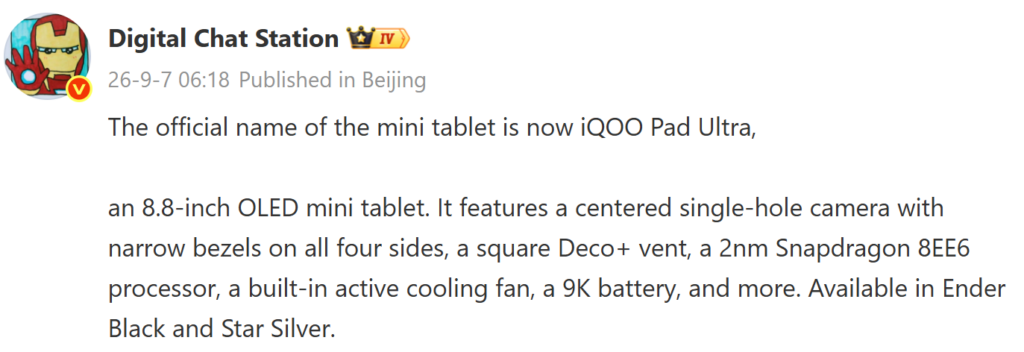
iQOO will hold a launch event to unveil the iQOO 16 by the end of this month or early October. Apart from announcing the performance-focused flagship, the brand will also introduce a new compact tablet powered by the latest Snapdragon 8-series chip. Today, reliable tipster Digital Chat Station released the following Weibo post to confirm its final moniker.

iQOO Pad Ultra details leaked

DCS claims that the company’s forthcoming compact tablet will be called the iQOO Pad Ultra. He further revealed that the device will be equipped with an 8.8-inch OLED panel and will be powered by the Snapdragon 8 Elite Gen 6 series chipset.

The Pad Ultra is also said to have an active cooling fan for sustained performance. Other reported specifications include a large 9,000mAh battery and a square-shaped camera deco with a vent opening.

The device will be available in Shadow Black and Star Armor Silver color options. It will also have support for some accessories for an elevated gaming experience.

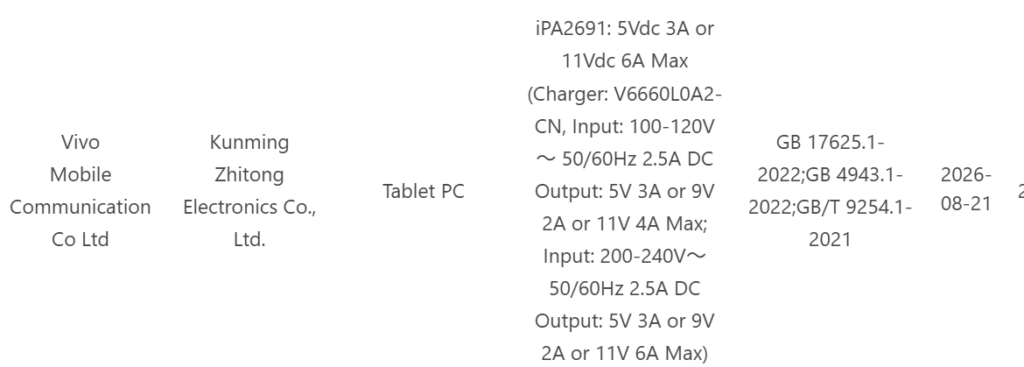
iQOO Pad Ultra 3C listing

Speculation is rife that the iQOO device with model number iPA2691, which has already appeared on Chinese certification platforms like SRRC and 3C, could be the iQOO Pad Ultra. The 3C listing has revealed that the device may support 66W fast charging. It also suggests that the tablet could be available only in W-Fi version, meaning it will not have SIM support.

For daily updates, please visit our News Section.

Stay ahead in tech! Join our Telegram community and sign up for our daily newsletter of top stories!
Oppo Find X10 Pro Max officially confirmed to launch this month with three 200MP cameras

The Oppo Find X10 series is set to put a strong emphasis on smartphone photography, with the company teasing several camera-focused upgrades. The upcoming lineup will introduce a new Hasselblad Super Clear Camera system designed around more natural-looking images. Oppo has also shared an early look at the phone’s rear camera design, giving us more clues about what to expect.

Oppo Find X10 series focuses on natural photography

Oppo Find X10 series' first teaser
Oppo Find X10 series’ first teaser

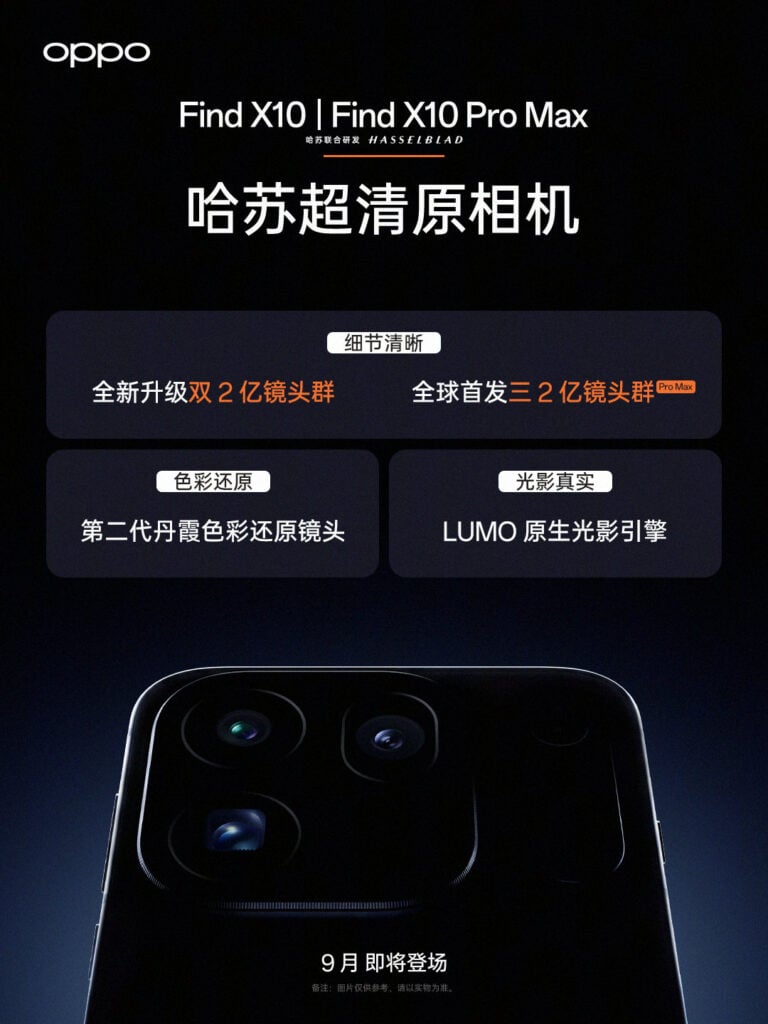
The Find X10 will feature a dual 200-megapixel camera setup jointly developed with Hasselblad, while the Find X10 Pro Max is positioned as the more aggressive option with three 200-megapixel cameras. Oppo says the approach is intended to preserve fine details without relying heavily on artificial processing that can introduce unnatural textures and skin.

The second-generation Danxia Color Restoration Lens is another key part of the system. It uses 24 sampling channels and a 15-stop dynamic range to capture ambient light and colors more accurately.

Oppo is also introducing its LUMO native light and shadow engine, which is designed to maintain more natural brightness and contrast, including better facial detail in backlit scenes.

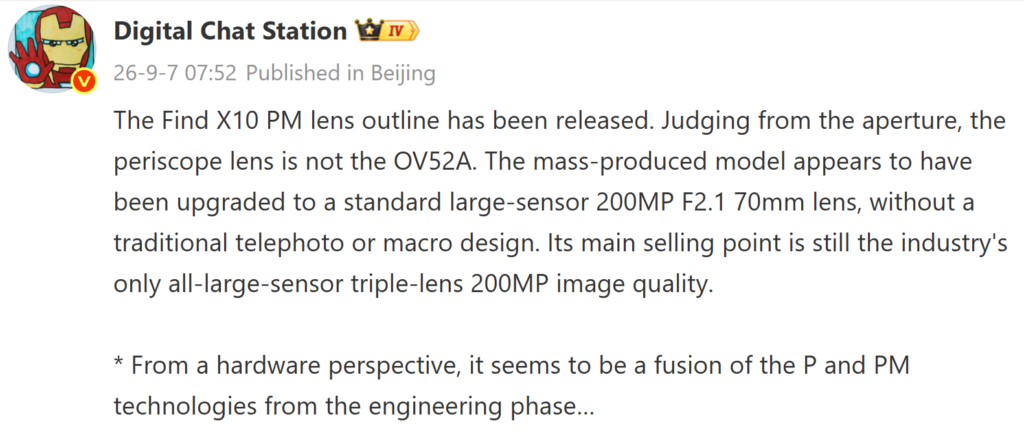
Digital Chat Station has also shared details about the Find X10 Pro Max camera configuration. According to the tipster, the periscope camera’s aperture suggests that the phone may not use the previously rumored OV52A sensor. The production version could instead feature a conventional large-sensor 200-megapixel telephoto camera with a 70mm focal length and an f/2.1 aperture. The setup is also expected to support telephoto macro photography, while retaining the headline feature of three large-sensor 200-megapixel cameras.

The official poster shows a large, horizontal rear camera island with rounded corners and a stepped rectangular layout. Three visible camera openings are arranged within the main section, while a fourth circular area sits separately on the right.

The Find X10 series is set to launch this month (September) in China. Both devices have already appeared on the Geekbench benchmarking platform, revealing that they are powered by different Dimensity 9-series chipsets.

For daily updates, please visit our News Section.

Stay ahead in tech! Join our Telegram community and sign up for our daily newsletter of top stories!
Timex launches two new Peanuts-themed Expedition Acadia watches in the US

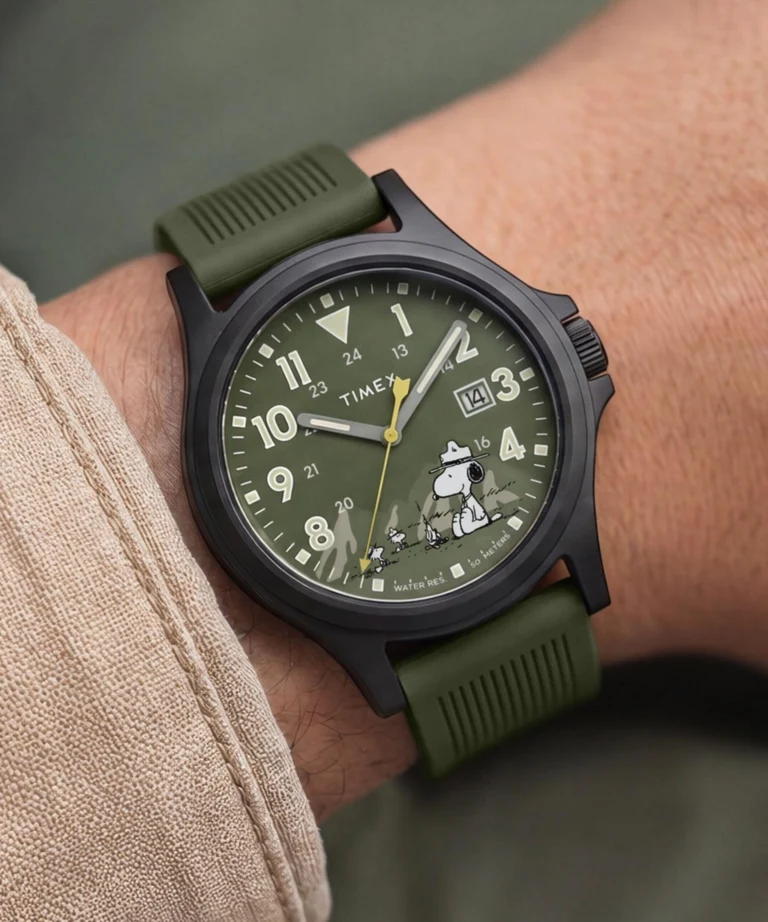
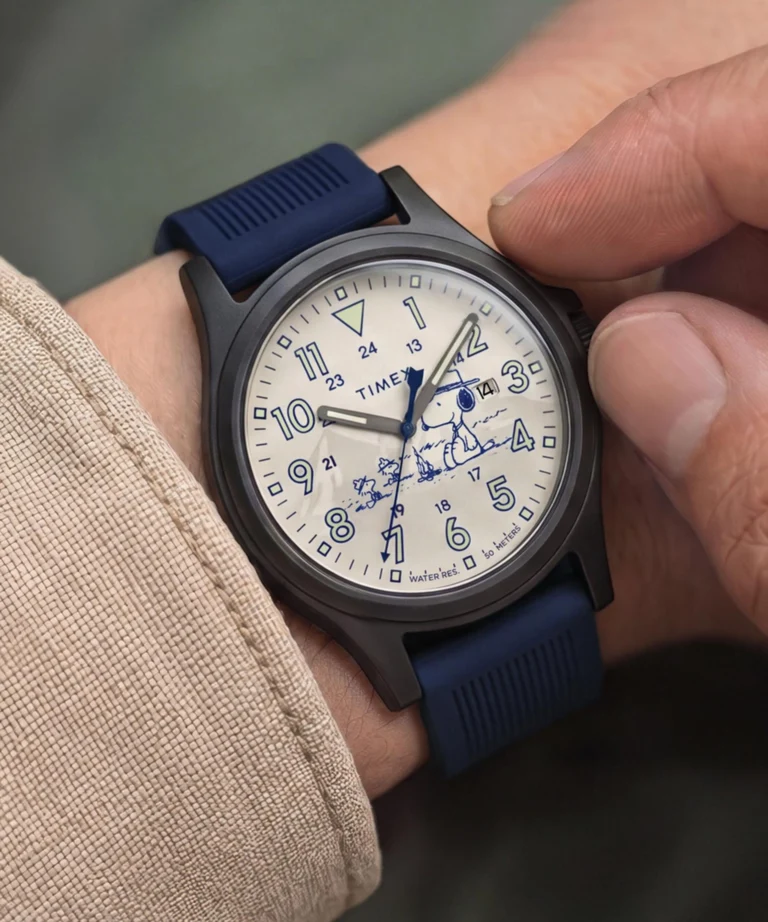
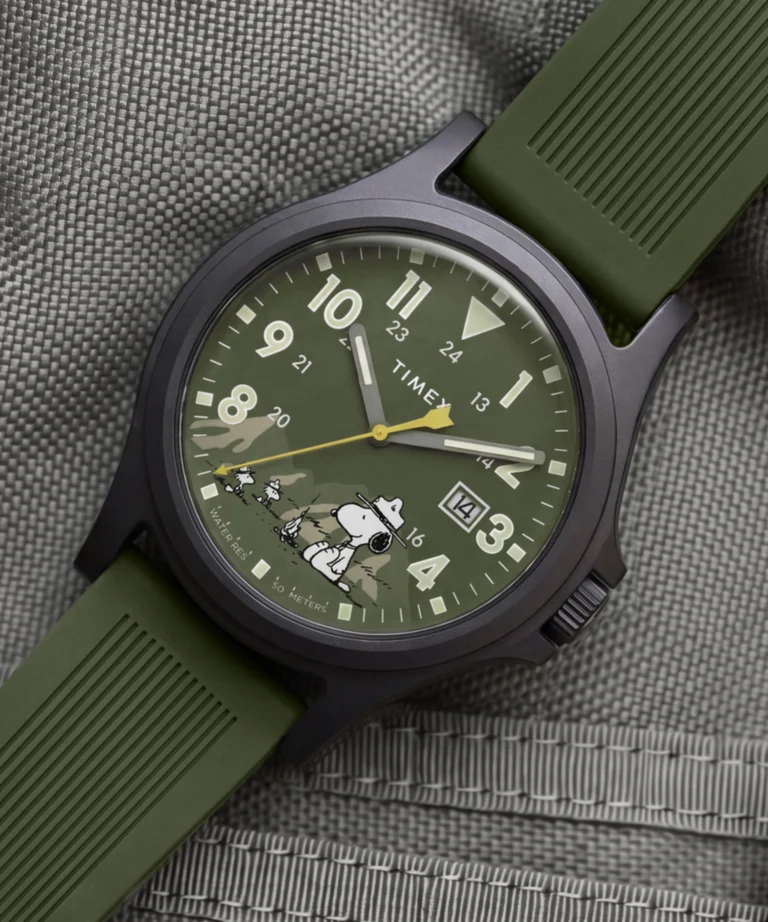
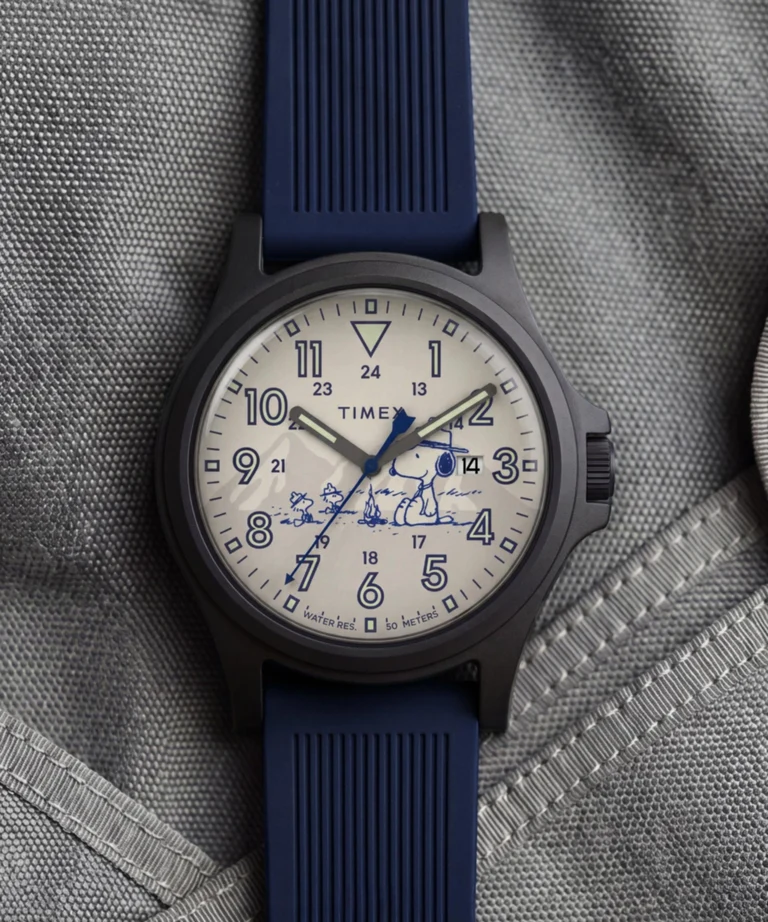
Timex has expanded its ongoing collaboration with the Peanuts franchise, releasing two new variations of the Expedition Acadia watch in the US market. The new models combine the utilitarian hardware of Timex’s outdoor-focused Expedition line with classic Beagle Scout character artwork on the dial.

Timex Peanuts Expedition Acadia watches

Design Details

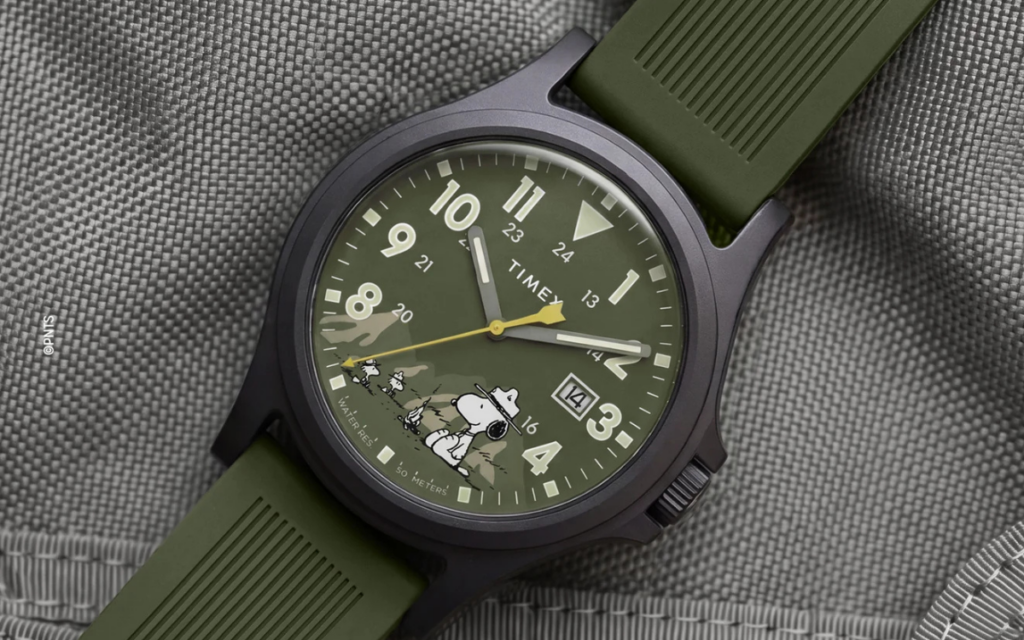
Both watches share the same core architecture. They are built around a 40mm matte black resin case, a material choice that keeps the overall weight down to a very light 44 grams. The case height measures 11mm with a lug-to-lug distance of 49.5mm, placing it firmly in the standard sizing category for modern field watches.

For the display, Timex is using an acrylic crystal. While more prone to scuffs than sapphire, acrylic is a standard inclusion at this price point due to its impact resistance and the fact that minor scratches can be easily polished out.

The release includes two distinct colorways. The first model (TW2Y84600) features a green dial paired with a matching 20mm green silicone strap. The second model (TW2Y84700) opts for a natural cream dial paired with a blue silicone strap. Both silicone bands utilize a quick-release spring bar mechanism, allowing wearers to swap out straps without the need for specialized watch tools.

On the dial, the watches feature full Arabic numerals, a standard date window at the three o’clock position, and luminescent in-fill on the hands and markers to provide visibility in low-light conditions. The artwork pays homage to the Beagle Scouts, featuring Snoopy and Woodstock in outdoor gear.

🔌 You’ll NeedThe quick-release spring bars make swapping in a spare 20mm silicone strap a tool-free upgrade. Check quick-release silicone watch strap price on Amazon →

Internals and durability metrics are standard for the Expedition lineup. The watches are powered by a battery-operated quartz analog movement running on an SR626SW battery.

To handle outdoor environments, the case includes a built-in crown guard and carries a water resistance rating of 50 meters. Timex says this rating is adequate for light swimming, though it is not intended for snorkeling or diving.

Pricing and Availability

The Peanuts x Timex Expedition Acadia models are priced at $119 and available now directly through the Timex US website.

In related news, Timex has recently launched two stylish Marlin Jet Chronographs with vintage-inspired designs and hybrid movements, alongside four new Marlin Quartz watches in striking dial colors.

For more daily updates, please visit our News Section.

Stay ahead in tech! Join our Telegram community and sign up for our daily newsletter of top stories!
(Timex 1,2)

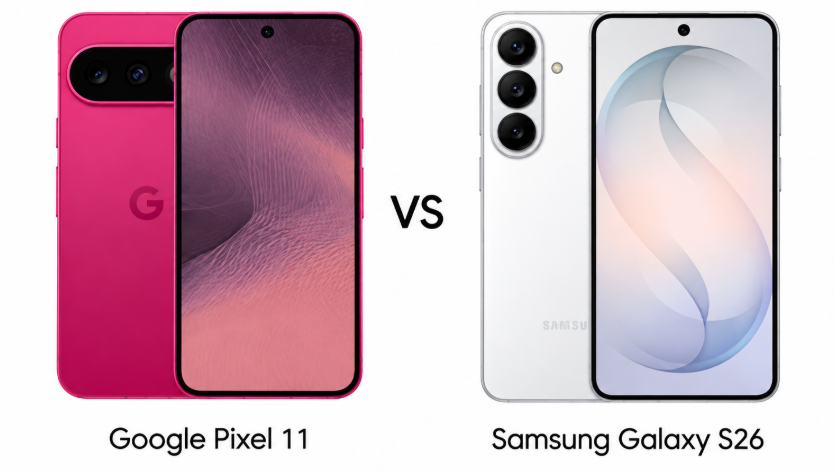
Google Pixel 11 vs Samsung Galaxy S26: Camera, Performance, Battery Compared

Google and Samsung are going head-to-head once again with two compact flagship smartphones packed with premium features. The Google Pixel 11 focuses on AI, photography, and battery versatility, while the Samsung Galaxy S26 brings flagship performance, a refined design, and powerful productivity features. So, which one offers the better value for your money? Let’s find out. 

Major Features:

CategoryGoogle Pixel 11Samsung Galaxy S26Winner
DesignPremium glass and aluminum build with IP68 protectionPremium glass and Armor Aluminum 2 construction with IP68 protectionSamsung – More refined and lightweight design
DisplayOLED, 120Hz, HDR10+, up to 3000 nits peak brightnessDynamic LTPO AMOLED 2X, 120Hz, HDR10+, up to 2600 nitsSamsung – LTPO technology offers a more premium experience
PerformanceGoogle Tensor G6 chipset with 12GB RAMSnapdragon 8 Elite Gen 5 or Exynos 2600 with 12GB RAMSamsung – Stronger raw performance
SoftwareAndroid 17 with up to 7 major OS updatesAndroid 16 with One UI 8.5 and up to 7 major OS updatesGoogle – Newer Android version and clean Pixel experience
Main Camera48MP main camera with OIS50MP main camera with OISSamsung – Higher-resolution primary sensor
Telephoto Camera10.8MP telephoto with 5x optical zoom10MP telephoto with 3x optical zoomGoogle – Better optical zoom reach
Ultrawide Camera13MP, 120-degree ultrawide camera12MP, 120-degree ultrawide cameraGoogle – Slightly stronger specifications
Video RecordingUp to 4K at 60fpsUp to 8K at 30fpsSamsung – More advanced video capabilities
Selfie Camera10.5MP ultrawide camera with autofocus12MP camera with autofocusSamsung – Higher resolution
Battery4985mAh battery4300mAh batteryGoogle – Larger battery capacity
Wired Charging30W wired charging25W wired chargingGoogle – Faster charging
Wireless Charging25W magnetic Qi2.2 charging15W Qi2 Ready chargingGoogle – Faster and more advanced wireless charging
ConnectivityWi-Fi 6E, Bluetooth 6.0, USB Type-C 3.2Wi-Fi 7, Bluetooth 5.4, USB Type-C 3.2Samsung – Newer Wi-Fi standard
Extra FeaturesSatellite SOS, bypass chargingSamsung DeX and Wireless DeXSamsung – More versatile productivity features
Starting PricePriced around $900 / ₹90,000Priced around $900 / ₹88,000Samsung – Slightly better value at a similar price
OverallStrong cameras, battery, charging, and clean softwarePowerful performance, premium display, and versatile featuresSamsung – More complete flagship package
Disclaimer: Specs are based on available data. Actual performance may vary. Verify details from official sources before buying.

1. Design and Display

Build and Feel

The Google Pixel 11 and Samsung Galaxy S26 both feature premium glass-and-aluminum constructions with IP68 water and dust resistance. The Galaxy S26 feels noticeably slimmer and lighter, making it the more comfortable option for extended everyday use. The Pixel 11, however, offers a more substantial in-hand feel and adds Satellite SOS support.

Display Quality

Both phones feature sharp 6.3-inch OLED displays with smooth 120Hz refresh rates and HDR10+ support. The Pixel 11 delivers higher peak brightness and a slightly sharper resolution, while the Galaxy S26 uses Dynamic LTPO AMOLED technology and offers a higher screen-to-body ratio. Samsung’s panel looks like the more polished choice for immersive viewing.

Verdict

Choose the Galaxy S26 for its slimmer, lighter design and immersive LTPO display. The Pixel 11 remains a strong alternative with excellent brightness, premium protection, and useful satellite connectivity.

2. Specifications Including Battery

Performance

The Pixel 11 runs Android 17 on Google’s Tensor G6 chipset with 12GB RAM, focusing on AI-driven experiences and long-term software support. The Galaxy S26 offers Snapdragon 8 Elite Gen 5 or Exynos 2600 processors depending on the region. Samsung’s hardware should provide stronger raw performance, particularly for demanding games and intensive multitasking.

Battery and Charging

The Pixel 11 features a larger battery and supports faster 30W wired charging, 25W magnetic wireless charging, reverse wired charging, and bypass charging. The Galaxy S26 offers slower wired and wireless charging, although it includes reverse wireless charging. On paper, the Pixel provides the more versatile charging setup.

Verdict

The Galaxy S26 should appeal to users prioritizing maximum performance, while the Pixel 11 offers a more compelling battery and charging package. For balanced everyday usability, Google’s approach feels particularly practical.

3. Camera

Main and Secondary Lenses

The Pixel 11 uses a 48MP main camera, 5x optical telephoto lens, and 120-degree ultrawide camera. The Galaxy S26 counters with a 50MP main camera, 3x telephoto, and 12MP ultrawide lens. Pixel’s longer optical zoom gives it an advantage for distant subjects, while Samsung adds 8K video recording and stronger video-oriented features.

Selfie Camera

The Galaxy S26 has a 12MP autofocus selfie camera with 4K video recording, while the Pixel 11 uses a wider 10.5MP front camera. The Pixel may be more useful for group selfies, whereas Samsung’s camera appears better suited for standard portraits and detailed front-facing video.

Verdict

The Pixel 11 looks stronger for zoom photography, while the Galaxy S26 offers greater video flexibility. Users who value versatile photography may prefer Pixel, whereas video creators could lean toward Samsung.

4. Pricing

The Google Pixel 11 is priced around $900 / ₹90,000, while the Samsung Galaxy S26 is priced around $900 / ₹88,000. Their pricing is extremely close, making features and ecosystem preferences more important than cost alone. The Galaxy S26 offers flagship-level performance and a refined design, while the Pixel focuses on cameras, battery capacity, and charging versatility.

Is the Price Justified?

Both phones justify their premium pricing with flagship displays, powerful chipsets, advanced camera systems, and seven major Android updates. The Galaxy feels like the better value for users seeking maximum performance, while the Pixel’s stronger zoom and battery features help balance its slightly higher Indian price.

Verdict

With only a small price difference, neither phone has a decisive affordability advantage. The Galaxy S26 offers excellent hardware value, while the Pixel 11 justifies its premium through versatility and features.

5. Conclusion

The Pixel 11 stands out with its 5x optical zoom, larger battery, magnetic wireless charging, Satellite SOS service, and Google’s AI-focused Tensor platform. The Galaxy S26 brings faster flagship-class processing, Samsung DeX, Wireless DeX, Wi-Fi 7, 8K video, and a lighter design. Both receive long-term software support, making them suitable for buyers planning to keep their phone for several years.

The choice ultimately comes down to priorities. Pixel feels better suited to users who value computational photography, battery capacity, and Google-centric software. Samsung is the more compelling all-rounder for raw performance, productivity, and multimedia features.

Verdict

Overall, the Samsung Galaxy S26 is the better choice for most buyers, thanks to its stronger performance, refined display, slimmer design, advanced video features, and productivity tools. The Google Pixel 11 is still worth considering for its superior zoom camera and battery setup, but at a similar price, the Galaxy S26 delivers the more complete flagship experience. 


FAQs

1. Which is better, Pixel 11 or Galaxy S26?

The Galaxy S26 is the better overall choice for most users, offering stronger performance and broader flagship features.

2. Which phone has the better camera?

The Pixel 11 offers better long-range zoom, while the Galaxy S26 provides stronger video capabilities and a versatile overall camera experience.

3. Is the Galaxy S26 faster than the Pixel 11?

Yes, the Galaxy S26 offers stronger raw performance, especially for demanding games, multitasking, and intensive applications.

4. Which phone has better battery life?

The Pixel 11 has a larger battery and more versatile charging options, potentially making it the better choice for heavy users.

5. Which offers better value for money?

The Galaxy S26 offers better overall value for most buyers, while the Pixel 11 provides greater appeal for photography-focused users.

Disclaimer: Prices, specifications, and availability may vary by region and retailer. Recommendations in this article are based on editorial opinion, feature-based value, and market positioning at the time of writing. Readers are advised to do their own research before making a purchase.

Read More:

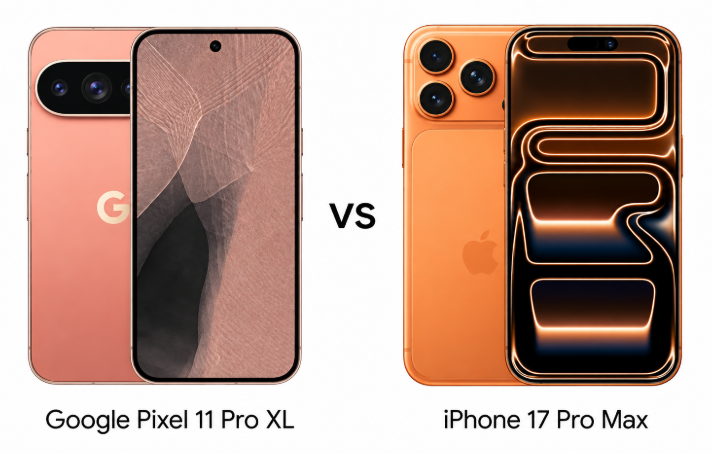
Google Pixel 11 Pro XL vs Apple iPhone 17 Pro Max: Which Flagship Truly Wins?

Google Pixel 11 Pro XL and iPhone 17 Pro Max represent one of the biggest flagship battles of the year, putting Google’s AI-powered photography and smart software against Apple’s industry-leading performance and professional video tools. Both promise a no-compromise premium experience, but only one can deliver the better overall package. From cameras and battery life to display quality, performance, and value, this comparison reveals which flagship truly deserves the top spot.

Major Features:

CategoryGoogle Pixel 11 Pro XLiPhone 17 Pro MaxWinner
Display6.8-inch LTPO OLED, 120Hz, 3,600 nits peak brightness6.9-inch LTPO Super Retina XDR OLED, 120Hz, 3,000 nits peak brightnessGoogle – Higher peak brightness and sharper resolution
PerformanceTensor G6 chipsetApple A19 Pro chipsetApple – More powerful processor for demanding tasks and gaming
Rear Cameras50MP main + 48MP 5x telephoto + 48MP ultrawide48MP main + 48MP 4x telephoto + 48MP ultrawideGoogle – Longer optical zoom and versatile computational photography
VideoUp to 8K video recording4K up to 120fps, ProRes RAW, Apple Log 2Apple – More advanced professional video tools
Selfie Camera42MP ultrawide camera18MP multi-aspect cameraGoogle – Higher resolution and a wider field of view
Battery & Charging5,115mAh, 45W wired, 25W Qi2.2 wirelessUp to 5,088mAh, fast wired charging, 25W MagSafe/Qi2Google – Larger battery and faster wired charging
Software & AIAndroid 17, up to 7 major OS updatesiOS 26Google – Longer confirmed update policy and stronger AI focus
PricePriced around $1,300 / ₹1,35,000Priced around $1,200 / ₹1,50,000Google – Offers stronger hardware value for the price
OverallAI features, versatile cameras and better chargingPerformance, video and ecosystemApple – A more refined all-round flagship experience

1. Design and Display

Build and Feel

Both phones offer premium glass-and-metal construction with IP68 protection. The Pixel 11 Pro XL uses Gorilla Glass Victus 2 on the front and back, while the iPhone 17 Pro Max features Ceramic Shield protection and an aluminium-based design. Apple’s phone also offers deeper water resistance. The Pixel feels more Android-centric in its hardware approach, while the iPhone’s familiar premium design remains highly polished.

Display Quality

The Pixel 11 Pro XL features a sharp LTPO OLED panel with a 120Hz refresh rate and an impressive peak brightness of 3,600 nits. The iPhone 17 Pro Max counters with a 120Hz Super Retina XDR OLED display, Dolby Vision and an anti-reflective coating. Both displays should excel outdoors, but the Pixel’s higher peak brightness gives it a slight advantage on paper.

Verdict

The Pixel 11 Pro XL wins slightly for display specifications and brightness, while the iPhone 17 Pro Max offers stronger screen protection and excellent HDR capabilities.

2. Specifications Including Battery

Performance

The Pixel 11 Pro XL runs Android 17 on Google’s Tensor G6 chipset and promises up to seven major OS updates. The iPhone 17 Pro Max uses Apple’s A19 Pro chip and runs iOS 26. Apple’s hardware traditionally has a stronger edge in sustained performance, demanding games and professional workloads. The Pixel, however, should appeal more to users who value Google’s AI features and Android flexibility.

Battery and Charging

Google equips the Pixel with a larger 5,115mAh battery, 45W wired charging, 25W Qi2.2 magnetic wireless charging and bypass charging. The iPhone supports fast wired charging, 25W MagSafe/Qi2 wireless charging and reverse wired charging. The Pixel’s charging setup looks more versatile, especially for power users who regularly charge while gaming or working.

Verdict

The iPhone 17 Pro Max is the stronger performance-focused flagship, but the Pixel 11 Pro XL offers the more compelling battery capacity and charging package on paper.

3. Camera

Main and Secondary Lenses

Both phones feature versatile triple-camera systems with 48MP-class secondary sensors. The Pixel 11 Pro XL offers a 50MP main camera, 48MP ultrawide and a 48MP 5x periscope telephoto lens, alongside features such as Best Take and Zoom Enhance. The iPhone uses three 48MP cameras, a 4x telephoto lens and a LiDAR scanner. The Pixel appears better suited to flexible photography, while Apple’s system looks especially powerful for professional video.

Selfie Camera

The Pixel packs a 42MP ultrawide selfie camera with autofocus and a wide field of view. The iPhone uses an 18MP multi-aspect front camera with advanced depth sensing and Face ID integration. Pixel’s hardware should offer greater flexibility for group selfies, while Apple’s video-focused front camera features remain attractive for creators.

Verdict

Choose the Pixel 11 Pro XL for versatile photography and longer optical zoom. The iPhone 17 Pro Max is the stronger choice for professional video recording and advanced creative formats.

4. Pricing

The Google Pixel 11 Pro XL is priced around $1,300 / ₹1,35,000, while the iPhone 17 Pro Max is priced around $1,200 / ₹1,50,000. At these premium prices, both phones sit firmly in the ultra-flagship category. The Pixel offers strong value through its seven-year update promise, versatile cameras, bright display and advanced charging features. The iPhone justifies its price through the A19 Pro’s performance, polished ecosystem and professional-grade video capabilities.

The better value ultimately depends heavily on the preferred operating system and existing ecosystem. Neither is a budget-friendly flagship, but both offer genuinely premium hardware rather than relying solely on branding.

Verdict

The Pixel 11 Pro XL appears to offer better hardware value, while the iPhone 17 Pro Max can justify its premium for users invested in Apple’s ecosystem.

5. Conclusion

The Pixel 11 Pro XL stands out with its extremely bright display, 5x optical zoom, advanced computational photography tools, seven major Android updates, and versatile charging features. The iPhone 17 Pro Max counters with the powerful A19 Pro chipset, polished iOS experience, LiDAR sensor, and exceptional video capabilities, including ProRes RAW and Apple Log 2. These phones are not simply competing on specifications; they are built around two distinctly different user experiences.

Verdict

Overall, the iPhone 17 Pro Max is the better flagship thanks to its superior performance, professional-grade video capabilities, and polished ecosystem. However, the Pixel 11 Pro XL offers better value for Android users with its brighter display, versatile cameras, larger battery, and faster charging. 


FAQs

1. Which phone is better for photography?
The Pixel offers stronger computational photography and longer optical zoom, making it better for versatile photography.

2. Which phone delivers better performance?
The iPhone 17 Pro Max delivers stronger raw performance for demanding apps, gaming and professional workloads.

3. Which phone has better battery life?
The Pixel has a larger battery and faster charging, though real-world battery performance may vary.

4. Which offers better value for money?
The Pixel 11 Pro XL offers more competitive hardware and features for its approximate price.

5. Which phone is better overall?
The iPhone 17 Pro Max is the better overall flagship, particularly for performance and professional video features.

Disclaimer: Prices, specifications, and availability may vary by region and retailer. Recommendations in this article are based on editorial opinion, feature-based value, and market positioning at the time of writing. Readers are advised to do their own research before making a purchase.

Read More:

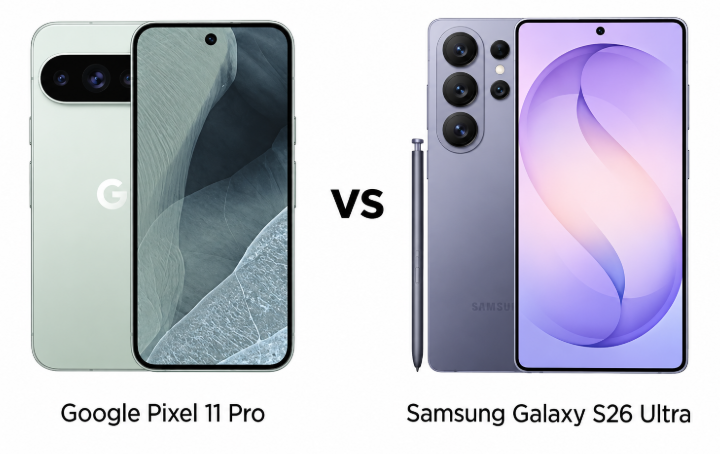
Pixel 11 Pro vs Galaxy S26 Ultra: Which Premium Phone Should You Buy?

Google Pixel 11 Pro and Samsung Galaxy S26 Ultra represent two very different approaches to the ultimate Android flagship. The Pixel brings Google’s AI-driven software experience, advanced camera processing, and a more compact premium design, while Samsung’s Ultra packs in powerful hardware, a larger display, faster charging, versatile cameras, and productivity-focused features. Both are designed for buyers who want the very best, but which one offers the better overall experience, and more importantly, which flagship truly deserves your money? 

Major Features:

CategoryGoogle Pixel 11 ProSamsung Galaxy S26 UltraWinner
BuildGorilla Glass Victus 2 front and back, aluminum frame, IP68Gorilla Armor 2 front, Gorilla Glass Victus 2 back, Armor Aluminum 2, IP68Samsung – Better protection and a more premium build
Display6.3-inch LTPO OLED, 120Hz, HDR10+, up to 3600 nits6.9-inch Dynamic LTPO AMOLED 2X, 120Hz, HDR10+, 2600 nitsSamsung – Larger and higher-resolution display
Display ProtectionGorilla Glass Victus 2Gorilla Armor 2 with anti-reflective coatingSamsung – Stronger protection and reduced reflections
SoftwareAndroid 17, up to 7 major OS updatesAndroid 16, One UI 8.5, up to 7 major OS updatesGoogle – Newer Android version and clean software experience
ProcessorGoogle Tensor G6 (3nm)Snapdragon 8 Elite Gen 5 (3nm)Samsung – More powerful flagship chipset
GPUIMG CXTP-48-1536Adreno 840Samsung – Better suited for demanding gaming
RAM and Storage256GB/12GB, 512GB/16GB, 1TB/16GB256GB/12GB, 512GB/12GB, 1TB/16GBTie – Similar maximum RAM and storage options
Main Camera50MP, f/1.7, OIS200MP, f/1.4, OISSamsung – Higher-resolution primary sensor
Zoom Cameras48MP periscope, 5x optical zoom10MP 3x telephoto + 50MP 5x periscopeSamsung – More versatile zoom range
Ultrawide Camera48MP, 123°50MP, 120°Samsung – Slightly higher sensor resolution
Rear VideoUp to 8K/30fps, 4K/60fpsUp to 8K/30fps, 4K/120fpsSamsung – Supports 4K video at higher frame rates
Selfie Camera42MP ultrawide with PDAF12MP wide with dual-pixel PDAFGoogle – Higher resolution and wider field of view
Battery4,850mAh5,000mAhSamsung – Slightly larger battery
Wired Charging30W60WSamsung – Significantly faster charging
Wireless Charging25W magnetic wireless, Qi2.225W Qi2.2Google – Magnetic charging adds convenience
ConnectivityWi-Fi 7, Bluetooth 6.0, NFC, UWB, NavICWi-Fi 7, Bluetooth 6.0, NFC, UWBGoogle – Includes NavIC support
USB FeaturesUSB Type-C 3.2USB Type-C 3.2, DisplayPort 1.2, OTGSamsung – More versatile external connectivity
Special FeaturesSatellite SOS, Best Take, Zoom EnhanceIntegrated stylus, Samsung DeX, Privacy DisplaySamsung – More extensive productivity features
Approximate Price$1,100 / ₹1,20,000$1,300 / ₹1,40,000Google – Better value at a lower price
Overall WinnerSamsung – The more complete and feature-packed flagship

1. Design and Display

Build and Feel

The Google Pixel 11 Pro offers a more compact and manageable flagship experience, with a premium glass-and-aluminum construction and IP68 protection. The Samsung Galaxy S26 Ultra also delivers flagship durability but adds Gorilla Armor 2 protection, an anti-reflective coating, and an integrated stylus. The Pixel should feel more comfortable for users who prefer smaller premium phones, while the Samsung is better suited to those wanting a more feature-packed device.

Display Quality

The Pixel 11 Pro features a sharp LTPO OLED display with a 120Hz refresh rate, HDR10+, and impressive peak brightness. The Galaxy S26 Ultra goes further with its larger Dynamic LTPO AMOLED 2X panel, higher resolution, Privacy Display, and anti-reflective coating. Samsung’s screen feels more immersive for entertainment and productivity.

Verdict

The Pixel 11 Pro is the better choice for users wanting a compact flagship, while the Galaxy S26 Ultra wins with a larger, more advanced display and additional productivity features.

2. Specifications Including Battery

Performance

The Pixel 11 Pro is powered by Google’s Tensor G6 chipset and runs Android 17 with up to seven major OS updates. The Galaxy S26 Ultra uses the Snapdragon 8 Elite Gen 5 chipset, paired with an Adreno 840 GPU. Both offer generous storage and RAM configurations, but Samsung’s hardware is likely to appeal more to demanding gamers and power users.

Battery and Charging

The Pixel 11 Pro packs a 4,850mAh battery with 30W wired charging, 25W magnetic wireless charging, and reverse wired charging. The Galaxy S26 Ultra has a larger 5,000mAh battery and significantly faster 60W wired charging, alongside 25W wireless and reverse wireless charging. Samsung clearly offers the more convenient charging setup.

Verdict

The Pixel provides strong everyday performance and useful charging features, but the Galaxy S26 Ultra offers more raw power, a slightly larger battery, and considerably faster wired charging.

3. Camera

Main and Secondary Lenses

The Pixel 11 Pro uses a triple-camera system with a 50MP primary sensor, 48MP ultrawide camera, and 48MP 5x periscope telephoto lens. The Galaxy S26 Ultra counters with a versatile quad-camera setup, including a 200MP main camera and separate 3x and 5x zoom lenses. Samsung offers greater focal-length flexibility, while Google’s image processing could appeal to photography enthusiasts.

Selfie Camera

Google equips the Pixel with a 42MP ultrawide selfie camera offering a wider field of view and autofocus. The Galaxy uses a 12MP front camera with dual-pixel autofocus and HDR10+ video support. The Pixel’s hardware looks more flexible for group selfies, while Samsung focuses on a more conventional flagship implementation.

Verdict

The Galaxy S26 Ultra offers greater camera versatility, especially across different zoom ranges, but the Pixel 11 Pro remains highly compelling for computational photography and ultrawide selfie capabilities.

4. Pricing

The Google Pixel 11 Pro is priced around $1,100 / ₹1,20,000, while the Samsung Galaxy S26 Ultra is priced around $1,300 / ₹1,40,000. The Pixel costs noticeably less while still offering flagship cameras, a premium display, and long-term software support. Its pricing feels more balanced for buyers who do not need Samsung’s larger screen or additional hardware features.

The Galaxy S26 Ultra is more expensive, but its higher price brings a more powerful chipset, advanced display protection, faster charging, a quad-camera system, DeX support, and an integrated stylus. The premium is easier to justify for users who will actually use these extras.

Verdict

The Pixel 11 Pro offers stronger value for most buyers, while the Galaxy S26 Ultra justifies its higher price mainly for power users seeking maximum versatility and productivity.

5. Conclusion

Google Pixel 11 Pro stands out with Android 17, Tensor-powered AI features, satellite SOS, a high-resolution ultrawide selfie camera, and Google’s photography tools such as Best Take and Zoom Enhance. The Galaxy S26 Ultra counters with an integrated stylus, Samsung DeX, Privacy Display, anti-reflective screen technology, faster charging, and a more versatile quad-camera system.

The Pixel feels like a more focused and practical flagship, especially for users who prefer Google’s clean software and camera processing. However, Samsung offers a more complete hardware package with fewer compromises across performance, display quality, charging, and productivity.

Verdict

Samsung Galaxy S26 Ultra is the better smartphone overall, thanks to its superior performance, larger and more advanced display, faster charging, versatile camera system, and productivity features. However, the Pixel 11 Pro remains the better value choice for users who want a compact flagship and Google’s software experience.


FAQs

1. Which phone offers better value for money?
The Pixel 11 Pro costs less and delivers premium features, making it the better value for most buyers.

2. Which phone has the better camera?
The Galaxy S26 Ultra offers greater camera versatility with its 200MP sensor and dual telephoto system.

3. Which phone performs better for gaming?
The Galaxy S26 Ultra offers stronger raw performance and is better suited for demanding games and intensive tasks.

4. Which phone has better battery and charging?
The Galaxy S26 Ultra has a slightly larger battery and significantly faster 60W wired charging.

5. Which phone is the overall winner?
The Galaxy S26 Ultra is the more complete flagship, while the Pixel 11 Pro remains a strong value-focused alternative.

Read More:

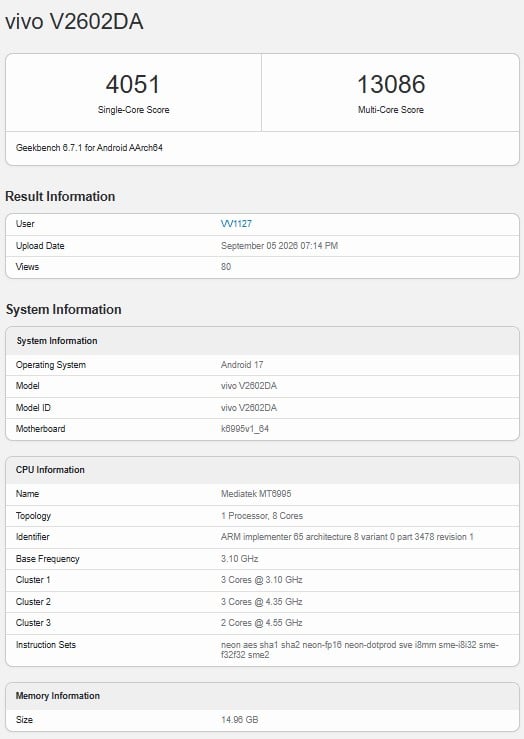
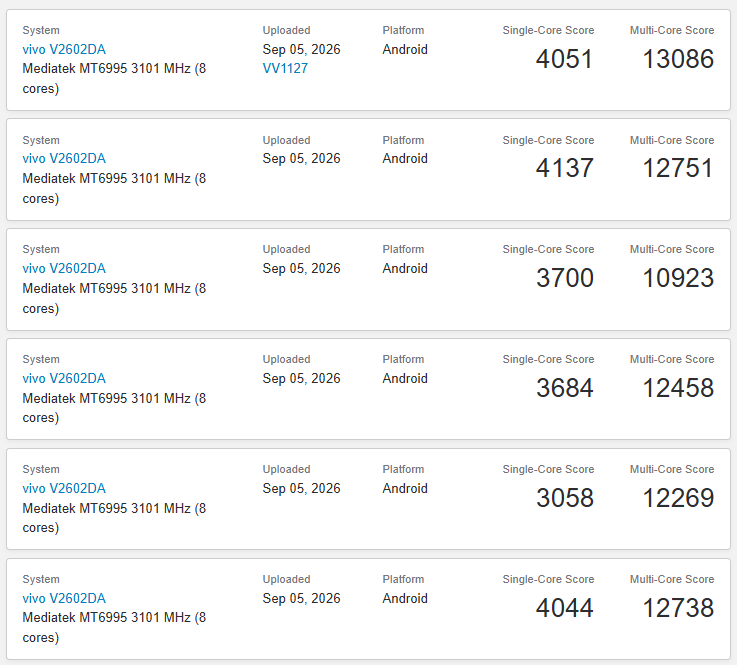
Vivo X500 Pro Max crosses 4K single-core and 13K multi-core score on Geekbench

Vivo is scheduled to announce OriginOS 7 on September 16 in China. Around a week later, the brand is expected to take the covers off the much-anticipated X500 series of flagship phones for the home market. In the recent past, three X500 series devices bearing the model numbers V2602A/DA, V2608A/DA, and V2609A/BA have surfaced. Among these, the V2602DA has appeared on Geekbench with an upcoming Dimensity 9-series chip. It is believed to be the upcoming Vivo X500 Pro Max.

Vivo X500 Pro Max Satellite Communication Version emerges on Geekbench

To recall, the global version of the Vivo X500 Pro Max with the model number V2610 was spotted on Geekbench last month. Its Chinese edition is said to have the model number V2602A, while its Satellite Communication Version carries the model number V2602DA.

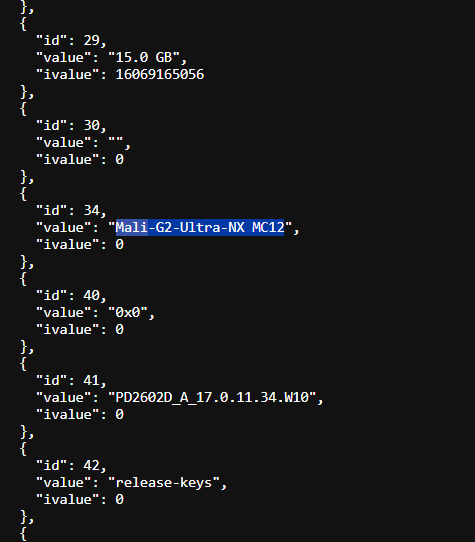
There are multiple Geekbench listings of the Vivo X500 Pro Max, and its Dimensity 9600 series chipset has crossed a 4,000 single-core score and a 13,000 multi-core score. The chipset includes three cores running at 3.10GHz, three cores operating at 4.35GHz, and two cores running at 4.55GHz, along with the Mali-G2-Ultra-NX MC12 GPU. Both the Chinese and global variants are powered by the same Dimensity 9600 chip.

Previously, the V2602DA device was spotted at 3C certification with a 90W charger. Speculations are rife that it will also support 40W wireless charging.

The X500 Pro Max is officially confirmed to feature a 6.85-inch BOE Q11 2K display, which may support a 144Hz refresh rate. It may pack a 50-megapixel front camera with autofocus support and run on OriginOS 7-based Android 17.

Its rear camera setup may comprise a 50-megapixel Sony LYT-838 primary camera with a large 1/1.28-inch sensor and LOFIC technology, a new 50-megapixel Sony IMX8-series ultra-wide camera, and a 200-megapixel periscope telephoto camera with a 1/1.4-inch sensor and an 85mm focal length. Other rumored features include an ultrasonic in-screen fingerprint sensor, dual speakers, and an IP68/69-rated body.

For daily updates, please visit our News Section.

Stay ahead in tech! Join our Telegram community and sign up for our daily newsletter of top stories!
Oppo Find X10, X10 Pro Max spotted with different Dimensity 9-series chipsets on Geekbench

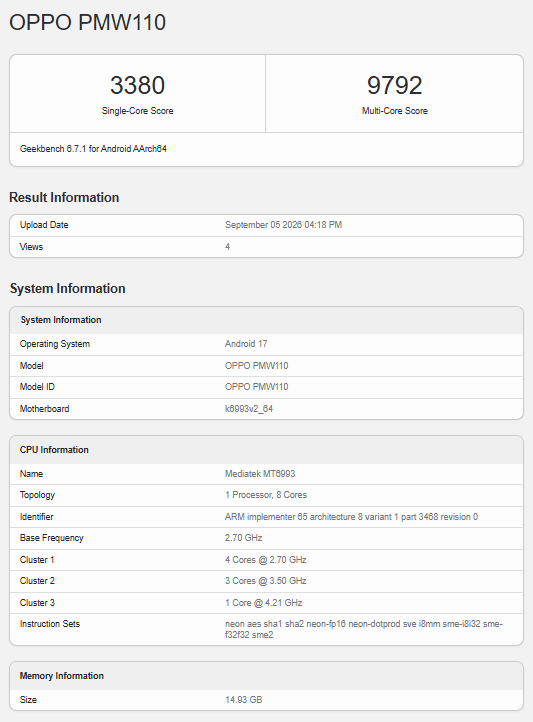
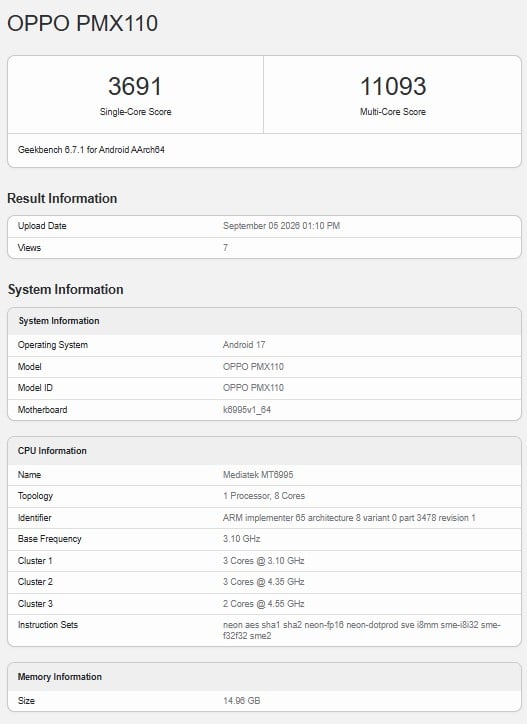
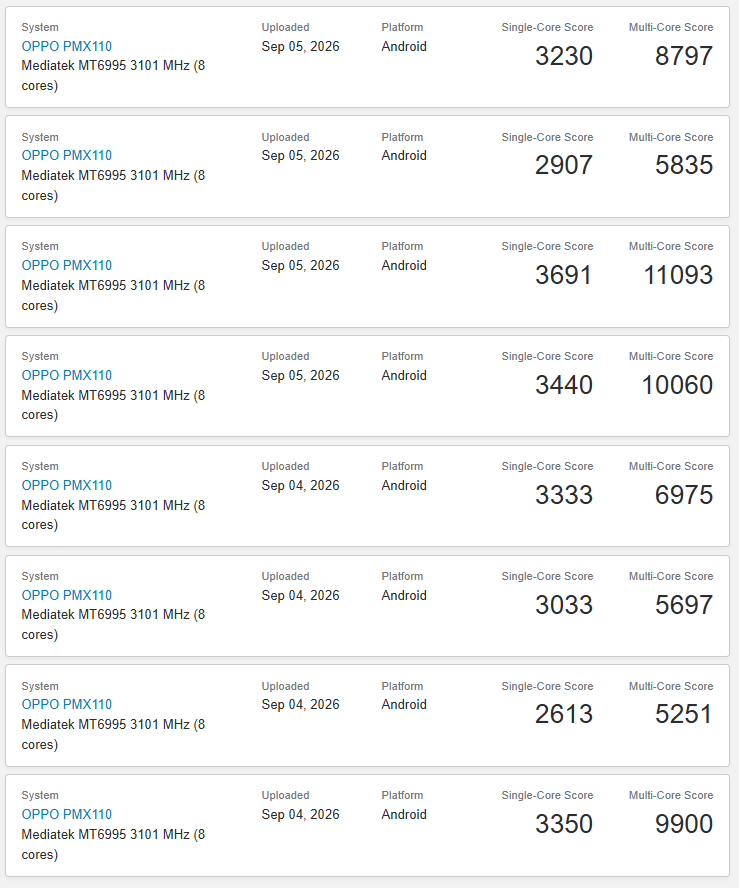
Oppo is expected to hold a launch event to unveil the Find X10 series later this month in China. Speculations are rife that the PMW110 and PMX110 devices that have emerged in the databases of Chinese certification platforms in the recent past could be the Find X10 and Find X10 Pro Max, respectively. Ahead of the launch, both devices have emerged on Geekbench, revealing that they are powered by different Dimensity 9-series chipsets.

Oppo Find X10 series appears on Geekbench

The above screenshots show that the PMW110 (Find X10) and PMX110 (Find X10 Pro Max) have been benchmarked on Geekbench. Both devices have 16GB of RAM and Android 17, but they are powered by different chipsets.

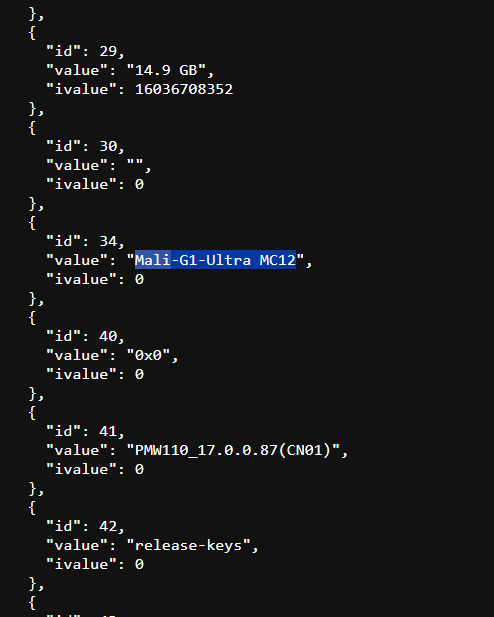
The Find X10 has the MediaTek MT6993 chip onboard, which includes four cores operating at 2.70GHz, three cores running at 3.50GHz, and a prime core ticking at 4.21GHz. For graphics, it has the Mali-G1-Ultra MC12 GPU onboard. These details suggest that the standard model will have the Dimensity 9500, which is a 3nm flagship chip introduced in 2025.

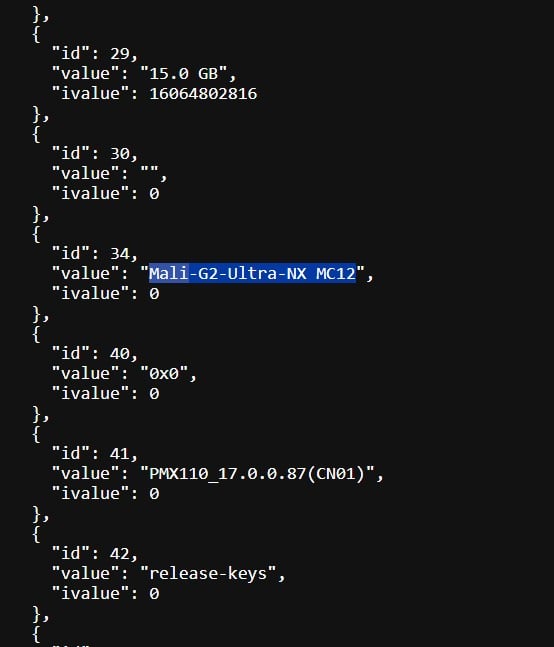
On the other hand, the Find X10 Pro Max is powered by the forthcoming MediaTek MT6995 chip. It comprises three cores running at 3.10GHz, three cores clocking at 4.35GHz, and two cores operating at 4.55GHz. Graphics is handled by the Mali-G2-Ultra-NX MC12 GPU. While the official marketing name of the chip is not known yet, this will be MediaTek’s first 2nm chip, which could be called the Dimensity 9600 or Dimensity 9600 Pro.

The testing units have produced a maximum single-core score of around 3,400 and a multi-core score of around 11,000. However, the testing units may not be running final firmware, so the scores on the final software could be different.

Find X10E could join the lineup

The Find X10 series is said to include an entry-level model called the Find X10E. It is unclear whether it will break cover alongside the Find X10 and Find X10 Pro Max.

For daily updates, please visit our News Section.

Stay ahead in tech! Join our Telegram community and sign up for our daily newsletter of top stories!
(via)

Latest price hike: several Galaxy A series, Nothing phones affected; up to ₹14,500 hike

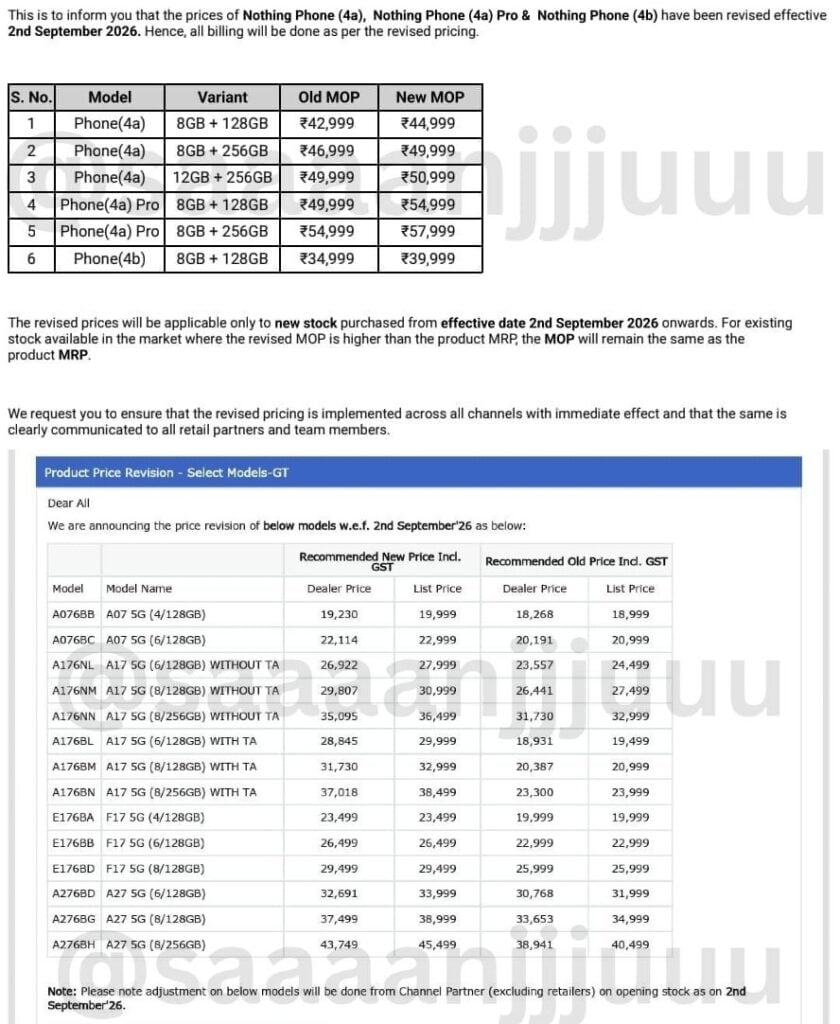
Nothing and Samsung both raised prices on a bunch of their models on the exact same day.

Nothing bumped up the Phone (4a) series and the cheaper Phone (4b). The base Phone (4a) 8GB + 128GB jumped ₹2,000 to ₹44,999, with the other storage options landing at ₹49,999 and ₹50,999. The Phone (4a) Pro got hit harder, up by as much as ₹5,000, so the base model is now ₹54,999 and the higher one ₹57,999. The entry-level Phone (4b) 8GB + 128GB went from ₹34,999 to ₹39,999, a full ₹5,000 jump.

Samsung went after its budget and lower mid-range phones even harder. The Galaxy A17 5G with the travel adapter saw the biggest spike, with the top 8GB + 256GB version shooting up by ₹14,500, from ₹23,999 all the way to ₹38,499 (more than 50% higher). Models without the adapter rose by ₹3,500. The Galaxy A27 went up by as much as ₹5,000, the Galaxy F17 by ₹3,500, and the basic Galaxy A07 5G by ₹1,000 to ₹2,000.

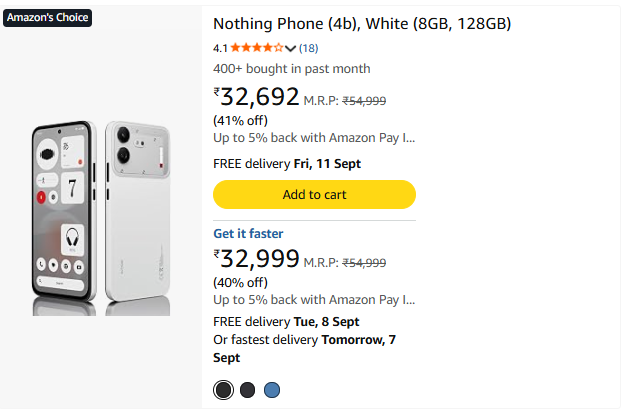
While several of these models can still be found at lower prices on Amazon and Flipkart (mostly Amazon), the overall trend is clear. Almost every smartphone brand has raised prices multiple times in 2026, and it’s only a matter of time before the remaining stock sells out and the new rates become permanent. Something that launched at ₹22,999 in March is now ₹34,999. So if you’re eyeing one of the phones mentioned above, or pretty much any model right now, it might be worth grabbing it sooner rather than later. Prices are only heading one way.

Samsung already adjusted the Galaxy F17 and M17 not long ago. Most people are pinning both companies’ moves on the same thing: DRAM and NAND flash memory prices have been climbing hard worldwide, and brands are finally passing those costs on to customers.

Don’t miss a thing! Join our Telegram community for instant updates and grab our free daily newsletter for the best tech stories!

For more daily updates, please visit our News Section.

Sources: (1), (2)

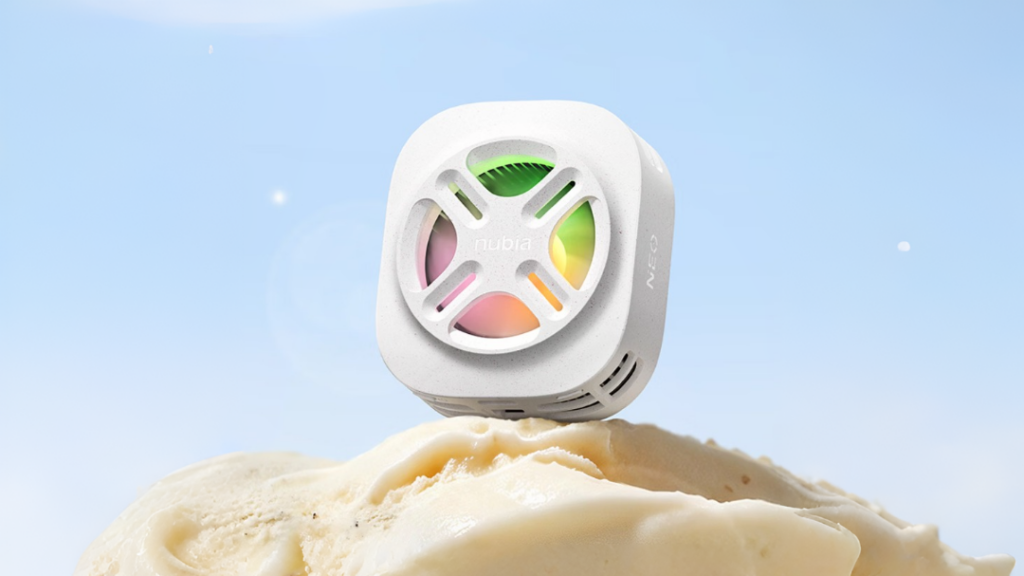
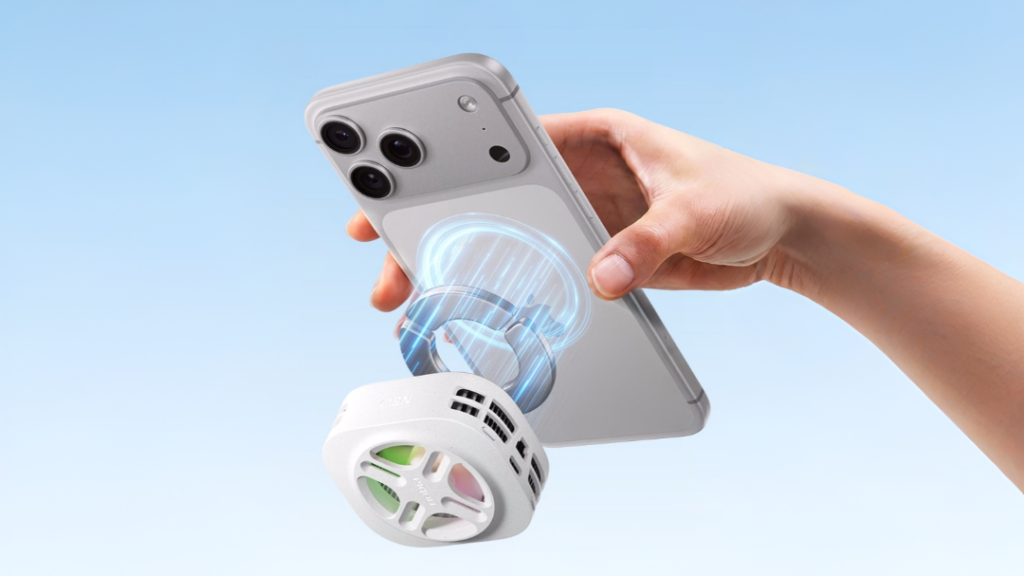
Nubia launches a 25W magnetic phone cooler that looks like ice cream and cools down to -18°C

Nubia is releasing a new smartphone cooler in China called the Magnetic Phone Cooler Neo, though the company is marketing it under the simpler name Ice Cream Cooler. It goes on sale September 10th through JD.com. The standard price is set at 159 yuan ($24), but it will launch with a discounted price of 99 yuan ($15).

Nubia Ice Cream smartphone cooler

Nubia Magnetic Phone Cooler Neo Specs

The ice cream branding comes from the device’s design. It has a matte, off-white square housing with rounded corners and random speckles meant to look like a vanilla cookie. It measures 25mm thick and weighs 90 grams, making it relatively standard in size for a magnetic phone cooler.

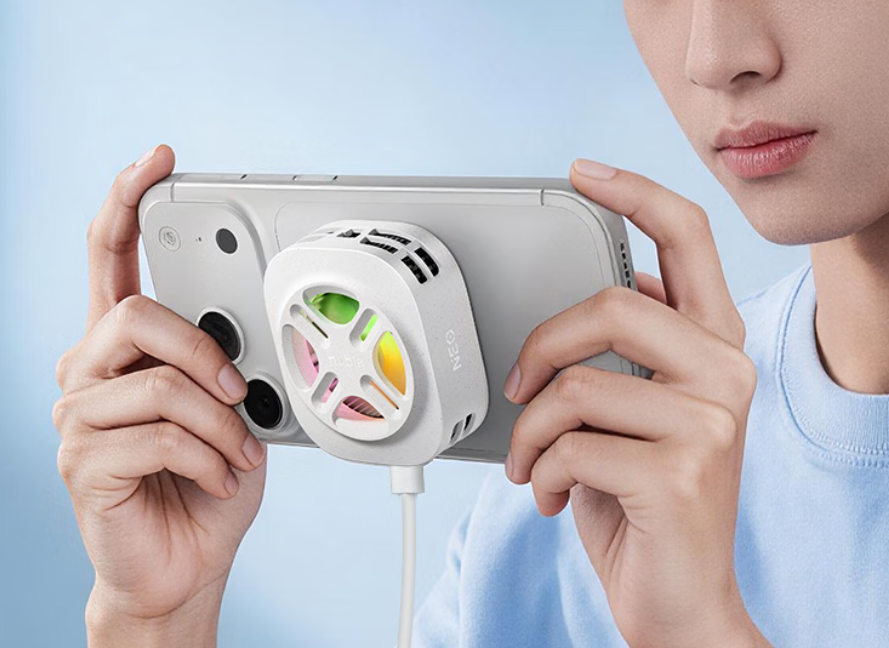
Inside, the device borrows its cooling hardware directly from the RedMagic Cooler 8 Pro. It uses a 36 by 36mm thermoelectric cooling (TEC) plate, a cold-forged aluminum heatsink, and an aluminum heat-spreading plate. The cooler draws up to 25W of power. Nubia claims the hardware can reach temperatures as low as -18 degrees Celsius and lower a device’s temperature by up to 60 degrees during heavy tasks like gaming, fast charging, or outdoor use.

Nubia Ice Cream smartphone cooler

To handle the heat, the cooler uses a seven-blade fan that spins at up to 6,000 rpm. The airflow is designed to exhaust out of the top and bottom of the unit. This is a practical choice, as it keeps the hot air from blowing onto your hands when you hold the phone horizontally. On its lowest setting, the fan operates at 33dB.

You don’t need an app to use the cooler. It has physical buttons on the side to switch between four cooling modes: Silent, Powerful, Overclocking, and Temperature Control. The device has a built-in chip to manage the temperature automatically if you select that mode. The buttons also control a circular RGB light on the back, letting you cycle through a few basic lighting effects or turn the lights off entirely.

Nubia Ice Cream smartphone cooler

For attaching it to your phone, the cooler relies on a magnetic ring. However, Nubia includes a set of clamp attachments in the box, so you can still use it on phones that don’t have built-in magnets. It also has a standard 1/4-inch screw thread on the housing, which lets you mount the cooler directly to a tripod or a livestreaming rig.

In other news, Timex recently launched two Marlin Jet Chronographs with vintage-inspired styling and hybrid movements, alongside four new Marlin Quartz watches in striking dial colors.

For more daily updates, please visit our News Section.

Stay ahead in tech! Join our Telegram community and sign up for our daily newsletter of top stories!
(JD)

Timex launches two stylish Marlin Jet Chronographs with vintage styling and hybrid movements

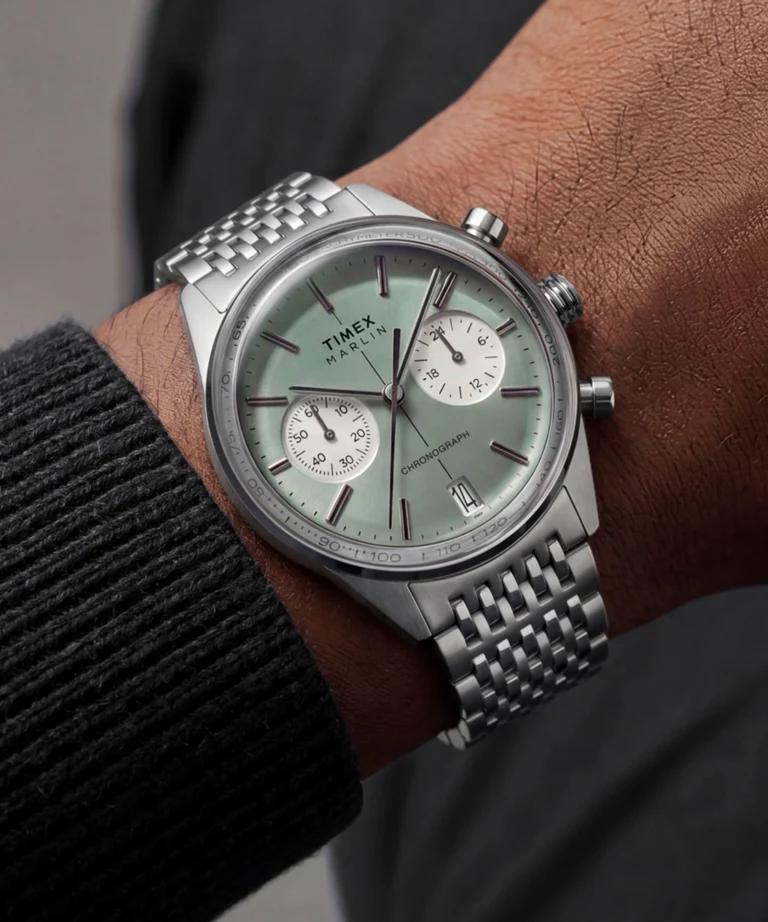
Timex has expanded its US lineup with the release of the Marlin Jet Chronograph, a 40mm watch that combines 1960s design cues with a hybrid meca-quartz movement.

Timex Marlin Jet Chronograph

Design Details

The watch comes in two versions. The primary model features a sage green dial with white sub-dials and comes on a stainless steel deployant bracelet for $309. The second variant costs $279 and features a silver-tone dial with navy blue sub-dials, paired with a blue quick-release fabric strap made from recycled plastic.

The watch features a heavily domed Hesalite crystal that extends over the grooved bezel and tachymeter scale, giving it a smooth, vintage-inspired profile. Its brushed and polished stainless steel case measures 40mm wide, 46.5mm lug-to-lug, and 14mm thick.

Inside, the watch runs on a meca-quartz movement powered by an SR936SW battery. This is a hybrid system. The standard timekeeping is handled by a standard quartz mechanism, which keeps the cost down and maintains high accuracy.

Timex Marlin Jet Chronograph

However, the chronograph (stopwatch) functions are driven by a mechanical module. When you press the pushers to start the timer, the second hand sweeps smoothly across the dial and snaps back instantly when reset, rather than ticking once per second like a standard quartz watch.

Timex Marlin Jet Chronograph

Standard features across both models include a date window positioned above the 6 o’clock marker, full hour markers, and a 50-meter water resistance rating. This rating means the watch can handle rain and light swimming, but it isn’t built for diving or high-pressure water sports.

Both models are listed on the Timex US storefront now, though the fabric strap version is currently marked as a pre-order.

In related news, Timex has recently launched new Marlin Quartz watches in four striking dial colors, along with a Fender automatic watch inspired by the iconic Telecaster guitar.

For more daily updates, please visit our News Section.

Stay ahead in tech! Join our Telegram community and sign up for our daily newsletter of top stories!
(Timex 1,2)

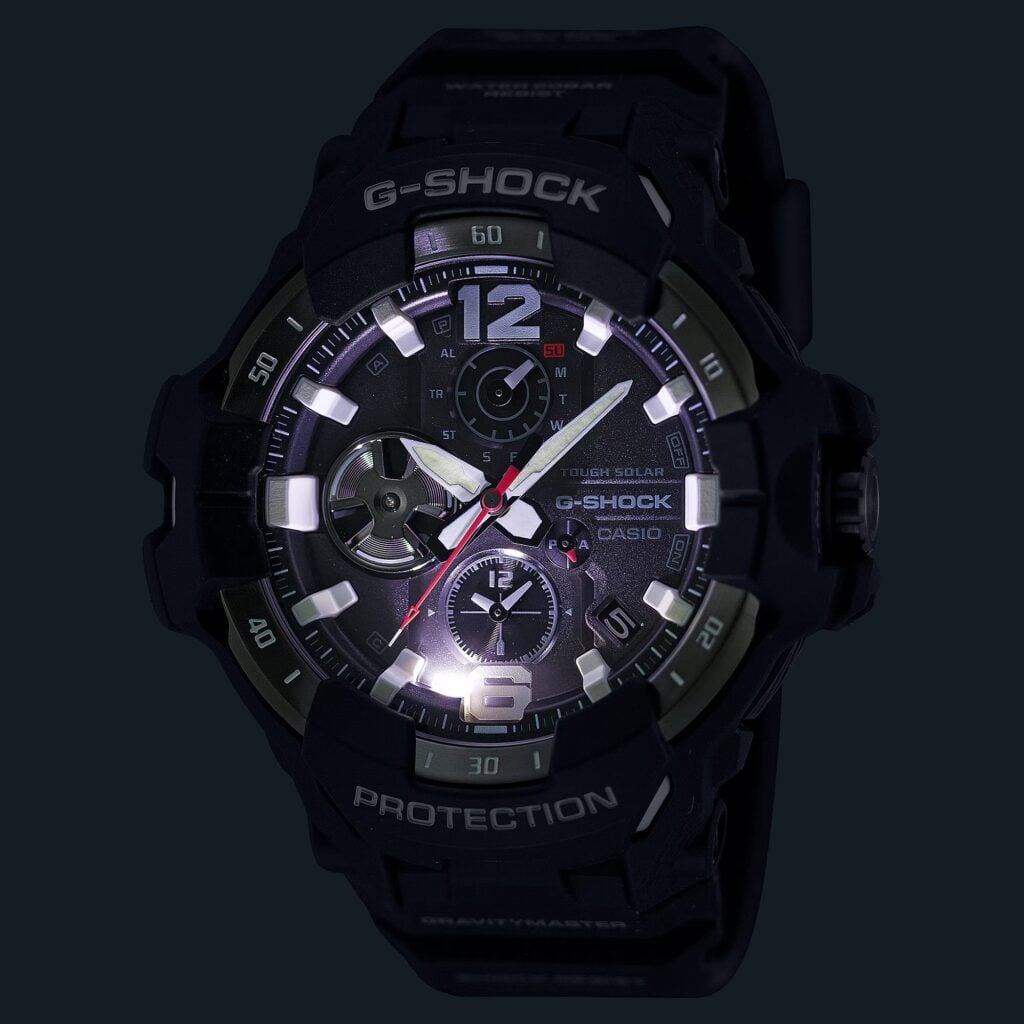
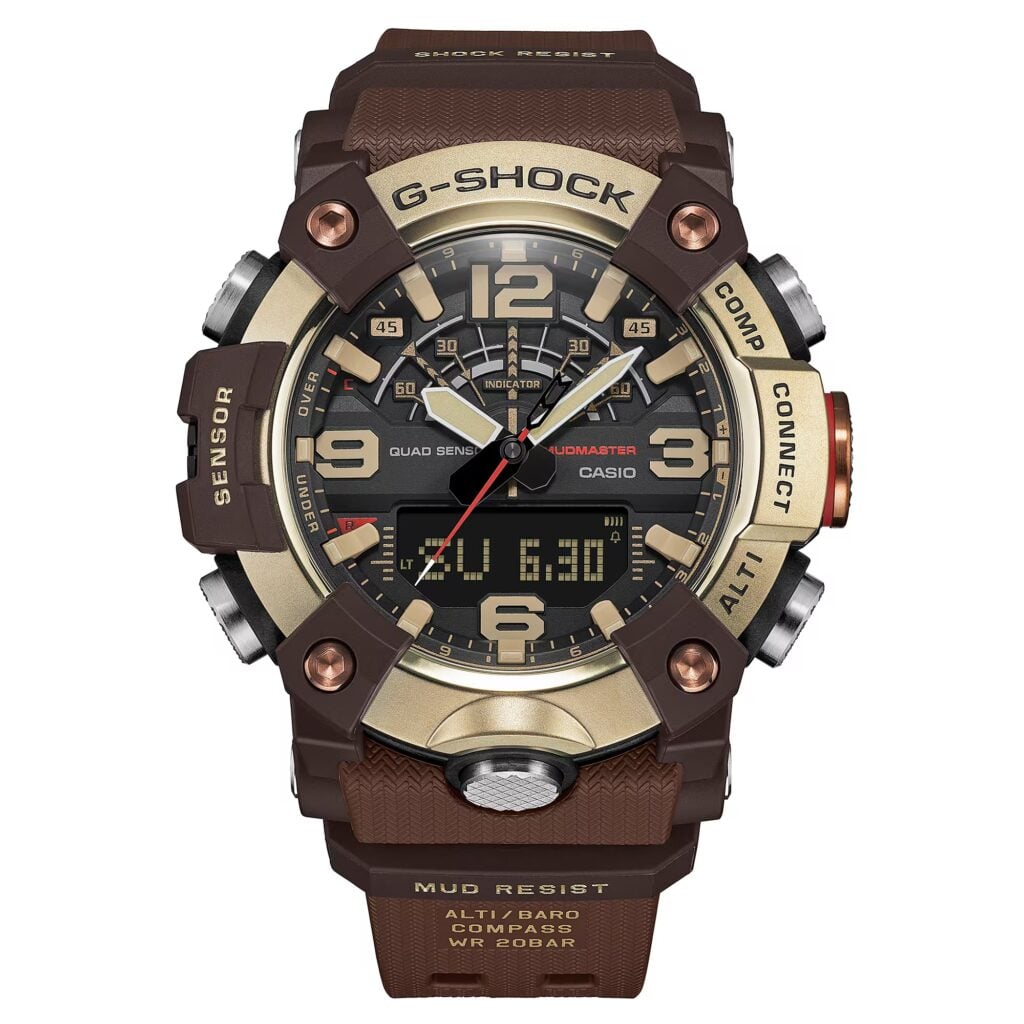
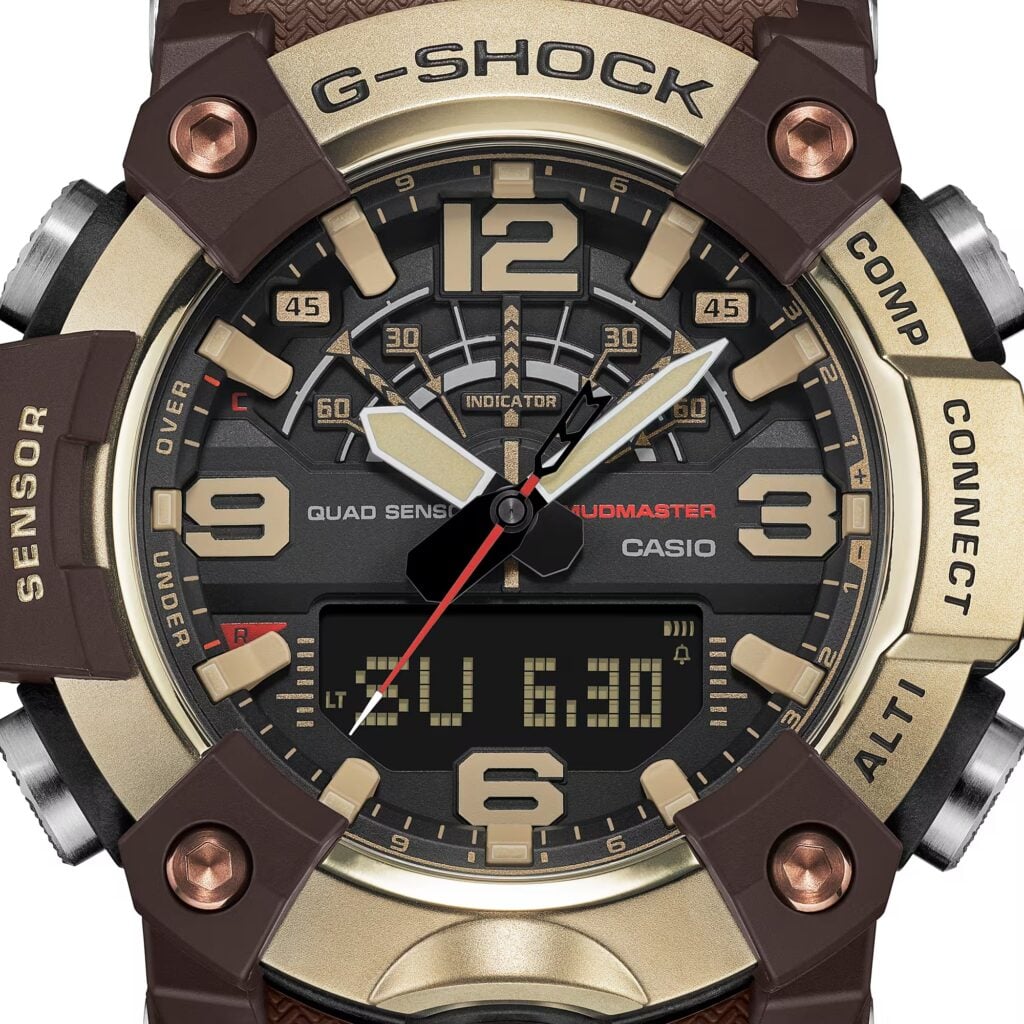
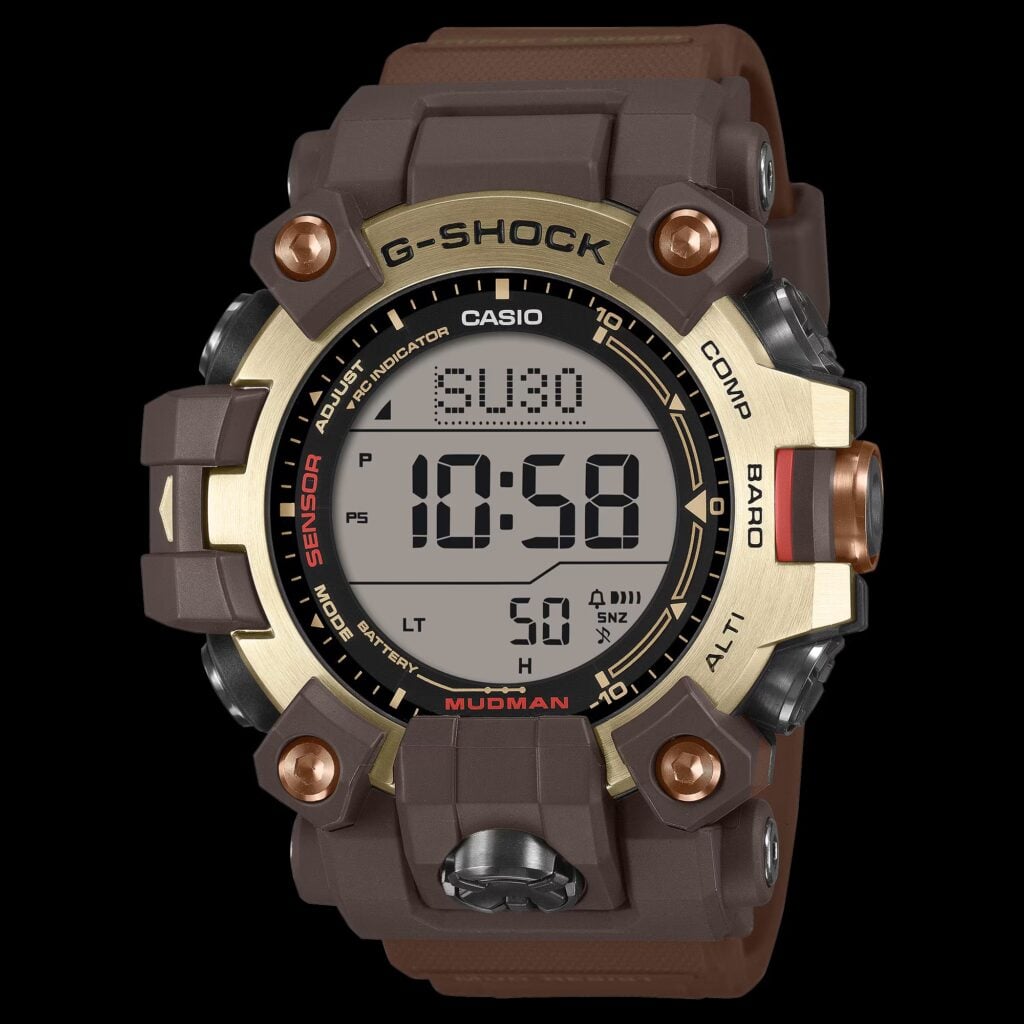
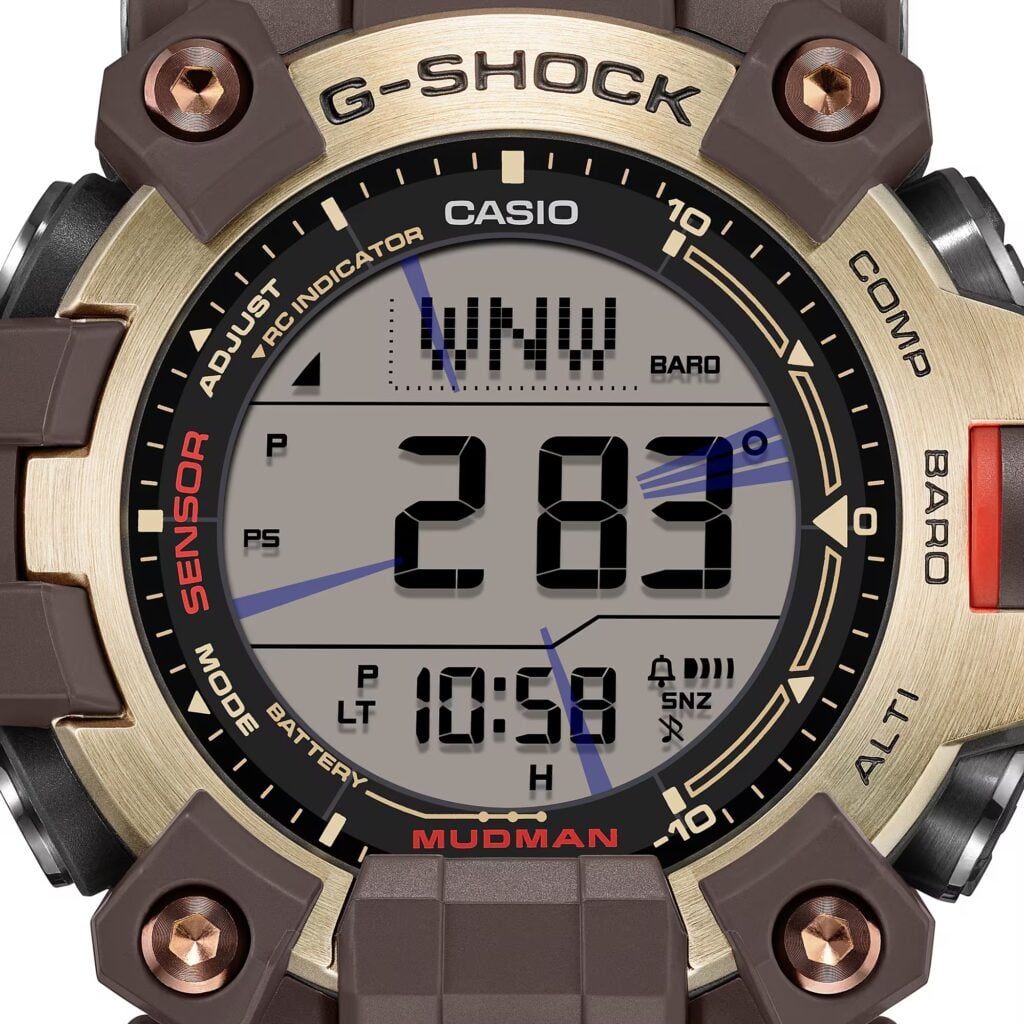
Casio launches three new Master of G watches in the US with a striking Horizon Gold finish

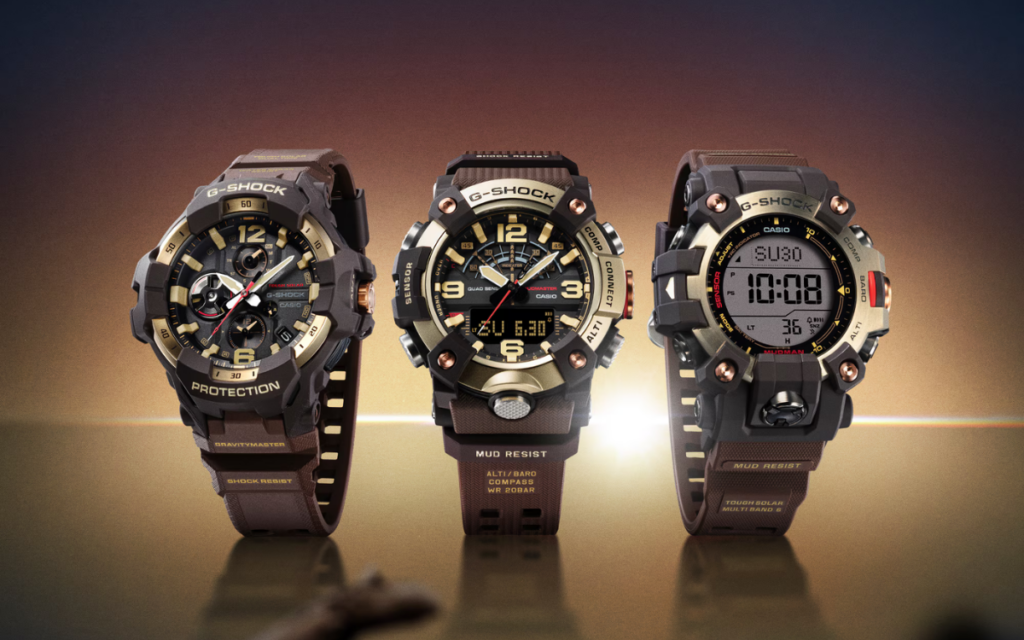
Casio has expanded its US watch lineup with three new models from its Master of G series. The watches, which were initially released in Japan last month, are part of a new Horizon Gold collection.

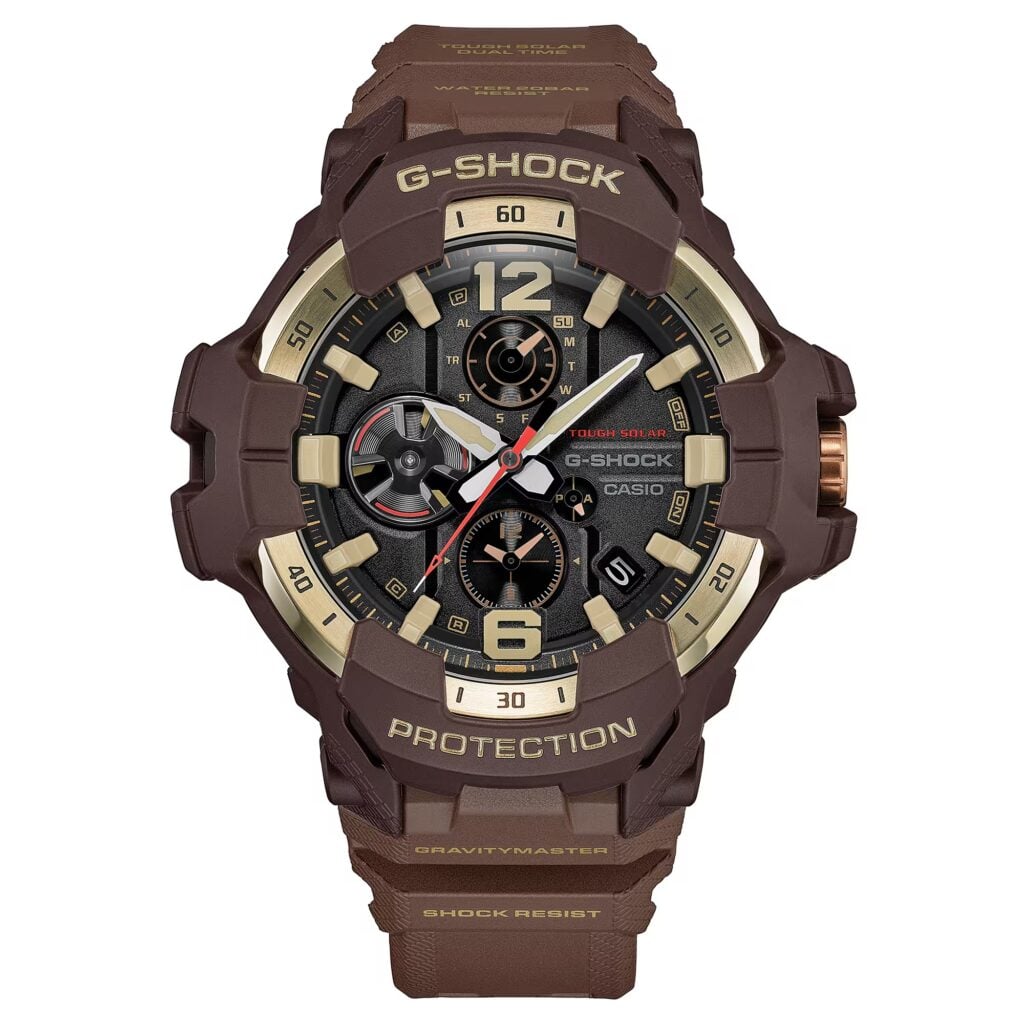
The lineup includes the Gravitymaster GRB300H-5A, the Mudmaster GGB100XMH-5A, and the Mudman GW9500MH-5. All three are currently available for purchase on the Casio US website.

Casio Horizon Gold Master of G watches

Design Details & Pricing

The updates are purely cosmetic, with all three watches featuring light yellow-gold ion-plated bezels, brown metal accents, and dark brown bio-based resin bands. Their core hardware and features remain unchanged from the standard models.

The Gravitymaster GRB300H-5A is the most affordable model in the collection at $330. It features a carbon fiber-reinforced resin case, an analog dial with dual-time display, and a rotary indicator for battery, stopwatch, and alarm status. The watch also supports Tough Solar charging and Bluetooth connectivity with the Casio Watches app for automatic time adjustment.

The Mudmaster GGB100XMH-5A costs $460 and features a stainless steel bezel with a mud and dust-resistant case. Its quad-sensor system includes a compass, altimeter/barometer, thermometer, and step counter, while Bluetooth enables altitude and route logging. It runs on a CR2025 battery with an estimated two-year lifespan.

The third model is the Mudman GW9500MH-5, priced at $440. It features a mud- and dust-resistant case, a duplex LCD, and a Triple Sensor for compass, altitude/barometric pressure, and temperature readings. It runs on solar power and uses Multi-Band 6 radio signals for automatic time calibration.

All three models include standard G-Shock specifications, such as 200-meter water resistance, shock-resistant construction, daily alarms, and LED illumination.

In related news, Casio has recently launched an Apple Watch-shaped moon-phase watch with a sleek silver dial in the US, alongside new F-91WF watches featuring recycled bands and the same iconic design.

For more daily updates, please visit our News Section.

Stay ahead in tech! Join our Telegram community and sign up for our daily newsletter of top stories!
(Casio 1,2,3)

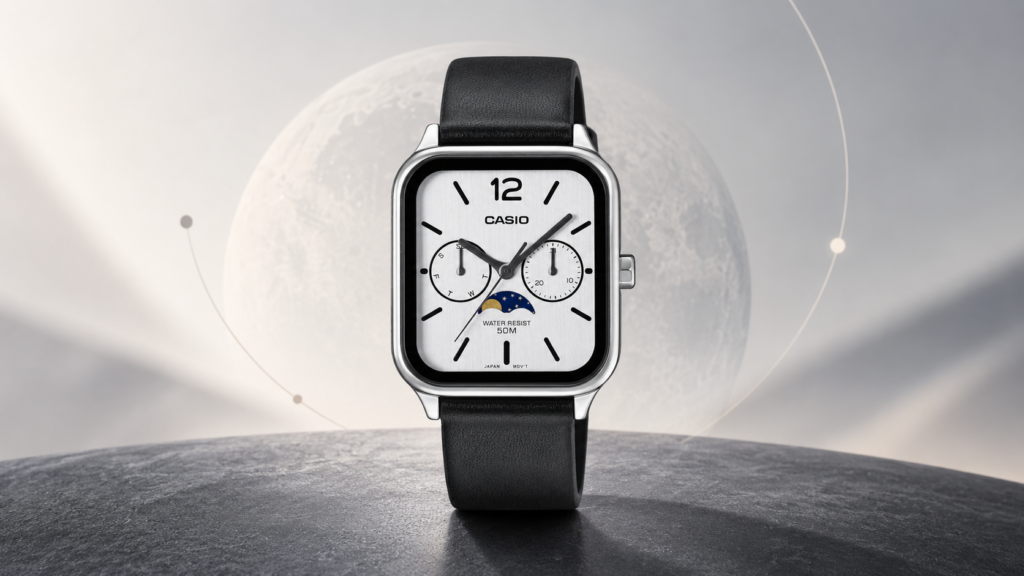
Casio launches Apple Watch-shaped moon-phase watch with a sleek silver dial in the US

Casio has added a new analog watch to its United States lineup. The MTP-M305LC-7AV is now available for $135 directly through the company’s website. It joins the previously available black-dial variant, the MTP-M305LC-1AV.

Instead of the digital displays or smart connectivity often found in modern wristwear, this release relies entirely on standard quartz timekeeping and traditional analog complications.

Casio MTP-M305LC-7AV watch
Edited

Design Details

The hardware consists of a rectangular stainless steel case with rounded edges. The case dimensions are 44.5 x 34 millimeters, with a thickness of 9.4 millimeters. The watch weighs 55 grams in total. It is paired with a standard black leather strap, which is designed to fit wrist circumferences ranging from 175 to 215 millimeters. The watch face is protected by a standard mineral glass crystal.

On the dial, the MTP-M305LC-7AV features a silver-tone background with standard hour markers. The primary functional addition to the watch is a moon-phase indicator located at the 6 o’clock position, which visually tracks the current stage of the lunar cycle.

Alongside the moon-phase display, the dial includes two inset subdials that indicate the current day of the week and the date. Timekeeping is handled by a standard three-hand analog setup for the hours, minutes, and seconds.

Regarding durability, the watch has a water resistance rating of 50 meters, or 5 bar. This rating means the watch can withstand exposure to rain and splashes from hand washing, but it is not designed for swimming, diving, or prolonged submersion in water.

Internally, the watch is driven by a quartz movement with a stated accuracy of ±20 seconds per month. It is powered by an SR621SW button-cell battery. The battery will provide approximately three years of continuous operation before requiring a replacement.

In related news, Casio has recently launched new F-91WF watches in the US with recycled cloth bands alongside a sleek, limited-edition retro watch with a matcha green theme.

For more daily updates, please visit our News Section.

Stay ahead in tech! Join our Telegram community and sign up for our daily newsletter of top stories!
(Casio)

Xiaomi Pad 9 Pro Max display teased: 13.3″ 3.4K touchscreen can be used as a secondary monitor via USB-C

Xiaomi is positioning its next flagship tablet as a flexible second screen you can plug into a bunch of different setups.

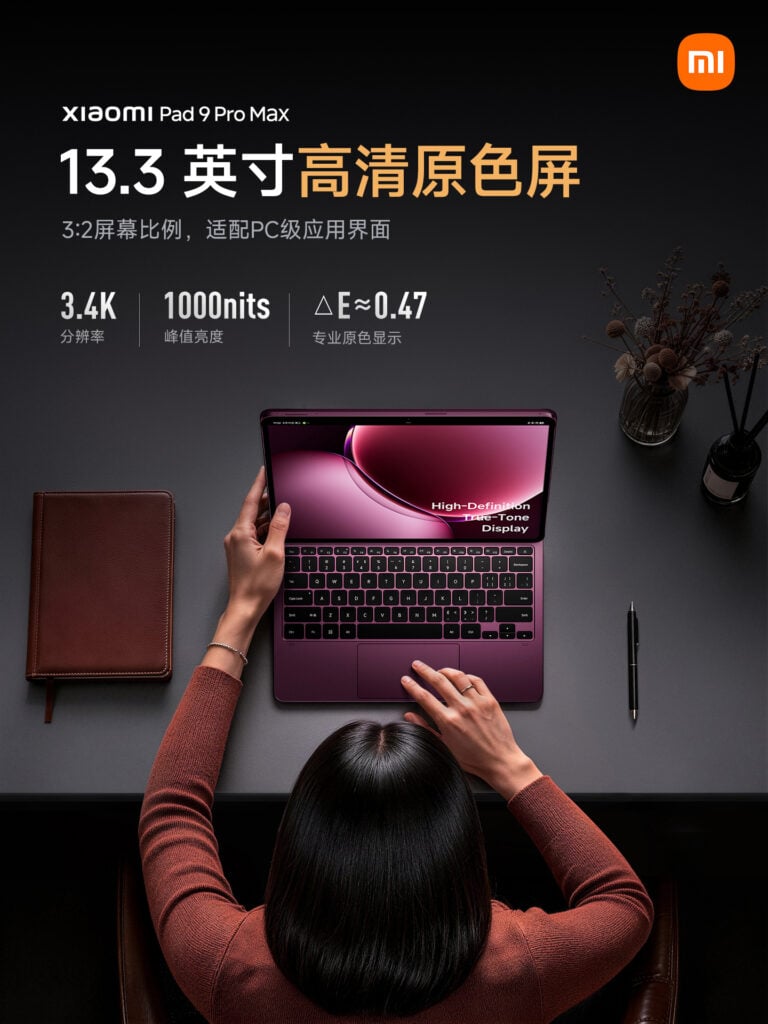
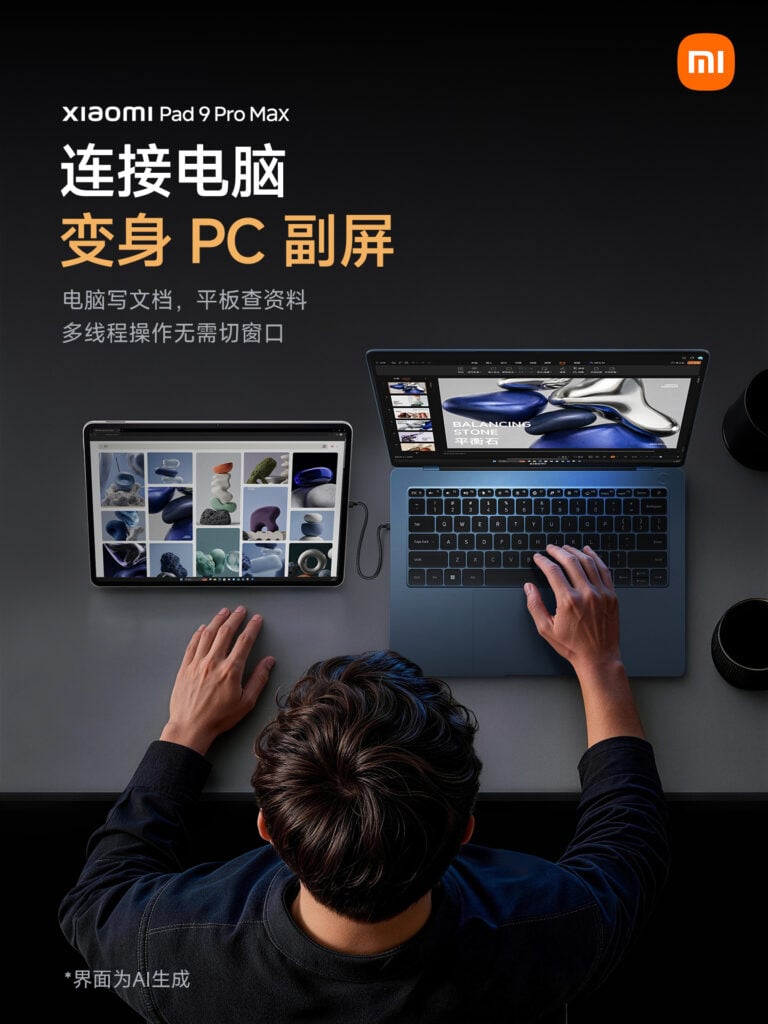
The device is the Xiaomi Pad 9 Pro Max, and it’s set to launch at Xiaomi’s Autumn Flagship event on September 7 at 7 PM China time. From the official previews dropped today, it’s packing a 13.3″ HD true-color display with 3.4K resolution, a 3:2 aspect ratio that should feel pretty good for work, peak brightness of 1000 nits, and solid color accuracy (ΔE around 0.47). It also supports a PC-style app interface.

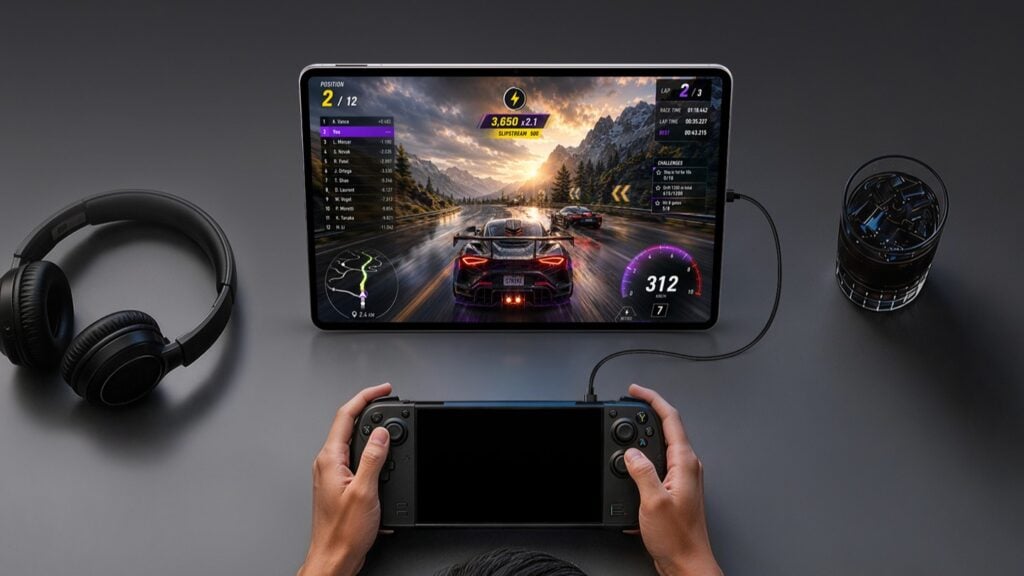
The part they’re really pushing is the full-featured USB-C port. Plug it in and the tablet can instantly act as different kinds of displays. Xiaomi says it can work as a secondary monitor for your computer, a digital drawing tablet, or a bigger screen for gaming. Hook it up to a PC and it becomes a display you can draw on with a stylus; pair it with the Xiaomi Focus Pen Pro and a TourBox, and you can work with both hands at once for creative tasks.

Gamers get in on it too. Connect it to a compatible handheld that supports DisplayPort 1.2 or higher and you’ve got a larger external screen with stereo sound. So it’s not just a tablet you use on its own, it can pull double duty in a few different setups.

This will be one of the first devices with Xiaomi’s new in-house Xring O3 chipset and will also debut HyperOS 4, which is built with large-screen productivity and multitasking in mind.

With the event less than 48 hours away, Xiaomi is clearly trying to sell the Pad 9 Pro Max as more than a regular tablet, something that sits somewhere between a productivity machine and a versatile external display.

Don’t miss a thing! Join our Telegram community for instant updates and grab our free daily newsletter for the best tech stories!

For more daily updates, please visit our News Section.

(Source: Lu Weibing on Weibo)

Motorola’s new Snap wireless charger hits 30W speeds and supports Qi2.2

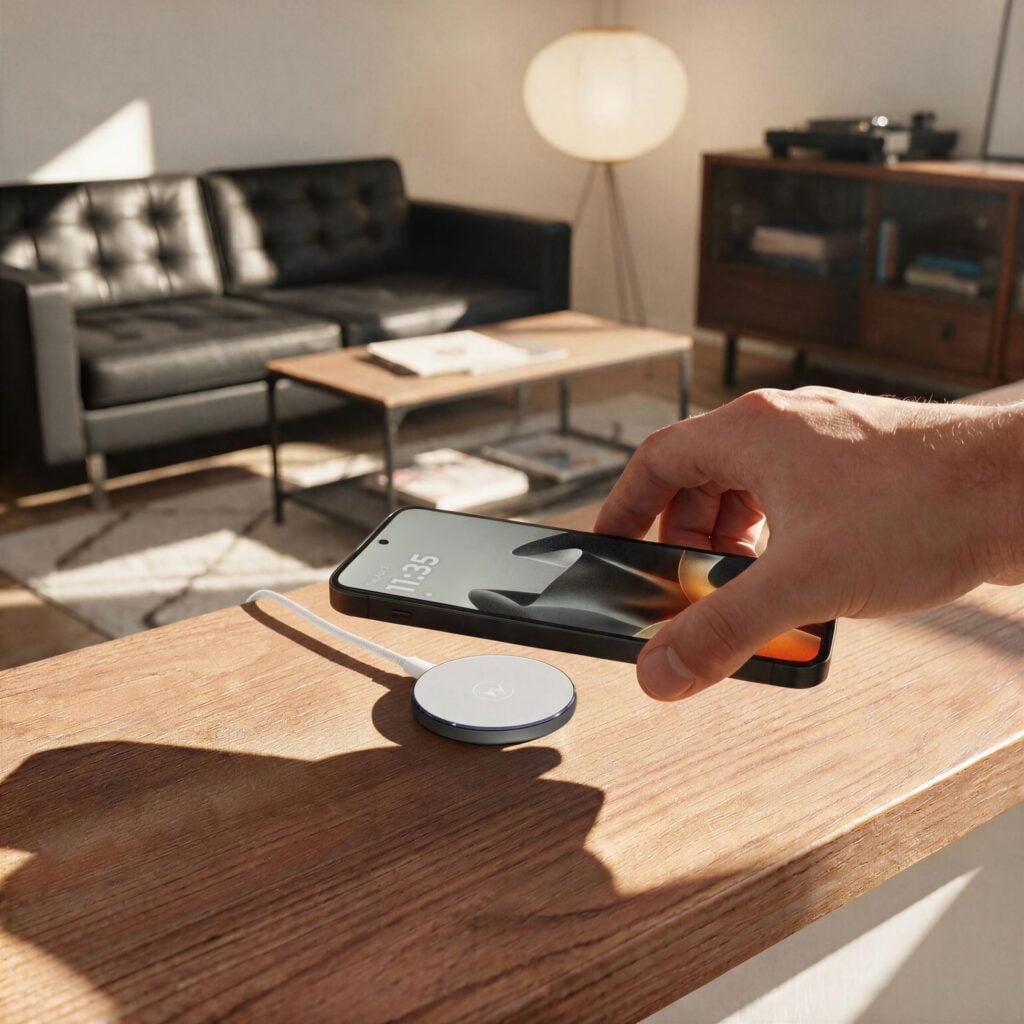
At the IFA 2026 tech event, Motorola launched the Edge 70 Plus and Watch Ultra smartwatch, while also unveiling a new charging accessory called the Moto Snap Wireless Charger. The new accessory is designed to offer fast and convenient wireless charging for compatible devices. It also brings magnetic alignment, charging protection, and support for higher charging speeds.

Moto Snap wireless charger supports up to 30W charging

Moto Snap Wireless Charger

The Moto Snap wireless charger supports up to 25W wireless charging on compatible Qi2.2 devices. Supported Motorola phones can reach charging speeds of up to 30W when using Motorola’s proprietary charging protocol, giving compatible devices a faster way to recharge without directly connecting a cable to the phone.

The wireless charger uses strong magnetic alignment to keep the phone securely positioned on the charging surface. This should make it easier to place a compatible phone correctly, particularly when charging at a desk or bedside. It also works with compatible magnetic cases, meaning users do not necessarily need to remove the case before charging.

Moto Snap Wireless Charger

Motorola has also focused on charging efficiency and thermal management with the Moto Snap Wireless Charger. The accessory is designed for cooler charging and includes overheat and overcharge protection. It also has zero standby power consumption, helping avoid unnecessary energy use when the charger is not actively charging a device.

The Moto Snap wireless charger comes with a 1.5-meter braided USB Type-C cable, providing some flexibility when positioning the charger away from a power outlet. Its magnetic design also makes it suitable for everyday use on a desk, nightstand, or while travelling.

Price and availability

The Moto Snap wireless charger has a starting MSRP of €39 and will roll out across select markets in Europe, the Middle East, Latin America, and Asia-Pacific in the coming weeks. Local pricing and availability will vary by market.

For daily updates, please visit our News Section.

Stay ahead in tech! Join our Telegram community and sign up for our daily newsletter of top stories!
🔌 You’ll NeedThe charger aligns via magnets, so phones without a built-in magnetic ring need a Qi2 magnetic case to use it properly. Check Qi2 magnetic phone case price on Amazon →

Motorola Edge 70 Neo’s India launch officially confirmed

A report that emerged in August revealed that Motorola had begun Android 17 beta testing for an upcoming phone called the Edge 70 Neo. Later, another report revealed a leaked render showcasing its design and color variants. In the latest development, the brand has officially confirmed the existence of the device.

Motorola Edge 70 Neo is heading to India

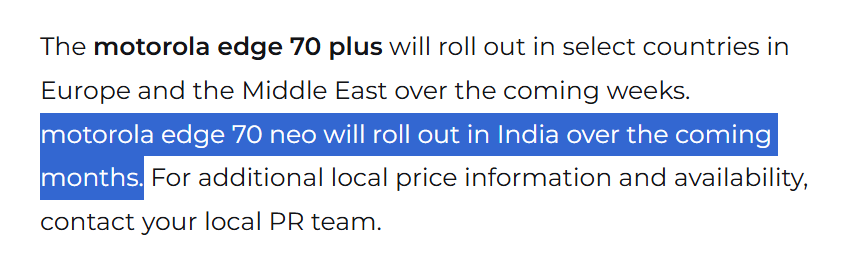
Motorola recently rolled out a press release about its IFA 2026 announcements. The brand unveiled a couple of new devices, such as the Edge 70 Plus, Watch Ultra, and Snap Wireless Charger. Surprisingly, the same press release confirms the Edge 70 Neo’s existence.

As can be seen in the above screenshot, the Lenovo-owned brand confirmed that the Edge 70 Neo will be released in India over the coming months. Unfortunately, it did not divulge the key specs of the device.

Judging from previous-generation Edge Neo-branded phones, the Edge 70 Neo could arrive with a compact display measuring around 6.3 inches. Another major highlight could be that it could be Motorola’s first phone to come preloaded with Android 17.

Motorola Edge 70 Neo Design
Alleged Motorola Edge 70 Neo

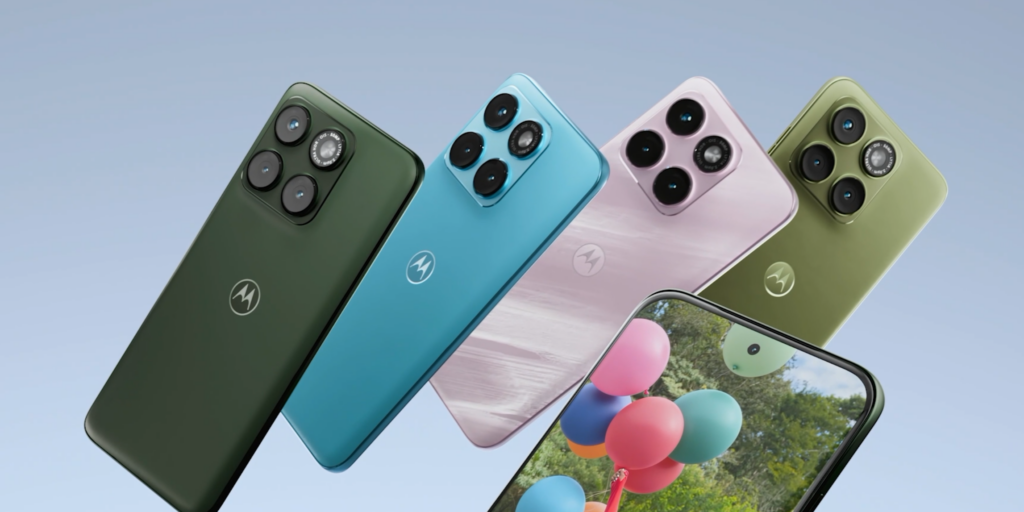
The above leaked image that surfaced last month revealed that the Edge 70 Neo would be available in four shades, such as pink, dark green, light green, and light blue. It also revealed the presence of a 200-megapixel camera. There’s a possibility that the above image may not be of the Edge 70 Neo, but could be of the already unveiled Edge 70 Plus.

Motorola Edge 70 Plus

The reason is that the above color options, design, and 200-megapixel camera inclusion exactly match those of the Edge 70 Plus. Alternatively, there is a possibility that both phones could have an identical design and color options, although that seems highly unlikely. Readers are advised to wait for further reports to learn more about the Edge 70 Neo.

For daily updates, please visit our News Section.

Stay ahead in tech! Join our Telegram community and sign up for our daily newsletter of top stories!
Oppo A7 Pro official listing confirms key specifications and configurations

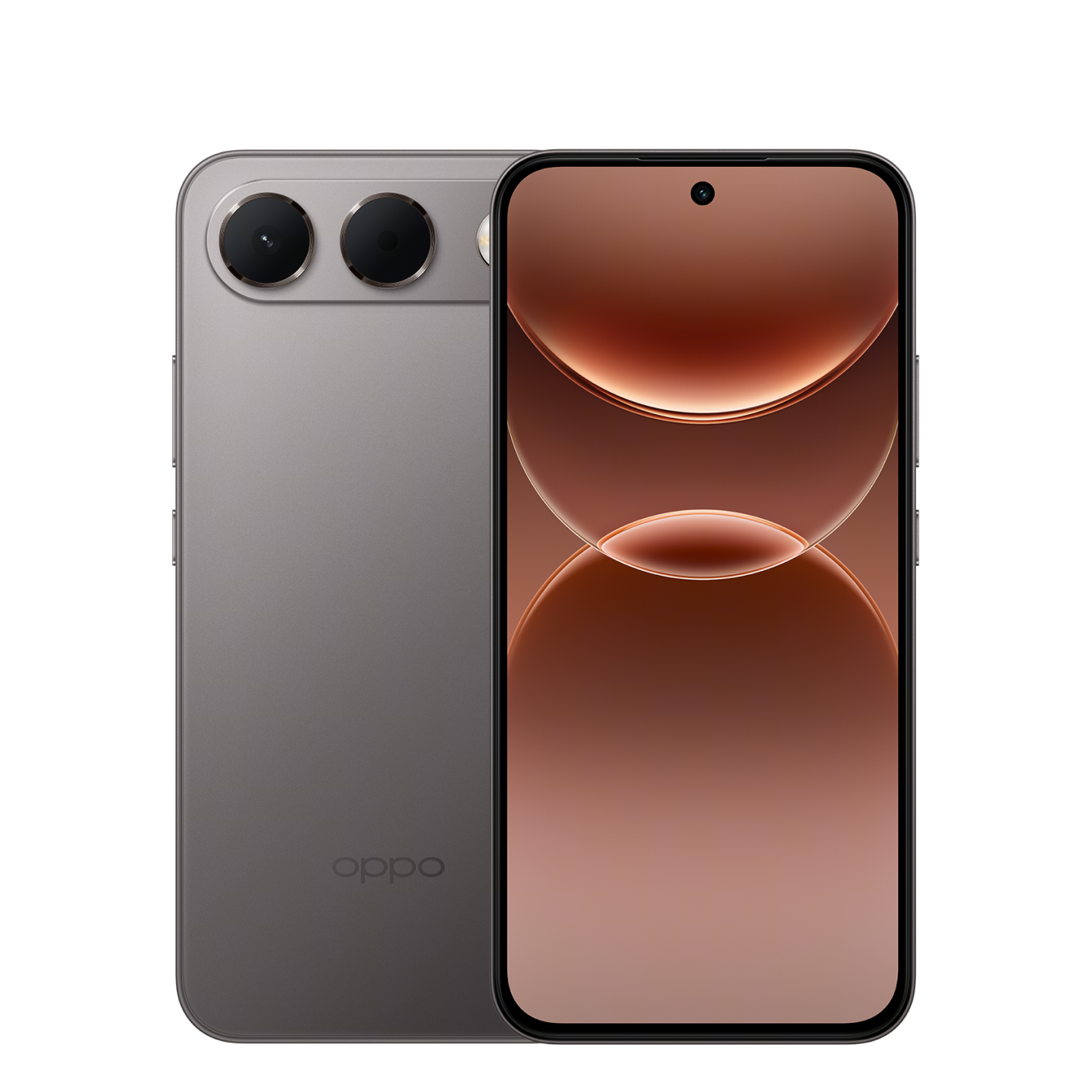
The Oppo A7 Pro is getting closer to its debut in China, with the company already putting the phone up for pre-order. Official images have also revealed its design and color options ahead of the launch. Now, the phone’s official listing has provided more details about its specifications, memory configurations, and key features.

Oppo A7 Pro key specs officially confirmed

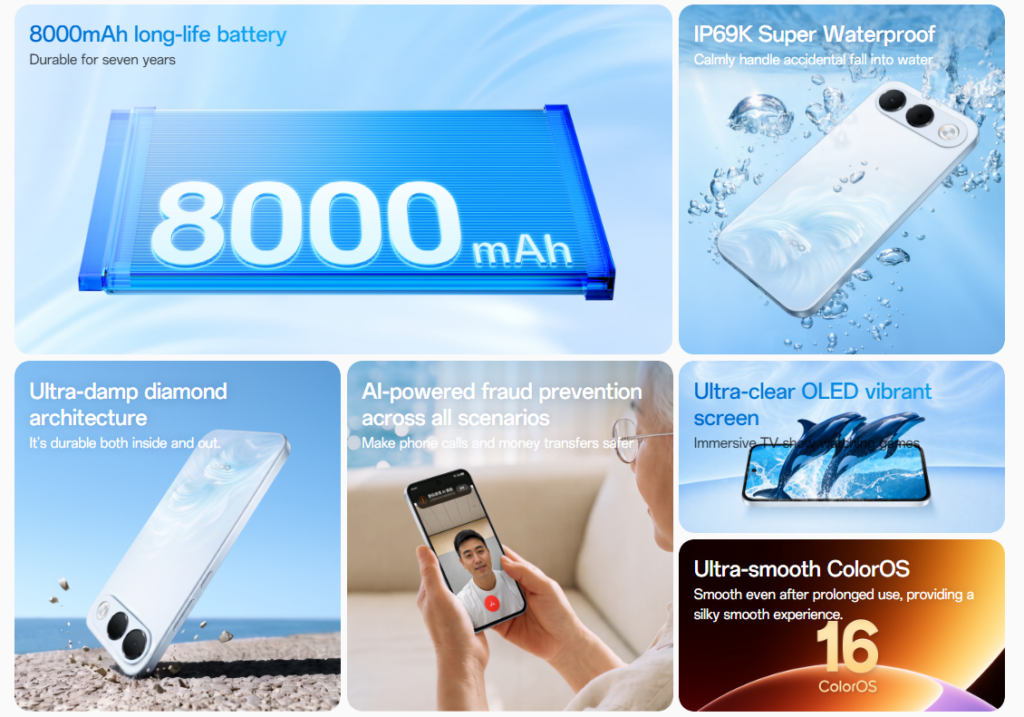
The Oppo A7 Pro is listed with an 8,000mAh battery, making it one of the phone’s biggest highlights. The listing also indicates a focus on long-term battery durability, although charging details have not been revealed in the available information. The phone is offered in 6GB + 256GB and 8GB + 256GB configurations, giving buyers two memory options while keeping 256GB of storage across both variants.

The handset features an OLED display with a 120Hz refresh rate. The higher refresh rate should provide smoother scrolling and animations, while the OLED panel is aimed at delivering deeper blacks and better contrast. The official material also highlights an IP69K rating, indicating a strong focus on protection against water and dust.

Oppo says the phone uses a reinforced structure designed to withstand drops and everyday impacts, suggesting that the device is aimed at users who prioritise toughness alongside battery capacity.

The Oppo A7 Pro runs on ColorOS 16 and includes AI-based fraud protection features. These include scam-call warnings, real-time face-swap detection and cross-app scam recognition, with the system designed to provide additional protection during calls and other interactions.

The handset will be available in three color options, such as Riding the Waves (white), Every Step Blossoms (pink), and Desert Brown. The phone is scheduled to go on sale in China on September 11 at 10:00 AM (local time), according to the listing. Pricing has not been revealed in the available details, but it is likely to cost under 2,000 Yuan.

For daily updates, please visit our News Section.

Stay ahead in tech! Join our Telegram community and sign up for our daily newsletter of top stories!
(source)

iPhone Duo: Apple’s foldable iPhone naming debate is getting interesting

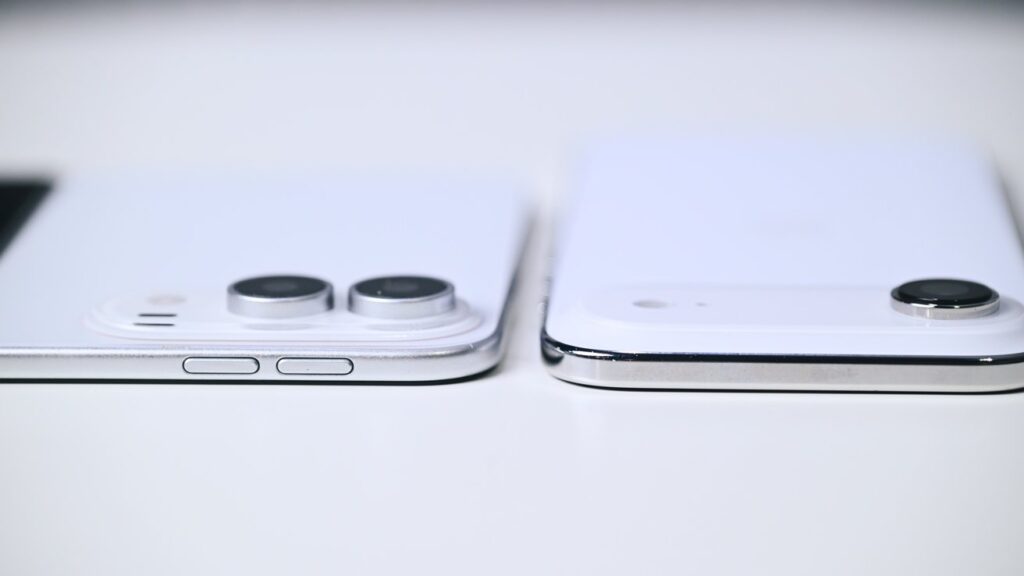
Apple’s first foldable iPhone is supposedly just around the corner, and the big question right now isn’t just “when” or “how much”; it’s what they’re going to call it.

For a while the leading theories were “iPhone Ultra” or “iPhone Fold.” Bloomberg’s Mark Gurman has said a lot of people inside Apple casually refer to it as the iPhone Ultra, though he’s been careful to note that doesn’t mean that’s the final marketing name. Now MacRumors is floating a new contender: “iPhone Duo.”

There’s zero confirmation that “Duo” is the one, of course. It’s just a rumor. But it does make a certain amount of sense if you look at Apple’s history. They had the PowerBook Duo laptops back in the ’90s, and more recently the MagSafe Duo charger. “Duo” could be a nod to the two screens that fold together like a book.

That said, the name comes with some baggage. Microsoft already used “Surface Duo” for their dual-screen phone (which didn’t exactly set the world on fire), and Intel had Core Duo processors years ago. Apple might not love the association. The other options have their own problems too. Samsung already owns “Ultra” with the Galaxy S Ultra and “Fold” with the Galaxy Z Fold, so neither “iPhone Ultra” nor “iPhone Fold” would feel particularly original.

On the flip side, “Ultra” does fit neatly into Apple’s own premium naming scheme. They already use it for the Apple Watch Ultra, CarPlay Ultra, and the high-end M-series chips (M5 Ultra). So calling the foldable the iPhone Ultra would slot it in as the new top-tier model above the Pro models without inventing a whole new word.

We’re supposedly days away from finding out. Apple’s fall event is expected next week, September 9, under the theme “Surprise and Shine”, and the foldable is widely rumored to show up alongside the iPhone 18 Pro and Pro Max. From everything we’ve seen and heard, it’s going to be a book-style foldable that opens sideways, not a flip-phone clamshell.

Until Apple actually says the name out loud, though, it’s all just educated guessing based on leaks, internal nicknames, and whatever historical parallels people can dig up. Could be Ultra. Could be Fold. Could be Duo. Or they could surprise everyone and call it something completely different. We’ll know soon enough.

Don’t miss a thing! Join our Telegram community for instant updates and grab our free daily newsletter for the best tech stories!

For more daily updates, please visit our News Section.

(Source | Image)