Smartwatch manufacturer Rogbid has unveiled the new Rogbid Model C smartwatch with several impressive features. The new Rogbid Model C features a 2.13-inch AMOLED screen, supports 4G network connectivity, and runs on the Android operating system. The smartwatch also comes with an affordable price tag.
Rogbid has created a niche for itself in delivering efficient but inexpensive smartwatches. Although some of the projected features of some Rogbid models had fallen short of expectations, the brand continues to churn out a decent output of affordable and durable smartwatches. The Rogbid Model C comes with a pretty impressive specs sheet – at least on paper. The smartwatch has its own 4G modem and when a SIM card is inserted into the smartwatch, it can connect to the mobile network independently without the use of a smartphone. It also supports Bluetooth 4.2 and 2.4 GHz WiFi connectivity.
The Rogbid Model C is powered by a quad-core processor based on ARM Cortex-A53 cores with 2GB/ 16GB memory/ storage configuration. The smartwatch runs on Android 8.1 from the box and this enables the device to access numerous apps in the Google Play Store. The smartwatch has a 1,000mAh battery and is equipped with several health and fitness monitoring sensors. These include SpO2 and heart rate monitoring, as well as the availability of several sports modes, GPS, alarm clock, music, and a calendar alarm.
Pricing & Availability
The Rogbid Model C is available in a single-color variant of black currently. The original price of the smartwatch is $149.99 but it can currently be purchased from the Rogbid online store for $79.99. The discounted price of the Rogbid Model C is not inclusive of additional shipping costs and taxes that will be incurred by the customer.
Anker has unveiled a new USB-C charging cable that can be used to charge two devices simultaneously. The new Anker 2-in-1 USB-C charging cable supports charging speeds up to 140W and can intelligently share power between the two connected devices.
The new Anker 2-in-1 USB-C charging cable is designed to reduce the number of wires you need to connect multiple devices. The USB-C cable has a built-in Smart Power Management technology that automatically adjusts power distribution based on each device’s power needs. The cable is 4 feet long and features a single USB-C port on one end and two USB-C ports at the other end. The split offers a feet of cable for the two outlets and these can be shortened as needed to reduce clutter.
The USB-C charging cable is wrapped in a durable sheath and the company claims the accessory can survive over 10,000 bends. The Anker 2-in-1 USB-C cable supports PD, PPS, and PIQ 2.0 USB power delivery protocols. When connected to a single device, the USB-C cable can deliver up to 140W of power. When two devices are connected, the maximum power delivered is 130W if one of the devices is drawing more than 100W. However, if neither of the two devices draws up to 100W, the total power delivery of the cable is restricted to 100W.
According to Anker, the automatic USB-C cable’s automatic power management architecture works in such a way that when two similar devices are plugged in, the first device receives more power. When charging two devices from a 60W power adapter, such as a PC and smartphone, the PC will receive 30W while the phone is limited to 13.5W of power. The more powerful power adapters deliver the optimal advantage of the new Anker 2-in-1 USB-C cable. The Anker 2-in-1 USB-C cable is currently priced at $25 and is available from Amazon.
TCL has introduced its new C61B series of 4K QLED Google TVs, available in 43-inch, 50-inch, 55-inch, and 65-inch sizes. These models are now available on Amazon.in, with prices starting at Rs. 32,990.
TCL C61B smartTV specs:
The C61B series features a simple unibody design, making it a sleek addition to any home. The minimalist look ensures it fits well with various interior styles. The series uses QLED Pro technology for vibrant visuals and quaternary quantum crystal material to prevent fading for up to 100,000 hours. The AiPQ Pro Processor, along with HDR10+ and T-Screen Pro technology, provides higher contrast and wide viewing angles without halo effects.
TCL has included a flicker-free screen and low blue light technology. Natural light optimization reduces eye strain, making it safe for extended viewing. The integrated Google TV offers access to OTT platforms, Google services like Google Meet and Google Kids, and Google Watchlist. Hands-free voice control and built-in Google Assistant make it user-friendly.
The C61B series includes an ONKYO 2.1ch Subwoofer with DTS Virtualand Dolby ATMOS for a home theater-like sound experience. It also features a 120Hz game accelerator, Game Master, and Dolby Vision for enhanced gaming visuals and performance.
The series includes 4K QLED, QLED Pro, T-SCREEN Pro, 93% DCI-P3, 3840 x 2160 resolution, MEMC, with a 60Hz refresh rate for the 43-inch and 50-inch models, and a 120Hz refresh rate for the 55-inch and 65-inch models. It has a brightness of 600 nits and supports Dolby Vision, HLG, and HDR10+. The AiPQ Processor is paired with 2GB RAM and 32GB storage. It also includes smart features such as TCL Home, Game Master, video chat, Miracast, quick settings, ALLM, and an aiming aid.
Audio specifications include 30W for the 43-inch and 50-inch models, and 35W for the 55-inch and 65-inch models, with Dolby Atmos, DTS Virtual X, and an ONKYO 2.1ch Subwoofer. Connectivity options include Bluetooth v5.0, Wi-Fi 5, three HDMI ports, and one USB port. The series comes with a two-year warranty.
Pricing & availability
The pricing for the TCL C61B series is competitive, with the 43-inch model priced at Rs. 32,990, the 50-inch model at Rs. 37,990, the 55-inch model at Rs. 45,990, and the 65-inch model at Rs. 72,990. These models are available for purchase on Amazon.in.
Many Xiaomi users ask where they can easily download the HyperOS update. There is an excellent app for that: HyperOS Downloader. This impressive application allows you to download HyperOS updates with easy access. And it doesn’t stop there; it also has amazing features like HyperOS 2.0 compatibility check, system app updates, access to hidden system features, and more. This is why you should try HyperOS Downloader.
The first part of the app detects your device and provides you with the latest HyperOS version. If a new update is available, it offers a suggestion to download the update. If no new update is available, it shows the current version as in the photo.
HyperOS Downloader also checks if your device is compatible with Android 15 and HyperOS 2.0. HyperOS 2.0 has not yet been officially announced, so it’s important to note that the device list in the app is not an official list. However, it should be noted that this HyperOS 2.0 list is prepared according to Xiaomi update policy.
You can access HyperOS stable versions as you wish with this application. Moreover, you can find software for every region in HyperOS Downloader. This also includes previous versions of ROMs. Of course, you should not forget that you can access the ROMs of all devices 🙂
HyperOS Downloader also checks system apps for updates, giving your device early access to new features. Not only that, HyperOS Downloader also allows you to access hidden features in the system.
Lenovo has launched a new member of its YOGA family in the Chinese market – the YOGA Air 14c AI Yuanqi. This 14-inch flip notebook is equipped with the latest Intel Core Ultra processor and boasts an integrated NPU for AI applications. Let’s check out its key specs.
Lenovo YOGA Air 14c Specifications:
The YOGA Air 14c features a 2.8K 120Hz OLED touchscreen display with 400 nits of brightness, 100% DCI-P3 color gamut, Dolby Vision, and VESA DisplayHDR True Black 500 certification. It also supports the Lenovo Yoga Inspiration Pen with 4096 levels of pressure sensitivity and supports screen-off note-taking.
The YOGA Air 14c Flip boasts a new generation Tian Gong hinge system with a 360-degree hinge, allowing users to seamlessly switch between laptop and tablet mode. It also features a super-aggregate antenna for a strong 350-meter ultra-long-distance connection.
Under the hood, the YOGA Air 14c Flip packs a punch with the latest Core Ultra 7 155H processor, boasting a 33% improvement in multi-core performance compared to the previous generation. The CPU is further complemented by an NPU, specifically designed to accelerate AI applications and tasks. The laptop comes equipped with 32GB of LPDDR5x-7467 memory and a 1TB PCIe 4.0 solid-state drive, ensuring smooth multitasking and ample storage for demanding projects.
Lenovo has also pre-installed its Xiaotian AI assistant on the Yoga Air 14c. Xiaotian is powered by the Tianxi large language model and can perform various tasks through natural language interaction. These include summarizing local documents, answering personal knowledge-based questions, and continuously learning user habits to provide a more personalized experience.
Despite its sleek design, the Yoga Air 14c packs a 71Wh battery. Lenovo claims the battery offers up to 19.1 hours of local video playback and 8.1 hours of simulated market usage. Additionally, the laptop supports fast charging with the included 65W Type-C adapter.
The Yoga Air 14c weighs just 3.1 lbs (1.4kg) and measures 0.59 inches (14.9mm) thick, making it a highly portable device. The laptop is equipped with a comfortable 1.5mm keyboard and a large 5.6-inch anti-accidental touch touchpad for easy navigation.
In terms of connectivity, the Yoga Air 14c offers a good selection of ports, including two Thunderbolt 4 ports, an HDMI 2.1 port, a USB-A 3.2 Gen 1 port, a microSD card reader, and a 3.5mm headphone jack.
The Yoga Air 14c comes pre-installed with Windows 11 Home. To enhance security and user experience, Lenovo offers a one-year accidental protection plan with a free spare machine and a dedicated customer service representative for Yoga Black Gold members (399 yuan/year).
Pricing and Availability
The Lenovo Yoga Air 14c flip notebook with Core i7 Ultra 7 155H processor, 32GB of LPDDR5x-7467 memory, and 1TB PCIe 4.0 SSD is priced at 8999 yuan (approximately $1,239). Pre-sales for the device started today in China, with official sales commencing on July 13th.
China faces a challenging yet promising landscape in the high-bandwidth memory (HBM) chip market and the broader semiconductor industry, driven by surging global demand and strategic expansions.
High-bandwidth memory chips are experiencing a significant surge in demand, primarily driven by their critical role in AI applications within data centers. This growing demand is expected to contribute to an approximate 80% revenue growth in the global memory chip market this year, bouncing back from a low base in the previous year. The key players leading this market include SK Hynix, which holds a 50% global market share, followed by Samsung Electronics and the US-based Micron Technology.
China’s Position and Challenges
China accounts for 30-35% of global memory consumption. However, the country faces substantial challenges in producing high-end memory chips due to limitations in its semiconductor supply chain. Currently, China’s production capabilities are more suited to mid to low-end memory solutions. Consequently, as China’s AI ecosystem continues to expand, it will increasingly rely on imports, particularly from Korean memory chip producers.
Despite these challenges, China is actively working to strengthen its position in the HBM market. ChangXin Memory Technologies (CXMT) represents China’s leading hope for domestic HBM production. CXMT, in collaboration with TongFu Microelectronics, is developing HBM samples, although it may take up to four years for these products to reach the market. In the interim, China sees potential growth opportunities in lower-end memory products, particularly for AI edge devices such as autonomous vehicles, AI-enabled smartphones, and personal computers. By 2025, the demand from edge AI applications is expected to drive about 20% industry revenue growth.
External Challenges
China’s ambitions in the semiconductor sector are also constrained by external factors, including potential further restrictions from the US, Japan, and the Netherlands on developing HBM chips.
Strategic Expansion Amid US Sanctions
In response to fears of more US sanctions, Chinese semiconductor companies, including SMIC and Hua Hong Semiconductor Group, are ramping up their capacities. Investments are primarily focused on legacy chips used in applications like cars and consumer electronics. This year, China’s wafer fabrication capacity is projected to increase by 15% to 8.9 million wafers per month, with a further 14% increase to 10.1 million wafers per month expected next year. This rapid growth is set to make China account for about 30% of the world’s total wafer fabrication capacity, outpacing global growth rates.
Economic and Market Impact
The expansion efforts have led to a significant surge in sales of semiconductor wafer fab equipment in China, which saw a 48% increase last year compared to a mere 1% worldwide growth rate. Meanwhile, China’s imports of integrated circuits (ICs) dropped by 10.8% in volume and 15.4% in value.
Overcapacity Concerns and Domestic Advantages
Despite these aggressive expansions, analysts warn of potential overcapacity in the next two years, which could drive global chip prices down. Additionally, the Biden administration’s planned tariffs on $18 billion worth of Chinese imports, including a 50% hike on semiconductor imports, add to the complexities.
However, China’s drive towards self-sufficiency has benefited local foundries like SMIC and Yangtze Memory Technologies Corp. These foundries enjoy higher capacity utilization rates due to domestic substitution policies. For example, Hua Hong Semiconductor operates at maximum capacity and plans a 10% price increase in the latter half of the year.
Market Recovery and Demand
Local foundries in China are showing a faster recovery in capacity utilization compared to their global peers, supported by high customer demand during the traditional peak inventory stocking season. Recent price adjustments aim to alleviate profit pressures rather than indicating a full recovery in demand.
China is strategically expanding its semiconductor capacity to mitigate the impact of US sanctions and reduce reliance on imports. While rapid growth brings the risk of overcapacity, domestic policies, and self-sufficiency drives provide significant advantages, positioning China as a formidable player in the global semiconductor market.
Mid-range smartphones are becoming more advanced over time. Chinese smartphone manufacturer Vivo will announce the new mid-range smartphone Vivo T3 Pro 5G in the near future. Recently, the brand has been trying to compete more in the mid-range smartphone market.
vivo T3 Pro 5G is coming
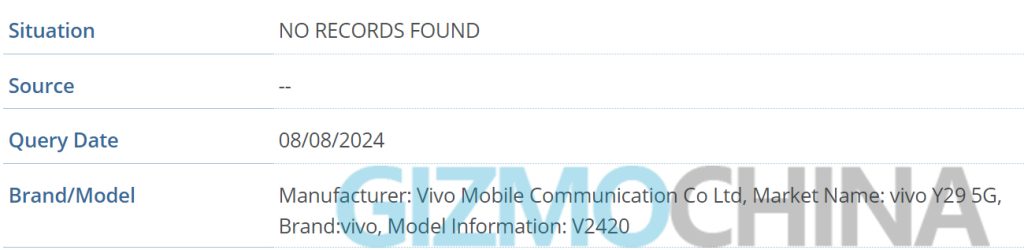
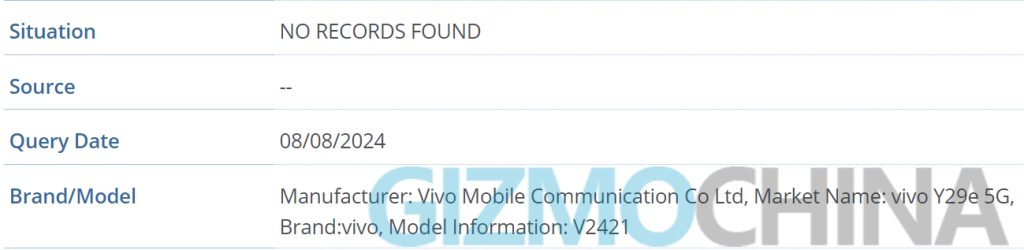
Vivo will officially announce the T3 Pro 5G. Gizmochina has spotted the Vivo T3 Pro 5G in the IMEI database with model number “V2404”. This new smartphone is expected to have better features and improvements compared to the Vivo T3.
vivo T3 Pro 5G V2404
The Vivo T3 had a 6.67-inch AMOLED screen with a 120Hz refresh rate, a MediaTek Dimensity 7200 chipset, a 50MP main camera, and a 16MP front camera. The T3 Pro 5G is likely to have even more advanced features, although its exact specifications are not yet known.
There are several reasons why the Vivo T3 Pro 5G might be better than its predecessor. First, technology is always improving, so newer models usually have better hardware and software. Second, Vivo wants to stay competitive in the mid-range market, so they are likely to add more features to attract buyers.
Some possible improvements in the T3 Pro 5G could include a better camera, a faster processor, and longer battery life. It might also have more storage and better design. However, these are just guesses, and we will have to wait for the official announcement to know for sure.
The launch date and price of the Vivo T3 Pro 5G have not been announced yet. However, it is expected to be a mid-range smartphone, so the price will probably be affordable. This is important because many people want good features without spending too much money.
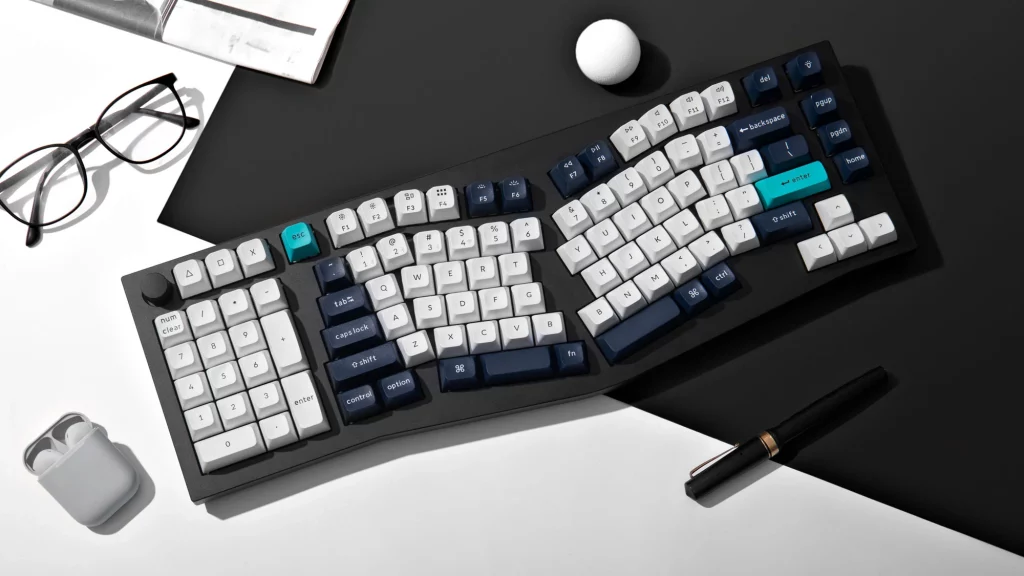
Keychron has announced the upcoming launch of their V8 Max mechanical keyboard, featuring an ergonomic Alice layout. The keyboard is expected to go on sale at 8 pm on JD.com and Tmall’s Keychron Flagship Store for a starting price of 529 yuan (approximately $85 USD).
The keyboard is compatible with both Windows and Mac Operating systems
The Alice layout is designed to provide a more natural hand position for improved comfort during extended typing sessions. The V8 Max also offers versatility with its triple-mode connectivity: 2.4G wireless, Bluetooth, and wired USB connection. This allows users to connect to various devices seamlessly, whether a desktop PC, laptop, or tablet. Additionally, the keyboard is compatible with both Mac and Windows operating systems.
The Keychron V8 Max also sports hot-swappable switch sockets. This allows users to easily customize the keyboard’s typing feel by installing their preferred mechanical switches without soldering. The keyboard comes pre-installed with Gateron’s custom Jupiter axis switches, which are factory-lubricated for a smoother typing experience. The V8 Max features OSA PBT double-shot keycaps, known for their durability and resistance to wear and tear.
For added functionality, the keyboard supports full-key anti-collision, ensuring all key presses register accurately, even during rapid typing. Keychron also offers self-developed web drivers and compatibility with open-source QMK/VIA software, allowing users to program macros and customize the keyboard’s layout to their preferences.
The Honor 200 series, previously rumored for an Indian launch, is inching closer to becoming a reality. The Honor 200 Pro was formerly launched in China, and has now been spotted on the BIS certification website, hinting at an imminent arrival in the Indian market.
Only the Pro model of the Honor 200 is listed on the BIS database
The BIS certification listing reveals the model number “ELP-NX9” for the Honor 200 Pro, approved on June 24th, 2024. While the specific name isn’t mentioned, the global launch of the 200 series confirms this model belongs to the Pro variant. Currently, only the Pro model appears on the BIS database.
Though details are scarce, previous leaks suggest the Honor 200 Pro will sport a display with a 1.5K resolution and a single punch-hole cutout. The display is also rumored to have a slightly curved design, similar to the Honor 100 Pro.
In the camera department, leaks point towards a 50-megapixel main sensor with optical image stabilization (OIS), a standard feature in high-end smartphones. Additionally, a 32-megapixel telephoto lens with 2.5x optical zoom and a powerful 50x digital zoom capability is expected.
Under the hood, the Honor 200 Pro is rumored to be powered by the top-of-the-line Snapdragon 8 Gen 3 chip from Qualcomm. The vanilla Honor 200 is expected to follow with the Snapdragon 8s Gen 3, offering similar core architecture but potentially at slightly lower clock speeds. This suggests comparable performance between the two models.
Previous leaks indicated a launch by the end of May for the Honor 200 series. However, with the June certification, a revised launch timeframe is likely. Pricing and other details remain unknown, but we can expect more information to emerge in the coming days.
The LockBit ransomware gang has sparked controversy by claiming they stole a massive database containing sensitive banking information from the US Federal Reserve. This claim, however, is being met with significant skepticism from security researchers.
LockBit is notorious for demanding hefty ransoms in the high seven figures
Earlier this week, LockBit listed the Fed on their data leak site, asserting they possess an archive filled with “33 terabytes of juicy banking information containing Americans’ banking secrets.” They further taunted the Fed, suggesting an ongoing negotiation and a $50,000 offer already on the table, which they deem insufficient. The exact ransom demand by LockBit remains undisclosed, but the group is known for hefty ransom requests in the high seven figures.
Image Credits: Flyd on Unsplash
With a deadline set for June 25th at 8:27 PM UTC (2:27 PM EDT), the US Federal Reserve has stayed silent on the issue. However, security analysts are expressing doubt about the legitimacy of the attack. Many believe LockBit, following a major international police operation (Cronos) that disrupted their infrastructure, is attempting to regain notoriety within the hacking community through this hoax.
Operation Cronos resulted in the seizure of LockBit’s infrastructure, the release of decryption keys and stolen files, and the identification of some operators. While no arrests were made, LockBit swiftly resumed operations within a week. Now, security researchers are questioning the technical feasibility of such a large-scale breach by LockBit, casting doubt on their claim. The situation remains fluid, with the Fed’s silence further fueling speculation. It’s crucial to rely on official channels for updates and avoid amplifying baseless claims.
Weibo tipster Digital Chat Station has revealed some of the key details about the display and camera system of the Redmi Note 14 Pro.
Redmi Note 13 Pro
Tipster claims the main camera will be downgraded to 50MP
According to the tipster, the mid-range phone will offer a 1.5K micro-curved panel with a centered punch-hole cutout for the front camera.
He also added that there will be a 50MP “large” main sensor but no periscope telephoto. Unlike the predecessor, the phone could come with a centered elliptical camera island. Referring to the comment area, this phone is expected to be the Xiaomi Redmi Note 14 Pro. Unfortunately, this is all the information about the phone he could share.
For reference, the Redmi Note 13 Pro comes with a 6.67″ 2712×1220 flat AMOLED display with slim bezels. There is a 16MP centered punch-hole selfie camera and a 200 MP + 8 MP + 2MP setup on the rear. The high-resolution main camera of the predecessor comes with OIS, multi-directional PDAF, f/1.7 aperture, and a sensor size of 1/1.4″. The phone is powered by the Snapdragon 7s Gen 2 chipset and is paired with 8GB or 12GB RAM. The phone has a 5100mAh battery and supports 67W fast wired charging.
Redmi Note 13 Pro +, however, is Redmi’s first curved-screen mobile phone that supports 120W wired charging and packs a 5000 mAh battery. This phone also houses the same camera system as the Pro model and has the same display resolution.
The Redmi Note 14 series is reportedly set to launch in September and has already appeared in the IMEI database. Six out of nine model numbers include “2409,” suggesting a September release, while the remaining three include “2411,” possibly indicating a November release. This could mean the series will debut in China in September, with other markets following in November.
Alongside the launch of the Razr 50 series foldables, Motorola also announced a new S-series smartphone in China. The device is dubbed as the Moto S50 Neo. Some of the key highlights of the device include a curved display, a long-lasting battery, and longer software support. Read on to know what the device offers out of the box.
Moto S50 Neo series specifications and features
The Moto S50 Neo has a 6.7-inch pOLED curved 10-bit display. It bears an FHD+ resolution, a 120Hz refresh rate for smooth visuals, and a 1,600 nits peak brightness for outdoor visibility. The screen is integrated with a fingerprint scanner. Design-wise, the phone has a slim profile with a raised rear camera module. It is water-resistant thanks to the IP54 rating.
The Moto S50 Neo’s dual camera setup consists of a 50MP Sony IMX882 sensor with OIS support. It is paired with an 8MP ultra-wide-angle lens that also works as a macro and depth shooter. Up front, the phone has a 32MP selfie snapper.
Internally, a Snapdragon 6s Gen 3 processor powers the Moto S50 Neo. It packs up to 12GB RAM and 512GB internal storage. The smartphone is backed by a 5,000mAh battery unit that can be topped with support for 30W charging. Software-wise, the device ships with Android 14 OS out of the box. It is the first phone in the world to be eligible for four years of OS updates.
The Moto S50 Neo starts at CNY 1,399 (~$192) for the base 8GB + 256GB variant. Meanwhile, the 12GB + 256GB and 12GB + 512GB configurations are priced at CNY 1,599 (~$220) and CNY 1,899 (~$261). The phone is offered in Gray, Olivine, and Surf that are developed in partnership with Pantone. It will be available for purchase in China from June 28.
Offering various products to users, Xiaomi is developing a new smartwatch. Expected to be Xiaomi Watch S4, the smartwatch has been spotted in the IMEI database. We don’t have any information about the new smartwatch yet. The Chinese brand is expected to introduce this watch with the Xiaomi 15 series.
Xiaomi Watch S4 is coming with Xiaomi 15 series
The Xiaomi Watch S3 was launched in Q4 2023 along with the Xiaomi 14 series. Now the brand continues to grow its ecosystem with the Watch S4. Gizmochina has spotted the new smartwatch in the IMEI database. Xiaomi Watch S4 is expected to have e-SIM support. Because the previous generation Watch S3 had e-SIM support.
Xiaomi Watch S4 M2424W1
Xiaomi Watch S4 appears with the model number M2424W1. The previous Watch S3 had the model number M2311W1. There is no detailed information about the Watch S4, but we can make some guesses.
The Xiaomi Watch S4 may have e-SIM support, we’ve already explained why above. The Watch S4 is also expected to come with HyperOS 2.0 software out of the box. This new HyperOS version aims to provide users with a more fluid, advanced and user-friendly experience. Xiaomi will optimize the software every year to provide users with the best experience.
The Xiaomi Watch S4 is expected to be unveiled alongside the upcoming Xiaomi 15 series smartphones, which will be unveiled in October. This launch is very important for Xiaomi to announce new products. Xiaomi usually prefers to introduce its new products en masse at big events and thus manages to keep users’ interest alive. Together with the Xiaomi 15 series, the Xiaomi Watch S4 will be one of the products that will stand out at this event.
Prolific industry leakster who goes by the name Digital Chat Station or DCS has shed light on the specifications of an upcoming. While the tipster didn’t reveal the phone’s name, a report by ITHome suggests it is likely the Realme 13 Pro+.
The leak, posted on the Chinese social media platform Weibo, suggests the phone could be the first to sport a Sony IMX882 3x periscope lens. The IMX882 is a 1/1.953″ sensor and has reportedly been tapped by other manufacturers like Oppo and OnePlus for their upcoming flagship devices, Find X8/ X8 Pro and OnePlus 13, respectively.
Additionally, DCS says the phone might retain the 50MP main sensor and a triple-camera setup from the previous gen Realme 12 Pro+.
Apart from the image sensor, the leak describes a familiar design for the Realme 13 Pro+. The phone is expected to retain a centrally aligned punch-hole display and a circular module on the back for rear cameras.
Under the hood, the Realme 13 Pro+ is said to pack the Qualcomm Snapdragon 7s Gen 3 processor, a modest upgrade over the Snapdragon 7s Gen 2 on the Realme 12 Pro+.
Moreover, previous reports suggest that the Indian version of the Realme 13 Pro+ will be available in two color variants, Monet Gold and Emerald Green, and will offer four memory options — 8GB+128GB, 8GB+256GB, 12GB+256GB, and 12GB+512GB.
Even the Realme 13 Pro is said to offer similar RAM and storage options but will reportedly come in three shades: Monet Gold, Monet Purple, and Sky Green.
Apart from these details, other information about the Realme 13 series is under wraps for the moment. We will keep you updated if we get any new information about the smartphone.
Motorola has unveiled its next-generation Razr 50 series foldable phones. It includes the Razr 50 and Razr 50 Ultra. They arrive as the successor to the last year’s Razr 40 and 40 Ultra respectively. The latest offerings pack quite some upgrades over their predecessors. Notably, the standard model now comes with a larger secondary screen.
Motorola Razr 50 series specifications and features
The Motorola Razr 50 and Razr 50 Ultra are clamshell foldable phones. Both come with a 6.9-inch FlexView pOLED display bearing an FHD+ resolution and support for Dolby Vision. The standard model features a 120Hz refresh rate and a peak brightness of 2,600 nits. Meanwhile, the ultra model has an LTPO refresh rate of 165Hz and the peak brightness maxes out at 3,000 nits.
The secondary screen on the back panel of the Razr 50 Ultra also has a pOLED panel with 165Hz LTPO refresh rate, a 1080p resolution, and HDR10+ support. The device has the biggest display measuring 4 inches on a foldable phone. On the other hand, the standard Razr 50 moves away from the smaller 1.5-inch screen to 3.6 inches with a 90Hz refresh rate. The secondary display on both devices are Gorilla Glass Victus shielded. It can be used for features like watching videos, navigation, and more.
On the optics front, the Motorola Razr 50 duo have a 50MP main camera with OIS. The Ultra model has a 50MP 2x telephoto lens whereas the standard variant features a 13MP ultra-wide-angle sensor. Both phones feature a 32MP selfie snapper.
The Motorola Razr 50 series are equipped with a fifth-generation star track hinge that is said to be smaller and lighter. It also features a 6000 series aviation-grade aluminium frame. Both phones have IPX8 ratings for water-resistance. There is a side-mounted fingerprint scanner embedded in the power button.
Under the hood, the Razr 50 is powered by a Dimensity 7300X processor whereas the Razr 50 Ultra is equipped with a Snapdragon 8s Gen 3 SoC. Both phones pack up to 12GB RAM and 512GB UFS 4.0 storage. The Razr 50 Ultra is backed by a 4,000mAh battery with support for 44W wired and 15W wireless charging. Meanwhile, the standard model draws its power from a 4,200mAh cell with support for 33W wired and 15W wireless charging.
Other features on the Razr 50 series include Android 14 OS, 5G, dual-band WiFi, USB-C port etc.
The Motorola Razr 50 is priced at CNY 3,699 (~$510) and CNY 3,999 (~$550) for the 8GB + 256GB and 12GB + 512GB variants. It comes in Steel Wool, Pumice Stone, and Arabesque colours with a leather texture back panel. The Ultra model costs CNY 5,699 (~$785) and CNY 6,199 (~$850) for the 12GB + 256GB and 12GB + 512GB configurations respectively. It is offered in Dill, Navy Blazer, and Peach Fuzz hues.
Xiaomi has unveiled a new addition to its Mijia air conditioner lineup – the Giant Power Saving 3HP Wall-mounted model. This air conditioner prioritizes energy efficiency while boasting features for rapid cooling, powerful heating, and smart home integration.
Xiaomi Mijia Giant Power Saving Air Conditioner 3HP Specifications:
This air conditioner is ideal for medium to large spaces, ranging from 30 to 40 square meters. It boasts a 3HP capacity, making it suitable for large bedrooms, open floor plans, and even small living rooms. Compared to traditional floor-standing units of similar power, the wall-mounted design saves valuable floor space, offering more flexibility for home decor.
The air conditioner boasts a sleek design that complements modern homes. It features a flush design with a matte white finish and a circular LED display screen.
It boasts 40-second rapid cooling and 80-second rapid heating, ensuring your desired temperature is reached quickly. This is achieved through a combination of technologies, including Coupled Optimization Control and an efficient low-noise air duct system.
The air conditioner is also equipped with a reliable inverter drive control technology, allowing it to function effectively in a wide range of temperatures, from -35°C to 60°C.
The air conditioner also features a self-developed air duct system for noise-sensitive users that ensures quieter operation, with noise levels ranging from 30 to 40 dB(A). Additionally, the unit features a smart light-sensing function that automatically adjusts display brightness for a more peaceful night’s sleep.
The air conditioner also prioritizes user health. It incorporates self-cleaning technology for both the indoor and outdoor units. The indoor unit utilizes high-temperature drying technology to eliminate attached bacteria, while the outdoor unit rinses condensate water to remove dust from the heat exchanger, improving efficiency and maintaining optimal operation.
The Mijia air conditioner boasts an impressive APF (Annual Performance Factor) of 4.55, exceeding China’s new Grade 1 energy efficiency requirement of 4.20. This translates to an estimated saving of 578 kWh of electricity per year compared to new Grade 3 models.
This air conditioner seamlessly integrates with Xiaomi’s smart home ecosystem. It supports Xiao Ai voice control, allowing you to control not just the air conditioner, but also lighting, robotic vacuum cleaners, and other compatible smart devices through voice commands. Additionally, the Mijia app allows for remote control and operation, letting you adjust settings and monitor the air conditioner’s status from anywhere.
Pricing and Availability
The Xiaomi Mijia Giant Power Saving Air Conditioner 3HP Wall-mounted model is currently available for pre-sale on Xiaomi Youpin in China at a price of 4299 Yuan (approximately $592).
OnePlus has just launched its latest Nord CE 4 Lite smartphone in India. The new mid-range model dropped in India for under 20,000 INR. But at this price range, how does it stack up against the iQOO Z9? Which one is better? Let’s find out in this comparison.
1. OnePlus Nord CE 4 Lite vs iQOO Z9: Snapdragon or Dimensity?
While there are many similarities between the two devices, one of the major differences between the Nord CE 4 Lite and iQOO Z9 are their chipsets. Under the hood, the OnePlus Nord CE 4 Lite is equipped with the Qualcomm Snapdragon 695 SoC. Meanwhile, the iQOO Z9 is powered by the MediaTek Dimensity 7200 SoC.
For whatever reason, OnePlus decided to retain the Snapdragon 695, which was also found on the Nord CE 2 Lite and Nord CE 3 Lite. This means that it is still employing an aged processor. So despite launching back in March 2024, the iQOO Z9 has a better chipset.
2. Bigger Battery and Faster Charging
An area where OnePlus makes up ground is in the battery department. While the iQOO Z9 is powered by a 5,000mAh battery pack, the Nord CE 4 Lite packs a larger 5,500mAh cell. The latter also supports 80W wired fast charging, but the former only supports 44W wired fast charging. In just 52 minutes, the OnePlus Nord CE 4 Lite can hit 100 percent charge. The iQOO Z9 only managed a 50 percent charge in 30 minutes, as per official notes.
3. Display and Camera are nearly identical
From the front and back, the two smartphones are quite similar to one another. Both devices sport a 6.67-inch AMOLED display that offers FHD+ resolution and a 120Hz refresh rate. The Nord CE 4 Lite’s screen has 2,100 nits of peak brightness, which is slightly higher than the 1,800 nits found on the Z9.
These similarities are reflected in the cameras at the rear. Both models pack a 50-megapixel primary camera and a 2-megapixel depth sensor. A 16-megapixel shooter for selfies and video calls can be found on the front of the iQOO Z9 and Nord CE 4 Lite. These devices with a plastic frame and back, but the iQOO Z9 has a slight advantage thanks to its IP54 rating for water and dust resistance.
4. Pricing and Verdict
OnePlus and iQOO’s mid range devices come in two storage configurations, which have identical price tags. The 8GB + 128GB variant costs 19,999 INR and the 8GB + 256GB version is priced at 21,999 INR. However, the iQOO Z9 is currently on sale with a notable 3,000 INR discount. This brings its effective price tag down to just 16,999 INR.
So if you’re on a strict budget, the iQOO Z9 seems better equipped for your needs. It is hard to recommend the Nord CE 4 Lite at the moment, considering its outdated processor and pricing. You do get a flat 1,000 INR discount with bank offers on the new OnePlus phone, but the iQOO Z9 still strikes as the better deal.
Xiaomi has officially launched a new variant of the Redmi Note 13 Pro. This model is called the Redmi Note 13 Pro Scarlet Red Edition, which arrives with a bright new color. So here is everything you need to know about this smartphone.
Redmi Note 13 Pro Scarlet Red Edition Pricing and Availability
The Redmi Note 13 Pro Scarlet Red Edition has been announced in India in two storage configuration, namely 8GB + 128GB and 8GB + 256GB variant. It has a starting price tag of 24,999 INR (roughly 300 US Dollars), while the higher end version costs 26,999 INR (roughly 324 US Dollars). This smartphone has gone on sale starting today (25th June 2024). You can purchase it from the brand’s official website, Amazon India, and Xiaomi retail stores.
Redmi Note 13 Pro Scarlet Red Edition Specs
To recall, the Redmi Note 13 Pro was first announced in Midnight Black, Coral Purple, and Arctic White. Now, it is available for purchase in the special Scarlet Red Edition. For those unaware, the Redmi Note 13 Pro sports a tall 6.67-inch OLED display that offers 1.5K resolution, a 120Hz refresh rate, and 1800 nits of peak brightness. Under the hood, it is equipped with the Qualcomm Snapdragon 7s Gen 2 SoC. The device runs on the Android 13 OS based HyperOS custom skin out of the box. A large 5,100mAh battery pack powers this model, which supports 67W wired fast charging.
For optics, you get a 200-megapixel main camera at the rear along with an 8-megapixel ultra wide angle lens, and a 2-megapixel macro sensor. Meanwhile, the front houses a 16-megapixel camera for selfies and video calls. Other notable features include an IP54 rating for water and dust resistance, an AG matte glass back cover, Bluetooth 5.2, and an in-display fingerprint scanner.
MINISFORUM has released a more affordable version of the MS-01 mini-PC. The new version of the MS-01 comes with an Intel Core i5 processor as against the previous model which is equipped with a Core i9. The actual processor in the refreshed MINISFORUM MS-01 mini-PC is the Intel Core i5-12600H.
The MINISFORUM MS-01 still offers significant performance for many applications even when compared with the Core i9 variants. Previous benchmarks between the lower Core i7 and the Core i9 models point to less-than-significant improvements in performance. There are no benchmark results yet comparing the performance of the Core i5-12600H and the Core i9 variants of the MINISFORUM MS-01 mini-PC.
The MINISFORUM MS-01 was originally unveiled in December 2023 and came with the Core i9 processors. The company has also unveiled several other models since the release of the MS-01, some of which featured AMD processors. The MS-01 mini-PC before now featured the Intel Core i9-12900H or Core i9-13900H CPUs. The refreshed version of the mini-PC now offers the Intel Core i5-12600H variant leading to a significant reduction in the price of the mini-PC. While the starting price of the MS-01 was previously around $580/ $870, the refreshed version starts at about $450 on Amazon. When purchased directly from MINISFORUM, the MS-01 costs $399 or $589 with 32GB of RAM and 1TB of storage.
The less-expensive version of the MINISFORUM MS-01 offers access to a greater segment of the market while retaining the core performance essentials of the model. It remains to be seen what the reception of the model might be in the market.
Samsung is rumored to be working on the Galaxy Watch 7 series, its next-gen lineup of premium smartwatches. But ahead of any official announcement, the Galaxy Watch 7 and Galaxy Watch 7 Ultra has surfaced in a Chinese certification platform. So let’s have a look.
Samsung Galaxy Watch 7 & Watch 7 Ultra Visits 3C
The South Korean tech giant’s upcoming smartwatches were spotted on the 3C certification (Via MySmartPrice). The Galaxy Watch 7 was seen carrying the SM-L315 model number, while the Galaxy Watch 7 Ultra was seen with the SM-705 model number. The Chinese database reveals that both models are LTE variants of the smartwatches. Furthermore, the listing confirmed that the Galaxy Watch 7 series is charged by an adapter that carries the EP-T1510 model number, at least during the testing phase.
Samsung is set to host the Galaxy Unpacked event on 10th July 2024. The Galaxy Z Fold 6 and Galaxy Z Flip 6 foldable smartphones are set to be unveiled at this conference. During this same major event, the brand is expected to unveil the Galaxy Watch 7 lineup as well. Just last week, the Galaxy Watch 7 was spotted on Amazon Canada. This showcased some of its specs and features like 128GB storage, Bluetooth connectivity, Activity Tracker, Alarm Clock, and Contactless Payments.
The Galaxy Watch 7 will have a circular display that has a 40mm screen. It will support BioActiveSensor2 for more accurate heart rate measurements during exercise and sleep. These next-gen smartwatches could also act as an AI companion that functions even when you sleep, exercise, and for communication as well. The e-retailer listing claims that the Galaxy Watch 7 will launch on 16th July 2024 and it will have a 358.55 CAD (roughly 262 US Dollars). Meanwhile, the Galaxy Watch 7 Ultra is rumored to cost somewhere around 689 to 699 Euros.
We use cookies on our website to give you the most relevant experience by remembering your preferences and repeat visits. By clicking “Accept”, you consent to the use of ALL the cookies.
This website uses cookies to improve your experience while you navigate through the website. Out of these, the cookies that are categorized as necessary are stored on your browser as they are essential for the working of basic functionalities of the website. We also use third-party cookies that help us analyze and understand how you use this website. These cookies will be stored in your browser only with your consent. You also have the option to opt-out of these cookies. But opting out of some of these cookies may affect your browsing experience.
Necessary cookies are absolutely essential for the website to function properly. This category only includes cookies that ensures basic functionalities and security features of the website. These cookies do not store any personal information.
Any cookies that may not be particularly necessary for the website to function and is used specifically to collect user personal data via analytics, ads, other embedded contents are termed as non-necessary cookies. It is mandatory to procure user consent prior to running these cookies on your website.