Tecno showcased its vision for the future at MWC 2024 with several innovative prototypes, including the highly anticipated Phantom Ultimate. Remember last year, when the company unveiled a rollable phone concept? This concept isn’t just a dream anymore – it’s a real, functioning device.
The screen transition takes only 1.3 seconds, which is commendable
Imagine a phone that transforms at your fingertips. The Phantom Ultimate starts compact, with a 6.55-inch display. But with a simple button press, it expands to a larger 7.11-inch screen, perfect for watching videos or gaming. This ingenious design takes just 1.3 seconds, making it seamless and convenient.
But Tecno’s thinking doesn’t stop there. They’ve even incorporated a “second display” on the back. This is actually the main screen cleverly wrapped around, visible through a protective window. This eliminates the need for a separate screen, maximizing efficiency.
The rise of foldable phones has challenged software, and Tecno seems like it’s doing pretty well in that sector. Their user interface and apps adapt effortlessly as the Phantom Ultimate expands or shrinks, ensuring a smooth user experience regardless of the screen size.
While the Phantom Ultimate is still under development, Tecno already boasts two successful foldable phones: the Phantom V Fold and V Flip. But their engineers aren’t resting. They’ve developed the Borderless Foldable Main Screen, a technique that minimizes bezels for an immersive viewing experience.
Remember that color-changing phone Tecno unveiled last year? The Chameleon Color Technology is back, and this time, it’s integrated into a foldable phone. This technology uses tiny prisms that shift with a magnetic field, offering thousands of color options with minimal power consumption.
Tecno’s innovations extend beyond these concepts. The Tecno Pocket Go is a projector phone, and the Tecno Dynamic 1 boasts a transparent display. These ideas, though not yet ready for consumers, showcase Tecno’s commitment to pushing boundaries and shaping the future of mobile technology. And let’s be honest, they all look pretty cool.
The Google Pixel 8 series has been crowned the “Best Smartphone” at the Mobile World Congress (MWC) 2024. This prestigious award recognizes the phone’s innovative features and impressive overall performance. But what exactly makes the Pixel 8 stand out? Let’s take a closer look at its key specifications.
It will be interesting to see what Google does for the upcoming Pixel 9 series
The Pixel 8 retains the familiar design language of previous Pixel phones, but with slightly rounded corners and a smaller footprint. It features a 6.17-inch OLED display with a 120Hz refresh rate, 2,000 nits peak brightness, and HDR support. The phone packs a 50MP main camera paired with a 12MP ultrawide sensor, both capable of capturing stunning photos and videos. The Pixel 8 is powered by Google’s Tensor G3 chip, 8GB of RAM, and up to 256GB of storage. It boasts a 4,485mAh battery with support for fast charging and runs Android 14 out of the box.
The Pixel 8 Pro sports a more modern design with a larger 6.7-inch LTPO OLED display offering a higher resolution and brighter peak brightness compared to the Pixel 8. It also boasts a triple-camera system featuring a 50MP main sensor, a 48MP ultrawide lens, and a 48MP telephoto lens with 5x optical zoom. The Pixel 8 Pro is powered by the same Tensor G3 chip but comes with 12GB of RAM and offers up to 1TB of storage (in the US). It packs a larger 5,050mAh battery but settles for slightly slower wired and wireless charging speeds compared to its smaller sibling.
Both phones share some key features, including the latest Tensor G3 chip, a promise of 7 years of software updates and security patches, and a Titan M2 security chip. It’s clear why Google’s latest flagships have been praised so much. The step up from the previous iterations is noticeable, and more so, huge. Now, all that remains is to see if Google can replicate, or even exceed its success with the Pixel 9 lineup this year.
The OPPO F25 Pro 5G is set for its Indian market debut on February 29, 2024. Ahead of its launch, details about the smartphone’s specifications, price, and design have been disclosed.
The leak comes via Tipster Mukul Sharma, revealing that the OPPO F25 Pro 5G showcases a flat display, slim bezels, a centrally-aligned punch-hole camera, along with a triple rear camera setup on the back. The F25 Pro 5G measures 161.6 x 74.7 x 7.5 mm and weighs 177 grams.
As per the leak, the device will be powered by the MediaTek Dimensity 7050 chipset and will run on Android 14, utilizing OPPO’s Color OS 14. It will come in two storage configurations: 8GB RAM with 128GB storage and 8GB RAM with 256GB storage, both supporting expandable storage up to 2TB.
It features a 6.7-inch AMOLED screen with a 120Hz refresh rate and a resolution of 2412 x 1080 pixels. The device is equipped with a 5000 mAh battery and supports 67W SUPERVOOC fast charging, promising extended battery life and rapid charging times.
The phone will be available in Lava Red and Ocean Blue and also boasts an IP65 rating for dust and water resistance. Its box price is said to be Rs. 28,999. As we know, box prices of smartphones launching in India are usually slightly higher than what they end up retailing for. Previous leaks have mentioned that the 8GB +128GB variant variant of the device will cost Rs. 22,999, while the 8GB + 256GB model could cost 24,999.
Samsung is set to expand its Galaxy A series with the introduction of two new smartphones, the Galaxy A55 5G and Galaxy A35 5G. These models have been spotted on international certification sites, signaling their upcoming release.
Android Headlines in collaboration with Onleaks has revealed key details of the Galaxy A35 5G smartphone. As per the report, the Galaxy A35 5G is expected to feature a 6.6-inch full HD+ Super AMOLED display with a refresh rate of 120Hz. It will be equipped with an Exynos 1380 processor, available in 6GB and 8GB RAM variants, with storage options of 128GB and 256GB. Users will also have the option to expand the storage up to 1TB via a microSD slot.
For photography, the Galaxy A35 5G will have a triple camera setup on the back, including a 50MP main camera, an 8MP ultrawide camera, and a 5MP macro camera. A 13MP front camera will be available for selfies. The device will come with a 5000mAh battery supporting 25W fast charging and will run on Android 14. Additionally, it will have an IP67 certification for dust and water resistance.
The pricing for the Galaxy A35 5G is expected to be €379 (~Rs 34,000) for the 6GB RAM model and €449 (~Rs 40,000) for the 8GB RAM model.
Xiaomi has recently expanded its smart home device lineup with the introduction of the CW500 outdoor PTZ (Pan-Tilt-Zoom) camera, now available for purchase on JD.com. This new camera aims to enhance outdoor security with its advanced features, all at a competitive price of 299 yuan ($42).

Xiaomi Outdoor PTZ Camera CW500 Specifications:
The CW500 boasts a 5-megapixel sensor paired with an f/1.6 aperture lens, offering 3K resolution for clear and detailed images. It also supports HDR (High Dynamic Range) video, ensuring well-balanced exposure across different lighting conditions.
For night-time monitoring, the device is equipped with intelligent full-color night vision, facilitated by four lighting lamps and a large aperture lens that allows for color imaging in low-light conditions. When motion is detected at night, the camera’s fill light activates to improve visibility.
The PTZ camera also incorporates AI-powered detection capabilities, differentiating between human figures and vehicles to provide real-time alerts and recording through the Mi Home App. This is further enhanced by sound and light alarms to actively deter potential intruders.
Connectivity is bolstered by dual-band Wi-Fi 6 support, ensuring stable and smooth video transmission at high definitions. The camera also includes a built-in Mi Home security chip, offering strong data and privacy protection.
The camera offers flexible storage options, supporting local, cloud, and NAS (Network Attached Storage) systems. It is also designed for versatile installation, with options for suspension, side-mounting, or pole-mounting, making it suitable for a variety of outdoor settings.
Durability is a significant consideration for the CW500, which features an IP66 rating, indicating its dustproof and waterproof capabilities. This ensures the camera can endure challenging weather conditions such as wind, rain, and snow.
The Xiaomi Outdoor Camera CW500 can also be used for time-lapse photography and two-way voice communication. It can be viewed remotely on smartphones, tablets, Xiaomi TVs, and Xiaoai touch-screen speakers.
Lava is set to introduce the Lava Blaze Curve 5G, its latest addition to the Blaze series. After recently confirming its March 5 launch date, the brand has now confirmed a bunch of key specifications as well.

As per the latest Amazon Specials teaser, the Lava Blaze Curve will feature a Dimensity 7050 SoC, a 5G-enabled chip that was known as the Dimensity 1080 in the past. It has appeared on devices like the Oppo Reno 11, Realme 11 Pro as the Lava Agni 2 5G. The teaser also confirms that the device will come with 8GB of LPDDR5 RAM and will also offer 256GB UFS 3.1 storage. The phone will likely launch with a 128GB storage configuration as well.
Apart from that, no other details have been confirmed so far. However, rumors suggest that the Lava Blaze Curve 5G will come with an AMOLED panel with a 120Hz refresh rate. As the name suggests, the display on the device will be curved.
Previous leaks also mention that the Lava Blaze Curve 5G features a triple-rear camera setup, with a 64MP main sensor by Sony, capable of capturing high-quality images. The device is equipped with a 5,000mAh battery, catering to extended usage without frequent charging.
The Lava Blaze Curve 5G is expected to be priced between Rs 16,000 and Rs 19,000, making it an attractive option for those seeking premium features without the premium price tag. It will be available in two configurations: 8GB+128GB and 8GB+256GB. More details are expected to be confirmed before the March 5 launch date, so stay tuned.
Keychron has recently unveiled its latest iteration, the K1 Max low-profile mechanical keyboard in the Chinese market, now available for purchase on JD.com. It is priced at 474 yuan ($66) and caters to both gaming enthusiasts and professionals.

Keychron K1 Max Specifications:
This keyboard stands out with its 87-key configuration, adhering to an 80% layout, and boasts a high 1KHz polling rate. The keyboard is equipped with the latest Kailh 2.0 low-profile switches, ensuring a smooth and stable typing experience.
It also features LSA high-profile PBT keycaps which are known for their durability and resistance to wear and oil stains, keeping the keys looking clean and new for a longer period. This keyboard supports hot-swappable switches, allowing users to easily customize their typing experience by switching between red, brown, and blue switches, although it’s worth noting that the blue switch variant is not currently available.
For those who value customization, the K1 Max fully supports QMK and VIA for programming function keys, offering an RGB version as well as a white light version to suit different user preferences. The keyboard’s design includes an adjustable feet mechanism with three angles (2.4 degrees, 4.2 degrees, and 6.5 degrees), enabling users to find their most comfortable typing position.
In terms of connectivity, the K1 Max offers versatility with its three-mode connection capability, including Bluetooth, 2.4G wireless, and wired connections. This feature allows the keyboard to simultaneously connect to up to four devices, enhancing productivity and ease of use across different platforms. It is compatible with Mac, Windows, and Linux systems.
The K1 Max continues Keychron’s tradition of sleek, slim design with an anodized aluminum frame, making it both portable and durable. It also features a range of ergonomic enhancements, such as sound-dampening materials to reduce typing noise, and reinforced large keys with steel plate satellite switches for improved stability. In terms of battery life, it is equipped with a 2000mAh battery. Earlier this month, the company also launched the K5 Max keyboard in China.
Apple is constantly trying to revolutionize its iPhone lineup via R&D, and past leaks have informed us that the company is planning on integrating the advanced 2nm processor technology developed by TSMC. This development, though expected by many, is a significant step forward in Apple’s roadmap to enhance the performance and efficiency of its devices. Another piece of information has surfaced and is now backing up the previously leaked information.
The mass production of these chips will kick off in 2025
The revelation that Apple is actively designing these next-generation chips was hinted at through a leaked LinkedIn profile of an Apple employee. This leak, while not groundbreaking, offers a glimpse into Apple’s strategic moves in the tech landscape. TSMC’s announcement to kick off mass production of 2nm chips by 2025, with Apple reportedly securing the first batch – this is quite an exciting time to be an Apple fan.
Apple Fails During the Double 11 promotion, netizen demand refund – Gizmochina
The LinkedIn profile in question, though heavily redacted, mentioned involvement in “TS2nm” technology, alongside previous work on 5nm and 3nm chips. This indicates a deep-rooted expertise in chip development, with a background that spans several tech heavyweights including Google, AMD, Samsung, and Qualcomm.
This news could suggest that Apple is preparing to push the envelope with its iPhone 17 Pro and iPhone 17 Pro Max models, expected in 2025. The shift to 2nm technology will offer significant advancements in terms of processing speed and energy efficiency, potentially transforming user experiences with faster, more capable devices that don’t compromise on battery life. And let’s be honest, Apple’s past few iterations have shown us what optimization can achieve in a flagship device.
The world of electronics might have just found a new savior, thanks to a breakthrough by researchers at Tianjin University and the Georgia Institute of Technology. These scientists have developed a new semiconductor made from graphene, a material that can practically redefine what’s possible in electronic devices.
Graphene is significantly stronger, more efficient and more flexible than silicon
Graphene, a carbon atom sheet, is proving to be a game-changer. It’s stronger, more flexible, and significantly more efficient than silicon, the current standard for electronic devices. The research, shared in the journal Nature, has shown that graphene can outdo silicon in performance by tenfold. This is a big deal because silicon, for all its benefits, is hitting its limits in terms of energy efficiency and the ability to keep up with the demand for smaller, faster technology.
This achievement is the result of eight years of dedicated research, marking a pivotal moment in the search for silicon alternatives. The team, led by Ma Lei at Tianjin University, worked in collaboration with Walter de Heer at the Georgia Institute of Technology, overcoming the challenge of the “band gap” in graphene. This was a major hurdle, as the band gap is essential for semiconductors to function properly, allowing them to switch on and off as needed.
What does this mean for us? Well, it could revolutionize our electronics, making devices like smartphones last longer between charges and computers run faster, all while using less energy. However, it’s going to take some time before these graphene semiconductors make their way into our devices—about 10 to 15 years, according to Ma Lei.
Despite the challenges ahead, particularly in convincing the industry to adopt this new technology, the excitement is high. This isn’t just a scientific victory; it’s a preview of the future, offering a glimpse at how the next generation of electronics will be powered.
Realme is all set to launch the Realme 12+ 5G smartphone tomorrow, and the anticipation is quite high. Just a day before its launch, new information has surfaced that points towards the camera specifications of the device. Not only that, the information also confirms the previously speculated Chipset information for the upcoming device. This information has been made available via the Indian branch of Realme Let’s have a look at where we stand for the current specs of the device.
The device is now confirmed to be powered by the Dimensity 7050 chipset.
As per reports, the Realme 12+ 5G will boast a main camera equipped with Sony‘s LYT600 sensor, promising exceptional image quality. Complementing this is a portrait camera with 2x zoom and an ultrawide lens offering a 112° view, catering to multiple photography needs from detailed close-ups to expansive landscapes. At the core of its performance lies the Dimensity 7050 SoC, a powerhouse that will ensure smooth operation across all tasks. Paired with a hefty 12 GB of RAM and the latest Android 14 OS, this phone is all set to deliver a seamless user experience.
The display is another area where the Realme 12+ 5G shines. Its 120Hz AMOLED screen will provide vivid colors and smooth transitions, whether you’re browsing the web or watching videos. This visual experience is further enhanced by the Rainwater Smart Touch technology, ensuring responsiveness even under less-than-ideal conditions. The device is expected to be equipped with a 5,000mAh battery with 67W fast charging.
Despite its array of advanced features, the Realme 12+ 5G does skip on the 3.5mm headphone jack, a decision that might not sit well with all users. However, it makes up for this with USB-C connectivity and fast charging capabilities, ensuring that users can stay connected without long waits. The device is all set to be released in Malaysia very soon, and India seems like the next market in line.
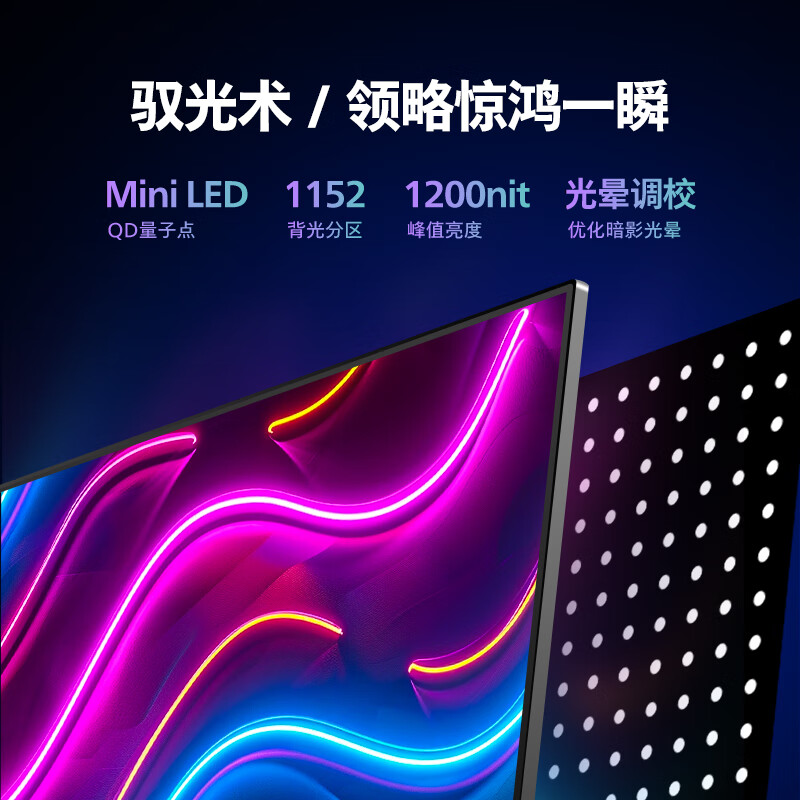
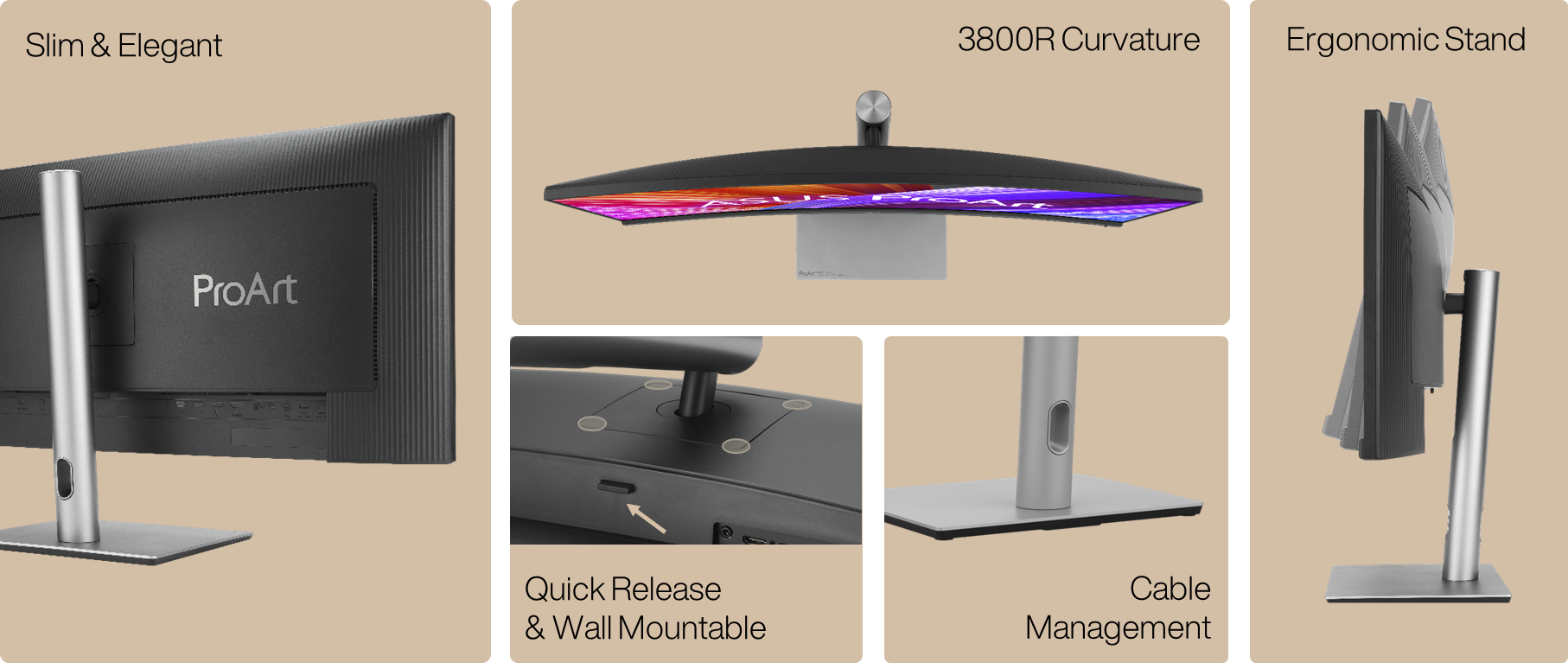
ViewSonic has unveiled the VX2781-4K-Pro-6 monitor, claiming it to be the “world’s first 4K IGZO technology native 165Hz Fast IPS gaming monitor.” While not yet available for purchase, the specs are certainly impressive.
ViewSonic VX2781-4K-Pro-6 Specifications:
The VX2781-4K-Pro-6 features a 27-inch Fast IPS panel with a 3840 x 2160 resolution, delivering crisp visuals. The 165Hz refresh rate guarantees smooth visuals and swift response times, crucial for fast-paced gaming experiences. For competitive gamers, a 1ms response time (with overdrive) minimizes input lag, ensuring they stay on top of the action.
According to the company, the monitor also features IGZO technology. This tech enhances display performance with its high electron mobility, ensuring smoother visuals and faster response times—ideal for gaming and dynamic content. It’s energy-efficient, reducing power consumption for brighter displays, leading to cost savings and less environmental impact. IGZO enables higher resolutions with denser pixel packing for sharper images and offers wider viewing angles for consistent viewing from any position.
The monitor doesn’t just excel in speed and resolution; it also impresses with its visual fidelity. With a typical brightness of 350 nits and a contrast ratio of 1000:1, it provides vivid and lifelike images. Its support for a native 10-bit color depth, covering 99% of the DCI-P3 color gamut and 100% of the sRGB color spectrum, ensures that colors are reproduced with accuracy and depth, suitable for both gaming and professional creative work.
ViewSonic VX2781-4K-Pro, launched in 2022
The gaming monitor is equipped with a variety of connectivity options, including 2 HDMI 2.1 ports, 1 DP 1.4 port, 2 USB-C ports (supporting PD 15W and PD 96W), 2 USB-A ports, 1 USB-B port, and a 3.5mm audio jack. This diverse selection ensures compatibility with a wide range of devices and facilitates effortless connection to various peripherals.
The VX2781-4K-Pro-6 offers adjustable ergonomics, including height adjustment and rotation capabilities for enhanced user comfort. Additionally, it supports VESA 75mm x 75mm wall mounting, providing flexible placement options.
Additionally, the monitor includes HDR600 for dynamic contrast, hardware-based low blue light reduction, flicker-free technology, and compatibility with both FreeSync and G-Sync, minimizing screen tearing. It also comes with esports-centric enhancements like a gaming crosshair, ambiance lighting effects, and built-in 3W speakers.
The monitor is not listed on any Chinese e-commerce platform as of now. The pricing and availability details are yet to be revealed.
Samsung is reportedly working on two new TWS earphones. These are the Galaxy Buds 3 and Galaxy Buds 3 Pro. They are expected to arrive as the successors to the Galaxy Buds 2 and 2 Pro that debuted back in 2021 and 2022 respectively. As per a past report, the Galaxy Buds 3 duo are rumored to arrive later this year. Now, as per a new development, the upcoming TWS earphones from the South Korean brand have been spotted with model numbers.
Samsung is working on the Galaxy Buds 3 duo
Galaxyclub reports that Samsung is regularly working on the Galaxy Buds 3 and Buds 3 Pro. These carry model numbers SM-R630 and SM-R530 respectively. The publication says that the South Korean brand is working on firmware for both models. Additionally, the Galaxy Buds 3 Pro’s battery for the charging case was spotted on a certification website but it did not reveal any concrete details.
The report does not mention any more information on the Galaxy Buds 3 duo. Any additional details about the upcoming TWS earphones from the South Korean brand have also not leaked yet. Samsung launched the Galaxy Buds FE in October last year. They remain the latest TWS offering in the brand’s audio portfolio meaning the other models have become quite old. Hence, the next-generation Buds 3 have become quite due.
The Samsung Galaxy Buds 3 and 3 Pro are widely expected to launch at the Galaxy Unpacked event later in July or August this year. The event also focuses on the new foldables, smartwatches, and tablets. In other news, Samsung recently started rolling out new features for the Galaxy Buds 2 duo and the Buds FE.
Samsung continues to expand its product family. In this regard, the company introduced its new products at MWC 2024 held in Barcelona. However, the new products from the Korean tech giant deviate a bit from the categories we are accustomed to. Focusing on wearable technologies, Samsung unveiled the Galaxy Ring for health tracking, a headset named XR as a competitor to Apple Vision Pro, and a wearable robot called Botfit designed to assist those experiencing difficulty walking at the Mobile World Congress. Here are the details…
Samsung Galaxy Ring, XR Headset, and Botfit Robot
Samsung is undoubtedly one of the world’s most innovative technology manufacturers. The tech giant competes not only in a specific field but also in every conceivable product category. The latest addition to their lineup is a range of innovative products in the field of wearable technology. Among them, undoubtedly the most intriguing is Botfit, a wearable robot designed to assist those with difficulty walking.
Samsung Botfit Walking Assistant
Botfit is a robot that helps improve the user’s mobility and supports their activities. It is primarily designed for individuals experiencing difficulty walking due to reasons such as neurological diseases, musculoskeletal disorders, or aging. Samsung aims to enable people in these and similar categories to lead a more comfortable and independent life.
The product development stage for Botfit has been completed, and it is expected to enter mass production in the second or third quarter of this year, with a release anticipated in the last quarter of the year or early 2025. Initially, it is planned to produce fewer than 100,000 units.
Galaxy Ring
One of Samsung’s other surprises is the eagerly awaited Galaxy Ring. Thanks to the tech giant, faces that have been accessories or symbols of loyalty for many of us are now smart. The fundamental goal of the Galaxy Ring is to track sleep and health data. According to the company’s statement, the ring will offer up to 9 days of usage on a single charge and is resistant to water and dust with its IP68 certification.
Of course, one of the most functional aspects, like other wearable smart devices, is notifications. The Galaxy Ring will notify you of incoming calls, messages, and notifications with vibrations. Although it’s uncertain if everyone wants a vibration on their finger every time they receive an email, we are sure it’s important for some. Additionally, it will have functions such as music control, presentation control, and interaction with voice assistants. The price of the Galaxy Ring has not been officially announced yet, but it is expected to be released in the fall.
Samsung Galaxy XR
Apple recently made a significant impact worldwide with its Vision Pro, which it launched a short while ago. People in many countries, including the United States, can be seen everywhere with this Mixed Reality headset. Of course, Samsung didn’t hesitate to respond, showcasing a headset named XR at MWC 2024.
The product was developed in collaboration with Samsung, Google, and Qualcomm. Although we may not know all the details, we can say that it will come with a micro OLED display and, in addition to 8 cameras, will feature a ToF sensor. Like the Vision Pro, it can be controlled through eye movements, voice commands, or hand gestures. There is no official price information available yet, but it is expected to be unveiled towards the end of the year and released in 2025.
OnePlus recently unveiled the OnePlus Watch 2 in the global market. Now, as expected the brand has announced a special edition of its recently launched smartphone. It is the OnePlus 12R Genshin Impact Edition. For those uninitiated, Genshin Impact is a popular action role-playing game for various platforms. The limited edition variant is part of a collaboration between OnePlus and Genshin Impact. It features design changes and comes in a customized box packed with a host of goodies.
For starters, the OnePlus 12R comes in a customized gift box. It includes a ‘Lightning Stiletto’ SIM ejector, a Keqing-themed phone case, a ‘Glinted Lightning’ 100W charger, and a custom T-shaped fast charging cable. All these accessories are available in a Violet color. There’s also a Keqing-themed custom chibi acrylic phone stand and custom chibi stickers. For those unaware, Keqing is a playable Electro character in the popular video game. The bundle also has additional collectibles including a stand ornament, character badge, poster, and commemorative metal badges.
Now coming to the details of the OnePlus 12R Genshin Impact Edition smartphone, it features a Violet hue. The back panel flaunts electric-infused motifs that resemble Keqing’s flower clothing and the signature Lightning Stiletto. The limited edition variant also features industry-first electro-etching process. The rear panel also uses matte AG silk material.
OnePlus also customized the software on the 12R Genshin Impact Edition. Beyond the custom-themed wallpapers and icon packs, the brand has also customized the power-on, charging, and fingerprint unlock animation along with the always-on display. Users also get the option to customize ringtones, alarms, and message notifications with Keqing’s iconic voice. This makes the limited edition variant a treat for all Genshin Impact fans.
OnePlus has also optimized the limited edition 12R to run the Genshin Impact smoother, and faster and offer a console-like experience. The device has HyperHDR, 15-second game launch time, and it is said to run at an average of 59.4fps for an hour with generating heat.
The OnePlus 12R Genshin Impact Edition is slightly pricier
The OnePlus 12R Genshin Impact Edition has been announced in global markets in the sole 16GB + 256GB RAM and storage configuration. It costs Rs 49,999 in India, $650 in the US, and EUR 750 in Europe. The device is slightly expensive to the standard variant. It is up for pre-orders starting today with sales commencing from March 19, 21, and 28 in the aforementioned regions. The OnePlus 12R is a rebranded variant of the OnePlus Ace 3 in China. Hence the later has also been announced in the Genshin Impact limited edition in the home country. It is priced at CNY 3,399.
Avenir Telcom unveiled the Energizer P28K rugged smartphone with a humongous 28,000mAh battery at MWC 2024. The company had already teased the announcement of this product earlier.
In addition to this phone, Avenir took the wraps off an interesting device called Energizer Ultimate U660S. It is the company’s first clamshell foldable smartphone.
Unlike other vertical foldable phones, this one has a bizarre set of specs, like an entry-level MediaTek chip and 4G-only mobile connection.
Energizer Ultimate U660S Specifications
The device sports a 6.67-inch centered punch-hole vertical folding OLED display. The panel has a resolution of 2400 x 1080 pixels (FHD+).
It also has an external screen near the camera module. However, we don’t have info on its size and resolution.
Under the hood, the handset houses a MediaTek Helio G99 SoC. This chipset is usually found inside budget smartphones.
Anyways, the chip is paired with 12GB RAM and 256GB storage. On the software front, the phone ships with Android 14.
As for cameras, the device uses a 64MP primary sensor, an 8MP ultrawide unit, and a 25MP front-facing snapper.
Finally, the handset is backed by a tiny 3,400mAh battery despite being an Energizer-branded product.
Energizer Ultimate U660S Price
The Energizer Ultimate U660S is currently the most affordable foldable smartphone with a price tag of just €499. However, it will be on sale only from November.
A lot can happen over the next 9 months. Perhaps, a better product at the same price may be released as well.
OPPO is gearing up to introduce a new generation of fast charging technology with the unveiling of a 120W SUPERVOOC flash charger. This exciting development comes after the charger, sporting model number VCBBOAAH / A788-110110U-AU1, received certification from Australia’s Electrical Regulatory Authorities Council (ERAC).
120W SUPERVOOC Charger Certification Details
The certification details reveal that the VCBBOAAH charger, manufactured by Dongguan Aohai Technology, is capable of delivering a maximum output of 120W, achieved through an 11V 11A configuration. It also supports a wide range of input voltages, from 200-240V 50/60Hz, which aligns with Australia’s power supply specifications.
The voltage and frequency specifications of 200-240V 50/60Hz are compatible with many regions around the world, especially in Europe, Asia, Australia, and parts of Africa. However, it is not universally compatible across all regions. For example, the standard power supply in North America (the United States and Canada) is typically 120V at 60Hz. Similarly, Japan primarily uses 100V at either 50Hz or 60Hz, depending on the region.
OnePlus and OPPO’s recent devices like the OnePlus 12, OnePlus Ace 3, Find X7, and X7 Ultra all feature the 100W SUPERVOOC wired flash charging. The current 100W SUPERVOOC charger, available in China, operates at a maximum output of 11V 9.1A 100W under 200-240V voltage. This translates to a slight decrease in power output (11V 7.3A 80W) when used under 100-130V voltage conditions.
While the 120W charger hasn’t been officially linked to any specific devices yet. It is expected to play a crucial role in powering future OPPO, OnePlus smartphones, offering users a significant upgrade in charging speeds compared to current offerings.
Samsung debuted the Galaxy A15 5G in India in December. It was announced in an 8GB + 128GB and 8GB + 256GB RAM and storage configurations. Now, the South Korean brand has launched a new variant of the Galaxy A15 5G. This gives users more options while making a purchase decision for the device.
Samsung Galaxy A15 5G gets a new variant
The Samsung Galaxy A15 5G now comes in a 6GB RAM and 128GB storage. It carries a price tag of Rs 17,999. The smartphone is already available from the brand’s official website, Amazon, Flipkart, and leading retail stores across the country. Buyers can avail discounts via select bank offers depending on the channel they purchase the Galaxy A15 5G from. The device can be availed in Blue Black, Light Blue, and Blue color options.
Apart from the RAM changes, the new variant packs the same specifications as the other two configurations. The Galaxy A15 5G has a 6.5-inch sAMOLED display with a waterdrop notch, FHD+ resolution, and a 90Hz refresh rate. It has a Key Island design which is a protrusion on the right edge housing power and volume rocker buttons. The smartphone features a 50MP main camera paired with a 5MP ultra-wide-angle and 2MP depth lenses.
The Samsung Galaxy A15 5G is powered by a MediaTek Dimensity 6100+ processor coupled with up to 8GB RAM and 256GB storage onboard. It is backed by a 5,000mAh battery unit with support for 25W fast charging. The device runs on Android 14 OS out of the box.
We have the first look at the Samsung Galaxy Fold 6. Reliable tipster Onleaks has shared the leaked renders of the sixth-generation foldable from the South Korean brand. It is expected to arrive in the second half of this year at the Galaxy Unpacked event which usually happens in August. As per the leaked images, it seems that Samsung is redesigning its next-generation book-style foldable phone.
Samsung Galaxy Z Fold 6 points to boxier design
Samsung’s Galaxy Z Fold devices always had a slimmer frame. This is expected to change now as spotted in the leaked renders. The Galaxy Z Fold 6 sports a thick frame indicating that it may come with a boxier design. Dimension-wise, it is said to measure 153.5 x 132.5 x 6.1 mm when unfolded. The report compares the dimensions to the Z Fold 5 and concludes that the Fold 6 is 1.4 mm shorter and 2.6 mm wider. The next generation phone looks more like the Galaxy S24 Ultra.
The renders reveal a side-mounted fingerprint scanner embedded in the power button and volume rocker keys on the right side. The left edge has a SIM card tray. The Galaxy Z Fold 6 houses three microphones and a speaker grille at the top whereas the bottom has a USB-C port, another microphone, and a speaker grille.
The back panel is seen with a pill-shaped protruding module housing three vertically stacked camera sensors and an LED flash unit. The report adds that the Samsung Galaxy Z Fold 6 will have a 7.6-inch internal screen while the external display will measure 6.2 inches with a center-aligned punch-hole cutout.
Notably, the renders do not reveal a storage slot or mount for the S-Pen on the Galaxy Z Fold 6.
The Realme 12 Pro is here but you might be asking yourself what improvements this device brings in terms of specifications. Having proper information on this issue will help you make a sound decision on whether to upgrade to the 12 Pro from your 11 Pro or whether to get the older model instead of the newer one. There are a few areas where these devices are quite similar and there are also other areas where these devices differ from one another.
Well if you are looking for more power and need to step up to the Pro Plus variants of these devices we can still help you make a good choice. You can check out our review of the new Realme 12 Pro Plus where we touch a bit on everything you need to know about this device. If you want to save yourself a few bucks you can also check our review of the Realme 11 Pro Plus as well.
Please Note: When you buy something using the links in our articles, we may earn a small commission at no cost to you.
Realme 12 pro vs Realme 11 pro: Design and colours
Realme 12 Pro:
In terms of design this is a good looking device with an interesting design pattern. For a more premium feel this device features a curved screen that most flagship devices seem to be dropping off. It’s great to see a curved screen on this affordable device but its curved 6.7-inch AMOLED screen is not the main selling point of this device in terms of design.
On the rear this device features a circular rear camera cutout that has gold patterns around it and they also run from the top to the bottom through the centre of the device. This gold colour is also available along the sides of this device giving it a premium feel regardless of its affordable pricing. The colour options here are Submarine Blue and Navigator Beige with the first featuring a leather-ish texture.
Realme 11 Pro:
The design of this device is quite similar to that of its successor the new Realme 12 Pro. Some might say that the new device borrowed a thing or two from the old timer and made a few upgrades. This device also comes with a circular rear camera cutout, a line that runs from the top of the rear panel to the base passing through the rear camera cutout.
Upfront we see a curved screen display with a centre mounted selfie camera cutout. Just like its successor the Realme 11 Pro comes with interesting colour options that you can choose from when purchasing one for yourself. The colour options that this device provides buyers are Astral Black, Sunrise Beige, and Oasis Green.
Major differences:
The Realme 12 Pro changes things on its rear design.
Realme 12 pro vs Realme 11 pro: Display
Realme 12 pro and Realme 11 pro:
Both devices feature the same display panel, a 6.7-inch AMOLED screen with 120Hz adaptive display.
Major differences:
Nil.
Realme 12 pro vs Realme 11 pro: Cameras
Realme 12 pro:
The Realme 12 Pro comes with a triple rear camera setup as well as a good processor. Pairing these two together will ensure that users get great results per shot in both well lit areas and low light areas. The rear camera setup this device uses is a 50MP, 32MP, and 8MP entry.
Up front the Realme 12 Pro features a 16MP sensor for taking selfies. When it comes to video recording the rear cameras on this device can record at 4K resolution. All together these are great stats for this device and can assure users of stable photography on the go.
Realme 11 pro:
In terms of camera, this older device comes with just two rear cameras but more megapixels on the main camera. For its main camera this device features a 100MP sensor which is more than that on the 12 Pro which carries a 50MP main camera sensor. However this doesn’t mean that the old 11 Pro takes better pictures than the new 12 Pro.
The secondary sensor on this smartphone is its 2MP depth sensor. Up front on this device is a 16MP selfie camera sensor that is tucked away under a centre screen cutout. This device also features some camera abilities that help it stand out from the competition.
Major differences:
An extra camera on the Realme 12 Pro.
Realme 12 pro vs Realme 11 pro: Performance
Realme 12 pro:
When it comes to performance this device is fuelled by the Snapdragon 6 Gen 1 processor. Joining this processor is 8GB worth of RAM capacity as standard there are no more RAM options on this device. Storage maxes out at 256GB which is great for the average user but some might need some more storage boost.
Realme 11 pro:
Under the hood of this device is the Mediatek Dimensity 7050 processor. For its memory capacity, this device will rely on its optional 8GB or 12GB capacity which is joined by up to 512GB. The performance of this device is among the top in its class on AnTuTu benchmark.
Major upgrades & differences:
More RAM on the Realme 11 Pro.
More storage options on the Realme 11 Pro.
Realme 12 pro vs Realme 11 pro: Software
Realme 12 pro and Realme 11 pro:
Both devices run on Android 14 and the Realme UI 5.0 software (but the Realme 11 Pro launched with Android 13 and Realme UI 4.0) with 3 years of OS upgrade.
Major differences:
Nil.
Realme 12 pro vs Realme 11 pro: Battery life and charging
Realme 12 pro and Realme 11 pro:
Same battery capacity at 5000mAh and charging speed at 67W both devices don’t offer wireless charging.
Major differences:
Nil.
Realme 12 pro vs Realme 11 pro: Final Verdict
Both of these devices are top of their class in terms of areas like photography, performance, display, and so on. However, considering that the Realme 11 Pro is an older device some might pick the 12 Pro over it but some might fall back to the older device as it will be more affordable now. In terms of photography the new Realme 12 Pro is the better choice it is also the better pick in terms of performance.
The Vivo V30 has launched in Indonesia as scheduled. It was announced alongside the Vivo V30 Pro earlier today.
The device is a tweaked version of the Vivo S18 from China. It comes with almost same same specs, except for the cameras.
Unlike the V30 Pro, the V30 does not have Zeiss optics. Also, it houses a Qualcomm chip instead of a MediaTek SoC.
Vivo V30 Specifications
The Vivo V30 flaunts a 6.78-inch centered punch-hole curved AMOLED display. The 10-bit screen offers a resolution of 2800 x 1260 pixels (1.5K), 452 PPI, and a 120Hz refresh rate.
The panel maxes at 300Hz touch sampling rate, 2160Hz PWM dimming, 2800 nits local brightness level, and 1200 nits global brightness. It features a fingerprint sensor underneath it.
The handset is run by a Qualcomm Snapdragon 7 Gen 3 mobile platform. This chip is paired with LPDDR4x RAM and UFS 2.2 storage. As for software, it boots Android 14-based Funtouch OS 14.
The device’s dual camera setup on the back comprises an OIS-assisted 50MP primary sensor and a 50MP ultrawide unit. On the front, it has a 50MP shooter with autofocus.
The phone arrives with all the essential connectivity options, such as dual SIM, 5G, WiFi 6, Bluetooth 5.0, GNSS, NFC, and USB 2.0. Finally, it draws energy from a 5,000mAh battery and supports 80W wired charging.
Vivo V30 Price in Indonesia
The Vivo V30 comes in 8GB + 256GB and 12GB + 512GB memory configurations in Indonesia. They are priced at Rp. 5,999,000 (~$380) and Rp. 6,999,000 (~$445), respectively.
The smartphone arrives in three colors, namely Equatorial Green, Puspa White, and Volcanic Black.
It is available for pre-order in the country and will launch in India on March 7.
We use cookies on our website to give you the most relevant experience by remembering your preferences and repeat visits. By clicking “Accept”, you consent to the use of ALL the cookies.
This website uses cookies to improve your experience while you navigate through the website. Out of these, the cookies that are categorized as necessary are stored on your browser as they are essential for the working of basic functionalities of the website. We also use third-party cookies that help us analyze and understand how you use this website. These cookies will be stored in your browser only with your consent. You also have the option to opt-out of these cookies. But opting out of some of these cookies may affect your browsing experience.
Necessary cookies are absolutely essential for the website to function properly. This category only includes cookies that ensures basic functionalities and security features of the website. These cookies do not store any personal information.
Any cookies that may not be particularly necessary for the website to function and is used specifically to collect user personal data via analytics, ads, other embedded contents are termed as non-necessary cookies. It is mandatory to procure user consent prior to running these cookies on your website.