Advertisement

Huawei launches new 80W vertical wireless charger with 3D cooling

Huawei has expanded its range of charging accessories with a new wireless charger capable of delivering up to 80W of power.  It works with most of the Huawei phones and is also compatible with the last few generations of iPhones. Let’s delve into its specifications here.
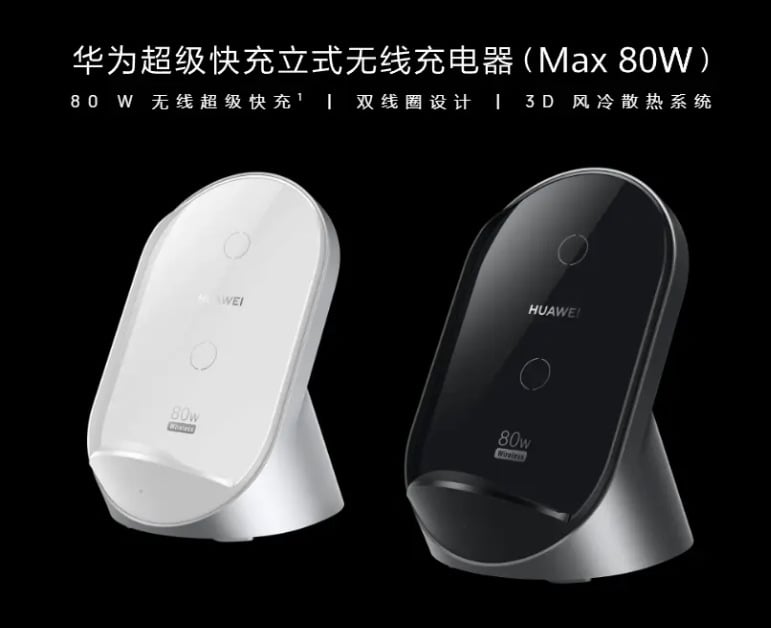
Huawei vertical wireless charger (80W)

The charger will be available in two colors: white sand silver and obsidian gray. It features a dual-coil design, allowing users to position their compatible devices either horizontally or vertically for charging.  

The charger’s design incorporates a 60° visual elevation and an oval runway-shaped light-sensitive glass panel.
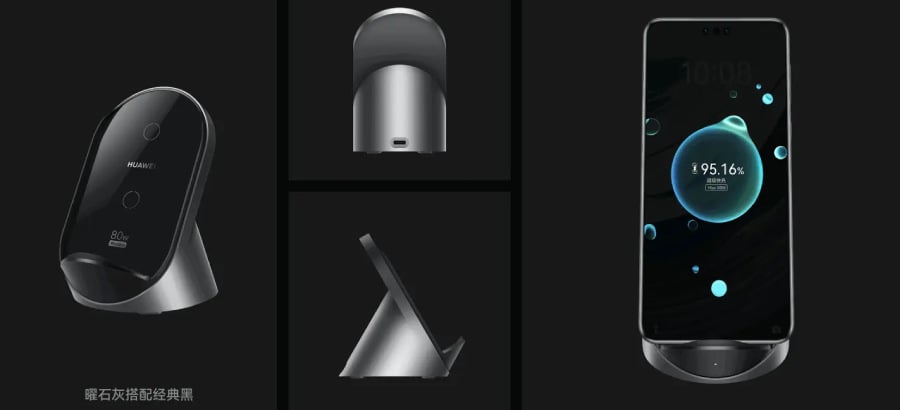
Huawei 80W vertical wireless charger

To address heat management during these high-power charging sessions, Huawei has integrated a 3D air-cooling system. 

The charger’s base includes three-dimensional air ducts to dissipate heat away from both the charger and the phone.  

As an added safety feature, the charger includes foreign object detection (FOD). With this feature on board, if any metal objects like keys or coins are detected during charging, a flashing LED indicator will alert the user.

Moreover, as mentioned before, the charger works with many different devices. Here’s a breakdown:

Compatible Devices:

  • Phones: The charger supports a wide range of recent Huawei models including the Mate 60, Mate 50, Mate 40, P60, P50, P40, and P30 series. Additionally, it is compatible with iPhone 13, 14, and 15 series devices.
  • Tablets: Huawei MatePad Pro 10.8
  • Earphones: The charger works with various Huawei FreeBuds models, including FreeBuds Pro, FreeBuds Pro 2, FreeBuds Pro 2+, FreeBuds Pro 3, FreeBuds 3, FreeBuds 4, and FreeBuds 5.

Price and Availability

Unfortunately, Huawei has not shared the pricing details for the new Huawei fast-charging vertical wireless charger (Max 80W). For a possible price point reference, Huawei’s existing 50W vertical wireless charger is currently available for 300 yuan. So, the new charger should be priced higher than this.

Related:

iQOO Pad Air, Pad 2 chipsets tipped, iQOO TWS 2 also in works

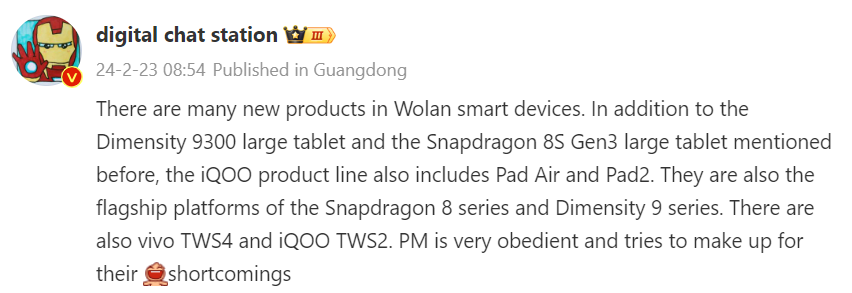
iQOO unveiled its first tablet, the iQOO Pad, equipped with the Dimensity 9000 Plus chipset, in May last year. This year, the brand is expected to launch the iQOO Pad 2 as the successor to the company’s first-generation tablet. In addition, the brand is also said to be working on a more affordable variant dubbed the iQOO Pad Air. In a new Weibo post, tipster Digital Chat Station leaked the chipsets of both devices.

iQOO Pad Air, iQOO Pad 2 to feature flagship chipsets

In the above screenshot, DCS can be seen talking about Vivo and iQOO brands. His Weibo post suggests that apart from the Vivo Pad 3 and Pad 3 Pro, which are expected to feature the Snapdragon 8s Gen 3 and the rumored Dimensity 9300 chipsets, respectively, Vivo’s sub-brand iQOO is also working on the iQOO Pad Air and Pad 2 tablets.

The leaker claimed that the iQOO Pad Air is equipped with the Snapdragon chipset, whereas the iQOO Pad 2 is said to feature a Dimensity SoC. He further said that the two brands are also working on the Vivo TWS 4 and iQOO TWS 2. He added that the product manager of the company is working on meeting the shortcomings of the previous generation tablets and TWS earbuds.

It appears that among the upcoming iQOO tablets, the iQOO Pad Air may launch soon, as it has already received 3C certification. The 3C listing revealed that the tablet, which bears the iPA2451 model number, will support 44W fast charging. It is speculated that the iQOO Pad Air could be a rebranded version of the Snapdragon 870-powered Vivo Pad Air, which debuted in China in August 2023. However, readers are advised to wait for further reports to know the key specs of the Pad Air.

The first-generation iQOO Pad was a tweaked version of the Vivo Pad 2. Hence, there is a possibility that the iQOO Pad 2 could be a rebranded or tweaked version of the upcoming Vivo Pad 3 Pro. For those who don’t know, a previous leak by DCS revealed that the Vivo Pad 3 will have a 2.8K resolution LCD panel, a Snapdragon 8s Gen 3 chip (SM8635), and support 66W fast charging. On the other hand, the Vivo Pad 3 Pro will have a 3K LCD screen, a Dimensity 9300 chip, and 80W charging. 

Likely, the upcoming iQOO TWS 2 is also likely to be a rebranded version of the forthcoming Vivo TWS 4.

RELATED:

OnePlus 12R Genshin Impact edition Indian launch confirmed for Feb 28

OnePlus is gearing up to launch its OnePlus 12R Genshin Impact Special Edition smartphone on February 28th for the global market. While Indian fans of the game were curious whether the custom device will be launching in the country or not, OnePlus has confirmed that it will indeed be launching in India on February 28.

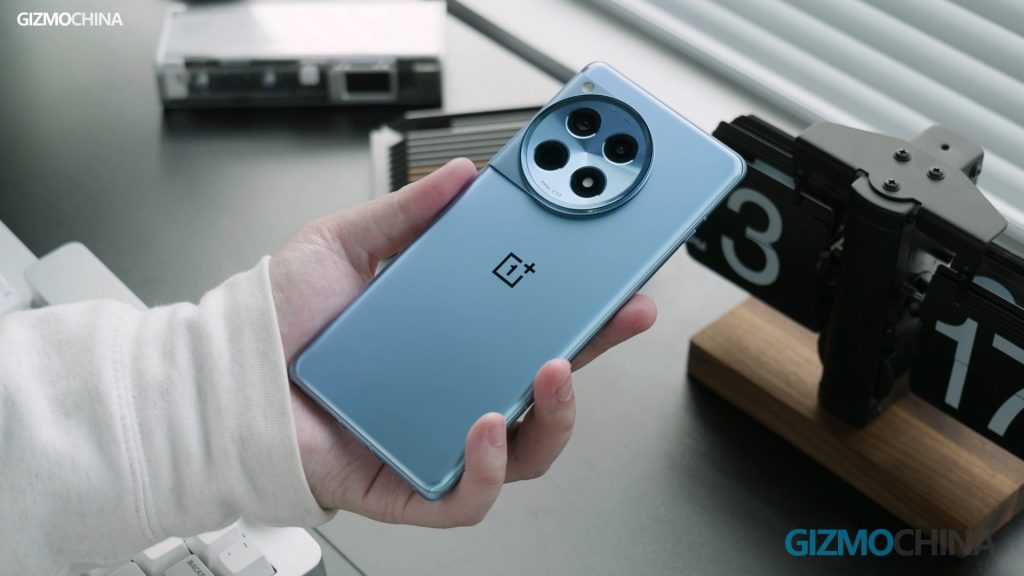
OnePlus 12R Genshin Impact Edition

Ahead of the launch, OnePlus has initiated a ‘notify me’ option on their website, offering fans an opportunity to win the special edition phone, 40,000 Primogems among 40 winners, and a Rs. 1,000 exchange coupon for the OnePlus 12R, including the Genshin Impact Edition for all participants. Additionally, a survey related to the launch could reward 30 participants with 500 Primogems each.

The OnePlus 12R Genshin Impact edition will come with a design inspired by the game character Keqing, featuring an electro-violet color and an industry-first electro-etching process. The phone will be presented in a custom-designed gift box accompanied by exclusive Genshin Impact-themed collectibles.

The launch event is scheduled for 4:30 PM IST on February 28th, with the price announcement expected at that time. The special edition phone will retain the specifications of the standard OnePlus 12R model, including a 6.78-inch AMOLED display with 1.5K resolution, 120Hz refresh rate, protected by Gorilla Glass Victus 2, and powered by the Snapdragon 8 Gen 2 chip. It runs on Android 14 and OxygenOS 1, and OnePlus promises three major Android OS upgrades and four years of security updates for the device.

The phone features a 5,500mAh battery with 100W charging support, a 16-megapixel front camera, and a triple rear camera setup consisting of a 50-megapixel main sensor, an 8-megapixel ultra-wide sensor, and a 2-megapixel macro sensor. Other highlights include dual speakers, an IR blaster, NFC, and an IP65-rated chassis, ensuring a top-tier experience for users.

RELATED:

Moto G Power 5G (2024) official renders leaked, color options, key specifications tipped

Back in November 2023, leaked CAD renders of the forthcoming Moto G Power 5G (2024) emerged to give the first look at its design. Since then, the rumor mill hasn’t leaked anything concrete about the device. Now, a new report by MSPowerUser has appeared to share what looks like the leaked official renders of the device. In addition, the publication has revealed its key specifications.

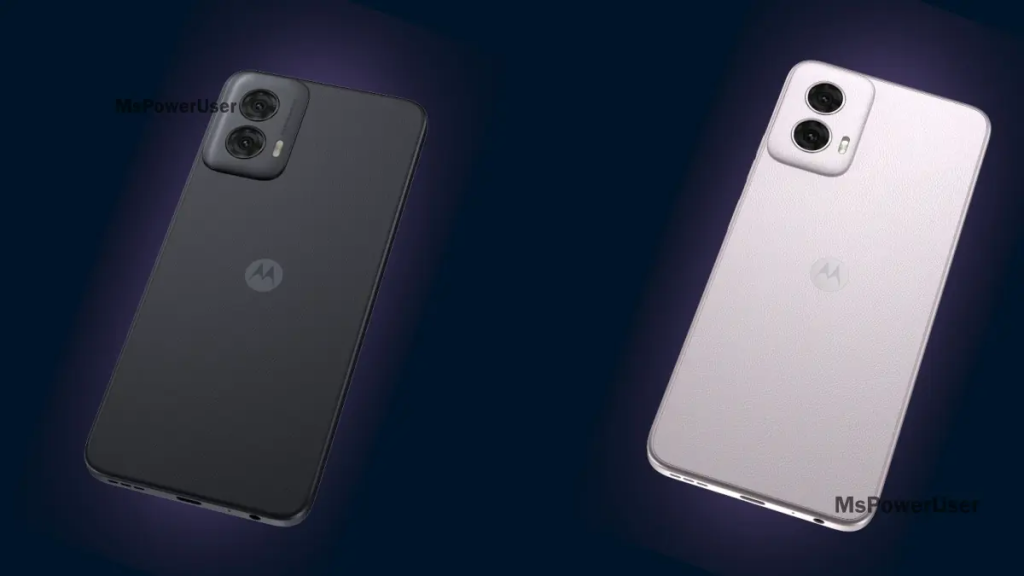
Moto G Power 5G (2024) renders

Moto G Power 5G (2024) leaked images by MSPowerUser

The above-shown images gives a look at the Outer Space and Orchid Tint color variants of the Moto G Power 5G (2024) smartphone. The images reveal that it has a raised camera island that houses a pair of cameras and an LED flash. The device is found to be equipped with a 3.5mm audio jack, a microphone, a USB-C port, and a speaker grille on the bottom edge.

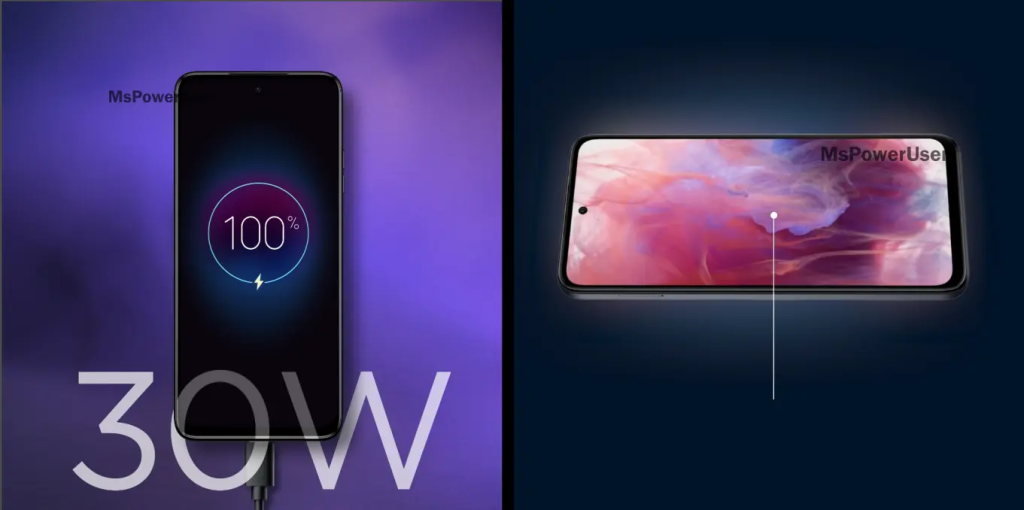
Moto G Power 5G (2024) leaked images by MSPowerUser

The publication further states that the punch-hole display of the G Power 5G (2024) supports an HD+ resolution of 720 x 1600 pixels. While it has no information on the screen size, the previous report revealed that it could be equipped with a 6.7-inch display. The CAD renders also revealed that it has a side-facing fingerprint sensor, which suggests that it could be equipped with an LCD panel.

As per the report, the Moto G Power 5G (2024) will support 30W fast charging. However, the battery size and other specs of the device remain a mystery.

The Moto G Power 5G (2024) will succeed its 2023 edition, which debuted last year.  The predecessor model offered a 6.5-inch LCD HD+ 120Hz display, a Dimensity 930 chip, 6 GB of RAM, 256 GB of internal storage, a 16-megapixel front camera, a 50-megapixel (main) + 2-megapixel (depth) + 2-megapixel (macro) triple camera unit, and a 5,000mAh battery with 15W charging support.

RELATED:

(source)

Xbox Game Pass February 2nd half lineup: Madden NFL 24, Bluey, Warhammer 40K Boltgun & more

The Xbox Game Pass lineup for the second half of February is expanding with a mix of new titles, DLCs, and perks, offering its subscribers a wide range of gaming experiences. This update includes games across various genres, from narrative adventures to action RPGs and sports simulations, ensuring there’s something for every type of gamer.

Starting immediately, subscribers can explore “Return to Grace,” a game that blends archaeology with sci-fi in a 1960s-inspired universe, focusing on discovering an ancient AI deity. Also available is “Tales of Arise,” a game that merges two contrasting worlds into a story of unity and battle, known for its real-time combat system.

Tales of Arise

On February 22, “Bluey: The Videogame” will be released, allowing families to engage with Bluey and her adventures through a series of interactive stories and games. “Maneater,” an action RPG where players take on the role of a shark, returns to the Game Pass on February 27, along with “Madden NFL 24” for EA Play Ultimate members, who will also receive an Ultimate Team Supercharge Pack until March 8.

Bluey: The Videogame

“Indivisible” returns to the Game Pass on February 28, offering a mix of exploration and combat in a beautifully crafted fantasy world. “Space Engineers,” coming February 29, provides an open-world sandbox experience focused on engineering, construction, and survival in space. “Warhammer 40,000: Boltgun,” launching on March 5, brings a retro shooter experience set in the Warhammer universe.

Diablo IV

The update also highlights the “Dune” expansion for Microsoft Flight Simulator, allowing players to experience the world of “Dune” through flight. “Diablo IV” is set to join the Game Pass on March 28, promising a next-gen action RPG experience with endless dungeons and loot.

Game Pass subscribers can enjoy new perks, including a 3-month trial of Calm Premium and exclusive content packs for “Apex Legends,” “Assassin’s Creed Valhalla,” “Puzzle Quest 3,” and “PUBG: Battlegrounds.”

The service will see the departure of “Madden NFL 22” and “Soul Hackers 2” on February 29, encouraging players to enjoy these titles before they’re removed. This update reaffirms Xbox Game Pass’s commitment to providing a diverse and dynamic selection of games to its subscribers. For the latest news and updates, follow Xbox Game Pass on social media and Xbox Wire.

RELATED:

Vivo Y100t goes on sale with 1,499 Yuan (~$210) starting price, offers 120Hz display, Dimensity 8200, 512GB storage, and more

Vivo unveiled the Vivo Y100t as the company’s third Y100-series phone for the Chinese market last week. While the device has been available for pre-order in the country since the official announcement, the company has not confirmed its price. Today, the Y100t went on sale for the first time with a starting price of 1,499 Yuan (~$208).

Vivo Y100t price

Vivo y100t
Vivo Y100t

The Vivo Y100t has been announced in three options for the Chinese market, such as 8 GB RAM + 256 GB storage, 12 GB RAM + 256 GB storage, and 12 GB RAM + 512 GB storage. These variants are priced at 1,499 Yuan (~$210), 1,699 Yuan (~$236), and 1,899 Yuan (~$260), respectively. It comes in shades, such as Moon Shadow Black, Snowy White, and Mountain Green.

Vivo Y100t specifications

The Vivo Y100t has a 6.64-inch IPS LCD panel that offers an FHD+ resolution and a 120Hz refresh rate. It is equipped with the Dimensity 8200 chipset, 8 GB / 12 GB of LPDDR5 RAM, 8 GB of virtual RAM, and 256 GB / 512 GB of UFS 3.1 storage. It houses a 5,000mAh battery with 120W fast charging support.

On the front, the Y100t offers a 16-megapixel selfie camera. Its rear camera setup has an OIS-enabled 64-megapixel primary camera, a 2-megapixel depth sensor, and an LED flash. The device runs on Origin OS 3, based on Android 13. It comes with other features, such as dual SIM, 5G, Wi-Fi 6, Bluetooth 5.3, NFC, GPS, an IR blaster, a USB-C port, a 3.5mm audio jack, and a side-facing fingerprint scanner.

The Y100T is a tweaked edition of the iQOO Z8x, which debuted last year in China. It appears that the Y100t may get rebranded as the Vivo Y100t GT in markets outside of China.

RELATED:

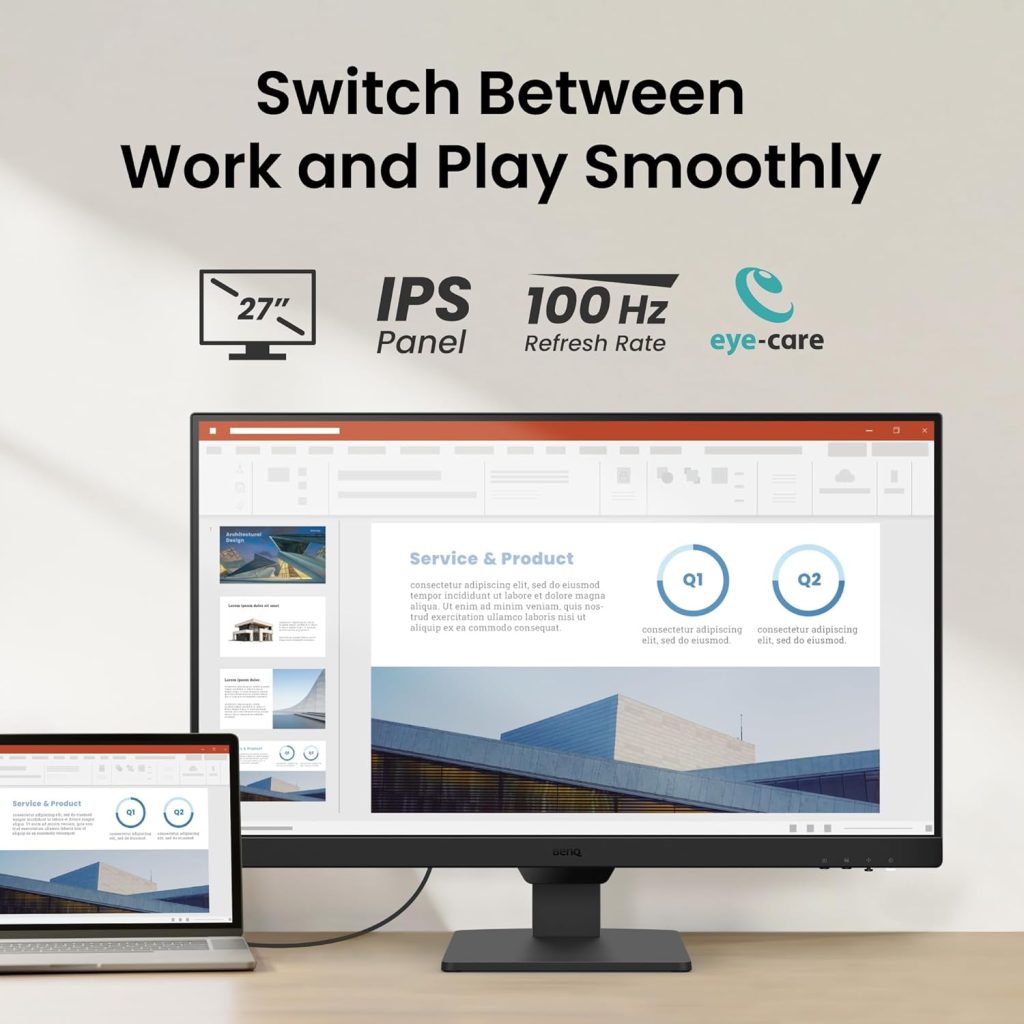
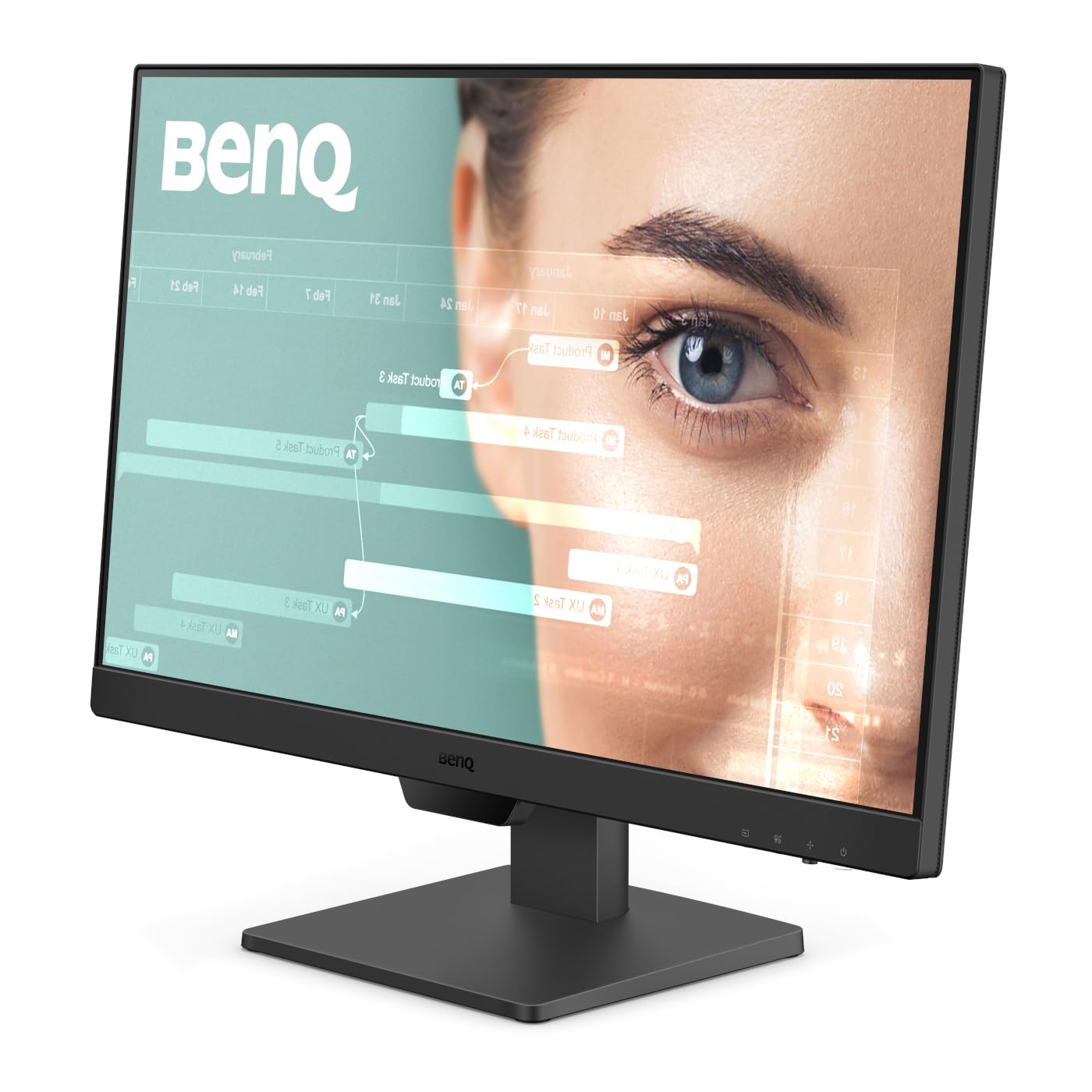
BenQ GW Series 24″ and 27″ 1080p 100Hz IPS monitor launched in India

BenQ introduces two new monitor models in India, the GW2490 and GW2790, aimed at enhancing the work and entertainment experience with their 24-inch and 27-inch Full HD IPS displays. These monitors are engineered for smooth visuals at a 100Hz refresh rate and are designed with a sleek, slim bezel for a modern aesthetic and efficient use of desk space.

The monitors boast 99% sRGB coverage for accurate color reproduction, making them suitable for professionals in design and photography. They are also built with eye comfort in mind, featuring certifications from TÜV Rheinland and compliance with RPF 35 Eye-Safe 2.0 standards, alongside technology to minimize blue light and eliminate flicker.

Additional features include Brightness Intelligence Gen 2, various specialized modes for reading, coding, and users with color vision deficiencies, and multiple connectivity options with Dual HDMI 1.4 and DisplayPort 1.2 ports.

Pricing & availability

The GW2490 is priced at Rs. 8,698, and the GW2790 at Rs. 11,498. Both models are available for purchase through BenQ’s e-store, Amazon.in, and select IT retail stores across India.

In related news, the BenQ X300G 4K gaming projector recently saw a wider launch, expanding its availability to many markets around the EU as well as the UK and Australia. This projector is able to output a 4K projection at a 60Hz refresh rate and a 1080p projection at a 240Hz refresh rate, making it ideal for both AAA as well as competitive gaming.

RELATED:

(via)

Generative Erase is Microsoft’s Version of Magic Eraser on Windows 10 & 11

Microsoft is stepping up its game in the photo editing arena, introducing an innovative feature called Generative erase to Windows PCs. This nifty tool, built into the Windows Photos app, offers a simple way to clean up your photos by removing things you’d rather not have in them—think of a person who photobombed your perfect shot, or a helicopter that showed up out of nowhere in your perfectly framed picture. Yeah, Generative erase will fix that for you.

Although not as good as Magic Eraser, the tool does the job quite well

Microsoft is making sure of that by rolling out Generative erase not just to those on Windows 11 but also to folks using Windows 10 and Windows 11 for Arm64 devices. This move is all about bringing more powerful editing capabilities to a wider audience, right on their existing hardware.

Windows 11

For the moment, this feature is in the hands of Windows Insiders, a group of users who get to try out new stuff before it’s widely released. They’re the lucky ones testing out Generative erase along with other AI-driven editing features, provided they’ve updated their app to the latest version specified by Microsoft. There’s also a background removal tool in the mix, adding even more options for users to play with.

As we move forward, integrating AI into our daily tech tools is becoming a norm. Microsoft’s addition of Generative erase to its Photos app is a big step toward making sophisticated photo editing tools more user-friendly and widely available. It’s a clear signal that the future of photo editing is here, and it’s more inclusive, allowing more people to enhance their digital memories with just a few clicks.

RELATED:

(Via)

Trek Unveils the FX+ 2 Electric Bike, and It is Accessory-Friendly

Trek, a leader in the cycling industry, has unveiled the FX+ 2 electric bike, catering to the budget-conscious and those curious about e-biking. The company’s new model stands out for its straightforward design and practical features, making it an ideal choice for city commuters and first-time e-bike buyers.

The bike’s battery is hidden in the frame, giving it a stylish look

The FX+ 2 is not just any bike; it’s a lightweight, versatile ride designed to tackle urban environments with ease. It weighs only 17 kilos (37 pounds), making it easy to handle for riders of all sizes. Powered by a motor from Hyena, a renowned name in e-bike technology, it offers 40 Nm of torque, enough power to smooth out city inclines. The bike’s battery is smartly hidden in the frame, providing up to 56 kilometers (35 miles) of travel on a full charge, though terrain and riding style can affect this distance.

E-Bike Trek

Trek has made the FX+ 2 incredibly user-friendly, offering it in various frame sizes and styles to suit different riders. Its compatibility with Bluetooth allows for seamless connection to the Trek Central app, where riders can monitor their trip details and adjust settings easily from their phones.

Equipped with a quality Shimano Altus nine-speed drivetrain and Promax hydraulic disc brakes, the FX+ 2 ensures a reliable and safe ride. It also comes with a rear rack for carrying essentials and supports the MIK system for attaching accessories quickly and securely.

Priced at $1,999 USD, down from $2,499 USD, the FX+ 2 is an attractive option for those wanting to join the e-bike movement without spending a lot. Trek’s new e-bike is perfect for urban adventurers looking for a mix of tech, performance, and value.

RELATED:

(Via)

This New Google Chrome Feature will Make Your Write-Ups Way Better

Google‘s latest Chrome update introduces a groundbreaking feature aimed at making digital writing a breeze for its users. Dubbed “Help me write,” this AI-powered tool is more than just a fancy add-on; it’s a looking-glass into the future, how artificial intelligence can enhance our daily tasks, specifically writing, by understanding the context of our needs and offering customized suggestions.

Users now don’t have to ponder or think too much while compiling something

Think about the countless times you’ve struggled to articulate your thoughts in an email or wanted to sell an item online but couldn’t quite capture its essence in words. Google’s new feature aims to eliminate such hurdles. For instance, if you’re trying to sell a barely used gadget because you’re upgrading, “Help me write” could craft a compelling narrative that highlights the gadget’s features, its condition, and why it’s a steal at your asking price.

Google CHrome

Or consider the scenario where you’ve received a product that unfortunately didn’t meet your expectations. Communicating your concerns and requesting a refund or exchange can sometimes be awkward. This tool could step in to help draft a message that’s polite yet assertive, ensuring your feedback is heard and addressed without sounding confrontational.

Users need to navigate through Chrome’s settings to the Experimental AI section. While it’s currently available only in the U.S. for English language prompts and exclusive to Mac and Windows PC users, its potential for wider application is immense. Beyond personal use, imagine its impact on small businesses, streamlining customer communication, or enhancing product descriptions without the need for a professional copywriter.

RELATED:

(Via)

Xiaomi launches Redmi Display G Pro 27 MiniLED gaming monitor in China

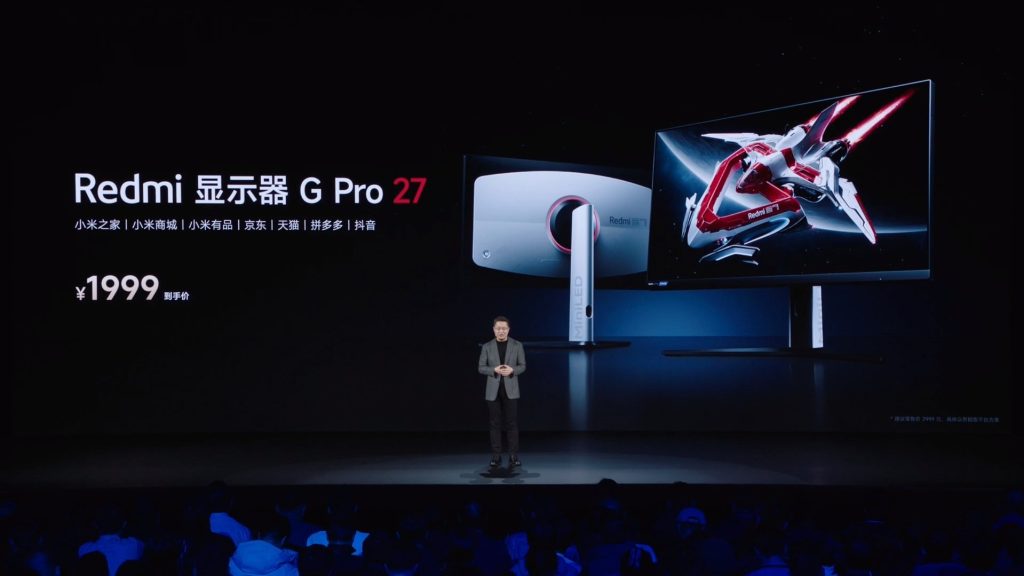
Xiaomi has officially launched the Redmi Display G Pro 27 MiniLED monitor during the Xiaomi 14 Ultra event, priced at 1999 yuan ($277). The monitor became available for pre-sale earlier in the week in China.

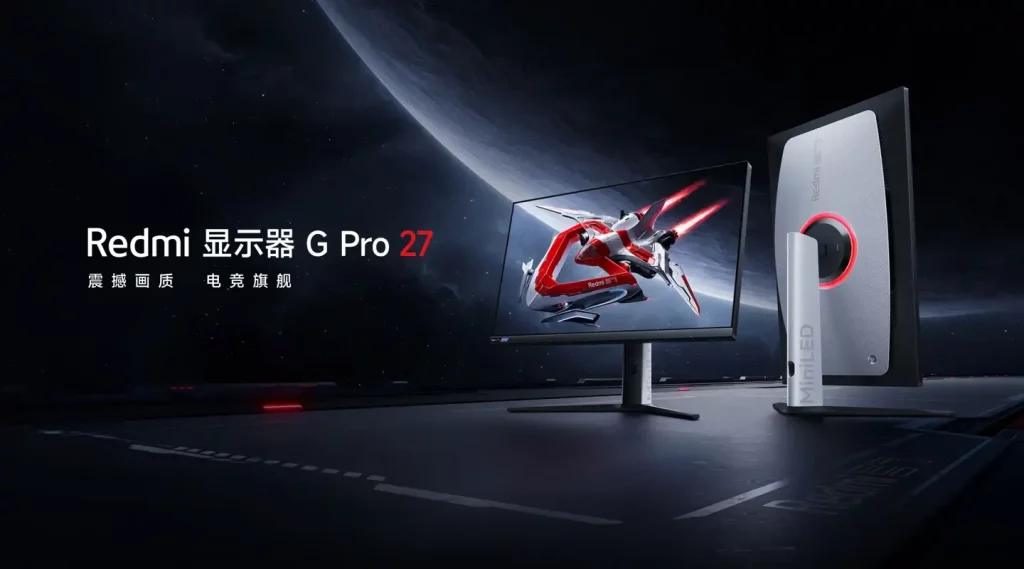
Redmi Display G Pro 27

Redmi Display G Pro 27 Specifications:

The design of the monitor is tailored for esports, featuring a sleek 27-inch flat panel with minimal bezels for an immersive viewing experience. Its aesthetics are highlighted by a stylish black-and-white color scheme, with added white baffles at the back for a visually appealing look. The monitor also includes circular RGB backlighting effects to set the gaming atmosphere.

The gaming monitor features a 27-inch 2K Fast IPS panel from BOE, designed to deliver superior gaming experiences. It boasts a high refresh rate of 180Hz, coupled with a 1ms GTG response time when Overdrive is enabled, making it perfect for competitive gaming by significantly reducing motion blur and ghosting effects.

Redmi-Display-G-Pro-27

This monitor is equipped with advanced MiniLED technology, boasting 4608 beads across 1152 controllable zones, offering excellent contrast and brightness up to 1000nits. This ensures deep blacks and vibrant colors, further enhanced by FreeSync technology to eliminate screen tearing, providing a fluid and immersive gaming experience.

In terms of color performance, it excels with QD quantum dot technology, achieving 100% sRGB, 99% DCI-P3, and 97% Adobe RGB coverage, supported by a 10bit color depth and a ΔE<2 color accuracy, ensuring professional-grade color fidelity. It’s also TÜV certified for low blue light, minimizing eye strain during long gaming sessions.

For connectivity and user interface, the monitor offers dual DP1.4 and HDMI 2.0 ports, an audio output, and a joystick for easy OSD navigation. It’s built for comfort and flexibility with an adjustable stand and VESA mount compatibility, weighing 6.8kg and including a 65W power supply. Xiaomi also backs this high-performance gaming monitor with a 3-year warranty.

At the event, alongside Xiaomi 14 Ultra, the company also teased the Redmi G Pro 2024 laptop series and announced the Pad 6S Pro.

RELATED:

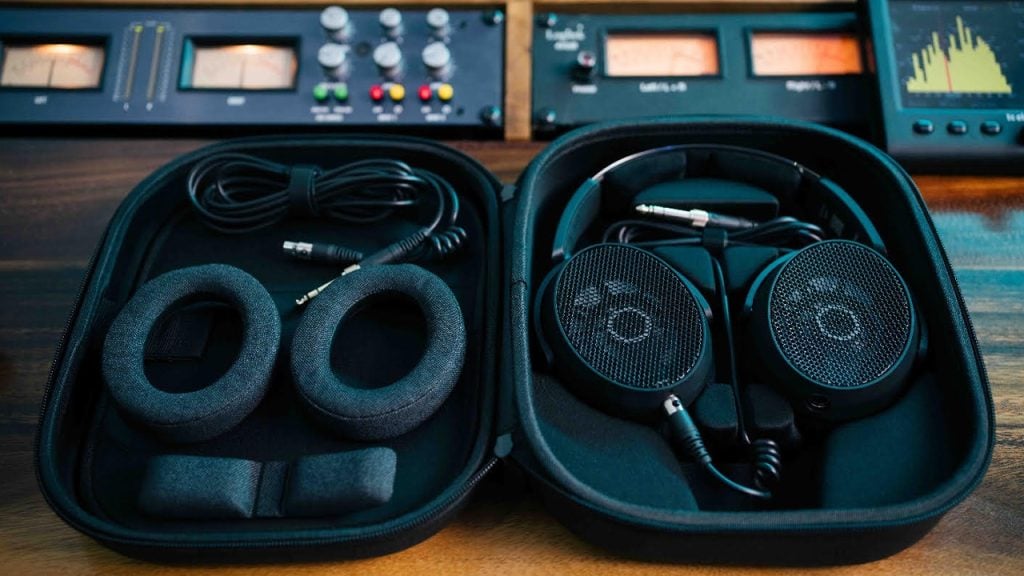
Sennheiser Brings World-Class Mixing to India: Introducing the HD 490 Pro

Wireless headphones have become an indispensable part of our lives. Nowadays, almost everyone turns to solutions like AirPods to listen to music, talk on the phone, or isolate themselves from external noises. However, for those who prioritize audio quality or need a professional solution, wired headphones remain the superior choice. Recognizing this, Sennheiser has launched its brand-new open-back HD 490 Pro reference studio headphones, designed specifically for producing, mixing, and mastering. Here are the details…

Perfect Mix of Clarity, Comfort, and Reliability Now Available in India with Sennheiser HD 490 Pro

The Sennheiser HD 490 PRO is specifically designed for music production, mixing, and mastering. These headphones aim to provide superior clarity, comfort, and reliability, perfectly catering to the demands of modern music production. For instance, the HD 490 PRO offers an extremely wide and realistic soundstage, assisting you in precisely positioning each component of your mix.

Sennheiser 490 Pro

The ultra-light voice coils ensure fast and authentic sound reproduction. Additionally, thanks to the special low frequency cylinder, low frequencies are heard accurately, precisely, and clearly. Sennheiser’s Open-frame Architecture minimizes resonance and distortion.

For an optimal listening experience, the transducers are positioned at a slight angle, mimicking a typical monitor speaker setup. Moreover, the HD 490 PRO features a lightweight and ergonomic design ideal for long hours of use. Cushioned ear pads and an adjustable headband provide comfortable usability.

Price & Availability

The Sennheiser HD 490 Pro will retail at INR 34,500, and the HD 490 Pro Plus will be priced at INR 41,300, which is the maximum retail price (MRP). However, customers can purchase the HD 490 Pro for INR 27,590 and the HD 490 Pro Plus for INR 32,990 exclusively on Amazon.

Sennheiser 490 Pro

RELATED:

Lenovo to launch a $1000-$1500 AI PC at April’s tech conference

Lenovo, a leading technology company, recently announced its entry into the rapidly growing AI PC market, with plans to launch an AI PC priced between $1,000 and $1,500. This strategic move aligns with the shifting demands of users amidst the rising popularity of hybrid artificial intelligence technology. The announcement coincided with the disclosure of Lenovo’s favorable financial performance for the third quarter of the fiscal year 2023/24, underscoring the company’s continued expansion and strategic vision.

Lenovo’s President Reveals Plans to Launch AI PC in April

Lenovo AI PC

During a session with investors following the financial report, Liu Jun, the Executive Vice President and President of Lenovo China, spoke about the forthcoming launch of the AI PC at their Innovation Technology Conference in April. Liu acknowledged the initial high cost of the device, attributing it to the expenses associated with chip computing power and software development. However, he expressed optimism about future price reductions as technology advances.

Lenovo‘s Chairman and CEO, Yang Yuanqing, emphasized the game-changing potential of AI PCs, highlighting how models like Sora are spurring demand for AI computing power and facilitating the widespread adoption of AI in various spheres. He underlined Lenovo’s strategic positioning to lead this transformation and expand the market through both performance enhancements and innovative breakthroughs.

Yang sees an AI-powered revolution coming to the PC industry, with the integration of large language models (LLMs) as a key driver of growth. He highlights that the already strong PC market is poised for further expansion as consumers seek AI-enabled computers.

Furthermore, Lenovo is reportedly planning to launch a new AI operating system later this year, which could compete with established systems like Microsoft’s Windows 11. This development is part of Lenovo’s broader strategy, as evidenced by a 7% increase in revenue year-on-year and quarter-on-quarter for their core Intelligent Devices Business Group in Q4 2024, showcasing their ability to capture more market share and drive sales of high-value products.

RELATED:

(Via)

Xiaomi launches an 80W wireless charger for Xiaomi 14 Ultra

At the Xiaomi 14 Ultra launch event, the company announced several other products. One of them was a wireless charger.

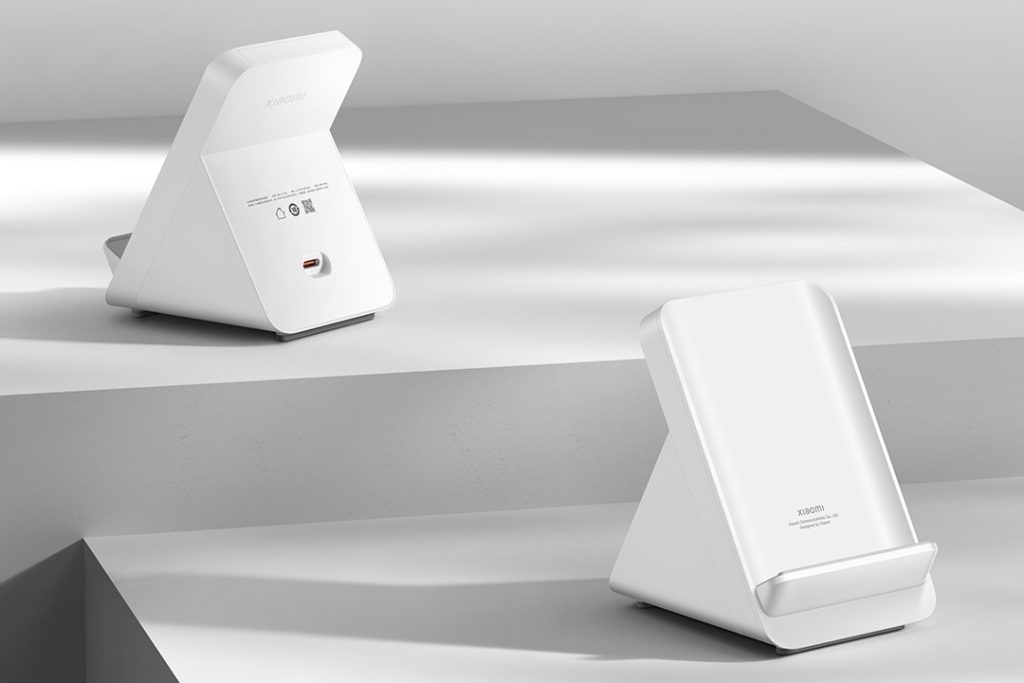
The company’s new wireless charger has a very long name. It is officially called the Xiaomi 80W Lift-type Air-cooled Wireless Charging Set.

Xiaomi 80W Lift-type Air-cooled Wireless Charger

The product is priced at ¥499 (~$70). It is a combo set, and thus, the package includes the following items.

  • 80W Wireless Charger
  • 120W Power Adapter
  • 6A USB Type-C Cable

The charger is compatible with all Qi-supported devices. However, higher charging speeds can only be achieved on Xiaomi smartphones.

The newly unveiled Xiaomi 14 Ultra can charge at the maximum speed of 80W. The company claims that the battery of this handset can be filled to 100% in 49 minutes.

On the other hand, iPhones are limited to 7.5W charging. Whereas, Samsung flagships are restricted to 10W charging.

As the name suggests, the charger is a lift-type. In other words, the phones need to be placed vertically.

The charger uses dual coils to achieve higher charging speeds. To keep the thermals in control, there’s a built-in cooling fan, which the company claims to run silently.

This power accessory combo is now up for sale in China across multiple platforms. At present, it is not known if and when this product will be released in global markets.

RELATED:

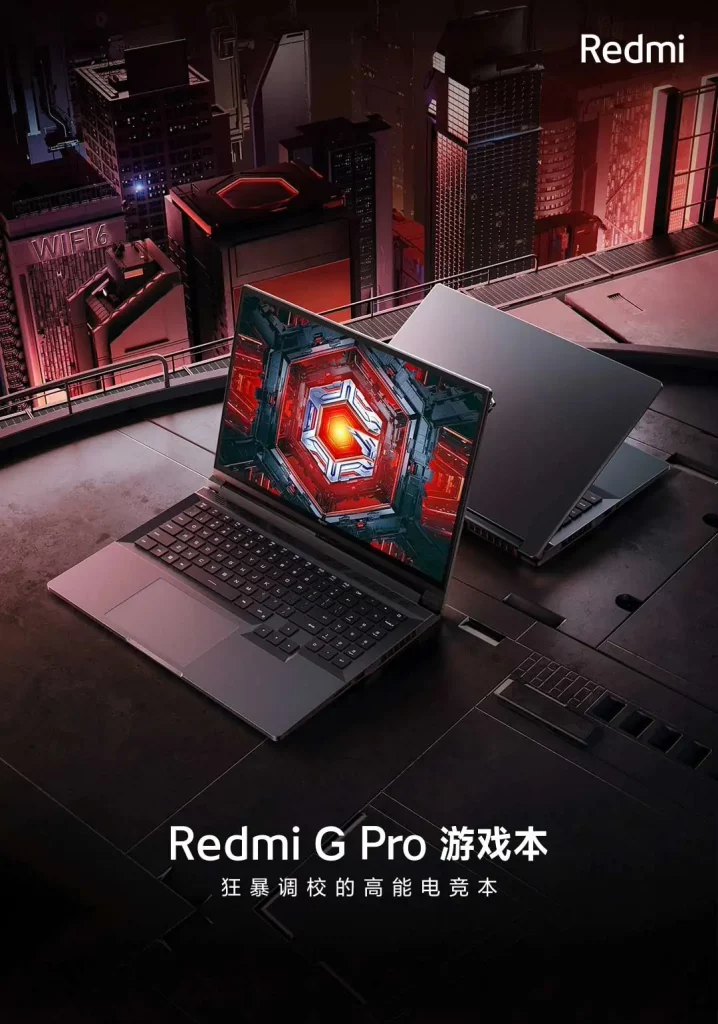
Xiaomi Teases Redmi G Pro 2024 with Up to i9-14900HX CPU and RTX 4070 GPU

Xiaomi continues to expand its diverse product family. Today, the company unveiled exciting new additions in China. The Xiaomi 14 Ultra takes center stage, while the sleek Redmi Book Pro 14 and 16 impress as well. For power hungry users, Xiaomi announces upcoming Redmi G Pro 2024. Here are the details…

Redmi G Pro 2024 Gaming Laptop: “The Strongest Under $1000”

Xiaomi’s reputation for affordable products extends to its gaming laptops. The Redmi G Pro promises to be the most powerful computer under 10,000 Yuan. Its impressive technical specifications, though not yet released for sale, support this bold claim. In the top model, an i9-14900HX processor and an RTX 4070 graphics card are expected. A version with an i5-14500HX processor and RTX 4060 has also been observed on Geekbench. This processor has 6 performance cores and capable of reaching turbo speeds of up to 4.9GHz.

Xiaomi released the Redmi G Pro gaming laptop in 2022, featuring a 12th generation Intel Core H series processor and RTX 30 series graphics card. However, considering the time that has passed, significant differences are expected between this model and the current one. Looking at the design, we can see that Xiaomi avoids emphasizing the “gaming” aspect.

The metallic gray body, combined with a relatively slim chassis, gives it the impression of a standard business computer. This makes it quite ideal for customers who don’t want a computer with RGB lighting everywhere. Unfortunately, for now, everything we know about the Redmi G Pro gaming laptop is limited to this. The company is expected to provide more details and announce the release date next week.

RELATED

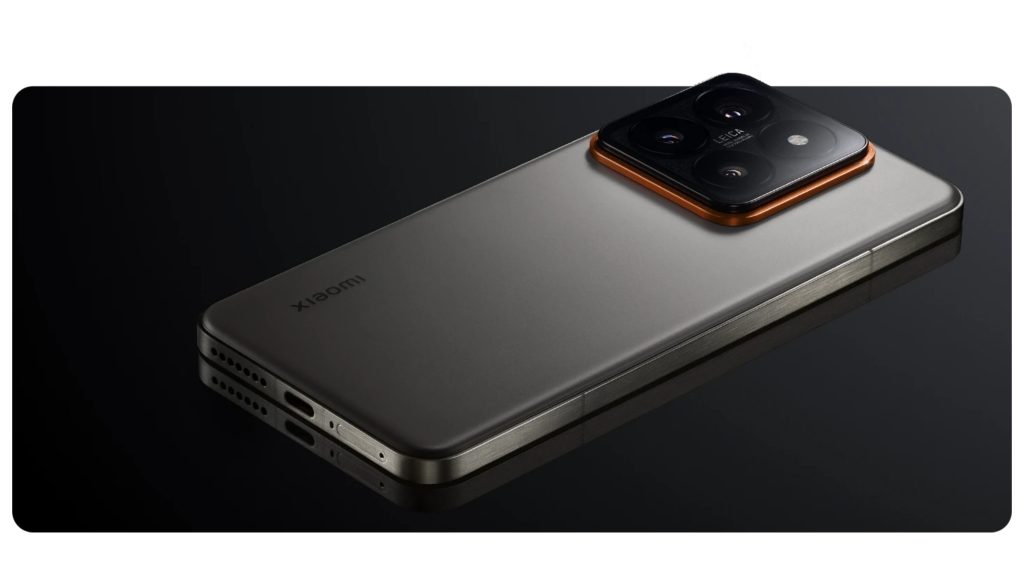
Xiaomi 14 Pro Titanium Special Edition gets expensive as it now supports satellite communication

A few months back, the Xiaomi 14 Pro Titanium Special Edition was announced in China. This version of the handset arrives in a single 16GB + 1TB memory configuration priced at ¥6,499.

Today, the company unveiled an upgraded version of this device alongside the Xiaomi 14 Ultra Titanium Special Edition. The new variant is slightly more expensive as it offers support for satellite communication.

Xiaomi 14 Pro Titanium Special Edition

Xiaomi 14 Pro Titanium Special Edition Satellite Communication is the official name of the latest version. This model carries a price tag of ¥6,999, which makes it ¥500 costlier than the regular titanium variant.

The latest variant replaces the older non-satellite model, which was only sold in limited quantities due to poor yield despite being in high demand.

People who are still interested in the titanium variant of the Xiaomi 14 Pro can now opt for the updated version, which allows them to communicate via satellites in the event of an emergency. However, the company did not reveal availability details.

On the other hand, the first sale of Xiaomi 14 Ultra Titanium Special Edition is scheduled for 10 AM (local time) on March 12. It is priced at ¥8,799 and also comes with 16GB RAM and 1TB storage.

Unlike the Xiaomi 14 Pro, the Xiaomi 14 Ultra will be available in global markets. It will be announced internationally on February 25 ahead of the MWC (Mobile World Congress) 2024.

RELATED:

Oppo Launches Dedicated AI Center, Promises Cutting-Edge Tech in 2024

Artificial intelligence technologies are experiencing widespread adoption. Companies across industries are integrating AI into their products and services, with those who succeed reaping massive financial rewards. Oppo seems to want to be one of the companies achieving commercial success, as evidenced by the establishment of an AI center and the announcement of the introduction of generative AI features on the Reno series. Here are the details…

OPPO Establishes AI Center, Announces Arrival of Generative AI Features on Reno Series

As you know, artificial intelligence is a complex technology requiring significant effort to function correctly. Recognizing this, Oppo today announced the establishment of the Oppo AI Center. This center will drive advancements in artificial intelligence research, pushing the boundaries of what’s possible. We can expect this work to yield significant benefits in the near future.

For example, according to Oppo, within the second quarter of 2024, the Reno 11 Series will be equipped with advanced generative AI capabilities, including the innovative AI Eraser function and more. Similar features in rival models like the Galaxy S24 indicate that the company will not lag behind in competition, which is very good news for us users.

“Following feature phones and smartphones, next-gen AI Smartphones will represent the third major transformative stage in the mobile phone industry. In the era of AI Smartphones, both the mobile phone industry and user experience will witness revolutionary changes,” said Pete Lau, Chief Product Officer of Oppo.

OPPO Outlines Four Distinctive Characteristics of AI Smartphones

As the AI smartphone era unfolds, OPPO defines four key characteristics based on its advanced research in large models and generative AI technology:

  • Efficient Computing: AI smartphones must optimize computing resources to handle the demands of generative AI.
  • Real-World Awareness: AI smartphones should leverage sensors to perceive and understand complex user and environmental data.
  • Powerful Self-Learning: AI smartphones must possess robust self-learning abilities to evolve and adapt.
  • Multimodal Content Generation: AI smartphones will empower users with inspiration and knowledge through diverse content creation capabilities.

Actually, Oppo is actively involved in artificial intelligence technologies. The company recently released its AndesGPT language model, which focuses on dialogue enhancement, personalization, and cloud-device collaboration. The model’s core capabilities include knowledge, memory, tools, and creation. Moreover, it can be used in the Find X7 series. Oppo plans to extend these features to its entire device lineup in the near future.

RELATED

Xiaomi 14 Ultra wallpapers surfaced

Xiaomi made a big splash at its last big launch event when it unveiled the Xiaomi 14 Ultra. Rumors of a pre-launch leak of HyperOS software surfaced and this speculation has now been confirmed. The leaked software has the build number OS1.0.24.2.20.UNACNXM, adding an intriguing element to the pre-launch rumors.

One of the most exciting revelations following the leak was the unveiling of the Xiaomi 14 Ultra’s wallpapers. Consisting of four different wallpapers, these images have a striking resemblance to the aesthetics found on iOS devices, underlining Xiaomi’s deliberate adherence to iOS design principles.

This uncanny resemblance not only reinforces whispers that Xiaomi HyperOS resembles iOS, but also reinforces the idea that Xiaomi is positioning itself as the ‘Apple of China’. The aesthetic appeal of these new wallpapers is undeniable and adds a touch of sophistication to the overall user experience.

Beyond the visual appeal, the Xiaomi 14 Ultra offers a range of premium features. A powerful 50MP LYT900 sensor on the rear boosts its photography capabilities, while Snapdragon 8 Gen 3 ensures a smooth and high-performance gaming experience. The device is available for purchase today starting at ¥6499.

Related:

(Via)

Nvidia Announces Not One, But Two New AI Chips for China Amid Export Challenges

Nvidia is making another smart move in China by introducing two new AI chips, despite facing challenges from U.S. export restrictions. The company’s CEO, Jensen Huang, has revealed that these chips are now being offered to select customers for testing. Nvidia is trying to keep its strong position in the Chinese market, even as it navigates through the complexities of international trade laws.

The chips have been adjusted to fit within the new US Rules

Huang’s announcement didn’t dive into the specifics about the chips or who’s testing them, leaving many to wonder about the details. There’s been talk, especially from a newsletter called SemiAnalysis, about Nvidia planning to launch three chips (H20, L20, and L2) specifically for China. These chips reportedly include some of Nvidia’s latest tech but have been adjusted to fit within the new U.S. rules.

Nvidia

The situation for Nvidia in China has been tough lately. The U.S. government’s decision to tighten export controls has hit Nvidia’s sales hard. The company used to enjoy a significant chunk of its revenue coming from China, but recent measures have seen a noticeable drop in earnings from that region.

Despite these hurdles, Nvidia is not sitting back. It has started accepting pre-orders for the H20 chip, which is being positioned as a strong contender against competitors like Huawei. However, there have been some bumps in the road, such as delays linked to server manufacturers having trouble incorporating the chip into their systems.

RELATED:

(Via)

China Unveils a New Petabit-capacity Optical Disk, A Game-Changer for Storage

China has made a huge stride in technology with the creation of a new optical disk that can hold a vast amount of data—up to a petabit. The innovation comes from the smart folks at the Shanghai Institute of Optics and Fine Mechanics, part of the Chinese Academy of Sciences. It’s not just another disk; it’s a game-changer for storing data.

The disk is built in 3D, with hundreds of layers stacked on each other

What sets this disk apart is its design. It’s built in 3D, stacking hundreds of layers on top of each other. This approach dramatically increases how much data you can store on it. The team didn’t stop there; they also made the data spots incredibly tiny, about 54 nanometers wide, and placed them super close together, at 70 nanometers apart. They managed to do this by getting around a common hurdle in optics, the optical diffraction limit.

Disk Drive China
Image Credits: Benjamin Lehman (Unsplash)

The secret sauce in this disk is a special kind of film that contains a dye. When this dye gets hit with very short laser pulses, it allows data to be stored in these tiny spots.

Why is this a big deal? Think about all the data centers out there, storing all the videos, photos, and information we use every day. They need a lot of space and energy to operate. With this new disk, they could store much more data in a smaller space and use less energy.

With the world creating more data by the minute, finding efficient and high-capacity ways to store it is more important than ever. This new optical disk from China could be a key piece in solving that puzzle.

RELATED:

(VIA)