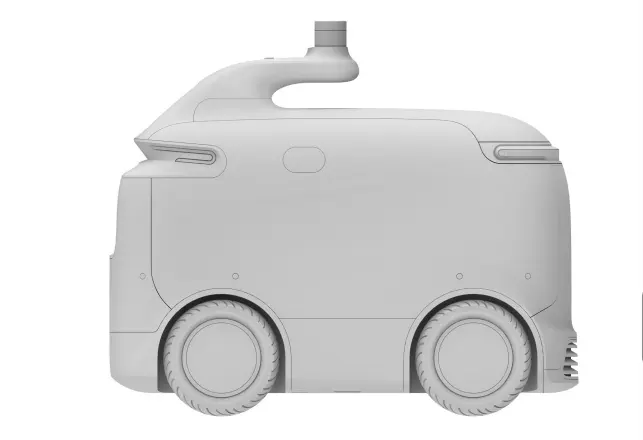
The design patent of a “charging car” applied by Huawei Technologies Co., Ltd. has been approved today by the China National Intellectual Property Administration. It seems like the car incorporates lidar and ultrasonic radar sensors for seamless navigation.
One of the highlights of the car is its ‘cute’ design
Huawei’s “charging car”
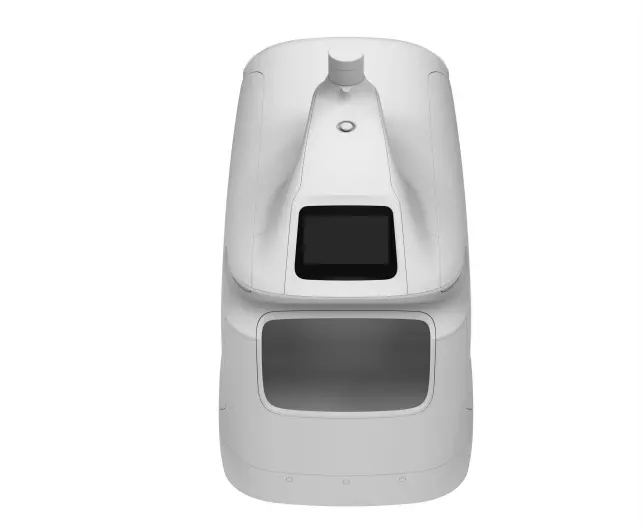
The design focus of this patent is the shape of the car, which aims to provide an innovative mobile charging solution. The pre-production images suggest an overall rounded shape with an interactive display in the front. This car will house both DC and AC charging outlets below the interactive screen, as you can see from the image. Alongside the lidar on top, the car will also reportedly house ultrasonic radars on different sides of the car.
From the side
Not much information about the features of the car has been revealed yet. However, it’s expected that the car will incorporate Huawei’s intelligent driving functions to make better use of the sensors.
From the top
Although, this kind of charging vehicle, often referred to as a “mobile charging robot,” has already been deployed in practical applications. For instance, during this year’s Mid-Autumn Festival and National Day holidays in China, the State Grid Wuhan Power Supply Company introduced the “intelligent mobile energy storage charging pile” at various locations, including vehicle charging stations and service areas. This system boasts a total power capacity of 60kW, with an energy storage capacity reaching a full load of 184kWh. It offers users the option of both 60kW fast charging and 7kW slow charging.
The second last week of 2023 will not be as busy as the last few weeks in terms of smartphone launches. Only two brands have scheduled events and both of them will take place in China.
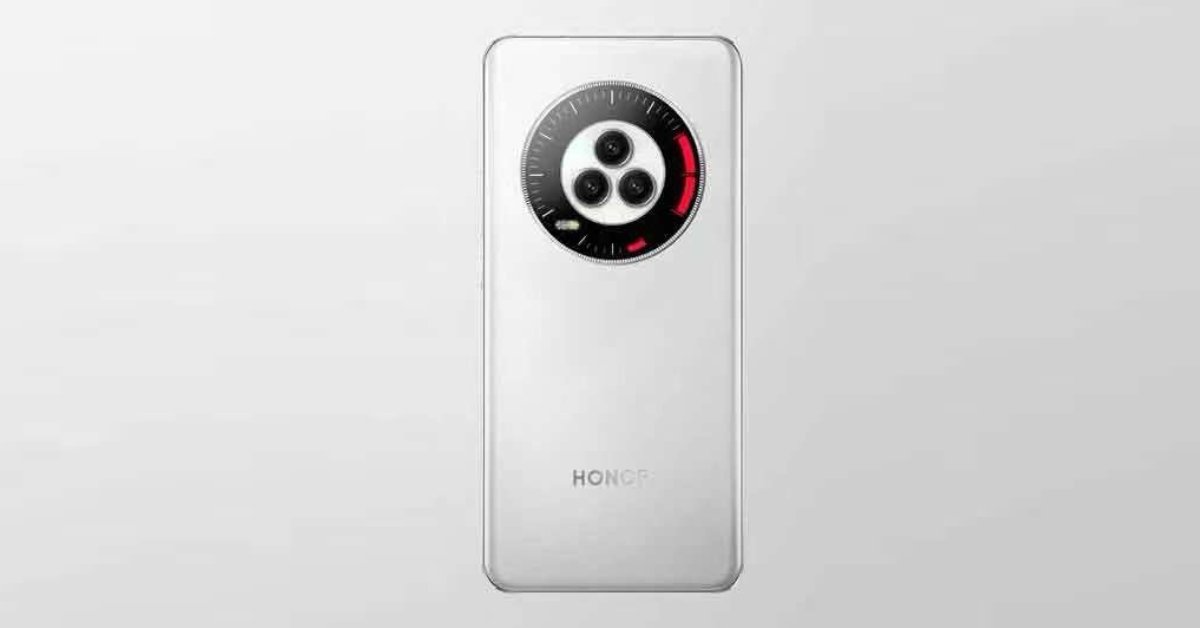
The brands that will hold press conferences are Nubia and Honor. The former will unveil its flagship phone. Whereas, the latter will debut a performance-focussed handset.
We have been hearing about these devices for quite a while from multiple sources. As we are nearing the official announcement, even the companies themselves have started teasing the features recently.
Let’s check out these forthcoming phones one by one.
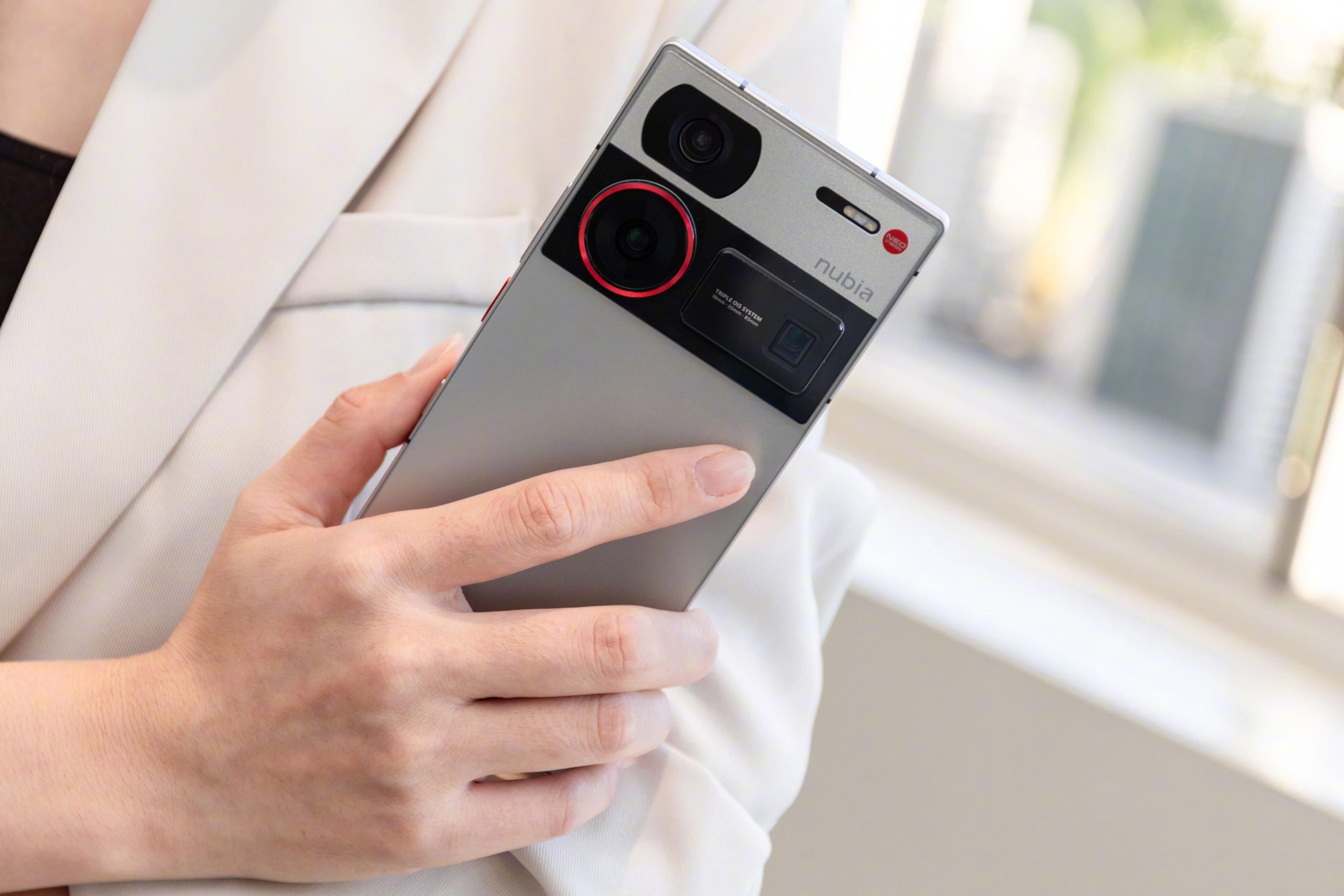
The Nubia Z60 Ultra is scheduled to launch in China on December 19 (Tuesday). It will be presented at an event, which will begin at 2 PM local time (GMT+8).
As mentioned earlier, the Nubia Z60 Ultra is the brand’s latest flagship smartphone. It comes with several high-end features, such as a Qualcomm Snapdragon 8 Gen 3 chip, LPDDR5x RAM, UFS 4.0 storage, IP68 rating (dust and water resistant), and a 16MP under-display selfie camera.
The device also arrives with a 6,000mAh silicon carbon anode battery, 80W wired charging support, USB 3.2, Android 14, and a 50MP (wide) + 50MP (ultrawide) + 64MP (3x periscope telephoto) triple camera system.
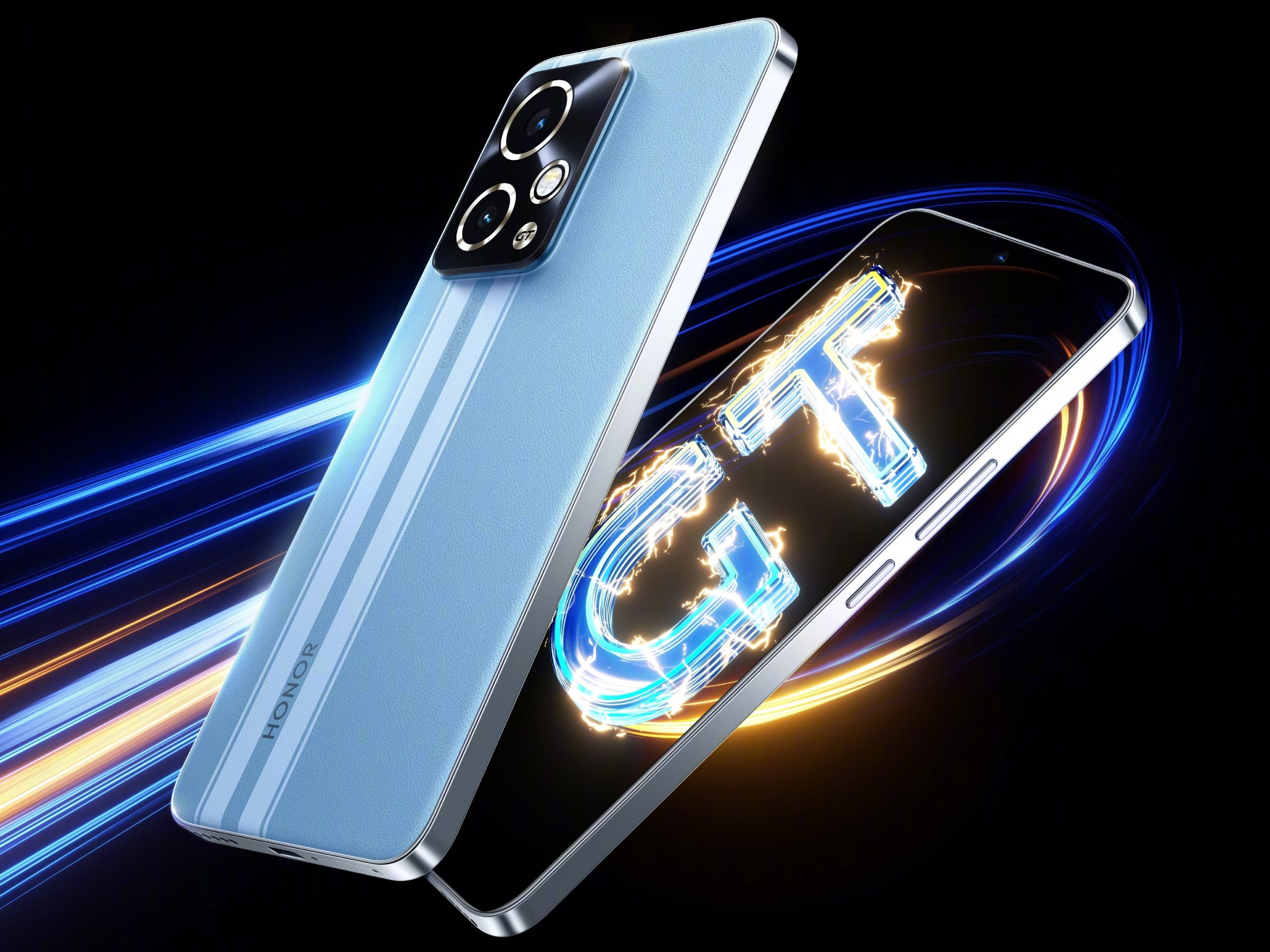
The Honor 90 GT is the successor of Honor 80 GT. The brand has only revealed its design so far, however, we know some of its specs from leaks.
The device will be powered by a Qualcomm Snapdragon 8 Gen 2 chipset paired with up to 24GB RAM. It will flaunt a 1.5K flat OLED display with 3840Hz PWM dimming.
The phone will sport an OIS-assisted 50MP primary camera and will support 100W wired charging. It is expected to come in at least three colors with a flat frame design.
The Indian government’s Computer Emergency Response Team (CERT-In) has issued a high-risk warning for Samsung mobile phone users, highlighting critical security vulnerabilities in various Android operating systems running on Samsung phones. These vulnerabilities, if exploited, could allow attackers to steal sensitive information, take control of your phone, and even install malware.
According to CERT, the vulnerabilities affect Samsung phones running Android 11, 12, 13, and 14. This means it affects both old and new smartphones, including popular models like the Galaxy S23 series, Galaxy Flip 5, and Galaxy Fold 5.
CERT-In has identified several vulnerabilities in Samsung products, arising from issues such as:
Improper access control in Knox features. Integer overflow flaw in facial recognition software. Authorisation issues with the AR Emoji app. Incorrect handling of errors in Knox security software. Multiple memory corruption vulnerabilities in various system components. Incorrect data size verification in the softsimd library. Unvalidated user input in the Smart Clip app. Hijacking of certain app interactions in contacts.
The exploitation of these vulnerabilities could lead to severe consequences. This includes triggering heap overflow and stack-based buffer overflow, accessing device SIM PIN, broadcasting with elevated privilege, reading AR Emoji sandbox data, bypassing Knox Guard lock by changing system time, accessing arbitrary files, gaining sensitive information, executing arbitrary code, and compromising the targeted system, the agency says.
So what can you do? Users can install the latest security patches from Samsung as soon as they become available. Also, make it a habit to install security updates as soon as they are released. This helps keep your phone protected from the latest threats.
Meanwhile, be careful when installing apps, clicking links, and visiting unknown websites. These are common ways for attackers to exploit vulnerabilities.
Nothing is reportedly working on a new smartphone model, which could be a mid range handset. This device is rumored to be called the Nothing Phone 2a. The latest leak hints at its design elements, so here are all the details.
Nothing Phone 2a may feature a refreshed design
Known tipster Yogesh Brar claims to have seen a working prototype of the Nothing Phone 2a. He stated that the brand is making some interesting design choices with the upcoming handset. The front will retain the center aligned punch hole cutout, while the rear will apparently see more obvious changes. The back still features a dual camera setup, but the layout has now moved to a horizontal alignment that is situated in the center and not the left side.
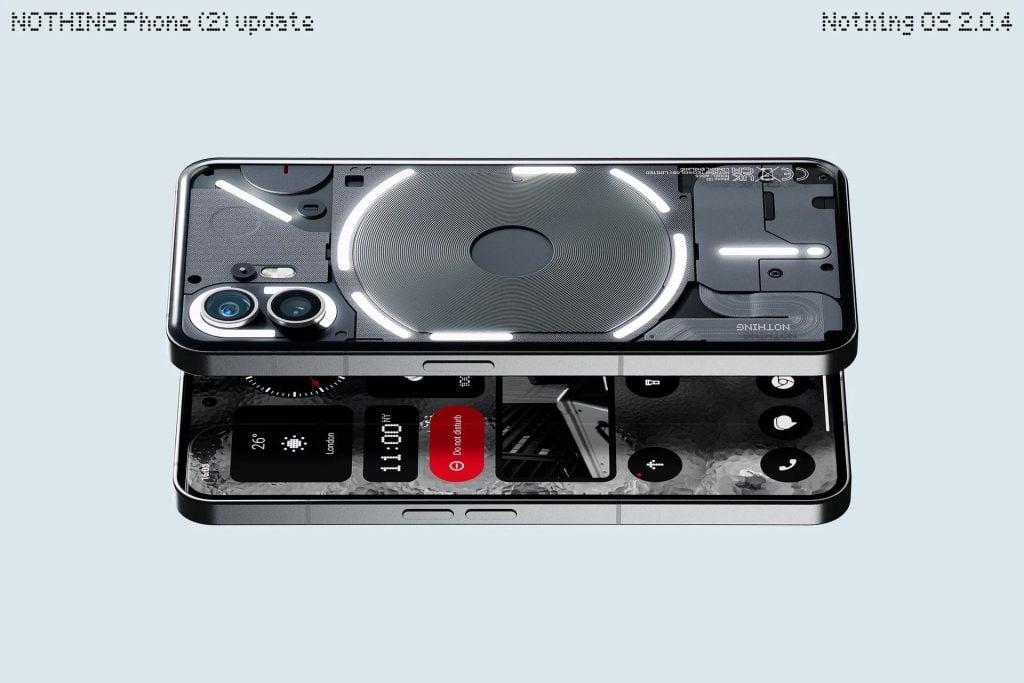
To recall, the company faced some criticism for its Phone 2 being too similar to the Phone 1. But with the Phone 2a, the design is seeing a slight refresh. Although, the tipster adds that the upcoming smartphone will still borrow elements from the Nothing Phone 1 and Phone 2. Interestingly, one of our earlier reports also shared an image on the back panel of the Phone 2a. But this image shows the device with a vertically stacked dual camera setup, which is similar to Nothing’s previous phones.
This report also confirmed that the Phone 2a will sport a 6.7-inch AMOLED display and carry the AIN142 model number. Its LED Glyph Interface lighting can also be seen on the rear. Lastly, the Nothing Phone 2a was also recently spotted on the Bureau of Indian Standards (BIS) carrying the AIN142 model number. This confirms that the smartphone will be launching in the Indian market. Keep in mind that this is still just an unconfirmed report, so take this news with a pinch of salt for now.
European Commission has formally requested information from tech giants Apple and Google regarding their risk management practices within their app stores. Both the App Store and Google Play have been designated as “Very Large Online Platforms” (VLOPs) due to their massive user bases, subjecting them to compliance with the recently enacted Digital Services Act (DSA).
The European Commission is focusing its inquiry on identifying and mitigating “systemic risks” associated with these platforms. Concerns include disseminating illegal and harmful content, and potential negative impacts on fundamental rights, public security, public health, and minors. The Commission has expressed interest in understanding how both companies address these issues within their app ecosystems.
The transparency aspect of the inquiry zeroes in on recommender systems and online advertisements linked to app stores. The request for information highlights the need for clarity in areas such as the assessment of app safety before it goes live and the evaluation of targeted advertisements based on the anticipated audience.
One noteworthy challenge outlined in the request is the ambiguity surrounding the term “illegal and harmful content.” The lack of a clear definition leaves room for interpretation, potentially encompassing aspects such as pre-launch app safety assessments and the determination of appropriate advertisements based on the audience.
Google and Apple have been granted until January 15 to comply with the European Commission’s request for detailed information. Failure to do so could lead to formal proceedings under Article 66 of the DSA, reflecting the Commission’s commitment to enforcing the new regulations.
This latest development comes in the wake of previous controversies, with Apple facing criticism in October 2022 for prominently featuring gambling apps in its App Store. The proximity of these ads to content aimed at children and apps related to gambling addiction recovery sparked concerns and raised questions about the effectiveness of the platform’s content moderation.
The inquiry is not limited to Apple and Google alone; it encompasses over a dozen of the world’s largest tech companies, underscoring the comprehensive nature of the scrutiny under the DSA. The potential initiation of formal proceedings against Apple and Google could set a precedent for other companies facing similar scrutiny, emphasizing the global impact of the DSA on major players in the technology sector.
While last year’s …… oh sorry, this year’s Meizu 20 leaves a lot to be desired, it was cheap enough to entice some people on a budget to buy it. So with the Meizu 21 going up in price 8 months from now, what’s it got to offer that would make me shell out that $470 to pick it up? I guess the biggest reason would be its looks.
Design
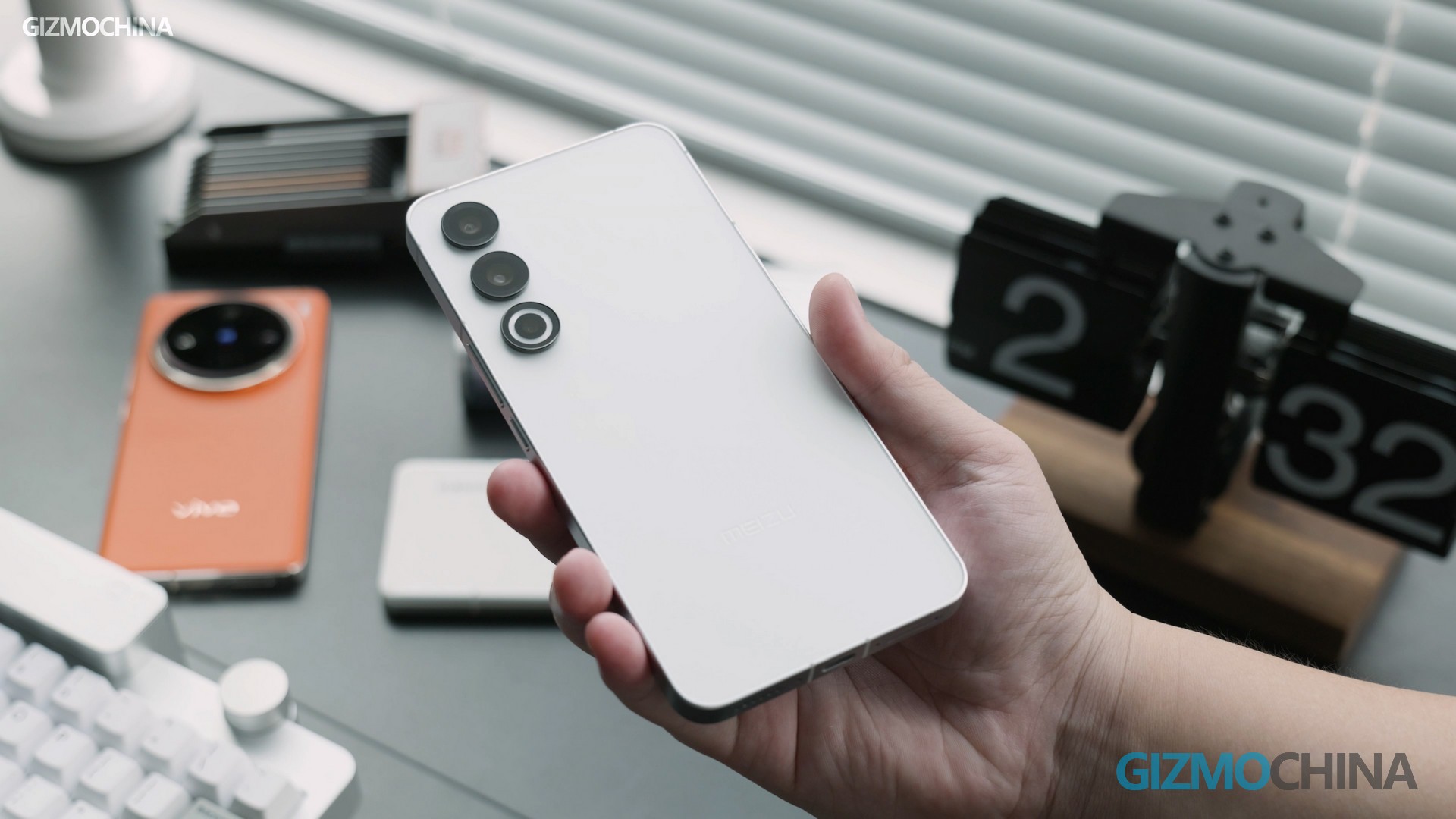
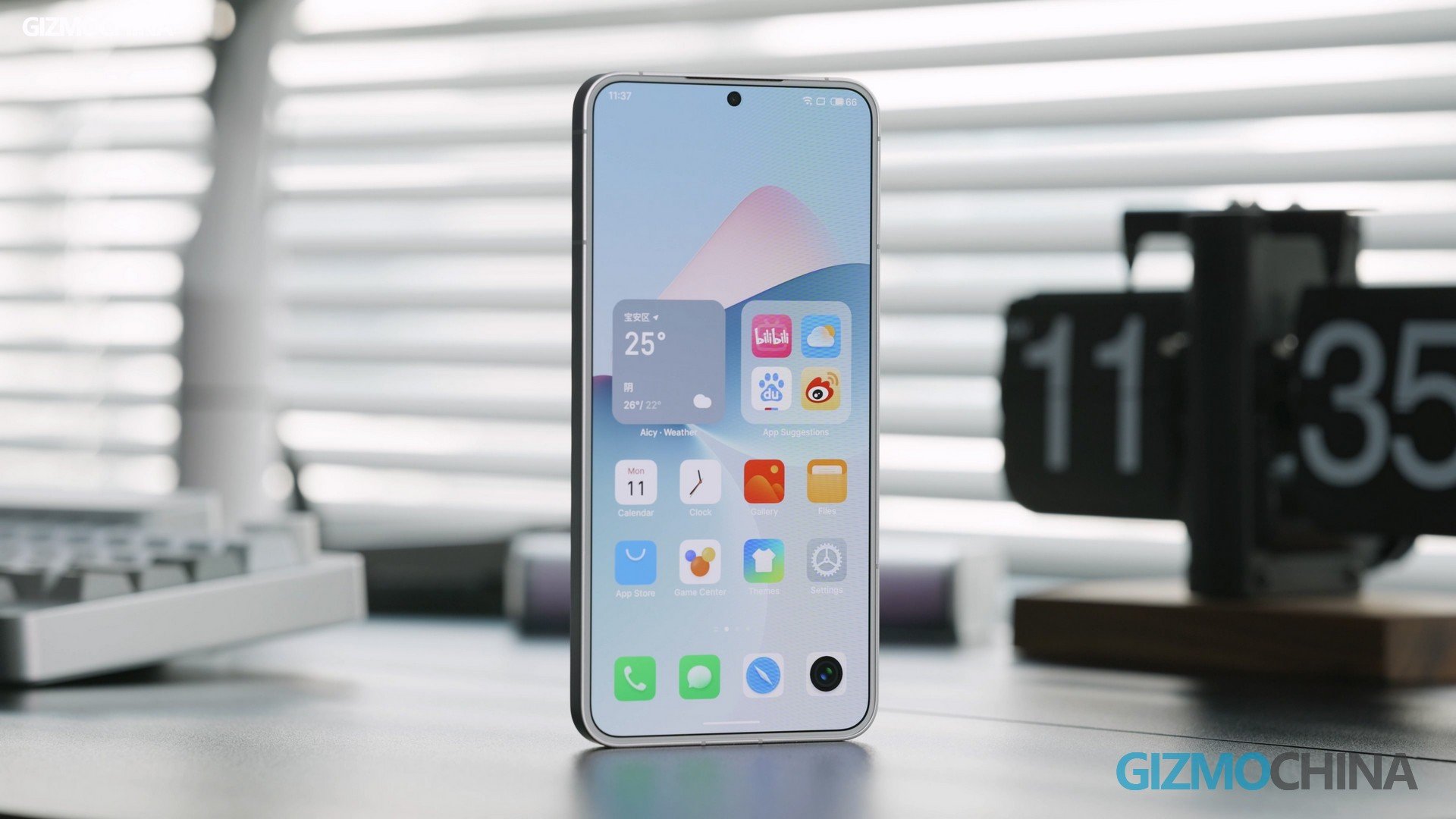
The phone gives me a bit of a strange feeling, it looks like the bastard child of Samsung and NOTHING phone. But I have to say, it does look quite good. Maybe it’s because all the other phones are so flashy in design, that it looks like the Meizu 21 is particularly minimalistic.
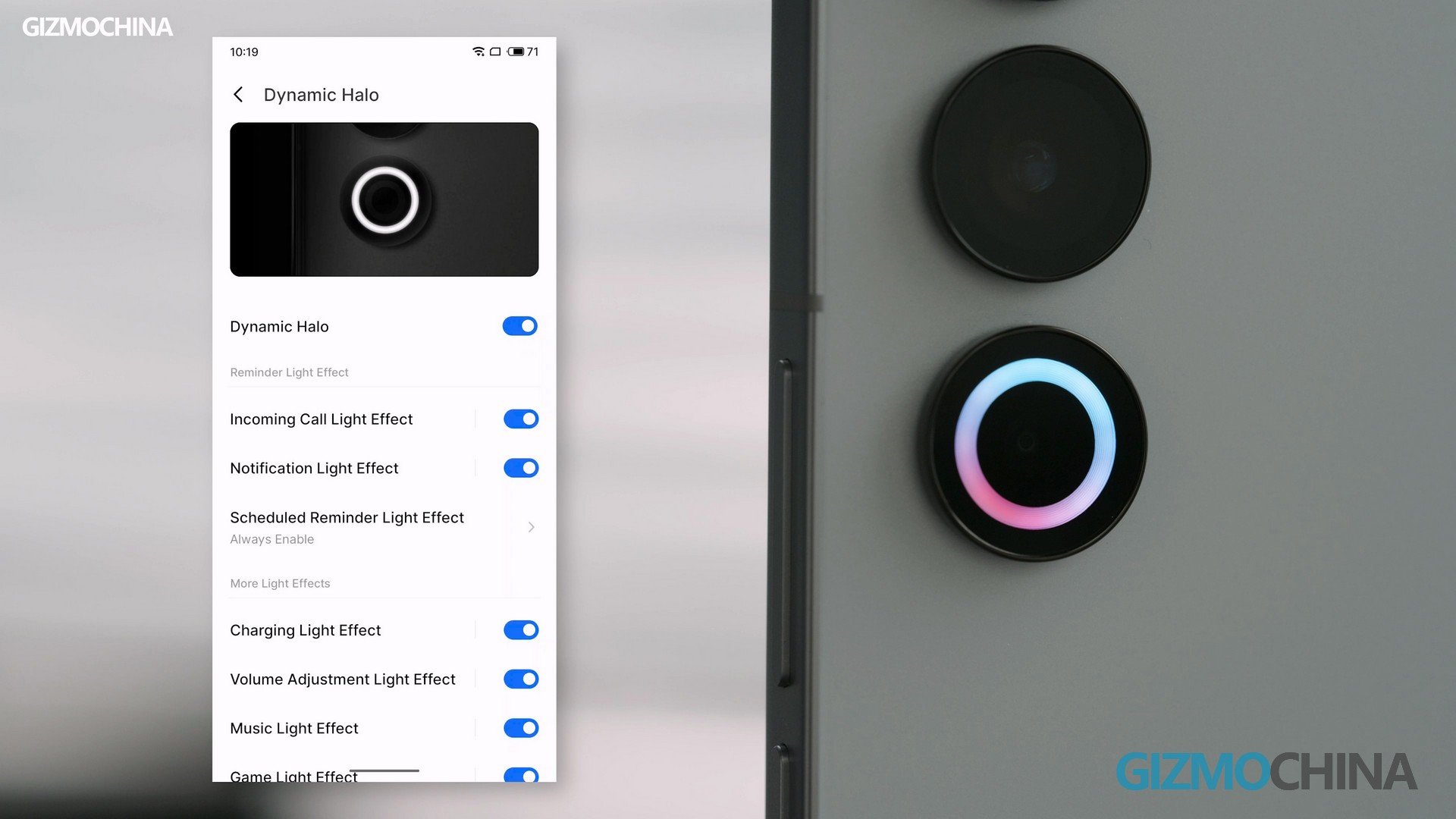
And they’ve put a little more thought into the flash: R! G! B! It beats to the music and can also be used to check the current volume level, quite an interesting little design. The vibration motor, which Meizu has always been proud of, is as good as ever, and the IR blaster and NFC are not absent. If only the IP54 could be replaced with an IP68, this phone would be perfect.
Display
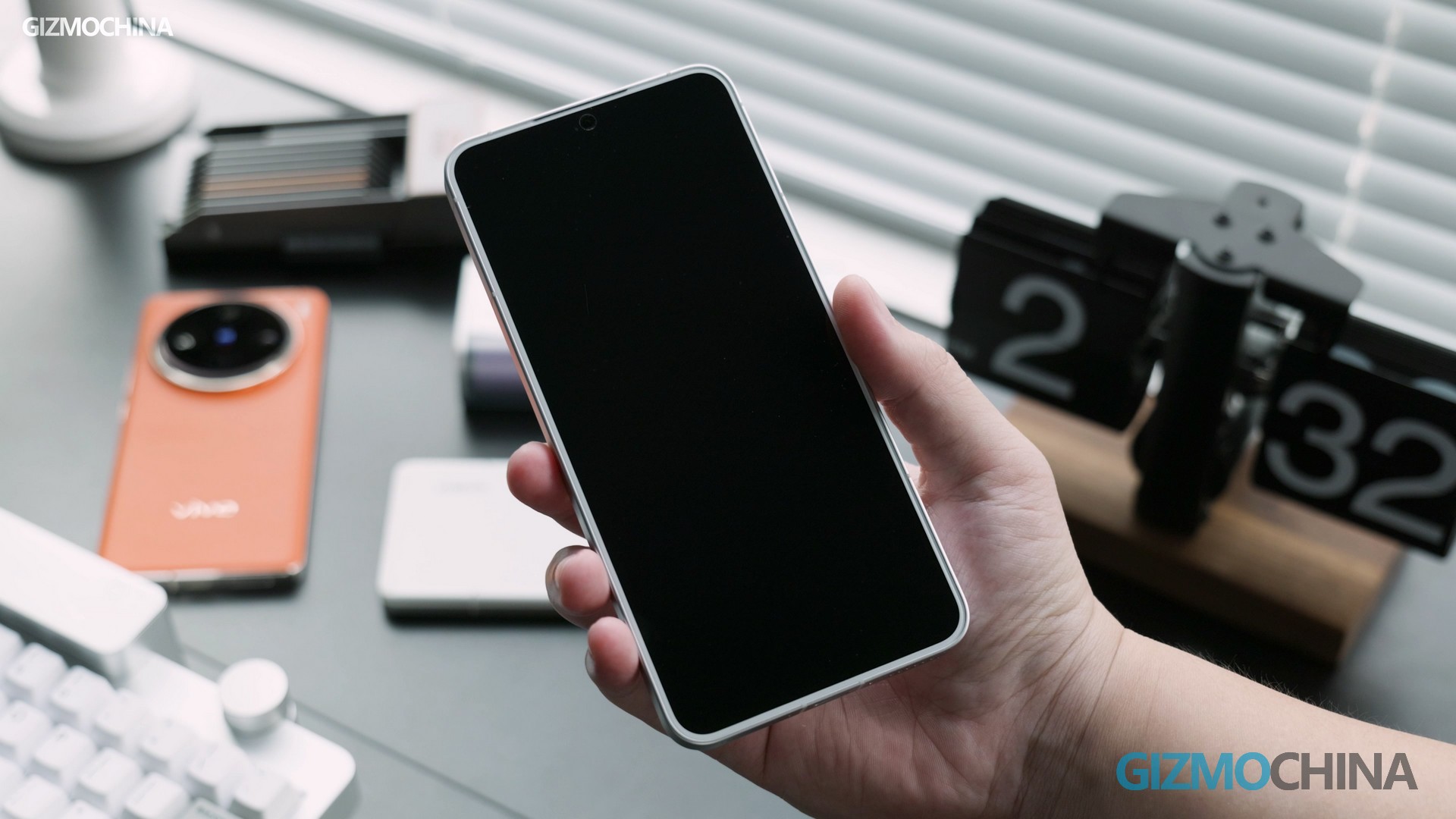
With most cell phones, you can tell at a glance what brand it is when you look at the back of them. People like us who have reviewed a lot of phones can even accurately name the model number of each one. But I believe nobody can recognize a phone by its front, except for the Meizu 21 white version.
This white bezel will let you know it’s a Meizu phone without lighting up the screen, and the bezels aren’t equal width by the looks, they’re truly equal width. The front camera will also be a little smaller than other phones. All in all the Meizu 21 from the front is both unique and beautiful.
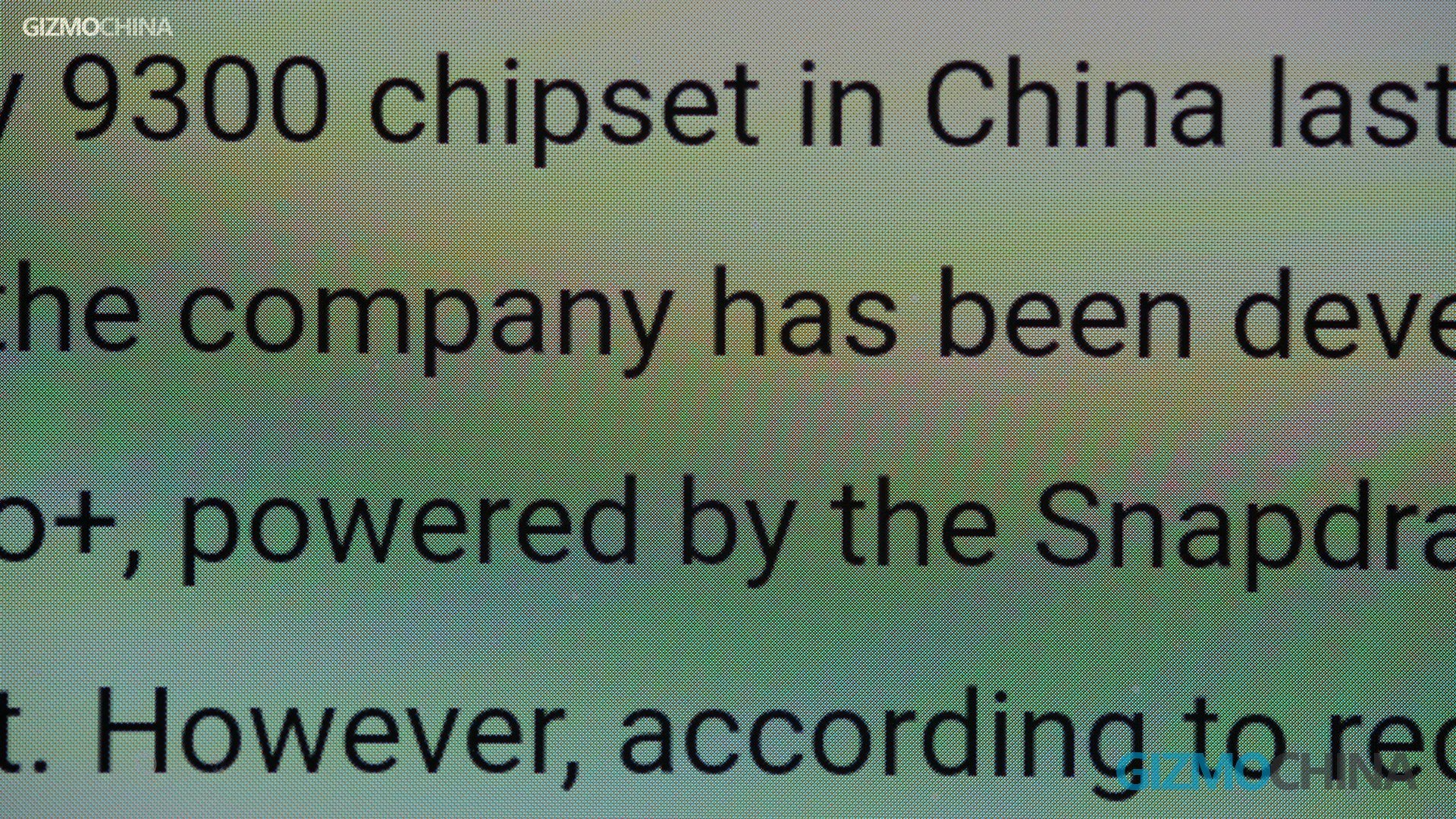
Well, when you tap on the screen, you might be a bit disappointed. I didn’t expect to see this 1080p Samsung E6 panel in a world where 1200p and 1440p screens are everywhere. Although the Meizu 21 will be a little smaller than other phones, the actual PPI of 321 is still more painful for literature lovers.
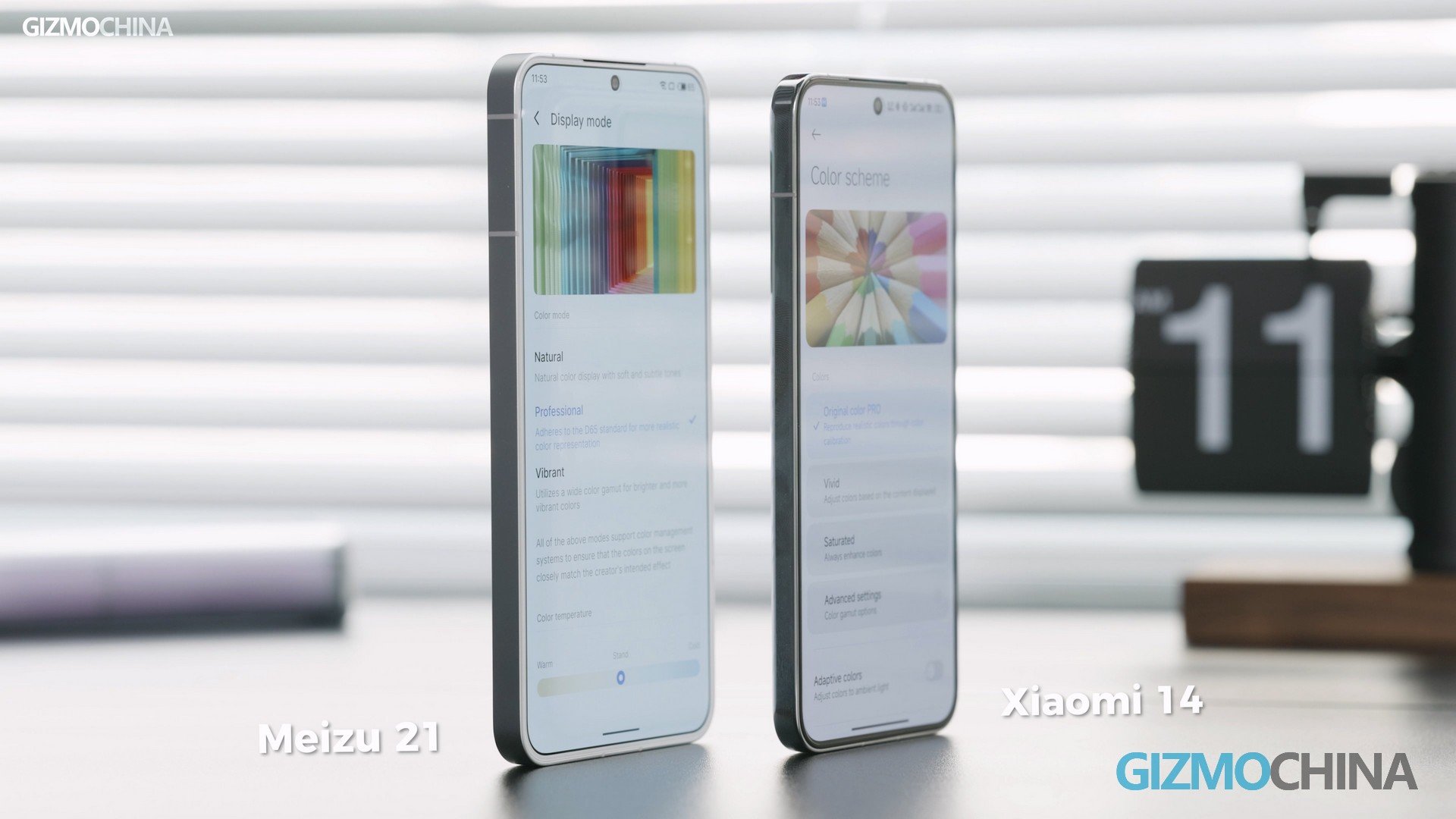
Combined with the PWM dimming, the peak brightness and viewing angle are not as good as other phones in the same price range, I’d hardly say this is a good screen. Since current technology hasn’t been able to get rid of the black matrix completely, the black line also makes it look less than perfect on the front panel.
All in all, this screen isn’t great in terms of display, and anyone looking to buy the Meizu 21 shouldn’t expect too much from this screen.
Benchmark & Gaming
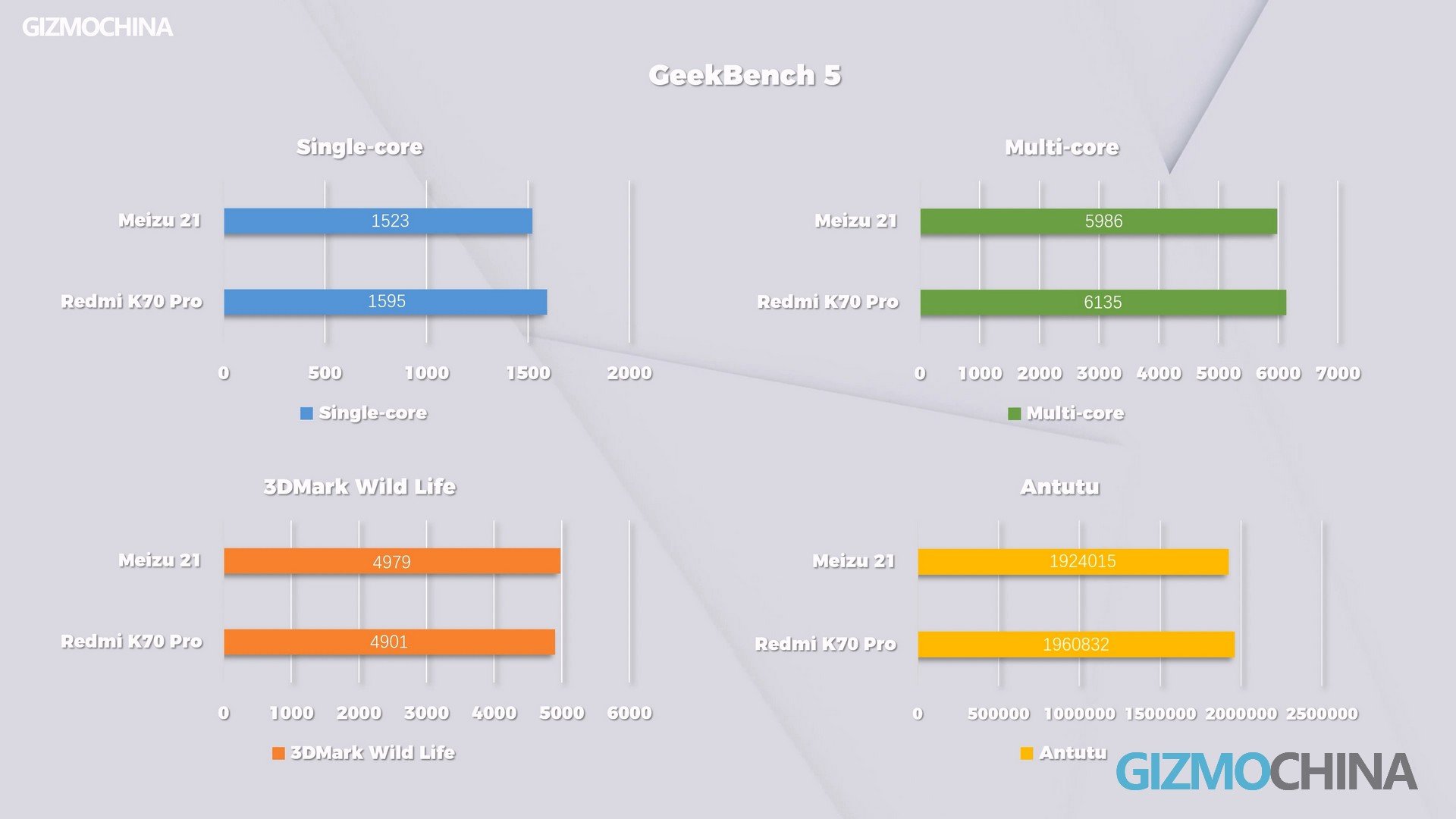
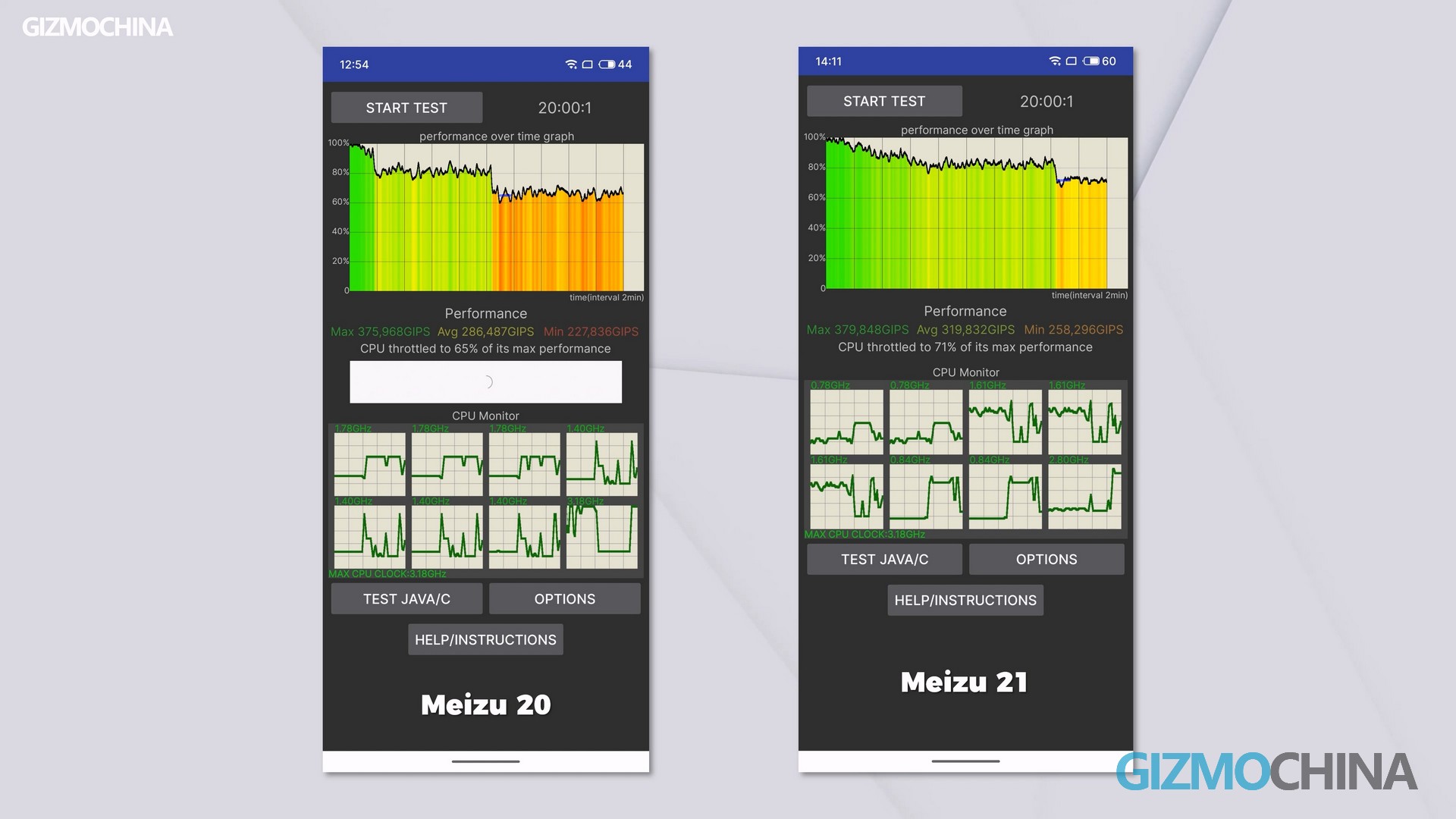
Unsurprisingly, the Meizu 21 uses a Snapdragon 8 Gen 3. But surprisingly, the performance of the Meizu 21 looks good and the thermal dissipation is quite better than last year’s Meizu 20. Does this mean that gaming isn’t as bad as it used to be either?
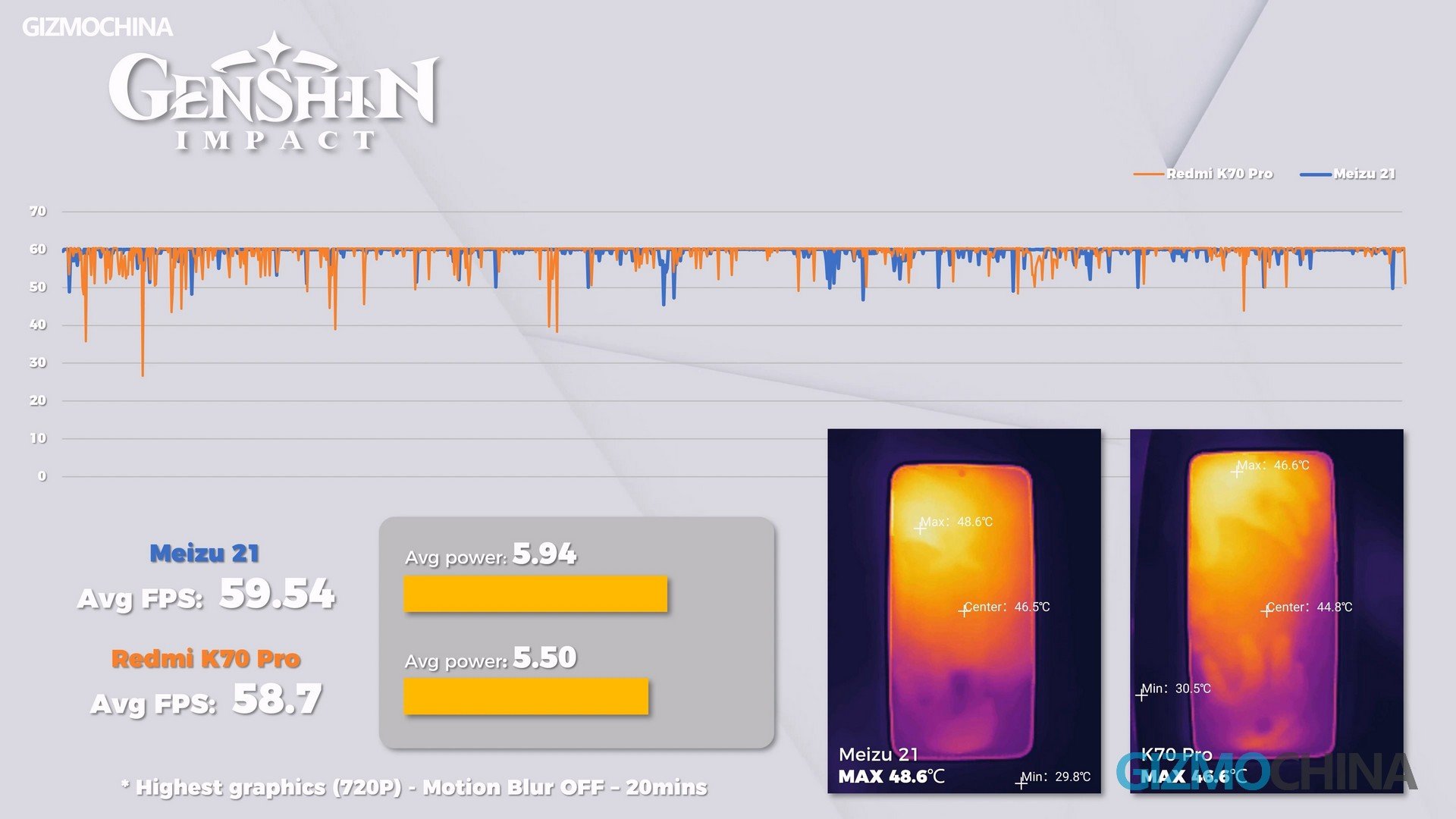
Yes, the gaming experience is much improved on the Meizu 21 as well. While it consumes more power and gets hotter than other 8 Gen 3 phones, it at least lets you keep your frame rates high for long periods of time. Well, shortcomings in performance Meizu has finally made up for, I guess.
Camera
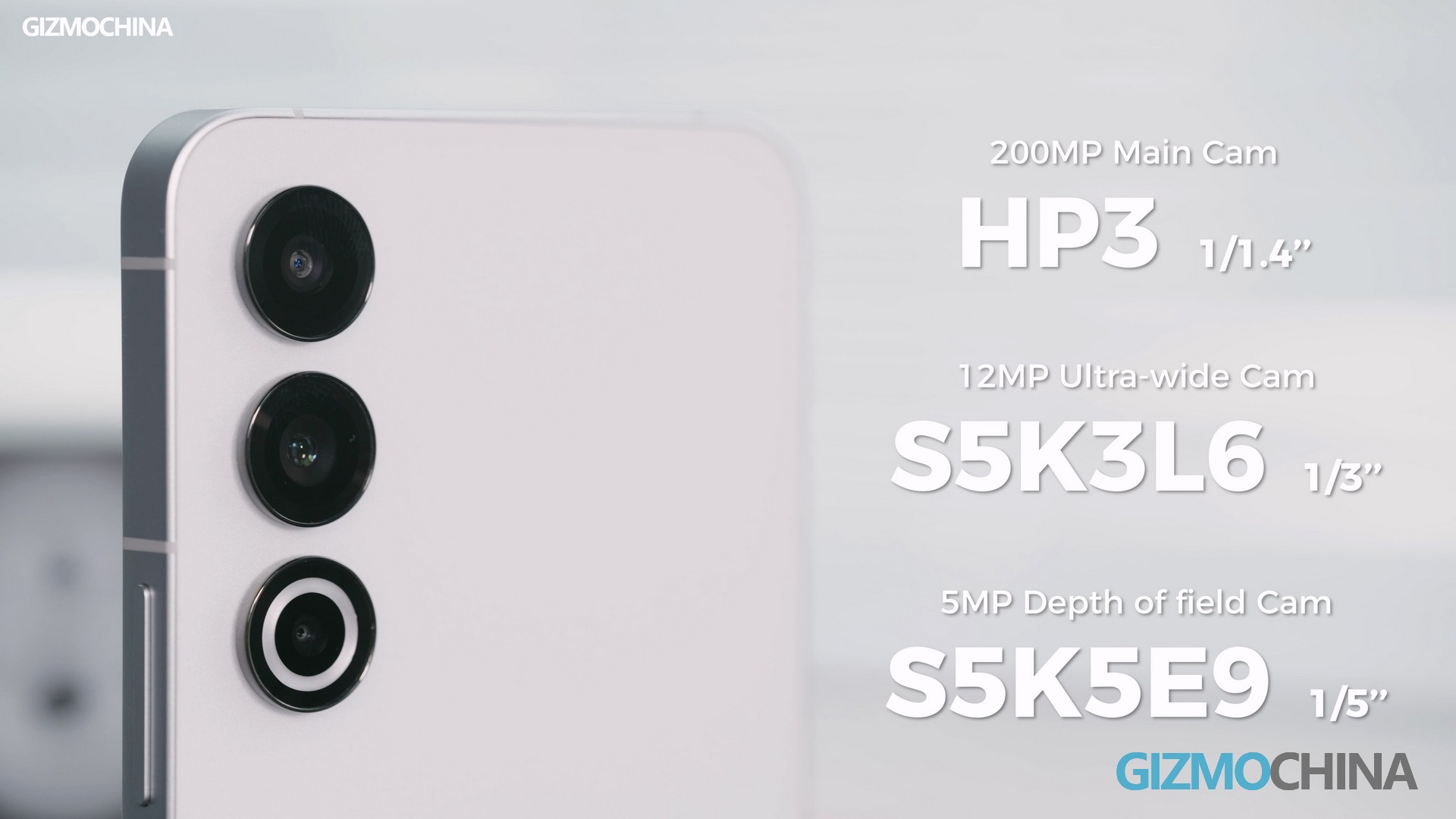
There are three cameras on the Meizu 21, and minus the useless depth of field camera, there are really only two cameras on the Meizu 21 that you’ll use regularly.
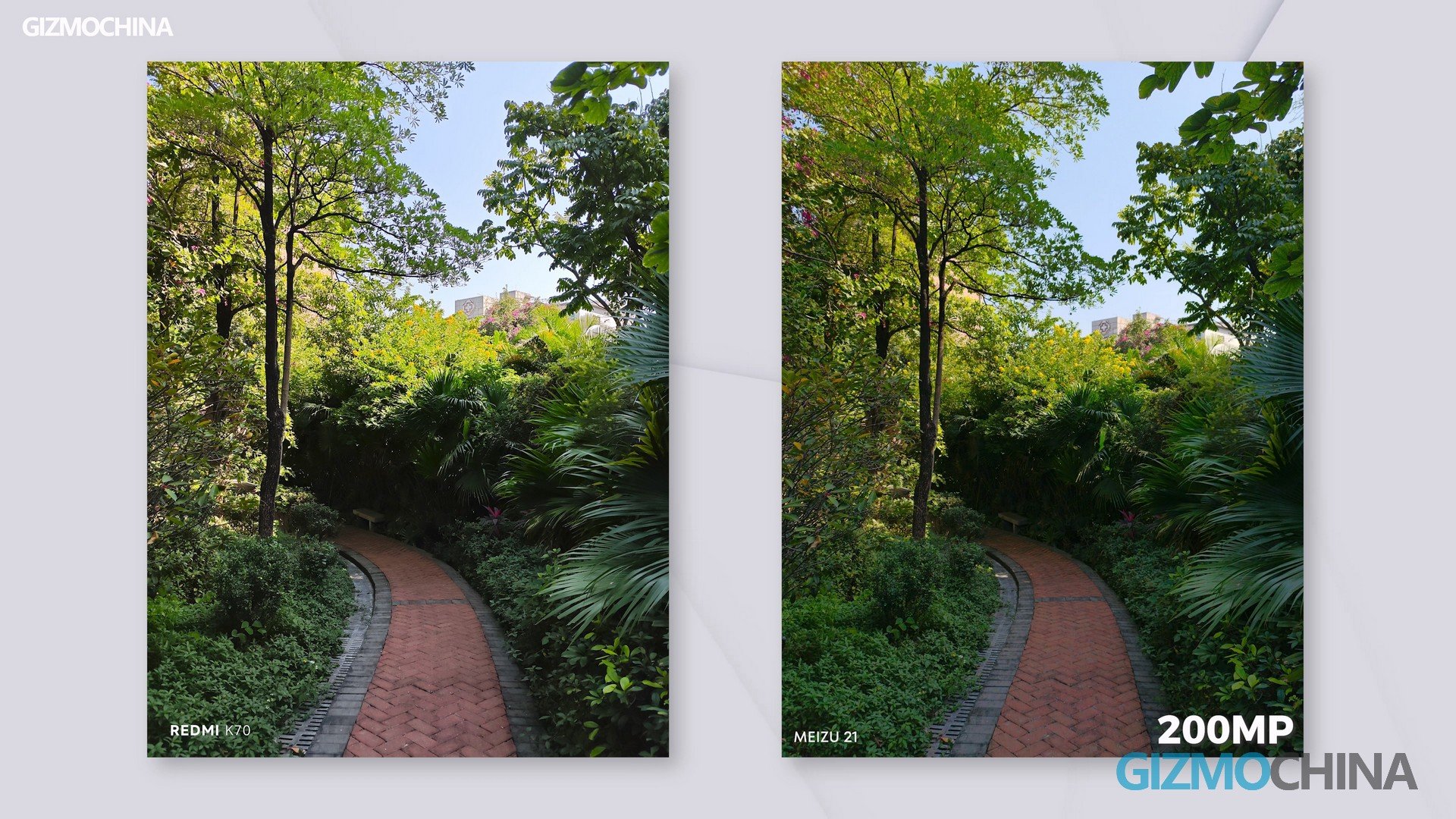
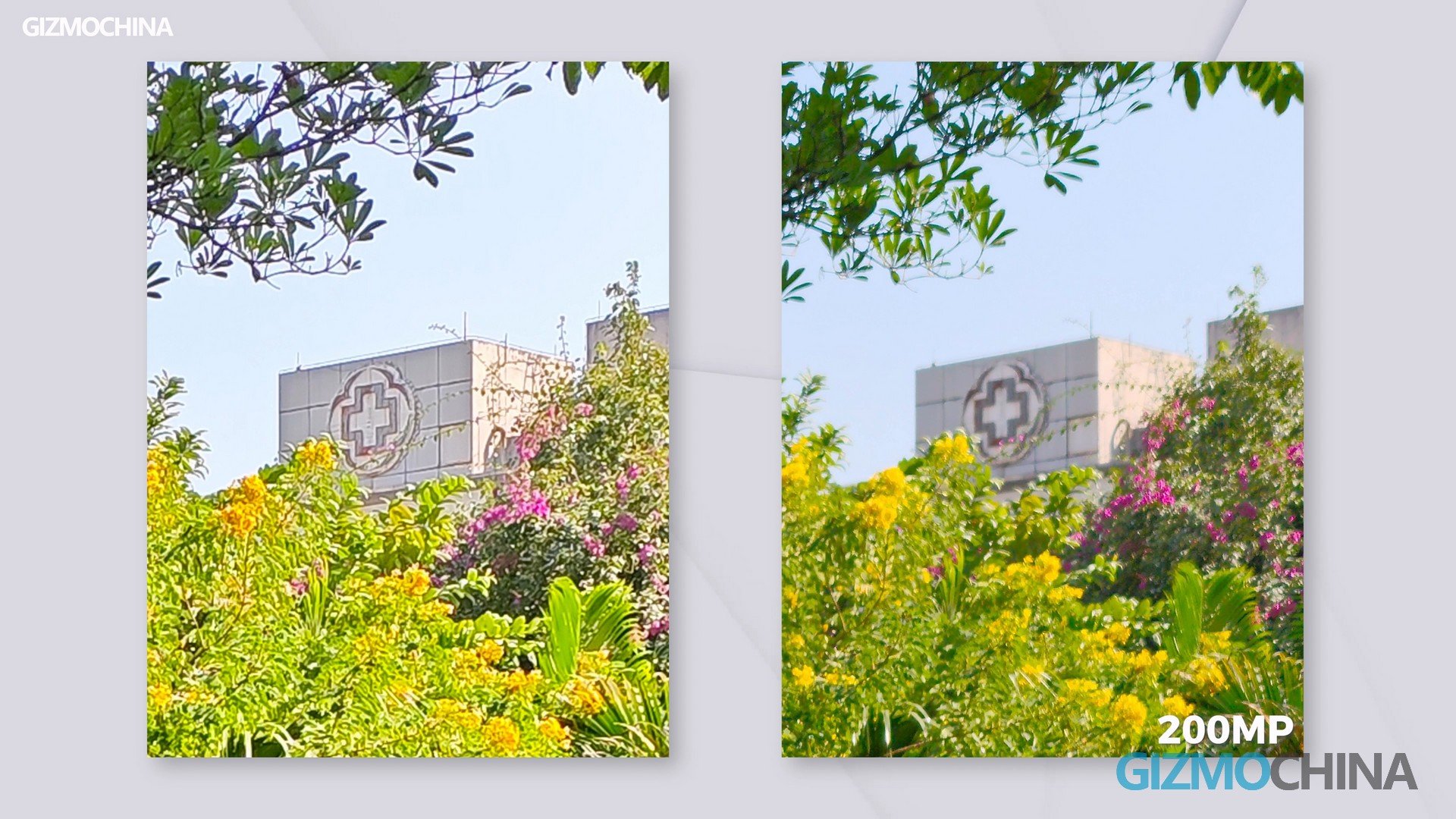
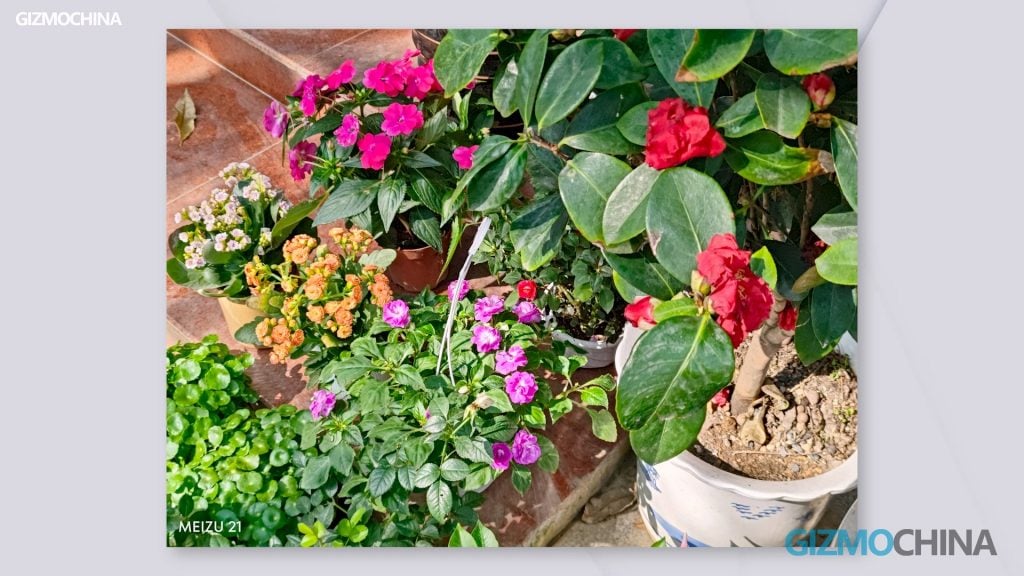
As you know, the 200 MP primary camera is there to make up for the lack of a telephoto camera, and the zoomed-in photos can still have good clarity, not exactly a gimmick. But Meizu doesn’t seem to think so. The Meizu 21 photo seems to be 20MP instead of 200MP, and not as sharp as the 50MP Redmi K70.
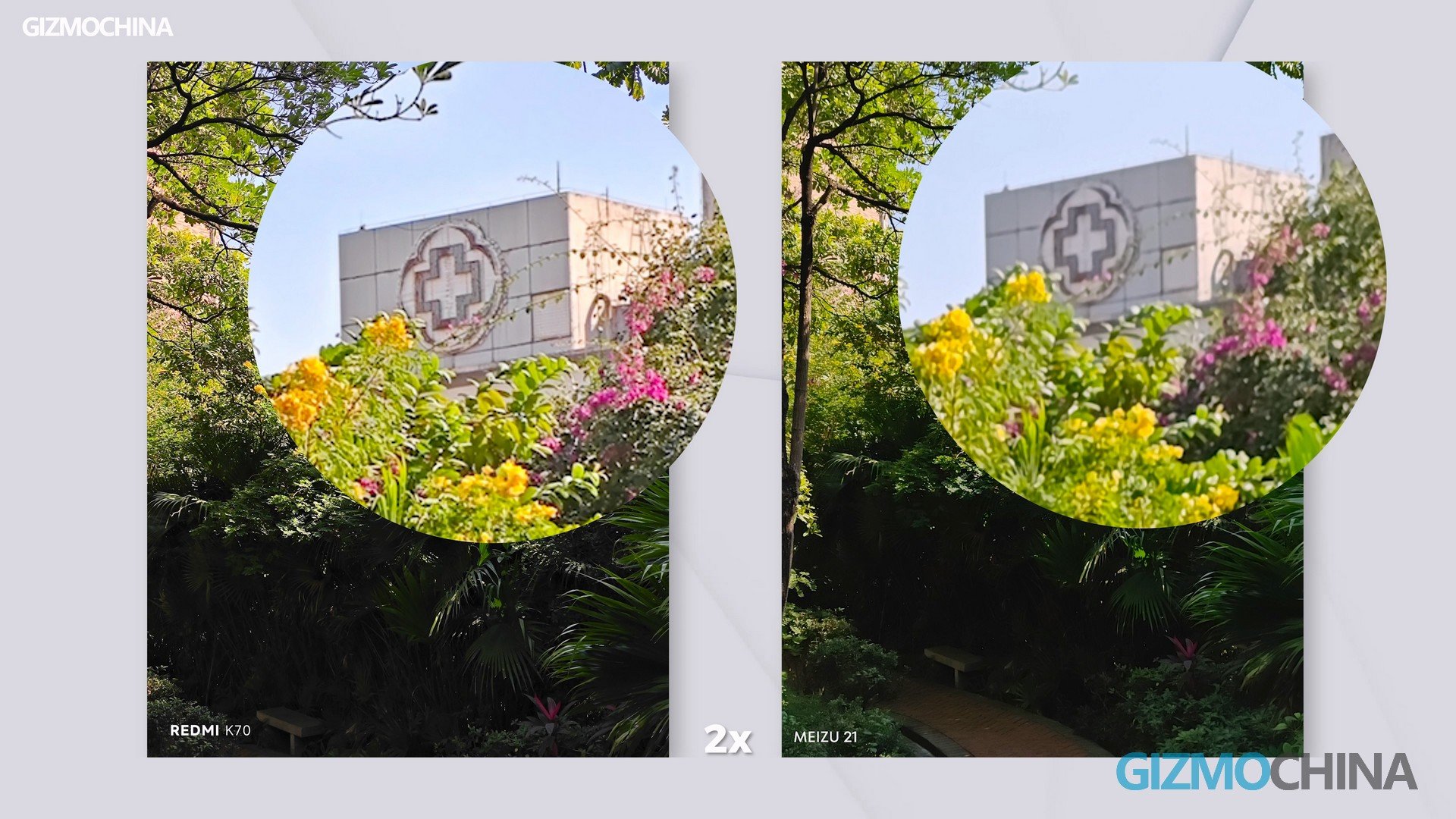
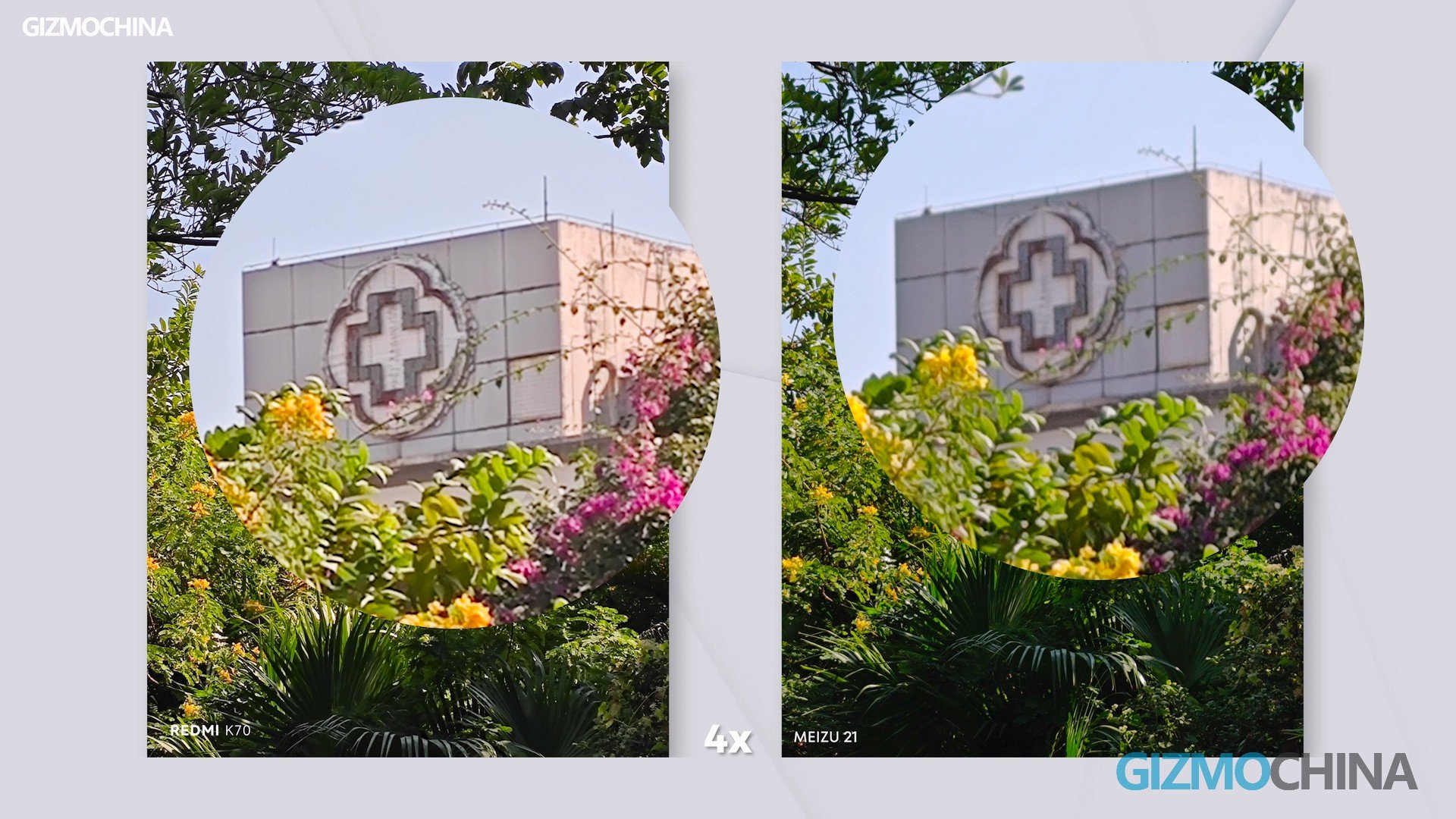
Maybe the 200MP mode Meizu hasn’t been debugged yet? So let’s zoom in with auto mode to take a look. It doesn’t win over the K70 either at 2x or 4x. I’m pretty sure my hands aren’t shaking and in focus. Just …… I am speechless. You can just use this 200MP main camera as a normal 12MP one.
But hey, without zooming in, both cameras are not bad. The front camera can also record 4K 60fps video with image stabilization. If you don’t need much in the way of cameras, the Meizu 21 will barely meet your needs.
Battery & Charging
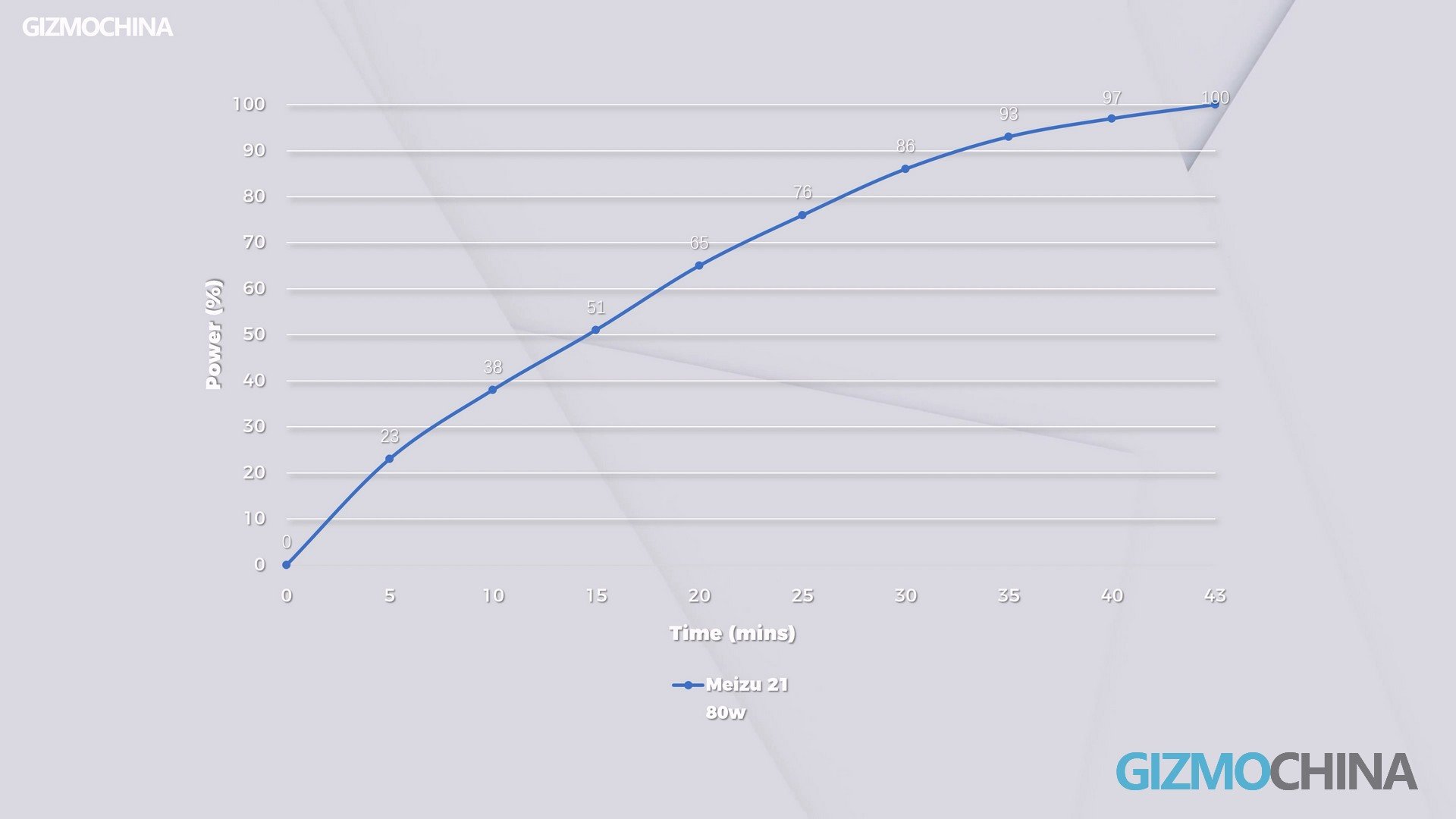
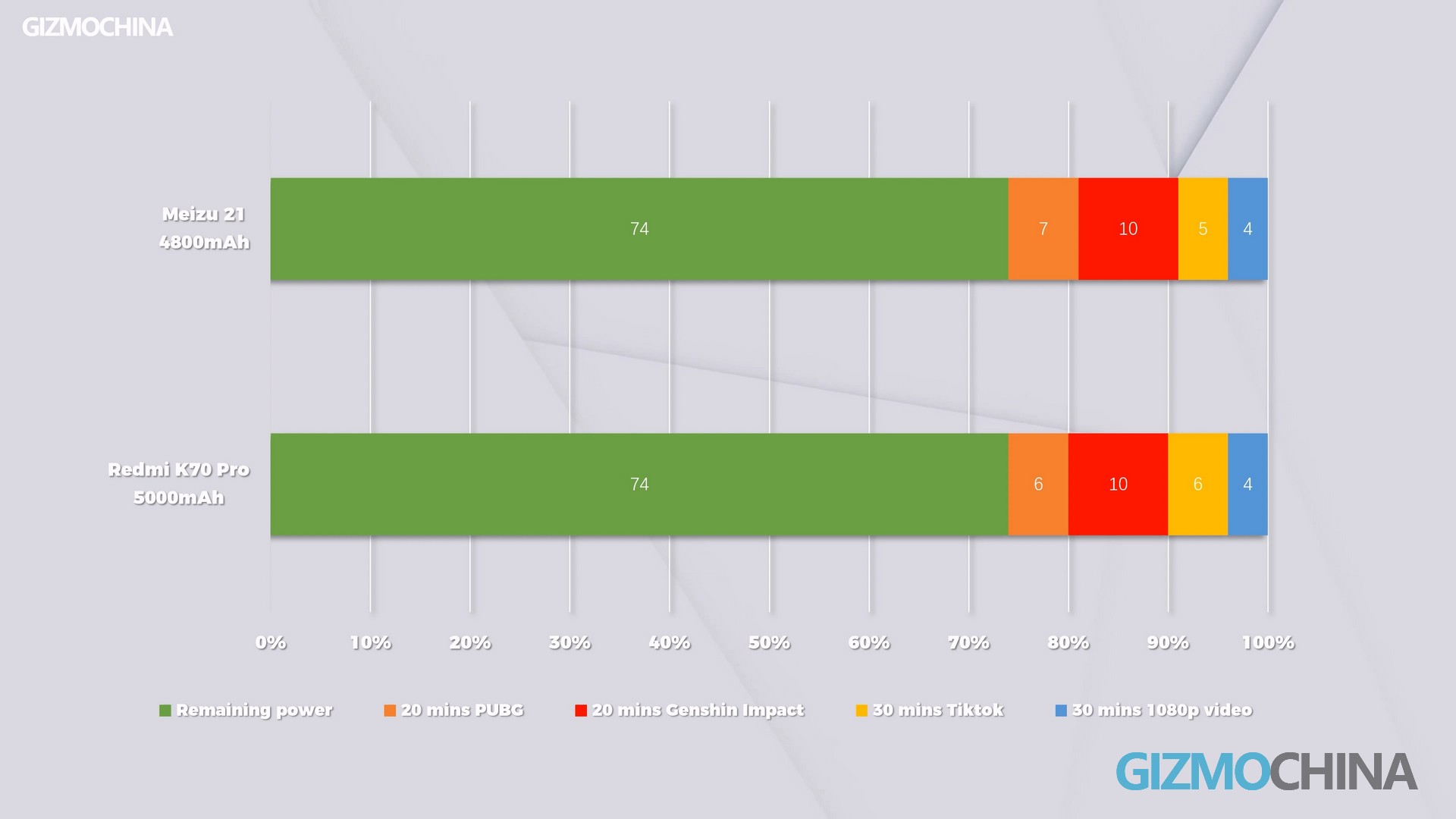
Charging and battery life aren’t the Meizu 21’s strong points, so you guys can see what it’s probably at by looking at the graphs.
Conclusion
Meizu is still the same as ever. it’s always been different from other phones and has its own unique strengths, like the white front panel, Home Indicator with 3D Touch, and Flyme OS. I appreciate their personalities, but I wouldn’t recommend the Meizu 21 to the non-fanbase because there are just too many phones out there that are more desirable to buy recently, like realme GT5 Pro.
After successful beta testing, Google has finally introduced the Pixel Repair Mode feature for Pixel smartphones. This feature aims to enhance user data privacy during the repair process. Alongside this addition, the company has announced a few new updates to streamline the Pixel repair experience.
Google’s new Pixel Repair Mode is now available on Pixel devices running Android 14. And, to use this feature, your phone must have at least 2GB of available storage. You can activate the Repair Mode on your Pixel phone by going to Settings > System > Repair mode.
Activating repair mode creates a secure environment on your phone, locking away all your data like messages, photos, calls, and more. Repair technicians can still test all the phone’s features in a separate space without peeking at your private info.
Google has also released a new diagnostic app that users may access from their Phone dialer. Google claims that the new diagnostic feature will assist you in understanding the problems with your phone before you send it in for repair. To use the diagnostic on your Pixel phone, type #*#7287#*# on the Phone dialer’s keypad.
Furthermore, whether you’re under warranty or not, Google wants repairs to be simple. Google has previously worked with iFixit, which provides consumers with legitimate parts and repair guides so that they may fix their devices themselves through their self-service program.
They’ve now also teamed with uBreakiFix to provide speedy fixes at over 700 sites around the United States, with most repairs finished in 2-4 hours. With this, Google claims that over 80% of Pixel device owners are within 10-20 miles of an authorized repair center.
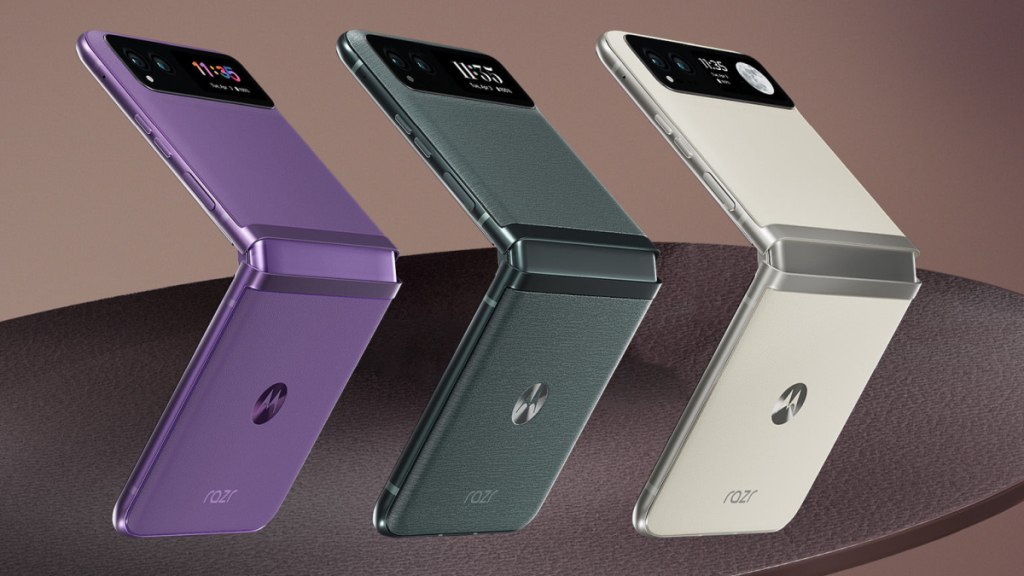
Motorola introduced the Moto Razr 40 Ultra in the US under the name Motorola Razr+. The foldable smartphone is well known for its refined aesthetics and a small 2.6-inch Quick View display. But for some users, the smartphone is having an issue with not receiving the new firmware updates. There are multiple threads on Motorola’s support forum filled with complaints related to the updates.
Motorola Razr 40
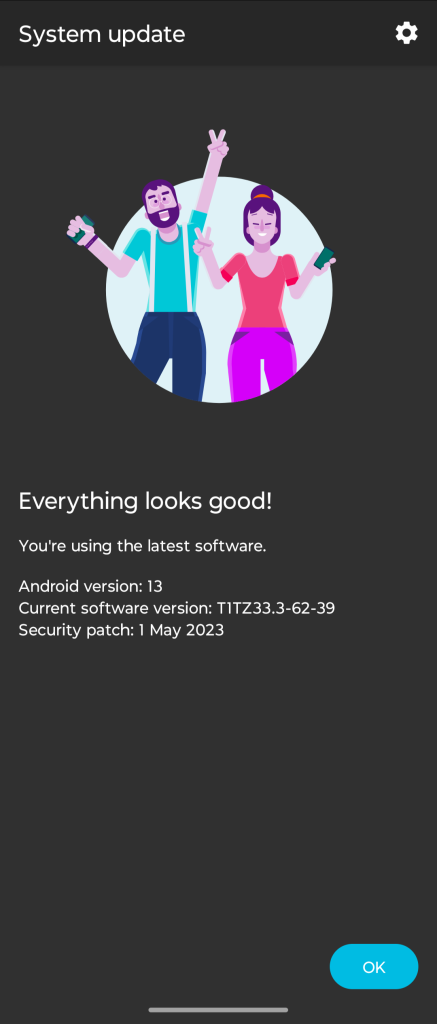
The issue seems to have been affecting the users since summer, and even for some users, the issue has persisted since the day they made the purchase. Such users have not received a single firmware update on their respective Motorola Razr+ smartphones. The Motorola Razr+ units are stuck on the May 2023 security patch due to the issue. A user named Grethy on Motorola Forums posted, “My Razr 40 Ultra has not had an update and is still running the May security update. Is it normal to be 3 months behind on security updates, or is there an issue with my phone? I have version T1TZS33.3-62-39-1Is this the current version? Thanks!”
Motorola’s tedious support seems to be repeating for the Motorola Razr+ after the Motorola Razr 2020 and 2022. Some users are even switching to Samsung Galaxy Foldables due to the poor support from Motorola. A fine example of this is a user named Garek who posted, “I’m still on May update no update here in Australia this is a repeat of my 2020,2022 razr’s lackluster support I actually sold my ultra bought a flip5 straight away got the August security patch I have no regrets selling it,I wish you all the best just think in China it’s had its 2nd software update for the rest like playing poker luck of the draw…peace mate..”
Possible Fix for Users Using Windows Machine
Some Motorola Razr+ users are able to rectify the issue with Motorola’s Rescue and Smart Assistant utility. They were able to pull the new update after a full factory reset using the RSA utility. However, the users on the Mac and Linux are left with no working solution.
From the replies of company employees, it seems Motorola is aware of the issue and has been working to fix the bug for months. However, some lucky users get it rectified automatically with every new firmware that the company sends.
It is a major issue, and if it persists, we may suggest the users head over to Motorola Support.
Samsung is gearing up to unveil a brand-new rugged smartphone soon. The device in question is the Galaxy XCover 7, which was recently spotted by a certification authority from Thailand. This hints at an imminent launch, so here are all the details.
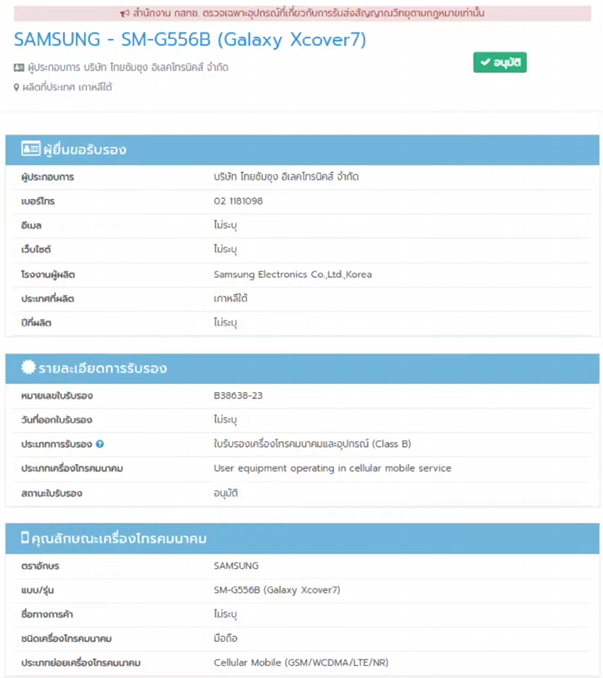
Samsung Galaxy XCover 7 NBTC
The South Korean tech giant’s Galaxy XCover 7 was recently spotted on the NBTC database. Looking at the online listing, the smartphone carries the model number SM-G556B. Unfortunately, the NBTC certification did not reveal any other finer details regarding the smartphone. But it does hint that its launch is near. Furthermore, a couple of our previous reports have offered us better insight regarding this device. To recall, the Galaxy XCover 7 is expected to be a rugged version of the Galaxy A55 5G.
The Galaxy XCover 7 had previously surfaced on Bluetooth SIG, GCF, GeekBench, and BIS. This means that it will launch in the global market soon. These offered us a look at some of its specifications while a leak also revealed its official renders. Based on what we know so far, the Galaxy XCover 7 is equipped with the MediaTek Dimensity 6100+ SoC that is paired with 6GB of RAM. It will run on the Android 14 OS based One UI OS out of the box. The Bluetooth SIG certification confirms support for Bluetooth 5.3.
Samsung is expected to launch the Galaxy XCover 7 sometime in the first quarter of next year. Unfortunately, the finer details like its pricing and launch date have yet to be revealed. So stick around for more as we will be providing more updates when additional information is available regarding this device.
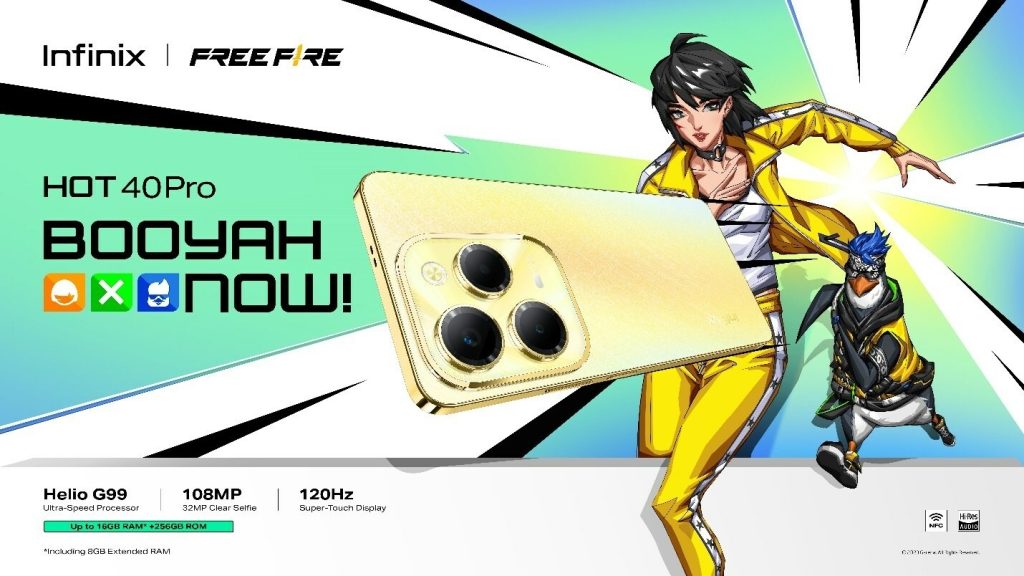
Infinix took the wraps off the Infinix Hot 40 Pro Free Fire Edition in partnership with Sinapore-based game developer Garena. The smartphone packs the same specifications and features as the Infinix Hot 40 Pro but packs a box of goodies and some Free Fire-themed UI elements. The pricing and availability have not yet been unveiled.
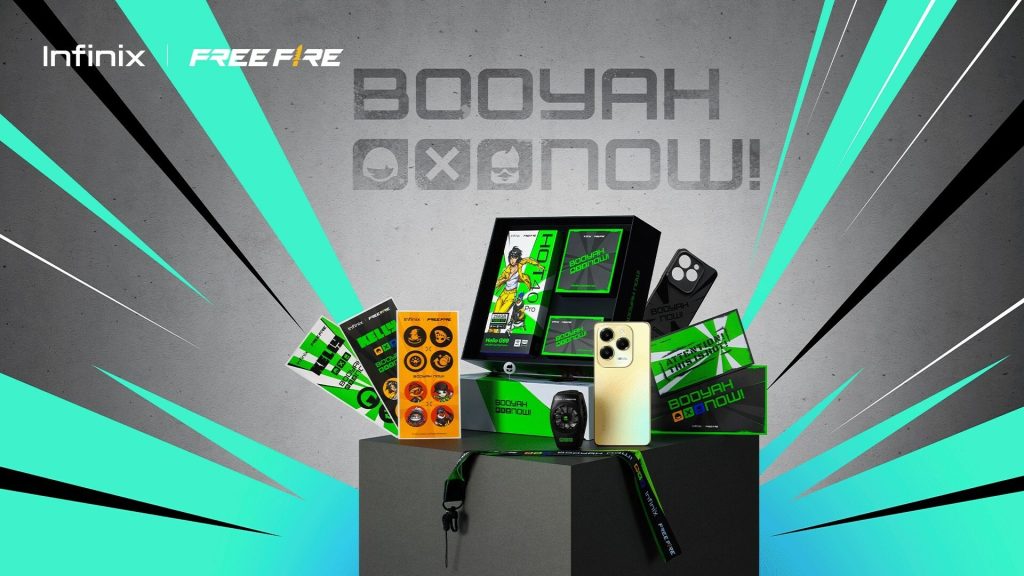
The limited-edition smartphone from Infinix bundles an additional Free Fire bundle, which houses a 33W charger, a black silicone cover, and an RGB Free Fire-branded cooler. The cooler gets connected to a USB-Type C to dissipate heat while gaming on it for a longer duration. Further, there’s also a USB-A to USB-C cable for extensive usage with old peripherals and devices.
Infinix Hot 40 Pro Free Fire edition ships with the same Horizon Gold color phone, sans any Free Fire branding. There are some Free Fire stickers, a special gift card, and a lanyard in the package. The Special Gift Card can be used to purchase in-game Free Fire items. Some unique Wallpapers, icon widgets, AR self-portrait sticks, and sound effects are also available.
“We are excited to continue our collaboration with Free Fire and announce the HOT 40 SERIES, which features unique combinations of characters and pets in our co-branded lineup. The series offers outstanding performance and an exceptional gaming experience for mobile gamers worldwide, all at a highly competitive price point. Furthermore, Infinix’s collaboration with Free Fire extends beyond product innovation, as we strive to forge deeper connections with today’s younger generation,” said Summer Yao, HOT Series Product Director at Infinix.
Infinix Hot 40 Pro Free Fire Editions Specifications
Infinix Hot 40 Pro Free Fire ships with the same 6.78-inch FHD+ display while having a 120Hz refresh rate. The smartphone comes with a Metamaterial Antenna which enhances signal reliability and improves game latency.
The smartphone bundles a triple-rear camera featuring a 108 MP portrait sensor, a 2 MP macro sensor, and an AI camera. On the front, there’s a 32MP selfie camera. The smartphone houses a MediaTek G99 SoC with UFS 2.2 storage and LPDDR4X RAM. It is available in 8GB RAM + 128GB and 256GB + 8GB RAM storage variants. It also offers expandable storage of up to 1TB using a microSD card.
To keep the smartphone running, it features a large 5000 mAh battery with support for 33W fast charging. The smartphone measures 168.6×76.6×8.25mm in size and weighs 199 grams. It runs on the Android 13-based XOS 13.5 OS.
Pricing and Availability details are not yet live, but may vary depending on the region.
The Google Pixel is generally considered to be one of the best Android experiences on smartphones. The Pixel experience brings a bunch of exclusive features and more. But now, it appears that an exclusive AI assistant called Pixie could also be coming for next gen Pixel phones.
Google Pixie for Pixel 9 Series
As of right now, Google Assistant already exists as a capable and smart AI voice assistant. However, it is universally available across all Android smartphones and other devices. But with AI’s recent boom, it appears that the Search Engine giant is working on something that could be a little more advanced. Google Assistant with Bard for Android and iOS was recently announced, but a new AI assistant called Pixie is reportedly under development. As the name suggests, this assistant will be exclusive to Pixel devices.
According to The Information, multiple sources close to the matter have revealed Google’s plans regarding Pixie and its developments. This AI assistant is rumored to be a Pixel exclusive feature and could debut in 2024 alongside the Pixel 9 series. It will likely be capable of doing what Google Assistant could do but with new advancements. This means that the assistant could perform more complex tasks.
The report adds that Pixie could even respond to tasks that involve suggesting the closest store where one can buy a product they have photographed. While this sounds quite simple on paper, it is quite a complex process. Another major difference between Google Assistant and Pixie could be the offline functionality. The latter might be capable of performing user requests on-device, which means no internet connectivity is required. This upcoming assistant may be powered by Gemini Nano as well. It is worth noting that the Pixie moniker has yet to be confirmed. The name could just be an internal codename ahead of its official moniker.
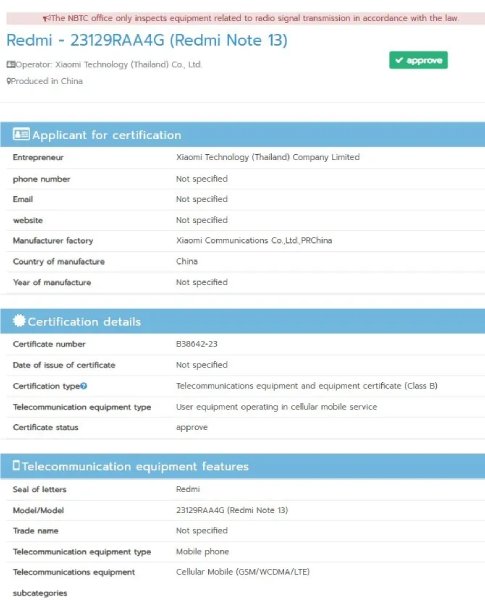
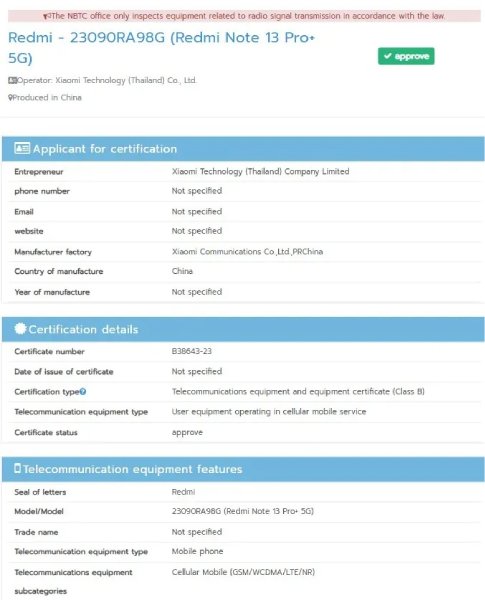
Now Thailand’s NBTC confirms its existence as the device has passed the certification process. Additionally, the Note 13 Pro+ has also been spotted in NBTC.
The listing shows that the Redmi Note 13 is certified in the platform with model number 23129RAA4G while the top-of-the-line Redmi Note 13 Pro+ 5G bears 23090RA98G as its model number. Besides this, the NBTC doesn’t reveal any specs of the smartphones.
As per a previous report, the Note 13 4G will be powered by Snapdragon 685 chipset with 8/12GB of RAM and 256/512GB storage. It will have a 6.67-inch AMOLED FHD+ with a 120Hz refresh rate.
For cameras, we are expecting a triple-camera setup with a 108MP primary lens, an 8MP ultrawide lens, and a 2MP macro sensor. Likewise, rumors have it that it will boot on MIUI 14 based on Android 13 and will be available in purple and green shades.
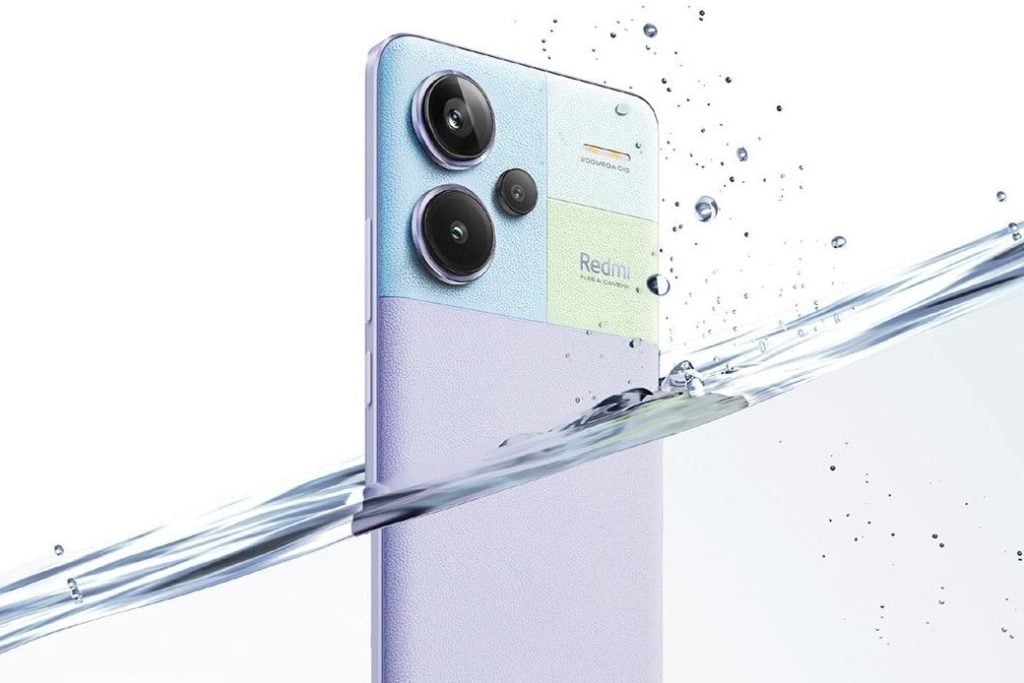
The Redmi Note 13 Pro+ 5G (review), on the other hand, has already been launched in China. So we know what the device has to offer.
It comes with a 6.67-inch curved OLED display with a 10-bit color depth, 1.5K resolution, and 120Hz refresh rate. Under the hood, the device is powered by MediaTek Dimensity 7200 Ultra chip paired with LPDDR5 RAM and UFS 3.1 storage.
Redmi Note 13 Pro+
Around the back, the phone has a triple camera setup consisting of a 200MP primary sensor, an 8MP ultrawide unit, and a 2MP macro snapper. On the front, it has a 16MP shooter.
Keeping the lights on is a 5000mAh battery with support for 120W charging. Other features of the device include an in-screen fingerprint sensor, dual stereo speakers, an IR blaster, and an IP68 dust and water-resistant rating.
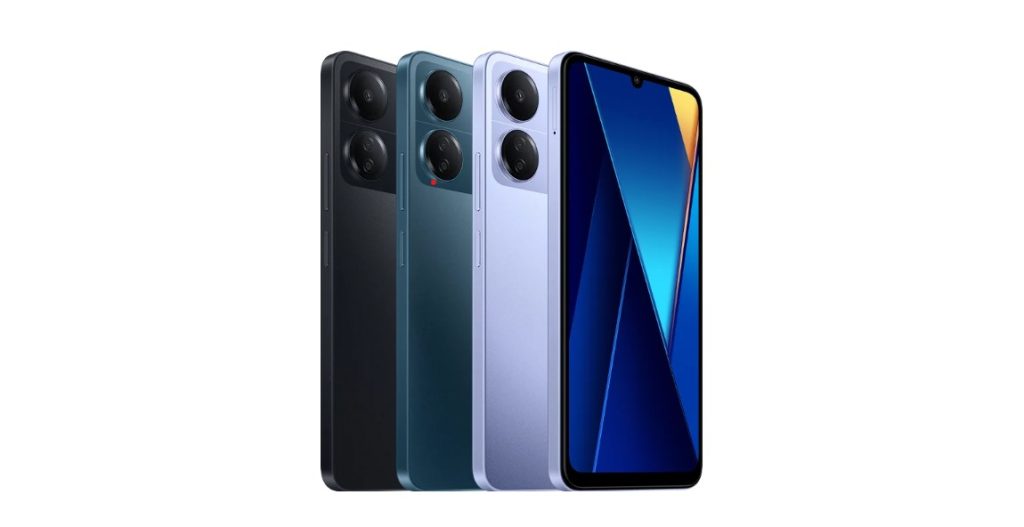
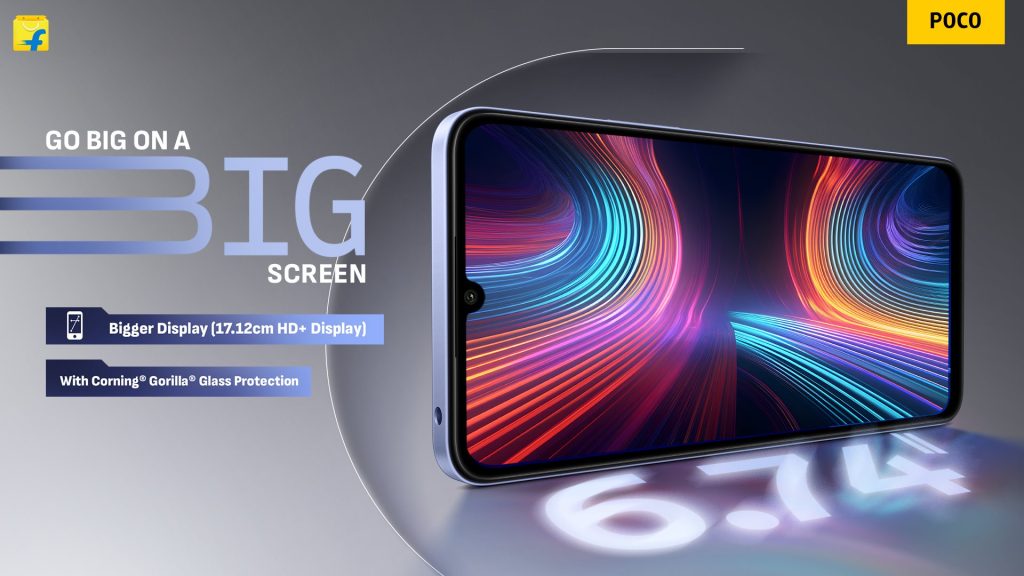
The POCO C65 boasts a distinctive boxy design featuring a side-mounted fingerprint scanner and dual rear camera rings, complemented by a sizable 6.74-inch waterdrop notch display. The display offers a high-definition (1,600 x 720 pixels) resolution with a 90Hz refresh rate, ensuring smooth visuals, and reaching up to 600 nits peak brightness, all safeguarded by Gorilla Glass protection.
Powering the device is the MediaTek Helio G85 processor, ensuring a responsive user experience. The smartphone offers versatile storage options, with configurations offering up to 8GB of RAM along with virtual RAM technology and storage capacities reaching up to 256GB, expandable further through a dedicated SD card slot. A robust 5,000mAh battery fuels the POCO C65, supported by 18W fast charging capabilities.
In the camera department, the POCO C65 is equipped with a 50MP primary rear camera along with a 2MP macro lens, while the front-facing camera boasts an 8MP sensor for capturing clear and detailed selfies.
On the software side, the POCO C65 has an Android 13-based MIUI 14 operating system. In terms of connectivity, the device includes USB-C, a 3.5mm headphone jack, WiFi, NFC, and Bluetooth support.
Pricing & availability
Priced affordably, the POCO C65 comes in two chic colors – Pastel Blue and Matte Black. The 4GB + 128GB variant is available at Rs. 8,999, while the 6GB + 128GB model is priced at Rs. 9,499. For those seeking expanded storage options, the 8GB + 256GB configuration is offered at Rs. 10,999. The smartphone is set to be released on December 18th, exclusively on Flipkart, starting at 12 noon. Customers can enjoy an instant discount of Rs. 1000 when using ICICI credit and debit cards for both regular and EMI transactions.
In a strategic move reflecting broader industry trends, Foxconn Technology Group has secured approval for an additional $1 billion investment in its Apple product manufacturing plant in India. The total investments in the site now stand at an impressive $2.7 billion, positioning it as Foxconn’s key manufacturing facility in the country.
This substantial augmentation in investment is earmarked to fuel increased capacity for Apple devices, with a potential focus on iPhone production. The move underscores Foxconn’s commitment to diversifying production beyond China, aligning with the company’s goal of establishing a pivotal manufacturing hub outside its traditional stronghold.
The Karnataka state government, confirming Foxconn’s commitment to expansion, started a $1.67 billion investment, solidifying the company’s strategic foothold in southern India. The project, slated to commence iPhone production by April 2024, is expected to generate approximately 50,000 job opportunities, contributing to the region’s economic development.
While the details of the use of the freshly secured funds remain confidential, industry analysts speculate that the investment could be directed towards expanded capacities for various Apple devices, potentially including the iPhone. Foxconn, responsible for assembling a significant portion of iPhones globally, is making this move amid economic challenges and heightened tensions with the United States, diversifying its manufacturing footprint.
The trend of manufacturing giants, including Foxconn, redirecting capacities away from China has gained momentum, prompted by economic challenges and strained international relations. This move not only secures Foxconn’s commitment to its crucial partnership with Apple but also mirrors an industry-wide shift to establish robust supply chains in India.
Interestingly, the Tata conglomerate, another prominent Apple collaborator, is actively pursuing the establishment of one of India’s largest iPhone assembly plants in Tamil Nadu, further reinforcing India’s position as a key player in the global manufacturing landscape.
While regulatory scrutiny in India has discouraged some Chinese companies from establishing operations in the country, Apple’s partners, including Foxconn, are accelerating efforts to build a resilient supply chain, coinciding with a broader departure of Chinese firms amid tensions between Beijing and New Delhi.
Foxconn’s increased investment in India not only signifies a pivotal moment in the evolution of its manufacturing plans but also reflects the global economic downturn in China and the broader geopolitical tensions shaping the dynamics of the technology manufacturing industry.
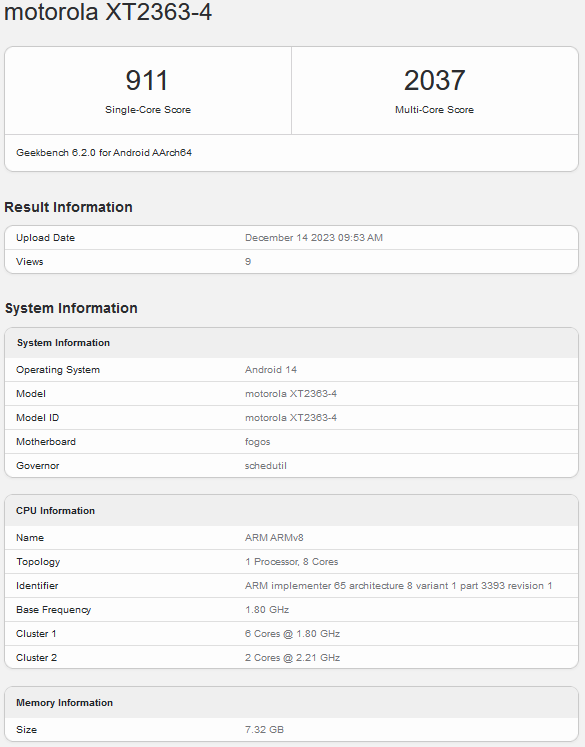
An unknown Motorola smartphone was recently spotted on a popular benchmarking platform. The database revealed some of its key specs, although the official moniker of this device is still unclear. So here’s everything we know so far.
Motorola XT2363-4 GeekBench
The company’s upcoming device was spotted carrying the XT2363-4 model number. Looking at the online listing, the Android version, chipset, and RAM details of the handset were revealed. This mysterious Motorola XT2363-4 is equipped with an octa core Qualcomm processor which features six CPU cores at 1.8GHz and two cores that have a 2.21GHz clock speed. This chipset in question is the Snapdragon 695 SoC, which is paired with the Adreno 619 GPU.
This processor is typically found on mid range smartphones, so this model will likely target a similar price range as well. The GeekBench listing confirms that the Snapdragon 695 SoC is coupled with 8GB of RAM and runs on Android 14 OS out of the box. With these specs, the unknown Motorola XT2363-4 managed to score 911 points in the single core test and 2037 points in the multi core test. Interestingly, this Moto device is the same model, which was recently spotted on China’s 3C certification authority.
This previous sighting confirms that it will come with a power brick that is capable of outputting 20W fast charging. Unfortunately, no finer details about the device like its design, pricing, and name are known at the moment. But Motorola will likely reveal more information or officially announce the smartphone in China later this month. So stick around for more as we will be providing more information when additional details is known regarding this device.
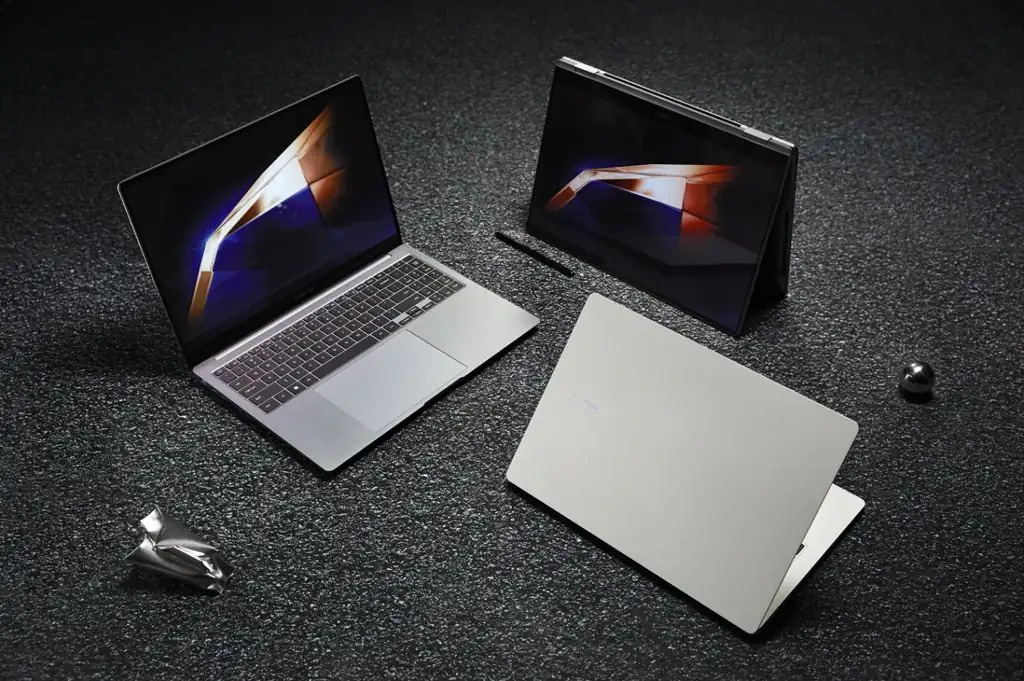
Samsung has just released the Galaxy Book 4 series notebooks in Korea, officially confirming the specifications we knew through various leaks. The series consists of three models – the Galaxy Book 4 Pro, Galaxy Book 4 Pro 360, and the Galaxy Book 4 Ultra. Notably, the Galaxy Book 4 comes in two different sizes – 14″ and 16″, while the 360 and Ultra model only comes with the 16″ option. Here is the official information about the models below.
Galaxy Book 4 Series
Galaxy Book 4 Ultra
It comes with a 3K AMOLED WQXGA (2880×1800) 120Hz panel with 400 nits brightness and support for 120% DCI-P3 color volume.
The device is powered by the Intel Core Ultra 9/Intel Core Ultra 7 processors, paired with two different NVIDIA GeForce RTX 40 series graphics – RTX 4070/4050 GPU. All of these are backed by 16/32/64GB LPDDR5X memory. This Ultra variant also offers support for up to 2TB SSD (PCIe).
This Galaxy Book 4 Ultra weighs around 1.86 kg and is only 16.5mm thick. The device comes with a 76Wh battery and supports 140W fast charging through a USB-C Adapter.
For ports, you get – Thunderbolt 4 (2), USB Type-A, HDMI 2.1 that supports 8K at 60fps and 5K at 120fps.
Galaxy Book 4 Pro 360
The Pro 360 model is even slimmer and lighter compared to the Ultra model. It weighs around 1.66kg and is 12.8mm thick. The display specifications here are identical to the Galaxy Book 4 Ultra.
Instead of the Core Ultra 9, the Galaxy Book 4 Pro 360 comes with a Core Ultra 5 variant and the Core Ultra 7. One difference from the Ultra model is in the Graphics. It brings Intel Arc Graphics (integrated) in contrast to the dedicated NVIDIA GeForce graphics of the Ultra model.
Here you get 16 or 32 GB LPDDR5X memory along with 512 GB or 1 TB storage options.
This model also comes with a 76Wh battery and a 65W USB Type-C Adapter. You also get the same ports as the Ultra model here.
Galaxy Book 4 Pro
In contrast to the previous two models only having a 16-inch option, this one also has a slightly smaller 14-inch variant. The 14-inch and the 16-inch variants weigh 1.23kg and 1.56kg respectively.
Just like the Galaxy Book 4 Pro 360, both the 14 and 16-inch variants of the Pro model also boast the Intel Core Ultra 7/ Intel Core Ultra 5 CPUs paired with Intel Arc Graphics (integrated).
Notably, the 14-inch option also comes with the same 2880×1800 resolution with all the other aspects being the same. The 14″ variant comes with a 63Wh battery and a 65W adapter with the 16″ one being the same as above.
Pricing
The Galaxy Book 4 Pro starts at 1.88 million won ($1,452), the Galaxy Book 4 Pro 360 at 2.59 million won ($2,002), and the Galaxy Book 4 Ultra at 3.36 million won (~$2,597).
Intel has officially launched its latest Intel Core 14th Generation desktop processor family, with the flagship Intel Core i9-14900K leading the pack. This new lineup features six unlocked desktop processors, delivering up to 24 cores, 32 threads, and an impressive frequency of up to 6 GHz straight out of the box.
The i9-14900K has laid claim to the title of the world’s fastest desktop processor, providing gamers with a substantial edge through its 6 GHz speeds from the start. For creators, the Intel Core i7-14700K offers 20 cores and 28 threads, a 25% increase over its predecessor, ensuring significant performance gains in multi-threaded workloads.
Intel introduces the new AI Assist feature in its Extreme Tuning Utility (XTU), offering one-click AI-guided overclocking for select unlocked Intel Core 14th Gen desktop processors. This feature brings simplicity to the overclocking experience, catering to both experts and beginners.
The Intel Core 14th Gen processors leverage Intel’s advanced performance hybrid architecture, prioritizing compute performance for day-to-day workflows. The lineup promises an immersive gaming experience, delivering up to a 23% performance uplift compared to “leading competitor processors”. Enhanced gaming-focused features, including Intel Application Optimization (APO) and Thread Director application thread scheduling, aim to improve application threading. Moreover, these processors support DDR5 XMP speeds well beyond 8,000 megatransfers/second (MT/S).
Intel’s latest desktop processor family comes equipped with integrated support for Wi-Fi 6/6E and Bluetooth 5.3, as well as discrete support for new Wi-Fi 7 and Bluetooth 5.4 wireless technologies. The processors maintain compatibility with both Intel 600 and 700 series chipsets, allowing enthusiasts to easily upgrade existing systems and enjoy the latest-generation gaming and creator performance.
The Intel Core 14th Gen desktop processors are set to hit retail outlets and OEM partner systems starting October 17, 2023.
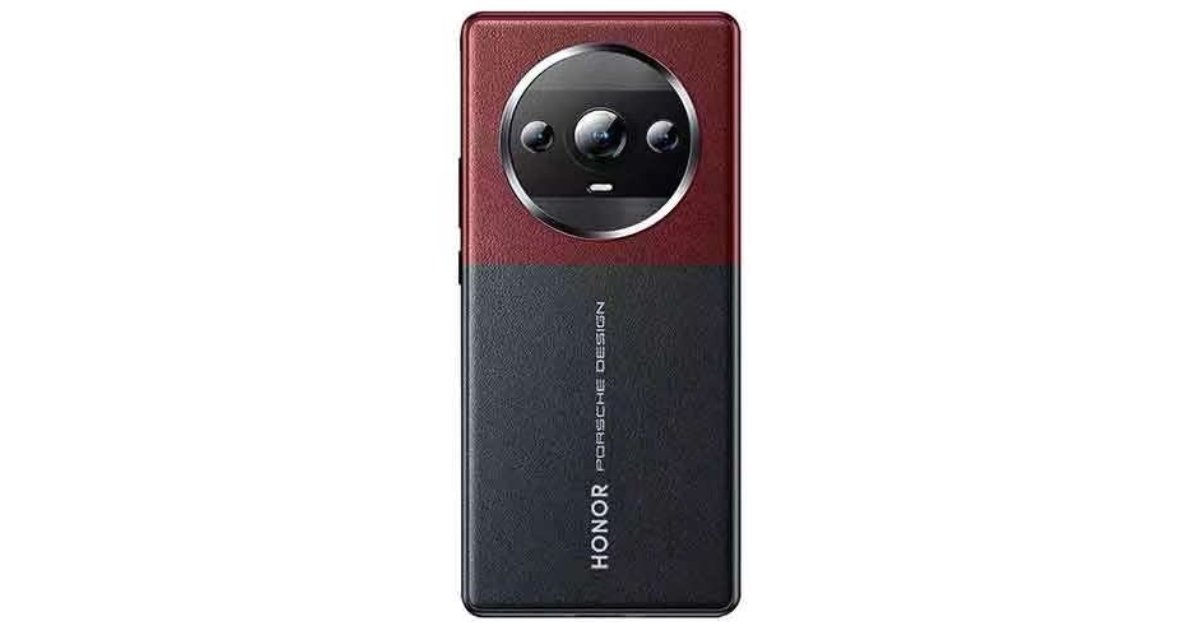
Honor has officially teamed up with the renowned design house Porsche Design. Now, leaked renders of the upcoming Honor smartphone hint at what the fruits of this collaboration might look like. The renders come from a Weibo tipster that shows stylish Porsche Design variants of the Honor Magic 6 series devices.
As you can see, the Magic 6 Porsche Design has a two-tone leather finish in red and black. Its circular camera ring houses the triple camera setup (horizontally) and on the back, we can also see the Honor and Porsche Design logos.
Honor Magic 6 Porsche Design render.
However, looks like the partnership won’t be limited to a single phone since the tipster also shared a render of the Porsche Design-inspired Magic 6 Pro. And, although the design is more or less similar to that of last year’s Magic 5 Pro, the phone has a sports car’s accelerometer-inspired design element in its circular camera module.
Honor Magic 6 Pro render.
Interestingly, the leak also suggests the entire Magic 6 series will have Porsche Design treatment, but these are just rumors, so take them with a grain of salt.
Speaking of the Magic 6 series, it’s expected to arrive early next year. Rumors suggest three models in the lineup. The exact names of these devices are still under wraps, but following past trends, they might be called the Honor Magic 6, Magic 6 Pro, and Magic 6 Ultimate.
Tipster Digital Chat Station has shed some light on the Pro model’s key features. The phone is expected to come with a 2K OLED display with a pill-shaped cutout for dual-front-facing cameras.
Powering the device will be a Snapdragon 8 Gen 3 processor. While there are also rumors of a dedicated graphics and security chip. The phone will run on Magic OS 8.0 based on Android 14 and will have a Smart Island notification feature.
Likewise, Magic 6 Pro also utilizes a substantial AI model with an impressive 7 billion parameters, enhancing its capabilities in artificial intelligence applications.
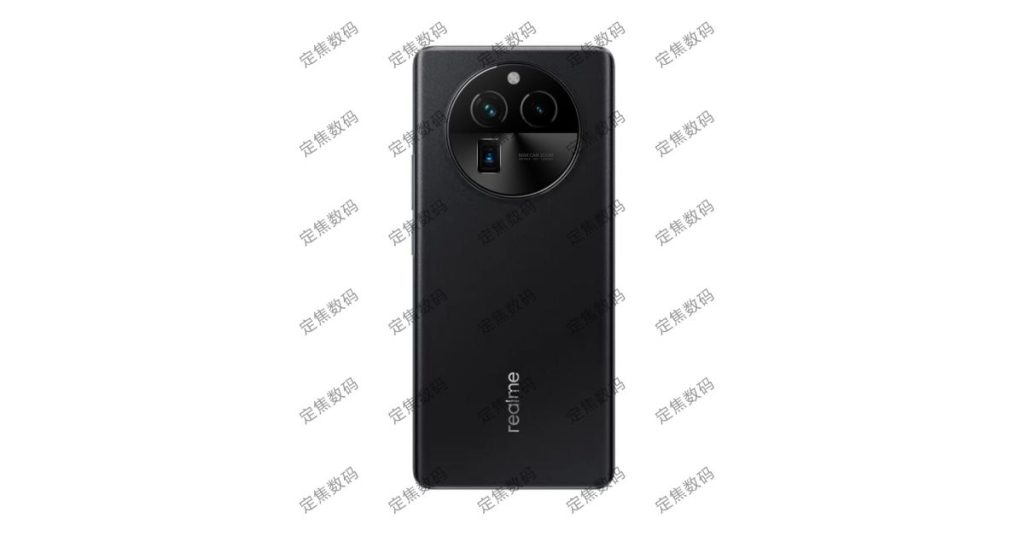
Realme has just launched the Realme GT 5 Pro flagship phone and the Realme V50 series of entry-level 5G smartphones in the Chinese market. In India, the brand recently unveiled the Realme C67, which is the company’s first-ever C-series phone with 5G support. It appears that the company may not have any plans to launch any new smartphones in the remaining 15 days of the year 2023. However, it is expected to start the year 2024 with a bang, as it is rumored to launch the Realme 12 series and the Realme GT Neo 6 in the Chinese market.
Realme 12 Pro series, GT Neo 6 tipped to launch soon
The Realme GT 5 Pro is the company’s first smartphone to feature a periscope telephoto camera. It features a Sony IMX890 periscope zoom unit that supports up to 3x optical zoom. Some of the other flagship phones, such as the OnePlus 12 and the iQOO 12 series, are equipped with the OmniVision OV64B 64-megapixel periscope telephoto camera that offers up to 3x optical zoom.
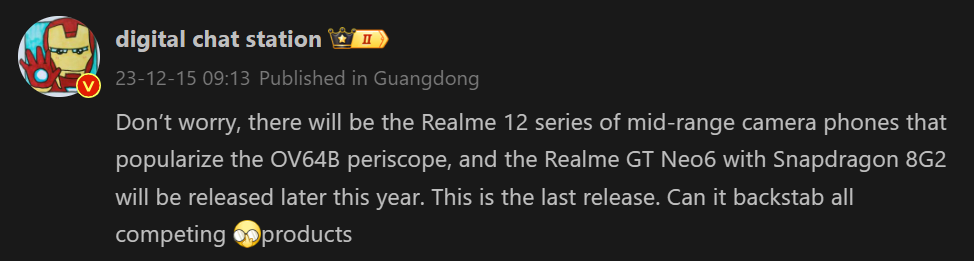
As per recent reports, Realme will incorporate the flagship-level OV64B periscope zoom unit into its upcoming Realme 12 Pro series of smartphones. Tipster Digital Chat Station has once again reiterated that the mid-range camera-focused phones will be launching soon. As per reports, the Realme 12 Pro and 12 Pro+ have RMX3842 and RMX3840 model numbers, respectively.
In addition, DCS also claimed that the brand is also working on the Snapdragon 8 Gen 2-powered Realme GT Neo 6. He added that the GT Neo 6 will debut after the Chinese New Year, which indicates that it may debut by late February in China. However, he did not divulge any more information about the next-generation Neo-series flagship.
Before the release of Nothing’s first smartphone in February 2021, the company appointed Manu Sharma, the former senior director of Samsung India’s mobile business, as the vice president and general manager of Nothing India.
Nothing India head, Manu Sharma is departing the company in January 2024
Manu Sharma shared a statement on LinkedIn about his decision to leave the company. He also added that, following nearly three years, he will be departing Nothing India by the end of January 2024.In addition, he said that it was because of personal matters and that Nothing India has a strong product portfolio that would last until 2024 in addition to a competent staff.
The Nothing India head stated the following on his LinkedIn account:
As we ring in the year 2024 very soon, I am excited to share that I have decided to move on from Nothing. The last 3 years have been very eventful and memorable. This has been the most fortunate & incredible time of my life to build the foundation of the Nothing brand in India from ground zero.

The decision to move on came after intensive deliberation due to personal reasons. Nothing India is in an incredibly strong position, has a very robust pipeline of products in 2024 and with a very capable team. I am very excited about the adventure that awaits, but I am not leaving just yet and will be with Nothing India till the end of January 2024.
In addition, Nothing confirmed that it would have an event on February 27th at the MWC the following year.
Details on the next Nothing Phone (3), the company’s next flagship smartphone, are anticipated to be unveiled at this event.
We use cookies on our website to give you the most relevant experience by remembering your preferences and repeat visits. By clicking “Accept”, you consent to the use of ALL the cookies.
This website uses cookies to improve your experience while you navigate through the website. Out of these, the cookies that are categorized as necessary are stored on your browser as they are essential for the working of basic functionalities of the website. We also use third-party cookies that help us analyze and understand how you use this website. These cookies will be stored in your browser only with your consent. You also have the option to opt-out of these cookies. But opting out of some of these cookies may affect your browsing experience.
Necessary cookies are absolutely essential for the website to function properly. This category only includes cookies that ensures basic functionalities and security features of the website. These cookies do not store any personal information.
Any cookies that may not be particularly necessary for the website to function and is used specifically to collect user personal data via analytics, ads, other embedded contents are termed as non-necessary cookies. It is mandatory to procure user consent prior to running these cookies on your website.