Advertisement

Here’s your first look at the Oppo Find N6 in Purple and White

Oppo has started teasing its next foldable, the Find N6, ahead of a launch in China. There’s still no official release date. But in classic internet fashion, the renders are already here.

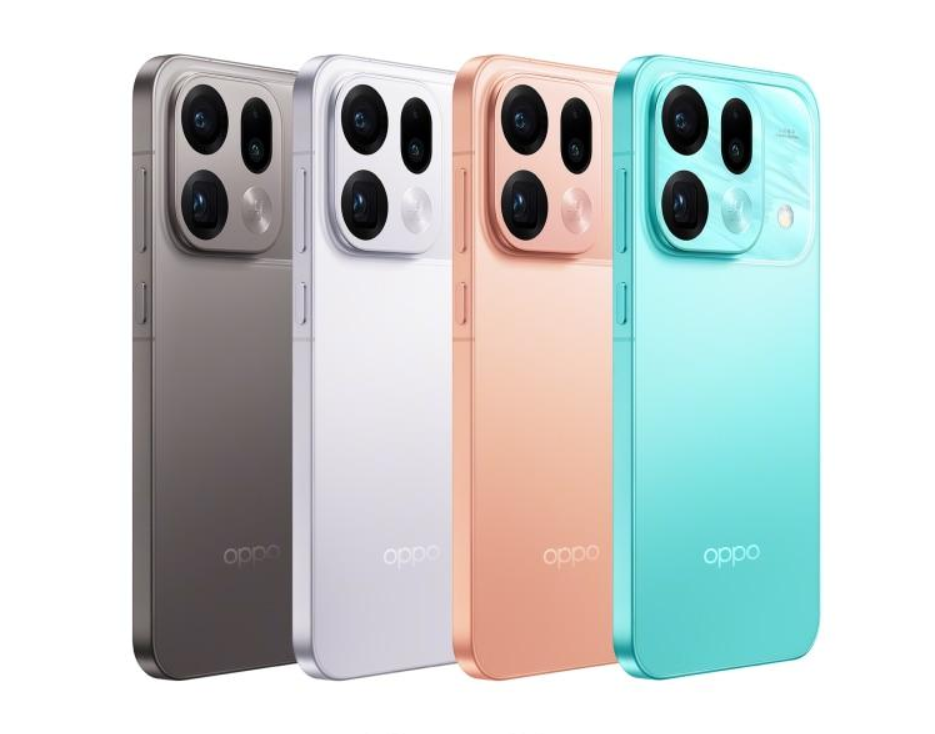
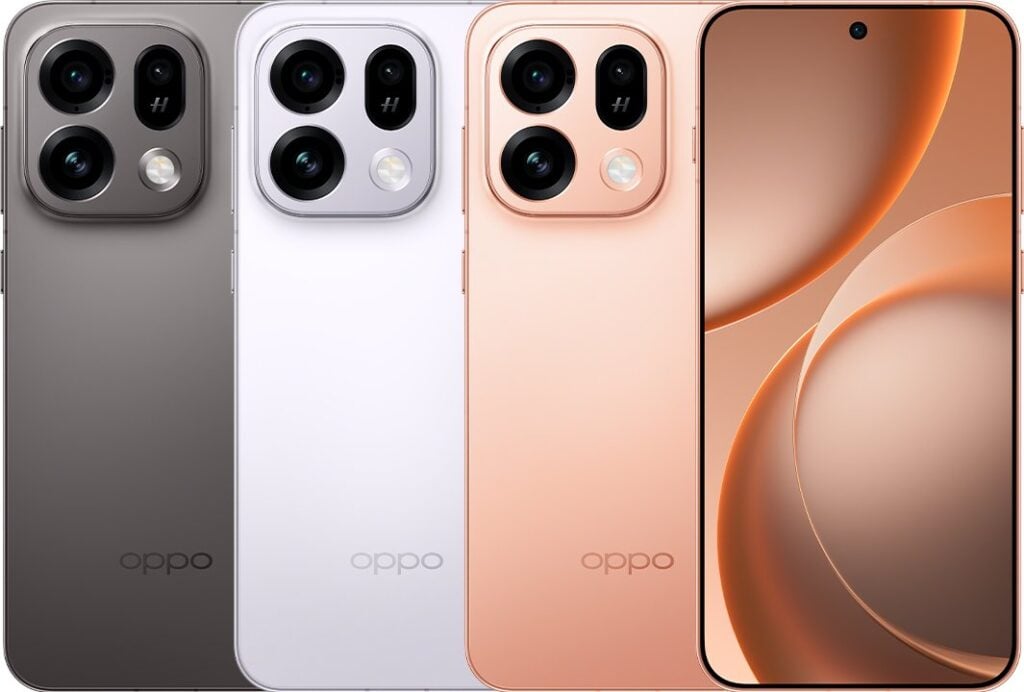
A leak posted on the Chinese social media platform Weibo gives us our first real look at the Oppo Find N6 in purple and white. 

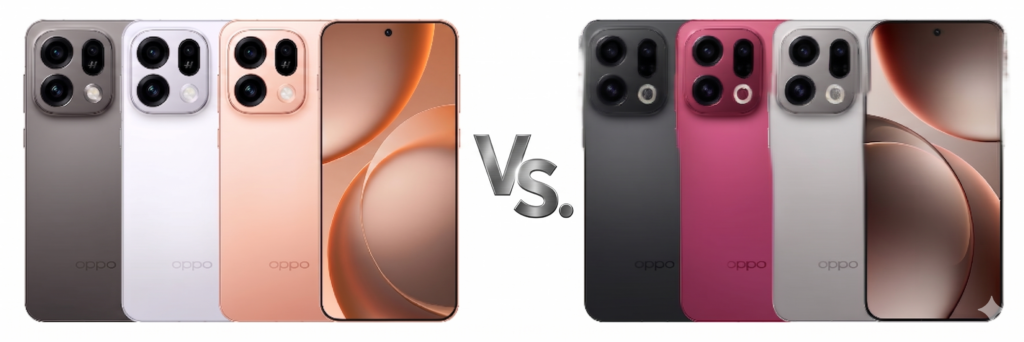
At first glance, it doesn’t look dramatically different from last year’s Oppo Find N5. It has the same circular camera module and color options.

We did notice a few changes, though. None of the leaked models show a leather back as the purple variant of the Find N5 did. And the flash has been moved outside the camera module, which slightly changes the rear layout. 

What we don’t see in the leak is the inner display — so the most important part of any foldable remains under wraps for now.

Oppo Find N6 specifications

Speaking of which, the Find N6 is expected to feature an 8.12-inch inner display paired with a 6.62-inch outer screen. 

Powering the device could be Qualcomm’s Snapdragon 8 Elite Gen 5 (7-core) platform. The phone has already surfaced on Geekbench with that chip onboard, suggesting Oppo isn’t holding back on performance.
In benchmark results, the Find N6 scored 3,524 in single-core and 9,090 in multi-core tests. The listing also indicates that the device runs Android 16 and comes with 16GB of RAM.

As for the camera, the main rear sensor is said to be 200 megapixels. It’s reportedly joined by a periscope telephoto lens, an ultra-wide camera, and even a multispectral sensor.

According to reports, the Find N6 could launch on March 17, shortly after China’s Spring Festival. It will launch in a standard and a Beidou satellite version. For now, though, we’re still waiting for Oppo to make it official.

For more daily updates, please visit our News Section.

Stay ahead in tech! Join our Telegram community and sign up for our daily newsletter of top stories.

(Source)

Xiaomi 17 Colours Confirmed for India as Xiaomi 17 Ultra Camera Specs Revealed Ahead of Launch

Xiaomi India has revealed camera specifications and color variants for its upcoming flagship phones launching on February 28, 2026, through an Amazon India microsite listing.

The Xiaomi 17 will arrive in three colors: Blue, Black, and an exclusive variant appearing to be Green based on teasers. Globally, Xiaomi confirmed four colors, including pink, alongside these three options.

The Xiaomi 17 Ultra positions itself as a night photography specialist, featuring a Leica 1-inch camera sensor and LOFIC HDR technology for precise exposure control in low light. The device features a Leica-tuned 200MP telephoto sensor covering 75mm to 100mm focal range with mechanical optical zoom, providing hardware-based adjustments rather than digital processing alone.

India appears set to receive only the standard Ultra variant. The microsite shows no evidence of the Leica Edition model, which launched in China with a physical rotating “Master Zoom Ring” for manual control of zoom, exposure, and white balance. BIS certification records listed only the standard model, reinforcing this likelihood.

The standard Xiaomi 17 Ultra is expected to feature a 6.9-inch 1.5K LTPO AMOLED display with a 120Hz refresh rate and Dragon Crystal Glass 3 protection. The camera system includes a 50MP primary sensor, a 50MP ultra-wide lens, and a 200MP periscope telephoto for advanced zoom capabilities.

Battery specifications point to a 6,800mAh capacity with 90W wired and 50W wireless charging support. The device could mirror China’s configuration options: 16GB + 512GB and 16GB + 1TB variants.

In China, Xiaomi launched both standard and Leica versions of the 17 Ultra starting at 7,999 Yuan ($1,160) in Black and Off-White. The Leica Edition included photography-focused enhancements like specialized color processing, exclusive shooting modes, and refined design elements alongside the mechanical zoom control.

The Xiaomi 17 series will launch alongside the Xiaomi Pad 8 on February 28, 2026, in India.

Stay ahead in tech! Join our Telegram community and sign up for our daily newsletter of top stories!

For more daily updates, please visit our News Section.

(Source)

Xiaomi 17T and 17T Pro could launch alongside the Xiaomi 17 Ultra, says this leak

Xiaomi is getting ready to unveil the Xiaomi 17 and 17 Ultra globally on February 28. A new leak now suggests that these might not be the only phones launching that day.

Xiaomi 15T

According to Digital Chat Station, the Xiaomi 17T and Xiaomi 17T Pro might also launch globally on the same day. The leak corroborates our previous report, which revealed that the two phones would launch four months ahead of their predecessors.

Xiaomi 17T series specifications

The tipster also revealed some specs of the phones. According to the leak, the lineup will use a combination of Dimensity 8-series and Dimensity 9-series flagship platforms. 

More specifically, the Xiaomi 17T could run on the Dimensity 8500, while the Xiaomi 17T Pro will be powered by the Dimensity 9500s chip.

The phones will also retain the Leica imaging solution, while the 17T Pro will exclusively feature a periscope telephoto lens.

Thanks to a codebase leak, we also know the camera specs of the Xiaomi 17T. It will feature a triple rear camera setup led by an OmniVision OV50E sensor. It will be joined by an OmniVision OV13B sensor and a Samsung ISOCELL JN5 sensor, handling ultra-wide and telephoto duties. There’s also mention of a Samsung ISOCELL S5KKDS sensor for selfies.

For comparison, the Xiaomi 15T used a 50MP Light Fusion 800 main camera, a 50MP telephoto lens, and a 12MP ultra-wide camera. It also featured a 32MP selfie camera.

The Xiaomi 17T is also expected to flaunt a 6,500mAh battery. That’s a sizable jump from last year’s Xiaomi 15T, which packed a 5,500mAh battery. However, the charging speed remains unchanged at 67W

For more daily updates, please visit our News Section.

Tech enthusiast? Get the latest news first! Follow our Telegram channel and subscribe to our free newsletter for your daily tech fix! ⚡

(Source)

Galaxy S26 series EU energy labels confirm battery sizes and endurance hours before launch

Samsung’s Galaxy S26 series is just hours away from going official at the February 25 Unpacked event, but thanks to mandatory EU energy labels, we already have some confirmed details.

The information comes from official European certification listings. These labels are required for devices sold in the EU and include rated (minimum guaranteed) battery capacities, advertised “typical” capacities, standardized battery endurance results, and even durability metrics.

Starting with the base model, the Galaxy S26 gets a rated 4,175 mAh battery, marketed as 4,300 mAh typical. That’s a modest bump over the Galaxy S25’s roughly 4,000 mAh cell. In the EU’s standardized mixed-use test, it’s rated for 51 hours on a single charge. That suggests Samsung has managed at least incremental gains in efficiency, not just raw capacity.

The Galaxy S26+ sticks with a rated 4,755 mAh battery (advertised as 4,900 mAh typical). Endurance is listed at 55 hours, which either matches or very slightly improves on its predecessor.

Then there’s the Galaxy S26 Ultra, which continues Samsung’s now very long 5,000 mAh tradition. The rated capacity sits at 4,855 mAh, marketed as 5,000 mAh typical, unchanged for six straight generations. It also achieves 55 hours in the EU test.

Beyond battery size and endurance, the EU labels reveal some additional details. All three models score Class A for energy efficiency and drop resistance, carry IP68 dust and water protection, and receive a Class C repairability rating.

The labels indicate 80% capacity retention after 1,200 full charge cycles, which is a noticeable drop from the 2,000-cycle figure associated with the S25 series. That’s roughly a 40% reduction on paper.

All of this lines up fairly well with previous leaks. The standard S26 finally gets a capacity bump, while the Plus and Ultra models lean more on efficiency than larger cells. Whether that’s due to EU transport regulations around battery shipping thresholds, internal space constraints, or Samsung’s design priorities isn’t fully clear — but the strategy is consistent.

We now have concrete figures for capacity, endurance, and durability before the official reveal even begins. The real test, of course, will be hands-on reviews and real-world usage.

Don’t miss a thing! Join our Telegram community for instant updates and grab our free daily newsletter for the best tech stories!

For more daily updates, please visit our News Section.

(Source)

Decathlon Launches New Peach Orange Rockrider E-ACTV 500 Hybrid E-Bike

Decathlon has launched a new Peach Orange colorway for its Rockrider E-ACTV 500 hybrid e-bike in Europe. The bike originally debuted in March 2024 and was available in Eucalyptus Green, Lavender Purple, and Cream Beige. The new color is now available at Decathlon’s online stores in France, the Netherlands, and Spain.

Decathlon Rockrider E-ACTV 500 Hybrid E-Bike

Rockrider E-ACTV 500 Specifications

The Rockrider E-ACTV 500 is a hybrid e-bike designed for both casual and adventurous riders. Decathlon equipped the bike with a Yamaha PW-C2 mid-drive motor that delivers a maximum torque of 55 Nm. The motor provides smooth and progressive electric assistance to help riders climb hills and handle tough terrain with less effort. The integrated 504 Wh battery offers a range of up to 150 km in Eco mode and can be removed for convenient charging.

The bike includes an adjustable handlebar stem that allows riders to customize the angle for an ergonomic fit. It also features a 63 mm Suntour SF15 suspension fork to absorb shocks on uneven surfaces. Its hydraulic disc brakes provide reliable stopping power, while reinforced all-terrain tires with puncture-resistant technology ensure durability and safety.

The bike comes with a handlebar-mounted color display that shows essential ride data, including speed, remaining range, and battery percentage. Decathlon added Bluetooth connectivity, allowing riders to pair the bike with the Decathlon Ride app. The app provides access to ride statistics, route tracking, and firmware updates. The bike also includes a USB port for charging devices during rides.

Riders can add accessories such as a child seat, rear rack, or trailer. The bike is available in three frame sizes for the low-step design, accommodating riders from 1.50 m to 1.90 m in height.

Pricing

The Peach Orange Rockrider E-ACTV 500 is priced at €1,999.99. Decathlon also offers financing options starting at €176.19 per month.

In related news, Decathlon has also launched the Stilus E-Touring e-bike recently featuring a Bosch motor and Shimano components.

For more daily updates, please visit our News Section.

Stay ahead in tech! Join our Telegram community and sign up for our daily newsletter of top stories! 💡

(Source, Via)

Xiaomi Watch 5 Global Launch Date Finally Revealed

After debuting in China back in December 2025, Xiaomi has now officially confirmed that the Watch 5 will be coming to the global market before the end of February. During the “The New Wave of Imagery” launch event, where it will unveil the Xiaomi 17 series of flagship phones, the company will also showcase the latest wearable.

Xiaomi Watch 5: Where and When Does it Drop?

The Chinese tech giant has confirmed the launch date for its upcoming global hardware showcase. On 28th February 2026, starting at 13:00 UTC (Barcelona Time), the company will unveil the Xiaomi 17 series, Xiaomi Pad 8 tablets, Xiaomi Watch 5, and more. This major announcement arrives right ahead of the MWC 2026 event (Mobile World Congress).

Xiaomi Watch 5
Xiaomi Watch 5

While Xiaomi hasn’t published a standalone release date for Watch 5 shipments, the appearance of the device on its global event teaser page and the timing of the show suggest it will be available shortly after the February 28 event. The global version of the Watch 5 will stand out from its China-only release in a few key ways:

  • It runs WearOS, giving access to Google Play Store, Google Maps, Google Wallet and Gemini AI support. These are features not available on Xiaomi’s custom OS-based models.
  • The watch sports a 1.54-inch AMOLED screen.
  • It’ll likely deliver multi-day life on a single charge.
  • Expect at least two color options at launch for broader consumer appeal.

Early pricing leaks suggest that the Xiaomi Watch 5 could launch in Europe for around 329 Euros (roughly about 390 US Dollars), which makes it compete with existing WearOS devices like the Samsung Galaxy Watch lineup and the Pixel Watch series.

For more daily updates, please visit our News Section.

Tech enthusiast? Get the latest news first! Follow our Telegram channel and subscribe to our free newsletter for your daily tech fix! ⚡

Samsung Galaxy Book 6 Series Releases Globally with Premium Specs & Pricing

Samsung’s next-generation laptop lineup, the Galaxy Book 6 series, is finally rolling out around the world after officially debuting at CES 2026 earlier this year. The lineup brings powerful new hardware, AI powered features, and a sleek new design. So here is everything you need to know.

What’s New in the Galaxy Book 6 Series

The South Korean tech giant equips the Galaxy Book 6 family with Intel Core Ultra Series 3 processors that offer strong CPU, GPU, and NPU performance for AI related tasks. These chips are based on Intel’s advanced 18A process, and are built for creative work, multitasking, and everyday productivity. The performance gains are packed in a refined, ultra-slim chassis with improved thermal designs. The Galaxy Book 6 Pro gets a vapor chamber solution, while the Galaxy Book 6 Ultra gets a redesigned cooling system.

Samsung Galaxy Book 6 series

Global Launch & Availability

Pre-orders for the entire lineup kicked off last week, and we already reported on the European pricing. So here are the pricing details for the US and more info regarding their region availability:

  • United States: Official sales begin 11th March 2026 via Samsung Experience Stores and Samsung’s online store, with the lineup available in a Grey color option.
  • Europe: Pre-orders began in late February in markets including the UK, Germany, France, Spain, Italy, Belgium, the Netherlands and Scandinavia, with shipments starting around the same March 11 window.
  • Other regions: Availability will expand to additional markets through spring and into April 2026.

Pricing varies by region and configuration, but in the US, the series starts at roughly $1,049.99 for the base Galaxy Book 6, $1,599.99 for the Pro and $2,449.99 for the Ultra model.

For more daily updates, please visit our News Section.

Don’t miss a thing! Join our Telegram community for instant updates and grab our free daily newsletter for the best tech stories!

OnePlus 16 could shrink bezels below 1mm, claims new leak

A new leak out of China suggests the upcoming OnePlus 16 could feature bezels measuring under 1mm on all sides. Some measurements even point to around 0.8mm. If that number holds, it would be an incremental but noticeable improvement over the OnePlus 15, which already had impressively slim 1.15mm borders.

On paper, shaving off a few tenths of a millimeter doesn’t sound dramatic. But visually, it can make a difference. Ultra-thin symmetrical bezels tend to create that “all display” look that makes content feel more immersive, especially when you’re watching videos or gaming in landscape.

The latest leak mostly focuses on the bezels, so full display specs are still unclear. That said, earlier rumors have mentioned a flat 1.5K LTPO OLED panel, possibly sourced from BOE again. There’s also talk of refresh rates going as high as 240Hz.

Whether 240Hz actually makes it to the final retail unit is another question. Manufacturers often test higher refresh panels, but power consumption and real-world benefit usually dictate the final number. Even so, anything above 165Hz would keep the OnePlus 16 firmly in “high-refresh flagship” territory.

Interestingly, OnePlus is reportedly avoiding more gaming-specific additions like shoulder triggers or built-in cooling fans. The direction seems clear: keep the design clean and premium rather than turning it into a niche gaming device.

Then there’s the battery rumor. Reports point to a massive 9,000mAh “Glacier” battery using silicon-carbon technology. Silicon-carbon cells are known for higher energy density, so it’s not impossible. Still, until more concrete details surface, that figure is worth treating cautiously. It would be a major leap.

As expected, the OnePlus 16 should run Qualcomm’s next-generation flagship chip. That would bring predictable year-on-year improvements in performance and power efficiency.

Camera rumors suggest a 50MP main sensor, a 50MP ultrawide, and possibly a 200MP periscope telephoto. If accurate, that telephoto setup would be one of the more aggressive upgrades, especially for users who prioritize zoom performance.

As always, though, early leaks are best taken as a direction — not a guarantee.

  1. Stay ahead in tech! Join our Telegram community and sign up for our daily newsletter of top stories!

For more daily updates, please visit our News Section.

(Sources: 1, 2)

Kodak IconiK 65-inch Mini QD TV Offers 1500 Nits Brightness and 108W Sound Output

Kodak has launched a new 65-inch Mini QD Google TV in India under its IconiK Series lineup. The television combines Mini LED backlighting, Quantum Dot color technology, and a high refresh rate panel, along with built-in smart features based on the Google TV platform.

Kodak IconiK 4K Mini QD Google TV

The TV features a bezel-less 65-inch display with 4K resolution of 3840 × 2160 pixels and a 120Hz refresh rate. It supports Variable Refresh Rate (VRR) and Auto Low Latency Mode (ALLM), which are useful for gaming and smoother motion performance. The panel uses Quantum Dot technology with Mini LED backlighting and includes 288 local dimming zones. Kodak claims peak brightness of up to 1500 nits. The display also supports Ultra Wide Color Gamut with 1.1 billion colors, along with Dolby Vision, HDR10, and HLG formats. Dolby Vision-Atmos support is also included for combined picture and sound enhancement.

Kodak IconiK 4K Mini QD Google TV

Audio output is rated at 108W through a six-speaker system supported by two dedicated subwoofers. The TV supports Dolby Atmos for multi-channel surround sound, aiming to deliver a more immersive experience without requiring external speakers.

The television runs on a MediaTek processor paired with a Mali-G52 GPU. It includes 2GB RAM and 16GB internal storage to handle the operating system and apps. On the software side, it runs Google TV, which provides access to apps through the Google Play Store. It also supports Google Assistant voice commands, built-in Chromecast, and Apple AirPlay for wireless streaming from compatible devices. The remote control includes quick access app buttons along with a dedicated mute button.

Connectivity options include dual-band Wi-Fi, Bluetooth 5.0, three HDMI ports, two USB ports, HDMI eARC, an optical audio output, and an Ethernet port for wired internet. Kodak is offering a one-year warranty with the television.

Pricing & availability

The Kodak 65-inch IconiK Series 4K Mini QD TV with model number K65Mini5020 is priced at Rs. 57,999 in India and is currently available for purchase on Amazon.in.

Stay ahead in tech! Join our Telegram community and sign up for our daily newsletter of top stories!

For more daily updates, please visit our News Section.

iQOO Z11x Geekbench listing reveals a chipset upgrade

iQOO is reportedly working on the Z11 series of smartphones. The brand recently unveiled the Z11 Turbo equipped with the Snapdragon 8 Gen 5 chip. While this phone is likely to remain exclusive to the Chinese market, the brand is said to be working on the iQOO Z11 and Z11x, which are expected to be released in multiple markets. Recently, the iQOO Z11x 5G was spotted on certification platforms such as SIRIM (Malaysia) and NBTC (Thailand). Now, the device has appeared on Geekbench, revealing the chipset that powers it.

iQOO Z11x Geekbench listing

The iQOO Z11x has surfaced with model number I2507 in Geekbench’s database. The listing suggests that the device could be powered by the Dimensity 7400 chip. As usual, the listing does not specify the chip’s name directly, but its CPU configuration and GPU details available via metadata are enough to confirm the inclusion of the D7400.

The iQOO Z11x Geekbench listing further reveals 8GB of RAM and Android 16. The 1057 single-core and 2507 multi-core scores are in line with the usual performance of the D7400 chip.

To recall, the iQOO Z10x came with up to 8GB of RAM and up to 256GB of storage. It was powered by the Dimensity 7300 chip and was priced at Rs 12,499 for its 6GB+128GB base variant.

While the iQOO Z11x will arrive with a chipset upgrade, it should be noted that the Dimensity 7400 is essentially a minor refresh of the 7300, offering only a small 100MHz (4 percent) boost to its performance cores and roughly 15 percent better AI processing, with almost all other hardware remaining identical.

In India, the iQOO Z10x was sold via Amazon, and its rebranded version, dubbed the Vivo T4x, was sold through Flipkart. Therefore, there is a possibility that the Vivo T5x could also be a rebadged version of the iQOO Z11x. Likely, the Z11x / T5x may debut in March or April across different countries.

For more daily updates, please visit our News Section.

Stay ahead in tech! Join our Telegram community and sign up for our daily newsletter of top stories.

(via)

Noise launches Airwave Max 6 headphones with 45dB ANC and 120h battery life

Noise has launched its latest premium headphones, the Airwave Max 6, at an introductory price of Rs. 6,999 ($76). The headphones are available on gonoise.com, Amazon, and Flipkart in four color options: Dune White, Cobalt Blue, Forest Green, and Carbon Black.

Noise Airwave Max 6

Noise Airwave Max 6 Specifications

The Airwave Max 6 features Coaxial Dual Drivers (40mm + 12mm), which deliver a deeper bass and clearer vocals. Noise claims the headphones provide rich, balanced sound across highs, mids, and lows, making them suitable for a variety of audio content. It also supports LDAC and Hi-Res Audio certification, which ensures users experience high-quality, detailed sound.

The headphones feature Adaptive Hybrid Active Noise Cancellation (ANC) that reduces ambient noise by up to 45dB, allowing users to stay focused in noisy environments like crowded commutes, offices, or cafes. Additionally, a five-microphone system with Wind Noise Cancellation ensures clear and crisp voice quality during calls, even in outdoor settings.

The Airwave Max 6 headphones boast a 120-hour battery life in normal mode and up to 80 hours with ANC enabled. They also feature Instacharge, providing six hours of playtime with just 10 minutes of charging, making them ideal for long days and travel.

The headphones use Bluetooth 6.0 for faster connectivity, better stability, and low latency of 80ms. These are compatible with Android and iOS devices and feature Google Fast Pair for quick setup. Noise has also added Spatial Audio, which creates a 3D soundstage for a more immersive experience while watching movies or gaming.

In terms of design, the headphones come with breathable ear cushions for added comfort and a durable steel headband that retains its shape over time. They also feature a foldable design and include a zipper case, making them convenient to carry.

In related news, Asus has launched the ROG Kithara open-back gaming headset featuring 100mm planar drivers with HIFIMAN tuning, while Audio-Technica has introduced new Ash Wood headphones with a guitar lacquer finish.

For more daily updates, please visit our News Section.

Stay ahead in tech! Join our Telegram community and sign up for our daily newsletter of top stories! 💡

(Noise)

NZXT H2 Mini PC Prebuilt Launched With RTX 5080 and Ryzen 7 9800X3D/Core Ultra 9 Options

NZXT has launched the H2 Mini PC Prebuilt, a compact gaming desktop designed to deliver high-end performance in a small form factor without requiring users to assemble components themselves. Built around the company’s new H2 Flow mini-ITX chassis with a vertical layout, the system focuses on optimized airflow, efficient cooling, and clean cable management while maintaining a minimal footprint.

NZXT H2 Flow

The prebuilt system is powered by Nvidia’s GeForce RTX 5080 desktop graphics card and offers two processor options. Buyers can choose between the Intel Core Ultra 9 285K paired with the Gigabyte Z890I Aorus Ultra motherboard, or the AMD Ryzen 7 9800X3D combined with the Gigabyte B850I Aorus Pro motherboard. Both configurations include 32GB of DDR5 memory running at 5200MHz and a 2TB M.2 NVMe SSD for storage.

NZXT H2 Flow

Cooling is handled by NZXT’s Kraken Elite 240 liquid cooler, which helps manage thermals inside the compact enclosure. Power is supplied by a Lian Li SP850G 850W power supply. The system comes with Windows 11 Home preinstalled, allowing users to start gaming immediately after setup.

NZXT emphasizes that each H2 Mini PC unit is assembled, tested, and tuned before shipping to ensure reliable performance across gaming and everyday workloads. The company also highlights optimized airflow within the small chassis to maintain stable temperatures during demanding tasks.

In terms of gaming performance, the RTX 5080 combined with either CPU option is capable of running modern AAA titles smoothly at 1440p resolution. With some graphics adjustments, the system can also achieve playable frame rates above 60 FPS at 4K in many games, positioning it as a high-performance compact gaming solution.

The NZXT H2 Mini PC Prebuilt became available starting February 17, 2026, in a black color option. Both the Intel and AMD configurations launch at a price of $3,499 and are currently limited to the US market.

Stay ahead in tech! Join our Telegram community and sign up for our daily newsletter of top stories!

For more daily updates, please visit our News Section.

iPhone 18 Pro could debut in “deep red” after the Cosmic Orange iPhone 17 Pro

Apple’s next wave of iPhones may bring an interesting split in design philosophy: bold on the Pro side, restrained on the foldable.

In his February 22 edition of the Power On, Bloomberg’s Mark Gurman shared new details about the color options currently being tested for the upcoming iPhone 18 Pro lineup, as well as Apple’s long-rumored foldable iPhone.

A new red for the Pro models?

According to Gurman’s supply-chain sources, Apple is experimenting with a “deep red” finish for the iPhone 18 Pro and Pro Max. If it makes it to production, it would be the first time a Pro model has launched in red.

This isn’t expected to be a bright red finish. Instead, the tone is described as darker, closer to burgundy or wine. Earlier rumors mentioning brown or purplish shades may have been referencing variations of this same concept.

Apple has occasionally used bold colors to differentiate Pro models in recent years. Last year’s standout Pro color reportedly performed well in some markets, and it wouldn’t be surprising if Apple continues leaning into distinctive flagship hues.

That said, nothing is final. Color testing happens months ahead of launch, and some finishes never make it past internal prototypes.

Foldable stays conservative

On the other end of the spectrum is Apple’s first foldable iPhone, often referred to as the iPhone Fold. Gurman suggests Apple is planning to keep things simple for its debut foldable. Instead of experimenting with bold finishes, the company is said to be focusing on classic tones like black, dark gray, and silver or white.

For now, the picture forming is fairly clear: the Pro models may take a bit of a design risk with a darker red option, while the foldable plays it safe for its first outing. If accurate, it would be a small but telling glimpse into how Apple is positioning its next-generation hardware.

Stay ahead in tech! Join our Telegram community and sign up for our daily newsletter of top stories!

For more daily updates, please visit our News Section.

(Source: Bloomberg)

Samsung adds Perplexity support as Galaxy AI ecosystem grows

Samsung has announced an expansion of Galaxy AI with a new multi-agent approach. The update introduces Perplexity as an additional AI agent, aiming to improve contextual assistance and everyday workflows across Galaxy devices.

Galaxy AI moves towards an open multi-agent ecosystem

Samsung is evolving Galaxy AI into a platform that supports multiple AI agents working together within the operating system rather than being limited to individual applications. The aim is to reduce the number of steps required to complete tasks by allowing AI services to understand context at a system level.

Instead of switching between apps repeatedly, users can rely on integrated assistance that responds naturally based on ongoing activity and user intent. The company says that modern users increasingly rely on different AI tools for separate tasks, which has influenced its strategy to support an open and flexible framework.

Galaxy AI is positioned as an orchestrator that connects various AI services into a unified experience, enabling smoother multitasking and improved continuity across workflows. This system-level integration also allows Samsung to include partner services while maintaining a consistent user interface across Galaxy devices.

Perplexity integration and future availability

As part of this expansion, Samsung will introduce Perplexity as an additional AI agent on upcoming flagship Galaxy smartphones. The assistant can be triggered using a dedicated voice command or through hardware shortcuts such as long-pressing the side button. Once activated, it works across supported Samsung apps, including Notes, Clock, Gallery, Reminder and Calendar, helping users perform multi-step tasks more efficiently.

Samsung has indicated that more details about supported devices and rollout timelines will be shared later. The broader vision is to create an inclusive AI ecosystem that gives users greater control over how AI functions within their daily digital routines while keeping interactions seamless and easy to access.

For more daily updates, please visit our News Section.

Stay ahead in tech! Join our Telegram community and sign up for our daily newsletter of top stories.

Honor Will Unveil, its First AI Humanoid Robot and Robot Phone Concept at MWC 2026

Key Highlights:

  • Honor will unveil its first humanoid robot at MWC Barcelona, marking its entry into AI robotics.
  • The company is expanding beyond smartphones with AI-driven devices and ecosystem products.
  • New launches include the Honor Robot Phone concept, Magic V6 foldable, MagicPad4, and MagicBook Pro 14.

Honor Enters the Humanoid Robot Race

Honor Device Co. is set to make a major announcement at MWC Barcelona this weekend with the unveiling of its first humanoid robot. The company says the robot is designed mainly for consumer service tasks such as shopping assistance and everyday support. This move signals Honor’s entry into the fast-growing humanoid robotics segment, an area that has recently gained strong global attention due to rapid AI advancements.

Honor claims it will be the first smartphone brand among its direct competitors to launch a humanoid robot. The company aims to position itself as a leader in next-generation AI experiences, moving beyond traditional mobile devices and exploring embodied AI technology.

AI Strategy and Smart Ecosystem Expansion

The humanoid robot will be showcased under the “Honor Robot Phone” concept, which highlights how artificial intelligence could integrate more deeply into daily life. Honor is also expected to present new agentic AI services designed to work across smartphones and connected devices.

This strategy is part of a larger multibillion-dollar expansion plan focused on artificial intelligence, new AI applications, and building a smarter ecosystem. Similar moves are being seen across the industry, with rivals like Xiaomi, Oppo, and Vivo also investing heavily in AI innovation. Chinese startups such as Unitree are currently leading the momentum in AI robotics with advanced demonstrations, showing how competitive the space has become.

Global Launch Event and Future Vision

The event, themed “Believers in AI Future,” will also include the launch of several new devices. These include the Honor Magic V6 foldable smartphone, which features improved durability, a larger battery, and a slimmer design. Honor will also introduce the AI-powered MagicPad4 tablet and MagicBook Pro 14 laptop, both designed for productivity and lightweight performance.

Since becoming independent from Huawei in 2020, Honor has expanded rapidly with backing from Shenzhen government investment entities and state-owned enterprises. The company has also expressed plans for a future IPO, reflecting its long-term ambition to grow beyond smartphones and establish itself as a broader AI technology leader.

Read More:

Realme P4 Lite 4G first impressions: Big battery focus with practical upgrades and some fun extras

I have been using the Realme P4 Lite 4G in the Sea Blue finish for a short while now, and with the confirmed specifications and pricing in place, the positioning becomes much clearer. This is an affordable 4G LTE smartphone that leans heavily on battery life, durability and everyday usability rather than performance or camera ambition. That said, Realme has added a couple of interesting visual and software touches that make it feel less basic than it sounds on paper.

After setting it up, taking calls, browsing, watching videos and using it as a primary device for basic tasks, here is how it feels.

7Early verdict

After using the Realme P4 Lite 4G for a short period, it feels like a phone designed for practicality first, with a bit of added flair through the Pulse Light and Mini Capsule features.

The Sea Blue variant looks clean and modern. The display is adequate with the benefit of 90Hz. Performance is entry-level, cameras are basic, but the 6,300mAh battery and durability features give it a strong foundation.

If your priorities are long battery life, rugged reassurance, and a sub-Rs 12,000 budget, this device makes practical sense.

  • 4GB + 64GB: Rs 9,999
  • 4GB + 128GB: Rs 11,999

Buyers can choose from other colors, such as Obsidian Black and Beach Gold. Starting February 26, it will be available for purchase through Flipkart, Realme’s website, and offline stores.

For more daily updates, please visit our News Section.

Stay ahead in tech! Join our Telegram community and sign up for our daily newsletter of top stories.

Next

Xiaomi Tag Debuts as the Brand New Apple AirTag Rival With Apple Find My and Google Find Hub

Xiaomi has officially stepped into the smart tracking market with the launch of the Xiaomi Tag. This is a compact Bluetooth tracker designed to help you find misplaced keys, wallets, luggage and more, all while offering cross-platform support that sets it apart from many rivals. Unlike proprietary solutions that tie you to a single mobile ecosystem, the Xiaomi Tag is built to work seamlessly with both Apple’s and Google’s ecosystems, giving users flexibility whether they use an iPhone or Android device.

Xiaomi Tag: Lightweight Design with Practical Tracking Tools

The Chinese tech giant’s latest smart tracker sports a minimalist white plastic build, weighing just around 10g and measuring about 7.2mm thick. So it is slim enough to slip into a wallet or attach to keychains and bags with a compatible strap or accessory.

Xiaomi Tag
Xiaomi Tag

Inside, the tracker uses Bluetooth 5.4 and NFC for connectivity with nearby devices, and it’s powered by a replaceable CR2032 coin-cell battery that Xiaomi says can last over one year before needing a swap. But one thing that sets this smart tracker apart from the crowd is the cross platform tracking via Apple Find My and Google Find Hub. This allows items to be located by compatible devices across ecosystems.

There is also a built-in buzzer that plays a tone when triggered from your phone, which is handy for finding an item nearby. Xiaomi offers “Left Behind” alerts as well, to notify you when you walk away from a tagged object. It supports Lost Mode and contact details so others can also help return a missing item via pop-ups if discovered on another network phone. This model gets an IP67 rating for water and dust resistance.

The Xiaomi Tag has just released in Malaysia, being available in a single white color option. It carries a RM 79 (roughly 20 US Dollars) price tag for a single unit, while a pack of four is available for RM 299 (roughly 77 US Dollars).

For more daily updates, please visit our News Section.

Tech enthusiast? Get the latest news first! Follow our Telegram channel and subscribe to our free newsletter for your daily tech fix! ⚡

iQOO 15R launches with 6.59-inch 144Hz display, Snapdragon 8 Gen 5, 7,500mAh battery

iQOO has expanded its flagship portfolio in India with the launch of the iQOO 15R. Positioned below the iQOO 15, the new model focuses on delivering high-end performance, long battery life, and a comfortable in-hand feel. The smartphone is aimed at users who rely heavily on their device for work, gaming, and entertainment throughout the day.

iQOO 15R specifications and features

The iQOO 15R is powered by the Snapdragon 8 Gen 5 chipset built on a 3nm process, paired with LPDDR5X Ultra RAM and UFS 4.1 storage. It is supported by the SuperComputing Chip Q2 to deliver stable 144FPS gaming along with 1.5K game super resolution. A 6.5K IceCore VC cooling chamber and dual-layer graphite sheet help maintain thermal stability during extended gaming sessions.

It features a 6.59-inch 1.5K AMOLED display with a 144Hz refresh rate, up to 5000 nits local peak brightness and 4320Hz PWM dimming. The flat panel is protected by Schott Xensation Alpha glass. Despite housing a 7600mAh silicon anode battery, the phone measures 7.9mm in the Dark Knight variant and 8.1mm in Triumph Silver. It supports 100W wired charging and advanced bypass charging.

On the camera front, the device includes a 50-megapixel Sony LYT-700V main sensor with OIS and an 8-megapixel ultra-wide lens. A 32-megapixel front camera handles selfies and video calls. The phone supports 4K 60fps recording with stabilization. It runs OriginOS 6 based on Android 16 and is promised four years of OS updates and six years of security patches.

iQOO 15R price in India, availability

The iQOO 15R is priced at Rs 44,999 for the 8GB+256GB variant, Rs 47,999 for the 12GB+256GB model and Rs 52,999 for the 12GB+512GB version. With bank offers, the effective starting price drops to Rs 40,999. Pre-booking begins today (Feb. 24), while sales start from March 3 via Amazon, iQOO e-store, select vivo exclusive stores and offline retail outlets.

For more daily updates, please visit our News Section.

Stay ahead in tech! Join our Telegram community and sign up for our daily newsletter of top stories.

Vivo revealed to be testing a single-cell 12,000mAh phone

A new leak suggests that Vivo could be jumping on the big-battery bandwagon with an upcoming smartphone.

According to Weibo tipster Digital Chat Station, Vivo is currently testing a new phone equipped with a 10,000mAh battery.

The device reportedly uses a 4.53V single-cell silicon battery with a rated capacity of 10,000mAh. The typical value, however, is said to range between 11,000mAh and 12,000mAh, plus or minus a small margin.

More and more brands are moving toward 10,000mAh

Battery capacity in smartphones has been steadily increasing over the past few years, especially among Chinese manufacturers.

5,000mAh is now the bare minimum, and devices with 7,000mAh to 8,000mAh batteries have become increasingly common in China. In fact, Honor and Realme have already launched phones with a 10,000mAh cell.

Vivo V70 vs Oppo Reno 15
Vivo V70

Speaking of which, the leak also sparked discussion about competitors. When asked about Xiaomi’s plans for large-battery phones, the tipster said such devices are currently in the planning stages and would include “all the necessary features.” This hints that Xiaomi is also considering similar moves, though nothing has been finalized yet.

In a separate response, the blogger addressed whether this year’s flagship phones from Vivo might reach 9,000mAh. According to DCS, the main flagship line is unlikely to hit that level, but phones from its sub-brand iQOO could feature a 9,000mAh cell.

For now, it’s just a leak. As mentioned above, the Vivo phone with a typical battery capacity of 11,000mAh or even 12,000mAh is still under testing, which means it could take a considerable amount of time to launch — even if the tests go well. We’ll keep you updated.

Stay ahead in tech! Join our Telegram community and sign up for our daily newsletter of top stories!

For more daily updates, please visit our News Section.

iPhone Air user makes it transparent, adds physical SIM tray Apple couldn’t

Apple’s ultra-thin iPhone Air was already designed to stand out, but one modder has taken it in a completely different direction, by making the back transparent and adding something Apple deliberately left out: a physical SIM slot.

The project was documented by YouTuber Linzin Tech. In a 22-minute video, he walks through the process of turning the standard iPhone Air into a clear-backed, SIM-enabled custom build.

The first step involved removing the opaque coating from the rear glass panel. Using a laser process, the modders carefully stripped away the paint layer without damaging key components underneath, particularly the MagSafe coil, which sits just beneath the glass.

Once the coating was removed, the result was a fully transparent back, revealing the battery, logic board layout, shielding, and internal connectors. The Apple logo remains visible, but now it floats above exposed hardware rather than a solid color finish.

Adding what Apple removed

The bigger challenge came next: installing a nano-SIM tray into a phone designed to rely entirely on eSIM.

To make room, the team milled a cutout into the bottom frame of the device. That modification required removing the original Taptic Engine, Apple’s large and finely tuned haptic motor, because there simply wasn’t enough internal space to accommodate both it and a SIM tray.

In its place, a smaller third-party vibration motor was installed. The SIM reader itself was wired in through board-level microsoldering, and according to the video, the modified phone successfully connects to mobile networks using a physical SIM card. It’s a significant hardware alteration, especially considering how tightly packed ultra-thin smartphones are.

As impressive as the mod looks, it wasn’t without consequences. Removing thermal pads during the laser process reportedly affected heat dissipation, leading to faster throttling under sustained load. The structural modifications also eliminated the phone’s IP68 water and dust resistance. And, of course, any warranty coverage was gone the moment the frame was cut open.

Performance of the iPhone Air mod with affected heat dissipation

For most users, the trade-offs wouldn’t make sense. But for hardware enthusiasts, it’s a fascinating reminder that even the most closed-off designs can still be opened up.

Stay ahead in tech! Join our Telegram community and sign up for our daily newsletter of top stories!

For more daily updates, please visit our News Section.

(Source)