Advertisement

Realme GT5 Pro takes the lead in screen brightness, enters the Xiaomi-OnePlus brightness debate

In the midst of the ongoing debate between Xiaomi and OnePlus regarding the quality control, a spokesperson of the Redmi brand has highlighted the Redmi K70 Pro‘s lead on manual maximum brightness over the OnePlus 12’s. He talked about talked about the importance of the maximum manual maximum brightness instead of the local peak brightness (more on this at the below).

Realme GT5 Pro’s 1000 nits manual max brightness outshines both OnePlus 12 and Redmi K70 Pro
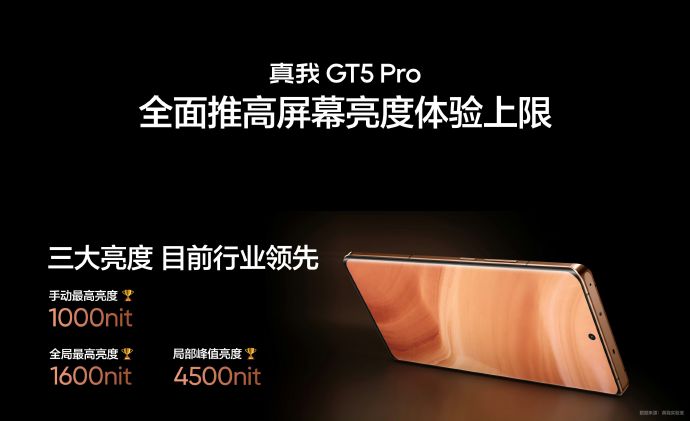
In what seems like a response, Realme‘s Vice President, Xu Qi, has proudly mentioned the brightness specifications of the Realme GT5 Pro on Weibo. According to Xu Qi, the Realme GT5 Pro stands out in terms of “local peak brightness, global maximum brightness, and manual maximum brightness”. Notably, the manual maximum brightness of the Realme GT5 Pro reaches up to 1000 nits, which is higher than both the OnePlus 12’s 600 nits and Redmi K70 Pro’s 700 nits rating. You can see the brightness ratings of the Realme GT5 Pro in the screenshot below.
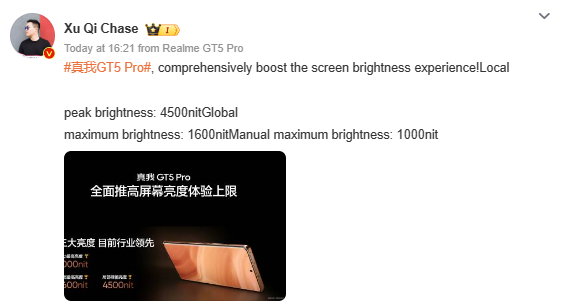
Xu Qi proudly mentions RM GT5 Pro’s brightness specs

Redmi K70 Pro:

  • Local peak brightness: 4000 nits
  • Global maximum brightness: 1200 nits
  • Manual maximum brightness: 700 nits

OnePlus 12:

  • Local peak brightness: 4500 nits
  • Global maximum brightness: 1600 nits
  • Manual maximum brightness: 600 nits

The entire “Xiaomi OnePlus screen brightness controversy” initiated when Lu Weibing, a key figure at Xiaomi, called for a professional analysis of recent incidents related to the “gap” and “dispensing” in new devices, with many incidents reportedly involving OnePlus 12 units. Based on the analysis, he reasoned that the quality standards of Redmi is higher than the industry. He further mentioned “Quality is the lifeblood of Redmi, and there can be no slackness and luck.”
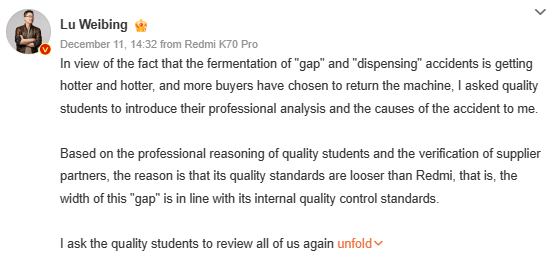
Lu Weibing on Redmi’s quality control

In response to this, Li Jie, President of OnePlus China, clarified that the issues were “not a quality or design problem” and assured users that customer service would facilitate exchanges or returns promptly.

Redmi spokesperson on the importance of manual max brightness

Wang Teng, General Manager of the Redmi market and Redmi brand spokesman, added to the discourse by explaining the concept of ‘manual brightness’, emphasizing its relevance to daily use. Wang Teng claimed that the Redmi K70 Pro achieves a maximum manual brightness of 700 nits, surpassing the new OnePlus 12, which reportedly reaches only 600 nits.

Related:

(Source)

Realme C67 5G, C67 4G Full Spec Sheet Leaked Ahead Of Launch

Realme is set to launch the C67 5G smartphone in India tomorrow. The brand is also gearing up to announce the C67 4G in Indonesia on December 19. Realme has already confirmed a few specifications of the upcoming offerings. Now, a full spec sheet as well as the pricing of the C67 5G and 4G variants have leaked ahead of the official launch event. 

Realme C67 5G, C67 4G specifications, pricing leaked

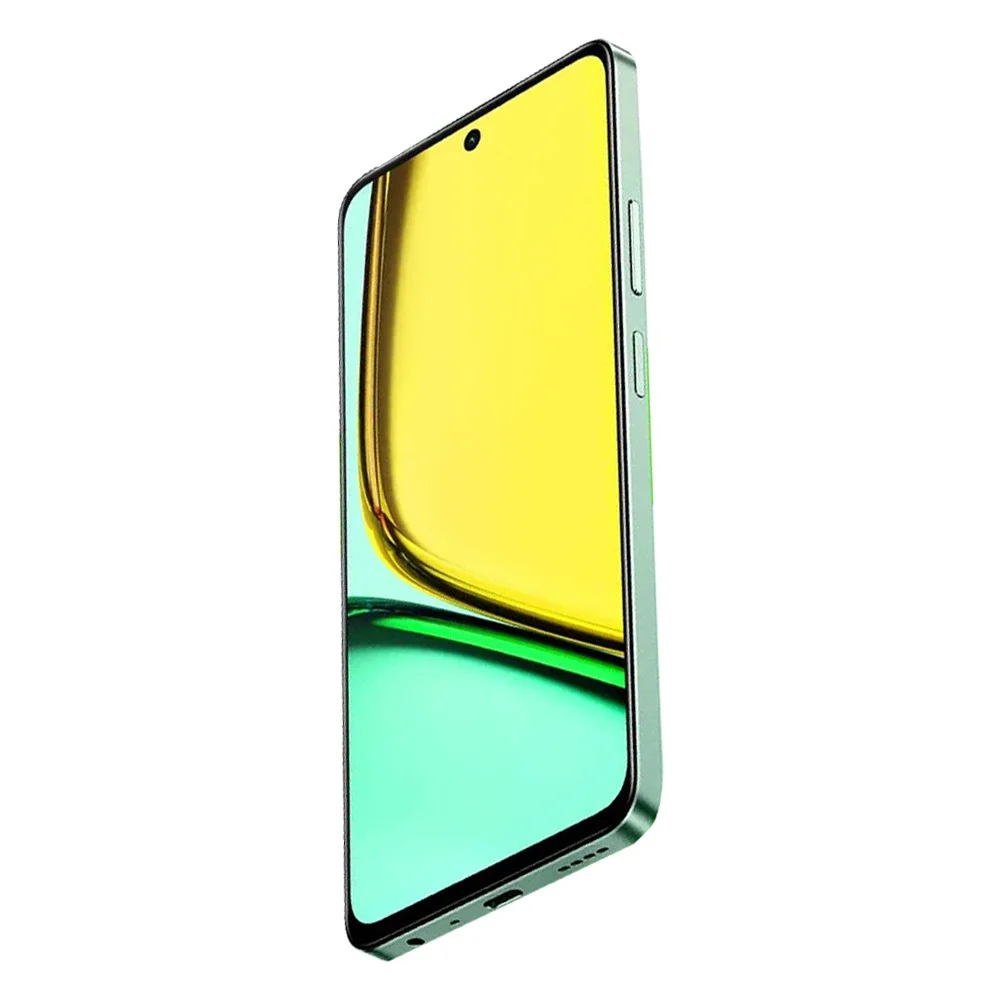
As per the latest leak, the Realme C67 5G and 4G variants will have a 6.72-inch LCD display bearing an FHD+ resolution and a centre-aligned punch-hole cutout. The former will feature a 120Hz refresh rate whereas the latter will offer a 90Hz refresh rate. Both phones will come with a boxy design and a side-mounted fingerprint scanner. They will also be IP54-certified dust and water-resistant. 

Under the hood, the Realme C67 5G will reportedly be equipped with a MediaTek Dimensity 6100+ processor. It will be offered in 4GB + 128GB and 6GB + 128GB RAM and storage variants. On the other hand, the Realme C67 4G is confirmed to be powered by a Snapdragon 685 SoC coupled with 8GB RAM and 128GB or 256GB storage options. Both phones are said to be backed by a 5,000mAh battery unit with support for 33W fast charging. 

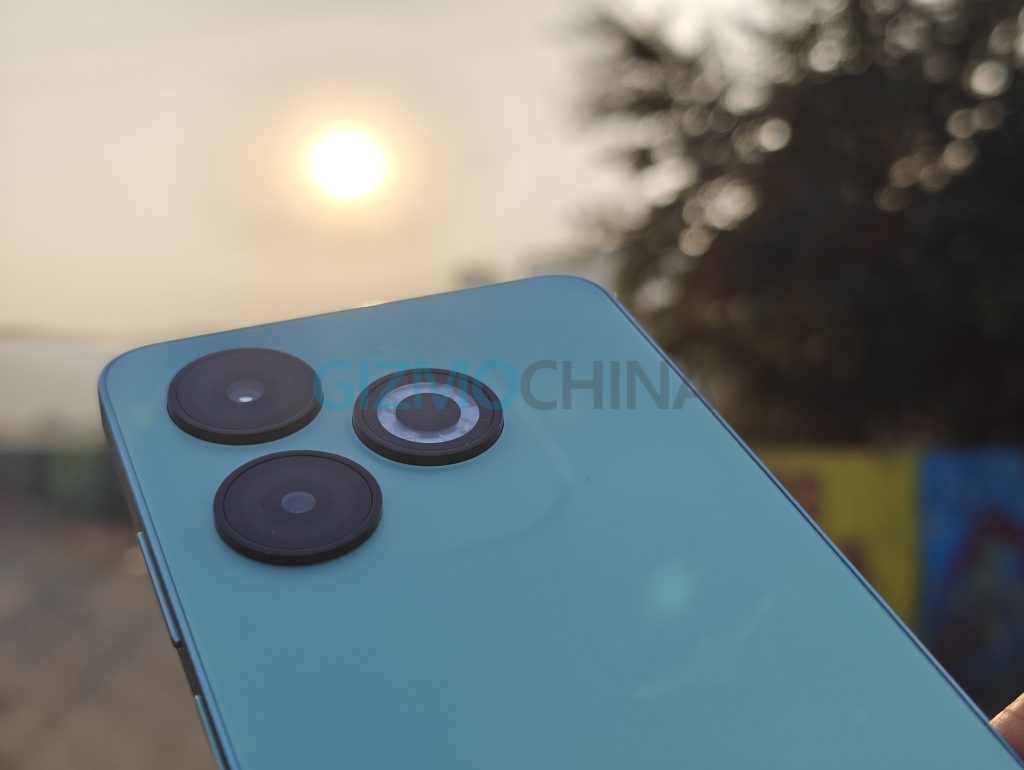
The Realme C67 5G and 4G variants are already confirmed to feature circular and pill-shaped camera modules respectively. The former is tipped to have a 50MP main camera paired with a 2MP portrait lens whereas the latter will have a 108MP primary sensor with 2MP secondary unit. Both devices will have an 8MP front snapper. 

The Realme C67 5G is rumoured to cost Rs 13,499 and Rs 14,499 for the 4GB and 6GB RAM options. 

Related:

Via

Xiaomi’s HyperOS designed to detect and alert against pornographic apps? Clarification provided by Xiaomi

Xiaomi’s HyperOS system has recently been at the center of a controversy due to claims that it can intercept and notify authorities about the presence of pornographic apps.

The controversy stemmed from a doctored screenshot shared by a TikTok user on the internet. This fabricated screenshot falsely portrayed an update log for HyperOS, claiming that the system now could automatically identify and report pornographic apps to 110. This misleading information caused widespread confusion and misinformation.

Xiaomi HyperOS

Truth Behind the Screenshots: Xiaomi Addresses HyperOS System Update Misunderstandings

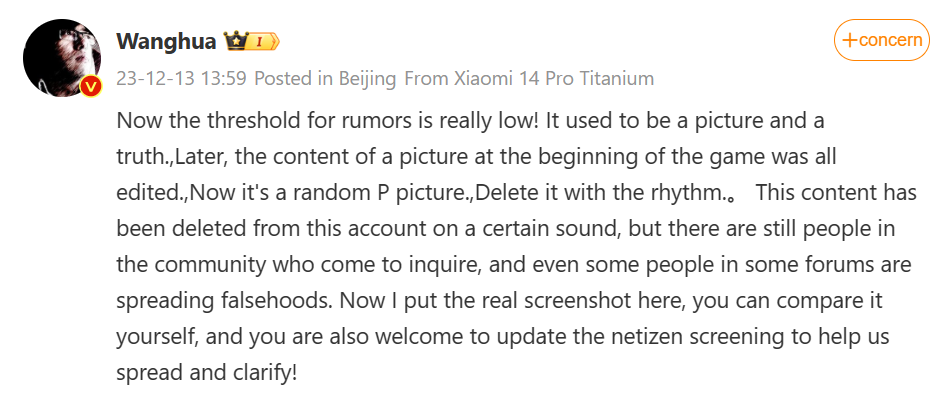
Wang Hua, Xiaomi‘s General Manager of Public Relations, took proactive steps to counter this misinformation through a public statement. He expressed his concern about the rapid spread of rumors in the contemporary digital era, highlighting the shift from trusting visual evidence to the widespread dissemination of false information based on a single image or even a digitally altered picture.

Xiaomi Addresses HyperOS System Update Misunderstandings

Hua highlighted that although the misleading content had been taken down from the social media platform where it initially appeared, the rumor persisted in various online communities and forums. In response, he shared genuine screenshots for comparison and urged the online community to help spread accurate information.

Xiaomi HyperOS Fake Porn App Alert Claims

The genuine update logs for HyperOS across various device models showed that the actual update was focused on improving system security by incorporating the Google security patch (2023#11) for November 2023. This was in stark contrast to the assertions presented in the altered image.

HyperOS, developed by Xiaomi, is an operating system designed to integrate multiple aspects of the user’s digital life, including smartphones, vehicles, and home devices. It has been rolled out to numerous Xiaomi and Redmi models.

Furthermore, Xiaomi is in the process of developing a new smartwatch called Xiaomi H, which will come equipped with HyperOS. Additionally, there has been a leak revealing the initial list of global Xiaomi smartphones set to receive the HyperOS update.

RELATED:

Xiaomi Mix Fold 3 gets HyperOS stable update

Xiaomi unveiled HyperOS at the Xiaomi 14 series launch event. It is the company’s latest software replacing MIUI.

The firm has been beta-testing the software on multiple devices ever since it was announced. Recently, it has even started rolling out stable builds.

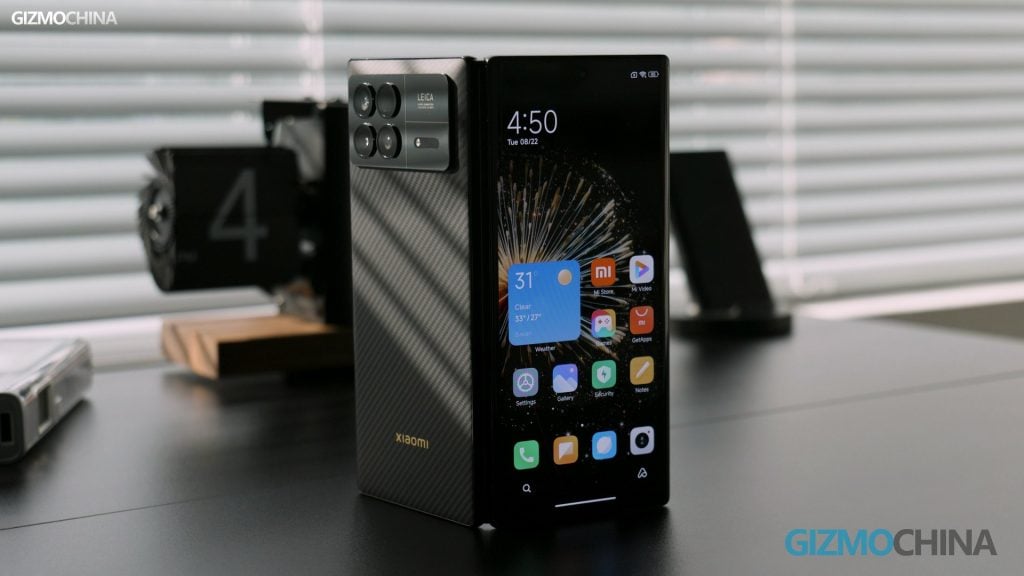
The latest product to receive HyperOS stable release is the company’s newest foldable smartphone — Xiaomi Mix Fold 3. Let’s go through the details.

Xiaomi Mix Fold 3
Xiaomi Mix Fold 3 (Review)

Xiaomi has begun to push HyperOS stable update for Xiaomi Mix Fold 3 in a gradual manner. The release arrives with build number 1.0.2.0.UMVCNXM.

The OTA update weighs a whopping 6.4GB. It comes with a lengthy changelog detailing the new features.  The update bumps up the security patch level to November 2023 and the Android version to 14.

This software build is being rolled out in batches. Only a select few users are receiving it. However, every unit should get it in the coming days.

The Xiaomi Mix Fold 3 is a China-exclusive smartphone. Hence, there is only one regional build (China) for this device.

In case you have imported the handset, you may want to check whether your unit has got the update. If it does not appear in the Settings now, it should be available later.

The Mix Fold 3 is Xiaomi’s third-gen book-style foldable phone. It sports an 8-inch main display and a 6.56-inch cover screen.

The handset is powered by a Qualcomm Snapdragon 8 Gen 2 chip paired with LPDDR5x RAM and UFS 4.0 storage. It has a 50MP (wide) + 10MP (3.2x telephoto) + 10MP (5x periscope) + 12MP (ultrawide) quad-camera system and two 20MP front-facing cameras.

The phone draws energy from a 4,800mAh battery. It carries support for 67W wired and 50W wireless charging standards.

RELATED:

OxygenOS 14 Open Beta 2 arrives for the OnePlus 9RT and OnePlus 9/9Pro

OnePlus has started the rollout of the OxygenOS 14 Open Beta 2 update for the OnePlus 9RT, OnePlus 9, and OnePlus 9 Pro. After waiting for more than a month, OxygenOS 14 Open Beta 2 is finally here for all these smartphones. The update is currently seeding only for the Indian units. There are many new changes and bug fixes that are part of the latest Open Beta 2 for smartphones.

The new update also adds the November 2023 Android Security Patch for all three smartphones. Further, it improves battery life and fixes issues with the home screen. The users would be delighted to use the new, improved build of OxygenOS 14 Open Beta. There are many other changes, which are listed below in the official changelog. However, the changelog is the same for all three smartphones:

Changelog

System

 • Integrates the November 2023 Android security patch to enhance system security.

 • Improves system stability and performance.

 • Extends the battery life in some scenarios.

 • Fixes an issue where the Home screen might be unresponsive. 

Communication

 • Improves the stability of mobile network connections. 

Connections

 • Improves the stability of Wi-Fi connections. 

Camera

 • Improves the stability of Camera.

 • Fixes an issue that might cause blurry images in Pro mode

Apps

 • Fixes an issue that might cause App Market to crash. 

Users on OxygenOS 14 Open Beta 1 can check for updates by heading to System Settings > About device and Tap to Update. Still, it is not advised for users who have the smartphone as their sole daily driver. There are still many bugs and issues which may cause inconvenience for the users

However, new users can also apply for the update by heading to Settings > About device > Tap up to date > Tap icon on the top right > Beta program > Follow the steps to apply. The users may update them after charging their smartphone battery to their respective level and freeing up to at least 5GB of storage. Before applying, make sure your device is running these builds:

OnePlus 9

  • LE2111_13.1.0.592(EX01)
  • LE2111_13.1.0.591(EX01)
  • OnePlus 9 Pro
  • LE2121_13.1.0.592(EX01)
  • LE2121_13.1.0.591(EX01)

OnePlus 9RT

  • MT2111_13.1.0.593(EX01)
  • MT2111_13.1.0.592(EX01)
  • MT2111_13.1.0.591(EX01)

We hope OnePlus brings stable updates for all three devices soon. In another story, the OnePlus Pad received the stable OxygenOS 14 update.

Related:

Nokia 106 4G, Nokia 110 4G Get YouTube Shorts And More Cloud Apps

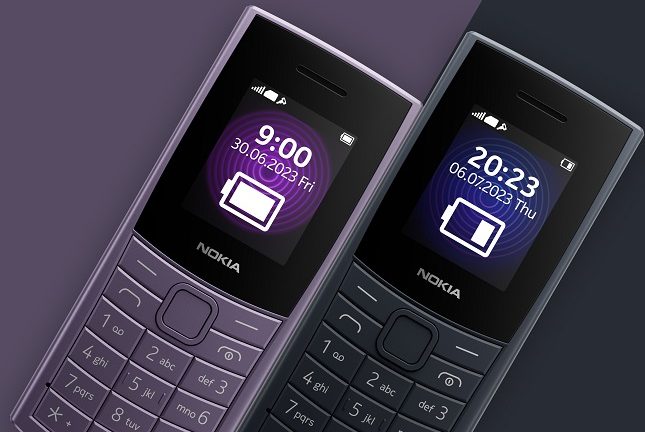
Nokia offers a range of feature phones globally. Earlier this year, HMD Global, the maker of Nokia announced the Nokia 106 4G and Nokia 110 4G in India. Both are affordable offerings under Rs 2,500 segment. Now, the company has announced the availability of eight cloud apps on the Nokia 106 4G and 110 4G. This will provide feature phone users with an immersive application experience. Read on to know all the details. 

Nokia introduces cloud applications for Nokia 106 4G and 110 4G

Nokia

Nokia has announced YouTube Shorts on the Nokia 106 4G and Nokia 110 4G. This will let users to watch short videos on the popular platform smoothly without any annoying lags and freezes. The content can be watched by signing into their Google account. There are additional cloud applications including BBC Hindi, Sokoban, and games like 2048 and Tetris. The company says that users can access news, weather updates, cricket scores, and more. These can be quickly accessed by pressing the cloud icon from the menu. 

Both the Nokia 106 4G and Nokia 110 4G now support UPI scan and pay feature for hassle-free transactions. The company will roll out over-the-air software updates for the existing Nokia 110 4G users in the next two weeks. 

The Nokia 106 4G and Nokia 110 4G offer a 1.8-inch display and are backed by a 1,450mAh battery unit. The phones are IP52-certified water-resistant and run on the S30+ operating system. HMD Global says that the addition of YouTube Shorts on feature phones further demonstrates the company’s steadfast commitment to providing an unmatched mobile experience

Related:

Samsung Registers ‘Expandable Screen’ Patents in Europe

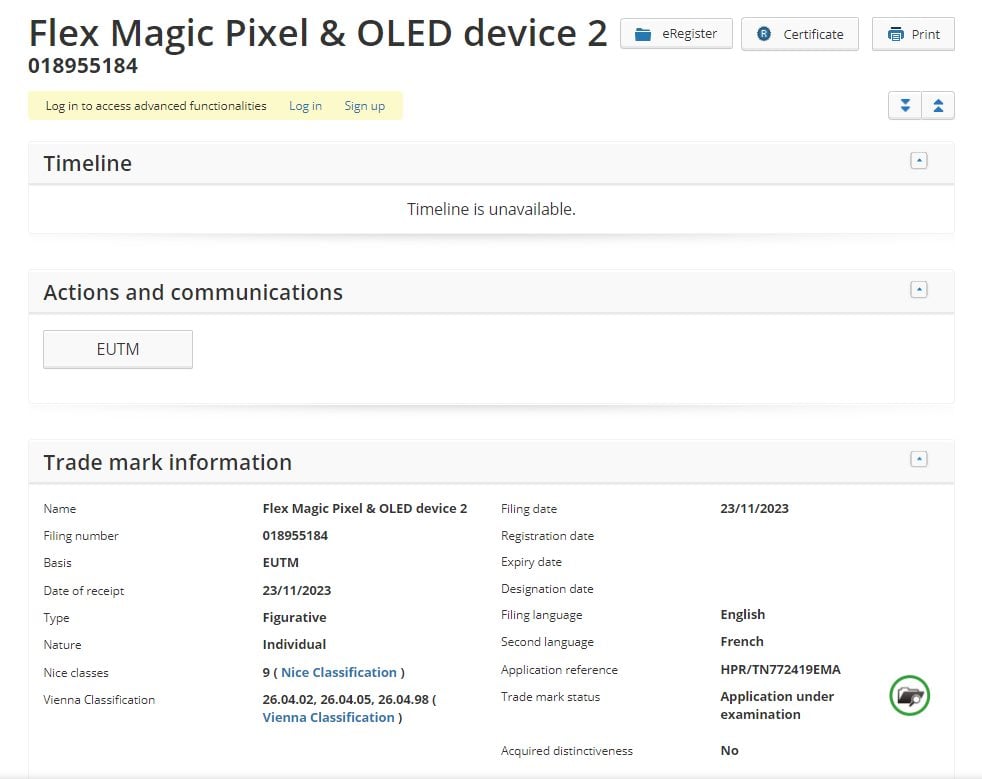
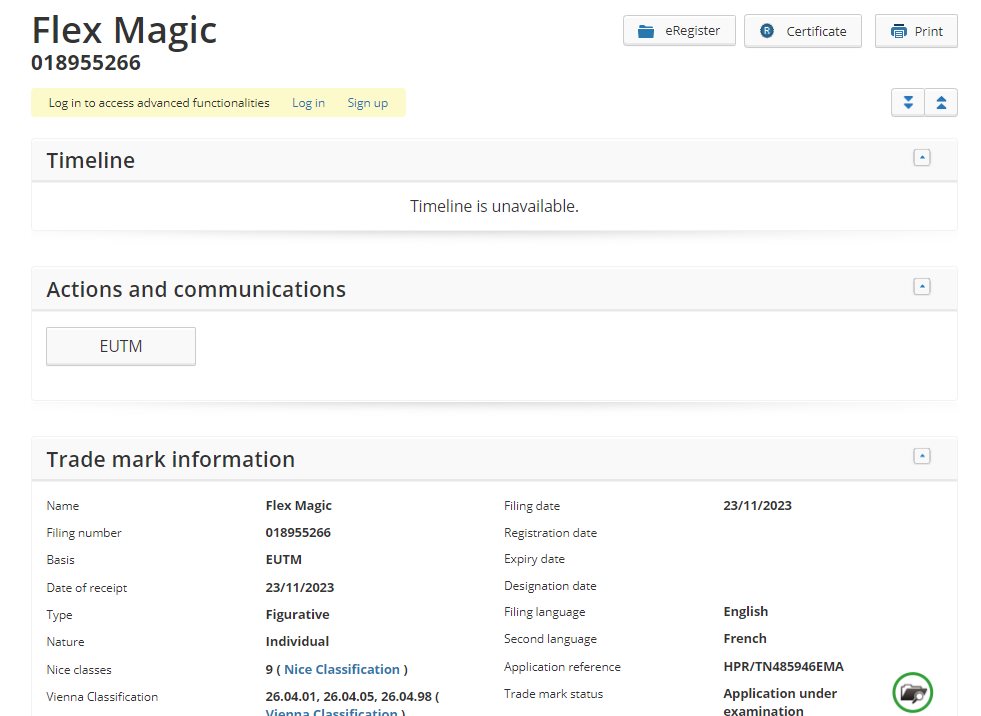
Following the trademark registrations of the Flex Magic and Flex Magic Pixel in South Korea, these have also appeared on Europe’s trademark listing website, EUIPO. The two patents come along with a slight description, which confirms it is an OLED display for smartphones, AR devices, and other big display appliances.

Samsung “Flex Magic” and “Flex Magic Pixel” Patents on EUIPO

Alongside the patent name, the company also applied for a logo trademark that depicts “Flex Magic Pixel” text along with a square object in the center. There’s another patent with the text “Flex magic” and a similar object in the center.

These appear to be OLED display panels for video monitors, televisions, smartphones, wearables, smart glasses, reality glasses, and tablet monitors. Importantly, it is labeled as an “expandable screen for smartphones” and “smartphones in the shape of a watch”. Considering the description, we are quite close to the mass availability of the expandable display technology.

We have already seen several projects, specifically a Flex Note device that was put on display during the SID 2022 Display Week held in San Jose California, USA, last year. There’s another Samsung Flex Gaming handheld concept showcased at CES 2023. A staff was demonstrating the folding screen with the controller peripheral.

The appearance of the Flex Magic Pixel and Flex Magic trademarks at the EUIPO and South Korea’s Certification Agency confirms something special with an expandable display in 2024. AR products are already in line, but a new smartphone could come close to reality.

There could be multiple use cases for such expandable displays, as these may change the standard form factor of several electronic devices. It may be quite an evolution, especially for smartphones.

Below is the full description of the “Flex Magic” patent:

LCD large-screen displays; light emitting diode displays; OLED (Organic light emitting diode) display panels; digital signage; digital signage display panels; display screens for digital cameras; video monitors; video screens; smartphones; display for smart phones; wearable video display monitors; electric luminescent display panels; cameras; computer display monitors; flexible flat panel displays for computers; televisions; television monitors; TV display panels; video display screens for portable communications apparatus; flat panel display screens; tablet computers; tablet monitors; notebook computers; head-up display apparatus for vehicles; head up displays for automobiles; 3D spectacles; virtual reality headsets; virtual reality goggles; virtual reality glasses; smartglasses; smartphones in the shape of a watch; expandable screen smartphones; devices for the projection of virtual keyboards; head-mounted video displays.

Below is the full description of the “Flex Magic Pixel” patent:

LCD large-screen displays; light emitting diode displays; OLED (Organic light emitting diode) display panels; digital signage; digital signage display panels; display screens for digital cameras; video monitors; video screens; display for smart phones; wearable video display monitors; electric luminescent display panels; cameras; computer display monitors; flexible flat panel displays for computers; televisions; television monitors; TV display panels; video display screens for portable communications apparatus; flat panel display screens; tablet monitors; head-up display apparatus for vehicles; head up displays for automobiles; 3D spectacles; virtual reality headsets; virtual reality goggles; virtual reality glasses; smartglasses; devices for the projection of virtual keyboards; head-mounted video displays.

Related:

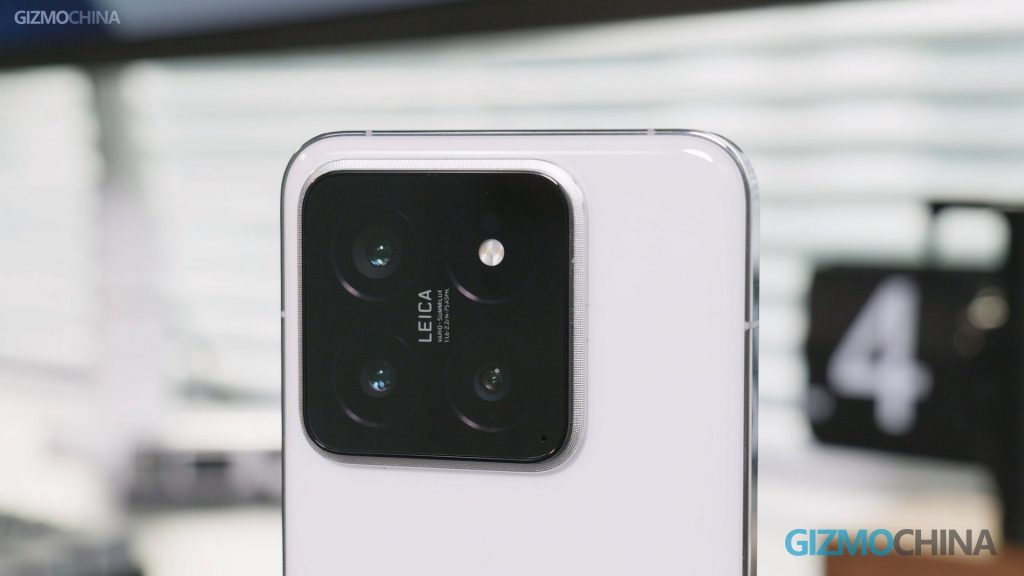
Xiaomi is testing a mysterious phone with 3.2x 75mm periscope zoom camera

Xiaomi just launched its latest flagship smartphones, Xiaomi 14 and Xiaomi 14 Pro,  in China. They were later followed by Redmi’s premium handsets — Redmi K70 series.

As per leaks, the company is still not done with releasing next-gen high-end phones. We know for sure that the firm will debut the Xiaomi 14 Ultra in the first half of 2024, which could be either accompanied or followed by foldables.

According to new information, there could be yet another high-end smartphone from the company. Let’s go through the details.

Xiaomi 14
Xiaomi 14 (Review)

Earlier today, Digital Chat Station (DCS) revealed that Xiaomi is testing a phone with a 3.2x 75mm periscope zoom camera. In the comment section of his Weibo post, the tipster clarified that this device is not Xiaomi 14 Ultra.

Unfortunately, he does not mention the name of the product. Perhaps, he is not sure about it at the moment.

As of now, all we can do is guess. We believe this handset could be Xiaomi Mix 5. We cannot rule out the possibility of it being a new Civi model too. Hopefully, we learn about this mysterious product sooner rather than later.

As far as the Xiaomi 14 Ultra is concerned, DCS had earlier disclosed that it will feature four 50MP cameras on the rear. The primary shooter will be a Sony LYT-900 sensor with f/1.6-14.0 multi-stop aperture.

The two of these four cameras will be paired with telephoto lenses, whereas the last one will be fitted with an ultrawide lens. The device will be powered by a Qualcomm Snapdragon 8 Gen 3 chip and will flaunt a quad-curved (micro curves) display with an ultrasonic fingerprint sensor underneath it.

Last but not least, the smartphone is said to be backed by a 5,180mAh battery with support for 90W wired and 50W wireless charging standards.

RELATED:

Huawei MatePad Air PaperMate Edition Goes Official In Global Markets

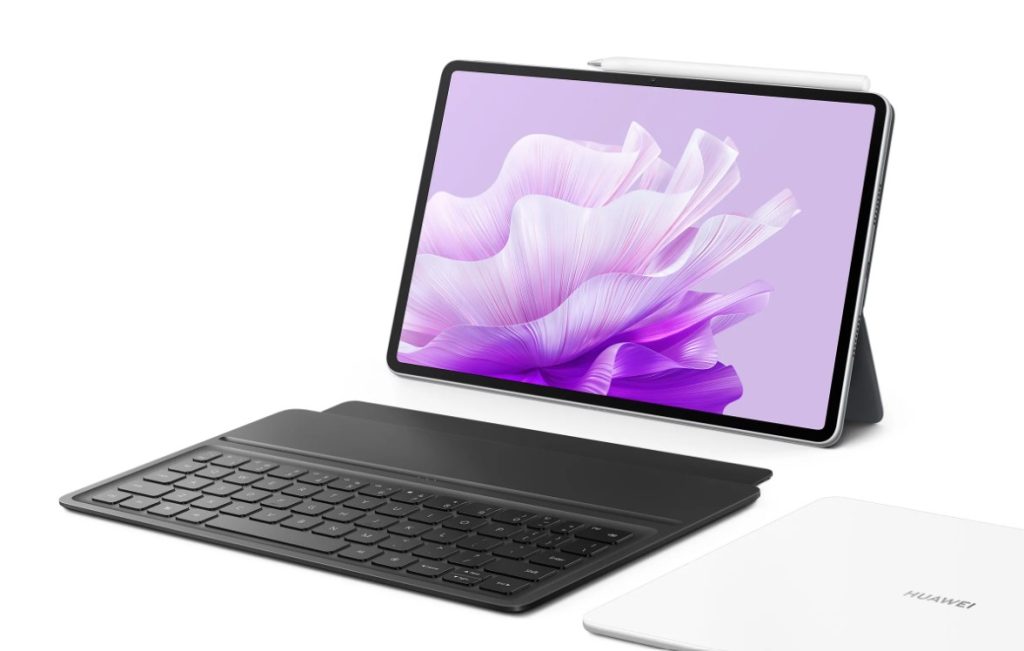
Huawei held an event in Dubai yesterday where it unveiled the MatePad Pro 13.2 and FreeClip open ear buds for the global markets. The brand also announced an additional tablet called the MatePad Air PaperMate Edition. It is similar to the MatePad Air that debuted in China earlier in May this year. Read on to know all the details about the tablet below. 

Huawei MatePad Air PaperMate Edition specifications and features

The Huawei MatePad Air PaperMate Edition has an 11.5-inch screen bearing a resolution of 2,800 x 1,840 pixels. It features a 144Hz refresh rate. The display has a nano-level anti-glare etching technology that is said to eliminate light interference and also offer a paper-like visual experience. The tablet is compatible with the second-generation Huawei M-Pencil with 4,096-level pressure sensitivity and is touted to offer the experience of pen on paper. 

The Huawei MatePad Air PaperMate Edition is 6.5mm thin and weighs just 509 grams. The back panel has a pill-shaped camera module housing a single 13MP sensor. There is an 8MP front-facing selfie snapper. Audio-wise, the tablet is equipped with four speakers and four microphones. 

Internally, the Huawei MatePad Air PaperMate Edition is powered by a Snapdragon 888 processor. It packs 12GB RAM and 256GB storage onboard. The device is backed by a 8,300mAh battery unit with support for 40W charging. Software-wise, the tablet runs on HarmonyOS 3.1 out of the box with various features. 

The Huawei MatePad Air PaperMate Edition is priced at EUR 649. It ships with a bundled keyboard. 

Related:

Samsung and ASML forge $760 Million partnership for Semiconductor advancements

Samsung Electronics and ASML Holding N.V. have committed to jointly invest 1 trillion won ($760 million) in establishing a cutting-edge research and development (R&D) facility in South Korea. This strategic move, sealed with a memorandum of understanding (MOU) at ASML’s Veldhoven headquarters, aims to propel the development of advanced memory chips leveraging ASML’s state-of-the-art extreme ultraviolet (EUV) equipment.

The R&D center, a pioneering endeavor for ASML as its first overseas facility established in conjunction with a semiconductor giant, will primarily focus on refining ultra-fine manufacturing processes for semiconductors utilizing ASML’s latest EUV technology.

South Korean President Yoon Suk Yeol’s presence during the MOU signing ceremony at ASML’s head office underscores the symbolic significance of this partnership. Details such as ownership ratios and spending distribution remain undisclosed.

This collaboration is pivotal for Samsung, which targets the commercialization of 2-nanometer chips by 2025, following the mass production of 3nm chips in the previous year. ASML’s expertise in EUV scanners for the 2nm process positions the partnership strategically amid intense competition with its rival TSML.

The deal extends beyond the R&D facility, as ASML initiated the construction of a customer education and equipment support service center near Samsung’s manufacturing base in Hwaseong. This additional investment by ASML, totaling around 320 billion won, demonstrates a commitment to fostering long-term collaboration.

SK Hynix is also part of the semiconductor alliance, signing an MOU with ASML to develop hydrogen gas recycling technology for EUV machines, aiming to reduce power consumption and costs significantly.

The collaboration is not limited to business interests; it extends to education. South Korea and the Dutch government have signed an MOU to jointly nurture semiconductor talent, with three South Korean graduate schools collaborating with Dutch companies and institutions.

President Yoon Suk Yeol’s visit to the Netherlands aims to forge a “chip alliance” between South Korea and the Netherlands, emphasizing the pivotal role of semiconductors in bilateral ties. This partnership holds paramount industry significance as the semiconductor sector becomes a strategic focal point amid global competition, particularly with China. Export restrictions on advanced chip-making equipment to China have intensified competition and tensions, making Yoon stress the strategic importance of the semiconductor industry.

Related:

(via)

OnePlus Nord N200 and OnePlus 9RT receive OxygenOS C.28 and OxygenOS 13.1.0.594, respectively

OnePlus is continuously seeding regular software updates for the OnePlus smartphones, alongside the OxygenOS 14 update. The company is pushing an incremental rollout for the OnePlus Nord N200 and OnePlus 9RT featuring the latest security patch and other fixes. The updates for both smartphones are region-limited.

OnePlus Nord N200 5G

OnePlus Nord N200 in the North American region is receiving firmware DE2117_11.C.28 with the December 2023 Android Security Patch. While the OnePlus 9RT India Variant is receiving the firmware MT2111_13.1.0.594(EX01) with the new security patch. Below is the official changelog, which is quite familiar for both the smartphones:

System

  • Integrates the December 2023 Android security patch to enhance system security. 

The updates on both smartphones are rolling out in a phased manner and may take some time to reach all units across the respective regions. The December 2023 security patch update for both devices will reach other regions very soon. However, users can manually check for updates by heading to Settings > About > Software Update > Check for Updates.

Users in India can submit bugs using Google Dialer, while in North America it is only possible via the OnePlus Community.

Additionally, the OnePlus 9RT will soon receive the OxygenOS 14 stable update, as the device has already received the OxygenOS 14 Open Beta update. Its successor, the OnePlus 10R, received Android 14 Open Beta 2 a few days ago. However, the OnePlus Nord N200 won’t receive the update as the smartphone was launched in 2021 and is set to get only three years of maintenance updates.

OnePlus is also bringing stable Android 14 to smartphones or tablet devices that are compatible. Recently, the OnePlus Pad received an update. The Udapte is already out for the OnePlus Nord 3, OnePlus 11R, OnePlus 10 Pro, OnePlus 11 Series, and others.

Related:

Nubia Z60 Ultra 3C listing reveals 80W charging

Nubia‘s next flagship phone, the Z60 Ultra, is set to hit the Chinese market on December 19th. The phone has been making headlines with recent teasers and glimpses of its design. Now, just days before its debut, the Nubia Z60 Ultra has popped up on the 3C certification website.

Nubia Z60 Ultra 3C certification

The 3C listing confirms that the upcoming Z60 Ultra will support 80W fast charging. The phone’s charger, model number NX721J, can deliver 18W, 45W, 60W, and 80W of power outputs. But more interestingly, the listing also reveals a GaN charger option for the phone.

Nubia Z60 Ultra 3C certification
Nubia Z60 Ultra 3C certification.

It’s a 65W GaN charger carrying the PA202 model number. The adapter has two USB-C ports with full 65W support each, alongside a single USB-A port capable of delivering 30W.

The platform also lists the different power outputs you can get when using different combinations of ports. For example:

  • Using both USB-C ports together gives you 63W (45W + 18W).
  • Using one USB-C port and the USB-A port together gives you 63W (45W + 18W).
  • Using one USB-C port and both the other USB ports together gives you 60W (45W + 15W).

Specifications

Reports suggest that Nubia Z60 Ultra will come with a 6.8-inch OLED panel that offers a 1.5K resolution and a 120Hz refresh rate. The device is confirmed to be powered by a Snapdragon 8 Gen 3 chip and might ship with up to 16GB LPDDR5X RAM and up to 1TB UFS 4.0 storage.

The company has also teased its camera setup which will be led by a 50-megapixel main camera. Accompanying it will be a 50-megapixel ultra-wide lens and a 64-megapixel periscope telephoto camera with 3x optical zoom. All three cameras are confirmed to have support for optical image stabilization.

Keeping the lights on will be a 6,000mAh battery, while the device will come pre-installed with MyOS based on Android 14.

Related:

Toshiba aims to commercialize its wireless power supply system

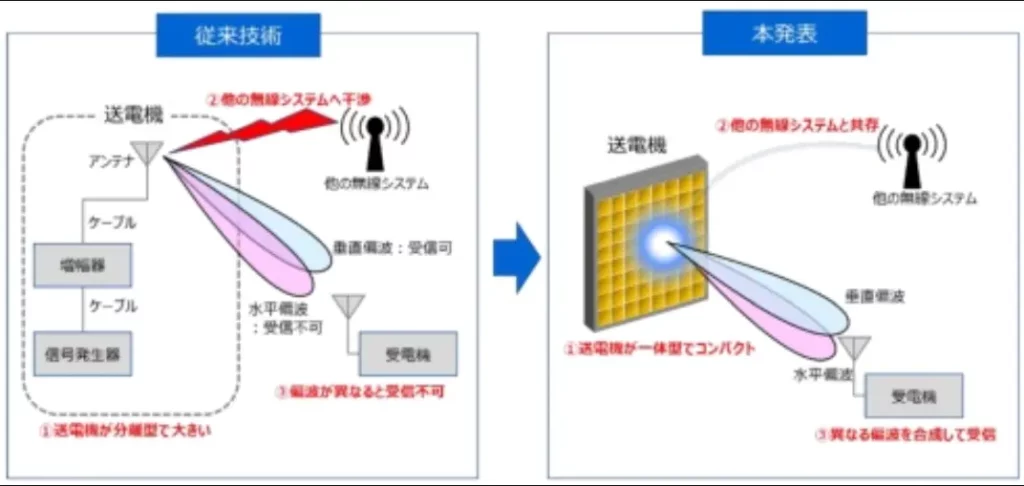
Toshiba is breaking new ground in the realm of wireless power supply systems with the utilization of microwaves to transmit electricity over considerable distances. While conventional technologies often face challenges with interference from surrounding radio waves, Toshiba’s innovation claims to overcome these issues, offering precise control over power supply.

Toshiba’s wireless power supply system uses microwaves for remote energy transmission

The Japanese tech giant envisions commercializing this groundbreaking technology after 2025, opening doors to a future where sensors and cameras can be powered without relying on conventional batteries.

One notable aspect of Toshiba’s wireless power supply system lies in its ability to detect Wi-Fi signals, and sending a microwave beam in that direction. What sets Toshiba’s technology apart is its claim to be the sole system globally capable of seamlessly coexisting with both wireless LAN and power supply system radio waves. It mitigates the concerns related to radio interference that have plagued similar technologies.

To enhance versatility, Toshiba plans to optimize its equipment for efficient radio wave reception from any location. The miniaturized power supply system is designed for easy installation on ceilings, promising a streamlined integration process.

Toshiba’s official demo pictures reveal impressive capabilities of the microwave remote power supply system. It boasts the ability to deliver 100mW of power at a distance of 3m and still provides a notable 1mW at a distance of 10m. It goes to show the system’s future potential to offer practical power solutions for various applications, especially in industrial settings where reliable and wireless power is crucial for powering various devices.

Related:

(Via)

Realme C67 4G spotted on Geekbench with Snapdragon 685 SoC, 8GB RAM & more

Realme is all set to drop its latest smartphone, the Realme C67 5G, on December 14. But that’s not all – the company has a 4G variant in the works too, primed for an announcement in Indonesia. Recent buzz reveals the Realme C67 4G making a cameo on the Geekbench benchmarking site, leaking some key details.

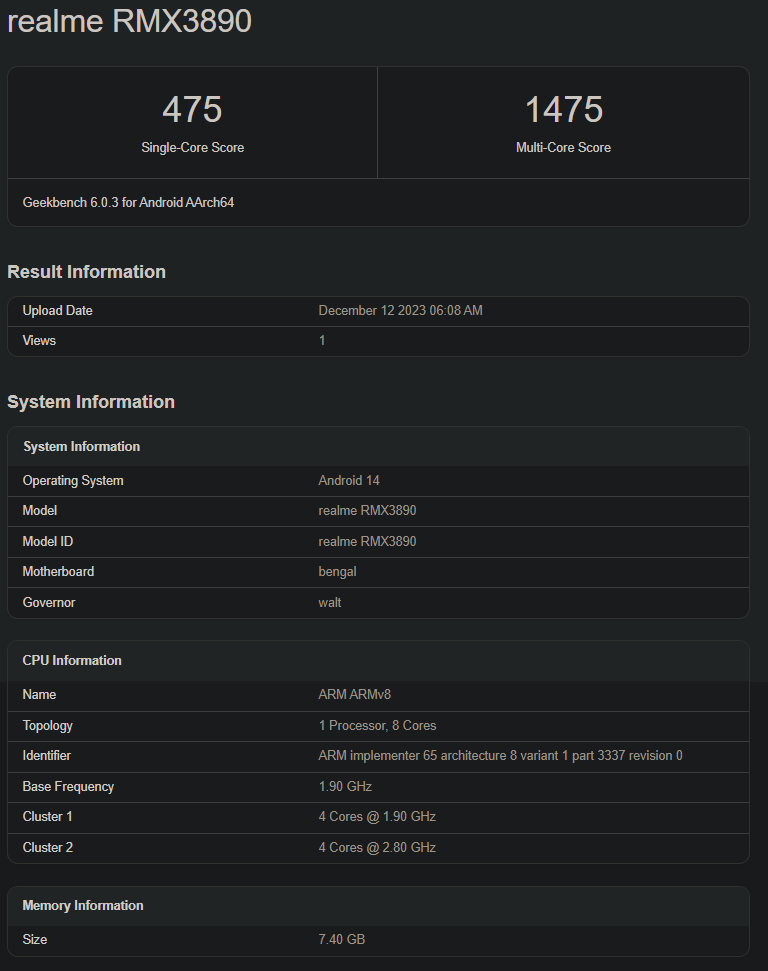
Realme C67 Geekbench

According to the Geekbench listing, the Realme C67 4G, carrying the model number RMX3890, packs a punch with an octa-core processor clocking up to 2.80GHz and the latest Android 14 OS. The processor on board is more than likely the Snapdragon 685. The benchmark scores hit 475 in single-core performance and 1,475 in multi-core performance.

Realme C67 4G teaser 1-
Realme C67 4G teaser

Realme C67 4G specs (leaked):

Previously, we covered a report regarding the leaked specifications of the Realme C67 4G. A Facebook user spills the details before the official launch in Indonesia, while a teaser from Realme Indonesia hints at an imminent release. The smartphone is likely to debut in a striking green color, mirroring its 5G sibling, with a sleek flat edge design and a centered punch-hole notch for the front camera.

Under the hood, the Realme C67 4G is rumored to pack a Qualcomm Snapdragon 685 SoC, boasting an integrated Adreno 610 GPU. Two storage options will be available – 8GB + 128GB and 8GB + 256GB. Camera-wise, expect an 8MP selfie shooter, and for power, a hefty 5000mAh battery with 33W SuperVOOC fast charging support. The smartphone doesn’t skimp on security, featuring a side-mounted fingerprint scanner, and it’s got you covered against dust and water with an IP54 rating.

In related news, Realme has recently launched the GT 5 Pro smartphone in China with a starting price of 3,399 Yuan (~US$479). It has been quite a while since we have seen a flagship killer of this caliber. Other than the cutting-edge Snapdragon 8 Gen 3 SoC, the device features a beautiful 1.5K 144Hz AMOLED display and a flagship-tier camera setup. You can know more about the device in our detailed review of the Realme GT 5 Pro.

RELATED:

Infinix Smart 8 HD goes on sale in India, check price and special offers

Infinix finally unveiled the new Infinix Smart 8 HD last week following various leaks and teasers. Now, the first sale of the latest budget grade smartphone from the company has kicked off. So let’s have a look at its specs, pricing, and special offers.

Infinix Smart 8 HD Pricing and Special Offers

The Infinix Smart 8 HD was announced in a single storage configuration in region but it was released in multiple color options. This includes Crystal Green, Shiny Gold, Timber Black, and Galaxy White variants. It is currently on sale on Flipkart, a popular e-retailer in India, for a price tag of 6,299 INR (roughly 75 US Dollars).

However, the smartphone maker is also offering a 10 percent discount to Axis Bank, SBI Credit, and Bank of Baroda Debit card and Credit card holders. This brings down the effective price tag to just 5,669 INR (roughly 68 US Dollars). Notably, the brand is also selling the device with EMI options as well. You can even check out our hands-on with the device by clicking here.

Infinix Smart 8 HD
Infinix Smart 8 HD

Infinix Smart 8 HD Specs

The Infinix Smart 8 HD sports a 6.6-inch HD+ IPS LCD panel that has a 90Hz refresh rate, 180Hz touch sampling rate, an 8-megapixel selfie camera, and 500 nits of peak brightness. Meanwhile, the rear packs features a 13-megapixel dual camera setup. Interestingly, the display features what the company calls Magic Ring, which is clearly inspired by Apple’s Dynamic Island.

Under the hood, the Smart 8 HD is equipped with the UNISOC T606 SoC that is paired with 3GB of RAM and 32GB of internal storage. This storage can be further expanded by another 2TB via a microSD card slot. The device is powered by a large 5,000mAh battery pack that is paired with the standard 10W charging. Other notable features include Android 13 GO OS based XOS 13 custom skin out of the box, side mounted fingerprint scanner, Bluetooth 5.0, and up to 3GB of virtual RAM expansion support.

RELATED:

Samsung Galaxy S21 Receiving One UI 6 Update in South Korea

Most compatible Samsung Galaxy smartphones are already receiving the OneUI 6 update globally. The remaining ones will receive it very soon as the development progresses for each device. In continuation of the One UI 6 update for the Galaxy S21 Series, the company is seeding it for all South Korean users. The build versions G991NKSU4FWK7/ G991NOKR4FWK7/ G991NKOU4FWK6 and G998NKSU4FWK7/ G998NOKR4FWK7/ G998NKOU4FWK6 are rolling out to the respective smartphones.

The update for the Galaxy S21 is available in some European nations, including Switzerland, etc. The Indian variants are yet to see the latest update, which is expected soon. The update for the Galaxy S21 non-beta users weighs around 2.3GB, while the beta users are receiving only a 354MB build.

The update is already out, is rolling out in a phased manner, and may take some time to reach all devices. However, users can manually check for the update by heading to Settings > System Update > Download and Install

The Samsung Galaxy S21 is receiving its third consecutive major update, as the smartphone was launched with OneUI 3.1 on board. The phone will also get an Android 15 update next year, as per the official promise of four years of software updates.

There are massive new changes and performance improvements that will surely enhance the user experience. Below are some major changes for the Galaxy S21 as part of the OneUI 6.0 update.

  • Picture and video previews in the Share panel.
  • More sharing options.
  • Multitasking improvements through a pop-up window that can remain open after you leave the Recents screen.
  • A lock screen clock that can be positioned freely.
  • Simplified app icon labels for the home screen.
  • A new Weather widget, more information in the Weather app — including an interactive map view — and enhanced Weather illustrations.
  • A wide range of camera improvements, including a new widget, more alignment options for watermarks, quick access to resolution settings, easy-to-apply filters and effects, and more.
  • Improvements to Calendar, Reminder, and Samsung Internet.
  • Quick actions for apps in Finder search results.
  • Recommendations in the My Files app to help you free up storage.

Apart from OneUI 6.0, the Korean giant is also working on the OneUI 6.1 version, which is currently in development. Several new changes are set to overlap the enhanced features of its predecessor. OneUI 6.1 is mainly focused on bringing AI to most of its applications and enabling users to be more productive. It is expected to roll out for the Galaxy S23 first and later take place on other compatible smartphones.

Related:

(via)

Phone (3) Incoming? Nothing schedules event for Mobile World Congress (MWC) 2024

The Mobile World Congress (MWC) is scheduled for February 26-29 next year. Although the event is a few months away, Nothing has already started sending invitations for their participation in the event.

Historically, Nothing has used MWC to build excitement around their phones before — Carl Pei showed off the Phone (1) in 2022, while Nothing announced a partnership with Qualcomm for Phone (2) in MWC 2023. So, it’s safe to say we can expect some exciting hints about their next device, possibly from the team itself or even Carl Pei directly.

Nothing invites for Mobile World Congress (MWC) 2024.

Now, the new invite poster says “save the date” for February 27, with the cryptic message “Nothing to see.” We think it is a clear hint about a new phone, but specifics are still under wraps.

We do know they’re working on a new smartphone based on certifications, Details are scarce, but rumors point to a new smartphone called the Nothing Phone (2a). It’s already passed some certifications, and it could launch in India under the model number AIN142. 

This phone is rumored to sport a 6.7-inch AMOLED screen with a centered punch-hole for selfies. A leaked image even reveals the familiar Glyph interface glowing on the back. Unfortunately, details about the device, including whether it’s Phone (3) or the rumored Phone (2a), are still under wraps.

Last year, Nothing started teasing the Phone (2) around this time. So far, it’s radio silence, but leaks often heat up as launch dates approach. We could be just days or weeks away from more details about this upcoming Nothing phone, whatever its name may be.

Related:

Chinese Chip maker Changxin Memory Technologies (CXMT) makes strides in DRAM Technology amidst Global challenges

Changxin Memory Technologies (CXMT), China’s leading dynamic random access memory (DRAM) developer, unveiled a significant technological breakthrough at the 69th IEEE International Electron Devices Meeting (IEDM) in San Francisco. The company showcased its prowess in advanced gate-all-around (GAA) transistors, a critical component for cutting-edge 3-nanometer grade chips.

CXMT’s presentation highlighted its design capabilities for GAA transistors, signaling a noteworthy achievement in the competitive landscape of memory chip production. Industry analysts have commended the company’s progress, especially its understanding of next-generation memory chip production.

Notably, CXMT faces challenges with US export restrictions, yet the company demonstrated progress despite trade limitations. Emphasizing the importance of the free flow of ideas for industry innovation, CXMT denied any violation of US sanctions or export controls.

CXMT recently announced the production of China’s first lower-power Double Data Rate 5 (LPDDR5) DRAM chip, positioning itself as a formidable player closing the gap with industry giants like Samsung and SK Hynix. The ongoing US-China tech war, marked by export restrictions on key chip manufacturing equipment, has not deterred CXMT’s pursuit of advanced semiconductor technologies.

The company, founded in 2016, has a strategic focus on high-bandwidth memory (HBM) chips crucial for AI applications and is actively developing next-generation logic chips using GAA transistors. Amidst challenges, such as US-imposed export controls on semiconductor-related technologies, including Electronic Design Automation (EDA) software, CXMT’s progress indicates resilience in the face of adversity.

In financial developments, Bloomberg reported a delay in CXMT’s initial public offering (IPO) due to volatile market conditions. The company now plans to raise funds privately at a valuation of approximately 140 billion yuan ($19.5 billion). The funds will be utilized to expand production capacities, aligning with CXMT’s anticipation of a memory market revival in 2024.

However, CXMT’s success in developing advanced DRAM technology may attract increased scrutiny and potential tightening of sanctions by the United States. With CXMT having received significant financial support from the Chinese government’s investment fund, American officials may scrutinize the source of funding, potentially impacting the company’s activities. 

CXMT’s strategic focus on positioning itself for growth in the semiconductor industry reflects its determination to navigate global challenges and emerge as a key player in the evolving landscape of memory technology.

Related:

(via)

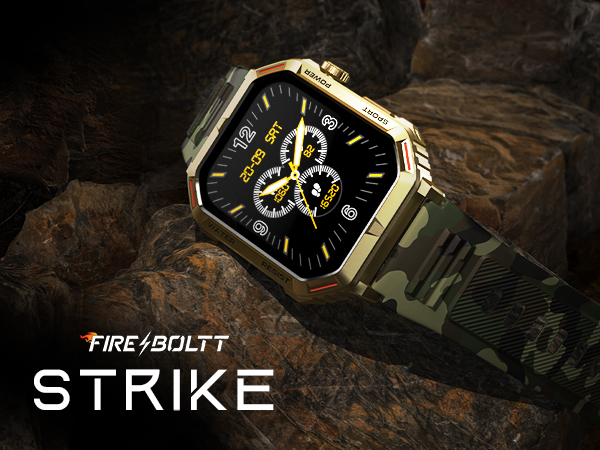
Fire-Boltt Strike smartwatch launched in India with tall AMOLED display, Bluetooth Calling, & IP67 rating

Fire-Boltt has just unveiled a brand-new smartwatch model in the Indian market. The new wearable is the Fire-Boltt Strike, which features some notable specs and features like an alloy frame, AMOLED display, and more. So let’s have a look.

Fire-Boltt Strike Design and Specs

For those unaware, the Fire-Boltt Strike sports a tall 1.96-inch AMOLED display that has a 410 x 502 resolution and 500 nits of peak brightness. This panel is surrounded by a zinc alloy middle frame, which is paired with a strap that comes in various colors. It offers various health related sensors that offer heart rate monitoring, SpO2 blood oxygen tracking, sleep monitoring, sleep mapping, and menstrual cycle tracking. The new smartwatch houses a built-in microphone and speaker that enables it to offer Bluetooth Calling. These also work with the AI voice assistant feature as well.

Fire-Boltt Strike

On a single full charge, the company is promising a battery life of up to 8 days in the classic mode. Other notable features include a rotating crown, 123 sports mode support, Call History, Quick Dial pad, multiple watch faces, IP67 water and dust resistance, water reminder, 25 days of Standby mode, and various other smart features like smart notification, weather updates, and camera and music controls.

Fire-Boltt Strike Pricing, Color, and Availability

The Fire-Boltt Strike has just been released in the Indian market in multiple color options. This includes Black, Camo Black, Gold Black, Orange, and Came Green. It is available for purchase for a price tag of 1,799 INR (roughly 22 US Dollars) and is listed on Amazon India. Notably, the new budget smartwatch also arrives mere days after the brand unveiled the new Fire-Boltt Rise Luxe smartwatch, which also offers Bluetooth Calling.

RELATED:

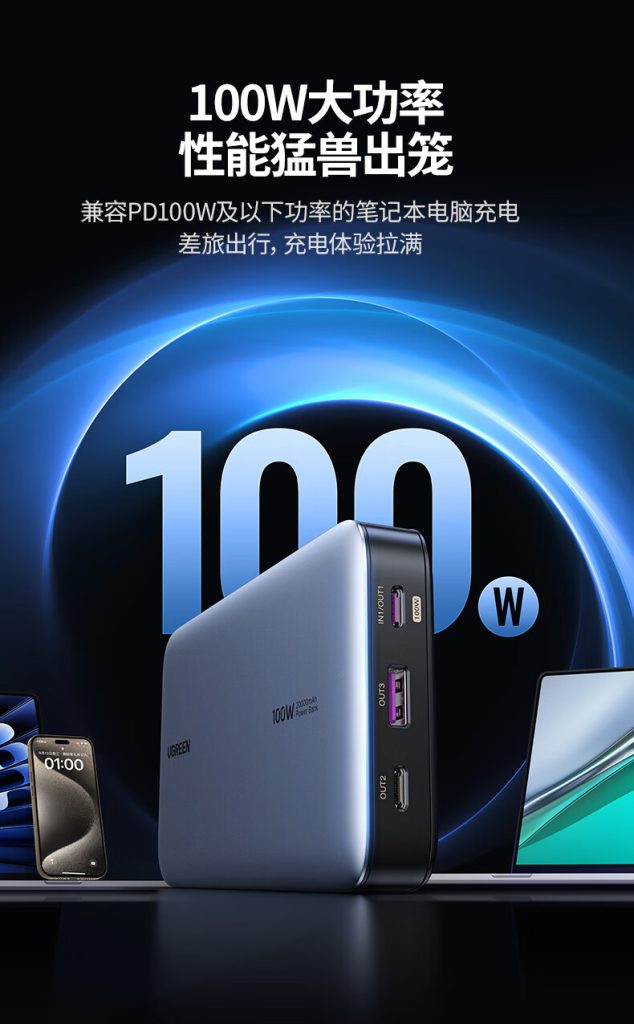
Ugreen Nexode 100W 20000mAh powerbank with 65W rapid self-recharge launched for $63.99

Ugreen has launched the Nexode 100W 20000mAh Portable Charger, a high-efficiency power bank, in both global and Chinese markets. This power bank is designed to meet the power requirements of modern tech users. Let’s delve into the specs of this product.

Ugreen Nexode 100W

Ugreen Nexode 100W Specifications:

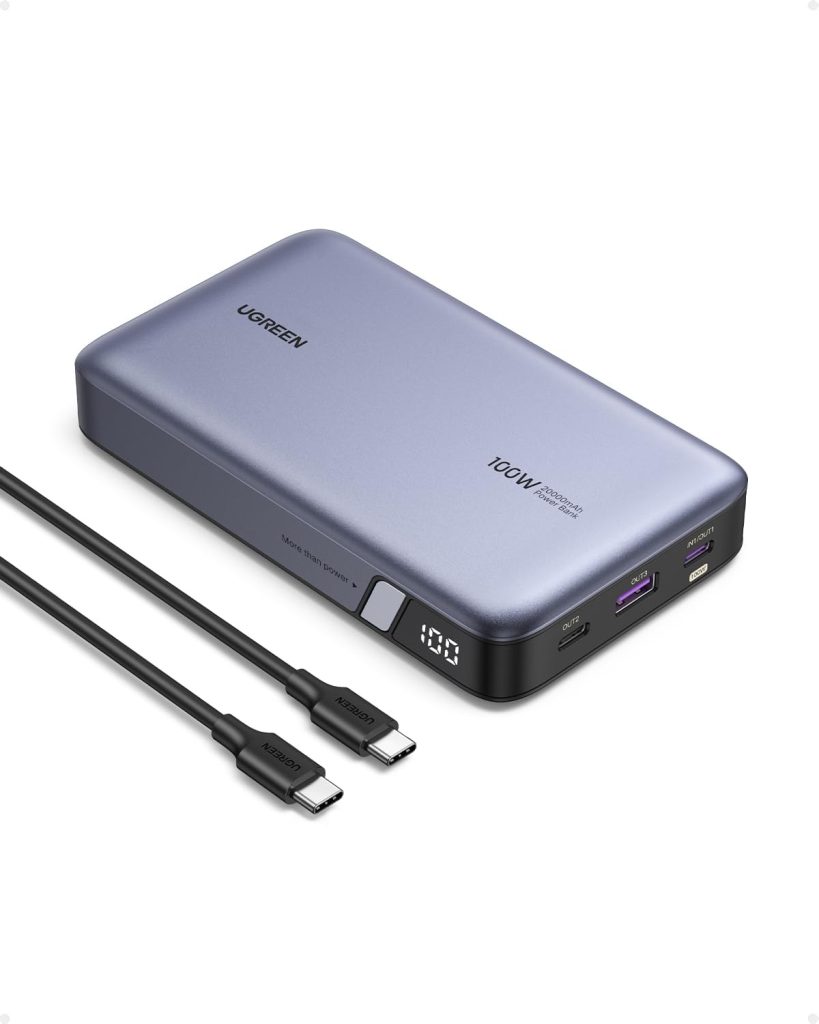
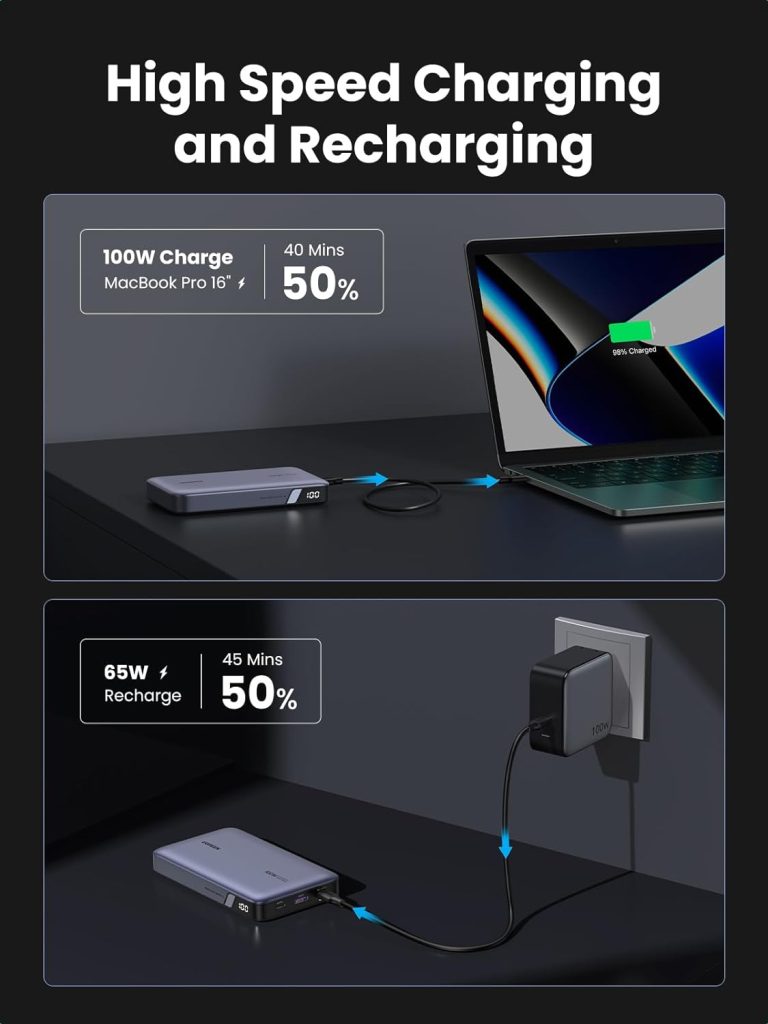
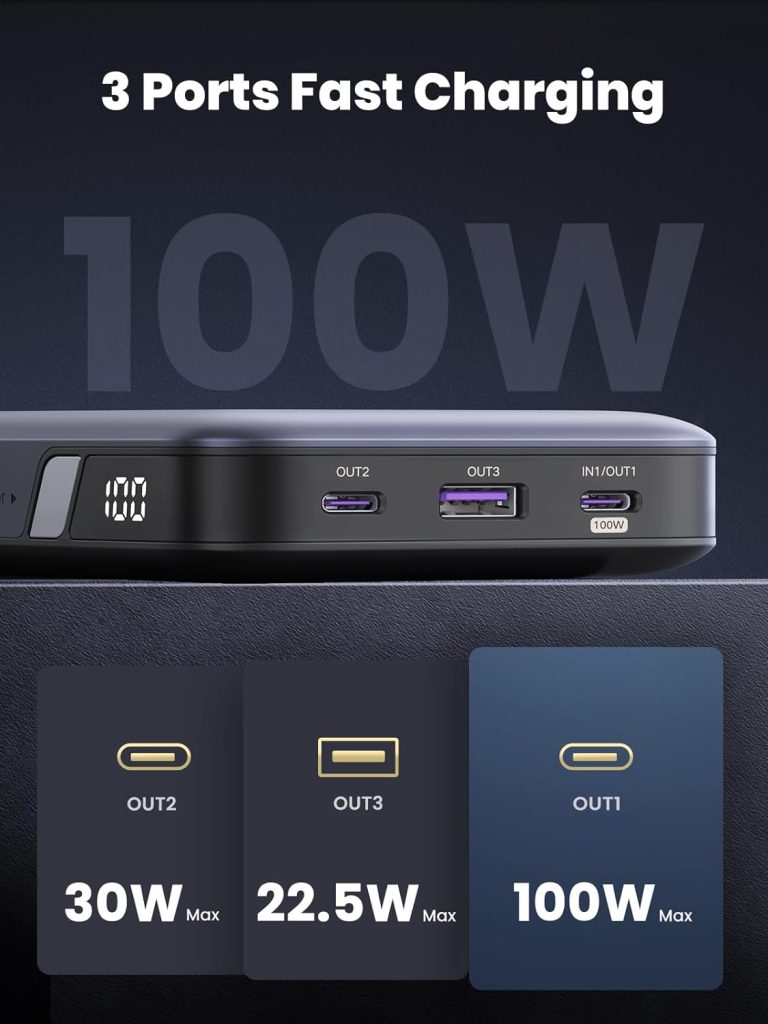
The Nexode 100W stands out for its impressive charging capabilities. It offers a maximum fast charging power of 100W and can charge three devices simultaneously, thanks to its two USB-C ports (one providing up to 100W and the other up to 30W) and a 22.5W USB-A port. This configuration allows for rapid charging of various devices, such as a MacBook Pro 16″ to 42% in 30 minutes and an iPhone 15 to 60% in the same duration.

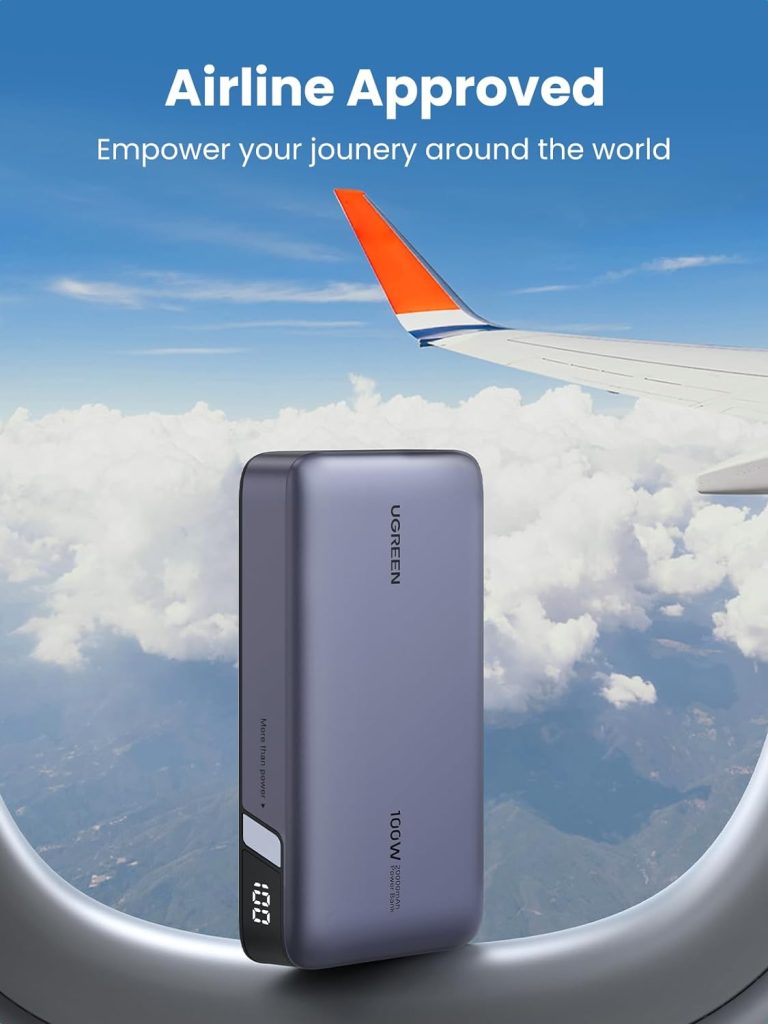
Ugreen Nexode 100W also boasts a 65W rapid recharge feature, allowing the power bank to fully recharge in just 2 hours, a considerably faster rate compared to conventional power banks. The Nexode 100W uses a 21700 battery cell, known for its durability with an 800-cycle lifespan, and is approved for airline travel.

Designed for convenience and portability, the powerbank is 20% lighter than similar models, easing the burden for users on the move. It also boasts a digital LED screen for easy monitoring of the battery level.

The power bank is versatile and compatible with a wide range of devices including MacBook Pro/Air, iPad Pro/Air, iPhone series, Galaxy S23 Ultra, Pixel 7 Pro, and various smaller devices like AirPods and smartwatches. It supports several charging protocols like PD3.0, PPS, QC3.0, AFC, FCP, and SCP, ensuring wide compatibility.

In terms of safety, the Nexode 100W features advanced temperature control technology and multiple safety protections, including overcharge, overcurrent, and short circuit protection.

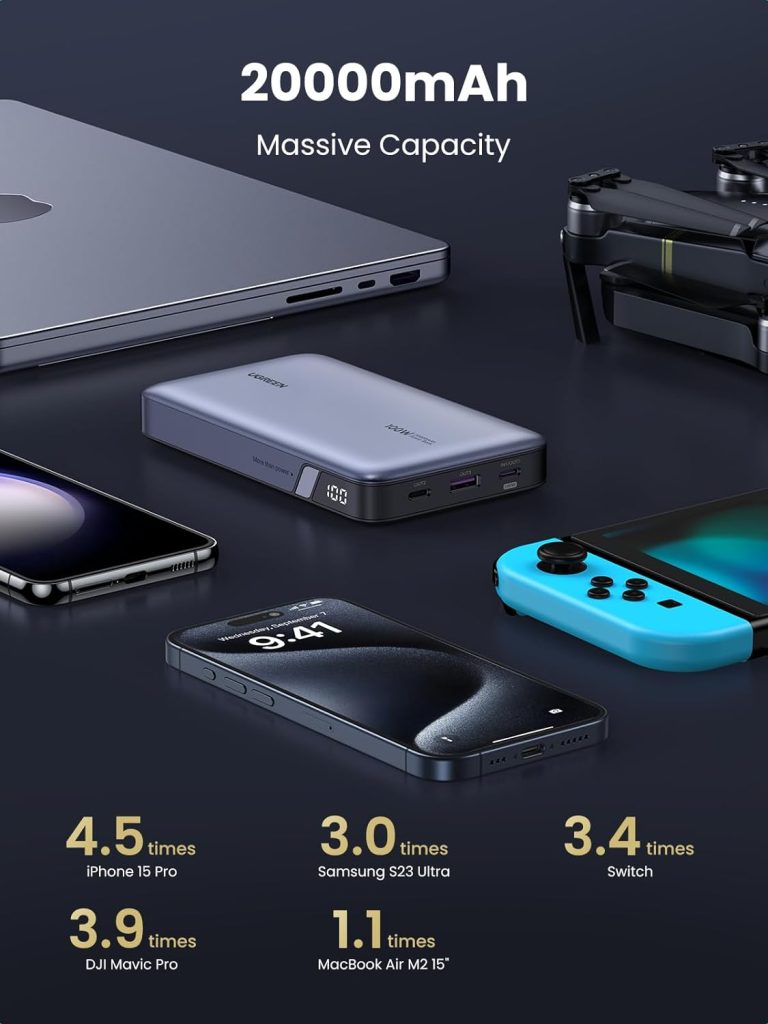
It also includes a 240W USB-C to USB-C cable, enhancing its practicality for on-the-go charging. The charger is capable of delivering 5-7 days of battery life, charging an iPhone 15 Pro up to 4.5 times and a MacBook Air 15” about 1.1 times.

Pricing and Availability

This product is available on Amazon UK and Amazon.com for £79.99 and $79.99, respectively, with ongoing sale prices at £63.99 and $63.99. While in the Chinese market, it is available on JD.com for 299 Yuan ($42).

Earlier this month, Ugreen also launched a 160W Nexode Pro Gallium Nitride charger in China for 429 Yuan ($60).

RELATED: