Advertisement

Microsoft may run Xbox Game Pass streaming for free with ads

Microsoft could be considering the idea of a new free Xbox Game Pass tier. A company executive has shared his thoughts regarding a new free tier for Xbox cloud game streaming that will support advertisements. So here are all the details.

Microsoft Xbox Game Pass May Stream with Ads

During the Wells Fargo TMT Summit, Tim Stuart, the Xbox Chief Financial Officer, told attendees that the company wants to bring Game Pass “to every screen that can play a game.” This will prove to be quite difficult, but a method that could help expand the service might be an ad supporting tier on game streaming. The change may help make the Game Pass a lot more accessible to gamers residing in emerging markets.

Stuart stated, “The vision I like to talk about is we have xCloud game streaming, so you can subscribe to Game Pass Ultimate and you can stream hundreds of games to really any endpoint that has a browser experience”. He adds that “For models like Africa, or India, Southeast Asia, maybe places that aren’t console-first, you can say, ‘hey, do you want to watch 30 seconds of an ad and then get two hours of game streaming?’

Ths would basically mean that Microsoft would run short ads that bring hours of gameplay to players in regions that do not have a high-end disposable income. Markets like Africa primarily game on smartphones and other mobile devices, so this feature will likely be more attractive in those regions. The American tech giant is rumored to be working on such a business model for the Xbox Game Pass, although, no official information has been revealed as of right now. So stick around for more as we will be providing updates when additional information is available regarding this matter.

RELATED:

(Via)
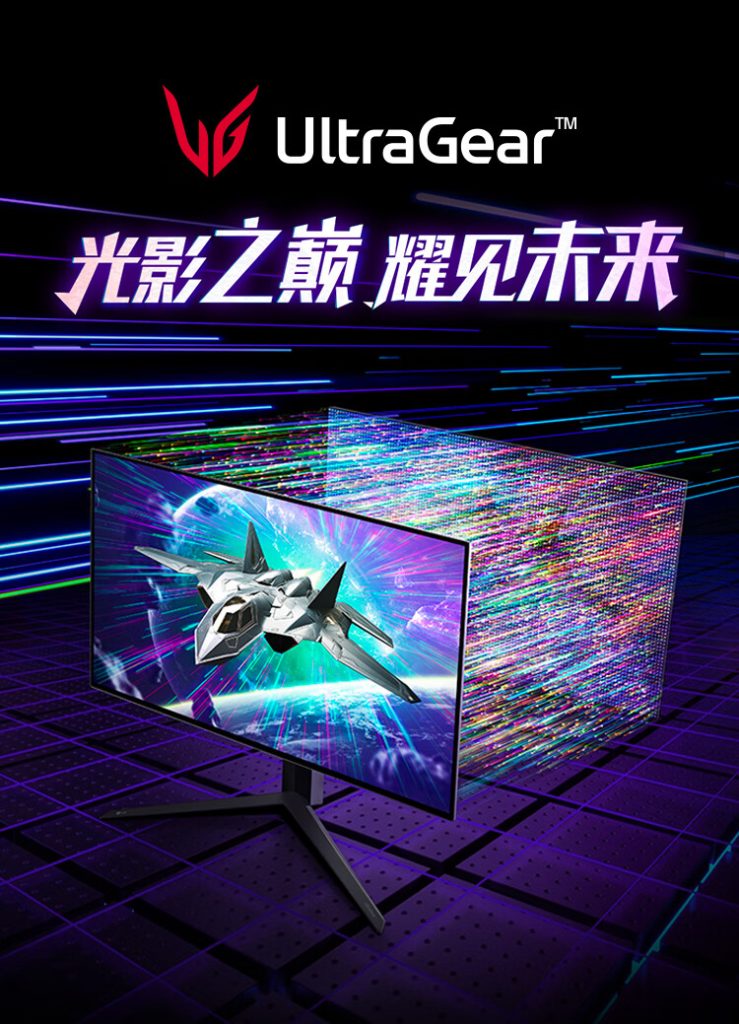
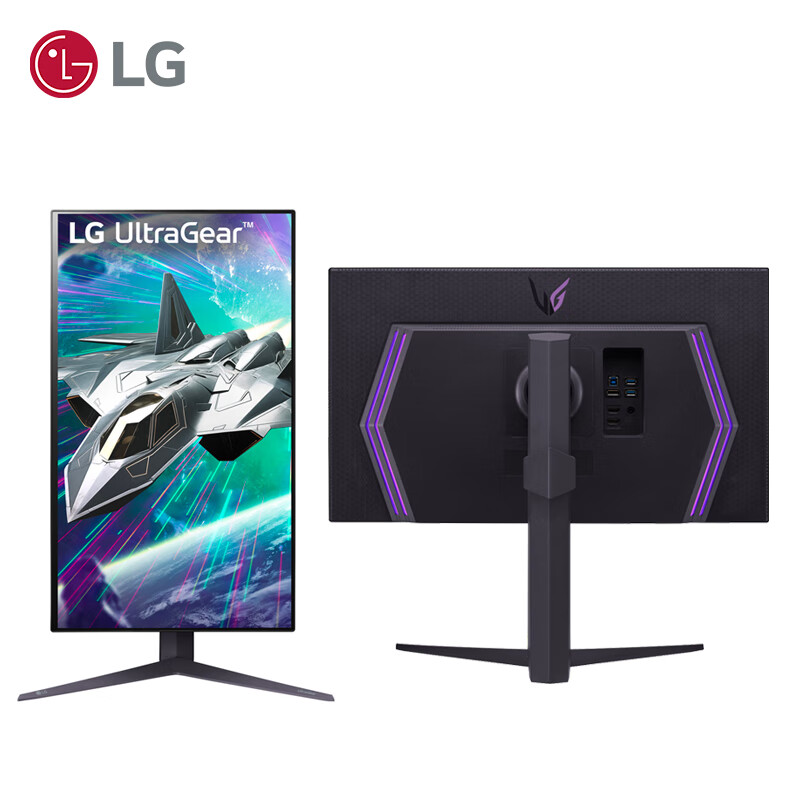
LG UltraGear 27GR95UM, a 4K 160Hz Nano IPS Mini LED gaming monitor unveiled for 9999 yuan ($1,395)

LG has unveiled the UltraGear 27GR95UM Mini LED monitor in the Chinese market, which is now open for pre-orders on JD.com. Let’s check out the specifications of this monitor.

LG UltraGear 27GR95UM Monitor

LG UltraGear 27GR95UM Specifications:

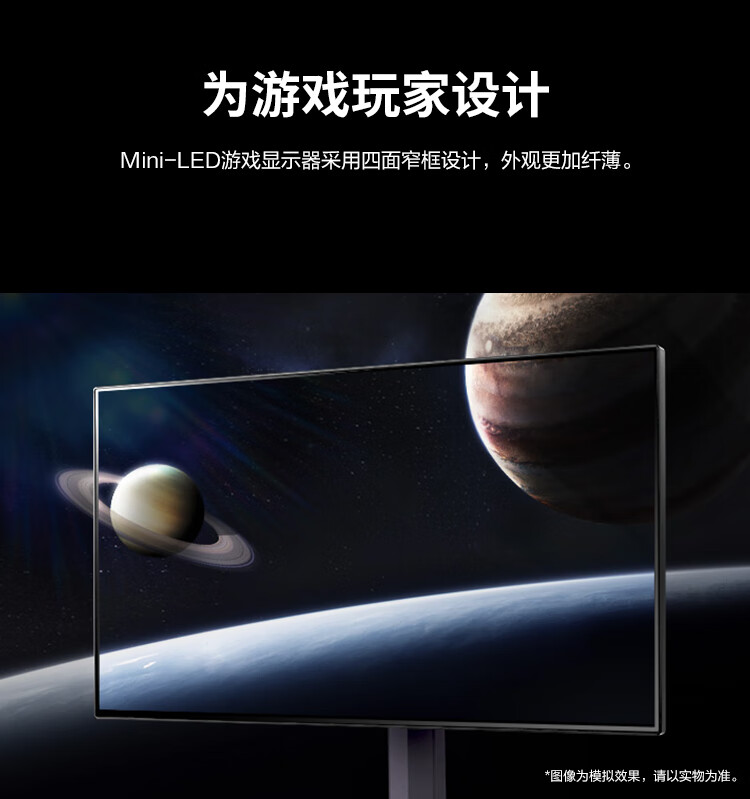
It boasts a 27-inch 4K Nano IPS Mini LED panel with a refresh rate of 160Hz, ideal for demanding gaming and professional applications. The design of the monitor is sleek, featuring a four-edge narrow bezel, and it includes an adjustable stand that supports tilt and height adjustments for ergonomic comfort.

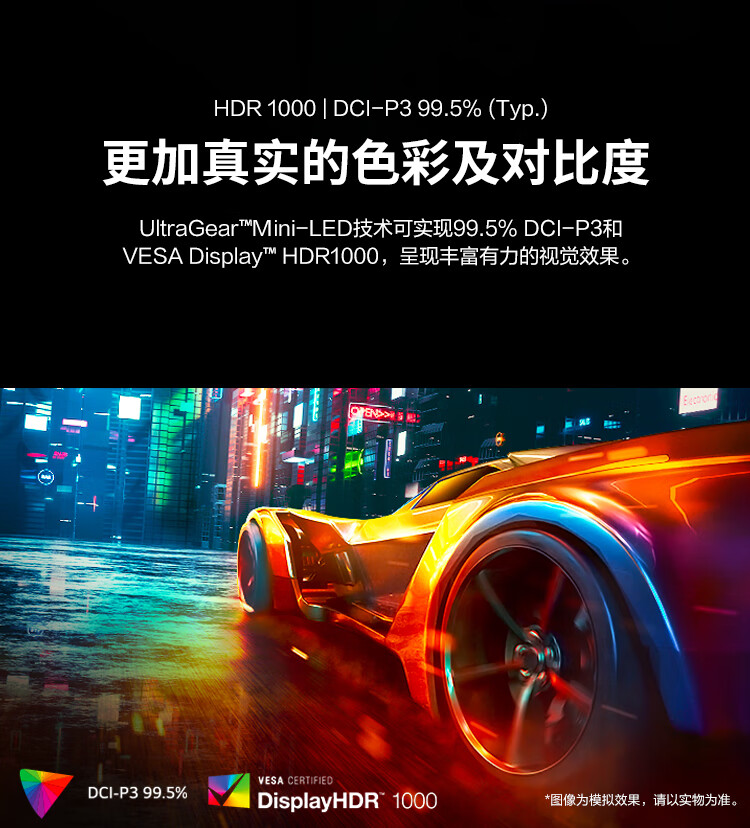
The monitor comes with a 1560-zone backlight, which enhances the contrast and delivers vivid, realistic visuals, essential for an immersive gaming experience. The monitor is HDR1000 certified, ensuring a high dynamic range for better color and brightness. It covers up to 99.5% of the DCI-P3 color gamut, making the colors it displays more vibrant and accurate.

LG UltraGear 27GR95UM

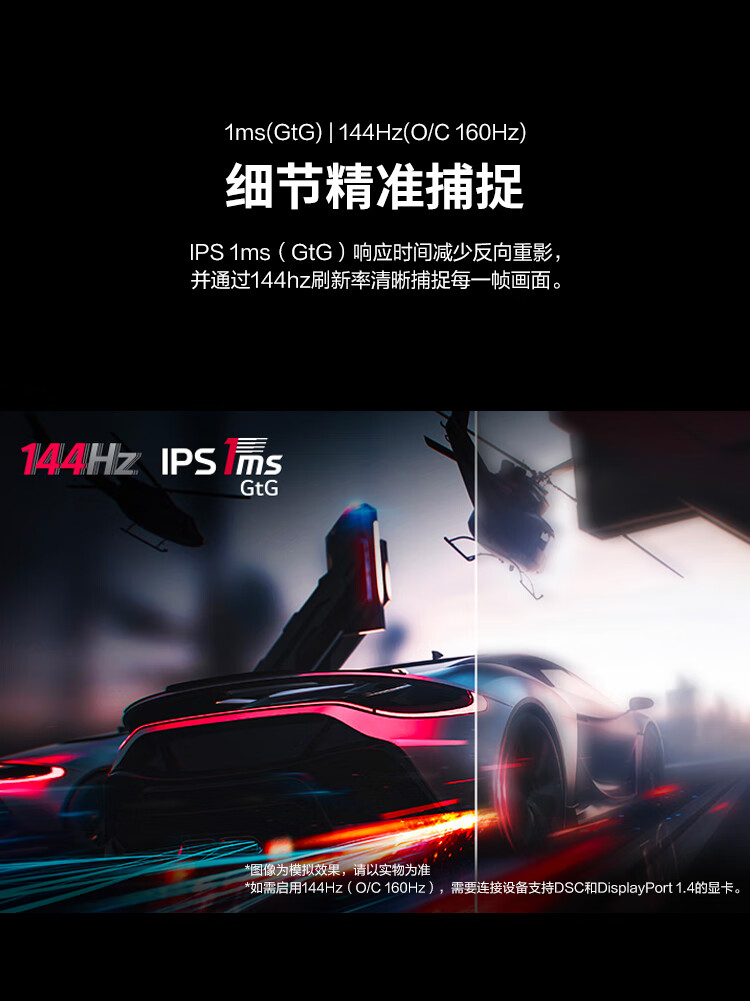
Additionally, the gaming monitor is equipped with ATW anti-glare technology, which maintains clarity even at wide viewing angles of up to 178 degrees. This is particularly useful in gaming or collaborative work environments where multiple people might be viewing the screen from different angles. The monitor also boasts a rapid GTG response time of 1ms, minimizing motion blur and capturing each frame clearly, which is crucial for fast-paced gaming and dynamic video content.

For gamers, the monitor supports NVIDIA G-SYNC and AMD FreeSync Premium Pro technologies, reducing screen tearing. It also comes with gaming-specific features like Black Stabilizer for better visibility in dark scenes, FPS Counter for real-time frame rate display, and Dynamic Action Sync for reduced input lag.

In terms of connectivity, the monitor includes HDMI 2.1 and DP 1.4 interfaces, although it lacks a full-featured USB-C port. It also features built-in dual 7W speakers, providing a decent audio experience without the need for external speakers. Furthermore, the monitor incorporates LG Live Color Low Blue Light technology to reduce eye strain during extended use.

Pricing and Availability

The monitor is up for pre-order with a price tag of 9999 yuan ($1,395). The official release date for this high-end gaming display is December 18th. Earlier this month, LG also launched a 144Hz curved monitor with a Nano IPS panel in China.

RELATED:

ASUS ROG Phone 8 Design Officially Revealed

We are just a few weeks away from the Consumer Electronics Show 2024 (CES) in Las Vegas. Yesterday, Taiwanese brand ASUS announced a ROG event a day before the annual tech event commences on January 9. The company could launch multiple laptops as well as the next-generation ROG Phone 8 series at the event. In fact, the latter is also confirmed to launch in China on January 16. Now, ahead of the launch event, we have got a clear look which also seems to be official at the forthcoming gaming smartphones. 

ASUS ROG Phone 8 surfaces in official image

A initial teaser of the ROG Phone 8 gave us a slight glimpse at the upcoming offering along with confirming a redesigned camera module. ASUS posted a blind camera test (via) on its official website that asks visitors to select the best-looking photo in various scenarios. Once the test is completed, the page reveals the ROG Phone 8 giving us a better look at the design of the upcoming offering’s back panel.

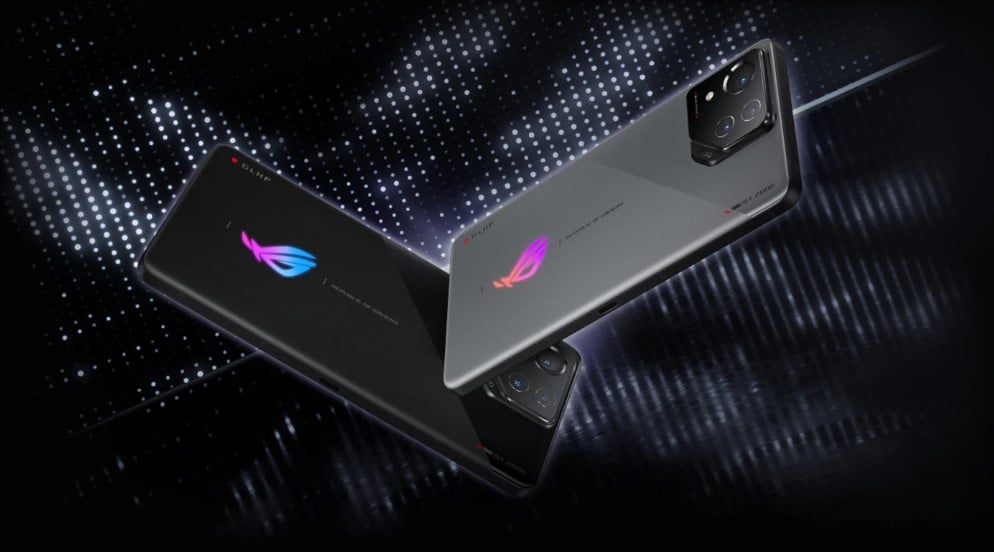
Right off the bat, the ASUS ROG Phone 8 is seen with a boxy frame compared to the slim profile on its predecessor. The back panel has a dual-tone design separated by a lighter and darker shade of the same color variant (Grey and Black) of the device. The upcoming offering has a protruding squarish camera module that cuts off from the right edge. It houses one large sensor, two smaller lenses, and an LED flash unit. The bottom part of the device has the ROG’s RGB logo. 

The ASUS ROG Phone 8 curves around the edges and we could also spot a USB-C port on the left edge of the device. Additionally, the test revealed pictures mentioning ‘telephoto (x3)’ and ‘telephoto (x10)’ categories. This potentially indicates that the ROG Phone 8 series may come with a telephoto camera. 

The ASUS ROG Phone 8 is already confirmed to be powered by a Snapdragon 8 Gen 3 processor. 

Related:

Huawei commences construction of mobile network equipment factory in France

In a strategic move to fortify its global economic position, Huawei Technologies is gearing up to construct a state-of-the-art mobile phone network equipment factory in Brumath, near Strasbourg, France. Originally outlined in 2020, the ambitious plans faced setbacks due to the COVID-19 pandemic, but recent reports indicate that the initiative is back on track.

The Chinese tech giant has invested a substantial 200 million euros (US$215.28 million) in the project, showcasing its commitment to establishing a manufacturing presence in Europe despite challenges in certain markets. The construction, set to kick off in 2024, marks a significant milestone for Huawei’s expansion strategy in the region.

According to a French government source, the facility is anticipated to be operational by 2025, contributing to local economic growth and employment opportunities. However, given the delays in construction commencement, there is speculation that the timeline for completion might be adjusted accordingly.

The decision to build the factory comes against the backdrop of the French government’s stance on Huawei’s 5G equipment licenses. In 2020, the government communicated to telecom operators that they could not renew Huawei 5G licenses upon expiration, signaling a move to phase out Huawei from mobile networks in the country. However, recent developments indicate an extension of Huawei 5G licenses in some cities following a meeting between French Economy Minister Bruno Le Maire and China’s Vice-Premier He Lifeng.

This move by Huawei aligns with broader debates among European leaders on how to “de-risk” while maintaining cooperation with China. Despite security concerns leading to restrictions on Huawei and ZTE equipment in some European countries, the construction of the French manufacturing plant signifies Huawei’s determination to strengthen its European presence.

The project’s financial investment and employment plans are noteworthy, with Huawei expecting to employ 300 individuals at the facility’s launch, with future projections reaching 500 employees in the long term.

As Huawei proceeds with the construction, the company has chosen to remain silent on specific details about the project. Future updates are eagerly anticipated, promising more insights into the factory’s exact timeline and potential benefits for the region as Huawei continues to make strides in its global expansion efforts.

Related:

(via)

iQOO 12 launched in India with SD8 Gen 3 chip, 144Hz 1.5K display, 3x periscope zoom camera, and more

The iQOO 12 series made its initial debut in China in early November. The lineup consists of two models, namely iQOO 12 and iQOO 12 Pro. Just like previous generations, the pro version will remain exclusive to the brand’s home country.

Last week, the vanilla iQOO 12 was announced in Southeast Asia. Today, the device has made its way to India as scheduled.

The iQOO 12 for India and other markets is one and the same phone. The only difference is its pricing across different regions.

iQOO 12

iQOO 12 Specifications

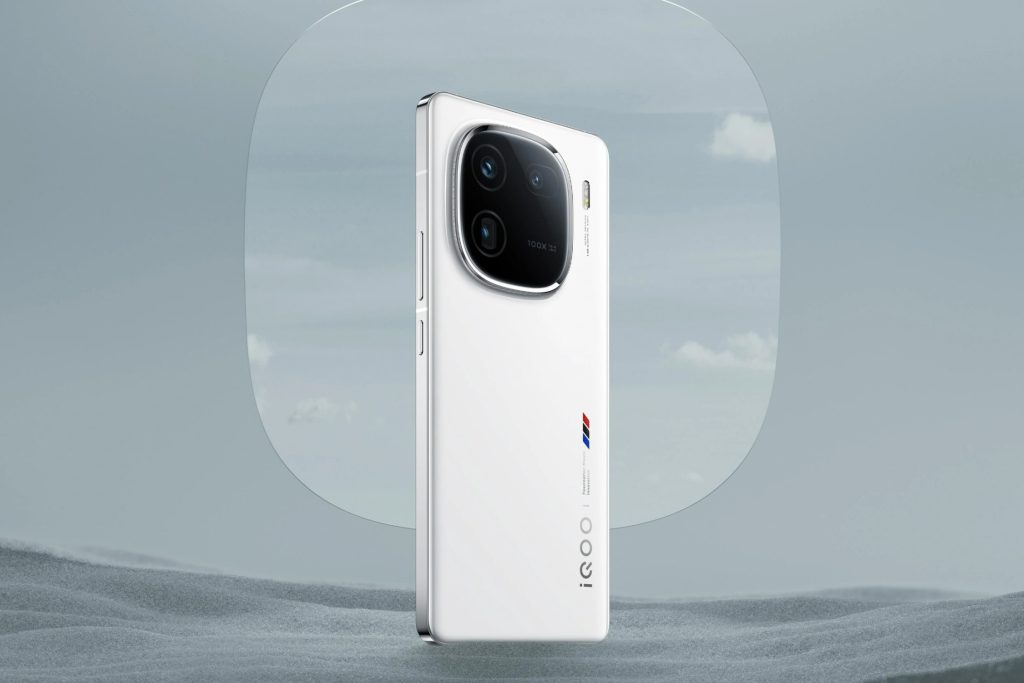
The iQOO 12 arrives with a different design compared to its predecessor iQOO 11. The aluminum alloy frame is not only flat but also shiny.

The camera module is a rounded square and larger than the rectangular island found on the previous model. Both Legend and Alpha color variants come with a glass rear panel instead of a vegan leather finish for the former version

On the front, the iQOO 12 is equipped with a 6.78-inch centered punch hole AMOLED display with a resolution of 2800 x 1260 pixels (1.5K), 452 PPI, and a 144Hz refresh rate. The 10-bit LTPO panel supports up to 2160Hz PWM dimming and 3000 nits local peak brightness level.

The handset is powered by a Qualcomm Snapdragon 8 Gen 3 chipset paired with LPDDR5x RAM and UFS 4.0 storage. It also houses a VC liquid cooling system and a Q1 display chip for an enhanced gaming experience.

The phone sports a triple camera system on the rear consisting of an OIS-assisted 50MP OmniVision OV50H primary sensor, a 50MP Samsung JN1 ultrawide unit with autofocus, and an OIS-assisted 64MP OV64B 3x periscope zoom shooter. On the front, it has a 16MP Samsung S5K3P9 snapper.

The device ships with Funtouch OS 14 based on Android 14 and is guaranteed to receive three major OS upgrades. Connectivity options on it include dual SIM, 5G, WiFi 7, Bluetooth 5.4, GNSS, NFC, and USB Type-C. It also features an optical in-screen fingerprint sensor, an x-axis linear vibration motor, and dual stereo speakers.

Last but not least, the smartphone draws energy from a 5,000mAh battery and supports 120W wired charging.

iQOO 12 Price in India

The iQOO 12 carries the following price tags in India.

  • 16GB + 256GB – ₹52,999 (~$635)
  • 16GB + 512GB – ₹59,999 (~$720)

The handset can be availed in either Alpha or Legend color options. It is scheduled to go on sale from December 13 with ₹3,000 bank discount and up to ₹5,000 additional exchange discount.

RELATED:

POCO X6 5G picks up TDRA certification ahead of launch, could be an interesting device

The POCO X series has been quite stale for the last couple of years. While 2023’s X5 Pro was a decent offering with a Snapdragon 778G chipset and a 108MP primary camera, the Snapdragon 695-powered vanilla X5 5G model was hard to get excited about. This year, things are sure to change as both of these lower-mid rangers are getting some powerful hardware.

POCO X6 5G TDRA

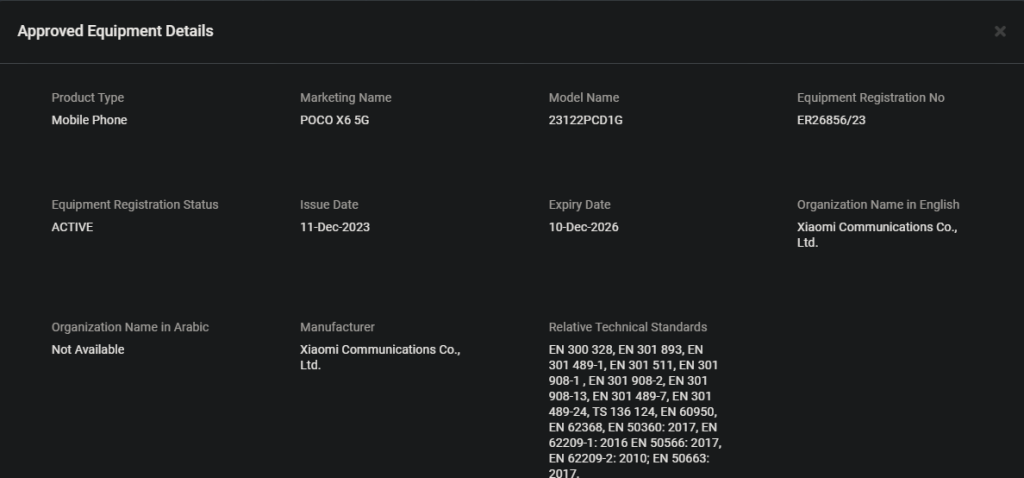
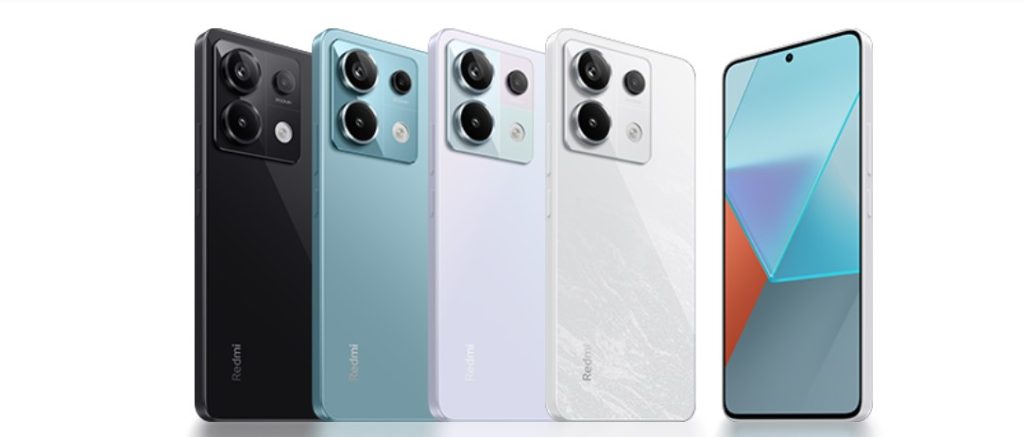
The launch timeline of the POCO X6 series is currently unknown, however, the smartphones have cleared many regional certifications that suggest it might happen sooner rather than later. The latest certification picked up by the POCO X6 5G is the UAE’s TDRA, with model number “23122PCD1G”. Interestingly enough, tipster and developer Kacper Skrzypek has previously claimed that this model number will be a rebrand of the Chinese Redmi Note 13 Pro. That being said, the X6 Pro may replace the 200MP primary camera sensor with a 64MP OV64B40 sensor.

Redmi Note 13 Pro

The rest of the specifications are expected to be the same as the Redmi Note 13 Pro. So here’s what you can expect.

POCO X6 5G specs

The POCO X6 5G smartphone is expected to include a 6.67-inch flat AMOLED screen with a 1.5K display resolution and a 120Hz refresh rate. The screen could feature Corning Gorilla Glass Victus protection.

Under the hood, it might feature a Snapdragon 7s Gen 2 processor, accompanied by multiple storage and RAM options. On the software front, it will have an Android 13-based MIUI 14 for POCO. A large 5,100mAh battery is also expected with 67W fast charging.

For optics, the phone might come with a 64MP primary camera paired with a 13MP ultra-wide-angle lens and a 2MP third unit. It will likely feature an X-axis linear motor, NFC, dual-band WiFi, Bluetooth 5.3, and 5G connectivity.

We would like to point out that these specs are based on the assumption that we get a 1:1 rebrand of the China model (except for the primary camera). It is also possible that POCO decides to cut down on some other specifications as well to keep the cost down.

RELATED:

Vivo X100 Pro Appears On Google Play Console Hinting At An Imminent Global Launch

Vivo is expected to launch its flagship X100 series smartphones in the global markets soon. If the recent accidental listing on the brand’s official website is anything to go by then the X100 series may indeed debut on December 14. The Vivo X100 series released in China last month. So we can expect the global variants to come with the same specifications. Now, ahead of the launch, the Vivo X100 Pro has been spotted on the Google Play Console certification website. 

Vivo X100 Pro surfaces on Google Play Console

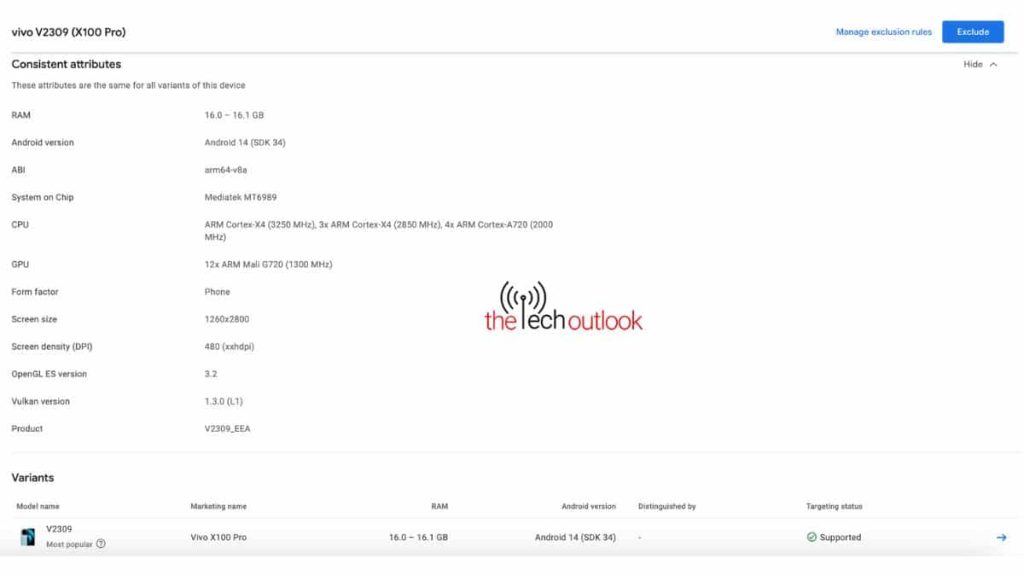
The Vivo X100 Pro has a model number V2309 on the Google Play Console. The certification listing mentions a MediaTek MT6989 system on chip and it comprises four Cortex-X4 cores at 3.2GHz, three Cortex-X4 at 2.8GHz, and four Cortex-A720 ticking at 2GHz. The chipset configuration corresponds to the Dimensity 9300 processor. The smartphone will pack 16GB RAM onboard and it will ship with Android 14 OS out of the box. 

The Google Play Console database also reveals that the Vivo X100 Pro will have a display resolution of 1,260 x 2,800 pixels and a 480 xhdpi pixel density. The smartphone is also seen in a Light Blue color option. This is everything the certification listing reveals about the smartphone.

As for the core specifications, the China variant of the Vivo X100 Pro has a 6.78-inch curved AMOLED display with a 1.5K resolution and 120Hz refresh rate. It features an IP68 rating and a circular camera module housing 50MP main, ultra-wide, and telephoto sensors. The smartphone is equipped with Dimensity 9300 coupled with up to 16GB LPDDR5T RAM and 1TB UFS 4 storage. It is backed by a 5,400mAh battery cell with support for 100W wired and 50W wireless charging. 

Related:

Via

Xiaomi’s Electric Car Spotted on the Road, Looking Even Better Than Its “Official Images”

Xiaomi is gearing up to make waves in the electric vehicle market. In line with this, the company recently shared images of the SU7, SU7 Pro and SU7 Max, giving us our first glimpse. However, the images were taken in a studio, and we had no idea how the vehicle would look without camouflage. That is, until today, as the Xiaomi car was spotted on the roads without any camouflage. Here are the details…

Xiaomi Electric Car SU7 Caught in the Wild, Green and Gleaming

The video, which is only 6 seconds long, likely captures the Xiaomi SU7, presumably there for testing, for the first time in a live setting. The SU7 inscription on the license plate of the vehicle, which appears to be green, is clearly readable, and it looks much better than in the photos. Unfortunately, the video is quite short and does not show anything about the front view of the vehicle.

As you know, the first generation of the Xiaomi electric vehicle family will consist of three models: SU7, SU7 Pro, and SU7 Max. The mass production and release date have been set for the first half of 2024. According to claims, the company is striving to keep the price of the vehicle, which will be available with both single and dual motor options, around $20,000. However, a definitive pricing has not been established yet. While not definitive, some features of Xiaomi car models are as follows:


Xiaomi SU7

  • General Specifications:
    • Body Style: Electric sedan
    • Dimensions (mm):
      • Length: 4,997
      • Width: 1,963
      • Height: 1,455 (1,440 without LiDAR sensor)
      • Wheelbase: 3,000
    • Curb Weight (kg): 1,980
    • Wheel Options: 19-inch and 20-inch
    • Tire Specifications:
      • 19-inch: 245/45 R19
      • 20-inch: 245/40 R20
    • Top Speed (km/h): 210
  • Powertrain:
    • Fuel Type: Pure electric
    • Powertrain Options:
      • RWD with 220kW (295hp) motor
  • Other Features:
    • Optional LiDAR technology
    • Active rear wing (on some trims)
    • Dimensions similar to Tesla Model 3 and Nio ET5
    • Expected launch date: Q1 2024

Xiaomi SU7 Pro

  • General Specifications:
    • Model: SU7 Pro
    • Body Style: Electric sedan
    • Dimensions (mm):
      • Length: 4,997
      • Width: 1,963
      • Height: 1,455 (1,440 without LiDAR sensor)
      • Wheelbase: 3,000
    • Curb Weight (kg): 2,205
    • Wheel Options: 19-inch and 20-inch
    • Tire Specifications:
      • 19-inch: 245/45 R19
      • 20-inch: 245/40 R20
    • Top Speed (km/h): 265
  • Powertrain:
    • Fuel Type: Pure electric
    • Powertrain Options:
      • AWD with 275kW + 220kW (386hp) dual motors
  • Other Features:
    • Optional LiDAR technology
    • Active rear wing (on some trims)
    • Dimensions similar to Tesla Model 3 and Nio ET5
    • Expected launch date: Q1 2024

Xiaomi SU7 Max

  • General Specifications:
    • Model: SU7 Max
    • Body Style: Electric sedan
    • Dimensions (mm):
      • Length: 4,997
      • Width: 1,963
      • Height: 1,455 (1,440 without LiDAR sensor)
      • Wheelbase: 3,000
    • Curb Weight (kg): 2,205
    • Wheel Options: 19-inch and 20-inch
    • Tire Specifications:
      • 19-inch: 245/45 R19
      • 20-inch: 245/40 R20
    • Top Speed (km/h): 265
  • Powertrain:
    • Fuel Type: Pure electric
    • Powertrain Options:
      • AWD with 275kW + 220kW (386hp) dual motors
  • Other Features:
    • Optional LiDAR technology
    • Active rear wing (on some trims)
    • Dimensions similar to Tesla Model 3 and Nio ET5
    • Expected launch date: Q1 2024

RELATED:

(source)

Vivo V30 Lite visits Bluetooth SIG & Google Play Console, specs and design revealed

The Vivo V30 and V30 Pro are expected to launch soon, but it appears these two models won’t be the only V30 series model. The Vivo V30 Lite was also recently spotted, and now, fresh certification sighting hints that its launch is just around the corner as well.

Vivo V30 Lite surface on Bluetooth SIG & Google Play Console

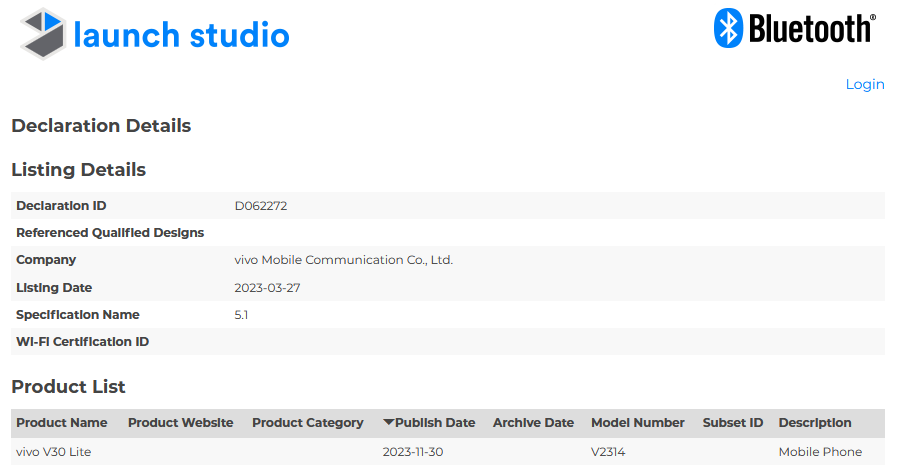
The Chinese tech giant’s upcoming V30 Lite model has surfaced on Bluetooth SIG and Google Play Console certification. On Bluetooth SIG, the database confirms that the device will support Bluetooth version 5.1. The V30 Lite was spotted on the platform carrying the V2314 model number. Unfortunately, this was all the information shared on this website. However, the Google Play Console listing offers more details regarding the device and even shares a render image revealing its rear design.

Vivo V30 Lite

Unlike the Bluetooth SIG, the Vivo V30 Lite carries the V2317 model number on Google Play Console listing. The new smartphone surfaced on the platform with 12GB of RAM. The render shared on the certification platform also showcases the smartphone in a Purple color option. Furthermore, the database confirms that the device will be equipped with the Qualcomm Snapdragon 695 SoC. It also runs on the Android 13 operating system out of the box.

The rear features a dual camera setup, which is paired with an Aura Ring LED lighting. Meanwhile, the front houses a punch hole cutout for the selfie camera. The display offers a 2400 x 1080 resolution and 440 PPI. Notably, it appears that the front features a curved screen on the edges. In an earlier report, we also covered the battery pack and charging details regarding the upcoming Vivo V30 Lite. The device is expected to be powered by a 4,700mAh battery pack that supports 44W fast charging.

RELATED:

Nokia secures major network deployment deal with Deutsche Telekom amidst AT&T setback

Nokia has clinched a new network deployment deal with Deutsche Telekom in Germany, signaling a significant return for the company to the heart of Deutsche Telekom’s commercial network. The deployment involves the implementation of an Open RAN network, allowing the incorporation of equipment from various suppliers in specific network segments. This progressive step will see the replacement of existing infrastructure from an incumbent vendor, with the transition already in full swing.

The setback for Nokia came last week when it lost a substantial Open RAN network contract to Swedish competitor Ericsson from AT&T. This loss impacted Nokia’s profitability targets, and future revenue, and led to a decline in its shares. However, the recent deal with Deutsche Telekom is being seen as a potential relief for Nokia, particularly in the aftermath of the loss to Ericsson.

The Deutsche Telekom deal, in collaboration with Fujitsu, underscores Nokia’s commitment to expanding its global footprint and diversifying its partnerships. Specific financial terms of the deal were not disclosed, but the partnership is expected to enhance Nokia’s position in the rapidly evolving telecommunications market.

In response to the AT&T setback, Nokia CEO Pekka Lundmark acknowledged the impact, referring to it as “bad news.” However, he reassured stakeholders that the issue is specific to AT&T, driven by financial considerations, and not reflective of broader technological or performance challenges.

To address the current market conditions in its mobile networks business, Nokia has revised its comparable operating margin target for 2026 from at least 14% to at least 13%. Despite this adjustment, the company remains optimistic about achieving its goals, outlining plans to revamp its mobile networks business by lowering its cost base. Nokia aims for a double-digit operating margin on sales of 10 billion euros by 2026, with an estimated requirement of approximately 11.5 billion euros in sales.

As the Deutsche Telekom project using Open RAN technology is already underway, Nokia is poised for a strong rebound in the coming year, showcasing its resilience and determination in the competitive telecommunications market.

Related:

(via)

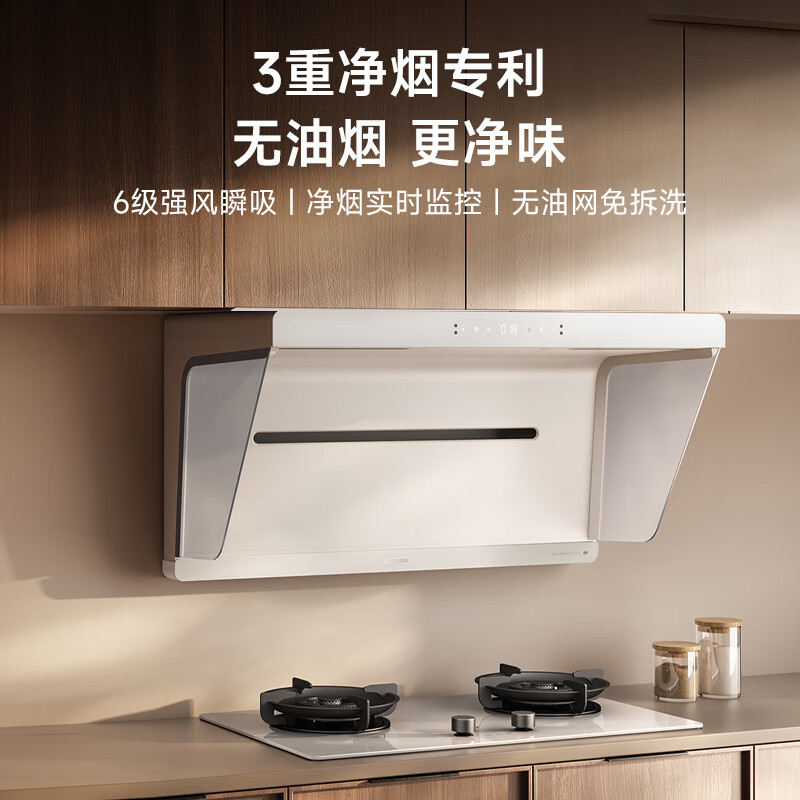
Xiaomi Mijia Smart Range Hood S2 with oil-free mesh, 3-fold smoke purification launched for 2899 Yuan ($404)

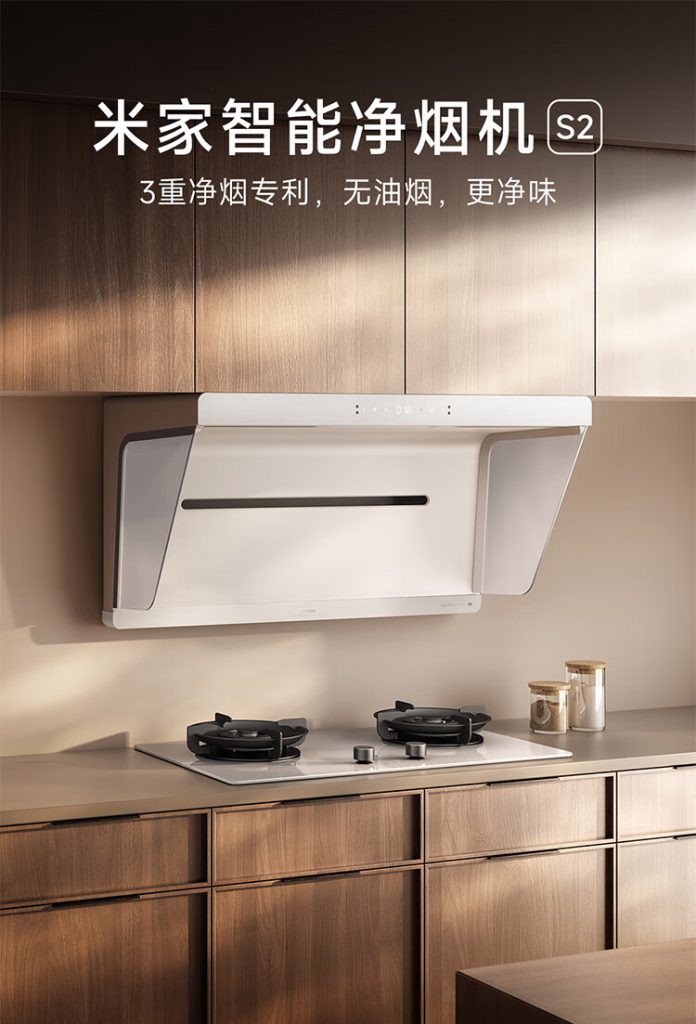
Xiaomi has unveiled the Mijia Smart Range Hood S2 in China. This kitchen appliance aims to improve air quality and cooking experiences. Last month, Xiaomi also introduced a very similar European-style range hood model in China.

Xiaomi Mijia Smart Range Hood S2

Mijia Smart Range Hood S2 Key Features:

This range hood is equipped with a PM2.5 detector similar to Xiaomi’s air purifier, allowing it to monitor kitchen air quality in real-time. When PM2.5 levels exceed a certain standard, the hood automatically activates.

The device features a DC variable frequency motor capable of reaching speeds up to 2400r/min and delivering a maximum static pressure of 900Pa. Its smart chip adjusts airflow and pressure based on detected airway resistance. The oil-free mesh design simplifies cleaning, and there’s an upgraded intelligent self-cleaning function for fan blades.

The range hood’s exceptional performance relies on three patented technologies. Firstly, it utilizes air dynamics to create a powerful four-cyclone vortex above the stove, effectively capturing cooking fumes, odors, and PM2.5 particles. Secondly, it maintains a straight-line air intake that enables a high-speed rearward airflow at 12m/s to efficiently remove fumes. Lastly, it features a front-mounted BLDC fan that generates an air curtain, preventing fumes from escaping and creating a second zone for capturing cooking odors while reducing external disturbances.

The range hood can be connected to the Xiaomi Home app and Xiaoai speakers for remote control. This product also includes smart features like gesture control for touchless operation and safety interconnections with other Xiaomi smart home devices.

For installation, it requires a specific kitchen cabinet combination and vent opening dimensions. The product package includes a triple-layer thickened exhaust pipe, and additional items like check valves and extended decorative covers are available for purchase. The range hood’s design ensures compatibility with various kitchen styles and provides a seamless installation experience.

Pricing and Availability

The Mijia Smart Range Hood S2 is now up for sale on JD.com in China for 2899 yuan ($404). Its release date remains undisclosed.

Earlier this month, Mijia also introduced two new products: the Xiaomi Mijia LCD Blackboard featuring a 39-inch display with split-screen support, and the Mijia label printer, offering a creative solution for everyday labeling needs.

RELATED:

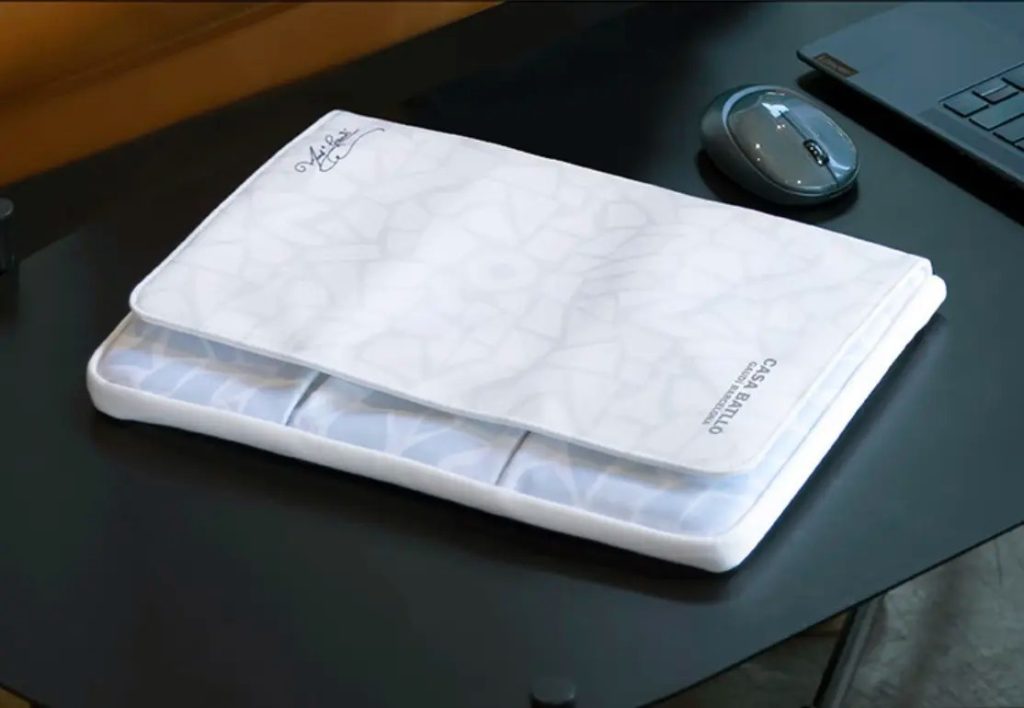
Lenovo YOGA Gaudí co-branded Mouse Pad/Sleeve Bag Launched for 99 Yuan (~$13)

Lenovo’s prowess in the laptop market has continued over the years, and the YOGA series is among the major contributors to the company’s success in the last few years. With the launch of new YOGA Notebooks, and laptops, the company always unveils some of the accessories for the users. This time, Lenovo partnered with Gaudí to introduce a new Mouse Pad and Sleeve bag in China. Both are inspired by Gaudí classic architecture and are available for 99 Yuan which roughly translates to $13.

Lenovo YOGA Gaudí Mouse Pad Features

The Lenovo YOGA Gaudí Mouse Pad is built with high-precision digital printing for vibrant and clear craftsmanship. It is built using PVC material that is blended with special surface treatments for a smooth and comfortable feel. The Anti-Slip texture on the bottom side of the Mouse Pad holds it firmly and elevates a natural feel. The leather material over the top brings a natural feel and offers friction for smooth mouse usage. The Mouse Pad is surely set to uplift your workspace with a touch of architectural elegance.

Lenovo YOGA Gaudí Laptop Sleeve Features

On the other hand, there is the YOGA Gaudí Sleeve, which is compatible with up to 14-inch laptops. The integrated mosaic design and architectural structure of the polyester fiber fabric create a simple yet sophisticated design. The polyester fabric makes it waterproof and feels smooth on the hands. It is printed with high-definition UV color printing that enhances the visual appearance. It offers six built-in storage spaces for your data cables, battery packs, charging adapters, and other accessories. It is an essential pick to elevate the laptop-carrying experience.

Additionally, Lenovo recently unveiled the ThinkPad T14s and Yoga Pro 9i in respective markets to cater to different segments. Among accessories, Lenovo introduced the YOGA K7 Mechanical Keyboard with 49 days of battery life a while ago.

Both the Lenovo YOGA Gaudí laptop sleeve and mouse pad are available for JD.com in China at the price of 99 Yuan (~$13).

Related:

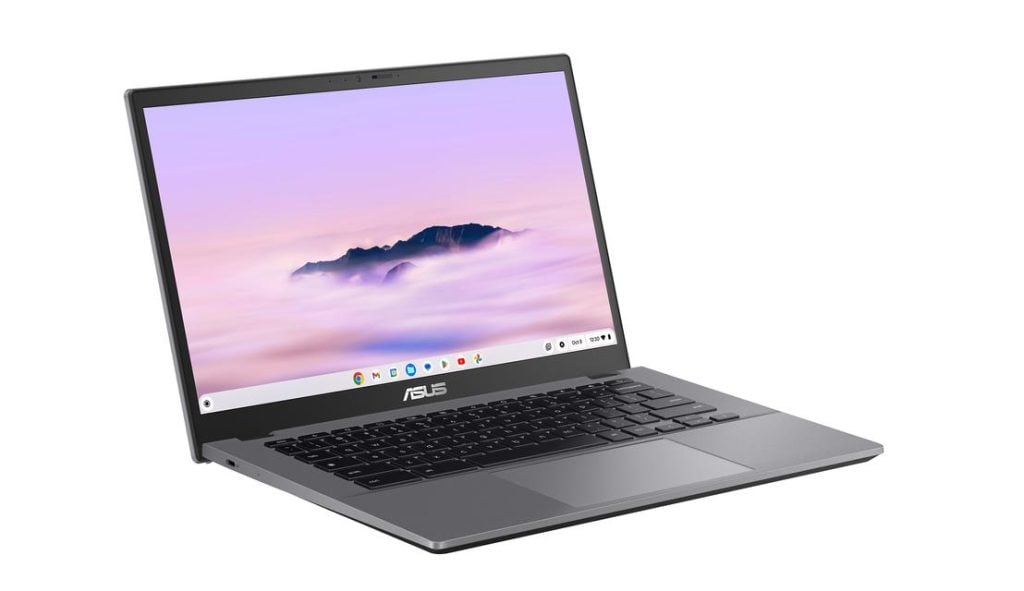
ASUS Chromebook Plus CX34 With Military-Grade Durability, 12th Gen Core i3 SoC Launched In India

ASUS has launched the Chromebook Plus CX34 in India. It was announced in the global markets in October. The device is said to offer a fast performance, high durability, and a long battery life. The Chromebook Plus CX34 is designed to meet the needs of business and also for users seeking enhanced productivity and creativity on the go. Read on to know what the machine offers out of the box. 

ASUS Chromebook Plus CX34 specifications and features

ASUS Chromebook Plus CX34

The ASUS Chromebook Plus CX34 is equipped with a highly durable design that passes US MIL-STD 810H standards. It has ASUS antimicrobial guard protection for the keyboard, touchpad, and palm rest. The device weighs just 1.44kg. The Chromebook Plus CX34 also features a 180-degree ErgoLift hinge. 

The ASUS Chromebook Plus CX34 features a 14-inch display bearing an FHD resolution and 250 nits peak brightness. It has a 1080p FHD webcam with temporal noise reduction. There is a webcam shield for privacy purposes. The laptop also features a backlit keyboard and there is a 5.7-inch large touchpad. 

Internally, the ASUS Chromebook Plus CX34 is powered by a 12th-generation Intel Core i3 processor. It packs 8GB LPDDR5 RAM and 128GB SSD storage expandable via a microSD card slot. There is a fanless cooling with a copper vapour chamber. The device is backed by a 3-cell 50Wh battery unit that is claimed to last 10 hours and supports 45W fast charging. 

The Chromebook Plus CX34 runs on ChromeOS with access to built-in Google apps. Connectivity options on the laptop include two USB-C 3.2 Gen 2 ports, a USB 3.2 Gen 1 Type-A port, HDMI 1.4, 3.5mm jack, WiFi-6, and Bluetooth 5.3 

The ASUS Chromebook Plus CX34 carries a starting price tag of Rs 39,990. Customers who purchase the device before January 31, 2024 are eligible for 3-month Adobe Photoshop and Express premium plan. The laptop will be exclusively available for purchase from Flipkart

Related:

OPPO partners with AMBUSH for a special Find N3 Flip case

OPPO and fashion brand AMBUSH have teamed up to design a special case for the OPPO Find N3 Flip phone. The case, called the Flipped Padlock, was created by AMBUSH creative director Yoon Ahn and draws inspiration from their popular Heart Padlock Bag.

The case comes in a trendy pink shade and a cool metal handle. It, unsurprisingly, opens like a heart, which reveals the phone’s inner display across two halves. Plus, there’s a handy viewing window on the front that keeps the camera and second screen accessible all the time. 

For those unfamiliar, AMBUSH is a luxury streetwear brand owned by Korean-American fashion designer Yoon Ahn. The brand draws inspiration from Tokyo’s 80s pop culture and pop art, creating bold, unisex designs across their collections. They’ve also collaborated with giants like Nike, Converse, and Moët & Chandon on limited-edition pieces.

OPPO X AMBUSH Flipped Padlock case

OPPO says the OPPO X AMBUSH Flipped Padlock case for Find N3 Flip will be released in China, India, Indonesia, Malaysia, Singapore, Thailand, and the Philippines, however, it will not be available for sale. 

Talking about Find N3 Flip’s specifications, the foldable comes with a 6.8-inch LTPO screen with a 120Hz refresh rate and 1600 nits of brightness. The secondary display on the device measures 3.2 inches and its also an AMOLED panel covered with Corning Gorilla Glass Victus for protection.

On the imaging front, the OPPO Find N3 Flip sports a triple rear camera setup of a 50MP OIS-enabled main sensor, a 32MP telephoto unit, and a 48MP ultra-wide-angle lens. There is a 32MP front-facing snapper.

Powering the OPPO Find N3 Flip is powered by a Dimensity 9200 processor coupled with 12GB RAM and 256GB storage. It is backed by a 4,300mAh battery unit with support for 44W fast charging. The foldable phone ships with Android 13 with guaranteed 4 years of OS updates.

Related:

Epic Games secures victory in Antitrust battle against Google’s Play Store monopoly

In a groundbreaking development, Epic Games has emerged triumphant in its month-long antitrust case against tech giant Google over alleged monopolistic practices on the Play Store. The jury, after careful consideration, ruled in favor of Epic Games on all counts, declaring that Google’s imposition of a 30% commission on the Play Store stifles competition and hampers innovation.

The verdict, if upheld, could send shockwaves through the entire app store economy, as it has the potential to reshape the dynamics of app distribution and profits. Epic Games, not seeking monetary damages, aims to challenge Google’s app store practices and push for greater freedom for app developers to implement their own store and billing systems on Android.

Judge James Donato is set to deliberate on potential remedies in January, raising the possibility of a shift in the Android landscape, allowing developers more control over their applications’ destiny. Epic Games sees this as a significant win for app developers and consumers globally, underscoring the pressing need for legislation to address the dominance of tech giants like Apple and Google over smartphones.

Google, however, is not taking the defeat lightly and has announced plans to challenge the federal court’s decision. The tech giant argues that Android and Google Play offer more choice and openness compared to other mobile platforms, asserting vigorous competition with Apple and other app stores on Android devices and gaming consoles.

The trial brought to light allegations of Google deleting messages to conceal anticompetitive behavior, a claim that Epic Games argued was crucial to the case. Despite Google settling with dating app maker Match before the trial and resolving antitrust claims with U.S. states and consumers, the court’s decision against them stands as a significant blow.

Epic Games CEO Tim Sweeney celebrated the victory on social media, emphasizing the need to break free from what he termed “the Google Play monopoly.” This comes after a similar antitrust case against Apple in 2020, where a U.S. judge largely ruled in favor of Apple. 

Epic has since sought Supreme Court intervention in the Apple case, while Apple contests a ruling requiring changes to App Store rules. The unfolding legal battles in the tech industry signal a potential change in the control wielded by major players over app distribution and revenue streams.

Related:

(via)

Delay Behind PC Port of GTA 6 Explained By Rockstar Developer

A former Rockstar developer has shed some light on some reasons behind the delay in the PC port for the upcoming GTA 6 game or other games. Many are excited about the confirmation of GTA 6 availability on XBox Series S/X and the PlayStation 5 via the trailer itself, but many are still curious as to when and if the game will be released on the PC. The game, which took over a decade to develop and created history with the trailer on YouTube, will still take some time to officially launch on gaming consoles.

Rockstar initially launches games for consoles and then comes for PC, which usually takes from a few months to a few years. Mike York, the game developer, has now explained the reasons for the PC port’s delay. He also sheds some light on why Rockstar game developers focus more on the console versions of the game.

While explaining on his YouTube channel, York Reacts, he discusses the delays in PC ports, using GTA 6 as an example. It also emphasizes the importance of prioritizing console development before heading to the PC ports.

Reasons for Delay in PC Port for GTA 6:

As per York, the Developers take time to optimize console versions, concentrating on the platforms with higher sales, like Play Station, etc. Further, making the PC port the best involves refining and enhancing games based on the new possibilities offered by PC hardware. The diverse hardware configurations make it difficult for the developers to refine each bug and take a longer time in development.

In an example, York explained, “Most of the time, especially in the past, PlayStation was the big seller…so what the developer would do is focus all their energy on making sure the PlayStation port and the PlayStation game works really well”, and “When I was working on GTA 5 for instance, we would concentrate on the PS3 and the Xbox at the time but we were mainly pushing the PS3 to the limits.”

After development, the testing process gets extensive due to different GPUs and CPUs. The limited resources and manpower on the developer end led to the prioritization of console versions over PC ports. These issues are also lingering over the PC port development of GTA 6.

The video also cites examples of poorly received PC ports, like Arkham Asylum. Further, he even asks for the users’ patience and understanding of the complexity of PC port development.

Related:

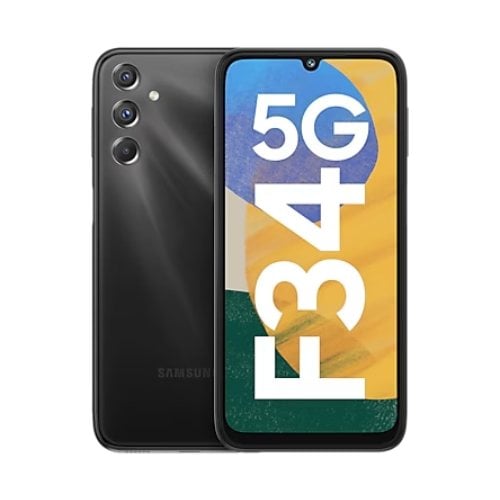
Samsung Galaxy F34 finally receives Android 14 OS based One UI 6 update in India

Samsung is finally rolling out the Android 14 OS update for the Galaxy F34 5G model in India. The software upgrade brings the One UI 6 custom skin and also marks the first major update for the smartphone since its official release.

Samsung Galaxy F34 One UI 6 Android 14 OS Update

For those unaware, the Samsung Galaxy F34 5G was first launched in India back in August 2023. The South Korean tech giant recently released the Android 14 OS update for the Galaxy M34. Now, the One UI 6 update is making its way to the Galaxy F34 5G model. The latest update carries the build version E346BXXU2BWL1/E346BODM2BWL1/E346BXXU2BWL1. Users can expect to see a big download size for this update, which crosses the 2GB mark.

Samsung Galaxy F34

Apart from the latest iteration of Android, the new software upgrade also features the November 2023 security patch for the smartphone. You can head to Settings to check if your device has received the new update. One UI 6 brings a revamped Quick Settings panel, improved Home Screen widgets, brand new emojis, new customization options for the lock screen, a new media player widget, a fresh default font, and more features.

To recall, the Samsung Galaxy F34 5G sports a 6.5-inch Super AMOLED display that offers Full HD+ resolution, 120Hz refresh rate, 1000 nits of peak brightness, and Corning’s Gorilla Glass 5. Under the hood, the device is equipped with the Exynos 1280 SoC that is paired with up to 8GB of RAM and 128GB of internal storage. A large 6,000mAh battery pack powers this handset. The rear packs a 50-megapixel triple camera setup, while the front houses a 13-megapixel selfie shooter. Other notable features include a microSD card slot, a 3.5mm headphone jack, a side mounted fingerprint scanner, and 25W fast charging.

RELATED:

Lenovo Launches Open-Style TWS TC3401 with Bluetooth 5.3 and DT 5.0 Sound, Priced at 269 Yuan

Lenovo continues to expand its product family. In this regard, the company recently introduced the version of Xiaoxin Pad 2024 with 6GB RAM and 128GB storage. Now, the Chinese technology giant has launched the open-style TWS earphones, TC3401, for 269 Yuan (approximately 40$). Here are the details…

Lenovo Launches TC3401 with Bluetooth 5.3 and DT 5.0 Directional Sound

Wireless earphones are an essential part of our lives. Thanks to user-friendly technology, many people today enjoy listening to music, talking on the phone, and consuming various content easily. Therefore, the TWS earphone market is constantly growing. Lenovo, one of the companies aiming to grab a share of the pie, has added TC3401 to its existing models.

Especially targeting sports enthusiasts, the Lenovo TC3401 has a distinctive design compared to standard TWS earbuds – it wraps around your ear like glasses, providing a secure fit all the way to the back. This feature helps eliminate the risk of falling during active movements like running. Personally, I can say that I’m not a big fan of this design, but it could be quite beneficial for those who engage in more vigorous sports activities.

If we look at the technical features, we can see that it uses Bluetooth 5.3 and DT 5.0 sound transmission technologies, providing a better connection and lossless audio transmission. Additionally, it supports dual-microphone ENC for call noise reduction and is rated IPX5 for dust and water resistance, making it suitable for use during activities on rainy days.

Lenovo tc3401

In terms of battery life, each earphone has a single ear endurance of 10 hours, with a total usage time of 30 hours when used with the charging case. Additionally, a quick 15-minute charge can provide 60 minutes of music playback. As mentioned above, the price of the headphones is 269 Yuan, which is approximately $40. However, this price is valid for a limited-time discount period, including a pre-order discount of 30 Yuan. The regular selling price is 299 Yuan.

RELATED:

(source)

Vuca Evo FSX1 Launches: Innovative E-Bike with Integrated Motor Gears

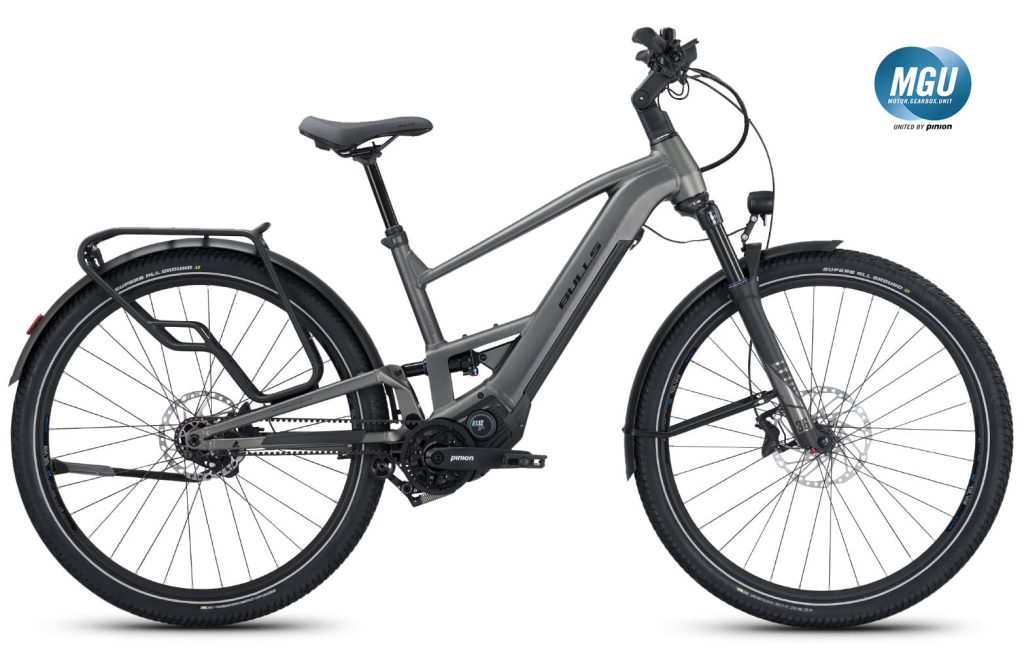
Bulls is here with an all-terrain e-bike, aka the Vuca Evo FSX1. It’s an SUV or trekking bike that can easily excel on forest paths or more challenging rocky surfaces across the mountains. It offers all the features that one can expect from a trekking bike. It is an overall e-bike that can be your daily commute partner in the cities or across the forests.

Vuca Evo FSX1 Features

Vuca Evo FSX1 can handle a maximum weight of 150kg or 331lb, which is significantly competitive. It features a Pinion MGU E1.12 mid-engine that generates 85 Nm torque and houses an inbuilt gearbox. The integrated 12 gears offer a maintenance-free experience and even improve the service life of the e-bike.

It comes with attached lights, mudguards, and a luggage rack, which is quite effective for carrying some light luggage of up to 25kg (55lb) for the journey. The luggage frame is suspended over the rear dropouts, which minimizes the strain on the suspension. There’s also an optional availability of auto-locking side bags. To keep your ride safe and comfortable, it is mounted on the EDGE LOR8 Trunnion Mount shock. Further, it equips the Lytro Supreme SL 1.8 Boost suspension.

Vuca Evo FSX1 e-bike comes in two different battery configurations: one offers a 720Wh battery, and the other brings a 960Wh battery. Other features include the presence of full fenders, a color display for status checks, a seatpost with an ergo saddle, and Supernova lights.

Bulls Vuca Evo FSX1 is a well-equipped e-bike designed for a wide range of terrains, featuring integrated components and a robust mid-engine with a concealed gearshift system for enhanced durability and performance.

Details about its pricing and availability are not known yet, but the larger battery variant will be more expensive. Bulls even missed on the bike’s weight, adaptability, and comprehensive feature set.

Related:

Vivo S18 series battery and storage details revealed in fresh teaser

The Vivo S18 series is set to launch in China later this week. But ahead of the official announcement, the company has released a new teaser that revealed the battery specifications and storage configuration of the upcoming devices. So here are all the details.

Vivo S18 Series Battery & Storage Specs

Vivo S18 series

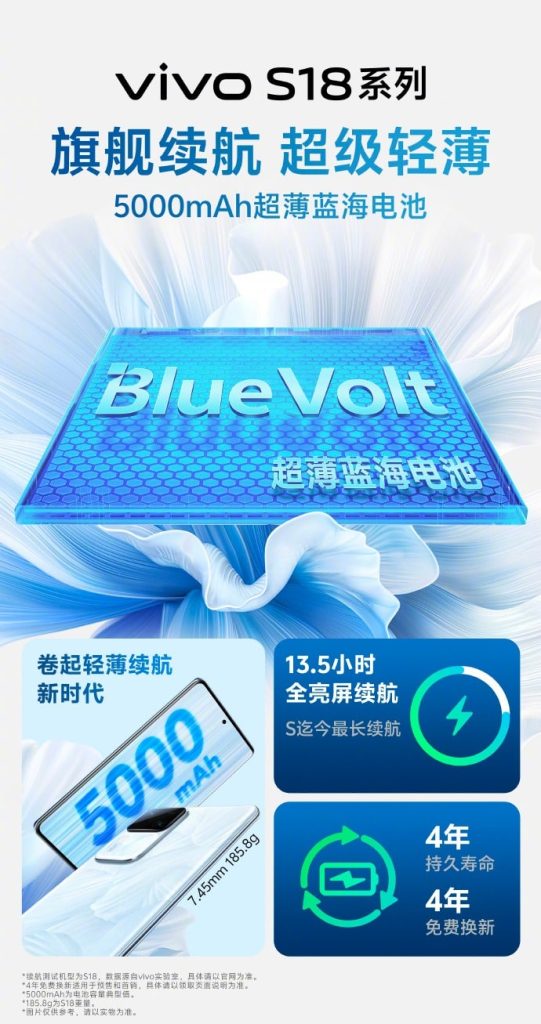
The Chinese tech giant shared new teasers on its official Weibo account. Looking at the social media posts, the battery specifications and storage details were listed for the new S18 lineup. As per official notes, the Vivo S18 series will be powered by a large 5,000mAh battery pack that promises to offer 13.5 hours of battery life on a single full charge. The company further claims that this cell has a 4 year long life and even promises 4 years of free battery replacement.

This battery size is quite impressive considering it is packed in an ultra thin body that measures just 7.45mm in thickness and weighs just 185.8 grams in weight. In a separate teaser, Vivo confirmed that the Vivo S18 will also launch in three storage configurations. This includes a 12GB + 256GB, 12GB + 512GB, and 16GB + 512GB storage option. Notably, users can virtually expand RAM by another 16GB and the devices also support storage compression up to 50GB.

Vivo S18 series

Thanks to this, Vivo claims that users can store up to 10,000 HD pictures and retain 49 apps in the background. This was all the information shared on the teasers. Just recently, we covered another teaser that revealed the camera details of the Vivo S18 and S18 Pro. But for a more detailed rumor roundup, click here to check out our detailed report. The S18 series is set to be debuted in the Chinese market on 14th December 2023, so stick around for more since we will be covering the launch event.

RELATED: