Tesla has finally unveiled the pricing for its highly anticipated Cybertruck. The electric vehicle was caught up in a state of production delays with the first batch of delivery only recently kicking off. During this delivery event held at the Tesla Gigafactory in Austin, the pricing for the high end electric truck was also revealed.
The American EV maker even announced the Cybertruck’s performance specs and model options at the event. Entry level versions features a single motor rear wheel drive that will have you shell out 60,999 US Dollars. Technically, incentives and an “estimated 3-year gas savings” means that buyers are only spending around 49,890 US Dollars. This model offers up to 250 miles of range and hits 0 to 60 in just 6.5 seconds. The range is also in line with the previous teaser from Marques Brownlee. This model is set to release in 2025.
Moving forward, the mid range model costs 79,990 US Dollars and offers an all wheel drive along with sports e-motors on each axle. The version offers 340 miles of range and an impressive 0 to 60 in just 4.1 seconds. This is thanks to its 600 HP with 7435 lb-ft of torque. Lastly, we have the top end model, which is aptly dubbed the Cyberbeast.
It comes equipped with three e-motors for all wheel drive, a 320 miles maximum range, and 2.6 seconds to go from 0 to 60MPH. It has a top speed of 130MPH, outputting 845 HP and 10,296 lb-ft of torque. Notably, the Cyberbeast and AWD mid range models can also carry 121 cubic feet of cargo and accommodate five adult passengers. The Tesla Cybertruck lineup is compatible with the company’s supercharger network. Just 15 minutes of charging can offer 128 miles of range.
WhatsApp is taking chat security to a new level with the introduction of Secret Code for Chat Lock, a feature that adds an extra layer of protection to your most private conversations.
Previously, WhatsApp’s Chat Lock feature allowed users to lock chats with their device password or biometric authentication. While this provided a level of security, it didn’t prevent someone from seeing that a chat was locked.
A secret code to lock your chat
With Secret Code for Chat Lock, you can now set a unique password that’s different from your device password. This password will hide the Locked chats folder from your chat list, making it invisible to anyone who doesn’t know the code.
The Secret Code can be composed of letters, numbers, special characters, or even an emoji, allowing users to personalize their security measures. And to access your locked chats, you’ll simply need to type the secret code into the WhatsApp search bar.
The Secret Code feature offers more flexibility as well. If you don’t want to completely hide your locked chats, you can still have them appear in your chat list. The choice is yours.
WhatsApp has simplified the process of locking a chat. Users can now lock a chat by long-pressing on it, eliminating the need to navigate through the chat’s settings.
The Secret Code feature is currently being rolled out to all WhatsApp users worldwide. If you haven’t received it yet, don’t worry. It should be available to you soon.
WhatsApp has been on a roll this year, introducing a slew of new features, several of which are focused on privacy. For instance, the company recently added an email verification feature to bolster account security, and it now also allows you to hide your IP address during calls to maintain your privacy.
Redmi Note 13 series was released in China a few months ago and is now expected to be launched globally. The smartphone has been spotted on various certification websites, suggesting that its global release is imminent. Ahead of their global release, the European pricing of the Redmi Note 13 Pro and 13 Pro+ has been leaked by Appuals.
Redmi Note 13 Pro/Note 13 Pro+ European Price
As per leak, both the Redmi Note 13 Pro and 13 Pro+ will be offered in a single memory configuration, with 12GB of RAM and 512GB of storage. And they will come in three colors: Black, Blue, and White.
More importantly, the Redmi Note 13 Pro 5G will cost around EUR 450, while the Redmi Note 13 Pro+ 5G will cost around EUR 500. However, the outlet suggests the prices may vary slightly depending on the local VAT rates in different countries.
Specifications
To recap, both the Note 13 Pro and 13 Pro+ have a 6.67-inch 120Hz AMOLED screen with 1800 nits of brightness, 2160Hz touch sampling, and 1920Hz PWM dimming. The only difference is that the Pro+ has a curved screen, while the 13 Pro has a flat one.
The Redmi Note 13 Pro uses a Snapdragon 7s Gen 2 processor and has a 5000mAh battery with 120W fast charging. On the other hand, the Note 13 Pro+ is powered by a Dimensity 7200-Ultra processor and has a 5100mAh battery with 67W fast charging.
Unlike the new Xiaomi 14 series and Redmi K70 series, these phones come with Android 13-based MIUI 14 out-of-the-box. However, they are likely to get the HyperOS update soon.
As for optics, both phones have a 200MP Samsung HP3 sensor with OIS, an 8MP ultrawide-angle lens, and a 2MP macro lens. They both also sport a 16MP front-facing camera for capturing selfies and video calls.
We are excited to see the Redmi Note 13 series launch globally and to see how these phones perform.
Nothing Phone (2) has received its first permanent price cut in India, and now the base variant of the phone is retailing for Rs 39,999. Meanwhile, the 12GB RAM and 256GB variant is now retailing for Rs 44,999, and the 12GB RAM and 512GB storage variant is available for Rs 49,999. The smartphone is available in both white and dark gray colors. It was launched in July at a price of Rs 44,999 for the base 8GB RAM and 128GB variant. The reasons are not specified; however, the brand is “reaffirming its commitment to making cutting-edge technology accessible.”
The smartphone running the Snapdragon 8 Gen 1 SoC couples a unique Glyph interface. Further, it packs a 6.7-inch LTPO AMOLED display with adaptive refresh rates of 120Hz to 1Hz. Along with the Nothing Phone (2) permanent price cut, the recently launched CMF by Nothing 65W GaN charger is also available at a special price of Rs 1999. However, it usually retails for Rs 2,999 and is available in Black and Orange Color options.
Discounted pricing for the GaN Charger is only applicable until stocks last, but for the smartphone, it will continue over time.
The price reduction seems to be the right decision, as Nothign Phone (2) failed to garner many sales in recent times. The new competitive pricing will surely attract new users who want to enjoy the new Nothing ecosystem.
Nothing Phone 2 Specifications
The smartphone comes with a 6.7-inch Full HD LTPO OLED display with 1080 x 2412 pixels resolution and 120Hz to 1Hz adaptive refresh rate. It comes powered by Qualcomm’s Snapdragon 8 Gen 1 SoC, which is built on a 4nm process and coupled with an Adreno 720 GPU.
There’s a dual-rear camera setup with a 50MP primary Sony IMX890 camera with OIS + EIS, and another 50MP ultra-wide sensor. A 32-megapixel camera sits in a punch-hole display on the front.
The smartphone is running Nothing OS 2.5 with some exciting new features. Its Glyph Interface offers a unique use and is a great selling point for the brand.
Redmi Buds 5 Pro Earbuds, crafted with precision and attention to detail, redefining your auditory journey with many features. The earbuds is now available for $79.99 at Giztop.
Equipped with a 12.4mm dynamic driver, the Redmi Buds 5 Pro boasts an independent acoustic chamber featuring a 10mm tweeter and an 11mm dynamic subwoofer. This combination delivers crystal-clear treble and robust bass, ensuring an immersive and well-balanced sound quality.
Step into a world of serenity with flagship-grade noise cancellation of up to 52 dB. These earbuds offer a 2kHz wide-band range with three-level noise reduction depth and transparency modes. The dual-mic AI noise cancellation ensures clear and uninterrupted communication.
With Bluetooth 5.3 connectivity, the Redmi Buds 5 Pro provides an exceptional gaming experience and supports the LHDC 5.0 codec for high-quality audio streaming. Low latency ensures a lag-free connection, making these earbuds ideal for both entertainment and productivity.
Experience the freedom of uninterrupted listening with up to 10 hours of non-stop music playback on a single charge. The charging case extends this freedom to an impressive 38 hours, providing convenience for those on the go. Additionally, a quick 5-minute charge offers 2 hours of music playback.
Navigate effortlessly through your audio experience with multi-functional touch controls. The Redmi Buds 5 Pro also supports an MIUI-compatible pop-up window for instant connection and battery status updates, enhancing user convenience.
Featuring a half-in-ear design with a stem, these earbuds not only deliver high-quality sound but also prioritize comfort. Crafted from durable ABS material, the Redmi Buds 5 Pro strikes a perfect balance between style and functionality.
Redmi Buds 5 Pro Earbuds redefine your audio experience by seamlessly integrating advanced technology with user-centric design. The earbuds come in Black, Blue, and White color options.
Xiaomi unveiled the Redmi Note 13 series in China just a while back. Now, the latest certification sighting hints that the global launch of the highly anticipated Redmi Note 13 Pro and Note 13 Pro+ could be imminent. So here are all the details.
Redmi Note 13 Pro series visits TDRA
The Chinese tech giant’s Note 13 Pro models were sighted on the TDRA certification platform. This is the same database where the base Note 13 5G was spotted back in November. Redmi’s Note 13 Pro 5G recently surfaced in the NBTC as well. Similar to previous listings, the Redmi Note 13 Pro and Note 13 Pro+ were seen carrying the model numbers 2312DRA50G and 23090RA98G respectively.
Unfortunately, the TDRA certification does not reveal any finer details like pricing or specifications regarding the upcoming devices. However, the hardware should be similar to the Chinese variants that were announced in the brand’s home market previously. In other words, the global variants of the Redmi Note 13 Pro series could retain the 6.67-inch AMOLED display that offers 1.5K resolution, 120Hz refresh rate, and 1600 nits of peak brightness.
Under the hood, the Redmi Note 13 Pro features the Qualcomm Snapdragon 7s Gen 2 SoC, while the Note 13 Pro+ arrived with the MediaTek Dimensity 7200 Ultra chipset. On the rear, the two models come with a triple camera setup that consists of a 200-megapixel primary camera, an 8-megapixel ultra wide angle lens, and a 2-megapixel macro shooter. A large 5,000mAh and 5,100mAh battery pack powers the 13 Pro and 13 Pro+.
New smartphone launches are catching up once again after a slowdown for a while. A total of 5 events are scheduled by the companies for the next few days.
These conferences will be held across multiple countries. Almost all of these products fall under the budget category, except for one flagship.
The brands that will debut new devices are Tecno, OnePlus, Xiaomi, and Infinix. The events will be held in China, India, and Nigeria.
Let’s check out all the phones that are scheduled to go official in the next few days.
The Tecno Spark Go 2024 is set to launch in India on December 3 (Monday). The brand has not revealed the time but it will most likely go official by 12 PM IST.
This product is already official in Malaysia. Therefore, we know everything about it, except for its pricing and availability in India.
The device comes with an iPhone Pro-inspired design, a 6.6-inch HD+ 90Hz display (LCD), a Unisoc T606 chip, a 13MP rear camera, an 8MP selfie camera, a side-mounted fingerprint sensor, and a 5,000mAh battery.
2. OnePlus 12
The OnePlus 12 is scheduled to launch in China on December 5 (Tuesday). It will be unveiled at a press conference which will kickstart at 2:30 PM local time (GMT+8). The event will be livestreamed on Weibo and other leading Chinese video streaming platforms.
Thanks to leaks and official teasers, we know almost everything about OnePlus’ next-gen flagship smartphone. Based on the information available, it might turn out to be the best slab phone from the brand yet.
The OnePlus 12 is expected to arrive with a Snapdragon 8 Gen 3 chip, a 6.82-inch QHD+ 1-120Hz LTPO OLED display, a 50MP Sony LYT-808 primary camera, a 48MP Sony IMX581 ultrawide unit, a 64MP OmniVision OV64B 3x periscope zoom shooter, up to 24GB RAM/1TB storage, a 5,400mAh battery, and 100W wired charging support.
3. Redmi 13C Series
The Redmi 13C series is planned to debut in India on December 6 (Wednesday). Xiaomi hasn’t disclosed the time, however, we think that the phones will be announced at 12 PM IST.
There will be two devices, namely Redmi 13C and Redmi 13C 5G. The former is already official in some markets, while the latter will be making its global debut.
They are expected to share the same features with one notable exception being chipset. The 4G model is powered by a MediaTek Helio G85 SoC and the 5G variant will house a MediaTek Dimensity 6100 Plus underneath it.
4. Infinix Smart 8 HD
The Infinix Smart 8 HD will be announced in India on December 8 (Friday). It is expected to go official at 12 PM IST.
The handset is anticipated to make its global debut in India. However, we are still days away from the launch. Thus, it could get announced in some other region before that.
Anyways, the device is said to come with a 6.6-inch display offering an HD+ resolution, a 90Hz refresh rate, and a 500 nits peak brightness level. It will be available in Crystal Green, Shiny Gold, Timber Black, and Galaxy White color options.
5. Infinix Hot 40 Series
The Infinix Hot 40 series is scheduled to launch in Nigeria on December 9 (Saturday). The smartphones are expected to make their global debut at this conference.
At least three phones are expected, namely Infinix Hot 40, Infinix Hot 40 Pro, and Infinix Hot 40i. It is worth noting that the last handset was recently released in Saudi Arabia.
Unfortunately, not much is known about the Hot 40 and the Hot 40 Pro, except for their chipsets. They are said to be powered by Helio G88 and Helio G99 chips, respectively.
Redmi is gearing up to launch the Redmi 13C 4G and Redmi 13C 5G smartphones in India on December 6. Ahead of the upcoming launch, the company is teasing the specifications and features of both smartphones. Inching ahead of the Redmi 13C 4G and 5G variants, the Redmi 13C models are set to feature new hardware and software features. The company has shared details about the Redmi 13C 5G’s chipset.
The new 5G smartphone will launch with the MediaTek Dimensity 6100+ SoC. It is a new chipset launched in July 2023 for the low-end market segment and is built on a 6nm process. The smartphone will compete against Realme’s 11x and Realme Narzo 60z 5G which feature the same chipset. Further, the smartphone is expected to ship with 8 GB RAM and 256GB internal storage. It could come with a 10W fast charging speed as per 3C, while the 4G variant will get access to 18W.
On the other hand, the Redmi 13C 4G will come with a 6.74-inch LCD display having 720 x 1600 pixels resolution and 90Hz refresh rate. The smartphone is launched in the Global markets with Helio G85 SoC, but there are inputs about the presence of Helio G99 SoC in India. Other specs include the presence of 8GB RAM, 256GB storage, and a 5000 mAh battery with 18W fast charging. It comprises a 50MP primary sensor, a 2MP depth sensor, and a 2MP macro sensor. There’s an 8MP front-facing camera for selfies and video calling.
In Connectivity, both smartphones would come with dual-band WiFi, Bluetooth 5.1, GPS, USB-C port, and a 3.5mm audio jack.
OnePlus is gearing up for the launch of its latest flagship smartphone, the OnePlus 12, and it seems like the device will be packing some serious heat.
A recent AnTuTu benchmark score by tipster Digital Chat Station revealed that the OnePlus 12 managed to achieve an impressive 2,333,033 points, thanks in part to its innovative cooling system. OnePlus has now shed light on the OnePlus 12’s cooling mechanism.
OnePlus 12: 9140mm² vapor chamber cooling
OnePlus China President Li Jie Louis revealed in a recent Weibo post that the phone boasts the industry’s first 9140mm² vapor chamber, covering a vast 38,547mm² area.
Additionally, it employs the “world’s first integrated dual-cycle heat dissipation” system, utilizing two layers of heat dissipation cavities that work in tandem to keep the phone cool even under intense usage.
Inspired by rocket technology, the OnePlus 12’s cooling mechanism also incorporates advanced materials such as thermal conductive gel and super-conductive graphite to further enhance heat dissipation.
“Rain Water Touch” Feature
The company also demonstrated its ability to withstand rainy conditions without experiencing ghost touches or false touches during a simulated rain test, outperforming the iPhone 15 Pro.
OnePlus is calling it the “Rain Water Touch (translated)” feature and introduced this technology with the OnePlus Ace 2 Pro in August, making the OnePlus 12 the second phone to feature it. For more details on how this technology works, please refer to our dedicated article.
More details about the device will be revealed upon its launch in a few days.
As the anticipation builds for the official release of the OnePlus 12 on December 5, the latest teaser from Li Jie, the president of OnePlus China, reveals a standout feature of OnePlus’ upcoming flagship: an ultra-thin under-screen fingerprint scanner. According to the official, this cutting-edge technology from OnePlus is poised to deliver a more comfortable and intuitive unlocking experience.
Li Jie expects this innovation to set the OnePlus 12 apart from its competitors
Li Jie acknowledged the uniqueness of the ultra-thin under-screen fingerprint, humorously referring to it as “a bit laughable,” yet stressing that OnePlus aimed to deliver what users truly need. Reportedly, the focus on this unseen but important feature aligns with the company’s commitment to “product power first,” prioritizing user experience over cost considerations.
The ultra-thin under-screen fingerprint technology is built with the importance of fast response and reliable unlocking in mind. It ensures users have a seamless and speedy unlocking experience. Li Jie expects this innovation to set the OnePlus 12 apart from its competitor flagship devices.
In addition to the groundbreaking fingerprint technology, OnePlus 12 boasts impressive specifications. Equipped with the Snapdragon 8 Gen 3 mobile platform, a top-notch 2K oriental screen, and the latest flagship sensor from Sony – the LYT-808, the device promises unparalleled performance and display quality. The inclusion of a new eye protection feature and a cutting-edge image system developed in collaboration with Hasselblad and Oppo Find series’ imaging team further solidifies the company’s claims about its upcoming ‘flagship of the decade’.
With OnePlus’s goal of achieving “One, that is, all,” the device aims to surpass all Pro-level flagships from its competitors in terms of product power. The unveiling of the ultra-thin under-screen fingerprint technology is likely just a glimpse into the innovative features.
In the realm of rugged smartphones, the Ulefone Power Armor 18T Ultra Version emerges as a technological powerhouse, boasting an array of enhancements that set it apart from its predecessor, the Power Armor 18T. The focal point of this evolution lies in the integration of the MediaTek Dimensity 7050 processor, accompanied by a substantial increase in memory, featuring an impressive 24GB RAM and 512GB ROM. Recent performance tests conducted by Ulefone shed light on the disparities between the Power Armor 18T and its upgraded count.
Performance Unleashed:
A recent YouTube demonstration showcased the Power Armor 18T Ultra Version achieving a total benchmark performance score of 580,285, surpassing the 18T’s score of 516,435. This notable achievement can be attributed to the device’s MediaTek Dimensity 7050 5G chipset, flaunting a 6nm processing engineering and an architecture of 2 Arm Cortex-A55 and 6 Arm Cortex-A76, clocked up to 2.6GHz. Complementing the processing prowess is the Arm Mali-G68 MC4 GPU, ensuring a high-end performance experience.
Benchmark Breakdown:
AnTuTu Results:
The AnTuTu Benchmark paints a comprehensive picture of the Power Armor 18T Ultra Version’s capabilities, with a total score of 570,944. This comprises a CPU score of 171,182, a GPU score of 102,125, a MEM score of 149,358, and a UX score of 148,279.
Geekbench 6 Results:
Geekbench 6, delving into single-core and multi-core applications, showcased a single-core score of 965 and a multi-core score of 2,499 for the Ultra Version.
3DMark Results:
The 3DMark Wild Life benchmark, focusing on the overall gaming experience, assigned the Power Armor 18T Ultra Version a commendable score of 2,288 points, indicating robust 3D graphic rendering and CPU workload processing capabilities.
PCMark Results:
PCMark Work 3.0, evaluating performance and battery life through common productivity tasks, revealed a performance score of 10,147 points, affirming the device’s competence in handling diverse workloads.
Imaging Brilliance:
The Power Armor 18T Ultra Version not only excels in raw performance but also stands out with its multifunctional camera setup. Featuring the Lepton 3.5 Thermal Imaging Camera, a 108MP Main Camera, a 32MP Front Camera, and a 5MP Macro Camera, this device is a photography enthusiast’s dream. The Lepton 3.5 Thermal Imaging Camera, with four times the thermal resolution of its predecessors, captures detailed photos even in light-deprived environments.
Display and Design:
The device sports a vibrant 6.58-inch FHD+ display with a refreshing 120Hz rate, ensuring a visually immersive experience. Its rugged design, coupled with a colossal 9600mAh battery and 66W fast charging, positions the Power Armor 18T Ultra Version as a dependable companion for those who demand both durability and sustained performance.
Storage and Operating System:
Venturing into storage, the device offers a generous 512GB ROM, expandable up to an astounding 2TB. Operating on Android 13, it ensures a modern and secure user experience.
From conquering benchmarks with its robust processor to capturing moments with its advanced camera array, the Ulefone Power Armor 18T Ultra seamlessly merges performance and imaging capabilities.
After successfully launching the Honor 100 and Honor 100 Pro a week ago in China, the smartphone is now on sale in the country via multiple offline and online retailers. Interested folks can order the smartphones via Honor Mall, Tmall, and JD.com. Honor 100 is up for grabs at the starting price of 2499 Yuan (~$350) for 12 GB RAM + 256 GB of storage; meanwhile, the Honor 100 Pro is retailing for the price of 3,399 Yuan (~$475) for 12 GB RAM + 256 GB storage. Both smartphones are available in four different color options – Glass Black, Moon Shadow White, Monet Purple, and Butterfly Blue.
The smartphone is retailing in China across its major online and offline retailers. Below are the details:
Honor 100 Pro Pricing
Variant
RAM
Storage
Price (Yuan)
Price (USD)
12 GB RAM + 256 GB
12 GB
256 GB
3,399
~$475
16 GB RAM + 256 GB
16 GB
256 GB
3,699
~$525
16 GB RAM + 512 GB
16 GB
512 GB
3,999
~$550
16 GB RAM + 1 TB
16 GB
1 TB
4,399
~$625
Honor 100 Pricing
Variant
RAM
Storage
Price (Yuan)
Price (USD)
12 GB RAM + 256 GB
12 GB
256 GB
2,499
~$350
16 GB RAM + 256 GB
16 GB
256 GB
2,799
~$400
16 GB RAM + 512 GB
16 GB
512 GB
2,999
~$450
Honor 100 and Honor 100 Pro Specifications
Honor 100 features a 6.7-inch OLED panel with 1.5K resolution, a 120Hz refresh rate, and 2600 nits of brightness. To protect eyes from strain upon continuous use in low-light environments, the smartphone display offers magnanimous 2840 Hz PWM dimming. On the other hand, the Honor 100 Pro features a 6.78-inch OLED while offering similar specs as its younger sibling. However, the Honor 100 embeds a punch-hole for a single front camera, while the Honor 100 Pro features a pill-shaped notch to accommodate dual front cameras.
Honor 100 is powered with Snapdragon 7 Gen 3 SoC, LPDDR5 RAM, and UFS 3.1 storage. The Pro variant ships with Snapdragon 8 gen 2 SoC, LPDDR5X RAM, and UFS 4.0 Storage. Both smartphones feature a 5000 mAh battery with 100W fast charging, but only the Pro variant ships with wireless charging.
The standard smartphone features a 40MP front camera, meanwhile, a dual-rear camera module sits on the rear side comprising a Sony IMX906 50MP primary sensor along with a 12MP ultra-wide lens. However, there’s an additional 32MP telephoto lens on the rear of the Pro model.
The Honro 100 Series offers dual SIM, 5G, Wi-Fi 6E, Bluetooth 5.3, GPS, NFC, an IR blaster, and a USB-C port in connectivity options.
To help you get the most out of your Android devices, Google is releasing updates and new features this season that enable you to customize your gadgets to be more safe, useful, expressive, and accessible, so you can make your own world.
Google’s most recent feature package includes an abundance of significant improvements for Wear OS, Google TV, and Android.
Now, let’s have an overall look over what is included in the latest features of Android.
What’s New
1. Emoji Kitchen stickers
Using Gboard, you can remix your most beloved emoji and share them with pals as stickers—whether you’re coming up with the ideal idea for a photo 📸 + 🤯 or cooking supper for friends 🌟 + 🍗.
2. Voice Moods in Google Messages (beta)
Your voice messages will now have a background and a changing emoji theme thanks to Voice Moods in Google Messages (beta). You can more effectively communicate your feelings in the present, whether you’re astonished, laughing, or feeling appreciated.
3. Reaction Effects in Google Messages (beta)
With Google Messages’ (beta) Reaction Effects, you can brighten up discussions in whole new ways by triggering an animated emoji that fills your screen with life.
4. YouTube Create (beta)
You may spend more time on the creatively fulfilling activities you enjoy by using YouTube Create (beta) to make video editing simple. With a collection of simple-to-use tools and a royalty-free music and sound effects library, you can create films that your viewers will like.
5. Emoji reactions in Gmail
Gmail’s emoji reactions let you to converse with only a few touches, much like chat applications. With Gmail, you can now express your thoughts (or feelings) in a whole new way, whether it’s through a 👍, 😂, or ❤️.
7. Highlight video in Google Photos
Simply search for the individuals, locations, or activities you want to highlight in a Highlight film in Google Photos, and the platform will take care of the rest, compiling your most memorable events into a single movie.
8. TalkBack
With AI-generated explanations of photographs, TalkBack enhances the accessibility of Android. These descriptions may be applied to images that you have just taken, images from social media or applications, or even picture messages from friends.
9. New Features in Live Caption
More languages can now be captioned in Live Caption, and phone conversations and on-device media are easier to access thanks to new features. It is feasible to answer calls without having to hear the caller or speak in response since you may text back during a conversation with a voicemail response.
10. Shared Lists in Google Maps
Organizing your next group trip is made simpler with Google Maps’ Shared Lists feature. To allow your entire group to save destinations, make suggestions, add emojis to the map, and choose where to go based on emoji reactions, invite friends to join a list.
11. Free channels from Google TV
It’s simpler to uncover new faves or watch the shows you love with Google TV’s selection of free channels. Discover fresh channels for movies, sports, and game shows, along with more than 100 more complimentary channels, all without having to manage other subscriptions.
12. Google Home for Wear OS features
The latest capabilities of Google Home for Wear OS allow you to operate additional smart devices, such as vacuums and mop heads, instantly change the mood with new light group controls, and monitor your home’s status from your wristwatch either at home or away.
Google Home for Wear OS features
13. Assistant Routines for Wear OS
You’ll soon be able to complete additional tasks while on the road with Assistant Routines for Wear OS, which allows you to initiate a routine with a voice command directly from your wristwatch.
Assistant Routines for Wear OS
14. Gmail for Wear OS
You can read, manage, and reply to emails using Gmail on your wristwatch when you’re on the go with Gmail for Wear OS.
15. Google Calendar for Wear OS
Keeping organized is now simpler from your wrist with Google Calendar for Wear OS. You may now see events and send RSVPs, get reminders for upcoming appointments, and use Google Maps to get to an event’s location by tapping on it.
16. Assistant At a Glance
You can now view crucial information on your wrist, like event reminders, travel updates, and weather warnings, by adding Assistant At a Glance to your watch face.
17. FIDO2 PIN support for security keys
You may log in to websites or applications that require user authentication without using a complicated password thanks to FIDO2 PIN support for security keys. Your unique PIN number protects your credentials even in the event that the physical key is misplaced or stolen.
18. Real-time scanning for emerging threat
Your device is shielded from harmful applications, no matter where they originate from, thanks to real-time detection for emerging risks. Google Play Protect will examine each app that you attempt to install from sources other than Google Play and notify you if it poses a risk.
19. Personal Safety app
In an emergency, the Personal Safety app makes it quick and easy to locate what you need. When you need assistance, you may quickly get in touch with loved ones or emergency services by calling 911, sharing your current position, or recording your surroundings.
The release of these features will occur at various intervals. Some of these may even already be available to you.
Meizu, a known name in the smartphone market, is stepping into the world of electric vehicles (EVs) with the upcoming release of its DreamCar MX, set to debut in Q1 2024. The official announcement about the car follows Meizu’s recent acquisition by Geely, a Chinese automotive giant with a strong presence in the electric vehicle sector.
DreamCar MX will be released in the Q1 of 2024
In a brief Weibo post, Meizu teased the DreamCar MX and revealed that it would be the first EV to leverage the power of community-driven design. True to its name, DreamCar MX will allow the Meizu community to shape various details of the vehicle, including its painting and interior color choices.
This approach positions DreamCar MX as a unique and personalized offering in the EV market. This collaboration with Geely suggests that Meizu’s venture into electric vehicles is backed by strong industry insights and technological advancements.
Meizu’s Flyme Auto will seamlessly integrate smartphones with the DreamCar MX
Meizu’s commitment to creating a seamless tech ecosystem extends beyond electric vehicles. In other words, Flyme Auto is what brought Meizu to the automotive industry through the partnership with Geely. During a recent conference in Shanghai, the company introduced its Flyme Auto software, designed explicitly for in-car entertainment and connectivity.
Flyme Auto simplifies the syncing process, ensuring that users can effortlessly transition between their smartphones and the car’s dashboard. The software’s unique features include the ability to cast the phone’s screen onto the car’s interface, enhancing the overall user experience.
Tecno is apparently working on a new generation of Camon series of smartphones. But ahead of any official announcement, some of the details regarding the Camon 30 Premier 5G model were revealed after the device was spotted on known benchmark and certification platforms.
Tecno Camon 30 Premier 5G EEC & Bluetooth SIG
The company’s Camon 30 Premier 5G recently visited the Bluetooth SIG and EEC certification databases. The device was spotted carrying the model number CL9. The Bluetooth SIG certification confirms the smartphone’s moniker along with support for Bluetooth 5.3, but it does not reveal any finer details regarding the Camon 30 Premier 5G. However, these sightings hint that the launch isn’t too far off.
Tecno Camon 30 Premier 5G GeekBench
On the other hand, the GeekBench sighting offers quite a bit of information regarding the upcoming handset. The smartphone was in the popular benchmarking platform with the MediaTek Dimensity 8200 SoC. This processor is paired with 12GB of RAM. The device will also run on Android 13 OS based HiOS out of the box. With these specs, the Tecno Camon 30 Premier 5G managed to score 529 points in the single core test and 1355 points in the multi core test.
As the name suggests, the device is a direct successor to the Camon 20 Premier 5G (Review). For those unaware, the Camon 20 Premier was the first non-Pixel smartphone to receive an Android 14 OS update. This device was launched earlier this year, so the Camon 30 Premier 5G would likely be unveiled sometime next year.
Leica, the renowned German camera manufacturer, has unveiled a new limited-edition model of its ZM 1 watch, the ZM 1 Gold Limited Edition. This exquisite timepiece pays homage to the IA Luxus, a revered Leica camera released in 1929 that featured a striking gold and black color scheme.
Limited to just 50 pieces, the ZM 1 Gold LE is a collector’s dream, crafted for Leica’s devoted clientele. It has the same functionality as the original ZM 1, but with a different case and dial colorway.
Leica ZM 1 Gold Limited Edition Overview
The ZM 1 is a 41mm watch that houses a custom movement from Lehmann Präzision, offering time, date, a power reserve indicator, and a special function for controlling whether you’re winding the power reserve or setting the time.
The watch has a red-capped button set into the crown at three that controls a special function. When you press the button, the movement stops, the seconds display snaps to zero, and you can turn the crown to set the time.
Likewise, the pusher above the crown advances the date, and there is a small aperture that is white when the watch is in winding mode (running) or red when the watch is in setting mode. In another camera-inspired flourish, the ZM 1 has a power reserve that opens from the center, mimicking the blades of a camera shutter.
The crown and pusher set are made of titanium, and the ZM 1 Gold LE comes on a brown alligator with a matching 18k rose gold case with titanium pushers. The ZM 1 Gold LE is priced at $28,000.
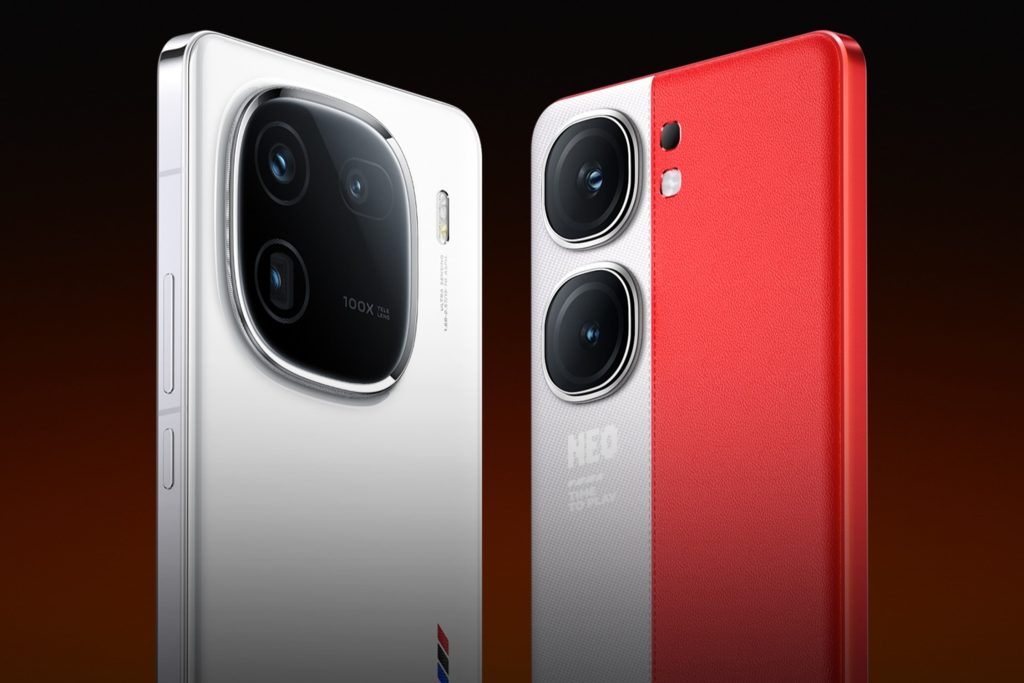
iQOO recently confirmed that it will announce the iQOO Neo 9 series of smartphones this month (December) in China. Earlier this week, it released a poster to give a first look at the Neo 9 lineup. Today, it rolled out another poster to showcase the attractive red-white dual-tone design of the Neo 9 series.
Apart from releasing the above poster, the company confirmed that the Neo 9 series is available for reservations via its official website, Jingdong Mall, Tmall, and Pinduoduo. However, the brand has not revealed anything else about the Neo 9 lineup. Here is a look at what’s known about the Neo 9 and Neo 9 Pro.
iQOO Neo 9 series design
iQOO Neo 9, Neo 9 Pro specifications (rumored)
According to reports, the iQOO Neo 9 and Neo 9 Pro have V2338A and V2339A model numbers, respectively. The latter was recently spotted in the database of China’s 3C certification platform. The certification revealed that the Neo 9 Pro may support 120W fast charging.
According to reports, the Snapdragon 8 Gen 2 and Dimensity 9300 chipsets will power these devices, respectively. Both phones are likely to pack a 5,000mAh battery with 120W fast charging support.
The Neo 9 and Neo 9 Pro are expected to feature a 6.78-inch OLED panel that offers a 1.5K resolution and a 144h refresh rate. Like the iQOO 12 series, the Neo 9 and Neo 9 Pro will ship with OriginOS 4-based Android 14.
The Neo 9 Pro is expected to feature an OIS-enabled 50-megapixel primary camera. It is likely that the vanilla model may feature a 50-megapixel IMX866 main camera, which was made available on the Neo 8 Pro. It is likely that the brand will confirm the Neo 9 series launch date for the Chinese market in the coming week.
Meizu recently held its Autumn Unbounded Ecological Conference event, where it unveiled a slew of new products, including its flagship Meizu 21 smartphone, the Meizu DreamCar, and a new brand called MYVU.
Under the MYVU brand, Meizu introduced two new products: the MYVU Discovery AR smart glasses and the MYVU Smart Ring. The smart ring is designed to complement the MYVU Discovery AR glasses, providing intuitive gesture control for a seamless AR experience.
The smart ring features a ceramic coating on the outside and stainless steel on the inside. It is IPX7 waterproof, meaning it can withstand splashes, rain, and even accidental submersion. Available in four sizes ranging from 17 to 22mm, the MYVU Ring can comfortably fit a wide range of finger sizes.
As an extension of the MYVU Discovery AR glasses, the MYVU Ring offers intuitive gesture control, allowing users to seamlessly interact with their AR experience. With simple finger movements, users can control music playback, navigate videos, respond to messages, and perform other tasks, all without removing their glasses.
The MYVU Discovery AR glasses themselves offer a versatile range of interaction methods, including touch interaction, application interaction, and Aicy voice interaction. This approach to interaction ensures that users can control their AR experience in the most natural and convenient way possible.
The smart ring is available for CNY 399 in China and is available to order from the company’s official site.
Oppo is working on the Find X7 series of flagship phones for the Chinese market. Rumors are rife that it may debut at some point in January 2024. Today, tipster Digital Chat Station shared details about the display of the Find X7 and X7 Pro.
Oppo Find X7, X7 Pro display (what to expect)
Alleged Opo Find X7 Pro hands-on shot
According to the tipster, the Find X7 will come equipped with the BOE X1 display, which is the same screen available on the upcoming OnePlus 12. Recent reports have said that the OnePlus 12 will feature a 6.82-inch curved-edge OLED display with a high resolution of 3168 x 1440 pixels. It boasts an LTPO 120Hz refresh rate, 2160Hz PWM dimming, and an impressive peak brightness of 4500 nits. It will offer a 510ppi pixel density, and it has a blue diamond arrangement for enhanced visuals. With Oppo’s Display P1 chip and a DisplayMate A+ rating for its 2K screen, the OnePlus 12 promises a premium and visually stunning viewing experience.
Regarding the Find X7 Pro, the leaker asserts that the company is currently undecided between BOE and Samsung’s E7 for the display, both of which would provide a 2K resolution. As per reports, the Find X7 will feature the Dimensity 9300 chipset, whereas the Pro model will have the Snapdragon 8 Gen 3. The series will run on ColorOS 14-based Android 14.
Shown above is a leaked image of the alleged Find X7 Pro, which surfaced recently on Weibo. It reveals that the device may come equipped with an octagonal camera module featuring four cameras and an LED flash. As per reports, it will be the world’s first smartphone to feature dual periscope cameras.
The Find X7 Pro’s rear camera setup is likely to feature an OIS-enabled 50-megapixel LYT-900 primary camera, which is said to be a modified version of the 1-inch Sony IMX989 camera sensor. It is likely to be complemented by a 50-megapixel ultra-wide camera and a pair of periscope telephoto cameras. The latter may comprise a 50-megapixel IMX890 periscope telephoto camera with 3x optical zoom and a 50-megapixel IMX858 periscope telephoto camera with 6x optical zoom.
Huawei is expected to launch the Nova 12 series and the Pocket S2 flip phone this month in China. The company is also expected to announce the Enjoy 70 and Enjoy 70 Pro before the aforementioned devices. Today, the brand confirmed that it will start receiving pre-orders of the Enjoy 70 on Dec. 5 in China. The brand’s official poster has confirmed the design, color options, and important specifications.
Huawei Enjoy 70 design, key features
Huawei Enjoy 70 pre-sale begins on December 5
The very first look at the Huawei Enjoy 70 reveals that it looks like a toned-down version of the Huawei P60 series of flagship phones, which were announced earlier this year. The handset is confirmed to arrive in shades such as Brilliant Black, Snowy White, and Emerald Green.
In addition, the poster confirms that the Enjoy 70 has a 6,000mAh battery and runs on Harmony OS 4. In addition, the phone will come equipped with a configurable Enjoy X physical button, which can be used to launch desired apps or functions. Here is a look at the specifications of the device.
Huawei Enjoy 70 specifications
According to reports, the Huawei Enjoy 70 features a 6.75-inch HD+ LCD display, possibly operating at a 90Hz refresh rate. Under the hood, it is powered by the older Kirin 710A processor paired with 8 GB of RAM, providing efficient performance. Users can choose from storage options of 128 GB, 256 GB, or 512 GB.
With a robust 6,000mAh battery, the device supports 22.5W charging for quick power replenishment. The camera setup includes an 8-megapixel front-facing camera and a rear configuration comprising a 50-megapixel main lens and a 2-megapixel secondary lens. For security, it is equipped with a side-facing fingerprint sensor. Despite packing a huge battery, the smartphone maintains a slim profile at 8.93mm and a weight of 207 grams.
We use cookies on our website to give you the most relevant experience by remembering your preferences and repeat visits. By clicking “Accept”, you consent to the use of ALL the cookies.
This website uses cookies to improve your experience while you navigate through the website. Out of these, the cookies that are categorized as necessary are stored on your browser as they are essential for the working of basic functionalities of the website. We also use third-party cookies that help us analyze and understand how you use this website. These cookies will be stored in your browser only with your consent. You also have the option to opt-out of these cookies. But opting out of some of these cookies may affect your browsing experience.
Necessary cookies are absolutely essential for the website to function properly. This category only includes cookies that ensures basic functionalities and security features of the website. These cookies do not store any personal information.
Any cookies that may not be particularly necessary for the website to function and is used specifically to collect user personal data via analytics, ads, other embedded contents are termed as non-necessary cookies. It is mandatory to procure user consent prior to running these cookies on your website.