Advertisement

Huawei Charges into the Electric Vehicle Arena: Luxeed S7 Debut and Strategic Alliances Transform the Industry

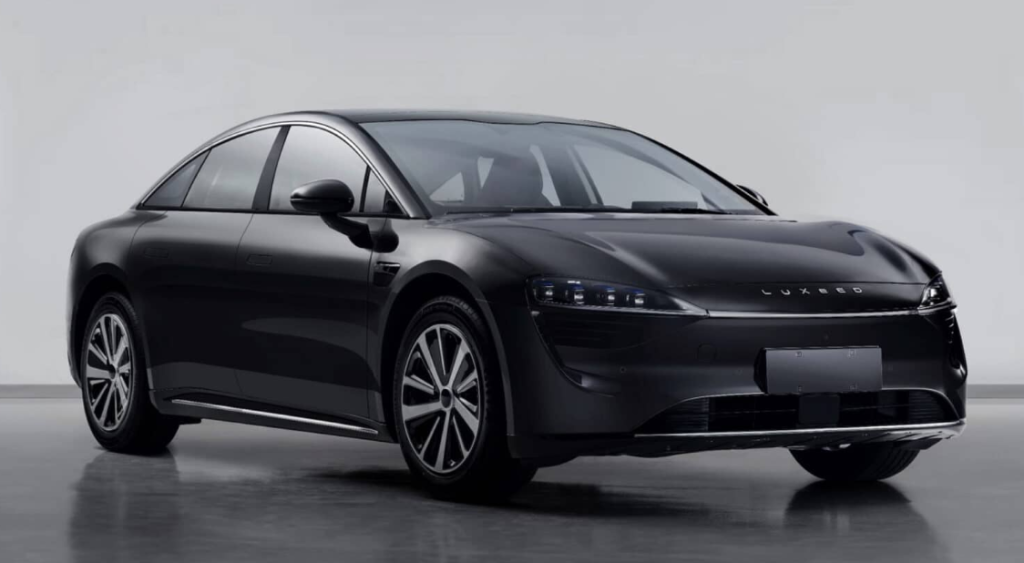
Richard Yu, CEO of Huawei’s Consumer Business Group (BG), introduced the Luxeed S7 (ZhiJie S7) electric sedan, signaling Huawei’s entry into the automotive sector. The event not only unveiled this groundbreaking vehicle but also hinted at a prospective partnership with FAW Group, a key manufacturing ally of Volkswagen and Toyota, potentially becoming the newest addition to Huawei’s burgeoning car alliance. This development sets the groundwork for Huawei’s dynamic venture into the electric vehicle (EV) market.

Strategic Collaboration and Cooperation Models

Huawei’s partnership with notable car manufacturers has taken the form of standardized parts supply models, the “Huawei Inside” (HI) model, and the Harmony Intelligent Mobility Alliance (HIMA). HIMA, representing the deepest level of cooperation, involves select vehicle partners as investment cooperation targets. Notably, current HIMA products include the “WenJie” (AITO) SUV co-developed with Seres and the “ZhiJie” (Luxeed) electric sedan co-developed with Chery. Future models, including two additional “Jie” from BAIC (“XiangJie”) and JAC (“AoJie”), underscore Huawei’s commitment to innovation and collaboration in the electric vehicle space.
Market Impact and Recent Partnerships

The Luxeed S7 launch event sparked a late-session rally in the automobile manufacturing sector. Chinese automobile manufacturing companies like FAW and FAWAY hit their maximum daily price increase, and BAIC BluePark came close to reaching its daily limit. JAC Motors and Seres followed an upward trend, reflecting the positive market reception of Huawei’s endeavors in the automotive industry.

A recent memorandum of investment cooperation signed between Changan Automobile and Huawei Technologies Co., Ltd. on November 25th further solidified Huawei’s presence in the electric vehicle sector. The agreement outlined plans to establish a joint company focusing on research, design, production, sales, and service of intelligent automotive systems and component solutions, with Changan Automobile intending to invest strategically in the venture.

Luxeed S7 Pricing and Features

The Luxeed S7, co-developed with Chery, is competitively priced at RMB 249,800 ($35000), positioning itself as a strong contender against Tesla’s Model S and Porsche’s Taycan 4S. Huawei’s pricing strategy, with the Luxeed S7 priced lower than the earlier revealed pre-sale starting price of RMB 258,000, reflects a commitment to market competitiveness.

The vehicle boasts Huawei’s advanced technologies, featuring partially autonomous driving software, a proprietary operating system for infotainment, and Tuling: a high-tech chassis with adaptive air suspension and torque vectoring for enhanced handling and comfort.

Market Position and Monthly Deliveries

Huawei’s growing presence in the electric vehicle market is evident in its increasing monthly delivery targets. Record monthly deliveries of Aito-branded electric vehicles are expected to range between 16,000 and 18,000 in the current month, with projections to surpass 23,000 in December and further increase to over 30,000 in January. These ambitious targets underscore Huawei’s commitment to making a substantial impact in the rapidly evolving electric vehicle landscape.

Huawei’s Luxeed S7 launch, coupled with strategic collaborations and partnerships, marks a significant stride into the electric vehicle market. With cutting-edge technologies, competitive pricing, and a commitment to collaboration, Huawei is poised to leave a lasting impression on the automotive industry.

Related:

(via)

Xiaomi Mijia Smart Electric Kettle 5L now widely available in China, starts at 299 Yuan ($42)

Mijia, a brand under Xiaomi, focuses on making technology accessible to everyone through AI, IoT, and advanced core technologies. Their products prioritize naturalness, simplicity, and a people-centric approach. Xiaomi’s strict quality control and reasonable pricing aim to make smart living achievable and aesthetically pleasing.

Just yesterday, Xiaomi announced the wider availability of the MiJia Smart Electric Kettle 5L, with prices starting at 299 yuan. Initially introduced through a crowdfunding campaign in September at 269 yuan, it had limited releases in October. However, Xiaomi is now expanding its availability with increased inventory.

Mijia Smart Electric Kettle 5L

Mijia Smart Electric Kettle 5L Key Features:

This electric kettle is designed to cater to modern household needs with its innovative features. It boasts a “baby-grade” glass inner tank and a 316 stainless steel heating plate to ensure water purity and safety. The kettle also features a robust construction, including a hard glass water outlet pipe. Notably, it offers a one-touch extension for boiling time, which helps reduce residual chlorine in the water, promoting a healthier drinking experience.

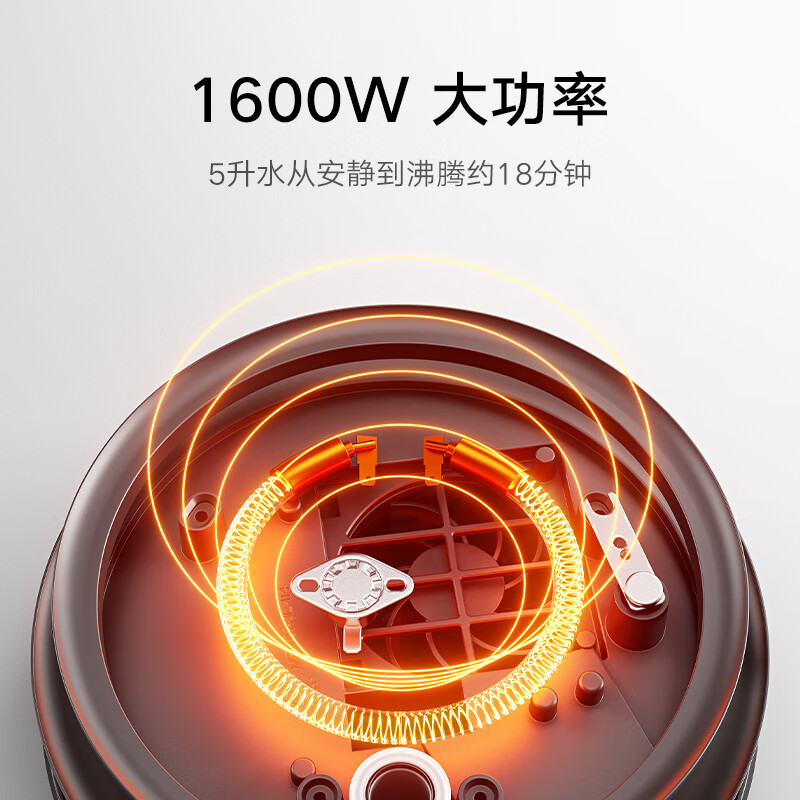
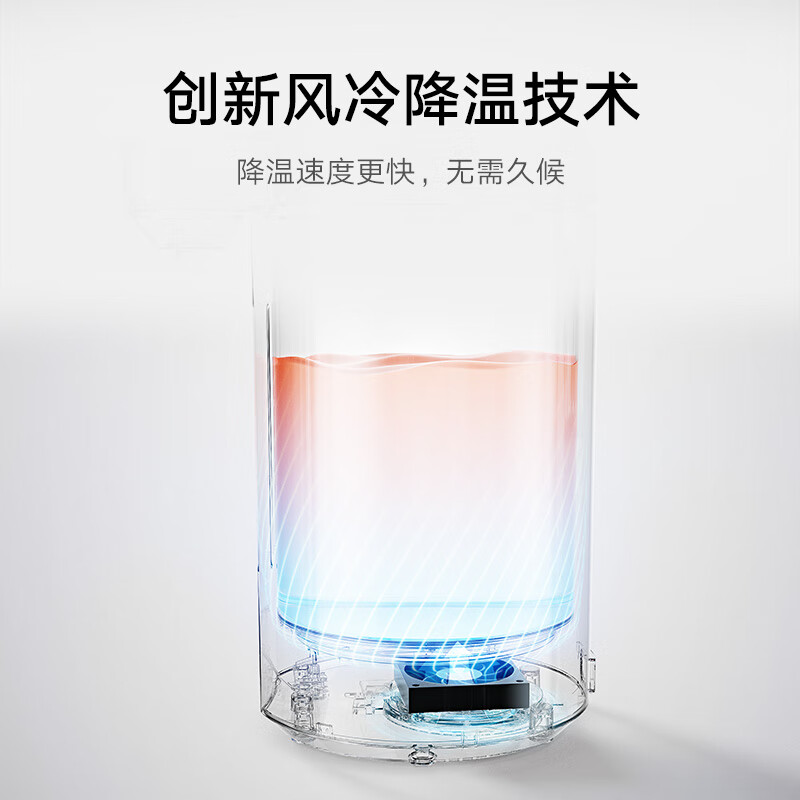
The MiJia Smart Electric Kettle stands out for its rapid heating and cooling functions, reaching a maximum power of 1600W and boiling 5 liters of water in approximately 18 minutes. It employs Xiaomi‘s cooling circulation air duct technology to quickly cool boiled water, cutting waiting time by about half. Additionally, the kettle offers three major boiling modes, enhancing its versatility for different water types and temperatures.

The kettle also provides precise temperature control, allowing users to adjust and maintain temperatures between 40°C and 90°C using controllable silicon insulation. Its double-layer design, featuring a glass inner tank and a PP outer shell, ensures excellent thermal insulation.

Furthermore, it includes an adaptive boiling point feature that automatically adapts to local boiling points, ensuring optimal boiling even in high-altitude areas. The kettle can be easily controlled and customized via the Mi Home app, offering convenient temperature settings and insulation management through smartphones.

The Mijia Smart Electric Kettle 5L offers user-friendly features such as night vision lighting for use in the dark, a concealed top cover button for easy lid opening, and clear water level markings. The kettle also prioritizes safety with double anti-scald protection, making it safe for all family members to use.

RELATED:

(Via)

Infinix Smart 8 HD teased with Magic Ring Feature ahead of Launch Next Week

Infinix is all set to announce the successor to the Infinix Smart 7 HD, aka the Infinix Smart 8 HD. The smartphone is to launch in India next week, featuring exciting new changes and enhancements. The company is continuously teasing its primary features, and today it shed some light on its Magic Ring feature.

Must See: Infinix Smart 8 Pro visits GeekBench, Bluetooth SIG, and EEC ahead of launch

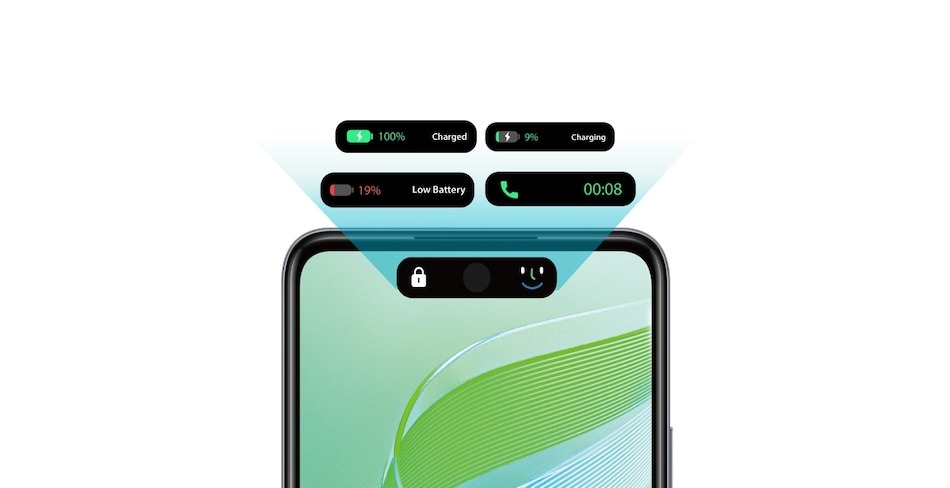
Inspired by Apple’s Dynamic Island, the Magic Link feature offers elongated pill-shaped notch animation around the front camera. The cutout is used to show relevant information in real-time like call information, battery status, and more. Infinix Smart 8 HD is the first in the sub-6K segment to get such a useful feature. It offers convenience and personalisation for the users which makes it different from predecessors.

Infinix Smart 8 HD Specifications (Teased)

The Infinix Smart 8 HD is launching in India on December 8, and the company has already unveiled some specifications and features of the device. The smartphone will house a 6.6-inch HD+ display with a 90Hz refresh rate. The display will offer 500 nits of maximum brightness. Further, there will be a side-mounted fingerprint scanner for easy authorization.

The smartphone will come with UFS 2.2 storage and a USB Type-C charging slot. It will be made available in four color options Crystal Green, Shiny Gold, Timber Black, and Galaxy White. The smartphone is expected to follow the pricing pattern of its predecessor which was launched for Rs 5,999.

Related:

Australia plans stricter laws to crackdown on tech giant’s dominance

Following the European Union’s DMA (Digital Market Act) that moved Apple to compliance, it appears that Australia is planning on cracking down on the dominance of tech giants as well.

Tech giants may face new competition scrutiny in Australia

For those unaware, many regions and governments are facing issues in challenging the dominance of tech giants in the digital market. EU set a major example as it managed to make Apple comply with its stricter regulations. Apple had a closed ecosystem with its App Store but recently allowed third party app stores in Europe. Australia is seeking to repeat this miracle and is pushing for new competition laws in the digital realms as well.

app-store-ios

The latest report from Reuters states that Australia’s competition agency is advocating for new laws that will adapt to the rapid growth of digital platforms like Amazon, Google, Meta, Microsoft, and Apple in the region. The ACCC (Australian Competition and Consumer Commission) added in a recent report that the Digital Platform Services Inquiry is concerned over the increased risk of wrongful behavior from these platforms.

These wrongfu behaviors could include invasive data gathering and locking in customers into a specific ecosystem and restricting their choices. ACCC Chair Gina Cass-Gottlieb said “Our proposed reforms include a call for targeted consumer protections and service-specific codes to prevent anti-competitive conduct by particular designated digital platforms.”

RELATED:

(Via)

Meta’s Paid Ad-Free Service in Europe Faces Legal Challenge Over ‘Privacy Fee’

The recent introduction of Meta Platforms’ paid no-ads subscription service in Europe marks a huge turn for the company. The service, applicable to Facebook and Instagram, allows users to opt for a browsing experience free from targeted ads, at a cost. While the move appears to align with EU regulations demanding user choice in data usage for ads, it has sparked a critical debate about the nature of consent and the concept of a ‘privacy fee.’

Users can choose between an ad-supported model or a paid model

Meta’s subscription model, priced at 9.99 euros monthly for web users and slightly higher for mobile users, is built on the premise that users can choose between a free, ad-supported service or a paid, ad-free experience. This approach is seen as a response to a ruling from Europe’s top court and is presented as a balanced solution that respects both regulatory requirements and user preferences.

Meta

However, this approach has met with strong criticism from NOYB, a Vienna-based digital rights group. They argue that the subscription fee effectively puts a price tag on privacy, undermining the essence of free consent as outlined in EU law. According to NOYB, this model forces users to pay up to 250 euros annually to protect their data, a stance that challenges the fundamental right to data protection.

The controversy touches on broader issues in the digital economy – the balance between monetization and user rights, and the role of big tech in shaping user choices. With NOYB’s complaint now lodged with the Austrian Data Protection Authority, and possibly escalating to the Irish data protection watchdog, the outcome could set a precedent in how digital consent and privacy are handled, not just by Meta, but across the tech industry. This move could potentially influence how other companies, like Netflix, YouTube, and Spotify, which also offer subscription-based models, handle user data and privacy in the future.

RELATED:

(Via)

Huawei Partners with China’s Hailiang Group for Tech-Driven Industrial Growth

Chinese giant Huawei Technologies is making strategic moves to diversify its business amid challenges from US sanctions. The tech giant is now partnering with Hailiang Group, China’s top copper pipe exporter and a global market leader, to offer advanced digital solutions.

The companies have been collaborating since 2022

Hailiang Group, with its diverse interests in mining, education, agriculture, and real estate, is set to benefit significantly from Huawei’s expertise in cloud computing, artificial intelligence (AI), and 5G technology. This partnership, which builds on their ongoing collaboration since 2022, aims to revolutionize Hailiang’s operations across various fronts, including digital management, smart manufacturing, and green energy initiatives.

Huawei

This move is a part of Huawei’s broader strategy to create new revenue streams by offering its technological prowess to conventional industries. The sanctions imposed by the US in 2019 prompted Huawei to rethink and reshape its business model. By establishing specialized teams, known as “legions,” Huawei has focused on creating bespoke digital transformation solutions for industries like mining, customs, and smart highway systems.

The collaboration with Hailiang is more than just a business expansion for Huawei; it’s a testament to its resilience and adaptability in the face of external pressures. This initiative is not only expected to propel Hailiang’s growth but also demonstrates Huawei’s capability to drive innovation beyond telecommunications.

RELATED:

(Via)

Huawei Dives into Smart EV Market with Changan, Targets Tesla with New Luxeed S7 Sedan

Huawei, a global telecommunications giant, has recently amplified its foray into the smart car industry. This strategic pivot reflects the company’s adaptation to the evolving tech landscape and the growing electric vehicle (EV) market. At the heart of this shift is Huawei’s collaboration with Changan Automobile, a prominent Chinese carmaker, to establish a new joint venture dedicated to smart vehicles.

This marks a big sidestep for the company’s core telecommunication business

The venture marks a significant departure from Huawei’s core telecommunication business, signaling its ambition to diversify amidst the challenges posed by US sanctions. Huawei’s decision to invite additional partners, including Seres Group, Chery Automobile, JAC Motors, and BAIC Motor, further demonstrates its commitment to this new domain. These companies, though relatively smaller in China‘s vast automotive landscape, have been integral in developing new brands in collaboration with Huawei.

Huawei

This move by Huawei is not just about expanding its business portfolio; it’s a strategic alignment with the rapidly growing EV sector. China’s EV market is fiercely competitive, with players like Tesla and BYD setting high standards. Huawei’s entry, with less than 100,000 units delivered last year under its Aito brand, indicates a cautious yet hopeful beginning in this segment.

The launch of the Luxeed S7 sedan, a joint venture with Chery, showcases Huawei’s capabilities in integrating smart technology with automotive design. Priced competitively against Tesla’s Model S, the S7 has already garnered significant consumer interest, indicating potential success for Huawei’s new venture.

RELATED:

(Via)

Fossil Gen 6 smartwatches receive Wear OS 3.5 update

Fossil Gen 6 smartwatch owners are in for a treat as the company is rolling out new features for the wearables. The new additions arrive from a software upgrade, which brings the Wear OS 3.5 build.

Fossil Gen 6 Smartwatches Wear OS 3.5 Update

The new update was released and it adds new features along with enhancements to the smartwatches. These Gen 6 smartwatches include models like Standard, Wellness Edition, Skagen Falster, and Diesel Griffed. With Wear OS 3.5, Fossil claims that users can expect to see improved battery life, although no specifics were revealed. So the end user experience could vary.

Fossil Gen 6 Hybrid Wellness Edition

The Fossil Gen 6 smartwatches will also run up to 30 percent faster thanks to a more optimized experience. Furthermore, these models will support more third party apps now. There are changes to the UI as well, with a Tile layout for the home screen, a Google Home shortcut, and gesture controls for more intuitive navigation. Notably, the enhanced performance is also paired with better fitness tracking thanks to Fitbit integration.

This is not surprising considering Google acquired Fitbit a while back. Just earlier this year, we had also talked about the Gen 6 watch lineup receiving the Wear OS 3 update. This brought the Google Assistant to the Fossil Gen 6 smartwatches. But it is unclear if Wear OS 4 is planned for the series.

RELATED:

(Via)

Some Google Drive users lost their data added since May; Google is investigating the matter

Google Drive users accessing the service on desktop platforms have reported a concerning issue where a portion of their data from recent months is mysteriously disappearing. This issue has affected a limited subset of users utilizing specific versions of the Google Drive desktop app (versions 84.0.0.0 through 84.0.4.0). The problem came to light when a user shared their distressing experience of losing all Google Drive data dating back to May.

Don’t disconnect the account form the desktop app or clear the app data

google

The issue has drawn attention from affected users on a Google community support thread, with 192 users indicating they have experienced similar problems. Reports suggest that the missing files include documents, photos, and videos. Some affected users sought help from Google’s support team, but recovery attempts were reportedly unsuccessful. Google has since advised users against certain actions, including clicking “disconnect account” in Google Drive for desktop and deleting or relocating the app data folder.

Saitej, a Google Drive team member, issued a warning within the support thread, emphasizing the importance of avoiding specific actions that could potentially worsen the situation. Users are cautioned against disconnecting their accounts and advised not to delete or move the app data folder, typically located in specific directories on Windows and macOS systems.

As a precautionary measure, Saitej recommended users create a backup copy of the app folder in a separate location. The investigation by Google into this data loss is ongoing, and affected users are urged to follow Google’s official support channels for updates and assistance. The company is actively working to resolve the issue and prevent further instances of data loss for users accessing Google Drive on desktop platforms.

Related:

(Source)

Infinix Hot 40 Leaked Live Images Reveal Design And Key Specifications

Infinix recently launched the Hot 40i smartphone in Saudi Arabia. The brand is set to launch the Hot 40 series smartphone in the African markets on December 9. Now, ahead of the official debut, the Infinix Hot 40 has surfaced in leaked live images giving us a look at the device and also revealing some key specifications. The upcoming offering will arrive as the successor to the Hot 30. Read on to know all the details of the Infinix Hot 40. 

Infinix Hot 40 leaked live images

The live image reveals the Infinix Hot 40 with a protruding squarish camera module with curved edges. The image doesn’t give a clear look but it seems that the device will have three lenses and an LED flash unit. The phone is seen in a White color option. 

Meanwhile, the leaked retail image of the box confirms the core specifications of the Infinix Hot 40. It will be offered with 128GB internal storage and the device will pack 16GB RAM out of which 8GB is physical and the other 8GB will be virtual. Additionally, upon a closer look, the upcoming offering is confirmed to be powered by a MediaTek Helio G88 processor. It will be backed by a 5,000mAh battery unit with support for 33W fast charging. 

The leaked image also reveals that the Infinix Hot 40 will feature a 6.75-inch display with a 90Hz refresh rate. It will have a 50MP primary camera sensor with super night photography features. 

We should learn official details about the Infinix Hot 40 next week. 

Related:

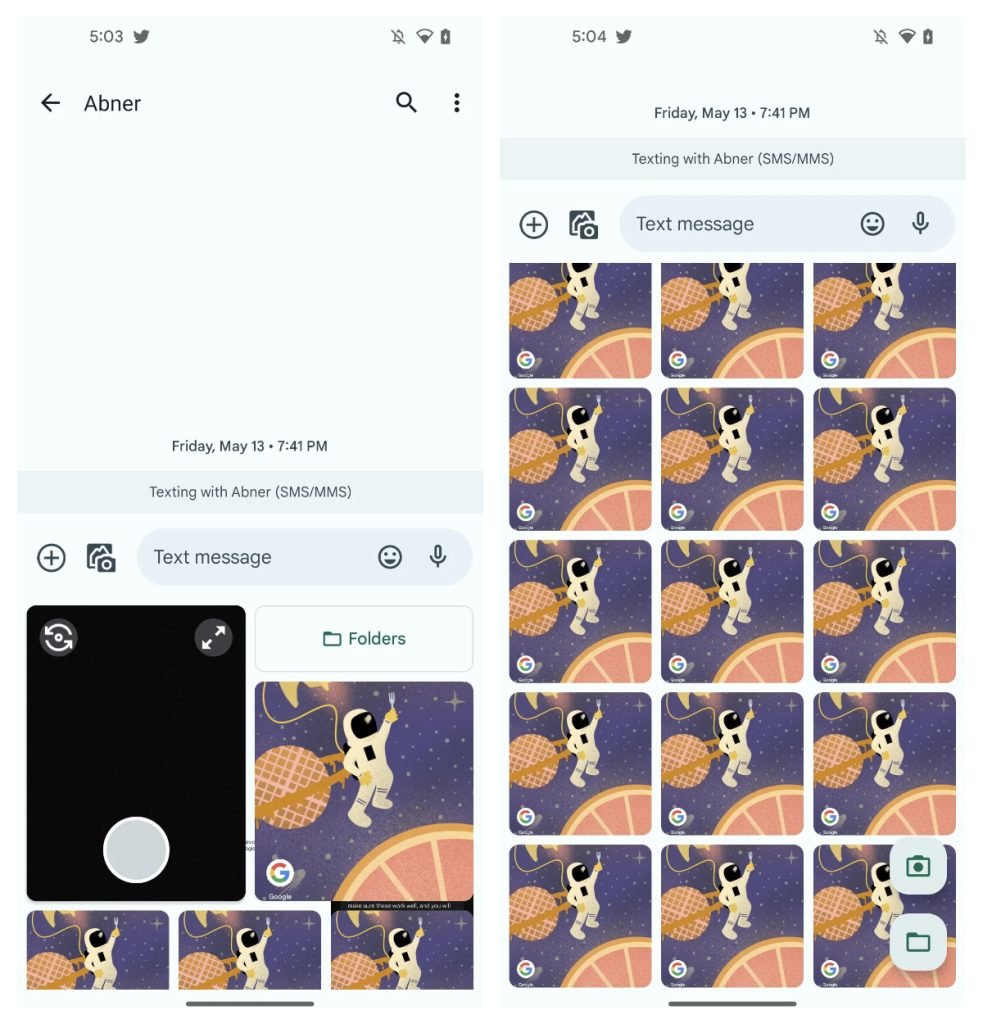
Google Messages gains Ultra HDR Image support for RCS chats

Google has quietly introduced support for Ultra HDR image sharing in RCS chats on its Messages app. This means that users with compatible devices can now send and view Ultra HDR photos within the messaging app. 

The Ultra HDR image format is compatible with Android 14 and builds upon the standard JPEG format with additional HDR metadata. This means that it can be viewed on any device, but only devices with HDR-compatible displays will be able to take advantage of the full range of colors and tones.

Google Messages Ultra HDR image support

The feature was initially discovered by TheSpAndroid, which noted support for Ultra HDR images was added back in September, just before the Pixel 8 series launch. This was verified by the – bugle.support_ultra_hdr flag within the apk.

Furthermore, the blog highlights that Google Messages doesn’t seem to be removing the HDR gain map from Ultra HDR images. Therefore, when the sent photo is saved, it should retain its Ultra HDR quality in Google Photos.

Theoretically, when an Ultra HDR image is sent or received in a Google Messages RCS chat, the image should automatically be displayed with the HDR metadata applied, assuming the device has an HDR-compatible display. 

However, there is currently no way to tell whether an image is an Ultra HDR image in Google Messages. 

Google hasn’t made an official announcement regarding the availability of Ultra HDR support in Google Messages. However, the feature is expected to gradually roll out to all Android 14 devices in the upcoming weeks.

In related news, Adobe has also recently added support for UltraHDR image editing in Lightroom mobile for Android. This means that users can now edit and export their HDR images directly from the app, without having to use a separate app.

Related:

Lenovo Legion Go India Launch Timeline Tipped, Also Listed On The Company’s Official Website

Lenovo launched its Legion Go (review) handheld gaming device in September this year. It joined the handheld gaming console bandwagon to compete against the likes of the ASUS ROG Ally, Steam Deck, Nintendo Switch, and Razr Edge. The devices are already available in the global markets. Meanwhile, back in the Indian region, gamers can only have their hands officially on the ROG Ally. Now, in a new development, it seems that Lenovo might bring its Legion Go to the Indian market. 

Lenovo Legion Go may arrive in India

Reliable video game journalist and industry insider Rishi Alwani shared a screenshot of a conversation on Instagram between Lenovo Legion India’s customer support and an X user. The later enquired the brand about the availability of the Legion Go handheld gaming console in India. The company responded that ‘The Legion Go laptop is expected to launch in March 2024’.  It’s worth noting that customer support referred to Legion Go as a laptop. Hence, it remains unclear if it’s a mistake on their part or a different product. It’s unlikely that Lenovo may launch two different products with the same Legion Go moniker. 

If the Lenovo Legion Go’s availability timeline in India indeed turns out to be true, then it’s just a matter of three months. Notably, it is also listed on the company’s official website in the country under its Legion laptops. However, Lenovo’s plans may also change. Hence, it is advisable to take this report with a healthy grain of salt.  

The Lenovo Legion Go has an 8.8-inch IPS touch-enabled display bearing a QHD+ resolution, 144Hz refresh rate and 500 nits peak brightness. It is powered AMD Ryzen Z1 Extreme with AMD RDNA GPU. The device packs 16GB LPDDR5X RAM onboard and up to 1TB storage configurations. The handheld console and the detachable controllers are backed by individual battery units respectively. Notably, the Legion Go is also compatible with AR glasses taking the gaming experience to the next level. 

Related:

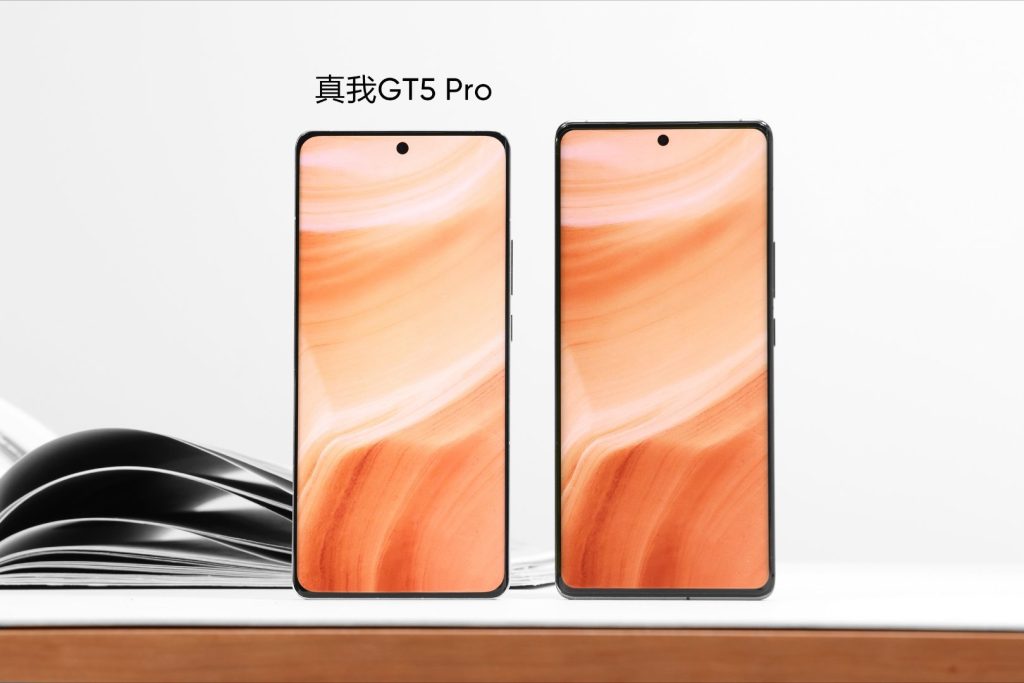
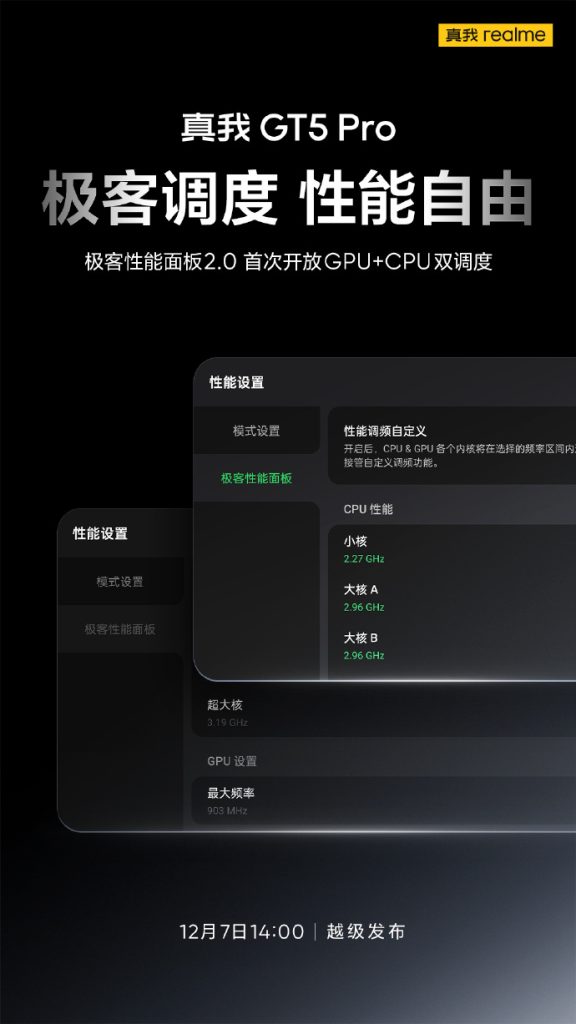
Realme GT 5 Pro’s Front Design and GT Mode 2.0 Teased

Realme GT 5 Pro is now confirmed to debut on December 7 at 2 PM Beijing Time. It is confirmed to feature some high-end specifications, a new heat dissipation system, a Snapdragon 8 Gen 3 SoC, LPDDR5X RAM, and UFS 4.0 storage. Along with these, the company has now teased its GT Mode 2.0 and a whole new design from the front. The tiny bezels and round corners are quite visible and give the smartphone a premium look.

Must See: Realme GT 5 Pro reservations now live in China

However, the GT Mode 2.0 brings significant improvements over the GT Mode that is present on the Realme GT 5. The new GT Mode 2.0 adds the ability to manually clock the speed of the GPU, earlier it was limited to CPU only. The customization at such a level really gives these GT series smartphones a thumbs up in the gaming department.

Realme GT 5 Pro Specifications (Teased)

Further, the smartphone seems to bundle the latest Qualcomm chipset along with a large 6/78-inch BOE AMOLED panel which will have the peak 3000 nits peak brightness. The smartphone will feature a primary 50MP Sony IMX890 sensor with OIS and EIS and another 50MP periscope on the rear. There will be a 32 MP lens and an 8MP wide-angle shooter for selfies on the front. The smartphone is expected to bundle a 5400 mAh battery with 100W fast wired charging and 50W wireless charging.

It is anticipated that the Realme GT 5 Pro will include 8GB, 12GB, and 16GB of RAM and 128GB, 256GB, 512GB, and 1TB of internal storage options.

Related:

(source 1, 2)

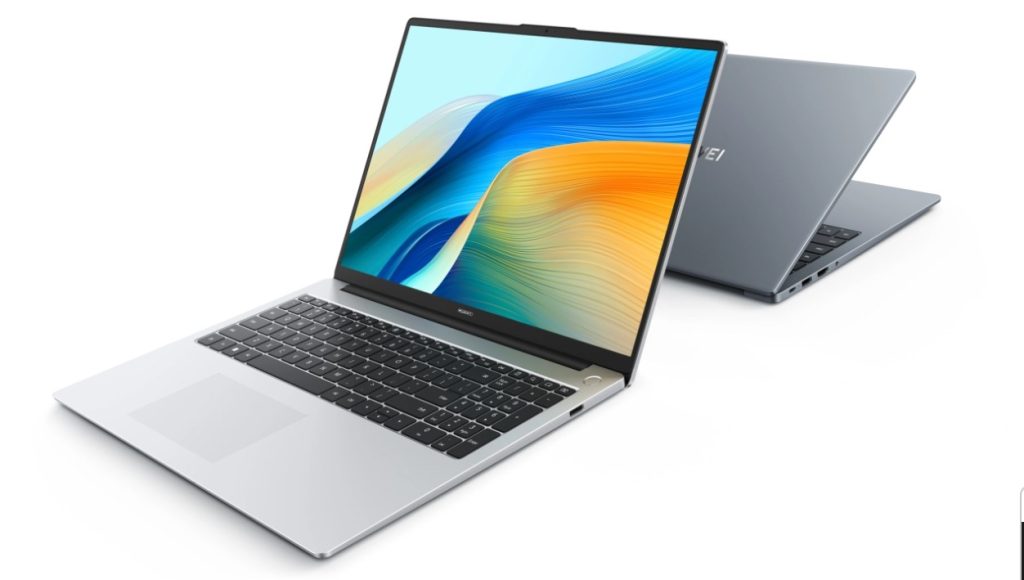
Huawei MateBook D16 (2024) With Up To 13th Gen Core i9 SoC Launched In China

Alongside the launch of the Huawei MatePad Pro 11 (2024), the brand also announced the Huawei MateBook D16 (2024) laptop. It arrives with incremental upgrades compared to its predecessor i.e. the 2023 edition that was launched earlier this year. The latest offering packs updated internals. Read on to know what it offers out of the box. 

Huawei MateBook D16 (2024) specifications and features

The Huawei MateBook D16 (2024) comes with a large 16-inch IPS display bearing a resolution of 1,920 x 1,200 pixels and 300 nits peak brightness. The screen is surrounded by narrow bezels and offers a 90 percent screen-to-body ratio for an immersive viewing experience. 

The Huawei MateBook D16 (2024) is a lightweight laptop measuring just 1.68kg. The brand says that it has passed rigorous durability tests. The laptop has a dedicated numeric keypad and a fingerprint scanner embedded in the power button. There is a metamaterial antenna that is claimed to increase the download speeds and connection range of up to 270 meters. 

Under the hood, the Huawei MateBook D16 (2024) houses the 13th generation Intel Core processors up to Core i9. Barring the Core i5 which has Intel UHD graphics, the Core i7 and i9 options have Intel Iris Xe GPU onboard. The laptop packs 16GB RAM and 1TB SSD storage. It draws its power from a 70Wh battery cell. 

The Huawei MateBook D16 (2024) packs a 1080p webcam, dual speakers and microphones, and five-point touchpad support. 

The Huawei MateBook D16 (2024) starts at CNY 4,999 (~$704) for the base Core i5 with 16GB RAM and 1TB storage. The Core i7 and i9 with the same RAM and storage are priced at CNY 5,999 (~$845) and CNY 6,499 (~$915). The laptop is offered in bright moon silver and deep space grey colors.

Related:

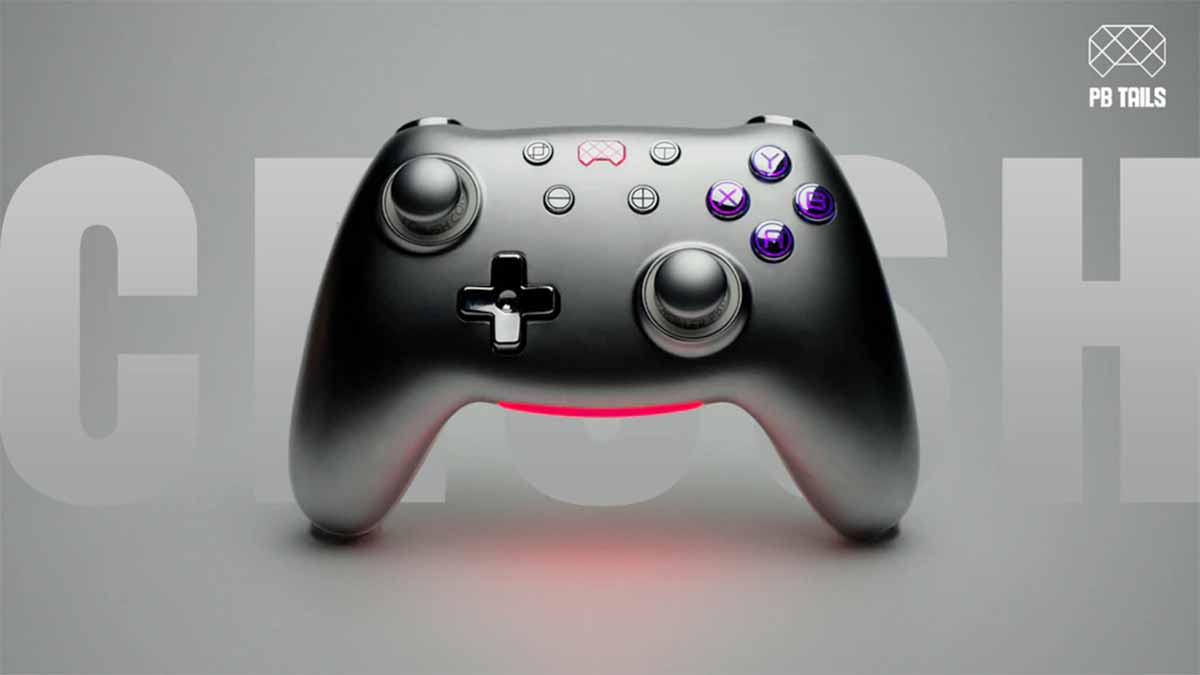
Experience the Future of Gaming with PB Tails’ New Crush Controller

Gamers who enjoy more than just League of Legends know that a gamepad is essential for an immersive and enjoyable gaming experience. However, if you don’t own a console and are considering purchasing a gamepad, the options can be overwhelming. The market is flooded with choices, and the differences between them are often minor. Additionally, many gamepads carry a hefty price tag that doesn’t always match their capabilities. Fortunately, PB Tails, an innovative gaming tech startup, has stepped up to address this issue with their new Crush controller. Here are the details…

PB Tails Unleashes the Gaming Revolution with Crush Controller

PB Tails is a gaming tech startup that’s making waves in the industry by prioritizing style and design. They’re committed to creating gaming hardware that enhances the overall user experience. Their innovative gamepad models have garnered attention for their unique designs, and now they’re taking things a step further with the Crush Controller, which seamlessly blends style and functionality. So, what are the prominent features of PB Tails’ new Crush controller?

pb tails crush controller

A Masterpiece of Inspired Design

As I mentioned above, when it comes to PB Tails, design takes precedence over everything else. True to expectations, the company doesn’t disappoint with the Crush Controller. Inspired by the timeless curves of the iconic Porsche 550 Spyder, the Crush Controller seamlessly blends retro aesthetics with modern ergonomics. The classic lines provide an unparalleled ergonomic feel, designed to minimize fatigue even during prolonged gaming sessions. The result is a visually stunning controller that guarantees a comfortable grip and an outstanding handling experience, no matter how long you play.

Unrivaled Customizability

Customization is another area where Crush controller stands out. The gamepad tool-free personalization options. Gamers can adjust the RGB lighting of the ABXY, Home button, and light bar in real-time and swap out the MagCase as their mood dictates. The vision is a clear gaming experience where gamers can intuitively customize their Crush controller without intricate instructions or steep learning curves.

The Next Evolution of the D-pad

PB Tails has redefined potential with the Crush s D-pad. After numerous iterations, a unique structure that blends conductive rubber and microswitches has been developed. The resulting D-pad delivers a firm, precise feel that sets it apart.

Precision Control with Hall Effect Hardware

Gaming with a gamepad can be a frustrating experience due to joystick drift, which is a common problem that can happen to any controller, regardless of brand. Joystick drift can affect your gaming experience and waste your limited time. However, PB Tails offers a solution to this problem with their Crush controller, which features Hall effect joysticks and triggers for precision control and to eliminate joystick drift. The shoulder buttons, LB and RB, have been meticulously fine-tuned across multiple iterations to ensure a solid and precise response, whether one uses their fingertips or the pad of their finger. In this way, PB Tails makes sure that you have a problem-free gaming experience.

Versatility for Every Gamer

In today’s world, gamers have a wide variety of platforms to choose from, each with its own unique selection of games. However, this can sometimes lead to compatibility issues, especially when using controllers from one platform on another. For instance, an Xbox One controller might not work on a PC, and Microsoft only addressed this issue with later generations of controllers. Fortunately, you won’t have to worry about such compatibility problems with PB Tails’ New Crush Controller. This versatile controller is compatible with Switch, Windows, Steam, iOS, and Android, making it the perfect choice for gamers who value flexibility and freedom.

The Crush controller is available in three series – Basic, Gem, and Metal – each featuring a unique MagCase. All series share the same design and material for the back shell, ensuring consistent quality, while the MagCases are interchangeable across series, providing additional customization options. PB Tails invites all gamers, from Gen Z tech enthusiasts to high-net-worth individuals with an appreciation for design, to experience Crush. Join their campaign today and feel the difference that Crush offers.

Click here to access the product’s Kickstarter page and have a chance to own it before anyone else.

RELATED:

(via)

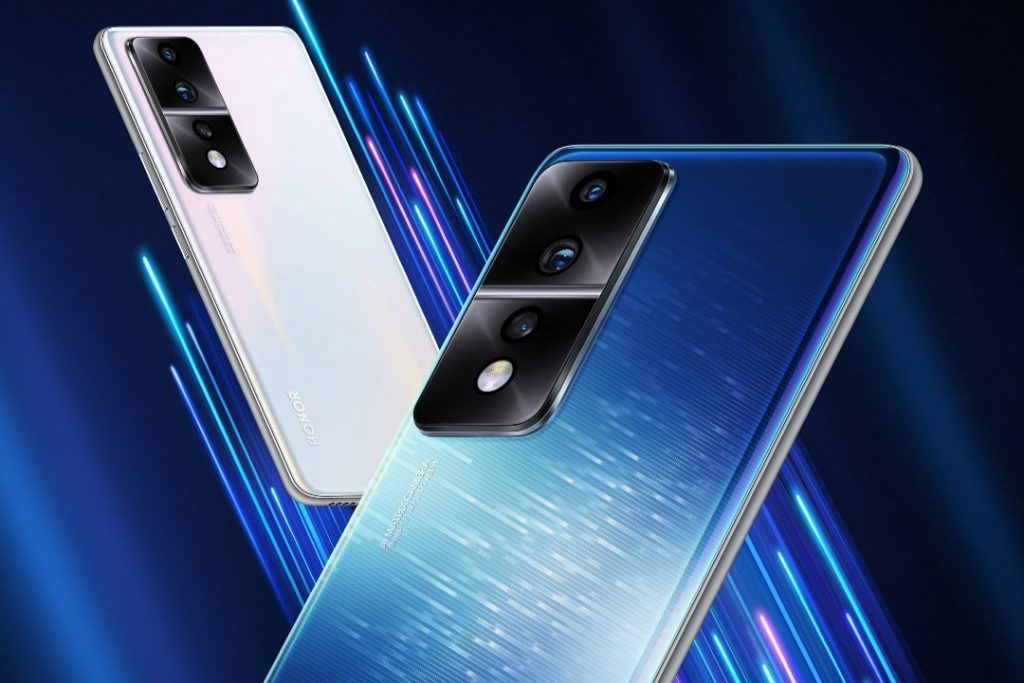
Honor exec seemingly teases new GT series phones

In the second half of 2022, Honor introduced smartphones with GT branding. The Honor X40 GT was the first, which was soon followed by the Honor 80 GT.

A year later, these devices are yet to get successors. Instead, the brand recently released the Honor X40 GT Racing Edition.

However, there have been rumors of new models for months. Today, one of the company’s executives teased the arrival of next-gen GT phones on Weibo.

Honor 80 GT
Honor 80 GT

Wei Xiaolong is one of the many important executives of the Honor brand in China. He has been the product manager of the Honor Play series since the company was owned by Huawei.

But today, he has changed his Weibo description to ‘product manager of Honor GT series.’ This suggests that Honor GT could now be a new independent family of smartphones from the brand. Up until now, Honor released GT phones under both number and X series.

Additionally, the executive shared an image revealing the ‘Honor Thanos Project.’ He is most likely teasing the imminent launch of the new GT handsets.

As per rumors, Honor will debut Honor X50 GT and Honor 100 GT. But given that these devices are now spun off into a separate lineup, we are not sure if they will bear these names.

Anyways, reliable tipster Digital Chat Station claims that they will be powered by Qualcomm chipsets. The X50 GT, in particular, is expected to house a Snapdragon 888 SoC and feature a rear design inspired by the Huawei Mate X5. While both of them are said to sport flat displays but the type of the panel is not known.

We  are looking forward to learning more about these handsets in the coming days as they are nearing their launch.

RELATED:

Huawei MatePad Pro 11 (2024) With Two-Way Satellite Connectivity Launched In China

Huawei launched the MatePad Pro tablet in September this year. It is a top-notch offering packed with flagship specifications. The device was announced in a single 13.2-inch screen size. Now, the brand has launched the MatePad Pro in an 11-inch variant with toned-down specifications compared to its bigger sibling. Read on to know what the latest offering has in store for us. 

Huawei MatePad Pro 11 (2024) specifications and features

The Huawei MatePad Pro 11 (2024) as the name suggests comes with an 11-inch OLED display panel bearing a WQXGA resolution, 600 nits peak brightness, and a 120Hz refresh rate. The screen is surrounded by symmetrical bezels and a punch-hole cutout at the top right corner. The tablet is compatible with a stylus called M-pencil and it can be magnetically attached to the side. 

The Huawei MatePad Pro 11 (2024) features a circular camera module on the back panel. It accommodates 13MP and 8MP sensors. There is a 16MP front-facing selfie snapper. The tablet is equipped with a speaker system. 

Under the hood, the Huawei MatePad Pro 11 (2024) is equipped with a Kirin 9000s processor that is slightly a downgraded version compared to the 13.2-inch model. It packs 12GB RAM and is offered in 256GB and 512GB storage options. The tablet is backed by an 8,300mAh battery unit with support for 66W fast charging. There is also a heat dissipation system onboard. Software-wise, it runs on HarmonyOS 4 with features like multitasking, PC-level apps, and more. The Huawei MatePad Pro 11 (2024) also comes with two-way satellite messaging when there is no network signal. 

The Huawei MatePad Pro 11 (2024) is priced at CNY 4,299 (~$) and CNY 4,799 (~$) for the 12GB + 256GB and 12GB + 512GB RAM and storage configurations. It is offered in Green, Blue, Black, and White colors. The tablet goes on pre-orders today with sales commencing from December 8. 

Related:

New Xiaomi Smartwatch appears on UAE’s TDRA; Seems it is the upcoming Redmi Watch 4

Following the developments around the upcoming Redmi K70 series, a new Xiaomi Smartwatch has just surfaced on the UAE’s TDRA certification. Bearing the model code M2320W1, the smartwatch is registered as a short-range smartwatch device. The listing hardly unveils anything related to the smartwatch but confirms a new smartwatch is in the making.

Must See: Xiaomi teases Redmi Watch 4 with AMOLED display, aluminum alloy build

Due to minor details available about the new smartwatch, we are unable to conclude more about the specifications or other features. We expect more information to arrive in the coming days via public certifications or via leaks. However, Xiaomi recently teased a new Redmi Watch 4 with AMOLED display and aluminum alloy build which is expected to launch on November 29. So, the new smartwatch could be the Redmi Watch 4.

Additionally, Xiaomi’s subbrand Redmi is working to launch the Redmi K70 Series consisting of the Redmi K70e, Redmi K70, and Redmi K70 Pro. The Redmi K70e smartphone will come with a 6.67-inch OLED display with having 120Hz refresh rate and 2712 x 1220 pixels resolution. It seems to run MediaTek DImesnity 8300 Ultra SoC, LPDDR5x RAM, and UFS 4.0 Storage.

Meanwhile, the Redmi K70 and the Redmi K70 Pro will feature Snapdragon 8 Gen 2 SoC and Snapdragon 8 Gen 3 SoC, respectively.

Alongside the new smartphone, there will be a new Redmi Watch 4 and Redmi Buds 5 Pro which were teased recently with battery details.

Related:

Samsung Galaxy S24+ Arrives On India’s BIS Certification, Confirms Nearing Launch

The Korean giant is only a couple of months away from the official launch of the Galaxy S24 series. This year too, the company will bring three different models, including the Galaxy S24, the Galaxy S24+, and the Galaxy S24 Ultra. There have been ample leaks and rumors that cite information about its different aspects like design, specifications, etc. In a new public certification, the Galaxy S24 Ultra has arrived at India’s BIS certification, following its elder sibling, the Galaxy S24 Ultra, which appeared last week.

Must See: The Galaxy S24 will be an “AI Phone,” confirms Samsung

The smartphone is already doing the rounds on public certification websites, including Thailand’s NBTC and others. The BIS certification confirms the moniker of the phone as Samsung Galaxy S24+. It confirms the model code; however, the certification misses the other details about the handset.

The smartphone is reportedly launching on January 17, with pre-orders starting the same day.

Samsung Galaxy S24 Series Specifications (Expected)

The Galaxy S24 Series appears to bundle AI camera features which will compete well against the Pixel 8 Series. As per 3C certification, the smartphone appears to bundle the 45W fast charging support. The smartphone appears to feature a 4775 mAh battery as revealed by Dekra Certifications.

Further, it will house a 6.7-inch Dynamic M13 AMOLED panel with 2500 nits brightness. The smartphone will offer up to 12GB RAM and 512GB internal storage.

According to rumors and leaks, the Galaxy S24 Ultra may have a 6.8-inch WQHD+ display. It will be powered by a Snapdragon 8 Gen 3 SoC, 8/12GB of RAM, and 128/256GB of internal storage. There may be other variants as well, but these are the ones that have been suggested so far.

In the camera department, the Galaxy S24 Ultra is expected to feature a 200 MP primary camera sensor, a 12 MP ultra-wide lens, a 50 MP periscope lens, and a 10 MP telephoto sensor. The smartphone appears to feature a 5000 mAh battery, which will support 45W fast wired charging. It is said to feature a titanium frame, an IP68 rating, support for stereo speakers, and an in-display ultrasonic fingerprint sensor. In connectivity, there could be a GPS, Wi-Fi 7, Bluetooth 5.4, NFC, USB 3.2 Gen 2 Type-C port, Samsung Pay, and Wireless DeX.

We expect more information to be disclosed in the coming couple of months.

Related:

(via)

MediaTek pledges $12.5 Million investment in UK startups

In a strategic move to fortify its presence in the United Kingdom, Taiwanese semiconductor giant MediaTek Inc. has announced a substantial investment of £10 million (US$12.59 million) over the next five years. The announcement, made on the eve of the 2023 Global Investment Summit in London, underscores the company’s commitment to fostering innovation in the UK’s burgeoning startup landscape.

This investment aligns seamlessly with the UK government’s proactive stance on attracting foreign investments, as highlighted in its recent autumn statement. The UK, currently hosting over 140 Unicorn enterprises, and privately owned startups valued at over £1 billion each, stands out as a key hub for innovation in Europe. This number surpasses the combined count in Germany, France, and Sweden, making the UK an attractive destination for companies seeking growth opportunities.

MediaTek, already operating in the UK with offices in Cambridge and Kent, focusing on research and development, has solidified its commitment to the region through recent collaborations. A joint venture with the Bullitt Group aims to pioneer two-way satellite communications technology for smartphones and other devices. Additionally, a partnership with Inmarsat plc aims to deliver satellite communications services to customers, highlighting MediaTek’s dedication to cutting-edge technological advancements.

In the global market, MediaTek has secured its position as the fifth-largest integrated circuit (IC) designer. With sales reaching approximately $3.2 billion and an 8.4% market share in Q2 of the current year, the company continues to be a significant player in the semiconductor industry.

The recent unveiling of the Dimensity 8300 chipset further solidifies MediaTek’s commitment to innovation. Positioned as the company’s premium-tier offering for 5G smartphones, the chipset boasts advanced second-generation 4-nanometer process technology, promising 20% faster CPU performance and 30% peak gains in power efficiency compared to its predecessor. 

The chipset is set to debut in smartphones by the end of the year, signaling MediaTek’s intent to compete in the premium 5G smartphone market.

Related:

(via)