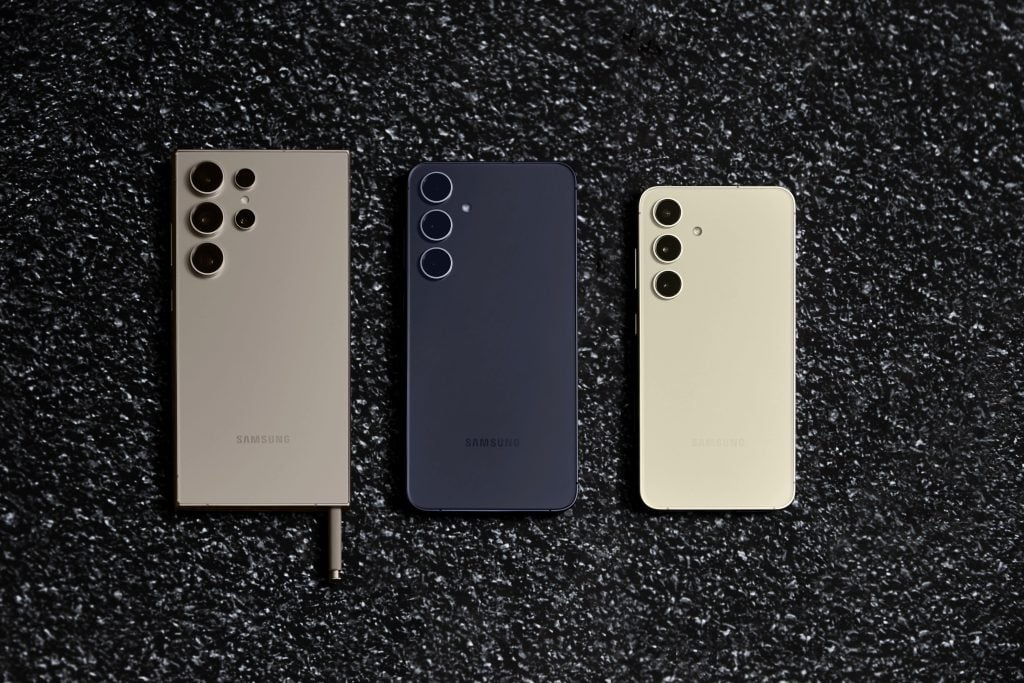
The global economic crisis and inflation are impacting the world. Of course, this situation is adversely affecting technology companies, especially smartphone manufacturers. People are hesitant to spend money on products they deem “unnecessary,” and advancing technology isn’t helping. Even mid-range and entry-level phones are more than sufficient for daily use today. As a result, people don’t feel the need for a change, and this issue is not a new one.
Manufacturers have been struggling to reach their desired levels for the past two years, or at least they couldn’t reach them. A study published by Counterpoint reveals that there has been a shift in the global smartphone market. According to this, global smartphone sales in October 2023 showed annual growth for the first time since June 2021. Here are the details…
October Global Smartphone Market Sales Break Two-Year Losing Streak, Path Set for Gradual Recovery
The global smartphone market finally broke the 27-month-long downward trend. The sector, which grew by 5% compared to the same period the previous year, presented a positive picture for the first time since June 2021. The source of growth was the Middle East and Africa (MEA), followed closely by China and India.
Especially in China, the interest in smartphones increased significantly, especially after the release of the Huawei Mate 60 series. Moreover, with the addition of the iPhone 15 series, the rise became inevitable. This even reminded many of the days when there was fierce competition between Apple and Huawei.
Moreover, this is just the beginning. Experts predict growth for the global smartphone market in the last quarter of 2023. This may indicate that the impact of the economic crisis on phone manufacturers is at least diminishing. As you know, the Covid-19 pandemic was a golden age for technology companies.
During a period when the whole world was continuously shopping, everyone set records in sales, revenues, and profit margins. Just when those days might have seemed entirely behind us, the resurgence has excited smartphone manufacturers like Samsung, Apple, Xiaomi, Huawei, and many others.
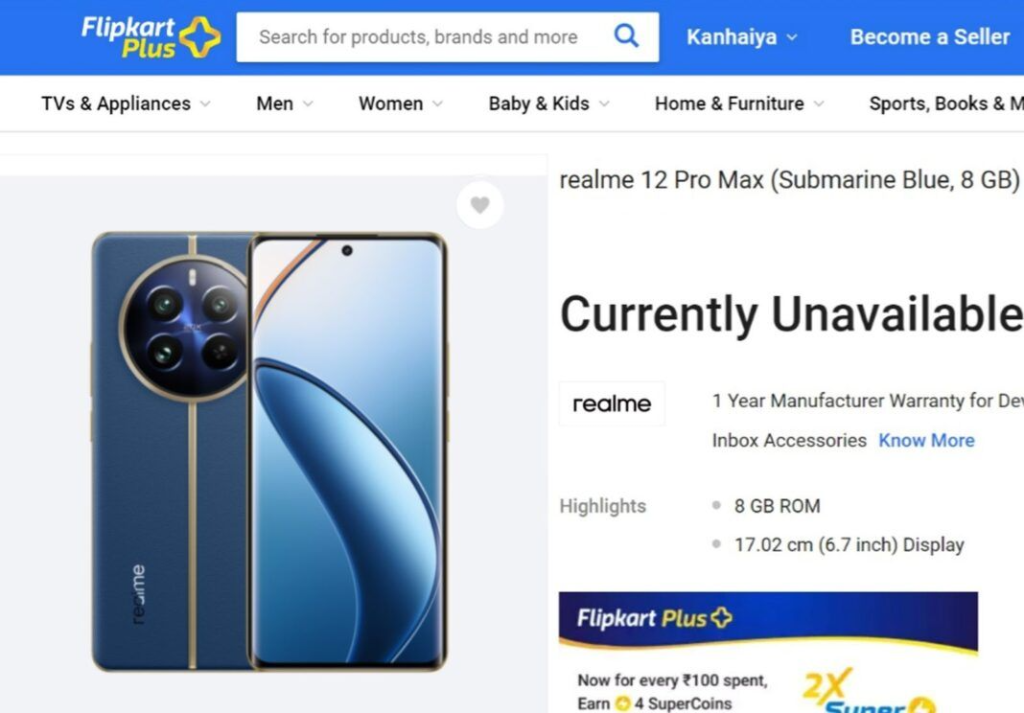
The said SoC and camera are expected to be featured on the forthcoming Realme 12 Pro Plus. On the other hand, the same tipster had earlier revealed that the Realme 12 Pro will be equipped with a 32MP Sony IMX709 2x telephoto shooter.
The Realme number series is known for going head-to-head with the Redmi Note lineup. Going by the camera specs, the Realme 12 series will have a huge advantage in the zoom department over the Redmi Note 13 family which does not offer a dedicated zoom camera.
We are looking forward to learning more about these smartphones in the coming days. Going by the official confirmation from the brand, the phones are probably only weeks away from the launch.
The Realme 12 series will likely be released a few days after the debut of the Realme GT 5 Pro.
Artificial intelligence technology has truly left its mark on 2023. This technology, which has suddenly appeared in every aspect of our lives and in every service we use, has benefited NVIDIA the most. As evident in the financial reports for the third quarter of 2023 released by the company, NVIDIA increased its revenues by 206% in the last three months, reaching $18.12 billion. During the same period, its profit also increased by 588%. Here are the details…
NVIDIA Profits Skyrocket, Revenue Doubles in Q3
Although NVIDIA is perceived by many as merely a graphics card manufacturer, the reality is much different. The company has a variety of products ranging from data center equipment to chips like the H100 that power artificial intelligence technologies such as ChatGPT. Moreover, thanks to the AI frenzy in 2023, these products are more popular than ever. This demand is also reflected in the company’s financial statements.
According to the reports, NVIDIA generated $18.12 billion in revenue in this quarter across its various subsidiaries operating in different fields. Approximately $14.5 billion of this amount came from hardware sales that enable the operation of artificial intelligence technologies. To put it into perspective, the $18.2 billion earned is 206% more than the previous quarter.
Now, what would be considered a profitable figure for a company to be deemed successful with a $18.2 billion revenue? NVIDIA’s answer to this question is nothing short of impressive. The company achieved a net profit of $10 billion. To scale it, in the same period last year, this amount was $1.4 billion, indicating a staggering 588% growth.
Although NVIDIA’s goal for this quarter was to reach a revenue of $20 billion, the company needs to put in a bit more effort to achieve its targets due to embargoes in countries such as China, Saudi Arabia, and the UAE.
In June, HP unveiled three new gaming-focused laptops in India: the Omen Transcend 16, Omen 16, and Victus 16. The Victus 16-R0075TX model is the most affordable among the three, featuring the 13th-generation Intel processor, NVIDIA GeForce RTX 4050 graphics, and a 165Hz refresh rate display as some of its key features. Here is a review of the Victus 16 (2023) to inform potential buyers about what they can expect from this affordable gaming notebook.
Design, Display, Speakers, and Keyboard
HP VIctus 16 (2023)
The HP Victus 16 (2023) boasts a polycarbonate construction that feels sturdy but is on the heavier side, weighing 2.31 kg. The weight is primarily due to its large 16-inch display and capacious battery. The Performance Blue-colored device features a “V” logo on the lid, and its left and rear sides house the ports and air vents. The laptop’s hinge is solid, ensuring a stable screen without any noticeable wobbling.
HP VIctus 16 (2023)
The Victus 16 features a 16.1-inch IPS LCD panel that delivers a Full HD resolution of 1920 x 1080 pixels, a 165Hz refresh rate, 100% sRGB color gamut, and wide 178-degree viewing angles. While the peak brightness reaches 300 nits, which might be considered moderate, it proves sufficient for indoor use. Positioned on either side of the device, the B&O dual-speaker system produces a satisfactory sound output without any noticeable distortion. While the built-in speakers are adequate, they fall short of the immersive experience that a connected gaming headset or PC speaker can offer.
HP VIctus 16 (2023)
The laptop features a full-sized keyboard with a dedicated numeric keypad, and in this version, includes backlighting, though it doesn’t feature RGB lighting. The keys are well-spaced, providing a comfortable typing experience with ample palm-resting space. However, I don’t like the position of the power button, which is right next to the Delete key. Quite a few times, I ended up hitting the power key when I wanted to access the Del key. There are dedicated buttons for accessing the Omen app and the calculator. Despite my preference for a mouse, the trackpad is generously sized, can disregard accidental swipes, and is user-friendly.
HP VIctus 16 (2023)HP VIctus 16 (2023)HP VIctus 16 (2023)HP VIctus 16 (2023)
Performance and Battery Life
Being a 2023 edition variant, the HP Victus 16 features the 13th generation Intel Core i5-13500HX processor and NVIDIA GeForce RTX 4050 with 6 GB GDDR6 VRAM, an impressive combination for this device. I played games like GTA V, Forza Horizon 4, and F1 22, and the gaming experience was exceptionally smooth, with vibrant graphics and responsive gameplay that showcased the hardware’s power and capabilities. It supports games with ray tracing support, enhancing lighting, shadows, reflections, and textures. The laptop’s battery life tends to drain a bit faster during intensive gaming than during regular use.
The Victus 16 has two RAM slots, both occupied by a pair of 8 GB DDR5-4800Hz RAM modules. In terms of storage, the device comes with 512 GB PCIe Gen 4 NVMe M.2 SSD storage and is preloaded with Windows 11 Home. Under general use, the laptop’s dual-fan cooling system operates silently. The fan noise increases during intensive gaming, but it remains unobtrusive. The Omen Gaming Hub app can be used for various kinds of customization, such as keyboard lighting, monitor performance, and game optimizations including overclocking, power profiles, fan speed, network booster, and more.
In addition to its exceptional gaming capabilities, I extensively used the HP Victus 16 for daily productivity tasks, contributing content across various platforms. This involves managing multiple tabs on Chrome, with YouTube running in the background, as well as running two instances of Chrome, one of Microsoft Edge, and engaging in image editing. The laptop seamlessly handled these demanding workloads, showcasing its efficiency and reliability for productivity. Remarkably, it sustained this level of performance throughout my entire work session on a single charge, demonstrating a commendable balance between gaming prowess and productivity efficiency.
The notebook is equipped with a 230W charger, requiring approximately two hours to fully charge its 6-cell 83Whr battery. Following a full charge and engaging in approximately one hour of gaming along with some content writing, the device offers a commendable battery backup lasting around five hours.
Connectivity, Ports, and Other Features
HP VIctus 16 (2023) – Left sideHP VIctus 16 (2023) – Right side
On the left side of the Victus 16 (2023), it offers a USB-A port with charging support, an RJ45 Ethernet port, and an HDMI 2.1 port. On the right side, there’s a USB-C port with USB-PD charging and DisplayPort 1.4 support, two USB-A ports, a 3.5mm audio/microphone jack, and a power adapter connector. Additionally, the device supports fast Wi-Fi 6e and Bluetooth 5.3 connectivity.
Despite being a gaming laptop, HP has commendably included a decent 2-megapixel Full HD webcam equipped with a privacy shutter and dual array microphones. The webcam is adequate for video conferencing and calls. The device lacks the following features: a microSD card slot, a fingerprint sensor, and a Kensington lock slot.
As mentioned earlier, the HP Victus 16 (2023) is available in two configurations. The variant that includes an RGB-lit keyboard and Intel UHD graphics costs Rs 1,29,990, while the one with a backlit keyboard and GeForce RTX 4050 graphics is priced at Rs 1,24,990.
HP Victus 16 (2023) review: Verdict
The HP Victus 16 (2023) stands out as a formidable gaming laptop, offering an impressive blend of performance and value. It tackles demanding games with ease thanks to its 13th-generation Intel Core i5-13500HX processor and NVIDIA GeForce RTX 4050 graphics. A decent battery life lasting about five hours on a single charge and the inclusion of a high-refresh-rate 165Hz display guarantee fluid and responsive gameplay.
However, it is essential to acknowledge that the device leans towards the costlier side and carries a bit of bulk, justified by its expansive display size and robust battery. The absence of an SD card slot, present in its predecessor, and a quad HD resolution may be considered downsides given the device’s price point. Nevertheless, for gamers prioritizing both performance and extended battery life, coupled with a comfortable keyboard for productivity, the HP Victus 16 (2023) stands out as a compelling and versatile option.
Winter’s here, and so is the annual air pollution concern in our cities. Qubo, the Smart Devices brand from Hero Electronix, tackles this issue with the launch of its new Smart Air Purifiers—Q200, Q400, and Q500—designed for various living spaces.
These air purifiers boast a cutting-edge 4-layer purification system, featuring a HEPA H13 filter and nano-silver anti-bacterial coating. Effectively capturing particles as small as 0.03 microns, they eliminate 99.97% of common pollutants like dust, pollen, pet dander, and mold. The Qubo app allows convenient remote control, offering insights into outdoor and ambient air quality.
What sets these purifiers apart is the proprietary AI technology—QSensAI—adapting performance to ambient PM2.5 levels and learning user preferences. These features not only ensure clean air but also contribute to energy savings and filter lifespan extension.
The design-optimized air ducts provide top-notch performance in Clean Air Delivery Rate (CADR) within a compact frame. He states, “Air pollution is a sad reality in major cities, and ordinary air purifiers fall short. Our Smart Air Purifiers aim to make every day a good air day at home.”
Pricing & availabily
The Qubo Smart Air Purifiers are now available on Qubo’s website and major e-commerce platforms such as Amazon. Soon, they will also be accessible at Qubo’s physical stores. Prices range from Rs. 12,990 for Q200 to Rs. 22,990 for Q500, offering options for different coverage areas.
Tesla continues to expand its charging network in both U.S. and the rest of the world. However, all these efforts can sometimes prove insufficient. Due to the increasing popularity of electric cars, certain locations may experience additional congestion. In an effort to address this issue, Tesla has announced a new “Congestion Fee” application.
New “Congestion Fee” Application is on The Way for Tesla Users
Have you ever had to wait in line to refuel your car with gasoline? Even if it’s just 20 minutes, it’s likely enough to frustrate you. Now, imagine what happens when this congestion occurs at an electric car charging station, turning frustrating minutes into hours. Tesla aims to solve this situation with its new “Congestion Fee” application.
According to this, if you find yourself at a Supercharger station that Tesla designates as congested at certain times, and your vehicle has reached a specific charge level, the company will charge you a high fee if you choose to continue charging. You will have five minutes from the time you receive the warning to leave the charging station. If you don’t leave within this time frame, you will be considered to have accepted the fee.
Of course, Tesla’s goal with the “Congestion Fee” application is not to take money from you. Instead, if you are one of those who cannot disconnect their car from the charger until it reaches 100%, Tesla gently encourages you to let go of this obsession. In doing so, the company aims to prevent people from waiting unnecessarily and causing delays for others in line.
Currently, Tesla is implementing the “Congestion Fee” application only in the United States. The current tariff is set at $1 per minute when the charge is above 90%. Tesla explains this decision by stating, “We do not want customers without urgency to occupy the station. A customer never leaves their vehicle at the pump at a gas station, and the same principle applies to Superchargers.”
The introduction of this change comes after Tesla’s decision to open its Superchargers to other electric vehicle brands. By 2024, the company plans to share its stations with brands such as BMW, Ford, General Motors, Honda, Hyundai, Nissan, Toyota, and Volvo, increasing the pressure on the charging network.
Xiaomi‘s Redmi brand, a prominent figure in the smartphone industry, has achieved a monumental milestone, celebrating the sale of one billion Redmi phones over the past decade. This remarkable achievement was proudly announced by Lu Weibing, a key executive at Xiaomi Group. As the president of Xiaomi’s International Department and the general manager of the Redmi brand, Weibing played a pivotal role in steering the brand to its current heights of success.
Redmi’s Milestone: Celebrating a Billion Sales and Anticipating the K70 Series
The journey of Redmi began under the Xiaomi umbrella on July 31, 2013, as a new product line aimed at offering high-quality smartphones at affordable prices. This strategy proved to be a game-changer in the smartphone market, allowing Xiaomi to rapidly gain a foothold and expand its customer base. Recognizing the potential and distinct identity of Redmi, Xiaomi, in a strategic move on January 3, 2019, elevated Redmi to an independent sub-brand, giving it more autonomy and focus within the Xiaomi portfolio.
This transition was marked by a separate launch event for the Redmi brand on January 10, 2019, signifying its newfound independence and strategic importance. Under its independent status, Redmi has continued to flourish, innovating and expanding its product line, thereby reinforcing its position in the competitive smartphone market.
In celebration of this sales milestone, Lu Weibing organized a special ceremony, inviting key domestic supply chain partners who have been instrumental in Redmi’s journey over the past ten years. This event not only commemorated the sales achievement but also strengthened the bonds with partners who have been integral to Redmi’s growth and success.
Looking ahead, Redmi is poised to continue its innovation streak with the upcoming launch of the Redmi K70 series. These new models, equipped with the MediaTek Dimensity 8300-Ultra processor, promise to offer enhanced configurations and superior performance. The Redmi K70 series is eagerly anticipated and is expected to further cement Redmi’s reputation for delivering cutting-edge technology at competitive prices. As the brand moves forward, all eyes are on Redmi for its next steps in the ever-evolving smartphone market.
Xiaomi is gearing up to unveil the highly anticipated Redmi K70 series smartphones in China later this month. Excitement is mounting as the devices have been making numerous appearances online, and Xiaomi’s official Redmi Weibo account is teasing key features, further fueling the anticipation for their official release.
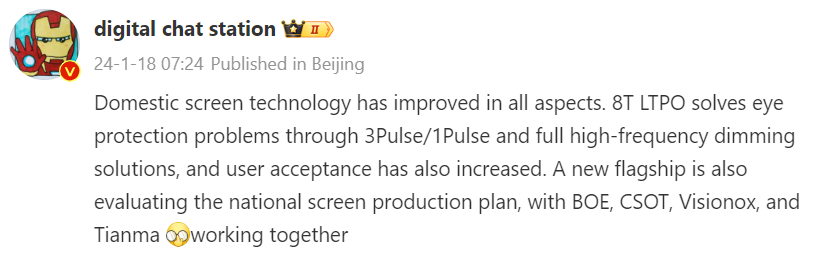
Now popular tipster Digital Chat Station has unveiled real-world images of the upcoming Redmi K70E smartphone, showcasing its impressive design. The phone will sport a slim bezel design, contributing to an exceptional screen-to-body ratio. The device will boast a 1.5K flexible straight screen with high-frequency 1920Hz PWM dimming, a peak brightness of 1800 nits, 12-bit color depth, and an under-display fingerprint sensor.
Redmi K70E Specifications (Leaked)
Under the hood, the Redmi K70E will pack the MediaTek Dimensity 8300-Ultra processor, paired with LPDDR5X RAM and UFS 4.0 storage. This combination promises exceptional performance for both everyday tasks and demanding gaming sessions.
Xiaomi has also confirmed that the Redmi K70E will come equipped with a 5500mAh battery and 90W fast charging. The phone will maintain a slim profile with a thickness of just 8.05mm, despite its large battery capacity.
The Redmi K70E will incorporate an intelligent charging engine to prolong battery lifespan and introduce Xiaomi’s Haixing algorithm for battery repair. Xiaomi claims that even after 1000 heavy charge and discharge cycles, the battery’s effective capacity will remain above 90%.
To keep the phone running at its best under heavy workloads, the Redmi K70E will feature Redmi’s largest 5000mm² esports-grade stainless steel VC (Vapor Chamber) cooling system. This system offers a 26.6% increase in heat dissipation area compared to the previous generation, ensuring optimal performance even during extended gaming sessions. The phone will run on Xiaomi’s latest software HyperOS and as per the leaked image the phone will offer up to 1TB of storage as well.
Lu Weibing, Xiaomi’s Group Partner, President of the International Department, and Redmi Brand General Manager, has hinted that the Redmi K70 series will be released this month. The Redmi K70 series is expected to include three models: K70E, K70, and K70 Pro. While the specific release date has not yet been announced, the leaked photos and teasers suggest that the Redmi K70E is poised for an imminent launch.
Artificial intelligence (AI) has taken the world by storm. Baidu, a Chinese tech giant, is making strategic moves to sustain its AI development despite facing U.S. export restrictions on advanced AI chips. Baidu’s approach offers a unique perspective on how technology companies can navigate geopolitical challenges while advancing in the competitive AI landscape.
The company will boost focus on its own Large Language Model (LLM), Ernie
Baidu’s recent third-quarter earnings call revealed an interesting strategy. Despite the U.S. curbs on AI chip exports, Baidu CEO Robin Li Yanhong expressed confidence in the company’s ability to continue its AI projects, particularly its Ernie large language model (LLM). This resilience stems from a stockpile of advanced AI chips that Baidu has amassed, ensuring at least two years of uninterrupted AI development. This proactive approach highlights how foresight and strategic planning can play a crucial role in mitigating the impact of international trade restrictions.
Li’s comments also shed light on the broader implications of such export curbs. While Baidu has found a temporary solution, these restrictions could slow the pace of AI innovation in China. This situation could potentially lead to a consolidation of Chinese AI companies, centering around leading LLMs. Such a scenario underlines the interconnectedness of global tech industries and the far-reaching effects of geopolitical decisions.
Interestingly, Baidu’s situation also highlights the potential of homegrown solutions. While Li acknowledged that alternative chip sources might not match U.S. advancements, he emphasized Baidu’s strengths in unique AI architecture and algorithms. This suggests a potential shift towards self-reliance in AI technology, a move that could reshape the global AI landscape.
Moreover, Baidu’s focus on its Ernie Bot ecosystem, a direct competitor to OpenAI‘s ChatGPT, signals a significant shift from its traditional revenue streams. With 70 million users within three months of its launch, Ernie Bot’s success exemplifies Baidu’s potential to lead in the generative AI space.
OpenAI, known for its innovative technology, has recently launched ChatGPT Voice, a highly realistic virtual assistant, to the public for free. This move comes at a time when the company is facing internal challenges, making it a bold and somewhat risky decision.
The feature was once exclusive to only ChatGPT Plus members
ChatGPT Voice, introduced in late September, stands out for its remarkably human-like interactions. Unlike typical virtual assistants that often sound robotic, ChatGPT Voice uses OpenAI’s advanced language model to provide nuanced and complex responses in a natural, human-like voice. This feature, once exclusive to paying users, is now available to all through the ChatGPT app on Android and iOS platforms.
The process to use ChatGPT Voice is straightforward. Users initiate a conversation by tapping the headphones icon in the app and speaking to the AI. The assistant, powered by a library of voice actor recordings, responds with realistic intonation and emphasis, making the experience surprisingly lifelike.
However, the timing of this release is notable. OpenAI is currently dealing with significant internal upheaval, including the unexpected dismissal of CEO Sam Altman. This event sparked a chain reaction, leading to the departure of key researchers and calls for the resignation of the entire OpenAI board. Amidst this backdrop, the decision to release ChatGPT Voice could be seen as either a strategic distraction or a misjudged move. Please note, the company has reinstated Sam Altman as per recent news.
The company, on the brink of major changes, faces a critical juncture. While the new voice feature is indeed impressive and a testament to OpenAI’s technological prowess, it raises questions about the company’s timing and priorities. With so much at stake, including employee morale and the company’s future direction, one wonders if delaying the release might have been wiser.
Mountain biking, a sport that combines the thrill of exploration with the challenge of rugged terrain, has seen a significant shift with the advent of e-bikes. Among the pioneers in this transformation is British brand Whyte Bikes, known for their two-decade-long dedication to mountain bikes. Their latest venture into the e-bike segment, the E-Lyte, is not just an addition to their product line but a game-changer in the world of electric mountain bikes (e-MTBs).
The bike is designed with a complete carbon frame
Unlike traditional e-bikes that prioritize power and torque, the E-Lyte is designed with a distinct philosophy: to keep it light and natural. This approach is evident in its carbon fiber frame and the selection of advanced motors. Such innovations cater to mountain bikers who yearn for an e-bike that doesn’t compromise the authentic feel of pedaling through nature’s obstacles.
The ingenuity of Whyte’s E-Lyte lies in its balance and weight distribution. The company’s engineering, including the use of a custom jig, ensures that each E-Lyte model achieves an optimal balance, enhancing the riding experience. This level of precision is what sets the E-Lyte apart in the e-MTB market.
Offered in various configurations, the E-Lyte caters to diverse riding preferences. The E-Lyte 140, with its moderate weight and suspension, is perfect for those who prefer agility over brute force. Meanwhile, the E-Lyte 150 and Works variants, slightly heavier, provide more suspension travel, suited for riders who favor stability and comfort on more challenging trails.
An interesting feature of the E-Lyte is the eShape.it Link V2 technology, allowing riders to adjust the bike’s geometry. This versatility speaks to the evolving nature of mountain biking, where adaptability can enhance both performance and enjoyment. Finally, the E-180 version showcases the Bosch Performance Line CX Race system, marking the E-Lyte as a top contender in the e-MTB segment. This model embodies the peak of e-bike technology with its high-level pedal assistance and lightweight design.
Roku is nearing the launch of its 11th generation of devices, and most probably it would include the new Roku Streamber. As per a new FCC listing (via GChromecastHub), Roku is working on a new Streambar and it bears model code 9104X. The listing also unveils that the device supports WiFi, Bluetooth Classic, and Bluetooth Low-Energy capabilities.
For those who are unaware of the Roku Streambar, it is a streaming device molded into a soundbar. It supports the ability to convert a 2-in-1 Roku Soundbar, it even supports attachment with a Subwoofer. Those who want to enjoy the premium sound can convert into a Surround System with a pair of other two speakers. The plug-an-play system over the air seems quite fit for the users.
It was first introduced in October 2020, and upon its good reception in the market, the company introduced a Roku Streambar Pro Model in May 2021. Now, it seems the Roku Streambar (2023) is set for launch.
Details about its launch or availability are not yet known, but it seems the announcement is not so far away.
OnePlus is rolling out a new security patch update for the OnePlus Nord CE 2 and OnePlus 9RT smartphones. The respective firmwares are rolling out for both the devices bringing the November 2023 Android Security Patch. The Indian Variants of both the devices are receiving the firmware update.
OxygenOS 13 F.51 is rolling out for the OnePlus Nord CE 2, meanwhile the OxygenOS 13.1.0.593 is available for the OnePlus 9RT. Below is the official changelog of the updates on respective smartphones:
It is an incremental update, and may take some time to fully rollout on each unit of the OnePlus Nord CE 2 and OnePlus 9RT. The users can manually check the update by heading to the System Settings > About > Check for Updates.
Especially for the users in India, Google Dialer offers an ability to report any bugs or issues by typing *#800#.
Huawei is expected to launch the Nova 12 series smartphones in the near future. The Nova 12 Pro appeared in leaked render revealing its design earlier this month. Now a Weibo user has shared a render of the standard Nova 12 phone that gives us a look at the upcoming offering. The Nova 12 series is expected to debut as the successor to the Nova 11 series. The upcoming offerings have been doing the rounds on the rumor mill.
Huawei Nova 12 appears in leaked render
As per the leaked render, the Huawei Nova 12 has curved edges on all four sides. The volume rocker and power button are on the right frame. The latter also protrudes suggesting that the phone may have an in-screen fingerprint scanner. This also potentially hints at an OLED display panel.
The Huawei Nova 12 is seen with a big pill-shaped camera module housing three sensors. The bigger sensor at the top is accentuated with a Gold color circle. Meanwhile, the leaked render reveals a smaller camera with an LED ring light. The device is seen in a matte finish Black color option.
As per past reports, the Huawei Nova 12 is rumored to be powered by a Kirin 830 processor. It is expected to be backed by a 4,800mAh battery unit with support for 88W fast charging. The smartphone’s rear camera setup is tipped to comprise a 50MP main sensor, 8MP telephoto lens, and a 12MP wide-angle macro unit. The Nova 12 will reportedly feature a 60MP front-facing portrait ultra-wide-angle camera. The upcoming offering is also rumoured to feature 120Hz display and support satellite connectivity.
In a surprising turn of events, OpenAI has announced the reinstatement of Sam Altman as CEO after a week-long internal crisis surrounding his abrupt termination. The initial decision had triggered concerns of a mass exodus from the company, with hundreds of staff members threatening to quit in solidarity.
The resolution involves the establishment of a new board chaired by former Salesforce executive Bret Taylor. Notable figures such as former US Treasury Secretary Larry Summers and Quora CEO Adam D’Angelo will join the board. Altman, co-founder and former CEO, expressed his anticipation for returning to OpenAI and highlighted the importance of building on the strong partnership with Microsoft, a key player in OpenAI’s investments.
The upheaval began when Altman was removed from the CEO position, prompting internal turmoil and investor pressure for stability. Microsoft, a significant investor, initially offered Altman a role to lead a new AI research team. However, Altman, with the support of Microsoft CEO Satya Nadella, is set to return as OpenAI’s CEO under a new leadership structure.
Nadella welcomed the leadership changes, emphasizing their importance in achieving more stable, well-informed, and effective governance. Microsoft is considering changes in OpenAI’s governance structure, including potentially increasing the board’s size and raising the experience level required for members. This aligns with Microsoft’s goal of enhancing protections, given its substantial $13 billion investment in OpenAI.
Negotiations are ongoing between Altman, the OpenAI board, and interim CEO Emmett Shear regarding Altman’s possible reinstatement. Nadella has expressed dissatisfaction with the lack of notification from OpenAI’s board before Altman’s termination, underscoring the importance of communication and collaboration.
Regardless of Altman’s return, Nadella insists on significant governance changes at OpenAI. Microsoft is contemplating the possibility of placing one of its executives on OpenAI’s board but is cautious about potential challenges from US regulators.
As discussions unfold, Microsoft remains tight-lipped on the matter. The fate of Altman’s return and the current board will likely shape the future trajectory of OpenAI, a company renowned for its flagship product, ChatGPT. The advanced language model-based chatbot gained global popularity, reaching over 100 million monthly users within a year of its public release in November 2022.
It seems that Samsung has reportedly started working on its next-generation Galaxy A-series smartphones. The Galaxy A15, A25, and A55 have all surfaced on the internet not long ago. This time, the Galaxy A35 has emerged in high-quality leaked renders courtesy of Onleaks giving us a look at the device. The smartphone is expected to arrive as the successor to the A34 that debuted earlier this year.
Samsung Galaxy A35 5G leaked renders
The Samsung Galaxy A35 5G is seen with a boxy form factor and curved corners. The right side of the device has a protrusion that was first found on the Galaxy A15 renders as well. The protruded space accommodates power and volume rocker buttons. It seems that the South Korean brand is making the design mainstream on the Galaxy A models. The back panel has vertically stacked three camera sensors along with an LED flash. Coming to the front, the Galaxy A35 5G has a centre-aligned punch-hole cutout display. The screen is surrounded by minimal bezels on all sides.
Dimension-wise, the Samsung Galaxy A35 5G will measure 161.6 x 77.9 x 8.2 mm. The bottom port of the device has a USB-C port and a speaker grille whereas the top has a SIM tray slot.
The tipster reveals that the Samsung Galaxy A35 5G will feature a 6.6-inch display. However, the rest of the core specifications of the device remain under wraps. We can expect the upcoming smartphone to surface in certifications that should hopefully reveal more details.
Back in August, Xiaomi launched the Smart Band 8 Pro in China. The smart band is expected to make its debut in other markets around the globe as well. Ahead of its global journey, the Smart Band 8 Pro has now emerged on the SIRIM database.
The recently certified Xiaomi Smart Band 8 Pro, identified by the model number “M2333B1” through SIRIM certification, suggests an upcoming launch in Malaysia, despite the absence of detailed specifications in the certification information.
Xiaomi Smart Band 8 Pro specs:
The Xiaomi Smart Band 8 Pro is a versatile fitness tracker with a sleek rectangular design and a vibrant AMOLED display. It boasts an impressive array of health and fitness features, including heart rate monitoring, SpO2 tracking, sleep analysis, and menstrual cycle tracking for women. The device also excels in stress monitoring and breath training, providing guidance for managing stress levels and improving respiratory health. Additionally, the fitness band supports over 150 sports modes, including a smart running mode and running lessons, making it an ideal companion for athletes and fitness enthusiasts of all levels.
With its built-in GNSS chip, voice assistant, and Miaoxiang Center for controlling Xiaomi smart devices, the Xiaomi Smart Band 8 Pro seamlessly integrates into the user’s digital ecosystem. Its convenient features like camera and music control, flashlight, weather updates, and notifications further enhance its usability. Powered by a long-lasting 297mAh battery, the fitness band can keep up with the user’s active lifestyle for up to 14 days on a single charge.
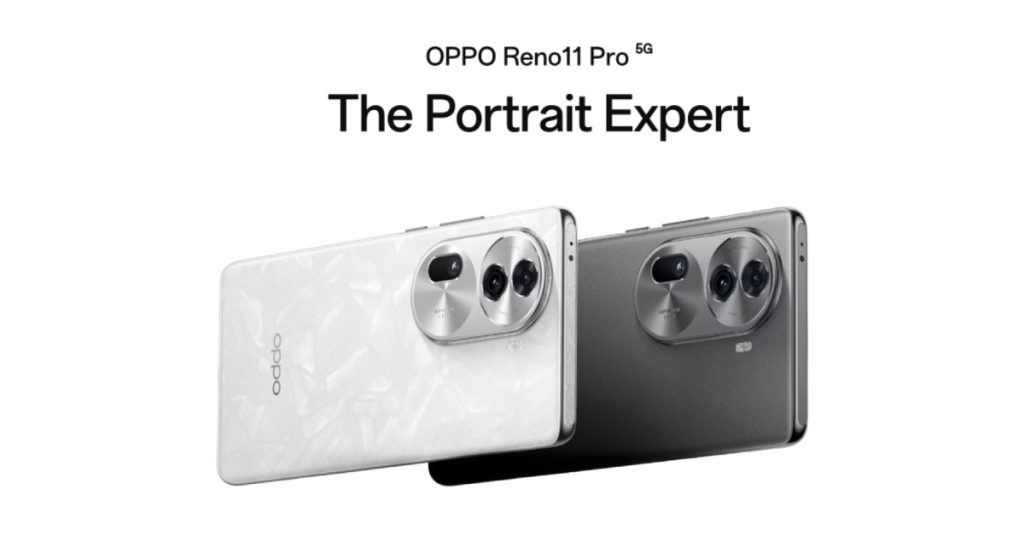
Oppo is gearing up to launch the Reno 11 series in China this week. The company has been teasing the features of these phones for the last few days.
Thanks to leaks, we already know almost everything about these smartphones. These handsets will be also accompanied by a budget tablet called Oppo Pad Air 2.
If you are interested in watching the unveiling of these products live, then you have come to the right place. Here in this article, we will guide you on where to watch the Oppo Reno 11 series launch event.
Oppo Reno 11 Pro
Oppo Reno 11 Series Launch Date
The Oppo Reno 11 series is scheduled to launch in China on November 23 (Thursday). It will be announced at a press conference which will begin at 2 PM local time (GMT+8).
Devices Expected at Oppo Reno 11 Series Launch Event
The star of the show will obviously be the Reno 11 smartphones. However, as mentioned above, the company will be also debuting a tablet.
The following products will be presented at the conference.
Oppo Reno 11 Pro
Oppo Reno 11
Oppo Pad Air 2
Oppo Reno 11 Series Launch Event Livestream
Just like most Chinese events, the Oppo Reno 11 series press conference will be also live-streamed on Weibo. You can find the video stream on the company’s official Weibo profile when the event begins.
Additionally, the conference can be also watched on Oppo’s official Bilibili and Douyin profiles.
Oppo Reno 11 Series Specifications
To learn about the specs of the Oppo Reno 11 series, we recommend you check out our roundup article. You will find all the details you need to know about these upcoming phones.
Insta360 has expanded its range of action cameras. The two new offerings from the brand are Insta360 Ace and Insta360 Ace Pro. As the names suggests, the latter is the more premium offering among the two devices. Both models have almost the same specifications apart from a few differences. The newly announced action cameras from Insta360 pack premium features that compete against the popular DJI OSMO Action 4 and GoPro Hero Black 12.
Insta360 Ace and Ace Pro specifications
The Insta360 Ace and Ace Pro look like any other action camera in the market with a compact rectangular body. The Ace Pro appears slightly larger compared to its non-pro sibling. There is a flip touchscreen display measuring 2.4-inches. The devices are water-resistant up to 10 meters but they can survive up to 60 meters with the Dive Kit. The action cameras can be mounted quickly or switched between accessories thanks to their magnetic mounting system.
Coming to the photography and videography specifications, the Insta360 Ace and Ace Pro feature Leica sensors with a 16mm focal length. The Ace model has a 1/2-inch sensor with f/2.4 aperture whereas the Ace Pro has a 1/1.3-inch sensor with f/2.6 aperture. The former is capable of recording up to 6K videos at 30fps whereas the latter maxes out at 8K at 24fps. Both the Ace and Ace Pro also support 4K video recording at 120fps. They can click 48MP pictures. For video recording, there is gesture control, voice control, and an option to pause or cancel the recording. The action cameras also pack Stats Dashboard feature.
The Insta360 Ace and Ace Pro are equipped with a 5nm AI processor with features like AI Highlights assistant, AI Wrap, AI Selfie Stick Eraser. There is also slow motion, starlapse, timeshift, and more features onboard.
The Insta360 Ace is powered by a 1,700mAh battery with support for 15W fast charging whereas the Ace Pro is backed by a 1,650mAh cell with support for 30W charging. The action cameras are compatible with iOS 12 and over devices powered by Bionic A12 SoC and Android devices powered by Snapdragon 855, Exynos 2200, and Kirin 990 or newer chips with Android 10 or above.
The Insta360 Ace is priced at $449.99 (~Rs 37,000) whereas the Pro model costs $546.99 (~Rs 45,500). The action cameras are offered with various kits including Creator Kit, Motorcycle Kit, Cycling Kit, Splash Kit, Winter Kit, GPS-ready Kit, and Endurance Kit, with prices going up to $686 (~Rs 57,200). The Insta360 Ace and Ace Pro are available for purchase from select retailers, Amazon, and the brand’s website.
The Vivo X100 series was recently announced as the company’s latest flagship smartphones and it appears to be a smashing hit already. During the first sales, the brand saw record breaking sales figures in the home market of China.
Vivo X100 series exceed 1 billion Yuan in first sales in China
The Chinese tech giant unveiled the highly anticipated X100 lineup earlier this month. For those unaware, the Vivo X100 lineup consists of the base X100 and the X100 Pro. In an official image poster, the brand shared that the first sales of the X100 series were quite successful. Beating the X90 series and any other Vivo phones, the X100 lineup surpassed 1 billion Yuan (roughly 140 million US Dollars) in first sales across all the channels. This clearly hints at its blockbuster reception in the region.
The Vivo X100 has a starting price tag of 3,999 Yuan (roughly 561 US Dollars), while the X100 Pro starts from 4,999 Yuan (roughly 701 US Dollars). These devices boast top notch specs and features. On the front, the two devices sport a tall 6.78-inch LTPO OLED displays, 120Hz refresh rate, 1.5K resolution, and 3,000 nits of peak brightness. Under the hood, they are equipped with the MediaTek Dimensity 9300 SoC, which is paired with up to 16GB RAM and up to 1TB of internal storage.
A highlight aspect of these devices is the camera setup. The X100 Pro offers a 50-megapixel VCS bionic primary camera, which is paired with a 64 MP Zeiss telephoto shooter, and a 50 MP ultra wide angle lens. Meanwhile, the X100 Pro comes with a 50-megapixel 1-inch Sony IMX989 VCS primary sensor that is paired with a 50-megapixel Zeiss APO telephoto shooter, and a 50 MP ultra wide angle lens.
We use cookies on our website to give you the most relevant experience by remembering your preferences and repeat visits. By clicking “Accept”, you consent to the use of ALL the cookies.
This website uses cookies to improve your experience while you navigate through the website. Out of these, the cookies that are categorized as necessary are stored on your browser as they are essential for the working of basic functionalities of the website. We also use third-party cookies that help us analyze and understand how you use this website. These cookies will be stored in your browser only with your consent. You also have the option to opt-out of these cookies. But opting out of some of these cookies may affect your browsing experience.
Necessary cookies are absolutely essential for the website to function properly. This category only includes cookies that ensures basic functionalities and security features of the website. These cookies do not store any personal information.
Any cookies that may not be particularly necessary for the website to function and is used specifically to collect user personal data via analytics, ads, other embedded contents are termed as non-necessary cookies. It is mandatory to procure user consent prior to running these cookies on your website.