Advertisement

Lime unveils the Gen4 Seated e-scooter which allows riders to take a seat

Lime has rolled out the Gen4 Seated e-scooter in its operations in San Francisco and Chicago. The Gen4 Seated was piloted earlier this year and targets older users with reduced physical mobility. The Gen4 Seated will further launch in other cities in the US, as well as in Australia and New Zealand.

Lime Gen4 Seated e-scooter

Lime Gen4 Seated e-scooter is the brand’s first electric kickscooter with a seat

The release of the Gen4 Seated is coming on the heels of a strong financial performance by Lime. The company recently released its half-year performance statistics which indicated a revenue of $250 million on gross bookings of its vehicles. Its H1, 2023 results were 45% better than the H1, 2022 results. Lime is also planning for a public listing of the company.

Lime Gen4 Seated e-scooter

According to Lime, its new mobility solution, the Gen4 Seated will make micromobility more approachable and allow for added comfort. When the e-scooter is paired with Lime’s new storage compartment, it offers greater versatility. Lime says that internal storage is a key issue in choosing a micromobility rental vehicle. The Gen4 Seated is accessed via the app, as with the brand’s existing fleet.

Lime Gen4 Seated e-scooter

Lime says its market research has shown that the Gen4 Seated is more appealing to the segment of older users left out with the existing Lime offerings. It has larger wheels and a lower baseboard that enhances the scooter’s center of gravity. This, in turn, makes the Gen4 Seated to be safer while being used. The scooter comes with a swappable battery setup although the full performance feature of the scooter was not specified.

RELATED:

GEEKOM Mini Air12 mini PC with a sleek design, Intel N100 CPU, and 16GB of RAM unveiled

GEEKOM has introduced the Mini Air12 mini PC and it comes in a sleek design. The GEEKOM Mini Air12 is powered by the Alder Lake Intel N100 processor and offers 16GB of RAM resources. The mini PC is suitable for handling media and productivity applications, offering great performance and an affordable price.

GEEKOM Mini Air12 mini PC

Features

The Mini Air12 has a 512GB Gen 3×4 SDD which is upgradable to 2TB. Its Intel N100 CPU has four cores and four threads. The mini PC is also equipped with the Intel UHD 24EU graphics @ 750MHz.There are a variety of ports for connectivity to the gadget including five USB, one RJ45, Mini DP 1.4, USB 3.2 Gen 2, and HDMI 2.0 ports. It also has a 3.5mm headphone jack and an SD card reader. The Mini Air12 is capable of hosting three displays with up to 8K video output resolution.

GEEKOM Mini Air12 mini PC

The GEEKOM Mini Air12 is being propped as a great offering with an excellent price-to-performance ratio. It offers Wi-Fi 6 and Bluetooth 5.2 connectivity, as well as delivers a low-noise cooling system.

GEEKOM Mini Air12 mini PC

Pricing & Availability

The Mini Air12 is currently priced at $249 on the company’s website. The Taiwanese manufacturer hopes that the fairly decent pricing of the model, coupled with its impressive capabilities, could stimulate demand for the Mini Air12. Global availability and pricing information for the GEEKOM Mini Air12 portable mini PC is not available at this time.

RELATED:

(source)

PELADN HI-3 Mini PC with i5-11300H, 16GB DDR4 RAM launched in China for 2599 yuan ($356)

PELADN has officially launched its HI-3 mini PC, a compact yet powerful computing device that packs a punch in its small 1-liter form factor. Let’s delve into the key specs of this mini PC.

PELADN HI-3 Mini PC

PELADN HI-3 Mini PC Key Features:

The HI-3 mini PC is driven by an Intel Core i5-11300H processor, boasting 4 cores, 8 threads, and a turbo boost clock speed of up to 4.4GHz. For graphics, it utilizes an NVIDIA MX450 GPU with 2GB of GDDR6 memory, making it suitable for a range of tasks, from work to entertainment, including light gaming and living room use.

With 16GB of DDR4 RAM and a spacious 512GB M.2 2280 SSD, the HI-3 is a well-equipped mini PC that doesn’t compromise on performance. It also supports high-frequency DDR4 memory and features an upgrade-friendly design, making it easy for even inexperienced users to add more memory or SSD drives to enhance its capabilities.

The mini PC comes with an extensive selection of ports, including six USB 2.0 ports, two USB 3.0 ports, a versatile USB-C port that can be converted to a DisplayPort output, HDMI ports, an audio interface, and a Gigabit Ethernet port. Wireless connectivity is robust, featuring WiFi 6.0 and Bluetooth 5.2, ensuring a fast and stable connection.

PELADN’s HI-3 mini PC isn’t just about power; it also boasts a sleek white design that’s both well-equipped and stylish, making it a seamless fit in various environments. Its small size allows it to be mounted discreetly behind a monitor or TV, saving valuable desk space. The magnetic quick-release panel emphasizes its user-friendly design.

One of its standout features is its ability to handle mainstream games like League of Legends, PUBG, and Genshin Impact smoothly. Priced at 2599 yuan ($356), the PELADN HI-3 mini PC will be available for purchase starting November 8th, targeting users who want to transition from traditional bulky desktops without sacrificing computing power.

RELATED:

Xiaomi details out-of-warranty repair prices for the Xiaomi 14 series

Xiaomi recently released the Xiaomi 14 series in China, and we are expecting a global launch soon. The devices have already set sales records, with first-sale sales increasing sixfold compared to the previous generation in just five minutes.

Xiaomi 14 series repair prices

Xiaomi has now revealed the out-of-warranty repair prices for spare parts for the Xiaomi 14 series. Here are the details.

Xiaomi 14

  • Screen: 630 yuan
  • Motherboard: 2,310 yuan (2,710 yuan for 16GB+1TB)
  • Rear camera (telephoto): 115 yuan
  • Battery: 119 yuan
  • Battery cover: 120 yuan

Xiaomi 14 Pro

  • Screen: 1,000 yuan
  • Motherboard: 2,420 yuan
  • Rear camera (main camera): 420 yuan
  • Battery: 119 yuan
  • Battery cover: 170 yuan

Xiaomi 14 Pro Titanium Edition

  • Screen: 1,610 yuan
  • Motherboard: 2,710 yuan
  • Rear camera (main camera): 420 yuan
  • Battery: 119 yuan
  • Battery cover: 300 yuan

The Xiaomi 14 Pro Titanium Edition has a higher screen and battery cover price than the regular Pro model is likely because it has a titanium middle frame and is sandwiched with Xiaomi Dragon Crystal Glass.

Please note that these prices are only for out-of-warranty repairs. If your device is still under warranty, you may be able to get it repaired for free or at a minimal cost.

Related:

(Via)
Cooler Master ORB X gaming cockpit now available in China for 139,999 yuan ($19,179)

Last year, Cooler Master introduced its ORB X gaming cockpit, a futuristic and luxurious gaming station now available for purchase in China on Tmall at a price of 139,999 yuan ($19,179).

Cooler Master ORB X Gaming Cockpit

Cooler Master ORB X Gaming Cockpit Key Features:

The ORB X represents a new era in gaming setups, designed to provide an unparalleled immersive experience for both gamers and professionals. Its sleek, semi-enclosed structure, crowned with a fully automatic movable cover, creates a private pod that shields gamers from distractions.

The ORB X supports three 27-inch monitors for immersive visuals, has built-in surround sound speakers, eliminating the need for headphones, and features a 2.1 channel 60W audio system with full-range speakers, tweeters, and a subwoofer for 3D audio. It offers customizable ARGB illumination with various lighting modes to enhance the overall ambiance of the setup.

Cooler Master Orb X

The gaming cockpit prioritizes comfort with its durable ABS resin construction and ergonomic reclining chair made from genuine leather. It offers adjustable headrests, lumbar support, and seating positions for extended use. The pod provides efficient organization space for PCs and consoles while maintaining a clean and futuristic appearance, available in colors like Universe Black or Arctic White.

The power supply of the ORB X can handle up to 1200W for the computer host and monitors, with a maximum power consumption of 750W. It is robust, weighing 343.5 kg, and comes in varying dimensions based on the monitor setup to ensure stability and support for the hardware.

The cockpit also supports a USB hub that includes three USB-A 3.1 GEN1 ports with 5V/0.9A, one USB-A 3.1 GEN1 port with 5V/1.5A, one USB-C 3.1 GEN1 port with 5V/1.5A, and one USB-C 3.1 GEN1 port with 60W Power Delivery (PD).

RELATED:

(Via)
POCO C65 With Helio G85, 90Hz Display Launched Globally

POCO has launched a new budget smartphone in the global market. The latest offering is a C-series device dubbed the POCO C65. It arrives as the successor to the C55 that was announced earlier this year. The C65 comes with a few upgrades compared to its predecessor. Notably, the smartphone appears to be a rebranded version of the Redmi 13C that is officially teased to launch soon. Read on to know what the POCO C65 offers out of the box. 

POCO C65 specifications and features

The POCO C65 has a boxy design with a side-mounted fingerprint scanner embedded in the power button. The back panel has two protruding camera rings beneath a rectangular finish that also has the POCO branding on the right side. On the front, the smartphone features a 6.74-inch display bearing a waterdrop notch and a resolution of 1,600 x 720 pixels. The device offers a 90Hz refresh rate and 600 nits peak brightness. It has gorilla glass protection against accidental damages and scratches.  

On the imaging front, the POCO C65 has dual rear cameras comprising of a 50MP main sensor paired with a 2MP macro lens. There is an 8MP front-facing snapper for selfies. There are various camera modes for enhancing the images.

Under the hood, the POCO C65 is equipped with a MediaTek Helio G85 processor. The chipset is coupled with up to 8GB RAM and 256GB storage. There is also virtual RAM technology and storage expansion SD card slot. The smartphone draws its power from a 5,000mAh battery uni with support for 18W fast charging. Software-wise, it runs on MIUI 14 out of the box. 

Connectivity options on the POCO C65 include a USB-C port, a 3.5mm headphone jack, WiFi, NFC, and Bluetooth. 

The POCO C65 is offered in Black, Blue, and Purple colors. The smartphone comes in 6GB + 128GB and 8GB + 256GB RAM and storage configurations. Pricing and availability have not been revealed yet. 

Related:

Xiaomi 14 takes the AnTuTu performance crown for October, but tough competition is on the horizon

In the ever-evolving world of Android flagship smartphones, performance remains a key selling. The latest AnTuTu benchmark results for October 2023 reveal intriguing insights into the top-performing devices. The average running scores during October shed light on which smartphones are leading the pack. Here’s a glimpse into the standings:

1. Xiaomi 14 (Snapdragon 8 Gen 3 16GB+512GB) – 1,997,427 Points

  • Xiaomi takes the top spot with its Xiaomi 14, featuring the Snapdragon 8 Gen 3 chipset with 16GB of RAM and 512GB of storage. This powerhouse leads the competition with an impressive performance score, which is no doubt thanks to the latest flagship chip from Qualcomm.

2. Xiaomi 14 Pro (Snapdragon 8 Gen 3 16GB+512GB) – 1,985,014 Points

  • Right on the heels of its sibling, the Xiaomi 14 Pro secures the second position with a remarkable score. That being said, normally we expect the Pro variant to be on top, however, the difference in the scores is quite negligible.

3. OnePlus Ace 2 Pro (Snapdragon 8 Gen 2 24GB+1TB) – 1,663,507 Points

  • Despite falling to the third position in October, the OnePlus Ace 2 Pro continues to be a strong contender. It’s equipped with the Snapdragon 8 Gen 2 chipset, 24GB of RAM, and 1TB of storage.

4. iQOO 11S (Snapdragon 8 Gen 2 16GB+1TB) – 1,650,842 Points

  • The iQOO 11S showcases its might with a Snapdragon 8 Gen 2 chipset, 16GB of RAM, and 1TB of storage, securing the fourth position.

5. iQOO 11 Pro (Snapdragon 8 Gen 2 16GB+512GB) – 1,633,169 Points

  • iQOO’s 11 Pro follows closely behind with a Snapdragon 8 Gen 2 chipset, 16GB of RAM, and 512GB of storage.

6. Vivo X90 Pro+ (Snapdragon 8 Gen 2 12GB+512GB) – 1,624,675 Points

  • Vivo’s X90 Pro+ ranks sixth in the performance charts, featuring a Snapdragon 8 Gen 2 chipset, 12GB of RAM, and 512GB of storage.

7. realme GT5 240W (Snapdragon 8 Gen 2 24GB+1TB) – 1,621,188 Points

  • Realme’s GT5 240W makes its presence felt with the Snapdragon 8 Gen 2 chipset, 24GB of RAM, and 1TB of storage.

8. OPPO Find X6 Pro (Snapdragon 8 Gen 2 16GB+512GB) – 1,591,832 Points

  • OPPO’s Find X6 Pro secures the eighth spot with a Snapdragon 8 Gen 2 chipset, 16GB of RAM, and 512GB of storage.

9. iQOO 11X (Snapdragon 8 Gen 2 16GB+512GB) – 1,585,699 Points

  • iQOO’s 11X follows closely behind with a Snapdragon 8 Gen 2 chipset, 16GB of RAM, and 512GB of storage.

10. iQOO Neo 8 Pro (Snapdragon 8 Gen 2 12GB+256GB) – 1,580,564 Points

  • The iQOO Neo 8 Pro rounds out the top ten with a Snapdragon 8 Gen 2 chipset, 12GB of RAM, and 256GB of storage.

With that being said, we can expect a shake-up in the flagship rankings of November due to a bunch of new flagships like the OnePlus 12 and the iQOO 12 Pro launching with the new Snapdragon 8 Gen 3 chip. Then there is the dark horse Vivo X100 featuring the unannounced Dimensity 9300 chip, which is said to easily cross the 2 million point mark on AnTuTu.

Although the devices mentioned have purportedly surpassed the 2 million point threshold on AnTuTu, sustaining this level of performance in actual retail models is the true measure of their capabilities.

RELATED:

(Source)

Xiaomi Modena EV to feature advanced crash detection and emergency contact alerts

Xiaomi’s upcoming EV, the Modena, is expected to launch by the end of this year. Ahead of the launch, a new Xiaomi patent has been spotted that reveals a technology for automatic crash detection and emergency contact alerts.

The patent describes a system that uses three modules to assess the severity of an accident: a Get module, a Determine module, and a Communication module. The Get module collects status information about the vehicle, such as battery failure, circuit failure, airbag deployment, and wheel detachment. The Determine module then uses this information to classify the accident as Level 1 or Level 2.

Level 1 accidents include minor damage, such as a cracked windshield or damaged bumper. In the event of a Level 1 accident, the system will send a text message with the accident information to the vehicle’s preset emergency contact.

Level 2 accidents include more serious damage, such as vehicle rollover, oil tank leak, or wheel detachment. In the event of a Level 2 accident, the system will send a notification message to the preset emergency contact and make an emergency call to the emergency service center.

The system will reject all calls from emergency and non-emergency contacts while the emergency call is in progress. Once the emergency call is over, the system will wait for an emergency callback. All calls from non-emergency contacts during this period will be rejected. All calls from the emergency contact or emergency service center will be routed through the terminal device associated with the vehicle.

The system will also start a timer when the emergency rescue wait starts after coordinating with the emergency service center. If the rescue is not done within the stipulated waiting time, another call will be made to the preset emergency contact.

This advanced vehicle crash and emergency contact alert system is expected to feature in the Xiaomi Modena EV.  The Modena is also expected to come with BYD LFP and CATL Qilin batteries, a Snapdragon 8295 processor, and more.

Related:

(Via)
iQOO 12 & 12 Pro camera samples unveiled ahead of November 7 launch

iQOO is gearing up to debut its flagship iQOO 12 series smartphones on November 7 in China. Ahead of the launch, the brand has started teasing details about these smartphones through social media.

In the latest teaser, the brand has shared camera samples of both the iQOO 12 and 12 Pro.

iQOO 12 series specs

So far, reports state that the iQOO 12 series features a 6.78-inch display with a 144Hz refresh rate. The standard iQOO 12 offers a 1.5K resolution with an optical in-screen fingerprint scanner, while the iQOO 12 Pro boasts a 2K curved-edge E7 AMOLED Samsung screen with an ultrasonic in-display fingerprint sensor.

Under the hood, these phones are powered by the Snapdragon 8 Gen 3 chipset and incorporate the self-developed Q1 e-sports chip for enhanced gaming performance. They also offer impressive audio with symmetrical three-dimensional dual stereo speakers, Hi-Res Audio, and Hi-Res Audio Wireless support.

iQOO 12 Live Shot

To keep the devices cool during gaming, a four-zone heat dissipation system and a 40% larger VC vapor chamber are included. The series is IP68-rated for water and dust resistance and runs on Origin OS 4-based Android 14.

RELATED:

Poco X6 Pro spotted on India BIS certification

Popular smartphone brand POCO is rumored to be launching its X6 series soon. This comes after several devices from the series have been spotted on certification websites.

The most recent sighting is of a POCO device with model number 23122PCD1I on the BIS certification website. The moniker name has not been revealed, but it is suspected to be the POCO X6 Pro. A similar device was also spotted on the IMEI database recently.

Poco X6 Pro BIS certification

The BIS listing confirms that the POCO X6 Pro will be launching in India. Previous reports have suggested that the POCO X6 Pro will be a rebranded version of the Redmi Note 13 Pro, which was recently launched in China.

The POCO X6 5G is also expected to be launched soon, and it is rumored to be a modified version of the Redmi Note 13 5G.

The Redmi Note 13 Pro features a 6.67-inch AMOLED display with a 120Hz refresh rate, a Snapdragon 7s Gen 2 processor, and a 200MP triple-camera system. The Redmi Note 13 5G, on the other hand, features a 6.6-inch AMOLED display with a 120Hz refresh rate, a MediaTek Dimensity 6080 processor, and a 108MP dual-camera system.

POCO has not yet announced a launch date for the X6 series, but the BIS certification listing suggests that the launch is imminent.

Related:

(Via)

Volkswagen and Vivo collaborate on smart car connectivity

Volkswagen Group’s software subsidiary CARIAD has announced a partnership with Chinese smartphone maker Vivo to develop innovative smart car connectivity solutions. 

The two companies have established a joint lab in China called the Mobile x Mobility Fusion Joint Innovative Lab (abbreviated as M Lab) to focus on research and development in areas such as bidirectional synchronization between smartphones and smart cars, integration of user data inside the vehicle, and seamless connection of intelligent applications.

Volkswagen CARIAD partners with Vivo

The goal of the collaboration is to create a seamless and smooth digital mobility experience for consumers. The joint lab will work on developing new software and hardware solutions that will enable smartphones and smart cars to communicate with each other more effectively.

This will allow users to control their vehicles remotely, access vehicle data and services from their smartphones, and enjoy a more personalized and convenient driving experience.

The partnership is also aimed at helping CARIAD further enhance its independent R&D capabilities in the field of smart connectivity and better integrate its innovations into the Chinese local digital ecosystem. Vivo’s in-car system has already covered 160 million smartphone users in China, giving CARIAD access to a large and growing user base.

“We firmly believe in the concept that ‘going alone may be fast, but going together can go further.’ Vivo is committed to contributing to the progress and development of the entire industry with an open and collaborative ecological mindset,” said Zhou Wei, Vivo’s vice president.

The partnership between CARIAD and Vivo is a positive development for the automotive industry. It is likely to lead to the development of new and innovative smart car connectivity solutions that will make it easier and more convenient for people to use their smartphones and smart cars together.

Related:

(Via)

Elon Musk’s AI startup xAI releases chatbot ‘Grok’

Elon Musk‘s AI startup, xAI, has released a new AI chatbot called Grok, to rival the growing popularity of Generative AI. Grok functions similarly to ChatGPT, answering questions posed by users based on information generated by a large language model.

However, it supposedly outperforms ChatGPT-3.5 in several academic tests, including math and coding.

Elon Musk's AI Startup xAI Releases Grok, a Chatbot That Outperforms ChatGPT-3.5

Grok’s release comes after the success of OpenAI‘s ChatGPT, a project that Musk himself helped to found. With xAI now taking the lead, Grok is poised to not only answer user queries but also to ask its questions, inspired by the whimsical spirit of “The Hitchhiker’s Guide to the Galaxy.”

xAI unveils Grok

Grok is powered by a new engine called Grok-1, which has real-time access to information via the X platform. To assess its capabilities, xAI conducted a series of evaluations using standard machine learning benchmarks designed to measure math and reasoning abilities. 

Grok outperformed all other models in its compute class, including ChatGPT-3.5 and Inflection-1. It was only surpassed by models that were trained with a significantly larger amount of training data and compute resources, such as GPT-4.

In addition to these benchmarks, xAI also hand-graded Grok on the 2023 Hungarian national high school finals in mathematics. Grok passed the exam with a C (59%), while Claude-2 achieved the same grade (55%), and GPT-4 got a B with 68%.

“It will also answer spicy questions that are rejected by most other AI systems,” xAI said in a tweet. “Grok is designed to answer questions with a bit of wit and has a rebellious streak, so please don’t use it if you hate humor!”

xAI said that Grok is still a very early beta product, but it is improving rapidly by the week. The company is also working on implementing more safety measures to ensure that Grok is not used maliciously.

Grok will be available on X Premium Plus for $16 per month, but it is currently only offered to a limited number of users in the United States.

Related:

(Via)

HMD Global working on two new smartphones, IMEI database reveals

HMD Global, the company that makes Nokia smartphones, plans to release new smartphones under its brand in 2024. This news was first announced by HMD Global CEO Jean-Francois Baril in September.

Recently, more details about the upcoming HMD smartphones have been revealed. According to a report by GSMChina, two new HMD Global smartphones are currently undergoing internal testing and have been spotted on the GSMA IMEI database. The model numbers of these smartphones are N159V and TA-1585.

It is believed that the TA-1585 model is a rebranded Nokia smartphone that could be relaunched under the HMD brand. However, the technical specifications of both models are still unknown.

HMD Global has not yet announced any official details about its new smartphones. However, the company’s vice president for India and APAC, Ravi Kunwar, stated to the Economic Times that the new brand will debut in the first half of 2024, with India as the primary target market.

It is unclear whether the two smartphones currently undergoing internal testing will be the first HMD-branded smartphones to be released. However, we can expect to learn more about the new HMD smartphones in the coming months.

Related:

(Source 1, 2)

Jio launches affordable car accessory, JioMotive, in India

Reliance Jio has launched a new affordable car accessory called JioMotive (2023) in India. It is a Plug-n-Play OBD device that provides a range of smart features to keep your vehicle and you safe and connected.

For those unaware, An OBD (on-board diagnostics) is a device that taps into your car’s self-diagnostic capabilities to provide real-time data on its performance and potential issues. This data can be used to avoid costly repairs, improve maintenance, and ensure that your car runs smoothly.

JioMotive (2023) Features

Here is a detailed look at the features of the JioMotive (2023) device:

  • Real-time vehicle tracking: The JioThings app allows users to track the whereabouts of their car 24×7.
  • Geo and time fencing: Users can create geo-fences of any shape and size and receive instant alerts when their car enters or exits a geo-fence. They can also set time fences to receive alerts when their car is used outside of pre-defined hours.
  • Vehicle health monitoring: The JioMotive device monitors the car’s health and provides alerts for over 100 different diagnostic trouble codes (DTCs). This helps users to identify and address potential problems early on.
  • Driving behavior analysis: The JioMotive device analyzes the driver’s driving behavior and provides insights on aspects such as fuel efficiency, harsh braking, and acceleration. This can help users to improve their driving habits.
  • Other features: The JioMotive device also offers a number of other features, such as:
  • In-car Wi-Fi
  • Towing, tampering, and accident alerts
  • Speed tracking
  • 10-second latency

JioMotive (2023) Price and Availability

The JioMotive is priced at Rs 4,999 in India and is available for purchase on Amazon, Reliance Digital, and Jio.com. 

Related:

(Via)

Corsair M75 Air Wireless gaming mouse now available in China for 1099 Yuan ($150)

Corsair is a reputable company in the PC gaming and hardware industry, known for producing a wide range of products including memory modules, power supplies, cooling solutions, computer cases, and peripherals like keyboards and mice. They are recognized for offering a blend of performance and aesthetics with customizable RGB lighting.

The company has recently unveiled the M75 Air Wireless mouse, targeting FPS gamers seeking a blend of lightweight design and top-tier performance. Priced at $150 upon its U.S. debut, this mouse has now made its way into the Chinese market with a price tag of 1099 Yuan, featuring an enticing addition of RGB ambient lighting.

Corsair M75 Air Wireless Mouse

Corsair M75 Air Wireless Mouse Key Features:

The M75 Air stands out in Corsair’s mouse lineup as their lightest gaming mouse, weighing just 60 grams. It boasts mouse feet crafted entirely from PTFE material, ensuring a frictionless glide across gaming surfaces. Powering this mouse is the high-precision Corsair MARKSMAN 26000 DPI optical sensor, capable of capturing even the slightest movements with pinpoint accuracy.

Corsair M75 Air Wireless Mouse

Engineered for lightning-fast response times, the M75 Air features Corsair QUICKSTRIKE buttons and optical switches for both left and right clicks, delivering instant feedback. It offers seamless connectivity options through SLIPSTREAM WIRELESS or Bluetooth, with an impressive battery life of up to 100 hours, ensuring uninterrupted gaming sessions. Additionally, it supports USB wired mode for charging while in use.

The M75 Air’s design is sleek and functional, with just five buttons for a streamlined gaming experience. Its symmetrical shape is designed for both comfort and performance, with separate buttons for precision. Two glide pads made from the same 100% PTFE material further enhance the mouse’s maneuverability.

Corsair M75 Air Wireless Mouse

Internally, the mouse packs a high-capacity battery. When connected via SLIPSTREAM, it can last for 34 hours with minimal latency, and in Bluetooth mode, it extends to an impressive 100 hours. The sensor can handle up to 50G of acceleration and a speed of 650 inches per second (IPS).

According to the company, the design of the M75 Air mouse is the result of a meticulous process aimed at achieving the ideal shape for competitive gaming.

RELATED:

(Via)

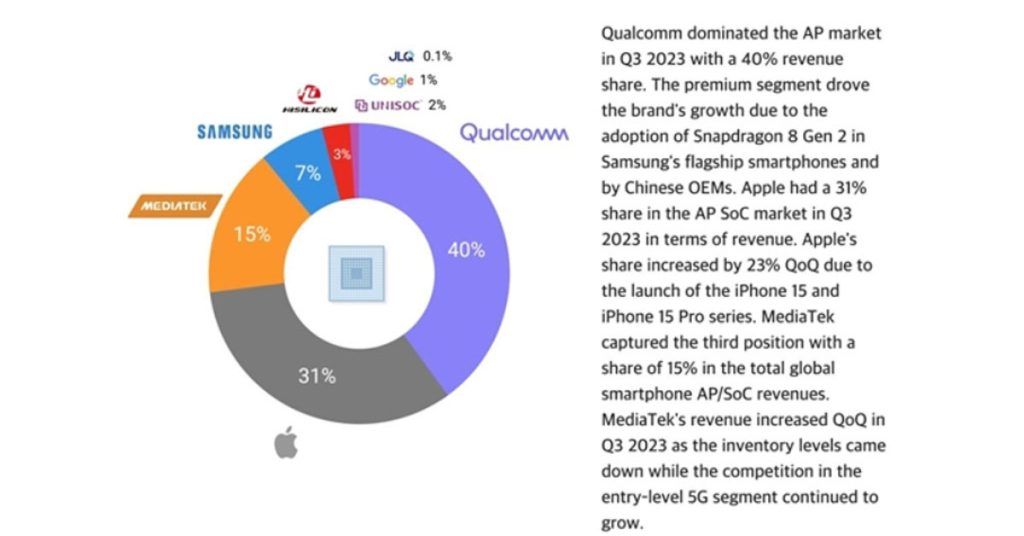
Apple iPhone sees weak demand as Huawei makes a strong return in the Chinese market

Apple‘s recent performance in the Chinese smartphone market presents a mix of challenges and opportunities. Analyst Ming-Chi Kuo from TF Securities has pointed out a significant decline in iPhone shipments, particularly for the iPhone 14 Pro and iPhone 14 Pro Max models, due to supply chain issues at Foxconn. This decline resulted in a reduction of 12 million units in November 2022.

Illustration by: Soumyakanti Ray

Huawei’s Rise Affects Apple’s Performance in China

Part of this downturn can also be attributed to Huawei‘s resurgence, which is driving structural changes in the Chinese market. Apple expects this trend to continue into 2024, leading to further weakening of shipments.

Despite facing challenges in the fourth quarter of 2023, with flat year-over-year revenue and a 3% drop in share prices following sales forecasts, Apple managed to narrowly exceed revenue estimates, reaching $89.50 billion. The lower-than-expected performance was due to sluggish demand for iPads and wearables, along with a slight decline in revenue in China. However, CEO Tim Cook remains optimistic, highlighting a record-setting sales quarter in September and emphasizing Apple’s commitment to the Chinese market.

This optimism is supported by price reductions for the iPhone 15 series on e-commerce platforms and Apple’s ongoing innovation efforts. Although Apple faces competition from Huawei’s Mate 60 Pro and regulatory challenges, the company’s strategy appears resilient, as evidenced by a recent increase in services revenue and Tim Cook’s visit to China.

On a global scale, Apple maintains a strong market share, leading ahead of Samsung. This strength is also reflected in India, where Apple has reported its highest-ever quarterly growth, with over 2.5 million iPhones shipped, indicating a 34% year-on-year increase.

This surge is attributed to consumers showing interest in premium smartphones, driven by financing options and attractive offers. Apple is expected to expand its market share from 4.5% to 6% in India, thanks to its focus on the market and local production initiatives.

RELATED:

(Source)

Samsung 50MP ISOCELL GNK sensor unveiled with Superior Dynamic Range and 8K Video Support

Samsung takes a leap in mobile photography and videography with the launch of the Samsung 50MP ISOCELL GNK sensor, a promising successor to the popular 50MP ISOCELL GN1. This upgraded sensor brings significant improvements to the table.

Samsung ISOCELL GNK sensor

While the GNK sensor shares similarities in size and pixel measurements with the GN1, it excels through the integration of smart technologies. Most notably, the sensor features Dual Pixel Pro autofocus, ensuring rapid focus and sharp images, even when capturing moving subjects.

Samsung ISOCELL GNK sensor

One standout feature of the Samsung 50MP ISOCELL GNK sensor is its expanded dynamic range, which can reach up to 120 dB. This feature allows for capturing a wide range of details in various lighting conditions. Additionally, in Pro mode, the GNK sensor can snap 14-bit RAW images, giving photographers more creative control and precision.

For video enthusiasts, the GNK sensor supports 8K video recording at 30fps without compromising the field of view. It also offers HDR video capabilities and the flexibility to shoot FHD footage at 240fps, catering to diverse videography needs.

Samsung ISOCELL GNK camera sensor quick specs:

  • Effective Resolution: 8,160 x 6,144 (50MP)
  • Pixel Size: 1.2μm
  • Optical Format: 1/1.3″
  • Color Filter: Dual Tetrapixel RGB Bayer Pattern
  • Normal Frame Rate:
    • Up to 24fps @ full 50MP
    • 90fps @ 12.5MP
  • Video Frame Rate:
    • 30fps @ 8K
    • 120fps @ 4K
    • 240fps @ FHD
  • Shutter Type: Electronic rolling shutter
  • ADC Accuracy: 10-bits
  • Supply Voltage:
    • 2.2V for analog
    • 1.8V for I/O
    • 0.9V for digital core supply
  • Operating Temperature: -20℃ to +85℃
  • Interface:
    • 4 lanes (2.5Gbps per lane) D-PHY
    • 3 lanes (4.0 Gsps per lane) C-PHY
  • Chroma: RGB
  • Auto Focus: Dual Pixel Pro (PDAF)
  • HDR: Staggered HDR, Smart-ISO Pro
  • Output Formats: RAW8/10/12/14
  • Analog Gain: [email protected] and x72@50MP

RELATED:

(Source)

Fiido Titan is the Triple-Battery E-Bike Paving the Way for Ultra-Long Rides

Electric bikes are revolutionizing the way we travel, combining the convenience of motorized transport with the benefits of cycling. A notable trend is the rise of multi-battery systems to extend travel range. The concept is straightforward: more batteries mean more miles. For example, some new e-bikes allow riders to carry a single battery for a lightweight experience on short trips, while dual-battery setups are there for the long haul.

The bike offers a whopping 400 kilometres of range on a single charge

Enter the Fiido Titan, a game-changer from the Chinese brand known for quality yet affordable e-bikes. Breaking away from its usual small-sized offerings, the Titan is a robust, fat-tire bike designed for all terrains. It’s not just its size that makes a statement, but its triple battery system promising a staggering 400 kilometers of range on a full charge.

Electric

Designed to blend the lines between a daily commuter and a rugged mountain bike, the Titan boasts 4-inch wide tires, a low step-through frame suitable for a wide range of riders, and a suspension fork for added comfort. It’s not only built for comfort but for carrying heavy loads too, with a capacity of 200 kilograms and a convenient luggage rack.

Performance-wise, the Titan doesn’t lag behind. It’s equipped with a 750-watt motor, reaching speeds up to 45 km/h, and offers five levels of pedal assistance, adjustable via a handlebar display. The triple battery setup isn’t just for show; two are stored as spares, while one is integrated into the frame, ensuring you rarely run out of juice.

If the price is a concern, Fiido offers flexibility. The Titan, with its triple-battery setup, retails for $2,397 on their official site. But those looking for a lighter option can opt for a single battery model at $1,699. With such innovations, Fiido is carving out a new path in e-bike travel, where range and versatility meet affordability.

RELATED:

(Via)

Redmi 13C officially teased revealing four color options and a notched display

Redmi has a new smartphone pegged to launch soon in the global markets called the Redmi 13C. This smartphone was recently leaked in its entirety via a hands-on video. Now, the brand has officially released its images online, suggesting that a launch is near.

In a teaser posted on X (Twitter), Xiaomi states that ” The Redmi 13C is coming, and it’s bringing more colors, a fresh style, stronger and more stable performance, a larger and smoother screen, plus cameras that guarantee greater accuracy and a clearer view!”

It also reveals images of the back and front panels of the device. Starting with the front, we can see that the smartphone features a thick chin and a thick forehead bezel with a water-drop notch for the camera. The back panel image reveals that the smartphone will come in four colors: Black, Blue, Light Green, and a light blue shade that resembles the snowstorm white color variant of the Poco F5. Here are the other details about the Redmi 13C.

Redmi 13C specs

The recently leaked video has revealed that the Redmi 13C boasts a 6.59-inch IPS display with a Full HD+ resolution and a refresh rate of up to 90Hz. Notably, it features noticeable bezels on all sides and a teardrop notch on the front. The phone sports a plastic build on the back and is available in glossy finish variants of green, blue, and black.

Redmi 13C Design Specifications Revealed via Unboxing video
Redmi 13C live image

In terms of its camera capabilities, the rear setup includes a 50MP main sensor, an 8MP ultrawide sensor, and a 2MP depth sensor, while the front camera is an 8MP unit.

Under the hood, it is powered by a Helio G85 processor, coupled with 8GB of RAM and 256GB of storage, expandable via a dedicated microSD card slot. The Redmi 13C runs on the Android 13-based MIUI operating system. For extended usage, it packs a 5,000mAh battery with support for up to 18W charging through a USB-C port.

RELATED:

(Source)

DJI denies $6 Billion fine amidst Patent Infringement rumors

In response to swirling rumors on social media platforms claiming that DJI, the renowned drone manufacturer, has been fined a staggering $6 billion for alleged patent infringement in the United States, the company swiftly issued a statement on October 31 vehemently denying the speculation.

DJI’s Senior Director of Strategic Planning and External Communications, Christina Zhang, refuted the claims, clarifying that the accurate settlement amount, as determined by the jury in April of this year, stood at $279 million US dollars.

Zhang emphasized that the case remains under trial, and as of the present, no updated judgment information has been provided. DJI adamantly contested the jury’s decision, stating firmly that their products do not employ Textron’s technology. Textron, a military helicopter company, had accused DJI, a civilian drone manufacturer, of patent infringement. 

DJI argued that the technologies in question were fundamentally distinct, with the core patent cited by Textron filed in 2011. Remarkably, DJI had already incorporated this technology into its XP3.1 model, released back in 2009.

Given these circumstances, DJI expressed its intention to explore further legal avenues, contemplating the possibility of continuing its appeal. The company maintained confidence in the legal process, believing that local laws would ultimately deliver a fair and just resolution to the ongoing dispute. As the case continues to unfold, DJI remains resolute in its position, refuting the rumors and reaffirming its commitment to defending its stance in the courtroom.

What is the DJI vs Textron case:

In 2021, Textron Inc., the U.S. aerospace company, initiated legal proceedings against Chinese drone manufacturer DJI Technology, alleging patent infringement related to drone flight control systems. The case, filed in federal court in Waco, Texas, accused DJI of willfully violating Textron’s patents with their drones’ automatic hovering capabilities.

After a week-long trial, the case culminated in a significant victory for Textron. The federal jury ruled in favor of Textron, awarding the company $279 million in damages. The jury found DJI guilty of infringing on Textron’s patents, despite DJI’s staunch denial and insistence on the dissimilarity between their technology and Textron’s military helicopter systems.

DJI responded to the verdict, expressing strong disagreement and affirming their determination to vigorously defend their legal rights. This ruling came amid broader concerns, as the U.S. Department of Defense had previously limited investments in DJI and other Chinese companies due to alleged connections with the Chinese military.

Throughout the legal proceedings, DJI maintained that their products were never intended or marketed for military use, emphasizing their civilian drone status. Despite their defense, the court ruled in favor of Textron, marking a notable legal victory for the U.S. aerospace company.

Related:

(via)