Advertisement

Realme Narzo N53 8GB Variant Launched in India: Price, Specs, and More

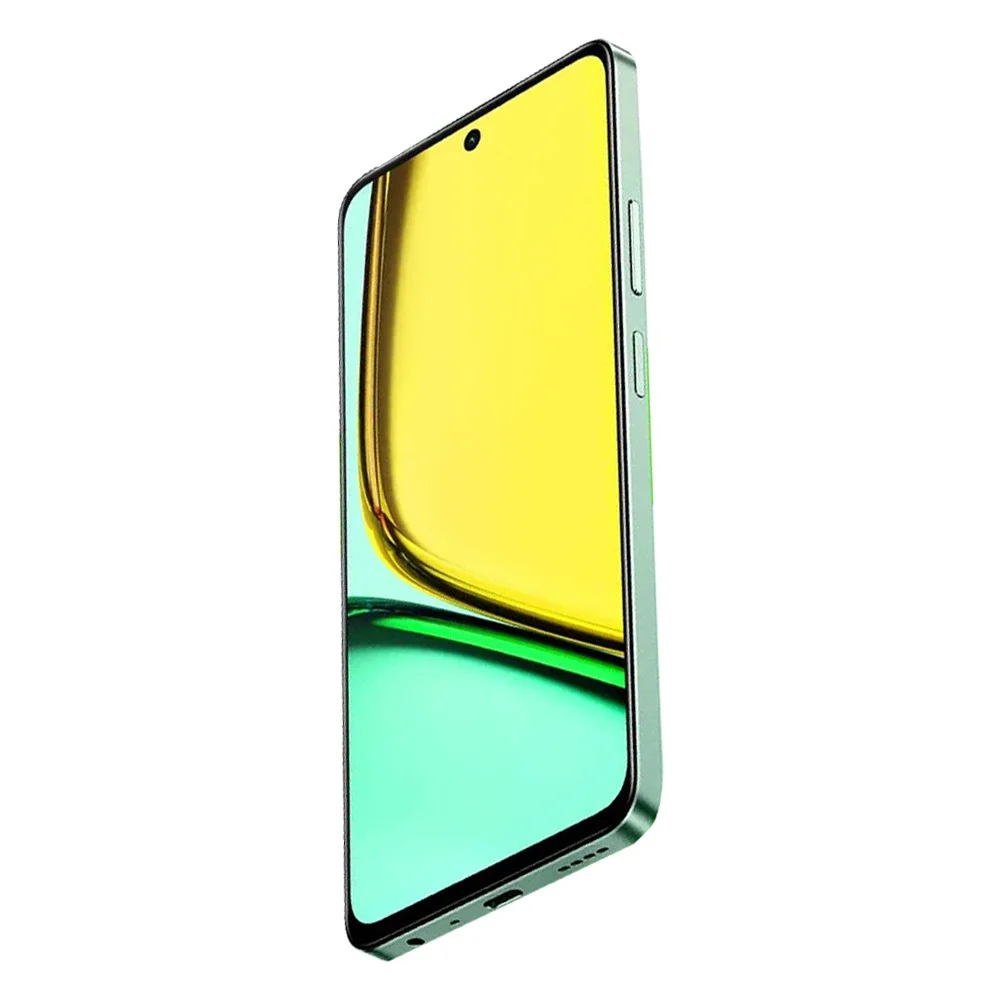
Realme has added a new variant of its Narzo N53 smartphone to its lineup in India. The new variant features 8GB of RAM and 128GB of storage and is priced at Rs 11,999. However, the device will be available for purchase at a discounted price of Rs 9,999 in the first sale on October 25, 12:00 PM. You can purchase it online from Amazon.in.

The Narzo N53 was launched back in May in 4/64GB and 6/128GB variants and quickly became India’s number 1 best-selling smartphone under the 10,000 INR segment.

It features a 6.74-inch IPS LCD display with HD+ resolution and a 90Hz refresh rate. It is powered by the Unisoc T612 chipset, paired with up to 8GB of LPDDR4x RAM and 128GB of UFS 2.2 storage. The phone also comes with a microSD card slot for expandable storage.

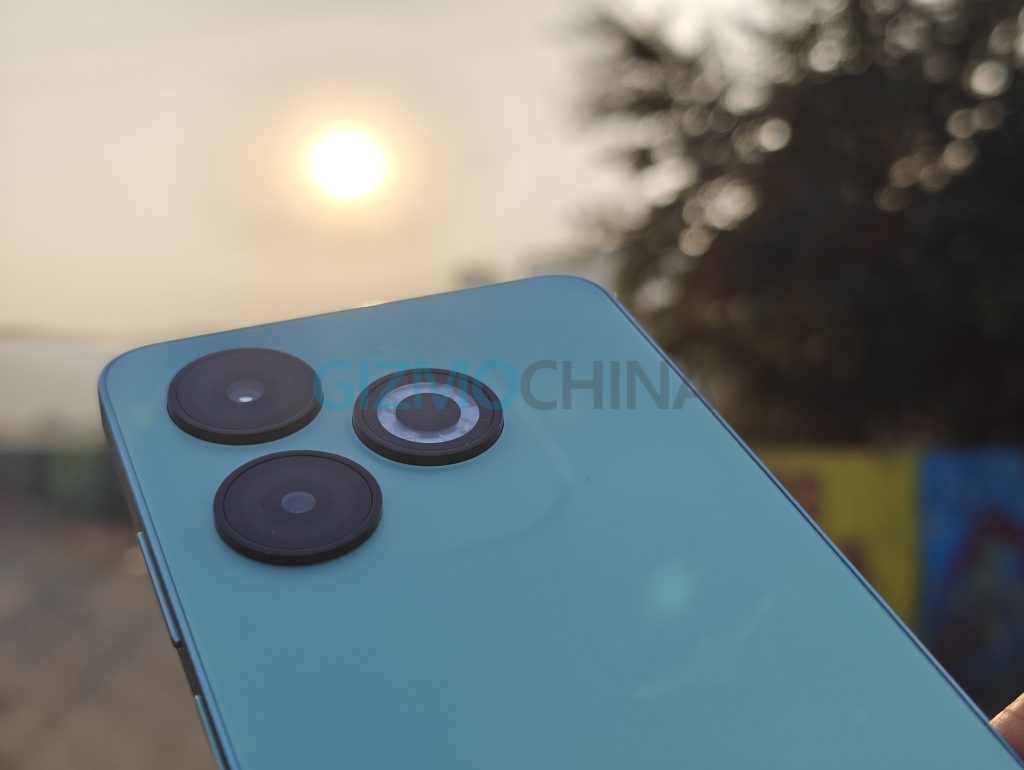
In the camera department, the smartphone has a 50MP AI triple-camera system on the back, and an 8MP selfie camera on the front. The rear camera system consists of a 50MP main sensor, a 2MP macro sensor, and a 2MP depth sensor.

The Narzo N53 is backed by a 5,000mAh battery with 33W fast charging support. It also comes with a number of other features, such as dual 4G VoLTE, Wi-Fi 5, Bluetooth 5.1, GPS, a USB Type-C port, a 3.5mm audio jack, and a side-mounted fingerprint scanner.

Related:

Huawei MateBook X Pro 2023 gets a £500 discount for UK customers

UK customers are in for a treat with Huawei‘s latest offer on the Huawei MateBook X Pro (2023) laptop. The brand has slashed the price of the MateBook X Pro (2023) laptop by £500.

Huawei MateBook X Pro 2023 specs

The Huawei MateBook X Pro 2023 laptop has a 14.2-inch panel with 3120 × 2080 pixels resolution, 264 ppi, and a maximum brightness of 500 nits. The LTPS screen offers a 3:2 aspect ratio and, a 1500:1 contrast ratio. Notably, the notebook supports 10-point multi-touch sensitivity for enhanced user interaction. Additionally, it offers a smooth 90Hz refresh rate, a P3 wide color gamut, and a stunning 1.07 billion colors.

NEWSHuawei MateBook X Pro (2023)

Under the hood, you’ll find the powerful 13th Gen Intel Core i7-1360P processor, paired with Intel Iris X graphics. It comes with 16GB of RAM and a 1TB NVMe PCIe SSD storage. It also comes with Windows 11 Home pre-installed, ensuring you have the latest software for all your computing needs.

Pricing & availability

While the laptop originally had a retail price of £1799.99, it is now selling for £1299.99. As a bonus, Huawei is extending an offer to add discounted accessories to your purchase. You can choose from FreeBuds 5i, FreeBuds 5, and the Band 8 smart band.

RELATED:

(via)

Xiaomi HyperOS architecture officially revealed

Xiaomi’s HyperOS will be officially unveiled on October 26 at the Xiaomi 14 series launch event in China. Ahead of that, the company has started teasing its new software.

Earlier today, the firm shared its breakthrough in system software so far. Also, it revealed the architecture of its new software.

Let’s go through everything that’s known about HyperOS so far.

Xiaomi HyperOS Architecture

Just as we anticipated, HyperOS seems to be Xiaomi’s answer to Huawei’s HarmonyOS. As per the architecture shared by the company, the software comprises 5 layers.

The bottom layer is hardware, which is followed by the kernel layer. HyperOS uses both Linux and Vela kernels. For the unaware, Vela is Xiaomi’s IoT platform based on NuttX RTOS.

Thus, the third layer uses services and frameworks from Android as well as Vela. The second and third layers will likely vary between devices.

For instance, smartphones and tablets may use Linux and Android. On the other hand, IoT devices may utilize Vela. But nevertheless, both systems will be called ‘HyperOS’, just like how Huawei advertises HarmonyOS.

The fourth layer is HyperConnect. This will enable all devices to communicate with each other despite their third and second layers being different. Finally, the fifth layer consists of apps.

Though Xiaomi doesn’t mention it, we believe the third layer will also include GMS (Google Mobile Servies) for smartphones and tablets sold outside China.

Xiaomi says that HyperOS was 13 years in the making with the launch of MIUI in 2010. However, the actual research and development began 7 years ago with the introduction of Xiaomi Vela in 2017.

You can find all the OS breakthroughs by Xiaomi in the picture below, which also includes the development of the Xiaomi EV operating system.

Xiaomi Software Breakthroughs

RELATED:

(Source 1, 2)

Nothing Festive Sale: Discounts On Phone (2), Ear (2), And More

The festive season is in full swing in India. E-commerce giants Amazon and Flipkart are already running a host of deals and discounts on various categories. Even brands like Xiaomi, Apple, and others are conducting various offers on their official websites. Now, London-based brand Nothing has announced its festive season sale in the country. The company is offering discounts on its products. Read on to know more below. 

Nothing festive season sale in India

Starting first, the Nothing Phone (2) that was announced in July this year is getting a massive discount on all RAM and storage configurations. It is already available at sale prices from Flipkart. Apart from the discounted prices, buyers can also avail bank and exchange offers on the purchase of the smartphone. Check the revised prices for all variants below:

  • 8GB + 128GB – Rs 37,999 (Regular Price – Rs 44,999)
  • 12GB + 256GB – Rs. 38,999 (Regular Price – Rs 49,999)
  • 12GB RAM + 512GB –  Rs. 39,999 (Regular Price – Rs 54,999)

Next up is the Nothing Ear (2) which also debuted this year at a price tag of Rs 9,999. As a part of the sale, it is already available for Rs 6,999 from Flipkart, Myntra, and select offline stores. 

Nothing’s sub-brand’s CMF devices are also available at discounted prices. The CMF Watch Pro is available at Rs 4,499 which is Rs 500 cheaper from its launch price of Rs 4,999. Meanwhile, the Power 65W GaN charger that costs Rs 2,999 can be purchased at Rs 2,699. Both devices are available from Flipkart. 

Related:

Instagram’s New Sticker Creation Feature Lets Users Separate Subjects from Background

Instagram is exploring new ways to give its users more creative freedom. The platform is currently trialing a user-friendly sticker creation feature, allowing users to transform both their personal photos and, in certain instances, others’ photos into custom stickers. These stickers can then be seamlessly integrated into Stories and Reels.

This is similar, but not the same as the new AI-sticker creation feature

Recently, Meta, Instagram’s parent company, has been heavily focusing on AI-driven prompt stickers. However, this upcoming tool takes a different approach. Instead of AI-driven designs, it will effortlessly pinpoint the primary subject in an image, separate it from the background, and generate a versatile sticker that can be superimposed on various content.

Instagram

Instagram’s Adam Mosseri recently showcased this innovative tool in a video on his broadcast channel, giving the world a glimpse of its capabilities. A notable feature he highlighted is the option for users to not only create stickers from photos stored in their devices but also from “permissible images” viewed on Instagram. Although Mosseri remained tight-lipped about the specifics of this feature, it hints at the possibility of users granting permission for their images to be converted into stickers by others.

While this sticker tool is still in its testing phase and has not been introduced to the entire Instagram community, its potential implications are vast. It could revolutionize user interactions, allowing for even more personalized and creative content sharing. Kind of similar to WhatsApp messaging too.

RELATED:

(Via)

Anod’s Latest Hybrid E-Bike is Powered by Supercapacitors and Lithium-ion Batteries

Electric bicycles have come a long way, haven’t they? While many manufacturers focus on enhancing performance with lighter materials and improved motors, it’s heartening to see the growing emphasis on the practical side of these e-bikes. Whether it’s for the daily commuter or the occasional weekend rider, the technology is evolving to make rides smoother, smarter, and more sustainable.

The lifespan of supercapacitors stretches up to 15 years

Enter Anod’s latest offering: the Hybrid E-Bike. But what sets it apart in the crowded e-bike market? It’s a blend of supercapacitors and lithium-ion batteries. This unique combination offers rapid charging, enabling energy storage during braking and rapid energy release for those sudden uphill challenges. If you’re thinking of a quick boost for instant acceleration, this is it.

E-bike

But here’s the green twist: supercapacitors are not just efficient; they’re eco-friendly. Comprising simpler materials like aluminum and coal, these capacitors are easily recyclable. Plus, their longevity is impressive, with a lifespan stretching up to 15 years. However, they discharge quickly, which is why Anod cleverly complements them with a compact lithium-ion battery. This battery extends the Hybrid’s range, ensuring you’re not left stranded after a short ride.

The Hybrid doesn’t skimp on performance either. Powered by a robust MHR1 hub motor, it promises consistent torque. Practicality is also at the forefront with standard components like Sram hydraulic brakes, Continental tires, and a belt-drive system ensuring a silent, low-maintenance ride. And for those always on the move, the added accessories like mudguards and kickstand enhance the urban riding experience.

RELATED:

(Via)

Tesla’s Market Share Rises Again in the US, Canada, albeit Slowly

Tesla has once again showcased its dominance in the electric vehicle (EV) market. The latest data reveals that the company has been reaching notable achievements in multiple international car markets.

The slowing pace could be attributed to other Car brands catching up to Tesla

In the United States and Canada, Tesla’s market share has climbed to a notable four percent. This is a good leap from their 3.5 percent market share just a year prior. However, it’s worth noting that the speed of this growth has shown signs of deceleration. This slowing pace is likely due to the overall automotive market’s resurgence, which has been exhibiting a year-over-year growth trend.

While the U.S. remains a key market for Tesla, with sales figures reflecting an approximate 46 percent increase compared to the previous year, the company is not putting all its eggs in one basket. Their expansion in Europe is noteworthy, even though the latest quarterly report is silent about their European progress. It was observed a few months ago that Tesla’s European market share was on a swift upward trajectory, even surpassing its North American growth rate.

China, a mammoth automotive market, presents a different story for Tesla. The company’s market share in the region is still hovering around the two percent mark. However, the upcoming launch of the upgraded Tesla Model 3 Highland might be the catalyst the company needs to boost its presence in China.

The past three months haven’t been a breeze for Tesla. They undertook significant production line upgrades across various factories, which unfortunately led to a dip in their production output. Despite these challenges, Tesla managed to deliver a commendable 435,059 electric cars, marking a 27 percent increase from the previous year. With the launch of the Cybertruck later this year (hopefully), Tesla’s numbers are expected to see even a bigger bump from last year. Only time will tell how Tesla channels all this growth.

RELATED:

(Via)

WhatsApp to end support for older Android and iOS smartphones from October 24

WhatsApp will stop supporting Android smartphones running Android OS 5.0 or below and iPhones running iOS 12 and below starting October 24, 2023. This means that these devices will no longer receive updates from WhatsApp, including features and security patches.

To find out if your smartphone will be affected, you can check the operating system version in your phone settings. For Android, go to Settings > About phone > Software information. For iOS, go to Settings > General > About.

Here are the supported operating systems for WhatsApp:

  • Android 5.1 and above
  • iPhone running iOS 12 and later
  • Phones with KaiOS 2.5.0 and above, including JioPhone and JioPhone 2

If you are unable to update your device, you will need to switch to a newer device in order to continue using WhatsApp.

WhatsApp regularly reviews the operating systems it supports to ensure that it can continue to provide the best possible experience for its users. When it stops supporting an operating system, it is typically because the operating system is no longer being widely used or is no longer able to meet WhatsApp’s security requirements.

Related:

OnePlus And Realme Reportedly Set to Exit The Television Market In India

In major news, OnePlus and Realme, the two BBK-owned brands are reportedly exiting the television market in India as per Times of India citing an anonymous source. Those two companies forayed into the country’s TV segment back in 2019 and 2020 respectively. Both OnePlus and Realme enjoyed success and growth due to competitive pricing and premium features that helped them challenge established brands like LG, Samsung, Sony, etc. Hence their exit (although unofficial) comes as a sudden surprise. 

OnePlus, Realme calls it quits in India’s smart TV segment

The TV market in India is witnessing strong growth due to the rise in streaming services, affordable internet, the ongoing World Cup, and the festive season sales. Both OnePlus and Realme manufacture televisions in India locally. They had also invested in building sales channels and branding in the category. 

TOI also reports that OnePlus and Realme will halt the production and sale of televisions in the country. However, they will continue with their smartphone business. Both companies are yet to share an official statement on the matter. While OnePlus and Realme’s reported exit is surprising, Xiaomi continues to thrive in the television segment in India. 

Data from IDC revealed that 4.5 million televisions were shipped in India in the first half of 2023 which is an 8 percent increase YoY basis. Xiaomi led the TV market in the country with a 14 percent share with Samsung and LG in second and third place with 13 and 12 percent share respectively. 

Related:

Via

China Remains Apple’s Production Powerhouse: 95% of Products Made There

The relationship between China and Apple seems to be getting strained by the day, and the company is gradually shifting its production to other countries, right? At least that’s what we’ve heard and believed multiple times until now. However, it appears that the relationship between the US tech giant and the Asian country is better than ever. In fact, not too long ago, we mentioned that CEO Tim Cook had met with China’s IT Minister. Now, according to the latest reports, China continues to produce over 95% of Apple’s products. Here are the details…

Apple CEO Cook: Over 95% of Apple products still manufactured in China

Apple’s CEO, Tim Cook, is continuing his tour in China. As part of this tour, Cook recently paid a visit to the Foxconn plant in the region. During this visit, he highlighted that more than 95% of Apple’s products are still manufactured in China. As one of the world’s largest technology companies, Apple has a significant presence in various industries in China, including smartphones, computers, tablets, and smartwatches.

Apple China and India

Actually, Apple has been trying to shift its production away from China for a while now. The company decided to make this move, particularly due to the challenges it faced during the pandemic. They have been considering India as a secondary operation center and aim to turn it into the ‘iPhone factory of the world.’ However, it seems that these plans are still in the early stages, and moving production away from China doesn’t appear to be possible in the near future. In an interview, Cook mentioned that Apple is looking for a “win-win” collaboration with its supply chain partners.

Earlier, Foxconn Chairman Wang Laichun also gave an interview. She revealed that Foxconn has produced three iPhone 15 models for Apple this year, and this business has doubled in the past year. She also revealed that the company is preparing for the production of Apple’s upcoming VR headset, Apple Vision Pro.

Apple hopes to continue to deepen its business in China and continue to cooperate with Chinese supply chain partners to achieve a win-win situation.

RELATED:

(via)

Vivo Y27s Spotted On Geekbench With Key Specifications

Earlier today Vivo launched the Y200 smartphone in India. The brand also announced the Y55t, Y33t, and Y78t smartphones in China recently. Now, the company is reportedly working on another Y-series device. It is dubbed the Vivo Y27s. The smartphone has already been spotted on TKDN and Bluetooth SIG certification websites. Now, it has appeared on the Geekbench benchmarking platform revealing key specifications.  

Vivo Y27s spotted on Geekbench

The Vivo Y27s is listed on Geekbench with model number V2322. The database mentions the motherboard codenamed ‘bengal’ and it comprises four cores clocked at 1.90GHz and four cores ticking at 2.40GHz. It corresponds to the Snapdragon 680 SoC that will be paired with Adreno 610 GPU onboard. As per the benchmark listing, the smartphone will pack 8GB RAM onboard and we can expect more variants at launch. It will ship with Android 13 OS out of the box. 

The Vivo Y27s manages to score 412 and 1,454 points in the Geekbench’s single-core and multi-core tests results respectively. We should expect more details of the Vivo Y27s to surface in the coming days. 

The Vivo Y27s will be the third device in the Y27 lineup that already comprises the Y27 5G and Y27 4G. Both were launched earlier this year with a 6.64-inch LCD display bearing an FHD+ resolution. They feature a 50MP dual rear camera and an 8MP front-facing selfie snapper. Internally, the Y27 5G and Y27 4G are powered by Dimensity 6020 and Helio G85 chipsets respectively. Both pack 6GB RAM, 128GB internal storage, and are backed by a 5,000mAh battery unit. 

Related:

Via

Xiaomi Mini PC 2023 model with Intel Core i5-1340P CPU is available globally

The Xiaomi Mini PC from last year has just been refreshed with the latest CPU along with other improvements. The Xiaomi Mini PC 2023 model is currently up for sale at Minixpc. Here’s what the device has to offer.

Xiaomi Mini PC 2023

Xiaomi Mini PC 2023 model specs

The Xiaomi Mini PC 2023 runs on the 13th Gen Intel Core i5-1340P processor. The Intel Core i5-1340P is a powerful 13th-generation Intel Core processor with 12 cores (4 performance cores and 8 efficient cores) and 16 threads. It has a base clock speed of 2.8 GHz and a max turbo clock speed of 4.6 GHz. It also comes with 12 MB of Intel Smart Cache and has a low power consumption of 28 W base power.

Xiaomi Mini PC 2023

Compared to the last-gen model, the most significant upgrade is the 5% overall bump in processing power. Accompanying this processor is 16 GB of DDR4 3,200 MHz SO-DIMM RAM, offering smooth multitasking capabilities.

For storage, the mini PC comes with a 512 GB PCIe 4.0 SSD. What sets this mini host apart is its compact and lightweight design, weighing in at just 445 grams and residing in a 0.4-liter housing.

In terms of connectivity, the device features a wide range of ports, including a 3.5 mm jack, 2.5 Gigabit Ethernet, DC input, HDMI 2.1, Thunderbolt 4, USB 2.0 Type-A, and three USB 3.2 Gen 2 Type-A ports.

WHERE TO BUY
Buy Xiaomi 14 and Xiaomi 14 Pro from $699 @Giztop

Pricing & availability

The Xiaomi Mini PC 2023 model, equipped with 16 GB of RAM and a 512 GB SSD, is available for purchase on Minixpc’s website for a price of $699.99.

THIS IS GEEKWILLS SPONSOR PROMOTION >>>>>>>>>>

Geekwills is an online shop that caters to the latest mobiles, laptops, smart home gadgets, and all electronics in this genre. They deliver to customers in 190 countries. The Lenovo TWS earbuds have the best price for Gizmochina’s readers. Here is an exclusive coupon code: GCGK, 5% off for all products.

Lenovo Thinkplus TWS earbuds: on sale: $5.99 (original price: $32.99)

Xiaomi Pad 6 Pro Tablet: on sale: $339 (original price: $399)

Mini PC AMD R7 7840HS: From $599

RELATED:

(via: NotebookCheck)

Apple’s Response to Regulatory Pressure: Tim Cook’s Meeting with China’s IT Minister

Apple is undoubtedly one of the largest companies in history, surpassing the GDP of many countries with its annual revenue alone. However, even with hundreds of millions of users and revenues in the billions, the company is not immune to government pressure. For example, the US tech giant was forced to adopt USB-C ports on its phones ahead of schedule due to pressure from the European Union. Now, a similar legal process is unfolding in China. In an effort to resolve these recent issues, Apple’s CEO, Tim Cook, is meeting with China’s information technology minister as Beijing demands compliance with their app store regulations. Here are the details…

Tim Cook Meets China’s IT Minister Amidst App Store Compliance Demands

China is undeniably a technology and development hub, but it is not the world’s freest country. The Asian nation often makes headlines for its restrictions and regulations. One recent example is the Ministry of Industry and Information Technology’s requirement that all apps in China register with mainland authorities by the end of March 2024. This development has also prompted Apple to make changes to its domestic and foreign app stores, including the App Store.

Apple CEO Tim Cook china

This situation prompted Apple to make some changes. The company later updated its app store rules, requiring app developers to acquire the necessary Chinese licenses before their apps could be downloaded. However, even this move couldn’t completely ease the concerns, especially among developers, that Chinese consumers might lose access to foreign apps. Finally, Apple’s CEO, Tim Cook, met with China’s information technology minister to address these concerns, as Beijing was demanding compliance with its app store regulations.

According to the ministry, Tim Cook said that Apple is committed to supporting its supply chain partners in China and helping them grow, and that it will create a better ecosystem for local developers. He also said that Apple will continue to operate in China in accordance with local laws and regulations.

Minister Jin Zhuanglong said in the meeting that he hoped Apple would continue to invest in China, and achieve a “win-win” by taking part in the industrial upgrade of the country. He also noted China would further open up to the global economy as it recently announced the removal of restrictions against foreign investment in the manufacturing industry.

It is unclear whether Cook’s meeting with the MIIT minister will lead to any concrete changes to Apple’s business practices in China. However, the meeting is a sign that Apple is taking China’s demands seriously.

RELATED:

(via)

Xiaomi 14 Pro Appears On Geekbench Ahead Of Launch

Xiaomi is conducting a launch event in China on October 26 where it will announce multiple devices including the next-generation Xiaomi 14 series. The upcoming flagship smartphones have been doing the rounds of the rumor mill. Earlier today, the standard variant appeared on the Geekbench database. Now the Pro model has also been spotted on the benchmarking platform. 

Xiaomi 14 Pro also appears on Geekbench

The Xiaomi 14 Pro is listed on Geekbench with model number 23116PN5BC. The database mentions the motherboard codenamed ‘shennong’ and it comprises two cores clocked at 2.27GHz, another two cores at 2.296GHz, three cores ticking at 3.15GHz, and a prime core at 3.30GHz. It likely corresponds to the Snapdragon 8 Gen 3 that is set to be announced later this week. The listing reveals 16GB RAM onboard and we can expect more variants at launch. The smartphone will ship with Android 14 OS layered with HyperOS on the top. 

In the Geekbench’s single-core and multi-core test results, the Xiaomi 14 Pro scored 2,150 and 6,892 points respectively. 

Meanwhile, the leaked renders have revealed the Xiaomi 14 Pro with a boxy form factor and a large square camera module housing four sensors. It is confirmed to feature a Leica Summilux lens that is said to be better than the Summicron on predecessor models. The leaked marketing material of the device also revealed an IP68 dust and water-resistant rating, Dolby Vision, and Hi-Res Wireless Audio certification. 

We should learn more official details about the Xiaomi 14 series on Thursday. 

Related:

Via

MediaTek Dimensity 9300 spotted on AnTuTu with an impressive score of over 2 million

The next generation flagship mobile chip from MediaTek is the Dimensity 9300 SoC. This chipset will likely power upcoming premium grade smartphones, and now, it has been spotted on a popular benchmarking platform, that showcases its performance.

MediaTek Dimensity 9300 on AnTuTu

The Dimensity 9300 recently surfaced on the AnTuTu 10 benchmark. Looking at this listing, we can see that the high end processor managed to get a score of over 2 million. The score of 2,055,084 points on AnTuTu 10 is a notable upgrade in performance compared to its predecessor, the Dimensity 9200 series. With these results, the chipset has managed to top the benchmark charts for Android devices.

The AnTuTu benchmark listing also reveals the core structure of the Dimensity 9300. It features four Cortex X4 cores and four large Cortex A720 cores. These are paired with the Immortalis G720 MC12 GPU. This chipset supports LPDDR5x RAM and UFS 4.0 storage. In the synthetic benchmark, the device that featured the Dimensity 9300 also included 16GB of RAM, 512GB of internal storage, a 120Hz refresh rate, and ran on Android 14 OS.

The new chipset is expected to launch in flagship phones like the Vivo X100. Apart from this, the Oppo Find X7 series is also rumored to feature some models that feature this chipset. MediaTek’s Dimensity 9300 is expected to be announced early next month, so stick around for more updates regarding this chipset.

RELATED:

(Via)

Huawei Nova 11 SE design revealed via leaked render

Huawei is gearing up to launch another new Nova series smartphone soon. But prior to any official announcement, a new leak has revealed the design of the upcoming Nova 11 SE thanks to leaked renders. So let us have a look.

Huawei Nova 11 SE Renders

The leaked design render was shared by known tipster @看山的叔叔, who shared the information on Weibo (a Chinese microblogging website). Looking at the image, we can see that the rear features two ring camera modules that house a triple camera setup. Furthermore, the back panel appears to feature a matte texture and is confirmed to come with two color variants, namely green and white. The design is in line with our previous report, which covered the TENAA listing of the Nova 11 SE model.

Huawei Nova 11 SE

Unfortunately, the tipster did not reveal any other finer details regarding the new Huawei Nova 11 SE. But based on our earlier coverage of this device, we know that it will likely sport a tall 6.67-inch OLED display that offers a Full HD+ resolution and 10 bit color support. The Nova 11SE is expected to be equipped with the 2.4GHz that offers 4G connectivity that is paired with 8GB of RAM and 128GB or 256GB of internal storage.

This model is expected to run on Harmony OS 4.0 out of the box and will be powered by a 4,400mAh battery pack (rated value). The device could also support 66W fast charging. On the rear, the device will reportedly feature a 108-megapixel triple camera setup, while the front houses a 16-megapixel shooter for selfies and video calls. The Nova 11 SE is rumored to launch this month, so stick around for more updates.

RELATED:

(Source)

A Quick Chat with CEO of Endefo, a Brand Looking for 10% Wearable Market Share in India in 3 Years

Endefo, based in Dubai, is an electronics brand that offers various consumer electronic products, including headphones, speakers, and wearables. It has a global presence but it is now concentrating on growing its presence in the Indian market. It began its Indian journey with a one-year trial run in Kerala in 2019 and expanded to more than ten Indian states. Additionally, Endefo serves customers in 24 countries worldwide. The brand intends to invest Rs 200 crore by 2024 to capture a 10 percent market share in India’s growing wearables segment.

Aneef Tas, CEO of Endefo

Endefo recently announced a couple of new products, including Enbuds 12, Enbuds 14, Enbuds 20, Enbuds 21, and Enbuds Aura, with a starting price of Rs 899. These products are available through a network of over 2,000 retail stores in India.

In this interview, Aneef Tas shares insights into Endefo’s journey, its commitment to the “Make in India” initiative, and the strategic vision driving the brand’s growth in the Indian market.

1. How does Endefo plan to distinguish itself from the multitude of brands like Boat, Noise, and Fire-Bolt operating in the wearable technology segment in India?

Aneef Tas: Having two decades of experience in the global market is a considerable advantage. Our expertise in the industry can be a key asset for understanding customer needs and market trends. It’s commendable that Endefo is not merely following the industry leaders but working on building its own brand identity. Differentiation and unique offerings can set us apart in the crowded market. Focusing on offline channels to build trust with resellers and distributors is a wise strategy. In India, trust is a crucial factor in business relationships. This approach can help in establishing long-term partnerships. Having 500+ service centers across India is a significant advantage. Quick and efficient after-sales support can boost customer satisfaction and trust in the brand.

The importance of a dedicated and experienced team cannot be overstated. Their hard work and commitment will be pivotal in achieving our goals in the offline channel. Keep in mind that the Indian market is diverse, with varying preferences in different regions. Adapting our products and strategies to suit local needs can be a key factor in the success. Effective marketing and branding campaigns are also essential for increasing brand visibility and awareness in the Indian market. Consider leveraging digital marketing and social media platforms to reach a wider audience.

In the gadget and wearable segment, product quality is critical. We always ensure that our products meet the expectations of the Indian consumer in terms of performance, durability, and value for money. While not following the industry leaders is a bold move, it’s essential to keep a close eye on your competition and be aware of market trends. This will help us make informed decisions and stay competitive. Continuously gather and act upon customer feedback to improve our products and services. This customer-centric approach can help us evolve and meet the changing demands of the market.

2. Could you provide insights into Endefo’s different product categories in India? What new products can we expect this year?

Aneef Tas: Currently, we cater to the entire segment, starting from micro-cables to soundbars.

  1. Cables, Adaptors, and Power Bank
  2. Earphone, Neckband, and TWS
  3. Smartwatches
  4. Portable Speakers, Party Speakers, and Soundbar

We are trying our best to cover the entire segment; by the end of 2023, we will have 100+ SKUs exclusively in India

3. In terms of pricing, what segments of the market is Endefo targeting with its products?


Aneef Tas:
Prioritizing product quality over engaging in a price war is a prudent strategy. Indian consumers are increasingly value-conscious and are willing to pay for quality, especially when it comes to gadgets and wearables. Recognizing the need for affordable products is essential in the Indian market. However, affordability does not necessarily mean compromising on quality. Balancing the two is key to attracting and retaining customers. Our emphasis on continuous improvement and innovation by working closely with the R&D team is a positive approach. Adding additional features to our products can make them more appealing to consumers and justify a slightly higher price point.

4. What motivated Endefo to target the Indian weartech segment, and what are your expectations for market share in the next three years?

Aneef Tas: As previously mentioned, our commitment lies in becoming an integral part of the Indian tech industry. Over the last three years, we have continuously invested to establish a strong presence in India. Currently, we have a diverse range of products and robust partnerships with businesses in various states. Our primary objective now is to expand our reach nationwide. Within the next three years, we aim to rank among the top five most trusted brands in India, ensuring our products are readily available through all distribution channels.

5. What opportunities and factors in the Indian market are driving the demand for wearable gadgets and portable audio speakers?

Aneef Tas: The purchasing power of the younger demographic is on the rise year after year, and young consumers consistently opt for top-tier products featuring the latest technology. Our current primary focus is on the audio sector. By the end of this year, we are set to broaden our existing range of 10 product variations to include 25 options, catering to diverse age groups. The audio segment is experiencing steady growth and presents a substantial opportunity for us.

6. Can you discuss your commitment to the “Make in India” initiative and how all Endefo products will be proudly made in India?

Aneef Tas: Operating in more than 24 countries, we have consistently placed the advancement of each nation at the forefront of our priorities. Initially, our operations revolved around importing goods, but witnessing India’s significant strides in manufacturing, we altered our strategy to align with the ‘Make in India’ initiative. Today, we take great pride in declaring that we exclusively manufacture 100% of our products within India, contributing to the country’s economic growth as a vital cornerstone of this initiative.

7. Tell us something about the Rs 200 crore investment. What specific areas will the investment be allocated to within India?

Aneef Tas: Primarily focused on our product offerings, we have recently introduced five new True Wireless Stereo (TWS) devices priced under 1500 Rs, with the lowest starting at 899 Rs. In the near future, we plan to expand each product category to include a minimum of 10 or more options. To support this initiative, we are allocating 150 Crores towards product development, while the remaining funds will be directed towards various areas such as infrastructure, marketing, and team expansion. Additionally, we’ve initiated our North India operations in Delhi, and we’re in the process of setting up another office in Bangalore.

8. How crucial is research and development (R&D) in Endefo’s expansion strategy for India, especially in the context of your ‘Make in India’ initiative? Are there plans to reduce R&D and manufacturing operations outside India as you focus on local production and innovation?

Aneef Tas: In every company, this department assumes a critical role. We maintain a presence of several research and development professionals in China, Dubai, and India. We take great satisfaction in allocating resources to this domain as it significantly influences the long-term success of our brand. The R&D team directly reports to top management and consistently ensures the timely introduction of new technologies.

9. Are there plans to collaborate with Bollywood or sports celebrities for brand promotion?

Aneef Tas: Yes, we are in discussion very soon we will unveil it

10. Could you share your long-term vision for Endefo’s growth in India, along with the message you’d like to convey to Indian consumers?

Aneef Tas: We are actively cultivating trust across all consumer touchpoints in India. Indian customers are highly informed and connected, often well-versed in the latest technologies, and we aspire to be the pioneer in introducing these innovations to the Indian market. Our commitment to quality and post-sales service is unwavering, a principle we communicate to our business partners, and it has been a key factor in our rapid growth in India.

With a keen focus on ‘Make in India,’ dedicated research and development efforts, and exciting plans for collaborations with Bollywood and sports celebrities, Endefo is looking to make its mark in the Indian electronics market. We can expect a lot more products from the brand in the coming months.

Vivo Y100 launching on October 27 in China; Here’s what we know so far

After launching the Vivo Y100 smartphone in India earlier this year, Vivo has announced that a device with the same name will be debuting in the Chinese market on October 27. What makes this device special is that this will be the first time in 12 years that Vivo will be launching a Y-series smartphone online. Till now, the Y-series has only been available to buy in physical stores.

Vivo Y100

The Chinese version of the Vivo Y100 looks a bit different in design from the Indian model. It notably has just two cameras on the back along with an LED flash. The overall design is also a bit distinct and premium compared to the Indian variant. It has curved edges rather than flat ones. The front panel of the phone is still under wraps, however, it won’t be surprising if Vivo opts for a curved AMOLED display. Take a look at the specs and features of the Indian Y100 model to get an idea of what to expect from the Chinese one.

Vivo Y100 5G specs

The Vivo Y100 comes with a 6.38-inch AMOLED display that has Full HD+ resolution, a 90Hz refresh rate, and a bright screen with 1300 nits. It has a simple waterdrop notch and is HDR10+ certified. Inside, it’s powered by the MediaTek Dimensity 900 SoC, which has eight cores and a Mali G68 GPU. The phone has 8GB of RAM and 128GB of storage, with support for an additional 8GB of extended RAM. It runs on FunTouchOS 13, which is based on Android 13.

For photography, it has a triple-rear camera setup, with a 64MP main camera that has OIS, along with two 2MP sensors. The front camera is 16MP. The phone is powered by a 4500mAh battery and supports 44W fast charging. It also has a slot for a microSD card and keeps the 3.5mm audio jack. It’s a slim device, measuring 158.91 x 73.53 x 7.73mm and weighing 181 grams. In terms of connectivity, it offers dual-SIM support, 5G, WiFi, Bluetooth 5.2, and GPS support.

In related news, Vivo has also announced that its next flagship series called the Vivo X100 series will be launching on November 17 in China. We can expect the series to make its way to the global market early next year.

RELATED:

Vivo X100 series rumored to launch on November 17 in China

The Vivo X100 series is the company’s next generation of flagship smartphones. The new devices have recently been spotted in various rumors and leaks that hinted at their upcoming announcement. But now, the launch date of the premium grade lineup has been revealed via leaked image posters.

Vivo X100 series Launch

Vivo X100 Series Launch Date

As per leaked teaser posters, the brand is planning on unveiling the Vivo X100 series in China on the 17th of November 2023 at 2:30 PM CST. In other words, the launch is just around the corner. Looking at these images, we can see that the device will arrive in multiple color options. This includes Light Blue, Orange, Red, White, and Black variants. Notably, the Orange, Red, and Black versions appear to have a faux leather rear panel, while the rest will likely offer a matte glass finish.

Vivo X100 series Launch

The leak is also in line with our previous report that hinted at a mid-November launch timeline. Just recently, the Vivo X100 Pro and base X100 were spotted on the 3C certification platform. This listing revealed that both models will feature 120W fast charging support. Furthermore, the X100 and X100 Pro are expected to launch with the MediaTek Dimensity 9300 SoC, which is expected to be announced on November 6.

Vivo X100 series Launch

The two models are rumored to feature an IMX663 ultra wide angle lens and a 64-megapixel telephoto shooter on the rear. The primary sensor on the Vivo X100 is believed to be the Sony IMX920, while the X100 Pro could feature the Sony IMX989 sensor for the main camera. Under the hood, a large 5,100mAh battery will power the X100, while the X100 Pro is expected to house a large 5,400mAh battery pack. This is all the information we have at the moment, so stick around for more updates.

RELATED:

OnePlus 12 tipped to offer USB 3.2 port and wireless charging support

We have been hearing about the OnePlus 12 since earlier this year. The next-gen flagship smartphone from the brand is expected to go official either at the end of the year or in early 2024.

Over the past few months, we have learned almost everything about this upcoming device. A new leak that emerged today even confirms a couple of tidbits that will overall improve the experience of using the handset.

Let’s go through everything that’s known about the forthcoming OnePlus 12.

OnePlus 12 CAD render
OnePlus 12 | Source: @OnLeaks via MySmartPrice

According to Digitial Chat Station, the OnePlus 12 will be equipped with a USB 3.2 port. Apart from that, the phone will support 50W wireless charging.

For comparison, the OnePlus 11 comes with a USB 2.0 port and lacks wireless charging support. These two are some of its cons compared to flagships from Samsung.

Further, the tipster says that the OnePlus 12 will also arrive with an infrared sensor. He also reiterates the presence of a periscope camera, which we already know.

As per a leak from August, the device could be IP-rated for dust and water resistance. However, we haven’t heard about it thereafter.

Talking about other specs, the OnePlus 12 is expected to sport a 120Hz LTPO OLED display with a whopping 3000 nits peak brightness level and QHD+ resolution. It will be powered by a Qualcomm Snapdragon 8 Gen 3 chip paired with LPDDR5x RAM and UFS 4.0 storage.

It will use a Hasselblad-tuned triple-camera system featuring an OIS-assisted 50MP Sony IMX966 sensor, a 48MP Sony IMX581 ultrawide unit, and a 64MP OmniVision OV64B 3x periscope snapper. Finally, it will draw energy from a 5,400mAh battery with support for 100W wired charging.

RELATED: