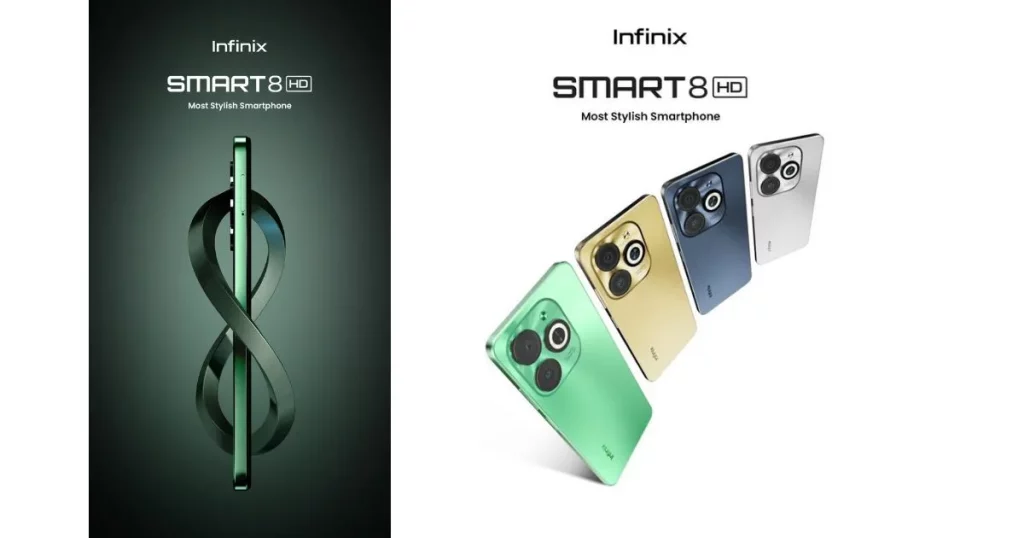
Infinix has announced that it will launch a budget smartphone in India. The upcoming offering is the Infinix Smart 8 HD. It will arrive with several upgrades as the successor to the Smart 7 HD that debuted earlier in April this year. To recall, the brand launched the Smart 8 phone in Nigeria earlier this month. Infinix has shared a few details of the Smart 8 HD ahead of its official launch in India. Read on to learn about the smartphone.
Infinix Smart 8 HD to launch in India
The Infinix Smart 8 HD is set to debut in India on December 8, Friday. The company has revealed that the device will feature a 6.6-inch display bearing an HD+ resolution with a punch-hole cutout. It will offer a 90Hz refresh rate and 500 nits peak brightness.
As per the teaser images, the Infinix Smart 8 HD will arrive in four striking colors namely Crystal Green, Shiny Gold, Timber Black, and Galaxy White. The back panel is said to feature a textured pattern and there is a squarish camera module. We could notice three cameras with one sensor featuring an LED ring light flash. The smartphone has a flat frame and there is a side-mounted fingerprint scanner embedded in the power button. The upcoming offering is also confirmed to come with UFS 2.2 storage and a Type-C charging port.
We should learn more details of the Infinix Smart 8 HD at the launch event on December 8.
To recall, the Infinx Smart 7 HD has a 6.6-inch HD+ 60Hz display. It is powered by a Spreadtrum SC9863A1 processor coupled with 2GB RAM and backed by a 5,000mAh battery unit. The smartphone features an 8MP camera along with an AI lens and a 5MP selfie snapper.
This month Noise announced three new smartwatches namely the Evolve 4, ColorFit Pro, and ColorFit Caliber 3. Now, the brand has introduced a new addition which is a premium offering. The ColorFit Pro 5 Max arrives as the successor to the last year’s ColorFit Pro 4 Max. The latest offering comes with some new and upgraded features compared to its predecessor. Read on to know what it offers out of the box.
Noise ColorFit Pro 5 Max specifications and features
The Noise ColorFit Pro 5 Max looks somewhat like the Apple Watch Ultra with a functional crown on the top right side and a customizable physical button below. The left side of the smartwatch appears unique with a protrusion that has the ColorFit Pro 5 Max branding. It is IP68-certified dust and water-resistant. The device boasts a large 1.96-inch AMOLED display with DIY watch faces that can also show real-time updates in AQI, weather, and time.
On the health and fitness front, the Noise ColorFit Pro 5 Max is equipped with a 24×7 heart-rate monitor, SpO2 sensor, sleep tracker, and menstrual cycle monitor. It is also capable of tracking stress levels and offering breathing practice sessions. Additionally, the wearable device can also measure a wide range of health metrics in one touch. The ColorFit Pro 5 Max supports a host of sports modes. It offers post-training recovery analysis, VO2 Max, and training load insight.
The Noise ColorFit Pro 5 Max features a Bluetooth calling function via the built-in speaker and mic. There is an SOS feature onboard that can call contacts during emergencies. It also packs convenient features like notifications, music and camera control, a calculator, weather updates, and more. The smartwatch is backed by a 7-day battery life.
The Noise ColorFit Pro 5 Max carries a price tag of Rs 4,999. The smartwatch is offered in metal, leather, silicone, and nylon strap choices. The color options include Elite Black, Elite Silver, Classic Blue, Classic Brown, Space Blue, Jet Black, Shadow Black and Sage Green.
It will be available for purchase starting November 28 from Amazon and the brand’s official website.
Clouds are already over Qualcomm’s new Snapdragon 8 Gen 3 SoC’s Efficiency, and a new report by Golden Reviewer has further unraveled the flaws. While announcing the new SoC, Qualcomm promised a 30% performance increase, but a new report confirms only a 14% increase with 28% more power consumption. The Cortex-X4 CPU is under the scanner and seems to be drawing more pwoer than the expectations.
Tested CPU in #Snapdragon8Gen3#Xiaomi14Pro Now I'm concerned. Performance is great, the best we've seen so far from any Android SOC, it's 13% faster than Snapdragon 8 Gen 2 For Galaxy. However power consumption has gone up 28%, and efficienty down 11%. Now this is quite scary pic.twitter.com/6LBKL7k9W2
Packed inside the Xiaomi 14 Pro, the Chinese Revewiever, Golden Reviewer conducted several tests on the Snapdragon 8 Gen 3 which houses a triple cluster design – 1x Cortex-X4 @3.3GHz, 5x Cortex-A720 (3-3.2GHz) and 2x Cortex-A520 @2.3GHz.
With significant hardware improvements, the new Chipset gained huge performance enhancement but drew significant power simultaneously. In a SPECint06 Big Core test, the reviewer measures a 14% performance increase in comparison to the Snapdragon 8 Gen 2+, and 22% over the Snapdragon 8 Gen 2, 43% with Dimensity 9200, and 59% with Google Tensor G3. All these chipsets pack Cortex-X3 CPU cores.
However, the power consumption is vice versa of its performance compared to the previous SoCs. As per the test, the Snapdragon Gen 3 draws 28% more power than the Cortex-X3 inside the Snapdragon 8 Gen 2+. The power draw further worsens to 75% in comparison with the Cortex-X3 on Snapdragon 8 Gen 2.
The overall efficiency of the Snapdragon 8 Gen 3 remains at 11.05 Perf/Watt, which is quite alarming in comparison with its predecessors like the Snapdragon 8 Gen 2+ and Snapdragon 8 Gen 2 which offer 12.42 Perf/Watt and 15.92Perf/Watt, respectively.
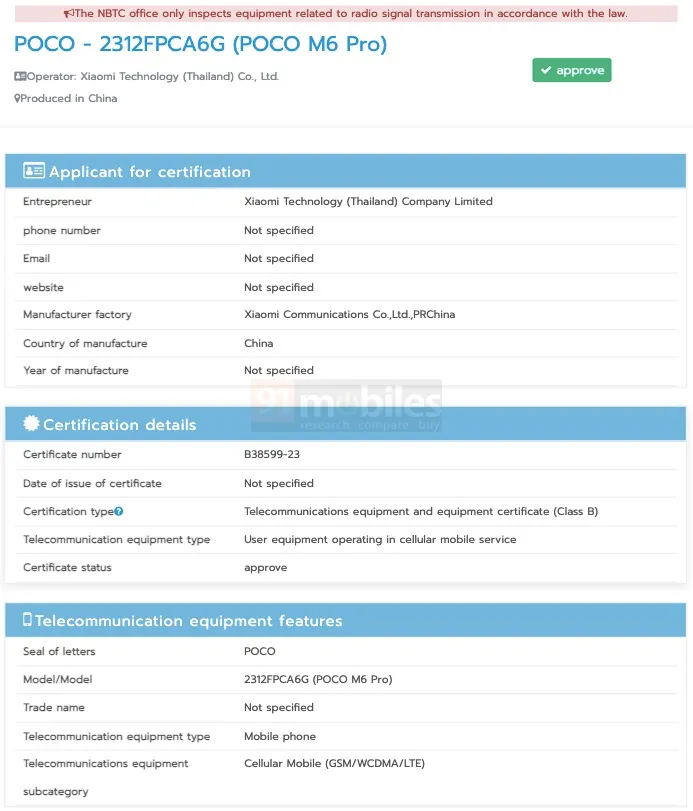
POCO is gearing up to unveil the new M6 Pro 4G smartphone in the global market soon. The device was recently spotted outside of China receiving certification from NBTC, which is an authority based in Thailand. So let’s have a look.
POCO M6 Pro 4G visits NBTC
Just recently, the POCO M6 Pro 4G was sighted on the IMDA certification database along with the Redmi Note 13 4G, and a new Xiaomi Smart Band model. Now, the device was spotted carrying the model number 2312FPCA6G. This is in line with the previous IMDA sighting. Unfortunately, the online listing does not reveal any finer details like the design or specifications of the upcoming device.
But based on what we know so far, the POCO M6 Pro 4G will support LTE connectivity. It is also rumored to be a rebranded version of the Redmi Note 13 Pro 4G model. Earlier this month, both devices were also certified by FCC. The earlier report had also hinted at its camera specifications. The device is expected to feature a 64-megapixel primary camera on the rear that supports OIS (Optical Image Stabilization). This sensor is paired with an 8-megapixel ultra wide angle lens.
As the name suggests, the POCO M6 Pro 4G is expected to be a cutdown version of the POCO M6 Pro 5G model. But these will likely offer some similar specifications. The M6 Pro 5G sports a tall 6.79-inch FHD+ display that comes with a 90Hz refresh rate. Under the hood, the device is equipped with the Qualcomm Snapdragon 4 Gen 2 SoC. A large 5,000mAh battery pack powers this device, which supports 18W fast charging.
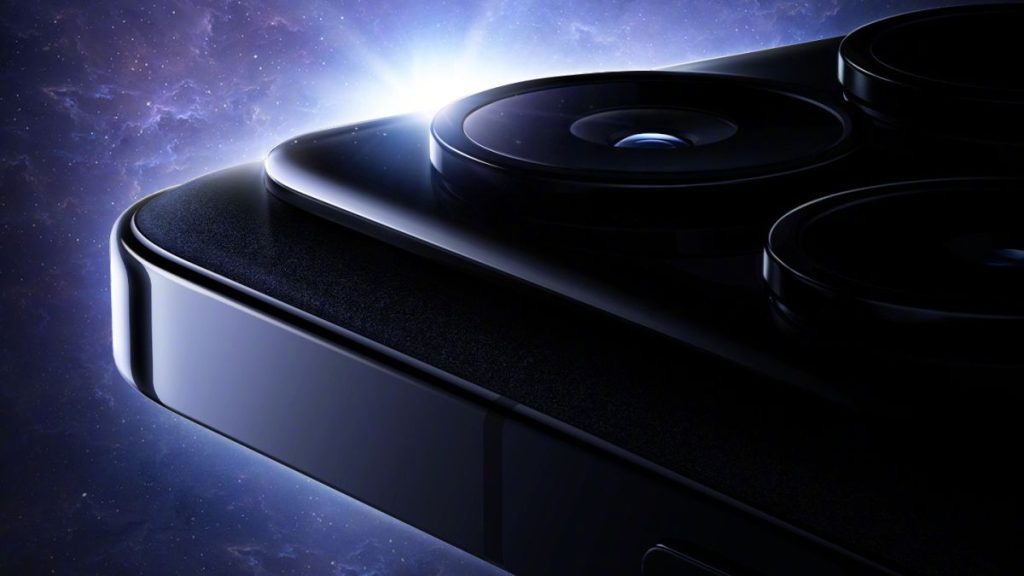
Xiaomi, a renowned word in the realm of consumer electronics, is now making its way into the automotive industry with its upcoming launch of its first electric car model, the SU7. The Ministry of Industry and Information Technology has already officially declared the SU7, confirming Xiaomi’s entry into the electric vehicle market. Now some spy images of Xiaomi’s upcoming car taken during its road tests have surfaced, confirming some of the outer design elements.
Design elements highlighted from the spy images fall in line with MIIT’s previous revelation
The spy photos showcase an overall coupe shape which is positioned as a C-class luxury sedan. The vehicle is currently undergoing a second winter test, emphasizing its commitment to delivering optimal performance under diverse conditions.
MIIT’s recent announcement shed light on Xiaomi’s electric car endeavors. The 377th batch of the “Road Motor Vehicle Manufacturers and Products Announcement” included two Xiaomi-branded pure electric cars. Notably, these vehicles are associated with Beijing Automotive Group Off-road Vehicle Co., Ltd., further emphasizing Xiaomi’s partnerships in the automotive sector.
The spy images of the SU7 indicate an active rear wing, which is in line with the previous information. Additionally, some models are equipped with Brembo brake calipers, considered as a testament to the car’s focus on performance. The electric sedan comes in two versions, featuring a 220 kW motor with a top speed of 210 km/h. Additionally, another variant offers a 220 kW along with another 275 kW motor, achieving a top speed of 265 km/h.
The vehicle is fitted with a lithium iron phosphate battery supplied by Xiangyang Fodi Battery Co., Ltd., as well as a ternary lithium-ion battery provided by CATL New Energy Technology Co., Ltd.
The SU7 is set to make its debut in three versions — the SU7, SU7 Pro, and SU7 Max, with sales expected to commence in the first half of 2024.
With the Black Friday sales kicking off, there are a bunch of sweet tech deals all around. Now, Apple is offering great discounts for its latest iPhone 15 and even last year’s iPhone 14 models in India. So here are all the details.
Apple iPhone 15 Discounts
The Cupertino based giant’s iPhone 15 is getting a notable discount through iNvent, an authorized Apple reseller in India. It will be available with an instant discount of 3,000 INR. Furthermore, buyers can even get another instant cashback of 5,000 INR, which basically brings the effective price tag down by 8,000 INR. So now, you can get an iPhone 15 for just 71,900 INR, down from the full price tag of 79,900 INR.
Apple iPhone 14 Discounts
Apple’s iPhone 14 has also gone on discount during the Black Friday sale. iNvent is giving a direct discount of 5,000 INR and an additional cashback of 4,000 INR. In other words, the total discounts amount to 9,000 INR. This means that the iPhone 14 128GB model starts from 60,900 INR over the full 69,900 INR price tag. For those unaware, the device is also offered in a 256GB and 512GB storage option.
The Apple Watch Series 9 is currently on sale alongside the iPhone 15 and iPhone 14. It comes with an instant discount of 2,500 INR, which brings down the effective price tag of 39,400 INR for the GPS model (down from 41,900 INR). You can check out our other Black Friday deal coverage by clicking on this link here.
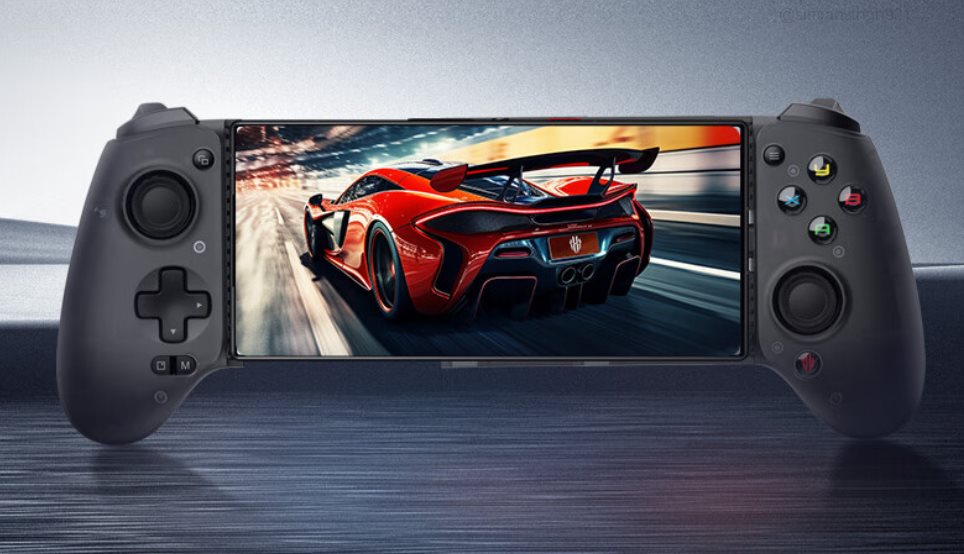
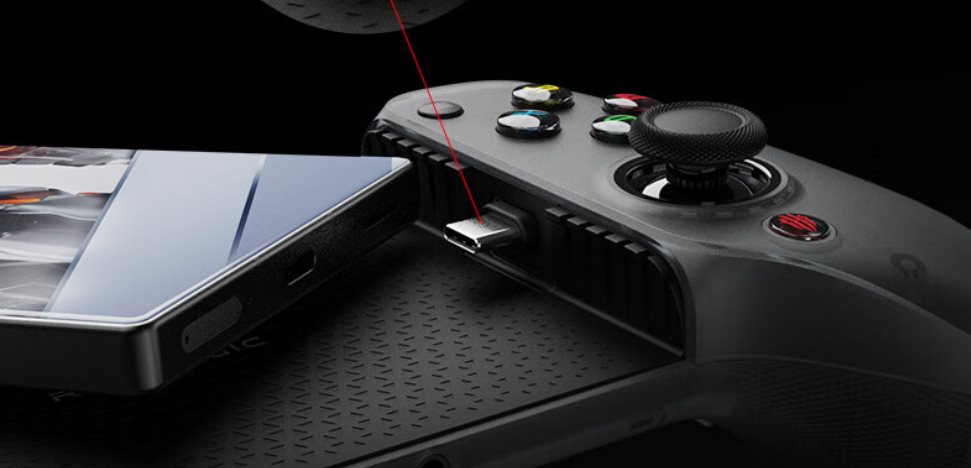
Along with the launch of the Red Magic 9 Pro Series, and new Red Magic Gaming Monitors, here is the new Red Magic Shadow Blade 2 Gamepad with upgraded specifications and features. The Gamepad can turn your mobile phone into a handheld gaming device within seconds, and offers zero latency, thanks to Type-C USB connectivity.
The new Generation gaming gear adorns a futuristic design and offers three types of rocker caps for Hall Linear Triggers. There are a couple of customizable back buttons, that allow the users to map accordingly. It solves some control problems by improving the overall experience of the game.
In addition to the different caps, the Hall Linear Triggers offer much advancement over the previous-gen gamepad. The Hall rocker is more rugged and offers protection from wear and tear. It bundles a dedicated IC which is capable of triggering inductions over 5 million times.
It offers charging while playing via a USB Type-C port and supports a 3.5mm audio jack.
Interested users can grab it from JD.com for the price of 599 Yuan (~$84)
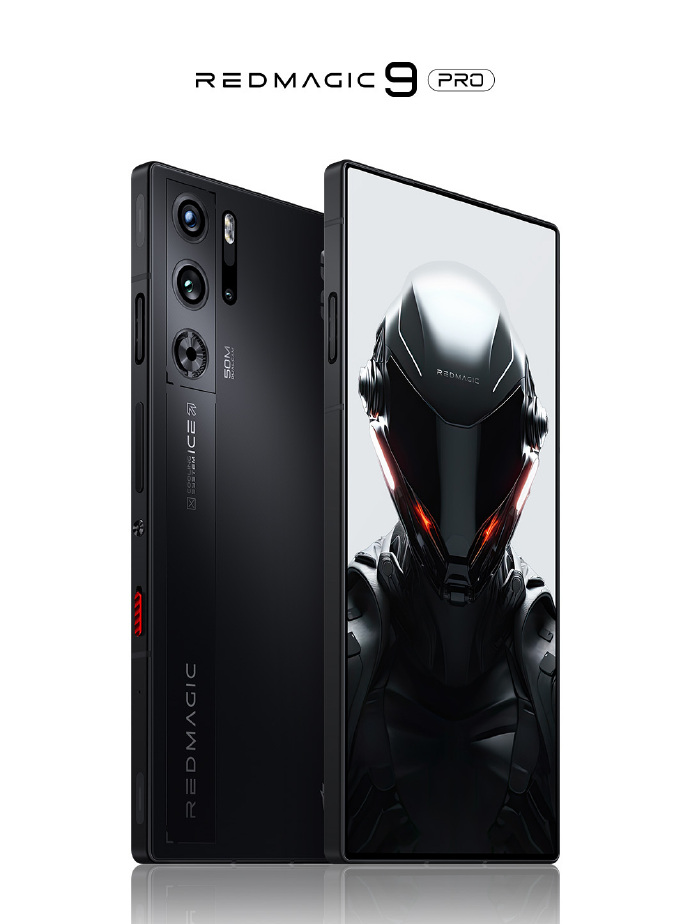
Red Magic has just launched the Red Magic 9 Pro series gaming smartphones in China. The lineup consists of two models: Red Magic 9 Pro and Red Magic 9 Pro+. Here’s a detailed breakdown of the specs and features onboard these smartphones.
Design & display
The Red Magic 9 Pro series is said to be the ultimate candy bar phone. It has a completely flat back and a full-screen display, meaning no camera bump on the back and no front camera cutout on the screen. The camera setup on these devices is protected by a layer of custom-made glass which does not interfere with the light entering the sensors.
Measuring 8.9mm in thickness, the series offers three color options: Dark Knight, Deuterium Front Transparent Dark Night, and Deuterium Front Transparent Silver Wings.
On the front, the devices feature a 6.8-inch 2480 x 1116 resolution full-screen AMOLED display. The screen-to-body ratio is an impressive 93.7%. They offer a 120Hz refresh rate, with 2160Hz ultra-high frequency PWM dimming + DC dimming, a 960Hz multi-finger touch sampling rate, and a peak brightness of 1600nit. The display has full coverage of the DCI-P3 color gamut and supports HDR10+. As mentioned above, these phones come with an under-display camera that’s covered with BOE’s under-screen Q9+ luminescent material to camouflage the under-display camera.
Performance & specs
Under the hood, the Red Magic 9 Pro (and 9 Pro+) packs a Snapdragon 8 Gen 3 SoC paired with LPDDR5X RAM and UFS4.0 storage. It includes a 10,182mm² vapor chamber, a new alloy fan + waterfall air duct, and the CUBE energy engine claiming to reduce the heat generated by the Snapdragon 8 Gen 3 chip by up to 25°C. Thanks to this cooling system, the phone achieves an impressive AnTuTu score of 2,291,328 points at room temperature and 2,321,054 points in lab conditions. The brand has claimed that the phone can easily sustain 60FPS in Genshin Impact for 60 minutes.
The device is hinted to include Red Magic’s in-house game chip, known as the Red Core R2 Pro. This chip is designed to improve gaming by enhancing features such as haptic feedback, audio, and touch-sampling rate.
On the software front, the Red Magic 9 Pro series comes with REDMAGIC OS 9.0 based on Android 14. A key feature coming with the new OS is X Gravity 2.0 software, which will be used for seamless mapping of external devices like a controller or keyboard and mouse to on-screen controls.
The Red Magic 9 Pro houses a 6500mAh battery + 80W fast charge that can fully charge the device in just 35 minutes. The Red Magic 9 Pro+, on the other hand, comes with a 5500mAh battery + 165W ultra-fast flash charging, providing a full charge in a mere 16 minutes. Both models support the USB 3.2 gen2 protocol and full-featured TYPE-C.
Other features onboard include 520Hz touch shoulder buttons for gaming, Magic Sound stereo dual speakers, 3 inbuilt mics, Wi-Fi 7, IR remote control, 3.5mm headphone jack, and NFC.
Camera
When it comes to cameras, the primary 50-megapixel Samsung GN5 camera features OIS. Instead of the previous 8-megapixel wide sensor, the Red Magic 9 Pro series features a 50-megapixel JN1 ultra-wide sensor. Interestingly, there’s also a 2-megapixel macro lens included for some reason.
Pricing & availability
The Red Magic 9 Pro series will be available on JD.com, starting at 4,399 yuan (~$620) for the 8/256 GB variant. If you opt for the higher-end Red Magic 9 Pro+ with 16/256 GB, the cost goes up to 5,499 yuan (~$775). Pre-sales begin immediately across all platforms, with official sales starting at 10 a.m. on the 28th. Prices vary according to the model and specifications.
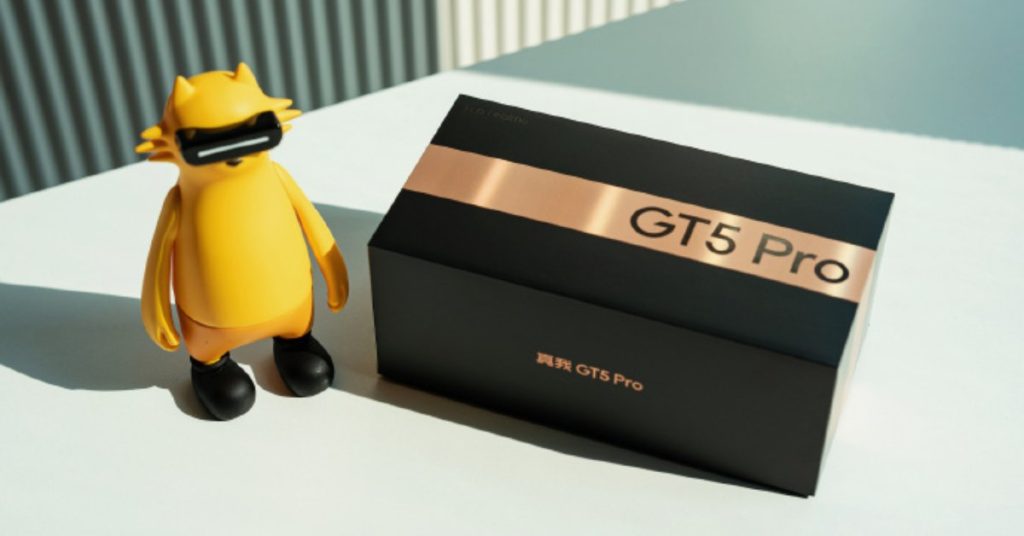
Realme held a press conference yesterday to announce the camera specs of the GT5 Pro. While it didn’t specify an official launch date, Realme’s Chief Marketing Officer Xu Qi Chase posted an image of the smartphone’s retail box on social media, suggesting an imminent launch.
As you can see, the device comes in a black box featuring a golden strip in the middle with GT5 Pro branding.
Realme has not yet shared any other details about the device, but we know most of the specifications thanks to previous teasers and leaks.
The Realme GT 5 Pro will be the company’s first smartphone to feature a periscope telephoto camera. It will be using the IMX890 Sony lens for periscope telephoto shots, which will offer up to 3x optical zoom and up to 120x digital zoom.
The GT 5 Pro’s rear camera setup will feature the 50-megapixel LYT-808 camera sensor, accompanied by an 8-megapixel IMX355 ultra-wide lens. For selfies, the device may feature a 32-megapixel front-facing camera.
Likewise, the smartphone will be powered by the Snapdragon 8 Gen 3 processor, backed by a 10,000mm² heat dissipation unit. Further, there will be a BOE-customized curved-edge 6.78″ 1.5K display supporting a 3,000 nits brightness rate.
We are still waiting for an official launch date for the Realme GT5 Pro, but we expect it to be released soon.
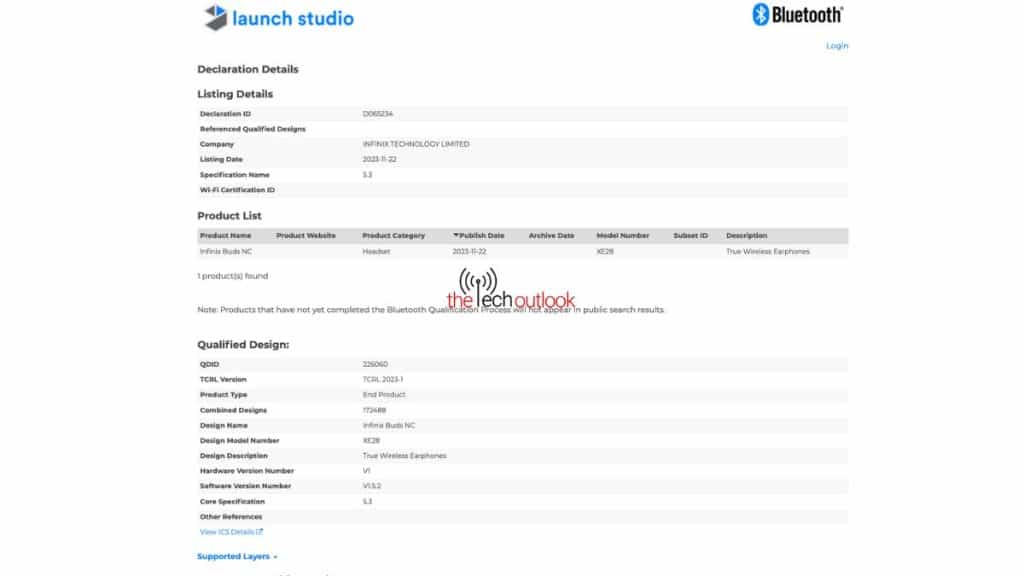
Infinix is apparently working on a new pair of truly wireless earbuds. The hearables in question are the Infinix Buds NC earbuds, which could be launched soon as the device recently surfaced on a major certification database.
Infinix Buds NC surfaces on Bluetooth SIG
The upcoming TWS earbuds were spotted on the Bluetooth SIG certification authority. Looking at the online listing, the device carries the model number XE28. This certification does not reveal any finer details like its pricing, specs, or design. However, it does confirm the “Infinix Buds NC” moniker and support for Bluetooth version 5.3. Interestingly enough, the XE28 model number is quite similar to the XE27 of the Infinix FreePods 2.
For those unaware, the FreePods 2 is another TWS earbuds that was launched in limited regions. So the Buds NC could be the successor to the FreePods 2 and will likely offer certain upgrades. The FreePods 2 features an in-ear design housing 10mm bass drivers. Thanks to its quad microphone, these also offer active noise cancellation (ANC) and environmental noise cancellation (ENC). The FreePods 2 comes with SBS audio codec and Bluetooth 5.0 support as well.
A 46mAh battery powers each earbud while the charging case houses a 460mAh battery pack. This offers 5 hours of battery life from the earbuds, which be expanded up to 28 hours with the charging case. The Infinix Buds NC arrives in Blue and White color options and even supports IPX4 water resistance. This is all the information we have at the moment, so stick around for more updates.
Following the Red Magic 9 Pro launch, the company also introduced a couple of new Gaming monitors. Namely, the Red Magic Realm 49″ Gaming Monitor which is coupled QD-OLED ultra-wide panel and has 1800R curvature, and the other Red Magic Mini 2″ offers 4K resolution with a 160Hz refresh rate. Let’s dive into the details of each monitor:
Red Magic Realm 49″ QD-OLED Gaming Monitor Details
A massive gaming display from Red Magic measures 49 inches in size and offers a 32:9 aspect ratio. The QD-OLED panel offers 5120 x 1440 dual 2K resolution, and offers 240 Hz refresh rate, and 99% DCI-P3 color gamut. It offers an ultra-fast response rate of 0.03ms and is compatible with SYNC and G-SYNC. Developed by Samsung, the Display panel offers some high-end specifications.
The interface supports HDMI 2.1 connectivity, there’s DP 1.4, and 90W USB-C support. it houses inbuilt 2x 5W stereo speakers.
Red Magic Realm 49″ Gaming Monitor will start retailing in December at the price of 8999 Yuan which roughly translates to US$1268.
Red Magic Mini LED 27″ Gaming Monitor Details
On the affordable side, the company introduced the Red Magic Mini LED 4K Gaming Monitor. It houses a 27-inch AUO 7.0 Fast IPS Panel with 5088 Mini LEDs. The 4K gaming monitor supports 160Hz refresh rate, 10bit color mode, and a dynamic contrast ratio of up to 1 million. It offers a response time of only 1 ms. The monitor is compatible with Free Synchg and G-Sync.
On a professional note, the display has 99% SRGB, 99% DCI-P3, and 99% Adobe RGB color Gamut. It even has HDR1400 certification.
Red Magic Mini also supports 90W Type-C, 2x USB 2.0, a USB 3.0, HDMI 2.1, and 2x DP along with other interfaces. Interestingly, the USB Type-C supports reverse charging alongside the video transmission.
The pre-orders for the monitor are already live through JD.com starting at 5499 Yuan (~$493).
Xiaomi‘s sub-brand Redmi has officially announced the launch date for the Redmi K70 series. The new lineup, set to debut on November 29, will comprise three smartphones — the Redmi K70, Redmi K70E, and Redmi K70 Pro.
Xiaomi has already revealed key specifications for the Redmi K70E, confirming that it will be powered by the Dimensity 8300-Ultra processor and pack a 5,500mAh battery with 90W fast charging capabilities. Additionally, the K70E will boast a 12-bit 1.5K display with a peak brightness of 1,800 nits.
The top-of-the-line Redmi K70 Pro is now confirmed to be equipped with the Snapdragon 8 Gen 3 chipset in a new teaser. Xiaomi has also announced a new ice-cooling system for the smartphone, which reportedly utilizes new self-developed heat-dissipation materials.
Redmi is also emphasizing the smartphone’s AI capabilities. Similar to the K70E, the Pro model is also expected to incorporate generative AI capabilities, enabling users to create sentences and images using prompts.
While the exact SoC for the base Redmi K70 remains unconfirmed, a recent leak suggests that it will be powered by the Snapdragon 8 Gen 2.
Redmi is expected to reveal more information about the Redmi K70 series in the coming days leading up to the November 29 launch. Stay tuned for updates.
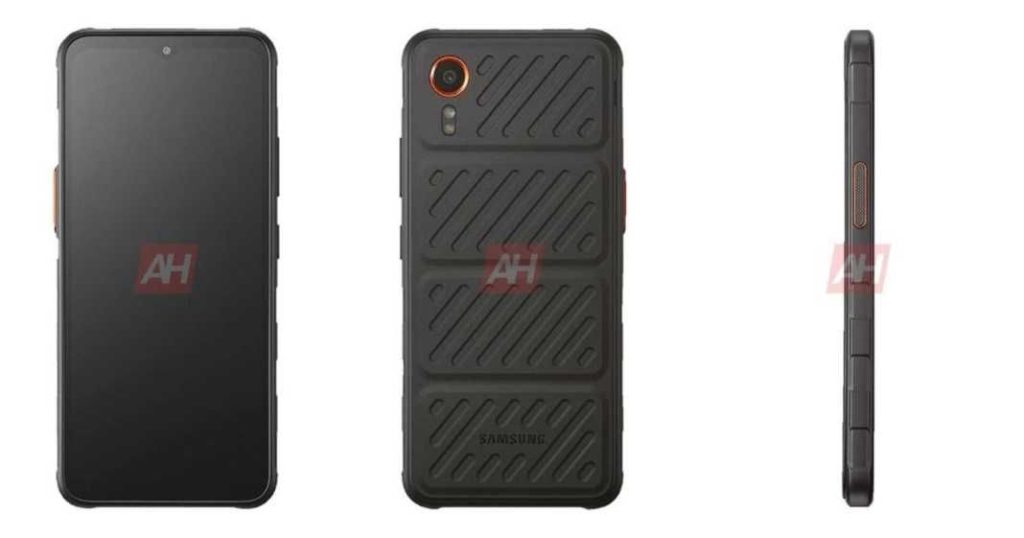
Recent reports have revealed that Samsung is working on a rugged phone named the Galaxy Xcover 7. The leaked renders of the device have already appeared, and it has also been spotted on Geekbench. While the Xcover series has been available in other markets, like Europe, the South Korean brand hasn’t launched it in India. There is a possibility that the Xcover 7 could be Samsung’s first rugged phone for the Indian market.
Samsung Galaxy Xcover 7 India launch expected
📌Samsung Galaxy XCover 7 hits BIS India with model code SM-G556B.
It appeared on Geekbench a few days ago and confirmed these specs:
— Simranpal Singh (ਸਿਮਰਨਪਾਲ ਸਿੰਘ) (@simransingh931) November 22, 2023
As can be seen in the above X post, a Samsung device bearing the SM-G556B model number has been approved by the BIS authority of India. As per previous reports, this device is likely to be called the Galaxy Xcover 7 when it arrives on the market.
The Geekbench listing of the phone has revealed that the Galaxy Xcover 7 will be equipped with the Dimensity 6100 Plus chipset, 8 GB of RAM, and Android 14. The leaked renders of the device have revealed its ruggedized construction will feature a waterdrop notch display on the front, a single rear camera with dual LED flash, and an Xcover physical button on the side, which will allow users to launch a desired app or push-to-talk feature or use any other function.
Samsung Galaxy XCover 7 leaked renders
The Galaxy Xcover 7 is said to be equipped with a user-replaceable rear panel like its predecessor. In addition, it will be a MIL-STD-810H-compliant and IP68-rated dustproof and water-resistant smartphone.
There is a possibility that the Galaxy Xcover 7 may bear some resemblance to the upcoming Galaxy A55, which has the SM-A556B model number. Reports have revealed that the A55 will feature the forthcoming Exynos 1480 chipset.
In a significant move signaling its evolution post-separation from Huawei Technologies, Honor, the renowned handset maker, announced its preparation for an initial public offering (IPO). This strategic decision comes on the heels of the company’s sale by Huawei in 2020, a move prompted by U.S. sanctions that reshaped the technology landscape.
The IPO is viewed as the next pivotal step in Honor’s trajectory, building on the remarkable strides made in the past three years. During this period, Honor has not only solidified its market position but has also showcased robust performance indicators, particularly in China and Europe.
Honor, which refrained from specifying the IPO’s time frame or location, is making meticulous preparations to go public. The aim is to attract diverse capital and further strengthen its financial foundation for future endeavors.
In the third quarter of this year, Honor emerged as the leader in handset shipments in China, selling an impressive 11.8 million units and securing the top spot. Last year, it ranked as the second-largest seller in China and the fifth-largest brand by sales in Europe in Q3. The company’s market share in China stood at a formidable 18% during the same period.
Following its independence from Huawei, Honor has flourished under a consortium of over 30 agents and dealers. This shift allowed the company to operate autonomously, navigating the challenging tech landscape and expanding its global footprint.
The last three years have been transformative for Honor, marked by rapid strategic and business growth. Corporate governance and management improvements have propelled the company’s overall competitiveness, setting the stage for a successful IPO.
As part of its preparation steps, Honor is set to optimize its shareholding structure, inviting diversified capital that aligns with its future vision. The board composition will undergo gradual adjustments to meet the stringent standards expected of a listed company, emphasizing governance and regulatory compliance.
Celebrating its third-year anniversary post-independence, Honor has recorded nearly 200% sales growth in overseas markets. Counterpoint’s Q3 report underscores Honor’s remarkable growth in Europe, distinguishing itself as the only brand among the top five to achieve year-on-year growth. Domestically, in the highly competitive Chinese market, Honor claims the throne in the foldable market and commands a significant overall market share, according to the Q3 analyst report.
The original Oppo Pad Air was introduced in May of 2022 as the brand’s first-ever budget tablet. Over one and a half years later, the company has today unveiled its successor dubbed Oppo Pad Air 2 in China.
The latest tablet from the firm was announced alongside the Reno 11 and Reno 11 Pro. Just like most consumer tech products, almost everything about this device was already out via leaks and official teasers.
On top of that, the Oppo Pad Air 2 has already been released in global markets as the OnePlus Pad Go.
Oppo Pad Air 2 Specifications
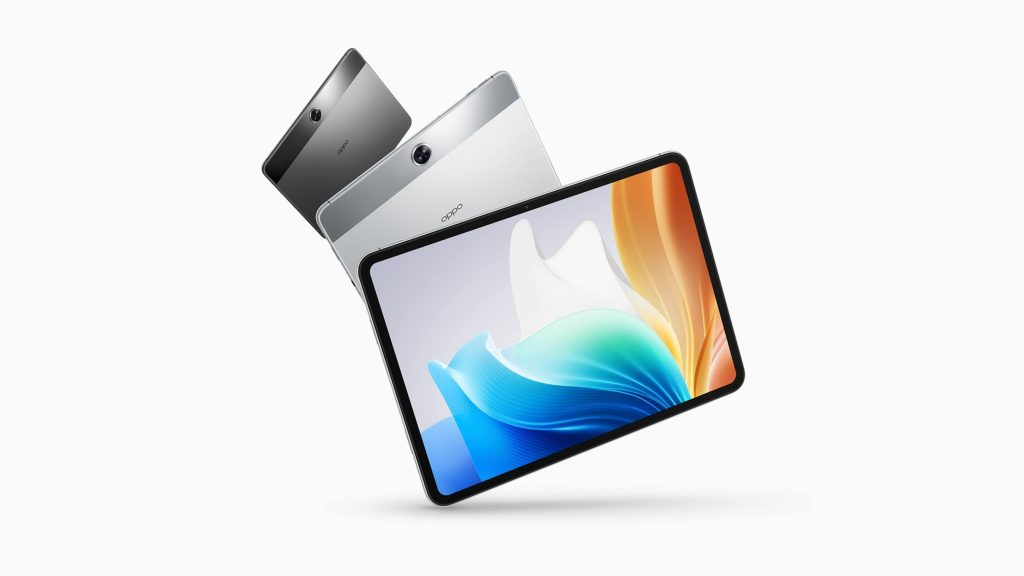
The Oppo Pad Air 2 takes its design cues from the Oppo Pad 2. It has rounded corners and the rear camera is located at the center. The back panel also comes in a dual-tone finish.
The tablet is built around an 11.35-inch display (LCD) with a resolution of 2408 x 1720 pixels (2.4K) and 260 PPI. This screen offers up to a 90Hz refresh rate, a 180Hz touch sampling rate, and 400 nits peak brightness level.
The device is powered by a MediaTek Helio G99 chipset paired with LPDDR4x RAM and UFS 2.2. storage. On the software front, it boots ColorOS 13.2 based on Android 13.
Further, it sports an 8MP rear camera and an 8MP front-facing camera. There’s no MicroSD card slot or a 3.5mm headphone jack but it provides Dolby Atmos-supported quad stereo speakers.
Connectivity options on the tablet include dual-band WiFi, Bluetooth 5.2, and USB Type-C. Last but not least, it draws energy from an 8,000mAh battery and carries support for 33W SuperVOOC charging standard.
Oppo Pad Air 2 Price
The Oppo Air 2 will retail at the following price tags in China.
6GB + 128GB – ¥1,299 (~$185)
8GB + 128GB – ¥1,499 (~$210)
8GB + 256GB – ¥1,699 (~$240)
The tablet arrives in Space Gray and Streamer Silver color options. It is up for pre-order and will go on sale starting November 25.
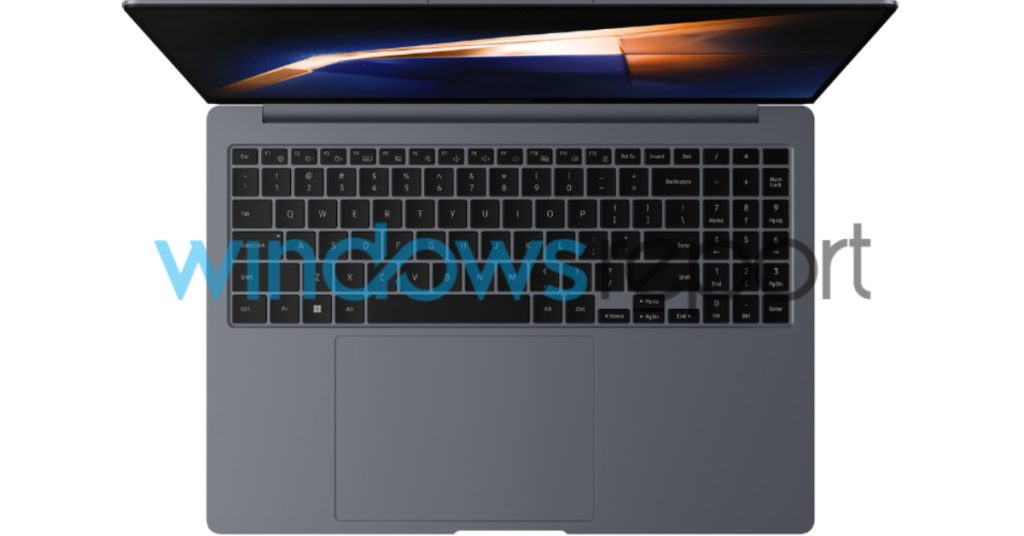
Samsung unveiled the Galaxy Book 3 series of laptops in early 2023, and it’s time to expect an update. While an official release date has yet to be revealed, a recent leak has offered our first glimpse at the upcoming devices.
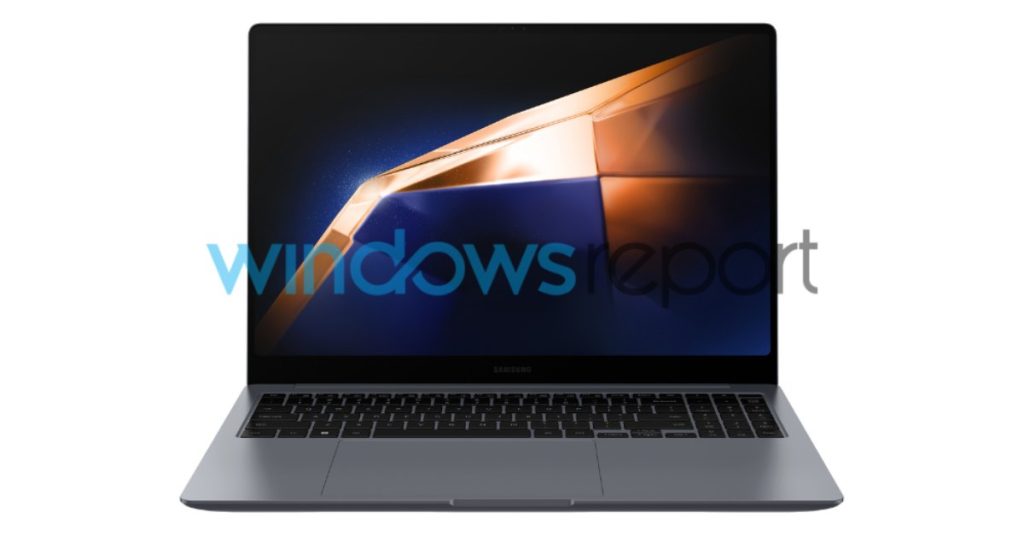
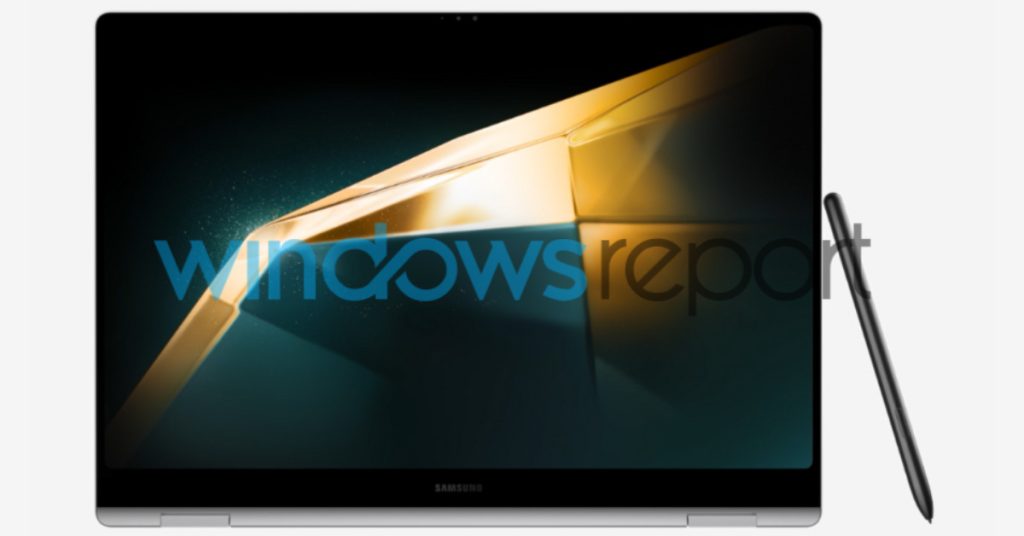
Samsung Galaxy Book 4 lineup revealed in leak
The leak, courtesy of Windows Report, includes images and specifications of the Galaxy Book 4 lineup.
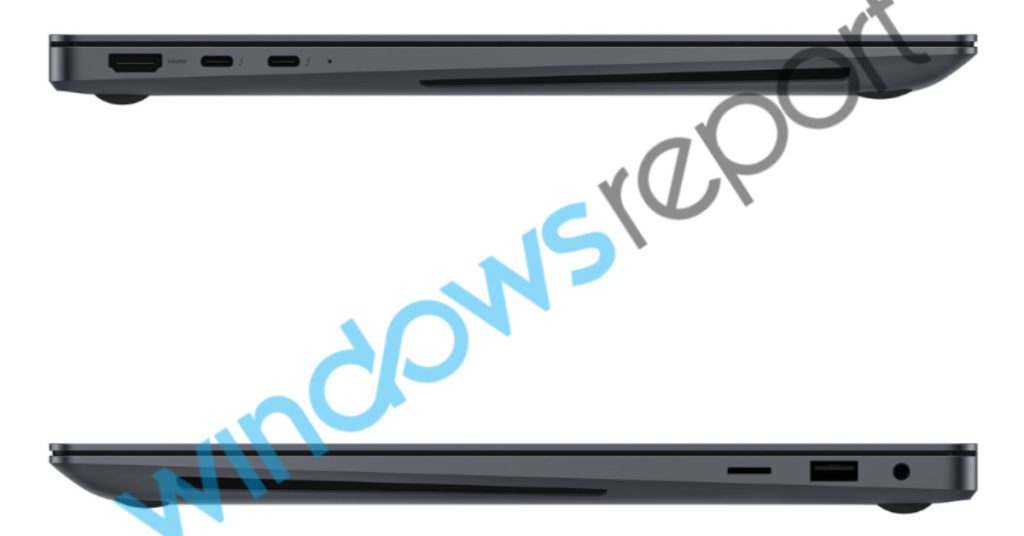
In terms of design, the laptops appear to be largely unchanged from their predecessors, with a similar sleek and lightweight chassis. They also retain a similar port selection, including two Thunderbolt 4 ports, one HDMI port, a microSD card reader, a USB-A 3.2 port, and a headphone jack.
Where the Galaxy Book 4 series shines is in its internal upgrades. The leak suggests that all models except the base Galaxy Book 4 will feature AMOLED displays, offering superior contrast and color reproduction compared to traditional LED screens.
Additionally, expect vanilla Book 4, all models will receive a bump in Bluetooth connectivity, moving from Bluetooth 5.1 to Bluetooth 5.3 for improved range and reliability.
As for performance, the Galaxy Book 4 series is expected to be powered by Intel Core processors, ranging from Intel Core 5 in the base models to Intel Core 9 in the flagship Galaxy Book 4 Ultra.
Graphics options are also rumored to vary across the lineup, with Intel Graphics handling the base models, Intel Arc Graphics powering the Pro and Pro 360 models, and the top-tier Galaxy Book 4 Ultra potentially equipped with NVIDIA’s GeForce RTX 4070 GPU.
The leak also mentions that the Galaxy Book 4 360 and Galaxy Book 4 360 Pro may come with a stylus, making them even more versatile for tasks like drawing and handwriting.
However, details on battery life, RAM configurations, and pricing remain unclear at this time. The outlet claimed the leak did hint at the possibility of the Galaxy Book 4 Ultra featuring 32 GB of LPDDR5X RAM.
Xiaomi unveiled the Smart Band 8 Pro wearable model earlier this year in its home market of China. Now, it appears that the global roll out of this device is near, as it was recently sighted in a Singaporean certification platform.
Xiaomi Smart Band 8 Pro Visits IMDA
The Chinese tech giant’s latest Smart Band model was spotted on the IMDA database. Looking at the online listing, the device was spotted along with the POCO M6 Pro 4G and the Redmi Note 13 4G. Previously, the Smart Band 8 Pro was spotted on Malaysia’s SIRIM certification, carrying the model number M2333B1. The IMDA certification labels the smart wearable as a low power consumption product with Bleutooth connectivity.
Unfortunately, no finer details like pricing and specs regarding the band was revealed. However, since the device has already been released in China, we can expect the global variant to be similar if not identical. The Xiaomi Smart Band 8 Pro was released for a starting price tag of 399 Yuan (roughly 56 US Dollars) in China. It sports a 1.74-inch AMOLED display that has a 336 x 480 pixel resolution. The display has 600 nits of peak brightness and offers over 100 watch faces.
Other notable features include Bluetooth 5.3, GNSS, 5ATM water resistance, and NFC. Furtherore, the device offers heart rate tracking, blood oxygen mapping, sleep tracking, menstrual cycle tracking, and more than 150 sports modes. A 289mAh battery pack powers this device, which offers up to 14 days on a single full charge.
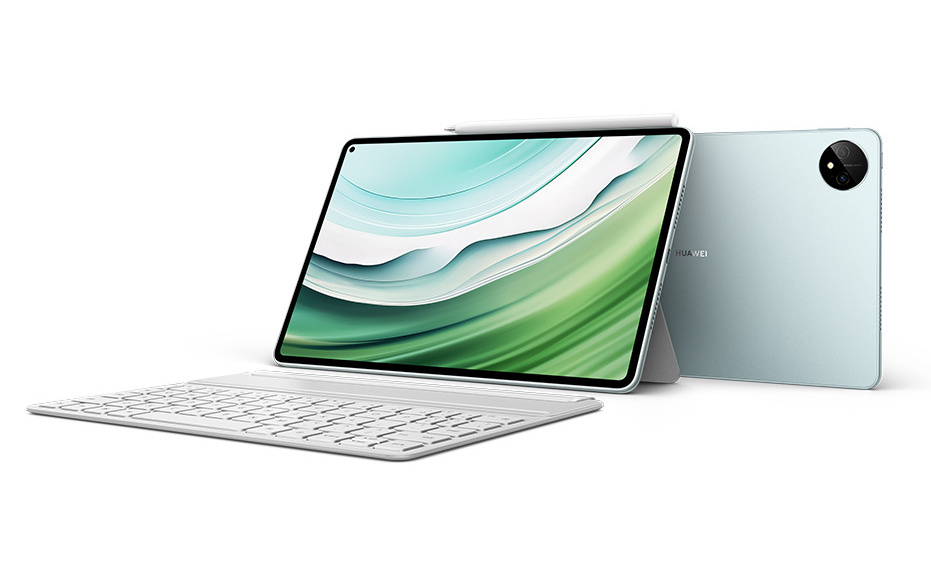
Huawei has officially introduced the MatePad Pro 11″ 2024 model. The official listing on Huawei’s website reveals that this tablet has been integrated into China’s Beidou satellite product models, positioning it as the world’s first tablet to support satellite communications.
The launch event is scheduled for November 28th
Huawei MatePad Pro 11″ 2024
The MatePad Pro 11-inch 2024 model is able to utilize China’s Beidou satellite communication system. This capability will enable its users to send messages and share their locations even in areas with no network coverage.
Huawei’s implementation of the satellite communication system involves utilizing high-orbit satellites positioned up to 36,000 kilometers away. Remarkably, Huawei achieves this without the need for additional antennas. Instead, the company relies on sophisticated technologies, including high-gain algorithms and innovative communication protocols, to optimize the tablet’s communication experience.
One of the notable achievements is Huawei’s success in overcoming challenges related to power consumption and signal loss. Overcoming these technical complexities is a significant milestone for the company, as it ensures the MatePad Pro 11-inch 2024 model becomes the world’s first in this category all while maintaining power efficiency. Any other official details about the device are yet to surface.
The MatePad Pro 11-inch is set to join a lineup of Huawei devices equipped with similar satellite communication technology. Previously, models like the Huawei P60, Huawei P60 Pro, Mate 50 series, Mate X3, Mate X3 Pro, Mate Xs 2, and Nova 11 Ultra embraced this innovation.
Yu Chengdong, CEO of Huawei’s Consumer Business Group, has emphasized the transformative potential of this technology. While acknowledging that satellite communication may not be an everyday necessity, he highlighted its significance by stating, “This function may not be used on a daily basis, but it can be used once in a lifetime and will last a lifetime.”
The OnePlus 12 5G is confirmed to launch in China on the 4th of December. Later, it may launch in the global market in January.
OnePlus has always had fun experimenting with different textures for the backs of its phones, and it appears like the OnePlus 12 has something special in store.
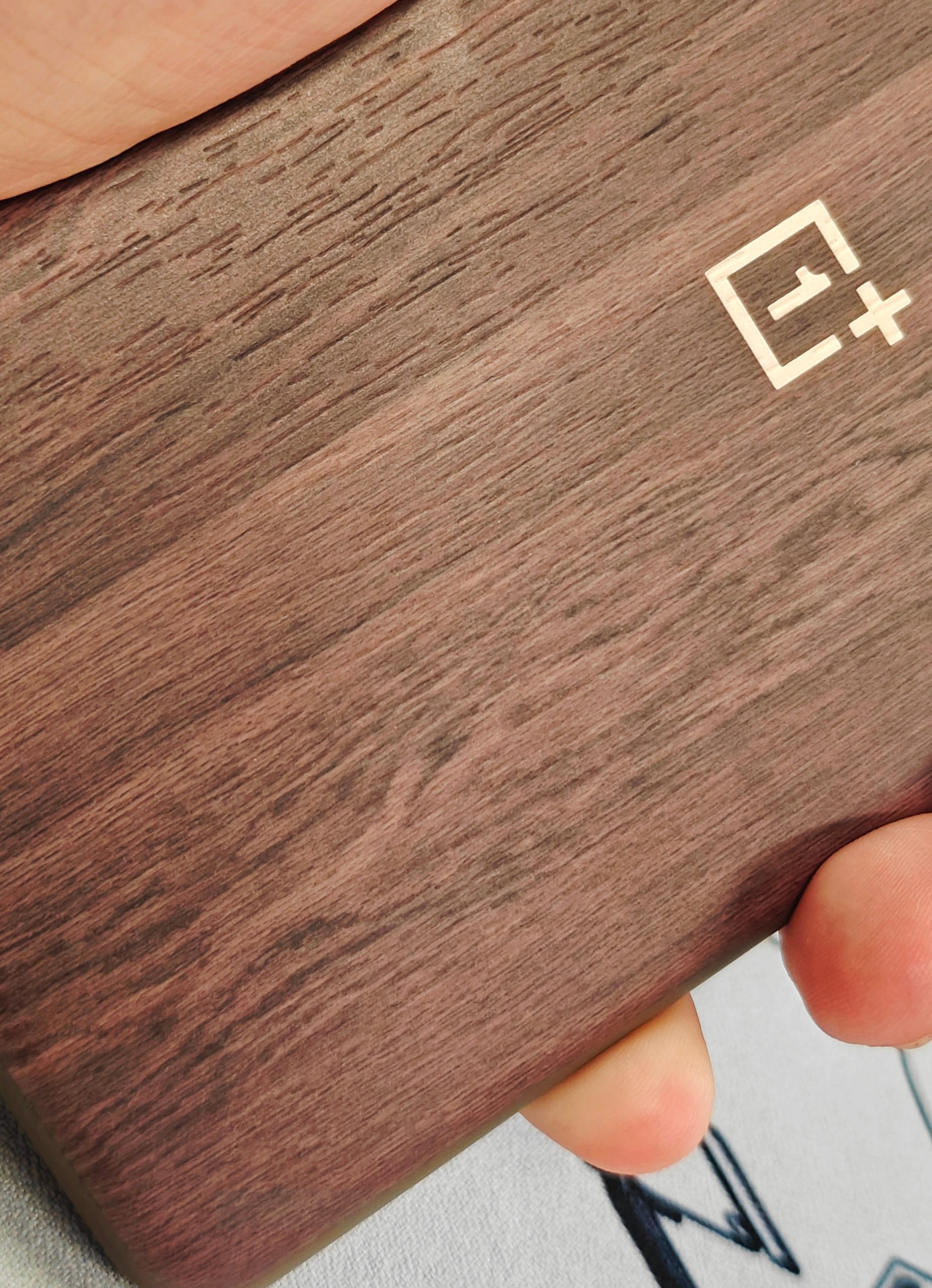
Now, the Digital Chat Station on Weibo suggests that there will be a variant of the next flagship smartphone with a wood grain texture on the back.
Perhaps the wood grain is the cause of the confusion; the image itself is unclear.
OnePlus 12 may feature a wood texture back
We assume that OnePlus’s decision to switch to wood for the OnePlus 12 is a nod to the company’s debut model, the OnePlus One, for which it supplied wood texture covers and even detachable backs for select smartphones.
The device’s whole rear is unfortunately not visible in the picture. OnePlus 12 real-world images have surfaced; however, as of yet, no real-world image displaying the camera bump has been released.
It is anticipated that the camera array might include primary, periscope, and telephoto sensors. A Sony LYT-808 sensor, which is a variant of the OnePlus Open’s LYT-T808 camera, will serve as the primary camera, OnePlus announced.
It has also been reported that the secondary camera will be an optical image stabilization (OIS) equipped 64MP periscope zoom with a 1/2-inch sensor and an f/2.6 aperture.
Surfshark VPN is currently offering a huge 80% discount on their plans, plus the chance to get up to 5 months for free on Black Friday 2023. You can enjoy maximum online security for an extended period of time without breaking the bank.
Surfshark VPN offers unlimited devices, data, speed, and access to their extensive network of servers around the world. Whether you’re browsing the web, streaming your favorite shows, or accessing sensitive information, Surfshark has got you covered.
What’s even better is that Surfshark offers a 30-day money-back guarantee, so you can try out their service risk-free. If you’re not satisfied with the VPN for any reason, simply request a refund within 30 days of purchase.
We personally have used Surfshark and their servers are very quick to connect and the connection speeds are also very very good. You get 70 to 80% of your connection speed when the VPN is turned on with most of their servers. Plus, if you want to use the VPN in China, Surfshark is a pretty good option.
So if you were in the market to get a new VPN connection, this would be the perfect time with Surfshark offering 80% off their regular prices and 5 months of free vpn when purchasing their 2 year plan.
We use cookies on our website to give you the most relevant experience by remembering your preferences and repeat visits. By clicking “Accept”, you consent to the use of ALL the cookies.
This website uses cookies to improve your experience while you navigate through the website. Out of these, the cookies that are categorized as necessary are stored on your browser as they are essential for the working of basic functionalities of the website. We also use third-party cookies that help us analyze and understand how you use this website. These cookies will be stored in your browser only with your consent. You also have the option to opt-out of these cookies. But opting out of some of these cookies may affect your browsing experience.
Necessary cookies are absolutely essential for the website to function properly. This category only includes cookies that ensures basic functionalities and security features of the website. These cookies do not store any personal information.
Any cookies that may not be particularly necessary for the website to function and is used specifically to collect user personal data via analytics, ads, other embedded contents are termed as non-necessary cookies. It is mandatory to procure user consent prior to running these cookies on your website.