Advertisement

Redmi Note 13 Pro is available on Giztop

The Redmi Note 13 Pro is now available internationally on the Giztop store! For a limited time, you can get your hands on this incredible device and enjoy all its amazing features.

The Redmi Note 13 Pro comes with MIUI 14, based on Android 13 OS, offering a fresh and fast platform for a smooth user experience. The phone supports multiple languages, including English and Chinese, making it accessible to users around the world.

You can enjoy stunning visuals and smooth scrolling thanks to the Qualcomm Snapdragon 7s Gen 2 chipset and a 6.67-inch 120Hz OLED display. The phone features 64MP AI triple cameras, ensuring great image clarity and detail in your photos and videos. You get storage options of 256GB or 512GB and a large 5000mAh battery with 67W fast charging. Such fast charging speeds ensure that you can top up your battery within minutes.

The Redmi Note 13 Pro also features dual JBL stereo speakers, providing an immersive audio experience. Additionally, it has a side fingerprint sensor for quick and secure unlocking.

While the phone was officially announced yesterday, its already available on Giztop. So make sure to visit the store and check out the device.

BYD’s Newest Yangwang U8 Electric SUV has a Huge 621 Mile Range – and can Float!

BYD, China‘s top electric vehicle manufacturer, is setting a new standard in the luxury off-road SUV segment with the Yangwang U8 Premium Edition. Launched under their high-end sub-brand, Yangwang, the U8 packs a punch with its $150,000 price tag and the kind of features that seem borrowed from science fiction.

The company warns against testing the floating feature for fun though

Imagine you’re off-roading and suddenly find yourself in a flash flood. No worries—the U8 has you covered. This beast of a vehicle can float on water for up to 30 minutes, a feature designed specifically for emergency situations like flash floods. But BYD makes it clear: don’t go testing this feature for fun.

BYD U8

Most luxury SUVs are known for their performance or opulent interiors. But the U8 seems designed to collect superlatives in every category. With its four-motor series plug-in hybrid system, this SUV roars with 1,180 horsepower. It’s not just fast, it’s smart too. Its e4 platform offers four-wheel independent torque vectoring control, enabling the SUV to perform tank turns on both land and water.

As an extended-range electric vehicle, the U8 offers a total range of up to 621 miles, thanks to its 75-liter fuel tank and 49-kilowatt-hour Blade battery. Charging is fast and efficient, taking just 18 minutes to go from 30 to 80 percent. The battery also provides 6 kW vehicle-to-load capacity, ensuring you won’t run out of juice for your gadgets during those extended camping trips.

Off-road performance doesn’t take a back seat. The Yangwang U8 offers angles that outperform competitors like the Mercedes-Benz G-Class, making it a true off-roader. It has conquered the world’s tallest stationary sand dune, and offers 15+1 off-road modes to adapt to nearly any terrain.

Inside, the SUV reeks of luxury. With high-end Nappa leather seats, multiple high-tech displays, and even a refrigerator, the U8 makes sure that you experience the wilderness without compromising comfort.

Mark your calendars, the first deliveries in China begin next month. Whether it’s the off-roading capabilities, emergency floating feature, or lavish interiors, the BYD Yangwang U8 seems ready to redefine what a luxury off-road SUV can be.

Lava Blaze Pro 5G launch date confirmed, read what’s known so far

After teasing the arrival of its next 5G phone for the past few days, Lava has finally confirmed its launch date. As revealed in a teaser released on Lava Mobiles’ YouTube channel, the Blaze Pro 5G will be announced at 12 pm on Sept. 26 in the country. The YouTube video teases the front and rear designs of the smartphone.

Lava Blaze Pro 5G design teased

The teaser reveals that the Blaze Pro 5G will sport flat edges with the bottom bezel housing a 3.5mm audio jack, a microphone, a USB-C port, and a speaker grille. It appears that the earpiece available above the display punch-hole may also function as a speaker for stereo output. While it is not visible in the teaser, it seems that the device is equipped with a side-facing fingerprint scanner.

The gradient white back panel of the Lava Blaze Pro 5G features a 50-megapixel dual-camera system with an LED flash. The Lava 5G branding can be seen towards the bottom of the back panel.

Lava Blaze Pro 5G
Lava Blaze Pro 5G

According to a recent leak, the Lava Blaze Pro 5G will feature the Dimensity 6020 chipset. The device is likely to arrive with a sub-Rs 15,000 (~$180) price tag in the country. The rest of the specifications of the phone are yet to be revealed.

The Blaze Pro 5G will be positioned above the Blaze 5G, which debuted in October 2022 with an introductory price tag of Rs 9,999. The Blaze 5G features a 6.52-inch IPS LCF HD+ 90Hz display, an 8-megapixel front camera, a 50-megapixel triple camera unit, a Dimensity 700 chipset, up to 8 G of RAM, 128 GB of internal storage, a 5,000mAh battery with 10W charging, a near-stock version of Android 12, and a side-facing fingerprint sensor.

RELATED:

Qualcomm Is Laying off Shanghai Workforce Due to Strained Sino-U.S. Relations

In a recent turn of events, Qualcomm has started trimming its workforce at its Shanghai office, according to a local report by China Business News. While the U.S.-based chip behemoth didn’t specify the number of layoffs, it dismissed speculation of a large-scale office closure or full exit from Shanghai.

Qualcomm states that the company will now focus on Key Growth & Diversification

The move comes as the company grapples with deteriorating U.S.-China technology relations and economic uncertainties. Interestingly, Qualcomm has substantial operations in China, with offices across 12 cities. The layoffs also come in the backdrop of weakened demand in consumer electronics that caused a revenue slump of 23% year-over-year to $8.45 billion for the three months ending June 25.

qualcomm

An anonymous employee stated that layoffs have begun, but their scale remains limited. The move seems to be a part of the company’s broader restructuring strategy, as revealed in its August stock exchange filing. Qualcomm plans to focus on “key growth and diversification opportunities,” despite the prevailing macroeconomic headwinds and demand fluctuations. It also anticipates that most of these changes will materialize in the fourth quarter of 2023.

Qualcomm’s operations in China are particularly noteworthy because it plays a significant role in developing mobile telecom technology in the country. Moreover, Qualcomm is a key Apple supplier, and the brand’s iPhone 15 launch in mainland China could provide a slight offset to some challenges faced by the company.

The situation echoes the broader trend among U.S. chip companies in China, such as Marvell Technology, which also cut its research and development team earlier this year due to an industrial downturn. China’s smartphone market itself is witnessing a contraction, as data from Counterpoint indicates a 4% year-over-year drop in smartphone sales in the second quarter of 2023—the lowest since 2014.

RELATED:

(Via)

Micromax to make a comeback again in India with sub-Rs 15,000 (~$180) phone

A report that surfaced in June claimed that Indian smartphone brands, such as Micromax, Karbon, and Lava, are planning to make a comeback in India. Lava is already active, and the brand is all set to unveil its next smartphone, the Lava Blaze Pro 5G, by the end of this month in the country. The Lava Agni 2 5G, which debuted with a price tag of Rs 19,999, has been well-received by both critics and users. Now, a report by TheMobileIndian states that Micromax is planning to make a second comeback in India.

Micromax’s upcoming phone to feature MediaTek chip

Micromax logo

To recall, Micromax returned to the Indian smartphone market in 2020 and released a couple of smartphones. However, the brand has remained inactive after launching the Micromax In 2c in April 2022.

The new report states that Micromax is working on a mid-range phone with a price tag of around Rs 15,000 (~$180). The specifications of the device are not known yet, but the publication claims that it will be equipped with a MediaTek chip.

Micromax has been reportedly in talks for the past few months with MediaTek and Qualcomm about procuring a chip to power its next smartphone. However, the Qualcomm deal hit a roadblock due to concerns raised about Micromax’s history of payment delays. Hence, it appears that Micromax will soon strike a deal with MediaTek.

The publication has learned through its sources that the brand was initially aiming to launch a smartphone in December this year. However, since it has not ordered the chipset yet, it seems that Micromax’s comeback device will debut in February or March. The reason behind the delay is due to Chinese New Year, which falls on Feb. 10 next year. Since the phone is expected to launch in 2024, it may arrive as the company’s first 5G smartphone.

What do you think about Micromax’s second innings in India? Do share your thoughts by posting your comments below.

RELATED:

(source)

Intel Fills the Gap in China’s AI Chip Market Amid US Export Restrictions

As the U.S. government tightens its grip on chip exports to China, Intel emerges as a savior for Chinese firms desperate to fuel their growing large language models (LLMs). According to a report from DigiTimes, Intel‘s Gaudi2 processors have gained significant traction in mainland China since their launch this past July.

The new Intel chips are designed for AI algorithms

Traditionally, Chinese tech firms have relied on Nvidia’s A100 and H100 processors to train their advanced algorithms. However, U.S. export restrictions have hampered the supply, opening a black market for smuggled chips. Intel’s Gaudi2 chips, designed to navigate these export curbs, are offering a legitimate alternative.

Intel CPUs

David Zinsner, Intel’s CFO, highlighted earlier this month that there’s a growing interest in Gaudi chips due to a shortfall in alternative processors. The chips aren’t just a stopgap; they’re shaping up to be a catalyst in China’s pursuit of AI dominance. In August, the Chinese government approved the launch of its first batch of local LLMs. Names like Baidu’s Ernie Bot and SenseTime’s SenseChat were part of this roll-out. Intel’s Gaudi2 chips offer these companies a viable way to train their AI algorithms, given that they cater to the specific technological constraints imposed by U.S. export laws.

Intel, which last year made 27% of its total revenue in China, seems to have strategically positioned its Gaudi2 processors. At its launch, Sandra Rivera, Intel’s executive vice-president, said that these chips aim to “lower the barrier to entry” and help build up China’s AI capabilities.

Given that China accounted for a third of global semiconductor sales last year, according to the Semiconductor Industry Association, Intel’s focus on mainland clients is both timely and strategic. Amid geopolitical tensions and technological limitations, Intel’s Gaudi2 chips are not just filling a gap; they’re also potentially shaping the future of AI in one of the world’s largest markets.

RELATED:

(Via)

Childhood Memories Are Back: Meizu Cat King Miao Bo Radio Starts Crowdfunding for 999 Yuan

Today, thanks to services like Spotify, YouTube Music, and Apple Music, listening to music has never been easier or more affordable. In the past, one had to buy physical discs and spend a fortune to experience something similar. If you couldn’t afford that, the radio was your only option. Although those days are behind us, there’s a certain joy in listening to a random song on the radio, a feeling that’s especially nostalgic for some age groups. Recognizing this, Meizu and XOG have collaborated to create the Zero Gravity Cat King Miao Bo Radio. Here are the details…

Meizu Cat King Miao Bo: A nostalgic nod to the past with modern features

Meizu and XOG have collaborated to create the Zero Gravity Cat King Miao Bo Radio, a crowdfunding with a crowdfunding price of 999 yuan and an original price of 1199 Yuan. The radio inherits the classic sound acoustic design of the past, with a semi-open box structure and carefully tuned sound system that even reproduces the long-lost low-frequency “poof” sound.

More than just a radio, it is also a network speaker with an independent broadcasting network and support for multiple connection methods, including Bluetooth, Wi-Fi, and 4G mobile data. It also features hardware cooperation with “Xiaoju Podcast”, allowing users to start playing immediately when they turn on the power.

n addition to the most basic audio functions, the radio also has a dedicated APP for control, which connects multiple audio platforms and supports customized channels to meet your personal listening preferences. The Zero Gravity Cat King Miao Bo Radio has a cool display with clear playback information, and multiple knobs and buttons for physical interaction. It also has professional bass and treble adjustment controls to switch music styles at any time.

RELATED:

(source)

Redmi Buds 5 AAPE Trendy Limited Edition with a cool Camo gift box launched for 299 yuan ($41)

During the Redmi Note 13 series launch conference, Xiaomi also unveiled a plethora of products including the Redmi Buds 5. In addition to the Buds 5, the company also launched the Redmi Buds 5 AAPE trendy limited edition, which is slated to be available for purchase starting at 10:00 a.m. on September 26. These headphones come with a price tag of 299 yuan ($41) and boast a combination of unique design elements and impressive features.

Redmi Buds 5 AAPE Trendy Limited Edition

In terms of aesthetics, the Redmi Buds 5 AAPE trendy limited edition arrives in a distinctive green camouflage gift box, marked with a trendy ICON design, and personalized skin. The headphone compartment itself showcases a striking green camouflage pattern, with a transparent compartment cover that adds a modern touch. The actual headphone units sport a sleek pure green color with the Redmi and AAPE logos tastefully printed on them.

When it comes to specifications, it’s important to note that the Redmi Buds 5 AAPE trendy limited edition headphones share identical technical capabilities with the standard version, differing solely in their appearance. These headphones shine in the noise reduction department, supporting dual-channel AI noise reduction technology that achieves an impressive 46dB noise reduction depth, surpassing the performance of the previous generation by 2.6 times. This technology can effectively reduce background noise by up to 99.3% and offers three adjustable noise reduction modes to cater to different environments.

Additionally, these headphones are engineered with dual-microphone call anti-wind noise features, complemented by a proprietary AI anti-wind noise algorithm. This combination enables them to effectively counteract external wind energy, withstanding winds up to level 4. The headphones are equipped with a 12.4mm polymer titanium-coated diaphragm, ensuring high-quality audio reproduction.

Redmi Buds 5 AAPE Trendy Limited Edition

For those constantly on the move, the Redmi Buds 5 provides an impressive level of convenience. Just 5 minutes of charging grants you 2 hours of music playback, making them ideal for quick top-ups. Furthermore, when paired with the earphone compartment, these headphones offer an extended battery life of up to an astonishing 40 hours, ensuring that you can enjoy your music for an extended period without worrying about running out of power.

Related:

Upcoming Smartphones: Xiaomi 13T, Lava Blaze Pro 5G, and more

Ever since September started, we have been witnessing a plethora of smartphone launches. After days of continuous new phone releases, the forthcoming few days will be calm after a long while.

That’s because only two brands have scheduled events. One of them is Xiaomi and the other one is Lava.

Xiaomi’s event will take place in Germany where it will unveil its T series flagship phones. On the other hand, Lava will be debuting its yet another budget 5G smartphone in India.

Let’s check out these devices one by one.

Upcoming Smartphones Next Week

1. Lava Blaze Pro 5G

Lava Blaze Pro 5G

The Lava Blaze Pro 5G is scheduled to launch in India on September 26 (Tuesday). It is expected to be announced via a livestream at 12 PM IST.

Based on leaks, the device will sport a centered punch-hole display, unlike the standard Blaze 5G which has a dewdrop notch. It is rumored to be powered by a MediaTek Dimensity 6020 chipset,

Unfortunately, nothing else is known about this product, except that it will have a 50MP rear camera and is expected to be priced under ₹15,000 (~$180).

2. Xiaomi 13T Series

Xiaomi 13T

The Xiaomi 13T series is set to go official on September 26 (Tuesday). The phones will be presented at a conference in Berlin, Germany.

The lineup will include two models, namely Xiaomi 13T and Xiaomi 13T Pro. Both of them are expected to come with Leica-branded cameras, at least in Europe. They will be the first smartphone from the company to offer four Android updates and five years of security updates.

The duo will be powered by MediaTek chipsets. The vanilla model will house a Dimensity 8200 Ultra SoC, while the pro variant will be equipped with a more powerful Dimensity 9200 Plus chip.

RELATED:

Samsung Galaxy A05 & A05s renders & complete spec sheet leaks: No Charger in the box!

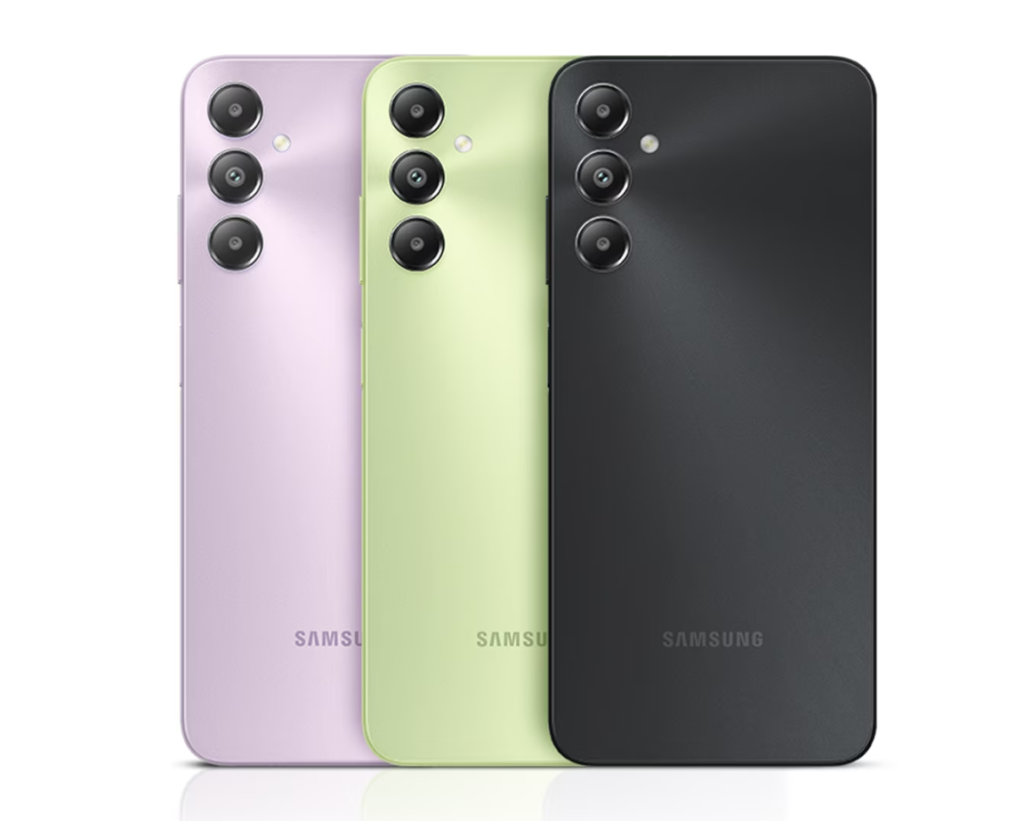
Samsung is expected to soon launch the Galaxy A05 and A05s smartphones around the world. Both smartphones have picked up multiple regional certifications like SIRIM, TDRA, NBTC, etc. Now, tipster Alvin has revealed the complete spec sheet and renders of these smartphones on X (Twitter).

According to the image shared by Alvin, both smartphones will be available in identical color choices: Light Green, Silver, and Black. On one hand, the Galaxy A05 is expected to feature a dual-camera configuration on its rear side, while the A05s is shown to sport a triple-camera setup on its rear side. Keep reading to know about the specifications side of things.

Samsung Galaxy A05 & A05s specs

Samsung’s Galaxy A05 presents a choice of three elegant colors: Light Green, Silver, and Black. It runs on a Helio G85 chip and features a substantial 50MP primary rear camera alongside a 2MP depth sensor. Selfie enthusiasts can enjoy an 8MP front camera. The device boasts a generous 6.7-inch HD+ PLS LCD display and comes in two configurations: 4GB or 6GB of RAM paired with 64GB or 128GB of storage, respectively. Powering this smartphone is a robust 5000mAh battery, supporting 25W wired charging. However, it’s worth noting that NFC functionality is absent, and a charging adapter is not included in the package.

On the other hand, the Samsung Galaxy A05s offers a choice of Silver, Light Green, or Black finishes. It is equipped with a Snapdragon 680 chip and features a versatile camera setup comprising a 50MP primary rear camera, a 2MP depth sensor, and a 2MP macro lens. For selfie enthusiasts, there’s a 13MP front camera. The phone boasts a 6.7-inch FHD+ PLS LCD display with a 90Hz refresh rate. It comes with 6GB of RAM and 128GB of storage, ensuring ample space for your needs. Powering the A05s is a robust 5000mAh battery with 25W wired charging support. Similar to the Galaxy A05, it lacks NFC functionality, and the charging adapter is not included in the package.

RELATED:

(Source)

DJI Mini 4 Pro with the highest safety rating yet will launch on September 25

The DJI Mini 4 Pro drone is scheduled to be unveiled on September 25. DJI officially released a warm-up poster likely for the Mini 4 Pro. The theme of the poster, which possibly encapsulates the new drone is: Small things turn into masterpieces.

DJI Mini 4 Pro

The poster reveals the head of the drone and its lateral visual obstacle avoidance system in a bright light. Indeed, the obstacle avoidance system is one of the major highlights of the Mini 4 Pro. It is a new feature that is absent in the Mini 3 Pro. The omnidirectional obstacle avoidance comes with improved safety from its predecessor. Indeed, the new technology places the DJI Mini 4 Pro as the safest drone yet in the DJI lineup.

DJI

There have been some images of the DJI Mini 4 Pro and it comes with a compact design. It has a foldable wing while the camera gimbal is not different from its predecessor’s. There is a vertical shooting mode for the camera while the sensor at the head is more rounded and protrudes from the housing. The Mini 4 Pro weighs 249g and has a 34-minute flight time, as its predecessor.

The DJI Mini 4 Pro has improved video capabilities from the previous iteration of the drone. It has improved from 4K/60fps to 4K/100fps. It can shoot 48MP still photos while the drone’s image transmission is now 20km. The DJI Mini 4 Pro drone will be unveiled on September 25 but Its price is not yet known.

Related:

Samsung Galaxy S23 & XCover 6 Pro Tactical Edition announced for military operators

Samsung has unveiled two new military-specific smartphones: the Galaxy S23 Tactical Edition and the Galaxy XCover 6 Pro Tactical Edition. These phones are built for durability in extreme conditions and follow the successful Galaxy S20 Tactical Edition. Notably, they won’t be available to the general public but are designed to support military personnel in various assignments and environments.

Galaxy S23 Tactical Edition

The Galaxy XCover 6 Pro Tactical Edition has earned MIL-STD-810H certification, proving its resilience against extreme weather conditions and its ability to withstand submersion in up to 5 feet of water for 30 minutes. In contrast, the Galaxy S23 Tactical Edition boasts an impressive IP68 rating and is encased in a rugged military-grade housing suitable for chest or forearm mounting.

Samsung Galaxy XCover6 Pro Tactical Edition

Both phones include a night vision mode and glove-friendly auto-touch sensitivity. They support external GPS, drone feeds, and laser range finders for improved mission efficiency. Communication capabilities encompass tactical radio and mission device protocols, as well as standard cellular connectivity like LTE, CBRS, Bluetooth, and Wi-Fi.

Samsung Galaxy S23 Tactical Edition

Stealth Mode disables LTE and e-911, ensuring secure, off-grid communication. Samsung Knox provides hardware-level encryption, and Dual Data at Rest (DualDAR) offers added security. Serverless license activation allows versatile deployment. Running Android 13-based One UI 5.1, both phones come with the Android Team Awareness Kit (ATAK) for situational awareness and the Battlefield Assisted Trauma Distributed Observation Kit (BATDOK) for real-time patient encounter information. Support for Samsung DeX and dual VPN chaining enhances security.

The cost of these smartphones remains undisclosed as they are exclusively intended for military operators and not accessible to the general consumer market.

RELATED:

(Source, via)

Asus 135-inch ProArt Cinema PQ07 professional Micro LED display with 2,000 nits full-field brightness announced

The Asus ProArt Cinema PQ07 display is the brand’s latest premium display. It boasts a 135-inch Micro LED display and up to 2,000 nits of brightness. The model was showcased back in June 2023 at Computex 2023 and more specs have now surfaced.

Asus 135-inch ProArt Cinema PQ07 professional Micro LED display

The ProArt Cinema PQ07 does not use a modular micro LED panel from Samsung as it comes with a lower 0.78mm pixel pitch. The modular design allows for different sizes and ratios. It has 4K resolution and it can deliver high contrast ratios similar to an OLED display. This is largely due to the self-emissive functionality of the Micro LED technology. It can sustain 2,000 nits full-field brightness and is not affected by ABL. The display has a 95% DCI-P3 color gamut coverage and a possible 60Hz refresh rate.

The Asus ProArt Cinema PQ07 display is being propped as an ideal tool for live streaming, virtual production, home cinema, and vehicle driving simulations, among others. There are very few Micro LED models currently available in the market and the $200,000 price tag of the ProArt Cinema PQ07 underscores its high-end category. Micro LED models are yet to enter the mainstream consumer market. The PQ07 could well mark the beginning of the development of consumer-oriented Micro LED models. There are no clear release and global availability details yet for the Asus ProArt Cinema PQ07 at this time.


RELATED:

Microsoft Surface Go 4 2-in-1 with Intel N200 processor & 10.5″ FHD display launched

In addition to introducing the Surface Laptop Studio 2, Microsoft has unveiled the Surface Go 4 2-in-1 laptop on the global stage. This laptop is specifically designed for business purposes, meeting the criteria for Microsoft 365 for frontline eligibility. Notably, it features integrated NFC functionality, ensuring secure and convenient access through compatible NFC security keys.

Microsoft Surface Go 4

Microsoft Surface Go 4 specs

The Microsoft Surface Go 4 features a compact 10.5-inch PixelSense display with a resolution of 1920 x 1280 (220 PPI) and a 3:2 aspect ratio. This touch-sensitive display supports 10-point multi-touch and offers a high 1500:1 contrast ratio, protected by Corning Gorilla Glass 3. Under the hood, it runs on an Intel Processor N200 with Intel UHD Graphics for smooth performance.

Microsoft Surface Go 4

With 8GB of LPDDR5 memory, the Surface Go 4 ensures efficient multitasking. It incorporates various sensors like an ambient light sensor, accelerometer, gyroscope, magnetometer, and NFC for added functionality. In terms of connectivity, it provides a USB-C 3.1 port for data, DisplayPort, and charging, a 3.5mm headphone jack, a Surface Connect port, a Surface Type Cover Port, and a microSDXC Card Reader.

Weighing 521g and measuring 245 mm x 175 mm x 8.3 mm, it prioritizes portability without compromising functionality. Storage options include UFS drives with capacities of 64GB, 128GB, or 256GB. The Surface Go 4 offers impressive battery life, providing up to 12.5 hours of typical device usage on Wi-Fi.

In the imaging and audio department, it features a Windows Hello face authentication camera on the front, a 5.0MP front-facing camera capable of 1080p HD video, and an 8.0MP rear-facing autofocus camera with the same video capabilities. The device also incorporates enhanced dual far-field Studio Mics and 2W stereo speakers with Dolby Audio for an immersive audiovisual experience. In terms of connectivity, it supports Wi-Fi 6 802.11ax and Bluetooth 5.1.

Pricing & availability

Starting from October 3, the Microsoft Surface Go 4 for Business will be exclusively accessible to organizations. The pricing begins at USD 579 for the model with 64GB of storage.

RELATED:

(Source, via)

LeEco to Launch New Projector Powered by Huawei’s HiSilicon Chip

LeEco, previously known as LeTV, continues to expand its product range. The company, which first emerged in 2004 as a streaming service, is now active in many different markets. These include smart TVs, VR, electric bicycles, electric vehicles, film production and distribution, real estate, wine, retail, and even eCommerce. Now, the company is preparing to introduce a new projector, which will be powered by a Huawei HiSilicon chip. Here are the details…

LeEco Announces New Frontier: A Projector Powered by Huawei’s HiSilicon Chip

LeEco announced today that it will launch a new projector product on September 25th. The projector will be powered by a Huawei HiSilicon chip. The company also revealed that the projector will support native 4K + HDR, but did not provide any further details about the specifications. Unfortunately, that’s all we know about the product for now.

In a Weibo post, LeEco announced that it is “not yet possible to be far ahead” and that it “lacks the experience to grow.” However, the company said that it has found its own answer to “surviving in the cracks” and “moving forward.” This suggests that LeEco may announce new future plans and other ecosystem products at the media briefing.

The September 25th media briefing will be a key event for LeEco. The company is expected to announce new products and plans, and it will be interesting to see how LeEco plans to move forward. In addition to new products, the company could also announce new partnerships or initiatives at the media briefing.

According to the recent reports, they could partner with a Chinese content provider to offer exclusive content on its streaming devices. But we have no choice but to wait to see if these claims are true.

RELATED:

(source)

OpenAI Launches DALL-E 3, a New Art Generator Powered by ChatGPT

OpenAI introduced the long-awaited DALL-E 3 artificial intelligence tool. One of the most anticipated features was the integration with ChatGPT. With this new version, it is now possible to generate visuals using ChatGPT through DALL-E. However, the features of DALL-E 3 are not limited to this. Here are the details…

OpenAI Launches DALL-E 3, a More User-Friendly and Accessible AI Art Tool

The visual production tool DALL-E is now in its third version. The most significant advancement of this AI tool is its integration with ChatGPT. Thanks to this integration, users will be able to generate more detailed prompts for DALL-E 3. In fact, ChatGPT will now generate these prompts for you.

As known, the DALL-E AI tool performs better with detailed and lengthy commands. Another notable feature of DALL-E 3 is the improved realism of hands. Both Midjourney and DALL-E previously struggled with anatomically detailed parts like human hands. DALL-E 3 will produce better and more realistic results even with complex commands compared to DALL-E 2. This improvement in DALL-E 3 is crucial for users who had difficulty conveying their intentions in commands.

According to OpenAI, with the new DALL-E, AI tools will become more user-friendly and accessible to more people. OpenAI has stated that DALL-E 3 has security measures to prevent misuse. The company restricts the use of some words related to violence and crime in commands. Additionally, users won’t be able to generate visuals of recognizable individuals, like politicians or artists, using DALL-E 3.

A notable incident was the AI-generated visual suggesting the arrest of Trump, which caused a stir on social media. The effectiveness of these restrictions will be evident once DALL-E 3 becomes public. OpenAI will make the DALL-E 3 tool available to ChatGPT Plus and Enterprise users in October. They then plan to offer DALL-E 3 services to research labs and for API services. However, the date when DALL-E 3 will be released to the public remains uncertain.

With its features, DALL-E 3 has the potential to surpass other AI visual production tools like Midjourney. The hand details in the visuals shared by OpenAI are now at a much higher level. Another striking feature is the more detailed and consistent AI visual production compared to the DALL-E 2 version.

RELATED:

(via)

Google’s Repair Mode could make it easier and safer to get your Pixel phone fixed

Google is reportedly working on a new feature for Pixel phones called Repair Mode. This feature would allow users to send their phones in for repair without having to worry about their personal data being accessed by the repair technicians.

Android Authority discovered strings in the Android 14 QPR1 beta that hint at this feature. Here’s the string:

<string name="repair_mode_active_summary">In repair mode</string>
<string name="repair_mode_summary">Secure environment for device repair</string>
<string name="repair_mode_title">Repair mode</string>

There’s something similar called Maintenance Mode you might have heard of in Samsung Galaxy phones. But Android Authority suggests the Repair Mode on Pixel devices might work in a different way.  It may simulate a factory reset by using Dynamic System Updates (DSU), a feature introduced in Android 10.

DSU allows for the booting of a Generic System Image (GSI) without overwriting the original installation, which means that the user’s data can be preserved. 

In the case of Repair Mode, DSU will create a new, and empty data partition. During the next boot, Android would swap out the original data partition with the new, empty data partition. This would effectively simulate a factory reset, but the original data partition would remain intact.

Google has made several enhancements to DSU in Android 14 that make this possible. For example, Android 14 added the ability to hide the default notification that’s shown when the device is running a dynamic system. This means that Repair Mode would be able to show its own notification.

Another improvement that Google has made to DSU is allowing the “device owner” app to lock the device into the mode so that only the device owner (which in this case would be Repair Mode) can exit it. And thanks to a recent AOSP patch, the RMA tools that Google uses at its service centers will be able to know when a device is in Repair Mode, allowing the technician to forgo factory resetting it.

This is a great feature for Pixel users, as it would give them peace of mind knowing that their personal data is safe even when their phone is in the hands of someone else. It would also make the repair process easier and more convenient, as users would not have to spend time backing up and restoring their data.

Related:

(Via)

Lenovo Legion Go handheld teased to launch soon in China

Lenovo recently debuted the Legion Go handheld gaming console at the IFA 2023 exhibition. The console will be made available worldwide in November. That being said, it looks like the Chinese launch will also be happening soon as the brand has started teasing the console in its domestic market.

Lenovo Legion Go

While the precise release date and pricing details for China have not been disclosed yet, we know that the console will be priced at 799 euros, approximately equivalent to 6,224 yuan. Typically, hardware from Chinese companies tends to be more affordable in their home market, and we anticipate a similar pricing strategy for this console.

Lenovo Legion Go specs

The Lenovo Legion Go comes with detachable controllers and a built-in kickstand for convenience. It also incorporates Hall effect sticks and an optical sensor on the right controller. The device boasts an 8.8-inch PureSight display with a high resolution of 2,560 x 1,600, a 16:10 aspect ratio, 500 nits peak brightness, a wide 97.3 percent DCI-P3 color gamut, and a speedy 144Hz refresh rate.

Lenovo Legion Go

Under the hood, it’s powered by AMD Ryzen Z1 and Ryzen Z1 Extreme processors, along with 16GB of LPDDR5X RAM. Storage options range from 256GB to 1TB of PCIe 4.0 NVMe M.2 storage. It runs on the Windows 11 operating system and features a 49.2Wh battery pack with rapid 65W charging support. The individual controllers come with 900mAh battery packs. It also includes a 3.5mm headphone jack, a MicroSD card slot for memory expansion, and two USB-Type C ports. Notable additional features include fully customizable controllers, RGB lighting on the joysticks, and Legion Space software for tailoring settings and key mappings for different games.

RELATED:

(via)

Huawei Mate 60 Pro teardown reveals brittle display, difficult repairs

PBKreviews is a popular YouTube channel that specializes in teardown videos of smartphones and other gadgets. Recently, the channel got its hands on the Huawei Mate 60 Pro, and the results of the teardown are quite interesting.

The Mate 60 Pro is a highly controversial device, as it is Huawei’s first flagship smartphone to be released since the company was placed on the US Entity List in 2019. This means that Huawei is unable to source certain components from US suppliers, including chips from Qualcomm.

Despite the sanctions, Huawei has managed to produce the Mate 60 Pro with a 5G-capable, 7nm chipset. The teardown video from PBKreviews shows the phone’s motherboard uncovered, revealing the SK Hynix RAM chips that sit above the HiSilicon Kirin 9000s chipset.

Those are themselves a mystery and SK Hynix has launched an investigation into how its RAM chips made their way into the Mate 60 Pro, as the company says it has not sold to Huawei since 2020.

Additionally, the teardown video shows that the Mate 60 Pro also features a difficult-to-remove display. PBKreviews’ drop test showed that the phone’s Kunlun 2 glass is very tough, but the 6.82″ LTPO AMOLED display was irreparably damaged in the process of removing it. Here’s the full video.

This suggests that the display is glued down very tightly, which would make it difficult and expensive to replace. Ultimately, the Huawei Mate 60 Pro was given a 5/10 repairability rating.

Related:

(Via)

Huawei founder Ren Zhengfei admires Apple amidst 5G smartphone competition

In a surprising twist of tech industry sentiment, Ren Zhengfei, the founder and CEO of Chinese tech giant Huawei, has professed his admiration for Apple, his company’s American rival. Speaking at the Huawei-sponsored International Collegiate Programming Contest, Ren revealed his respect for Apple and its products.

Ren’s unexpected statement emphasized his stance against xenophobia towards foreign brands. He spoke highly of Apple, stating, “We often explore why Apple’s products are so good, and we can also see the gap between us and Apple. I’m very happy to have a teacher who gives us the opportunity to learn and compare. In that sense, it would not be an exaggeration to call me an Apple fan.”

This surprising revelation comes amidst fierce competition in the world’s largest smartphone market, where Huawei’s latest flagship 5G handsets are going head-to-head with Apple’s offerings.

Huawei, once the world’s largest smartphone hardware maker, faced a significant setback in 2019 when it was placed on the Entity List by then-US President Donald Trump. This move led to a series of challenges for the company, including the withholding of critical chips and the loss of access to Google apps and services, which significantly impacted its Western market presence.

Despite these challenges, Huawei has recently made a surprising comeback with the release of the premium Mate 60 phone. Notably, the Mate 60 is powered by Huawei’s own HiSilicon Brin 9000S system-on-chip, a move reminiscent of Apple’s approach to designing its own chip.

As Huawei continues to innovate and compete with Apple, Ren Zhengfei’s unexpected praise serves as a reminder of the global tech industry’s interconnectedness and the valuable lessons that can be learned even in the midst of intense competition.

Related:

(via)