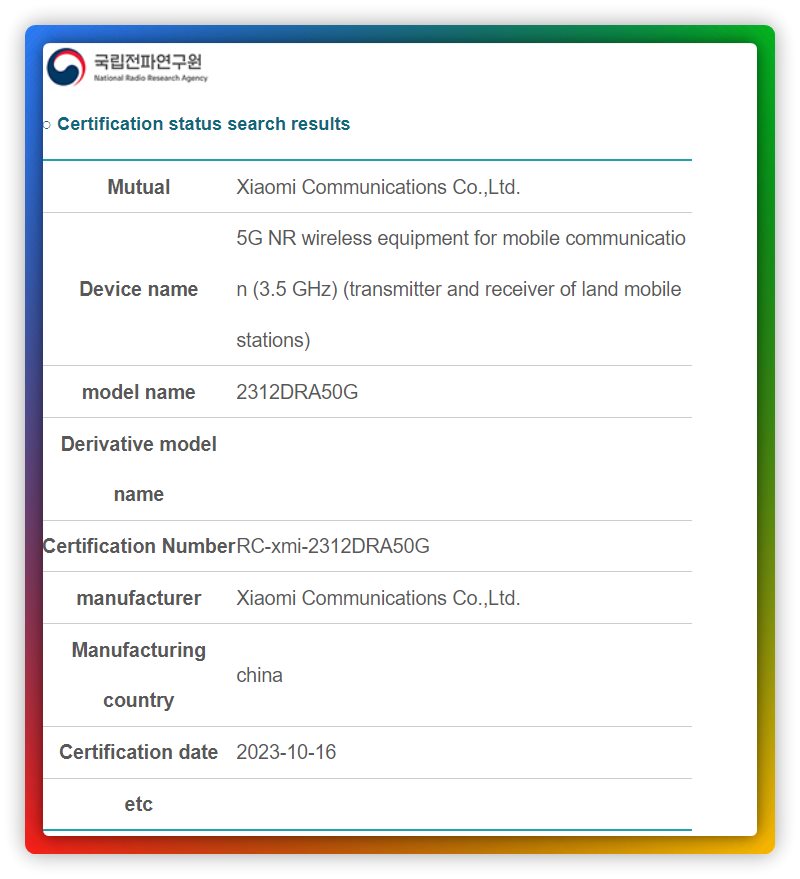
It’s been more than a couple of weeks since the Redmi Note 13 Series launch in China. Bundling up to 200MP camera and 120W charging capabilities, the new smartphone series is set to launch in the global markets soon. Following Singapore’s IMDA certification, the Redmi Note 13 Global variant has made it to Korea’s NRRA. The specifications of the device are already official, but the listing does confirm the impending global launch of the smartphone.
The Note-13 series features competitive specifications at an affordable price in China. It is expected to launch under a similar pricing with all its exciting specifications and features. As per previous leaks, the model number 2312DRAABG could be the Redmi Note 13, and the 2312RA50G model number denotes the Redmi Note 13 Pro.
Bundling MediaTek Dimensity 7200 ultra and 1.5K curved display, the new Note 13 Pro Plus along with younger siblings – Redmi Note 13 and Redmi Note 13 Pro is expected to launch globally by the end of this year. However, there’s no official confirmation from Xiaomi, but considering the leaks and public certifications the launch seems nearing.
Redmi Note 13 Series Specifications and Features
Redmi Note 13 standard variant bundles a 6.67-inch AMOLED display, MediaTek Dimensity 6080 SoC, up to 12GB RAM, and 256GB storage. There’s a 100MP primary camera sensor coupled with a 2MP macro lens. It houses a 5000 mAh battery with 33W fast charging.
Redmi Note 13 Pro variant ships with a 6.67-inch 1.5K FHD+ AMOLED display with up to 120Hz refresh rate. It is powered with Qualcomm Snapdragon 7s Gen 2 SoC, and up to 16GB RAM and 512GB storage.
Redmi Note 13 Pro also features identical specifications to the Note 13 Pro, but it differs in battery size. The Redmi Note 13 Pro carries a 5100 mAh battery with 67W charging while the Redmi Note 13 Pro Plus comes with a 5000 mAh battery and 120W charging support.
Both the Redmi Note 13 and Note 13 Pro Plus bundle the same triple-rear camera module consisting of a 200MP primary sensor with OIS, an 8MP ultrawide angle lens, and a 2MP macro sensor.
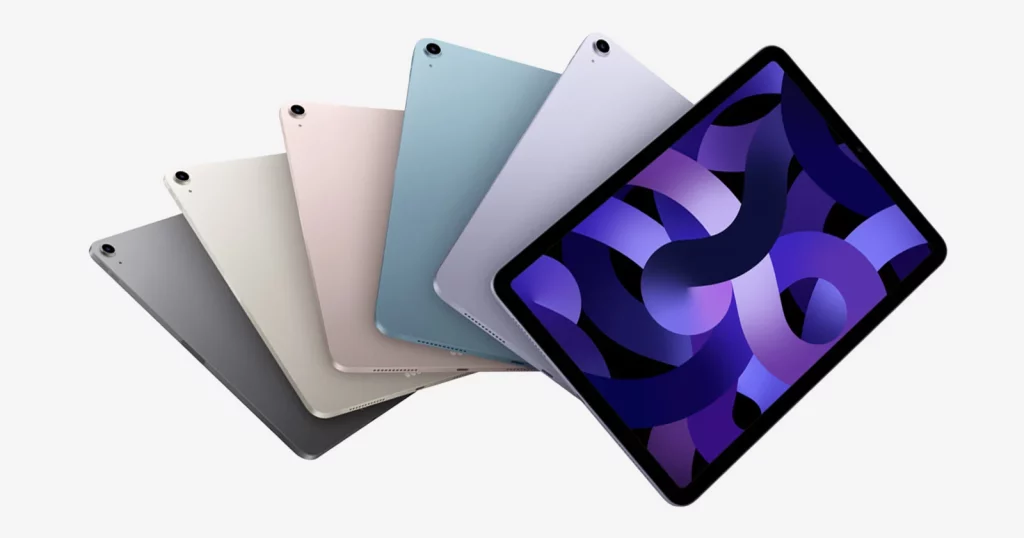
Apple is apparently gearing up to launch new iPad models soon. A fresh report has hinted that the company is planning on releasing brand-new iPad, iPad Air, and iPad Mini later this week. So here are all the details.
New Apple iPad, iPad Air, and iPad Mini could launch tomorrow
The news arrives from a 9To5Mac report. Sources close to the matter have claimed that the Cupertino based giant aims to release a new iPad, iPad Air, and iPad Mini tomorrow (17th October 2023). However, this report is in contrast to known analyst Mark Gurman, who believes that new tablets from Apple will likely be announced by the end of this year.
But in the latest report, the company is expected to launch the new iPads soon. Apple typically unveils new tablets a month after the new iPhone launches. So it would make sense that fresh iPads are just around the corner. But unfortunately, no official announcements have been made yet. The new iPads will feature refreshed specifications like an upgraded chipset. The last iPad Air was launched with the M1 chipset, while the iPad Mini and base iPad features the A15 Bionic and A14 Bionic processors respectively.
So the iPad Air will likely get the updated M2 chipset, and the iPad Mini and base iPad could get upgraded to the A16 Bionic SoC. In a recent report, we also covered how the iPad Mini 7 won’t feature a 120Hz ProMotion display. The screen could also house a new controller to address the jelly scrolling issue that affects the current generation iPad Mini.
Following Google’s denial regarding the support for DisplayPort Connection on the new Pixel 8 Series, Mishaal Rahman established that the feature works on the device. In a study with another tester, Mishaal confirmed that the DP Alt Mode on Pixel 8 and Pixel 8 Pro is running, but the company has disabled it with a firmware update.
He managed to successfully connect and mirror the smartphone’s display using USB Type-C. To enable the display output over USB-C, the user needs to root the Pixel 8 smartphone and need to do some configuration changes. However, the process requires the right USB Type-C cable which is capable of carrying Video output to other displays.
Since I'm not gonna have my own Pixel 8 for a while, I might as well put this out there so someone else can test it ASAP:
You might be able to enable DisplayPort Alternate Mode (ie. display output over USB-C) if you root the device. That's because it seems to be disabled at a… pic.twitter.com/SxtBTjLwVj
Following the process, another user reciprocated the procedure and managed to successfully establish the mirror using DisplayPort capability.
Now, it is difficult to understand why Google has disabled a feature that might be useful for some Pixel 8 users. We believe the feature could be in the early stages of development, and the c company would want to establish more use cases to make the feature more fruitful and productive.
Google could launch the DisplayPort compatibility via QPR1 or QPR2 update early next year. Interested user who would want to get access to the feature can root their devices to get early access.
Other Features Removed from Pixel 8
Apart from the DisplayPort feature on Pixel 8, Google pulled the plug on several useful features that were part of the device till the last minute. The company removed the 8K video recording capability, and also the ability to record 720p@480fps slo-mo videos at the eleventh hour.
Well, we hope these features might be reserved for the upcoming Quarterly Platform Release (QPR).
Portronics, a well-known brand in the digital and portable consumer electronics market in India, has launched a new LCD writing pad called the Ruffpad 21. It is a versatile device that can be used for a variety of purposes, including doodling, note-making, jotting down ideas, and brainstorming. Here are the details.
Portronics Ruffpad 21 Specifications
By its very name, the Ruffpad 21 has a massive 21-inch anti-glare screen that is perfect for working on large projects. It is also lightweight and portable, making it easy to carry around with you. The writing pad comes with a simple stylus pen that needs no charging or batteries.
One of the key benefits of the Ruffpad 21 is that it is a green choice. It is a reusable writing pad that eliminates the need for paper. This can help to reduce paper waste and protect the environment.
The Ruffpad 21 is also very easy to use. To start using it, simply press the power button and start writing or doodling on the screen. To erase your work, simply press the one-tap erase button. You can also lock the screen to prevent accidental erasure.
The Ruffpad 21 also comes with a smart lock feature that allows you to save and share your work on your smartphone. This can be done using the Ruffpad app, which is available for both Android and iOS.
The Portronics Ruffpad 21 is available at an introductory price of INR 2,149. It can be purchased from the company’s official website, Amazon.in, Flipkart.com, and other online and offline stores.
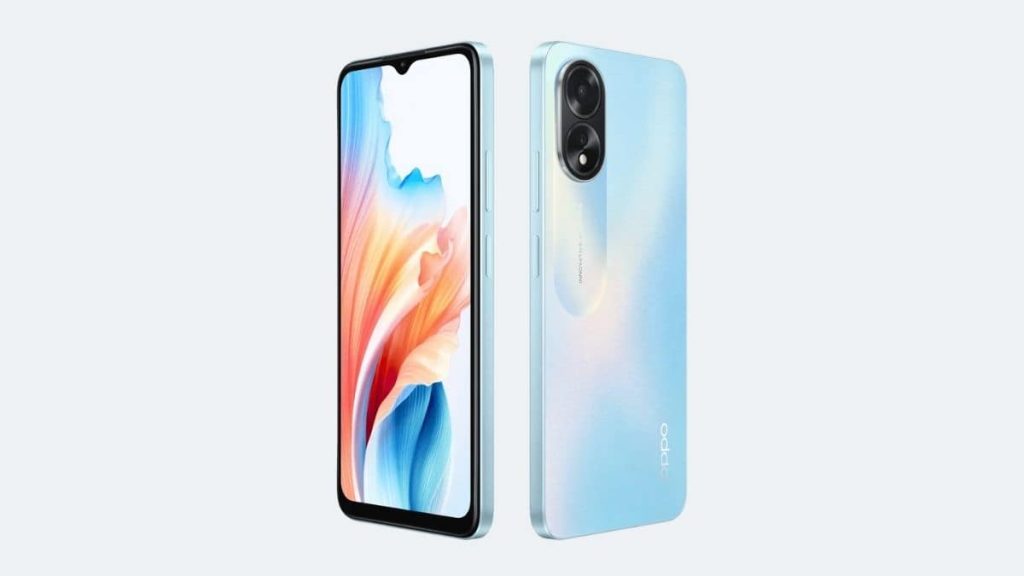
The Oppo A18, which was introduced in the Indian market earlier this month following its launch in the UAE, falls within the budget range. This device is equipped with the Helio G85 SoC and features a responsive 90Hz display. Now, slightly over a week later, the brand has released the 4GB/128GB variant of this smartphone in India.
Oppo A18 Price & availability
The Oppo A18 4GB RAM + 128GB storage model is priced at ₹11,499 and is available to purchase on Flipkart. On the other hand, the 4GB RAM + 64GB model is priced at ₹9,999.
Oppo A18 specs
The Oppo A18 packs several notable features into its budget-friendly offering. Its 6.56-inch LCD display delivers HD+ resolution along with a smooth 90Hz refresh rate and an impressive peak brightness of 720 nits. Running on the MediaTek Helio G85 SoC, it’s backed by LPDDR4x RAM and eMMC 5.1 storage.
This smartphone operates on ColorOS 13.1, which is based on Android 13. For photography, it offers an 8MP rear camera with a 2MP depth sensor, as well as a 5MP front camera. It includes a MicroSD card slot, a 3.5mm headphone jack, a side-mounted fingerprint sensor, and a USB Type-C port. Connectivity is comprehensive, featuring 5G support, dual-band WiFi, Bluetooth 5.3, and GNSS. Notably, the device is rated at IP54 for splash resistance and is fueled by a large 5,000mAh battery.
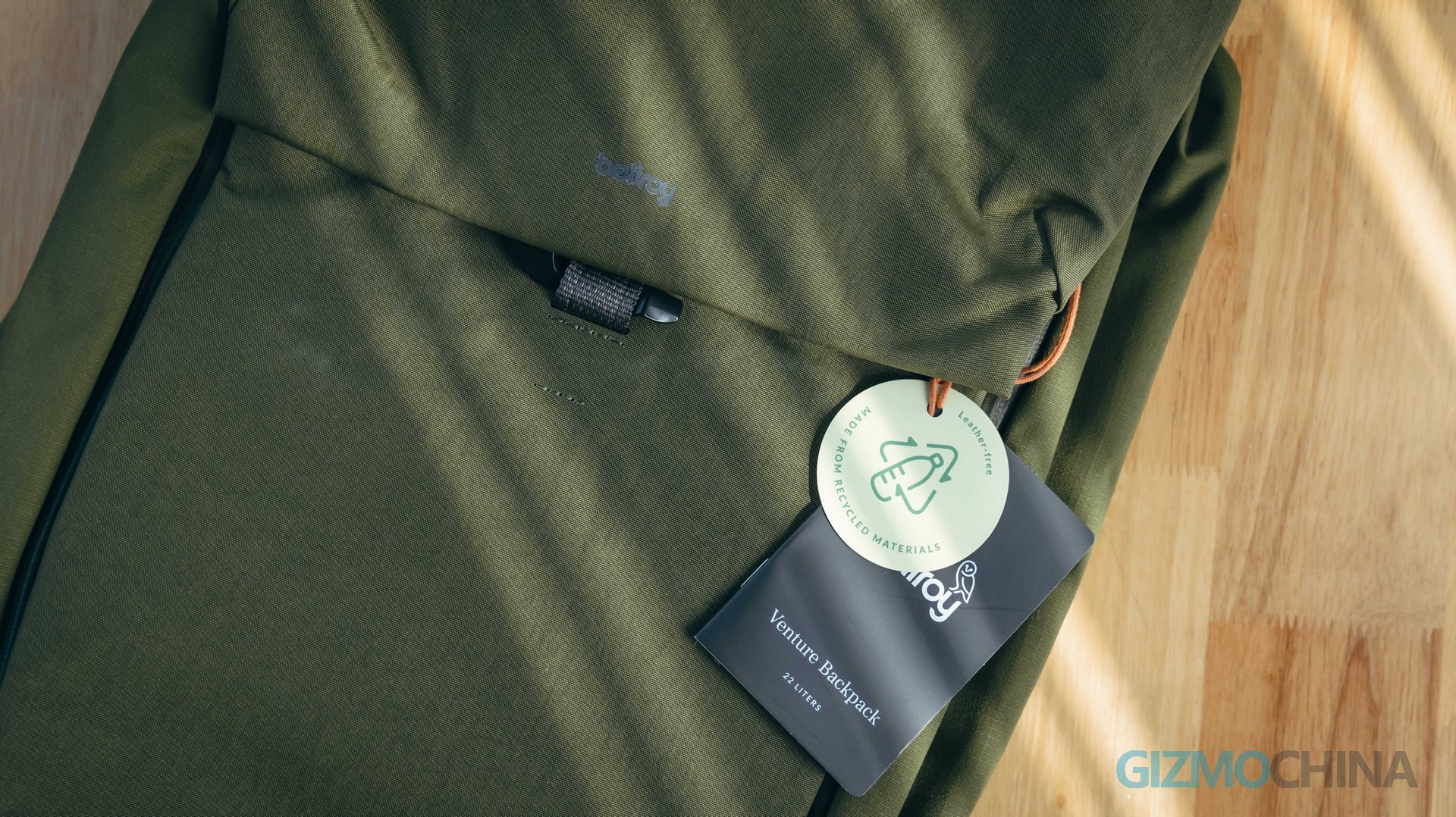
As a daily commuter, the backpack is the most important companion. It never complains about being stuffed with all the essential things and trying very hard to make itself comfortable as much as possible. We all hope it will be with us for the longest time it can be, so choosing the right one is very crucial. Among all those great backpack brands, Bellroy, a well-known Australian bag maker is my favorite so far, they not only choose environmentally friendly materials for their products, but also pay a huge amount of attention to the design and detail.
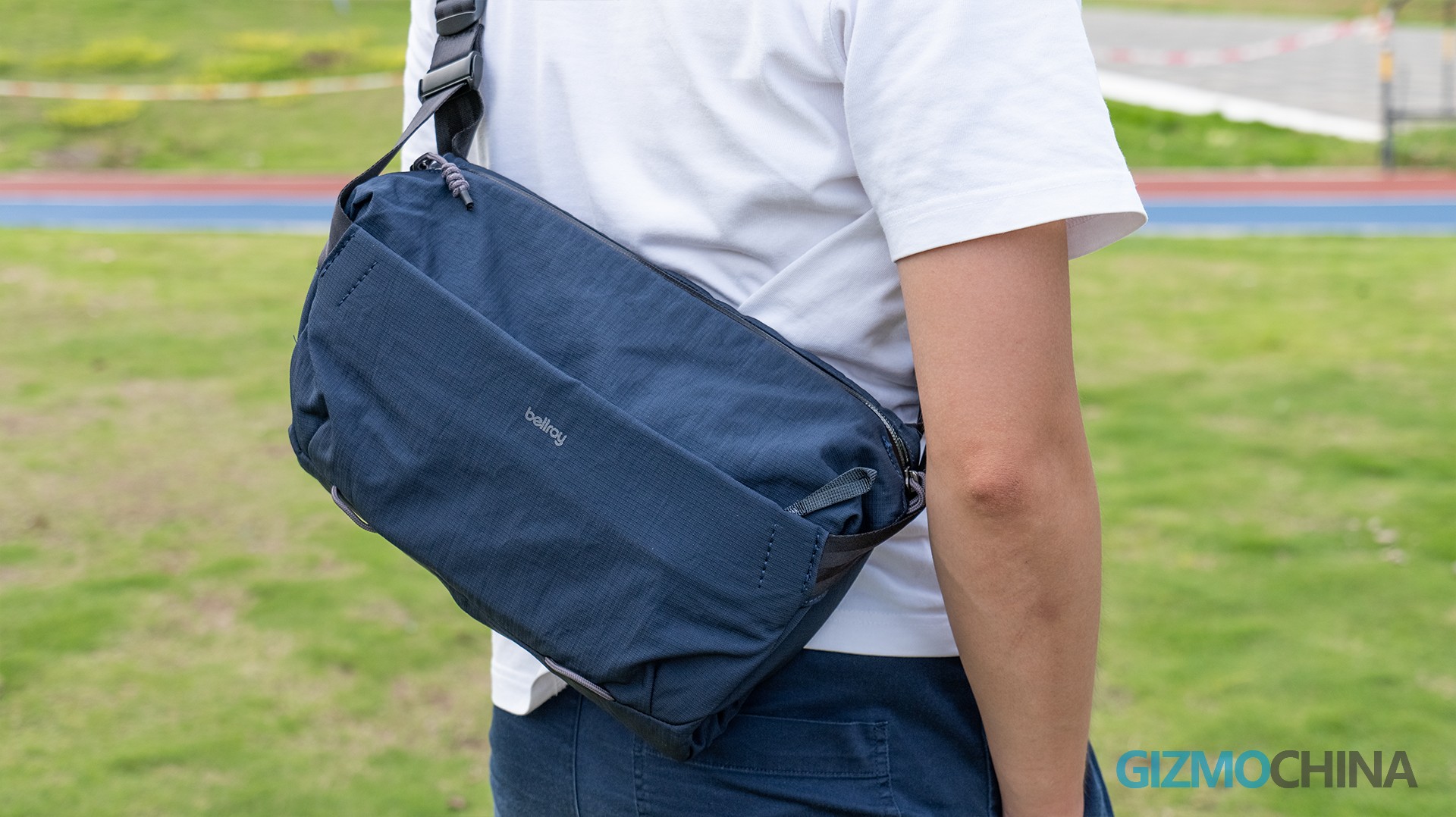
This time, we have the Venture Backpack 22L and Venture Sling 10L in our studio, these two bags have helped me with my everyday carry and our outdoor video creation a lot, therefore we just can’t recommend them enough. With this said, let’s check out some of the awesome features.
Bellroy Venture Backpack 22L
First, let’s take a look at this Venture Backpack. It is a thoughtfully designed multi-purpose bag that you can either use on a day-to-day basis or go on a short-term trip outside the city. The material used and the pockets created are exclusively for these two purposes, and I am amazed by how convenient it is to put things in and take them out. So let’s dive into the details.
Aesthetic
This is a classic knapsack-style backpack. The one we have here is mainly what they call “Ranger Green” colorway, the color of the front is more toned down, while the green is brighter at the sides. Ranger green is widely used in some clothing, but the green at the sides adds a more delightful feel to the overall aesthetics. There are also gray blue and brown used in some other parts, they are so harmonized in the overall design of the bag.
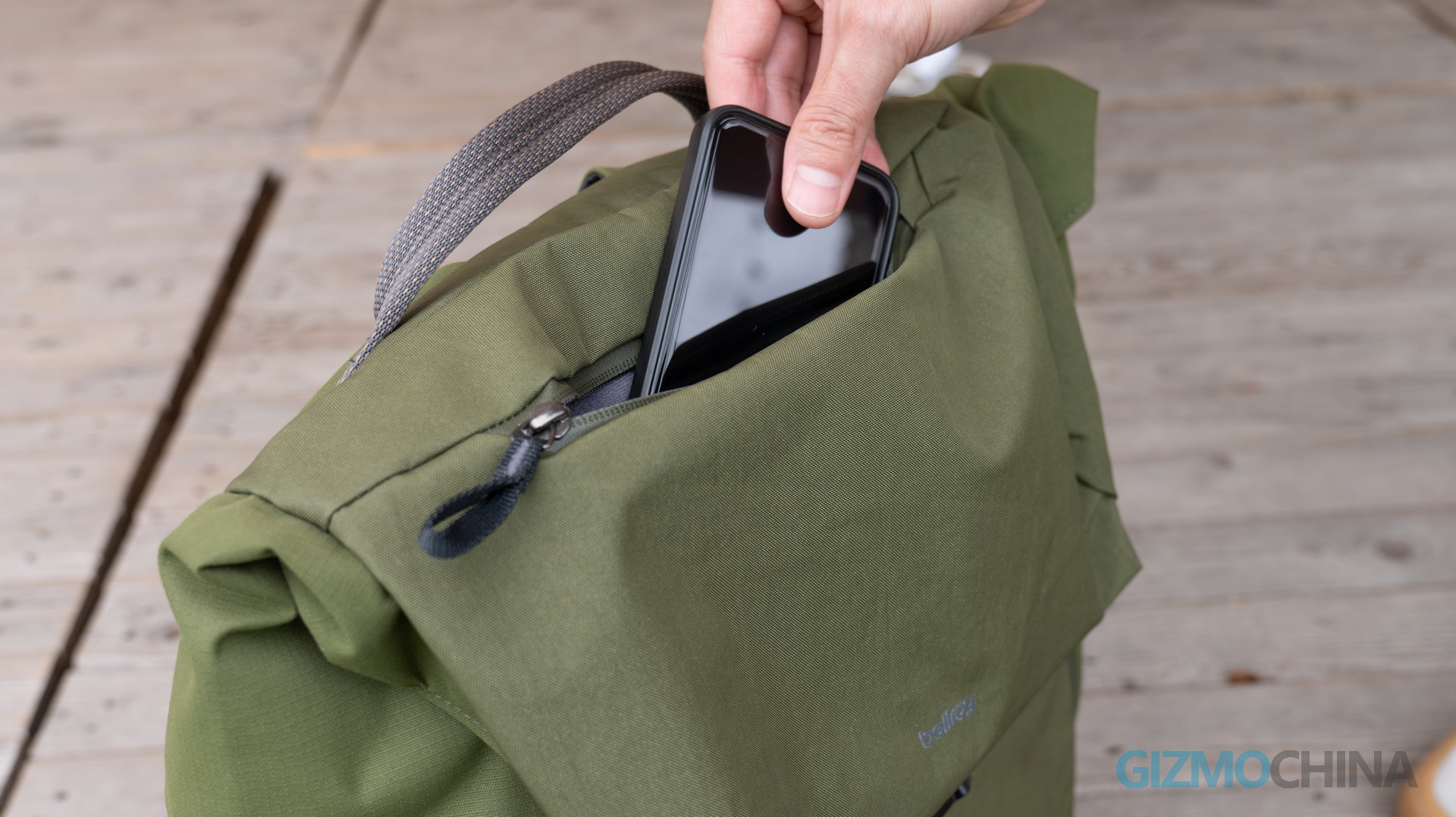
Nonetheless, instead of making every pocket visible to the eyes, it did a great job hiding them in some reachable places. And since there are no pockets sticking out, it maintained a sleek look most of the time, unless you put bulky things like a giant water bottle or a cat into the side pockets, maybe?
Material
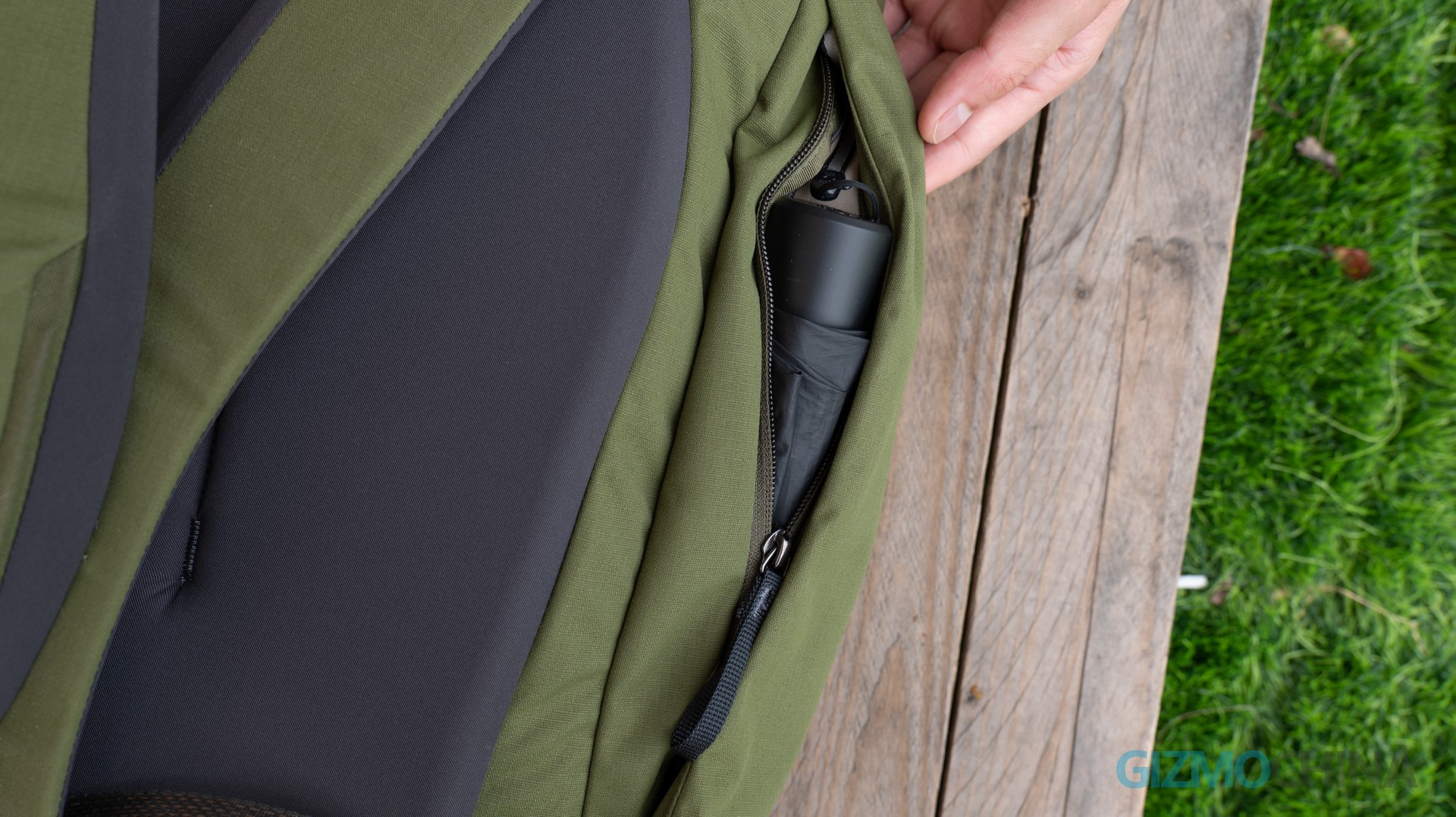
I don’t think the backpack’s material has to be so-called high-end, that’s just for marketing purposes. They can be more subtle and functional, and Bellroy is known for such act. So the Venture Backpack’s outer shell is made of the ECOPAK™ BY CHALLENGE SAILCLOTH, it does have a more rigid feel to it. Compared with the material of the side pockets, which is CANVA RIPSTOP, the outer shell is harder and more resistant to wear and tear. This is a good thing because you might be taking the metro or bus every day, and then the bottom and the outer parts are the components that will take most of the hit and scratch. In the city where I live, I take the metro from time to time, and the bag will need to go through a security check machine. This backpack definitely withstands that kind of situation. The material of the side pockets as I have mentioned, is CANVA RIPSTOP. It is softer than ECOPAK™ BY CHALLENGE SAILCLOTH, and it has more give. So imagine you put a water bottle or umbrella into the backpack – it will be able to hold it in while still maintaining a better look.
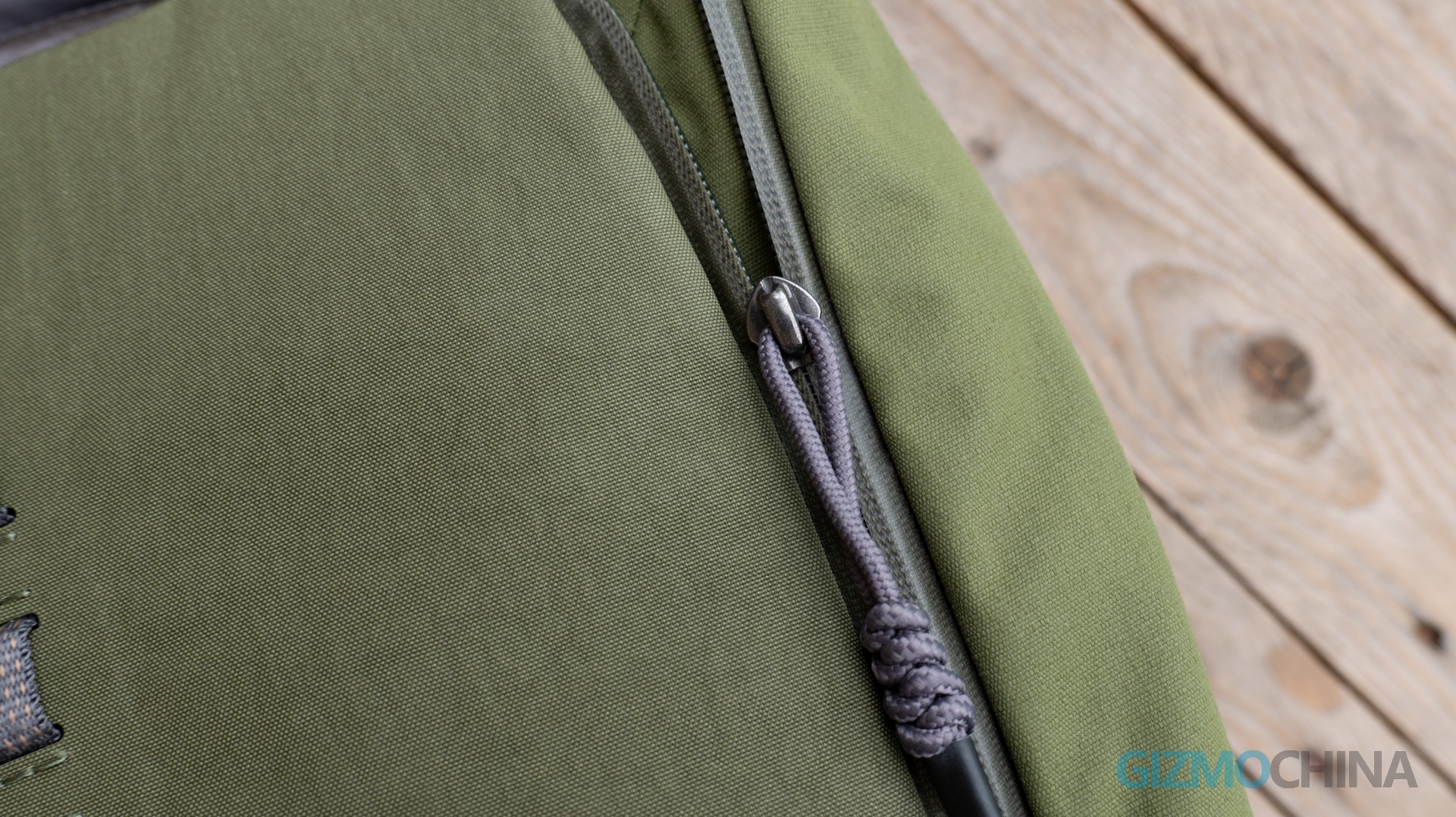
As for the zippers and hardware used, they are uniquely crafted and have a more premium feel overall. The zippers are all YKKs, the ones outside are water resistant, and the zipper heads are rope style rather than metal, which enables quick access to using them and also adds some adventurous feel to it.
One thing I’d like to mention is that, there were times that the backpack was exposed to light rain. After the raindrop got onto the outer shell, it left a long slim mark, not quite visible to the eyes, so I wouldn’t mind too much about it.
Construction
There are 10 pockets in total if you count some interlayers in. Every pocket is designed in a very thoughtful way, take the side pockets for instance, the zippers are very long, so if you want to fit a very big bottle or a mid-size umbrella in, these can totally do that. Plus the material used in the side pockets is stretchy, the size of the material is also very forgiving, so overall the side pockets are very functional.
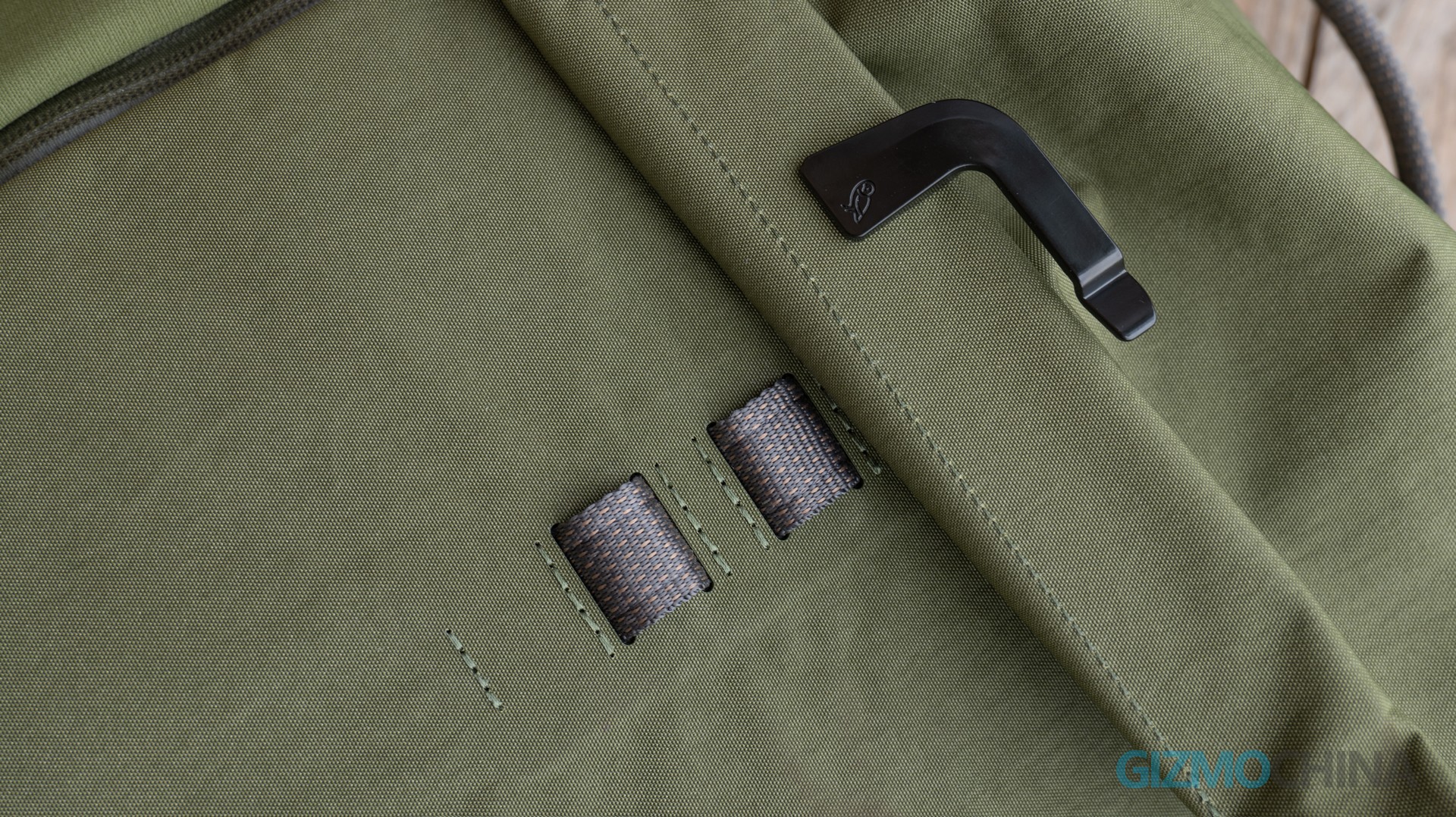
The spirit of a knapsack-style backpack is the hood on the top, the Venture backpack cleverly made it not only very good-looking, but also created a pocket in it. This is very useful for daily commuters to easily reach out for the keys, ID cards and stuff. The lock used here is a classic Bellroy Venture backpack one, working with four knots, it helps with maintaining a slim body and also storing more items.
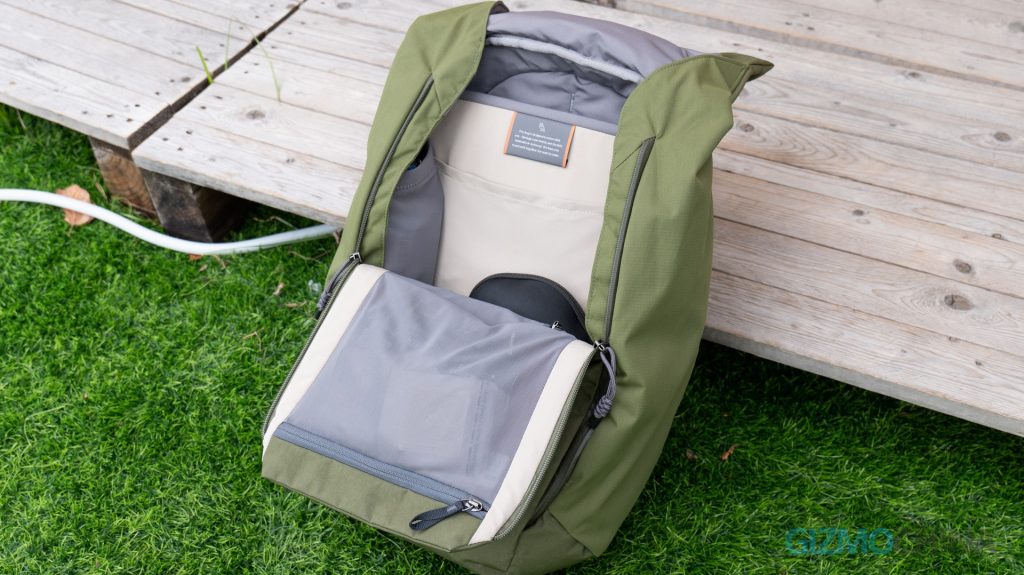
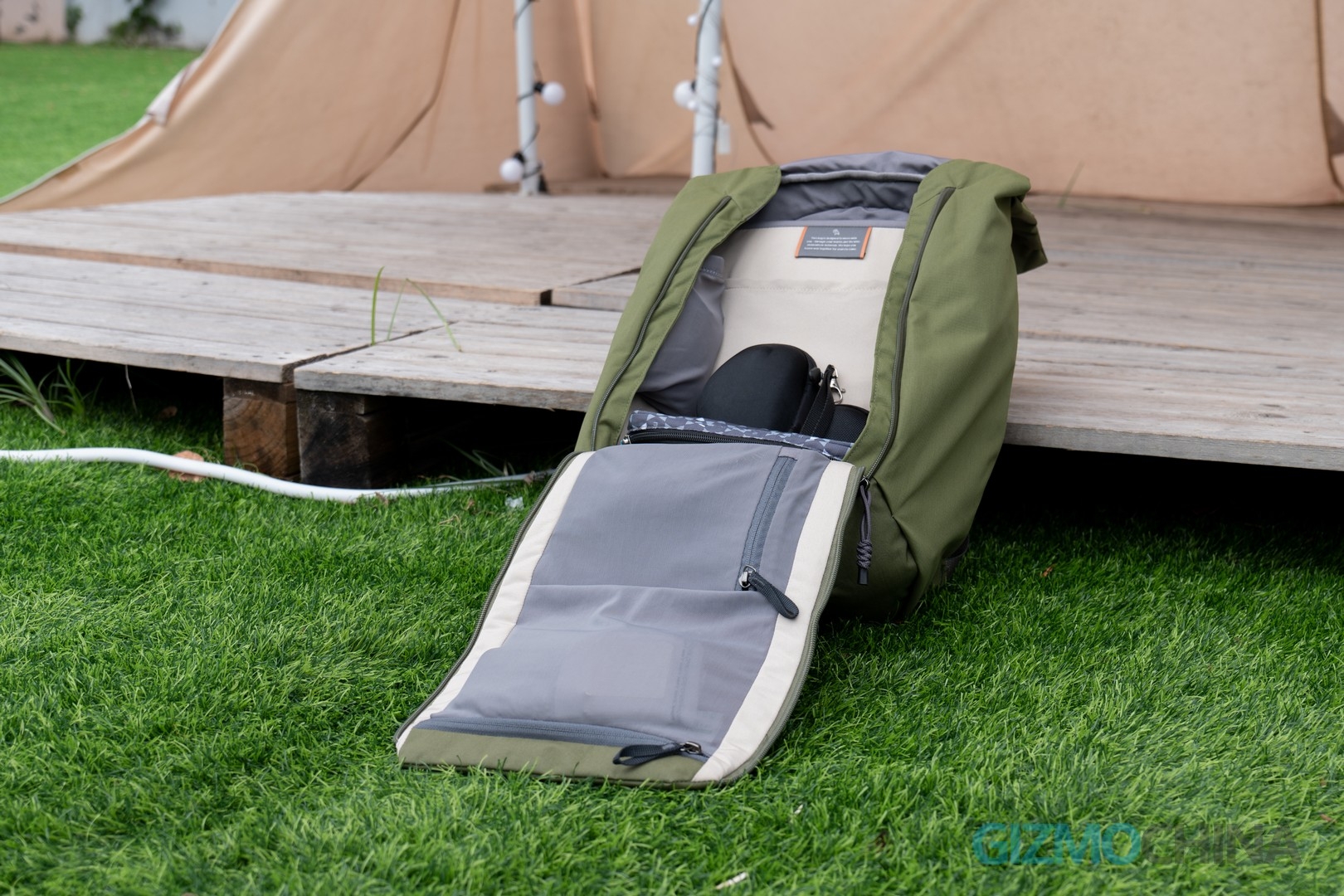
Slide the two zippers down, and the whole backpack reveals itself as a whole, the drop-down enables you to either take some stuff out as a daily routine, or if you need to go on a trip and more things have to be put into it. The pockets attached to the top are made of a mesh material, so some small items like an extra phone, or instant coffee are perfect for this pocket. Another two side pockets are also created this way, slightly deeper for some rounded but long items, for these two pockets I have put my vitamin pills and some normal stuff, and they go together very well.
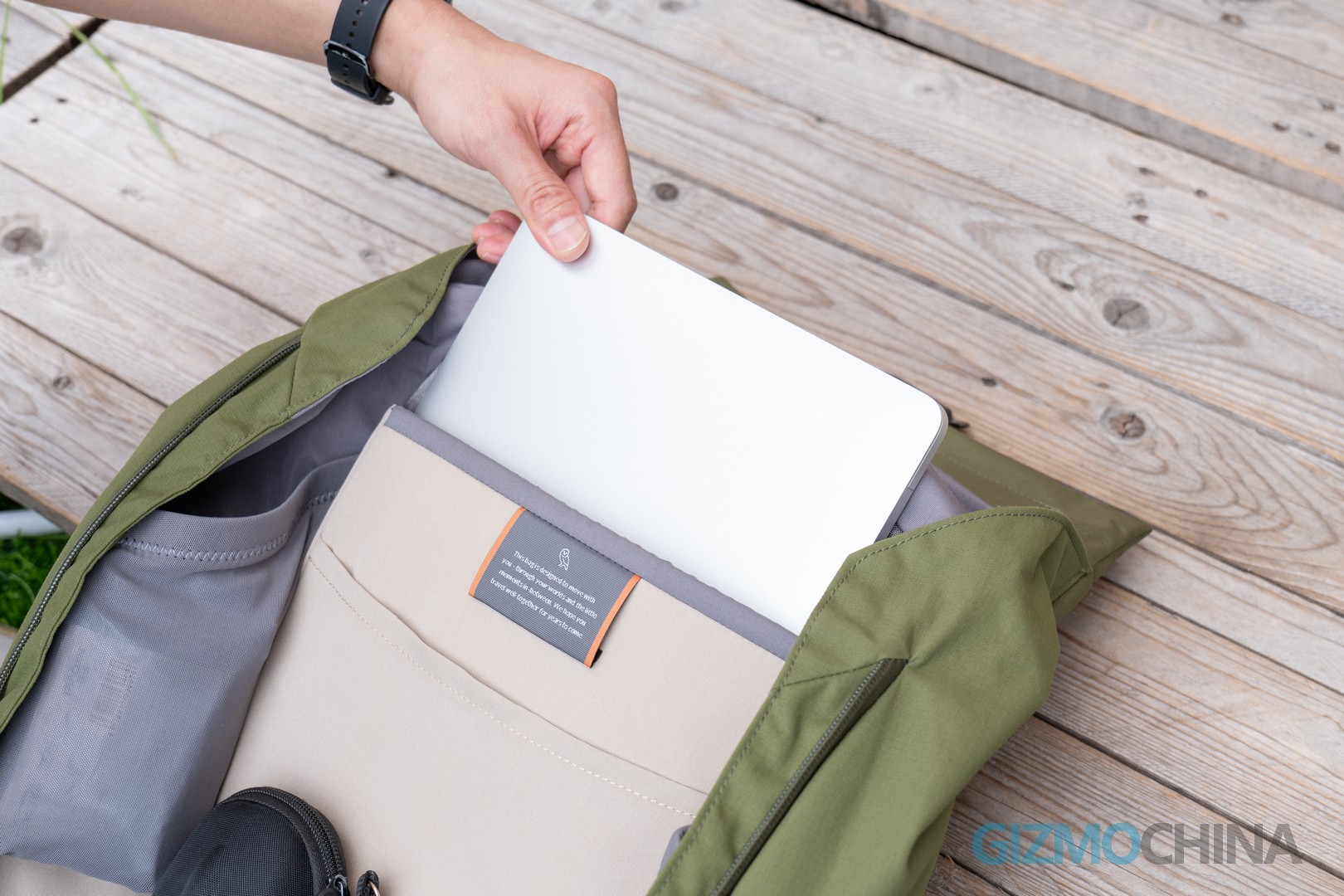
Now you might be wondering how big is the laptop compartment. Well, I have a 13-inch MacBook Air with a protective case, making it like a 15-inch item, it fits pretty snugly and nicely in it. And the padding at the bottom is very hard and thick, so there shouldn’t be any trouble having the laptop in it without any case.
Overall, I think the arrangement of the pockets is reasonable and has a nice depth to every one of them, so no matter what you want to put into the backpack, it has no problem holding them in place.
Comfort
A good backpack must accommodate people with different shapes and needs, and a lot of that comes from the shoulder straps and the back support.
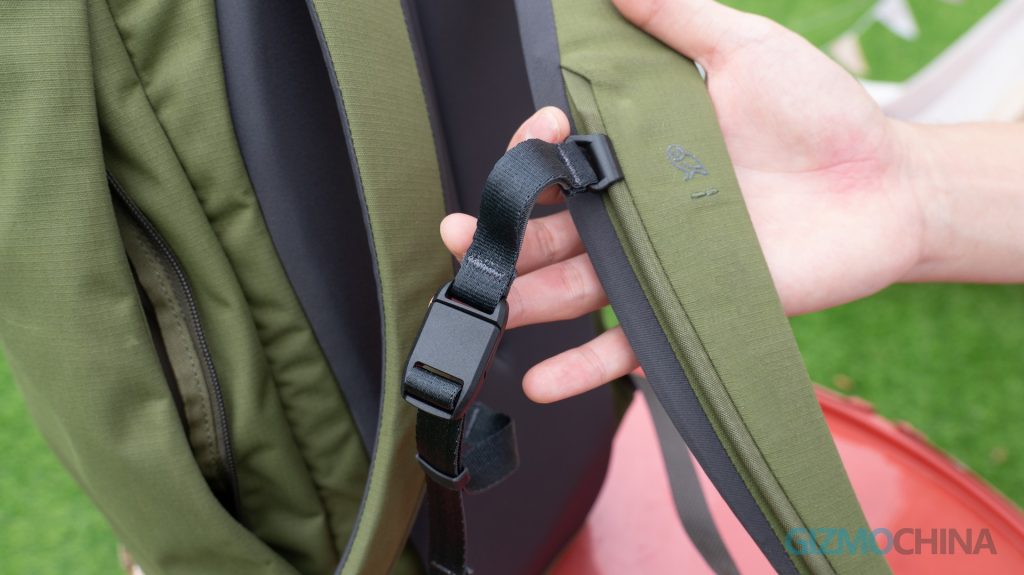
The shoulder straps are fairly well padded, and the material inside is not overly soft, so it maintains a good balance of pressure control and longevity. The padding is not filled all across the straps, there is still some room left at the top, so it embraces people with either thick shoulders or wider back. The cross-chest buckle is magnetic, and there is a special design here so you can move the strap up and down to find the best position for yourself. I am fairly fit, my shoulders are not that thick, so the straps will not be pushed far apart, therefore I can always have them in the perfect position.
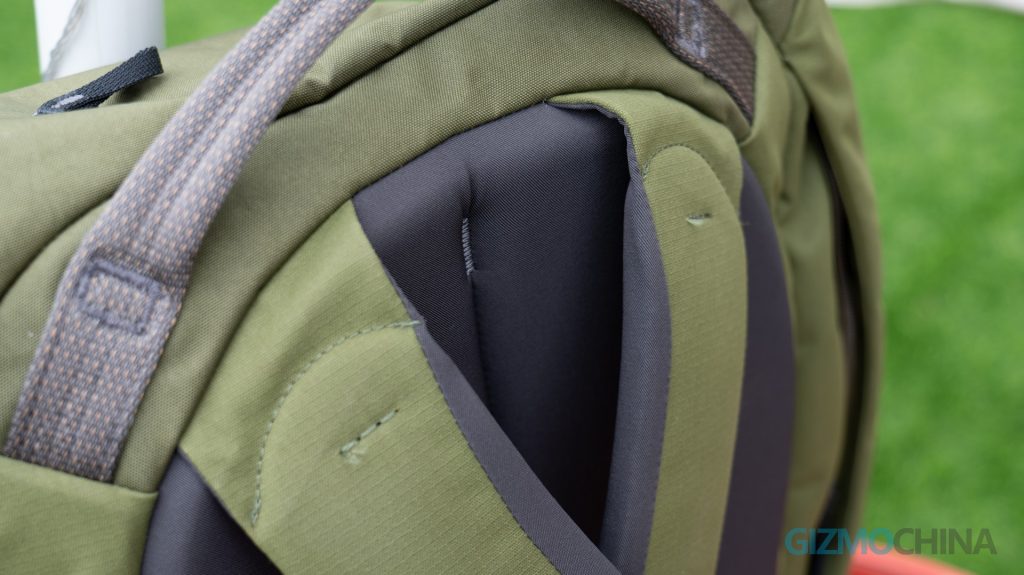
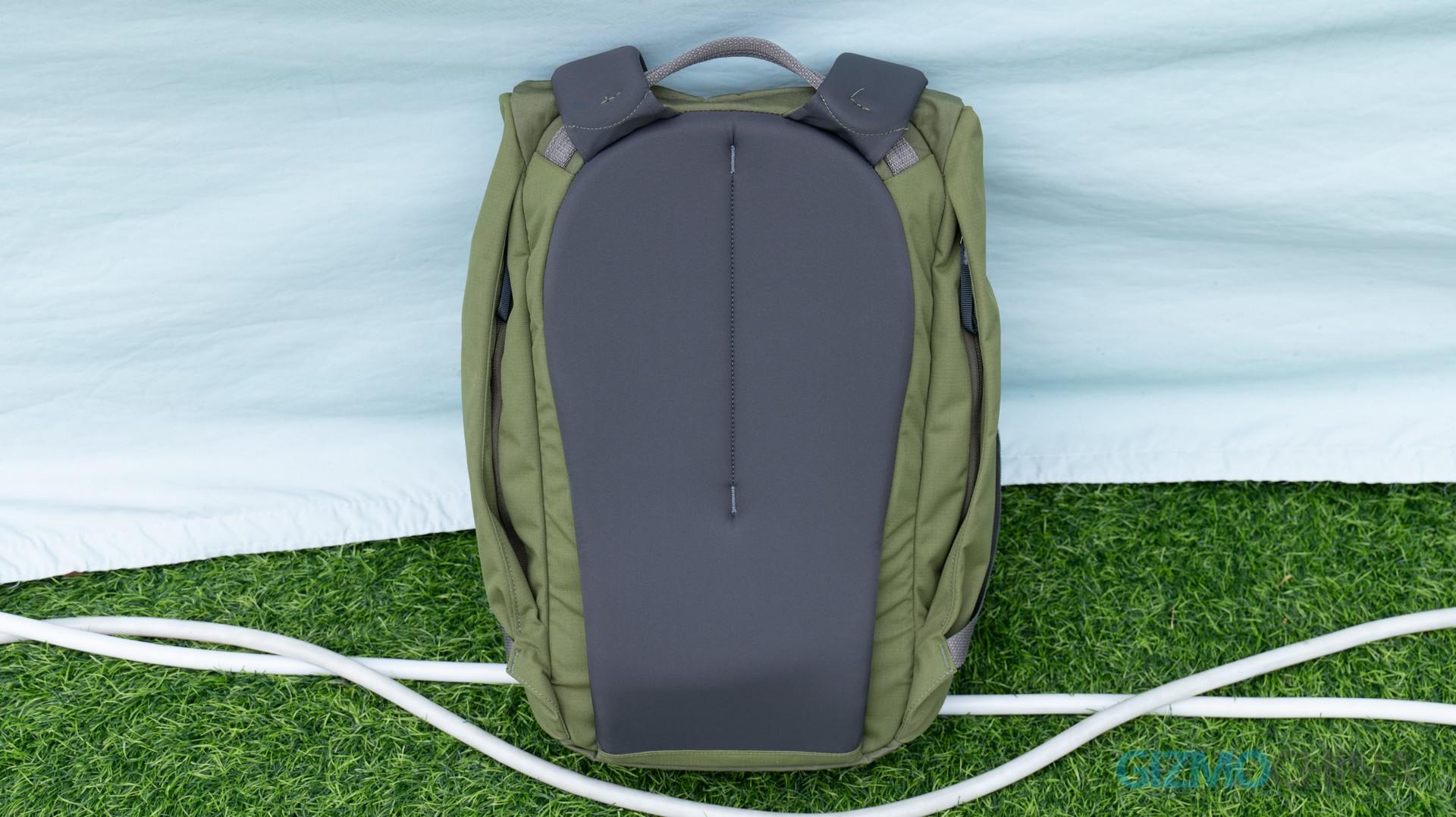
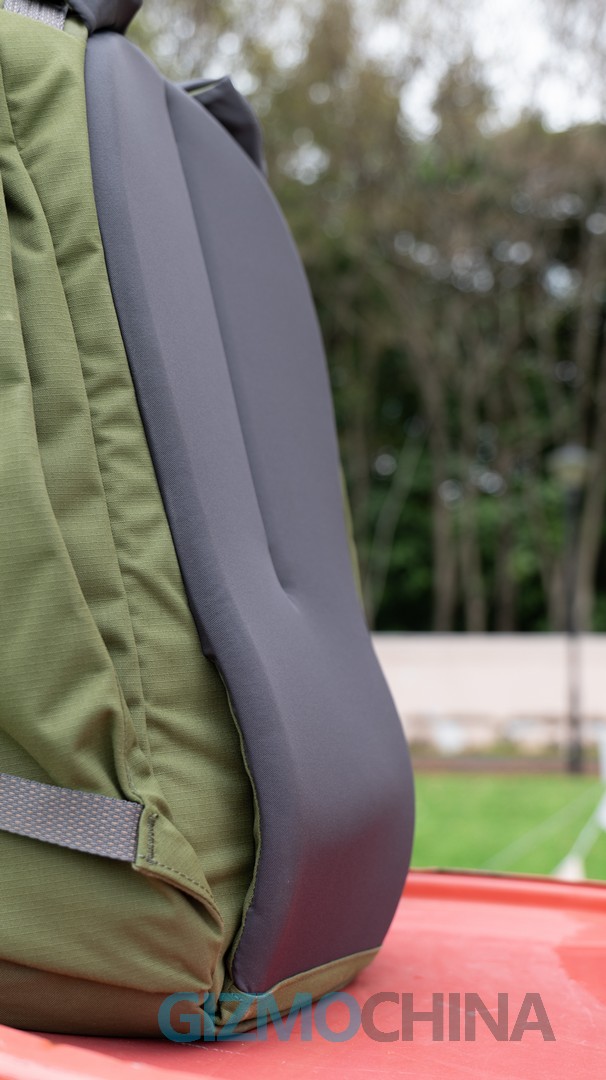
Here comes the best part of the comfort source, the back support padding. As you can see, the material used in this part is thick, with a line sewed at the top 2/3 of the whole piece, so it contributes a lot to the support on both sides of the back. Moreover, the padding gets thicker and has an ergonomic curve at the lumbar, this must be the top design in a backpack. So when I have the backpack on me, it always stays well on my upper body, and there is still room for the air to go through, to prevent sweat from staying there for a long time.
After 4 weeks with the Venture Backpack 22L, it is genuinely a great bag for daily commuters. I can easily put things I need into it, while still keeping the sleek aesthetic. Every compartment is well-designed and padded, never need to worry about keeping things in position. So if you need to pick up a backpack for everyday use, this is the perfect one.
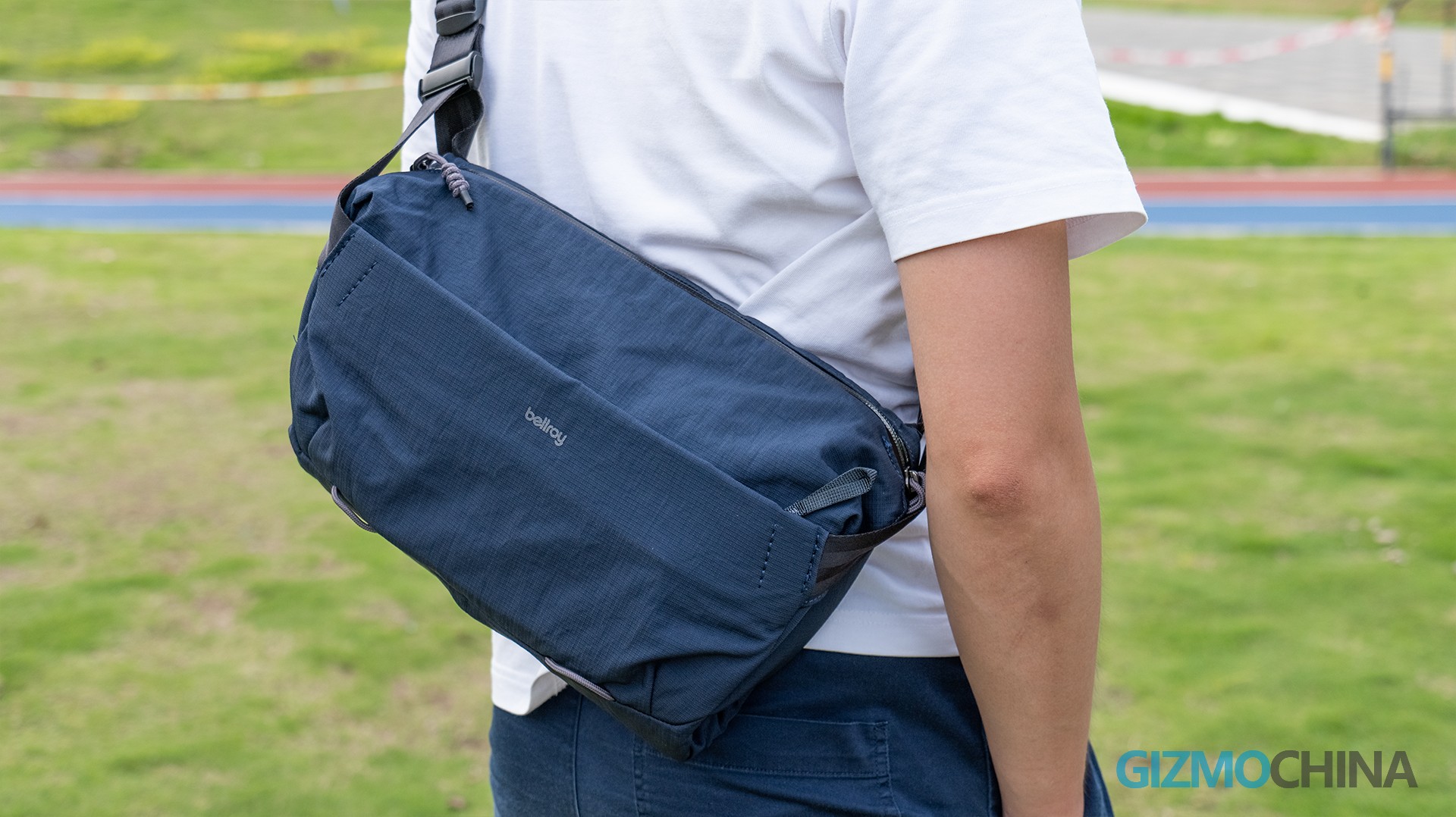
Venture Sling 10L Camera Edition
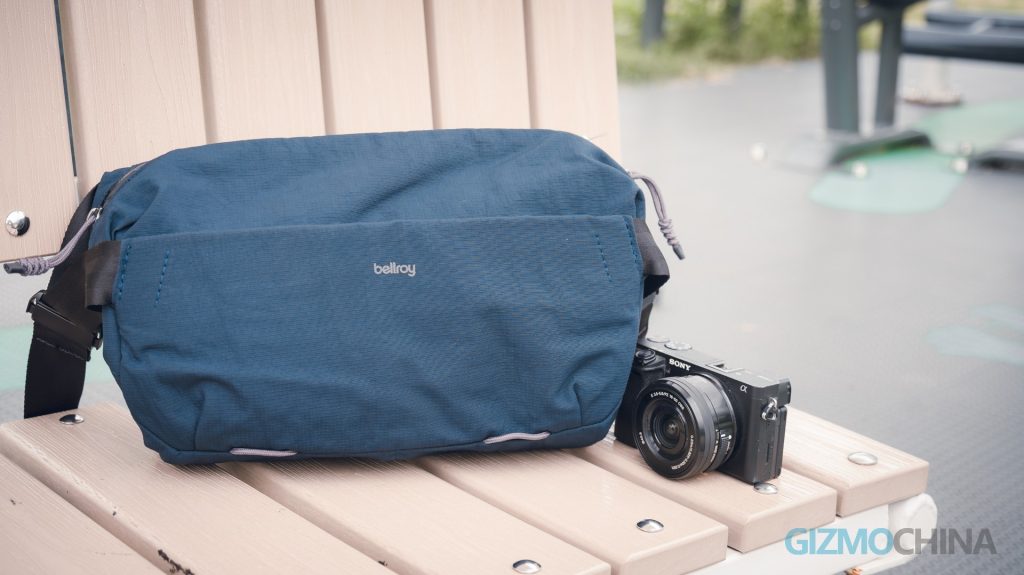
As a tech media crew, we do a lot of outdoor video shooting, so we need to pack at least one camera, one lens, a camera stand, and some accessories. Rather than taking a big bag, a sling with good padding and a reasonable compartment design would be a better choice. So we also get the Venture Sling 10L Camera Edition for this review, after several times shooting with it, it gets the job done pretty well.
Material
By just looking at this sling, there are no noticeable differences from others, but there are still some features that make it unique.
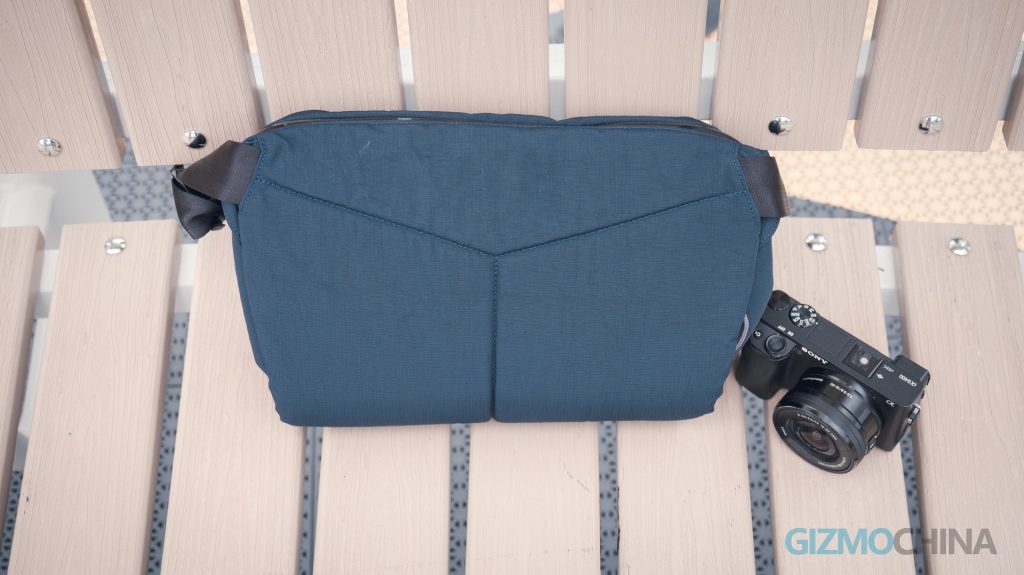
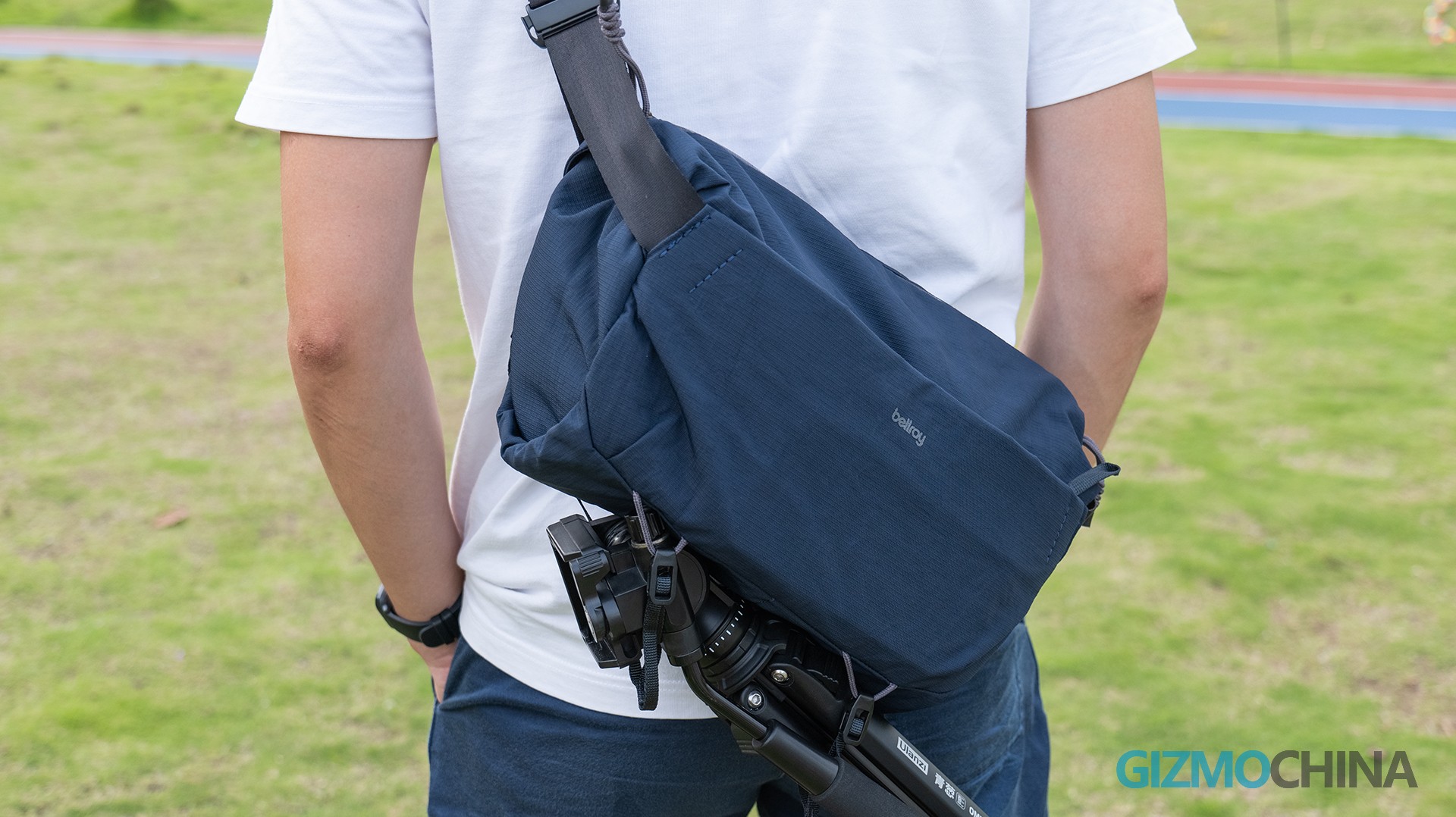
The main material used in the bag is BAIDA RIPSTOP I believe, it has a certain rigid pattern, and it feels durable, if this makes sense. The bag is well padded, and the foam in the side piece is slightly thinner, whereas the other piece is thicker and wrapped around the bottom to the other side, this way the camera gears are perfectly protected however you want to carry this sling. Aesthetic-wise, the curvature separates it from other slings.
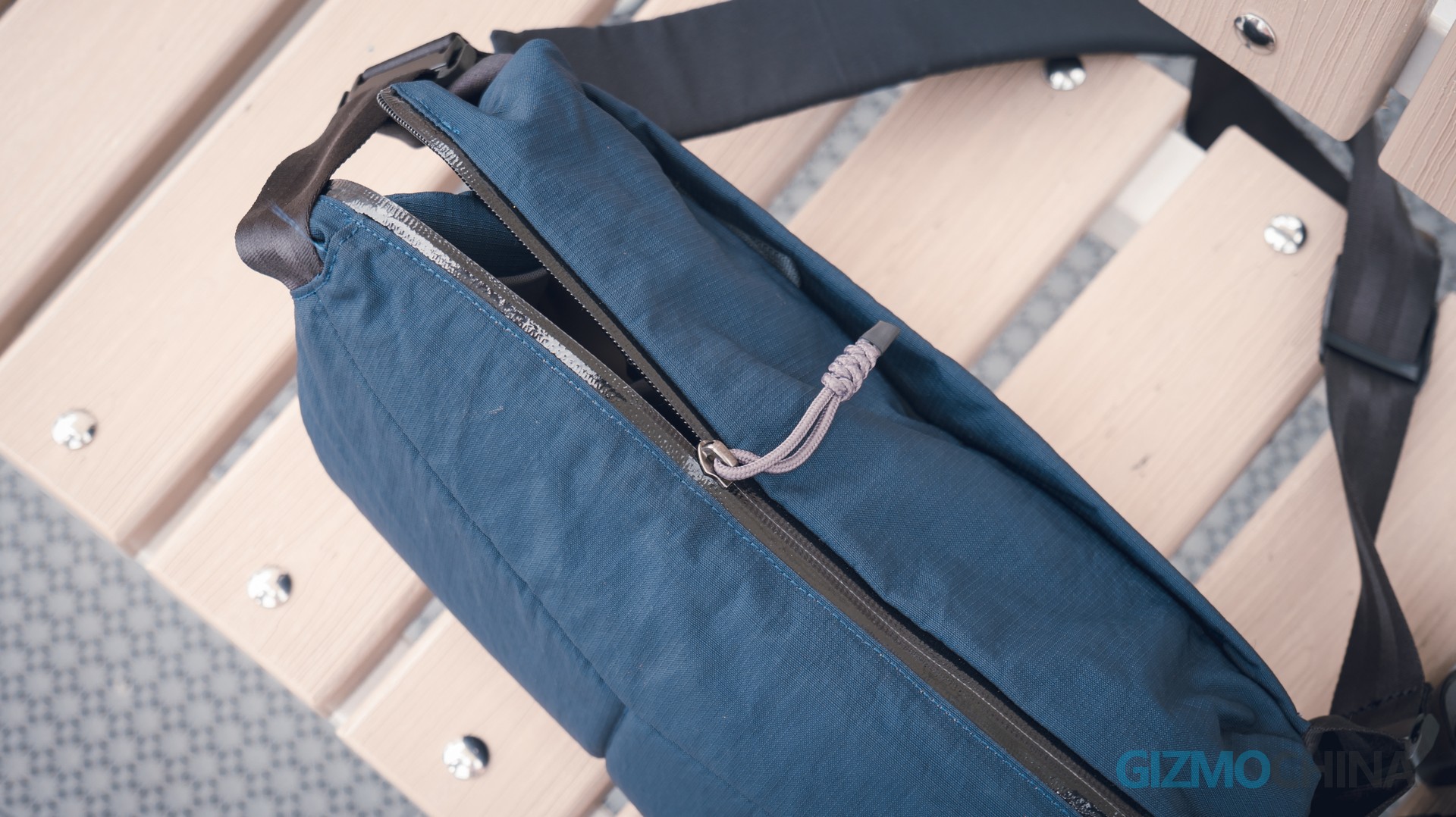
The main zippers are also YKK waterproof type, there are two for the bigger compartment, so it is very convenient for you to open it whether the bag is on your left or right shoulder. And the straps are designed to go with that purpose, the buckles are connected with straps across the bag at each side, rather than hooked to the bag directly, which enables you to change the position, whenever you feel tired carrying the bag on one shoulder. Inside the bag, the materials are the same as the backpack, either recycled nylon or mesh fabric to serve different purposes.
Construction
This bag is not a typical bag that you carry around, it’s a camera edition sling, and a lot of the design is created by that concept.
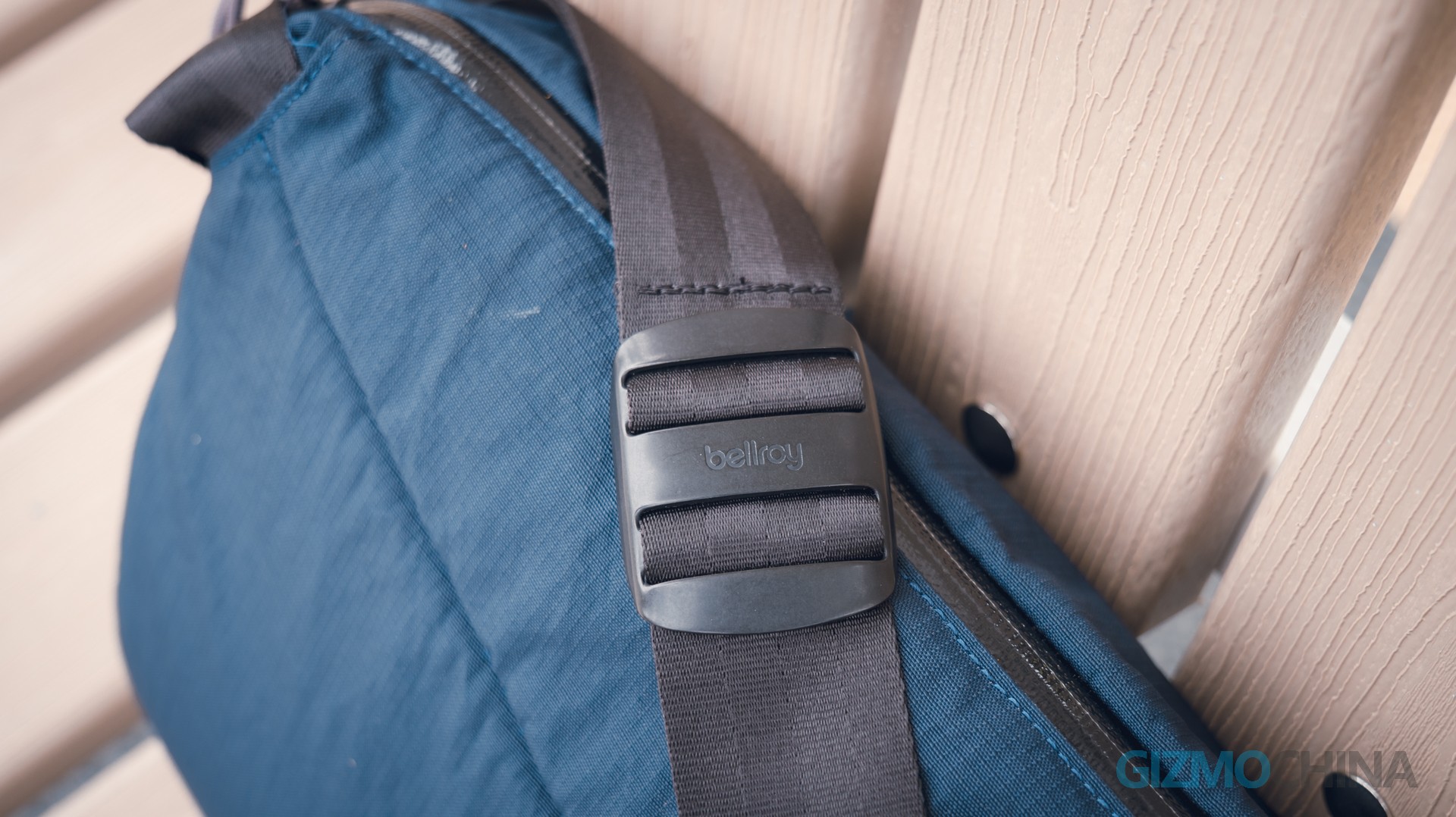
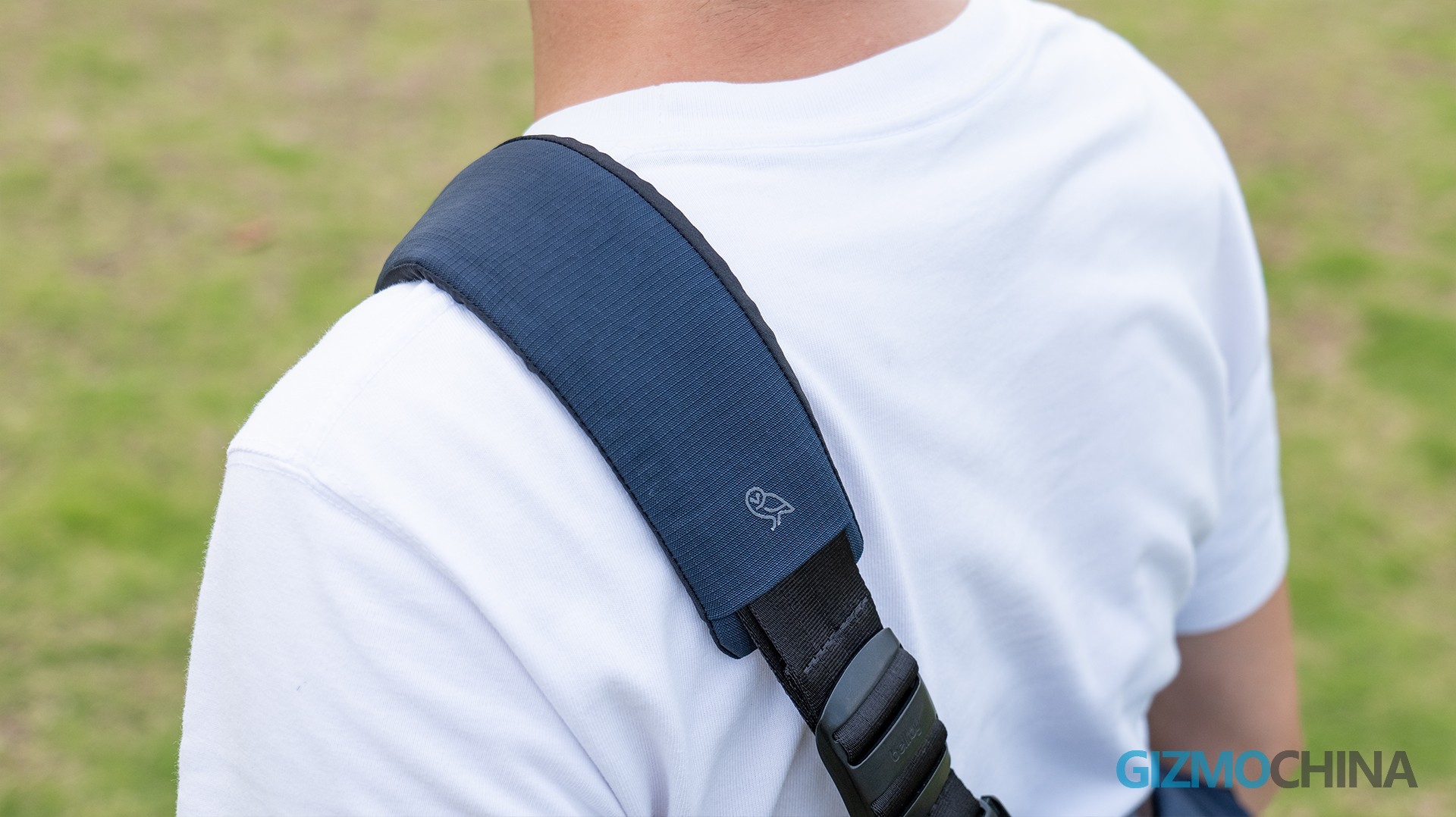
There are two unique parts on the strap. The first one is the quick-slide buckle, it is such an advanced component that every sling should have, I mean this sling wants to make reaching things in the bag very easy, so this buckle works with the very smooth nylon to make it happen. The second is the padded shoulder supporter, if you would be carrying things like a camera, chances are it will be heavier than some other daily stuff, so this padding is very useful for taking the burden off a little bit.
Outside the bag there are four lash strap connectors, these components make carrying the tripods or camera stand a lot easier, the main benefits are that they free your hands and the space within the bag, such a clever design.
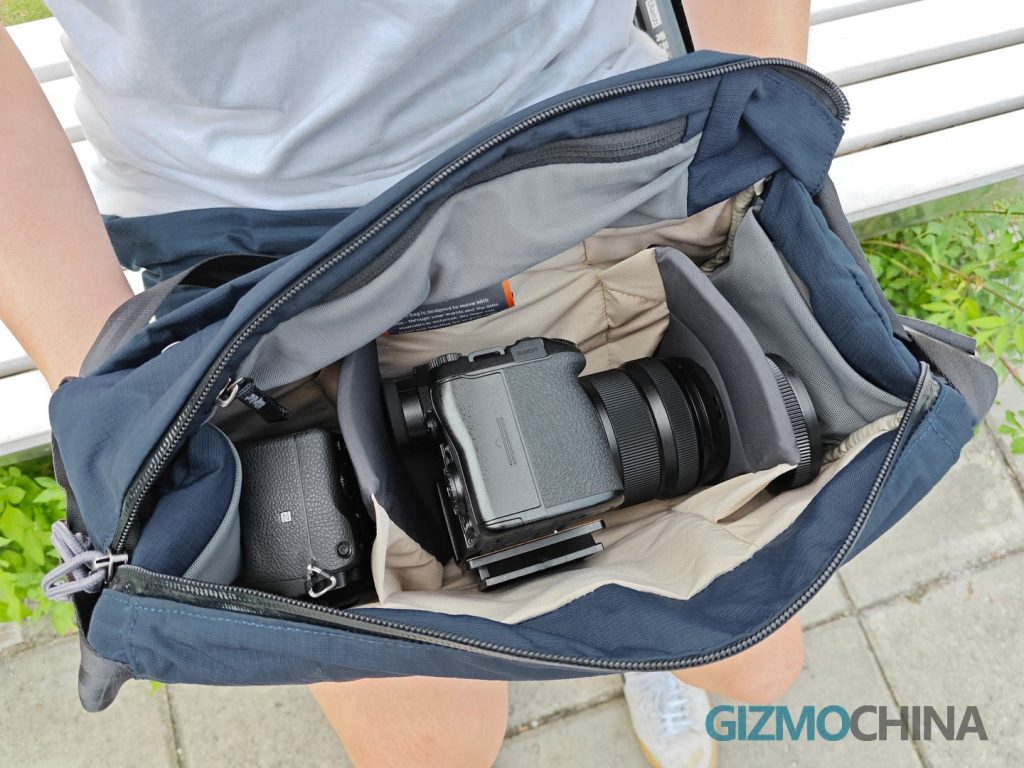
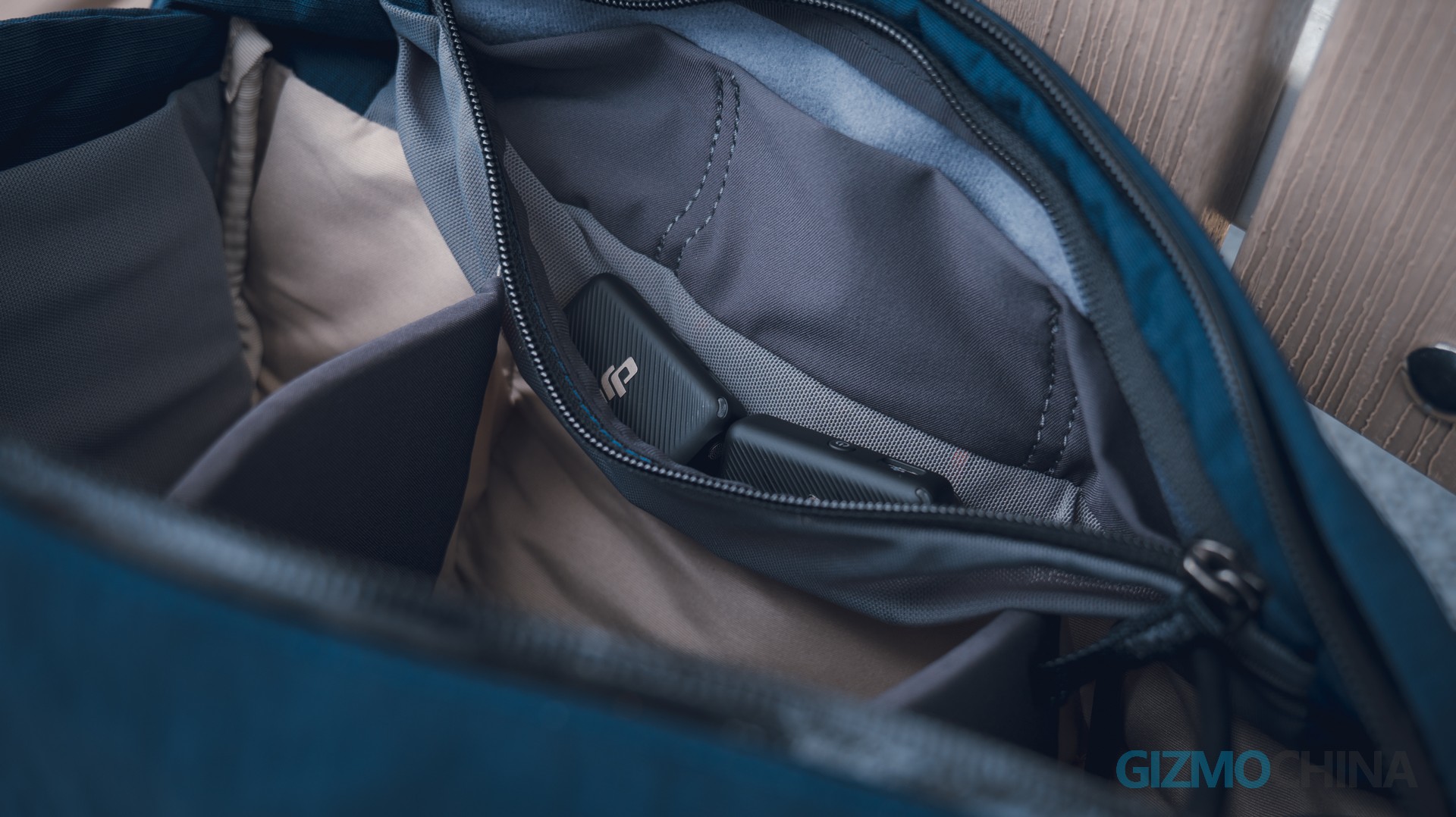
The inner compartment explains why it’s called Camera Edition. There are two dividers here, they can sit in between to provide spaces for the camera and the lens. Or if you prefer to have the camera with the lens on, then the divider can be folded and tucked down to the bottom so there is good space also. There are side pockets on both sides, good for storing some squared accessories like ND filters. Meanwhile, there are three small pockets inside for SD cards, etc.
The smaller pocket at the outer side is good for holding some random stuff in, and if you don’t need to use the lash straps, this pocket is also the place they should be in, so they don’t scratch the camera and lens at the other pocket.
Experience
Our team usually packs one camera and one lens in the sling, along with some accessories. The 10L sling is a very balanced choice in terms of capacity and usability. Oftentimes, our photographer needs to adjust the position of the bag when changing the location of the shooting or moving from one posture to another, the quick-slide buckle helps a lot. The inner compartment design is really great to store all the gears and keep them unharmed.
To sum up the experience with the Venture Sling 10L, it’s a fantastic addition for people who need to take a camera around every day. You may argue that there are 6L and 9L in Bellroy’s collection and they are also functional and sleek, but the trade-offs are that they don’t have the capacity, thick padding, the quick-slide buckle, all these are essential for carrying cameras. So we would highly recommend it to professional photographers or if you are a daily commuter who also takes a camera with you sometimes.
The Redmi Note 10 Pro was arguably the best smartphone in its price range when it was launched in 2021. In fact, the device is so good that Xiaomi re-released it earlier this year in select markets as Redmi Note 12 Pro 4G with some tweaks.
However, this phone is plagued with issues, especially in India where it goes by Redmi Note 10 Pro Max. The country also got a toned-down version called Redmi Note 10 Pro with a different primary camera. Even this has the same issues.
Both these handsets run the same software builds. And for some reason, they haven’t received system updates for months.
Redmi Note 10 Pro Max
Recently, Xiaomi started rolling out a new update (V14.0.7.0) for the Redmi Note 10 Pro global variant. This OTA software update arrives within 3 months from the last one (V14.0.4.0), which was released in July.
On the other hand, the Indian variant still runs V14.0.1.0. This version of the software was released in March for the global variant and in April for India. The global variant also received V14.0.2.0 in April, which never reached the Indian version along with the other two releases discussed above.
In simper words, the Redmi Note 10 Pro Max and Redmi Note 10 Pro have not received a single system update in India since April. Whereas, the global model got three builds during these six months.
Xiaomi has officially not clarified this discrimination so far. However, we believe this could be due to the hardware issues faced by users by installing new MIUI updates.
Multiple users of Redmi Note 10 Pro and Redmi Note 10 Pro Max in India have been affected by software updates since the phones made their debut in the country. I personally know 3 people who are affected and it was me who recommended the handset to them in the first place.
Xiaomi answered this widespread issue with an additional year of warranty in May. This announcement came a month after the company released the last OTA software update for the devices.
All in all, it seems like Xiaomi has yet to fix the hardware failures caused by new MIUI updates. This could be the only plausible reason we could think of the lack of new software updates for the Indian variant.
Vivo has announced that its 2023 Developer Conference will be held in Shenzhen on November 1. The highlight of the event will be the launch of OriginOS 4, Vivo’s latest custom skin based on Android 14. However, Vivo has also teased that it will be announcing another self-developed OS at the event.
While Vivo has not yet revealed much about the OS, tipster Digital Chat Station suggests that it will be used in IoT devices. It is unclear whether the OS will be available on mobile phones in the future, but Vivo is unlikely to depart from the Android/AOSP ecosystem just yet.
Additionally, Vivo will also release a self-developed AI large model at the conference. According to the latest C-Eval large model evaluation, Vivo’s self-developed model ranks first in the global Chinese list.
The company has revealed that the model will be used for the first time in the upcoming OriginOS 4 system, and will include five self-developed large models with three different parameter levels. These models will cover a comprehensive range of core application scenarios.
The Vivo Developer Conference is just a couple of weeks away, so we should know more about the self-developed OS and OriginOS 4 pretty soon.
Alongside Samsung, OnePlus is the only OEM that is actively working on the Android 14-based Oxygen OS 14 update for its majority of smartphones and tablets. After bringing Oxygen OS 14 Closed Beta Program and consecutive Open Beta builds for OnePlus 11, here’s the Open Beta 3 for the smartphone which fixes some major issues.
The new update for OnePlus 11 aka Oxygen OS 14 Open Beta 3 build is now live for users in India and North America regions. It fixes several bugs, including a fix for the Dark Mode toggle on the Play Store, and “The System Interface Irresponsible” error while using the Play Store. Further, it fixed the screen flashes while navigating between different apps. Below is the full list of known issues.
Known Issues:
-Stucking issue of music sound connecting wired headphones when taking photos.
-"The system desktop has stopped running" error while setting third-party fonts.
-Screen flashes when swiping the navigation bar to switch apps.
-Directly back to the desktop when swiping up to exit the cards in Shelf.
-Dark mode does not work on the Play Store page.
-Incoming call notification banner does not show on desktop.
-"The system interface irresponsible" error while using the Play Store.
Apart from the fixes, there are plenty of other changes and new improvements. The update packs the latest October 2023 Security Patch update and improves system stability. The display issue which was affecting the widgets on the Home screen while switching to Dark mode has also been fixed.
Further, plenty of third-party app issues are fixed which were affecting the payments from third-party apps, and even the photo sharing issue is resolved.
The update will be available for the users who have already opted for the Oxygen OS 14 Open Beta. However, if the users want to flash the new build, make sure they are running either of these builds:
CPH2447_13.1.0.591(EX01)
CPH2447_13.1.0.595(EX01)
For more information about the latest update, and installation steps the users may proceed to the OnePlus Community app thread.
Oxygen OS 14 Program
OnePlus gradually OOS 14 Closed Beta and Open Beta builds for more devices. A total of 15 devices from OnePlus will receive the Oxygen OS 14 update in the next coming months. The users can check whether their device will receive the Androdi 14-based update or not by heading to the Oxygen OS 14 Open Beta timeline here.
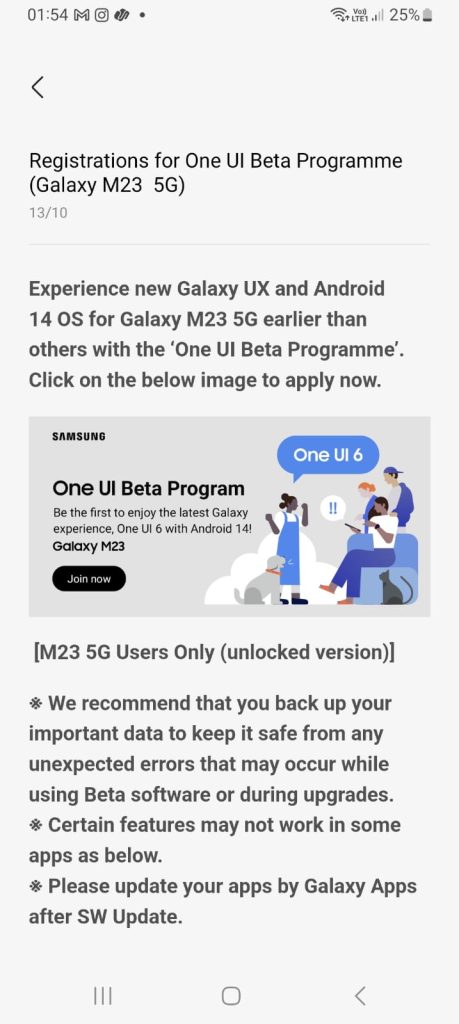
The Korean is not stopping by just the flagship and high-end smartphones, the company is actively pushing the One UI 6.0 Beta update for all the compatible devices, no matter they are flagship or entry-level smartphones. Following updates for the Galaxy A53, Galaxy A34, Galaxy S23, Galaxy S22, Galaxy S21, and a lot of other devices, the new Beta program is now live for the Galaxy A52s, and Galaxy M23 smartphones. The foldable smartphones including Galaxy Z Flip 4/ Z Fold 4 support for One UI 6.0 Beta are now extended to users in India.
One UI 6.0 Beta Program for Galaxy M23 and Galaxy A52s
One UI 6.0 Beta program has finally commenced for the Galaxy M23 users. Interested folks can head over to the Samsung Community app and avail of the program by tapping on the One UI 6.0 Beta update banner.
Similarly, Galaxy A52s users in South Korea can now participate in the One UI 6.0 Beta program and can enjoy the luxuries of the new Android 14-baed skin. There are plenty of new changes and features that are part of the latest update.
Galaxy Z Fold 4/Z Flip 4 India Vaariant receives One UI 6.0 Beta update
Samsung recently unveiled the Beta program for Galaxy Z Fold 4 and Z Flip 4 smartphones in some regions. The program is now available for users in India. Interested users can participate by following the Steps below.
Steps to Apply for One UI 6.0 Beta
Any user who is willing to try the new One UI 6.0 beta before anyone else, can enter the Beta program by heading to the Samsung Members App. The user must update the app, and then sign in to the app before heading for the registration process.
Now, Open the Samsung Members app > then Go To Notice and Select “Registration for One UI Beta Program”. Once you accomplish the on-screen instructions, you will receive the beta update after some time.
After opting for the Beta update, users can check for the update by heading to Settings > Software update > Download and Install.
Precautions
The Beta build always bundles some bugs along with the new features, if your device is the only daily driver, then we don’t recommend installing it. Also, make sure to back up all your important data, as the bugs may make the phone unstable.
The users can submit feedback by heading to the Samsung Members App.
There are some exciting changes in the One UI 6.0, and you can take a look at the complete changelog here.
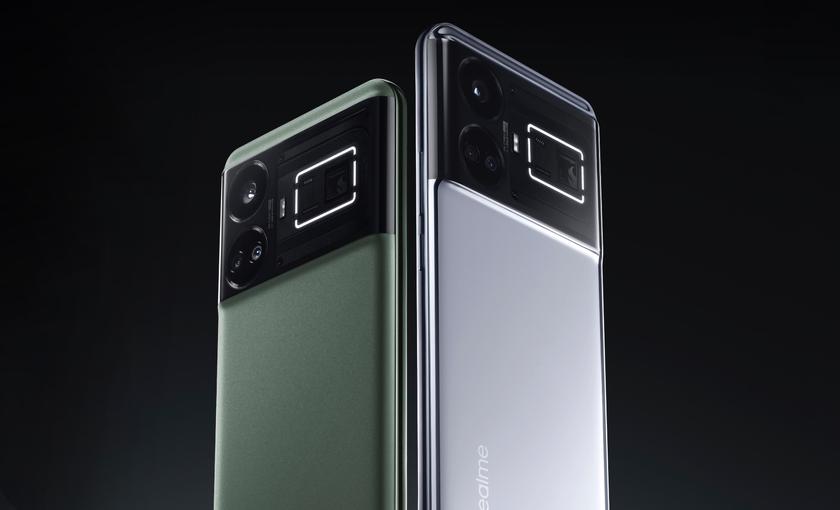
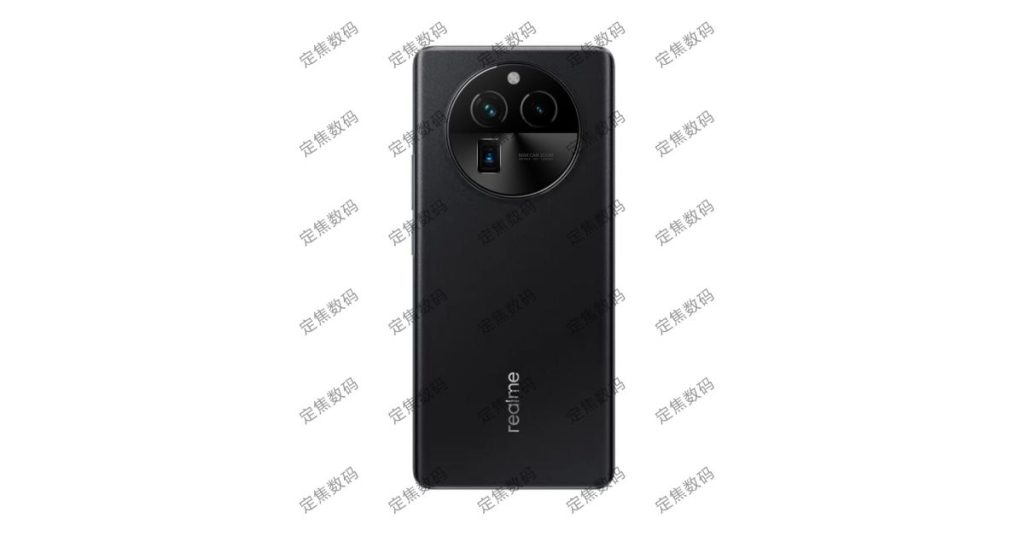
Realme‘s flagship GT series is due for an update soon. The upcoming Realme GT 5 Pro has leaked extensively in the past and is expected to debut sometime after the launch of the Snapdragon 8 Gen 3 chip. Now, known tipster DCS has leaked more information about the device ahead of its launch.
DCS has said that the Realme GT 5 Pro is expected to feature a circular camera module on the back, resembling the design of the Realme 11 Pro series. The phone will also come with a vegan leather variant. Last month, a leaked render of a Realme device emerged online which is expected to be the Realme GT 5 Pro.
Realme GT 5 Pro specs (expected)
Previous leaks say that the GT 5 Pro could feature a 50-megapixel Sony IMX966 OIS primary camera, along with an ultra-wide lens and a 64-megapixel OmniVision OV64B periscope zoom camera featuring 3x optical zoom, promising versatile and high-quality photography capabilities
The device could boast a 2K curved-edge display provided by BOE. Under the hood, the Snapdragon 8 Gen 3 processor will be powered by a 5,400mAh battery with 100W wired fast charging. The hardware will be cooled by a massive 10,000mm² VC heat dissipation system.
The Apple iPhone 16 series is expected to be the company’s next generation of flagship smartphones. While the iPhone 15 lineup was just recently unveiled, new rumors and leaks have already surfaced regarding its successor. Now, the latest report hints at the A18 Bionic chipset being common across all four devices.
All Apple iPhone 16 models to come with A18 Bionic SoC
The news arrives from known analyst Jeff Pu. He claimed that sources from the Apple supply chain has revealed that the Cupertino based giant’s 2024 iPhones will be equipped with the A18 series SoC. Apparently, this new chipset will power every model of the iPhone 16 series. In other words, the iPhone 16, iPhone 16 Plus, iPhone 16 Pro, and iPhone 16 Pro Max will come with the same processor family.
In the recent past, the brand featured the latest A series chips on the higher end Pro models while the base and Plus models get the previous year’s chips. But from 2024, it seems like the entire lineup will feature the A18 series chips. The renowned analyst claims that the iPhone 16 and iPhone 16 Plus will feature the A18 Bionic SoC while the iPhone 16 Pro and iPhone 16 Pro Max will launch with the A18 Pro chipset. Just recently, Pu shared in a research note that the new iPhone 16 Pro series will arrive with some notable upgrades. This includes the faster Wi-Fi 7 standard and a new ultra wide angle lens.
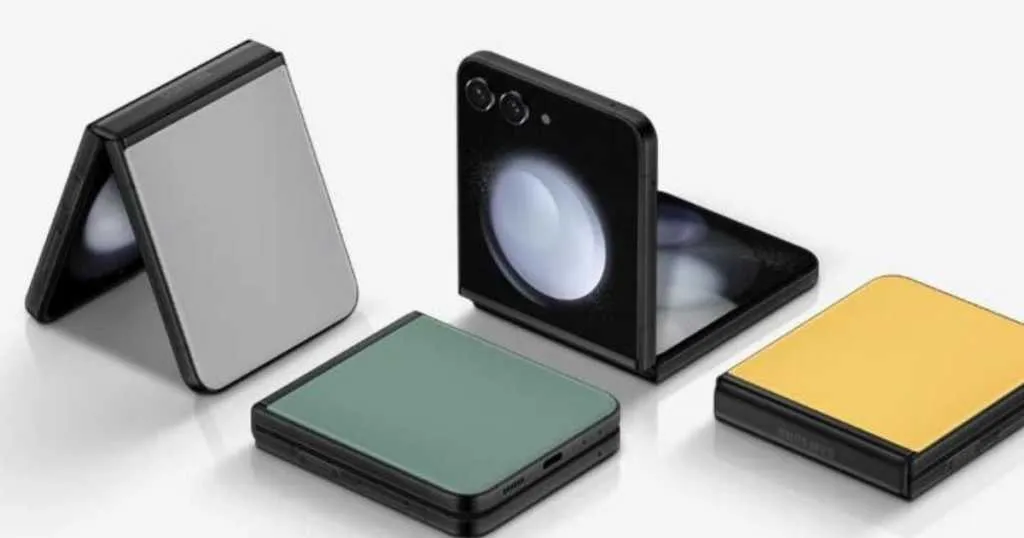
Samsung has just announced the Galaxy Z Flip 5 in brand-new color options in the Indian market. The company’s official notes state that this is a special edition model, which adds four fresh color variants to its latest foldable smartphone.
Samsung Galaxy Z Flip 5 Special Edition: What’s New?
The South Korean tech giant’s latest release is a special edition Galaxy Z Flip 5 model. For those unaware, it is a flagship clamshell folding phone. At the moment, the Samsung Galaxy Z Flip 5 already arrives in four color options, namely Mint, Cream, Graphite, and Lavender. Now, the smartphone will be released in four new color variants. This includes a Yellow, Gray, Blue, and Green version which joins the existing colors.
Apart from the external design, the Galaxy Z Flip 5 is essentially the same on the inside. Despite being a special edition model, the new launch retains the same price tag as all of the other variants. So the foldable phone still starts from 99,999 INR for the base 256GB storage variant. The brand is even bringing a great deal for this device, with an instant 7,000 INR bank discount and an additional 7,000 INR discount if you exchange your older phone.
The Samsung Galaxy Z Flip 5 sports a tall 6.7-inch Dynamic AMOLED display on the front, while the cover screen is a smaller 3.4-inch AMOLED panel. Under the hood, the device is equipped with the Qualcomm Snapdragon 8 Gen 2 SoC, which is paired with 8GB of LPDDR5X RAM. The rear packs a 12-megapixel dual camera setup, while the front houses a 10-megapixel selfie shooter. A 3,700mAh battery pack powers this smartphone, which supports 25W fast charging.
Lenovo has various sub-brands for different types of products. One of them is Legion, which includes all the gaming products from the company.
Internationally, Lenovo’s Legion brand is mostly associated with gaming laptops and desktops. But in China, the brand even sells mobile gaming products like tablets and several exclusive accessories.
Earlier today, the company teased a new pair of gaming earphones. Let’s have a look at them.
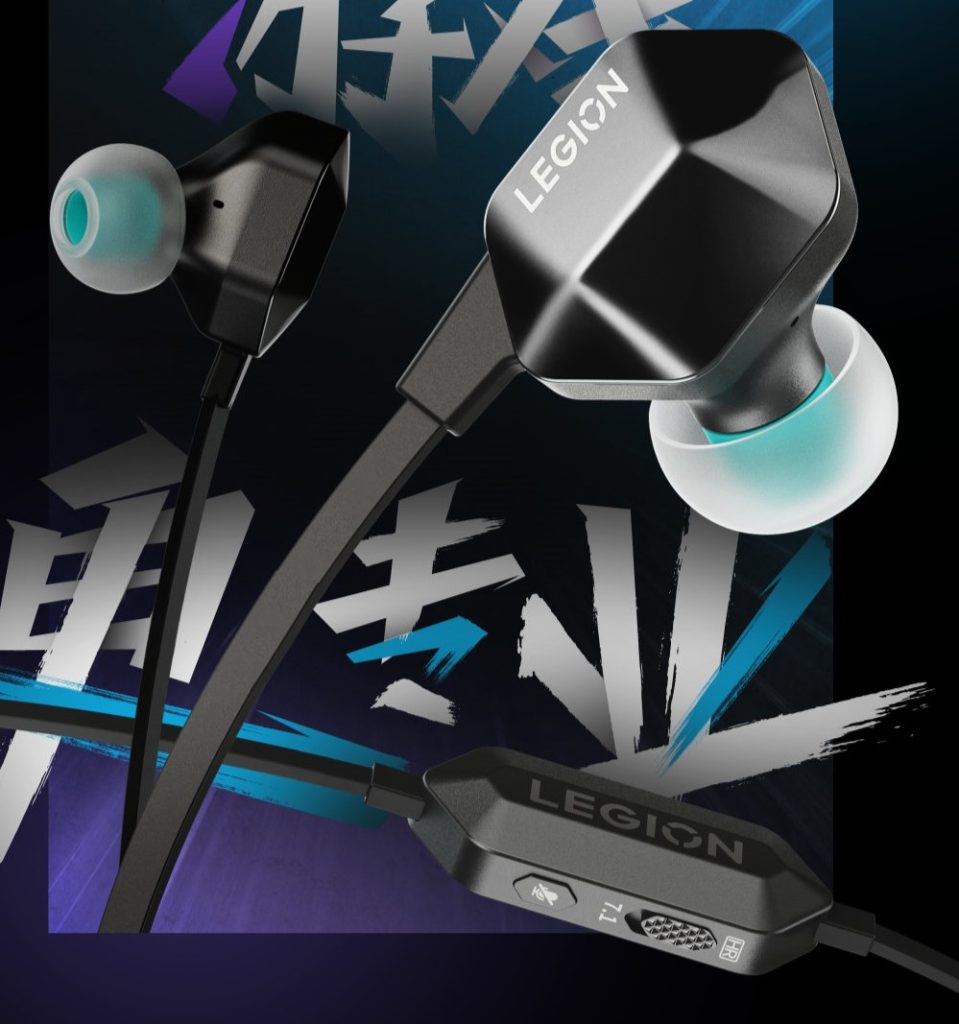
Lenovo’s upcoming gaming earphones are officially called Legion H7. These are wired earphones with a USB Type-C port instead of a 3.5mm headphone jack.
Thus, this audio accessory is more compatible as most mobile devices now lack a headphone jack. Further, it comes with a flat wire for better durability.
The image shared by Lenovo shows the earphones in a single black color option with turquoise-accented ear tips. It arrives with an inline remote control featuring a microphone on/off toggle and a slider.
This slider allows users to switch between 7.1 surround sound and regular stereo mode. It is possible as the accessory houses a dedicated 7.1 sound card.
That’s all the information we have on Lenovo Legion H7 gaming earphones right now. Perhaps, Lenovo may tease more about the product later before its official announcement. But honestly, there’s nothing much left to reveal.
As of now, we have no details on the global availability of these earphones. But they sure look eerily similar to the recently unveiled Lenovo Legion E510 7.1 RGB gaming earphones.
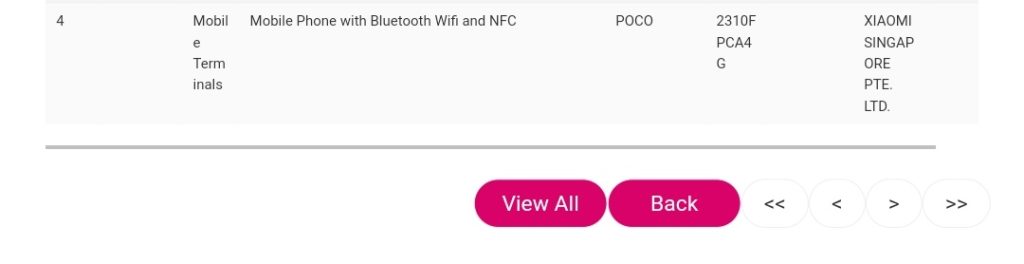
Xiaomi’s sub-brand Poco is extensively working to bring affordable smartphones to attract new customers in different market segments. In addition, the company is set to unveil a new mid-range smartphone i.e. Poco C65. The smartphone has already appeared in multiple leaks and renders. The recent FCC listing confirmed it as a rebrand of the yet-to-launch Redmi 13C. Surprisingly, the Poco C65 global variant surfaced on Singapore’s IMDA certification, confirming the upcoming launch.
The listing with model number 2310FPCA4G doesn’t reveal anything in particular but does confirm the presence of NFC. The global variant of the smartphone will house support for LTE, Bluetooth, WiFi 802.11ac, and NFC.
Poco C65 and Redmi 13C Previous Leaks
The Poco C55 successor is expected to bring some new advancements in terms of specifications and hardware. As per leaked renders, the Redmi 13C aka Poco C65 will bundle a water-drop notch display and a 50MP primary sensor on the rear.
Apart from the Redmi 13C 4G variant, there’s also a 5G variant that could come with model 23124RN87C, 23124RN87G, and 23124RN87I in respective regions. It will highly likely bundle the Dimensity 6100 Plus chipset.
Poco C65 will feature the same Redmi 13C colors of Black, Blue, and Light Green.
After the Poco C65 launch, we expect the company to launch successors for the Poco C51 and Poco C50 too.
Poco C65’s predecessor was launched earlier this year with some decent specifications to cater to the mid-range market segment. In features, it bundles octa-core Helio G85 SoC and Mali-G52 MC2 GPU,6 GB RAM, 128G Storage, a 5000 mAh battery, and a 6.71-inch HD+ display.
Vivo Y200 5G India launch date has been confirmed. The phone is set to go official on Oct. 23 in the country. Endorsed by Bollywood actress Sara Ali Khan, the Y200 5G will be the successor to the Vivo Y100 5G that went official earlier this year in India. The below poster, released by the brand, has revealed its design and color variants.
According to reports, the Vivo Y200 5G will arrive with a 6.67-inch AMOLED FHD+ display that offers a 120Hz refresh rate. It will have a 16-megapixel front camera and a rear camera setup featuring a 64-megapixel main camera with OIS support and a 2-megapixel bokeh lens. As the above images show, the device will have a ring-LED smart Aura flash.
The Snapdragon 4 Gen 1 chip will power the Vivo Y200 5G. It may arrive with 8 GB of RAM and 128 GB of internal storage. The device will run on FunTouch OS 13-based Android 13 and offer up to 8 GB of virtual RAM. For security, it will have an in-screen fingerprint scanner.
It will come equipped with a 4,800mAh battery that supports 44W fast charging. It will maintain a sleek profile with a thickness of 7.96mm and a weight of 190 grams.
With a week remaining for the launch, Vivo is expected to confirm more details about the Y200 5G in the coming days.
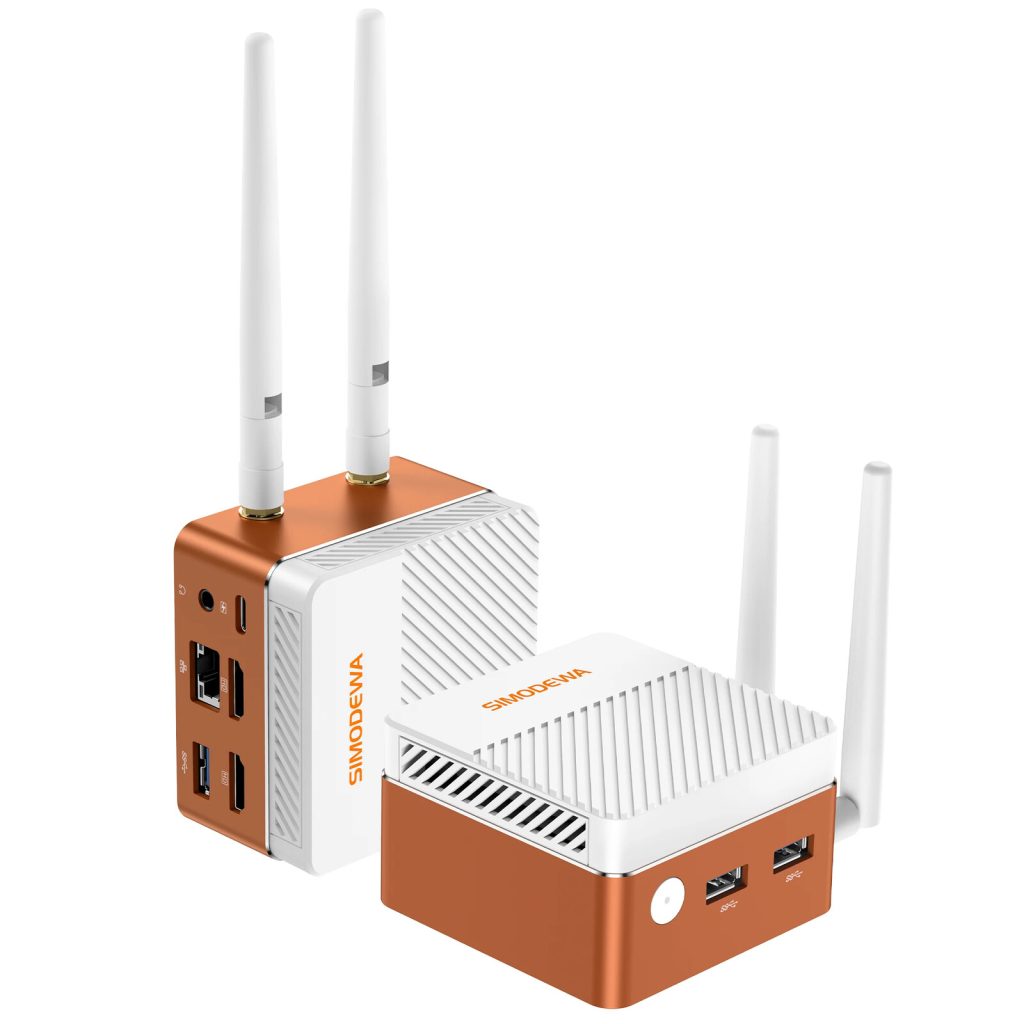
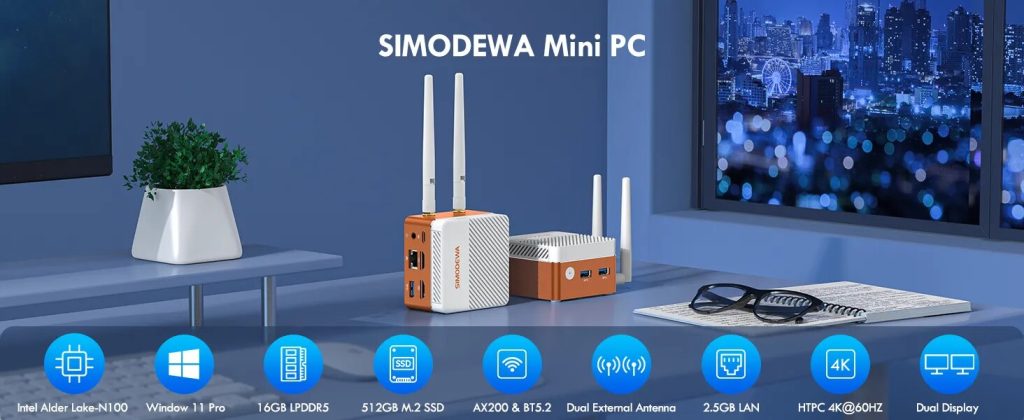
Mini-PCs have become increasingly popular recently due to the rising desire for small and portable computing devices. These mini-PCs are typically tiny enough to be tucked away in a corner or easily transported in a backpack. SZBOX has now released a new mini-PC called the S100, which is so small that it can fit in your pocket.
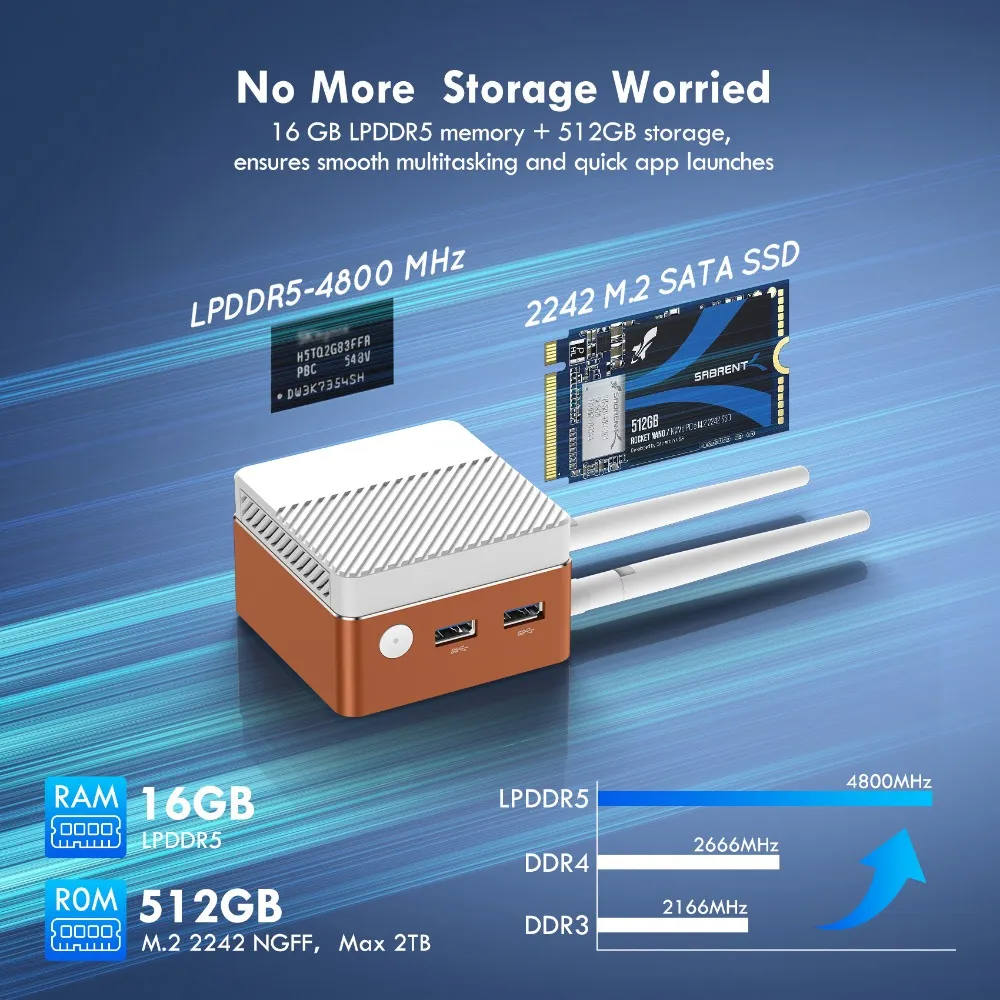
The SZBOX S100 measures 2.8″ x 2.8″ x 1.8″ and comes with a removable external dual antenna for WiFi 6 AX600 and Bluetooth 5.2 connectivity. Under the hood, the device features a quad-core Intel Alder Lake N-100 processor, paired with 16GB LPDDR5 4800MHz RAM (soldered on) and up to 1TB M.2 SATA SSD.
The Intel UHD integrated graphics, equipped with 24 execution units, can handle two displays running at 4K resolution and 60Hz. Notably, the manufacturer has successfully incorporated a cooling system into this compact PC, which includes a blower fan attached to a copper heatsink.
The connectivity options include three USB 3.2 Type-A ports (although it’s not specified whether they operate at 5 Gbps or 10 Gbps), dual HDMI 2.0 ports, 2.5 GbE LAN, and a 3.5 mm audio combo jack. The device is powered through a dedicated USB-C port.
The SZBOX S100 is currently up for purchase on AliExpress. All configurations come with 16 GB of LPDDR5 RAM, and pricing varies, starting at $184 for the model without a storage device and going up to $241 for the version that includes a 1 TB SATA SSD.
Black Shark has officially announced its upcoming launch of two smartwatches, the Black Shark S1 Pro and the Black Shark S1 Classic, in the Chinese market. These watches will include Black Shark’s innovative game health monitoring mode. The S1 Pro introduces “Wen Xinyiyan,” potentially an AI assistant readily available on your wrist. Moreover, they will feature Baidu map navigation and a diverse selection of AI watch faces.
The Black Shark S1 series is rumored to track the player’s gaming activity, including the type of games played and their duration. If the gaming sessions become excessively long, it is expected to provide health reminders. While the Black Shark S1 Pro has already made its global debut, information regarding the Classic variant remains undisclosed. However, it is possible that the Classic model could share similarities with the Pro version.
For those who don’t know, Black Shark has already launched the Black Shark S1 in the global market. Here is a look at its specifications and price.
Black Shark S1 specifications
The Black Shark S1 smartwatch features a round dial sporting a 1.43-inch AMOLED display with 466 x 466 pixels resolution. It offers 600 nits of brightness and a 60Hz refresh rate. It also supports Always on Display (AOD) and provides access to over 100 watch faces. The Shark S1 can monitor more than 100 sports modes and promises a 10-day battery life under regular usage.
The Shark S1 comes with a rotating crown and comes with metal bezels. It’s exclusively available in black and boasts an IP68 rating, making it resistant to dust and water damage. One notable feature is Bluetooth calling support, enhanced with Xiaomi’s ENC algorithm and signal-processing microphone for clear calls. The smartwatch can be paired with the Shark Wear app for precise GPS tracking and periodic exercise updates. It includes essential functions such as a calculator, camera control, stopwatch, message alerts, and more.
The Black Shark S1 is exclusively available in black, and it comes with an attractive price tag of $50. Pre-orders can be made directly on the official Black Shark website, with shipping services available to customers in the United States and across Europe.
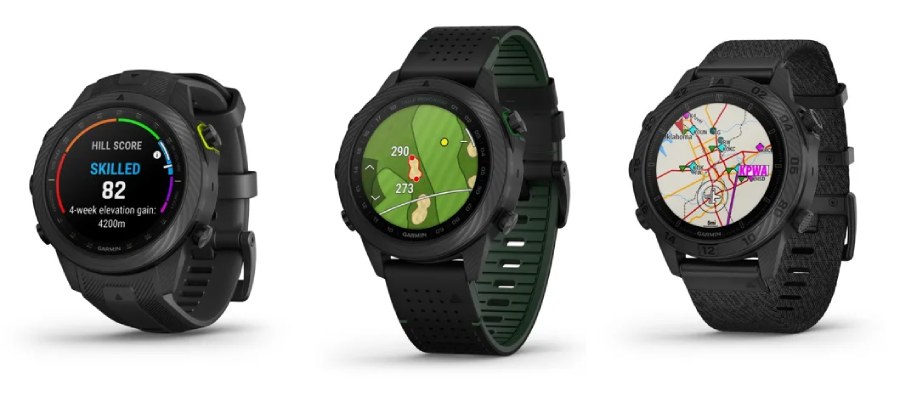
Garmin has expanded its Marq (Gen 2) smartwatch series with the new Marq Carbon Collection. The collection consists of three watches—the Marq Athlete, Marq Commander, and Marq Golfer—all of which feature a unique Fused Carbon Fiber build that the company says is “decades in the making.”
Fused Carbon Fiber is a lightweight and durable material that Garmin says is 62% lighter than titanium, while also offering greater abrasion resistance. It consists of 130 carbon fiber layers that are rotated during manufacturing to maintain the housing’s tensile strength.
Garmin then uses heat and pressure to align the block with the shape of the watch housing, bending the layers to match the angles of the watch lugs. The material is then machined using a diamond cutter over the course of multiple hours to create lightweight components that have a unique spiral pattern that runs throughout the material itself.
On the new Garmin MARQ Carbon series, the middle case and bezel are made from Fused Carbon Fiber, while the buttons, outer bezel ring, and caseback are all made from grade 5 titanium with a black DLC finish.
Aside from the new material, the Marq Carbon Collection shares the same specifications as the regular Marq 2 series. This means that the new smartwatches have 46mm case sizes, within which sit 1.2-inch AMOLED displays operating at 390 x 390 pixels. Moreover, the MARQ Carbon Collection is rated for up to 6 days of battery life in smartwatch mode or 21 days with battery saver mode enabled.
However, there are also certain features unique to each device in the collection. For example, the Marq Athlete comes with Garmin’s HRM-Pro Plus chest strap heart rate monitor for more accurate biometrics, the Marq Golfer includes three Approach CT10 club tracking sensors, and the Marq Commander is supplied with two straps: one made from heathered black woven nylon, and one from black silicone rubber.
The MARQ Carbon Collection starts at US$2,950 for the Athlete edition. Alternatively, Garmin sells the Golfer and Commander versions for US$3,100 and US$3,200, respectively. The smartwatches are available to purchase from Garmin’s official site.
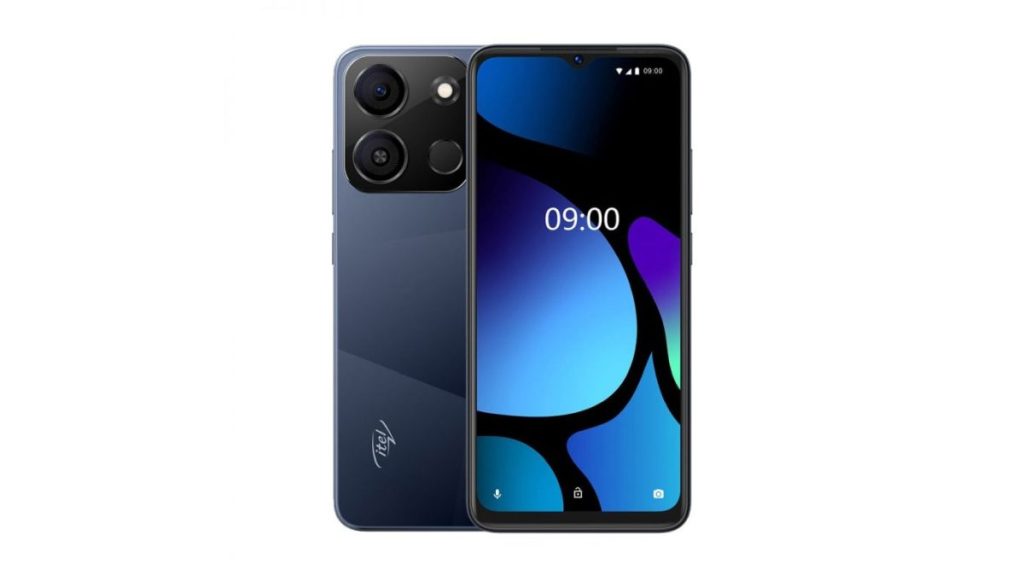
Itel has silently introduced the latest addition to its A-series smartphone lineup, known as the Itel A05s, in India. Priced below the Rs 7,000 (~$84) mark, this smartphone offers a spacious LCD display, a big battery, and a dual-camera setup. Here is a look into the detailed specifications of the A05s to get a comprehensive understanding of what it brings to the table.
Itel A05s specifications and features
itel A05s
The Itel A05s has a 6.6-inch LCD panel with a teardrop notch that offers an HD+ resolution of 1612 x 720 pixels, 270 ppi pixel density, a 60Hz refresh rate, and a 120Hz touch sampling rate. The device comes preloaded with the Android 13 Go edition.
To keep the lights on, the itel A05s houses a 4,000mAh battery. While there is no official confirmation, it appears that the device offers at least 10W charging. Thankfully, the entry-level phone comes equipped with a USB-C port for charging. According to the brand, the device can offer 7.5 hours of talk time and 32 days of standby time.
The itel A05s is powered by the Unisoc SC9863A octa-core processor that clocks at 1.6GHz. The device ships with 2 GB of RAM and 32 GB of internal storage. In addition, it features a microSD card slot for more storage.
itel A05s
For selfies, it has a 5-megapixel camera on the front. The square-shaped camera module on the back houses a single 5-megapixel camera, an LED flash, and a fingerprint scanner. The device offers other features, such as dual SIM, 4G VoLTE, Wi-Fi, Bluetooth, GPS, and a 3.5mm audio jack.
Itel A05s price in India, availability
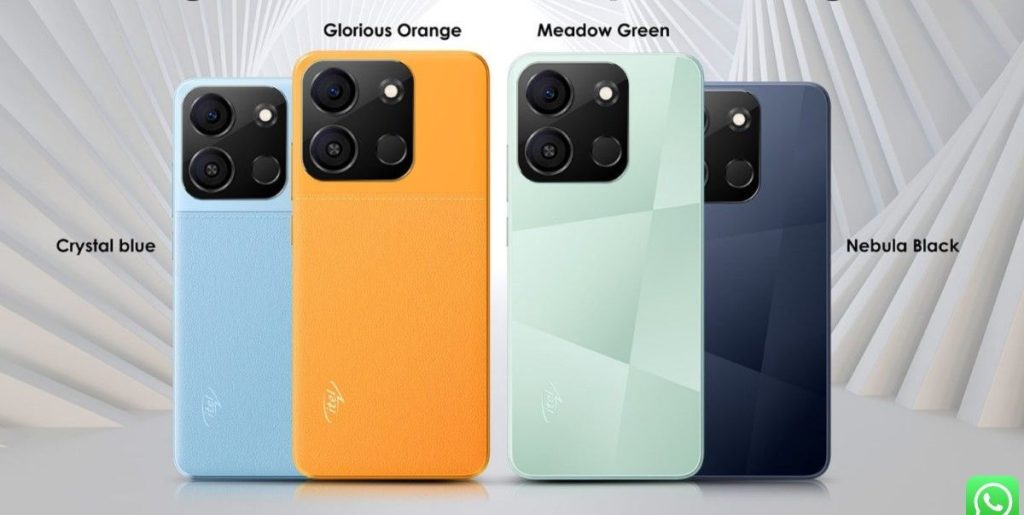
The itel A05s is already listed for purchase on itel India’s website. Priced at Rs 6,499 (~$78), buyers can choose from color options, such as Nebula Black, Meadow Green, Crystal Blue, and Glorious Orange.
We use cookies on our website to give you the most relevant experience by remembering your preferences and repeat visits. By clicking “Accept”, you consent to the use of ALL the cookies.
This website uses cookies to improve your experience while you navigate through the website. Out of these, the cookies that are categorized as necessary are stored on your browser as they are essential for the working of basic functionalities of the website. We also use third-party cookies that help us analyze and understand how you use this website. These cookies will be stored in your browser only with your consent. You also have the option to opt-out of these cookies. But opting out of some of these cookies may affect your browsing experience.
Necessary cookies are absolutely essential for the website to function properly. This category only includes cookies that ensures basic functionalities and security features of the website. These cookies do not store any personal information.
Any cookies that may not be particularly necessary for the website to function and is used specifically to collect user personal data via analytics, ads, other embedded contents are termed as non-necessary cookies. It is mandatory to procure user consent prior to running these cookies on your website.