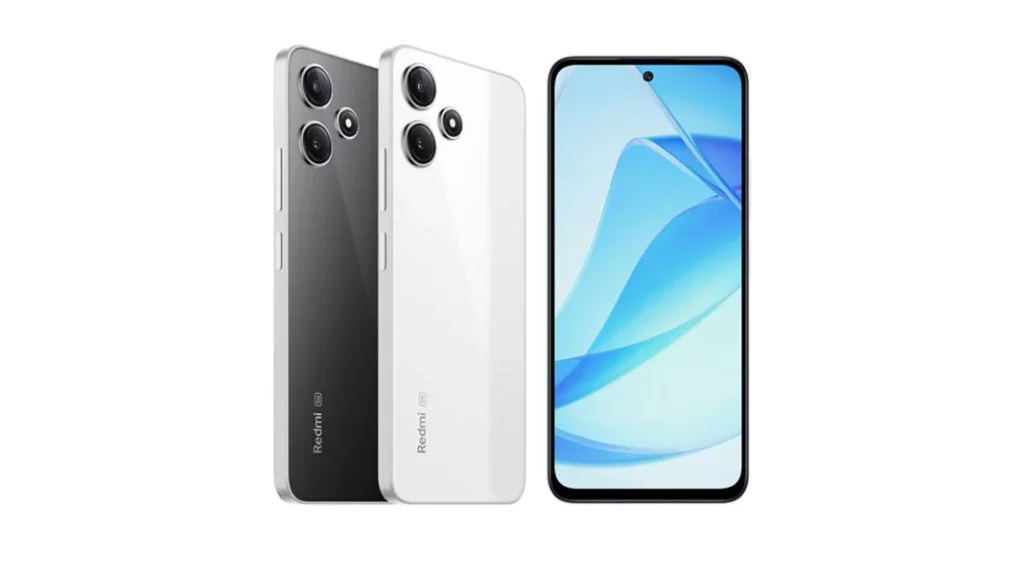
Vivo Y series gets a new smartphone almost every month. Recently, the brand unveiled the Vivo Y77t in China with a Dimensity 7020 processor. The company also launched the Vivo Y78+ (t1) version earlier this week. Now, another Vivo smartphone has been spotted on BIS India as well as the Bluetooth SIG website, hinting imminent launch. Vivo Y17s could be a new mid-ranger from the brand. Here are the details.
The Vivo Y17s has recently been certified by the Bluetooth SIG, bearing the model number V2310. This certification confirms that the device has Bluetooth version 5.0. The same model number, V2310, has also been certified by the Bureau of Indian Standards (BIS).
While the BIS listing does not disclose any specific details about the device, it does confirm that the Vivo Y17s is slated for a release in India. This is not the first time that the Vivo Y17s has been certified by any regulatory body. A previous TKDN listing, spotted by The Tech Outlook, reveals the device will only support 4G connectivity.
The handset’s launch date in India is still unknown, but it is likely to be released in the coming months. Judging by the moniker, the Vivo Y17s appears to be a refresh over the Vivo Y17. However, it’s also possible that these two phones are entirely unrelated, especially considering that the Vivo Y17 was launched four years ago.
Similar to other models within the Vivo Y series, the Vivo Y17s is likely to be a lower mid-range smartphone with modest specifications. One can expect a large display with at least a 90Hz refresh rate, along with a 5,000mAh battery and a less powerful MediaTek processor. Further details about the device are expected to emerge in the coming days, so stay tuned for updates!
Boat has launched a bunch of new products this month in the Indian market including the Rockid Rush limited edition kids headphones, the Wave Sigma smartwatch, and the Aavante Bar 520 soundbar. The brand has now also introduced a new smartwatch called Boat Wave Neo Plus.
Boat Wave Neo Plus specs
The Boat Wave Neo Plus comes with a clear 1.96-inch HD screen offering a peak brightness of 550 nits. You can choose from a wide range of watch faces to personalize your device.
One useful feature is its Bluetooth calling support, allowing you to make and receive calls directly from the watch. It runs on the Crest Plus OS and supports AI voice assistants for convenient voice commands.
You can save up to 10 contacts on the Quick Dial Pad for easy access. It offers more than 700 sports modes for tracking your activities and is dust and water-resistant (IP67).
For health tracking, it monitors your heart rate, SpO2 levels, sleep, and offers breathing exercises. It also has features like camera control, music control, weather updates, alarms, timers, a stopwatch, and a find my phone feature.
With a 260mAh battery, it can last up to 7 days on a single charge. However, if you use Bluetooth calling frequently, it will last around 2 days before needing a recharge.
Price & availability
Available for an introductory price of Rs. 1,599, the Boat Wave Neo Plus smartwatch comes in a range of colors, including Sage Green, Marigold Blue, Cherry Blossom, and Active Black. It can be purchased starting today, from both Flipkart and the official Boat website.
In May, Poco unveiled the Poco F5 and the Poco F5 Pro flagship phones. While the F5 is available in India and other markets, the F5 Pro was not released in India. A fresh development reveals that the company could be working on a new F-series flagship phone.
Yesterday, at the POCO Partners SEA Forum in Bangkok, Thailand, Poco confirmed a key detail about its next flagship phone. The brand confirmed that it will be launching a new phone featuring the Dimensity 9200 Plus chipset.
Redmi K60 Ultra
Poco did not confirm the name of its upcoming D9200+ phone. Since most of the recent Poco phones are rebranded versions of the Redmi / Xiaomi phones available in other markets, it is likely that the said device could also be a rebranded edition of an existing Redmi / Xiaomi phone.
Redmi has recently released the Redmi K60 Ultra in the Chinese market. A tweaked version of the phone offering better cameras will debut as the Xiaomi 13T Pro in the global market. There is a possibility that the K60 Ultra may have a global variant with Poco branding.
Since the specs are good enough to consider it an F-series phone, it is likely that the device could be called the Poco F5 GT. Here is a look at the specs of the Redmi K60 Ultra.
Redmi K60 Ultra specifications
The Redmi K60 Ultra has a 6.67-inch OLED panel that offers a 1.5K resolution and a 144Hz refresh rate. The Dimensity 9200 Plus chip-powered phone ships with up to 24 GB of LPDDR5x RAM, up to 1 TB of UFS 4.0 storage, and a 5,000mAh battery with 120W charging. It has a 50-megapixel (OIS) + 2-megapixel (ultra-wide) + 2-megapixel (macro) triple camera unit and a 20-megapixel front camera. It runs on MIUI 14-based Android 13 and has an under-display fingerprint scanner.
The Xiaomi 13T Pro, which is expected to debut on Sept. 1, will pack the same specs. However, it is said to be equipped with a 50-megapixel (Sony IMX707, main) + 50-megapixel (telephoto) + 12-megapixel (ultra-wide) triple camera unit.
Volkswagen has started on a new path in its journey towards electric mobility with the production for the all-new ID.7 sedan at the Emden plant in Germany. This move comes at an important time for the company, following a brief disruption due to insufficient demand for the ID.4 model earlier this June.
The ID.7 features a 77-kWh battery base option, with an option to upgrade to 86 kWh
The ID.7’s arrival holds a lot of importance for the German auto giant. With a small production run already launched, Volkswagen is counting on the ID.7, along with the ID.4, to enhance demand, and they are now accepting orders in Germany with deliveries likely to start this fall.
Built on the MEB platform, the ID.7 brings promising features such as a 77-kilowatt-hour battery, expected to deliver a driving range of 382 miles in the European WLTP test cycle. An even more impressive 86 kWh battery option is in the pipeline, which could extend the range to 435 miles, highlighting Volkswagen’s commitment to efficiency and innovation.
Notably, the ID.7 will introduce the new APP550 electric motor, delivering up to 210 kW, marking an upgrade from the previously used 150 kW motor. This, coupled with possible all-wheel drive versions, signals an exciting advancement in electric vehicle dynamics.
However, the journey ahead depends on the demand for the ID.4 and the new ID.7. The recent production glitches have led to a cautious approach, with the third shift postponed for the fall. The ID.7’s scheduled launch in North America in 2024, along with local production for the Chinese market through joint ventures, highlight Volkswagen’s global ambitions in front of the world.
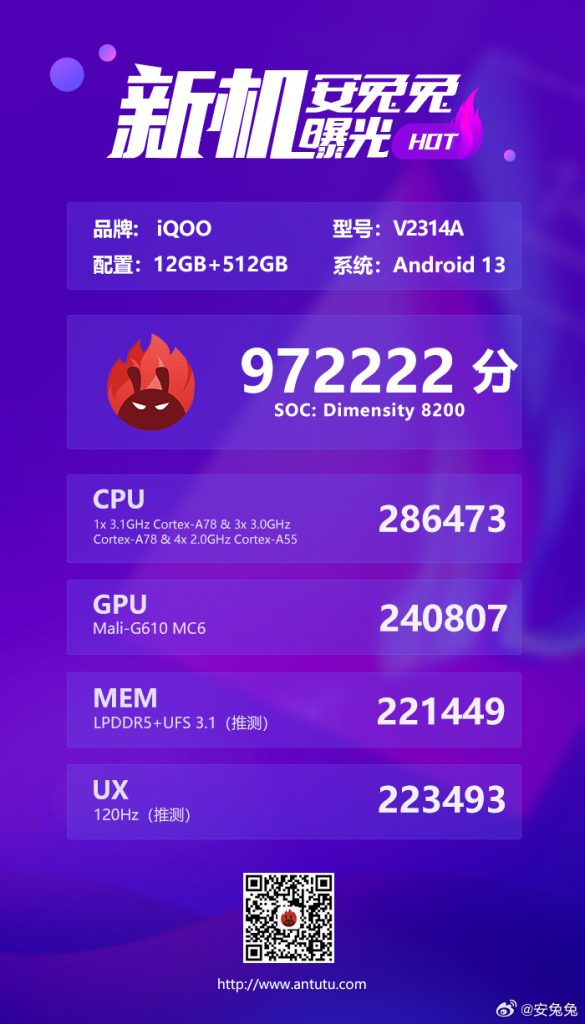
iQOO is reportedly planning to announce the iQOO Z8 and Z8x smartphones in early September in China. Reports have revealed that the devices have model numbers, such as V2314A and V2312A, respectively. Both models have already appeared on Geekbench and have received China’s 3C certification. Now, the Z8 has appeared on AnTuTu to confirm some of its key details. In addition, a Chinese tipster has leaked the specifications of both smartphones.
iQOO Z8 AnTuTu listing
iQOO Z8 AnTuTu listing
The iQOO Z8 scored 286,473, 240,807, 221,449, and 223,943 in AnTuTu’s CPU, GPU, memory, and UX tests, respectively. Hence, it managed to record a total score of 972,222. The listing reveals that the Z8 is equipped with a 120Hz screen, a Dimensity 8200 chip, 12 GB of LPDDR5 RAM, 512 GB of UFS 3.1 storage, and Android 13.
The iQOO Z8 will come with up to 12 GB of RAM, up to 512 GB of storage, and a 5,000mAh battery with 120W fast charging, On the other hand, the iQOO Z8x will arrive with 12 GB of RAM, up to 256 GB of storage, and a 6,000mAh battery with 44W fast charging. It seems like iQOO has chosen to downgrade the fast charging capabilities from 80W in the iQOO Z7x to a lower value in the Z8x.
For photography, the iQOO Z8 will arrive with a 16-megapixel front camera and a 64-megapixel (main, with OIS) + 2-megapixel (depth) dual-camera system. The iQOO Z8x will have an 8-megapixel selfie camera and a 50-megapixel + 2-megapixel dual-camera system. Both phones offer other common features, such as OriginOS 3.0-based Android 13, a 3.5mm audio jack, and a side-facing fingerprint scanner.
As per a recent report, the iQOO Z8 will be available in black, blue, and green shades. It seems that the Z8 will compete with the Dimensity 8200 Ultra-powered Redmi Note 12T Pro in the Chinese market.
Apple is pushing its mobile payment service, Apple Pay, in a big way, and they’re using the catchy tagline “#PayTheAppleWay.” So how does this work? For every $100 paid using the app, Apple gets 15 cents. It doesn’t sound like much, but this could make them $4 billion this year!
Apple Pay is poised to be the biggest competitor to Google Play soon
People love Apple Pay. Why? You don’t even need to pull out your iPhone if you have an Apple Watch. Just tap, and you’re done. No more dropping credit cards while everyone behind you gets impatient. Most stores accept it, so Apple is promoting it with TV ads. In one ad called “The Dance,” a woman struggles with her credit card, while another shopper easily uses Apple Pay. The message? You know it.
Another ad, called “Captcha,” shows a woman failing to prove she’s human online. She gives up and finds another website where she can pay with Apple Pay. Just one tap, and she’s done!
The “Pay the Apple Way” campaign is happening in the U.S. and the U.K. The company’s making this big push because the payment service is part of their second-largest business, Services, which made $21.21 billion last quarter. That’s an 8.2% increase from last year!
This new thing isn’t about selling more iPhones. It’s about getting people to use the service regularly. The company isn’t just promoting a way to pay; it’s changing the way we shop and pay for things every day. It’s more than a business for the trillion dollar company; it’s a big step into the future.
Tesla is now taking firm action against employees leaking images and videos of the Cybertruck. A leaked internal email, posted on Twitter, has revealed that the company is warning employees and contractors of immediate “site removal” if caught filming inside Gigafactory Texas.
The Employees will be removed from the site if they are caught taking pictures of the truck
The measures are not unprecedented, as protecting proprietary information is a common practice among corporations. However, it does signal the lengths to which companies like Tesla are willing to go to protect their innovations.
The leaked email reportedly stated the possibility of issuing photo passes or stickers to appropriate personnel in the future, a measure to balance security concerns with business needs.
In the past months, there have been numerous leaks from the factory, providing enthusiasts with insights into the progress of the Cybertruck’s production. With production expected to start later this year and the first handover event possibly happening towards the end of Q3 2023, it appears that Tesla is tightening its control over information flow.
These measures raise important questions about the balance between employees’ rights and corporate security. At least one ruling by the National Labor Relations Board has upheld employers’ restrictions on cell phone usage on premises in specific sections, a sign of the broader acceptance of such practices.
The Cybertruck, with 1.9 million reservations and anticipated to have a significant impact on Tesla’s brand, is undoubtedly a critical project for the company. As it moves closer to production, the focus on security is likely to remain a prominent aspect of its development.
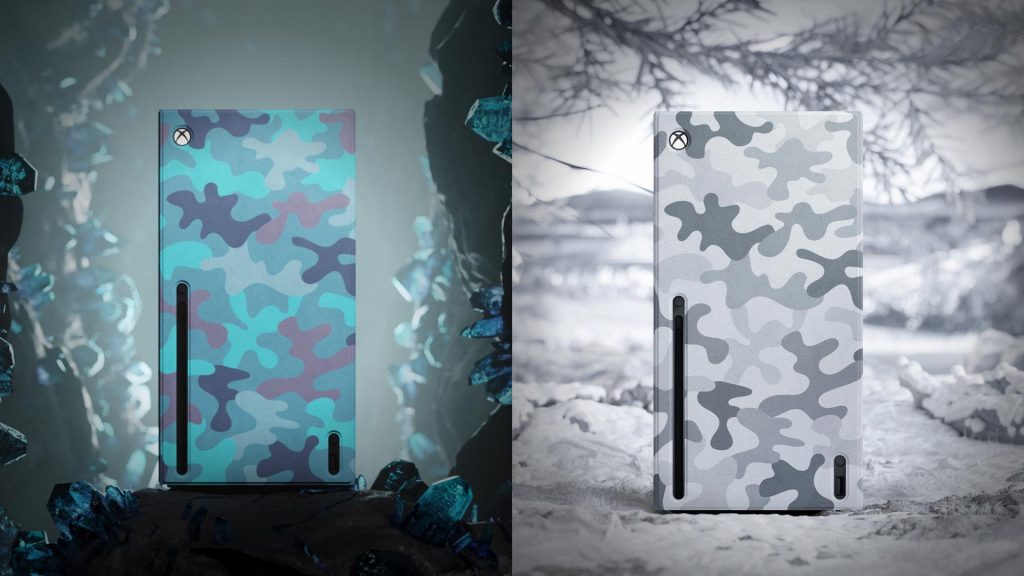
Xbox has announced a new addition to their gaming accessories: the Series X Console Wraps. Aimed at both affordability and customization, this launch may change how gamers personalize their consoles.
The Xbox skins catalog will definitely expand in the future to include newer designs
Available for pre-order starting today, there are three designs to choose from. The Starfield design costs $49.99, while the Arctic Camo and Mineral Camo options are priced at $44.99 each. These wraps are set to launch in the US, Canada, and Europe in the coming months. The wraps are carefully designed to fit the Series X console without affecting its performance. They ensure proper airflow and stability, emphasizing both form and function.
One noteworthy aspect of these console wraps is their nod to sustainability. By allowing gamers to modify their existing consoles, Xbox is promoting a greener alternative to buying new, special edition consoles.
The Starfield-inspired wrap, with its high-tech feel, offers a unique twist on console customization. On the other hand, the Arctic and Mineral Camo designs provide subtler but equally engaging options for gamers looking to add some flair to their consoles.
The wraps’ introduction offers a fresh way for gamers to express individuality without a hefty price tag. It also aligns with a growing trend in the industry towards more eco-friendly choices. It’s worth watching how this product is received by the gaming community, as it might influence how customization and sustainability are approached in the future.
YouTube is actively embracing the future of AI-generated music, announcing collaboration with entities like Universal Music Group (UMG) to lay down principles guiding this innovation. This initiative indicates a determination to advance while safeguarding artists’ rights.
The music giant is acknowledging that AI isn’t just a novelty but an essential part of the modern music ecosystem. They’re developing a Music AI Incubator, with input from artists such as Rosanne Cash, Yo Gotti, and Frank Sinatra’s estate, to guide their path forward. This collaboration symbolizes an intention to blend technology and creativity, reflecting the evolving nature of music.
A cornerstone of this initiative is ensuring protection against copyright infringement while offering opportunities for interested partners. YouTube’s existing Content ID system will likely be expanded, and the company aims to reinforce content policies and safety measures in response to the AI wave.
However, the specifics remain nebulous. With more details to be revealed, the current principles seem more like an outline of the path YouTube intends to follow. It signifies an opening chapter in what could be a revolution in how music is made and monetized.
This move also reflects the broader industry’s acceptance of AI. The Beatles are exploring a ‘final’ song using AI, and UMG itself is delving into AI-created soundscapes. YouTube’s guidelines are a step towards legitimizing and profiting from legal AI creations without running afoul of artists and labels.
Discovered in 1779 during a quest for comets, the Ring Nebula, also known as M57 or NGC 6720, has remained a prominent astronomical figure. Once mistaken as distant worlds due to its appearance, the Ring Nebula represents a celestial beauty just 2,500 light-years away from Earth.
The telescope used infrared light sensors to reveal intricate details of the galaxy
The James Webb Space Telescope (JWST) has now brought us closer to this stunning object. It’s not just a marvel to look at; the images captured by JWST give us information regarding the very process of stellar life and death.
In the new images, the NIRCam, designed to detect near-infrared light, displays the intricate details of the nebula, including 20,000 dense globules rich in molecular hydrogen. The MIRI, on the other hand, reveals around ten concentric arcs beyond the nebula’s outer edge, unfolding an astronomical puzzle.
The history of the Ring Nebula’s observation signifies more than its physical components. It’s a symbol of human curiosity and advancement. From the early misconceptions that led to its planetary nebula label to the advanced technology of JWST, our pursuit of understanding this phenomenon parallels the growth of astronomical science itself.
Today, the Ring Nebula stands as a symbol of astronomical archaeology. The colorful main ring, the remnants of a dying star on its path to becoming a white dwarf, is a vivid reminder of our cosmic connection. In studying the nebula, we’re not merely observing a distant object; we are peering into the past, present, and future of the universe itself.
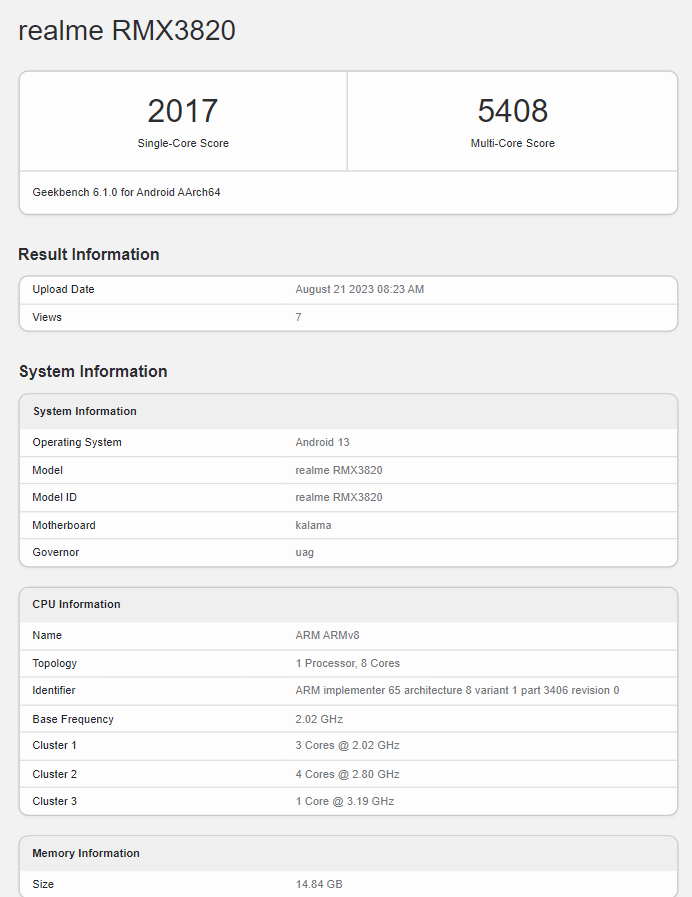
Realme’s next flagship smartphone is launching on August 28 in China. Realme GT 5 is expected to bring the same 240W extreme charging tech as its predecessor. However, the device is claimed to have an entirely new “miracle Glass” finish on its back. While we wait for the launch, Realme GT 5 has appeared on the Geekbench website, running the Snapdragon 8 Gen 2 SoC under the hood. Here are the details.
The upcoming Realme GT 5 smartphone, identified by its model number RMX3820, recently made an appearance on the Geekbench database, revealing some noteworthy specifications. The device, running on the Android 13-based operating system, has its chip’s motherboard codenamed “Kalama.”
The chipset employs a 1+4+3 architecture. The primary core operates at 3.19 GHz, while the performance cores maintain a clock speed of 2.80 GHz, and the base cores run at 2.02 GHz. This is likely the Qualcomm Snapdragon 8 Gen 2 chipset. It integrates the Adreno 740 chipset and offers a variant with a generous 16GB of RAM.
Realme has started to tease the device in China. In a recent teaser, the company revealed the GT 5 will have a “Miracle Glass” finish. While we don’t know exactly what this entails, Realme previously claimed the finish is so hard to achieve it makes the suppliers go crazy. We might be in for something interesting.
Realme GT 5 is said to have a 6.74-inch OLED panel with a 1.5K resolution and 144Hz refresh rate. The handset could be offered in multiple storage options starting from 128GB and going all the way up to 1TB. The device could come in two battery variants: 4600mAh with 240W charging and 5200mAh with 150W charging.
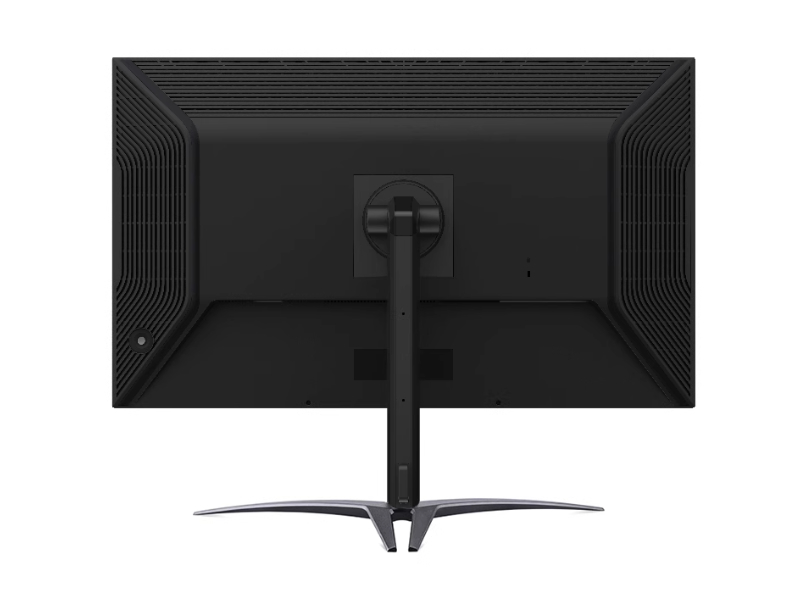
Acer has launched a new 32-inch Mini LED gaming monitor in the Chinese market called the Acer Predator X32Q FS. Other than being good for gaming, this monitor can also be used in creative workflows due to its high color range coverage. Let’s look at it in more detail.
Acer Predator X32Q FS specs
The Acer Predator X32Q FS is a 32-inch gaming monitor with a 4K resolution (3840 x 2160). It has a high refresh rate of up to 165Hz and a fast response time of 1ms for smooth and clear gaming. What makes it stand out is its advanced backlight technology with 1152 Mini LED zones, earning it VESA DisplayHDR 1000 certification, which means it delivers fantastic contrast and brightness.
Compared to a regular IPS monitor, Mini LED IPS monitors offer better contrast and deeper blacks than regular IPS monitors. This is because mini LED technology allows for more precise control over the backlighting. This can result in a better viewing experience when watching movies or playing games that have dark scenes. Another key advantage is the elimination of backlight bleeding, which translates to better immersion.
Back to the specs, this monitor is also great for color accuracy, supporting 10-bit color depth and covering 99% of the AdobeRGB color range. It’s compatible with both AMD FreeSync Premium and NVIDIA G-Sync for tear-free gaming.
In terms of connectivity, it has DisplayPort 1.4, two HDMI 2.1 ports, USB Type-C, audio in/out, and four USB 3.0 ports. Plus, it supports KVM switching and has built-in 7W speakers. You can adjust the monitor’s position easily, thanks to its tilt, height, swivel, and rotate options.
Pricing & availability
Currently, Acer is only selling the Predator X32Q FS in the Chinese market for CNY 4,999 ($687). The monitors will start shipping near the end of October. There is currently no word on the global availability, however, we can expect more news to arrive in the coming days.
Redmi 12 5G is already up for purchase in the global market and the company recently announced it in China as well. The handset brings a 90Hz LCD display, a Qualcomm Snapdragon 4 Gen 2 chip, and MIUI 14 based on Android 13. Today, Redmi has launched the new 4GB RAM + 128GB storage version of the handset, making it more affordable for the consumers. Here are the details.
Redmi 12 5G with 4GB RAM and 128GB storage is listed for purchase on Xiaomi Mall with a price tag of 949 Yuan ($131). Other variants of the smartphone carry the following price tags in China:
6GB + 128GB – ¥999 (~$135)
8GB + 128GB – ¥1,099 (~$150)
8GB + 256GB – ¥1,299 (~$180)
The Redmi 12 comes in two stylish colors: Glacier White and Stardust Gray. It features a sleek glass body and has a slim profile, measuring just 8.17mm in thickness. On the front, it gets a generous 6.79-inch LCD display with a high resolution of 2460×1080. This display supports a 90Hz refresh rate and offers features like DC dimming and intelligent brightness adjustment.
Under the hood, the Redmi 12 is powered by the Snapdragon 4 Gen 2 processor, which is built using a 4nm process and can reach CPU speeds of up to 2.2GHz. It also comes with LPDDR4X RAM and UFS 2.2 storage. With its 5000mAh battery, the phone can be reliable and long-lasting usage and supports 18W fast charging.
The camera setup on the rear includes a 50MP main camera and a 2MP depth-of-field lens. Other noteworthy features of the Redmi 12 include infrared remote control, convenient side fingerprint unlocking, versatile multi-function NFC support, and the inclusion of a 3.5mm headphone jack.
Earlier this year, Lenovo launched a powerful gaming laptop in China— the Legion R9000P. It succeeds last year’s model with the same name and packs the latest Ryzen7- 7745HX processor under the hood. Now, the company has announced the machine in a new Glacier White color option with Ryzen 9 series chipset and RTX-4060 GPU. Here are the details.
Lenovo has announced the Glacier White Legion R9000P is set to kick off its pre-sale tonight and will make its official debut at midnight on August 24th. This sleek new variant, priced at 9,299 Yuan ($1,371), boasts identical specifications to the standard gray and black version, which retails for 8,499 Yuan (about $1,246).
The Legion R9000P gaming notebook offers powerful specifications. It’s equipped with an R9 7945HX processor featuring 16 large cores and 32 threads, running at speeds up to 5.4GHz, with an 80MB cache.
The laptop features a 16-inch display with a resolution of 2560×1600, a fast 240Hz refresh rate, and a 3ms response time. Its screen supports 10bit color depth, covers 100% of the sRGB color gamut, and provides a peak brightness of 500 nits. It also boasts HDR 400 support and is certified by TÜV Rheinland for low blue light. Additionally, it supports both G-SYNC and FreeSync Premium, along with Dolby Vision and DC dimming for flicker-free viewing.
For effective heat management, the laptop utilizes the Frost Blade Pro cooling system 5.0, featuring a 3D Mesh composite main heat pipe, a 3D Blade Falcon fan, and a multi-zone air inlet and outlet system. It’s equipped with 5 high-performance composite heat pipes to ensure efficient cooling during demanding tasks.
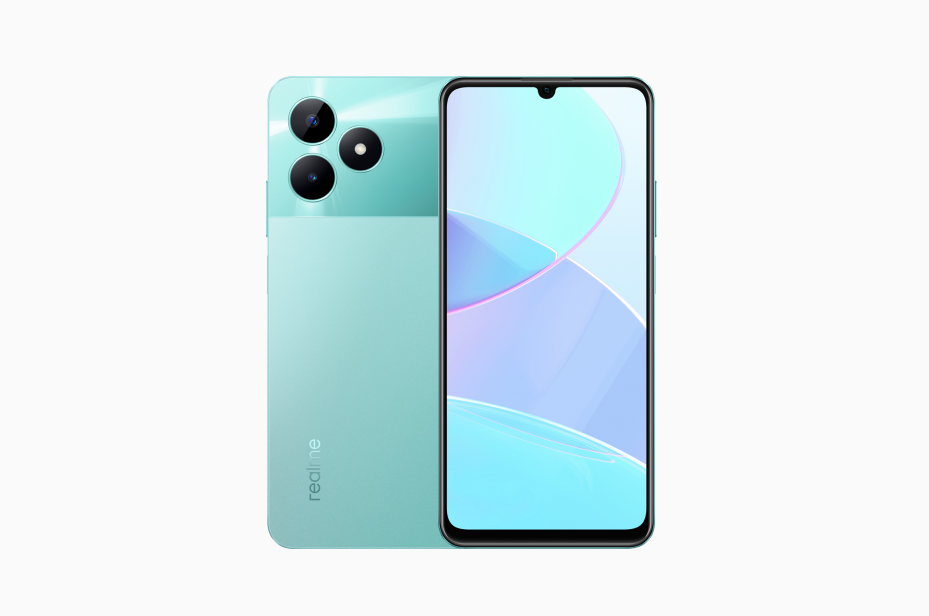
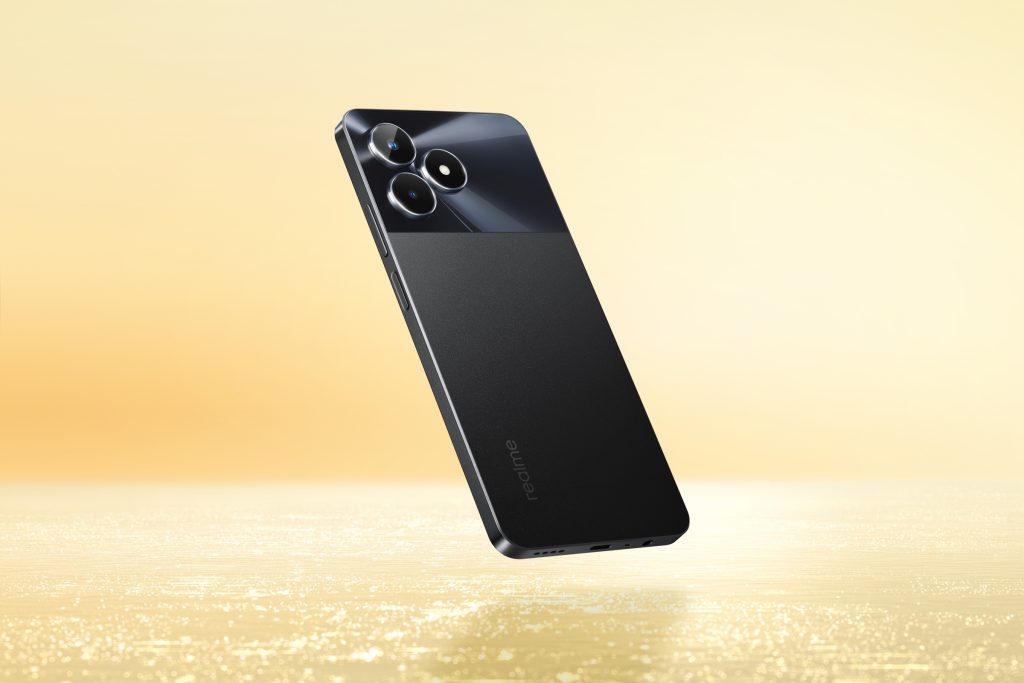
Last month, Realme debuted the Realme C51 smartphone in Taiwan. The brand is now gearing up to launch the smartphone in multiple global regions as the phone has now emerged on the brand’s official Indonesia and Africa websites. Alongside the smartphone, the Realme T300 earbuds have also been listed in Indonesia. Let’s check out the details.
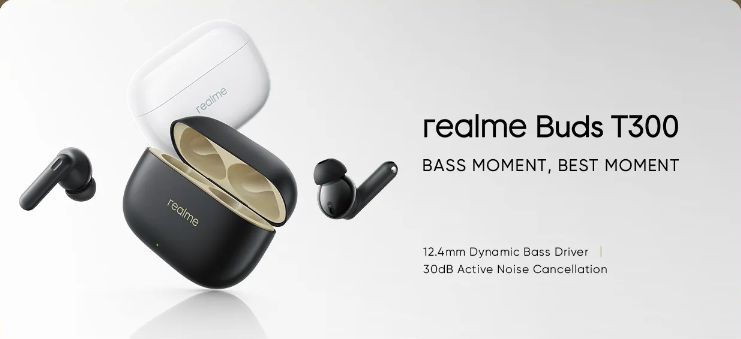
Realme Buds T300
Starting with the earbuds, realme has set the debut date of the Buds T300 on August 23 in Indonesia. The brand is launching the Realme 11 5G and Realme 11x 5G in India on the same date. In Indonesia, the brand will also be launching the Realme 11 NFC along with the Realme C51 NFC and Realme Buds Air 5 on that day.
That being said, the teaser has revealed that the Realme Buds T300 has a 12.4mm Dynamic Bass Driver onboard along with 30dB active noise cancellation. It will come in Stylish Black and Youth White colors.
Realme C51 NFC specs
The Realme C51 NFC is most likely the same Realme C51 which launched in Taiwan. The smartphone has a 6.7-inch IPS LCD panel that offers HD+ resolution and a 90Hz refresh rate. The display also offers a 180Hz touch sampling rate and up to 560 nits of peak brightness as well. Under the hood, the smartphone is equipped with the UNISOC T612 SoC.
For photography, the smartphone has a 50-megapixel primary shooter along with an AI camera. While on the back, it features a 5MP AI-powered selfie camera. It has 4GB RAM and up to 128GB storage options. It also features a microSD card slot for storage expansion up to 2TB. It’s equipped with a 5,000mAh battery that supports 33W SuperVOOC fast charging. Additionally, it features a 3.5mm headphone jack, a side-mounted fingerprint scanner, and comes with Android 13 pre-installed.
As the official launch of Stable Android 14 is nearing, several OEMs have also started working on the next iteration of their respective skins. OnePlus is also working to improve the OxygenOS 14 across the fleet of its flagship and newly launched smartphones. Following the steps of OnePlus 11, the company introduced OxygenOS 14 Closed Beta program for OnePlus Nord 3 in India. It is a great chance for developers and advanced users to get hold of the latest OxygenOS iteration and test their respective apps and devices.
The Closed Beta program tends to improve the overall software experience for OnePlus users. It enables the developers to filter all the bugs and remove any bottlenecks which are hampering the device performance and further optimizes the overall system. However, it is not recommended for users who don’t have any prior flashing experience. The data may get erased while following the procedure.
OxygenOS 14 Closed Beta for OnePlus Nord 3 does have several bugs and is not suitable for daily usage on your primary device. Even some of the third-party apps sometimes don’t work as most of these apps don’t carry Android 14 compatibility. Below are some known issues of the OnePlus Nord 3 that runs OxygenOS 14 Closed Beta.
Know Issues:
Charging icon doesn’t show two decimal places on the lock screen with super flash charger
Probable ringing of the phone in case of no incoming call
Probable black screen when swiping left or right at the bottom of the screen to switch between recent apps
Long screenshot displays abnormally on the Weather warning page
Probable mis-ordering of album photos
After taking a photo and clicking the bottom in the left corner to enter the album, this photo can’t be deleted normally
Google Contacts fails to delete multiple contacts
Camera may fail to recognize the QR code
Screen flashes during auto screen-off
Probable issue of the splash screen when switching tasks through multitasking backend with playing video in the background
If you’re interested in joining the Closed Beta for OnePlus Nord 3, then make sure you adhere to the requirements below. Also, you must hurry as the program is limited to the first 500 users.
Requirements for OxygenOS 14 Closed Beta on OnePlus Nord 3
OnePlus Nord 3 Indian variant is required.
The participant must be a OnePlus Community member.
Regular Feedback Reporting is required from the participants.
A Friendly group talk in the CBT Telegram group related to the development with other members.
Participants should not share the CBT installation package outside the closed group.
OnePlus Nord 3 must be running CPH2491_13.1.0.561(EX01) firmware.
The users must visit the thread on OnePlus Community for further instructions. It is a must that you adhere to all the requirements. Once you sign up, the update package will arrive within three days.
Finally, summer break is ending and the excitement for going back to school has started. Millions of students of all ages around the world are counting the days to get back into a busy schedule. But the new school year also brings some extra costs. Besides standard school supplies and expenses, we also need things like smartphones, tablets, and laptops. Thankfully, there’s a solution for this too. Gearberry is having a Back to School Sale from August 15th to August 30th. You can get up to 50% off on a wide range of products. Here are the details…
Gearberry Back to School Discounts: Don’t Miss Out on These Amazing Deals
Gearberry is having a Back to School Promotion from August 15th to August 30th. Get up to 50% off on a wide range of products, including laptops, laser engravers, 3D printers, and more. Plus, enjoy free shipping and tax free from local warehouses. The surprises aren’t just great prices. There’s also an 8 Free Gifts giveaway worth up to $1499 and much more waiting for you. Here are some standout products in the campaign. Note: Some of the products are in limited stock, so act fast to get the best deals.
KUU Xbook 3 Laptop: Get this powerful and portable laptop for just $259 (originally $299). It features a 14.1-inch IPS display, Intel N4125 processor, 8GB RAM, and 512GB SSD.
Ortur Laser Master 3 Laser Engraver: This high-quality laser engraver is now just $279.99 (originally $559). It features a 40W laser, working area of 410x400mm, and support for a variety of materials.
Two Trees TTS-20 Pro 20W Laser Engraver: Get this powerful laser engraver for just $299 (originally $799). It features a 20W laser, working area of 400x400mm, and support for a variety of materials.
Kingroon KP3S Pro 3D Printer: This popular 3D printer is now just $199 (originally $219). It features a build volume of 220x220x250mm and is compatible with PLA, ABS, and other filaments.
Easythreed k7 3D Printer: This easy-to-use 3D printer is now just $99 (originally $129). It is perfect for students and beginners.
Geeetech 3D Printers Filaments: Get a variety of 3D printer accessories for just $22.99 (originally $29.99). This includes nozzles, belts, and other essential tools.
AlgoLaser Alpha 22W LASER ENGRAVER: This powerful laser engraver is now just $799 (originally $1099). It features a 22W laser, working area of 400x400mm, and support for a variety of materials.
KAIWEETS Apollo 7 Digital Infrared Thermometer: This accurate and easy-to-use thermometer is now just $29.99 (originally $39.99). It can measure temperatures from -50 to 380 degrees Celsius.
Fafrees F20 Pro Electric Bike: This stylish and powerful electric bike is now just $999 (originally $1,099.00). It has a top speed of 25km/h and a range of 50km.
MANGO POWER E Power Station: This powerful portable power station is now just $3,289.00 (originally $4,399.00). The Mango Power E power station that can be used for home backup power, portable power, and powering heavy-duty appliances. It has a capacity of 3.5kWh and can be used to power a refrigerator, lights, and a few other small appliances for several hours. It also has a number of other features, such as 240V output, multiple output ports, an LED display, and charging options.
KAIWEETS HT118A Multimeter: This essential tool for any DIYer is now just $29.99 (originally $59.99). It features a wide range of features, including AC/DC voltage measurement, resistance measurement, and continuity testing.
Neakasa P1 Pro Dog Grooming Kit For Dogs Cats: This complete dog grooming kit is now just $119.99 (originally $149). It includes a variety of tools to keep your dog’s fur clean and healthy.
SNDWAY Laser Rangefinder SW-50G 100G: This accurate laser rangefinder is now just $45.99 (originally $65.99). It is perfect for measuring distances up to 100 meters.
SCULPFUN Honeycomb Panel: This honeycomb panel is perfect for protecting your 3D printer bed. It is now just $39.99 (originally $59.99).
Neakasa F1 Pet Hair Dryer: This powerful and quiet pet hair dryer is now available for just $119.99 (originally $149.00). It is perfect for drying your dog or cat’s fur quickly and easily.
Apple Vision Pro, the company’s first mixed-reality headset, was unveiled during MWC 2023. Featuring VisionOS on the software front, the “spatial computer” gets ultra-high-resolution dual OLED displays with a staggering 23 million pixels in total. Apple suggested the screens’ refresh rate is set at 90Hz, but rumors claim it can go up to 100Hz depending on the content.
DuanRui, a leaker on Twitter, says that the Vision Pro’s refresh rate is 90Hz by default and can go up to 100Hz. This suggests that the headset supports variable refresh rate and can adjust its refresh rate depending on the content being displayed. For context, the base model iPhones have a 60Hz refresh rate, while the iPhone 13 Pro and iPhone 14 Pro have a maximum refresh rate of 120Hz.
The Apple Vision Pro screen refresh rate is 90Hz by default and up to 100Hz.
As 9to5Mac suggests, 90Hz is generally considered the minimum refresh rate for a comfortable virtual reality experience. This is because your brain is more likely to accept 90Hz as real-life motion. However, even if the refresh rate is lower than 90Hz, you may not notice a significant difference due to the nature of spatial computing.
Apple’s Vision Pro mixed-reality headset is still under development and is expected to be released in early 2024. It will come with a hefty price tag of $3,499, making it the most expensive Apple product ever. However, the headset will support a wide range of popular iPhone and iPad apps, such as Microsoft Word and Excel, Disney+, and Sky Guide. Apple has also announced support for the Unity game engine, which will ensure a diverse and engaging range of experiences for Vision Pro users.
Samsung used Qualcomm’s Snapdragon 8 Gen 2 SoC for the Galaxy S23 series this year, but rumors suggest that the company will use its own Exynos 2400 SoC for some regions in the Galaxy S24 series next year. AnTuTu’s Chinese website predicts that the Exynos 2400 SoC will be used in European, African, and some Asian countries and will be based on Samsung’s improved 4nm manufacturing process.
Samsung Exynos 2400 with 10-core CPU
More importantly, the report brings the detailed specs of the chipset. The new Exynos SoC is said to have a 10-core CPU with a 1+2+3+4 core configuration. It will have one powerful Cortex-X4 core running at 3.10GHz, two Cortex-A720 cores running at 2.9GHz, three Cortex-A720 cores running at 2.6GHz, and four Cortex-A520 cores running at 1.8GHz. All of the cores will be based on the ARMv9 architecture.
The new Exynos SoC is also rumored to have a new Xclipse 940 GPU, which is based on AMD’s RDNA2 architecture. It is said to have twice the number of compute units as the Xclipse 920, but this does not necessarily mean that it will be twice as fast. The performance of the GPU will also depend on other factors, such as the clock speed and the memory bandwidth.
Moreover, the chip is rumored to support LPDDR5X RAM and UFS 4.0 storage. It will also have a new ISP that can handle 320MP camera sensors and 8K video recording at 60fps. It is also likely to have the new Exynos 5300 modem integrated, which is rumored to have a maximum downlink limit of 10Gbps, just like the Snapdragon X75, plus a 3.87Gbps uplink speed.
Xiaomi just released the Redmi K60 Ultra in China. The next major device with Redmi branding is expected to be the Redmi Note 13 series.
The next-gen Redmi Notes are rumored to debut in the last quarter in China, just like previous years. Ahead of that, we have been hearing about these products from various sources.
Amidst this, a mysterious Redmi smartphone has been spotted in the IMEI database.
Redmi Note 12 Pro Plus
According to Xiaomiui, this unknown Redmi phone bears the following model numbers.
23090RA98G
23090RA98I
23090RA98C
Going by the last character in the model numbers (G, I, and C), there will be three regional variants of the handset, such as ‘Global’, ‘India’, and ‘China’.
In other words, it will be available in almost all markets. Further, the first four digits (2309) suggest that it could go official as early as September.
The global variant of this device was earlier certified by EEC alongside an alleged Redmi Note 13 series smartphone. Unfortunately, both of these listings do not reveal anything about the product.
Since the phone is anticipated to go official soon, it should pop up on more certification agencies and benchmarks. Perhaps, we will get to learn more about the handset in the coming days.
Until then, our guess is that it could be either part of the Redmi Note 13 lineup or the Redmi 12 series.
We use cookies on our website to give you the most relevant experience by remembering your preferences and repeat visits. By clicking “Accept”, you consent to the use of ALL the cookies.
This website uses cookies to improve your experience while you navigate through the website. Out of these, the cookies that are categorized as necessary are stored on your browser as they are essential for the working of basic functionalities of the website. We also use third-party cookies that help us analyze and understand how you use this website. These cookies will be stored in your browser only with your consent. You also have the option to opt-out of these cookies. But opting out of some of these cookies may affect your browsing experience.
Necessary cookies are absolutely essential for the website to function properly. This category only includes cookies that ensures basic functionalities and security features of the website. These cookies do not store any personal information.
Any cookies that may not be particularly necessary for the website to function and is used specifically to collect user personal data via analytics, ads, other embedded contents are termed as non-necessary cookies. It is mandatory to procure user consent prior to running these cookies on your website.