Advertisement

More than 1.9 Million Pre-orders & 5 Years of Wait Time, Tesla Cybertruck is on a Roll

As the Tesla Cybertruck has taken the automotive world by storm, with over 1.9 million orders and counting, according to a recent crowd-sourced data tracker. Elon Musk, the CEO of Tesla, expressed his amazement at the overwhelming demand during an Earnings Call, describing it as “so off the hook, you can’t even see the hook.”

The production of the truck might expand to Giga Mexico to ramp up the numbers

However, with Tesla’s plan to produce 375,000 Cybertrucks annually at peak capacity, new orders may face a considerable waiting period of around five years. The $100 deposit required for reserving a Cybertruck might also lead to some reservation holders opting out, which could further impact the final number of deliveries.

Tesla Cybertruck

The Cybertruck is set to be manufactured at Giga Texas, but there is a possibility that production might expand to Giga Mexico once the proposed factory is operational. This could potentially help meet the increasing demand and shorten the waiting time for customers.

One intriguing aspect to watch out for is whether the Cybertruck will be offered beyond North America. As of now, customers in Tesla’s European and Asian markets can pre-order the electric vehicle. However, due to its large size and heavy weight, selling the Cybertruck overseas could pose challenges. Some European countries might classify it as a commercial truck or semi, affecting regulations and market potential.

Elon Musk emphasized the Cybertruck’s revolutionary technology, highlighting that it is unlike any other vehicle on the road. Its unique design and innovative features set it apart in the electric pickup market. Since its initial unveiling in November 2019, the Cybertruck has come a long way, nearly doubling its pre-orders from 1 million to over 1.9 million in just two years. Although the initial promise of a top-of-the-line quad-motor version with a 620-mile range now appears uncertain, the Cybertruck will reportedly debut with an impressive 350-mile range.

As the demand continues to soar, Tesla faces a challenge ahead of it; fulfilling orders promptly while maintaining the high-quality standards that have come to be expected from the brand. With Cybertruck’s potential to revolutionize the electric pickup market, its success could pave the way for a new era of sustainable transportation and further solidify Tesla’s position as a leader in the electric vehicle industry.

RELATED:

(Via)

BMW Commences Production for the i5 Electric Sedan, will Hit Roads Later this Year

BMW, short for Bayerische Motoren Werke, is a renowned German luxury automaker with a rich history dating back to 1916. The company is known for its iconic “Ultimate Driving Machine” slogan, representing its commitment to delivering exceptional performance and driving pleasure. BMW offers a diverse lineup of luxury cars, SUVs, and motorcycles, blending cutting-edge technology with elegant designs. The automaker has taken another step forward in its commitment to a cleaner and greener future with the official commencement of production for the BMW i5.

The car is equipped with a 15-inch display that serves as an infotainment system

The i5 is an all-electric mid-sized sedan that bridges the gap between the i4 and i7 models in BMW’s electric lineup. Set to hit the roads later this year, the i5 is already generating excitement among eco-conscious car enthusiasts. The i5 is an all-electric mid-sized sedan that bridges the gap between the i4 and i7 models in BMW’s electric lineup. Set to hit the roads later this year, the i5 is already generating excitement among eco-conscious car enthusiasts.

BMW

Manufactured at BMW Group Plant Dingolfing, the largest European production site for the automaker, the i5 boasts cutting-edge technology and impressive performance. The base model, the i5 eDrive40, comes with rear-wheel drive and offers an estimated EPA range of 270 to 295 miles. Its 340 horsepower allows for a quick 0-60 mph acceleration time of 5.7 seconds, providing both efficiency and driving pleasure.

For those seeking an even more exhilarating experience, the i5 M60 is available at a starting price of $84,100. Packing a powerful punch with 601 horsepower, this all-wheel-drive variant can go from 0 to 60 mph in a mere 3.7 seconds. While its range is slightly reduced at an estimated EPA range of 240 to 256 miles, the trade-off for the electrifying performance is undoubtedly worth it.

Inside the i5, occupants are treated to an array of cutting-edge features. The infotainment system is centered around a massive 14.9-inch touchscreen, accompanied by a 12.3-inch digital instrument cluster, providing a seamless and futuristic driving experience. Taking a cue from Tesla’s playbook, BMW allows owners to access streaming services and even play video games when the vehicle is parked, ensuring a truly connected journey.

Safety is also a paramount concern, and the i5 is equipped with BMW’s latest OS 8.5 software, powering an advanced driver assistance package called Driving Assistance Professional. As BMW continues to push the boundaries of electric mobility, the i5 is undoubtedly a sign of even greater things to come in the world of electric vehicles.

RELATED:

(Via)

Apple MacBook Pro and Mac Mini powered by M3 chip to launch next year

Apple is working on its next generation of Apple Silicon chips, and the company is expected to release M3 chips in the coming months as a successor to the current M2 lineup of processors.

The Cupertino-based tech giant is also expected to announce MacBook Air powered by the M3 chip in the coming months. But the most powerful devices are expected to make their way next year.

Apple Logo

According to the latest report from Mark Gurman of Bloomberg, Apple could launch a high-end MacBook Pro and Mac Mini, powered by the Apple M3 chipset, some next year.

In the Power On newsletter, he says, “It’s a sure thing that an M3 version of the Mac Mini is eventually coming,” but it is not imminent. He adds that the device isn’t expected to debut until late 2024, so it won’t be among the first series of M3-powered Macs. Similarly, the 14-inch and 16-inch MacBook Pro models are expected to launch sometime in the middle of 2024.

The first lineup of Mac devices powered by the new M3 chip is expected to get launched as early as October this year, including a 13-inch MacBook Pro, a 13-inch MacBook Air, and a 24-inch iMac.

The upcoming Apple M3 processor is expected to be manufactured by TSMC using its 3nm process, offering significant performance and power efficiency compared to the current-generation M2 chips made using a 5nm process.

RELATED:

Source

Saab might Make a Comeback with a 600-Mile Range Electric Vehicle

Saab was a Swedish automotive manufacturer known for its unique and distinctive designs, engineering prowess, and strong emphasis on safety. Established in 1945, Saab produced a range of cars with a loyal fanbase, especially for its turbocharged models. Despite its legacy and innovative features, the company faced financial challenges and ultimately ceased production in 2012. However, from the ashes of Saab’s demise rose NEVS (New Electric Vehicle Sweden), a company with a vision to bring back the glory of Saab in a modern, sustainable way. NEVS acquired the assets of Saab and set out to create an electric version of the renowned Saab 9-3, named the 9-3EV, with impressive specs, including around 175 horsepower and 190 miles of range. While the deliveries of the 9-3EV started in 2018, the project never saw full-scale production.

NEVS wants to ensure that the legacy of the Saab brand lives on

China-based Evergrande Group stepped in and purchased a majority stake in NEVS, eventually acquiring the company entirely. However, financial troubles within the conglomerate forced them to consider offloading the automaker. To avoid bankruptcy, NEVS announced a drastic measure: the company would enter a “hibernation mode,” resulting in the layoff of 95% of its workforce.

Saab Electric

But amidst the uncertainty, the NEVS team showcased their latest creation, the Emily GT, in early 2023, offering a glimpse of hope for the company’s future. The Emily GT, a Model S-sized sports sedan, made heads turn with its massive 175-kilowatt-hour battery pack, pushing the boundaries with an ambitious 600-mile range. Its innovative four in-wheel electric motors allowed for true torque vectoring, showcasing NEVS’ technology.

The reveal of the Emily GT proved to be a turning point for NEVS. Reports surfaced that an unidentified investor had expressed keen interest in the Emily project and signed a purchase intent letter, expressing their desire to back the venture. This unexpected development opened up new possibilities for NEVS. With the backing of the investor, NEVS now plans to restart production at the historic Trollhättan assembly facility in Sweden. This announcement has brought renewed hope to the region, as the resurrection of the facility would create job opportunities and reinvigorate the local economy.

As for the brand name, due to legal considerations, the Saab name might not be retained. However, NEVS is actively exploring alternatives to honour the legacy of Saab and ensure that its essence lives on. In terms of design, the Emily GT pays homage to Saab’s heritage, perfectly capturing the spirit of the beloved 9-5 Aero successor. The sedan boasts a signature floating roofline and muscular proportions, blending classic Saab aesthetics with contemporary styling.

RELATED:

(Via)

Realme GT 5 could be final moniker for Realme’s upcoming Snapdragon 8 Gen 2 phone

Realme hasn’t launched a GT-series flagship phone in China since the Realme GT 2 and GT 2 Pro, which were announced in January 2023. The brand is reportedly gearing up to launch a new flagship phone in China in August. According to a new leak from tipster Digital Chat Station, the next flagship phone from Realme could be called the Realme GT 5.

Realme GT 5 with Snapdragon 8 Gen 2 coming soon

Alleged Realme GT 5 series

Recently, Chinese certification platforms like TENAA and 3C certified a Realme phone with the model numbers RMX3820 and RMX3823. Both Snapdragon 8 Gen 2-powered phones mainly differ in battery size and charging capabilities. Recent reports have claimed that the RMX3820/3 could be called the Realme GT Neo 6 when it arrives on the Chinese market.

However, as per a new leak by DCS, Realme is planning to bring back its GT-series flagships in China. He added that the next SD8G2 phone from Realme will be called the Realme GT 5. Hence, it appears that the RMX3820/3 could be debuting next month as the Realme GT 5.

He also added that the Realme GT 5 Pro is also in the works. This device is expected to feature the Snapdragon 8 Gen 3 chipset. In all likelihood, the device may break cover by the end of this month or in early 2024.

The Realme GT 5 is expected to arrive with specs, such as a 6.74-inch OLED display with support for 1.5K resolution and a 144Hz refresh rate. The Snapdragon 8 Gen 2 chip-powered GT 5 will come with up to 16 GB of LPDDR5x RAM and 1 TB of UFS 4.0 storage. It will have a 16-megapixel front camera and a 50-megapixel (Sony IMX890, with OIS) + 8-megapixel + 2-megapixel triple camera unit. The RMX3820 variant of the GT 5 will have a 4,600mAh battery with 240W charging, whereas the RMX3823 model will have a 5,200mAh battery with 150W charging.

RELATED:

(source)

Apple Stores will Let Users Book a Sale and Have their Products Home-delivered

Apple Stores might just be bringing another big announcement to the market. The company is looking to revolutionize customer convenience. According to Bloomberg’s Mark Gurman, Apple is set to introduce “EasyPay Online Ordering,” allowing physical retail stores to book a sale and ship the desired device directly to the customer’s home or office using EasyPay point-of-sale machines.

Customers can book their products using EasyPay POS machines in their retail stores

For the first time, Apple Stores will offer to ship devices paid for in-store. This benefits both the store and the customers. When a particular device is out of stock, the store can still secure the sale by arranging for delivery. Moreover, customers purchasing bulky items like iMacs or Mac Pros will no longer have to worry about transporting their purchases, as they can have them conveniently delivered.

Apple

Apple’s visionary move comes ahead of the launch of the highly anticipated Vision Pro spatial computer, expected to carry a price tag of $3499. This advanced product will likely require various sizes of headset components and prescription lens inserts, posing stocking challenges for each store. The solution is to take Vision Pro orders in-store and ship any unavailable parts directly to the buyers.

An internal Apple memo reveals the company’s commitment to customer satisfaction. The memo states that Apple wants all customers to leave the store with precisely what they came for. With “EasyPay Online Ordering,” launching early next month, customers can choose between different fulfillment methods, such as shipping or product personalization.

Currently, Apple Store customers who wish to have a product shipped must either place the order online using a store’s demo iPad or Mac or rely on an Apple Store employee to place the order using their EasyPay device and an internet connection. The new system streamlines this process, providing a seamless experience.

Apple’s dedication to customer experience doesn’t stop there. Changes are also in the works for the “Today at Apple” hands-on sessions held at certain stores. These sessions help Apple device owners unleash their creativity to the fullest. While the specific changes remain undisclosed, they are expected to roll out starting next month, promising an enhanced experience for Apple enthusiasts.

RELATED:

(Via)

Spotify to Soon Hike Prices for its Ad-Free Premium Music Plans

In a market that has seen a surge in music streaming services, Spotify has stood out as one of the few platforms that resisted increasing its subscription prices. However, recent reports suggest that this will soon change, as Spotify is preparing to raise its monthly subscription fees in the United States by $1. While this might not seem like a significant increase, it marks a shift in Spotify’s pricing strategy, which has remained steady at $9.99 for its ad-free Premium plan for quite some time.

The Music Streaming industry is growing rapidly as catalogues grow and more people get a subscription

The news of the impending price hike comes in the wake of other major players in the music streaming industry having already raised their prices over the past year. While Spotify initially benefited from an influx of customers who switched to its service due to the price hikes by its competitors, the company now appears to be following suit to cut its losses and retain its user base in the long run.

Spotify

According to a report from The Wall Street Journal, Spotify is expected to make the official announcement of the price increase in the US market as early as next week. The new subscription fee of $10.99 for the ad-free plan will likely take effect shortly after the announcement. While this may be disappointing news for existing Spotify subscribers, it’s important to note that price hikes are expected to be announced in other markets as well. Some companies are even laying their employees off in crazy numbers to keep up with the inflation in the economy.

Currently, Spotify offers a free, ad-supported plan that grants access to a vast library of over 80 million songs, podcasts, and audiobooks. However, this plan comes with certain limitations, such as the presence of ads, the inability to download content for offline listening, and the restriction to play songs in specific playlists only. The Premium plan, which will now cost $10.99 in the US, provides subscribers with an ad-free experience, the ability to download music and podcasts for offline listening, and the freedom to listen to any track in any order. Additionally, Premium subscribers enjoy the highest music quality available on Spotify (which is not the best in the competition, unfortunately), ensuring a better listening experience.

Students can avail a 50% discount on the Premium plan for up to 4 years, making it more affordable for those pursuing their education. For couples living together, the Premium Duo plan offers two individual Premium accounts at a discounted price. Furthermore, families can opt for the Premium Family plan, which covers up to 6 individuals with their own Premium accounts, and it comes with Spotify Kids and an explicit content filter.

RELATED:

(Via)

Twitter will Soon Limit the Number of DMs Unverified Users can Send

As if Twitter rebranding itself wasn’t enough, the company has announced that it will soon limit the number of daily direct messages (DMs) for unverified accounts. This has sparked controversy among users yet again. The platform claims the decision is aimed at curbing the rising spam issue in DMs, but many see it as a means to passive-aggressively force users into subscribing to the Blue membership.

This move will either be a hook, line and sinker – or Twitter will soon revert this update

Introduced on July 14th, a new message setting was implemented by Twitter, segregating DMs from accounts users follow into their primary inbox and DMs from verified users they don’t follow into the message request inbox. This change resulted in a notable 70 per cent reduction in spam messages within a week. Prior to this, sending DMs to non-followers was limited to Blue subscribers only.

Twitter

Critics argue that while the motive to reduce DM spam is understandable, the way Twitter has presented the update indicates a clear intention to encourage unverified users to opt for the paid Blue membership. The announcement explicitly urges users to “subscribe today to send more messages” and conveniently provides a link to the subscription page, fueling the perception of prioritizing profit over user satisfaction.

Interestingly, Twitter has been grappling with negative cash flow due to a substantial drop in advertising revenue, as highlighted by entrepreneur Elon Musk in a recent tweet. While subscription revenue might not entirely bridge this gap, it does offer an additional stream of income for the company.

Twitter’s push for more Blue memberships has raised concerns about inclusivity and accessibility for non-paying users. Striking a balance between financial viability and user experience is vital for the platform’s success as it navigates these changes.

While the move aims to tackle an ongoing issue, it also raises questions about the platform’s priorities and its potential impact on the user community. Achieving a balance between revenue generation and user satisfaction will be crucial as Twitter, or rather X, continues to evolve.
RELATED:

(Via)

Moto G14 launch date for India, key specifications and design confirmed

The Moto G14 is set to launch on August 1 in India. Ahead of its launch, a landing page of the phone has appeared on Flipkart that confirms its key specifications and design. Here is a look at what to expect from the Moto G13’s successor.

Moto G14 specifications

Moto G14
Moto G14

The Moto G14 will have a 6.5-inch LCD FHD+ punch-hole display. Powering the device will be an Unisoc T616 chip, along with 4GB of RAM and 128GB of UFS 2.2 storage. It will also have a dedicated microSD card slot for additional storage expansion.

The Moto G14 will run on Android 13. It is confirmed to receive the Android 14 OS upgrade and receive security updates for up to three years. It will be equipped with a sizable 5,000mAh battery, that supports 20W fast charging for quick power top-ups. The phone promises a talk time of up to 34 hours, a music playback time of 94 hours, and 16 hours of video playback. For audiophiles, the G14 will come with dual stereo speakers supported by Dolby Atmos technology.

In terms of photography, the Moto G14 will feature a 50-megapixel dual rear camera setup, enabling users to capture high-quality images. It will offer photography features, such as Macro Vision and Night Vision. Additionally, it will come with a side-facing fingerprint scanner, a feature that provides added convenience.

For added durability, the Moto G14 will have an IP52-rated body, offering some level of water and dust resistance to withstand everyday usage. The official images confirm that the device will be available in black and blue shades.

Moto G14 price in India (expected)

At present, there is no word on the price of the Moto G14. Since the G13 was priced at Rs 9,999, it is likely that the G14 will have a similar price.

RELATED:

Tecno Pova Neo 3 launched with 6.82-inch HD+ display, 7,000mAh battery, 16MP dual rear cameras

Tecno has silently unveiled the Tecno Pova Neo 3, which is now listed on its official website. It has arrived as a successor to the Pova Neo 2, which debuted in September last year. As compared to the predecessor model, the Pova Neo 3 offers a new rear design, more RAM, and a new OS. The rest of the specs seem identical on both models. Here is a look at the specifications, features, and price of the Pova Neo 3.

Tecno Pova Neo 3 specifications and features

Tecno Pova Neo 3
Tecno Pova Neo 3

The Tecno Pova Neo 3 adopts a new Turbo Mecha Design and comes in three shades, such as Mecha Black, Amber Gold, and Hurricane Blue. The device features a 6.82-inch IPS LCD panel that offers an HD+ resolution of 1640 x 720 pixels, a 20.5:9 aspect ratio, and a 90Hz refresh rate. The phone comes preloaded with HiOS 13-based Android 13.

The Pova Neo 3 has the MediaTek Helio G85 chipset, 8 GB of RAM, and 128 GB of storage. For additional storage, it has a dedicated microSD card slot. The phone packs a huge 7,000mAh battery with 18W charging support. The power button of the device doubles as a fingerprint scanner.

Tecno Pova Neo 3

The Pova Neo 3 has an 8-megapixel front-facing camera with an LED flash. On the back, it has a 16-megapixel dual camera system with a dual-LED flash. The Neo 3 offers other features, such as dual SIM support, 4G VoLTE, Wi-Fi, Bluetooth, GPS, a USB-C port, and a 3.5mm audio jack.

Tecno Pova Neo 3 price and availability

Currently, there is no information available regarding the price and availability of the Pova Neo 3. It is expected that Tecno will announce these details in the coming days.

RELATED:

Elon Musk to rebrand Twitter to X and get rid of the famous bird logo

Ever since Elon Musk acquired the microblogging platform Twitter, the social network has been in the news for all the wrong reasons. Now, the company is undergoing a change that may not sit well for many.

Elon Musk has announced that Twitter will be rebranded to X, getting rid of the iconic blue-colored bird logo. Instead of the current logo, the new one will only show the letter ‘X.’

Twitter and Elon Musk

Further, it has also been revealed that the URL x.com will redirect users to Twitter. This may be the most dramatic change coming to the social media platform since Musk acquired it last year.

This could be a step forward for the company towards the long-envisioned super app named X by Elon Musk to offer a wide range of services to the users. Last year, Elon Musk said that buying Twitter “is an accelerant to creating X, the everything all.” Similarly, Twitter’s new CEO Linda Yaccarino said that “X will be the platform that can deliver, well….everything.”

With major changes coming to the platform in a short period and Elon Musk trying to retool the platform to his vision, the platform is facing several issues. Recent significant changes to the platform include firing several top executives and employees, rolling back content moderation policies, restricting access for regular users, and more.

This is impacting business, as Musk himself admitted last week that the ad revenue at Twitter is down 50 percent. It remains to be seen whether rebranding helps the company or adversely impacts the business.

RELATED:

Source

Lepow DualViews portable monitor teased to launch under Indiegogo crowdfunding soon

The Lepow DualViews portable monitor has been announced. The new portable monitor can connect to two inputs simultaneously. The dual screens can be stacked vertically above a laptop for expanded multitasking jobs. It can be also structured as a go-between to present information to others with its convertible-like hinged build. One of the DualViews screens also operates as a touchscreen.

Lepow DualViews portable monitor

The Lepow DualViews monitor comes with a unique design and bears comparisons with the Lenovo Yoga Book 9i. It comes with lots of positives from the Yoga Book 9i and will come with its own custom chip. The DualViews portable monitor is rated as a plug-and-play gadget and will not require a driver installation. It will also deliver up to 65W charging via USB-PD. The monitor will rely on the input device for actual CPU performance.

Lepow DualViews portable monitor

The Lepow DualViews have two separate, hinged displays. It is light enough to be placed above a laptop but remains robust. This offers a potentially unique vertical stack with a boost in productivity. The DualViews on its own, can be used in a tent mode for presentations. One of the displays is a 10-point touchscreen which provides another layer of flexibility. The DualViews offers up to 1024-level pressure response for some degree of stylus support. The display resolutions of the DualViews monitors are not known yet.

The DualViews portable dual monitor will soon launch on Indiegogo and more optics of the gadget will be released then. Till then, we wait for the release of the portable Lepow monitor with expectation.

RELATED:

Lenovo Legion Y34w gaming monitor with a WQHD Mini-LED screen launched for 4,699 yuan (~$655)

Lenovo has launched its latest masterpiece – the Legion Y34w gaming monitor. The new gaming monitor offers unparalleled immersion and cutting-edge features.

Lenovo Legion Y34w gaming monitor

The Legion Y34w gaming monitor features a stunning 34-inch wide-angle display, boasting a WQHD resolution and an ultra-wide 21:9 aspect ratio. But what truly sets it apart is the revolutionary mini-LED technology that powers this visual powerhouse. The mini-LEDs provide superior contrast, vibrant colors, and unrivaled brightness allowing users to witness true-to-life images with breathtaking clarity.

Lepow DualViews portable monitor

In addition, the Legion Y34w covers both the DCI-P3 and sRGB color gamuts, ensuring every hue is precisely rendered. A delta-E value of less than 2 guarantees stunningly accurate color reproduction, bringing games to life like never before. The monitor also comes with HDR1000 support, elevating visuals to new heights by providing a wider dynamic range and richer colors.

Speed and responsiveness are vital in gaming, and the Legion Y34w does not disappoint. With a rapid ~2-millisecond gray-to-gray response time thanks to AMD FreeSync technology, motion blur is virtually eliminated, ensuring you stay ahead in fast-paced battles.

Lenovo Legion Y34w

In terms of connectivity, the monitor comes with dual HDMI 2.1 ports, a USB Type-C port with 140W charging capability, an additional USB Type-C port, two Type-A ports, a DisplayPort 1.4, and an Ethernet jack.

As for the pricing, the Lenovo Legion Y34w carries an initial price of 4,699 yuan (~$655). However, there is presently a limited-time discount on Jingdong (JD.com), allowing the gaming masterpiece to be sold for only 2,999 yuan (~$418).

RELATED:

(source)

Fast charging powering 80% of smartphones, average hits 34W in Q1 2023

Fast charging technology in smartphones saw a considerable leap in the first quarter of 2023, with about 80% of smartphones now featuring fast charging capacities of 10W or higher. This represents a 6% growth from 2022, according to a report from Counterpoint Research.

Fast-Charger-brands

The Average Fast Charging Power Reaches 34W

The report indicates a steady progression in the global average fast charging power for smartphones, having grown from 18W in Q1 2018, to 30W in Q1 2022, and currently sitting at 34W in Q1 2023. This improvement in charging speed is largely due to increasing consumer demand for extended battery life, which has surged with the widespread adoption of 5G networks and enhancements in camera, display, and processor technologies.

A closer look at the competitive landscape shows that Chinese smartphone manufacturers are leading the pack in the fast-charging race, with an average fast-charging power of over 50W. These brands are exploiting fast charging as a unique selling proposition to attract customers. For instance, Realme and Xiaomi both offer devices that boast charging power above 200W. Furthermore, both Xiaomi and OPPO recently demonstrated smartphones with a staggering 300W fast charging capability, promising to deliver full charging in mere minutes.

Fast-Charger-brands

On the contrary, companies like Apple and Samsung have adopted more cautious approaches to fast charging, prioritizing battery safety and overall performance. For instance, Apple’s iOS 13 update introduced an optimized battery charging feature that slows the rate of battery aging by reducing the time the iPhone spends fully charged. Google’s Adaptive Battery feature in Android also learns the user’s daily charging routines to slow down the battery drain. Samsung is reportedly working on a new battery tech inspired by electric vehicle technologies. The new battery tech is expected to improve the battery life of the upcoming Galaxy S24 series.

The report also highlights changes in user behaviors, stating that approximately half of all smartphone users spend at least five hours daily on their devices, using them for various activities including social interaction, web browsing, streaming content, and gaming.

These findings confirm that there is a rising trend toward fast charging technology, driven by growing consumer demand for prolonged battery life and enhanced convenience. As the smartphone industry maintains its focus on this trend, consumers can anticipate faster charging solutions in the future. It also signals the potential for further innovation in battery technology and its impact on the overall user experience. As we move further into the digital age, the importance of fast and efficient charging will only continue to grow.

RELATED:

(Source, Via)

New teaser video props the Ola S1 Air as the brand’s most affordable electric scooter ahead of its launch

The upcoming Ola S1 Air electric scooter is being propped as the brand’s most affordable e-scooter yet. A video teaser of the Ola S1 Air has been released and it provides some perspective on the new e-scooter. It is also expected th at the Ola S1 Air will launch in India by the end of July 2023.

The new Ola S1 Air teaser shows the e-scooter going through the paces of a rigorous testing regimen to establish its durability. The new scooter, according to Ola, has incorporated feedback from customers. The video was shared on Twitter by Ola Electric which alluded to the versatility, comfort, and durability of the S1 Air. The scooter is a culmination of tremendous effort by Ola Electric. As per the teaser video, the e-scooter was rigorously tested on different terrains from steep slopes, and mountain roads, to curved banking roads. The scooter was able to navigate these challenging terrains gracefully and the testing extended for 500,000km.

The Ola Electric S1 Air has a top speed of 45km/h and a maximum power output of 4.5kW from its hub motor. The bike could offer up to 34 L of cargo space. In addition, its newly designed rear grab handle will be raised above to assist the pillion. The S1 Air has a digital key that can remotely unlock the scooter. It also features digital navigation and the capability to play music. The Ola S1 Air has a range of 125km and it also features hyper-mode acceleration. Hyper-mode acceleration enables the scooter to go from 0 to 40km/h in 2.9 seconds and to 60km/h in 4.5 seconds.

Ola Electric has started accepting reservations for the S1 Air with a Rs. 999 (~$12) deposit. The scooter is priced at Rs. 109,999 (~$1,342) but this is an introductory offer. Therefore the Ola S1 Air could cost higher subsequently in India.

RELATED:

(via)

Apple Watch to the rescue: Norwegian runner’s life saved after fall

Recently, the life-saving features of the Apple Watch were once again showcased when it played a critical role in rescuing a Norwegian runner. Robert Naess, a 59-year-old investment manager, experienced an unfortunate accident during his run in Bergen, Norway. Thanks to the Apple Watch’s fall detection and emergency calling capabilities, he was able to swiftly receive assistance and get the medical attention he urgently needed.

Apple Watch series 7

Praises for Safety: Apple Watch’s Fall Detection in Action

Naess began his run from the outskirts of Bergen early in the morning. Despite being an experienced runner familiar with the route, he slipped on a bend, resulting in multiple fractured ribs and a collapsed lung. Struggling with intense pain and breathing difficulties, he couldn’t access his iPhone to call for help. However, his quick thinking and the presence of his Apple Watch proved to be life-saving.

Instead of waiting for the fall detection feature to activate, Naess manually dialed the emergency rescue number through his Apple Watch, which promptly summoned an ambulance to his location. Within 15 minutes, he was on his way to the local hospital for medical treatment.

During the waiting period, Naess observed more than 100 passing cars but couldn’t signal for assistance due to safety concerns. The Apple Watch’s discreet emergency calling capability proved invaluable in this situation.

After receiving medical attention, doctors confirmed the extent of his injuries, and Naess expressed his gratitude to the Apple Watch for saving his life. He mentioned that due to his critical condition, the device’s immediate response was crucial.

This incident adds to the growing list of lives saved by the Apple Watch, which has received praise for its fall detection and accident detection features. Previous instances include rescuing a man with life-threatening internal bleeding and helping a woman in Cincinnati with a high-risk blood clot.

The Apple Watch continues to demonstrate its dedication to user safety and well-being, making it a popular choice for individuals seeking smart wearable devices with vital signs monitoring capabilities.

RELATED:

(Via)

Cooler Master GA271 launched in Europe as an Affordable 27″ 2K 100Hz monitor

Cooler Master, a renowned Taiwanese computer hardware manufacturer, has recently introduced an affordable 27-inch 2K display named the Cooler Master GA271 in the EU and UK markets. This monitor targets individuals seeking a cost-effective 2K panel suitable for various purposes such as work, media consumption, and gaming. Below are the comprehensive specifications and features of this monitor.

Cooler

Cooler Master GA271 monitor specs

The Cooler Master GA27 features a 27-inch flat panel with a 16:9 aspect ratio, ideal for gaming and multimedia content. The VA panel with 1.07 billion colors delivers rich and vibrant visuals. Its 2K WQHD resolution of 2560×1440 ensures sharp and detailed images. Although the 100Hz refresh rate is not ideal for fast-paced e-sports titles, casual gamers can still enjoy gaming on the GA27. The monitor has a 4000:1 contrast ratio and a wide viewing angle of 178° both horizontally and vertically.

The GA271 supports HDR10 for enhanced brightness and a wider color range. The color gamut covers 95% of sRGB. Connectivity options include one DisplayPort (DP) and two HDMI ports, providing flexibility for various devices. VRR technology, including Adaptive Sync and FreeSync, along with G-Sync Range support, reduces screen tearing and stuttering for smoother gameplay.

To enhance eye comfort during extended use, the monitor includes Low Blue Light and Anti-flicker technology. Overdrive technology optimizes pixel response to minimize motion blur in fast-paced scenes. VESA compatibility (100×100 mm) allows for easy wall mounting, and the tilt adjustment of -5° to +20° enables finding the most comfortable viewing angle.

Pricing & availability

The Cooler Master GA271 is selling for around 164 euros in the EU, while on Amazon UK, the monitor costs £139.99.

RELATED:

(Source, via)

Oppo A78 4G India launch tipped, price range emerges

The Oppo A78 4G went official in Indonesia earlier this month. It is speculated that the device may go official before the end of this month in India. Before the expected launch, a leaker has tipped the price range of the device.

Oppo A78 price in India

OPPO A78 4G
OPPO A78 4G

According to tipster Mukul Sharma, the Oppo A78 4G will debut later this week in India. The device will be aimed at the offline market and will cost around Rs 18,000 to Rs 20,000. Here is a look at the specifications of the device.

Oppo A78 specifications

The Oppo A78 is equipped with an AMOLED panel with corner punch-hole. It will offer Full HD+ resolution and a 90Hz refresh rate. It features an 8-megapixel front camera and a 50-megapixel + 2-megapixel dual-camera system on the back.

The device runs on Android 13 OS, which is overlaid with ColorOS 13.1. It houses a 5,000mAh battery with 67W fast charging. It will be powered by the Snapdragon 680 chipset.

The leak has not mentioned the RAM, storage capacity, or color variants of the Oppo A78 for the Indian market. In Indonesia, the device is available with 8 GB of RAM and 256 GB of built-in storage. It comes in two shades: Black mist and Sea Green. The A78 has a thickness of 7.93mm and weighs 183 grams.

As far as other specs are concerned, the Oppo A78 offers up to 8 GB of virtual RAM, a microSD card slot, dual speakers, an in-screen fingerprint scanner, and NFC. It offers the usual connectivity features, such as dual 4G VoLTE, Wi-Fi 802.11ac, Bluetooth 5.0, a USB-C port, and a 3.5mm audio jack.

RELATED:

(source)

JioBook confirmed to launch on July 31 in India, key features confirmed

A landing page of the upcoming JioBook has emerged on Amazon India. The page confirms that the budget-friendly notebook will be announced on July 31 in India. The landing has also confirmed some of the key features of the device.

To recall, Reliance was listed with a price tag of Rs 19,500 on the Government-eMarketplace (GEM) in India in October 2022. It was later listed on Reliance Digital with a price tag of Rs 15,799, but there was no official announcement on its arrival. Now, the device is all set to go official on July 31. Here is a look at the key features of the device.

JioBook key features

Jiobook
Jiobook

With JioBook’s 4G connectivity, users can enjoy fast and uninterrupted internet access, whether at home or on the go JioBook is powered by JioOS, a user-friendly operating system designed to enhance creativity and productivity. It offers a familiar interface with well-known apps and a user-friendly menu system.

With a focus on catering to various needs, the JioBook is anticipated to offer an array of productivity and entertainment features. From basic office tasks to multimedia consumption, users can expect a versatile computing experience.

According to the company, JioBook’s octa-core processor offers unmatched performance, allowing users to stream high-definition videos, multitask between applications, and run advanced learning software effortlessly. Equipped with a robust battery, JioBook promises to offer a full-day battery backup, enabling users to confidently carry the laptop wherever they go. Designed with portability in mind, the JioBook weighs just 990 grams, according to the company.

JioBook specifications

The JioBook, which debuted last year, featured an 11-inch HD+ display, a Snapdragon 665 chip, 2GB of LPDDR4x RAM, 32 GB of storage, JioOS, and a battery life of 6+ hours. It has a 2-megapixel front camera, 10W stereo speakers, and SIM support. On the connectivity front, it offers options like 4G LTE, Wi-Fi, Bluetooth 5.0, an HDMI port, and a 3.5mm audio jack.

RELATED:

(via)

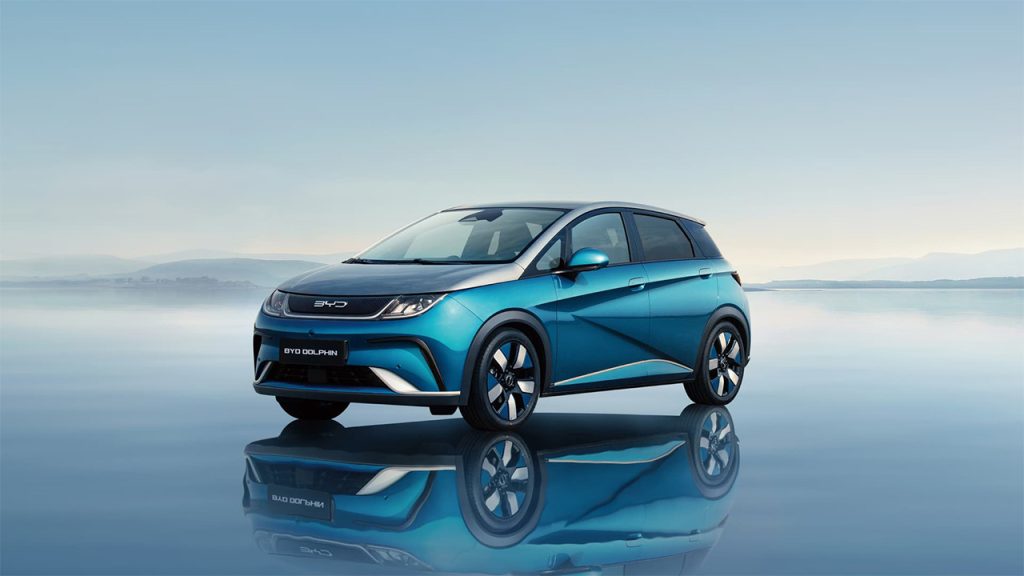
India Rejects BYD’s $1 Billion Electric Vehicle Factory Proposal

Indian authorities have declined BYD’s $1 billion joint venture factory proposal with a local company, Megha Engineering, to establish an electric vehicle manufacturing facility in India. The plan aimed to produce 10,000-15,000 electric vehicles annually and capture 40% of India’s electric vehicle market by 2030.

BYD EV Han

BYD-Megha Engineering Joint Venture Proposal Rejected

The rejection came amidst increasing scrutiny of Chinese investments in India and concerns about the security of such investments. The Department for Promotion of Industry and Internal Trade sought opinions from other departments during the evaluation process. Existing regulations were cited as a barrier to BYD’s investment proposal.

This rejection reflects India’s stringent approval process for foreign car manufacturers, as the country seeks to protect and promote its domestic automotive industry. Although India’s automotive consumer market shows significant growth potential, foreign companies have faced challenges entering and exploring the market. However, Tesla appears to have successfully navigated the path to enter the Indian market, with recent reports indicating its plans to establish a manufacturing facility in the country. According to these reports, Tesla is aiming to offer its cars for as affordable as Rs. 20 lakh.

India’s new car sales in 2022 increased by 25.7% year-on-year, surpassing 4.25 million units, making it the world’s third-largest market after China and the United States. However, the rejection of BYD’s joint venture proposal, along with past instances of other companies like General Motors and Ford abandoning manufacturing in India, highlights the complexities and difficulties foreign companies encounter when trying to establish a presence in the Indian automotive market.

Recently BYD strengthened its global presence by announcing its plans to construct three factories in Brazil. The company is partnering with the government of Bahia state for this ambitious project, investing an estimated 3 billion Brazilian Real (approximately 630 million USD) to fuel its expansion efforts.

RELATED:

(Via)