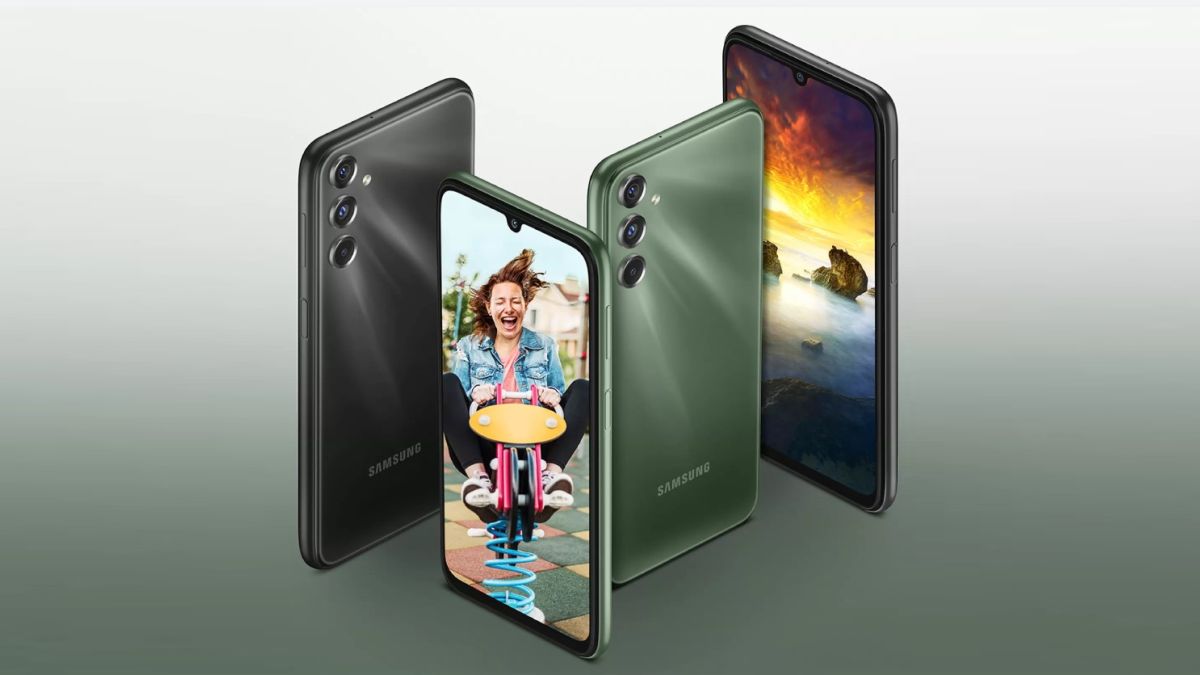
Samsung will unveil the Galaxy F34 in India on August 7 (Monday). Going by the teased features, the handset will likely be a rebranded Galaxy M34.
The Galaxy F34 is said to sport a 6.5-inch Super AMOLED display with an FHD+ resolution, a 120Hz refresh rate, and 1000 nits peak brightness level. The panel will have a dewdrop notch and will be protected by Corning Gorilla Glass 5.
The device will arrive with an OIS-assisted 50MP primary camera and draw energy from a 6,000mAh battery. Last but not least, it will get 4 Android updates and 5 years of security patches.
2. Tecno Pova 5 Series
Tecno Pova 5 seris Arc inerface
The Tecno Pova 5 series is set to launch in India on August 11 (Friday). The lineup will include Pova 5 and Pova 5 Pro.
Both these phones are already official in some markets. Therefore, we know everything about them.
The Pova 5 comes with a 6.78-inch FHD+ 120Hz display, a MediaTek Helio G99 chip, a 50MP main camera, a 6,000mAh battery, and 45W charging support.
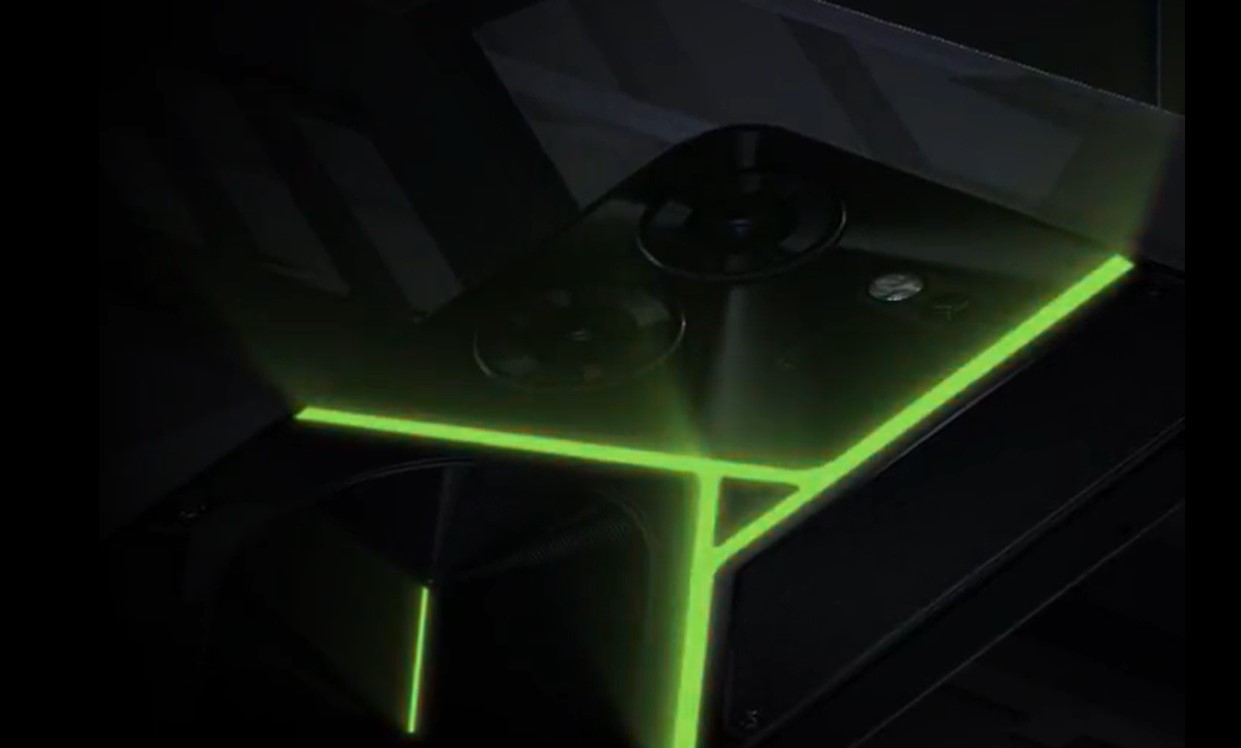
On the other hand, the Pova 5 Pro retains most of the specs of the vanilla model. But it supports 5G as it is powered by a MediaTek Dimensity 6080 chipset. It also arrives with an LED strip on the back.
Baidu, the Chinese tech giant, has joined hands with Great Wall Motor, the country’s leading SUV manufacturer, to integrate Baidu’s advanced AI model Ernie into its vehicles. This collaboration aims to revolutionize the automotive industry by introducing cutting-edge artificial intelligence capabilities into production cars.
The partnership between Baidu and Great Wall will focus on developing intelligent natural voice interaction applications for use in vehicles. By leveraging Ernie’s powerful capabilities, these applications are expected to enhance the driving experience for consumers, providing them with seamless and intuitive communication with their cars. However, Great Wall Motors has not yet revealed which models will feature the conversational technology or the exact launch timeline.
This innovative technology is not limited to Great Wall Motor alone; Baidu has also established a similar collaboration with Ecarx, a promising tech startup backed by Geely. Together, they are exploring various in-vehicle interaction scenarios, utilizing the prowess of foundational AI models to validate numerous groundbreaking features for future production models.
source: GWM
The potential impact of this partnership is extensive, with features developed through these collaborations expected to extend to brands like Lynk & Co and Smart in the future. Baidu’s electric vehicle subsidiary, Jidu Auto, is already committed to using Ernie Bot in its forthcoming cars, with the first production model expected to debut in late 2023.
Baidu’s Ernie Bot, akin to ChatGPT, will enable dynamic conversations between drivers and their vehicles, ushering in a new era of intelligent automotive experiences. Ernie’s capabilities are promising, enabling dynamic interactions and emotional intelligence within the car, thereby catering to users’ deeper needs.
In-vehicle voice assistants powered by AI models are gaining traction in the industry, with companies like Li Auto and Xpeng also investing in their own AI interaction experiences.
Li Auto showcased its in-vehicle voice assistant, Lixiang Tongxue, which leverages the cognitive foundational model Mind GPT to offer smart features, including teaching, car concierge services, drawing guidance, and programming assistance. While Xpeng has not made recent announcements about AI technology integration, the company believes that AI, exemplified by GPT, holds immense potential in advancing autonomous driving from Level 4 to Level 5.
As the automotive industry embraces AI models like Ernie Bot and GPT-related technologies, consumers can anticipate an enhanced driving experience with intelligent voice interactions and expanded autonomous driving capabilities.
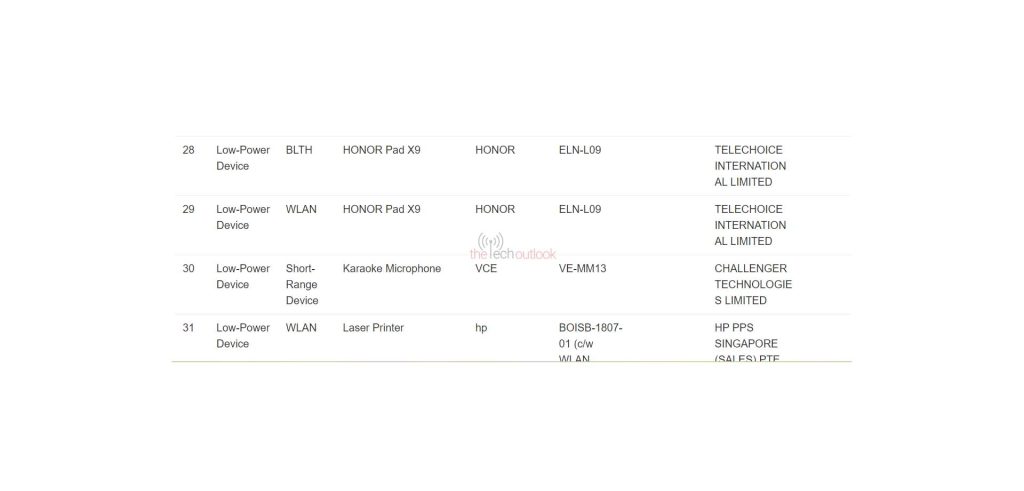
Honor recently launched the Honor Pad X9 in the UK and India. The affordable tablet seems to be headed to Singapore next as it has been spotted on the IMDA certification website.
The Honor Pad X9 has emerged on the IMDA certification website with the model number ELN-L09. The certification does not give out much information other than the fact that the Pad X9 will support Bluetooth and Wi-Fi connectivity. That being said, the certification has all but confirmed an imminent Singapore launch. Let’s take a look at the specifications of the device.
Honor Pad X9 specs
The Honor Pad X9 comes with an impressive 11.5-inch display featuring a sharp 2K resolution, with a peak brightness of 400 nits. The screen also supports a smooth 120Hz refresh rate. Moreover, the tablet is equipped with six speakers, certified for Hi-Res audio.
With a slim profile of just 6.9mm and a weight of 499 grams, the Honor Pad X9 is easy to carry around and use on the go. It is powered by the Snapdragon 695 processor, and has 4GB of physical RAM along with 3GB of virtual RAM, ensuring smooth multitasking. For storage, it features up to 128GB of storage.
The Honor Pad X9 boasts a sizable 7,250mAh battery for prolonged usage and supports fast 22.5W charging. Running on MagicUI 7.1, based on Android 13, it offers a user-friendly interface. The tablet comes with a 5MP rear camera and a 5MP front camera, ideal for basic photography and video calls.
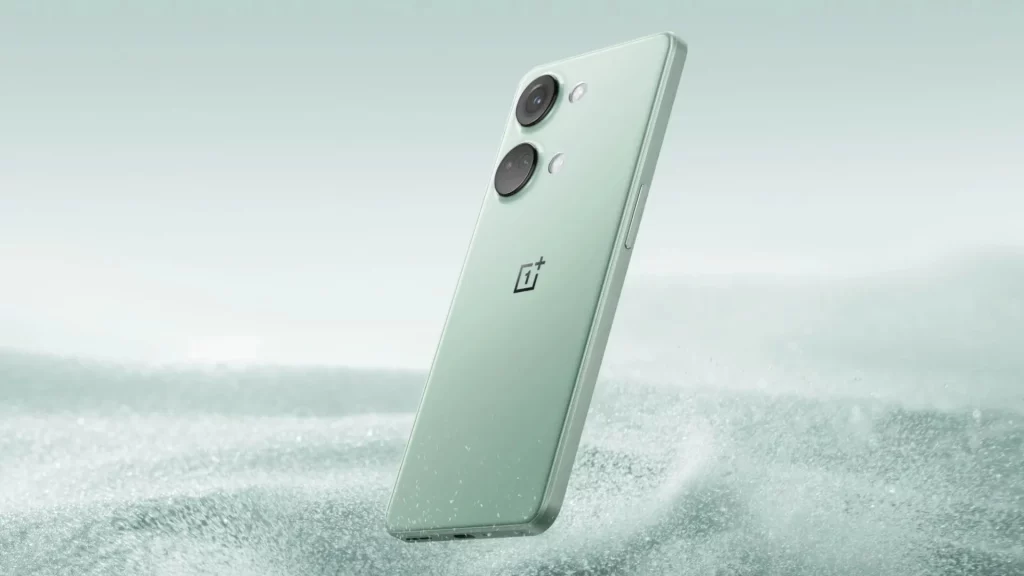
The OnePlus Nord CE 3 was first announced in India back in July. And now, the device is finally going on sale for the first time ever today (4th August 2023). So here are all the details regarding its specs, pricing, and special launch offers.
OnePlus Nord CE 3 Pricing & Launch Offers
The Nord CE 3 has been released in India for a starting price tag of 26,999 INR for its 8GB + 128GB variant. Meanwhile, the higher-end 12GB + 256GB storage configuration costs 28,999 INR. The Chinese smartphone maker’s latest Nord phone is currently available for purchase from Amazon and its official stores.
OnePlus is also offering special launch offers for the Nord CE 3. The brand is bringing a 2,000 INR discount on the purchase of Nord CE 3. Buyers can also avail an additional 2,000 INR off from Amazon’s exchange offers. On the other hand, there is another 1,000 INR discount for OnePlus Store users using Redcoins. An extended warranty plan is also offered for just 99 INR via the brand’s official website.
Specifications
The Nord CE 3 sports a 6.7-inch Fluid AMOLED display that has a Full HD+ resolution, 120Hz refresh rate, and HDR10+. It is equipped with the Qualcomm Snapdragon 782G SoC and runs on Android 13 OS-based OxygenOS 13.1 custom skin out of the box. Under the hood, a large 5,000mAh battery pack powers the device, which also supports up to 80W fast charging. The back features a 50-megapixel triple camera setup, while the front houses a 16-megapixel selfie shooter. Other notable features include an IP54 protection rating, Dolby Atmos audio, and an in-display fingerprint scanner.
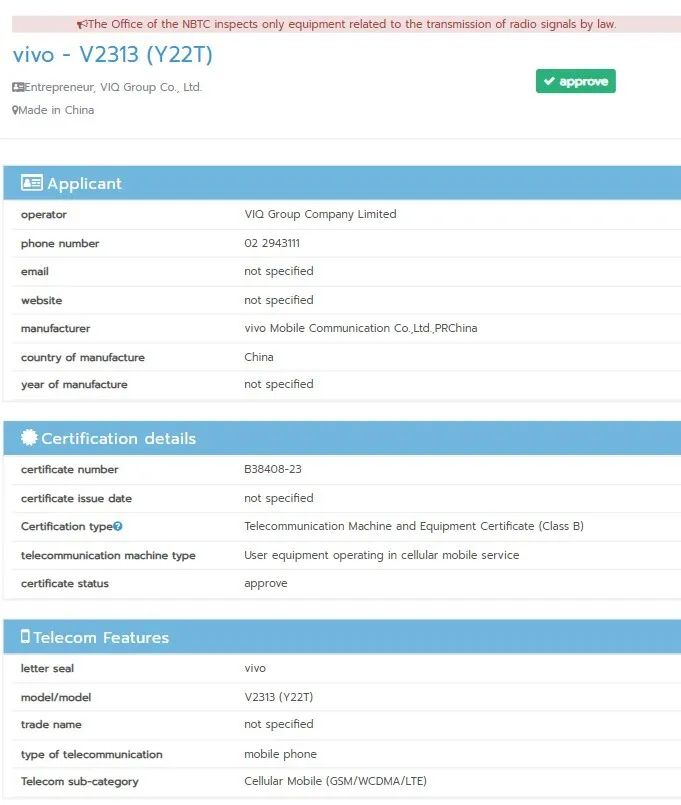
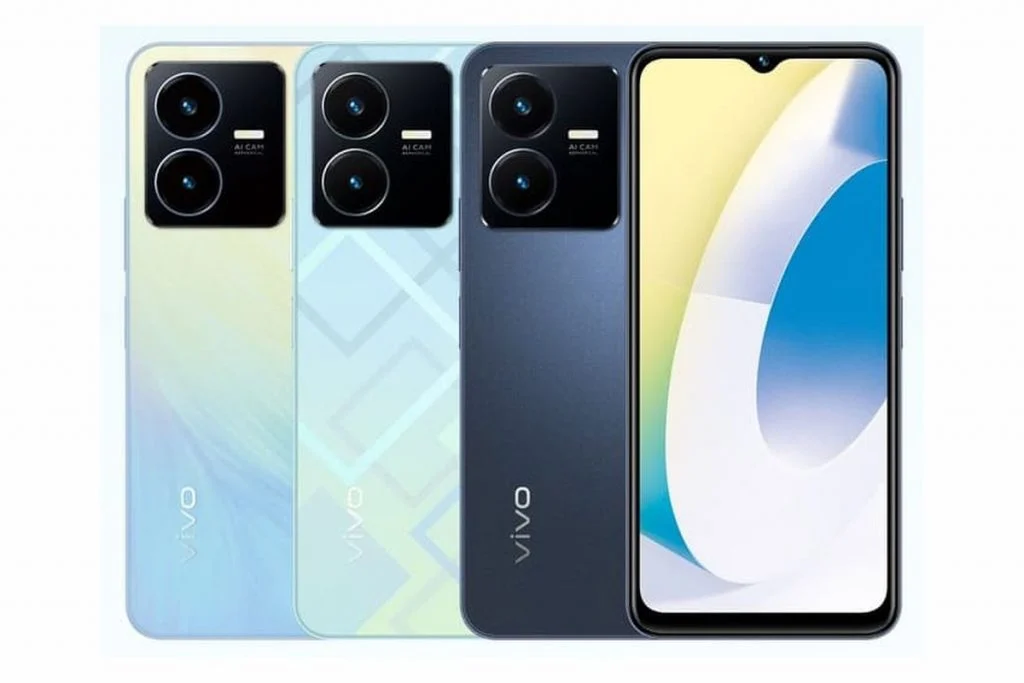
After launching the Vivo Y22 back in September 2022, the brand is now gearing up to launch another smartphone in the series called the Vivo Y22T. The smartphone has emerged on the NBTC listing confirming its moniker.
The Vivo Y22T has been spotted on NBTC Thailand’s certification website with model number Vivo Y22T. The certification confirms that the Y22T will support 4G connectivity. No other details of the smartphone are known at this moment. Let’s take a look at the specs of the Vivo Y22 to get an idea of what to expect from the Y22T.
Vivo Y22 specs
The Vivo Y22 features a compact design, measuring 164.3 x 76.1 x 8.38mm and weighing 180 grams. It offers a 6.55-inch LCD panel with an HD+ resolution and a 90Hz refresh rate. The device runs on Android 11 with FunTouchOS 12 UI.
The camera setup on the Vivo Y22 includes an 8MP front camera for selfies and video calls, as well as a 50MP + 2MP rear camera configuration for capturing photos. The MediaTek Helio G85 processor powers the device, ensuring satisfactory performance for daily tasks. It is available in two RAM options: 4GB or 6GB, and offers storage capacities of 64GB or 128GB.
It features a 5,000mAh battery with 18W fast charging. Connectivity options include 4G VoLTE, Wi-Fi 802.11ac, Bluetooth 5.0, and GPS, offering seamless connectivity. Additional security features include face unlock and a side-facing fingerprint scanner. The phone also boasts an IPX4/X5 rating, making it resistant to water and dust.
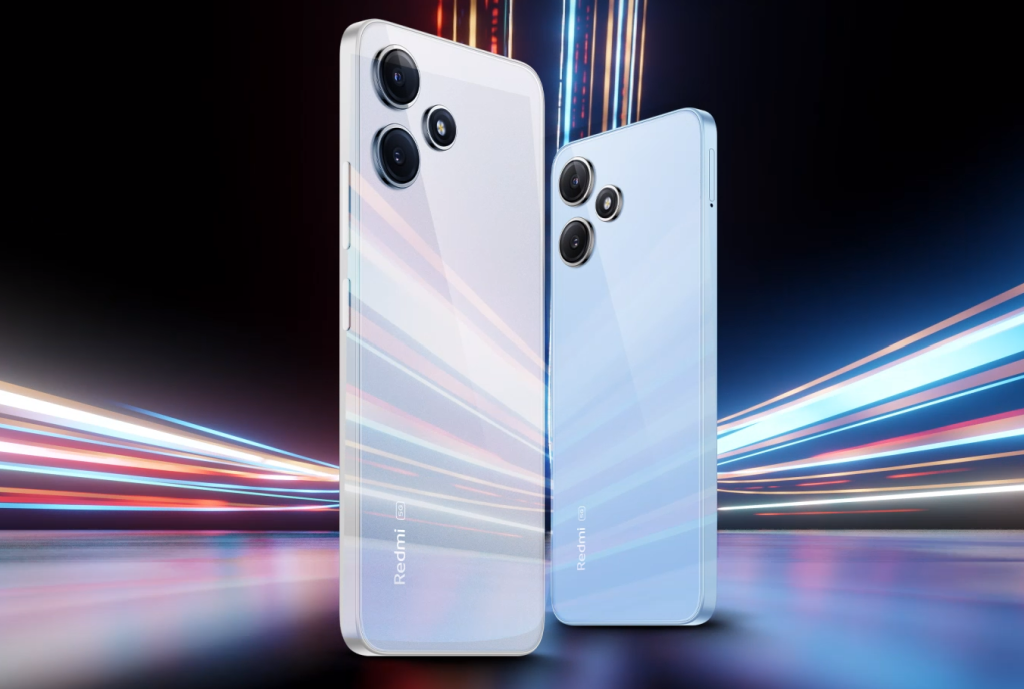
Xiaomi unveiled the Redmi 12 4G and Redmi 12 5G models in India last week. Now, the first sale of these two budget devices has officially kicked off for the first time. So let’s have a look at their specifications and pricing.
Redmi 12 5G Pricing & Availability
The Chinese tech giant’s latest budget 5G phone has a starting price tag of 11,999 INR for the 4GB + 128GB storage configuration. On the other hand, the 6GB + 128GB variant has a price tag of 13,499 INR, and the 8GB + 256GB costs 15,499 INR. The brand is also offering an instant discount of 1,000 INR with ICICI Credit and Debit cards. Redmi 12 5G is now on sale in India starting today (4th August 2023) and will be sold via the company’s official website, Amazon, and Xiaomi retail stores.
Specifications
The new budget device sports a tall 6.79-inch FHD+ display that supports a 90Hz refresh rate and 550 nits of peak brightness. Under the hood, it is equipped with the Qualcomm Snapdragon 4 Gen 2 SoC and is powered by a large 5,000mAh battery pack that supports up to 18W fast charging. On the rear, Redmi 12 5G features a 50-megapixel dual camera setup, while the front houses an 8-megapixel selfie shooter.
The handset runs on Android 13 OS-based MIUI 14 custom skin out of the box. Other notable features include Bluetooth, Wi-Fi, GPS, USB Type-C port, IR blaster, side-mounted fingerprint scanner, and IP53 protection rating for splash resistance.
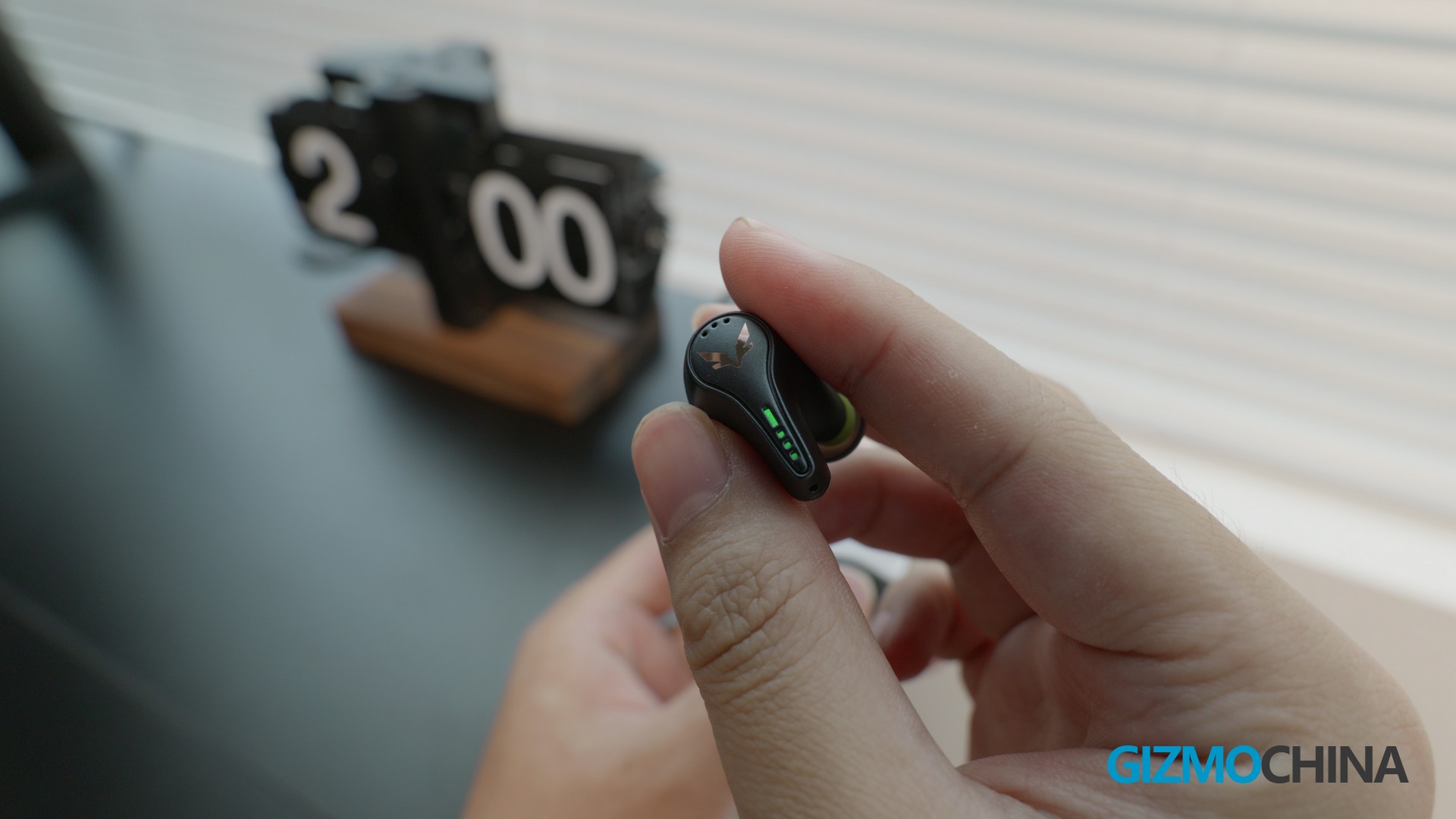
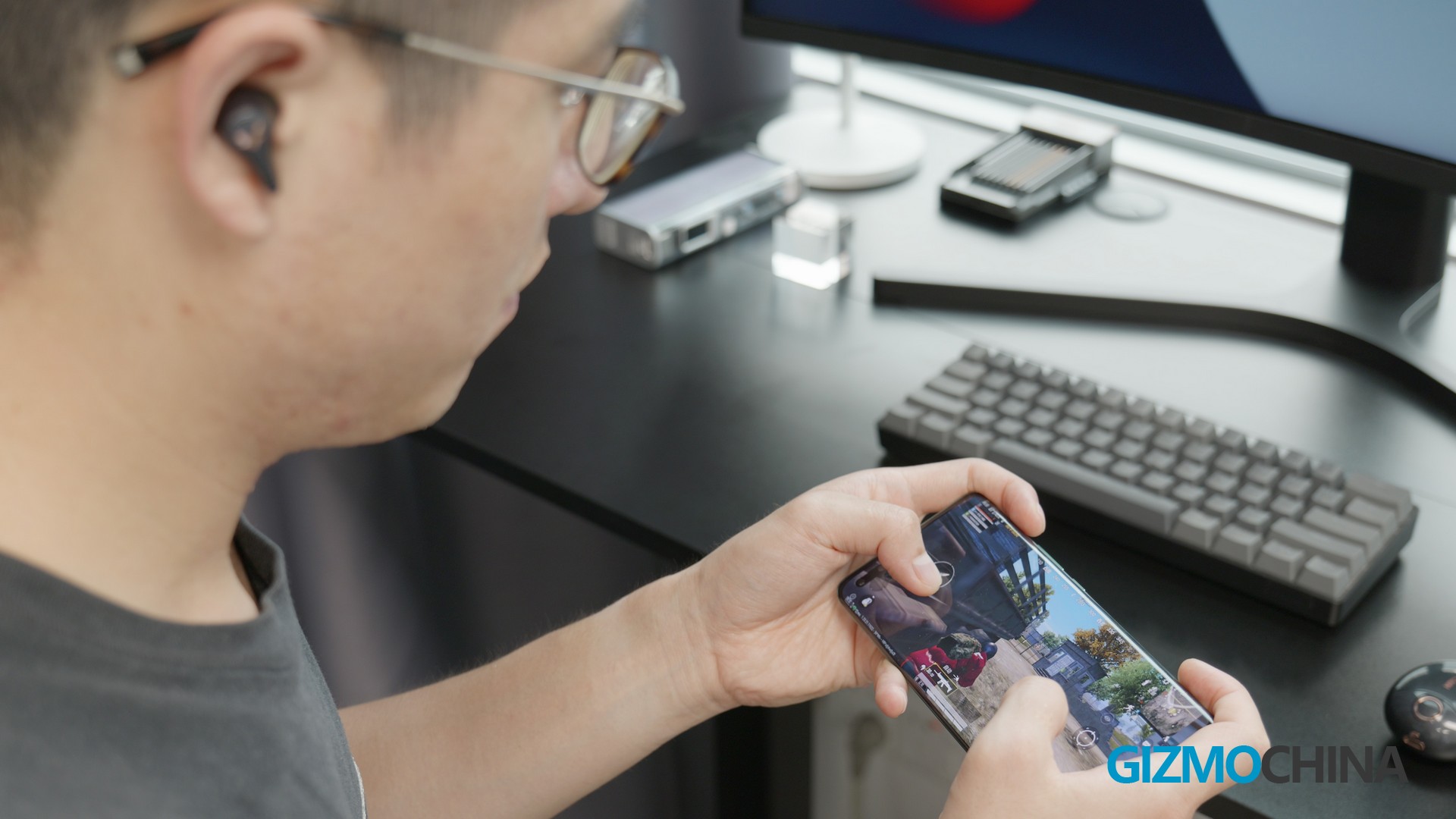
Today I got the latest TWS product from FiiTii. The earbuds are called the HiFiDots, and belong to the HiFi series from the FiiTii product line. The HiFiDots feature two Balanced Armature drivers and a Dynamic driver with Bluetooth 5.3 connection, and an Aptx-lossless codec. Hardware-wise, this pair of earbuds is very powerful and even can compare to some premium earbuds. So let’s see what’s interesting about these earbuds.
Unboxing
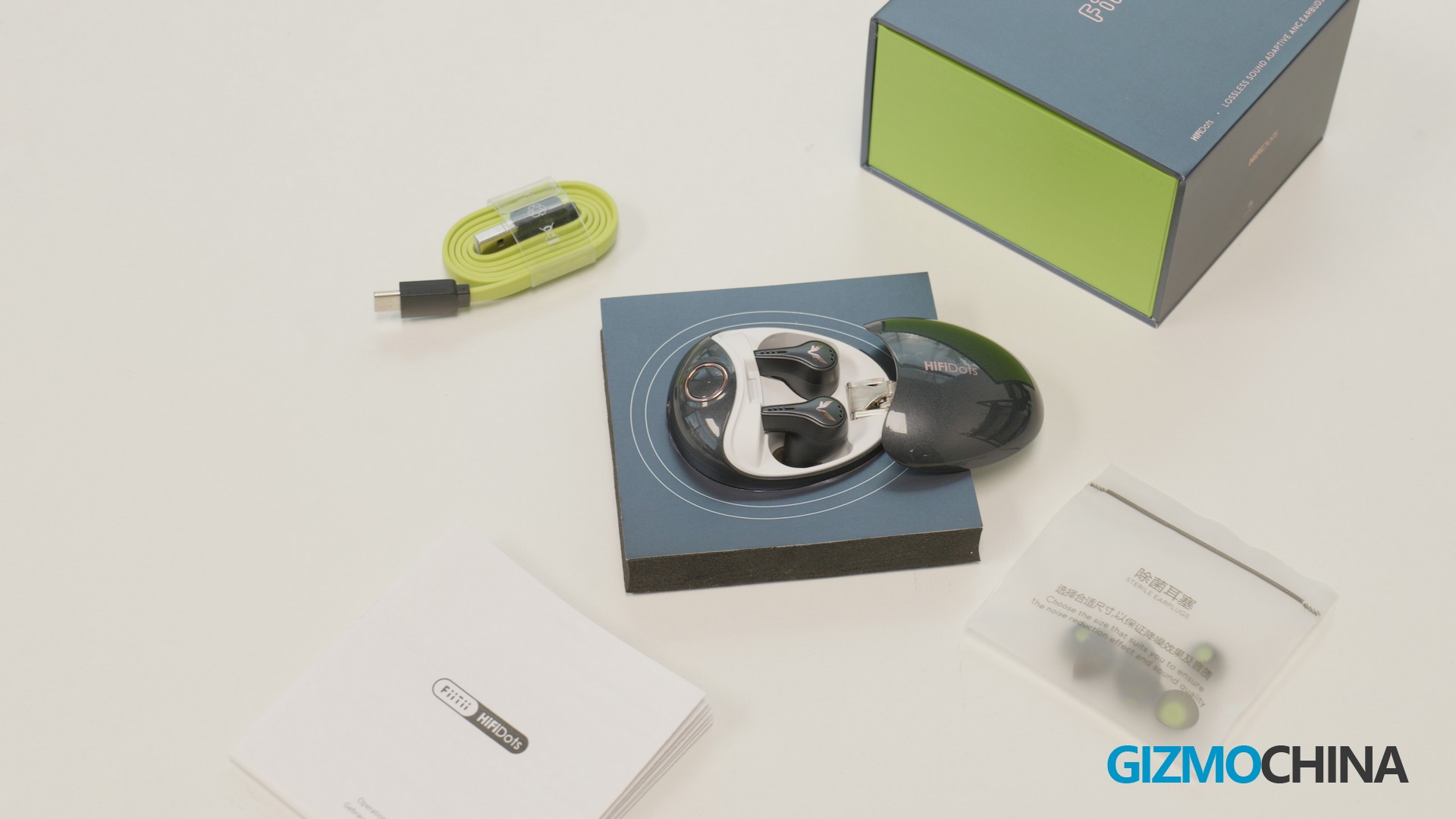
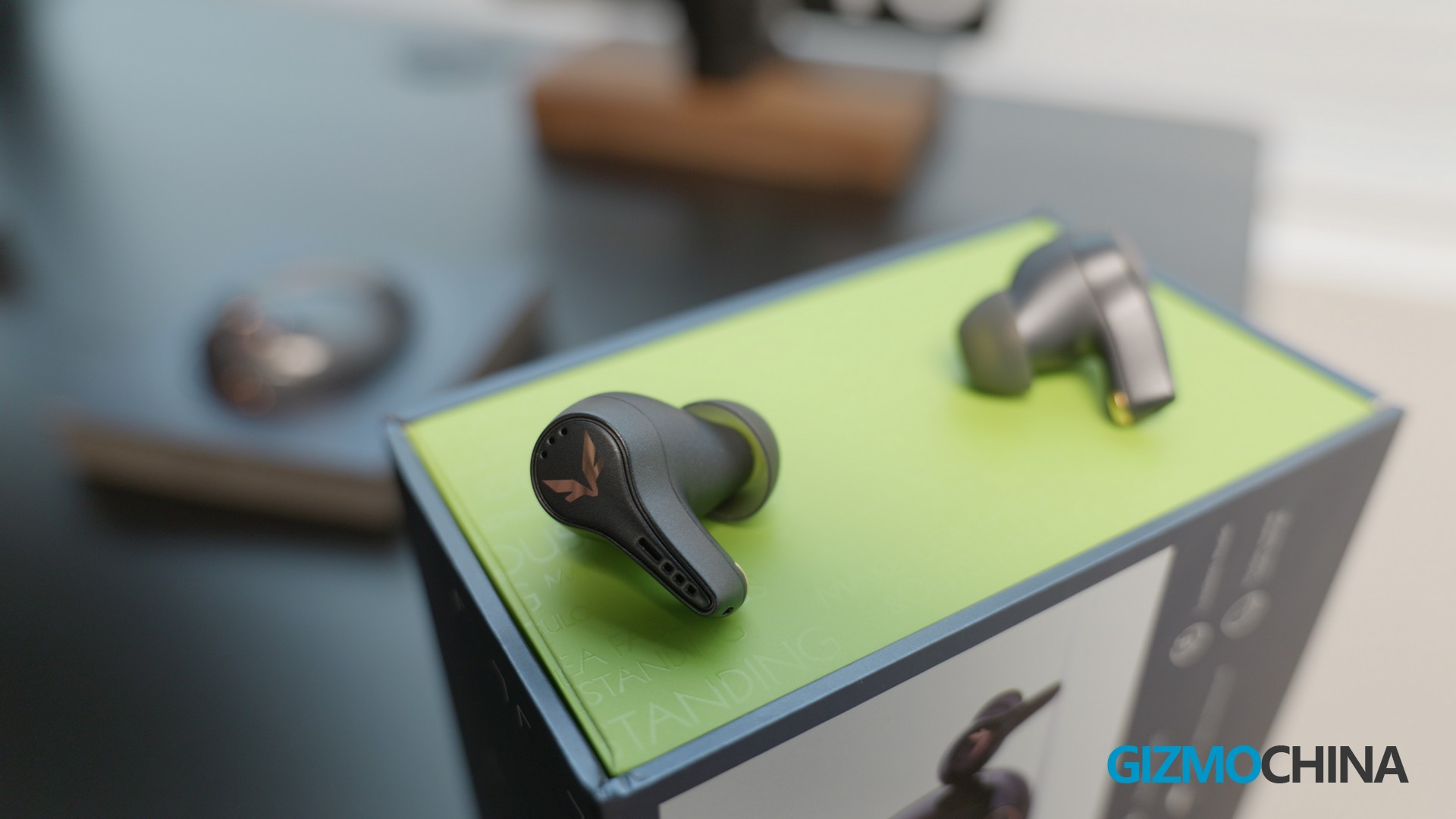
The HiFiDots packaging is very colorful. Green, blue, and black are the theme colors, while these hues are all muted and less saturated, giving them a more upscale appearance, as does the logo’s font. Just by looking at the packaging, you can tell that this is a flagship product. The interior of the package is designed as a gift box, and when you open the box, you will find the HiFiDots charging case. The package also contains a Type-C cable, three sizes of ear tips, and of course, a user manual. Clearly, the company has put thought into this packaging design.
Design
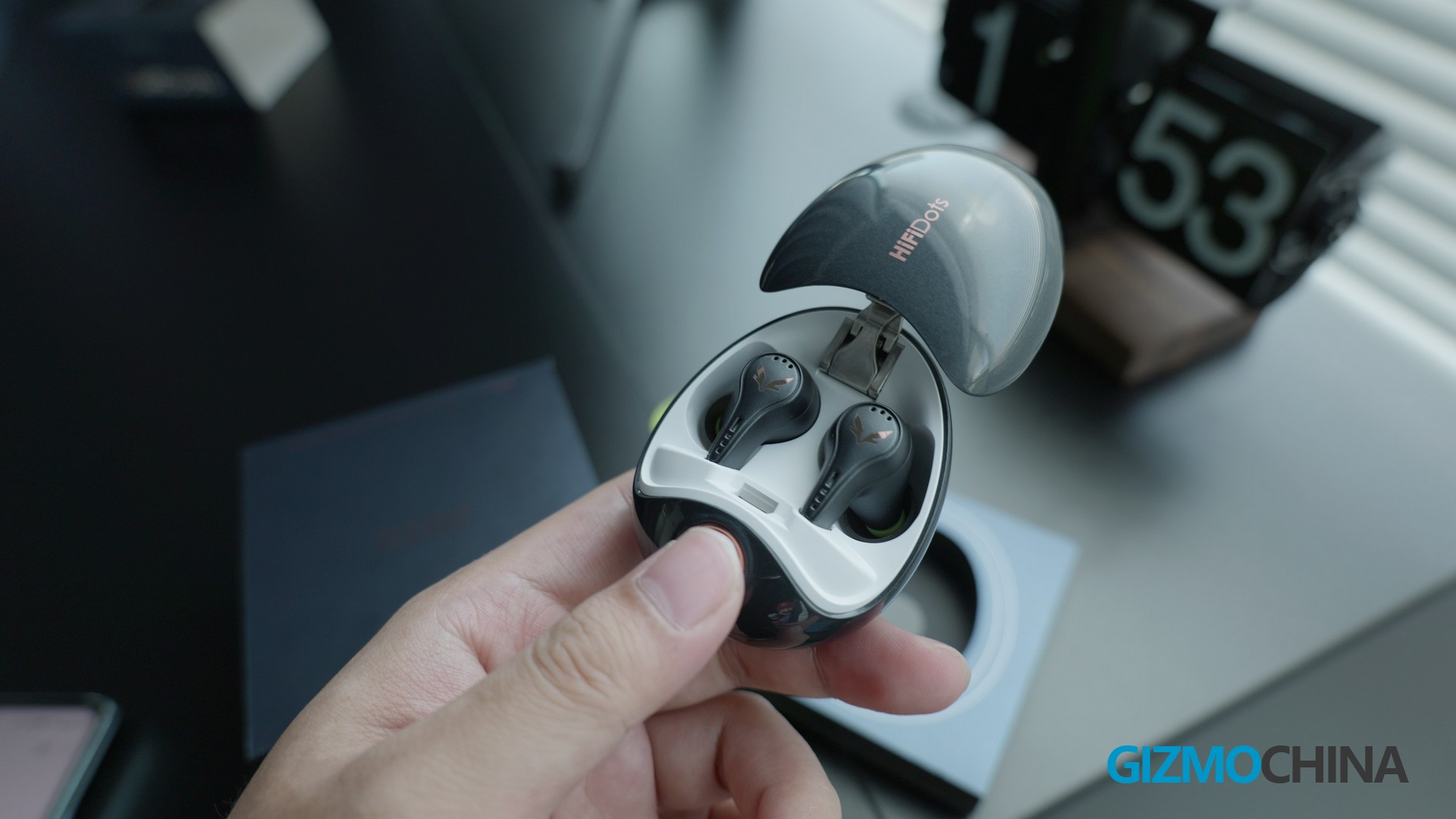
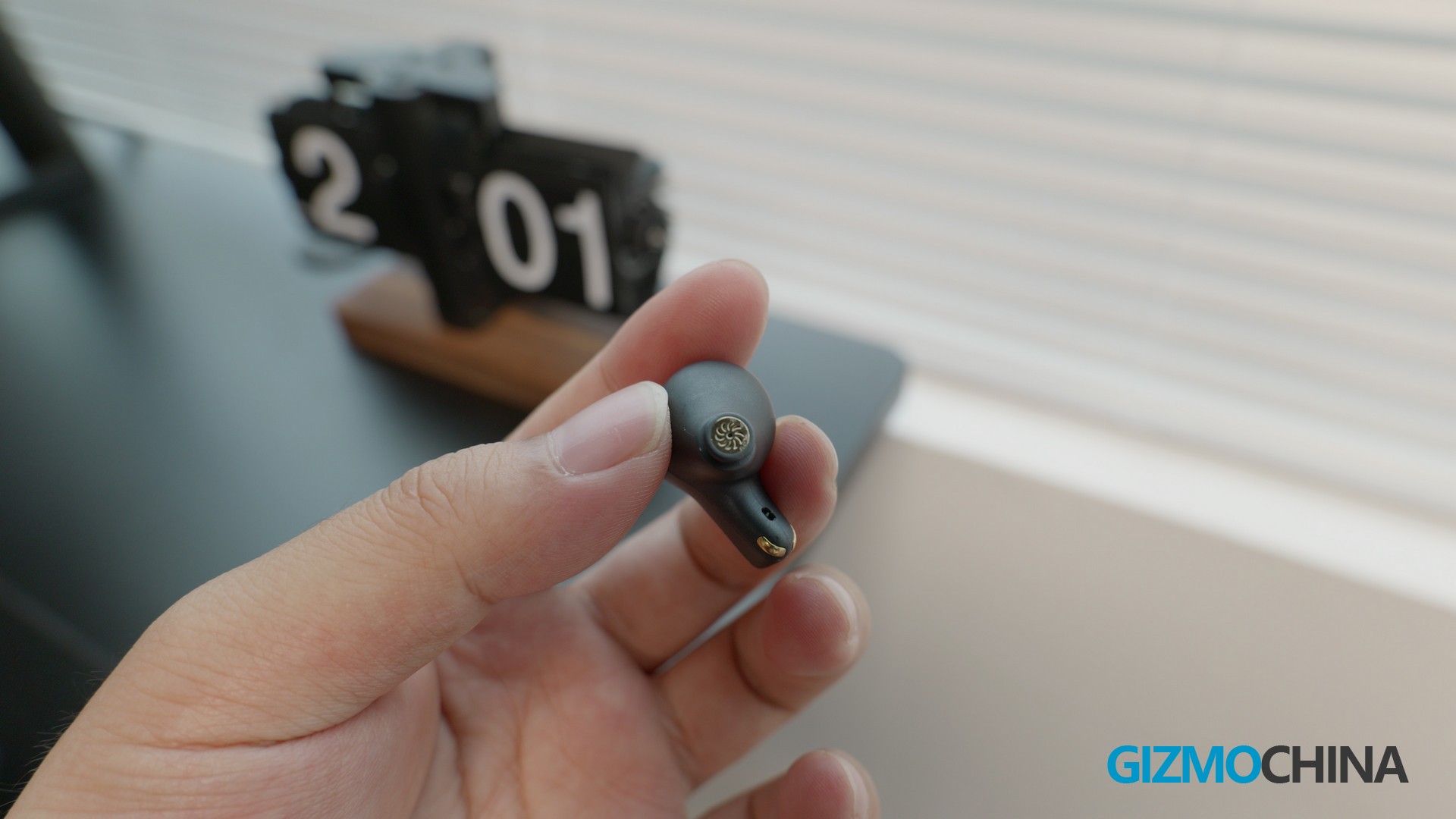
Unlike other TWS earbuds I reviewed before, the HiFiDots have a space-capsule-like rounded design. The surface’s finish is also quite special; it appears to be some inspiration from a luxury automobile. This design and finish enhance the overall appearance and touch in hands, but it is also more likely to collect fingerprints. When you press this button, the battery case pops open like the hatch of a spaceship; To be honest, I pretty much enjoyed the futuristic mech design! Unlike the charging case, the earbuds themselves are very small and lightweight, and there are LED lights flashing to let you know the status of the earbuds, so this design is very sci-fi.
The interior of the charging case is white; although it is not stain-resistant, I think most users wouldn’t often expose the insides. On the other hand, it would look better if it matched the packaging by being green. But that’s just my personal feeling. All in all, I am pretty satisfied with the look of the HiFiDots.
Wearing experience
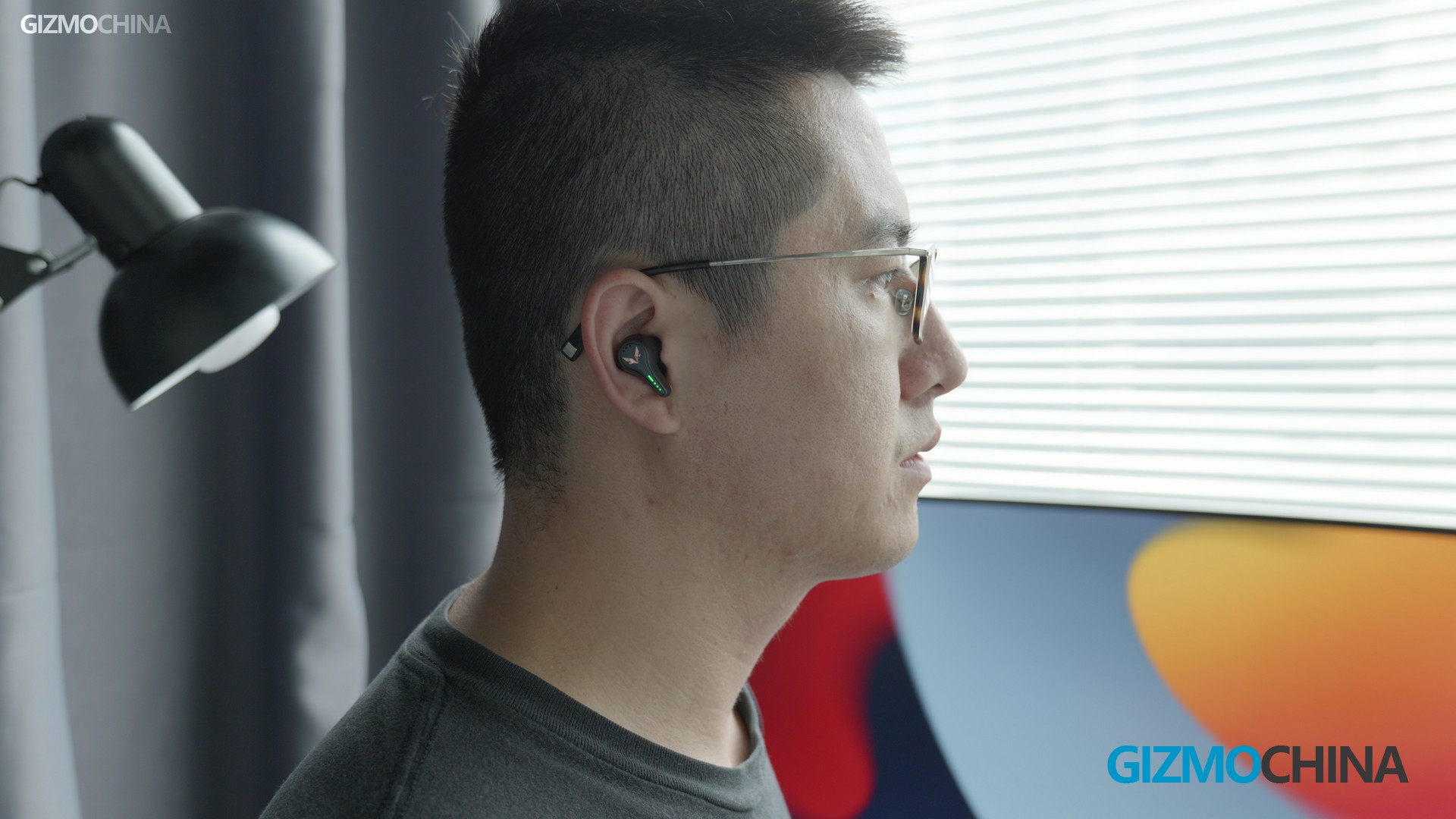
In terms of wearing comfort, HiFiDots earbuds are only 4.8g each, and unlike other TWS earbuds that put the battery in the stems, the HiFidots have a unique battery location, so I do not experience any discomfort even when I use them for an extended period of time.
Sound Quality
Due to the presence of two Balanced Armature drivers and one Dynamic driver in each earbud, the HiFiDots have provided me with a new perspective on the sound quality of TWS products. The science behind it is that the Balanced Armature driver brings out the high-resolution sound of vocals and treble, while the Dynamic driver provides bass support. When I first tested them, I immediately noticed that the vocals and instrument sounds were clearly separated; this is an experience that was exclusive to high-end speakers. HiFiDots excels in delivering impressive bass performance. Unlike many earbuds that tend to overpower a certain frequency and cause listener fatigue over time, the HiFiDots strikes a great balance.
The drums in the music are skillfully represented without overloading, while the bass here remains resilient and dynamic. In terms of treble, the Balanced Armature driver outshines traditional single Dynamic driver earbuds, producing bright and crisp tones. Overall, HiFiDots offer excellent sound quality, catering to fans of various music genres. The HiFiDots also support the Aptx-lossless codec and provide a bit-rate of 1.2 Mbps, which ensures that the source stably produces high-quality sound.
ANC
As for adaptive active noise cancellation, HiFiDots provide up to 47 dB of adaptive noise reduction, which, compared to other earbuds, is a clear advantage. And that is a pretty insane figure even compared with some premium models.
It ensures that there is always a quiet space to enjoy music, regardless of whether you are on a subway or an airplane. In addition, there is a transparency mode, so you are able to not miss anyone’s conversation. Thanks to the 4.5 hours of battery life with noise canceling on, I do not have to worry about charging when I go out.
FiiTii App
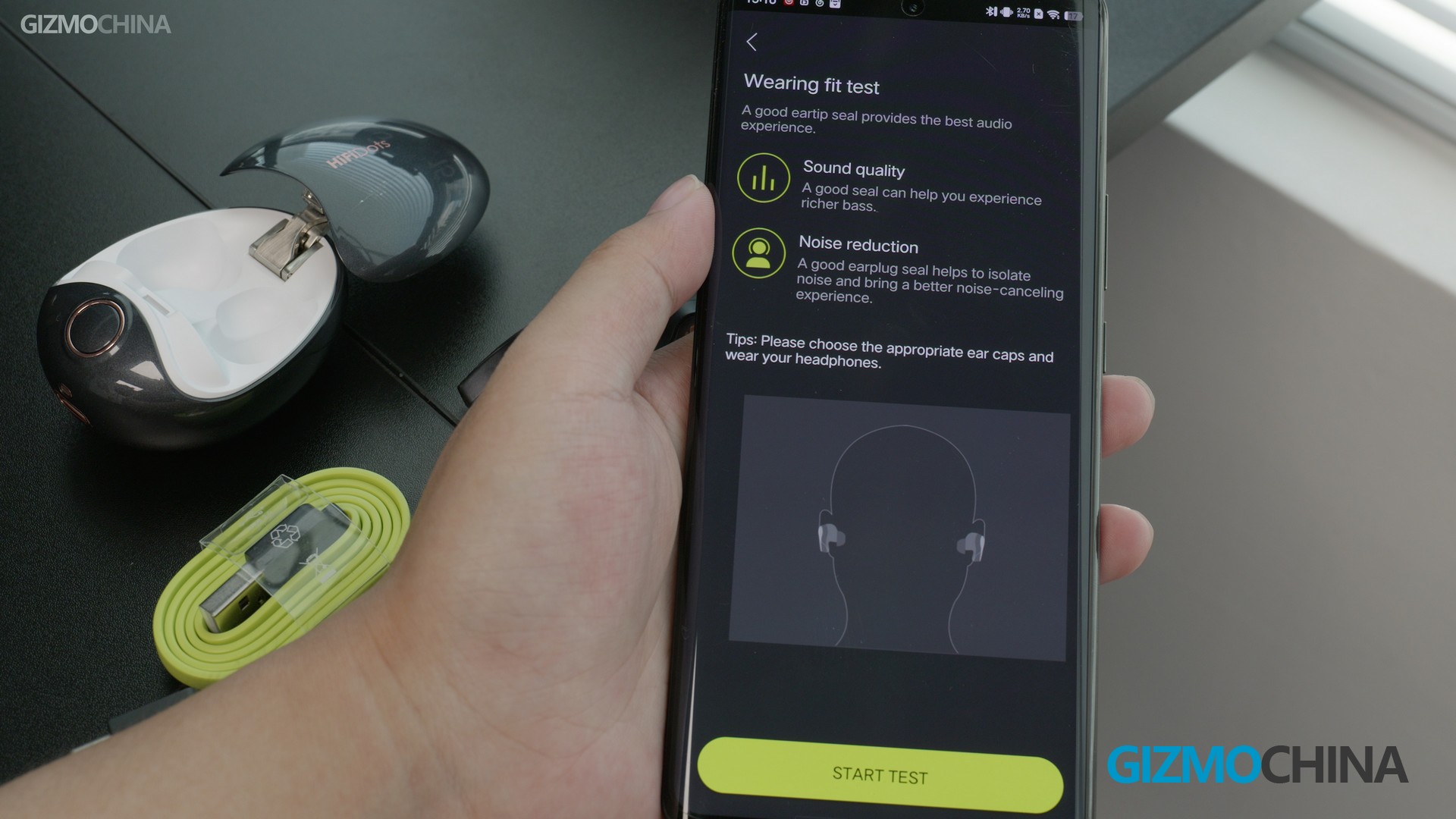
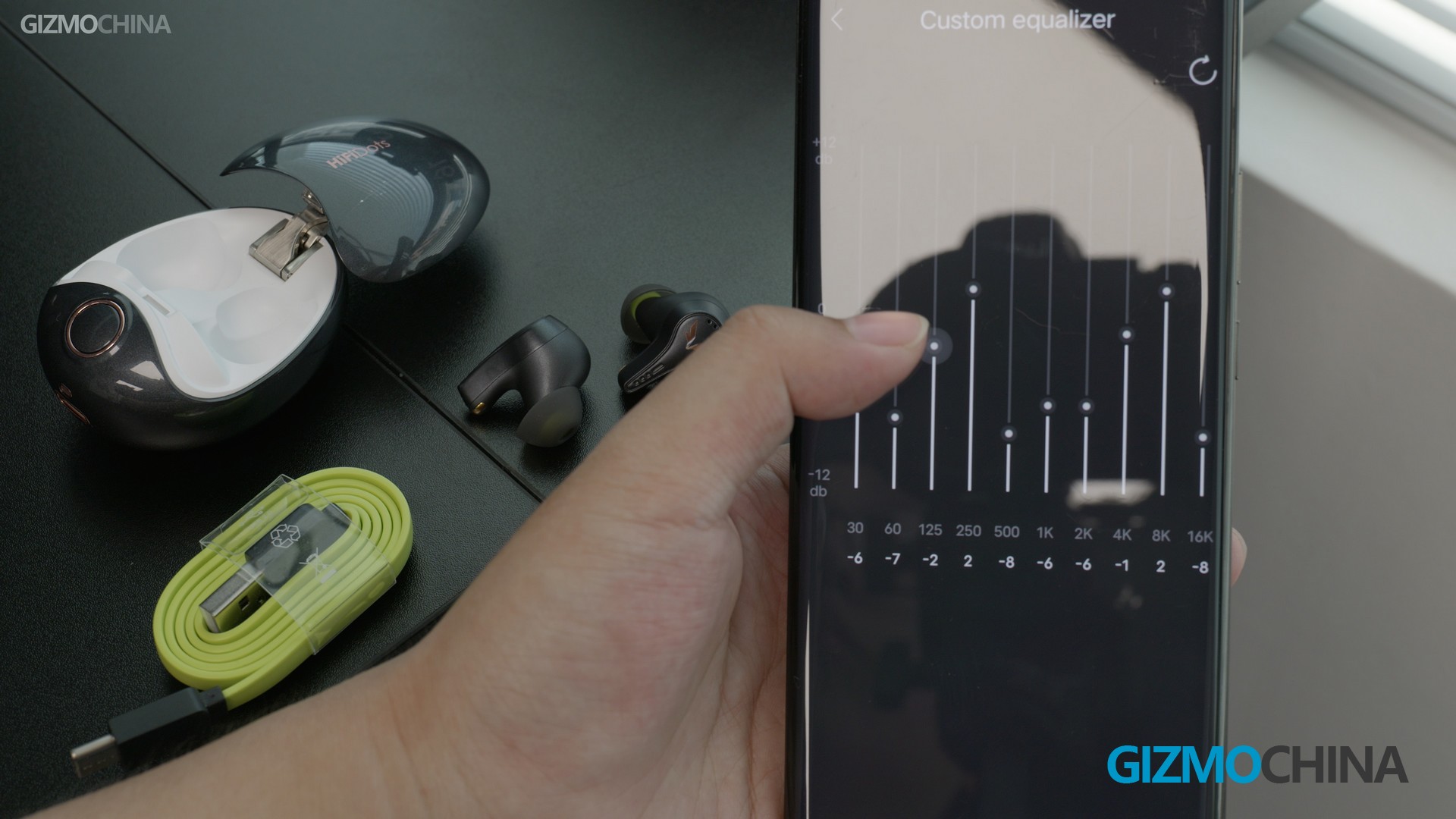
In addition, the FiiTii app offers customizable EQ settings for a variety of music preferences, allowing you to create your own custom configurations. The ear-tip-size advice provided by the APP’s earplug test is excellent for first-time users of in-ear ANC earbuds.
Device Switching
I tried pairing the HiFiDots with both my phone and computer at the same time, and the dual connection was extremely stable. And switching between devices was incredibly quick. It should be noted that, when playing audio and video simultaneously, you must manually pause what is playing on one device before switching to the other device.
Waterproof
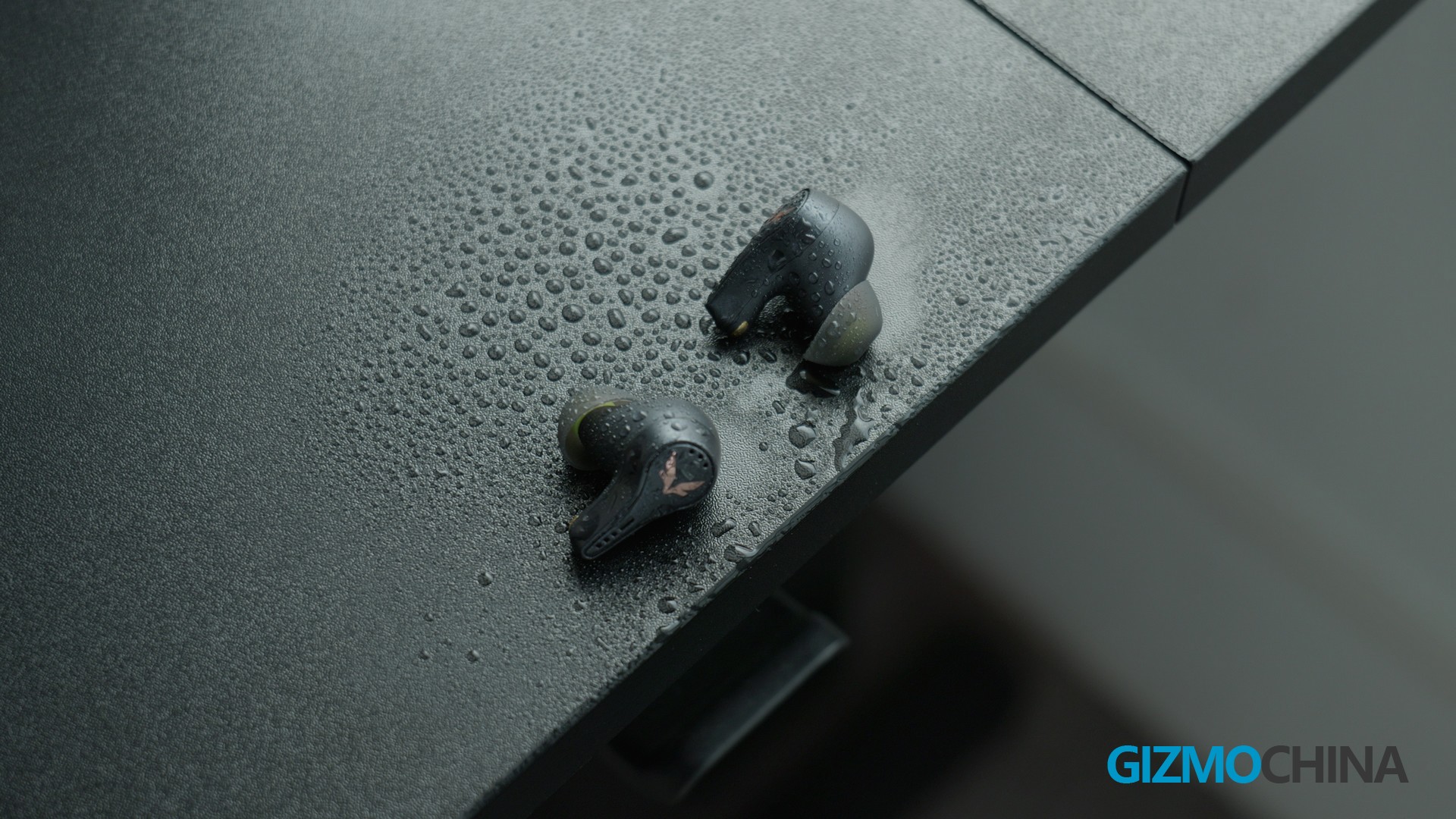
The IPX7 waterproofing of the HiFiDots allows me to wear them with confidence for exercise or rainy days. During the use, I found that the HiFiDots could even withstand a sudden downpour without any problem.
Game Latency
Even when playing FPS games on a phone, there is no noticeable sound latency thanks to the Qualcomm 3071 chip; however, to get the best gaming performance, your phone must also be powered by a Qualcomm chipset that supports the latest audio feature.
The HiFiDots provided me with an innovative alternative to conventional TWS earbuds. It is unique from the design to the sound quality, elevating not only the look of the earbuds but also the performance to a portable Hi-Fi level. So overall, I would say that the HiFiDots is a product that is worth a try.
Buy the HiFiDots here on the official website with 20% off discount code: HIFIDOTS20 (End Date: 08/31/2023 11:59 PM)
Qualcomm the technology behemoth disappointed investors with its latest financial report, revealing adjusted earnings of $1.87 per share on revenue of $8.45 billion for the quarter ending on June 25. The figures fell short of analysts’ expectations, who had estimated earnings of $1.81 per share on revenue of $8.51 billion. These lackluster results indicate a worrisome trend for Qualcomm, as both earnings and sales have experienced significant year-over-year declines, dropping 37% and 23%, respectively.
The company attributes this downward trend to the ongoing slowdown in smartphone sales, a challenge it has been facing for three consecutive quarters. With the smartphone market facing one of its most challenging slumps in years, particularly in China, which accounts for 60% of Qualcomm’s sales, the company is feeling the impact.
To combat the difficult market conditions, Qualcomm has already initiated workforce reductions, incurring $285 million in restructuring charges, mainly from severance payments, during the last quarter. The company anticipates further workforce adjustments to navigate the tough market landscape.
Looking ahead, Qualcomm predicts adjusted earnings of $1.90 per share on sales of $8.5 billion for the current quarter. However, this forecast falls slightly below Wall Street’s expectations of $1.92 per share on sales of $8.74 billion. In comparison, the company reported adjusted earnings of $3.13 per share on sales of $11.39 billion for the same quarter in the previous year.
As the broader smartphone market continues to pose challenges, Qualcomm faces the critical task of seeking new opportunities for growth and innovation to regain its competitive edge and steer toward a brighter future.
In the latest trading session, Qualcomm experienced an 8.2% drop in its stock price, closing at $118.70. This decline comes on the heels of a 2.1% dip during the regular session on Wednesday, with the stock finishing at $129.27. However, experts state that there might be some potential for a rebound.
In a recent news release, Qualcomm’s Chief Executive, Cristiano Amon, expressed optimism about the company’s future, stating that artificial intelligence applications could drive increased chip sales. Amon highlighted the potential of on-device AI to catalyze a turning point across all of Qualcomm’s products, emphasizing the unmatched accelerated computing performance and power efficiency of their platforms.
Despite the stock’s recent dip, Qualcomm remains a strong player in the fabless semiconductor industry, ranking No. 10 out of 36 stocks, according to IBD Stock Checkup. Additionally, the company holds an impressive IBD Composite Rating of 85 out of 99, signaling its growth potential.
With a strong focus on AI and promising product developments, Qualcomm aims to position itself as a leader in the evolving tech landscape, seeking new opportunities for growth and market dominance. Investors will closely monitor the company’s performance in the coming days, hoping for signs of a potential stock rebound.
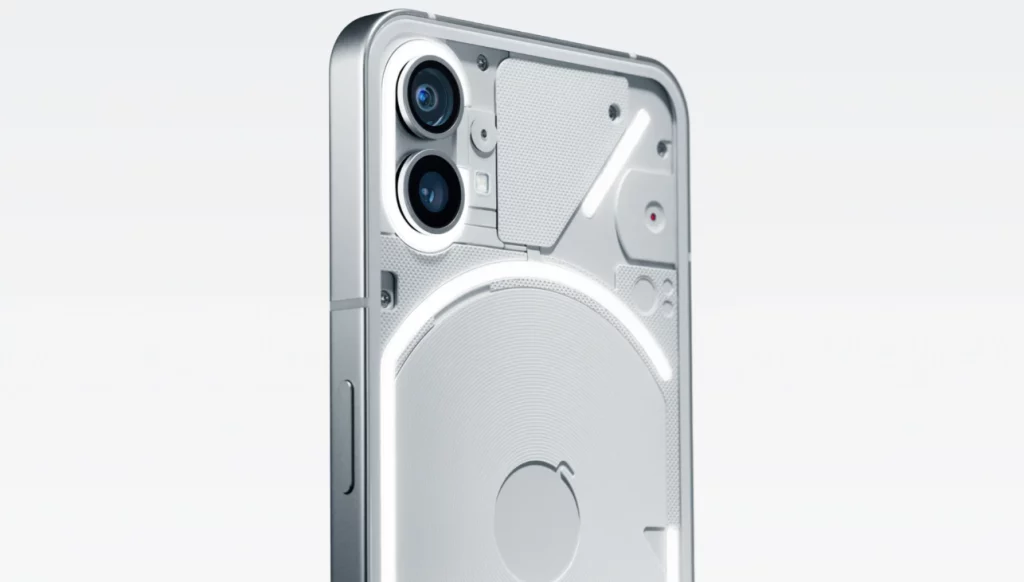
Nothing announced the Android 14 beta program for Phone (1) during this year’s Google I/O. In fact, the company was one of the first Android manufacturers to make such an announcement. True to its words, Nothing has started releasing the latest Android 14 Beta 3 to Phone (1). The startup has also announced the timeframe for the release of its Nothing OS 2.0.
What’s new in the Android 14 Beta update?
As per a Twitter/X post dated Wednesday, Android 14 Beta 3 is now live for the Phone (1) as part of the company’s Developers Preview Program. The update brings a number of new features, including support for API level 34 based on Android 14 Beta 3. It also pre-installs Nothing apps like the Launcher, Weather, and Recorder. You also get Nothing widgets.
Since this is a beta build, it comes with several known issues. Nothing lists them as:
Fingerprints can’t be registered
Face unlock unavailable
Glyph features unavailable
Battery sharing unavailable
No Portrait Mode or slow motion feature in the camera app
No pre-installed Nothing weather and Nothing X apps
Screen cast to TV connection unavailable
As a word of caution, upon installing the update, all your data will be erased, and your phone’s storage will be formatted. If you want to try out the beta build on your daily driver, consider backing up your data.
Nothing also announced that it will launch its native custom skin, Nothing OS 2.0, later this month for the Phone (1). The newly launched Phone (2) runs the software out of the box. It brings interesting features, along with a new Glyph Composer with sound packs available from Swedish House Mafia.
The golden age of AR and VR technologies is coming. With the concept of the Metaverse, these technologies are becoming increasingly popular, especially after the introduction of Apple’s Vision Pro. However, Apple isn’t the only player in this market. Microsoft has been producing virtual and augmented reality glasses under the name HoloLens for a long time.
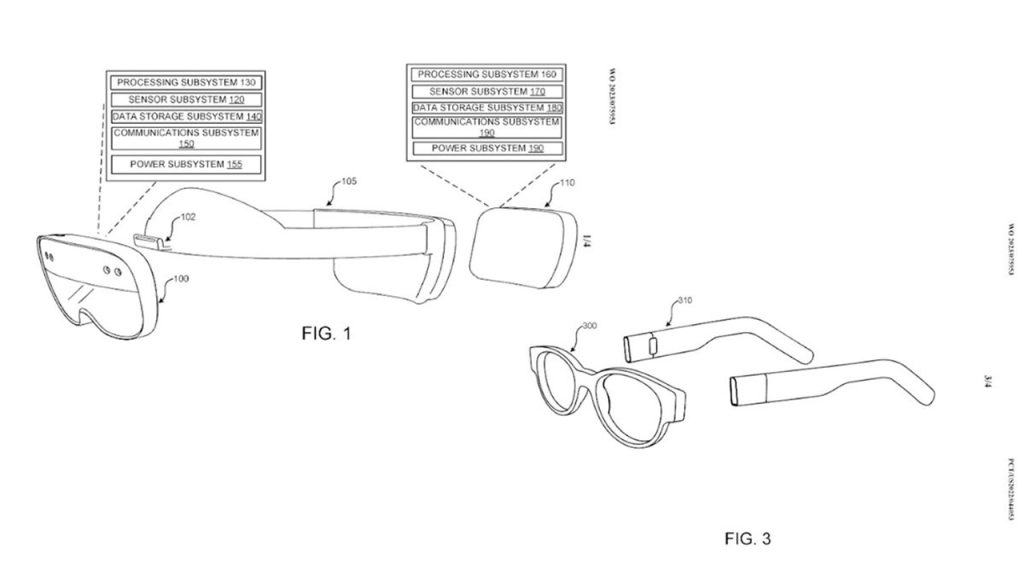
Now, the company has a new patent that suggests a modular HoloLens 3. This could potentially make mixed-reality technology more specialized, adaptable, and affordable for a variety of users. Here aerie details…
Microsoft’s Next-Gen HoloLens 3 Could Be More Affordable and Adaptable Thanks to Modular Design
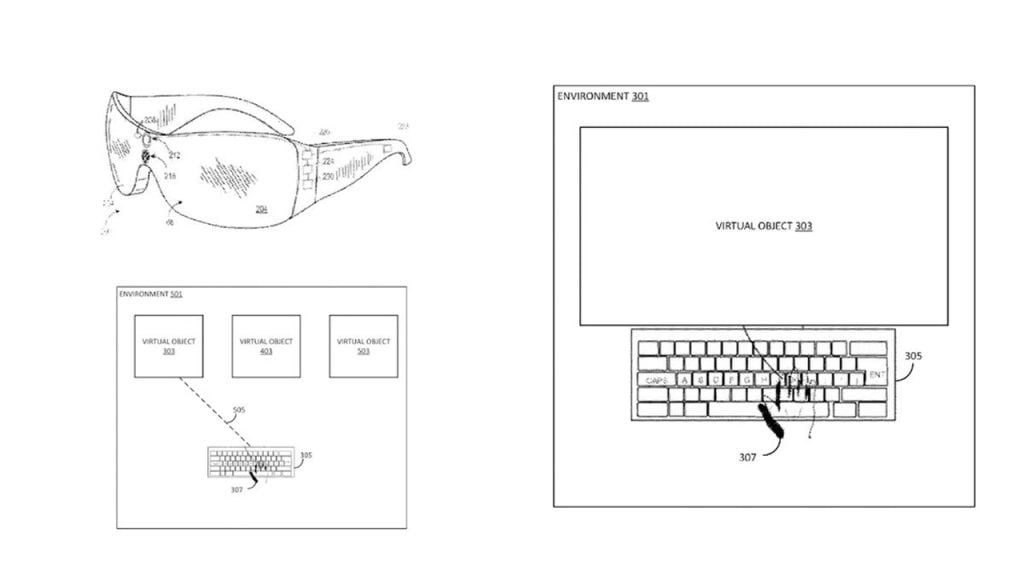
If you’re a tech enthusiast, patent applications can be quite interesting for you. Although these procedures may seem like just paperwork, they actually provide hints about the future plans of the technology companies we closely follow. Now, Microsoft has a new patent. This patent, which is based on mixed reality technology that combines AR and VR, contains clues about what the much-anticipated HoloLens 3 will be like.
The most exciting detail about Microsoft’s HoloLens 3 patent is that it will have a modular and affordable structure. This means that as the number of users increases, modules can be added as needed, allowing users to exchange different modules depending on their usage. Considering the company even has a deal with the U.S. army and it’s used in many areas in the business world, this is quite a functional development. The description of the patent is as follows:
“The modular sensor and display module may include a standard interface for attachment to various fit systems, including, for example, headband, VR headset, glasses temples, helmet, and the like. In some embodiments, a further module, such as a rear-attachment module, may be provided that can provide auxiliary compute, storage, and power resources for the modular sensor and display module.”
It’s worth noting that the patent doesn’t guarantee that a modular HoloLens 3 is on its way. As we mentioned at the start of our article, AR/VR headsets are becoming a bit more popular each day. Therefore, there’s a high chance that the company will put its plans into action to avoid losing the market to Apple’s dominance.
It seems like being the world’s richest person doesn’t come with a lot of breaks, as is apparent by Elon Musk and what he’s going through right now. Agence France-Presse (AFP), the French news agency, lodged a lawsuit against Elon Musk’s ‘X‘ social media platform, previously known as Twitter. The agency alleges that ‘X’ is not complying with its obligations under a French law, passed in 2019, to negotiate potential compensation for publishing news content. The legislation, referred to as “neighbouring rights”, mandates substantial online entities to initiate dialogue with publishers seeking recompense for their news. The AFP contends that ‘X’ is noticeably avoiding these mandated discussions.
Elon Musk resorted to his own platform, X, where he voiced his distaste regarding the lawsuit
In an official statement, the AFP voiced its anxiety: “Agence France-Presse has expressed its concerns over the clear refusal from Twitter (recently rebranded as ‘X’) to enter into discussions regarding the implementation of neighbouring rights for the press.”
Musk retorted to the accusations on his own platform, questioning the rationality of AFP’s demand. “This is bizarre. They want us to pay them for traffic to their site where they make advertising revenue and we don’t!?” Musk commented.
Despite requests, ‘X’ has not provided any public comment regarding the pending litigation.
This event has echoes from 2021 when Google, the tech giant, was fined a hefty 500 million euros by France’s antitrust watchdog for non-compliance with the very same law. Following this ruling, Google assented to resolve the dispute and has since confirmed agreements with AFP along with other prominent French news institutions. Facebook, now rebranded as Meta Platforms, also conceded to the law and has entered into contracts with several French publishers.
This lawsuit indicates a continued tension between news agencies and social media platforms over compensation for news content, which could greatly affect the landscape of news distribution in the digital age.
One of the world’s biggest nations, China is getting serious about internet addiction among the youth, introducing a proposal for tighter screen time regulations. The move aims to foster “good morality” and “socialist values” in youngsters, according to a statement from the Cyberspace Administration of China, the nation’s primary internet watchdog.
This will introduce a ‘minor mode’ to limit daily screen time and prevent harmful content
The new measures will necessitate a “minor mode” in all mobile devices, apps, and app stores. This mode will limit daily screen time, varying by age group, to a maximum of two hours. The mandate expands on earlier efforts by Beijing to curtail children’s screen time and limit their exposure to “undesirable information.”
Under these proposed regulations, now open for public consultation until September 2, minors will find their applications automatically closing once they hit their allotted time. The minor mode will also offer “age-based content,” preventing access to screens between 10 p.m. and 6 a.m.
Screen time allowances will differ according to age groups: under eights will be restricted to 40 minutes per day, eight to sixteen-year-olds to an hour, and teenagers between sixteen and eighteen will have two hours. Devices will issue a reminder to rest every 30 minutes of use.
In addition, mobile internet service providers are encouraged to generate content that promotes “core socialist values” and creates a sense of national unity. The proposed measures, however, are not absolute – parents can override time restrictions, and the time limits will not apply to certain educational and emergency services.
Internet addiction has become a pressing social issue in China, leading to a contentious industry of rehabilitation centres offering dubious treatment methods. Despite concerns, some parents endorse the new proposal. They believe it will foster healthier screen habits and expose children to more beneficial content.
China has a colossal internet user base, with nearly 1.07 billion of its 1.4 billion population online. An estimated one in five of these users is under 19. The success of these measures may rely heavily on parental cooperation, as children sometimes access online content using their parents’ accounts.
This development could pose difficulties for tech firms expected to implement these regulations. It follows a prolonged regulatory crackdown on China’s tech giants, a phase that appears to be winding down. Nevertheless, the proposal initially led to a sharp drop in share prices for top internet firms.
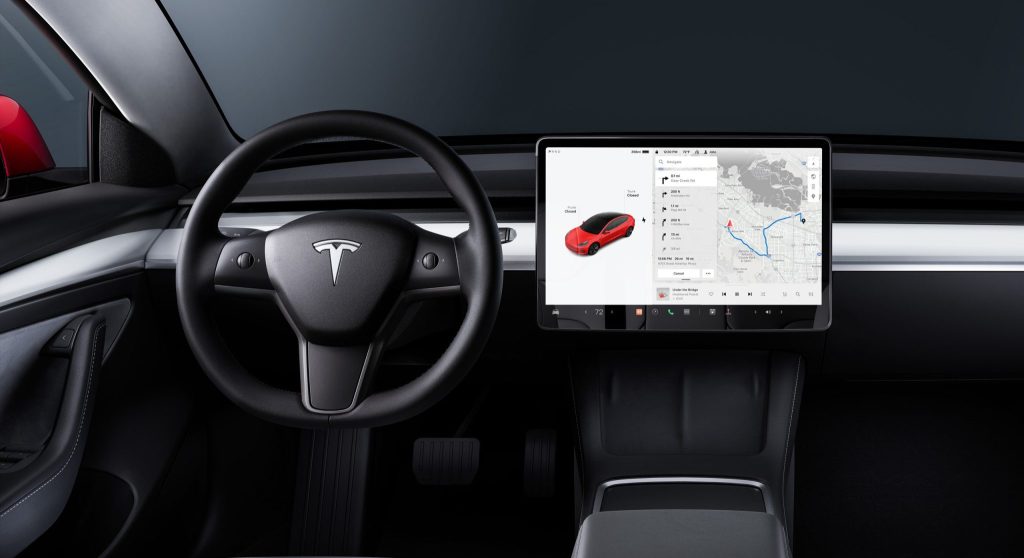
Researchers from Germany have successfully performed a ‘jailbreak‘ on a Tesla Model 3, thereby gaining free access to in-car features normally reserved for paid upgrades. The white hat hackers, three of whom are students at Technische Universität Berlin, utilized a unique hardware manipulation technique to bypass the vehicle’s in-built security measures.
The researchers managed to extract the encryption key that authenticated the car to Tesla’s network
Christian Werling, one of the students involved, explained that this approach could be beneficial for owners unwilling to pay additional fees for upgrades already incorporated into their vehicle, such as heated rear seats. He stated, “We’re not the evil outsider; we own the car. And we don’t want to pay these $300 bucks for the rear heated seats.” This intriguing revelation suggests a shift in traditional perspectives on ‘jailbreaking’.
The team achieved this feat using a technique known as “voltage glitching,” manipulating the supply voltage of the AMD processor running the infotainment system. The strategic timing of this process causes the CPU to ‘hiccup’, skipping an instruction, thereby accepting manipulated code.
In addition to unlocking features, the researchers were able to extract the encryption key authenticating the car to Tesla’s network. This extraction facilitated access to sensitive personal data including contact details, call logs, calendar appointments, location history, Wi-Fi passwords, and email session tokens. While this vulnerability could be exploited, the team maintains that their research is exploratory, not malicious.
The researchers have cautioned that Tesla’s only defense against this hardware-based attack is a complete hardware replacement. As they prepare to present their research at the upcoming Black Hat cybersecurity conference in Las Vegas, their groundbreaking discovery might pose significant implications for vehicle cybersecurity and the ‘right-to-repair’ debate.
Electric bicycles are gaining global traction as a versatile means of personal mobility and sport. New models are hitting the market every week, and it just keeps on going. Often, e-MTB and road cyclists transport their e-bikes using car-mounted racks due to their sport-centric use. However, given that e-bikes, especially those designed for an active lifestyle, often have added weight from the motor and battery, hoisting them onto roof racks can be a hard task.
The Roof Rack has an arm powered by a hydraulic system to lift the bike
Recognizing the trend, manufacturers are designing racks that can handle heavier bikes. The challenge remains, though, to safely lift these e-bikes, some weighing up to 30 kilograms, to roof level without risking injury.
Here’s where Pender, a German company, is offering an innovative solution: a user-friendly roof rack system designed to tackle the challenges of loading and unloading heavy e-bikes. Its unique design includes a telescoping arm that reaches ground level, fitted with a hook that latches onto the e-bike’s headtube and seatpost.
This arm is part of a hydraulic system that effortlessly lifts the bike to roof level. Once there, users simply secure the bike’s wheels onto wheel trays, with a safety lock ensuring the bike remains secure and won’t suddenly descend. This lock can be manually released when it’s time to bring the bike back down.
The Pender e-bike rack has a wide range of compatibility, accepting bikes with wheelbases from 90 to 130 centimeters and maximum loads of up to 30 kilograms. However, the rack itself weighs 11.8 kilograms, so installation might require some assistance.
Despite its innovative solution, Pender’s roof rack does come with a hefty price tag of around 748 Euros ($820 USD). Yet, for those seeking a safer, easier method of transporting their e-bikes, it could be a worthy investment. With pre-orders already open, it’s clear that Pender is pioneering a whole new era of e-bike transportation.
Electric Bikes are slowly getting better and better, as companies shell more money into their EV Research and Development programs.Since the revelation of Kawasaki’s Ninja EV and Z EV prototype electric motorcycles at EICMA 2022, fans and industry observers alike have keenly followed the Japanese manufacturer’s journey into electric mobility. Although Kawasaki‘s declaration of their venture into e-bikes was delayed compared to some competitors, their strategy of leveraging an existing combustion bike platform has clearly paid off. The company previously announced expectations to launch its first electric motorcycles as production models later in 2023.
The bike will pay homage to the design of the classic Kawasaki Z series
Many enthusiasts and potential customers are curious about the status of the Ninja EV and Z EV. Fortunately, recent government vehicle-type approval documents have offered some insight into the developments. Kawasaki Heavy Industries Limited has successfully secured approval from Australia’s Department of Infrastructure, Transport, Regional Development, Communications, and the Arts.
The approval, valid from July 31, 2023, through to July 30, 2030 (unless revoked prior), pertains to the model NX011A, with variants NR011A and NX011A mentioned. The documents unveil fascinating details about the e-bikes. Images within the type approval document confirm the NR011A variant as the Z e-1, named after Kawasaki’s classic Z series. The NX011A, meanwhile, identifies as the much-anticipated Ninja e-1, a nod to the Ninja sports bike lineage.
This milestone represents a giant leap for Kawasaki, edging ever closer to the full-fledged production of their maiden electric motorcycles. The bikes’ commercial release, which is seemingly just around the corner, marks an important step for Kawasaki’s ambitious roadmap in the era of electric mobility, reaffirming their commitment to innovation and sustainable transportation. With this recent development, the wait for Kawasaki’s debut may soon be over.
Following widespread payment rejections experienced by creators and patrons, Patreon today announced that it has rectified the core issue. The crowdfunding platform acknowledged that financial institutions had marked “a slightly higher-than-usual number of patron payments” as fraudulent. It also stated that an unrelated problem had prevented some creators from accessing their funds, which was reportedly due to an update from a partner.
Banks are flagging transactions that deal with Patreon, leading to this issue
Patreon clarified that the issue with fund accessibility affected only “creators utilizing a single payment partner,” identified as Payoneer on its system status page. The company affirmed that it is diligently working with Payoneer to reinstate payouts and anticipates the completion of the process today.
This issue came into the limelight after numerous Patreon users reported mass losses of supporters on social media platforms. A notable change in Patreon’s billing information, showing Dublin as the location, led users to believe this was the reason behind banks flagging the transactions. Bestselling author Dr. Brooke Magnanti publicly expressed her dissatisfaction after losing 80% of her patrons.
Meanwhile, Reddit user u/Competitive_Fruit901 revealed a loss of 300 patrons. Fellow Redditor u/Koratl noted that the billing problem was more serious this month and many credit card providers marked Patreon as fraudulent. u/arzen353 highlighted another issue, explaining that patrons couldn’t resubscribe after authorizing payment with their bank and had to wait for Patreon to resolve the situation.
Patreon mentioned to Engadget that the Dublin billing location was likely due to a recent upgrade with a payment processing partner, leading to changes in bank statement descriptors. The company is working closely with the partner to resolve the issue, and does not foresee flagged payments as a long-term problem. As for the timelines and specific steps to deal with flagged transactions, Patreon refrained from providing details until a complete solution is implemented. It also anticipates the payout problem to be resolved today.
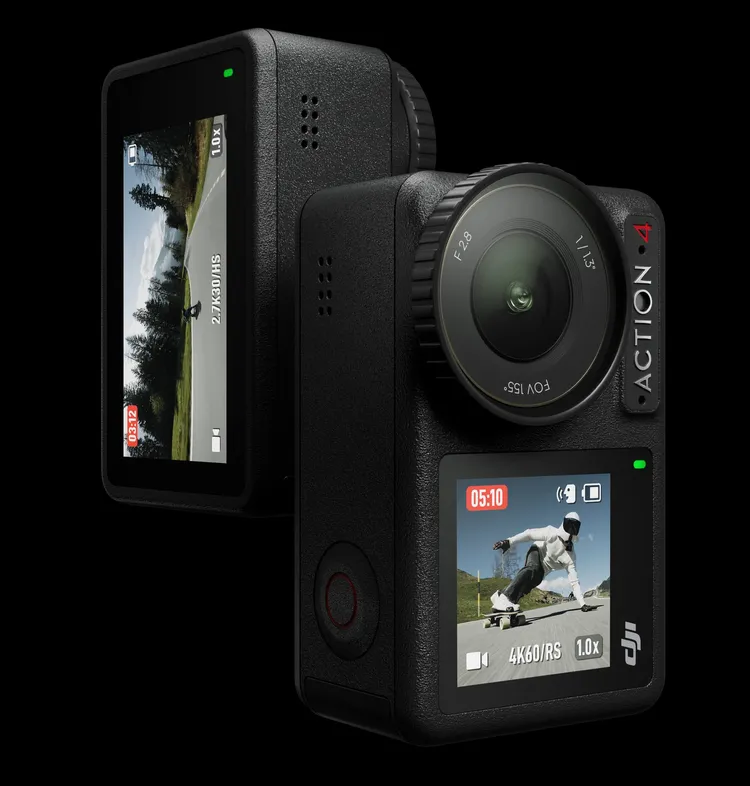
DJI is launching the Osmo Action 4 sports action video camera. The Osmo Action 4 is the successor to the DJI Osmo Action 3 and comes with a more expensive price tag. The new DJI sports action camera has a slightly larger image sensor. It also features a few improvements over its predecessor, the Action 3.
DJI continues to serenade its clientele with a raft of impressive offerings and the Osmo Action 4 is no different. DJI says the new camera promises remarkable low-light performance due to the larger 1/1.3-inch sensor. The camera is capable of capturing more light through its ultra-wide lens. The Osmo Action 4 camera can also shoot content in 10-bit D-Log M for a higher dynamic range. This offers greater color correction flexibility when editing. The Osmo Action 4 camera has up to 512GB microSD card support to accommodate large video files.
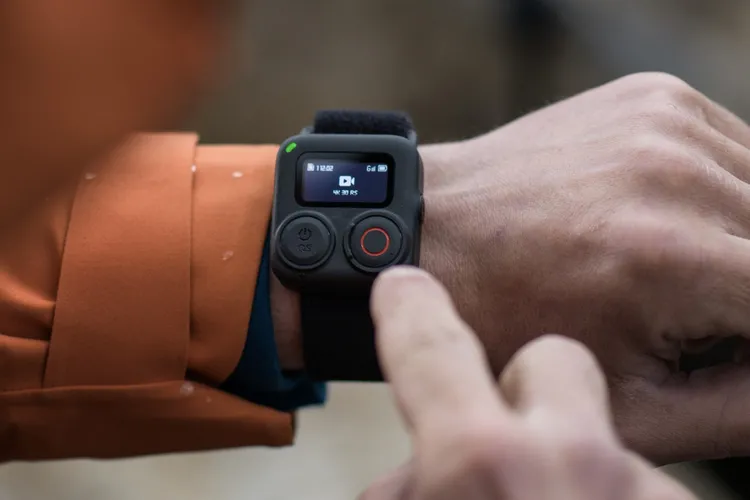
The DJI Osmo Action 4 can be remotely controlled using its GPS Bluetooth Remote Controller. The controller can be strapped to your wrist and provide GPS data as well as recording control. The controller is sold separately from the camera itself.
Both the Action 4 and its predecessor can output 4K videos at up to 120fps. There are a few models however already in the market that supports 5.3K @ 60fps footage like the Hero 11 Black. The built-in GPS advantage of the Go Pro Hero 11 Black camera is seemingly leveled out by the Action 4’s GPS Bluetooth Remote Controller.
The Action 4 also features RockSteady 3.0 Plus digital stabilization system. It also has HorizonSteady which can lock the tilt of a recording to maintain a straight footage. The InvisiStick mode makes the 1.5m selfie stick to be invisible and is upgraded in the Action 4.
The new camera also comes with improved waterproof protection. It can be submerged in water up to 18 meters and it remains compatible with accessories from the older model. The battery of the Action 4 lasts up to 2.5 hours, as with the Action 3, as well as other external similarities.
Pricing & Availability
The DJI Osmo Action 4 can be ordered in the US for $399 and this is $70 more expensive than the Action 3. The Osmo Action GPS Bluetooth Remote Controller is sold separately for $79.
Microsoft continues to work on and add new features to Windows 11. But while they are introducing new features, they are also shutting down old and unsuccessful projects. The latest one to get axed is Cortana, the virtual assistant that entered our lives in 2015. Sadly, it has reached the end of its life. Now, Microsoft is killing the standalone Cortana app in Windows 11. Here are the details…
Microsoft Kills Off Cortana App in Windows 11
Actually, this isn’t a new information. Back in June, Microsoft officially announced that it would stop supporting Cortana. However, users could still access the virtual assistant through the app if they wanted to. Now, the company has stopped supporting the Cortana app in Windows 11. The app is getting an update to tell users that it will stop working later this month
Cortana was not very popular with users, and it was never able to compete with other digital assistants like Siri, Amazon Alexa, and Google Assistant. Microsoft is replacing Cortana with other AI-powered features in Windows 11, such as Windows Copilot. Windows Copilot is still under development, but it has the potential to be a much more useful and powerful AI assistant than Cortana ever was.
This new AI assistant is currently in preview for Windows 11 Dev Channel Insiders. Copilot is designed to provide real-time assistance, helping users with tasks like writing code, composing emails, and creating presentations. Once activated, Windows Copilot will appear as a panel on the side of the screen. Users can then give commands to the assistant, such as “type ‘hello world’” or “open Microsoft Edge.” The assistant will then take care of the rest, automatically typing or opening the requested item. However, time will tell how successful it will be.
The Xiaomi MIJIA Electric Rice Cooker C1 Pro 4L is now on sale in China. The new MIJIA C1 Pro 4L electric cooker can cook rice in just 28 minutes. The product is available from retail platforms in the country.
The MIJIA Electric Rice Cooker C1 Pro 4L has a thick black crystal inner tank and a solid black crystal coating on the inner tank. The design improves the wear resistance of the inner tank for enhanced durability. The cooker supports fast cooking in 28 minutes and it also has several safety features. The top is upgraded with a double-row, six-hole bubble breaker as an exhaust for steam. This automatically prevents the overflow of food when boiling.
The Xiaomi MIJIA C1 Pro 4L supports 860W power heating, high-efficiency boiling, and uniform cooking. The cooker has a 4-liter capacity that can accommodate enough quantity for the household. It can cook 16 bowls of rice at a time or accommodate a whole chicken for stewing. There are touch controls at the top of the cooker and a small display. Up to 10 different cooking menus are supported with the MIJIA Electric Cooker C1 Pro 4L. It also offers 24-hour reservations and up to 12 hours of heat preservation.
The Xiaomi MIJIA Rice Cooker C1 Pro 4L is available on retail platforms like JD.com for 209 yuan (~$29). Early images of the gadget indicate a white color option at the least. The MIJIA Rice Cooker C1 Pro 4L could subsequently be released in other markets outside China.
The Indian government has implemented restrictions on the import of personal computers, laptops, and related items to promote domestic manufacturing and reduce reliance on imports, particularly from China. The move comes as part of the government’s efforts to bolster the electronics sector and encourage local production through its production-linked incentive (PLI) scheme.
The Vision Behind India’s Self-Reliance in Electronics
The new restrictions require companies to obtain a valid import license for importing laptops, tablets, all-in-one personal computers, and ultrasmall form factor computers. However, individual consumers are exempted from the licensing requirement for single laptop or tablet imports through e-commerce channels.
There are exceptions to the licensing requirement, including imports for research, testing, evaluation, and repair purposes. Laptops and computers used as essential parts of capital goods are also exempt.
This move may impact companies like Apple, Samsung, and Acer, as they might need to increase their manufacturing and assembly operations in India to continue serving the market. Depending on the implementation of licensing norms, there could be price changes for consumers.
The government’s aim is to reduce dependence on a single country (China) for imports and provide secure digital access to India’s growing number of digital citizens. The initiative seeks to boost local industry and make the nation self-reliant and competitive in the global tech market. Industry experts believe that trusted partners will receive valid licenses, ensuring unrestricted access to reliable brands for consumers.
We use cookies on our website to give you the most relevant experience by remembering your preferences and repeat visits. By clicking “Accept”, you consent to the use of ALL the cookies.
This website uses cookies to improve your experience while you navigate through the website. Out of these, the cookies that are categorized as necessary are stored on your browser as they are essential for the working of basic functionalities of the website. We also use third-party cookies that help us analyze and understand how you use this website. These cookies will be stored in your browser only with your consent. You also have the option to opt-out of these cookies. But opting out of some of these cookies may affect your browsing experience.
Necessary cookies are absolutely essential for the website to function properly. This category only includes cookies that ensures basic functionalities and security features of the website. These cookies do not store any personal information.
Any cookies that may not be particularly necessary for the website to function and is used specifically to collect user personal data via analytics, ads, other embedded contents are termed as non-necessary cookies. It is mandatory to procure user consent prior to running these cookies on your website.