Advertisement

Pixel 7a European Price and Pre-Order Bonus Revealed Ahead of Google I/O 2023


Google I/O 2023 is shaping up to be an exciting event with the introduction of several new devices from the tech giant. Among the devices set to launch is the highly anticipated Pixel 7a, which is expected to address some of the shortcomings of its predecessor, the Pixel 6a. It’s safe to say that the hype surrounding the Pixel 7a is real and fans are eagerly awaiting its release. Additionally, the event may also see the launch of the elusive Pixel Tablet and Pixel Fold.

Google Pixel 7a Eurozone price & offers

Recent leaks suggest that the Pixel 7a will be priced at €509 in the Eurozone. This is €50 more than the current price of the Pixel 6a. However, to sweeten the deal, Google is reportedly offering a pre-order bonus worth €99. French retailer Fnac has revealed that Pixel 7a pre-orders will come with a complimentary pair of Pixel Buds A-Series earbuds. It’s unclear if this is a Google France-specific deal, but it’s likely that similar offers will be available in other markets.

Google

The pre-order period for the Pixel 7a is expected to run from May 10 to May 22, coinciding with Google’s I/O 2023 keynote. However, it’s likely that pre-order shipments won’t begin until at least the fourth week of May. The Pixel 7a has already been the subject of a teardown by PBKreviews, and someone else has shared a detailed hands-on preview of the device.

If you’re looking to get your hands on the Pixel 7a in Europe, it seems like the pre-order period will be the best time to do so. With the added bonus of a pair of Pixel Buds A-Series earbuds, the €509 price tag may be more palatable for those on a budget. It remains to be seen if Google will offer similar pre-order bonuses in other markets, but it’s certainly a possibility.

RELATED:

(via)

Realme 11 Pro+ teaser confirms 5,000mAh battery pack & 100W fast charging

The Realme 11 series launch is just around the corner. But ahead of the announcement, there have already been a number of rumors and reports regarding the upcoming smartphones. Now, the latest info arrives from official teasers, which have revealed some key specs of the Realme 11 Pro+. So let’s have a look.

Realme 11 Pro+ to feature 5,000mAh battery with impressive 100W fast charging

The Chinese smartphone maker is set to launch the new smartphones in China on Wednesday (10th May 2023). The Realme 11 Pro+ is the top end model and the latest teaser has confirmed previous rumors regarding its battery capacity. In other words, it will be powered by a large 5,000mAh battery pack, which is the same capacity rating as its predecessor, the Realme 10 Pro+. This battery will even support an impressive 100W fast charging, which is noticeably higher than the 67W fast charging on the 10 series model.

Realme

Apart from this, the only other information revealed on the teaser poster image was that the handset weighs just 183 grams. The Realme 10 Pro+ model could charge from 0 to 17 percent in 17 minutes from its 67W fast charging technology, so we can expect the time to fall even lower on its successor. Talking about its other features, it sports a tall 6.7 inch AMOLED display that supports 120Hz refresh rate.

Under the hood, the 11 Pro+ model will be equipped with the MediaTek Dimensity 7050 SoC that is paired with up to 12GB of RAM and 256GB of storage. The rear features a 200 megapixel triple camera setup, while the front houses a 16 megapixel selfie shooter. The device will likely run on Android 13 OS out of the box, so stick around for more as we will be covering the launch event later this week.

RELATED:

BYD Accelerates Expansion in Southeast Asia with New Investment Plans

Chinese electric vehicle manufacturer BYD is stepping up its overseas supply chain strategy, with a particular focus on Southeast Asia. The company recently met with Vietnam’s Deputy Prime Minister, Chen Honghe, to discuss expanding its manufacturing and investment in Phu Tho Province, Vietnam.

BYD is looking to Expand its Manufacturing into Southeast Asia

During the meeting, BYD Chairman Wang Chuanfu outlined the company’s plans to expand its electric vehicle manufacturing and assembly operations into Southeast Asia. He expressed hope that the local government would help facilitate the necessary investment permits and put the project into operation as soon as possible.

BYD

This move comes on the back of reports earlier this year that BYD was planning to invest over $250 million in Vietnam to build a new energy vehicle parts factory. In addition, the Philippines, Vietnam and Indonesia are reportedly competing to attract BYD to build an electric vehicle assembly plant in their respective countries.

BYD is one of the world’s leading electric vehicle manufacturers, with a presence in over 300 cities globally. The company has long been committed to advancing sustainable transportation and has invested heavily in research and development to improve the performance and efficiency of its vehicles.

In recent years, BYD has been expanding its presence in overseas markets, including Europe and the United States, and has partnerships with major automakers like Toyota and Daimler. The company’s focus on Southeast Asia reflects the region’s growing demand for electric vehicles, driven by a combination of government incentives, rising oil prices, and a growing awareness of the environmental benefits of EVs.

As BYD continues to expand its global reach, its commitment to sustainable development and cutting-edge technology will play a crucial role in driving the transition to a more sustainable transportation system. The company’s upcoming SUV, YangWang U8 was recently spotted out in the wild. With Southeast Asia poised for rapid growth in the EV market, BYD’s investments in the region could help accelerate the adoption of electric vehicles and contribute to a cleaner, more sustainable future for all.

RELATED:

(Via)

Twitter Circle Tweets were Shown Publicly to Users Outside the Circle

Twitter, the social media giant, recently disclosed a security incident that caused private tweets sent to Twitter Circles to be shown publicly to users outside of the Circle. This incident took place in April 2023, and the company has since conducted a thorough investigation to understand how it occurred and has addressed the issue. Twitter also apologized to impacted users and expressed its commitment to protecting their privacy.

Twitter Circle was Introduced back in August 2022

Twitter Circle, a feature introduced in August 2022, allows users to send tweets to a small group of people while promising to keep them private from the public. Users select who is in their Twitter Circle, and only the people added to the Circle can reply to and interact with the tweets shared within it.

Twitter

However, in early April, Twitter users started warning that tweets sent to Twitter Circles were being displayed publicly to people outside of the Circle in their timelines. Twitter has now confirmed that this was caused by a security incident that allowed users outside of the Circle to see tweets that should have been limited to the Circle to which the post was made.

Twitter did not disclose the cause of the security incident, but many changes have taken place on the platform since Elon Musk took ownership. These changes revolved around increasing the exposure of tweets via Twitter’s recommendation algorithm, which Musk said in late March would be updated every 28 to 48 hours.

Twitter’s swift action to investigate and fix the issue shows its commitment to protecting its users’ privacy. However, this incident highlights the risks that social media platforms pose in terms of privacy breaches. Users must be cautious when sharing sensitive information on social media and always be aware of the platform’s privacy settings.

Twitter’s security incident involving Twitter Circle tweets is a reminder of the importance of cybersecurity on social media platforms. Users must take precautions to protect their privacy online and be aware of the risks that come with sharing personal information on these platforms. Twitter’s commitment to protecting user privacy is appreciated, but more must be done to ensure that incidents like this do not happen in the future. Recently, the company announced that it will let government services use its API for free as well.

RELATED:

(Via)

Google May Design its Future Tensor Chips In-house, Starting with Pixel 9

Google’s Pixel smartphones have been gaining popularity over the years, thanks to their high-quality camera and seamless integration with Google’s software services. However, one of the key factors that differentiate Pixel phones from the rest of the Android market is the custom-built Tensor chip that powers the devices.

Google has previously relied on Samsung for its chips’ manufacturing

According to recent reports from Sammobile, Google has relied on Samsung to design and manufacture the Tensor chip for the past two generations of products. However, there are rumors that Google may be looking to change things up with the upcoming Tensor G3, G4, and G5 chips.

Tensor

The Tensor G3 chip is expected to be co-designed with Samsung’s System LSI arm and manufactured using Samsung’s 4nm process. The chip will reportedly adopt a “1+4+4” nine-core design, consisting of one 3.30GHz Cortex-X3 core, four Cortex-A715 cores at 2.60GHz, and four 2.20GHz-2.30GHz Cortex-A510 cores.

For the Tensor G4, Google is said to be considering designing its chips completely in-house and manufacturing them using TSMC‘s 4nm process. However, the cost of this process may be too high for the Pixel, and Google may have to turn to Samsung’s foundry instead. It’s currently unclear what process the Tensor G4 will use.

Finally, for the Tensor G5, Google is rumored to be using TSMC’s 3nm process for manufacturing. This process promises even greater power efficiency and performance improvements compared to the 4nm process used for the Tensor G4.

These developments could have significant implications for the Pixel line of smartphones. In-house chip design and manufacturing could give Google more control over the performance and efficiency of its devices, potentially leading to even better user experiences.
However, switching to new chip designs and manufacturing processes also comes with risks and challenges. It remains to be seen how Google will handle these challenges and whether the upcoming Tensor chips will live up to expectations. Regardless, the technology industry is eagerly anticipating the release of the Pixel 6 and the Tensor G3, which could give us a glimpse of what’s to come in the world of smartphone technology. For now, fans have been anticipating the release of the Pixel Fold and the Pixel 7a, launches for which are right around the corner.

RELATED:

(Via)

Poco F5 series European pricing & configurations leak out ahead of May 10 launch

Poco is gearing up to launch the F5 series of smartphones on May 10 for the global market. The series will include the vanilla Poco F5 and the Poco F5 Pro. These devices will be rebranded versions of the Redmi Note 12 Turbo and the Redmi K60.

Ahead of the May 10 launch, known leaker Sudhanshu Ambhore has tipped off the European pricing of the F5 and F5 Pro along with the RAM and storage options of both devices.

Poco F5 series European price, configurations & offers

According to reports, the Poco F5 5G will be launched in two storage configurations. The first option will have 8GB of RAM and 256GB of storage, priced at EUR 429. The second variant will come with 12GB of RAM and 256GB of storage and will be sold for EUR 479. Early buyers can avail of the phones at a discounted price of EUR 379 and EUR 399, respectively, as part of the launch promotion.

Poco
Poco F5 display

Meanwhile, the Poco F5 Pro will be released at EUR 579 for the base model with 8GB RAM and 256GB storage. The phone will also be available in a 12GB RAM and 256GB storage option, which will be priced at EUR 629. Additionally, the 8GB RAM version can be purchased for a reduced price of EUR 479 and EUR 499 as part of the early bird offer.

Poco F5 series specs

POCO
Poco F5 Pro

The highly anticipated Poco F5 Pro is expected to offer an array of impressive features. The device is said to boast a generous 6.67-inch AMOLED display with QHD+ resolution and a speedy 120Hz refresh rate, complemented by Corning Gorilla Glass 5 protection and an under-display fingerprint scanner. It runs on the powerful Snapdragon 8+ Gen 1 chipset, along with 12GB of LPDDR5 RAM, and a substantial 5,160mAh battery that supports rapid 67W wired charging and 30W wireless charging. The phone also features a triple rear camera setup, dual SIM support, 5G, WiFi 802.11ax, Bluetooth 5.3, NFC, GPS, USB-C, and a range of sensors. With these high-end specifications, the Poco F5 Pro is bound to capture the attention of avid smartphone enthusiasts (check out our Poco F5 Pro rumor roundup for a detailed analysis of the smartphone).

Poco
Poco F5

Meanwhile, the rumored Poco F5 also appears to be a formidable mid-range contender, offering a 6.67-inch FHD+ AMOLED display with a 120Hz refresh rate and a punch-hole camera. The device is powered by the Qualcomm Snapdragon 7+ Gen2 SoC and Adreno GPU, with a maximum of 12GB of RAM and 256GB of internal storage. It is rumored to run on the Android 13-based MIUI 14 custom skin and feature a 5,160mAh battery with 67W fast charging support. The phone’s rear camera setup is believed to include a 64MP primary sensor, an 8MP ultra-wide-angle lens, and a 2MP macro sensor, while the front camera may pack a 16MP lens. The Poco F5 is set to offer connectivity options like 5G, 4G LTE, Wi-Fi, Bluetooth, GPS, and a USB Type-C port (check out the rumor roundup for the Poco F5).

RELATED:

Realme Buds Air 5 Pro officially teased, features revealed ahead of May 10 launch

Realme is all set to host a launch event on May 10, where they will unveil the Redmi 11 series smartphones and the Buds Air 5 Pro TWS earbuds, which are an upgrade to the Buds Air 3. The design of the Buds Air 5 is reminiscent of its predecessor but with some minor changes.

Realme Buds Air 5 Pro design & features

The earbuds still feature a stem-like shape, with a cylindrical stem having a microphone cutout and silicone ear tips. The charging case retains the pebble shape and LED indicator from the previous model, but the new earbuds will support active noise cancellation (ANC), as shown in the teaser image. Furthermore, Realme has confirmed that the earbuds will feature a HiFi-level coaxial dual unit, 3D spatial sound effect for an immersive experience, and LDAC high-definition sound quality. While the company has not shared any other information, consumers can anticipate features similar to those found in the previous model.

Realme Buds Air 3 specs

The Realme Buds Air 3 was released in February 2022 with powerful 10mm dynamic drivers that use a liquid crystal polymer diaphragm to produce clear vocals and strong bass. These earbuds support Dolby Audio and offer customizable audio settings, as well as Active Noise Cancellation which can reduce ambient noise by up to 42dB. When used normally, they can provide up to 5.5 hours of battery life and up to 30 hours with the charging case. However, enabling ANC reduces battery life to about 22 hours. The Buds Air 3 also includes an 88ms low latency mode for gaming, transparency mode, dual device connection, touch controls for calls and media, and IPX5 sweat and splash resistance.

RELATED:

Here’s How To Watch POCO F5 Series Launch Event

POCO, which is an independent brand split from Xiaomi, has confirmed that the company will be launching its next-generation F-series smartphones — POCO F5 and POCO F5 Pro at a launch event on 9th May.

The launch event for the smartphone lineup, scheduled for tomorrow, will be live-streamed by the company on its official YouTube channel. The event will start at 8:00 PM GMT +8, which is 5:30 PM IST.

POCO F5 India Launch Teaser

You can watch the POCO F5 and POCO F5 Pro launch event through the below embedded live stream or by clicking here.

POCO F5

The POCO F5 is said to be a rebranded version of the Redmi Note 12 Turbo, which is exclusive to the Chinese market. As per the leaks, the phone will feature a 6.67-inch AMOLED display, offering a 120Hz refresh rate, a 93% screen-to-body ratio, and a punch-hole camera located at the front.

Poco

Under the hood, the device will be powered by the Qualcomm Snapdragon 7+ Gen 2 processor, built on a 6nm manufacturing process and features an octa-core CPU with Kryo 670 cores and an Adreno 642 GPU. It also supports 5G connectivity and features an integrated AI engine for enhanced user experiences.

There will be a triple camera setup on the back panel, with a 64MP primary camera sensor, an 8MP ultra-wide-angle lens, and a 2MP macro sensor. On the front, the device is expected to come with a 16MP selfie camera. The device will run on Android 13 with MIUI 13 custom interface and will be powered by a 5,000mAh battery with 67W fast charging.

POCO F5 Pro

On the other hand, the POCO F5 Pro will come with a 6.67-inch AMOLED display with a 120Hz refresh rate and a 3,200 x 1440 pixels screen resolution. The phone, which will have an in-display fingerprint scanner, will come with Corning Gorilla Glass 5 protection.

Poco

The smartphone will be powered by the Qualcomm Snapdragon 8+ Gen 1 SoC that is paired with up to 12GB of LPDDR5 RAM. There will be a triple camera setup on the rear that consists of a 64-megapixel primary sensor that supports OIS support. It will be paired with an 8-megapixel ultra wide-angle sensor and a 2-megapixel macro shooter. On the front side, the phone will have a 16-megapixel selfie snapper.

Similar to the standard F5, this one too will run the Android 13 operating system out-of-the-box with MIUI 13 on top. The phone will be powered by a 5,160mAh battery with support for 67W wired fast charging and 30W wireless fast charging.

RELATED:

Nokia C300 and C110 Coming to the US at Affordable Prices

Nokia has been known for its sturdy and reliable mobile phones for decades, and now the company is taking a leap forward with its new smartphone releases – the Nokia C300 and C110. These two devices are set to be launched soon in the US, and the official specifications have been revealed. Let’s take a closer look at what these smartphones have to offer.

Both Nokia C300 and C110 are IP52 Water & Dust Resistant

The Nokia C300 is the more advanced of the two models. It comes with 5G capabilities, which means faster internet speeds and smoother connectivity. The phone is also IP52 water and dust resistant, which is a bonus for those who are always on the go. The device has a 4000 mAh battery, which should give you enough power to last throughout the day. However, it does come with Android 12, which might be a deal-breaker for some who prefer a newer Android version.

Nokia C300

In terms of the camera, the Nokia C300 has an 8 MP front-facing camera, which should be decent enough for selfies. On the back, the camera module has a 13 MP main sensor, 2 MP macro sensor, and a 2 MP depth sensor. This setup should give you enough versatility to take mid-high-quality photos and videos. The internal storage is only 32 GB, but it can be expanded with a microSD card.

On the other hand, the Nokia C110 is a more budget-friendly option. It also has 5G capabilities, which is impressive for its price point. The device is also IP52 water and dust resistant, just like the Nokia C300. The C110 has a smaller 3000 mAh battery, but it should still be enough to last a full day with moderate use. The camera setup is more basic, with a single 13 MP main camera and a 5 MP front-facing camera. The device also has 32 GB of internal storage with expandable storage.

The Nokia C300 and C110 offer impressive features at their respective price points. If you’re looking for a more advanced device with better camera capabilities and a larger battery, the Nokia C300 might be the better choice. However, if you’re on a budget and still want 5G capabilities, the Nokia C110 is definitely worth considering. Recently, leaks also showcased the renders of the upcoming Nokia XR30. Either way, Nokia’s latest smartphones are expected to provide reliable performance and the durability the brand is known for.

RELATED:

(Via)

Apple Watch’s Fall Detection Feature Saves Yet Another Woman’s Life

The Apple Watch has become more than just a wearable gadget that keeps track of time and fitness activities. With its innovative features, it has also become a life-saving device. In a recent incident, the Apple Watch’s Fall Detection feature came to the rescue of a woman who suffered from a severe heart issue.

The Apple Watch Detected the Fall and Promptly Dialled 911

The woman, who was on a business trip, began experiencing chest pains and reached out to a friend in the hotel. However, before her friend could arrive, the woman collapsed face-first on the ground. Luckily, her Apple Watch immediately detected the fall and automatically called 911, sending an ambulance to her location.

Apple Watch

Upon arriving at the hospital, the woman was diagnosed with a ruptured aorta and was rushed into surgery. She later credited the Apple Watch with saving her life, stating that the device’s quick response time helped increase her chances of survival.

This incident is just one of many examples of the Apple Watch’s life-saving capabilities. From detecting undiagnosed heart conditions to diagnosing blood clots in the lungs, the Apple Watch has become a trusted medical companion for many of its users. Its Fall Detection feature has been praised for its ability to detect potentially dangerous falls and alert emergency services. In fact, the feature has been so effective that it has been credited with saving countless lives. Furthermore, recent leaks have stated that the watch is integrating mental health tracking capabilities with the Apple Watch, showing Apple’s commitment towards its wearable device.

The incident serves as a reminder of the important role that technology can play in healthcare. For instance, a man was alerted of a condition by his Apple Watch which could’ve probably killed him overnight. He then got treatment in time, preventing such a tragedy. As wearable devices continue to advance, it’s becoming increasingly clear that they have the potential to revolutionize the way we approach medical care.

RELATED:

(Via)

VAIO TL10 Android tablet launched; features a 10.4-inch display, octa-core processor, 8GB RAM, and more

VAIO, a brand that was spun off from Sony almost a decade ago, still has a presence in the PC market. The company, which has a few Windows laptops in the market, has now entered the tablet market.

The company has launched VAIO TL10, a tablet running the Android operating system, and comes with a portable keyboard to use the device as a 2-in-1 computer.

VAIO TL10 Android Tablet

The VAIO TL10 features a 10.4-inch IPS LCD display with a screen resolution of 2000 x 1200 pixels. Under the hood, it is powered by UNISOC Huben T616 processor along with Mali-G57MP1 GPU.

As for the memory, there’s an 8GB LPDDR4x RAM and 128GB of internal storage. In the camera department, the tablet comes with an 8MP rear camera and a 5MP front-facing snapper for taking selfies.

The device is 4G LTE compatible with dual SIM and supports Wi-Fi 5 as well as Bluetooth 5.0. It runs Android 13 operating system out-of-the-box and features stereo dual speakers along with a 3.5mm headphone jack. It is powered by a 7,000mAh battery with support for 18W charging.

The VAIO TL10 Android tablet has been launched in Brazil for the price of 1,799 Brazilian reals, which is about $363. It is not yet known if the company plans to bring the device to other markets.

RELATED:

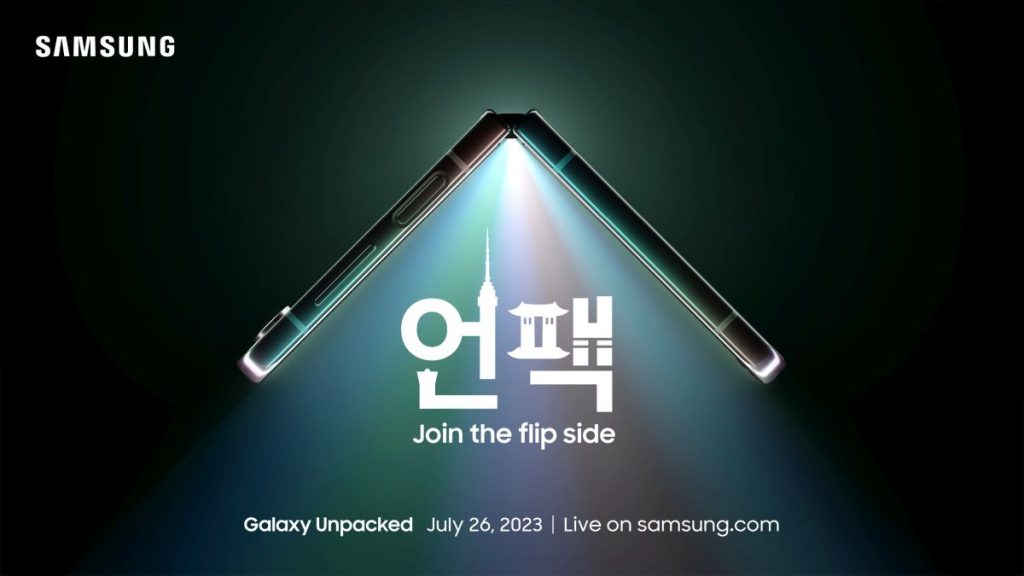
Galaxy Z Flip 5 gets vibrant makeover in colored case renders

Samsung’s upcoming Galaxy Z Flip 5 has been the subject of much anticipation and speculation, with leaks and rumors about its design and features continuing to surface. Recently, a seemingly official clear protective case for the phone was leaked in photos, providing more insights into its design elements such as the enlarged cover display with a folder design and a side-mounted fingerprint scanner.

Leaked Galaxy Z Flip 5 protective case renders offer a glimpse of potential color options

Now, fan-made renders of the Galaxy Z Flip 5’s protective case in a range of solid colors have surfaced, offering a glimpse of what the phone might look like when wrapped up in a colored case. While these renders don’t reveal any new information about the upcoming phone, they do suggest that Samsung may offer a range of color options for its protective cases.

Rumors about the Galaxy Z Flip 5’s design continue to circulate, with some suggesting that half the phone will be black and that the cover display will blend in with this panel when turned off. Others have speculated that the cover screen and surrounding frame may have a colored tint matching the phone, similar to the original fold’s cover display.

Samsung is expected to offer a Bespoke Edition of the Galaxy Z Flip 5 in select markets, which will allow customers to personalize the phone’s color and finish. With these fan-made renders suggesting a range of colorful protective case options, Samsung may also offer a variety of case colors to complement the phone’s design.

As the release of the Galaxy Z Flip 5 approaches, tech enthusiasts and Samsung fans will be eagerly awaiting further details about the phone’s specs, features, and design. With the anticipation building, it’s likely that even more rumors and leaks will continue to surface in the coming weeks.

RELATED:

(Source, Via)

Nothing Phone (2) Specifications Leak alongside a Design Render

Nothing is ready to launch its second smartphone— Phone (2). The company has confirmed the handset will debut this summer but hasn’t specified a date yet. The Nothing Phone (1) successor is expected to be a premium offering with a Snapdragon 8+ Gen 1 SoC and several other upgrades on board. While we wait for the Phone (2) to debut, its alleged specifications have surfaced online, alongside a render that shows a familiar design.

Nothing Phone (2) isn’t your average Mid-ranger

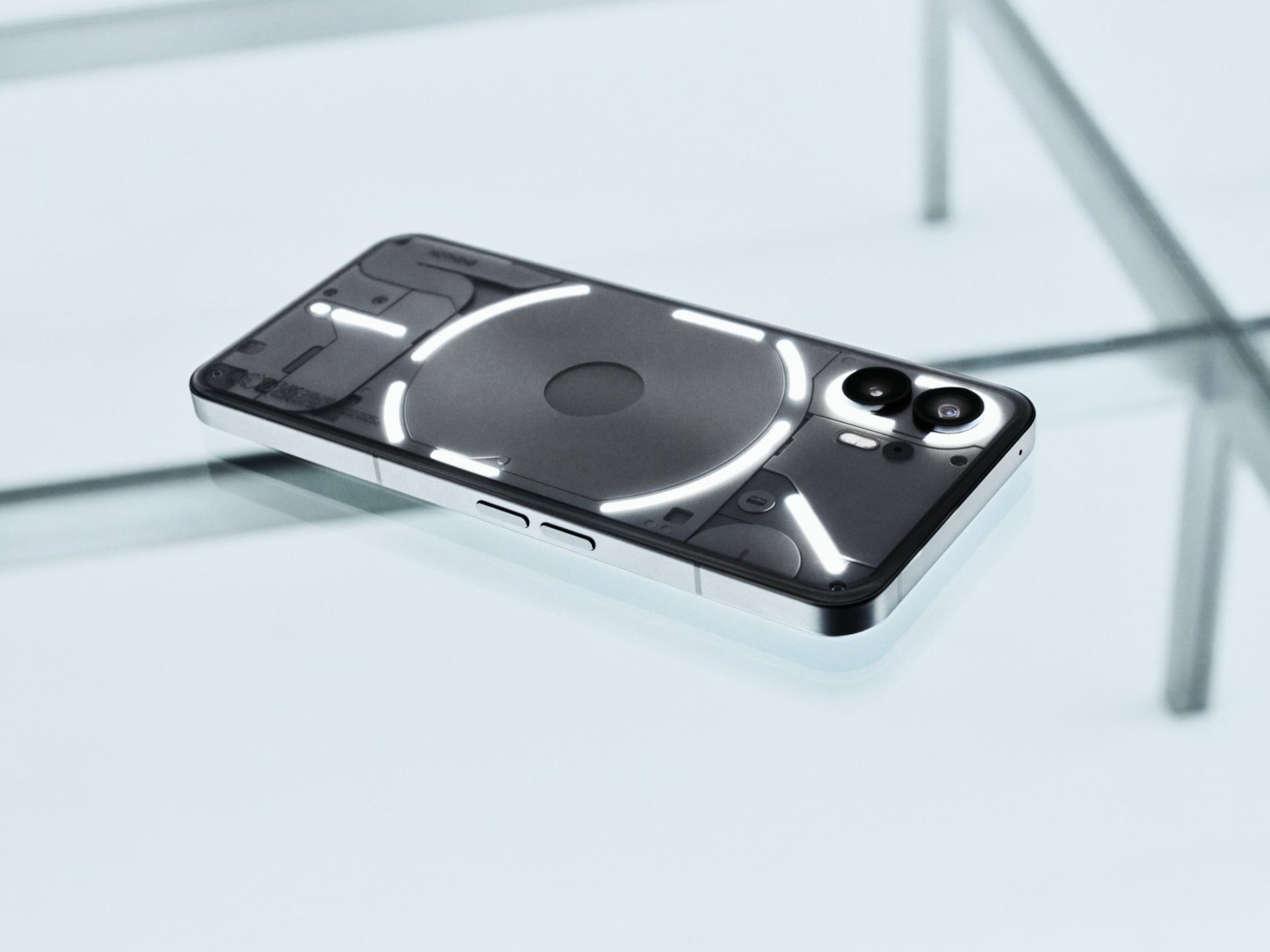
The Carl Pei-led startup has launched some interesting products so far, and all of them have one thing in common (you guessed it right)— a semi-transparent design. And from what we have seen in a recent teaser video, the Nothing Phone (2) will follow suit. A design render, shared by Ben Geskin, reveals that the handset will have a design similar to the Phone (1), with textured areas and LED light lines. It goes without saying that the phone will have a glass back, and its frames could be made of aluminum, similar to the original model.

Nothing Phone 2

The leaked specifications making rounds on the internet suggest that the Phone (2) will feature a 6.55-inch AMOLED panel with FHD+ resolution, a 120Hz refresh rate, and an in-display fingerprint sensor. It will apparently get a 50MP primary camera with OIS and two other sensors. The Snapdragon 8+ Gen 1 processor on the handset is said to be paired with 8GB or 12GB of LPDDR5 RAM and 128GB or 256GB of UFS 3.1 storage. The smartphone is also tipped to pack a 5,000mAh battery with fast wired and wireless charging support. Stereo speakers and NFC have been mentioned as well.

The leak also mentions satellite connectivity but we won’t be very certain about that. It’s possible Nothing could team up with a satellite communications company like Globalstar to offer the feature in the US but that’s just a far-fetched assumption. It seems unlikely since the investments involved in rolling out this feature would make Nothing’s budget go off the roof.

RELATED:

(Source) (Via)

Nokia launches the Nokia 106 (2023) alongside refreshed versions of the Nokia 105 & 110

Nokia has unveiled the Nokia 106 (2023) rugged feature phone together with new versions of the Nokia 105 and Nokia 110. The Nokia 106 has similar capabilities as the new Nokia 105 4G (2023) that was announced recently but with some upgraded features. The Nokia 106 features a music player and the Snake game which are missing on the 105 4G (2023). Nokia has previously held sway in the feature phones segment, with a long list of durable offerings.

Nokia 106

Feature phones ruled the market in the earliest days of mobile phones and Nokia was a big player at that time. With the advent of smartphones, feature phones have been relegated to the background. They are however still meeting the demands of a huge demographic of the global market. Their ruggedness and affordability, coupled with their extended battery lives, have continued to draw fans to these phones. A feature phone is also a useful backup device when hiking or camping.

Nokia 105

Features in the Nokia 105 include wireless FM radio, a flashlight, and the traditional call menu. The Nokia 106 has an MP3 player, a Snake game, and a flashlight. It offers up to 22 days of standby and 12 hours of calls. Users will need to have an SD card installed on the Nokia 106 in order to listen to music. The Nokia 106 comes in three colors namely red, cyan, and black.

Nokia 110

The three new Nokia feature phones have 2G network capability, although the Nokia 110 has a 4G variant which was previously released. Apart from the network capability differences, the new 2G-enabled Nokia 110 has similar features to its predecessor.

Nokia is yet to provide full pricing information for the three new feature phones. It is however expected that they will be quite affordable. Nokia also plans to release 4G versions of the Nokia 105 and 106. The Nokia 110 4G Pro could also be close to its unveiling.

Related: 

(via)

Onyx Boox Poke 5 e-reader with a portable 6-inch display, Android 11 launched

The Onyx Boox Poke 5 e-reader has been unveiled. The Poke 5 e-reader comes with a 6-inch display, warm and cool lighting, and several other features. The new Onyx Boox e-reader is ideal for reading at any time of the day or at night.

nyx Boox Poke 5 e-reader

The Poke 5 runs on Android 11 and features Google Play Services and Google Play Store. It is compatible with thousands of free and paid apps on the Play Store. Onyx also allows users to choose whichever e-books ecosystem suits their fancy. The device is suited for reading e-books, manga, and several other content.

The Poke 5 has an E Ink Carta HD e-paper screen with capacitive touch functionality. The e-reader has a display resolution of 1448 x 1072 pixels and 300PPI. The color scheme is black on the front and back of the e-reader, with a flush screen and bezel design. The Poke 5 e-book reader has a protective layer of glass.

The device is powered by the Qualcomm Quad Core 2.0GHz processor with 2GB+32GB RAM and internal storage configuration. The storage of the Poke 5 can be ramped up by 1 TB via an SD card. The device supports Bluetooth 5.0 connectivity and it also has a microphone for voice communication.

The Onyx Boox Poke 5 has a 1,500mAh battery, weighs 160g, and has dimensions of 148 x 108 x 6.8mm. It has a USB-C port for charging the device or transferring data. The Onyx Boox Poke 5 e-book reader is priced at $179.99 and can be ordered from the Good e-Reader Store. The package includes a magnetic sleep cover case.

RELATED

Apple’s M3-Powered Macs Delayed Until 2024, Claims Leaker

Risi continues to create storms in the computer market with its processors. The company combines performance and efficiency, creating an excellent combination and achieving great success. Many people expected this success to continue soon with the M3 processors. However, if the rumors are true, this might not be the case. It appears that Apple’s highly anticipated M3-powered Macs and iPads may not hit the shelves until 2024. Here are the details…

Apple M3-Powered Macs Face Delay Until 2024 Due to TSMC’s 3-Nanometer Challenges

Apple’s highly anticipated M3-powered Macs and iPads may not hit the shelves until 2024. This serious claim was made by a Twitter user named @Tech_Reve, who claims to have insider information. The user shared, “Update: No M3 Mac or iPad for this year. Due to yield issues with TSMC not being able to supply enough of the M3 to Apple, Apple has delayed the release of the M3 until next year. So there will be no M3 Macs and no M3 iPads this year.”

TSMC is currently responsible for manufacturing Apple’s 3nm A17 chips for the iPhone 15 Pro models. They are also working on the Mac-series “M3” chips, which utilize the same 3nm process. These chips promise significant speed and efficiency improvements. However, TSMC’s recent challenges with 3nm tools and yield have reportedly affected their ability to meet Apple’s demand for the groundbreaking chip technology. This was also highlighted in an EE Times report last month.

If the claims are true, we will not see a new processor at WWDC 23 taking place on June 5th. However, we don’t think users would complain much because the products already available on the market have a good performance for today’s conditions. Of course, this means we won’t see a new Mac either. According to some emerging news, Apple will introduce a 15-inch MacBook Air model with an M2 processor. The new model is expected to be particularly impressive in terms of battery life.

RELATED:

(via)

Motorola Envision TV Series Launched In India

Motorola has expanded its range of televisions in India. The Lenovo-owned brand has launched the Envision TV series in the country. The lineup includes four new smart TVs in different screen sizes and resolution. The latest offerings are priced affordably. Read on to know what the Motorola Envision TVs offer out of the box.

Motorola Envision TV series specifications

The Motorola Envision TVs are offered in 32, 43, and 55-inch screen sizes. The 43-inch model comes in FHD and 4K display resolution. The 32 and 55-inch variants feature HD and 4K resolutions respectively. The HD and FHD TVs have 270 nits peak brightness while the 4K models offer 330 nits peak brightness. 

On the audio front, the Motorola Envision TVs are equipped with 20W speakers. 

Under the hood, the Motorola Envision TVs are powered by a quad-core MediaTek processor. The HD and FHD variants pack 1GB RAM whereas the 4K models have 2GB RAM onboard. All four TVs have 8GB internal storage. The televisions run on Android TV 11 OS out of the box. 

Connectivity options on the Motorola Envision TVs include WiFi, Bluetooth, three HDMI ports, two USB ports, and an Ethernet port. 

The Motorola Envision TV series starts at Rs 9,999 for the base 32-inch variant. The 43-inch FHD and 4K models are priced at Rs 19,999 and Rs 21,999. The 55-inch TV costs Rs 31,999. The TVs are up for purchase starting today from Flipkart.

Related: 

Upcoming Xbox/Bethesda Showcase Sparks Rumors of Limited Edition Controller and Headset

The console wars between PlayStation, Xbox, and Nintendo are in full swing. Manufacturers are striving to attract gamers to their platforms and gain an edge in the competition with both powerful hardware and exclusive games. However, accessories are also crucial in convincing players. It seems Microsoft is well aware of this. The company recently began working with OPI on a special controller series called “Sunkissed Vibes Edition.” Now, rumors suggest that new limited-edition Xbox Series X|S accessories, controller “Ogden” and the “Oren” headset, are on the horizon. Here are the details…

Limited Edition Xbox Series Controller “Ogden” and Headset “Oren” On The Way

Just like in the smartphones, keeping secrets in the gaming industry is quite challenging, as there will always be “leaksters” who reveal your secrets. One of these individuals is a Twitter user named “Billbil-Kun.” Kun shared a tweet revealing new accessories that Microsoft is working on. According to the tweet, gamers can expect a limited-edition controller, codenamed “Ogden,” and a headset, codenamed “Oren,” to be released soon.

Although this is a leak, we don’t have many details at the moment. All we know for now is that we are dealing with a controller and a headset. The rumored “Ogden” controller is expected to retail for $79.99 in the US, while the “Oren” headset is said to sell for $124.99. Billbil-Kun speculates that they could be announced or released around the Xbox/Bethesda showcase, taking place on June 11th.

This isn’t Kun’s first time making headlines with a leak. The leakster has a strong track record of accurately leaking PlayStation and Xbox deals, as well as upcoming titles for PlayStation Plus and Xbox Game Pass. The leakster has been consistently correct for over a year, which lends credibility to this latest claim.

RELATED:

(via)

BYD YangWang U8: The High-Performance, Floating SUV Caught in Transit

BYD, the world’s largest electric vehicle manufacturer, is constantly expanding its product lineup. The company aims to reach more customers and increase profitability by concentrating on various models. In accordance with this strategy, BYD started working on an off-road SUV called the YangWang U8. As the eagerly awaited launch date draws near, the BYD YangWang U8 off-road SUV was seen being transported on a trailer in a video recorded in China. Here are the details…

BYD YangWang U8 SUVs Spotted in Transit

A video filmed in China revealed eight BYD YangWang U8 off-road SUVs. The U8 began pre-sales on April 18, and deliveries are scheduled to start in September. Given that there are still a few months until the release date, we can assume that these vehicles have not yet been dispatched for delivery. The company will likely use the U8 models in the video for various tests. These tests are crucial for both allowing the press to form preliminary opinions about the vehicle and identifying any potential issues beforehand. You can watch the video below.

The BYD YangWang U8 first garnered attention in January when BYD unveiled its unique features, including its ability to perform a 360° tank turn, float on water, and accelerate from 0 to 100 km/h in a mere 3.6 seconds. When presales launched in April, customers could choose between the Premium Edition and the Off-road Master Edition, which includes a large rooftop box. An all-electric model is expected to debut later, likely requiring a battery capacity between 200 and 250 kWh.

The Extended Range Electric Vehicle (EREV) trim of the U8 comes with a 49.05 kWh LFP Blade battery, offering a 180 km CLTC range, and a 2L Internal Combustion Engine (ICE) that acts as a generator for the battery. With a full 75-liter tank and a charged battery, the SUV boasts a total range of 1,000 km. Charging the battery from 30% to 80% takes just 5 minutes.

The U8 is equipped with an impressive array of 38 sensors, including 3 lidars, 5 MW radars, 14 ultrasonic radars, and 16 cameras, prioritizing safety and control. Onboard satellite communication ensures connectivity even in remote areas without phone signals. An optional drone docking station is also available.

Both the Premium and Off-road trims share a 3050 mm wheelbase but differ slightly in dimensions. The U8 features electric motors at each wheel, generating 220 kW of power and a maximum output of 880 kW (1,180 HP) with a peak torque of 1280 Nm. Built on BYD’s E4 platform, the U8 is outfitted with a high-end DiSus-P suspension system and 22-inch forged wheels.

The cabin is designed for comfort, offering four large screens: a 12.8-inch instrument panel for the driver, a 23.6-inch infotainment screen, and two additional screens for rear passengers. The U8 is set to compete with the Mercedes EQG and Hummer EV in the Chinese market. However, BYD has not announced any plans for export at this time.

RELATED:

(via)

Huawei Mate 60 Pro render reveals Star Oreo camera design, standard variant begins testing

Chinese tech giant Huawei is reportedly working on its next-gen flagship smartphone, the Huawei Mate 60, with several rumors and leaks surfacing about the device including an odd-looking circular camera design. The latest updates suggest that the Mate 60 will feature a new ‘Oreo-esque’ design, as showcased in a preliminary leak by a well-known tipster, RODENT950. The render reveals that the rear camera housing will be split into two parts with a wide horizontal band, which is the same color as the rest of the rear panel.

Mate 60 Pro Star Oreo split camera design

According to RODENT950, the Mate 60 series will have five new devices with this updated design, including successors for the Mate 50 and a possible future RS variant. The quad rear cameras of the Mate 60 will be XMAGE-branded.

Huawei Mate 60 Render

Huawei begins testing Mate 60 standard model

According to the tipster Wangzaiknows, Huawei has begun testing the standard Huawei Mate 60 model, and the current test is being conducted with a Snapdragon 8+ chipset. The company has been using Snapdragon 8+ since the launch of the Huawei Mate 50 series, and it has also equipped this chipset in the Huawei P60 lineup. The Snapdragon 8+ Gen 1 chipset uses TSMC’s 4nm technology node, and it provides 30% power consumption efficiency as compared to Snapdragon 8.

However, looking at past trends, Huawei changes the core smartphone components ahead of the final release. Therefore, it is uncertain if the current processor will be used in the final device. The company may use the Snapdragon 8 Gen 2 in the Pro or Pro+ version, while the Snapdragon 8+ Gen 1 could be utilized for the standard version.

Huawei has not announced an official launch date for the Mate 60 series yet, but it is expected to be introduced at an event in October 2023.

RELATED:

(Source, Via)