Advertisement

Elemake Keypad Deadbolt Smart Door Lock Review: Keep Door Things Smart But Safe

Traditional mechanical lock vs Smart electronic lock?

This is a time when we are abandoning physical mechanical locks and keys, and embracing biometric keys and electronic locks. But the revolution will obviously take most people to get used to, especially for those who are used to traditional lock-picking ways. First let’s agree on one thing: the mechanical keys are needed, but definitely the last thing that we want. An excellent option that we recommend here is the Elemake Keypad Deadbolt Smart Door lock, which could be the one that will cost you the least learning and adaptation costs for your journey into the age of electronic locks.

What’s Inside & Design

The size of the whole package is surprisingly small with a wide range of accessories inside to help users with any installation problems. All you need is to make sure every single part presented in the User manual is included. You can easily check them all from the Parts Illustrations and the Assembly Drawing on Page 3. The component pack includes an Outside Escutcheon with a Gasket, a mounting bracket, a bolt, a strike plate, 2 keys with suction cups for removing Key Hole Lid on the outside escutcheon, a Door position sensor, a WiFi-gate module, two more RF cards and a bunch of screws. The door lock offers two color variants – black and silver. Both of them are well-built and mainly made of solid zinc alloy.

The Trivex anti-aging touch panel of the outside Escutcheon is a wise design that prevents fading from exposure to sunlight and supports IP65 waterproofing. Since Trivex regularly tested their products for over 10 years, there is credit that the panel can serve outdoors for years without aging issues.

Easy Installation

But before buying the Smart Lock, let me make it clear: it fits most standard residential doors with 2-3/4’’ or 2-3/8’’ backset and thickness from 1-1/2″ to 1-7/8″, regardless of left or right opening. So basically, it fits all kinds of wooden and metal doors.

The assembly is pretty easy even for someone who never installed any door locks. And users even can click the link where they made a detailed installation video for guidance. The whole assembly was done under the guidance of the official video. The good news is that the video helped a lot and there’s no problem for a single adult to install the lock.

Just pay attention to the first step you make sure the backset of the bolt gets adjusted to fit the door (2-3/4’’ or 2-3/8’’).

To help you install the bolt in the correct direction, there is an ‘up’ mark on the bolt. Then turn the spindle of the outside escutcheon in the vertical position and put it through the backset and fit the door hole (2-1/8” diameter), where you also need to route the cord through the hole and go under the bolt. And connect it to one slot of the inside escutcheon, while the other is left for connection with the included door position sensor. 

Then just attach the inside escutcheon in the right position and fix the escutcheons on both sides of the door.

4-in-1 Unlocking Experience

The 4-in-1 entry smart door lock supports passwords, RF cards, keyed, and Bluetooth remote access, which widely covers most scenarios and the customary access for different people. For those who are used to traditional keyed access or card access, there’re 2 metal keys and 2 RF cards included. For someone who likes keyless access, password entrance is a great option. Last but not least, internet remote access is the most flexible and smartest way that meets different scenarios, where all you need is a smartphone that connects with Bluetooth or just the internet.

To have remote internet operation, you can connect the smart lock with a separate WiFi-gate module, which actually is a smarter design to prolong the battery life of the smart lock than most other WiFi-built-in models. It can be placed at any location where it’s available for wireless connection with both a WiFi signal and the door lock. It’s easy to set up the phone operation thanks to the Smart Life App.

Download and install the App from App Store (iOS devices) or Play Store (Android devices), and follow the setup steps to add the wireless gateway and the door lock. You can add passwords, add and capture RF cards, directly tap to remote unlock, view unlocking records and monitor entrance, check the door state and battery life, and so on.

With the door position sensor, users can check if the door is closed and locked in the App along with an automatic locking feature that makes sure you keep the house or room safe. Before living with smart door locks, I often struggled with returning to reconfirm the door after leaving and being unsure if it was securely closed. Most of the time this was futile. But at that time, it had to be done for safety. Now the Elemake perfectly solved the problem that has been bothering me for a long time, and thankfully, saved much time for me.

Connect With Third-Party Voice Assistant

The smart door lock also supports third-party voice commands to unlock, such as Alexa and Google Assistant. For example, you can link the Smart Life with Alexa first, and move to the Alexa app to add the door lock and activate the ‘unlock by voice’ feature. Of course, for security, Alexa would also ask you to set up a voice code. Even though it’s really convenient, users should still use the voice unlock with caution. After all, the voice can be easily overheard.

Low Power & AA battery

All the electric components apply Low Power Consumption Design. As of the time this review was written, we’ve tested it for over a month and it has worked well without battery replacement. After we saw the official claim that the batteries can support the lock to run for over a year, no matter with the separate WiFi hub or not, I realized that our test looked ridiculous. The battery box loading 4 replaceable AA batteries is a smart design. It’s widely seen that chargeable batteries are applied on most electric products, but for a door lock, no one likes to wait for the charging time. Fortunately, replacing the batteries for the Elemake Door Lock takes no more than a minute. 

Verdict

As a reviewer, I really like their user-friendly attitude and the detail they show on the smart lock. The lock is nice with decent built quality. And most importantly, it is super easy to install following the clear and straightforward installation video. The fact is that no paper user manual is as informative as a good assembly and setup video. Once it got ready to serve, managing the door would be much easier. The tiny complaint is that it would be perfect if it came with a handle regardless of left or right opening, aesthetically pleasing without having to buy an extra one. If you are interested in the Elemake smart door lock, the official website here will offer you more information like free shipping and warranty services.

Elon Musk threatens legal action against Microsoft over the use of Twitter data

Elon Musk took to Twitter to threaten legal action against Microsoft for dropping Twitter from its Smart Campaigns advertising platform. The move by Microsoft comes after Twitter announced plans to charge companies between $42,000 and $210,000 per month for accessing its API, which allows third-party apps to interface with the social media service.

elon-musk
Credit: Reuters

Musk has accused Microsoft of illegally mining Twitter’s data to train its AI-powered programs, demanding compensation for the use of the data. While it is unclear if ChatGPT, a large language model trained by OpenAI, was among the programs mentioned by Musk, it is known that ChatGPT was trained on public internet data, including data from platforms like Twitter.

The dispute between Microsoft and Twitter raises concerns over access to social media data, with companies having to pay significant amounts to access information that was previously available for free. It also highlights the potential for legal disputes over the use of such data, as companies seek to monetize their access to social media platforms.

In response to the dispute, Musk has announced the launch of his AI platform, TruthGPT, which is aimed at competing with Microsoft’s OpenAI. The move is likely to intensify competition in the AI market, with companies seeking to gain an edge by accessing data from social media platforms like Twitter.

The ongoing dispute between Microsoft and Twitter is likely to have far-reaching implications for the use and monetization of social media data, with companies seeking to gain access to such data through various means. As the world becomes increasingly reliant on AI-powered technologies, the importance of access to data is likely to become even more significant, leading to more legal disputes over its use and ownership.

RELATED:

(Via)

GIGABYTE unveils high-performance Gaming laptops in India with latest Intel and NVIDIA tech

GIGABYTE has unveiled its latest range of laptops in India, incorporating the newest NVIDIA GeForce RTX 40 series laptop GPUs. The latest line-up consists of the AORUS, AERO, and G5 series, all boasting cutting-edge technology for high-performance gaming and creative workloads.

Gigabyte Aero

GIGABYTE AORUS, AERO & G5 Series Features

The new range of laptops available in India includes the AORUS 17 BSF, AORUS 15 BKF, AORUS 15 9SF, AORUS 15 9KF, AORUS 15 9MF, AERO 14 OLED BMF, AERO 14 OLED 9MF, G5 KF, and G5 MF. These laptops come equipped with the latest NVIDIA GeForce RTX 40 Series Laptop GPUs and up to 13th Gen Intel Core processors, making them some of the most powerful laptops on the market.

Gigabyte Aero laptop

The AORUS 17 and AORUS 15 laptops, designed for gamers and creators, are equipped with up to Intel Core 13th Gen i7 H series processors and up to NVIDIA GeForce RTX 4070 Laptop GPU with a TGP of 140W, providing ample power to handle any workload. The AORUS range offers a choice of 17.3 and 15.6-inch displays with up to QHD resolution and a maximum refresh rate of 240Hz, delivering immersive visuals and fluid framerates. These ultra-portable gaming laptops are perfect for individuals who require a powerful machine that they can carry with them wherever they go.

Gigabyte Aero laptop

The AERO 14 OLED has undergone significant upgrades in terms of performance and craftsmanship, weighing only 1.49kg. It comes with NVIDIA Studio certification, ensuring optimal stability and performance for commonly used creative software. The laptop boasts a 2.8K QHD+ resolution display with a 16:10 aspect ratio, offering maximum screen space for enhanced productivity.

Gigabyte G5 series

The G5 series, designed for mid-range gaming, features a 12th Gen Intel Core i5 processor coupled with NVIDIA GeForce RTX 40 Series Laptop GPUs and a 144Hz high refresh rate display. The new G5 Range is 22% smaller and lighter than its previous generation, providing a great deal of performance in a compact package.

All laptops come with GIGABYTE’s WINDFORCE cooling technology, which ensures efficient and noiseless cooling while also making the laptops more compact and portable for on-the-go operations. The laptops are also equipped with Thunderbolt 4 technology, which provides up to 100W of power delivery and lightning-fast data transfer speeds.

As for the prices, the Gigabyte AORUS starts at Rs 111,999 ($1,363) for the 15-inch model with Intel Core i5. The AERO 14 OLED starts at Rs 151,999 ($1,850) for the Core i5 version while the Core i7 model is priced at Rs 169,999 ($2,069). Finally, the Gigabyte G5 starts at Rs 90,999 (~$1,107) for the base model. The mdoels are expected to go on sale in India in May and would be available via multiple channels including Amazon India.

RELATED:

Windows 11 Taskbar update brings back highly requested classic feature: Here’s a sneak peek

Microsoft has been making efforts to bring back some of the classic features to the Windows 11 Taskbar, much to the delight of many long-time users of the operating system. Recently, the company added the ability to show seconds in the system tray and re-added the ability to launch the Task Manager by right-clicking anywhere on the Taskbar. Now, the company is working on bringing back two more highly requested features to the Taskbar: “never combine” and “show app labels.”

Windows 11 taskbar feature

These features are important for users who prefer the old-school method of manually managing the position of running apps on the Taskbar and being able to see the titles of running apps. The latest Windows 11 preview builds now have a functional version of these features, which are currently in a hidden state but are expected to be released in an official Windows 11 update later this year.

Microsoft has been rebuilding the Taskbar on Windows 11 from the ground up, which is why many classic Taskbar features were absent from the first two releases of Windows 11. However, the company has been listening to user feedback and working on adding back older features that have been requested the most.

A video from Albacore on Twitter shows that the Windows 11 Taskbar looks just like it did on previous versions of Windows when the “show app label” is enabled. This news should excite users who prefer the classic Taskbar experience and want to see it return to Windows 11.

Overall, Microsoft’s efforts to bring back classic features to the Taskbar are a positive step towards improving the user experience on Windows 11. While not all classic features will make a return, it is encouraging to see that Microsoft is working on features that users have been asking for the most. As the company continues to build out the new Taskbar, we can expect more exciting developments in the future.

RELATED:

(Via)

Vivo Y78+ may launch alongside the Vivo X Fold 2, X Flip today

Vivo will be holding a launch event in China tonight. At 7pm (local time), the company may will announce the Vivo X Fold2, Vivo X Flip, and Vivo Pad2 tablet. It is likely that it may also unveil the Vivo Y78+ mdirange phone through the same event. It is rumored to be the first phone in the Y series to feature a curved screen.

The Vivo Y78 Plus with model number V2271A has been recently spotted on the 3C certification website. The phone is said to have a large 5,000mAh battery that supports 44W fast charging, which is an improvement over the previous Vivo Y77 model that had a 4500mAh battery and 80W dual-core flash charging. While the battery life has been enhanced, the charging speed may not be as fast as some users would prefer.

Vivo Y78+

The Geekbench listing of the device page  revealed that it is equipped with a Snapdragon 695 processor. However, some rumors suggest it may have a MediaTek Dimensity chip. The Geekbench also revealed that the smartphone may com arrive with up to 12 GB of RAM and Android 13 OS. On Geekbench 6, it recorded a multi-core running score of 1976 points and a single-core running score of 670 points.

The leaked image of the Vivo Y78+ that appeared earlier this month revelaed that it will feature a curved screen design for the first time in the Y series family. The front of the phone is rumored to have a single hole in the center of the curved screen, while the back of the device will feature a rectangular rear camera module with a dual camera lens in the shape of a double ring. The phone is expected to be available in three colors: black, light blue, and light yellow. It could be priced at around 1,000 yuan ($145).

RELATED:

Vivo V29 Lite to launch soon with Snapdragon 695 SoC and more

Vivo Y02t 4G smartphone in the works, key specs & launch timeline leaked

Vivo X90 series will be available on Flipkart for Indian customers, checkout specs

iQOO Z7 Review: Good Budget 5G Smartphone with A Couple of Drawbacks

Best Apple Watch Faces of 2023

TCL unveils C74 QLED TV series in Europe with advanced gaming features and Google TV interface

TCL, a popular electronics brand, has launched its latest C74 TV series in Europe. The QLED 4K devices come in 55-in, 65-in, and 75-in sizes, with 86-in and 98-in models set to launch in May. These new televisions boast Full Array Local Dimming (FALD) technology, offering up to 1,000 nits HDR brightness for a clearer, more vivid image. TCL has included advanced technologies such as the AiPQ 3.0 Processor, 4K HDR Pro 1000, and 144Hz Motion Clarity Pro to provide viewers with smooth, lifelike images and colors.

The C74 or C745 features the Google TV interface, allowing users to access popular apps like Netflix and Disney+ with ease. With Chromecast, you can cast content from your mobile device to the TV and control the device with Google Assistant or Amazon Alexa voice commands. TCL’s Game Master Pro 2.0 comes packed with various tools to enhance the gaming experience, including Shadow Enhancement, VRR, ALLM, and a 240Hz Game Accelerator to increase the frame rate.

In terms of ports, the TCL C74 TV includes four HDMI 2.1, HDMI eARC, and USB 2.0, providing ample connectivity options. The TV has two built-in 15W speakers that support Dolby Atmos and DTS Virtual:X.

The TCL C74 TV series has launched in the UK and EU, with pricing starting at £649 or €799 for the 55-in model. The 65-inch model is priced at £799, while the 75-inch model is priced at £1099. If you’re looking for a larger TV, the 85-inch and 98-inch models will be available in May, priced at £1599 and £3599, respectively.

RELATED:

ZTE Axon 40 Lite launched with Unisoc T616, 50MP dual cameras, 22.5W charging

ZTE, the Chinese smartphone manufacturer, has launched the Axon 40 Lite, the latest addition to its Axon series, in Mexico. It is midrange phone powered by Unisoc T616 chipset and runs on the latest Android 12 operating system.

ZTE Axon 40 Lite specifications and features

ZtE Axon 40 Lite

The Axon 40 Lite features a 6.6-inch FHD+ IPS display with a resolution of 1080 x 2400 pixels. It comes with 6GB of RAM and 128GB of UFS2.2 storage that is expandable up to 512GB via a microSD card. The device weighs 182 grams and has dimensions of 163.0 x 74.0 x 8.3mm.

In terms of the camera, the phone comes with a triple camera setup on the rear, which includes a 50-megapixel primary sensor with an f/1.8 aperture, an 8-megapixel ultra-wide-angle lens, and a 2-megapixel depth sensor. On the front, there is a 16-megapixel selfie camera with an f/2.0 aperture.

ZtE Axon 40 Lite

The Unisoc T616-powered Axon 40 Lite Is backed by a 4,500mAh battery with support for 22.5W fast charging. It also comes with Bluetooth 5.0, USB Type-C port, a a side-facing fingerprint sensor, and a 3.5mm headphone jack.

ZTE Axon 40 Lite price and availability

The ZTE Axon 40 Lite is available in two color options: Blue and Black. As far aspricing and availability details of the Axon 40 Lite are concerned, it will be available for MXN 3999 in Mexico.

RELATED:

Xiaomi 13 Ultra Gets Day One Updates to Enhance Camera Performance

Xiaomi‘s latest offering, the Xiaomi 13 Ultra smartphone, has made waves in the tech community since its recent launch in China. Early reviews have already declared it as potentially the best Android camera phone currently available in the market. However, the company is not resting on its laurels and has already released a couple of updates for the device in the first few days.

Xiaomi 13 Ultra

Within 24 hours of the launch, two versions of the MIUI 14 OTA update have been made available to users. The main focus of these updates is to boost the already impressive camera performance of the Xiaomi 13 Ultra. In the first patch, MIUI 14.0.7.0, the update is quite substantial, with a capacity of up to 6.5GB, along with two Google security patches. The camera optimization features include adjustments to the default zoom ratio of street shooting mode and the fixed focus distance for the same mode.

Xiaomi 13 Ultra Wireless Camera Handle

The second patch, MIUI 14.0.8.0, released soon after, is relatively smaller in size, at only 87MB. Despite this, Xiaomi has advised all users to upgrade to this new patch, which promises to improve the user experience, make the system more stable, and enhance the overall shooting quality. The three main upgrades in this patch include picture quality optimization for certain scenes, an adjustment to the default zoom ratio of street shooting mode, and the fixed focus distance for the same mode.

While the recent patches should be part of the latest update, the main aim remains to improve the already impressive camera quality of the Xiaomi 13 Ultra. Xiaomi is known for its strict adherence to timely updates, and the company has advised users to connect to the internet as soon as they obtain the device to ensure that the camera optimization provided by the latest update is available.

RELATED:

Motorola Edge 40, Razr 40 Ultra bag BIS certification

India’s BIS authority has approved two Motorola phones with the model numbers XT2303-2 and XT2321-1. Both devices have also been approved for other certification platforms in the past few weeks. It can be said based on previous reports that these devices will be arriving in the market as the Motorola Edge 40 and Razr 40 Ultra (aka Razr+ 2023).

Motorola Edge 40, Razr 40 Ultra BIS lisings

The BIS certifications of the Edge 40 and Razr 40 Ultra have not revealed anything about their specifications. However, now that they are BIS certified, it appears that it will not take too long for these devices to hit the Indian market. Here is a look at the leaked specifications of both devices.

Motorola Edge 40 specifications (rumored)

Motorola Edge 40
Motorola Edge 40

Reports have revealed that the Motorola Edge 40 has a 6.55-inch AMOLED FHD+ 144Hz display with a punch-hole design and curved edges. It will feature the upcoming Dimensity 8020 chip, 8 GB of RAM, 128 GB / 256 GB of built-in storage, and a 4,400mAh battery with 68W charging. It will come preloaded with My UX 5-based Android 13 OS. It will have a 32-megapixel selfie camera and a 50-megapixel (main, with OIS) + 13-megapixel (ultra-wide) dual-camera unit on the back.

Motorola Razr 40 Ultra specifications (rumored)

Motorola Razr 40 Ultra (aka Razr+ 2023)

The Razr 40 Ultra clamshell phone is expected to feature a 6.7-inch foldable OLED panel that offers an FHD+ resolution and a 144Hz refresh rate. It is expected to feature the Snapdragon 8 Plus Gen 1 chipset, 8 GB / 12 GB of LPDDR5 RAM, and a 3,640mAh battery with 33W fast charging. It will run on Android 13 OS and My UX 5. The device will come with other features, such as a very large cover display, a dual-camera setup, and a side-facing fingerprint scanner.

RELATED:

(via)

Redmi Note 12 5G’s new 8GB+256GB variant goes on sale for first time today in India; checkout price, offers

Redmi unveiled the Redmi Note 12 5G along with the Redmi Note 12 Pro 5G and Redmi Note 12 Pro+ 5G at the beginning of this year in India. Since launch, the Note 12 has been available in 4 GB and 6 GB RAM variants. Starting today, the 8 GB RAM variant of the device will be available for purchase in the country.

On March 30, Redmi announced the Redmi Note 12 (4G) and Redmi 12C in India. At the same time, it also introduced the 8 GB RAM + 256 GB storage version of the Redmi Note 12 5G. The new variant was expected to go on sale on April 6. While the first sales of the Redmi Note 12 (4G) and Redmi 12C were carried out on the said date, the Note 12 5G’ 8GB+256GB wasn’t made available for purchase.

Starting today, the 8GB+256GB of Note 12 5G will be available for purchase for the first time in India. The new variant is priced at Rs 21,999 (~$267). However, after applying an ICICI Bank discount of Rs 1,500 (~$18), it can be bought for Rs 20,499 (~$249). There are some additional benefits available for existing Xiaomi users who are looking to purchase the new variant. It will be available through Amazon India, Mi.com, Mi Store app, and offline stores.

Redmi Note 12 5G

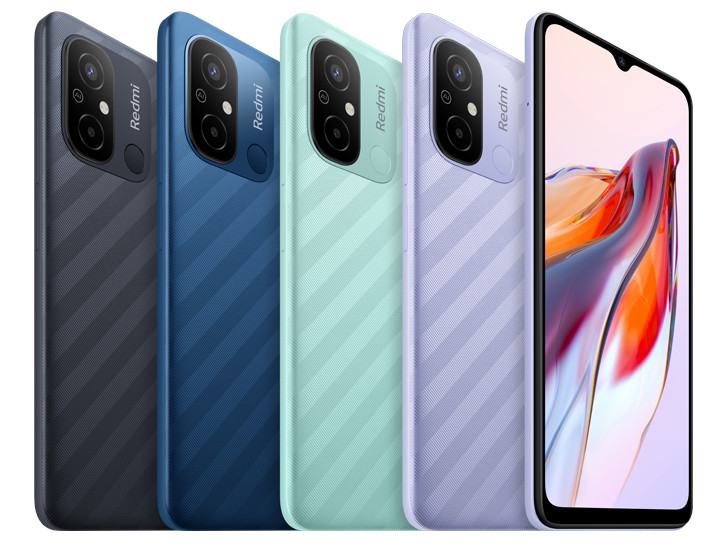
The Redmi Note 12 5G’s 8GB+256GB variant can be bought in shades like Matte Black, Mystique Blue, and Frosted Green. The existing 4GB+128GB and 6GB+128GB variants of the smartphone are currently priced at Rs 17,999 (~$218) and Rs 19,999 (~$243), respectively.

The Note 12 5G offers key specifications, such as a 6.67-inch FHD+ 120Hz AMOLED display, a Snapdragon 4 Gen 1 chipset, LPDDR4x RAM, and UFS 2.2 storage. It runs on the MIUI 13-based Android 12 OS and packs a 5,000mAh battery with 33W charging. It has a 13-megapixel front camera and a 48-megapixel (main) + 8-megapixel (ultra-wide) + 2-megapixel (macro) triple camera unit on the back.

RELATED:

Vivo S17 Pro camera specifications leaked well ahead of launch

Reports have revealed that Vivo is working on the Vivo S17 series of smartphones for the Chinese market. The S17 lineup, which is expected to include the Vivo S17e (V2285A), Vivo S17 (V2283A), and Vivo S17 Pro (V2284A), is likely to debut next month (May). Some of these devices are speculated to get rebranded as Vivo V29-series phones in the global market. Today, well-known tipster Digital Chat Station leaked the camera specifications of the alleged Vivo S17 Pro.

According to the leak, the Vivo S17 Pro is expected to have a 50-megapixel Sony IMX766V primary camera with OIS support, an 8-megapixel ultra-wide camera, and a 12-megapixel Sony IMX663 portrait camera with centre focus. While he has not mentioned the name of the phone in the new leak, his mentioning of “S” in the comments section of the Weibo post is a clear hint that he could be talking about the S17 Pro.

Recent reports have revealed that the Vivo S17 Pro will flaunt an OLED curved-edge display from BOE. The screen is said to offer a 1.5K resolution and a 120Hz refresh rate. The Vivo S17 is also expected to have the same display, which means that users can expect a stunning viewing experience.

When it comes to the hardware, the Vivo S17 is rumored to be powered by either the Snapdragon 778G or Snapdragon 782G chipset, while the Vivo S17 Pro is expected to come with the Dimensity 8200 chipset. The Vivo S17 is likely to have 8 GB or 12 GB of RAM, while the S17 Pro may come with 16 GB of RAM.

The S17 and S17 Pro are expected to offer 128 GB or 256 GB of storage. Both models are also expected to support 80W charging, but their battery capacities are not known yet.

RELATED:

(source)

MediaTek announces Dimensity Auto Platform for next-gen driverless vehicles

MediaTek has announced a new range of chips for its flagship Dimensity SoC. The Dimensity Auto platform offers a raft of computing solutions for autonomous vehicles. It serves to help deliver the goals of car makers for a smart cockpit. It provides connectivity while on the go as well as automatic driver assistance systems. Dimensity Auto will compete with several established names in the segment including Qualcomm.

Dimensity Auto Platform

The MediaTek Dimensity for next-gen vehicles will support automatic driver assistance systems (ADAS) and other seamless solutions. MediaTek seems to be pursuing vigorously its goal to help deliver intelligent, always-connected vehicles. Dimensity Auto is a machine learning/ vision-capable multiprocessor platform for the latest automotive products. It features the MiraVision technology with 8K/120Hz HDR displays possible. It also incorporates multiple HDR-native cameras.

The Dimensity Auto Cockpit solution competes with Qualcomm Snapdragon Ride but it remains to be seen how the Dimensity Auto squares up with the Snapdragon Ride. Its 3nm process is better than the 4nm process in the Qualcomm model. It can be combined with Dimensity Auto Connect which targets the Snapdragon Auto 5G Modem-RF Gen 2. It will support Wi-Fi 7, GN SS, Bluetooth, 5G NTN, and others. The new MediaTek Dimensity Auto platform will help deliver super-smart vehicles that could be as smart as a flagship mobile device.

There are several embedded features and functionality of the MediaTek Dimensity including a dedicated DSP for microphone audio. There are no official timelines yet for the release of the MediaTek Dimensity Auto platform in production vehicles. All the same, its entry into the automotive industry could be epochal, with its raft of innovative features.

RELATED:

A developer ports the aging Poco F1 to Huawei’s HarmonyOS

A true tech enthusiast would remember the Poco F1. With a Snapdragon 845 chip and a solid display at $300 in 2018, the handset was a steal deal and probably provided the brand with a launch pad. The Poco F1 was launched with Android 8.1 based on MIUI 9.6 and was later upgraded to MIUI 12 (Android 10). Although the smartphone has reached its end, a developer has breathed new life into it by porting it to Huawei HarmonyOS.

Poco F1

Poco F1 but without MIUI

A Chinese developer has successfully made the Xiaomi Poco F1 mobile phone run the HarmonyOS. Well, it’s not exactly the HarmonyOS but a ported version called OpenHarmony 3.2, which was recently released by the OpenAtom foundation.

A video shared on Chinese social media platforms gives us a detailed look at the performance of the ported OpenHarmony 3.2 on the Xiaomi Poco F1 smartphone. The video demonstrates the various features and functions of the OS, such as the home page, Wi-Fi connection, F-OH app market, device information, browser for viewing web pages, virtual keyboard app, clock app, Tetri’s game emulator, and 2048 number game. Despite being a ported version, the OpenHarmony 3.2 on Poco F1 appears to run quite smoothly without any major glitches or lag.

While this was an interesting feat, we won’t advise you to install the software on your daily drivers, unless you’re into taking risks. As with any ported ROM, there is a possibility of encountering issues and bugs, which could cause some applications to malfunction. You might also face some security and privacy risks. If you still want to give it a try, you can head to OpenHarmony’s official website.

RELATED:

(Via)

Xiaomi MIJIA Sweeping and Mopping Robot 2 with  up to 5,000 Pa suction power and mops launched in China

Xiaomi has started receiving orders for the MIJIA Sweeping and Mopping Robot 2 in China. The new Xiaomi product has an automatic cleaning mechanism for the mop head for enhanced hygiene and performance.

The MIJIA Sweeping and Mopping Robot 2 has a suction power of 5,000 Pa and the robot will automatically return to its docking station to clean the mop during a cleaning task.
The Xiaomi MIJIA Sweeping and Mopping Robot 2 brushes help collect dirt along the edges of its task area. It also cleans the mop whenever it returns to the dock to prevent the spreading of collected dirt during its operation.

The robot will clean its mop after every 5 square meters of activity. This can be further adjusted to up to 10 square meters between self-cleaning. The gadget also comes with a quiet drying feature that automatically dries the mop heads. The mop will also automatically lift when it encounters a carpet to avoid wetting it.

The robot can be controlled via Xiao Ai voice commands in addition to the MIJIA app. You can schedule the cleaning task and choose any or both of the activities of vacuum and mopping. The robot uses UDS-laser technology for navigation and it has a 5,200mAh battery. A 430ml onboard dust bin is present in the MIJIA Sweeping and Mopping Robot 2 while its docking station has 4L clean and dirty water tanks.

Xiaomi MIJIA Sweeping and Mopping Robot 2 Price

The Xiaomi MIJIA Sweeping and Mopping Robot 2 pre-order price in China is 1,999 yuan (~$291). Interested customers will deposit 100 yuan (~$15) to activate the pre-order. The product will hit shelves expectedly after the pre-order period ends on May 10.

The Xiaomi MIJIA Sweeping and Mopping Robot 2 will revert to its original price of 2,499 yuan (~$364) after May 10. Xiaomi has not released global availability and pricing details for the MIJIA Sweeping and Mopping Robot 2 yet.

Related

Samsung’s Exynos 2400 to feature a powerful RDNA2-based GPU with 6WGP

Although Samsung chose Qualcomm’s Snapdragon 8 Gen 2 over its own Exynos chips for the Galaxy S23 this year, it may not make the same decision next year. The Korean company is reportedly developing a new Exynos 2400 chip that might power some Galaxy S24 units. From what we know so far, it looks pretty powerful, at least on paper. In the latest development, a tipster has claimed the Exynos chip will get a new RDNA2-based graphics unit with 6WGP.

Exynos 2400 could be Samsung’s trump card

Samsung’s Exynos chipsets are not exactly known for performance and efficiency but the upcoming Exynos 2400 could be different. It is expected to be a deca-core chipset and now Revengus has claimed on Twitter that the chipset will use AMD’s RDNA2-based GPU but with 12 compute units. For reference, the Exynos 2200’s Xclipse 920 has just three compute units. It is also claimed to feature 6 WGP, which is short for “workgroup processor” and forms part of AMD’s RDNA architecture.

samsung-exynos-1

Unlike other mobile processors that typically utilize an octa-core architecture, the upcoming Exynos platform is reportedly designed with 10 cores. The chipset is expected to include the following cores: one Cortex-X4 clocked at 3.1 GHz, two Cortex-A720 cores running at 2.9 GHz, three Cortex-A720 cores at 2.6 GHz, and four Cortex-A520 cores operating at 1.8 GHz.

A recent report suggests that mass production of the Exynos 2400 chip will begin in 2024. It is likely to power some models of the Galaxy S24 series. However, there’s no word yet on which regions will get the Exynos 2400-powered variants of the Galaxy S24. More details should emerge in the coming days.

Related:

(Source)

Apple Struggles to Choose Between Lightning and USB-C for iPhone 15

Apple is preparing to introduce the highly anticipated iPhone 15 series in September. As always, the phone is expected to come with performance improvements and new features, but this year, it will feature a radical change. However, this year will see a significant change, as the company is compelled to adhere to European Union regulations. For the first time, Apple will release an iPhone equipped with a USB-C port, rather than the traditional Lightning port. Despite this, the company is not particularly eager to implement the change. Recent information even suggests that Apple initially considered an iPhone 15 with a Lightning port, before ultimately opting for the USB-C. Here are the details…

Apple Considered iPhone 15 With Lightning Port Before Swapping to USB-C

As you might expect, developing a flagship-level smartphone is no easy task. Companies need to start the development process well in advance. Apple is no exception in this regard. Whenever the company introduces a new iPhone, they have already begun working on the next model. This often leads to some information about the phone being leaked early on.

According to a researcher on Twitter by the username Unknownz21, Apple prepared the first prototype models for the iPhone 15 in January 2022. However, the decision to use USB-C wasn’t finalized until March. From that point on, work was focused exclusively on versions with USB-C, although “There was a version with a lightning port very early on, but it was quickly scrapped.”

iPhone 15 USB-C

Although the European Union forced the company to abandon the Lightning port, this development was not entirely surprising. For years, Apple has been using the USB-C port in its other products. However, the company persisted in using the Lightning port for iPhones and AirPods. This led to users within the ecosystem expressing frustration over having to use different chargers for different devices. Additionally, many people criticized the Lightning port for being slow. However, the European Union’s solution may not be permanent.

Apple, which dislikes being dependent on outside, may not need to rely on USB-C charging for too long. The company has been investing in a wireless charging technology called MagSafe for some time. If they can also enable data transfer using this feature, USB-C might remain only a temporary solution.

RELATED:

(via)

Global Poco F5 Pro Could get the notorious Snapdragon 8 Gen 1 SoC

Poco F5 series is going to be the latest and greatest smartphone lineup from the Xiaomi sub-brand. It will include the Poco F5 and Poco F5 Pro, with the Pro model reportedly not slated to launch in the Indian market. The vanilla model’s launch in India has been teased by the company, but there’s no word on the Pro version yet. It is expected to be a rebranded Redmi K60 series phone but a recent Geekbench listing points to a controversial Snapdragon 8 Gen 1 SoC under its hood.

Poco F5 Pro runs Geekbench with SD 8 Gen 1

Poco F5 Pro should be announced pretty soon but ahead of the release, it has appeared on the Geekbench website with the model number 23013PC75G. Notably, the handset features an octa-core processor with its motherboard codenamed Taro. We know that Taro is the aging Snapdragon 8 Gen 1 processor.

Poco-F5-Pro-Geekbench

This is contradictory to previous reports that claimed the Poco F5 Pro will be a rebadged Redmi K60 with a Snapdragon 8+ Gen 1 SoC. The handset has been listed on Geekbench with 12GB of RAM and an Adreno 730 GPU. It managed to score 1302 and 4080 points in the single-core and multi-core tests.

Let’s get this out of the way— Snapdragon 8 Gen 1 is pretty powerful, but it has a bit of a downside. It tends to run hot and drain the battery quicker than you’d like. The chip was developed by Samsung and Qualcomm using Samsung’s 4nm process, but apparently, Qualcomm wasn’t happy with how Samsung was manufacturing the chips. So much so that it switched to TSMC and came out with a new and improved version called the Snapdragon 8+ Gen 1 around mid-year.

RELATED:

(Via)

OnePlus Nord N30 Google Play listing confirms it’s a Nord CE 3 Lite rebrand

OnePlus recently launched a new smartphone in its budget-friendly Nord CE series, known as the Nord CE 3 Lite. This device boasts a well-rounded set of specifications, including a Snapdragon 695 chipset and a 108MP main camera. According to a recent report, the phone will also be released in the United States under a different name, the Nord N30. Now, the appearance of the N30 on the Google Play console and list of supported devices has confirmed that it is indeed a masked Nord CE 3 Lite.

OnePlus-Nord-CE-3-Lite-5G-faetured
OnePlus Nord CE 3 Lite

OnePlus Nord N30 headed to the US

A OnePlus forum member recently presented evidence of the OnePlus Nord N30 being a rebranded Nord CE 3 Lite, headed to the States. It’s supposed to be the successor to the Nord N20, and the Google Play console listing seems to confirm that it’ll have a Full HD+ screen and 8GB of RAM, powered by a Snapdragon 695 chip. It’s also listed to run Android 13. Basically, it’s got pretty much the same specs as the Nord CE 3 Lite, which was just released.

Additionally, the handset has appeared on the list of Google Play-supported devices with the name OnePlus Nord N30 5G. This all makes it evident that OnePlus is just slapping a new name on the handset and calling it a day.

OnePlus Nord CE 3 Lite has already been released in India with the aforementioned specifications, but it also boasts a 5,000mAh battery that supports fast 67W charging. In the camera department, the device is equipped with a triple-camera setup that includes a 108MP primary camera along with two 2MP units for depth sensing and macro photography. For selfies, there’s a 16MP front-facing camera.


RELATED
:

(Via)

Kingsoft’s “WPS AI” Simplifies Writing Process with AI Integration

Artificial intelligence technologies is taking the internet by storm. The trend that began with ChatGPT and reached a frenzy is causing new companies to enter this field every day. So far, we’ve seen countless tech giants like Google and Baidu introduce their own AI tools. Now, a new one has been added to the list – Kingsoft is set to unveil an AI writing assistant for word processing software. Here are the details…

Kingsoft to unveil AI writing assistant for word processing software

Kingsoft has announced the introduction of an AI writing assistant for its word processing software. Codenamed “WPS AI,” the tool is designed to enhance writing experience. he WPS AI feature can be accessed by simply pressing “Ctrl+J” within Kingsoft WPS Docs. This user-friendly functionality aims to make the writing process more efficient for users.

So what are these features for? Actually, there are many areas where WPS AI can be used. Users can employ WPS AI to draft meeting outlines or to-do lists. The AI assistant generates detailed plans that include essential information such as objectives, time, location, attendees, and agendas. The integration of the AI writing assistant in KDocs not only showcases Kingsoft’s technological capabilities but also demonstrates the potential for AI.

It’s currently unclear whether the service is included in any fee or not. However, considering the success of OpenAI, it’s possible for Kingsoft to charge for the feature in order to increase their revenue.

RELATED:

(soure)

Stuffcool Quad Pro 4-in-1 cable with PD60W Type-C to C/lightning, braided design launched in India

Stuffcool has unveiled the Quad Pro 4-in-1 lightning braided cable in India. The Quad pro supports of PD60W Type-C to C charging. The Quad Pro has Zinc alloy metal connectors and a nylon-braided flat cable. This comes two years after the release of the Stuffcool Type C to C PD65W cable.

Stuffcool Quad Pro 4-in-1 cable

The new Stuffcool cable can output up to 60W charging within its 1.5m length. It offers Type A, Type C, and lightning connectors, meaning that it can be deployed to charge a variety of devices. You can use the Quad Pro to charge your smartwatch or compatible smartphone or other USB devices. It is a sync and charge cable that can rapidly restore the battery capacity of an iPhone from 0 to 50% in 30 minutes. It works excellently with other lightning-enabled iOS devices.

The Stuffcool Quad Pro can provide Type C to C PD60W charging for MacBooks, and newer laptops with Type-C power ports. Type C to A charging is used for an array of older models and personal devices like earbuds, speakers, and so on. The solid Zinc alloy materials on which the Quad Pro is based make it a very reliable charging accessory. The connectors are very reliable and they have a smooth rail mechanism for easy switching when needed. The flat nylon braided cable is flexible and durable, adding to the high-performance rating of the Quad Pro.

Stuffcool Quad Pro 4-in-1 cable

The Stuffcool Quad Pro offers up to 30W charging for iPhones, iPads, and smartphones while the maximum charging power of 60W is achieved via the PD Type C to C port. Stuffcool is offering the Quad Pro cable in India for Rs. 1,499 ($) and this goes with a six-month warranty. It can be purchased directly from the company’s website or via online e-commerce platforms like Amazon India.

RELATED: