Advertisement

Tesla Model 3 Project Highland leak reveals a refreshed sporty design

Tesla had announced that it is working on a Model 3 refresh a couple of months earlier. But prior to its official release, the company’s Model 3 Project Highland has been leaked, offering us a look at the refreshed electric vehicle.

For those unaware, the Model 3 refresh carries the codename “Project Highland”. The upcoming EV is expected to arrive with several changes and refreshes. These updates could range from its infotainment system to its external design and more. As of right now, the American automobile maker is expected to begin the Project Highland in the third quarter of this year. Recently, the new EV has been spotted in the US, with the latest sighting revealing more of its design.

Tesla

A Redditor shared an image, which reportedly offers us a first proper look at the Tesla Model 3 Project Highland. Looking at this image, parts of the EV is still covered, although we can see still see the front of the refreshed model. One of the more immediate change that can be noticed is the headlights. The next gen Model 3 appears to have a headlight design that is similar to Tesla Roadster or even its Model S.

The headlights are sleeker and offer a more sportier look compared to the version that is available for purchase right now. Another notable aspect noticeable is the absence of the fog lights. Apart from this, there also appear to be changes to the front bumper. However, the authenticity of this image being a Project Highland leak is still questionable since the upcoming Model 3 refresh has typically been spotted with protective covers on the front ends. So stay tuned for more updates regarding this matter.

RELATED:

(Via, Source)

Apple plans to manufacture Macbook in Thailand, says suppliers

Apple is reportedly in discussions with suppliers to establish new manufacturing facilities in Thailand to produce Macbooks. This decision is in line with Apple’s strategy to gradually reduce its dependence on China and increase its footprint in other Asian nations, given the ongoing trade conflict between the US and China.

This news originates from Thailand’s suppliers, who are currently collaborating with Apple to manufacture the Apple Watch. The suppliers who are in discussions with Apple already possess established manufacturing facilities in Thailand that are utilized by other brands. They are currently in talks with Apple to establish a distinct assembly and production line in their factories to manufacture Macbooks.

According to some suppliers, they have begun constructing production facilities in Thailand for Apple’s MacBook, with an expected completion date by the end of this year. Initially, Apple had requested the establishment of new factories in Vietnam, but these suppliers proposed using existing spaces in Thailand instead. One of the suppliers stated that although Apple had approached them regarding setting up a plant in Vietnam, they presented a better alternative of utilizing their extensive space and production capabilities in Thailand. 

The suppliers further stated that though MacBook assemblies happen in Vietnam, some of the components could be supplied from the Thailand plant. Also, suppliers have assured Apple the logistics and customs clearance would take no more than three days. 

Why choose Thailand?

Apple is planning to move away from China to avoid the pressure from the ongoing US-China trade sanctions. The company is planning to set up Vietnam as its base in Asia and is already producing iPads and Airpods in the country. 

However, Thailand also looks like a plausible choice as the country offers a highly competitive manufacturing market with abundant raw materials, low-cost labor, and innovative technologies.

Moreover, the Thai government also encourages the manufacturing sector as it accounts for the majority of Thailand’s total exports and generates a large volume of jobs, amounting to almost six million workers in 2021 alone. As of the fourth quarter of 2021, the share of the manufacturing sector in the Thai economic contribution was 34%, preceding other major industries like service and trade.

Why are brands leaving China?

During the 1990s, when globalization became popular countries across the world started offshoring their manufacturing and service industries to nations that offered low-cost and cheap labor and resources. China topped the list of offshore nations and blossomed into a global manufacturing hub as it presented the perfect blend of a skilled labor force and a prospering middle class interested in purchasing Western products, making it an ideal choice for both manufacturing and marketing. 

However, due to the US-China trade war, companies are now trying to move their production to friendly countries where they don’t need to worry about getting caught in the geopolitical line of fire. 

Apple has already begun shifting its base from China to Vietnam and India. Many famous brands like Samsung, Hasbro, Volvo, Adidas, and more have shifted their major base from China to Vietnam and other countries.

Related:

(via)

Sony Opens Its First PlayStation Exclusive Store In India

Sony has reportedly opened its first-ever Playstation store in India. This means that buyers can now get access to the brand’s consoles in the country. Until now, the Japanese brand had been selling its consoles via various online and offline retailers meaning that customers had to rely on Amazon, Flipkart, Reliance Digital, and more. The news about Sony’s first PS store in India has been shared by industry insider Rishi Alwani. 

The first dedicated Sony Playstation store in India is opened in Delhi. It seems like the Japanese brand has partnered with a third-party retailer called DT Zone. Alwani shared images of the currently up-and-running store in Punjabi Bagh, Delhi. 

The newly opened offline store looks like a one-stop shop for Playstation customers. This means that customers can expect to get access to the PS consoles, Dual Sense gaming controllers, headsets, as well as some game titles directly from the store. Customers might also have the option to purchase a PlayStation membership from the offline store as there is an image highlighting membership plans. However, it’s worth noting that there is no official word on this. 

The exclusive PlayStation store in India is great news to fans as they won’t have to rely on third-party retailers. Additionally, Sony recently slashed the prices of the PlayStation 5 (both standard and digital edition) by Rs 5,000 for a limited period. The expiry date of the discounted price is unknown, but the standard variant can be availed at Rs 49,990 while the digital edition costs Rs 39,990. 

Related:

Xiaomi Smart Band 8 introduces new running and boxing modes

The launch of the Xiaomi Band 8 was previously confirmed in conjunction with the Xiaomi 13 Ultra. This latest iteration of the smart band boasts a new set of redesigned straps, providing users with the ability to personalize their accessory to their liking. Additionally, the brand has introduced support for a necklace accessory, allowing users to double up their smart band as a necklace. Now, two new modes or to say “features” have been confirmed for the upcoming fitness tracker.

Xiaomi Smart Band 8

The official Weibo account of Xiaomi Smart Life has confirmed the addition of two new features, namely “Running Bean Mode” and “Interactive Boxing Mode,” for the upcoming Xiaomi Smart Band 8. The Interactive Boxing Mode is designed to enable users to track data related to somatic senses or somatosensory systems while in action.

This feature would be particularly beneficial for users who are aggressive in the field of boxing, allowing them to monitor their performance. Additionally, while this specific mode is activated, users will also have access to other basic data as well, such as heart rate.

Xiaomi Smart Band 8

Regarding the Running Bean mode, it is designed to be activated while running. When the running bean mode is activated, it tracks essential data, including stride frequency, stride length, ground impact force, and ground landing method. Users can analyze their running performance by accessing additional information in greater detail using the companion application.

Furthermore, users are expected to wear the smart band between their shoelaces by utilizing the compatible strap, rather than on their hands.

Previous leaks and images confirm that the Xiaomi Smart Band 8 will have a pill-shaped AMOLED display, which would be similar to its predecessor. The band is also expected to feature improved tracking capabilities. It is also anticipated to include fundamental activity-tracking functions, including heart rate monitoring, blood oxygen measurement, sleep tracking, and stress monitoring. Additionally, it may support NFC and voice assistant features.

RELATED

Xiaomi Accused of Being an “International War Sponsor” by Ukraine

The tension between Russia and Ukraine continues at full speed. As the ongoing war passes its first-year mark, no progress has been made towards a ceasefire or peace agreement, leaving both countries negatively impacted. Ukraine is nearly in ruins due to the ongoing conflict, while Russia faces isolation from the rest of the world and numerous global companies, resulting in a severe economic downturn. However, it’s not just countries that are affected by this situation; neutral and multinational corporations are also experiencing significant losses. Ukraine recently accused Xiaomi of being an “International War Sponsor”. Here are the details…

Xiaomi Accused of Being an “International War Sponsor” by Ukraine

Xiaomi has unexpectedly found itself embroiled in the ongoing conflict between Russia and Ukraine, with serious accusations being leveled against the company. National Agency for the Prevention of Corruption of Ukraine (NAZK) announced that Xiaomi was added to the list of “International War Sponsors.” The Ukrainian government cited two primary reasons for this decision.

Authorities claim that Xiaomi has remained active in the Russian market and has been a leading smartphone brand in the country since the conflict between Russia and Ukraine began. While Xiaomi has not conducted marketing campaigns since spring 2022, the company still holds a significant market share in Russia.

Since 2018, Xiaomi has been dominating online sales in Russia, boasting a vast network of official authorized retail stores. Recent NAZK data revealed that Xiaomi’s market share in Russia doubled in 2022, with Q3 deliveries increasing by 39% compared to the previous quarter. In the previous year, Xiaomi’s revenue in Russia reached a staggering $202 million.

The press release from the Ukraine stated that the decision to include Xiaomi in the list of international war sponsors was based on the company’s continued operation in Russia after its “full-scale invasion.” Despite these circumstances, Xiaomi remains the leading smartphone brand in what the Ukrainian government refers to as a “terrorist state.”

Xiaomi has consistently ranked first in sales on Russian online stores since 2018 and maintains a massive offline official authorized retail network throughout the country. In 2022, Xiaomi doubled its market share in Russia, solidifying its position as the nation’s leading smartphone brand. By July 2022, Xiaomi and its sub-brand POCO held a 42% market share in Russian smartphone sales, ranking first in terms of revenue.

Xiaomi ukraine

Official data shows that, in 2021, Xiaomi’s Russian subsidiary generated $202 million in revenue. The Ukrainian National Anti-Corruption Bureau claims that the taxes paid on this significant revenue have been used to support the Russian military and “fund the war against Ukraine.”

Xiaomi is currently actively resuming recruitment for its Russian office and has announced the official launch of its flagship smartphones, indicating the company’s intention to fully restore its operations in Russia. Consequently, the Ukrainian government accuses Xiaomi of sponsoring a terrorist state’s military aggression and believes the company will face the reputational and legal consequences of its actions.

As of now, the Ukrainian National Anti-Corruption Bureau has included 21 companies in its list of international war sponsors. Xiaomi’s inclusion in this list comes as a shock to many and highlights the far-reaching effects of the ongoing conflict between Russia and Ukraine on the global tech industry.

RELATED:

(source/source)

Apple will shift to using only recyclable cobalt batteries by 2025

Earlier this week, Apple has announced that it will be making a major shift in the battery technology that it employs for its various products. The company will be moving to utilizing only on recyclable cobalt batteries within the next two years. So here are all the details.

The Cupertino based giant has stated that it will be shifting to exclusively use recycled cobalt by the year 2025. This move from the brand is a part of its plans to make all of its consumer electronic products carbon neutral by the end of this decade. Furthermore, Apple announced that the magnets in its various types of devices will use recycled rare earth elements while its proprietary printed circuit board design will be based on recycled tin soldering and gold plating.

Apple

For those unaware, the iPhone maker is working on becoming truly carbon neutral, including its entire supply chain and the life cycle of its every product by the year 2030. The company announced earlier this week that it has doubled its investment towards projects that brand’s overall carbon footprint. Although, this news also raises concerns considering the fact that tech giant’s in the past have been accused of being involved in deaths of children in the Democratic Republic of Congo after being forced to mine cobalt.

This material is a crucial component in the batteries that power the consumer electronic products. Back in 2022, around a quarter of all cobalt used in Apple branded products was recycled. This marked a rise of 13 percent year on year over 2021. Now, it is sourcing over two thirds of its aluminum, around three quarter of all rare earth materials, and about 95 percent of all tungsten materials in its products from recycled materials. So, cobalt based batteries is next in line to go fully based on recycled materials.

RELATED:

(Via)

Samsung teases its first OLED TV launch in India

Samsung has just teased the launch of a new product in the India market. The company is gearing up to launch new TV models, which are believed to be the first ever OLED TV models in the region. So here’s what we know so far.

The South Korean tech giant teased the new OLED TV launch with a new microsite on its official Indian website. Here, we can see the company telling us to “Get Ready For More” followed by a “WOW”. Below this teaser poster, the brand offers a way to “Register your interest in the Next Quantum Leap in display technology”. In other words, Samsung is set to launch a new TV lineup outside of its QLED TV lineup.

Samsung

Meaning, the new TV are likely to be based on the OLED display technology. Apart from this, the company did not reveal any finer details regarding the upcoming TV model. However, Samsung just recently announced two new 4K OLED TV in the American market. This includes the new S95C and S90C, which are the from its latest OLED 4K TV lineup. These are offered in multiple versions, namely 55 inch, 65 inch, and 77 inch display sizes.

The company released the new 4K OLED TVs, which starts from 1,889 US Dollars. The S95C and S90C models feature AI powered Neural Quantum processor for dynamic and vibrant color reproduction. Keep in mind that this still just speculation and Samsung might decide to launch neither of these TV models, or perhaps just one of them in the Indian market. So stick around for more updates regarding this matter.

RELATED:

Amazon Unveils Bedrock to Compete with OpenAI’s ChatGPT and DALL-E 2

Artificial intelligence technologies continue to take the internet by storm. ChatGPT currently leads the race, outpacing its competitors by a significant margin. Meanwhile, tech giants like Google are working hard to catch up with OpenAI’s innovative technology. In a recent development, Amazon joined the growing list of companies in the AI field. They announced the launch of Bedrock, a new cloud service on their Amazon Web Services (AWS) platform, designed to provide developers with customizable AI tools for generating text and images. Here are the details…

Amazon Unveils Bedrock: A Cloud Service for AI-Generated Text and Images, Competing with OpenAI’s ChatGPT and DALL-E 2

Amazon has announced the launch of Bedrock, a new cloud service for its Amazon Web Services (AWS) platform, aimed at providing developers with customizable AI tools for generating text and images. The service is designed to offer a cloud-based alternative to OpenAI’s ChatGPT and DALL-E 2, catering to businesses and developers looking to build applications using generative AI models.

amazon bedrock AI

Bedrock enables AWS customers to access a range of AI models for various tasks such as writing, building chatbots, summarizing text, and classifying images based on text prompts. It offers a selection of foundation models, including Amazon’s Titan, as well as models from various startups. These include Anthropic’s Claude, a Google-backed ChatGPT competitor; AI21’s Jurassic-2, a language model specializing in European languages; and Stable Diffusion, a popular open-source image generator.

To address privacy concerns, Amazon has stated that it will not use user input for training the models. This ensures that businesses entering sensitive data can maintain their data privacy while using Bedrock’s services. The company’s focus on providing a variety of AI models aims to give customers more flexibility in choosing the right tool for their needs. According to Amazon’s official description, “With Bedrock’s serverless experience, you can get started quickly, privately customize FMs with your own data, and easily integrate and deploy them into your applications using the AWS tools and capabilities you are familiar with.”

Amazon CEO Andy Jassy highlighted the value of Bedrock for businesses in a recent CNBC interview: “Most companies want to use these large language models, but the really good ones take billions of dollars to train and many years, and most companies don’t want to go through that. So what they want to do is they want to work off of a foundational model that’s big and great already and then have the ability to customize it for their own purposes. And that’s what Bedrock is.”

RELATED:

(via)

AMD Radeon PRO W7000 Series of Workstation GPUs Launched with RDNA 3 architecture

AMD has just announced its latest generation of professional series of graphics card. The new GPUs are from the new family of Radeon PRO W7000 series, which feature the company’s latest RDNA 3 architecture. So here are all the details.

AMD

The popular American graphics card makers launched the new cards for professionals and promises to offer higher performance with better value over its predecessors. The new workstation GPUs also feature the company’s proprietary chiplet design for improved performance and power efficiency. It also comes with support AMD Radiance Display Engine as well. The new cards include the new Radeon PRO W7900 and Radeon PRO W7800 graphics cards. The former is the flagship model and offers top end performance for extreme tasks, while the latter is still capable of handling intensive tasks.

AMD

AMD’s Radeon PRO W7900 features 48GB of GDDR6 VRAM, offers 61 FLOPS (FP32) of performance, and offers 1.5x times higher geomean performance on SPECviewperf 2020. On the other hand the Radeon PRO W7800 features 32GB of GDDR6 VRAM and offers 45 TFLOPS (FP32) of performance. Talking about some of their notable features, the new cards are based on the brand’s RDNA 3 architecture, which promises 50 percent higher ray tracing performance and better optimization for rendering, video edition, and more thanks to better optimization for AEC, D&M, and M&E based workloads.

AMD

Furthermore, the new chiplet design is based on the 5nm Graphics Compute Die along with six 6nm Memory Cache Die (MCD). Other notable features include, support for DisplayPort 2.1, AV1 Encone/Decode, Optimized Driver Performance promised by the company, dedicated AI acceleration and second gen ray tracing technology. The AMD Radeon PRO W7000 series of workstation GPUs start from 2,499 US Dollars for the W7800 model, while the W7900 GPU costs 3,999 US Dollars. The cards will go on sale starting in the second quarter of this year.

RELATED:

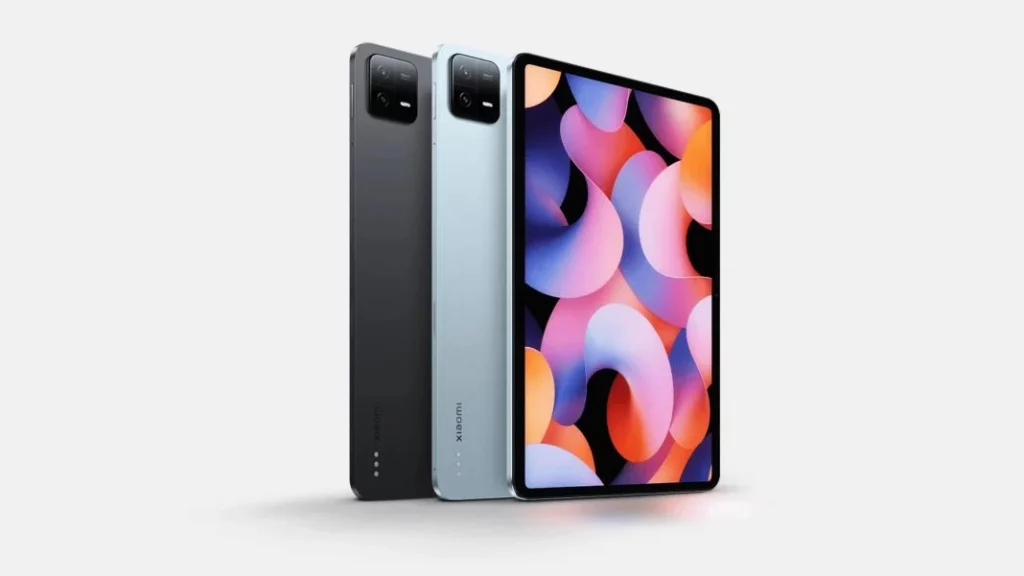
Xiaomi Pad 6 key specs revealed on FCC, ahead of April 18 launch

The Xiaomi Pad 6 series is set to launch later this month. The company recently confirmed the official launch date for the upcoming flagship tablet model, but prior to its announcement, key specifications of this device was revealed via an FCC listing. So let’s have a look.

Xiaomi

For those unaware, the Chinese tech giant’s Pad 6 series is its next gen premium tablet lineup that will feature some high end specs. It includes the base Pad 6 and the more expensive Pad 6 Pro. The global announcement for these highly anticipated tablet models was set for 18th April 2023. But just a few days before its launch, the vanilla model was spotted on FCC. Based on what we know so far, the Pad 6 will be positioned as more of an upper mid range tablet offering in the market.

Xiaomi

It carries the model number 23043RP34G and the listing reveals that it will be powered by a battery rated with a capacity of 4,320mAh. In other words, it is basically equipped with a 4,500mAh battery. The model will also arrive with support for a charging adapter with a 33W fast charge rating. Furthermore, the FCC sighting confirms that the device will run on Android 13 OS based MIUI 14 out of the box along with support for dual band WiFi (2.4GHz and 5GHz).

Xiaomi

The FCC database revealed that the Xiaomi Pad 6 will arrive in two RAM variants, namely an 8GB or 6GB option, with the former offering 256GB of internal storage and the latter offering just 128GB storage. Xiaomi has already confirmed that the tablet will be powered by the Qualcomm Snapdragon 870 SoC, which is a couple of generations old, but is still quite capable in terms of overall performance. Based on what we know so far, the Pad 6 is believed to sport a tall 11 inch IPS LCD panel that offers 2880 x 1800px resolution and offer at least 120Hz high refresh rate.

RELATED:

(Via)

LG Delivers Promised Android 13 Update to LG Wing Smartphone

The LG Wing is a unique smartphone that was released in 2020, known for its distinctive design featuring a swiveling display. It was first released in South Korea, and was the first device in LG’s newly announced Explorer Project series. It is also the last smartphone that LG produced, making this update a significant milestone for the Wing phone. The device boasts a 6.8-inch P-OLED primary screen that can rotate 90 degrees, revealing a smaller 3.9-inch secondary screen underneath. The LG Wing is powered by a Qualcomm Snapdragon 765G chipset and comes with 8GB of RAM and 128GB of internal storage. It also features a triple-camera setup, including a 64-megapixel main camera, a 12-megapixel ultra-wide lens, and a 13-megapixel ultra-wide gimbal motion camera. Unfortunately, the phone went out of production shortly after launch. Maybe the design was ahead of its time, or the company ran into production issues. Nonetheless, it was sad to see the device leave the market so soon. However, LG has announced that it will push Android 13 to the LG Wing in what seems like one last update.

LG Wing

IT Home reported that the Korean market has already started receiving the update, and North American and European markets are expected to follow suit in the coming months. After the update, the firmware version of the LG Wing will be upgraded to F100N40a, and the March 2023 Android security update will be integrated.

The patch package is around 1.4GB, and the update includes several new features, such as display device control shortcut icons on the lock screen, previewing, sharing and editing copied text and images, simplified multi-window functionality, and fine-grained control of notification permissions for each application. Additionally, users will now be able to check and stop the currently active application in the status notification window, and enjoy improved music and video controls.

RELATED:

(Via)

Motorola Edge 40 spotted on GeekBench with Dimensity 1100 & 8GB RAM

Following the launch of the Motorola Edge 40 Pro, it appears that the company is gearing up to announce the base Edge 40 variant soon as well. Ahead of any official announcement, the company’s upcoming smartphone has been spotted on GeekBench, which revealed some of its key specs.

Motorola

For those unaware, the Edge 40 Pro is a flagship grade device and featured top notch specs and features like the Qualcomm Snapdragon 8 Gen 2 SoC. On the other hand, the Edge 40 is an upper mid range handset and is powered by a 5G MediaTek chipset, the Dimensity 1100. Based on the popular benchmarking platform, this processor will be paired with at least one version with 8GB of RAM.

Looking at the listing, we can see that the vanilla Edge 40 model scored 1,105 points in the single core test and 3,542 points in the multi core test. The benchmark has also revealed that the upcoming Motorola phone will run on the Android 13 OS out of the box. This OS will likely also have the My UX custom skin running on top. Based on what we know so far, the Edge 40 is rumored to sport a 6.55 inch pOLED display that has Full HD+ resolution, 144Hz refresh rate, HDR10+ support, and 1,200nits of peak brightness.

Motorola

The rear is believed to feature a dual camera setup with a 50 megapixel primary sensor and a 13 megapixel ultra wide angle lens. Meanwhile, the front is expected to house a 13 megapixel selfie shooter. The device will likely offer at least one variant with 256GB of storage. Under the hood, the device could be powered by 4,400mAh battery pack that supports 68W wired fast charging and 15W wireless charging support. The Motorola Edge 40 will arrive in multiple color options, which could include Lunar Blue, Nebula Green, Eclipse Black and Magenta.

RELATED:

(Via)

Google Unveils First Public Beta of Android 14, Offering New UI Updates and More

The excitement for Android 14 continues to build. Recently, Google released the first public beta of Android 14 after two developer previews. This public beta offers a fantastic chance for users to test the new version, while also providing the company with an opportunity to receive valuable feedback. The big questions now are: when will Android 14 be released, and what new features can we expect in this version? Here are the details…

Google Unveils First Public Beta of Android 14

Google has released the first public beta of Android 14, following its two developer previews. As part of its predictable development cycle, this is the first of four planned public beta releases. Users with supported Pixel devices, starting from the Pixel 4a 5G (but excluding the Pixel 4), can now install the beta over-the-air. However, there’s no official support for non-Google phones just yet.

Google Android 14

As with any beta release, it’s important to remember that these are primarily intended for developers testing their apps against the new version and early adopters who can’t wait for a stable release. Therefore, expect potential issues and bugs as you navigate this new iteration of Android.

The first Android 14 beta doesn’t introduce a plethora of new features, but there are two user-facing UI updates worth mentioning. The first is a revamped back arrow, which Google highlights as part of the gesture navigation experience. The new back arrow is more prominent and designed to improve understanding and usefulness. Furthermore, it matches your wallpaper or device theme.

Developers can now also add custom actions to the system sharesheet, and the sharesheet itself will be more intelligent in ranking sharing targets. The update also brings per-app language settings and incorporates Google’s previously announced privacy settings.

While this first beta appears to be an evolutionary release, more details and user-facing features are expected to be announced at Google I/O next month. Until then, the Android 14 public beta serves as an intriguing glimpse into what’s in store for the next iteration of the popular mobile operating system.

RELATED:

(via)

Samsung Keyboard App was the Culprit for Major Battery Drain in OneUI 5.1 Update

Samsung users were left with a bad taste in their mouths following the release of the One UI 5.1 upgrade in February of this year. While the update brought with it some exciting features, many Galaxy handset owners experienced a major issue with their devices’ battery health. Reports started coming in from users who had updated to One UI 5.1 and had noticed a significant decline in their smartphones’ battery life. Some even reported odd heating issues that were more widespread among Samsung Galaxy S21 and S22 series users.

Samsung Keyboard

Upon investigation, Samsung confirmed that it was indeed the Samsung Keyboard app that was causing the battery drain. According to the company, the app was using more battery than usual due to an “additional qualifying process (related to stickers and emojis).” While the exact details of this process remain unclear, Samsung has rolled out an update to address the issue.

For those who haven’t yet received the update, fear not. Samsung apps have an auto-update feature that keeps them up to date automatically. If you suspect that your Samsung Keyboard app isn’t up to date, simply head over to the Galaxy Store, navigate to Menu, select Updates, choose Samsung Keyboard, go to Settings, click About Samsung Keyboard, and tap on Update. With this simple fix, you can enjoy the benefits of One UI 5.1 without worrying about your device’s battery health.

RELATED:

(Via)

Google Pixel 8 series case images emerge, corroborate previous leaks

Google is reportedly working on the Pixel 8 series of smartphones. The company is expected to unveil the Pixel 8 and Pixel 8 Pro in October this year. The rumor mill has been actively leaking information about smartphones. In a new report, TechGoing has published case images of the Pixel 8 and Pixel 8 Pro smartphones.

In March, the CAD renders of the Pixel 8 and Pixel 8 Pro surfaced to give the first look at their design. The renders revealed that despite the fact that the Pixel 8 series will look similar to the Pixel 7 and Pixel 7 Pro, they will have subtle design changes.

Google Pixel 8 case image

The case images shared by the publication are in line with the leaks surrounding the Pixel 8 series. The transparent case of the Pixel 8 basically houses the CAD renders of Pixel 8. However, the case seems to have a cutout on the top edge for a microphone, some cutouts on the right edge for the power key and volume rocker, and some cutouts at the bottom for the USB-C port and speakers. The image also shows that the device has a raised camera bar that tapers towards the edges.

The Pixel 8 Pro’s purple case also shows it has a wider opening on the back, which will accommodate the triple camera system along with an LED flash and an unknown sensor. Like the Pixel 8’s case, the Pro model’s case tapers towards the edges of the camera bar.

Google Pixel 8 Pro case image

In related news, Google’s 2023 I/O developers conference is scheduled to take place on May 10. At the event, it will shed information about the Android 14 OS. In addition, it is also expected to announce multiple devices, such as the Pixel 7a mid-range phone, the Pixel Tablet, and the Pixel Fold as its first foldable phone.

RELATED:

Upcoming Samsung Galaxy Z Fold 5 May Have an Easily-removable Battery

Removable smartphone batteries make a huge difference for a variety of reasons. One of the most significant benefits is that they give users greater control over their devices. When a phone’s battery is removable, it can be easily replaced if it becomes damaged or starts to wear out. This means that users can keep their phones for longer without having to replace them entirely. Additionally, removable batteries can be swapped out for larger or higher-capacity batteries, which can extend the phone’s battery life and reduce the need for frequent charging.

Galaxy Z Fold 5

Samsung is taking a step forward in making battery replacement easier on their latest Galaxy models. The Galaxy S23 already made it simple with the addition of pull tabs that allow for easy removal, but now the Galaxy Z Fold 5 and Galaxy Z Flip 5 are following suit with battery packs that also have pull tabs for simple replacement. The documentation from South Korean regulatory agency Safety Korea included photos of the battery packs that measure their sizes, and all four battery packs have a pull tab for easy removal.

While the secondary battery for the Galaxy Z Flip 5 has a slightly lower capacity than its predecessor, it is possible that Samsung is counting on the efficiency of the Snapdragon 8 Gen 2 for Galaxy chipset to improve battery life. It remains to be seen which battery packs will ultimately make it into these upcoming foldable models, but Samsung’s efforts towards easier battery replacement are certainly a step in the right direction.

RELATED:

(Via)

Xiaomi 13T Pro bags important certification, could be rebranded Redmi K60 Ultra

Xiaomi seems to be working on the Xiaomi 13T and Xiaomi 13T Pro, affordable flagship phones. The first report about the existence of the Xiaomi 13T series appeared earlier this week. It revealed that two upcoming Xiaomi devices with model numbers 23078PND5G and 23078PND5C have appeared in the IMEI database. The former is said to be the Xiaomi 13T Pro for the global market, whereas the latter is likely to launch with the Redmi K60 Ultra name in the Chinese market. New information reveals that the 13T Pro has now been approved by the Eurasian Economic Commission (ECC).

The EEC is an important certification, which suggests that the Xiaomi 13T Pro will be heading to the European market. At present, there is no information available on the Xiaomi 13T model.

Xiaomi 13T Pro EEC certification

Rumors are rife that the Redmi K60 Ultra will debut before the Xiaomi 13T Pro. The K60 Ultra rumors have claimed that it will debut in the third quarter of this year. This suggests that the 13T Pro may debut in October this year in the global market.

The Xiaomi 12T Pro and Redmi K50 Ultra from last year had identical designs and specifications. But they differed in the main camera department. Hence, there could be some difference between the 13T and K60 Ultra.

Rumors are rife that the Redmi K60 Ultra will come equipped with an OLED panel that produces a 1.5K resolution, a 144Hz refresh rate, and will feature an under-display fingerprint scanner. The Dimensity 9200 chipset is supposedly what powers the device. While there is no word on the battery size of the K60 Ultra, it is expected to support 100W charging. These specifications are also expected to be available on the Xiaomi 13T Pro.

RELATED:

(via 1, 2)

Poco F5, F5 Pro configurations, color variants tipped

Multiple reports have revealed that the Poco F5 and Poco F5 Pro are in the works. Both smartphones are expected to launch in the second quarter of this year. A recent report revealed that the Poco F5 Pro will not be available in India, but the country is likely to get the vanilla model. Both models are expected to be released on the global market. A new leak, courtesy of tipster Paras Guglani has leaked the configurations and color options of the F5 duo.

According to the tipster, the Poco F5 will arrive in 8 GB RAM + 256 GB and 12 GB RAM + 256 GB storage configurations. He added that the F5 Pro will also come in same options.

As far as color variants are concerned, the Poco F5 and F5 Pro will be available in three colors, such as black, white, and blue. As it is known, the Poco F5 and F5 Pro will be rebranded versions of the Redmi Note 12 Turbo and Redmi K60, which are available only in the Chinese market.

Redmi Note 12 Turbo
Redmi Note 12 Turbo

Poco F5, F5 Pro specifications (expected)

The Poco F5 and Poco F5 Pro will feature a 6.67-inch AMOLED display that offers a 120Hz refresh rate. The F5 will support FHD+ resolution, while the Pro model will offer a higher QHD+ resolution. Both phones will ship with the Android 13 OS and MIUI 14.

For selfies, the Poco F5 will have a 16-megapixel front-facing camera. The back panels of both smartphones will feature an OIS-enabled 64-megapixel main camera, an 8-megapixel ultra-wide lens, and a 2-megapixel macro snapper. The F5 will have a side-facing fingerprint sensor, whereas the Pro variant will be equipped with an under-display fingerprint sensor.

The F5 and F5 Pro will be powered by Snapdragon 7+ Gen 2 and Snapdragon 8+ Gen 1 chipsets, respectively. Both phones will come with LPDDR5 RAM, UFS 3.1 storage, and a 5,500mAh battery with 67W fast charging. The Pro model will also support 30W wireless charging.

RELATED:

Poco C51 with Helio G36 SoC & 5,000mAh battery goes on sale in India

Poco F5 Pro Real Life Photo Surfaces Online

POCO X5 Launched in India with SD695, 5000mAh battery, 120Hz Display & More

Best Samsung TV 2023 – QLEDs, Frame, Serif & More

Meizu 20 Full Review: It’s pretty, but only pretty

(source)

Xiaomi Power Bank 10000mAh 22.5W Lite launched with a slim profile

Xiaomi has recently introduced a new power bank in China, called the Xiaomi Power Bank 10000mAh 22.5W Lite. It comes with a USB Type-C port and two USB Type-A ports, enabling users to charge multiple devices simultaneously. Most importantly, the accessory is slim at 15mm and weighs just 225g. Even, its sides are curved for a comfortable grip.

In addition to its 10000mAh battery capacity, the power bank is compatible with various fast charging protocols, including PD3.0, QC3.0, AFC, FCP, SCP, PE, and SFCP. This enables the battery pack to charge compatible devices at up to 22.5W via the USB Type-C port and up to 12W through the USB Type-A ports. Moreover, the power bank itself can be recharged at the rate of up to 22.5W using a compatible charger.

Xiaomi Powerbank 10000mAh 22.5W Lite

Xiaomi claims that its new power bank can charge iPhones at a speed of up to 20W, allowing the iPhone 13 to be fully charged in approximately 2 hours. In addition, the power bank can fully charge a Xiaomi 13 in just 1.3 hours. The battery pack also features intelligent charging technology that allows it to switch between different charging speeds depending on the device and scenario, making it possible to charge other gadgets such as TWS earphones.

Xiaomi PowerBank 10000mAh 22.5W

To ensure user safety, the power bank includes multiple protection features such as over-current protection, over-voltage protection, over-temperature protection, short-circuit protection, and low-voltage protection. It further comes with an LED indicator at the top side.

As for the pricing and availability, the accessory is priced at CNY 79 (~$11). It’s available to purchase in China via the Xiaomi store in a lone white color variant.

RELATED

LeEco Super TV S85 launches with 4K 120Hz panel, 1000 nits brightness, and more

LeEco, a Chinese consumer electronics brand has launched its all-new LeEco Super TV S85 in China. The Super TV S85 is a limited edition product that commemorates the 10th anniversary of LeEco’s foray into the television market.

This TV model features an exclusive theme skin that draws inspiration from the highly acclaimed drama, The Legend of Zhen Huan. Additionally, fans of the show will be delighted to receive a specially designed Huan Huan pillow with their purchase of this television.

As for its technical specifications, this 85-inch television boasts an impressive 4K display, complete with a star-style partition backlight capable of controlling up to 120 zones of up to 1000 nits brightness. The TV has a resolution of 3840 x 2160 pixels and supports HDR10, HLG, and up to 92% DCI P3 wide color gamut.

LeEco Super TV S85

In addition, the TV boasts a 120Hz refresh rate, coupled with a MEMC frame interpolation algorithm. The brand further claims that MEMC tech, paired with 120 different levels of brightness ensures the best possible content output is provided.

The TV is powered by a quad-core chipset with a base frequency of 1.6 GHz, paired with a Mali G51 MP-2 graphic card. It has got 3GB of RAM and 32GB of onboard storage. As for the speakers, it has got two independent 10W speakers which can give a combined output of up to 20W. The speakers come with Harmon Kardon tuning and bring support of Dolby Atmos and DTS True Surround Sound.

It boots up on EUI 8.0 operating system right out of the box. For wired connectivity options, it has got two full-size HDMI ports and two USB Type-A ports. And for wireless connectivity, it supports dual-band WiFi and Bluetooth 5.2 technologies. It has been priced at CNY 6,999 and is currently up for sale in China via LeEco mall (~$1023).

RELATED