Advertisement

Sony WH-CH720N Over-Ear Headphone With ANC, 50-Hour Battery Life Launched In India

Sony has launched a new wireless headphone in India. It is the Sony WH-CH720N that debuted in the global markets last month. The audio device packs premium specifications and falls under the Rs 10,000 price segment. Read on to know what the headphones offer out of the box. 

The Sony WH-CH720N is an over-ear wireless headphone with a slider and oval-shaped earpads for a comfortable fit. The ear cups feature a swivel design. There are three buttons on the right ear cup for controlling music playback as well as a dedicated button for ANC. The left ear cup has a power button, a USB-C port, and a 3.5mm headphone jack. 

On the audio front, the Sony WH-CH720N is equipped with a 30mm dynamic driver and the company’s V1 chipset. It features active noise cancellation and DSEE technology that is capable of upscaling audio even when it is compressed. The ambient sound allows users to be aware of their surroundings and focus on voice mode lets them to communicate with others without taking the headphones off. There is also adaptive sound control that adjusts the audio balance and noise cancellation depending on the user’s surroundings. The headphones pack Precise Voice Pickup technology for clear quality during voice calls. 

The Sony WH-CH720N is claimed to deliver 50 hours of battery life without ANC and 35 hours with the feature enabled. The headphones support fast charging. It comes with Bluetooth 5.2 connectivity with Google Fast Pair support and can be connected to two devices simultaneously. 

The Sony WH-CH720N is priced at Rs 9,990. It is offered in Black, Blue and White colours. The audio device can be purchased from Sony Centre Stores, Sony Exclusive Stores, Sony Online Store, and e-commerce portals starting tomorrow. 

Related:

Meizu 20 Pro Camera Samples Emerge Ahead of Launch

Meizu is set to launch its new flagship smartphone series, the Meizu 20, on March 30 in China. Ahead of the launch, Senior Vice President Yang Xueliang has shared some camera samples from the Meizu 20 Pro on Weibo, giving us a glimpse of what the phone’s camera system is capable of.

Although the sample shots are not the best in terms of color accuracy, vibrancy, and detail, it’s worth noting that they were likely taken using pre-production software. Therefore, we should wait for official images from the retail units to make a proper judgment on the phone’s camera capabilities.

The Meizu 20 Pro is expected to come equipped with a 50MP main camera using Sony’s 1″ IMX989 sensor. While the camera samples so far have been underwhelming, it is worth noting that the unit used was probably running pre-production software. We will have to wait for official images from the retail units to get a better idea of the camera’s performance.

Aside from the camera, the Meizu 20 Pro’s appearance and configuration have been highly spoken of. The device will feature a Snapdragon 8 Gen 2 chipset, LPDDR5X memory, and UFS 4.0 storage. It will also have a 10-bit 1440p LTPO AMOLED display with a 120Hz refresh rate and a 5,000 mAh battery with 50W wireless charging. According to recent teasers, it will take only 30 minutes to charge wirelessly to 80%.

The smartphone will also come equipped with a self-developed 1-120 frame LTPO adaptive refresh technology and a new generation of SMA optical image stabilization and DarkVision 2.0 for night photography.

RELATED:

(Source)

Fastrack Revoltt FS1 With 1.83-inch Display Launched In India

Fastrack has expanded its range of smartwatches in India. The latest offering from the brand is Fastrack Revoltt FS1. It carries an affordable price tag and it competes against smartwatches offered by brands like Fire-Boltt, Noise, boAt, and more in the market. Read on to know what the device offers out of the box. 

Commenting on the launch, the company said “With the introduction of Revoltt FS1 which is the first in the new ‘Revoltt’ series and our other product launches lined up for this year, we are expanding our product portfolio, which will be a treat for the fashion and technology conscious youth of today. The brand’s commitment to quality is a vital part of our product development process. With 450+ tests on Fastrack Revoltt FS1, our customers are assured of a top-notch offering.”

The Fastrack Revoltt FS1 features a square dial and a physical button on the right side. It comes with a large 1.83-inch display with more than 200 customizable watch faces. 

On the health-centric front, the Fastrack Revoltt FS1 is equipped with a heart-rate sensor, auto-sleep tracker, and continuous stress monitor. The wearable device supports more than 110 sports modes. 

The Fastrack Revoltt FS1 features an advanced chipset powered by SingleSync technology for Bluetooth calling. There is AI voice assistant support onboard. The smartwatch packs features like smart notifications, weather updates, and more. It is claimed to support fast charging. 

The Fastrack Revoltt FS1 carries a price tag of Rs 1,695. It is offered in Black, Blue, Green, and Teal color options. The smartwatch can be purchased from the brand’s official website and Flipkart starting March 22 onwards. 

Related:

Google Rolls Out Android 13 QPR3 Beta 1 to Pixel Devices

Google has released the Android 13 QPR3 Beta 1 as part of its Feature Drop, which is now available to compatible Google Pixel devices. This latest beta version offers bug fixes, additional features, and performance optimizations, and will continue until Android 14 Beta kicks off. Participants in QPR3 Beta will automatically receive an OTA update to Android 14 Beta 1 when it becomes available, with no separate program opt-in required.

This new release comes in at 258MB and includes fixes for various issues, such as incorrect clock text color on the lock screen, Bluetooth audio problems, fingerprint icon display issues, and live wallpapers that couldn’t be selected or used. Additionally, widgets, app icon positions, and other configurable options on the home screen are no longer reset after installing an OTA update, and Face Unlock remains enrolled after updating.

Android 13

The following issues have been resolved in Android 13 QPR3 Beta 1:

  • Fixed an issue where the clock text on the lock screen was the wrong color.
  • Fixed an issue where Bluetooth audio wasn’t working on some devices.
  • Fixed an issue where the fingerprint icon that is normally displayed on screen to indicate the position of the fingerprint sensor erroneously changed to an exclamation point (!).
  • Fixed an issue where live wallpapers could not be selected or used.
  • Fixed an issue where widgets, app icon positions, and other configurable options on the home screen were reset after installing an OTA update.
  • Fixed an issue that caused a device to be unenrolled from Face Unlock after installing an OTA update.

However, Google has acknowledged that there are still some issues with the latest build, including potential camera blackouts when activated using the double press on the power button, unresponsiveness in the Recent apps list when the screen orientation is changed, and device reboots when activating or deactivating work profiles.

To try out the new beta, users need to enroll in the Android Beta Program and ensure that they are using a compatible Pixel device, such as the Pixel 4a, Pixel 5 and 5a, and Pixel 6 and 7 series. The latest beta update can then be downloaded through an OTA update or installed manually.

Overall, the Android 13 QPR3 Beta 1 release is a promising update that provides fixes and enhancements to the Google Pixel user experience. While there are still some known issues, Google’s commitment to improving the latest beta build is reassuring, and users can expect further improvements in future updates.

RELATED:

(Source)

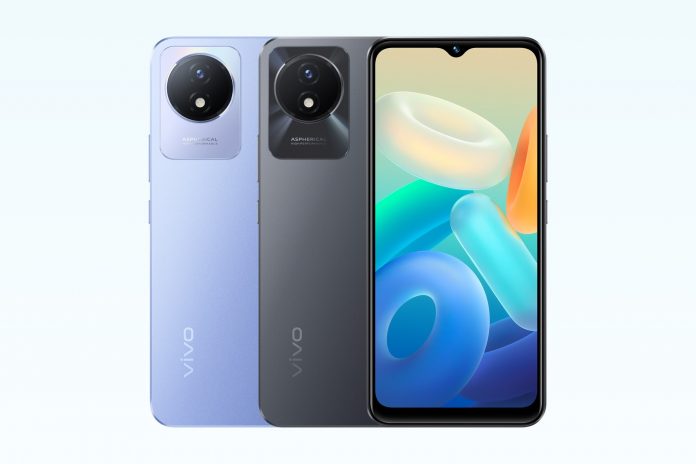
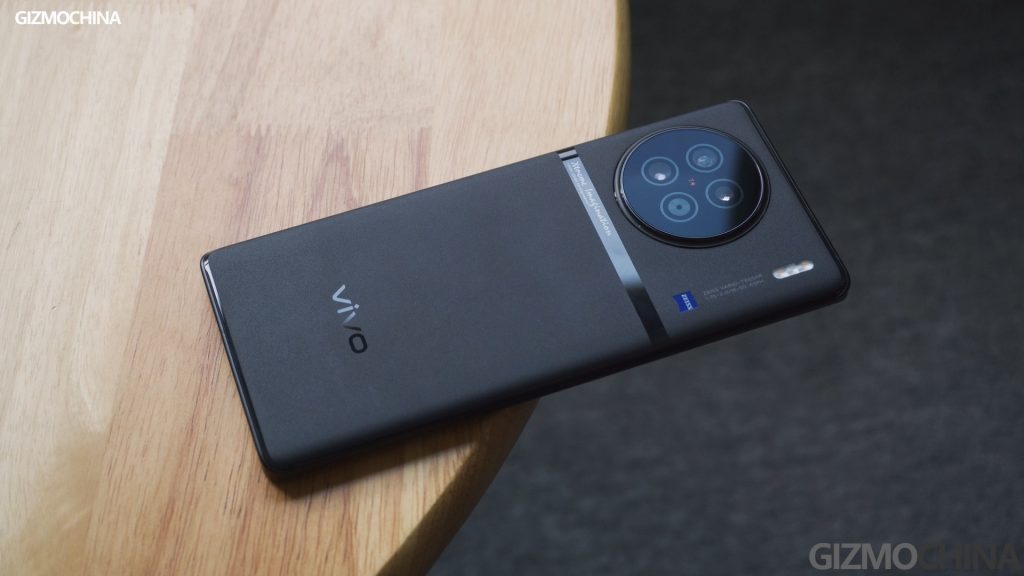
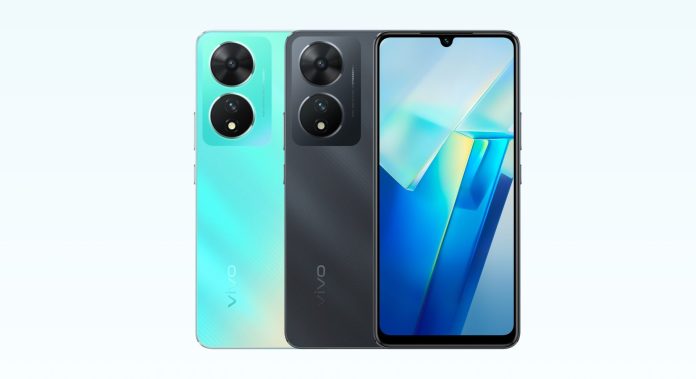
Vivo Y78+ With 4,900mAh Battery Appears On TENAA

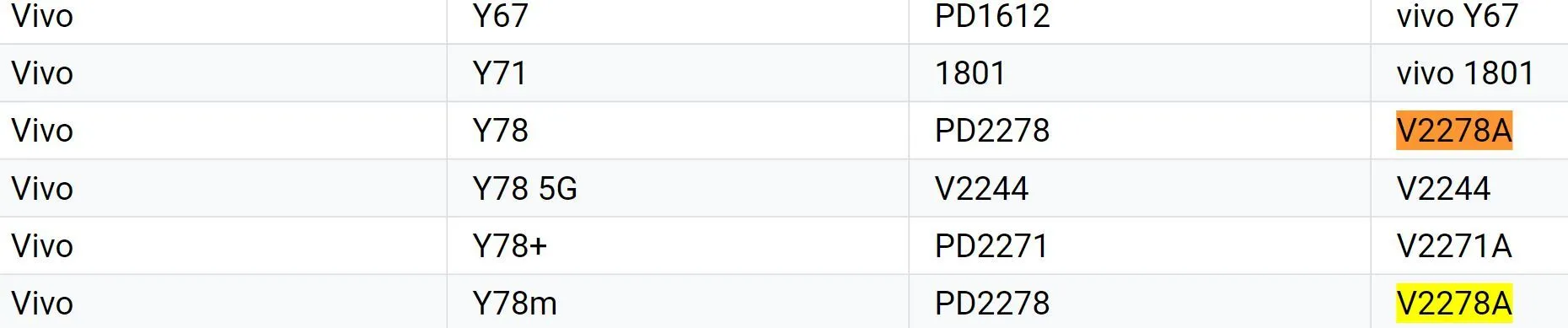
Vivo is working on a new Y-series smartphone. It is said to be the Vivo Y78+ and will likely be limited to China. The smartphone with model number V2271A had surfaced on the web last month. Now the same device has bagged TENAA certification in its home country. The listing reveals some key specifications of the upcoming smartphone. The phone is expected to arrive as the successor to the Vivo Y77 that debuted last year. 

As per TENAA, the Vivo Y78+ will be powered by a 4,900mAh battery unit but we expect it to be marketed as 5,000mAh. The preliminary listing also mentions that the Vivo Y78+ will feature triple rear cameras, however, the configuration remains a mystery. Apart from this, the TENAA certification does not reveal any additional details of the Vivo Y78+. 

Since the Vivo Y78+ is rumored to be China-exclusive, we can expect its toned-down version i.e. the Y78 to debut in the global markets. We can also expect the key specifications and images of the Vivo Y78+ to surface online in the coming weeks. 

Apart from the Vivo Y78+, in other news, Vivo is also planning to launch the Y11 (2023). The specifications of the device were leaked earlier this month. The upcoming offering is expected to feature an FHD+ display. It is tipped to be powered by a MediaTek processor coupled with 4GB RAM along with 4GB virtual RAM and 128GB storage. The smartphone will reportedly be backed by a 5,000mAh battery unit with support for 18W charging and ship with Android 13 OS out of the box. 

Related:

Itel P40 launched in India with Poco-inspired design and 6,000mAh battery

A few days back, a report revealed that Itel would be releasing a new entry-level smartphone in India focused on battery and charging. This device is now official in the country. It goes by Itel P40.

At first look, one might assume it is a Poco-branded handset since it looks like one. Let’s check out what this product has to offer.

Itel P40

The newly launched Itel P40 is built around a 6.6-inch HD+ display (LCD). This panel has a water drop notch, which houses a 5MP front-facing camera.

The back of the smartphone features a dual-tone finish, which is reminiscent of Poco devices. The rear panel only houses a 13MP + QVGA dual-camera system but also a fingerprint sensor.

Under the hood, the phone is powered by a Unisoc SC9863A chipset, which includes an octa-core CPU. On the software front, it boots Android 12 Go Edition.

Other features include dual SIM, 4G, WiFi, Bluetooth, GNSS, a 3.5mm headphone jack, a MicroSD card slot, and a MicroUSB port. 

Last but not least, the handset is backed by a 6,000mAh battery with support for 18W wired charging. However, it only ships with a 10W charger.

The Itel P40 comes in three colors, such as Force Black, Dreamy Blue, and Luxurious Gold. The brand offers it in 2GB + 64GB and 4GB + 64GB memory configurations.

The phone starts at ₹6,799 (~$80) and comes with a 1-year warranty and a 100-day one-time screen replacement offer.

RELATED:

China sees a 17% fall in Semiconductor output in 2023

Chinese semiconductor output has fallen down by 17% in 2023. The first two months of the year saw the country producing only 44.3 billion units of ICs (Integrated Circuits) as compared to the 53.7 billion units for the same period in the last year.  The 17% drop in January and February alone is way more than the overall drop of 11.6 % recorded for the whole of 2022. 

The US sanctions have crippled the Chinese semiconductor industry, the result of which can be seen in the sharp decline in semiconductor production. Dwindling consumer demand and the economic downturn have also contributed to the fall in the production of chips in the world’s largest semiconductor market. 

In the first two months of 2023, Microcomputer shipments saw a drop of 21.9% whereas the smartphone output saw a 14.1% reduction year on year. When it comes to semiconductor imports, China saw a sharp drop of 26.5% which is way more than the 15% drop recorded in 2022. Last year the IC exports of China surprisingly showed an increase of 0.5%. However this year the IC exports also decreased by 20.9% year on year. 

Effect of US Sanctions and Zero Covid Policy on semiconductor business:

China which is the largest semiconductor market in the world has generally shown an upward growth trajectory in its semiconductor business. However, the ongoing US sanctions combined with the zero covid policy and economic slump saw the country recording its biggest monthly decline ever. Last year in October the semiconductor output fell by 26.7% year on year making it a record-breaking fall for the sector. 

However after Beijing changed its Zero Covid Policy, the overall economic situation has become better in the country. China’s manufacturing sector is now rebounding from the slump and showing an upward trend for January and February 2023. This year in February, the manufacturing purchasing managers’ index (PMI) beat all expectations by rising to 52.6, the highest reading since April 2012. Even the semiconductor industry which showed an overall decrease in output is performing slightly better as compared to its performance in October last year. 

Related:

(via)

Samsung Galaxy F14 Spotted On Geekbench And India Support Page

Yesterday the Samsung Galaxy F14 appeared in leaked render. It is tipped to launch in India next week. Now, the upcoming smartphone has been spotted on the Geekbench benchmarking platform. Additionally, it has also appeared on the brand’s India support page. This hints at the imminent arrival of the device. The Samsung Galaxy F14 is expected to debut as the successor to the Galaxy F13. 

The Samsung Galaxy F14 is listed with model numbers SM-E14B and SM-E14B/DS on the Geekbench database and support page respectively. The former reveals the key specifications of the device. It has a motherboard codenamed s5e8535 with six cores clocked at 2GHz and two cores ticking at 2.40GHz. It corresponds to the Exynos 1330 chipset. The listing reveals 6GB RAM onboard and it will run on Android 13 OS out of the box. 

The Samsung Galaxy F14 manages to score 811 and 2,120 points in Geekbench’s single-core and multi-core test results respectively. 

This is everything the Geekbench listing reveals about the smartphone. As per the leaked render, the Samsung Galaxy F14 will arrive in Purple and Green color options. The back panel has two vertically placed camera sensors and a LED flash unit beside. The volume rocker and power buttons are located on the right side of the device. The upcoming smartphone has slightly curved edges for a better grip. The Galaxy F14 is tipped to be priced under Rs 15,000 in India. 

Related:

Via

Stripe and OpenAI collaborate to monetize OpenAI’s flagship products and enhance Stripe with GPT-4

Stripe has partnered with OpenAI, an artificial intelligence (AI) research organization. The collaboration aims to monetize OpenAI’s ChatGPT and DALL·E products and integrate OpenAI’s latest natural language technology, GPT-4, into Stripe’s offerings. Here ate the details…

Stripe and OpenAI collaborate to monetize OpenAI’s flagship products and enhance Stripe with GPT-4

The collaboration between Stripe and OpenAI involves the commercialization of OpenAI’s generative AI technology using Stripe’s suite of products. OpenAI quickly launched a global payments system for multiple product lines. Key aspects of this partnership include:

tripe and openai logo
  • Stripe Billing and Stripe Checkout supporting ChatGPT Plus, OpenAI’s premium subscription offering.
  • DALL·E users enjoying a flexible, pay-as-you-go option to purchase DALL·E credits through Stripe Billing.
  • OpenAI joining Stripe’s Link network, enabling users to pay faster by autofilling saved payment details.
  • Stripe Tax assisting OpenAI with tax compliance obligations as it expands into global markets.
  • Revenue Recognition helping OpenAI manage its finances, disputes, and refunds at scale.

Stripe has a history of using AI to improve its products and user experiences. Previously, it worked with Microsoft’s Azure OpenAI team to implement GPT-3 for Stripe Support. Now, with GPT-4, Stripe aims to streamline operations and provide users with quicker access to information.

One notable example of GPT-4 integration is GPT-powered Stripe Docs. This feature enables developers to pose natural language queries to GPT-4, receiving summarized or specific information from the documentation. This innovation allows developers to save time and concentrate on building.

Eugene Mann, Product Lead for Applied Machine Learning at Stripe, compared GPT-4’s potential to that of email, smartphones, and videoconferencing, stating that it could “fundamentally rewire—and improve—how businesses run.” By integrating GPT-4, Stripe aims to provide its users with advanced tools for building and growing online.

RELATED:

(via)

Asus ROG Phone 7 gets TENAA certified, large battery capacity revealed

Asus is working on the ROG Phone 7 series gaming smartphones. So far, the ROG Phone 7D has visited Geekbench, while the ROG Phone 7 made appearances on both Geekbench and 3C certification websites. Now, the ROG Phone 7 Global variant has also been TENAA certified, so let’s check out the findings.

ASUS ROG Phone 7 TENAA

The ASUS ROG Phone 7 global variant, identified as model number AI2205_B, has been spotted on TENAA, indicating an imminent launch. The listing on TENAA has confirmed that the phone will be equipped with a 5850mAh battery, similar to previous ROG gaming phones, but ASUS may market it as having a typical capacity of 6000mAh. Additionally, the listing revealed that the phone will feature four camera sensors, with a single front camera and a triple-camera setup on the back. However, no information regarding the camera specifications was disclosed. The phone is expected to support multiple 5G bands, such as n41, n78, and n79.

Previous reports have revealed that the ROG phone 7 will feature a Qualcomm Snapdragon 8 Gen 2 SoC with a peak clock speed of 3.19GHz. According to the listings, the device is expected to come with Android 13 and 16GB of RAM.

Further information about the ROG Phone 7 has been obtained from the 3C certification website, confirming that the device will support 65W fast charging. The phone is expected to boast a 6.8-inch AMOLED display with a Full HD+ resolution and 165Hz refresh rate support. Currently, there is limited information available regarding the other features of the ROG Phone 7 series, but we will provide more details as they become available.

RELATED:

Motorola Razr+ (2023) with Model Number XT2321 Expected to Launch Soon

Motorola is gearing up to refresh its foldable lineup with the launch of the upcoming Motorola Razr (2023). The device is expected to take on the likes of the Samsung Galaxy Z Flip 4 and the OPPO Find N2 Flip once it goes official later this year.

According to Mysmartprice, Motorola Razr (2023) will have a Plus in its moniker which has never been seen before in the company’s Razr lineup. The device is also rumored to have the model number XT2321, and sources suggest that it will support 30W wired fast charging. The phone will also feature a 2850mAh battery capacity.

Motorola Razr+ (2023)
Motorola Razr 2023 render | Source: Evan Blass

In terms of design, leaked renders suggest that the Motorola Razr (2023) will feature a larger 3.7-inch cover display, which is even bigger than the OPPO Find N2 Flip’s 3.26-inch screen. This may justify the “Plus” branding, as it will likely offer an improved user experience compared to its competitors.

Another leaked render suggests that the phone will have an under-screen front camera sensor, which would eliminate the need for a notch or cutout on the display. This could also be a great feature as the cover screen is large enough to be used as a viewfinder for taking selfies using the rear camera. Unfortunately, the camera specs are not yet known. A live photo of the phone was recently leaked where it shows the device in Maroon-Black dual color with a dual-camera setup and a LED Flash next to that.

Although other details such as the processor and foldable display size are not confirmed, the leaked details so far make the Razr 2023 look quite promising on paper. Overall, the upcoming Razr 2023 foldable phone from Motorola is shaping up to be an exciting addition to the smartphone market.

RELATED:

(Source)

Next Gen Nintendo controllers could offer seamless account switching by storing user data

Nintendo might be working on a way to make account switching seamless with its next generation of controllers. These new controllers will apparently be able to store key user data, so here are all the details.

According to a recent patent spotted by @NWeedle, the company is apparently working on a new generation of controllers that can store your account data. While this might not seem like a major feature, it is a pretty interesting quality of life change. For example, if you’re going to play on a different console, you would typically have to tweak the settings as per your preference. However, thanks to the user data being stored in the controller this hassle will be more or less eliminated.

The pros don’t just stop here since the patent also hints at the controllers saving users, preferences, settings, and possibly even certain game data as well. Thanks to this patent, Nintendo might soon allow its future consoles to detect the users account to inherit his recorded games, personalization settings, and more. In simpler terms, one would simply need the controller to go and start playing his games from his new Nintendo console to the existing Switch. This would also work the other way around as well.

This, in turn, would also remove the hassle of constantly having to login to your accounts on every device you own from the brand. Meaning, it will basically be a lot more simpler to just plug and play, making the process seamless. Keep in mind that this is still just a patent, so we have no way of confirming if this will actually come out for the current Switch or not.

RELATED:

“BlackBerry” Trailer Released: Explore the Iconic Story of a Tech Icon

Once a legendary phone brand, BlackBerry has now faded into obscurity. Struggling to adapt to the rise of touchscreen phones, the company could not compete with Android and iOS, ultimately disappearing from the market. While there have been several attempts to revive the brand, they have all been unsuccessful. However, BlackBerry’s story is not forgotten and will soon be retold on the big screen for a new generation. Here are the details…

BlackBerry: A Cinematic Journey Through the Rise and Fall of a Tech Icon

Last August, the completion of a movie recounting the incredible journey of BlackBerry was announced. Based on the 2015 book “Losing the Signal,” this must-watch film for phone enthusiasts is set to grace theaters on May 12th. Recently, the trailer of the movie was released.

Starring Glenn Howerton of It’s Always Sunny in Philadelphia as co-CEO Jim Balsillie and Canadian actor Jay Baruchel as co-CEO Mike Lazaridis, “BlackBerry” takes viewers on a trip down memory lane. The film traces the company’s early days with its revolutionary two-way paging system, which evolved into a mobile email device indispensable for businesspeople. BlackBerry soon gained fame for its smartphones with physical keyboards.

But the tide turned when Steve Jobs unveiled the touchscreen iPhone at Macworld on January 9th, 2007. This pivotal event, featured in the movie’s trailer, marked the beginning of BlackBerry’s downturn. In response, the company launched the Storm in November 2008, a Verizon exclusive. Although the Storm generated considerable profits for Verizon, its numerous bugs resulted in every unit being returned by unhappy customers.

The company tried to bounce back with a Storm sequel, but by then, the Motorola DROID and Android had become the first real challengers to the iPhone. After years of setbacks, BlackBerry finally embraced Android, offering a comprehensive app storefront. The BlackBerry PRIV (short for privacy) marked the end of an era as the company’s final self-designed and produced device.

Later, BlackBerry licensed its name to Chinese phone maker TCL, which released the KEYOne and Key2. However, TCL let its license lapse, and when Onward Mobility, a little-known company with plans to create a 5G BlackBerry, withdrew, the BlackBerry phone’s fate was sealed.

The movie won’t cover BlackBerry’s entire history or its transformation into a cybersecurity firm. Instead, it will focus on BlackBerry’s ascent as a must-have business device, its early smartphone market success, the crushing impact of the touchscreen iPhone, and the company’s futile efforts to recover with the BlackBerry Storm.

For those who remember BlackBerry’s heyday or simply love smartphones, “BlackBerry” is the cinematic event of the year. Mark May 12th on your calendar and get ready to experience the compelling tale of a once-iconic brand in mobile technology.

RELATED:

(via)

Explore and Share Older Reels on Instagram with the New “Latest Shares” Feature

Instagram is developing a new “Latest Shares” feature to simplify the process of finding and resharing Reels previously sent in Direct Messages (DMs). Initially leaked on Twitter, this information was later confirmed by a Meta spokesperson to TechCrunch. The feature is presently in beta testing. Here are the details…

Instagram Enhances User Experience with “Latest Shares” Feature for Reels

As revealed by Turkish tipster “Dijital Ağlar”, Instagram is testing a feature that displays recently shared Reels on the DM page. A Twitter-shared image presents a “Latest Shares” row at the top of the DM page menu. In this image, each recently shared Reel is accompanied by a circular avatar, which likely represents the friend who shared it. According to TechCrunch’s report, which cites confirmation from Meta, a short video shared multiple times will only appear once, with the avatar of the most recent recipient.

Meta has not yet clarified if the “Latest Shares” feature will include non-Reels posts or other Reels not shared by or with the user. Furthermore, there is no word on when the feature will be released to Instagram users or a larger group of testers. Instagram has been increasingly focusing on short videos in an effort to compete with TikTok, a rival short-video sharing platform. Instagram has announced that video posts shorter than 15 minutes will be shared as Reels, providing a full-screen, immersive experience for users. This also broadens the range of collaborative features, like Remix on Reels, to encompass any user-uploaded videos.

The “Latest Shares” feature could greatly improve the user experience for finding and resharing older Reels sent in Direct Messages. Although the exact release date remains unknown, this development highlights Instagram’s ongoing dedication to enhancing its platform and remaining competitive in the short video sharing market.

RELATED:

(via)

Amazfit GTR Mini Launched in India with 20 day battery life & AMOLED display

Amazfit has just launched a brand new wearable product in the Indian market. The gadget in question is the new Amazfit GTR Mini that features some notable specs and features, so let’s have a look.

The new GTR Mini arrives as the latest mid range smartwatch model from the company. It sports a compact design with a circular 1.28 inch AMOLED display panel that has an HD resolution and curved glass protection. Furthermore, there is also a circular dial on the right side to help with navigating through the menu and other controls. But despite being a mid range model, the new smartwatch features a stainless steel frame, which adds to its premium feel.

Amazfit

The Amazfit GTR Mini offers up to 20 days of total battery life on a single full charge on battery saving mode. With regular use, the smartwatch’s battery life can last for up to 14 days. This model comes with support for over 120 sports modes includes swimming, cycling, walking, and more. It also features various health related features like heart rate monitoring, stress level mapping, SpO2 blood oxygen tracking, and more.

The company has just announced the GTR Mini in India and it supports both Android and iOS devices. It will be available for purchase on Amazon India for a price tag of 10,999 INR (roughly 133 US Dollars). The smartwatch will also be offered in multiple color variants, namely Midnight Black, Misty Pink and Ocean Blue.

RELATED:

Google Glass Enterprise Edition 2 finally discontinued

The Google Glass Enterprise Edition 2 has officially reached the end of its life. The company has announced that it will be ending support for the smart glasses later this year, so here are all the details.

For those unaware, the Google Glass was first unveiled back in 2013 but was considered to be a commercial failure in the market. However, the Search Engine giant had shifted the its augmented reality (AR) product to businesses and enterprises. This also had the company dub the wearable device as the Google Glass Enterprise Edition. A couple of years after, the brand also released the second generation model in 2019 that was built with the Qualcomm Snapdragon XR1 hardware platform.

Google

But earlier this week, the company has announced that the Google Glass Enterprise Edition have been officially discontinued. As per official notes on the Google Glass website, the company will still continue to support its existing customer base. However, this support will only last till 15th September 2023 and there will no longer be any software updates for this platform. In other words, the Glass clients will only be able to get replacement devices until this date.

Although, the third party developers will still be able to update their applications that are responsible for business specific tasks. Furthermore, existing headsets will still work as normal. But, the “Meet on Glass” app may break after September 15, since it is only guaranteed to work till that date.

RELATED:

Infinix Hot 30i key specifications emerge before March 27 launch

The Infinix Hot 30i is scheduled to launch on March 27 in India. Ahead of the launch, the device has appeared on Google Play Console to confirm a few key details on its specifications. In addition, the listing carries an image that showcases the front design of the device.

Just as it was revealed in a recently leaked live shot, the Hot 30i can be seen with a waterdrop notch display at Play Console. When it came out last year, the Infinix Hot 20i came in both Helio G25 and Helio A22 versions, depending on the market.The Play Console listing for the Hot 30i reveals that it is powered by the Unisoc T606 chipset.

The listing further reveals that the device will have 4 GB of RAM and run on Android 12 OS. Its display will support an HD+ resolution of 720 x 1612 pixels.

Infnix Hot 30i frontdesign
Infnix Hot 30i from tdesign

The landing page for the phone available on Infinix’s website reveals that the device will also come in an 8 GB RAM variant. It will offer 8 GB of extended RAM and an internal storage of 128 GB. While there is no official confirmation yet, it is speculated that the device will be backed by a 6,000mAh battery and its screen may support up to a 90Hz refresh rate.

Our exclusive report that was published earlier this week revealed that the Hot 30i will come in white and marigold (orange) color variants. The white, black, and blue editions of the phone are expected to sport a glass-like rear shell, whereas the orange model will have a leather back. The Hot 30 series also includes two other models, such as the Infinix Hot 30 and Hot 30 Play. It is likely that these models may break cover in April.

RELATED:

(source)

Apple and Foxconn Collaborate on AirPods Manufacturing in New $200 Million India Factory

Foxconn is a massive electronics manufacturer that produces products for many companies, including Apple. In fact, they’re responsible for producing 70% of all iPhones in the world! It looks like the relationship between Foxconn and Apple will continue to grow, as Foxconn has signed an agreement to produce AirPods for Apple. To accommodate this, the company will be building a brand new $200 million factory in India. Here are the details…

Apple supplier Foxconn wins AirPod order, plans $200 million factory in India

Foxconn has signed an agreement to manufacture Apple’s AirPods and is set to build a $200 million factory in India. This deal marks Foxconn’s debut in AirPods production, reflecting the company’s push to diversify beyond China, where AirPods are currently made by various suppliers. As we mention above, the company is responsible for assembling around 70% of all iPhones.

Apple and Foxconn logo

The company intends to invest over $200 million in the new Indian AirPods plant, located in the southern state of Telangana. The total value of the AirPods order has not been revealed. However, considering that even the factory costs $200 million, we can say that it is a pretty big deal. Sources say Foxconn officials weighed the pros and cons of producing AirPods, given their lower profit margins. Ultimately, they chose to pursue the deal to strengthen ties with Apple and secure future orders for new products.

Apple reportedly requested the shift to Indian production. Foxconn competes with other Taiwanese firms, like Wistron Corp and Pegatron Corp, to win orders from the tech giant. Foxconn’s subsidiary, Foxconn Interconnect Technology Ltd, plans to start building the manufacturing facility in Telangana later this year, with production commencing by the end of 2024.

AirPod

Following the news, shares in the Foxconn unit jumped nearly 9%, while Foxconn shares rose by 0.5%. A second source confirmed that the Foxconn subsidiary will produce AirPods in India, but no additional details were given. Analysts have mentioned Apple’s desire for suppliers, including Foxconn, to manufacture AirPods in India, but investment size, timeline, and supplier details have not been specified.

Neither Foxconn nor Apple have commented on the matter

Apple and its primary suppliers have been gradually moving production away from China to circumvent potential disruptions from COVID-19 restrictions and escalating Sino-U.S. trade tensions. Foxconn announced plans to ramp up investment outside China to meet customer demand and reduce reliance on Chinese production.

It is unclear how Foxconn’s production plans will affect current AirPod suppliers like Luxshare Precision Industry, which has not commented on the matter. In November, Goertek Inc revealed that an overseas client suspended assembly work for a smart acoustic product, identified by analysts as AirPods Pro 2, resulting in a revenue loss of up to 3.3 billion yuan ($480 million).

RELATED:

(source)

Samsung Galaxy A34, Galaxy A54 launched in India: Check price and launch offers here

Yesterday, Samsung unveiled the Galaxy 34 and Galaxy A54 for the global markets. Today, as scheduled, the company has debuted these smartphones in India.

Just like their predecessors, the new models arrive in a 5G-only version. They come with a design uplift and slightly different specs.

Let’s check out how much they cost in India along with their availability and launch offers in the country.

Samsung Galaxy A54
Samsung Galaxy A54

Samsung Galaxy A34 / Galaxy A54 Pricing and Availability in India

The Galaxy A34 and the Galaxy A54 will retail at the following price tags in India.

Galaxy A34

  • 8GB + 128GB – ₹30,999 (~$375)
  • 8GB +256GB – ₹32,999 (~$400)

Galaxy A54

  • 8GB + 128GB – ₹38,999 (~$470)
  • 8GB + 256GB – ₹40,999 (~$495)

They come in Awesome Lime and Awesome Graphite color options. Alternately, A34 and A54 can be also availed in Awesome Silver and Awesome Violet, respectively.

Pre-orders start today (March 16) across multiple channels. Customers can avail ₹3,000 cashback on leading cards or ₹2,500 exchange bonus and Galaxy Buds Live at only ₹999. The official sale starts from March 28.

Samsung Galaxy A34 / Galaxy A54 Specifications

As mentioned above, the Galaxy A34 and the Galaxy A54 arrive with a new design inspired by the Galaxy S23 series. The A34 has a 6.6-inch Infinity-U display, whereas the A54 has a smaller 6.4-inch Infinity-O display.

The screens on both phones are Super AMOLED and a fingerprint sensor is placed beneath them. They offer FHD+ resolution, a 120Hz refresh rate, and a ‘Vision Booster’ feature for maximum brightness outdoors.

Further, the A34 is powered by a MediaTek Dimensity 1080 SoC, while the A54 is run by an Exynos 1380 chip. Both devices are backed by a 5,000mAh battery with support for 25W wired charging but do not ship with a charger.

Samsung Galaxy A34
Samsung Galaxy A34

The handsets come with a triple camera system but the sensors are different on the two, except for the 5MP macro snapper. The A34 has a 48MP primary and an 8MP ultra-wide unit as opposed to a 50MP main and a 12MP ultra-wide unit on the A54.

The primary sensors on these phones offer OIS. For selfies and video calls, the A54 features a 32MP shooter, whereas the A34 sports a 13MP snapper.

Other features of these products include Dolby Atmos-supported dual stereo speakers, a dual SIM card slot, a shared MicroSD card slot, and an IP67 rating for dust and water resistance. Their connectivity options include 5G, WiFi 5, Bluetooth 5.3, GNSS, and NFC.

Finally, on the software front, they boot One UI 5.1 based on Android 13. They are guaranteed to receive 4 Android updates and 5 years of security updates.

RELATED:

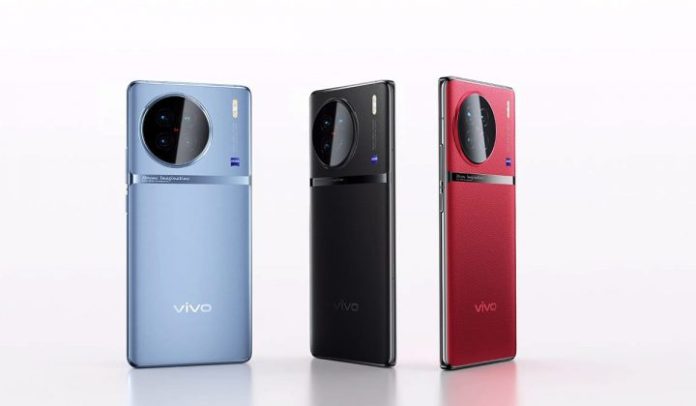
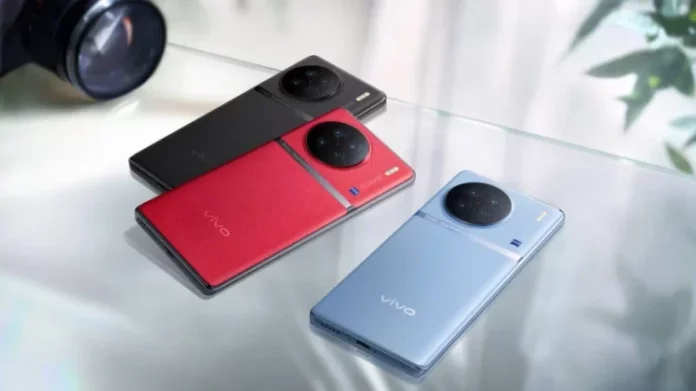
Vivo V27 5G Pre-orders go live at 7:30 PM today in India, Check price & offers

India witnessed the launch of the Vivo V27 series earlier this month, comprising the standard V27 and the V27 Pro 5G smartphones. While the V27 Pro is already up for grabs in the Indian market, the standard V27 model will be available for pre-order later today. Read on to know more about this exciting development.

Vivo V27 Pro
Vivo V27 Pro

Vivo V27 5G price, pre-order offers & availability

The Vivo V27 5G has two storage options: 8GB + 128GB and 12GB + 256GB. The 8GB + 128GB model costs Rs 32,999, while the 12GB + 256GB model costs Rs 36,999. If you use HDFC, ICICI, or KOTAK Bank Card for the transaction, you can get a flat discount of Rs 2500. The phone can be pre-booked from 7:30 PM today through Flipkart and Vivo Store. If you pre-order from the Vivo Store, you’ll receive free Vivo XE710 earphones.

Vivo V27 5G specs

The Vivo V27 boasts an impressive 6.78-inch curved AMOLED display that features a 120Hz refresh rate and Full HD+ resolution of 2400 × 1080 pixels. The front camera is nestled neatly in the center of a punch-hole notch, and the display panel is HDR10+ certified for an immersive viewing experience.

Vivo
Vivo V27

Under the hood, this latest addition to the V-series packs a powerful MediaTek Dimensity 7200 processor, paired with an integrated Mali G610 GPU to handle graphics-heavy tasks with ease. With up to 12GB LPDDR5 RAM and up to 256GB UFS 3.1 storage, this device is ready to handle all your data needs. It also comes pre-installed with FunTouch OS 13, based on Android 13.

On the optics front, the Vivo V27 features a triple-rear camera setup, headlined by a 50MP Sony IMX766V sensor that is equipped with OIS support. It also features an 8MP ultra-wide-angle lens, a 2MP macro sensor, and an Aura light flash. The device also boasts a 50MP front shooter, making it ideal for all your selfie needs.

This device is powered by a 4600mAh battery that supports 66W FlashCharge fast charging over a Type-C charging port. With an in-display fingerprint scanner and a stereo speaker setup, this phone has all the features you need for a seamless mobile experience. It comes in two vibrant color options – Noble Black and Magic Blue, and weighs just 180 grams.

Connectivity-wise, the Vivo V27 has Dual-SIM capabilities, 5G, WiFi 6, Bluetooth 5.3, NFC, GPS, GLONASS, Galileo, BeiDou, and NavIC. Overall, the Vivo V27 is an excellent device that provides a seamless user experience and packs in all the features you need in a modern smartphone.

RELATED: