Advertisement

OnePlus Pad’s Battery and Charging Speed Leaked

After years of making smartphones, OnePlus is ready to get into the tablet business. The brand is confirmed to launch its first-ever tablet globally on February 7 alongside the OnePlus 11 and 11R. The slate’s design and appearance have already been revealed through official teasers and thanks to leaks and rumors, we also have some idea about its specifications. Adding to that, a leakster has now revealed the battery capacity and charging speed of the upcoming OnePlus tablet. Here are the details.

According to Chinese leakster Digital Chat Station, the new OnePlus Pad will arrive with a 4320mAh dual-cell battery unit, making a total of 8640mAh. However, it may officially be labeled as an 8840mAh battery pack. The slate could support 67W fast wired charging.

OnePlus pad battery

DCS further revealed the tablet will have a 2.8K resolution display. Previously, it was revealed that the device will have an LCD panel that offers up to 144Hz refresh rate and HDR 10+ and Dolby Vision support. Judging from this, we can assume the OnePlus Pad will offer an immersive multi-media experience.

OnePlus-Pad

As mentioned, the brand has already revealed the design of the upcoming tablet. It will arrive with an aluminum alloy chassis with a cambered frame. Contrary to other tablets in the market, the OnePlus Pad will have its camera module placed in a central position on the back. Taking photos from this position should be easier since it’s better aligned with your own view than from the edge.

It will have a single camera placed in the top bezel above the screen. The tab will likely be arriving in multiple colors, including an interesting Halo Green shade. We expect to learn more details about the tablet through teasers ahead of the launch. Stay tuned.

RELATED:

(Via)

Xiaomi MS11 EV Live Images Surface Online, Launching Soon?

Xiaomi’s first electric vehicle, the MS11 could well be cruising on public roads in China soon. The tech giant has made significant strides in the development of its EV and images of the car have been seen multiple times.

Xiaomi MS11 EV

Xiaomi is reportedly in the final phases of the development of its first electric car. The car itself had been spotted several times on Chinese roads and during winter testing. A Weibo user has provided some images of the MS11 in its clearest and undisguised form yet. The Xiaomi MS11 is a decent-looking sedan with a sporty four-door design, as per the images. The car bears some striking semblance with the BYD Seal although differences in the headlights are visible.

Xiaomi MS11 EV

The alleged images of the Xiaomi MS11 are in sync with earlier leaked design images of the car. The front and rear bumpers of the new images are similar to the design details leaked earlier. However, Xiaomi at that time stated that the images were an earlier prototype that was discarded. It now remains to be seen whether the MS11 indeed is the car in question. There are no official statements from Xiaomi yet on the issue, so, inferences are speculative at this time.

Xiaomi MS11 EV

The images of the alleged MS11 project a good-looking sedan with a full-length glass roof, large wheels, and Wilwood brakes. It features the Xiaomi logo at the center of the wheels and a LiDAR sensor sits at the top of the windshield. The car has wide rear arches and the passenger cabin narrows slightly at the rear. The tail lights have a similar design to that of the Aston Martin. Overall, the Xiaomi MS11 could be designed as an affordable EV that guarantees comfort.

Xiaomi MS11 EV

There are no images yet of the interior of the Xiaomi MS11 but this may change soon. The images reflect a strong and pretty powerful model that will ride on the high Xiaomi standards. There are no release details for the Xiaomi MS11 yet, but that may change shortly, hopefully.

RELATED:

Work begins on China’s First Commercial Spacecraft Launch Centre at Hainan

China has begun the work for its first commercial spacecraft launch site at Wenchang in the southern island province of Hainan. 

There is already a state-owned launch center in Hainan called the Wenchang Space Launch Center, which is the fourth launch site in China. The other three are the Jiuquan Satellite Launch Center which was the country’s earliest base and where most launches and tests have been conducted to date, Taiyuan Launch Centre which is ideal for launching solar-synchronous satellites and Xichang Satellite Launch Center which is designed mainly to launch powerful thrust rockets and geostationary satellites. 

In China, a commercial space center refers to a site invested in and built by an entity other than the Government or Military. Hainan Commercial Space Launch Site program is a joint venture of the Hainan government and three space conglomerates-China Aerospace Science and Technology Corp, China Aerospace Science and Industry Corp, and China Satellite Network Group.

hainan launch site
Source: hnftp.gov.cn

The work on the commercial launch site will be done by an affiliate of the China Aerospace Science and Technology Corporation. The estimated time for completion is one year and the site will be operational from 2024. The new launch site which covers an approximate area of 133 hectares, will have a launch pad, water spraying systems, lightning protection towers, hoisting equipment, transition transportation equipment, diversion devices, a fixed service tower, and more. 

Feng Fei, the provincial governor, of Wenchang said that Hainan will make full use of the new launch site to establish an entire space industry chain covering carrier rockets, satellites, and data processing businesses. He further added that the aim was to transform Wenchange into a world-class spaceport. 

The Wenchang Launch Center is China’s southernmost launch site and is chosen for its low latitude and closeness to the equator. 

If a spacecraft is launched from a site near the Equator, then it gets a natural speed boost caused due to Earth’s rotation, which in turn helps to reduce the cost of fuel and boosters. An optimal launch site needs to be at a coastal area near the equator as it maximizes the use of the earth’s rotational speed and gives an advantage of orientation that helps to arrive quickly at the geostationary orbit. 

Major Spacecraft Launch sites like Cape Canaveral, Vandenberg, and Sriharikota are all located near the coast. 

China’s Space Industry ranks second in the world just after the US. China National Space Administration (CNSA) has overseen the development of China’s space program which has launched ballistic missiles, artificial satellites, manned space flights, and the famous Tiangong Space station. The ambition of this Asian giant does not stop here as it plans to explore the entire solar system. 

With the development of a commercial launch site, China is now stepping into the commercial space era along with the US. 

(via)

Global Chip Shortage is Over! The Impact of Inflation on the Chip Industry

The global chip shortage has come to an end, as confirmed by the latest reports. The statement might seem overly optimistic, but the declining operation rates at South Korean chip foundries such as Samsung, DB Hitek, Key Foundry, Magnachip, and SK Hynix System IC supports the declaration. The chip industry is reportedly moving towards a more stable supply chain. Here are the details…

South Korean chip foundries to suffer low operation rate up to Q2

The global chip shortage, which began during the pandemic, has affected the entire world. The decrease in production capacity and simultaneous increase in demand resulted in a crisis that lasted for an extended period. Despite manufacturers operating at near full capacity to meet demand, both prices and product availability remained limited.

TSMC

But that era has now come to an end. Recent reports indicate that many manufacturers in South Korea operate at 60-70%. Only Samsung is an exception, operating at 80% capacity. Unfortunately, the impact of global inflation and declining demand for IT products has resulted in a decrease in both chip prices and demand. Consumer electronics companies are also grappling with high inventory levels.

Unfortunately, this situation seems to affect the consumers negatively. People who paid high wages only a few months ago due to product and stock shortages will now buy products at low prices due to rising costs and inflation.

RELATED:

(via)

Samsung Galaxy S23 Series Confirmed to Feature a Special Snapdragon 8 Gen 2 Chipset

As the buildup to the launch of the Samsung Galaxy S23 series reaches its crescendo, another confirmation has come for the series. The Galaxy S23 will all feature the Snapdragon 8 Gen 2 processor ahead of the Exynos chipset. A new leak relating to the release has all but confirmed the switch. The leak also indicates that the chip comes with special branding.

Samsung Galaxy S23

There had been complaints about the power efficiency of Samsung’s Exynos chipsets. Some of the reported complaints were overheating and general poor performance. The new leak confirms an earlier rumor that Samsung was using a special version of the Snapdragon 8 Gen 2 for the Galaxy S23 lineup. Tipster @rquandt provided some leaked images that revealed the Snapdragon 8 Gen 2 chip inside the S23 series. The chips also sport the For Galaxy branding, indicating their possibly special status.

Qualcomm is offering for the first time a faster and specialized version of its model. This follows the signing of a multi-year partnership to use Snapdragon chips in Galaxy smartphones. It is expected that the partnership will blossom into other models.

Samsung Galaxy S23 Ultra teaser

The special SD 8 Gen 2 chip has higher GPU and CPU clock speeds. This assures the improved performance of the chipset. The gaming performance and other Android tasks will be better achieved with the new chipset. The special Snapdragon chipset will generate more heat and it is not clear how Samsung hopes to overcome that. This is because sustained heat generation could be negatively impactful on the performance of the smartphone. We however expect Samsung to have made the necessary optimizations to overcome the problem.

The Samsung Galaxy S23 lineup will be launched on February 1 at a scheduled Galaxy Unpacked event. Samsung is currently accepting pre-reservations for the flagship lineup. The Galaxy S23 is coming with high expectations as a great Android smartphone.

RELATED:

(source)

Redmi A2 and A2+ Appear Close as Production Begins in Several Regions

A recent report revealed Redmi is already working on the successor of the recently launched Redmi A1 and A1+. The company’s A series is fairly new and it focuses on offering decent specifications with an affordable price tag. The upcoming Redmi A2 series, which should include Redmi A2 and A2+, is expected to launch pretty soon as the company has apparently started its production in several regions. Here are the details.

In his recent Tweet, tipster Mukul Sharma claims that the serial production of Redmi A2 and A2+ has started in several European and Eurasian regions. This suggests smartphones may debut in the global as well as Indian market in a few months. Do note that there’s no official confirmation from the brand yet.

Redmi-A1

Additionally, Sharma has spotted the Redmi A2+ on the International Mobile Equipment Identity (IMEI) database with model number 23028RNCAG. As usual, the listing did not reveal any specifications of the handset.

Leaks and rumors about the Redmi A2 series have just started to surface so we are pretty short on the details. At this point, we can only say that the new Redmi A2 and A2+ will arrive as entry-level smartphones. More information should emerge pretty soon.

To remind you, the recent Redmi A1+ (also rebranded as Poco C50) features a 6.52-inch LCD display with an HD+ resolution. Under the hood of the smartphone is a MediaTek Helio A22 SoC that is paired with up to 3GB of RAM and 32GB of onboard storage.

In the rear camera department, the handset sports an 8-megapixel primary sensor and a 2-megapixel depth sensor. The front gets a 5-megapixel selfie camera. Redmi A1+ is fueled by a 5,000mAh battery pack that supports 10W charging.


RELATED:

(Source)

Manu Kumar Jain Bids Farewell To Xiaomi After 9-year Stint

Xiaomi India Head and Global Vice President, Manu Kumar Jain has bid farewell to the company. After a nine-year stint with the company, he announced his exit in a Twitter post. Jain joined Xiaomi in 2014 and spearheaded the company’s India operations. Under him, Xiaomi became the number-one smartphone brand in the country even without any advertising campaigns. 

In his farewell statement, Jain proudly spoke about some of the highlights of his tenure at Xiaomi. The company was backed by former Tata Sons Chairman, Ratan Tata and launched Made in India smartphones and smart TVs. Jain was a Managing Director of Xiaomi India from 2014 to 2017. He was promoted to Global Vice President of the company in July 2021. Under the executive’s leadership, the brand achieved significant growth in sales as well as entered various price segments in the country. Additionally, Xiaomi also led the smartphone market in India for nearly five years until the last quarter of 2022 when Samsung took the top spot. 

Xiaomi India saw a big organisational rejig last year with Alvin Tse taking the helm as General Manager and Anuj Sharma appointed as CMO. Jain’s exit comes a month after Xiaomi India’s Chief Business Officer Raghu Reddy also left the company to pursue new opportunities. Additionally, this is also after Xiaomi India has been on the radar of the Indian government over allegations of tax evasion since December 2021. 

Manu hasn’t revealed what he wants to do next after quitting Xiaomi. He added that he his taking some time off and would like to do something in a new industry. 

Related:

Poco X5 and X5 Pro Finally Get an Official Launch Date

Poco phones are received well in the global smartphone market, even though they are mostly rebranded Xiaomi devices with a few changes in the design. Poco’s recent launches— Poco C50 and Poco F4— attracted many consumers. And the firm is now gearing up to bring a new mid-range smartphone line, dubbed Poco X5. The series will include the vanilla Poco X5 and higher-end Poco X5 Pro.

The brand has been teasing the X5 series for quite some time now and today we finally get its official launch date. According to a recent Tweet from the company’s official Twitter handle, the Poco X5 and X5 Pro will be launching globally on February 6. The devices will be announced in an online launch event at 20:00 GMT+8.

Poco X5 launch date

As is the case with the majority of Poco smartphones, the upcoming Poco X5 and X5 Pro are expected to be rebranded Redmi phones. The vanilla model is expected to be rebadged Redmi Note 12 5G with Poco’s signature camera bar. The pro phone, on the other hand, is likely a masked Redmi Note 12 Pro Speed Edition.

Expect to see these smartphones in new colors, especially in the brand’s favorite yellow shade. Both Poco devices could have a 6.67-inch AMOLED display with a Full HD+ resolution, 120Hz refresh rate, and Corning Gorilla Glass 5 protection. The X5 will likely be powered by a Snapdragon 695 CPU, while the X5 Pro may pack a more powerful Snapdragon 778G processor.

The Pro model is expected to get a 108MP primary camera, whereas the standard one may have to settle for a 48MP sensor. They both could feature an 8MP ultra-wide camera and a 2MP sensor. The two phones will likely pack a 5,000mAh battery.

RELATED:

XPeng Aims to Deliver 200,000 Units in 2023 with New Electric Vehicles

Electric vehicles are becoming increasingly popular, leading to the emergence of new brands alongside established carmakers. XPeng, one of these brands, has been producing next-gen vehicles since 2014 and is particularly popular in China. However, 2022 was a challenging year for the company, and it didn’t meet its desired success. But this is expected to change with a statement from CEO He Xiaopeng. Here are the details..

XPeng Plans to Release Two New EVs and Deliver 200K Units in 2023

XPeng‘s Chairman and CEO, He Xiaopeng, sent an internal letter to the company’s employees acknowledging that 2022 was a challenging year with various difficulties. The company’s sales failed to meet expectations and its share price plummeted by 81.34%. This was particularly devastating for XPeng, especially in its main target market, China, where it only sold 120,800 vehicles compared to its smaller competitors’ higher sales numbers.

XPeng's Chairman and CEO, He Xiaopeng,
man and CEO, He Xiaopeng

In the letter, He Xiaopeng wrote, “The vast majority of current automakers will be eliminated in this knockout. XPeng has no retreat, so we must go forward bravely.” The navigation guided pilot (NGP) of XPeng will be delivered in the third quarter of this year. He Xiaopeng said that autonomous driving should be regarded as the core of XPeng. Moreover, this is not the only goal of the company.

XPeng will unveil five new models in 2023, including two brand-new vehicles and three updated versions of previous models. Both of the new cars are built on an 800V high-voltage platform. The first new model is the XPeng G7, a five-seat SUV that will make its debut at the Shanghai Auto Show this year. The other new car is an MPV with the internal code H93, set to begin mass production in September 2023.

According to the letter, XPeng has sold a total of 258,710 vehicles by the end of 2022. The 2023 targets are much bigger. CEO Xiaopeng wants to sell 200,000 vehicles this year. But time will tell whether this will be true or not.

RELATED:

(via)

OPPO Find X6 Series Key Specifications Surface Online

The OPPO Find X6 series is expected to launch in China next month. The lineup is expected to include the standard and Pro variants. The latter is also tipped to be available in Qualcomm Snapdragon and MediaTek Dimensity processor options. OPPO is yet to reveal any official details about the Find X6 series. Now, a Weibo user has leaked key specifications of the upcoming devices. 

As per the latest leak, the OPPO Find X6 will have a 6.74-inch OLED display bearing a 2K resolution and a 120Hz refresh rate. It will be powered by a Snapdragon 8+ Gen 1 processor paired with LPDDR5 RAM and UFS 3.1 storage. The device will reportedly be backed by a 4,800mAh battery unit with support for 80W wired and 30W wireless charging. 

Meanwhile, the OPPO Find X6 Pro Snapdragon Edition will be equipped with the latest flagship Snapdragon 8 Gen 2 SoC coupled with LPDDR5x RAM and UFS 4.0 storage technology. It will draw its power from a 5,000mAh battery cell with support for 100W wired and 50W wireless charging. On the other hand, the Dimensity Edition of the Find X6 Pro is tipped to house a MediaTek Dimensity 9200 chipset. 

The OPPO Find X6 series is expected to come with an ultra-thin fingerprint scanner, an X-Axis linear motor, an IR Blaster, NFC, and Hasselblad cameras. The trio are also tipped to have 50MP triple rear cameras and a 32MP Sony IMX709 front-facing snapper. The Pro variants will also feature IP68 certification and MariSilicon X2 ISP. 

Related:

Via

Oppo Find X6 Appears in Live Images With an Absurdly Large Camera Module

Oppo is gearing up to launch the Find X6 series smartphones in China next month. We could see these devices launch in the global market sometime after the domestic launch. As usual, we expect to get two phones in the series – the Oppo Find X6 and the Oppo Find X6 Pro. Numerous leaks have surfaced revealing the hardware and design details of both of these models.

Now, Weibo tipster DCS (via ITHome) has shared live images of the rear panel design of the Find X6, which appears to be covered by a prototype case. Although the case has pretty much obscured the back panel, it is easy to see the massive square-shaped camera island. A similar design was previously leaked by known tipster Evan Blass, which showcased the vanilla X6 model with a large camera module.

It is worth noting that the Find X6 Pro model won’t follow this design scheme, and it will instead have a circular camera island that we have reported on before. Coming back to the Find X6, we have previously seen the smartphone from the front and side angle, therefore we know that it will be quite thick, and will have a curved display with a punch-hole in the top-middle of the device.

Other leaks have suggested that the device will come with a Dimensityu 9200 chipset from MediaTek. This is the same chipset used in the recently launched Vivo X90 Pro flagship smartphone. The chipset will draw power from a 5,000mAh battery that has 100W fast charging and 50W wireless charging support.

Up front, there will be a 6.7-inch AMOLED display with a 2K resolution and 120Hz refresh rate. A 50MP main camera, a 50MP ultra-wide camera, and a 50MP periscope camera are reportedly part of the camera configuration. To optimize the Find X6’s camera system, OPPO will include its MariSilicon X NPU and work with Hasselblad. The phone will sport a 32MP Sony IMX709 front camera sensor for taking selfies. Lastly, it will have an Android 13-based operating system.

RELATED:

Global Memory Chip Crisis Worsens amidst Dwindling Demand: All Eyes Now on Samsung

The Memory Chip industry has always run in economic cycles of expansions and contractions.  During the Pandemic, the industry was looking at a revenue boom and was planning to capitalize on this surge by expanding into new sectors like 5G communication and cloud computing.  Experts vowed to get out of the economic cycle and establish a more stabilized industry.

Yet today, the $160 billion industry is facing an unprecedented crisis as Mirco Chip stocks are increasing amidst dwindling demands. 

According to a report from Gartner, the Global Memory Chip revenue fell by 10% in 2022. Experts are predicting that the situation is going to get even worse. In 2020, the pandemic boosted the demand for memory chips as people were confined to their houses and bought phones, tablets, laptops, and other smart devices to stay connected to the world. 

However post pandemic, the world is heading for a recession with rising inflation and massive layoffs. This in turn has dwindled the demand for gadgets and devices that use memory chips. Thus, companies that were riding on the pandemic boom are now facing a crisis of excessive stock of memory chips. 

TrendForce Senior Research Vice President Avril Wu said that the downturn has proved the whole industry wrong as they had predicted that the suppliers would be able to control the outcome. 

Asian economies like South Korea and Japan are facing the major brunt of this downward trend as they thrive on technology export. Top global companies like SK Hynix Inc (South Korea), and Micron Technology Inc( US) are facing a cash crunch amidst the decreasing demand for microchips. The problem is not only affecting individual companies but also technology behemoths like Samsung. 

It is reported that Samsung Electronics and almost all its competitors are losing money on chips with the total operating loss of these companies predicted to hit a record-breaking $5 billion in 2023. The industry stockpile has increased three times the normal level which indicates that the production has exceeded the actual consumer demand.

Having too much stock in hand leads to loss of profits, increased storage costs, limited cash flow, and shortage of working capital. In the case of microchips the added risk of obsolescence makes it even worse for these companies. 

Source: Samsung

Companies have already started implementing aggressive counter strategies to contain the losses. Micron Technology of the US has decided to reduce its output and cut the budget for its new plant and equipment. CEO, Sanjay Mehrotra said that the rate at which the whole industry rights itself will depend on how quickly Micron’s competitors make similar moves. He further added that the cross-cycle nature of growth and profit was still there and so he believed that they just have to run this cycle to get back to profitability. 

South Korea’s SK Hynix Inc, has also slashed its investments and scaled back output in order to bear the losses. SK Hynix is especially affected by the current economic downturn as it acquired the flash memory chip business of Inter Corp in 2020. The $9 billion deal has now left the company with the burden of the additional stockpile. Meanwhile, Intel played it cleverly by exiting the declining industry which is dominated by Asian giants like SK and Samsung.

All eyes are now glued on Samsung which is going to report its fourth-quarter earnings this week. Experts are predicting the profits to hit a six-year low as consumers are in savings mode. Every move that Samsung makes for its microchip division, will now affect the global chip industry, including its competitors. 

(Via)

Apple Relocates AirPods Production to India

Apple and China’s long-standing partnership is coming to an end as the US technology giant shifts production to other countries. Reports indicate that Apple supplier Jabil’s India unit has started producing components for AirPods. Here are the details…

Apple’s India supplier Jabil making AirPods parts

Apple is continuing to decrease its presence in China for two reasons. The first is the challenge of relying on a single production location. The pandemic has shown us that this is a wrong move. The second reason is the negative impact of the lockdown and subsequent events in China. After the events at the factory in China, the company accelerated the process of shifting production.

AirPods

Apple plans to continue production in Asia, with India as the key center of operations. Recent reports suggest that Jabil, an Apple supplier, has started producing components for AirPods in its India unit. This is a significant step for the company and India, particularly given the market share of AirPods.

Furthermore, India will not only produce headphones. Production of iPhone, iPad and Mac has also recently started in the country. Apple aims for India to contribute 25% of its production, up from its current 5-7%. The company has placed a big bet on India since starting iPhone assembly there in 2017, in accordance with the Indian government’s promotion of local manufacturing.

According to CNBC, India is also considering bringing some of Apple’s iPad production to the country from China.  Although Apple currently holds only a 5% market share in India’s smartphone market, CEO Tim Cook has previously recognized India as a potential area for growth in the future.

RELATED:

(via)

TikTok Ban at Public Schools Prompts Students and Professors to Protest

TikTok recently got banned in more than 25 states from devices that were issued by government. This ban has now extended to include public/state schools, but it seems that this decision has resulted in some hefty backlash.

For those unaware, the popular short video sharing platform’s parent company (ByteDance) being situated in China has raised concerns for many. The app has been accused of stealing users’ personal data and even capturing keystrokes to learn passwords and other sensitive information. But despite all of this, there have been protest against the ban of this social media giant in public schools. As of right now, the ban on TikTok has been implemented in more than a dozen state run universities.

TikTok

This includes the Auburn University, the University of Georgia, Oklahoma State University, and even the University of Texas, Austin. Similarly, it has also been banned in certain schools, with the app not being allowed to be installed on university owned devices. Meanwhile, there are also schools that have banned TikTok on their campus networks as well, while others are employing both of these methods to keep people away from the app.

The popular social media platform’s ban has caused both students and professors to protest. The protest spoke out against the restriction of the app. Kate Biberdorf, an associate professor of chemistry at the University of Texas stated that “I use TikTok as an educational tool to make science fun and accessible. To have that tool be taken away by a university, that doesn’t sit right with me. Right now in our community, it feels like our rights are being taken away, and this is another push in the wrong direction.”

RELATED:

(Source)

Fire Boltt Astro With AMOLED Display Launched In India

Fire Boltt has been launching a slew of new devices in India. The homegrown brand has already announced as many as seven new smartwatches in the country this month. Now, the company has launched yet another smartwatch called the Fire Boltt Astro. Read on to know what it offers out of the box. 

The Fire Boltt Astro sports a square dial with a 1.78-inch large AMOLED display bearing a resolution of 368 x 448 pixels. It has a metal unibody and a button on the right side. The device comes with an Always-on display and ten built-in watch faces. 

On the fitness front, the Fire Boltt Astro is equipped with a heart-rate monitor, SpO2 sensor, sleep tracker, female health care monitor, and hydration reminders. The wearable device packs support for more than 110 workout modes. 

The Fire Boltt Astro is equipped with a built-in speaker and mic for hands-free Bluetooth calling. It comes with call history, a quick dialpad, and contact syncing. There is also support for voice assistant. The smartwatch features a 2048 and Flappy Bird built-in game. Convenient features on the Fire Boltt Astro include smart notifications, music and camera control, weather updates, and more. The wearable device is claimed to offer up to 5 days of battery life.

The Fire Boltt Astro is priced at Rs 2,499 and available for purchase from Amazon and the brand’s official website. It comes in Black, Silver, Blue, Pink, Dark Grey, and Gold Black colours. 

Related:

Li Auto L9 Hybrid SUV Model Bursts Into Flames in China

A recent video has been circulating on social media in China that shows a car going up in flames. The vehicle in question is the Li Auto L9 model, which is a hybrid SUV and the second ever car built by the company.

For those unaware, the L9 SUV is a hybrid car and offered the longest electric range of any PHEV (Plug in Hybrid Vehicle) in the world, with a max range of 215 kilometers. This model was officially unveiled by the Chinese automobile manufacturer back in March 2022 and offered another 2,116 kilometers range from its fuel tank as well. Now, one such model was spotted spontaneously combusting into flames in the city of Jinan, in the Shandong Province of China.

Li Auto

Based on online post, the social media user claimed that the vehicle owner heard a loud sound inside the car while driving. This loud bang was apparently related to the car’s braking system, which indicators had revealed were failing. So after pulling over to the side of the road, the Li Auto L9 SUV model was in flames in just under a minute later. The company has responded to the matter and stated that it has involved the local departments and is working on finding the cause for this accident through a thorough investigation.

There could be various reasons why this vehicle went into flames, although, there were previous reports regarding an L9 test car also experiencing a suspension issue on the left front wheel. Whether these two incidents can be somehow point to an issue with the car overall is still unclear, so we will to wait for an official announcement to know for sure.

RELATED:

(Via)

OPPO Enco Air 3 To Launch In India On February 3, Key Features Teased

Earlier today, OPPO announced that it is launching the Reno 8T 5G smartphone in India on February 3rd. Alongside, the brand is also confirmed to launch the Enco Air 3 TWS earphones in the country. The upcoming audio device will arrive as the successor to the last year’s Enco Air 2. It will pack significant upgrades over its predecessor. Ahead of the launch, the key features of the TWS earphones have been teased. 

The OPPO Enco Air 3 has an Apple AirPods-like design with a small stem. It will come in a pebble-shaped charging case with a transparent lid. The TWS earphones are IP54-rated dust and water-resistant. 

OPPO has confirmed that the Enco Air 3 will be equipped with a HiFi 5 DSP processor for improved processor and battery life compared to its predecessor. It will feature 47ms ultra-low latency for gaming purposes. The TWS earphones will come with DNN noise cancellation for calls by eliminating surrounding noise. The audio device is confirmed to be powered by up to 31 hours of battery life with each earbud tipped to offer 6 hours of usage. 

Apart from the aforementioned information, there are no additional details about the Enco Air 3. We will know more at the launch event later this week. 

As for the OPPO Reno 8T 5G, it is confirmed to come with a 120Hz curved display and a centre-aligned punch-hole cutout. The device will feature a 108MP portrait camera paired with two more lenses. The upcoming smartphone is confirmed to be powered by a 4,800mAh battery unit with support for 67W fast charging. 

Related:

Acer Launches Aspire 3 Laptop Powered by Ryzen 5 7000 Series Processors

Acer is one of the world’s most popular PC brands. Recently, the company unveiled the Aspire 3, India’s first laptop powered by the Ryzen 5 7000 series chipset. Acer claims that the Aspire 3 combines multitasking and productivity into a neat, stylish package that is perfect for everyday performance.

Acer Aspire 3

The Aspire 3 has a compact design, with the laptop weighing in at merely 1.6 kilograms. It features a sleek metallic cover that adds to the attractiveness of the design. The laptop is only 18.9 mm thick while also having an additional 17 percent thermal capacity. Acer attributes this to a 78 percent increase in fan surface area, which prevents overheating. The Aspire 3 has a 15.6-inch FHD display equipped with Acer BlueLightShield™ to reduce the levels of blue light. Additionally, the company claims that its TNR solution enhances the quality of the camera images by blending noisy pixels into other frames, especially in low-light conditions. 

Acer Aspire 3 Laptop

As mentioned previously, Acer Aspire 3 is powered by the AMD Ryzen 7000 Series processors with Radeon graphics.  It is based on a 6nm Zen 2 architecture with up to 4 Cores and 8 threads, enhancing performance, audio and video streaming, and maximizing battery life. In terms of connectivity options, the laptop is equipped with a full-function USB Type-C port and an HDMI port. For wireless connectivity, the Aspire 3 has WiFi 6E as well. The company further claims that with PurifiedVoice™, Acer’s AI can significantly reduce background noise for video calls on both sides, and the technology works with external microphones and headphones as well. 

The Aspire 3 is priced at INR 47,990 (~$588), which places it in the same segment as other mid-range laptops. The laptop is available at Acer Exclusive Stores, Acer E-store, Vijay Sales, Amazon, and other stores across India. 

RELATED:

Geely Automobile Group Sets Ambitious Sales Target for 2023

Geely has set an ambitious target for 2023 with a total sales goal of 1.65 million vehicles. The company is striving for double growth in new energy vehicle sales, building upon its positive growth of 8% in 2022, where it reached 1,432,988 vehicles and surpassed most strong joint venture brands, ranking third in the industry. The CEO of Geely Automobile Group, Gan Jiayue, has stated that the company’s first goal is to build vehicles based on their new energy architecture and solve the pain points of new energy vehicle users.

This includes achieving “true battery life” with precise and long-lasting battery life, “real driving control” with a real combination of software and hardware, “true quality” in all aspects of the vehicle, and “real vehicle safety.” Gan Jiayue believes that only through making long-term innovations in “invisible places” and challenging the limits can they create good cars that truly meet the needs of users. The company is dedicated to delivering real and lasting innovations that benefit the end user, not just superficial skills in car manufacturing.

In 2023, the company aims to double the overall sales of new energy vehicles to over 600,000 units, while also striving for double growth in the sales of Raytheon hybrids and high-end pure electrode krypton. Geely Automobile Group’s commitment to innovation and its focus on new energy vehicle sales, combined with its track record of positive growth, position it for a significant impact in the automotive industry in 2023.

Gan Jiayue stated that Geely believes in the importance of making real and lasting innovations that meet the needs of the users. The company’s goal for 2023 is not just about hitting sales targets, but about delivering on its commitment to innovation and providing high-quality vehicles that meet the evolving needs of drivers. With its focus on innovation and its track record of positive growth, Geely Automobile Group is poised to make a significant impact in the automotive industry in 2023 and beyond.

RELATED:

(source)

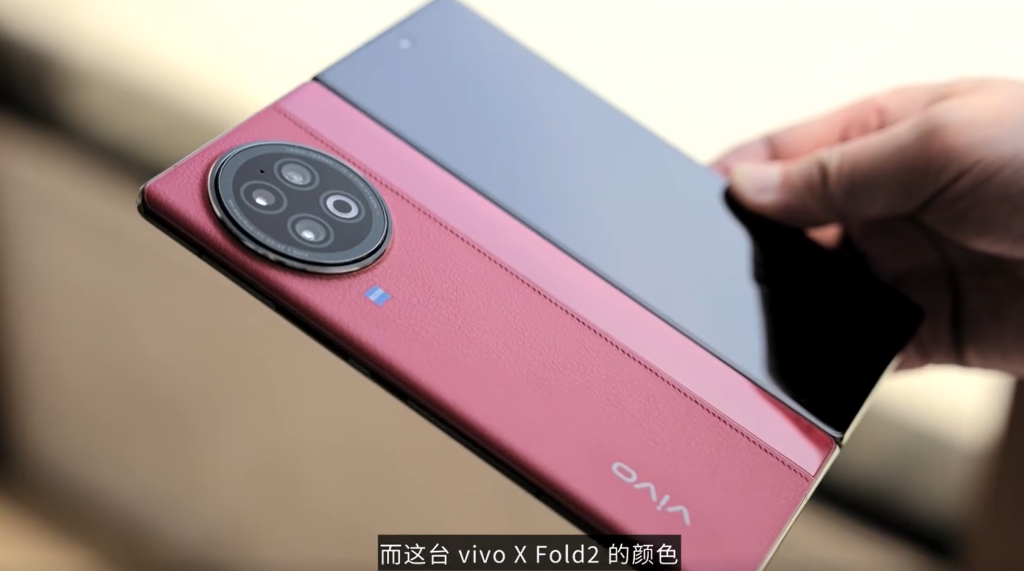
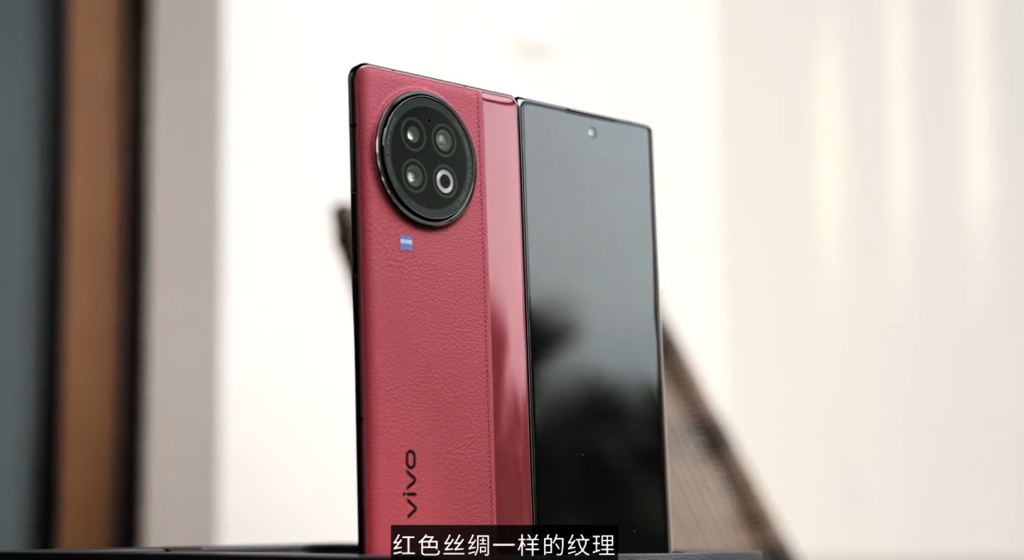
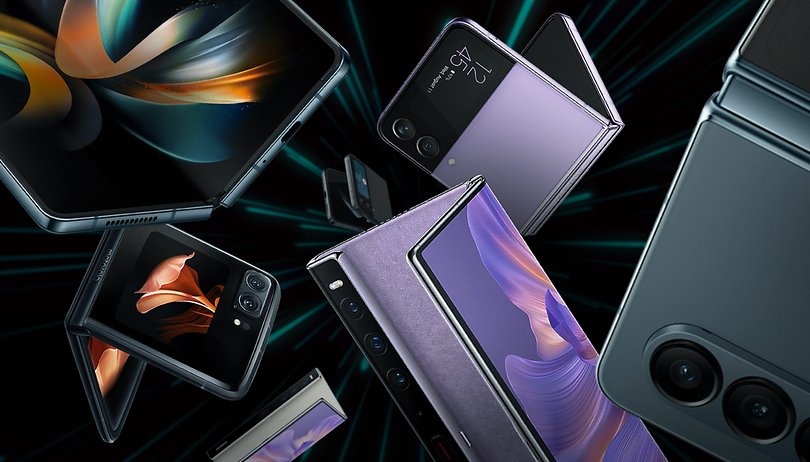
Huawei Dominates China’s Foldable Phone Market While Oppo Ranks Third

Earlier today (30th January 2023), IDC shared a new report that revealed key details regarding the foldable smartphone market in China. Huawei has seemingly dominated this segment, so let’s have a look.

Huawei

The foldable smartphone market in the region shipped more than 3 million units in Q4 2022, which marked a sizeable 118 percent rise year on year. Furthermore, the foldable phone category also saw an overall rise in the overall smartphone market, rising from 0.5 percent in 2021 to 1.2 percent in 2022. During this time, Huawei took the throne with a massive 47.4 percent of foldable phone market share. This meant that the Chinese tech giant accounted for almost half of all handsets with a flexible screen that were sold in the region.

The company was able to grab such a high market share thanks to a number of its models including the Pocket S, Mate Xs 2, the P50 Pocket, and even the Mate X2. Meanwhile, Samsung took the second spot in the market with a 16.5 percent market share. The brand saw great sales with its Galaxy Z Flip 3, Galaxy Z Flip 4, Galaxy Z Fold 3, Galaxy Z Fold 4, Galaxy W23, and even the Galaxy W23 Flip as well.

Huawei

Lastly, another Chinese brand, Oppo, rounded of the top 3 on the list with a 13.8 percent market share. Interestingly enough, the company managed to come in third with just one foldable phone model sold during this period, with the device in question being the Find N. The IDC report also added that the companies that saw great sales in this segment followed the ‘vertical folding + horizontal folding’ formula. Meaning, they sold a clamshell folding and a notebook style folding phone.

RELATED:

(Via)