Advertisement

Apple iPhone Ultra Flagship Smartphone to Reportedly Launch in 2024

Apple has been launching four smartphone models for the iPhones every year — Mini, Standard, Pro, and Pro Max. This time, the company launched the Plus model instead of the Mini and is expected to continue a similar lineup this year.

However, for the next year, the company will reportedly revamp its lineup of devices and could launch an iPhone Ultra model, which is said to be the top-of-the-line offering, more powerful than the Pro Max model.

Apple iPhone 14 Pro Max

In the latest report, Mark Gurman of Bloomberg has revealed that Apple is planning to launch Apple iPhone Ultra along with the Pro and Pro Max models in 2024, which means that the iPhone 16 series will have this new offering from the Cupertino-based tech giant.

Earlier, it was expected that the Ultra model would be launched as a part of the iPhone 15 lineup to replace the Pro Max model, but now it is being claimed that the Pro Max will continue to be a part of the lineup, and Ultra will be a new addition.

Some reports also claimed that the upcoming Ultra smartphone model would feature a titanium build, offering a premium look and feel to the device. Titanium is a premium material compared to steel and is also scratch-resistant, lighter in weight, and stronger.

There aren’t many titanium-body smartphones in the market, offering a unique point for the company to market it to potential users. The material is also expensive, which could possibly lead to increased pricing for the device. The phone is expected to feature additional camera improvements, a faster chip, a larger display, and perhaps a portless design without Lightning or USB-C.

RELATED:

Vivo Y100 India Launch Timeline and Price Tipped

Vivo Y100 has been leaking a lot recently and the company itself has confirmed its existence through various teasers. The device is teased to have a lightweight and thin design with a unique color-changing back. While the launch date of the smartphone is yet to be announced, a new leak has revealed its pricing as well as the launch timeline for India. Here are the details.

The Vivo Y100 is expected to debut as a mid-range smartphone with decent specifications and features. Tipster Paras Guglani says it will arrive in the Indian market with a price tag between Rs. 27,000 to Rs. 29,000. He claims the device will be launched in the country in 5-7 days. The timeline seems fair since Vivo has already started teasing the smartphone. We should be getting an official announcement soon.

Vivo-Y100-India

Guglani has also corroborated the specifications of the upcoming Y100. The device is said to arrive with a 6.3-inch AMOLED display with a 90Hz refresh rate. Under the hood, it may be powered by the Dimensity 920 SoC paired with 8GB of RAM and 128GB of internal storage.

For photography, it is said to have a triple camera unit on the back with a 64MP primary camera sensor that supports optical image stabilization (OIS). There may also be a 2MP macro camera and a 2MP depth unit. On the front, the Vivo Y100 might get a 16MP selfie shooter. Fueled by a 5,000mAh battery, the device could support 44W charging. It is said to run Android 12 out of the box which is quite disappointing if true.

If the leaked pricing is to be believed, the specifications of the device do seem a bit underwhelming. We believe smartphones from other Chinese manufacturers offer a better bounce for the ounce. For instance, the Redmi Note 12 Pro is a solid mid-ranger with some impressive specs. You may check out its review below.

RELATED:

(Source)

Realme 10T 5G Gets NBTC & BIS Certified, to Launch Soon as Rebadged Realme 9i

Realme is gearing up to unveil the premium GT Neo5 in China with absolutely bonkers 240W fast-charging technology, multi-color LED strip, and other interesting features. Meanwhile, in the global market, the company might be planning to bring in a new mid-ranger called Realme 10T 5G. The smartphone has recently bagged NBTC and BIS India certifications and is expected to be a rebranded Realme 9i. Here are the details.

A new Realme smartphone with model number RMX3612 has been spotted on NBTC and the Bureau of Indian standards (BIS) website. The NBTC listing of the device confirms that it will be marketed as Realme 10T 5G. While both certifications do not reveal any specifications of the device, they do hint at an imminent launch.

Realme 10T 5G NBTC

What’s interesting is that Realme 10T 5G’s model number— RMX3612— is exactly the same as that of Realme 9i 5G, which was released last year in August. Notably, the 9i 5G is already available in several international markets, including India.

Realme 9i 5G Specifications

The Realme 9i 5G features a 6.6-inch LCD panel with an FHD+ resolution and a waterdrop notch. The display produces a 90Hz refresh rate and a 180Hz touch sampling rate. Under the hood, the smartphone is powered by a MediaTek Dimensity 810 processor, which is paired with up to 6GB RAM and 128GB onboard storage with support for a microSD card slot.

In the rear camera department, the  Realme 9i 5G features a 50MP main sensor coupled with 2MP macro and 2MP depth lenses. The front gets an 8MP selfie snapper. The smartphone is backed by a 5,000mAh battery unit with support for 18W fast charging. On the software front, it ships with Android 12-based Realme UI 3.0.

RELATED

(Via)

Honor Magic5 Certification Confirms 66W Charging Support

A new listing of the Honor Magic5 has confirmed that the smartphone features 66W charging support. The Honor Magic5 comes with a bundled charger that delivers up to 66W fast charging speed. The Honor Magic5 listing was on China’s 3C agency.

Honor Magic5

As per the certification listing, the manufacturer of the product was stated as Honor Device Co. Ltd, which is also the applicant. The product is listed as a 5G digital mobile phone with the model named PGT-ANDO. The issue date of the certification was 02-02-2023.

As usual, these certifications point to an imminent launch. It has already been announced that the Magic5 series will be unveiled on February 27.

The Magic5 series includes the Magic5, Magic5 Lite, Magic5 Pro, and Magic5 Ultimate. The 66W charging speed mentioned in the certification could be the baseline and this could reach 100W. The vanilla model in the series offers the same 66E charging as the Magic4. The Honor Magic5 lineup will be unveiled later this month. The Magic5 will share the spotlight during MWC in Barcelona, Spain.

Honor Magic5

As previously rumored, the Magic5 Lite could be powered by the Snapdragon 695 chipset. The other models in the lineup will come with the premium Snapdragon 8 Gen 2 chipset. The top models in the lineup will also have 50MP cameras, as per previous rumors. There are no definite color options for the Magic5 but we expect at least green and black variants.

As the buildup to its launch gathers momentum, more details about the Honor Magic5 series will surface. Some of these details include pricing and global availability information. Honor will hope the Magic5 will get a decent reception in China, Europe and other markets.

RELATED:

(via)

ADO Air Ultra-light Folding e-Bike Showcased

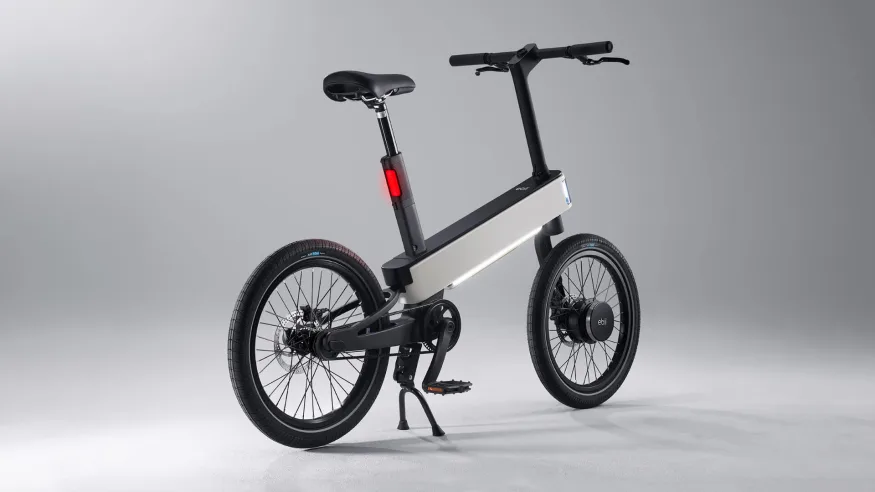
ADO will soon commence an Indiegogo crowdfunding campaign for its latest product. The ultra-light folding e-bike named ADO Air can be folded in half and weighs 16kg. The bike has a 36V battery that gives it a range of 100km while a 37 Nm motor provides the power.

The ADO Air ultra-light folding e-bike has an aluminum frame that is foldable to make it compact and easy to transport. The bike features a carbon belt which will require less maintenance and provide higher efficiency than the chain equivalent. There will be several model choices for the e-bike including a US version and an EU variant. The US model will come with a throttle which will be omitted in the European model.

The new ADO Air folding bike features an IPS display and has a companion app for remote operations. The bike’s Samsung battery can be fully charged in four to six hours. The color IPS display allows the user to monitor drive parameters like speed, as well as control the headlights. The companion app can be used to navigate, view ride statistics, and remotely lock the bike. Three color options are available for the new ADO Air folding e-bike. The color variants are Ivory, Pastel blue, and Indigo Grey.

There are a few key specs of the ADO Air ultra-light folding e-bike that are still lacking. Some of these specs include the top assistance speed and maximum payload for the bike. The date for the commencement of the Indiegogo campaign is February 15. It is also not known the minimum pledge for the model and the duration of the crowdfunding. However, customers could get up to 40% in savings when they pledge for the bike.

RELATED:

(source)

Honor 90 Series Could Launch in May With Upgraded Cameras and Performance

Honor is gearing up to unveil the flagship Magic 5 series in the international market on February 27 during MWC Barcelona. Soon after, the Chinese company may launch the Honor 90 series— the successor to the Honor 80 series, at least that’s what a reputed tipster claims.

To remind you, Honor 80 series debuted back in November 2022 in China and is yet to make its global debut. The lineup included multiple smartphones, including the Honor 80, Honor 80 Pro, and Honor 80 SE. The company later launched the Honor 80 GT and 80 Pro Flat as well. While these devices are still quite fresh, Honor is already rumored to be working on the next-gen Honor 90 series.

A Chinese tipster claimed on Weibo that the upcoming Honor 90 lineup could launch in China by the end of May. He says the series will learn from the mistakes of its predecessor and come with key upgrades in the camera department. The Honor 90 smartphones are said to feature optical image stabilization (OIS) to reduce the shaking in the videos. The image processing and ability to shoot videos may also be upgraded.

Honor 90 series

Further, the lineup is tipped to arrive with dual speakers. The tipster has also shared the Honor 90 series’ inaugural poster, which shows two differently-sized circles apparently made up of red dishware bowls. This might hint at a possible design refresh.

As mentioned, Honor will be unveiling the Magic 5 series globally during the MWC. We should be seeing three Snapdragon 8 Gen 2-powered smartphones- a vanilla Magic 5, a higher-end Magic 5 Pro, and a top-of-the-line Magic 5 Prestige Edition. The company is also rumored to be working on Magic 5 Lite. Stay tuned for the updates.

RELATED:

(Source) (Via)

Watch the Power of Tesla Cybertruck’s 4-Wheel Steering in Action (Video)

Tesla  is accelerating its efforts to launch its Cybertruck. According to a video that surfaced today, the Tesla Cybertruck will have a rear-axle steering system. The Cybertruck, which was supposed to be launched in 2021, has been delayed for approximately three years. During the fourth quarter financial meeting in 2022, Elon Musk responded to questions about the Cybertruck and said, “You’ll take steps to produce it this summer. But mass production won’t start until next year. The start of production is not a significant detail for us.” Here are the details…

Tesla Cybertruck will come with rear axle steering system

The Tesla Cybertruck will come in three different versions. The company announced that it has decided to delay production of the entry-level single-motor, two-wheel-drive (RWD) model. The rear-axle steering system allows for a smaller turning radius for the vehicles. This technology, which offers more precise turning, is used by many car manufacturers, including Mercedes and Audi.

The car manufacturer also confirmed that it has formed a new fleet of Cybertruck Beta prototypes. One was seen in Palo Alto earlier this week. Unfortunately, it is not known if the model in the video is a beta prototype. Another change that will be seen in the Cybertruck model is in the electronics hardware. The Full Self Driving software is currently being developed on Hardware 3, which Tesla refers to as such. The 4th version, which was started last year, will be launched along with the Cybertruck.

Tesla cybertruck

It is rumored that mass production of the Cybertruck model will start in 2023. It is worth mentioning that Tesla’s goal for the Cybertruck is to produce 250,000 units annually. Elon Musk announced the cost of the vehicle at the event in 2019, but the pandemic and global inflation may cause these prices to change. If Tesla would deliver the Cybertruck at the price point and with the specs initially announced in 2019, it would probably beat the Model Y (the best-selling Tesla model).

RELATED:

(via)

Google’s Pixel 4 Gets a Second Chance with Experimental Build

Google has been manufacturing its own smartphones under the Pixel brand for some time now. These devices are the flagships of the Android operating system, both in terms of hardware and software. As a result, they receive software updates for an extended period of time, receiving new features along the way. Finally, the company has released an update for a model that many believed had been forgotten. Here are the details…

Google’s not done with your old Pixel 4 quite yet

The Pixel 4 and 4 XL, launched by Google in October 2019, were seemingly forgotten due to the end of software support. However, a recent surprise update may revive the Pixel 4. Android expert, Mishaal Rahman, has discovered a new build for the device, which is an experimental build not yet released to the public.

This new build, based on Android 13 QPR1, is part of Google’s Android Privacy Sandbox program, where the company tests new technologies for ad tracking without relying on third-party cookies. The update also includes December 2022 security patches, which some Pixel 5 users are still waiting for.

While this build doesn’t guarantee continued updates for the Pixel 4 and 4 XL, it is an official first-party build of Android, giving Pixel 4 users hope that their devices may not be obsolete just yet. With Google’s renewed commitment to the Pixel line, there may be further updates in the future.

The new build is not available for the Pixel 4 XL as it doesn’t have access to the Privacy Sandbox. The new build for the Pixel 4 is a positive sign for concerned users, as Google only promises three years of Android version upgrades and a year of security patches for its flagship devices, compared to Samsung’s four years of OS updates and an additional year of security patches.

RELATED:

(via)

IDC: Tablet Market Softens, Chromebook Sales Dive in 2022

IDC’s latest report on the worldwide tablet market showed that tablet shipments had a slight decline of 3.3% YoY in 2022, with 45.7 million units sold in 4Q22. The tablet market has been on a two-year growth streak, but it has now come to a halt. Despite the decline, tablet shipments are still higher than pre-pandemic levels. On the other hand, Chromebook shipments saw a significant drop in 4Q22. Here are the details…

Worldwide Shipments of Tablets and Chromebooks Declined Sharply in 2022, According to IDC Tracker

Chromebook shipments saw a significant drop in 4Q22, with 24.3% YoY decline and 3.6 million units sold. The full-year 2022 saw a 48% decline in Chromebook shipments after experiencing an 180.5% growth in 2021.

Company4Q22 Unit Shipments4Q22 Market Share4Q21 Unit Shipments4Q21 Market ShareYear-Over-Year Growth
1. Apple22.549.2%17.538.3%28.8%
2. Samsung7.716.8%7.215.8%7.1%
3. Amazon.com2.55.4%3.67.9%-31.1%
4. Huawei*2.35.1%2.55.5%-8.6%
4. Lenovo*2.35.1%4.610.1%-49.9%
Others8.418.4%10.222.4%-17.3%
Total45.7100.0%45.6100.0%0.3%
Source: IDC Worldwide Quarterly Personal Computing Device Tracker, February 3, 2023
Company2022 Unit Shipments2022 Market Share2021 Unit Shipments2021 Market ShareYear-Over-Year Growth
1. Apple61.838.0%57.834.3%7.0%
2. Samsung30.318.6%30.618.2%-0.8%
3. Amazon.com16.09.8%16.19.6%-0.7%
4. Lenovo11.67.1%17.710.5%-34.6%
5. Huawei9.15.6%9.85.8%-7.0%
Others34.020.9%36.421.6%-6.6%
Total162.8100.0%168.3100.0%-3.3%
Source: IDC Worldwide Quarterly Personal Computing Device Tracker, February 3, 2023

Apple and Samsung continued to lead the tablet market, with Apple’s market share increasing by 10 percentage points in 4Q22 due to the launch of several new products. Samsung’s focus on its premium tablet lineup also helped drive shipment volume. Amazon, on the other hand, saw reduced shipments due to a soft demand, despite the fourth quarter being its best shipment quarter.

Huawei and Lenovo were in a statistical tie for the fourth position, with Huawei seeing an increase in large-screen tablet sales in China, and Lenovo’s shipments declining due to the end of several commercial projects. As the tablet market faces saturation and an economic downturn, vendors will need to focus on the commercial segment to drive sales.

IDC analyst Anuroopa Nataraj stated that vendors will need to rethink their product portfolios to cater to consumers, education, and corporate to drive demand and keep up with the changing market dynamics.

RELATED:

(source)

Poco X5 Pro 5G To Start at ₹20,999 ($255), Cheapest SD 778G Phone!

Poco is set to launch the Poco X5 Pro 5G on February 6th in India. The smartphone will also be launching for the global market alongside India. The Poco X5 5G will also tag along for the global market. A day ahead of the official launch, the pricing and launch offer for the Poco X5 Pro 5G has been tipped.

Poco

The leak comes via a screenshot of a YouTube ad shared by Tech Sizzler. It reveals that the Poco X5 Pro 5G will have a starting price of Rs 20,999. It is worth noting that this price is including the Rs 2,000 ICICI Bank instant discount. This means that without the discount, the phone will have a starting price of Rs 22,999 in India.

Previous leaks have revealed that the Poco X5 Pro 5G will have three memory and storage configurations in India – 6GB + 128GB, 8GB + 128GB, and 8GB + 256GB. Therefore, the 6GB RAM and 128GB storage model will have the above-mentioned pricing.

Additionally, the teaser confirms three color options coming for the Indian market – Black, Blue, and Yellow. Let’s take a look at the spec sheet of the Poco X5 Pro 5G.

Poco X5 Pro 5G

The POCO X5 Pro features a 6.67-inch AMOLED display with Full HD+ resolution and Corning Gorilla Glass 5. It is powered by Qualcomm Snapdragon 778G processor, supports 67W fast charging, and has a 5000mAh battery with an IP68 rating.

The camera setup includes a 108MP primary camera, an 8MP portrait camera, 2MP ultra-wide camera, and a 16MP front camera for selfies and video calls. Last but not the least, the device will likely feature an Android 13-based MIUI 14 operating system.

RELATED:

Microsoft’s Unskippable Microsoft 365 Trial Ad Draws Criticism from Windows Users

Ads in every aspect of our daily lives. We encounter ads while watching YouTube videos, browsing social media, and even on the interface of our phones. This is because it is a crucial source of revenue for companies. Advertising is the primary income for companies such as Google, Meta, Twitter, and many others. Microsoft wants a piece of the cake too. Unfortunately, doesn’t implement a correct method for this The company is showing some users unskippable full-screen ads for Microsoft 365 trials. Here are the details…

Microsoft is displaying unskippable full-screen Microsoft 365 trial ads to some users

Microsoft is showing some users unskippable full-screen ads for Microsoft 365 trials. The ad is displayed to users as soon as Windows 10 boots up, hindering them from accessing the desktop until they are unwillingly forced to accept the free trial. If there was an option to skip, the issue would not be as severe. However, users were upset because there was no visible way to bypass it.

Selecting “No, thanks” would still redirect them to a page confirming payment, requiring them to initiate the trial or face a charge of $109 per month after the trial period ends. This was seen as intrusive and lacking in consent by some users. While it is possible that the behavior is just a bug, as other similar ads have had working skip buttons, users have found a workaround by disconnecting from the internet during the setup process.

Unfortunately, Mocrosoft has not yet made a statement on the issue. However, after the reactions from users, it is expected that this application will be abandoned, error or not.

RELATED:

(via)

Twitter Wants To Make Money From Businesses With A $1,000 Monthly Checkmark Fee

Elon Musk aims to turn Twitter, recently acquired by him, into a profitable enterprise. The company has introduced its subscription service, called Twitter Blue, as part of this effort. The concept is simple: individuals or businesses pay $8 per month for verification checkmark and additional perks. However, it appears that Musk is not content with just this amount. According to recent reports, Twitter aims to capitalize on businesses using the platform by charging them $1,000 per month to retain their golden checkmarks. Here are the detail…

Twitter will let businesses keep their gold checkmarks — for $1,000 per month

Even though Twitter Blue got off to a bad start, it somehow managed to enter our lives. The blue checkmark for individuals and the gold checkmark feature for businesses were also made available with this service. However, Twitter is reportedly looking to cash in on businesses using its platform by charging them $1,000 per month to keep their gold checkmarks. Allegedly, companies who don’t pay the fee will lose their gold badges,

Additionally, Twitter is considering adding a $50 per month charge to add badges to each account affiliated with the business. The Verified for Organizations program, formerly known as Blue for Business, allows companies to “verify and distinguish themselves” on the platform and add badges to their employees’ and affiliates’ accounts. You can see the social media analyst Matt Navarra’s post on the subject.

Let us start by saying that this information has not yet been officially confirmed by Twitter. However, given CEO Elon Musk’s recent statements and the company’s $12.5 billion debt, it is not impossible. Nonetheless, charging $1,000 per month from every verified business account doesn’t seem logical. It would be more reasonable to set pricing based on the size of the business or the number of followers.

RELATED:

(via)

Global Chromebook Shipments Went Downhill in 2022, Tablets Took a Hit as Well

One day we’ll share some good news about global electronics shipments. Sadly, today is not that day. IDC has published its worldwide tablet and Chromebook shipments report for the Q4 and full year 2022 and the results are not very different from what we saw in the smartphone shipment reports.

According to the report, the tablet market witnessed a decline of 3.3% year over year, after two years of impressive growth. However, it’s not all bad since the shipments remain well above pre-pandemic levels. Chromebook shipments, on the contrary, continued to contract in Q4 2022 with total shipments reaching 3.6 million units for a year-over-year decline of 24.3%. Total shipments for the full year were down 48% in 2022 after a sigmoid 180.5% growth in 2021.

Global tablet shipment 2022

As expected, Apple and Samsung continued to lead the tablet market. The Cupertino company remains on the top spot with a ten percent gain in market share compared to Q4 2021. Big names from China— Lenovo and Huawei— ended the quarter in a statistical tie for the fourth position. Lenovo’s shipments are said to be falling due to the conclusion of several commercial projects. In spite of many challenges, Huawei’s increased focus on marketing large-screen tablets in its main geographical market, China (PRC), has paid off and it has managed to be in the top 5.

The Chromebooks market was booming in 2021 due to the pandemic and several other reasons. But now with the pandemic almost gone, Chromebook demand has started to go down significantly.

chromebooks shipments 2022

“While Chromebooks have faced a tough few quarters, the excess channel inventory that had built up is starting to subside and could potentially lead to more normalized growth in the coming quarters as back-to-school season returns,” said Jitesh Ubrani, research manager with IDC’s Mobility and Consumer Device Trackers. “However, any traction that Chromebooks made outside the education sector will continue to suffer as the economy stalls and as tablets and PCs supplant Chrome-based devices.”

RELATED:

(Source)

Snapdragon 8 Gen2 for Galaxy is Manufactured by TSMC

Samsung’s 2023 range of flagship smartphones have been made public with the release of the Galaxy S23 series. The 200-megapixel primary sensor, updated designs for the Galaxy S23 and S23+, and an improved chipset are just a few of the several new features found in the Galaxy S23 series. However, one aspect of the entire unveiling event worth mentioning was the chipset’s naming convention. The “Snapdragon 8 Gen2 for Galaxy” processor is what Samsung uses in its top-tier smartphones. Additionally, they assert that the 8 Gen2 for the Galaxy is superior and more potent than the standard 8 Gen2 that will be included in other flagships.

The company did not, however, elaborate on the exact modifications made to the chipset that set it apart from the standard one. Well, based on a comparison of the chipset’s on-paper specifications, we assume that it is simply slight overclocking. In addition to this, we don’t believe the brand has made any additional changes or that Qualcomm has given them permission to. Now, a rumour floating around the internet claims to have disclosed the manufacturing details of the Snapdragon 8 Gen2 CPU utilised in the Galaxy S23 smartphone family. Let’s take a deeper look at the data.

Samsung

Before the official launch, there were several rumours going around that the “Snapdragon 8 Gen2 for Galaxy” would not be manufactured by TSMC, but rather by Samsung. Now, a source has established that the Galaxy S23 lineup’s chipset is entirely produced by TSMC. This further confirms that the chipset has only been overclocked, or to put it another way, “made the CPU or GPU quicker,” without any further modifications. They both rely on the same TSMC production node, which is good news given that the thermal management of chipsets has previously shown Samsung’s node to be unreliable. It has a reputation for producing chips that are less effective than those made by TSMC.

So that concludes our post on the manufacturing details of the Snapdragon 8 Gen2 chipset for Galaxy. What are your thoughts on this? Do let us know by dropping a comment in your words down below. Thanks a lot for reading the post till the end.

RELATED

MIUI 14 Update Rolling Out for POCO X4 GT in Global Markets

The MIUI 14 user interface was unveiled by Xiaomi a month ago. A few Chinese variants of the smartphones soon received updates after that. The company was a little late in updating the most recent Android 13 operating system on their phones. Despite practically all of the competition’s devices having the Android 13 update, Xiaomi flagships have not yet gotten it. But the company is making a lot of effort to remain ahead of the competition. In the contemporary global market, the POCO X4 GT has begun to receive the MIUI 14 based on the Android 13 upgrade.

In 2022, the POCO X4 GT was introduced. It was pre-installed with MIUI 13 on Android 12. This is the first major upgrade the smartphone has ever received for both Android and MIUI.  There are numerous optimizations and enhancements in the new MIUI 14 version, which runs on Android 13. The update’s build number is V14.0.1.0.TLOMIXM. The upgrade is now being released in phases and will soon be accessible to a larger group of people. Here’s the complete changelog of the latest MIUI 14 update rolling out to the POCO X4 GT smartphone;

Highlights

  • MIUI uses less memory now and keeps being swift and responsive over much more extended periods.
  • Attention to detail redefines personalization and brings it to a new level.

Basic experience

  • MIUI uses less memory now and keeps being swift and responsive over much more extended periods.

Personalization

  • Attention to detail redefines personalization and brings it to a new level.
  • Super icons will give your Home screen a new look. (Update the Home screen and Themes to the latest version to be able to use Super icons.)
  • Home screen folders will highlight the apps you need most making them just one tap away from you.

More features and improvements

  • Search in Settings is now more advanced. With search history and categories in results, everything looks much crisper now.

System

  • Stable MIUI based on Android 13
  • Updated Android security patch to January 2023. Increased System security.

You can manually check for the update if you haven’t already by navigating to Settings >> About Phone >> Toggle the “MIUI logo” >> Check for updates. We advise you to wait for a little if the update is still not showing for you because it will soon be available for your device. That was all there was to say about the MIUI 14 upgrade that was coming to the POCO X4 GT phone. What do you think of the article? Please let us know by leaving a comment below in your own words. Many thanks for reading this post all the way through.

RELATED

Xiaomi 12X Grabs MIUI 14 Update in EEA Regions

Xiaomi unveiled the MIUI 14 user interface a month ago. Soon later, a few cell phones in China began to receive upgrades. The corporation was a little behind schedule in providing its smartphones with the most recent Android 13 operating system. Xiaomi flagships have not yet received the Android 13 upgrade, despite almost all of the competition’s devices having it. The business is working hard to stay ahead of the competition, though. Now, the Xiaomi 12X has started receiving the MIUI 14 based on the Android 13 update in the EEA regions.

The MIUI 14 build for the Xiaomi 12X smartphone is ready, said Xiaomiui, and will be released in the coming months. The update that was made available for the EEA region has the build number MIUI-V14.0.1.0.TLDEUXM. Users of the Xiaomi 12X will soon be able to download MIUI 14, which was built on the Android 13 operating system. Since the EEA variants are receiving the upgrade, we can anticipate that the other areas will follow suit as soon as MIUI 14 for the Xiaomi 12X has been officially rolled out. Anyway, here is the complete changelog of the MIUI 14 update for Xiaomi 12X that is rolling out in EEA regions.

xiaomi 12x

Highlights

  • MIUI uses less memory now and keeps being swift and responsive over much more extended periods.
  • Attention to detail redefines personalization and brings it to a new level.

Basic experience

  • MIUI uses less memory now and keeps being swift and responsive over much more extended periods.

Personalization

  • Attention to detail redefines personalization and brings it to a new level.
  • Super icons will give your Home screen a new look. (Update the Home screen and Themes to the latest version to be able to use Super icons.)
  • Home screen folders will highlight the apps you need most making them just one tap away from you.

More features and improvements

  • Search in Settings is now more advanced. With search history and categories in results, everything looks much crisper now.

System

  • Stable MIUI based on Android 13
  • Updated Android security patch to January 2023. Increased System security.

The Xiaomi 12X will now operate considerably more fast, reliably, and responsively thanks to the updated MIUI 14 based on Android 13. Additionally, this upgrade ought to give users new home screen features. The system is significantly simplified, memory requirements are decreased, and it can be utilised for longer. The photonic engine architecture, system applications, and third-party apps are fully accelerated, not only smoother but also more power-efficient. This concludes our post. Thank you for taking the time to read the entire article.

RELATED

Tecno Phantom V Fold Appears in Live Video Ahead of Alleged Feb 28 Launch

We recently covered a report unveiling the upcoming Tecno Phantom V Fold foldable smartphone through live images. The images quite clearly revealed what the device will look like. Rumor has it that we could see this foldable launch as soon as February 28 in the global market.

Tecno

Now, a new hands-on video of the device has leaked online clearing up any doubts regarding the design. The video reveals that the phone will come in a cream color variant. It will have a large circular camera module on the rear panel, which contains a triple-camera setup and an LED flash. The foldable display is expected to feature a hole-punch cutout at the top center of the right side and a tall cover display on the outside.

We also get a glimpse of what the operating system onboard the device will look like. Additionally, it also confirms that the cover display houses speakers both on the top and bottom edges. Although it is mere speculation at this point, however, by the looks of the power button, it could double as a fingerprint scanner.

It’s quite an exciting time for the smartphone industry as more and more brands appear to be entering the foldable market. Recently, rumors have emerged that we could soon be seeing foldable smartphones from OnePlus and Apple. On the other hand, early adopters of tech like Samsung, Oppo, Huawei, and Xiaomi are consistently polishing their offerings. Stay tuned to Gizmochina for the latest news on foldable smartphones and everything tech.

RELATED:

Mi 10, Mi 10 Pro and Mi 10 Lite Expected MIUI 14 Update Timeline

A month ago, Xiaomi released the MIUI 14 user interface. A few smartphones in China started receiving updates shortly after that. When it came to giving their smartphones the most latest Android 13 operating system, the company was a touch late. The Android 13 update has been released on nearly every flagship from the competition, however, Xiaomi flagships have not. However, the company is making a lot of effort to keep up with the competition.

The expected release date for updates for the Mi 10, Mi 10 Pro, and Mi 10 Lite has now been posted online. The smartphone is reportedly on its way to a stable release, and we should soon see the official MIUI 14 release for these devices. According to the China Radio and Television Terminal Adaptation Website,  Mi 10 and Mi 10 Youth Edition will start receiving the MIUI 14 operating system in April. Mi 10 Pro, Mi 11 Youth Edition, and Mi 11 Lite 5G NE have already begun installing the most recent MIUI 13 operating system.

Mi 10 MIUI 14

Xiaomi had already begun testing the MIUI 14 system update for the Mi 10 series, which is based on Android 13. The MIUI 14 update, which is based on Android 13, will enhance the Mi 10 series’ performance. The update is anticipated to improve the battery life of the smartphone and enhance its general functionality and responsiveness, making it faster and more effective. The Snapdragon 865 processor powers the Mi 10 range of mobile devices. Additionally, certain Snapdragon 865 smartphones made by other companies have seen significant Android 13 updates.

The update highlights for MIUI 14, which has a redesigned theme, are as follows: the system is greatly simplified, memory requirements are reduced, and it can be used for longer; the photonic engine architecture, system applications, and third-party applications are fully accelerated, not only smoother but also more power-efficient. So that wraps up our post on the Mi 10 series device MIUI 14 upgrade timeframe. Many thanks for reading this post all the way through.

RELATED

HP Rugged Fortis Laptop Launched for Businesses and Educational Works

The new rugged laptops from HP have been introduced on the market. The company has released two rugged laptops under the “Fortis” series. The brand made the laptop with the customers of both ChromeOS and Windows in mind, therefore one comes with Windows 11 software and the other with ChromeOS. Both devices are reportedly intended for corporate and educational customers. Each laptop has a durable construction that can survive slight damage. Let’s explore the gadgets’ full specifications and features.

The laptops have a bonded rubber trim to cushion against bumps and drops as well as a spill- and dust-resistant keyboard with mechanically fastened keys to prevent key removal. According to HP, MIL-STD-810H testing is done to assure their endurance. Both have 11.6-inch touchscreen displays, but the Windows-based model has an optional HP Rechargeable Pen, making it easier for users to intuitively sketch and take notes. Additionally, each laptop has a 5MP world-facing camera option and a 720p HD webcam for taking photos and videos.

hp fortis

The Intel Pentium N6000, an earlier model that has four cores and four threads but only goes up to 3.3GHz and has less cache, is what powers the Chromebook version. Storage is maximised with a 64GB eMMC module, and RAM capacity is limited to 8 GB. An Intel Processor N200 or N100 power the Windows-based system. There are up to four cores and four threads available, and the boost frequency can reach 3.7GHz. Additionally, it may be set up with a 256GB SSD and up to 16GB of RAM.

Furthermore, there are differences in terms of ports. 2X  USB Type-A ports, 1X USB Type-C port, 1X HDMI, 1X RJ45 Ethernet, and a headphone connector are all included in the HP Pro Fortis x360 G11 laptop. The Chromebook variant, on the other hand, forgoes HDMI and RJ45 Ethernet in favour of a second USB Type-C connector. These two laptops are expected to go on sale this month. The HP Fortis x360 11-inch G3 J Chromebook costs $339, while the HP Pro Fortis x360 11-inch G11 costs $479. Our post on the introduction of the new HP tough laptops is now complete. Many thanks for reading this post all the way through.

RELATED

Qualcomm Eases Concerns Over U.S. Ban on Huawei Licenses

The recent news of the U.S. putting a halt on new licenses for Huawei has caused some concern in the tech industry. However, Qualcomm, a major chip supplier for Huawei, has come forward to clarify their stance on the matter.

Huawei

During the Q1 2023 earnings call, Alex Rogers, the President of Qualcomm Technology Licensing and Global Affairs, stated that the recent changes made by the U.S. commerce department are still unknown to Qualcomm and that they do not foresee any significant impact on their shipments to Huawei. He explained that Qualcomm already holds licenses, which allow them to ship 4G and other chipset technologies, including Wi-Fi, to Huawei. These licenses were issued after the commerce department confirmed that they posed no threat to national security and will remain in effect for a number of years.

This clarification from Qualcomm comes as a relief for the tech community, as previous reports had indicated that the U.S. had barred the export of 4G, Wi-Fi 6, 7, and AI chipsets to Huawei. Although there are still some uncertainties, this news is positive for Huawei, who has planned several flagship releases this year, all of which will solely use Qualcomm Snapdragon 8+ chipsets. Huawei has since been unable to launch any 5G devices because U.S. restrictions cut it off from the most advanced chips needed to power such devices.

Intel and Qualcomm have established a strong presence in the Chinese market. Unfortunately, the news took a toll on their stocks as Qualcomm saw a drop of 0.9% in premarket trading earlier this week in the U.S., with Intel shares following suit and declining by 0.9% as well. This outpaces the general trend in the tech industry, as evidenced by the 0.4% dip in the tech-focused Nasdaq index. It’s possible that Huawei may have stockpiled a large quantity of Qualcomm chips that could last them a year, but for now, this news is positive, and the company will probably release another statement in due time.

RELATED:

(Via 1,2)