Advertisement

OnePlus Keyboard to Launch on Feb 7 in India, Design Revealed via Leaked Images

OnePlus is gearing up to launch its latest generation of flagship smartphone next month. The device in question is the OnePlus 11 that is set to be announced during February 7 launch event, but it appears that this phone isn’t the only new product to be unveiled at the upcoming conference.

The Chinese smartphone maker will be announcing the new smartphone in two weeks, and alongside the new handset, it will also be unveiling its new OnePlus Keyboard. In other words, the company is set to launch a brand new product line in the Indian market soon. The PC accessory will be dubbed as the OnePlus Keyboard as per a new report, which also revealed the new keyboard’s design via leaked images.

OnePlus

Looking at these images, we can tell that the upcoming keyboard will feature a mechanical design. As of right now, there is a dedicated microsite on the official OnePlus website that confirms that the device is currently under the testing phase and will launch next month. Although mass production will begin in March 2023. While it is confirmed that this keyboard will be available in India, its global availability is still unclear.

The images also revealed that white is the primary color scheme of the OnePlus Keyboard. Furthermore, we can also see the Function, backspace, Delete, page up and page down keys and a Red colored button on the top right corner. This could be the power key and the website claims that the keyboard will also have a ‘Double gasket mounted design’ along with a custom made layout and profile.

RELATED:

(Source)

Microsoft Integrates OpenAI AI tools in Workplace Emails and Spreadsheets

Microsoft is investing heavily in artificial intelligence as part of an ongoing partnership with OpenAI, the company behind the ChatGPT. The tech giant announced earlier this week that it opened access to its Azure OpenAI Service, which uses Microsoft’s cloud computing technology to allow companies to use AI tools like ChatGPT. Here are the details…

“With Azure OpenAI Service now generally available, more businesses can apply for access to the most advanced AI models in the world,” the announcement states. This allows companies to integrate AI capabilities into their products and services to improve efficiency and automate their processes.

The launch of the Azure OpenAI service comes after Microsoft integrated OpenAI technology into its own products, such as Excel PowerPoint and Bing, as The Washington Post reported. This move continues a broad trend in big tech embracing the current generation of AI technology, with companies recognizing the potential of AI to transform various industries.

It has previously been reported that the company has been in talks to invest $10 billion to OpenAI by the end of 2022, following an initial $1 billion investment in 2019. This further underscores Microsoft’s commitment to artificial intelligence and its partnership with OpenAI. World Economic Forum in Davos, Switzerland, Microsoft CEO Satya Nadella said the company plans to commercialize AI tools broadly in its products soon. Every Microsoft product will have some of the same AI capabilities to reinvent Nadella According to the Wall Street Journal.

Nadella went on to say that employees should embrace new artificial intelligence tools, not fear them. “The best way to prepare for it is not to bet against this technology, and this technology helping you in your job and your business process,” he said. He believes that AI can improve human productivity and will play a crucial role in the future of work.

However, as Microsoft leans into AI for its products and new services, recent widespread layoffs at the company have affected teams working to integrate ChatGPT. A first wave of about 1,000 layoffs at the company this week included members of the internal team responsible for integrating ChatGPT technology into Bing, Insider reported this week. The company plans to lay off a total of 10,000 workers by March. This raises concerns about the impact of AI on job security and the need for proper training and support for workers to adapt to new technologies.

Still, Nadella predicts that the current generation of artificial intelligence will lead to a major shift in the industry. During a Wall Street Journal panel discussion on Tuesday, he said artificial intelligence tools will increase human productivity, which in turn will boost economic growth and wage growth. we need the real thing Shift the productivity curve so we can have real economic growth, he said on the panel.

RELATED:

(via)

HP Envy x360 15 2-in-1 laptop launched in India: 15.6″ OLED touch display, 12th Gen i7 processors & more

Four new models have been added to HP India’s lineup of Envy x360 15 2-in-1 laptops, according to the company. After making its debut in May 2022 across the globe, these 2-in-1s came to India. These are geared toward content producers who desire best-in-class productivity and display while on the road.

HP

The HP Envy x360 15 is an Intel EVO-certified laptop featuring an Iris Xe GPU and a mobile processor from the 12th generation, either the i5-1235U or i7-1255U. Depending on the model selected, its 15.6-inch Full HD (1920 x 1080) multitouch display may be LCD or OLED.

Additionally, it features HP PhotoMatch, which enables easy organization of your photographs, and HP Palette, which provides drawing ideas. These versions come with HP QuickDrop, which allows for rapid file transfers from virtually any device to your PC.

HP

The laptops also come with a 5MP camera with auto-frame, AI noise reduction, and IR faces recognition login technology. To provide quicker and more dependable connectivity, it includes Wi-Fi 6E, Bluetooth 5.2, two Thunderbolt 4 ports with USB Type-C 40Gbps signaling rates, and more. A 51Wh battery powers the Envy x360 15 for up to 10 hours.

The laptop comes configured with up to 16 GB DDR4-3200 SDRAM (2 x 8 GB) and up to 1 TB PCIe NVMe M.2 SSD. It has a 51 Wh Li-ion polymer 3-cell battery that supports 65W fast charging via USB-C.

Pricing and availability

The HP Envy x360 15 2-in-1 laptops are priced as follows:

  • The HP Envy x360 15 (ew0037tu) – 12th Gen i5/8GB/512GB/LCD – Rs. 82,999.
  • The HP Envy x360 15 (ew0040tu) – 12th Gen i5/16GB/512GB/LCD – Rs. 86,999.
  • The HP Envy x360 15 (ew0043tu) – 12th Gen i5/16GB/512GB/OLED – Rs. 94,999.
  • The HP Envy x360 15 (ew0048tu) – 12th Gen i7/16GB/1TB/OLED – Rs. 114,999.

Starting today, all of the models are offered for sale on the HP Online Store and through authorized dealers.

RELATED:

Black Shark 5 Gaming Phone Taken off Shelves Just Under a Year After Release

The Black Shark 5 series has apparently been taken off shelves in the Chinese market. Netizens have recently noticed that the company’s gaming smartphones have been sold out on various platforms. So here are all the details.

The gaming smartphone lineup from the Chinese brand includes the base model along with the Pro variant, and the higher end RS version. However, all three models in the Black Shark 5 series has been removed from JD.com and even the company’s official website as well. Although the Black Shark 5 RS variant is still in stock in the Black Shark section of the JD.com website. This makes it the only model that is currently available for purchase.

Black Shark

This has led many to believe that the series has been shelved by the company. In other words, the phones have possibly been discontinued and had its production ceased. This would seem odd considering the Black Shark 5 was released less than a year ago, back in 30 March 2022. The smartphone officially went on sale on April 2, so it means that the device is already unavailable a mere nine months after launch.

As of right now, finer details are still unclear and we have no way of confirming why the company’s latest existing model is out of stock. On the other hand, there have also been rumors going around that Black Shark has been slashing jobs in China. These rates of lay offs were reportedly quite high with rates nearly hitting 50 percent. This is all the information we have at the moment, so stick around for more updates regarding this matter.

RELATED:

Xiaomi Pad 6 & Pad 6 Pro Enter Internal Testing in European and Eurasian Regions: Report

Xiaomi‘s highly praised Pad 5 tablet series is soon to get a successor. The alleged Xiaomi Pad 6 series is said to have two models: the Xiaomi Pad 6 (Pipa) and the Xiaomi Pad 6 Pro (Liuqin). These devices will come with significant improvements over the current-generation tablets.the current-gen tablets.

Ahead of any official announcements, known tipster Mukul Sharma has confirmed that both of these tablets have entered the internal testing phase in several European and Eurasian regions. The tipster adds that these tablets will have Snapdragon 8-series chips powering them and they could launch in Q2 of 2022. This leak notably contradicts previous reports, which stated that the Xiaomi Pad 6 Pro will launch exclusively in China.

Xiaomi Pad 6 & Pad 6 Pro specs

According to rumors, the Xiaomi Pad 6 and Pad 6 Pro have separate codenames, like Pipa and Liuqin. The Snapdragon 870 processor is rumored to be in the first, while the Snapdragon 8 Plus Gen 1 is expected in the second.

Both tablets have an 11- or 12-inch display with slim bezels, according to the tip. Both models will have a dual-camera configuration in the upper-left area of the back panel. It seems like both devices might have dual-cell batteries.

According to earlier rumors, the AMOLED display on the Xiaomi Pad 6 Pro would offer 2880 x 1880 pixels and a 120Hz refresh rate. Other features like four speakers, NFC compatibility, a keyboard, and stylus support are also anticipated.

RELATED:

Say Goodbye to Ads on Twitter with New ‘Twitter Blue’ Tier

Do you wish there was a way to use the platform without seeing ads? If so, then you’ll be happy to hear about Twitter’s new subscription tier, “Twitter Blue.” With this subscription, users can browse the platform without seeing advertisements. Here are the details…

Twitter is working on an ad-free Twitter Blue subscription tier

Twitter is reportedly working on a new subscription tier that will allow users to browse the platform without seeing ads. This new, more expensive “Twitter Blue” subscription tier is being developed in response to user complaints about the frequency and size of ads on the platform.

Owner and CEO of the company Elon Musk announced the new subscription tier on Saturday, saying, “Ads are too frequent on Twitter and too big. Taking steps to address both in coming weeks. Also, there will be a higher priced subscription that allows zero ads.” Currently, Twitter Blue is priced at $11 per month for users who subscribe directly through the Twitter iOS or Android app. However, on the web, where Apple and Google’s commission on in-app purchases doesn’t apply, the service costs $8 per month.

Since Twitter began revamping the subscription in November, the ability to see fewer ads on your timeline has been one of the primary selling points the company has pushed. However, this perk is still listed as “coming soon” when users go to sign up for the service. According to a recent report, Twitter’s ad revenue has declined significantly since Musk’s takeover of the company in October. A senior Twitter manager reportedly told employees that daily revenue was down 40 percent from the same day a year ago.

It remains to be seen whether Twitter’s new ad-free subscription tier will be successful in reversing the decline in ad revenue. However, it is clear that the platform is taking steps to address user complaints about the frequency and size of ads on the platform.

RELATED:

(via)

Oppo Restocks Find N2 Flip in China Ahead of Global Launch

The Oppo Find N2 Flip was announced alongside the Oppo Find N2 in mid-December. The company’s first clamshell foldable went on sale before New Year’s Eve.

The device remained unavailable for days after the first batch went out of stock. Now, on the occasion of the Chinese New Year, Oppo has restocked the handset on its official store on JD.

Oppo Find N2 Flip

The Oppo Find N2 Flip is currently only available in China. It comes in three memory configurations: 8GB + 256GB, 12GB + 256GB, and 16GB + 512GB.

These variants are priced at ¥5,999, ¥6,399, and ¥6,999, respectively. They can be availed in either black, purple, or gold color options.

Though China is going through holidays, JD will deliver the Find N2 Flip orders as usual. As far as global availability is concerned, Oppo is yet to announce the launch date though the smartphone is officially confirmed to release outside mainland China.

Talking about specifications, the Oppo Find N2 Flip sports a 6.8-inch FHD+ vertical foldable display. It comes powered by a MediaTek Dimensity 9000 Plus SoC and boots ColorOS 13 based on Android 13.

It has a 50MP (wide) + 8MP (ultra-wide) dual rear camera system and a 32MP selfie camera. It features a side-mounted fingerprint sensor, dual stereo speakers, and a 3.26-inch cover display.

Last but not least, the phone is backed by a 4,300mAh battery with support for 44W fast wired charging.

RELATED:

iQOO 10 Sees a Price Cut of up to 1,300 Yuan ($191) In China

The iQOO 10 flagship smartphone model has apparently had its price slashed in the Chinese market. The company is finally lowering the price tag of its last gen flagship phone that was launched back in 19 July 2023.

With the new revisions in pricing, the iQOO 10 with 12GB of RAM and 256GB of internal storage will now be available for just 4,299 Yuan (roughly 634 US Dollars) in China. This marks a price drop of 1,300 Yuan. Furthermore, the new official discounts also mark the first time that the series will start from under 3,000 Yuan. Although, this is made possible thanks to the additional 400 Yuan discount being offered on JD.com as part of a promotional offer.

iQOO

The official price tag has now been lowered to 3,399 Yuan (roughly 500 US Dollars). for the base model, but the coupon helps lower it to 2,999 Yuan (roughly 442 US Dollars). Talking about the smartphone itself, it is a flagship grade model from last year so it is equipped with the Qualcomm Snapdragon 8+ Gen 1 SoC. Under the hood, the 4,700mAh battery pack powers the device which supports 120W fast charging.

The front sports a tall 6.78 inch Samsung E5 AMOLED display with a FHD+ resolution, 120Hz refresh rate, HDR, and up to 1500nits of peak brightness. The rear features a 50 megapixel triple camera setup, while the front houses a 16 megapixel selfie camera. So it is clearly a top end model that is now available for quite an attractive price for prospective buyers in China.

RELATED:

Galaxy S23 Ultra’s Adreno 740 Even Outperforms Apple A16 Bionic’s GPU

The Samsung Galaxy S23 Ultra will feature the Qualcomm Adreno 740, which recent benchmarks have shown to be more powerful than the Apple A16 Bionic’s GPU. How this integrated graphics pack compares to its predecessor, and why it’s worth investing in your Galaxy S23 Ultra. Here are the details…

Samsung Galaxy S23 Ultra’s Adreno 740 GPU thrashes S22 Ultra’s 730 in Vulkan by over 56%

The Samsung Galaxy S23 Ultra will be equipped with a powerful integrated graphics component Qualcomm Adreno 740, which looks to be one of the strongest components of the smartphone in terms of performance. Report suggests Adreno 740 could even beat Apple’s A16 Bionic’s GPU Considered a major achievement, as Apple’s SoCs typically excel in this regard.

The latest benchmarks on Geekbench show the Adreno 740 scoring 10744 on Vulkan with an average score of 9844. The average score of the Galaxy S23 Ultra and its Adreno 740 is a significant improvement over the average score of 6233 of the Adreno 730 in the Samsung Galaxy S22 extremist.

The Adreno 740 outperforms the Adreno 730 by 57.93% and outperforms the average of the latest S22 Ultra/Adreno 730 benchmark results by 56.85%. 740 is manufactured by TSMC using 4 nm N4 process while 730 is manufactured by Samsung using 4 nm 4LPE process.

It appears that Samsung made a wise decision to use chips manufactured by a rival semiconductor foundry in the upcoming Galaxy S23 series, despite the potential for hard feelings. The powerful 740 GPU in the Snapdragon 8 Gen 2 chipset is likely to be a major selling point for the Galaxy S23 Ultra.

RELATED:

(via)

Samsung Releases Galaxy App Store Update To Fix Malware Vulnerability

On November 23rd and December 3rd, 2022, experts from the NCC Group identified two vulnerabilities in the Galaxy App Store application. These vulnerabilities could potentially allow malicious sources to install apps without a user’s consent or redirect users to harmful websites. The issue was found to stem from an exported activity within the app store that does not securely handle incoming intents, allowing other apps on the same device to automatically install any app from the Galaxy App Store. However, Samsung released a new update for the Galaxy App Store that fixes the said issue.

Samsung Galaxy S10

The NCC Group’s analysts have provided a proof-of-concept demonstration, using an “ADB” (Android Debug Bridge) command to install the popular game “Pokemon Go” via an intent submitted to the app store. It appears that there may be a vulnerability in certain Samsung devices running Android 12 or below, which allows for the potential installation of rogue applications. However, it should be noted that this issue does not affect devices running Android 13. 

Additionally, it was discovered that a webview within the Galaxy App Store had a filter that was not properly configured, which could allow local attackers to execute JavaScript on a target device. As NCC explains, this could occur by clicking on a malicious hyperlink in Chrome, or through the use of a pre-installed rogue application on a Samsung device. The proof-of-concept for this vulnerability includes a malicious hyperlink that, when clicked, opens a website with harmful JavaScript and executes it on the target device.

As mentioned previously, Samsung has since issued a fix for the vulnerability. The company has rolled out an updated version of the Galaxy App Store (version 4.5.49.8). Users should download it at the earliest to avoid the risk of another security breach.

RELATED:

(Source, Via)

China Faces Major Threat to Semiconductor Autonomy, as Japan and Netherlands Plans to Join the Ongoing Tech War

After months of speculation and dialogue, it seems that Japan and Netherlands are going to join hands with the US, to stop the export of semiconductor technology to China. Japan and Netherlands are the major suppliers of semiconductor manufacturing equipment. 

Though the US has the biggest group of Integrated Device Manufacturers (IDM) for semiconductors, Japan’s Advantest (a leading manufacturer of automatic test equipment (ATE) for the semiconductor industry), Tokyo Electron, Haribo, Hitachi, Kokusai, and Netherlands ASML (a leading supplier to the semiconductor industry that provides chipmakers with hardware, software, and services to mass produce the patterns of integrated circuits) are also major players in this sector. 

To establish the most advanced semiconductor production lines, China needs support from top US firms like Applied Materials Inc., Lam Research Corp., and KLA Corp. However, with the current US sanctions, which not only limit exports of American-made machinery but also restrict US citizens from working with Chinese chipmakers, it is difficult for the country to produce top quality semiconductors.  If Japan and Netherlands also add sanctions on China, then it will break the countries’ hope to achieve global domination in technology. 

Akira Amari, a Japanese Politician of the LDP and the man behind the rise of the Japanese semiconductor industry, said to Bloomberg News that his country must join the US in containing China’s chip ambitions, warning that Beijing is part of a group of nations seeking global hegemony and hence must be curbed. Amari further added that any sanctions need to be carefully calibrated to avoid a complete decoupling that risks global economic stability. 

Though the Japanese and Dutch Governments won’t go as far as the US with their sanctions, Beijing will find itself in a difficult spot with any more additional restrictions from these two countries. If the US, Japan, and the Netherlands act together, China will have no access to the technology or equipment to build advanced semiconductors. 

Semiconductors are one of the hottest technology items of this decade. All the major technology sectors, like wired communication, consumer electronics, industrial electronics, automotive electronics, wireless communication, and computing and data storage, require semiconductors. 

China which aims to become the global leader in artificial intelligence and quantum computing needs an uninterrupted supply of semiconductors to achieve this goal. However, the pandemic restrictions and the ongoing US sanctions have unveiled the loopholes in China’s supply chain, further strengthening Beijing’s belief that autonomy in the semiconductor industry is the only way for China to become the global tech leader. 

Related:

(Source)

Can Google Pixel 4A use the battery from Pixel 5A? A Reddit user put it to the test

The Google Pixel 4A and Pixel 5A smartphones are nearly identical in appearance and have nearly comparable dimensions when placed side by side. The first question that came to me when I learned about this fact was whether or not the Pixel 5A’s components would fit in the Pixel 4A or vice versa. A Reddit member who had access to both smartphones had the same idea, so he decided to see if the Pixel 5A battery would fit in the Pixel 4A or not. The results he discovered were unexpected. Let’s learn more about what he did and why!

When a Google Pixel 4a customer learned about the battery problem with his smartphone, he sought to swap out the battery for a Pixel 5a. Surprisingly, by swapping out his smartphone’s battery for one from a Google Pixel 5a model, he was able to resolve the battery problem. Considering this, the user also hypothesized that smartphones will likewise have batteries of comparable size, and he wasn’t mistaken.

The Google Pixel 5a smartphone’s battery was 0.4mm thicker and 4.5mm taller than the Google Pixel 4a 5G smartphone’s battery. Additionally, the battery’s width was 1.4 mm smaller than that of the Google Pixel 4a 5G smartphone. The user of the Google Pixel 5a smartphone was able to relocate the BMS (Battery Management System) to the side and successfully replace the battery of his device thanks to the extra room he gained from the smaller width of the battery.

pixel 5a

The battery capacity of the Google Pixel 5a smartphone is 4680 mAh, while that of the Google Pixel 4a 5G smartphone is 3885 mAh less. The Google Pixel 4a 5G smartphone’s battery from the Google Pixel 5a gives the user 17% more battery life than before. Also, keep in mind that the Google Pixel 4a 5G smartphone’s battery was already deteriorating, so the customer should be pleased that the battery replacement succeeded. He has also highlighted that experience in battery replacement is necessary, as well as the use of a decent battery spot welder to provide a clean weld between the battery and the BMS, in order to swap batteries as successfully as he did.

RELATED

News Publishers Should Be Fairly Compensated by Big Tech for Their Content, Says Indian Govt.

In a recent conclave organized by the Digital News Publishers Association (DNPA), the Indian government emphasized the importance of digital platforms for print news publishers. In their statement, they demanded that big tech content aggregators need to pay a fair share of revenues to said digital platforms, owing to an unreasonable imbalance in the dynamic that favors the aggregators themselves. 

Media News Publishing

At the inaugural session, Information and Broadcasting Secretary, Apurva Chandra, highlighted the significance of this issue for the future of journalism. Minister of State, Ministry of Electronics & Information Technology, Rajeev Chandrasekhar also emphasized the importance of this issue, highlighting the financial struggles of both the digital and parent print news industries post-Covid. Chandra stated that with the growth of the news industry, it is crucial that digital news platforms receive fair compensation from BIG TECH platforms for their original content.

The Digital News Publishers Association (DNPA) is a group comprising 17 of the nation’s leading news publishers. Chandra further emphasized the significance of ensuring the stability of the traditional news industry. He acknowledged the challenges of keeping up with advancements in technology and the resulting questions about the governance of a large democracy, the changes in the news publishing industry, and their impact on business and citizens’ lives. Expressing his optimism that the DNPA’s conclave will yield valuable suggestions specific to India, he also affirmed that the government would act in the best interest of all.

RELATED:


(Source)

Vivo X90 Series Global Version Spotted on AnTuTu, Pricing, Offers & Specs Revealed

The global release of the Vivo X90 series is expected very soon. Late last year, Vivo released its premium smartphone line in China. Although the global launch date of the X90 series is unknown, according to the leaked information, the X90 series Malaysia launch event will be on February 3, according to the leaked information.

Before the X90 series’ formal unveiling, tipster Paras Guglani (via MySmartPrice) revealed some important information. AnTuTu score information, sale offers, color choices, and other information on two phones have all been provided by the tipper. Only the standard X90 and X90 Pro 5G will be released by Vivo in Malaysia, and it’s probable that additional markets will follow suit.

Vivo X90 Series global variant details

According to the report, the X90 Pro 5G global variant will launch in a single Legendary Black color option. It will have a back panel made of vegan leather. On the other hand, the X90 5G will come in Breeze Blue and Asteroid Black. To encourage people to preorder the phone between January 27 and February 23, the company will give away a few bonuses. These consist of gift cards, phone cases, etc.

Vivo

The X90 Pro global variant has an AnTuTu score of 12,60,000. Additionally, the report states the device will debut with a 12GB RAM and 256GB storage option. The MediaTek Dimensity 9200 SoC, which is the same as the Chinese model, will also be included in the X90 series global variant when it debuts.

A 4870mAh battery inside the X90 Pro supports both 50W wireless charging and 120W wired fast charging. According to Vivo, the Pro model’s battery can receive a 50% charge in just eight minutes. The X90 5G Chinese version, on the other hand, has a 4,810mAh battery and supports 120W fast charging.

A 1-inch 50MP Sony IMX989 camera sensor is used on the X90 Pro. A 50MP portrait camera and a 12MP ultra-wide camera are also included. A V2 chip and Zeiss T* coating are included with the triple-camera configuration. A triple camera arrangement is present in the X90 5G as well, however, the sensors are different. It features a 50MP primary camera, a 12MP ultra-wide sensor, and a 12MP portrait sensor. A 32MP front camera is included with both smartphones.

The devices boot Android 13-based Funtouch OS 13 out of the box. The X90 Pro has an IP68 rating. As per leaked details, the X90 Pro will have a launch price of RM 5,299 (US$1,236) for the 12GB + 256GB option, whereas the X90 5G will be launched for RM 3,699 (US$863) for the same storage option.

RELATED:

LG CineBeam PF510Q Smart Portable Projector Now Available In The US For $599

LG has unveiled a portable projector that offers better image quality and more features but compromises on the battery life, dubbed LG CineBeam PF510Q Smart Portable Projector.

The device measures 5.8 inches across and weighs 997 grams, making it small enough to be handled one-handed and light enough to be easily carried around.

LG CineBeam PF510Q Smart Portable Projector with Simple Remote
LG CineBeam PF510Q Smart Portable Projector

The LG CineBeam PF510Q Smart Portable Projector offers 1080p Full HD picture output on the wall with sizes ranging from 30 inches to 120 inches. The company has also compromised on the brightness as it maxes out at 450 lumens.

It offers 150,000:1 contrast ratio and the 30,000-hour light source life ensure longer run or usage before the costly replacement. There’s a built-in 5W mono speaker in case you don’t want to connect your our own audio setup. It also has automatic keystone correction to save time with vertical angle adjustments.

As it comes with webOS operating system, there’s no need to connect any external device. It offers access to the usual set of streaming applications along with support for AirPlay 2 and Screenshare for the iPhone, iPad, Mac, and Anroid users to cast content on the big screen.

The device supports connecting two Bluetooh devices, which can be used to share listening or to connect multiple wireless speakers. It can be easily controlled using the Simple Remote that comes when you purchase the device.

LG CineBeam PF510Q Smart Portable Projector is priced at $599 and is now available for purchase in the United States.

RELATED:

Samsung Teases Ultra Space Zoom, Night Mode Features Ahead of Galaxy S23 Ultra Launch

Samsung is gearing up for the launch of its Galaxy S23 flagship series. The smartphone is scheduled to be unveiled at the Galaxy Unpacked Event on February 1. In the lead-up to the launch, Samsung has been dropping hints and showcasing some of the standout features of the upcoming devices. One such feature is the Space Zoom and Night Mode capabilities of the Samsung Galaxy S23 Ultra, which were recently teased in a YouTube Shorts video. 

Samsung Galaxy S23 Teaser
Samsung Galaxy S23 Ultra Teaser Promo

Samsung has always been an innovator when it comes to smartphone cameras. It’s safe to say that the upcoming Samsung Galaxy S23 Ultra will likely raise the bar even higher, building on the already impressive camera capabilities of the previous model. Reports suggest that it will feature a 12 MP ultra-wide angle lens with a 120-degree field of view and an aperture of f/1.4, as well as a 10 MP telephoto lens with 3x optical zoom, optical image stabilization (OIS), and an aperture of f/2.4. Additionally, a second 10 MP periscope telephoto lens with 10x optical zoom, OIS, and an aperture of f/4.9 will be included to support the 200 MP ISOCELL HP2 sensor. The device is also said to have 8K video recording capabilities at 30 FPS and 4K at 60 FPS. The front camera is reported to be 12 MP with HDR10+ support.

Additionally, the Galaxy S23 Ultra will feature a 6.8-inch QHD+ (3,088 x 1,440) AMOLED screen with a refresh rate of 120 Hz. Its refresh rate can vary from 1 Hz to 120 Hz.  A prior leak indicated that the Galaxy S23 Ultra’s peak brightness may reach 2,000 nits. However, that amount was later revised to 1,750 nits, the same as its predecessor. 

RELATED:

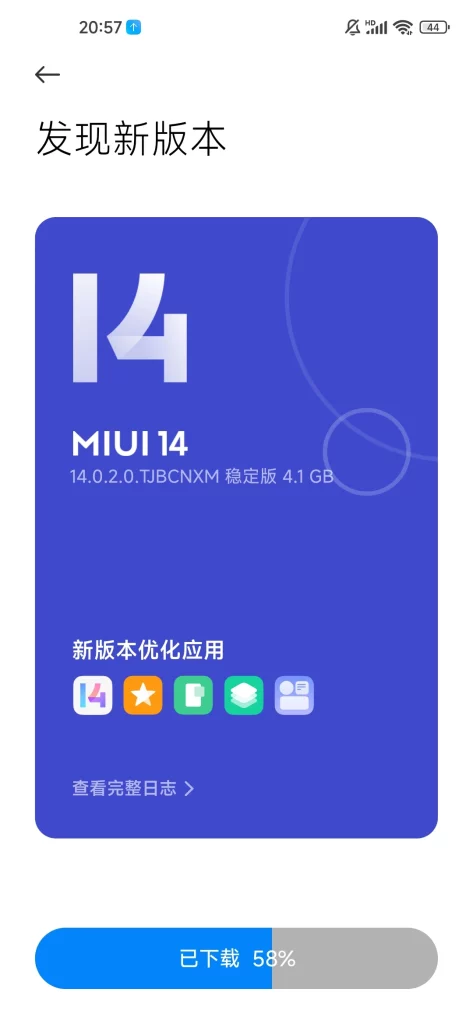
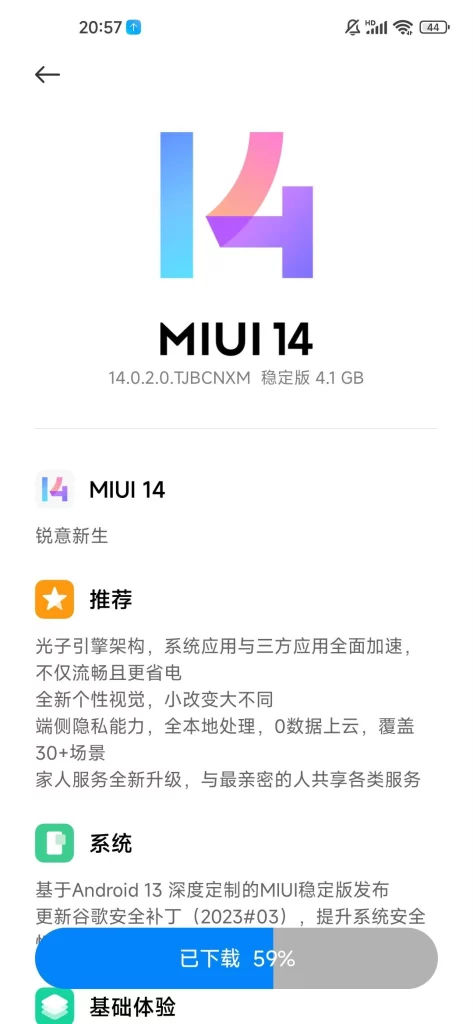
Xiaomi to roll out MIUI 14 Update for Redmi Note 9 Series, Poco M2 series, and More

Last month, Xiaomi unveiled MIUI 14 alongside the Xiaomi 13 series. At the event, the company only revealed the newer devices that will be upgraded to the latest software.

Therefore, users with older handsets are not aware of whether their phones will get an update to the newest version of MIUI. Thankfully, Xiaomiui has been revealing details on a regular basis whenever Xiaomi starts testing software builds for older smartphones.

Over the weekend, the publication found that the users of the Redmi Note 9 series and the Poco M2 series will be treated with MIUI 14. Let’s go through the details.

Xiaomi Redmi Note 9 Pro Redmi Note 9S Featured
Redmi Note 9 Pro

According to Xiaomiui, the following devices will receive MIUI 14 update.

  • Redmi Note 9
  • Redmi Note 9S
  • Redmi Note 9 Pro
  • Redmi Note 9 Pro Max
  • Redmi Note 9 Pro 5G
  • Redmi 9
  • Redmi 10X 4G
  • Redmi 10X 5G
  • Redmi 10X Pro 5G
  • Poco M2
  • Poco M2 Pro

As you can see, the eligible list also includes handsets, such as Redmi 9 and the China-exclusive Redmi 10X series. But for some reason, the international variants of Redmi Note 9 Pro 5G — Xiaomi Mi 10T Lite 5G and Xiaomi Mi 10i 5G, are not listed.

Most of the phones on the list have already received two MIUI updates and two Android updates. Hence, MIUI 14 will be their third and likely the last MIUI update.

Unfortunately, they will not get an update to Android 13. The MIUI 14 builds for the aforementioned smartphones will be based on Android 12.

Last but not least, MIUI 13 update for these handsets arrived later, however, MIUI 14 update is expected to roll out a bit earlier.

RELATED:

Samsung TV Plus Streaming App Maybe Soon Available on Non-Samsung TVs

Samsung TV Plus is one of the most popular streaming applications, particularly for Samsung TVs. The streaming application allows users to access hundreds of free channels through a single app. The app was made exclusive only to Samsung TV users. However, the app may soon be available to other manufacturers’ TV too. A new piece of information making rounds of the internet has claimed so. This could be great news for Smart TV users as they can access the Samsung TV Plus and its services in their existing Smart TVs.

The company launched Samsung TV Plus in 2015. It’s a free, ad-supported streaming (FAST) service that comes standard with newer Samsung TVs. Like with a typical TV service, the service lets users browse a selection of channels. With the addition of popular shows like Top Gear, Law & Order: Special Victims Unit, NCIS, and Chicago Fire in August, Samsung TV Plus offers a very impressive lineup of content for a free app.

Samsung TV Plus

The service also includes a selection of regional and national news channels in addition to channels created by Samsung, like Ride or Drive and The Movie Hub. Along with 220 stations in the US, TV Plus currently offers about 1,600 channels spread over 24 nations. The company is presently debating whether to grant licences to other manufacturers so they can sell the services alongside the TVs. However, there is currently no final words on the topic and we really do not know if this is going to be possible in the coming days or not.

Other TV makers, such as TCL, LG, and Vizio, have their own free streaming services that they compete with, as do other services that aren’t tied to particular TVs, such as Amazon Freevee, Roku, Fox’s Tubi, NBC’s Peacock, and Paramount’s Pluto TV. Although it appears that Samsung also wants to make its TV Plus service a free-floating software, it’s not clear whether other manufacturers will want the app on their TVs or even if the programme will be popular. Let’s wait till any official confirmation comes out before commenting on anything.

We’re interested to see if the other companies will actually use Samsung TV Plus once it becomes available to them, or if they’ll just continue with their own streaming services or none at all. That was all we had at the time. Thank you for reading the article all the way through. Please use the comment area below to share your thoughts about this.

RELATED

Source

MSI Cubi 5 12M mini-pc With Intel Alder Lake-U Processors Now Selling for US$449

The market for mini-PCs has been steadily growing in recent times. Many OEMs have revealed new products updated with the most recent AMD and Intel chips. Now, MSI has joined the herd by updating its Cubi series mini-PC with the Alder Lake-U series chips.

MSI

Less than two weeks after MSI debuted the mini-PC, retailers are now offering the Cubi 5 12M for sale. The Cubi 5 12M, which was unveiled at CES 2023, is available in a variety of configurations with three different Intel Alder Lake-U series processors. Particularly, MSI has made the following processors for the Cubi 5 12M available:

  • Intel Core i3-1215U
  • Intel Core i5-1235U
  • Intel Core i7-1255U

It appears that MSI will first offer the Cubi 5 12M in five different configurations, starting with a Core i5-1235U processor. Each unit has a 124 x 124 x 53.7 mm chassis with SO-DIMM slots for DDR4 RAM and 2.5-inch and M.2 bays for SSDs. Three USB 3.2 Gen2 Type-A ports, one 2.5 Gigabit Ethernet, 3.5 mm audio, DisplayPort, Gigabit Ethernet, HDMI, and Thunderbolt 4 connectivity are all included in MSI’s Cubi 5 12M setup.

The Cubi 5 12M starts at $449 and costs $549 when equipped with a Core i3-1215U, 8 GB of RAM, and 256 GB of storage, according to B&H. For US$679, the retailer also offers the Core i5-1235U, 8 GB of RAM, and a 512 GB SSD, the same SKU with “Advanced Replacement,” or for US$929, the Core i7-1255U, 16 GB of RAM, and 512 GB of storage. For other distribution options, please visit MSI’s website.

RELATED:

(Via)

New Google Update Restores Pixel Live Wallpapers Compatibility To Older Devices

Live wallpapers date back to Android 2.0, when most phone batteries were too tiny to sustain them for a long time. Since then, phones (and batteries) have come a long way. Live Wallpapers are animated wallpapers that move subtly in the background. Some live wallpapers are just like videos, while some of them change perspectives based on the phone’s gyroscope.

Last week, Google released a new version of the Pixel Live Wallpapers app that somehow caused the app to lose compatibility with older Pixel devices.

Google Pixel Wallpaper

As the update to version 2.1 of the Pixel Live Wallpapers was rolled out, users reported that they were unable to find the application in the Google Play Store. It was unclear if this was a deliberate move by Google or a technical bug. However, with the release of the next update, Google quickly rectified the situation and restored compatibility to all older Pixel phones. 

To change the live wallpaper on your Pixel devices, simply navigate to Settings > Wallpaper & style > Change wallpaper, and you’ll be presented with a variety of options. If you’re on the Pixel 6 or Pixel 7 series, you can add a special touch via the Live Bloom wallpapers. Once you’ve found the perfect live wallpaper for you, tap it to see a preview, and then tap the check mark at the bottom right to apply it to your home and/or lock screen. You can also equip wallpapers from your own image gallery via the Wallpaper & Style application.

RELATED:


(Via)