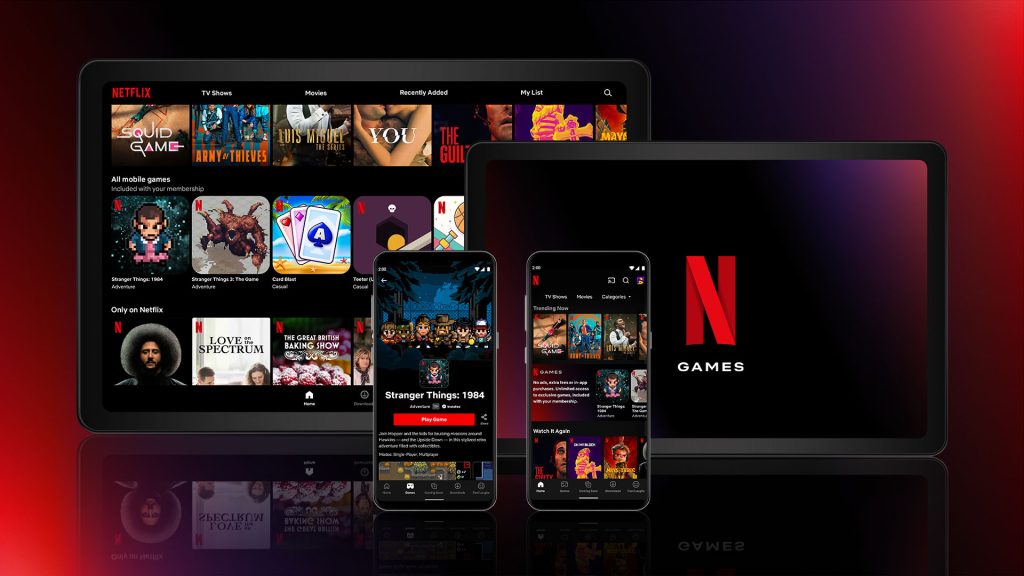
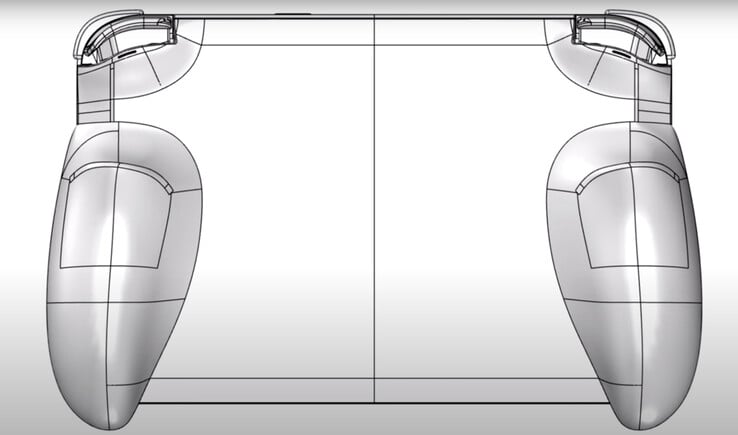
In 2021, Netflix made a surprising move, integrating mobile games into its platform. Netflix Games was a new gaming service launched by Netflix that allows subscribers to access and play games directly within the Netflix app. As of now, the service offers a selection of mobile games, which can be played on both iOS and Android devices. The games are included with the Netflix subscription, and there is no additional cost to play them. Even a year and a half later, the service is still in its early stages, and it remains to be seen how much Netflix will expand its gaming offerings and whether it will eventually include console or PC games. As per the latest reports, however, it seems that Netflix gaming enthusiasts will be able to use their iPhones to play games on their televisions.
To boost the popularity of games on its platforms, Netflix seems to be taking active steps. Recently, a code snippet was spotted by a MacRumors writer, Steve Moser, that points towards the functionality of letting the user pick their iPhone as a controller for the Netflix TV application. It is worth noting that so far, Netflix games are only available on iOS and Android devices, not on TV-based applications. This move would imply that the company might be looking to launch newer games, or simply label itself as a more mainstream platform for games.
One might even question why Netflix is so bent on publishing games to its platform. Well, clearly, the company is looking to expand its offerings beyond just TV shows and movies, and to provide subscribers with additional entertainment options. By offering games, Netflix aims to keep users engaged on its platform for longer periods of time, which could lead to increased subscriptions and revenue. Additionally, games have proven to be a popular form of entertainment, and with the rise of mobile gaming, it makes sense for the platform to tap into this market. Finally, offering games may help Netflix differentiate itself from its competitors and appeal to a broader audience. None of its competitors, including Prime Video and Disney Plus are taking similar steps, so the company might just be onto something here.
Vivo X Fold 2 is all set to go official in April. Ahead of its launch, the foldable phone has been showcased at the 2023 Boao Forum in China. Vivo has released a poster through its Weibo handle that shows Vivo’s Executive Vice-President, Hu Baishan, and Boao Forum’s Secretary General, Li Baodong, holding the Vivo X Fold 2. The foldable phone can be seen sporting a renewed design.
The Vivo X Fold and X Fold+ foldable phones that have been released in the past have featured a rectangle-shaped camera block on the back. It housed a round camera module, an LED flash, and ZEISS branding. As can be seen in the images below, the X Fold 2 does not have a rectangular camera block.
Vivo X Fold 2Vivo X Fold 2
Instead, it just houses a round-shaped camera module, which features three cameras and a ring LED flash. Below is the ZEISS logo. The cover display seems to have a curved edge. Reports have claimed that the outer and inner displays will both feature an ultrasonic in-screen fingerprint scanner.
Rumours have revealed that the Vivo X Fold 2’s foldable display will support a 2K resolution and a 120Hz refresh rate. It will come preloaded with the OriginOS 3-based Android 13 OS. The X Fold 2 will be the first-ever foldable phone to feature the Snapdragon 8 Gen 2 chipset. It was recently seen at AnTuTu with 12 GB of LPDDR5x RAM and 512 GB of UFS 4.0 storage.
The X Fold 2’s rear camera setup will have a 50-megapixel Sony IMX866 primary camera with OIS support, a 12-megapixel IMX663 ultra-wide snapper, and a 12-megapixel IMX663 telephoto camera. It is likely to house a 4,800mAh battery that supports 120W fast charging and 50W wireless charging. At present, there is no word on the price of the device.
Vivo’s upcoming event in April will also see the arrival of the Vivo X Flip and Vivo Pad 2.
Twitter, one of the world’s most popular (and currently controversial) social media platforms, extensively uses APIs (Application Programming Interfaces) in a number of ways to enable third-party developers and services to access its platform and data. These APIs allow developers to create a variety of applications that can interact with Twitter’s platform, extract data from Twitter, and publish content to Twitter on behalf of users. The APIs also allow developers to integrate Twitter data and functionality into their own applications and services, such as social media management tools, data analytics platforms, and other web and mobile applications. For instance, a really cool Twitter API lets its users know who they interact with on a daily basis, and which of their followers are dormant in their list. Before Elon Musk acquired Twitter, developers could access and create APIs with Twitter and use them with the platform for free – now, things are changing at the billion-dollar platform.
Today we are launching our new Twitter API access tiers! We’re excited to share more details about our self-serve access. 🧵
In a recent tweet, the company unveiled the details and pricing for its new API version. The company’s decision to ban third-party API clients was previously announced as part of its developer features overhaul, causing delays in its implementation. With a ton of layoffs and hierarchy adjustments happening at Twitter, this was expected. As per Twitter’s latest tweet, a free tier is still available for developers who want to experiment with APIs. However, it comes with far less functionality compared to its predecessor. This basic tier is aimed at bots and other “testing” purposes, allowing accounts to post up to 1,500 tweets per month without accessing other features. However, the posting limit of about 50 tweets a day may not be sufficient for those who post more frequently.
Developers can upgrade to the “basic” tier for $100 per month, which offers them a higher post limit of up to 3,000 tweets a month at the user level and 50,000 tweets a month at the app level, but still with a lower read limit of 10,000 tweets per month. Finally, the final tier, also labelled the “Enterprise” tier seems to be targeted towards organizations and “scaled commercial projects” with very specific needs. Those who sign up for the same will receive managed services, complete streams, and API access that allows them to tailor their projects to their own demands completely. It remains unclear how researchers and academics who rely on Twitter’s API for their work will be affected, but Twitter claims to be “looking at new ways to continue serving this community.” Also, it is worth noting that many APIs may stop functioning when Twitter implements these changes. Many of these APIs support bots that have been catering to the Twitter community for a long time now, but since Twitter is already losing money (with the company’s net worth dropping by $24 billion), Elon is clearly planning to create revenue streams in order to support the company’s backbone. Twitter Blue is another noteworthy example of such a revenue stream.
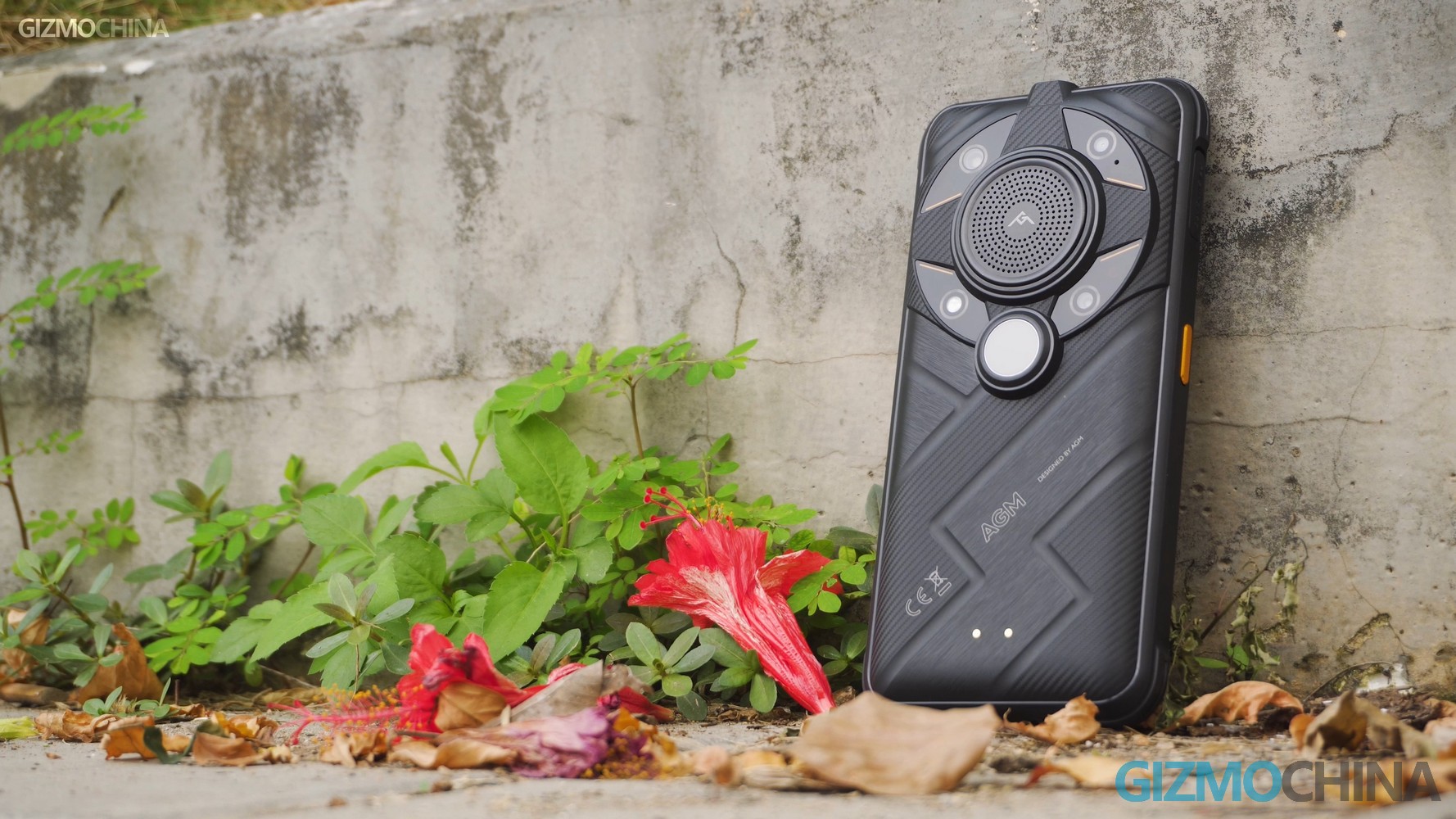
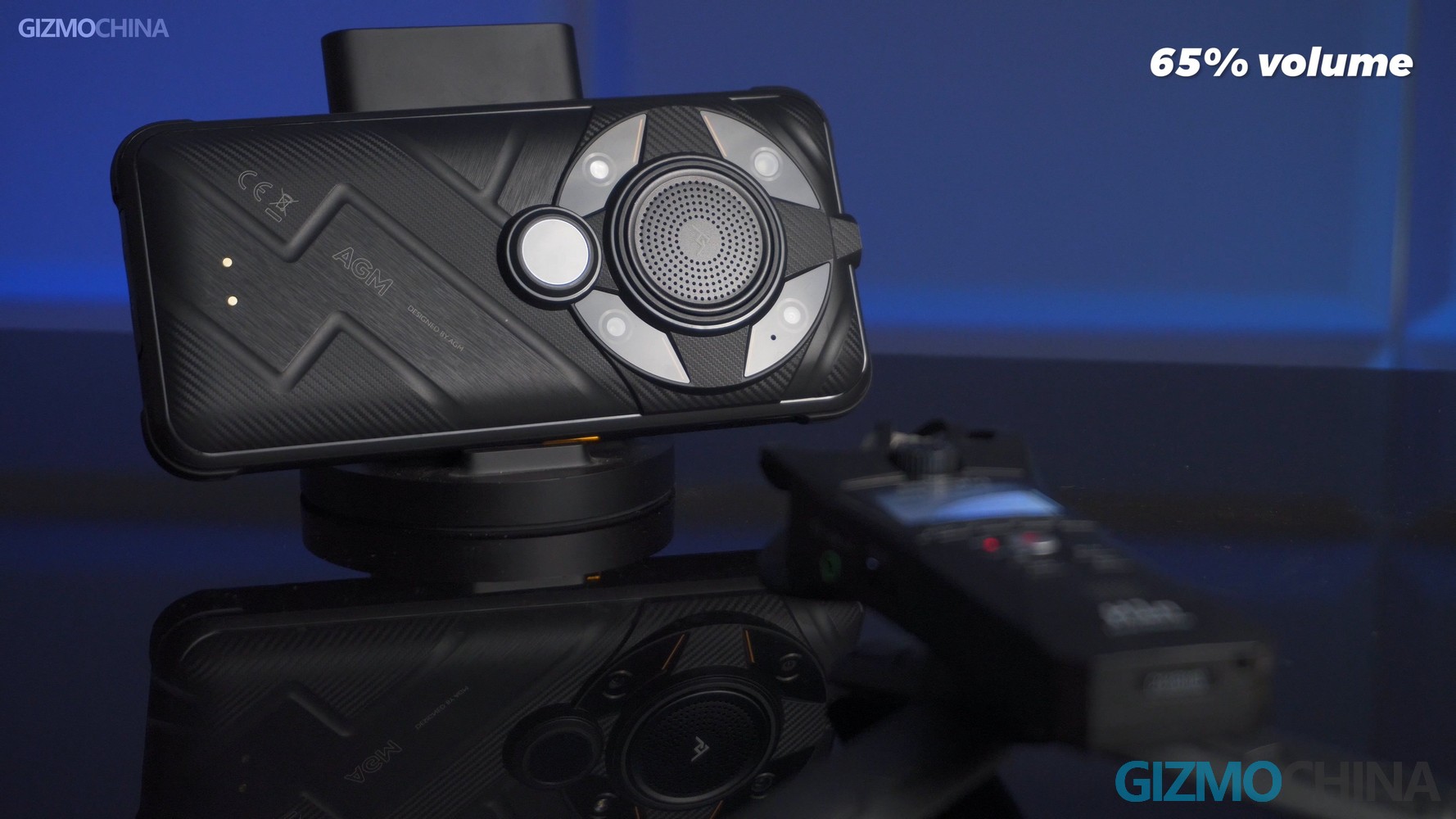
AGM announced a very interesting phone at MWC 2023 that you should have heard of: the AGM G2 Guardian, a rugged smartphone with ultra-long-range thermal imaging capabilities. it’s now available for pre-order on the official website, and at $899 it’s really expensive. Not everyone needs a thermal imaging phone. So if you are sure you really need such a phone, I will also tell you if it is worth the $900 price tag.
Thermal monocular
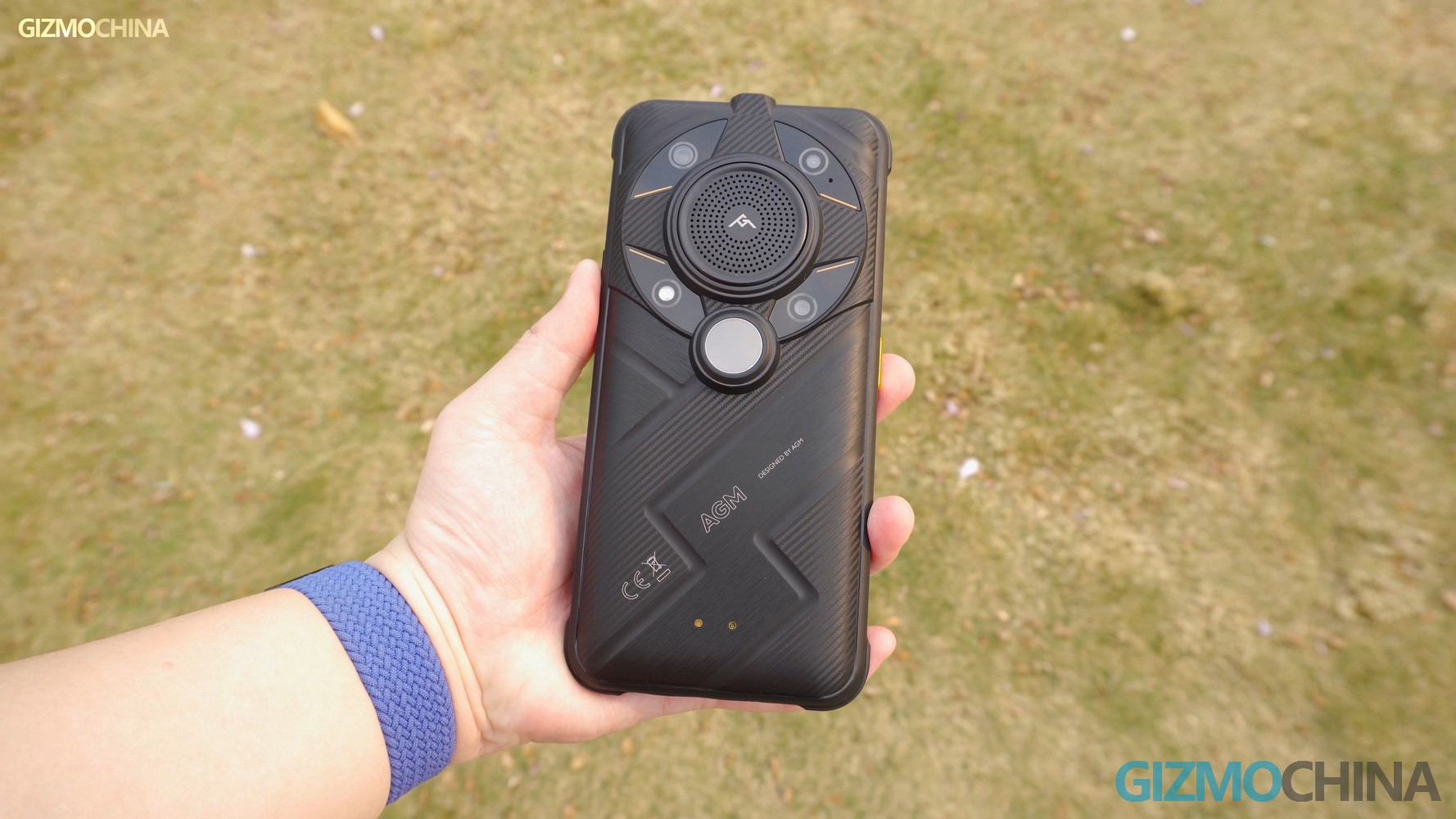
The biggest highlight of G2 Guardian is the long-range thermal monocular. since the heat of an object will gradually dissipate in the air, it is difficult for ordinary thermal imaging phones to detect long distances of more than 100m. G2 Guardian can detect heat up to 500m. This is the main reason why they dare to announce this phone at MWC. This infrared lens is not only 5.6x telephoto but also supports autofocus. It allows the heat source to present a clear outline so that you can distinguish what kind of creature it is.
To put down the latest thermal monocular and large speaker, the G2 Guardian is an amazing 2.5cm thick and weighs over 400g. It is definitely uncomfortable to use with one hand, but it is the same as Samsung or Xiaomi’s flagship phones. Sacrificing the feel of the hand for the sake of functionality is definitely something that some people like too.
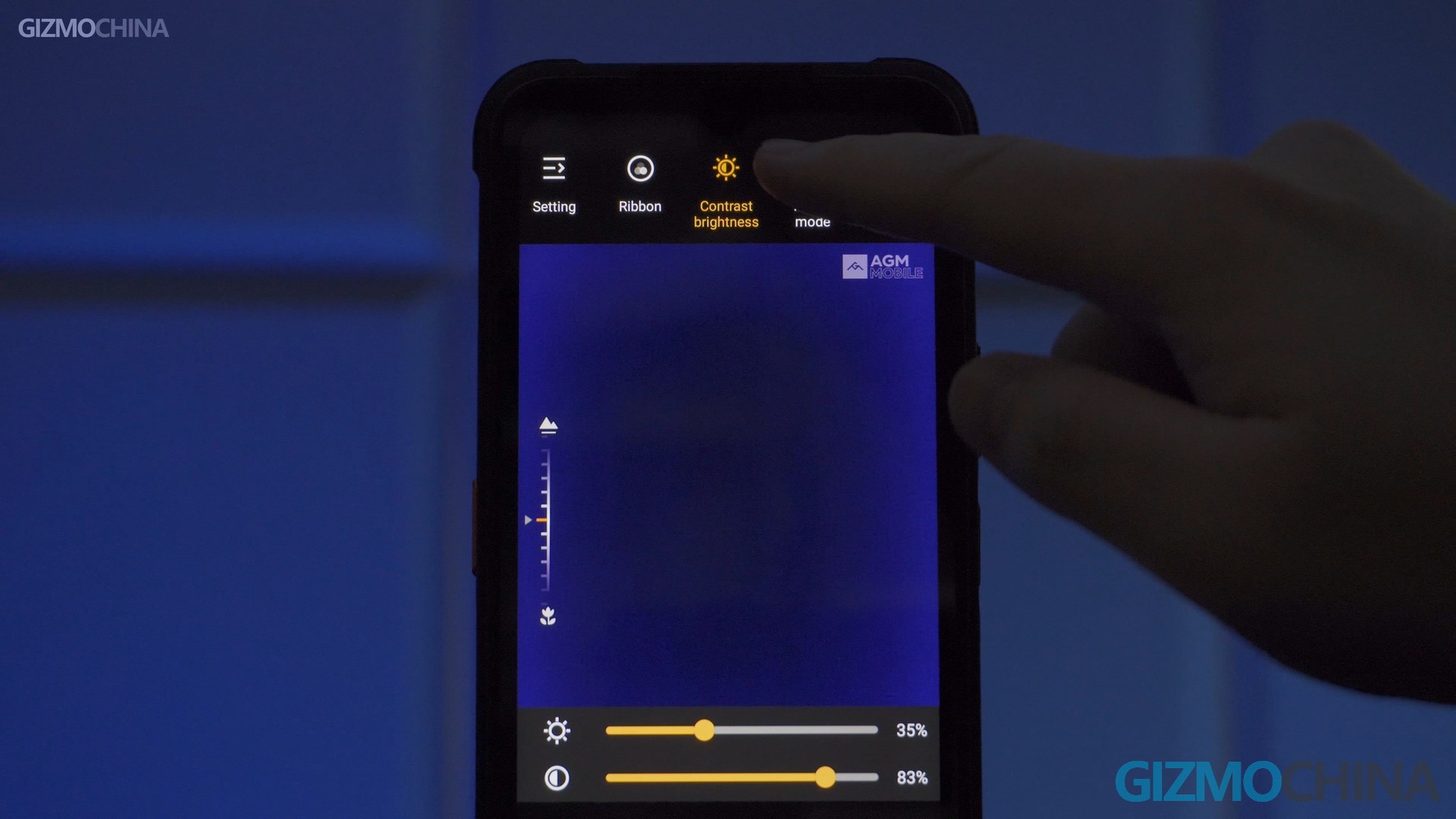
The function of the Thermal Sensor Camera App is relatively simple. At the top is a basic option to adjust the Ribbon or contrast or something like that. In the bottom right corner is a switch between two modes: night vision mode and temperature mode. As their names say, one is to detect the use at night, the other is to detect the temperature of the object. The difference between them is the difference in contrast, and you do not necessarily have to switch modes often.
Why do you need this phone
Why do you need a long-range thermal monocular instead of a regular thermal imaging phone? AGM gives us a few answers: night search and rescue. When the maximum detection distance of thermal imaging becomes longer, it also means that the range of search and rescue becomes larger.
At night, you can also spot wildlife at a further distance, avoiding them in advance to prevent injury. Or if you are a forest patrolman, you can expand your search area with this long-range thermal monocular, so that suspicious people can not hide. Mountain fires can also be easily detected, so I recommend this phone to forest patrollers, landscape photographers, and people who like to go on wilderness trips.
Camera
In addition to the thermal imaging lens, the remaining three lenses are a 108 MP main camera, a 20 MP infrared night vision camera, and a 2 MP macro camera. Usually, the main camera takes good pictures. The colors are rich and the exposure is accurate. The photos in high-resolution mode are also very clear.
Performance
Another interesting thing about the G2 Guardian is that its processor is a model you’ve never heard of. Even I’ve never heard of it. Qualcomm QCM6490, is purpose-built for industrial and commercial IoT applications such as transportation, warehousing, and logistics management.
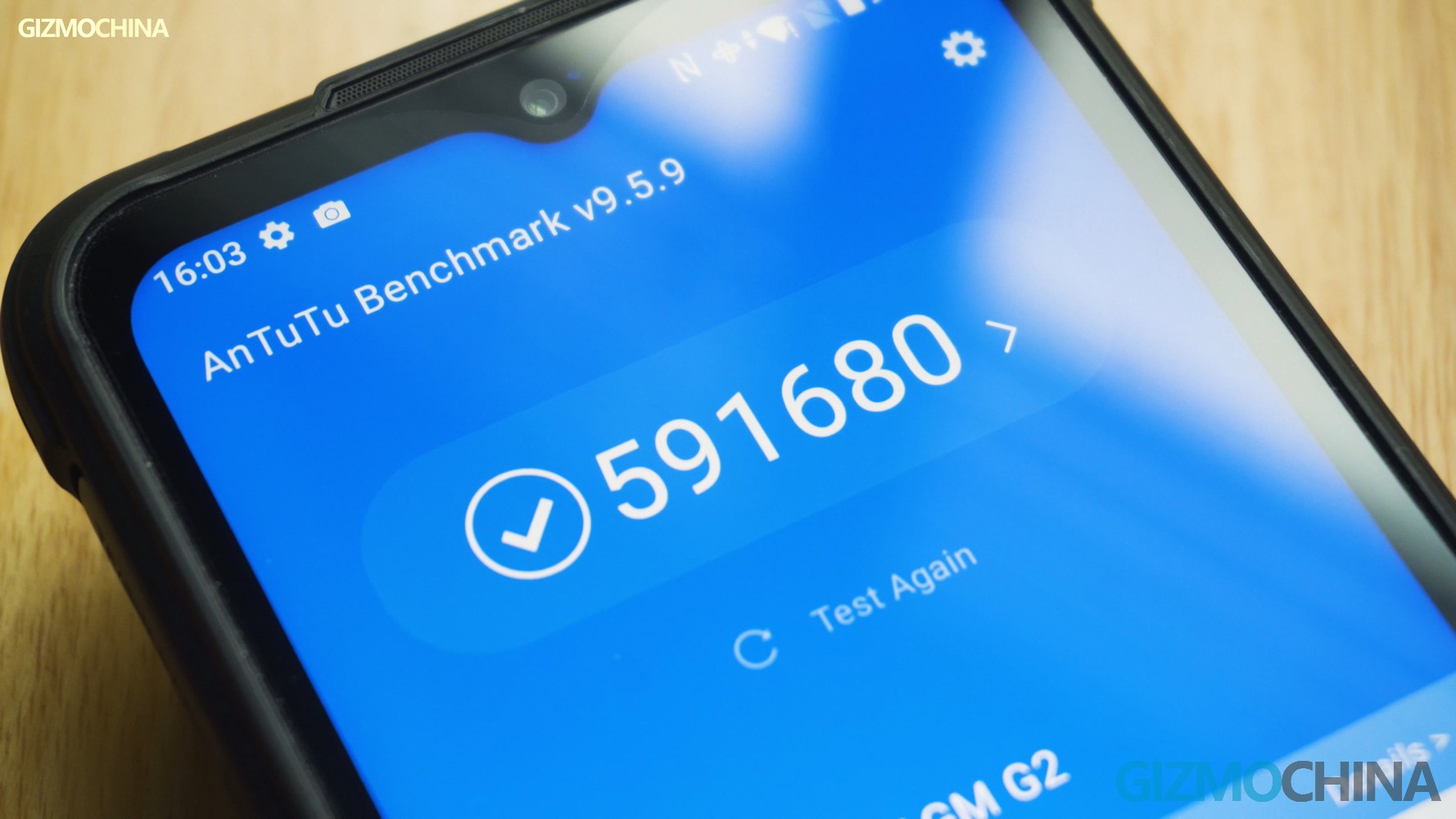
Although we do not know why AGM uses such a chip, but the performance is not weak. It’s similar to the Snapdragon 782G with an AnTuTu score of 590,000.
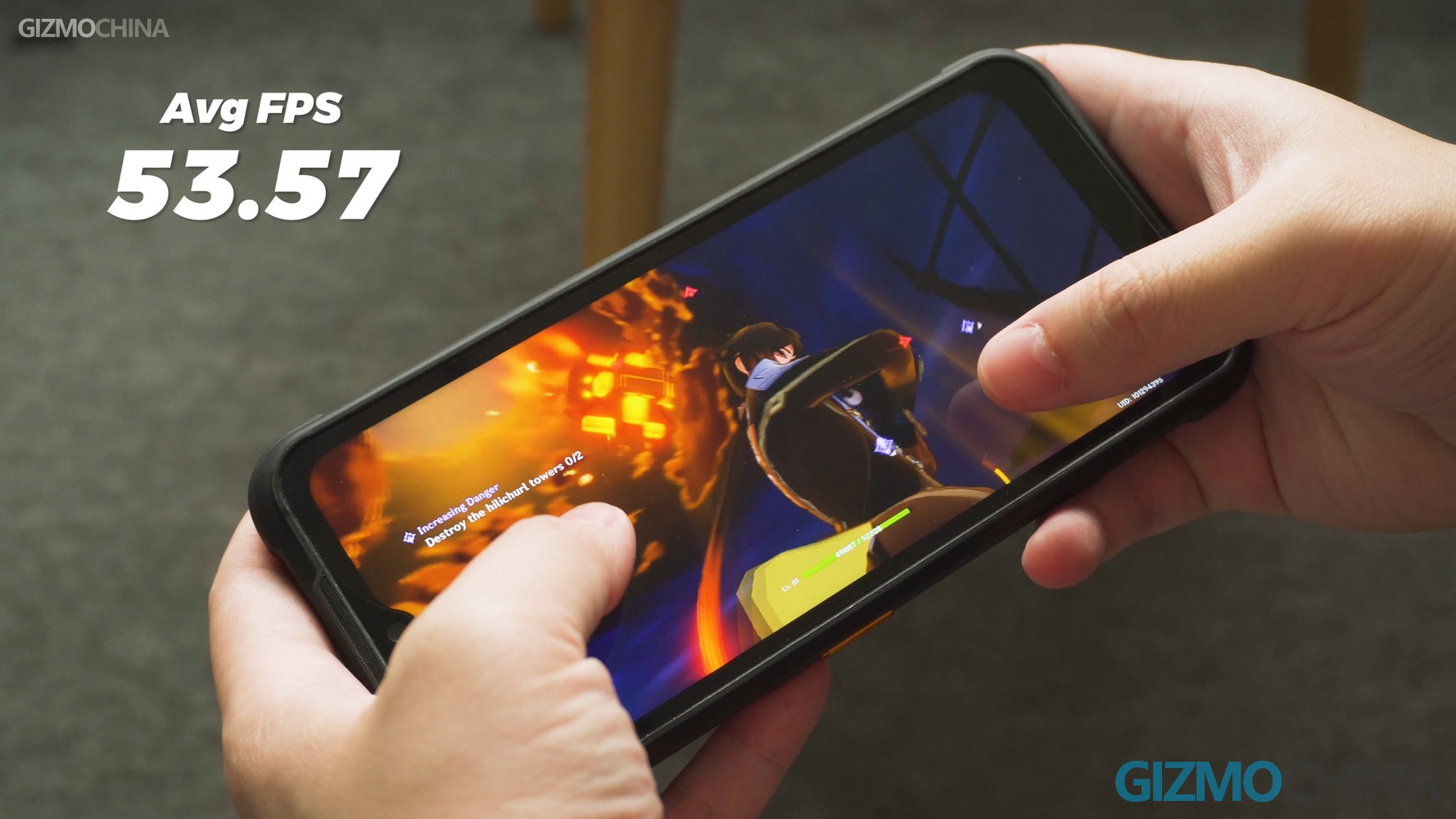
This allows the G2 Guardian to achieve an average frame rate of 54fps with the Genshin Impact with Low Graphics. This is already very strong for a rugged phone, many rugged phones can’t even run stably at 30fps. This chip also supports 5G network, which is not much different from a normal phone chip.
Other specs
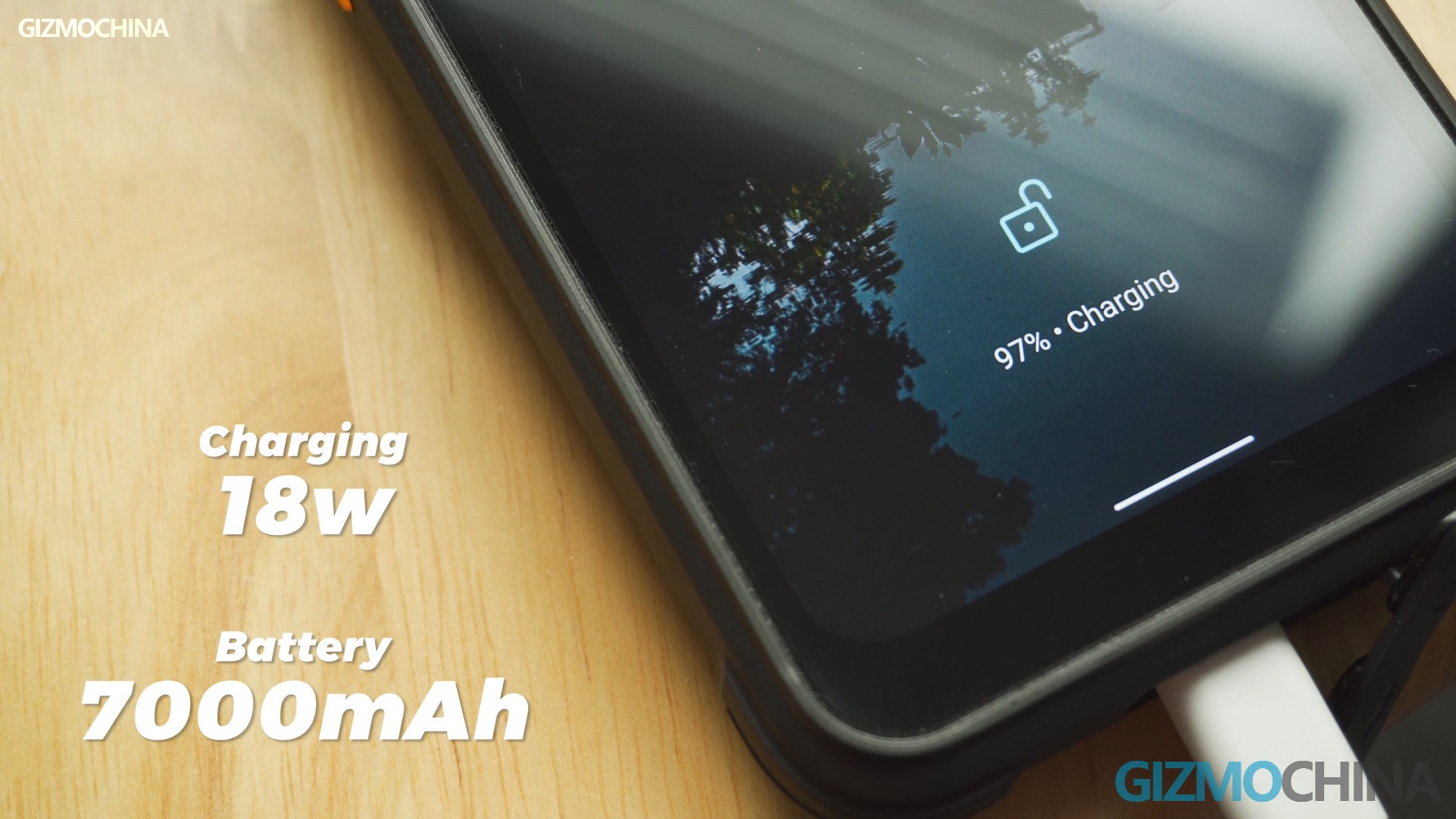
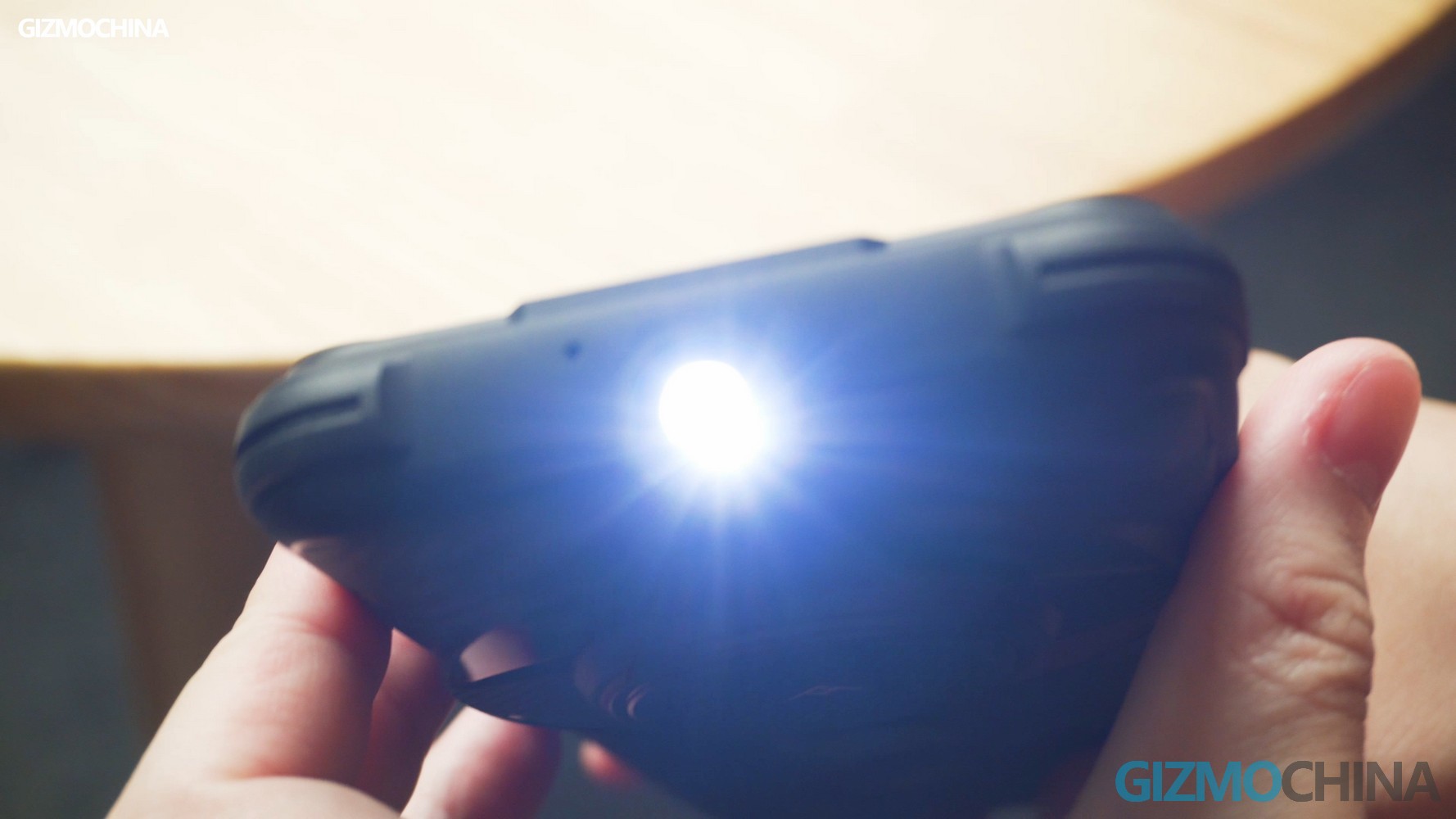
Other specs of the G2 Guardian are also at the top of the rugged phone. A 120Hz FHD+ panel with Corning Gorilla Glass protection is top-of-the-line for smoothness and durability. The battery capacity is 7000mAh and supports 18w charging. Dual SIM card slots support up to 512G TF cards for expanded storage. The dock charging and side fingerprint recognition are also there, and there’s a 100 lumens flashlight on top.
There is a headphone jack at the bottom. If you don’t want to wear headphones, the speaker with a maximum volume of 109dB is equivalent to a mobile Bluetooth speaker. If I put the real volume into the video you may be deaf, so the volume in the speaker test will be reduced appropriately, you do not have to worry.
(Click on the video at the beginning of the article to listen to the speaker test)
The AGM G2 Guardian is a very professional phone and there is no one better than it in thermal imaging phones. If you need a very professional long-range thermal imaging device and don’t want to put an extra thermal imaging camera in your backpack. Then this phone is just for you. For most people, it’s not worth paying $899 for a rugged phone, but once you like its thermal monocular, it’s worth whatever you spend.
Yesterday, OnePlus announced the OnePlus 11 Jupiter Rock limited edition in China. It is scheduled to go on sale starting April 3 in the home market. As per a new tweet by tipster Max Jambor, the OnePlus 11 Jupiter Rock limited edition will also release in India.
The OnePlus 11 Jupiter Rock limited edition looks like the surface of Jupiter, which is the biggest planet in our solar system, according to the company. It is the first smartphone to use a material made of volumetric microcrystalline rock, which gives each device a different pattern.
The OnePlus 11 Jupiter Rock limited edition flaunts a rough textured back panel that mimics the appearance and feel of natural rock formations. Developing the panel took over a year of research and development, and the material undergoes nine complex processes before becoming the back panel of a OnePlus 11 smartphone.
In China, the OnePlus 11 Jupiter Rock limited edition comes in a 16 GB RAM + 512 GB storage configuration only. It has a price of 4,999 Yuan (~$710), which is the same as its green and black editions. The OnePlus 11 Jupiter Rock limited edition’s launch date in India is currently unknown.
At present, the OnePlus 11 is available in India in 8 GB RAM + 128 GB storage and 16 GB RAM + 256 GB storage variants. These are at Rs 56,999 (~$695) and Rs 61,999 (~$755), respectively.
In related news, OnePlus is all set to launch the OnePlus Nord CE 3 Lite 5G and Nord Buds 2 TWS earbuds on April 4. The CE 3 Lite, which will have the Snapdragon 695 and a 120Hz LCD display onboard, will be priced under Rs 25,000 in India. The Nord Buds 2 is likely to cost around Rs 3,000 in the country.
OnePlus Nord 3 5G is expected to launch in July this year. Before its expected launch, the smartphone has now started bagging important certifications. The Nord 3 5G has appeared on certification platforms, such as Singapore’s IMDA, India’s BIS, China’s CQC, and TUV Rheinland.
At IMDA, the OnePlus device with the CPH2493 model number has appeared with the OnePlus Nord 3 5G moniker. It reveals support for 5G, Wi-Fi, Bluetooth, and NFC. The same model has been spotted at CQC certification with an 80W charger.
The TUV Rheinland certification reveals that the CPH2491 also belongs to the same device. It has been found through BIS certification that the CPH2941 model number belongs to the Indian variant of the Nord 3 5G.
Reports have revealed that the OnePlus Nord 3 5G will be a rebranded version of the OnePlus Ace 2V, which debuted in China recently. The Ace 2V has a 6.74-inch OLED panel that offers a 1.5K resolution of 1240 x 2772 pixels, a 120Hz refresh rate, and an in-screen fingerprint scanner. It is powered by the Dimensity 9000 chipset, up to 16 GB of RAM, and a 5,000mAh battery that supports 80W charging.
The Ace 2V has a 16-megapixel front-facing camera, and its back panel has a 64-megapixel (main) + 8-megapixel (ultra-wide) + 2-megapixel (macro) triple camera unit. It runs on Android 13 OS and ColorOS.
OnePlus Ace 2V
In related news, OnePlus will announce the OnePlus Nord CE 3 Lite 5G smartphone and Nord Buds 2 TWS earbuds on April 4. The company is also said to be working on the Nord CE 3. It will be positioned between the Nord CE 3 Lite and the Nord 3. The device will be one of the first Snapdragon 782G-powered phones to launch outside of China. It is also speculated to launch in July.
Infinix recently unveiled the Infinix Hot 30i in India. Now, it is gearing up to launch the Infinix Hot 30 in Thailand. The company has confirmed that the Hot 30 will be announced on March 31 in the country. The teasers released by the brand have revealed the key specifications and design of the phone.
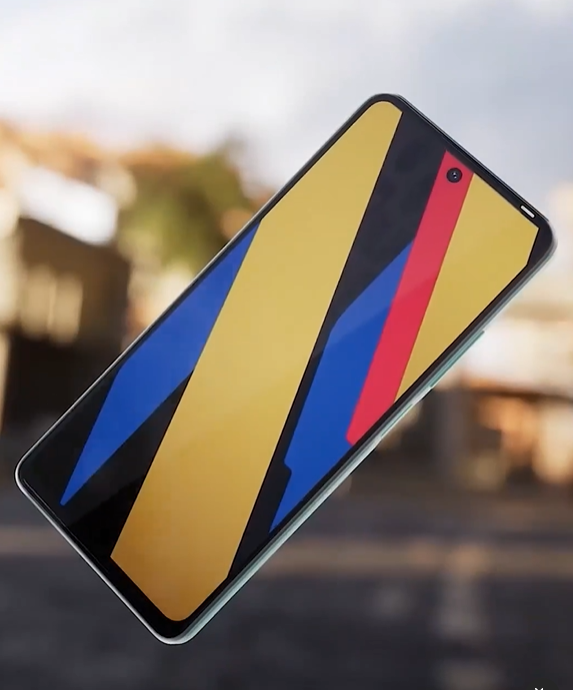
The teasers released by Infinix confirm that the Infinix Hot 30 will be equipped with a 6.78-inch LCD panel that offers a Full HD+ resolution and a 90Hz refresh rate. It will be powered by the Helio G88 chipset.
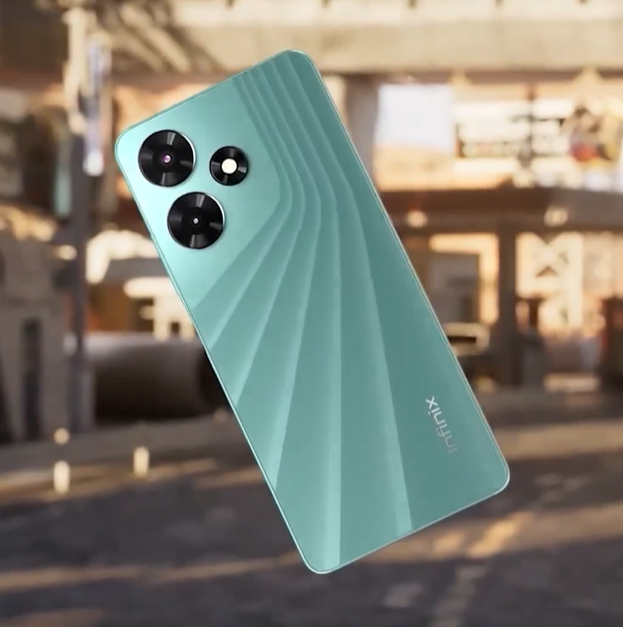
The Hot 30 will pack a 5,000mAh battery with 33W fast charging support. The teasers released by the brand showcase the front and rear designs of the phone. The device will come equipped with a punch-hole display and a uniquely designed rear shell.
The bottom edge of the device features a speaker grille, a USB-C port, a microphone, and a 3.5mm audio jack. A dual camera setup with LED flash can be seen on the rear side of the device.
In related news, the Infinix Hot 30i has gone official for Rs 8,999 in India. For this price, the device offers a 6.6-inch IPS LCD panel that offers an HD+ resolution, a 90Hz refresh rate, 500 nits of peak brightness, and Panda Glass protection. The Helio G37 chipset-powered device offers 8 GB of RAM, 8 GB of virtual RAM, 128 GB of storage, and a 5,000mAh battery with 10W charging.
The Hot 30i has a 5-megapixel front camera and a 50-megapixel + AI lens dual-camera system on the back. It runs on XOS 12-based Android 12 OS. The Hot 30i comes in four colors, such as Mirror Black, Glacier Blue, Diamond White, and Marigold.
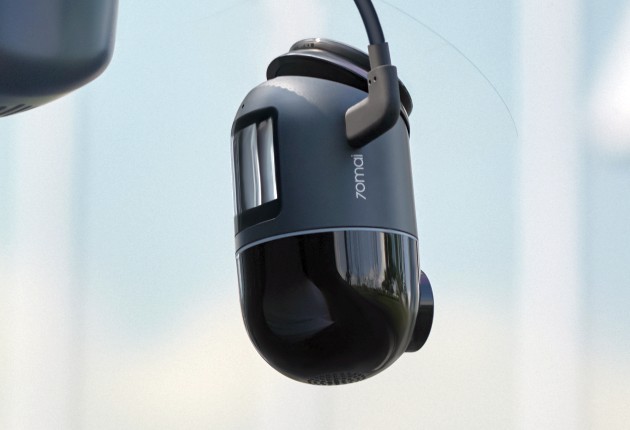
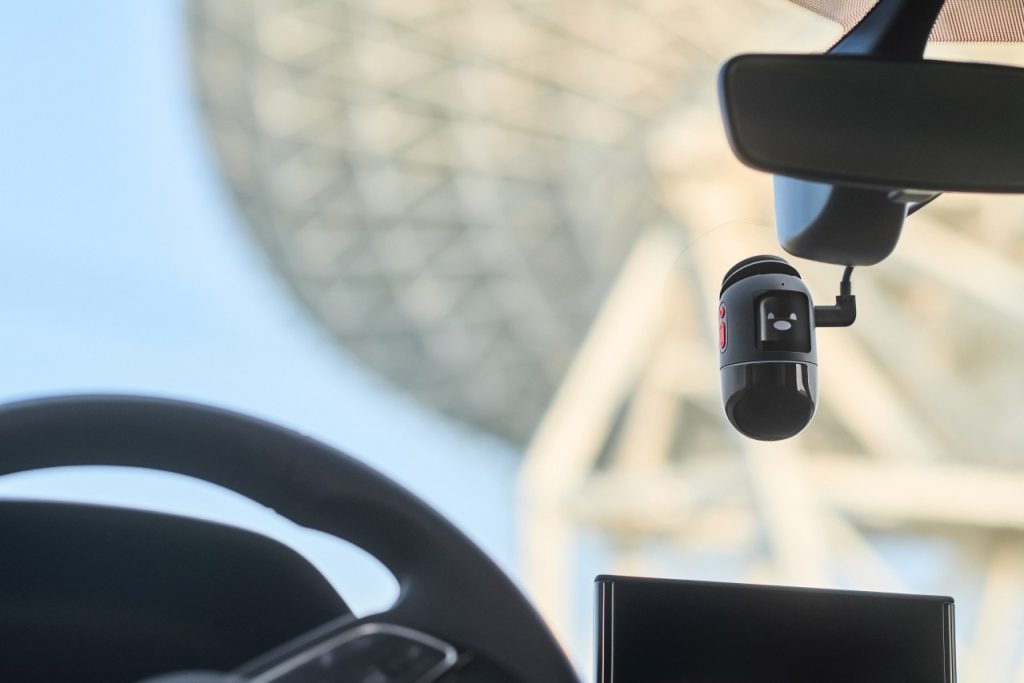
Xiaomi‘s ecological chain partner 70Mai has launched the 70mai Dash Cam Omni in the US and Canada. The 1080p dash camera comes with AI motion detection, built-in GPS, and 128GB of storage. It also features collision detection and has a total buffered emergency recording of 15 seconds. The new dash cam is being advertised as the first product of its kind and offers a 360-degree view of the surroundings.
The Dash Cam Omni uses an optical assembly with a single image sensor supporting 140-degree FOV and 340-degree swivel view. The Omni has an enhanced ADAS system that accurately identifies pedestrians and riders. It also features smart voice control and an excellent display unmatched in the class. It can capture high-quality 1080p videos even in difficult lighting situations. It features Time-lapse and Loop recording modes, as well as 15 seconds buffered emergency recording before and post-impact.
The large 128GB internal storage of the 70mai Dash Cam Omni means that you don’t need an extra microSD card. The camera also has a built-in GPS mechanism for greater route monitoring. The companion mobile app of the Dash Cam Omni is available in both iOS and Android stores. The retail package of the new 70mai dash cam includes a power cord, one electrostatic sticker, one car charger, a wiring crowbar, as well as the camera.
The retail price for the Dash Cam Omni in the US is $199.99 while it is priced at CAD$279.99 in Canada. Customers can purchase the Dash Cam Omni via Amazon US and Amazon Canada respectively. There are no global availability and pricing details yet for the Dash Cam Omni at this time.
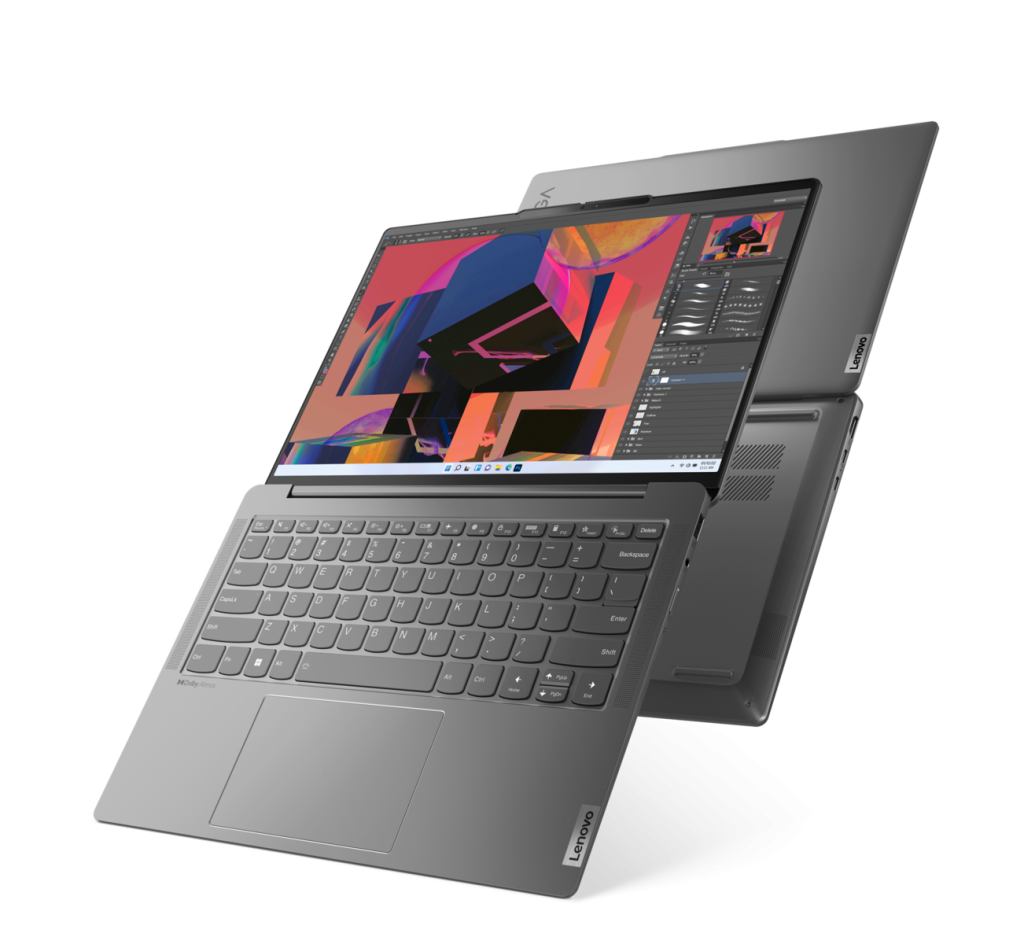
Lenovo has announced the Yoga Slim 6 ultrabook with AMD Ryzen 7000U processors. The new Lenovo laptops come in three screen options and also feature USB4 connectivity. The models also come with fast RDNA 3 GPUs and a 180º hinge. The Yoga Slim 6 has a 14-inch FHD+ OLED screen for an expansive view.
You can choose between the AMD Ryzen 7 7840U and Ryzen 5 7540U processors with 28W TDP and RDNA 3 integrated graphics card. The laptops offer up to 16GB of LPDDR5 dual-channel RAM combined with up to 1TB of storage. The USB4 connector provides high-speed data transfer.
The three display options for the 14-inch Lenovo Yoga Slim 6 ultrabook deliver either 300 or 400 nits of maximum brightness. Apart from the FHD+OLED screen, there is also a 2.8K, as well as a 2.2K panel. Refresh rates hover between 60Hz and 120Hz for the three options and they all feature Dolby Vision and have low blue light certification. The models offer 100% sRGB/ DCI-P3 color gamut coverage and matte finish.
Apart from the USB4 connector, the Lenovo Yoga Slim 6 ultrabooks have USB-C 3.2, USB-A 3.2, and HDMI 2.1 ports, as well as an audio combo jack. Both Wi-Fi 6/E and Bluetooth 5.1 were also supported in the models. Two 2W Dolby Atmos speakers are also present on the laptop. The FHD webcam of the Yoga Slim 6 has an IR sensor and camera shutter. A dual-array microphone is also part of the mix.
The Lenovo Yoga Slim 6 is available in Storm Grey and Misty Grey color variants and the laptop weighs just 1.31kg. The Lenovo Yoga Slim 6 ultrabook is expected to enter the market by June 2023. There are no release details yet but it could be priced from €899 (~$975) in Europe.
Microsoft has announced the launch of new AI-driven chat tools designed to assist cybersecurity teams in preventing and mitigating cyberattacks. Leveraging OpenAI’s cutting-edge GPT-4 language system and security-specific data, these tools, known as “Copilots,” aim to streamline and simplify threat analysis for security professionals.
Microsoft unveils OpenAI-based chat tools for fighting cyberattacks
The new AI technologies enable rapid analysis and allow users to pose plain English questions, making it accessible to employees with limited expertise in security or AI. This is particularly significant given the current scarcity of skilled workers in the field. According to Vasu Jakkal, Microsoft’s vice-president for security, compliance, identity, and privacy, cyberattacks have significantly increased in speed and frequency since the pandemic.
o
With the Security Copilot, users can ask questions such as, “How can I contain devices that are already compromised by an attack?” or request a list of individuals who sent or received an email with a dangerous link. The tool can also generate reports and summaries of incidents and responses with ease.
Microsoft will initially grant access to the tool for a select group of customers, with plans to expand availability later. The Security Copilot utilizes data from government agencies and Microsoft’s researchers, who monitor nation-states and cybercriminal organizations. The assistant is designed to work with Microsoft
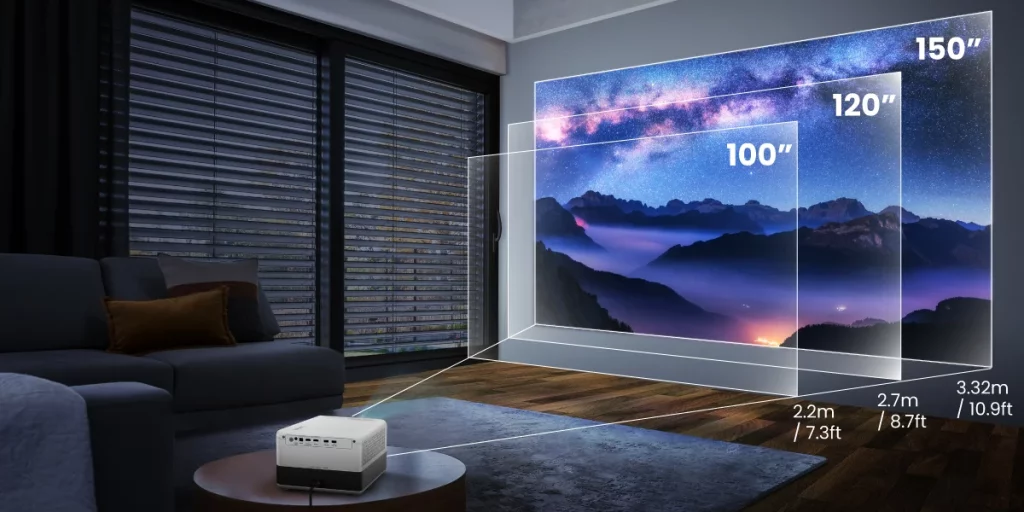
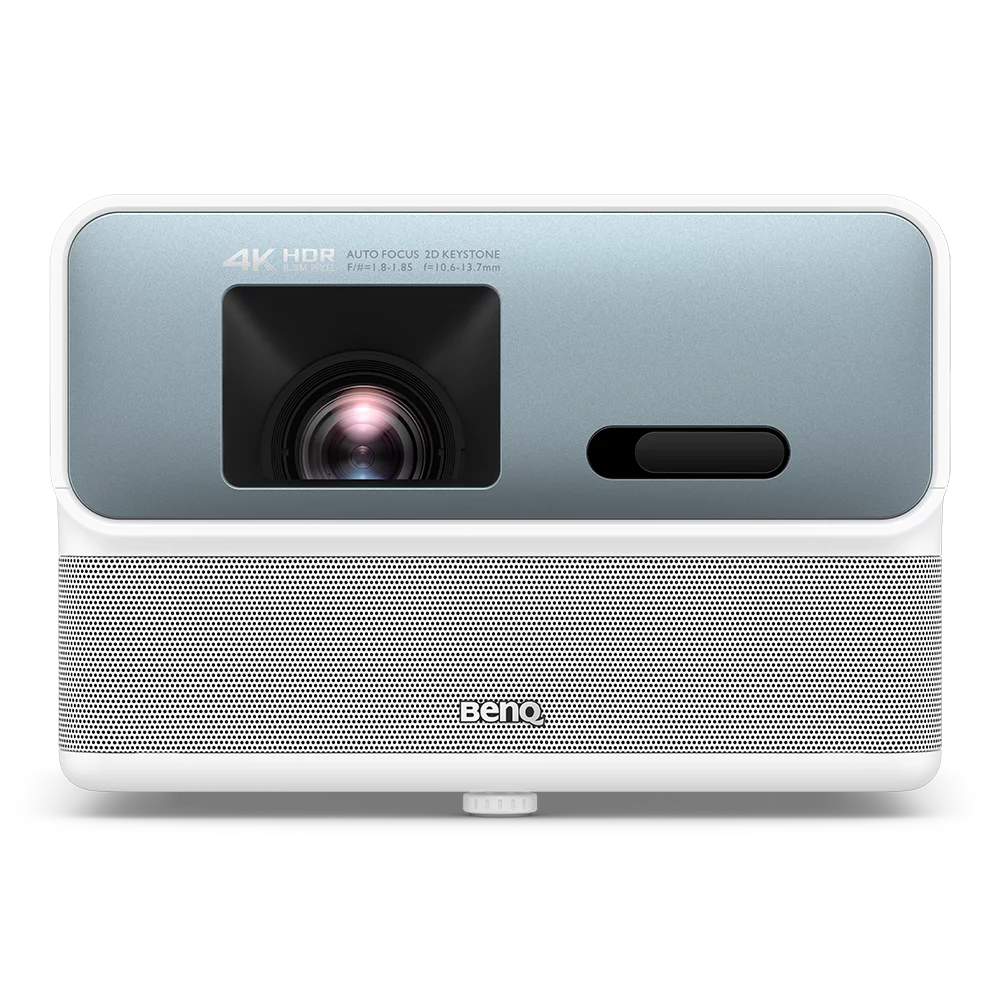
BenQ has released its latest projector in the European market. The BenQ GP500 projector is now available in the UK, EU, and the US. The new projector outputs a maximum brightness of 1,500 ANSI lumens and can throw images up to 150 inches wide.
The BenQ GP500 was showcased during CES 2023. It can project its maximum image at a distance between 3.3 and 4.3 meters with its 1:1.3 throw ratio. It comes with a LED light source that can last for up to 30,000 hours in ECO mode. The projector outputs 4K content and allows 1.3X zoom. It also has a 90% DCI-P3 color gamut coverage and supports HDR10 and HLG.
The new BenQ projector has Android TV built-in, so the user can watch content from popular platforms like YouTube and Prime Video. The projector can also cast content from your mobile device using Google Chromecast or Apple AirPlay. The GP500 has an HDMI ARC and USB-A port for wired connectivity. The sound system of the projector delivers 20W 360º audio output. Its 5.1 channel audio out port also allows you to connect external speakers to the projector.
The BenQ projector can be controlled via voice commands using Google Assistant while the autofocus, screen fit, and object avoidance tools help to output perfect images. The dimensions of the projector are 10.2 x 10.5 x 7.2 inches. The gadget retails in the UK for £1,699 (~$2,093) directly from the BenQ store or £1,901.22 (~$2,342) via Amazon. The product retails in the US and EU for $1,799 and €1,799 respectively.
The GPD Win Mini gaming handheld will come with a clamshell form factor, new details reveal. The Win Mini will come with a 7-inch, 1080p display and a clamshell form factor while its 45 Wh battery allows the user an unfettered gaming time. The model is designed as a refreshed version of Win 2 but falls short of an improvement over Win 4.
The GPD Win Mini is slightly wider and taller than the GPD Win 2. It has a 45 Wh battery which is possibly 12% larger than the Steam Deck. The display of the new Win Mini will have a 1080 pixels resolution and a 16:9 aspect ratio. The gaming handheld will come with a full complement of analog triggers and front-mounted H1 and H2 programmable buttons. It offers a bottom plate grip for more comfortable use and ergonomics. The bottom plate is however not removable, as it is fixed to the handheld’s body.
The GPD Win Mini has been speculated previously to come with AMD Ryzen 7 7840U APU. However, the latest details by Phawx indicates that the Win Mini could feature the Ryzen 5 7540U. The Win Mini will reportedly launch via Indiegogo sometime in July 2023. The crowdfunding campaign will conclude before the earliest deliveries by October 2023. There are no pricing details and full specs for the Win Mini at this time. Expectedly, GPD will release more optics about the Win Mini as the Indiegogo launch date draws closer.
OnePlus recently unveiled the OnePlus 11 and 11R flagships. However, not everyone is in the market for a higher-end smartphone. Some just want an affordable smartphone with well-rounded specifications. Catering to this segment, the brand is all set to release the Nord CE 3 Lite on April 4. The upcoming smartphone has been generating a lot of buzz with its teasers, and the latest one reveals an exciting detail about its camera setup.
According to a teaser posted by OnePlus on Twitter, the upcoming OnePlus Nord CE 3 Lite will debut with a 108MP primary camera on its rear. This will be the first time a Nord-branded smartphone will feature such a powerful camera sensor. While the brand did not reveal the other two sensors of the device, reports suggest there will be a 2MP macro shooter and a 2MP depth sensor. On the front, it may get a 16MP selfie camera.
The brand has already revealed the design of the smartphone through high-resolution renders. It will feature a flat back with two rings enclosing the camera sensors. The handset will get slightly curved sides, with the right edge featuring the power button and the left one housing the volume keys. The Nord smartphone features a flat display with a waterdrop notch. There’s also a 3.5mm headphone jack on its bottom.
A recent report revealed the Nord CE 3 Lite 5G will be powered by a Qualcomm Snapdragon 695 SoC, paired with 8GB of RAM and 128GB of storage. It will boast a 6.72-inch flat screen with a Full HD+ resolution of 2400 x 1080 pixels and a 120Hz refresh rate. Fueled by a 5000mAh battery, it may support for 67W SuperVOOC charging and run on Android 13 with Oxygen OS 13.1 on top.
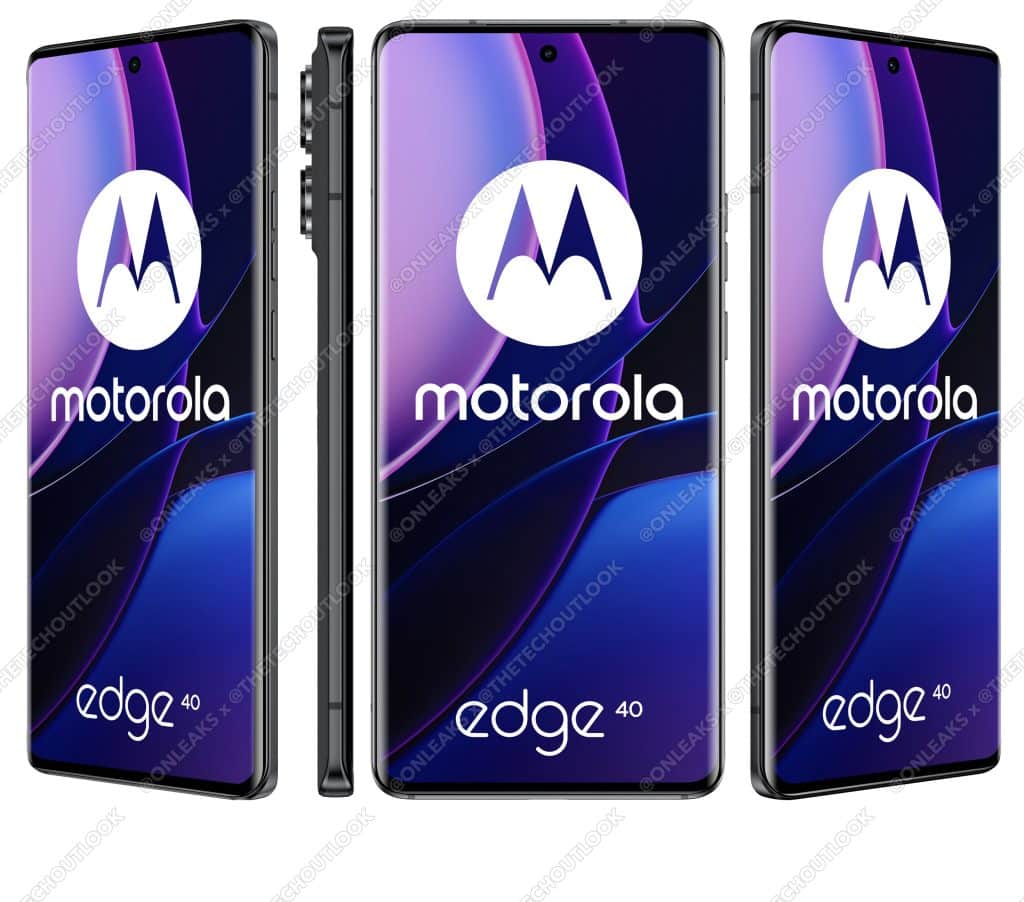
Motorola has launched several affordable smartphones in the international market recently but we haven’t seen many flagships from the brand. That may change soon as the Lenovo-owned company is reportedly gearing up to launch the Moto Edge 40 series globally. While we wait for an official announcement, a new report has leaked the press images as well as the pricing of the Vanilla Moto Edge 40, which will debut alongside the Moto Edge 40 Pro. Here are the details.
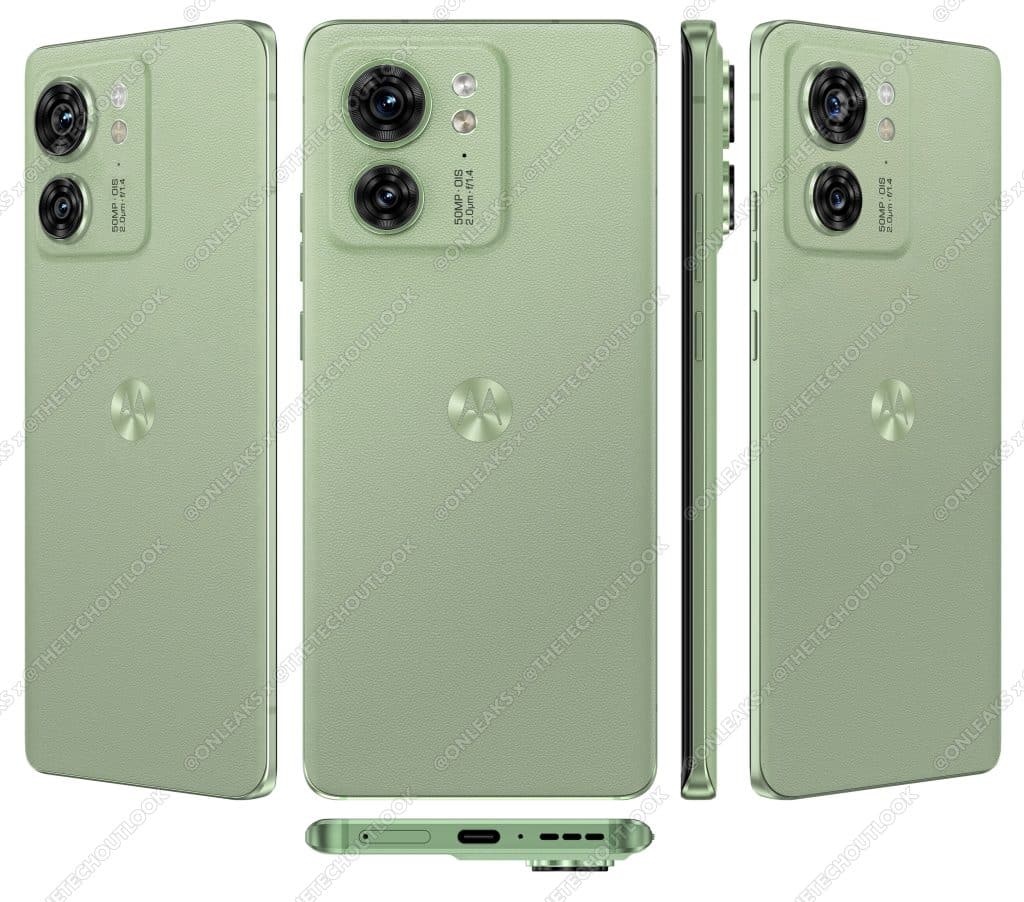
The Tech Outlook, in collaboration with OnLeaks, has shared some detailed renders of the upcoming Motorola Edge 40. It boasts a subtly curved back, complemented by a squircle-shaped camera module. The camera module encloses two sensors, with one of the rings being noticeably larger than the other. The display of the phone also has a curved design, with a small waterdrop notch situated at the top center of the screen.
Further, the publication claims that Motorola Edge 40 will be priced at $650 for the base 8 GB RAM and 128 GB storage version. This pricing appears to be for Europe. The handset may cost lesser in Asian markets. For reference, the higher-end Edge 40 Pro may cost around $975 in Europe for the base storage version.
Additionally, the report corroborates the specs of the Motorola Edge 40, revealing it will sport a 6.55-inch AMOLED display with a Full HD+ resolution and a 144Hz refresh rate. Powered by the upcoming Dimensity 8020 chipset, it will pack 8 GB of RAM and 128 GB / 256 GB of storage. The Smartphone could be fueled by a 4,400mAh battery with 68W TurboPower charging and 15W wireless charging.
In the rear camera department, there may be a 50-megapixel main camera with OIS and a 13-megapixel ultra-wide lens. For selfies, the handset may get a 32-megapixel shooter on the front. It will likely run on Android 13 and feature an under-display fingerprint scanner.
More than 1000 Artificial Intelligence experts around the world including Elon Musk have signed an open petition to halt the development and research of AI systems and programs more powerful and advanced than GPT 4. The letter asks for a six-month break in all work related to advanced AI as experts feel that this development can be a potential threat to human society.
The open letter titled ‘Pause Giant AI Experiments’ was issued by Future Of Life Institue a nonprofit organization that works to reduce global catastrophic and existential risks facing humanity, particularly the existential risk from advanced artificial intelligence. The letter is signed by famous dignitaries, AI scientists and professors, and experts like the Turing Prize winner Yoshua Bengio, Berkeley Professor of Computer Science Stuart Russell, Apple co-founder Steve Wozniak, Author of Homo Sapiens Yuval Noah Harari, Stability AI CEO Emad Mostaque, and more.
The letter states that AI systems with human-competitive intelligence pose profound risks to society and humanity and top AI labs have also acknowledged this potential risk. It further stated that recent AI development has seen a race to develop and deploy more powerful digital minds that may be difficult to control and such powerful AI systems should be developed only once their positive effects and risks can be confidently managed.
Finally, the petition calls for a 6-month pause on training AI systems more powerful than GPT-4. It asks all AI labs and independent experts to develop shared safety protocols that ensure systems are safe beyond a reasonable doubt and says that AI developers must work with policymakers to accelerate the development of robust AI governance systems.
Gary Marcus, a professor at New York University who is also a signatory of the letter said that the letter though isn’t perfect, is right in spirit and until we understand the ramifications of AI, it is better to slow down. He further added that the big players are becoming increasingly secretive about what they are doing, which makes it hard for society to defend against whatever harms may materialize and AI can cause serious harm to humans.
Across the globe, many institutions and governments have voiced their concerns regarding the ethical and legal issues created by advanced AI like ChatGPT. Recently Europol cautioned about the possible exploitation of AI systems like ChatGPT for cybercrime, phishing attempts, and spreading disinformation. Many governments are working on legal policies and regulatory frameworks to control AI.
Many educational institutions and universities have also raised their concerns regarding ChatGPT and similar AI programs. For instance, several New York colleges have decided to prohibit students from using ChatGPT to complete their homework. To enforce this measure, the universities have blocked access to the ChatGPT website through their servers. The education department has also supported this move by restricting access to ChatGPT due to concerns over its potential negative impact on student learning and the accuracy and safety of the content.
Redmi recently unveiled the Note 12 Turbo, its latest mid-range smartphone, featuring an immersive 6.67-inch OLED display with a resolution of 2400×1080 and a refresh rate of 120Hz. What’s particularly noteworthy is that the display has been developed in partnership with Tianma, a lesser-known China-based microelectronics company.
When it comes to smartphone displays, it’s common to see major players like BOE or Samsung providing panels for popular devices. Some Chinese brands have also opted for displays made by TCL. However, Tianma is another established name in the industry, known for developing immersive panels used in smartphones, tablets, and TVs.
The Tianma-made display used in the Redmi Note 12 Turbo comes with top-notch specs. According to Redmi, this screen has a resolution of 2400×1080, a peak brightness of 1000nit, and support for 12-bit color depth. The panel can display 68.7 billion colors and adopts a windmill-shaped pixel array layout, which is claimed to be more energy efficient.
The display on the Redmi Note 12 Turbo boasts several impressive features, including SGS low blue light certification, support for 1920Hz high-frequency PWM dimming, and dual-mode eye protection (conventional and paper) for an effective eye-protection experience.
In addition, the display features a flagship four-narrow-edge design without a screen bracket, with the left and right bezels measuring just 1.42mm and the top bezel measuring 1.95mm. The compact design of the bottom of the screen, combined with a reduction in the bending radius and strengthened process control, enables an ultra-narrow bottom frame of just 2.22mm, resulting in an impressive screen-to-body ratio of 93.4%.
Redmi Note 12 Turbo also brings the Snapdragon 7+ Gen 2 chipset and various other impressive specifications. You might check out our launch coverage for more details.
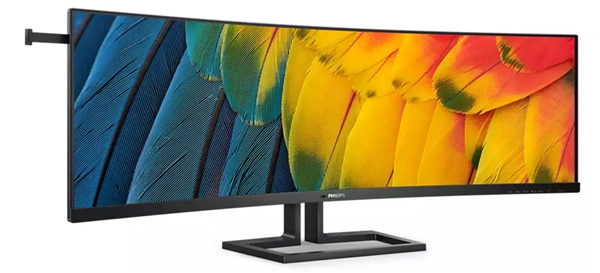
The Philips 45B1U6900C SuperWide Curved Monitor has been launched. The display is a flagship commercial model that offers an immersive viewing experience and a range of features that cater to professionals and businesses. The monitor has a large 44.5-inch VA curved screen with a display ratio of 32:9, which provides a panoramic view that is ideal for multitasking, gaming, and video editing. Its high resolution of 5120×1440 ensures sharp and detailed visuals, while its 75Hz refresh rate and 4ms GTG response time ensure smooth and responsive motion.
The Philips 45B1U6900C monitor features a large 1500R curvature, which matches the natural curve of the human eye and provides an immersive viewing experience. The curvature also helps reduce eye strain and makes it easier to focus on the screen for long periods. The monitor has a maximum brightness of 450 nits, which makes it suitable for use in bright environments, and its static contrast ratio of 3000:1 ensures deep blacks and bright whites.
The monitor covers 107% DCI-P3 color gamut and 123% sRGB color gamut, which means it can display a wide range of colors accurately and vividly. It has passed VESA DisplayHDR 400 and TUV Rheinland certification, which means it meets high standards for brightness, color gamut, and contrast. The monitor also supports Adaptive-Sync technology, which synchronizes the monitor’s refresh rate with the graphics card’s output, eliminating screen tearing and stuttering.
The monitor has an ergonomic adjustable stand that allows +/-45° rotation and -5~15° tilt adjustment, which makes it easy to find a comfortable viewing angle. The monitor also has a telescopic hook on the left side that can hold headphones, which is a convenient feature for gamers and content creators who use headphones frequently.
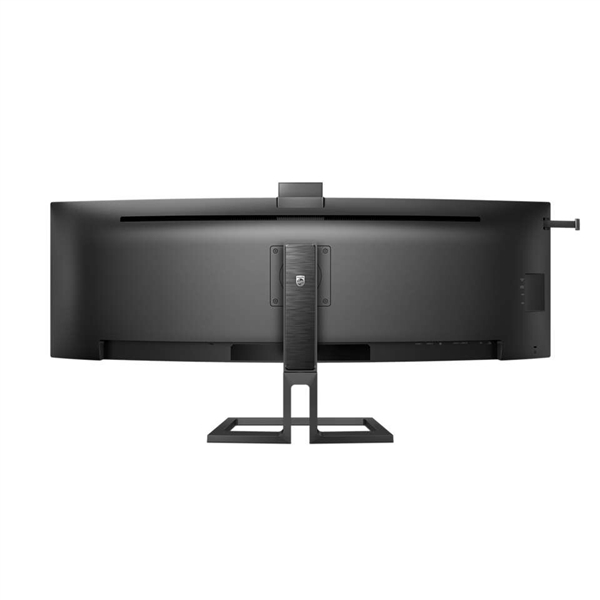
Further, the fish eye monitor has a wide range of interfaces, including two HDMI 2.0 interfaces, one DP1.4 interface, one USB Type-C interface (with support for 100W power supply and DisplayPort Alt), one USB Type-B upstream interface, and four USB 3.2 Gen1 Type-A interfaces. It also has a Gigabit Ethernet interface and a 3.5mm audio interface. The monitor is equipped with dual 5W speakers, which provide decent audio quality.
The monitor is presently priced at £939.99 in the UK.
Vivo X Fold 2 has been leaking a lot recently and today the company finally confirmed its existence, revealing it will be unveiled next month. The X Fold 2 will be the brand’s latest foldable, succeeding last year’s X Fold Plus. It is expected to debut as the world’s first folding phone with the Qualcomm Snapdragon 8 Gen 2 SoC.
Vivo’s Vice President of Products, Huang Tao, revealed in a Weibo post that the upcoming Vivo X Fold 2 will be showcased at the Boao Forum 2023. He added that leaks and live images of the foldable may emerge ahead of its launch in April. The exact launch date of the new Vivo smartphone is still a mystery.
Additionally, popular tipster Digital Chat Station tipped off several key specifications of the handset. The tipster revealed the X Fold 2 will be powered by the latest Snapdragon 8 Gen 2 processor under the hood, making it the first in its category to debut with this new chipset. This places the X Fold 2 ahead of Samsung’s upcoming foldable line, which should be released in August.
The upcoming phone is anticipated to be powered by a 4,800 mAh battery that supports 120W fast charging. Additionally, it is expected to sport a camera with a Sony IMX866 sensor, OIS, and V2 ISP, which is the same as the 50MP shooter found on the Vivo X90 and iQOO 11 Pro.
According to reports, Vivo is planning to launch the foldable device, along with the Vivo X Flip and Vivo Pad 2, in its domestic market. However, there are speculations that only the Vivo X Flip will be released in the global market, leaving the other two products exclusive to the Chinese market.
Silicon Valley-based artificial intelligence (AI) computing startup, Cerebras Systems, announced the release of seven open source ChatGPT-like AI models. The move aims to encourage collaboration and innovation within the research and business communities. The models, all trained on Cerebras’ AI supercomputer Andromeda, range from smaller 111 million parameter language models to a massive 13 billion parameter model. Here are the details…
Cerebras Systems Unveils Open Source ChatGPT-like AI Models
Andrew Feldman, founder and CEO of Cerebras, emphasized the importance of open source in the AI community, attributing much of its progress to the collaborative environment. He acknowledged that while there has been a recent trend towards closing off open source AI projects due to their commercial potential, maintaining openness is crucial for continued innovation.
Cerebras’ range of models allows for deployment on various devices. Smaller models can be run on smartphones or smart speakers, while larger models require PCs or servers. This flexibility caters to different needs and applications, but for more complex tasks, such as large passage summarization, bigger models are necessary.
Though larger models typically offer more advanced generative functions, Karl Freund, a chip consultant at Cambrian AI, points out that size isn’t everything. He cites recent research showing that smaller models can be just as accurate if trained more effectively, suggesting a trade-off between size and training quality.
Feldman revealed that their biggest model took just over a week to train, a process that would usually take months. This acceleration can be attributed to the unique architecture of the Cerebras system, which features a chip the size of a dinner plate specifically designed for AI training.
Currently, most AI models are trained on Nvidia Corp’s chips, but an increasing number of startups like Cerebras are entering the market to claim their share. Feldman confirmed that models trained on Cerebras machines can be used on Nvidia systems for additional training or customization, offering users flexibility and adaptability.
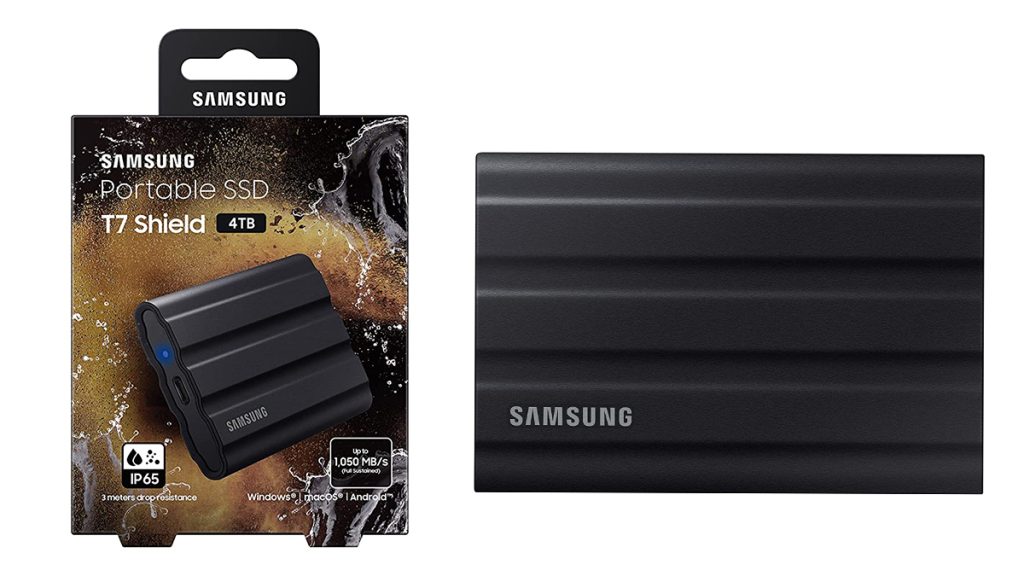
Samsung launched the T7 Shield SSD in April last year. It was available in 1TB and 2TB storage sizes in India. Now the South Korean brand has announced a higher storage variant of the device. The Samsung T7 Shield Portable SSD is now available in a 4TB storage option. Apart from the storage bump, the device has the same features and specifications as the other storage variants.
The Samsung T7 Shield Portable SSD boasts a rugged external that is resistant to water, dust, and shock. It is IP65 certified and ideal for people who are always on the go. The storage device is the size of a credit card and weighs just 98 grams.
The Samsung T7 Shield SSD packs a storage capacity of 4TB for storing high-quality pictures, games, 4K and 8K videos etc. It is also available in 1TB and 2TB options. The device features read and write speeds of up to 1,050 and 1,000 MB/s respectively. It is claimed to reduce laptop download time to just 8 seconds for a 4K quality video of 5GB. It is said to be 9.5 times faster than external hard disk drives and also reduces concerns about inconsistent performance. The Samsung T7 also has a 256-bit AES along with hardware encryption to protect consumer data even if the device gets lost. There is Samsung Magician software letting users to conveniently manage the drive.
The Samsung T7 Shield Portable SSD has a 3-year warranty and is offered in Blue, Grey, and Red colours. The 4TB variant is priced between Rs 30,000 – Rs 35,000 and can be purchased from the brand’s online and offline stores, Amazon, and consumer electronics stores.
We use cookies on our website to give you the most relevant experience by remembering your preferences and repeat visits. By clicking “Accept”, you consent to the use of ALL the cookies.
This website uses cookies to improve your experience while you navigate through the website. Out of these, the cookies that are categorized as necessary are stored on your browser as they are essential for the working of basic functionalities of the website. We also use third-party cookies that help us analyze and understand how you use this website. These cookies will be stored in your browser only with your consent. You also have the option to opt-out of these cookies. But opting out of some of these cookies may affect your browsing experience.
Necessary cookies are absolutely essential for the website to function properly. This category only includes cookies that ensures basic functionalities and security features of the website. These cookies do not store any personal information.
Any cookies that may not be particularly necessary for the website to function and is used specifically to collect user personal data via analytics, ads, other embedded contents are termed as non-necessary cookies. It is mandatory to procure user consent prior to running these cookies on your website.