Advertisement

Realme GT2 Pro starts receiving Android 13 x Realme UI 3.0 update in India

Earlier this year, Realme launched its first top-tier flagship smartphone in the global market called the Realme GT2 Pro. So it is quite natural that this is the first device from the brand to get the Android 13-based Realme UI 3.0 update.

Realme GT2 Pro

Although Realme has not made any official announcement yet, Indian users of the GT2 Pro have reported receiving the update on their devices with screenshots on the official Realme community forums. Global users can expect the update to arrive on their devices soon.

The update weighs 5.5GB in size and adds a bunch of new functionality and what Realme calls an Aquamorphic design. It adds fresh, more aesthetically pleasing animations, shadows, UI components, etc. Additionally, efficiency, usability, security, and gaming performance have all improved. The latter is a HyperBoost GPA 4.0 engine that balances performance and power consumption while regulating frame rate. The update also brings the new October 2022 security patch along. You can check out the complete changelog below.

Aquamorphic Design

  • Adds Aquamorphic Design theme colors for enhanced visual comfort.
  • Applies the Aquamorphic Design philosophy to animations to make them natural and vivid.
  • Adds Shadow-Reflective Clock, with shadows to simulate the orientation of the sun and moon.
  • Adds a Home screen world clock widget to show the time in different time zones.
  • Upgrades to Quantum Animation Engine 4.0, with a new behavior recognition feature, which recognizes complex gestures and provides optimized interactions.
  • Optimizes UI layers for a clearer and neater visual experience.
  • Applies real-world physics to animations to make them look more natural and intuitive.
  • Optimizes the widget design to make information easier and quicker to find.
  • Optimizes fonts for better readability.
  • Optimizes system icons by using the latest color scheme to make the icons easier to recognize.
  • Enriches and optimizes illustrations for features by incorporating multicultural and inclusive

Efficiency

  • Adds large folders to the Home screen. You can now open an app in an enlarged folder with just one tap and turn pages in the folder with a swipe.
  • Adds media playback control, and optimizes the Quick Settings experience.
  • Adds more markup tools for screenshot editing.
  • Adds support for adding widgets to the Home screen, making information display more personalized.
  • Optimizes Shelf. Swiping down on the Home screen will bring up the Shelf by default. You can search content online and on your device.

Security & privacy

  • Optimizes Private Safe. The Advanced Encryption Standard (AES) is used to encrypt all files for enhanced security of private files.

Health & Digital wellbeing

  • Adds Eye comfort in Kid Space to protect children’s vision.

Health & Digital wellbeing

  • Add Eye comfort inn KidSpace to protect children’s vision

Gaming experience

  • Upgrades to HyperBoost GPA 4.0 to stabilize the frame rate and balance the performance and power consumption in key scenarios.

RELATED:

(Source)

Realme 10 4G live shots emerge before launch

Realme 10 launch seems imminent. Several reports have claimed that it will be arriving to the global market by early November. As per a tweet by tipster Abhishek Yadav, the Realme 10 series will debut on Nov. 9 in the global market. He added that the first sale will be held on Nov. 11. Ahead of the expected launch, a couple of live shots of the Realme 10 4G have started doing the rounds on social media platforms. Here is a look at what appears to be the actual Realme 10 4G.

The images give a good look at the front and rear design of the Realme 10 4G. It has a display with a punch-hole in the upper left corner on the front. The live shots reveal that the Realme 10 is equipped with the Helio G99 chipset and runs on Realme UI 3.0. The handset can be seen in white and black colors, which are likely to be marketed as the Clash White and Rush Black.

The variant that can be seen in the live shot has 8 GB of RAM and 128 GB of storage.  The device measures 159.9 x 73.3 x 7.95mm and weighs around 178 grams. The RMX3630 model number, which was seen on certification platforms, can also be seen in the new images. Other reports have claimed that the device has a 6.4-inch FHD+ display, a 16-megapixel front camera, and a 50-megapixel + 2-megapixel dual-camera setup on the back.

The variant that can be seen in the live shot has 8 GB of RAM and 128 GB of storage.  The device measures 159.9 x 73.3 x 7.95mm and weighs around 178 grams. The RMX3630 model number, which was seen on certification platforms, can also be seen in the new images. Other reports have claimed that the device has a 6.4-inch FHD+ display, a 16-megapixel front camera, a 50-megapixel + 2-megapixel dual-camera setup on the back.

A recent leak revealed that the Realme 10 4G will also come in a 4 GB RAM + 128 GB storage version. The device is likely to be priced between 250 euros and 300 euros for the base model.

RELATED:

Redmi Note 12 Discovery Edition fails to meet advertised 210W fast charging in independent testing

Last week, Redmi launched the Note 12 series of smartphones with the vanilla Note 12, the Note 12 Pro, the Note 12 Discovery Edition, and the Note 12 Pro Plus in the lineup. Out of these devices, the Note 12 Discovery Edition comes with a 4,300mAh battery paired with jaw-dropping 210W fast charging.

The company claims that the Redmi Note 12 Discovery Edition can in just 9 minutes using the 210W fast charging feature. However, independent testing by Charger Labs has revealed that the real-world charging performance is not quite up to the advertised values.

Redmi Note 12 Discovery Edition

The Redmi Note 12 Discovery Edition manages to reach a peak charging wattage of 184.85 W roughly three minutes into Charger Labs’ charging test. It doesn’t charge at such great Wattage for long either, as is to be expected from such high power outputs, as it lowers down to lower wattages. The Redmi Note 12 Discovery Edition charges at a rate that is typically much higher than 120 W.

According to Charger Labs’ test, the Redmi Note 12 Discovery Edition can charge to 100% in 10 minutes and 10 seconds, compared to Xiaomi’s claim that the mid-range phone can do so in nine minutes. Although it doesn’t exactly match Xiaomi’s claim, it comes close and is far faster than every other smartphone ever created.

More astoundingly, it accomplishes it without producing a lot of heat. The Redmi Note 12 Discovery Edition’s maximum temperature during the test was merely 43.3°C. This could be attributed to the fact that the device features a large 3,000mm² VC cooling system.

RELATED:

(Source)

Vivo to announce OriginOS 3 at Vivo Developer Conference on November 8

Vivo has today officially confirmed that the company will be announcing OriginOS 3, the next generation of its custom mobile operating system for smartphones on 8th November.

The company has shared a teaser poster confirming the release date of 8th November for OriginOS 3 at the Vivo Developer Conference. It also adds that the new OS will be “more handy” without revealing anything about it.

The Vivo Developer Conference 2022, where the new OriginOS will be announced, has a theme of “MORE, close to what you think” and along with the new mobile operating system, the company will have different sessions for IoT ecosystem, artificial intelligence, privacy and security, game ecology, and more.

While the features of the upcoming OriginOS 3 have not been revealed yet, it is said that the company’s primary focus is on offering a light and smooth system experience to the users. It will also come with several new features that aim to make the user’s daily use more convenient.

If the release timeline of the OriginOS Ocean is anything to go by, then we expect the company to start rolling out the update soon after the official announcement, at least for a select few premium flagship smartphones, and then roll it out to several other devices in a phased manner.

RELATED:

ChromeOS 107 update goes live with Save desk for later, easy accents & more new features

Google has committed to improving its ChromeOS with constant updates in the last few months. The search giant has now dropped a new update called ChromeOS 107, which brings along a handful of new features.

The capability to save Desks is the most significant new element. Simply click the button on the Overview screen to “Save desk for later.” You can give it a name, view the creation date, and quickly inspect the icons.

It is now simpler to close open desks from the Overview menu, and if you accidentally close a desk and wish to undo it, a brief “Undo” prompt appears. A merge feature that enables you to combine opened Desks into a single one is apparently also being tested by Google.

The Recent view in the Files app has been redesigned, and a “documents” filter has been added. Furthermore, rather than being a simple list, the list below is organized by date. Finally, when you hold down on the virtual or real keyboard, a pop-up list with accented characters appears. If that fails, you may need to enable the flag in Chrome.

RELATED:

Apple expected to release iOS 16.2 in a few weeks with new features

Apple recently rolled out the new iOS 16.1 version for the iPhones just weeks after the company had released the iOS 16, bringing several new features and functionalities to the operating system. Now, the company is working on the next version of the update.

According to the latest report from Mark Gurman’s PowerOn newsletter, the next major update for the iPhone’s software, iOS 16.2, is expected to be officially released sometime around mid-December along with the iPadOS 16.2.

Apple iOS 16

The Cupertino-based technology giant has already released the first beta of iOS 16.2 and iPadOS 16.2 for developers and public beta testers. While the full list of the features and changes for the upcoming update remains unknown, some of the features and improvements that can be expected have been released through the beta release.

iOS 16.2 will come with support for Live Activities for select sports games for the built-in TV application, allowing users to track games in real-time on the Lock Screen or Dynamic Island. It will also allow users to add a new Sleep widget option on the Lock Screen.

Freeform, a new application from Apple which allows users to collaborate with friends and co-workers, was announced at WWDC. The app is currently available for developers and beta testers, and now it is expected to be rolled out to everyone with the new iOS 16.2 as well as to the users of iPadOS 16.2 and macOS 13.1.

As the update is expected to be rolled out in December, there’s still time for the company to add new features and make other noticeable changes to the operating system. After iOS 16.2, the company is expected to release iOS 16.3 sometime around February or March next year, coinciding with the new Mac devices launch.

RELATED:

Samsung may soon rollout One UI 5.0 based on Android 13 to Galaxy S21 FE

Samsung recently published a One UI 5 stable release schedule for eligible Galaxy smartphones and tablets through the Samsung Members app in its home market of South Korea. However, the company didn’t reveal the rollout timeline for its second fan edition smartphone— the Galaxy S21 FE.

Now, Android 13-based One UI 5.0 test builds for the Galaxy S21 FE have been spotted on the company’s servers, which suggests the firmware is currently being tested internally (via Samsung One UI Software Updates). It is reported that the stable update for the smartphone will be released sometime next month (November). But there’s no official confirmation about the same.

Galaxy s21 fe

The flagship Galaxy S21 series received its fair share of One UI 5.0 beta updates but, for some reason, Galaxy S21 FE was not a part of the beta testing. Android 13 will be the first major OS upgrade for the smartphone because Samsung delayed its launch and shipped it with Android 12 out of the box. S21 Fe is eligible for four major upgrades in total.

If we talk about the update itself, One UI 5.0 brings several improvements and new features. It comes with some design improvements and brings minor enhancements to Material You’s wallpaper-based system color schemes and the ability to change app icon colors based on wallpapers. Palette. The update also introduces new app icons for the company’s native apps.

Further, the animations are said to be smoother but don’t expect any drastic changes. Users can now customize their lock screen and add more wallpapers. In addition, One UI 5.0 will let users set a different call background for each contact. The company also added new stacked widgets on the Home Screen.

RELATED:

Realme 10 European price leaks, specs and renders surface once again

The Realme 10 keeps on leaking ahead of its official launch in November. A recent leak revealed its full specifications and offered some official-looking renders. Now, a new report is here with the European pricing and even more renders of the upcoming Realme 10. It also goes on to list the specifications of the handset. Here are all the details.

According to a report by Appuals, the Realme 10 will be offered in two color options— Clash White and Rush Black. It will be available in a base 4GB+128GB variant and a higher 8GB+128GB trim in Europe. The handset is said to retail at around EUR 250 – EUR 300 for the base storage option.

Realme 10 Specifications

As per the report, Realme 10 will debut with a 6.4-inch sized 2.5D Super AMOLED panel offering a 2412 x 1080 pixel FHD+ resolution, a 90Hz refresh rate, 20:09 aspect ratio, and 411 PPI pixel density. The panel will have 400nits of peak brightness and support Always on Display (AOD) functionality.

The handset will be equipped with a MediaTek Helio G99 processor, even Realme officially confirmed this. It will be powered by a 5000mAh battery that supports 33W fast-wired charging. On the software front, the handset will run on Android 12 with Realme UI 3.0 skin on top.

As far as the cameras are concerned, Realme 10 will sport a dual camera setup on the rear comprising a 50MP Primary and a 2MP macro or depth camera. The primary camera will have 20X Digital Zoom and be able to record videos at 1080p resolution, says the report. While on the front, it will feature a single 16MP shooter.

The Realme smartphone will reportedly come with a bundled charger. For security, it will sport a side-mounted fingerprint scanner. Connectivity options on the device include a 3.5mm headphone jack, USB Type-C port, Dual Nano SIM, Micro SD card slot, Bluetooth 5.1, NFC, WIFI, and USB OTG support. Realme 10 will feature a polycarbonate back and will measure 159.9 x 73.3 x 7.95 mm. It will weigh around 178.5 grams.

Related:

ZMI PurSpace 2 Pro wireless headphones with ANC, 30hrs battery life launched

ZMI has launched the PurSpace 2 Pro wireless headphones in China. The new wireless headphones were released amidst expectations from the market after it was hyped. ZMI announced on October 27 that it will launch the big new product of the year, the Space soundproof cabin. The PurSpace 2 Pro features a dual transparency mode.

The Space Soundproof cabin, ZMI PurSpace 2 Pro provides noise-canceling capabilities. It is optimized for broadband noise through its active noise reduction with a depth of up to 42dB. The headset also incorporates ZMI EQsmart 2.0 adaptive technology for intelligently adjusting the noise reduction depth. The ZMI PurSpace 2 Pro has an 11mm titanium diaphragm moving coil unit with a low latency of 69ms and supports dual pairing. The total battery life of the headset without noise reduction is about 9 hours, but with the charging case, it reaches 30 hours.

The ZMI PurSpace 2 Pro also supports AI call noise reduction 2.0 using its three microphones and DNN neural network deep learning algorithm. This delivers double noise reduction for the device. Wireless connectivity for the headset is achieved using Bluetooth 5.2 and the device is rated IPX4 sweat resistance.

The ZMI PurSpace 2 Pro TWS noise-canceling headphones will be officially launched on October 31 at a launch price of 449 yuan (~$62). The product is already placed on the e-commerce platform Jingdong and is available for customers in China. There are no indications yet on the global availability and pricing for the ZMI PurSpace 2 Pro true wireless headset.

RELATED:

Huawei Mate 50 Pro pre-orders in Europe go live with €1,199 price tag & freebies

Last month, Huawei unveiled the Mate 50 Pro for the European market. The brand stated that the flagship smartphone would soon be available to purchase at €1,299 for the 8GB RAM and 256GB storage model. Now, the brand has opened pre-orders for the device in Europe. So, let’s take a look at the pricing and offers.

Huawei Mate 50 Pro

Huawei Mate 50 Pro pre-order price, offers

Huawei has priced the Mate 50 Pro 8GB + 256GB model at €1,199, which is €100 less than their previously announced price. With every pre-order, Huawei will also pitch in the Huawei FreeBuds Pro, which roughly costs €180 in the Eurozone, for free. You can place a pre-order by heading to your regional Huawei website. Shipping for the pre-orders will begin on November 10.

The 512GB storage model which the brand initially announced is yet to be made available. It will be interesting to see if that model will also receive a similar price cut as Huawei initially announced that it will cost €1,399.

Huawei Mate 50 Pro specs & features

The Huawei Mate 50 Pro has a 6.74-inch OLED display with a refresh rate of 120Hz, over a billion colors, and a resolution of 2616 x 1212 pixels. A notch on the top of the screen houses a 3D depth-sensing facial unlocking technology.

Huawei Mate 50 Pro

The smartphone is powered by the Qualcomm Snapdragon 8+ Gen 1 processor, which is paired with 8GB of RAM. There are two internal storage options available from the company: 256GB and 512GB.

The camera has a 50-megapixel main RYYB sensor and is described as an “Ultra Aperture Camera” with optical image stabilization and the option to manually modify the aperture. There’s also a 13-megapixel ultrawide camera that doubles as a macro lens. A telephoto periscope zoom camera with 3.5x optical zoom and up to 100x hybrid zoom is also included.

A 4,700mAh battery powers the water and dust-resistant Huawei Mate 50 Pro smartphone, which also supports 66W SuperCharge fast charging and 50W wireless charging.

RELATED:

Realme 10 4G confirmed to be powered by a Helio G99 processor

Realme 10 is officially confirmed to be powered by MediaTek’s Helio G99 processor. The brand’s global Twitter handle announced in a tweet along with revealing the AnTuTu benchmark score. The smartphone scores 4,00,086 points and is said to be the highest score achieved by the G99 chipset. Apart from the SoC, Realme is yet to divulge in to more details about the upcoming Realme 10 series. The lineup is expected to consist of standard 4G and 5G variants along with a Pro+ model. 

The exact launch date of the Realme 10 series remains a mystery, however, multiple reports suggest that the smartphones may debut on November 9th globally and the first sale commencing November 11th. 

The Realme 10 4G was spotted in leaked renders last week. It is expected to come in Clash White and Rush Black colours with a glossy sparkling gradient pattern. There are two traditional camera rings housing dual sensors with an LED flash ring and a 50MP camera text. As for the core specifications, rumours suggest that the Realme 10 4G will come with a 6.4-inch AMOLED display with a punch-hole cutout. It will offer an FHD+ resolution and a 90Hz refresh rate. Under the hood, the device is tipped to be equipped with an Helio G99 chipset paired with up to 8GB RAM and 128GB of storage. The smartphone will reportedly be backed by a 5,000mAh battery with 33W fast charging.

As per one tipster, the Realme 10 4G is said to be priced between $190-$210 (Rs 15,700- Rs 17,200).

Related:

Alleged OPPO A98 tipped to offer curved edge display, 108MP camera, 67W charging

OPPO could be working on its most powerful A-series phone for the Chinese market. Earlier this week, tipster Digital Chat Station claimed through a Weibo post that a new A-series OPPO phone would feature a punch-hole display with curved edges. The leak revealed that the phone will come with the highest megapixel count camera and the fastest wired charging solution ever seen on an A-series phone. In a new Weibo post, DCS seems to have leaked some more information about the same device. There is a possibility that the device will be released in China with the “OPPO A98” moniker.

The new information that the tipster shared suggests that the alleged OPPO A98’s dispaly will have a 120Hz refresh rate and a Full HD+ resolution. According to his previous Weibo post, the screen will offer up to 2160Hz PWM dimming. The handset will offer a high screen-to-body ratio as it will have a 3.3x mm chin.

OPPO A97
OPPO A97

The Qualcomm chip with the part number SM7325 will power the alleged OPPO A98. Hence, it appears that the device will be powered by the Snapdragon 778G mobile platform. The leak has no information on the RAM and storage editions of the A98.

The device will come equipped with a 108-megapixel camera on the back. However, the leak does not mention anything about the auxiliary and selfie cameras on the device. It will pack a 5,000mAh battery that supports 67W fast charging.

DCS also said that OPPO will soon put out new mid-range phones on the Chinese and international markets. However, he did not share any information on their specifications. The Chinese manufacturer is expected to launch the Reno 9 series in November in China. In December, it is expected to announce the Find N2 and Find N Flip devices.

RELATED:

Alleged Realme 10 series phone’s TENAA listing with full specifications emerge

Last week, Realme phones with RMX3663 and RMX3687 model numbers were certified by China’s 3C and TENAA regulatory bodies. Later, another phone with the RMX3615 model number was in the databases of both platforms. Before, the TENAA listing for the RMX3615 only showed pictures, but now it has all of its specifications.

Realme RMX3615 specifications

The Realme RMX3615 has 164.4 x 75.1 x 8.1mm dimensions and weighs around 194 grams. It houses a 6.58-inch LCD panel that offers a Full HD+ resolution of 1080 x 2408 pixels. The device packs a 5,000mAh battery, which is likely to carry support for 33W fast charging, as per its 3C certification.

Realme RMX3615 TENAA images

The device is powered by an octa-core processor that works at 2.2GHz, but there is no information on its exact name. The phone is expected to arrive with 6 GB, 8 GB, and 12 GB of RAM and will come in multiple storage options like 64 GB, 128 GB, and 256 GB of built-in storage.

On the front, the RMX3615 features an 8-megapixel selfie camera. The triple camera unit available on its back has a 50-megapixel main snapper, an 8-megapixel ultra-wide lens, and a 2-megapixel depth assist lens.

The RMX3615 has a side-mounted fingerprint sensor. It is unclear whether the device will come preloaded with Android 12 or the latest Android 13 OS. At present, there is no information on the final marketing name of the RMX3615.

The RMX3663 model is expected to arrive with the Realme 10 5G moniker, while the RMX3687 is likely to be called the Realme 10 Pro or Pro+ 5G. While both phones sport a similar design, the RMX3615 has a different design language. Hence, it is unclear whether it belongs to the Realme 10 family or different series.

RELATED:

Google Pixel 7 vs Xiaomi 12: Specs Comparison

Compact flagships are not a common thing anymore, especially after Apple decided to ditch the mini variant of the iPhone in favor of the iPhone 14 Plus. But there are still several compact high-end phones out there. One of the latest is the Google Pixel 7 sporting amazing specifications and sold at a very interesting price, but with compact dimensions as well. It is time for everyone to understand whether or not the latest Pixel is the best compact flagship out there. And there is no better way to understand it than comparing it to the best compact device from the other brands. Here is a comparison between the main specifications of the Google Pixel 7 and the Xiaomi 12 which will help you to find it out.

Google Pixel 7 vs Xiaomi 12

Google Pixel 7 Xiaomi 12
DIMENSIONS AND WEIGHT 155.6 x 73.2 x 8.7 mm,
197 g
152.7 x 69.9 x 8.2 mm,
179 g
DISPLAY 6.3 inches, 1080 x 2400 pixels (Full HD+), AMOLED 6.28 inches, 1080 x 2400p (Full HD+), AMOLED
PROCESSOR Google Tensor G2, octa-core 2.85 GHz Qualcomm Snapdragon 8 Gen 1, octa-core 3 GHz
MEMORY 8 GB RAM, 128 GB – 8 GB RAM, 256 GB 8 GB RAM, 128 GB – 8 GB RAM, 256 GB – 12 GB RAM, 256 GB
SOFTWARE Android 13 Android 12, MIUI
CONNECTIVITY Wi-Fi 802.11 a/b/g/n/ac/6e, Bluetooth 5.2, GPS Wi-Fi 802.11 a/b/g/n/ac/ax, Bluetooth 5.2, GPS
CAMERA Dual 50 + 12 MP, f/1.9 + f/2.2
Single 10.8 MP f/2.2
Triple 50 + 13 + 5 MP scanner, f/1.9 + f/2.4 + f/2.4
32 MP f/2.5
BATTERY 4355 mAh, Fast charging 30W, and Qi fast wireless charging 20W 4500 mAh, fast charging 67W and fast wireless charging 50W
ADDITIONAL FEATURES 5G, dual SIM, IP68 waterproof, reverse wireless charging 5G, dual SIM, reverse wireless charging

Design

I love the design of the Google Pixel 7 because it is very original. The phone sports a horizontal camera module and it is very rare to find a horizontal module on flagship phones. The module is made of recycled aluminum and the frame of the device is made of aluminum too, while the rear side is made of glass and protected by Gorilla Glass Victus just like the front glass. So, with this device, you get premium materials and great build quality. The handset is even waterproof and dustproof with the IP68 certification. The Xiaomi 12 is made of premium materials too, including glass for the back protected by Gorilla Glass 5, a front glass protected by Gorilla Glass Victus, and an aluminum frame. It is premium as well, but the Pixel is actually superior in terms of build quality.

Display

If we consider the specs on the paper, the Xiaomi 12 looks to have a superior display. It has an AMOLED panel able to show up to 68 billion colors with a diagonal of 6.28 inches, a Full HD+ resolution of 1080 x 2400 pixels, a 120 Hz refresh rate, Dolby Vision support, HDR10+ certification, and an in-display fingerprint scanner. With the Google Pixel 7, you get an AMOLED display with a diagonal of 6.3 inches, a Full HD+ resolution of 1080 x 2400 pixels, a 90 Hz refresh rate, HDR10+ certification, and an in-display fingerprint reader. Both phones feature stereo speakers for an improved audio experience, but they have no 3.5 mm audio jack.

Specs & Software

The hardware found on the Xiaomi 12 is more powerful than the hardware found on the Google Pixel 7, so if you choose it, you will actually get higher performance. The Xiaomi 12 is powered by the Snapdragon 8 Gen 1 mobile platform built with a 4 nm production process and with an octa-core architecture composed of a Cortex X2 CPU running at a max frequency of 3 GHz, three Cortex A710 CPUs running at 2.5 GHz, four Cortex A510 CPUs running at 1.8 GHz, and an Adreno 730 GPU. The chipset is paired with up to 12 GB of RAM and up to 256 GB of UFS 3.1 native storage. The Google Pixel 7 has an inferior Google Tensor G2 processor built at 5 nm, 8 GB of RAM, and up to 256 GB  of UFS 3.1 native storage. On the other hand, it runs a more recent Android version out of the box (Android 13) and it will get faster software support.

Camera

If you are looking for the most advanced camera setup, you should go for the Google Pixel 7 as Google managed to obtain an amazing camera algorithm for stunning photo quality. The handset sports a 50 MP main camera with OIS, a 12 MP ultrawide sensor, and a 10.8 MP front camera able to record 4K videos at 60 fps. The Xiaomi 12 has a triple camera including a 50 MP main sensor, a 13 MP ultrawide shooter, a 5 MP telephoto macro camera, and a 32 MP selfie shooter.

Battery

The Xiaomi 12 is equipped with a bigger battery, but the difference is just marginal, so you should not notice big differences in terms of battery life. But the Xiaomi 12 charges a lot quicker thanks to 67W fast charging and 50W fast wireless charging.

Price

You can currently find the Xiaomi 12 with price tags under €650 or $650, which is the same price as the Google Pixel 7. Which one would you pick?

Google Pixel 7 vs Xiaomi 12: PRO and CONS

Google Pixel 7

PRO

  • Waterproof IP68
  • Great camera performance
  • Great front camera
  • Android 13 out of the box
  • Longer and faster support

CONS

  • Smaller battery

Xiaomi 12

PRO

  • Better performance
  • Up to 12 GB of RAM
  • Bigger battery
  • Faster charging

CONS

  • Older software version

RELATED

Check the latest videos from our YouTube channel and subscribe:

Xiaomi 13 Lite spotted on IMEI database, could be a rebranded Xiaomi Civi 2

Xiaomi 13 series is in the works and may launch by the end of this year. While we wait for an official confirmation, an IMEI database listing confirms the existence of a new 13 series smartphone, dubbed Xiaomi 13 Lite. The handset is rumored to be a rebranded version of Xiaomi Civi 2, which debuted last month in China, equipped with a Qualcomm Snapdragon 7 Gen 1 processor. Let’s look at the details.

As per a report by Pricebaba, Xiaomi 13 Lite has made its appearance on the IMEI database with the model number 2210129SG. The “G” at the end of the model number means that this device will be for the global market. Further, the report claims that Xiaomi 13 Lite will debut as a rebranded version of the Xiaomi Civi 2.

xiaomi 13 lite imei

Interestingly, the smartphone’s model number is exactly the same as the rumored Xiaomi 12 Lite 5G NE. This means both of these devices could essentially be the same but aimed for different markets. Or maybe the company is still trying to figure out which name is better.

Xiaomi CIVI 2 Specifications

For the uninitiated, Xiaomi Civi is a female-centric smartphone series, which is exclusive to Mainland China. The latest Civi 2 comes with a 120Hz Curved AMOLED display that produces a Full HD+ resolution. The display has a pill-shaped cutout for the selfie cameras at the top center of the display.

It is powered by a Qualcomm Snapdragon 7 Gen 1 processor paired with up to 12GB LPDDR4X RAM and up to 256GB UFS 2.2 storage. Its major highlight is its front camera system. The device has dual 32-megapixel sensors on the front. While on the back, there is a triple camera setup comprising a 50MP Sony IMX766 primary sensor, a 20MP Sony IMX376K ultra-wide sensor, and a 2MP macro unit. It has a 4,500mAh battery and supports 67W fast-wired charging.

Related:

ViewSonic launches two new IPS monitors with FHD & 2K resolutions

Two new displays from ViewSonic have been introduced. The VA3209-MH and VA3209-2K-MHD are 32-inch monitors with a focus on general usage and media consumption.

ViewSonic VA3209-MH & VA3209-2K-MHD specs

ViewSonic states that the monitors have 1,200:1 contrast ratios, 250 cd/m2 peak brightness, and Adaptive Sync to reduce image tearing. Despite their titles, ViewSonic has chosen to use IPS panels, not VA ones, in both monitors.

ViewSonic also states that the VA3209-MH and the VA3209-2K-MHD offer 75 Hz refresh rates, 4 ms reaction times (GtG), 72% NTSC and 104% sRGB color gamut coverages, and 75 Hz refresh rates. ViewSonic claims that the VA3209-MH can only create 16.7 million colors and runs at 1080p with an 8-bit color display. In contrast, the VA3209-2K-MHD combines a 10-bit color panel (8-bit Plus FRC) with a 2,560 x 1,440-pixel resolution.

Similarly, the VA3209-MH has single HDMI and VGA ports, compared to the twin HDMI ports and single DisplayPort connections that the VA3209-2K-MHD provides. Conversely, both monitors have 2.5 W stereo speakers, adjustable stands, and 100 x 100 mm VESA mounts.

Pricing & availability

The VA3209-MH costs €199, and the VA3209-2K-MHD costs €259 from ViewSonic. To know about the availability of the monitors in your region, you can visit the company’s website.

RELATED:

Sony Xperia Pro-I update brings livestreaming in Videography Pro mode

Last year, Sony launched the Sony Xperia Pro-I, which is an Alpha camera-influenced smartphone aimed mainly at content creators and photography/videography enthusiasts. It features a massive 1-inch sensor that is capable of capturing scenes in great detail.

Sony Xperia PRO-I

The smartphone has recently received a new OTA update that adds the ability to live-stream directly from the Videography Pro app for the device’s camera UI, potentially making it simpler and more efficient to use on social media platforms. In order to facilitate any future editing, the update also ensures that a file’s metadata accurately represents the fact that this new option is activated when shooting in portrait at 120 frames per second.

Those who have both the Pro-I and the GP-VPT2BT accessories benefit from this OTA as well. Owners of the Xperia Pro-I will be able to access the “custom” C1 button on the mini tripod/grip via the same Videography Pro software for more direct reprogramming.

Sony Xperia PRO-I specs & features

The Sony Xperia Pro-I launched last year with a price tag of $1,800. For this price, users get a 6.5-inch 4K OLED display with support for a 120Hz refresh rate. The smartphone has a Qualcomm Snapdragon 888 CPU inside, along with up to 12GB of RAM and 512GB of internal storage. Additionally, the gadget has a microSD card slot that enables you to increase the tablet’s storage capacity by up to 1TB.

The device has three camera lenses, each of which has a 3D iToF sensor and ZEISS T* anti-reflective coating. A recently created 24mm lens uses ZEISS Tessar Optics to produce high-resolution images with less peripheral image distortion and greater contrast and sharpness. The 1-inch sensor on the smartphone is borrowed from the RX100 VII camera and it supports RAW 12-bit shooting for incredible dynamic range, and dual aperture that goes from f/2.0 to f/4.0 for changing the depth of field.

A 12-megapixel 16mm f/2.2 ultrawide sensor and a second 12-megapixel 50mm f/2.4 2x optical telephoto sensor are combined with the 24-mm lens. There’s a monaural microphone next to the main camera for clear speech recording.

It has compatibility with Wi-Fi 6 and 5G in addition to the standard range of connectivity options. The smartphone is powered by a 4,500mAh battery that supports 30W rapid charging technology and runs the Android operating system.

RELATED:

Redmi Note 11 Pro 2023 Surfaces on Geekbench with a Qualcomm Chipset, 8GB RAM

Xiaomi’s sub-brand Redmi is reportedly working on a new smartphone called, Redmi Note 11 Pro 2023. Its moniker suggests it should be launched sometime in 2023. Recently, the device has been making the rounds at various certification sites. It has already been spotted on FCC, EEC, SIRIM, and Google Play Console databases. Now, the smartphone has also surfaced on the Geekbench website, which reveals some of its key specifications. Here are the details.

A Redmi smartphone with model number 2209116AG has been listed on the Geekbench database (via 91mobiles). This model is believed to be the rumored Redmi Note 11 Pro 2023. It is listed on the benchmarking site with an octa-core Qualcomm chipset, paired with 8GB of RAM. The processor’s motherboard is codenamed “Sweet,” which is associated with the Snapdragon 732G chipset.

redmi-note-11-pro-2023-2209116AG-Geekbench

For reference, Snapdragon 732G is a fast mid-range SoC manufactured in the modern 8 nm process. It is an octa-core chipset with two ARM Cortex-A76 cores clocked at up to 2.3 GHz and six small ARM Cortex-A55 cores at up to 1.8 GHz. Interestingly, a recent Google Play console listing of the handset revealed it will be powered by a 3-year-old Snapdragon 712 chip. It remains to be seen which SoC will be used in this smartphone.

The handset is listed with Android 11, however, the company may ship it with a newer version of the OS. As per the Geekbench listing, the Redmi Note 11 Pro 2023 has received a single-core performance score of 561 points and a multi-core performance score of 1,798 points.

Geekbench doesn’t offer much more information about this smartphone’s specifications. We hope to learn more details about the device in the near future. Stick around for the updates.

Related:

Get the latest Redmi Note 12 Explorer Edition for $439 on Giztop

Redmi Note 12 Explorer edition is now available on Giztop. The smartphone can be bought for $439 only.

Redmi Note 12 Explorer features a 6.67-inch FHD+ OLED display that supports 2400 x 1080p resolution, 120Hz refresh rate, and 240Hz touch sampling rate.  The phone is powered by the MediaTek Dimensity 1080 octa-core processor and comes with 8GB LPDDR4X RAM and 256GB UFS 2.2 storage. 

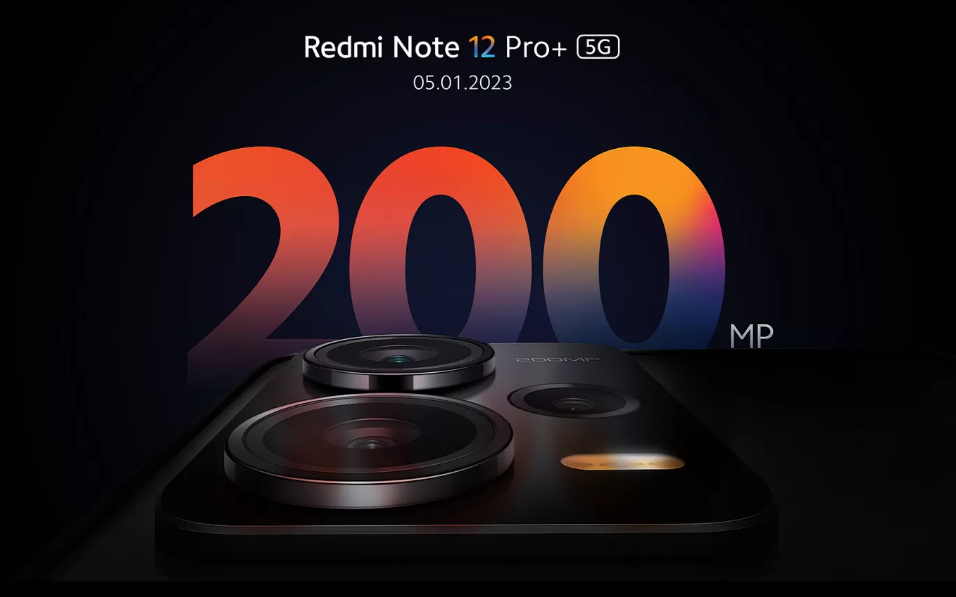
The highlight feature of the phone is the 200MP Samsung ISOCELL HPX primary camera. You also have an 8MP ultra-wide angle lens and a 2MP macro shooter. For your selfies, you have a 16MP sensor in the front. 

Redmi Note 12 Explorer is fueled by a 4300mAh battery and supports 210W fast flash charge and PD 3.0. Other interesting features include the NFC function, Infrared port, 3.5mm jack, Bluetooth 5.2, under-display fingerprint sensor, etc. 

You can now buy the latest Redmi Note 12 Explorer edition for $439 only on Giztop. 

For more information on such exciting deals and offers check out our deals hub.

Moto X40 full specifications revealed, could be first Snapdragon 8 Gen 2 phone to debut

Lenovo Group’s General Manager for Mobile Division, Chen Jin, has been teasing the arrival of the Moto X40 since the past few days. At the same time, the device, which has a model number of XT2031-5, has been bagging some vital certifications in China. After getting spotted at 3C, it surfaced with its images on TENAA earlier this week. The updated TENAA listing has now revealed the entire specifications of the Moto X40.

Moto X40 specifications (rumored)

The Moto X40’s TENAA listing (via. TechGoing) reveals that it has a 6.67-inch OLED display. The screen offers a Full HD+ resolution of 1,080 x 2,400 pixels and 10-bit colors. It is integrated with an under-display fingerprint scanner. Reports have claimed that the device will carry support for a 165Hz refresh rate.

The TENAA listing reveals that the Moto X40 is powered by a 3.0GHz octa-core processor, which appears to be the Snapdragon 8 Gen 2 mobile platform. The phone will arrive in China with 8 GB / 12 GB / 18 GB of LPDDR5x RAM and 128 GB / 256 GB / 512 GB of native storage.

Moto-X40-TENAA
Moto-X40-TENAA

The predecessor model, Moto Edge X30, featured a 5,000mAh battery and supported 68W fast charging. The 3C certification of the Moto X40 revealed that it will also support 68W rapid charging. As far as the battery size is concerned, the listing states that it packs a “4,950mAh / 4,450mAh” battery. It probably houses a 5,000mAh battery.

The listing has no information on the front camera of the Moto X40. However, it is speculated to sport a 60-megapixel selfie snapper like its previous generation model. The back panel of the device has a 50-megapixel + 50-megapixel + 12-megapixel triple camera unit.

The X40 measures 161.3 x 73.9 x 8.5mm and weighs around 196 grams. Now that it has received 3C and TENAA certifications, it appears that it could be one of the first Snapdragon 8 Gen 2 phones to go official. The device is expected to release with the “Motorola Edge 40 Pro” moniker in the global market. It is likely to arrive in markets outside of China by Q1 2023.

RELATED: