A few days ago, Honor launched its latest tablet in its home market China, dubbed Honor Pad V8 Pro. This new premium tablet from the brand comes with a high refresh rate, a big-capacity battery, and more.
Now, the Honor Pad V8 Pro is available for purchase in the Chinese market, with the base model priced at 2,599 yuan. However, for the initial period of the sale, the device will be available for a discounted price of 2,499 yuan (~$360).
The base model with 8GB RAM and 12GB storage costs 2,599 yuan (~$374), while the 8GB RAM and 256GB storage model is priced at 2,899 yuan (~$417). The top-end model with 12GB RAM and 256GB of internal storage is priced at 3,299 yuan (~$475).
As for the specifications, the Honor Pad V8 Pro features a 12.1-inch LCD display, offering a 2.5K screen resolution, 600 nits brightness, and slim bezels around the screen. It is the world’s first tablet to feature a 144Hz adaptive refresh rate and IMAX Enhanced certification that allow users to stream IMAX Enhanced titles.
Under the hood, it comes powered by the MediaTek Dimensity 8100 processor, coupled with up to 12GB RAM and 256GB onboard storage. The tablet is also compatible with Magic Pencil 3 and Smart Touch keyboard for expanding the use case.
In the camera department, there’s a 13-megapixel camera sensor with an LED flash on the back of the device, while on the front side, the device is equipped with a 5-megapixel snapper for taking selfies and video calling.
The tablet runs the company’s own MagicOS 7.0 custom user interface on top of the Android operating system. It is powered by a 10,050mAh battery that comes with support for 35W fast charging.
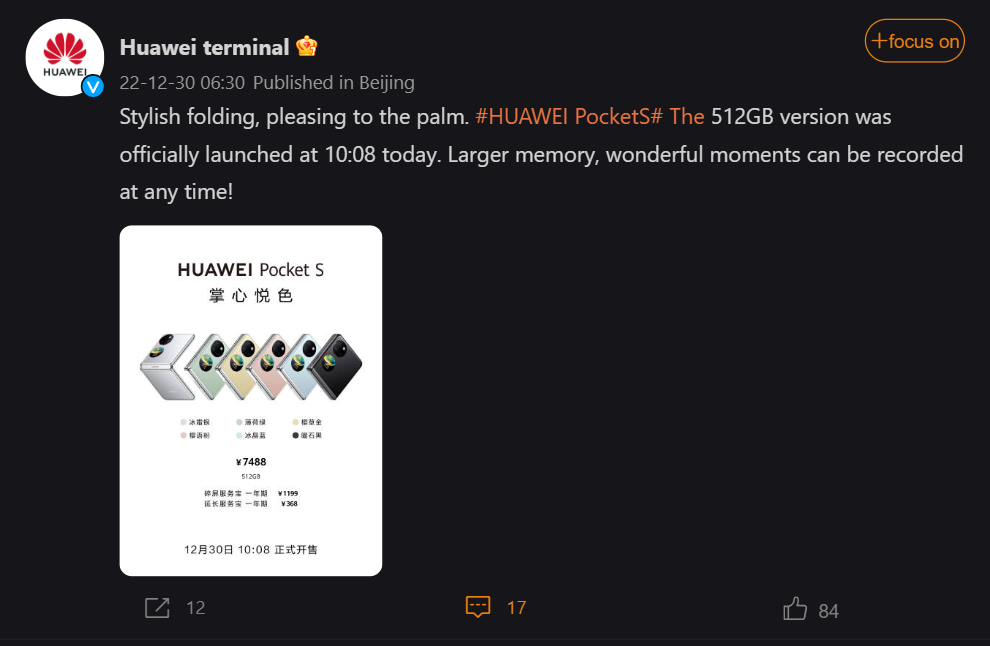
Huawei introduced its foldable Huawei Pocket S smartphone in October 2022. It was released in three different storage capacities: 128GB, 256GB, and 512GB. Both the former variants of the smartphone are already available on the market. However, there has been no official information regarding the sale and availability of the 512GB variant of the gadget since its formal announcement. The 512GB model, on the other hand, is now officially available in China. Many users had been waiting for the launch of this model, and the time has finally come.
The Huawei Pocket S 512GB costs RMB 7,488 (about $1,077). The foldable phone is available in the following colours: Obsidian Black, Frost Silver, Mint Green, Sakura Pink, Primrose Gold, and Ice Crystal Blue. The device will be available to purchase in China via Vmall, Jd.com, Suning, and other retailers. Interested users can now purchase the 512GB variant of the device starting at 10:08 local time in the country.
The Huawei Pocket S has a 6.9-inch foldable OLED display with a resolution of 2,790*1,188 pixels. It has 10-bit colours and a refresh rate of 120Hz. On the back panel, there is a 1.04-inch secondary screen. The gadget has a fingerprint scanner on the side. The Huawei Pocket S has a dual back camera setup for photography. It has a 40MP primary sensor and a 13MP ultra-wide-angle lens. There is a front-facing selfie camera with a resolution of 10.7MP.
The Huawei Pocket S is powered by a Qualcomm Snapdragon 778G CPU. It has 8GB of RAM and up to 512GB of storage space. A flexible graphite heat dissipation system is used in the gadget. The foldable phone is powered by a 4,000mAh battery with 40W charging capabilities. The Pocket S comes with Harmony OS 3 out of the box.
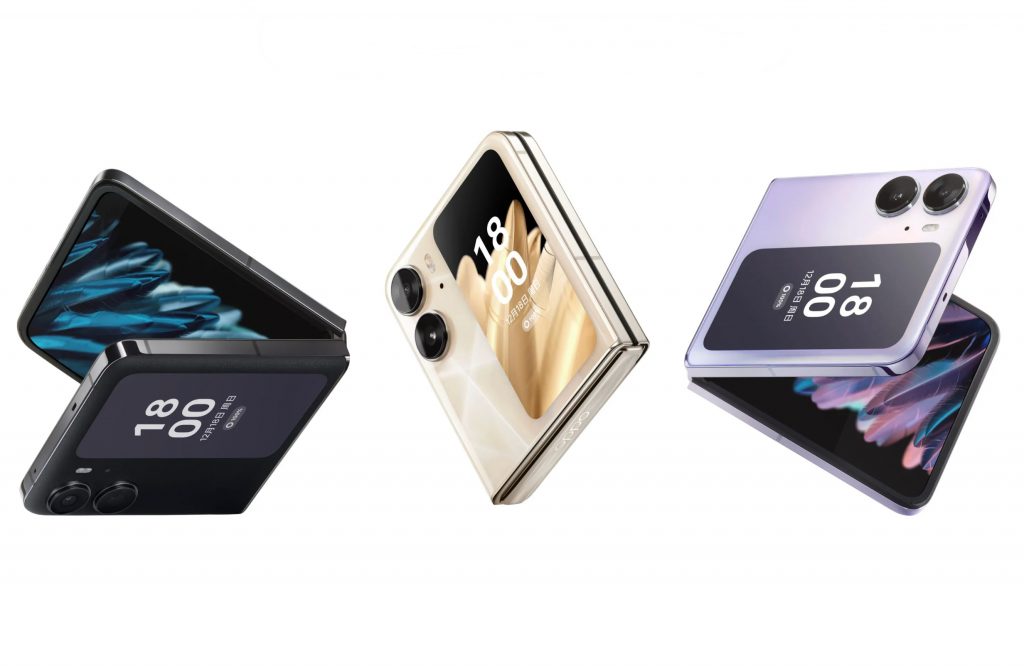
Earlier this month, OPPO announced its two new flagship foldable smartphones, dubbed OPPO Find N2 and OPPO Find N2 Flip. As the company is gearing up for the global version of the N2 Flip, the phone is now up for sale in China.
The OPPO Find N2 Flip is now available for purchase in the Chinese market for the starting price of 5,999 yuan, which roughly converts to $863.
The base model costing 5,999 yuan (~$863) packs 8GB RAM and 256GB of internal storage, while the 12GB RAM and 256GB storage model is priced at 6,399 yuan (~$920). The top-end model in the lineup with 16GB RAM and 512GB storage has a price tag of 6,999 yuan (~$1,007).
Coming to the specifications, the OPPO Find N2 Flip features a 6.8-inch 120Hz AMOLED display offering a Full HD+ screen resolution, HDR10+, and DCI P3 color gamut, while the external panel has a smaller 2.26-inch 60Hz OLED display that has a 720p resolution.
Under the hood, this device is powered by a MediaTek Dimensity 9000+ processor that is paired with either 8GB, 12GB, or 16GB of LPDDR5 RAM and 256GB or 512GB of internal storage.
In the camera department, the phone has a dual-camera setup on the back featuring a 50-megapixel primary sensor and an 8-megapixel ultra-wide angle lens. On the front side, the phone has a 32-megapixel snapper for taking selfies and video calling. It also has MariSilicon X chip for improved camera performance.
The smartphone runs the Android 13 operating system out-of-the-box with the company’s own ColorOS 13 custom interface on top. The device is powered by a 4,300mAh battery and supports 44W fast charging.
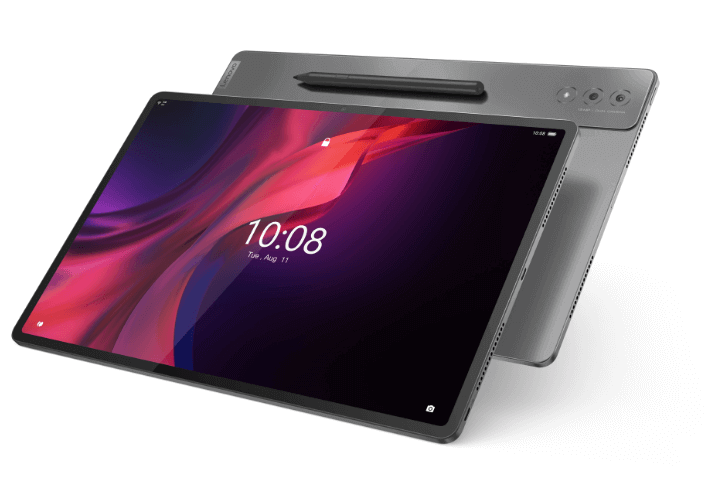
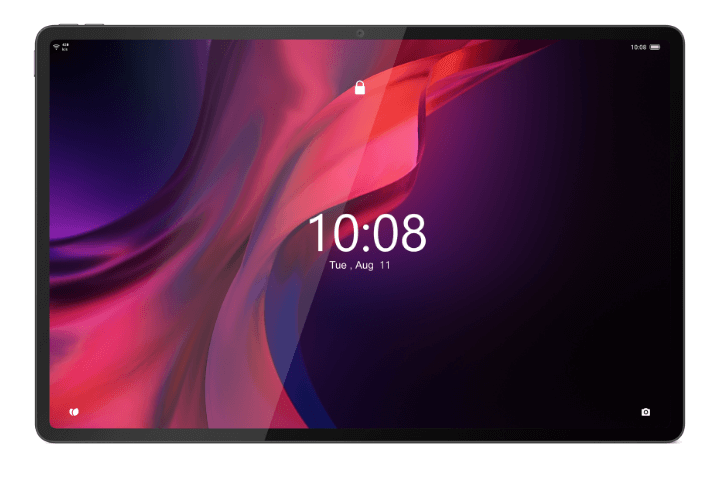
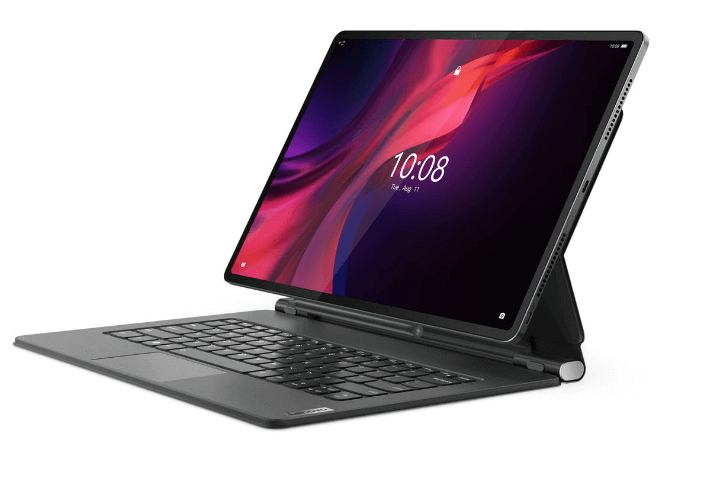
Recent rumors suggest that Lenovo is gearing up to launch a high-end tablet soon called the Lenovo Tab Extreme. As the name suggests, this tablet will debut as the most powerful tablet yet by Lenovo. Last month, we got our first look at the tablet, as well as its specifications through a Google Play Console listing. And now, tipster Evan Blass has shared the renders of this upcoming device.
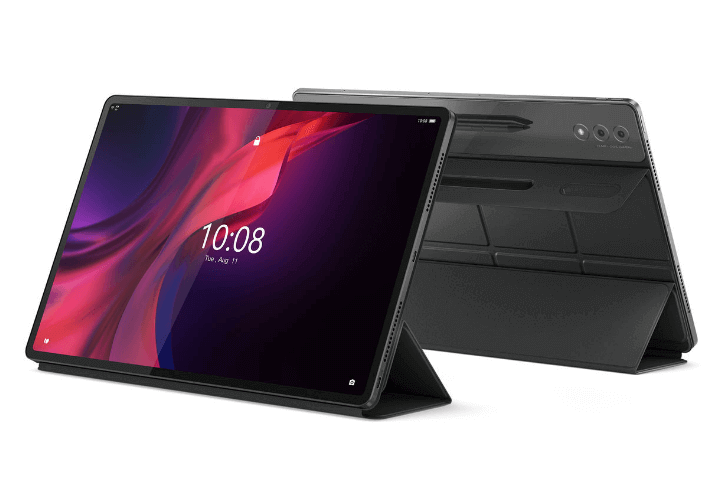
Taking a look at the renders, the tablet appears to have a dual camera setup on the back accompanied by an LED flash module. The render also confirms that the tablet will offer stylus support, and the stylus will latch onto the back of the device magnetically.
There appear to be four speaker grills on the top and bottom of the tablet. The bottom side also features a USB-C port. Coming to the front side, the device has a range display with slim and even bezels. The webcam is located in the punch-hole in the top center when the tablet is in landscape mode. On the left edge and top edge, respectively, are the volume controls and the power button. Lastly, the renders also reveal that the tablet will come with a folio case, and will be able to connect with a detachable keyboard to enable laptop-like functionality.
Spec-wise, the Lenovo Tab Extreme will feature a 3000 x 1876 resolution panel. Under the hood, it will feature a MediaTek Dimensity 9000 chipset. This chipset has an ARM Cortex X2 clocked at 3050MHz, 3X ARM Cortex A710 clocked at 2850MHz, and 4X ARM Cortex A510 clocked at 1800MHz. The graphics department is handled by the Mali G710 GPU. The last bit of information on the tablet confirms that it will boot Android 13 out of the box and come with an 8GB RAM option. More details on the tablet are expected to be revealed soon.
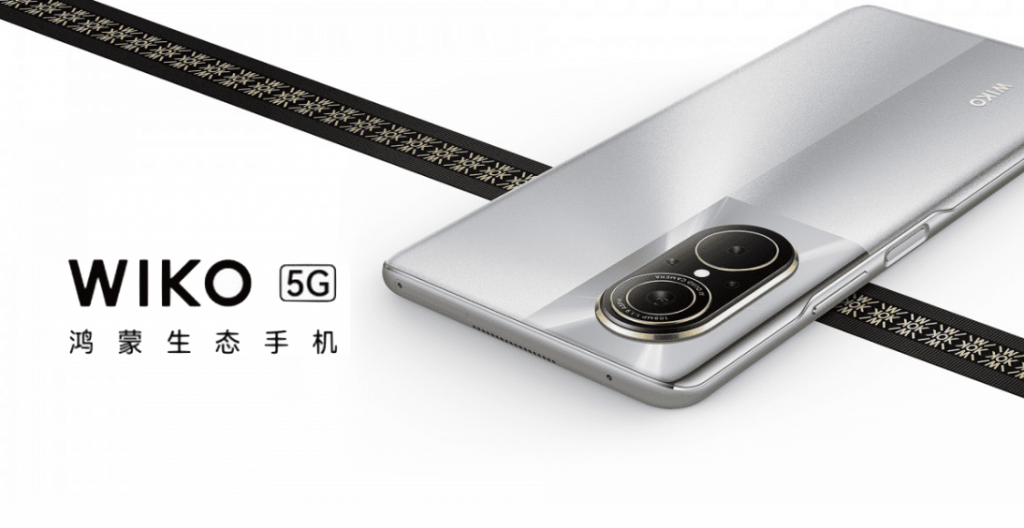
WIKO is a French smartphone manufacturer that has been officially authorised to use Huawei’s smartphone. WIKO 5G was the brand’s prior moniker and branding for the Huawei Nova 9 SE 5G. It’s exactly the same Nova 9 SE smartphone with a different branding and marketing name. The device has a good set of specs, including a 108-megapixel primary rear camera and a Qualcomm Snapdragon 695 5G chipset. The smartphone is now officially available for purchase.
Starting at 10:08 a.m. local time, the WIKO 5G smartphone will be available for purchase in China. It will be available in two variants: one with 128GB of storage and another with 256GB of storage. The smartphone will be offered in two colour options: silver and black. The device’s 128GB edition costs CNY 1999 ($287), while the 256GB model costs CNY 2199 ($315). All variations are available for purchase, and interested users can simply visit the official online partner store and reserve a unit for themselves.
The WIKO 5G phone has a 6.78-inch IPS LCD panel with a high refresh rate of up to 120Hz, a touch sampling rate of 270Hz, up to 16.7 million colours, and an FHD+ 2300*1080 pixel resolution. The panel boasts a 378PPI pixel density and a screen-to-body ratio of 94.85%. It is powered by the Qualcomm Snapdragon 695 5G chipset with Adreno 619 GPU.
The smartphone’s cameras include a 108-megapixel primary Samsung HM2 camera, an 8-megapixel secondary ultrawide camera, a 2-megapixel macro camera, and a 2-megapixel depth-of-field camera. A 16-megapixel selfie camera is situated inside a punch-hole cutout in the centre of the front. The smartphone has a 4000mAh battery and allows fast wired charging up to 66W.
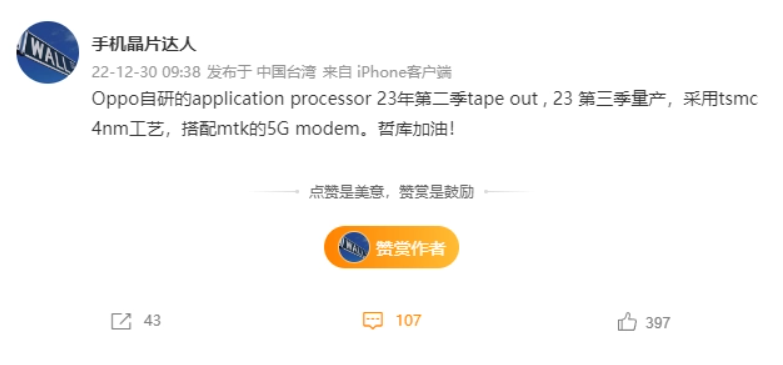
OPPO had previously launched its own imaging chipset for smartphones, known as OPPO Marisilicon. The imaging chipset did make some visible improvements in the terms of photography and videography on the device it used. Now, there’s another news which claims that OPPO is reportedly working on a new self-developed processor for smartphones. The chipset is currently under development it has been said that it will launch next year.
A digital blogger with access to the Taiwanese semiconductor (TSMC) industry chain revealed today that OPPO is currently developing an application processor for smartphones, with a release date of the second quarter of 2023 planned, and the design is nearing completion of the first trial flow. It will be mass-produced in the third quarter, employing the 4nm finfet power technology and an external fabric 5G modem. So it has been confirmed that the upcoming chipset by OPPO will be based on 4nm manufacturing technology.
Following that, another well-known Weibo blogger @digitalchatstation shared a copy of his prior news, which essentially matched the aforementioned information, implying that the situation has been resolved. He anticipates that the OPPO self-research chip will be available in 2024 and that subsequent products will employ more advanced 3nm design techniques. We would have to wait a little more to know about the forthcoming in detail.
Hua, a Chinese communication company, has previously announced the signing of a global patent cross-licensing deal with OPPO Guangdong Mobile Communications Co., Ltd. The agreement covers fundamental patents for cellular communication protocols such as 5G. In other words, OPPO paid for the rights to use advanced 5G technology. This could imply that they signed it to work on their forthcoming chipset. So that is all we had to say about the upcoming OPPO chipset.
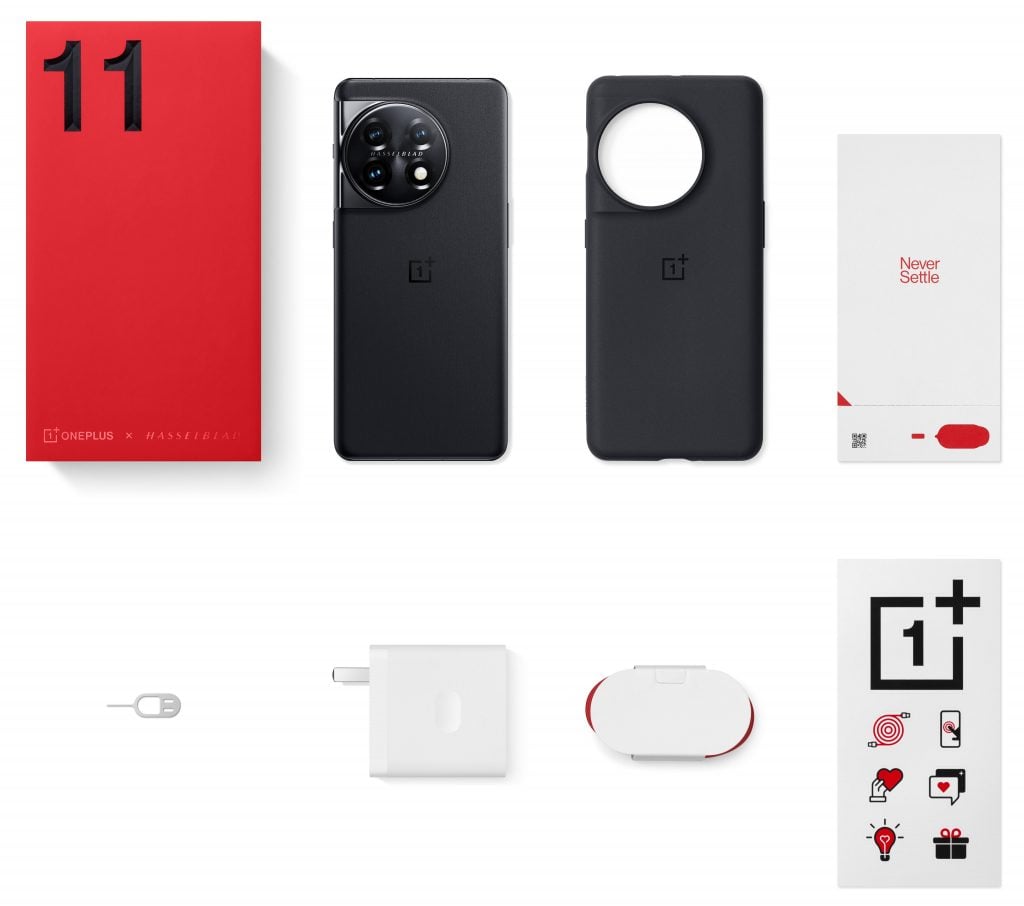
OnePlus will debut the next-gen flagship smartphone dubbed the OnePlus 11 on January 4 in China. The OnePlus 11 specifications and design render have appeared online ahead of the device’s release in China thanks to Evan Blass. Evan posted a design rendition of the OnePlus 11, along with the device’s essential specs and packaging contents, on Twitter.
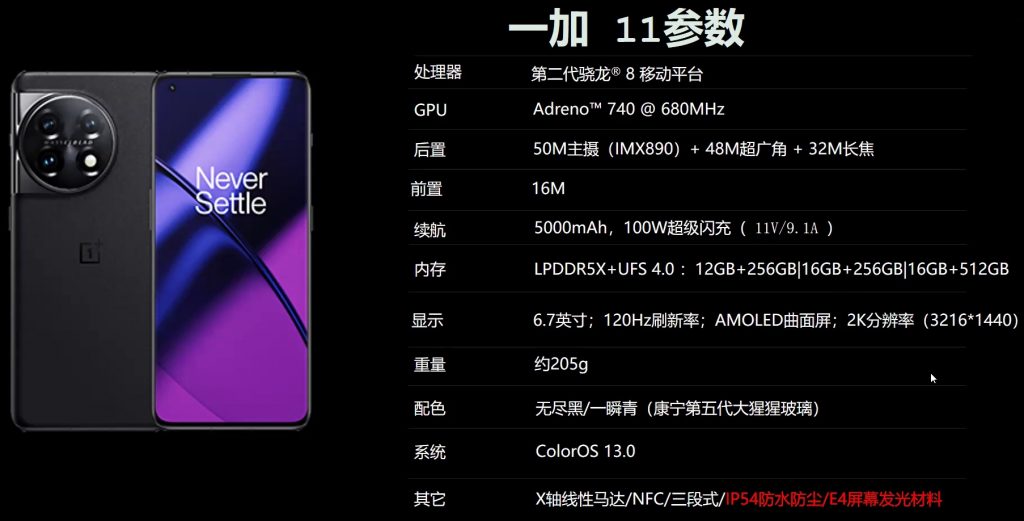
The OnePlus 11 will be equipped with a 5000mAh battery and a Qualcomm Snapdragon 8 Gen 2 chipset, according to Evan’s most recent leak. The smartphone will include a triple rear camera configuration that has been customized by Hasselblad. A curved AMOLED display with a 2K resolution and 120Hz refresh rate will be available on the upcoming OnePlus flagship.
The device, a case, a charging brick, and a charging cable are all included in the retail box for the OnePlus 11. In addition to that, the company will include a SIM ejector pin and a few stickers in the retail package for the OnePlus 11. Let’s check out the detailed spec sheet leaked alongside the OnePlus 11 box content.
OnePlus 11 specifications
The OnePlus 11 will have a 6.7-inch E4 AMOLED screen with a 2K (3216 x 1440 pixel) resolution and a 120Hz refresh rate. The OnePlus 11 will have a curved display panel with a corner punch-hole notch, as shown in the leaked render.
The Qualcomm Snapdragon 8 Gen 2 chip will power the forthcoming OnePlus flagship. An integrated Adreno 740 GPU will be used with the system on chip in the device. A 5000mAh battery will be included with the OnePlus 11. The phone will be capable of 100W fast charging. The OnePlus flagship will feature UFS 4.0 storage and LPDDR5X RAM. Three different versions will be offered: 12GB + 256GB, 16GB + 256GB, and 16GB + 512GB.
The triple rear camera system in the OnePlus 11 has been customized by Hasselblad. The OnePlus flagship will have a 50MP shooter with a Sony IMX890 sensor as its main camera. It will be accompanied by a 32MP telephoto camera and a 48MP ultra-wide-angle lens. The device’s 16MP front camera will handle selfies and video calls.
Green and Black are the two color options available for the OnePlus 11. It will be 205 grams in weight and pre-installed with ColorOS 13.0, an Android 13-based operating system. The OnePlus 11 will have IP54 certification and Corning Gorilla Glass protection.
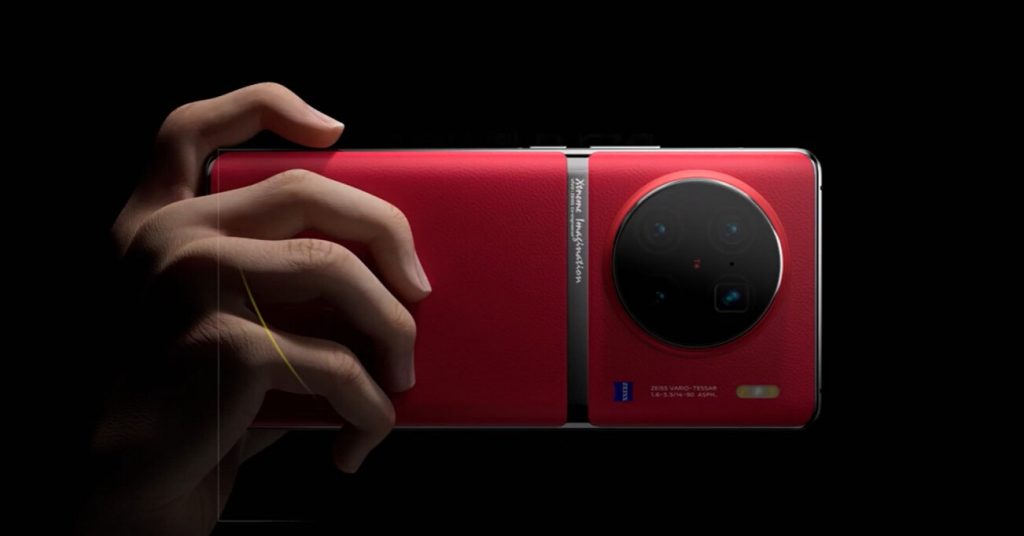
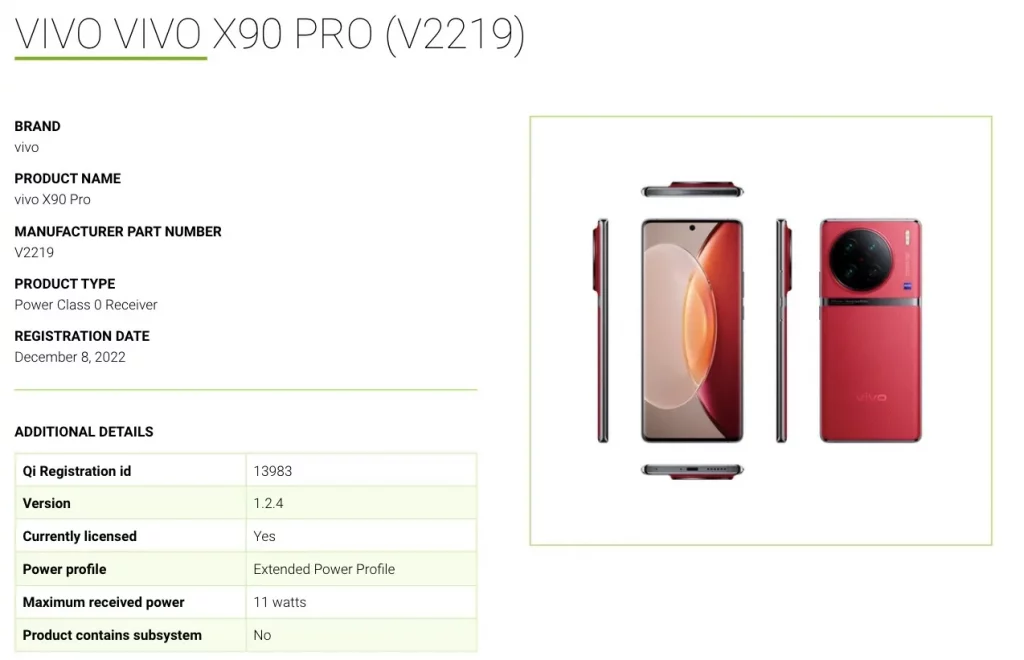
Last month, Vivo debuted the X90 series of flagship smartphones in its home country China. Since then, multiple rumors of the upcoming global launch have surfaced, with the most notable one stating that it could take place on January 31. With the supposed launch almost a month away, the global variant of the Vivo X90 Pro has been spotted on Geekbench and Wireless Power Consortium certification websites.
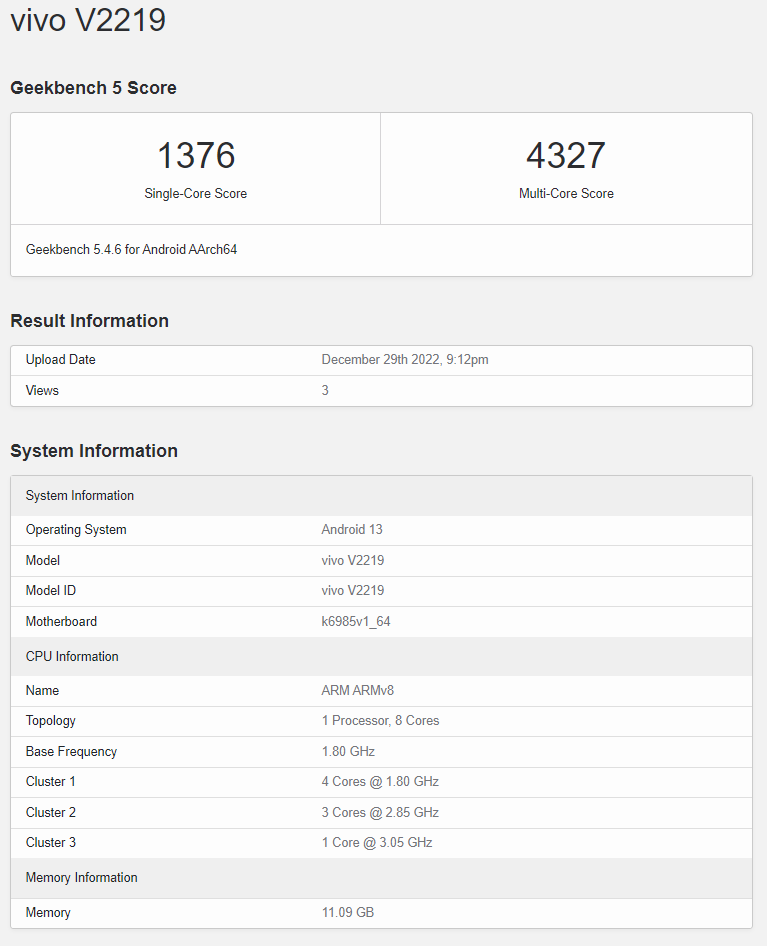
Starting off with the Geekbench listing, the database reveals that the X90 Pro global variant will carry the model number V2219. The listing also indicates the presence of an octa-core processor with a configuration of 1 + 3 + 4 cores and a peak frequency of 3.05GHz. The Vivo X90 series smartphone is listed as having an inbuilt Mali G715 Immortalis MC11 GPU. This demonstrates that, like its Chinese version, the Vivo X90 Pro global variant will be powered by a MediaTek Dimensity 9200 chipset.
The device visited Geekbench with 12GB of RAM. However, we may anticipate that Vivo will also release it with 8GB of RAM. The smartphone will ship with Android 13 already installed. As for the benchmark results, The single-core round of the Geekbench 5 test yielded 1376 points for the Vivo X90 Pro. In contrast, the score in the multi-core round was 4327 points.
The Wireless Power Consortium database now includes information about the upcoming Vivo X90 Pro. The listing indicates that 11W was the maximum wireless power achieved during the test. The listings don’t reveal anything else but these. The Vivo X90 Pro’s features and specs are fully known, though, as the smartphone has already been released in China.
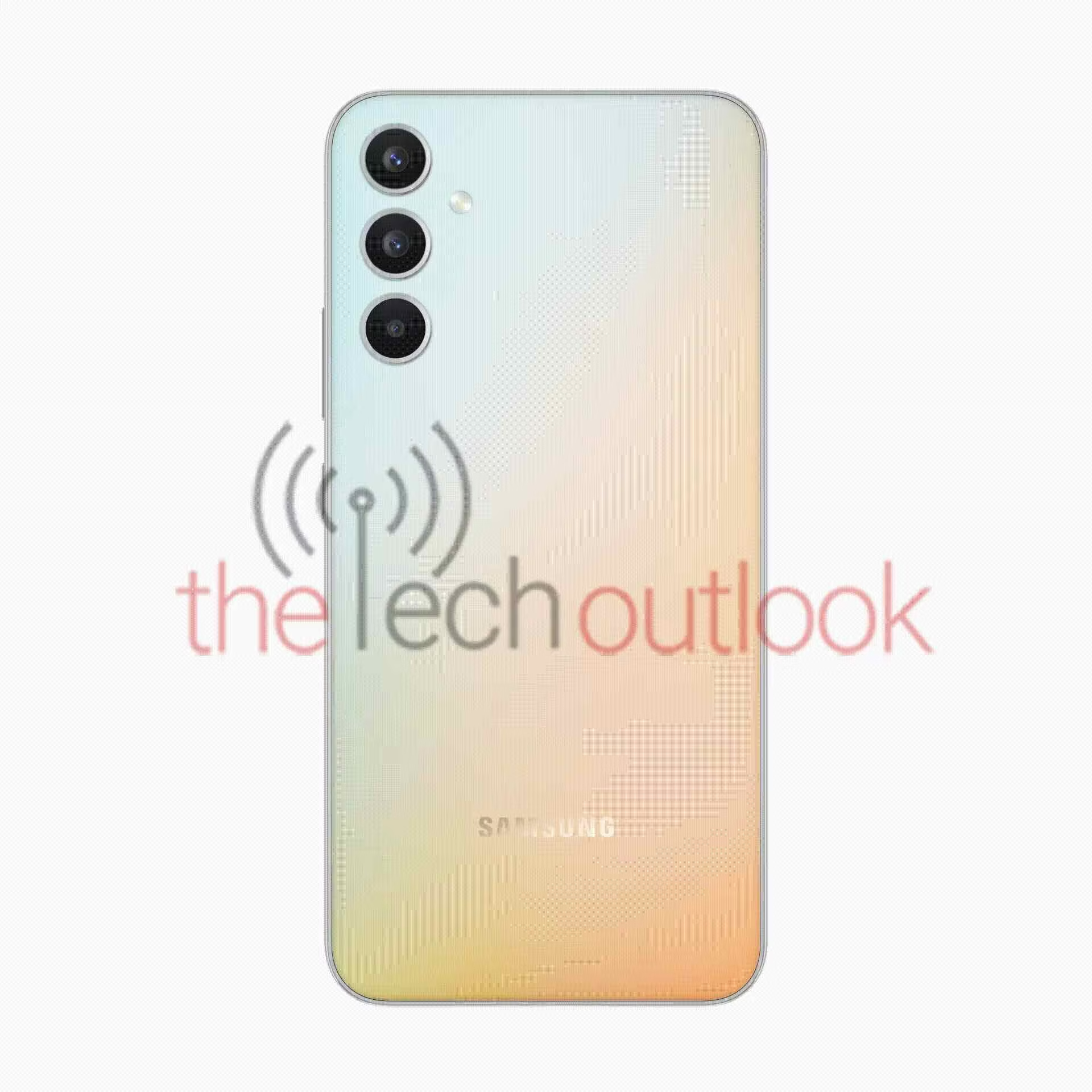
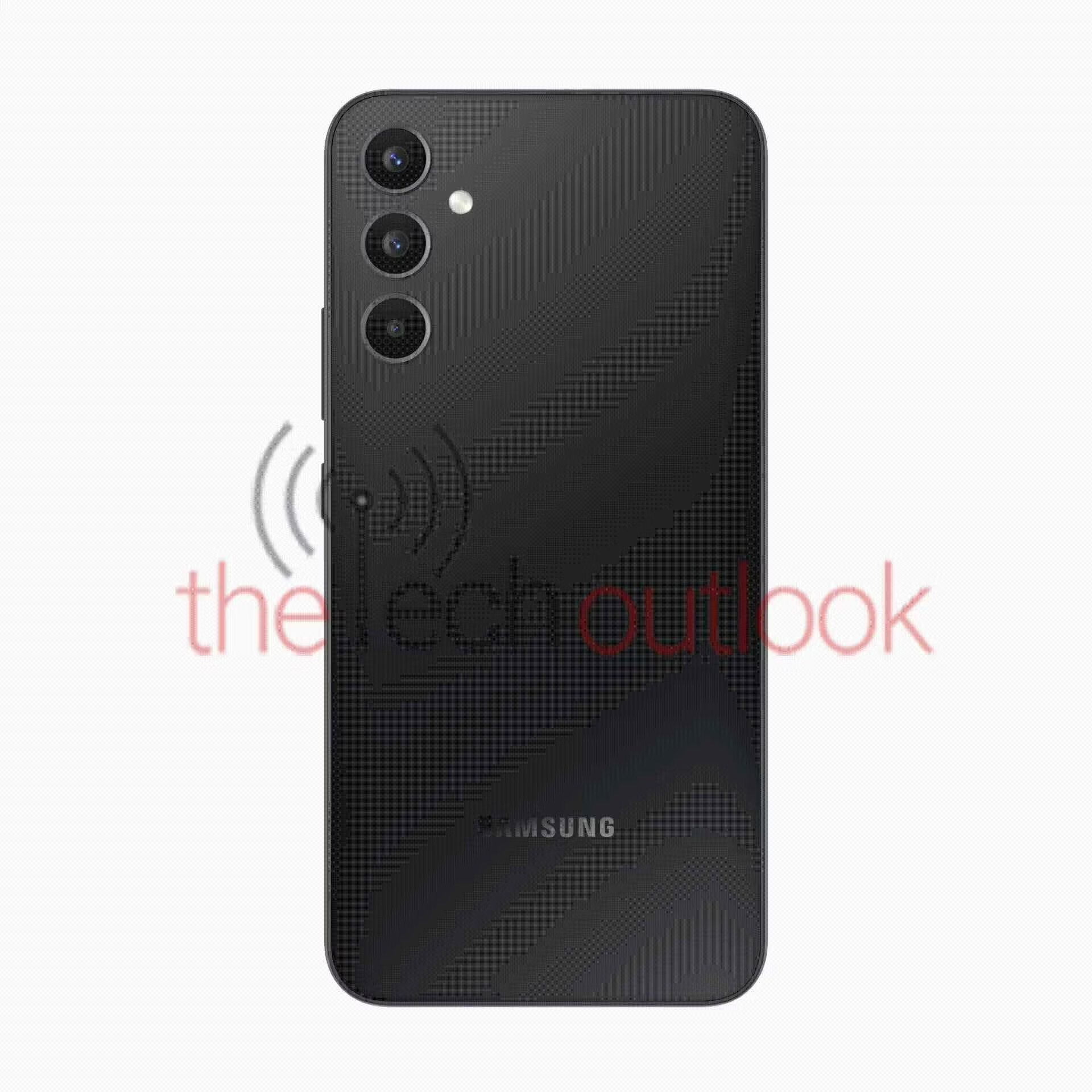
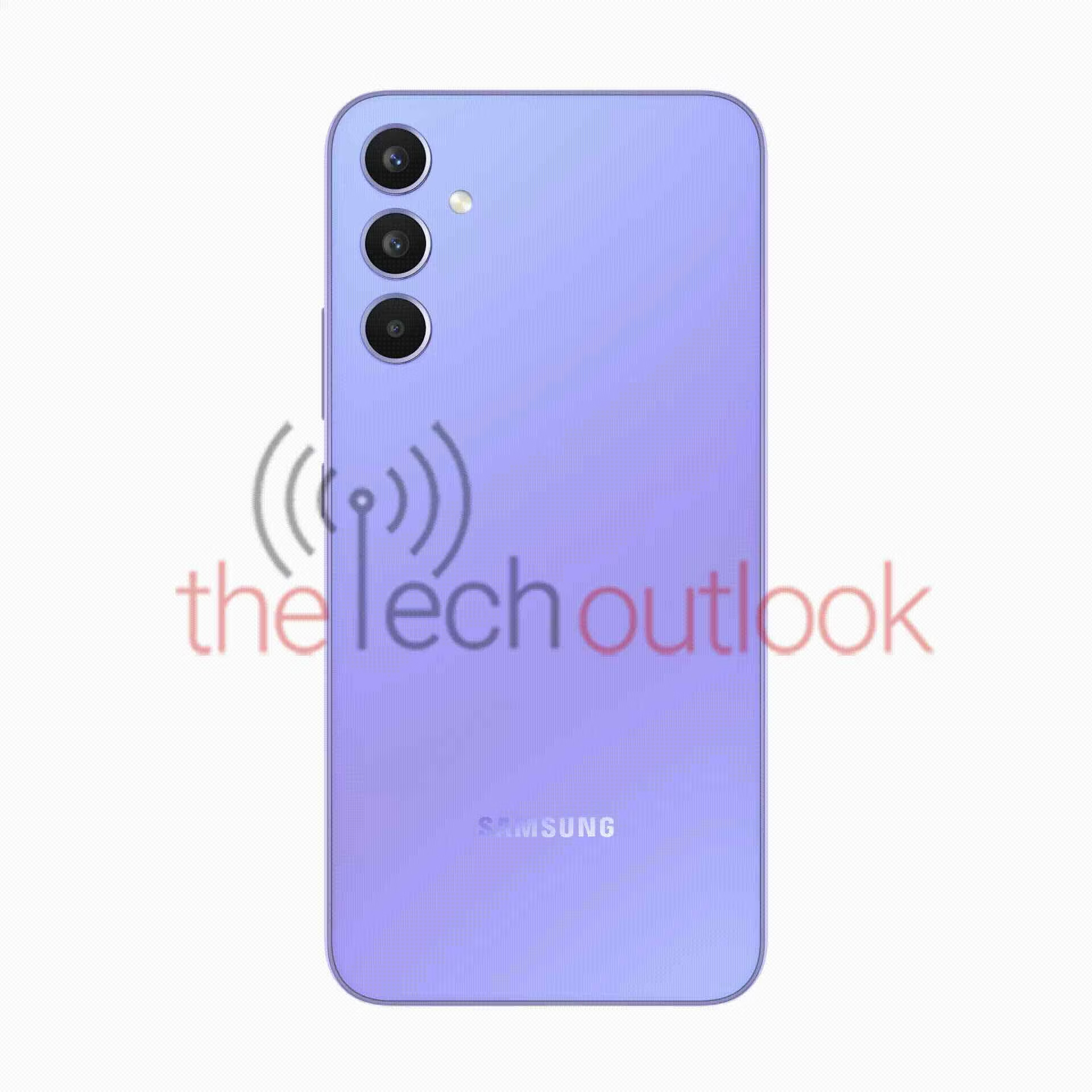
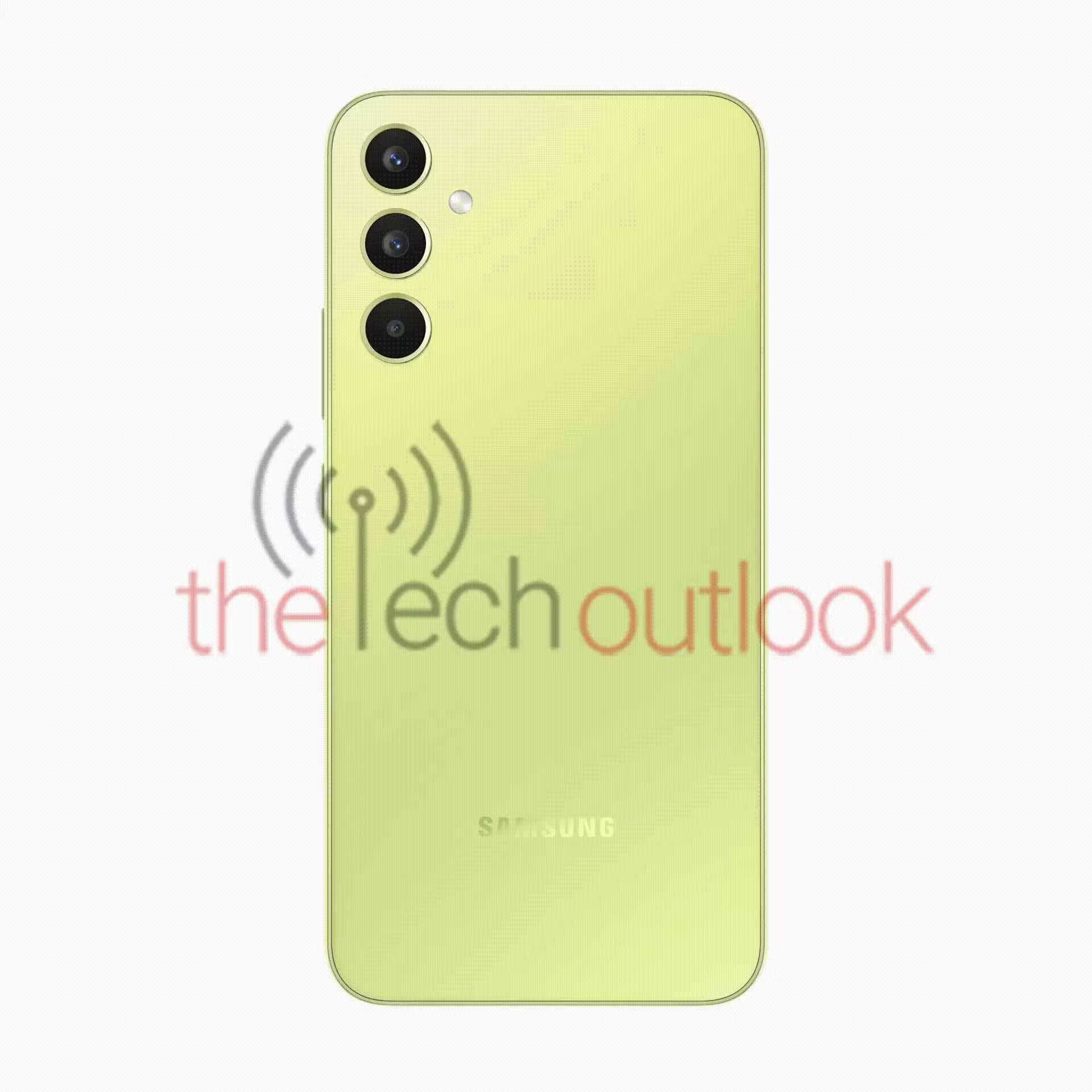
Samsung is reportedly working on the Galaxy A34 5G mid-range phone. Rumors are rife that the device may go official as early as January 2023. Last month, a report revealed the CAD renders of the device. TheTechOutlook has now released press renders of its design and colour options.
The leaked press renders of the Galaxy A34 5G show that it will be arriving in some enticing colors. The images reveal that it will be available in shades like graphite, violet, lime, and silver.
The Galaxy A34 will arrive with a waterdrop notch display. Its back panel has a triple camera unit with an LED flash. The three cameras have protruding rings. It is unclear whether the device has a side-facing fingerprint scanner or an under-display fingerprint sensor.
The publication has also shared some of the expected specifications of the Galaxy A34. The report states that it has a 6.5-inch AMOLED display that offers a Full HD+ resolution of 1080 x 2400 pixels and a refresh rate of 90Hz.
The Galaxy A33 was powered by the Exynos 1280 chipset, which supports 5G connectivity. Interestingly, its South Korean edition is said to be equipped with the Dimensity 1080 chipset. The same chip is likely to power the Galaxy A34. The SoC is said to be coupled with 6 GB of RAM and 128 GB of native storage.
The device may feature a 48-megapixel triple camera unit and a 13-megapixel camera on the front for selfies. It is likely to pack a 5,000mAh battery with 25W fast charging. Like the predecessor model, it may feature an in-screen fingerprint scanner. Readers are advised to digest the specs leak with a pinch of salt as it is only based on expectations.
Reports have claimed that the Galaxy A54 5G, which is likely to feature a new Exynos 1380 chipset, may also debut alongside the Galaxy A34. The Galaxy A14 and Galaxy A24 are also expected to be released in early 2023.
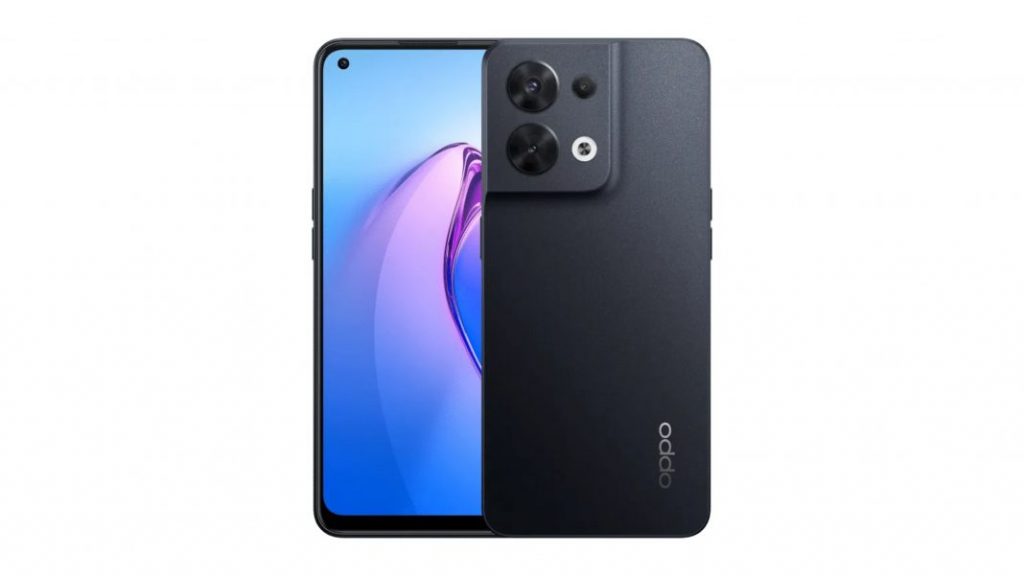
There have been several reports about the Oppo Reno 8T. The device that has the CPH2481 model number has been spotted on numerous certification sites, which indicates that it may launch as early as January in different markets. A new report by Pricebaba reveals the company also plans to launch a 5G version of the device. It has also bagged multiple certifications, which indicate that it may not take too long for it to go official.
An Oppo phone with model number CPH2505 has been approved by certification platforms like Singapore’s IMDA, India’s BIS, Europe’s EEC, and Indonesia’s TKDN. None of the listings have revealed the main specifications of the device. However, the IMDA listing confirms that it will have the “OPPO Reno 8T 5G” marketing name. It also states that apart from 5G, the device will offer usual connectivity features like LTE, Wi-Fi, Bluetooth, GPS, and NFC.
OPPO Reno 8
There is not much known about the OPPO Reno 8T (4G). This device has been certified by SIRM (Malaysia), EEC, TKDN, BIS, Bluetooth SIG, TDRA, and Element Materials Technology. These certifications have only revealed that the device will offer Bluetooth 5.3 connectivity and 33W charging. It has also been found that the device will run on ColorOS 13. Hopefully, the rumor mill will spill more details about the Reno 8T and the Reno 8T 5G in the coming days.
In addition, the report states that the Oppo Find N2 Flip with model number CPH2437 has been approved by the IMDA regulatory body. It is one of the many certifications that the flip phone has received in recent weeks. As it is known, the Find N2 Flip made its debut earlier this month in China. It is expected that the device will be available globally by late Q1 2023.
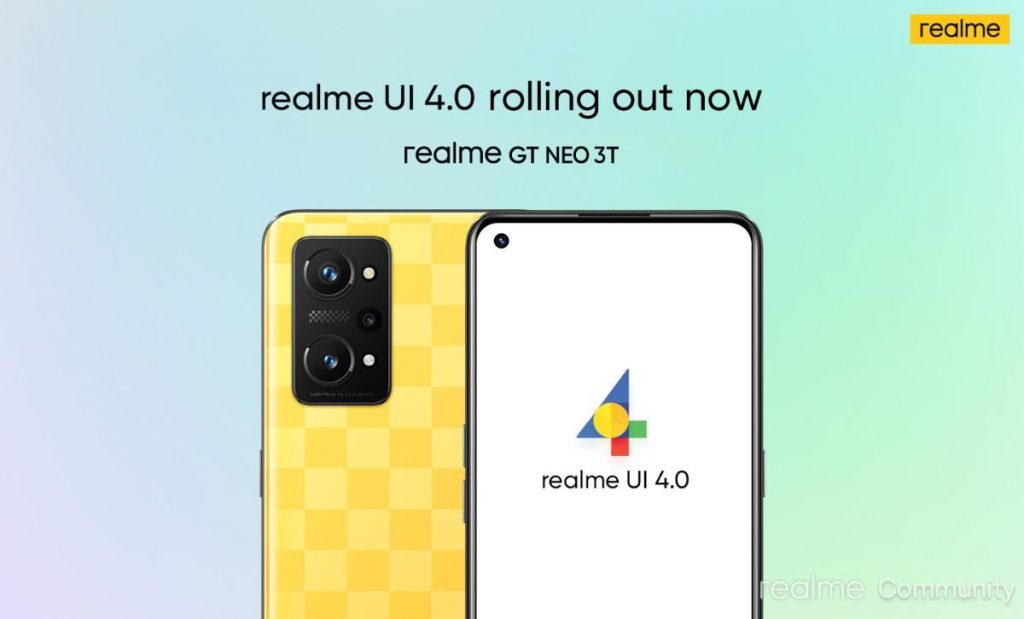
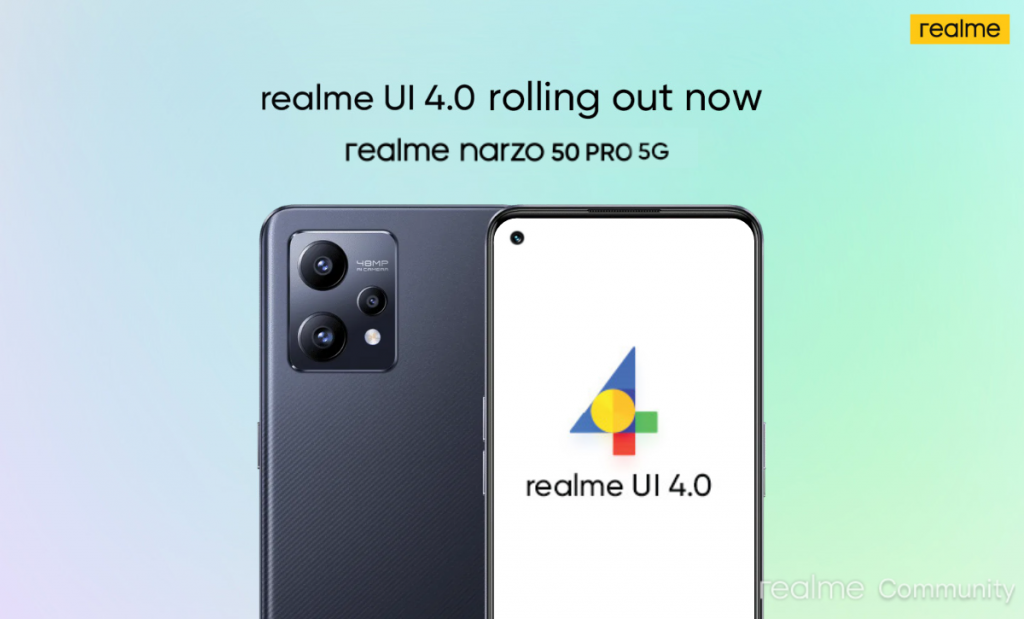
After recently launching the Android 13-based Realme UI 4.0 Open Beta program for the Realme GT Neo 2, Realme has now started seeding out the stable Android 13 update for Realme GT Neo 3T and Realme Narzo 50 Pro.
Starting with the GT Neo 3T, users who have the most recent stable version of the software installed (RMX3371 11.A.09) will receive the Realme UI 4.0 stable upgrade. The Narzo 50 Pro, on the other hand, will receive the update if it is using the RMX3395 11.A.05, RMX3395 11.A.06, or RMX3395 11.A.07 version. As usual, the smartphones will receive the stable version through a segmented rollout, so not all users will immediately receive the update.
Android 13 x Realme UI 4.0 update changelog
Aquamorphic Design
Adds Aquamorphic Design theme colors for enhanced visual comfort.
Applies the Aquamorphic Design philosophy to animations to make them natural and vivid.
Adds Shadow-Reflective Clock, with shadow simulating the orientation of the sun and moon.
Adds a Home screen world clock widget to show the time in different time zones.
Upgrades to Quantum Animation Engine 4.0, with a new behavior recognition feature, which recognizes complex gestures and provides optimized interactions.
Optimizes UI layers for clearer and neater visual experience.
Applies real-world physical motions to animations to make them look more natural and intuitive.
Adapts responsive layouts to accommodate different screen sizes to improve readability. (GT Neo 3T only)
Optimizes the widget design to make information easier and quicker to find.
Optimizes fonts for better readability.
Optimizes system icons by using the latest color scheme to make the icons easier to recognize.
Enriches and optimizes illustrations for features by incorporating multicultural and inclusive elements.
Efficiency
Adds large folders to the Home screen. You can now open an app in an enlarged folder with just one tap and turn pages in the folder with a swipe.
Adds media playback control, and optimizes the Quick Settings experience.
Adds more markup tools for screenshot editing.
Adds support for adding widgets to the Home screen, making information display more personalized.
Adds Sidebar Toolbox. You can open floating window inside apps for smooth operation.
Optimizes Shelf. Swiping down on the Home screen will bring up Shelf by default • You can search content online and on your device.
Personalization
Adds Bitmoji to offer more Always-On Display animations. (Narzo 50 Pro only)
Optimises Multi-Screen Connect. You can open multiple mobile apps on a connected PC for efficient multitasking. (GT Neo 3T only)
Optimizes Insight Always-On Display, with more personalized Always-On Display settings available.
Optimizes Portrait Silhouette Always-On Display, with more drawing tools and line colors available.
Security & privacy
Optimizes Private Safe
Adds an automatic pixelation feature for chat screenshots. The system can identify and automatically pixelate profile pictures and display names in a chat screenshot to protect your privacy (GT Neo 3T only).
Adds regular clearing of clipboard data for privacy protection (GT Neo 3T only).
The Advanced Encryption Standard (AES) is used to encrypt all files for enhanced security of private files.
Health & Digital wellbeing
Adds Eye comfort in Kid Space to protect children’s vision.
When in Kid Space, your browser app automatically switches to Kids mode to create a child-friendly space (GT Neo 3T only).
Adds Kid Space. When in Kid Space, your browser app automatically switches to Kids mode to create a child-friendly space (GT Neo 3T only).
Adds Eye comfort in Kid Space to protect children’s vision.
Gaming experience
Upgrades to HyperBoost GPA 4.0 to stabilize the frame rate and balance the performance and power consumption in key scenarios.
Honor recently held a mega launch event in China to announce devices, such as the Honor 80 GT, Pad V8 Pro tablet, Band 7, Smart Body Scale 3, and Router X4 Pro. Reports claimed that the company would also announce a flat display version of the Honor 80 Pro. However, the company did not unveil it. A Chinese leaker has claimed that the device will debut by early January in the home market. He added that the phone will be aimed at the offline market in the country.
To those who don’t know, Honor unveiled the Honor 80 SE, Honor 80, and Honor 80 Pro in November in China. The Pro model features a curved-edge display with a pill-shaped camera cutout at top-centre position, which houses a 50-megapixel dual selfie camera unit.
Honor 80 Pro flat display variant
Coming back to the new leak, the tipster further said that the Honor 80 Pro’s flat display variant’s specifications are quite similar to the original Honor 80 Pro. Apart from featuring a flat screen, the device will come equipped with a different primary camera.
Tipster Digital Chat Station has leaked an image (shown above) and key specifications of the device. The device will arrive with a 6.67-inch OLED display that offers a Full HD+ resolution of 1080 x 2400 pixels, a refresh rate of 120Hz, 10-bit colors, 1920Hz PWM dimming, and an under-display fingerprint scanner. As can be seen, it has a single punch-hole at the top-centre position.
On the front, it will feature a 32-megapixel selfie camera. Its back panel will feature a 160-megapixel primary camera with an f/1.8 aperture, an 8-megapixel camera, and a 2-megapixel snapper.
The Snapdragon 8 Plus Gen 1 and 4,800mAh battery will power the Honor 80 Pro’s flat display version. It will carry support for 66W fast charging. It will have a plastic middle frame and measure 7.2mm in thickness. The device will weigh around 186 grams to 193 grams and is expected to come in three colors, such as black, green, and pink.
To recall, the Honor 80 Pro has a 6.78-inch curved-edge OLED display that produces a 1.5K resolution of 1224 x 2700 pixels. It has a dual camera setup of 50-megapixel (ultra-wide)+ 2-megapixel (depth) and a triple camera unit of 160-megapixel + 50-megapixel (ultra-wide) + 2-megapixel (depth) on the back. The rest of the specs appear to be identical on both phones.
iQOO is born as a Vivo sub-brand releasing flagship killers and affordable phones. But now, it is releasing top-tier flagships too, just like Vivo. A perfect example of this is the iQOO 11 Pro, with amazing specifications which have nothing to envy to the most expensive flagships out there. Meanwhile, even Vivo came up with another flagship series, and it includes the Vivo X90 Pro. It is pretty obvious that the X90 Pro Plus is the best Vivo phone to date, but which one is the best between the Pro variant and the latest iQOO flagship? In order to give you an answer, here you can find a comparison between the main specifications of the Vivo X90 Pro and the iQOO 11 Pro.
Vivo X90 Pro vs iQOO 11 Pro
Vivo X90 Pro
iQOO 11 Pro
DIMENSIONS AND WEIGHT
164.1 x 74.5 x 9.3 mm,
215 g
164.8 x 75.3 x 8.9 mm,
210 g
DISPLAY
6.78 inches, 1260 x 2800 pixels (Full HD+), AMOLED
6.78 inches, 1440 x 3200 pixels (Quad HD+), AMOLED
The Vivo X90 Pro and the iQOO 11 Pro come with very good designs, including premium materials and curved screens at the sides. Which one is the most beautiful? It is mainly a matter of taste. In terms of look, I personally prefer the Vivo X90 Pro. And you should also note that it is the only phone of the duo with the IP68 certification, so it is waterproof and dustproof. On the other hand, the iQOO 11 Pro is slightly thinner and lighter. As already mentioned, they both come with curved displays, and the dimensions are almost the same.
Display
Surprisingly, the iQOO 11 Pro is equipped with a better display than Vivo X90 Pro. It is a Samsung AMOLED panel able to show up to one billion colors with a diagonal of 6.78 inches, a Quad HD+ resolution of 1440 x 3200 pixels, the LTPO technology enabling an adaptive refresh rate from 1 to 144 Hz, HDR10+ certification, a peak brightness of 1,800 nits, and an in-display fingerprint reader. The Vivo X90 Pro gets an AMOLED display able to show up to one billion colors with a diagonal of 6.78 inches, an 1.5K resolution of 1260 x 2800 pixels, a 120 Hz refresh rate, HDR10+ certification, and an in-display fingerprint reader.
Specs & Software
The Vivo X90 Pro and the iQOO 11 Pro are fueled by the latest Qualcomm and Mediatek flagship chipsets, respectively. The former is equipped with the Mediatek Dimensity 9200 chip running at a max frequency of 3.05 GHz, while the latter has a Snapdragon 8 Gen 2 mobile platform by Qualcomm running at a max frequency of 3.2 GHz. The iQOO 11 Pro wins the hardware comparison for a simple reason: it has a memory configuration with a higher amount of RAM: up to 16 GB, as well as up to 512 GB of UFS 4.0 native storage. The Vivo X90 Pro stops at 12 GB of RAM and 512 GB of native storage. Both phones run Android 13 out of the box, customized by either Origin OS or Funtouch OS depending on the market.
Camera
The best camera setup is the one found on the Vivo X90 Pro. It is equipped with a triple rear camera including a 50.3 MP main sensor with laser autofocus and OIS, a 12 MP ultrawide shooter, and a 50 MP telephoto sensor with 2x optical zoom and OIS. The iQOO 11 Pro has an inferior 50 MP main sensor, and an inferior 13 MP telephoto camera with 2x optical zoom, but it has a better ultrawide shooter with a 50 MP resolution. The Vivo X90 Pro also provides a better front camera, with a resolution of 32 MP.
The battery found on the Vivo X90 Pro is bigger than the one found on the iQOO 11 Pro, so it is able to give you a slight battery life boost with a capacity of 4870 mAh instead of just 4700 mAh. On the other hand, the iQOO 11 Pro supports 200W fast charging, so it charges quicker since its internal rival has 120W fast charging.
Price
The iQOO 11 Pro starts from about €700/$746 in China, while the starting price tag of the Vivo X90 Pro is €750/$800. Which one would you pick?
Custom ROMs are a boon for old Android phones. Custom ROMs allow not just outdated devices, but also the most recent ones, to get a plethora of customisation and other modification options. LineageOS is one of the most popular custom ROMs available today. Owners of the Fairphone 4 can now access Android 13 and microG by installing the most recent LineageOS ROM. This is an unauthorised build, but what’s better than having access to newer features and a slew of additional features?
Anyway, for those who are unaware of the Fairphone 4, it is a mid-range smartphone produced by Amsterdam-based startup Fairphone that stands out from the regular Android crowd thanks to its easy-to-repair design. It was released in 2021 with Android 11 pre-installed. The brand has promised two major Android updates to the smartphone, but the device is yet to get the Android 12 build. Anyway, keeping the brand and its OS promise aside, the device has got support for Android through an unofficial build of LineageOS ROM.
Thanks to XDA JMember tfbb and significant contributions from the WeAreFairphone community, the phone now has an unofficial build of LineageOS 20 with microG and F-Droid. Because this is not an official release, we should expect some things to fail and bugs to appear on occasion. There could be some other noticeable bugs here and there but the developers will surely fix them as soon as possible.
All you need to check out this unofficial LineageOS 20 build on your Fairphone 4 is an unlocked bootloader and a custom recovery installed on your phone. Fortunately, the developer has also included a LineageOS recovery image to make flashing easier. However, before you proceed to flash the ROM on your device, make a backup of your data first, as you may lose it during the installation. You can download the ROM using the link provided below:
iQOO 11 Pro went for sale in China today with a starting price of 4,999 yuan ($717). Interested shoppers will be able to get the smartphone in Grey and White. The company also has a special Isle of Man edition of the Pro model, which can be pre-ordered in China, starting today.
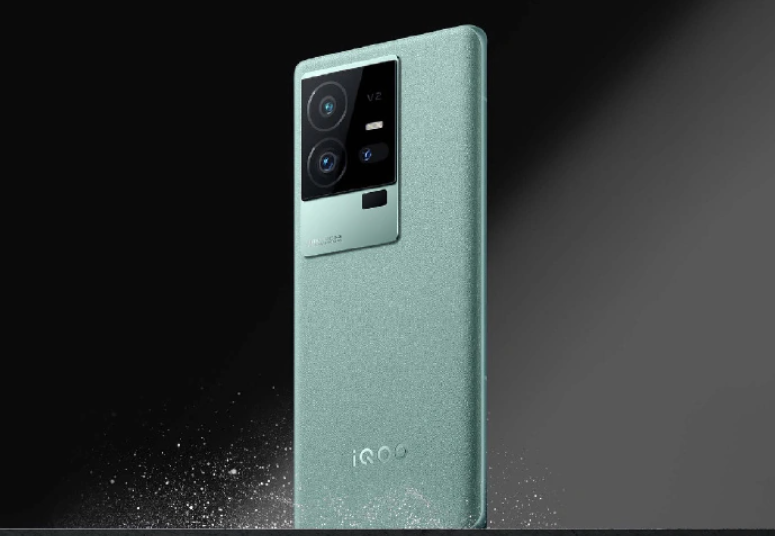
Unlike the standard models, the iQOO 11 Pro Isle of Man Edition features a textured back made up of green silicone leather with micron-sized fiberglass substrates. The special edition handset carries a price tag of 5999 Yuan and comes in a sole 16GB+512GB storage variant. It can be pre-ordered in China through Jingdong.
The specifications of the smartphone are the same as the rest two models. It features a 6.78-inch E6 AMOLED curved display with a 144Hz refresh rate and a 2K screen resolution. Powering the smartphone is the Qualcomm Snapdragon 8 Gen 2 SoC, paired with quad-channel LPDDR5x RAM and UFS 4.0 storage.
As far as the cameras are concerned, the device has a triple-camera unit on the back that includes a 50-megapixel primary Sony IMX866 camera sensor, a 50-megapixel ultra-wide camera with a fisheye lens, and a 13-megapixel portrait telephoto unit. For selfies, the phone has a 16-megapixel snapper on the front.
In terms of software, the iQOO 11 Pro runs the Android 13 out-of-the-box with the company’s OriginOS Forest custom interface on top. The device packs a 4,700mAh battery that supports 200W fast charging, 50W wireless charging, and 10W reverse wireless charging.
In related news, iQOO is gearing up to launch the iQOO 11 in India on January 11. However, the Pro model will likely remain limited to mainland China. The vanilla model is rumored to be priced between Rs 55,000 (~$664) and Rs 60,000 (~$725) in India.
Apple’s silicon always had an upper hand over other mobile SoCs. Every new A series Bionic chip offered better performance than the previous one. However, this might not be the case with the 2025’s A17 chip that will be used in the iPhone 15 series. It is reported that the next-gen chipset will focus more on battery-life improvements than processing power.
According to 9to5Mac, the A17 Bionic chips for iPhone 15 series may prioritize battery life over processing power. The information was revealed by a statement made by TSMC’s chairman when asked about the company’s 3nm chips.
For those who don’t know, TSMC manufactures the chips that are used in Apple’s iPhones. The semiconductor manufacturer is going to use a smaller 3nm process node in the next-gen A17 chip and the production of the same was started a few days ago.
To celebrate the start of mass production of 3nm chips, the company held a ceremony a few days ago. And today, TSMC’s chairman Mark Liu revealed impressive efficiency improvement figures resulting from the new process. Liu, in a statement given to Bloomberg, said the 3nm processes offer better performance than the 5nm chips while requiring about 35% less power.
Macs powered by a new M2 Pro chip might debut with the new process node before the iPhone 15’s A17 processor. In addition, M3 chips are also expected to use a 3nm process. A17 will not necessarily prioritize performance over power efficiency, despite the chipmaker’s emphasis on power efficiency. That’s something Apple would decide.
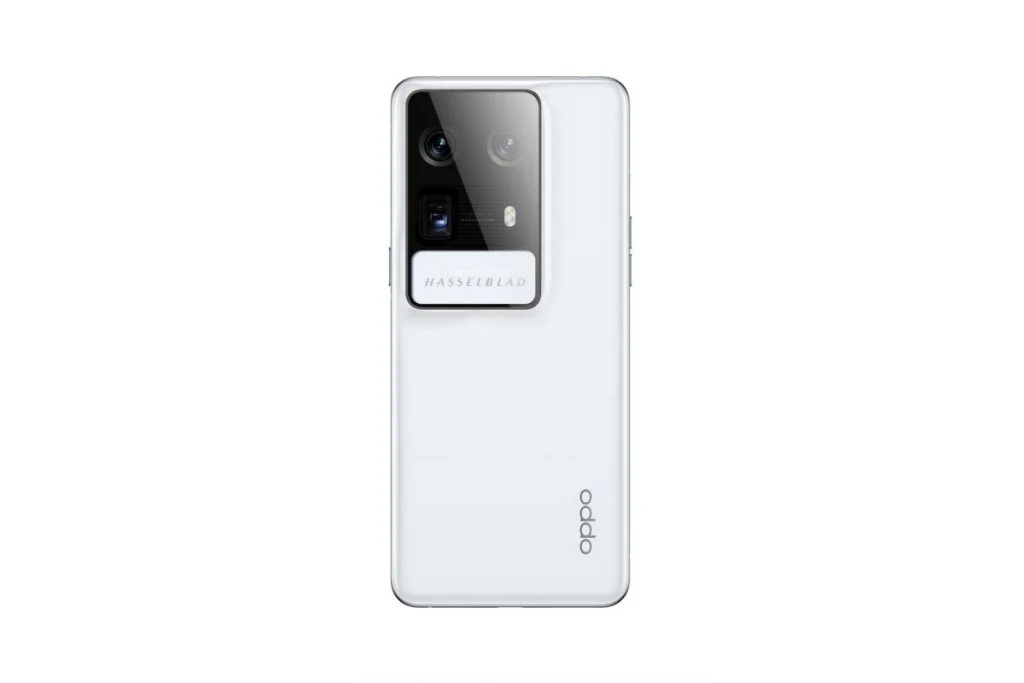
Oppo’s flagship Find X6 series seems to be just around the corner, with rumors hinting at an early 2023 launch. The lineup should include the vanilla Find X6 and the higher-end Find X6 Pro. However, these two might not be the only Oppo flagships launching next year. Tipster Digital Chat Station says the brand has another premium smartphone in the works that could have Hasselblad cameras (Via TechGoing).
Earlier this month, Mr. Chat Station shared a schematic image of an unknown Oppo smartphone with a round-shaped Hasselblad-labelled camera module. It seems the tipster has revealed more information about the same phone today.
DCS says the mysterious smartphone will have a circular camera module with a main camera, a periscope portrait center-focus lens, and a movie lens. The cameras will feature Hasselblad tuning. The device should belong to the Find X6 series, however, the tipster is not certain of its moniker.
Notably, a recent leaked render shared by Evan Blass revealed the Find X6 series will have a rectangular camera island with three cameras inside. So, if the alleged handset is indeed a Find X6 series model, it would differ significantly from other models in terms of design.
As mentioned, Oppo’s next premium flagship series is expected to arrive in early 2023. The lineup may come with an OLED display bearing a resolution of 1.5K and 2K pixels. The vanilla variant may be powered by a Snapdragon 8+ Gen 1 while the Pro model could be equipped with a Snapdragon 8 Gen 2 chipset. They will pack up to 12GB RAM and 512GB storage. Both models are rumored to feature a 1-inch Sony IMX989 primary sensor.
A start-up led by former Google and Apple employees, Nuvia, was acquired by Qualcomm last year. Qualcomm wants Nuvia’s custom Arm chip because it could use it to more effectively compete with Apple. To put things in perspective, one of Nuvia’s executives was regarded as the Apple Silicon M1 chipset’s “Chief Architect.” According to a report by The Information, Nuvia was a takeover target for a number of businesses, including Google. The Information also said that Apple had issues with the next-generation GPU it was developing for the A16 Bionic.
A “world-class CPU and design team with experience in high-performance CPUs, Systems on a Chip (SoC), and power management for compute-intensive devices and applications” is touted to be the foundation of NUVIA. The combination with Qualcomm will strengthen Qualcomm’s position as a market leader. Qualcomm is already well-known for its mobile GPUs, DSP, and dedicated multimedia accelerators. The results of Nuvia’s work are already evident in Qualcomm Oryon, a product that is based on work done at Nuvia.
This is especially a very good idea because it’s extremely possible that Google was pursuing Nuvia for its own Tensor chips. Google’s Tensor effort for Pixel smartphones offers it some control over the SoCs that go into its handsets, but having its own chipset designers ready to go with bespoke Arm cores would mean that it would no longer have to rely on Samsung and its Exynos chips for reference designs in the future.
Qualcomm confirmed that NUVIA CPUs will be integrated with its current portfolio of products, which includes mobile processors for flagship smartphones, next-generation laptops, digital cockpits, Advanced Driver Assistance Systems, extended reality, and infrastructure networking solutions when it acquired the Nuvia. According to a press release issued by Qualcomm, the agreement was signed to acquire NUVIA for about $1.4 billion.
Earlier this month, Motorola ThinkPhone was spotted in leaked renders along with key specifications. In the past, it had also bagged China’s 3C certification. Now Twitter user SnoopyTech has shared the marketing material of the smartphone. The ThinkPhone is expected to be targeted towards business-centric customers similar to Lenovo’s ThinkPad laptops. The smartphone could come with productivity-focused features and functions.
The Motorola ThinkPhone in the latest marketing material images has the same design as seen in previously leaked renders. It has a slightly compact form factor with three buttons on the right edge whereas an additional button accentuated in Red colour is located on the top left side of the device.
As per the latest development, the Motorola ThinkPhone is seen beside a laptop hinting that the phone will work seamlessly with a computing device. We can spot options like connected display, mirror phone, and webcam. Additionally, users will also be able to respond to incoming calls or messages and control music from the laptop. Most of these features are similar to the ones found on Galaxy phones and laptops, courtesy of DeX mode.
The Motorola ThinkPhone will come with a textured finish on the back panel and an IP rating for water resistance. The back panel has a rectangular camera module housing three sensors. Internally, the device is tipped to be powered by a Snapdragon 8+ Gen 1 processor coupled with up to 12GB RAM, 512GB storage and be backed by a 5,000mAh battery with support for 68W charging. It will run on Android 13 OS out of the box. The upcoming offering is expected to feature a 6.6-inch OLED screen with a 144Hz refresh rate.
The Motorola ThinkPhone’s exact launch date remains a mystery. Considering that the device has surfaced online in recent weeks, we can expect it to debut soon.
BYD has launched its new 2023 Dolphin electric hatchback in China, targeting tech-savvy young consumers with a starting price of 16,700 USD. The Dolphin is based on BYD’s e-platform 3.0 and powered by LFP Blade batteries, and comes with a range of single and dual-color exterior options. It has a sleek design based on BYD’s “Marine Aesthetics” design language, developed by Chief Designer Wolfgang Egger. The car measures 4070/1770/1570mm with a 2700mm wheelbase and is available with 16 or 17-inch wheels.
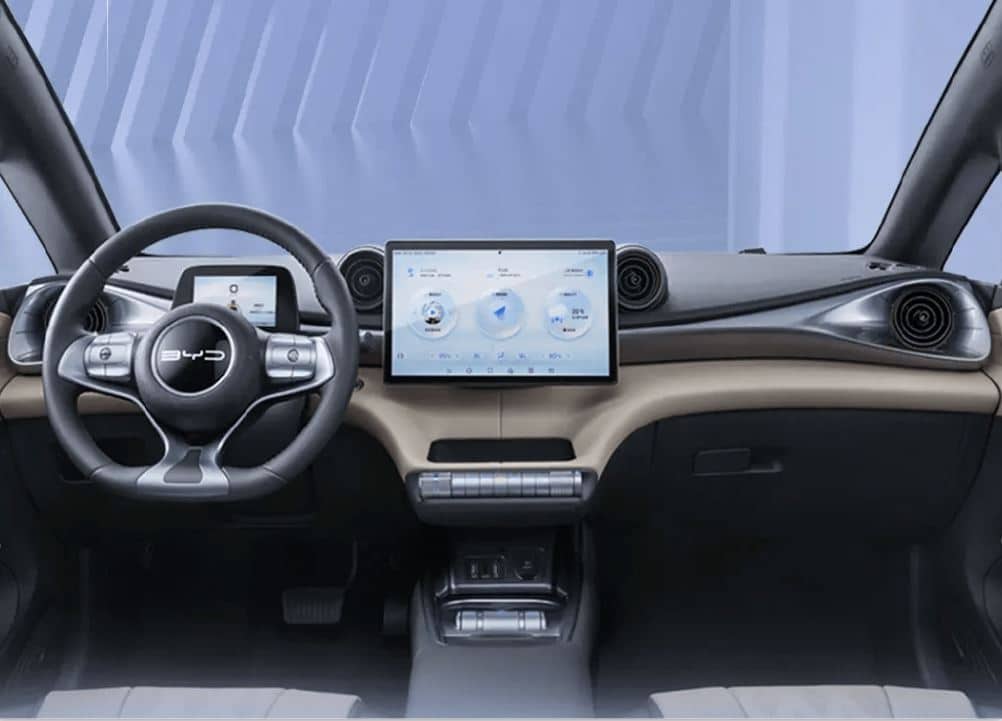
Inside, the 2023 Dolphin features a flat-bottom multi-function steering wheel, a 5-inch full LCD instrument panel, and a 12.8-inch floating central control screen. It also comes equipped with front seat heating, a 4-way electronically adjustable passenger seat, a 6-way electronically adjustable driver seat, and a rear center armrest with a cup holder.
The car has a front parking radar, electric exterior mirrors, and a seatbelt warning light, as well as real-time tire pressure monitoring. In addition to the existing energy-saving, snow, and sports driving modes, the 2023 Dolphin now also offers a comfort mode.
The 2023 BYD Dolphin is powered by a front permanent magnet synchronous motor with two output options: 70 kW/180 Nm and 130 kW/290 Nm. The corresponding pure electric cruising range is 420 km and 401 km, respectively, with 0-100 km/h acceleration times of 10.9 seconds and 7.5 seconds. The motor is paired with a 44.9 kWh BYD LFP Blade battery pack and supports 60kW fast charging.
In November 2022, BYD sold 26,029 units of the Dolphin, a year-on-year increase of 195.8%. The car’s compact size and sleek design, combined with its advanced technology and range of convenience features, make it an appealing choice for young, tech-minded consumers in China.
New 2023 BYD Dolphin Specs
Exterior:
Color options: Pupu Pink, Beibei Grey, Cheese Yellow, Surfing Blue, Atlantis Grey, Taro Purple, and Black
Measures 4070/1770/1570mm with a 2700mm wheelbase
Available with 16 or 17-inch wheels
Interior:
Flat-bottom multi-function steering wheel
5-inch full LCD instrument panel
12.8-inch floating central control screen
4-way electronically adjustable passenger seat
6-way electronically adjustable driver seat
Rear center armrest with cup holder
Front parking radar
Electric exterior mirrors
Seatbelt warning light
Real-time tire pressure monitoring
Two cupholders for rear seat passengers
Powertrain:
Front permanent magnet synchronous motor with 70 kW/180 Nm or 130 kW/290 Nm output options
Pure electric cruising range of 420 km or 401 km
0-100 km/h acceleration times of 10.9 seconds or 7.5 seconds
We use cookies on our website to give you the most relevant experience by remembering your preferences and repeat visits. By clicking “Accept”, you consent to the use of ALL the cookies.
This website uses cookies to improve your experience while you navigate through the website. Out of these, the cookies that are categorized as necessary are stored on your browser as they are essential for the working of basic functionalities of the website. We also use third-party cookies that help us analyze and understand how you use this website. These cookies will be stored in your browser only with your consent. You also have the option to opt-out of these cookies. But opting out of some of these cookies may affect your browsing experience.
Necessary cookies are absolutely essential for the website to function properly. This category only includes cookies that ensures basic functionalities and security features of the website. These cookies do not store any personal information.
Any cookies that may not be particularly necessary for the website to function and is used specifically to collect user personal data via analytics, ads, other embedded contents are termed as non-necessary cookies. It is mandatory to procure user consent prior to running these cookies on your website.