Samsung has scheduled its next Galaxy Unpacked event on 10th August, where the South Korean giant will be launching the next-generation foldable smartphones as well as the next-gen Galaxy Watch 5 series.
Ahead of the official launch next week, the pricing details for the Samsung Galaxy Watch 5 and the Galaxy Watch 5 Pro have leaked online, which indicates that the wearable devices won’t be more expensive than their predecessors.
As per the leak, the Galaxy Watch 5 will have a starting price of 349 CAD, which is around $270 for the basic 40mm model, while the 44mm model will cost 389 CAD, around $300. On the other hand, the Galaxy Watch 5 Pro 45mm will be priced at 559 CAD, which approximately converts to $435.
Previously, the European pricing of the upcoming smartwatches was leaked online. If that pricing is accurate, then the Galaxy Watch 5 40mm model with Bluetooth connectivity will cost €259.98, while the 44nm model with Bluetooth support will be priced at €286.90.
On the other hand, the Samsung Galaxy Watch 5 Pro 45nm model will be priced at €430.89. The pricing is typically on the higher side in the European market, which means that the devices will be priced a bit lower in other regions.
In terms of design, the smartwatches are expected to follow the same design language as their predecessors, having a round dial and packing several different sensors for tracking and offering health-related details.
One of Fitbit‘s most sophisticated fitness trackers, the Charge 5, received an update last month in a covert manner. The Google-owned firm added the ability to locate your phone via the fitness tracker, even though it didn’t specify what the upgrade should do which intrigued the users and prospective buyers as to what the wearable device brand is bringing to the table. Notably, the Fitbit Charge 5 became available last year officially.
Recently, Fitbit revealed that the update brought a couple of new clockfaces in addition to the much-needed feature. A clockface in two color variations for the Boom is seen in the image above, along with a second clockface for the Luxe, another Fitbit wearable.
In order to be specific, Charge 5 customers will only receive the Boom clockface, which is available in two variations, whereas Fitbit Luxe owners will receive all three clock faces. In addition to these new customization choices, Luxe customers will have the same ability as Charge 5 users to locate their phones using the wearable device.
How to install the new app?
Install the new Find Phone app on your tracker.
Open it, and then tap Find Phone.
Your phone should then begin to ring loudly, even if it is in the DnD (Do Not Disturb) setting. You can tap Cancel to stop the phone from ringing if you are able to find it.
Fitbit claims that the update is now accessible, but Charge 5 users may have already downloaded it when it originally appeared more than a week ago.
The latest addition to the K series by Redmi is the Redmi K50i: it is an affordable variant, but it still provides a high-end hardware department, which is the reason why it is a perfect phone for gamers. But it is also the best handset in its price range? In order to understand it, there is no better way than to compare it to the other best devices in the same price range. If you are looking for an affordable gaming phone, then the K50i is a perfect choice, but if you want a good phone even for other purposes, you may consider something like the OnePlus Nord 2T sold at the same price range. This is a comparison between the main specifications of the Redmi K50i by Xiaomi’s sub-brand and the OnePlus Nord 2T by OPPO’s sub-brand. Let’s discover which one offers the highest value for money.
Xiaomi Redmi K50i vs OnePlus Nord 2T
Xiaomi Redmi K50i
OnePlus Nord 2T
DIMENSIONS AND WEIGHT
163.6 x 74.3 x 8.9 mm,
200 g
159.1 x 73.2 x 8.2 mm,
190 g
DISPLAY
6.6 inches, 1080 x 2460 pixels (Full HD+), FFS LCD
6.43 inches, 1080 x 2400 pixels (Full HD+), AMOLED
Triple 64 + 8 + 2 MP, f/1.9 + f/2.2 + f/2.4
16 MP f/2.5 front camera
Triple 50 + 8 + 2 MP, f/1.9 + f/2.2 + f/2.2
32 MP f/2.4 front camera
BATTERY
5080 mAh, fast charging 67W
4500 mAh, Fast Charging 80W
ADDITIONAL FEATURES
5G, dual SIM
5G, dual SIM
Design
These phones are not built with premium materials, so do not expect an incredible design. They are made of polycarbonate, but they still look modern thanks to their beautiful camera modules and their punch-hole displays with narrow bezels around. So which one has the best design? I personally prefer the OnePlus Nord 2T not only because of its original camera module, but also because it is more compact, thinner, and lighter than Redmi K50i. It weighs less than 200 grams and it is 8.2 mm thin, while its rival is chunkier due to its bigger display, thicker and heavier body. The displays of these phones are protected by Gorilla Glass 5, so they are pretty resistant. The punch holes are placed in different positions and the OnePlus adds a physical alert slider that you can find on most of the devices from the brand.
Display
The most impressive display in terms of image quality belongs to the OnePlus Nord 2T. It sports an AMOLED panel with brilliant colors and deeper blacks. The display has a diagonal of 6.43 inches, an HDR10+ certification, and a 90 Hz refresh rate. As already mentioned, it is protected by Gorilla Glass 5 by Corning. Unfortunately, the Redmi K50i by Xiaomi has an LCD display, so the colors are not as brilliant as an AMOLED panel like the one of its competitor. This device features a 6.6-inch panel with a Full HD+ resolution of 1080 x 2460 pixels, the HDR10 certification, and Dolby Vision support. An important advantage of this handset is the presence of a 144 Hz refresh rate, much higher than the refresh rate of the Nord 2T. On the other hand, the OnePlus mid-ranger has an in-display fingerprint reader, while it is side-mounted on the Xiaomi one. Both the phones feature stereo speakers, but the Redmi is the only one with a 3.5 mm audio jack.
Specs & Software
The most powerful hardware department belongs to the Redmi K50i because it features a better processor. It is fueled by the Dimensity 8100 mobile platform by MediaTek built at 5 nm with an octa-core architecture. This chipset is composed of four Cortex A78 CPUs running at a max frequency of 2.85 GHz, four Cortex A55 CPUs running at a max frequency of 2 GHz, and a Mali G610 MC6 GPU. The SoC is paired with up to 8 GB of RAM and up to 256 GB of UFS 3.1 native storage. The OnePlus Nord 2T offers up to 12 GB of RAM and up to 256 GB of UFS 3.1 internal storage, but the chipset is weaker. We are talking about the Dimensity 1300 by MediaTek with an octa-core architecture composed of one Cortex A78 CPU with a 3 GHz max frequency, three Cortex A78 CPUs running at 2.6 GHz, four Cortex A55 running at 1.8 GHz, and a Mali G77 MC9 GPU. Both the phones run Android 12 out of the box and they feature highly customized user interfaces.
Camera
The king of cameras here is the OnePlus Nord 2T. It has a triple rear camera including a flagship-class Sony IMX766 main sensor with a 50 MP resolution and OIS support, an 8 MP ultrawide sensor, and a 2 MP macro camera. The Redmi K50i has the same secondary sensors, but the main camera is inferior as it is a 64 MP sensor without OIS. The OnePlus Nord 2T also provides a superior front camera with a 32 MP resolution against just 16 MP.
The Redmi K50i has a bigger battery and it is able to provide a longer battery life in most scenarios, even though it has an LCD display with higher energy consumption. On the other hand, the 4500 mAh battery of the OnePlus Nord 2T charges quicker thanks to 80W fast charging and its lower capacity.
Price
The Redmi K50i is priced at Rs. 25,999 / $330 in India, while the OnePlus Nord 2T costs Rs. 28,999 / $370. The Nord 2T is a more complete phone, but the Redmi is better for gamers thanks to its 144 Hz refresh rate, better processor, and bigger battery. Which one would you pick?
Xiaomi Redmi K50i vs OnePlus Nord 2T: PRO and CONS
It used to be difficult to find a tablet that was inexpensive. It appears that those times are finally behind us. Budget tablets from OPPO and Realme were just introduced for the Indian market.
It is rumored that Xiaomi is also considering releasing a low-cost tablet. The tablet’s name is still unknown at this point, but it is more likely to be named Redmi Pad 6 rather than Xiaomi Pad 6. We discovered the gadget today on the FCC website. Model number 22081283G, which is consistent with past disclosures, was written on it.
Xiaomi Pad 6 or maybe Redmi Pad 6 surfaces on the FCC. It is labelled as some Redmi tablet.
— Simranpal Singh (ਸਿਮਰਨਪਾਲ ਸਿੰਘ) (@simransingh931) August 2, 2022
According to a tweet by leaker Simranpal Singh, the discovery of the device on FCC certification shows certain important characteristics in addition to confirming the existence of the device. The tablet will come pre-installed with MIUI 13. It will also include a 7,800mAh battery, which is marginally larger than the 7,100mAh battery in the OPPO Pad Air. Additionally, 5G and Wi-Fi 802.11ac support are anticipated for the Redmi Pad. The tablet was previously discovered on the CMIIT certification website, where it was listed as supporting Wi-Fi 802.11ac and the 5G spectrum.
The Redmi Pad’s specifications are not well known. The model number 22081281AC of a Redmi tablet that showed up in the databases of the CMIIT and 3C certification platforms in June is thought to be that of the Redmi Pad. These listings provided dual-band Wi-Fi, 67W rapid charging, and 5G connection.
Unfortunately, there is no additional information available regarding the Redmi Pad 5G’s specifications. The gadget might come preinstalled with MIUI Lite, a scaled-down version of MIUI for low-end devices, in accordance with a prior listing on Xiaomiui. But according to the current listing, the Redmi Tablet will run MIUI13. Given that both devices offer 5G connectivity, it appears that the Realme Pad X 5G and Redmi tablet will be in direct competition.
ALLDOCUBE is giving huge discounts on its ALLDOCUBE X Gaming Tablet on Amazon. Global consumers can buy the X Gaming Tablet which generally retails for $259 at a heavily discounted price of $205.15 on Amazon US by using the coupon code: 15XGAMECODE
Canadian Consumers can buy the tablet which retails for CA$399.99 at a discounted price of CA$203.8by using the coupon code: XGAMECA0718 on Amazon Canada.
Japanese customers can buy the tablet which retails for ¥34999 at a discounted price of ¥26149.11 by using the coupon code: WHYSVVDN on Amazon Japan.
The specially designed gaming tablet features a 10.5” FHD IPS display with 1920 x 1280p resolution, a narrow bezel, and a full viewing angle that gives you an immersive visual experience. The tablet comes with a metal back that gives it a classy look. It is powered by a MediaTek P90 octa-core processor and comes with 8GB RAM and 128GB storage expandable up to 2TB.
Fueled with a massive 7500mAh battery, it supports 18W PD/MTK PE2.0 dual-protocol fast charging and gives you up to 10 hours of online streaming and 14 hours of video playback. The tablet comes with an 8MP rear camera and 5MP selfie camera and runs the Android 11 OS. Other interesting features include GMS certification which makes it compatible with popular apps such as Facebook, Twitter, YouTube, Line, Instagram, etc, Face recognition, wireless projection, etc.
Please note that ALLDOCUBE X Gaming Tablet will be available at heavily discounted prices on Amazon US, Amazon Canada, and Amazon Japan. This is a limited-time offer. So place your order before the coupons expire.
For more information on such exciting deals and offers check out our deals hub.
* Please Note: When you buy something using the links in our articles, we may earn a small commission at no cost to you.
Chinese tech giant Xiaomi has launched the MIJIA Humidifier 2 in China. The second-gen MIJIA Humidifier comes two years after the release of the MIJIA Humidifier. It also arrives with five major upgrades over its predecessor but retains the 99-yuan (~$15) price tag of the previous model.
The earlier model, the MIJIA Humidifier had a 4L capacity and up to 36 hours of humidification. It thus eliminated the stress of frequent water injections. The MIJIA Humidifier 2 has an upgraded fog volume from 280mL/h to 300mL/h. It has a built-in ceramic core atomizing sheet that helps to block water particles. The atomized micron water particles are then sprayed at 300mL/h to provide greater hydration. Unlike its predecessor, the new model does not require you to lift the lid to add water to the humidifier. The new model also provides 360 degrees rotation for more effective humidification of the room. The previous model only operated in a single direction.
The second-generation MIJIA Humidifier provides up to 99.9% silver ion antibacterial action, which is a marginal improvement from the first-generation model. It has also included a visual transparent water gauge, unlike its predecessor. The new Mijia humidifier has a 4L container and can provide up to 30 hours of humidification. It does not require frequent addition of water and its antibacterial action prevents bacterial breeding inside the tank. The MIJIA Humidifier 2 is currently available in China and global availability details are not known at this time.
Logitech G and Tencent Games are joining hands to bring a cloud gaming handheld for the users later this year. The handheld will apparently be an amalgamation of Logitech G’s hardware expertise and Tencent’s software services. It will support multiple cloud gaming services.
Both the companies are also working with the Xbox Cloud Gaming and NVIDIA GeForce NOW to enable gamers to play AAA games on the go.
From the announcement blog, it’s clear that the upcoming handheld will be cloud gaming-focused. For the unversed, Cloud gaming utilizes data center servers to stream video games to consumers. Gamers do not need to download or install games on their PC or console because they are rendered and played on remote servers.
“Logitech G’s leadership in PC and console gaming gear make them an ideal partner to help us realize the vision of bringing a better gaming experience to gamers around the globe,” said Daniel Wu, general manager of Tencent Games Smart Solution Innovation Lab. “Today marks the start of a new opportunity for our companies to further push the frontiers of gaming devices.”
“As one of the leading global platforms for game development, publishing and operations, Tencent Games has been at the forefront of innovation and it’s why we partnered with them,” said Ujesh Desai, general manager of Logitech G. “As someone that grew up playing video games, the idea of being able to stream and play AAA games almost anywhere is super exciting, and we can’t wait to show everyone what we’ve been working on.”
The design and other details about the gaming handheld are yet to be revealed. However, back in r/SteamDeck subreddit (Via GSMarena) discovered a patent filing by Tencent, which showcased images of a gaming handheld.
It’s likely that the handheld discovered in the patent filing would be a totally different one because Logitech will definitely want to design the upcoming handheld itself. However, it may share some design elements.
Sennheiser teased an upcoming wireless headset in June which promises to deliver over 60 hours of playback time. The headset is expected to be The Momentum 4 Wireless, the successor to the aging Momentum 3 Wireless. Indeed, the name and some details of the headphones have been by a listing on Canada Computers & Electronics.
The earlier teaser by Sennheiser pointed to an August launch for the wireless headset. In other words, Sennheiser may only be a few days away from officially announcing the Momentum 4 Wireless. Regardless, Canada Computers & Electronics has released the design, color options, and specs of the headset.
Sennheiser has revamped the Momentum Wireless for the fourth iteration, as expected. Sennheiser, for some reason, has followed Sony’s lead and abandoned the folding design. The Momentum 4 Wireless can fold flat; however, its ear cups cannot hinge to provide a more compact appearance when stored. As a result, the Momentum 4 Wireless has a larger carry case compared to its predecessor.
Sennheiser also looks to have integrated touch controls this time around, as opposed to the Momentum 3 Wireless’ button-heavy design. Separate photographs of the headphones’ packaging reveal the inclusion of adaptive noise canceling (ANC), Qualcomm aptX Adaptive compatibility, and a battery with a battery life of up to 60 hours. In comparison, the Momentum 3 Wireless has a battery life of up to 17 hours. In addition, the Momentum 4 Wireless will be capable of 96 kHz and 24-bit at 420 kbit/s output.
Canada Computers & Electronics lists the Momentum 4 Wireless at CAD 449.95 (~$350). In comparison, the Momentum 3 Wireless was originally priced at CAD 529.95 (~$411) in Canada, but Sennheiser now sells the headphones for CAD 369.95 (~$287). This implies that the Momentum 4 Wireless will be less expensive in other markets.
Back in May 2022, OPPO launched the Reno 8 series in the domestic market of China. The brand later launched the OPPO Reno 8 and the OPPO Reno 8 Pro (known as the OPPO Reno 8 Pro+ in China) for India last month. However, the smartphone is yet to reach the European markets.
Now, tipster Sudhanshu Ambhore has tipped the pricing, storage configurations, and color options of the Reno 8 and Reno 8 Pro devices. So, let’s take a look.
OPPO Reno8 Series European prices, color & storage configurations:#OPPOReno8 -Shimmer Black & Shimmer Gold -8GB+256GB: 499 CHF#OPPOReno8Pro -Glazed Black & Glazed Green -8GB+256GB: 849 CHF
According to Sudhanshu, the vanilla Reno 8 will have a single 8GB+256GB configuration, priced at 499 CHF (€513). This device will be available in Shimmer Black & Shimmer Gold color options. On the other hand, the Reno 8 Pro will also come in a single 8GB+256GB configuration, which will cost 849 CHF (€873). The device will have two color options – Glazed Black & Glazed Green. He has also confirmed that the spec sheet of the devices will be the same as the Indian variant released earlier.
OPPO Reno 8, Reno 8 Pro specs
The vanilla Reno 8 has a 6.43-inch AMOLED display that has a 90Hz refresh rate. On the other hand, the Reno 8 Pro will sport a larger 6.7-inch AMOLED panel with 120Hz refresh rate.
The base model has a MediaTek Dimensity 1300 SoC. Meanwhile, the MediaTek Dimensity 8100 MAX chipset is featured in the Reno 8 Pro. In addition, the company includes its MariSilicon X NPU in the higher-end model, which will aid in enhancing image quality. The 4,500mAh battery pack found in the Reno 8 and Reno 8 Pro is capable of fast charging at up to 80W. Notably, both models also include a fingerprint scanner integrated into the touchscreen.
For optics, the vanilla variant has a 50-megapixel primary sensor that is paired with a 2-megapixel secondary shooter and a 2-megapixel macro lens. The Reno 8 Pro features a 50-megapixel primary camera along with an 8-megapixel ultra-wide angle lens and a 2-megapixel macro sensor. For the selfie shooter, the Reno 8 series houses a 32-megapixel front-facing sensor.
An Unknown Google wireless device has been spotted on the US FCC website ahead of the company’s big fall launch event. The FCC reveals no information about what this new device will be. The device has been listed on the website with the model number G28DR and supports Bluetooth and Wifi.
As initially spotted by 9to5Google, the Google device has appeared on the FCC website with model number G28DR. The device is certified for use with Bluetooth and Wi-Fi. It is not listed with any other common connectivity options like NFC or UWB, so it will likely not be a smartphone or tablet. It is also revealed that the mysterious device will have a 3.65V battery.
For signal testing, the Google device was connected via USB to a laptop, which suggests the device will be chargeable through a standard USB connection. The device could be the next member of Google’s Nest lineup because the company hasn’t revealed many smart devices this year.
The details about this unknown Google device are still pretty short. And the tech giant has of course not revealed any details about it yet. We hope to learn more about it in the coming days.
In related news, Google recently started rolling out the Android 13 beta to the newly launched Pixel 6a. The new Android 13 Beta version will be the only Beta build that the Pixel 6a will receive before they directly upgrade to Android 13 OS. The Pixel 6a is also expected to receive an OTA update that will bump the security patch level to August.
Xiaomi is known for creating innovative products that appear to have come straight from a utopian novel. Take the latest CyberDog for example, the four-legged robot can mimic the actions and behavior of a dog. It can walk, run, jump and even perform a backflip (yep). Today, the company has showcased the Xiaomi MiGu headband which will apparently let users control smart home products with their minds using brain waves. As per the company, the headband is a part of the project that won the first prize in the third online hackathon of Xiaomi Group. The Xiaomi MiGu headband is claimed to not only allow users to control their smart homes with their minds but will also monitor fatigue during driving through brain waves (Via ItHome).
The engineer of the project said that he hopes to enable everyone to enjoy a more convenient smart life with a more natural way of interaction.
The team behind the MiGu headband claims that there are three points set on the MiGu headband, which help it obtain electrical signals. Moreover, it can also roughly read the user’s EEG (Electroencephalography) using the potential difference between the points.
For the unversed, EEG is a test that measures electrical activity in the brain. People produce different EEG waveforms in different emotional states and the Xiaomi headband uses artificially labeled machine learning to map these waveforms.As mentioned, the Xiaomi MiGu headband is a project that won the Xiaomi online hackathon and it is unclear whether the headband will be commercialized or not. In any case, the product seems quite interesting and it will likely draw a lot of attention if the company decides to sell it.
Do you think this product can change the way we interact with technology? And would you buy it if the company decides to commercialize it?
The Philips Sneaker Cleaner GCA1000/60 has been announced in India. The product is a portable sneaker cleaner with efficient bristles and a water-resistant head. The Philips Sneaker Cleaner is priced at Rs. 2,595 (~$33) and is available exclusively from the Philips Domestic Appliances online store.
Automated shoe cleaners are not a common product and Philips Domestic Appliances is announcing its entrance into the segment with the new product. A sneaker cleaner provides automated cleaning technology on sneakers to maintain their quality and appeal. The new Philips Sneaker Cleaner makes cleaning your shoes to be a simple, convenient, and efficient process.
It is also an affordable device going by its Rs. 2,595 (~$33) price tag. It offers fast and efficient cleaning using its rubbing and scrubbing technology. It is also very fast and comes with three different brushes. It has a soft brush, a hard brush, and a soft sponge for deployment to a variety of cleaning tasks.
The Philips Sneaker Cleaner has a water-resistant head that guarantees safe use while its 6V 4 AA batteries can operate for up to 80 minutes. The Sneaker Cleaner is a lightweight and cordless device. It is portable and can be used on the go. It delivers a cleaning speed up to 500RPM and Philips is offering a 2-year global warranty on the product. The Philips Sneaker Shoe Cleaner GCA1000/60 is aimed at promoting the rising sneaker culture in India. It offers a spotless, crease-free, and affordable solution to sneaker users in the subcontinent.
Motorola has been doing an intense teaser campaign for its upcoming Razr 2022 and X30 Pro smartphones. Both the handsets were scheduled to launch tonight at 7:30 PM IST at a special event. Now, Motorola and a Lenovo official announced through Weibo that the launch event has been canceled. The company hasn’t given any reason for the cancellation and hasn’t specified the new launch date.
Motorola has canceled today’s Razr 2022 and X30 Pro launch event. It was initially announced by Lenovo’s General Manager for China, Chen Jin through a Weibo post. The machine-translated version of the post read “I’m sorry to inform everyone that the moto new product launch event scheduled to be held at 7:30 tonight has been canceled for some reason. We still sincerely hope to bring new moto products to everyone and still be the moto that Chinese users like.”
“We are deeply sorry for this and thank you for your enthusiastic support for Moto’s new products. For information about new products, you can continue to pay attention to Moto’s official information platform,” said Motorola through its official Weibo handle.
The company has not specified any reason behind the cancellation. It could be related to the rising political tension in China due to the US White House Speaker Nancy Pelosi’s visit to Taiwan later today.
It’s not certain if these events are related. Motorola could have also canceled the event due to some internal problems. In any case, all we can do is wait for some clarification from the company. We’ll keep an eye out and let you know about any new development.
The Nokia 8120 4G feature phone has been unveiled in India for Rs. 3,999 (~$51). This is coming just a month after it was introduced. The 8120 4G supports VoLTE network connectivity and has a wireless FM radio. The phone is available in dark blue and red colors.
HMD Global is the proprietary owner of the iconic Nokia brand. Last month, it also launched the Nokia 2660 Flip and Nokia 5710. The Nokia 8120 4G is a refreshed reincarnation of the Nokia 8210, launched in 1999. The phone sports an eye-catching design and retains the legendary Nokia durability. It also features 4G, a 2.8-inch display, and a simple user interface. Apart from the wireless FM radio, other features include an MP3 player, a torchlight, and a few games preloaded.
The 8120 4G has a UniSoc T107 Single-Core processor with a RAM/ storage configuration of 48MB/ 128MB. The storage is expandable via microSD memory up to 32GB. It is a dual SIM device (nano + nano) and runs on the S30+ OS. The Nokia 8120 has a VGA rear camera, supports Bluetooth 5.0 connectivity, and weighs 107g. Its 1,450mAh battery offers up to 8 hours on a full charge when using 2G. The battery life is reduced when using the 4G network connectivity.
Nokia 8210 4G
1 of 2
Interested customers could get the Nokia 8120 4G feature phone online via Nokia India or Amazon.in. The phone is pretty affordable and retails at Rs. 3,999 (~$51).
An unboxing video of the OnePlus 10T has surfaced ahead of its August 3 launch. The video featured a reviewer’s kit having accessories for testing the device while the retail package is a red box. The unboxing video reveals a Moonstone Black variant of the smartphone in addition to a 160W adapter and USB-C cables.
The OnePlus 10T is also available in Jade Green color and has been confirmed to support 150W charging. This monster charging support is for regions with 220V electricity supply while this is reduced for countries with 110V mains electricity. The phone has a 4,800mAh battery but with a faster-charging speed than the OnePlus 10 Pro. The unboxing video also included a size comparison with the iPhone 13 Pro Max, Samsung Galaxy Note20 Ultra, and the Nothing Phone (1). The video also showed that the 10T will not support wireless charging, unlike the 10 Pro.
The OnePlus 10T will run on Android 13 out of the box and has up to 16GB of RAM. The phone’s maximum internal storage option is 256GB. The camera setup of the 10T includes a 50MP primary camera and 8MP and 2MP sensors. The unboxing video also showed a couple of cases that are available for the OnePlus 10T, one of which had a distinctive design. The unboxing video has ramped up expectations ahead of the official unveiling of the OnePlus flagship offering. The launch event will take place on August 3.
Motorola has disappointed the tech community by canceling the launch event for the Moto Razr 2022 and Moto X30 Pro. The Lenovo-owned smartphone brand was supposed to launch the aforementioned devices as well as there were rumors about another smartphone that was supposedly going to be launched by the company earlier today.
The Moto S30 Pro, the rumored smartphone was expected to be rebranded as the Moto Edge 30 Fusion for the global market. We had earlier received leaks and reports regarding the expected specifications of the device as it was earlier reported to be listed on TENAA, Geekbench, and BIS, certifications.
Now, prominent tech leaker, Yogesh Brar has revealed the complete spec list for the smartphone via a tweet. The details include display specs, optics, storage capacity, software, battery specs, and more.
Moto S30 Pro/ Moto Edge Fusion specifications
The Moto S30 Pro/ Moto Edge Fusion was reportedly powered by Qualcomm Snapdragon 888 Plus SoC, according to Geekbench. Now, the leaker has also confirmed the same.
In terms of display specifications, the smartphone will have a 6.55-inch FHD+ pOLED display, with a 144Hz refresh rate. Additionally, the display will support HDR10+ just like Moto Razr 2022 and Moto X30 Pro.
In the optics department, there is a triple-rear camera module with a 50MP Primary sensor, 13MP Ultra-wide sensor, and a 2MP Macro sensor. Although a telephoto lens would have sealed the deal for many buyers, it is still a decent camera setup. The front of the device dons a 32MP camera.
The device will have two storage variants 128 GB and 256 GB, with two RAM options as well- 8GB and 12GB. The storage and RAM combination of the device is yet to be confirmed.
An Android-12 based My UX OS would come pre-installed in the Moto S30 Pro.
The device will feature a 4400 mAh battery with 68W fast charging support. It will also feature stereo speakers.
We expect more information to come our way in the coming days as a new date for the postponed launch is yet to be announced by Motorola.
Last week, Motorola launched the Moto G32 budget range 4G smartphone in Europe. Now, the brand is gearing up to bring it to the Indian market.
Earlier today, Motorola teased the Moto G32 smartphone with a tweet. The brand confirmed that the device will debut in India on August 9th and will be sold on the popular Indian e-commerce platform Flipkart and via leading retail stores. The Flipkart microsite of the device is already up, revealing all of the key specifications and features.
Moto G32 specifications and features
The Moto G32 will debut in India with a 6.5-inch LCD panel, offering Full HD+ resolution and 90Hz refresh rate. The smartphone has slim bezels on the sides, a noticeable chin, and a centrally aligned punch-hole for the selfie camera.
Under the hood, the device comes powered by the Snapdragon 680 chipset, paired with 4GB of RAM and 64GB storage, which can be expanded by up to 1TB using a microSD card. The device will feature a 5,000mAh battery that supports 30W charging and will operate on Android 12-based UI out of the box. The company has promised that the Moto G32 will definitely get the Android 13 upgrade and 3 years of security upgrades. Other than that, the device has a side-facing fingerprint scanner.
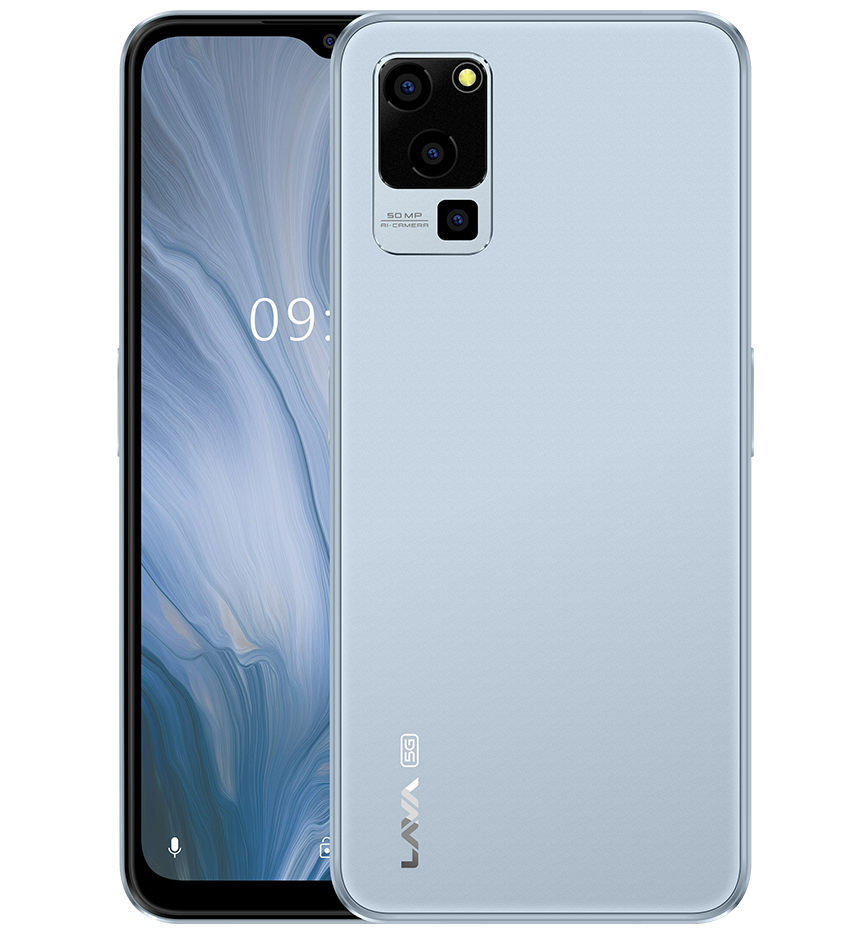
Coming to the camera system, the smartphone will have a 50-megapixel main camera, an 8-megapixel ultra-wide lens with a 118-degree FOV, and a 2-megapixel macro camera. For selfies, the device 16-megapixel front camera. Other features of the device include dual SIM, 4G LTE, Wi-Fi 802.11ac, Bluetooth 5.2, GPS, NFC, a USB-C port, a 3.5mm audio jack, and a water-repellent design. It measures 161.8 x 73.8 x 8.5mm and weighs 184 grams.
Lenovo has announced that it will launch four new computing devices on August 11th in China. The lineup includes the new Xiaoxin Duet, Xiaoxin Pro 14, and a Xiaoxin Pro 27 all-in-one computer. The Xiaoxin Duet will be a 2-in-1 convertible offering. Ahead of the launch event, Lenovo has shared key specifications and features of the upcoming computing devices.
The Lenovo Xiaoxin Duet will feature a 12.35-inch display bearing a 2.5K resolution and 450 nits peak brightness with support for Dolby Vision. Meanwhile, the Xiaoxin Pro 14 will come with a 14-inch screen with a 120Hz refresh rate. The Lenovo Xiaoxin Pro 27 will sport a 27-inch display with 2K resolution and a 100Hz refresh rate. On the audio front, both the Xiaoxin Duet and Pro 14 will be equipped with 2 x 2W speakers whereas the Pro 27 monitor will feature dual 5W JBL-powered speakers.
The Lenovo Xiaoxin Duet will feature dual 5MP cameras while the Xiaoxin Pro 14 and Xiaoxin Pro 27 come with 1080p and 2.5K webcams respectively.
Under the hood, the Lenovo Xiaoxin Duet is equipped with a 12th generation Core i5 processor with Intel Iris Xe graphics. The Xiaoxin Pro 14 is offered in up to 12th generation Core i7 processor. The Xiaoxin Pro 27 monitor is powered by 12th generation Core i7 chipset. All three computing devices pack 16GB RAM and 512GB SSD storage.
Connectivity options on the Lenovo Xiaoxin Duet, Xiaoxin Pro 14, and Xiaoxin Pro 27 include WiFi 6, USB-C ports, 3.5mm jack, and USB-A ports.
The pricing of the Lenovo Xiaoxin computing devices is not revealed. We will know more details on August 11th.
Qualcomm recently announced the Snapdragon W5+ Gen 1 and Snapdragon W5 Gen 1 premium wearable platforms. Chinese tech giant OPPO earlier today released a teaser on China’s microblogging platform Weibo that confirmed that its upcoming Watch 3 Series smartwatch will be powered by the Snapdragon W5 Gen 1 platform. Now, well-known Weibo tipster Digital Chat Station has hinted that the OPPO Watch 3 Series will be officially unveiled on August 10th.

The appearance of this upcoming watch series has also been revealed ahead of time. The watch will have an ECG support feature and an LTPO adaptive refresh rate panel, according to the leaker.

With rounded corners and a glossy, textured frame that gives it a luxurious appearance, the Watch 3 Series appears to have a similar design to Apple watches. The watch also features a working button and a crown that can turn. Additionally, there is a speaker grill on one side, indicating that eSIM standby calling will be available.
The Watch 3 Series’ Snapdragon W5 Gen 1 processor is based on the 4nm architecture and has low power Wi-Fi, GNSS, and audio islands as well as low power states like Deep Sleep and Hibernate.
Along with a host of other features, it supports 3D watch faces, 3D maps and navigation, real-time 2-way smart calling, smart device controls, and much more. We might anticipate that the Watch 3 Series will have a longer battery life than the Watch 2 Series because this chip is more energy-efficient.
Apple is expected to unveil its iPhone 14 lineup in September. The next-generation flagship series will comprise the iPhone 14, iPhone 14 Max, iPhone 14 Pro, and the iPhone 14 Pro Max. Earlier in March this year, Apple analyst Ming-Chi Kuo revealed that only the Pro models would come with Apple’s next-generation A16 processor. This meant that the non-Pro variants would stick with last year’s chipset. Bloomberg’s Mark Gurman also agreed to the rumour.
Despite using *some* old hardware, iPhone 14 non pro still have some overall performance boost over the iPhone 13 series New cellular modem, new internals design, ect
In a new development, a leaker named ShrimpApplePro said that the iPhone 14 and iPhone 14 Max will still have better performance compared to the iPhone 13 series. This is despite both the upcoming offerings being powered by the A15 processor that is found in the iPhone 13 lineup. The non-Pro iPhone 14 will still offer an overall performance boost over their predecessors. This is said to be due to a new cellular modem, new internal design, and other changes etc. The other improvements are tipped to be 6GB RAM which is 2GB more than the iPhone 13 lineup as well as a new and more efficient modem that is said to be smaller, use less power, and offer high performance.
To date, Apple has followed a strategy of equipping all of its latest iPhones with the same chipset. The ongoing chip shortages are said to have contributed to Apple’s decision in limiting the iPhone 14 and 14 Max to the A15 processor.
We use cookies on our website to give you the most relevant experience by remembering your preferences and repeat visits. By clicking “Accept”, you consent to the use of ALL the cookies.
This website uses cookies to improve your experience while you navigate through the website. Out of these, the cookies that are categorized as necessary are stored on your browser as they are essential for the working of basic functionalities of the website. We also use third-party cookies that help us analyze and understand how you use this website. These cookies will be stored in your browser only with your consent. You also have the option to opt-out of these cookies. But opting out of some of these cookies may affect your browsing experience.
Necessary cookies are absolutely essential for the website to function properly. This category only includes cookies that ensures basic functionalities and security features of the website. These cookies do not store any personal information.
Any cookies that may not be particularly necessary for the website to function and is used specifically to collect user personal data via analytics, ads, other embedded contents are termed as non-necessary cookies. It is mandatory to procure user consent prior to running these cookies on your website.