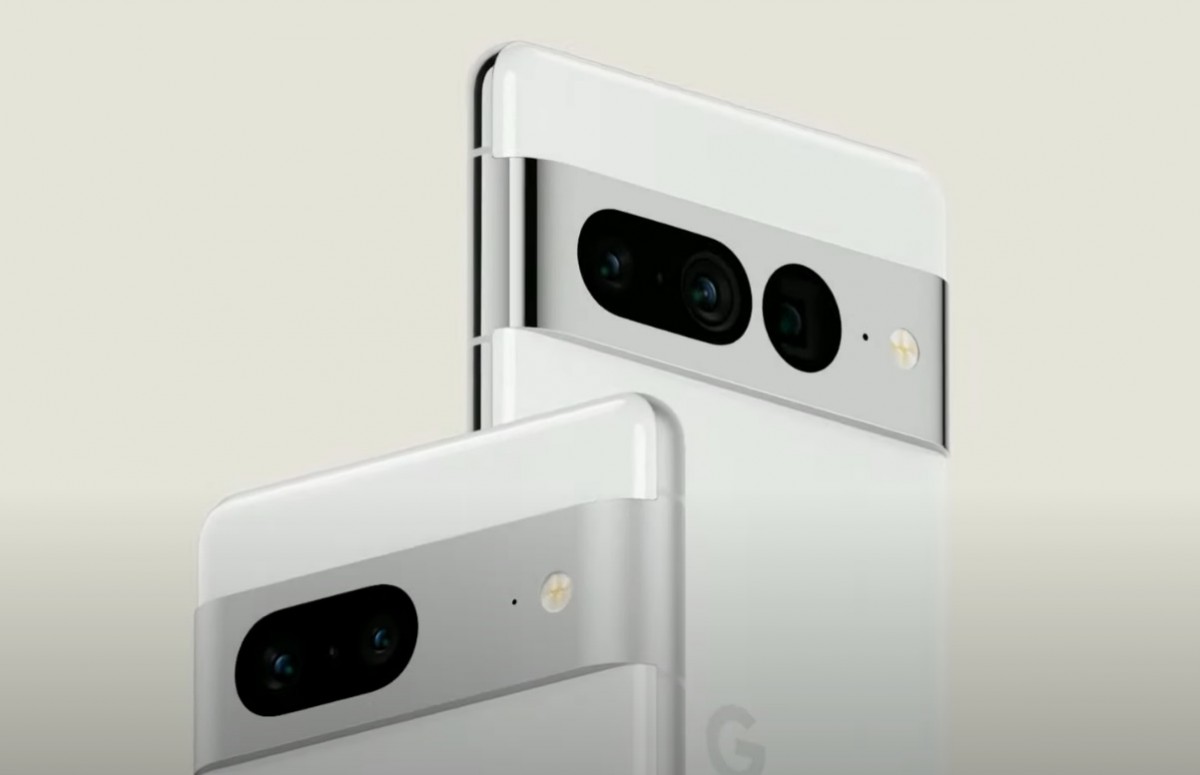
Google will be announcing the Pixel 7 and Pixel 7 Pro flagship phones in October of this year. However, a new report by 9to5 Google suggests that the company could be working on another high-end Pixel flagship phone. It appears that this device may come equipped with a high-end display.
The upcoming Pixel 7 and Pixel 7 Pro have “Panther” and “Cheetah” codenames. The “P10” and “C10,” found in the AOSP, are shorthand versions of the Cheetah and Panther devices. Recently, the publication found a code in the Android Open Source Project (AOSP) that revealed display details of both phones. It was found that the Pixel 7 supports a Full HD+ resolution of 1080 x 2400 pixels and up to a 90Hz refresh rate, whereas the Pixel 7 Pro offers a Quad HD+ resolution of 1440 x 3210 pixels and up to a 120Hz refresh rate. It was also found that the Pixel 7 and 7 Pro were using the same Samsung panels that were made available on the Pixel 6 and Pixel 6 Pro smartphones.
Pixel 7 and Pixel 7 Pro
Fresh information shared by the publication reveals that it has found details of two other Pixel devices that have “Felix” and “Lynx” codenames. It is speculated that the Felix device could be the Pixel 7a, while the identity of the other device is yet to be confirmed. The Lynx device could probably be the delayed Pixel Notepad foldable phone, which is expected to feature the Google Tensor 2 chip.
The publication further mentioned that it found display details of another device that was tagged “G10” in AOSP. It appears that the G10 device is powered by the Tensor chip. However, it does not seem to be a part of the Pixel A-series, since it carries support for up to a 120Hz refresh rate.
The G10’s display is made by China-based BOE instead of Samsung. It measures 71 x 15mm in size and supports a Quad HD+ resolution of 1440 x 3120 pixels. The display size of the G10 indicates that it is not the Pixel tablet that is poised to launch in 2023. The preliminary details that have appeared so far suggest that the G10 could be similar to the Pixel 6 Pro / 7 Pro.
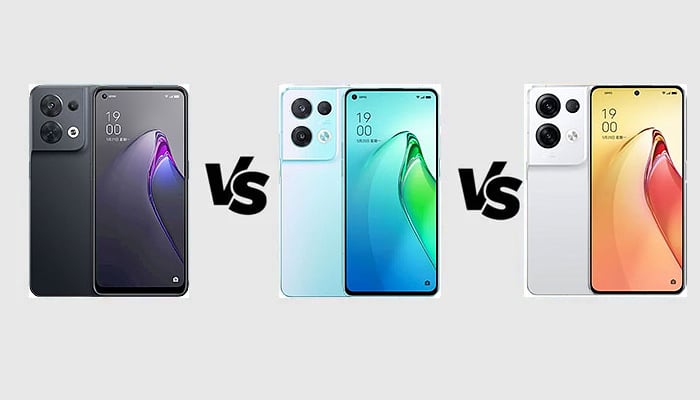
The OPPO Reno8 Series went official in the Chinese market a few days ago with three models: the vanilla Reno8, the OPPO Reno8 Pro, and the Reno8 Pro Plus. They are not at the same level as the Find X5 lineup, but they offer amazing specifications and their prices are more interesting if compared to the most advanced flagship lineup by the Green Factory. Soon, the new series will debut in the global market too, even though there may be a few changes: the Indian version of the lineup is expected to include the Reno8 and the Reno8 Pro which will be re-brands of the Chinese Pro and Pro+ variants, respectively. While waiting for the launch of the new series in the global market, here is a comparison between their specifications.
OPPO Reno8 vs OPPO Reno8 Pro vs OPPO Reno8 Pro+
OPPO Reno8
OPPO Reno8 Pro
OPPO Reno8 Pro+
DIMENSIONS AND WEIGHT
160.6 x 73.4 x 7.7 mm,
179 g
161 x 74.2 x 7.6 mm,
188 g
161.2 x 74.2 x 7.3 mm,
183 g
DISPLAY
6.43 inches, 1080 x 2400 pixels (Full HD+), AMOLED
6.62 inches, 1080 x 2400 pixels (Full HD+), AMOLED
Triple 50 + 2 + 2 MP, f/1.8 + f/2.4 + f/2.4
32 MP f/2.4 front camera
Triple 50 + 8 + 2 MP, f/1.8 + f/2.2 + f/2.4
32 MP f/2.4 front camera
Triple 50 + 8 + 2 MP, f/1.8 + f/2.2 + f/2.4
32 MP f/2.4 front camera
BATTERY
4500 mAh, fast charging 80W
4500 mAh, fast charging 80W
5000 mAh, Fast Charging 80W
ADDITIONAL FEATURES
5G, dual SIM
5G, dual SIM
5G, dual SIM
Design
The differences between the designs of these three devices are just marginal. It is very hard to distinguish every single phone from their design because they are similar, with a camera module sporting the same aesthetics. I personally prefer the look of the vanilla version because it has a smaller camera module, but it is built with cheaper materials. The best build quality is provided by the Pro variants which include an aluminum frame and the Gorilla Glass 5 protection for the front glass.
Display
The OPPO Reno8 Pro+ is equipped with the best display of the trio. It is an AMOLED panel that shows up to one billion colors with a Full HD+ resolution, a diagonal of 6.7 inches, a 120 Hz refresh rate, the HDR10+ certification, and an in-display fingerprint reader. Right after, we got the display of the Reno8 Pro that does not show one billion colors, but the remaining specifications are the same as the Pro Plus variants with the exception of its 6.62-inch diagonal. The vanilla version has a smaller 6.43-inch panel with a lower 90 Hz refresh rate and no HDR10+.
Specs & Software
The most powerful hardware department is provided by the OPPO Reno8 Pro Plus, as the name suggests. It is equipped with a high-end MediaTek Dimensity 8100 Max mobile platform: an upgrade of the Dimensity 8100 with higher AI capabilities, built at 5 nm and running at a max frequency of 2.85 GHz. The SoC is paired with up to 12 GB of RAM and up to 256 GB of UFS 3.1 internal storage. The Reno8 Pro takes the silver medal with the Snapdragon 7 Gen 1 mobile platform that is currently the best midrange chipset by Qualcomm. The last position goes to the vanilla Reno8: the first phone with the Dimensity 1300 mobile platform. All of these phones run Android 12 customized by ColorOS 12.1, and they will get at least two major updates to new Android versions.
Camera
If you are looking for the most advanced cameras, then you should go either for the OPPO Reno8 Pro or the Pro Plus. Unlike these two devices, the vanilla version lacks an 8 MP ultrawide camera and it replaces it with a useless 2 MP depth sensor. This is the reason why the Pro variants are more versatile and interesting in terms of photo quality. Further, the Pro variants come with the proprietary NPU MariSilicon X improving night photography and video recording at night as well.
All of these phones come with the same battery capacity, this means that the longest battery life will be provided by the handset sporting the most efficient components. The OPPO Reno8 Pro may provide a longer battery life in a lot of scenarios because its Snapdragon 7 Gen 1 mobile platform is built with a better 4 nm production process improving the energy consumption. But the differences in terms of battery life should be just marginal. The charging speeds should be exactly the same because the whole trio features 4500 mAh batteries with 80W fast charging.
Price
The starting price of the OPPO Reno8 roughly translates into about €350 or $377 at the actual change, the Pro variant starts from €420 or $453, and the Pro Plus begins at €520 or $560. These are the prices for the Chinese market, while the ones for the global market are still unknown at the moment of this publication. Now that you know all the differences between the devices from the new series, which one would you pick?
OPPO Reno8 vs OPPO Reno8 Pro vs OPPO Reno8 Pro Plus: PRO and CONS
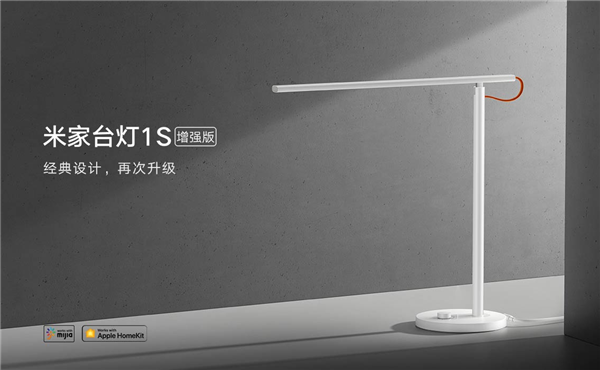
Xiaomi has launched the Mijia Desk Lamp 1S Enhanced version in China. The new version is an upgraded version of the MIJIA Desk Lamp 1S that was first launched in 2019. The new desk lamp carries a decent price tag of 199 yuan (~$30) and is presently on pre-sale.
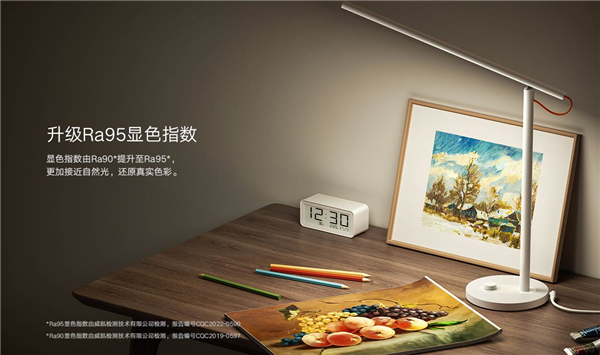
The Mijia Desk Lamp 1S Enhanced Version comes with upgraded full-spectrum lamp beads as well as upgraded Ra95 color rendering index. It also adopt China’s A-level reading and writing work desk lamp lighting standard.
The Mijia desk lamp 1S enhanced version is upgraded to full-spectrum LED lamp beads, and the ratio of red, green, and blue in the spectral curve is similar to that of sunlight. Compared with ordinary LED lamp beads, red light and green light are added to control the peak value of blue light, making the light more uniform and soft.
It uses a 42×0.5W LED module with a rated power of 9W and a service life of 25,000 hours. The color rendering index is raised from Ra90 to Ra95, which is closer to natural light and shows the true color of objects it illuminates.
The Mijia Desk Lamp 1S Enhanced version has 4 lighting modes (reading, computer, children, and focus). When the focus mode is set, the light reminds users to rest through flickers.
The lamp can be connected to the Mijia app and Apple HomeKit system at the same time and supports XiaoAI and Siri voice control. In addition, it also has a physical knob through which users can also adjust the color temperature and light brightness.
Prior to last year’s Google Pixel 6 series launch event, a Google Pixel 6 prototype was listed on eBay for sale just weeks before the launch, showcasing the design and build of Google’s upcoming Pixel in real life.
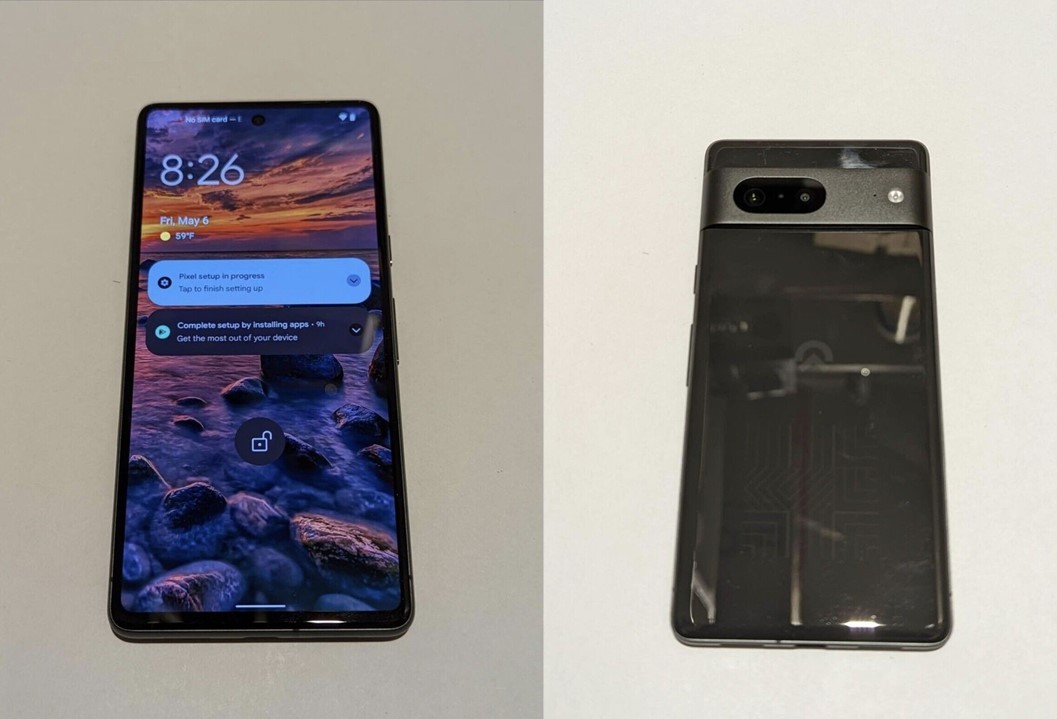
And just like clockwork, as we gear up for the launch of the Google Pixel 7 series launch in Fall 2022, a Google Pixel 7 128GB prototype has appeared on the renowned e-commerce site – eBay, showcasing the real-life photos of Google’s upcoming Pixel smartphone, again.
Google Pixel 7 Prototype in Real Life. Source: eBay
From the front, the Pixel 7 seems to feature the same design as the Pixel 6 series with a flat AMOLED display with a centered punch-hole cutout that houses the selfie camera of the smartphone.
From the back, the Pixel 7 cameras are housed within the pill-shaped camera cutout that is surrounded by a thick protruding rectangular aluminium bar. The colour option listed is the Stormy Black colourway, and from the photos, it can be observed that the Pixel 7 Stormy Black is unfortunately a glossy finish that is prone to fingerprints and smudges.
And since the eBay listing was the Pixel 7 prototype, it does not feature Google’s G logo. Instead, it features the prototype insignia logo that we also saw in last year’s Pixel 6 prototype leak.
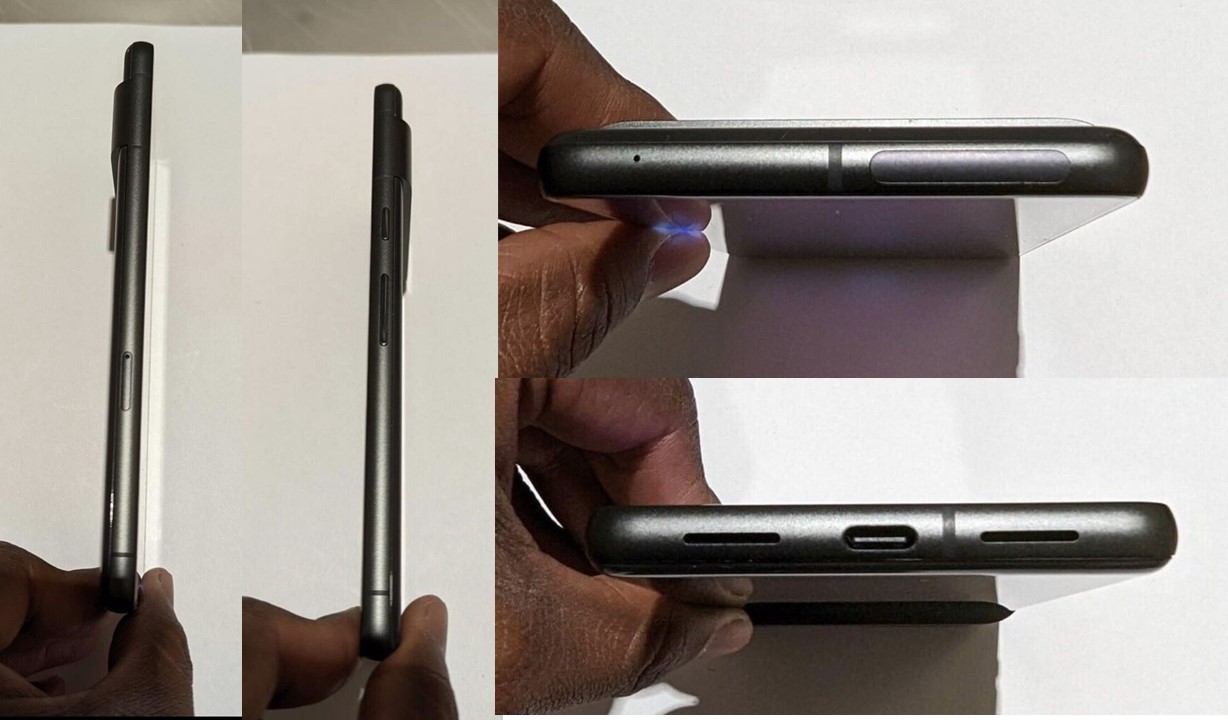
Side Photos of the Pixel 7. Source: eBay
As for the other details that can be spotted, the Pixel 7 has the power and volume buttons on the right side of the device, with the physical SIM card slot located on the left side of the device. Unfortunately, it seems that the headphone jack is no longer present on the Pixel 7 and the Pixel 7 will charge via the USB-C port on the bottom.
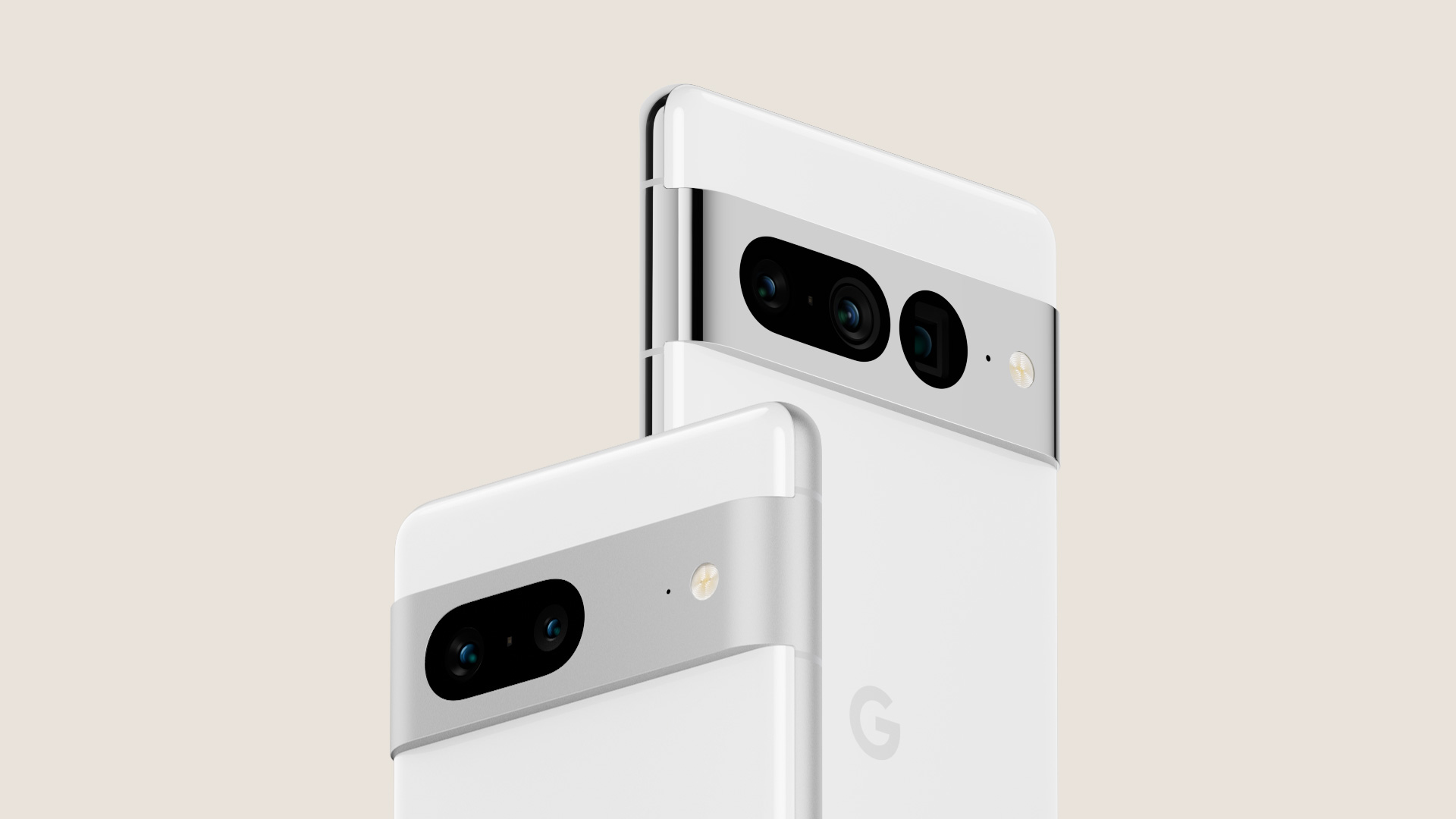
The Google Pixel 7 series was earlier announced on Google I/O 2022 to be launched in Fall 2022, launching with Google’s next-generation Tensor processors. And Google confirmed the rear design of the devices on stage, with the Pixel 7 sporting a dual-camera setup and the Pixel 7 Pro sporting a triple-camera setup.
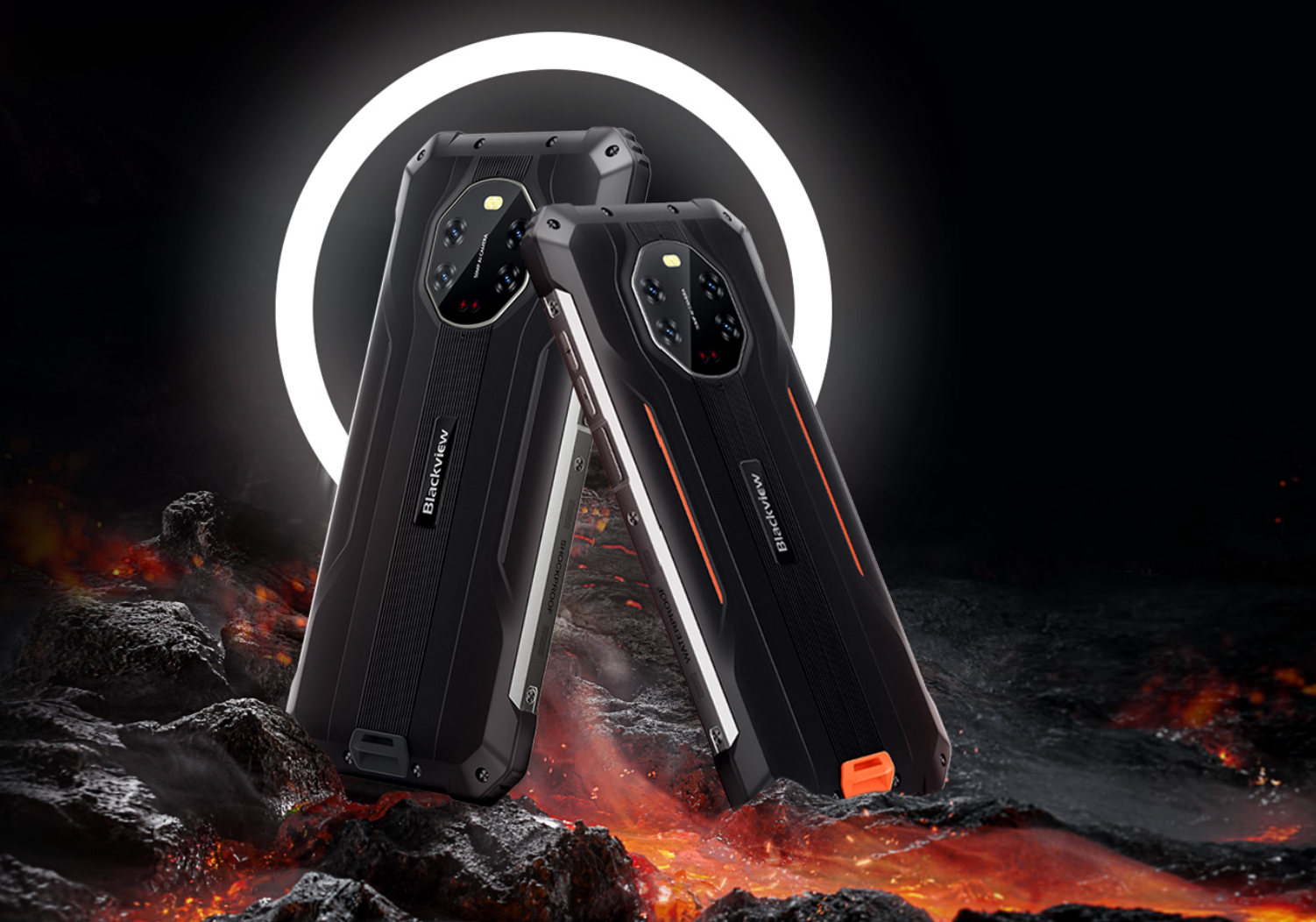
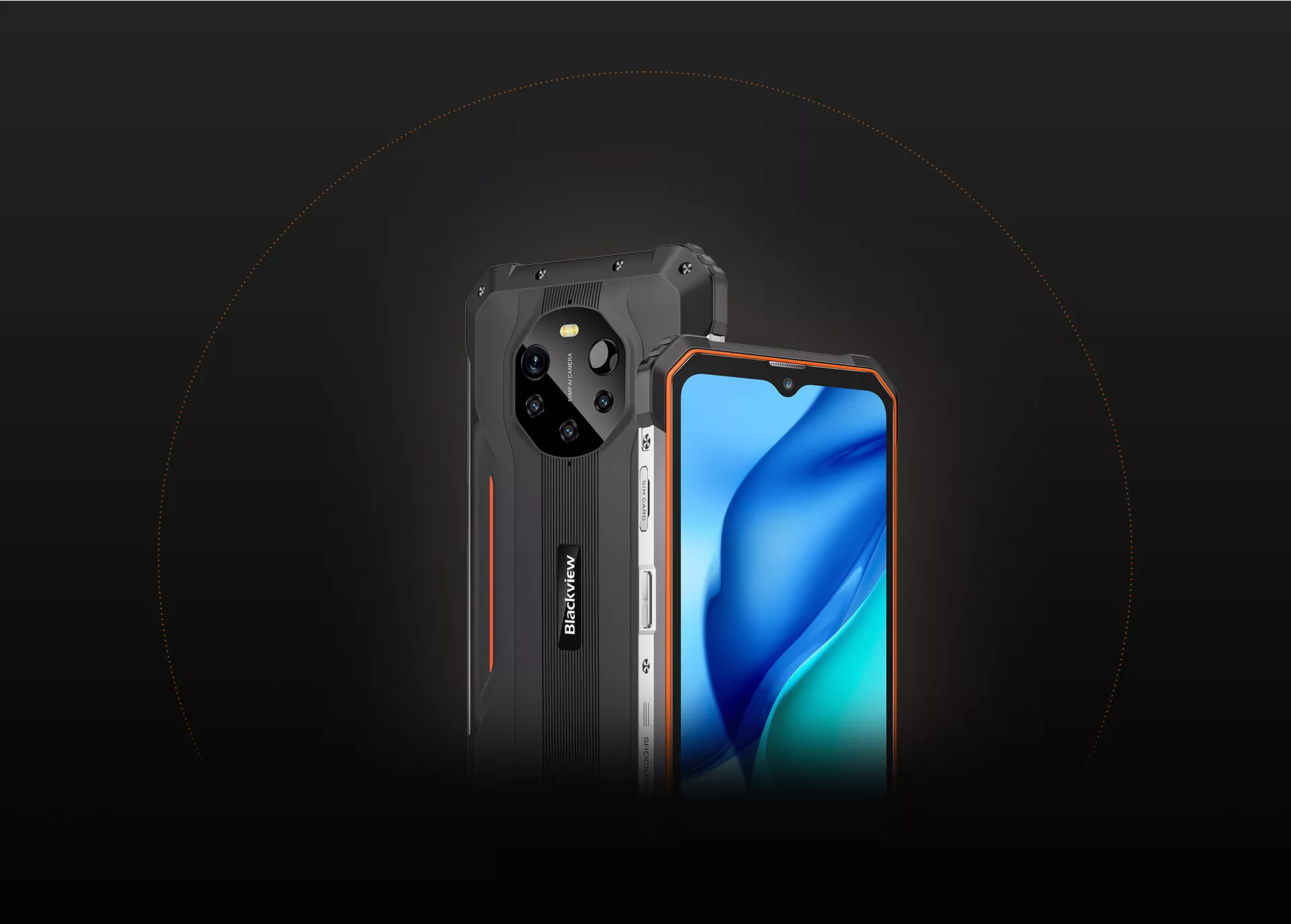
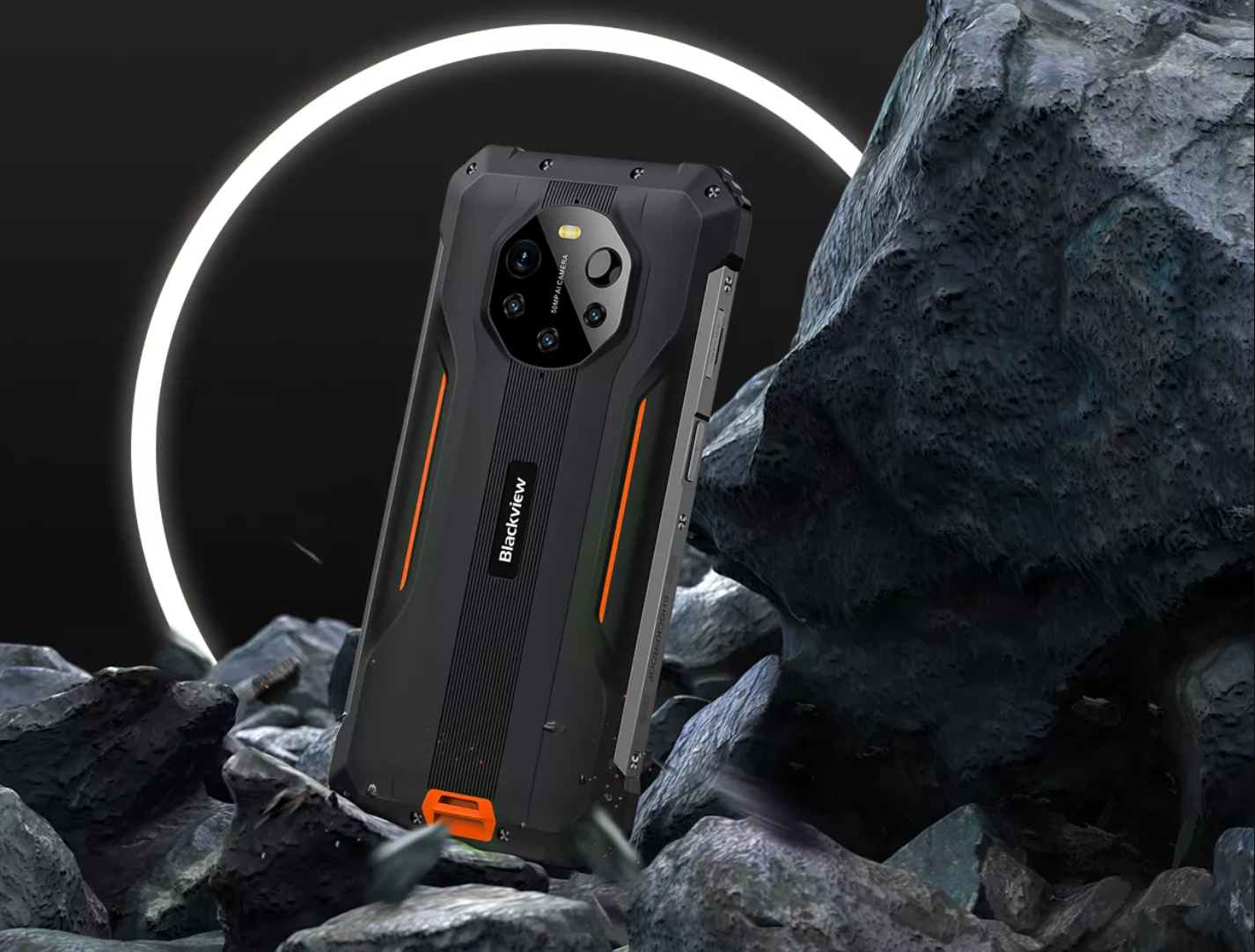
Two rugged smartphones from Blackview with Dimensity 700 chips have been launched for the global market. The Blackview BL8800 and BL8800 Pro come with several impressive features including big batteries with 8,380mAh capacity. The two Blackview rugged smartphones sport similar features except for their main cameras.
The Blackview BL8800 has a night vision camera while the BL8800 Pro comes with a FLIR thermal imaging camera. The smartphones were introduced weeks back and are now globally available. The early bird discount offer is now off the table and the starting price for the standard model is between $350 and $430. Availability is via online platforms and other outlets and the prices could vary across outlets.
Apart from the MediaTek Dimensity 700 chipset in the devices, they offer an 8GB/128GB RAM/ storage configuration. The features that stand the phones as rugged devices include IP68, IP69K, and MIL-STD-810 ratings. The imaging features of their main cameras also facilitate their performance in extreme situations. The monster 8,280mAh batteries in both devices support 33W fast charging and extended use on a single charge. The smartphones use 3D copper pipe liquid cooling technology for efficient heat management.
On the hardware side of the Blackview BL8800 series, they come with the Android 11 OS and Doke OS 3.0 UI. The 6.58-inch 1,080 x 2,408px screen has 480 nits brightness. Both models are available in three colors – Conquest Black, Mecha Orange, and Navy Green. Availability and shipping details could be found in specific retailer outlets like AliExpress.
Last month, OPPO commenced the limited Android 12 beta for the OPPO Reno 3 and the Reno 3 Pro Indonesia and India variants. Now, the company has started rolling out the stable ColorOS 12 builds for these devices.
OPPO Reno3 Pro
According to the official announcement post on OPPO Community, the upgrade is live for the following models:
The Vanilla Reno 3 is also expected to soon receive the ColorOS 12 update in India while the Reno 3 Pro Chinese variant has already received the update.
In order to be eligible for the update, make sure your Reno 3 and Reno 3 Pro (India/Indonesia variants) are on firmware version C.23 or above. For the Reno 3 China variant, users need to make sure that the device is on the firmware version C.14 or above to receive the ColorOS 12 update.
Users need to navigate to Settings > Software Updates to download and install the update. The OTA software builds for these smartphones are being pushed in batches. Therefore, some users may get them earlier, while others may have to wait.
Samsung Display will no longer produce liquid-crystal displays (LCD). The decision to close the LCD business will be completed by June of 2022 as the company faces tough competition from its Chinese and Taiwanese counterparts.
The company has decided to focus on manufacturing organic light-emitting diode (OLED) and quantum dot (QD) displays, as OLED panels have started to become the norm in the smartphone market. That being said, the main reason for the shutting down of LCD panel production is the reduced profits in the venture. A recent Display Supply Chain Consultants (DSCC) revealed that the price of an LCD is 36.6% of what it used to be in January 2014, the component’s peak production period.
No investment plan details have since been announced, and the employees of the LCD business are expected to be transferred to the QD business.
Samsung Display had decided to close its LCD business in late 2020, but the plans were delayed at Samsung Electronics’ request due to a sudden increase in the prices of LCD panels during the COVID-19 pandemic.
There are rumors that the Xiaomi Band 7 Pro could be unveiled as early as July 2022. The new Xiaomi smart wearable will expectedly come with a larger battery than the Xiaomi Band 7. The Xiaomi Band 7 Pro will be the NFC variant of the Band 7.
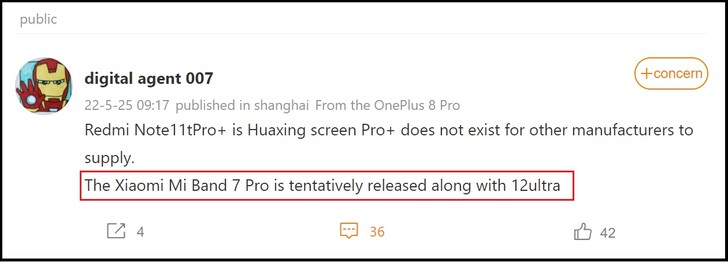
The Xiaomi Band 7 Pro had been the subject of speculations of late. Some tipsters have predicted a July launch for the Band 7 Pro. Sources say that the Xiaomi Band 7 Pro will be unveiled alongside the Xiaomi 12 Ultra. The tipsters have taken to Twitter and Weibo to provide glimpses and hints of the upcoming Band 7 Pro wearable. The Band 7 Pro will have a battery whose capacity is at least 70mAh above that of the Band 7. The upcoming smart wearable will also feature GPS functionality and a bigger display.
Xiaomi is Also Planning to Launch Mi Band 7 Pro Soon..
Some purported details and an image of the Xiaomi Band 7 Pro appeared in a recent Mi Door Lock application code. The details related to the Xiaomi Band 7 Pro and Band 7 NFC initially. It is unclear what to make of this detail at this time. However, it is expected that an upgraded Band 7 fitness tracker is on the cards for the unveiling. Xiaomi is yet to make a statement about the rumors at this time. Apart from the larger battery, GPS, and larger display, not much is known about the Band 7 Pro.
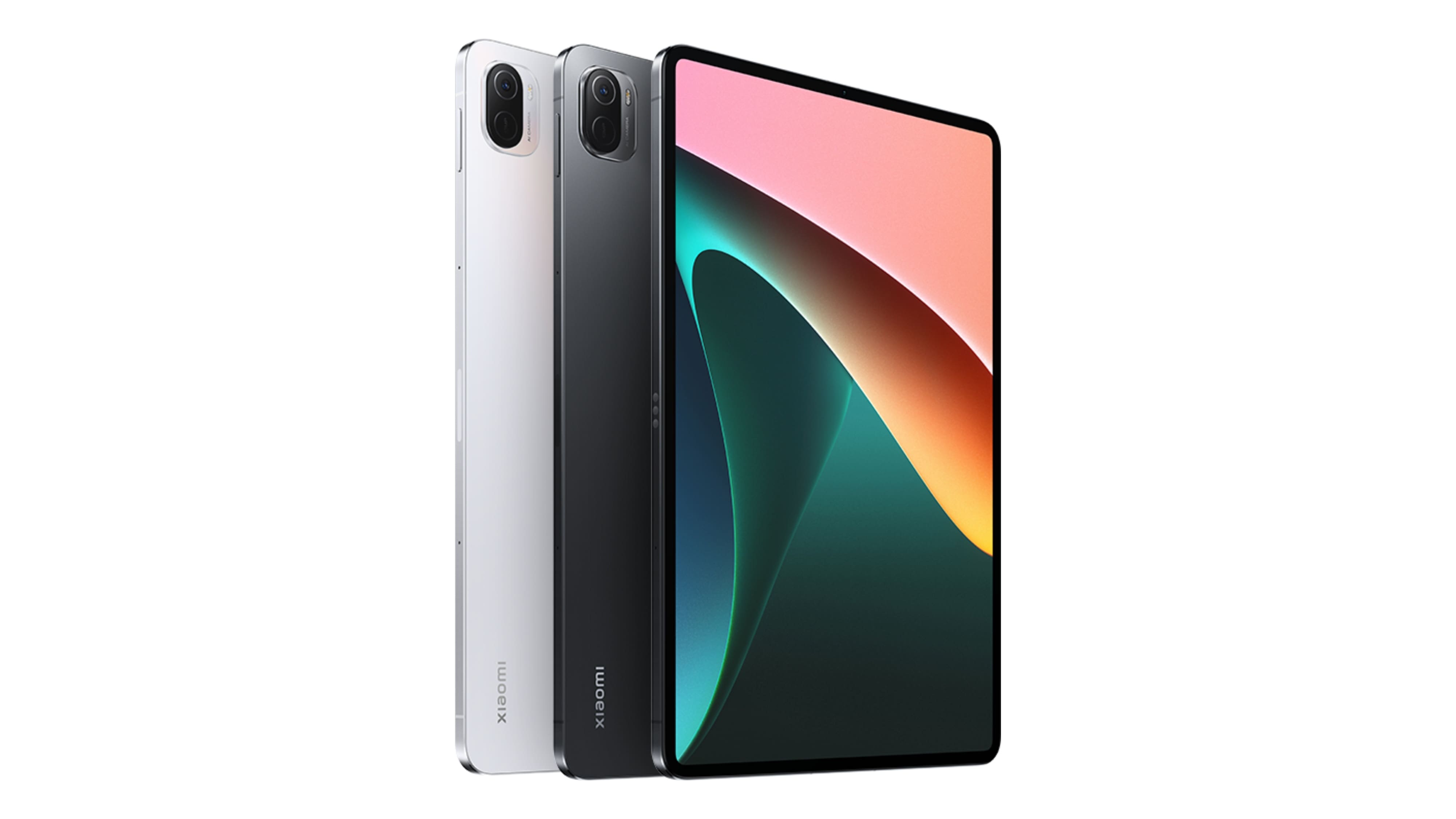
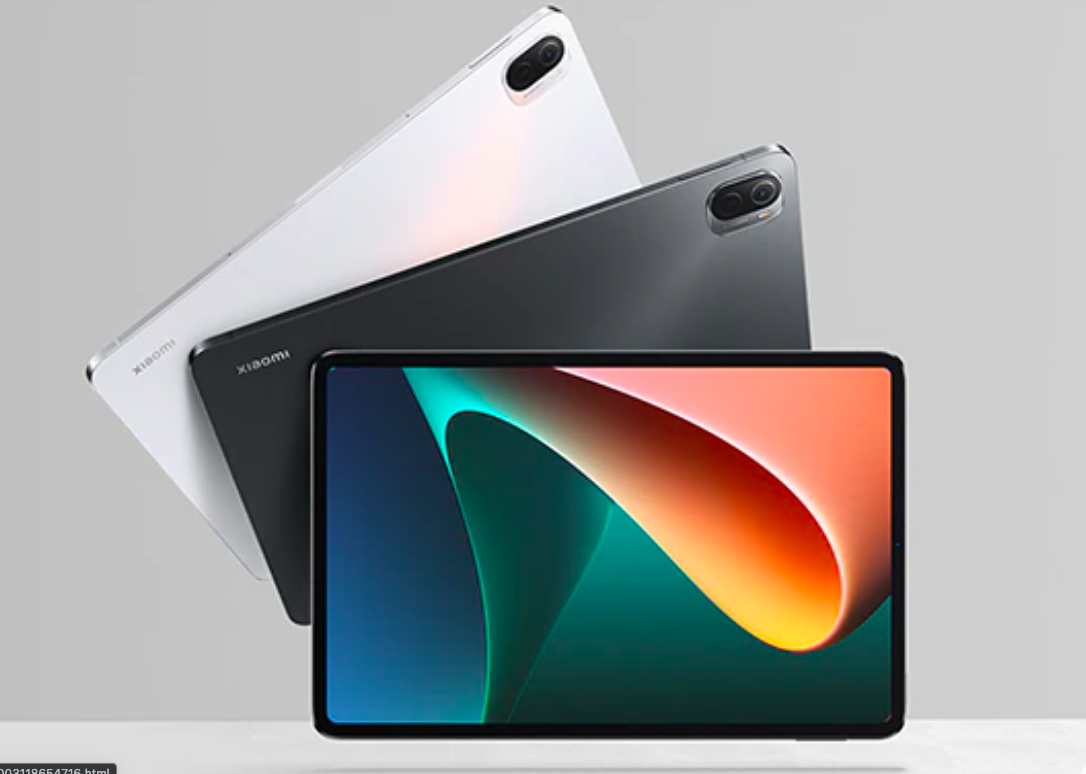
Last year, Xiaomi launched the Mi Pad 5 aka the Xiaomi Pad 5 in multiple markets. The tablet is comparatively priced and brings some flagship features like 120Hz display on a mid-range offering.
An EEC listing revealed that the brand is working on a new tablet likely belonging to the Xiaomi Pad 6 series. And now, a 91mobiles report has revealed that there will be debuting four tablets for the next generation. According to the report, these tablets will have four model numbers: L81, L81A, L82, and L83 corresponding to the Xiaomi Pad 6, the Pad 6 Pro, and the Pad 6 Pro 5G, and a Redmi tablet. The Pad 6 series will focus on the mid-range to flagship segment while the company will launch the Redmi tablet with an affordable price tag.
The report mentions that these tablets will come in two processor variants belonging to both MediaTek and Qualcomm, however, it’s currently unclear which region will receive which if not both SoC variants. The top-end model, likely the Xiaomi Pad 6 Pro 5G is rumored to come with the Snapdragon 8+ Gen 1 and Dimensity 9000 SoC.
Other than that, the report states that the fast charging capability of the upcoming tablets will increase from the current-gen 67W to 120W on a wired connection. The Pad 6 series is also expected to feature 144Hz LTPO displays, powerful speakers, and a newer version of MIUI for tablets. If these rumors turn out to be true, the upcoming tablet might turn out to be the best value for money proposition in the mid-range and flagship tier.
A recent report states that the next generation of Xiaomi tablets is expected to debut in August 2022, so stay tuned for more updates on the matter.
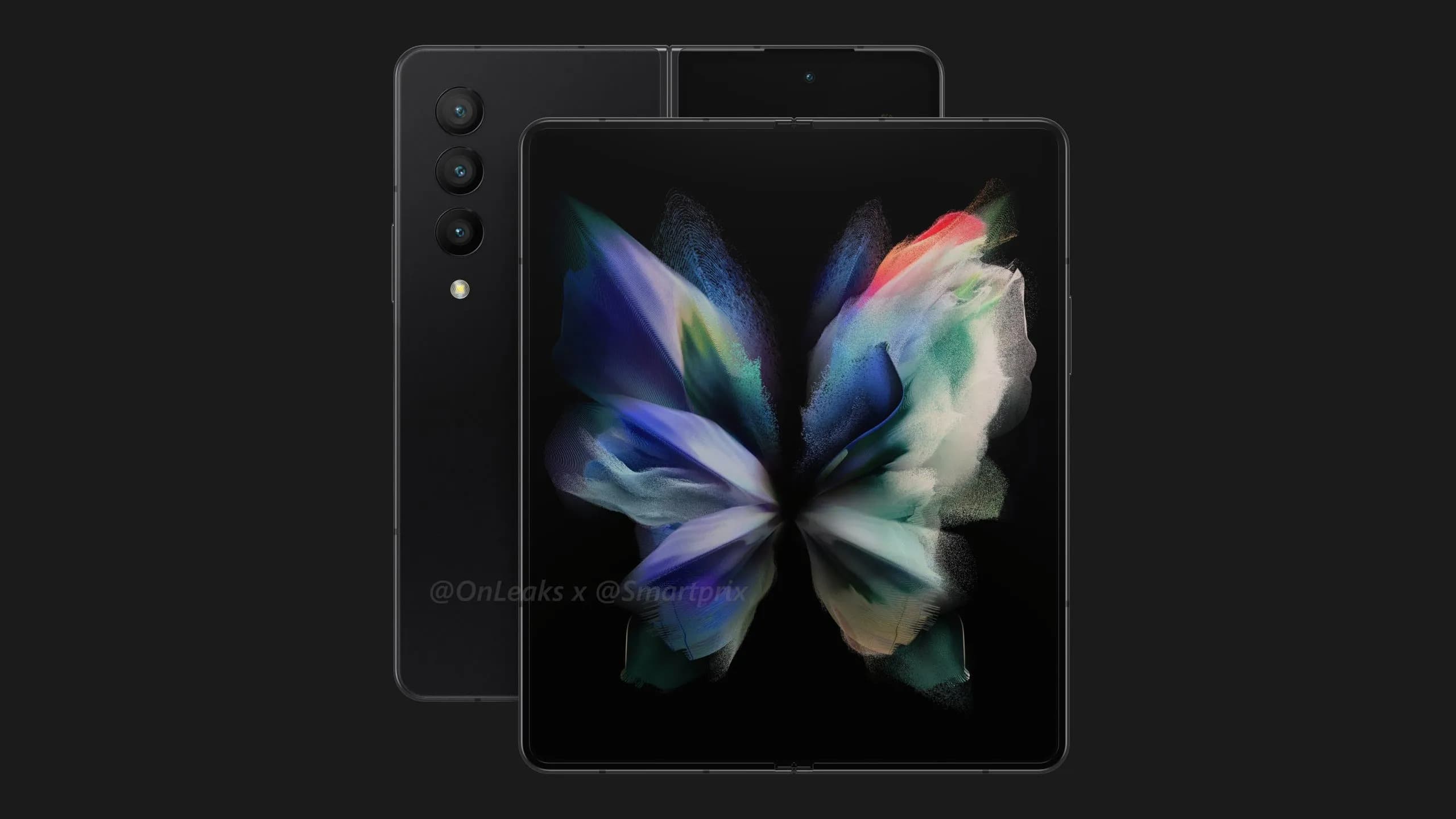
Samsung‘s next-generation flagship foldable device dubbed the Samsung Galaxy Z Fold 4 is allegedly under development. It is expected to launch in August and has already received multiple render and spec leaks.
Now, ahead of its launch, tipster Yogesh Brar has leaked almost all of its key specifications. So without further wait, let’s take a look at what to expect from the premium foldable.
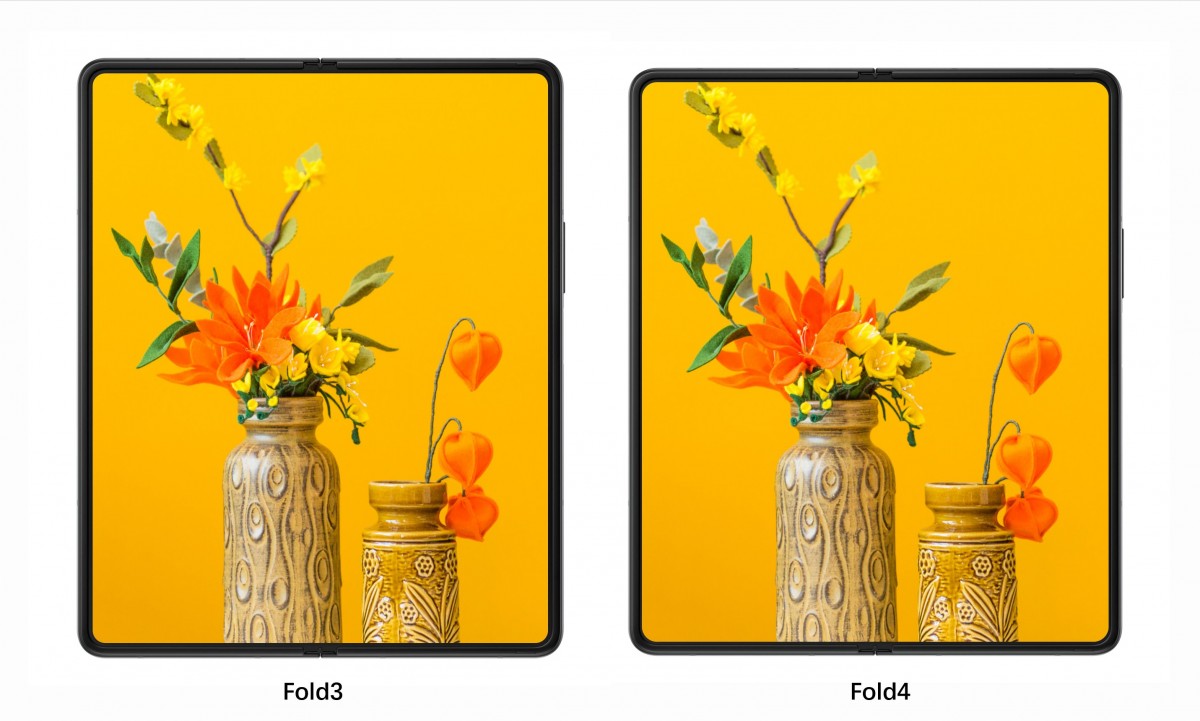
According to Yogesh Brar, the Galaxy Z Fold 4 will come with a similar-sized 7.6-inch QXGA+ AMOLED inner panel like the current-gen Galaxy Z Fold 3, however, a recent protective case leak has revealed that it’ll have a better aspect ratio than the last-gen. On the outside, the device is said to bring a 6.2-inch HD+ AMOLED panel. Both the outside and Inside displays will offer a 120Hz refresh rate.
Samsung Galaxy Z Fold4 inner display aspect ratio
Under the hood, the smartphone will house Qualcomm’s latest Snapdragon 8+ Gen Plus SoC which is built on TSMC’s industry-leading 4nm node and boasts up to 30% battery efficiency compared to the Snapdragon 8 Gen 1 chip. The chipset will come paired with either 12GB or 16GB RAM and will be available in 256GB and 512GB storage options.
For optics, the device will house a 50-megapixel primary sensor on the rear paired with a 12-megapixel ultra-wide unit and a 12-megapixel telephoto lens with 3x zoom. The inner screen camera will be a 16-megapixel under-display unit according to Brar while the front camera on the outer screen will be 10-megapixel. Other than that, the device is said to feature a 4,400mAh capacity battery with 25W fast charging and operate on Android 12-based One UI.
The exciting addition of Google Assistant to the Samsung Galaxy Watch 4 seems to be anything but seamless. There are multiple complaints from users who installed Google Assistant on their devices since last week. The issues related to battery drain and disconnection from their phones after installing Google Assistant.
The long-awaited Google Assistant functionality had arrived in some markets last week. This was after more than 8 months of waiting. But it seems the rollout came with a whimper. Multiple issues have been voiced out by Galaxy Watch 4 owners who installed Google Assistant. Some users have reported experiencing a rapid discharging of their batteries, and disconnection from their paired phones. Some others claimed that the always-on hotword detection feature is not accurate and was causing battery drain.
Users said that they have been unable to restore the seamless pairing of their Galaxy Watch 4 with their smartphones since the installation of Google Assistant. Some users however claimed that they were able to restore pairing after a hard reset of the smartwatch. A hard reset leads to the loss of health and fitness data on the device, except there is a backup. A hard reset will also mean re-installation and configuration of apps afresh including Samsung Pay.
There are also issues raised about Google Assistant on the Galaxy Watch 4 being much slower than in previous devices.
Samsung and Google have not made any statements yet on the Galaxy Watch 4’s Google Assistant issues. It is also not clear whether users outside the United States were also experiencing the issue. It is expected that these stability and reliability issues will be fixed with an update.
Android 13 is planned to be the next official major Android OS upgrade for smartphones that currently running on Android 12. Thus it is no surprise that as we inch closer to the official launch date of Android 13, smartphone manufacturers already planning one step ahead to decide how, when and which devices are getting the Android 13 update.
Oppo, one of the world’s Top 5 best-selling Android smartphone brands, is holding the company’s official ColorOS developer forum – “OTalk” in China, on June 8th next Wednesday at 3 pm Beijing Time (UTC +8). The event will be live-streamed online via Oppo’s developer community portal and interested participants can tune in to the live stream via the official QR Code as shown below.
In this year’s forum, Oppo will be discussing the company’s rollout roadmap plans of Android 13 for its devices in China which include the company’s own Oppo smartphones and its sister brand, OnePlus which is also running the same ColorOS interface in the Chinese market.
The forum will be highlighting several software highlights of the Android 13 update, third-party app compatibility with Android 13 system requirements and ColorOS first-party compatibility with Android 13 via virtual talks and conferences. The forum will also feature a Q&A session for third-party app developers to interact with Oppo’s internal software development team to answer any questions and clear any doubts of developers regarding Oppo’s implementation of Android 13 in ColorOS.
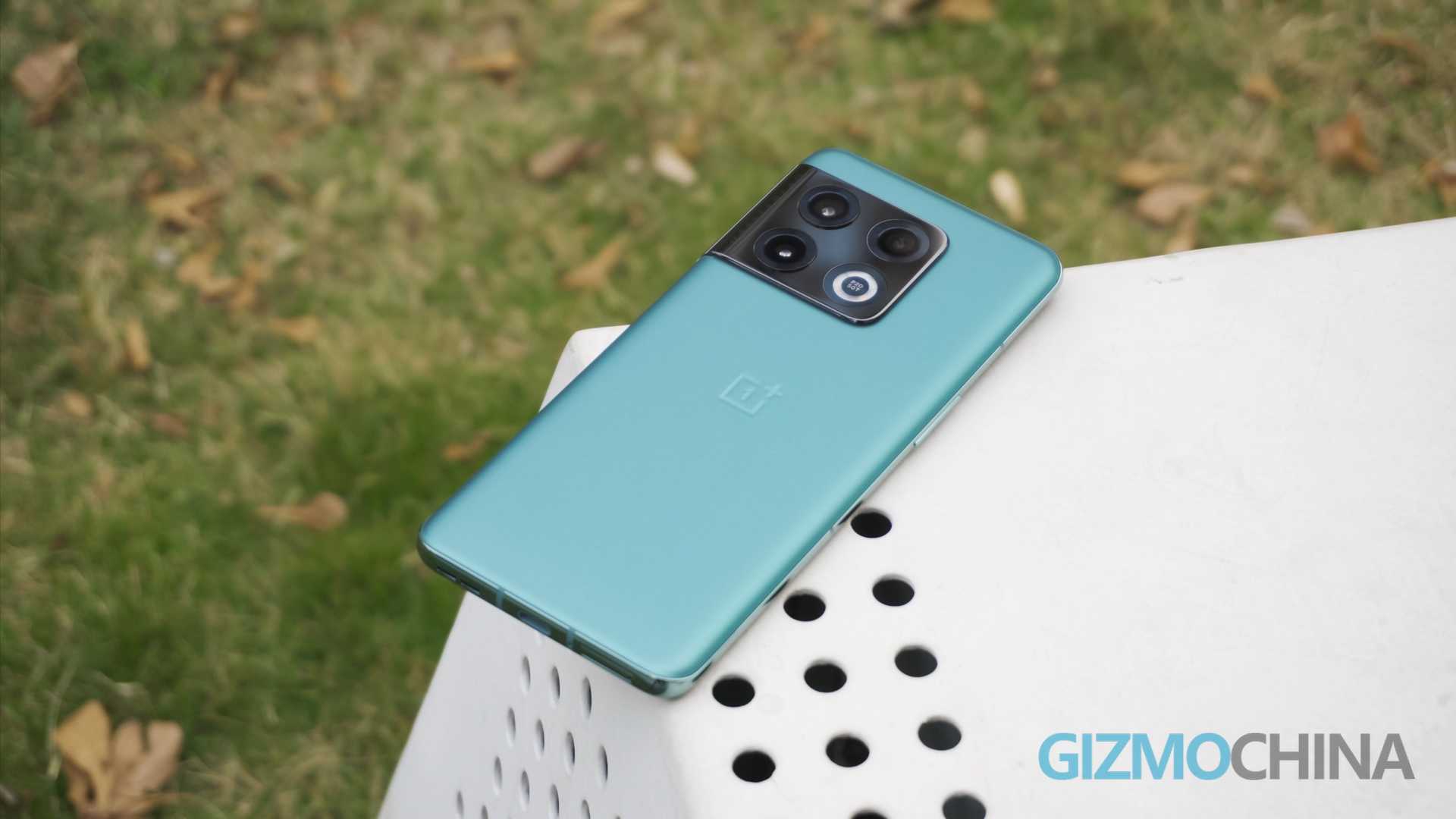
OnePlus 10 Pro
As earlier announced on Google I/O 2022, the Oppo Find N, Oppo Find X5 Pro and OnePlus 10 Pro are among the few devices that are eligible with the Android 13 Developer Preview programme. Oppo is planning to start internal testing for its other existing ColorOS devices that are eligible for Android 13 in early July 2022, and by early August, the company has planned to roll out the Android 13 Open Beta to the company’s first batch of devices that are eligible for the update.
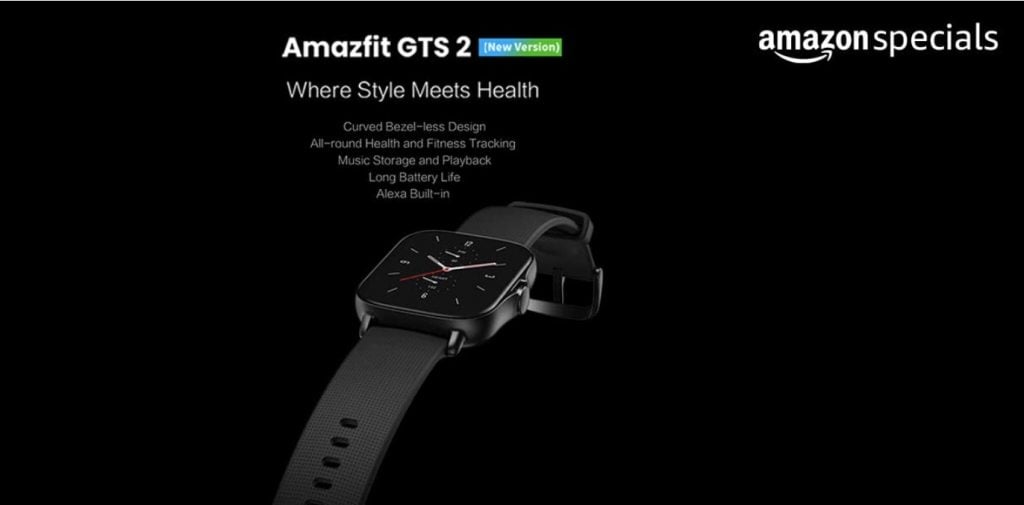
Amazfit GTS 2 New Version is set to launch in India soon. The smartwatch is already listed on e-commerce portal Amazon. Notably, Amazfit recently launched the GTR 2 New Version in the country. The Amazon landing page of the GTS 2 New Version reveals key specifications and features of the device. The newest smartwatch packs incremental upgrades over the original model that had debuted way back in 2020.
Amazfit GTS 2 New Version specifications and features
The Amazfit GTS 2 New Version has a slightly boxy form factor with a curved bezel-less and aluminiun alloy body. There is a physical button on the right side of the device. The screen size of the smartwatch is not known yet but we can expect it to be the same as the original model i.e. 1.39-inches. The wearable device is water-resistant up to 5 meters.
The Amazfit GTS 2 New Version can be worn in both the left and right hand as well as rotated to 180-degrees. It can also be locked and prevented from accessing by others with a password.
Health-wise, the Amazfit GTS 2 New Version is equipped with a heart rate monitor, SpO2 sensor, and a sleep tracker. It is also capable of detecting a user’s stress levels. The wearable device offers support for 90 built-in sports modes along with smart recognition.
The Amazfit GTS 2 New Version is equipped with a microphone and speaker for receiving Bluetooth calls on the smartwatch. It is also compatible with Alexa voice assistant for performing hands-free functions. The smartwatch packs 3GB onboard storage that is capable of storing 300-600 songs.
The Amazfit GTS 2 New Version is powered by a 246mAh battery unit that is claimed to last 6 days under typical usage. It offers convenient features such as weather updates, alarm, and more.
The Amazfit GTS 2 New Version is offered in Midnight Black and Petal Pink colours. The smartwatch’s price is expected to be announced in the coming days.
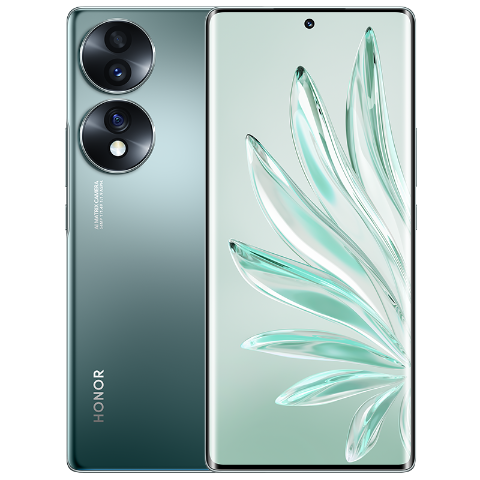
Honor 70 smartphone has launched in China today. Alongside, the company has also announced the Honor 70 and Honor 70 Pro. The regular variant arrives as the successor to last year’s Honor 60. It packs significant upgrades over its predecessor. Read on to know what the smartphone offers out of the box.
Honor 70 specifications and features
The Honor 70 sports a BOE-manufactured 6.67-inch OLED curved screen bearing an FHD+ resolution. It features a centre-aligned punch-hole cutout, 10-bit panel and 120Hz refresh rate. The device is equipped with an in-display fingerprint scanner. The smartphone has two camera rings on the back panel where the first one houses two sensors and the second one accommodates a third lens and a LED flash.
In the photography department, the Honor 70 has a triple rear camera setup of a 54MP Sony IMX800 primary shooter, a 50MP wide-angle sensor, and a 2MP depth unit. On the front, there is a 32MP selfie snapper.
Under the hood, the Honor 70 houses a Snapdragon 778G+ processor. It packs up to 12GB RAM and 256GB onboard storage. The smartphone draws its power from a 4,800mAh battery unit with support for 66W fast charging.
Connectivity options on the Honor 70 include USB-C port, WiFi, Bluetooth 5.2, 5G and NFC.
Honor 70 pricing and availability
The Honor 70 is offered in Bright Black, Streamer Crystal, Mo Yuqing, and Iceland Fantasy colours. The 8GB + 256GB variant costs Yuan 2,699 whereas the 12GB + 256GB is priced at Yuan 2,999. The 12GB + 512GB option retails at Yuan 3,399
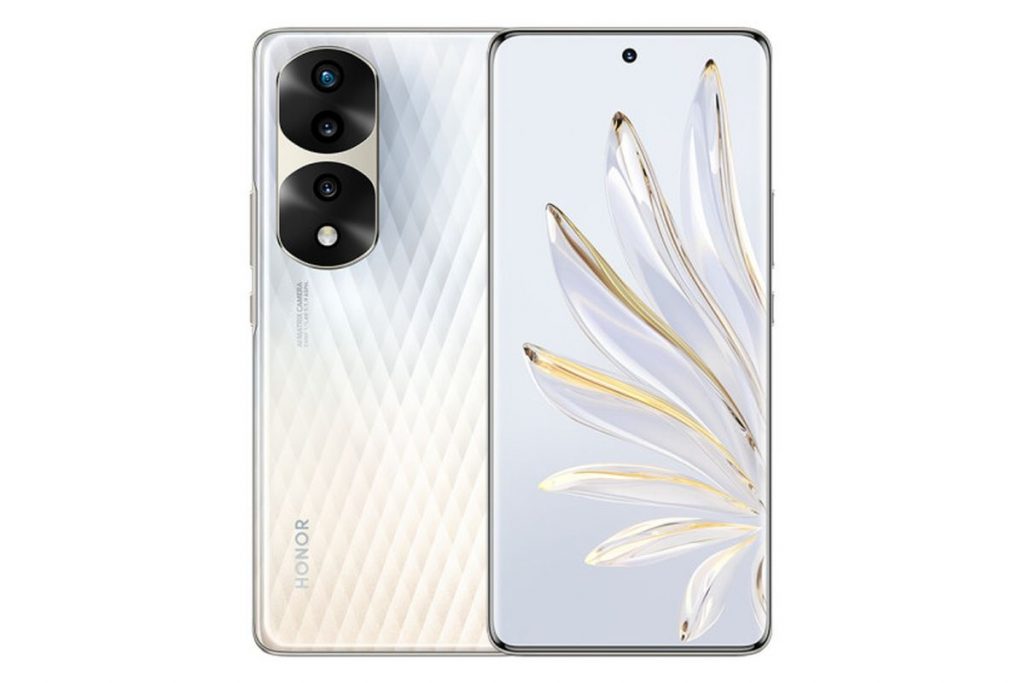
Honor 70 Pro and Honor 70 Pro Plus smartphones have launched in China alongside the regular variant. The former is the successor to last year’s Honor 60 Pro whereas the latter is a new addition to the Honor 70 series. Both the Honor 70 Pro and Pro Plus come with the same design and specifications apart from minor differences. Read on to know more about the Honor 70 Pro duo.
Honor 70 Pro and Pro Plus specifications and features
Honor 70 Pro
The Honor 70 Pro and Pro Plus come with BOE-manufactured 10-bit OLED displays with a 120Hz refresh rate. Both devices have a 6.78-inch screen with the former featuring an FHD+ resolution whereas the latter offering a QHD+ display with LTPO technology. Both devices feature a curved screen with an integrated fingerprint scanner and a centre-aligned punch-hole cutout.
On the imaging front, the Honor 70 Pro and Pro Plus sport a pill-shaped rectangular camera module on the back panel. The hexagonal rings inside the camera island accommodate a 54MP and 50MP Sony IMX800 primary lens on the Pro and Pro Plus variants respectively. The main shooter is paired with a 50MP wide-angle sensor an 8MP telephoto shooter with OIS support. Both smartphones feature 50MP front-facing selfie camera.
Under the hood, the Honor 70 Pro is equipped with a Dimensity 8000 processor whereas the Pro Plus model is powered by a Dimensity 9100 SoC. Both devices pack up to 12GB LPDDR5 RAM and 256GB UFS 3.1 storage. The Honor 70 Pro duo are backed by a 4,600mAh battery cell with support for 100W fast charging.
The Honor 70 Pro duo come with connectivity options like a USB-C port, WiFi, Bluetooth 5.2, and 5G connectivity. Both smartphones run on MagicUI 6.1 based on Android 12.
Honor 70 Pro and 70 Pro Plus pricing and availability
The Honor 70 Pro 8GB + 256GB and 12GB + 256GB are priced at Yuan 3,699 and Yuan 3,999. The 12GB + 512GB configuration costs Yuan 4,399. The Honor 70 Pro Plus carries a price tag of Yuan 4,299 and Yuan 4,599 for the 8GB + 256GB and 12GB + 256GB options.
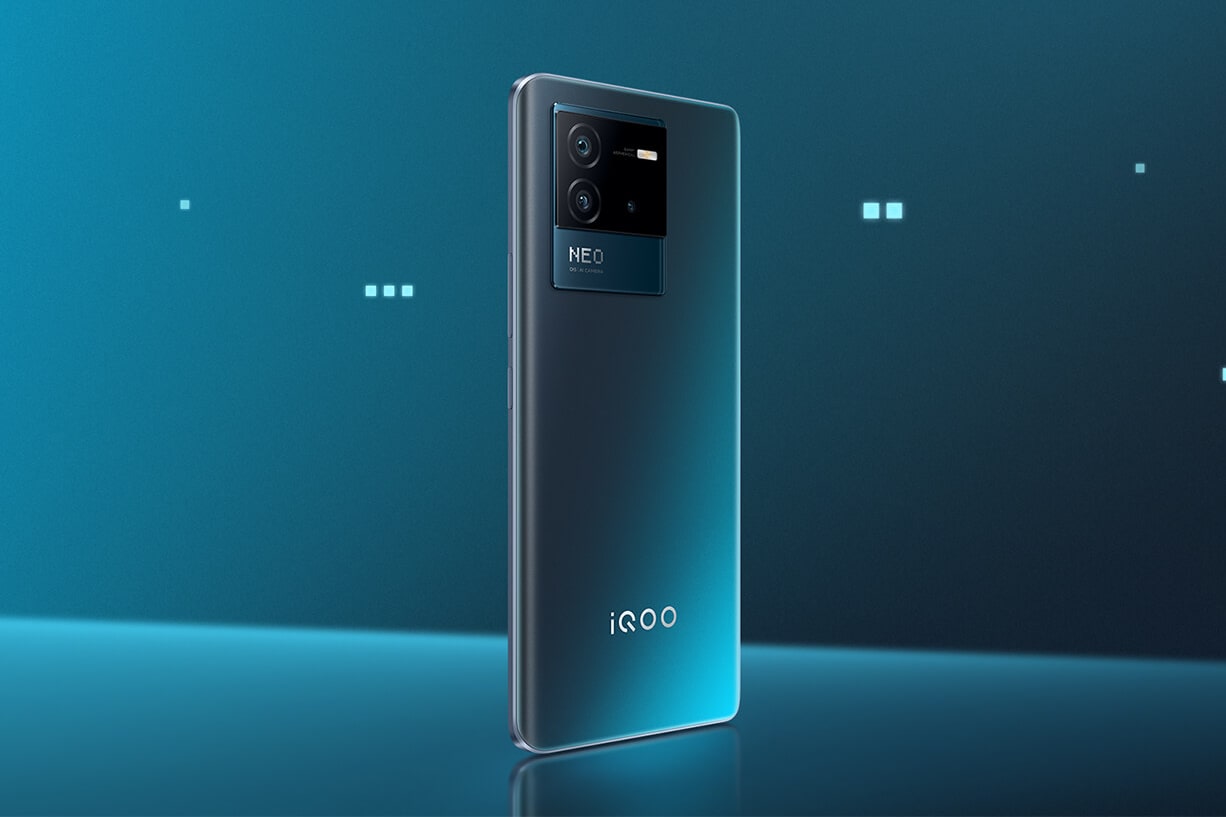
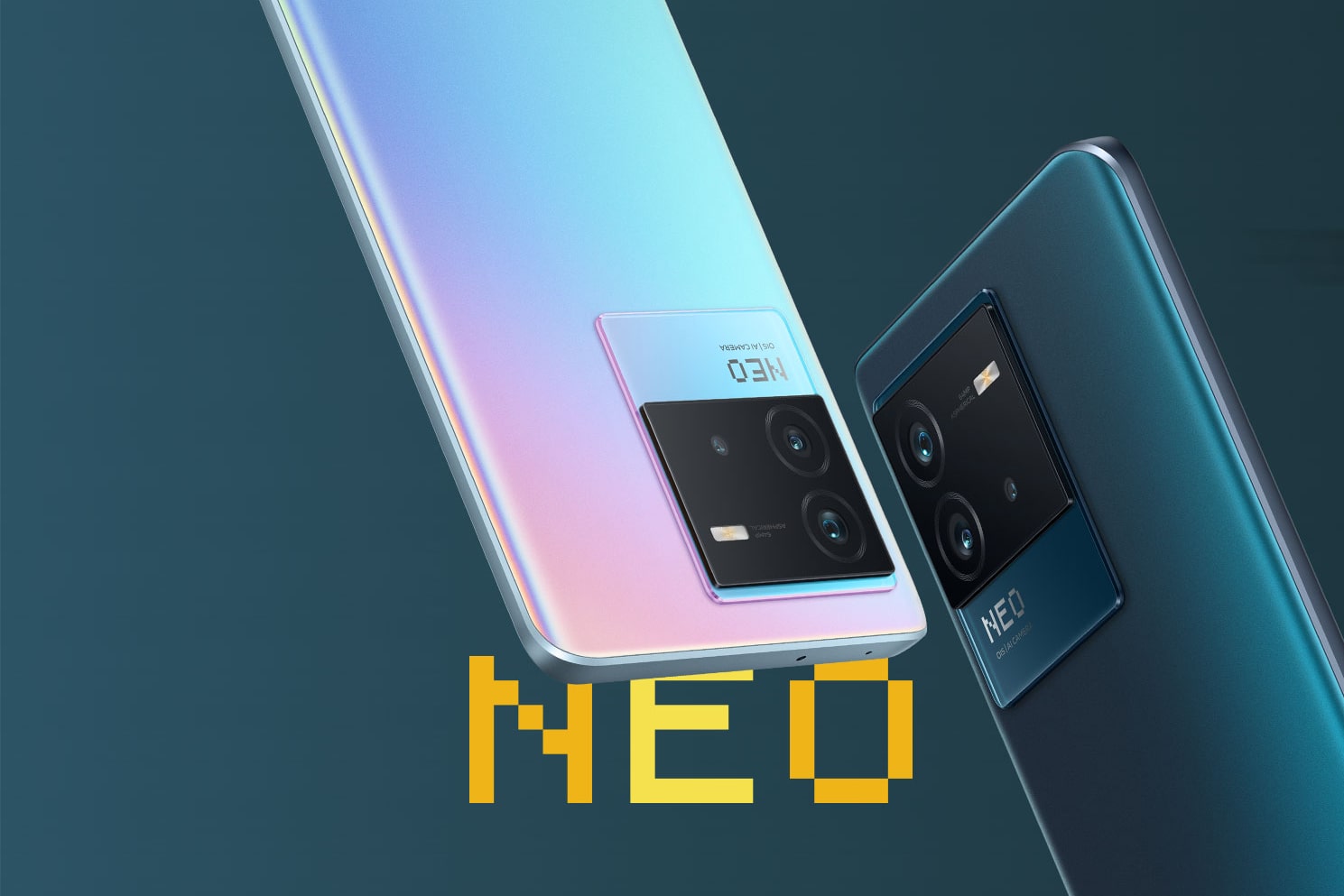
iQOO is gearing up to launch its latest Neo 6 smartphone in India. The device is set to be announced tomorrow (31st May 2022), but prior to its release, the pricing of the handset as well as its special offers have been leaked.
Neo 6 (India)
The pricing leak arrives from known tipster Mukul Sharma who shared the news on Twitter. Looking at the tweet, we see that the pricing of the upcoming smartphone has been revealed as well as some of its bank offers. This exclusive leak shows that the Neo 6 5G from the Chinese smartphone maker will be available for a price tag as low as 26,000 INR, depending on the bank offers.
In other words, it will retail for around the 30,000 INR mark in the Indian market. The tipster also revealed that the prospective buyers can avail a 3,000 INR discount through ICICI bank card, meanwhile, an Amazon coupon also offers an additional 1,000 discount as well. Furthermore, the device will be available in two color variants, including a Blue and Rainbow gradient option. For those unaware, the Neo 6 is a flagship grade handset, which features top notch specs.
Under the hood, it packs the Qualcomm Snapdragon 870 SoC that is paired with up to 12GB of RAM and up to 256GB of internal storage. A large 4,700mAh battery powers the device, which also supports 80W fast charging. The rear features a 64 megapixel triple camera setup, while the front has a 16 megapixel selfie shooter on the 6.62 inch Full HD+ AMOELD display that has a 120Hz refresh rate. So stay tuned for more, as we will be covering the launch tomorrow.
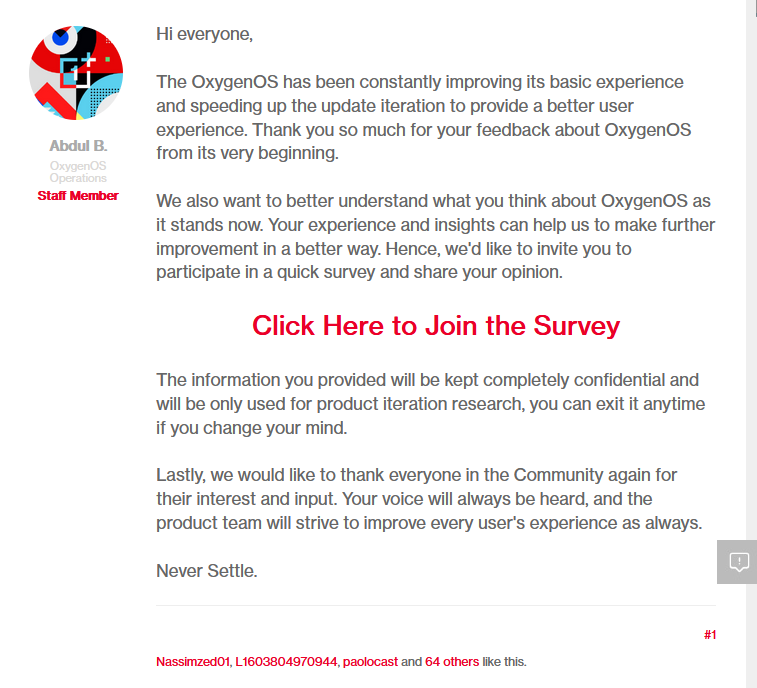
Looking at the survey, the Chinese brand is clearly stating that the OxygenOS 13 will be a collaboration between the OnePlus community and Google. The survey asks certain questions like the worst and best features one has experienced and even wants you to rank the factors that affect their experience with an OS. This includes factors like multicultural inclusiveness, intuitive operation, feature rich, close to native, and more.
As per official notes, the feedback taken by the company will apparently help improve the OxygenOS platform. The brand is likely placing a key focus on user experience this time around, especially after its last iteration (OxygenOS 12) that had delivered one of the most bug ridden experience out of any OxygenSO build so far. Interestingly, Oppo has also recently announced a survey of its own for its ColorOS platform as well. Oddly enough, it features the same carbon copy questions of the OnePlus survey.
In other words, it is also seeking to improve its ColorOS experience for its userbase. But while OnePlus is calling it the OxygenOS User Experience Survey, Oppo calls it the 2022 ColorOS Fans Test. It seems that both brands are racing ahead to both offer a unique and solid software experience as well as distance themselves from one another.
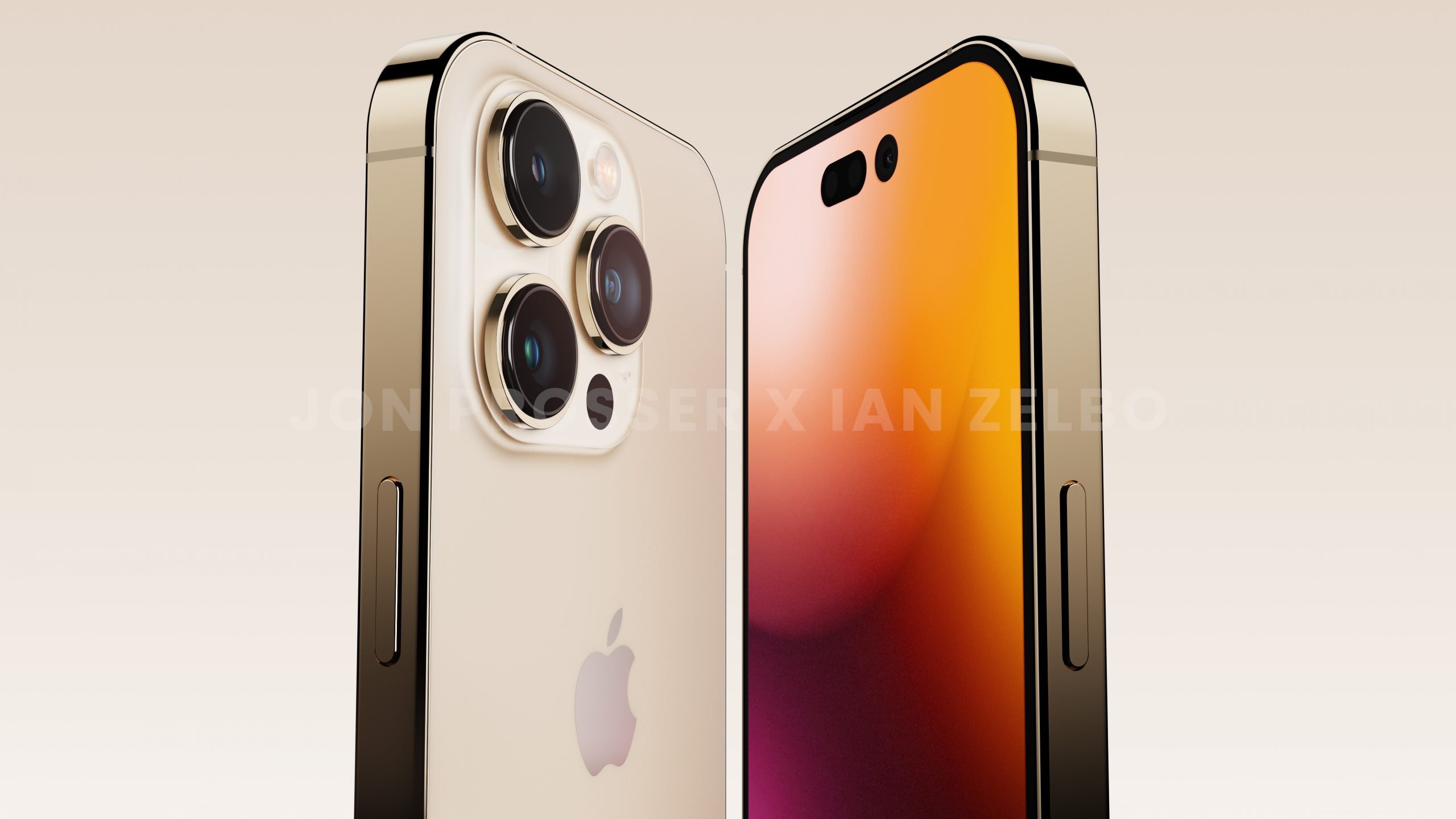
TSMC’s 4nm process is the talk of the town these days. Leading brands like MediaTek, Qualcomm, and Samsung have already adopted this process to manufacture their latest chips. It was expected that Apple would also join the party and switch to the new 4nm process for its upcoming A16 chip, however, to our disappointment, the company will likely continue to use TSMC’s 5nm process.
TSMC’s Roadmap, as brought to light by reputable Analyst Ming-Chi Kuo, reveals that the A16 SoC for this year’s iPhones will only use the 5nm process. This news coincides with a recent claim made by the leaker ShrimpApplePro who said that instead of the 4nm process, the new A16 chip will benefit from an upgraded CPU and GPU and faster LPDDR5 RAM
Both Shrimp and Kuo indicate that the 4nm process isn’t significantly better than the 5nm approach, and any improvements would be marginal. However, this claim appears to be contradictory because Qualcomm‘s most recent flagship chip, the Snapdragon 8 Plus Gen 1, is said to have benefited from TSMC’s 4nm technology.
Using the same fabrication level often limits the generation’s potential performance and power efficiency advancements. However, the A15 chip still provided 10% performance and efficiency improvements over the A14 processor despite using the same 5nm technology. So, it is likely that the upcoming A16 chip will provide more power and efficiency than its predecessor.
It is worth mentioning that the A16 chip will only be present in the iPhone 14 Pro and Pro max versions, and the rest two models will carry the same chip as the previous year’s iPhone 13 models.
It was recently reported that Apple is running behind schedule with its upcoming iPhone 14 series. One of the models (Likely the iPhone 14 Max) is said to be facing a 3 weeks delay. It is still expected that the company will unveil its latest smartphones in September.
Last week, OPPO launched the Reno 8 series in China. The series so far consists of the Reno 8, Reno 8 Pro, and Reno 8 Pro+. However, it is rumored that the brand also has the Reno 8 Lite in the pipeline. So far, a few leaks have hinted at some of the key specs of the upcoming device.
Now, tipster Paras Guglani (@passionategeekz) has leaked the European pricing of the smartphone. According to the report, the OPPO Reno 8 Lite will be priced at €305.78. A separate tweet by the tipster mentions that the device is a rebranded OPPO Reno 7Z 5G and is meant only for the global market. Other than that, the leak reveals key specifications of the smartphone along with an Interstellar Glow color option of the device and its promotional image.
OPPO Reno 8 Lite specifications (rumored)
According to the leak, the device will come with a 6.43-inch AMOLED display offering a Full HD+ resolution of 2400 x 1080 pixels.
Under the hood, it will feature the Qualcomm SM6375 chipset aka the Snapdragon 695 SoC. The device will be offered with 8GB of RAM and 128GB of storage. Storage expansion capability will also be offered in the form of a microSD card slot with support for up to 1TB. The smartphone will draw power from a 4500mAh battery that supports 33W fast charging and will operate on Android 12-based ColorOS 12.
OPPO Reno8 Lite 5G
For optics, the device will have a triple camera setup headlined by a 64-megapixel sensor. Other than that, it’ll have a 2-megapixel macro shooter and a 2-megapixel monochrome sensor. On the front, the device will house a 16-megapixel snapper for selfies and video calls.
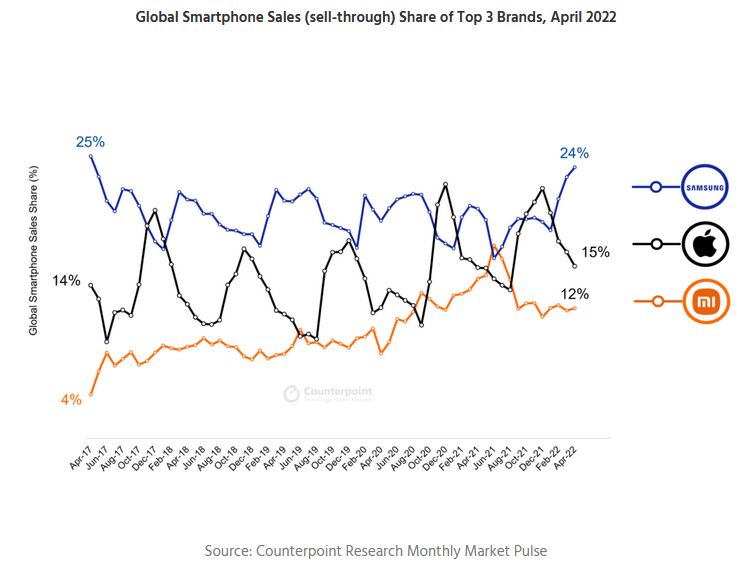
Samsung has just seen a great performance in the month of April 2022. The company managed to achieve a new record market share during this month, which was the highest ever in the past 5 years.
According to a Counterpoint Research report, the South Korean tech giant managed to see a 9 percent growth in sales year on year, despite the global smartphone sales falling by 8 percent year on year. During this time, the brand managed to capture nearly a quarter of the global smartphone market. This makes the highest ever single month market share for the company, since April 2017. Notably, the growth in April 2022 also helped the brand lead the global smartphone market for the third consecutive months this year.
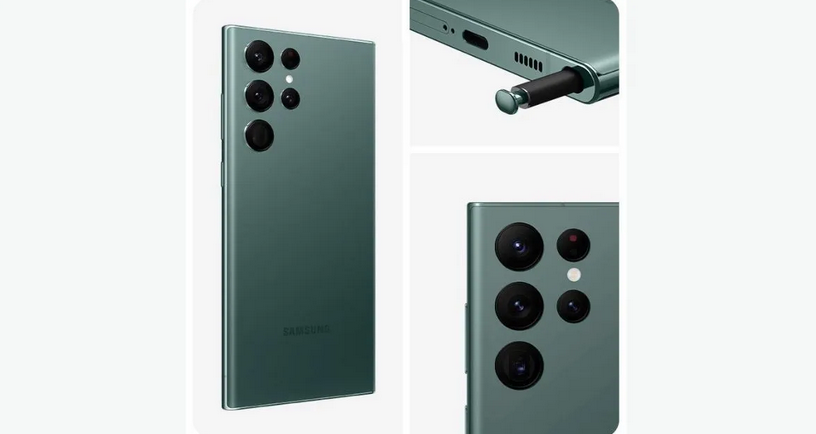
Interestingly, we had previously reported on Samsung also achieving a record market share in Q1 2022. This record was also one of the highest ever market share in 5 years as well. Research Director Tarun Pathak stated that “Samsung captured close to one fourth of the global smartphone market in April 2022, reaching its highest single month share in the last five years. This was driven by the strong performance of the S22 series in the premium segment and the A series in the mid segment.”
Galaxy S22 Ultra
As we move on to the second half of this year, Samsung is believed to retain its throne in the smartphone market in Q2 2022. The company is already the leader in the foldable smartphone segment, and still has a stronghold in the global smartphone market overall. So stick around for more, as it remains to be seen how the smartphone market develops in the coming months.
We use cookies on our website to give you the most relevant experience by remembering your preferences and repeat visits. By clicking “Accept”, you consent to the use of ALL the cookies.
This website uses cookies to improve your experience while you navigate through the website. Out of these, the cookies that are categorized as necessary are stored on your browser as they are essential for the working of basic functionalities of the website. We also use third-party cookies that help us analyze and understand how you use this website. These cookies will be stored in your browser only with your consent. You also have the option to opt-out of these cookies. But opting out of some of these cookies may affect your browsing experience.
Necessary cookies are absolutely essential for the website to function properly. This category only includes cookies that ensures basic functionalities and security features of the website. These cookies do not store any personal information.
Any cookies that may not be particularly necessary for the website to function and is used specifically to collect user personal data via analytics, ads, other embedded contents are termed as non-necessary cookies. It is mandatory to procure user consent prior to running these cookies on your website.