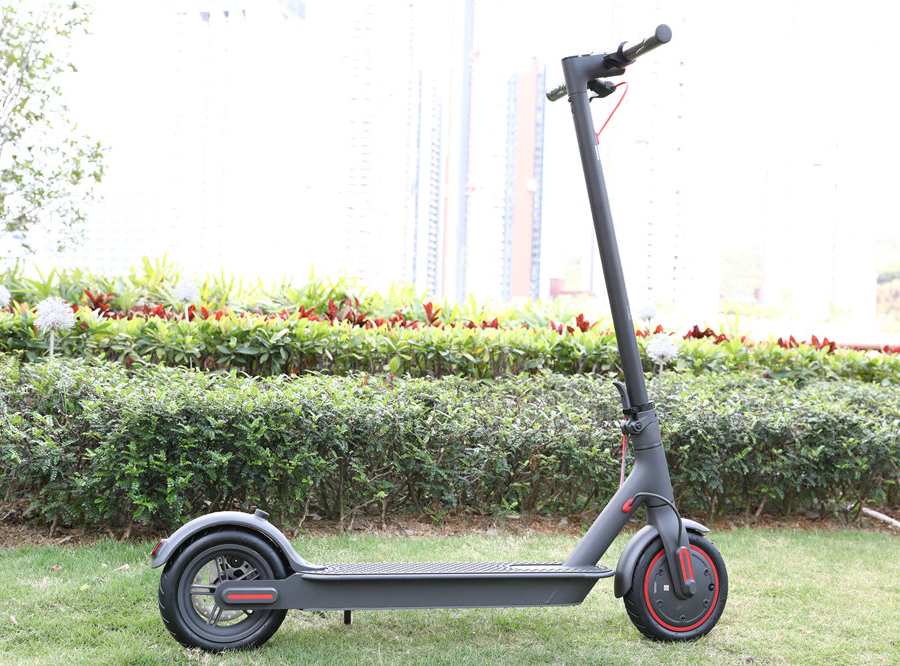
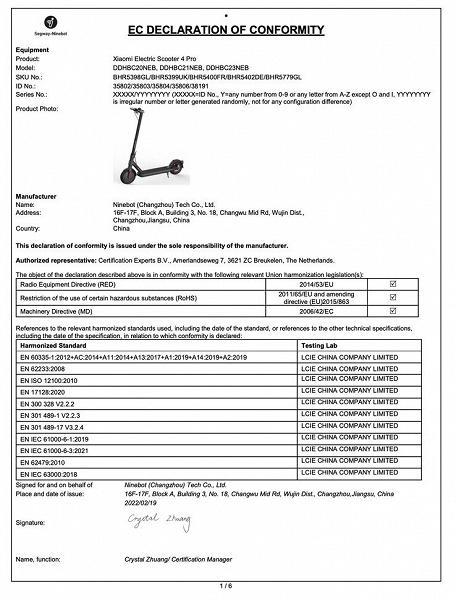
There is an indication that we may be close to an international launch of the Xiaomi Electric Scooter 4 Pro e-scooter manufactured by Segway-Ninebot. The Electric Scooter 4 Pro has gotten the European Declaration of Conformity certification. Xiaomi published the Declaration of Conformity document which was in six languages. The languages included English, Spanish, Italian, German, Polish, and French.
The conformity document specifies that the Electric Scooter 4 Pro is produced by Ninebot Tech, which we know, was acquired by Segway. The document also indicates that there are three variants of the Electric Scooter 4 Pro. Although the differences are not clear at this time, the models are DDHBC20NEB, DDHBC21NEB, and DDHBC23NEB. While no details are available on the expected release date, we know it is imminent.
The Segway-Ninebot team is behind the production of the Xiaomi Electric Scooter 3 Lite. The new Electric Scooter 5 Pro lineup is expected to come with significant improvements. Pricing and global availability details are also not known yet. The Xiaomi Electric Scooter 4 Pro will likely be available across Europe. The standing e-scooter sports a simple design but its detailed specs are speculative for now.
Last week, Samsung‘s latest Smart Monitor M8 was made available for pre-reservation in India for a deposit amount of INR 3,000. Now, the company has finally revealed the pricing and availability of the monitor.
Samsung Smart Monitor M8 Indian pricing & availability
The Smart Monitor M8 is priced at INR 59,999. It will officially go on sale starting June 15, 2022. Customers who pre-reserve the monitor will receive an INR 5,000 coupon and freebies such as Galaxy Buds2 and a wireless keyboard.
Specs & Features
The Smart Monitor M8 has a 4K UHD 32-inch display with 60Hz refresh rate. It comes with HDR 10+ support, 99 percent sRGB color coverage, 400 nits of brightness, and 1.07 billion colors.
The monitor can double as a Smart TV as it runs on the Tizen OS and comes with an IR remote. It can also work as a SmartThings Hub as the monitor provides full compatibility with Samsung’s IoT ecosystem.
The monitor comes with a movable magnetic SlimFit Cam for crystal-clear video calls, and the built-in Video Call application supports the most popular calling apps, including Google Duo. Connectivity options on the monitor include Bluetooth 4.2 and WiFi 5 along with a micro HDMI port and two USB-C ports, one of which is capable of 65W reverse charging.
The smart monitor also has two 5W speakers with tweeters built into featuring a 2.2-channel setup giving users an experience that’s closer to that of surround sound. The monitor weighs in at 9.4KG and comes in Warm White, Sunset Pink, Daylight Blue, and Spring Green colors.
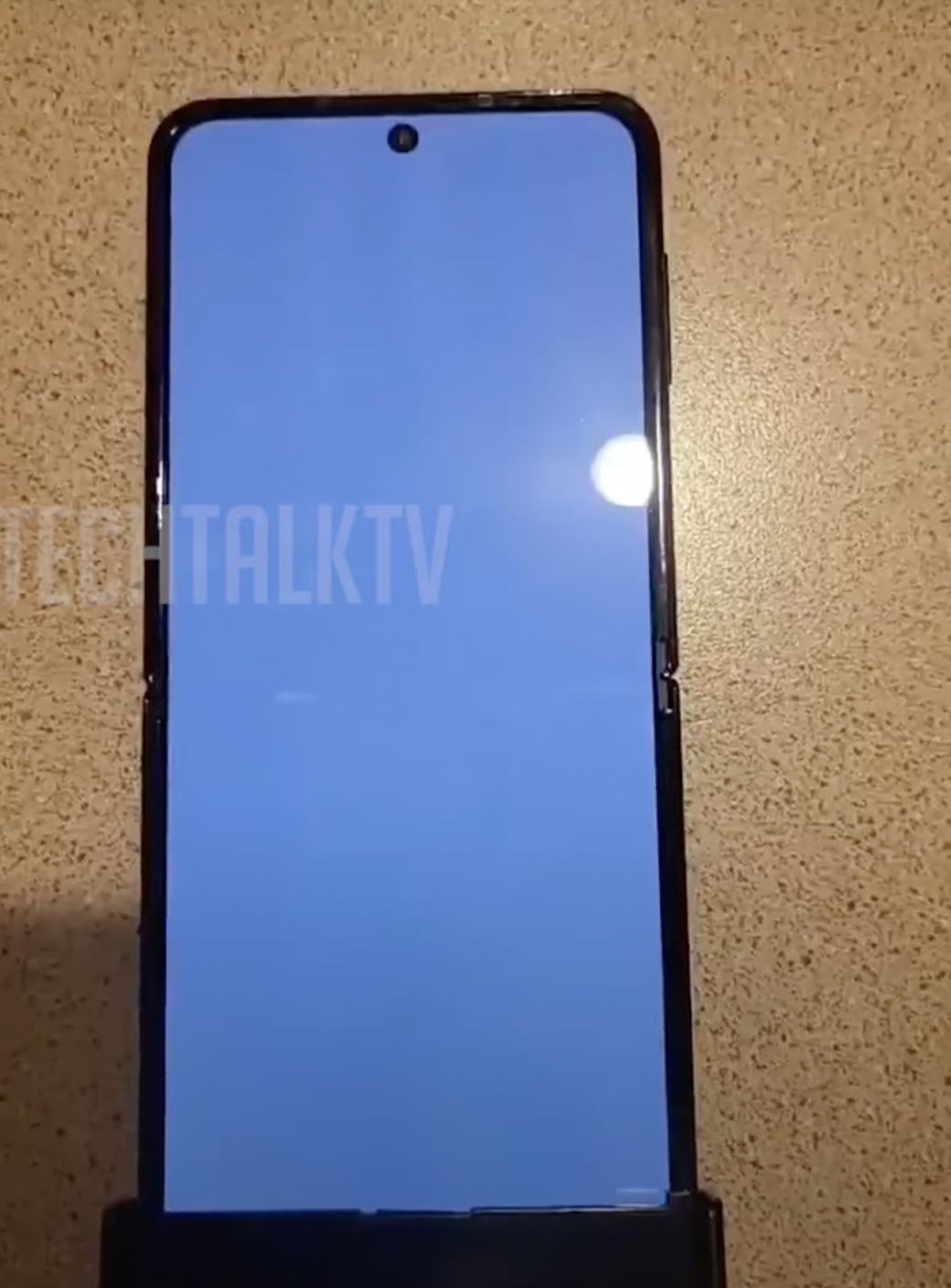
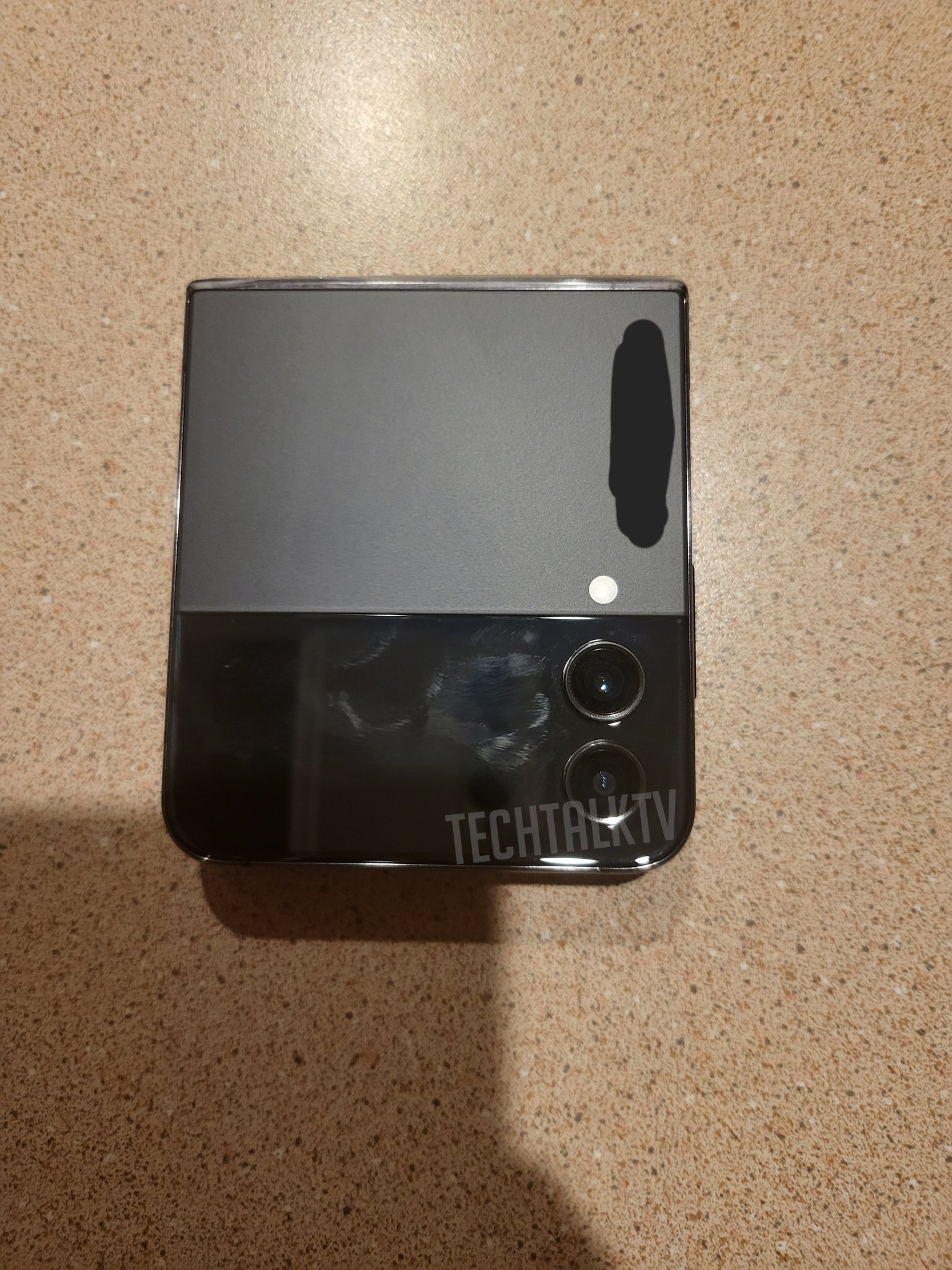
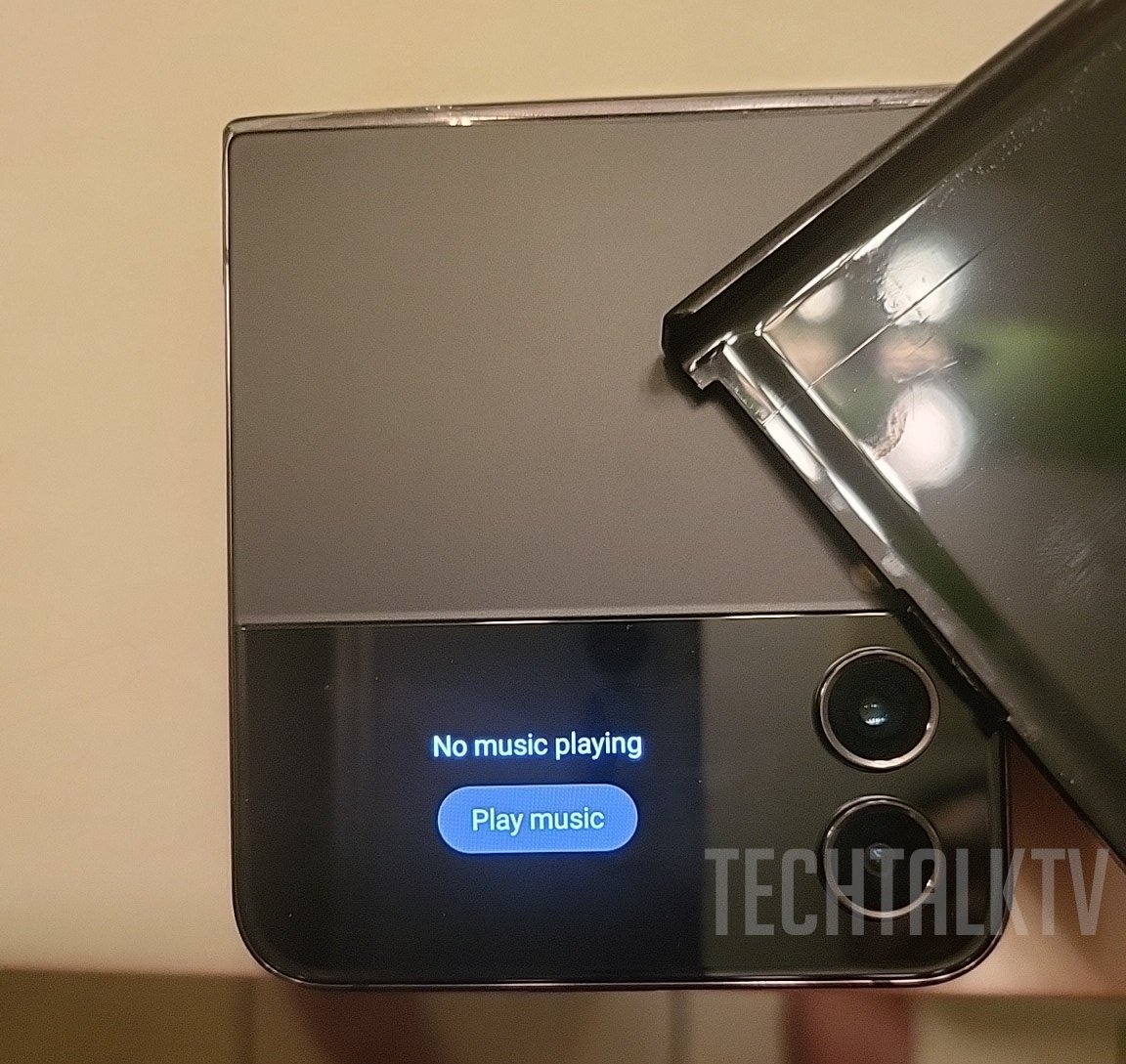
The Samsung Galaxy Z Flip 4 is expected to launch on Aug. 10. The company is also expected to announce the Galaxy Z Fold 4 and Galaxy Watch 5 series alongside it. Well ahead of the launch, TechTalkTVhas shared the real-life images of the Z Flip 4 to reveal its design.
Samsung Galaxy Z Flip 4 leaked images
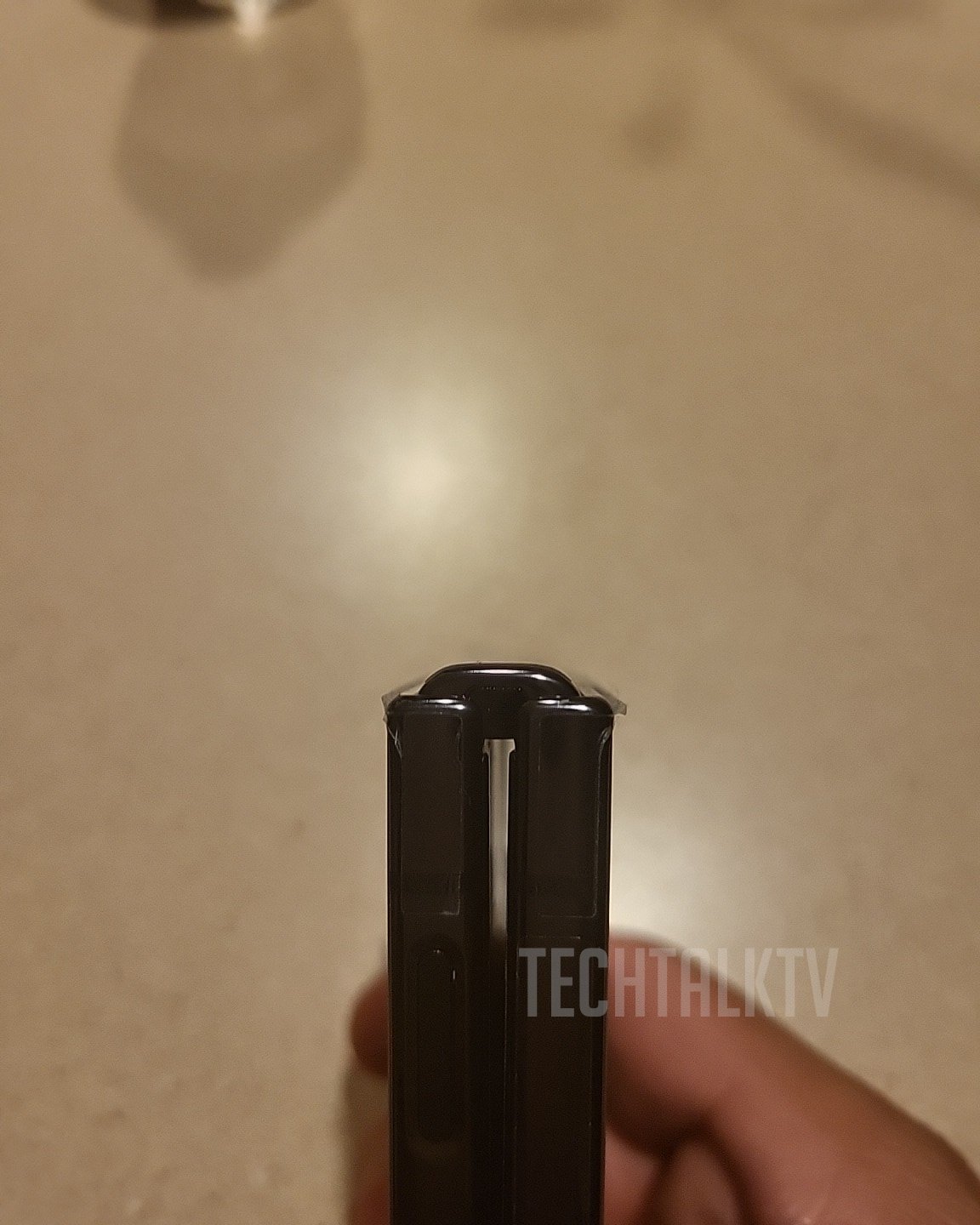
The Galaxy Z Flip 4 hands-on images show that its overall appearance is identical to last year’s Galaxy Z Flip 3. Starting from the front, the Z Flip 4 offers marginally thinner bezels. It continues to feature a foldable screen with a centrally positioned punch-hole. The source claims that the Galaxy Z Flip 4’s display has a shallower crease as compared to its predecessor.
The size of the hinge looks significantly thinner than the Galaxy Z Flip 3. Hence it appears that it could be lighter than the previous model. However, there is a visible gap when the device is closed. The cover display also appears a bit bigger than that of the Flip 3.
1 of 4
Samsung Galaxy Z Flip 4 hands-on images by TechTalkTV
Samsung Galaxy Z Flip 4 hands-on image
Samsung Galaxy Z Flip 4 hands-on images by TechTalkTV
Samsung Galaxy Z Flip 4 hands-on images by TechTalkTV
The Galaxy Z Flip 4 continues to sport a dual-tone design. Besides the cover display is a dual-camera system. It is also equipped with a side-facing fingerprint scanner. The leak also claims that the Z Flip 4 will offer a bigger battery life. There are two reasons behind it. The first one is that it is equipped with a bigger battery, which is couple with a more efficient chipset.
The Galaxy Z Flip 4 has a 3,700mAh battery like the Galaxy S22. It will carry support for 25W fast charging. It may also support wireless charging. Previous reports have revealed that it will come with a 6.7-inch AMOLED FHD+ 120Hz foldable screen, Snapdragon 8 Plus Gen 1, up to 12 GB of RAM, up to 512 GB of storage, Android 12 OS, a 12-megapixel (main) + 12-megapixel (ultrawide) dual-camera system, and a 10-megapixel front camera. It comes in colors like Graphite, Bora Purple, Pink Gold, and Blue.
OnePlus is working on its next numbered flagship phone. A recent leak claimed that it will be debuting on the market with the OnePlus 10T moniker. However, the possibility of it being called the OnePlus 10 can not be ruled out. Now, the publication Onsitegohas published renders based on early prototypes of the smartphone. In addition, it has also leaked the key specifications of the device.
OnePlus 10 (10T) design
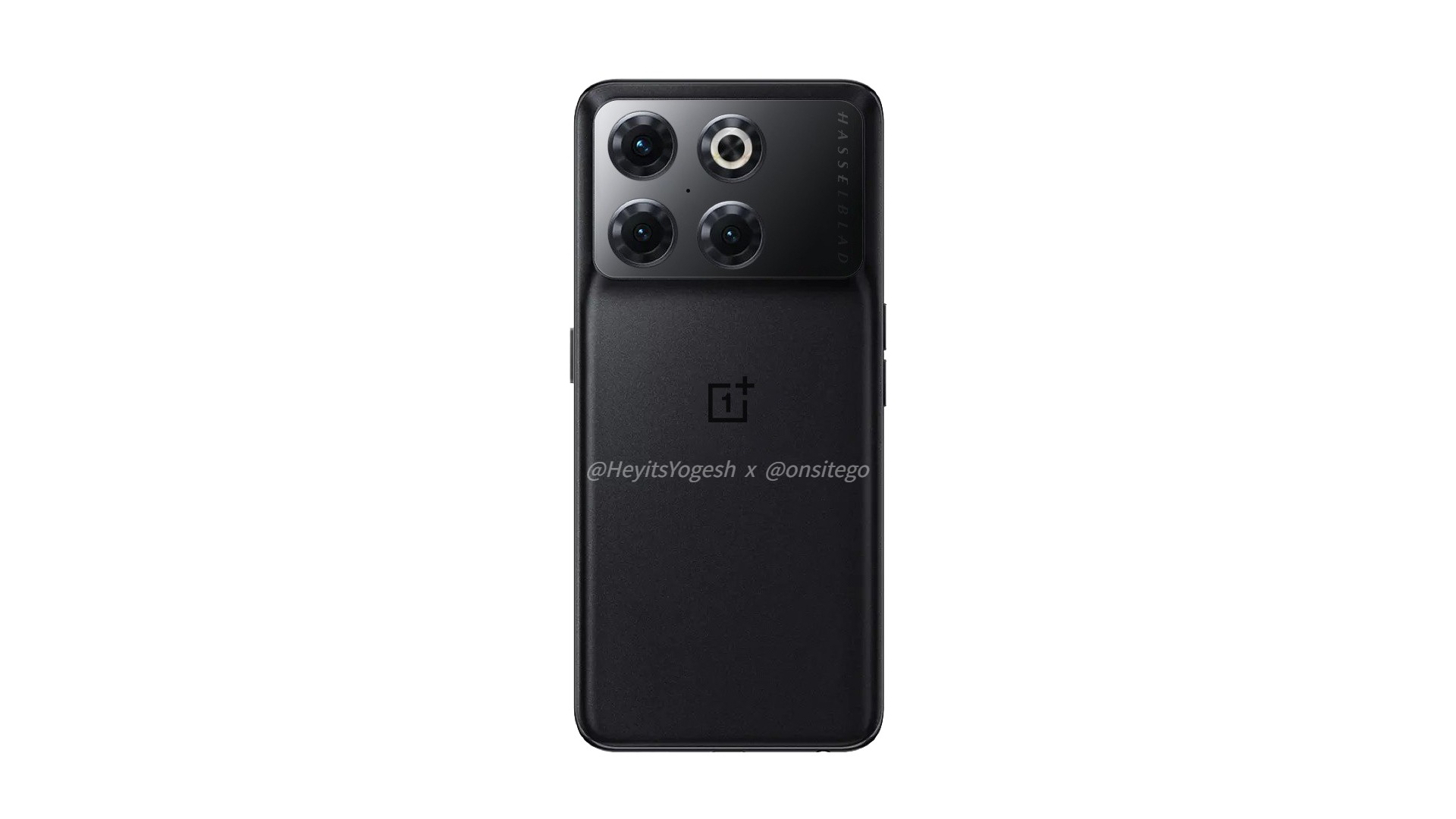
The OnePlus 10 renders show that it has a punch-hole display on the front. The left side of the device features volume up and down buttons. Its right spine has a power key. It is yet another OnePlus phone to lack the iconic alert slider.
OnePlus 10 (or 10T) renders by Onsitego / Yogesh Brar
Moving to the back, the OnePlus 10 sports a huge camera module, which occupies 1/3rd of the device. The squarish camera module has three cameras and a circular LED flash. The rear design of the phone seems to be inspired by the OnePlus 10 Pro 5G.
OnePlus 10 specifications (rumored)
According to the publication, the OnePlus 10 will come with a 6.7-inch AMOLED display that offers a Full HD+ resolution and a 120Hz refresh rate. For selfies, it will feature a 32-megapixel front-facing camera. Its rear camera setup will comprise of an OIS-assisted 50-megapixel main camera, a 16-megapixel ultrawide lens, and a 2-megapixel macro camera.
OnePlus 10 (or 10T) renders by Onsitego / Yogesh Brar
The handset was expected to feature the Dimensity 9000 SoC, but the company has reportedly settled for the Snapdragon 8 Plus Gen 1 chip. It will pack a 4,800mAh battery with 150W fast charging support. The other features that will be available on the device include an in-screen fingerprint scanner and stereo speakers.
OnePlus 10 price in India
The OnePlus 10 (10T) will be slotted in between the OnePlus 10R and OnePlus 10 Pro. The publication claims that it may launch in July in India and other markets.
China Telecom, besides selling telecommunications equipments and services in China, also sells smartphones under its sub-brand U-Magic in the country. And this week, the company had unveiled the U-Magic 50 5G, an affordable smartphone that can deliver 5G connectivity and high battery endurance in the entry-level market.
U-Magic 50 5G
The U-Magic 50 5G sports Qualcomm’s entry-level Snapdragon 480 5G SoC with a large 5000mAh battery to boot. The combination of a large battery with the power-efficient chipset onboard allows for longer endurance overall for the device. Paired with 22.5W wired fast charging, the fundamentals of the device seem alright for an entry-level 5G smartphone.
Coming to the screen, the U-Magic 50 5G is equipped with a 6.5-inch dewdrop notch LCD display that refreshes up to 60Hz with a screen aspect ratio of 20:9 and a high screen-to-body ratio of 89.3%. Though the resolution of the device has not been announced in the marketing materials yet.
The U-Magic 50 5G is also equipped with a set of dual stereo speakers on the top and bottom of the device. China Telecom claims that it can deliver up to 86dB of loud audio and paired with Surround Sound 9.1, the audio experience will be further elevated for the user.
Cameras-wise, the device only has a dual-camera setup with a 13MP main sensor and a 2MP depth sensor. The device does not support NFC, charges via USB-C and has a 3.5mm headphone jack. The phone’s dimensions are 163.9 × 75.9 × 8.95 mm and weigh 196g.
U-Magic 50 5G
The China Telecom U-Magic 50 5G officially goes on sale in China on June 15th and will be available in only memory configuration – 8GB RAM and 128GB of internal storage for 1499 RMB (224 USD). Users will have 3 colour options to choose from, which are Matte Blue, Matte Silver and Black.
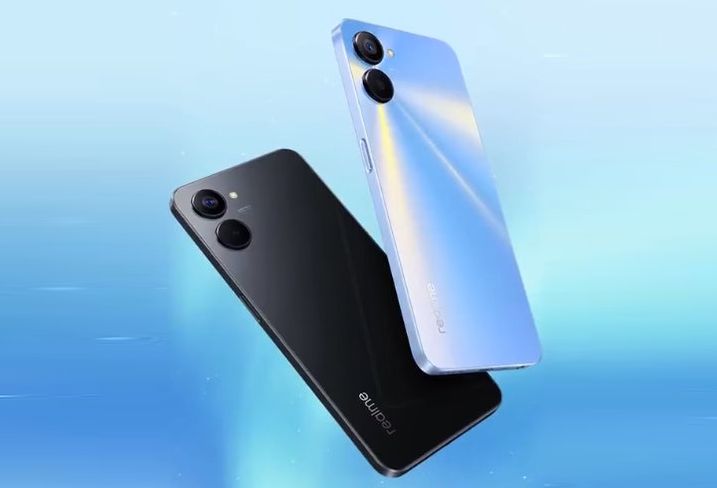
Realme V20 5G has been silently announced in China. The smartphone is reportedly aimed towards offline markets because of which it is unavailable for purchase online. In May, a Realme phone with an RMX3610 model number was spotted at Chinese certification sites such as 3C and TENAA. At that time, it was speculated that it could be the Realme V21 5G. However, it has now arrived in the offline market in China with the “Realme V20 5G” moniker. Here is all the information on the specifications, features, and price of the device.
Realme V20 5G specifications and features
The Realme V20 5G has a 6.5-inch LCD screen with a teardrop notch. It offers an HD+ resolution of 720 x 1600 pixels. It has a 5-megapixel camera on the front for selfies and video calls. Its rear-facing dual-camera unit has a 13-megapixel main camera and a 0.3-megapixel secondary lens.
Realme V20 5G
The MediaTek Dimensity 700 chipset is present under the hood of the Realme V20 5G. It is equipped with 4 GB of RAM and 128 GB of built-in storage. It is unclear whether the V20 runs on Android 12 OS or the older Android 11 OS. The device lacks a fingerprint scanner.
The Realme V20 5G packs a 5,000mAh battery that supports 10W charging. It comes equipped with a 3.5mm audio jack. The device measures 8.1mm in thickness and weighs around 184 grams.
Realme V20 5G price and availability
The V-series Realme phones are not sold outside China. Even if it arrives in global markets, it could be rebranded as a C-series device. As far as pricing is concerned, the V20 5G has arrived with a price tag of 999 Yuan (~$149). It comes in two colors, such as Star Blue and Ink Cloud Black.
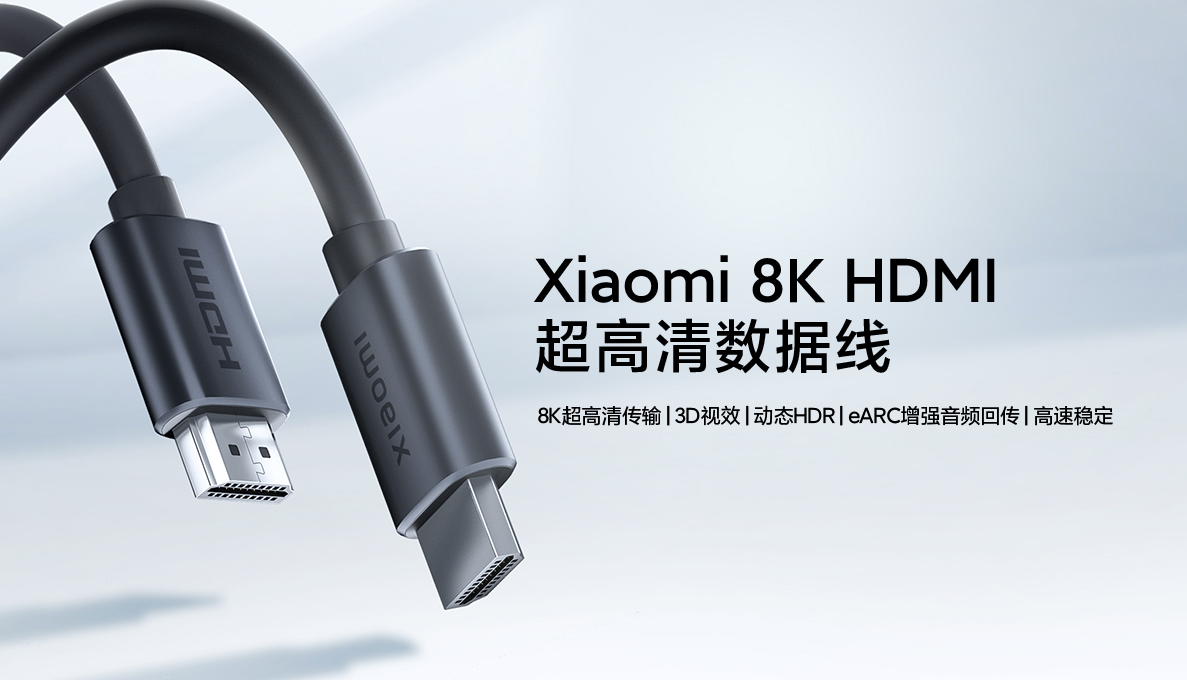
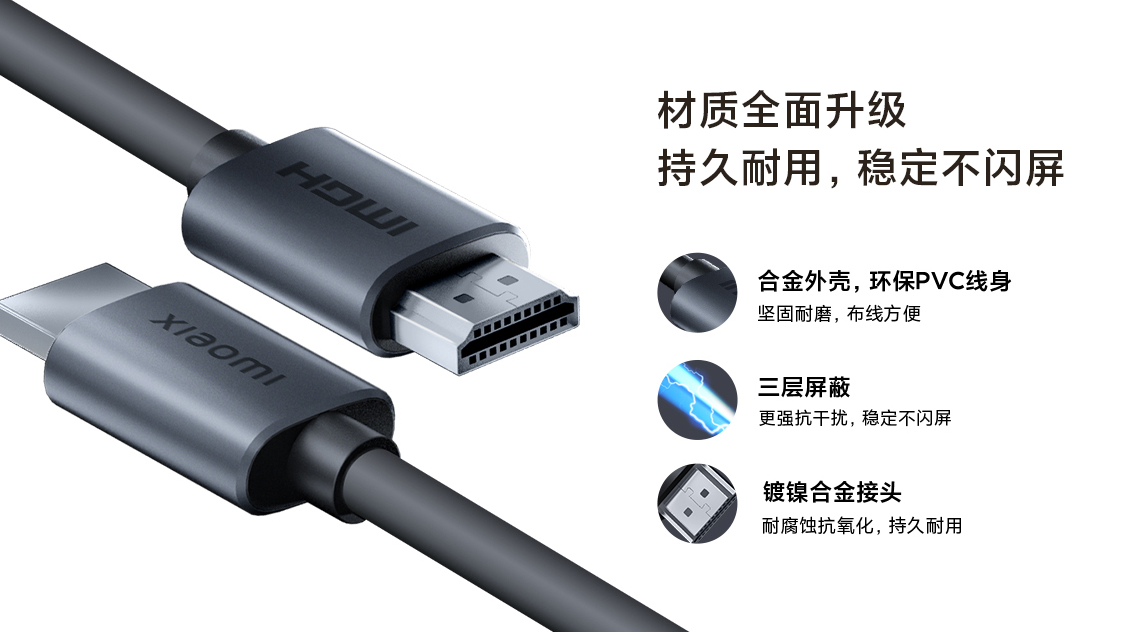
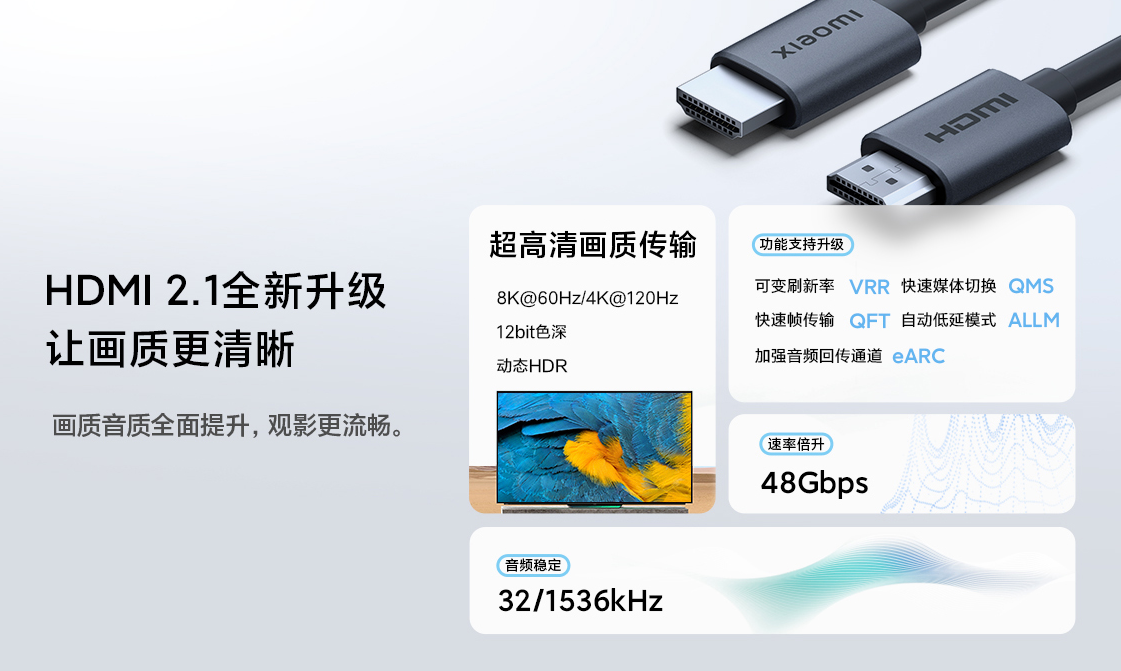
Xiaomi has officially launched an 8K HDMI 2.1 data cable that supports dynamic HD resolution. The Xiaomi 8K HDMI 2.1 ultra-high-definition data cable is now available in China for ¥99 (~$15). The new Xiaomi HDMI cable supports 4K and 8K video transmission at 120Hz and 60Hz refresh rates respectively.
The new Xiaomi 8K HDMI 2.1 data cable supports variable refresh rates, fast media switching, fast frame transmission, and automatic low-latency mode. The new HDMI cord also serves as an enhanced audio return transit channel. The data cable has a total bandwidth of 48Gbps and offers 3D stereo imaging technology. It also offers a high color depth of 12 bit.
Xiaomi says that the 8K HDMI 2.1 data cable offers a sensational impact and brings a great audiovisual experience. The Xiaomi 8K HDMI 2.1 data cable is compatible with 7.1/5.1 channel systems and supports Dolby Atmos. It can be used with gaming consoles, TV boxes, monitors, projectors, HD TVs, and others. Its versatility is further enhanced by its decent pricing of ¥99 (~$15).
The Xiaomi 8K HDMI 2.1 data cable is internationally certified by the HDMI Association. It is also backward compatible with earlier versions from 1.1 to 2.0. The Xiaomi 8K HDMI 2.1 data cable is available from the Xiaomi website.
Automaker Hyundai has introduced its Level 4 autonomous RoboRide service in the Gangnam district of Seoul, South Korea. The Hyundai Ioniq 5 is at the heart of the deployment and will see a safety driver present for now.
Seoul’s Mayor and another city official were the first passengers in the new ride-hailing service in the Gangnam district. They were taken along a route in the district which is the only location for the service in Korea. There are no details as of now on when Hyundai will discontinue the presence of a safety driver in the RoboRide in Korea. The Ioniq 5 autonomous vehicles can accommodate up to three passengers at a time.
The Hyundai-powered RoboRide service in Korea will only be available to company employees at the start. The hailing is achieved using the i.M app, similar to the ones used by Waymo or Cruise. The i.M app was developed by Jin Mobility and it will rely heavily on AI. The Ioniq 5 itself is based on Hyundai’s Advanced Driver Assistance System (ADAS). There are no indications of how long this pilot RoboRide service will last in Korea. The company feels this milestone is an important inflection point as it continues to internalize autonomous driving technology.
There are twenty-five districts in Seoul and the RoboRide is only active in just one. This is because the traffic lights in the other districts are not yet capable of communicating with self-driving vehicles. The data that will be gathered from the pilot scheme will aid Hyundai in integrating several components in the production of autonomous vehicles.
Apple’s M1 series of silicon processors not only exists in its Mac Minis and Macbooks but also resides on the company’s iPads as well. Thus, a cybersecurity vulnerability in the SoC could lead to many modern Apple products being affected if they were to be targeted by a malicious attack.
And after announcing the company’s new M2 silicon processors at Apple WWDC 2022, news broke out that the Apple M1 silicon has been compromised in the cybersecurity department. And as both MacWorld and 9to5Mac quoted MIT researchers, the newly discovered security flaw defeats the last line of security of the M1 SoC and cannot be patched via software updates.
The highly concerning security vulnerability in M1 is named “PACMAN” because it defeats the M1’s Pointer Authentication Code (PAC) system.
MacWorld explains that pointer authentication is a security feature that helps protect the CPU against an attacker that has gained memory access. Pointers store memory addresses, and pointer authentication code checks for unexpected pointer changes caused by an attack. In its research, MIT CSAIL created “PACMAN,” an attack that can find the correct value to successfully pass pointer authentication, so a hacker can continue with access to the computer.
Macworld quotes an MIT article with MIT CSAIL’s Joseph Ravichandran, who is the co-lead author of a paper explaining PACMAN, “When pointer authentication was introduced, a whole category of bugs suddenly became a lot harder to use for attacks. With PACMAN making these bugs more serious, the overall attack surface could be a lot larger.”
According to MIT CSAIL, since its PACMAN attack involves a hardware device, a software patch won’t fix the problem. The issue is a wider problem with ARM processors that use Pointer Authentication, not just Apple’s M1. “Future CPU designers should take care to consider this attack when building the secure systems of tomorrow,” Ravichandran wrote. “Developers should take care to not solely rely on pointer authentication to protect their software.”
MIT was able to perform the PACMAN attack remotely. The team mentions that they actually did all their experiments over the network on a machine in another room, as they described “PACMAN works just fine remotely if you have unprivileged code execution.”
Macworld reports that Apple is aware of MIT CSAIL’s findings and issued the following statement: “We want to thank the researchers for their collaboration as this proof of concept advances our understanding of these techniques. Based on our analysis as well as the details shared with us by the researchers, we have concluded this issue does not pose an immediate risk to our users and is insufficient to bypass operating system security protections on its own.”
Edifier is a Beijing-based electronics company in the industry, that is mostly known for their expertise in audio consumer electronics like speakers, headsets and also earphones. The brand is still growing in terms of gaining market share in the industry and it cannot be refuted that to quickly gain market share, your entry-level product must be affordable and high-quality for the masses.
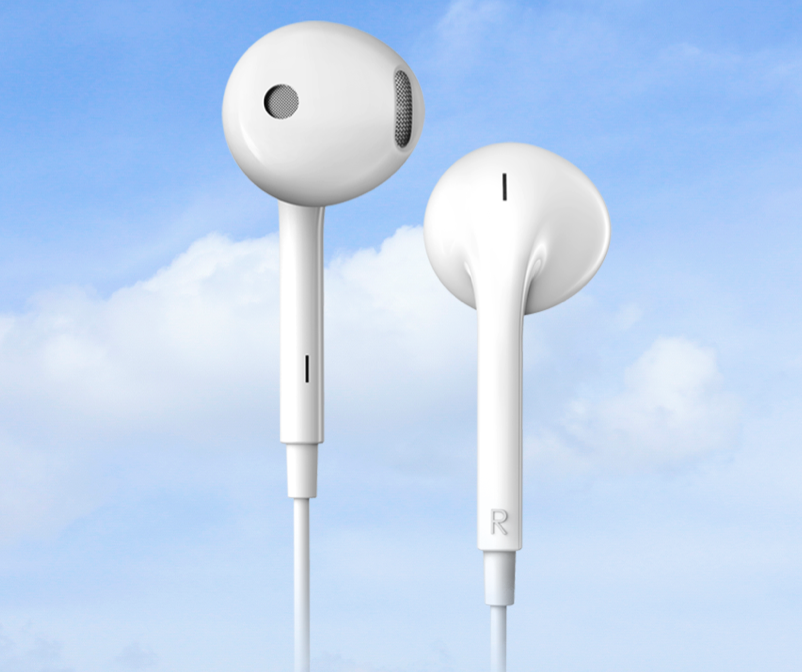
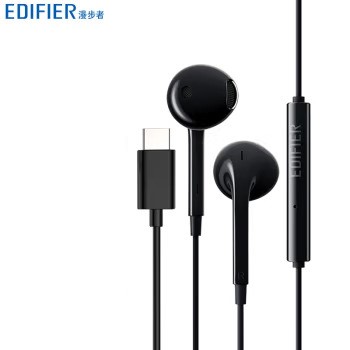
This week, the brand announced the Edifier H180 Plus – a pair of new USB-C half-in-ear wired earphones, that are not only affordable but also decent from the specifications as well.
Edifier H180 Plus
Like newer wired earphones, the Edifier H180 Plus connects to your device via USB-C, and as for the durability of the wire, the Edifier H180 Plus is claimed by the company to be durable with a highly flexible polycarbonate coating that allows it to be resistant to scratches, entanglement, and wear and tear. In turn, you can enjoy your music worry-free from harm.
However, what’s surprising about these earphones is the audio quality. These affordable pair of earphones have officially gotten the golden seal of Hi-Res Audio, meaning sound quality can definitely punch above its weight class.
Edifier’s marketing material mentions that this is achieved with the company’s clever audio engineering. The Edifier H180 Plus is equipped with a 14mm audio driver that allows for frequency ranges from 20Hz to 40kHz, and the bandwidth is 100% higher than competing wired earphones in the market.
In addition, the software on the Edifier H180 Plus is also pretty varied. It is equipped with 4 in-built EQ sound profiles for your music needs, which are respectively: Standard, Pop, Classical and Rock. The in-built microphone is also said to provide high-quality audio recording capabilities.
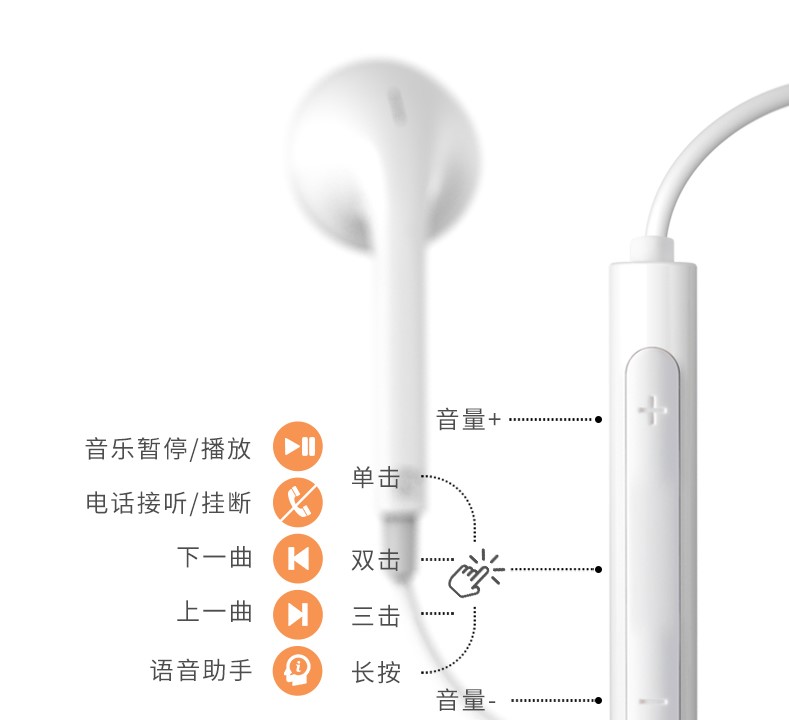
The microphone is housed within the control panel that is located on the bottom side of the right earbud. And the controls are physical, as you can easily click on the power button, volume up or volume down button for immediate feedback and control.
Edifier H180 Plus
The Edifier H180 Plus comes in two colours – Black and White and goes on sale in China today for an official retail price of 69 RMB (11 USD).
The OPPO Reno8 Series just debuted in the global market with the launch of the OPPO Reno8 Lite 5G: the most affordable variant from the lineup. While we are waiting for the launch of the remaining devices from the series globally, it is worth comparing the new mid-ranger with the other handsets sold in the global market with similar price tags. Remaining under the BBK umbrella, there are two handsets sold globally with similar specifications: the Realme 9 Pro and the OnePlus Nord CE 2 Lite 5G. Here is a comparison between the specifications of the OPPO Reno8 Lite 5G, the Realme 9 Pro, and the OnePlus Nord CE 2 Lite 5G.
Realme 9 Pro vs OPPO Reno8 Lite 5G vs OnePlus Nord CE 2 Lite 5G
Realme 9 Pro
OPPO Reno8 Lite 5G
OnePlus Nord CE 2 Lite 5G
DIMENSIONS AND WEIGHT
164.3 x 75.6 x 8.5 mm,
195 g
159.8 x 73.2 x 7.5 mm,
173 g
164.3 x 75.6 x 8.5 mm,
195 g
DISPLAY
6.6 inches, 1080 x 2412 pixels (Full HD+), IPS LCD
6.43 inches, 1080 x 2400 pixels (Full HD+), AMOLED
6.59 inches, 1080 x 2412 pixels (Full HD+), IPS LCD
Triple 64 + 8 + 2 MP, f/1.8 + f/2.2 + f/2.4
16 MP f/2.1 front camera
Triple 64 + 8 + 2 MP, f/1.7 + f/2.4 + f/2.4
16 MP f/2.4 front camera
Triple 64 + 2 + 2 MP, f/1.7 + f/2.4 + f/2.4
16 MP f/2.0 front camera
BATTERY
5000 mAh, fast charging 33W
4500 mAh, fast charging 33W
5000 mAh, fast charging 33W
ADDITIONAL FEATURES
dual SIM slot, 5G
dual SIM slot, 5G, reverse charging
dual SIM slot, 5G
Design
The most beautiful phone in this comparison is the OPPO Reno8 Lite 5G. It has a better look, but that is not all: it comes with a thinner and lighter design, as well as amazing RGB rings around the cameras which can be used as notifications LEDs. Last but not least, it is the only one to offer certification against water: thanks to the IPX4 certification, it is a splashproof phone. Unfortunately, all of these handsets are not built with premium materials, and they are made of polycarbonate. The Realme 9 Pro and the OnePlus Nord CE 2 Lite 5G are thicker and bigger devices, so less attractive than the Reno.
Display
Are you looking for the best image quality? If so, then you should opt for the OPPO Reno8 Lite 5G. It is the only device from this trio to sport an AMOLED display: it is a panel with a 6.43-inch diagonal and a Full HD+ resolution which shows more brilliant colors and deeper blacks. It even sports an in-display fingerprint reader. On the other hand, the Realme 9 Pro and the OnePlus Nord CE 2 Lite 5G are better devices for gaming: they have two IPS LCD panels, but they come with a high 120 Hz refresh rate. All of these handsets feature a mono speaker and a 3.5 mm audio jack allowing you to use classic wired earphones.
Specs & Software
These three handsets come with exactly the same hardware setup. They are all powered by the octa-core Snapdragon 695 5G mobile platform by Qualcomm built at 6 nm and running at a max frequency of 2.2 GHz. The chipset is paired with up to 8 GB of RAM and up to 128 GB of internal storage that you can furtherly expand with a micro SD. Note that, while Realme 9 Pro and OnePlus CE 2 Lite 5G come in a 6/128 GB memory configuration and run Android 12 out of the box, the OPPO Reno8 Lite 5G only provides 8 GB of RAM and it still runs Android 11, even though it is based on ColorOS 12. This means that Reno8 Lite will get fewer Android updates.
Camera
These three handsets come with exactly the same camera departments, with the exception of the Realme 9 Pro. All of them sport a 64 MP main sensor and a 2 MP macro camera, but the Realme 9 Pro replaces the useless depth sensor of the OnePlus Nord CE 2 Lite 5G and the OPPO Reno8 Lite 5G with a useful ultrawide sensor. That is why the Realme mid-ranger wins the camera comparison.
The weak point of the OPPO Reno8 Lite 5G is the battery life if we compare it to its opponents. In order to provide a thinner, lighter, and more compact design, OPPO equipped the device with a smaller battery: the capacity is 4500 mAh. With the OPPO Reno8 Lite 5G and the OnePlus Nord CE 2 Lite 5G, you get bigger 5000 mAh batteries. So, even though the Reno8 Lite 5G has a more efficient AMOLED display, its two rivals have longer battery life. All of these phones feature 33W fast charging.
Price
The starting price of the Realme 9 Pro is €259/$272, the OnePlus Nord CE 2 Lite 5G starts from €299/$315, and the OPPO Reno8 Lite 5G sells for €399/$420. Note that the price of the first two is referred to the memory configuration with 6 GB of RAM and 8 GB of internal storage, while the Reno8 Lite only comes with 8 GB of RAM and 128 GB of storage. Overall, the Reno8 Lite 5G is a more interesting phone because of its AMOLED display and better design, but the other two come with big batteries, more affordable prices, and a 120 Hz refresh rate which may attract a lot of customers.
Realme 9 Pro vs OPPO Reno8 Lite 5G vs OnePlus Nord CE 2 Lite 5G: PRO and CONS
After the standard Reno 8 and Reno 8 Pro Plus went on sale last week, the Oppo Reno 8 Pro has now officially gone on sale in China for only 2999 RMB (US$ 447)!
The Oppo Reno 8 Pro will be officially available with 3 memory and storage configurations that go up to 12GB of LPDDR4X RAM and 256GB of UFS 2.2 storage. The official pricing in the country for the Oppo Reno 8 Pro is as follows:
8 GB + 128 GB – 2999 RMB (US$ 447)
8 GB + 256 GB – 3199 RMB (US$ 477)
12 GB + 256GB – 3499 RMB (US$ 522)
Oppo Reno 8 Pro
The Oppo Reno 8 Pro is the world’s first smartphone equipped with Qualcomm’s Snapdragon 7 Gen 1 SoC, built on Samsung’s 4nm manufacturing process. The SoC is claimed to feature higher performance than its predecessors, the Snapdragon 778G and 780G processors, on the more advanced node.
However, the Snapdragon 7 Gen 1 isn’t the only silicon processor under the Oppo Reno 8 Pro as the device also features the company’s in-house self-developed MariSilicon X ISP imaging chip, which debuted earlier in the year on the brand’s flagship offering – the Oppo Find X5 Pro. With a dedicated ISP, the Oppo Reno 8 Pro aims to outperform videography and photographing capabilities in its segment.
The cameras on the Oppo Reno 8 Pro are also stacked as it features the same flagship Sony IMX766 primary sensor as the Oppo Find X5 Pro, with an 8MP ultra-wide and 2MP macro sensor to round up the triple camera island on the back. The selfie camera is also using a flagship-grade sensor as well from Sony which is the Sony IMX709.
Oppo Reno 8 Pro
Coming to the display, the Oppo Reno 8 Pro has a 6.62-inch Full HD+ Samsung E4 flat AMOLED display with 2,400 x 1,080 pixels of resolution, reaching up to 1300 nits of peak brightness and a 120 Hz refresh rate. Powering the device is a generous 4,500mAh battery with Oppo’s signature 80W SuperVOOC fast wired charging.
Other features of the Oppo Reno 8 Pro include its Linear X-axis vibration motor, support for NFC and a single bottom-firing speaker. The device is equipped with flat aluminium edges and is available in 3 colour options: Champagne Gold, Laidback Blue and Midnight Black.
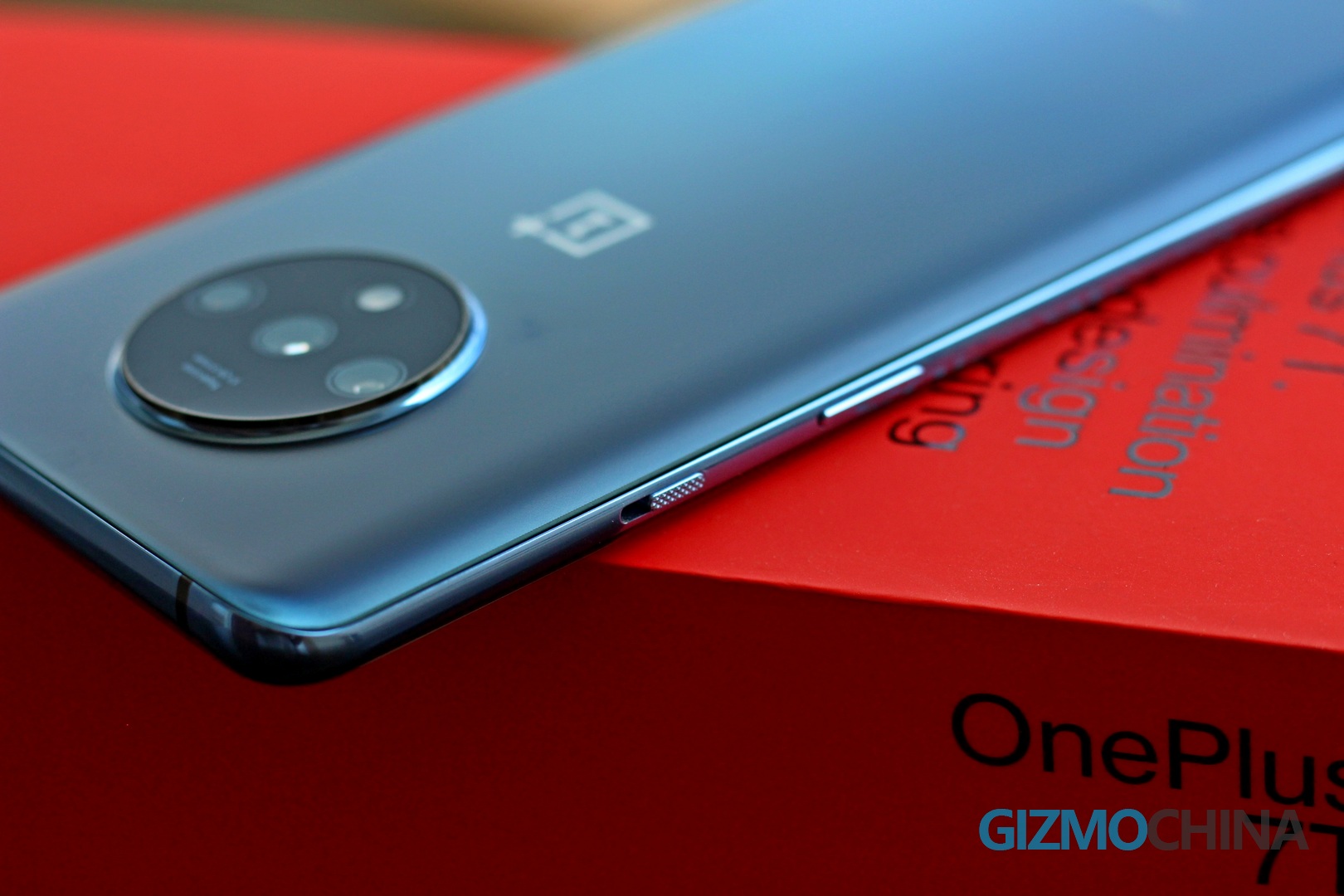
Ever since the launch of the OnePlus 2 back in 2015, the brand has provided the iconic alert slider on its devices. Although, after the merger of OnePlus and OPPO, many of the devices from the brand have come out lacking the slider.
OnePlus 6 Alert Slider
This was mainly due to most of the mid and lower-end devices that OnePlus has launched in recent times being rebranded OPPO devices. However, with the launch of the OnePlus Ace/ OnePlus 10R, many customers were left confused as that being a premium mid-range device also lacked an alert slider.
OnePlus 7T
Now, tipster Yogesh Brar’s recent tweet has revealed that there might be very few devices that come with an alert slider from now on. According to the tipster, the recently launched OnePlus Nord 2T was the last mid-range device to carry an alert slider. Going forward, the alert slider will only be offered in the Pro models along with some OPPO flagships.
This means that customers will have to shell out some serious cash to enjoy the physical alert slider in the future. Currently, there is no clarification as to why this decision was made. But it might be to keep the feature more exclusive or it could be due to OnePlus using rebranded OPPO devices as their mid-range offerings.
POCO will soon be launching the POCO F4 5G smartphone globally. The brand has already confirmed that it comes with a Snapdragon 870 chipset. And now, the company has teased its thermal management system showcasing its performance.
According to POCO, the F4 5G will use a cooling system dubbed Liquidcool 2.0. This is a seven-layer 3,112mm2 vapor chamber with graphite sheets. POCO also demonstrated the thermal performance of the F4 5G by pitting it against devices like the iQOO 9 SE and the OnePlus 10 Pro. The POCO F4 was on average a few degrees cooler than the competition during the thermal test and throttled just 5% compared to the 18% of the iQOO 9 SE and the 29% of the OnePlus 10 Pro.
This test, however, feels a bit unfair as the competition is running the Snapdragon 888 and Snapdragon 8 Gen 1. Both of these chipsets are notorious for overheating.
POCO F4 5G specs (rumored)
The device is expected to come with a 6.67-inch FHD+ AMOLED display with a 120Hz refresh rate and Dolby Vision support.
The Snapdragon 870 chipset will be paired with up to 12GB of LPDDR5 RAM and UFS 3.1 storage. The device will operate on Android 12-based MIUI 13 and is expected to have a 4500mAh battery with 67W fast charging support.
For optics, the smartphone is expected to bring a triple camera setup on the back with a 64-megapixel primary sensor paired with an 8-megapixel ultrawide unit and a 2-megapixel macro camera. On the front, it will likely have a 20-megapixel selfie snapper. Other than that, the device will come with dual stereo speakers, a side-mounted fingerprint sensor, and an IR blaster.
Earlier, there were rumors that Telegram is working on a paid subscription plan. Today, Pavel Durov, the messaging app’s founder and CEO, confirmed that the Telegram Premium plan is indeed in development and will be launched by the end of this month.
Telegram Premium will be launching later in June and it will bring some extra features for the more demanding users. Premium users will have a higher limit for chats, media, and file uploads, Durov said in a blog post.
Durov claimed that the existing features in the free version will not be degraded and in fact, plenty of new features will soon be added to it. Furthermore, he stated that even users who do not subscribe to Telegram Premium will be able to take advantage of some of its features, such as viewing extra-large documents, media, and stickers sent by Premium users, or tapping to add Premium reactions already pinned to a message to react in the same way.
Durov stated that the Premium service is meant to respond to user demand for more storage/bandwidth without destroying Telegram’s ability to provide a free service to everyone else.
“After giving it some thought, we realized that the only way to let our most demanding fans get more while keeping our existing features free is to make those raised limits a paid option,” says Durav.
The exact details of the Premium plan are not known yet. However, previous reports have suggested that paid tier will cost $4.99 per month. The prices may vary for different regions.
Following privacy concerns with rival messaging app WhatsApp, owned by Meta Platforms, Telegram has seen an increase in users. According to its website, Telegram currently has 500 million monthly active users and is one of the top ten most downloaded apps in the world.
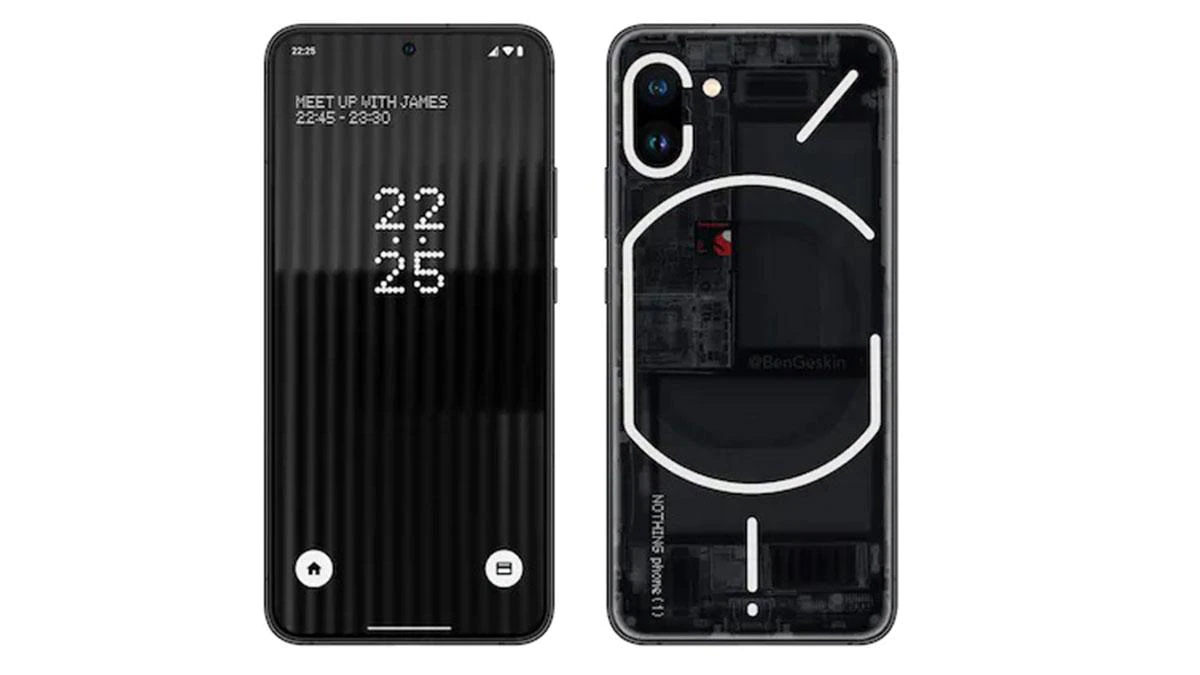
There’s still a month to the launch of the long-awaited Nothing Phone (1), however, the rumor mill has already started grinding its specifications into very fine pieces. We recently got to know the charging speed and the display specs of the smartphone. Now, tipster, Mukul Sharma, is here to reveal some details about the Pre-booking of the Nothing Phone (1).
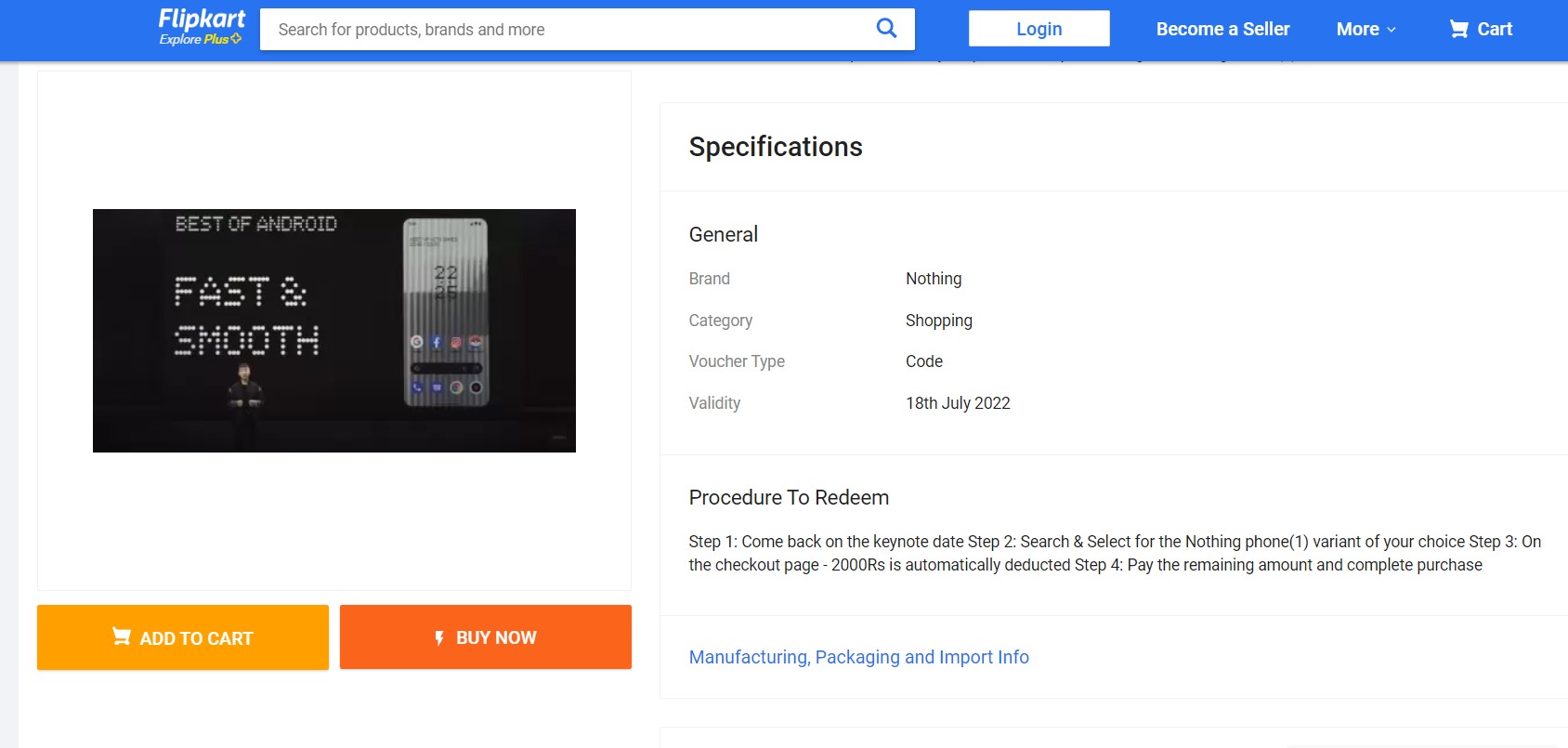
Apparently, the tipster has shared a screenshot of what appears to be the Flipkart Product page of a Pre-booking coupon. The description of the coupon says “This Coupon Code is your pass for the pre-booking for Nothing Phone (1)”. It further reveals that interested buyers will be able to Pre-book the Nothing phone (1) by paying 2000 Rs which will automatically be adjusted during the time of the checkout.
The Pre-booking of the smartphone is not open yet. It can be seen that the coupon is only valid till July 18 so the pre-booking is likely to start before that. For those living under the proverbial rock, Nothing has confirmed that it will be unveiling the Nothing Phone (1) at an event on July 12.
Specifications of the smartphone have started to surface online. We know that the handset will come with a transparent back, fast wired and wireless charging, and super slim bezels. It is rumored to draw power from a Snapdragon 7 Gen 1 Soc paired with up to 8 GB of RAM, and up to 128 GB of storage.
Nothing Phone (1) Representative picture
It is expected to have a 6.55-inch full HD+ OLED display offering a resolution of 1080 x 2400 pixels. The smartphone is likely to feature a 4500mAh battery and support 45W fast charging. These are all the details we have about the smartphone. We hope to learn more in the days to come.
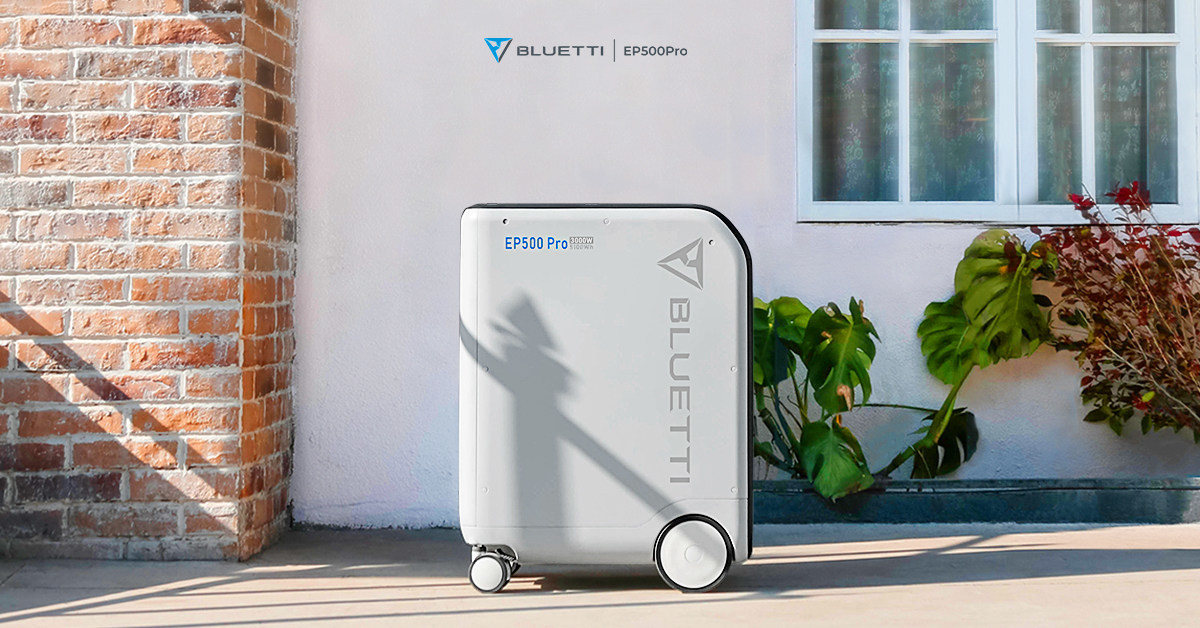
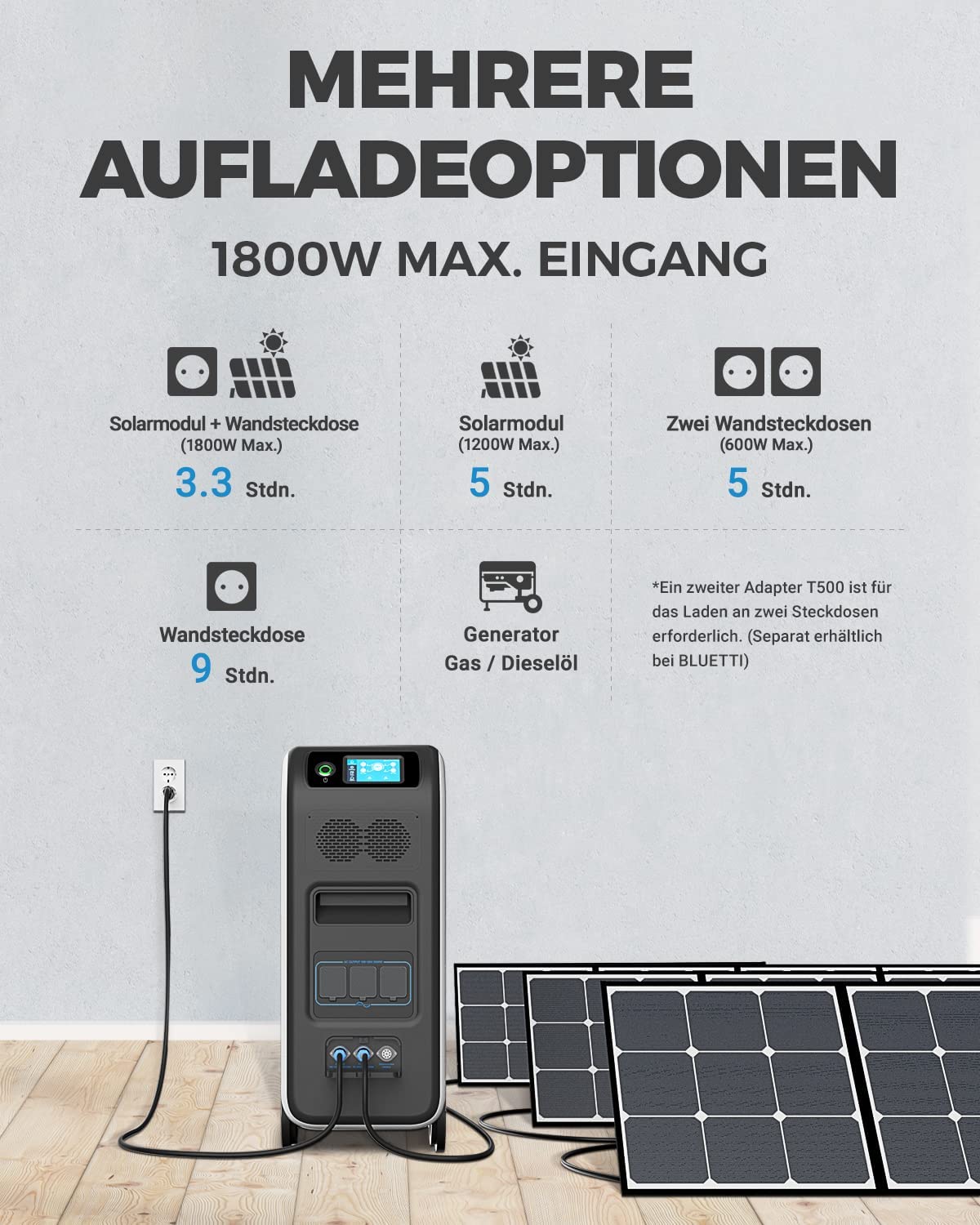
Bluetti has introduced its latest power station in Europe. It is the EP500Pro Power Station which has a battery capacity of 5,100Wh for long-lasting performance. You can charge the Bluetti EP500Pro at speeds of 4,000W via an AC outlet or through a solar panel.
The Bluetti EP500Pro Power Station was first available through a Kickstarter campaign in 2021. It has multiple ports to cater to many gadgets. The outlets include AC (2,000W), USB-A (100W), USB-C (100W), and wireless charging pads. There are three AC outlets, four USB-A ports, one USB-C port, and two wireless charging pads on the generator. Power conversion is achieved through its 3,000W sine wave AC inverter and the Lithium Iron Phosphate (LiFePO4) battery offers thermal stability.
The EP500Pro is housed inside an airtight aluminum case capable of withstanding pressure changes, punctures, and heavy impact. The battery capacity can be sustained for up to 6,000 charging cycles before its capacity reduces by 20%. The Bluetti EP500 weighs just 76kg and it comes with four wheels for easy mobility. The dimensions of the power generator are about 23 x 1 x 30 inches and it can operate in a range of about 60 degrees Celsius (-20 to 40 Celsius).
The Bluetti EP500Pro is already available in Germany at a discounted price of €4,999 ($5,258). Availability of the gadget in other European markets is expected to follow within the summer. The Bluetti EP500Pro Power Station is originally priced at €5,299 ($5,573). There are no indications at this time of global availability of the product.
If you are a gamer or a power user and you are searching for a phone offering you the highest performance at the most affordable price, you have several choices in 2022. Among these, if you live in China, there is Redmi Note 11T Pro. It is very affordable but its performance is comparable to the ones found on flagships. Another amazing handset in the same price range with an amazing hardware department is the OnePlus Ace Racing Edition, which is the second device from the brand new Ace series from OnePlus (borrowed from OPPO which killed this series years ago). These two devices are very similar and it may be hard to understand which one to choose, especially with similar prices. This is a comparison between the specifications of the Redmi Note 11T Pro and the OnePlus Ace Racing Edition.
Xiaomi Redmi Note 11T Pro vs OnePlus Ace Racing Edition
Xiaomi Redmi Note 11T Pro
OnePlus Ace Racing Edition
DIMENSIONS AND WEIGHT
163.6 x 74.3 x 8.9 mm,
200 g
164.3 x 75.8 x 8.7 mm,
205 g
DISPLAY
6.6 inches, 1080 x 2460 pixels (Full HD+), IPS LCD
6.59 inches, 1080 x 2412 pixels (Full HD+), IPS LCD
Triple 64 + 8 + 2 MP, f/1.7 + f/2.2 + f/2.4
16 MP f/2.1 front camera
BATTERY
5080 mAh, fast charging 67W
5000 mAh, Fast Charging 67W
ADDITIONAL FEATURES
5G, dual SIM, IP53 certification
5G, dual SIM
Design
Even though it is a pretty elegant phone, the Redmi Note 11T Pro does not come with an original design. It looks like the handsets from the Xiaomi 12 series with a camera module sporting the same color as the rest of the body. Unfortunately, it is not made with premium materials: it is entirely made of polycarbonate (with the exception of the display, obviously) but it is protected against dust and water thanks to the IP53 certification making it dust resistant and splash resistant. The OnePlus Ace Racing Edition has a more original design, even though not everyone may like it. It comes with a thinner body but slightly bigger dimensions because of its thicker bezels around the display. It is made of polycarbonate too and it does not offer any certification against water and dust.
Display
The Redmi Note 11T Pro has a display with a diagonal of 6.6 inches, a Full HD+ resolution of 1080 x 2460 pixels, the HDR10 certification, Dolby Vision support, and a refresh rate of 144 Hz. Unfortunately, it is an IPS LCD panel and not an AMOLED one, but it still provides great image quality. Further, it even provides the smoothest viewing experience thanks to its very high refresh rate. It is definitely the best display of this comparison. The OnePlus Ace Racing Edition has an IPS display too, with a diagonal of 6.59 inches, a Full HD+ resolution of 1080 x 2412 pixels, and a 120 Hz refresh rate. In both cases, the displays are good for gamers thanks to the high refresh rate. Both the handsets are equipped with stereo speakers and side-mounted fingerprint readers for authentication.
Specs & Software
The OnePlus Ace Racing Edition comes with the most advanced hardware setup. It is powered by an octa-core Mediatek Dimensity 8100 Max mobile platform paired with up to 12 GB of RAM and up to 256 GB of UFS 3.1 internal storage. This hardware department has nothing to envy to the most expensive flasghips out there, even though its processor can actually be compared to the Snadpragon 888 and not to the latest Qualcomm and MediaTek flagship chipsets. The Redmi Note 11T Pro is fueled by the Dimensity 8100 chipset by MediaTek: it is the same as the Dimensity 8100 Max, but with inferior AI performance. But the Redmi device has just 8 GB of RAM in its most advanced configuration. These devices run Android 12 out of the box with highly customized user interfaces on top.
Camera
On the camera side, these handsets are almost identical. They come with a 64 MP main camera (a midrange-class sensor), an 8 MP ultrawide lens, and a 2 MP macro camera. The main camera is able to record 4K videos at 30 fps and the front camera has a resolution of 16 MP and supports 1080p video recording. The camera departments do not differ, but the OnePlus Ace Racing Edition should be able to shoot better photos in several scenarios thanks to better algorithm, as well as a brighter focal aperture for the main camera.
There is not much difference between the battery capacities of these two handsets, but the battery of the Redmi Note 11T Pro is slightly bigger with a capacity of 5080 mAh. However, the software will play an important role when it comes to battery life. Both the phones support 67W fast charging.
Price
Currently, the Redmi Note 11T Pro and the OnePlus Ace Racing Edition are only available in the Chinese market. We still do not know when the former will hit the global shelves, but it will be soon. OnePlus still did not announce anything about the global launch of its flagship killer. The Redmi Note 11T Pro has a starting price which roughly translates into €250/$263, while the OnePlus Ace Racing Edition starts from €280/$295. Which one would you pick?
Xiaomi Redmi Note 11T Pro vs OnePlus Ace Racing Edition: PRO and CONS
The new BattRE Storie electric scooter has been unveiled in India. The BattRE Storie offers a range of 132km on a single charge and is priced at Rs. 89,600 ($1,151) (ex-showroom price, excluding state subsidies nationally).
The BattRE Storie e-scooter boasts several impressive features as it pursues a greener environment. The BattRE Storie is a modern-day e-scooter with metal panels, and a connected drive, and is well-suited for daily urban commutes. The e-scooter is powered by a Lucas TVS electric motor and controller. It also comes with a 3.1kWh battery pack that delivers a range of 132km.
The Storie is fitted with a smart instrument cluster that provides information on the go. Its speedometer is integrated with Bluetooth connectivity and call alerts can be received promptly on the dashboard.
The BattRE Storie features the Connective Drive feature which helps to locate the nearest charging facility. Access to this feature is through a convenient pay and charge system. The bigger seats on the e-scooter also assure greater comfort for riders, as well as sufficient leg room.
The BattRE Storie will enjoy FAME II subsidy in India. This means that its stated price of Rs. 89,600 ($1,151) could be reduced further. It is a pretty safe e-scooter as it can deliver a quick diagnostic appraisal at any time. Thermal runway safety tests have also been comprehensive for the BattRE Storie. It will thus come out as a very reliable model and the incidents of scooter fires will not happen on it.
There are no specifics yet on the actual release date for the BattRE Stories. The company, however, says that this could happen soon. The BattRE Storie will be available in hundreds of dealerships across over 300 cities in India.
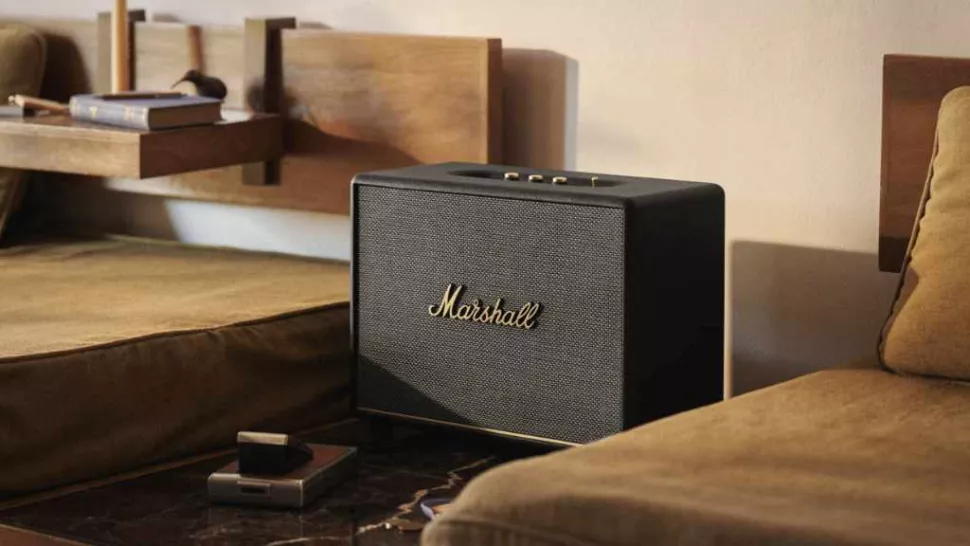
Marshall has unveiled a trio of powerful Homeline wireless speakers with a new sound connection technology. Marshall Acton III, Stanmore III, and Woburn III wireless speakers offer significant improvements from their predecessors. The three new Marshall wireless speakers will go on sale on June 23.
All three speakers offer Bluetooth 5.2 connectivity, an improved soundstage, and a design that factored fully eco-consciousness. While Acton III, Stanmore III, and Woburn III bear external semblance to their predecessors, they come with significant upgrades. They are equipped with tweeters and waveguides that deliver a more expansive sound experience. They sport some of the best technologies that could make them challenge the best Bluetooth speakers in the market.
Marshall Stanmore IIIMarshall Woburn III
The innovative Placement Compensation technology makes the new speakers stand out. With this technology, the speakers optimize the EQ profile by measuring for nearby reflective surfaces which could affect the sound. It then automatically adjusts the equalization as appropriate. Apart from Bluetooth 5.2 connectivity, the new Marshall speakers can be connected via a 3.5mm audio jack. The speakers also have a built-in Dynamic Loudness feature that provides a more balanced output.
The Marshall Bluetooth speaker lineup is manufactured from about 70% recycled plastic and fully vegan material. This is a huge departure from the massive reliance on PVC materials in older models. The Acton II comes with a 30W amplifier for the woofer and two 15W amps for the tweeters. The Stanmore III is slightly larger than the Anton III and features a 50W amp for its woofer. The Marshall Woburn III is the pick of the pack. It comes with HDMI connectivity and is pricier than the rest at $579. The Acton III is priced at $279 while the Stanmore III costs $379.
Marshall Action III Bluetooth speaker
The models will all have three color options – brown, black, and white and will be available from June 23. Details are still fuzzy at this time on global availability details for the three new Marshall speakers.
We use cookies on our website to give you the most relevant experience by remembering your preferences and repeat visits. By clicking “Accept”, you consent to the use of ALL the cookies.
This website uses cookies to improve your experience while you navigate through the website. Out of these, the cookies that are categorized as necessary are stored on your browser as they are essential for the working of basic functionalities of the website. We also use third-party cookies that help us analyze and understand how you use this website. These cookies will be stored in your browser only with your consent. You also have the option to opt-out of these cookies. But opting out of some of these cookies may affect your browsing experience.
Necessary cookies are absolutely essential for the website to function properly. This category only includes cookies that ensures basic functionalities and security features of the website. These cookies do not store any personal information.
Any cookies that may not be particularly necessary for the website to function and is used specifically to collect user personal data via analytics, ads, other embedded contents are termed as non-necessary cookies. It is mandatory to procure user consent prior to running these cookies on your website.