Vivo is gearing up to launch its new S15 series smartphones in the market China. As the name indicates, the devices are said to be the successor to the Vivo S12 series smartphones launched in December last year.
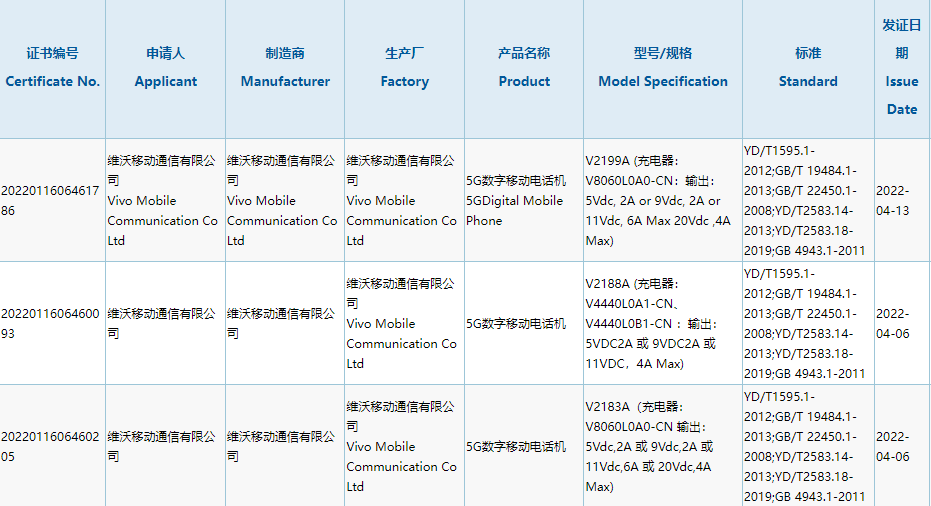
Now, ahead of the official launch of the Vivo S15 series smartphones in the Chinese market, the devices have passed through the 3C certification process, revealing some key detail of the upcoming smartphones.
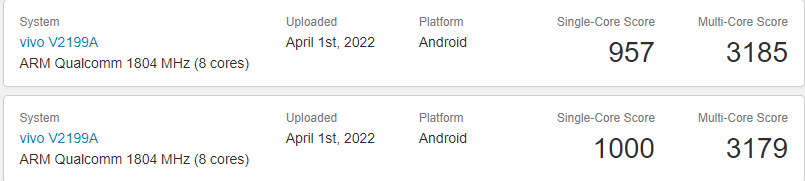
From the certification process, it has been revealed that the smartphone with model V2199A, which is the Vivo S15, is powered by the Qualcomm Snapdragon 870 processor and comes with support for 80W of fast charging.
On the other hand, the Vivo S15 Pro will come powered by the MediaTek Dimensity 8100 processor. It is said to have a 50-megapixel primary camera sensor and come with 80W fast charging support.
Recently, it was leaked that the Vivo S15 Pro will feature an OLED display with support for a high refresh rate and the screen will have curved edges. There will also be a third model in the lineup, dubbed Vivo S15 SE.
The Vivo S15 SE is expected to have a 6.44-inch AMOLED FHD+ display with support for the in-display fingerprint sensor. It will be powered by a 2.8GHz octa-core processor with up to 12GB of RAM and up to 512GB of internal storage. It will have a 50MP triple rear camera and a 16MP front-facing snapper. The phone will pack a 4,605mAh battery and have support for 66W fast charging.
For the past few weeks, OnePlus Ace has been the subject of rumors. Speculations are rife that the OnePlus smartphone with the PGKM10 model number, which was spotted at China’s 3C certification and Geekbench, will break cover as the OnePlus Ace. Today, the company released an official confirmation that it will be launching the OnePlus Ace at 7:30 PM (local time) on April 21 in China.
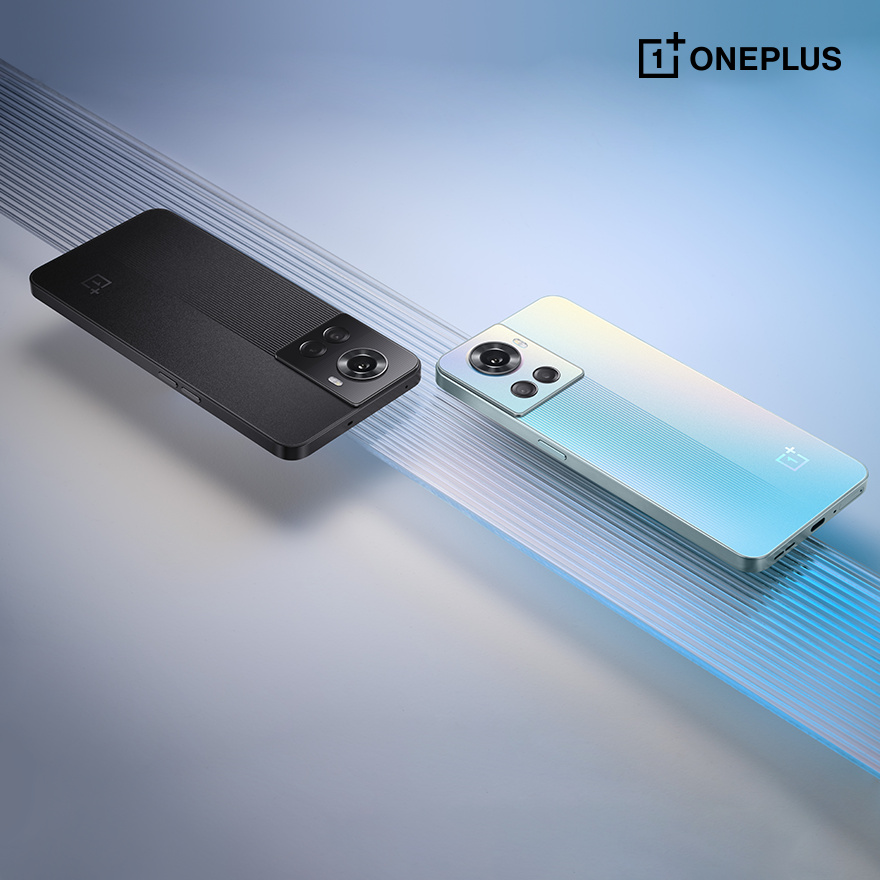
The OnePlus Ace launch date poster released by the brand has no information on its specifications. However, it does give a look at its design. As can be seen in the images, the OnePlus Ace sports a triple camera unit with an LED flash at the top-left corner. Below the camera module are multiple vertical lines that give the device a unique look.
OnePlus Ace
The device flaunts flat edges, and a power button can be seen on its right side. The other images released by the brand show that it lacks an alert slider. The device will be available in black and blue colours. It appears that the company will soon confirm other details of the phone before its official announcement.
It is being said that the OnePlus Ace will be a rebadged version of the Realme GT Neo3, which debuted last month in China. The launch date poster reveals that its rear design will be different from the Realme smartphone.
OnePlus Ace specifications (rumored)
OnePlus Ace
The OnePlus Ace will arrive with a 6.7-inch OLED panel that offers a Full HD+ resolution and a 120Hz refresh rate. It will be powered by the Dimensity 8100 chipset, have up to 12 GB of LPDDR5 RAM, and up to 512 GB of storage. It will house a 4,500mAh battery that supports 150W fast charging. At the front, it will have a 16-megapixel camera for selfies, and its back panel will feature a 50-megapixel triple camera unit. It will run on the Android 12 OS and come with an in-screen fingerprint scanner.
OPPO has announced the OPPO Reno7 Lite 5G smartphone for Central and Eastern Europe. It is a rebranded version of the OPPO Reno7 Z 5G, which is available in some Asian countries. The same phone was recently released with the OPPO F21 Pro 5G moniker in India.
OPPO Reno7 Lite 5G specifications and features
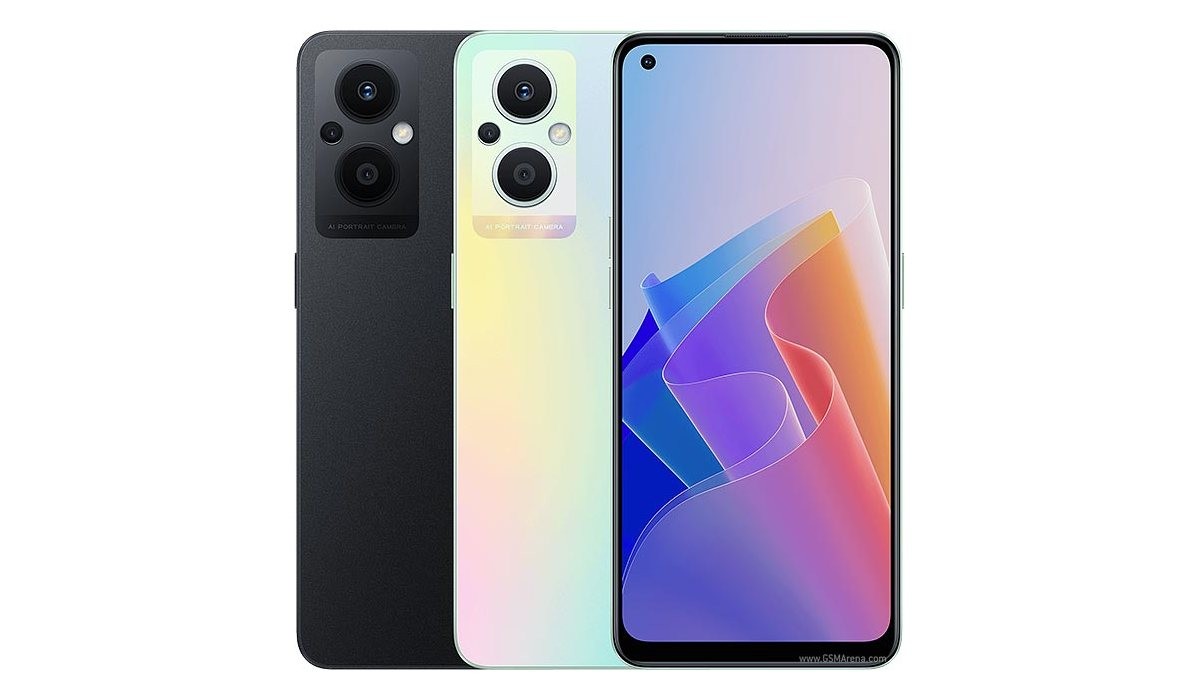
The 6.43-inch OLED screen on the OPPO Reno7 Lite 5G has a punch-hole in the upper-left corner. It supports a Full HD+ resolution and a 120Hz refresh rate. Placed on the front is a 16-megapixel selfie camera.
OPPO Reno7 Lite 5G
The back panel of the device has a triple camera unit with an LED flash. The primary 64-megapixel camera and the 8-megapixel ultrawide camera are equipped with ring LEDs that light up when there is a notification or while charging. The camera setup also includes a 2-megapixel depth assist lens.
The Reno7 Lite 5G has the Snapdragon 695 mobile platform onboard. It comes with 8 GB of RAM and 128 GB of internal storage. It includes a 4,500mAh battery that carries support for 33W fast charging.
The OPPO Reno7 Lite 5G comes with the ColorOS 12 flavoured Android 12. The phone’s screen is integrated with a fingerprint sensor. It carries support for up to 5 GB of extended RAM. The device measures 7.5mm in thickness and weighs around 173 grams.
OPPO Reno7 Lite 5G pricing and availability
As mentioned above, the Reno7 Lite 5G is heading to Central and Eastern Europe. However, the pricing of the device is yet to be confirmed. The phone comes in Cosmic Black and Rainbow Spectrum colors. The latter produces a rainbow shimmer effect by transitioning between different colors.
There are indications that Xiaomi India is being investigated by the country’s financial crimes agency on suspicion of foreign exchange (FX) infractions. In furtherance of the ongoing investigation, the former head of Xiaomi India, Manu Kumar Jain was allegedly summoned by the financial watchdog.
The investigations relate to whether Xiaomi’s business practices in India conformed with Indian FX regulations. The probe reportedly began in February and Jain is expected to help in the investigation by the Enforcement Directorate. It is unclear whether Jain, who is reportedly in India, came specifically in response to the summons. Manu Kumar Jain is currently a global vice president of Xiaomi with his office domiciled in Dubai.
Sources that are privy to the investigation say the financial crimes watchdog is scrutinizing transactions and the existing business structure between the parent company, Xiaomi in India, and contract manufacturers. It has already collected details from Xiaomi India.
Xiaomi says it is fully compliant with the extant laws governing its business in India. It says it is cooperating with authorities on the investigation. Last December, the offices of Xiaomi were raided on allegations of income tax evasion. The Enforcement Directorate has not put out any official statement relating to the investigation.
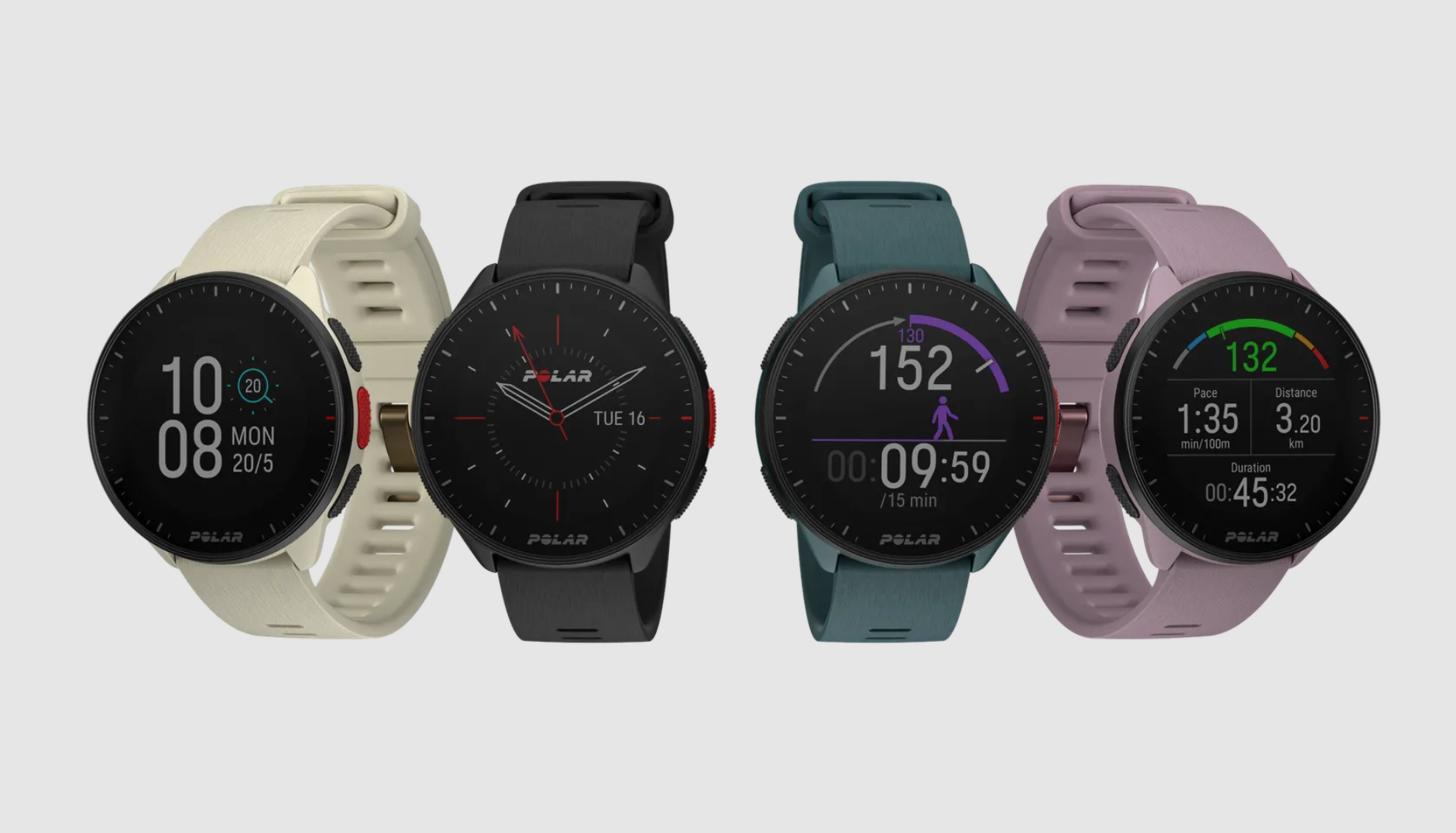
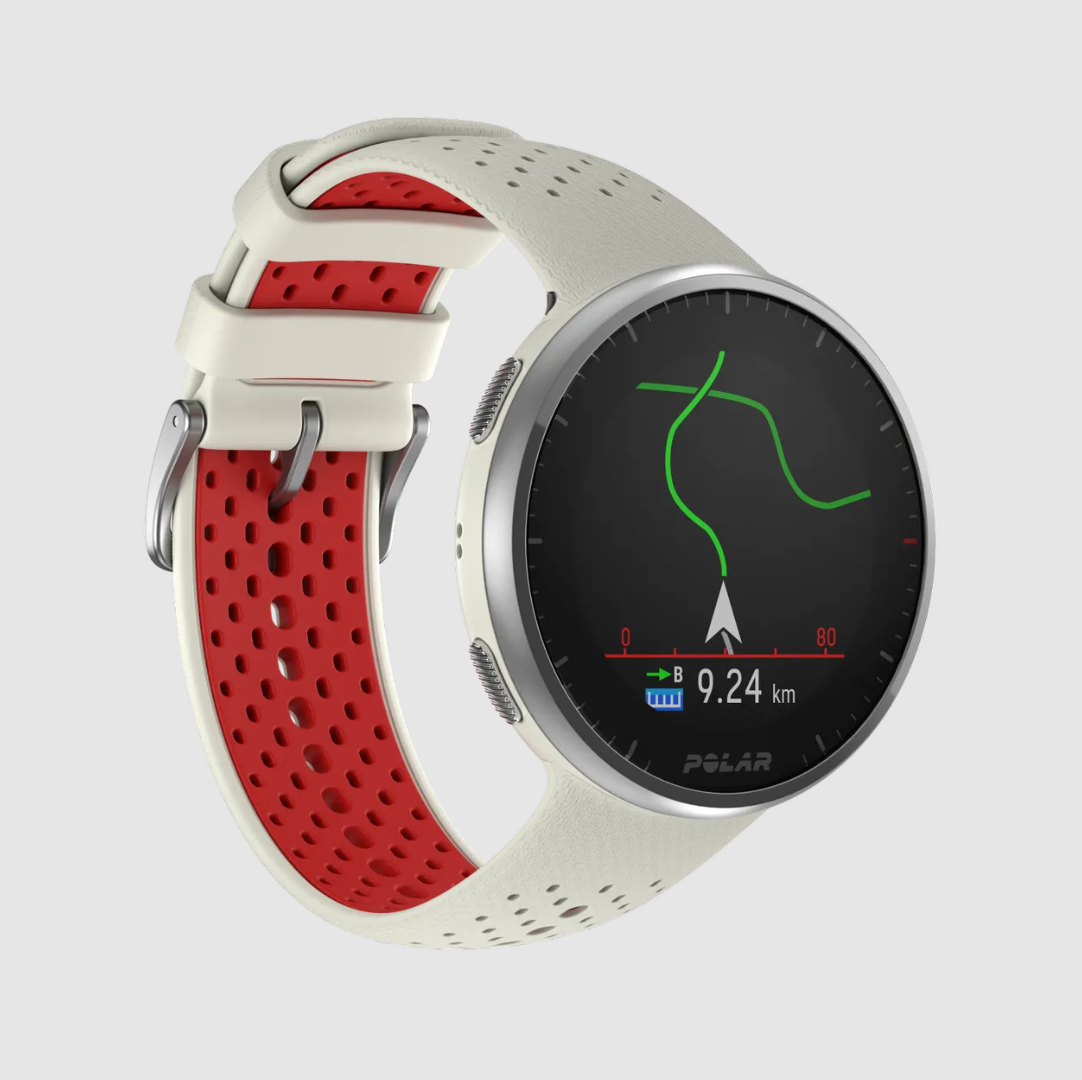
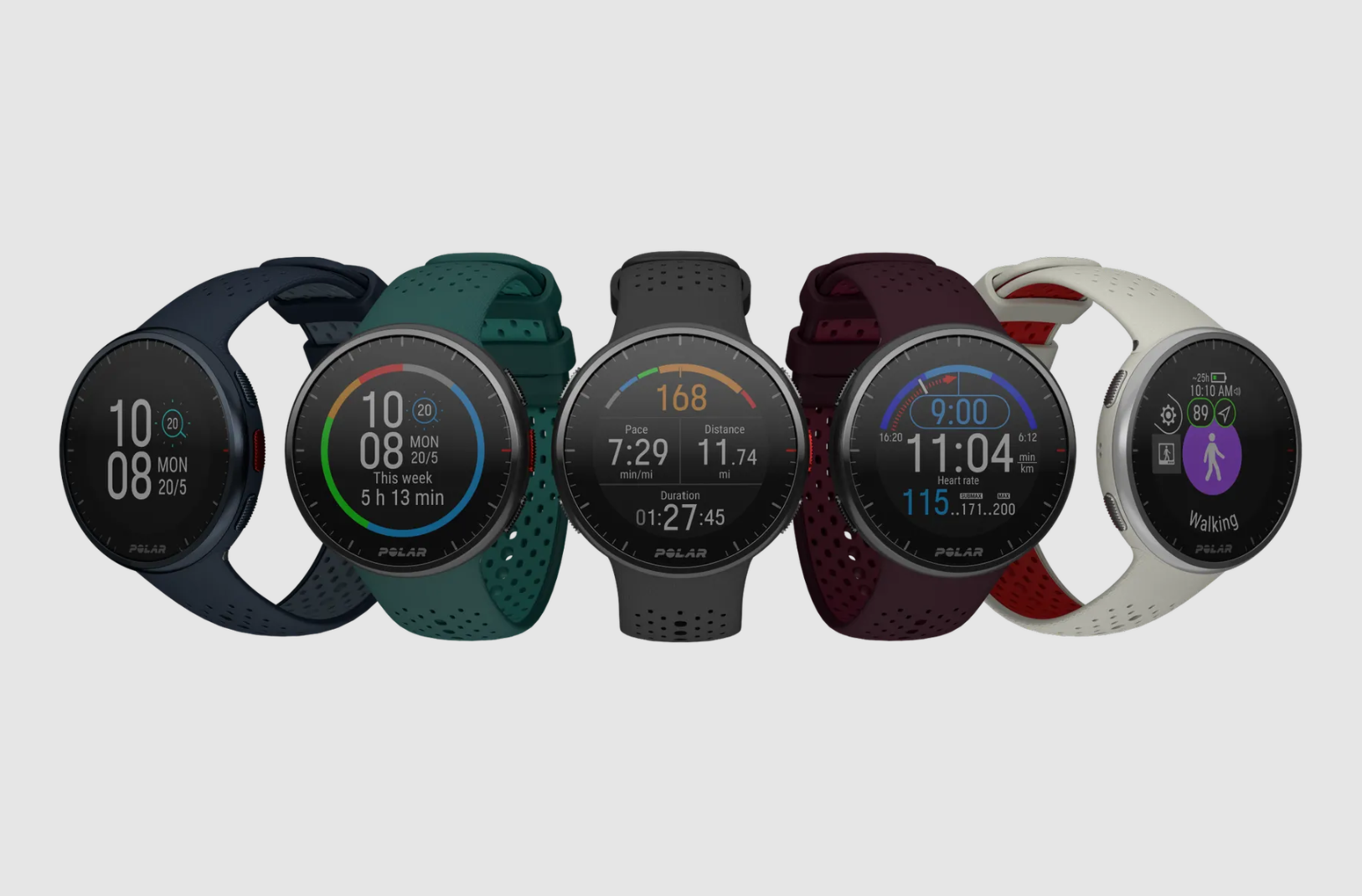
Polar has announced two GPS smartwatches that will be a great tool for both amateur and professional runners. The Polar Pacer smartwatch is priced at $199.90 while the Pacer Pro comes at $299.90. They are both designed to help runners scale up their everyday performance.
Polar Pacer Pro
Both the Polar Pacer and Pacer Pro come with significant improvements from their predecessors. They offer 5MB of RAM which promises a better processor performance and overall user experience. The issue of lag among previous Polar smartwatches has been quite prevalent. Polar’s Precision Prime heart rate sensor is also present in both models. The minimalist design, battery life, and push notifications outlook are similar for the two smartwatches. Their batteries offer up to 7 days of activity on a full charge. The weights, straps, and colorways are however different for the two Polar smartwatches.
Polar Pacer Pro
The Polar Pacer is designed for novice runners at different levels of skill. It offers a new walking test that will estimate the user’s aerobic fitness after 15 minutes of walking. The Polar Pacer Pro, on the other hand, comes with more strenuous exercises and running performance tests. On the Pro model, their navigational features and a barometer measure the runner’s power values via the wrist.
The Polar Pacer and Pacer Pro are available via Polar’s website and retail stores, although the Pacer is only available for preorder at this time. The first deliveries of the Polar Pacer will take place around May 2022.
The F21 Pro series just went official for the Indian market and it is composed of two models: the 4G variant and the 5G variant. The OPPO F21 Pro 5G belongs to the midrange segment and it is a perfect rival for the latest mid-ranger from Xiaomi’s sub-brand: the Redmi Note 11 Pro+. Each of these two handsets has its pro and cons, but which one is the best? A lot of people are asking themselves which one to buy and it may be not easy for everyone to find out. This comparison between the specifications of the Redmi Note 11 Pro Plus and the OPPO F21 Pro 5G will hopefully help you by highlighting the differences between these two phones.
Xiaomi Redmi Note 11 Pro+ vs OPPO F21 Pro 5G
Xiaomi Redmi Note 11 Pro+
OPPO F21 Pro 5G
DIMENSIONS AND WEIGHT
163.7 x 76.2 x 8.3 mm,
204 g
159.9 x 73.2 x 7.5 mm,
173 g
DISPLAY
6.67 inches, 1080 x 2400 pixels (Full HD+), Super AMOLED
6.43 inches, 1080 x 2400 pixels (Full HD+), AMOLED
Triple 108 + 8 + 2 MP, f/1.9 + f/2.2 + f/2.4
16 MP f/2.5 front camera
Triple 64 + 2 + 2 MP, f/1.7 + f/2.4 + f/2.4
16 MP f/2.4 front camera
BATTERY
4500 mAh, fast charging 120W
4500 mAh, fast charging 33W
ADDITIONAL FEATURES
dual SIM slot, 5G
dual SIM slot, 5G
Design
The OPPO F21 Pro 5G has a very attractive design, just like most of the OPPO phones out there. First of all, it is very thin and lightweight: its thickness is just 7.5 mm and it weighs just 173 grams. Further, it has an elegant look and two outstanding RGB ring lights around the rear cameras which can be used as notification LEDs. Last but not least, it is more compact than its rival. The Redmi Note 11 Pro Plus provides better protection against dust and water thanks to the IP53 certification, but it is a bigger phone and uglier than the OPPO F21 Pro 5G, even though it comes with a glass back.
Display
If your goal is to get the most advanced display, then your best choice is the Redmi Note 11 Pro Plus. First of all, it has a wider panel with a diagonal of 6.67 inches. Further, this Super AMOLED panel sporting a Full HD+ resolution of 1080 x 2400 pixels has a higher 120 Hz refresh rate and the HDR10 certification, as well as a higher brightness reaching up to 1200 nits at its peak. The OPPO F21 Pro 5G has an AMOLED display with a Full HD+ resolution as well, but it lacks a high refresh rate and the HDR10 certification, so its image quality should be less impressive. Both the phones have a side-mounted fingerprint reader and the OPPO F21 Pro 5G, as mentioned above, adds two RGB ring lights around the cameras which can be used as notification LEDs.
Specs & Software
The MediaTek Dimensity 920 5G mobile platform found on the Redmi Note 11 Pro Plus is superior to the Snapdragon 695 5G chipset found on the OPPO F21 Pro 5G. That is why the Xiaomi mid-ranger wins the hardware comparison. Further, the Redmi Note 11 Pro Plus provides a higher amount of internal storage in its most advanced configuration: up to 256 GB instead of just 128 GB. On the other hand, the OPPO F21 Pro 5G runs a more recent Android version: it has Android 12 customized by ColorOS 12, while the Redmi device ships with Android 11.
Camera
The Redmi Note 11 Pro Plus is equipped with a superior camera setup. It has a 108 MP main camera, an 8 MP ultrawide lens, and a 2 MP macro camera, as well as a 16 MP selfie snapper. The OPPO F21 Pro 5G comes with an inferior 64 MP main camera and it lacks an ultrawide sensor, which gets replaced by a useless depth sensor.
The OPPO F21 Pro 5G and the Redmi Note 11 Pro Plus are equipped with 4500 mAh batteries, but the OPPO F21 Pro 5G should be able to provide a longer battery life because it has a smaller and more efficient display. The Redmi Note 11 Pro Plus charges quicker thanks to 120W fast charging.
Price
The Redmi Note 11 Pro Plus sells for Rs. 20,999 / $275 in the Indian market, while you need Rs. 26,999 / $355 to purchase the OPPO F21 Pro 5G. With the actual prices, the Redmi Note 11 Pro Plus wins the comparison thanks to a better display, superior camera, better chipset, and faster charging.
Xiaomi Redmi Note 11 Pro Plus vs OPPO F21 Pro 5G: PRO and CONS
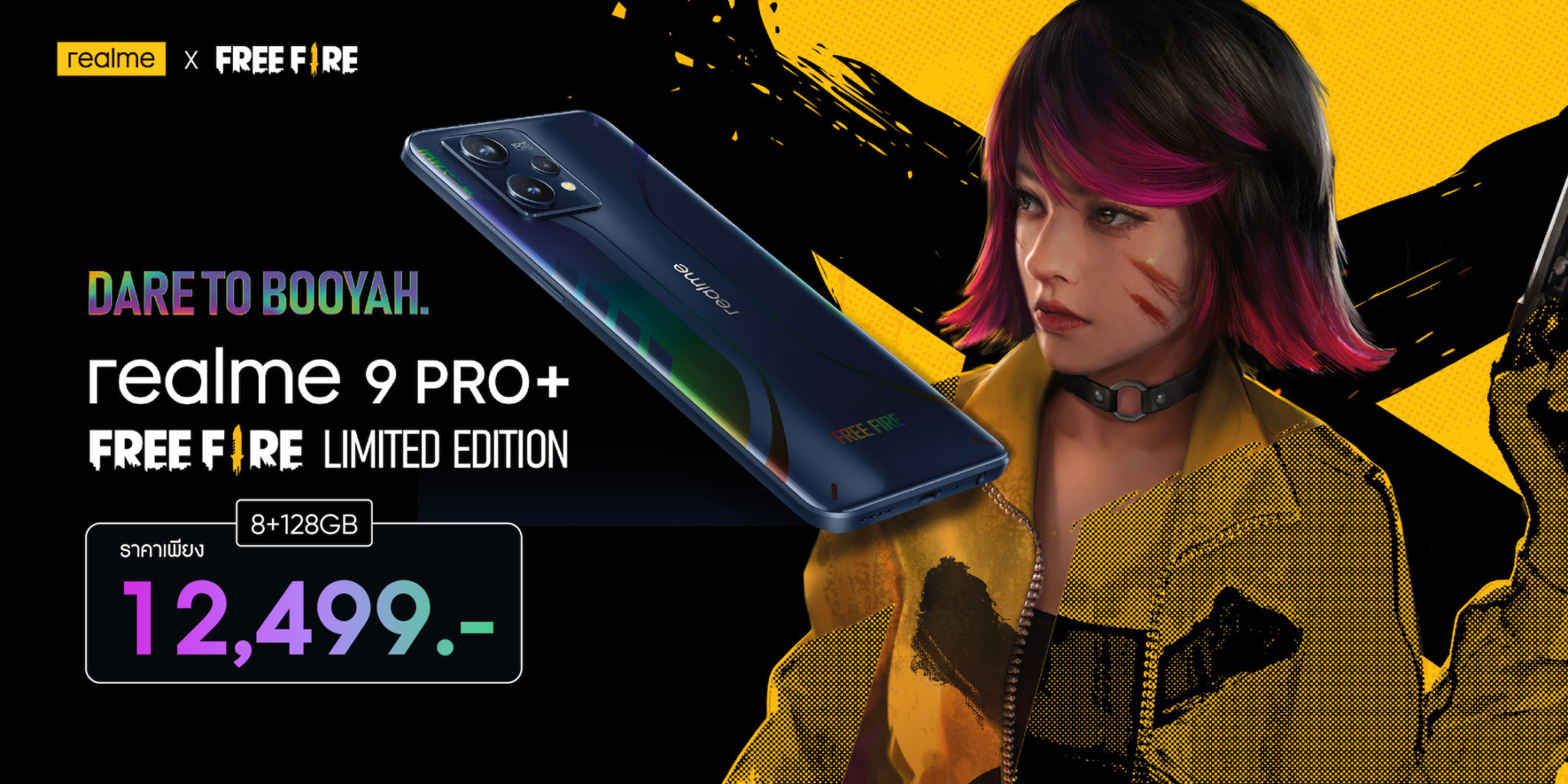
Chinese tech giant Realme has launched a new customized edition of the Realme 9 Pro+ in Thailand. The model is dubbed Realme 9 Pro+ Free Fire Limited Edition and is themed after the popular game Garena Free Fire.
In terms of the design, the Free Fire edition of the Realme 9 Pro+ features a sleek design tailored to excite gaming enthusiasts. It also comes with a Free Fire-themed packaging box as well as several limited-edition stickers for fans of the battle royale game.
The Realme 9 Pro+ Free Fire Limited Edition retains the same design and hardware as the original 9 Pro+. To refresh our memories, the device packs a 6.4-inch AMOLED screen with an FHD+ resolution as well as support for a 90Hz refresh rate.
The 9 Pro+ Freefire Limited Edition packs a triple camera setup at the back comprising a 50-megapixels main camera teaming up with an 8-megapixels ultra-wide sensor and a 2-megapixels macro camera to assist with closed-up captures. For selfies, there is a 16-megapixels front-facing camera.
The gaming phone is powered by an octa-core MediaTek Dimensity 920 chipset paired with up to 8GB RAM while there is 256GB internal storage onboard. Under the hood, the Free Fire edition of the Realme 9 Pro+ crams a generous 4,500mAh battery and has support for 60W fast-charging.
On the software side, the device runs on Realme UI 3.0 based on Google’s latest Android 12 OS out of the box.
As for the price, the Realme 9 Pro+ Freefire Limited Edition is priced at 12,499 Baht (~$372) in Thailand. It is available in a sole 8GB+128GB memory configuration.
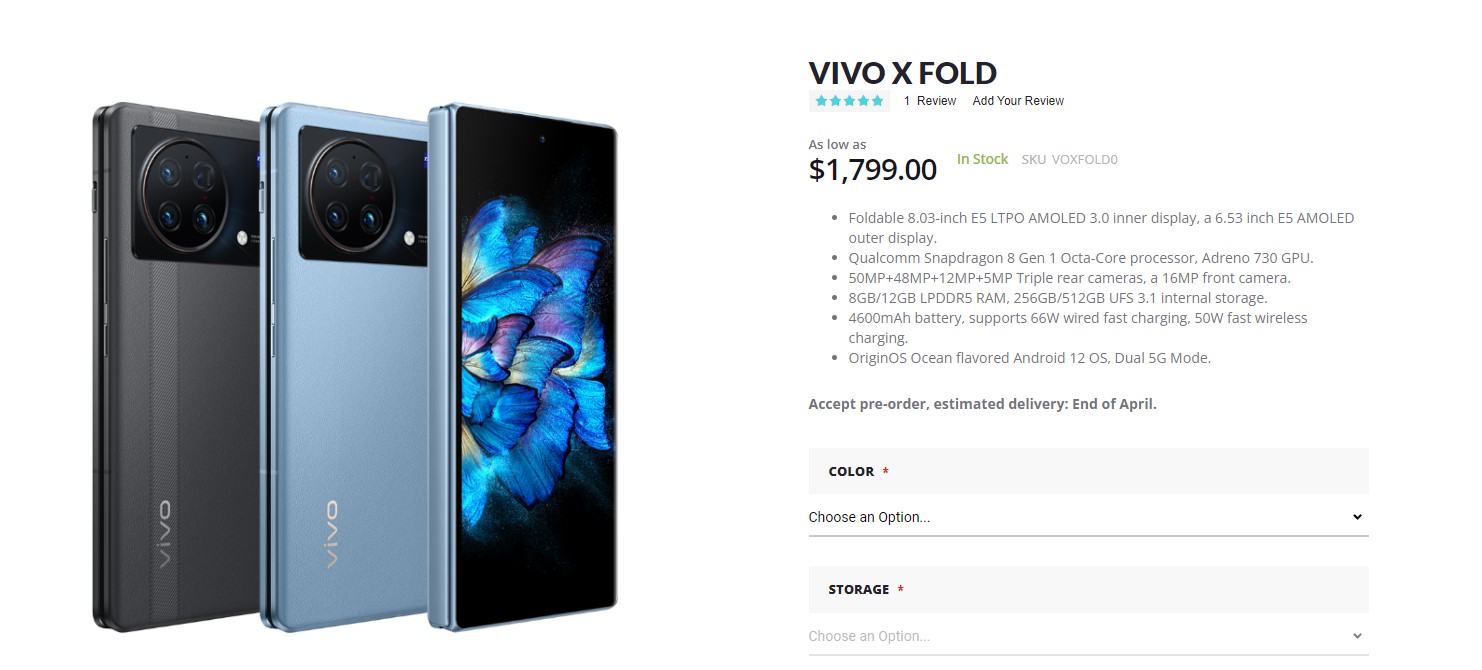
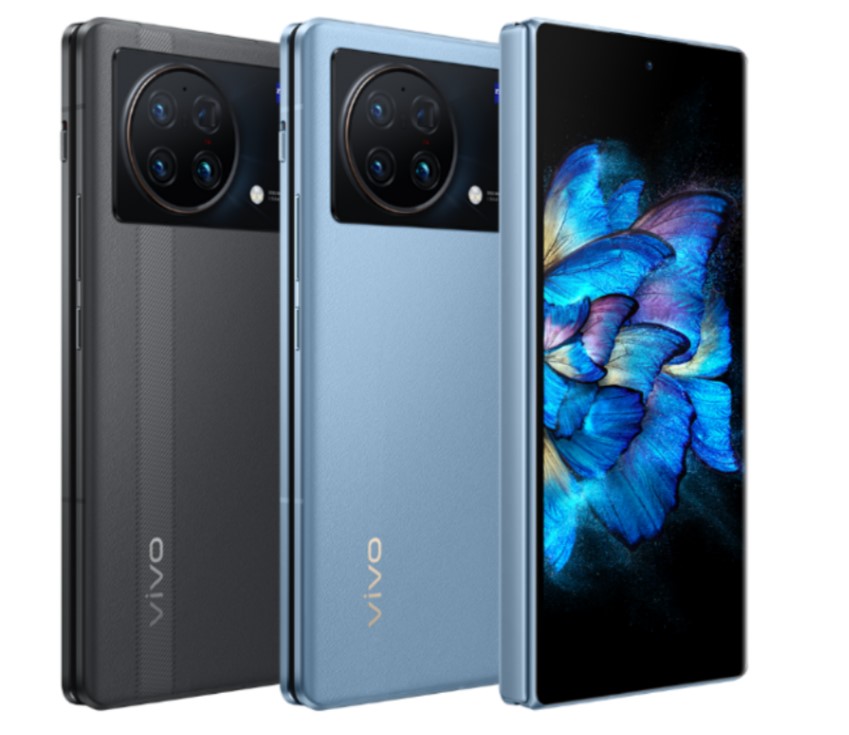
Vivo X Foldthe first-ever folding phone launched by vivo, is now available at Giztop at a starting price of $1799. The foldable phone features an 8.03-inch E5 LTPO AMOLED 3.0 inner display and a 6.53-inch E5 AMOLED outer display. Powered by the latest snapdragon Gen 1 octa-core processor it comes in multiple memory variants viz. 8GB / 12GB LPDDR5 RAM and 256GB / 512GB internal storage options.
Vivo X Fold comes with a rear quad camera setup with a 50MP main camera and 48MP + 12MP + 5MP secondary sensors. The camera comes with Zeiss optics and Zeiss T* lens coating that optimize light efficiency during photography. For your selfies, you have a 16MP front camera.
Fueled with a 4600mAh battery, vivo X Fold supports 66W fast charging and 50W fast wireless charging. You can now buy vivo X Fold for a starting price of $1799 only at Giztop. Please note that this price is applicable to the base variant only.
This is a Chinese edition phone but comes with pre-installed Google Mobile Service, and Google Play Store and is available in Blue and Grey color variants.
For more information on such exciting deals and offers check out our deals hub.
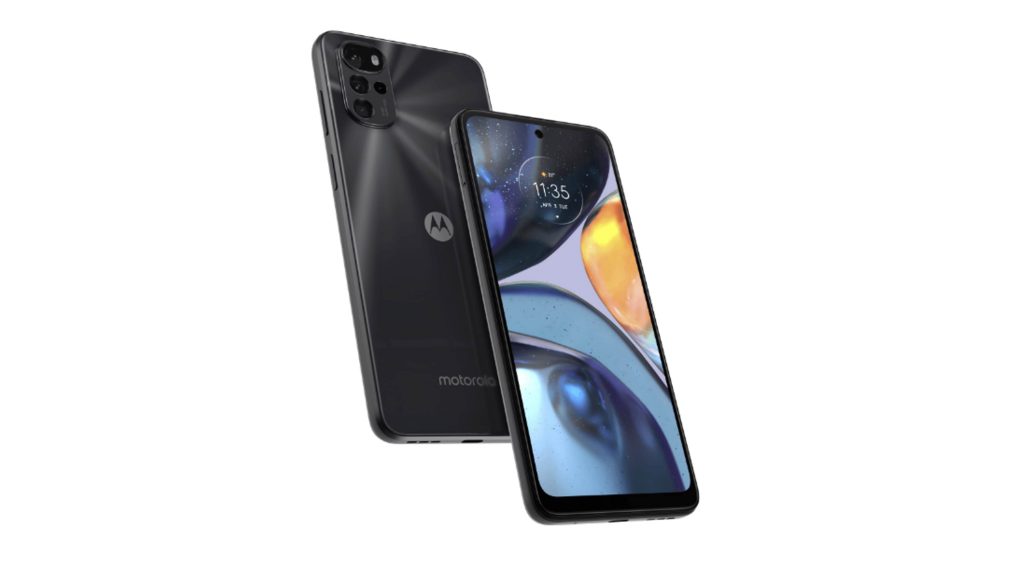
Last week, Motorola launched the Moto G22 smartphone with a 90Hz display and a 50MP quad-camera setup in India. The company is expected to soon launch more devices in the lineup, including the Moto G62 5G and the Moto G82 5G.
Motorola Moto G22
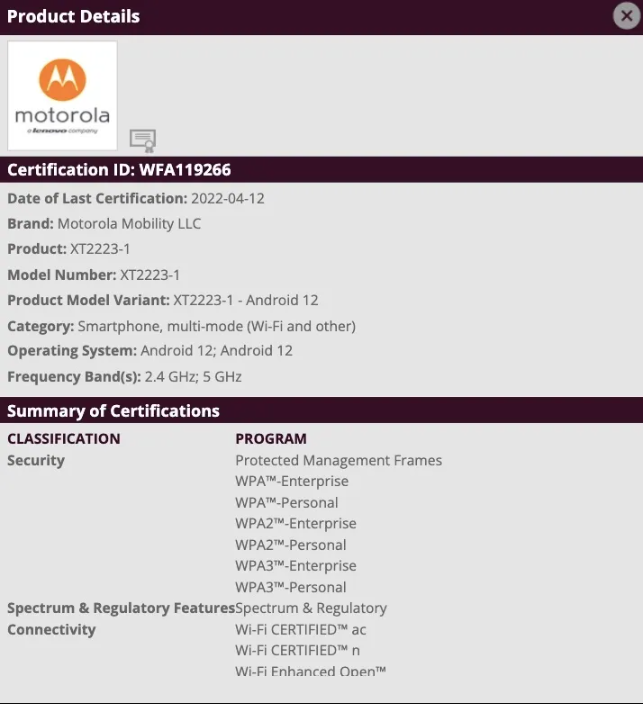
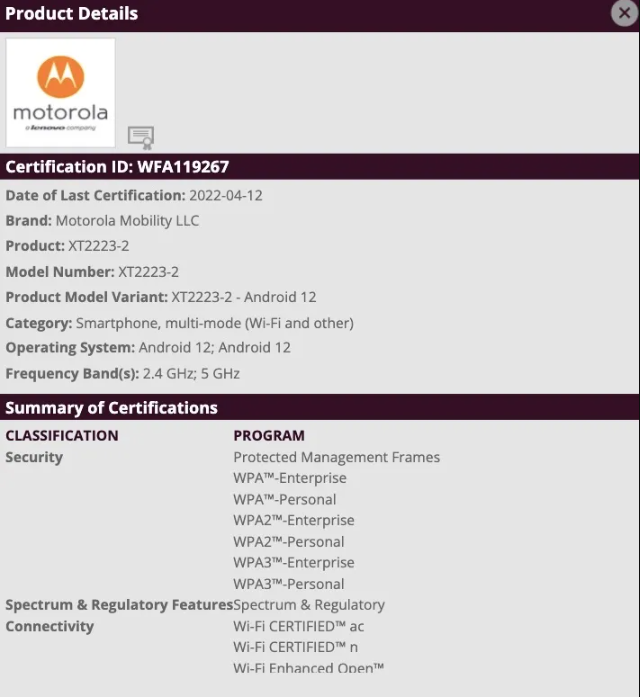
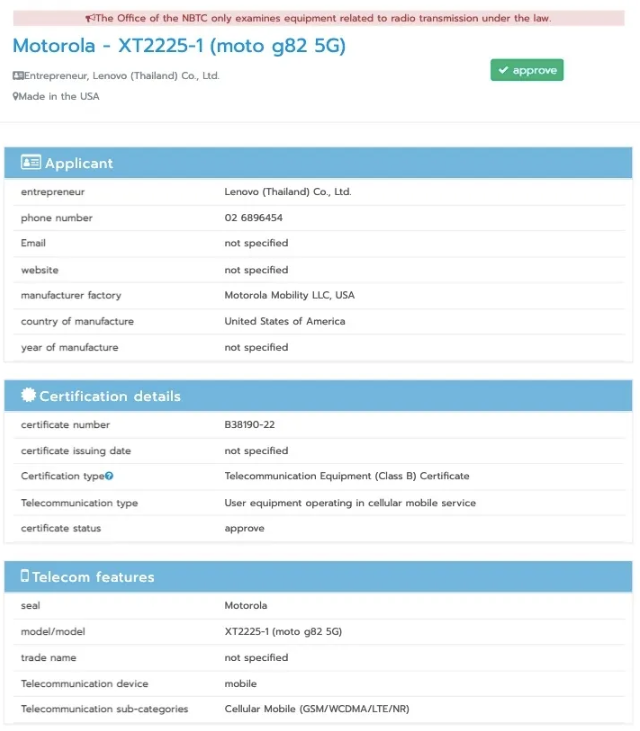
Ahead of their official launch, the Moto G62 5G and Moto G82 5G have been spotted on Wi-Fi Alliance and NBTC certification websites respectively.
Moto G62 5G & G82 5G certification
1 of 3
The Moto G62 5G with model numbers XT2223-1 and XT2223-2 were spotted on the Wi-Fi alliance database, revealing some key specs of the upcoming device. The database listing revealed that the Moto G62 5G will come with support for dual-band Wi-Fi and that the device will run Android 12 out of the box.
On the other hand, the Moto G82 5G with XT2225-1 was spotted on the NBTC database. The listing confirms the device moniker as well as its support for the 5G network, along with LTE. The database also reveals that the devices are being manufactured in the US.
Moto G82 5G specs
Motorola Moto G71 5G
Last week, the Moto G82 5G also grabbed FCC and SIRIM certifications, revealing support for dual SIM, NFC, dual-band Wi-Fi, and 5G. The device has a 5,000mAh battery and 33W fast charging capabilities.
The previous appearance on the Geekbench database disclosed that the smartphone has a Snapdragon 695 chipset under its hood paired with 8GB of RAM.
Moto G62 5G: Specifications (Rumored)
According to a Passionategeekzreport, the Moto G62 5G will have a Full HD+ high refresh rate display. The RAM and storage capacity of the device are touted to be 8GB and 128GB, respectively. While there is no word on the SoC yet, it is said to have a 6,000mAh battery with 33W fast charging and an Android 12-based OS.
Further, the phone is said to feature a 50MP main camera on the back and two more cameras, completing the triple camera setup.
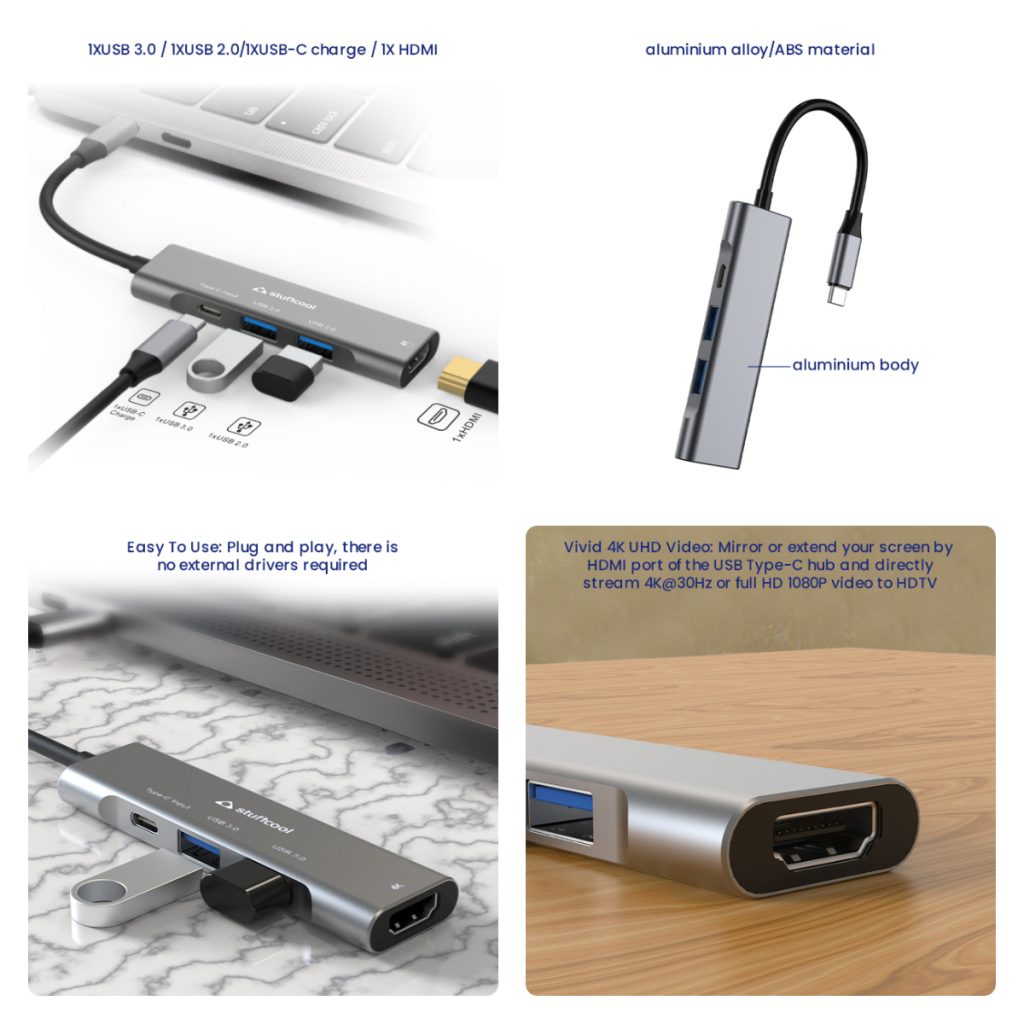
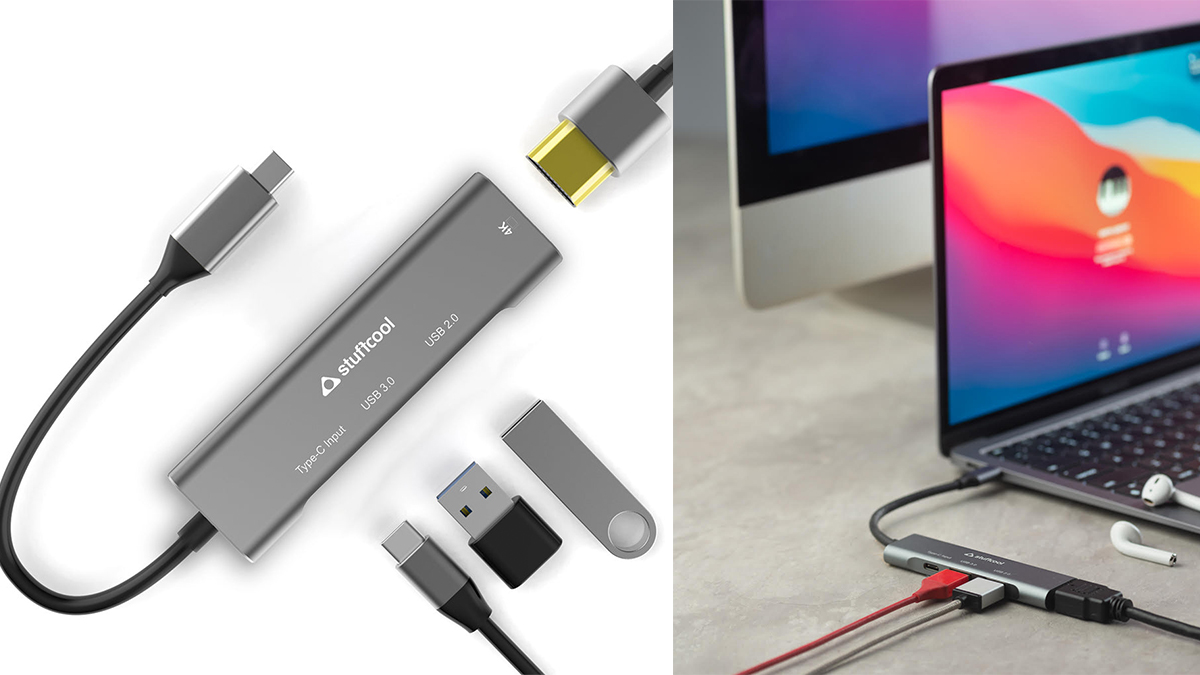
Indian accessories company Stuffcool has introduced its latest USB Type-C 4-in-1 Hub to the Indian market. Stuffcool Earl 4-in-1 Type-C Hub has 4K playback capability and is compatible with Type C MacBooks and laptops.
The Stuffcool Earl Hub is a sleek multipurpose device that helps users connect their USB Type-A devices to the MacBook. It has an aluminum design and it can handle up to four inputs simultaneously. It has two USB-A ports, one USB-C port, and an HDMI port. You can easily connect an array of devices via any of these compatible ports, while also offering power to the connected phone. The Type-C port supports 100W fast charging and it can be used to charge the MacBook or laptop connected to the Earl.
The Stuffcool Earl 4-in-1 Type-C Hub is a plug-and-play device, hence it does not require the installation of drivers for its operation. The HDMI port is ideal for connectivity to multimedia devices like projectors and monitors. It enables users to connect whether their laptops have the HDMI port or not, using any of the USB ports. The HDMI port is capable of transmitting 4K high-resolution video and high definition audio. This assures a crisp video and audio output when using the device.
Stuffcool Earl 4-in-1 Type-C Hub is available via the Stuffcool website for Rs. 2,999 (~$40). It was launched in India today and is an important productivity tool for MacBook and laptop owners.
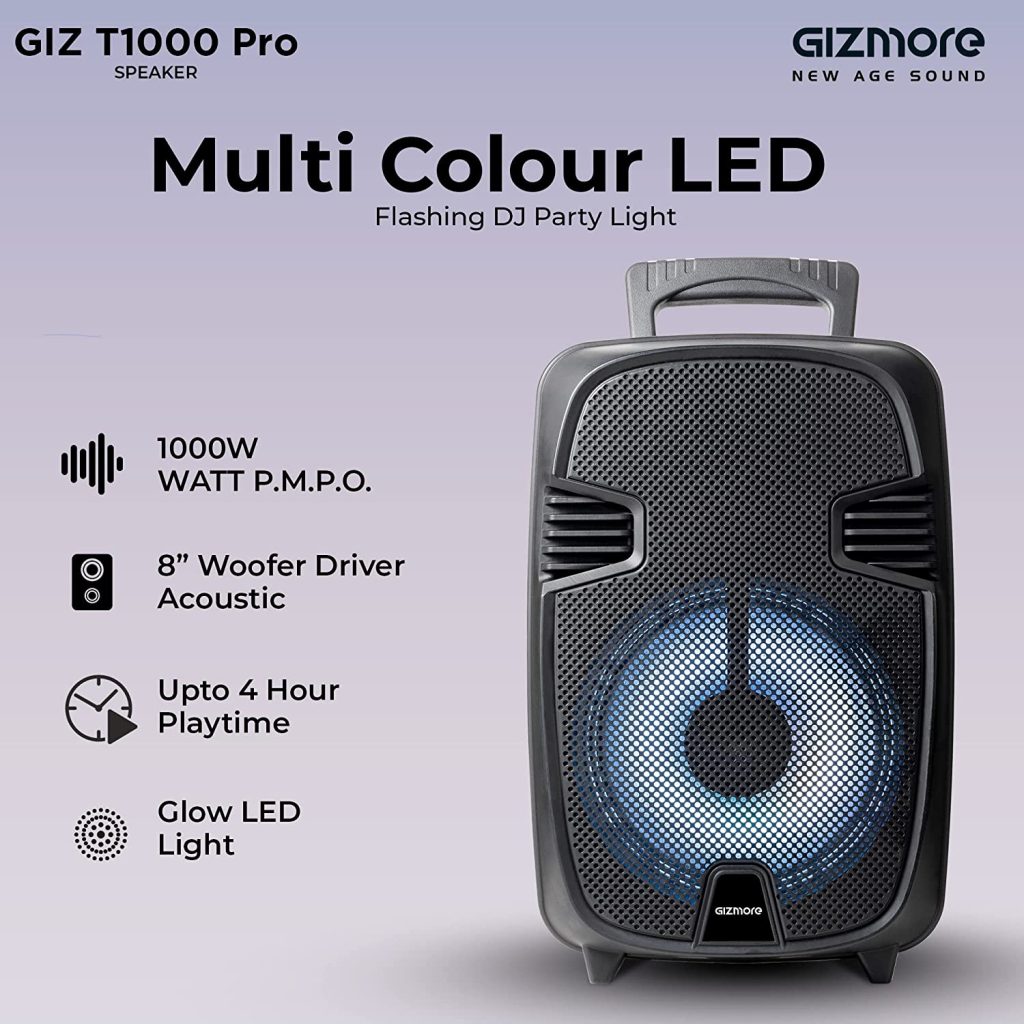
Accessories maker Gizmore has launched two trolley speakers in India. The Gizmore Wheelz T1000 Pro and T1501N speakers are wholly made in India in line with the initiative by the central government. The two models are Gizmore’s first Make in India trolley speakers and offer a portable sound system for both indoor and outdoor use.
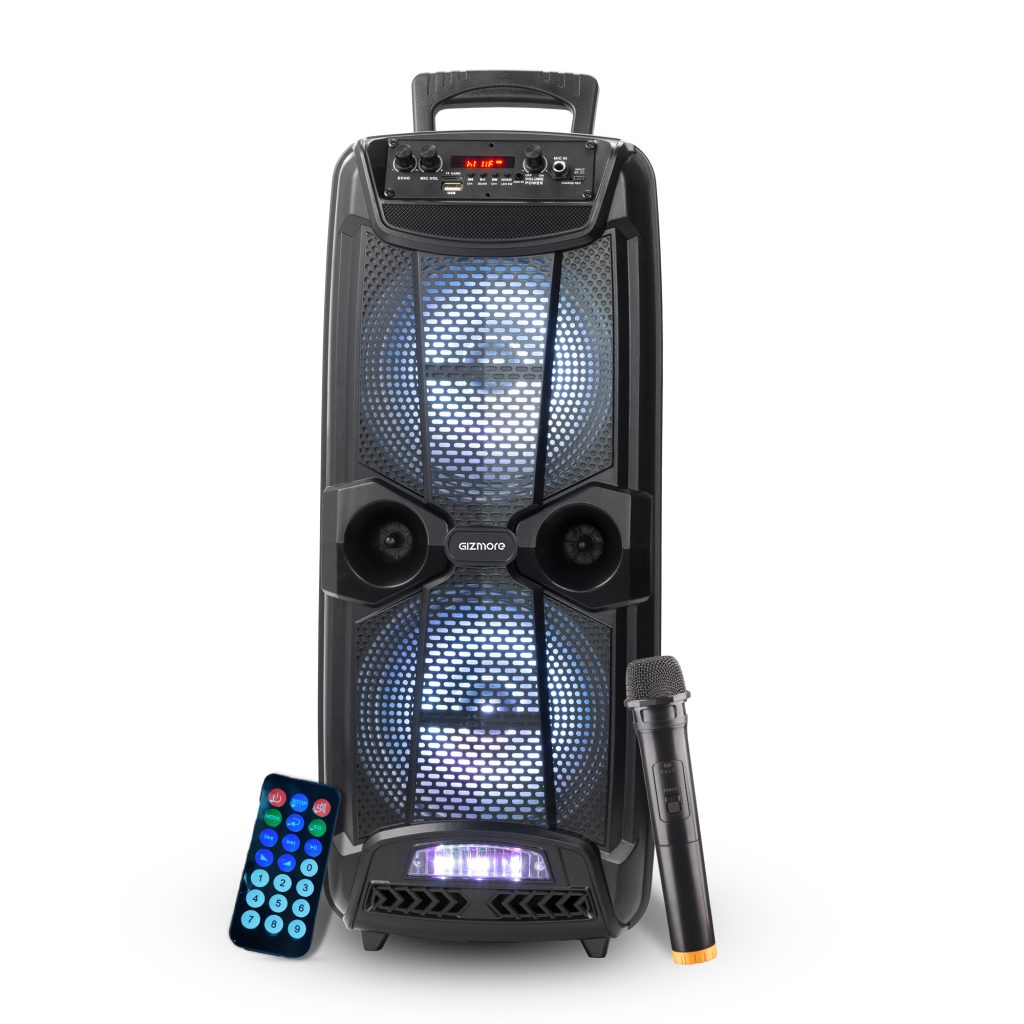
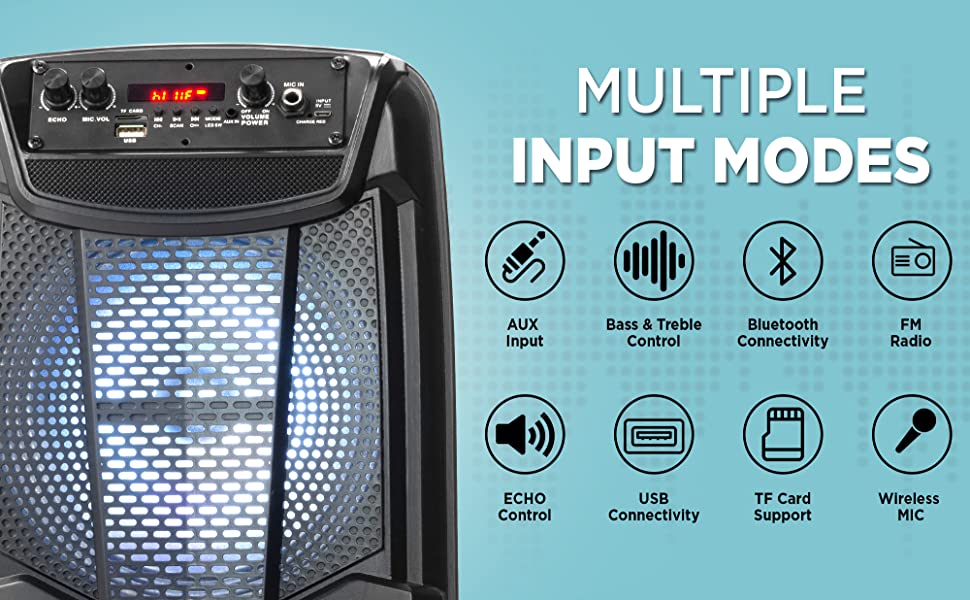
The Gizmore Wheelz T1000 Pro and T1501N trolley speakers can operate either wirelessly or via a wired connection. When they function wirelessly, they offer a battery life of 4 hours. The Gizmore Wheelz T1000 Pro has a 1000W capacity and an 8-inch subwoofer. It comes with a wired microphone and digital LED lighting. Other features are SD/TF card, USB, AUX, and a 2,200 mAh rechargeable battery. It also has a wireless microphone and remote control for enhanced functionality indoors or outdoors.
Gizmore Wheelz T1501N
The Gizmore Wheelz T1501N offers a sound output of 2000W and also has an 8-inch subwoofer and 20W strong party speaker. A wired microphone, digital RGB lighting, and multiple input options are available with the trolley speaker. It also has a 3,600 mAh battery that translates to 4 hours of playback. FM radio, a wireless microphone, and a portable remote are also part of the package.
The two Gizmore Indian-made trolley speakers are pretty affordable, but the company is offering additional discounts worth Rs. 1000 when they are purchased via Amazon India. The Gizmore Wheelz T1000 Pro is priced at Rs. 1,999 (~$26) while the T1501N trolley speaker goes for Rs. 4,499 (~$59).
Earlier this month, Samsung teamed up with repair experts iFixit to make DIY repairs easier for its phones and tablets. Now, a new report from BusinessKorea states that Samsung is considering using recycled parts for repairs.
As we know, Samsung announced its partnership with iFixit to make DIY repairs easier for its users. The company will soon start providing authentic parts, repair tools, and repair guides to customers who want to repair their own Galaxy products. Through iFixit, Samsung will soon be selling parts like display assemblies, back glass, and charging ports for the Galaxy S20, Galaxy S21, and Galaxy Tab S7+.
Under the “Self Service Repair” program, users will also be able to return the used parts to Samsung for responsible recycling which the South Korean company might be able to reuse as it is said to be considering introducing a recycled parts program in the first half of 2022.
Under the new recycled parts program, the repair cost of a display is said to be half of what it is right now. For instance, if you drop and crack the screen of an $800 Galaxy S22, it will cost you around $200 to get the screen replaced. The report also states that the quality and performance of the recycled components will be about as good as those of new parts.
With the low cost introduced by the recycled parts program, getting a device fixed will be more appealing than getting a new one altogether. The move will also have a good effect on the environment as there will be fewer spare parts and smartphones going into landfills.
OnePlus has officially announced its partnership with JioPages. JioPages is a web browser by Jio Platforms and it is entirely designed in India. With this collaboration, OnePlus plans to offer a faster, ad-free, and feature-rich browser experience to OnePlus TV users.
With JioPages coming to the Oneplus TVs, users will get a faster chromium engine migration that catches up with new web trends, offering an updated and secure browsing experience. The JioPages browser is said to be faster, safer, and custom-made for television screens.
One highlighting feature about the JioPages is that it comes with an in-built Adblocker, meaning you no longer have to see unwanted adverts. There’s also a VPN and a Secure Mode in the browser. The VPN will offer unfettered access to global websites and also ensure safety with the Secure Mode.
On the OnePlus TV, users are also set to experience one-click link openings. Users can add their favorite weblink to the home screen so that they can quickly access it next time. OnePlus users will also have access to curated videos across a variety of categories.
Personalized experience with regional languages like Hindi, Marathi, Tamil, Gujrati, and others are also available. Lastly, there’s also Study Mode, which provides curated educational content.
PLAYGOhas officially launched three new audio products, namely Muze, Budslite, and Flaunt in the Indian market. The PLAYGO Muze is a wireless Bluetooth speaker, while the Budslite is a pair of TWS earbuds. The PLAYGO Flaunt are wireless neckband earphones for the budget market. Interestingly, all three products are made in India and are claimed to offer a great sound experience.
The PLAYGO Muze is priced at Rs. 2,499 (~$33) and comes in a Military Green color variant. The PLAYGO Budslite costs Rs. 1,399 (~$18) and has Marsela Red and Black color variants. Lastly, the PLAYGO Flaunt is priced at Rs. 1,199 (~$16) and has Galaxy Black and Blush Green colors. All three devices can be purchased on PLAYGO‘s official website.
Starting with the PLAYGO Muze, the Bluetooth speaker comes with a 20W power output and is promised to deliver 7 hours of battery life on a single charge. The BT speaker features a rugged design and has a strap to carry it. It has the patented EBEL (Enhanced Bass, Extra Loud) sound stage and a Smart LED display. It supports Bluetooth 5.0, USB, an aux port, and micro-SD cards.The speaker also has a built-in FM radio and a 1-year warranty.
The PLAYGO Budslite comes in the small TWS design and is claimed to offer high-definition sound and crystal-clear voice for calls. The earbuds have Bluetooth 5.0 support and also come with Alexa, Siri, and Google Assistant support. Just like the Muze BT speaker, the PLAYGO Budslite also comes with the EBEL sound stage. The earbuds alone can offer up to 6 hours of music playback, while with the case, they are said to offer up to 24 hours of playback. The earbuds have touch controls, an IPX4 rating, and a 1-year limited warranty.
Coming to the PLAYGO Flaunt, the Neckband Wireless earphones come with an in-ear design and 10mm drivers. Again, there’s EBEL support, offering loud, bass-boosted sound. It has up to 14 hours of music playback and also supports fast charging. The earbuds are said to fully charge in less than 100 minutes. Alexa, Siri, and Google Assistants are supported, and there’s also the IPX4 rating. The PLAYGO Flaunt also comes with a 1-year limited warranty.
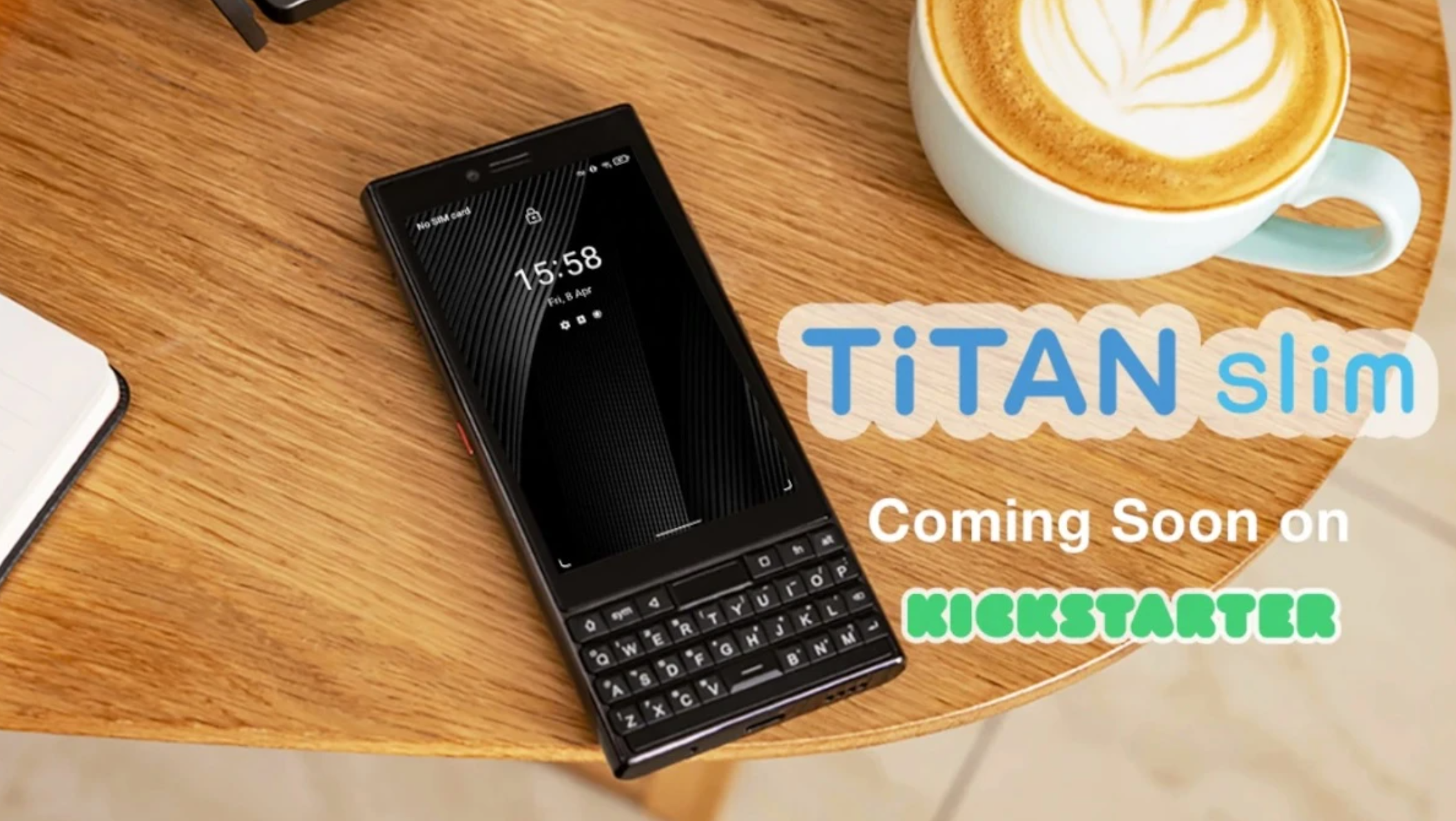
A Reddit post has detailed the rumored specs of the Unihertz Titan Slim and it seems it may be a look-alike of the Blackberry KEY2. The Unihertz Titan Slim will be the third iteration in the Titan lineup and comes with a physical QWERTY pad. The Titan Slim is also rumored to be available first via Kickstarter even without a crowdfunding campaign.
The Reddit thread adds to the speculation that was initiated by a recent cryptic tweeted image from Unihertz that pointed to the release of another Titan model. The image was covered with black ink but was explored to reveal a Blackberry KEY 2 look-alike. Titan is a phone designer that is carving a QWERTY-inspired niche for itself in its smartphones. The Unihertz Titan was launched in 2019 with a striking resemblance to the Blackberry Passport. It had a hybrid physical and touchscreen QWERTY keyboard. The smaller Titan Pocket was the next smartphone in the lineup and it got a mixed reception in the market.
It is speculated that Unihertz had used Kickstarter for its preorders as a marketing move. As per the specs, the device will have a 4.3-inch display and will be powered by a MediaTek chipset. A fingerprint scanner and probably 2D facial recognition sensor are present. The main camera is a 48MP shooter and the device will run on Android 11. The internal storage is about 256GB while the phone will have dual SIM functionality.
The Reddit thread detailing the rumored specs of the Unihertz Titan Slim is at best, speculative. Some of the details may not be authentic. No official confirmation has been received from Titan as to the specs of the Titan Slim at this time.
After the Vivo T1 5G, the next phone to enter the newly introduced T-series in India is the Vivo T1 Pro 5G. A report from February revealed that the phone would arrive in India between April and May. Well, the brand hasn’t come out to tease the device as of yet. However, the phone has been spotted on Geekbench certification.
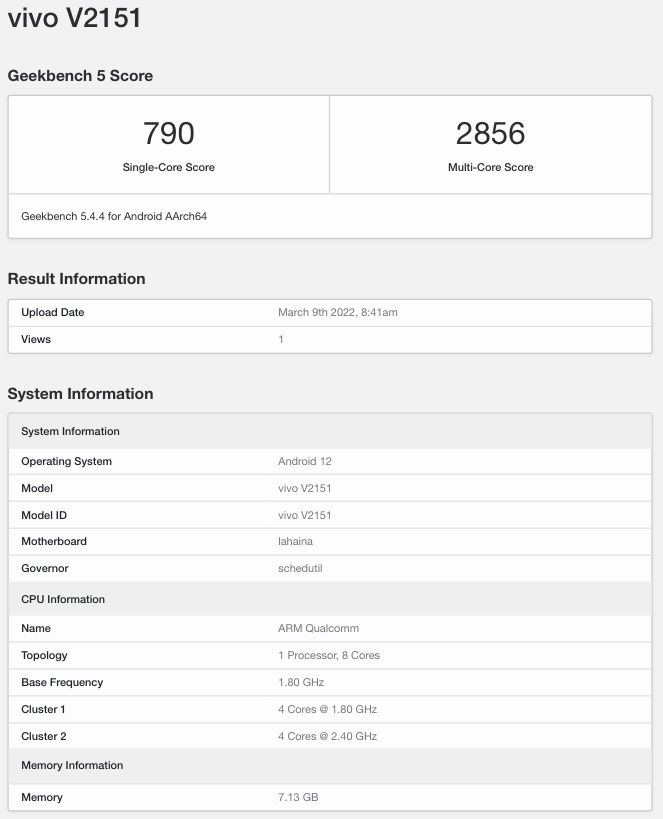
The Vivo T1 Pro 5G carries the model number V2151 on the Geekbench version 5. The device has scored 790 points in the single-core department and 2856 points in the multi-core department. These scores are possible, thanks to the octa-core SoC inside the phone.
The device has the Qualcomm Snapdragon 778G SoC clocked at a base frequency of 1.80GHz and a maximum of 2.40GHz. The variant that we see here is the 8GB RAM variant. We expect this to be the top variant, which will likely be paired with 128GB or 256GB of internal storage. The listing reveals that the phone comes with the Android 12 OS out of the box.
Apart from this, there are no details of the phone’s other specs. However, we can expect the phone to offer better cameras than its sibling, the Vivo T1 5G. It is also expected to have an improved fast charging speed.
The Vivo T1 5G, which is already on the market, has a 6.58-inch FHD+ LCD display with a 120Hz refresh rate. The phone has a Snapdragon 695 SoC that enables 5G connectivity on the phone. It has 50MP triple-rear cameras and a 16MP selfie snapper. The phone packs a 5,000mAh cell with support for 18W fast charging.
The hope of adding a blood pressure sensor to the Apple Watch, for now, may not materialize. Apple has continued to fine-tune the sensor to meet its high standards and it is projected that the sensor will not be ready before 2024. The main issue is reported to be accuracy concerns.
A new report from Bloomberg says that the blood pressure monitoring feature will likely arrive in Apple Watches by 2024. The current report is in sync with earlier projections that put the feature a few years away. As per the Bloomberg report, the blood pressure monitoring feature is being tested by Apple but the results have not met a priori expectations and were not sufficiently accurate. It is also speculated that the sensor is yet to output specific measurements, but rather triggers a notification to see the doctor about hypertension.
The feature is yet to provide actual Systolic and Diastolic readings which is a critical component in current smart wearables that output blood pressure readings. A few brands have already incorporated the blood pressure sensor into their smartwatches with great effect. Apple will hope to overcome the current challenges to add the feature to the Apple Watch. This is bound to increase the lifesaving credentials of the device several notches higher.
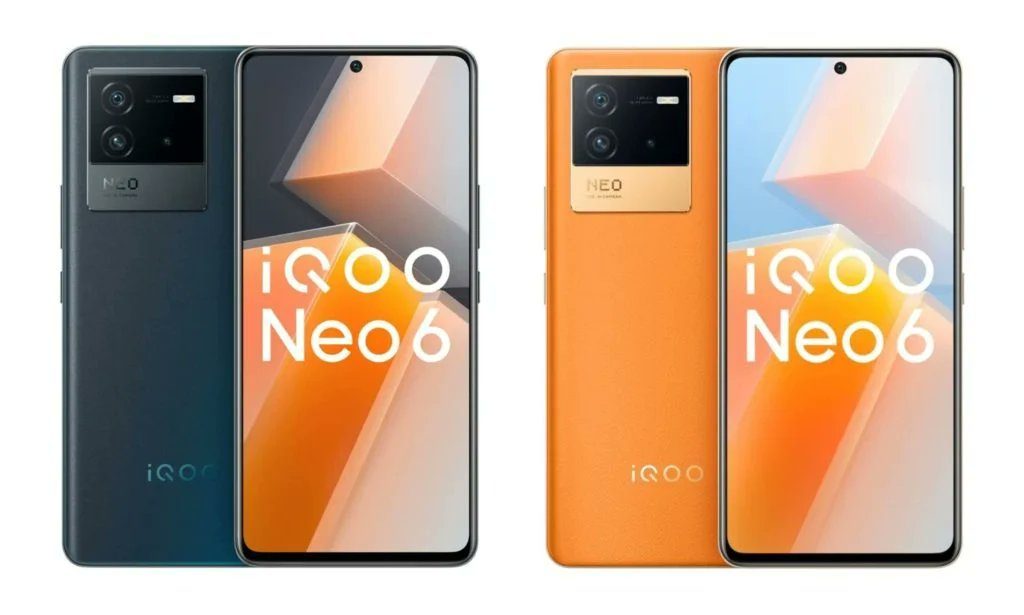
In March 2021, Vivo‘s gaming-focused sub-brand iQOO launched the iQOO Neo5, with flagship-level specs but with an affordable price tag. The brand has now launched the iQOO Neo6 in China, featuring the cutting edge Qualcomm Snapdragon 8 Gen 1 SoC and a whole host of upgrades over the last-gen. So let’s take a look at what the device has to offer.
Design & display
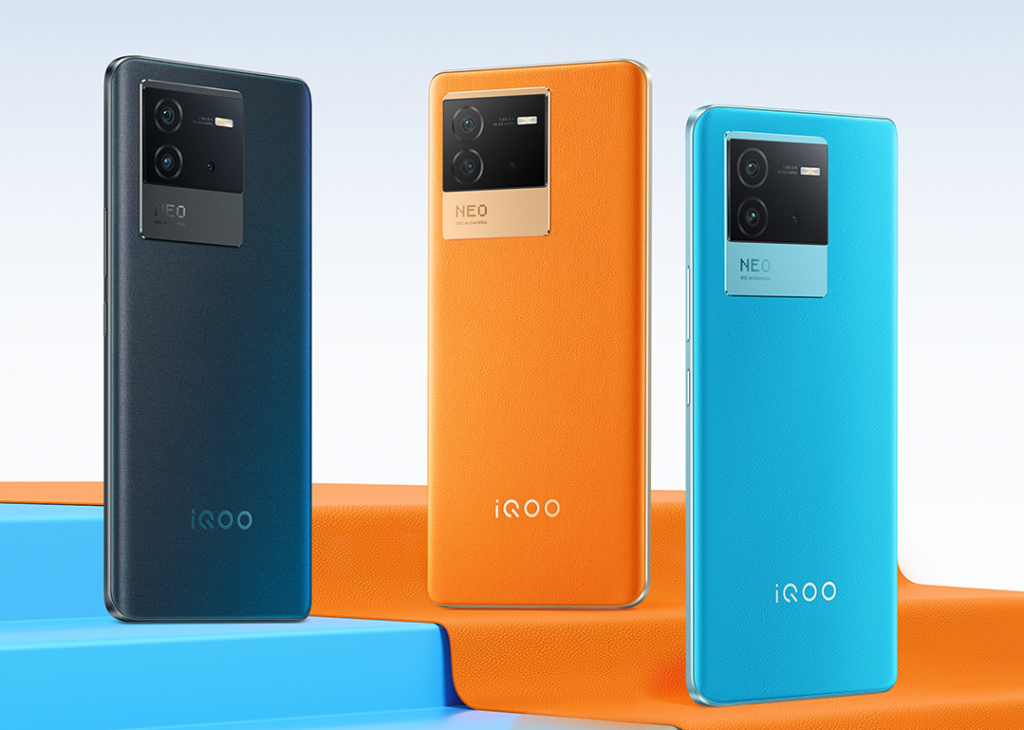
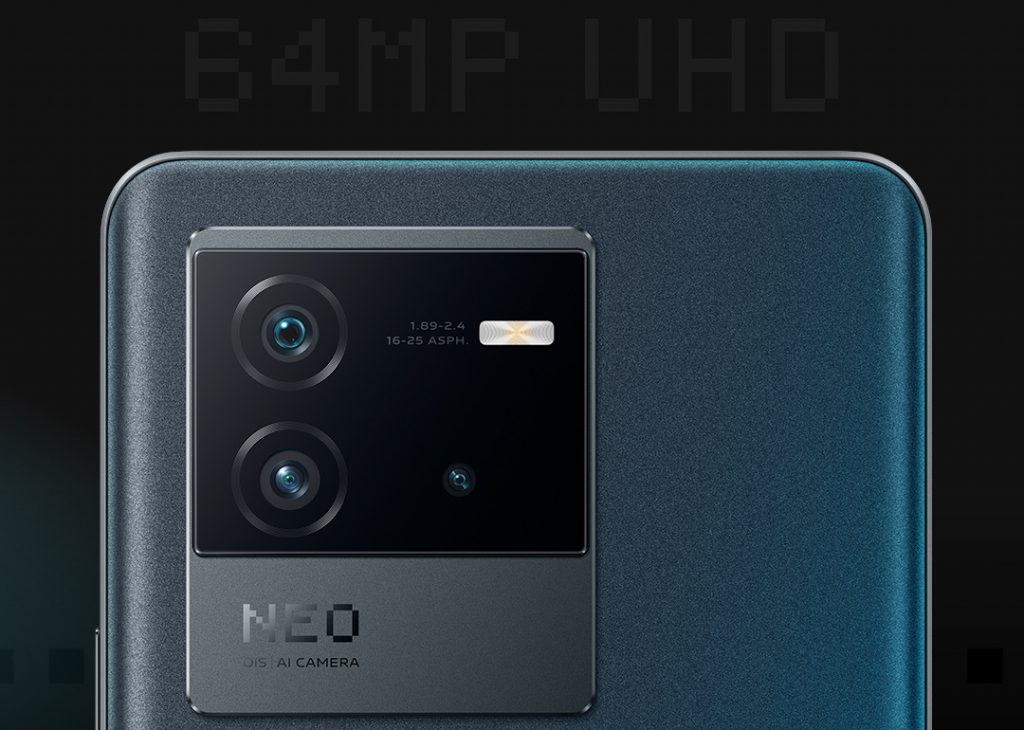
Design-wise, the iQOO Neo6 has a similar design to the last-gen iQOO Neo5. The newly launched device is just 8.5mm thick and weighs 197 grams. The camera island has a two-tone design with a rectangular module holding three lenses and an LED flash. Available in three color options, the Orange and Blue color variants feature an artificial leather back for better grip and comfort during long gaming sessions while the Black color variant comes featuring a high-end fluorite AG glass with a silky texture. The device does not have any buttons on the left edge. However, its right edge has volume buttons and a power key.
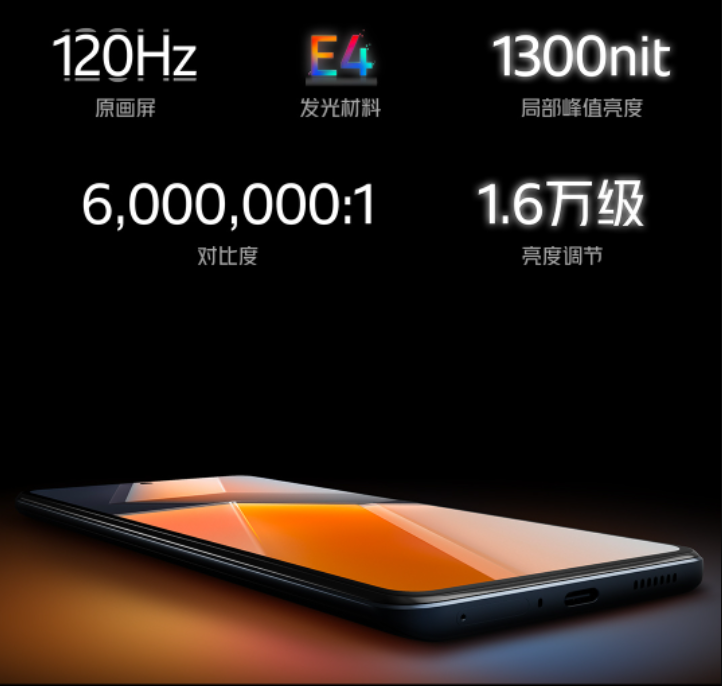
On the front, the device gets a flat 6.62-inch AMOLED display that offers a Full HD+ resolution, 1300nits peak brightness, and a 120Hz refresh rate. The device also gets a 1200Hz touch sampling along with dual pressure sensors under the screen to make it easier to play games that require four fingers by just using two. Other than that, the screen is integrated with a fingerprint scanner.
Specs
The iQOO Neo6 comes powered by the Snapdragon 8 Gen 1 SoC which enables it to achieve a constant 59 FPS in Genshin Impact at 810p. The SoC comes paired with up to 12GB of LPDDR5 RAM and 256GB of UFS 3.1 storage. The RAM on the device can also be virtually expanded by up to 4GB.
iQOO has also included the Independent Display Chip Pro in this device to share the workload of the primary GPU on the SoC. The company says that this will keep framerates stable through long game sessions because it will use less power and have better thermals.
Keeping the hardware cool is a large heat dissipation system made up of rare earth metal alloy, featuring a large-area Vapor Chamber soaking plate, and a six-layer three-dimensional graphite structure.
The overall feel of the device has also been improved with the inclusion of two linear motors for richer vibration and a better feeling of haptic feedback. With gaming in mind, the iQOO Neo6 features semi-enclosed top speakers to help players listen to the sound and identify their position. The speakers have also been modified to bring surround sound effects and sound field enhancement, which are quite important in many mobile gaming titles.
The device runs Android 12-based OriginOS Ocean out of the box offering features like infrared remote control, full-scene NFC, and a new Vivo Card service. The brand has provided a large 4700mAh battery equipped with 80W flash charging. It claims that the device can be charged up to 30% in just 5 minutes. Connectivity options include 5G, Wi-Fi Bluetooth version 5.2, OTG, USB Type-C port, NFC, and more.
Cameras
In the optics department, the iQOO Neo6 features a triple camera system on the back with a 64MP Samsung ISOCELL GW1P main sensor with an f/1.9 aperture. Accompanying the main camera is a 12MP ultra-wide lens with an f/2.2 aperture and a 2MP portrait sensor with an f/2.4 aperture. The primary camera has Optical Image Stabilization. On the front, it has a 16MP camera for selfies and video calls.
The phone supports features like AI Multi-Frame Noise Reduction, Night Raw HDR Algorithm, AI Anti-Glare Algorithm, Portrait mode, Night mode, dual-view video, up to 10x digital zoom, 4K videos, and more.
Pricing & Availability
iQOO has debuted the Neo6 in three configurations:
8GB + 128GB – 2799 yuan ($439)
8GB + 256GB – 2999 yuan ($471)
12GB + 256GB – 3299 yuan ($518)
The device comes in three colors namely Punk (Orange), Blues (Blue), and Black Jue (Black). iQOO has announced the first sale of the iQOO Neo6 will be held on April 20, 2022.
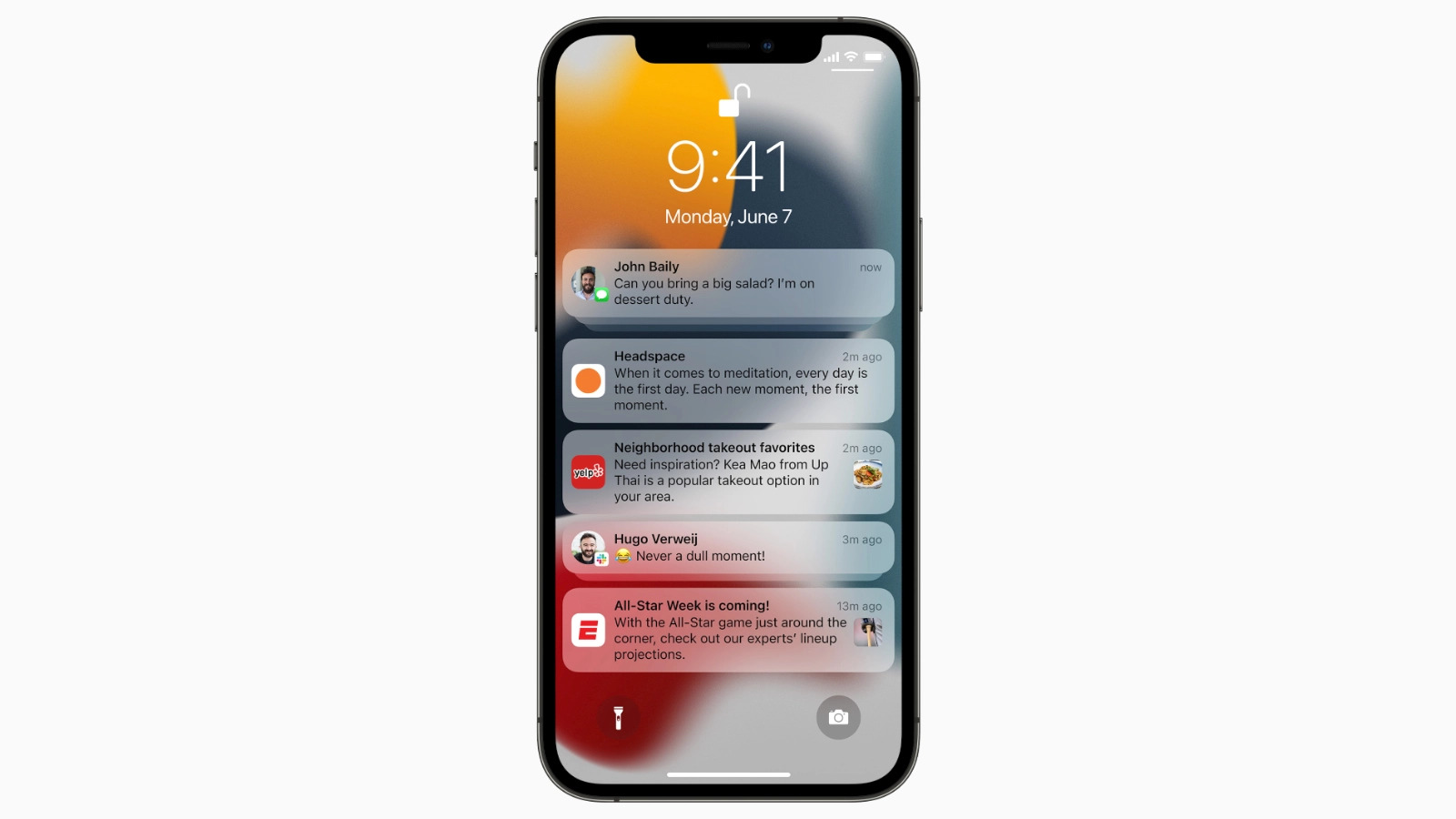
Apple has scheduled its annual Worldwide Developers Conference (WWDC) on June 6. The Californian giant is expected to announce the latest software upgrades for all of its devices. Undoubtedly, fans are most excited for the next iOS version, which is expected to be the iOS 16. Bloomberg’s Mark Gurman has now revealed that the iOS 16 will bring improvement in one of the major areas like the notifications management.
Gurman reveals that iOS 16 will offer improved notification management. He hasn’t said anything specific, but we may expect improvements to the notification panel or push notifications.
Furthermore, new health-tracking features are expected to be included in the upcoming iOS. However, the specific features have yet to be revealed. The iOS 16 is said to be codenamed Sydney. This name could also be an indication of the mixed reality headset and its interaction with the iPhone, as per Gurman.
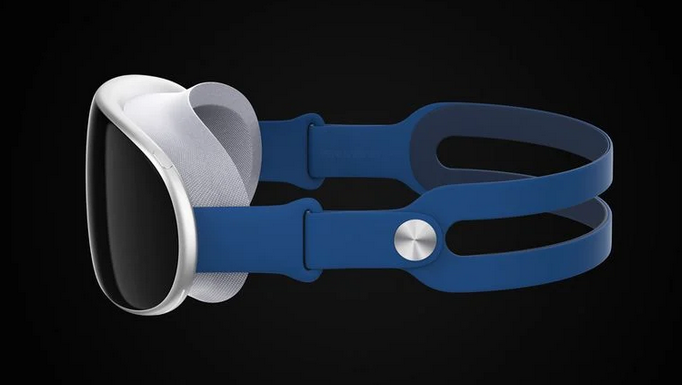
That being said, we could also see the long-due VR headset at the event in June. Apple might also showcase a demo of the headset’s rOS revealing its features.
Apart from this, iPad OS 16 will arrive at the event. The new version is expected to bring a better multitasking UI. watchOS 9, macOS, and tvOS will also show up at the event. However, no details regarding them have been revealed.
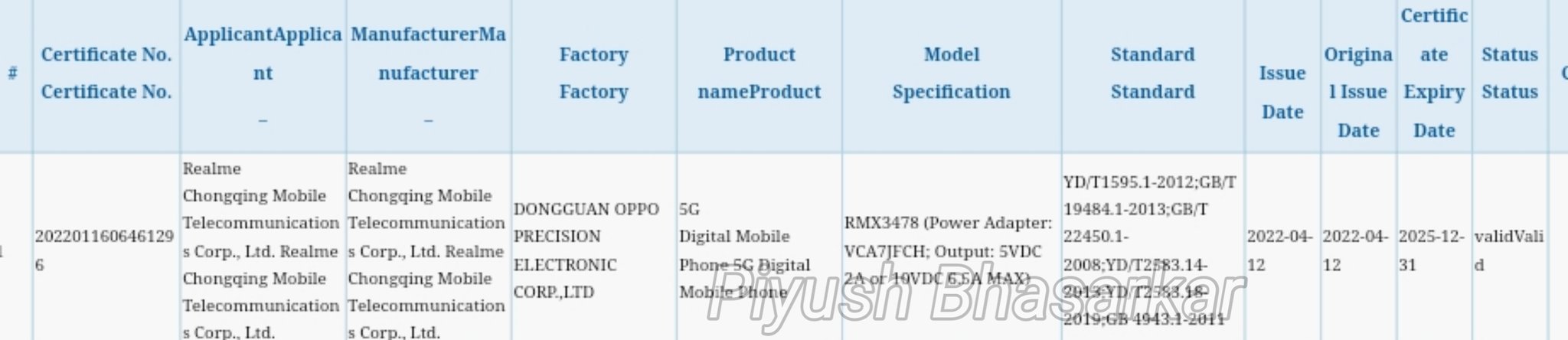
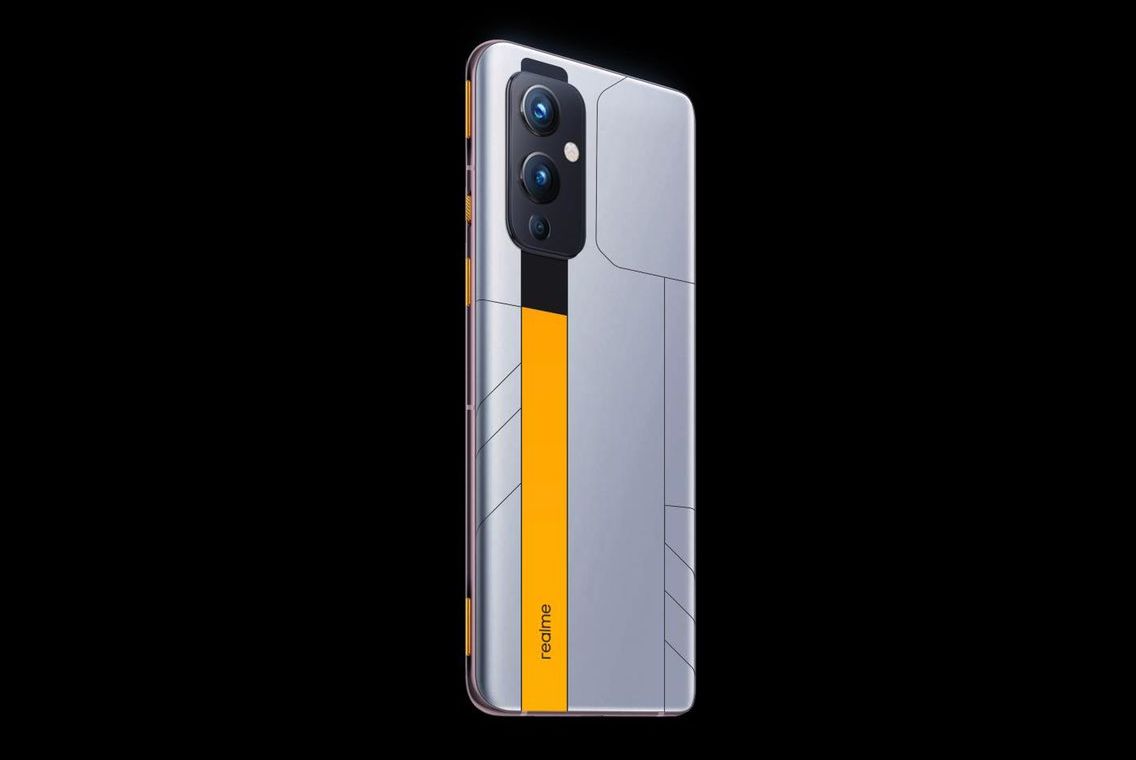
Realme seems to have a new smartphone up its sleeves as a device with model number RMX3478 has appeared on China’s 3C certification. The listing confirms the battery capacity of the device hinting at a release soon.
The listing was first spotted by the tipster Piyush Bhasarkar and it reveals that this upcoming Realme phone has a 65W fast charging speed. The device is a 5G phone from the Chinese brand, which we expect to arrive in the mid-range segment.
Realme hasn’t spoken anything about this phone, nor have we seen any leaks as such. Since this is the early stage of certification for this phone, the launch might be sometime later.
In related news, Realme is gearing up to launch the Realme Q5 smartphone in China. The device was spotted with multiple model numbers. The phone is said to offer 80W fast charging support. It is expected to come with a 6.62-inch AMOLED display with an FHD+ resolution and 120Hzz refresh rate.
Rumors are rife that the Realme Q5 will be powered by the Qualcomm Snapdragon 870 SoC paired with up to 12GB of RAM and 512GB of internal storage. It is likely to come with a triple camera system that has a 64MP main lens, an 8MP ultra-wide camera, and a 2MP macro sensor. For security, the device will have an in-display fingerprint scanner.
We use cookies on our website to give you the most relevant experience by remembering your preferences and repeat visits. By clicking “Accept”, you consent to the use of ALL the cookies.
This website uses cookies to improve your experience while you navigate through the website. Out of these, the cookies that are categorized as necessary are stored on your browser as they are essential for the working of basic functionalities of the website. We also use third-party cookies that help us analyze and understand how you use this website. These cookies will be stored in your browser only with your consent. You also have the option to opt-out of these cookies. But opting out of some of these cookies may affect your browsing experience.
Necessary cookies are absolutely essential for the website to function properly. This category only includes cookies that ensures basic functionalities and security features of the website. These cookies do not store any personal information.
Any cookies that may not be particularly necessary for the website to function and is used specifically to collect user personal data via analytics, ads, other embedded contents are termed as non-necessary cookies. It is mandatory to procure user consent prior to running these cookies on your website.