Advertisement

Google rolls out new status bar icons for Chat & Spaces on Gmail for Android

With Hangouts nearing the end of its life, Google is working on expanding its support for its Chat and Spaces platforms. Now, the company has even rolled out an update for Gmail for Android, which brings new status bar icons that helps users differentiate from Chat and Spaces.
Google
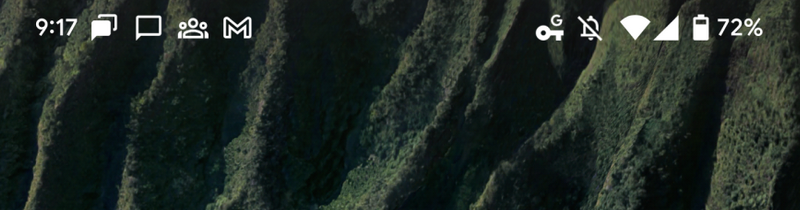
(L to R) Old Chat & Spaces icon, New Chat icon, New Spaces icon, Gmail icon

For those unaware, new message alerts for either Google Chat (basically a chat app like WhatsApp) and Spaces (Slack-like platform) were the same. Notifications on the status bar featured a filled in message bubble with another one behind it. But now, the Search Engine giant is working on making the two platforms more distinct from one another thanks to a revamp in status bar icons (Via 9To5Google).

Now, the Chat app will have a single message bubble that is outlined and has an empty interior. On the other hand, Spaces will now have three people standing next to each other. In other words, the company is also using the bottom bar tab icons for the status bar as well. This also matches the Gmail icon for email and even adds a quality of life improvement that helps people, like professional enterprise users to quickly figure out which platform the message belongs to.

Google

As of right now, the new status bar icons has only been seen on a singly Android device, which runs the version 2022.02.20.x of Gmail. This build has not been widely released at the moment. Although, we can expect to see the change arrive in more smartphones in the near future. Notably, the change also arrives as Gmail for iOS begins showing the Chat sender’s profile photo starting from this month.

RELATED:


Apple iPad Air 5 users are facing various issues with build quality: Report

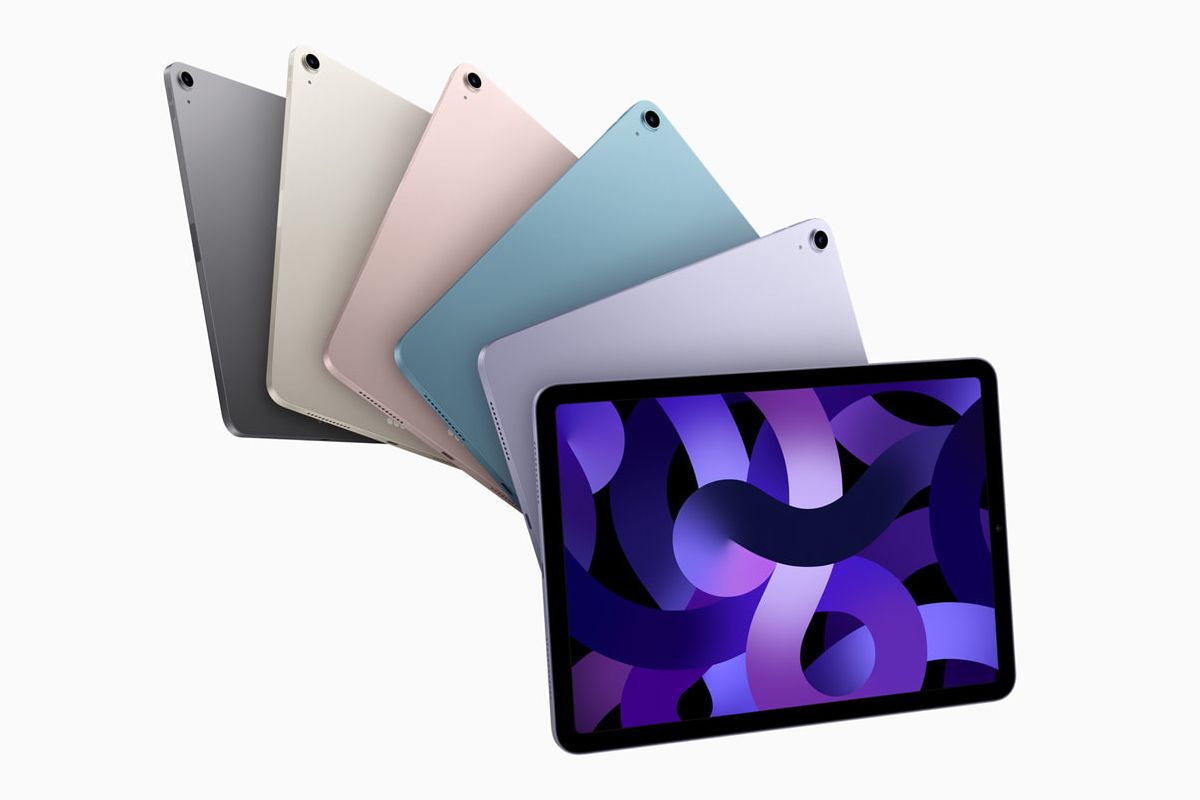
Just recently, Apple unveiled its latest iteration of the iPad Air. It is the fifth iteration of the model and launched with refreshed specs over the previous versions. However, it seems that the external build quality has taken a hit while the internal components saw an upgrade.

Apple
iPad Air 5

Thus, users of the new iPad Air 5 have been complaining regarding the noticeably thinner aluminum casing, which causes creaking and a hollow sensation in the hand. Furthermore, the users also added that light pressure ends up warping the display as well. These complaints were shared on a thread on Reddit (Via MacRumors), with many Apple customers also adding to the list of large complaints, all of which is related to the build quality.

The thread reads “I ordered and received two blue iPad Air 2022 today and I’m a bit shocked. The aluminum backplate is a lot thinner than on the iPad 4 which I also have. You can almost feel the battery through the plate when you hold the device. Both iPads have the same feeling and are making creaking noises when you hold them. This did not happen on the iPad Air 4.” Similarly, a number of other users agreed and even shared their own similar experiences on this thread.

Apple

As of right now, there have been no complaints regarding build quality apart from users on Reddit. Even reviewers did not specifically mention this point yet. But it seems that this is a real issue considering the vast number of people commenting on the thread. The Cupertino based giant has yet to official share a statement regarding this matter, so stay tuned for more updates.

RELATED:


OPPO K10 launching in India on March 23, here’s what to expect

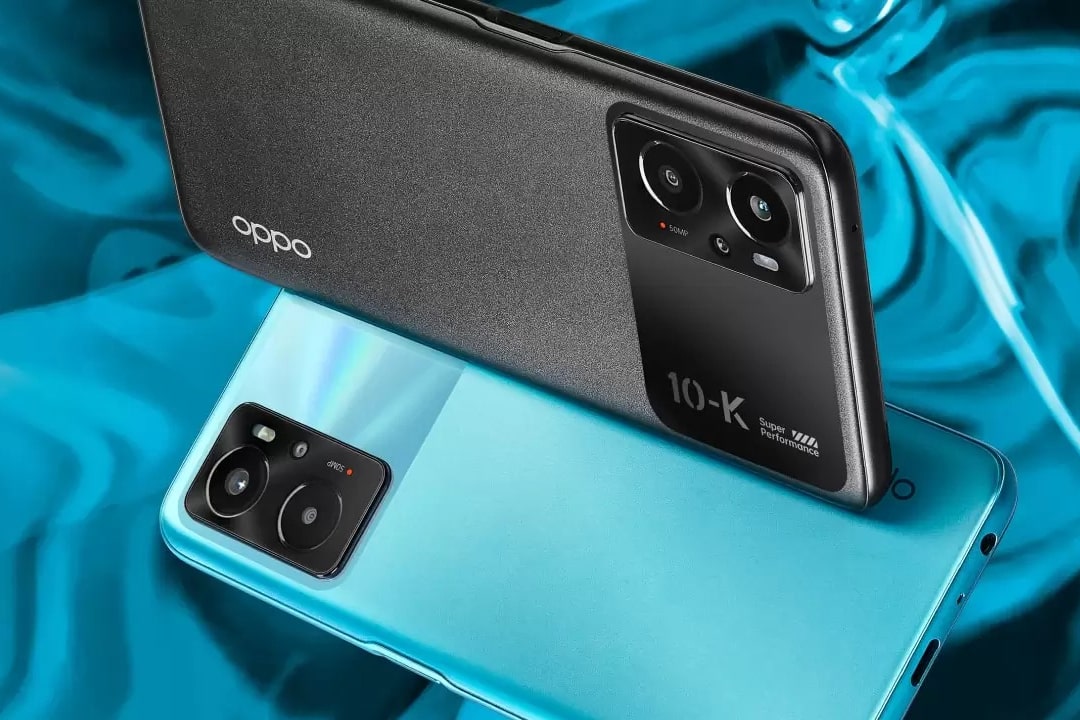
OPPO K10 is all set to go official in India on March 23. The OPPO K3 that debuted in May 2019 was the last K-series that OPPO launched in India. The official landing pages of the K10, available on OPPO India’s website and Flipkart, have revealed its design and key features. Here is all that is known about the upcoming OPPO K10 handset.

The OPPO K10 will come equipped with a punch-hole display. It will come equipped with the Snapdragon 680 chipset. For photography, it will feature a 16-megapixel front camera and a rear-facing 50-megapixel triple camera unit. The device will arrive in black and blue colors. Apart from announcing the K10 handset, the company will be also unveiling the OPPO Enco Air2 TWS earbuds alongside it in India.

OPPO K10

OPPO K10 specifications (rumored)

Last week, 91mobiles leaked all the major specs of the OPPO K10. The leak revealed that the smartphone will feature a 6.5-inch IPS LCD display that offers an FHD+ resolution and a 90Hz refresh rate. Apart from the 16-megapixel selfie snapper, the K10 will come with a 50-megapixel (main) + 2-megapixel (depth) + 2-megapixel (macro) triple camera unit.

The Snapdragon 680 chipset powered OPPO K10 will come with 6 GB of RAM, 128 GB of storage, and a dedicated slot for adding a microSD card. It will boot to Android 11 OS and ColorOS 11.1. For security, the K10 will feature a side-facing fingerprint scanner. It will pack a 5,000mAh battery that supports 33W fast charging.

As can be seen, the OPPO K10 is packed with specs similar to the Realme 9i, which debuted with a price of Rs 13,999 (~$184) in India. The K10 is likely to arrive at a similar price in the country.

RELATED:

Honor 60 SE 12GB RAM model now up for pre-order in China; priced at 2,799 yuan ($440)

After launching the Honor 60 and 60 Pro smartphones, the Honor 60 SE smartphone was launched by the company last month in the Chinese market and has been available for purchase in the country for a few weeks now.

Now, a new variant of the Honor 60 SE with 12GB of RAM and 256GB of internal storage is up for pre-sale at a price of 2,799 yuan (~$440). It will be available for pre-order starting today and will go on sale from 25th March.

Honor 60 SE 12GB RAM Sale China

Prior to this, the device was being sold in two models — 8GB RAM + 128GB storage priced at 2,199 yuan and 8GB RAM + 256GB storage costing 2,499 yuan.

As for the specifications, the Honor 60 SE features a 6.67-inch OLED hyperbolic screen with 2400 x 1080 pixels Full HD+ screen resolution along with support for a 120Hz refresh rate and 1920Hz high-frequency PWM dimming.

Under the hood, the device is powered by the MediaTek Dimensity 900 SoC, coupled with 8GB of RAM and up to 256GB of internal storage. It also has support for a Smart Memory Engine that can use 2GB of storage space as memory.

In the camera department, the Honor 60 SE smartphone comes with a triple-camera setup on the back that includes a 64-megapixel primary sensor, a 5-megapixel ultra-wide-angle lens, and a 2-megapixel macro lens. On the front side, there’s a 16-megapixel snapper for taking selfies and video calling.

The device runs the Android 11 operating system out-of-the-box with the company’s own Magic UI 5.0 on top. It is powered by a 4,300mAh battery and comes with support for 66W Super Fast Chare technology.

RELATED: 

OPPO A16e launched with HD+ display, Helio P22, and 4,230mAh battery

In the previous week, OPPO unveiled the OPPO A76 and OPPO A96 smartphones in India. Last week also saw the arrival of a budget-friendly phone called the OPPO A16e. Here is all the information on the specifications, features, and pricing of the A16e.

OPPO A16e specifications and features

The OPPO A16e features a 6.52-inch IPS LCD display with a teardrop notch display. The handset offers an HD+ resolution of 720 x 1600 pixels, a 60Hz refresh rate, a 269ppi pixel density, and Gorilla Glass 3 protection. The company claims that the A16e offers a screen-to-body ratio of 89.27 percent.

For selfies and video calls, the OPPO A16e features a 5-megapixel front-facing camera. The square-shaped camera module on the phone’s back has a 13-megapixel primary camera and an LED flash. The device comes preinstalled with the older Android 11 OS and ColorOS 11.1.

OPPO A16e
OPPO A16e

The OPPO A16e is powered by the MediaTek Helio P22 chipset. The device ships with 3 GB / 4 GB of LPDDR4x RAM and 32 GB / 64 GB of built-in eMMC 5.1 storage. The handset draws power from a 4,230mAh battery, which supports charging through a microUSB port.

The A16e lacks a fingerprint scanner. Instead, it carries support for face unlock. All of these other features are also available on this device. It has dual 4G VoLTE and WiFi 802.11b/g/n, Bluetooth 5, GPS, a microSD card slot, and a 3.5mm audio jack, among other things.

OPPO A16e price in India

The OPPO A16e comes in Midnight Black, Blue, and White colors. OPPO is yet to confirm the pricing and availability of the A16e. The 3 GB RAM + 32 GB and 4 GB + 64 GB variants of the A16e will be priced at Rs 9,990 ($131) and Rs 11,990 ($157), respectively, according to leaked information that surfaced last week.

RELATED:

Vivo X Note render, variants, key features emerge on official website

Reports have claimed that Vivo may have discontinued its NEX lineup. Speculations are rife that the rumored Vivo NEX 5 has been rebranded as the Vivo X Note. Recent reports have revealed a lot of information on the specs of the X Note. Now, the tipster WHY LAB has shared what looks like an official picture of the phone.

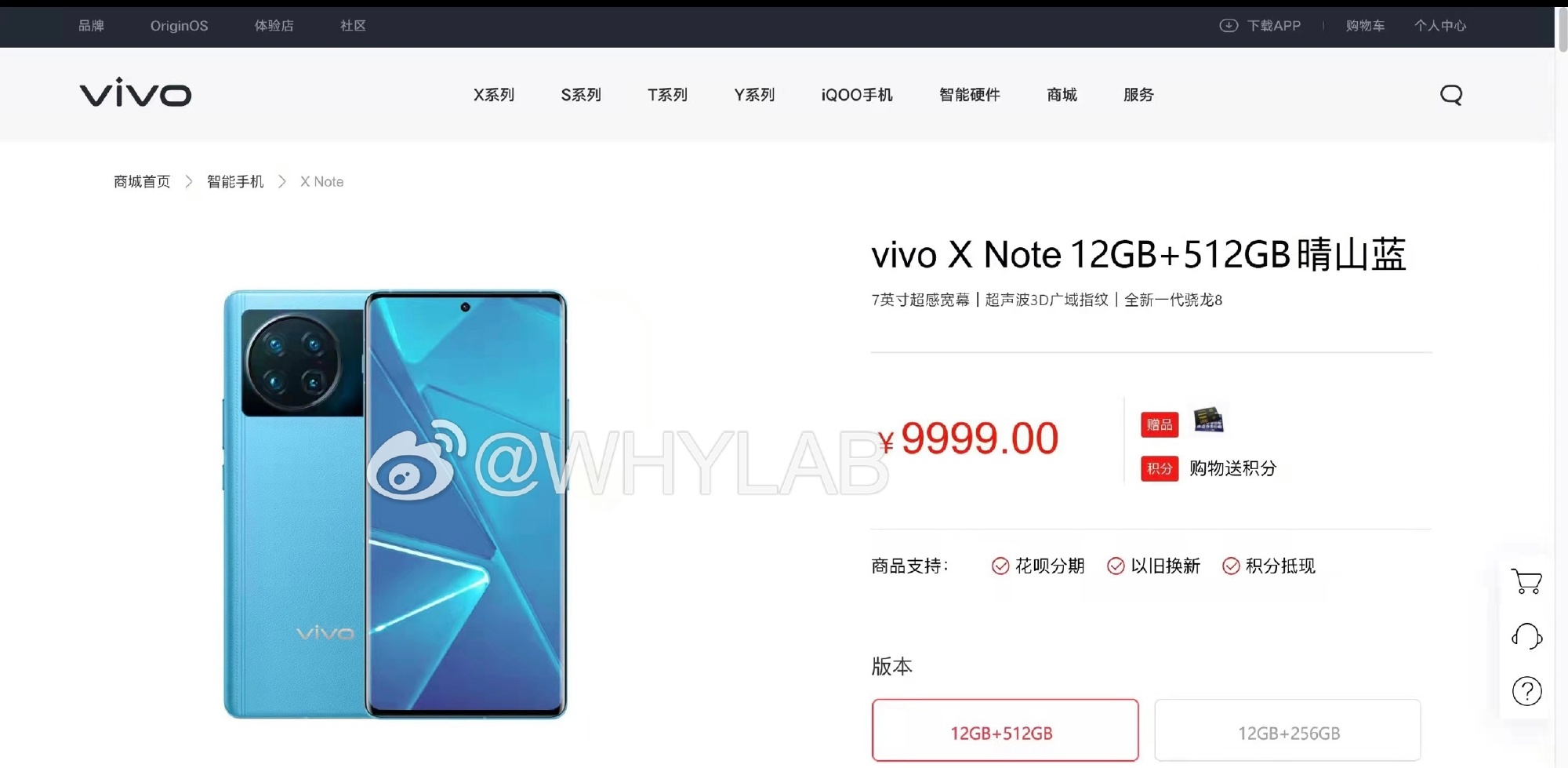
The Chinese tipster has reportedly spotted a listing for the Vivo X Note on Vivo China’s official website. He has shared a few screenshots of the X Note’s listing to show how it looks and what it can do.

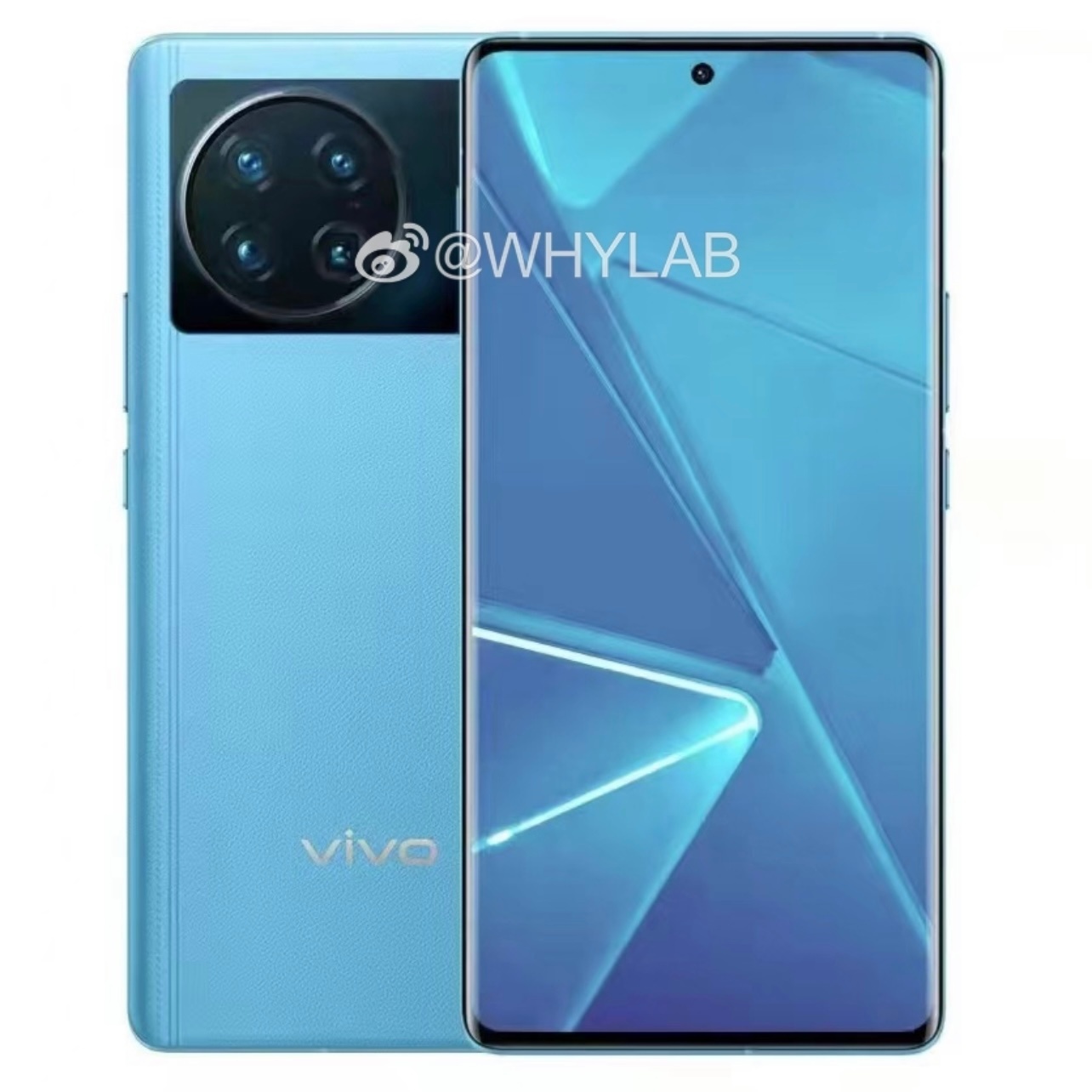
Vivo X Note
Vivo X Note

As can be seen in the render, the Vivo X Note will sport a curved edge display with a centrally positioned punch-hole. The right edge of the phone features a volume rocker and a power key. The rear shell of the device features a large camera block, which houses a quad-camera unit.

According to the listing, the Vivo X Note will have a 7-inch widescreen, a 3D ultrasonic fingerprint sensor, and a new generation of Snapdragon 8 series chips.It may come in two variants such as 12 GB RAM + 256 GB storage and 12 GB RAM + 512 GB storage.

Vivo X Note specifications (rumored)

The Vivo X Note’s leaked specifications have revealed that it will feature a huge 7-inch AMOLED E5 QHD+ 120Hz display, a Snapdragon 8 Gen 1 chipset, and a 5,000mAh battery that supports 80W wired charging and 50W wireless charging. Its rear camera setup will have a 50-megapixel Samsung S5KGN1 primary camera, a 48-megapixel Sony IMX598 lens, a 12-megapixel Sony IMX663 snapper, and an 8-megapixel OV08A10 camera with 5x zoom.

RELATED:

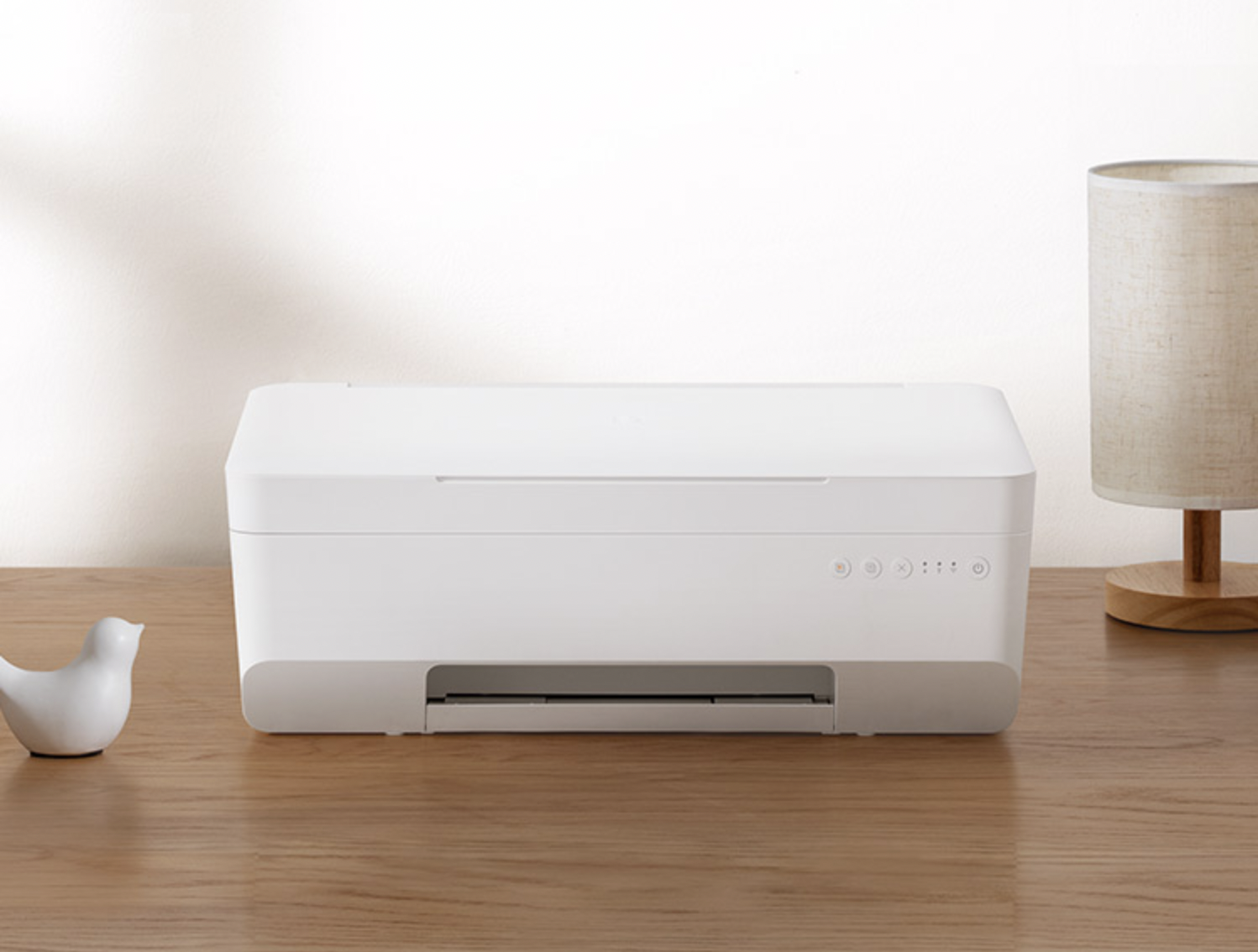
Xiaomi Mijia Inkjet All-In-One Printer officially launched in China for 1,199 yuan ($188)

Xiaomi has a Mijia brand under which there are several different types of products. Now, yet another product has been launched by the brand — Xiaomi Mijia Inkjet All-In-One Printer, priced at 1,199 yuan (~$188).

As the name itself indicates, it is an inkjet printer and apart from printing, it also comes with support for copying and scanning. There is also support for different types of connections for using the printer.

Xiaomi Mijia Inkjet All-In-One Printer

The company has revealed that the Xiaomi Mijia Inkjet All-In-One Printer supports printing files directly through the USB connection. It also supports WeChat remote printing and its own Xiaomi Carefree Connect.

The printer can be connected to every member of the household by just one person through direct sharing permission granted in the Mijia App between family members.

It comes with high-quality four-color dye ink which the company claims provides real-like printing through the unique special ink bottle. It is also claimed to yield around 9,500 pages of color printing before replacing the cartridge.

Xiaomi Mijia Inkjet All-In-One Printer

For the easy replacement of the cartridge from the printer, the company has adopted a unique pressure-based interlock structure and the ink filling mechanism has been made to make it convenient to change ink without hassle.

The device supports copying and scanning in both modes — color and back and white for more accuracy of handwriting. Also, the scanned files can also be saved and archived to the smartphone using an application.

As for the enhancements in the device, it comes with an anti-backward and anti-backflow design. It can also adaptively activate the intelligent cleaning system based on the local climate conditions, without manual operation.

RELATED: 

Apple iPhone 14 and 14 Max to be powered by the A15 processor: Ming-Chi Kuo

Apple’s upcoming iPhone 14 series has been in the news lately, revealing details about what we should expect from the next-generation smartphone lineup from the company.

Recently, there were reports about the non-Pro iPhone 14 models and the iPhone 14 Pro models to have a significantly different design as well as specifications. Now, another report has surfaced online that is in line with the previous reports.

Apple iPhone 14 Pro
Apple iPhone 14 Pro Render

Last week, it was reported that the iPhone 14 and iPhone 14 Max will continue to be powered by the Apple A15 Bionic processor while the 14 Pro and 14 Pro Max models will pack the yet unannounced Apple A16 Bionic SoC.

Now, Apple analyst Ming-Chi Kuo has revealed more details regarding the usage of different chips. He says that the difference of chips between non-Pro and Pro models of the iPhone is likely a marketing or a finance-based decision.

The supply of chips from TSMC isn’t an issue, claims Ming-Chi Kuo. This leads to the speculation that the Cupertino-based technology giant is trying to create more differentiation between the non-Pro and Pro models of the iPhone or that it is trying to keep the cost low by using older generation chips in the non-Pro models.

It has also been reported that while all the models of the iPhone 14 series will pack 6GB of RAM, the non-Pro models will have LPDDR4X RAM. On the other hand, the Pro models will have LPDDR5 RAM, creating a technical difference and impacting the operational speed.

For those who are unaware, Apple is expected to launch four iPhone models this year, which includes Apple iPhone 14, 14 Max, 14 Pro, and 14 Pro Max. While the 14 and 14 Pro will feature a 6.1-inch display, the 14 Max and 14 Pro Max will have a 6.7-inch screen.

RELATED: 

Security flaws detected on the UNISOC SC9863A chip powering several budget smartphones

A mobile security solutions firm Kryptowire has identified some serious security and privacy vulnerabilities in smartphones powered by UNISOC SC9863A chips and has alerted owners of such smartphones as such. Kryptowire says that the specified UNISOC SoC has a flaw that could be exploited by hackers to get access to user data and functionality of the mobile device.UNISOC T7510

The UNISOC SC986 3A chipset is quite prevalent in several of the budget brands including Nokia and it is unclear how this reported flaw will affect the standing of the chipmaker. Some of the stated consequences of the vulnerabilities include gaining access to call records, text messages, contacts, video records, and other privacy data that could hurt the user when hackers put such to use. It is even possible to remotely use the device’s rear camera or remotely operate the device.

As per the details put out by Kryptowire, it is said that the firm had reported the issue to UNISOC since December 2021, but we are yet to get any update from the company on the issue. Device manufacturers and mobile carrier networks have also been notified of the security vulnerability of the UNISOC SC9863A chipset. We expect to see upgrades rolled out by different OEMs sporting the budget UNISOC chipset to take care of the highlighted vulnerabilities. This would be in collaboration with the chipmaker, UNISOC.

RELATED: 


(source)


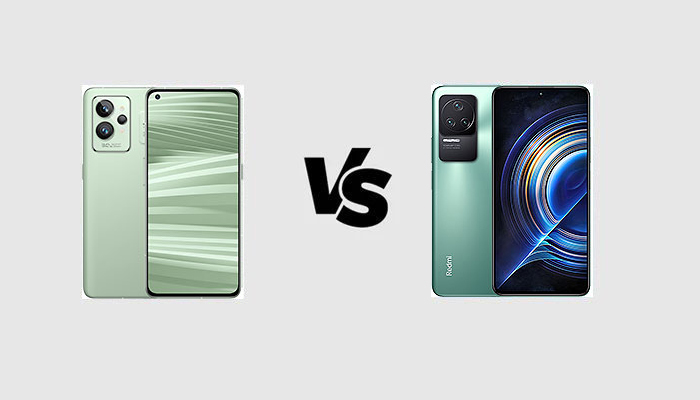
Realme GT 2 Pro vs Redmi K50 Pro: Specs Comparison

Redmi K50 Pro went official a few days ago as the world’s first mobile phone with the latest MediaTek flagship chipset. Due to the presence of the Dimensity 9000, this handset had a lot of attention and a lot of mobile enthusiasts are evaluating to make it their new main device. But is it really the best flagship killer in its price range? We believe the best way to know it is to compare it to the best flagship killer in the same segment. And currently, the best one is the Realme GT 2 Pro, now available all around the world with very interesting street prices. Here is a comparison between the specifications of the Realme GT 2 Pro and the Redmi K50 Pro.

Realme GT 2 Pro vs Xiaomi Redmi K50 Pro

Realme GT 2 Pro Xiaomi Redmi K50 Pro
DIMENSIONS AND WEIGHT 163.2 x 74.7 x 8.2 mm,
189 g
163.1 x 76.2 x 8.5 mm,
201 g
DISPLAY 6.7 inches, 1440 x 3216 pixels (Quad HD+), OLED 6.67 inches, 1440 x 3200 pixels (Quad HD+), OLED
PROCESSOR Qualcomm Snapdragon 8 Gen 1, octa-core 3 GHz Mediatek Dimensity 9000, octa-core 3.05 GHz
MEMORY 8 GB RAM, 128 GB – 8 GB RAM, 256 GB – 12 GB RAM, 256 GB – 12 GB RAM, 512 GB 8 GB RAM, 128 GB – 8 GB RAM, 256 GB – 12 GB RAM, 256 GB – 12 GB RAM, 512 GB
SOFTWARE Android 12, Realme UI Android 12, MIUI
CONNECTIVITY Wi-Fi 802.11 a/b/g/n/ac/6, Bluetooth 5.2, GPS Wi-Fi 802.11 a/b/g/n/ac/6, Bluetooth 5.3, GPS
CAMERA Triple 50 + 50 + 3 MP, f/1.8 + f/2.2 + f/3.3
32 MP f/2.4 front camera
Triple 108 + 8 + 2 MP, f/1.8 + f/2.2 + f/2.4
20 MP front camera
BATTERY 5000 mAh, fast charging 65W 5000 mAh, Fast Charging 120W
ADDITIONAL FEATURES 5G, dual SIM 5G, dual SIM

Design

Realme GT 2 Pro is a green and sustainable phone. Two of its three color options are made with a special bio-polymer resembling the tactile feedback of the paper: Paper White and Paper Green. For those who do not “trust” this material, there is also a third color option called Steel Black with a glass back. All the color options of the Redmi K50 Pro come with a glass back and this phone adds the IP53 certification for dust resistance and splash resistance. The Realme GT 2 Pro looks more interesting due to its innovative materials and a better look for the camera module, that is the reason why it wins the design comparison.


Display

The displays of these two flagships are simply amazing. They are both OLED panels with a Quad HD+ resolution, a 120 Hz refresh rate, and the HDR10+ certification. But the Realme GT 2 Pro is superior because it is able to show up to one billion colors and it has the LTPO2 technology enabling an adaptive refresh rate from 1 to 120 Hz which enhances the efficiency. Further, the Realme GT 2 Pro has an in-display fingerprint reader, while it is side-mounted on the Redmi K50 Pro. The position of the punch hole is also different, while the display diagonals are very close. Both the phones feature stereo speakers for an advanced audio experience.


Specs & Software

This is an important battle between the best chipset by Qualcomm and MediaTek. The Realme GT 2 Pro is powered by the Snapdragon 8 Gen 1 mobile platform, while the Redmi K50 Pro comes with the Mediatek Dimensity 9000. According to most of the benchmarks, the Dimensity 9000 has better performance than Snapdragon 8 Gen 1. But it is still too early to understand whether or not this superiority reflects in daily usage. For now, the Dimensity 9000 is considered a better processor. The memory configurations include up to 12 GB of RAM and up to 512 GB of native storage. Both the phones run Android 12 out of the box, with customized user interfaces on top.


Camera

If you are looking for the best camera setup, then you should go for the Realme GT 2 Pro. It is equipped with a 50 MP main camera with OIS, a 50 MP ultrawide camera with a wide 150° FOV, and a microscope lens with 40x magnification for macro shots. The Redmi K50 Pro sports a 108 MP main camera with OIS, an 8 MP ultrawide sensor, and a 2 MP macro camera. The Realme GT 2 Pro also comes with a better 32 MP front camera (instead of the 20 MP snapper of the K50 Pro).


Battery

The battery capacities of the Realme GT 2 Pro and the Redmi K50 Pro are the same: 5000 mAh. This means that the processor will play the most important role in terms of battery life. But there should not be a big difference between the two phones. The Redmi K50 Pro charges faster thanks to 120W fast charging, while GT2 Pro supports 65W fast charging.


Price

The starting price of the Redmi K50 Pro for the Chinese market roughly translates into €430/$476 (still not available in the global market), while the Realme GT 2 Pro starts from €750/$830 globally. If we do not consider the prices, the Realme GT 2 Pro wins the comparison thanks to its better camera and display. Do you agree?


Realme GT 2 Pro vs Xiaomi Redmi K50 Pro: PRO and CONS

Realme GT 2 Pro

PRO

  • Better rear cameras
  • Superior front cameras
  • Wider availability
  • Better display
  • In-display fingerprint reader

CONS

  • Slower charging


Xiaomi Redmi K50 Pro

PRO

  • Faster charging
  • IP53 certification
  • IR blaster
  • Bluetooth 5.3

CONS

  • Inferior cameras

RELATED

Check the latest videos from our YouTube channel and subscribe:

AGM H5 unveiled as the first rugged smartphone with Android 12, 109dB speaker

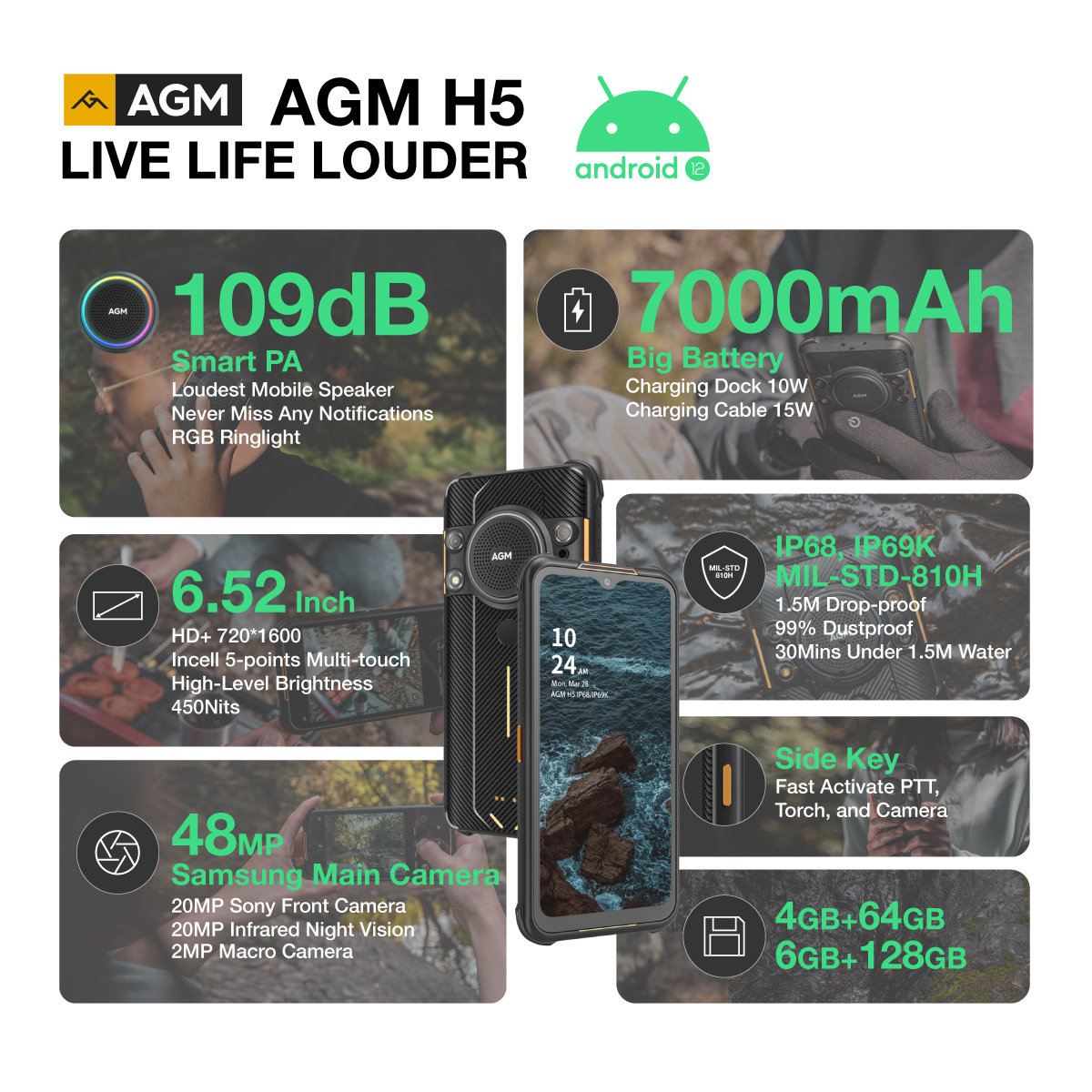
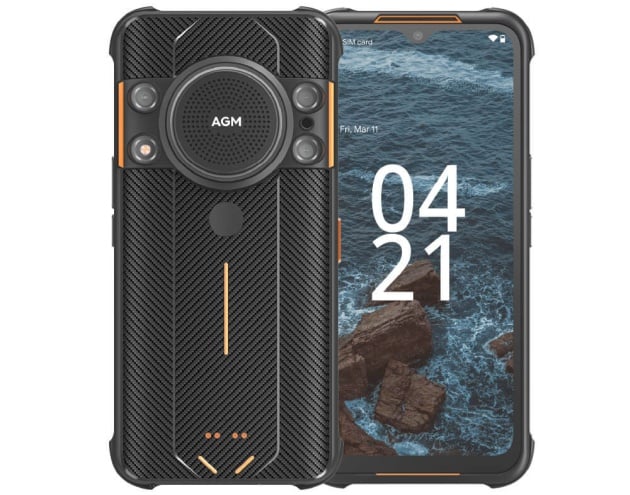
AGM Mobile’s H5 smartphone is billed for release in April 2022 and it is being touted as the world’s first stock Android 12 rugged smartphone. It also has the loudest phone speaker in the market with a monstrous 109 dB capacity.AGM H5

The AGM H5 is now available for pre-order from March 15 until April 18 with different discounts on offer between 5% and 15%, as well as free AGM buds and a charging dock in some instances. The AGM 5 comes in two RAM/ internal storage configurations namely 4GB/ 64GB ($269) and 6GB/ 128GB ($299).AGM H5

The AGM H5 runs on the latest Android OS – Android 12, which is not common among budget smartphones in its cadre. It, therefore, comes with the latest complement of software features and security. Being a rugged smartphone, the ARM H5 has IP68, IP69K, and MIL-STD-810H certifications which puts the device on a higher pedestal than its peers from other brands. The AGM H5 is powered by MediaTek Helio G35 which lacks 5G connectivity.AGM H5

The powerful speaker of the AGM H5 is surrounded by LED RGB ring lighting and the device has a 7,000 mAh battery. The H5’s 6.52-inch LCD 5 point multi-touch display screen looks a bit on the small side but other impressive features may have dwarfed the screen size. There is a 20 MP night vision camera, a 48MP main sensor, as well as 20MP front camera. The H5 also supports NFC.

From March 15-31, buyers will enjoy a 15% discount together with the AGM buds and charging dock as accessories. A 10% discount is available for buyers from April 1-17 and the package is bundled with the AGM buds and charging dock. However, only a 5% discount and the free AGM buds will be available for purchases on April 18, after which the product reverts to its original prices and the charging dock will be sold separately.

RELATED:


(source)


Huawei launches Smart Door Lock Pro running on Harmony OS

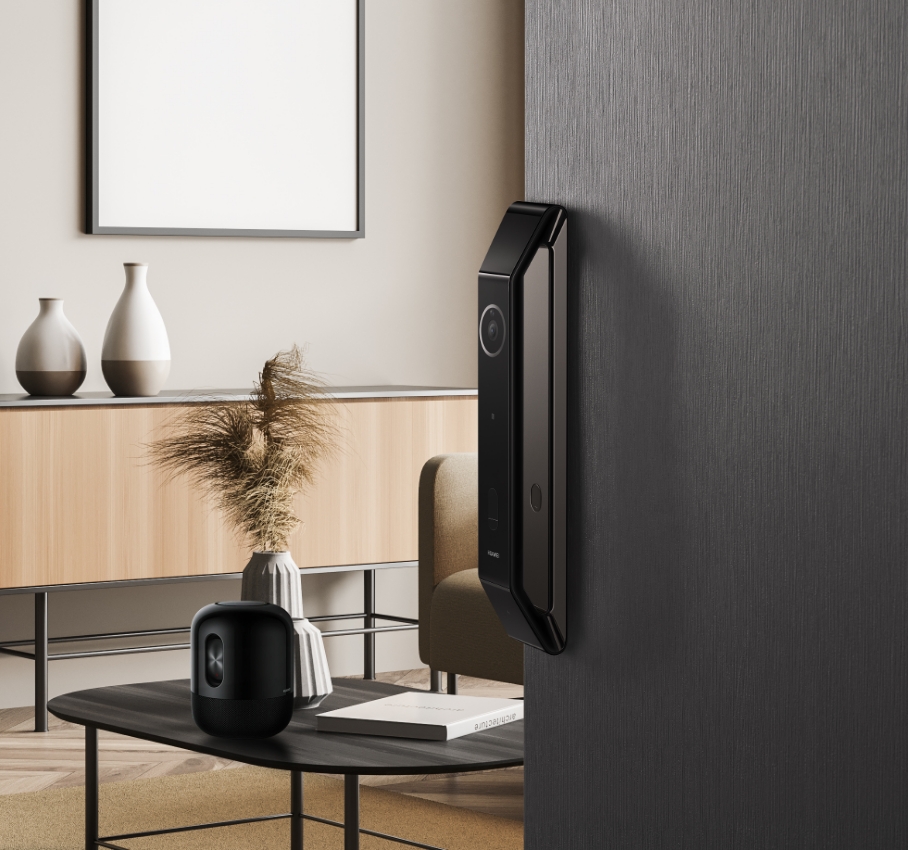
Huawei’s homegrown Harmony OS ecosystem has been further extended by the unveiling of the Huawei Smart Door Lock Pro. The new smart door lock runs on Harmony OS which provides more security features for the device. The Smart Door Lock Pro is capable of 3D facial recognition and its AI architecture ensures self-learning that improves facial recognition over time.Huawei Smart Door Lock Pro

The Smart Door Lock Pro unlocks the door within a couple of seconds of assessing the person at the door. According to Huawei, there is only a very small probability that it will unlock the door for someone who ought not to gain access. This probability is put at about 1 in 1 million. The Harmony OS helps to integrate the Smart Door Lock Pro with other smart home devices providing for a connected experience within the home.Huawei Smart Door Lock Pro

The Huawei Smart Door Lock Pro has a P50 Pro camera that can identify objects within 150 degrees viewing angle. The device works for persons between 3.4 ft and 6.6 ft. It can also work in both bright and dark light situations. The Huawei Smart Door Lock Pro has a 3.97-inch display that enables the owner to view persons at the door in addition to the option of video notifications, connected mobile devices.Huawei Smart Door Lock Pro

Huawei Smart Door Lock Pro has several door unlocking options including automatic, fingerprint, smartphone or smartwatch, password, NFC card, and a physical key. The 8,800 mAh dual cell Lithium battery of the Smart Door Lock Pro offers up to 6 months of daily use of the device. The Huawei Smart Door Lock Pro is listed on vmall but pricing and availability details are yet to be released by Huawei. We expect the device to first berth in China before other markets will get it subsequently.

RELATED: 


Apex Legends Mobile pre-registration open, 2022 global launch confirmed

Last month, the popular PC and console battle royale title Apex legends was launched for mobile devices in select regions. Now, the game has been made available for pre-registration globally on Google Play Store.

Apex Legends Mobile

EA and Respawn Entertainment have confirmed that the game will be available globally in 2022. The game remains mostly similar to its PC/console counterpart however, it has been built from scratch for mobile devices and therefore has some changes in gameplay like a shift from first person to third-person perspective by default.

If you are interested in the game, you can head over to Apex Legends Mobile’s page on the Google Play Store and tap the pre-register button to become one of the first players to have access to the game when it officially releases globally.

Respawn has also revealed the system requirements to play Apex Legends Mobile. While the game is still in development, it is being optimized to run on various different devices. But, the game will not run on iOS devices that have less than 2GB of RAM and Android devices with less than 3GB of RAM.

Although, certain 2GB RAM models will be supported for a few brands like Vivo, Oppo, Huawei, Motorola, Samsung, Lenovo, and Xiaomi.

For those unaware, Apex Legends Mobile offers a gameplay that is identical to its PC counterpart, similar to PUBG and PUBG Mobile. So, players team up with two other players and dive into the map with a zone that shortens overtime. Unlike PUBG, the battle royal has just 60 players in total over 100 people in PUBG. Furthermore, its mechanics encourages firefights to help boost your armor, to add more diversity over luck-based looting. Another major aspect is its different characters that arrive with different active and passives abilities as well.


RELATED:


Realme GT Neo 3 features flagship Sony IMX766 sensor with OIS -Exec confirms

Realme is set to launch the Realme GT Neo 3 officially in China on March 22nd, 2 days away from today. And like all major launches in 2022, the company is also following the “drip and feed” trend of releasing the features of the device each day before launch to build up for the anticipated “probably industry-changing” device of the year. 

realme-gt-neo-3-design

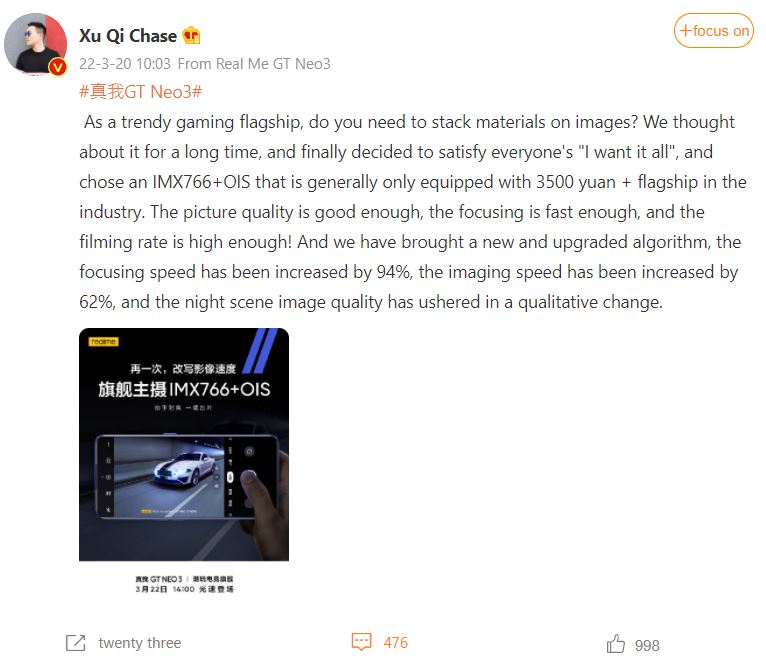
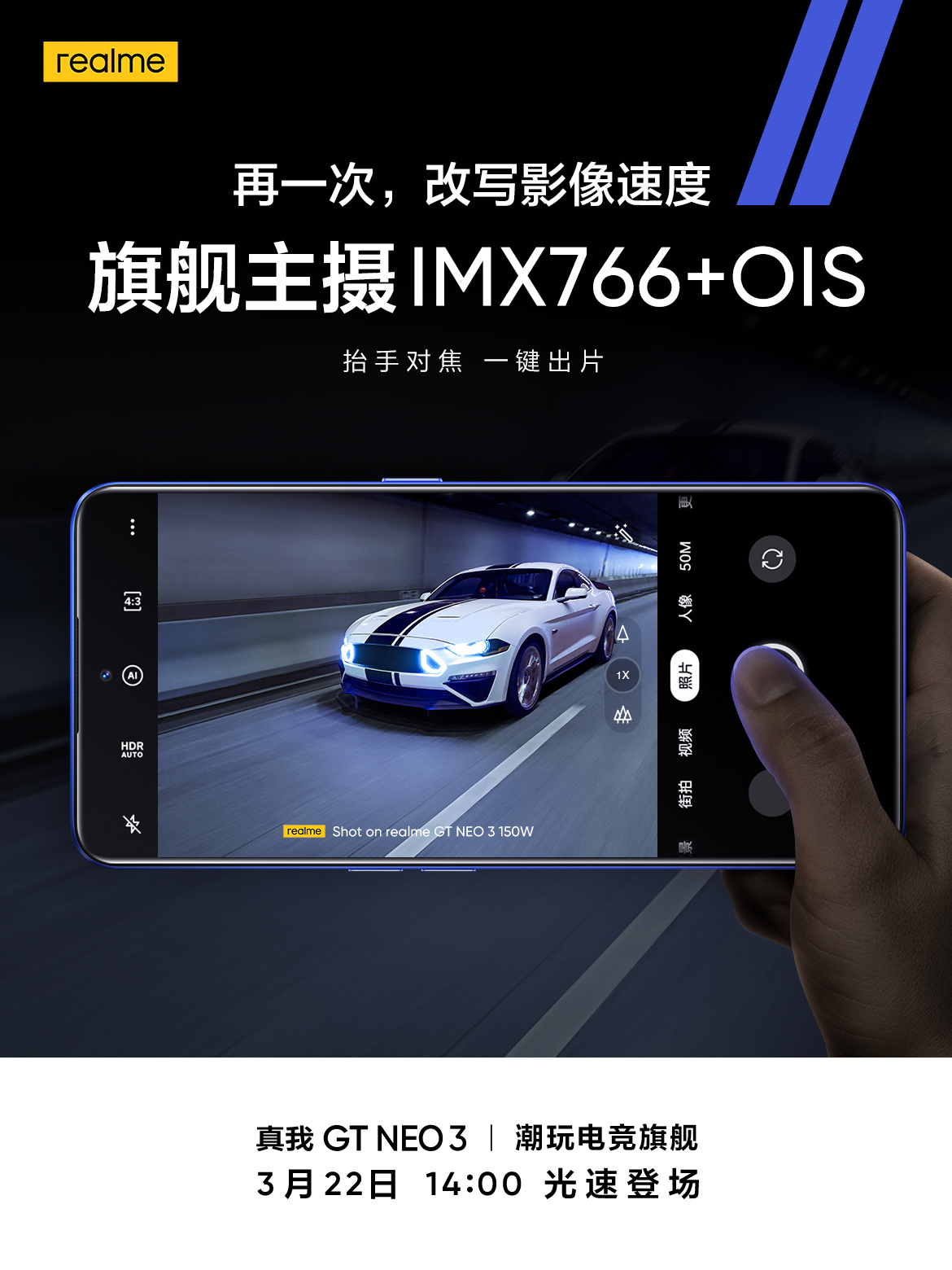
In its latest teaser announcement on Weibo, Chase Xu, Senior Executive at Realme, reveals the jaw-dropping camera highlight of the Realme GT Neo 3. The Realme GT Neo 3 will sport a flagship Sony IMX766 50MP sensor with OIS! 

Chase-Xu-Realme-GT-Neo3-sony-imx766
Source: Chase Xu on Weibo

For context, the Sony IMX766 sensor is mostly used on flagships like the Xiaomi 12 series, vivo X70 series, Oppo Find X3 and Find X5 series. 

However, equipping only flagship hardware won’t magically give the phone extraordinary photographing abilities. That’s why Chase also mentioned that Realme has developed a brand new advanced imaging algorithm for the Realme GT Neo 3 that focuses 94% faster than its predecessor, the Realme GT Neo2 and allows for shutter speeds that are also 62% faster. The executive also exclaims that the device will sport better a night mode, to make it an all-scene photographing device no matter day or night.

Realme-gt-neo-3-sony-imx766
Realme GT Neo3 equipped with flagship photography

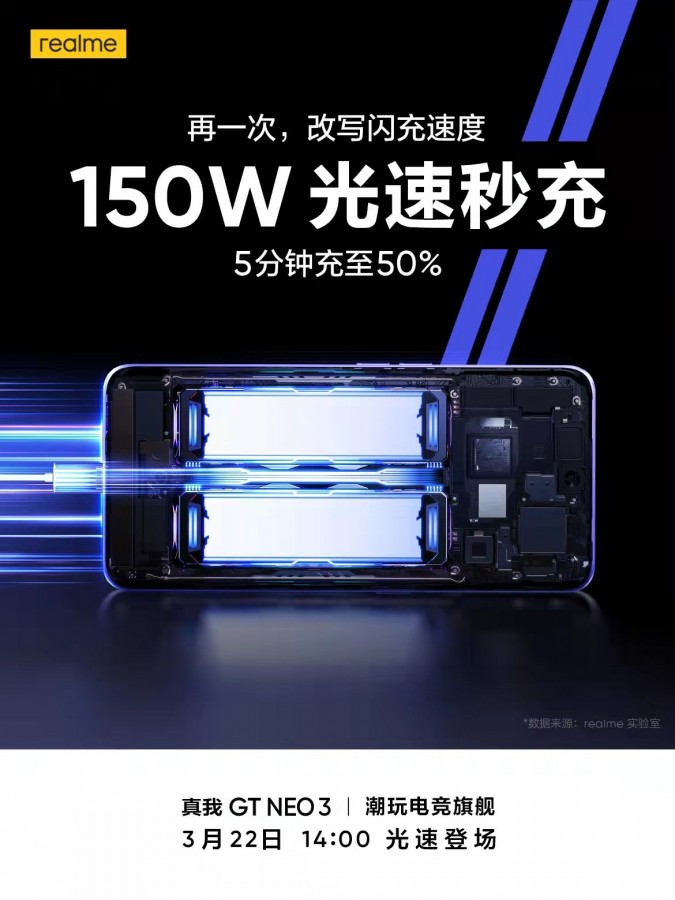
Despite being an upper mid-range offering from Realme, the Realme GT Neo 3 pulls no punches compared to its flagship siblings. Besides its camera, the Realme GT Neo 3 was also revealed to be the first-ever smartphone in the industry to be equipped with 150W wired charging for consumers. Realme claims that the new charging technology allows for the device to charge from 0% to 50% within 5 minutes

Realme GT Neo3

Another highlight of the Realme GT Neo 3 includes its MediaTek Dimensity 8100 processor in which early benchmarks reveal that the chip’s performance also surpasses that of Qualcomm’s highest-end chip, the Snapdragon 8 Gen 1. And of course, screen quality is also a highlight for the device as it boasts a 120Hz flat AMOLED display with a staggering 94.2% screen to body ratio, and a 1000Hz touch sampling rate for smooth performance on the go.


RELATED:

(Source, Via)

Qualcomm chips dominate in Android devices above $300, MediaTek chips widely available in smartphones under $299

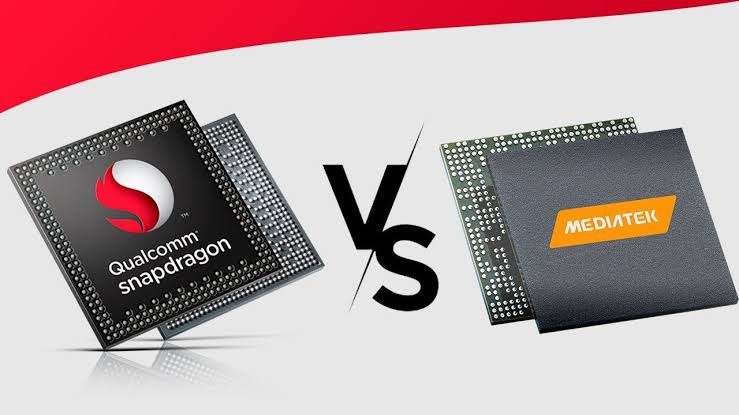
Earlier it was announced that MediaTek had already led the Android smartphone SoC market in 2021 with a 46% share, exceeding its rival Qualcomm, which had a 35% share in the market in 2021. One might think this spell the end of Qualcomm’s dominance in the Android smartphone space. 

Qualcomm-vs-mediatek

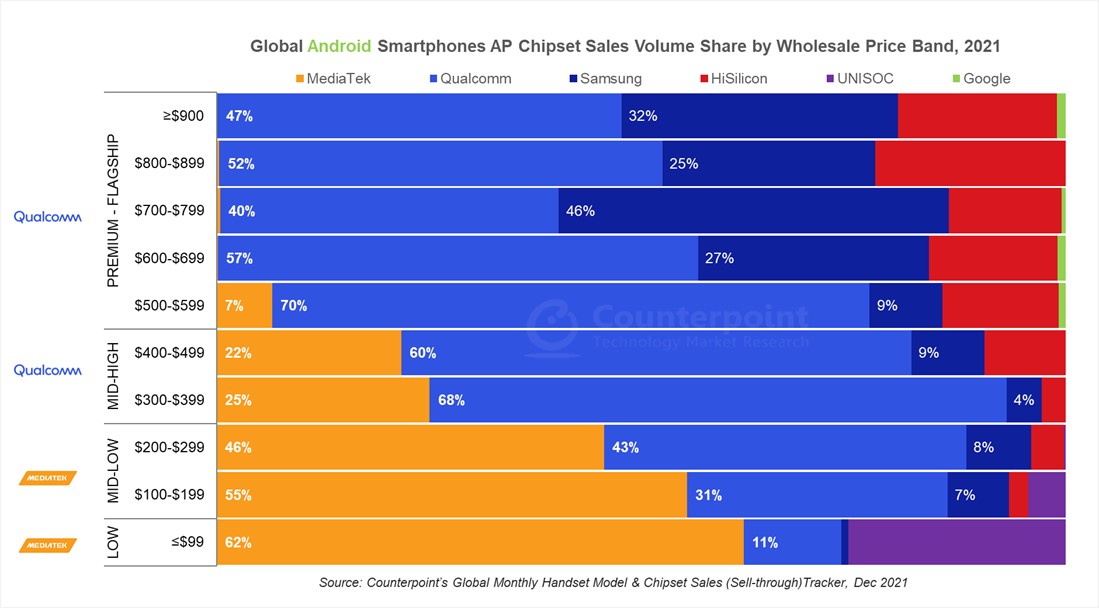
However, a follow-up report to the research has been published by Counterpoint Research. The report details the price brackets where Qualcomm, MediaTek, Exynos, HiSilicon and UNISOC are leading in the race for the Android chip supplier with the largest market share.

AP-Chipset-Share-for-Android-Smartphones-by-Price-Band-in-2021
Android Chipset 2021 Market Share by Price Bracket

A closer examination of the report reveals that most of the market share growth for MediaTek in 2021 came from the low-mid tier wholesale price segment (sub-$299), driven by strong demand for the Dimensity 700, 800 and Helio series chipsets. Qualcomm on the other hand dominated the mid-range and premium flagship market with around 50% market share across all price brackets above $300, except for the $700-$799 price bracket, in which Samsung had a lead with 46% market share in the bracket.

But the question remains, why has Qualcomm shifted away from the low-end markets and how did MediaTek manage to win the low-end market after Qualcomm’s gradual exit?

Qualcomm Logo

The report mentions that the reason behind these changes of trends in the market is because of the global chip shortage. With Qualcomm unable to secure its chip supply from both TSMC and Samsung, the company instead prioritized focus on ramping up supply for its 700 and 800 series Snapdragon chipsets, driving higher revenue and profitability. 

However, with Qualcomm not providing much value-to-money in its 400 and 600 series Snapdragon chipsets in 2021, phone manufacturers decided to switch over to its competitor, MediaTek instead for their lower-end budget devices. MediaTek managed to put out capable and affordable 5G chipsets to the market in 2021 with their Dimensity 700 to 1200 series, which could provide performance on par and sometimes exceed competing processors in the same price bracket. And with the reveal of its Dimensity 8000 and 9000 series chipsets in 2022, it is expected that MediaTek could take the stake of the higher-end premium Android market as well in this coming year.

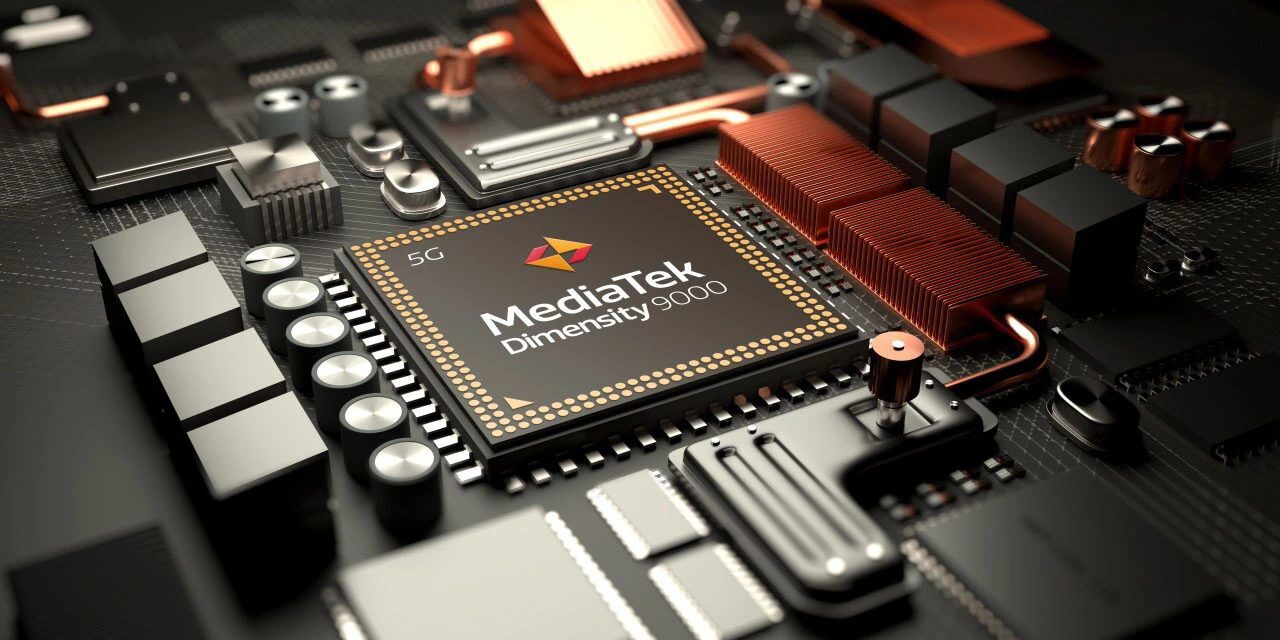
MediaTeK Dimensity 9000

The report also shares some details about Samsung’s Exynos, Huawei’s HiSilicon Kirin and UNISOC chipsets in the industry in 2021. Besides the Samsung Galaxy S21 series equipped with Exynos, most of Samsung’s A, M and F series of smartphones were not equipped with Exynos. In the low-mid segment ($100-$299), its share decreased from 17% to 7%, and in the mid-high segment, its share decreased from 13% in 2020 to 6% in 2021.

UNISOC showed exciting growth in 2021 in smartphones priced less than $200. In 2020, UNISOC chipsets only catered to phones priced under $100. However, in 2021, realme, Motorola and Samsung have launched phones with the Tiger series SoC, citing better performance in the chipsets compared to its similarly priced competitors in the market.

Huawei HiSilicon Logo Featured A

Last but not least, HiSilicon’s SoCs had a 16% share in phones costing $500 and above in 2021, which was a decline from the 30% share in the previous year, due to the US trade ban. It is running on the inventory it added before the ban. By the end of 2022, HiSilicon’s market share is expected to continue to drop as its inventory gets depleted. Huawei has already started using Qualcomm SoCs in its new launches, but they are limited to 4G.

RELATED:

DJI could release a new drone during its March 21 launch event

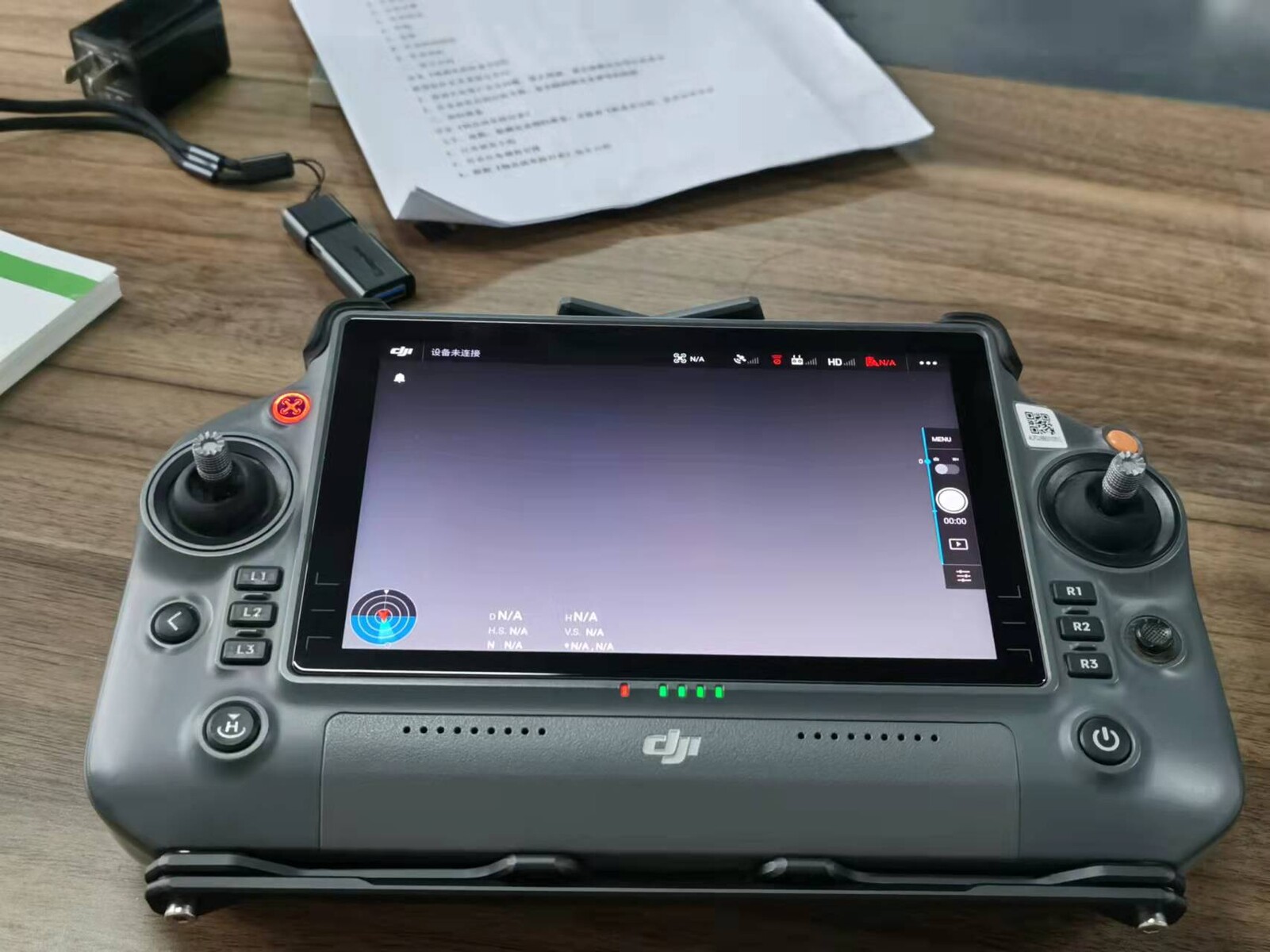
Chinese drone maker DJI has announced a March 21 event that could see the launch of its latest drones. The official confirmation for the event comes from the drone maker and it will launch several consumer products during next week’s event. The DJI Mini 3 series which DJI has earlier hinted on, will likely be unveiled next week.


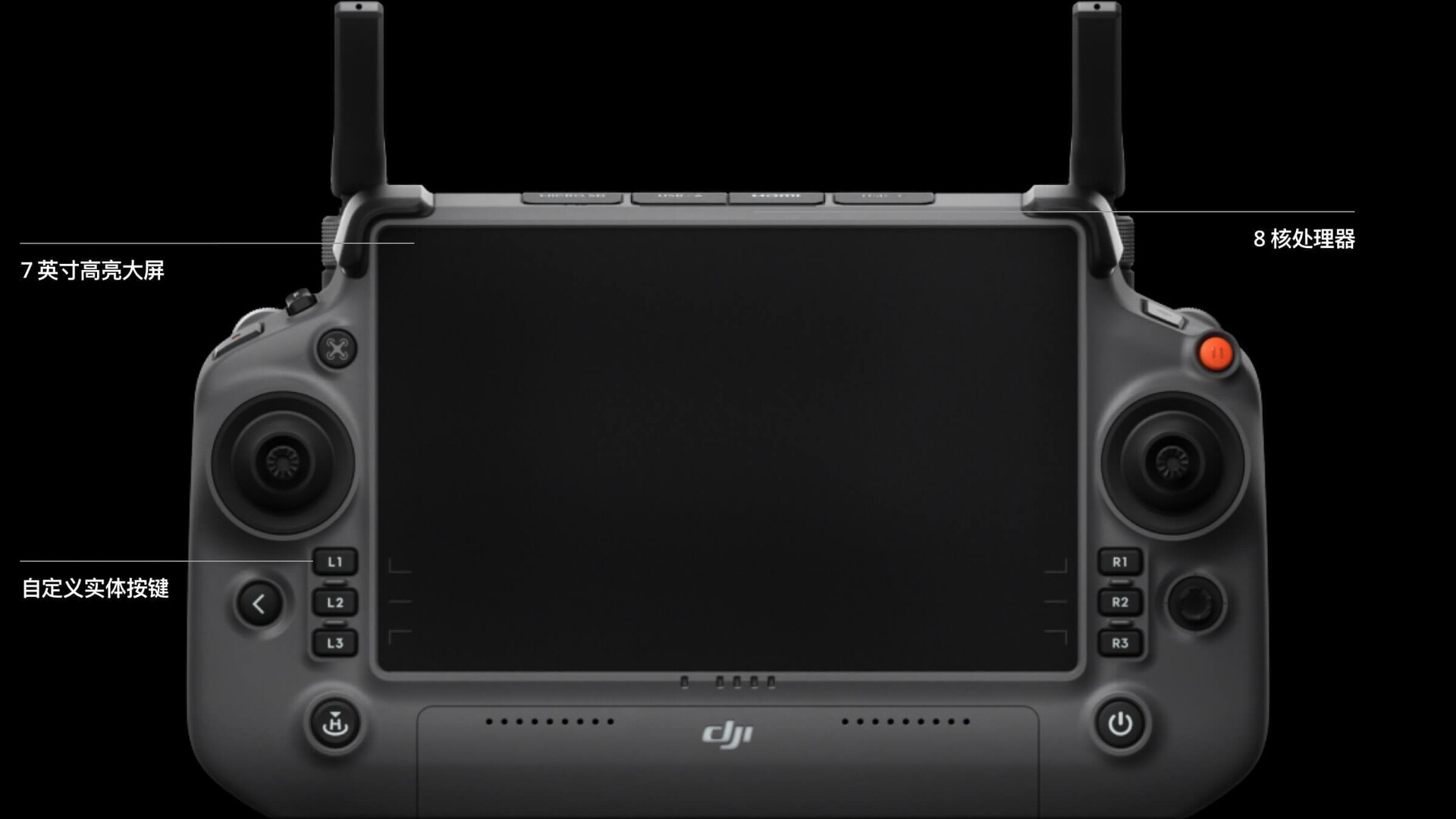
But a tipster @DealsDrone hints that the DJI Mavic 3 enterprise version could be released during the launch event next week. Back in November, DJI announced the Mavic 3 Cine with a raft of added features for the Mavic 3 Cine. Both models offered improvements from their predecessors, but it is unclear what features the Mavic 3 Enterprise will have that trumps the previous models. Of course, the external outlook of the DJI Mavic 3 Enterprise differs from the Mavic 3, as seen from some leaked images that surfaced online. The DJI M30 drone could also be launched during the event next week. The M30 will be compatible with the RC Plus controller which provides an integrated display and other features.


DJI has been in the spotlight in the international space due to the ongoing Russia-Ukraine war. Both sides have been deploying DJI drones in pursuing their war efforts, with Ukraine calling for action by DJI to shut out drones not registered inside Ukraine from flying within the country. As the hype builds up to next week’s launch event, we expect more details on the launch lineup to become available within the next 24 hours.

RELATED:


Xiaomi 12 Lite 5G tipped to launch soon in Europe, Asia

Xiaomi has recently launched the Xiaomi 12, Xiaomi 12X, and Xiaomi 12 Pro 5G-ready flagship phones in the global markets. The lineup is likely to soon receive a new mid-ranger called the Xiaomi 12 Lite 5G. According to a new report by Xiaomiui, the Xiaomi 12 Lite may launch soon in markets like Europe and Asia.

The report claims that the internal testing of the Xiaomi 12 Lite 5G has begun in European and Asian markets. The software versions such as V13.0.7.SLIMIXM and V13.0.0.24.SLIEUXM are associated with the said device. It was previously reported that the Xiaomi phone with 2203129G, which was spotted at the IMEI database, will be launching as the Xiaomi 12 Lite 5G. Its shortened model number is L9, and it carries ‘taoyao’ codename.

Xiaomi 12 Lite Concept Render
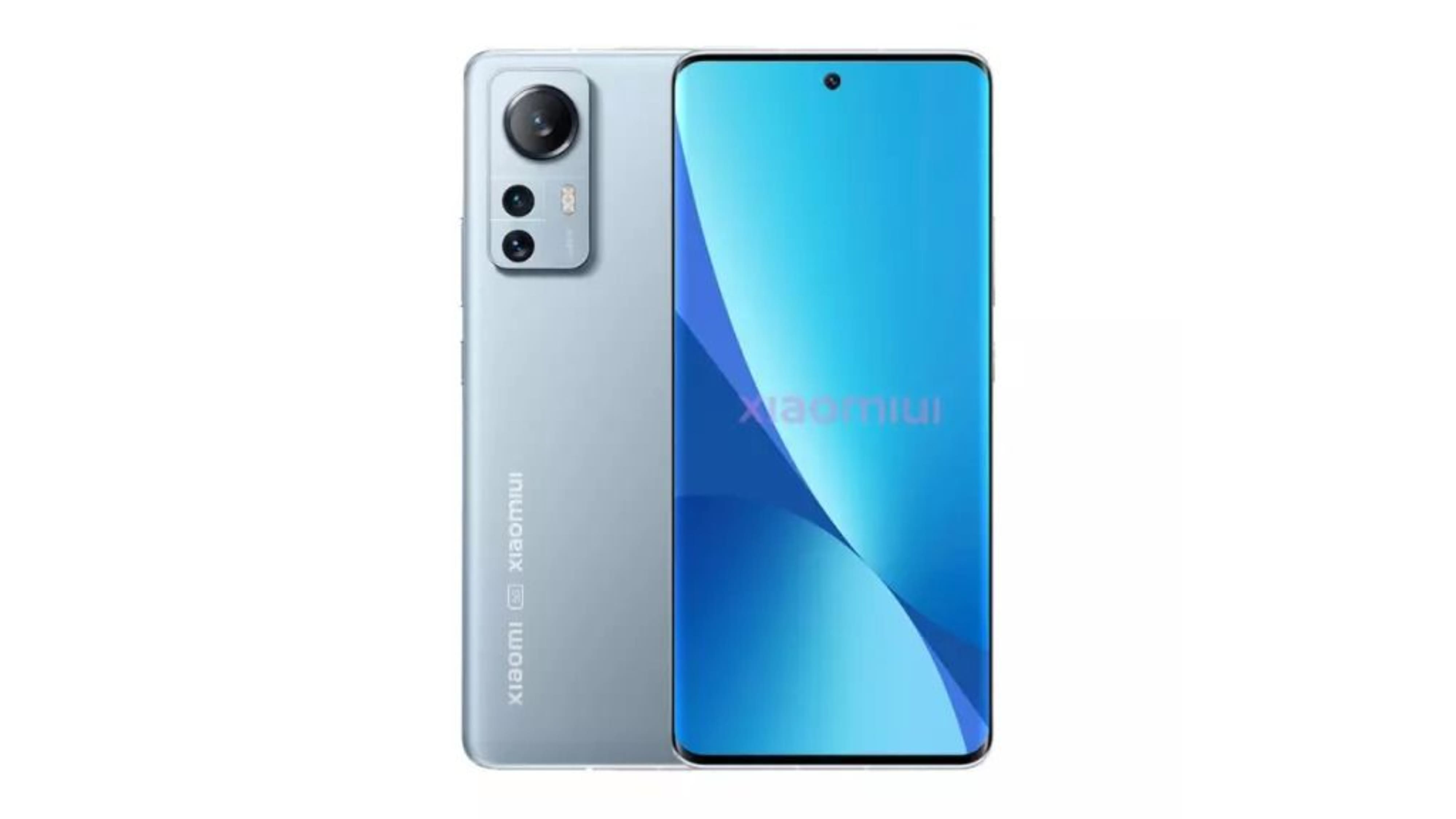
Xiaomi 12 Lite concept render by Xiaomiui

Xiaomi 12 Lite 5G specifications (rumored)

The Xiaomi 12 Lite is expected to borrow specs from the China-exclusive Xiaomi CIVI handset and the Xiaomi 12. It is expected to arrive with a 6.55-inch AMOLED curved edge display that offers a Ful HD+ resolution and a 120Hz refresh rate. The screen will also offer other features like an in-screen fingerprint scanner and Always-On Display (AOD).

The Snapdragon 778G Plus chipset is likely to power the Xiaomi 12 Lite 5G. The rear side of the phone will feature a 64-megapixel Samsung ISOCELL GW3 primary camera, an ultrawide lens, and a macro snapper.

The Xiaomi 12 Lite 5G will come preinstalled with Android 12 OS with MIUI 13 on top. The other specs of the device are under wraps. The device will be arriving as a successor for last year’s Xiaomi 11 Lite 5G.

RELATED:

Honor Magic4 Lite specifications, renders, and pricing leaked

Honor unveiled the Magic4 series of flagship phones at the recently held Mobile World Congress (MWC) 2022 tech trade show. Fresh information reveals that apart from the Magic4, Magic4 Pro, and Magic4 Ultimate Edition, the lineup also includes a mid-range phone called the Honor Magic4 Lite. A new report by Appuals has revealed the renders, specifications, and pricing of the Magic4 Lite.

Honor Magic4 Lite specifications (rumored)

The Honor Magic4 Lite 5G is expected to house a.6.81-inch TFT LCD panel that offers a Full HD+ resolution of 1080 x 2388 pixels, a 120Hz refresh rate, and a 483ppi pixel density. For selfies, it may feature a 16-megapixel camera, which will be capable of shooting up to 60fps videos. As can be seen in the leaked renders, the Magic4 Lite has a punch-hole screen with a noticeable chin.

The glossy rear shell of the Magic4 Lite is likely to house a 48-megapixel primary camera, a 2-megapixel macro camera, a 2-megapixel depth lens, and an LED flash housed inside a round-shaped camera module. The device will come preinstalled with the Android 11 OS, which is overlaid with Magic UI 6.

The Magic4 Lite packs a 4,800mAh battery that supports 40W fast charging over USB-C. It will not have support for wireless charging. For security, it has a side-mounted fingerprint scanner.

The Snapdragon 695 mobile platform will be powering the Magic4 Lite. The handset will be equipped with 6 GB of RAM and 128 GB of storage. The device is expected to arrive with other features such as IPX2 rating for protection against minor splashes, a single speaker, 5G, dual SIM, Wi-Fi 802.11ac, NFC, and GPS. It will lack a microSD card slot.

Honor Magic4 Lite pricing (rumored)

The Honor Magic4 Lite is likely to be priced at 299 euros. As shown in the above renders, it may come in black, blue, and silver colors. It is unclear whether the device will be announced at Honor’s upcoming event on March 29.

RELATED:

Moto G 5G (2022) CAD renders emerge, key specs tipped

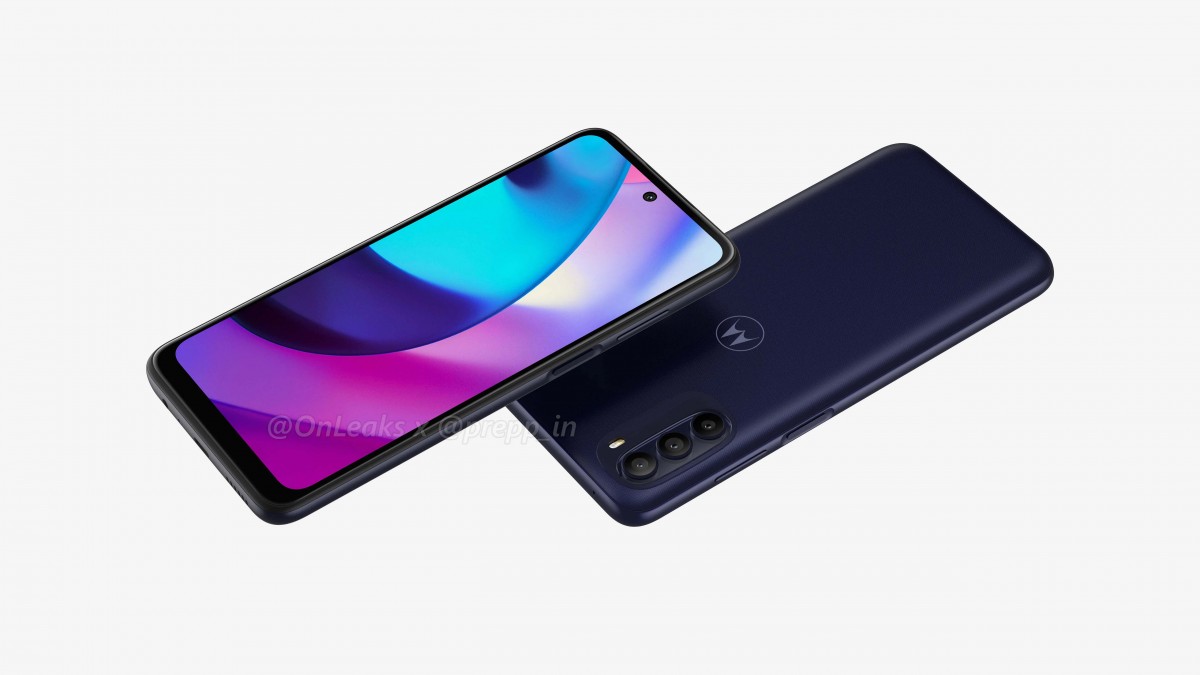
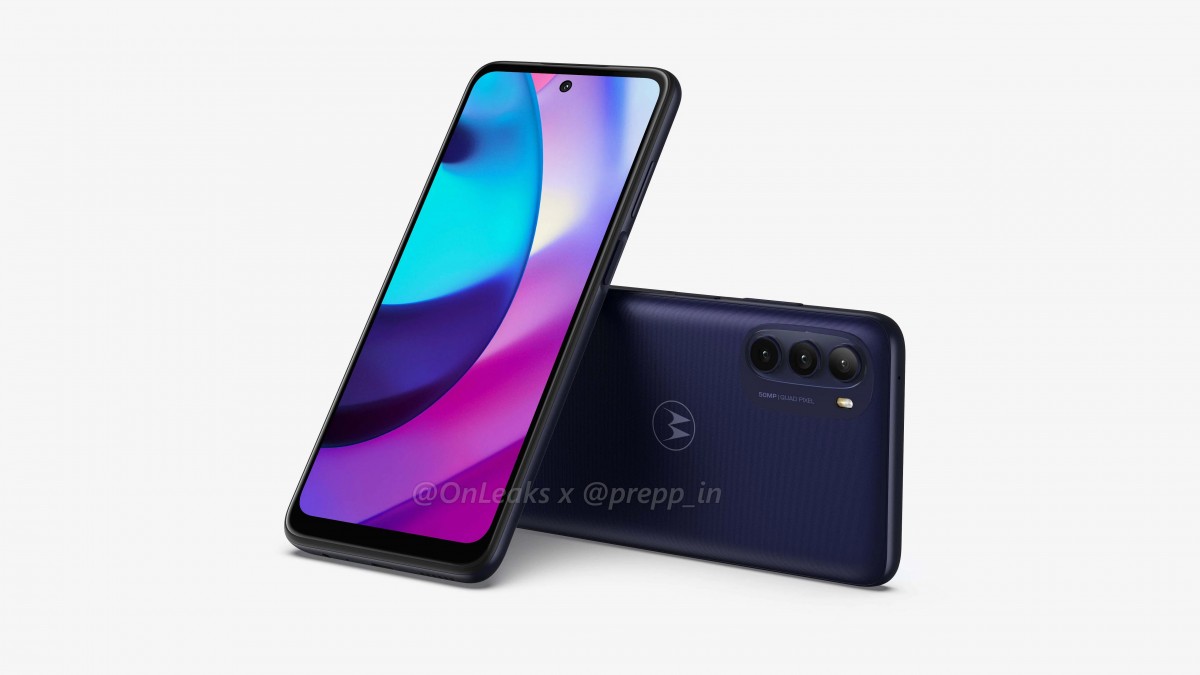
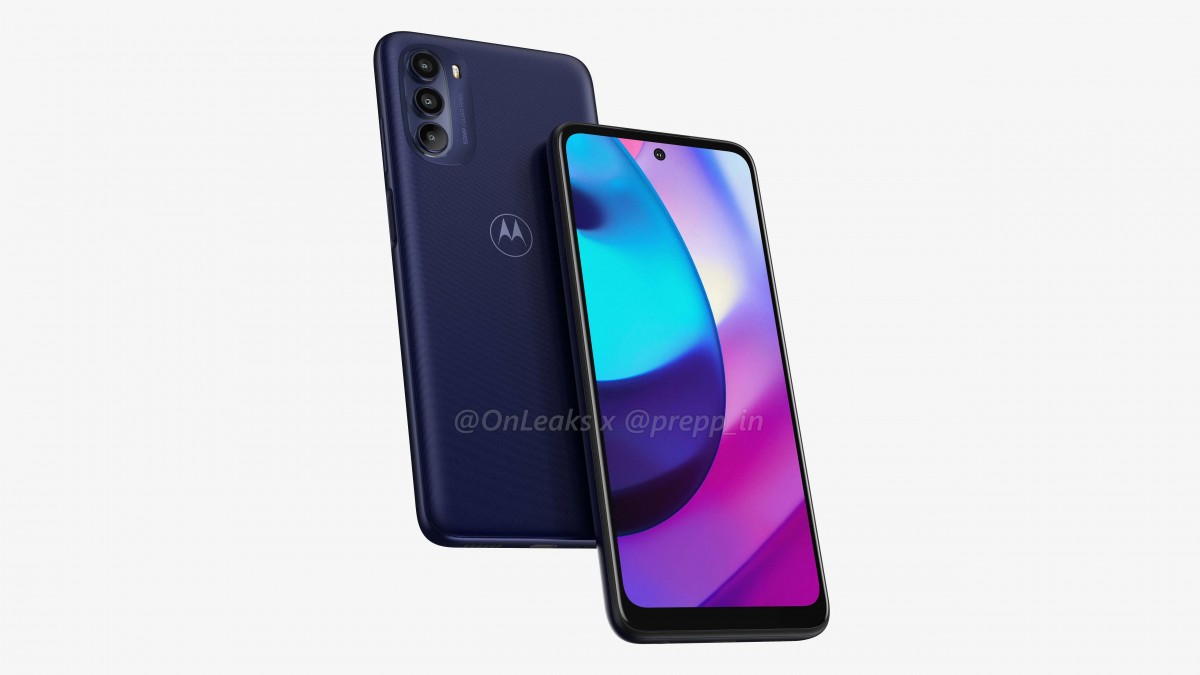
CAD renders of the upcoming Motorola Moto G 5G (2022) have been released by reliable tipster Steve Hemmerstoffer in collaboration with Prepp.in. Recent reports have revealed that Motorola is working on a new mid-range phone codenamed “Austin.” The new leak reveals that the Austin phone will be debuting on the market as the Moto G 5G (2022). As the moniker suggests, it will be replacing the Snapdragon 750G powered Moto G 5G from last year.
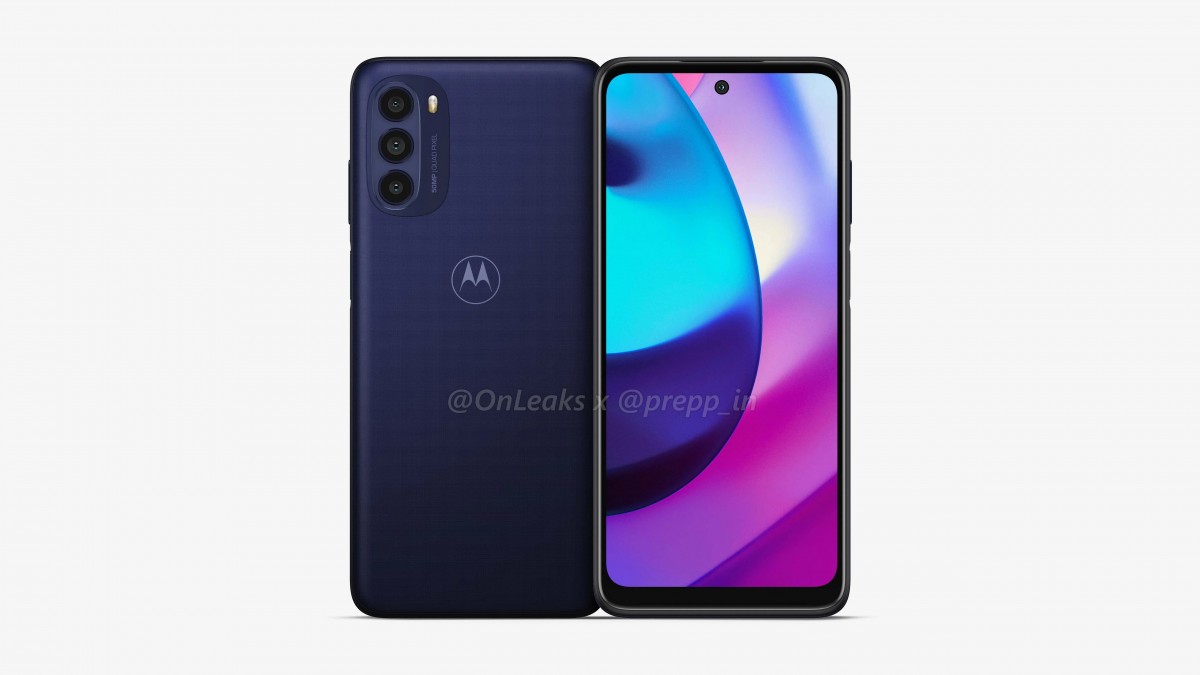
The leak reveals that the XT2213 model number belongs to the upcoming Moto G 5G (2022). It mentions that the device measures 165.4 x 75.8 x 9.3mm and features a 6.6-inch display.

Coming to the renders, the Moto G 5G (2022) can be seen sporting a punch-hole display with a thick chin. The rear side of the phone features a 50-megapixel triple camera unit and the company’s logo. A microphone is available on the top edge, whereas its right side features a volume rocker and a power key, which is integrated with a fingerprint scanner. The Moto G 5G (2022)’s bottom edge has a 3.5mm headphone jack, a microphone, a USB-C port, and a speaker grille. A SIM slot is available on the left side of the phone.

Moto G 5G (2022) specifications (rumored)

Nils Ahrensmeier has seemingly revealed a few specifications of the Moto G 5G (2022). The 6.6-inch display of the device will support an HD+ resolution. It will be powered by a MediaTek chip and come with 4 GB of RAM.

The rear side of the phone may feature a 50-megapixel (S5KN1SQ03) primary camera, a 2-megapixel macro snapper, and a 2-megapixel depth helper (GC02M1). For selfies, it may come equipped with a 13-megapixel (Hi-1336) front-facing camera. The other details of the phone are under wraps.

RELATED:

LG Velvet gets the promised Android 12 update in Korea

LG doomed its smartphone business last year and is currently focusing on other tech segments in the market. However, the company seems to still offer OS upgrades to some of its old smartphones. The LG Velvet that was released back in 2020 is now getting the latest Android 12 OS update.

It is worth noting that the LG Velvet was originally launched with the Android 10 OS out of the box. Now that it is getting the latest Android 12 OS, it seems to bring a lot of new features to the device. Reportedly, the models in Korea are getting the new update, and the update appears to be for the Velvet 5G.

LG Velvet Black

If you are an LG Velvet owner, you should have received the update notification. If not, you can update it by heading to Settings > Software update.

The Velvet smartphone was one of LG’s premium phones in the market. The smartphone received the Android 11 update last year in February, and the Android 12 update has timely appeared on the device. It appears that LG, despite quitting the phone line, has maintained its software update promise, at least for the premium phones like Velvets in the home market.

However, this could be the last update for the LG Velvet, since it’s rare to see any LG phone getting a third OS update, especially now.

RELATED: