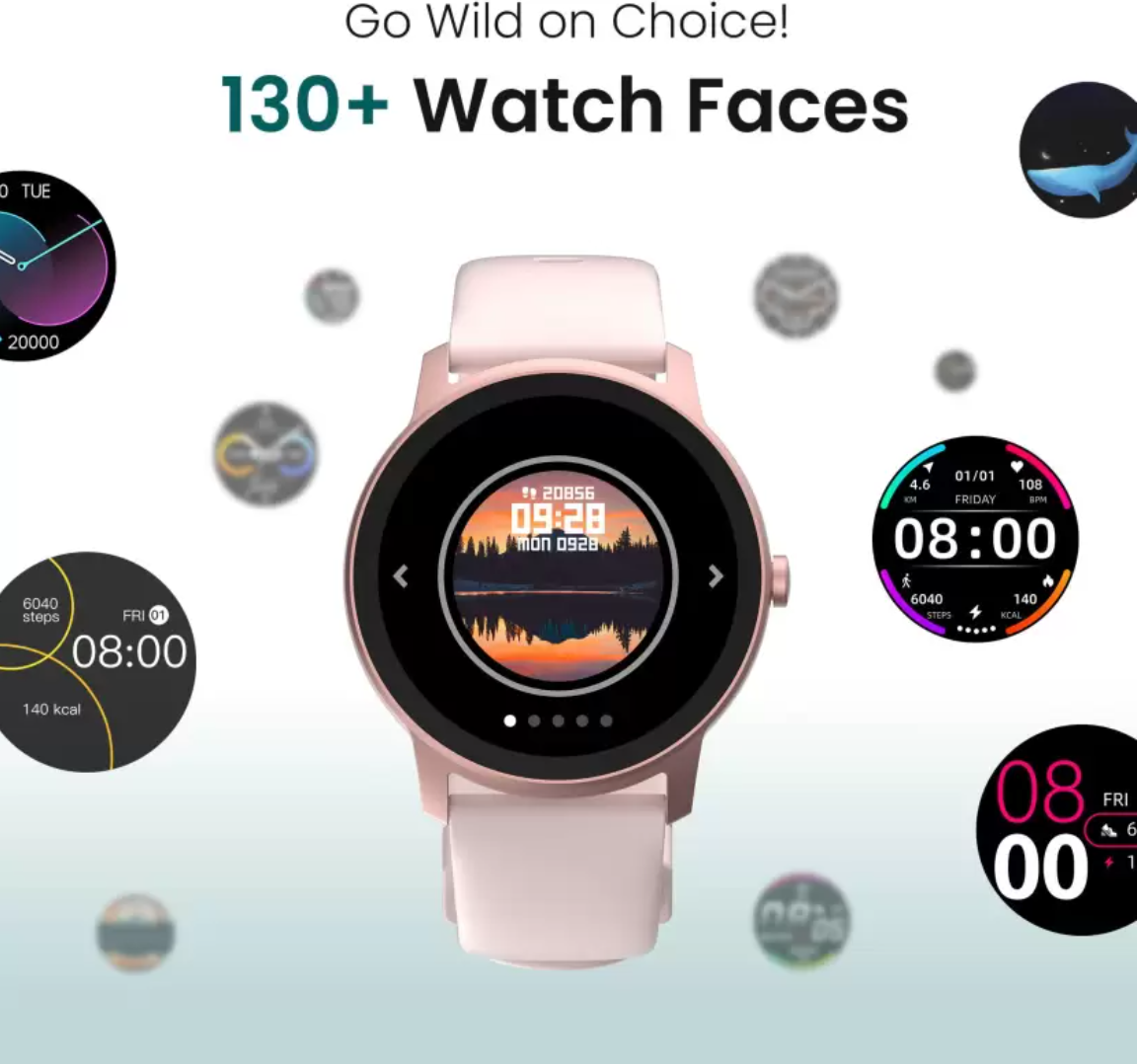
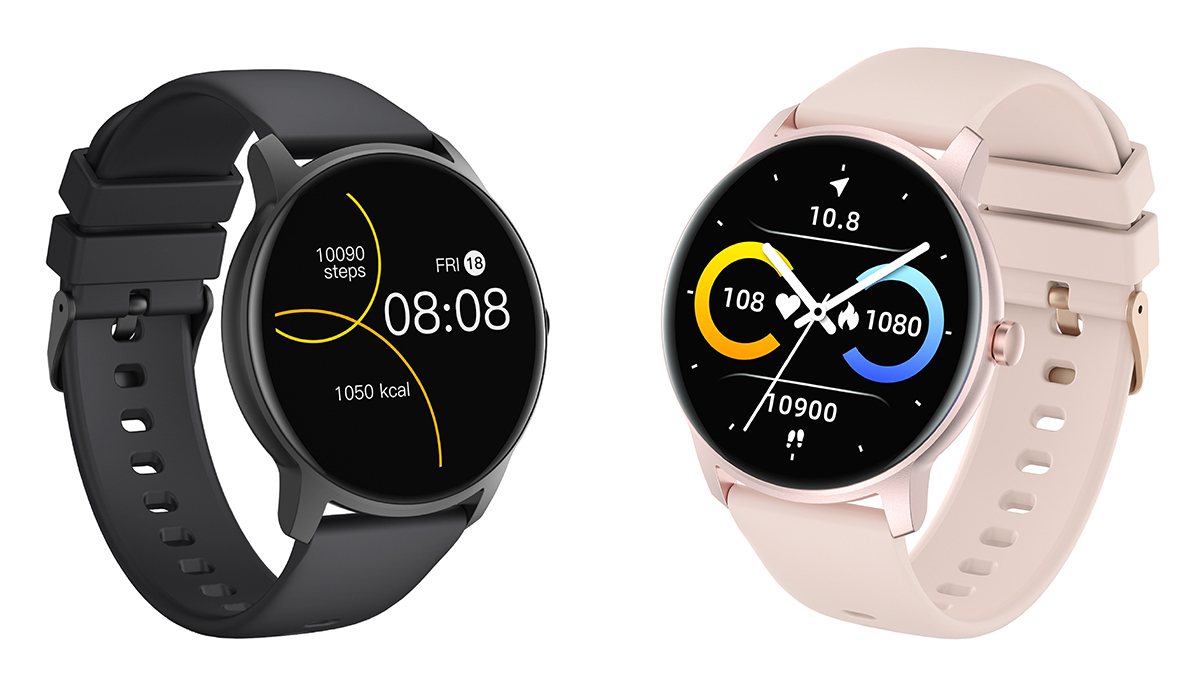
The FitShot Surge smartwatch has been added to the fast-expanding lineup of smartwatches produced by Ambrane. The Ambrane FitShot Surge is priced at an affordable Rs. 1,999 ($26) in India. The Ambrane FitShot Surge comes with some impressive features including a 2.5D OGS curved 1.28-inch display, over 75 watch faces, IP68 water resistance, and a raft of health and fitness monitoring sensors.
The FitShot Surge has a rust-proof body, a circular display, features heart rate monitoring, blood oxygen monitoring, blood pressure, sleep, and stress monitoring. The device can track your sleep and fitness activity all day and it is also capable of remotely controlling your smartphone camera. The Ambrane FitShot Surge has a battery life of about 7 days on a single charge and fair usage.
The Ambrane FitShot Surge smartwatch in India is available in two color variants namely rose pink and Jade black. It has a sturdy body and adjustable straps which guarantees a comfortable use of the smartwatch even for extended periods.
Ambrane FitShot Surge smartwatch
1 of 4
Ambrane FitShot Surge smartwatch
The Ambrane FitShot Surge smartwatch comes with a 1-year warranty and is available in India via Flipkart. Ambrane says it will continue to deliver high-octane user experiences with its smartwatches which strike a chord with customer demands and expectations.
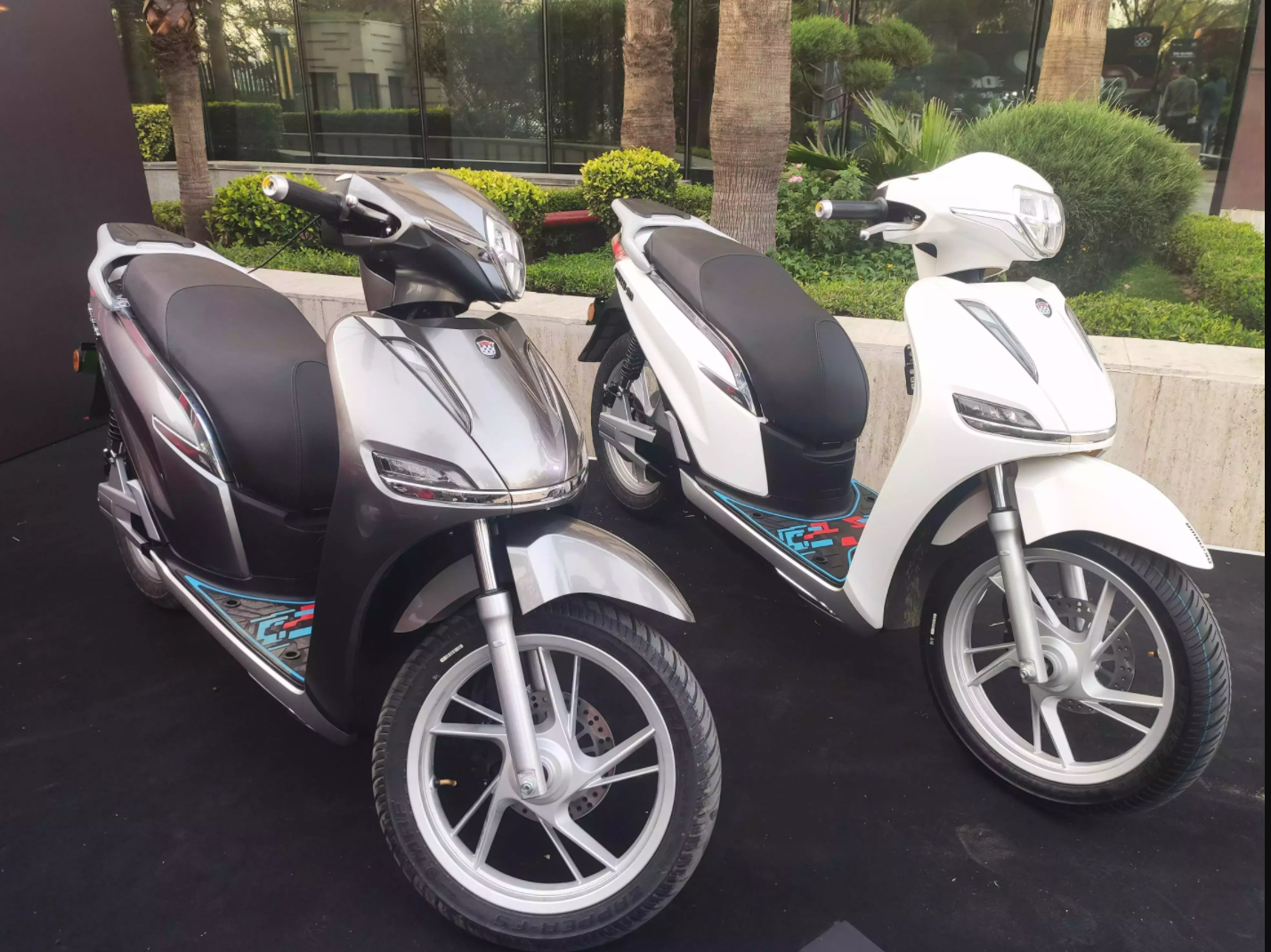
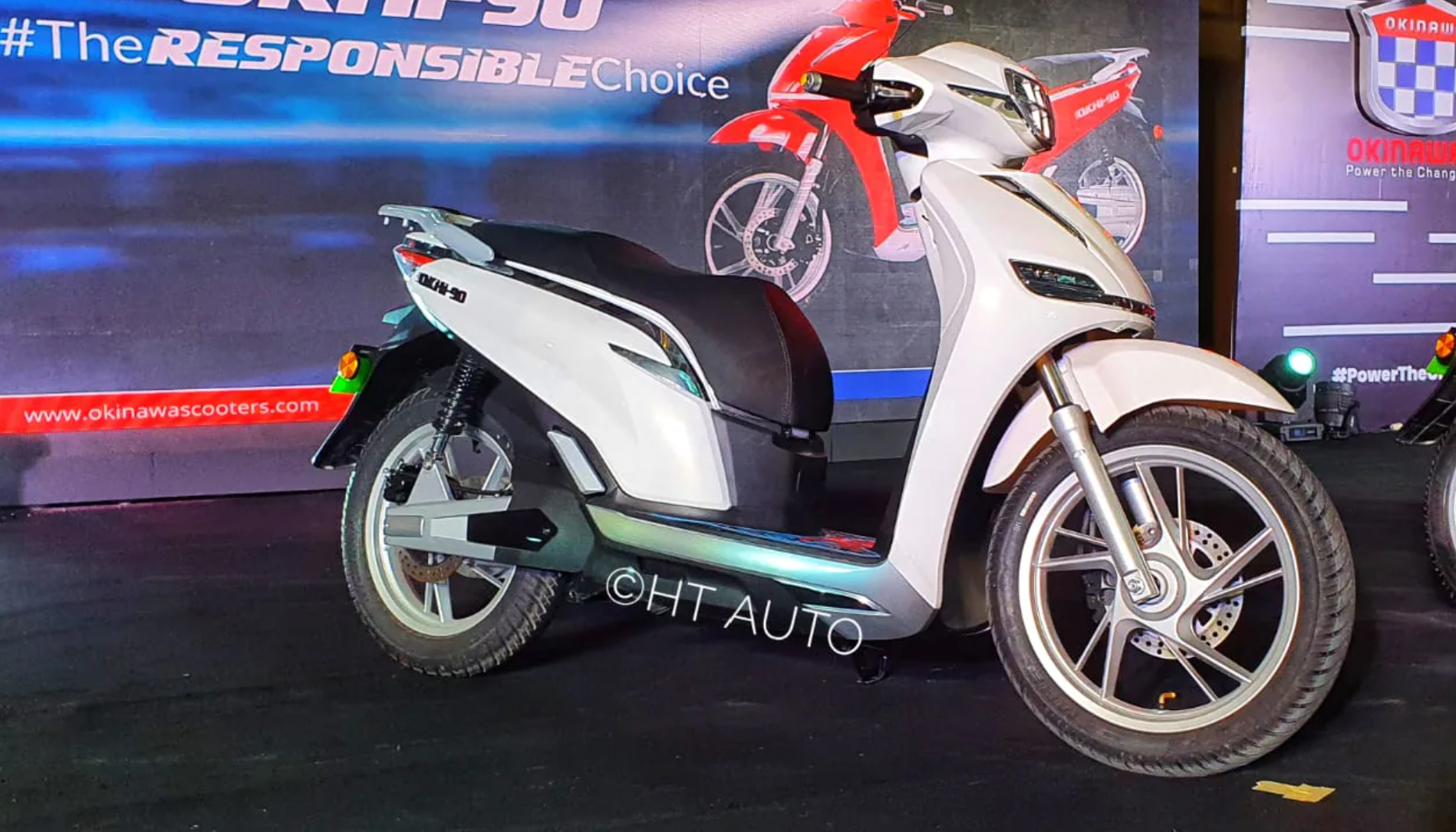
Indian electric scooter manufacturer Okinawa has finally unveiled its latest electric scooter for the domestic market. The product dubbed Okinawa Okhi 90 e-scooter comes with a price tag of ₹1.22 lakh (~$1600). The Okhi-90 has been a long time coming and has featured in leaks and teasers for a long time. There were speculations that the e-scooter will come with a range of 200km but in reality, Okinawa says the Okhi 90 has a maximum range of 160km which is still impressive.
The Okinawa Okhi-90 features a compact front cushion and a pair of 16-inch tires. front cushion. It also comes with a curvy front apron with LED DRLs and turn signals, a chrome trim, an LED headlamp with chrome trim. Other design features include aluminum levers, chrome rearview glass, a wide step-up seat, chrome trim for the side panels, LED taillight, and a grab rail integrated with the frame.
Powering the Okhi-90 is a 3.6 kWh removable battery pack that powers an electric motor with a peak power of 5 bhp. As a result of this powerful setup, the Okhi 90 is capable of hitting a top speed of 90 km/h in 10 seconds. The e-scooter offers a riding range of 160 km per charge in Sports mode.
And as for charging, the Okhi-90 can be charged from zero to 80 per cent in one hour but fully charging that battery takes around four hours.
Okinawa Okhi-90 comes with an LED screen as standard but buyers get the option of a colored digital instrument cluster. The instrument cluster shows essential riding parameters such as battery voltage information, speed, range traveled, etc. The e-scooter also comes with key-less remote, regenerative braking system, boot light, USB port, automatic key locking system, parking mode, Eco and Sports riding modes, and side-stand sensor with start inhibitor.
There is a smart app called Okinawa Connect app which gives users access to several features and functions right from the scooter. This gives access to features such as geo-fencing, vehicle location, and navigation, trip history, speeding alerts, SOS alert, curfew alert, ride diagnostics, and several others.
Earlier today, Realme unveiled the Realme C31 budget smartphone in Indonesia, featuring a UNISOC SoC, a 6.5-inch display, and a big battery. Now, tipster Yogesh Brar has tipped the Indian launch date of the smartphone along with the spec sheet of the Indian variant.
According to Brar, the smartphone will launch in India on March 31. The official specs, design, and features of the smartphone have already been revealed earlier at the Indonesian launch event.
Realme C31 Specifications
The Realme C31 sports a 6.5-inch LCD display with an HD+ resolution. It is a water-drop notch panel with a 120Hz touch sampling rate. Realme claims that the screen has 16.7 million colors and has an aspect ratio of 88.7%. The phone has a triple camera system at the rear with a 13MP main lens, a macro sensor, and a B&W sensor. It has a 5MP selfie camera on the front.
It is powered by the UNISOC T612 processor, which is based on the 12nm process. The device comes with 3GB/4GB of LPDDR4X RAM and 32GB/64GB of internal UFS 2.2 storage. It has a microSD card slot for additional storage of up to 1TB. It packs a 5,000mAh battery with support for 10W fast charging technology.
The phone has a side-mounted fingerprint scanner for security and boots on Realme UI R Edition based on Android 11 OS. The 4G smartphone has dual-SIM support, Bluetooth 5.0, and Wi-Fi 2.4Ghz + 5GHz support. It has a USB Type-C port and a 3.5mm headphone jack at the bottom.
The device has debuted in Indonesia at a starting price of IDR 1,599,000(~$111) for the 3GB RAM + 32GB storage variant and it comes in two color variants namely Dark Green and Light Silver.
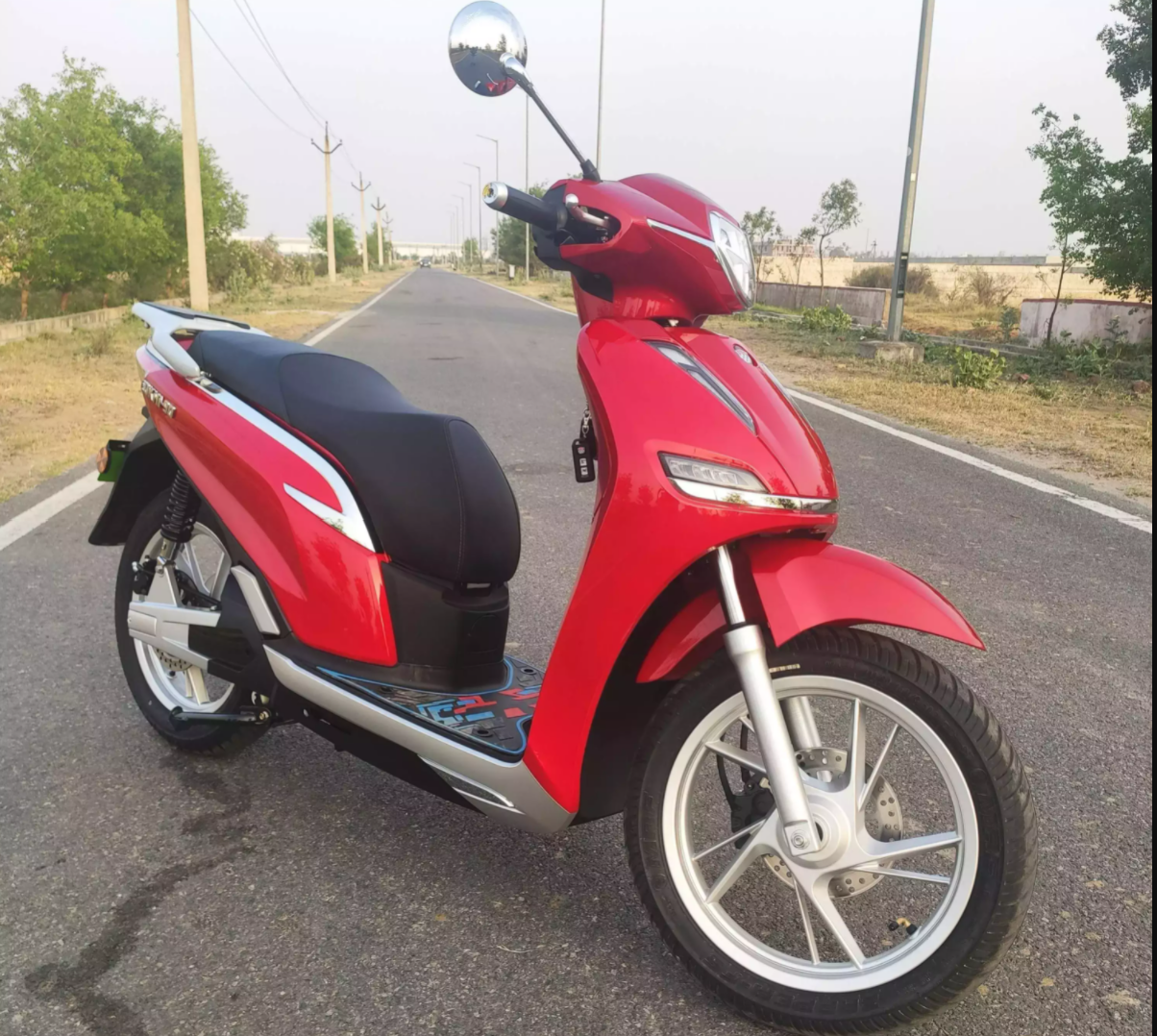
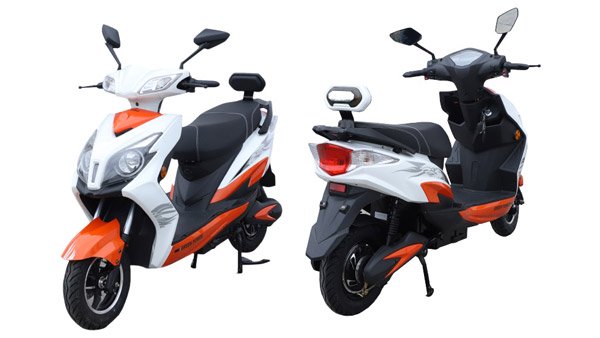
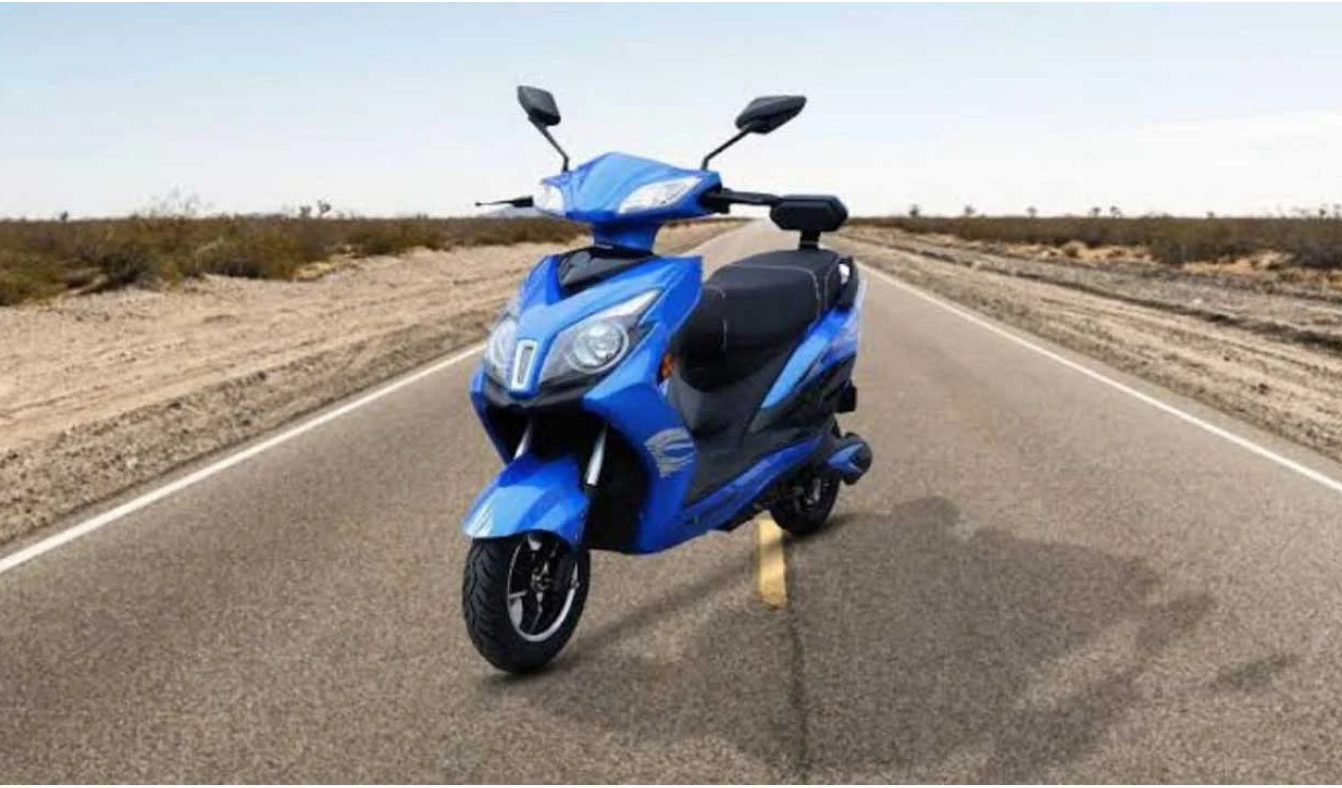
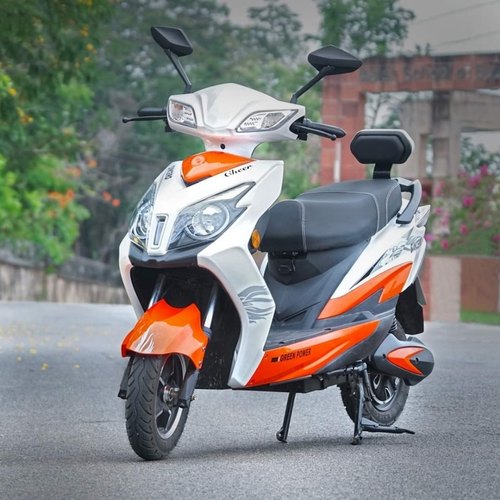
The latest electric scooter offering by Crayon Motors in India is the 2022 Crayon Envy e-scooter. It is a premium, low-speed, and budget electric two-wheeler that is priced at Rs. 64,000 (~$837). The current starting price of Rs. 64,000 ($837), according to the company, will vary according to region.
The latest e-scooter from the stable of Crayon Motors features keyless start, reverse assist, and large luggage space. The 2022 Crayon Envy e-scooter comes in four color variants namely black, white, silver and blue. Some of its additional features include geo-tagging, central lock, digital odometer, and mobile charging. The dual headlights of the Crayon Envy e-scooter provide a powerful lion-like presence in nighttime commutes.
The Crayon Envy has a top speed of 25km/h and as per local regulations, the rider does not require a license to operate the vehicle. It is suitable for short intra-city commutes and it has a 160km range for the topmost variant. The 2022 Crayon Envy e-scooter has a 250W electric motor that enables its top speed of 25km/h. The tubeless tires and disc brake system offer the needed control for the EV.
In the words of the company, the Crayon Envy e-scooters are eco-friendly and are developed in-house within India. There is a two-year warranty on its motor and controller and the e-scooter will be available in several retail outlets across the subcontinent. The Crayon Envy is designed and manufactured in the company’s Ghaziabad plant.
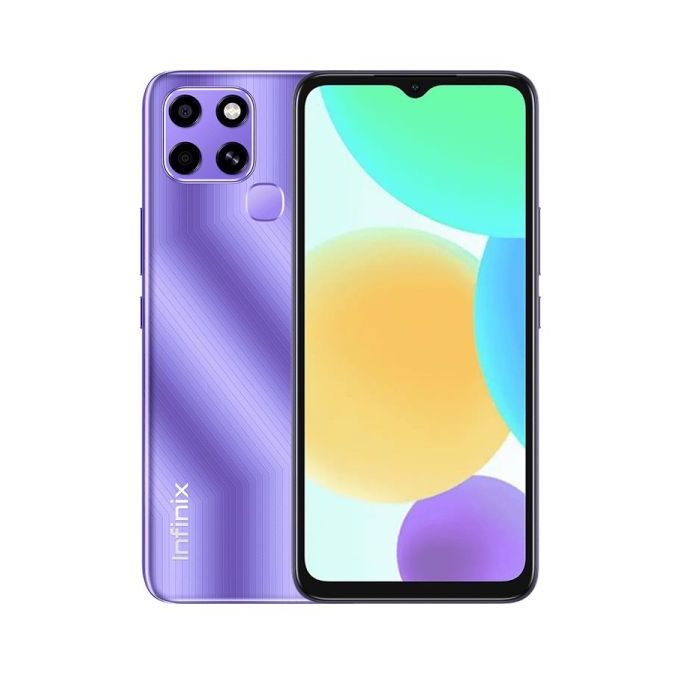
Infinix has officially launched a new smartphone in Nigeria, dubbed the Infinix Smart 6 Plus. The device has a similar design to the Smart 6, but has a different chipset, under the hood.
The Infinix Smart 6 Plus costs N60,990 (~$147), but it will be available for a limited time for N58,400 (~$144). It comes in Purple, Ocean Blue, Light Sea Green, and Polar Black shades. The phone can be purchased from authorized online and offline stores in the country.
Infinix Smart 6 Plus Specifications
The Infinix Smart 6 Plus sports a 6.6-inch water-drop notch display. It has a 20:9 aspect ratio and an HD+(720 x 1600 pixels) resolution. The phone’s notch holds a single 5MP camera for selfie shots. The device has a dual camera at the rear with an 8MP main lens and a QVGA sensor. The rear camera is capable of shooting 1080p videos at 30fps.
Powering the device is the MediaTek Helio A22 SoC, which clocks at 2GHz. It is coupled with 2GB of RAM and 32GB of internal storage. The phone has a microSD card slot with up to 128GB of expandable storage.
The device packs a 5,000mAh non-removable battery. It has a micro-USB port and a 3.5mm headphone jack. As for security, the device has a rear-mounted fingerprint scanner. The phone has dual-SIM support and has a DTS speaker setup. Lastly, the phone runs on Android 11 Go Edition.
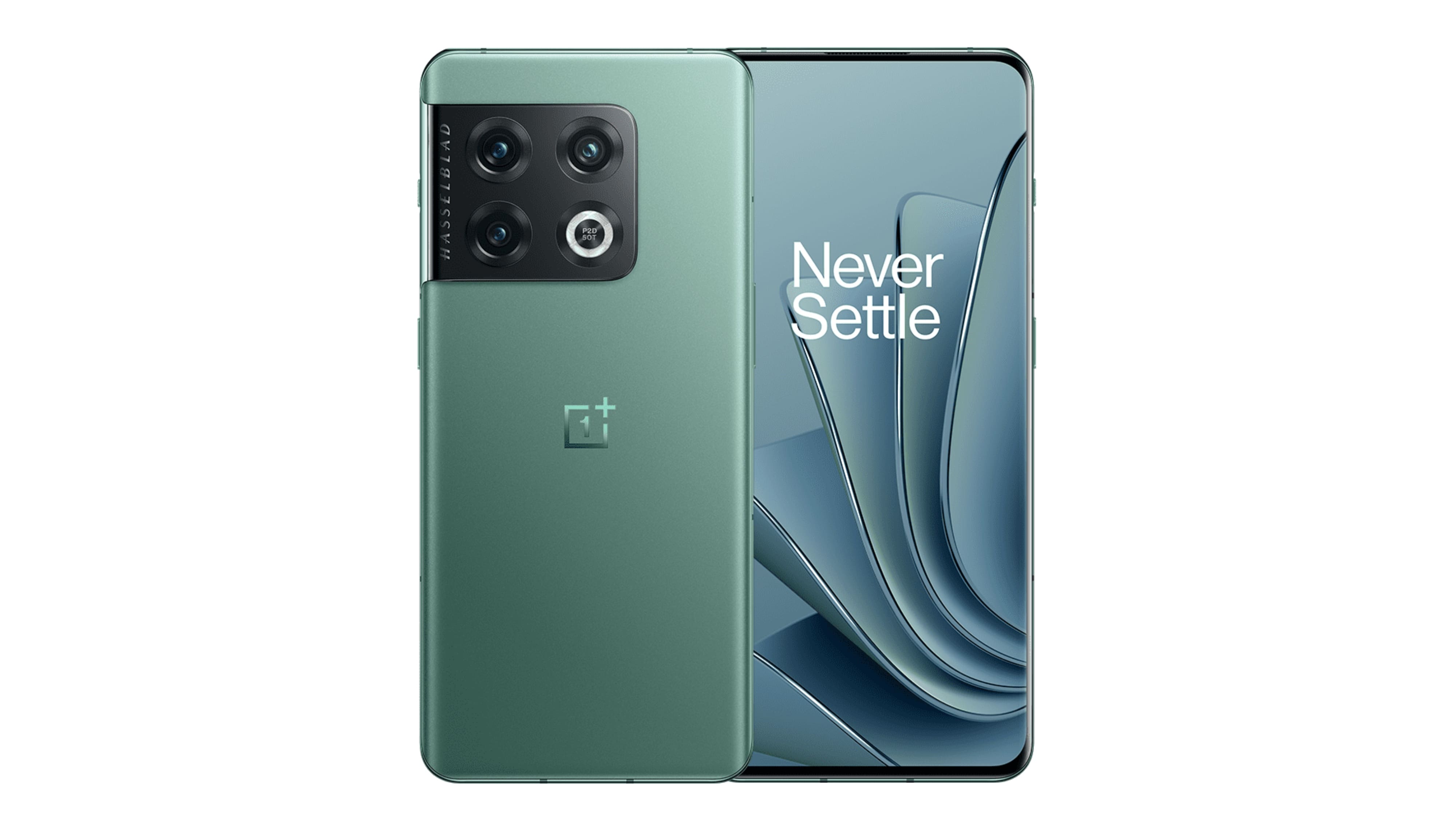
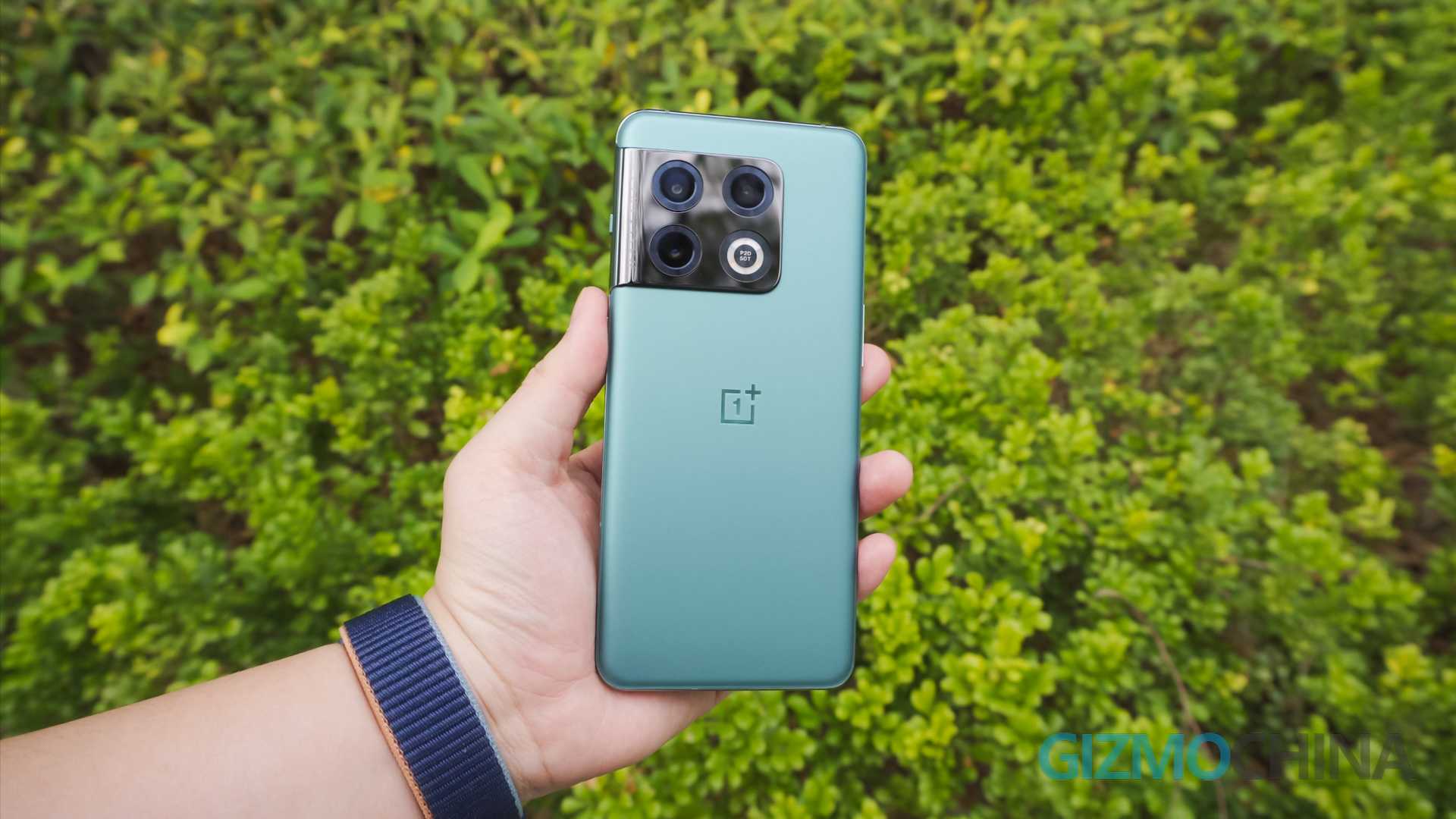
A few months back, OnePlus launched the OnePlus 10 Pro flagship smartphone in China with a refreshed design and the latest hardware. The device is now arriving in the Indian, European, and North American markets this month.
OnePlus has officially announced that the OnePlus 10 Pro will be launched on March 31 (7:30 PM IST) in the aforementioned markets. The flagship phone will be accompanied by the OnePlus Buds Pro in the new Radiant Silver color. Interestingly, the Indian region will also get the OnePlus Bullets Wireless Z2.
OnePlus 10 Pro Specifications
The OnePlus 10 Pro global model is expected to have the same specs as the Chinese model. The device comes with a new design sporting a 6.7-inch LTPO 2.0 AMOLED display with 2K resolution. It has a variable refresh rate from 1Hz to 120Hz. The screen has 1300 nits of peak brightness, Gorilla Glass Victus protection, and a 92.7% screen-to-body ratio.
The smartphone is powered by the Qualcomm Snapdragon 8 Gen 1 SoC, paired with LPDDR5 RAM and UFS 3.1 internal storage. It has an under-display fingerprint scanner for added security. The device has a triple camera system at the rear with a 48MP Sony IMX789 sensor with OIS support.
It has a 50MP Samsung ISOCELL J1 secondary lens, and lastly, an 8MP telephoto lens with OIS and 3.3x optical zoom support. This time around, the cameras on the flagship are co-tuned by Hasselblad. It packs a 5,000mAh battery and has 80W SuperVOOC wired fast charging and 50W AirVOOC wireless fast charging support. The phone boots on the Android 12 OS in China.
OnePlus Buds Pro and Bullets Wireless Z2 Features
The OnePlus Buds Pro has 11mm drivers and supports Bluetooth v5.1. It has Active Noise Cancellation support and packs a 37mAh battery. The TWS earbuds offer up to 7 hours of music playback without ANC and the charging case. With the charging case, it offers up to 38 hours of battery life with ANC disabled.
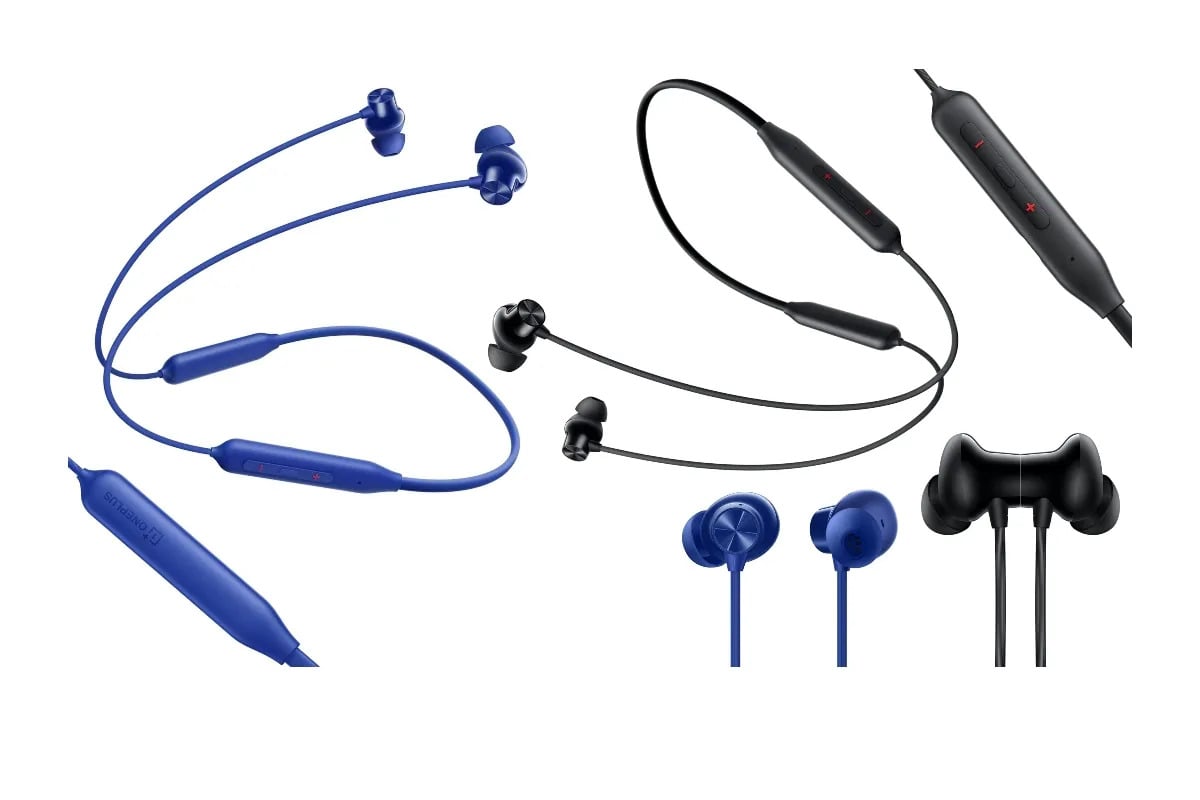
The OnePlus Bullets Wireless Z2 was leaked recently. The necback-style earbuds are tipped to come in Blue and Black colors. The earbuds will come with 12.4mm dynamic drivers and offer a battery life of up to 30 hours. It will have a fast charging support that will offer up to 20 hours of playback with just 10 minutes of charge.
Image Courtesy – PriceBaba
It will have Bluetooth v5.0 and an IP55 water and dust resistance rating. The earbuds are expected to come with magnetic controls.
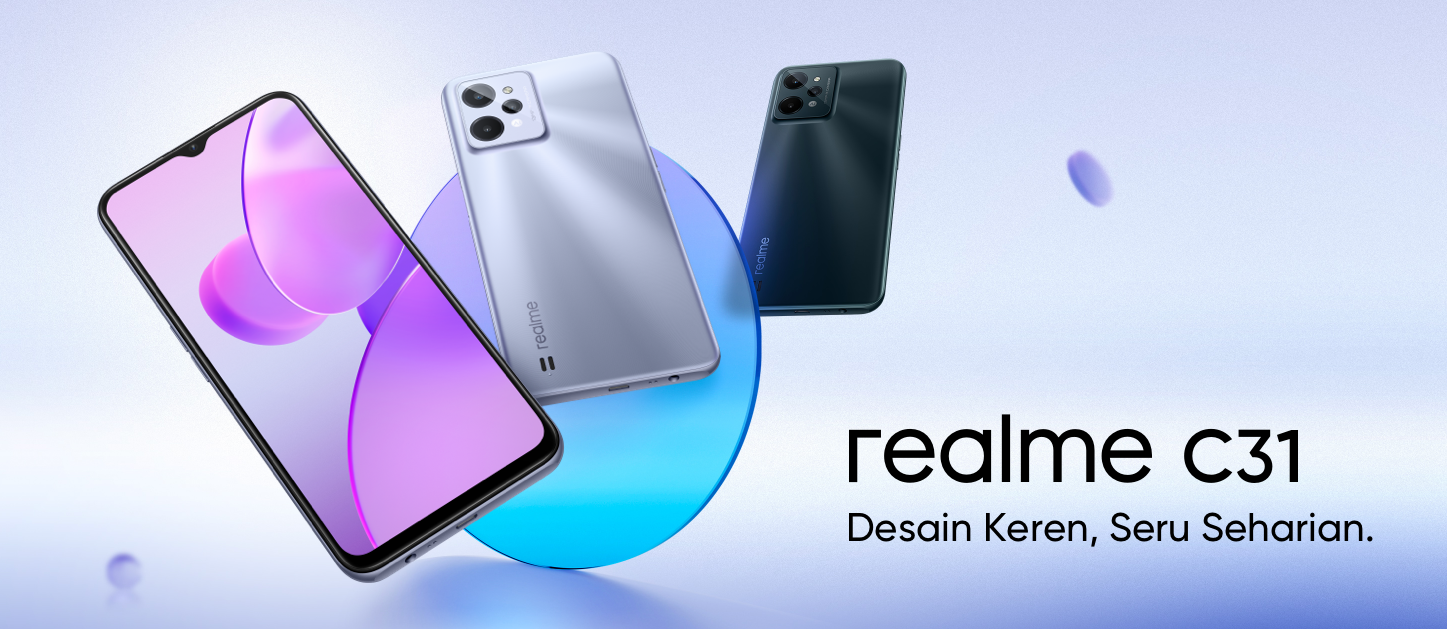
Realme has officially launched the Realme C31 budget smartphone in Indonesia. The smartphone comes with a new design as opposed to its predecessor and has a UNISOC SoC. Some of its highlights are a 6.5-inch display and a big battery.
The Realme C31 is priced at IDR 1,599,000(~$111) for the 3GB RAM + 32GB storage variant. The 4GB RAM + 64GB variant costs IDR 1,749,000(~$122). The phone comes in Dark Green and Light Silver colors.
Realme C31 Specifications
The Realme C31 sports a 6.5-inch LCD display with an HD+ resolution. It is a water-drop notch panel with a 120Hz touch sampling rate. Realme claims that the screen has 16.7 million colors and has an aspect ratio of 88.7%. The phone has a triple camera system at the rear with a 13MP main lens, a macro sensor, and a B&W sensor. It has a 5MP selfie camera on the front.
It is powered by the UNISOC T612 processor, which is based on the 12nm process. It packs a 5,000mAh battery with support for 10W fast charging technology. It has up to 4GB of LPDDR4X RAM and 64GB of UFS 2.2 internal storage. It has a microSD card slot for additional storage of up to 1TB.
The phone has a side-mounted fingerprint scanner for security and boots on Realme UI R Edition based on Android 11 OS. The 4G smartphone has dual-SIM support, Bluetooth 5.0, and Wi-Fi 2.4Ghz + 5GHz support. It has a USB Type-C port and a 3.5mm headphone jack at the bottom.
Last week, Redmi debuted the highly anticipated Redmi K50 and Redmi K50 Pro smartphones in China. The devices come with impressive spec sheets and feature new SoCs from MediaTek, so we at the Gizmochina team got our hands on these new devices as fast as we could to share with you our first impressions.
Redmi K50 and Redmi K50 Pro Unboxing:
Redmi K50 Pro full review:
The devices come with similar minimalist packaging to the previous generation and have the K50 and K50 Pro model names printed on the box. On the side, the box informs us of the charging capabilities and the screen resolution of the devices. Redmi’s fire-breathing dinosaur mascot Kino greets you when you open the box, and below it, we find the smartphones themselves. The box also includes USB type-C cables and a 67W charger for the K50 and a relatively bigger 120W charger for the K50 Pro.
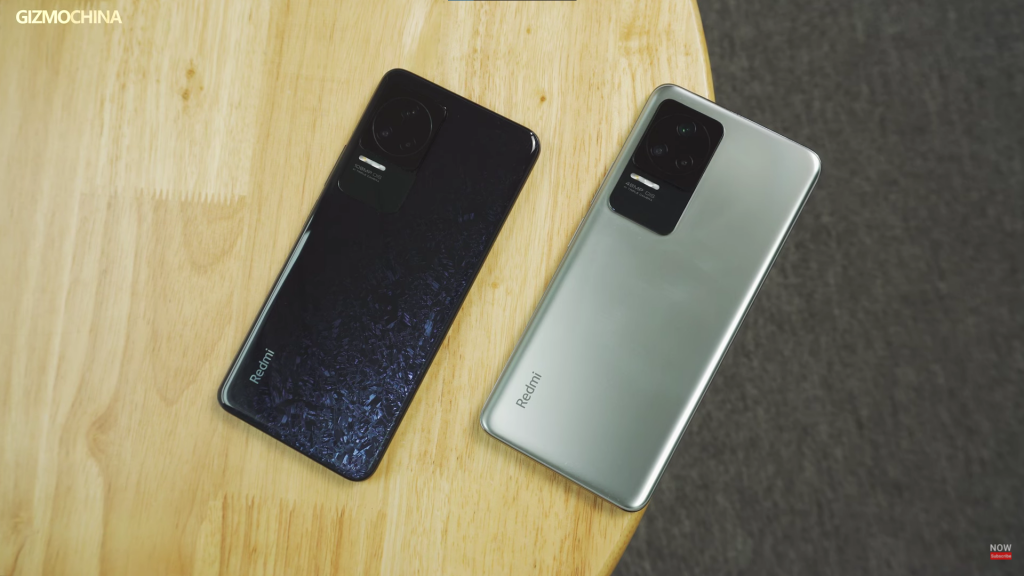
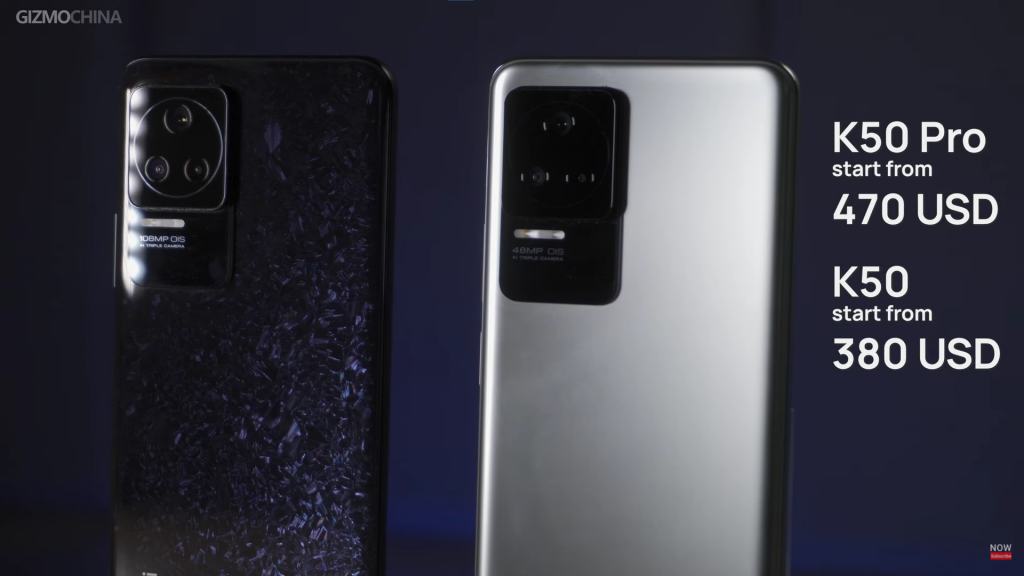
Coming to the phones themselves, the K50 and the K50 Pro look very similar to each other in terms of screen and design. The only thing that differentiates the two is the main sensor’s camera resolution, which is written below the camera module. Additionally, the camera module looks pretty similar to devices like the iQOO 8 series and the Xiaomi CIVI but with a different camera arrangement. The devices feel pretty comfortable in the hand. However, it is worth mentioning that the side frames of the devices are made of plastic, which doesn’t feel as good as the metal frames.
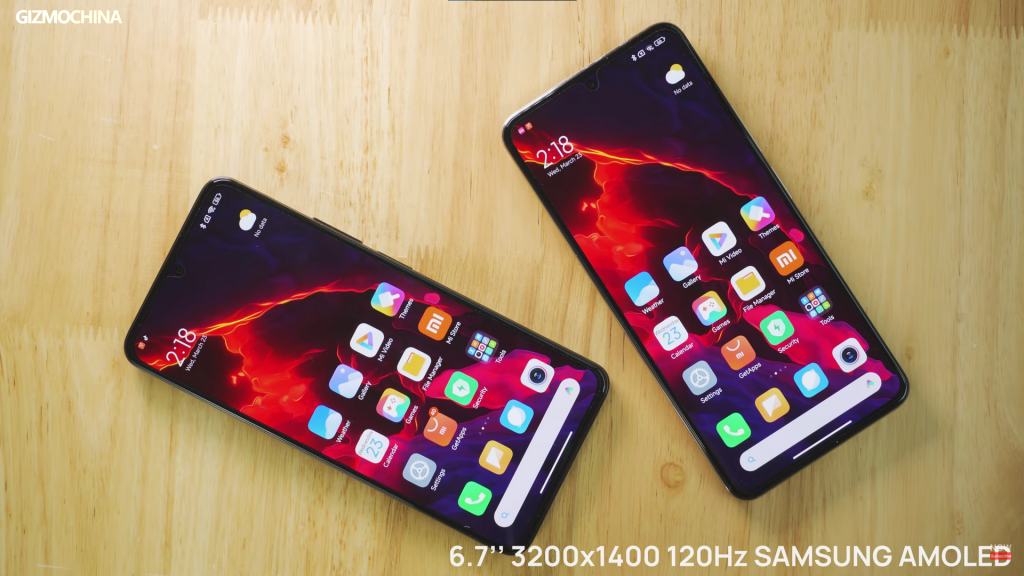
On the front, the two devices are indistinguishable as they both feature a flat 6.7-inch 2K (3200x1400p) 120Hz Samsung AMOLED display with pretty narrow bezels and a small punch hole for the selfie camera centered at the top. The phones slightly disappoint as they don’t have an in-display fingerprint sensor and are rather fitted with a side-mounted one on the power button.
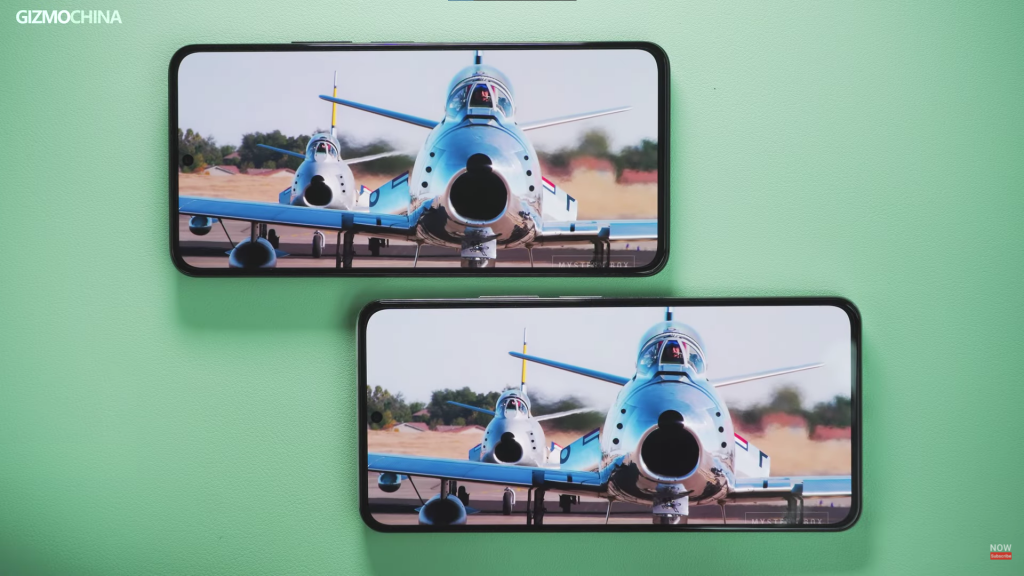
The 2K display on the vanilla K50 makes it especially attractive as it also offers Dolby Vision and supports HDR content with a max brightness of 1200nits just like the Pro variant. Both the K50 and K50 Pro have Gorilla Glass Victus protection for their screens. The devices get a dual speaker setup for stereo audio output that comes certified by Dolby Atmos.
Coming to what’s under the hood, the K50 comes with the newly launched MediaTek Dimensity 8100 SoC, which has been receiving much praise as of late. The SoC is based on TSMC’s 5nm node, which gives it better thermals and power efficacy than the Snapdragon 870, while the SoC is churning out performance close to that of the Snapdragon 888.
The K50 Pro, on the other hand, houses a Dimensity 9000 chipset which goes head to head with Qualcomm’s Snapdragon 8 Gen 1 chip while outperforming it in various metrics.
Redmi K50 & K50 Pro benchmark results
1 of 2
3DMark Wild Life
Geekbench 5
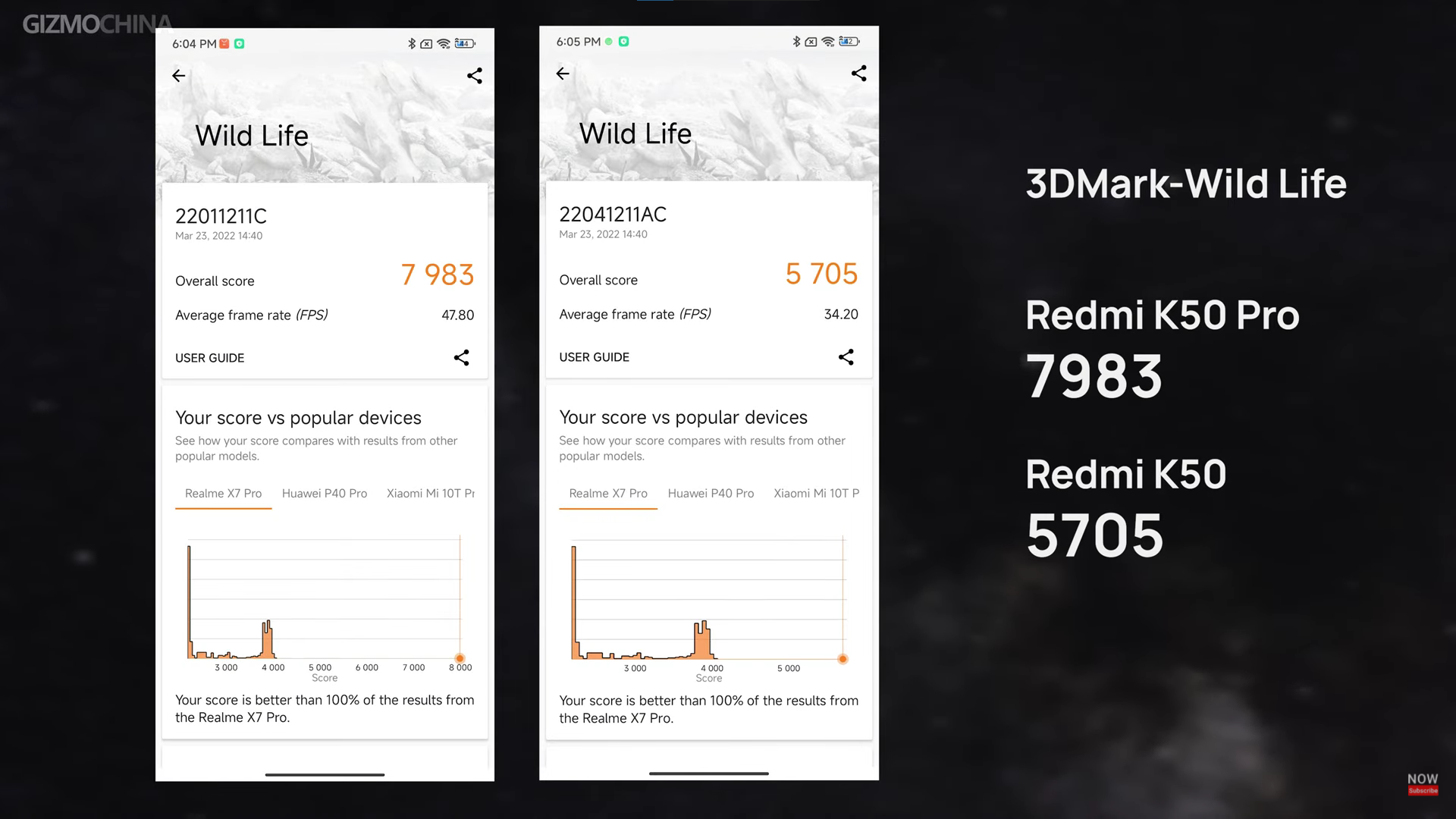
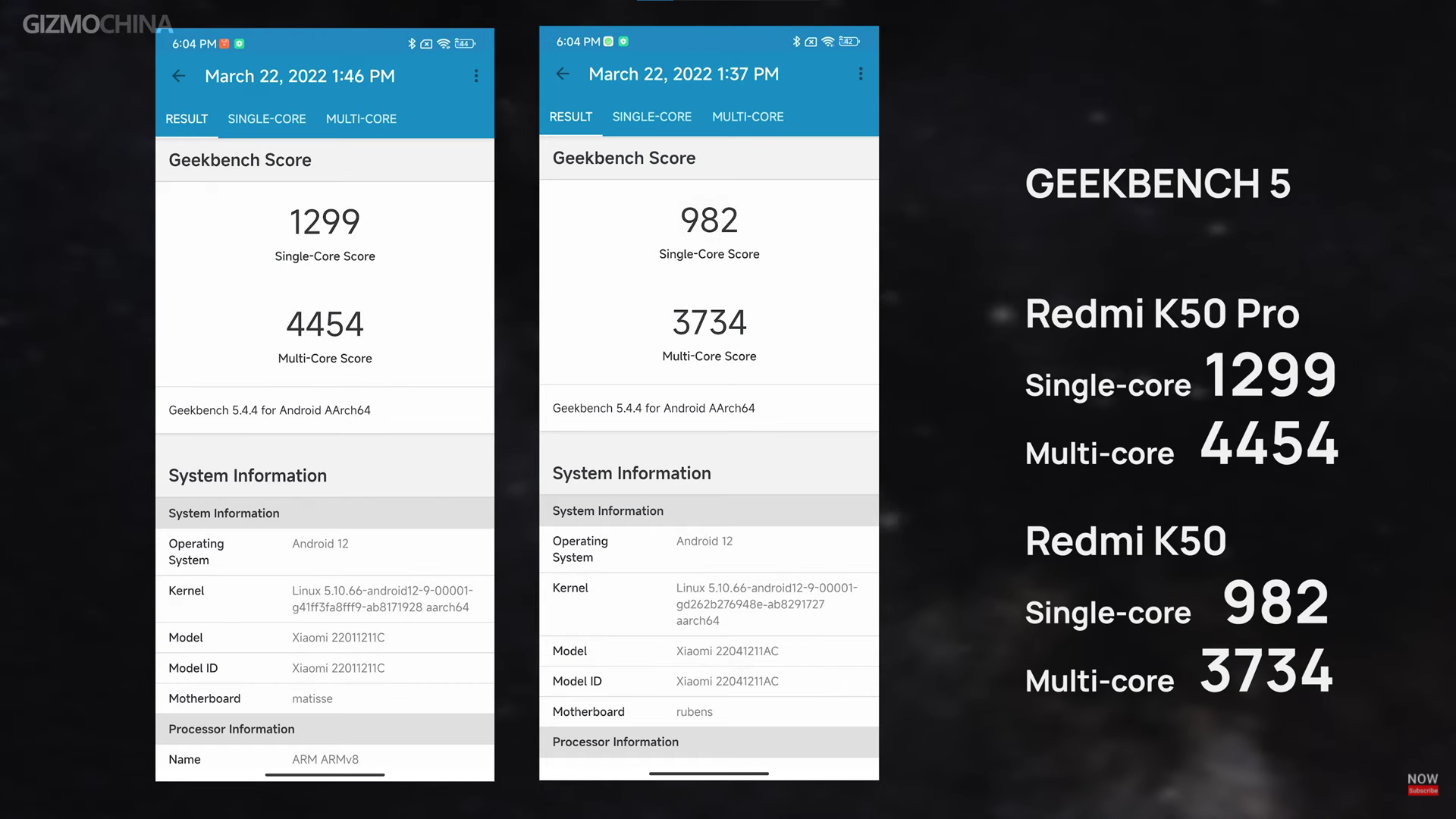
We quickly ran some benchmarks on the two devices to get an idea of their performance. In the 3DMark Wild Life test, the Redmi K50 Pro scored 7983 points while the vanilla K50 managed a score of 5705 points. In the more CPU-intensive Geekbench 5 tests, the K50 Pro scored 1299 on the single-core test and 4454 on the multicore test. Coming back to the vanilla K50, it scored 982 points on the single-core test and 3734 points on the multi-core test.
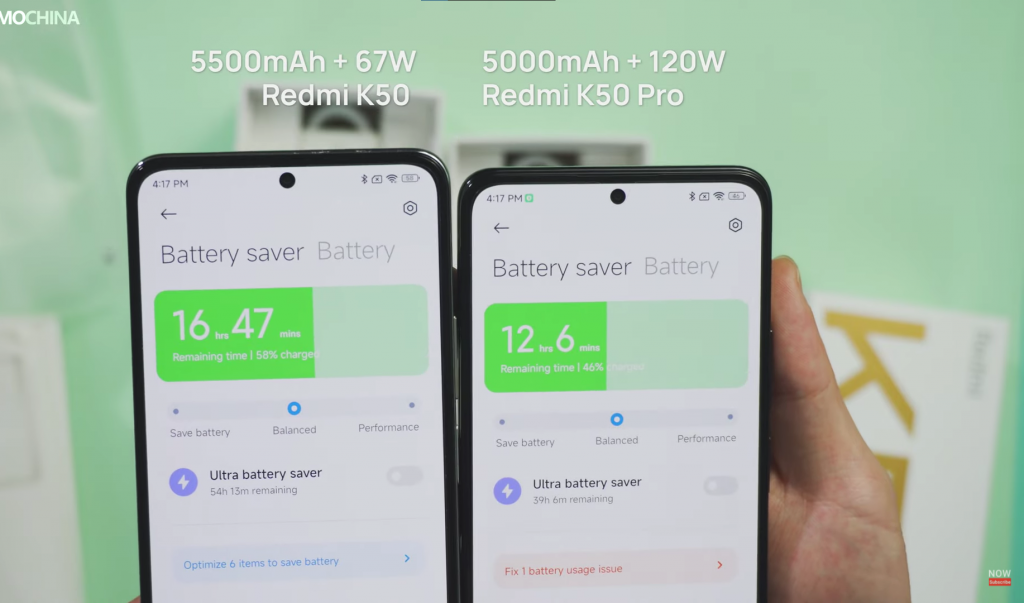
The power solution on these devices is also interesting, as the K50 gets a bigger 5500mAh battery with a comparatively slower 67W fast charging support, the K50 Pro features a 5000mAh battery with super-fast 120W charging.
Last but not the least, the camera setup on both devices feature optical image stabilization for the main lenses. The Pro version features a 108MP primary snapper accompanied by an 8MP ultra-wide camera and a 2MP macro camera. The vanilla version gets a 48MP primary coupled with an 8MP ultrawide and a 2MP macro shooter.
The smartphones genuinely seem quite amazing as far as first impressions go, and they might turn out to be true flagship killers of the current generation of smartphones. However, we would like to conduct more tests on it, like testing out the battery performance, the performance of the devices under prolonged use, the camera quality in various scenarios, and also the sound quality of their stereo speakers. For all this and more, stay tuned for the upcoming detailed review of the Redmi K50 and K50 Pro devices.
We are also giving away the Redmi AirDots 3 Pro Genshin Impact limited edition TWS earbuds, so if you are interested, you can participate by following this link.
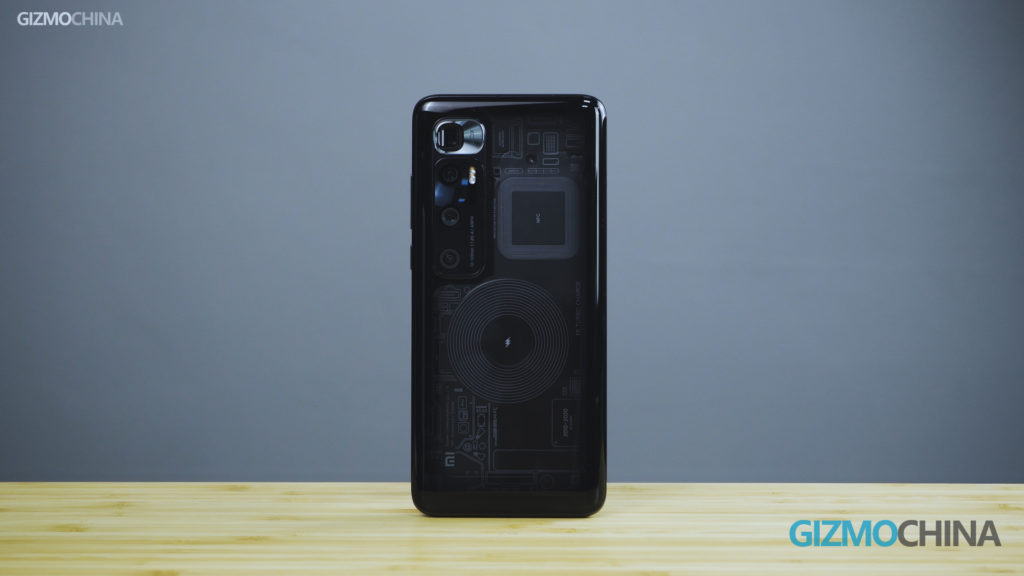
MIUI 13 is currently the newest version of Xiaomi’s mobile operating system. The company has been rolling it out to eligible devices since January. The latest smartphones to receive it are Mi 10 Ultra, Redmi Note 10 5G, and Redmi Note 9 Pro 5G.
Xiaomi Mi 10 Ultra
Xiaomi hasstartedseeding MIUI 13 update based on Android 12 for the following handsets in its home country China.
Like any other OTA software update, this update is also being rolled out in batches. Hence, some units may receive it earlier, while others will take time.
Further, apart from Mi 10 Ultra, the other two phones made their way outside China. The Redmi Note 10 5G goes by the name of Redmi Note 10T 5G in international markets. At the same time, the Redmi Note 9 Pro 5G is known as Mi 10i 5G and Mi 10T Lite 5G.
These non-Chinese versions of the aforementioned smartphones should also get access to the Android 12-baed MIUI 13 update in the near future. We can expect the rollout to finish for all the variants in a month or two.
If you happen to own any of the above-listed original Chinese models and have received the update, then do let us know your experience in the comment section below.
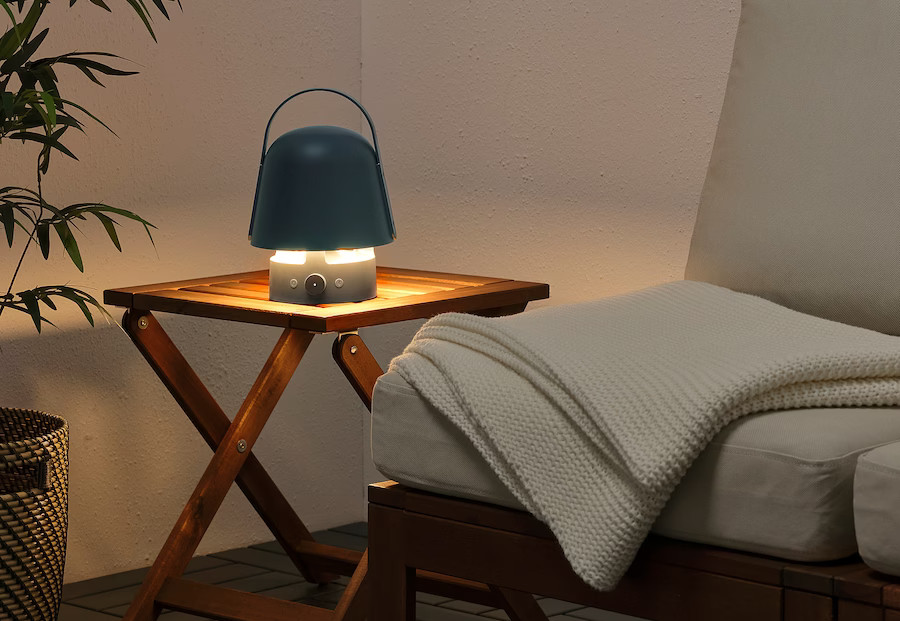
Ikea recently launched a new Bluetooth speaker lamp with a retro lantern-inspired design — and it is actually the very first speaker to feature Spotify Tap for one-touch access to the music service. The feature was earlier only available on headphones.
While the marketing images show the lamp perched in various parts within a house, it should work just fine in outdoor scenarios with features like a rechargeable battery and IP65 water resistance. You also get a USB Type-C cable with it for charging, although there’s no wall brick and you’d have to purchase it separately.
Once Spotify Tap is set up through the app, tapping the power button on the lamp will automatically resume playing the last piece of audio. A second tap will skip to a recommendation based on your listening habits.
Apart from the Spotify integration, the Ikea Vappeby Bluetooth lamp speaker doesn’t offer much in terms of smart features and is just a regular speaker cum light with not too many options to fiddle with.
Interested in a purchase? Just head over to Ikea’s official microsite for the same where it’s available in blue and grey colors for $64.99. As of this article’s writing, the item is out of stock but should hopefully restock soon enough.
Apple had recently announced two new products, namely the Mac Studio and Studio Display. And now, iFixit has released a new tear down video that revealed the internals of the two gadgets.
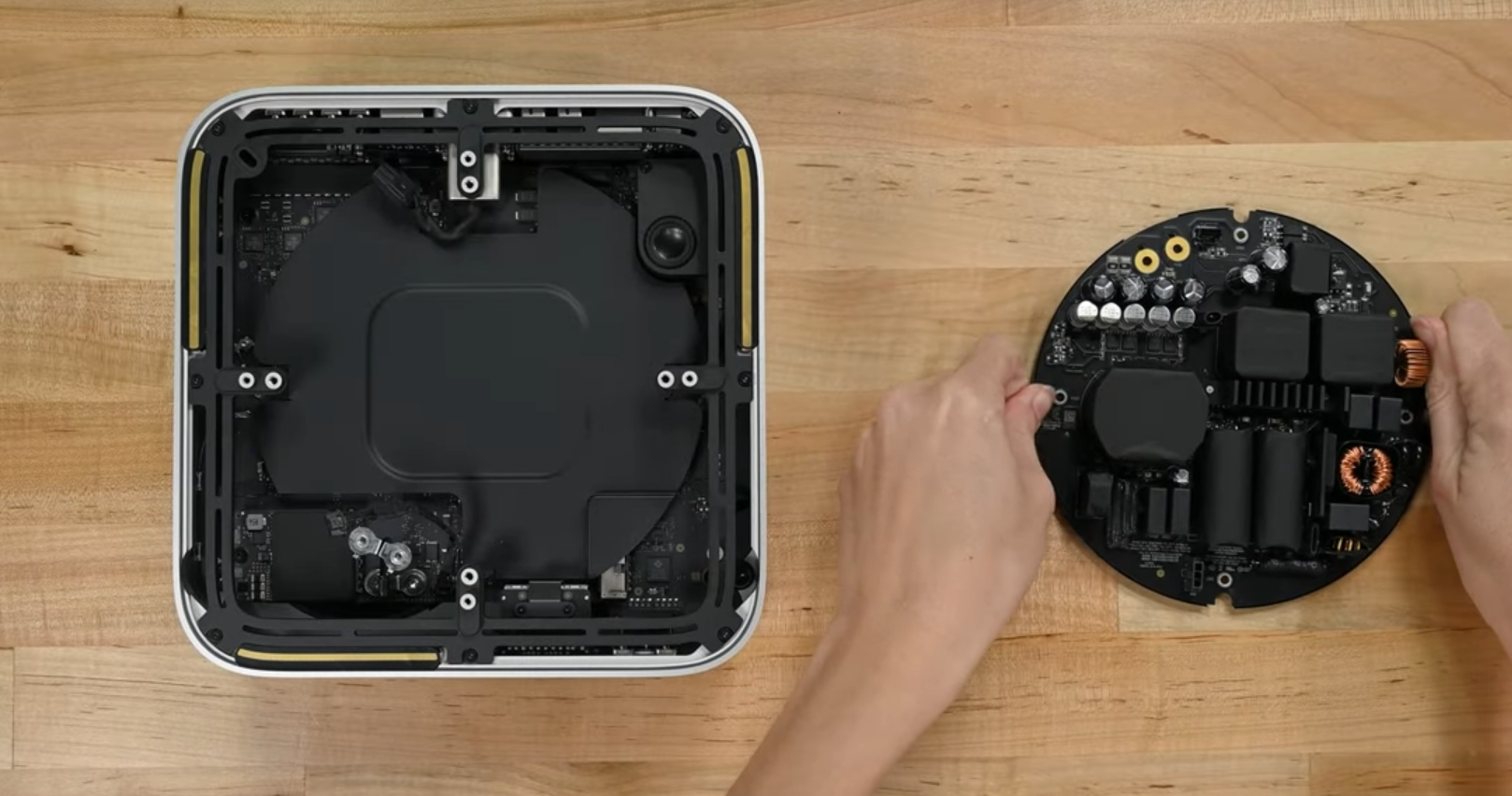
Looking at the video, we can see the M1 Max powered Mac Studio. In the YouTube, iFixit stated that “If Apple squeezed a Mac Pro into a Mac mini, you’d get something that looks a lot like the new (Mac Studio). Based on a previous teardown, we already know that the Mac Studio’s SSD is not soldered and can be removed. So while iFixit confirmed this, it is still unknown if upgrades are possible. iFixit did find a spare slot on the logic board and put an SSD from another Mac Studio, but that did not work.
On the other hand, RAM is built in and can not upgraded once the user purchases a particular configuration. Another notable aspect noted during the teardown was the massive heatsink. The cooling system relies on a dual fan assembly and the fans are “so much more massive than other Mac fans.” Similarly, they also found that the heatsink “positively dwarfs the M1.” Apart from this, the internals of the Mac Studio are complex, comprising of various brackets, connectors, and torx screws, which impacts repairability (scored 6 out of 10 on repairs) and user accessibility. Although, it was praised for its heat management system.
Arriving at the Studio Display, iFixit also tore apart the Cupertino based giant’s latest productivity based display. In the video, we get a short look of the Studio Display’s internals that looks quite similar to an iMac. The webcam in the Studio Display is similar to the camera on the iPhone 11. Although, this was just a general observation and not a proper breakdown analysis, which will be arriving in the near future.
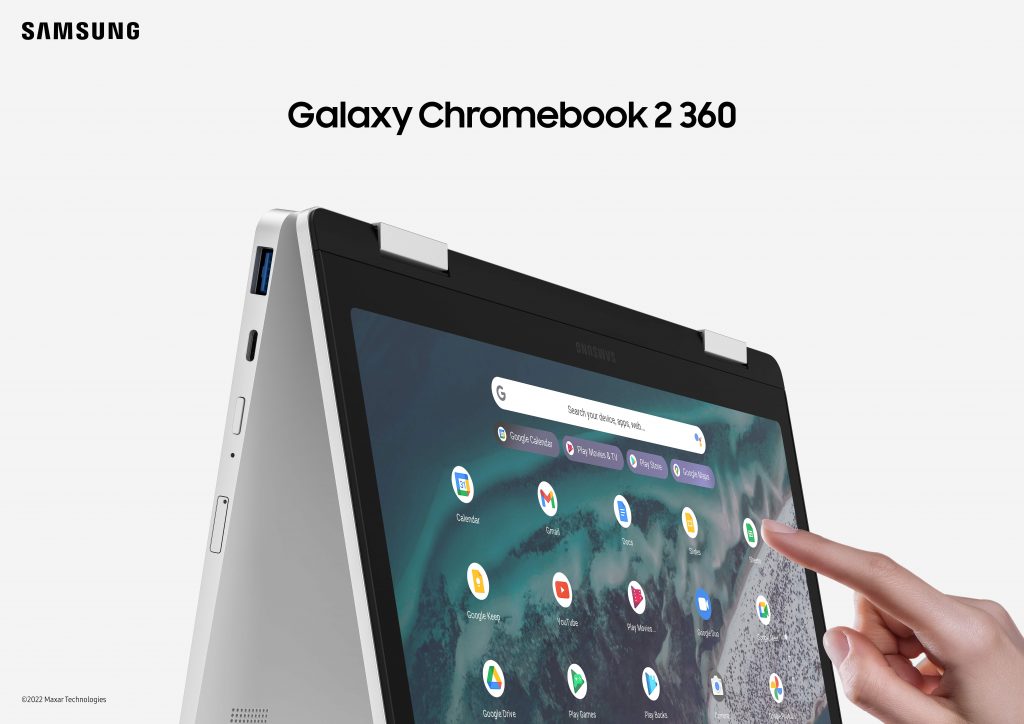
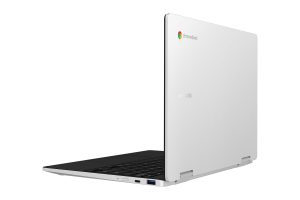
Samsung unveiled the Galaxy Chromebook 2 360 today at the BETT 2022 conference in London. Though the latest Chome OS-powered laptop from the company sounds like a convertible variant of Galaxy Chromebook2, it is actually a version of Galaxy Chromebook Go.
Samsung Galaxy Chromebook 2 360 Specifications and Features
The Galaxy Chromebook 2 360 by Samsung flaunts a 12.4-inch WQXGA LED-backlit LCD screen with a resolution of 2560 x 1600 pixels, up to 340 nits peak brightness, and support for touch input. The display has a 360° hinge, therefore, it can be used as a tablet and in tent mode.
The laptop is powered by an Intel Celeron N4500 processor with Intel UHD Graphics. The CPU is paired with up to 8GB LPDDR4x RAM and 128GB e.MMC storage. The computer runs Chrome OS with support for Android and Linux applications.
On the connectivity front, the device offers WiFi 6, Bluetooth 5.1, and LTE (optional). It comes with multiple ports like 2 x USB Type-C, 1 x USB 3.2 Type-A, and a 3.5mm headphone jack. It also has a MicroSD card slot, a nano security slot, and a nano-SIM card slot (optional).
Other features include a spill-resistant keyboard, an 8MP HD (720p) webcam, 2 x 1.5W (3W) stereo speakers, and a 45.5Wh battery with support for 45W charging over USB Type-C.
Last but not least, the computer measures 287.9 x 206.6 x 16.9mm in dimensions and weighs 1.28kg.
Samsung Galaxy Chromebook 2 360 Price and Availability
The Samsung Galaxy Chromebook 2 360 will be available for purchase in the UK starting from April 15. It will retail at the following price tags sporting a silver paint job.
Nvidia Corp is apparently interested in joining hands with Intel Corp or the production of its chipsets. The news arrives from the former’s Chief Executive Officer Jensen Huang, who made that statement on a call with reporters earlier this week.
According to a Reutersreport, Huang said that “They’re interested in us using their foundries. We’re very interested in exploring it.” Although, the senior official also said that the foundry discussions would take a long time since they would have to integrate their supply chains. Back in early 2021, Team Blue had stated that it will be expanding its business into chipmaking, rather than its primary chip designing business. In other words, it would be growing its plans for a foundry business.
Since then, the company has also announced several multi billion dollar projects to setup new manufacturing centers in the United States and even Europe. Notably, Intel’s shares also saw a rise of 2.5 percent following Huang’s comments. Recently, Intel CEO Pat Gelsinger told Reuters that it will be “thrilled for their interest in using our foundry capabilities.” However, he also added that there is currently “no particular timeline.”
But Gelsinger did confirm that the company is in talks with Nvidia. As per Bernstein analyst Stacy Rasgon, “I’m sure he’s interested in having more options … and it doesn’t cost him anything to say that. But it doesn’t tell you anything at all about what it’s actually going to look like when they get there.” At the moment, a majority of Nvidia’s chip production is done by the world’s largest contract chipmaker, TSMC. Interestingly, when asked about concerns for sharing company secrets with Intel, Huang said that he trusted the brand and added that “Intel has known our secrets for years.”
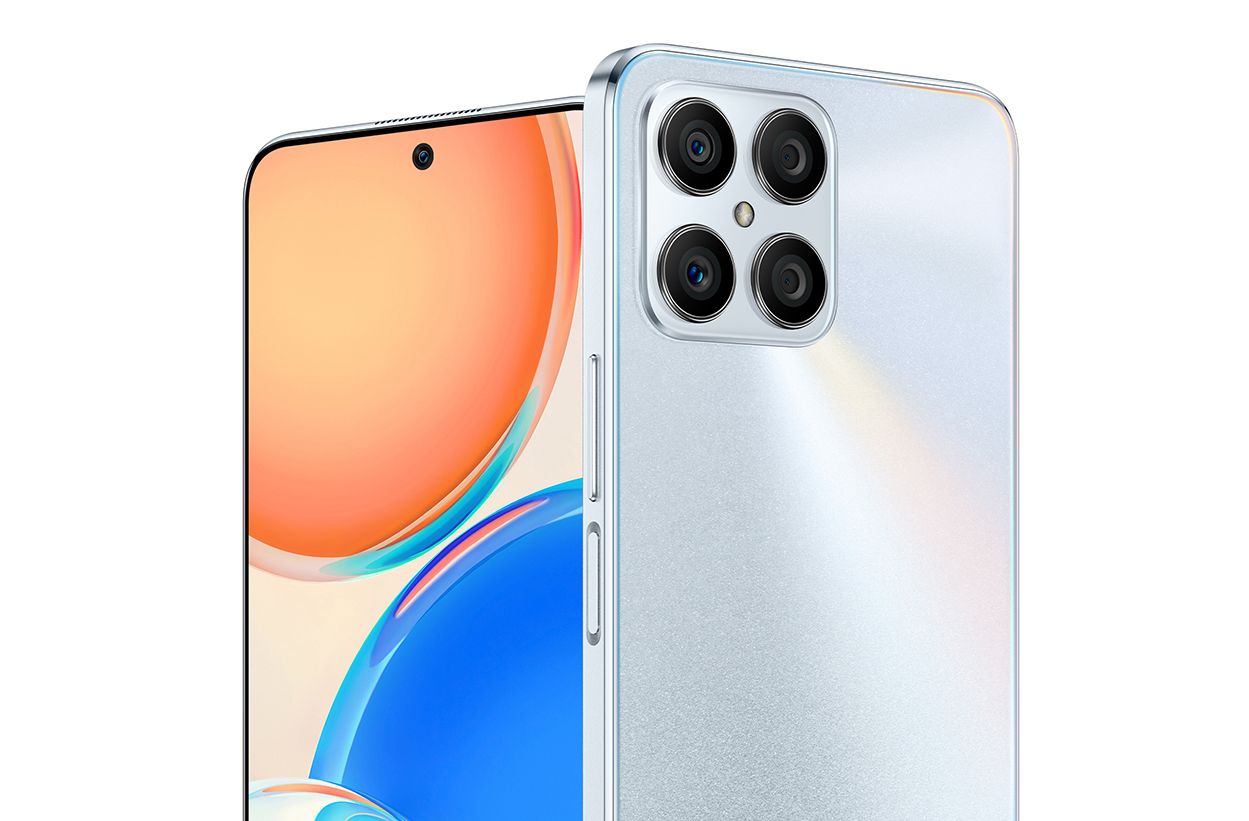
Honor X8 was made official in China earlier this month. It was reported at that time that the device would be released in Europe and Africa in the coming days. Now, the handset has landed in Saudi Arabia as the first market outside China.
The Honor X8 is now available in Saudi Arabia for AED 899 (~$245). It has arrived in a single configuration of 6 GB RAM + 128 GB storage. It comes in Midnight Black, Titanium Silver, and Ocean Blue. People who want to buy it can choose from these three colors.
Honor X8 specifications
The Honor X8 has a 6.7-inch IPS LCD display that delivers a Full HD+ resolution and a 90Hz refresh rate. It has a 16-megapixel camera for snapping selfies and video calls. Its back panel has a 64-megapixel primary camera, which is accompanied by a 5-megapixel wide-angle lens, a 2-megapixel depth sensor, and a 2-megapixel macro camera.
Honor X8
The Snapdragon 680 chipset is present at the helm of the Honor X8. The device has 6 GB of RAM, 2 GB of virtual RAM, and 128 GB of native storage. The device packs a 4,000mAh battery that supports 22.5W fast charging.
The X8 comes pre-installed with Android 11 OS and Magic UI 4.2. It offers the usual connectivity features such as dual SIM support, 4G VoLTE, Wi-Fi, Bluetooth 5.0, GPS, NFC, USB-C, a 3.5mm audio jack, and a side-facing fingerprint scanner.
Honor is also expected to soon announce the Honor X7 and Honor X9 5G smartphones. The devices are expected to arrive as rebranded versions of the Honor phones that have recently been launched in China. The X7 and X9 5G could be rebadged versions of the Honor Play 30 Plus and Honor X30 smartphones that were announced in December 2021 in China.
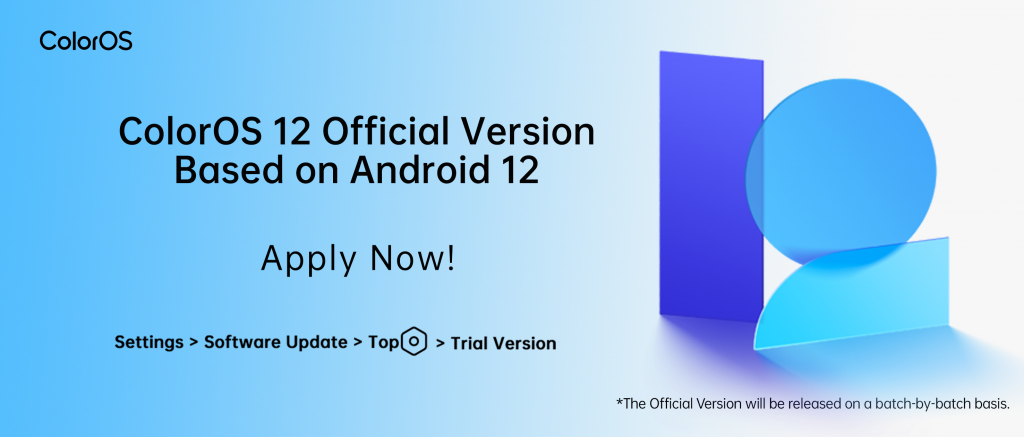
A bunch of OPPO devices has been treated to the ColorOS 12 update based on Android 12 in multiple regions. Depending on where you live, all of them are either sold as part of the Reno series or not, so it’s best to get the confusion out of the way before anything else with a neat little list.
ColorOS 12 based on Android 12 is now rolling out to the following devices in their corresponding regions:
OPPO Reno4 Lite — Kazakhstan
OPPO A93 — UAE
OPPO Reno5 Lite — Kazakhstan
OPPO A94 — UAE
OPPO Reno4 F — Indonesia
OPPO F17 Pro — India
OPPO Reno5 F — Indonesia
OPPO F19 Pro — India
The Reno4 Lite is the same as the A93, the Reno5 Lite is the same as the A94, the Reno4 F is the same as the F17 Pro, and the Reno5 F is the same as the F19 Pro — with the only difference being name between each of the two variants.
As usual, the OTAs are being sent out on a batch basis, meaning it may take some time for the update to reach your device. If you haven’t yet received a notification, then you can try checking manually by heading over to Settings > Software update. Just make sure you’re on the latest available ColorOS 11 update beforehand, though.
ColorOS 12 arrives with a number of new features and improvements over the previous version. Elements have been given visual tweaks throughout the interface, be it icons, the quick settings panel, or system apps. Some Android 12 goodies are present too, such as the new Privacy Dashboard and microphone and camera Indicators.
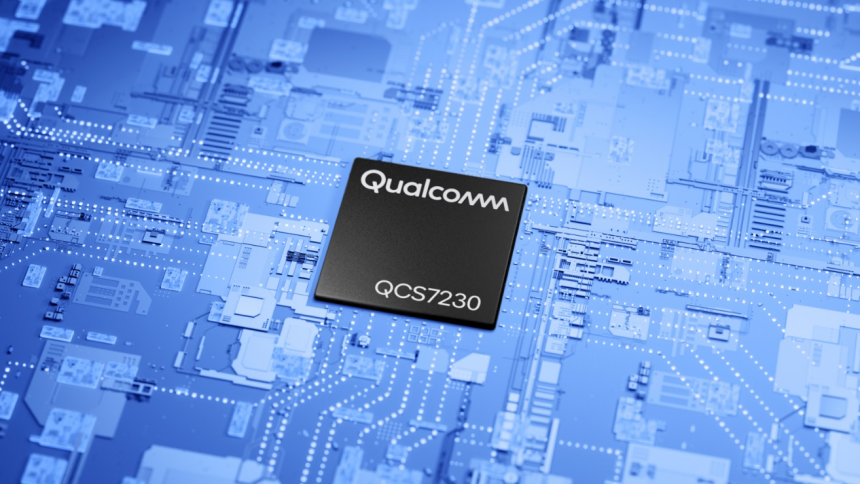
Qualcomm has just announced a new technology that is has been working on earlier today (24th March 2022). The latest product is the company’s latest smart camera IoT solution, and is dubbed Qualcomm QCS7230.
Notably, this arrives as the brand expands its product portfolio of visual intelligence based platform, which promotes enterprise security prevention and control and even public safety as well. As per the American chip making giant, the new solution will arrive with cutting edge AI tech that uses real time edge computing, artificial intelligence, machine learning, and analysis to offer improved security and operational efficiency that will help make cities, enterprises, and others to be safer and more efficient.
Qualcomm officials further added that the new solution will help accelerate the development of edge AI services to provide enterprises and entities with the technical elements needed to deploy smart cameras and smart IoT endpoints. This technology will also support video collaboration, access controls, enterprise and home security, along with 360 degree cameras, dash cams, and wearable cameras as well. As of right now, Thundercomm has already commercially launched the TurboX QCS7230 smart module. So, we can expect other firms to soon adopt the smarter and more powerful smart camera solution from Qualcomm.
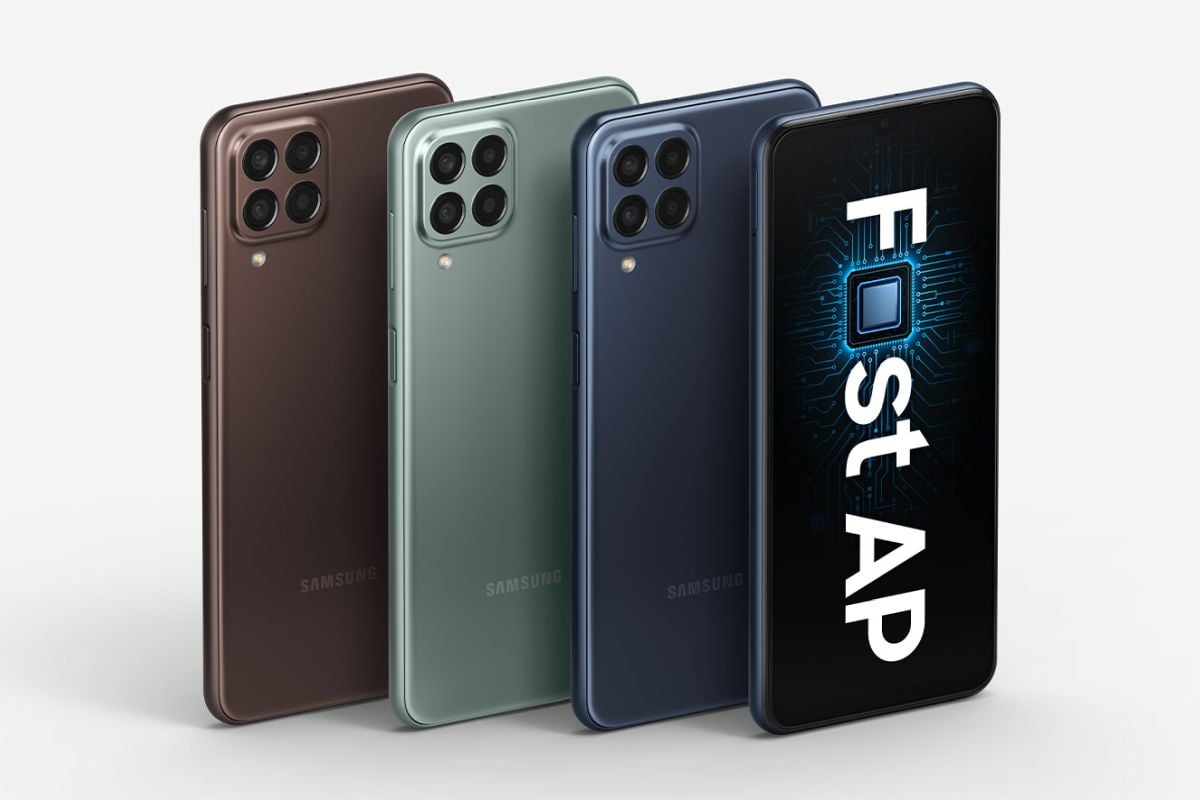
Earlier this month, Samsung announced the Galaxy M23 and Galaxy M33 by rolling out a press release. The PR only revealed the design and key features of both smartphones, but there was no word on their pricing and availability. The European pricing of both models has now been confirmed.
The Galaxy M23, with 4 GB of RAM and 128 GB of storage, is priced at 289 euros in Germany. It will come in colors like Light Bue, Deep Green, and Orange Copper. On the other hand, the Galaxy M33, with 6 GB RAM and 128 GB storage, costs 349 euros. It comes in three colors such as Dark Blue, Khaki Green, and Brown.
The Galaxy M23 will be available for purchase by the end of this week in Germany. On the other hand, the Galaxy M33 will go on sale on April 8 in Germany.
Samsung Galaxy M33 5G specifications
Samsung Galaxy M33 5G
The Galaxy M33 5G has a 6.6-inch LCD panel that offers an FHD+ resolution and a 120Hz refresh rate. The device is powered by the latest Exynos 1280 SoC. It comes with 6 GB / 8GB of RAM and 128 GB of native storage. The device ships with the Android 12 OS and One UI 4.1. For security, it has a side-facing fingerprint scanner. It has an 8-megapixel front camera, and a 50-megapixel + 5-megapixel (wide-angle) + 2-megapixel (macro) + 2-megapixel (depth) quad-camera system. It has a 5,000mAh battery that supports 25W fast charging.
Samsung Galaxy M23 5G specifications
Samsung Galaxy M23 5G
The Galaxy M23 5G features a 6.6-inch LCD FHD+ 120Hz screen, a Snapdragon 750G chipset, 4 GB or 6 GB of RAM, 64 GB or 128 GB of storage, and a 5,000 mAh battery with 25W fast charging support, Android 12 OS with One UI 4.1, and a fingerprint scanner on the side.It has an 8-megapixel selfie camera, and a 50-megapixel (main) + 8-megapixel (ultrawide) + 2-megapixel (macro) triple camera system.
At least three Xiaomi phones equipped with the Snapdragon 8 Gen 1 Plus processor and 2K resolution displays are in the pipeline currently, leakster Digital Chat Station revealed today with a post on Weibo. It’s easy to assume here that since the upcoming chip from Qualcomm is a flagship, phones featuring it will be flagships too — but the leakster said “both mid-to-high-end and high-end” offerings will have it under the hood.
And if one pictures an upper mid-range device with a flagship chip, Redmi devices immediately come to mind. The sub-brand is known for bringing performance-focused devices with high-end chips to the masses, so it’s likely that at least one of the said three devices will be its product. The Xiaomi MIX series could also be a contender.
The Snapdragon 8 Gen 1 Plus is based on TSMC’s 4nm process, which many hope will address most of the shortcomings from Samsung’s process used to produce the Snapdragon 8 Gen 1. It is expected to use a “1+3+4” three-cluster architecture, comprising 1x super-large Cortex X2 core, 3x large Cortex A710 cores, and 4x small Cortex A510 cores.
Sources say that the processor will be used in the Xiaomi 12 Ultra, which should make the phone the new Xiaomi champion in terms of processing power, dethroning the Xiaomi 12 Pro.
The Snapdragon 8 Gen 1 Plus is expected to be released in the second quarter of 2022 so the aforementioned trio will likely be also launched around the same time.
Samsung has officially launched the Galaxy A53 5G in China. The latest mid-ranger from the company was initially announced globally last week. The Chinese variant of the handset comes with the exact same set of specs as the version released elsewhere.
Samsung Galaxy A53 5G
The Galaxy A53 5G is up for pre-order in China. It will retail at the following price tags in the country from April 1.
8GB + 128GB – ¥3,399 ($534)
8GB + 256GB – ¥3,699 ($581)
Customers can purchase the phone in either Awesome Blue, Awesome Black, Awesome White, or Awesome Peach color options. Customers who pre-order will get Samsung Online Store credits to buy the Galaxy Buds2 at a discounted price tag of ¥449 ($71) and a coupon for the official silicone case for the handset (limited to 6,000 buyers).
For the asking price, the Galaxy A53 5G offers way less than the competition in China. People can get the Redmi K50 Pro with much better hardware and save some bucks. The Redmi device costs ¥2,999 ($471), ¥3,299 ($518), and ¥3,999 ($628) for 8GB + 128GB, 8GB + 256GB and 12GB + 512GB memory configurations respectively.
However, there are two features that make the Samsung phone stand out. It is the only mid-range Android smartphone to offer 4 years of guaranteed OS updates and 5 years of security updates. Also, it is one of the few to come with an IP67 rating for dust and water resistance in its price segment.
But these features don’t make sense for the Chinese consumers who are spec hungry. What are your thoughts on the Galaxy A53 5G’s pricing in China? Do let us know in the comment section below.
Tata is apparently gearing up to launch the 2022 refresh of its Nexon EV in India soon. A new report has revealed the possible launch date of the new car alongside some of its expected specifications and even pricing.
According to a RushLanereport, the Indian Conglomerate is planning on announcing the 2022 Nexon EV in India on the 6th of April 2022. The launch will follow a long period of testing the car on public roads. For those unaware, the Nexon EV is currently the market leader in the electric vehicle segment in India, accounting for 60 percent of the total electric car sales in the region. And now, the brand is set to launch a new model with refreshed specifications for improved range and power.
Recently, we had reported on Tata hiking the price of the Nexon EV along with some other models as well. So, the 2022 Nexon EV is likely to arrive with higher specifications like larger battery and a longer driving range and even more power. In other words, it would likely launch with a higher price tag as well. The brand could possible decide to bump the price of the new model by around 300,000 to 400,000 INR (roughly 3,930 to 5,240 US Dollars) over the current generation.
Despite its price bump, the 2022 Nexon EV will still compete with other EVs from rival brands. This includes the likes of the Hyundai Kona EV and MG ZS EV with its range. Since its a new refreshed model, the 2022 edition could also offer changes to offer better luxury. Similarly, it is rumored to get a new 40kWh battery pack as well that could help it provide a maximum of 300 kilometers of ARAI certified range.
We use cookies on our website to give you the most relevant experience by remembering your preferences and repeat visits. By clicking “Accept”, you consent to the use of ALL the cookies.
This website uses cookies to improve your experience while you navigate through the website. Out of these, the cookies that are categorized as necessary are stored on your browser as they are essential for the working of basic functionalities of the website. We also use third-party cookies that help us analyze and understand how you use this website. These cookies will be stored in your browser only with your consent. You also have the option to opt-out of these cookies. But opting out of some of these cookies may affect your browsing experience.
Necessary cookies are absolutely essential for the website to function properly. This category only includes cookies that ensures basic functionalities and security features of the website. These cookies do not store any personal information.
Any cookies that may not be particularly necessary for the website to function and is used specifically to collect user personal data via analytics, ads, other embedded contents are termed as non-necessary cookies. It is mandatory to procure user consent prior to running these cookies on your website.