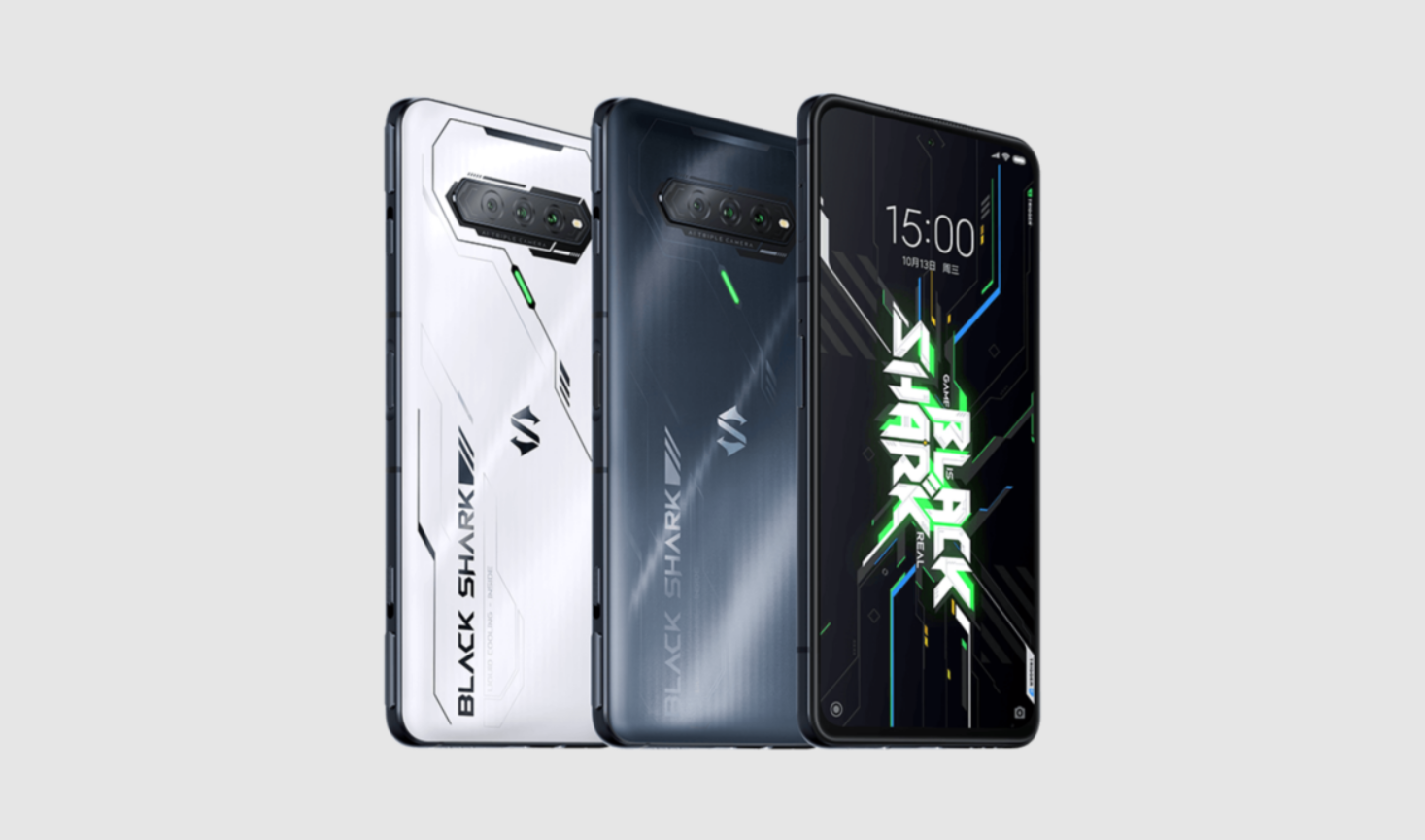
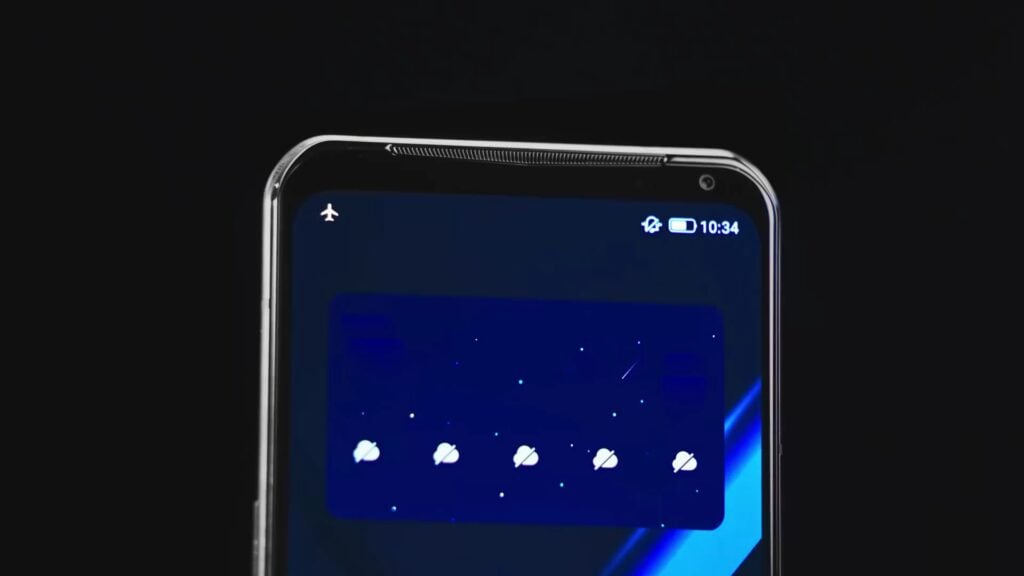
Black Shark 5 series of gaming smartphones are in the works. The lineup is likely to include the Black Shark 5 (codenamed Katyusha) and Black Shark 5 Pro (codenamed Patriot). The former has been with model number KTUS-A0 model number at China’s MIIT certification site recently. Now, Chinese tipster Panda is Bald has shared some key specifications of the vanilla model.
According to the tipster, the Black Shark 5 will be featuring a Samsung E4 AMOLED display that offers a 1080p resolution. It will also offer a 120Hz refresh rate and a 720Hz touch sampling rate. The tipster did not mention the exact screen size of the device.
The Black Shark 5 is said to be equipped with a 4,600mAh battery, which will carry support for 120W fast charging. The device will be powered by the Snapdragon 888 Plus chipset.
Black Shark 4S Pro
To recollect, the Black Shark 4S Pro that debuted in October last year came with a 6.67-inch AMOLED E4 FHD+ 144Hz display, SD888+ chip, and a 4,500mAh battery with 120W fast charging. Hence, it appears the standard Black Shark 5 may borrow some of its specs from the Black Shark 4S Pro.
As far as the Black Shark 5 Pro is concerned, it is expected to arrive with a 6.8-inch AMOLED QHD+ 144Hz display, Snapdragon 8 Gen 1 chip, a 5,000mAh battery, and 120W fast charging. Both devices are expected to run on JOYUI based Android 12 OS. The camera capabilities of the Black Shark 5 duo are under the wraps.
The Black Shark 4 and 4 Pro were announced in March last year. Hence, it is likely that the Black Shark 5 series of gaming phones may go official in March 2022. A recent report claimed that Tencent Group will acquire the Black Shark brand.
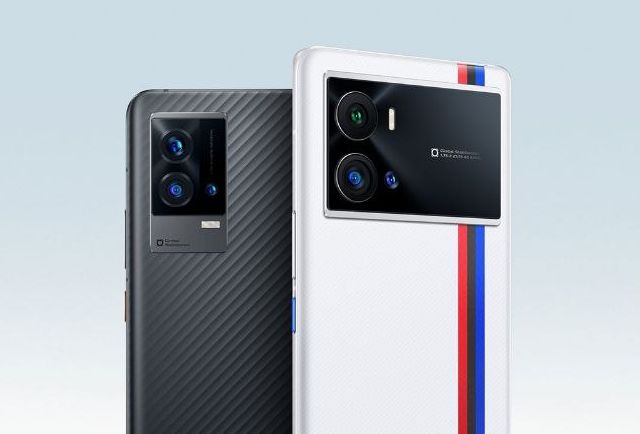
Earlier this month, Vivo’s sub-brand iQOO had launched its latest flagship smartphones in its home country China — iQOO 9 and iQOO 9 Pro, made using a metal frame made from aerospace-grade aluminum alloy.
Today, the company officially starts selling both the newly announced models — iQOO 9 and iQOO 9 Pro in China. As for the pricing, the lineup starts at 3,999 yuan (~$628).
The iQOO 9 base model with 8GB RAM and 128GB storage costs 3,999 yuan while the 12GB RAM and 256GB storage model is priced at 4,399 yuan (~$691). There’s another model that packs 12GB RAM and 512GB storage, costing 4,799 yuan (~$754).
On the other hand, the iQOO 9 Pro with 8GB RAM and 256GB internal storage is priced at 4,999 yuan (~$785) while the one with 12GB RAM and 256GB storage costs 5,499 yuan (~$864). The top-end model with 12GB RAM and 512GB storage is priced at 5,999 yuan, which is about $942.
Both the smartphones feature a 6.78-inch Samsung E5 AMOLED display panel with 1.7mm extremely narrow bezels. They feature support for 120Hz refresh rate and have a peak brightness of up to 1500nit, 100% P3 color gamut, and 1000Hz instant touch adoption rate. The iQOO 9 comes with 2400 x 1080 pixels resolution while the Pro model has an LTPO display with 3200 × 1400 pixels screen resolution.
The devices come powered by the Qualcomm Snapdragon 8 Gen 1 chipset, coupled with LPDDR5 RAM and UFS 3.1 storage. The iQOO 9 comes with a triple-camera setup that includes a 50MP primary sensor, a 13MP super wide-angle lens, and a 13MP portrait lens.
On the other hand, the iQOO 9 Pro features a 50MP primary sensor, a 50MP fisheye ultra-wide-angle lens, and a 16MP telephoto lens. On the front side, there’s a 16MP snapper for taking selfies and video calling.
The smartphones are running the latest Android 12 operating system and Vivo’s OriginOS Ocean custom interface on top. The devices are powered by a 4,700mAh battery and come with support for 120W ultra-fast flash charging, 50W wireless flash charging, and 10W wireless reverse charging.
The Xiaomi 12 series sold almost worth 283 million USD in its first 5 minutes upon going on sale in China. Besides featuring class-leading technology like the Qualcomm Snapdragon 8 Gen 1 & 120W next-generation charging, the Xiaomi 12 series is also known for its class-leading camera. Recently, Xiaomi revealed that it is using advanced autofocus technology from its Xiaomi CyberDog in the Xiaomi 12 series.
Xiaomi 12 features CyberFocus autofocus from Xiaomi CyberDog
On Weibo, Xiaomi’s Senior Vice President, Zeng Xuezhong shared the story behind integrating its “CyberFocus” advanced autofocus technology from its Xiaomi CyberDog.
Source: Weibo
“Xiaomi surveyed its userbase, and the most common camera complaint is that its cameras were unable to focus properly on the subject despite trying to focus in many times, ” Zeng mentioned.
“From rainbows to sunsets, to mothers’ dear firstborns moving around in front of the lens, these scenes are hard to capture and focus. Therefore, here at Xiaomi, we thought of our CyberDog ‘owner tracking technology’ called CyberFocus and decided to implement it into our Xiaomi 12 flagship cameras,” he added.
Xiaomi 12 autofocus in action
With this next-gen advanced autofocus technology, the autofocus algorithms can now accurately determine the outlines of the subject. Whether it be human, animal, or scenery, you need not worry about the subject being out of focus anymore.
How the algorithm differentiates itself from conventional autofocus technology is in the basics. Where conventional autofocus struggles to focus on an object like a cat because it only focuses on the cat’s ear because of its limited artificial intelligence, the CyberFocus technology on the Xiaomi 12 recognizes that it is not only the cat ears, but the whole subject is the cat. And with AI background recognition, it can properly recognize the different parts of the cat as well. Even if the cat is out of the frame and comes back in, it has already stored data of the cat and the cat will automatically be back in focus since it recognizes the entire object now.
Xiaomi Photography Engineers behind the scenes tested out many difficult situations such as capturing someone furiously shaking their heads, and tracking the focus of a spinning jump rope in the frame. But they found that the Xiaomi 12 camera’s advanced autofocus software truly showed its prowess when capturing the company’s 2 pet dogs named Peach and Fortune running around in the Xiaomi headquarters. To prove that the autofocus works on animals and to practice the algorithm’s stability, they tested out the cameras on the dogs, and here are the camera samples they got.
Photos of Xiaomi’s pet dogs taken by Xiaomi 12
The photos taken were clear and crisp and the subjects were in focus as shown in the pictures, despite dogs being known for not being able to stay in one place for a long period of time.
If you are looking to get hold of the new Xiaomi 12 series, note that both the Xiaomi 12 and Xiaomi 12 Pro are now available on Giztop for $699 and $899 respectively.
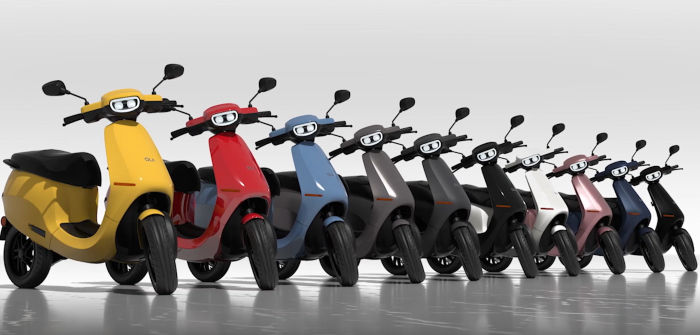
Ola Electric S1 and S1 Pro scooters started shipping in December 2021. Since then, the e-scooters have faced numerous performance, quality, and software complaints. The one complaint that stands out is the missing features that the company had promised earlier. Now, OLA Electric‘s Chief Marketing Officer has provided some updates on the situation.
Ola Electric’s S1 Pro scooters are currently shipping without functional key features like cruise control, Hyper mode, hill-hold assist, and the navigation feature which is common in both S1 and S1 Pro models.
Varun Dubey, Chief Marketing Officer at Ola Electric, recently said during an interview that “features like cruise control, hill hold, navigation, etc. are coming up in the next few months by June. That is what we are going to deliver and it is not just about those features. As consumers continue to use the scooter and live with the scooter, we will learn and we will keep adding more and more features which consumers will continue to get.”
He added, “For us, the scooter is as much of a software platform as it is a hardware platform and even in September when we had opened up the windows and done the media test rides, we had explained it clearly that the software is going to come in stages and we are going to release these as important software updates over several months in 2022.”
So it appears that Ola Electric scooter customers might have to potentially wait for months before the software update that makes these key features functional finally arrives.
Additionally, the executive also answered the range discrepancy complaints by the S1 Pro customers stating that the scooter has an ARAI certified range of 181 Kms which is measured for ideal conditions.
Dubey clarified that the real-world range of the S1 Pro electric scooter is 135 km. The Ola Electric rep also claimed that they have shared the true range of the scooters with their customers.
Last year, in the month of April, Sony had announced its premium smartphone — Sony Xperia 5 III along with another powerful smartphone named Sony Xperia 1 III. The Xperia 5 III was made available for purchase months after getting announced.
Now, the Sony Xperia 5 III is finally getting launched in the United States. The company has announced that the phone will now be available for purchase in the US through authorized retailers.
Currently, the unlocked model of the device is listed on Best Buy as “coming soon” and that too in a single Black color. On the other hand, B&H Photo Video has started taking orders for the device and is also shipping it right away.
The smartphone is priced at $999 and the company is also bundling a pair of Sony WF-1000XM3 noise-canceling true wireless earphones and 43,200 Call of Duty: Mobile CP Points to those who get the phone by 27th February.
Sony Xperia 5 III features a 6.1-inch Full HD+ OLED display that offers a 120Hz refresh rate and a 21:9 aspect ratio. Under the hood, it is powered by the Qualcomm Snapdragon 888 chipset, coupled with 8GB of RAM and 256GB of internal storage.
In the camera department, Sony says that the phone is jointly developed with Alpha 9 series mirrorless camera engineers. The triple-camera system includes a 12-megapixel primary sensor, a 12-megapixel ultrawide sensor, and a 12-megapixel telephoto zoom lens.
The phone has a side-mounted fingerprint sensor and comes with a two-step physical camera shutter button. The company has also decided to retain the 3.5mm headphone jack. The device also supports 360 live sound effects, and Hi-Res audio playback. It runs the Android operating system and is powered by a 4,500mAh battery with 30W charging.
Microsoft has been trying to establish itself in the hardware segment and has a lineup of devices under its Surface branding. It had recently launched the Surface Pro 8 and the Surface Go 3, both of which are getting new variants.
The Redmond-based technology giant has launched LTE-enabled models of the Surface Pro 8 and the Surface Go 3 devices in the United States, which are now available for purchase.
Prior to the launch of these LTE-enabled models, the devices were available in Wi-Fi-only variants. The launch of the new models comes along with the availability of a Matte Black color option for the Surface Pro 8.
The newly launched models can be purchased directly thorugh the Microsoft Store. The Surface Pro 8 can be ordered in both Intel Core i5 as well as Core i7 models but it seems to be available in only the Platinum color option.
Currently, only the Business edition model seems to be available with LTE support and it’s not yet clear if the consumer-focused version will get support for this additional connectivity feature or not.
As for the pricing, the LTE-enabled Microsoft Surface 8 Pro starts at $1,350 with the base configuration of an Intel Core i5 processor, 8GB RAM, and 128GB internal storage. On the other hand, the Surface Go 3 with LTE support, having Intel Core i3 processor, 8GB RAM, and 128GB SSD storage costs $730.
The PLAYGO DUALPODS has been unveiled for the Indian market and it comes at an affordable price with several impressive features. The new earbuds from Play offer up to 30 hours of playback, Bluetooth 5.1 connectivity, and dual 6mm drivers for a standard audio experience and they come quite cheap at Rs. 1,799 (~$24).
The PLAYGO DUALPODS is the latest offering by Play and it also features the Enhanced Bass, Extra Loud (EBEL) sound drivers that guarantees a reverberating and thumpy performance with high sensitivity when listening to music. The DUALPODS have buds weighing about 3.7g which can be comfortable to use for the long haul. The pair of new Play earbuds can connect via Bluetooth 5.1 to a smartphone without unlocking the phone. It offers a fast and seamless pairing with input devices.
The PLAYGO DUALPODS has voice assistant support and its smart and sensitive controls enable the user to change tracks, control the volume, and make, receive or reject phone calls. The buds are IPX4-rated which means they are capable of surviving sweat and slight water splashes. The PLAYGO DUALPODS offers only 5 hours of playback without the charging case. However, with the charging case, the playback time is scaled up to 30 hours.
The PLAYGO DUALPODS is available from the official Play website, Amazon, Flipkart, and a few other online commerce platforms. Play expects the product to attract much attention from the market. It says it is raising the industry benchmark for customer satisfaction which is at the heart of its core mandate as a business brand. The PLAYGO DUALPODS is an all-India product – designed and made in India with the unique Indian attributes also captured in the product.
The OnePlus 10 Pro went official earlier today and it is the perfect flagship for 2022. It brings new amazing cameras and a brand new design to the market, as well as an outstanding display, a bigger battery, and the most powerful processor out there. It is going to hit the shelves with the same starting price tag as the Xiaomi 12 Pro released at the end of 2021, which is currently the best Xiaomi flagship. While waiting for the global launch of the new flagships, this comparison will tell you the main differences between the OnePlus 10 Pro and the Xiaomi 12 Pro.
OnePlus 10 Pro vs Xiaomi 12 Pro
OnePlus 10 Pro
Xiaomi 12 Pro
DIMENSIONS AND WEIGHT
163 x 73.9 x 8.6 mm,
200.5 g
163.6 x 74.6 x 8.2 mm,
204 g
DISPLAY
6.7 inches, 1440 x 3216 pixels (Quad HD+), AMOLED
6.73 inches, 1440 x 3200 pixels (Quad HD+), LTPO AMOLED
Triple 48 + 8 + 50 MP, f/1.8 + f/2.4 + f/2.2
32 MP f/2.2 front camera
Triple 50 + 50 + 50 MP, f/1.9 + f/1.9 + f/2.2
32 MP front camera
BATTERY
5000 mAh, fast charging 80W, fast wireless charging 50W
4600 mAh, Fast Charging 120W, Fast wireless charging 50W
ADDITIONAL FEATURES
5G, dual SIM, reverse wireless charging
5G, dual SIM, reverse wireless charging
Design
You will either love or hate the design of the OnePlus 10 Pro. Its huge camera module is not for everyone, but its curved display is amazing and the phone has a great build quality. The Xiaomi 12 Pro has a less impressive display in terms of aesthetics, but the rear side is more elegant thanks to a smaller camera module. However, it has bigger dimensions and it is heavier than the OnePlus 10 Pro, even though it has a smaller battery. Which design should you prefer? It is mostly a matter of tastes, but I actually prefer the OnePlus 10 Pro due to its curved display.
Display
It is very hard to understand which of these devices will offer the best display only by looking at the specs on the paper. Currently, it is not possible to test them because the OnePlus 10 Pro just went official, so it is impossible to pick a winner. The OnePlus 10 Pro has the LTPO 2.0 technology which provides lower energy consumption, while the Xiaomi 12 Pro supports Dolby Vision which should guarantee a higher image quality on streaming platforms. For the rest, they are pretty much the same: two AMOLED panels with one billion colors, a 120 Hz refresh rate, the HDR10+ certification, a Quad HD+ resolution of 1440p, and an in-display fingerprint reader.
Specs & Software
When it comes to the hardware, it is essentially a draw and the software will make the difference. The OnePlus 10 Pro and the Xiaomi 12 Pro are powered by the same Snapdragon 8 Gen 1 mobile platform paired with up to 12 GB of LPDDR5 RAM and up to 256 GB of UFS 3.1 internal storage. There are no limits in terms of performance because these handsets pack the most powerful hardware departments you can expect on a 2022 phone. The operating system installed is Android 12, but customized by different user interfaces: the OnePlus 10 Pro has ColorOS 12, while the Xiaomi 12 Pro has MIUI 13. Note that, when the OnePlus 10 Pro will hit the global market, it will run OxygenOS 12.
Camera
On the paper, the Xiaomi 12 Pro looks like a more interesting camera phone, but the Hasselblad optimizations of the OP10 Pro might surprise us. It has three 50 MP sensors: the main one with OIS, a telephoto sensor with 2x optical zoom, and an ultrawide camera. You get the same kind of sensors on the OnePlus 10 Pro, but with different resolutions: 48, 8, and 50 MP. This handset supports a better 3.3x optical zoom, as well as a wider FOV for the ultrawide camera.
The OnePlus 10 Pro has a bigger battery than Xiaomi 12 Pro and this is probably the most important difference between these two devices. With a capacity of 5000 mAh, it will surely provide a longer battery life, but the Xiaomi 12 Pro will charge faster thanks to 120W fast charging.
Price
Both the OnePlus 10 Pro and the Xiaomi 12 Pro carry a starting price tag of €650/$740 in the Chinese market. We still do not know how much they will cost globally and there is not even a launch date for the global markets. Overall, I personally prefer the OnePlus 10 Pro due to its bigger battery, but it might be inferior in terms of photo quality: we can not give a definitive verdict about this until there will be thorough camera tests available.
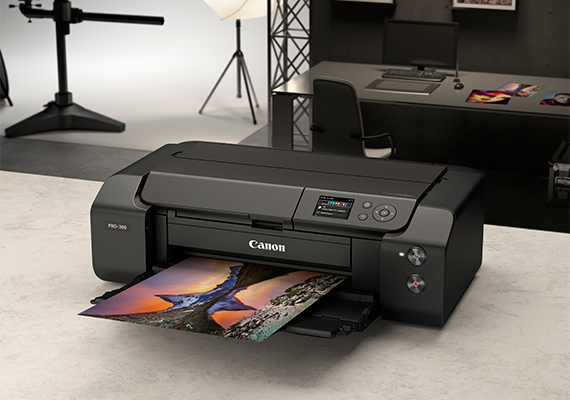
It is no longer news that the semiconductor industry is facing more demands than it can meet leaving several backlogs in orders. This has led to a global chip shortage forcing companies who rely on these chips for production to make adjustments. Popular printer manufacturer Canon has reportedly made an adjustment to a feature on its printer cartridge and we doubt if the feature will be missed by many.
According to a report by Apple Insider, Canon printer cartridges are no longer shipping with chips programmed to confirm that the ink inserted is genuine or fake. The situation was first discovered by Twitter user Mario W who disclosed that Canon is producing ink cartridges devoid of what he termed “copy-protection measures.” The tipster also disclosed that the company is already contacting customers about a fix.
Apart from detecting genuine ink, the chip on the cartridge also helps coordinate other functions like alerting users of the ink level. Apple Insider noted that a support page for several of the brand’s imageRunner printers listed on its Europe website have indications that they use ink cartridges affected by the shortages. The company stated that the absence of a chip won’t affect the performance of the printers but noted that features such as “the ability to detect toner levels” could be affected. There is also a guide on how to bypass a warning message about a “malfunctioning cartridge”.
We doubt if so any persons would miss this feature as it is mostly self-serving. Most printer manufacturers have often subjected users to using ink cartridges manufactured by them even in cases where there are cheaper third-party cartridges. However, we believe the company will resume manufacturing ink cartridges with the chip as soon as the chip crisis resolves.
Yesterday we reported that future iPads might sport up to 15-inch OLED displays. However, new reports have surfaced stating that it might not be possible till 2024.
According to a report by TheElec (via 9TO5Mac), Apple has abandoned plans for an Oled iPad this year. Sources have stated that the reason behind this decision was Samsung’s inability to provide the OLED displays according to Apple‘s quality requirements at a workable price.
The Cupertino-based giant wants the OLED panels to have two stack tandem structures, with two emission layers, instead of the conventional single-stack structure. These panels are brighter than the traditional OLED panels and are much more complex and costly to manufacture.
The report has stated that this requirement has made the project financially unviable for Samsung at Apple’s price. However, a next-generation manufacturing process would solve the problem by reducing the cost of production. But this would require a significant investment from Samsung to buy new equipment and make adjustments to their facilities.
The new equipment will likely be delivered in 2023, making the customers wait till 2024 for an iPad with the two-stack tandem structure OLED panels. The two tech giants are still discussing the matter. Sources suggest that if Samsung can secure a large enough order from Apple this time around, they can finalize the spending plan for this project and start ordering needed equipment during the third quarter of 2022.
In December, Ola Electric started the delivery process of their much-anticipated S1 and S1 Pro electric scooters in India, which was delayed from their initial delivery schedule of November 30th due to chip shortages.
Now, Ola Electric seems to be upscaling production of the S1 scooters as the company’s CEO Bhavesh Aggarwal states that the factory is now churning out 1,000 units per day. The news comes with another announcement by the CEO confirming that Ola Electric will soon be opening the purchase window for remaining customers.
The company has claimed to have delivered nearly 4,000 S1 e-scooters to its customers since the delivery process commenced back on December 15, 2021.
The company claims that the Ola S1 can offer a range of 121 kilometers while the Pro model’s range is rated at 181 kilometers. Ola provides a portable 750W charger and is also setting up its ‘Hypercharger’ network across the country, allowing users to regain about 75 kilometers of range in just 15 minutes.
The Ola S1 has a starting price of ₹99,999 (~$1,348) while the pricing of the upgraded Ola S1 Pro starts at ₹1,29,999 (~$1,753). The bookings started on September 15 2021 and the company announced it had done sales worth ₹600 crores on the first day, reaching ₹1,100 crores on the second day.
However, if you missed the initial purchase window, worry not, as the process is set to start again soon. Stay tuned for more.
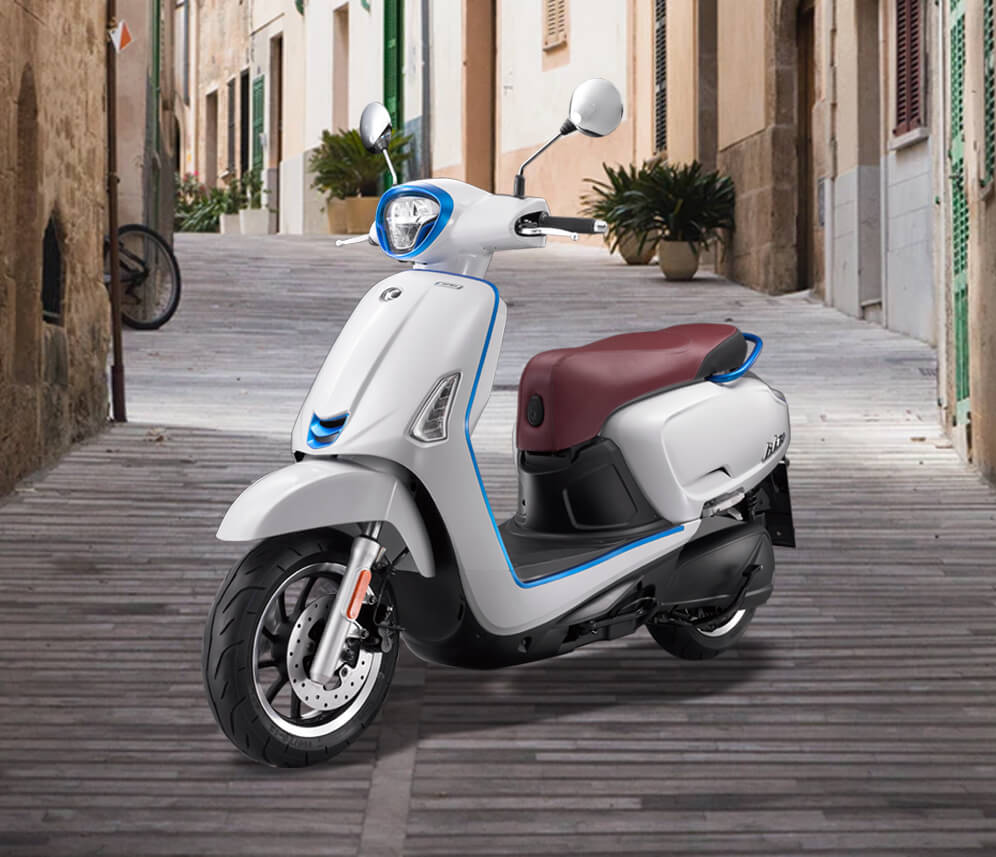
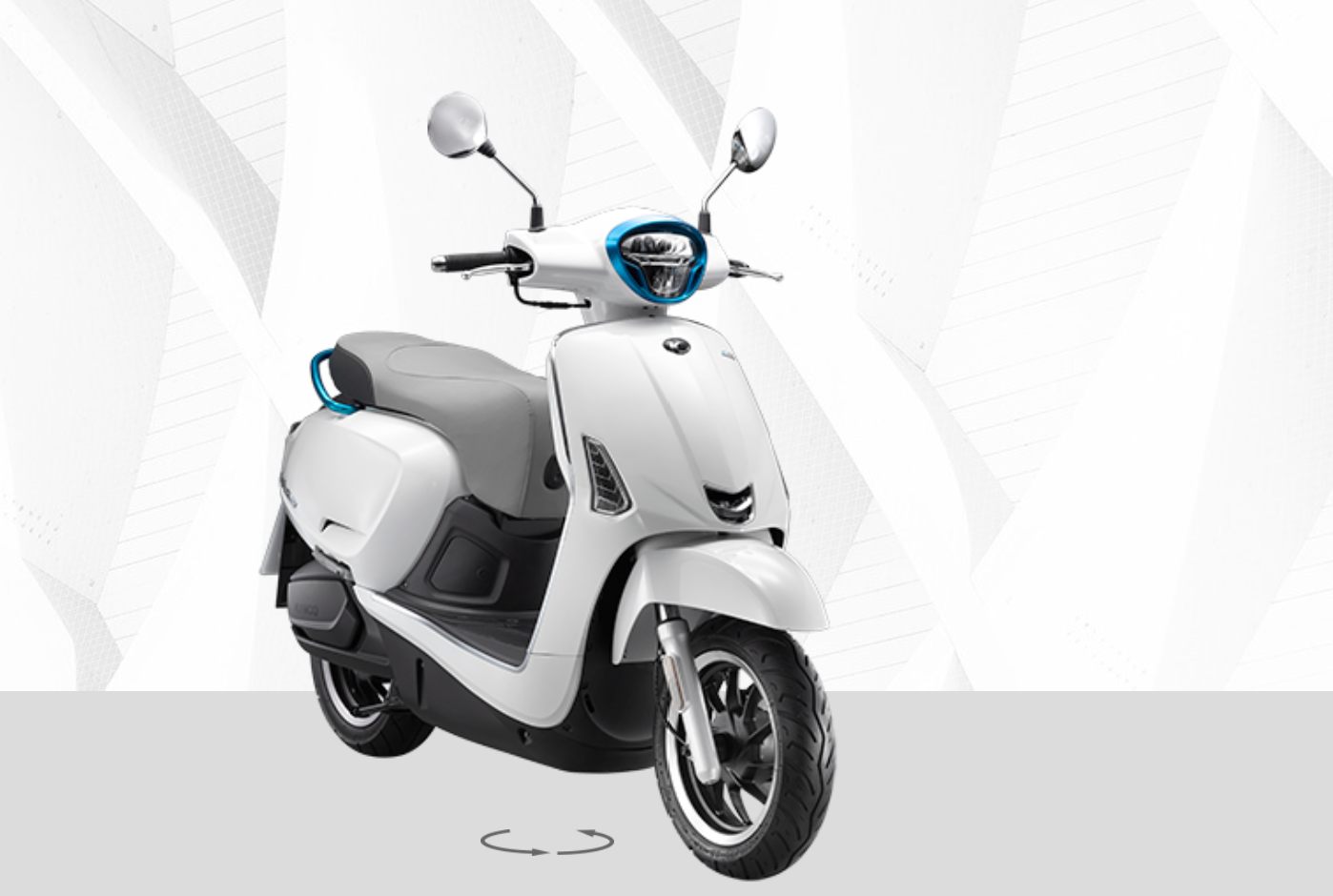
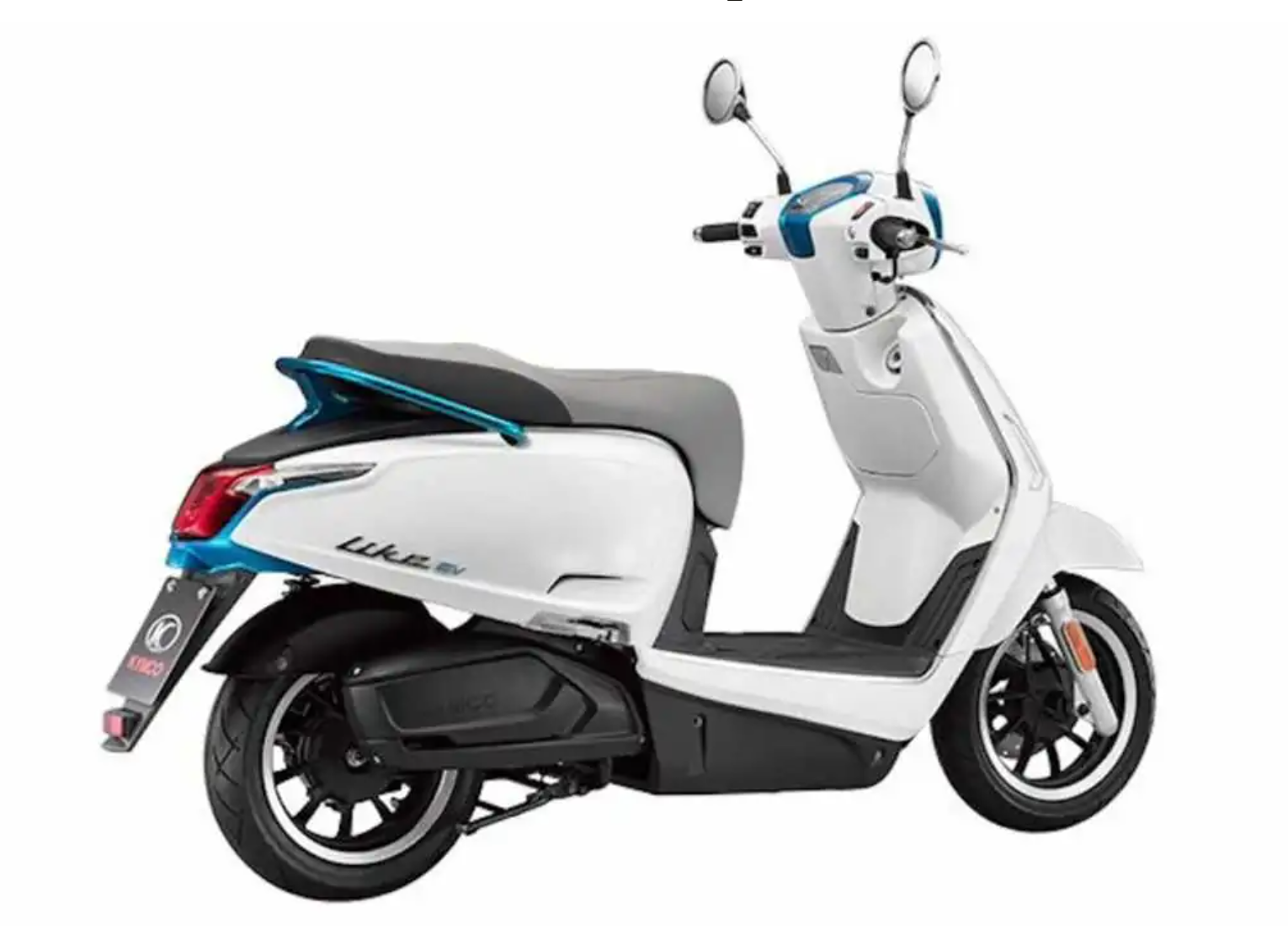
Taiwanese motorcycle manufacturer Kymco has introduced its lightweight and pretty affordable e-scooter, the Like 125 EV with a range of 199km and roughly €1,200 ($1,359) price tag. Kymco Like 125 EV has a sleek look, decent ergonomics, and generally impressive features for its price. The Like 125 EV electric scooter seems a versatile addition to the Kymco two-wheeler EV repertoire, which is growing rapidly.
The Like 125 EV is pretty a lightweight scooter when compared with other models with similar specs. It weighs just 94 kg and it will be an easy driving companion for regular city commutes. Its power setup offers 4.3 horsepower and sufficient space to accommodate five Kymco’s Ionex batteries, thus giving the two-wheeler 199 km range. The Ionex is Kymo’s proprietary battery technology which can charge under an hour. The Ionex battery has a lifetime of up to 1,000 charging cycles.
The Kymco Like 125 EV bears some semblance with some of Kymco’s gas-powered models like the Like 150. There are some improvements though, including the headlamp cover, the grab handle at the back, and the headlight bezel, showing a blue finish. The Like 125 EV can connect to your smartphone via an app to access information such as battery level and speed. The digital display panel is also informative and quite expansive for the scooter’s size.
The Kymco Like 125 EV will be available in Europe and possibly Asia and parts of Central America, although there is no clear information yet on Kymco’s marketing strategy.
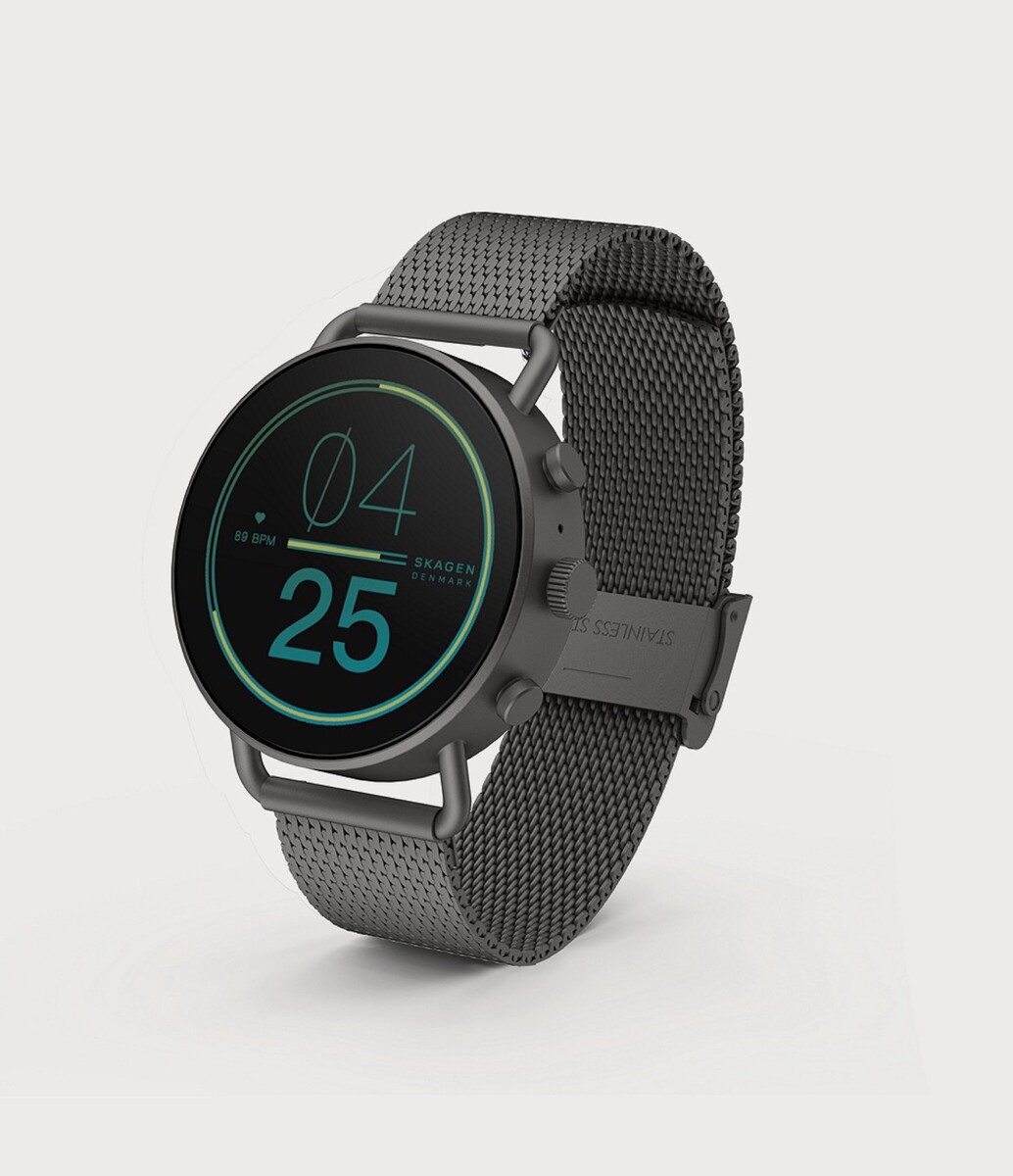
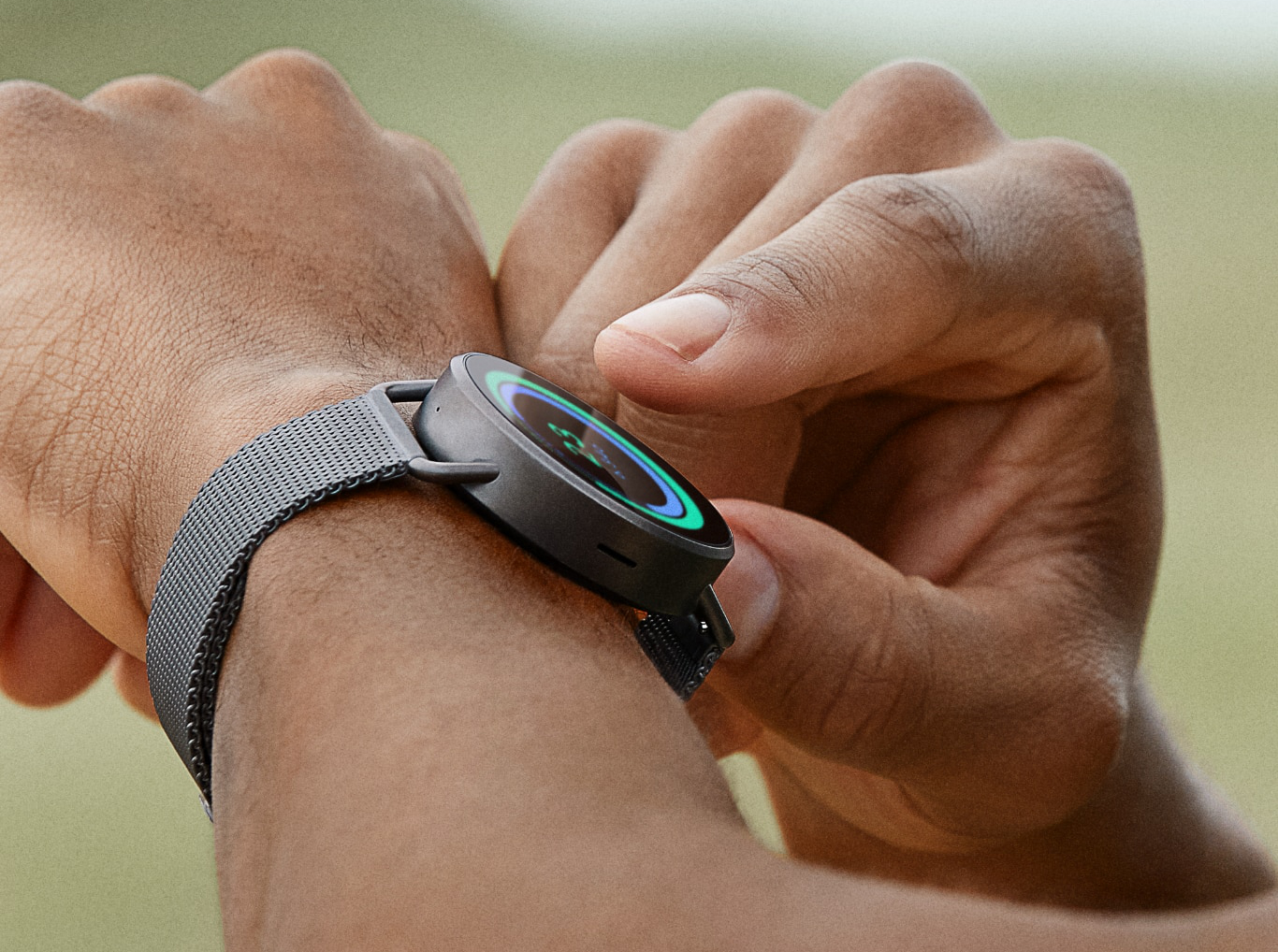
Skagen has launched the Falster Gen 6 smartwatch, a successor to the Falster 3. The Falster Gen 6 is powered by Qualcomm’s Snapdragon Wear 4100+ chip, offers fast charging functionality as well as an overall minimalist design. The Skagen Falster Gen 6 predecessor, the Skagen Falster 3, is equivalent to the Fossil Gen 5. The Skagen Falster Gen 6 will be available in parts of Europe, Japan, and the United Kingdom with a $295 price tag.
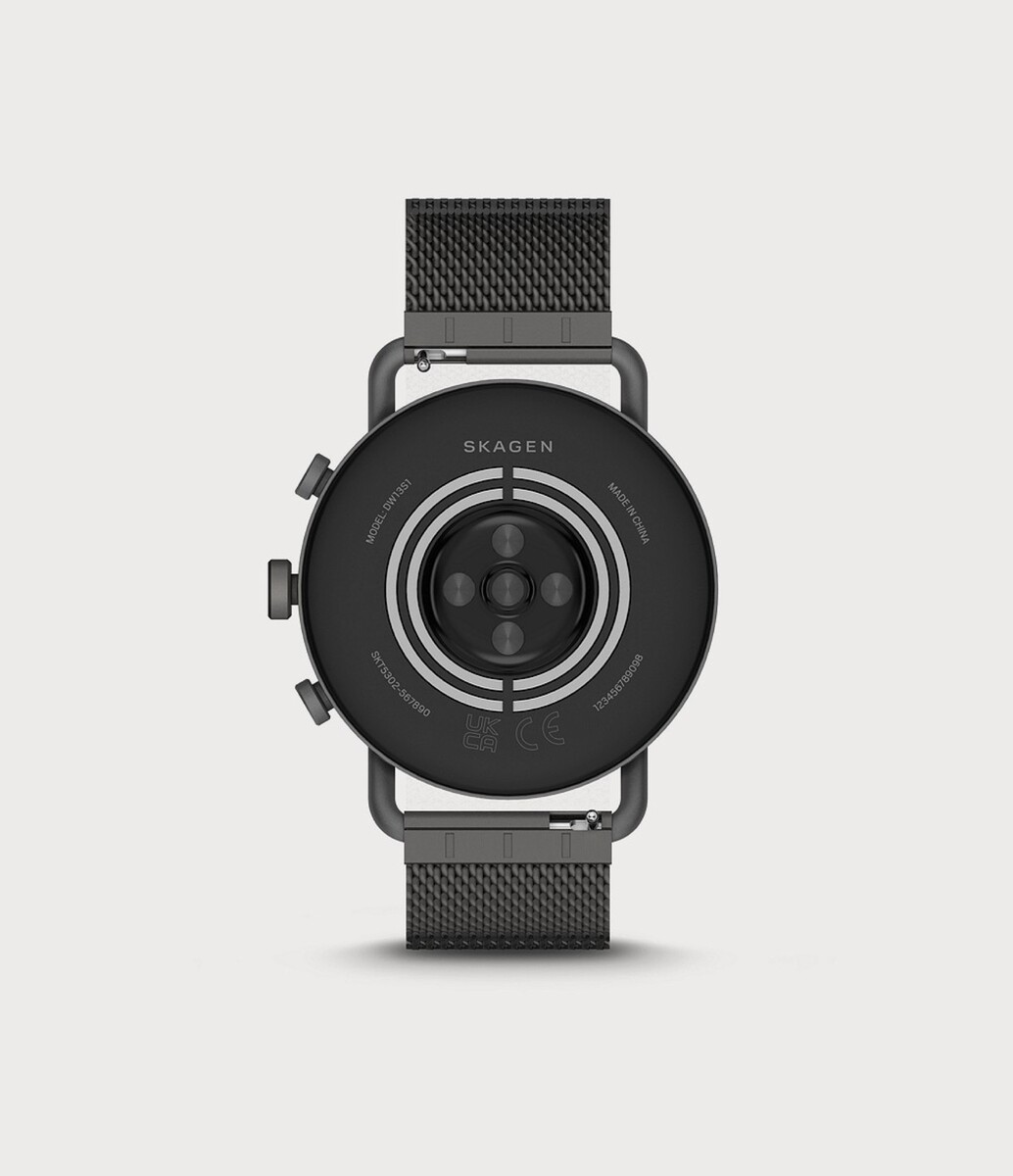
Apart from its Snapdragon Wear 4100+ SoC, the Falster Gen 6 has 1GB of RAM, 8GB of storage, and a 1.28-inch display. The display of the Falster Gen 6 is complemented by two physical buttons and a digital crown. The Falster Gen 6 runs on Wear OS2, like its Fossil counterpart that was released in 2021. It is speculated that the Falster Gen 6 will get the OS 3 upgrade around the middle of the year at the earliest.
The new smartwatch also has 5-ATM water resistance capability, Bluetooth 5.0 Low Energy connectivity, and an NFC chip. Some reviews have pointed out that the GPS, sleep tracking, and heart rate sensors of the Falster Gen 6 may not be accurate, while the 300mAh battery offers up to 24 hours of activity.
Skagen says the Falster Gen 6 is now available for orders while the first deliveries will be made at the end of January 2022. It remains to be seen what reception awaits the Falster Gen 6 in the respective markets in select European countries, Japan, and the UK.
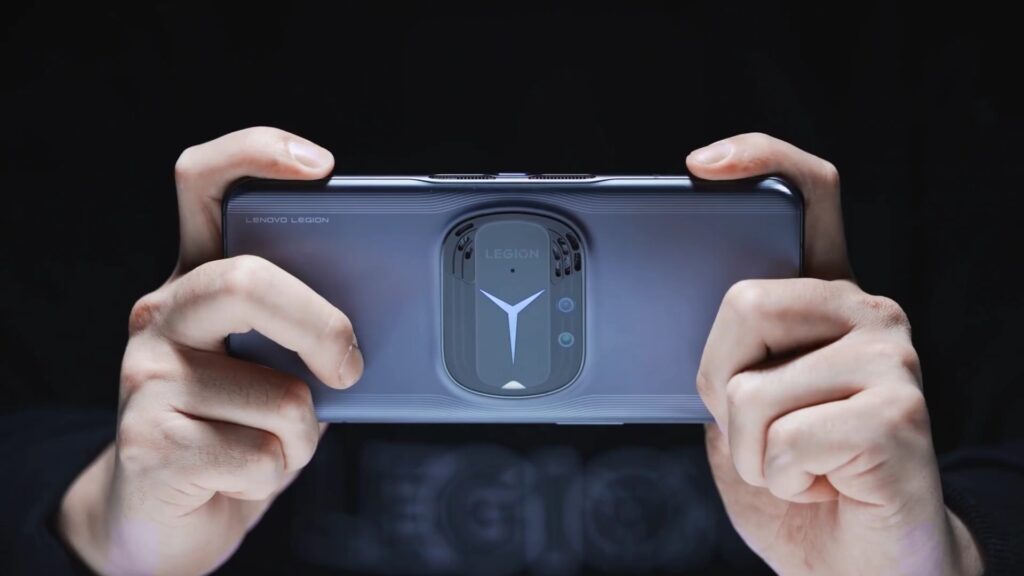
For the past few days, Lenovo has been teasing its highly anticipated Legion Y90 gaming smartphone. The brand has revealed the design of the product along with a couple of its specs, but the company has provided no information about a possible release date. Now, a Lenovo smartphone has been spotted on the 3C database, which might be the upcoming Legion Y90.
As per the latest report by MySmartPrice, a device carrying the model number L71061 has been spotted on the 3C certification website. The certification also revealed that the device will come with 68.2W fast charging support.
Image via MySmartPrice
The device could be the Legion Y90 gaming smartphone which has already been revealed to feature a 6.92-inch HDR-enabled Samsung E4 AMOLED display with a 144Hz refresh rate, a 720Hz touch sampling rate, and a certified low blue light emission mode.
Additionally, the device will house the Qualcomm Snapdragon 888 SoC paired with LPDDR5 RAM, UFS 3.1 storage, and Double Engine Air Cooling technology.
Unlike conventional smartphones, the phone will lack a notch or a punch hole. Instead, it will have a bezel nesting a long earphone piece and a selfie camera. Though the display will be flat, it will have rounded corners.
Previous teasers of the Lenovo Y90 have revealed two USB Type-C ports (one on the left and another at the bottom), a volume rocker on the left, and a SIM card slot as well as a primary microphone hole at the bottom.
As mentioned before, the Legion Y90 will likely have 68W fast charging support, the same as the Lenovo-owned Motorola‘s Moto Edge X30. The Moto Edge X30 is also expected to debut in India soon as the device was recently spotted on the BIS certification database.
You may probably not have heard of Fire-Boltt but the company recently sprang into the limelight with the launch of the Fire-Boltt Ninja series smartwatches consisting of the Ninja, Ninja 2, and Ninja Pro. There are tips that the Indian wearable maker is now planning to increase the lineup with the launch of a Ninja 2 Max smartwatch.
The Fire-Bollt Ninja 2 Max has now been listed on Amazon India with the landing page providing a few details about the smartwatch. The Ninja Max will bring the total number of units in the lineup to four when it is launched.
The Amazon listing shows the smartwatch will feature a 1.5-inch touchscreen display which is only slightly bigger than the 1.3-inch screen on the Fire-Bollt Ninja 2. Fire-Bollt is yet to reveal the resolution of the display, though.
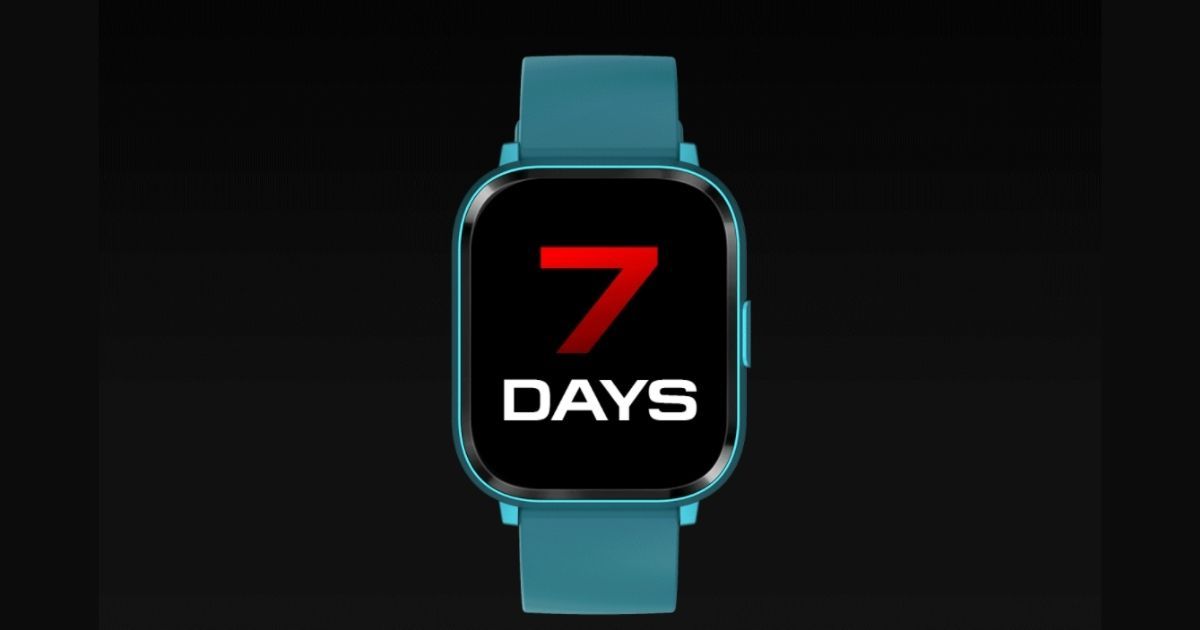
It will also come with up to 7 days of battery life. The Ninja 2 Max equally arrives with up to 20 sports modes and several health and fitness-related features. The watch is also expected to feature a side-mounted button that will allow users navigate through the device.
The watch will come in black, Rose Gold and Dark Green color variants. It will also be equipped with over 20 sports modes such as walking, running, cycling, basketball, skipping, football, swimming, badminton. It will also be equipped with all the major features found in smartwatches such as an SpO2 sensor to keep track of the blood-oxygen level. There is also a heart rate tracker and sleep tracker. Furthermore, the Ninja 2 Max comes with an IP68 water and dustproof rating.
There is no word yet on the launch date but we expect it to happen soon.
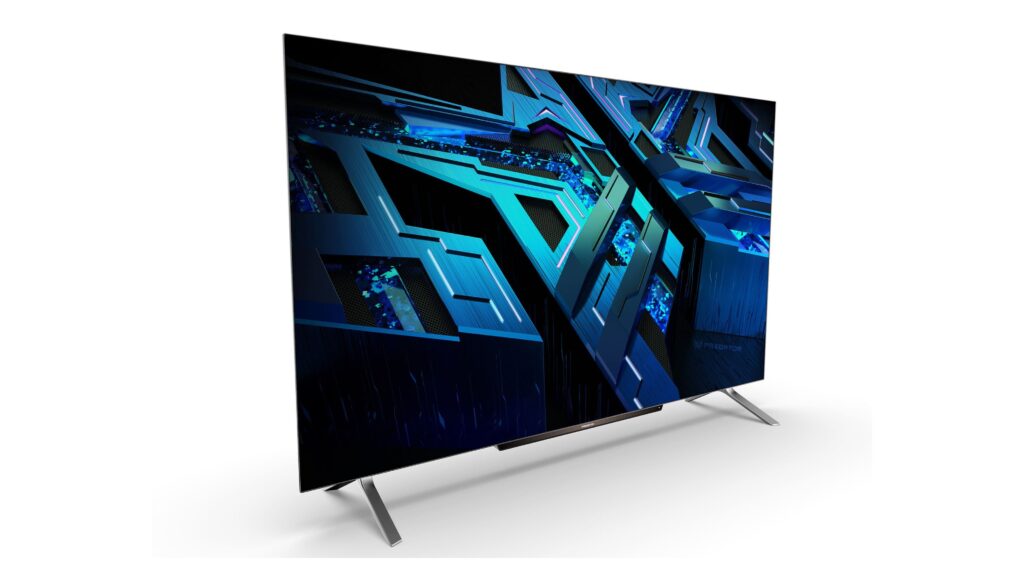
AT CES 2022, companies announced a wide variety of monitors. The most interesting one was obviously Samsung Odyssey Ark. But earlier today, we came across yet another intriguing monitor that went official at around the same time. This one is a giant OLED monitor from Acer called Predator CG48 Gaming Monitor.
Acer Predator CG48 Gaming Monitor Specifications and Features
Unlike most monitors in the market, the Acer Predator CG48 not only has a 4K OLED panel but also measures 48-inch in size. Hence, the company advertises this product to be a TV replacement for gaming.
Talking about features, the monitor has a contrast ratio of 13K:1 and covers 98% of the DCI-P3 color gamut. The HDR10-enabled screen supports up to 0.1ms GtG response time and AMD FreeSync Premium Pro technology to offer variable refresh rates of up to 138Hz.
As far as ports are concerned, it sports an HDMI 2.1 port, a DisplayPort 1.4, four USB 3.2 ports, and a USB Type-C port.
Acer Predator CG48 Gaming Monitor Price and Availability
The Acer Predator CG48 Gaming Monitor will be available as soon as Q2 2022 in China, followed by Q3 2022 in North America and EMEA.
The monitor carries the following price tags in different regions.
Back in November 2021, Realme Narzo 50A Prime was first revealed via a source code leak. The device was revealed to carry the model number RMX3516. Now, a new leak has surfaced hinting at an imminent release of the device in the Indian market.
Realme Narzo 50A
According to a report by 91mobiles, tipster Mukul Sharma has shared new screenshots featuring the Realme Narzo 50A Prime moniker on Realme India’s website. The screenshot also reveals the Realme 9 series listing, which is yet to launch in the Indian market.
No specifications and features of the upcoming Narzo 50A Prime have been revealed yet. However, the device is expected to have some similar specifications as the Realme Narzo 50A which was launched in India back in September 2021.
Realme Narzo 50A specs and features
The Narzo 50A sports a 6.5-inch display that offers 400 nits of brightness on the front with a waterdrop notch and an 88.7 percent screen-to-body ratio. On the rear, it sports a triple camera setup, which includes a 50 megapixel AI camera, a 2-megapixel portrait lens, and a 2-megapixel macro sensor, while the front houses an 8-megapixel selfie camera. The device is available in two colors, namely Oxygen Blue and Oxygen Green, and two storage variants as well, with 4GB of RAM paired with either 64GB or 128GB of internal storage.
The Narzo 50A packs the MediaTek Helio G85 processor that is optimized for gaming, which is paired with the ARM Mali G52 GPU. The device is powered by a large 6,000mAh battery that supports 18W fast charging along with reverse charge support as well that enables it to charge other products. It also offers a rear-mounted fingerprint reader for security and supports a microSD card slot for memory expansion up to 256GB.
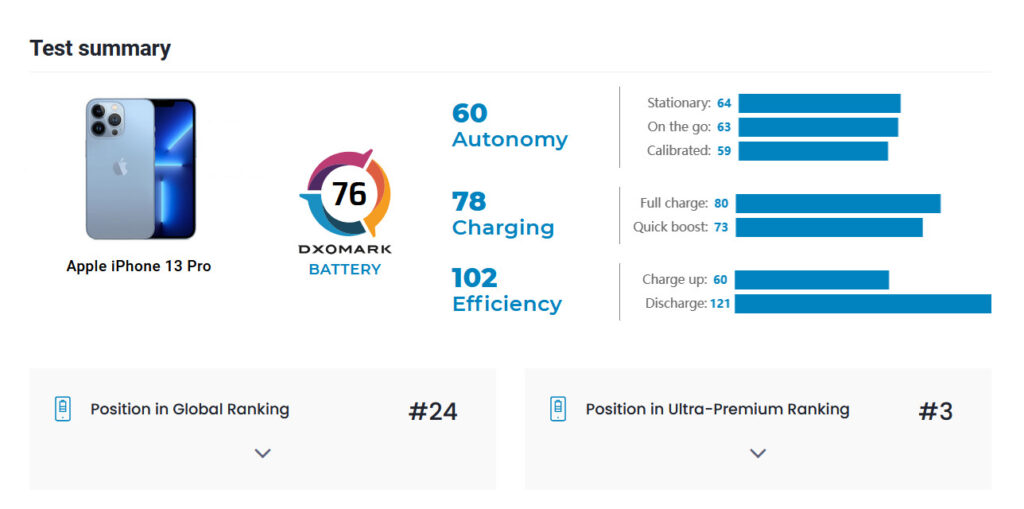
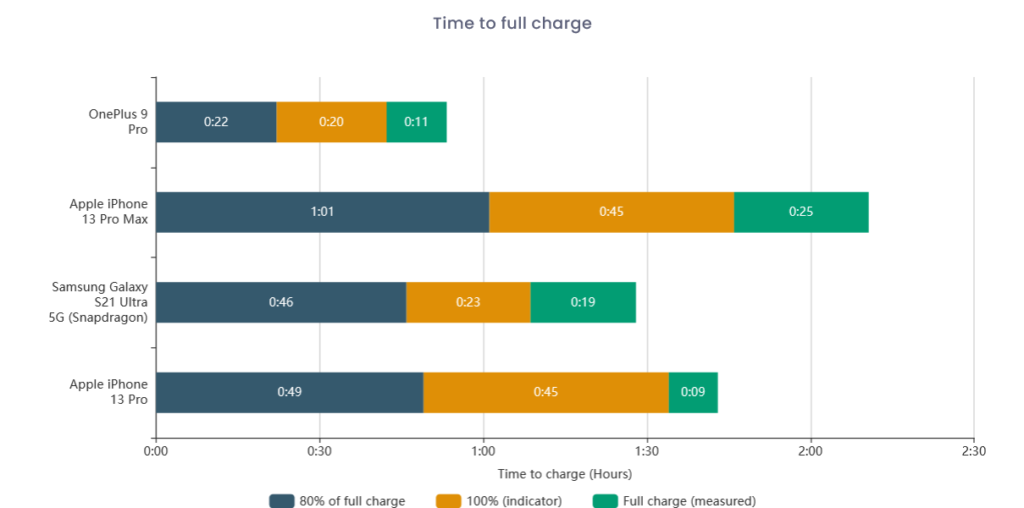
In a new battery test shared by DXOMARK on Monday, the Apple iPhone 13 Pro bagged a score of 76, beating the likes of the Motorola Edge 20 Pro, Galaxy S21 Ultra, and the OnePlus 9 Pro, all with much larger batteries. It still failed to beat the iPhone 13 Pro Max though, which currently ranks third in DXOMARK’s battery charts with a score of 89.
The phone, with its 3,095mAh battery, has managed to achieve more than 2 days of ‘autonomy’ with moderate use. Autonomy is what DXOMARK calls a comprehensive range of tests for measuring battery life in all kinds of real-life scenarios.
Another test was ‘on the go’ that measures battery life while traveling. It makes a lot of sense to dedicate a test to usage while commuting since there are multiple extra demands that eat up battery life, such as the continuous signaling associated with cellphone network selection. In this, the iPhone 13 Pro exhibited “better-than-average performance than Ultra-Premium devices.”
As for charging, the iPhone 13 Pro needs 1 hour 34 minutes to arrive at a 100% charge showing on the battery level indicator, but an additional 9 minutes to get its 3095 mAh battery completely charged. Users will be better off charging to 80% in most scenarios as that only takes 49 minutes.
But it’s efficiency where the iPhone 13 Pro Max truly shines, with its battery exhibiting low consumption across almost every use case. In fact, the consumption is so well managed that the phone has the lowest discharge current for WiFi video streaming and video playback in DXOMARK’s entire database.
To read the full DXOMARK analysis on the iPhone 13 Pro battery, head here.
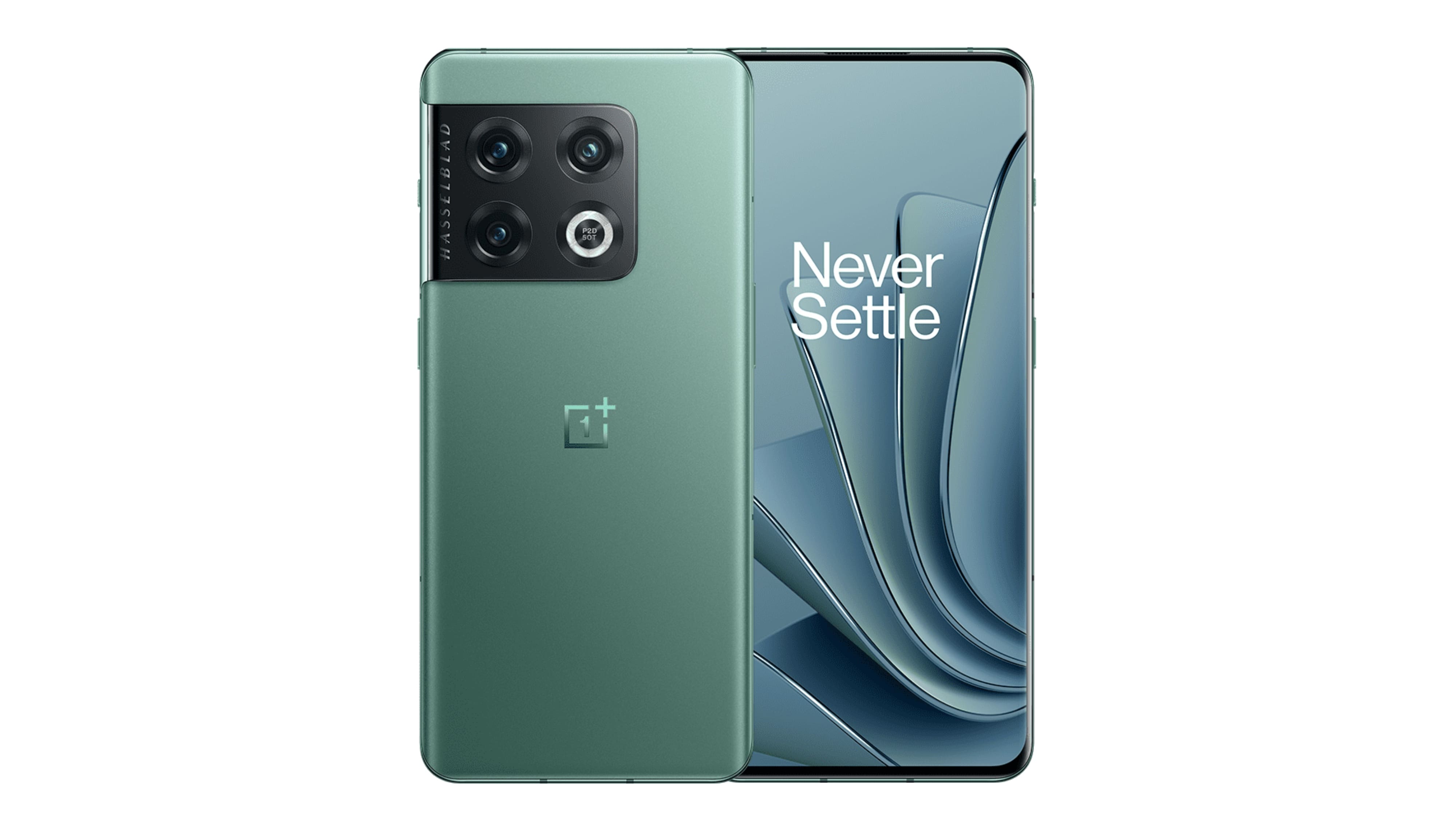
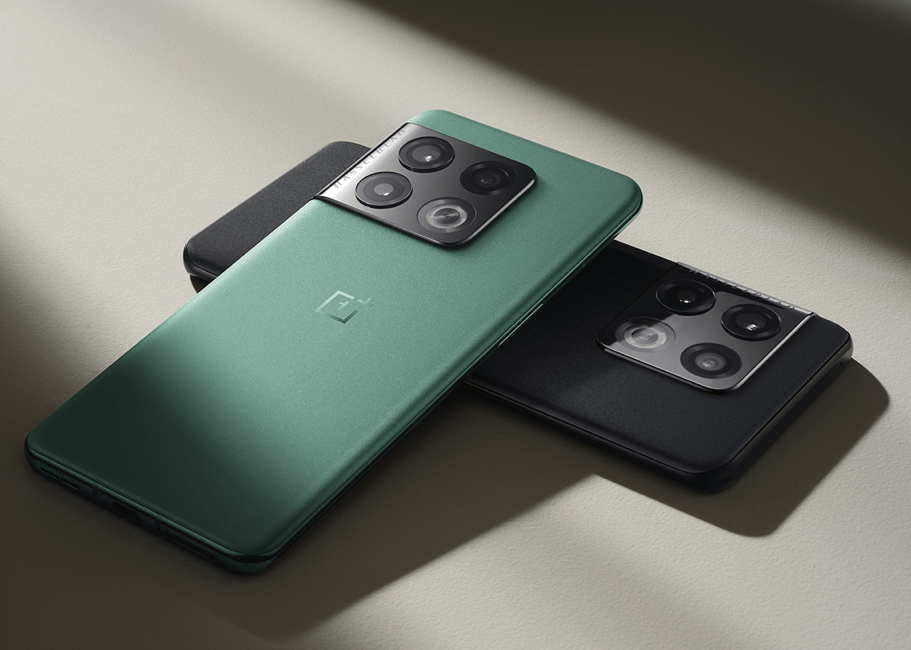
Earlier today (11th January 2022), the highly anticipated OnePlus 10 Pro was finally launched in China. This is the company’s latest flagship entry and is the higher end variant of its new 10 series. But, how does it stack up against last year’s flagship the OnePlus 9 Pro and is it a worthy upgrade? Lets find out.
OnePlus 10 Pro VS OnePlus 9 Pro
OnePlus 10 Pro
OnePlus 9 Pro
DIMENSIONS AND WEIGHT
163 x 73.9 x 8.5mm, 200.5 g
163.2 x 73.6 x 8.7 mm, 197 g
DISPLAY
6.7 inches, 1440 x 3216p (Quad HD+), 2nd Gen LTPO Flexible AMOLED
6.7 inches, 1440 x 3216p (Quad HD+), LTPO Fluid2 AMOLED
5,000mAh, 80W SuperVOOC fast wired charging, 50W AirVOOC fast wireless charging
4500mAh, fast charging 65W, wireless charging 50W
ADDITIONAL FEATURES
5G, x-axis linear vibration motor, dual stereo speakers
Dual SIM slot, 5G, IP68 waterproof
PRICE
~$737
~$766
Design and Display
With the launch of the OnePlus 10 Pro, the company made a major shift in terms of design. While the 9 Pro also featured a redesign over the 8 series, the top end 10 Pro’s rear design is quite a bit different and controversial. Some prefer the large new camera module, while some don’t. But if you’re looking for a smartphone that stands out between the two, the 10 Pro has more of a design impact. Talking about the display, both models feature a 6.7 inch AMOLED panel with the same resolution. Both of these also use LTPO technology with adaptive refresh rate up to 120Hz, but the latest model arrives with a second gen flexible LTPO panel. So, the display isn’t a major factor when considering an upgrade.
Specs & Software
In terms of specifications, both smartphones are quite similar, especially in regards to storage. The OnePlus 10 Pro and 9 Pro are available in either 8GB or 12GB of RAM and up to 256GB of internal storage. The former features Qualcomm’s latest Snapdragon 8 Gen 1 chip while the latter houses the last gen Snapdragon 888 SoC. The new chip is about 20 percent faster and 30 percent more power efficient over the older model while its GPU is quite a lot more powerful than the last gen. So, if you wish to have the latest and greatest device every year, the upgrade seems viable, although, the Snapdragon 888 is still a flagship grade processor that can handle the same tasks as the 8 Gen 1 without a hitch. But, the one aspect that might turn some away from the upgrade is the ColorOS 12.1 on the OnePlus 10 Pro, since many prefer the clean and stock Android like OxygenOS. Meanwhile, gamers might prefer the improved GPU on the new chipset.
Cameras
Apart from the noticeable changes with the camera modules between the two phones, the number of sensors are also different. The OnePlus 9 Pro sports a quad camera setup while the 10 Pro features just three sensors on the rear. The primary camera on both phones are exactly the same so there might not be a large change in photography. The 50 megapixel ultra wide angle lens and 8 megapixel telephoto lens also make a reappearance and are quite similar on paper. Regardless, the latest handset’s sensors are also co-tuned by Hasselblad with features like Hasselblad Natural Color Optimization 2.0, XPan Mode, and more. So, there aren’t a lot of changes to see here either, but only a real life comparison can tell what kind of upgrades the new phone offers in this department.
Battery
The OnePlus 10 Pro is powered by a larger 5,000mAh battery pack while the 9 Pro is powered by a 4,500mAh battery. Although, the newer model supports up to 80W SuperVOOC fast wired charging and 50W AirVOOC fast wireless charging while the predecessor supports 65W Warp Charge and 50W wireless charging called Warp Charge 50 Wireless. In other words, your handset will charge faster and likely last longer owing to its more efficient processor.
Price
The OnePlus 10 Pro starts from 4,699 Yuan (roughly 737 US Dollars). Meanwhile, the OnePlus 9 Pro had started from a higher price tag of 4,999 Yuan (roughly 766 US Dollars). So given the option between the two at their launch prices, the newer model would obviously offer better value considering it features cutting edge hardware and will receive updates for an entire year more as well since it just launched.
Verdict
On paper, the OnePlus 10 Pro doesn’t seem to offer a large enough update to make it a worthwhile upgrade. So, if you already have the OnePlus 9 Pro, we can’t advise an upgrade with these incremental changes. But, if you’re upgrading from any older OnePlus smartphone model like the 8 series, the 10 Pro might be a better option to go for.
Logitech has officially launched the Logitech G435 Lightspeed Wireless Gaming headset in India. The wireless gaming headset is intended to be used with PCs, PlayStation devices, and mobiles phones. It comes with features like DolbyAtmos audio, FSC certification, and is made out of recycled plastic.
The Logitech G435 is priced at Rs 7,495 in India, but it is currently on sale for Rs 6,995 on Amazon. It has three color variants – Black, White, and Blue.
The Logitech G435 is a wireless gaming headset that comes with 40mm drivers. The company claims it to be ultralight coming at 165 grams. The headset comes with an over-ear design that’s suited for small and medium head sizes, as per Logitech(via – MySmartPrice).
The headset comes with dual beamforming mics that are touted to eliminate background noise offering better vocals. It has Dolby Atmos and Windows Sonic surround sound. As for the battery, it has up to 18 hours of playback on a single charge and features a USB Type-C port for charging.
The earbuds have a wireless range of up to 33 feet and come with a 2-year limited hardware warranty. It has the following dimensions – 163 x 170 x 71mm.
Interestingly, the earbuds come with Forest Stewardship Council(FSC) certification making them more sustainable. Logitech claims that the material used in the headset is made from a minimum of 22% post-consumer recycled plastic. That said, the headset is claimed to be Carbon Neutral.
We use cookies on our website to give you the most relevant experience by remembering your preferences and repeat visits. By clicking “Accept”, you consent to the use of ALL the cookies.
This website uses cookies to improve your experience while you navigate through the website. Out of these, the cookies that are categorized as necessary are stored on your browser as they are essential for the working of basic functionalities of the website. We also use third-party cookies that help us analyze and understand how you use this website. These cookies will be stored in your browser only with your consent. You also have the option to opt-out of these cookies. But opting out of some of these cookies may affect your browsing experience.
Necessary cookies are absolutely essential for the website to function properly. This category only includes cookies that ensures basic functionalities and security features of the website. These cookies do not store any personal information.
Any cookies that may not be particularly necessary for the website to function and is used specifically to collect user personal data via analytics, ads, other embedded contents are termed as non-necessary cookies. It is mandatory to procure user consent prior to running these cookies on your website.