The upcoming QuietComfort 45 headphones from Bose have recently appeared in leaked promotional images. Last month, the QC 45’s appeared in an FCC filing, suggesting an imminent launch. Now, courtesy of WinFuture, we have more details regarding Bose’s upcoming headphones.
Source: WinFuture
The QC45 would come in a similar design to the last generation’s QC35. According to the report from WinFuture, the new headphones will offer active noise cancellation (ANC) and transparency mode dubbed as Aware Mode. The headphones would be tuned with Bose’s signature Active EQ.

Source: WinFuture
The QuietComfort 45 is rumored to come with a 460mAH battery which should offer up to 24 hours of continuous playback. Further, a quick 15 minutes charge should give you battery life for around 2.5 hours of continuous playback.
The QC45’s will come with the familiar old design of the QuietComfort series, having a wide headband with earcups attached at both ends. It would come with buttons for managing noise control and a button dedicated to activating voice assistants. The headphones will reportedly be “shockingly light”, and to achieve this, the company is said to have used synthetic leather and glass-filled nylon.
There’s no word yet on how strong the active noise cancellation will be on QuietComfort 45. However, it is expected to come with best-in-class active noise cancellation due to Bose’s proprietary technology that claims to deliver deep, clear sound.
Source: WinFuture
The Bose QuietComfort 45 comes with Bluetooth 5.1, enabling multipoint connectivity with two simultaneous devices. Moreover, it would also have a 3.5mm jack for wired connectivity, and a 3.5mm cable comes in the box.
The Bose QuietComfort 45 will be going on sale in Germany very soon. As for the prices, the recommended retail price for QC45 is expected to be $329 in the United States. We also expect a global launch soon, considering these upcoming headphones from Bose have been leaked in detail.
Realme has officially announced its first laptop, the Realme Book in different markets today. Since the company launched the laptop in China, India, and Globally, here’s a quick overview of the Realme Book pricing, variants, and availability in different markets.
Realme Book Pricing & Availability in China, India, & Global Markets
4299 yuan (limited period launch price)
4699 yuan (regular price)
-
$999
Availability
Pre-sale at 18:30 on Aug 18
Sale from Aug 25
Sale from 30th August 2021
Will be announced later for each market separately
If you notice, in China, the 8GB and 16GB RAM versions will have exactly the same pricing during the promotional launch period. So it makes sense to get the top-end model if you are buying the new Realme notebook in the domestic market. Also, while the company announced four variants of the laptop, all of them won’t be available in every market. We’ll likely get more details about the pricing and availability for specific global markets in the coming weeks.
It is also worth mentioning that in China & Global markets, the new Realme notebook will be sold as the Realme Book, while in India, it’s officially called the Realme Book Slim.
Realme Book Design & Specs
The Realme Book comes with a metallic body with a mirror brand logo and the front sporting a backlit keyboard. The laptop weighs just 1.38 kgs and measures a slim 14.9mm and will be available in two color models, Real Blue and Real Grey.
The new laptop features 11th Gen Intel Core processors, either an i3 or i5. This will be supported by 8GB/16GB of LPDDR4X RAM and up to 256GB/512GB of PCIe SSD storage. For graphics, the notebook sports Intel’s Iris Xe graphics. The laptop will run Windows 10 out of the box but will support Windows 11 update in the future. For ports, the company offers a USB-A 3.2, 3.5mm headphones jack, Thunderbolt 4, and even USB-C 3.2 port as well.
The Realme Book has a 54Whr battery with 65W super-fast charging. Just 30 minutes of charging can bring the battery up to 50 percent. The company promises a battery life of up to 11 hours.
Other features include PC connect, which allows a Realme smartphone to connect to the laptop. This brings the device and the laptop into one screen and supports simple drag and drop functions for file transfer.
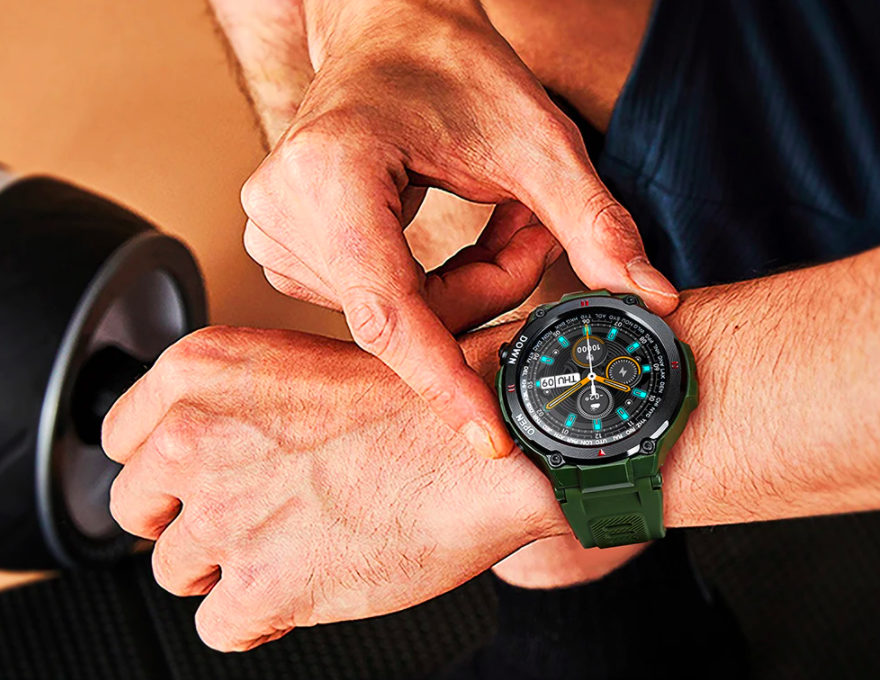
Tronsmart Battle Gaming Earbuds which generally retails for $40 is now available at a discounted price of $26.99 by using the coupon code: GKBTSDE18 only at geekbuying.com. Please note that this is a limited-time coupon.
Generally retailing for $40, you can now buy Tronsmart Battle Gaming Earbuds at a discounted price of $26.99 by using the coupon code: GKBTSDE18 only at geekbuying.com. Additional shipping charges may be applicable on this order. Please note that this is a limited-time coupon valid only on purchases made from the German-3 warehouse. So place your order asap.
For more information on such exciting deals and offers check out ourdeals hub.
* Please Note: When you buy something using the links in our articles, we may earn a small commission at no cost to you.
After three years of break from the tablet market, Xiaomi has finally returned with the launch of the Mi Pad 5 series. As usual, we strived hard to get the new Mi Pad tablet early, and we are one of the first ones to review the Mi Pad 5 Pro.
The Android tablet market had been plagued with issues such as lack of applications and appropriate use case scenarios. Without significant hardware upgrades and software optimizations, it was still impossible for Android tablets to take the center stage. And, until a few months ago, these tablets were not even close in comparison to Apple’s iPads.
So how does the Mi Pad 5 Pro fare in this market? Will it finally give rise to a new era of Android Tablets?
Let’s find out.
This is the Mi Pad 5 Pro, which aims to be both productive and entertaining. Indeed, Xiaomi has made great efforts to package this into a product that can be used for work.
Mi Pad 5 Pro Review: Design
But, to be honest, it looks too much like an iPad Pro. Whether it’s the design or the User interface of MIUI for Pad, everything looks way too familiar.
The Xiaomi Mi Pad 5 Pro comes with a metal frame and a CNC metal cutting process at the frame edges, which makes the overall look and feel, a bit more refined.
However, at the same time, the edges of the side frame are sharper than all the tablets that we reviewed in 2021, which also causes slight discomfort when holding it.
The rear design of the Mi Pad 5 series continues the design pattern of the Mi 11 series. For example, you’ll find the typical Xiaomi Camera module in the top-left corner and the Xiaomi logo below the cameras. The back cover is made of plastic material with a matte finish, which offers a good feeling when you are holding it. So the new Mi Pad in my hand has a pretty decent built quality.
The lack of a 3.5mm earphone jack may become one of the few drawbacks of the Mi Pad 5 Pro, especially as an entertainment device.
Now that we’ve introduced most details of the new Mi Pad’s design, let’s talk about its USB ports.
The USB-C port is another drawback of the new tablet. It’s only compatible with USB-2, which neither supports video output, nor high-speed data transfer. In addition, the compatibility and support for expanded accessories are also limited, which may reduce the possibilities of device expansion.
Mi Pad 5 Pro Review: Display
Almost all the popular features of a tablet would start with the display. The new Mi Pad’s display features 120Hz high refresh rate with a 2K resolution. It has Dolby Vision certification and supports HDR Content. In the actual test, the Mi Pad 5 Pro successfully recognized and played HDR videos in different apps. Although we have to admire Xiaomi’s efforts on software support for HDR content, the display’s maximum brightness of 485 nit is a bit disappointing. So it’s good for enjoying vivid colors on the Mi Pad Pro, but at the same time, the actual HDR effect would be affected by the brightness limits.
Apart from the 2k 120Hz display, the Mi Pad Pro is surprisingly equipped with 8 speakers with Dolby Atmos support.
Thanks to the premium display and stereo audio solution, the Mi Pad 5 Pro no doubt is one of the best devices for mobile entertainment.
Mi Pad 5 Pro Review: Hardware & Performance
The performance is actually the last thing you’ll need to worry about the tablet. It is powered by the Snapdragon 870 chipset, which is also the best chipset for an android tablet so far. From the results of different benchmarks, it nearly achieved the best results that we’ve ever got on any snapdragon 870 model.
Well in actual gaming test, thanks to Xiaomi’s optimization and the tablet’s better cooling capability, the 870 chipset runs at full capacity on the Mi Pad 5 Pro. And you can even play Genshin Impact under the highest graphics at the highest framerate. Not to mention, other games like PUBG Mobile run well. The tablet was able to run the game with very little stress at a stable framerate of up to 90fps.
Mi Pad 5 Pro Review: MIUI for Pad
For any tablet, the primary goal is to be more than just a large-screen smartphone.
In this regard, we’ve seen a few creative solutions on the HUAWEI MatePad and Lenovo Xiaoxin Pad Pro. Especially on the MatePad, the software optimization was quite a surprise. As for the Mi Pad 5 Pro, its software solution is actually very similar to what we saw on the MatePad 11.
Notably, all the official apps have been optimized for a large screen interface. There’s also the optimization of third-party applications, such as displaying a square interface in the horizontal view. And in some apps, you can open dual tasks within the app and either of them can be operated independently, which is the same as the feature called App-multiplier in MatePad’s Harmony OS.
Further, to improve work efficiency, the Mi Pad 5 Pro allows users to open 2 apps at once in its split-screen view. Although it looks quite familiar, the MatePad obviously offers more possibility with opening up to 4 windows at once. In addition, under split-screen view, it’s possible for the user to drag pictures or text from one app to the other. But it seems that the feature still got annoying limits and wasn’t available globally.
As far as productivity is concerned, the MIUI for Pad obviously has a lot of features, but more importantly, the official accessories such as the keyboard and stylus play a key role in deciding whether you can actually bring it out for work. On the keyboard side, it only supports contact connection but no Bluetooth wireless connection. So there’s only one way to use the keyboard, which is to put them together under a fixed angle and use the tablet like a laptop.
Unfortunately, Xiaomi’s accessories are very hard to get. The Stylus is out of stock for now. So here we are not able to show you more details about the accessories.
But don’t worry, we will bring you a hands-on with the accessories in a following comparison video.
The software experience of the new Mi Pad gave me a strong feeling that most of the ideas looks good on paper but haven’t been well optimized yet.
Even though Xiaomi has made great efforts to optimize MIUI for Pad, it still cannot guarantee a great user experience. The brand still needs to work closely with app developers to convert their apps to work well on tablets. So before you decide to buy a new Mi Pad or any other latest tablet, you have to check whether your most-used apps have been optimized for the Pad’s system.
Mi Pad 5 Pro Review: Battery Life & Charging
Another significant strength of the Mi Pad 5 Pro is its long battery life with 67W fast charging support. Compared to the Mi Pad 4, the 8600mAh battery has increased by 2600mAh capacity.
In our actual test, the battery performed well, no matter for office use or entertainment use. After video playback for one hour and using it for general office work for another hour, the power only dropped by 28%. After completing the test, there was still around 35% of power left.
As for charging, the 67W fast charging solution is also the fastest charging power in the tablet market. It just takes 73 minutes for the Mi Pad 5 Pro to charge from 0% to 100%.
Xiaomi Mi Pad 5 Pro Review: Verdict
A lot of people were waiting for the update of Mi Pad series, and thought that the new Mi Pad 5 would be a game-changer with great value for money and top performance. Indeed, the Mi Pad 5 is one of those tablets that you can almost buy blindly without a lot of concern.
However, like its smartphones, while Xiaomi is a brand that makes great efforts in the hardware department, it still needs to fix the software on its new releases. But the good news is that Xiaomi has almost always kept its promise of fixing such bugs with regular updates.
We are planning to bring a tablet comparison video very soon. Which tablets would you want to see in the comparison with the new Mi Pad?
Please let us know down below. We will try our best to bring your recommendations in the upcoming video.
Yesterday, the iQOO 8 Pro went official as the world’s first smartphone with a Samsung E5 LTPO Super AMOLED display. Earlier today, a reliable tipster revealed that even Xiaomi is working on a smartphone with this new-gen OLED display manufactured by Samsung Display.
Xiaomi Mi 11 Ultra
According to Digital Chat Station, Xiaomi has been testing the Samsung E5 LTPO Super AMOLED display for its phones for a long time. The panel used by the Chinese tech giant is said to have a relatively smaller punch-hole and adaptive refresh rate, thanks to LTPO tech.
Unfortunately, the leaker does not say how much small the punch-hole will be. For those unaware, the Redmi K40 series has the smallest punch hole-hole in the world measuring 2.98mm. Hence, the upcoming display from Xiaomi could be around the same size or even smaller than that.
Since display with the above-mentioned specs is high-end, it could debut on the Xiaomi Mi 12 series. The successor of the Mi 11 series is rumored to launch in December with the unannounced Qualcomm Snapdragon SM8450 chipset.
If this happens to be true, then just like the Mi 11, the Mi 12 will be the world’s first smartphone with the next-gen premium Qualcomm mobile SoC. Also, it will be the first Xiaomi phone with an LTPO panel for adaptive refresh rate.
Baidu Chief Executive Robin Li has just unveiled his vision for the future of autonomous driving technology. The official describes this ‘robocar’ vehicle as more of a robot than a car.
Apollo Autonomous Vehicle from Baidu
Robin Li revealed a new prototype ‘robocar’ at the Baidu World 2021 conference (Via SCMP) earlier today (18th August 2021). The co founder of the search engine and artificial intelligence based giant also stated that this a concept of the ideal transport vehicle that would be a robot that would not be similar to cars that clog the roads in this day and age. Li added that “In the future, a car will be equivalent to a robot.”
It was revealed that Baidu took eight years to develop the robocar, which does not have an official name as of right now. Although, the prototype did reveal that it is a two seat vehicle that has no steering wheels or pedals, which is in line with the statement of it being a robot rather than a car. Furthermore, it has two retractable doors, a large curved intelligent display and a control pad as well. Li stated that its interior feature zero gravity seats, voice and facial recognition along with advanced artificial intelligence technology.
This AI would enable the robocar to analyze and make predictive suggestions to passengers. To improve the driving experience, the zero gravity seats work by positioning the passenger or driver in a manner that makes them feel weightless by reducing the effects of gravity. At the moment, the robocar has already met the level 5 (L5) autonomous driving standard, which means that it can handle itself in all circumstances without human interaction.
Korean tech giant Samsung has officially announced its latest budget offering under the Galaxy A series. The Samsung Galaxy A03s, as the phone is called, has been in the news for quite a while, buzzing the rumor mills repeatedly.
Samsung Galaxy A03s Specifications
The Galaxy A03s packs a 6.5-inch LCD Infinity V display with an HD+ resolution of 1560 × 720 pixels. The device is powered by an Octa-Core MediaTek Helio P35 processor paired with up to 4GB of RAM on the topmost model which also has 64GB storage onboard. There is a second memory variant with 3GB RAM and 32GB storage. The storage is expandable up to 1TB via micro SD card.
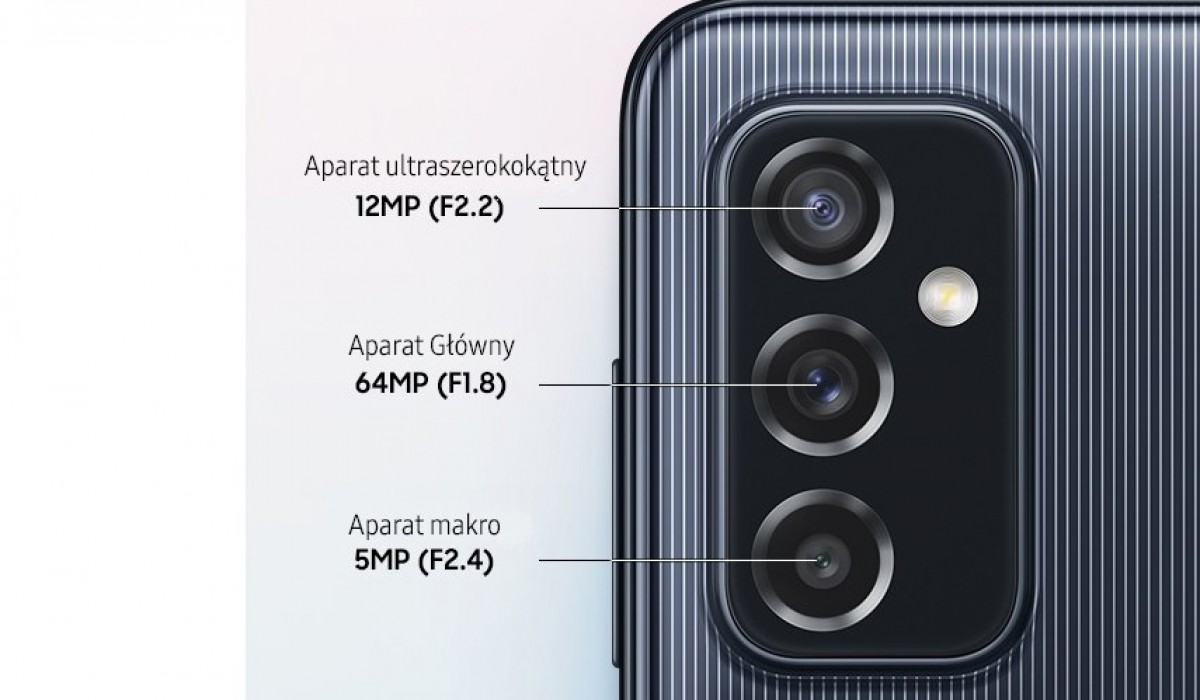
The budget device packs a triple camera setup at the rear comprising a 13-megapixel main camera along with a 2MP depth and 2MP macro camera sensors. At the front, there is a 5MP front camera for selfies.
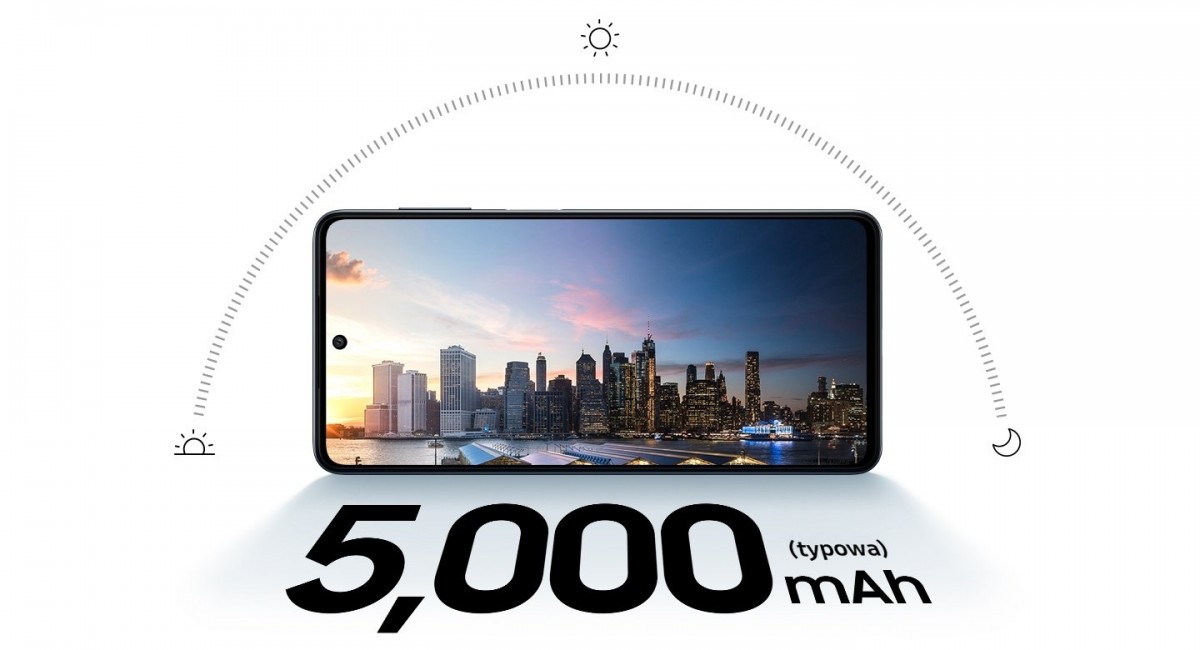
The Galaxy A03s runs on Android 11-based One UI 3.1 Core. It also features a side-mounted fingerprint sensor and packs a mammoth 5000mAH battery under the hood which charges via a USB-C port. The phone also features a 3.5mm audio jack, FM Radio, Dual 4G VoLTE, Wi-Fi 802.11 b/g/n, Bluetooth 5, and GPS + GLONASS.
Samsung Galaxy A03s Pricing & Availability
As for the pricing and availability, the Samsung Galaxy A03s is priced at Rs. 11499 (~$115) for the 3GB + 32GB version while the higher 4GB + 64GB version costs Rs. 12499 (~$168). The phone features a haze and matt textured body and will be offered in Black, Blue, and White colors. The A03s will be available via Samsung.com, as well as across retail stores and leading online portals,
Just a few days back, ASUS launched its latest gaming smartphones — ROG Phone 5s and ROG Phone 5s Pro in its home market China. The phones, powered by the Qualcomm Snapdragon 888 Plus 5G SoC, are targeted at the high-end market.
The newly launched smartphones are the successor to the ASUS ROG Phone 5 series, which was launched in March this year. As per the reports, ASUS accounted for about 90 percent market share in Taiwan’s gaming smartphone segment in the first half of this year.
ASUS ROG Phone 5s
With the updated ROG Phone 5s series powered by the latest chipset available in the market, it appears that ASUS is trying to ensure that it offers top-of-the-line specifications and improves its lead in the market.
The company has confirmed that the ROG Phone 5 series, as well as the newly announced ROG Phone 5s series, will be released in Mainland China. Expanding to more regions will allow the Taiwan-based company to sell more units of its gaming smartphones.
As per the company’s estimates, it managed to sell around 500,000 units of its smartphones in the year 2020, and this year, the company is aiming to sell 800,000 to 1 million units and it seems quite achievable for the brand at this time.
ASUS only has a presence in the high-end premium smartphone segment and is no longer selling budget or mid-range smartphones. Although there’s a Zenfone lineup of flagship smartphones, the popular offering from the brand remains the ROG Phone gaming lineup.
Samsung has just recently launched the new Galaxy Z Fold3. While we already have footage of the new foldable smartphone, a new teardown video offers us a closer look at the internals of the device and also reveals the repairability of the device.
PBKreviews has just published a new video on YouTube titled “Samsung Galaxy Z Fold 3 5G Disassembly Teardown Repair Video Review.” As the name suggests, the content creator disassembled the Galaxy Z Fold3 and even gave it a score based on its Repairability. Looking at the video, we can see that the YouTuber offers various useful information while picking apart the phone, which would be helpful for anyone brave enough to attempt to disassemble their smartphones.
The first step involved applying heat to the back plate to loosen up the adhesive that joins the rear panel to the rest of the device. After which, he skillfully removes various cables and brackets to offer us a better look at the Fold’s internal components. Furthermore, there are various screws on the device as well that holds together different components like the speaker system, cameras, the RAM and processor, which is indicative of how complex the internal structure is for a foldable smartphone that has two displays.
In terms of repairability, PBKreviews gave the Samsung Galaxy Z Fold3 a repair score of just 2 out of 10. The device received such a low rating since it is “a very difficult phone to take apart, and very time consuming.” Interestingly, the high end smartphones from the South Korean tech giant, like the Galaxy S21 series, has received low repairability scores in the past. So, it arrives as no surprise that even the Galaxy Z Fold3 would be difficult to repair, especially considering its a foldable handset.
Battlegrounds Mobile India or BGMI has been a great success in India. The title launched back in June 2021 for Android and the company had stated that it was working on an iOS port as well. And now, the popular battle royal game is finally available in the Apple App Store.
For those unaware, BGMI only launched in India for Android smartphones. While the company did state that a version for Apple iOS was in the works, it had offered no set date for its launch. Recently, we had even reported on certain teasers, but it was speculated that the iOS port was a while away. But it seems Krafton Inc wasted no time in bringing the popular mobile game to iPhones, which is also one of the most preferred platforms for the title.
For those unaware, many professional esports athletes and players across the globe played PUBG Mobile on iOS devices. So, BGMI’s launch on the App Store was highly anticipated in India. It is currently available on the iOS platform for iPhones that run iOS 11.0 or later. The game has a total size of about 1.9GB and, similar to the Android version, will also offer players the option to download resource packs and other updates following the installation.
Although, Krafton did state that iOS users might not be able to login immediately due to ongoing maintenance but this is scheduled to end by 9:40pm IST later today (18th August 2021). Recently, BGMI achieved a notable feat with the game registering over 50 million downloads on Google Play Store alone. So the studio offered all players with a permanent Galaxy Messenger set in game. You can click on the link here to check out the game on iOS App Store.
Xiaomi has quietly launched the Redmi 10. At present, the device has been announced for Malaysia. But it should make its way to other markets in the coming days. The Redmi 9 successor brings updated features all around. Let’s take a detailed look at the specs of this phone along with its price and availability.
Redmi 10 Specifications and Features
The specs of the Redmi 10 match with the press release that Xiaomi accidentally shared a few days back. The handset arrives with a new design in line with the Redmi Note 10 series.
The phone features a plastic build and comes in three colors, namely Carbon Gray, Pebble White, and Sea Blue. The former two color variants sport a matte finish while the latter has a glossy finish. The device measures 161.95 x 75.53 x 8.92mm in dimensions and weighs 181g.
The Redmi 10 flaunts a 6.5-inch LCD panel with a resolution of 2400 x 1080 pixels, AdaptiveSync refresh rate (45Hz, 60Hz, 90Hz), and a centered punch-hole. The panel supports both Reading mode 3.0 as well as Sunlight display.
Further, it is powered by a MediaTek Helio G88 chipset coupled with up to 6GB RAM and 128GB internal storage. As for software, the handset runs MIUI 12.5 based on Android 11.
As for optics, the device houses a quad-camera setup on its rear consisting of a 50MP primary sensor, an 8MP ultra-wide, a 2MP macro shooter, and a 2MP depth sensor. Whereas, for selfies and video calls, it uses an 8MP snapper.
On the connectivity front, the smartphone supports dual-SIM, 4G, dual-band WiFi, Bluetooth 5.0, GNSS (GPS, A-GPS, GLONASS, GALILEO, BDS), USB Type-C port, and a 3.5mm headphone jack.
Other features of the phone include a side-mounted fingerprint sensor, dual stereo speakers, a MicroSD card slot, and an IR blaster. Last but not least, it is backed by a 5,000mAh battery with support for 18W fast charging (22.5W charger included in the box) and 9W reverse charging.
Redmi 10 Price and Availability
As of now, Xiaomi has only revealed the Redmi 10 pricing for Malaysia. In this county, the smartphone will retail at RM649 ($153) and RM749 ($177) for the 4GB + 64GB and 6GB + 128GB variants respectively.
It is worth noting that in the official press release, Xiaomi says the handset starts from $179, $199, and $219 for the 4GB + 64GB, 4GB + 128GB, and 6GB + 128GB storage configurations respectively. It will be available for purchase from August 20.
Since Malaysian pricing is cheaper, the price tags mentioned in the official announcement could be either for Europe or average global pricing.
That said, we expect Xiaomi to launch the Redmi 10 in other markets in the near future. In India, it could go official as Redmi 10 Prime, just like its predecessor.
Google has just launched the Pixel Buds A TWS earbuds in India. These are the latest wireless earphones from the company to launch in the region and even feature real time translation.
While the search engine giant is not bringing its A series of Pixel smartphones in India, the company has launched new true wireless earbuds in the country. For those unaware, the Pixel Buds A was launched in the US earlier this year and feature custom 12mm dynamic drivers that the company promises will deliver clear and natural sounds. The earbuds are basically cut down versions of the original Google Buds, so they miss out on a few features.
This includes wireless charging support and swipe controls for volume adjustment. Although, the brand claims that the A-Series offers audio quality that is identical to the original Buds. Apart from offering natural sounds, the new earbuds also offer a Bass Boost mode that focuses on the low tones. Furthermore, it also features Adaptive Sound, which raises or decreases volume levels based on the ambient noise around the user. To enhance the calling experience, the buds also use beamforming mics to focus on the user’s voice and reduce other sounds.
Notably, an interesting aspect of the Buds A is its real time translation functionality. This feature supports 40 languages, including Bengali, Hindi, and Tamil, and translates the languages right into the users ear. The Buds also support Google Assistant as well for voice commands and IPX4 rating for water resistance. For battery, the earbuds can last for up to five hours on a single charge, with an additional 24 hours when combined with the charging case. The company claims that the users can get three hours of listening with just 15 minutes of charging.
Google has launched the Pixel Buds A is available in India for a price of 9,999 INR (roughly 135 US Dollars), which is higher than its US counterpart that costs 99 US Dollars. It is available in a single Clearly White color in India. For those interested, you can purchase the new TWS earbuds from Flipkart, Reliance Digital, and Tata Cliq, with sales starting from 25th August 2021.
Realme has just launched its GT series of smartphones and its first laptop in India. During the online launch conference, the company also announced that the Realme Pad will also be arriving soon. Now, an executive has hinted that the upcoming tablet will sport an AMOLED display.
Just prior to the start of the online conference, Francis Wong, the CMO of Realme India and Europe, shared a post on Twitter that also had a YouTube link to the live stream. A Twitter user commented on this, asking for the company to raise the size of their smartphone’s AMOLED display from 6.4 inches to 6.7 inches. To this, the executive responded with “Want a bigger Amoled? Wait for #realmeTablet. That will be big enough.”
In other words, this basically hints at the Realme Pad being the tablet in question that will sport an AMOLED panel as it was the only tablet teased during the online launch event. Unfortunately, the company has yet to officially reveal any finer details regarding its upcoming tablet, but we do have some information from previous reports. The tablet will sport a 10.4 inch screen and will be powered by a 7,100mAh battery.
Furthermore, the base model of the tablet could offer users 6 GB of RAM and 64 GB of internal storage. Rumors have also suggested that the tablet may arrive in Wi-Fi only and Wi-Fi + LTE variants as well. However, this is still unconfirmed reports so take it with a pinch of salt and stay tuned for more, as we will be providing updates when additional information is available.
The Realme Book Slim has just been launched in India. The company officially announced the Realme GT and GT Master Edition in an online launch conference earlier today (18th August 2021) and has also unveiled its first laptop in the region.
Display & Design
Taking a look at the new notebook from the company, it is a light weight laptop that aims to be a portable PC which does not compromise on performance. It sports a 14 inch display that features 2K resolution (2160 x 1440p) with a 3:2 aspect ratio and 100 percent sRBG color gamut for professionals. The display offers 400 nits of maximum brightness and a 90 percent screen to body ratio, which is higher than an Apple MacBook Air. Notably, the laptop offers a Nano Edge display, with minimal bezels measuring just 5.3mm.
Arriving at the design of the laptop, the Chinese smartphone maker offers the notebook with a full metallic body with the rear sporting a mirror brand logo and the front sporting a backlit keyboard as well. The top bezel houses the built in HD camera for video calls, while the power button doubles as a fingerprint scanner. The Realme Book Slim weighs just 1.38 kilograms and measures a slim 14.9mm and will be available in two color models, Real Blue and Real Grey.
Specs & Features
Under the hood, the new laptop houses 11th Gen Intel Core processors, namely either an i3 or i5. The processor will be paired with 8GB of LPDDR4X RAM and up to 512GB of PCIe SSD storage. For graphics, the notebook sports Intel’s Iris Xe graphics. The laptop will run Windows 10 out of the box but will support Windows 11 update in the future. For ports, the company offers a USB-A 3.2, 3.5mm headphones jack, Thunderbolt 4, and even USB-C 3.2 port as well.
The Realme Book Slim is powered by a 54Whr battery that supports 65W super fast charge, and also supports 30W fat charging as well. Just 30 minutes of charging can bring the battery up to 50 percent. The company promises battery life of up to 11 hours. Since it is a thin and light notebook, cooling is also an important factor to consider and the brand offers a dual fan cooling system to ensure good thermals even during heavy workloads.
For audio, the laptop houses stereo sound by DTS and powerful bass sound from Harman Kardon. Notably, it also offers dual mic noise cancellation as well. Other features include WiFi 6 and PC connect, which offers Realme smartphone users a seamless method of connecting their handsets to the laptop. This allows the user to bring their device and laptop into one screen which also supports simple drag and drop function for file transfer while also supporting certain Android apps.
Pricing & Availability
The Realme Book Slim will be available in India in two variants. This includes an Intel i3 and i5 version along with two color options as well. So lets take a look at the pricing:
Intel i3 with 8GB RAM+256GB PCIe SSD – 46,999 INR (roughly 632 US Dollars)
Intel i5 with 8GB RAM+512GB PCIe SSD – 59,999 INR (roughly 632 US Dollars)
The laptops will be available for purchase starting from 30th August 2021 and the company has also announced special introductory prices for both variants. This has the i3 version be priced at 44,999 INR (roughly 605 US Dollars) while the i5 version will go for 56,999 INR (roughly 767 US Dollars).
Handset maker realme has finally launched the realme GT series in India after teasing it for a while. The brand has brought two models to the country, namely realme GT (review) and realme GT Master Edition (hands-on). Let’s take a look at what these smartphones have to offer and how much they cost in the region.
realme GT, realme GT Master Edition Specifications & Features
The realme GT and the realme GT Master Edition flaunt a 6.43-inch Samsung Super AMOLED display with a resolution of 2400 x 1080 pixels (FHD+), 120Hz refresh rate, and 360Hz touch sampling rate. The panel covers 100% of the DCI-P3 color gamut and 98% of the NTSC color gamut. It has a peak brightness of 1000 nits, 5,000,000:1 contrast ratio, 91.7% screen-to-body ratio, and a single punch-hole at the top left corner.
Just like the display, the rear camera setup is also identical on the two. Both sport a triple camera setup consisting of a 64MP primary sensor, an 8MP ultra-wide unit, and a 2MP macro shooter. However, for selfies and video calls, the vanilla GT uses a 16MP snapper, whereas the Master Edition has a 32MP sensor.
realme GT
Now, talking about the major difference, the realme GT is powered by a Qualcomm Snapdragon 888 chipset as compared to a Qualcomm Snapdragon 778G SoC present inside the realme GT Master Edition. The former comes with LPDDR5 RAM and UFS 3.1 storage but there’s no information on the type of RAM and storage included with the latter.
On the connectivity front, the duo supports dual-SIM, 5G, WiFi 6, Bluetooth 5.2, GNSS, and NFC. Further, the realme GT has a 3.5mm headphone jack as well as dual stereo speakers. The realme GT Master Edition, on the other hand, lacks both of these features. Anyway, the duo arrives with all the essential sensors like an in-display fingerprint sensor, accelerometer, ambient light sensor, compass, proximity sensor, and gyroscope.
realme GT Master Edition
Although the two run realme UI 2.0 based on Android 11 and support 65W SuperDart fast charging protocol, the standard model is backed by a 4,500mAh battery, while the Master Edition gets its energy from a slightly smaller 4,300mAh battery.
These phones measure around 8-9mm in thickness and weigh about 170-190g. They come in glass and vegan leather finishes. Last but not least, the leather finish on the Master Edition has a suitcase-inspired design.
China-based ZTE recently launched its ZTE Axon 30 smartphone which comes with an under-display camera sensor for offering a true full-screen experience to users. This also marks the second such smartphone from the company.
The major difference between the in-display camera technology used in this model and in the last year’s phone is the display quality. The Axon 30 comes with a screen offering about 400PPI pixel density, almost double the pixel density on last year’s Axon 20. As for the durability, JerryRigEverything has put it to the test.
First of all, the front-facing camera, which is housed under the display, is pretty much invisible, unlike its predecessor. This is because of the high pixel density display. However, the camera performance isn’t as good as the regular camera sensor.
The phone’s display, when exposed to flame for about 20 seconds or more, forms a white-colored spot forming, which appears to be permanent given that the company has opted to use an OLED panel.
In the scratch test, the screen starts showing scratches at level six while deeper grooves on the display start forming at level seven. The screen area on top of the camera sensor is also immune to minor scratches. The in-display fingerprint sensor keeps working properly even after level seven grooves.
The smartphone is built using plastic but the power button and volume rocker keys are metallic. The camera module on the back is protected by a layer of glass and the separating the camera module from the back cover is made of metal.
The ZTE Axon 30 also passed the bend test, which is surprising given how much the phone bends. While bending the phone backward, there was a sound of something breaking inside but the device kept performing normally. Overall, the build quality is quite good for a smartphone costing about $500.
The Chairman of Huawei Technologies has just stated that the company aims on returning to the smartphone ‘throne’ despite its handset operations being crippled by the US sanctions.
For those unaware, the former US President Donald Trump had enforced new sanctions on the Chinese tech giant and had it placed on the export blacklist back in 2019. This banned the company from sourcing key technologies that originate from the US, which affected its ability to design its own chips and acquire components from its supply chain. Company’s Chairman Guo Ping stated in a recent Q&A with staff “Everyone knows that phone chips need advanced technology in a small size with low power consumption. Huawei can design it, but no one can help us make it: we’re stuck.”
Although, Guo believes that this issue is solvable, adding that “Huawei will continue to exist in the field of mobile phones and with continuous advances in chip production, the smartphone throne will eventually return.” Despite being one of the largest smartphone makers in the world just two years ago, the brand has since fallen off the the top 5 vendor lists in recent times. Furthermore, the company even had to sell off its budget smartphone unit, Honor, to keep the brand alive.
As of right now, Huawei’s revenue has declined by 29 percent in the first half of this year, which marks its biggest fall. The fall in revenue was especially notable in its consumer business operations like smartphones that saw a sizeable 47 percent decline in revenue, falling to 135.7 billion Yuan (roughly 21 billion US Dollars).
Apple Silicon, which develops ARM-based chipsets for the company’s own Mac devices, is working on a successor of the M1 chip which is likely to be named M1X. The Cupertino-based giant is expected to devices powered by the upcoming chipset pretty soon.
The company has already launched Mac Mini powered by the M1 chipset and was rumored to launch a new version of the same with the M1X chipset powering the device. It was rumored to get launched in the coming weeks or months but it’s now delayed.
A new report coming through @LeaksApplePro claims that the M1X-powered Mac Mini may have been delayed until early 2022 because of “marketing reasons.” While the exact reason has not been pointed out, it’s likely that Apple wants to focus on the new chipset and the MacBook Pro models this year. The recent global chip shortage could have also played a role behind this decision.
Earlier, there were reports claiming that Apple could launch the new Mac Mini in the fourth quarter of this year, likey in the month of October or November, along with the new MacBook Pro laptops.
The M1X chipset is expected to be a powerhouse of an SoC, having 10 CPU cores and up to 32 GPU cores. As for the M1X Mac Mini, the Max Tech YouTube channel predicts $1,299 pricing for the base model that should have at least 16GB of RAM and 512GB SSD storage.
There’s a possibility that Apple could unveil the new Mac Mini device along with the MacBook Pro models later this year while the actual launch is pushed to the first quarter of next year, along with the updated MacBook Air lineup. To know for sure, we will have to wait a bit longer for the official launch event for this new chipset.
Note: The article has been updated to emphasize that the leak talks about the launch date of the M1X-powered Mac Mini and not the release date.
India’s income tax regulatory body, the Central Board of Direct Taxes (CBDT) has announced that it raided five locations including offices and private residences connected to a foreign company, ZTE India, over suspected tax evasion and discrepancies. The places affected by the raid are the corporate office of the company, the residences of the foreign director, the chief financial officer (CFO), the company secretary, and the cash handler of the Chinese-owned company.
All the locations were in New Delhi and the search was aimed at establishing the tax liability status of ZTE and hundreds of its employees over the years. The search may have yielded a trove of evidence some degree of tax evasion and discrepancies. The accusation also includes the failure of ZTE to deduct tax at source for several years. The amount of money involved in tax evasion is not yet clear but is believed to be huge. An official statement by the CBDT however did not directly name ZTE, although the allusion to the fact that the company was engaged in trading of telecom equipment, installation, and servicing of the equipment, leaves no one in doubt who this company was.
The tax compliance agency CBDT says it had recovered a large amount of evidence that indicates an elaborate and well-oiled scheme to evade the payment of valid taxes by the company. The company was also accused of deliberately not deducting TDS on the basis of the scrutiny of its expenses books. The investigation could span back to 2014 and begin on August 16. Several top officials of the company were questioned in relation to the raid, although no arrests were made.
The investigation is possibly linked to ZTE India’s business dealings with state-owned telecom operator BSNL with some regularities observed. The searches could also be linked to financial irregularities and potential issues linked to the BSNL entered by ZTE. The regulator says it has already recovered incriminating evidence in the form of electronic data and paper documents.
Expatriate employees were also alleged to be trading illegally in medicines from India to China. ZTE has yet to respond to the accusations at this time.
Leading smartphone brands are removing the charger from the retail box of their flagship or premium smartphones and now Google is also joining them. The search engine giant has said that the Google Pixel 5a will be the last phone from the brand to include a charger.
This indicates that the upcoming Pixel 6 and Pixel 6 Pro smartphones, set to launch this fall, will come without a charger in the box. Google says that most of the customers already have a USB-C brick at home so there’s no need to include it.
Google Pixel 6 Series Smartphones
The reason was given by Google for not including a charger in the box is the same one given by Apple and Samsung. Despite this, it’s likely that the cost-benefit played a major role in this decision.
Google has been including an 18W USB-C Power Adapter with every Pixel series smartphone that it launched in recent times. The Pixel 5a smartphone also comes with the same adapter but it’ll be the last smartphone from Google to have it bundled.
After Apple and Samsung made the move, Xiaomi also did the same but offered a different version of the smartphone with a charger bundled, at the same price. Since then, the company has been offering a ‘free’ charger with its phones.
None of the other China-based smartphone manufacturers have followed suit and given the popularity of such brands in the emerging markets, it could play to their advantage.
We use cookies on our website to give you the most relevant experience by remembering your preferences and repeat visits. By clicking “Accept”, you consent to the use of ALL the cookies.
This website uses cookies to improve your experience while you navigate through the website. Out of these, the cookies that are categorized as necessary are stored on your browser as they are essential for the working of basic functionalities of the website. We also use third-party cookies that help us analyze and understand how you use this website. These cookies will be stored in your browser only with your consent. You also have the option to opt-out of these cookies. But opting out of some of these cookies may affect your browsing experience.
Necessary cookies are absolutely essential for the website to function properly. This category only includes cookies that ensures basic functionalities and security features of the website. These cookies do not store any personal information.
Any cookies that may not be particularly necessary for the website to function and is used specifically to collect user personal data via analytics, ads, other embedded contents are termed as non-necessary cookies. It is mandatory to procure user consent prior to running these cookies on your website.