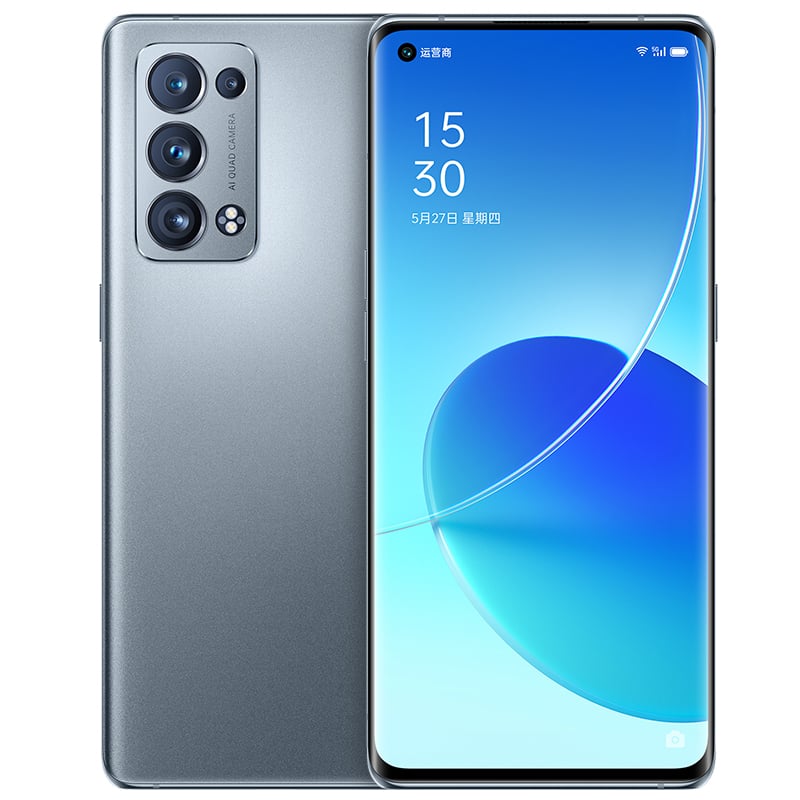
A couple of months ago, OPPO launched its latest Reno-series flagship smartphone — OPPO Reno6 lineup which includes three phones — Reno6, Reno6 Pro, and Reno6 Pro+. Now, a new version of the top-end variant is launching next week.
OPPO has now taken to Weibo and confirmed that the company will be launching OPPO Reno6 Pro+ Detective Conan Custom Edition and more information about this upcoming product will be revealed next week.
So far, nothing is known about this new version of the flagship smartphone but we expect the phone’s specifications to remain the same as the original model and only the design to get changed to give it a look reflecting Detective Conan.
The smartphone features a 6.55-inch curved-edge flexible AMOLED display and comes with support for a 90Hz refresh rate. Underneath, the device is powered by the Qualcomm Snapdragon 870 chipset.
OPPO Reno6 Pro+ 5G Moon Sea
In the camera department, there’s a 50-megapixel Sony IMX766 primary sensor, coupled with a 16-megapixel ultra-wide-angle lens, a 13-megapixel telephoto lens, and a 2-megapixel macro lens. On the front side, there’s a 32-megapixel snapper for taking selfies.
The smartphone runs the Android 11 operating system out-of-the-box with the company’s own ColorOS 11.1 custom user interface on top. It is powered by a 4,500mAh battery and has support for 65W super flash charging.
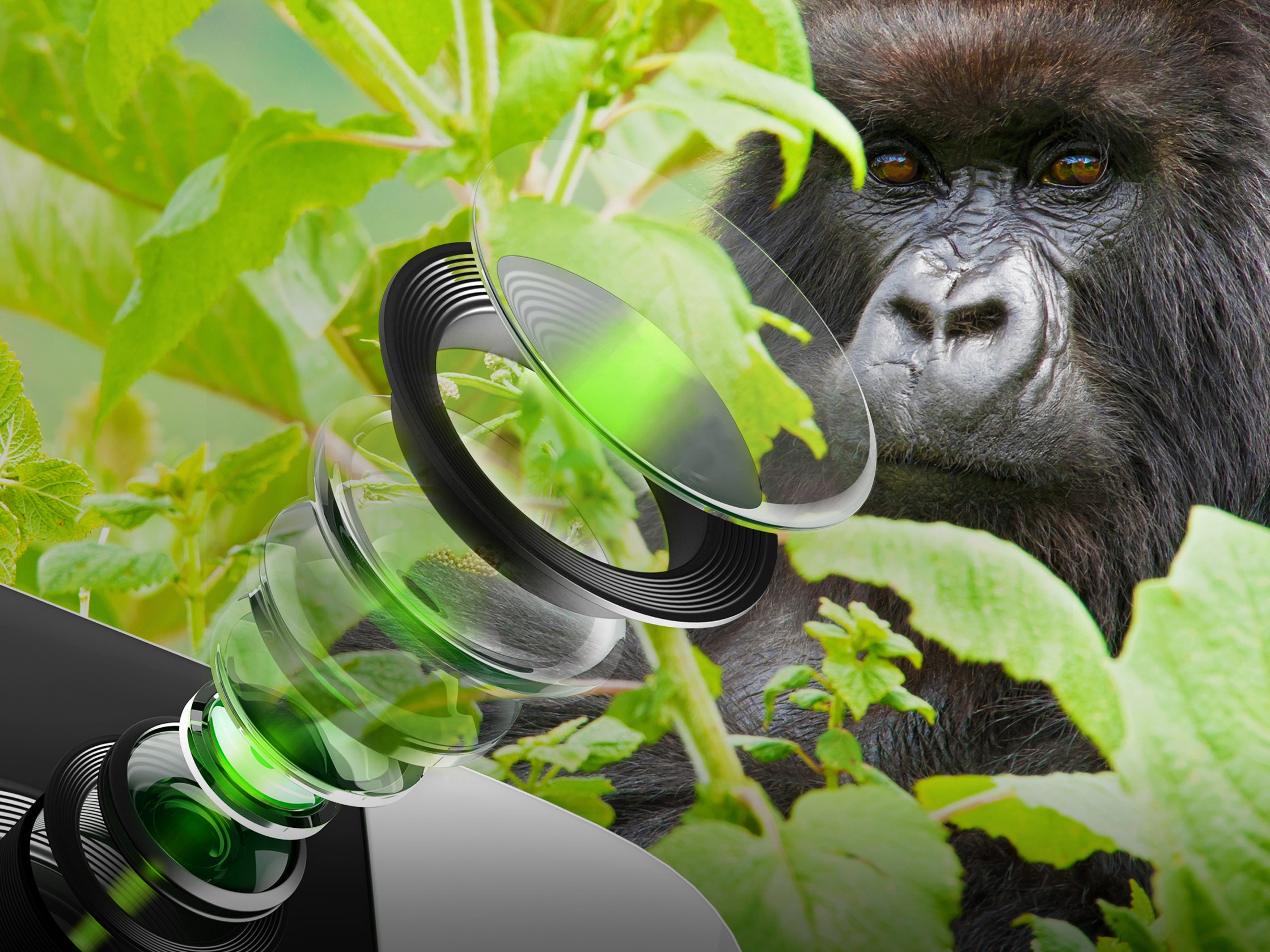
Corning, the company best known for making Gorilla Glass, a protective glass layer for smartphone displays, has now launched its latest composite which is a new version of Gorilla Glass optimized for smartphone camera lenses — Gorilla Glass DX and DX+.
This isn’t technically new given that the company had launched Gorilla Glass DX in July 2018 for smartwatch faces. However, Corning says that it had to reformulate the DX and DX+ composite for smartphones so that it offers scratch resistance without compromising photo and video quality.
The company says that the new composite let in 98 percent of ambient light while still being just as scratch-resistant as typical Gorilla Glass. In comparison, lens covers with traditional anti-reflective coatings only let in about 95 percent of light, says Corning.
So far, it hasn’t been announced what phones will feature the new glass composites, but Corning does say that Samsung is signed on as the first company to use the new Gorilla Glass camera lens covers. The South Korean giant has its Galaxy Unpacked event scheduled for 11th August and we could see this new glass on one of the devices that is set to launch at the event.
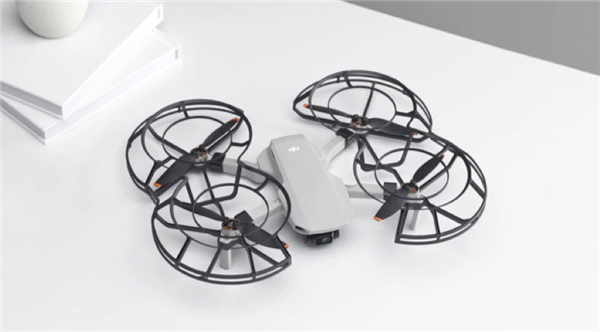
DJI, the Chinese company which is the leading manufacturer of drones, has launched the cheapest offering from the brand so far — DJI Mini SE. It was first launched in the select overseas market but now the company has launched the same in its home market China.
The DJI Mini SE is priced at 1,999 yuan which roughly converts to $309. The pricing is for the stand-alone model, making it suitable for new users. It also supports various accessories, backpacks, and extended use methods.
This new drone seems to be a specialized one that is tailored to suit the needs of entry-level users. It provides some basic functionalities and is quite affordable. Despite its name, the product is not a low-cost edition of the DJI Mini 2 but a less-expensive model of the first-generation DJI Mavic Mini which was launched in the year 2019.
As for the specifications, it comes with support for the 2.7K-resolution camera (as opposed to the 4K) and 2.5-mile wireless range. The camera can shoot 2.7K video at 30 frames per second, with a 4x digital zoom when shooting in 1080p. It also captures 12-megapixel photos in jpeg format and has a 3-axis gimble setup.
The Mini SE doesn’t have support for Ocusync, which is the company’s own transmission technology, allowing the product to use 2.4GHz and 5.8GHz bands, giving it more flexibility when there is a lot of interference in transmission. Instead, it relies on a Wi-Fi connection.
There’s also an omnidirectional protective cover that can improve flight safety. GPS and down-looking sensors allow the drone to hover steadily. Coming to the weight, the DJI Mini SE weighs 249 grams which is quite lightweight. It is claimed to offer a battery life of 30 minutes on a single charge.
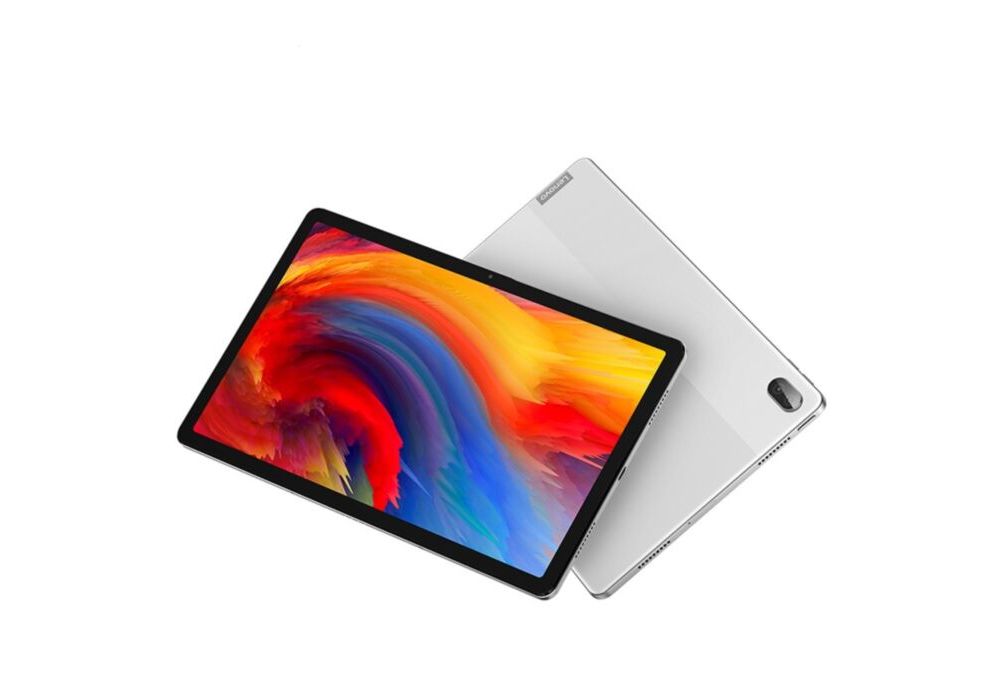
Lenovo’s launch event in May that was held in China saw the arrival of multiple tablets such as Lenovo Xiaoxin Pad 2021, Xiaoxin Pad Plus 2021, and Xiaoxin Pad Pro 2021. Fresh information reveals that the Pad Plus model will be heading to global markets with a different name.
Tipster Sudhanshu Ambhore spotted a Google Play Console listing of a new tablet called the Lenovo Tab QT K11 Pro Wi-Fi. The J607F model number mentioned in the listing belongs to the Xiaoxin Pad Plus 2021 in China. Hence, it appears that the global markets may receive the same device with the Tab QT K11 Pro Wi-Fi moniker.
Lenovo Xiaoxin Pad Plus 2021
Lenovo Xiaoxin Pad Plus 2021 specifications
The Xiaoxin Pad Plus 2021 has an 11-inch LCD screen that delivers a 2000 x 1200 pixels resolution and a 60Hz refresh rate. It is packed with four speakers that are powered by Dolby Atmos.
The Snapdragon 750G powers the Pad Plus 2021 with 6 GB of RAM. It offers an internal storage of 128 GB and a dedicated microSD card. The tablet is backed by a 7,700mAh battery that supports Quick Charge 3.0 through USB-C.
The IP52 certified device has pogo pins for connecting an optional keyboard. Lenovo is also selling an optional stylus for this tablet. The back panel of the device features a 13-megapixel camera, and it has an 8-megapixel camera and a ToF sensor on the front. It is available with a pricing of 1,599 Yuan (~$247) in China.
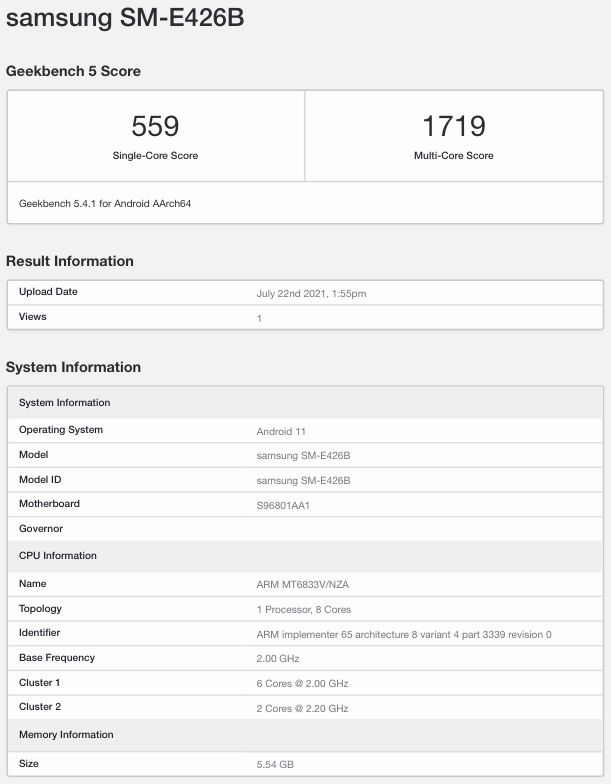
Samsung is gearing up to launch yet another F-series phone. The upcoming Galaxy F42 5G has now been spotted at the Geekbench benchmarking site (via), which suggests that it may go official in the next few weeks.
The Galaxy F42 5G has appeared with its SM-E426B model number on the benchmarking site. The device is powered by a MediaTek chip that has an MT6833V/NZA model name, which reveals that it is powered by the Dimensity 700 chip.
The listing further mentions that it has 6 GB of RAM, and it runs on Android 11 OS. In the single-core test of Geekbench, the handset scored 559 points and it recorded 1719 points in the multi-core test. Before appearing on Geekbench, the handset has been previously seen at certification sites such as Wi-Fi Alliance, Bluetooth SIG, and the Bureau of Indian Standards (BIS).
Samsung’s F-series phones are just rebranded versions of its existing A-series or M-series smartphones. At present, the Galaxy A22 5G is the only Dimensity 700 chip-powered phone from the brand. Hence, it appears that the Galaxy F42 5G could be a rebadged A22 5G.
Galaxy A22 5G specifications
The Galaxy A22 5G has a 6.6-inch IPS LCD panel that produces a Full HD+ resolution. The Dimensity 700 powered phone comes with up to 8 GB of RAM and up to 128 of internal storage. The device is backed by a 5,000mAh battery that supports 15W charging.
The A22 has a front camera of 8-megapixel. Its rear camera setup has a 48-megapixel main camera, a 5-megapixel ultrawide shooter, and a 2-megapixel depth sensor. It offers other features like a microSD card slot and a fingerprint scanner.
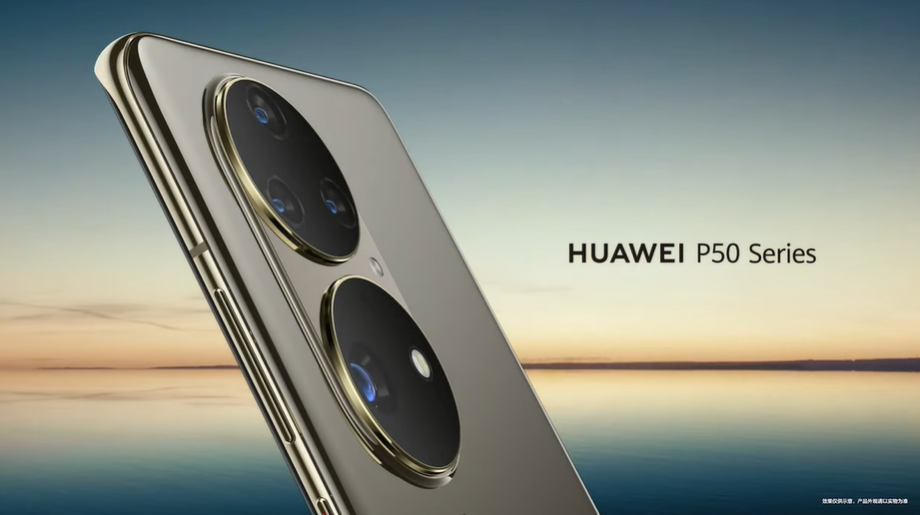
Recently, Huawei confirmed that its next-generation P-series of smartphones will debut on July 29. The P50 lineup is expected to arrive with pioneering mobile imaging technology. A fresh leak that has appeared today has revealed the key specifications of the Huawei P50, P50 Pro, and P50 Pro+ smartphones.
The new leak states that the Huawei P50 will be equipped with a 6.3-inch flat display with a single punch-hole design. The BOE-supplied OLED panel will support 10bit colors and a 90Hz refresh rate. Its 5G variant will feature Kirin 9000E 5G chip, whereas its 4G edition will be driven by the Snapdragon 888 4G SoC. It is backed by a 4,200mAh battery that supports 66W fast charging. It will come with support for 3x optical zoom. The device will measure 8.3mm in thickness and weigh 186 grams.
The Huawei P50 Pro will feature a 6.7-inch BOE OLED single punch-hole panel with curved edges, which supports 10bit colors and a 120Hz refresh rate. The Kirin 9000 5G chip and Snapdragon 888 4G SoC will power its 5G and 4G variants, respectively. The device will be fueled by a 4,300mAh battery that supports 66W rapid charging and 50W wireless charging. The P50 Pro will come with a 5x periscope lens with freeform surface technology. This device also measures 8.6mm in thickness.
The P50 Pro+ will sport a 6.7-inch dual punch-hole OLED panel with curved edges. It supports 10bit colors a 120Hz refresh rate. The Kirin 9000 5G will be present under the hood of the device. It appears that there won’t be a 4G variant of the phone at launch. The 4,300mAh battery of the P50 Pro+ will come with 100W fast charging and 50W wireless charging support. The P50 Pro+ will offer 10x continuous zoom, free-form lens technology, and liquid lens in terms of camera.
The above-mentioned information about the P50 series may not be accurate. Hence, it is advisable to digest the leak with a grain of salt.
Earlier this month, a leak revealed that the entire Apple iPhone 13 series will feature a LiDAR scanner. Later, it was dismissed by other tipsters suggesting that only the Pro models will come with LiDAR support. Now, the Apple analyst Wedbush has added to the old leak reaffirming that the LiDAR scanner is coming to the entire lineup.
The Apple analyst has revealed that he has looked into the iPhone 13’s supply chain in Asia confirming that indeed LiDAR scanner is coming and the production figures for the 13-series have increased. Additionally, the Pro models are touted to come with up 1TB of internal storage, instead of the standard 512GB max storage option.
Although it is not confirmed, we expect the lower-end storage configurations to also increase in capacity. The current iPhones start at a base 64GB variant, which could change in the 13 series with a base storage configuration of 128GB.
In related news, Apple analysts said that they expect the sales of the upcoming iPhone 13 to increase significantly. Apple has also increased the supply to 90-100 million units over the iPhone 12‘s 80 million supply chain figures.
Notably, it’s being said that this year, all the models in the iPhone 13 series will have 5G connectivity support. This means all the iPhones launching in 2022 will have 5G, including the next-generation iPhone SE. The cheaper iPhone is said to come with the Apple A15 Bionic chip in 2022, which will first debut in iPhone 13 series later this year.
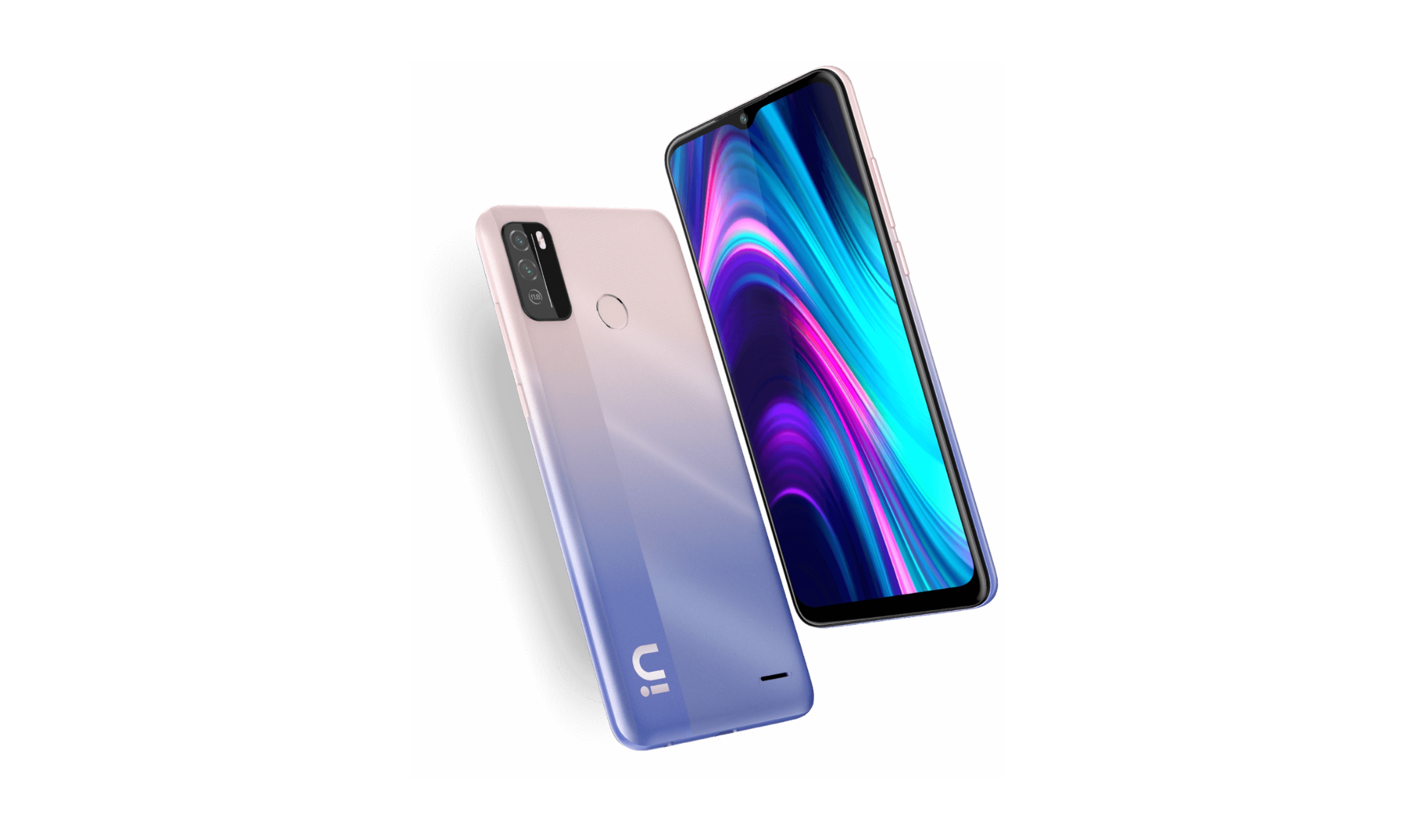
India’s homegrown smartphone brand Micromax has already confirmed that the company will be launching a new device on 30th July, dubbed Micromax IN 2B. As the name indicates, the phone will be a successor to the IN 1B launched last year.
The leak, coming through a tipster (via PriceBaba), revealed that the device will feature a 6.5-inch HD+ LCD display and a waterdrop notch for housing the front-facing camera. Underneath, the phone will be powered by a Unisoc T610 chipset.
Micromax IN 1B
The phone is said to have a similar design to its predecessor. The usage of Unisoc T610 SoC isn’t a significant increase in specifications when compared to the MediaTek Helio G35 SoC in Micromax IN 1B. The device is further expected to come in a single variant — 4GB RAM and 64GB internal storage.
As for the camera department, there will be a 13-megapixel primary camera sensor, coupled with a 2-megapixel secondary sensor. On the front side, the device will feature an 8-megapixel snapper for taking selfies.
Details about the phone’s software isn’t known yet but we expect the phone to be running the Android 11 operating system out-of-the-box. It will be powered by a 5,000mAh battery with support for 10W charging.
The Micromax IN 1B was introduced with a starting price of ₹6,999 (~$94) and we expect its successor to launch in the Indian market with similar pricing. To know for sure, we will have to wait for the official launch event, which is scheduled for 30th July.
POCO, the sub-brand of Xiaomi, has already confirmed that it will be hosting a launch event in India for POCO F3 GT on 23rd July. Just days after that, the company is set to launch another smartphone in the market — POCO X3 GT, on 28th July in Malaysia.
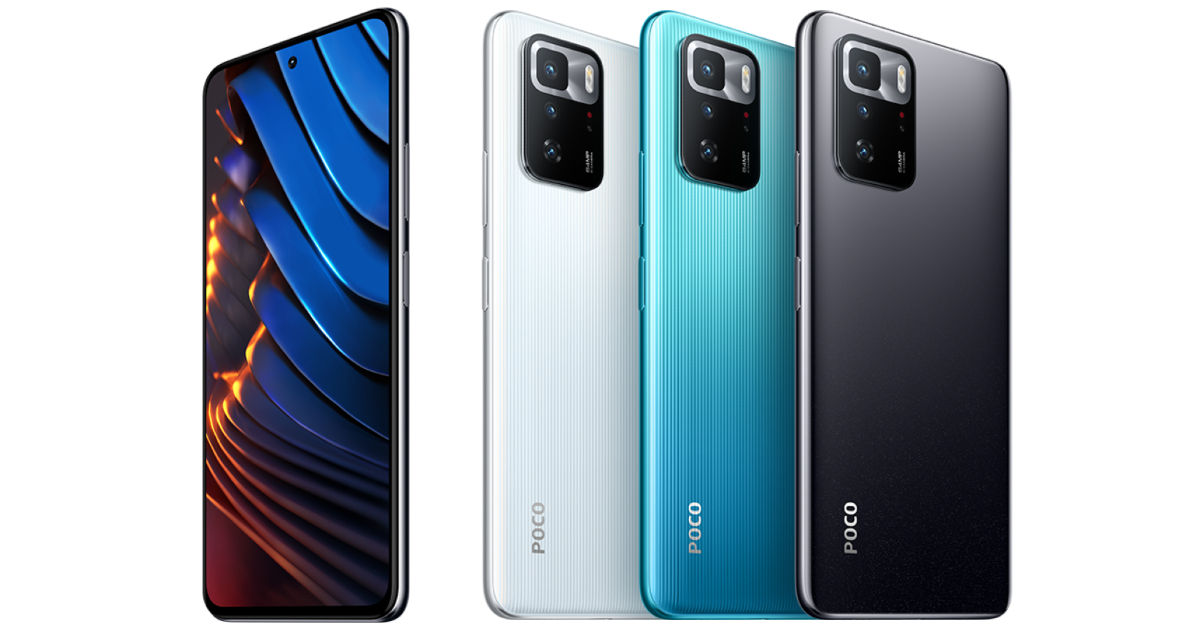
Ahead of the official launch, some details about the smartphone have surfaced online, along with the renders. The device was rumored to be the international version of the Redmi Note 10 Pro 5G smartphone and the new information seems to confirm that.
The renders of the upcoming phone resemble the Redmi Note 10 Pro 5G which is already available in the Chinese market. The company has also shared a new teaser poster, confirming that the smartphone will come powered by the MediaTek Dimensity 1100 SoC, which offers 5G connectivity.
Further, it is being said that the handset will be made in three color options — Black, White, and Blue/Green. Two of these three models — Blue/Green and White will come with a textured back, similar to the Redmi Note 10 Pro in China.
As for the specifications, the device will likely come with a similar set of specs as the Redmi Note 10 Pro 5G. We are expecting a 6.6-inch Full-HD+ LCD display that offers a 120Hz refresh rate and Corning Gorilla Glass Victus protection.
Under the hood, the device will come powered by the MediaTek Dimensity 1100 chipset, coupled with LPDDR4x RAM and UFS 3.1 storage. In the memory configuration, we are expecting up to 8GB RAM and 256GB internal storage.
Coming to the optics part, the device will feature a triple-camera setup consisting of a 64-megapixel primary sensor, an 8-megapixel ultra-wide sensor, and a 2-megapixel macro lens. On the front side, there’s a 16-megapixel snapper for taking selfies and video calling.
The POCO X3 GT is expected to come pre-installed with the Android 11 operating system with the company’s own MIUI 12.5 custom interface on top. The device will be powered by a 5,000mAh battery with 67W fast charging support.
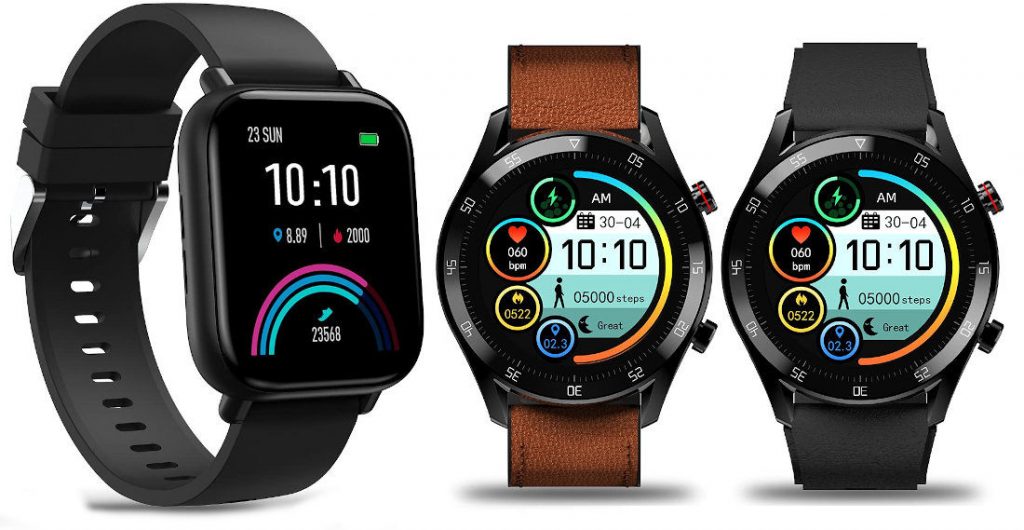
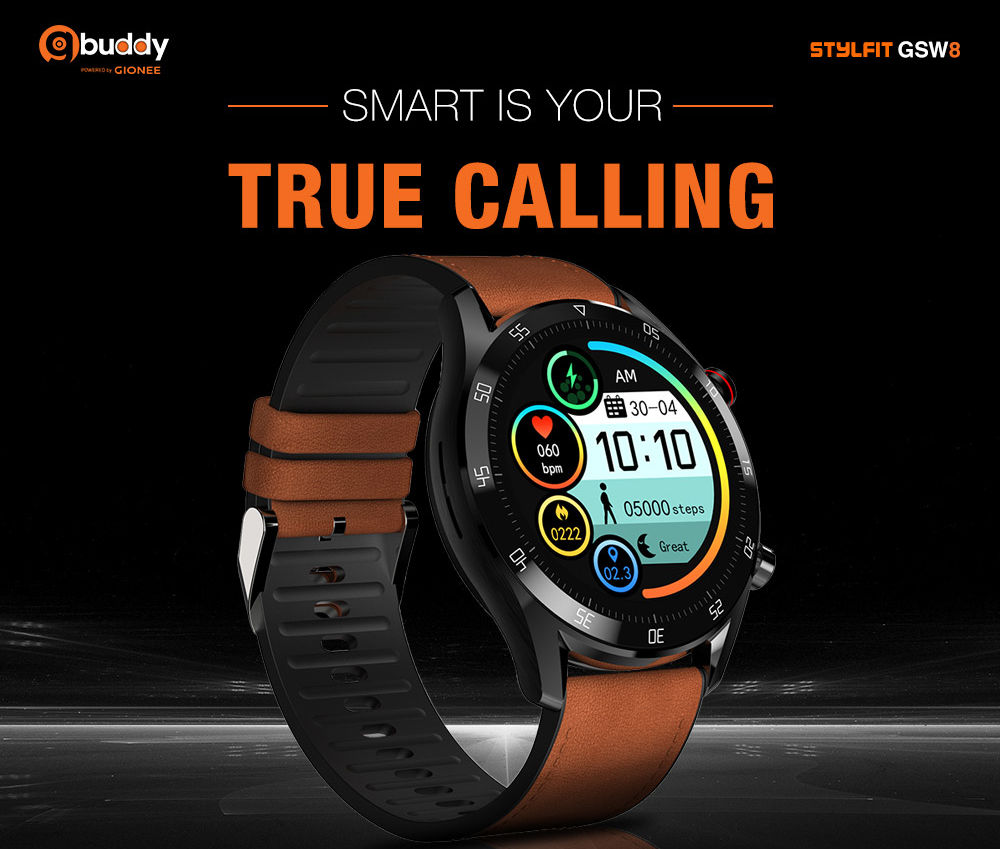
Gionee launched the STYLFIT GSW7 smartwatch in India last month. The Chinese company has now updated the lineup with the introduction of the STYLFIT GSW6 and STYLFIT GSW8 smartwatches.
The two new smartwatches share similar features but the designs are different. While the Gionee STYLFIT GSW6 adopts a square-shaped watch face, the STYLFIT GSW8 comes with a round dial. The two smartwatches are equipped with a SpO2 monitor, a heart rate monitor, a sleep tracker, a calorie meter, and more.
The STYLFIT GSW6 and STYLFIT GSW8 also pack a built-in speaker and a microphone which allows users to take calls right from the smartwatch when there is an incoming call on a connected smartphone. The watches are connected to the smartphone through Bluetooth and Gionee touts the sound quality to be clear and comfortable.
The StylFit GSW8 which is obviously the higher model has generous storage that allowed users to add up to 30 songs that can be played while working out. In addition to music control and option to connect the watch to devices like headphones or neckbands for music playback, the GSW8 also lets you store up to 30 songs for offline playback.
You also get other important features onboard such as a pedometer, camera control, menstrual cycle tracker, calorie counter, Find My Phone feature. There are also multi-sport modes such as outdoor run, indoor run, indoor walk, outdoor walk, hiking, stair stepper, outdoor cycle, stationary bike, elliptical, rowing machine and more.
The square-shaped GSW6 crams a decent 220mAh battery under the hood. The battery comes with 15 days standby time and 5 days use. On the other hand, the high-end GSW8 packs a 300mAh battery that promises up to 7 days battery life for daily usage and 18 days standby time.
As for the pricing and availability, the Gionee STYLFIT GSW6 carries a decent price tag pf Rs. 2999 (~$40). It is available in Matte Black color only and can be purchased on Amazon.in. On the other hand, the Gionee STYLFIT GSW8 is available in an Eclipse Black version and a Sienna Brown version with a leather strap. The Eclipse Black model is priced at Rs. 3,499 (~$47) while the Sienna Brown variant will retail for Rs. 3,799 (~$51).
The outbreak of the Coronavirus pandemic in 2020 brought to the fore the innovative bent of tech companies, as they released several products as safety responses to the global pandemic. One of the non-pharmaceutical measures that became part of the global advisory was the use of facemasks in public places to limit the spread of the virus. LG Electronics responded with an air-purifying facemask in 2020 dubbed LG PuriCare Wearable Air Purifier. The South Korean company has now unveiled a revamped version of the PuriCare Wearable Air Purifier. This version will feature a microphone and speakers to amplify the user’s voice while speaking.
The new LG Puricare Wearable Air Purifier comes smaller, lighter, with a more efficient motor driving the air-purifying process. The sleek, ergonomic design of the face mask minimizes air leakage around the nose, and the user does not need to pull off the mask when speaking of strain his voice. The mic and the speaker use the LG VoiceON technology to amplify the user’s speech and prevent muffling of the voice. The device’s 1,000mAh battery provides up to 8 hours of purified air, and with a pretty fast USB charging, the device is restored to full charge within two hours.
Pricing and availability details for the LG Puricare Wearable Air Purifier are scanty at this time. However, Thailand will be one of the first countries to launch the device next month. For any market slated for the rollout of the device, the company must have obtained local regulatory approval for the device.
LG will hope that its air-purifying facemask would outlive the pandemic era. The impact of air pollution that has ravaged most of the world’s urban centers can be well mitigated by the LG Puricare Wearable Air Purifier face mask. It can be helpful to athletes and other persons who desire excellent quality air in their daily activities.
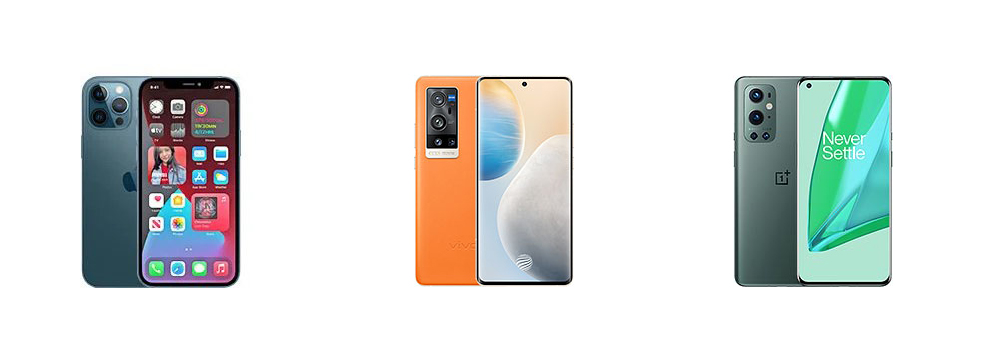
Are you looking for the best device in the whole smartphone market? There are several companies you can choose from if you need a top-tier flagship and the most famous one is definitely the iPhone 12 Pro Max by Apple. But there are also several Chinese companies that released phones that have nothing to envy the most powerful iPhone. After comparing the iPhone 12 Pro Max with the most famous and latest Android flagships at the time of its release, here is another comparison that includes two of the top-tier flagships from the most famous Chinese companies: Vivo X60 Pro+ and OnePlus 9 Pro.
Apple iPhone 12 Pro Max vs Vivo X60 Pro+ vs OnePlus 9 Pro
Apple iPhone 12 Pro Max
Vivo X60 Pro+
OnePlus 9 Pro
DIMENSIONS AND WEIGHT
160.8 x 78.1 x 7.4 mm, 228 g
158.6 x 73.4 x 9.1 mm, 191 g
163.2 x 73.6 x 8.7 mm, 197 g
DISPLAY
6.7 inches, 1284 x 2778p (Full HD+), Super Retina XDR OLED
6.56 inches, 1080 x 2376p (Full HD+), Super AMOLED
6.7 inches, 1440 x 3216p (Quad HD+), LTPO Fluid2 AMOLED
3687 mAh, fast charging 20W, fast wireless charging 15W
4200 mAh, fast charging 55W
4500 mAh, fast charging 65W, fast wireless charging 50W
ADDITIONAL FEATURES
5G, Dual SIM slot, IP68 waterproof, eSIM, 3D facial recognition
Dual SIM slot, 5G
Dual SIM slot, 5G, IP68 waterproof
Design
Despite the iPhone 12 Pro Max has the best build quality, it is not the most impressive in terms of design. The Vivo X60 Pro+ looks a lot more futuristic due to its curved display at the edges, an incredibly high screen to body ratio, and a rear side made of leather. But unfortunately, the Vivo X60 Pro+ is the only one from the trio which is not water resistant and dust resistant.
Display
The best display on the paper belongs to the OnePlus 9 Pro which is actually equipped with the same panel as the OPPO Find X3 Pro. It is an AMOLED display with LTPO technology and an adaptive refresh rate of up to 120 Hz. It supports the HDR10+ certification, a Quad HD+ resolution and it can show up to one billion colors. The silver medal goes to the iPhone 12 Pro Max which offers incredible color accuracy and high contrast. The Vivo X60 Pro+ is inferior with its Full HD+ resolution and 16M colors, but it still packs a great display.
Hardware and Software
Whatever you choose, it makes no difference. All of these phones are equipped with a top-tier hardware department. While Vivo X60 Pro+ and the OnePlus 9 Pro are powered by the Snapdragon 888 mobile platform, iPhone 12 Pro Max has the Apple A14 Bionic: both are chipsets built at 5 nm which are extremely powerful. Note that iPhone 12 Pro Max runs iOS, while Vivo X60 Pro+ and OnePlus 9 Pro are based on Android.
Camera
The Vivo X60 Pro+ is the best camera phone: it has a quad rear camera composed of a 50 MP main sensor (Sony IMX766) with laser autofocus and OIS, an 8 MP periscopic sensor with 5x optical zoom, a 32 MP portrait telephoto lens with 2x optical zoom and a 48 MP ultrawide camera with gimbal stabilization. It even comes with Carl Zeiss optics and 8K video recording. Simply one of the most impressive camera departments on the paper. But the iPhone 12 Pro Max remains an amazing camera phone which can shoot awesome cinematic videos at a professional level and very accurate photos. The OnePlus 9 Pro is inferior to the Vivo X60 Pro+, but it is still a top camera phone with its 48 MP main sensor and a stunning 50 MP ultrawide camera.
Battery
In a lot of scenarios, the OnePlus 9 Pro is able to offer a longer battery life thanks to its 4500 mAh battery. Further, it supports faster charging technology with a power of 65W. It even comes with wireless charging and it has one of the fastest wireless charging technologies with a power of 50W. On the other hand, iPhone 12 Pro Max supports MagSafe which makes wireless charging more comfortable and efficient. The Vivo X60 Pro+ lacks wireless charging but it has 55W wired charging. Despite it has a smaller battery capacity, the battery life of the iPhone 12 Pro Max is at the same level as the Vivo X60 Pro+ thanks to the software optimization of iOS.
Price
Vivo X60 Pro+ is only sold in Asia: in India, it has a listing price of Rs. 69,990 / $1100 for the base variant with 8 GB of RAM and 128 GB of internal storage. You can find the iPhone 12 Pro Max in the global market for more than €1000/$1000, while the OnePlus 9 Pro is priced at €900/$900 in its base variant. There is no definitive winner for this comparison and each phone can be the best for specific users. With the Vivo X60 Pro+, you can get better cameras, OnePlus 9 Pro has a superior display, battery, and charging technologies, while the iPhone 12 Pro Max is an amazing phone in terms of photo/video quality, performance, build quality, and more.
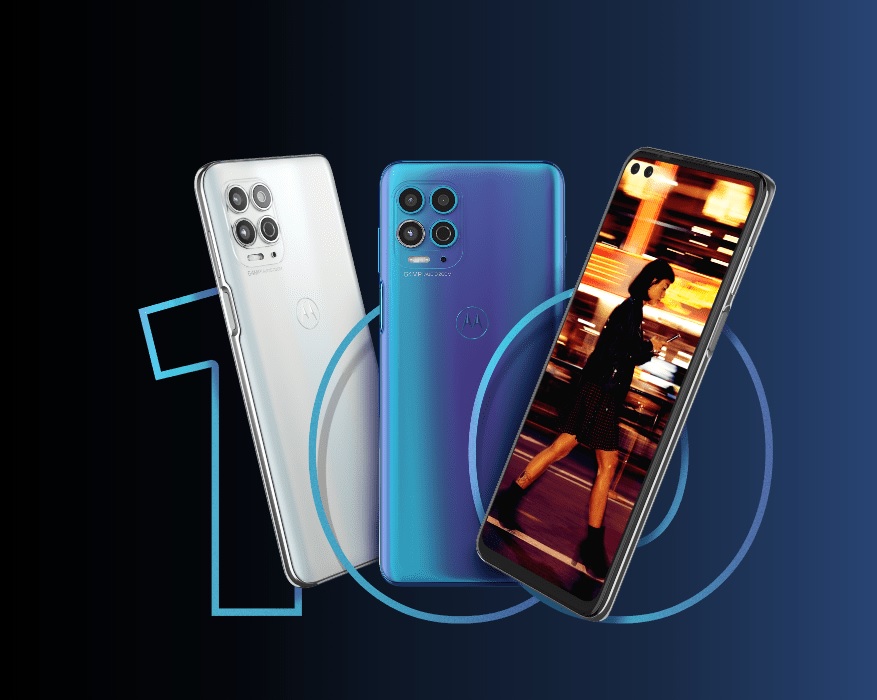
Nearly four months after the Moto G100 was announced in Brazil, Mexico, and the UK, Motorola has brought the flagship killer to the United States. The Moto G100 is the international version of the phone sold as the Motorola Edge S in China, the first phone powered by the Snapdragon 870 chipset.
The Moto G100 is priced at $599 in the U.S. and it has 8GB of RAM and 128GB of storage. However, you can buy it for a limited time for $499 on Motorola’s website. For that price, you get a phone with a 6.7-inch 90Hz FHD LCD screen and a double punch hole for two front-facing cameras.
There is a Snapdragon 870 processor under the hood and it draws juice from a 5000mAh battery. The Moto G100 has four cameras on the back – a 64MP main camera, a 16MP ultrawide angle camera, a 2MP depth sensor, and a TOF 3D camera. The front-facing cameras are a 16MP main camera and an 8MP ultrawide angle camera.
The Moto G100 has a side-mounted fingerprint scanner, NFC, Wi-Fi 6, a USB-C port, a MicroSD card slot, and an audio jack. Motorola ships it with My UX based on Android 11.
It supports 20W fast charging and comes with a TurboPower 20W adapter. There is also a protective case and an HDMI ReadyFor cable that allows you to connect it to an external monitor for a desktop-like experience. It will also allow you connect your device to a TV and use the phone as a webcam with motion tracking for video calls. Want to play a game on a bigger screen, ReadyFor will provide a console-like experience once connected to a display of your choice.
Lots of folks are excited about the new unified platform that is a fusion of Samsung’s Tizen OS and Wear OS. Since the operating system was announced back in May during Google I/O 2021, its official name has been kept under wraps until today.
A post published earlier today by Google has revealed that the unified platform will be officially known as Wear OS 3.0. It also revealed that the new version of the OS will be available as a system update to previous generation of smartwatches though that list is very limited.
Google says that the update will bring lots of new experiences and that the extent of these changes will require that users reset their watch to factory settings. Based on the aforementioned reason, Google says that it expects some users may not want to update to Wear OS 3, so it will make the upgrade available to users of eligible devices on an opt-in basis. Unfortunately, Google says that the update should begin to roll out “starting in mid to second half of 2022.”
The list of eligible devices is pretty short and includes Mobvoi’s TicWatch Pro 3 GPS, TicWatch Pro 3 LTE, TicWatch E3, and other upcoming TicWatch devices. It also includes Fossil’s next-gen smartwatches coming later this year. In a nutshell, the supported devices are those powered by the Snapdragon Wear 4100.
Also, save for the Samsung Galaxy Watch4 series and the Pixel Watch, other smartwatches will most likely launch with the old version of Wear OS until the OS upgrade is available next year.
Google concludes by saying that older watches that can’t be upgraded will receive new features too such as Gboard and the revamped Play Store.
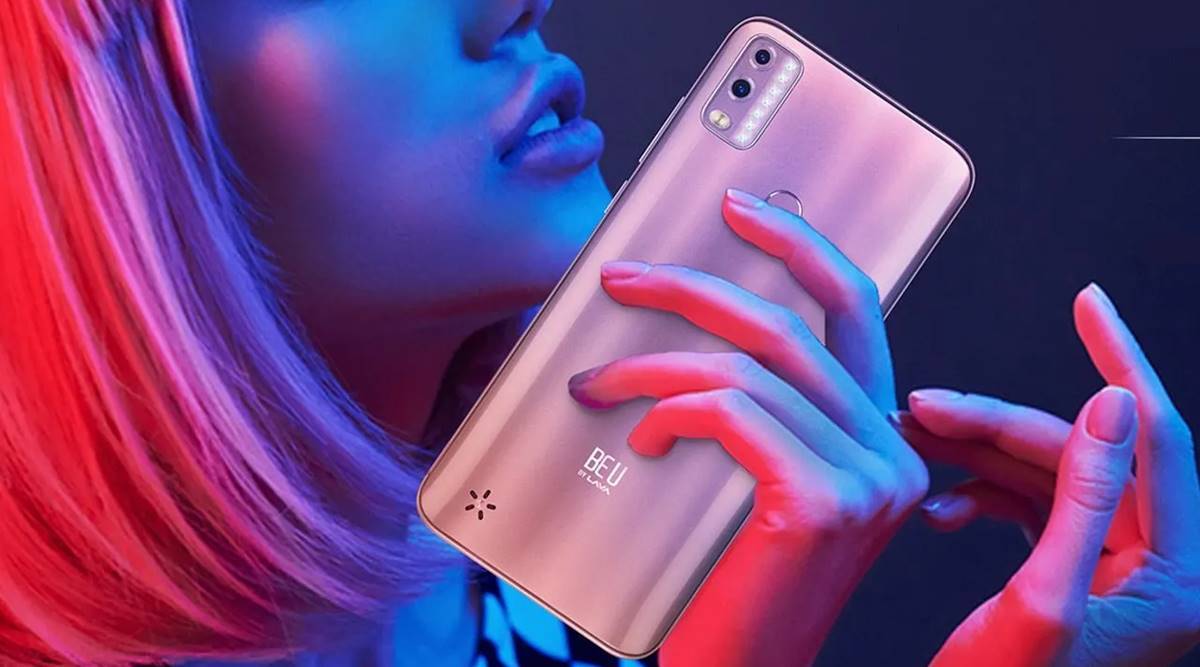
After announcing a few budget phones like Benco V80 and Z2s, now, Lava is planning to launch its first 5G smartphone. In a discussion with Lava’s product head Tejinder Singh, Gizbot has exclusively shared insights of the upcoming phone from Lava and its plans for H2 of 2021.
As per the discussion, Lava has some big plans for H2 this year. The company has confirmed that it will bring its first 5G smartphone to the Indian market on Diwali. Additionally, the company will bring unique technology in its upcoming phones which you won’t see in any other devices.
While sharing briefly, Mr.Tejinder Singh said, “We are planning to launch our first 5G smartphone near Diwali along with a new technology that will be unique, and you will not get in any other device”.
He said that the upcoming 5G smartphone will come with top-notch features and will be priced between ₹17,000(~$228) to ₹20,000(~$269). For incorporating the 5G technology, the company is said to be in talks with Indian telecom operators.
Moreover, he said that the company is also in the works of a smartwatch. The watch will also be unveiled later this year on Diwali.
Other than this, Lava has said that it has aimed for a 10% share in the smartphone market. It is worth noting that the company already owns a 20% market share in the feature phone category in India.
Lava also has plans of foraying outside India in more than 20 countries. These markets will include Southeast Asian regions, African countries, and Latin America.
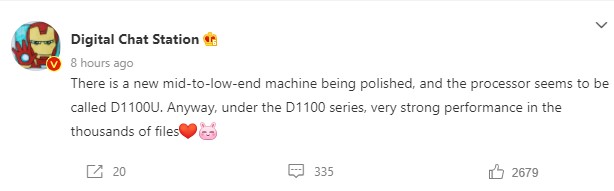
Last year, MediaTek announced the Dimensity 800U, a variant of the Dimensity 800. Now, it appears the Dimensity 1100 will also be getting the U-treatment as a leak has revealed that a Dimensity 1100U phone is coming.
The info was revealed by Digital Chat Station on Weibo earlier today. The reliable leaked stated in a post that a new budget phone is being finalized and its processor is said to be the Dimensity 1100U.
There are no details about the chipset but going by the relationship between the Dimensity 800U and Dimensity 800, then the Dimensity 1100U should have a higher clocked CPU and GPU but may not be more powerful overall.
The Dimensity 1100 is a 6nm octa-core chipset with four Cortex-A78 cores clocked at 2.6GHz and four Cortex-A55 cores clocked at 2.0GHz. It has a Mali G77 MC9 nine-core GPU. It also has a 5-core ISP with support for 108MP cameras, and a MediaTek APU 3.0 – a 6-core AI processor that can handle FP16 calculations natively.
The chipset is the first with True Dual 5G SIM (5G SA + 5G SA) and MediaTek claims that its 5G UltraSave power saving enhancements provides up to 82% in power savings compared to competitor alternatives.
We do not know which manufacturer will launch the first Dimensity 1100U-powered phone but we expect more details will surface in the coming weeks.
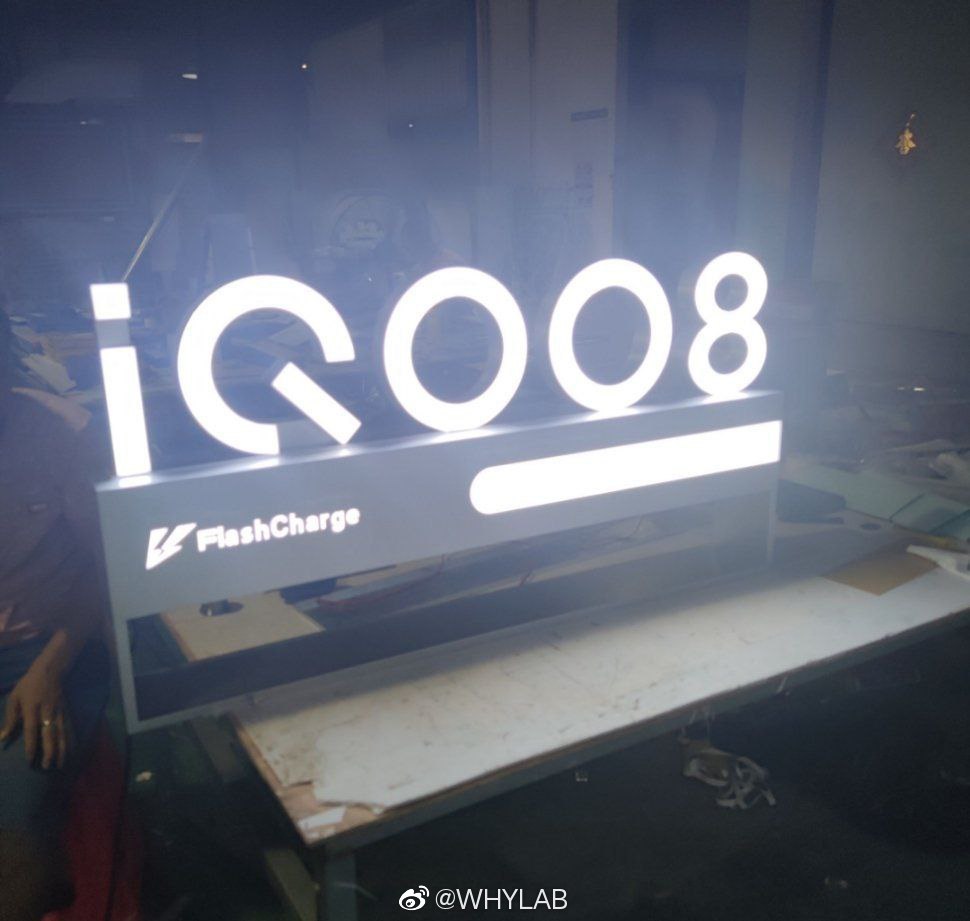
There has been a raft of rumors and teasers swirling around the soon-to-be-unveiled iQOO 8 smartphone ahead of its scheduled launch on August 4. Recent teasers and other details sourced about the device show that it will be debuting with some innovative components and features.
Notably, the iQOO 8 will premiere the Qualcomm Snapdragon 888 Plus SoC, as the first-ever device powered by the new chipset. The iQOO 8 still has some features that have not been captured in the teasers and leaks. We expect some of these details to become public as we inch closer to the August 4 date of its launch.
However, a teaser from iQOO has indicated a possible Flash Charging capability for the upcoming smartphone. The teaser showed a new FlashCharge sign, which close watchers have interpreted to mean a possible fast-charging model for the smartphone. In fact, it has even been rumored that the device is going to pack 160W charging on its battery. As per the speculation, we know that 160W charging has been tested successfully in some devices. Indeed, Xiaomi has also demonstrated 200W fast charging on a 4,000mAh-rated battery on the Xiaomi Mi 11 Pro (both wired charging and wireless at 120W).
The Infinix Concept Phone 2021 has also been put through the paces for 160W charging on its 4,000mAh battery. The test on the Infinix Concept Phone 2021 showed that a full charge could be accomplished for the device in under 10 minutes. Therefore, there could be some substance in the speculation regarding fast charging for the iQOO 8 smartphones. However, it has to be stated that there had not been any official or definitive statement from iQOO on the authenticity of the FlashCharging status for the iQOO 8.
As we inch closer to the August 4 launch of the iQOO 8, we’ll keep you in the loop on any further leaks or teasers that may come from iQOO. There are still some loose details to tie up for the device.
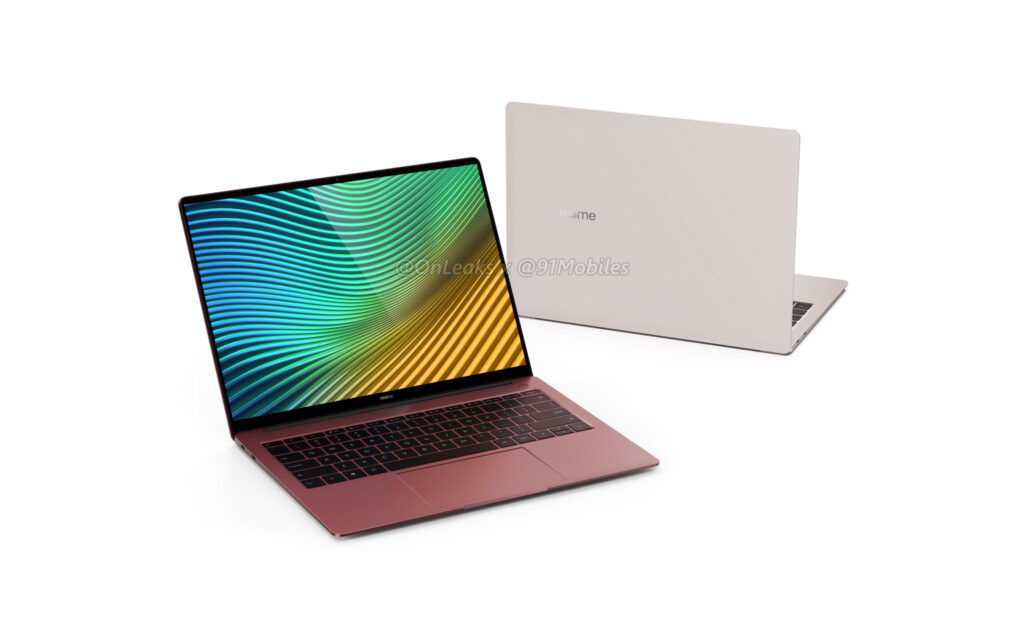
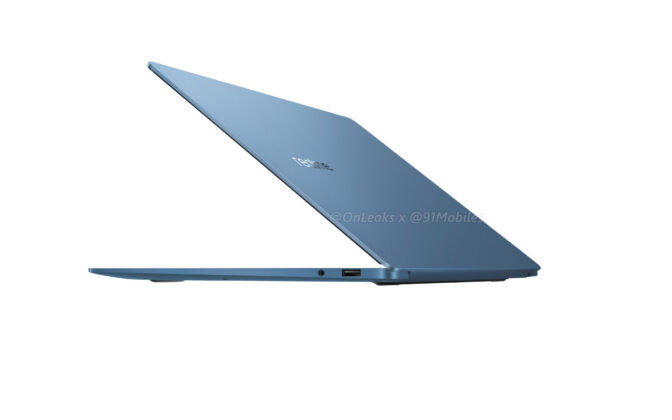
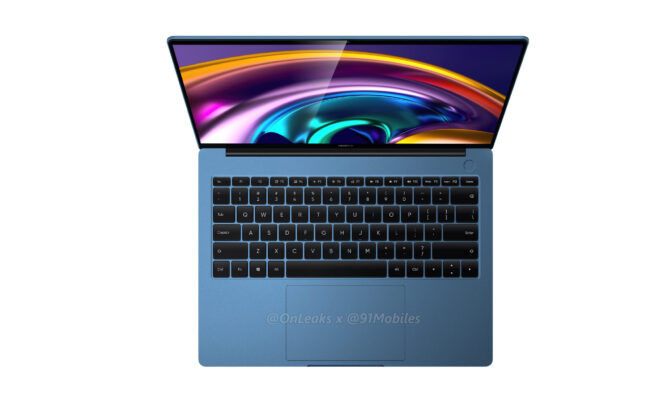
Last month, Realme officially confirmed that it will bring its first laptop to the market. The company revealed the laptop will be called the Realme Book and will be first unveiled in India. While a previous leak revealed its Real Grey color variant, a fresh leak from 91Mobiles in collaboration with OnLeaks sheds light on the rest of its color variants.
Apart from the Real Grey color, the Realme Book is touted to come in three other shades, namely Real Red, Real Blue, and Real Apricot. Furthermore, the renders of these colors have been shared.
Realme Book in Real Red and Real Apricot
According to the images, the laptop has a matte finish regardless of whichever color it flaunts. The colors aren’t flashy or too bright, rather, they are subtle and muted. The color covers the entire body except for the display and keyboard area.
1 of 3
With this finish, it looks quite similar to Apple’s MacBook Air. Moreover, the Real Blue color resembles the Apple iPhone 12 Pro’s Blue shade.
No doubt the laptop looks premium, but what will be its specs? Well, as of now, there’s very little to discuss, but what we know is that the laptop will feature a 14-inch display with a Full-HD resolution.
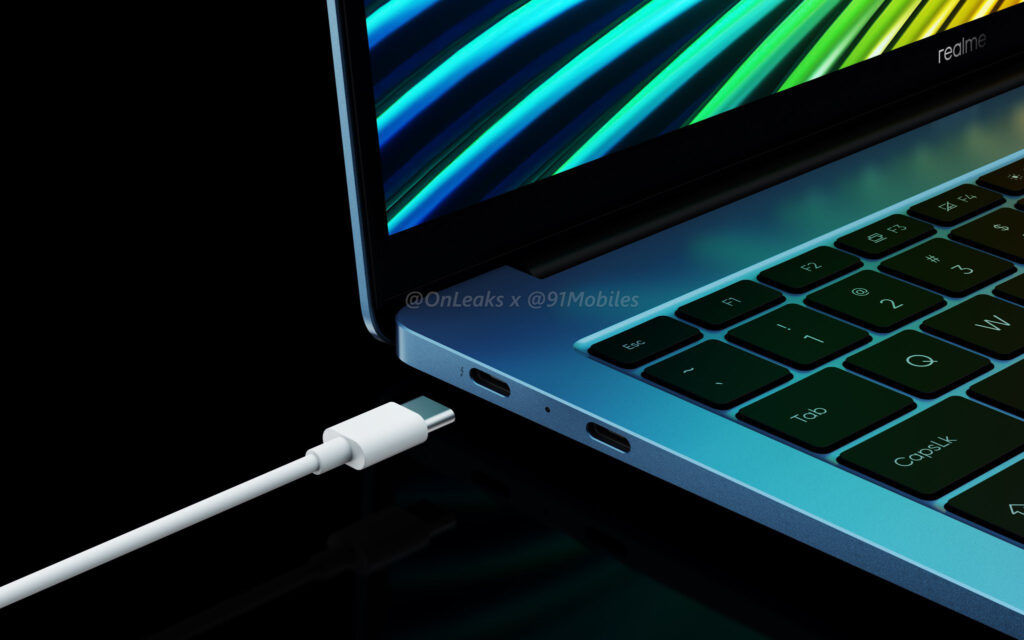
It will come with a backlit keyboard and a huge trackpad, again similar to the MacBook Air. Renders reveal a USB Type-C port and a charging indicator on the left, and a USB port and headphone jack on the right.
The laptop is speculated to come powered by 11th generation Intel i3 and i5 processors paired with multiple RAM and SSD variants. Recently, it was confirmed to run on the latest Windows 11 OS.
The Realme Book is expected to launch in August under the ₹40,000 price bracket, competing with the likes of Xiaomi and Lenovo.
In May this year, innovative Chinese tech giant, Xiaomi announced its innovative ultra-fast charging technology, aptly named HyperCharge. The charging concept of the Hypercharge was demonstrated with a Xiaomi Mi 11 Pro device that sports a 4,000mAh battery. The results announced by Xiaomi indicated that the HyperCharge technology was able to offer 200W wired charging from zero to 100% in a new world record of 8 minutes. On the other hand, the HyperCharge also produced 120W wireless charging to the Mi 11 Pro from zero to 100% in 15 minutes, a world record for wireless charging.
A new report monitored in China (via MyDrivers) indicates that the Xiaomi HyperCharge could debut in a smartphone as early as 2022, when mass production is scheduled to commence by June 2022. The innovative technology will most likely debut with one of the flagships from one of the 2022 flagships from Xiaomi. As per the report, the HyperCharge could come with the launch of the Xiaomi Mi 12 Ultra.
After the May 2021 demonstration of the HyperCharge on a Xiaomi Mi 11 Pro smartphone, several key questions were asked about the device’s technology. It was also shown that the battery power, based on computations, would decline by 20% after 800 cycles of the HyperCharge fast charging.
There were also concerns about whether the HyperCharge technology could apply to other devices outside the Mi range. There is a race by both smartphone manufacturers and accessories makers for the ultimate charging device for super-fast charging and minimal decline in battery life. Current charging speeds are between 30 minutes and up to two hours. Manufacturers have continued to push the boundaries in charging speeds, and the stated world records of Xiaomi both for wired and wireless charging could be breached soon.
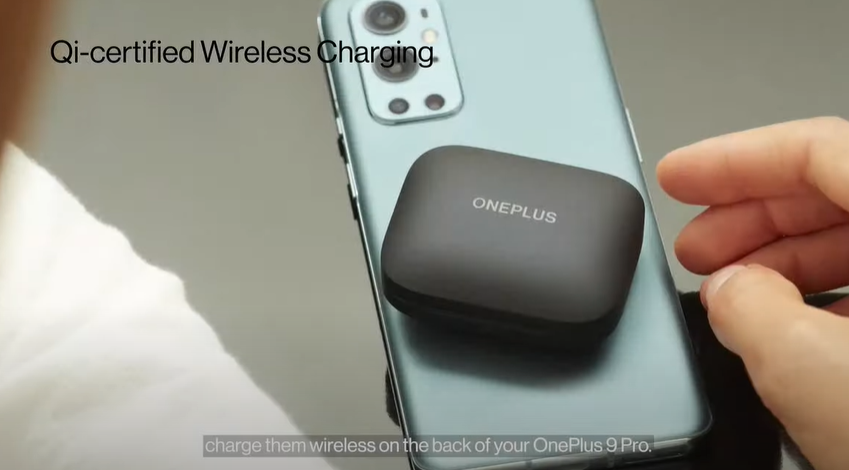
OnePlus has officially announced the OnePlus Buds Pro alongside the Nord 2 smartphone. The Buds Pro arrives with a premium design and several powerful features crammed inside the compact body. The new premium earbuds are an upgrade over the OnePlus Buds which was launched last year.
OnePlus Buds Pro
One of the prominent features onboard the TWS earphones is support for Adaptive Noise Cancellation technology support. This is an improvement over the Environmental Noise Cancellation utilized by the OnePlus Buds. The smart ANC actively drowns out unwanted sound frequencies like environmental noise or chatter in real-time. It also adjusts the noise cancellation level, providing a completely immersive user experience.
The premium earbuds are each equipped with three microphones that are capable of filtering out noise levels of up to 40dB. This ensures the delivery of a better and more comfortable sound output adapted to different situations. OnePlus claims this gives the Buds Pro an edge over earbuds packing just the conventional Active Noise Cancellation systems whose noise cancellation levels are fixed. Calls are also designed to be noise-free even in loud environments due to the enhanced noise reduction algorithms and mechanical design aimed at reducing wind noise.
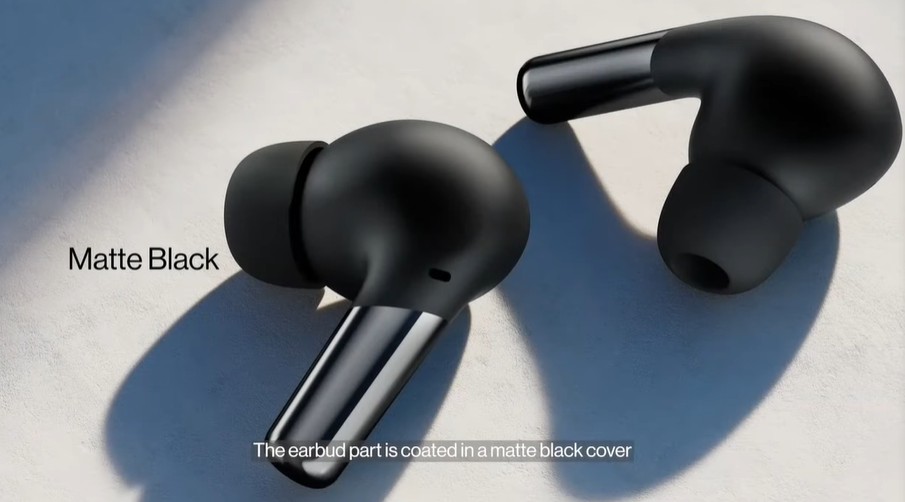
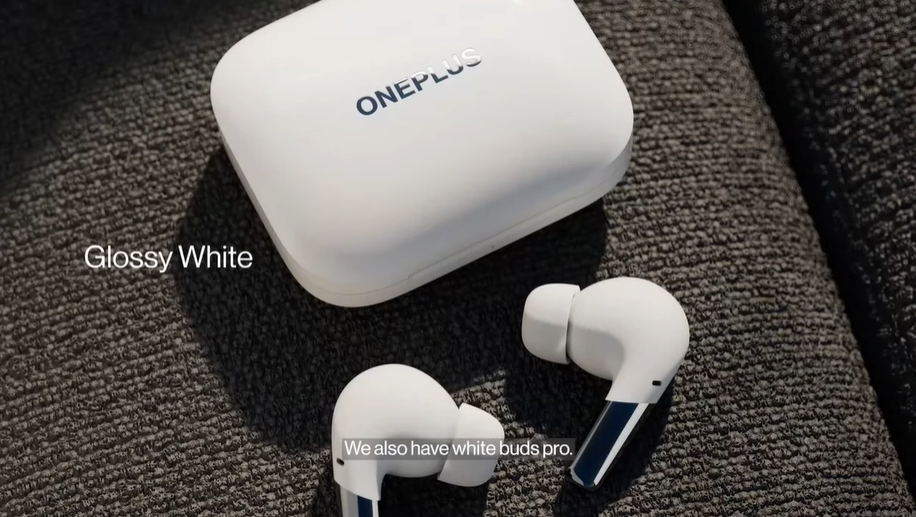
In terms of design, the wireless earbuds come in matte black and white colour variants. The body has a glossy metallic covering on the steems to offer a better operating experience and for sweat and dust resistance. Internally, the earbuds each feature two large 11mm dynamic drivers and Dolby Atmos support. The earbuds also come with the OnePlus Audio ID sound profile carefully calibrated to cater to user-specific sound sensitivities.
Another major improvement on the Buds Pro is the battery life. The earbuds come with an upgraded battery which can last up to 38 hours along with the carry case. The earbuds themselves can last 7 hours without ANC while the charging case can provide an additional 3 hours. When the ANC is turned on, the earbud lasts for 5 hours while the charging case delivers 23 hours extra. Further, a 10-minute wired recharge of the Buds Pro’s case will provide 10 hours of battery life, thanks to the Warp Charge support onboard. The truly wireless earbuds also offer Bluetooth 5.2 support and latency as low as 94ms with Pro Gaming mode turned on.
OnePlus Buds Pro carries a price tag of €150 in Europe where it will go on sale from August 25. The device will be available in the US and Canada from September 1 and will retail for $150. The company is yet to announce the pricing and availability details for the Indian market.
We use cookies on our website to give you the most relevant experience by remembering your preferences and repeat visits. By clicking “Accept”, you consent to the use of ALL the cookies.
This website uses cookies to improve your experience while you navigate through the website. Out of these, the cookies that are categorized as necessary are stored on your browser as they are essential for the working of basic functionalities of the website. We also use third-party cookies that help us analyze and understand how you use this website. These cookies will be stored in your browser only with your consent. You also have the option to opt-out of these cookies. But opting out of some of these cookies may affect your browsing experience.
Necessary cookies are absolutely essential for the website to function properly. This category only includes cookies that ensures basic functionalities and security features of the website. These cookies do not store any personal information.
Any cookies that may not be particularly necessary for the website to function and is used specifically to collect user personal data via analytics, ads, other embedded contents are termed as non-necessary cookies. It is mandatory to procure user consent prior to running these cookies on your website.