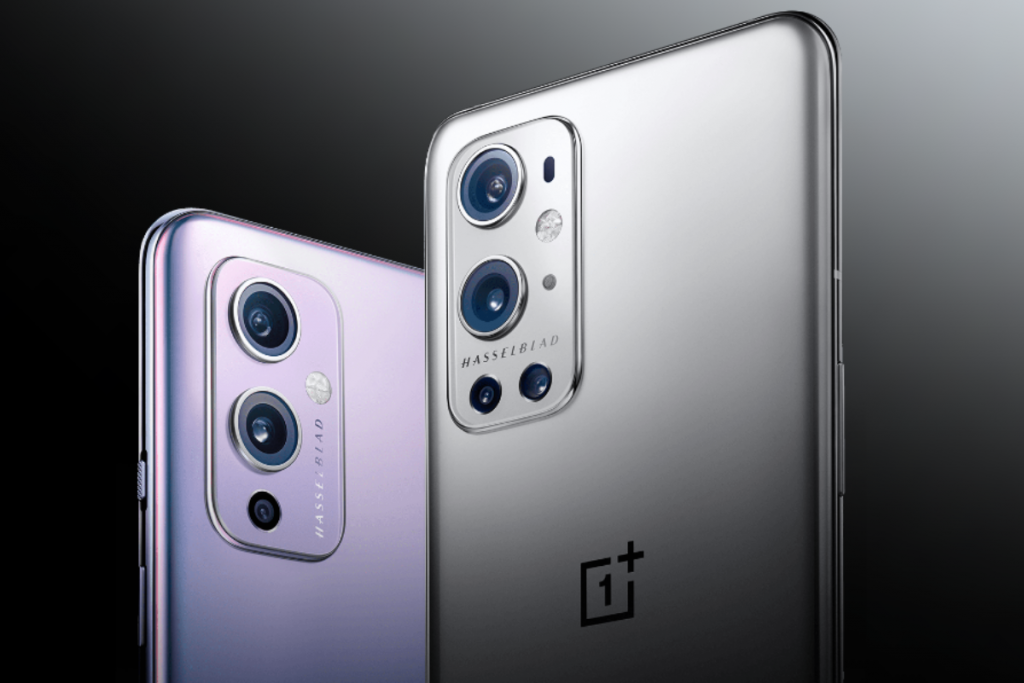
Those looking to buy the more affordable base version of the OnePlus 9 Pro might be disappointed to hear that the company might not launch this particular variant in the United States due to some “unforeseen” issues.
According to an AndroidPolicereport, the Chinese smartphone maker will apparently not launch the base 9 Pro model in the US. While the brand had initially stated that the base version of the Pro model was still on the way and there were certain delays due to supply issues, it seems that this might now be the case anymore. In other words, supply issues might make it difficult for the firm to launch this model in the US and Canadian markets.
In a statement, the company said that “The OnePlus 9 Pro 8×128 GB variant was originally set to be sold in North America for $969. Unfortunately, due to unforeseen supply constraints specific to North American devices, we recently concluded it is no longer possible to bring this configuration to the United States and Canada. In North America, we are prioritizing the 12×256 GB version to ensure our users have access to the highest spec device.”
So as of right now, the only 9 Pro model available in the US and Canada is the more expensive 12GB of RAM and 256GB storage variant that is priced at 1,069 US Dollars. Although, for those on a budget, the OnePlus 9 is still a decent alternative to the Pro variant, since it does arrive with a price tag that is more than 300 US Dollars cheaper. So stay tuned for more, as we will be providing updates when additional information is available regarding this matter.
Earlier today (15th July 2021), OnePlus India announced that it would be joining hands with Lionsgate Play. This strategic partnership will enable it to offer access to the vast global content library of Lionsgate for its OnePlus TV users.
The move is beneficial to both firms, as the streaming platform can expand its user base while the Chinese consumer electronics maker will be able to offer a better selection of content to its customers. Furthermore, the curated content from across the globe from Lionsgate Play will now be available on all OnePlus TVs, which also includes the newly launched TV U1S. Notably, the Lionsgate Play platform will also be easily accessible on OxygenPlay, which is the content discovery platform of the smartphone brand.
Through the Lionsgate Play partnership, users can expect to see academy award winning movies, box office hits, and local titles as well. This will also include content that will be available in six different languages in India, namely Hindi, Tamil, Telugu, Marathi, Kannada, and Bhojpuri. Navnit Nakra, Vice President, Chief Strategy Officer, and Head of India Sales at OnePlus India stated that “Our focus is to provide an unparalleled and immersive smart TV experience to our community. The partnership with Lionsgate Play will provide our OnePlus TV users access to exclusive content curated from all over the world across genres and languages thus further elevating their content viewing experience.”
Similarly, Amit Dhanuka, Executive Vice President at Lionsgate added that “We are big believers of the large screen format as it is the best place to watch premium content and adds richness to the experience. This partnership will strengthen our audience base and provide a great viewing experience. We have seen a tremendous response to the service launch in India as people are loving the content and the experience. Few titles that are breaking all consumption records on our platform are Hunter Killer, Angel Has Fallen, Normal People, The Girlfriend Experience, John Wick 3, Love Island among others.”
A new report has revealed that the CPU configuration on the upcoming Apple A15 Bionic chipset will be similar to the one seen in the last generation’s A14 Bionic chipset.
According to a WccFTechreport, the upcoming processor from the Cupertino based giant will arrive with a similar CPU configuration that we have seen before. Although, this new iteration will likely arrive with improvements to its performance and power efficiency. While the A15 Bionic will arrive with various improvements, it will still sport the same number of cores in the CPU, which is 6. However, the notable difference in the new chipset is that it will be made on the N5P node from TSMC.
For those unaware, the A14 Bionic was built on a 5nm process from TSMC, but the upcoming node is expected to offer certain improvements over the 5nm architecture. This also implies that the Cupertino based giant has yet to shift towards the 4nm process this year. Looking at the A14, it featured two high performance cores paired with four power efficient cores, so we can expect the A15 to follow a similar layout.
Meanwhile, another report (Via Bloomberg) has also revealed that Apple is raising production for its iPhone 13 series by 20 percent over its predecessors. Usually, the brand targets around 75 million units for the initial run of its iPhone’s launch till the end of the year. But robust sales of the iPhone 12 series have apparently led to Apple asking its suppliers to build as many as 90 million units of the 2021 iPhone, as it expects 5G to become a standard that would push its users for an upgrade.
Remember how OnePlus first launched its smartphones with an invite system during its initial years, well, Nothing is following a similar unique system to offer people a chance at buying their product. But rather than an invite system, the firm is starting an auction for those that can’t wait to get their hands on the new truly wireless earbuds. For those unaware, the hearables in question are the Nothing Ear (1) TWS earbuds.
While the earbuds are set to launch on 27th July 2021 in various regions, the company is hosting an auction for the first 100 pairs of ear (1) true wireless earbuds. These earphones will be auctioned on DropX at 9 AM ET on Monday and are clearly aimed at enthusiasts that seek to buy the product before anyone else. While the first 100 Nothing ear (1) true wireless earbuds are not a special variant and will be the same as the ones that will be sold after, the product will feature a unique engraving between 1 to 100 based on their final sale price.
As per Akis Evangelidis, Head of Marketing and Co-Founder of the startup, “We’re conducting an auction exclusively on StockX, which means our communities will have a chance to purchase Ear (1) before anyone else and also before it is fully revealed.” Similarly, StockX Chief Marketing Officer Deena Bahri added that “From sneakers and apparel to collectibles and now electronics, we are committed to bringing customers and culturally relevant brands together on our marketplace. Nothing was the perfect partner to launch our very first electronics DropX and help demonstrate how StockX connects consumers to innovative technology.”
Google has been rolling out Android 12 Beta builds for Pixels since May. Many partner OEMs have also released beta builds for some of their handsets. However, most of the software builds by partner OEMs are pure AOSP with some additions. But we all know that the final public release for these phones will come with the respective company’s Android skin. Hence, it is not surprising to learn that Xiaomi has started testing MIUI based on Android 12.
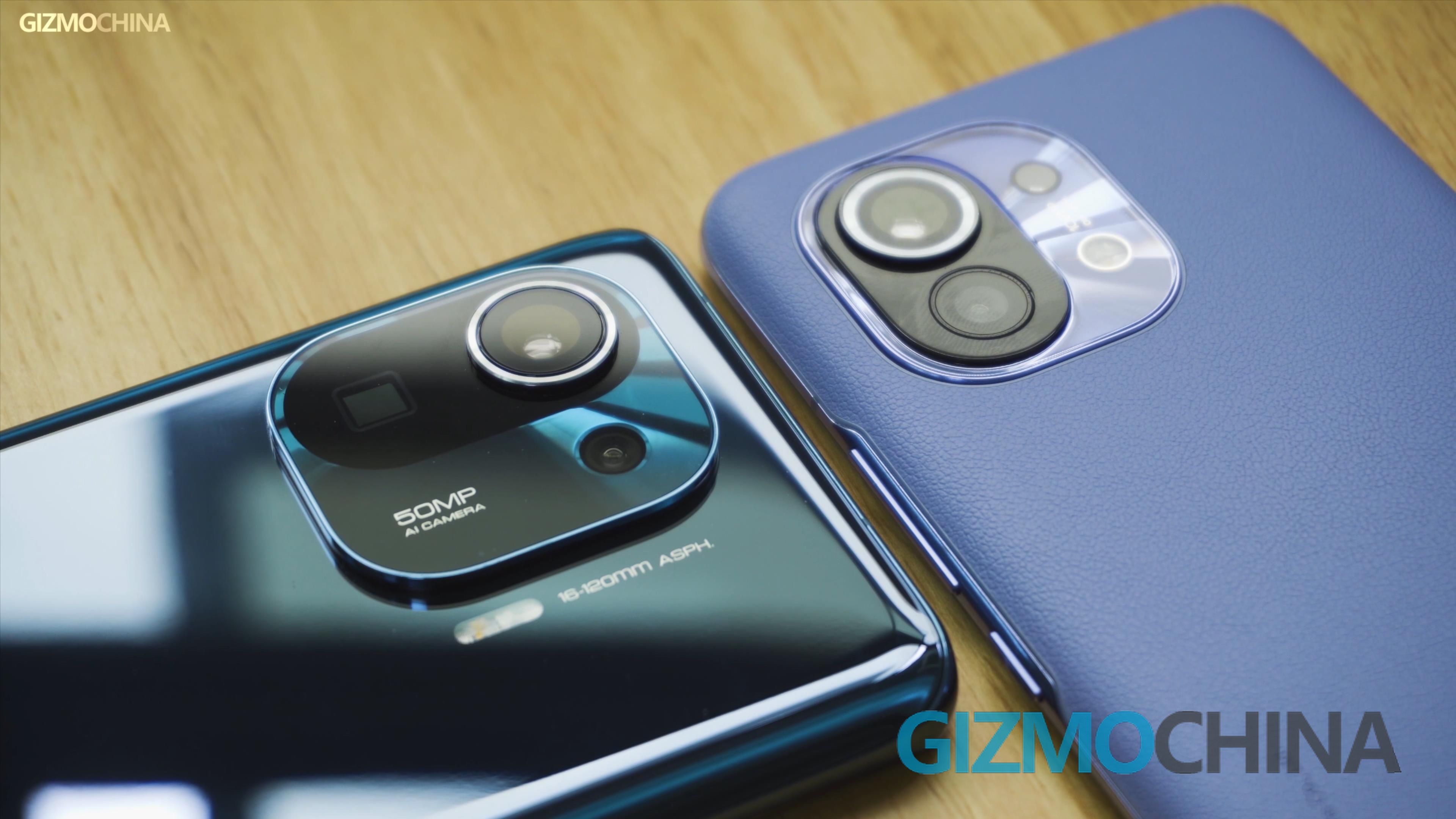
Xiaomi Mi 11 and Mi 11 Pro
Xiaomi is part of the Android 12 Beta program. The company has released Android 12 Beta for four devices, namely Mi 11 Ultra, Mi 11, Mi 11X Pro, and Mi 11i. Now, the firm has begun to test MIUI based on the latest version of Android for some of its phones.
According to Xiaomiui (via PiunikaWeb), Xiaomi has started testing Android 12-based MIUI builds for the following smartphones.
Mi 11 Ultra
Mi 11 Pro
Mi 10 Ultra
Mi 10 Pro
Mi 10
Mi 10T Pro
Mi 10T
Redmi K30S Ultra
The firm started testing the upcoming version of Android with MIUI for the Mi 11 Ultra and the Mi 11 Pro last month itself. Anyway, the tests for the remaining handsets began only recently.
Unfortunately, it’s not known whether Xiaomi is working on Android 12 with MIUI 12.5 or MIUI 13. Hopefully, it’s the latter as users can get the next iteration of MIUI as well as Android together.
ZTE has been working on its second-generation under-display camera smartphone — ZTE Axon 30 as a successor to Axon 20 5G. It has now been officially confirmed by the company to soon get launched in its home market China.
Ahead of the launch, the firm has started teasing features of the upcoming phone. Today, the company has shared a new teaser poster on Weibo that reveals details about the phone’s build material and technology used.
It claims that the ZTE Axon 30 uses seven layers of high-transmittance materials, three layers of special technology, and offers stronger light transmission. Prior to this, ZTE had revealed that the device will come with a 120Hz refresh rate and offer 400PPI pixel density.
In a recent teaser video, the company showcased the smartphone with minimal bezels and a higher screen-to-body ratio as it aims to offer a true full-screen experience to uses. It has already been confirmed that the phone will feature ZTE’s second-generation under-display camera technology which was demonstrated a few months ago at Mobile World Congress Shanghai.
This new technology is touted to have significant upgrades and improvements over the first generation. ZTE said its team of engineers has gone through difficult research to effectively eliminate glare and diffraction from the material. It can effectively eliminate the adverse effects of foggy surfaces, ensure that the picture is bright and transparent, and intelligently adjust the exposure.
So far, not much is known about the phone’s specifications but it’s speculated to come powered by Qualcomm Snapdragon 888 chipset. There’s a possibility that the company may opt for a different processor. The device is expected to run Android 11 with ZTE’s new MyOS interface on top. We expect to know more details about this upcoming smartphone in the coming days.
Google has released the latest Android 12 Beta 3 which offers some new features. Along with that, the company has also rolled out the update for the Android TV platform as well with some interesting additions.
The Android 12 Beta 3 update for Android TV focuses on improving user interface elements when viewing the interface on the 4K TVs. Till now, the main interface was only rendered in 1080p and when selecting something to watch, it switches to 4K, causing some “lag.”
The new update brings new background blurring tools for developers to “easily enhance the visual separation of different UI layers.” There’s also a new refresh rate setting for a “smoother viewing experience.” Applications can also check playback settings and change the frame rates based on what’s being viewed.
Another major feature coming with this new build is related to privacy control. Google is now implementing microphone and camera indicators that appear on TV. These are basically the same indicators found on smartphones when an app uses a camera or microphone. This feature is for those who don’t want the microphone or a connected camera always being active.
The Android 12 Beta 3 release for Android TV is now available on Google’s own ADT-3 dev kit. As usual, there’s no indication from the company about when the actual Android TV devices will be upgraded to Android 12 in the future.
Google has also released the third beta of Android 12 for smartphones, which brings features like scrolling screenshots, enhanced auto-rotate, and more. It looks like the company is getting close to the official launch and the stable version of Android 12 could be released soon for all the users.
WhatsApp has web support but using this version requires you to connect using a smartphone and it needs to be powered on and connected. Now, the company has released a new beta that brings support for multi-device without the need for a phone.
This is one of the most anticipated features and a couple of months ago, the company’s executives talked about the feature being in development. If you are interested to check it out, you can enroll yourself by following the procedure described by the company. For using this, you will need to be on the latest beta version of WhatsApp for Android or iOS.
The company says that it has developed new technologies that ensure that even on multiple devices, messages sync while maintaining end-to-end encryption. It adds that each message is individually encrypted using the established pairwise encryption session with each device. Also, messages are not stored on the server after they are delivered.
It solves one of the major issues of the WhatsApp Web version — requiring a phone to be connected all the time. The company says that by requiring the phone to perform all operations, companion devices are slower and frequently get disconnected, especially when the phone has a poor connection, its battery is running low, or the application process gets killed by the phone’s operating system.
It also allows for only a single companion device to be operative at a time, meaning people can’t be on a call in Portal while checking their messages on their PC. The new WhatsApp multi-device architecture developed by the company removes these hurdles and it no longer requires a smartphone to be the source for everything and still keeps user data seamlessly and securely synchronized and private.
However, not everything is working at this stage. The company has shared a list of features that are currently not working with the beta version of multi-device support.
Viewing live location on companion devices.
Pinning chats on WhatsApp Web or Desktop.
Joining, viewing, and resetting group invites from WhatsApp Web and Desktop. For these functions, you’ll need to use your phone.
Messaging or calling someone who is using a very old version of WhatsApp on their phone won’t work from your linked device.
Calling from Portal or WhatsApp Desktop to linked devices that aren’t enrolled in the multi-device beta.
Other WhatsApp accounts on your Portal won’t work unless those accounts have joined the multi-device beta.
WhatsApp Business users can’t edit their business name or labels from WhatsApp Web or Desktop.
Currently, there’s no specific date for when the company is planning to roll out this feature to all users. The firm is initially rolling out this feature to its existing beta users. Over the coming months, it plans to start adding it as an opt-in beta feature for a small number of users on stable versions of the app.
Honor has just launched its 2021 series of MagicBook laptops in China. This includes the MagicBook 14 and MagicBook 15, which feature the AMD Ryzen 5000 series of processors along with support for the upcoming Windows 11 update.
In a conference earlier this week, the Chinese smartphone maker launched the new MagicBook 14 and 15, which are the company’s latest thin and light notebooks. Both laptops sport an all metal body design with thin bezels that surround the display. On the front, the MagicBook 14 sports a 14 inch FHD IPS matte display that has been certified with TÜV Rheinland Low Blue Light and Flicker Free certifications. The larger variant also features a similar display but with a larger 15 inch panel.
Notably, a highlighting aspect of the new laptops is their form factor, with the 14 inch version measuring just 15.9mm in thickness and weighs just 1.38 kilograms. Even the bezel on the display is just 4.8mm thick. On the other hand, the MagicBook 15 has a thickness of 16.9mm and weighs just 1.54 kilograms with an 87 percent screen to body ratio and 5.3mm bezel frame. Under the hood, both laptops feature AMD’s latest Ryzen 5000 series processors, which is paired with 16GB of dual channel DDR4 RAM and 512GB of NVMe PCIe SSD storage.
Both laptops support WiFi 6 standards as well and Honor has also stated that these will support the Microsoft Windows 11 update when it rolls out. The laptops will first go on sale starting from July 20 and their prices are as follows:
Honor is also offering a special first sale discount on the MagicBook 14’s Ryzen 5 model and the MagicBook 15, which will be priced at 4,199 Yuan (roughly 650 US Dollars) and 4,299 Yuan (roughly 665 US Dollars) respectively.
Along with the rise in demand for gaming smartphones, demand for gaming accessories has also surged. To make the most of it, boAt, a popular Indian accessories maker has now debuted into the gaming headphones market.
The company has launched boAt Immortal 1000D headphones which come with 50mm drivers that offer 3D spatial audio, along with support for Dolby Atmos and 7.1 Channel Surround Sound, tuned by boAt’s Plugin Labz.
They are designed to provide a 360° audio experience with pinpoint accuracy, which is important in games. It also comes with dual denoising detachable mics with ENx technology, and it connects via a long, braided cable that terminates in a USB Type-A port. You also get an in-line remote that helps you control audio, mic, and LEDs.
To give the product a gaming look, there are RGB lights on the ear cups that offer a breathing light effect. Overall, the boAt Immortal 1000D is lightweight, and the ear cups are soft and cozy, ensuring you don’t face issues even during long listening sessions.
boAt is known for making products that are affordable and the newly launched headphones are also priced accordingly. It comes in two color options — Black and White Sabre, for the price of ₹2,499 (~$34) and is now available for purchase via Amazon and boAt website.
The Vivo Y72 5G smartphone has been launched in India. It is Vivo’s first 5G-enabled Y-branded smartphone for the Indian market. The major highlights of the device include a 90Hz display, Snapdragon 480 chipset, and 48-megapixel dual cameras. The Y72 5G has landed in India as the rebadged version of the Vivo Y52s (t1 version) that debut in May in China.
Vivo Y72 5G specifications and features
The Vivo Y72 5G houses a 6.58-inch IPS LCD display with a teardrop notch that delivers a screen space of 90.6 percent. The screen offers an FHD+ resolution, a 20:9 aspect ratio, and a 90Hz refresh rate. The right side of the device has a volume rocker and a power key, which is embedded with a fingerprint sensor.
For shooting selfies and video calls, the Vivo Y72 5G has an 8-megapixel front camera with an f/1.8 aperture. The squarish camera module available on the rear shell of the device has a 48-megapixel primary camera with f/1.8 aperture, a 2-megapixel bokeh camera, and an LED flash.
Vivo Y72 5G
The Snapdragon 480 chipset and 8 GB of RAM are present at the helm of the Y72 5G. It offers 4 GB of virtual RAM, big internal storage of 128 GB, and it runs on Android 11 OS and FunTouch OS 11. On the connectivity front, the Y72 5G offers dual SIM, 5G, Wi-Fi 802.11ac, Bluetooth 5.1, GPS, USB-C, and a 3.5mm headphone slot. The device measures 164.15 x 75.35 x 8.4mm and weighs 188 grams.
Vivo Y72 5G price in India
The Vivo Y72 5G has arrived in India with a pricing of Rs 20,990 (~$282). The handset is available in colors like Prism Magic (blue) and Slate Grey. Buyers can take advantage of offers like flat Rs 1,500 (~$20) cashback through HDFC, ICICI, and Kotak banks, one time screen replacement, zero down payment offer through finance partners, and Rs 10,000 worth benefits from Jio.
Oppo on Wednesday unveiled the Reno6 5G series in India with MediaTek’s Dimensity SoCs. At the event, Oppo also launched a new color of the Oppo Enco X TWS earbuds. The earbuds have received a new Blue color variant which expands its colorway and gives buyers a variety in colors options to choose from.
The Oppo Enco X Blue color variant is priced at ₹9,990(~$135) which is the same as the other color variants. But, for a week, it will be sold at introductory pricing of ₹8,990(~$120). Now that the new color is introduced, buyers now have three colors to choose from, Black, White, and Blue.
The Oppo Enco X has a premium design, starting with its case which has an oval-shaped design. The earbuds have an elongated stem, similar to Apple’s AirPods Pro. They are lightweight coming at 4.8 grams each. The buds support Hi-Fi audio and use an 11mm driver.
The Enco X comes with a dual-core chip that enables noise reduction. It has four modes – transparency mode, toggle noise mode, strong mode, and weak mode. Depending on the environment, you can switch to different modes.
The earbuds come with IP54 water and dust resistant rating and house a battery that is claimed to last for up to 25 hours on a single charge. It has touch controls for playing/pausing the music, answering calls, and toggling voice assistants.
Recently, a Samsung phone with model number SM-A127F / SM-A127M was spotted at the Bluetooth SIG certification site and Samsung Philippines support site. A recent leak claimed that it will debut as a new chipset variant of the Galaxy A12. The existing A12 is powered by the Helio P35 chip, but its new variant is expected to feature the Exynos 850 SoC by Samsung. Fresh findings from Google Play Console and Google’s Supported Devices list suggest that the device may debut as the Galaxy A12s.
The model number of the existing Galaxy A12 is SM-A125F. In the Google Supported Devices list, the SM-A127F/M handset is mentioned with the Galaxy A12 marketing name, and they are listed as “a12s” in the device column. Since the South Korean company is already selling a phone with the Galaxy A12 name, it is likely that the upcoming device could be called the Galaxy A12s.
The Galaxy A12s Google Play Console listing reveals that it features an HD resolution supporting display and Exynos 850 chipset. The Soc is coupled with 3 GB of RAM, and it runs on Android 11 OS. The listing further mentions that it has a fingerprint scanner. Probably, it could be integrated with the power button of the device.
The other details of the Galaxy A12s are not known yet. Since the device’s support page is live and it has appeared on Google Play Console, it is likely to go official later this month or early August.
Samsung Galaxy A12 specifications
The Galaxy A12 has a PLS IPS panel of 6.5 inches that offers an HD+ resolution. The Helio P35 chip powers the device and it comes in variants in colors like 3 GB RAM + 32 GB storage, 4 GB RAM + 64 GB storage and 4 GB RAM + 128 GB storage.
The A12 has a front-facing camera of 8-megapixel. Its squarish rear camera island has a 48-megapixel primary camera, a 5-megapixel ultrawide lens, a 2-megapixel macro camera, and a 2-megapixel depth sensor. The handset comes in multiple colors like black, white, and blue.
While Redmi is launching different versions of the Note 10 series like the Redmi Note 10S and the yet-to-launch Redmi Note 10T, here we have a leak for the upcoming Redmi 10 smartphone. The Redmi 10 smartphone has appeared on FCC (Federal Communications Commission) certification revealing its key details.
The Redmi 10 smartphone has the model number 21061119AG and it runs on MIUI 12.5 based on Android 11. It is also confirmed to arrive in a dual-SIM variant supporting 4G LTE. The phone will debut in three variants – a 4GB RAM and 64GB storage variant, a 4GB RAM and 128GB storage variant, and a 6GB RAM and 128GB storage variant.
Additionally, a Twitter leaker named Kacper Skrzypek has revealed that the phone’s major highlight will be the 50MP primary lens. Yes, the phone is tipped to feature a 50MP primary lens and it will be a Samsung S5KJN1(ISOCELL JN1) sensor. In total, there will be three cameras at the rear – a 50MP main, an 8MP wide, and a 2MP macro lens.
#Redmi10 will feature a new Samsung S5KJN1 sensor (50Mpx), IMX355 (8Mpx, probably wide), and 2mpx macro. Not sure about front camera parameters.
If this is to be believed then the Redmi 10 will surely be a solid camera phone, at least on paper. Moreover, the phone is expected to come powered by a MediaTek chipset. Exactly which one is still a question.
Other than this, the smartphone was previously spotted on EEC(Euroasian Economic Commission) and a few Indonesian and Singapore-based certifications. These listings suggest a possible launch for these markets.
Samsung is expected to announce the Galaxy Z Flip3 clamshell phone with a foldable screen on Aug. 11. Ahead of the launch, the device has appeared at the Geekbench benchmarking platform with some of its key specs.
The SM-F711U model that has appeared on Geekbench is the North American variant of the Galaxy Z Flip3 5G. The “Lahaina” Qualcomm chip that powers the device is the Snapdragon 888 flagship chip. It further reveals that the device will be offering 8 GB of RAM and Android 11 OS.
It has scored 1015 and 3161 in the single-core and multi-core tests of Geekbench, respectively. Probably, some markets may receive the Exynos 2100 chipset version of the device.
Samsung Galaxy Z Flip3 specifications
The Galaxy Z Flip3 has a 6.7-inch S-AMOLED display that offers an aspect ratio of 25:9 and a 1.9-inch external display. Leaked renders have revealed that the Z Flip3 will be sporting an attractive dual-tone design. It may feature a side-facing fingerprint scanner for biometric authentication.
Samsung Galaxy Z Flip3 leaked renders by GizNext
It may come with a selfie camera of 10-megapixel and its rear camera setup may include a 12-megapixel primary camera and a 12-megapixel ultrawide lens. The device may house a 3,300mAh battery that supports 15W charging and wireless charging. The clamshell may offer native storage of 256 GB and it is likely to run on One UI 3.1 based Android 11 OS.
It is speculated that the device could be priced between KRW 1,200,000 (~Rs 1,050) and KRW 1,280,000 (~$1,120). The device is likely to arrive in multiple colors such as dark green, light violet, beige, grey, black, pink, dark blue, and white.
Earlier this year, Realme unveiled its Watch 2 Pro in the global markets including Malaysia with highlights like a big 1.75-inch display and dual-satellite GPS. Today, Realme has officially announced that the Realme Watch 2 Pro is arriving next week in the Indian market. Realme has scheduled the launch event for July 23 in India at 12:30 PM IST. Additionally, Realme is also slated to launch a premium pair of wireless earbuds dubbed Realme Buds Wireless 2 at the event with Sony LDAC Hi-Res Audio support.
In the global market, the Realme Watch 2 Pro is priced at 74.99 Euros(~$89). That said, we can expect similar pricing in the Indian market. Once launched in India, we can also expect the smartwatch to go on sale in the upcoming Amazon Prime Day sale on July 26.
Realme Watch 2 Pro Specifications
Realme Watch 2 Pro comes with an Apple Watch-like design sporting a big 1.75-inch display with a 320 x 385 pixels resolution. The screen has 600 nits of peak brightness and comes with 100+ watch faces.
Its features a dual-satellite GPS system and blood oxygen monitoring sensor. It also has an optical heart rate sensor, a sleep cycle tracker, and a pedometer for step tracking. The smartwatch has 90 sports modes including badminton, jump rope, football, and others.
The Watch 2 Pro has an IP68 water-resistant rating meaning that it can take a few splashes of water. The smartwatch packs a 390mAh battery which is claimed to last for up to 14 days.
Recent reports have revealed that Samsung is working on the Galaxy A03s smartphone. Its arrival may not be far away as it has been spotted at Bluetooth SIG, the Bureau of Indian Standards (BIS), and Geekbench. Fresh information reveals that the Galaxy A03s (SM-A037 model number) has received approval from the Federal Communications Commission (FCC), which indicates that its launch could be imminent.
The model number of the battery that powers the Galaxy A03s is HQ-50S, which reveals the FCC listing. It can be confirmed through the TUV certification that the device the battery has a typical value of 5,000mAh. The FCC listing has no information on the other major specs of the phone.
Samsung Galaxy A03s CAD renders by OnLeaks/91mobiles
Samsung Galaxy A03s specifications
Previous reports have revealed that the Galaxy A03s may sport a 6.5-inch IPS LCD panel that offers an HD+ resolution. The display notch is likely to house a -megapixel selfie camera. Its rear camera setup may include a 13-megapixel main camera, a 2-megapixel macro camera, and a 2-megapixel depth assist lens.
The Geekbench listing of the Galaxy A03s revealed that it may ship with the Helio G35 processor. The handset will offer users 4 GB of RAM and up to 64 GB of storage. It will come preinstalled with Android 11 OS and One UI.
The 5,000mAh battery of the A03s may carry support for 15W charging. For security, it is likely to feature a side-facing fingerprint scanner. It will be arriving as a successor to last year’s Galaxy A02s, which was driven by the Helio P35 chip and lacked a fingerprint scanner. The rest of the specs of both phones seems to be identical.
Xiaomi India is expected to announce new laptops at some time later this month. Recently, it was revealed by 91mobiles that the upcoming laptops for India will be called Mi Notebook Pro 14 and Mi Notebook Ultra 15. However, the report did not reveal their specifications. The publication is back with a fresh leak that has revealed the entire specifications of the Mi Notebook 14 Pro and Mi Notebook Ultra 15.
It is now revealed that the Mi Notebook Pro and Mi Notebook Ultra 15 will be rebranded versions of the RedmiBook Pro 14 and RedmiBook Pro 15 that debuted in China a few months back. It is speculated that the Indian models will come only with Intel Xe graphics. In other words, the company may not announce any variants with discrete graphics.
Mi Notebook Pro 14 and Mi Notebook Ultra 15 specifications
The Mi Notebook Pro 14 will feature a 14-inch display that offers a 2.5K resolution and a 60Hz refresh rate. It will be backed by a 56Wh battery that supports 65W charging.
The Mi Notebook Ultra 15 will come with a 15.6-inch display that supports a 3.2K resolution and a 90Hz refresh rate. It will come with a larger 70Wh battery that supports 100W charging.
Both models will be available in Intel 11th generation Core i5 and i7 CPU editions with Xe graphics, up to 16GB of DDR4 3200MHz RAM, and 512GB of PCIe SSD storage. These models will come preinstalled with Windows 10 Home, Microsoft Office Student edition, and MIUI+.
Both notebooks will feature 4W speakers with DTS Audio support. These laptops will offer other features like an HD webcam, fingerprint scanner, backlit keyboard, Wi-Fi 6, Bluetooth, a USB-C port, a USB-A 3.2 Gen 1 port, a USB-A 2.0 port, an HDMI port, and a 3.5mm audio jack.
The Realme GT Master Edition can be seen in dark gray color in the below-shown images. Moreover, the handset can be seen sporting a glass module for its triple camera system. A unique Realme logo with Japanese designer Naoto Fukasawa’s signature can also be seen next to the camera module. It is unclear whether this device is the Realme GT Master Edition.
1 of 2
Realme GT Master Edition
Realme GT Master Edition specifications
The leaked documents (via) show that it has a 6.43-inch AMOLED panel that offers a 120Hz resolution. It is powered by the Snapdragon 778G chipset and is likely to arrive in variants like 8 GB RAM + 128 GB storage and 8 GB RAM + 256 GB storage in China.
The device houses a 4,300mAh battery that supports 65W rapid charging. It has a 32-megapixel Sony IMX615 front-facing camera, and its rear features a 64-megapixel + 8-megapixel + 2-megapixel triple camera system. The device will come preinstalled with Realme UI 2.0 based Android 11 OS. This device is the Realme RMX3361 that was approved by TENAA recently.
Closer look at the Realme GT Master Edition
1 of 2
The Realme GT Master Edition has a higher version that has a 6.55-inch AMOLED FHD+ 120Hz display, Snapdragon 870 chipset, up to 12 GB of RAM, up to 512 GB of storage, and a 4,500mAh battery with 65W charging. It has a 32-megapixel front camera and its rear features a 50-megapixel (Sony IMX766) + 16-megapixel + 2-megapixel triple camera unit. This one is the Realme RMX3366 model that was certified by TENAA last month. Either one of these models is likely to debut as the Realme GT Master Explorer Edition.
OPPO Reno6 Pro 5G just made its debut in the global market starting from India. The handset brings high-end specifications to the shelves at a modest price. But it is not the only amazing device in its price range. In the same segment, you can also get the flagship killer Xiaomi Mi 11X, packing a great hardware department and a complete specs sheet at a very affordable price. Which device has the best value for money between OPPO Reno6 Pro 5G and Xiaomi Mi 11X? This comparison between their specifications will try to give you an idea.
OPPO Reno6 Pro 5G vs Xiaomi Mi 11X
OPPO Reno6 Pro 5G
Xiaomi Mi 11X
DIMENSIONS AND WEIGHT
160 x 73.1 x 7.6 mm, 177 g
163.7 x 76.4 x 7.8 mm, 196 g
DISPLAY
6.55 inches, 1080 x 2400p (Full HD+), AMOLED
6.67 inches, 1080 x 2400p (Full HD+), Super AMOLED
Triple 48 + 8 + 5 MP, f/1.8 + f/2.2 + f/2.4
20 MP f/2.5 front camera
BATTERY
4500 mAh, fast charging 65W
4520 mAh, fast charging 33W
ADDITIONAL FEATURES
Dual SIM slot, 5G
Dual SIM slot, 5G
Design
The OPPO Reno6 Pro 5G is the king of design. With its Reno Glow finish for its glass back, it appears a lot more gorgeous than the Xiaomi Mi 11X. Further, it has a curved display at the sides which makes it even more elegant. It is thin and lightweight: one of the most beautiful last-generation phones. With its flat display and more invasive cameras, the Xiaomi Mi 11X is less attractive, but it still comes with a glass back and the Gorilla Glass 6 protection by Corning.
Display
The display of the OPPO Reno6 Pro 5G has a diagonal of 6.55 inches, the AMOLED technology, a 90 Hz refresh rate, and the HDR10+ certification, as well as an in-display fingerprint reader. With the Xiaomi Mi 11X, you get a wider 6.67-inch diagonal and a higher 120 Hz refresh rate, but unfortunately, it lacks an in-display fingerprint reader and it is side-mounted in this case. On the paper, the Xiaomi Mi 11X looks superior, but we are yet to test these displays to give you a definitive verdict.
Specs & Software
With the Xiaomi Mi 11X, you actually get a superior chipset: the Snapdragon 870 by Qualcomm is stronger than the Dimensity 1200 by MediaTek. But the Dimensity 1200 is built with a better production process (6 nm) and, on the OPPO Reno6 Pro 5G, it is paired with more RAM: up to 12 GB. You can even get more internal storage with the latest OPPO flagship killer: up to 256 GB. Do you prefer having a better chipset or a better memory configuration? In the first case, you can get higher performance with single apps, while in the second case, you can get higher performance in multi-tasking. OPPO Reno6 Pro 5G runs Android 11 customized by ColorOS 11.3, while Xiaomi Mi 11X has Android 11 customized by MIUI 12.
Camera
The OPPO Reno6 Pro 5G is undoubtedly a superior camera phone to the Xiaomi Mi 11X. First of all, it has a better main sensor for the rear camera, with a higher 64 MP resolution and a brighter f/1.7 focal aperture. Further, it has a better front camera with a 32 MP resolution. So you can actually click better photos with the Reno6 Pro 5G, with both the rear setup and with the front camera. The Xiaomi Mi 11X is just an average camera phone, you can find a similar camera department on most of the lower-midrange phones out there. The OPPO Reno6 Pro 5G offers something more than a simple mid-ranger.
OPPO Reno6 Pro 5G and Xiaomi Mi 11X have similar battery capacities: 4500 mAh and 4520 mAh, respectively. The battery life is similar in a lot of scenarios and you should not focus on it too much because the differences are marginal. But with the OPPO Reno6 Pro 5G, you actually get a faster charging technology with a power of 65W.
Price
The starting price of the Xiaomi Mi 11X in the Indian market is Rs. 29,999 for the configuration with 6 GB of RAM and 128 GB of native storage, while OPPO Reno6 Pro 5G costs Rs. 39,999 in the 8/128 GB configuration. At the end of the day, OPPO Reno6 Pro 5G is a superior phone and it wins this comparison. It has a better camera department, a better design, and even a faster charging technology. But with the Xiaomi Mi 11X, you can save a lot of money while still getting a good flagship killer.
We use cookies on our website to give you the most relevant experience by remembering your preferences and repeat visits. By clicking “Accept”, you consent to the use of ALL the cookies.
This website uses cookies to improve your experience while you navigate through the website. Out of these, the cookies that are categorized as necessary are stored on your browser as they are essential for the working of basic functionalities of the website. We also use third-party cookies that help us analyze and understand how you use this website. These cookies will be stored in your browser only with your consent. You also have the option to opt-out of these cookies. But opting out of some of these cookies may affect your browsing experience.
Necessary cookies are absolutely essential for the website to function properly. This category only includes cookies that ensures basic functionalities and security features of the website. These cookies do not store any personal information.
Any cookies that may not be particularly necessary for the website to function and is used specifically to collect user personal data via analytics, ads, other embedded contents are termed as non-necessary cookies. It is mandatory to procure user consent prior to running these cookies on your website.