Advertisement

Swiss start-up deploys robots to disinfect passenger aircrafts using UV light

The COVID-19 pandemic hit the airline industry very hard, and several airlines across the world are still grappling with the pandemic’s effects. At the height of the pandemic in 2020, many airports were shut down for extended periods. There were fears that the virus was being transmitted rapidly through airplanes. Even with the easing of air travel restrictions, the airlines have put in place an extensive screening protocol to ensure the safety of air passengers.Robot

Now, a Swiss company, UVeya has developed robots capable of using ultraviolet light to screen passenger airplanes clean of viruses before humans board the aircraft. UVeya is conducting pilot trials within aircraft owned by Helvetic Airways, owned by Martin Ebner, a Swiss billionaire.

The pilot trials will establish whether the robots are indeed capable of killing all viruses in the aircraft through UV light. Simultaneously, the impact itself of the UV emission on the aircraft’s interior is also being examined. Before the UV spraying robots can be certified safe for use, all safety concerns must be addressed by the robot’s manufacturer.

UVeya co-founder Jodoc Elmiger says that aircraft manufacturers must certify the virus-killing system, and they are studying the impact of the UV light on the aircraft’s interior upholstery after many such UV disinfection. Elmiger is confident that robot cleaners could assure the flying populace’s safety even with the Covid-19 still prevalent.

UVeya already has three UV spraying robots, and it tested one of them in a Helvetic aircraft in Zurich Airport. The robot’s UV lights, mounted on a crucifix-shaped frame, illuminated the aircraft’s interior in a soft-blue glow as it went up the aisle. UVeya says the robot can disinfect a single-aisled plane in as low as 13 minutes.

If the pilot trials are successful, them UVeya may produce the robots in commercial quantities, and we would expect them to have a high demand for the UV spraying robots globally.

RELATED;


Microsoft unveils plans to produce Xbox Series X mini fridges

On April 2, Microsoft‘s Xbox defeated Skittles in the final round of Twitter’s inaugural #BestOfTweets Brand Bracket competition. Xbox’s marketing director, Aaron Greenberg, tweeted a promise the previous day that if Xbox won, Microsoft would produce Xbox Series X mini-refrigerators. Indeed Greenberg has affirmed that the company will go ahead and manufacture Xbox Series X Mini refrigerators.Xbox Fridge

The promise by Xbox on the Xbox Series X mini fridges came on April 1, and many could have viewed it as a joke on a day given to such tricks. Still, Greenberg specifically tweeted that this was not a joke, so we should be expecting the Xbox mini fridges soon from Microsoft. Greenberg had said in a post-victory tweet shortly after the results were announced that “we will move forward on our promise to make those Xbox Series X Mini Fridges” and Skittles will get the first unit of these mini cooling devices.

Microsoft first unveiled the Xbox Series X refrigerator last year which resulted from comparisons that the Xbox Series X console looked like a fridge. The Xbox Series X fridges were giveaway units and were not sold in the open market. It would seem that the concept is still appealing to a wide array of followers. Therefore, Greenberg’s promise could have swayed the votes in Xbox’s favor to win the Twitter brand competition.

There are, however, still several gaps in the project to produce the Xbox Series X mini fridges, as Microsoft is yet to give us detailed information on the production trajectory for the fridges, although it is still early at this time. The production could commence this year, and we do not yet know the numbers to be produced and whether you would be able to buy one when it finally comes out. We shall keep you in the loop whenever any additional information comes out from Microsoft.

RELATED:


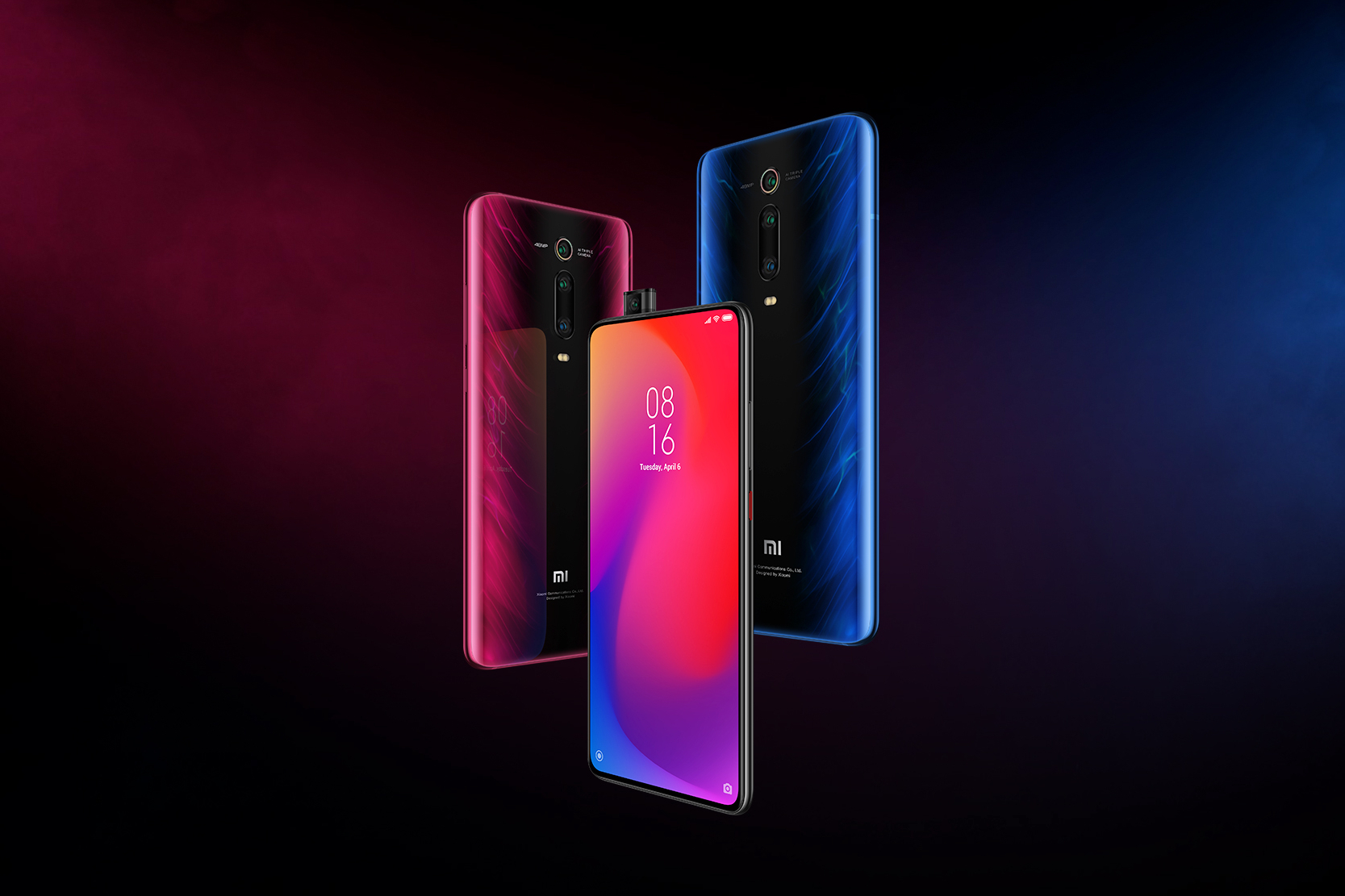
Redmi K40 vs Realme GT Neo: Specs Comparison

The latest flagship killer released by Realme is incredibly affordable. We are talking about the Realme GT Neo, offering flagship-class performance to a lot of people thanks to its price. Given the high value for money of this phone, we decided to compare it with its main Xiaomi rival in the same price tag, at least for the Chinese market. For this comparison, we chose the Redmi K40 for obvious reasons. None of these devices is actually global, so this will be a comparison especially thought for Chinese readers, at least for now.

Xiaomi Redmi K40 vs Realme GT Neo

Xiaomi Redmi K40 Realme GT Neo
DIMENSIONS AND WEIGHT 163.7 x 76.4 x 7.8 mm, 196 grams 158.5 x 73.3 x 8.4 mm, 179 g
DISPLAY  6.67 inches, 1080 x 2400p (Full HD+), Super AMOLED  6.43 inches, 1080 x 2400p (Full HD+), Super AMOLED
PROCESSOR Qualcomm Snapdragon 870, octa-core 3.2 GHz MediaTek Dimensity 1200, octa-core 3.0 GHz
MEMORY  6 GB RAM, 128 GB – 8 GB RAM, 128 GB – 8 GB RAM, 256 GB – 12 GB RAM, 256 GB 6 GB RAM, 128 GB – 8 GB RAM, 128 GB – 12 GB RAM, 256 GB
SOFTWARE  Android 11, MIUI  Android 11, Realme UI
CONNECTIVITY  Wi-Fi 802.11 a/b/g/n/ac/ax, Bluetooth 5.1, GPS  Wi-Fi 802.11 a/b/g/n/ac/ax, Bluetooth 5.1, GPS
CAMERA Triple 48 + 8 + 5 MP, f/1.8 + f/2.2
20 MP front camera
Triple 64 + 8 + 2 MP, f/1.8 + f/2.3 + f/2.4
16 MP f/2.5 front camera
BATTERY 4520 mAh, fast charging 33W  4500 mAh, fast charging 50W
ADDITIONAL FEATURES Dual SIM slot, 5G Dual SIM slot, 5G

Design

The design of the Realme GT Neo is more original and suggestive, thanks to its very brilliant color effects on the rear side, especially in the Final Fantasy color variant. The Realme GT Neo is even lighter than the Redmi K40, as well as more compact. On the other hand, the Redmi K40 is thinner because it has a body with bigger dimensions. Another important difference is the punch hole: you get a hole on the top left corner with the Realme GT Neo, while Redmi K40 has a hole placed centrally.


Display

On the paper, the Redmi K40 has a superior display, but we are only talking about marginal differences. With the Redmi K40, you get the HDR10+ certification, as well as a very high 1300 nit peak brightness. Both the phones feature an AMOLED panel and a 120 Hz refresh rate, but the display of the Redmi K40 is wider (6.67 inches vs 6.43 inches). Note that the Realme GT Neo features an in-display fingerprint reader, while the Redmi K40 does not.


Specs & Software

The Redmi K40 is powered by the Snapdragon 870 mobile platform, while the Realme GT Neo has a Mediatek Dimensity 1200 inside. While the Dimensity 1200 is built with a better production process (6 nm) and is more efficient, the Snapdragon 870 is slightly more powerful. You can get the same maximum amount of RAM and storage: up to 12 GB of RAM and up to 256 GB of UFS 3.1 native storage, respectively. Redmi K40 and Realme GT Neo run Android 11 out of the box, customized by MIUI and Realme UI 2.0, respectively.


Camera

The Realme GT neo comes with a superior main sensor for its rear camera, so it wins the camera comparison. We are referring to a 64 MP rear camera against a 48 MP sensor found on the Redmi K40. With the Redmi K40, you actually get a better macro camera, but it does not matter as the main camera is inferior. Unfortunately, none of these handsets is a camera phone. They are mid-range class and there are a lot of better choices in the same price range if you need a great camera setup. So, if you are looking at these devices especially for the cameras, you should go for something else.


Battery

Realme GT Neo has a 4500 mAh battery, while Redmi K40 has a 4520 mAh battery. The difference in battery capacity is minimal and these devices should provide a similar battery life. We expect the GT Neo to offer a slightly longer battery life due to its smaller display and a chipset with a 6 nm production process, but it will also depend on the software optimization. You can see a bigger difference when it comes to the charging speed: the Realme GT Neo has a 50W fast charging technology, while Redmi K40 stops at 33W.


Price

The starting price of the Redmi K40 in China is about €367/$432, while Realme GT Neo starts from just €250/$274. Despite the lower price, the Realme GT Neo has a better rear camera and it offers faster charging speeds. The Redmi K40 has a slightly more powerful mobile platform and a slightly better display, but this is not enough to justify the price difference and the difference in the user experience. That is the reason why the GT Neo wins this specs comparison.


Xiaomi Redmi K40 vs Realme GT Neo: PRO and CONS

Xiaomi Redmi K40

PRO

  • HDR10+ display
  • Wider diagonal
  • Powerful chipset
  • IR blaster

CONS

  • Inferior camera


Realme GT Neo

PRO

  • Original design
  • Better rear camera
  • Faster charging
  • Under-display fingerprint reader

CONS

  • Nothing particular


RELATED

Check the latest videos from our YouTube channel and subscribe:

LG unveils the Ultra Gear 17 laptop with a 17″ WQXGA display, 11th-gen Core i5

LG may be planning to shut down its ailing smartphone business but the brand is still a leading name in other aspect, one of which is the display segment. The Korean brand has just announced a new laptop packing its OBM display in the home market. The laptop is dubbed LG Ultra Gear 17 and it is an high-performance product. LG Ultra Gear 17

The Ultra Gear 17 sports a massive 17-inch WQXGA display which is an LCD panel with a resolution of 2560 x 1600 pixels. The size of the display provides vivid and clear picture quality. The laptop also packs a 11th Gen Intel Core i5 processor paired with 8GB of DDR4 3200MHz memory. There is equally 512GB M.2 NVMe SSD onboard. Both the RAM and memory can be upgraded by users if they want, using expansion slots..

Further, the Ultra Gear 17 features an NVIDIA GeForce GTX 1650Ti GPU inside. The graphics card provides a rapid and comfortable environment when running video work or games.

Despite the huge display size, the new LG laptop isn’t very bulky as it weighs 1.95kg. This is despite packing an 80Whr battery cell. Talking of the battery, LG touts it as capable of providing long battery life. The laptop comes with a ‘dual power cooling system’ that quickly cools internal heat with two coolers and can stably run high-end programs. LG Ultra Gear 17 laptop

There ae also several ports onboard the laptop including three USB 3.1 ports, a USB 4 port which also supports USB-PD, 1 HDMI port, and a DC-in for power.

As for the pricing and availability, LG Ultra Gear 17 is available for purchase in South Korea and is priced at 2.24 million won (~$ 1,986).

RELATED:

(source)


Lenovo Legion 2 Pro to have 10% bigger battery than Legion Pro

Lenovo is launching the successor of the Legion Pro, the Legion 2 Pro in China on April 8. With less than 5 days remaining for the launch, the company has confirmed today that the Legion 2 Pro will have a similar charging tech and a slightly better battery.

In a Weibo post, Lenovo has confirmed that Legion 2 Pro will come with a 5,500mAh battery and 90W Super Flash charging. The battery capacity is about 10% higher than the 5,000mAh on the Legion Pro. Talking about the charging tech, it is unclear if it’s a sole 90W or a split-up of two 45W.

A few weeks ago, a Lenovo L70081 5G device speculated to be Legion 2 Pro got 3C certification in China. It revealed that the device has support for 65W and 45W charging protocols. Besides, the predecessor had two USB-C ports and hence supported up to a total of 90W charging.

If the pattern continues, then the successor Lenovo Legion 2 Pro could also have the same implementation but let’s wait for official info.  Lenovo has already confirmed that Legion 2 Pro will come with a 6.92-inch 144Hz Samsung E4 AMOLED display.

Further, Master Lu benchmarks revealed that the display resolution would be 1080 x 2460 pixels i.e., FHD+ and have a 20.5:9 aspect ratio. Under the hood, the Legion 2 Pro will feature Snapdragon 888 chipset and come paired with either 12GB/128GB, 12GB/256GB, and 16GB/512GB RAM/storage options.

Other expected specs include a  dual-turbo cooling fan, run Android 11 OS, and more. Let’s wait for more teasers next week.

RELATED:

realme Buds Air 2 Neo TWS with Active Noise Cancellation launching on April 7

realme is said to host a launch event in Pakistan on April 7 where it looks like a few AIoT products are going to see the light of the day. Among the lot, the company has now confirmed to bring a budget-friendly realme Buds Air 2 Neo TWS earbuds with ANC feature.

In a Facebook Post, realme Pakistan has confirmed that realme Buds Air 2 Neo will launch in the country on April 7 at 12 PM local time. Along with the design, the company has also confirmed a few specs and features that are coming on the wireless earbuds.

realme brought features like the ANC(Active Noise Cancellation) on the recently launched realme Buds Air 2. The TWS launched for a price tag of ₹3,299($45) in India. However, it looks like the Buds Air 2 Neo with ANC will launch in Pakistan at an even lesser price.

The company says that it is bringing features like ANC to the masses and if you recall, the predecessor Buds Air Neo launched at a lesser price tag than the original realme Buds Air. If the same pattern continues, then the realme Buds Air 2 Neo could very well launch below ₹3,299 price tag of the Buds Air 2.

realme Buds Air 2 Neo Features

Anyway, apart from the ANC, the realme Buds Air 2 Neo will have a 10mm Dynamic Bass Boost Driver and have a total battery life of about 28Hrs. Talking about the design, it resembles a lot like the realme Buds Q but has few design changes.

There is a button on the case and the earbuds themselves are also having a pebble-like shape that we even saw on the recently certified realme Buds Q2. However, we will have to wait for the official word to confirm if this is indeed coming out as the realme Buds Air 2 Neo.

RELATED:

Xiaomi Mi 10, Mi 10 Pro get the stable MIUI 12.5 update in China

Xiaomi Mi 10 Ultra was the first-ever smartphone to get the stable MIUI 12.5 update. Now, the remaining siblings of the series- Mi 10, Mi 10 Pro are getting it.

Xiaomi Mi 10 featured
Xiaomi Mi 10

An OTA update with firmware version V12.5.3.0.RJBCNXM and V12.5.3.0.RJACNXM is rolling out to Xiaomi Mi 10, Xiaomi Mi 10 Pro respectively in China. Both the builds weigh about 4.0GB in size and it does bring the latest MIUI 12.5 stable based on Android 11 to the devices.

If you recall, Xiaomi started rolling out the stable MIUI 12.5 update to users in China a few days ago. As mentioned above, the Mi 10 Ultra and followed by other devices like the Mi 11, Mi 9 SE have got it recently.

Coming back, the update for the Mi 10, Mi 10 Pro also has the March 2021 security patch. Xiaomi launched the MIUI 12.5 back in December. The incremental UI has improvements like UI Design improvements, more Super wallpapers, improved privacy, haptics, MIUI+, uninstallable built-in apps, and more.

That said, the rollout is said to continue further and not stop with the flagships as Xiaomi has already revealed a list of 28 devices scheduled to get it in the first wave in China. When it comes to global markets, the Mi 11 is likely to get it soon, and followed by it, various devices are on the list.

As for the Mi 10 users elsewhere, do keep in mind that this rollout is only for China so you will have to wait till Xiaomi expands the regions for this stable update. And for the users in China, these particular builds are in ‘stable beta recovery’ so it should reach only a few for now before coming out as a wider rollout in the coming days.

RELATED:


(source- 1,2)

Samsung Galaxy Z Fold2 gets its first-ever permanent price cut in the US

Samsung launched the Galaxy Z Fold2 in September 2020. The company’s second flagship foldable smartphone debuted for $1,999.99 in the US. Now, seven months after its release, the firm has announced a permanent price cut on this handset along with a referral program.

Samsung Galaxy Z Fold 2 Mystic Black Bronze Featured

The Galaxy Z Fold2 has been on sale at a discounted price tag multiple times since its launch. Bu this is the first-ever official price drop by Samsung. The South Korean tech giant has reduced the device’s MSRP by $200.

Hence, the Galaxy Z Fold2 is now retailing in the US for $1,799.99. The new price is applicable to both unlocked and carrier variants (Verizon, AT&T). Also, it is worth noting that, unlike regular smartphones, Samsung’s foldable phones (Galaxy Z Flip 5G, Galaxy Z Fold2) come with a 100-day return policy.

Further, alongside the price drop, Samsung has also announced a referral program for the Galaxy Z series. Any existing Galaxy Z Series customer can share a referral code to someone looking to buy a Samsung foldable handset.

By using the code, the new buyer can snag a $100 discount. On the other hand, the referrer gets a $100 credit, which can be used on Samsung’s online store. Hence, interested customers can get the Galaxy Z Fold2 for as low as $1,699.99 in the US.


RELATED:


(Via)

Infinix Hot 10i appears on FCC with a different model number and 6,000mAh battery

Earlier this week, Infinix Hot 10i was spotted on Google Play Console. The listing revealed the primary specs and the front design of this handset. Now, we have spotted this smartphone on FCC. The certification shows off the device’s rear design and also confirms its battery capacity and charging speed.

Infinix Hot 10i X659B FCC Featured
Infinix Hot 10i (X659B) | Source: FCC

The upcoming Infinix Hot 10i was certified by FCC in late February. In fact, its listing went live just a day after we reported on Infinix X693’s FCC certification.

That said, as per the FCC listing, the Infinix Hot 10i will come with model number X659B. The listing does not mention the phone’s marketing name. We found out that from an automated Google Play Certified Android devices list on GitHub.

It is worth noting that the Infinix Hot 10i spotted on Google Play Console has a different model number (X658B). But these handsets could be the same but meant for different markets. However, we cannot rule the possibility of them being different devices.

Because Infinix launched a smartphone called SMART 5 in India. But instead of the original phone with the same name, it was a rebranded Infinix HOT 10 Play.

Infinix Hot 10i Google Play Console
Infinix Hot 10i (X658B) | Source: Google Play Console

Anyway, as per FCC, the Infinix Hot 10i (X659B) will feature a 5,850mAh battery (rated) with support for 10W charging. In other words, this smartphone will be backed by a 6,000mAh battery (typical).

As far as rear design is concerned, it will house a squircle camera module on the top left corner and a fingerprint sensor slightly below it. Going by the size of the module, we can expect at least two cameras. Whereas, the power button and the volume rocker will be loathed on the right side.

Assuming the Infinix X659B to be the same as Infinix X658B, we can expect this phone to come with an HD+ (720 x 1600 pixels) display with 320 DPI and centered punch-hole, MediaTek Helio A20 SoC, 2GB RAM, and Android 11.

As of now, there’s no official word from Infinix regarding the launch of Hot 10i.


RELATED:


Apple closing down all of its stores in France as country goes into third lockdown

As France goes into a third lockdown, Apple has announced that it is closing all its 20 stores across the country. Prior to this announcement, most of Apple’s stores across the country have been closed with the exception of 8 which were originally classified as essential shops.

Apple store

The announcement was made on Twitter by the official Apple UNSA account. The tweet said that the eight stores including the Apple Champs-Élysées, Apple Opéra, and Apple Marché Saint-Germain stores which have remained open since March will be closed indefinitely starting on the evening of April 3. So all those who have orders to pick up have until this evening to do so.

This is the first time this year that Apple is closing all of its stores in the country. Lately, cases have been rising in the country which led to the government announcing a third lockdown on Wednesday evening. The French president, Emmanuel Macron, did say that this will be the country’s last national lockdown. Since the beginning of the pandemic, France has recorded up to 100,000 in total deaths.


RELATED:

Samsung Galaxy F12 with Exynos 850 seen at benchmarking site before launch

On April 5, Samsung will take off covers from the Galaxy F02s and Galaxy F12 smartphones in India. Both phones’ microsites are now available on Flipkart. Before launch, the Galaxy F12 (model number SM-F127G) has surfaced at Geekbench (via).

The landing page of the Galaxy F12 at Flipkart has already revealed that it is powered by the Exynos 850. However, it does not tell the amount of RAM present inside it. The Geekbench listing states it has 4 GB of RAM. It is unclear whether it will come in a higher 6 GB RAM version. The phone is loaded with the latest Android 11 OS. In the single-core and multi-core tests of Geekbench 5, it scored 154 and 969 points, respectively.

Samsung-Galaxy-F12

It is mentioned on F12’s landing page at Flipkart that it is equipped with a 6.5-inch display that offers an Infinity-V notch design, an HD+ resolution, and a 90Hz refresh rate. The power button placed on the right edge of the phone is integrated with a fingerprint scanner.

The polycarbonate rear of the Galaxy F12 features a square-shaped camera with a 48-megapixel Samsung GM2. Below the camera module is an LED flash unit. It houses a 6,000mAh battery, which probably supports 15W fast charging. It is equipped with other features such as a 3.5mm audio jack, a USB-C port, and a speaker grille. It appears that the Galaxy F12 will be arriving as a rebranded version of the Galaxy M12 smartphone.

RELATED:

TECNO LE7 certified by FCC with a 7,000mAh battery

Back in February, a TECNO smartphone with model number CG6j was certified by FCC. This device later appeared on Google Play Console as TECNO CAMON 17. Now, another mysterious phone from the brand has been certified by FCC in late March.

TECNO LE7 FCC Featured
TECNO LE7 | Source: FCC

While browsing through FCC ID, we came across a TECNO smartphone with model number LE7. Unfortunately, the phone’s certification does not reveal much about it except for the rear design, battery capacity, and charging speed.
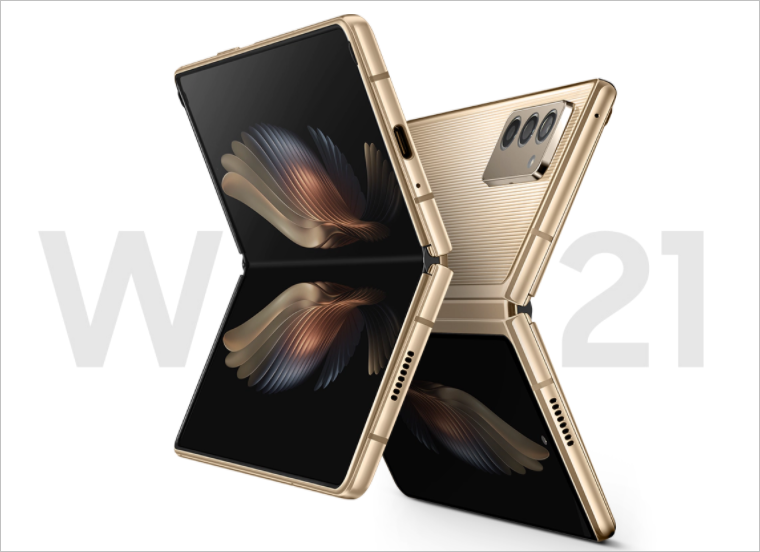
Talking about the design first, the upcoming TECNO LE7 handset will have curved corners like most phones. On the back, this device will house a rectangular camera module. This dual-finish module will be located at the top left corner. Given the size of the module, we can expect at least three cameras.

Further, the FCC listing says that the handset will feature a 6,850mAh battery. Since FCC is known for mentioning rated capacity, this battery’s typical value should be 7,000mAh. In other words, the forthcoming TECNO LE7 smartphone will be backed by a 7,000mAh battery, just like Samsung Galaxy M51 and Galaxy F62.

Last but not least, the certification confirms that this TECNO handset will support 18W fast charging. Hence, it will take more time to fill the device’s humongous battery.

We expect to learn more about the TECNO LE7 before its official launch sometime later in the near future.


RELATED:


Belkin Magnetic Phone Mount with Face Tracking launched alongside other accessories

Smartphone accessories maker Belkin has unveiled a set of magnetic accessories for the iPhone 12. What could arguably be seen as the pick of the pack is a phone mount with face tracking capability. When the mount is interfaced with its accompanying Belkin app, it can recognize a user’s face and activate control of the device to follow the user’s movement while shooting pictures or videos.Belkin Magnetic Fitness Phone Mount

Belkin also unveiled a magnetic fitness phone mount, a 2,500mAh power bank that can attach to the back of a phone magnetically, and a wireless charging pad that can also serve as a power bank. Belkin has also released a portable charging pad, already available for $30, and a 7.5W wireless charging stand that will go for $35.Belkin Magnetic Fitness Phone Mount

Some of the exciting devices are already on sale at affordable prices while others will be available shortly. The iPhone 12 phone mount with a face tracking feature will be available at $65 when it comes out and can rotate a full 360 degrees while tracking the face. This makes it possible for the user to capture pictures in either landscape or portrait orientation from all angles. It is not clear the maximum distance that can be captured via face tracking using the iPhone 12 phone mount, and the feature can only be used with Belkin’s app. Therefore, third-party apps will not have face-tracking support.Belkin Magnetic Fitness Phone Mount

However, we can use the mount with MagSafe cases, and it links to most of the social media platforms like Facebook and Instagram. The fitness phone mount is also capable of 360 degrees rotation and will sell for $35 when it comes out. The 2,500 mAh power bank costs $50, while the dual wireless charging pad and power bank sell for $70.

All the Belkin accessories are affordable and highly innovative and will most likely appeal to its growing customer base.

RELATED;

Tecno Spark 7 launch date is April 9 for India

A recent report by GSMArena revealed that Tecno Spark 7 smartphone will be made official this week. It also shared a leaked render of the phone. As expected, a landing page of the smartphone has appeared on Amazon India. The listing has confirmed that the Spark 7 will be made official on April 9 in India.

The images of the Spark 7 available at Amazon India have revealed that it has a teardrop notch display. The top bezel is equipped with a pair of front-firing flash. The right edge of the device has volume buttons and a power key.

The back panel of the Spark 7 has a large-sized branding, a fingerprint scanner, and a rectangle-shaped camera module. The latter houses two or three cameras and a quad-LED flash unit. It is rumored to support photography features like time-lapse videos, video bokeh, and slow-motion video recording. The front and rear cameras of the Spark 7 may support timelapse with a 15x to 5400x speed settings range.

Techno_Spark7_launch_date

The bottom edge of the phone features a 3.5mm audio jack and a USB-C port. Interestingly, it does not feature a bottom-firing speaker. The handset is expected to arrive in black, green, and blue colors.

The Spark 7 is packed with a massive 6,000mAh battery that can last for up to 41 days. It is expected to carry support for fast charging as its predecessor model featured it. Tecno is yet to reveal the other specifications of the smartphone.

The handset will be arriving as the successor to the Spark 6 from last year, which came with specs like a 6.81-inch HD+ display, Android 10 OS, Helio G70, a 16-megapixel triple camera system, an 8-megapixel front camera, a rear-facing fingerprint scanner, and a 5,000mAh battery with 18W charging support.

RELATED:

Google Pixel 6 series may feature its own “Whitechapel” chips, and not Snapdragon SoC

Google is expected to announce the successors to the Pixel 5 in October this year. In October last year, Google CEO Sundar Pichai had said during the Q3 2020 earnings call that the company is making ‘deeper investments in hardware’ and it has a planned terrific roadmap for 2021. At that time, many interpreted that the company could be working on its own processor with the “Whitechapel” codename. Fresh information shared by 9to5Google reveals that the Pixel smartphones coming in fall could be one of the first smartphones to feature the “GS101” Whitechapel chipset. Hence, it appears that the Pixel 6 series may not feature Qualcomm’s Snapdragon SoC.

Just as Apple users its own chipset to power its iPhone and Mac devices, Google is also said to be working on its chipset for its smartphones and Chromebooks. Rumors dating back to early 2020 claimed that Google could be corroborating with Samsung to build the Whitechapel chips. The publication has come across a certain document that tells that the Pixel phones arriving in the fall will be equipped with the Whitechapel processor.

Google Logo Featured

Internally, the Whitechapel chip for next-generation Pixel phones is referred to by Google as “GS101,” where “GS” probably stands for “Google Silicon.” A reference for the “Slider” codename found in the Google Camera app is said to be a shared platform for Whitechapel SoC. Other products that are associated with “Slider” reveals that is connected to Samsung’s Exynos chipset. It seems that the GS101 chip is being built with the South Korean tech giant’s system large-scale integration (SLSI) division. This indicates that the Google chips may have some common features with Samsung Exynos.

The publication claims that Google’s phones codenamed as “Raven” and “Oriole” are suspected to be the first phones to arrive with the Slider platform. These phones may end up as Pixel 6 series smartphones.

According to XDA Developers, the performance of the GS101 could be on par with the Snapdragon 7-series chipset. The 5nm octa-core ARM chip may include two Cortex-A78 CPU core, two Cortex-A76 cores, and four Cortex-A55 cores along with an off-the-shelf ARM Mali GPU. Powering the Pixels with its own chipset will provide Google better control over driver updates as it would not be relying on Qualcomm for it anymore. The drivers can be compatible with newer editions of Android OS for a longer time. Currently, Pixel devices support 3 years of Android OS updates. The upcoming Pixel phones with own Google’s own chip may get 5 generations of OS updates.

RELATED:

Apple user defrauded of his life savings in Bitcoins via a fake iOS app

An Apple user who installed a fake app from the Apple Store has been left in distress. Phillipe Christodoulou had installed the Trezor wallet app on his iPhone and deposited his life savings of about $600,000 worth of Bitcoins, but later found his treasure, now worth over one million dollars, has been emptied, according to Bitcoin.com.bitcoin scam

The fake app makers were able to evade scrutiny and the app was hosted on the Apple store. Those who installed the fake app would have thought it was from Trezor, an authentic manufacturer of hardware cryptocurrency wallets. Trezor had consistently said that it does not have an Android or iOS app and complained about the fake apps listed on the Apple store and Google Play store. In December 2020, the company warned Android users who owned a physical Trezor wallet that these apps were fake and should not be installed on their Android devices. It also stated that it had notified Google of these counterfeit apps to safeguard users’ Bitcoin and other cryptocurrencies. Google promptly removed the Android version of the Trezor wallet back in December 2020.

Trezor has been warning its customers never to type their Bitcoins’ seed words on other websites without authorization from Trezor, as this could expose their savings to theft, stressing that seed words need to be guarded very well like a treasure.

Even though Apple continues to insist that its app store is one of the safest places to get an app, the particular case of Christodoulou has shown that that indeed is not the case. There is the need for the company to be more responsive and alive to its responsibilities to safeguard the resources of users of apps obtained from its app store.

Apple should also evolve a more robust approach to dealing with fake apps by quickly identifying such apps and removing them promptly. Christodoulou feels Apple betrayed the trust he previously had in the company and would want to see some punishment meted out on the tech giant.

RELATED:

POCO F3 vs POCO X3 Pro: Specs Comparison

POCO just launched two record-breaking flagship killers in the global market. POCO F3 and POCO X3 Pro are the most affordable last-generation devices with flagship-class hardware you can actually find in Europe. Those who search the maximum performance with the minimum expense will love these two handsets due to their amazing processors. But is it worth spending more to get the POCO F3 or the POCO X3 Pro is enough for your actual needs? Let’s try to discover it together through this comparison between their specifications.

Xiaomi POCO F3 vs Xiaomi POCO X3 Pro

Xiaomi POCO F3 Xiaomi POCO X3 Pro
DIMENSIONS AND WEIGHT 163.7 x 76.4 x 7.8 mm, 196 g 165.3 x 76.8 x 9.4 mm, 215 grams
DISPLAY  6.67 inches, 1080 x 2400p (Full HD+), AMOLED  6.67 inches, 1080 x 2400p (Full HD+), IPS LCD
PROCESSOR Qualcomm Snapdragon 870, octa-core 3.2 GHz Qualcomm Snapdragon 860, octa-core 2.96 GHz
MEMORY 6 GB RAM, 128 GB – 8 GB RAM, 256 GB 6 GB RAM, 128 GB – 8 GB RAM, 128 GB – 8 GB RAM, 256 GB – micro SD Slot
SOFTWARE  Android 11, MIUI for POCO  Android 11, MIUI for POCO
CONNECTIVITY  Wi-Fi 802.11 a/b/g/n/ac/ax, Bluetooth 5.1, GPS Wi-Fi 802.11 a/b/g/n/ac, Bluetooth 5.0, GPS
CAMERA Triple 48 + 8 + 5 MP, f/1.8 + f/2.2 + f/2.4
20 MP f/2.5 front camera
Quad 64 + 8 + 2 + 2 MP, f/1.8 + f/2.2 + f/2.4 + f/2.4
20 MP f/2.2 front camera
BATTERY  4520 mAh, fast charging 33W 5160 mAh, fast charging 33W
ADDITIONAL FEATURES Dual SIM slot, 5G Dual SIM slot, 5G, IP53 dust and splash protection

Design

The POCO X3 provides the best design because it is built with more premium materials. The back is made of glass with the Gorilla Glass 5 protection, while the frame is made of aluminum. Further, the phone is thinner with a thickness of just 7.8 mm and it is even lighter as it weighs just 196 grams. Last but not least, the design of the camera module is definitely more elegant. The POCO X3 Pro has a plastic body, it is thicker and heavier than its rival. But you should consider that the POCO X3 Pro has the IP53 certification protecting the phone against dust and splashes.


Display

The POCO F3 is superior even when it comes to the display, with a huge difference in terms of image quality. The POCO F3 has an AMOLED panel providing more brilliant colors and deeper blacks; further, it has a higher 1300 nits peak brightness and the HDR10+ certification. The POCO X3 Pro has a midrange-class IPS panel with less impressive colors and lower brightness. Despite it has an AMOLED display, the POCO F3 has a side-mounted fingerprint scanner, just like the POCO X3 Pro.


Specs & Software

The POCO X3 Pro has a high-end hardware department, but the POCO F3 is again better thanks to a more powerful processor. We are talking about the Snapdragon 870 which sits in the middle between Snapdragon 865+ and Snapdragon 888, providing top-tier performance. The POCO X3 Pro has a Snapdragon 860 chipset which is essentially a rebrand of the Snapdragon 855+. While the POCO F3 supports 5G connectivity, the X3 Pro does not. The memory configurations are the same with up to 8 GB of RAM and 256 GB of UFS 3.1 native storage. Note that POCO X3 Pro has expandable storage, while POCO F3 does not feature a micro SD slot.


Camera

The cameras are the weakest points of these handsets. Unlike the hardware departments, these cameras are far from being high-end sensors. You get a lower-midrange camera setup with both POCO F3 and X3 Pro. The former has a better macro camera but it lacks a depth sensor, while the latter has a depth sensor but an inferior macro camera. The main sensor and the ultrawide cameras are the same. Both the phones feature a 20 MP selfie camera, but with different focal apertures: the F3 has a brighter focal aperture, which is why it should be able to click better selfies.


Battery

The POCO X3 Pro has a bigger battery than POCO F3 and, given that it does not support 5G, it should provide a longer battery life in a lot of scenarios. The POCO F3 has a more efficient display, but it does not seem to be enough to cover the gap between the two batteries. Despite that, the POCO F3 should still be able to cover one day of usage. Both the phones support 33W fast charging and lack wireless charging.


Price

The POCO F3 has a starting price of €369/$435 for the European market, while the POCO X3 Pro starts from €249/$293 (but you can actually find it for just €199 thanks to the launch promo). Despite the X3 Pro packs a bigger battery the POCO F3 is a way better phone due to its better AMOLED display, premium design, better chipset, 5G connectivity, and slightly better cameras. However, consider that the POCO X3 Pro is the most affordable last-generation flagship and it can let you save a lot of money while still delivering an awesome user experience.


Xiaomi POCO F3 vs Xiaomi POCO X3 Pro: PRO and CONS

Xiaomi POCO F3

PRO

  • 5G
  • Better hardware
  • Superior display
  • Premium design

CONS

  • Higher price


Xiaomi POCO X3 Pro

PRO

  • Bigger battery
  • IP53 dust and splash protection
  • More affordable
  • Gorilla Glass 6

CONS

  • No 5G


RELATED

Android 11-based LineageOS 18.1 goes official

Custom ROMs used to be popular back in the early days of Android. They were probably the only way to let users experience clean software with so many additional features. But now, they exist as an option as Android skins by different OEMs have gotten better. 

Anyway, when we talk about custom ROMs, the firm ROM that comes into mind is LineageOS (formerly CyanogenMod). The developers behind this project have finally released Android 11-based LineageOS 18.1.

LineageOS 18.1 Logo Featured

Google released Android 11 stable in September of 2020. That means it took nearly seven months for the LineageOS team to release their software based on the latest version of Android called LineageOS 18.1

However, credit where credit’s due, this year, the ROM debuted with support for 76 devices. For comparison, last year’s LineageOS 17.1 was introduced with 50 devices.

That said, let us take a look at the first batch of LineageOS 18.1 official devices.

LineagOS 18.1 Official Devices

  • Essential

    • Essential PH-1
  • F(x)tec

    • F(x)tec Pro
  • Google

    • Google Nexus 6
    • Google Nexus 7 2013 (Wi-Fi, Repartitioned)
    • Google Pixel 2
    • Google Pixel 2 XL
    • Google Pixel 3
    • Google Pixel 3 XL
    • Google Pixel 3a
    • Google Pixel 3a XL
    • Google Pixel 4
    • Google Pixel 4 XL
    • Google Pixel 4a
    • Google Pixel 4a 5G
    • Google Pixel 5
  • LeEco

    • LeEco Le Max2
    • LeEco Le Pro3 / Le Pro3 Elite
  • LG

    • LG G2 (AT&T)
    • LG G2 (Canadian)
    • LG G2 (International)
    • LG G2 (T-Mobile)
    • LG G5 (International)
    • LG G5 (T-Mobile)
    • LG G5 (US Unlocked)
    • LG V20 (AT&T)
    • LG V20 (Global)
    • LG V20 (Sprint)
    • LG V20 (T-Mobile)
    • LG V20 (US Unlocked)
    • LG V20 (Verizon)
  • Motorola

    • Motorola Moto G6 Plus
    • Motorola Moto G7
    • Motorola Moto G7 Play
    • Motorola Moto G7 Plus
    • Motorola Moto G7 Power
    • Motorola Moto One Power
    • Motorola Moto X4
    • Motorola Moto Z2 Force
    • Motorola Moto Z3 Play
  • Nextbit

    • Nextbit Robin
  • HMD Global (Nokia)

    • Nokia 6.1 (2018)
  • OnePlus

    • OnePlus One
    • OnePlus 2
    • OnePlus 3
    • OnePlus 3 / 3T
    • OnePlus 5
    • OnePlus 5T
    • OnePlus 8
    • OnePlus 8 Pro
    • OnePlus 8T
  • Razer

    • Razer Phone
  • Samsung

    • Samsung Galaxy S4 (GT-I9505/G, SGH-I337M, SGH-M919)
    • Samsung Galaxy S4 (SCH-I545)
    • Samsung Galaxy S4 (SCH-R970, SPH-L720)
    • Samsung Galaxy S4 (SGH-I337)
    • Samsung Galaxy S4 Active
    • Samsung Galaxy S4 Value Edition (GT-I9515/L)
    • Samsung Galaxy Tab S6 Lite (Wi-Fi)
    • Samsung Galaxy Tab S5e (LTE)
    • Samsung Galaxy Tab S5e (Wi-Fi)
  • Sony

    • Sony Xperia 10
    • Sony Xperia 10 Plus
    • Sony Xperia XA2
    • Sony Xperia XA2 Plus
    • Sony Xperia XA2 Ultra
  • Xiaomi

    • Xiaomi Mi 5
    • Xiaomi Mi 5s Plus
    • Xiaomi Mi 8
    • Xiaomi Mi 8 Lite
    • Xiaomi Mi MIX
    • Xiaomi Mi MIX 2S
    • Xiaomi Mi Note 2
    • Xiaomi POCO F1
    • Xiaomi Redmi 7

We expect more devices to get added to the official supported list in the coming weeks.


RELATED:


(Source / Via)

Xiaomi Mi Band 6 gets the sleep breathing quality feature via a new update

Xiaomi Mi Band 6 is available in several regions including its home country China. Now, it is getting a new OTA update that enables a key feature on the fitness tracker.

As reported by Tizenhelp, a new OTA update for Xiaomi‘s new fitness tracker is arriving on the Mi Fit App for users of India and China. This adds the sleep breathing quality feature on the Xiaomi Mi Band 6. If you don’t know, the device supports features like sleep tracking with REM and sleep breathing quality.

Back at the launch, Xiaomi talked about this feature on the Mi Band 6 and said that it monitors your breathing quality while you are asleep. Speaking of which, it also has sleep tracking with REM & non-REM options.

REM sleep is basically sleep occurring at intervals during the night and is characterized by rapid eye movements, more dreaming, faster pulse, breathing, and body movements. If you are too much into your work and your stress level shoots up, you might experience an improper sleep cycle at times.

REM sleep tracking, when combined with the sleep breathing quality, can help you figure out how frequently are you experiencing the discomfort. Anyway, to update the Mi Band 6, ensure that the Mi Fit App is on version 5.0.0.

These aren’t the main feature available on the Mi Band 6. It has more than 130+ watch faces(China), 60+ watch faces(global), 30 exercise modes, 6 auto-detect exercise modes, 24×7 heart rate monitoring(PPG), SpO2(Blood Oxygen measurement).

The device features a 1.56-inch AMOLED display. This 2.5D curved display, 5ATM water-resistance, a 125mAh LiPo battery with up to 14 days battery, NFC(in China), and more.

RELATED:

AnTuTu March 2021: Black Shark 4 Pro takes the throne of best performing flagship devices

We had a lot of new smartphones from Nubia, ASUS, OPPO, Black Shark launch in March 2021. As a result, the Top 5 of the Best performing flagship smartphone rankings of the AnTuTu benchmark has completely been jumbled from the February list. Among these, Black Shark 4 Pro manages to take the throne.

AnTuTu March 2021 best performing smartphones
Credit: AnTuTu

Right off the bat, AnTuTu puts out a disclaimer that the monthly test of best performing smartphones and their rankings have been carried out on AnTuTu V8 version. It says that this might be the last list with V8 as V9 is already beginning to take the center stage.

The consideration of devices for the list and the period of statistics is fixed from March 1 to March 31, 2021. Also, the storage variant of all the flagship devices is fixed as 12GB + 256GB. As mentioned above, the Black Shark 4 Pro tops the chart with a whopping score of 765,579 points.

Following that, we have other new entrants like OPPO Find X3 Pro, RedMagic 6 Pro, ASUS ROG Phone 5, and Vivo X60 Pro+ grab the next 4 spots with 742,078, 741,100, 729,300, and 726,216 scores respectively to round up the Top 5.

It is interesting to note that only the X60 Pro+ from February 2021 list makes it to the Top 5 this time. Anyway, the next 3 spots are occupied by the ex-toppers like iQOO 7(725,478), Redmi K40 Pro(719,798), Xiaomi Mi 11(710,581).

Again, the last two spots see new entrants from the Meizu 18 series- Meizu 18(710,459) and Meizu 18 Pro(698,611). To sum up, the entire list is occupied by the Qualcomm Snapdragon 888 chipset and the solo Kirin 9000-powered  HUAWEI Mate40 Pro is ruled out.

However, things are totally different for the mid-range devices. To my surprise, the list is almost the same as the February 2021 list with only a change in spot and overall in average scores.

That is, the Redmi 10X 5G leads the way with 399,923 points and the next four devices are Redmi 10X Pro 5G(396,906), Vivo S7t(393,918), HUAWEI nova 7 Pro(390,828), and HUAWEI nova 7(390,575).

The rest of the 5 are HUAWEI nova 8 Pro (388,995) and, HONOR 30 (386,045), HUAWEI nova 8 (385,489), HONOR X10 (359,867), and HONOR 30S (350,307).

If you look closely, the last 7 spots of mid-range devices is entirely dominated by the Kirin chipsets and only the Top-3 have MediaTek’s Dimensity. Sadly, no Snapdragon chipsets are in the vicinity and it shows how rivals have conquered this territory to end Qualcomm‘s dream run.

RELATED: