Advertisement

Dell launches its first-ever 90W Gallium Nitride(GaN) USB-C PD 3.0 Charger

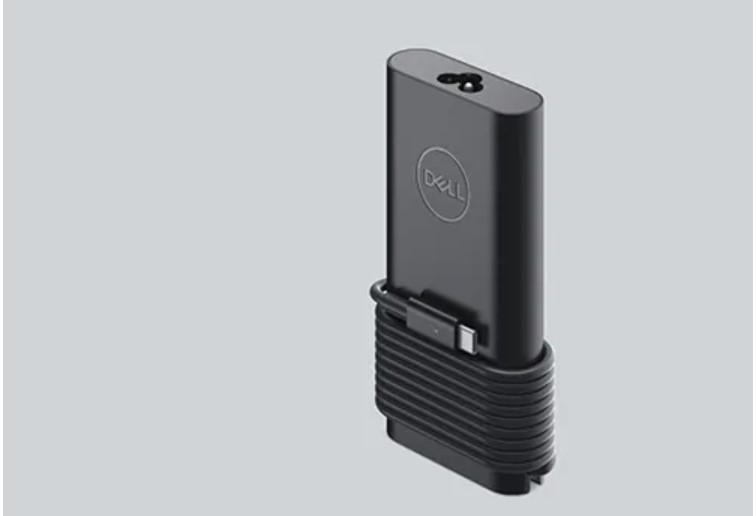
Dell has launched its first 90W GaN PD charger in China. Locally, it is second to Lenovo that already has a similar charger but with 65W in the market. Listed at 739 yuan($110.44), the charger is already available for purchase on Dell’s Chinese website.
Credit: Dell

Dell’s USB-C GaN Power Adapter is the first of its kind(via ITHome) from the company. Despite packing so much, it doesn’t look that bulkier compared to other chargers which have less Power(eg. 30,45,65W). It comes along with a 1.8m long USB-C cable and a three-pin Power Chord that gets China’s 3C, and a few other certifications.

Dell 90W GaN Charger Specifications

The output C cable supports 90W PD(Power Delivery) charging. Besides, the charger brick has a USB-C PD 3.0 standard and a USB-A(10W) simultaneous output on one end, and a plum plug on the other. It dons a matte finish made of PC flame-resistant material and has a semi-circular arc design. Measuring 21.89mm thick, the charging brick weighs around 375g. The power output is as follows:

  • USB-C port : 90W(20V, 4.5A), 45W(15V, 3A), 18W(9V, 3A), 15W(5V, 3A)
  • USB-A port: 10W(5V, 2A).

Dell 90W GaN Charger Features

The Dell 90W GaN Charger reportedly has an APFC(Active Power Factor Correction) boost circuit inside along with other voltage control techniques. It is also protected by copper heat sinks inside to avoid overheating. The highlight is the Nanomicro Semiconductor NV6117 GaN power chip that is used for APFC boost and switching techniques. This semiconductor GaN IC can withstand 650V and has 120mΩ resistance.
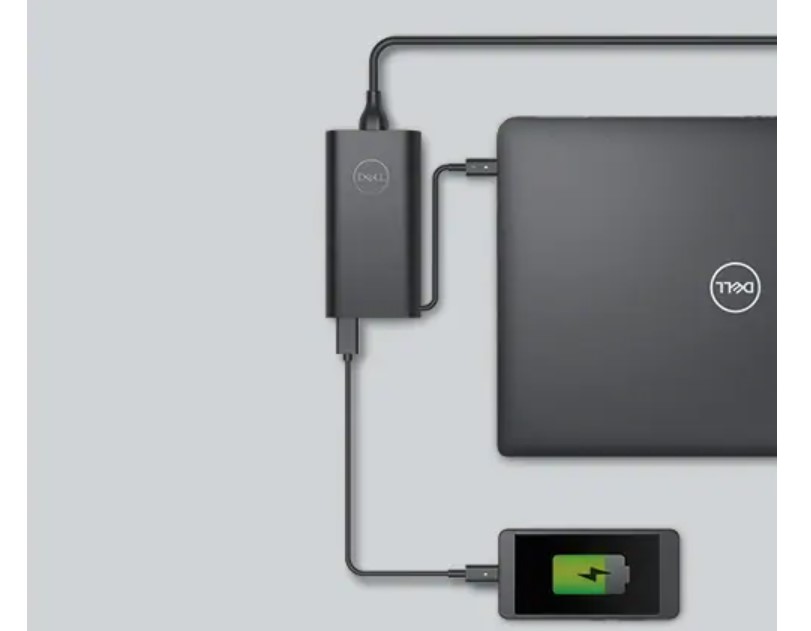
Credit: Dell

For the unaware, Gallium Nitride(GaN) is a semiconductor that has high efficiency, less heat dissipation. And high-current conduction at a smaller form factor than the conventional silicon. Coming back, Dell says you can charge a laptop(up to 90W), and a mobile(10W) simultaneously. It adds that the Charger has Dell ExpressCharge Technology that can charge a Laptop to 35% in 15-minutes, and 80% in one hour.
Xiaomi Pocket Photo Printer, Mi Air 2s, and more get Pikachu Editions too

Today, Xiaomi announced the Mi Power Bank 3 Pikachu Edition but it turns out that isn’t the only Xiaomi product that got a Pokémon-themed custom edition. The official Xiaomi website contains other items that also got a Pikachu makeover.

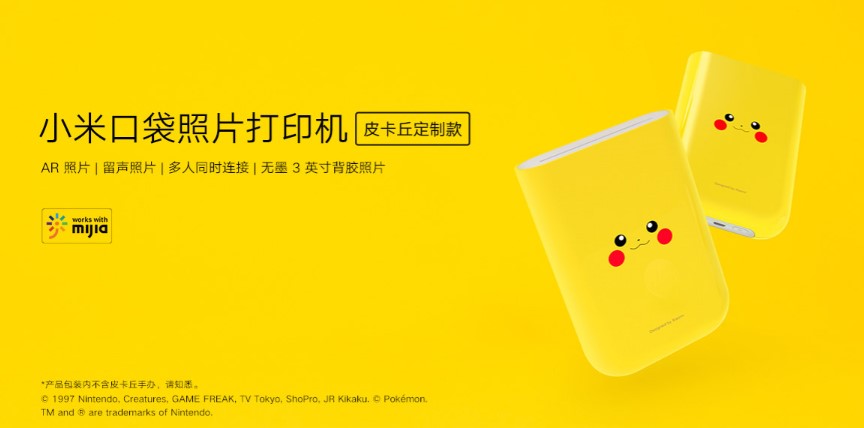
Xiaomi Pocket Photo Printer Pikachu Edition

Alongside the Mi Power Bank 3, the Xiaomi Pocket Photo Printer, Mi Air 2s TWS earbuds, Mi Backpack 10L, and Xiaomi Suitcase 20-inches also come in customized Pikachu Editions.

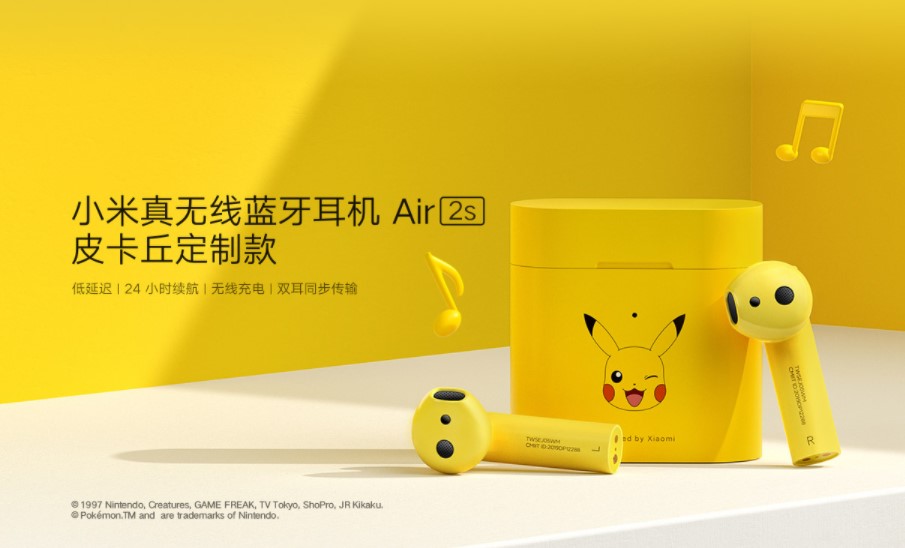
The Xiaomi Pocket Photo Printer Pikachu Edition is priced at ¥399 (~$60) and has the popular Pokémon’s smiling face printed on its yellow plastic body. The Mi Air 2s also gets a similar yellow coat of paint for its earbuds and case but a different Pikachu smiling face and a price tag of ¥399 (~$60) too.

Mi Air 2s Pikachu Edition

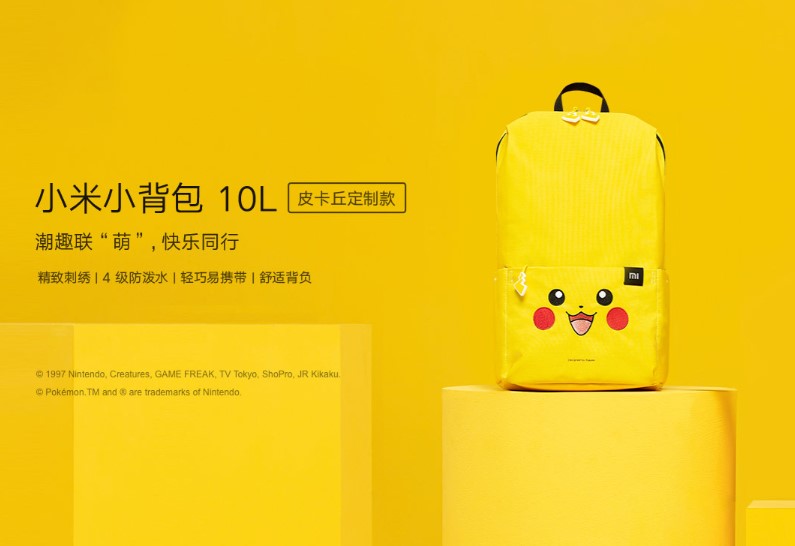
The Mi Backpack 10L is ¥59 and comes in Pikachu Yellow with zippers styled like the Pokemon’s tail. It has all the features of the regular backpack including a water repellent coating.

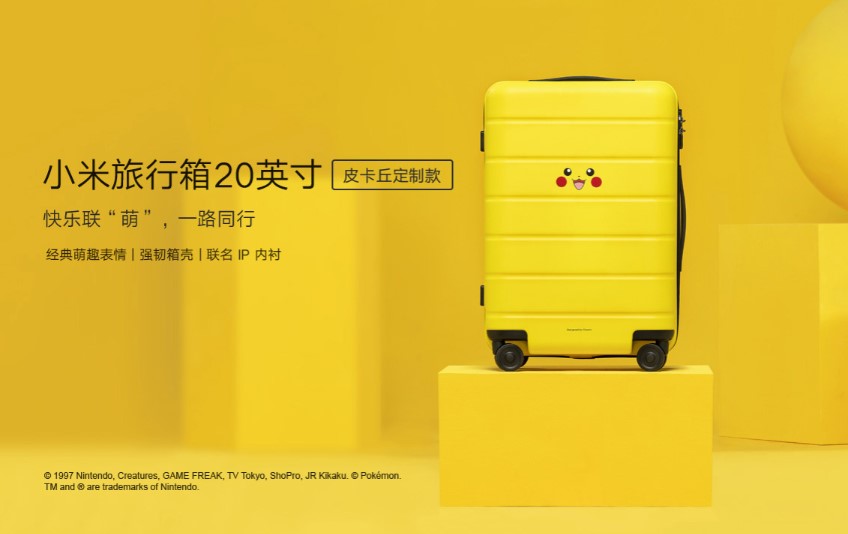
The Xiaomi Suitcase 20-inches Pikachu Edition also has a ¥399 (~$60) price tag with Pikachu’s face on the top and its tail for zippers.

Mi Backpack 10L Pikachu Edition Mi Suitcase 20-inch Pikachu Edition

All five products including the power bank are available for purchase on Mi.com and seems will only be available for a limited time. So if you are a Pikachu or Pokémon fan at large, you may want to hurry and grab yours as soon as possible.

Xiaomi isn’t the first manufacturer to launch Pikachu-themed products. OPPO announced a customized Pikachu SuperVOOC power bank and OPPO R17 Pro protective cases in 2018. Razer also has a collection of Pikachu-themed accessories including a custom pair of its hammerhead TWS earbuds that come in a Poké Ball-like case. A few months ago, Anker also announced a range of Pikachu-themed products that include a power adapter, a wireless charger, a charging cable, and a power bank.


Xiaomi may unveil MIUI 13 at its Developer Conference this week

Chinese tech giant Xiaomi is scheduled to hold its Developer Conference in China from November 5th to November 7. This year’s Xiaomi Developer Conference focuses on various aspects such as charging technology, screen technology and many others.MIUI 13

There are speculations that as this is a rare developer exchange event, the company may unveil the MIUI 13 custom ROM. We may not see the full announcement of MIUI 12 but the company may reveal some details of the custom ROM.

The dev team at Xiaomi software department recently revealed that the next-generation MIUI system will continue to focus on animation adjustments while evolving the super wallpaper function (allowing users to create custom wallpapers), and bringing other new features.

Xiaomi only officially released the MIUI 12 in April this year and so, it may look too early to be talking of a successor. However, considering that Google has released Android 11 and so, it is not out of place to release a successor now. Moreover, the company had earlier disclosed earlier this year that MIUI 13 is in development.

Last month, a user by the name Enes Keskin shared on Telegram what he says is the new power menu animation for MIUI 13. The short clip shows that the power menu has a slider that can be dragged up to restart the device or dragged downwards to shut it down.

Furthermore, the Snapdragon 875 is scheduled to be released in December. Xiaomi is expected to be the first OEM to release a smartphone powered by the Snapdragon 875. It will be more attractive if the device also packs a new MIUI version.

UP NEXT: Xiaomi XiaoAI Speaker Art Battery Edition launched for 399 yuan ($59)


Prices of DRAM, and NAND Flash memory chips plunge in October following US Sanctions on Huawei

Prices of DRAM, and NAND flash memory chips plunged in October as per a Korean report. The reason for the downfall is reportedly the US’ sanction on Huawei that recently came into effect.

SK Hynix

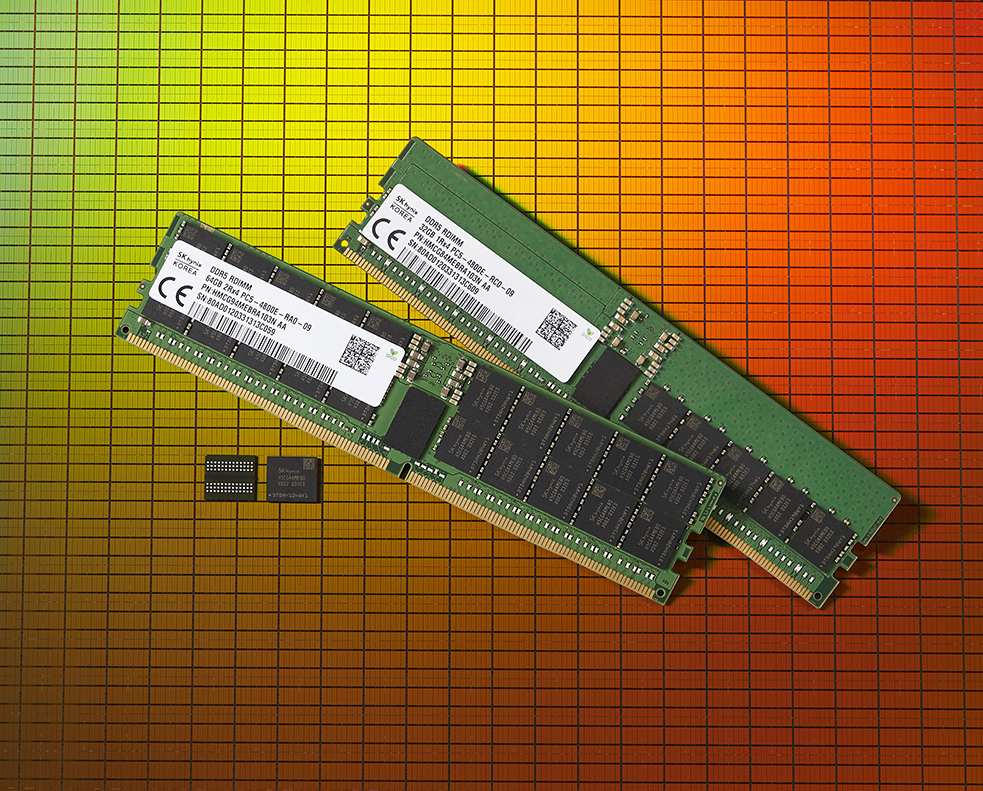
According to a research firm DRAMeXchange(via TheElec) prices of PC DDR4 8GB DRAM, 128GB NAND flash memory card. And USB MLC products fell to $2.85, and $4.2 in October respectively. In fact, the drop from August and September is about 8.9% for the DRAM. And 3.4% for the memory chips above. The report also says that the drop is higher than the 5% drop in July for DRAM.  This drop was after a sudden soar in early 2020 due to the COVID-19 situation.

That said the report says the average selling price of PC DRAM will continue to fall in Q4 2020. It could reach as high as a 10% drop as the oversupply situation is imminent. The reason these prices dint drop that much in Q3 was the heavy stockpiling of Huawei after US ban. Further, South Korean giant Samsung also said that it expects Q4 to be dull for server chips demand as demand lessens, and competition rises.

Before you conclude a catastrophe, the report breathes confidence that the memory market will likely recover next year. Although there isn’t a proper timeline, somewhere before the first half of 2021 should do it. Similarly, Semiconductor Equipment and Materials International(SEMI) predicts that semiconductor fab spending will rise by 18% in 2021.

The impending YoY(year-on-year) demand for Memory chips has forced companies like Samsung to reportedly invest in fab facilities before the situation gets out of hand. This could probably make up for the worst situation it faced this year due to the pandemic.


Galaxy Note20 FE branding appears on Samsung’s website

The Samsung Galaxy S20 FE is arguably one of the best budget flagship smartphones released this year. It offers most of the loved features of Galaxy S20 series for an affordable price. Now, over a month later from its announcement, Galaxy Note20 FE branding appears on one of Samsung’s websites.

Samsung Galaxy Logo Featured

At the Galaxy S20 FE virtual launch event, which was basically a pre-recorded video, the company confirmed that it will launch more devices with Fan Edition (FE) branding in the future. Now, according to Samsung Brazil’s website, the South Korean tech giant may soon launch the next handset in the series called Galaxy Note20 FE.

The name of this device is not only mentioned on the lading page of Galaxy S20 FE but also in its source code. However, as per SamMobile, it could be a typo as well. Hence, it is better to take this information with a pinch of salt.

Above all, before a smartphone hits the market, it gets certified by various agencies weeks or sometimes even months earlier. Only then, the company builds a product page for their website. In the case of Galaxy Note20 FE, it is yet to be spotted on any certification bureau but we already have its branding on Samsung’s official website.

Anyway, that does not mean Samsung will never launch a Fan Edition Galaxy Note as it had already released Galaxy Note10 Lite earlier this year. But as of now, there’s no concrete proof for the existence of this handset.


Facebook begins Public testing of Dark Mode for the Official App; Toggle will appear in Settings soon

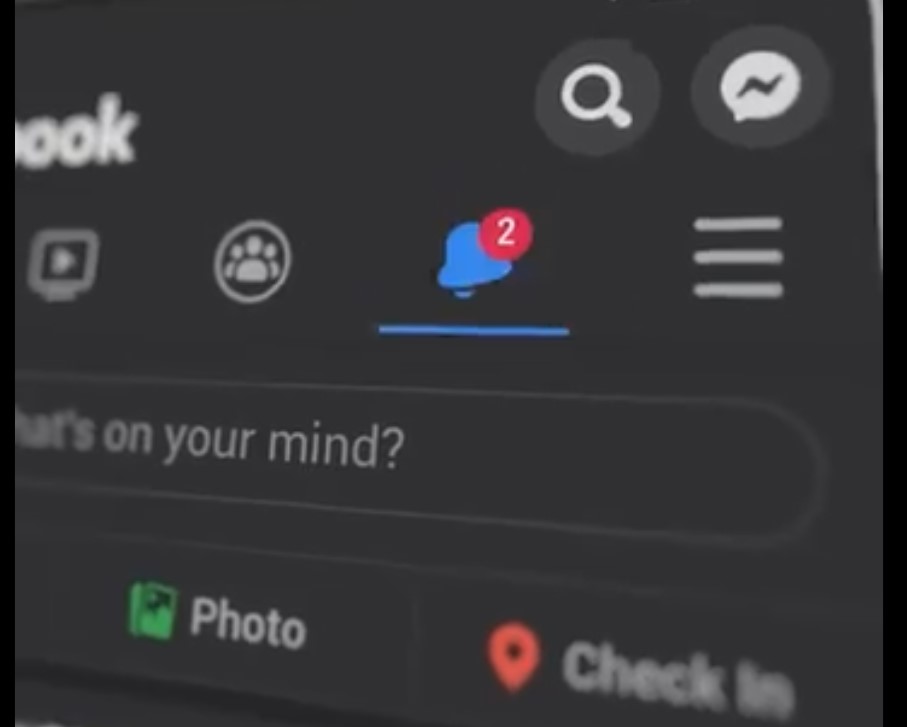
Facebook has finally began the public testing for the Dark Mode on Facebook’s main App. The company’s Official App has had the feature requested by users for a long time. In a Twitter post, a famous Reverse Engineer announced it publicly in collaboration with Facebook.

Credit: Jane Manchun Wong/Facebook

Jane Manchun Wong(@wongmjane) announced the update in a Twitter post(via Gadgets360). The video attached starts with him and Facebook’s Alexandru Voica chatting over the Dark Mode. In it, the latter says the “Dark Mode is rolling out today”. And the rest of the video switches to Dark Mode. And it shows a bit greyish UI than the previous build that leaked in 2019. However, it looks like Facebook is publicly testing it through a wider audience but not everyone. Accordingly, Facebook is yet to put out a public notice on its newsroom.

Besides, the spokesperson has confirmed to XDA that the feature will soon pop up on the settings of the Facebook App as it rolls out the feature to Android & iOS globally. In case you get it soon enough, head over to settings from the top-right corner of the App. As you navigate to the Privacy option, you will find the Dark Mode toggle.

That said, unlike the Facebook Official App, its sisters like WhatsApp, Instagram, and even its Lite and the Messenger Apps already have Dark Mode. Earlier this year, WhatsApp finally received the feature after a lot of testing. And Messenger got it a year earlier. Facebook’s desktop UI also has dark mode which got a revamp back in May. Nevertheless, the update might seed out to a wider audience soon, and it’s best to have some patience till then.


Viomi Countertop Dishwasher Sugar launched for ¥999 (~$149)

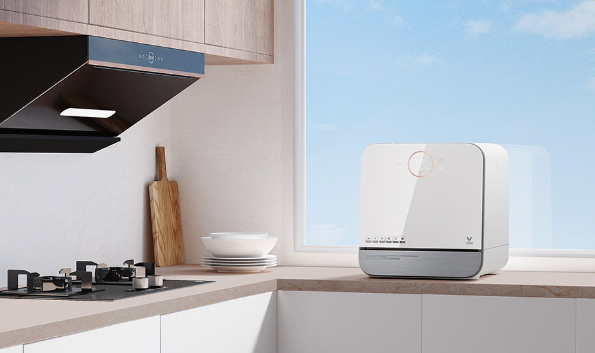
Xiaomi’s ecological chain company Viomi has added a new product to its growing line of smart home gadgets. The product dubbed Viomi Countertop Dishwasher Sugar is presently up for crowdfunding on the Youpin platform for just 999 yuan (~$149).Viomi Countertop Dishwasher Sugar

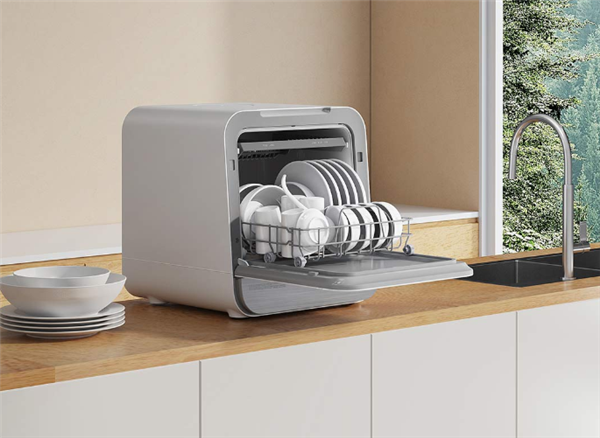
Just like the name suggests, the dishwasher is shaped like a cube of sugar. That means it has a square shape with a dimension of 443x467x441mm. The device has a built-in water tank, which can be connected to a water source or you can manually add water to the tank. It can be flexibly adapted to a variety of scenarios without the need to modify waterways and cabinets. It meets the dishwashing needs of a family of three. It is also convenient to move and install.

Internally, the Viomi Countertop Dishwasher has a large compartment that can accommodate four sets of standard and six sets of daily tablewares at a time, effectively utilising the internal space. It features upper and lower double-layer spray arms. There are also 16 rinse ports and spray alternately rotate in six directions up and down, front and back, left and right without dead end. The 11000Pa water pressure ensures that the tableware is cleaned thoroughly.Viomi Countertop Dishwasher Sugar

The dishwasher achieves 75°C high-temperature washing can guarantee up to 99.99% sterilization rate as well as UV long-lasting antibacterial effect. It also supports PTC3.0 hot air drying, alternately blowing out cold and hot air, speeds up drying in order to keep the dishes dry after washing and reduce bacterial growth. There is also a built-in fan, for this purpose as well.

Furthermore, you can also pair the dishwasher with the MIJIA app in order to remotely control and monitor the workings of the device.

The product comes in white colour only and is expected to start shipping to backers before November 29. You can check out the Youpin crowdfunding page from here.

UP NEXT: Xiaomi XiaoAI Speaker Art Battery Edition launched for 399 yuan ($59)


Wearables and TWS devices shipment will increase in 2021 – Canalys

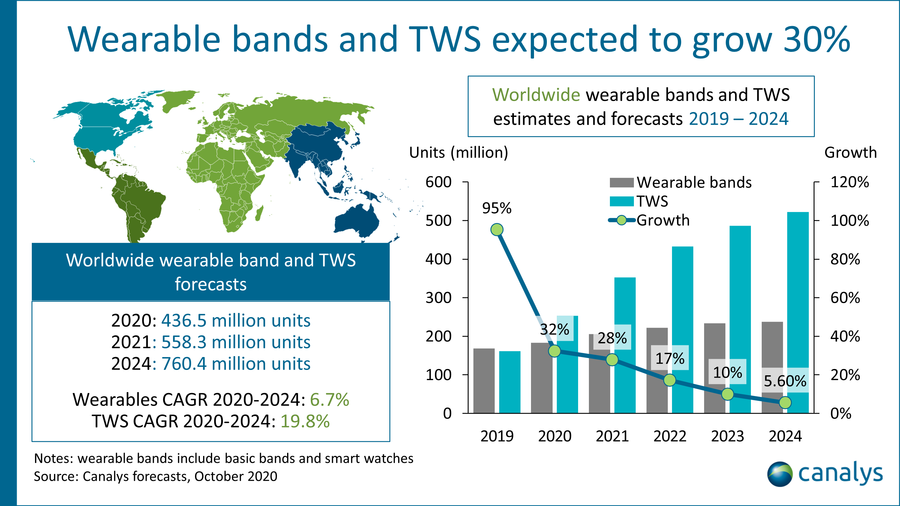
Market research firm Canalys has today released its latest forecast for the wearables and TWS headsets market for 2021. The forecast shows that by 2021, shipments of smartphone accessories such as wearable devices and TWS headsets will exceed 200 million units representing a growth of 12% and 350 million units (39% growth) respectively.

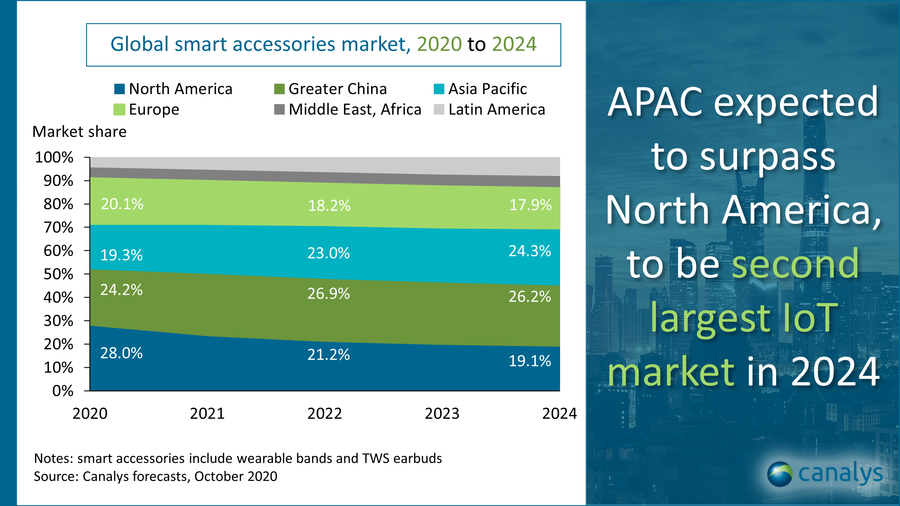
The advent of the COVID 19 pandemic has made consumers shift focus to accessories such as smart wearable devices and TWS devices. Canalys believes that the two categories of wearable devices and TWS headsets will be more resistant to the effect of the pandemic than smartphones. Also, shipments are expected to increase significantly at a rate of 32% in 2020. In addition to Greater China and North America, the growth of smart accessories in the Asia-Pacific and European regions is bound to be very strong.

Canalys noted that wearable bands and TWS earbuds are some of the few strategic winners of 2020. According to Canalys Research Analyst Cynthia Chen; “The pandemic will prolong replacement cycles for smartphones. However, the ‘lipstick effect’ will drive consumers to spend on smaller, less costly items during an economic downturn to meet their buying pleasures…Consumers’ attention to health and wellness has increased significantly during the pandemic, which is a great opportunity for wearable devices, such as those from Xiaomi, Garmin, Fitbit and Huami etc. Engagement in indoor activities such as remote learning, working from home and home entertainment, as well as outdoor sports and recreation also continued to rise. This usher in greater than expected growth, particularly for TWS headphones, such as those from Apple, Samsung, Jlab and QCY etc.”

At the same time, the Canalys believes that manufacturers still need to maintain a high degree of vigilance to prevent subsequent infection wave affecting their IoT expansion plans. Chen added: “While users are expected to tighten their spending, they continue to demand devices to do even more and provide an excellent user experience. The challenge here is to bring incremental upgrades to ever more affordable devices while ensuring seamless integration that must translate to valuable features to help users in areas such as wellness and smartphone entertainment.”

UP NEXT: Xiaomi XiaoAI Speaker Art Battery Edition launched for 399 yuan ($59)


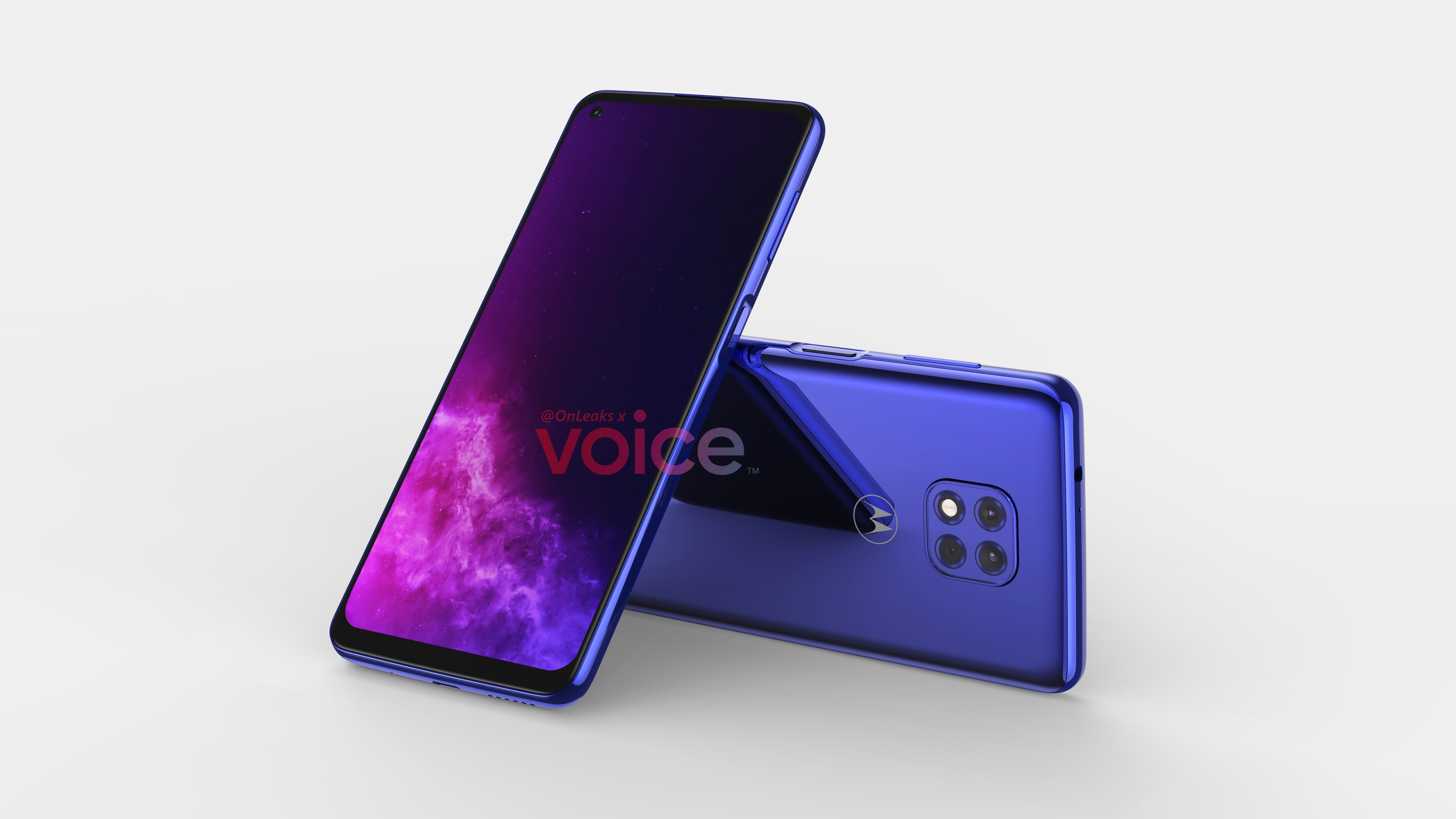
Renders give us a first look at possibly Moto G10 Play and its punch hole display

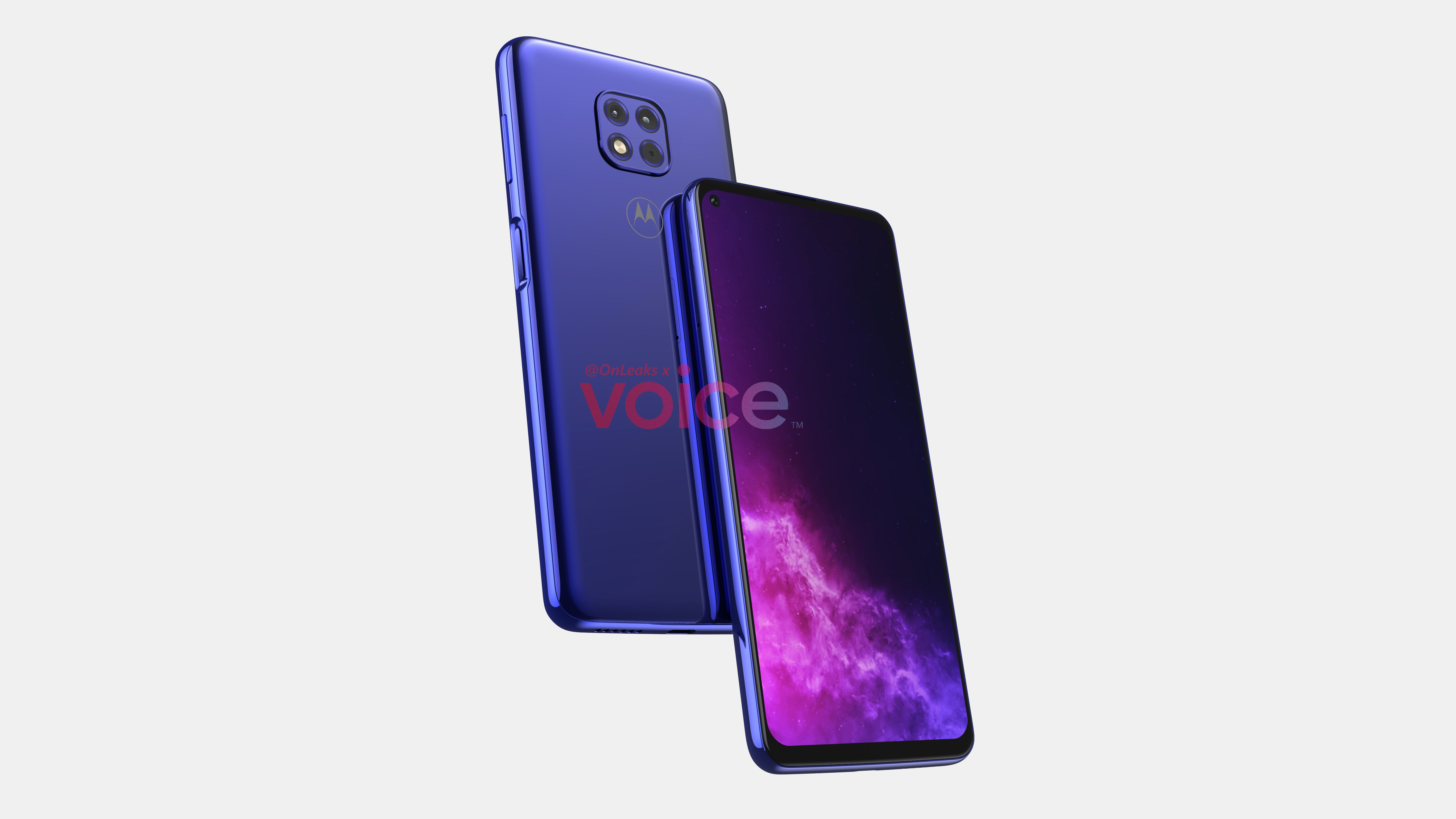
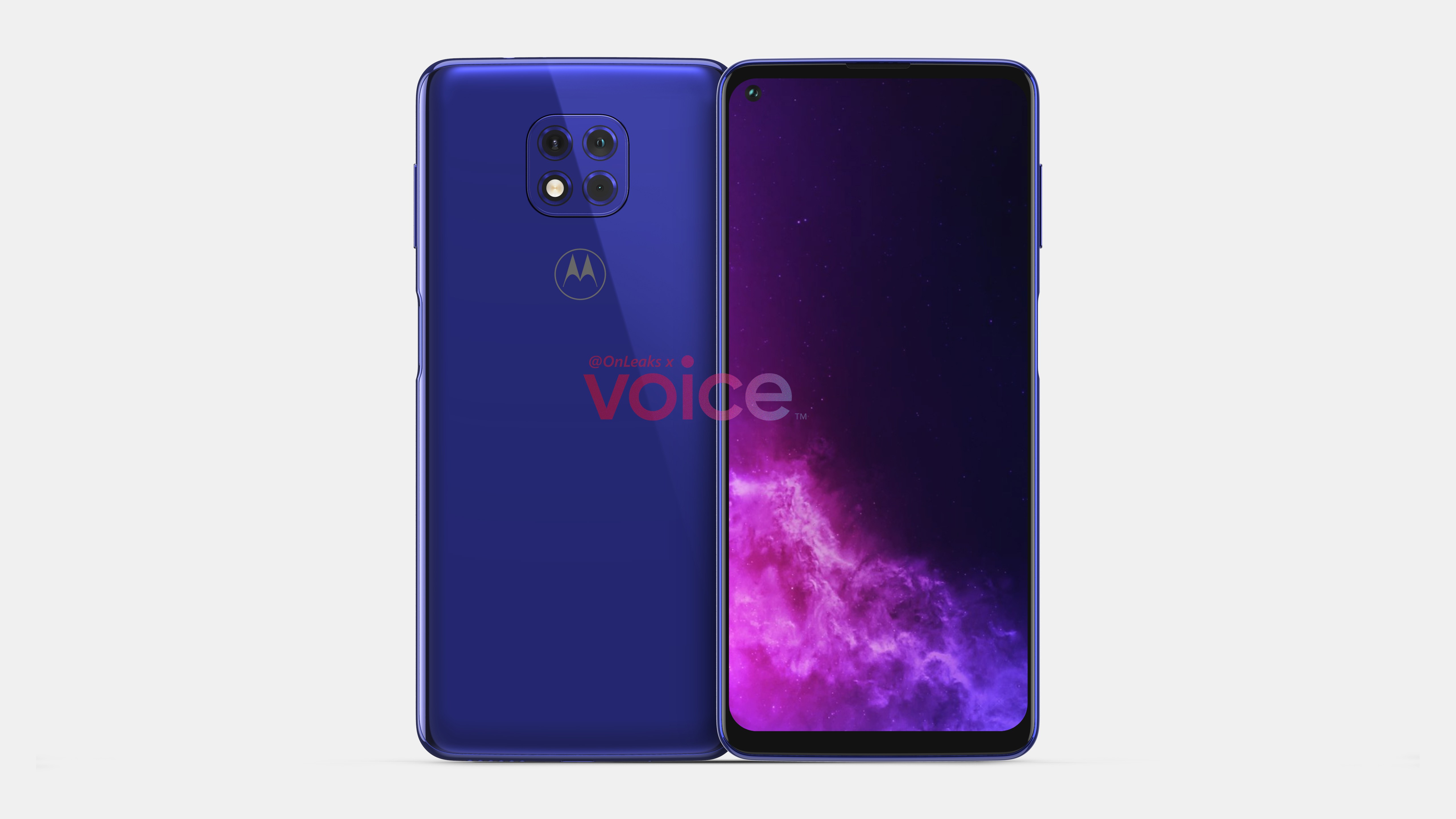
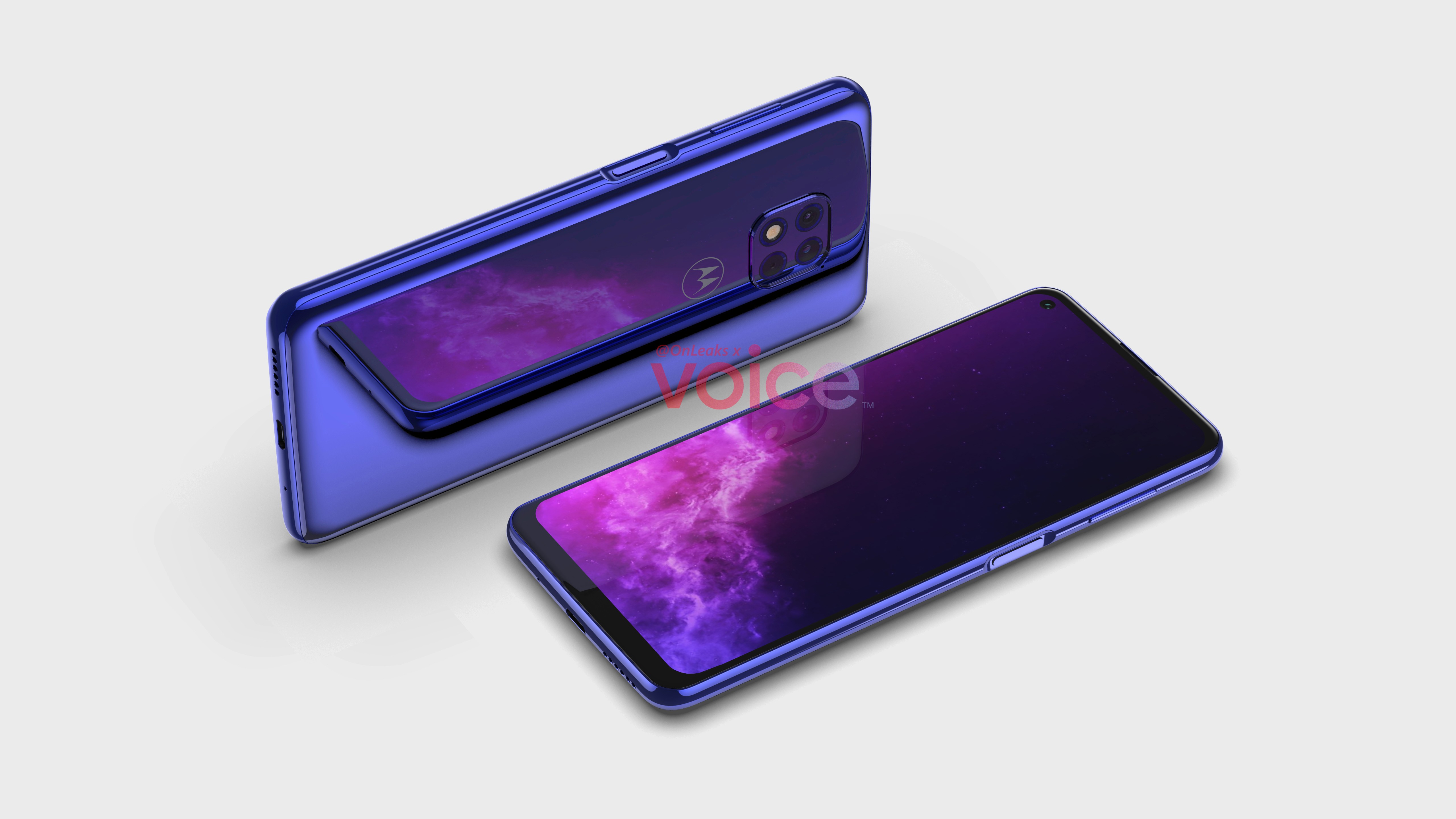
The Moto G9 Play was announced just a few months ago and now we are getting an early look at a device that is said to arrive as its successor. The renders of the phone which is expected to arrive as the Moto G10 Play shows the Lenovo-owned company adopting a new design for the front while leaving the rear largely unchanged.

Moto G10 Play

The source of the leak is Steve Hemmerstoffer who is popularly known as OnLeaks and he posted the renders along with some details on Voice. He specifically says he hasn’t confirmed the official name of the device but its model number is XT-2117, so take the info about it being the Moto G10 Play with a grain of salt.

The phone has a punch hole at the top left corner of the screen, unlike the Moto G9 Play that has a waterdrop notch. The screen is a flat 6.5-inch panel with moderate bezels around it. There is a squircle camera housing on the back that is centered and houses three cameras and an LED flash. Sitting below the setup is the Motorola logo.

While the Moto G9 Play has its fingerprint scanner on the back, Motorola has decided to move the scanner to the side on this new device where it is buried under a recessed power button. There is a volume rocker above the power button, a USB-C port and power grille at the bottom, and an audio jack at the top.

The Motorola XT-2117 will measure 165.3 x 75.4 x 9.5 millimeters (the thickness goes up to 10.4 mm when you add the camera bump) when it launches. The device has been certified by the FCC and a TÜV Rheinland certification says that it packs a 4850mAh battery.

The leaker says the phone should arrive in a few weeks. If it is indeed the Moto G10 Play, it means the Moto G9 Play is getting a successor after just two months or thereabout.

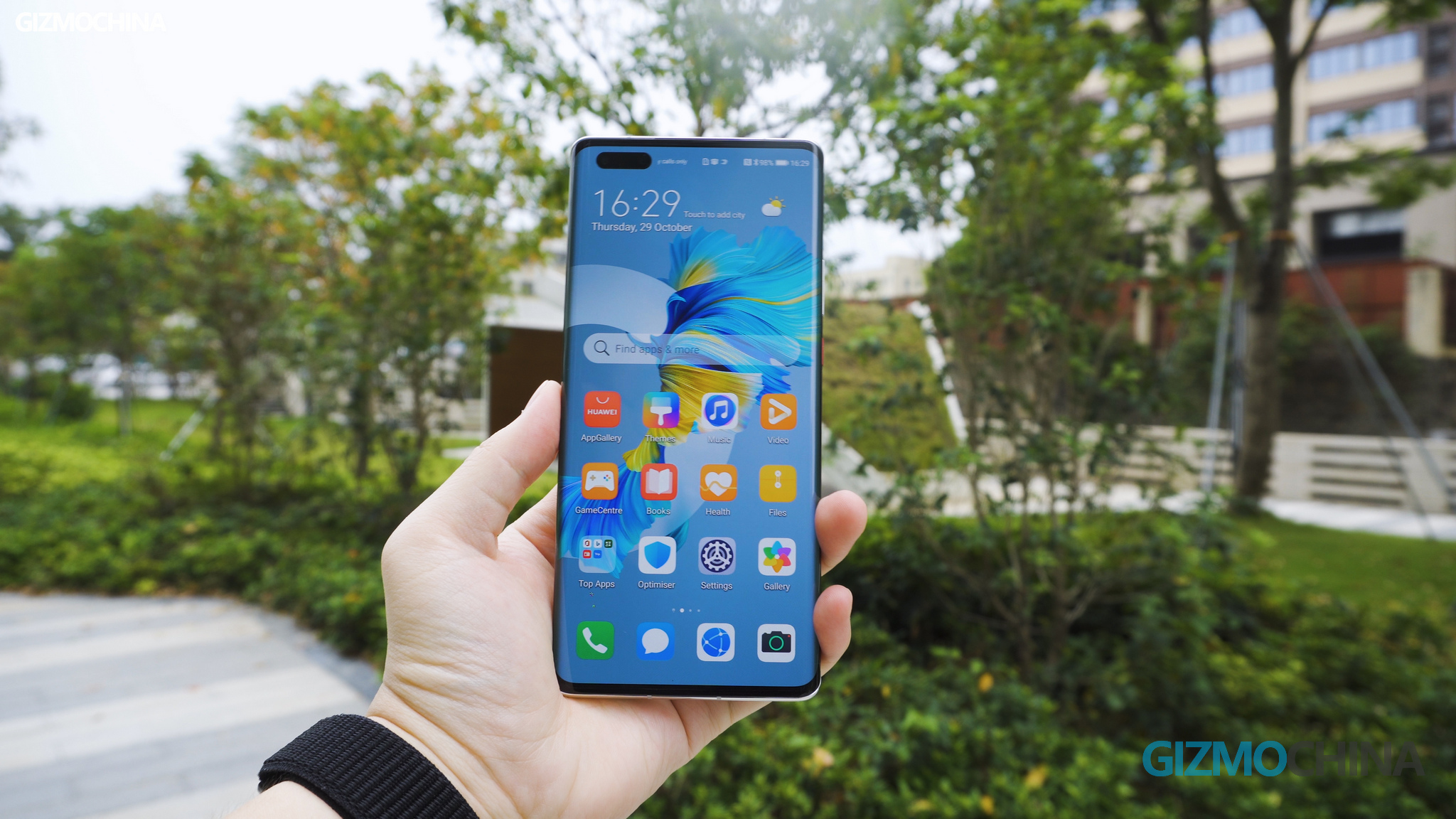
Huawei Mate 40 Pro is the first smartphone to use 200M CA offering over 3Gbps speed

Huawei recently launched its highly anticipated Huawei Mate 40 series flagship smartphones and now it is being reported that China’s three major network operators, along with Huawei, have successfully implemented the commercial use of downlink CA.

It is touted to be the first that that 5G 200MHz ultra-large bandwidth carrier aggregation technology has been implemented on a commercial smartphone where a single-user downlink peak rate exceeds 3Gbps.

Huawei Mate 40 Pro Review (2)
Huawei Mate 40 Pro

EDITOR’S PICK: OEMs ramp up IC parts orders in a bid to fill the vacuum created by Huawei’s slump

With this new experiment, Shanghai is taking a lead in the country to offer users a 5G network experience that provides better bandwidth and lower latency. Shanghai Mobile uses a total of 200M bandwidth of 2.6GHz + 4.9GHz to achieve inter-band carrier aggregation and has a measured downlink peak value of over 3.1Gbps.

It is being reported that to carry out this test, the company had used the newly launched Huawei Mate 40 Pro smartphone, which is the first commercial smartphone to come with support for 200M CA and combined with its 2T4R transceiver function, it offers a download rate of more than 3Gbps.

The Huawei Mate 40 series was launched in China on 30th October and soon after the official announcement, the devices were up for sale on Jingdong (JD.com). As expected, the newly launched smartphones have received a pretty good response for the initial sales and are already out-of-stock at many places.


Teardown video reveals Pixel 5 to be a well-built phone despite display gaps

Pixel 5 is Google’s 2020 flagship smartphone disguised as a mid-range handset. It has all the basic things one needs in a smartphone at an affordable price tag than other flagships. However, despite being the top-tier phone from Google, some units have display gaps. Regardless, the device’s teardown video reveals it to be a well-built handset.

The teardown video of Google Pixel 5 was uploaded by PBKreviews channel on YouTube. This channel is known for smartphone teardown videos.

This video shows us that the new Pixel features a good quality build like any other high-end device. As Android Headlines mentions, this video unofficially confirms the display gap issue to be rather poor quality control than terrible build.

That said, if you have a Pixel 5 with a screen gap, you can request for a replacement. But it is worth noting that the panel won’t come off by itself. That’s because the phone’s frame is fitted with strong adhesive and the panel is locked with clips. Also, the handset is easy to repair as it uses a number of ribbon cables and connectors.

Anyway, the screen gap may or may not hinder IP68 certification. The adhesive may be able to block the water from entering the device but we cannot say it for sure. Therefore, if you really care about water-resistance, you should definitely get a replacement unit.


Google launches VPN service for Android; coming to the US, and other countries soon

Google is the place where we search all of our queries. And now, it could just make us anonymous and protected as well. It has announced a new VPN service for Android by Google One is coming to the US, and other countries soon.

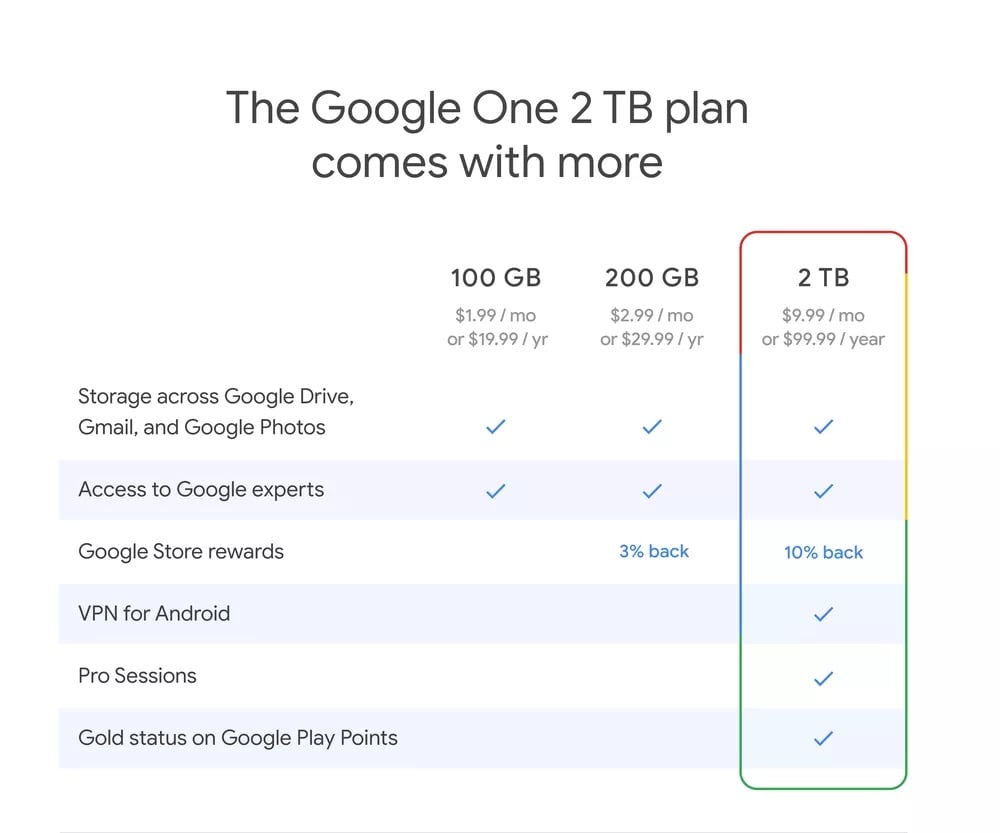
In a blog post(via The Verge) Google says it is introducing a new VPN service for Android users who have the 2TB and higher Google One plans. It costs $99.99(USA)/₹6,500(India) a year or $9.99/₹650 a month. This service will reportedly encrypt and protect the entire online traffic irrespective of browser or app being used. However, it is built into the Google One App(Android-only as of now). And as said above, users need a Google One Membership.

VPN by Google One

For the unaware, Google One is a  subscription service that gives more cloud storage. With every Gmail, users get 15GB of free color storage. But if you want to upgrade it, you need to subscribe to Google One. However, if you are in the US and already on a 2TB plan, you will get the VPN support through an update soon in the coming weeks on the Google One App. But if you are somewhere else, you might have to wait longer.

Additionally, Google is also rolling out Pro sessions by Google One with VPN support for 2TB plan users. This is basically a support service that schedules conversations. And connects you to a Google Expert to know more about the VPN service.

How to enable it? -That said, to enable the update, after getting it, open the Google One app and navigate to VPN on the Home section. On the next page, enable the VPN. Also, if you share your 2TB plan with family members(Max:5) they can enable the service at no extra charge.

Availability

The new VPN by Google One service is limited to Android as of now. But it will expand to iOS, macOS, and Windows, and other countries in the coming months. As said earlier, it will roll out to the USA in the coming weeks. And Pro sessions will also roll out to the USA, United Kingdom, and Canada in a few weeks.


OEMs ramp up IC parts orders in a bid to fill the vacuum created by Huawei’s slump

Just a couple of years back, Huawei was already setting its eyes on storming the US market and also edging Samsun out of the number one spot to become the world’s largest smartphone manufacturer. Both visions are presently out of the brand’s thoughts as it struggles to survive amidst the recent US ban that has made it impossible to get ICs for its smartphones.  huawei

Huawei’s market share is already expected to start taking a hit soon even though the brand still led the Chinese smartphone market in Q3 2020. Huawei’s market share is expected to be snatched away by Apple but the US smartphone vendor may not be the only beneficiary of Huawei’s slump.

According to a report by DigiTimes, sources from Taiwan-based IC suppliers have disclosed that other leading Android smartphone OEMs such as Samsung Electronics, Xiaomi, Oppo and Vivo have reportedly increased their purchases of IC parts. This is in a bid take over the smartphone market share relinquished by Huawei as a result of the US trade sanctions.

The sources hinted that Android phone makers have placed orders for LCD driver ICs in the quarter which exceeded the quarterly shipments of related chips shipped to Huawei previously. Further, some ambient light sensor suppliers also revealed that China’s handset vendors are building their inventories for such chips aggressively as they intensify efforts to expand their market share at the domestic and overseas markets to fill the vacuum created by Huawei’s ban.

Also, most IC suppliers believe that a great portion of current IC orders for handset applications involves double bookings by handset brands in light of tight capacity at foundry houses. However, these inventories could create problems for the OEMs if their market share fails to increase as expected.

UP NEXT: Xiaomi XiaoAI Speaker Art Battery Edition launched for 399 yuan ($59)


50W Fast Wireless Charging Showdown: Mi 10 Ultra versus Mate 40 Pro

While wired charging has recorded a significant increase in charging speed for years, wireless charging has been playing catch up. However, thanks to Chinese manufacturers such as Xiaomi, Huawei, and OPPO, wireless charging is now incredibly fast too.

Mi 10 Ultra vs Mate 40 Pro wireless charging showdown featured

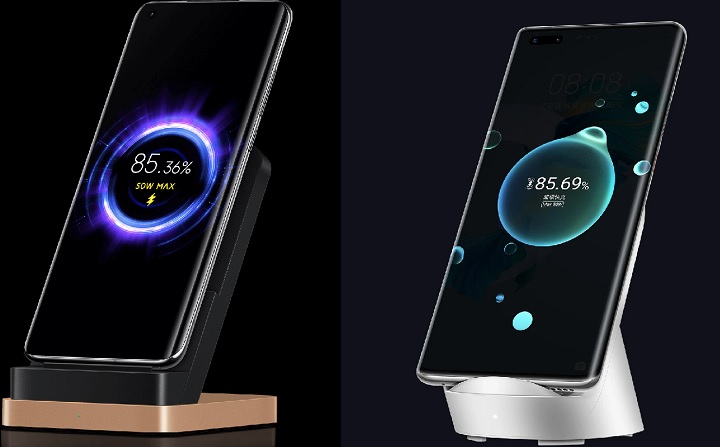
At the moment, if you want to experience the fastest wireless charging technology on a commercially-available device, your options are limited to the Mi 10 Ultra by Xiaomi and the Mate 40 Pro/Pro+/RS Porche Design by Huawei. These phones support 50W fast wireless charging, putting them way ahead of phones such as the iPhone 12 Pro Max and Galaxy Note20 Ultra 5G that both support 15W wireless charging.

For those who are curious as to whose 50W fast wireless charging technology is faster between that of Xiaomi and Huawei, Chinese leaker, Digital Chat Station, has carried out a test to determine the result.

Mi 10 Ultra battery
Mi 10 Ultra battery

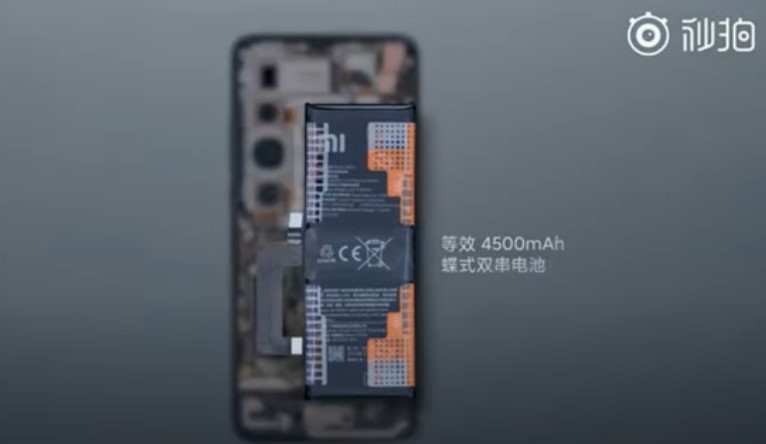
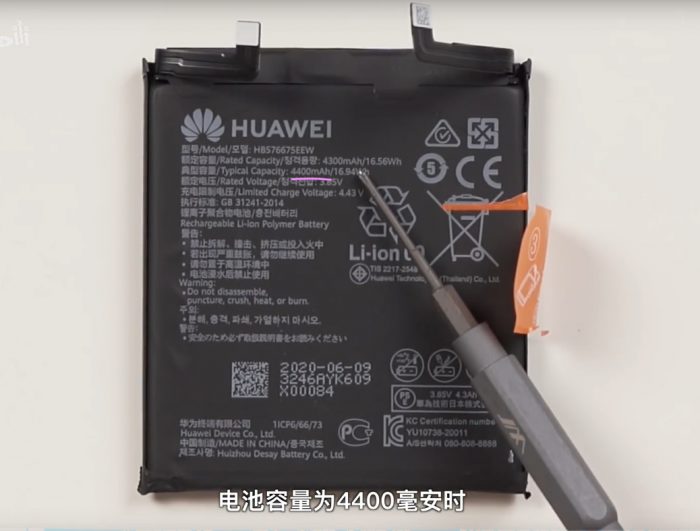
First, it is important to state that the two phones have similar battery capacities. The Mi 10 Ultra has a 4500mAh battery capacity that is split into two cells while the Mate 40 Pro has a 4400mAh battery capacity. We are not sure if they are two cells but a teardown has revealed that the phone has two cables connected to the battery.

Mate 40 Pro battery
Mate 40 Pro battery | Image via: seekdevice.com

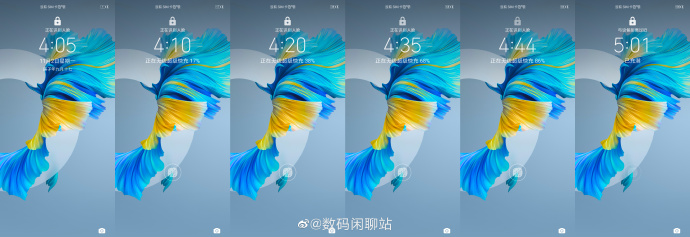
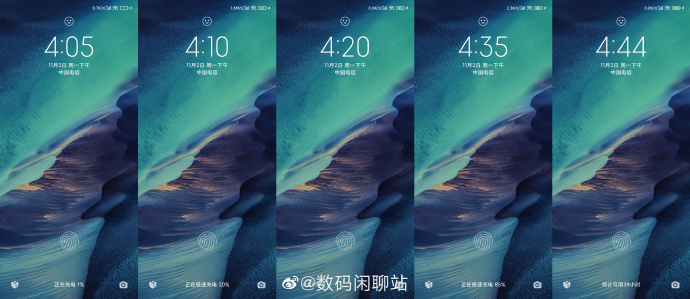
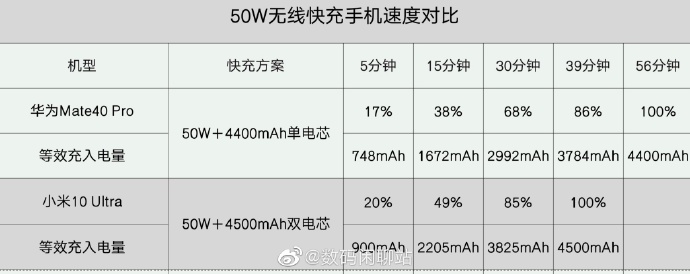
Based on the images shared on his Weibo page, both devices were placed on their respective wireless chargers at the same time (4:05). After 5 minutes, the Mate 40 Ultra was at 17% while the Mi 10 Ultra was at 20%. After 15 minutes of charge. the difference is wider as the Mi 10 Ultra is 49% while the Mate 40 Pro is at 38%. A 30-minute charge sees the Huawei flagship at 68% while the Xiaomi flagship is at 85% battery level.

Huawei Mate 40 Pro 50W wireless fast charging Huawei Mate 40 Pro 50W wireless fast charging

The Mi 10 Ultra is fully charged after 39 minutes, confirming the claim by Xiaomi that it takes 40 minutes to fully charge using wireless charging. The Mate 40 Pro takes 56 minutes to get to 100%.

Mi 10 Ultra vs Mate 40 Pro wireless charging showdown

As you can see, the Mi 10 Ultra comes out on top which means Xiaomi’s 50W fast wireless charging technology is faster. Nevertheless, those who pick up the Mate 40 Pro should be equally impressed with the wireless charging speed of their device.


Xiaomi Smart Door Lock Pro launching on November 4; Poster hints at facial recognition feature

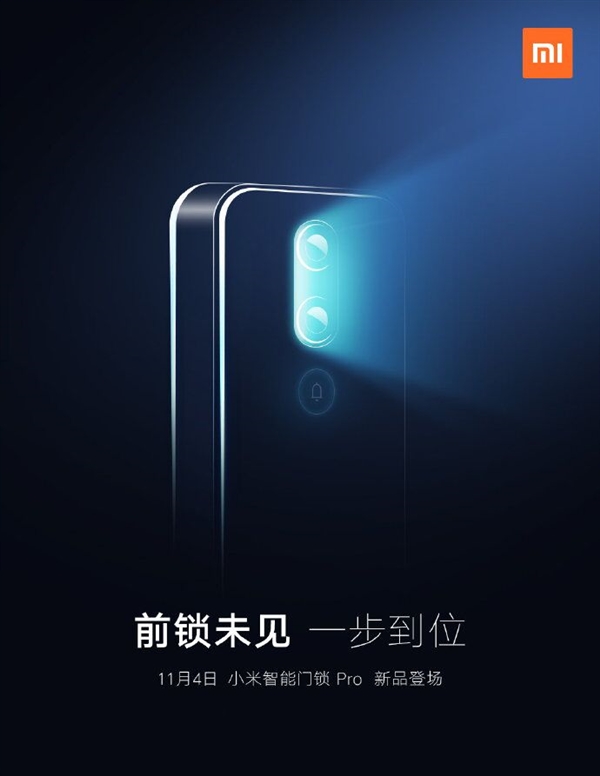
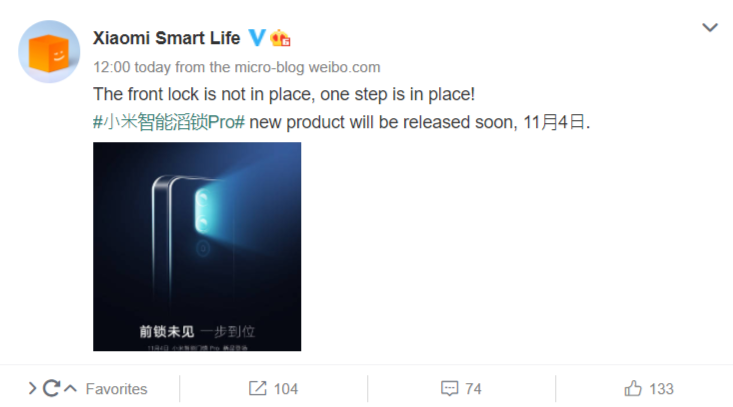
Xiaomi recently launched a new Automatic Smart Door Lock with a fingerprint sensor in China. Today, it’s official Smart Life Weibo account has shared a poster of a new Smart Door Lock Pro. And looks like it has front cameras.

The Poster on Weibo(via MyDrivers) reads Xiaomi Smart Door Lock Pro new product will debut on November 4(Translated). In the poster, you can see two camera sensors on the front side of the lock. Besides, these are probably a couple of camera sensors to recognize the face and enable authentication. However, the render shows only a portion of the lock. And hence, we can’t figure out the position and its accessibility just yet. Also, the poster has a slogan,” the front lock is not in place, one step is in place”(Google Translated).

This suggests non-contact authentication and further strengthens the Facial Recognition feature hint on the new Xiaomi Smart Door Lock Pro. At a time when social distancing is in place, touching objects is risky and hence, we feel facial recognition would be the best bet. And, facial recognition in Door lock also has other useful features. These include burglary and stranger detection, lock picking, triggering the alarm etc. That said, the new Door Lock Pro also has an electronic Bell option that is found on its other models.

Having said that, this is not the first Smart Door Lock with authentication from the company. Back in 2018, Xiaomi Mijia launched a Smart Door Lock with 3D fingerprint, NFC, and more. In 2020, it came up with a budget Smart Lock E that had close to six authentication methods.

It’s great to see Xiaomi evolving from one authentication method to the other and being relevant to the current trend. Anyway, let’s wait and see what other features does Xiaomi brings with the Facial Recognition Door Lock on Wednesday.


Xiaomi MIJIA Robot Vacuum-Mop 1T launched for 2,299 yuan ($344)

Xiaomi’s MIJIA brand is known for its IoT products. The company only uses this branding in its home country. In global markets, the products under this brand launch under Mi branding. One of the most popular product categories by MIJIA is vacuum cleaners. Ahead of ‘Double Eleven’ (11.11) aka Single’s Day sale in China, Xiaomi has launched a new vacuum cleaner called MIJIA Robot Vacuum-Mop 1T.

Xiaomi MIJIA Robot Vacuum-Mop 1T Featured 01

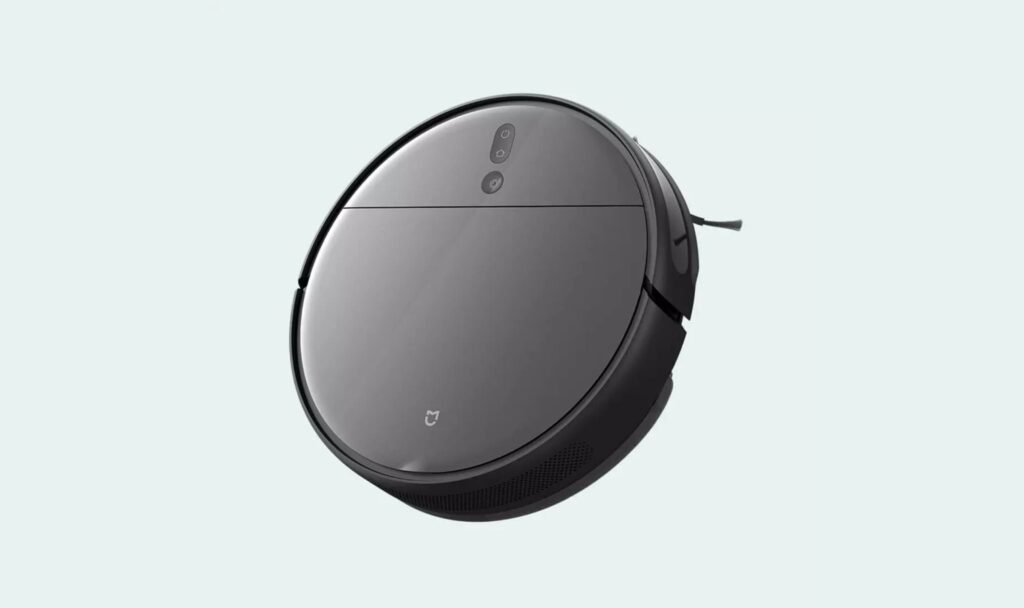
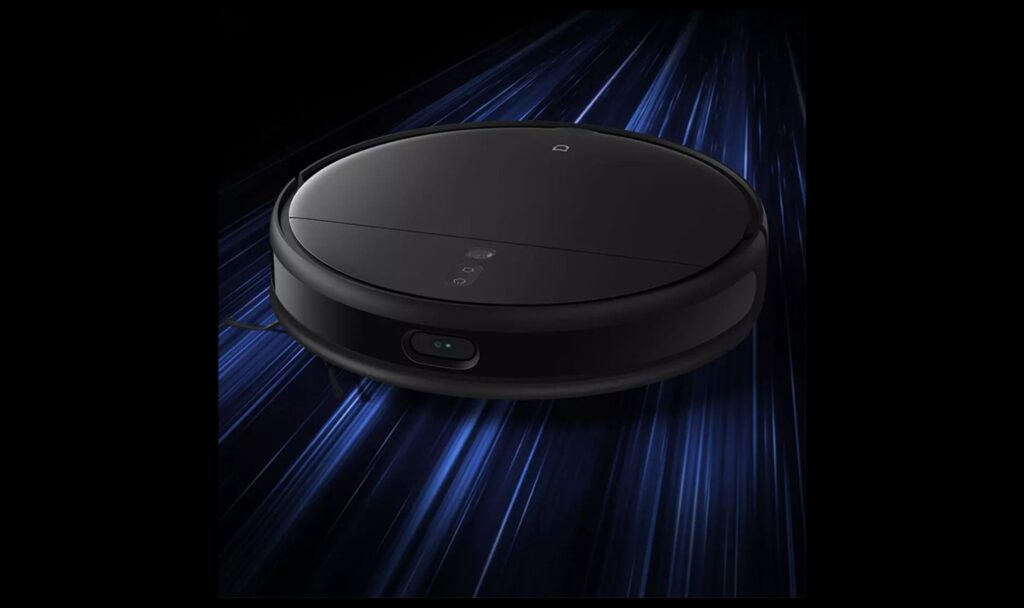
As the name suggests, the newly announced Xiaomi MIJIA Robot Vacuum-Mop 1T is capable of sweeping and mopping the floor automatically. 

The robot comes equipped with infrared, ToF, dual-gyro, optical, and cliff sensors. With the help of these sensors and 3D VSLAM (Visual Simultaneous Localization and Mapping) algorithms, it creates a map of the entire place and also avoids obstacles. Users can further edit the created map to further increase accuracy if needed.


By default, the vacuum cleaner will run across the map, however, users can set a particular area for cleaning as well. It uses a brushless motor with 3000Pa suction power and support for 4-speed modes as well as a 550ml dust box for sweeping. Whereas, for mopping, it comes with a 250ml water tank, which is enough to wet for 160m.

Users can also control the robot remotely and install updates using the MIJIA app. Further, the company claims it to run for 180 minutes in standard mode with a help of a 5,200mAh battery. And when almost out of juice, it navigates to the charging dock by itself to fill up.

Xiaomi MIJIA Robot Vacuum-Mop 1T Featured 02

Last but not least, the vacuum cleaner comes with model number STYTJ02ZHM, measures 353 x 350 x 81.5mm in dimensions, and weighs 3.7Kg.

The Xiaomi MIJIA Robot Vacuum-Mop 1T is priced at 2,299 yuan ($344) and is already up for pre-order in China for 100 yuan ($15). It will go on sale starting November 11. Customers who pre-ordered the product will be able to purchase it for only 1,999 yuan ($299).


Samsung Galaxy M02 launch could be nearing as it receives BIS certification

Samsung is reportedly working on the Galaxy M02 smartphone. The entry-level phone is expected to succeed the Galaxy M01 that went official in July in India. The Galaxy M02 has been recently spotted at Geekbench and Bluetooth SIG platforms. Fresh information reveals that the Bureau of India Standard (BIS) has also approved the phone. This indicates that the phone could be heading soon to India.

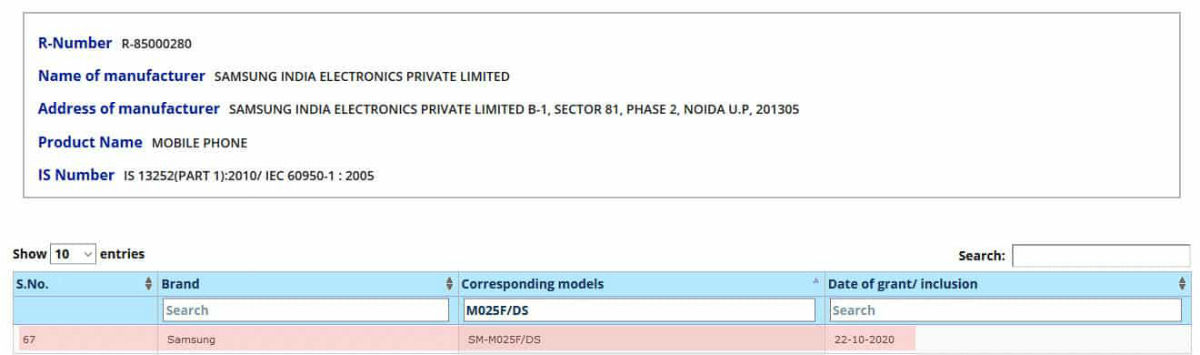
The Galaxy M02 had appeared with its model number SM-M025F at Bluetooth SIG and Geekbench. These listings had revealed that the phone is equipped with specs like the Snapdragon 450 chipset, 2 GB of RAM, Android 10 OS, and Bluetooth 4.2. The same phone appeared as SM-M025F/DS at BIS recently. The BIS listing has no other information on its specs.

Samsung Galaxy M02 BIS certified

Recent reports have revealed that Samsung is also working on the Galaxy A02 phone. The A02 has received certification from Bluetooth SIG and FCC authorities. Its model number is SM-A025F. A variant of the phone with model number SM-A025G is speculated to launch as the Galaxy A02s. The SM-A025G has been spotted with specs like Snapdragon 450 chipset, 3 GB of RAM, and Android 10 OS. There is a possibility that the devices may go official in this month or December.

Samsung Galaxy M01 and Galaxy A01 specifications

The Galaxy M01 arrived with specs like a 5.71-inch HD+ PLS TFT display with an 18:9 aspect ratio, Snapdragon 439 chipset, 3 GB of RAM, 32 GB of storage, a 13-megapixel + 2-megapixel dual-camera setup, a 5-megpaixel selfie camera, and a 4,000mAh battery. On the other side, the Galaxy A01 came with 2 GB of RAM, 16 GB / 32 GB of storage, and a 3,000mAh battery. The rest of its specs were identical to the Galaxy M01.


(via)

Xiaomi launches MIJIA H900 Hair Dryer, offers different blowing modes

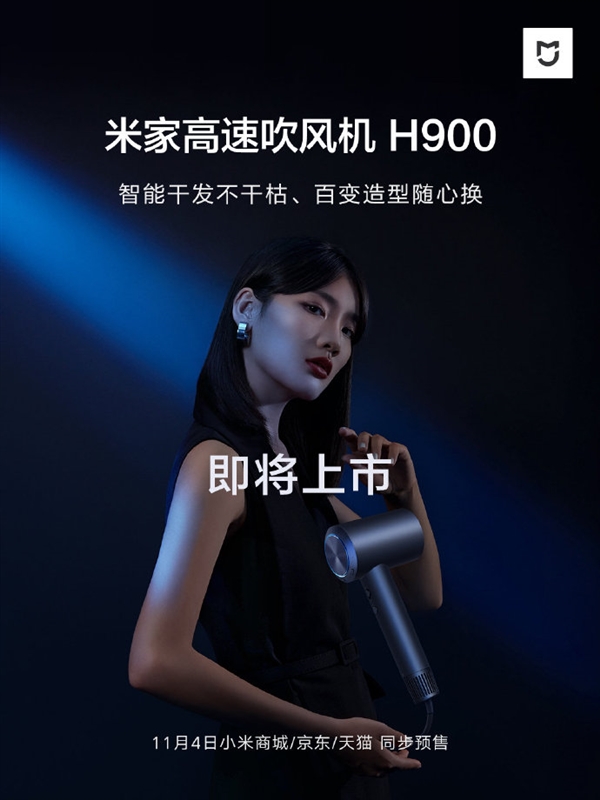
Earlier today (2nd November 2020), Xiaomi launched the MIJIA H900 Hair Dryer. This new product will launch through Xiaomi Mall, JD.com, and Tmall, and will be available for purchase from 4th November 2020.

According to official notes, the new MIJIA hair dryer arrives with 12 different hair blowing modes through its 106,000rpm high speed motor. The new product is a part of the existing H series of hair dryers from the company and is positioned as one of the higher end variants in the lineup. Looking at the promotional image, the H900 sports a metallic design and has a much larger overall volume in comparison to the previously launched H100 and H300 series hair dryers.

Xiaomi

Since it is a high end variant with a larger size, we can expect the price for the newer model to be higher as well. The aforementioned H100 and H300 were both priced below 200 Yuan (roughly 30 US Dollars), so we can expect the new H900 to arrive with a price tag close to around 300 Yuan (roughly 45 US Dollars). A notable feature in the MIJIA H900 Hair Dryer is its constant smart temperature control.


China smartphone market to rebound in Q4 2020, Huawei to lose market share to other brands: Report

With the world slowly recovering from the initial impacts of the Coronavirus outbreak, various economies and industries are seeing a recovery. This also holds true for China’s smartphone market that is expected to rebound in the fourth quarter, although, this growth for smartphone makers is expected to eat away at the market share of the country’s current leader, Huawei.

Huawei

According to a DigiTimes report, the fourth quarter is expected to rebound due in part to Apple’s launch of its latest flagship iPhone 12 series. Furthermore, the aggressive marketing strategy adopted by other local OEMs like Xiaomi, Oppo, and Vivo is also expected to raise its market share, at the expense of the leftover market share of Huawei.

Back in the third quarter of 2020, smartphone sales in China fell by 25.2 percent and 26.2 percent subsequently. This was due to weak demands in the local market, during which time, Huawei also faced reinforced restrictions from US sanctions. Despite facing these issues, the Chinese tech giant still managed to lead the third quarter of 2020 in the region.

Huawei Logo MWC 2019

Notably, Huawei’s market share is also expected to be snatched away by the US smartphone vendor, Apple. We can expect the Chinese rankings for the final quarter of 2020 to shift a bit, although, it is still too early to tell. So stay tuned for more updates.


First iPhone 13 Prototype resembles iPhone 12 and doesn’t have in-display Touch ID: Tipster

Apple recently launched the iPhone 12 series. However, the devices still miss out on USB-C, and Touch-ID which has become unavoidable these days. Now, a tipster claims that the next iPhone(Tentative: iPhone 13) will travel down the same path. And only have few improvements over the predecessor.

fongerpritn in screen

Tipster Jiorīku on Twitter says(via wccftech) early iPhone 13(tentative) prototypes have been made. And its design isn’t reportedly far away from the iPhone 12. He says the new prototype has designed very similar to the latter but with “few extra steps”. In fact, he mentions that the prototype doesn’t even include the in-display Touch ID that we all have been waiting for. This is disappointing considering Apple went back to Touch-ID on the recent iPad Air 4.

However, this contradicts earlier reports where Analysts like Ming-Chi Kuo said Apple will launch at least one model with in-display Touch-ID. That said, the iPhone 13 will adopt a similar design to the iPad Pro if Jiorīku is right. It could carry forward the boxy design with flatter edges, display sitting flush with the metal frame, and rounded corners. However, it could go down the same route of having a display with a wide notch for housing the Face-ID sensors and front camera.

As we already know, early reports of the iPhone 13 indicate that it will have a 120Hz refresh rate screen. Additionally, it will adopt the LTPO(Low-Temperature Polycrystalline Oxide) display designed by Apple. Under the hood, it is likely to be powered by the Apple A15 Bionic manufactured by TSMC using a 5nm node. And tipster Jon Prosser has already hinted that future iPhones will have a 1TB storage option.

Let’s wait and see if Apple decides to include both the Touch-ID and 120Hz which may reflect in the future updates of the iPhone 13 prototypes.