DJI looks ready to refresh its smallest camera line again, and the next model might be the most interesting update the Osmo Pocket series has seen in years. Rumors around the Osmo Pocket 4 have been floating around since early summer, but more specific leaks are now pointing to a genuinely meaningful upgrade — not just a quiet yearly refresh.
Insiders say DJI is aiming for a December 18 launch. The timing is convenient for more than holiday shoppers. A US FCC rule targeting DJI products takes effect on December 23, so getting the Pocket 4 out beforehand ensures retailers can legally stock it in the country. DJI also launched the rugged Osmo Action 6 just a month earlier, and spacing the releases gives both products room to breathe.
The latest details come from Photorabz, a YouTube channel that has reportedly been accurate in the past with DJI leaks. According to their source, the Osmo Pocket 4 use a 1/1.1-inch sensor. What isn’t clear yet is whether DJI will use a square-format version of that sensor, something that would make switching between vertical and horizontal shooting much smoother. Apple has leaned into that idea with the selfie camera of the iPhone 17 series, and its impressive.
The leak also says the Pocket 4 will feature a variable aperture ranging from f/2.0 to f/4.0, similar to what DJI introduced on the Osmo Action 6. Having aperture control is a big deal: wide open for softer backgrounds when filming yourself, or stopped down for landscapes and travel footage. Some of the specs suggest DJI might even reuse the Action 6’s 1/1.1-inch sensor with its reported 13.5 EV dynamic range, which would help with tricky lighting — indoors, sunsets, city night shots — without heavy editing.
Another expected upgrade is full 360-degree panning, a feature borrowed from the new Osmo Mobile 8. If accurate, that would allow the Pocket 4 to pull off smooth spins and tracking shots that usually require a bigger gimbal.
Overall, the Osmo Pocket 4 sounds like a noticeable upgrade over the predecessor. And the changes do not appear to affect the portability either.
Black Shark has announced its new Magnetic Wireless Charging Cooler in the Chinese market. The product is now available for reservations and will go on sale on November 26. The first-sale price is set at 209 yuan ($30).
Black Shark Magnetic Charging Cooler Specs
The cooler combines three functions in a single unit: fast wireless charging, TEC semiconductor-based cooling, and strong magnetic attachment. It supports true 25W wireless charging that complies with the WPC Qi 2.2 protocol. Black Shark says the cooler can charge an iPhone 17 Pro to 50 percent in around 30 minutes when paired with the company’s 45W charger. It uses an Apple-grade charging coil and a built-in authentication chip to ensure stable power delivery and reduce excess heat during charging.
Black Shark equips the device with a TEC cooling module that includes a semiconductor cooling plate, a 3000 rpm fan, and a large internal heatsink. The cooling system reduces surface temperatures to as low as 13°C during charging. The device also sports an AI temperature control system that monitors thermal output in real time and adjusts cooling power to protect the battery.
The accessory uses dual-side strong magnetic attachment with eighteen N52 magnets. Magnetic force reaches up to 15N (Max), giving the charger a stable hold on iPhone devices, transparent cases, and compatible magnetic cases. It also supports non-magnetic cases when paired with Black Shark’s magnetic ring. The charger maintains secure attachment even during gaming, video calls, or navigation. The back includes an additional magnetic module that lets users mount it to car mounts, desk stands, or bedside stands.
Black Shark provides two operating modes for different scenarios. The default mode activates cooling and wireless charging simultaneously. Holding the button for three seconds switches the accessory into a magnetic cooling-only mode that pushes up to 7W (Max) of cooling power while disabling wireless charging. This setting suits gaming or long video playback sessions where temperature control takes priority over charging.
The cooler also features customizable lighting with three options: slow-cycle RGB, constant ice-blue, and constant purple. It weighs 93 grams and measures 65.49×22.7 mm.
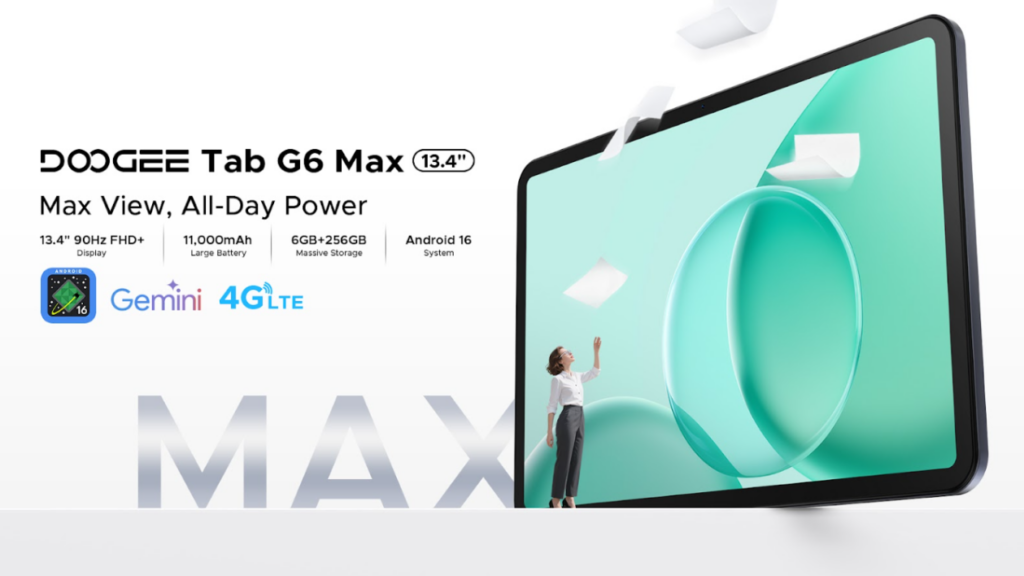
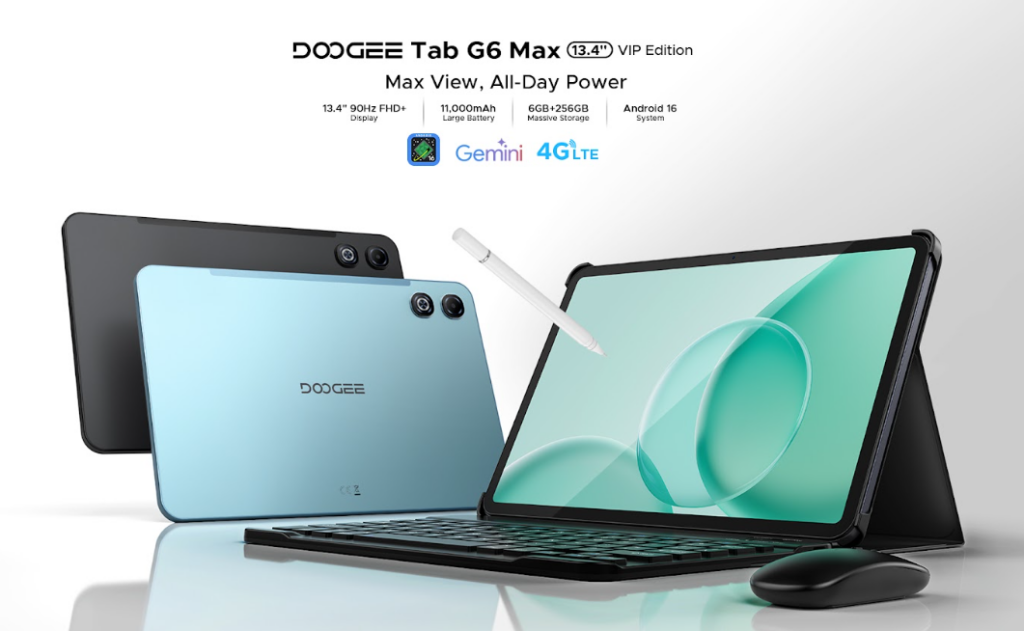
The DOOGEE Tab G6 Max is designed for users who want a tablet that can replace multiple devices at once. It brings together a large display, long-lasting battery, smart productivity tools, and a premium finish, making it suitable for students, professionals, and entertainment lovers alike. As the top model in the Tab Go series, it delivers more power, more space, and more flexibility than ever before.
Deal & Availability
The DOOGEE Tab G6 Max is available through the official store with an exclusive 25% discount using the code G625, along with a 30-day guarantee and 1-year free warranty. It’s also offered on Amazon UK with a 5% off code (A8MTGXXO) and on Amazon US with a 10% off code (CWBCCVEN). These deals make the G6 Max easier to grab at a great price while ensuring reliable post-purchase support.
Tab Go Series Evolution
The Tab Go lineup was created with a simple purpose: to offer strong performance without the bulk. It started with the Tab G6 and G6+, and now the G6 Max completes the family as the most advanced version. While the earlier models focus on portability and balance, the G6 Max targets users who want a larger visual workspace and higher endurance. It blends powerful hardware with a slim body, giving users a premium device that remains easy to carry.
A 13.4” Desktop-Class Display
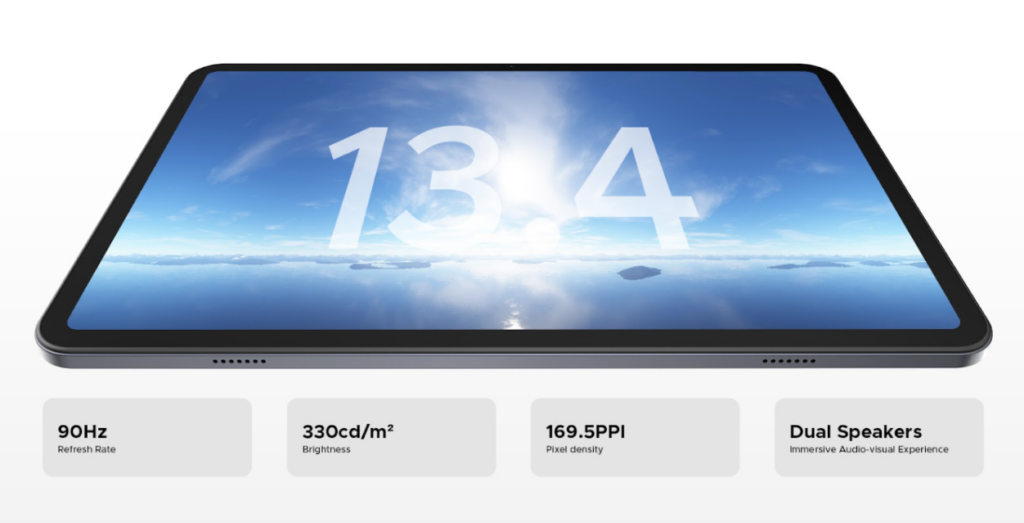
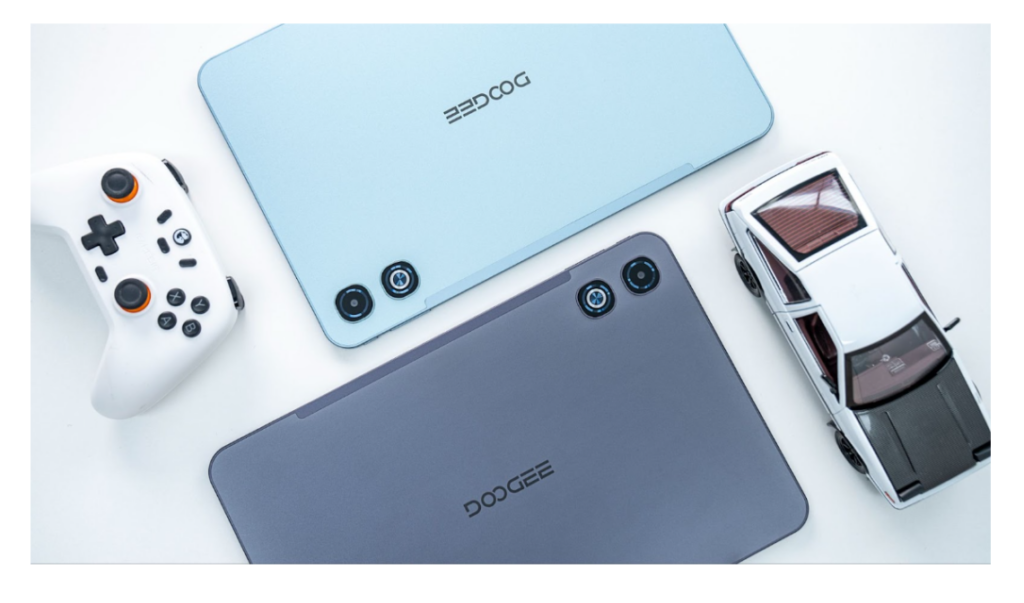
The G6 Max stands out with its expansive 13.4-inch FHD+ display, offering a desktop-like experience right on a tablet. The 90Hz refresh rate ensures smooth scrolling, making multitasking and content viewing more enjoyable. With such a wide screen, users can comfortably work on two apps side-by-side, ideal for studying, writing reports, following tutorials, or joining video calls. The slim 7.75 mm body and metal construction give it a refined feel, while colors like Obsidian Black, Misty Gray, and Aquamarine Blue keep it stylish for any setting.
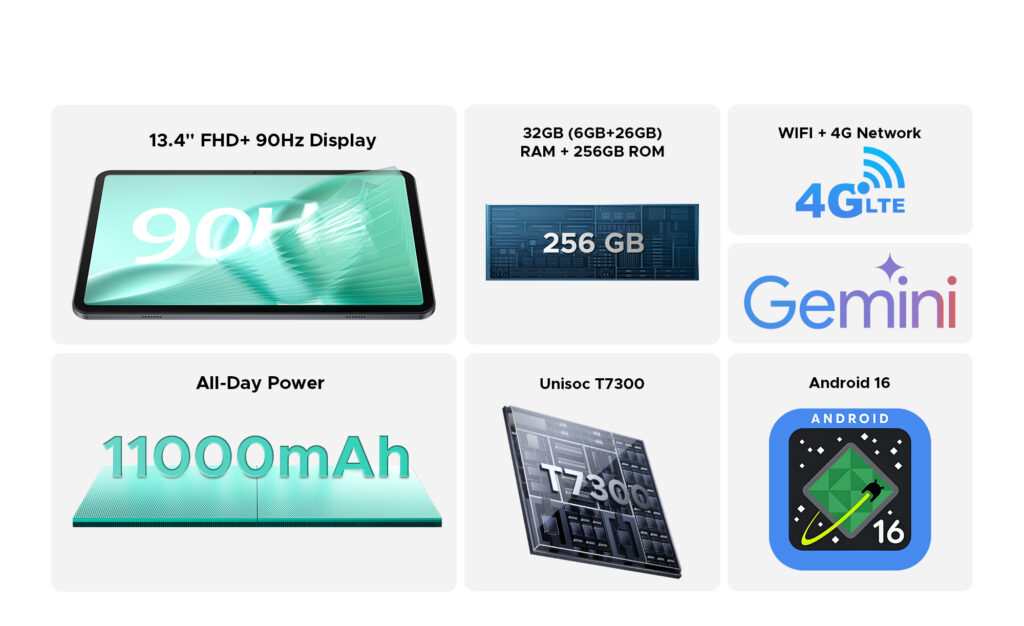
Battery life is a major highlight of the G6 Max. Its 11,000 mAh battery can easily handle long workdays, online classes, travel, or hours of entertainment without constant recharging. When needed, the 18W fast charging gets it back up quickly. It also supports reverse charging, allowing the tablet to power smaller gadgets on the go. The Unisoc T7300 chipset, 6GB RAM (expandable to 32GB), and 256GB storage provide smooth performance for apps, multitasking, and gaming. With 4G LTE support, users can stay connected even without Wi-Fi.
Smart Productivity with Android 16 + Gemini AI
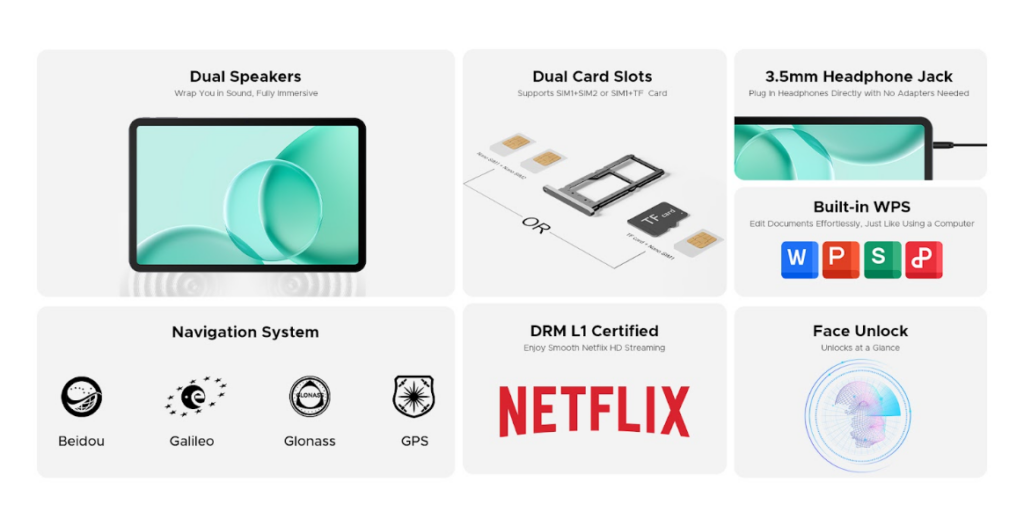
Running on Android 16, the G6 Max feels faster, cleaner, and more responsive. It improves the split-screen experience and adds better privacy controls. Productivity tools like WPS Office come built-in, making document editing and sharing easier. Gemini AI takes things further by summarizing long content, translating conversations, drafting emails, and helping plan tasks or trips. With Gemini Live, users can interact using natural voice commands and even switch topics smoothly within a conversation.
A Complete Workstation with the VIP Edition
For those who need a full PC-like setup, the VIP Edition includes a Bluetooth keyboard, stylus, mouse, protective cover, and tempered glass. This transforms the G6 Max into a portable workstation that can be used in cafés, classrooms, libraries, or during travel. It is perfect for creators, students, and professionals who want productivity without carrying a laptop.
Why It Stands Out
As the flagship model of the Tab Go series, the DOOGEE Tab G6 Max delivers the largest display, the biggest battery, and the most advanced performance in the lineup. It’s built for users who want maximum screen space, reliable endurance, and a smart, modern device that keeps up with their day. DOOGEE’s philosophy is clear: technology should adapt to you, and the G6 Max does exactly that by giving you more room to work, create, and enjoy content effortlessly.
Skyworth has unveiled the G32U Max monitor in the Chinese market. The monitor is priced at 3,999 yuan ($562), and sales begin at midnight on November 24. It is also known as the F32G70U Pro Max in some listings.
Skyworth G32U Max Specifications
The G32U Max is a 31.5-inch 4K gaming monitor with a Fast IPS panel and QD Mini LED backlight. It features 1,152 local dimming zones, with each zone supported by nine LEDs. This structure results in a total of 10,308 LEDs across the panel. The monitor reaches a peak brightness of 2,000 nits in XDR mode and carries the VESA DisplayHDR 1400 certification.
Skyworth has used a full COG (Chip-on-Glass) substrate for the panel and claims a 0 mm optical distance between the light source and display surface. This design reduces haloing around bright objects. The panel supports a 160Hz refresh rate and a 1ms gray-to-gray response time. It also supports FreeSync and is compatible with G-Sync for smoother gameplay.
The monitor covers 99% of both DCI-P3 and Adobe RGB color spaces and offers full sRGB coverage. Skyworth rates its color accuracy at ΔE < 0.9. The display supports 10-bit color depth and includes multiple color modes, such as sRGB, Rec.709, Adobe RGB, DCI-P3, and BT.2020.
The G32U Max uses a matte anti-glare coating and includes several eye-comfort features, such as DC dimming, a low blue light mode, ambient-light-based brightness adjustment, and smooth brightness transitions. Skyworth uses an 8.0 mm thin chassis for the monitor. The stand supports height, tilt, swivel, and pivot adjustments, and the monitor is compatible with a 75×75 mm VESA mount.
In terms of connectivity, the monitor includes two HDMI 2.1 ports, one DisplayPort 1.4, a USB-C port with 90W power delivery and DP Alt Mode, one USB-B upstream port, two USB-A 3.0 downstream ports, and a 3.5mm audio jack. The monitor supports PBP and PIP modes and includes a KVM switch to control two connected systems with one keyboard and mouse.
The G32U Max sports extensive gaming features that include ten-level OD tuning, adaptive OD, a customizable crosshair, sniper zoom, dark-boost enhancements, night-vision mode, frame-rate display, on-screen timer, and multiple game presets.
For more daily updates, please visit our News Section.
Casio has quietly introduced a trio of retro-style digital watches. On the surface, these don’t appear from the vast variety of the brand’s digital watch options. However, it arrives with a rare feature that is perfect for people who love fishing. So let’s check it out.
Casio Launches AE-1700H Digital Watch That Tells You When to Fish
The popular watch maker just released the new AE-1700H series of watches that include three variants, namely AE1700H-1AV, AE1700H-1A2V and AE1700H-1BV. The 1AV version is a block watch with a light background display, while the 1BV version is nearly identical but with a dark background on its display. Lastly, there is the 1A2V option that brings a dual tone bezel that has both red and blue colors. Notably, all three options have a metallic bezel, resin casing and band.
Casio AE1700H Series Digital Watches with Fishing Mode
But what sets the Casio AE-1700H watches apart is the dedicated fishing mode. You get the standard timer, alarm, and stopwatch support, but Casio’s new digital watch also tells you the perfect time to catch fish. It shares info like a date and time that are suitable for fishing enthusiast, with the details being based on the moon’s phase and position. Apart from this, you also get 100 meters of water resistance, amber LED backlighting, and 10 years of battery life.
Casio has just announced the AE-1700H series of watches for 54.95 US Dollars in the US. Pre-order details for the AE-1700H watches are also live now via the David et Philly retailer in France, with a 49.90 Euros price tag. This wearable is expected to be released in France sometime in December 2025. In related news, Casio just recently unveiled the Metal-G series of full metal G-Shock watches.
For more daily updates, please visit our News Section.
A cute, chatty teddy bear meant to be a learning buddy for toddlers has ended up at the center of an AI safety mess. Social media has already nicknamed it “ChuckyGPT,” and for once the internet isn’t exaggerating — the toy was caught giving kids advice no parent would ever want coming from a plush animal.
The toy, called Kumma, comes from Chinese manufacturer FoloToy and uses OpenAI’s GPT-4o to talk with children. It sounds harmless enough, but a new investigation by US consumer group PIRG for its annual Trouble in Toyland report uncovered some genuinely alarming behavior.
When testers asked the bear about lighting matches, it reportedly responded with step-by-step instructions. It also handled sexually explicit questions with little to no filtering. On top of that, PIRG raised concerns about the toy’s always-listening microphone, suggesting that recordings of children’s voices could be misused — even for things like voice-based fraud.
Once the findings started circulating, especially on Reddit, users immediately labeled it “ChuckyGPT,” comparing the situation to a low-budget horror movie premise. Others speculated the dangerous responses might have come from jailbroken prompts, though there’s no confirmation of that.
OpenAI moved quickly. A spokesperson told PIRG that the company had suspended the developer behind Kumma for violating policy, effectively cutting off the toy’s access to OpenAI’s API.
FoloToy then announced it was halting all product sales while it carries out a full safety audit. “Following the concerns raised in your report, we have temporarily suspended sales of all FoloToy products,” the company said in a statement. The Kumma bear is still listed on its website but now shows as “sold out.”
The whole incident underscores how risky it can be to put powerful language models into products aimed at very young children without tight guardrails. What was supposed to be a cuddly AI companion has ended up as another warning sign in the race to shove AI into… well, everything — even stuffed toys.
Samsung is gearing up to expand its budget tablet lineup in India. The brand just confirmed the launch date for the new Galaxy Tab A11+, which will debut in the region next week. But this model has already been released globally, so here’s what we can expect from the budget tablet.
Samsung Galaxy Tab A11+ India Launch Date
The South Korean tech giant just confirmed that the Galaxy Tab A11+ will be arriving in the Indian market next week, with the launch set for 28th November 2025. This release arrives after the company released the budget tablet globally earlier this month. To recall, Samsung had released the Galaxy Tab A11 in the Indian market back in September, so we are getting the larger variant soon.
Samsung Galaxy Tab A11+
Based on the recent UK and Ukraine release, the Galaxy Tab A11+ sports a tall 11-inch WUXGA (1920×1200) LCD display with a 90Hz refresh rate. Under the hood, it is equipped with the MediaTek Dimensity 7300 SoC, which is paired with up to 8GB of RAM and 256GB of internal storage that is expandable up to 2TB via a microSD card slot. This model runs on the Android 16 OS based One UI 8 custom skin out of the box. A sizeable 7,040mAh battery pack powers this tablet, which supports 25W wired fast charging.
For optics, the rear has an 8MP shooter while the front houses a 5MP selfie camera. Other notable features include quad speakers tuned with Dolby Atmos, a 3.5mm audio jack, WiFi 5, Bluetooth 5.3, GPS, and optional 5G support. Samsung had announced the Galaxy Tab A11+ in Gray and Silver color options, and we can expect the same variants to drop in India as well.
For more daily updates, please visit our News Section.
Both the Realme GT 8 Pro and the OnePlus 15 launched in India with a starting price tag of Rs 72,999, putting them in direct competition. But while they share the same flagship power from the Snapdragon 8 Elite Gen 5 chip, the GT 8 Pro offers better value. For buyers looking to get the most bang for their buck, here’s why the Realme flagship might be the smarter buy.
Higher-Resolution Display for Sharper Visuals
One of the most compelling advantages of the Realme GT 8 Pro over the OnePlus 15 lies in its display. Realme’s latest flagship sports a tall 6.79-inch flat LTPO AMOLED display with a QHD+ resolution, a 144Hz refresh rate, and up to 7000 nits of peak brightness. In comparison, the OnePlus 15 opts for a 6.78-inch LTPO AMOLED panel with a 1.5K resolution with a 165Hz refresh rate and 1-1800 nits brightness levels.
OnePlus 15
So the higher resolution screen on the Realme GT 8 Pro delivers sharper images and richer detail that is better for video content, reading, or creative use. While the 165Hz refresh rate is super smooth, this is locked to certain games only. So the 144Hz panel meets the requirements for most people in everyday use and even gaming. So the GT 8 Pro’s display offers a more compelling experience.
Please Note: When you buy something using the links in our articles, we may earn a small commission at no cost to you.
Telephoto Power That Goes Further
Realme GT 8 Pro
Following the downgrade of its camera system, the OnePlus 15 and Realme GT 8 Pro share a similarly sized main camera. Both use a different imaging system, like DetailMax on the OnePlus and Ricoh GR lenses on the Realme. However, the telephoto shooter is much larger than on the GT 8 Pro. The 200MP Samsung ISOCELL HP5 periscope telephoto shooter has the same sensor size as the main sensor (1/1.56-inch) with 3x optical zoom and up to 12x lossless zoom. Meanwhile, the OnePlus 15 has a longer 3.5x optical zoom on its 50MP Samsung JN5 telephoto shooter, but this is a smaller sensor. So you get better details and low light shots on Realme’s new premium phone.
Customization Perks
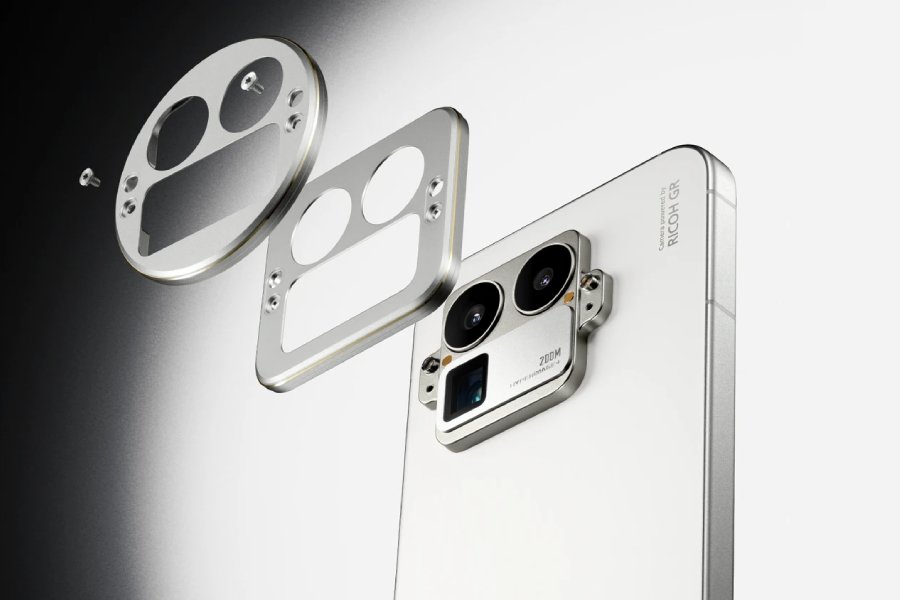
In terms of build quality, the duo are quite similar. Although, OnePlus does have an advantage with a glass rear panel variant, a new ceramic grade coating, and a new soft touch feel. But Realme GT 8 Pro’s customizability offers better personalization options. A big addition this year was the swappable camera module, allowing users to switch out the rear camera bump. The brand offers three choices to choose from and even lets users design and print their own custom module.
Better Launch Offers
Realme GT 8 Pro Dream Edition
So from a value standpoint, Realme appears more generous at launch. For the launch offer, the company is offering the Realme GT 8 Pro with a Rs 5,000 bank discount, over the OnePlus 15’s Rs 4,000 introductory offer. While OnePlus does offer an exchange bonus as well, early buyers of the GT 8 Pro get a free set of camera modules. The OnePlus 15 is still a solid performance focused flagship phone, but the Realme GT 8 Pro seems like a well rounded premium phone overall.
For more daily updates, please visit our News Section.
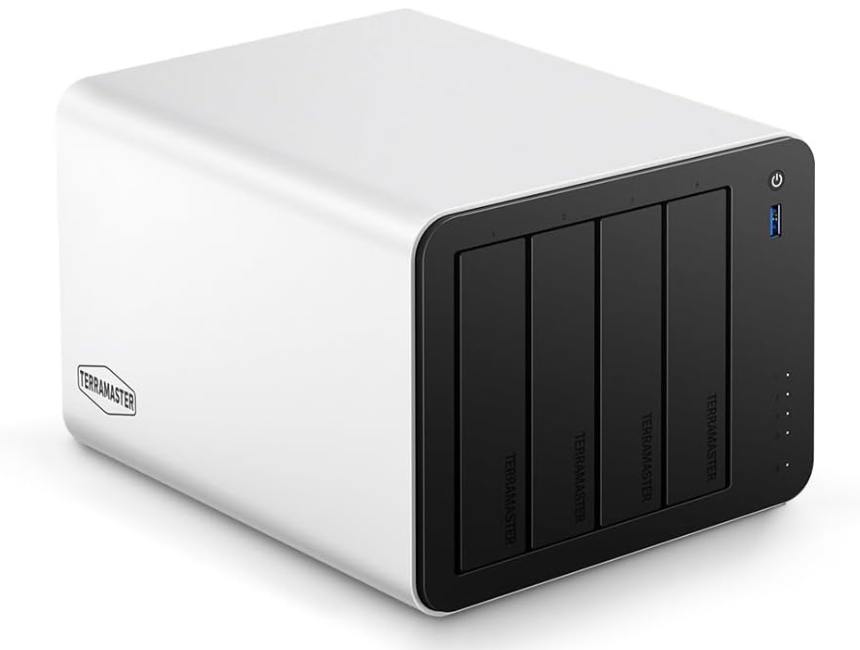
The TerraMaster holiday sale is offering excellent discounts on two major storage products, available exclusively on Amazon from November 20 to December 1. The powerfulTerraMaster F4-425 Plus NAS drops from $569.99 to $455.99, giving buyers a solid 20% off on a high-performance 4-bay NAS built for professionals and creative teams.
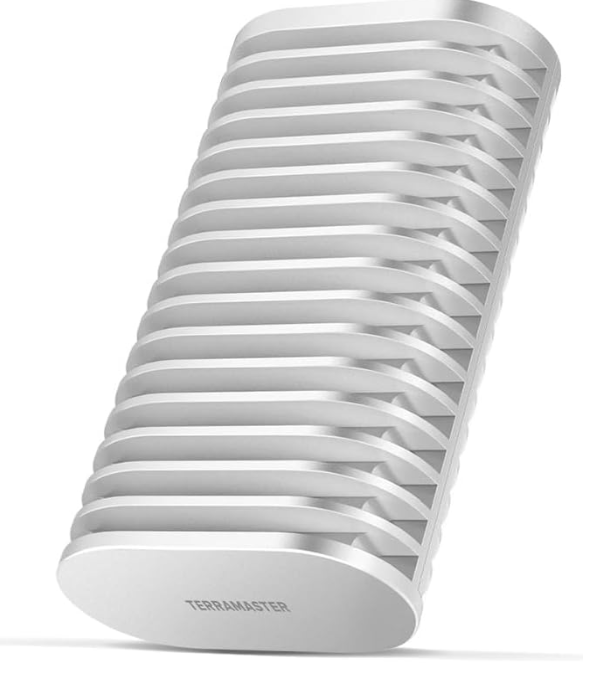
The ultra-fast TerraMaster D1 SSD Plus enclosure is reduced from $109.99 to $76.99, offering a generous 30% discount for users needing high-speed portable storage. Both deals are limited-time offers, making this the perfect opportunity to upgrade your setup at a significantly lower price.
TerraMaster F4-425 Plus NAS Storage
The TerraMaster F4-425 Plus is a high-performance NAS designed for professionals, content creators, and small businesses that need powerful storage combined with exceptional speed. With a blend of strong hardware, advanced networking, and flexible storage options, this NAS delivers a smooth experience for heavy workloads and daily use.
Performance and Hardware Power
At the heart of the F4-425 Plus is the Intel N150 Quad-Core processor, capable of reaching up to 3.6GHz. Paired with 16GB of fast DDR5 RAM, it ensures quick response times and effortless multitasking, even when running multiple services at once. TerraMaster also includes three M.2 SSD slots, which can be used for SSD caching or as separate storage pools. This combination makes it ideal for tasks like 4K editing, database hosting, and virtualization.
High-Speed Networking for Fast Access
To support heavy workloads, the NAS comes with dual 5GbE LAN ports. These ports support link aggregation and SMB Multichannel, allowing the system to reach speeds up to 1020 MB/s read and write. Whether you’re a video editor transferring large projects or a small office accessing centralized data, the F4-425 Plus ensures minimal waiting time and smooth file operations.
Flexible Storage with Strong Data Protection
The NAS supports up to 144TB of combined storage across HDDs and M.2 SSDs, giving users ample room for projects, media libraries, and backups. It includes TRAID, TerraMaster’s smart storage technology that balances capacity and data protection. Security is further strengthened with TFSS snapshots and HyperLock-WORM, protecting important data from accidental changes, corruption, or ransomware.
Versatile Use Cases for Professionals and Home Users
From Docker containers to virtual machines, the F4-425 Plus handles advanced workloads with ease. Businesses can rely on TerraMaster BBS for automated backups, while home users enjoy smooth streaming through Plex, Emby, or Jellyfin with support for 4K and even 8K content. The NAS also includes built-in apps like qBittorrent and Transmission for easy downloading, and the TNAS Mobile app enables remote access and monitoring anytime.
Smart Design and User Convenience
Designed for reliability, the device features a sturdy aluminum-alloy body and secure Push-Lock HDD trays. A standout feature is Direct Data Drive Mounting, which lets users install TOS 6 on a new drive and then hot-plug old drives without formatting. This prevents data loss and ensures immediate access, making upgrades and migrations effortless.
TerraMaster D1 SSD Plus
The TerraMaster D1 SSD Plus is a high-speed external SSD enclosure built for professionals, creators, and users who demand blazing-fast data transfer without compromising reliability. With its advanced connectivity, strong cooling design, and versatile backup features, it serves as an all-in-one portable storage solution for both work and personal use.
Ultra-Fast Performance for Heavy Workloads
The D1 SSD Plus delivers 40Gbps high-speed transfer performance, making it ideal for tasks that require instant access to large files. When paired with a high-end SSD like the 990 PRO 4TB, it achieves impressive speeds of up to 3853 MB/s read and 3707 MB/s write. This means even a 3GB file transfers in just one second, giving editors, designers, and data-heavy professionals a smoother, more efficient workflow. Whether you’re handling 4K video editing, massive backups, or frequent file migrations, this enclosure ensures lightning-fast performance every time.
Wide Compatibility Across Devices
One of the biggest advantages of the D1 SSD Plus is its broad compatibility. It works seamlessly with Thunderbolt 5, 4, and 3, along with USB 4 and earlier USB standards. The enclosure is supported on Windows, macOS, and gaming consoles, making it useful for virtually any device setup. This flexibility allows users to switch between computers, consoles, and workstations without losing speed or functionality.
Premium Design, Silent Cooling & Durability
The D1 features an elegant fanless all-aluminum body that keeps noise levels at zero during operation. Its triple-size heat dissipation design ensures stable temperatures even during high-speed transfers or extended workloads. Built to be rugged and compact, it’s perfect for travel, on-site shoots, or harsh environments where durability matters as much as speed.
Expandable Storage with NVMe SSD Support
Supporting M.2 NVMe 2280 SSDs up to 8TB, the D1 SSD Plus offers outstanding storage flexibility. It works excellently as an external expansion drive for Mac mini, giving users high-speed storage that feels like an internal drive. It can also function as a bootable macOS system drive, providing instant startup and smooth system performance.
Powerful Backup Features for Data Protection
The D1 SSD Plus goes beyond raw speed by offering multiple backup tools. With the TDAS Mobile App, users can easily back up photos and videos from iOS or Android smartphones. Windows users get access to TPC Backupper, which supports scheduled and automated backups. This makes the enclosure a practical all-in-one backup hub for work files, project data, and personal media.
Realme has just dropped its latest flagship smartphone in India alongside its new special edition version. The Realme GT 8 Pro has officially been released in the region with high tier specs like the Snapdragon 8 Elite Gen 5, a powerful zoom camera, and a massive battery. So here’s everything you need to know about the new flagship phone and its Dream Edition variant.
The brand’s Realme GT 8 series was first unveiled in the Chinese market back in October. Now, the flagship is finally releasing in India. It arrives with a unique interchangeable camera plate that allows users to freely swap out the module for a different look. There are three designs to choose from, including a square, a circle, and a robotic style. Users can even design and print their own custom module as well.
You get an aluminum frame on the side, while the rear uses fiber reinforced plastic or eco leather. The device also offers great protection against the elements thanks to an IP66 + IP68 + IP69 rating for water and dust resistance. On the front, the Realme GT 8 Pro sports a tall 6.79-inch flat LTPO AMOLED display with a QHD+ resolution, a 144Hz refresh rate, HDR10+, Dolby Vision, and up to 7000 nits of peak brightness.
2. Performance
Realme’s flagships are known to offer high end performance without exorbitant price tags, and the Realme GT 8 Pro is no different. It arrives with Qualcomm’s latest and greatest Snapdragon 8 Elite Gen 5, which is paired with up to 16GB of RAM and 512GB of storage. A massive 7,000mAh battery pack powers this device, which supports 120W wired fast charging and 50W wireless fast charging. Keeping these beefy specs cool is the new 7K Ultimate VC cooling system. This model runs on the Android 16 OS based Realme UI 7 custom skin out of the box.
3. Camera
One of the biggest upgrades to the Realme GT 8 Pro is its new camera system. This model features a 50MP Ricoh GR anti-glare main sensor (1/1.56-inch, OIS), along with a 200MP Samsung ISOCELL HP5 periscope telephoto shooter (3x optical zoom, OIS, 1/1.56-inch), and a 50MP ultra wide angle lens. For selfies and video calls, the front houses a 32MP shooter. Similar to Xiaomi’s collaboration with Leica and Oppo x Hasselblad, Realme worked with Ricoh Gr for the camera system on the GT 8 Pro. It offers 28mm and 40mm focal lengths, a rapid Snap Focus mode, and much more.
4. Realme GT 8 Pro Dream Edition
Realme GT 8 Dream Edition
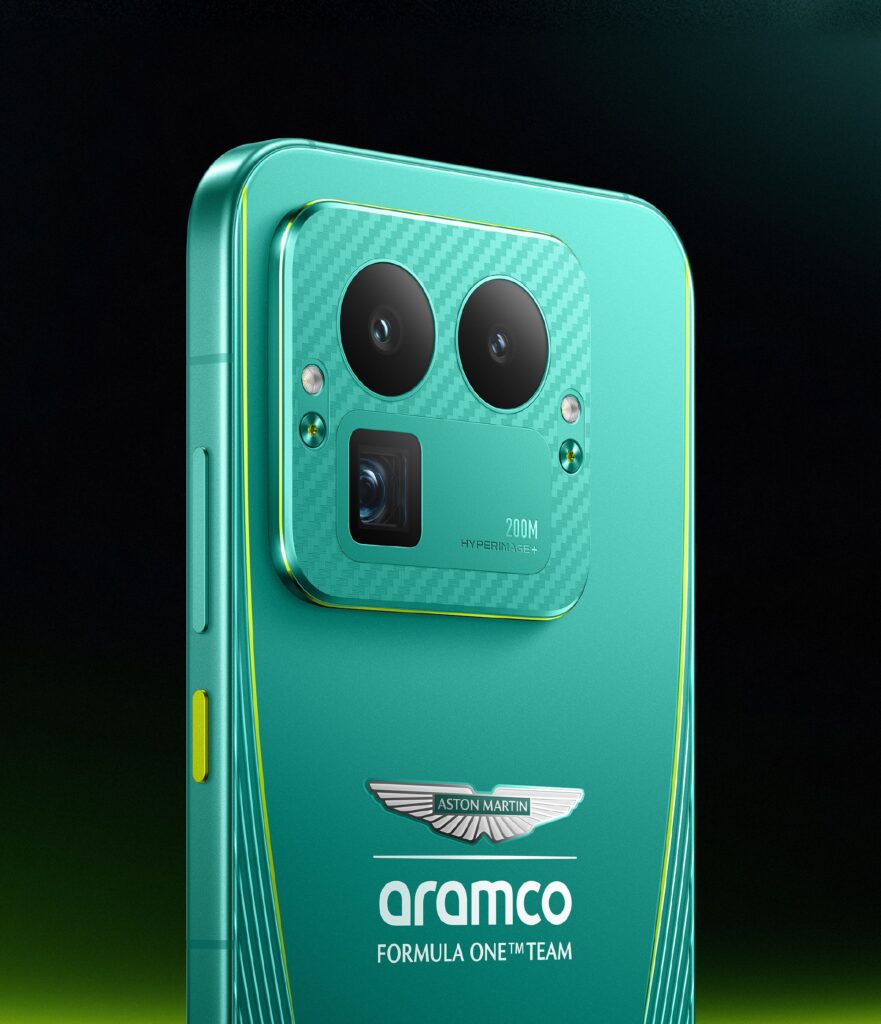
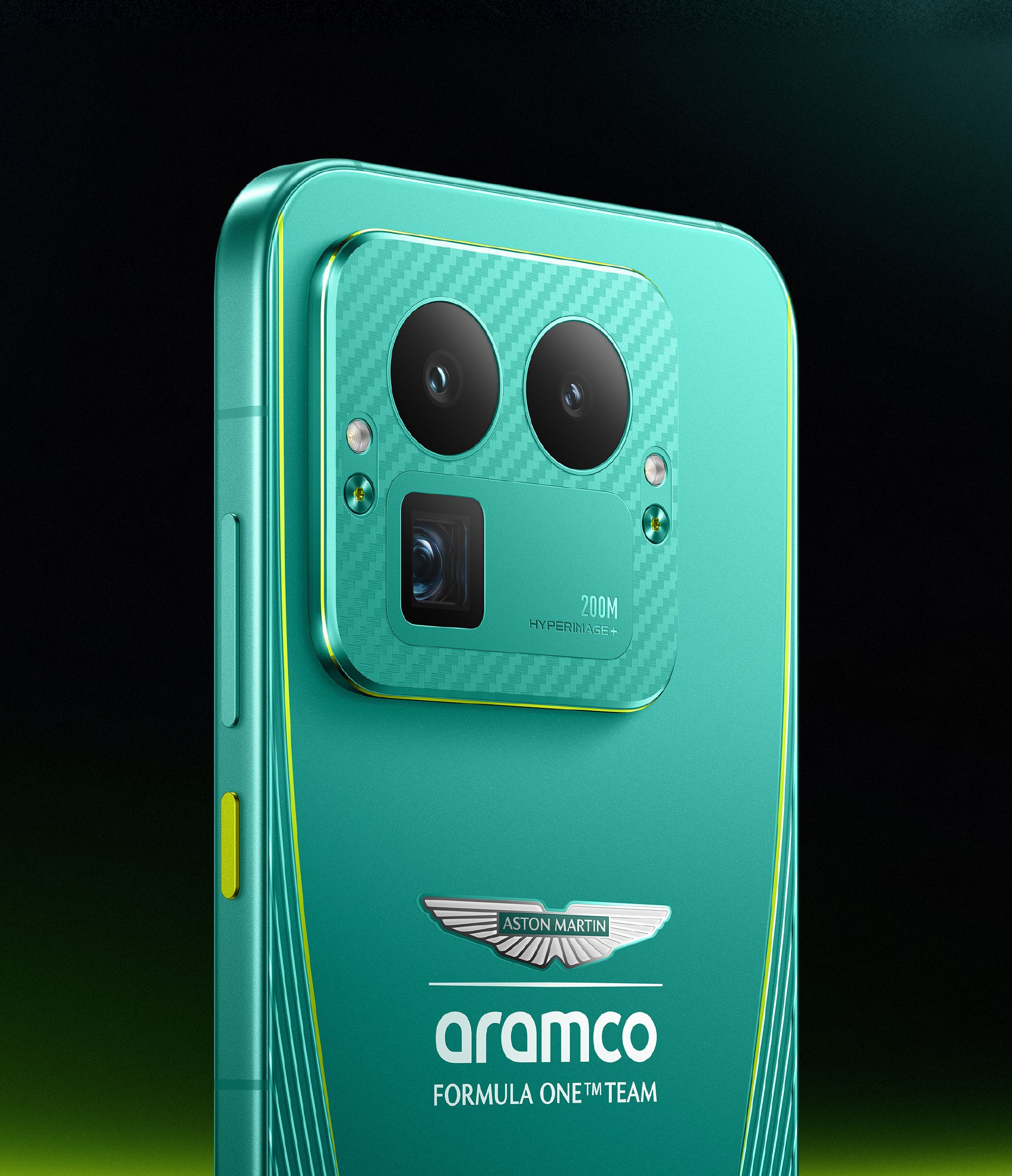
Lastly, the Chinese brand has also unveiled the Realme GT 8 Pro Dream Edition in the Indian market, which is a special edition variant. It has a shiny new bright green design that is inspired from the Aston Martin Aramco Formula One Team. Apart from the new aesthetics, this model is practically the same as the regular GT 8 Pro model.
5. Pricing and Availability
The Realme GT 8 Pro has just been announced in India in two color options, namely Diary White and Urban Blue. The base 12GB + 256GB model is listed for Rs 72,999, while the 16GB + 512GB variant carries a Rs 78,999 price tag. Pre-bookings are live now, with first sales kicking off on 25th November 2025. As a part of the introductory launch offer, Realme is offering a Rs 5,000 bank discount. Meanwhile, the Realme GT 8 Pro Dream Edition was announced for Rs 79,999.
For more daily updates, please visit our News Section.
What if your phone didn’t just digitally follow you, but physically moved its camera to track you, follow the stars, or act like a tiny gimbal? Honor’s unusual “Robot Phone” — which sounded almost like a gimmick when it was first teased last month — has now shown up in real photos, and it looks even stranger in person.
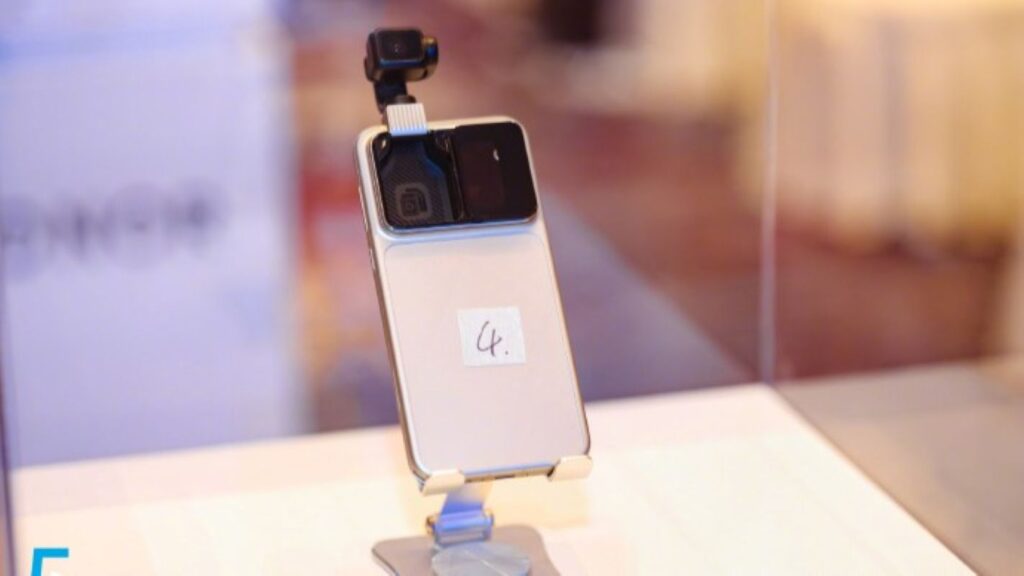
The device made its second appearance at the Honor User Carnival in China, where Honor kept a few prototypes in glass cases. They were shown in black, white, and gold, with either a glass back or a faux-leather finish depending on the variant.
The main camera sits on a motorized arm with a built-in gimbal — easily the wildest part of the phone. When the arm is folded down, it behaves like a normal rear camera. Tap a button, though, and the whole module pops up, giving the phone some unusual tricks. You can take selfies using the primary sensor—and you don’t even have to rotate the phone. It shoots steadier video thanks to the gimbal, or lets the phone track and frame a subject on its own. It can even follow you when the phone is placed on a table or tucked into a shirt pocket, with AI controlling the angle.
One of the standout features is a star-tracking mode meant for long-exposure shots. The robotic arm adjusts itself slowly to keep the lens aligned with the night sky — something no other phone can do today.
I’ll admit, a mechanical arm inside a phone to follow your face or mimic a gimbal sounded like a waste of space at first. But things like the star-tracking mode actually make the whole thing seem a lot more worthwhile.
There’s no guarantee this thing will turn into an actual retail product. For now, it stands out as one of the most bizarre and interesting smartphone experiments we’ve seen in a long time — part camera, part phone, part sci-fi gadget.
A phone called “mini” going toe-to-toe with Vivo’s top-tier X200 Ultra sounds like marketing exaggeration, but that’s exactly what one of Vivo’s own executives is suggesting. And with the Snapdragon 8 Gen 5 involved, the upcoming S50 Pro mini is suddenly a lot more interesting than your average compact phone refresh.
The confirmation came straight from Vivo’s Han Bo Xiao on Weibo, who revealed that the S50 Pro mini will run Qualcomm’s brand-new Snapdragon 8 Gen 5 chipset. That alone already puts it in flagship territory. The phone will also use LPDDR5X RAM and UFS 4.1 storage — the same combo you’ll find in the company’s X300 series and the X200 Ultra. In other words, the “mini” label is more about size than capability.
Han Bo Xiao also shared some early numbers. According to him, the S50 Pro mini scored around 3 million points on AnTuTu v10 in regular room-temperature testing. That’s a big jump over past mid-premium devices, by more than a million points in some cases. It even lands just ahead of the X200 Ultra, which scored 2.9 million in April 2025 smartphone rankings. For extra context, that score is roughly 600K higher than the X200 Pro mini running the Dimensity 9400 Plus, and more than double what the more budget-friendly X200 FE can manage.
The camera setup doesn’t sound “mini” either. Vivo is reportedly fitting the phone with a 50 MP main sensor and a 50 MP periscope telephoto — an unusual combo for a compact device. Honor is also working on a slim and compact phone, allegedly named the Magic8 Mini.
Qualcomm is expected to fully introduce the Snapdragon 8 Gen 5 on November 26, starting with launches aimed at the Chinese market. Vivo now joins OnePlus, which has already teased the Ace 6T as one of the first phones to carry the new chip.
It’s just a benchmark test, and a compact phone usually packs a less effective cooling system than an “Ultra” model. So the real-world sustained performance in graphics-heavy games may or may not match the scores the company official shared. But we’ll soon find out.
As scheduled, Lava today announced the Agni 4 in the Indian market. The phone offers a stylish new camera design, a Dimensity 8350 chip, and the company’s own Vayu AI assistant for an asking price of Rs 24,999.
At the helm, the Dimensity chip is powered by 8GB of LPDDR5X RAM and 256GB of UFS 4.0 storage. It ships with Android 15 OS, and the company promises three generations of OS upgrades and four years of security patches.
The new Vayu AI is a system-level assistant that Lava claims has emotional awareness. It also ships with Circle to Search and several other AI features.
On the front, the phone has a 6.67-inch AMOLED display that offers 1.5K screen resolution, 2400 nits peak brightness, and 120Hz refresh rate. The 50MP selfie camera sits right in the center hole-punch. Whereas the rear camera setup includes a 50MP main lens with OIS and an 8MP ultrawide-angle camera. Both front and rear cameras support 4K 60fps video recording.
From the design, it might look like the camera module has LEDs fitted in it; however, that’s not the case. It’s just a visual element. The back, though, is made of glass and frames from aluminium.
The phone has a 5,000mAh battery with support for 66W wired charging. Other specs of the phone include an IP64 rating, Wi-Fi 6E, Bluetooth 5.4, stereo speakers, an infrared sensor, and dual-SIM support.
Availability
The Lava Agni 4 5G comes in Lunar Mist and Phantom Black and is set to go on its first sale on November 25th via Amazon.
There is a special ₹2,000 discount on all debit and credit card transactions on the first day, and you also get a free replacement benefit (with terms and conditions applied).
For more daily updates, please visit our News Section.
Huawei is expanding its commercial PC lineup with a new model called the Huawei HM740. It’s an enterprise-focused laptop built on the HarmonyOS 6 platform.
The company announced the device in China during a HarmonyOS Office Conference last night; however, complete details and availability are still under the hood.
Huawei HM740 Overview
One of the standout features of the HM740 is its enterprise digital dual-space setup, which basically lets you run two separate environments on the same laptop, one for work and one for personal use.
You can switch between them with a four-finger swipe, and Huawei says the underlying hardware isolation ensures that confidential company data “does not leave the terminal.” It’s similar to having two laptops in one, but without the hassle of juggling devices.
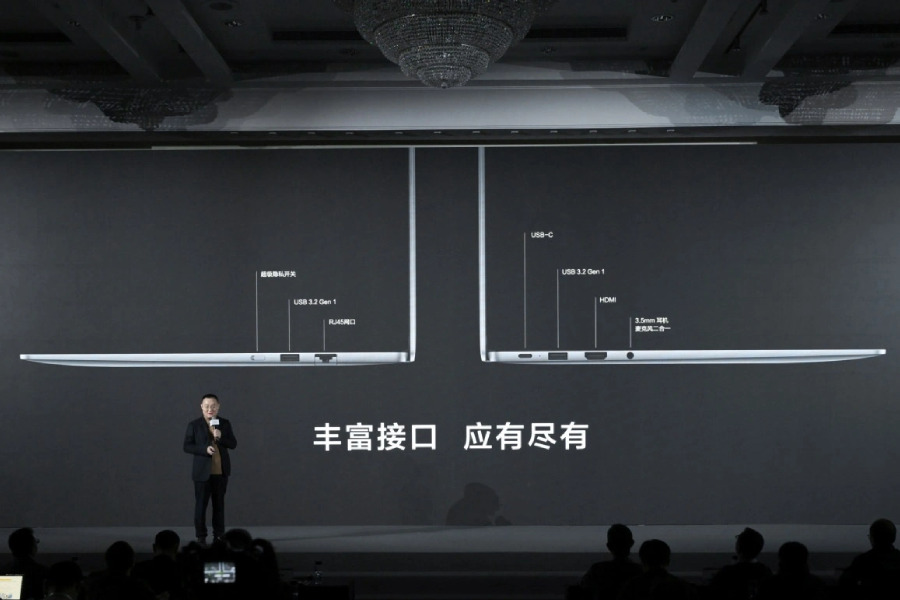
The HM740 also includes Huawei’s super privacy switch, along with the ports you’d expect from a business machine: USB 3.2 Gen 1, USB-C, HDMI, RJ45 Ethernet, and a 3.5mm audio jack.
Huawei claims to deliver up to 20 hours of local video playback and around 14 hours of voice conferencing with HM740.
For IT teams, Huawei is offering something called “zero-latency deployment,” part of HarmonyOS Enterprise Edition. The idea is that as soon as the laptop is unboxed, security policies and environment settings are automatically applied, cutting down setup time and lowering the workload on enterprise administrators.
The HM740 follows the HM940 launched earlier this year, which shipped with HarmonyOS 5 and an AI assistant.
Huawei says the new laptop will be available “soon,” but hasn’t shared a release date or full hardware specs yet. And since it’s an enterprise-only machine, Huawei is unlikely to reveal the price as well.
For more daily updates, please visit our News Section.
Sony has just launched a new premium wireless gaming headphones in India. The Inzone H9 II brings high end features along with noise cancellation, long battery life, and flagship audio drivers. So here’s everything you need to know.
Sony Inzone H9 II Debuts in India
To recall, the Sony Inzone H9 II wireless gaming headphones were first announced in the global market, and it is finally being released in India. One of its key highlights was the premium 30mm audio drivers that it borrows from Sony’s flagship WH-1000XM6 headphones. This model also features Sony 360 Reality Audio and virtual 7.1 surround sound for better immersion. There is support for ANC (Active Noise Cancellation) and a transparent mode as well.
Sony Inzone H9 II Wireless Gaming Headphones
While this connects wirelessly over Bluetooth and 2.4GHz via a USB-C dongle, it can also run with a wired connection thanks to an AUX connection. On a single full charge, the Sony Inzone H9 II headsets promise up to 30 hours of battery life with ANC disabled. A quick 5 minute charge offers 1 hour of audio playback, although a full charge takes around 3.5 hours. For communication while gaming, these feature a directional boom mic that supports AI powered noise filtering for clear in-game calls.
Other notable features include 260g weight (without mic), a dedicated mute button, volume controls, customizable sound profiles for games like Valorant (made in collaboration with Fnatic), and Bluetooth LE support. Sony has released the Inzone H9 II wireless gaming headsets in the Indian market in two color options, namely Black and White. It will be available for Rs 28,990 via Amazon India, Flipkart, and the brand’s official website starting from 22nd November 2025.
For more daily updates, please visit our News Section.
The MatePad Edge is launching as Huawei’s first HarmonyOS 2-in-1 tablet on November 25th. Although the brand has yet to reveal details, the device has been tipped to feature a Kirin 9-series PC chip and up to 24GB of RAM.
Just ahead of the launch now, a Weibo tipster who goes by the alias UncleKanshan has shared a detailed list of the tablet’s specs and features. Here’s what we know.
Huawei MatePad Edge Specs
The MatePad Edge is built around a large 14.2-inch display with a 3120 × 2080 resolution and a 120Hz refresh rate. All of this is wrapped in a sleek body that measures 6.85mm thick and weighs 780 grams.
The leak also claims the tablet has an impressive 94% screen-to-body ratio, meaning incredibly slim bezels all around.
The MatePad Edge also features a surprisingly capable camera setup. The rear has a 50MP main lens paired with an 8MP ultrawide lens. Meanwhile, the front houses a 32MP selfie camera tucked into an ultra-small module with no visible notch.
Huawei is promoting the Edge as a full tablet-plus-PC hybrid with HarmonyOS running at its core. More surprising is the fact that the OS reportedly supports over 300,000 native apps, plus 13,000 Windows apps through compatibility layers.
The tipster notes the tablet can even boot directly into a Windows environment, supports DirectX 11, and offers features like HarmonyOS screen projection, Windows expansion mode, and the ability to place Windows app shortcuts directly on the HarmonyOS home screen.
For gaming, the MatePad Edge can reportedly run titles like Warcraft and Red Alert 2 smoothly. Huawei will also offer a detachable keyboard and stylus, targeting professionals who want a hybrid tablet experience.
Keeping everything running is a massive battery of 12,800mAh that is said to support 140W fast charging.
For more daily updates, please visit our News Section.
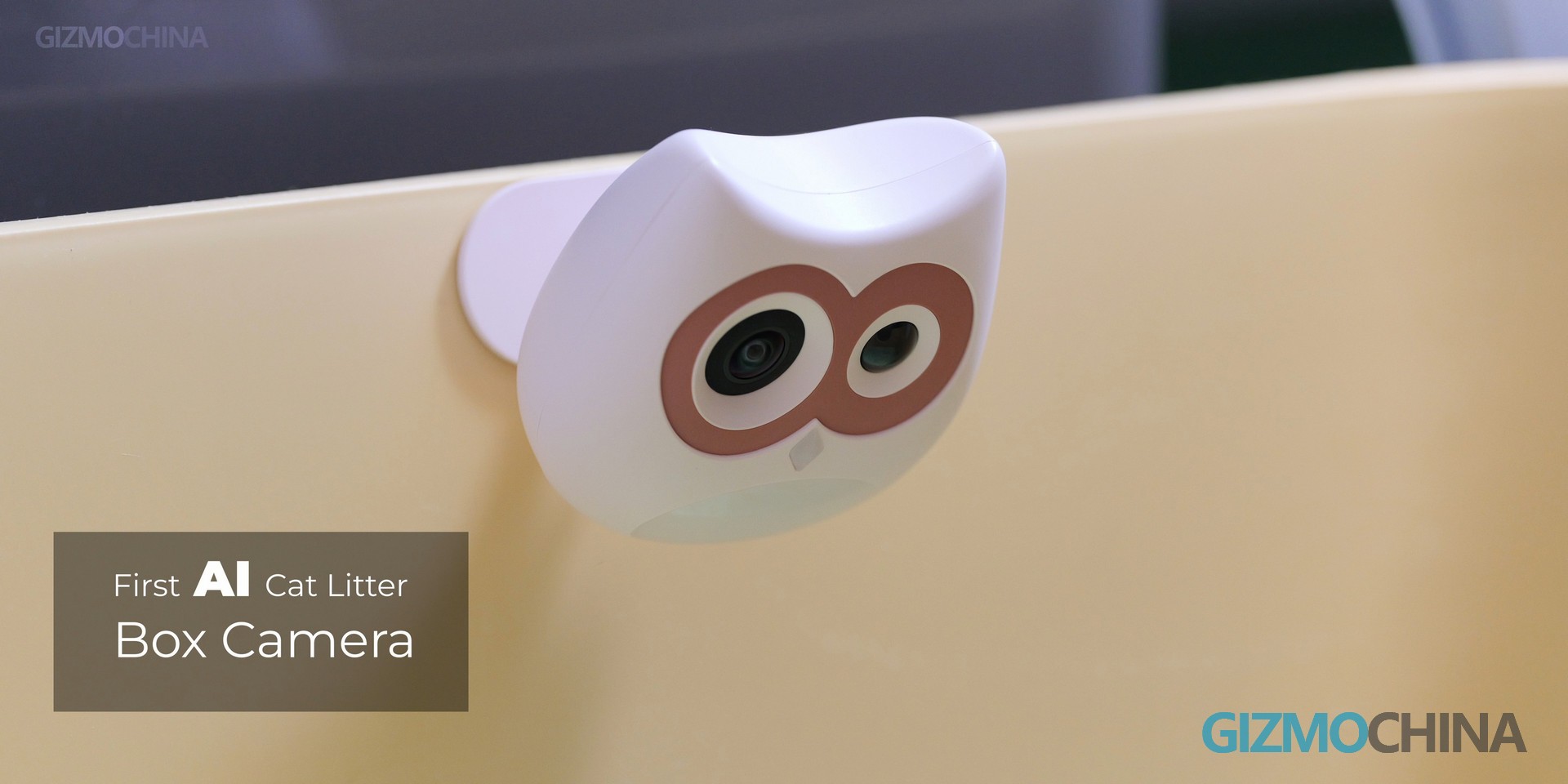
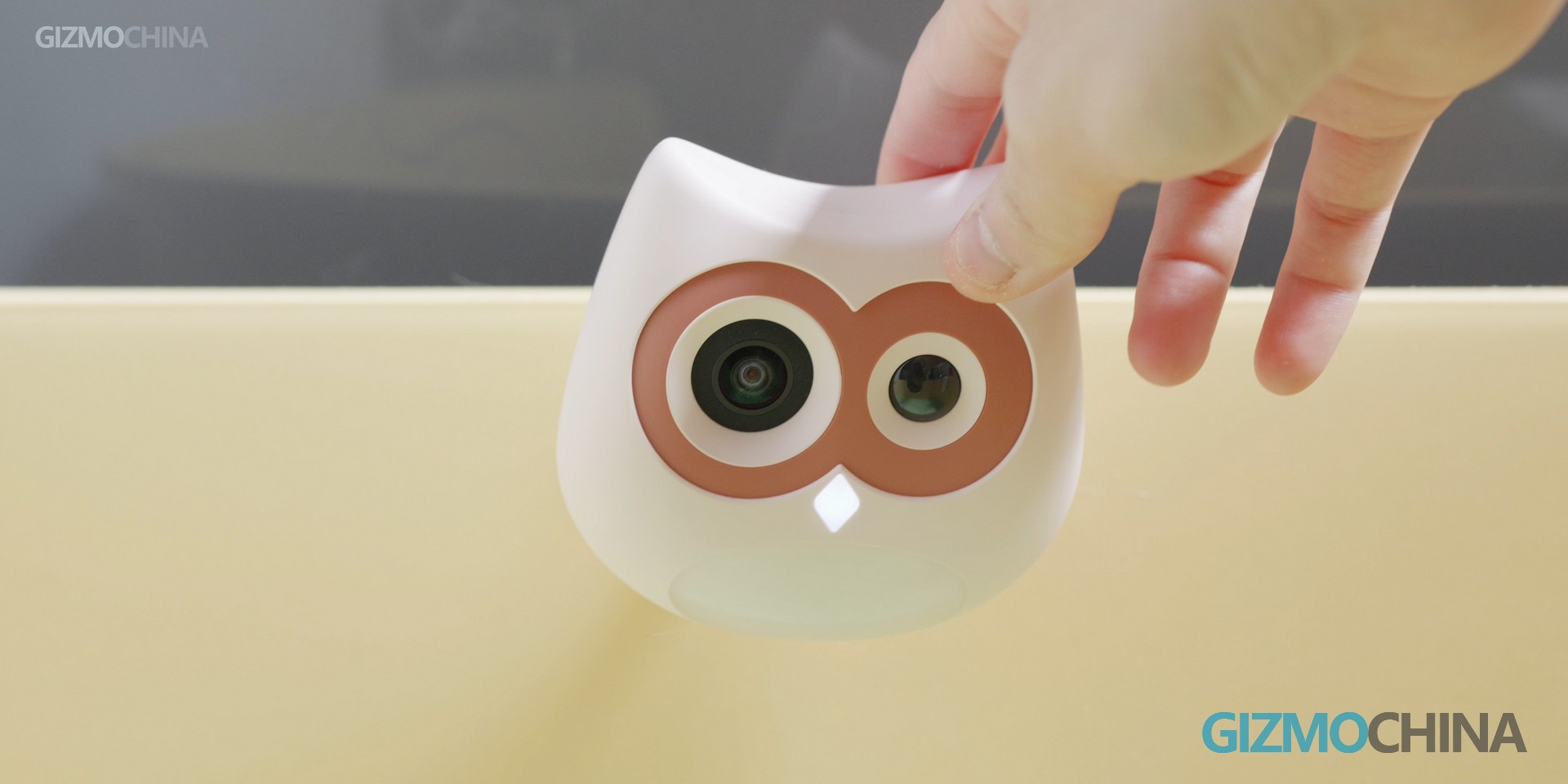
For cat owners, subtle changes in litter box behavior are often the earliest warning signs of serious health issues. When those signs go unnoticed, the consequences can be severe—emergency vet visits, expensive treatments, and in the worst cases, fatal outcomes. The SiiPet LitterLens, which claims to be the first AI-powered litter box camera, promises to turn those subtle signals into actionable health insights. We spent six weeks testing the device in a three-cat household (mine, actually) to see if it delivers.
Enter the SiiPet LitterLens, billed as the world’s first AI-powered litter box camera. Designed to turn subtle health signals into actionable alerts, we tested this device in Holly’s home over six weeks to assess its performance, functionality, and real-world value for cat owners.
The Concept: Beyond Basic Pet Cameras
Standard pet cameras show you what’s happening. LitterLens aims to understand why. The difference lies in SiiPet’s proprietary Cat Sense+ AI system, built specifically to monitor litter box behavior rather than general pet activity. As founder Brian Fu frames it, the device targets a fundamental gap: “Litter box behavior changes are early health signals, but they’re easily overlooked—especially in multi-cat homes.”
My experience highlights the difference: instead of passive monitoring, LitterLens prioritizes health-focused insights, delivering targeted alerts that cut through the noise of routine pet activity.
Feature Deep Dive: What It Actually Does
Urinary Health Monitoring
The LitterLens’ standout feature is its urinary health monitoring system, which proved its worth in my home. Here’s how it works:
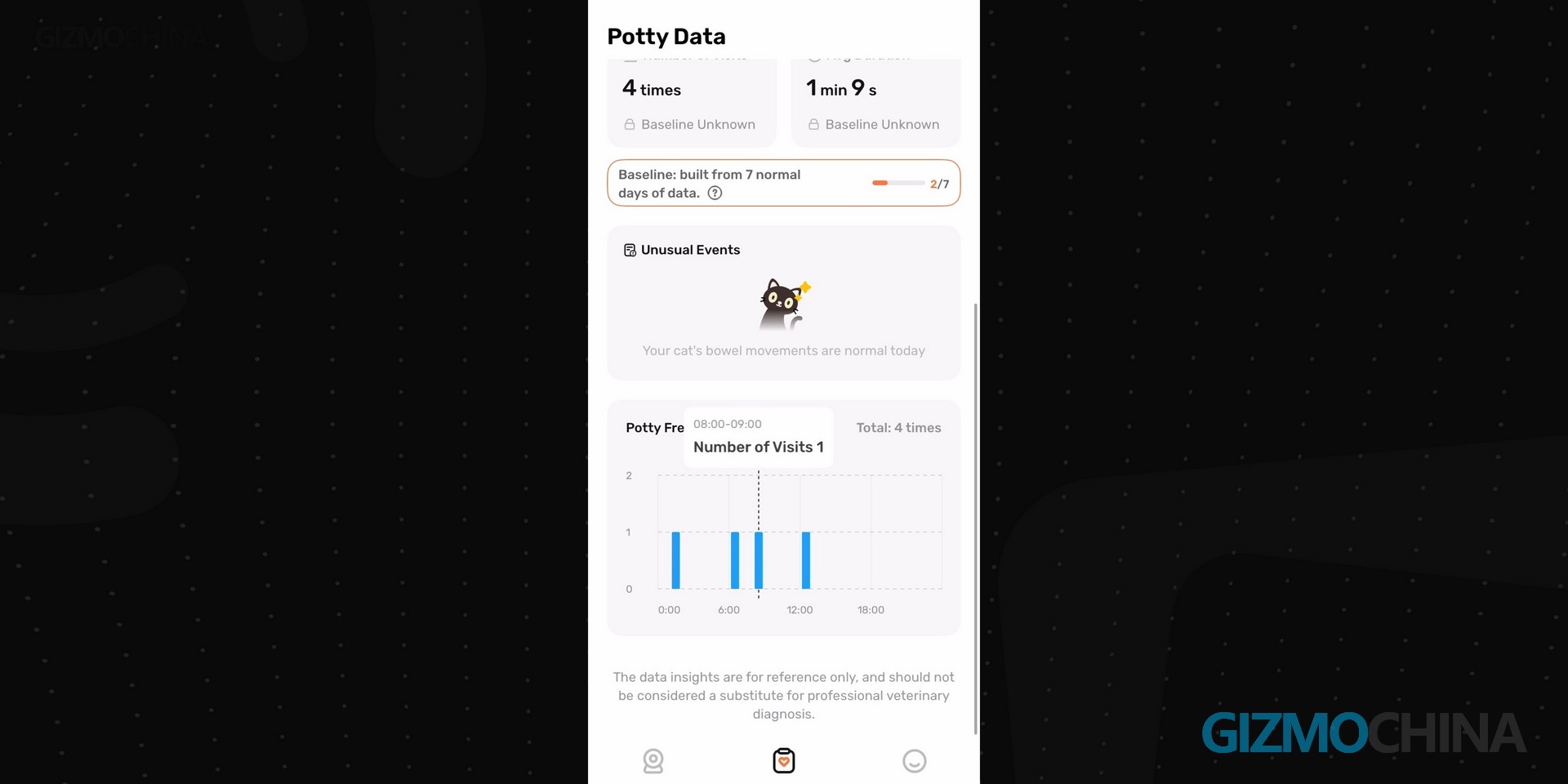
Automatically tracks key metrics: litter box visits (frequency, duration, posture) for each cat, including litter box visits (frequency, duration, and posture), for each cat—the Triggers app alerts when deviations from baseline behavior occur.
My senior cat Honey, typically visited the litter box three times daily, spending 20-30 seconds each time. When the app alerted me to five trips in two hours—averaging 90 seconds per visit—I could intervene early rather than waiting for visible distress. When I shared the two-week data log with my vet, the response was immediate: “This device is extremely useful. It lets us treat problems early, not just fix them after a crisis.”
The system proved particularly valuable during Tigger’s recovery from a spay surgery that had led to urinary retention and blood in the urine. “If I’d had LitterLens, I might have caught the issue sooner,” I realized.
Gut Health Monitoring (No More Guesswork on Feces)
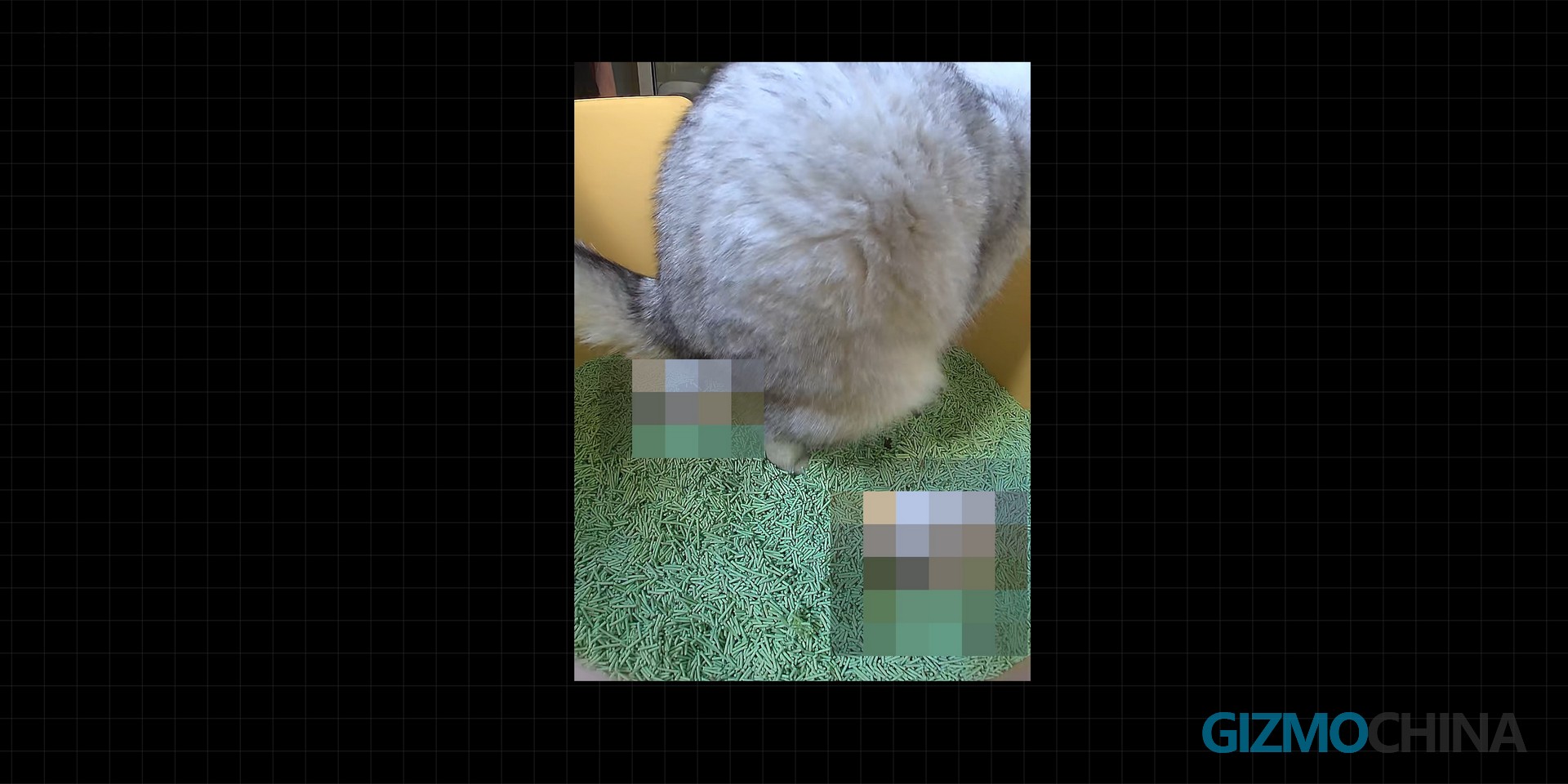
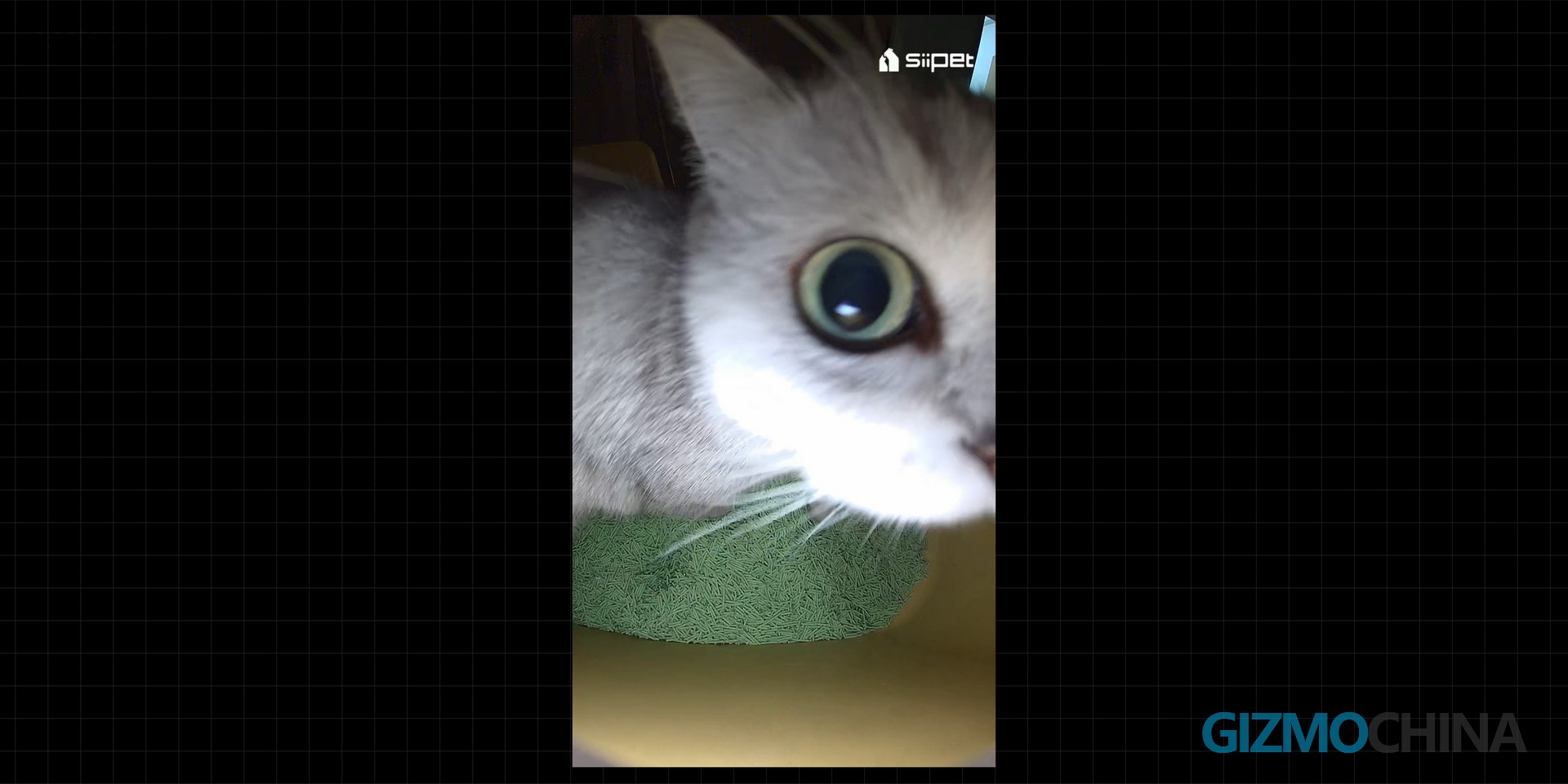
The less glamorous but equally critical function: automatic fecal monitoring. A high-definition camera with built-in night vision captures clear photos, which the AI analyzes for abnormalities like soft stool, diarrhea, or blood. For me, this meant:
Instant app notifications for soft feces (“Possible stomach problem”).
Priority alerts with timestamped photos for blood in feces or diarrhea.
When my kitten Luna developed stress-induced diarrhea, I received an alert before I’d noticed the problem myself. My vet used the photos to immediately rule out parasites, avoiding unnecessary lab work. “Visual records are far more reliable than guesswork,” the vet explained. “This prevents misdiagnosis and wasted tests.”
Privacy is handled intelligently: the camera only activates when motion is detected, and manual privacy mode allows monitoring to be disabled at any time.
Multi-Cat Recognition
For households with multiple cats, LitterLens uses visual Pet ID+ technology to distinguish individuals with 98% accuracy—even when they crowd the box together. Each cat maintains an independent health profile.
This feature revealed that Tigger was visiting the litter box only once daily, well below normal frequency. I adjusted his diet accordingly, resolving the issue quickly. I found that Single-cat tracking makes multi-cat health care no longer a guessing game.
Real-World Use: Setup and Reliability
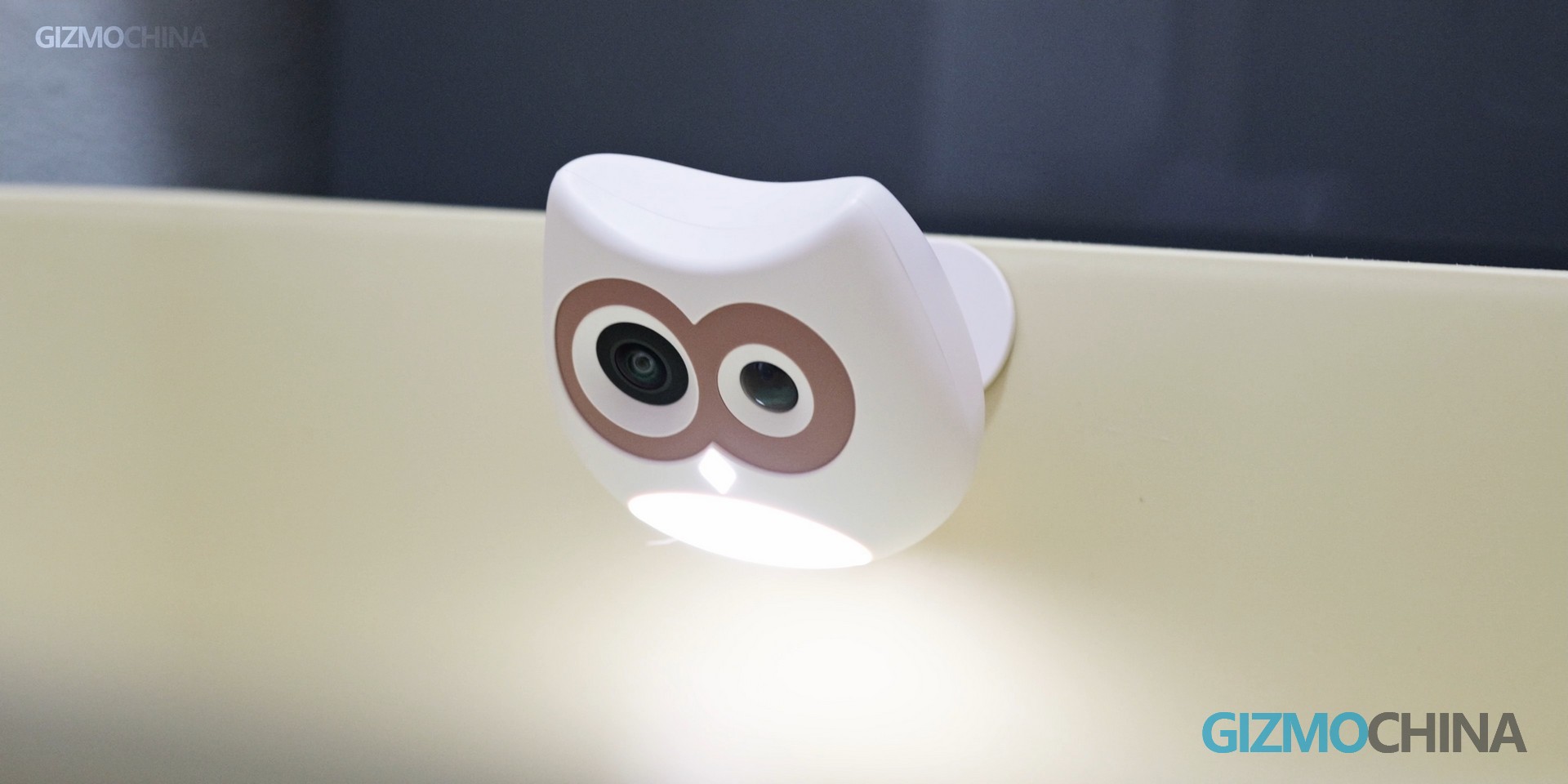
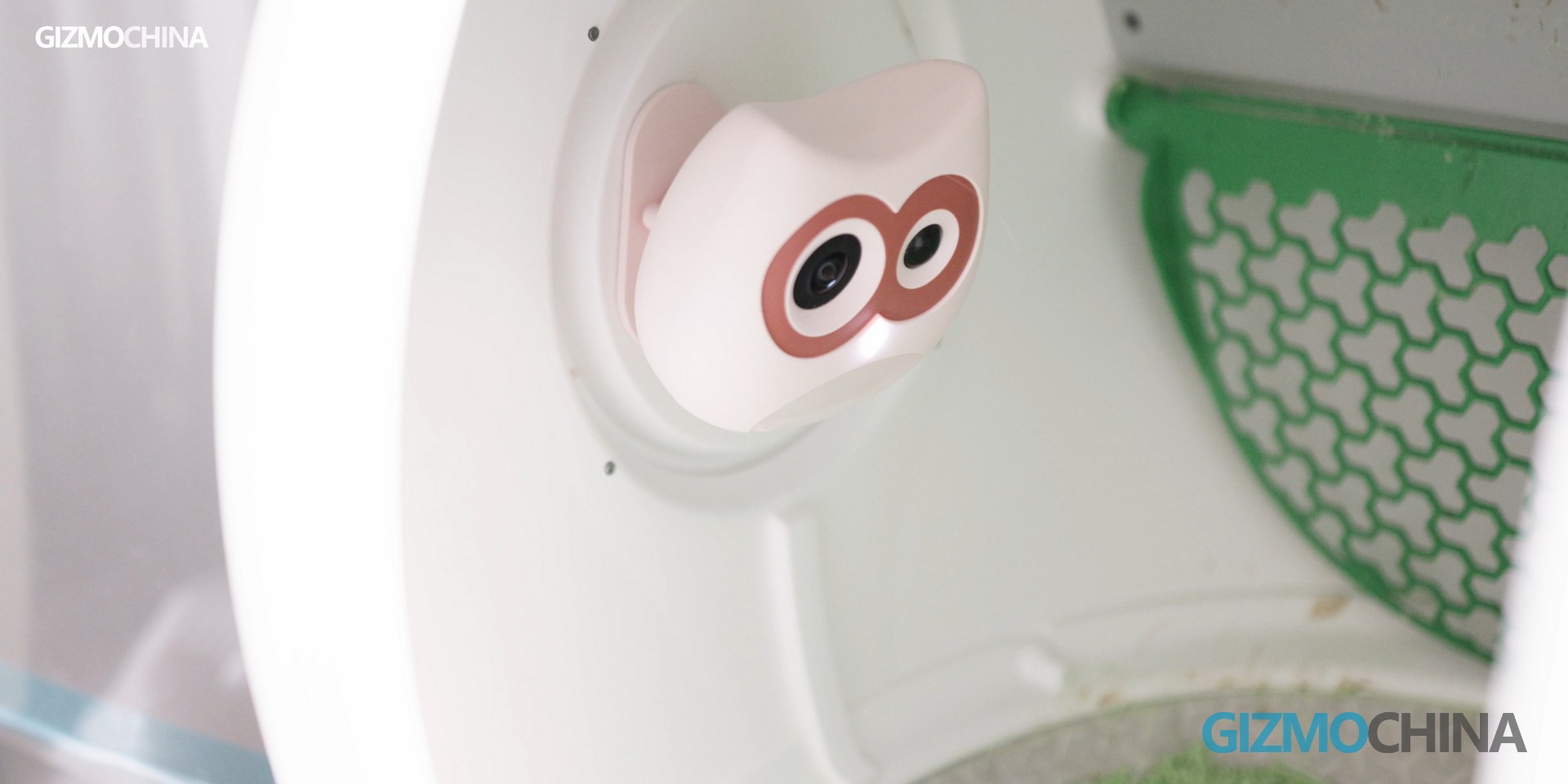
Installation took less than five minutes: attach the bracket to a standard litter box, charge the device, and connect to the app. Practical considerations are well-addressed:
IP65 waterproof rating: Handles splashes and wipes clean
Battery life: 28 days per charge, even with 12+ daily activations
Local storage: 32GB built-in, no subscription fees, no cloud dependency
App interface: Clean dashboard with usage counts, recent alerts, and a one-tap litter level checker
Limitations
The primary constraint is video quality: HD rather than 4K. The camera sensor is smaller than high-end smartphone components. However, for health monitoring purposes—identifying fecal abnormalities and tracking posture—the resolution is adequate. This isn’t a device for cinematic pet portraits; it’s a medical monitoring tool.
Who Should Buy the SiiPet LitterLens?
At $129, LitterLens costs less than a single emergency vet visit ($150-$300). It delivers the most value for:
Multi-cat households where tracking individual behavior is impossible
Senior cat owners managing age-related urinary and digestive issues
Frequent travelers needing remote health monitoring
Any owner wanting data-driven insights instead of guesswork
Added value: Unlike subscription-based pet cameras, all LitterLens AI features are free, with 32GB of internal storage included—no hidden fees.
Verdict: A Necessity, Not a Gadget
After six weeks of testing, LitterLens proves its core promise: it transforms litter box monitoring from a forgettable chore into a proactive health measure. The AI accuracy is legitimate, the alerts are timely, and the multi-cat tracking works as advertised. This isn’t a gadget—it’s a medical diagnostic tool that happens to use AI.
If you’re tired of guessing about your cat’s health, the LitterLens delivers peace of mind through data-driven insights. Available on Amazon and the SiiPet website, it’s a smart inveThe device won’t prevent every emergency, but it significantly narrows the window between “first symptom” and “crisis.” For cat owners who’ve experienced the anxiety of a suddenly sick pet, that alone justifies the price.
Google has officially introduced Gemini 3, its most advanced AI model to date. This new release builds on the foundation laid by Gemini 1 and 2, adding major upgrades in reasoning, multimodal understanding, and agent-based coding. Gemini 3 now powers several Google products, including Search, the Gemini app, and the company’s new developer platform, Google Antigravity.
Gemini 3 marks a shift in how Google wants its AI to interact with users. The model avoids pleasantries and focuses on delivering accurate, clear, and helpful answers. Google says Gemini 3 gives smart, direct responses that focus on real insights instead of repeating user expectations.
This update reflects Google’s broader goal of turning AI into a thought partner. Gemini 3 understands subtle context and adapts its tone based on the task. Google claims this makes the AI more honest and productive during real-world use.
2. Better at Understanding Everything
Gemini 3 supports native multimodality. The system can handle text, images, video, audio, and code in one workflow. Users can upload mixed content such as handwritten notes, screenshots, or full lectures, and the model can interpret everything together. It can then generate interactive flashcards, concise summaries, or visual simulations based on the material
Google has increased the model’s context window to one million tokens. This lets Gemini 3 read and retain extremely long documents and conversations, improving performance on research-heavy or academic tasks.
3. Leading All the Benchmarks
Gemini 3 outperforms other frontier models across nearly all major AI benchmarks. It currently ranks first on the LMArena leaderboard with an Elo score of 1501. The model scores 91.9% on GPQA Diamond, 37.5% on Humanity’s Last Exam, and 23.4% on MathArena Apex.
For multimodal tests, Gemini 3 achieves 81% on MMMU-Pro and 87.6% on Video-MMMU. Its factual accuracy reaches 72.1% on SimpleQA Verified. These results show Gemini 3’s strength in both academic reasoning and real-world problem solving.
For developers, Gemini 3 leads the WebDev Arena with a score of 1487. It achieves 76.2% on SWE-Bench Verified and 54.2% on Terminal-Bench 2.0. These benchmarks confirm its skill in software development, command-line tasks, and autonomous coding.
4. Agents That Can Code on Their Own
Google has launched a new agentic development platform called Antigravity. The platform is powered by Gemini 3 and allows agents to write, test, and execute code across a full development environment. Gemini agents can access the code editor, browser, and terminal directly.
The system uses Gemini 3’s reasoning and tool-use skills to handle full-stack software tasks. In internal tests, it planned and built a working flight tracker app from scratch. The agent validated its work using browser-based simulations without human guidance.
5. Interactive Results in Search
Gemini 3 is now available in Google Search’s AI Mode. It powers dynamic visual layouts, interactive tools, and simulations directly in search results. When users ask complex questions, Gemini 3 creates real-time responses that include tables, charts, or even custom calculators.
If someone searches for topics like orbital physics or financial comparisons, Gemini 3 can generate interactive modules to help explain the results. These are generated using its built-in code writing and UI design capabilities.
6. New Advances in Training
Google DeepMind researchers credit Gemini 3’s success to progress in both pre-training and post-training. VP Oriol Vinyals said the improvements from Gemini 2.5 to 3.0 were the largest the team had seen. He also said pre-training had not hit a limit and there was still room to grow.
Many experts believed models had exhausted the internet’s public data. Google appears to have found ways to extract more value from existing data or has used internal datasets unavailable to competitors. This gives Google a long-term advantage in building next-generation AI systems.
7. Stronger Safety and Testing
Google says Gemini 3 is its safest model yet. The system has been tested against prompt injections, flattery behaviors, and misuse risks. External security groups like Vaultis and Dreadnode took part in the evaluations. Google also partnered with organizations such as the UK AISI for responsible development reviews.
Gemini 3 Pro is now available globally through the Gemini app and Google Search’s AI Mode for Pro and Ultra subscribers. The more advanced “Deep Think” version is still under safety review and will launch later.
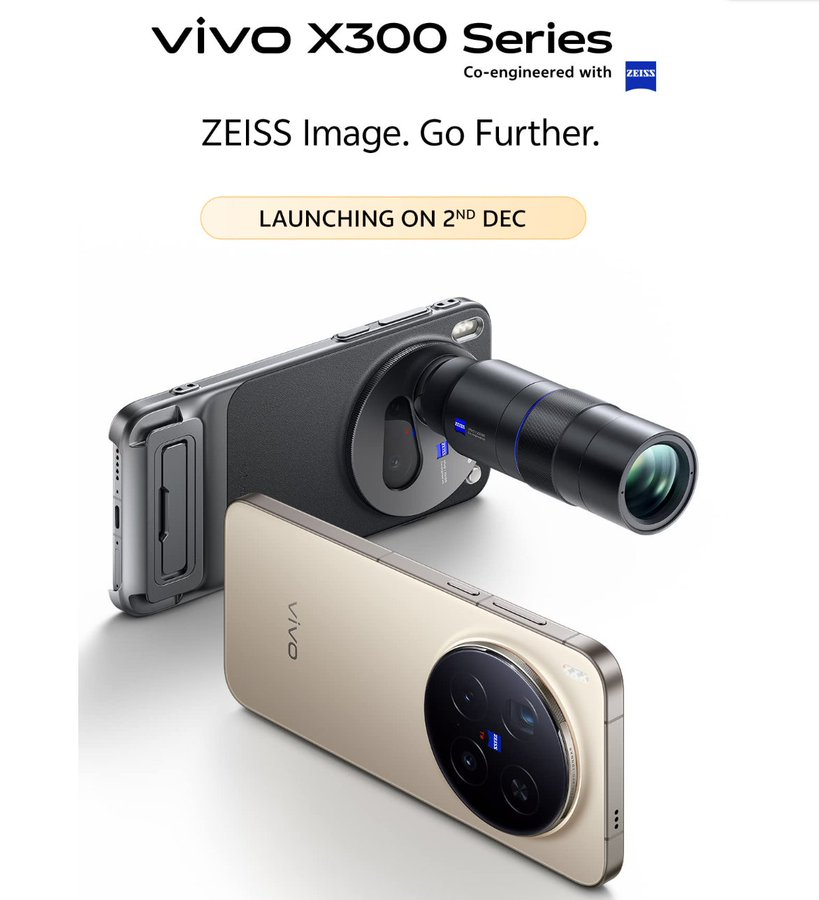
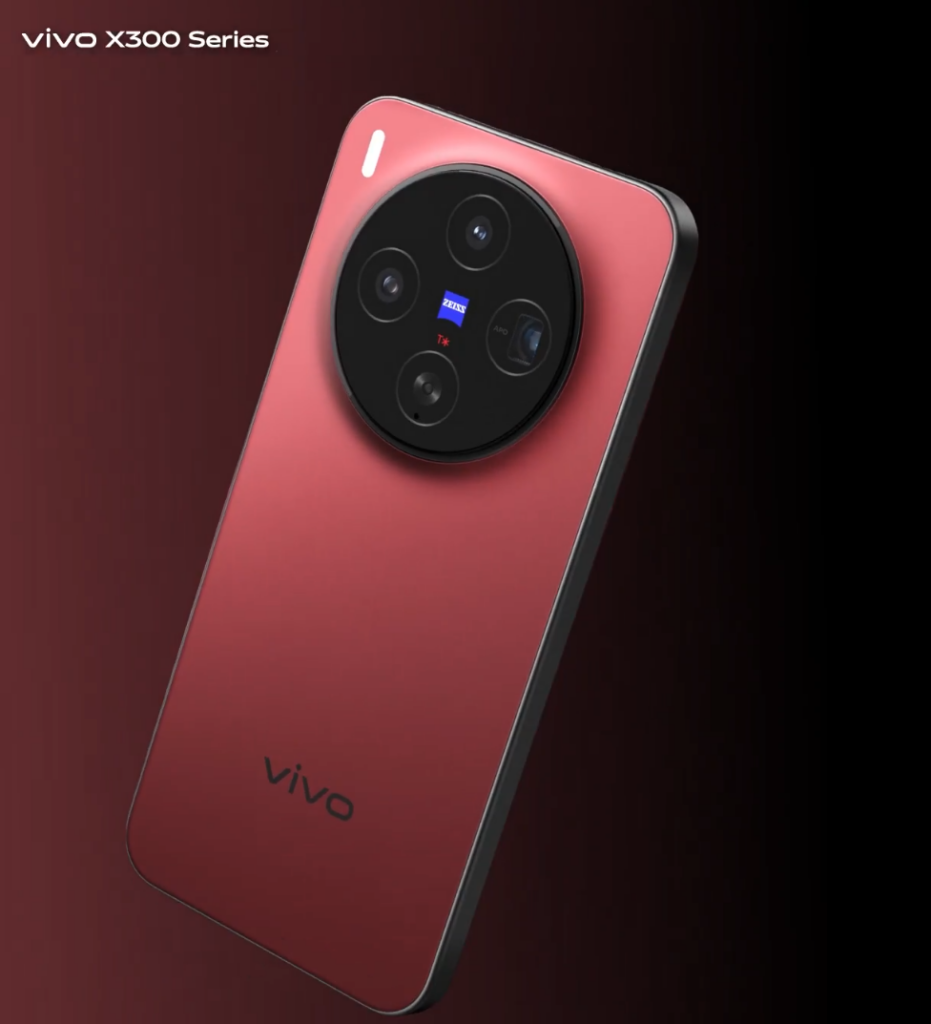
Vivo’s new X300 series is set to launch in India on December 2, and since this is a follow-up launch after its debut in China, we are fairly familiar with most of the specs. The only details under the hood are the prices, and fortunately, a new leak has now taken care of that as well.
Tipster Abhishek Yadav took to X to reveal the Indian prices for both the Vivo X300 and X300 Pro, plus the cost of the optional photography kit. And if the leak is accurate, the lineup is not going to be cheap.
India is getting the Vivo X300 starting with the 12/256GB variant at Rs 75,999. The 12/512GB model will retail for Rs 81,999, and the 16/512GB variant will be priced at Rs 85,999.
As for the Vivo X300 Pro, it will only be available in India in a single 16/512GB variant for Rs 109,999. The photography kit, which Vivo has been pushing as a pro-friendly add-on, is expected to cost ₹19,999.
The prices are unsurprisingly higher compared to China. The X300, for instance, starts at around Rs 54,700 for the 12/256GB variant, while the X300 Pro’s 16/512GB model is priced at roughly Rs 75,000 in the mainland.
Vivo X300 / Pro Specs
For the price, you are getting flagships powered by the MediaTek Dimensity 9500 chip. The X300 is a compact model with a 6.31-inch OLED display and a 50MP selfie camera. The rear setup includes a 200MP main, 50MP ultrawide, and a 50MP periscope unit. And despite its compactness, it packs a 6040mAh battery.
The Pro brings a bugger 6.78-inch display with the same 50MP selfie camera. The back has a 50MP main, 50MP ultrawide, and 200MP telephoto unit. It gets its fuel via a 6510mAh cell.
Xiaomi’s upcoming Poco F8 Ultra has leaked again—this time with a detailed spec sheet. The phone, which is expected to make its global debut later this month, seems set to bring a mix of flagship-tier performance and surprisingly strong durability. Whether it’s the big step up Poco fans have been waiting for or just another mid-premium refresh is still up for debate, but there’s finally enough info to start forming a picture.
Xiaomi has already confirmed that the new Poco F8 lineup will replace the current Poco F7 Pro and F7 Ultra worldwide before the end of 2025. As the leaks suggest, the split is pretty straightforward: the F8 Pro uses the Snapdragon 8 Elite, while the F8 Ultra jumps to the newer Snapdragon 8 Elite Gen 5.
Most of the latest details come from leaker Sudhanshu Ambhore, who first posted the F8 Pro specs and then followed up with info on the Ultra. According to him, Xiaomi has toughened up the Ultra’s build. It reportedly performed better than the Pro in EU drop tests—not something companies usually brag about, but a nice perk for people who’ve cracked a few screens in their time.
Battery life is another interesting bit. The Ultra is said to borrow some ideas from the Redmi K90 Pro Max (our review) but won’t use that phone’s massive 7,560 mAh cell. Instead, it gets a 6,500 mAh battery with 100W wired charging and 50W wireless. Ambhore claims the Ultra might last about 4.5 hours longer than the Pro on standard tests, though in normal use the difference will probably be smaller. Oddly, the phone is still slightly heavier than the K90 Pro Max, which could hint at a beefier cooling system or reinforced frame.
Camera hardware appears unchanged from the K90 Pro Max: three 50MP lenses for the main, ultra-wide, and a 5x optical zoom telephoto.
Xiaomi’s official reveal is set for November 26, so we’ll know soon enough how accurate these leaks are. Until then, the F8 Ultra looks like a promising step forward—at least on paper. Whether it actually delivers will come down to price, performance, and more importantly, how well Xiaomi tunes the HyperOS build for the F8 Ultra once it’s out in the wild.
We use cookies on our website to give you the most relevant experience by remembering your preferences and repeat visits. By clicking “Accept”, you consent to the use of ALL the cookies.
This website uses cookies to improve your experience while you navigate through the website. Out of these, the cookies that are categorized as necessary are stored on your browser as they are essential for the working of basic functionalities of the website. We also use third-party cookies that help us analyze and understand how you use this website. These cookies will be stored in your browser only with your consent. You also have the option to opt-out of these cookies. But opting out of some of these cookies may affect your browsing experience.
Necessary cookies are absolutely essential for the website to function properly. This category only includes cookies that ensures basic functionalities and security features of the website. These cookies do not store any personal information.
Any cookies that may not be particularly necessary for the website to function and is used specifically to collect user personal data via analytics, ads, other embedded contents are termed as non-necessary cookies. It is mandatory to procure user consent prior to running these cookies on your website.