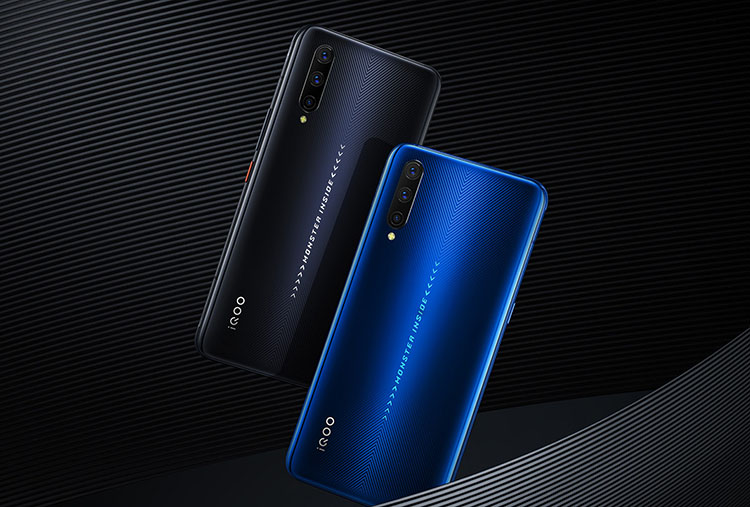
Tmall has officially released the iQOO Pro 8.23 Super New Products Daily Report. The report shows that the iQOO Pro 5G emerged as the top-selling phone on Tmall. The sale of the iQOO Pro is 445% higher than any other phone selling on Tmall presently. This feat comes just days after Suning announced the iQOO Pro was sold out in just seconds. The phone will go on yet another presale on August 29.
The iQOO Pro 5G is already expected to be a hot-selling phone as a result of the sleek design, powerful hardware especially the 5G modem and decent price tag. The phone features a 6.41-inch Super AMOLED display with FHD+ resolution of 2340×1080 pixels. The phone also has a 12GB RAM+256GB storage variant. There is a Sony IMX582 48MP primary camera on the back along with a 13MP 120° ultrawide angle camera and a 2.0MP depth sensor. While at the front there is a 12MP sensor. The phone comes with features like AI Scene 2.0, 2.5CM macro photography and AI Portrait.
The phone equally packs a 4500mAh battery under the hood with support for Vivo’s 44W Super FlashCharge technology. It runs Monster UI based on Android 9 out of the box. There is also the Jovi Assistant with IoT on board, NFC with support for Vivo Pay, and the new Turbo Network Acceleration technology that allows you to connect to two Wi-FI connections at the same time (2.4GHz + 5GHz). The iQOO Pro also has an audio jack along with a dedicated audio chip for Hi-Res audio.
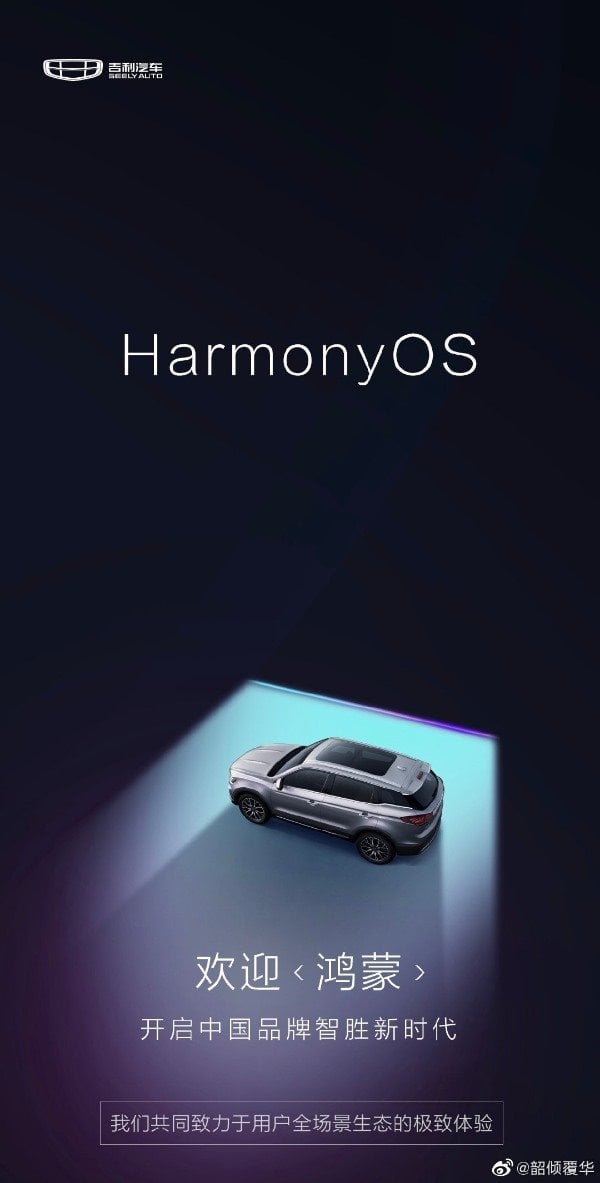
Huawei‘s HarmonyOS is one of the most talked about topics in tech at the moment, and the possibilities for it are endless. In fact, right now we’re already hearing rumors about HarmonyOS making rounds on Weibo. According to the rumors, Geely, a popular car manufacturer in China, has partnered with Huawei to expand the usage of HarmonyOS even further.
Now, Geely already has their own GKUI running on their car, which means if these rumors are true, there are two possibilities here. The first is that Geely is planning to drop their current GKUI in favor of Huawei’s HarmonyOS. The second option is that Geely will work with Huawei to allow their GKUI cars to communicate better with devices powered by HarmonyOS.
If this is true, then this is a fairly big deal since it’s the first time since we’ve seen HarmonyOS on a non-Huawei device. On top of that, Geely is a big name in China, which means Huawei has the reach and connections to make the operating system a more mainstream option. HarmonyOS is after all an IoT operating system, so the more partners they get the better.
Mr Lu pointed out that when Harmony OS was unveiled, Huawei’s product roadmap included devices like TVs, smart watches, in-vehicle display units and some of its PCs. Smartphones and tablets were noticeable omissions and this was by design Out of this list, two of the products are already down, and we’re eager to see what’s coming next.
The Huawei Mate 30 will be rocking a very unique look when it launches later this year. After months of leaks, we now have a clear look of the phone thanks to a leaked official poster.
The poster which was shared on Weibo shows the Mate 30 Pro will have a wide notch similar to that of the Mate 20 Pro. We can make out about three cameras inside the notch. We bet the phone has a 3D face unlock system for security.
The Mate 30 Pro has an IR blaster and a microphone at opposite ends of the top. There are also antenna lines too. The display is shown to curve to the sides and the bezels are quite thin. The phone does look really gorgeous but we are more excited about the back.
The Mate 30 Pro will come with four rear cameras that are placed in a circular housing. The phone has a significant camera bump which we believe has an important function explained below.
Earlier today, Android Authority reported that Huawei and Honor may be working on Moto Mod-style cases for its phones. These cases were discovered on the Bluetooth SIG website which has a listing of several cases. The model number of these cases hint at their functions. For example, there is a game case, a snorkeling case, a health case, and an amplification case. These cases will connect via Bluetooth 4.2 and provide additional features. The listing is even more detailed and reveals the health case will have features like blood pressure monitoring, glucose-level monitoring, temperature measurement, and heart rate measurement.
The model number also reveals these smart cases will be available for different phones as the codenames are included in the model numbers. The codenames for some of these yet-to-be-announced phones are Anna, Elsa, Noah, Ark, Sulawesi, Maxwell, Emma, Keira, Yarlung, Zangbo, Volga, Danube, Titian, Palawan, Pascal, CHA, PEN, Piaget, Kelly, Audrey, Catherine, Eagle, Ruby, Bugatti, Baikal, etc.
Based on the design of the Mate 30 Pro, we believe it will be the first device to come with these smart cases and the cases should flush with the camera bump when attached.
The Mate 30 Pro also has what appears to be a Xenon flash and a smaller circular LED flash. We can also see LEICA written on the back but can’t make out the other text.
The phone will have a red-painted power button and will be available in purple and green. The poster also reveals the phone will be powered by the Kirin 990 processor and have superfast charging. The phone is rumored to launch on September 19.
The Redmi Note 8 Pro will be coming in two colors – green and white. We expect more color variants may be announced in the months after its launch. However, in addition to those two colors, there will also be two limited edition variants of the phone unveiled on Thursday. These limited-edition models will be a result of the partnership between Redmi and World of Warcraft to celebrate the popular game’s 15th anniversary. The official Weibo account for Redmi has shared photos of the special retail boxes the phone will come in.
[envira-gallery id=”272232″]
The Redmi Note 8 Pro World of Warcraft Limited Edition will be available in two versions. One has a red and black box while the other has a blue and white box. The contents of this limited gift box edition Redmi Note 8 Pro are currently unknown. We presume there may be a custom theme as well as World of Warcraft wallpapers pre-loaded with the device. There may even be a custom case.
More details should surface on August 29 when the Redmi Note 8 pro will be announced.
World of Warcraft was released in 2004 by Blizzard Entertainment. It is a massively multiplayer online role-playing game (MMORPG) and was the most popular MMORPG in 2009. As at 2017, the game had grossed over $9 billion in revenue.
Xiaomi has launched the MIJIA Sports Shoes 3, the third-generation model of its smart sports shoes. The sports sneakers is expected to go on sale today.
The MIJIA Sports Shoes 3 design is quite similar to that of the Sports Shoes 2 that was released last year. Xiaomi brought some improvement to the Uni-moulding production product used in manufacturing the sole of the shoes. A new Uni-Mounding 2.0 production process was utilised which is an improved technology from the one used on the MIJIA ports Shoes 2. In this case, 6different materials and layers were bonded into one single sole. Each of the layers is separated using a thin polyurethane film pressed and bonded. Because the components are pressed together with the mould, the appearance of the components will appear to be cleaner than the ordinary manual glue combination, and the probability of the glue opening up is also highly reduced. The new uni-Moulding 2.0 process also provides even better stability and support to the feet. This process combines the characteristics of the different materials to meet the needs of different sporting use. The second-generation version fuses 5 different layers and types of materials are fused into a single mould.
The front of the shoes uses a popcorn cloud midsole to increase the rebound feedback required by the forefoot during sporting activities. The back of the palm uses the FREE FORCE technology midsole, which gives the back of the feet enough cushioning demand during exercise.
In order to better support the contours of the foot, Xiaomi has completely upgraded the fishbone system in use inside the shoes. In this case, 10 fish bones are linked together using the TPU injection process to form a 360° locking system. It ensures the support of the shoe body to the foot during exercise.
Further, the upper part of the Mi Men’s Sports Shoes 2 is manufactured using a three-dimensional seamless high-elastic knitting process. The entire upper part uses just one seam thus minimizing foreign body sensation. The material is very durable such that you can throw in the sneakers into the washing machine without fear of it getting damaged. It comes with a reflective lace and body making, keeping the user to oncoming traffic visible at night.
The Redmi Note 8 Pro will defer from the Redmi Note 7 Pro in a lot of ways but one thing will remain unchanged and that is the design of the screen.
Up until today, none of the official promotional materials and leaks have revealed the screen of the upcoming phone but thanks to a promotional video, we can now confirm the Redmi Note 8 Pro will keep the waterdrop notch screen of its predecessor.
The promotional video is actually a test showing how strong the phone is. In the 39-second video, we see two units of the phone get stepped on by a weightlifter while carrying a pretty heavy barbell. After he is done, both phones are shown to be undamaged (at least their screens are fine). It is at this point we see the Redmi Note 8 Pro has a waterdrop notch.
At the end of the video, we also get confirmation that the phone will come in two colors – green and white. We also get a closer look at the waterdrop notch.
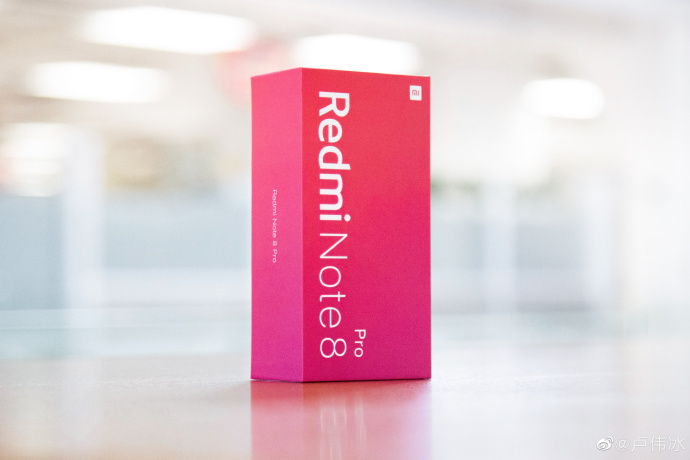
Redmi Note 8 Pro’s retail box
Redmi’s general manager, Lu Weibing has also revealed the retail box of the phone. The box has a gradient color design like that of the Redmi Note 7 Pro but there is very little purple this time. The name of the phone is also written vertically instead of horizontally at the bottom.
The Redmi Note 8 Pro launches on August 29. It will be powered by the Helio G90T, pack quad rear cameras and a rear-mounted fingerprint scanner, and also have liquid cooling.
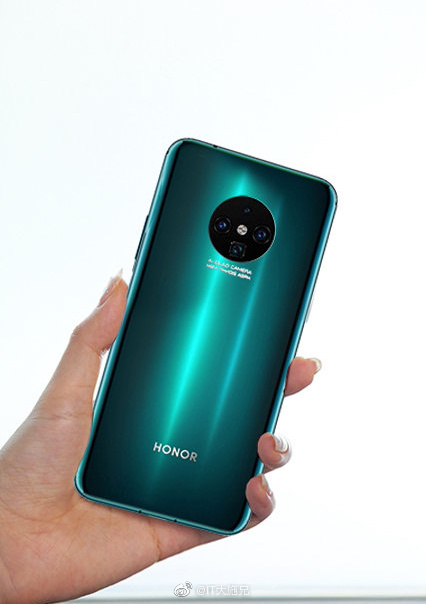
While Apple and Google are going for a squircle camera housing for their upcoming flagships, other manufacturers like OnePlus (OnePlus 7T), Huawei (Mate 30), and now Honor will be adopting the circular camera housing design which Motorola made famous for their own flagships.
A render of an Honor smartphone with the circular camera housing has surfaced online and there are speculations as to which upcoming phone it is.
The picture was shared on Weibo yesterday by @ IT Da Shixiong. It shows the phone in green (Phantom Blue), with a similar light pattern to that of the Honor 20. However, rather than have its cameras lined up vertically by the side, this phone has its cameras arranged in a circle in the middle.
There is a camera sensor at each cardinal point while an LED flash is in the middle. One of the cameras even has a square-shaped lens like that of the Huawei P30 Pro. This sensor is most likely a periscope zoom lens. The angle of the picture doesn’t let us know if it has a camera bump or not.
Some say this may be the Honor V30, the successor to the Honor V20 and which should launch outside China as the Honor View 30. However, the V30 isn’t expected to arrive until the end of the year.
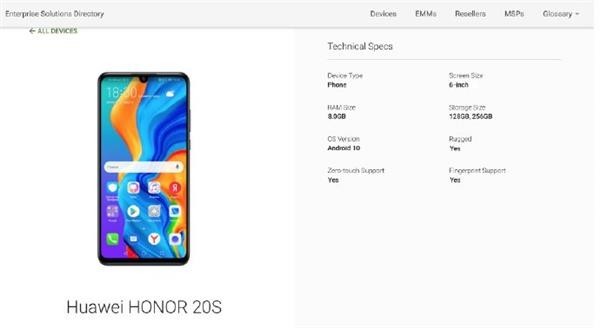
Others say it may be an upcoming phone called the Honor 20S (not Honor 20 SE). This phone was recently seen on Google’s Android Enterprise Recommended Device list but has been pulled down. Thankfully, someone managed to take a screenshot of the page.
The Honor 20S will come with a 6-inch screen with a waterdrop notch, 8GB of RAM, 128GB or 256GB of storage, and run Android 10 out of the box. The rest of the specs are unknown.
There are not enough reasons to say if the phone above is the Honor V30 or Honor 20S but we are pretty sure the device is a flagship phone. Honor is scheduled to announce a new phone called the Honor 20 SE next month. We do not know where this phone sits in the Honor 20 series but it may not be a flagship phone.
Redmi is hosting a launch event in China on 29th August where the company will be launching its next-generation Redmi Note 8 and Redmi Note 8 Pro smartphones. Ahead of the launch, the company has shared many specs and features of the devices.
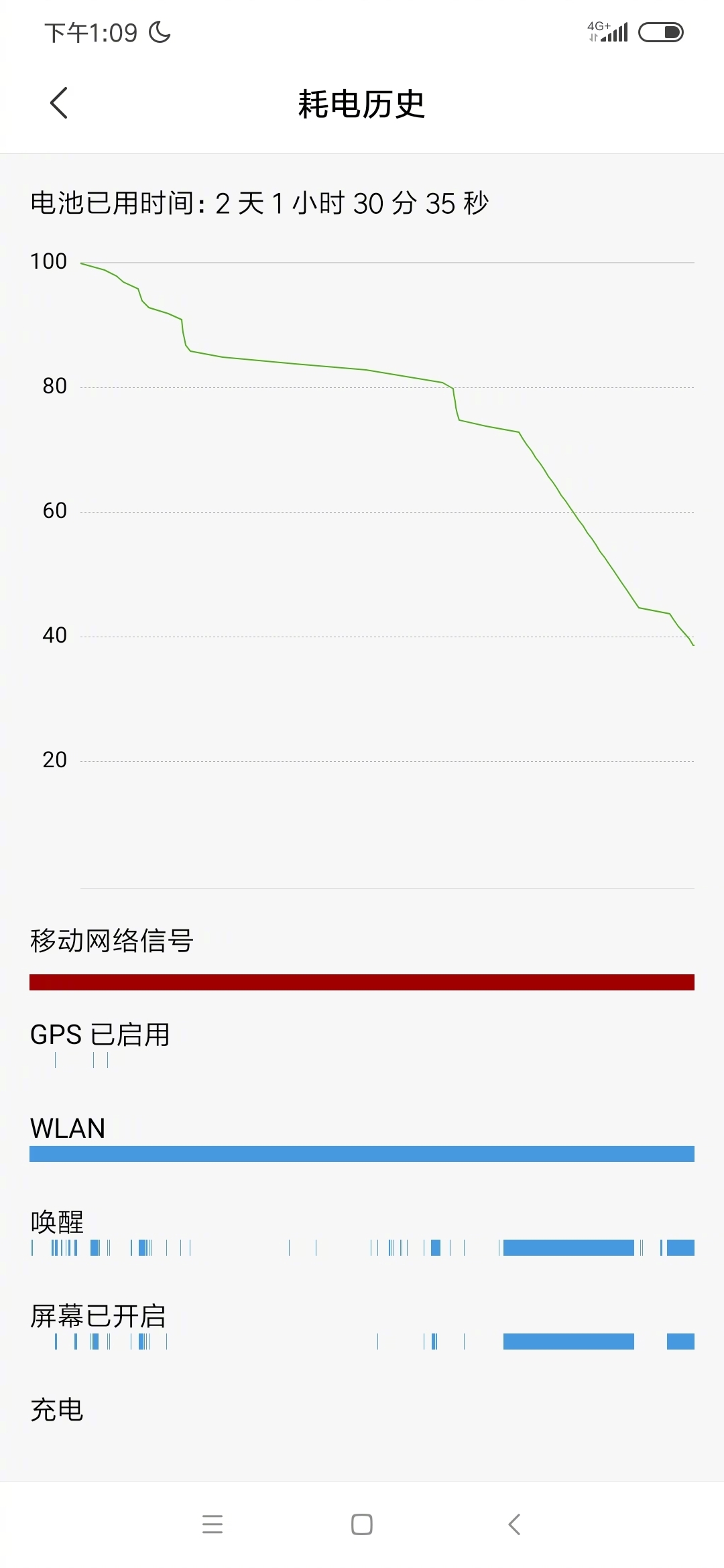
Now, Xiaomi President Lin Bin has taken to Weibo to revealed that the Redmi Note 8 Pro’s battery life. He claims that even after using the smartphone for two days, there’s still 40 percent of battery left, which is very impressive.
He even shared a screenshot for the same, which shows the history of 4G usage, Wi-Fi, screen wakeup frequency, video watching, gaming, etc. The claimed battery performance is quite impressive for a 4,500mAh capacity battery.
The company has already confirmed that the smartphone will come with liquid-cooling technology to ensure that the phone’s thermal remains under control, even after prolonged heavy usage. This makes sense given that the phone is powered by a gaming-centric SoC.
The Redmi Note 8 Pro smartphone is confirmed to feature quad cameras at the back with a 64MP primary camera. The company has also shared a few camera samples of the same, which looks really impressive and could be a gamechanger in its segment.
Just below the camera housing on the back panel, the smartphone features a fingerprint sensor. There’s liquid cooling as well as smart antenna placements to ensure the phone does well even while gaming.
The company has also confirmed that the Redmi Note 8 Pro will come powered by the MediaTek Helio G90T chipset, which is focused on gaming users. The 12nm Helio G90T includes two Cortex-A76 cores working at 2.05 GHz and six Cortex-A55 cores working at 2GHz. It includes ARM Mali G76 graphics that clocks at 800MHz and it carries support 21:9 aspect ratio display, 90Hz refresh rate, HDR10 standard, up to 10 GB of LPDDR4X RAM and UFS 2.1 storage.
The Helio G90 series of chipsets support HyperEngine for improved connectivity between a smartphone and a cellular network. There is Dual Wi-Fi connection support that allows the phone to connect to two Wi-Fi networks at the same time. Its other features include Call and Data Concurrency, Resource Management Engine and a Picture Quality Engine.
The camera sensors will be placed vertically with three camera sensors followed by a fingerprint reader. Alongside, there’s an LED flash and the fourth camera sensor. Redmi has already shared a few camera samples. The phone will be equipped with features like NFC and IR Blaster and the battery will support 18W fast charging.
Launched in 2018, the ASUS ROG Phone might sound familiar to those who fancy playing popular games on their mobile phones.
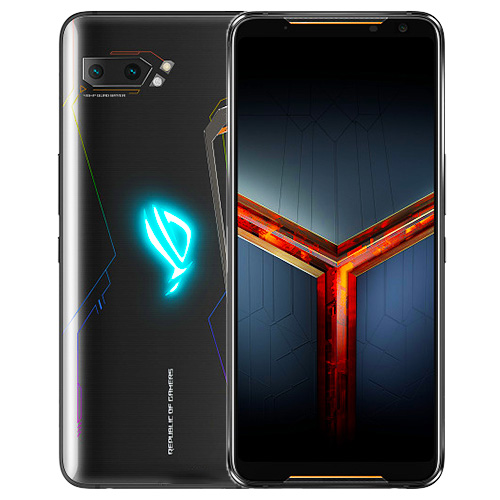
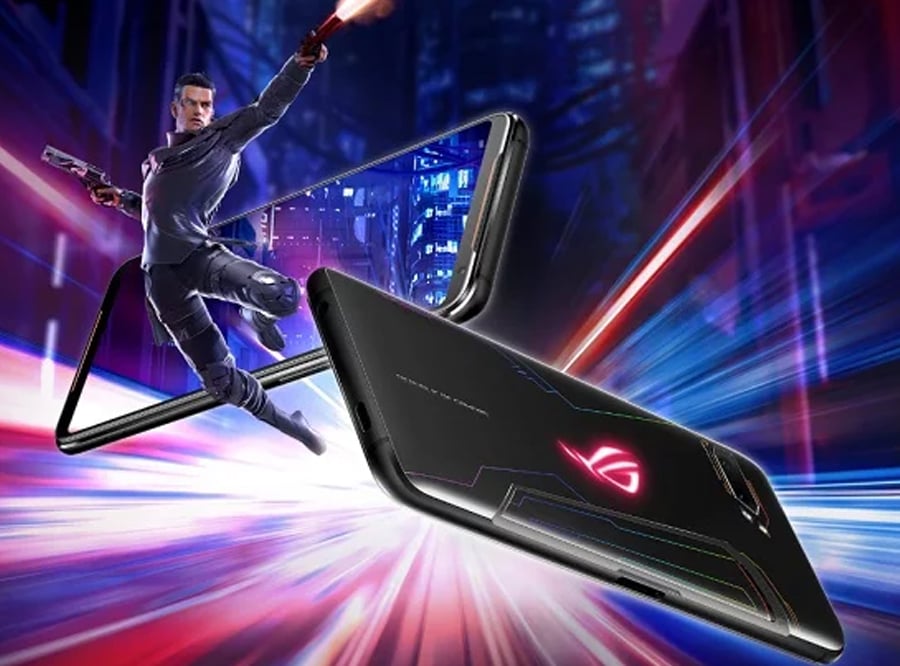
Still riding high on the success of its gaming smartphone, ASUS launched the next-generation gaming smartphone called the ROG Phone 2 (or ASUS ROG 2 Gaming Phone).
The long-awaited ASUS ROG Phone successor was unveiled during a recently concluded launch event that was held in China. The Taiwan-based Electronics Company started taking registrations for the phone immediately after its launch.
JD.com received a whopping 2.33 million reservations, hinting at the phone’s skyrocketing popularity among mobile phone gamers. ASUS and Chinese online store Giztop have teamed up to make the phone available to the cost-conscious buyers and meet its undying demand.
The Asus ROG Phone 2 8GB RAM+128GB ROM edition which usually retails for $699 can now be yours for a lowered price of just $569. Those who like more power and storage space on their gaming phones can go for the larger variant that comes with 12GB of RAM and offers 512GB of onboard storage capacity.
While the aforesaid model would normally set you back a pretty penny on both online, as well as offline stores, you can now buy it for a lowered price of $1,089 from Giztop. This is a noteworthy reduction in the phone’s original asking price of $1,219.
Aside from taking full advantage of these unmissable discounts, Giztop users will get two amazing gifts with the larger 512GB ROM model. The gifts include the Official AeroActive Cooler II for Asus ROG Phone 2 worth $72.99 and the Official Protective Areo Case For Asus ROG Phone 2, which normally sells for $25.99.
Both, the 8GB RAM+128GB ROM, as well as the 12GB RAM+512GB ROM models are available in a black color option. The Asus ROG Phone 2 is crammed with amazing features and top-end specs that enhance your overall gaming experience. Some of these features are mentioned below:
6.59-inch AMOLED FHD+ display with a 120Hz refresh rate
An in-display fingerprint scanner
Qualcomm Snapdragon 855 Plus processor
Adreno 640 GPU
8GB/12GB LPDDR4X RAM
128GB/256GB/512GB UFS2.1 ROM
48MP+13MP dual AI rear camera
24MP front camera
ROG Gaming X mode UI based on Android 9.0 OS
6000mAh battery that supports 30W ROG HyperCharge with Quick Charge 4.0+
You can head straight to this link to check out more details about the Asus ROG Phone 2 gaming smartphone and place your order before the promo comes to an end.
Staying true to its reputation for offering products at unbeatable prices to online buyers worldwide, AliExpress comes up with amazing promotions from time to time.
The Alibaba Group-owned online retail service recently launched the Must-Haves promo as part of the 2019 Autumn Year Sale. This unmissable promo comprises a wide range of hot products carrying heavily discounted price tags.
Aside from that, the promo features big coupons including one that helps you save $5 on orders of $50 or more, but this coupon will expire at 23:59:59 PDT on August 31st. Likewise, you can take advantage of the $2 coupon and save more money before August 31st 00:00:00 PDT.
To simplify and expedite the search process, these amazing products have carefully been divided into five categories including Most Popular, Best Value, Trending, Top Rated, and Top Stores. We will check out discounts available on some of the products available in each section.
The first section called Most Popular is crammed with amazing electronic items including laptops, smartphones, straps for smartwatches, etc. More importantly, these products are up for grabs carrying reduced prices.
For instance, the 4GB RAM+64GB ROM version of CHUWI’s latest laptop dubbed the CHUWI HeroBook usually retails for $285.70 on both online, as well as offline stores, but you can buy it for just $219.99 from the activity page. Aside from this 23 percent discount, you can save $2 more for spending over $49.
The next category called Best Value is also teeming with a slew of well-received electronic items that normally cost a bomb. Much to the delight of cost-conscious buyers, these products have now gone up for sale carrying considerably reduced prices.
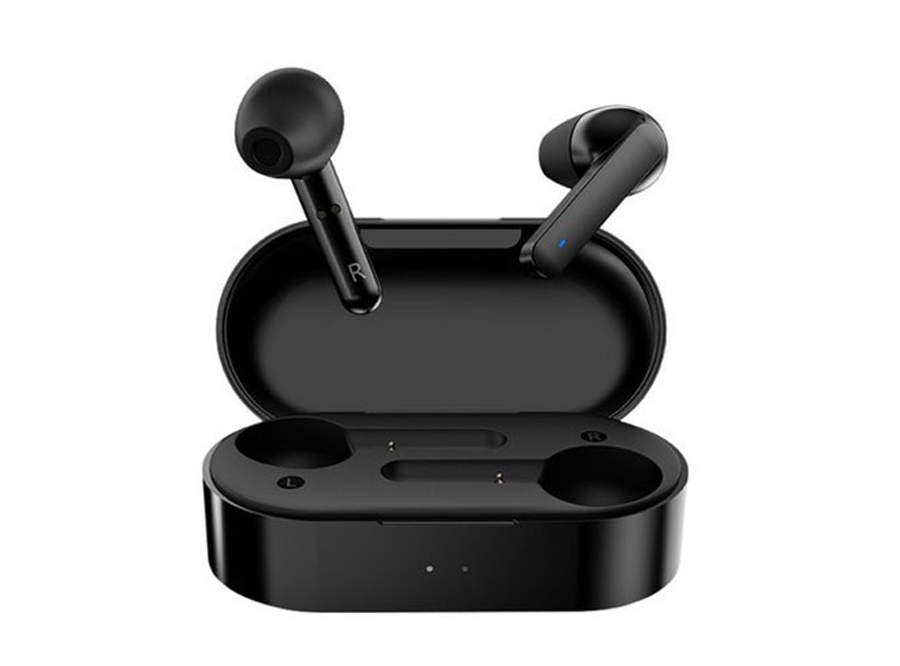
Among various other products, the section features QCY T3 TWS Fingerprint Wireless Earphones that would normally set you back $115 but is currently available for just $36.80 under the Best Value category. You can save $5 more for every $99, while new users can get an extra $2 off at checkout.
Those interested in getting their hands on the latest electronic products can head straight to the next two categories called Trending, and Top Rated. You can get your tech greedy hands on a myriad of products without burning a hole in your pocket under this section.
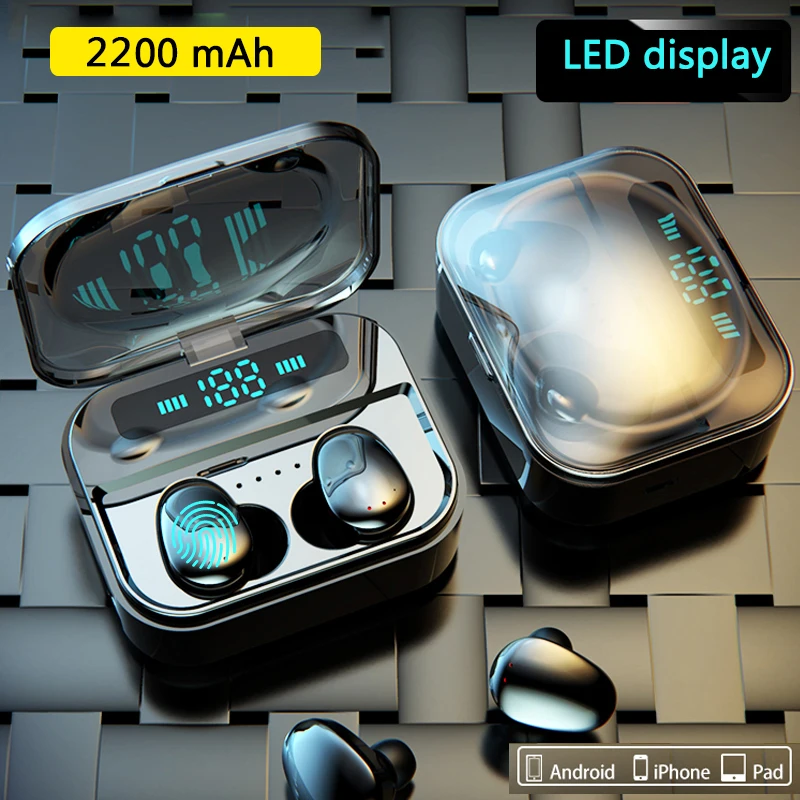
For example, the Original TWS Touch Wireless Bluetooth 5.0 Earphones which usually retails for $ 21.40 – $24.46 can now be yours if you are willing to shell out just $21.40 – $24.46. In addition to using a $2 off new user coupon, AliExpress users are eligible for an extra $6 off for every $199.
The concluding section called Top Stores features official stores of popular brands such as QCY, CHUWI, VONTAR, Yi, 70mai, Hong Kong Goldway, the Xiaomi MC Store, Babaya Factory Store and many more. You can visit the official stores of your favorite brands to check out all the products available at lowered prices.
For example, the CHUWI Official Store features the brand’s top-end tablet PCs, affordable laptops and more. The store also gives you a chance to save $10 more for orders of $399 and above. In addition to that, if your cart value is $199 or more at the time of checking out, you can use the $5 off coupon and save more money.
You can visit the activity page by following this link and avail the discounts before the Must-Haves promotion sale comes to an end.
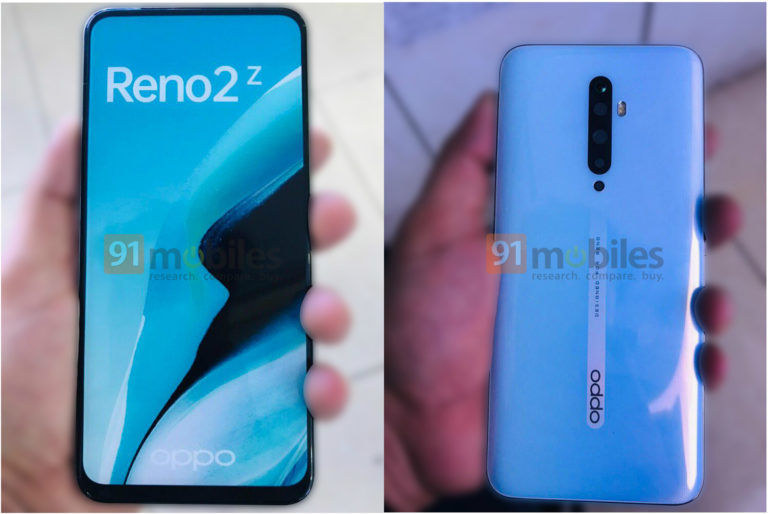
On Wednesday, OPPO India will be launching the Reno2 smartphone in the country. The Chinese manufacturer is also expected to announce the Reno2z and Reno2F phones alongside it. Plenty of details of the Reno2 as well as its live images have appeared recently. The real images of the Reno 2z have also leaked few days before its debut. The images show that the Reno2z will be sporting a notch-less display and four cameras on its rear.
The live images of the Reno2z will be boasting a high screen space thanks to its all-screen design. The chine of the device is a bit compared to the other bezels of the phone. Like the predecessor Reno Z phone, the Reno2Z also possesses a pop-up selfie snapper. It won’t be featuring the shark fin-style pop-up camera module like the OPPO Reno2 phone.
The rear shell of the phone features a vertical quad camera system along with a dual-tone dual LED flash. The right spine of the smartphone features a power button whereas the volume rocker can be found on its left edge. The bottom edge of the phone has a 3.5mm audio jack, a USB-C port and an external speaker.
The Reno2Z has a 6.5-inch AMOLED display that delivers full HD+ resolution. It is equipped with an in-screen fingerprint scanner. The display of the phone is shielded by a Gorilla Glass 5 panel. It is expected to be fueled by Helio P90 processor and 8 GB of RAM. The handset may offer users with a native storage of 256 GB.
The quad camera system of the Reno2Z is rumored to include a 48-megapixel primary lens, a 119-degree 8-megapixel ultrawide lens, a pair of 2-megapixel sensors that can add portrait mode effects while shooting images and videos. It expected to sport a pop-up selfie camera of 16-megapixel. The handset could be housing a 4,000mAh battery that offers VOOC 3.0 fast charge support. The ColorOS 6.0.1 based Android 9 Pie OS will come preloaded on Reno 2z. The smartphone could be releasing in India with a price tag of around Rs. 25,000 (~$278).
OPPO will be launching the Reno2 series of smartphones in China on Sept. 10. Probably, the Reno2 phone will be accompanied by Reno2Z and Reno2F too.
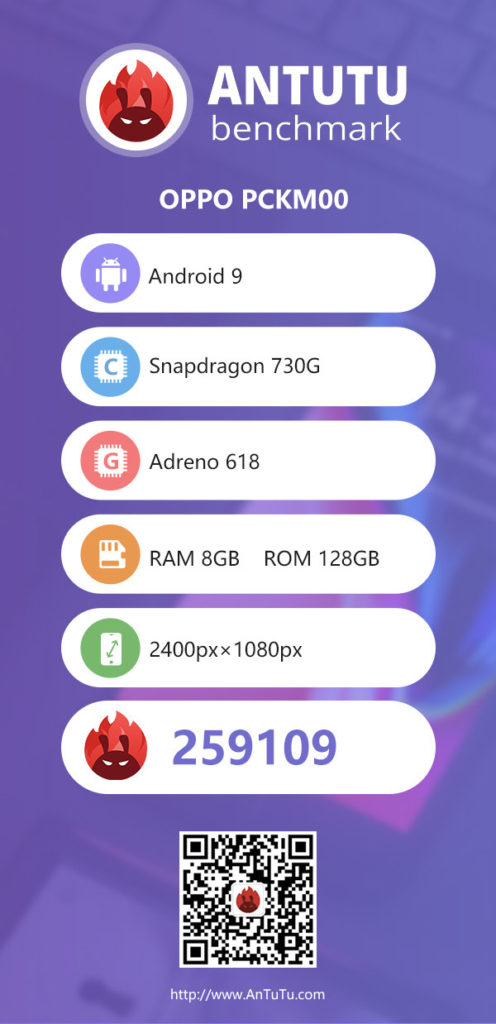
Earlier today, OPPO took to Weibo to confirm that it will be holding OPPO Reno2 series of smartphones in China on Sept. 10. The handset with model number PCKM00 / PCKT00 was recently spotted with its entire specifications on TENAA. The PCKM00 was recently spotted on Geekbench and today the same model number has surfaced on AnTuTu with some key specs.
The PCKM00 OPPO phone’s AnTuTu appearance has revealed that is fueled by Snapdragon 730G SoC that tags along Adreno 618 GPU. The chipset is coupled with 8 GB of RAM. The handset is loaded with Android 9 Pie OS. The listing has no information on the size of its display. However, it states that the phone offers full HD+ resolution of 1080 x 2400 pixels.
The OPPO Reno 2 AnTuTu listing shows that it has recorded a score of 259,109. The Redmi K20 that is powered by Snapdragon 730 had scored 218,625. It suggests that OPPO has optimized the performance of the SD730G chip on the Reno2. AnTuTu has claimed that the Reno2 has scored 95561, 71241, 46844 and 45063 respectively in CPU, GPU, memory and UX benchmarks.
The Reno2’s Geekbench listing had shown that it features Snapdragon 675 SoC and 8 GB of RAM. OPPO has officially confirmed that Reno2 is powered by Snapdragon 730G. Hence, there could be an error with the Geekbench listing of Reno2 or the company could be also having a SD675 edition of the phone.
1 of 2
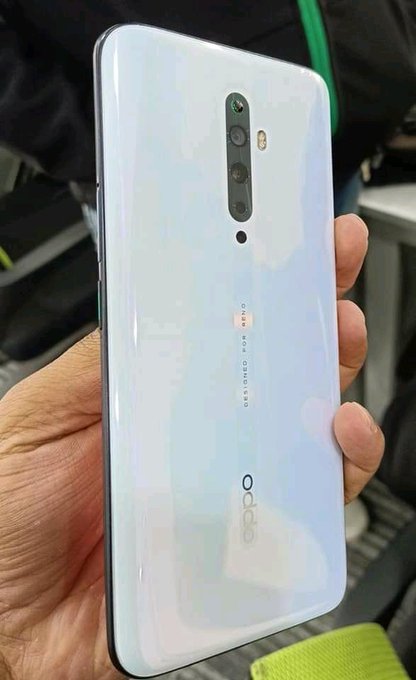
OPPO Reno2 real image
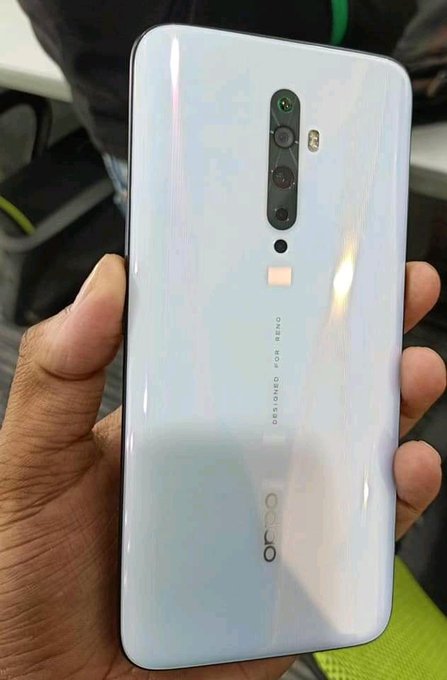
OPPO Reno2 real image
Shown above are the leaked photos of Reno2 smartphone. The images show that the glass rear of the phone curves towards its edges. The vertically arranged quad camera system can be seen in the upper half of the rear panel of the phone along with its dual-tone dual LED flash.
The Reno2 will be releasing in Ocean Blue and Mist Pink color editions in China. Its 6.5-inch display has a notch-less design and its integrated with an in-screen fingerprint sensor. The handset is also expected to release in 256 GB storage model in China. The Reno2 features a shark-fin shaped pop-up camera system that houses a 16-megapixel sensor and an LED flash. It is equipped with 48-megapixel + 13-megapixel + 8-megapixel + 2-megapixel quad camera system. It lacks support for external storage. There is no information on the pricing of Reno2 for Chinese markets. In India, it may cost around Rs. 35,000 (~$485).
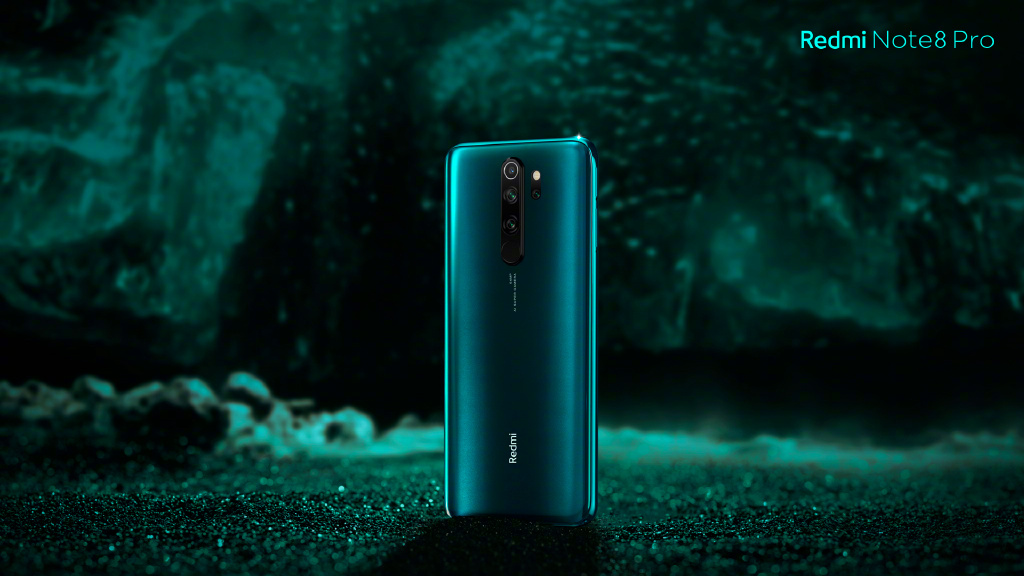
Xiaomi’s Redmi Note 8 Pro model is turning out to be quite powerful and feature-rich. After confirming that the new model will feature MediaTek’s G90T gaming processor with liquid cooling, the company announced today that its beautiful green variant is called as the Redmi Note 8 Pro Ice Jade variant. Also, the phone will feature a 3D curved glass design, similar to what we have seen on premium smartphones.
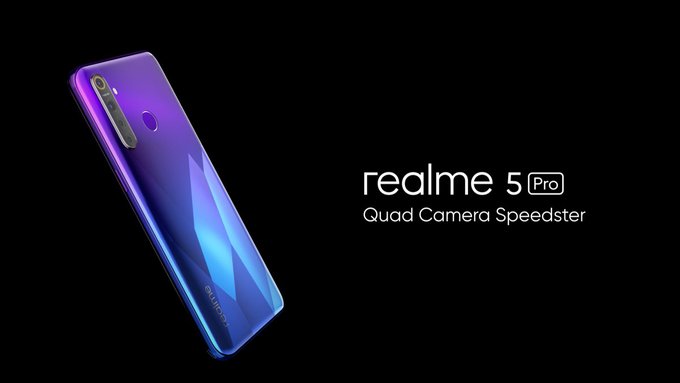
Redmi claims that the phone features a four-curved 3D design. This adds a liquidy touch to the design, staying true to its Ice Jade name. When Redmi says the design is 3D four-curved, it’s likely hinting that the phone’s back is curved on all the four sides. If you look at the render closely, you can see the gentle curves on the sides. Green seems to be really in trend this year, with the RN8Pro really embracing it. Even the Realme 5 Pro which was announced a few days back comes in a crystal green color scheme.
Xiaomi is a popular manufacturer of top-end mobile devices. The Chinese electronics company makes a wide range of other equally amazing products including robot vacuum cleaners. laptops, earphones, fitness bands and accessories for cars.
Here are the top 4 best Xiaomi automotive accessories that you can buy from LightinTheBox without emptying your pocket.
Xiaomi 70mai Pro Dash Cam
The Xiaomi 70mai Pro is an intelligent traffic recorder that offers a 1944P film level recording. Aside from monitoring the car 24-hours, the dash cam can capture crystal clear details in strong light, as well as in darkness, producing a more vibrant image.
The Xiaomi 70mai Pro night vision car DVR would normally set you back $98.99, but you can now buy it for a lowered price of just $54.98 from LightinTheBox. This is a noteworthy 44 percent reduction in the device’s original asking price.
Moreover, you can earn an additional 1 percent cash reward on all orders on LightinThe Box. Regrettably, this Lightning Sale is slated to end in just two days. You can follow this link to avail the discount.
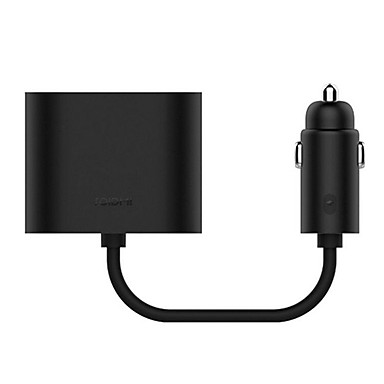
Original Xiaomi ROIDMI Car Dual Cigarette Lighter Splitter
Compatible with all-male port chargers, this ROIDMI Car Dual Cigarette Lighter Splitter is housed in a simple, yet elegant body. Moreover, it is made using high quality 304 stainless steel and high elastic contact shrapnel for durability.
With an inflaming retarding thickness of 1mm and inflaming retarding temperature of 750c, the device offers an excellent car charge function. While it normally retails for $19.79, LightinTheBox is giving you a chance to buy the ROIDMI Car Dual Cigarette Lighter Splitter for a reduced price of just $16.49.
This 17 percent off is currently available for the black color version of the dual cigarette lighter splitter. You can visit this link and grab the discount without wasting time. Note that you earn 1 percent cash reward on all orders.
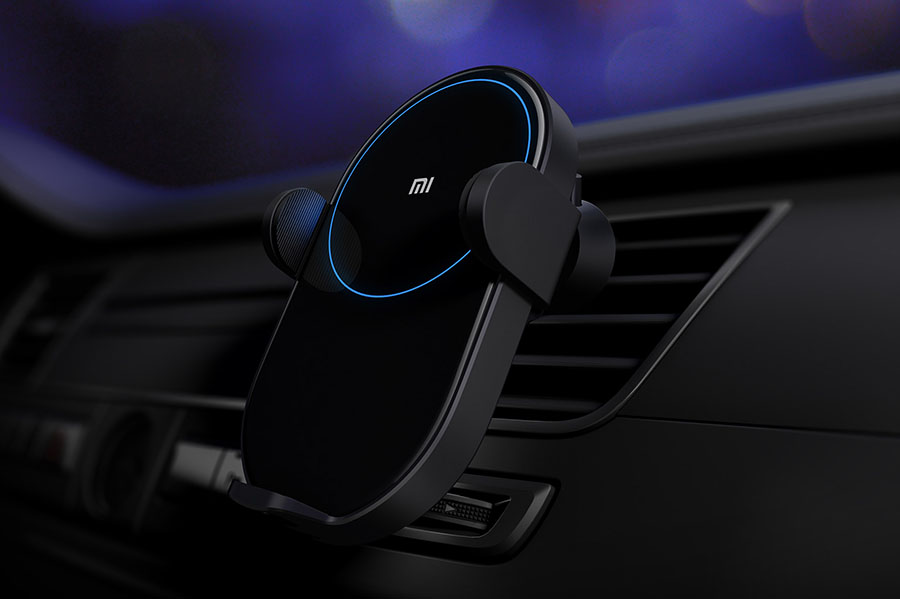
This Xiaomi branded car charger boasts an impressive array of features that justify the steep $60.49 price tag it carries. Much to the relief of cost-conscious buyers, the Xiaomi Wireless Car Charger 20W has now gone up for sale carrying a reduced price tag of just $47.29 through LightinTheBox.
Aside from this 22 percent discount, LightinTheBox is giving 1 percent cash back on all your orders. An absolute steal at this price, the Xiaomi Wireless Car Charger 20W is ideal for bumpy road conditions as it features an inductive electric clamp arm that locks it firmly.
Furthermore, the wireless charger comes with a built-in hidden infrared sensor and it offers multi-angle free stepless adjustments, allowing you to fix and use the phone according to your convenience.
You can visit this link to check out more details about the Xiaomi Wireless Car Charger 20W and grab the discount before the promo comes to an end.
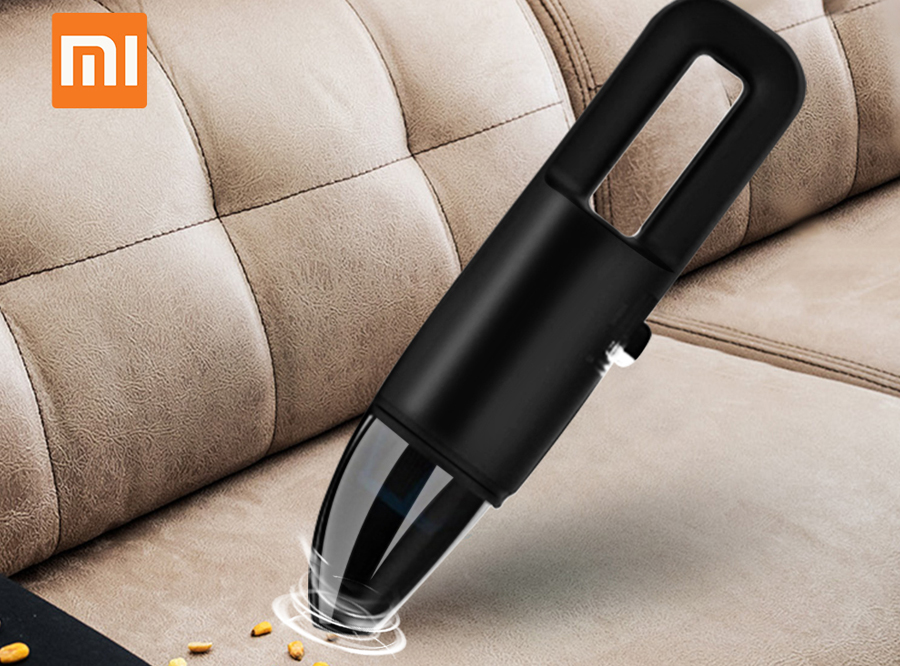
Xiaomi YouPin Cleanfly Car Wireless Vacuum Cleaner
Living up to its reputation for offering amazing consumer electronics, Xiaomi, along with Youpin brings to you this wireless handheld vacuum cleaner that won’t miss any dead spots in the car. Aside from offering freedom from hassles of wire, the Xiaomi YouPin Cleanfly Car Wireless Vacuum Cleaner ensures four times cleaning with just one full charge.
While other top-branded car vacuum cleaners that offer comparable features usually carry steep price tags, the Xiaomi YouPin Cleanfly Car Wireless Vacuum Cleaner is now up for grabs for a lowered price of only $60.49 on LightinTheBox. This is a significant 52 percent drop in the device’s original asking price of $124.49.
As if that weren’t enough, you get 1 percent cash back on all orders through LightinTheBox. You can follow this link and take full advantage of the discount before the promo wraps up.
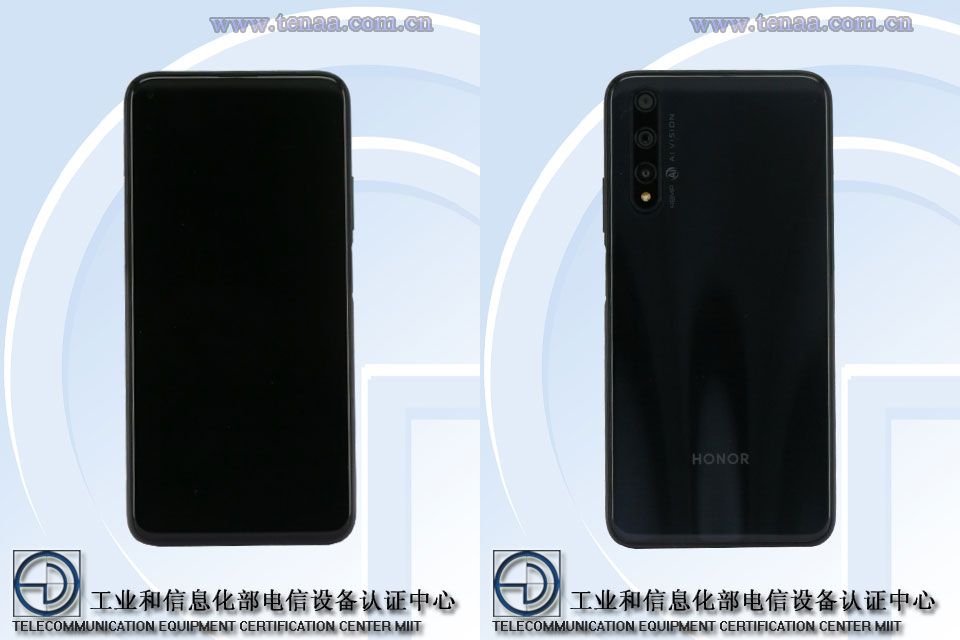
Honor has a new smartphone with model number YAL-AL50 / YAL-TL50 coming for China. It seems to be an upcoming member of the Honor 20 series since its model number and specifications resembles with the Honor 20 (YAL-AL10) smartphone. The Honor YAL-AL50 / TL50 seems to be a weaker version of the Honor 20.
The Honor YAL-AL50 / TL50 TENAA listings lack images of the phone. The handset has 154.25 x 73.97 x 7.87mm dimensions and it weighs 172 grams. The smartphone is equipped with a 6.26-inch display that offers 1080 x 2340 pixels full HD+ resolution.
The handset includes a 2.6GHz octa-core processor and its RAM variants are 6 GB, 8 GB and 12 GB. The smartphone has 128 GB and 256 GB storage models. It is loaded with Android 9 Pie OS. It has a minimum rated battery of 3,650mAh capacity. Its typical capacity could be 3,750mAh and it carries support for rapid charging. Its 3C appearance from last month had revealed that it may arrive with support for up to 20W rapid charging.
The Honor YAL-AL50 / TL50 has a triple camera setup on its back. It comprises of a 48-megapixel main lens, an 8-megapixel sensor and a 2-megapxel lens. For snapping selfies, it has a front-facing camera of 32-megapixel. The rear shell of the phone has a fingerprint reader.
The specifications and dimensions of the Honor YAL-AL50 / TL50 are almost identical different from the Honor 20. The only major difference is that instead of the quad camera setup found on the Honor 20, the newly spotted device has a triple camera system. Also, the Honor 20 supports up to 22.5W fast charging whereas the YAL-AL50 / TL50 could be coming with 20W rapid charging support. The 2.6GHz processor powering the YAL-AL50 / TL50 phone could be the Kirin 980 chipset which also powers the Honor 20 phone.
Last week, a leaked snapshot of an announced Honor 20 SE phone’s poster was spotted outside the offline store of Suning Tesco in China. It did not reveal any information on the specs of the phone. However, it did suggest that Honor is gearing up to add a new phone to the Honor 20 series. Hopefully, the company may make it official in the coming month.
Last week, Realme China had teased that it will be revealing information on the upcoming smartphone in this week. Today, it has released the first clue of its upcoming smartphone. While it is difficult to deduce to name of the phone through the first clue, the teaser has a hint that the coming may hold an unveil event on Sept. 4. It is likely to announce the Realme 5 Pro smartphone that has appeared on TENAA with its full specifications. However, there is a possibility that it may hit the Chinese market with a different moniker.
The above shown image has ‘R-Sep.-4-119-CLUE#1’ text mentioned its top left corner. Probably, it suggests that the Chinese firm has organized a launch event for unleashing its news smartphone(s) on Sept. 4. The ‘119’ number could be referring to the 119-degree superwide lens available on the smartphone.
In May, Realme had launched the Realme X smartphone in China. The Realme X Lite smartphone was also made official alongside it. The X Lite was a rebranded version of the Realme 3 Pro that was announced in April. Hence, it is likely that the Realme 5 Pro could be also coming to China with a different name. It is advisable to wait for further clues from the company to know more about the China launch of Realme 5 Pro. It remains to be seen whether it will be announcing multiple devices at the event.
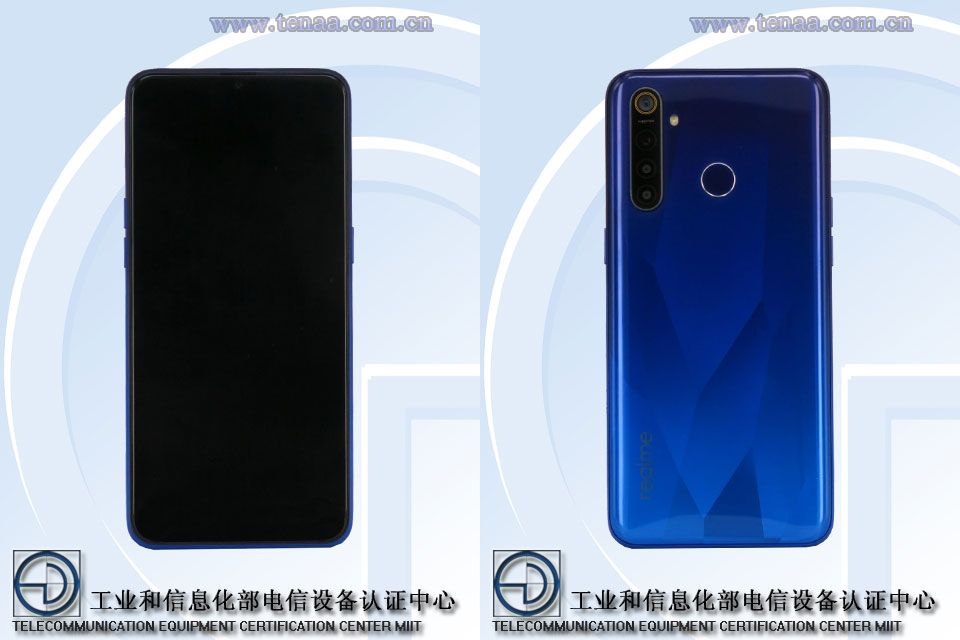
The Realme RMX1971 that has been spotted on TENAA with full specifications is the Chinese version of the Realme 5 Pro. The specs of the phone is exactly same as its Indian edition.
The Realme 5 Pro has a full HD+ resolution supporting IPS LCD display of 6.3 inches. The waterdrop notch enabled screen produces 19.5:9 aspect ratio. The Snapdragon 712 SoC is present as the driving force of the smartphone. TENAA listing shows that the Chinese version has only 4 GB of RAM and an inbuilt storage of 64 GB only. The Android 9 Pie OS runs on the device. The handset has support for external storage.
The back panel of the Realme 5 Pro has 48-megapixel + 8-megapixel + 2-megapixel + 2-megapixel quad camera system. It has a front-facing camera of 16-megapixel. It has a rear-mounted fingerprint reader.
On Aug. 28, OPPO India will be announcing the OPPO Reno2 series of smartphones. The lineup includes three phones like Reno2, Reno2Z and Reno2F. Among these, the Reno2 was recently spotted at the database of China’s TENAA regulatory body with full specifications. Today, the Chinese firm has confirmed that it will be unleashing the Reno2 series in China on Sept. 10.
OPPO’s above shown teaser confirm that it will be launching the Reno2 series on Sept. 10. The unveil event will be held on the said date at Shanghai at 10 AM. The other teaser that is shown below shows that the smartphone will be releasing in China in two color variants like Ocean Heart Blue and Mist Pink. In India, the smartphone is Reno2 will be coming in India in two colors like Ocean Blue and Luminous Black.
The entire specifications of the Reno2 has appeared on TENAA with full specifications. Its model number is PCKM00 / PCK00. Since the teasers from OPPO say that Reno2 series is heading to China, probably other phones like Reno2Z and Reno2F are also scheduled to debut on Sept. 10. However, there is no official confirmation on it yet.
The TENAA listing and official information shared by OPPO India have revealed almost everything about the Reno2. The only thing that is not known yet is its pricing. Speculations are rife that the Reno2 will be debuting in India with a price tag of around Rs. 35,000.
The Reno2 features a notch-less full HD+AMOLED display of 6.5 inches which allows that it boast a screen-to-body ratio of 93.1 percent. The display of the phone features an in-screen fingerprint reader. The Snapdragon 730G is present under the hood of the phone. It is assisted by 8 GB of RAM.
The ColorOS 6.0.1 flavored Android 9 Pie OS runs on the device. The handset will be soon treated with Android 10 update after its launch. The handset could be coming to China in 128 GB and 256 GB storage models. It lacks support for external storage. The 4,000mAh battery of the phone will carry support for VOOC 3.0 Flash Charge technology.
The Reno2 will be featuring a shark-fin shaped pop-up camera system for capturing selfie shots like original Reno smartphone. The module has a 16-megpaixel sensor and an LED flash. The rear-mounted quad camera setup of the phone will feature Sony IMX586 48-megapixel primary lens, an ultrawide 8-megapixel lens, a 5-megapixel telephoto lens with 5x hybrid zoom and a depth sensor of 2-megapixel. It aims to impress users with its camera features including its video stabilization function that was revealed in the previous week.
The Realme 5 and 5 Pro launched a few days back in India with quad cameras. The same phone will soon be released in China as well. Now, the more powerful sibling, the Realme 5 Pro has just passed through TENAA confirming that the launch is nearing. The specifications of the device that passed TENAA is exactly the same as the Indian version.
The Realme 5 Pro will come with the Snapdragon 712 2.3GHz processor with 4GB and 64GB of storage. There should be more memory variants available at launch with up to 8GB RAM options. Realme has added a quad-camera setup on the device, a first for the brand, featuring a 48MP primary sensor, 8MP wide-angle sensor, 2MP macro lens, and another 2MP portrait lens. The front camera will be a 16MP sensor. The battery is also going to be the same as the Indian version featuring 4000mAh.
The Realme 5 Pro Chinese variant that passed TENAA comes in sparkling blue color. The company should launch the crystal green variant too at launch since green is trending in the smartphone industry these days. We still don’t have a release date for the Realme 5 Pro in China, but a new teaser hints that we could see it as soon as September 4. Since the Chinese pricing is usually lower than Indian pricing, we can expect it to start at around 1200 yuan (~$170).
Xiaomi’s sub-brand Redmi is all set to launch its next-gen Redmi Note series smartphones in China — Redmi Note 8 and Redmi Note 8 Pro. After sharing a few camera samples of the Redmi Note 8 Pro, the brand’s general manager has now shared samples of the Redmi Note 8 smartphone on Weibo.
The camera samples of the upcoming Redmi Note 8 smartphone showcases the phone’s capabilities when it comes with low-light photography. Along with this, he has also confirmed that the phone will have a 48 MP primary sensor in its AI quad-camera setup.
Out of the two images shared by Lu Weibing, one of them is shot using the Super Night Mode while the other one is shot using Long Exposure. He also claims that the phone offers superb day-light photography experience. Looking at the camera samples, the phone seems to be offering an impressive output.
The company recently confirmed the camera specifications of the Redmi Note 8 smartphone. The 48 MP primary camera sensor will be paired with a super wide-angle lens, depth of field camera sensor, and a super macro camera lens. This confirmed that the fourth camera is not a ToF sensor.
It also confirmed that the phone will come with a different camera design from that of the Pro model as seen in the image above. While the camera sensors on the Pro variant are aligned vertically and placed in the top-center position, the vertically-aligned camera sensors on the Redmi Note 8 are placed in the top-left position.
In the top-center position, there’s a fingerprint sensor for added security. It has been confirmed that the phone will be powered by the Snapdragon 665 processor. The poster also seems to be hinting that the smartphone will be available in a white-blue gradient color variant.
Along with the Redmi Note 8 and Note 8 Pro smartphones, the company will also be launching its 70-inch Redmi TV at its launch event on 29th August in China. To know the phone’s pricing and availability details, we’ll have to wait for a couple of days.
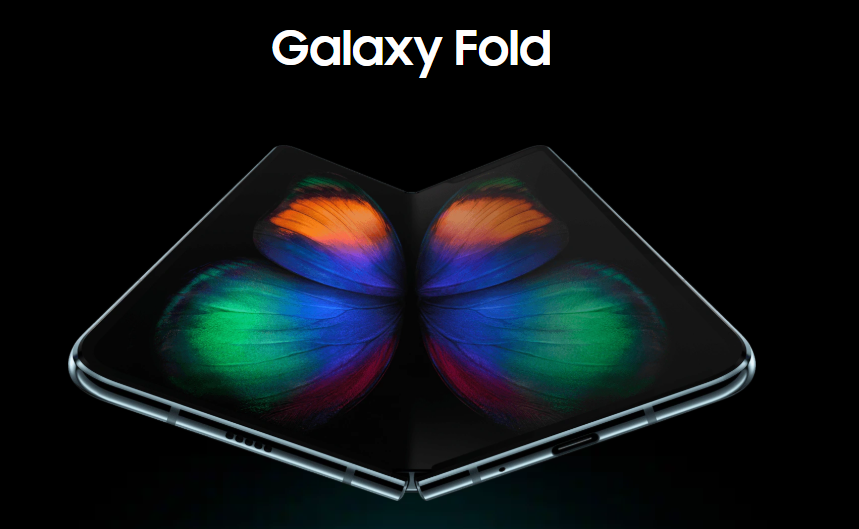
Samsung announced its first foldable smartphone — Samsung Galaxy Fold earlier this year. However, days before the phone was scheduled to go on sale, it’s launch was postponed as many reviewers started complaining about the phone’s display breaking in just a couple of days of usage.
After around three excruciating months for the company’s foldable department, Samsung confirmed that the Galaxy Fold smartphone will be officially released in September. However, no launch date has been revealed by the company. Now, Samsung China has started taking pre-registration for the Galaxy Fold smartphone on its website.
Samsung had explained that it made several important changes to the phone’s design addressing the flaws in the original product. Further, it added that the phone was put through ‘rigorous tests’ to validate this new design. In an official release, the South Korean giant explains the key changes made to the phone’s design. They are as follows:
The top protective layer of the Infinity Flex Display has been extended beyond the bezel, making it apparent that it is an integral part of the display structure and not meant to be removed.
Galaxy Fold features additional reinforcements to better protect the device from external particles while maintaining its signature foldable experience:
The top and bottom of the hinge area have been strengthened with newly added protection caps.
Additional metal layers underneath the Infinity Flex Display have been included to reinforce the protection of the display.
The space between the hinge and body of Galaxy Fold has been reduced.
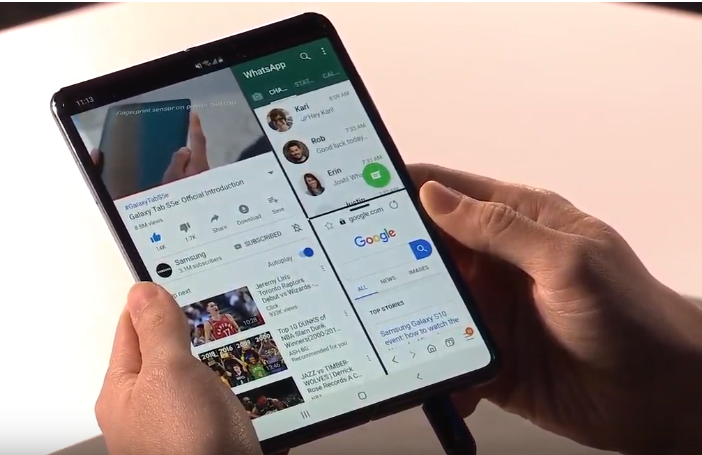
Coming to the specifications, the Samsung Galaxy Fold smartphone presents a 7.3-inch Infinity Flex Display with a 1536 x 2152 pixels screen resolution. In this mode, you can use three apps at the same time which Samsung calls Three-app Multitasking.
When folded into phone mode, it offers a 4.6-inch display with 840 x 1960 pixels screen resolution. It comes with a feature called App Continuity which automatically adjust an app when you switch screens. It is powered by a 7nm processor paired with 12GB of RAM and packs 512GB of internal storage using UFS 3.0 technology.
The phone comes with a camera module that’s made up of a 16MP ultra-wide camera, a 12MP telephoto camera, and another 12MP wide-angle camera. On the front side, it comes with a 10MP sensor. It runs the latest Samsung One UI with Android 9 Pie operating system out-of-the-box. The phone packs a 4,380mAh battery which is split into two units.
The Samsung Galaxy Fold retains the same price tag as before, $1980. Since the company has started pre-registrations for the same, the launch of Samsung’s first foldable smartphone should be just days away.
We use cookies on our website to give you the most relevant experience by remembering your preferences and repeat visits. By clicking “Accept”, you consent to the use of ALL the cookies.
This website uses cookies to improve your experience while you navigate through the website. Out of these, the cookies that are categorized as necessary are stored on your browser as they are essential for the working of basic functionalities of the website. We also use third-party cookies that help us analyze and understand how you use this website. These cookies will be stored in your browser only with your consent. You also have the option to opt-out of these cookies. But opting out of some of these cookies may affect your browsing experience.
Necessary cookies are absolutely essential for the website to function properly. This category only includes cookies that ensures basic functionalities and security features of the website. These cookies do not store any personal information.
Any cookies that may not be particularly necessary for the website to function and is used specifically to collect user personal data via analytics, ads, other embedded contents are termed as non-necessary cookies. It is mandatory to procure user consent prior to running these cookies on your website.






 Still riding high on the success of its gaming smartphone, ASUS launched the next-generation gaming smartphone called the ROG Phone 2 (or ASUS ROG 2 Gaming Phone).