Meizu will be launching the Meizu Note 9 smartphone in China on March 6. The entire specs of the phone have been leaked through its TENAA listing. A leaked photo of a phone called Meizu Note 9 Lite has appeared on Slash Leaks. The leak has revealed few specs of the smartphone.
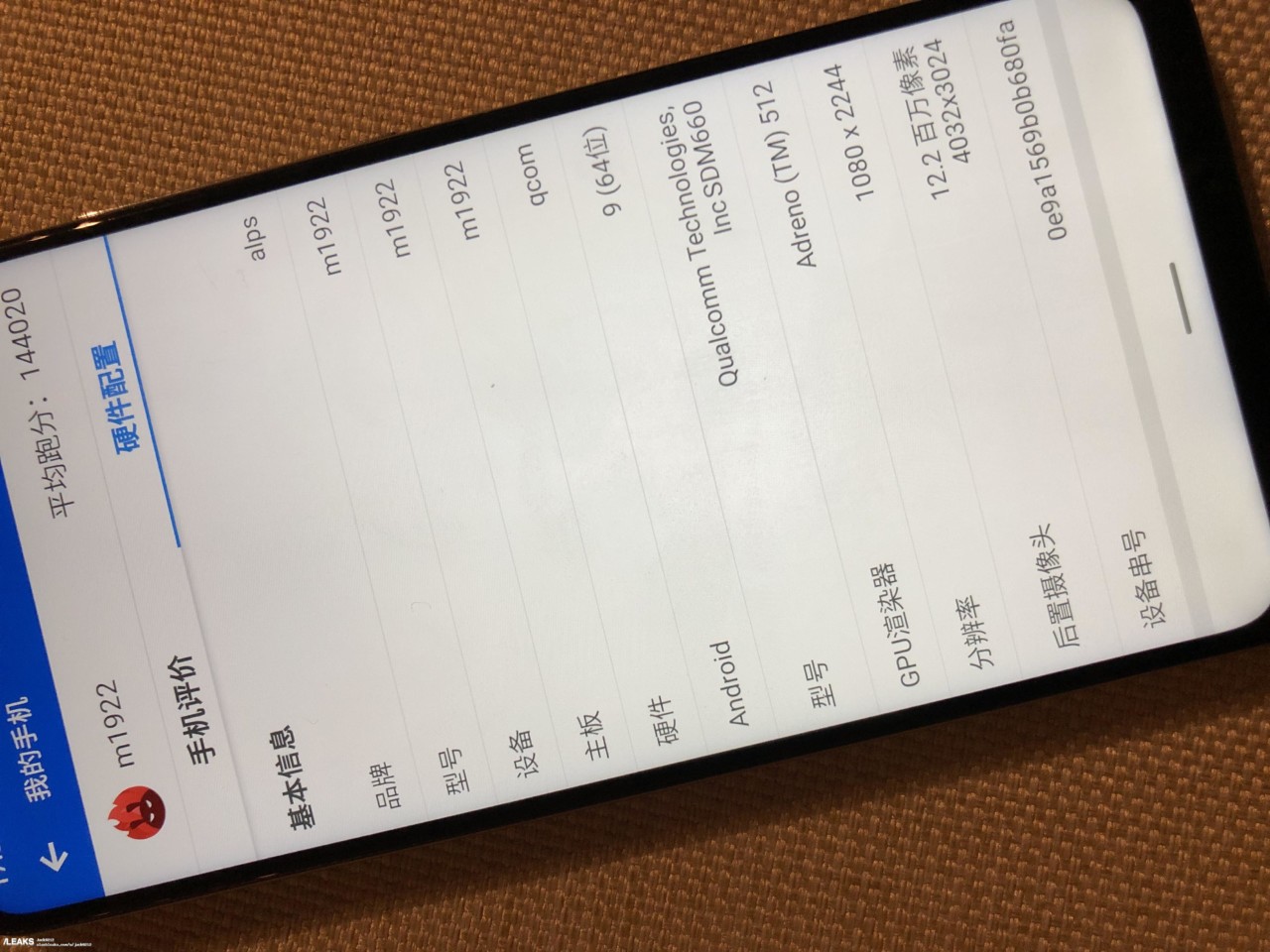
The leaked photo reveals that the newly spotted Meizu phone has a model number of m1922. There is no direct evidence that confirms that this handset is the Meizu Note 9 Lite. The Meizu Note 9 has a model number of m1923. Hence, it is being speculated that the m1922 could be the Meizu Note 9 Lite.
The snapshot does not reveal the display design of the Note 9 Lite, but it reveals some of its key specs. The exact size of the display of the phone is not known. The handset carries support for full HD+ resolution of 1080 x 2244 pixels. It is the same screen resolution supported by the Meizu Note 9. Hence, it can be said that the Meizu Note 9 Lite will be equipped with a waterdrop notch screen. The image confirms the presence of a 12.2-megapixel camera on the device. However, there is no confirmation on whether the handset will be equipped with a single camera or a dual camera setup on its rear.
The Meizu Note 9 is powered by the Snapdragon 675 chipset that includes Adreno 612 GPU. The Note 9 Lite is driven by Snapdragon 660 that comes with Adreno 512 GPU. The handset is preinstalled with Android 9 Pie OS. The Note 9 was recently spotted with an average benchmarking score of 175,897 on AnTuTu. The Snapdragon 660 powered Note 9 Lite has recorded an average benchmarking score of 144,020.
The Meizu Note 9 Lite is yet to appeared on TENAA. Hence, there is no information available on the specifications of the Meizu Note 9. Also, there is no confirmation on whether the Meizu Note 9 Lite will be announced with the Meizu Note 9 through the upcoming unveil event. It is advisable to take this report with a grain of salt and wait for further reports to confirm on the existence of Meizu Note 9 Lite.
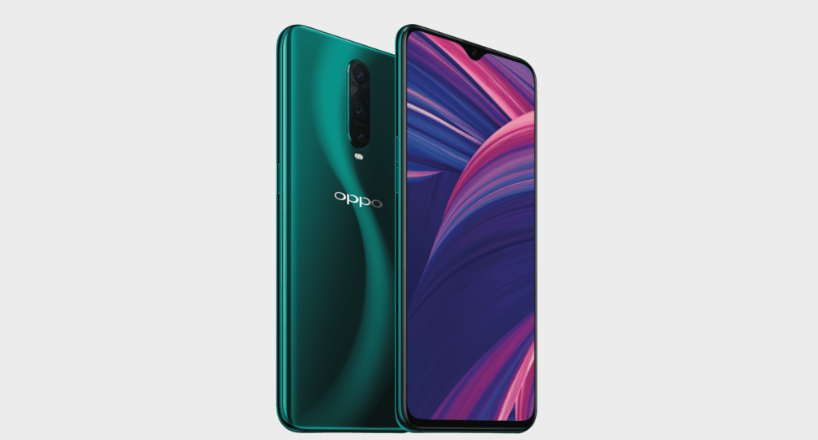
In December last year, Chinese smartphone manufacturer Oppo had launched its flagship smartphone, Oppo R17 Pro, in the Indian market for a price of Rs. 45,990 (approximately $648). Now, the company has slashed the phone’s pricing by Rs. 6,000 (approximately $85).
With this price cut, the Oppo R17 Pro is now available for purchase in India for a price of Rs. 39,990 (approximately $564). The phone’s new pricing is applicable for purchases through online stores as well as offline stores. The Oppo R17 Pro is available in India in two color options — Radiant Mist and Emerald Green.
The glass-bodied smartphone features a metallic frame around its edges and comes with a 6.4-inch AMOLED display having a waterdrop notch and 19.5:9 aspect ratio. The phone is also equipped with an under-screen fingerprint reader.
Under the hood, the Oppo R17 Pro is powered by Qualcomm’s Snapdragon 710 octa-core chipset along with 8 GB of RAM. The native storage of the phone is 128GB and also has a microSD card slot for additional storage.
In the camera department, the phone comes with a triple camera module on the back, arranged vertically. It features a 12-megapixel main sensor with variable aperture ranging from f/1.5 to f/2.4 and a 20-megapixel secondary sensor with f/2.6 aperture. The third sensor is a ToF (Time of Flight) camera that can be used to accurately map objects at up to 3 meters. On the front side, it comes with a 25-megapixel ultrawide camera.
Connectivity options on the device include a dual-SIM slot, 4G VoLTE, Wi-Fi 802.11ac, Bluetooth 5.0, N, C, GPS and USB-C. However, the phone lacks 3.5mm headphone jack. It runs Android 8.1 Oreo operating system with the company’s own ColorOS 5.2. The phone is fuelled by a 3,700mAh battery that carries support for 50W fast charging through SuperVOOC Flash Charge technology.
As smartphones are getting more advanced, the use of screen protectors is reducing due to technical constraints. Samsung’s recently launched flagship device, Galaxy S10 is an excellent example of this which carries Ultrasonic Fingerprint Sensor. These sensors tend to be faster and efficient than the optical sensors, but comes with some disadvantages also. UFS sensors don’t work correctly if some third layer is present in between your finger and the sensor. Eventually, it posed a big challenge for the users who would like to use screen protectors on the device.
Now, users need not worry as the Korean giant is going to ship the Galaxy S10 devices with a pre-applied screen protector. In a recent official confirmation via Samsung community, the company said that they will ship new flagships with a screen protector for free. Samsung has opted for the pre-installed screen protector to increase overall customer experience with the improved screen durability. The company also want users to use the new device at its full potential without any functional constraints.
Samsung won’t be covering the screen protector under any warranty. Although, all other in-box accessories such as USB Connector, Travel Adapter, and AKG handset will remain under 1-year warranty. Samsung is opposing the use of traditional glass and polyurethane protectors as they won’t allow the Ultrasonic Screen Fingerprint sensor to work properly. The Korean giant has even notified their partner carries and retail stores to carry Samsung branded screen protectors for replacement purchase option.
It will ship with a compatible third-party protector for free. Users can also opt for Samsung’s replacement screen protector separately for $29.99.
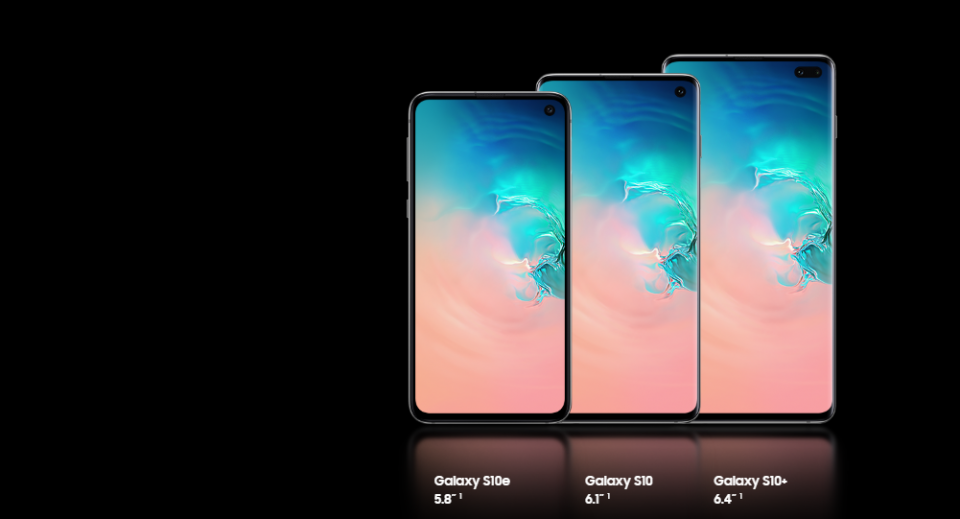
Moreover, Samsung announced the Galaxy S10, Galaxy S10+ and S10e with different specs at its Galaxy Unpacked event. The new devices carry curved Infinity-O AMOLED display featuring in-screen Ultrasonic Fingerprint sensors. The Galaxy S10 offers a 6.1-inch display, S10+ comes with 6.4-inch display and the S10e features 5.8-inch display.
Among them, Galaxy S10e is the most affordable device available for the starting price of $749. The standard S10 is available for $899, and the biggest S10+ starts at $999. Its pre-orders are already live in the respective countries.
OnePlus is a fast-growing smartphone manufacturer which have established its roots within a few years. They have launched various flagship devices packing high-end specs and fully furnished software. OnePlus is always known for its responsive software support which always keeps on bringing new features without compensating its software accuracy. Now, it seems that OnePlus is changing a bit due to its increasing product portfolio.
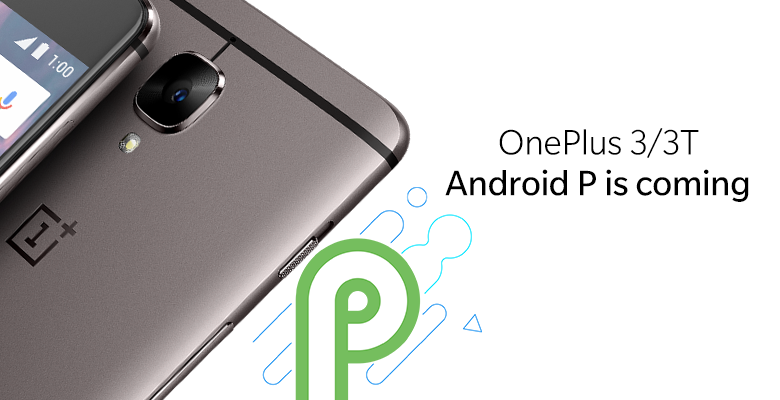
It’s been a long time since OnePlus has promised Android Pie update for OnePlus 3 and 3T devices. In actual, OnePlus has confirmed about the update on 2016 flagship devices about seven months ago. Despite a fake benchmark listing of OnePlus 3T running Android Pie leaked a few months ago, nothing has been seen on the ground level. Eventually, the users have started complaining about the same. In a similar question asked by a user at community forums, OnePlus manager replied that the company is working on to bring one last Oreo-based update after which the Android Pie update will roll out.
Still, there are no precise or exact details about when the OnePlus 3 series devices will start receiving the update. In order to settle down the users’ queries, OnePlus Manager David Y has made an official statement. The reply from the manager is even not complete, and it is missing actual details like an exact date or any other reliable information. In a David Y statement, it has been confirmed that OnePlus will surely provide an update, but before that, another Oreo-based update will roll out first.
Further, there’s no other information like when it might release as said above. Well, it’s a respite for the users who have stopped waiting for the update due to extensive delay. Users were bit frustrated, but we hope the official statement would have given them some respite.
Although, OnePlus 3 has already received two major updates including Android Nougat and Oreo. The latest Android Pie update will be the third consecutive big update for a 3-year-old device. Earlier, OnePlus denied the Android Pie update and termed the Android Oreo as the last update for the device. But due to increasing competition from rivals, OnePlus promised the Android Pie update previous year in summers. We hope OnePlus 3/3T users will get the due update within the next couple of months.
Although, how many of you are waiting for the Android Pie update on OnePlus 3/3T?
On March 4, Realme will be launching the Realme 3 smartphone. However, a new teaser released by the company reveals that it may also debut the Realme 3 Pro alongside it.
The below shown poster that carries “Be Proactive” text lasts for only few seconds. The highlighting of “Pro” towards the end of the clip suggests that the company could be teasing the arrival of the Pro variant of the phone. Yesterday, Xiaomi had launched the Redmi Note 7 and Redmi Note 7 Pro smartphones in India. Probably, Realme could be rivaling the Redmi Note phones by launching the Realme 3 and Realme 3 Pro smartphones.
The Realme 3 leaks that have surfaced in the recent weeks that it will be arriving with attractive rear design. A leaked image of the frontside of the phone has revealed that it will be featuring a dewdrop notch screen. The exact screen size is not known. Since the predecessor model features a 6.2-inch display, the Realme 3 could be equipped with a similar sized screen. The handset will come preinstalled with ColorOS 6.0 based Android 9 Pie OS.
The smartphone will be powered by the Helio P70 chipset. On AnTuTu, the handset has scored 137,976 points. A few camera samples of the Realme 3 have also surfaced. The exact specs of the Realme 3’s cameras are not known. The handset will be offering its users with two new photography features such as Chroma Boost and Nightscape. Rumors surrounding the phone have revealed that the Realme 3 will be arriving with 4 GB of RAM, 16-megapixel + 5-megapixel dual camera setup and a 4,000mAh battery. The handset will be exclusively available for purchase through Flipkart in India.
None of the Realme phones that have launched so far have carried support for fast charging. Realme CEO Madhav Sheth had hinted at the end of the previous year that an upcoming phone will be equipped with VOOC fast charging by OPPO. The lightning image on the above poster could be a hint that the Realme Pro 3 is coming with VOOC fast charging technology.
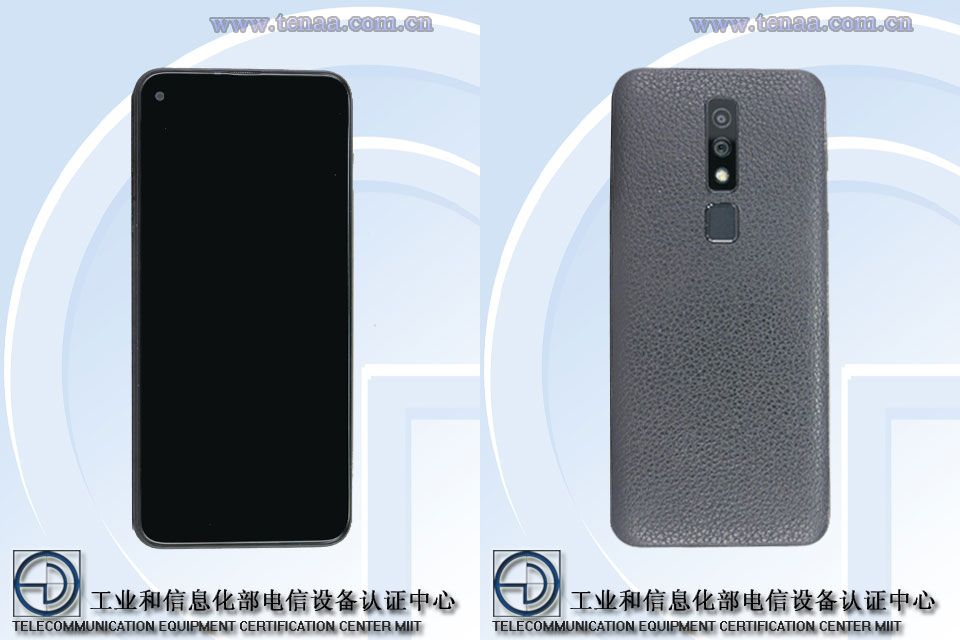
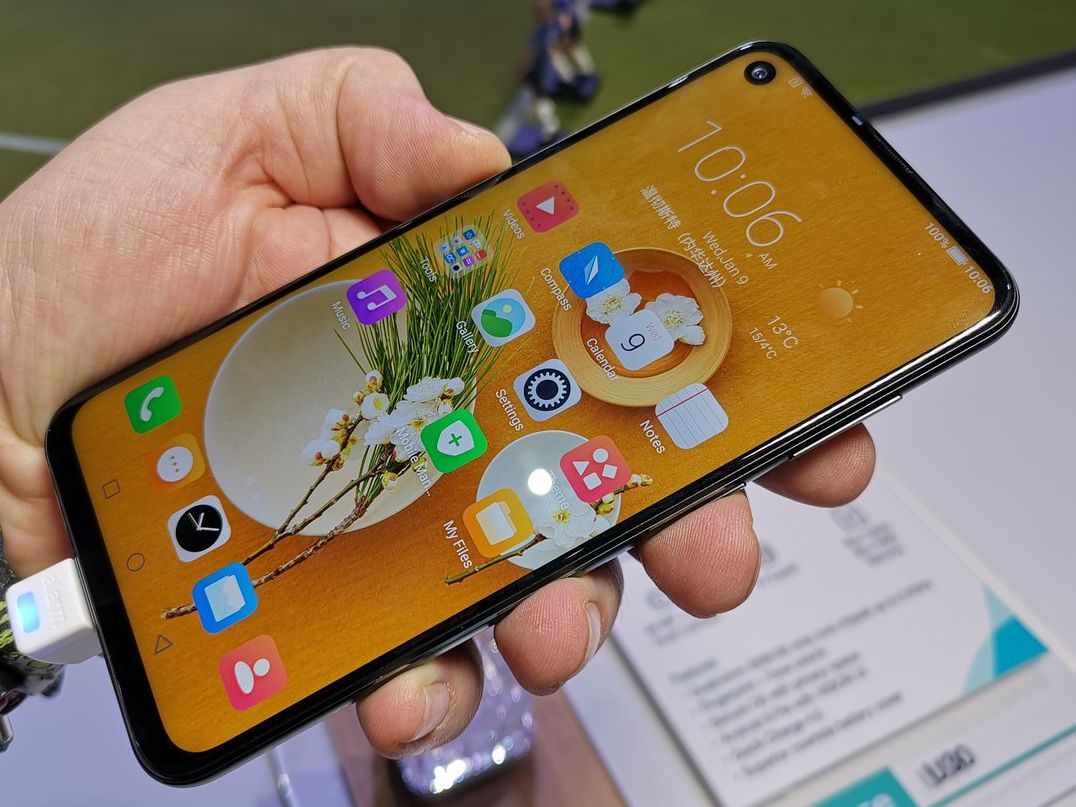
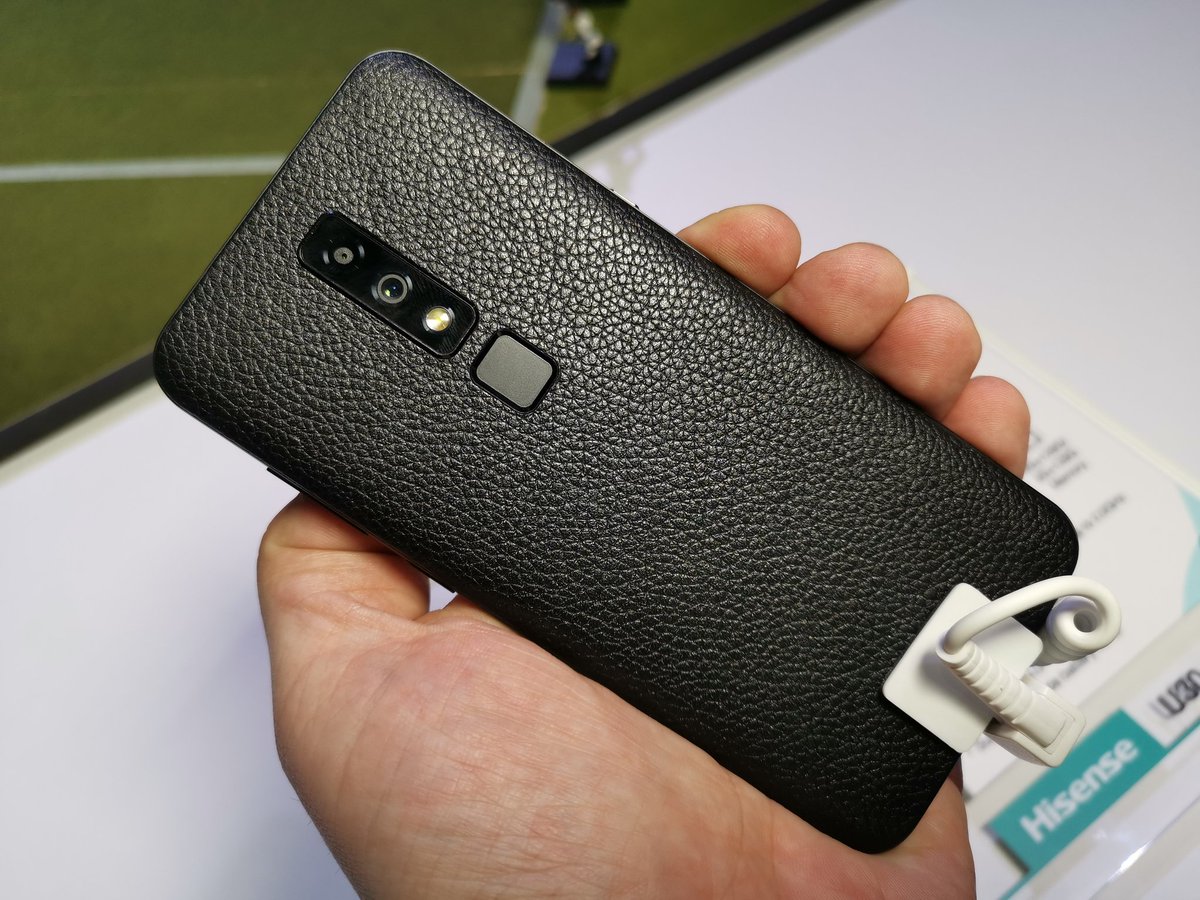
At Consumer Electronics Show (CES) 2019 that was held at the beginning of this year, Hisense had showcased the Hisense U30 smartphone with punch-hole display and a leather rear. The same smartphone with model number HLTE720T seems to have been certified by China’s TENAA telecom authority.
According to TENAA, the Hisense HLTE720T measures 156.5 x 73.6mm. The handset is equipped with a leather back . Probably, this could be the reason why it has a thickness of 9.16mm. The device weighs 186 grams. Deft Blue and Nix Black are the two color variants of the alleged Hisense U30.
It features a 6.3-inch IPS LCD display that supports full HD+ resolution of 1080 x 2340 pixels. The handset feature O-Infinity display manufacturer China’s Tianma company. The top-left corner of the screen has a punch-hole for the front camera.
The Hisense HLTE720T is powered by an octa-core processor that works at 2.0 GHz. At the CES 2019, it was revealed that the phone is fueled by Snapdragon 6150 which is the codename of the Snapdragon 675. It is the same chipset that powers the Redmi Note 7 Pro and Vivo V15 Pro. A 4,400mAh (minimum) battery is present inside the smartphone. It was revealed at CES 2019 that the handset is equipped with Quick Charge 4.0 enabled 4,500mAh battery.
The Hisense U30’s TENAA listing reveals that it will be hitting the Chinese markets in two models such as 6 GB RAM + 128 GB storage and 8 GB RAM + 256 GB. The Android 9 Pie OS will be preinstalled on the device. The operating system will be overlaid with company’s Vision UI. There is no support for external storage on the U30.
The rear side of the phone features a vertical dual camera setup followed by an LED flash. It includes a 48-megapixel primary sensor and a 5-megapixel depth sensor. The handset could be equipped with Samsung ISOCELL Bright GM1 as the main sensor in its dual camera setup. For capturing selfies, it has a frontal shooter of 20-megapixel. A fingerprint scanner is also available on the backside of the Hisense U30.
At present, there is no information available on the pricing of the Hisense U30. It is expected to release in China, Russia and select markets in Europe starting from this month.
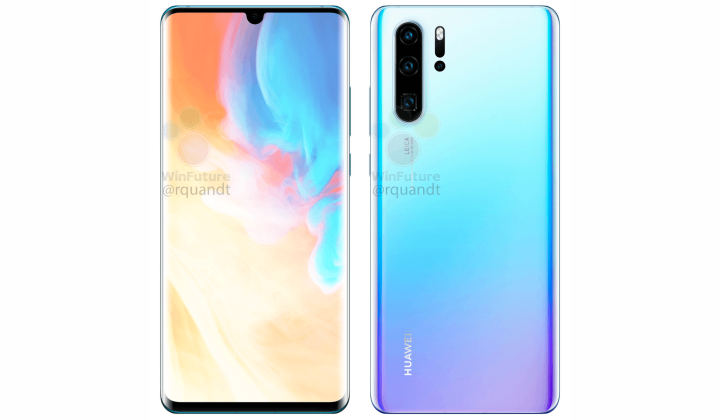
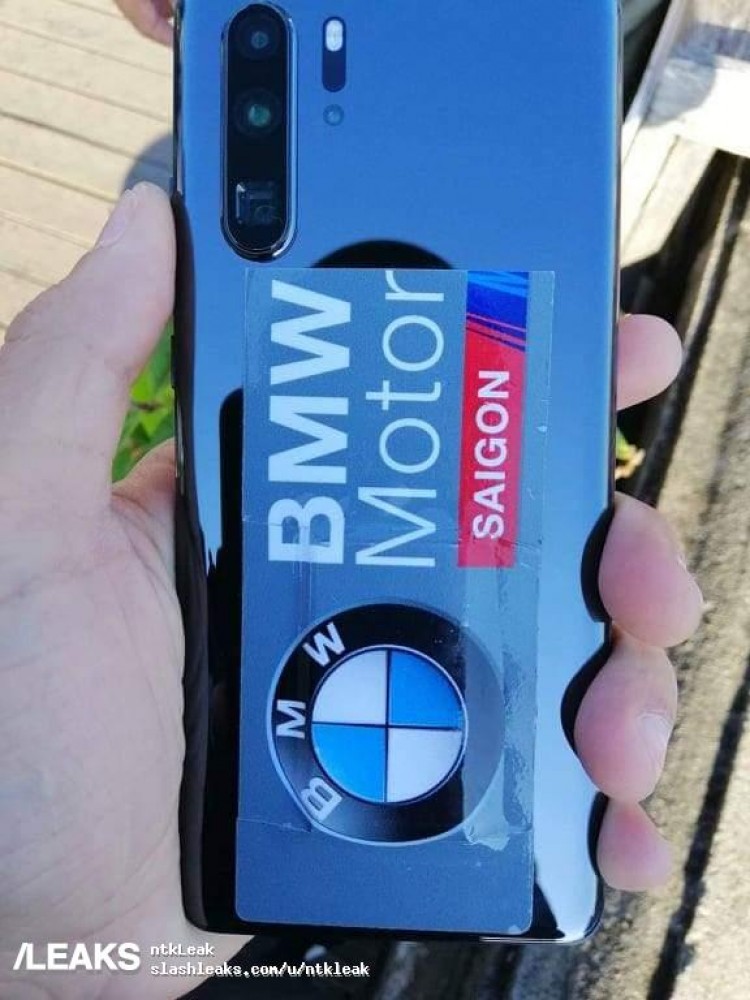
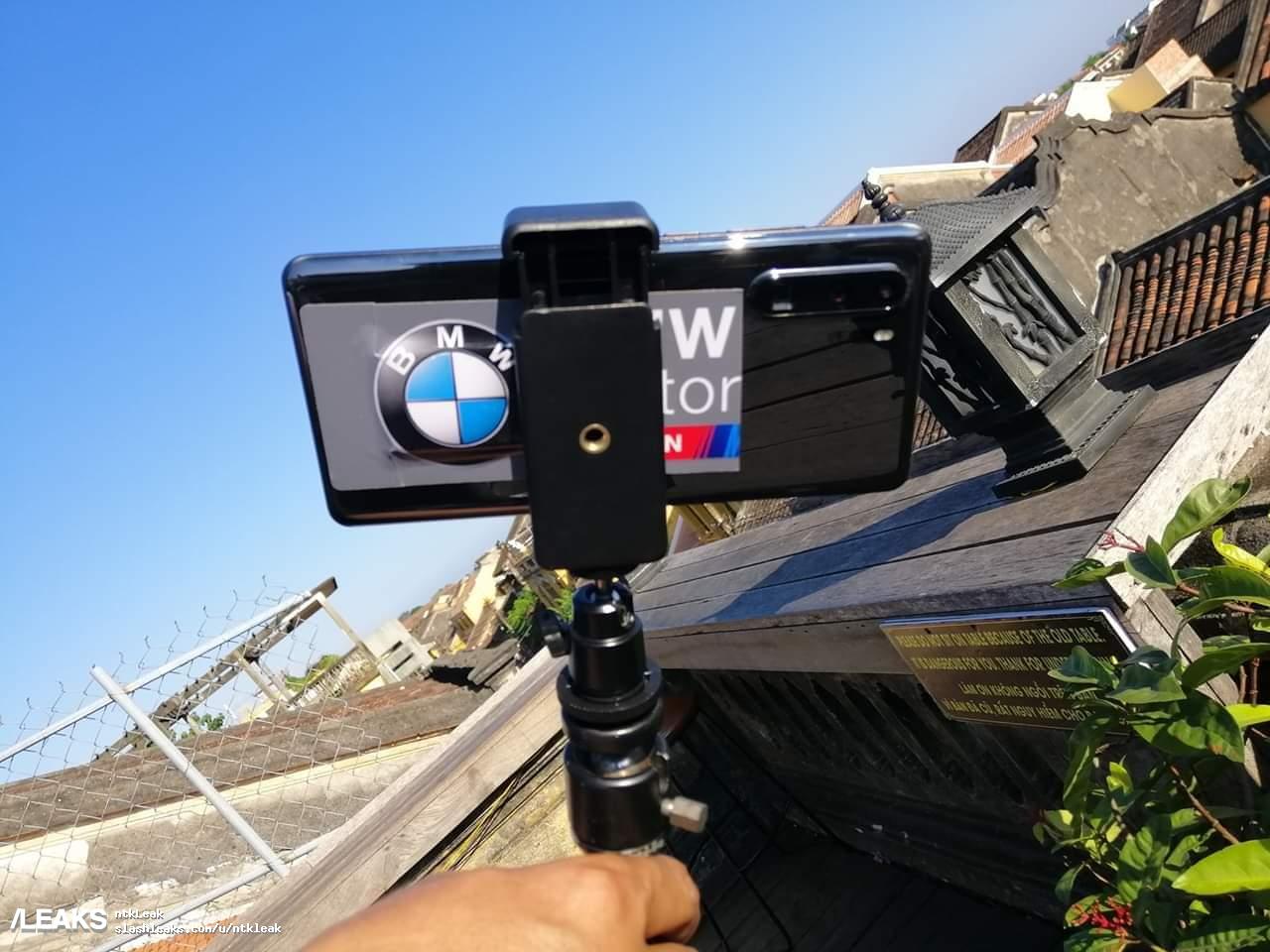
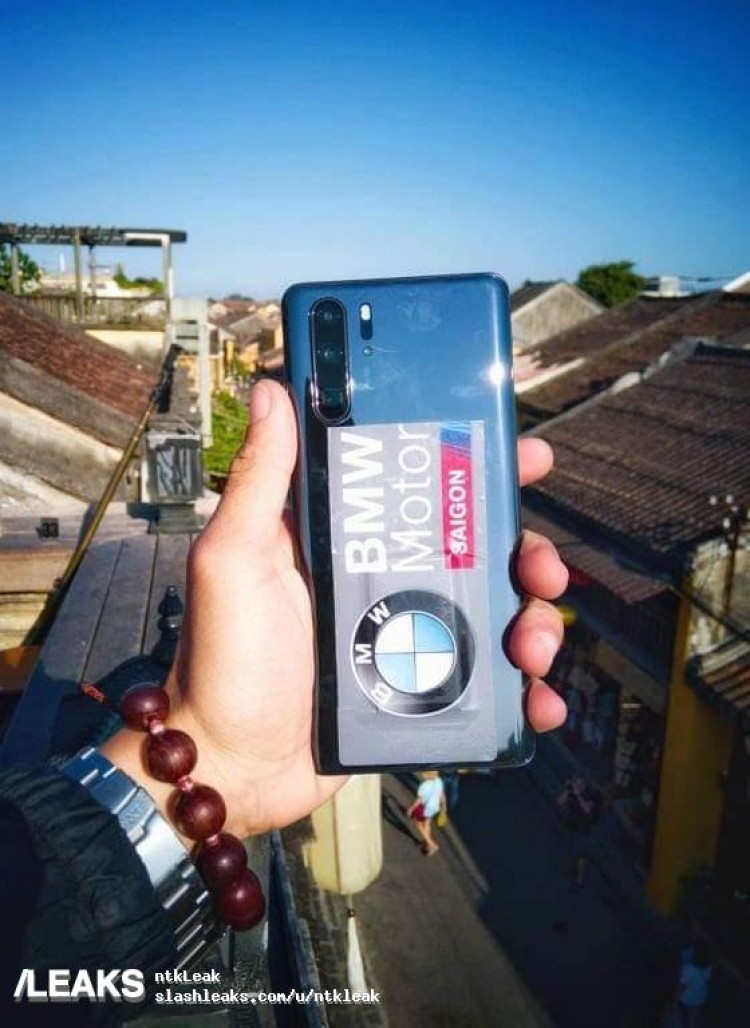
Popular tipster Roland Quandt had recently shared renders of the upcoming Huawei P30 and Huawei P30 Pro smartphones. A mysterious handset with rear design similar to the P30 Pro has been spotted in the hands of Huawei Consumer Business Groupe CEO Richard Yu. A blue variant of the phone has surfaced through a separate leak.
The new images of the Huawei P30 Pro show that it is equipped with three vertical cameras that are placed at the top-left corner of the back panel. Alongside the triple camera setup is a dual-tone LED flash, a laser autofocus module and a fourth camera sensor. The fourth lens could be a ToF (Time of Flight) sensor. There is no information on the camera specs of the P30 Pro.
The handset in the hand of Richard Yu does not fully reveal its rear design of the P30 Pro. However, the fresh photo shown below gives a good look at the rear shell of the smartphone. The third sensor in the triple camera setup appears squarish. It’s a deeper lens that may carry high zoom capabilities.
Based on previous leaks, the Huawei P30 Pro could be arriving with a 6.5-inch OLED panel with waterdrop notch. The display of the phone could be embedded with an optical in-screen fingerprint sensor. The Kirin 980 chipset may power the phone along with 8 GB of RAM. It is speculated that there is a 12 GB RAM edition of the phone that will carry support for 5G connectivity. The exact size of the battery of the P30 Pro is not known yet. However, the 3C certification of the phone has revealed that it will carry support for 40W fast charging.
The Huawei P30 Pro is expected to go official along with Huawei P30 handset on March 26. The P30 is rumored to arrive with 6-inch OLED panel with in-screen fingerprint reader, Kirin 980, triple rear cameras, 25-megapixel front-facing camera and 22.5W fast charging support. There is no information on the price tag of the P30 Pro.
Black Shark, a gaming smartphone manufacturer based in China and backed by Xiaomi, is now setting up operations in India. The company will be headquartered in Bengaluru and will be headed by David Li, VP of Black Shark Global. He will manage the overall operations in India.
Along with him, Chirag Nagendra, former OnePlus communications head, will also be part of the team and will be responsible for brand building and communications strategy as Black Shark India’s Marketing Head.
Xiaomi has sent out a press release announcing the arrival of Black Shark in India and is currently setting up the operations. As for the product launch, the company said that the official product launch date will be announced later. Along with its gaming smartphones, we also expect the company to bring its peripherals to the Indian market.
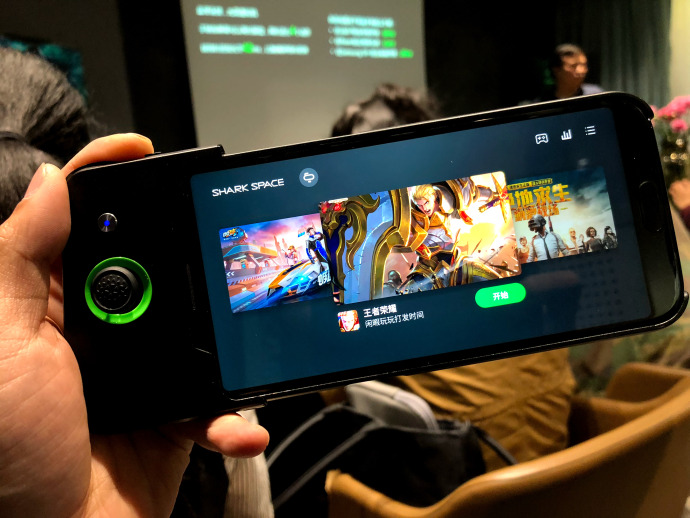
Xiaomi Black Shark, the company’s first gaming smartphone, was launched in April last year in China and later went on sale in other markets. It comes with a 6-inch Full HD+ display featuring a 2.5D curved screen and 2160 x 1080 pixels screen resolution. Under the hood, the device is powered by Qualcomm’s Snapdragon 845 octa-core processor along with Adreno 630 GPU. It also packs an advanced liquid cooling system to dissipate heat that is generated while playing the games.
The device packs 8GB of RAM and 128GB of internal storage. The phone runs Android 8.1 Oreo operating system out of the box which will be later updated to Android 9 Pie. The handset is backed by a 4,000mAh battery. A Bluetooth-powered precision gamepad is also included in the box, for free.
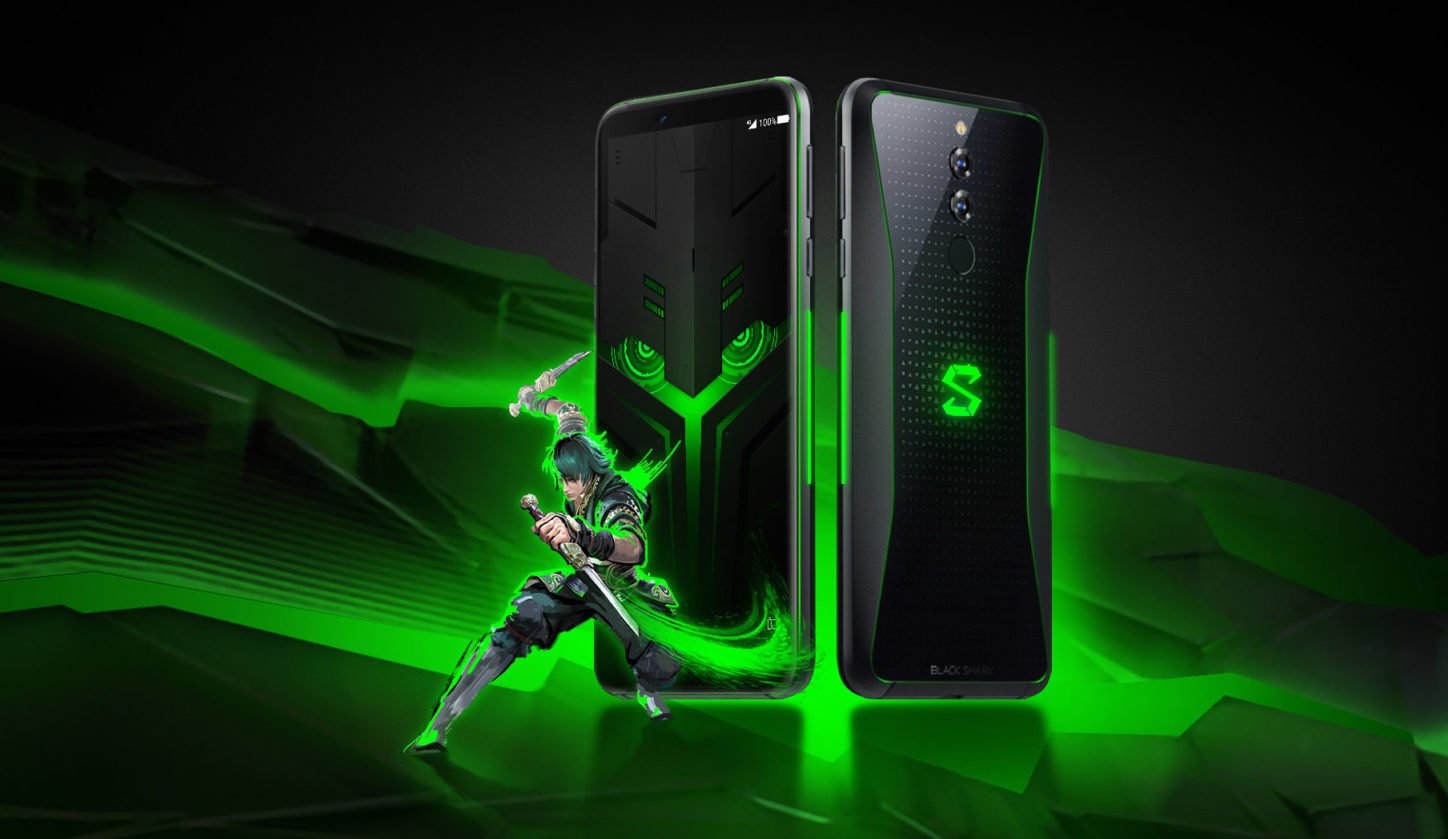
In October last year, the company launched its second gaming smartphone, dubbed Black Shark Halo. It features a 6-inch HDR ready AMOLED display having a resolution of 2160×1080 pixels and is powered by a Qualcomm Snapdragon 845 SoC coupled with an Adreno 630 GPU. It is the first device that has gone on sale with 10 GB of RAM and 256GB of internal storage.
In the camera department, Black Shark helo comes with a dual rear camera of 12-megapixel primary sensor and a 20-megapixel secondary sensor. On the front, Xiaomi has added a 20megapixel shooter for selfies. The phone also carries extended battery capacity of 4,000mAh to sustain your gaming sessions for even a larger time. There are various AI features which facilitate users while you are playing games or usually using the device.
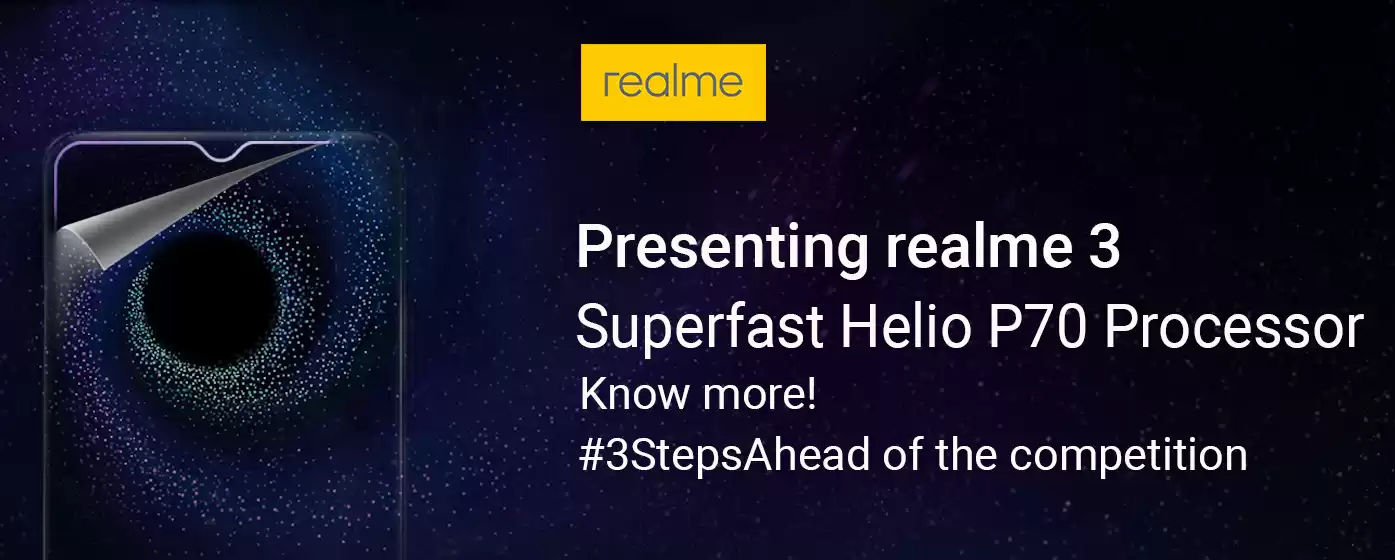
Realme is set to launch its upcoming smartphone — Realme 3 next week. Ahead of the phone’s official launch, the company trying to build up the hype and has been teasing and revealing some of the features of the phone.
Now, the company has confirmed that the smartphone will come with a dew-drop notch on top of the display that will house the front-facing camera. Realme has also confirmed that the phone will be powered by MediaTek Helio P70 chipset and 4,230mAh battery.
Another teaser released from the company hints at the launch of Realme 3 Pro alongside the Realme 3 in India on 4th March. Also, the company has confirmed that the smartphone will be available for purchase in India exclusively through Flipkart.
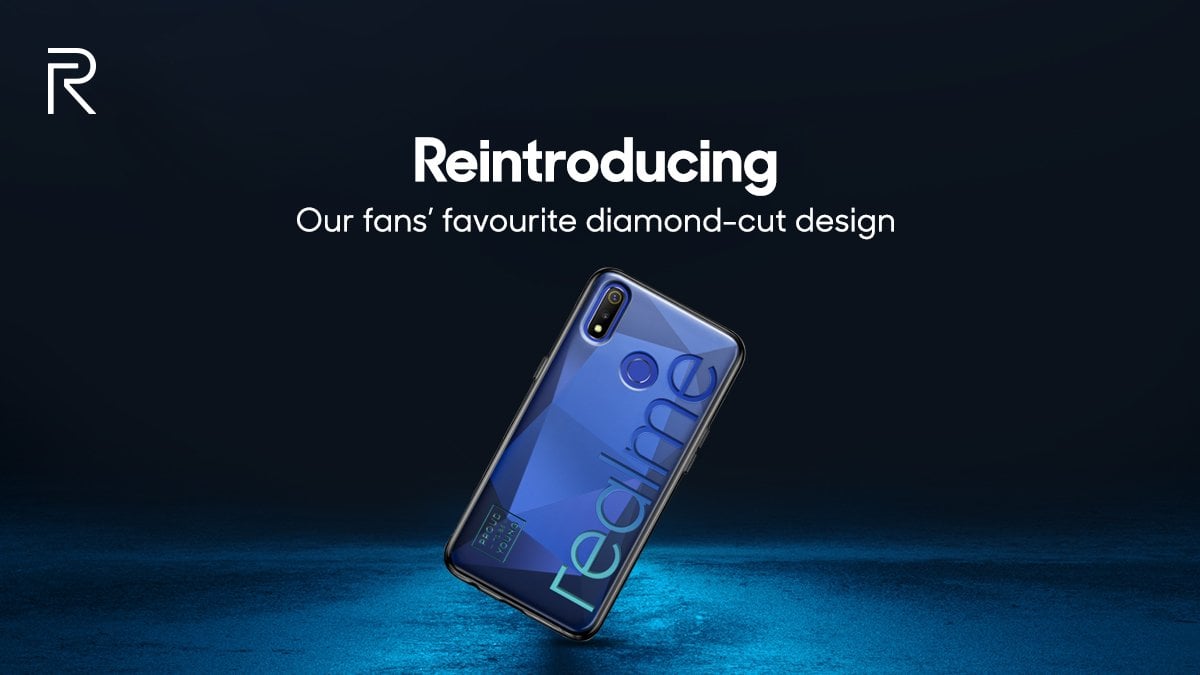
Earlier, the company had shared an image of the smartphone with a diamond-cut design along with a caption that reads “Reintroducing”, suggesting that the upcoming smartphone will come with a diamond-cut design, which the company offered in the Realme 1.
The Realme 3 won’t be the company’s first smartphone to be powered by MediaTek Helio P70 SoC. Realme U1, the company’s first smartphone in its all-new U-series for selfie-centric phones, is also powered by the same chipset.
The MediaTek Helio P70 processor is built by TSMC using their 12nm FinFET technology and features Cortex-A73 and Cortex A53 cores in the same 4+4 arrangement, coupled with ARM Mali-G72 GPU. The CPU is clocked at 2.1GHz for the A73 cores and 2.0GHz for the A53 cores. The GPU is also clocked higher at 900MHz. The AI processing unit (APU) also brings a 10-30% improvement in processing efficiency compared to the Helio P60.
Recently, a photo of the Realme 3 was shared online by popular tipster Ishan Agarwal which showcased the AnTuTu benchmark of the device, scoring an impressive 137,976. While official specs are not yet available, the phone is rumored to feature a 6.3-inch display with FHD+ resolution, 4GB RAM, dual 16MP + 5MP cameras at the back, and Android 9 Pie operating system.
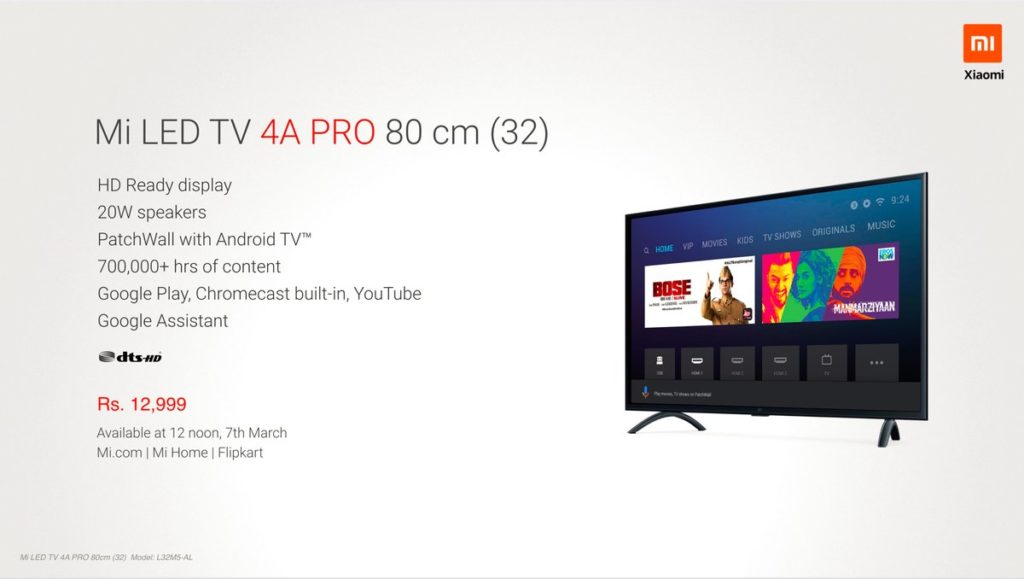
Xiaomi on Thursday held a product launch in India and the headlines were dominated by the Redmi Note 7 and Redni Note 7 Pro that were both unveiled. Apart from the duo, the tech giant also released a couple of other products. One of such is the Mi LED TV 4A Pro 32 inches and the Mi Sports Bluetooth Earphones Basic.
The Mi LED TV 4A Pro 32 is an improved version of the Mi TV 4A which has been one of Xiaomi’s highest selling smart TV and its cheapest. The new model comes with a 32-inch HD ready (1366×768 pixels) 60Hz display with a 178-degree viewing angle. The TV also features two 10W speakers and gets its interface via the PatchWall UI with Android TV (Android 8.1 Oreo). It is powered by a 64-bit quad-core Amlogic Cortex-A53 processor with a Mali-450 MP3 GPU, 7th generation imaging engine, coupled with 1GB of RAM and 8GB of storage. The Mi LED TV 4A Pro 32 measures 732x478x189mm including the base, and measures 4kg.
In addition, Xiaomi is also detailing features like Chromecast built-in and Google Play access on the Mi TV 4A Pro 32. There are over 700,000 hours of content available on the TV. It supports Google Assistant voice commands via the Bluetooth-powered Mi Remote. In terms of connectivity options, it offers two USB 2.0 ports, 3 HDMI ports (one with ARC support), Ethernet, AV component, earphone out, and Wi-Fi 802.11 b/g/n.
As for the pricing, the Mi LED TV 4A Pro comes with a price tag of Rs. 12,999 ($183) in India. It will be available via Flipkart, Mi.com, and Mi Home stores from next week, precisely on March 7.
The Mi Sports Bluetooth Earphones Basic offers a 9-hour battery life at medium volume. The Mi earphone is a lightweight gadget, focused on sports and outdoor use. It comes with an IPX4 rating which means it is resistant to fluid splash and sweat. The wireless headset also has an in-line smart remove as well as mic (featuring MEMS silicon microphone). The headset is equally lightweight, weighing in at 19 grams. For connectivity, the Mi Sports Bluetooth headset comes with Bluetooth v4.1 with a range of 10 metres. The headset can also be connected with Google Assistant as well. To deliver all the juice is a 120mAh battery with a 260 hour standby time and 2 hours of charging time. Buyers also get 5 different sizes of silicon earbuds so that anyone can use it.
As for the price, the Mi Sports Bluetooth Earphones Basic is priced at Rs. 1,499 ($21) in India. The gadget is already up for pre-order via Mi.com. There is no word yet on when it will go on sale.
Vivo has a new sub-brand called iQOO. Tomorrow, the new brand will unveil its first smartphone which is powered by the Snapdragon 855 processor. Ahead of the launch, the variants and their respective prices have leaked.
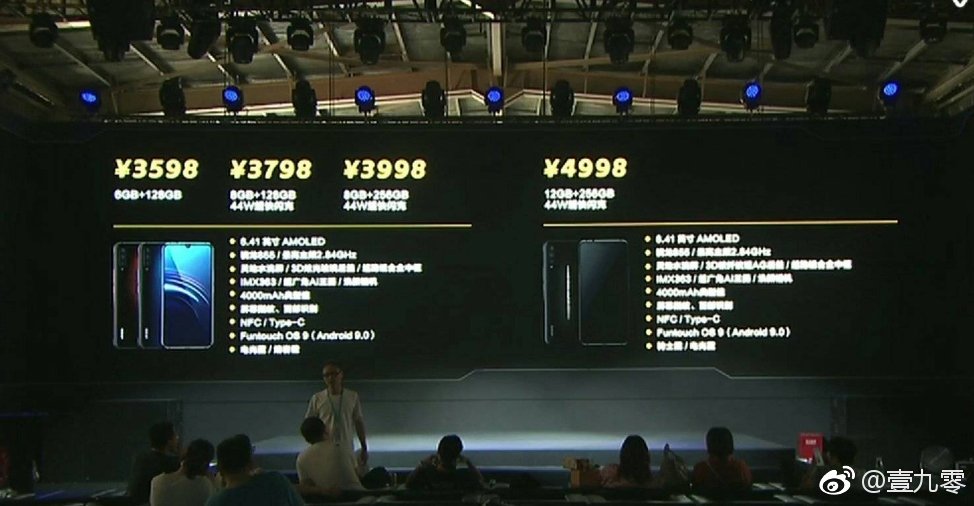
Thanks to a photo which seems to be from the presentation slide that will be used for tomorrow’s event, we know the iQOO phone will come in four variants.
The base model has 6GB of RAM and 128GB of storage. There is also a variant with 8GB of RAM which comes with 128GB or 256GB of storage. The highest configuration has 12GB of RAM and 256GB of storage.
The image shows that the base model will not have support for the new 44W fast charging technology like the other three models. Also, the 12GB RAM version will come in a special color variant different from the others.
Coming down to the price, the 6GB RAM version is said to be priced at ¥3598 (~$538). The 8GB RAM versions are priced at ¥3798 (~$567) and ¥3998 (~$597) respectively. If you want the highest configuration with 12GB of RAM, the price is ¥4998 (~$747).
The iQOO phone has a 6.41-inch AMOLED display, a Snapdragon 855 processor and a 4,000mAh battery. There is NFC and a USB Type-C port for connectivity. The device will ship with FunTouch OS based on Android 9 Pie.
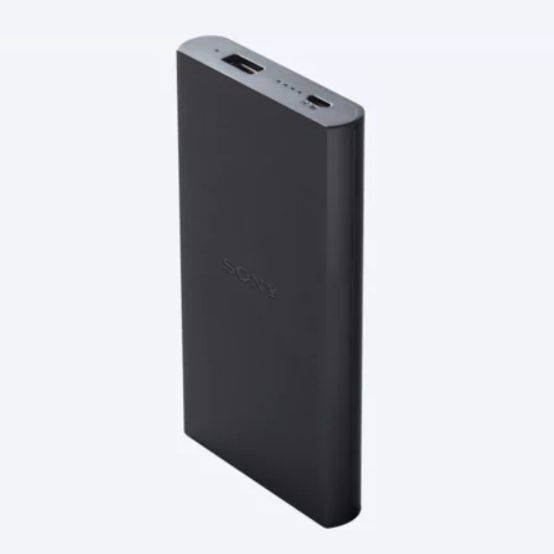
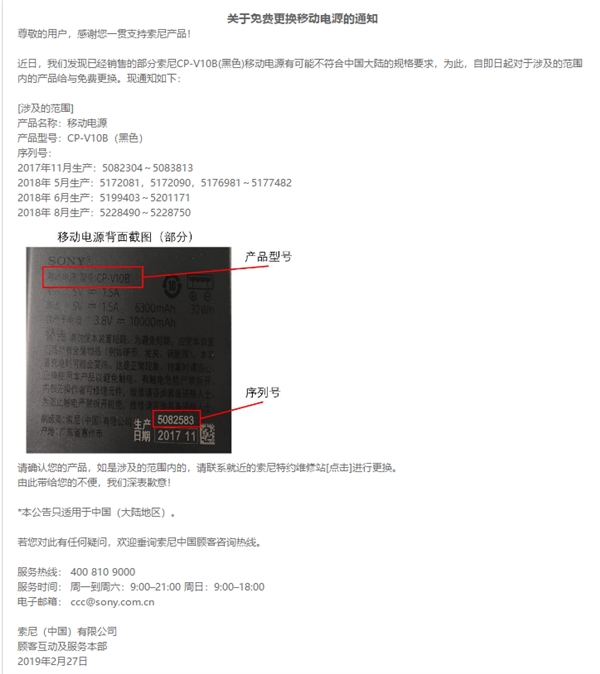
Sony is recalling certain batches of a power bank sold in Mainland China. The Japanese company issued a statement on its website requesting owners of the affected power banks to send them in and get a free replacement.
The affected power bank, the Sony CP-V10B (black only), covers a range of production dates and are said to not meet fire rating requirements for Mainland China. Below is the model number and production dates of the affected batches:
November 2017: 5082304 ~ 5083813
May 2018: 5172081, 5172090, 5176981 ~ 5177482
June 2018: 5199403 ~ 5201171
August 2018: 5228490 ~ 5228750
If your power bank falls under any of the above batches, you can take it to a Sony service station to have it replaced.
Back in May 2018, the Shenzhen Consumer Council, China Consumers Association, and the Futian District Consumer Council set up the Shenzhen Quality Consumption Research Institute to carry out a comparison test on mobile power banks.
The comparison test which was sent to Sony in July is said to have revealed the Sony power banks do not meet the fire rating requirements hence the need for the recall.
Samsung‘s changed its marketing strategy recently and it is just so obvious. The South Korean giant now releases smartphones from other series apart from the S series. The company has even introduced several new series with products manufactured for sales in specific regions like the Galaxy M10 and M20. Older series such as the Galaxy A series continues o see improvements like the rumoured Galaxy A90.
According to new and yet unconfirmed but seemingly reliable source, #Samsung#GalaxyA90 will come with a sliding and rotating camera system (kinda mix between Oppo Find X and Oppo N1 systems) which allows the camera to be used as front and rear camera depending its position… pic.twitter.com/A6NBRzFFvK
Samsung is already rumoured to be planning to the pop-up selfie camera design on the Galaxy A90. That may be right after all, as a new rumour has emerged that the tech giant is not only planning to bring a pop-up selfie camera but that the camera will have a rotating motor. What this means is that the same sensor will function for selfie shots and for the rear camera. The design is said to be like a hybrid between the Oppo Find X and the Oppo N1. We also got reminded of the Sony Clie PEG-NZ90 with a rotating camera that serves dual purposes too.
According to @OnLeaks who shared the leak on Twitter, it is still unconfirmed but the source is pretty reliable. Also, Samsung’s antecedence with the Galaxy A series in recent times makes this new rumour sound plausible. Samsung may just take us by surprise with this one. We’ll have to wait for more details to emerge.
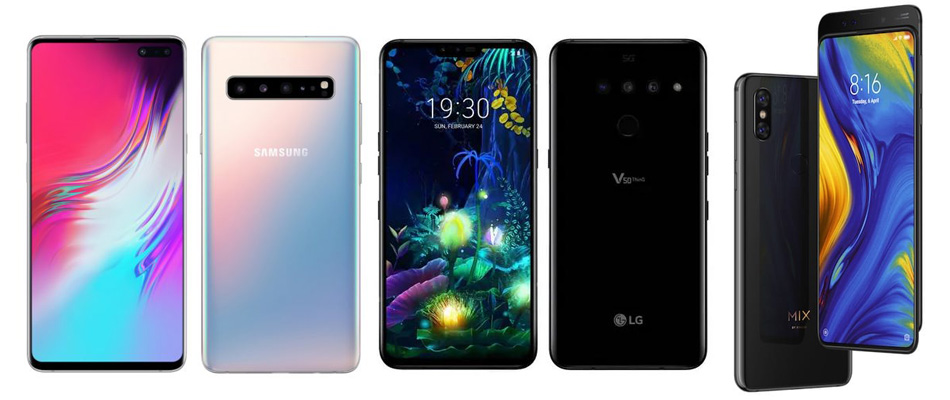
5G is expected to completely change the way we use the internet and even our lives. 2019 is the year of 5G as, even though the new networks are still not available globally, the main smartphones manufacturers are already launching their first 5G handsets, while most of the important carriers are going to complete the final tests in order to enable the new connectivity. Samsung Galaxy S10 5G, LG V50 ThinQ 5G, and Xiaomi Mi Mix 3 5G are among the first 5G phones out there. Naturally, all of them are flagships and here is an in-depth comparison between their specs.
Samsung Galaxy S10 5G vs LG V50 ThinQ 5G vs Xiaomi Mi Mix 3 5G
Xiaomi Mi 9
LG V50 ThinQ 5G
Xiaomi Mi Mix 3 5G
DIMENSIONS AND WEIGHT
162.6 x 77.1 x 7.9 mm, 198 g
159.2 x 76.1 x 8.3 mm, 183 g
157.9 x 74.7 x 9.4 mm
DISPLAY
6.7 inches, 1440 x 3040p (Quad HD+), Dynamic AMOLED
6.4 inches, 1440 x 3120p (Quad HD+), P-OLED
6.39 inches, 1080 x 2340p (Full HD+), Super AMOLED
While LG V50 ThinQ 5G comes up with a standard notched design and it is nothing special in the looks department, Samsung Galaxy S10 5G both come with very original aesthetics. The former has in-display cameras in order to minimize bezels, while the latter opts for a slider design. I would personally prefer the Xiaomi Mi Mix 3 5G simply because it is much more compact than the Galaxy S10 5G, which is definitely too big due to its huge display. In case you are looking for the best build quality, then LG V50 ThinQ wins with its military and IP68 certification making it waterproof and drop resistant.
Display
There is definitely no challenge: Samsung Galaxy S10 5G is a clear winner. First, it has a much bigger display, excellent for productivity and multimedia. Second, it comes with the new Dynamic AMOLED technology that enhances color reproduction, and it is even HDR10+ compliant, unlike LG V50 ThinQ 5G and Xiaomi Mi Mix 3 5G. Last but not least, it has a more resistant panel thanks to the Gorilla Glass 6 protection. At the second place of the multimedia ranking, there is LG V50 ThinQ with its high QHD+ resolution, HDR and loud stereo speakers with Quad DAC. Xiaomi Mi Mix 3 5G has an above-average display, but nothing so surprising.
Hardware/Software
With up to 8 GB of RAM and 256 GB of internal storage, Samsung Galaxy S10 5G boasts the most advanced hardware department. And in its European version, it can even deliver better performances with 5G. Indeed, the European version is equipped with the Exynos 5100 modem that is more advanced than the Snapdragon X50 found on the U.S. version, as it is a multimode modem (supporting FDD and TDD, as well as mmWave). Samsung Galaxy S10 5G also boasts a very advanced Android customization: the new One UI based on Android Pie. Not saying that MIUI is inferior, but it is still an added value.
Camera
According to the first tests, Samsung Galaxy S10 5G also comes with a more advanced camera department. It is equipped with a quadruple camera on the back consisting of a main 12 MP sensor with a variable aperture, a telephoto lens, an ultrawide lens, and even a TOF camera. It shoots amazing photos in most of the conditions. Even the front cameras seem to be the best out there. LG V50 ThinQ should come right after with its rear triple camera (telephoto + ultrawide lens) and a dual wide-angle front camera. Xiaomi Mi Mix 3 5G is an outstanding camera phone, but it is nowhere able to compete with the quadruple cameras of the Samsung Galaxy S10 5G, neither with its dual camera setup on the front side. And it may not even be at the same level as the LG V50 ThinQ 5G.
Battery
There are no big differences between the battery capacities of these flagships, just 300 mAh between the smallest and the biggest one. So what will really make the difference? Obviously the hardware and software optimization. Samsung is usually very good at optimizing its phones energy consumption, as well as Xiaomi. So, it will be a hard battle. However, I would choose Samsung Galaxy S10 5G because it supports a faster wireless charging technology as well as reverse wireless charging (it can be used as a wireless power bank to charge other devices).
Price
Given that these devices are still not in the market, do not expect to know all their prices soon. We already know that Xiaomi Mi Mix 3 5G will cost €600/$683 globally, while we do not know anything about LG V50 ThinQ and Samsung Galaxy S10 5G pricing. We expect the first to cost at least $900/€790, while the second will surely go on sale for more than $1000/€880.
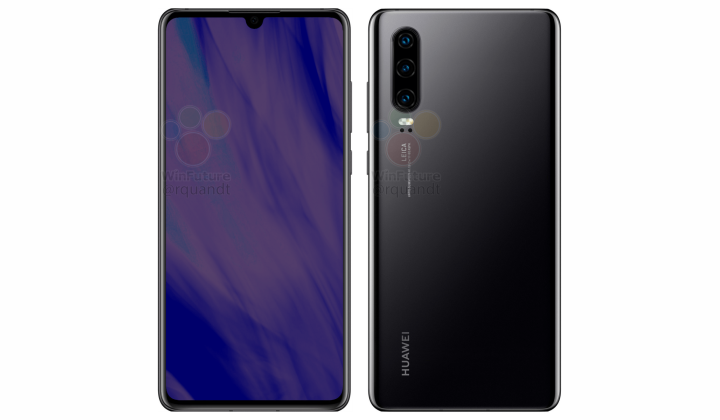
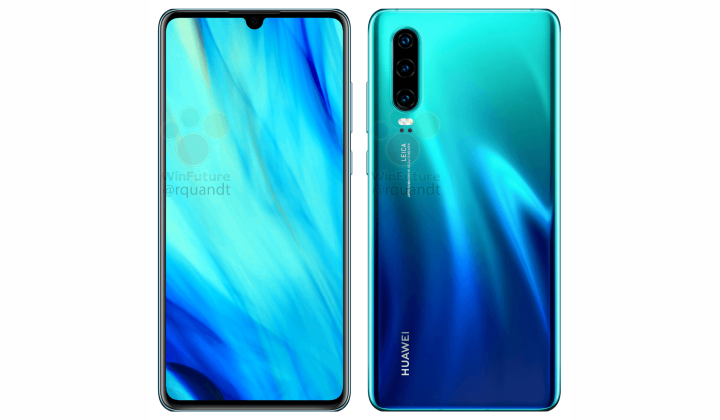
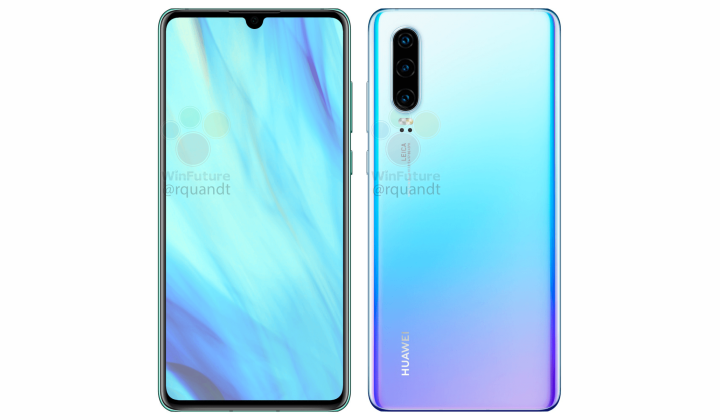
Huawei used the Mobile World Congress (MWC) 2019 platform to announce the 5G enabled Huawei Mate X foldable phone. On March 26, the Chinese manufacturer will be debuting its new flagship phones. It is very likely that the Huawei P30 and Huawei P30 Pro flagship phones will be unveiled through March’s event. Well ahead of the March event, reliable tipster Roland Quandt has shared the renders of the Huawei P30 and P30 Pro smartphones.
Huawei P30 Pro Renders
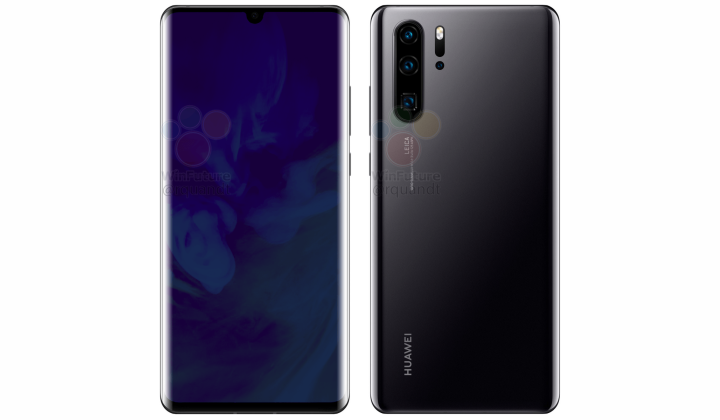
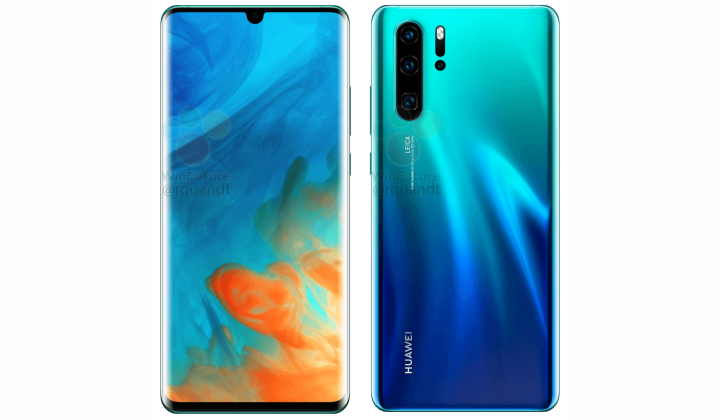
The Huawei P30 Pro’s rear panel reveals that it features three vertically mounted sensors along with a separately placed fourth sensor. Probably, the fourth sensor could be a 3D ToF (Time of Flight) sensor.
The quad camera setup of the P30 Pro is expected to carry support for 10x hybrid zoom. However, there is no confirmation on what kind of technology Huawei will be using to make it possible. Above the fourth sensor is a module that contains a dual LED flash and a laser autofocus. The text mentioned near the camera setup reveals that carries support for f/1.6 to f/3.4 variable aperture.
The front side of the phone features a waterdrop-style notch screen. Rumors have it that it features a 6.5-inch curved OLED panel with in-display fingerprint reader. The screen is surrounded by narrow bezels. The leaked renders reveal that the P30 will be available in colors likes Black, Sea Green and Electric Blue.
Huawei P30 Pro Renders
The Huawei P30 handset sports the same front design as the P30 Pro. It is speculated that it will be arriving with a 6-inch OLED display with under-display fingerprint sensor.
The major difference between the two handsets is that the P30 Pro has triple rear-mounted cameras and a flat screen. The P30 will be coming with a 3.5mm audio jack, while the feature will not be available on the P30 Pro. The P30 will be also available in some color variants as the P30 Pro model.
In December, reliable tipster Evan Blass had stated that the P30 will offer a maximum resolution of 40-megapixel and 5x loseless zoom. He had also stated the P30 will be equipped with a front-facing camera of 24-megapixel. The Kirin 980 SoC is expected to power both phones and rumors have it that there will be a 5G enabled version of the Huawei P30 Pro.
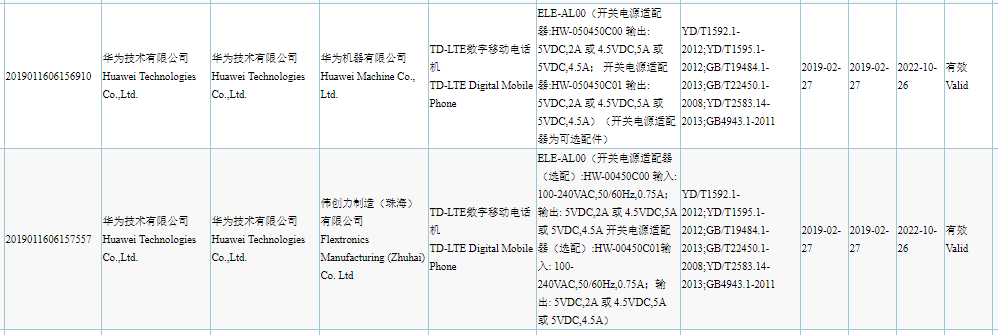
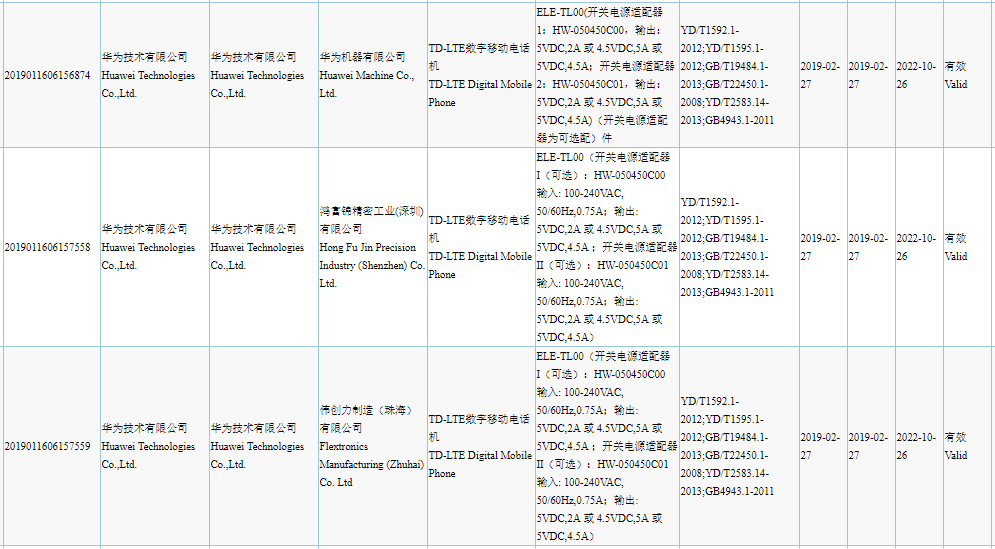
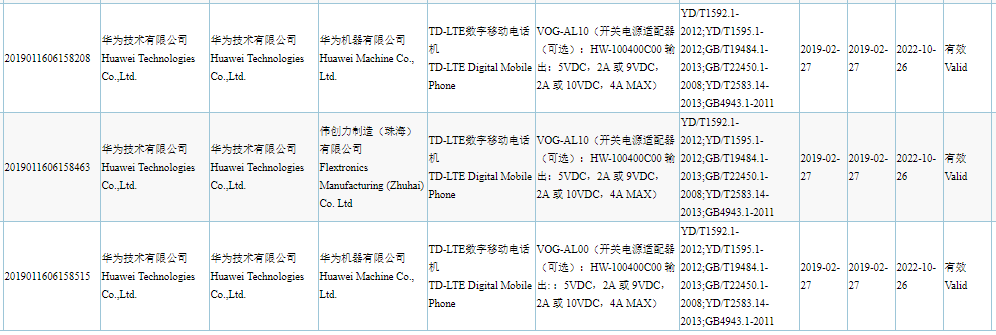
The Huawei P30 and P30 Pro have both been certified by 3C authority in China. The 3C has approved VOL-AL00, VOG-AL10 and VOG-TL00 variants that belong to P30 Pro and it has also certified P30 variants such as ELE-AL00 and ELE-TL00. The 3C approvals reveal that the P30 will carry support 22.5W fast charging whereas the P30 Pro will be coming with amazing 40W rapid charging technology.
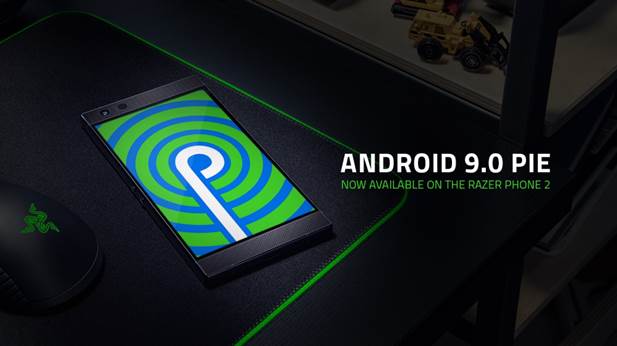
Gaming smartphone manufacturer Razer launched the Razer Phone 2 in October last year, two months after Google released its latest Android version. Despite that, the gaming phone launched with Android 8.1 Oreo OS at its heart. Ordinarily, users were expecting the manufacturer to release an update not too long after the launch. However, that lingered until last week when Razer hinted that the Razer Phone 2 will get Android Pie update on February 27. As scheduled, Android 9.0 Pie update is now available for the Razer Phone 2.
The new Pie update will see the phone “operate more intuitively, more efficiently utilize its battery and significantly enhance the user experience for gaming and entertainment”. The phone maker did not reveal many details of what the new update brings to the table but it should be noted that the Phone 2 runs stock Android. So, the device will get all the new features which Android Pie brings. One of such features is Gesture navigation which yours sincerely is enjoying on my Redmi Note 6 Pro.
For now, only the unlocked Razer Phone 2 models are getting the Android Pie update. The AT&T model is scheduled to get the update on April 4th, if Razer sticks to schedule. Unfortunately, the gaming phone maker is yet to reveal when the original Razer phone will get Android Pie.
The iQOO smartphone by Vivo was spotted on TENAA yesterday and while the listing revealed all its specs, there were no images. It has now been updated with photos of the device.
The TENAA listing said the phone will come in gold but the images are of the blue variant. The iQOO phone has a waterdrop notch that houses the selfie camera. There is a bit of bezel at the bottom.
[envira-gallery id=”238806″]
The back is more interesting. Covered in glass like a lot of other phones, Vivo has added this interesting rainbow-colored line in the middle surrounded by similarly colored lines in a pattern similar to magnetic fields for a unique finish. At the top left corner is a triple-camera setup with an LED flash below.
The words “Vivo Snapdragon 855” is engraved at the bottom of the phone. There is no fingerprint scanner on the back. TENAA already revealed it has an in-display fingerprint scanner.
The right side of the phone is home to the volume rocker and power button which have a neon blue color. There is another neon blue button on the left, probably for the AI assistant.
Apart from these images, there is also a hands-on video of the phone. Thankfully, this is of another color variant. It also has a similar design but a different color. However, at the back, it has “iQOO” written at the bottom and not “Vivo Snapdragon 855”.
The video reveals the phone runs Funtouch OS based on Android 9.0, has dual SIM support, and 12GB of RAM. The video confirms the display is 6.4-inches with a 2340 x 1080 resolution.
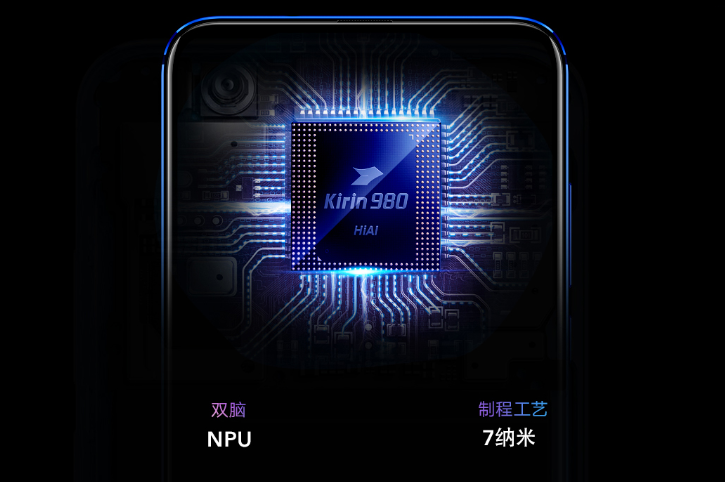
Huawei‘s smartphone business is soaring, edging out Apple to emerge as the second-largest smartphone maker after Samsung in 2018. Samsung must continue watching its back as the Chinese company continues to make efforts to maintain its growing leadership in the industry. One aspect where Huawei has made tremendous progress is in the aspect of the chipset and according to industry sources, we should expect more innovation from Huawei.
Huawei is said to be looking to maintain its lead over Apple and is targeting shipments of 250-260 million units in the year. This projection is buoyed by shipments of its high-end P- and Mate-series models and the entry-level and mid-tier Honor sub-brand models. In addition, Huawei has made significant strides in the aspect of the development of its chipset and is looking to further improve on them. Huawei’s chipset accounts for over 50% of the chipset solution market for 4K TVs in China. The company consolidated on this lead recently when it unveiled its chipset solutions for 8K TVs at CES 2019 to cash in on the rising popularity of 8K TVs. The company’s 8K TV solutions have also seen some patronage from not only Chinese TV manufacturers but also from Japan-based Sharp.
Apart from building on the successes of the Hisilicon chipset for mobile phones, Huawei has also launched its Ascend series AI chips and Arm-based Kunpeng series server CPUs, in addition to TV chips. A recent data by Gartner showed that Huawei’s spending on semiconductor products have increased by 45% YoY to over US$21 billion in 2018. This ranks the company as the third largest buyer of IC chips globally last year, trailing Samsung Electronics and Apple but ahead of Dell. This underscores the company’s growing investments in chipset manufacturer. Huawei still doesn’t sell its Kirin chipset to other OEMs. If they start doing that, the sky can only be its starting point in the race to dominate the industry.
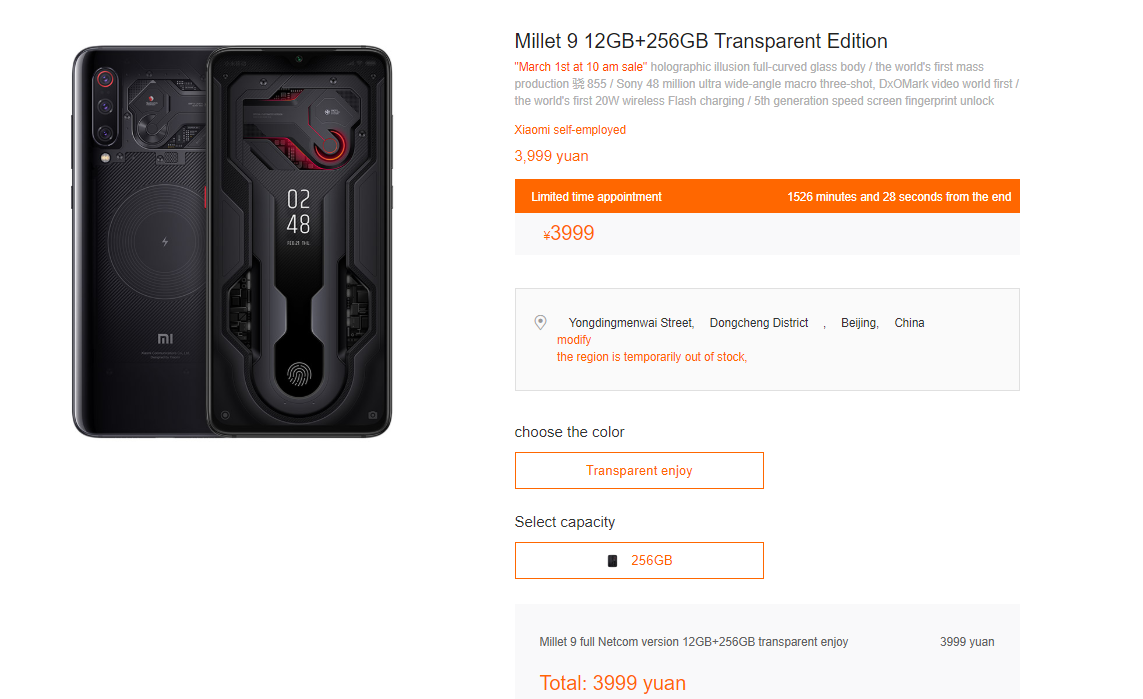
The Mi 9 Transparent Edition is Xiaomi’s first phone with 12GB of RAM. But that is not the only thing that sets it apart from the regular Mi 9. It also has a different design thanks to its see-through glass. Also, its 48MP rear camera has an f/1.47 aperture and a 7P lens.
While the standard variant of the Mi 9 has already had its first sale, tomorrow is the first time the Mi 9 Transparent Edition will be available for purchase. According to Xiaomi, it will go on sale at 10 a.m. (local time) for ¥3999 (~$598). If you will be buying from resellers, expect to pay higher than that.
Xiaomi’s founder revealed in a post that the Mi 9 Transparent Edition undergoes a different production process. The phone has to be assembled in a room that is totally dust-free. It also has to be packaged and transported in a dust-free environment.
Just like the standard Mi 9, it also has a 6.39-inch AMOLED display with a water-drop notch. The display is covered with Gorilla Glass 6. There is a Snapdragon 855 processor paired with the RAM and storage is 256GB.
Its 48MP f/1.47 main rear camera is paired with a 12MP telephoto lens and a 16MP super-wide angle lens. All three cameras are covered with a single piece of sapphire glass. It also has a 20MP front-facing camera.
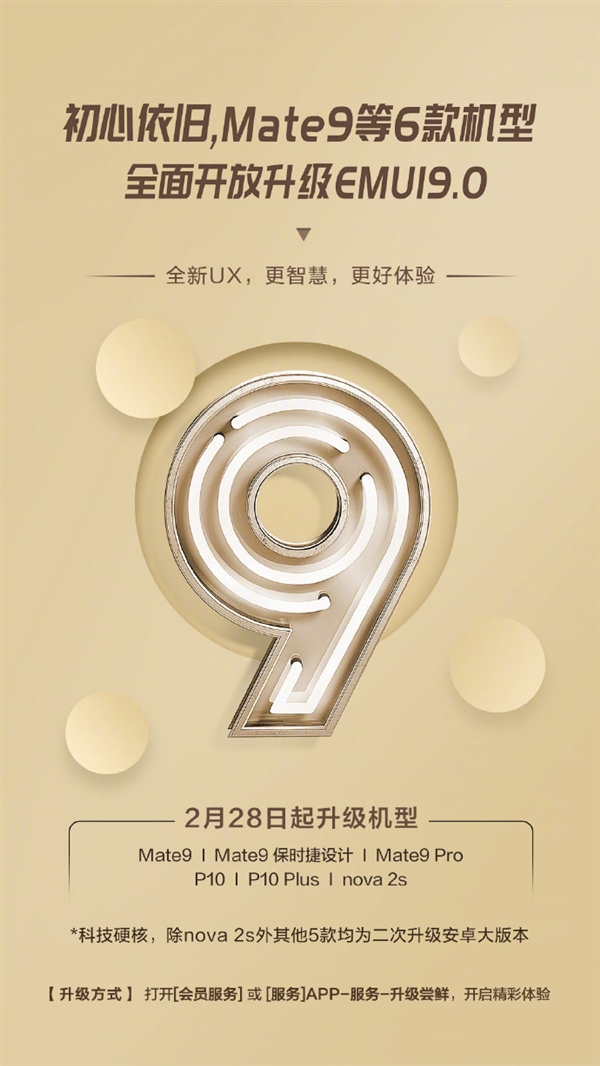
Huawei has announced that its EMUI 9 update has begun rolling out to some of its older flagships. These devices include the Mate 9 series (Mate 9, Mate 9 Pro, and Mate 9 Porsche Design) which all originally launched with EMUI 5.0 based on Android Nougat.
The Mate 9 series was announced back in 2016 and came with Nougat pre-installed. They later got updated to EMUI 8.0 based on Android Oreo in 2017 and now they are getting upgraded to Android Pie.
We use cookies on our website to give you the most relevant experience by remembering your preferences and repeat visits. By clicking “Accept”, you consent to the use of ALL the cookies.
This website uses cookies to improve your experience while you navigate through the website. Out of these, the cookies that are categorized as necessary are stored on your browser as they are essential for the working of basic functionalities of the website. We also use third-party cookies that help us analyze and understand how you use this website. These cookies will be stored in your browser only with your consent. You also have the option to opt-out of these cookies. But opting out of some of these cookies may affect your browsing experience.
Necessary cookies are absolutely essential for the website to function properly. This category only includes cookies that ensures basic functionalities and security features of the website. These cookies do not store any personal information.
Any cookies that may not be particularly necessary for the website to function and is used specifically to collect user personal data via analytics, ads, other embedded contents are termed as non-necessary cookies. It is mandatory to procure user consent prior to running these cookies on your website.



 The device packs 8GB of RAM and 128GB of internal storage. The phone runs Android 8.1 Oreo operating system out of the box which will be later updated to